
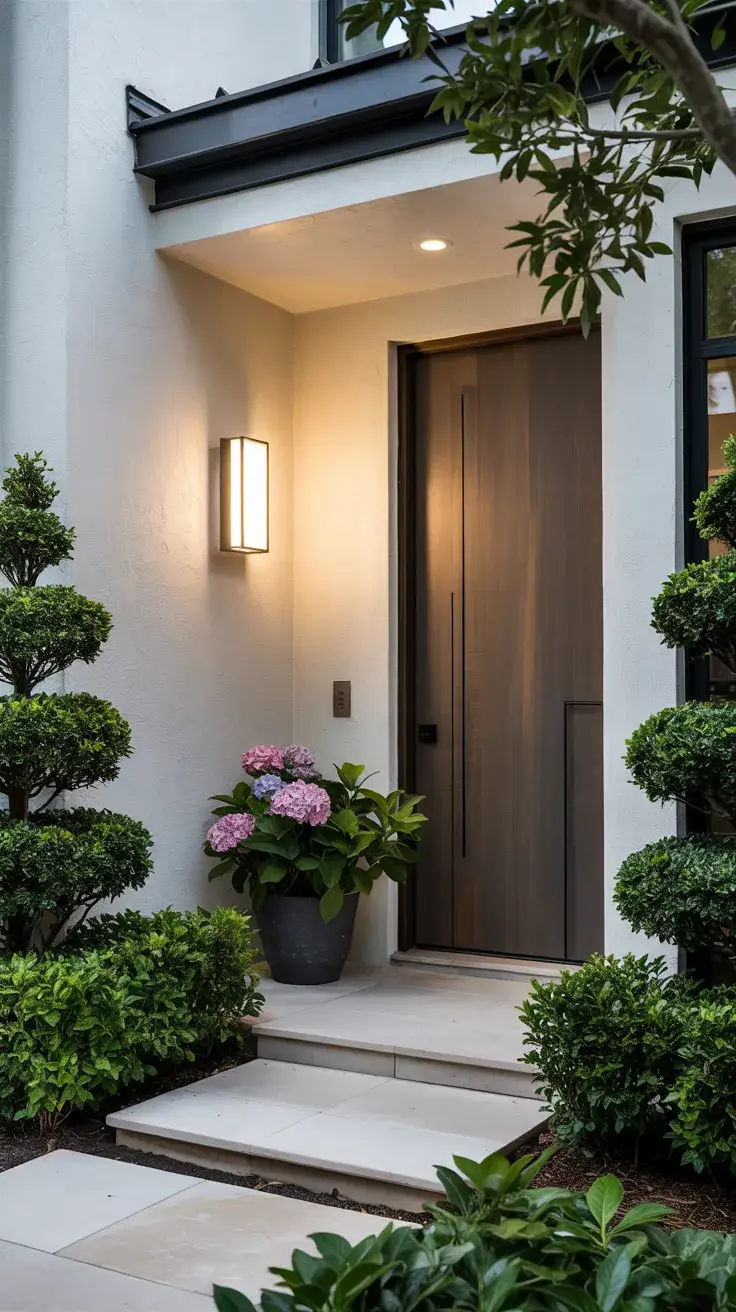
Outdoor entryway ideas 2026 focus on creating a strong first impression that feels modern, intentional, and visually connected to the rest of the home. As exterior design continues to evolve, the entryway is no longer treated as a simple transition space but as a key architectural feature that sets the tone before you even step inside. Clean lines, thoughtful materials, and carefully planned lighting all play an essential role in shaping how a home is perceived from the outside.
In 2026, outdoor entryways are defined by balance — combining aesthetics with function while emphasizing durability and year-round appeal. Homeowners are leaning toward designs that feel welcoming yet refined, using elements such as textured surfaces, statement doors, layered lighting, and cohesive color palettes. Whether the goal is a bold contemporary look or a subtle, understated entrance, the right outdoor entryway design can elevate curb appeal and create a seamless connection between outdoor and indoor living.
The Evolution Of Outdoor Entryway Design In 2026
In 2026, outdoor entryway design has evolved into a deliberate extension of the home rather than a transitional afterthought. I approach modern entryways as outdoor rooms that balance architectural structure with comfort and usability. These spaces are designed to guide movement, frame the front door, and visually prepare visitors for the interior style of the home. Clean geometry, layered materials, and subtle contrasts define this new generation of entryways.
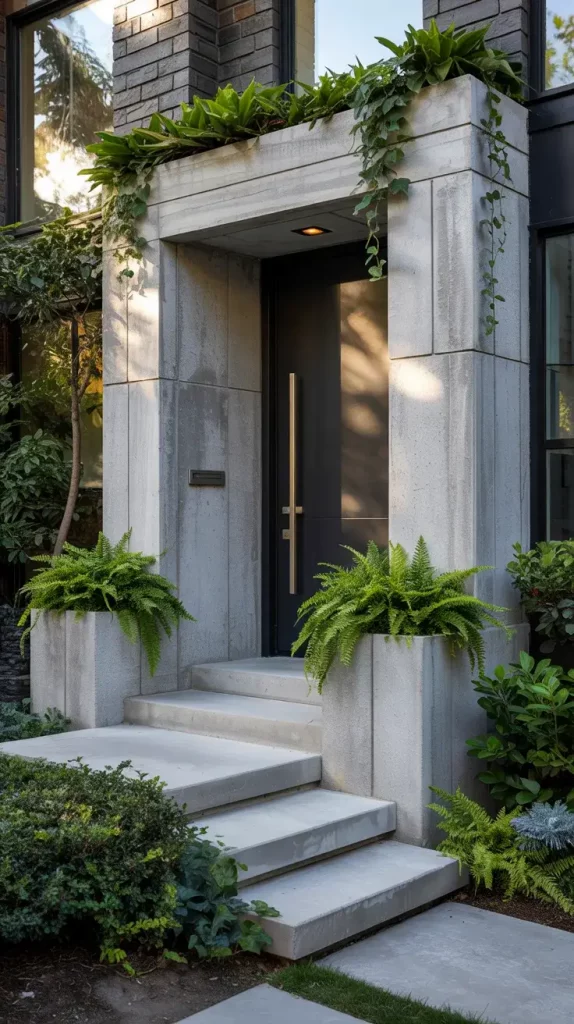
From my experience, the most effective outdoor entryways incorporate architectural elements such as overhangs, recessed doorways, and structured pathways. Materials like concrete, stone, metal accents, and treated wood are chosen not only for durability but also for their visual weight. Planters, integrated steps, and low-profile walls help define the space while maintaining openness and flow.
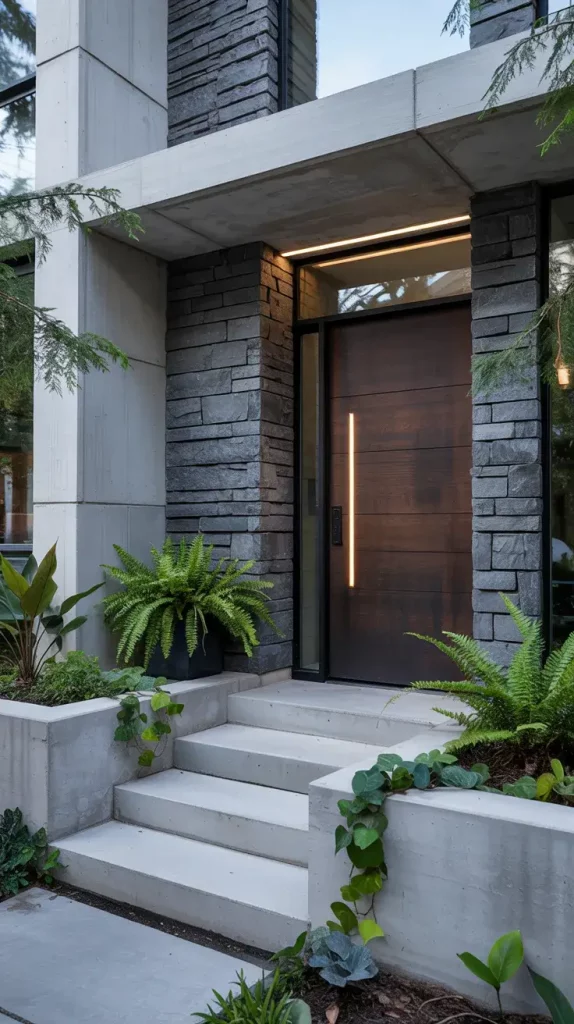
I find that this evolution reflects a broader shift discussed by designers featured in Architectural Digest and Dwell, where the entryway is treated as a moment of transition rather than a boundary. Personally, I have seen how a well-designed outdoor entryway can instantly elevate the perceived quality of a home and improve daily routines, especially in homes where the exterior is visible from the street.
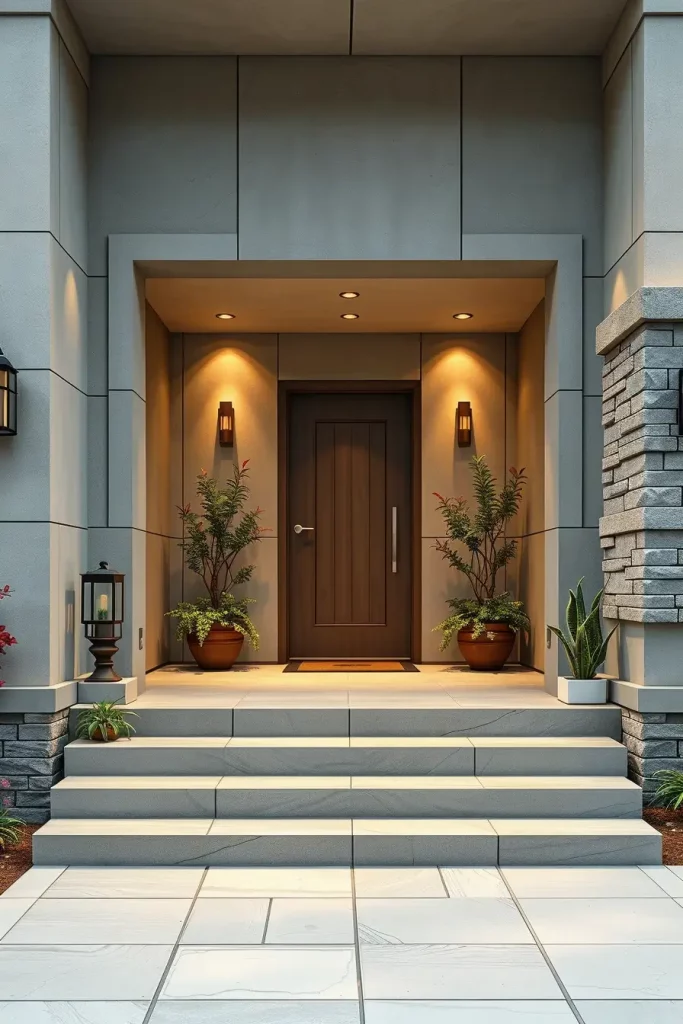
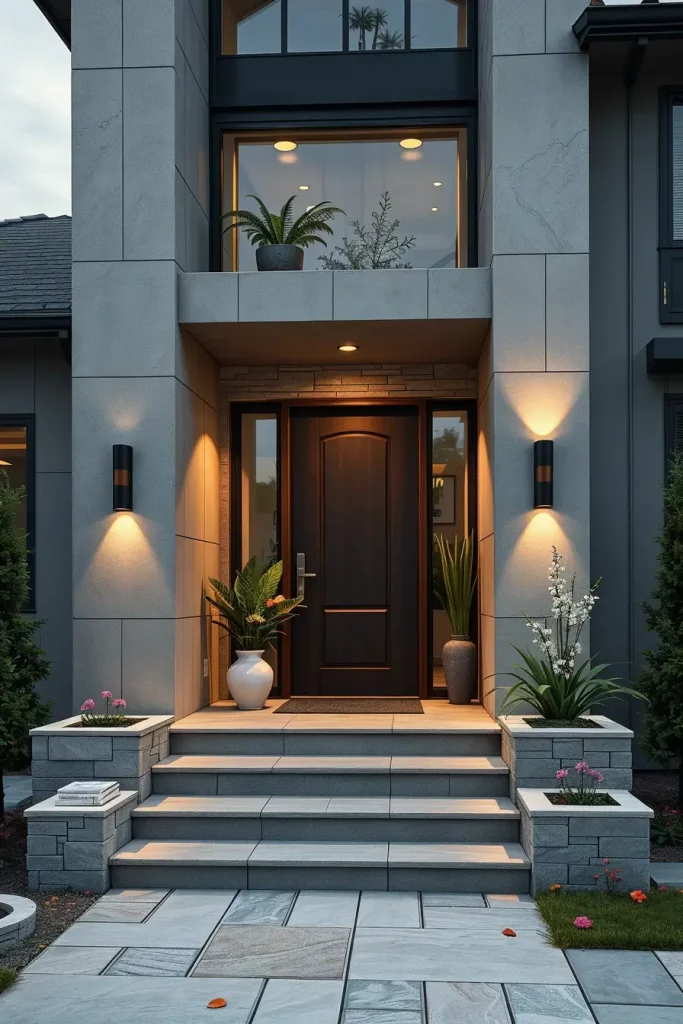
To complete this type of entryway, I would recommend adding subtle wayfinding elements such as integrated lighting along pathways or low seating walls that help anchor the design and guide movement naturally toward the entrance.
Modern Outdoor Entryway Ideas For Contemporary Homes
Modern outdoor entryways for contemporary homes emphasize clarity, proportion, and intentional simplicity. When I design or evaluate these spaces, I focus on strong horizontal and vertical lines that echo the home’s architecture. Flat surfaces, minimal detailing, and a restrained material palette help create an entryway that feels current and cohesive.
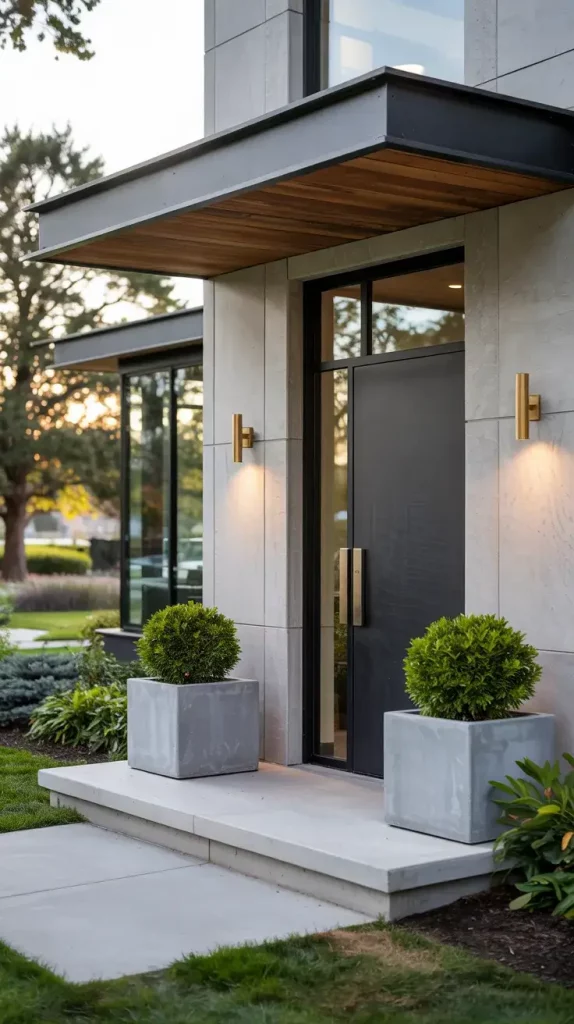
Key elements often include oversized pivot or slab doors, smooth concrete flooring, and streamlined planters with architectural plants. I prioritize built-in features over decorative accessories, as they maintain a clean appearance while improving functionality. Lighting is typically recessed or wall-mounted with simple fixtures that highlight textures rather than dominate the space.
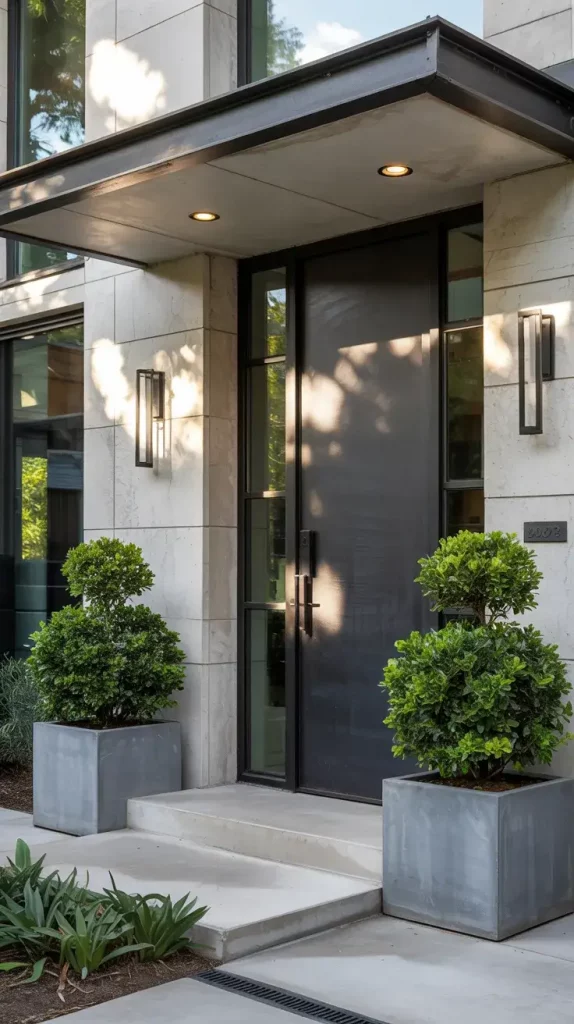
In my professional opinion, contemporary entryways succeed when every element serves a purpose. Designers writing for Dezeen often stress the importance of reducing visual noise, and I fully agree with that approach. From my own projects, removing unnecessary decor almost always results in a more confident and timeless exterior.
If anything is missing from many modern entryways, it is weather protection. I recommend incorporating subtle canopies or extended rooflines to improve comfort without disrupting the minimalist aesthetic.
Minimalist Outdoor Entryways With Clean Architectural Lines
Minimalist outdoor entryways in 2026 focus on precision and restraint. I see these designs as exercises in balance, where negative space is just as important as physical elements. The layout is usually symmetrical or deliberately asymmetrical, with clear sightlines that draw attention directly to the entrance.
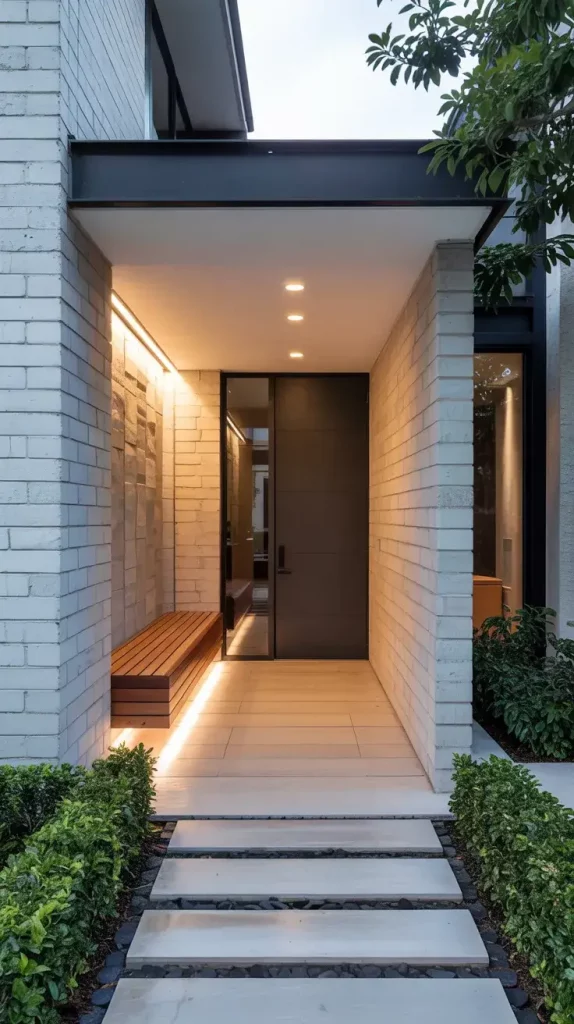
Materials are limited but carefully selected. I often work with concrete, smooth stone, and matte-finished metal, paired with flush-mounted doors and hidden hardware. Furnishings are minimal, sometimes limited to a single bench or integrated ledge. Every line is intentional, reinforcing the architectural language of the home.
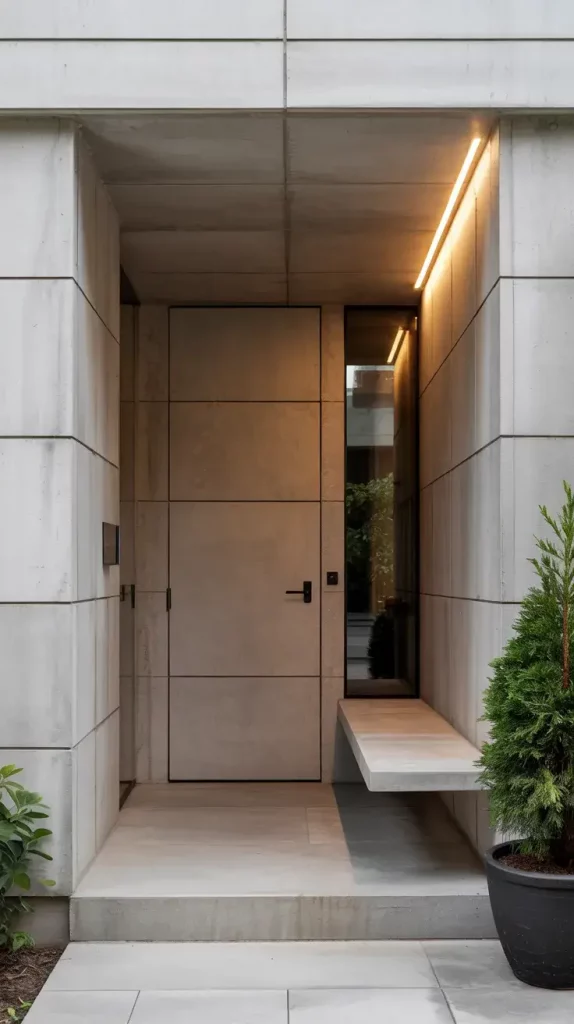
From my experience, minimalist entryways require confidence from the homeowner. As noted by interior architects featured in The New York Times design section, simplicity demands higher-quality materials and craftsmanship. I have found that when executed correctly, minimalist entryways age better than overly decorative designs.
To enhance these spaces, I would add discreet lighting embedded into walls or floors, ensuring safety and visual interest without introducing additional objects.
Outdoor Entryway Ideas With Statement Front Doors
Statement front doors play a central role in outdoor entryway design for 2026. I often treat the door as the focal point, allowing surrounding elements to frame it rather than compete with it. Bold proportions, unique finishes, and unexpected materials transform the entryway into a visual anchor.
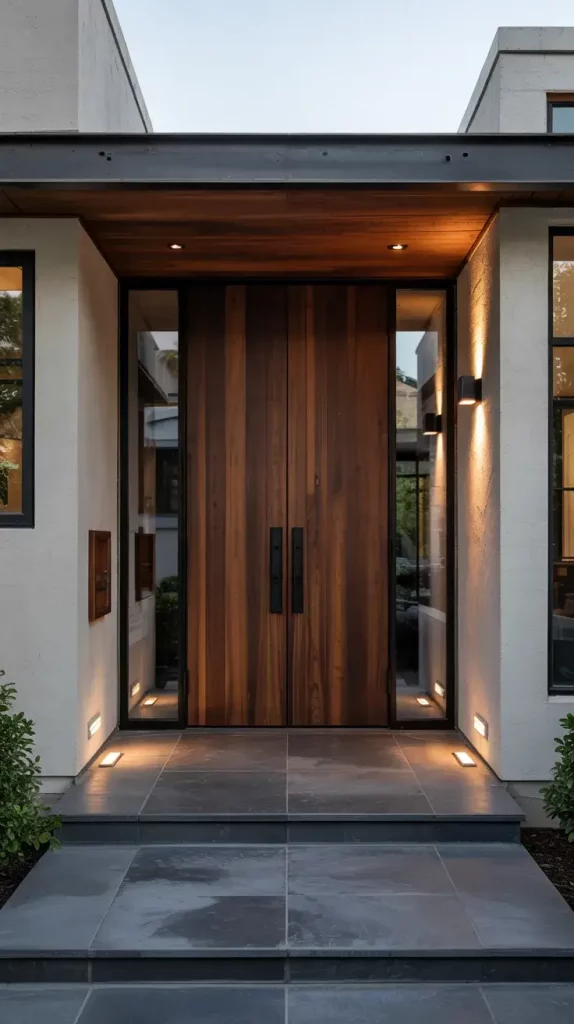
Popular choices include oversized wooden doors, metal-clad panels, and doors with integrated glass inserts. I recommend pairing statement doors with neutral walls and flooring to maintain balance. Hardware is usually custom or oversized, reinforcing the door’s presence and enhancing usability.
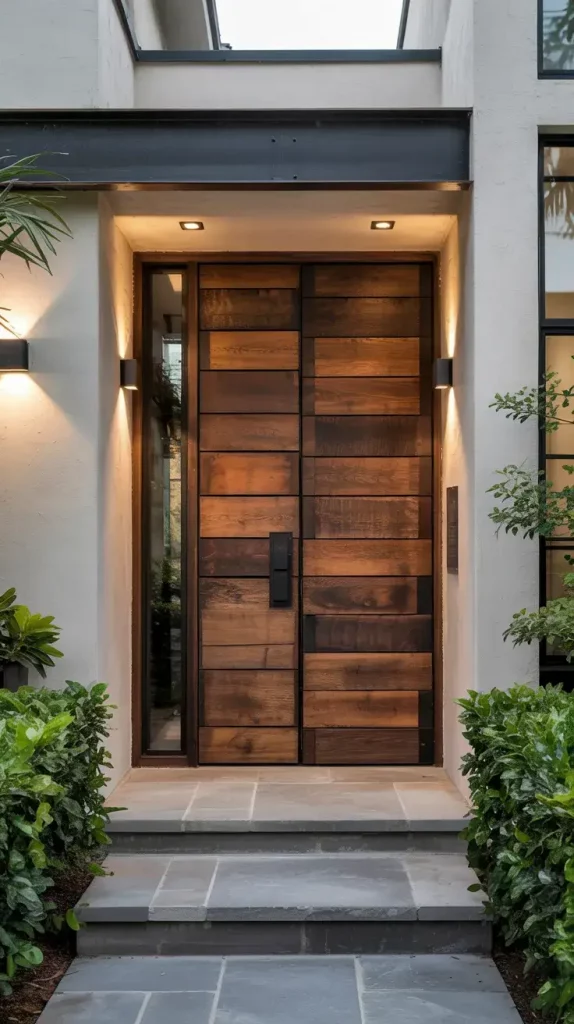
In my professional view, a strong front door can define the entire exterior experience. Designers from Elle Decor frequently highlight how a single bold element can elevate a simple facade. I have personally seen homes gain a stronger identity simply by upgrading the entry door and adjusting the surrounding layout.
To complete this type of entryway, I suggest adding architectural lighting that washes over the door surface, emphasizing texture and material during evening hours.
Stylish Outdoor Entryway Flooring Trends For 2026
Flooring is one of the most influential elements in outdoor entryway design, and in 2026 it is treated as a design feature rather than a background surface. I focus on flooring that visually connects the exterior to the interior while withstanding weather and foot traffic. Pattern, texture, and scale all play important roles.
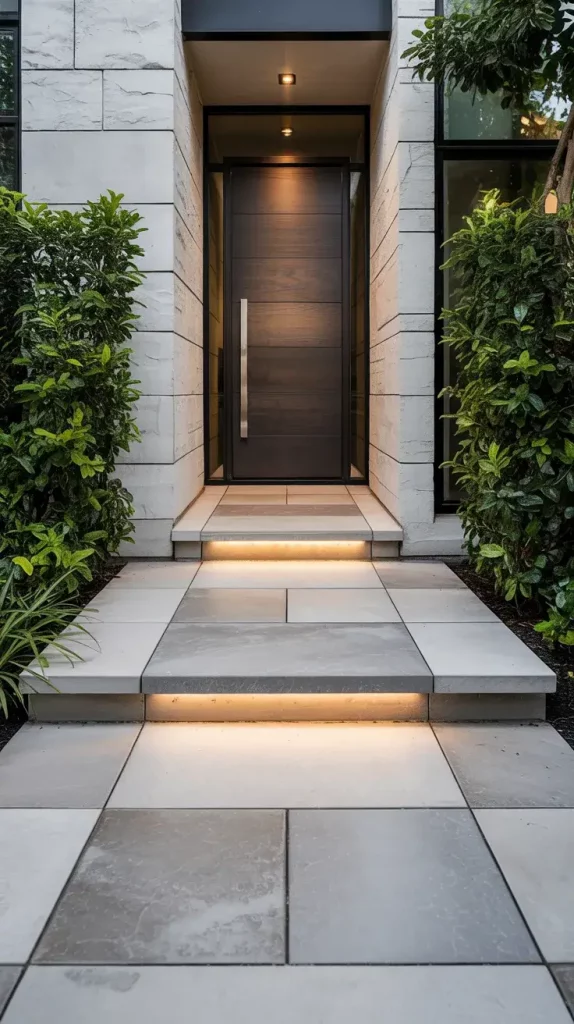
Large-format stone tiles, textured concrete, and porcelain slabs designed for outdoor use are among the most practical options. I often recommend slip-resistant finishes and subtle color variations that hide wear over time. Flooring layouts frequently extend beyond the doorway, visually expanding the entry zone.
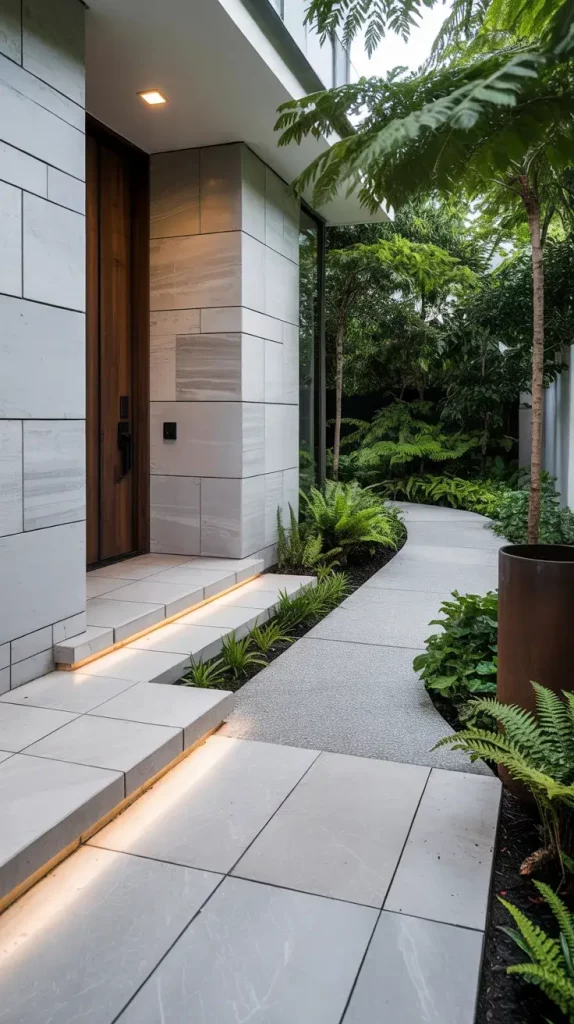
From my experience, flooring decisions can make or break an entryway. As many landscape architects note in publications like Garden Design Magazine, continuity underfoot helps unify architecture and landscape. I consistently see better results when flooring is planned early in the design process rather than as an afterthought.
To enhance these flooring-focused entryways, I would add recessed drainage details and integrated step lighting to improve safety and long-term performance.
Outdoor Entryway Ideas Using Natural Stone And Concrete
In 2026, natural stone and concrete remain foundational materials for outdoor entryway design because of their durability and architectural clarity. I often use these materials to create a grounded, substantial first impression that feels both modern and timeless. Stone and concrete help visually anchor the home to its surroundings while offering excellent resistance to weather and daily wear.
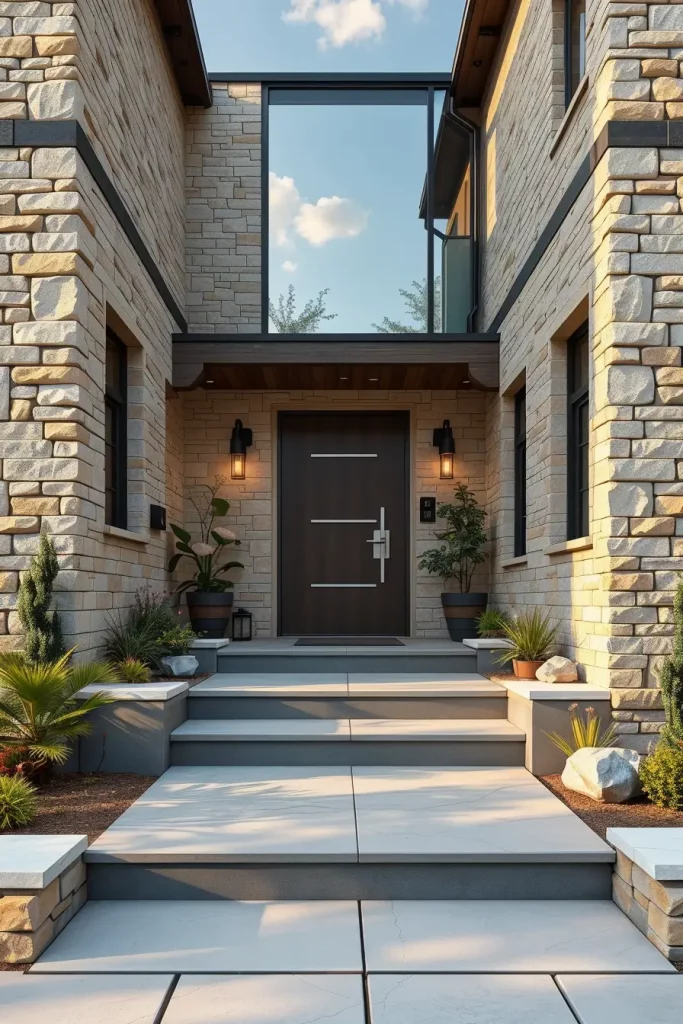
Concrete slabs, poured steps, and stone-clad walls work particularly well when combined with clean architectural lines. I frequently specify honed or lightly textured finishes to avoid glare and improve slip resistance. Natural stone elements such as limestone or basalt add visual depth, while concrete provides structural consistency and flexibility in form.
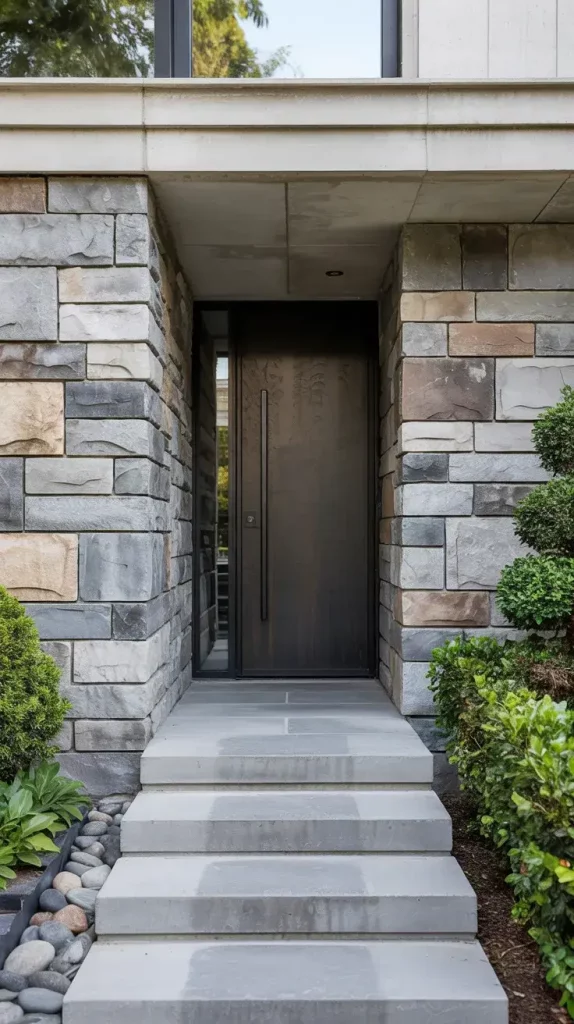
From my professional experience, designers featured in Architectural Digest frequently emphasize the importance of tactile materials at entry points. I agree with this approach, as I have seen how stone and concrete enhance both the visual and physical experience of arriving home, especially when paired with thoughtful lighting and proportion.
To strengthen this type of entryway, I would add subtle landscaping elements like low native plantings or gravel borders to soften the hardness of the materials without compromising the modern aesthetic.
Warm And Inviting Outdoor Entryway Lighting Concepts
Lighting plays a critical role in outdoor entryway ideas for 2026, shaping both safety and atmosphere. I approach lighting as a layered design element that guides movement while creating a welcoming mood. A well-lit entryway feels intentional and reassuring, especially during evening hours.
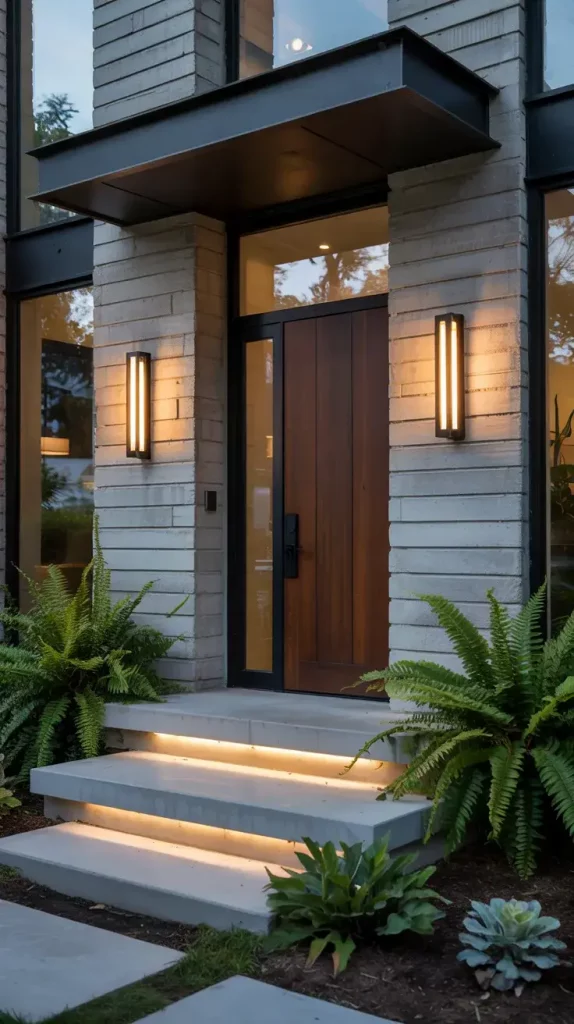
Wall-mounted sconces, recessed step lights, and concealed LED strips are among the most effective solutions. I typically recommend warm color temperatures to balance modern materials and avoid a harsh appearance. Fixtures are chosen to complement the architecture rather than stand out as decorative objects.
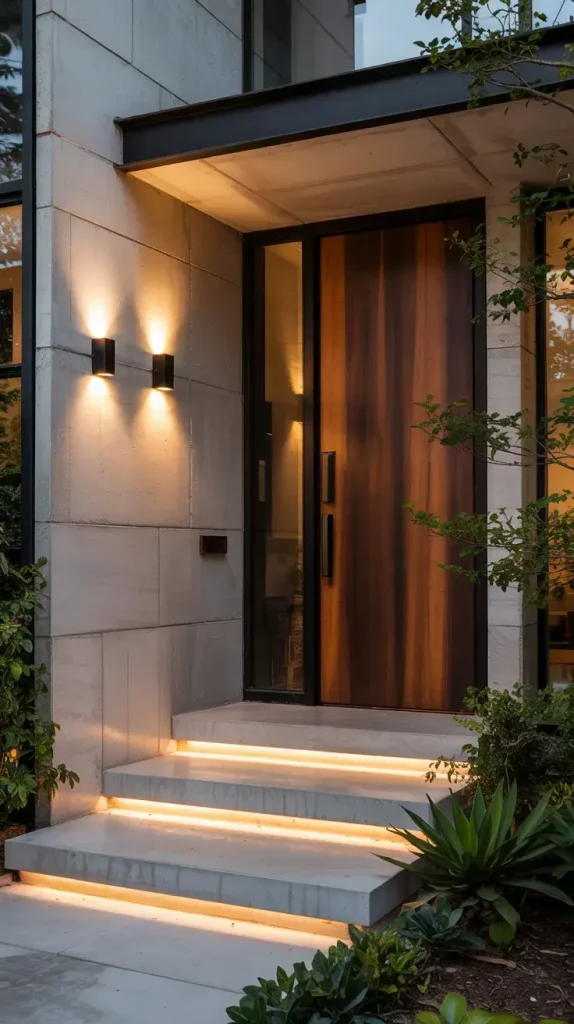
In my experience, lighting designers cited in publications like Dwell often stress that less is more when it comes to exterior illumination. I have found that controlled, indirect lighting enhances architectural features and improves usability without overwhelming the space.
If anything is missing from many entryways, it is consistency in lighting placement. I would ensure that pathways, door hardware, and seating areas are evenly illuminated for both comfort and security.
Outdoor Entryway Ideas With Built-In Seating
Built-in seating has become an increasingly popular feature in outdoor entryway design for 2026. I see seating as a way to transform the entryway from a pass-through zone into a functional outdoor space. It supports everyday activities such as removing shoes, waiting for guests, or simply pausing before entering the home.
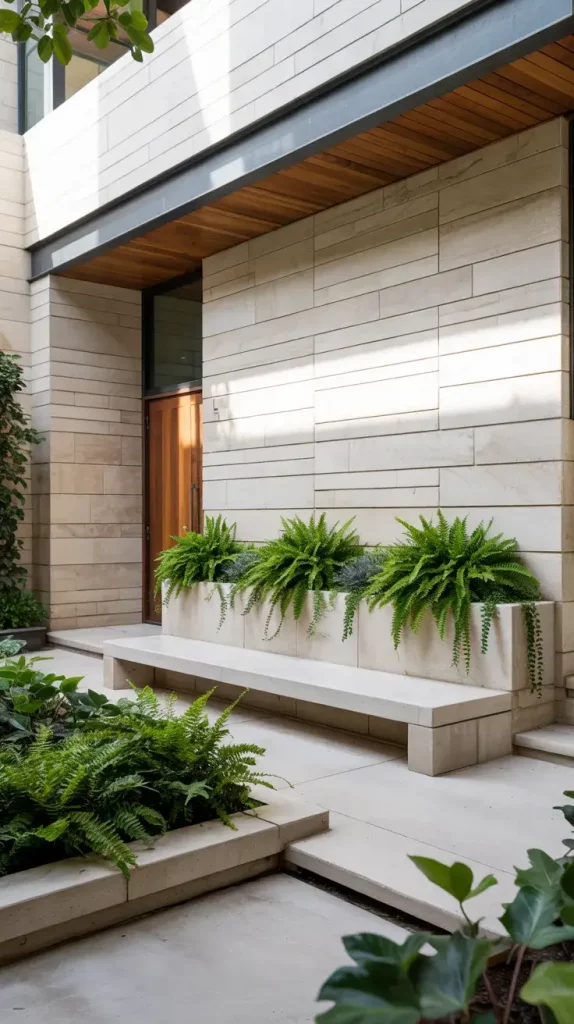
Common seating solutions include concrete benches, wood-clad ledges, or stone seating integrated into walls or planters. I prefer built-in designs because they maintain visual order and reduce clutter. Cushions or weather-resistant textiles can be added selectively to enhance comfort without compromising durability.
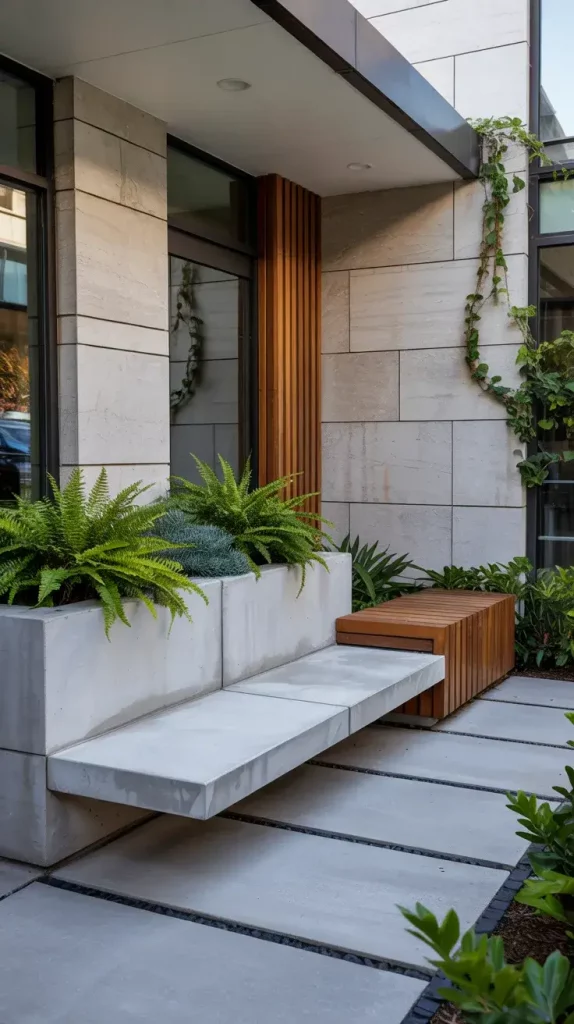
From my professional perspective, landscape architects writing for Garden Design Magazine often highlight the value of multi-functional exterior spaces. I have personally observed that entryways with seating feel more inviting and are used more frequently by homeowners and guests alike.
To complete these entryways, I would add nearby hooks, small side tables, or concealed storage to support everyday use while keeping the design cohesive.
Front Porch Entryway Ideas For A Strong First Impression
Front porch entryways in 2026 focus on balance between openness and structure. I design porches as transitional zones that provide shelter while maintaining a strong visual connection to the outdoors. Proportion, ceiling height, and alignment with the front door are essential to achieving a confident first impression.
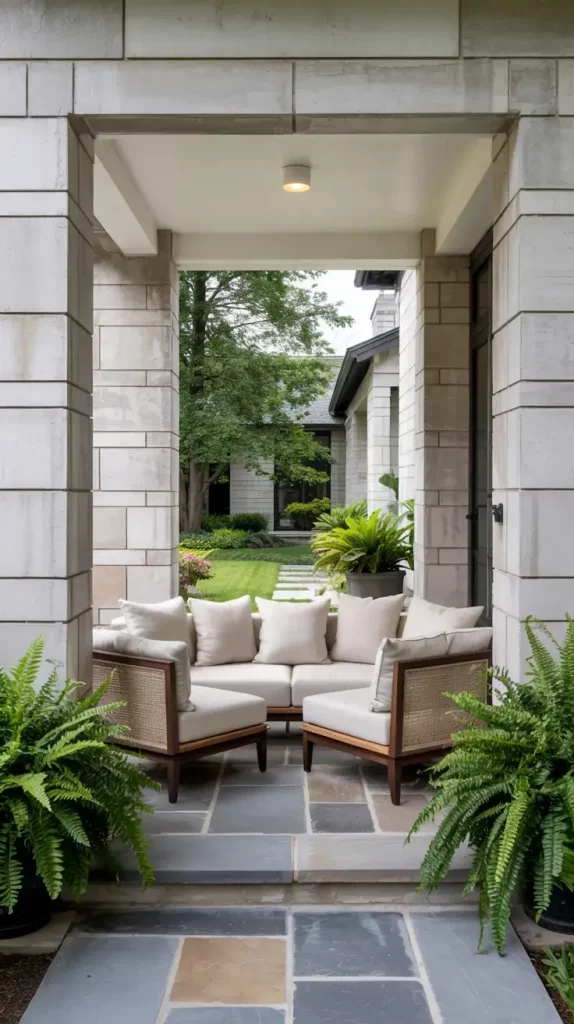
Key elements often include structured columns, defined flooring zones, and coordinated railings or screens. I recommend furniture that feels intentional, such as a pair of modern chairs or a built-in bench, rather than oversized pieces that crowd the space. Materials are selected to complement the main facade.
In my experience, designers featured in Southern Living and House Beautiful emphasize the emotional impact of a well-designed front porch. I agree, as I have seen how a thoughtful porch layout immediately communicates warmth and hospitality before a guest even reaches the door.
To enhance this type of entryway, I would incorporate ceiling-mounted lighting or fans designed for outdoor use to improve comfort and usability throughout the year.
Outdoor Entryway Ideas For Small Spaces And Narrow Entrances
Small or narrow outdoor entryways require a strategic approach in 2026. I focus on maximizing visual openness while maintaining functionality. These entryways benefit from clean lines, light-reflective materials, and carefully planned circulation that avoids congestion.
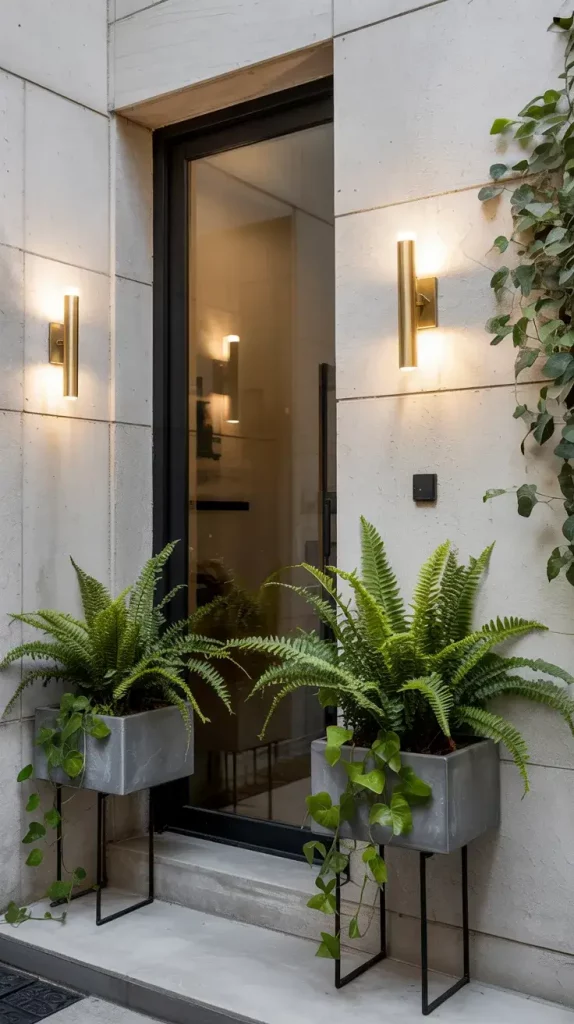
Slim-profile doors, vertical wall elements, and compact planters are essential in tight spaces. I often recommend wall-mounted lighting and built-in features to keep the floor area clear. Flooring patterns can be used to visually elongate the entryway and guide movement toward the door.
From my professional experience, space-saving strategies frequently discussed in Apartment Therapy translate well to outdoor entryways. I have found that even the smallest entrances can feel intentional and welcoming when clutter is eliminated and proportions are respected.
To complete narrow entryways, I would add mirrors or glass elements where appropriate to enhance natural light and create a greater sense of depth.
Outdoor Entryway Ideas With Covered Canopies And Overhangs
I see covered canopies and overhangs as one of the most practical and visually grounding solutions for outdoor entryways in 2026. These structures provide essential weather protection while clearly defining the entrance zone, especially in modern residential architecture where clean lines and functional forms dominate. A well-designed canopy frames the front door, enhances curb appeal, and creates a sense of arrival without overwhelming the facade.
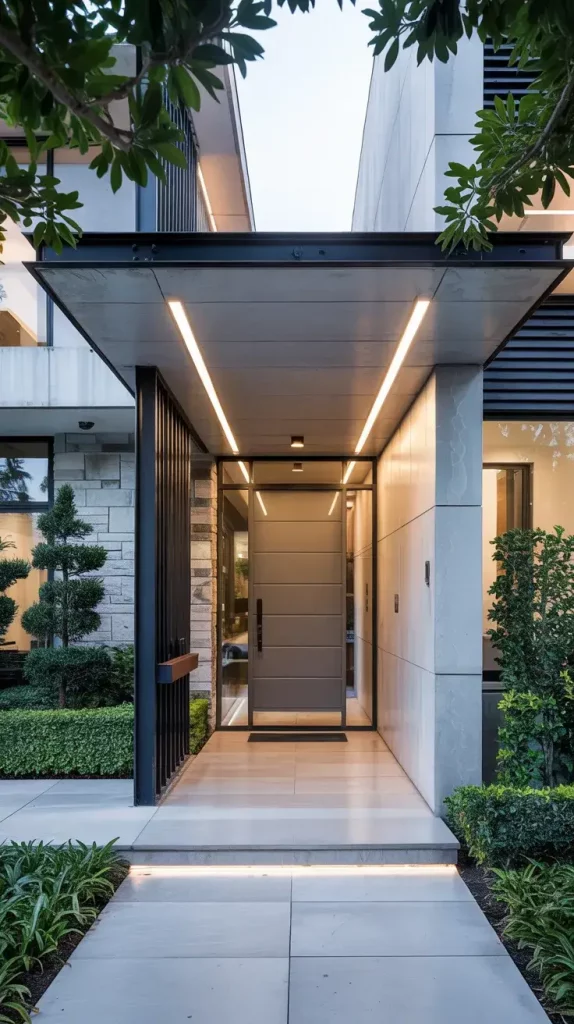
When I design this type of entryway, I focus on materials such as metal, concrete, wood-clad steel, or composite panels. Slim-profile overhangs, integrated LED strip lighting, and concealed drainage systems keep the design clean and contemporary. I often include a flush-mounted ceiling light or recessed spotlights to ensure even illumination without visual clutter.
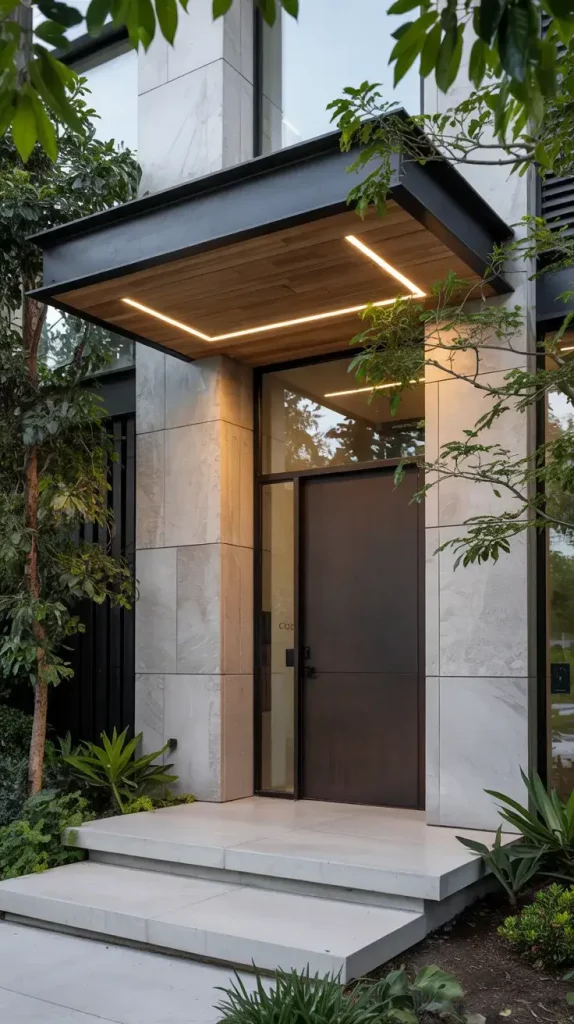
From my experience, designers featured in Architectural Digest and Dezeen consistently highlight that covered entryways improve both usability and resale value. Personally, I recommend extending the canopy just enough to shelter guests comfortably while maintaining proportional balance with the facade.
To complete this section, I would add minimalist house numbers, concealed rain chains, and subtle lighting controls that adjust brightness automatically at dusk, enhancing both comfort and energy efficiency.
Outdoor Entryway Ideas Featuring Textured Wall Finishes
Textured wall finishes play a crucial role in giving outdoor entryways depth and character in 2026. I use texture to break up flat exterior surfaces and introduce tactile interest that feels intentional rather than decorative. Stone cladding, architectural concrete, ribbed panels, and layered stucco finishes help anchor the entryway visually.
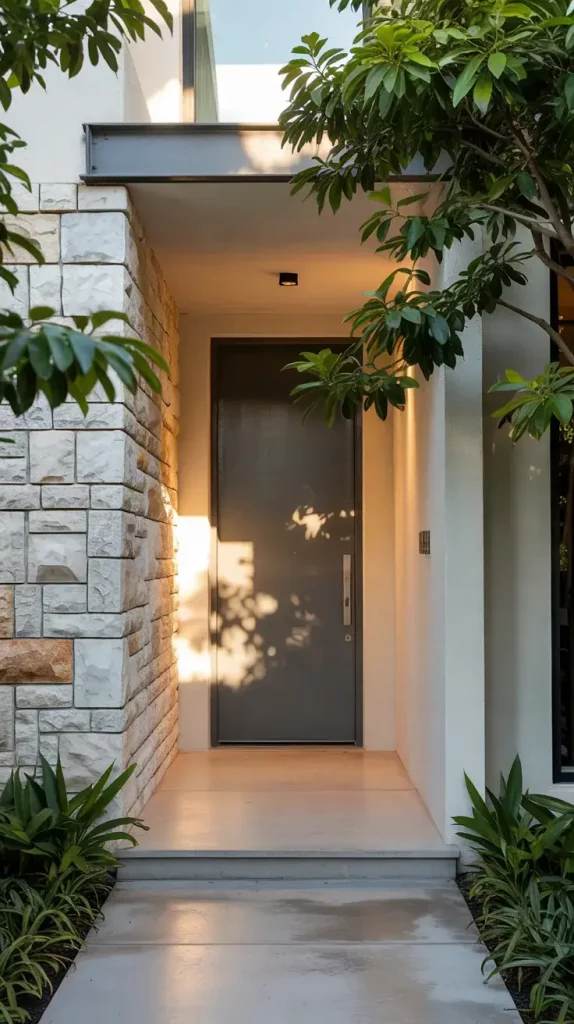
In practice, I pair textured walls with smooth doors and streamlined hardware to maintain contrast. Vertical textures emphasize height, while horizontal treatments visually widen narrow entry zones. I also pay close attention to how natural and artificial light interacts with the surface throughout the day.
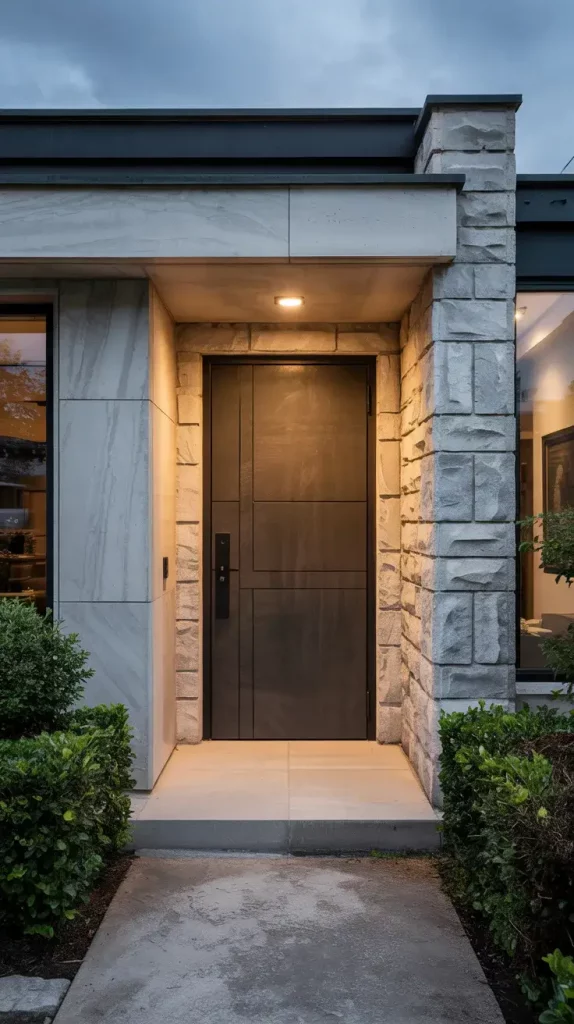
Based on my professional observations and insights from publications like Dwell, texture is increasingly used to replace excessive color or ornamentation. I’ve found that restrained textures age better and require less visual updating over time.
What this section could benefit from is the addition of subtle wall-washing lighting and protective sealants that preserve texture quality against moisture, UV exposure, and seasonal temperature changes.
Luxury Outdoor Entryway Ideas For Modern Residences
Luxury outdoor entryways in 2026 focus on precision, proportion, and material quality rather than excess. I approach luxury as a sense of calm confidence, where every element feels intentional. Large-format doors, seamless transitions between materials, and balanced negative space define this style.
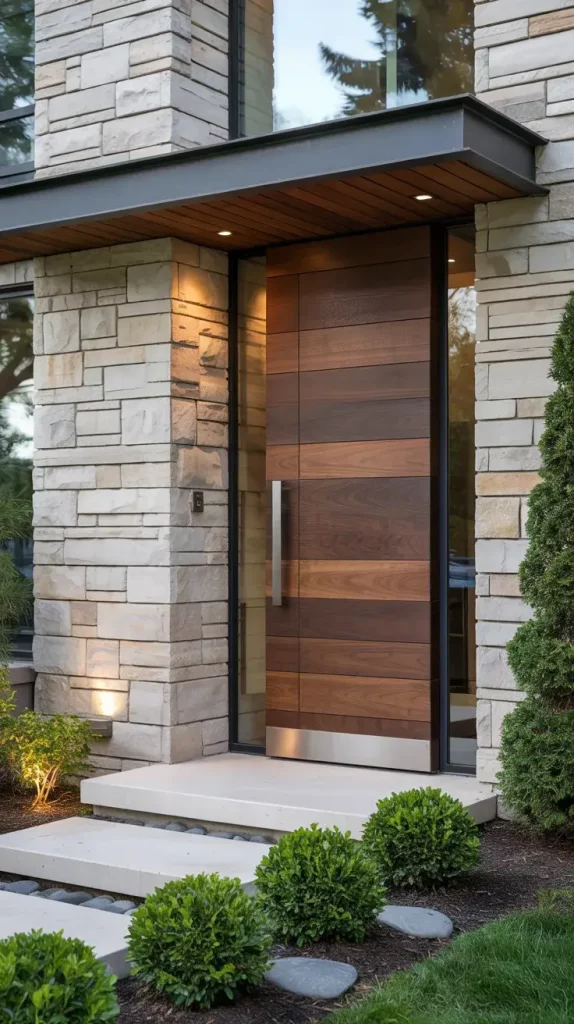
In these designs, I incorporate premium materials such as natural stone slabs, custom metal doors, architectural glass, and integrated lighting systems. Statement pivot doors, concealed door frames, and oversized handles subtly signal exclusivity without appearing showy.
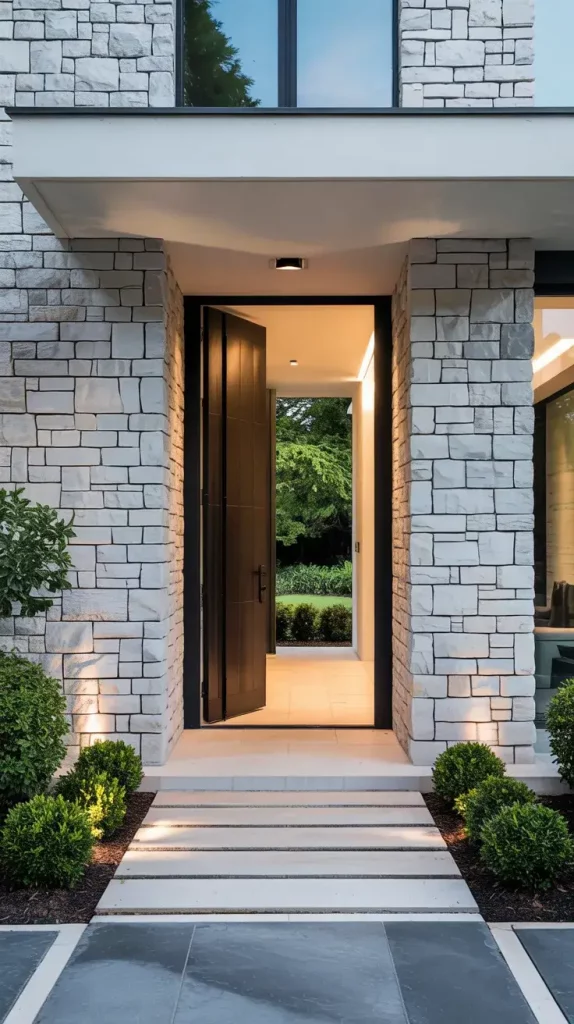
From my perspective, leading designers in the US emphasize that luxury today is about craftsmanship and longevity. I personally advise clients to invest in fewer, higher-quality elements rather than layering multiple decorative features.
To strengthen this section, I would include smart entry systems, integrated security lighting, and discreet surveillance elements that align with the overall aesthetic while enhancing functionality.
Outdoor Entryway Ideas With Symmetrical Design Elements
Symmetry remains a powerful design tool for outdoor entryways, especially in 2026 where balance and order are returning to modern architecture. I use symmetry to create a sense of stability and elegance, particularly for homes with strong central axes.
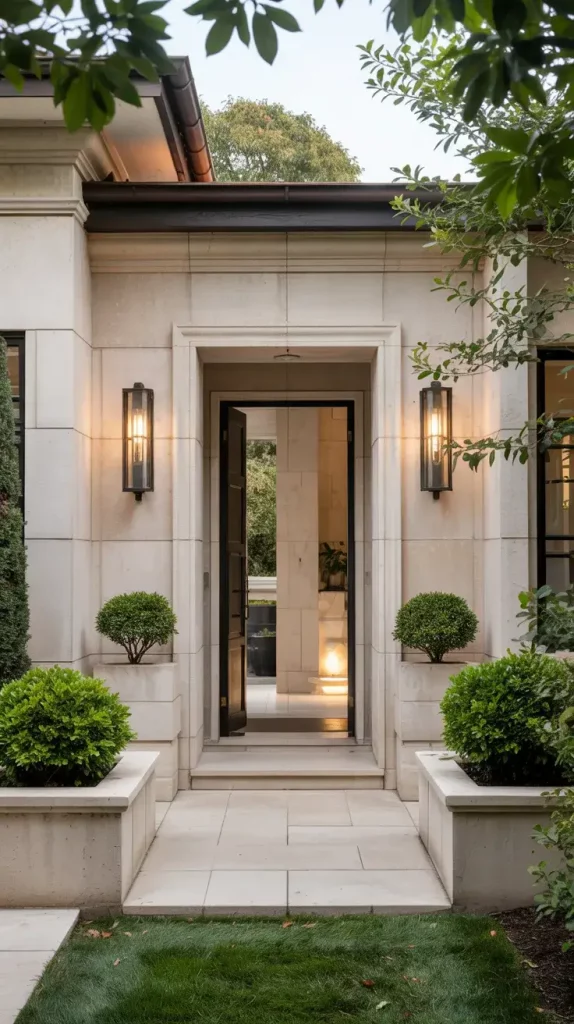
In symmetrical entryways, I often place matching wall lights, planters, columns, or benches on either side of the door. Consistent spacing and mirrored elements help guide the eye naturally toward the entrance, reinforcing clarity and intention.
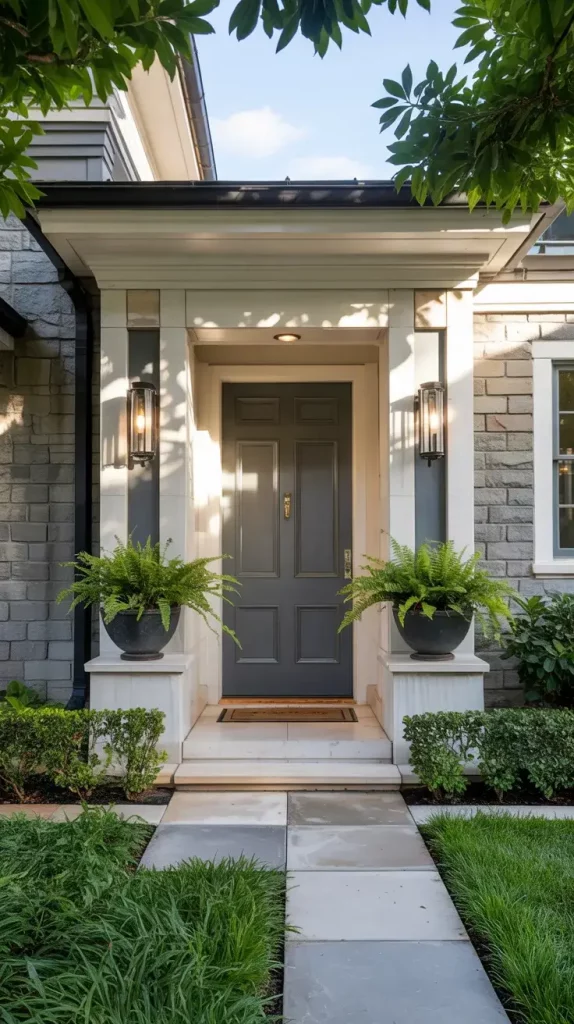
Drawing from my experience and insights shared by Better Homes and Gardens, symmetry is especially effective when combined with neutral tones and restrained materials. I’ve seen firsthand how it instantly elevates even modest entry spaces.
This section would benefit from the addition of coordinated landscaping and pathway alignment to extend the symmetry beyond the door itself.
Outdoor Entryway Ideas Using Wood Accents And Panels
Wood accents bring warmth and natural balance to outdoor entryways, making them especially relevant in 2026 design trends. I use wood to soften modern materials like concrete and metal while maintaining a clean, contemporary look.
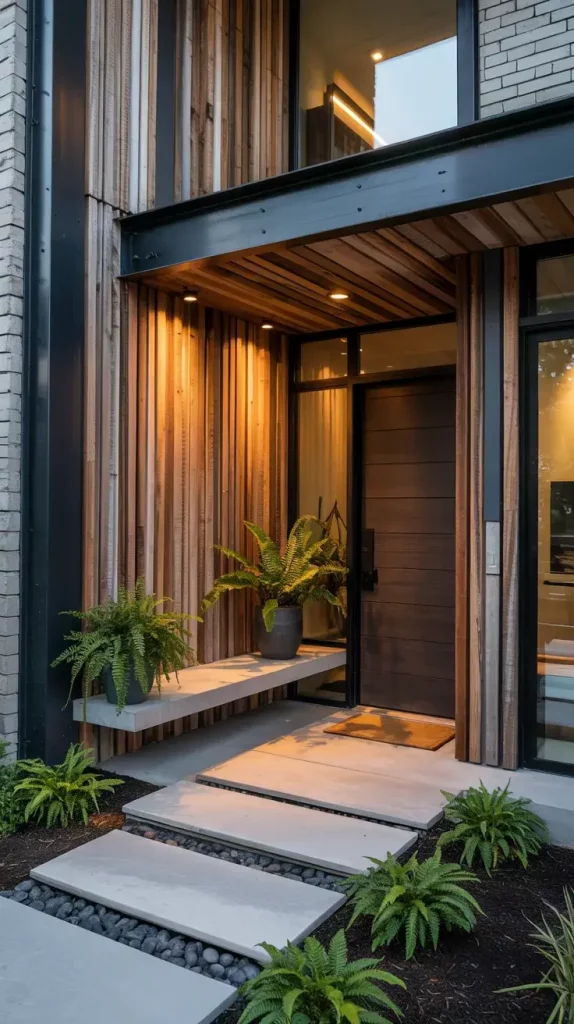
In my projects, wood appears as vertical slat panels, ceiling soffits, door surrounds, or integrated benches. Treated hardwoods, thermally modified wood, and composite alternatives ensure durability without sacrificing appearance.
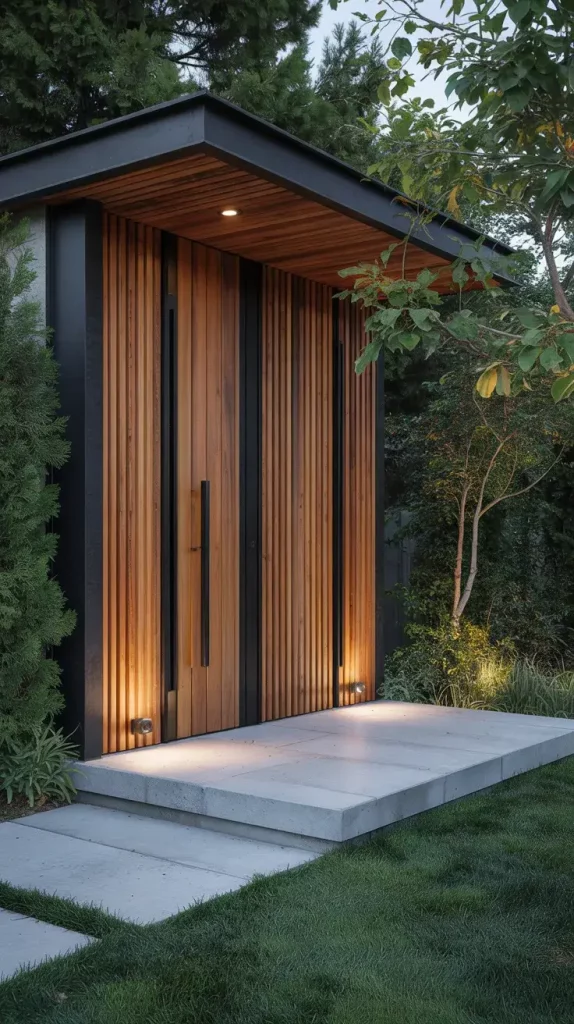
From personal experience and guidance seen in design platforms like Houzz, wood works best when used purposefully rather than excessively. I often recommend keeping wood elements concentrated in one or two focal areas.
To complete this section, I would add protective finishes, concealed fasteners, and complementary lighting that highlights wood grain without causing glare or discoloration.
Outdoor Entryway Ideas With Integrated Storage Solutions
I consider integrated storage one of the most underrated yet essential outdoor entryway ideas for 2026. A well-planned entry should support daily routines, and exterior storage helps manage clutter before it ever reaches the interior. This approach is especially practical for family homes where shoes, umbrellas, deliveries, and outdoor accessories need a dedicated place.
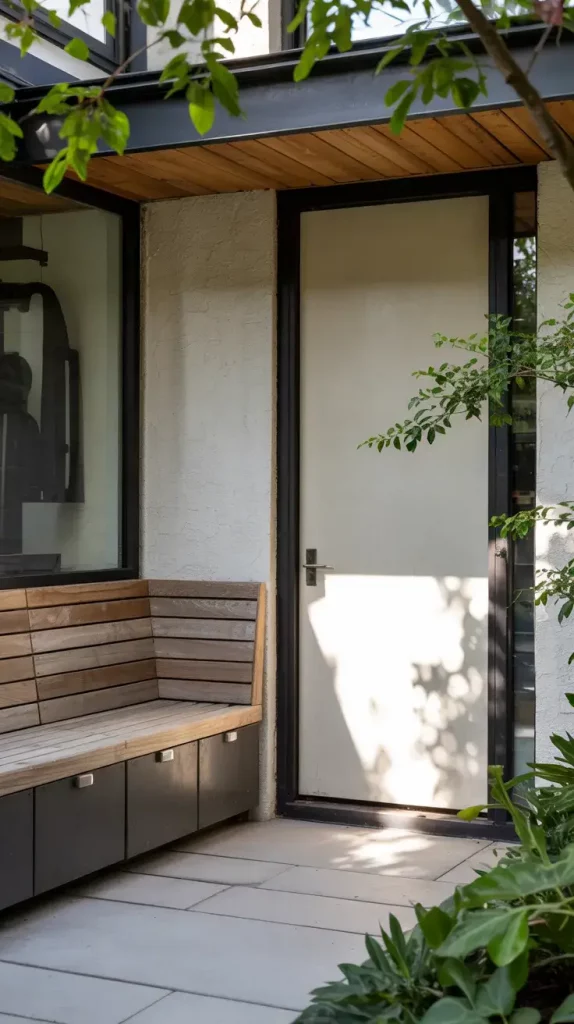
When designing integrated storage, I focus on built-in benches with concealed compartments, wall-mounted cabinets finished in weather-resistant materials, and recessed niches near the door. These elements blend into the architecture rather than looking like add-ons, preserving a clean and intentional exterior appearance.
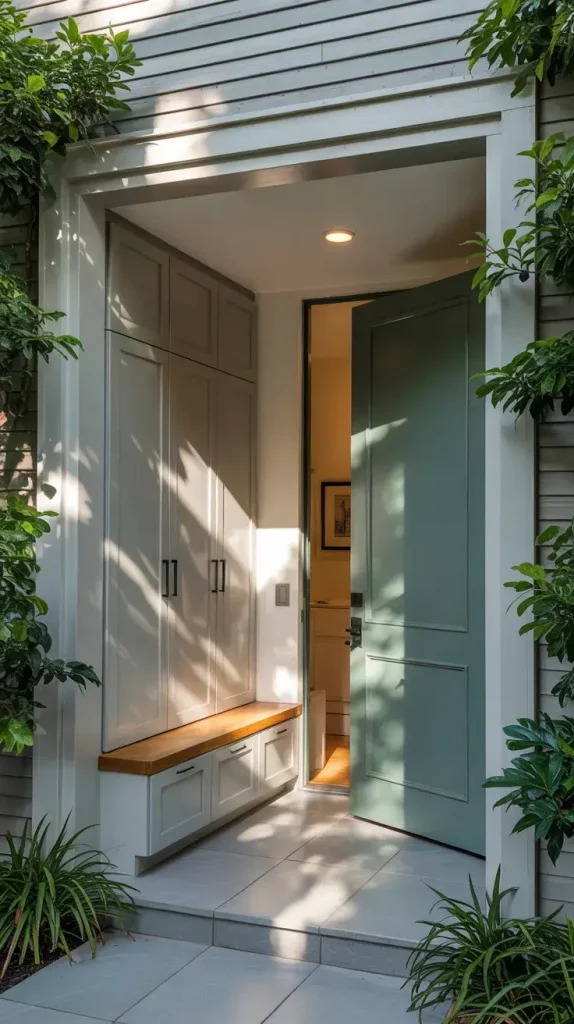
From my professional experience, designers frequently highlighted in Houzz stress that entryway storage increases functionality without sacrificing aesthetics when proportions are respected. I’ve applied this strategy in multiple projects, and it consistently improves everyday usability while keeping the entrance visually calm.
To enhance this section further, I would add soft-close mechanisms, moisture-resistant liners, and discreet ventilation to ensure stored items remain protected in all seasons.
Entryway Pathway Ideas Leading To The Front Door
The pathway leading to the front door sets the tone long before visitors reach the entry itself. I see this transitional space as a visual guide that should feel intentional, comfortable, and aligned with the home’s architecture. In 2026, pathways are no longer purely functional but integral to the overall entryway composition.
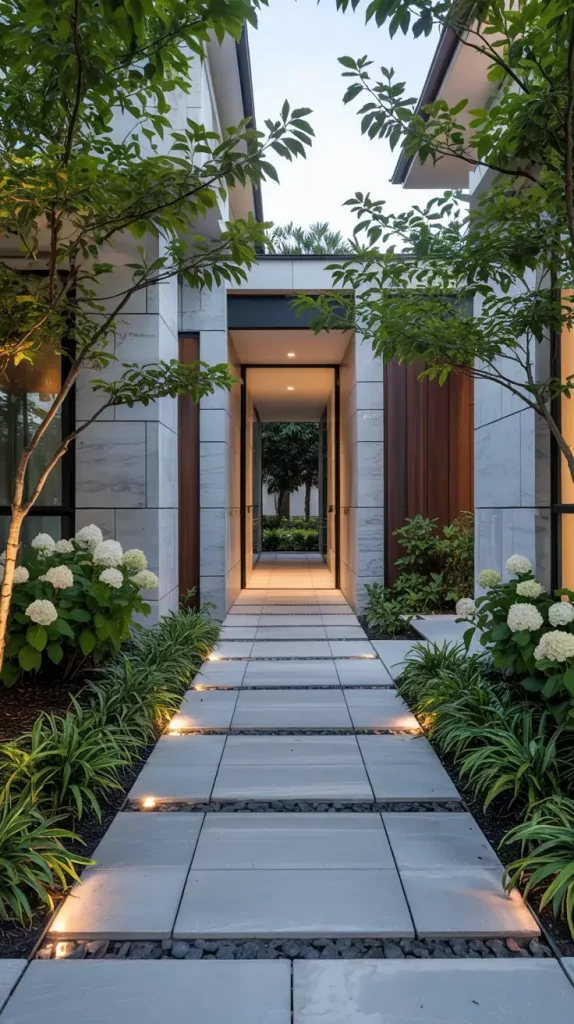
In my designs, I use large-format pavers, poured concrete slabs, natural stone, or linear stepping stones arranged with precise spacing. Low-profile lighting along the edges enhances safety and highlights the path at night without overwhelming the landscape.
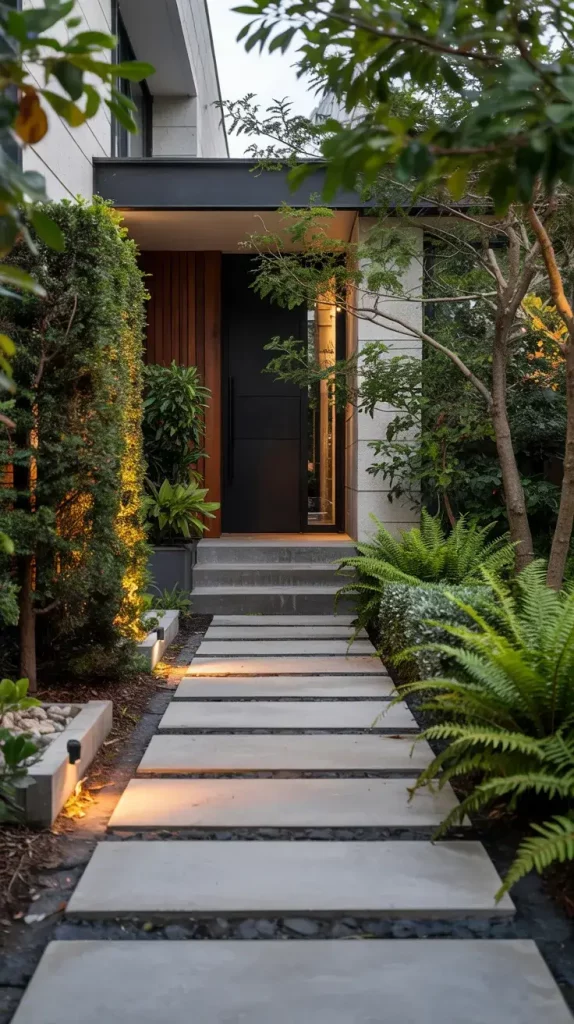
Based on my experience and insights shared by landscape architects in publications like Architectural Digest, clear directional pathways improve both aesthetics and accessibility. I always recommend avoiding overly decorative patterns that distract from the entrance itself.
This section could be strengthened by incorporating subtle elevation changes, integrated drainage solutions, and tactile surface variations to improve both comfort and durability.
Outdoor Entryway Ideas With Sculptural Decor And Art Pieces
Sculptural decor introduces a strong visual identity to outdoor entryways when used with restraint. I approach this idea as a way to add personality and artistic value without overwhelming the architecture. In 2026, sculptural elements tend to be minimal, abstract, and material-driven.
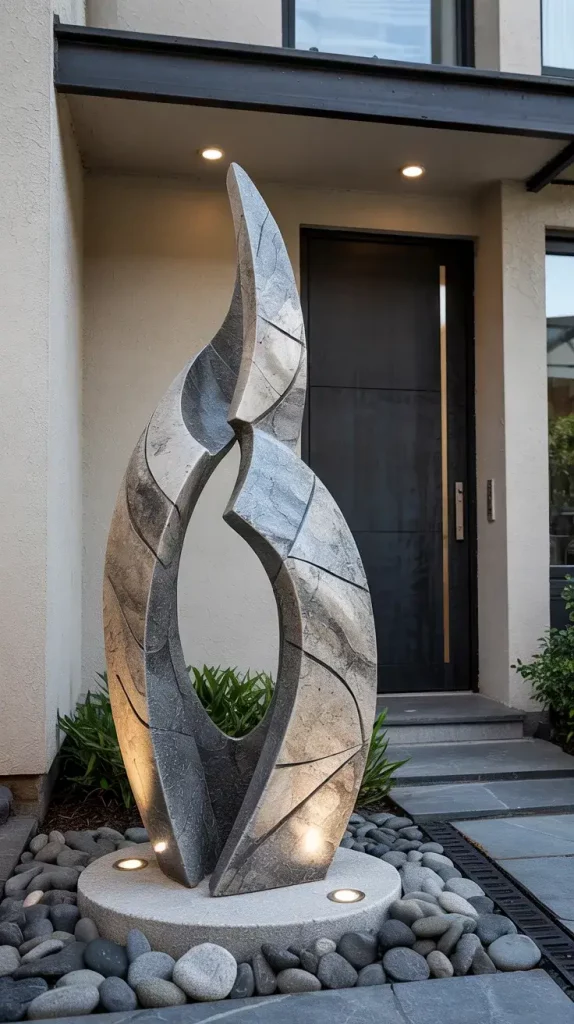
I typically place sculptures near the door, along adjacent walls, or integrated into planters. Materials such as stone, metal, or cast concrete work well outdoors and age gracefully. The scale of the piece is critical; it should complement the entryway rather than dominate it.
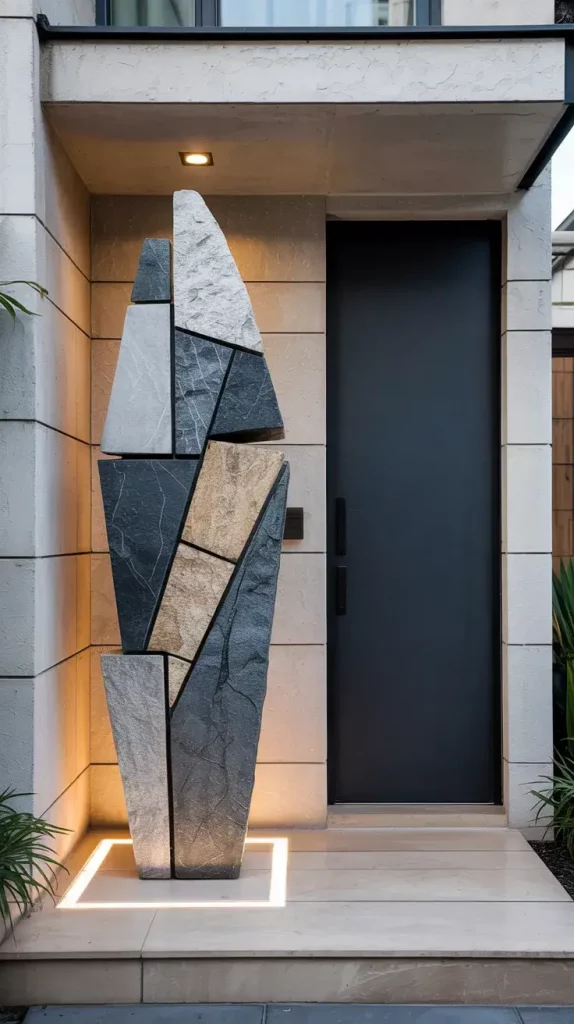
From my own projects and advice echoed by curators featured in Dezeen, sculptural elements work best when paired with neutral backgrounds and intentional lighting. I’ve seen how a single well-chosen piece can elevate an otherwise simple entrance.
To complete this section, I would add focused accent lighting and weather-treated finishes to preserve the artwork while maintaining visual clarity after dark.
Outdoor Entryway Ideas Using Neutral Color Palettes
Neutral color palettes continue to define outdoor entryway design in 2026, offering longevity and versatility. I use neutrals to create calm, cohesive entrances that adapt easily to seasonal changes and evolving exterior trends.
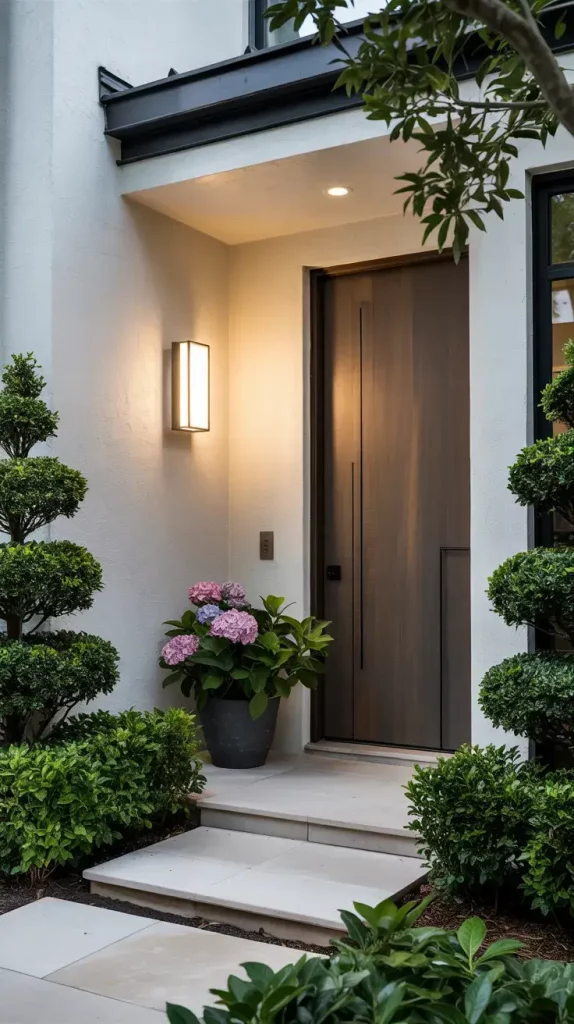
In practice, I rely on tones such as soft gray, beige, warm white, and muted taupe across walls, doors, and flooring. These shades allow materials and textures to take precedence while maintaining visual balance. Hardware and lighting fixtures are often finished in matte black or brushed metal for contrast.
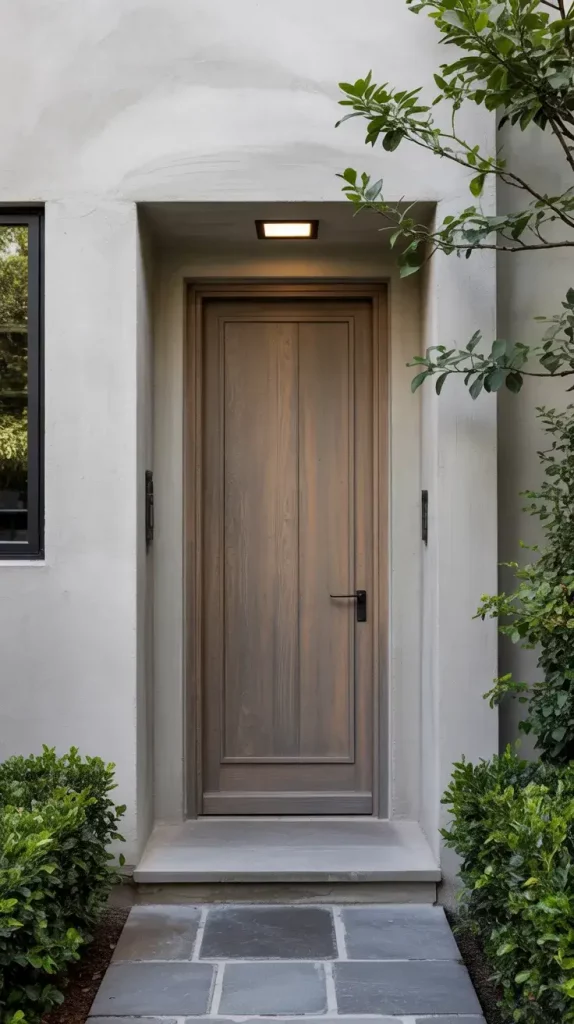
From my experience and guidance found in Better Homes and Gardens, neutral palettes enhance architectural clarity and reduce visual fatigue. I’ve consistently found them easier to maintain and more appealing to a wide range of homeowners.
This section would benefit from subtle layering, such as tonal variations and textural contrast, to prevent the palette from appearing flat or monotonous.
Bold Outdoor Entryway Ideas With Dark And Moody Finishes
Dark and moody finishes are becoming a defining statement for outdoor entryways in 2026. I see this approach as a confident design choice that adds depth and drama while remaining refined when executed properly.
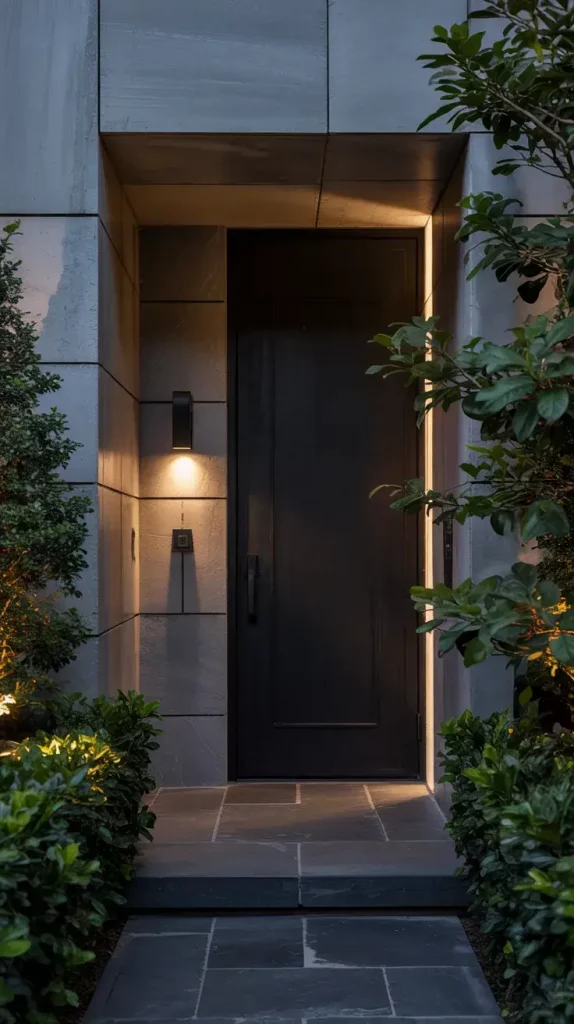
In my designs, I use charcoal, deep brown, and near-black finishes on doors, wall panels, and trim. These darker elements pair well with controlled lighting, highlighting architectural lines and textures rather than hiding them.
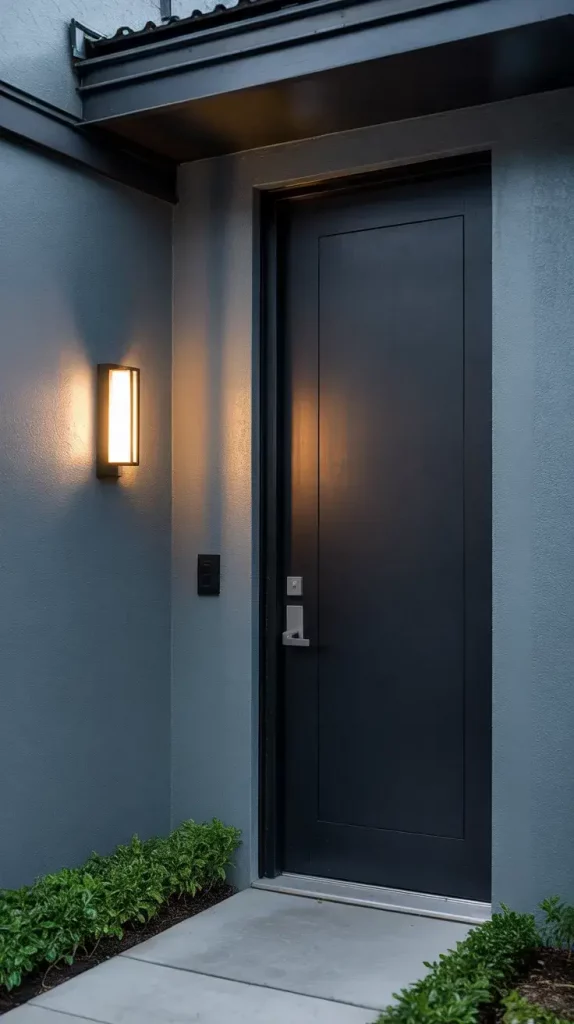
From my professional experience and trends discussed in modern design media, dark entryways work best when balanced with natural materials or strategic lighting. I’ve applied this concept successfully in contemporary homes where strong contrast enhances curb appeal.
To complete this section, I would add layered lighting, reflective surfaces, and lighter accent materials to maintain balance and prevent the space from feeling overly heavy.
Outdoor Entryway Ideas With Glass And Metal Details
I see glass and metal becoming defining materials for outdoor entryways in 2026 because they offer a clean, architectural look while remaining highly durable. In exterior spaces, these materials help create a sense of openness and light, even in compact entryways. When used correctly, glass panels and metal frames visually expand the area and give the entrance a refined, modern presence without feeling heavy or overdesigned.
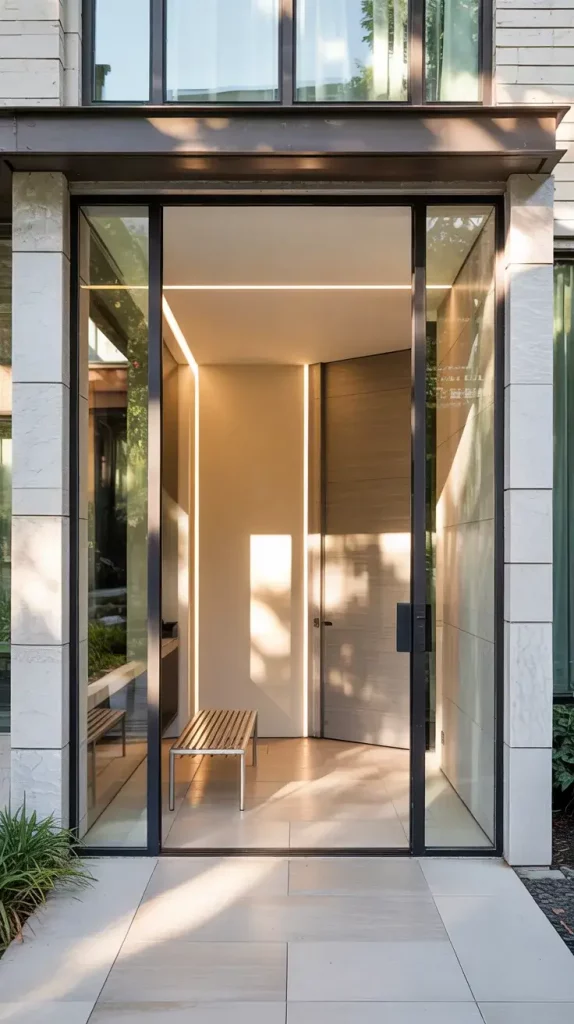
In my designs, I often combine frosted or lightly tinted glass panels with aluminum or steel framing. Glass side panels around the front door allow natural light to reach the entry zone, while metal elements such as slim railings, canopy supports, or door hardware add structure and contrast. I also recommend metal benches or wall-mounted shelves with corrosion-resistant finishes, as they provide seating or storage without cluttering the space.
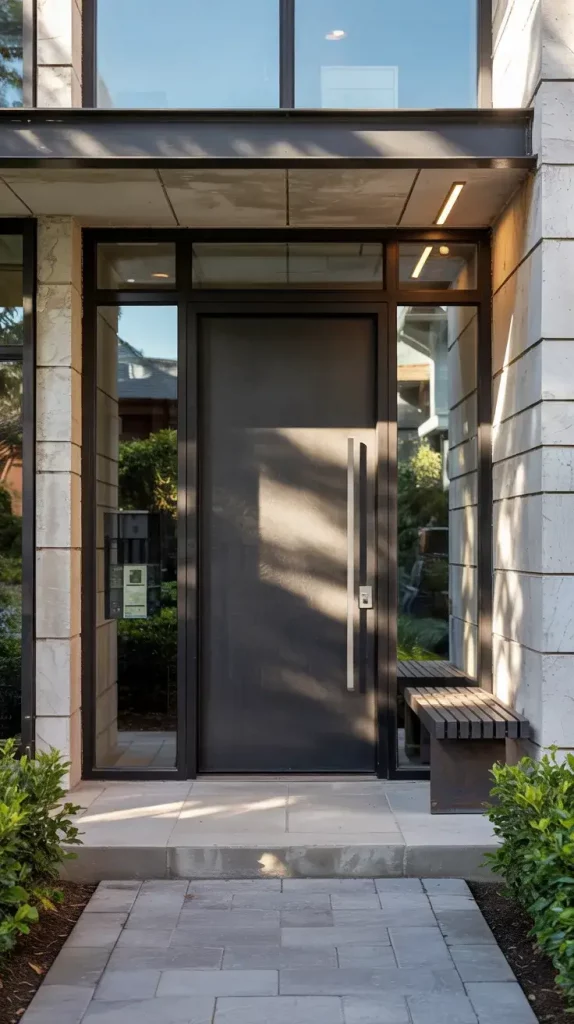
From experience, this approach works especially well for homeowners who want a contemporary exterior that still feels welcoming. Designers frequently featured in Architectural Digest note that combining transparent and industrial materials helps entryways feel more intentional and connected to modern architecture. I’ve found that even small amounts of glass and metal can dramatically elevate the look of an exterior entrance.
What is often missing in these designs is layered lighting. I always suggest adding integrated LED strips along metal edges or soft wall-mounted fixtures to prevent the glass from feeling cold at night and to enhance safety after dark.
Outdoor Entryway Ideas That Blend Indoor And Outdoor Design
In 2026, one of the strongest trends I notice is the seamless blending of indoor and outdoor design at the entryway. This approach makes the transition into the home feel natural and cohesive, especially when materials and colors echo what’s used inside. I focus on continuity, ensuring the outdoor entryway feels like the first room of the house rather than a separate exterior zone.
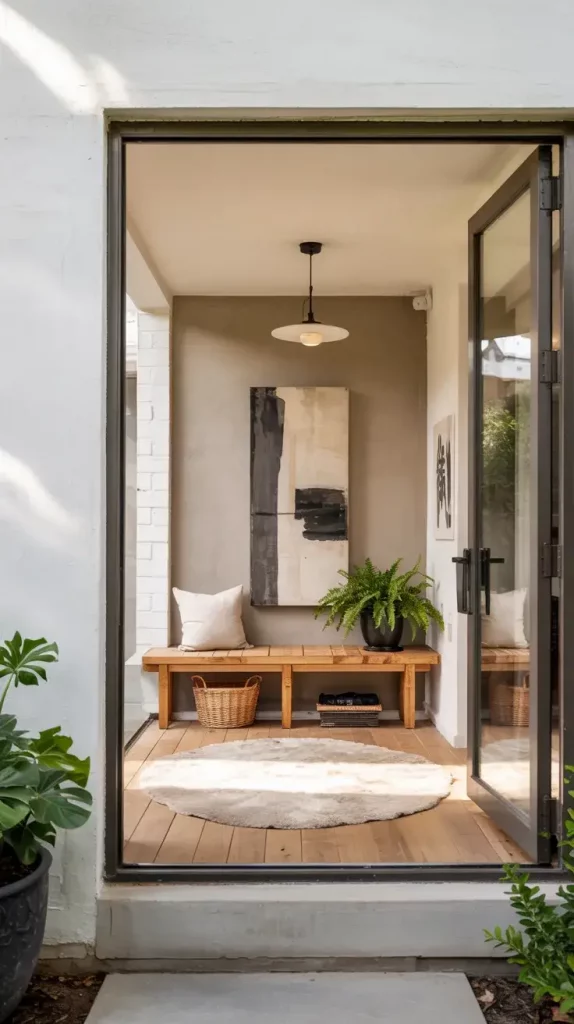
I usually recommend using similar flooring tones, such as porcelain tiles that resemble interior finishes, paired with exterior-grade rugs and streamlined furniture. Wooden benches treated for outdoor use, minimalist console tables, and built-in storage niches help mirror interior entry spaces while remaining weather-resistant. Large pivot or glass-paneled doors further reinforce this indoor-outdoor connection.
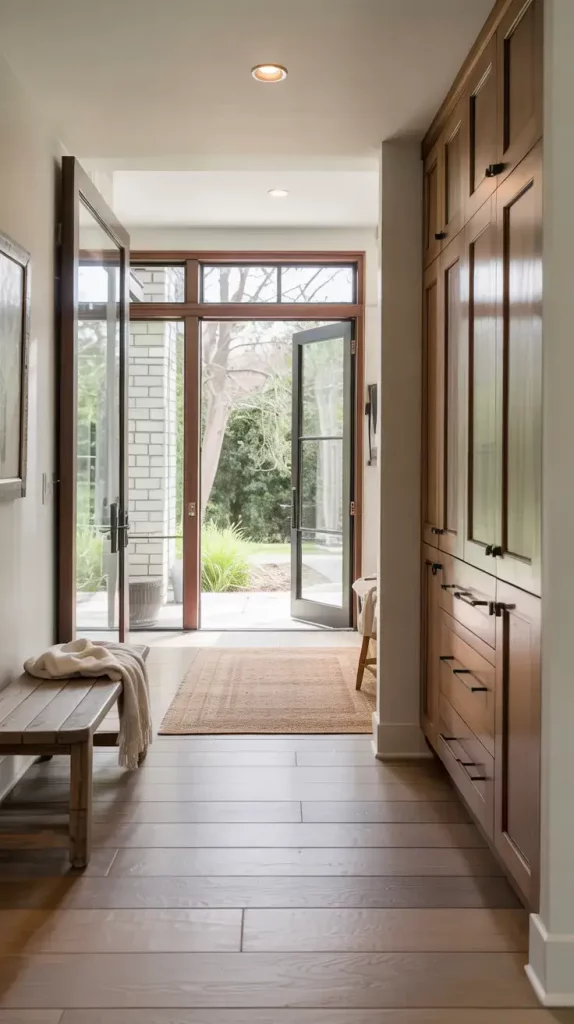
Personally, I’ve seen this strategy work exceptionally well in homes where the entryway is visible from the living room or hallway. Designers from Dwell often highlight the importance of visual flow, and I agree that repeating shapes, textures, and proportions creates a calmer, more organized first impression.
To strengthen this concept, I would add subtle decorative accents like outdoor artwork or sculptural planters that visually match interior decor, ensuring the entryway truly feels like a continuation of the home’s design language.
Outdoor Entryway Ideas For Townhouses And Urban Homes
Urban homes and townhouses require outdoor entryways that are compact yet highly functional, and in 2026 this balance becomes even more important. I approach these spaces with efficiency in mind, focusing on vertical layouts and streamlined forms that maximize usability without overwhelming limited square footage.
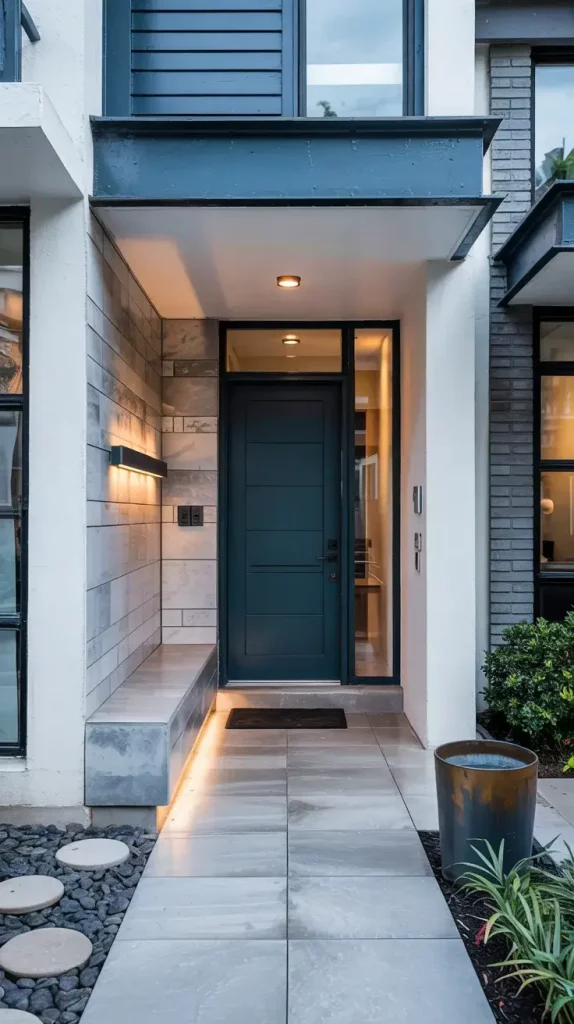
In these designs, I rely on slim benches, wall-mounted storage, and integrated handrails that double as design elements. Durable materials such as concrete, metal, and composite wood work well in urban environments, while recessed lighting helps maintain visibility in narrow or shaded entry zones. A strong front door design often becomes the focal point due to limited surrounding space.
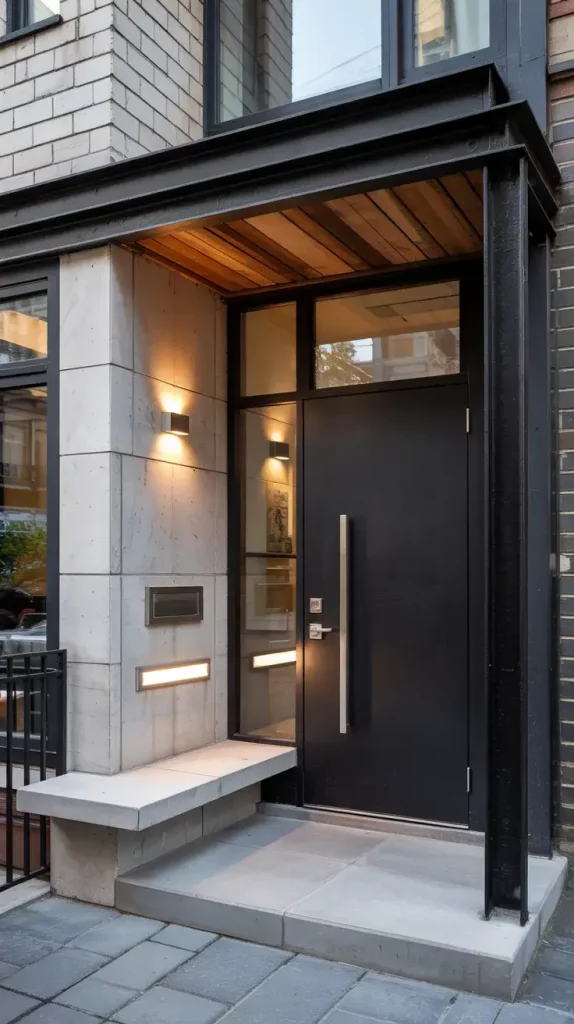
From my experience, less is truly more in these settings. Publications like Dezeen often emphasize clarity and restraint in urban architecture, and I’ve found that a well-edited entryway feels more inviting than one filled with unnecessary decor. Thoughtful proportions and clean detailing matter more than decoration.
What’s often overlooked here is acoustic comfort. I recommend adding subtle sound-absorbing surfaces, such as textured wall panels or planters, to soften street noise and improve the overall experience at the entrance.
Outdoor Entryway Ideas With Smart Lighting And Technology
Smart technology plays a growing role in outdoor entryway design for 2026, especially when it comes to safety and convenience. I view the entryway as the ideal place to integrate intelligent systems that improve everyday routines while remaining visually discreet.
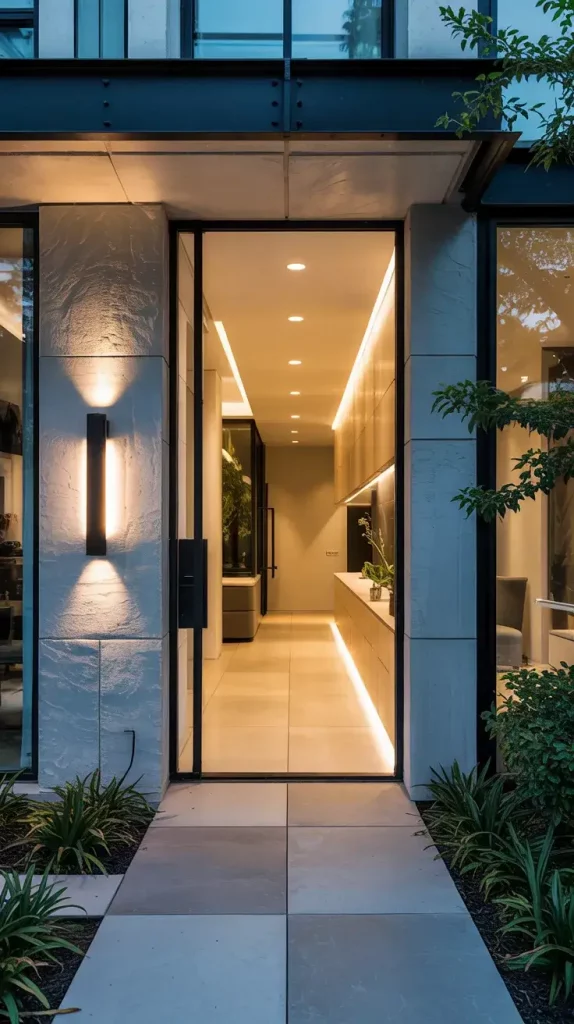
Motion-sensor lighting, smart doorbells, and automated door locks are elements I regularly incorporate. I prefer concealed lighting fixtures, such as recessed ceiling lights or step-integrated LEDs, to maintain a clean appearance. Touchless lighting controls and app-connected systems allow homeowners to customize brightness and timing without visual clutter.
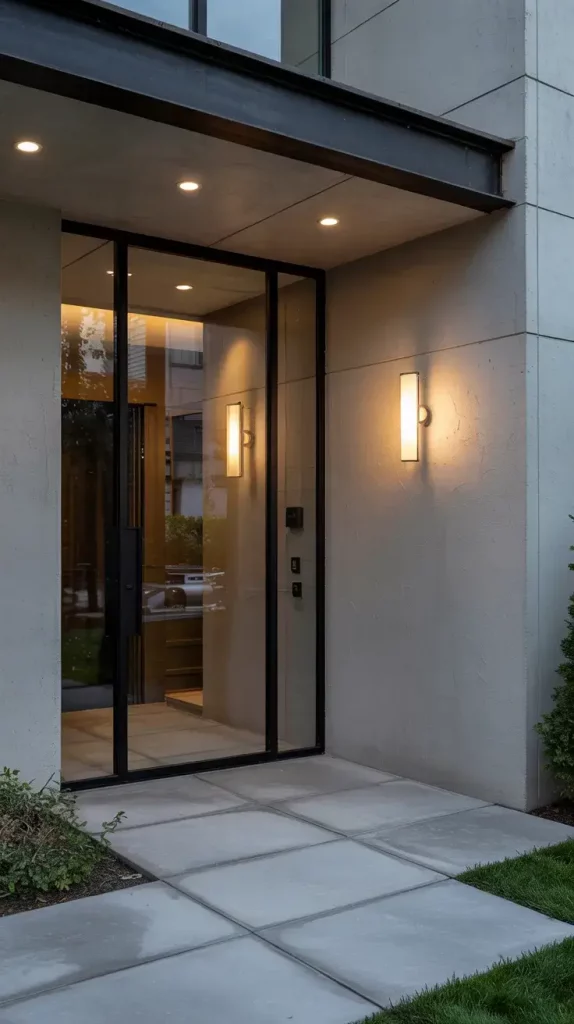
In my professional opinion, technology should enhance the design rather than dominate it. Experts from Smart Home Solver often stress that good smart design is nearly invisible, and I fully agree. When integrated thoughtfully, these features improve security and comfort while preserving a refined exterior aesthetic.
To complete this setup, I always suggest adding a weather-protected control hub or concealed panel, ensuring the technology remains accessible without disrupting the visual simplicity of the entryway.
Outdoor Entryway Ideas Focused On Clean Lines And Geometry
Clean lines and strong geometry define many outdoor entryways in 2026, reflecting a broader move toward architectural clarity. I focus on symmetry, clear angles, and repetition to create entrances that feel intentional and visually stable. This approach works well across different climates and architectural styles.
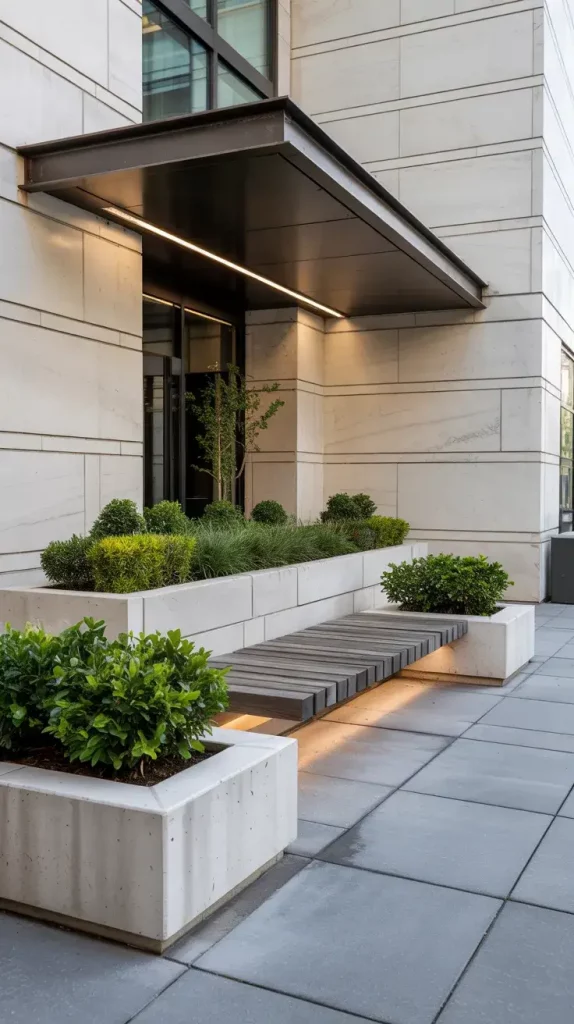
Rectangular planters, linear benches, and sharply defined canopies are key elements I use in these designs. Materials like concrete, stone, and metal emphasize straight lines, while large-format tiles reduce visual noise. Even door handles and lighting fixtures are selected for their geometric simplicity.
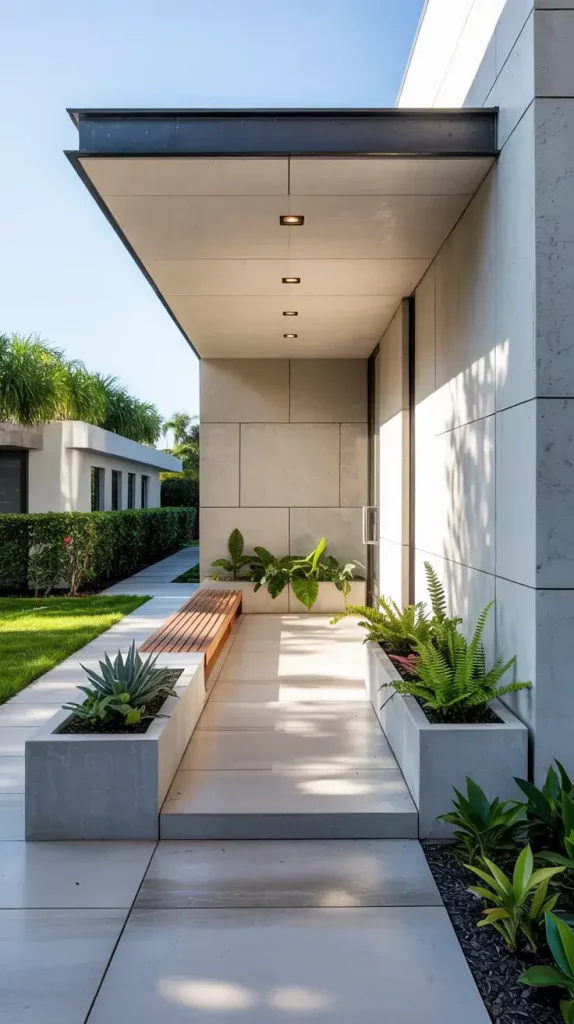
I’ve found that homeowners appreciate how calming and timeless this style feels. According to design insights from Interior Design Magazine, strong geometry helps create visual order, especially in exterior spaces exposed to varying light and weather conditions. My own projects confirm that simplicity often leaves the strongest impression.
What I would add here is a single contrasting element, such as a curved planter or rounded light fixture, to prevent the design from feeling too rigid while still respecting the geometric concept.
Outdoor Entryway Ideas With Vertical Design Elements
When I design outdoor entryways for 2026, vertical elements are one of my preferred tools for creating presence without expanding the footprint. Vertical design helps guide the eye upward, making the entrance feel taller and more architectural, which is especially valuable for narrow facades or compact lots. I focus on height, rhythm, and proportion to give the entryway a strong visual identity.
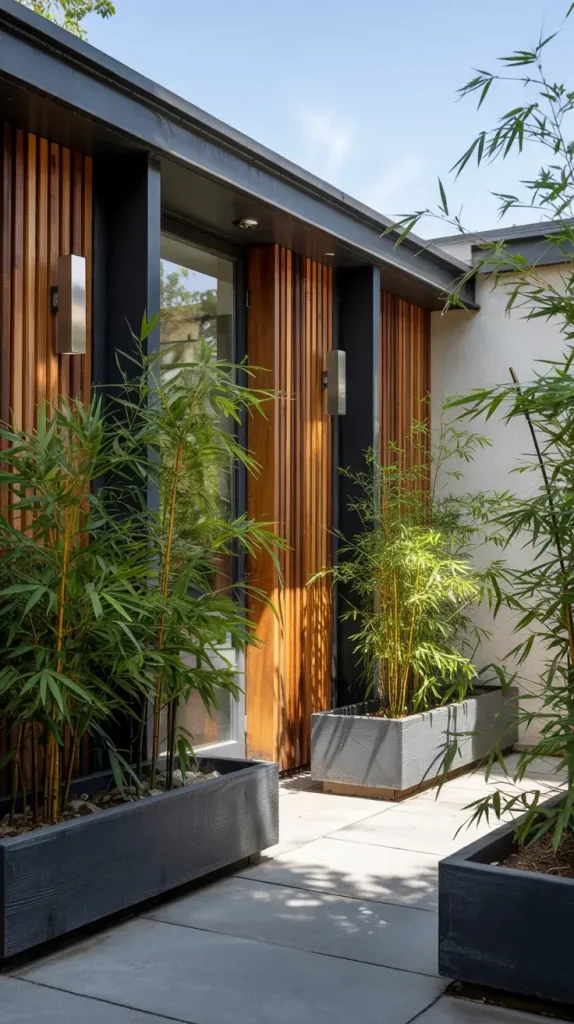
I typically incorporate vertical wood or composite slats, tall metal screens, or elongated wall panels that frame the front door. Vertical lighting fixtures, slim wall sconces, and tall planters reinforce this effect while remaining practical. These elements also provide privacy and subtle shading, which improves comfort at the entrance throughout the day.
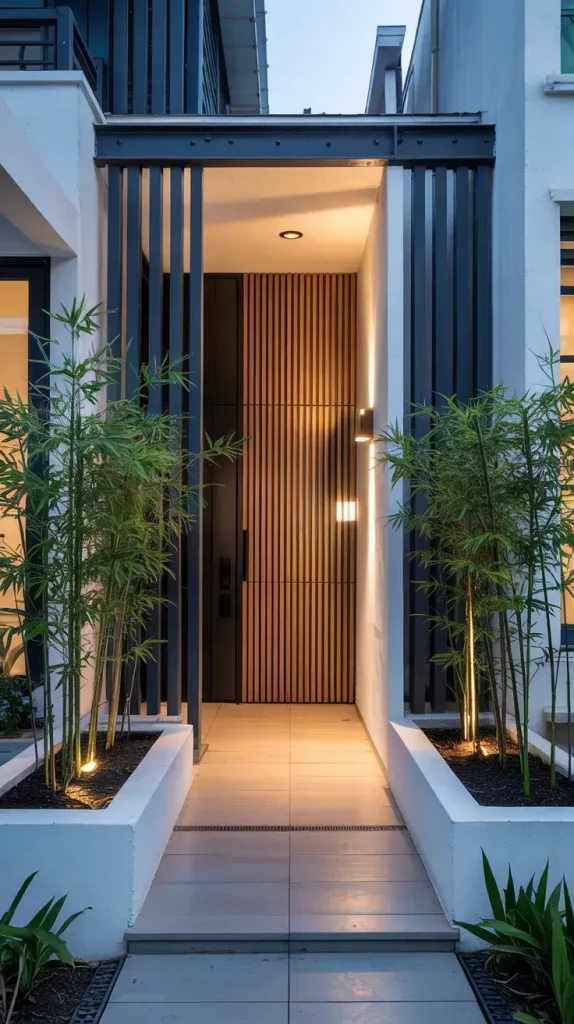
From my experience, vertical emphasis instantly makes an entryway feel more intentional and modern. Many architects featured in contemporary US architecture publications highlight vertical articulation as a way to add depth and sophistication to exterior facades. I’ve seen this approach dramatically improve curb appeal even with minimal materials.
What I often add to complete this look is a vertical canopy or overhang aligned with the door height. This strengthens the composition while offering weather protection and visual balance.
Outdoor Entryway Ideas Using Sustainable Materials In 2026
Sustainability is no longer optional in outdoor entryway design, and in 2026 I see it as a core design principle rather than a trend. I focus on materials that are durable, responsibly sourced, and low-maintenance, ensuring the entryway performs well over time while reducing environmental impact.
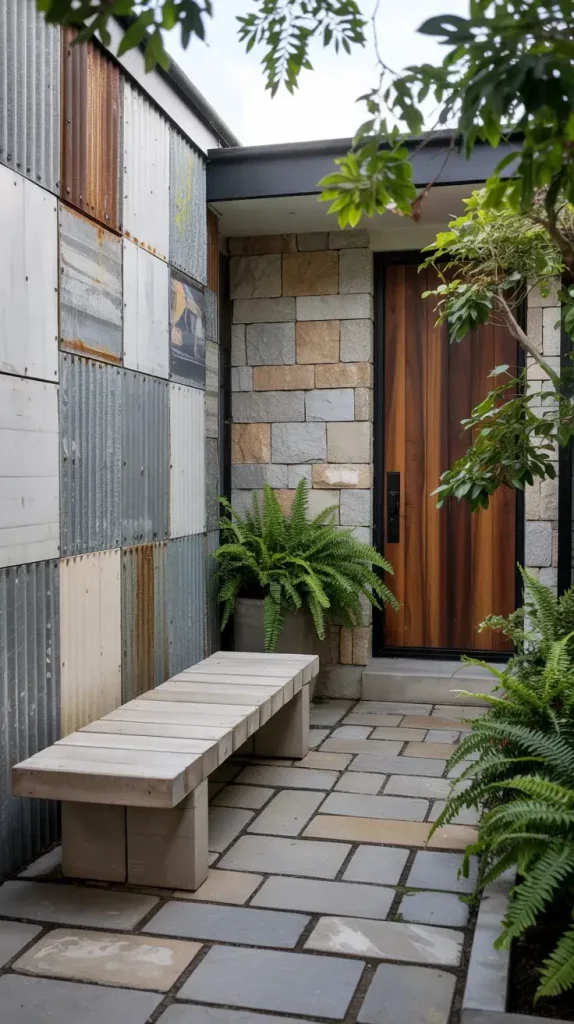
In practice, I recommend recycled metal, composite wood, locally sourced stone, and permeable paving materials. These choices hold up well in outdoor conditions and reduce long-term maintenance. Furniture pieces like benches or storage units made from treated reclaimed wood add warmth while aligning with sustainability goals.
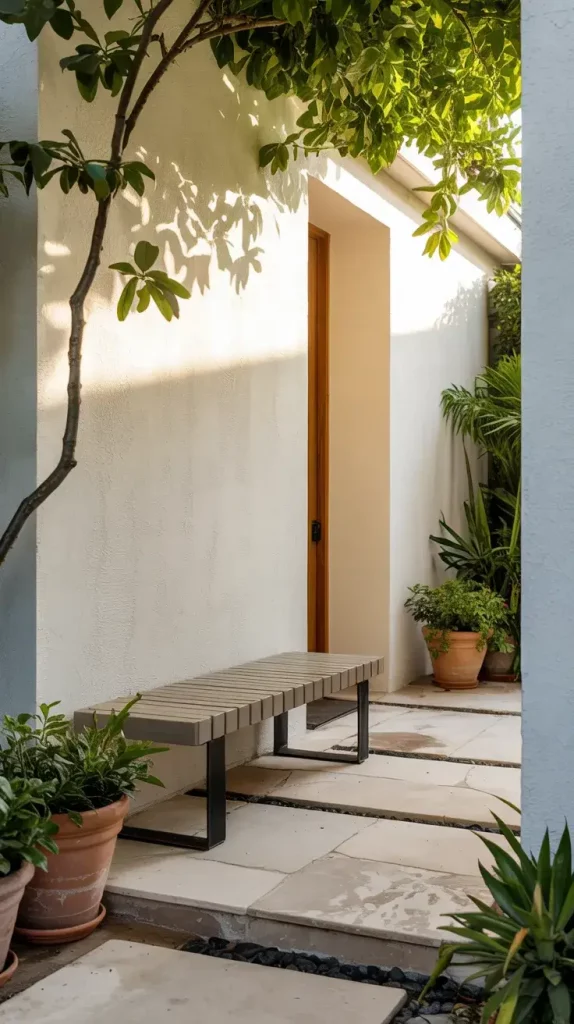
Personally, I’ve found that sustainable materials often outperform traditional options when chosen carefully. Many US-based design firms and publications emphasize lifecycle thinking, and I agree that investing in better materials upfront leads to fewer replacements and repairs later. Sustainability, in my view, enhances both design integrity and practicality.
To strengthen this section, I would include clear drainage planning and rainwater management solutions, ensuring that eco-friendly materials are supported by equally responsible site design.
Outdoor Entryway Ideas For Year-Round Visual Appeal
Designing an outdoor entryway that looks inviting in every season is a priority for me in 2026. I approach this by selecting materials, layouts, and features that adapt visually and functionally throughout the year, regardless of weather or lighting conditions.
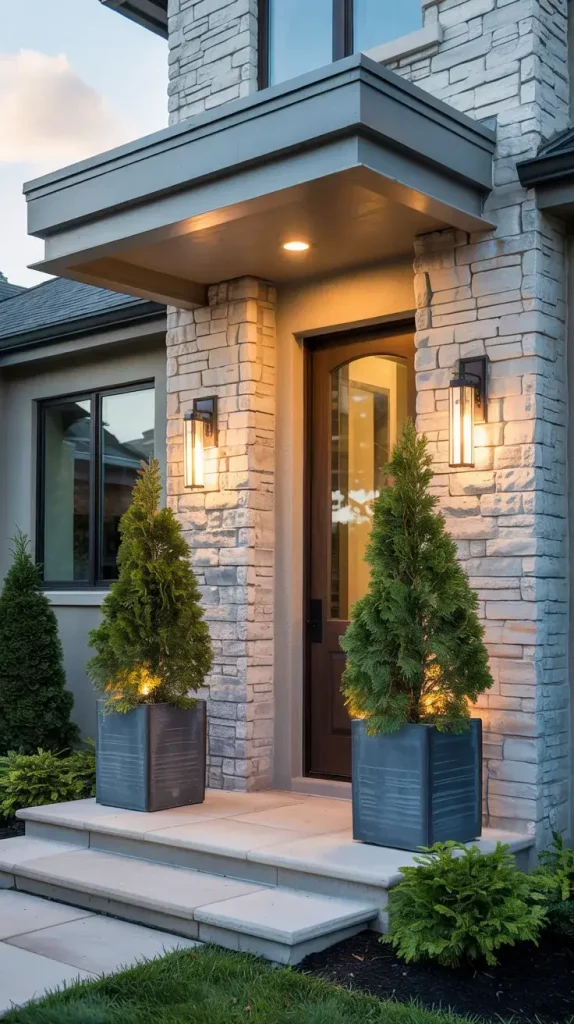
I rely on neutral, timeless finishes paired with layered lighting to maintain consistency from season to season. Covered entryways, durable flooring, and weather-resistant seating ensure usability year-round. I also prefer structured planters with evergreen or architectural plants that maintain form even in colder months.
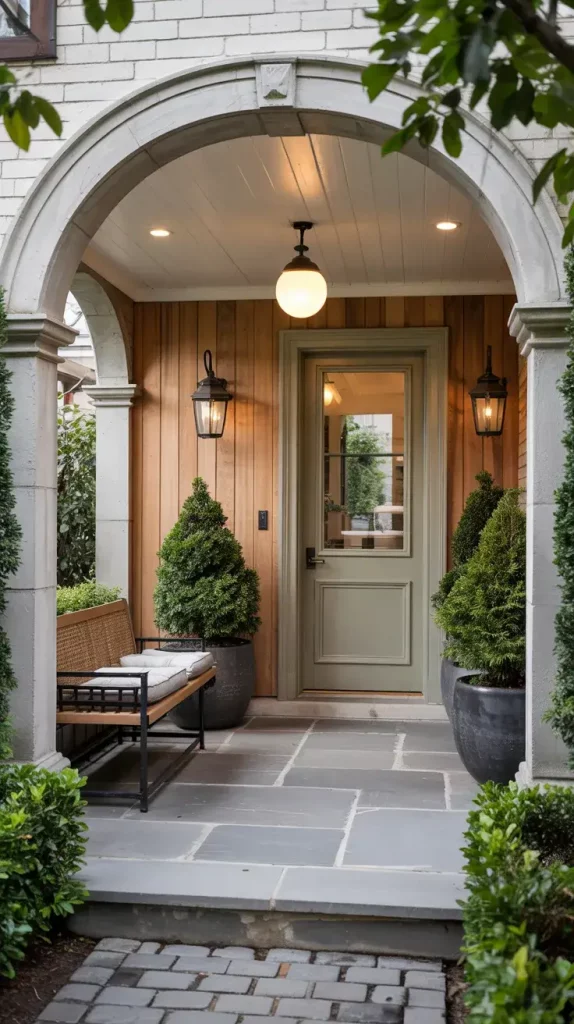
Based on my experience, homeowners appreciate entryways that don’t feel temporary or seasonal. Design experts often point out that year-round appeal comes from restraint and material quality rather than decoration. I’ve seen that a well-balanced entryway remains attractive without constant updates.
What I usually add here is adjustable lighting temperature, allowing the space to feel warmer in winter and cooler in summer, subtly reinforcing seasonal comfort without changing the design.
Creative Outdoor Entryway Ideas That Stand Out In 2026
Creativity in outdoor entryways for 2026 is less about excess and more about originality. I focus on one strong idea that sets the entrance apart while still respecting the home’s architecture. This could be an unexpected material combination, a sculptural form, or a bold layout decision.
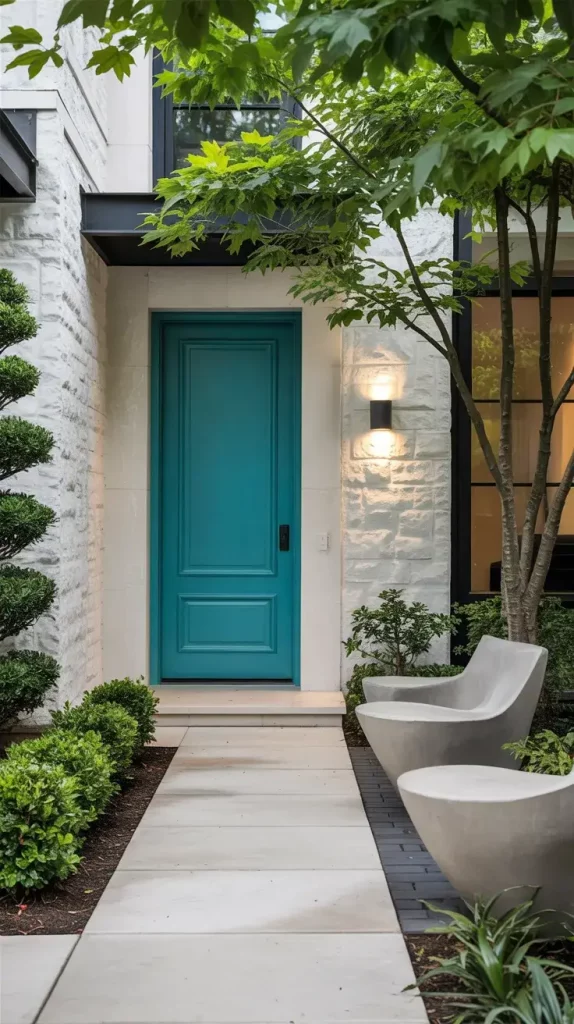
In these designs, I might use a statement front door, asymmetrical steps, custom lighting installations, or integrated seating that doubles as sculpture. The key is that every creative element still serves a function and feels intentional rather than decorative for its own sake.
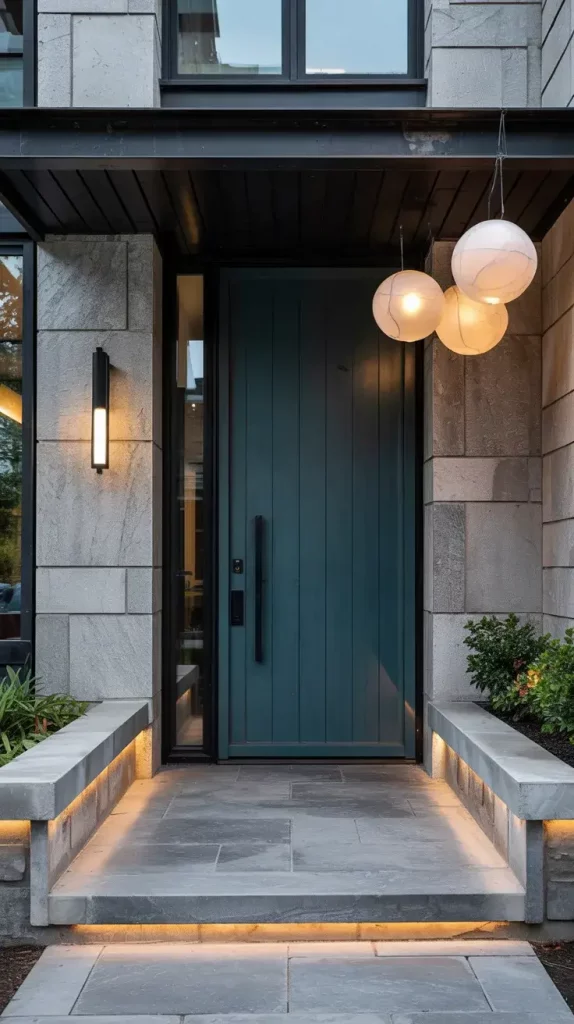
From my professional perspective, the most memorable entryways are confident but restrained. Designers frequently stress that originality comes from clarity, not complexity. I’ve learned that one well-executed idea often has more impact than multiple competing features.
To complete a creative entryway, I recommend incorporating a subtle personal detail, such as custom hardware or a unique surface texture, to ensure the space feels distinctive without overpowering the design.
Outdoor entryway ideas 2026 highlight the importance of thoughtful design that enhances both the appearance and functionality of a home’s exterior. By focusing on modern materials, clean architectural details, and well-planned lighting, the entryway becomes a welcoming focal point rather than just a passageway. A carefully designed outdoor entryway not only improves curb appeal but also creates a lasting first impression that reflects the style and character of the home.