
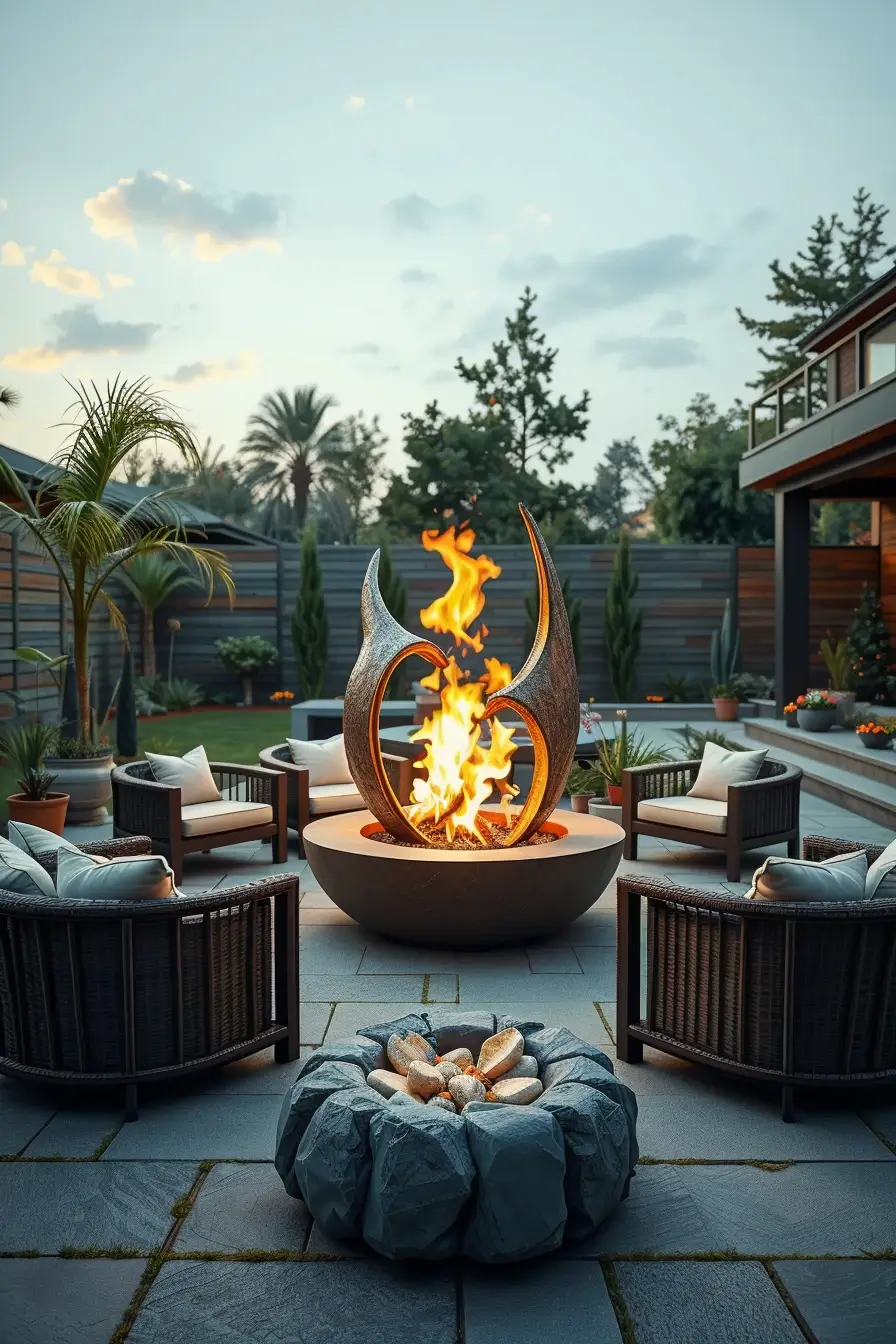
Yard fire pit ideas 2026 reflect a new approach to outdoor living, where fire becomes not just a source of warmth but a key design element that shapes the entire landscape. In modern yards, fire pits are evolving into sculptural centerpieces—curved, architectural, and thoughtfully integrated into the surrounding space. Designers are moving away from traditional round or square shapes, focusing on smooth lines, bold materials, and layouts that promote both relaxation and social connections.
In 2026, yard fire pits emphasize individuality and style. From minimalist concrete designs to artistic statement pieces and seamless fire pit zones with built-in seating, these concepts blend functionality with visual impact. Whether placed in a spacious open yard or a compact outdoor area, a well-designed fire pit defines atmosphere, enhances comfort, and elevates the overall outdoor experience. This article explores the most stylish, modern, and unique yard fire pit ideas shaping outdoor design in 2026.
Sculptural Fire Pit Designs For Modern Yards
I see sculptural fire pits as a natural evolution of outdoor design in 2026, where the fire feature becomes the artistic focal point of the yard rather than a background element. These modern Yard fire pits are designed as standalone objects with flowing lines and expressive forms that work beautifully in open landscapes and contemporary gardens. I find them especially practical for homeowners who want a strong visual anchor without overcrowding the space.
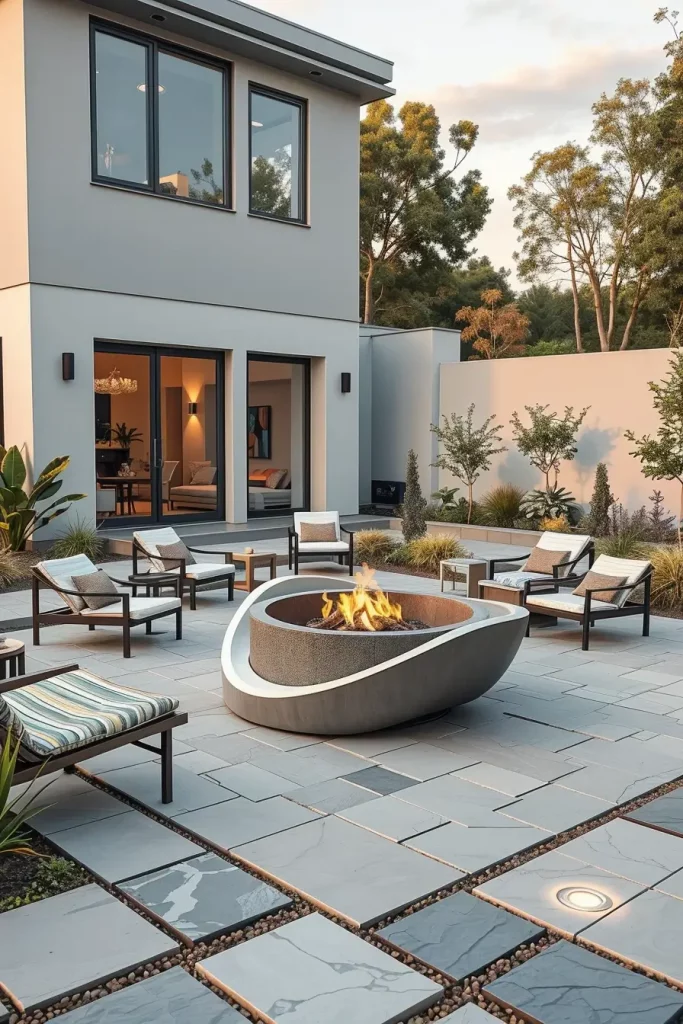
In terms of materials and layout, I recommend molded concrete, cast metal, or fire-resistant composites shaped into asymmetrical or curved forms. I often pair these designer fire pits with low-profile lounge chairs, stone paving, and subtle LED ground lighting to maintain balance. Each element supports the fire pit visually while keeping the yard open and usable for gatherings.
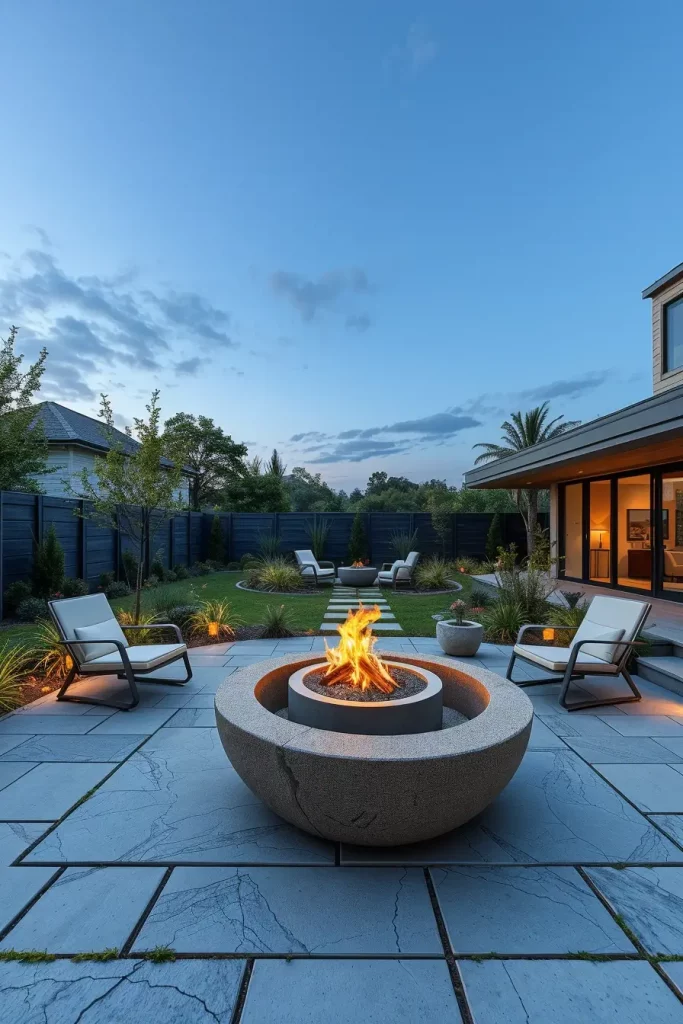
From my experience, sculptural fire pits resonate with clients who appreciate art-driven outdoor spaces. Designers featured in Architectural Digest often emphasize that outdoor features should feel intentional and gallery-like, and I fully agree. A sculptural fire pit delivers warmth while elevating the entire yard design.
What I would add here is intentional negative space around the fire pit. Leaving room for circulation and visual breathing space ensures the sculptural form remains the star without competing elements.
Curved Yard Fire Pits As A Statement Feature
I consistently recommend curved Yard fire pits when the goal is to soften rigid outdoor layouts. Curved designs feel more organic and welcoming, making them ideal for both social settings and relaxed evenings. In 2026, these stylish fire pits are especially relevant as outdoor design moves away from sharp angles toward more fluid compositions.
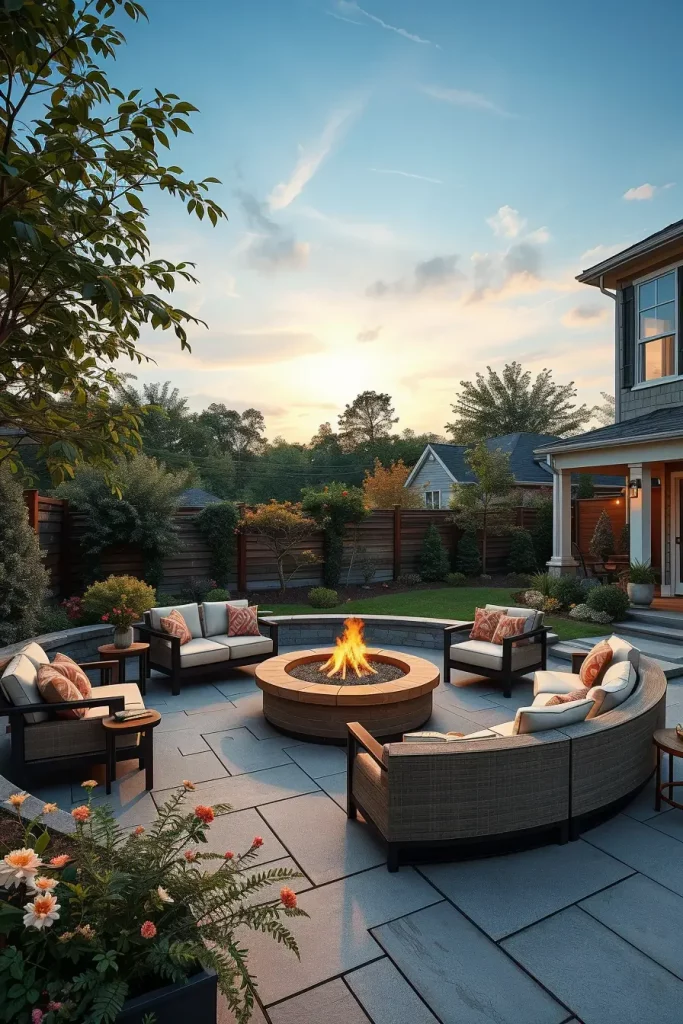
For furniture, I prefer curved sectional seating or semi-circular benches that echo the fire pit shape. Upholstered outdoor cushions, textured stone bases, and integrated side tables enhance comfort while reinforcing the cohesive design language. Every piece serves a functional role while supporting the fire pit’s sculptural presence.
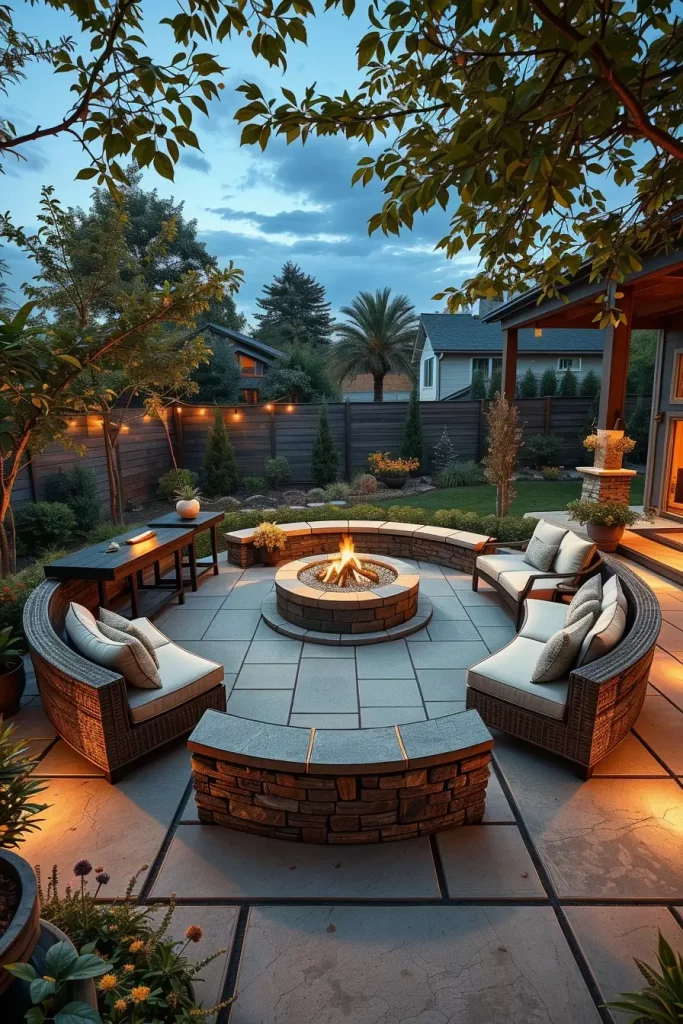
Personally, I have found that curved fire pits encourage better interaction among guests. Many US-based landscape designers, including those featured in Dwell, highlight circular layouts as ideal for conversation and visual harmony, which aligns perfectly with my own observations.
To enhance this setup, I would incorporate layered lighting, such as hidden LED strips under seating or subtle uplighting, to emphasize the curves after sunset.
Minimalist Concrete Fire Pits With Architectural Appeal
Minimalist concrete fire pits remain a strong trend for modern yards in 2026, particularly for homeowners who value clean lines and architectural clarity. I appreciate how concrete offers durability while allowing precise geometric or gently curved forms that blend seamlessly into contemporary landscapes.
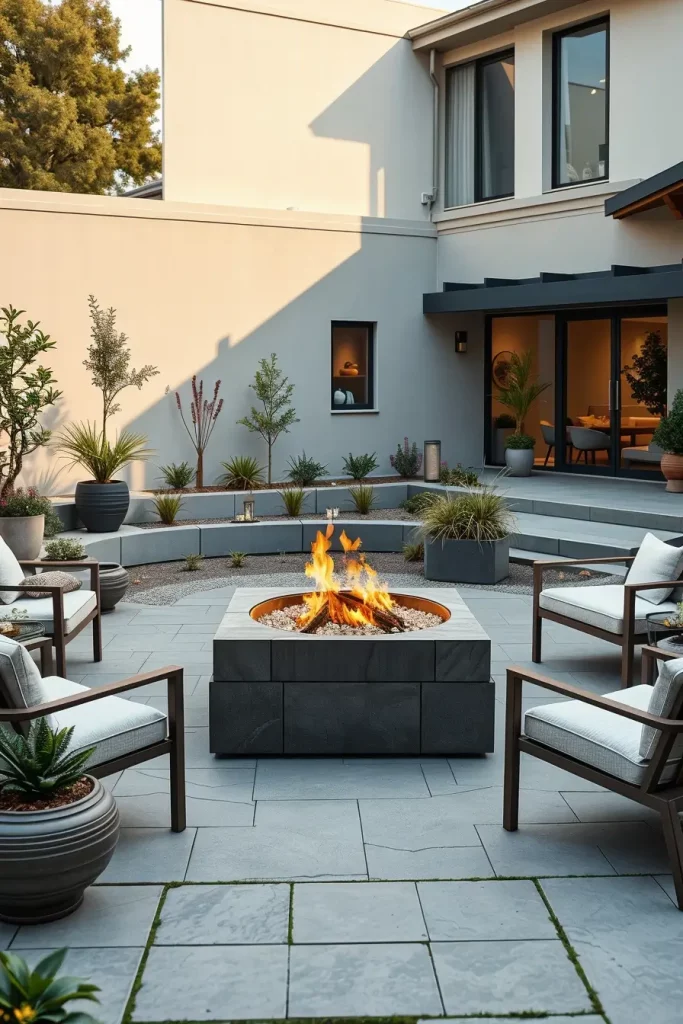
I usually pair these fire pits with neutral-toned outdoor furniture, such as slim metal-framed chairs or built-in concrete benches. Concrete pavers, gravel borders, and simple planters help maintain a calm visual rhythm without distracting from the fire pit itself.
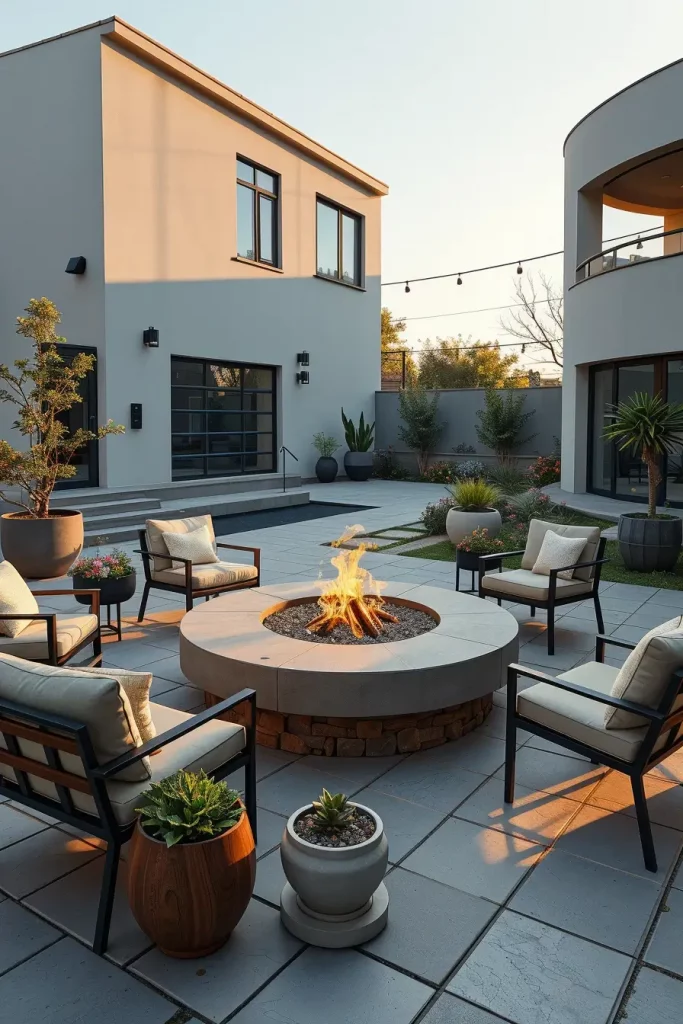
From my professional perspective, minimalist fire pits work best when restraint is applied consistently. Publications like Dezeen often emphasize simplicity as a marker of timeless design, and I follow this principle closely when specifying materials and finishes.
What I would add is a contrasting texture, such as wooden decking or soft outdoor textiles, to prevent the concrete-heavy space from feeling too cold or rigid.
Sunken Yard Fire Pit Concepts For Intimate Gatherings
Sunken fire pits create a sense of enclosure that I find ideal for intimate outdoor gatherings. By lowering the fire pit area slightly below ground level, the yard gains depth and a more immersive atmosphere, which feels both unique and inviting.
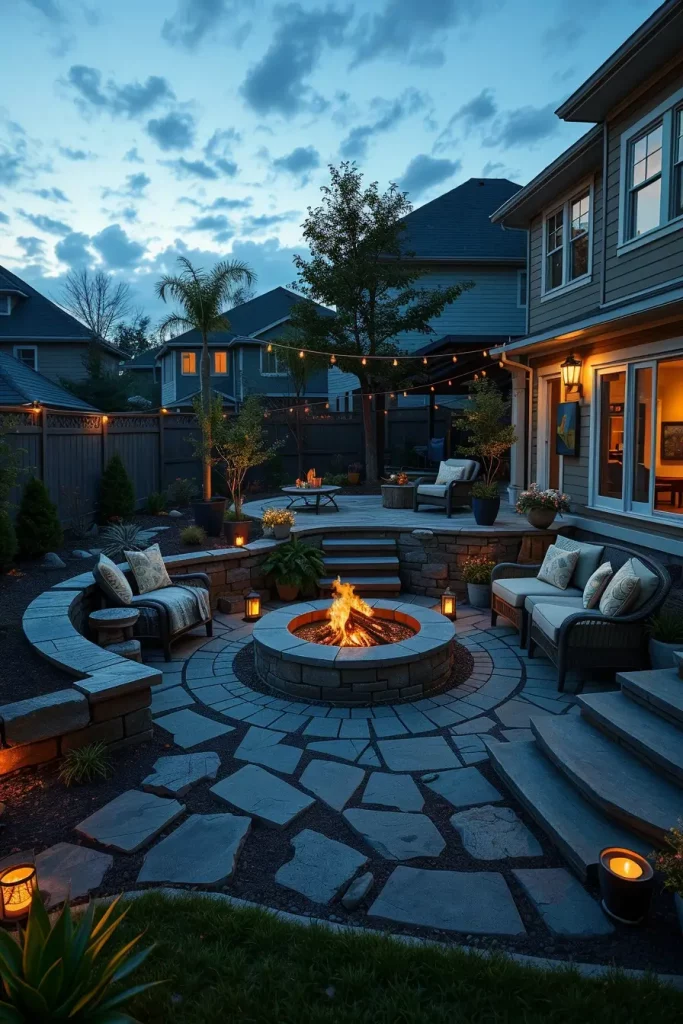
I recommend built-in seating that follows the sunken perimeter, often finished in stone or concrete with plush cushions for comfort. Steps leading into the space should be wide and well-lit, ensuring both safety and visual continuity. The fire pit itself often works best as a central, circular feature.
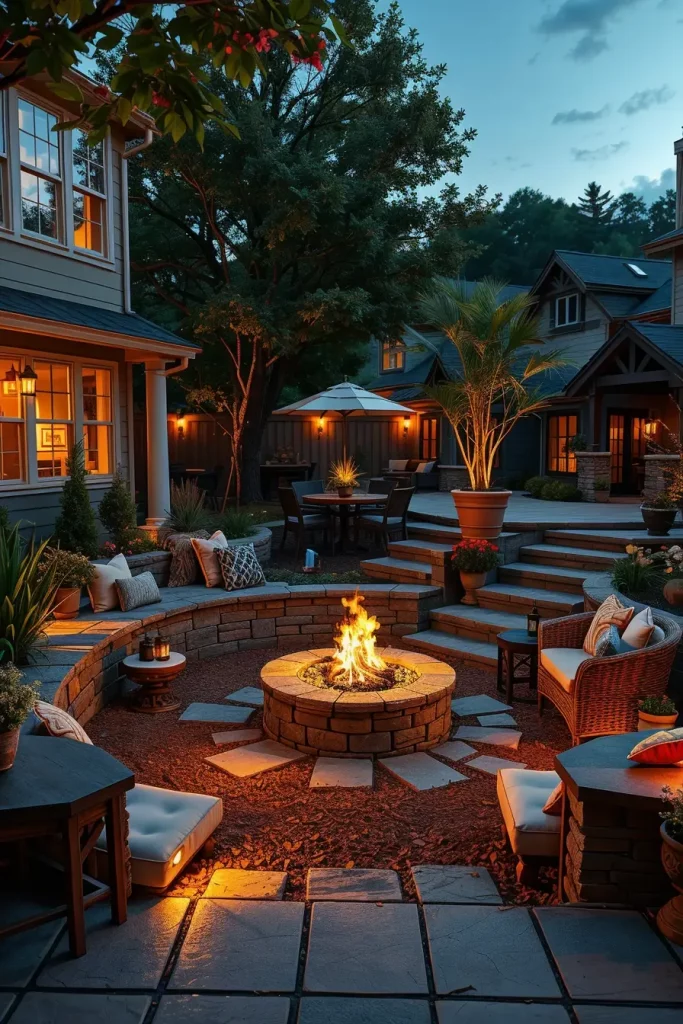
In my experience, sunken fire pits naturally encourage longer conversations and a sense of retreat. Many landscape architects in the US emphasize sunken designs for their acoustic and psychological comfort, which aligns with how clients respond to these spaces.
To complete this concept, I would add weather-resistant throw pillows and integrated storage niches for blankets, enhancing usability throughout cooler evenings.
Luxury Gas Fire Pits With Sleek Contemporary Lines
Luxury gas fire pits represent the pinnacle of designer Yard fire pit ideas for 2026. I often recommend them for homeowners who want effortless operation combined with refined aesthetics. These fire pits deliver consistent flames while maintaining a polished, contemporary appearance.
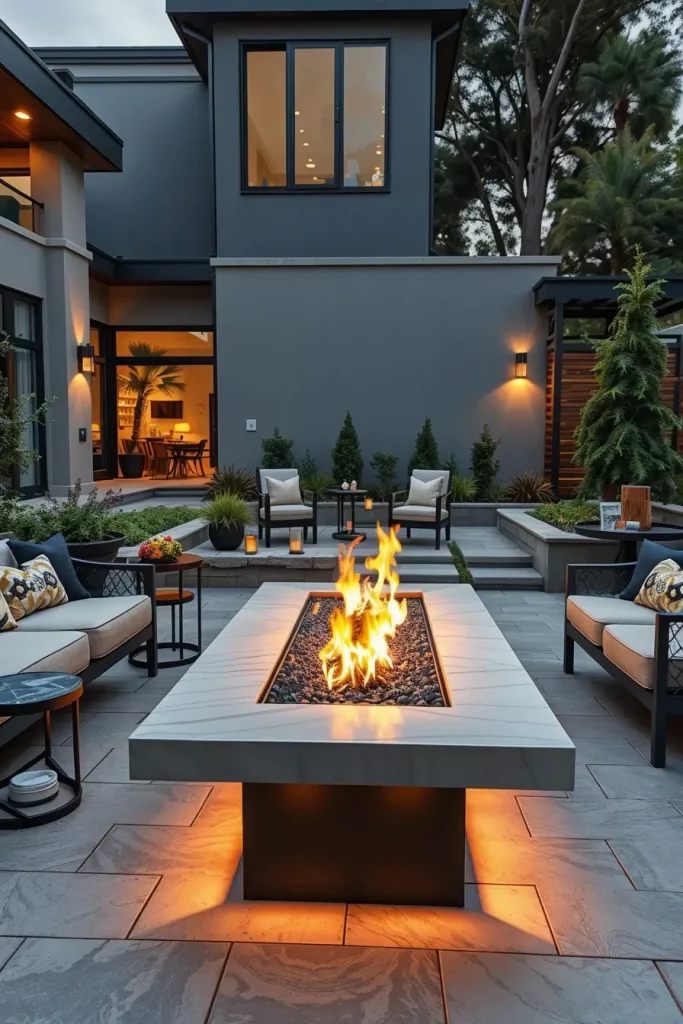
I typically specify linear or gently curved gas fire pits paired with upscale outdoor sofas, stone side tables, and minimalistic decor. Materials like blackened steel, tempered glass wind guards, and porcelain surfaces elevate the overall look while remaining practical.
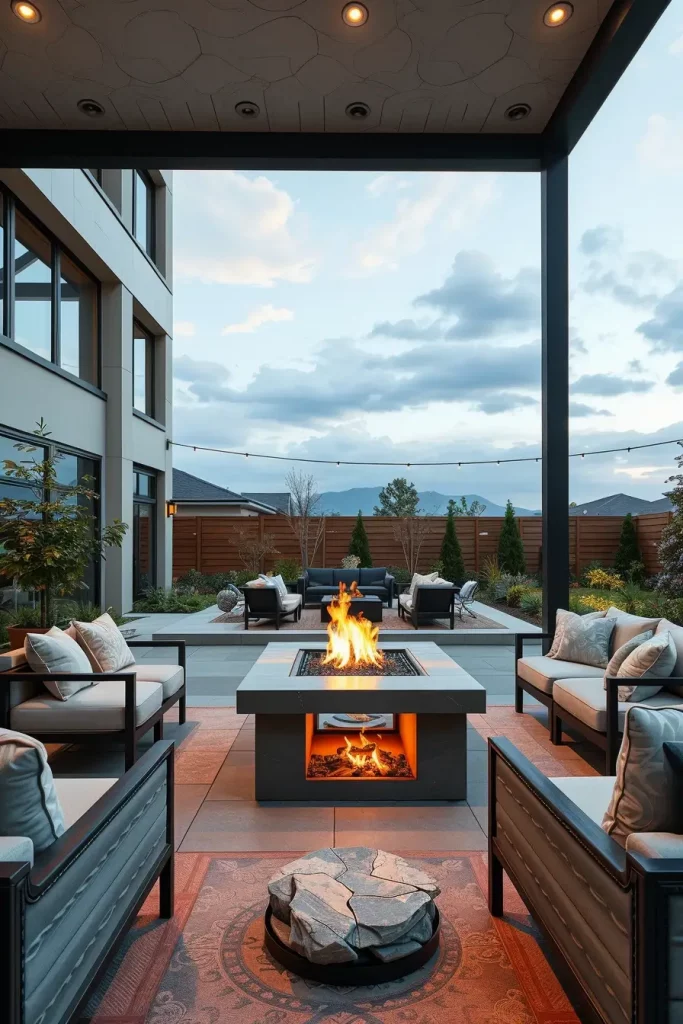
From my point of view, convenience plays a major role in long-term satisfaction. Designers featured in Better Homes and Gardens often highlight gas fire pits as a smart investment for modern living, and I have seen firsthand how clients appreciate their ease of use.
What I would add here is smart control integration, allowing homeowners to manage flame height and timing through mobile apps for a truly future-forward experience.
Designer Fire Pits Inspired By Modern Art
Fire pits inspired by modern art blur the line between functional heating and outdoor sculpture. I see these unusual designs as perfect for homeowners who want their yard to feel curated and expressive rather than conventional.
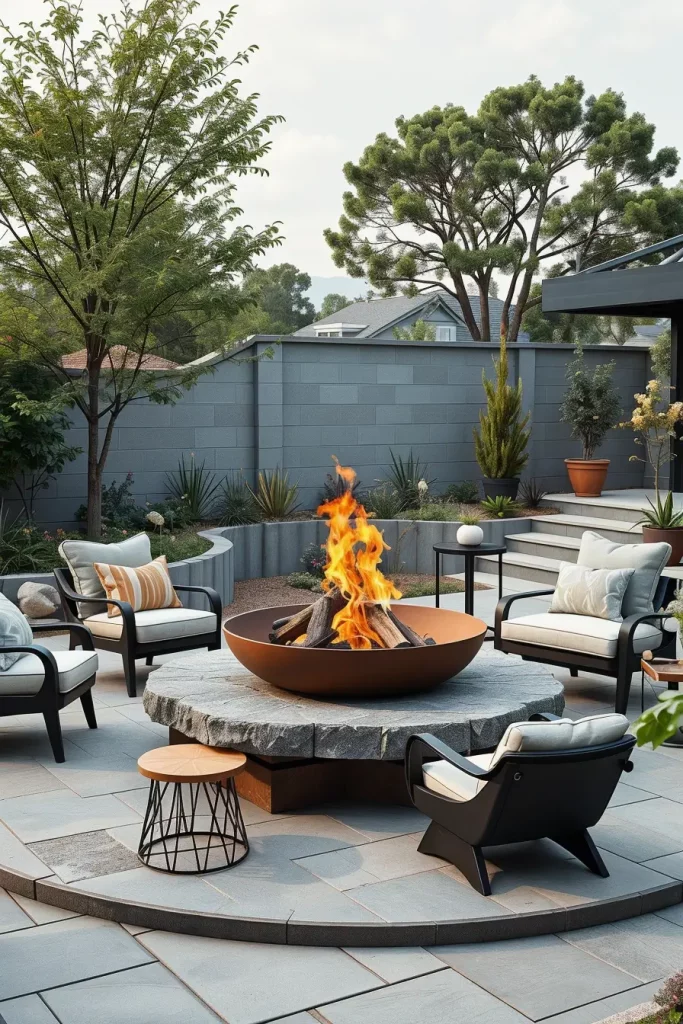
These fire pits often feature bold shapes, unexpected materials, or asymmetric silhouettes. I like to complement them with minimalist seating, neutral paving, and discreet lighting so the artistic fire pit remains the focal point without visual competition.
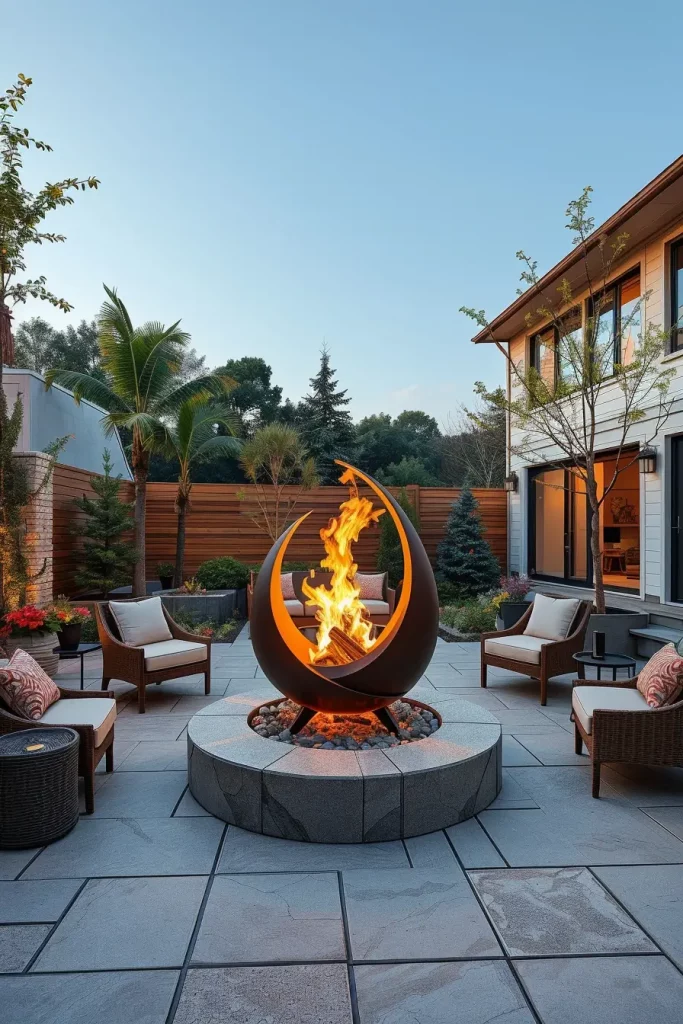
Personally, I believe art-inspired fire pits bring emotional value to outdoor spaces. Design professionals from platforms like Design Milk frequently discuss the importance of storytelling in outdoor features, and I find that these fire pits naturally create that narrative.
To refine this section, I would add a surrounding hardscape pattern that subtly mirrors the fire pit’s form, reinforcing the artistic concept.
Circular Fire Pit Layouts For Balanced Yard Design
Circular fire pit layouts remain one of the most balanced and adaptable solutions for stylish Yard fire pits in 2026. I appreciate how circular designs promote symmetry and flow, making them suitable for both small and expansive yards.
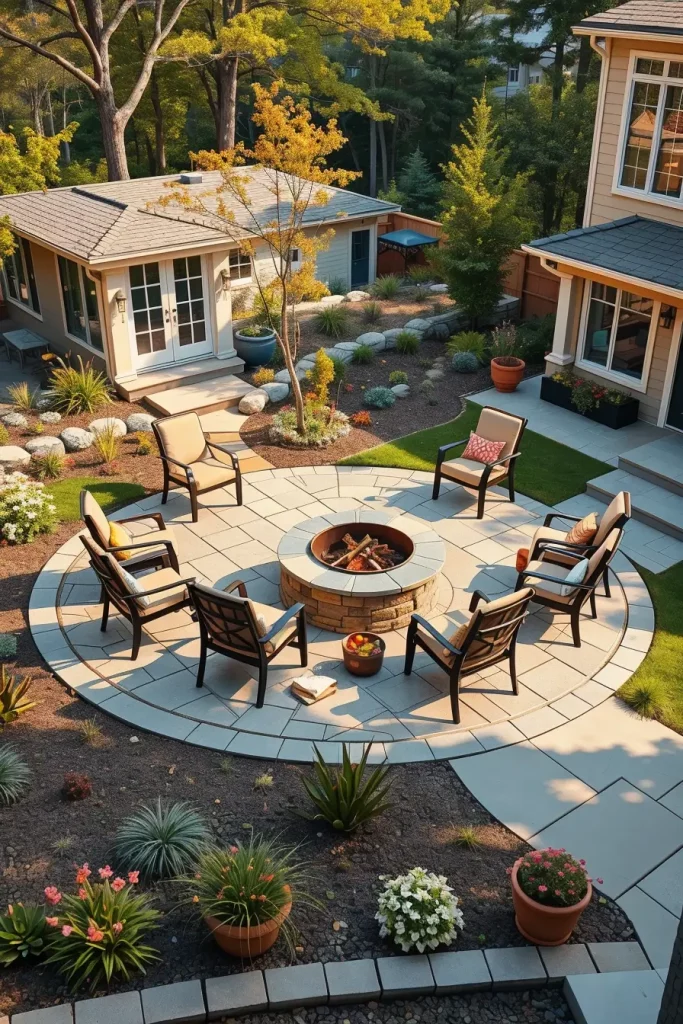
I usually pair circular fire pits with evenly spaced chairs, curved benches, or wraparound seating. Materials such as stone, concrete, or metal work well, especially when coordinated with matching paving and soft outdoor textiles.
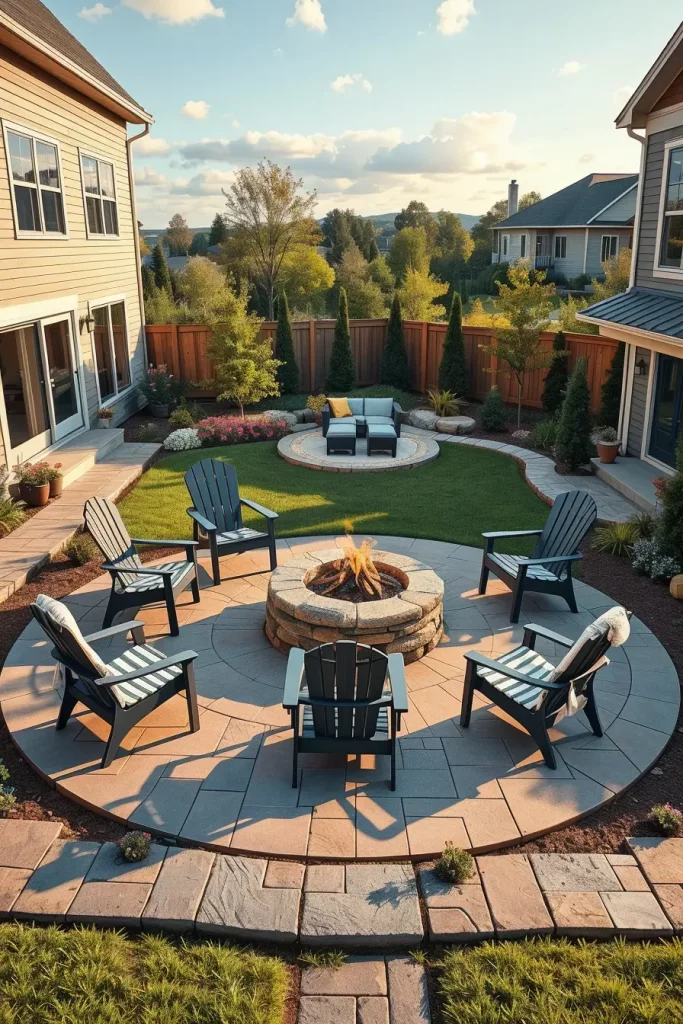
From my experience, circular layouts feel inherently social and calming. Many US landscape designers emphasize circular geometry as a way to foster connection, and I consistently see positive feedback from clients using these layouts.
What I would add is a surrounding border of low greenery or gravel to visually frame the fire pit while maintaining clean sightlines.
Floating Fire Pit Installations For Futuristic Yards
I consider floating fire pit installations one of the most forward-thinking Yard fire pit ideas for 2026, especially for homeowners who want a unique and visually striking outdoor space. These designs create the illusion that the fire pit is hovering above the ground, which instantly adds a futuristic and architectural feel to the yard while keeping the layout open and uncluttered.
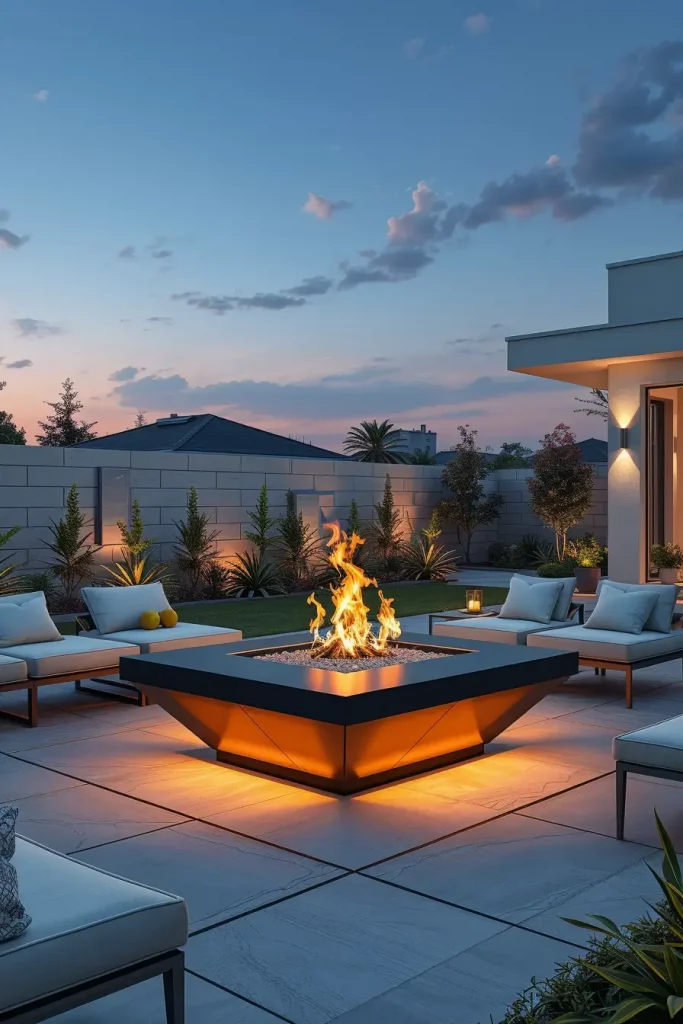
In practice, I usually achieve this effect by elevating the fire pit on a concealed base or integrating it into a raised platform finished in stone or concrete. I pair floating fire pits with minimalist lounge seating, low-profile tables, and recessed lighting beneath the structure to enhance the levitation effect. Every element supports the fire pit without competing for attention.
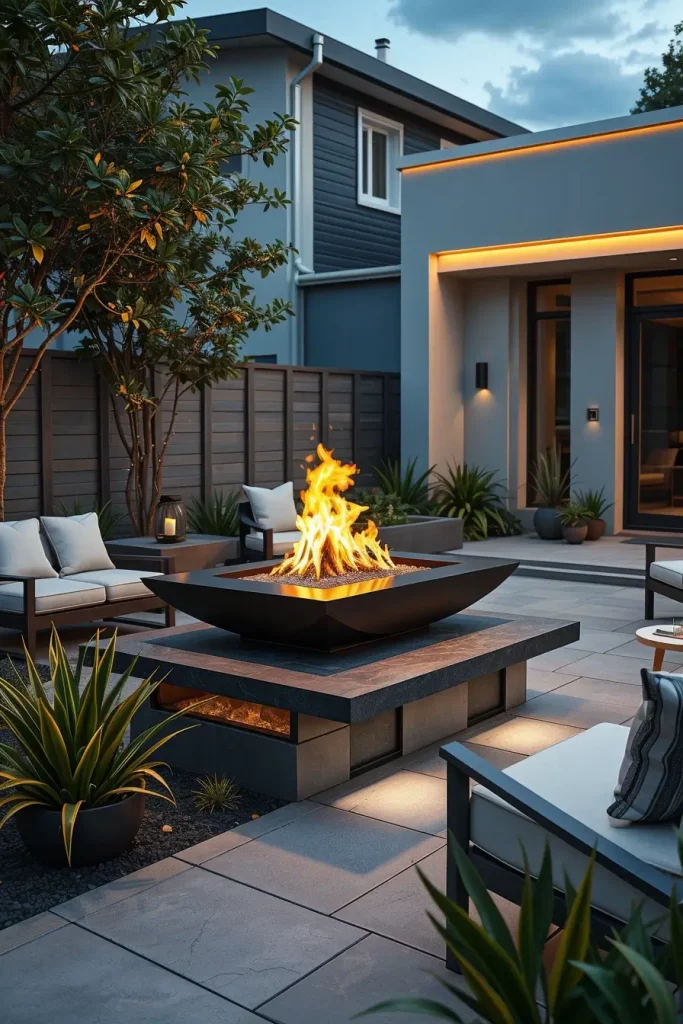
From my professional experience, this type of installation always becomes a conversation starter. Designers frequently featured in Dezeen highlight floating architectural elements as a way to introduce drama without excess, and I find that approach especially effective outdoors.
What I would add here is careful attention to safety and wind protection, such as discreet glass panels, ensuring the design remains both functional and visually light.
Integrated Fire Pits With Built-In Curved Seating
Integrated fire pits with built-in curved seating represent one of the most stylish and practical solutions for modern yards. I often recommend this approach when clients want a cohesive outdoor layout where the fire pit feels like a natural extension of the seating area rather than a separate feature.
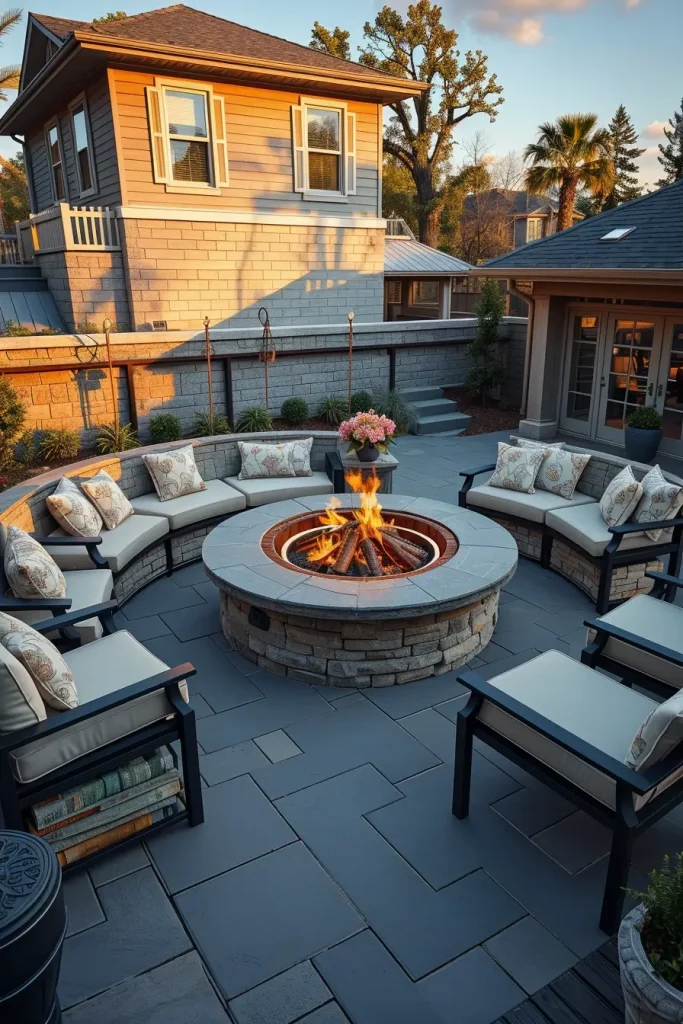
I typically design the seating using concrete, stone, or masonry bases topped with weather-resistant cushions. The curved seating follows the shape of the fire pit, creating a harmonious flow and encouraging conversation. Side ledges for drinks and subtle backrest angles add both comfort and usability.
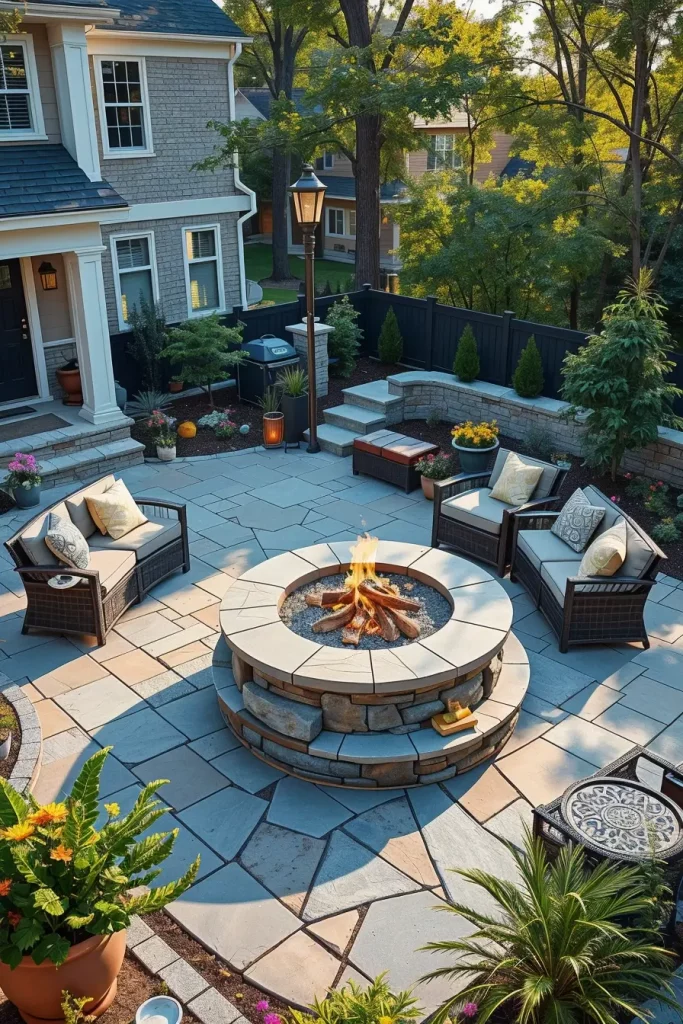
Personally, I find that integrated designs simplify outdoor planning and reduce clutter. Many landscape architects in the US emphasize built-in solutions for long-term durability and visual order, which aligns perfectly with how I approach outdoor layouts.
To complete this section, I would include integrated storage beneath seating for firewood or accessories, maximizing functionality without altering the clean design.
Modern Fire Pit Ideas For Large Open Yards
Large open yards provide an excellent opportunity to explore modern and designer fire pit concepts without spatial limitations. I approach these spaces by using the fire pit as a zoning element that visually anchors one area of the yard while maintaining openness.
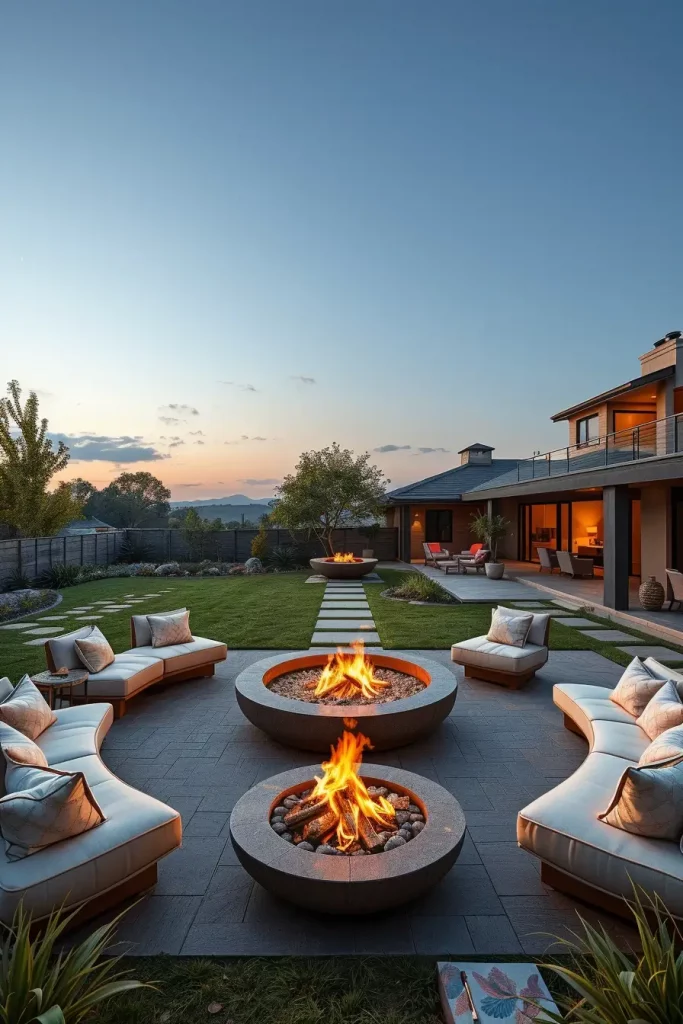
For large yards, I often specify oversized fire pits with sculptural or curved forms, paired with generous seating arrangements such as modular sofas or multiple lounge zones. Materials like stone, concrete, and metal help the fire pit stand out without overwhelming the scale of the space.
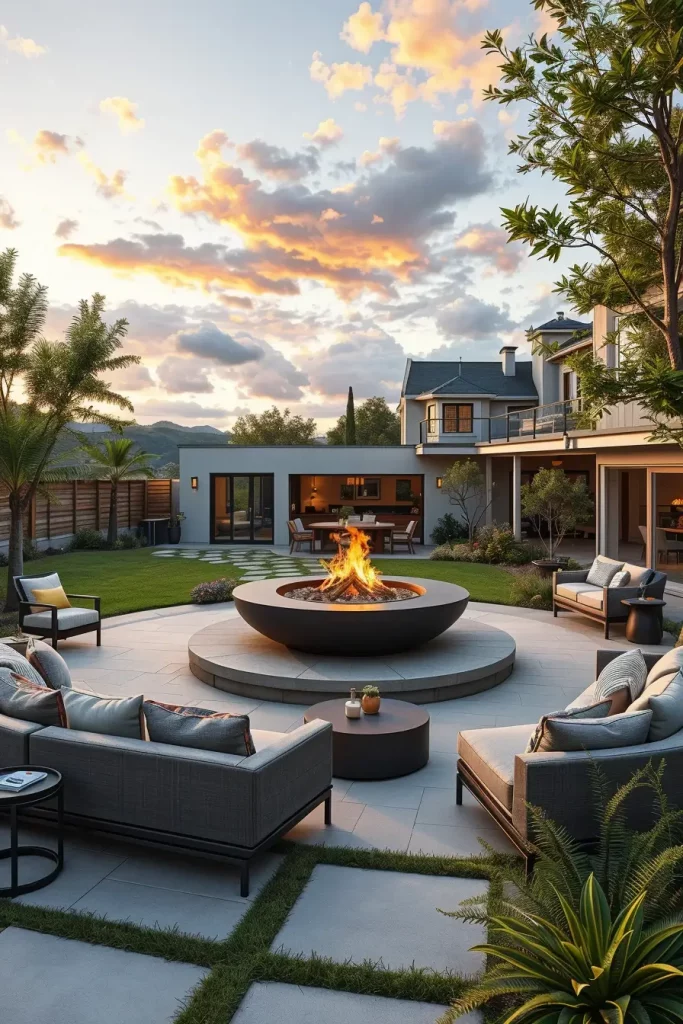
From my experience, proportion is key in open landscapes. Outdoor design experts featured in Architectural Digest often stress that large yards need bold elements to avoid feeling empty, and a statement fire pit achieves that balance effectively.
What I would add is layered landscaping around the fire pit zone, such as low walls or subtle grade changes, to define the area without closing it off.
Compact Designer Fire Pits For Small Yard Spaces
Compact designer fire pits are essential for small yards where every element must earn its place. I focus on designs that combine visual impact with minimal footprint, ensuring the yard feels intentional rather than crowded.
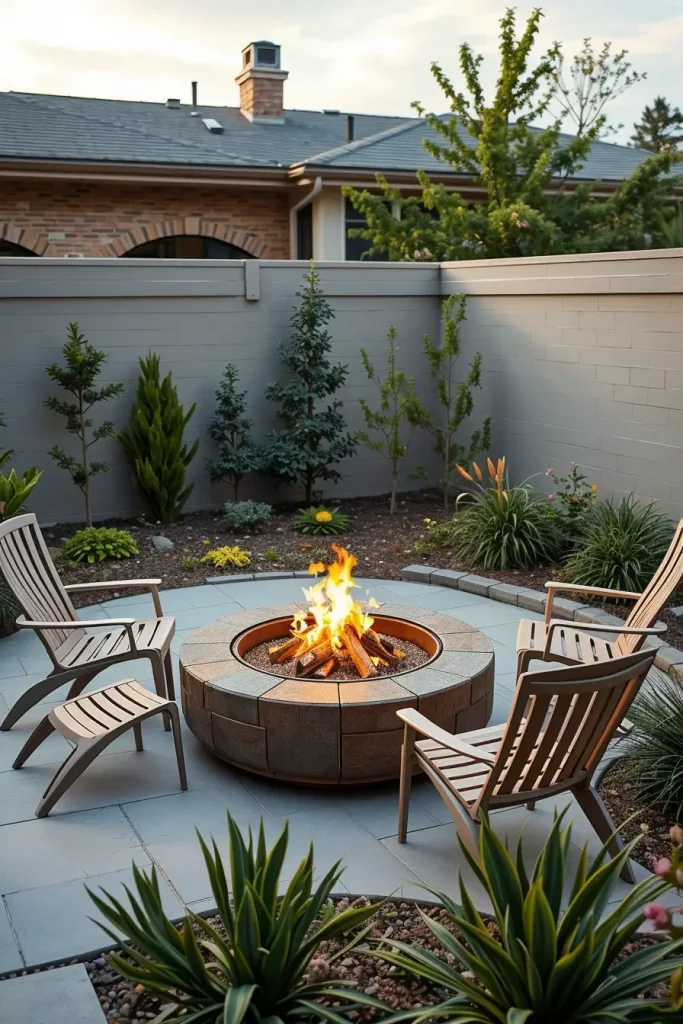
I usually recommend round or gently curved fire pits paired with slim-profile chairs or built-in benches. Materials like smooth concrete or dark metal help create a clean, modern look, while multifunctional furniture keeps the space flexible.
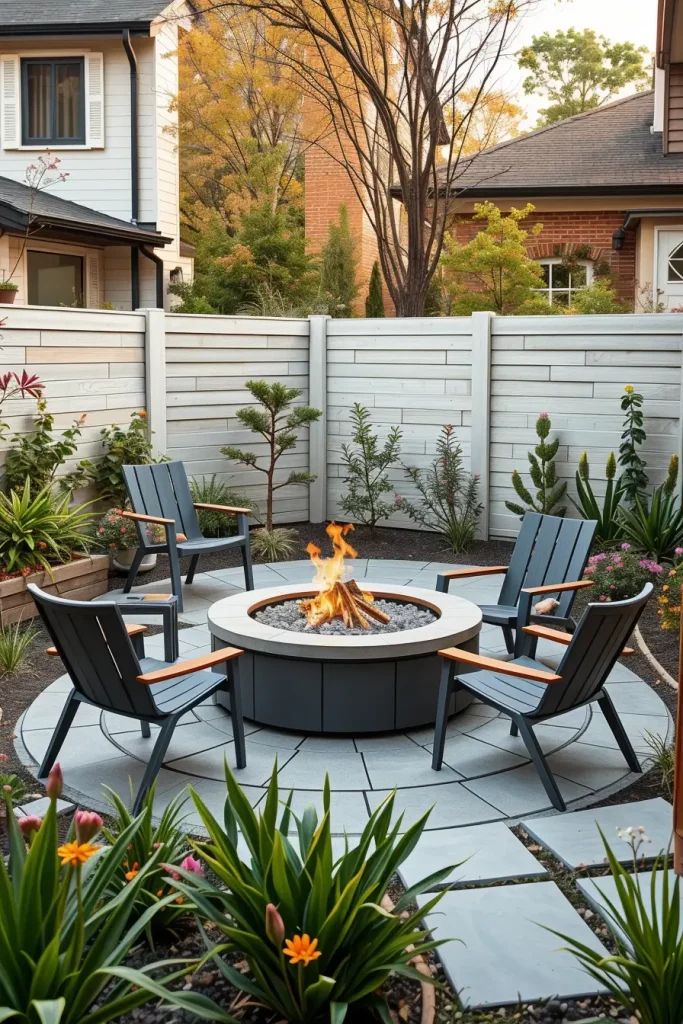
In my experience, small yards benefit greatly from thoughtful scaling. Designers writing for Better Homes and Gardens often emphasize choosing one standout feature, and a compact fire pit does exactly that without overwhelming the space.
To enhance this section, I would add vertical elements like privacy screens or textured walls to frame the fire pit while preserving floor space.
Fire Pits Combined With Water Features For Contrast
Combining fire pits with water features creates a striking contrast that feels both unusual and refined. I see this pairing as a strong trend for 2026, especially in yards designed for relaxation and sensory balance.
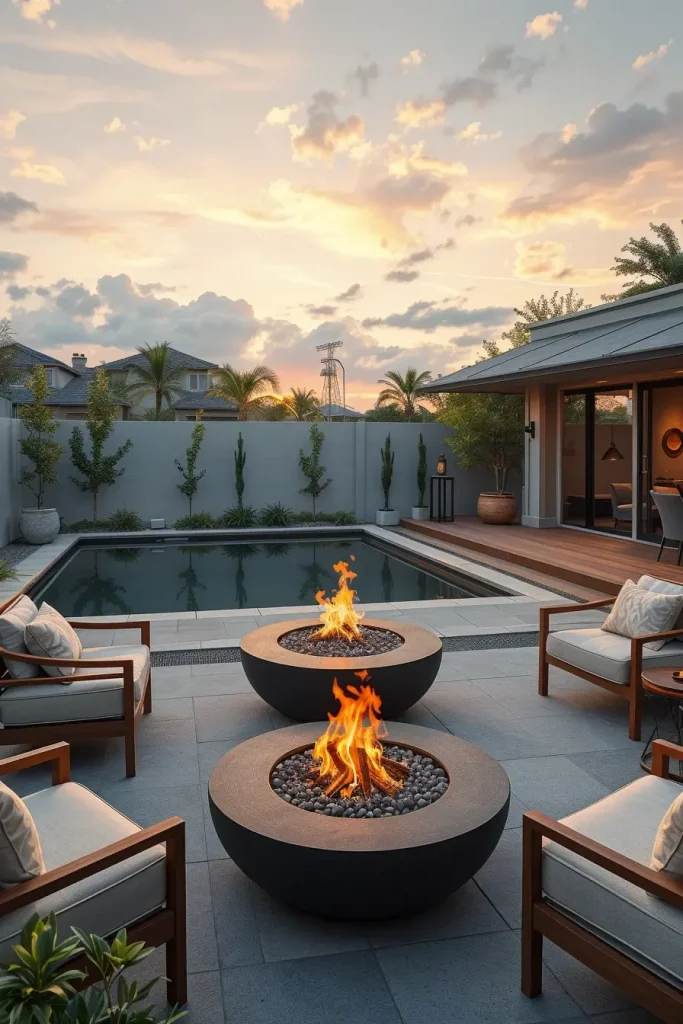
I often design these spaces with a central fire pit positioned near a reflecting pool, narrow water channel, or cascading fountain. The surrounding furniture is usually minimal, allowing the interaction between fire and water to take center stage.
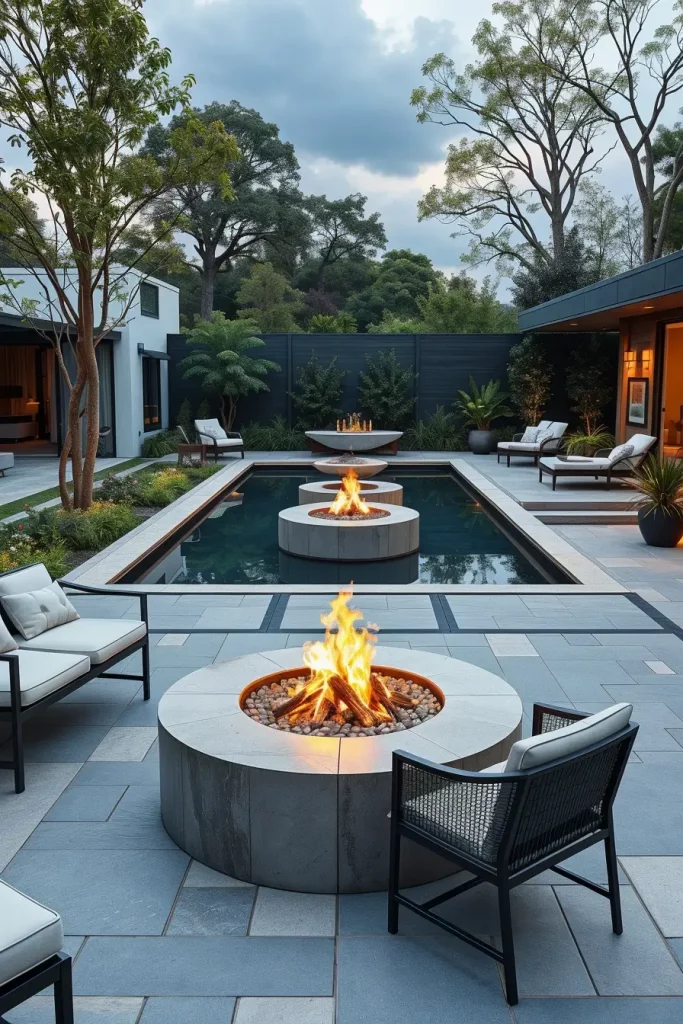
From my perspective, this combination elevates the entire yard experience. Many landscape designers featured in Dwell highlight the emotional impact of combining opposing elements, and I have seen firsthand how calming and memorable these spaces become.
What I would add is precise lighting that highlights both elements at night, ensuring neither fire nor water dominates visually.
Statement Stone Fire Pits With Modern Geometry
Statement stone fire pits with modern geometry bring a sense of permanence and architectural strength to outdoor spaces. I often recommend them for homeowners seeking stylish yet grounded Yard fire pit ideas that age beautifully over time.
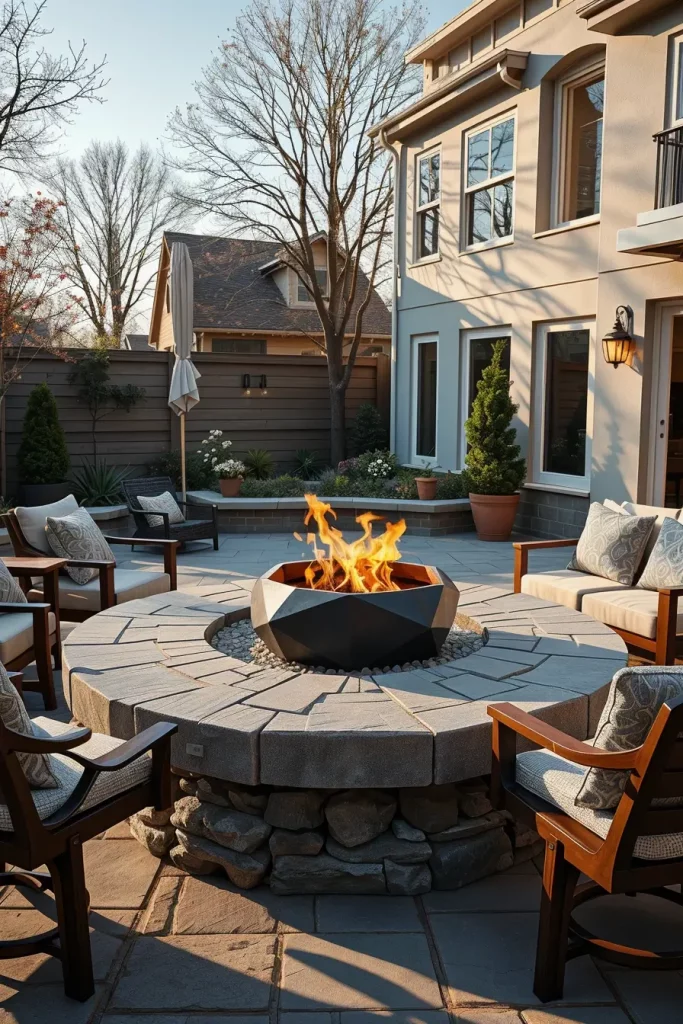
I typically use cut stone or engineered stone arranged in clean geometric forms, sometimes softened with subtle curves. These fire pits pair well with solid outdoor furniture, textured cushions, and stone or concrete paving.
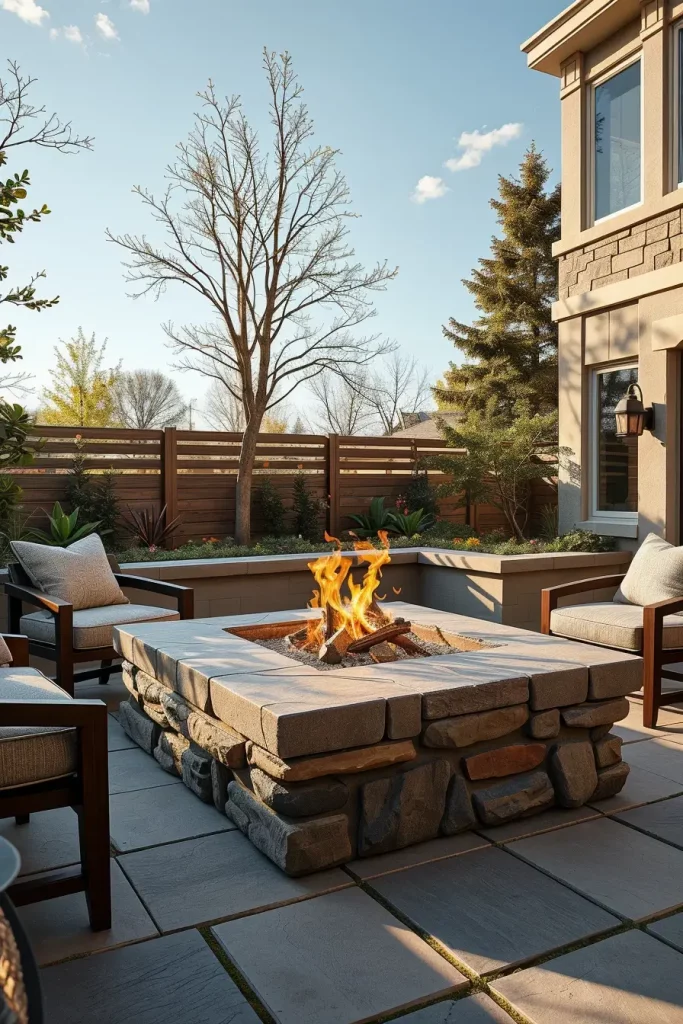
In my professional opinion, stone adds timeless value. Designers frequently cited by Architectural Digest note that natural materials anchor modern design, and I consistently see this reflected in client satisfaction.
To complete this concept, I would introduce contrasting soft elements like outdoor rugs or fabric accents to balance the solidity of stone.
Black Fire Pit Designs For Bold Outdoor Styling
Black fire pit designs stand out as bold, confident choices for modern yards in 2026. I find that black finishes create a dramatic focal point while remaining versatile enough to work with various outdoor palettes.
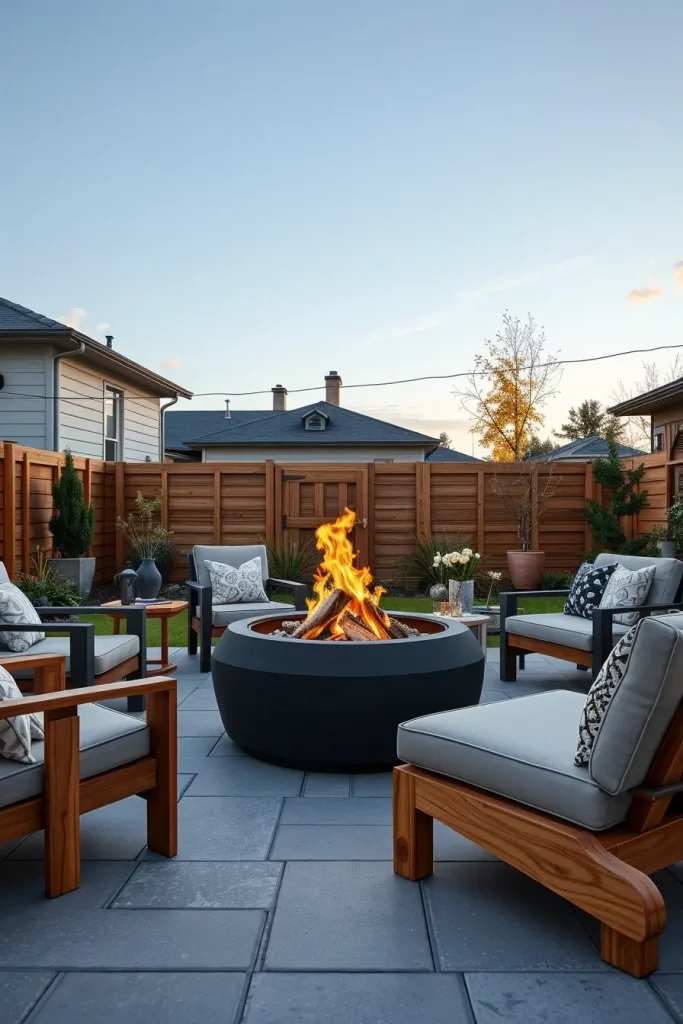
I usually specify matte black metal or concrete fire pits paired with neutral seating, warm wood accents, and subtle lighting. This contrast allows the fire pit to command attention without overpowering the space.
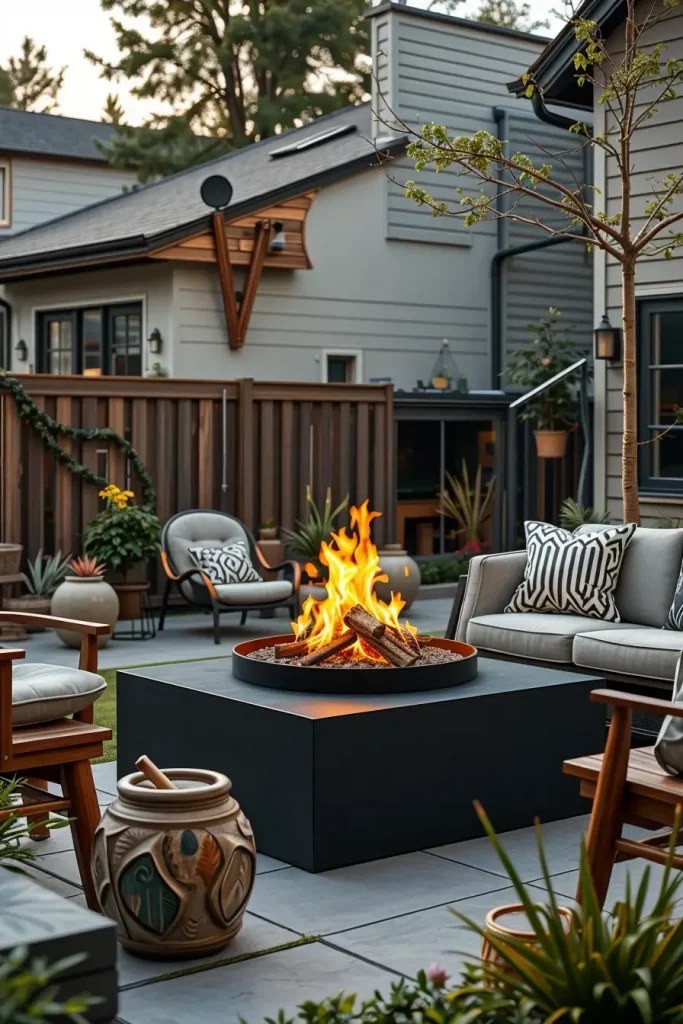
From my experience, black fire pits photograph beautifully and feel timeless rather than trendy. Design professionals from Design Milk often highlight black as a grounding color in outdoor design, and I fully support that approach.
What I would add here is careful material selection to prevent overheating and ensure durability, especially in sunny climates.
Linear Fire Pits For Clean And Modern Yard Layouts
I see linear fire pits as one of the most practical solutions for a modern yard because they reinforce clean geometry and structured outdoor planning. These fire pits work especially well in contemporary yards where straight lines, symmetry, and clear zoning are important. From my experience, a linear fire pit naturally guides seating placement and creates a visual anchor without overwhelming the space.
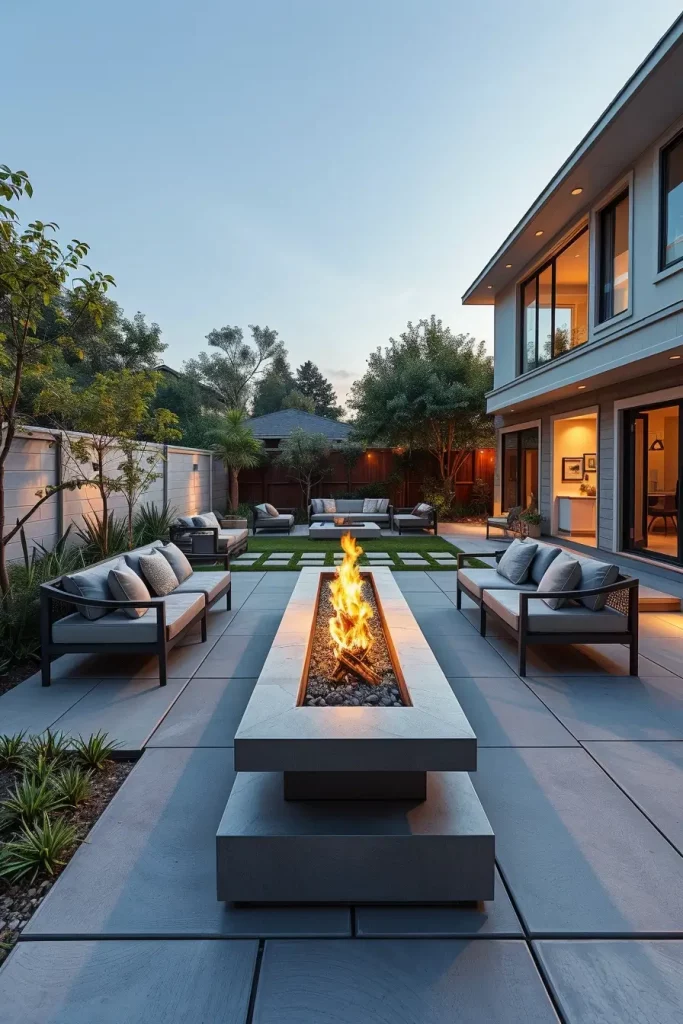
In this layout, I usually combine a linear gas fire pit with low-profile outdoor sofas, modular sectionals, and built-in concrete or stone benches. Each piece serves a purpose: the seating encourages conversation, while fire-resistant surfaces such as porcelain pavers or poured concrete enhance safety and durability. I always recommend weather-resistant upholstery in neutral tones to maintain a cohesive design.
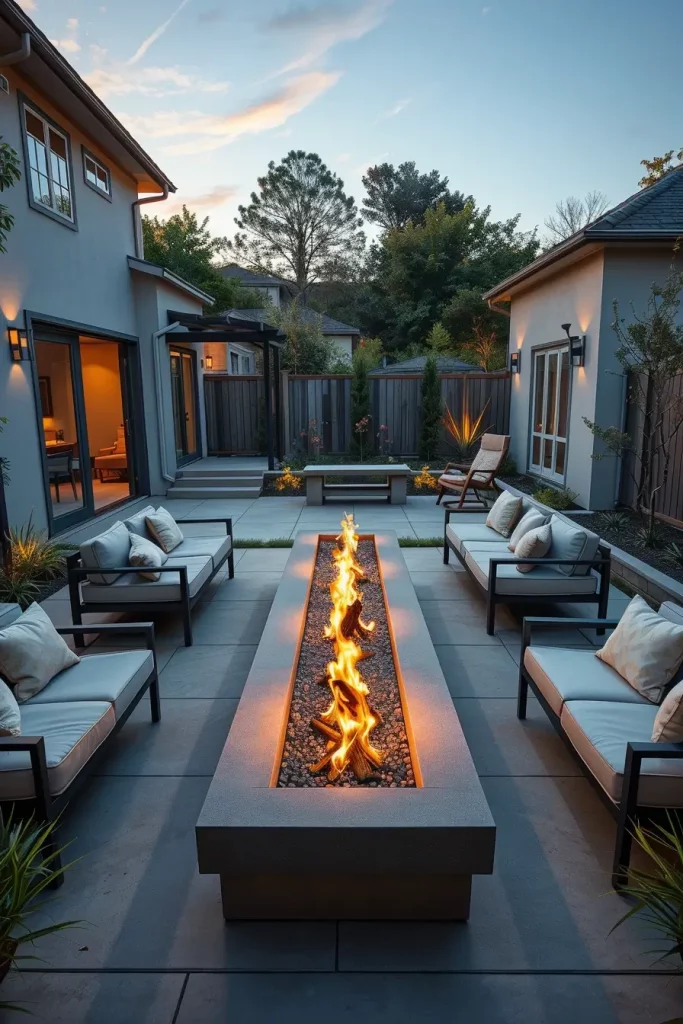
In my professional opinion, designers like those featured in Architectural Digest often emphasize restraint in outdoor design, and linear fire pits reflect that philosophy well. I have personally seen how a minimal fire feature can make a yard feel more intentional and calming rather than cluttered.
To complete this section, I would add integrated storage for fire accessories and discreet wind guards to improve comfort and usability without affecting the clean look.
Custom-Made Fire Pits For Unique Yard Concepts
Custom-made fire pits allow me to tailor the design to the yard’s architecture, which is essential when working with unique outdoor spaces. These fire pits are ideal when standard shapes do not fit the layout or when the homeowner wants a statement feature that reflects their lifestyle and taste.
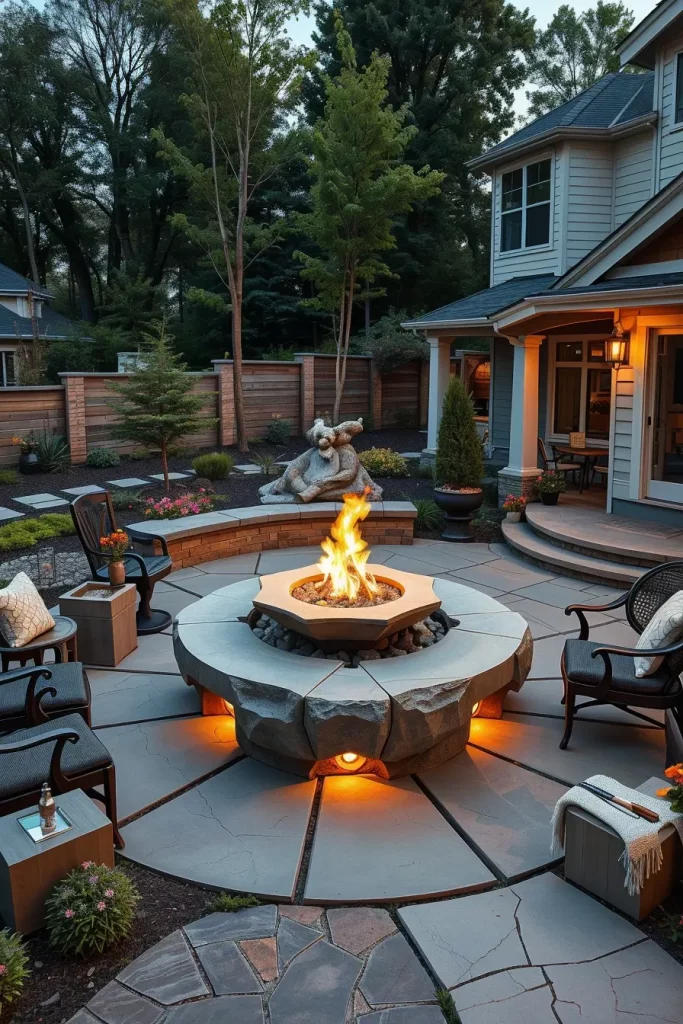
I often specify materials such as cast concrete, corten steel, or natural stone to ensure durability and visual depth. Custom seating, matching side tables, and coordinated landscape lighting help unify the design. Each element is selected to reinforce the fire pit as a functional yet artistic centerpiece.
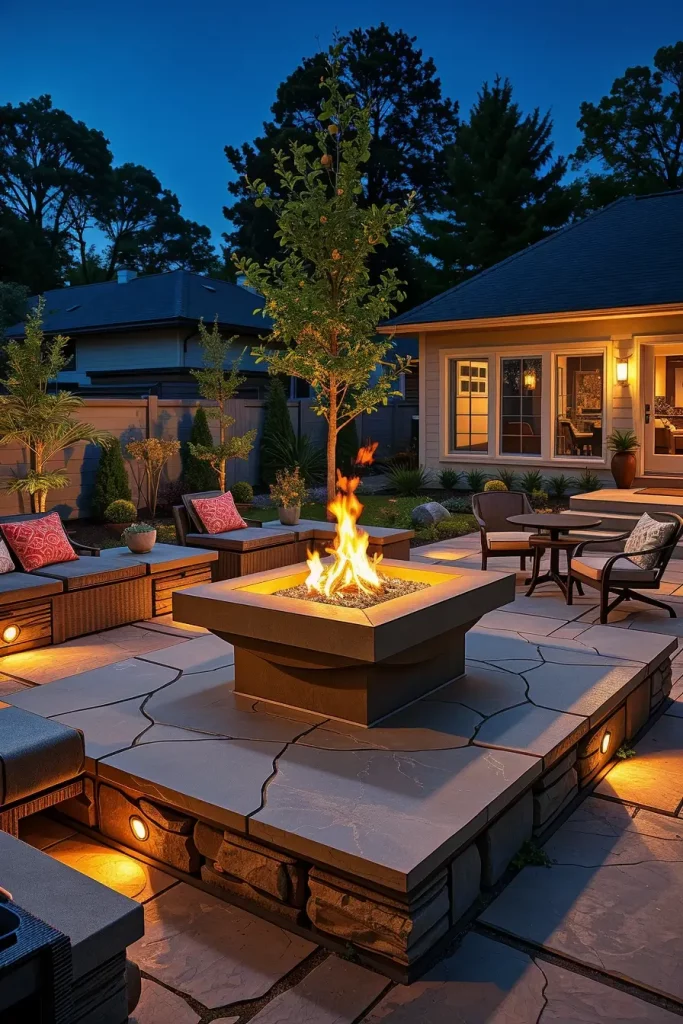
From my experience, custom fire pits are frequently recommended by landscape architects featured in Dwell magazine because they allow full control over scale and proportion. I have found that clients appreciate how a custom solution feels personal rather than generic.
What could enhance this section further is the inclusion of built-in wood storage or hidden gas controls, ensuring that functionality matches the visual sophistication.
Elevated Fire Pit Platforms For Visual Impact
Elevated fire pit platforms create a strong focal point, especially in yards with level changes or expansive layouts. I find this approach particularly effective when I want the fire feature to stand out visually while defining a dedicated gathering zone.
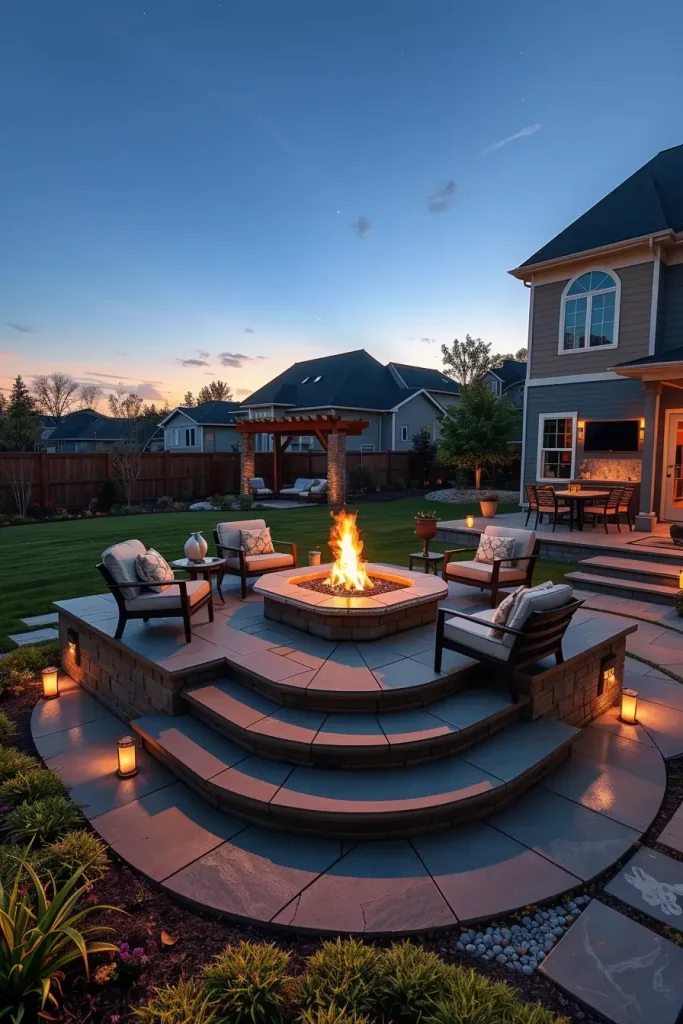
Typically, I pair an elevated fire pit with wide steps, integrated seating, and layered outdoor rugs designed for exterior use. Materials like stone slabs or concrete decking provide stability, while furniture with low backs preserves open sightlines across the yard.
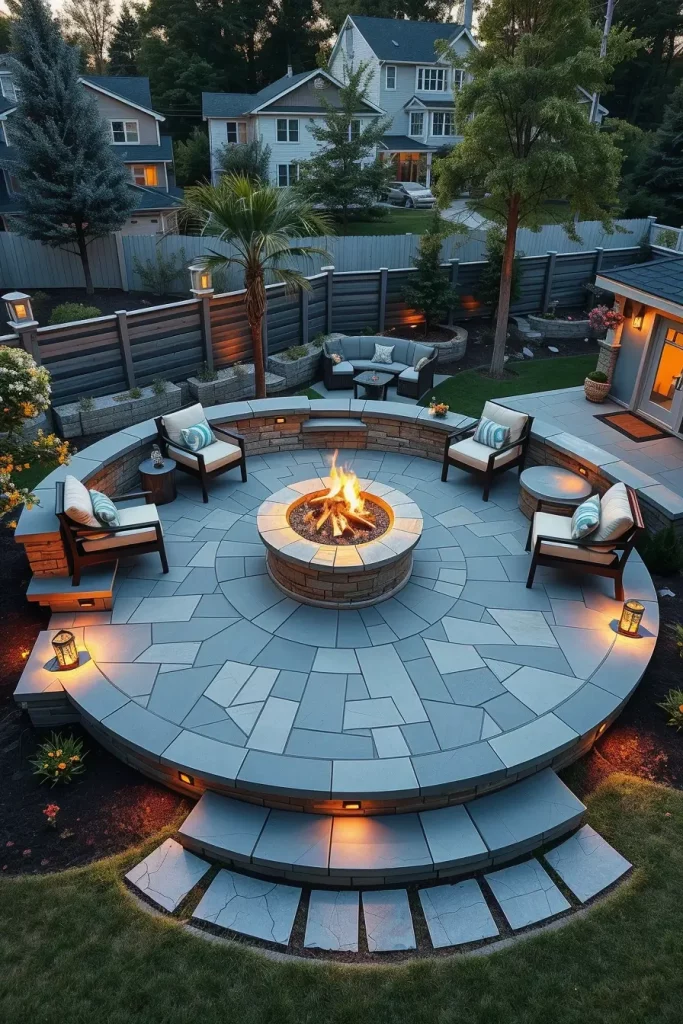
In my professional view, elevation adds drama without excess, a concept frequently highlighted by landscape designers in Better Homes and Gardens. Personally, I appreciate how raised fire pits naturally draw people together while subtly separating the space from surrounding areas.
To refine this setup further, I would add subtle step lighting and handrails integrated into the design for both safety and ambiance.
Fire Pit Zones Designed For Social Entertaining
Designing fire pit zones specifically for entertaining allows me to prioritize comfort, circulation, and social interaction. I often treat these zones as outdoor living rooms, ensuring they feel inviting and practical for gatherings.
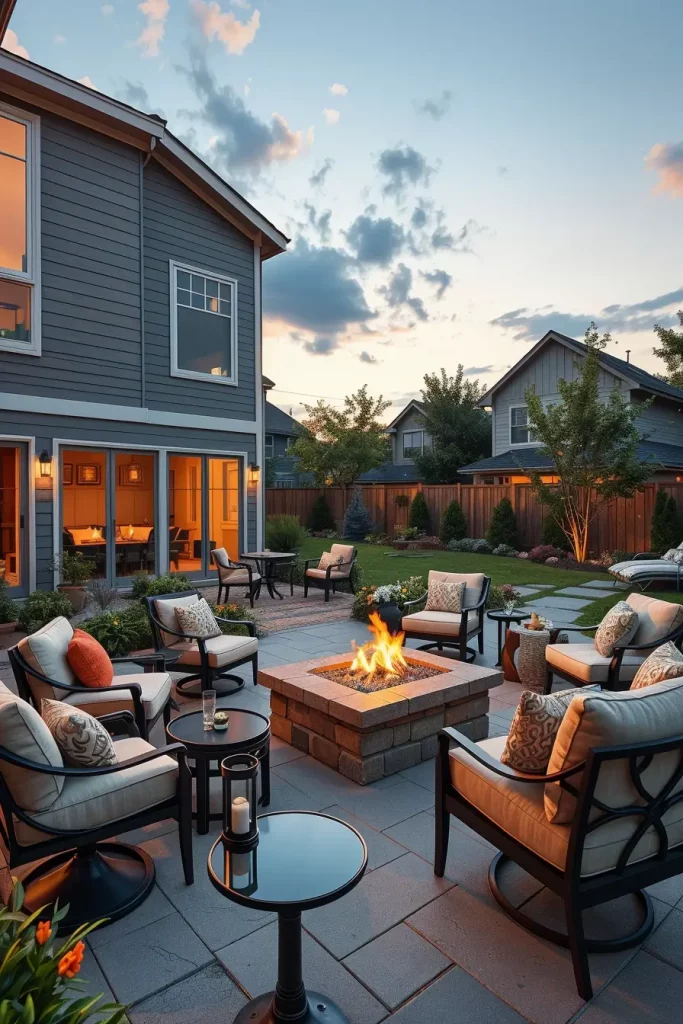
I include deep-seated sofas, swivel chairs, and movable ottomans so guests can easily adjust seating. Side tables, outdoor bars, and integrated planters enhance functionality while maintaining a designer aesthetic. Every item supports ease of use and visual balance.
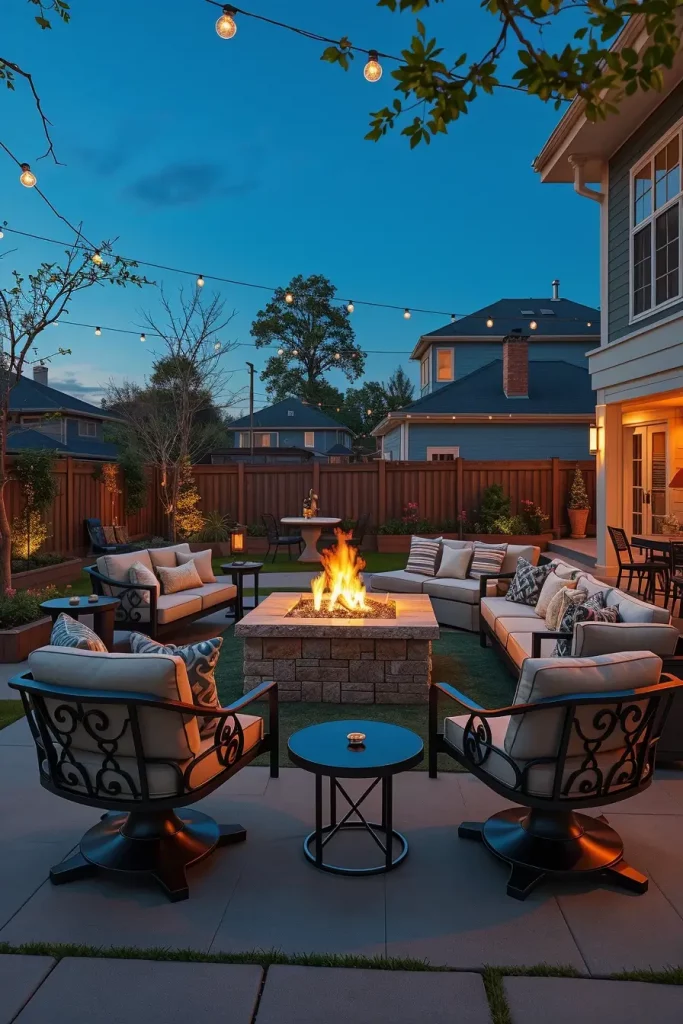
From my experience, experts from HGTV frequently stress the importance of flexible seating in social outdoor spaces. I have noticed that well-planned fire pit zones encourage longer conversations and more frequent use of the yard.
To complete this section, I would recommend adding weatherproof audio systems and layered lighting to support evening entertaining.
Organic-Shaped Fire Pits Inspired By Nature
Organic-shaped fire pits introduce softness into structured yards, making them ideal for curved Yard fire pits that feel natural and relaxed. I often use these designs to break away from rigid layouts while maintaining a cohesive outdoor plan.
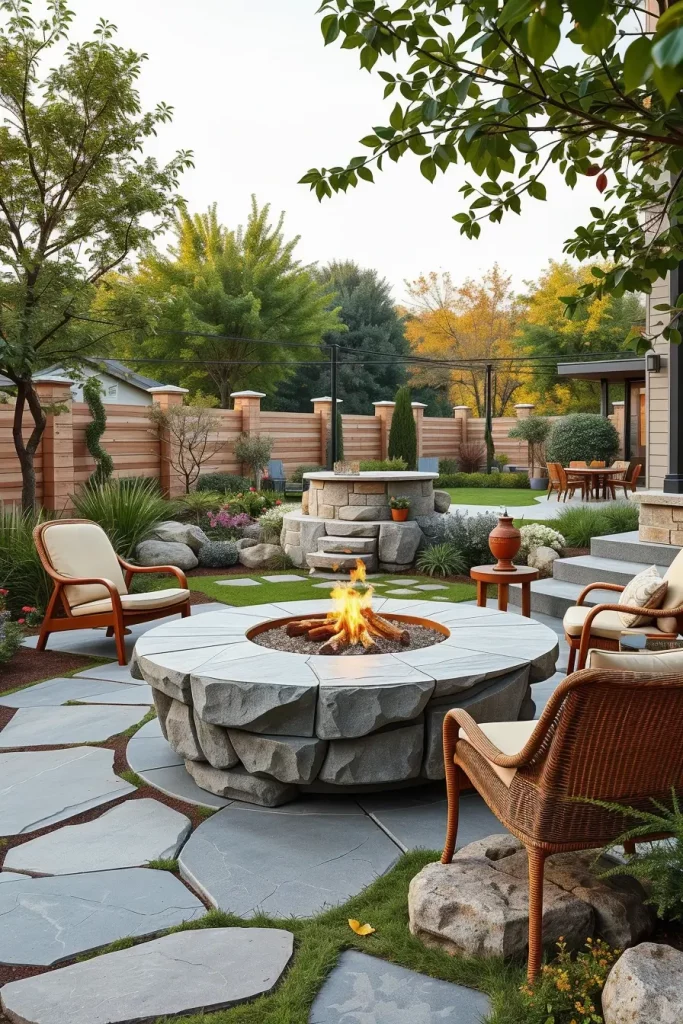
I pair these fire pits with rounded lounge chairs, natural stone surfaces, and wood accents to reinforce the organic theme. Each piece complements the flowing shape, ensuring the design feels intentional rather than random.
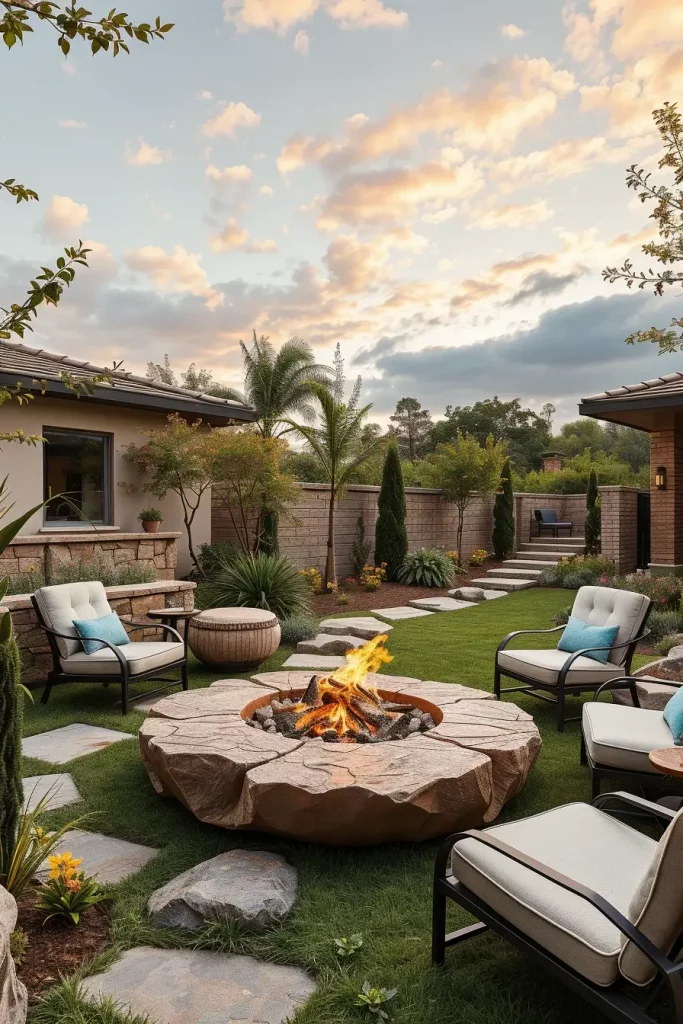
In my opinion, designers featured in Dezeen often highlight biomorphic forms as a future-forward trend. I have personally seen how organic fire pits make outdoor spaces feel more approachable and timeless.
What could enhance this section is the addition of surrounding native plants and gravel borders to further blend the fire pit into the landscape.
Fire Pits As The Centerpiece Of Designer Landscapes
When I design a yard around a fire pit, it becomes the visual and functional heart of the space. This approach works especially well in designer landscapes where every element is carefully curated.
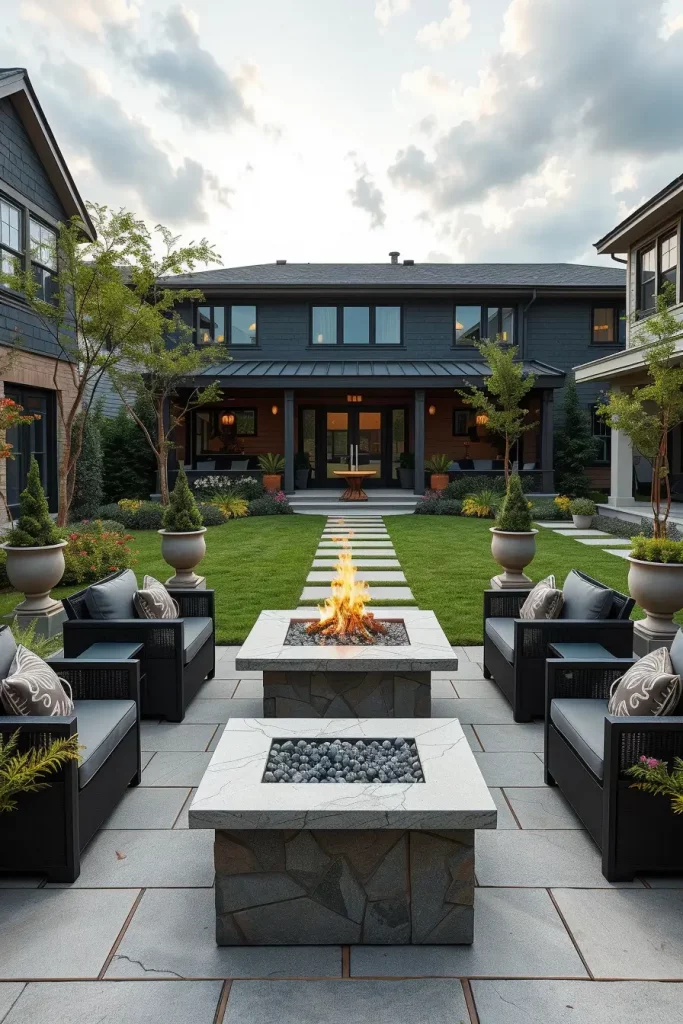
I typically select statement fire pits with premium finishes and surround them with symmetrical seating, sculptural planters, and coordinated paving. Each item reinforces the fire pit’s role as the focal point without competing for attention.
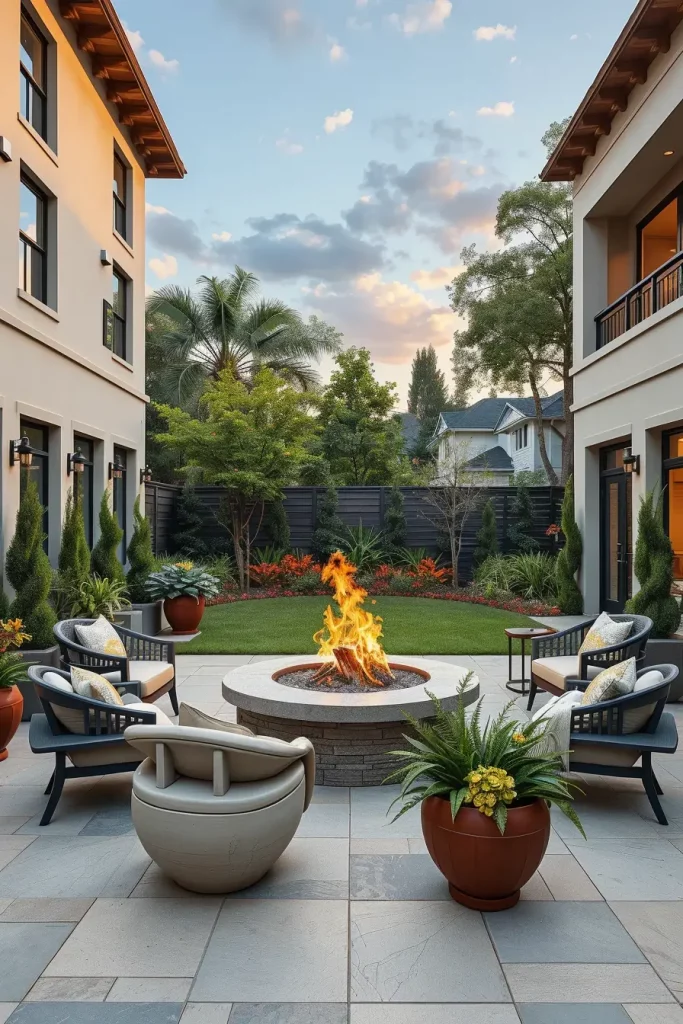
From my experience, landscape architects published in Luxe Interiors + Design often emphasize strong focal elements. I agree with this approach, as I have seen how a central fire pit simplifies layout decisions and enhances overall harmony.
To complete this section, I would add a clear sightline strategy, ensuring the fire pit remains visible from key indoor and outdoor vantage points.
Seamless Fire Pit Integration With Modern Paving
Seamless integration between fire pits and paving creates a polished, modern yard aesthetic. I focus on continuity, making the fire pit feel like part of the ground plane rather than an added feature.
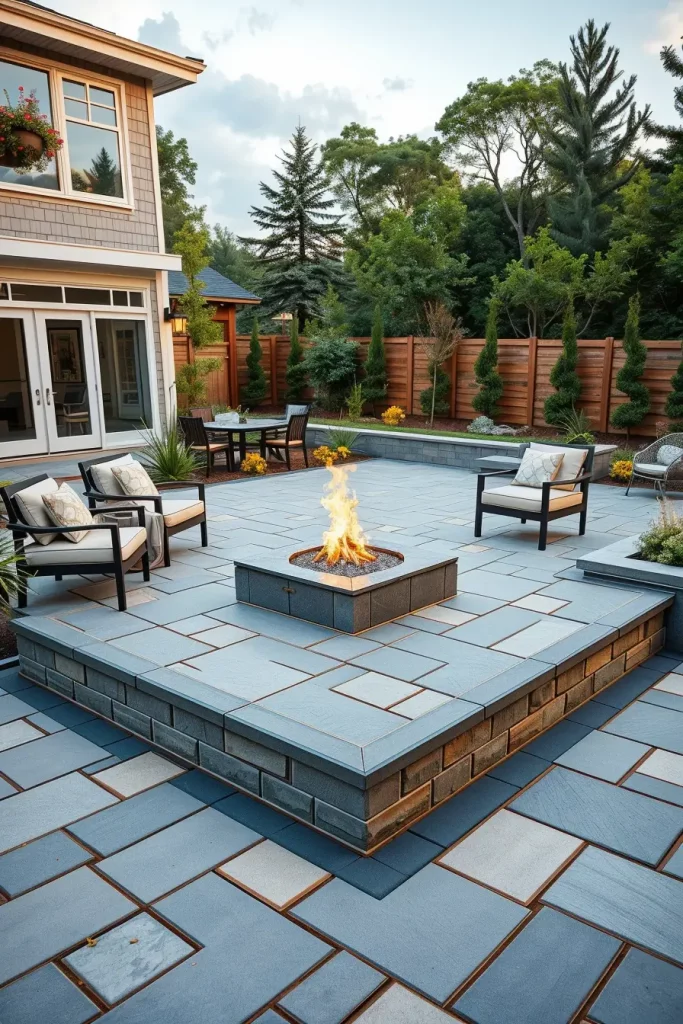
I often use large-format pavers, flush-mounted fire pits, and matching materials to achieve this effect. Furniture with clean lines and low profiles complements the integrated look while maintaining comfort.
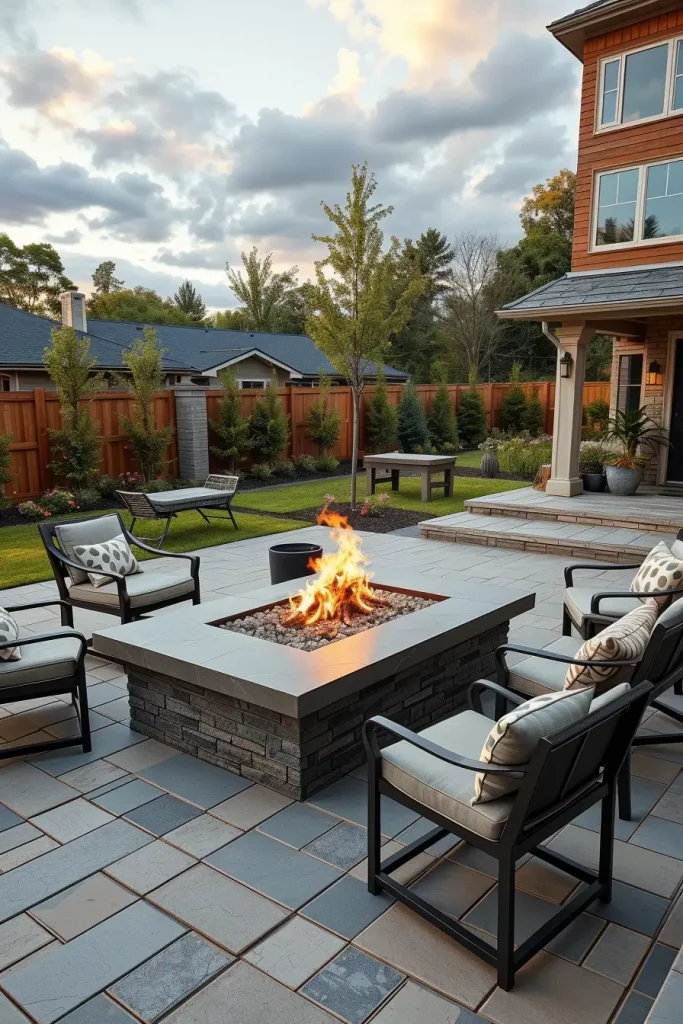
In my professional opinion, this approach aligns with trends highlighted by contemporary landscape studios in the US, where minimal transitions are key. I have found that seamless designs age better and require less visual maintenance.
To enhance this section further, I would incorporate expansion joints and drainage solutions to ensure long-term durability.
Contemporary Fire Pits Using Mixed Materials
I often recommend mixed-material fire pits when designing a modern yard because they add depth and contrast without relying on excessive decoration. Combining materials allows the fire pit to visually connect with different zones of the yard, making the space feel layered and thoughtfully composed. This approach works especially well in contemporary landscapes where balance and texture matter.
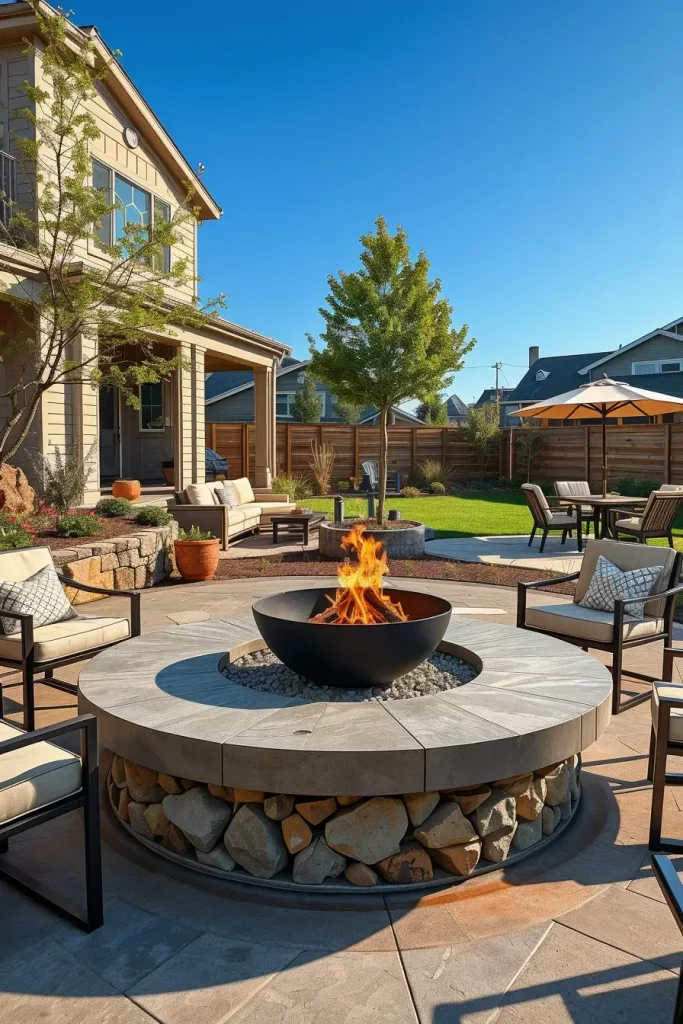
In my projects, I typically combine concrete bases with metal fire bowls, stone cladding, or ceramic surrounds. Each material plays a role: concrete provides stability, metal introduces a refined edge, and stone softens the overall look. Outdoor lounge chairs with metal frames and textured cushions help echo these material contrasts while remaining comfortable and durable.
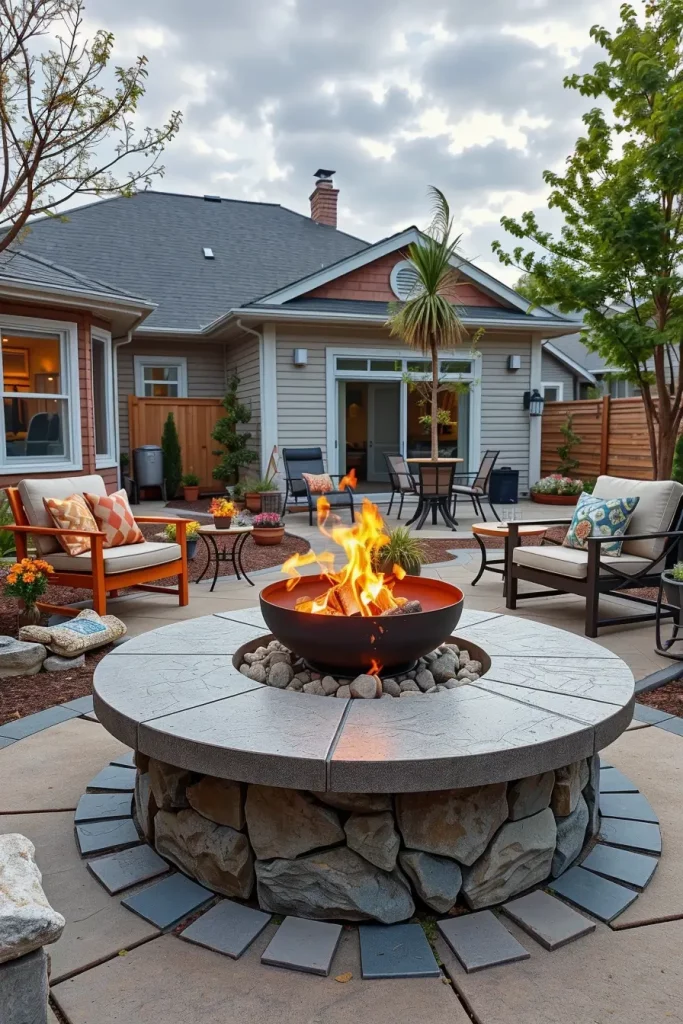
From my experience, designers featured in Dezeen and Architectural Digest frequently highlight mixed materials as a key trend in outdoor design. I agree with this perspective because I have seen how these combinations make fire pits feel intentional rather than purely functional.
To strengthen this section further, I would add coordinated accessory details such as metal side tables or stone planters to reinforce material continuity throughout the yard.
Curved Fire Pit Walls For Soft And Elegant Yard Flow
Curved fire pit walls are one of my preferred solutions for creating curved Yard fire pits that feel elegant and inviting. Unlike rigid layouts, curved designs guide movement naturally and make the yard feel more fluid and relaxed. I find this especially effective in open outdoor spaces that need visual softness.
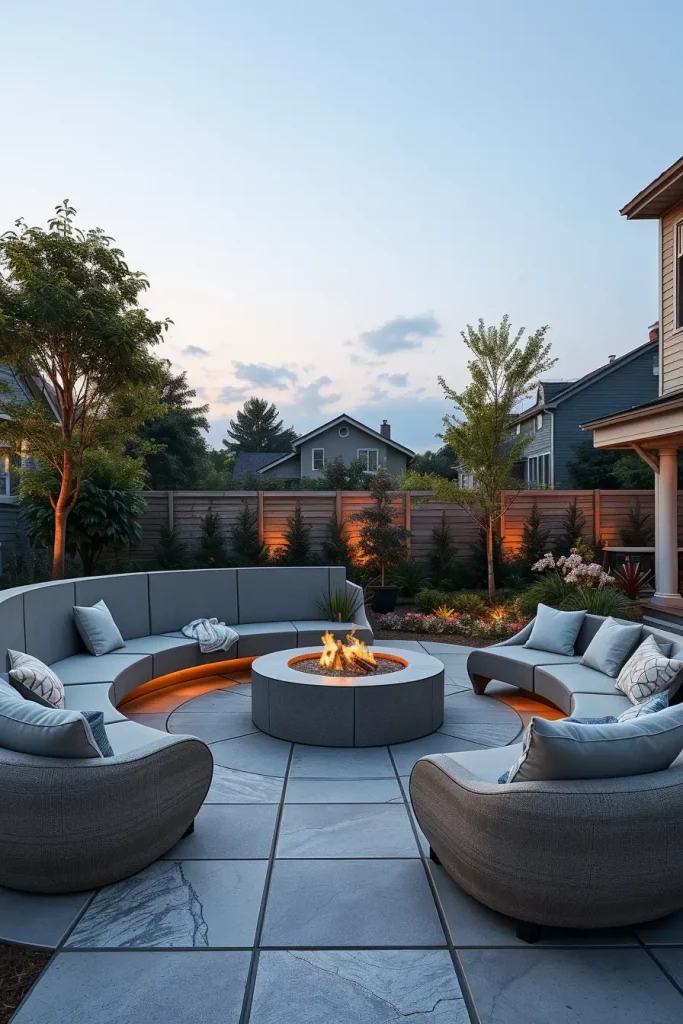
I usually pair curved fire pit walls with semi-circular seating, plush outdoor cushions, and rounded coffee tables. These elements mirror the fire pit’s shape and help maintain visual harmony. Materials like smooth concrete, plaster, or stone with rounded edges enhance both comfort and safety.
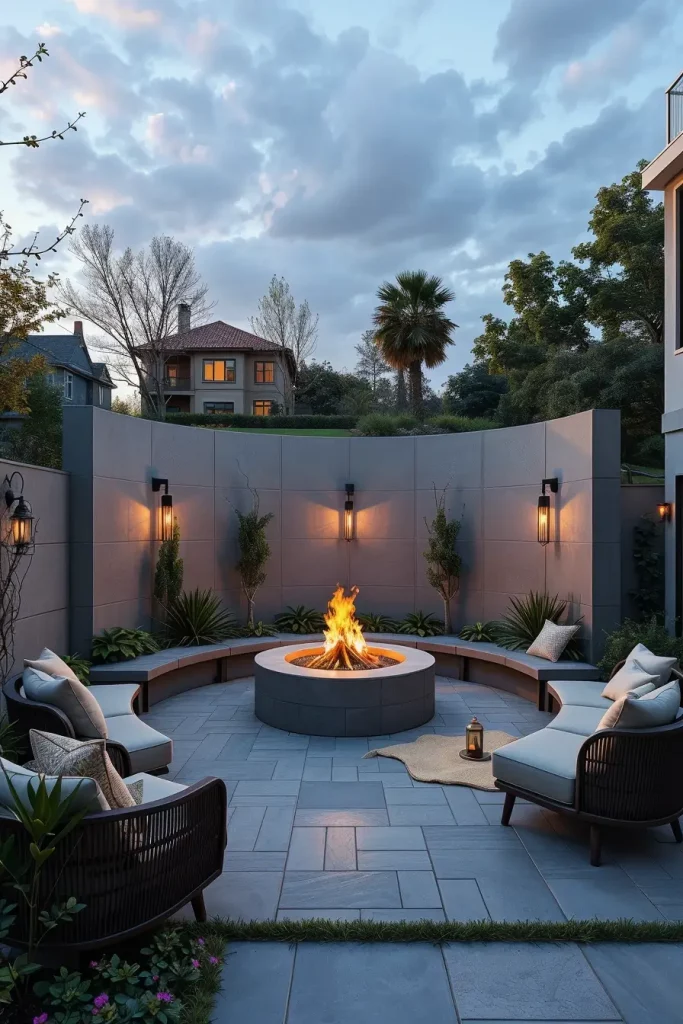
In my professional opinion, landscape architects featured in Better Homes and Gardens often emphasize curves as a way to humanize outdoor spaces. I have personally observed that guests gravitate toward curved fire pit areas because they feel more inclusive and comfortable.
To complete this section, I would add low-profile perimeter lighting along the curved wall to enhance nighttime usability without disrupting the elegant flow.
Fire Pit Ideas With Ambient LED Lighting Accents
Incorporating ambient LED lighting into fire pit designs allows me to extend yard usability well into the evening. This approach enhances safety, atmosphere, and visual depth, especially in designer outdoor environments. I see lighting as an essential layer rather than a decorative afterthought.
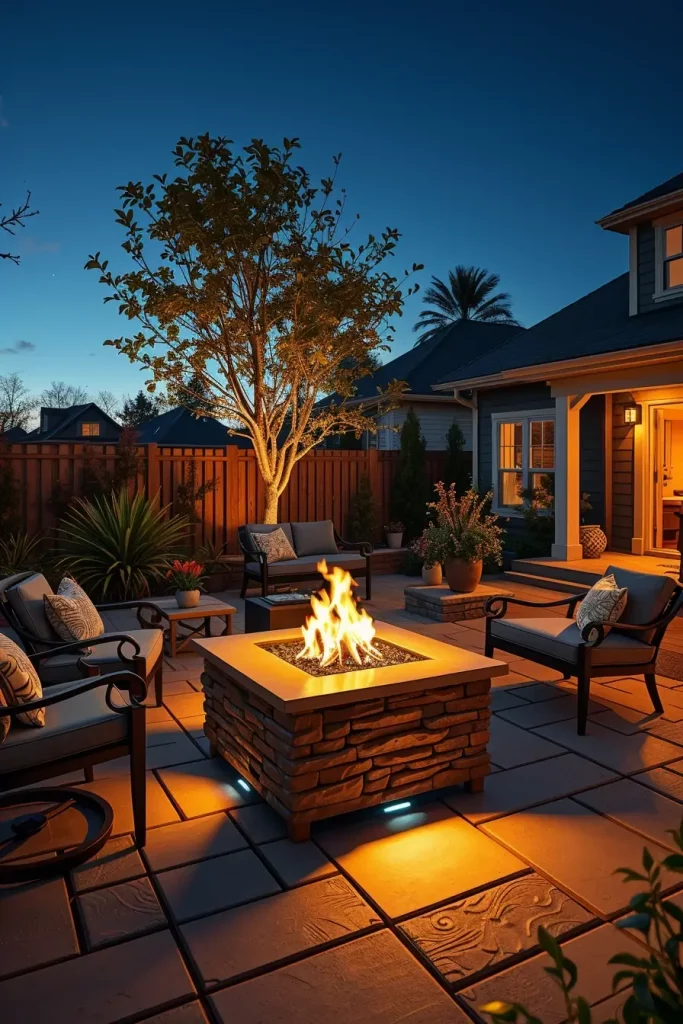
I typically integrate LED strips beneath seating, along fire pit bases, or within nearby paving joints. Combined with warm-toned firelight, these LEDs create balance and prevent harsh contrasts. Furniture with subtle reflective finishes helps distribute light evenly across the space.
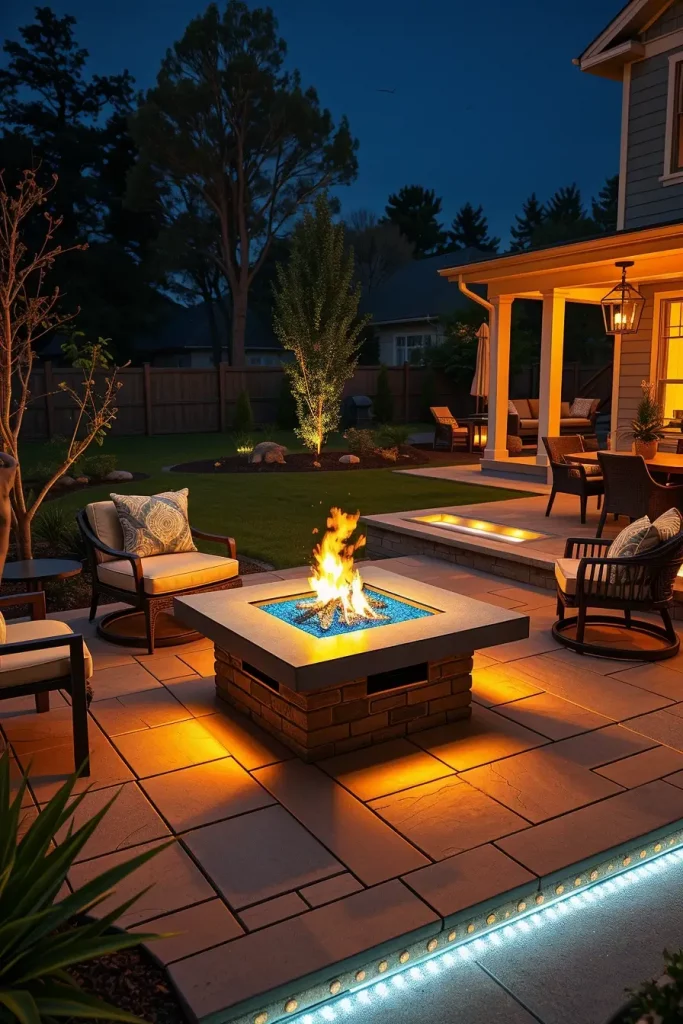
From my experience, lighting designers frequently cited in Dwell emphasize layered illumination for outdoor comfort. I fully support this approach because I have seen how properly placed LEDs elevate the fire pit area without overpowering the natural flame.
To improve this section further, I would suggest adding smart lighting controls to adjust brightness and color temperature depending on mood or occasion.
Outdoor Lounge Fire Pit Concepts For 2026 Trends
Outdoor lounge fire pit concepts for 2026 focus on comfort-driven layouts that feel like an extension of the interior. I approach these designs by prioritizing relaxation, flexibility, and visual cohesion within the yard. The fire pit becomes a social anchor rather than just a heat source.
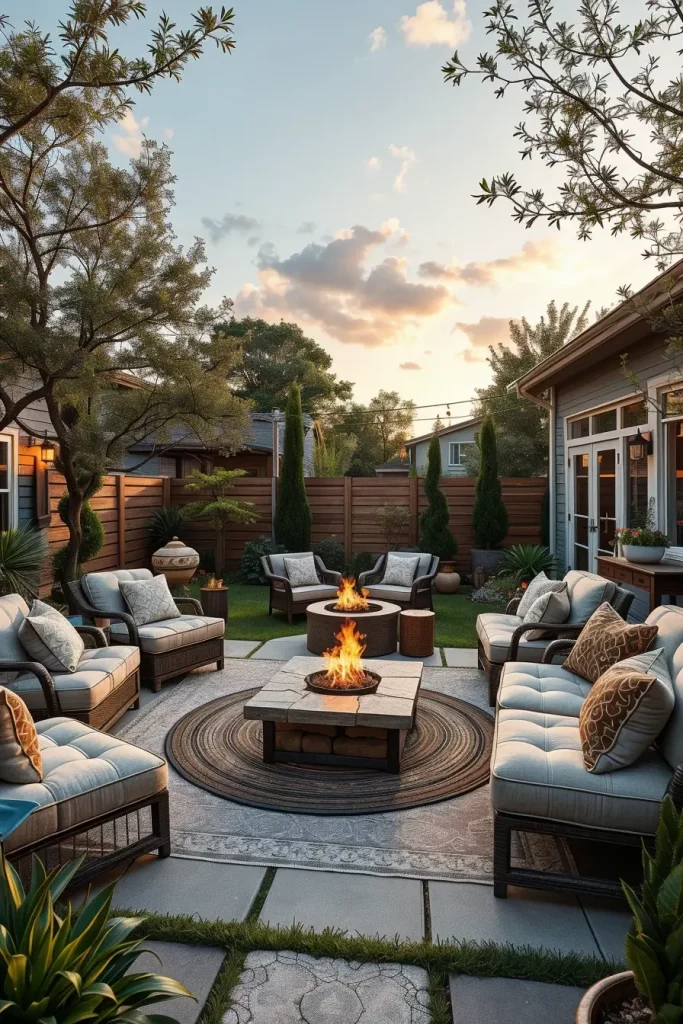
I include deep lounge sofas, modular seating, soft outdoor rugs, and low fire tables to reinforce a relaxed atmosphere. Materials are chosen for durability, while neutral tones keep the space timeless and adaptable to future updates.
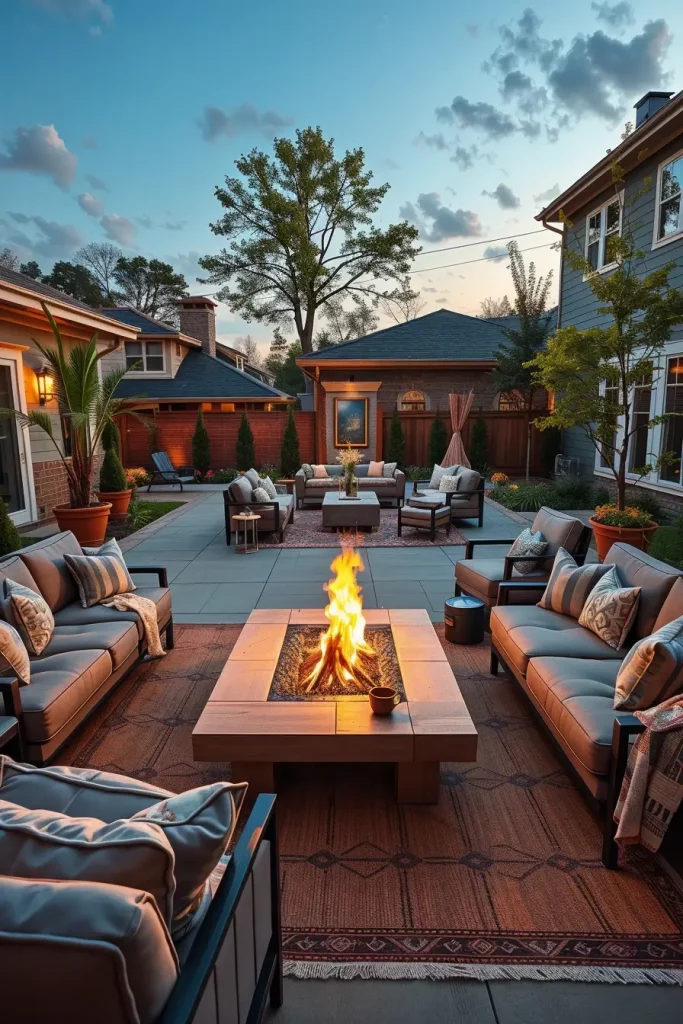
In my opinion, experts from HGTV consistently highlight lounge-style outdoor living as a long-term trend. I have personally found that these setups encourage daily use rather than occasional gatherings.
To enhance this section, I would recommend adding weather-resistant throws and movable accent tables to increase comfort and functionality.
Artistic Fire Pit Designs That Redefine Outdoor Style
Artistic fire pits allow me to treat the yard as a curated design space rather than a purely functional area. These unique designs often blur the line between sculpture and utility, making them ideal for homeowners who value visual impact.
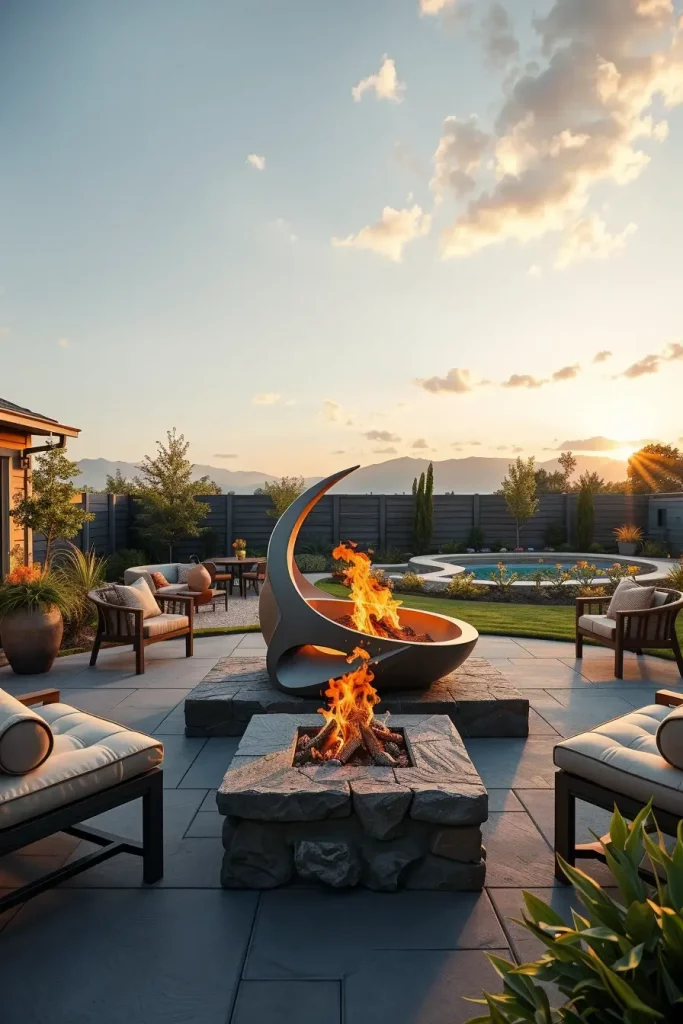
I typically select fire pits with asymmetrical forms, sculptural metalwork, or custom textures. Surrounding furniture remains understated so the fire pit remains the focal point. Neutral seating and minimal accessories help maintain balance.
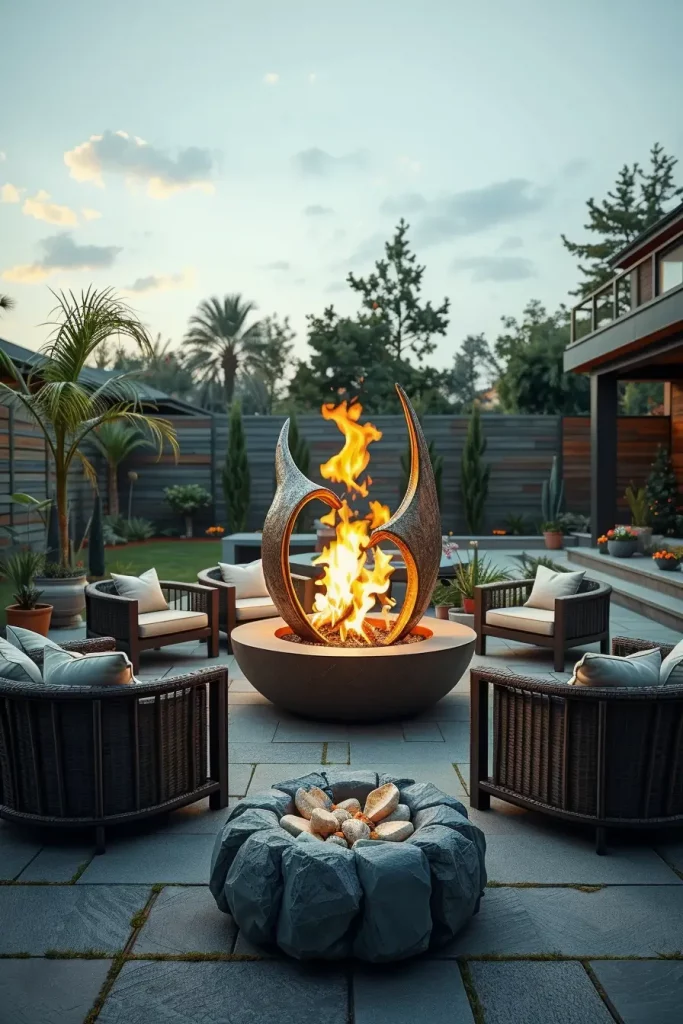
From my experience, design publications like Luxe Interiors + Design frequently showcase artistic fire pits as statement pieces. I agree with this approach because I have seen how one bold element can elevate the entire yard.
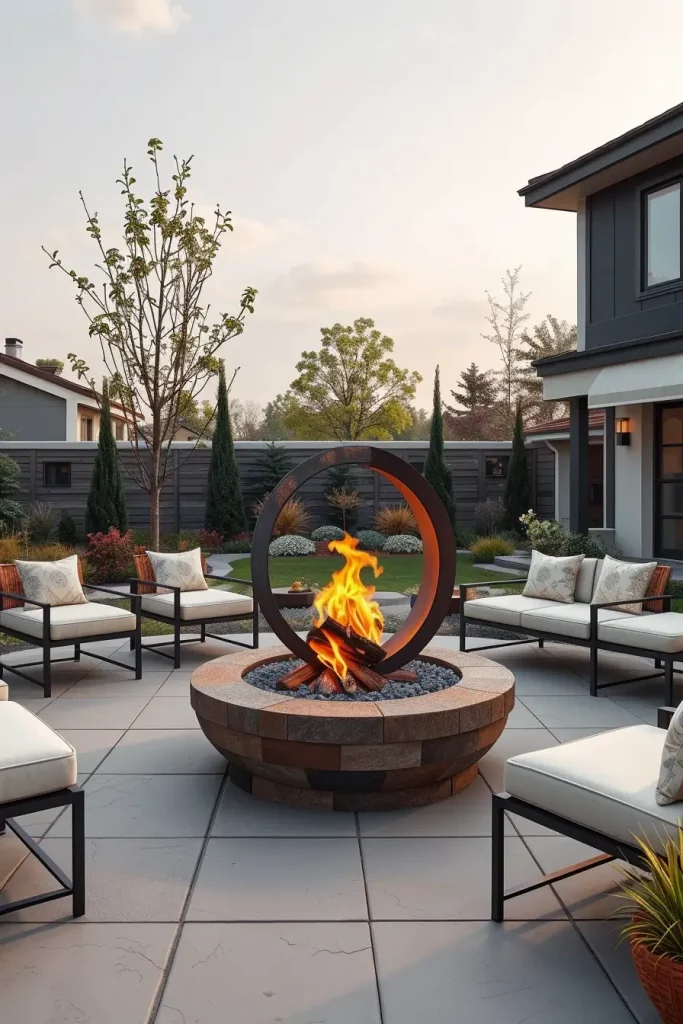
To complete this section, I would add intentional sightlines from indoor spaces to highlight the fire pit as a visual feature even when not in use.
Fire Pit Layouts That Enhance Yard Architecture
I always consider existing yard architecture when planning fire pit layouts because alignment improves cohesion and flow. A well-placed fire pit can reinforce sightlines, frame views, and emphasize structural elements such as retaining walls or pergolas.
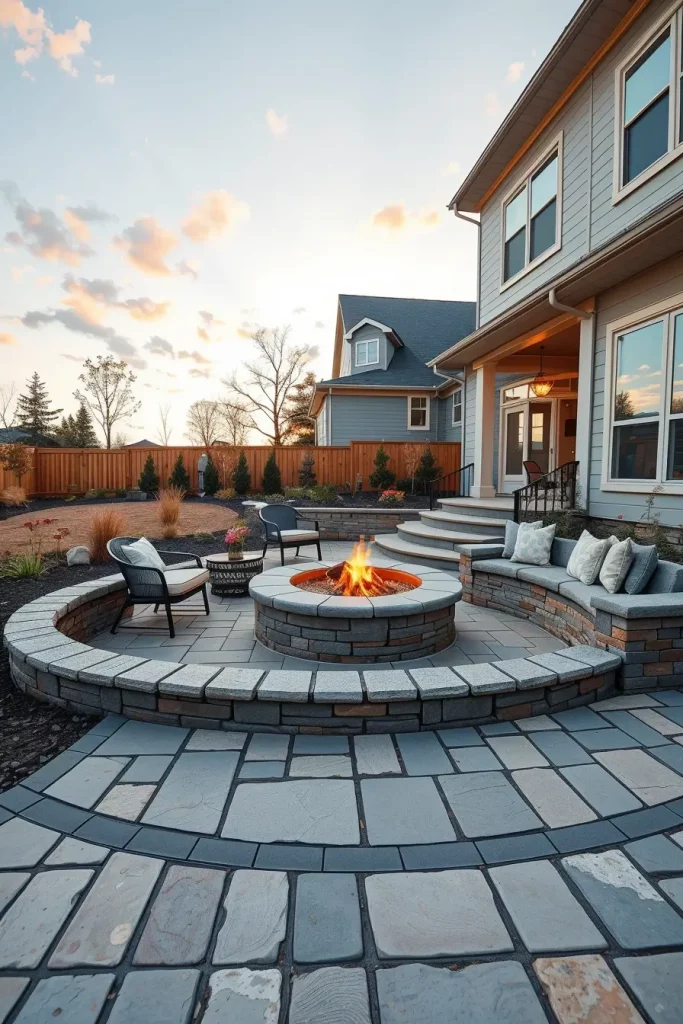
I often align fire pits with architectural axes and complement them with built-in seating or paving patterns. Furniture placement follows these lines to maintain order and visual clarity throughout the space.
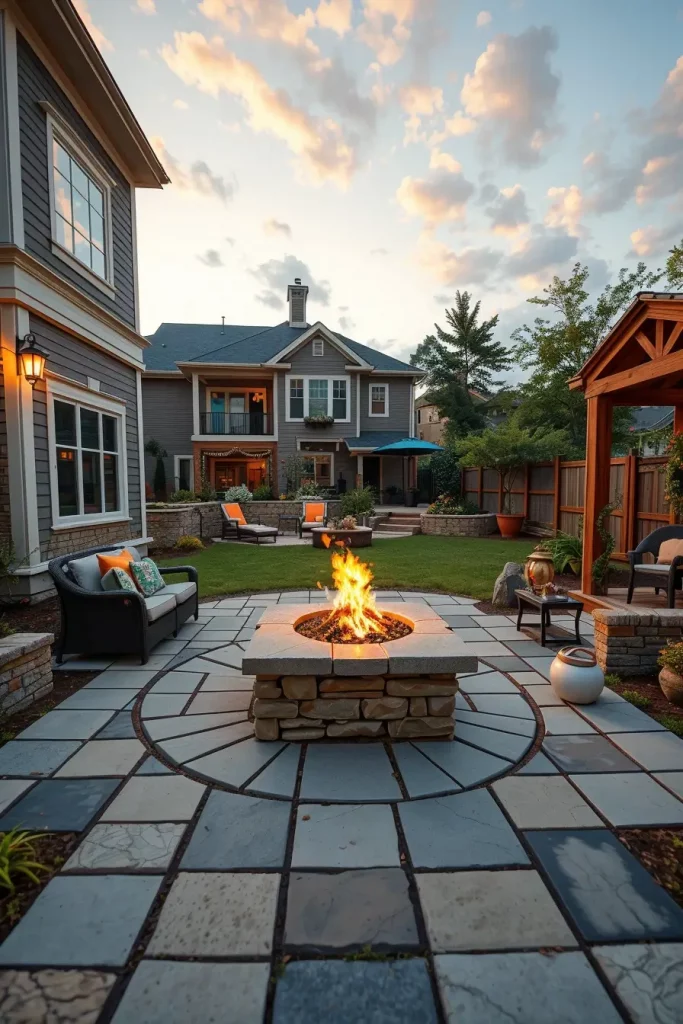
In my professional experience, landscape architects often stress architectural alignment as a key principle. I have noticed that fire pits designed with architecture in mind feel more permanent and refined.
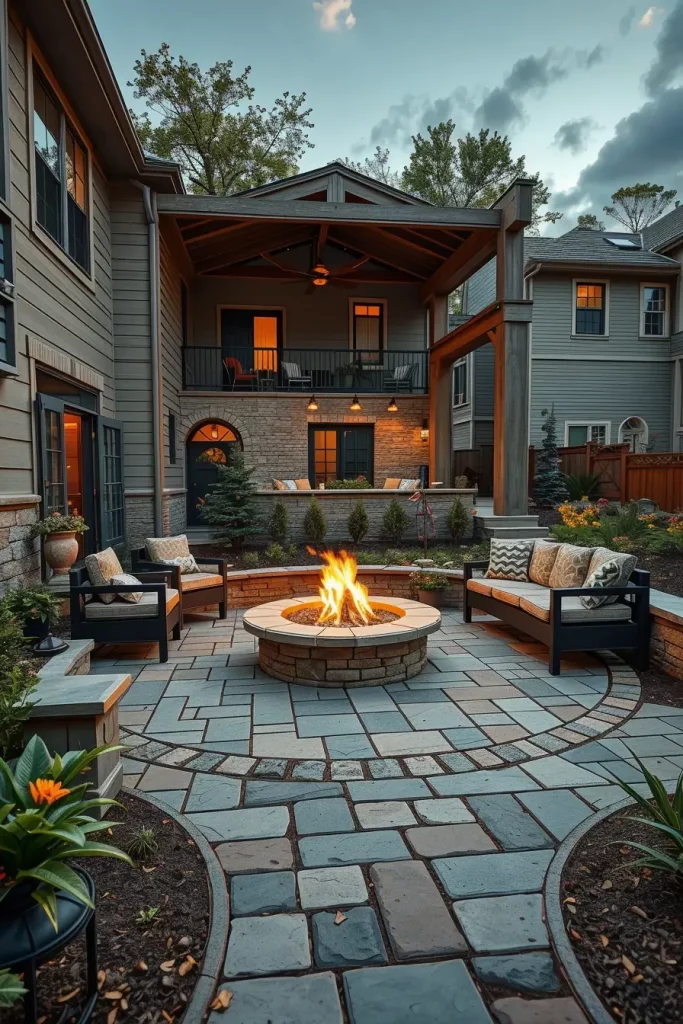
To enhance this section, I would incorporate architectural lighting to highlight key structural features around the fire pit area.
Future-Inspired Yard Fire Pit Ideas For 2026 Living
Future-inspired yard fire pits focus on innovation, efficiency, and seamless design integration. I approach these ideas with a mindset of longevity, ensuring they remain relevant beyond short-term trends.
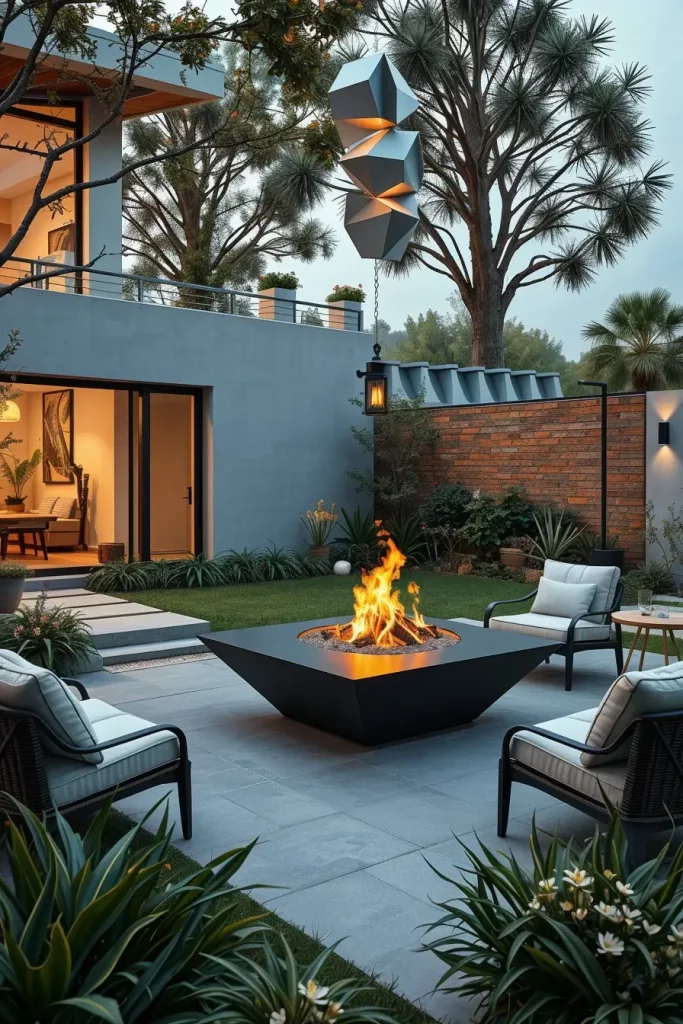
I include smart fire pit systems, sustainable materials, and modular seating that can adapt over time. Clean forms and modern finishes ensure the yard feels forward-thinking yet comfortable.
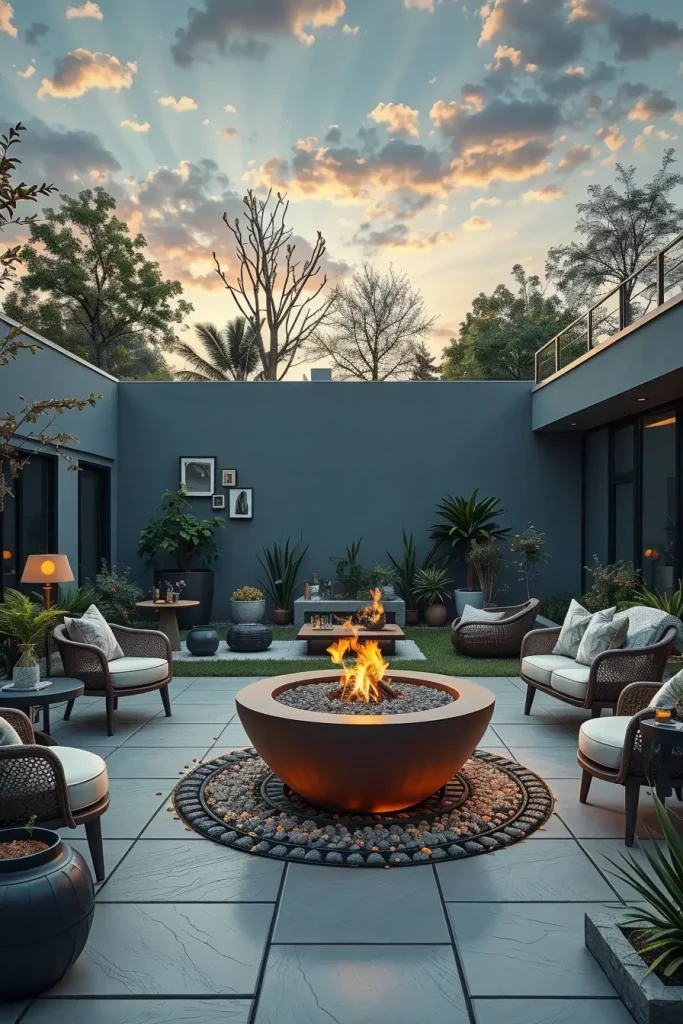
From my perspective, forward-looking designs featured in US-based design media emphasize adaptability. I agree with this because I have seen how flexible solutions extend the lifespan of outdoor spaces.
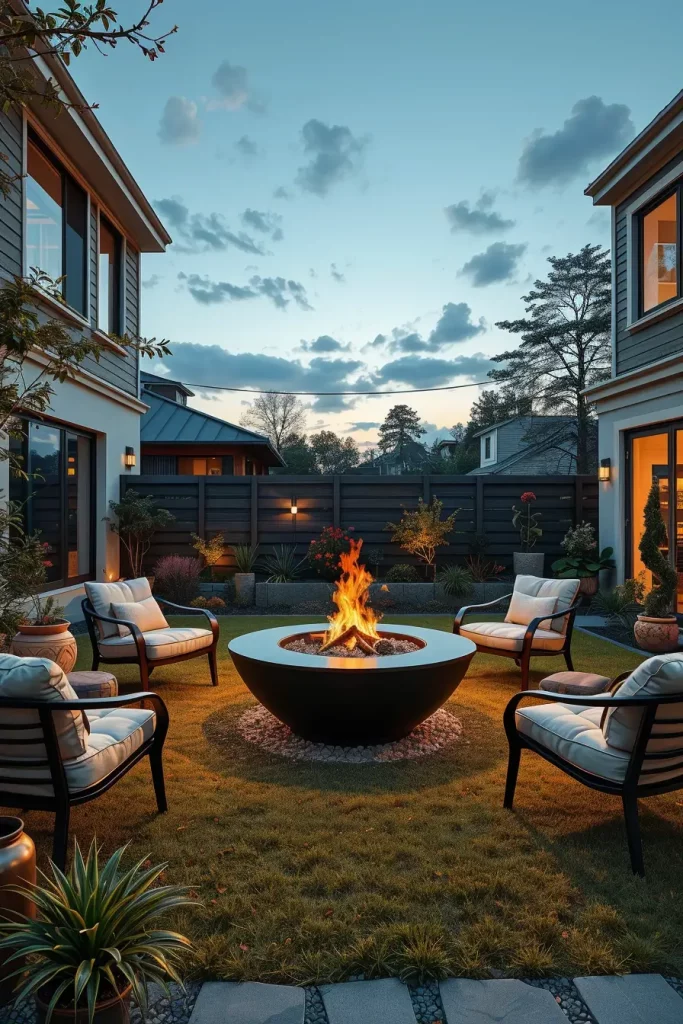
To complete this section, I would add charging stations or integrated technology hubs to support modern outdoor living needs.
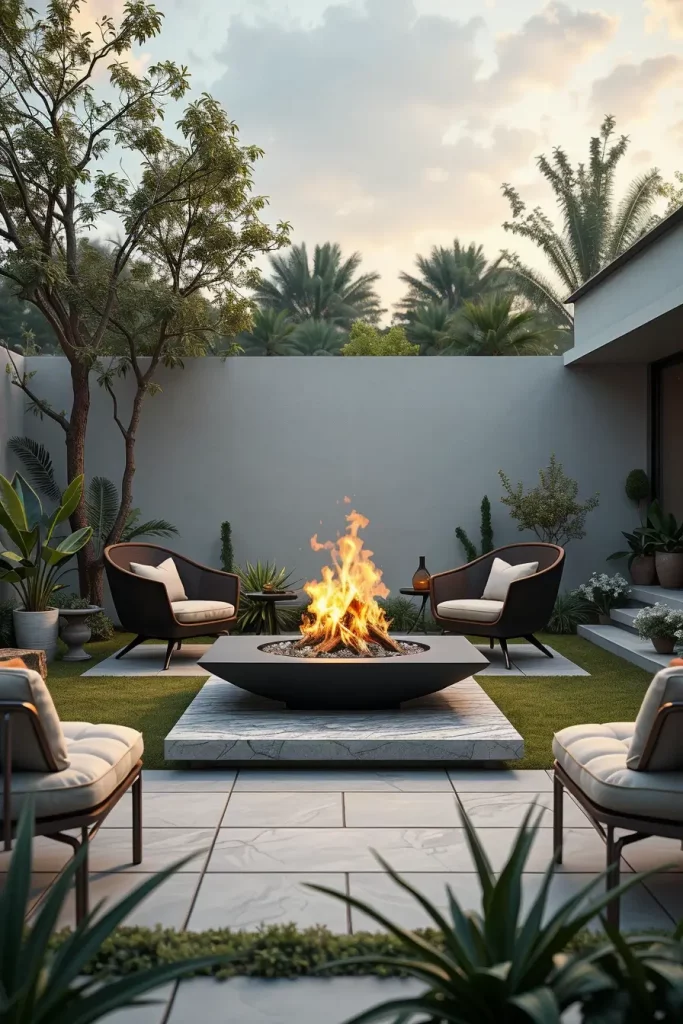
Yard fire pit ideas for 2026 focus on thoughtful design, modern materials, and unique forms that elevate outdoor living. Which concept resonates most with your vision, and how would you personalize it? Share your thoughts and experiences in the comments, I would love to hear how you approach designing your outdoor fire pit space.