
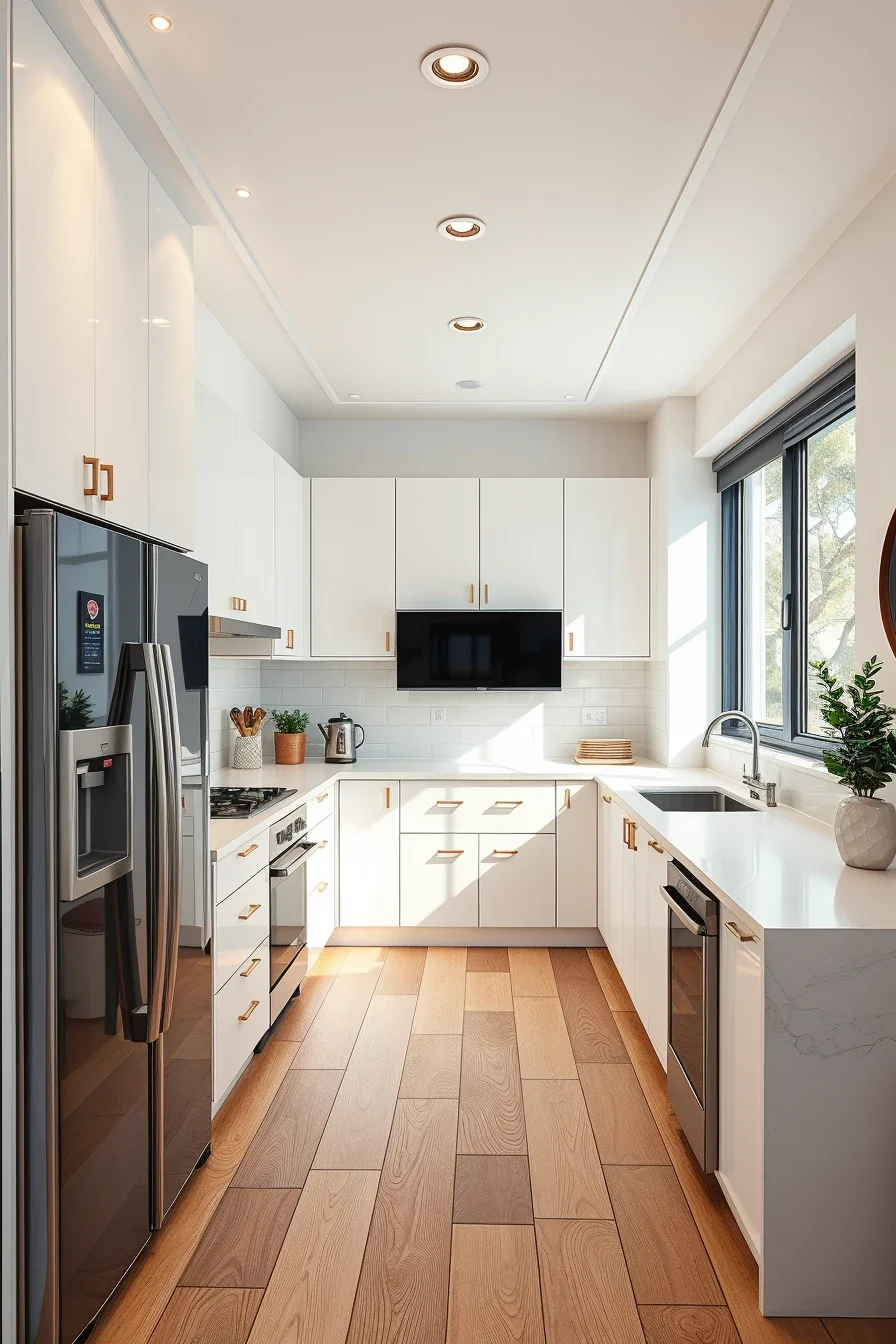
A compact kitchen design with smart storage proves that limited square footage does not have to limit style, comfort, or functionality. Modern homeowners are embracing creative layouts, innovative furniture, and clever organization systems that make small kitchens feel spacious and efficient. From floor-to-ceiling cabinets to hidden storage compartments, every element can be designed to maximize available space while maintaining a clean and elegant appearance. Smart storage solutions help reduce clutter, improve workflow, and create a more enjoyable cooking experience. Contemporary compact kitchens also incorporate sleek materials, integrated appliances, and multifunctional furniture that serve multiple purposes without sacrificing aesthetics. In this article, you’ll discover inspiring ideas and practical design strategies for creating a beautiful compact kitchen that combines modern style with exceptional storage efficiency.
Small Space, Big Style: The Foundation Of A Compact Kitchen Design
When I design a compact kitchen, I focus on creating an open and balanced environment where every element serves a purpose. A successful compact kitchen design with smart storage starts with a clear layout, cohesive materials, and a thoughtful color palette. Light wood finishes, soft neutral cabinetry, and reflective surfaces help make a small kitchen feel larger and brighter while maintaining a modern appearance.
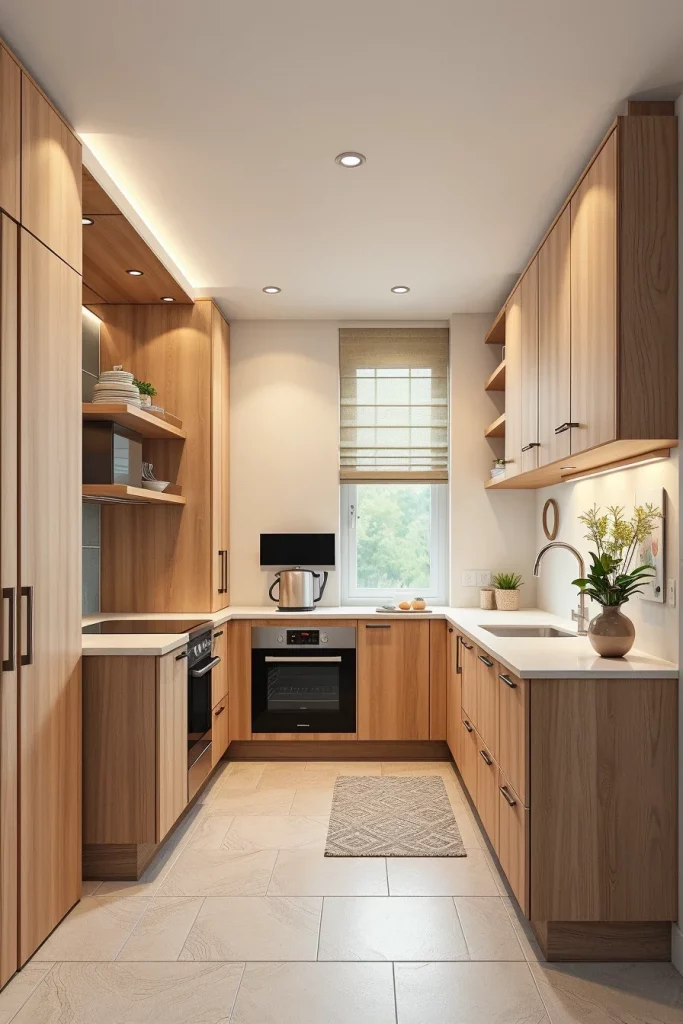
I always recommend selecting furniture and fixtures that maximize usability without overwhelming the room. Slim-profile cabinets, integrated appliances, and compact dining solutions help preserve valuable floor space. Carefully chosen lighting, including under-cabinet LEDs and pendant fixtures, adds depth and functionality while highlighting key design features.
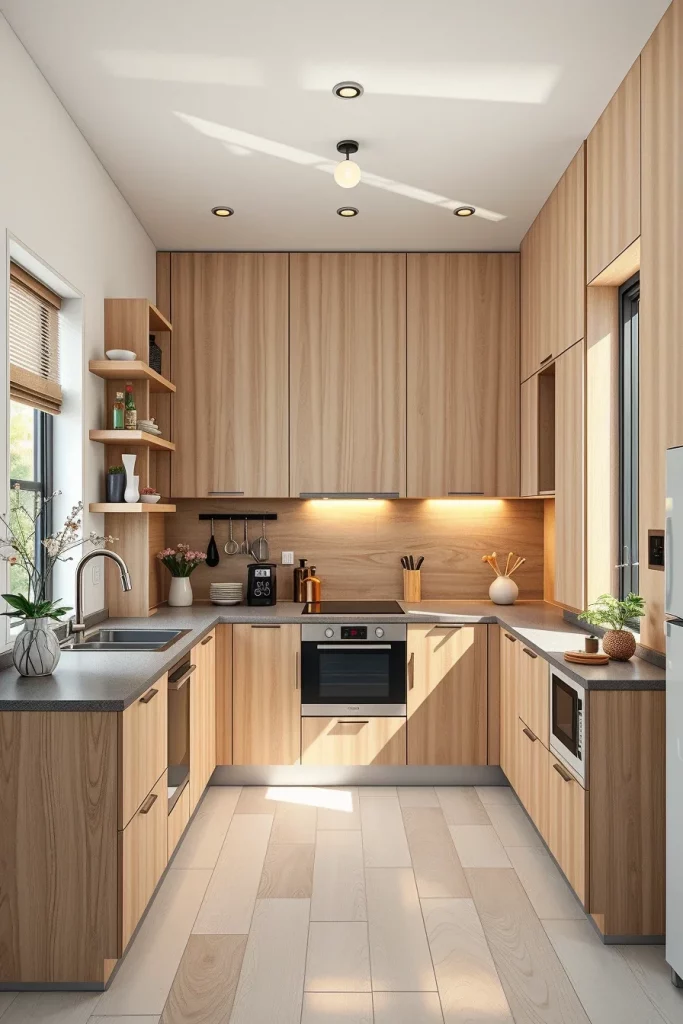
In my experience, many homeowners underestimate the impact of visual simplicity. Designers frequently featured in interior publications such as Architectural Digest often emphasize reducing visual clutter to make small rooms feel more spacious. I find that limiting unnecessary decorative elements creates a cleaner and more sophisticated kitchen environment.
I also believe every compact kitchen should include designated storage zones for cookware, pantry items, and cleaning supplies. Planning these areas from the beginning prevents clutter from accumulating and improves daily efficiency.
Sleek Handleless Cabinets For A Clean Modern Look
One of my favorite features in modern compact kitchens is the use of handleless cabinetry. These cabinets create uninterrupted lines that visually expand the room and contribute to a sleek contemporary aesthetic. The absence of visible hardware makes even small kitchens feel more refined and organized.
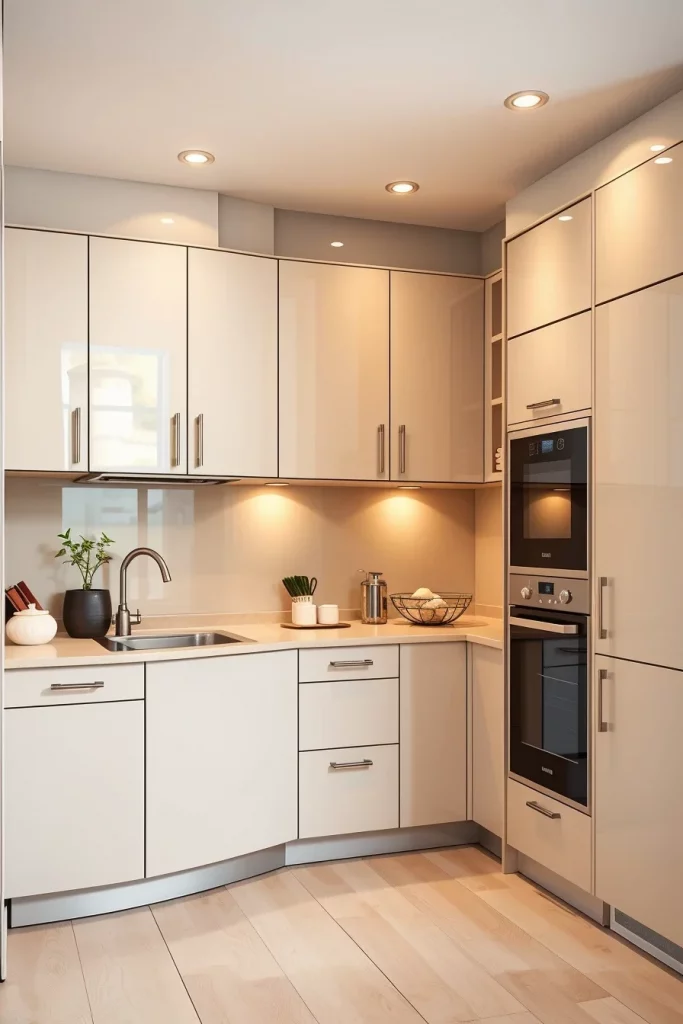
I often choose matte finishes, wood veneers, or soft-touch laminates for handleless cabinet fronts. Push-to-open mechanisms or integrated finger pulls maintain functionality while preserving the streamlined appearance. Tall pantry cabinets, base units, and upper storage can all benefit from this clean design approach.
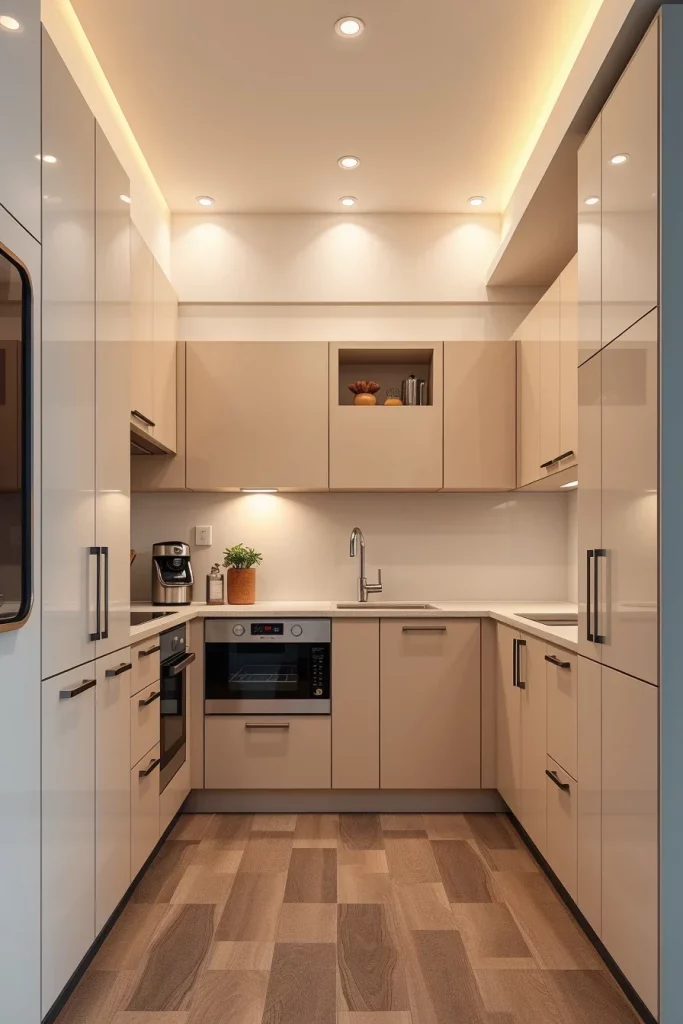
From my perspective, handleless cabinetry is especially valuable in narrow kitchens where every visual distraction can make the space feel smaller. The seamless surfaces create a calming effect and allow other design elements, such as backsplashes or lighting, to stand out.
To enhance this concept further, I recommend incorporating integrated appliances that blend seamlessly with cabinet panels. This creates a unified design language and strengthens the minimalist appearance of the room.
Floor-To-Ceiling Storage Solutions That Maximize Every Inch
In compact kitchens, vertical space is often the most underutilized resource. I frequently design floor-to-ceiling storage systems that transform empty wall areas into highly functional storage zones. These solutions allow homeowners to store more without increasing the kitchen footprint.
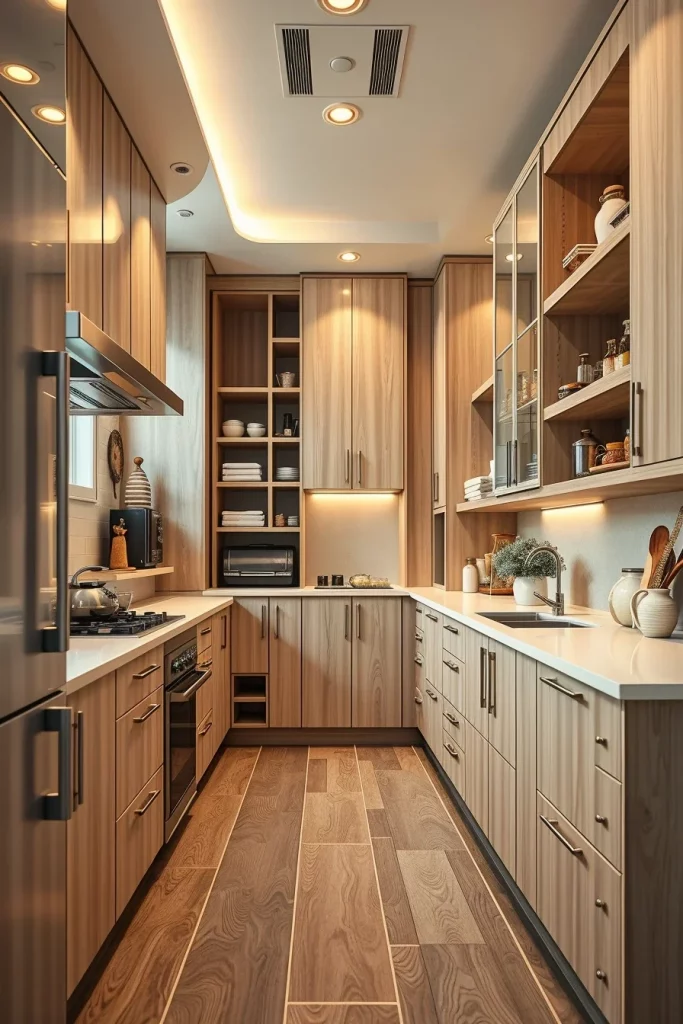
I typically combine tall pantry cabinets, overhead compartments, and custom shelving to maximize every available inch. Upper sections can accommodate seasonal cookware and less frequently used items, while everyday essentials remain easily accessible in lower cabinets. Built-in organizers and pull-out accessories improve convenience even further.
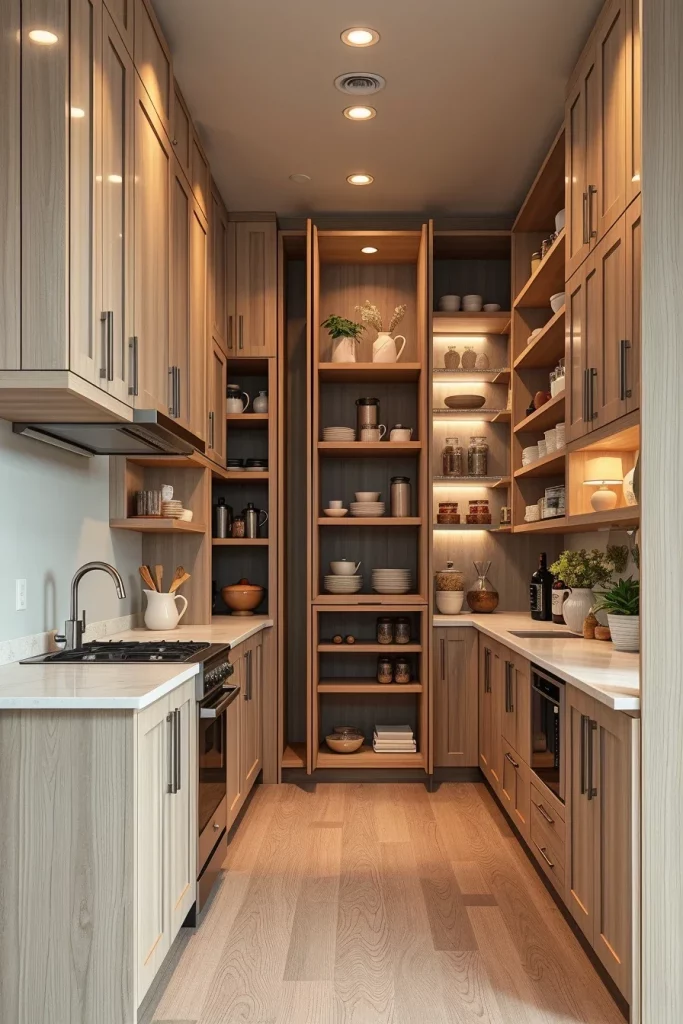
I have found that full-height cabinetry also creates a sense of architectural elegance. Instead of fragmented storage pieces, the kitchen feels cohesive and intentional. Many professional kitchen designers recommend extending cabinetry to the ceiling to eliminate dust-collecting gaps while increasing storage capacity.
I would also include integrated lighting inside selected cabinets. Illuminated shelving improves visibility and adds a sophisticated layer of ambiance that elevates the overall design.
Hidden Pantry Designs For A Clutter-Free Kitchen
A hidden pantry can dramatically improve organization in a compact kitchen. I often use concealed pantry systems that blend into surrounding cabinetry, allowing storage to remain accessible without disrupting the visual flow of the room. This approach supports a clean and uncluttered appearance.
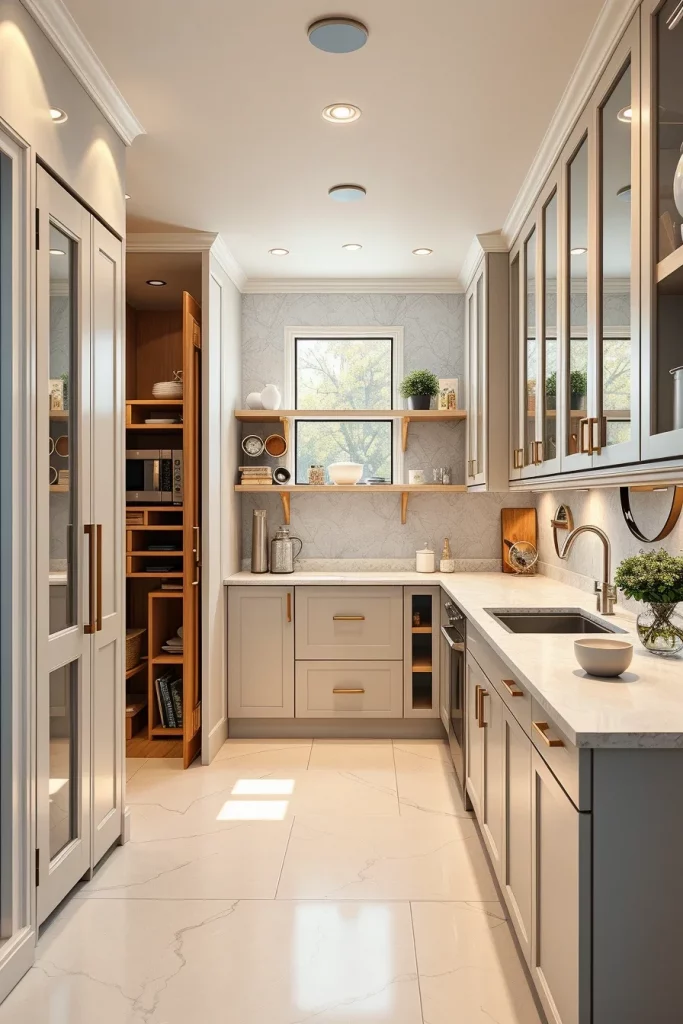
Depending on the available space, I may incorporate pull-out pantry towers, concealed walk-in pantries, or appliance garages hidden behind cabinet doors. These solutions keep food items, small appliances, and kitchen accessories out of sight while remaining easy to reach during meal preparation.
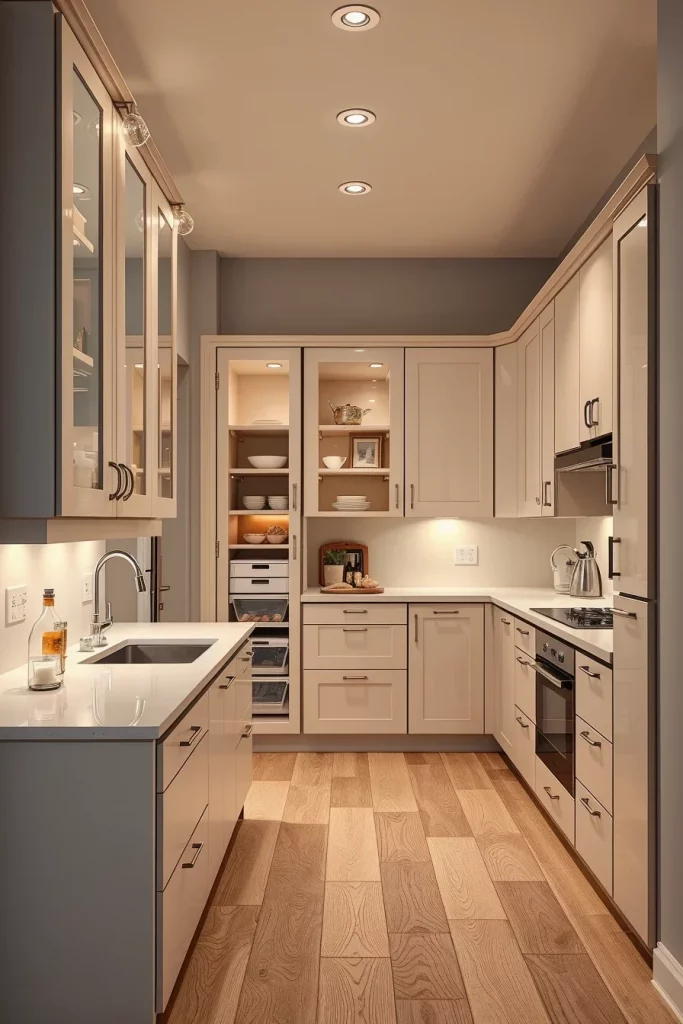
In my experience, hidden storage contributes significantly to the perception of spaciousness. When countertops remain clear and pantry items are neatly organized behind closed doors, the entire kitchen feels more relaxing and functional. Interior designers frequently recommend concealed storage as a key strategy for maintaining visual order in small homes.
To make the pantry even more effective, I suggest adding labeled containers, adjustable shelving, and internal lighting. These details improve organization and help homeowners maintain the system over time.
Multi-Functional Kitchen Islands With Built-In Storage
Even in smaller kitchens, a carefully designed island can become a powerful multifunctional feature. I often incorporate compact islands that provide additional workspace, seating, and storage simultaneously. This approach increases functionality without sacrificing style.
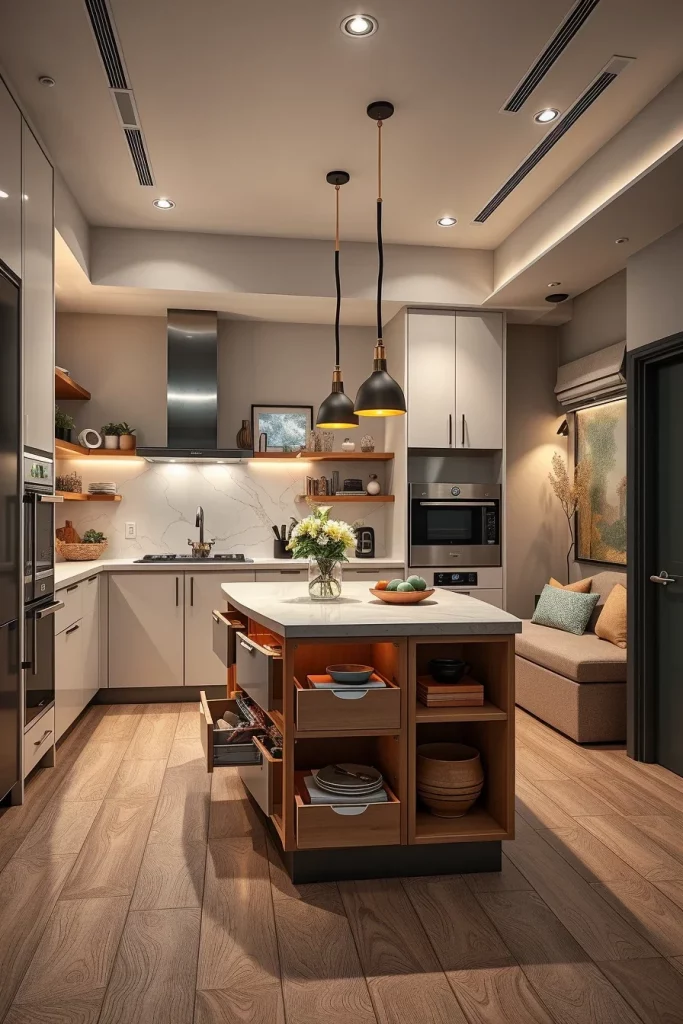
I like to include deep drawers for cookware, open shelves for decorative items, and hidden compartments for small appliances. Some islands also feature integrated charging stations, pull-out waste bins, or extendable dining surfaces. These additions help the island perform multiple roles throughout the day.
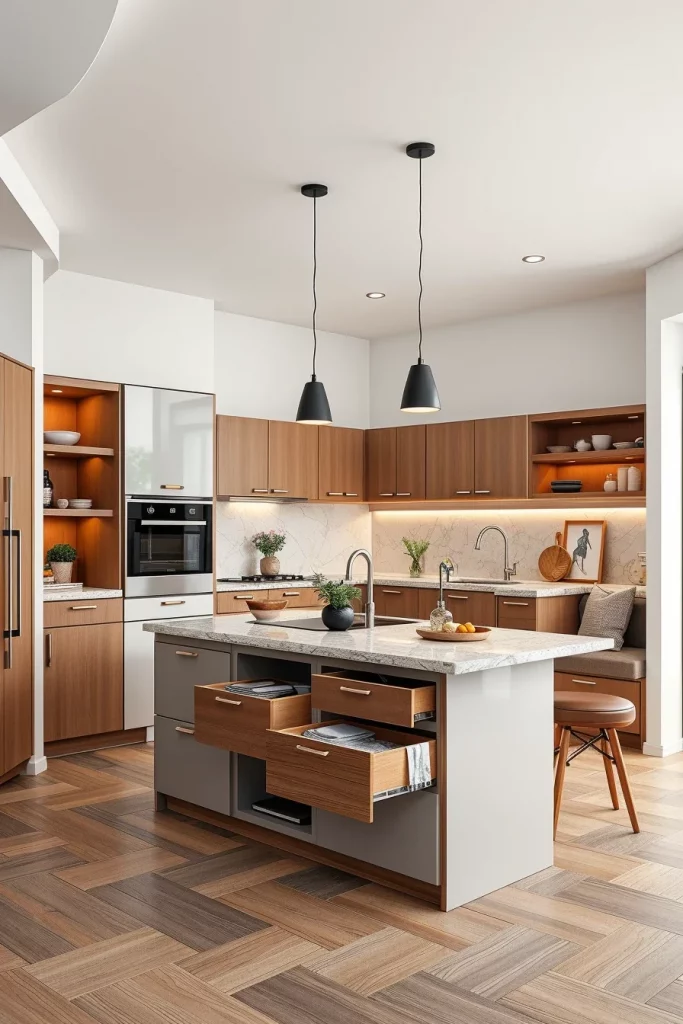
From my perspective, multifunctional furniture is essential in stylish compact kitchens. Every piece should contribute to both aesthetics and practicality. Well-designed islands create a central gathering point while supporting cooking, dining, and storage needs.
I also recommend selecting materials that complement the surrounding cabinetry while adding subtle contrast. Natural wood accents, stone countertops, and modern lighting can transform a compact island into the focal point of the kitchen.
Space-Saving Corner Cabinet Ideas That Actually Work
Corner cabinets are often overlooked in compact kitchens, yet I consider them one of the most valuable opportunities for increasing storage. A well-designed corner solution transforms difficult-to-reach areas into highly functional spaces that improve organization without requiring additional square footage. In many compact kitchen design with smart storage projects, corner cabinets become the key to maximizing efficiency.
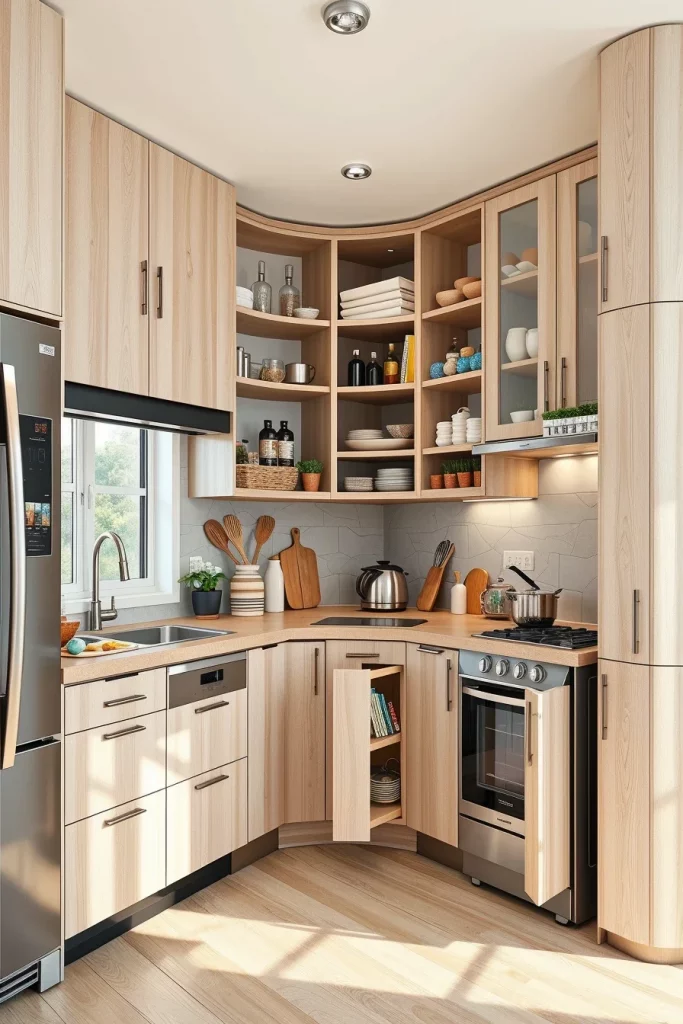
I frequently recommend pull-out corner systems, rotating shelves, and swing-out storage mechanisms. These features allow homeowners to access cookware, small appliances, and pantry items that would otherwise be hidden in deep cabinet corners. Modern hardware has made corner storage much more practical than traditional fixed shelving.
From my experience, investing in quality corner cabinet accessories is worthwhile because they significantly improve daily convenience. Many kitchen specialists emphasize that accessible storage is more valuable than simply adding more storage. A cabinet that is easy to use every day contributes directly to a better cooking experience.
To complete this area, I often suggest installing interior cabinet lighting and adjustable shelving. These additions make corner cabinets more versatile and ensure that every inch remains useful over time.
Open Shelving Concepts For Modern Compact Kitchens
Open shelving can bring both style and functionality to a compact kitchen when used thoughtfully. I often incorporate open shelves to reduce the visual heaviness of upper cabinets and create a more open atmosphere. This strategy works particularly well in modern compact kitchens where simplicity and accessibility are priorities.
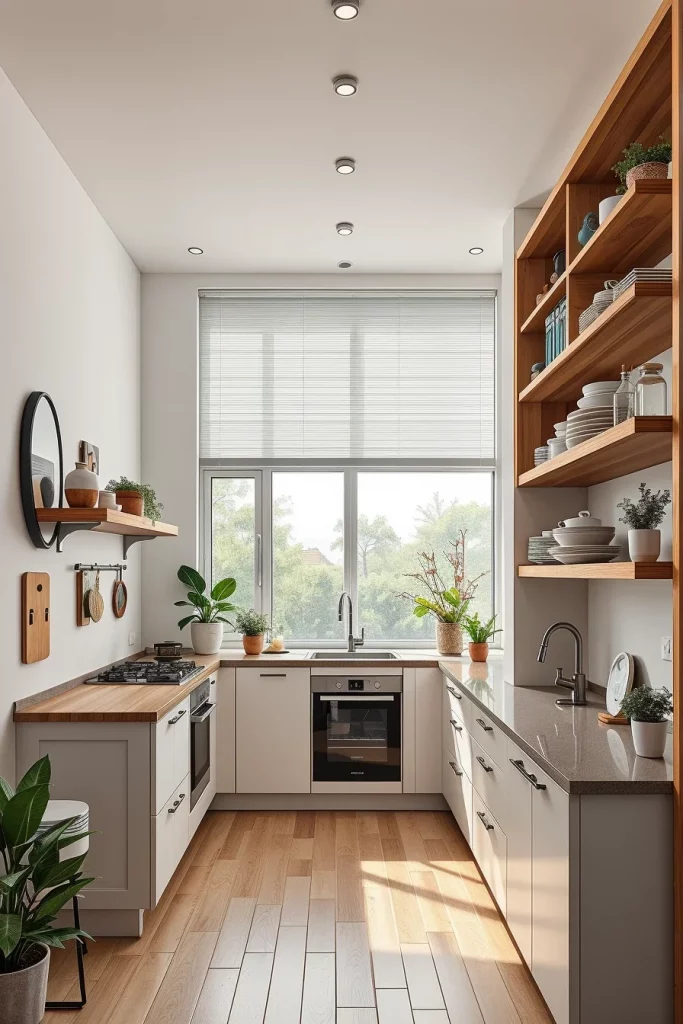
I usually recommend floating wood shelves, slim metal shelving systems, or built-in niches that complement the overall design. These shelves are ideal for displaying everyday dishes, glassware, cookbooks, and decorative accessories. By keeping frequently used items within reach, open shelving can improve efficiency while adding personality to the room.
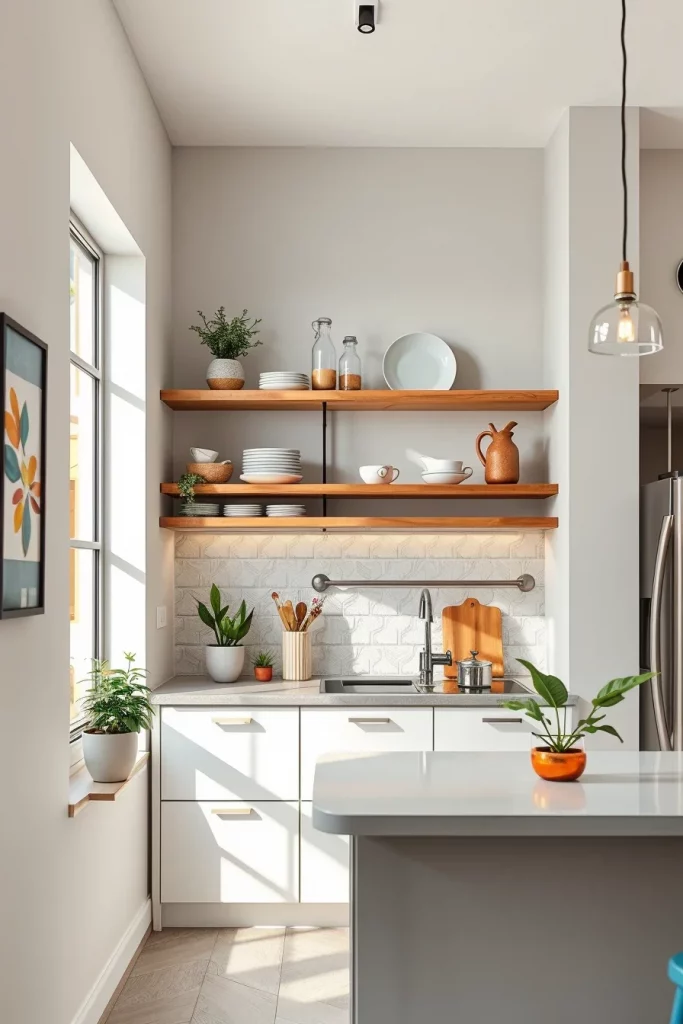
In my opinion, moderation is essential when designing with open shelves. Overcrowding them can quickly create visual clutter. Interior designers often advise limiting shelf displays to carefully selected items that contribute to both function and aesthetics. I find this approach keeps the kitchen looking organized and intentional.
I would also include subtle decorative elements such as small plants, ceramic pieces, or textured containers. These details add warmth without overwhelming the clean lines of a compact kitchen.
Smart Drawer Organizers For Everyday Efficiency
Drawer organization plays a critical role in maintaining order within a small kitchen. I believe that smart drawer systems are among the most effective storage upgrades because they help homeowners use every available inch efficiently. Properly organized drawers reduce clutter and streamline daily routines.
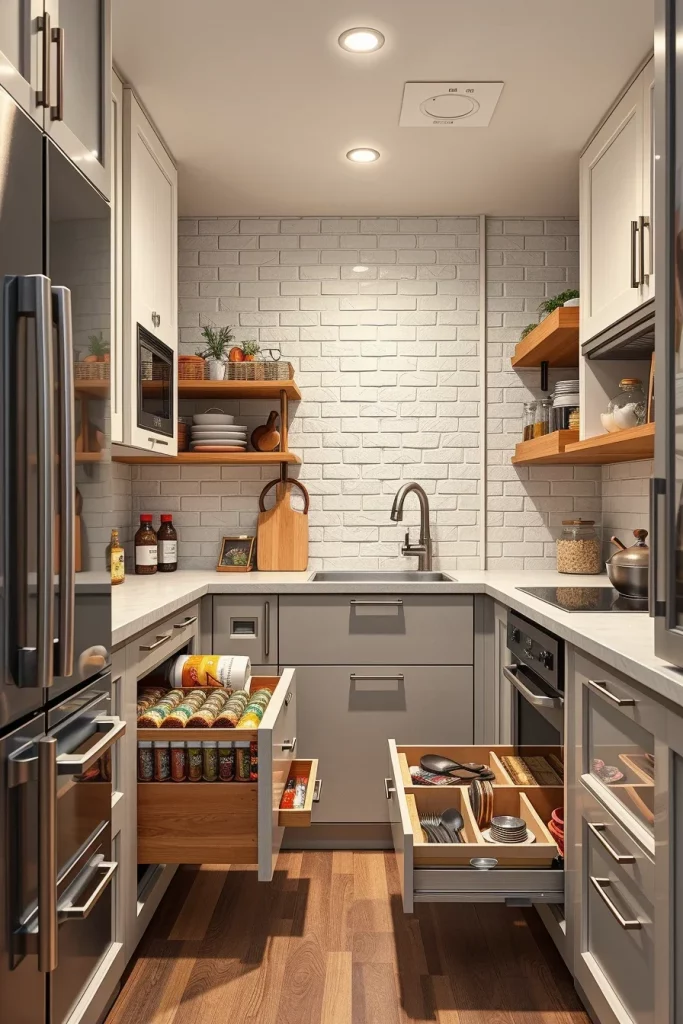
I often install custom dividers, utensil trays, spice organizers, and deep drawer inserts for pots and pans. These solutions allow each item to have a dedicated place, making cooking and cleaning more efficient. Hidden charging stations and drawer-based appliance storage can also enhance functionality in contemporary kitchens.
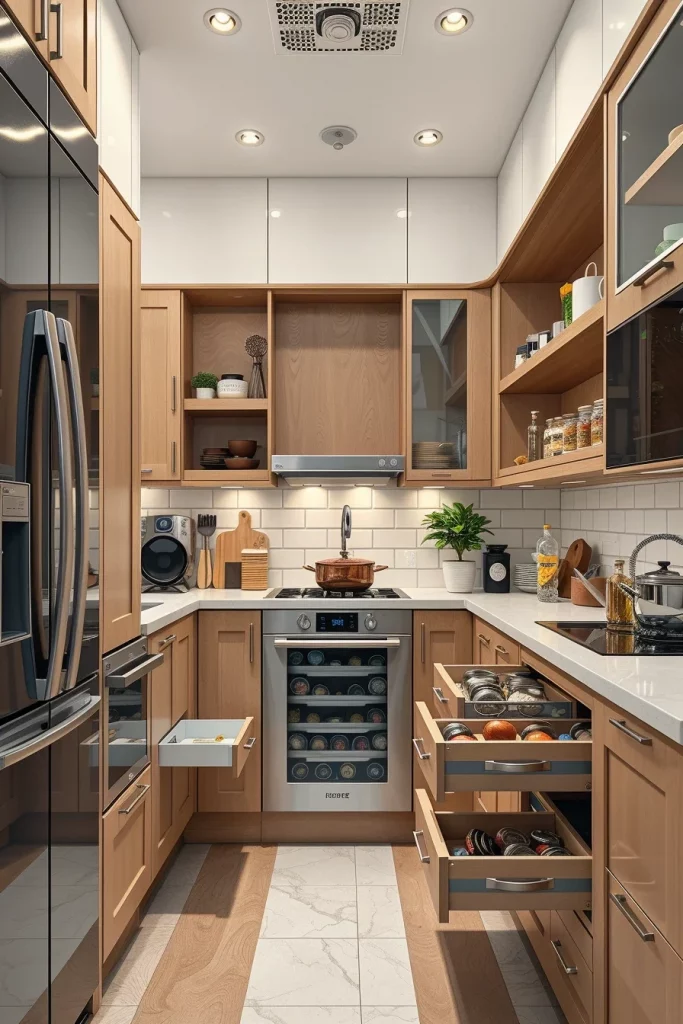
From my experience, drawer organization is one of the easiest improvements homeowners can make with immediate results. Professional organizers frequently recommend creating dedicated zones for cooking, serving, and food preparation tools. This simple strategy minimizes unnecessary movement throughout the kitchen.
To further improve efficiency, I suggest using adjustable organizers that can adapt as storage needs change. Flexible systems ensure that the kitchen remains practical for years to come.
Compact Kitchen Layouts That Improve Workflow
The layout of a kitchen determines how comfortably and efficiently it functions. In compact spaces, I focus on creating a workflow that minimizes unnecessary steps while maintaining clear pathways. A thoughtful layout can make even the smallest kitchen feel highly functional and comfortable.
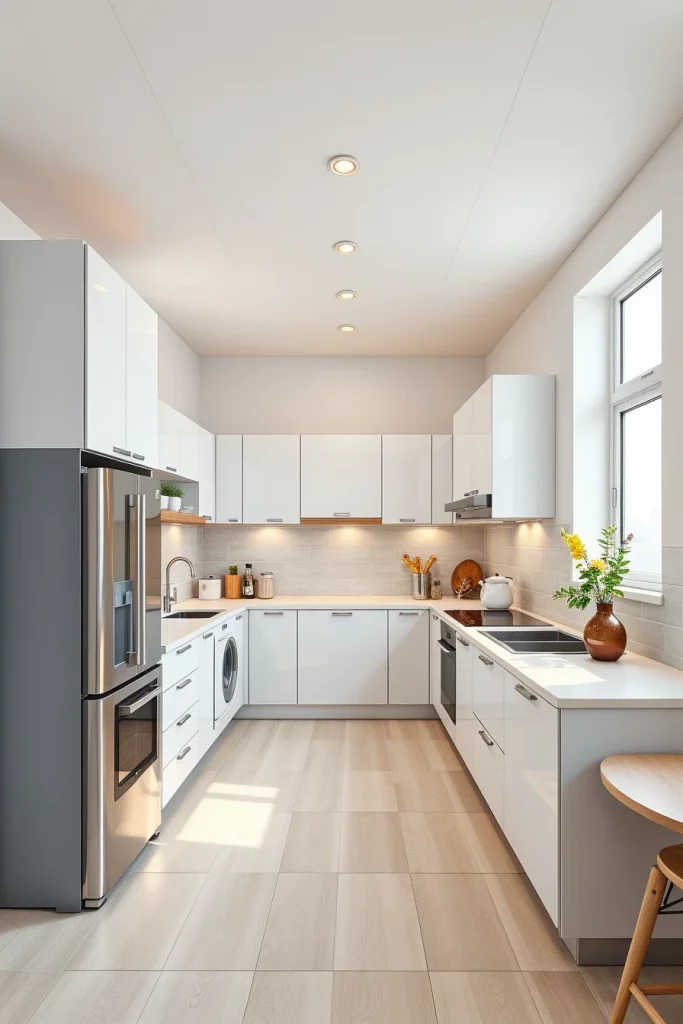
I frequently work with galley, L-shaped, and one-wall kitchen configurations because they maximize available space while supporting efficient movement. Strategic placement of the sink, refrigerator, and cooking area helps establish an effective work triangle that simplifies meal preparation.
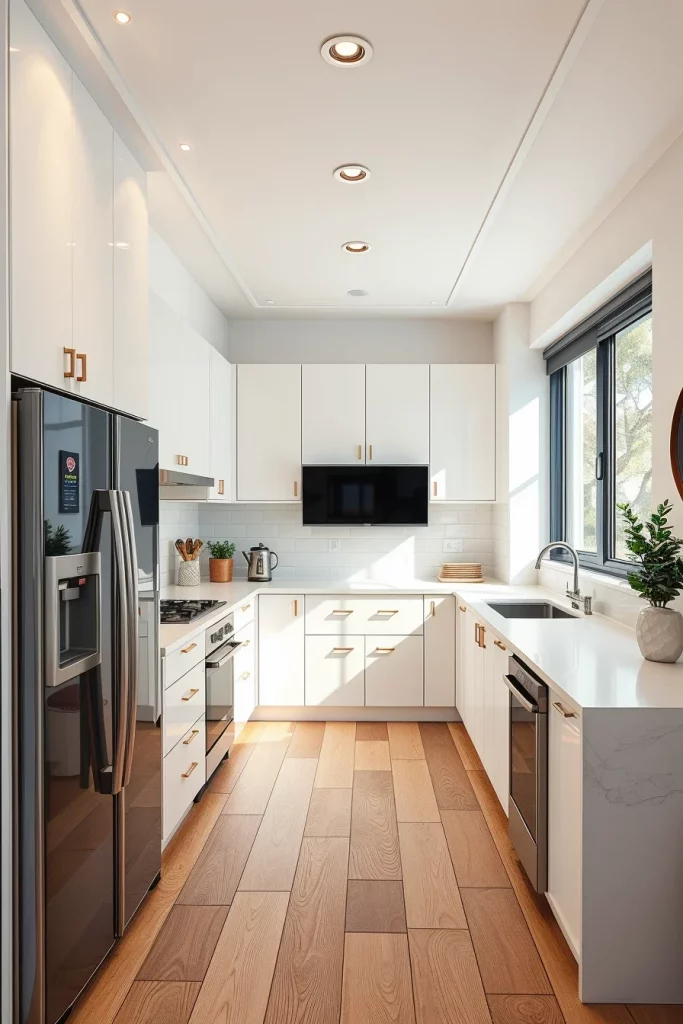
In my experience, successful kitchen layouts prioritize functionality before decorative features. Design experts consistently highlight the importance of workflow when planning small kitchens. I have found that even minor adjustments in appliance placement can significantly improve everyday usability.
I also recommend maintaining adequate countertop space near key work zones. Small preparation areas positioned strategically around the kitchen can dramatically improve the cooking experience.
Foldable And Extendable Furniture For Flexible Living
Flexible furniture is an essential component of many stylish compact kitchens. I often incorporate foldable and extendable pieces that allow the room to adapt to different activities throughout the day. These solutions support modern lifestyles while preserving valuable floor space.
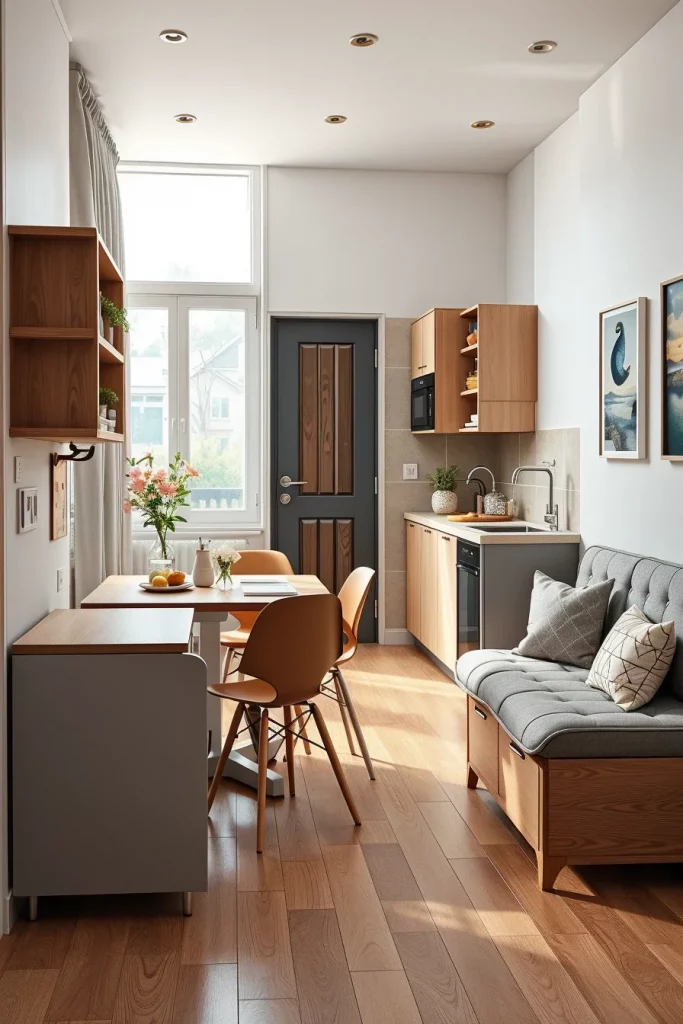
I commonly use drop-leaf tables, extendable dining surfaces, fold-down breakfast bars, and stackable seating. These furniture pieces can be expanded when entertaining guests and tucked away when additional space is needed. Their versatility makes them ideal for apartments and smaller homes.
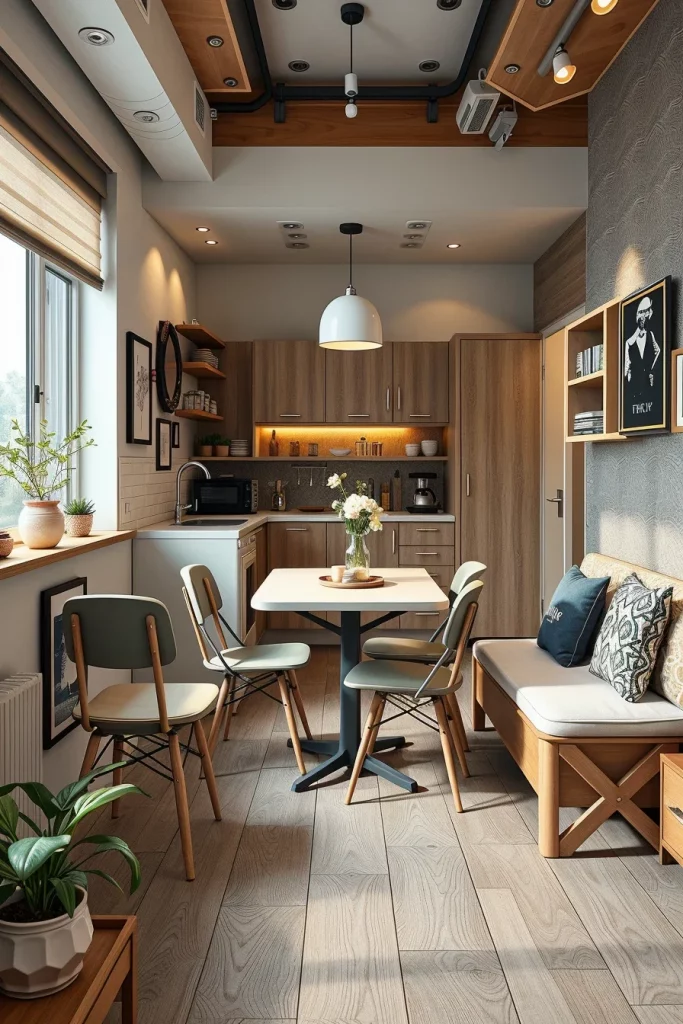
From my perspective, multifunctional furniture provides one of the greatest returns in compact living environments. Many contemporary designers recommend selecting furniture that serves at least two purposes whenever possible. This philosophy helps maximize functionality without overcrowding the space.
To complete the design, I would include lightweight movable furniture and hidden storage benches. These additions create even greater flexibility and support a comfortable, organized kitchen environment.
Vertical Storage Ideas For Narrow Kitchen Spaces
When I design compact kitchens, one of the first strategies I consider is using the full height of the room. Vertical storage allows me to take advantage of wall space that would otherwise remain unused. Tall cabinetry, open shelving, and ceiling-height pantry units help create additional storage without reducing valuable floor space. This approach works particularly well in narrow kitchens where every inch matters.
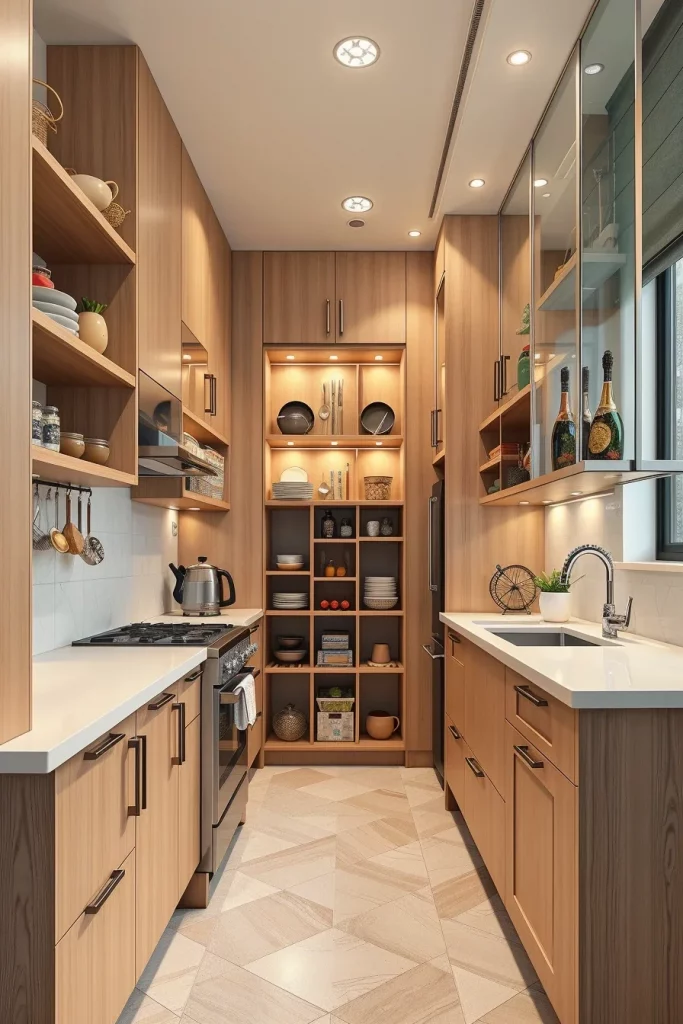
I often include slim floor-to-ceiling cabinets, floating shelves, magnetic knife racks, and hanging rail systems. These elements keep cookware, utensils, and pantry essentials organized while maintaining easy access. I also recommend incorporating adjustable shelving because it allows homeowners to customize storage according to changing needs. Light-colored finishes help prevent tall storage units from overwhelming the room visually.
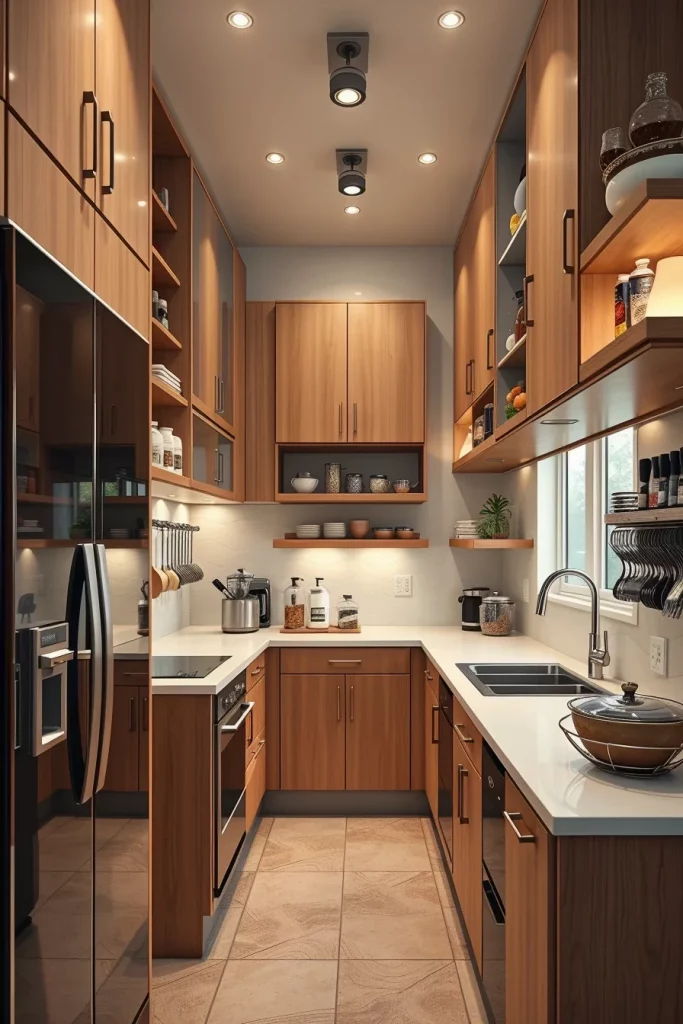
In my experience, vertical storage creates a more organized environment while making the kitchen appear larger. Design experts frequently emphasize the importance of utilizing vertical space in small interiors because it increases functionality without expanding the room’s footprint. I find that combining closed and open storage creates the perfect balance between practicality and style.
To enhance this design further, I would add integrated lighting beneath upper shelves and inside tall cabinets. This feature improves visibility while creating a warm and inviting atmosphere throughout the kitchen.
Creative Backsplash Storage Systems With Modern Appeal
A backsplash can serve a much greater purpose than simply protecting walls from moisture and cooking splashes. In modern compact kitchens, I often transform the backsplash into an active storage zone. This approach allows frequently used items to remain within reach while reducing countertop clutter.
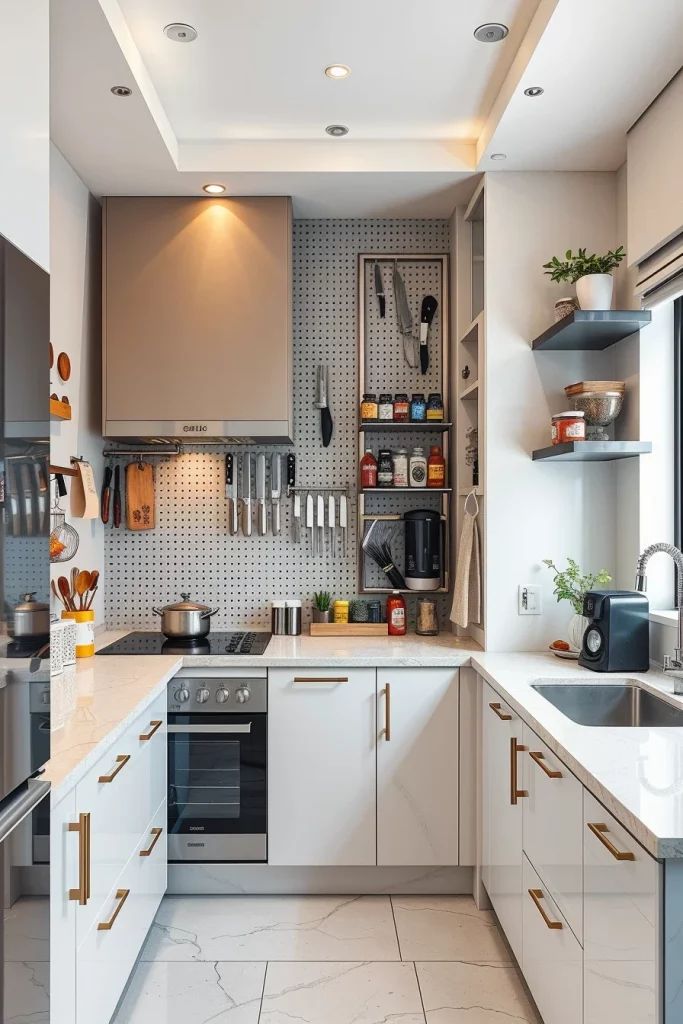
I like to incorporate modular wall panels, metal grids, magnetic strips, narrow ledges, and customizable pegboards. These systems provide dedicated spaces for utensils, spices, cutting boards, and small accessories. Contemporary materials such as matte metal, glass, and textured stone create a sophisticated appearance while supporting practical storage functions.
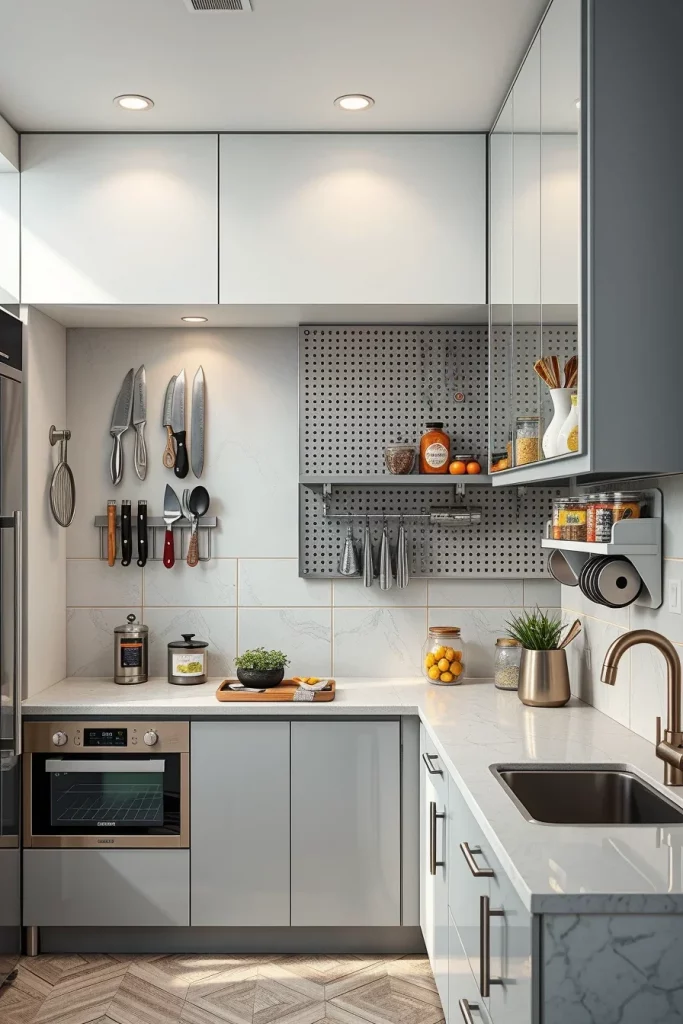
From my perspective, backsplash storage is one of the most efficient ways to maximize functionality in a small kitchen. Many interior designers recommend multifunctional surfaces because they help maintain clean countertops and improve workflow during meal preparation. I have found that homeowners quickly appreciate the convenience of having essential items displayed in an organized manner.
For even greater efficiency, I would include concealed charging stations and integrated tablet holders within the backsplash design. These additions support modern lifestyles while maintaining a streamlined aesthetic.
Stylish Breakfast Nooks Designed For Small Kitchens
A thoughtfully designed breakfast nook can transform a small kitchen into a welcoming gathering space. When working with limited square footage, I often create compact dining areas that feel comfortable without consuming excessive room. Proper planning allows these spaces to function as dining zones, workstations, and social areas simultaneously.
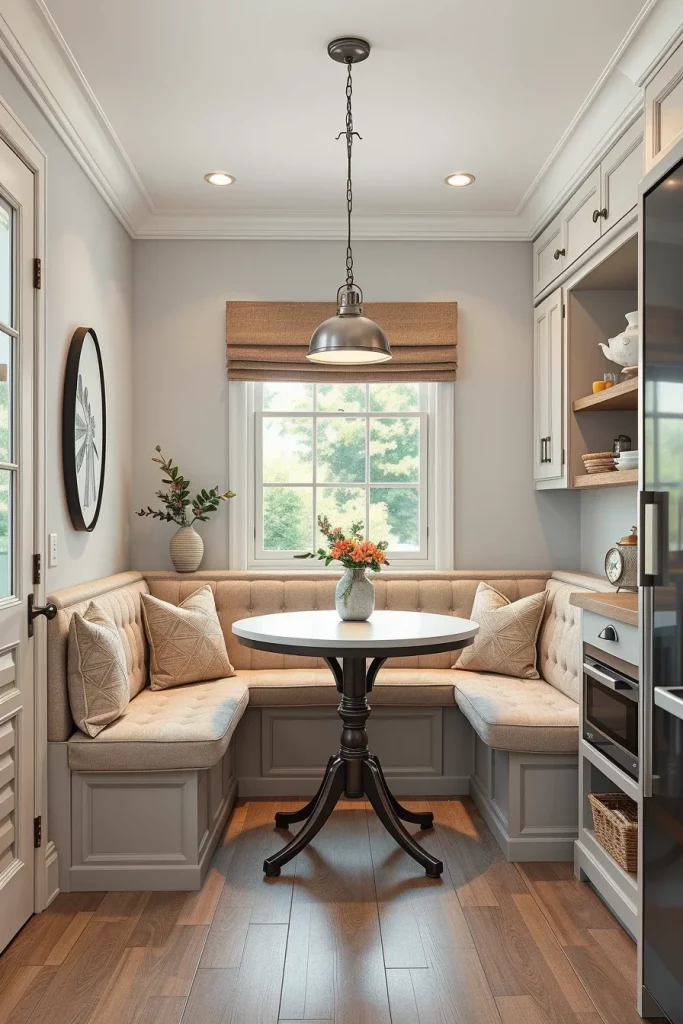
I typically use built-in benches, compact tables, upholstered seating, and wall-mounted lighting. Built-in seating is especially valuable because it often includes hidden storage compartments beneath the cushions. Round tables help improve traffic flow, while soft textiles and decorative accents create a cozy atmosphere that complements the kitchen design.
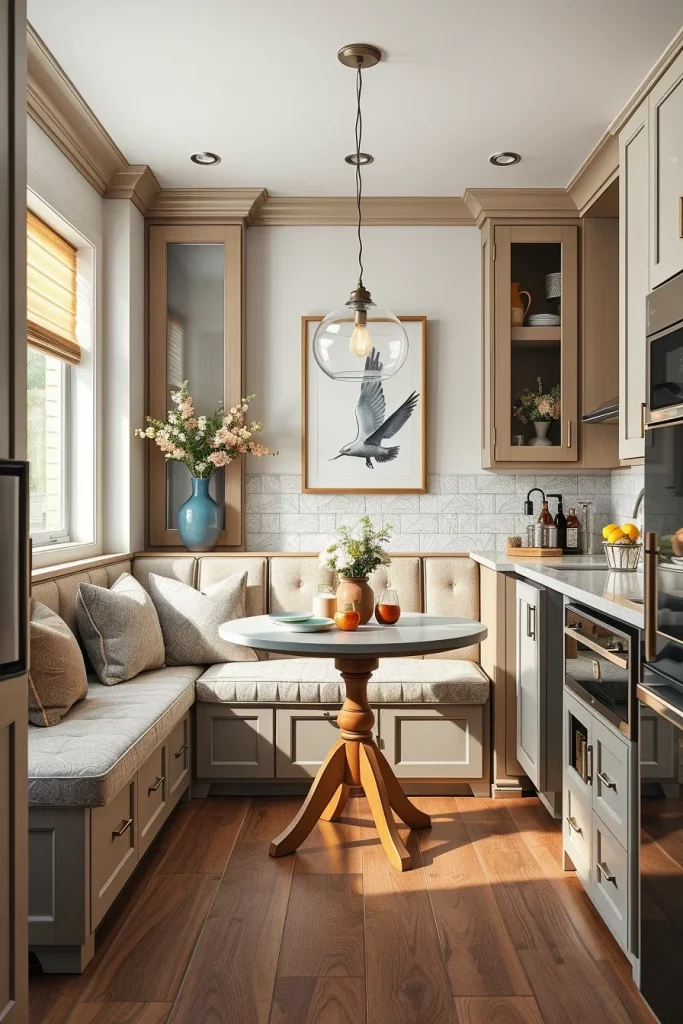
I believe breakfast nooks add significant value to smart storage solutions because they combine seating and organization in a single feature. Many successful small-space interiors rely on multifunctional furniture to maximize usability. In my own projects, breakfast nooks frequently become the most-used area of the kitchen due to their versatility and comfort.
To complete the space, I would recommend adding custom storage drawers beneath the seating and a feature wall that visually defines the nook without overwhelming the room.
Integrated Appliances For A Seamless Compact Design
Integrated appliances play an important role in modern compact kitchens because they create a clean and cohesive appearance. By concealing appliances behind matching cabinetry panels, I can reduce visual clutter and make the entire kitchen feel more spacious. This strategy is particularly effective in open-concept homes where the kitchen remains visible from nearby living areas.
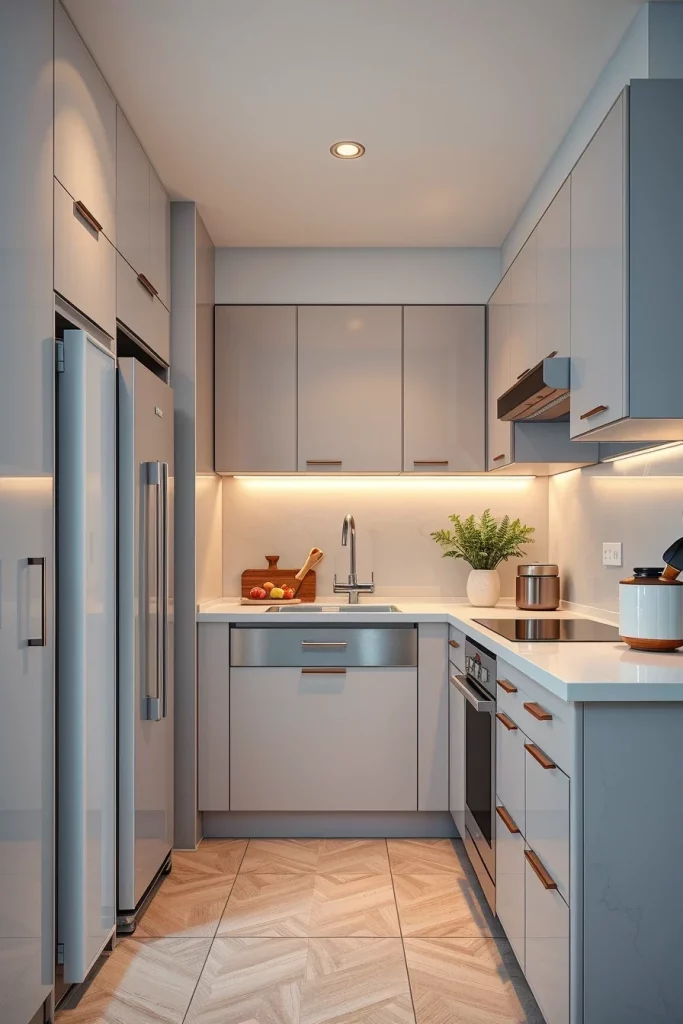
I often specify integrated refrigerators, dishwashers, microwave drawers, and compact induction cooktops. These appliances blend seamlessly with surrounding cabinetry while providing the same functionality as traditional models. Handleless cabinet fronts and continuous finishes further enhance the streamlined appearance.
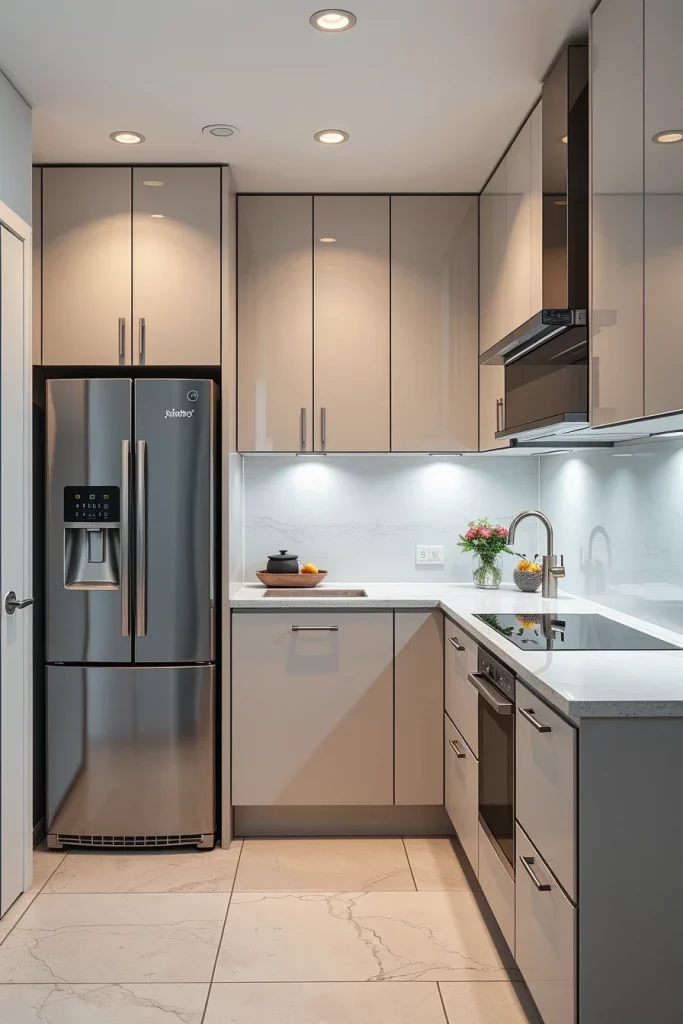
In my experience, integrated appliances significantly improve the visual flow of a small kitchen. Many contemporary kitchen designers advocate for concealed appliances because they help maintain a minimalist aesthetic while preserving functionality. I have found that this approach creates a more sophisticated and timeless environment.
To maximize efficiency, I would also include appliance garages that hide small countertop appliances when not in use. This additional storage feature contributes to a cleaner and more organized kitchen.
Modern Floating Cabinets That Create An Airy Feel
Floating cabinetry is one of my favorite design solutions for creating an open and spacious atmosphere in small kitchens. By elevating storage units above the floor, I can increase the visible floor area and make the room feel larger. This technique works particularly well in contemporary interiors that emphasize simplicity and clean lines.
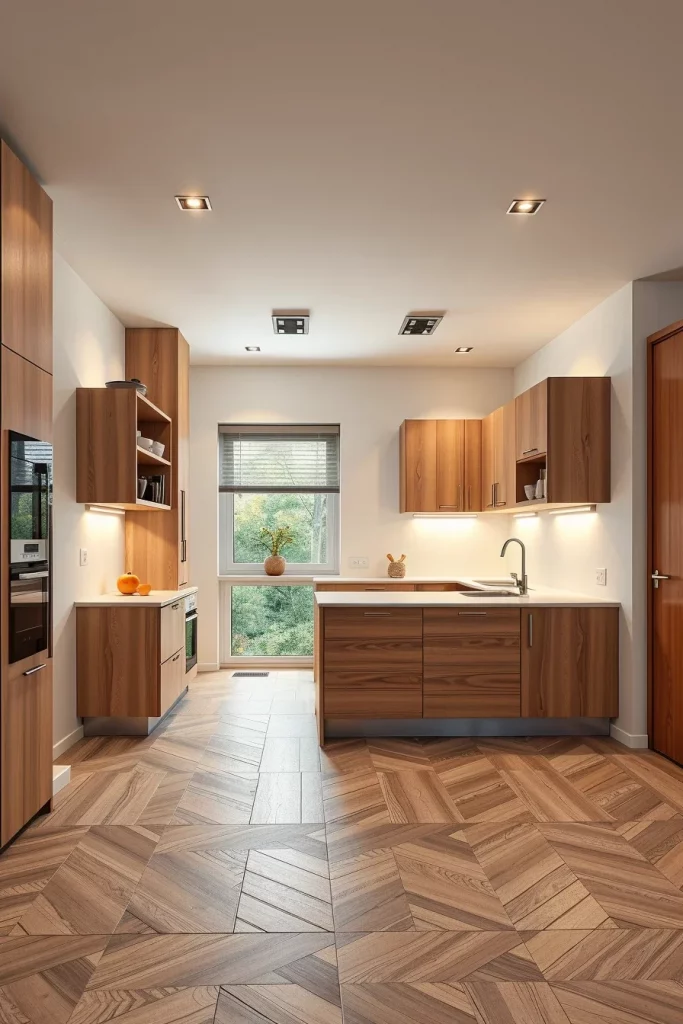
I frequently use floating base cabinets, wall-mounted pantry units, under-cabinet lighting, and minimalist hardware. These elements create a sense of visual lightness while still providing substantial storage capacity. Materials such as natural wood veneers, matte finishes, and textured laminates contribute warmth and character without adding visual weight.
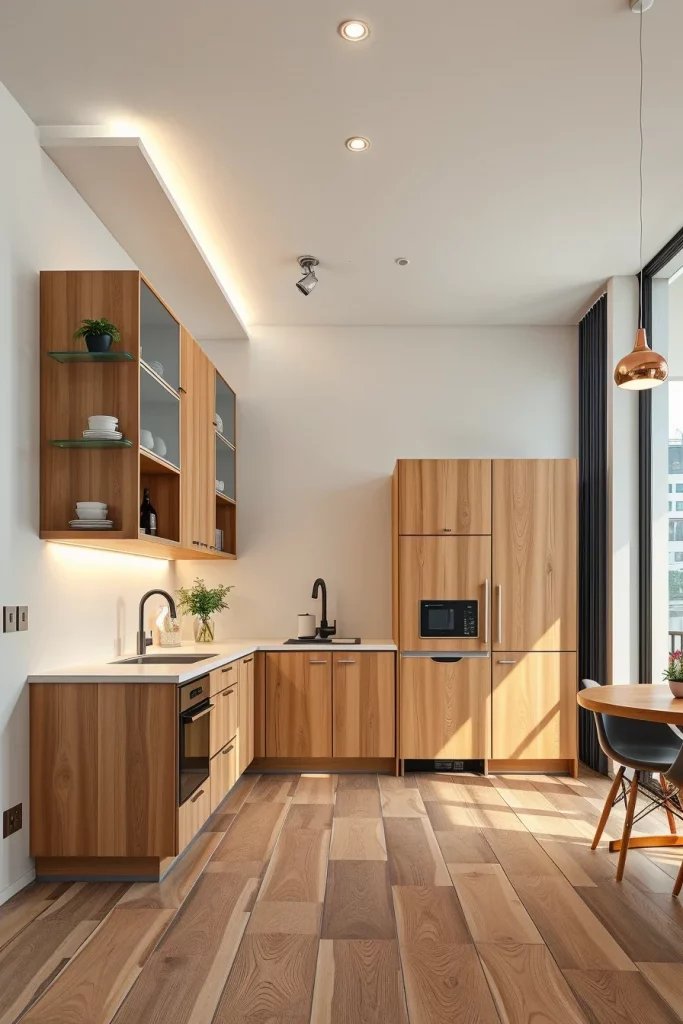
I have noticed that floating cabinets often make compact kitchens feel significantly more luxurious. Interior design publications frequently highlight floating furniture as a strategy for improving perceived spaciousness in smaller rooms. In my projects, clients consistently appreciate both the aesthetic and practical advantages of this design approach.
For additional functionality, I would incorporate hidden charging drawers and integrated LED lighting beneath the cabinets. These details enhance convenience while emphasizing the floating effect.
Smart Under-Sink Storage Solutions For Hidden Organization
The area beneath the sink is often one of the most underutilized spaces in compact kitchens, yet it offers tremendous potential for organization. When designing a small kitchen, I always look for ways to transform this awkward space into a practical storage zone. Thoughtful planning allows cleaning supplies, waste bins, and household essentials to remain accessible while staying out of sight.
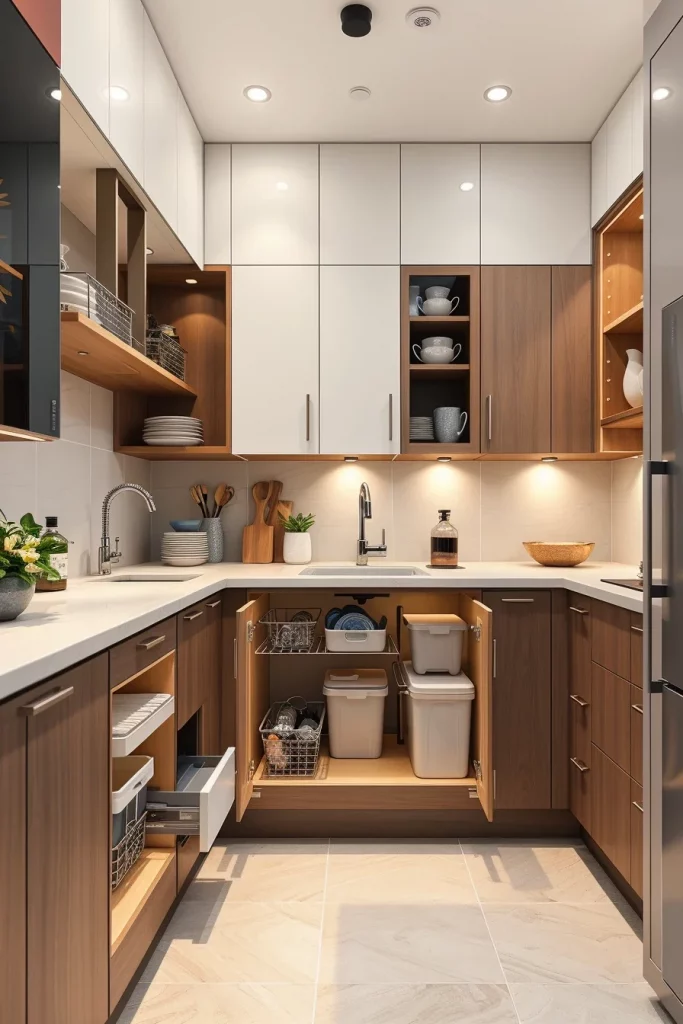
I typically include pull-out organizers, tiered shelving, sliding baskets, and custom compartments designed around plumbing fixtures. These storage components make it easier to separate cleaning products, recycling containers, and frequently used supplies. Moisture-resistant materials are particularly important in this area because they ensure durability and long-term performance.
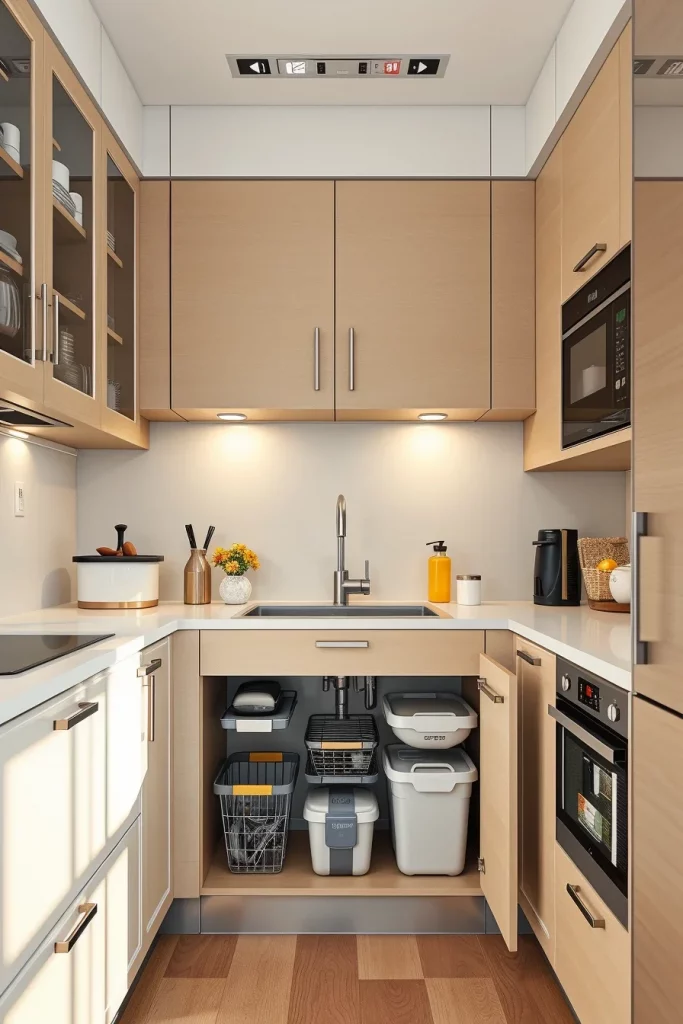
From my experience, under-sink storage solutions dramatically improve daily kitchen functionality. Professional organizers often recommend dividing this area into dedicated zones because it simplifies access and reduces clutter. I have found that even small improvements beneath the sink can significantly increase the efficiency of the entire kitchen.
To maximize this space further, I would add integrated lighting and removable storage bins. These additions improve visibility and make cleaning and maintenance much easier over time.
Minimalist Kitchen Designs With Maximum Functionality
A minimalist approach is one of the most effective ways to make compact kitchens feel larger and more organized. I focus on clean lines, simple forms, and carefully selected materials that create visual harmony throughout the room. The goal is not to remove functionality but to ensure that every feature serves a purpose.
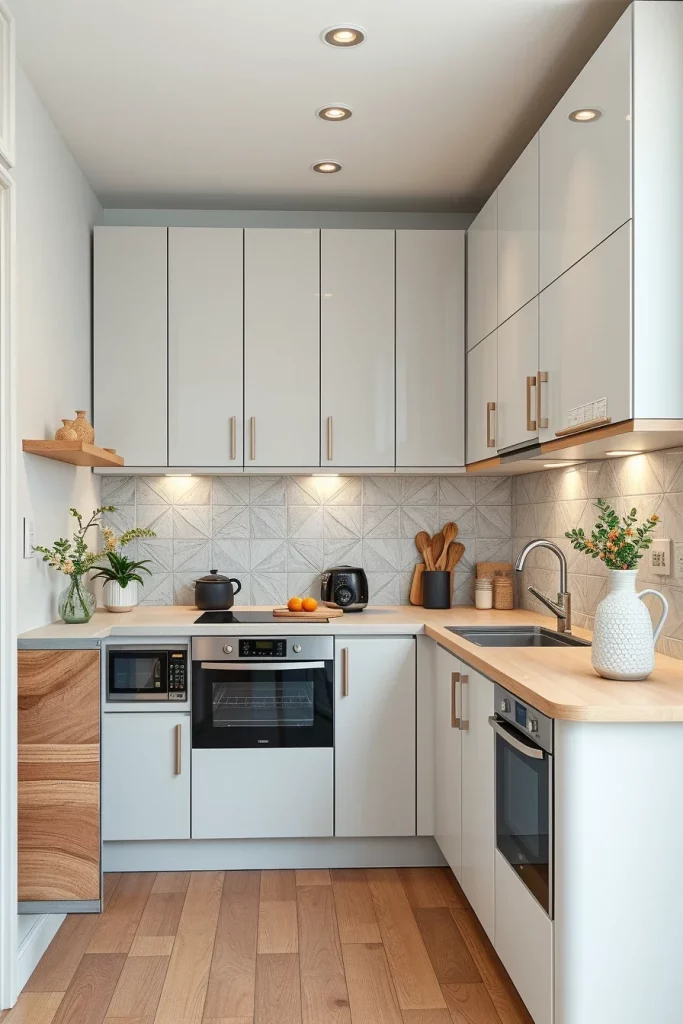
I often incorporate flat-panel cabinetry, concealed storage, integrated appliances, and neutral color palettes. Streamlined countertops reduce visual distractions, while multifunctional furniture helps maximize usability. Every cabinet, drawer, and shelf is designed to contribute to efficient storage and smooth workflow.
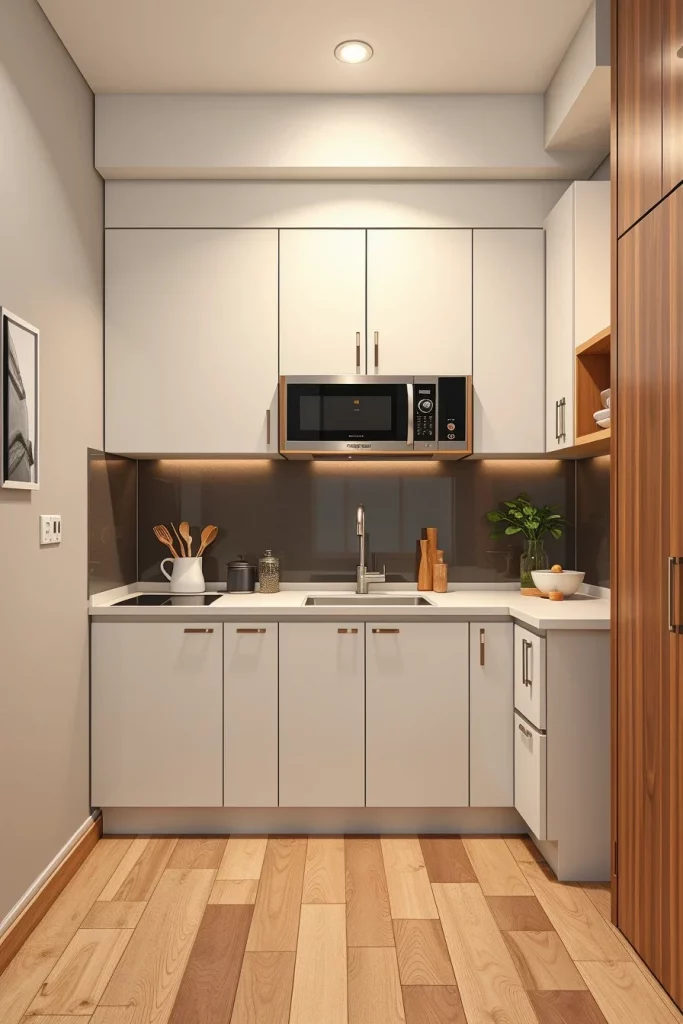
I personally appreciate minimalist kitchens because they encourage thoughtful organization and reduce unnecessary clutter. Many contemporary designers emphasize that simplicity can enhance both aesthetics and practicality when executed correctly. In my projects, homeowners frequently report that minimalist spaces feel calmer and easier to maintain.
To complete this design, I would include subtle texture through natural materials such as wood, stone, or matte finishes. These elements add warmth and personality without compromising the clean appearance.
Pull-Out Pantry Systems For Effortless Access
Storage accessibility is just as important as storage capacity, which is why I frequently recommend pull-out pantry systems in smart storage solutions. These systems allow homeowners to see and reach items easily, eliminating the frustration of searching through deep shelves. In small kitchens, this feature helps maximize every inch of available space.
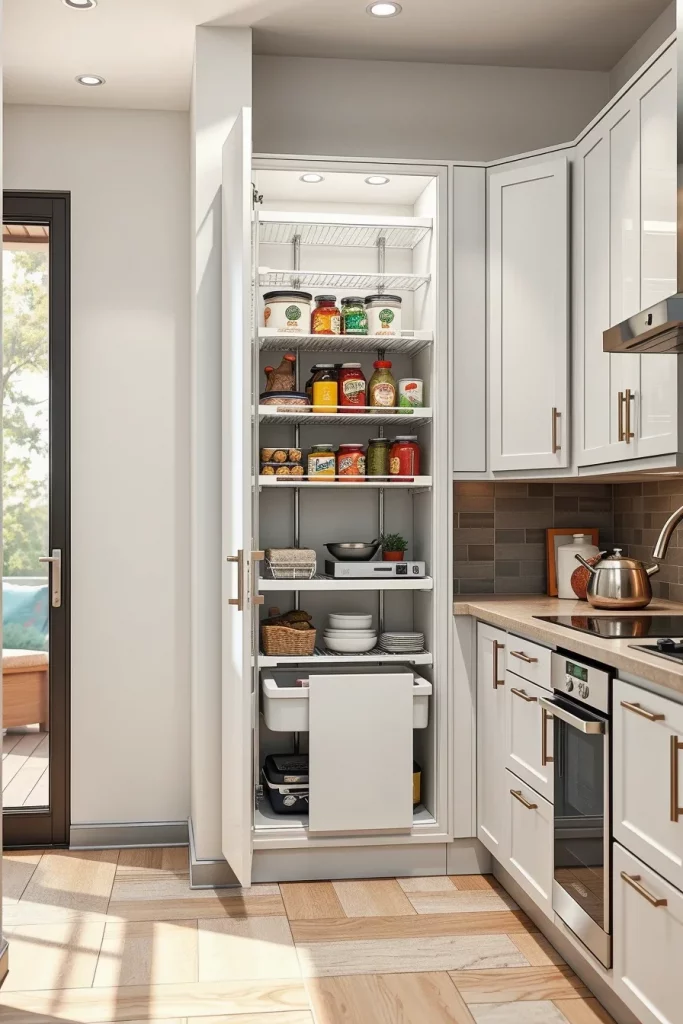
I typically use full-height pull-out pantry cabinets equipped with adjustable shelves, wire baskets, and soft-close mechanisms. Narrow pantry units can fit into surprisingly small spaces while providing substantial storage for dry goods, spices, and cooking essentials. The ability to access both sides of stored items significantly improves organization.
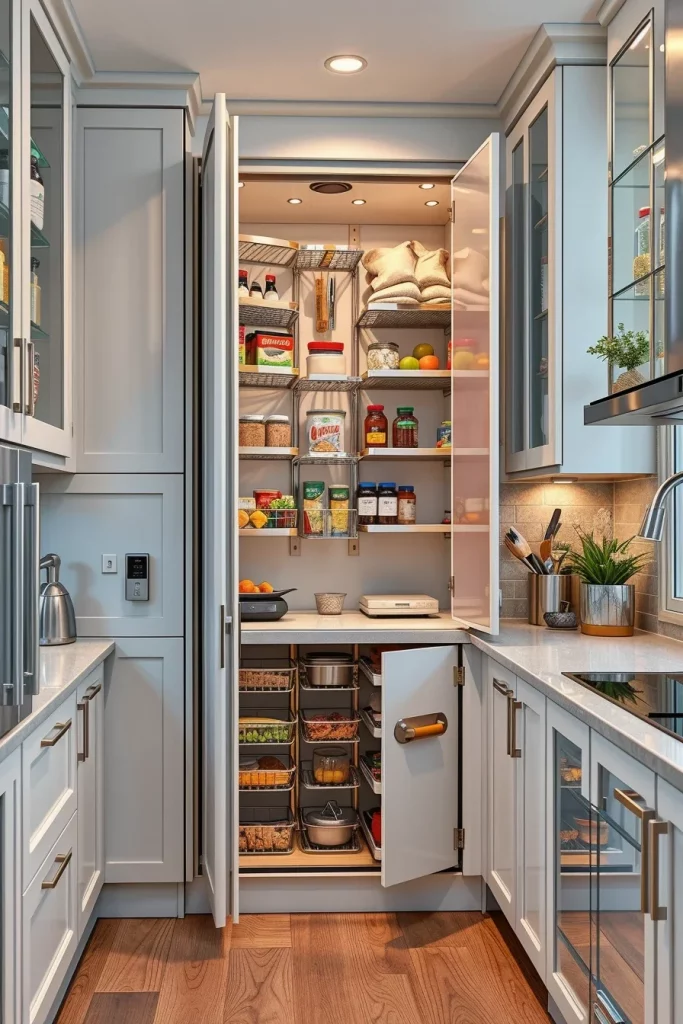
In my experience, pull-out pantry systems offer one of the highest returns on investment in compact kitchen design. Kitchen design professionals often highlight accessibility as a key component of successful storage planning. I find that homeowners quickly appreciate how much easier meal preparation becomes when ingredients are visible and organized.
To enhance functionality further, I would include labeled storage containers and built-in lighting. These details create an even more efficient and user-friendly pantry system.
Contemporary Color Schemes That Expand Small Kitchens Visually
When I design a compact kitchen, I always begin with the color palette because it has a direct impact on how spacious the room feels. Soft whites, warm beige tones, light greys, and muted greige shades help reflect natural light throughout the space. In many successful examples of compact kitchen design with smart storage, contemporary color schemes create an airy atmosphere that minimizes visual clutter and makes the room feel larger than its actual dimensions.
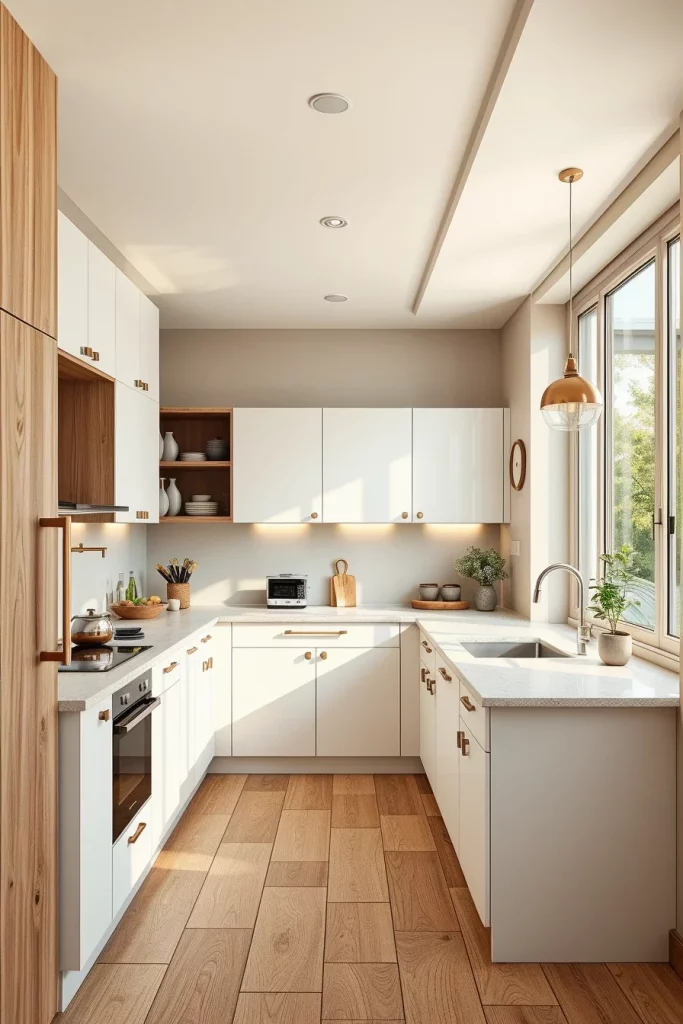
I often combine light cabinetry with subtle contrasts such as natural oak accents, matte black hardware, or soft stone countertops. These elements provide visual depth without overwhelming the room. Full-height cabinets painted in the same color as the walls create a seamless appearance, while integrated appliances blend into the overall design. I find that maintaining color consistency across cabinets, walls, and storage features helps establish a cohesive and spacious environment.
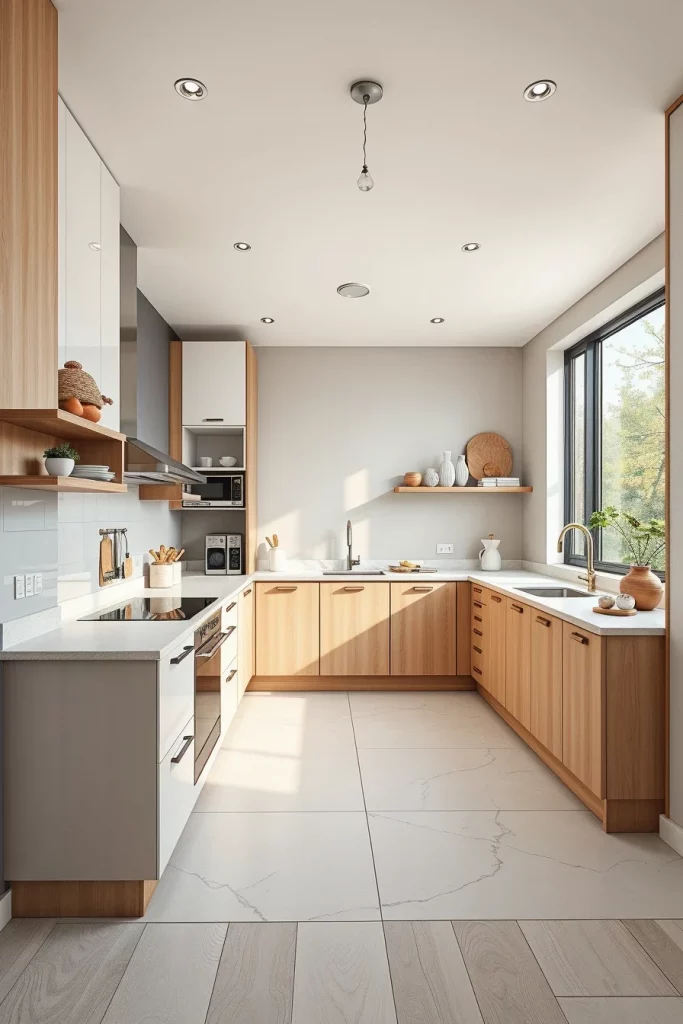
From my experience, many interior designers featured in leading design publications recommend limiting the number of dominant colors in a small kitchen. I agree with this approach because excessive color variation can visually fragment the room. A restrained palette creates a calmer and more organized appearance while allowing decorative details to stand out naturally.
To complete this design approach, I would add subtle texture through materials such as wood grain finishes, handmade tiles, or natural stone surfaces. These textures introduce character without compromising the clean and spacious look that modern compact kitchens require.
Custom Cabinet Features That Transform Tight Spaces
Custom cabinetry can completely change the functionality of a compact kitchen. I often recommend tailoring cabinet dimensions to fit the exact room layout because standard units may leave valuable areas unused. Smart cabinetry allows homeowners to take advantage of every corner, vertical surface, and narrow gap, making storage significantly more efficient.
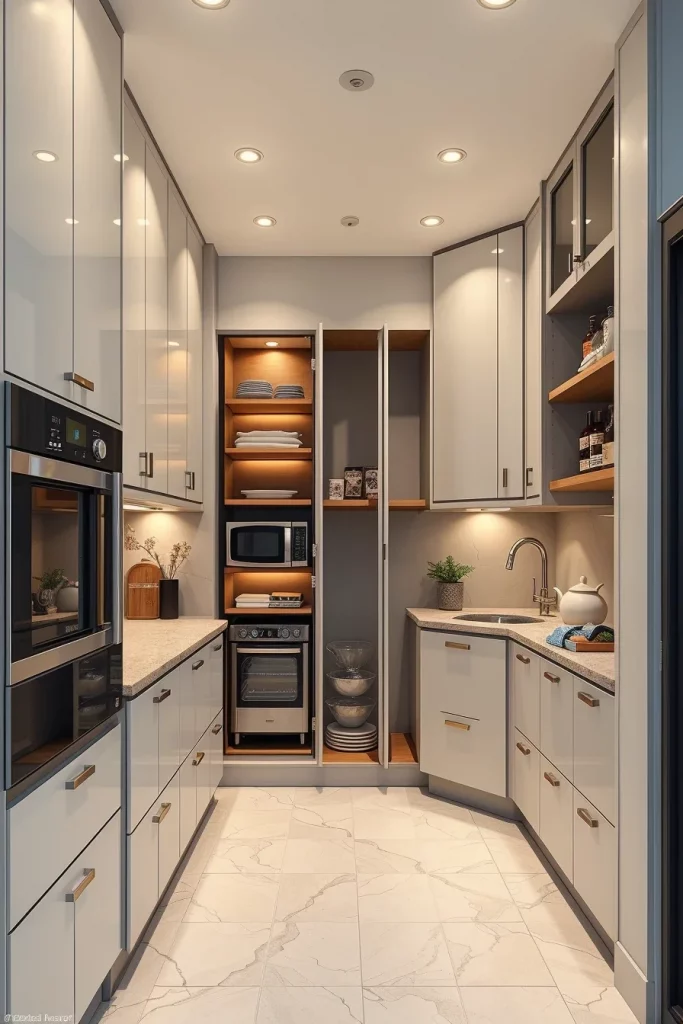
In my projects, I frequently include pull-out pantry units, corner carousel systems, hidden spice organizers, vertical tray dividers, and toe-kick drawers beneath lower cabinets. These features provide dedicated storage for items that would otherwise occupy precious countertop space. Tall cabinets that extend to the ceiling are especially valuable because they maximize vertical storage while maintaining a clean visual appearance.
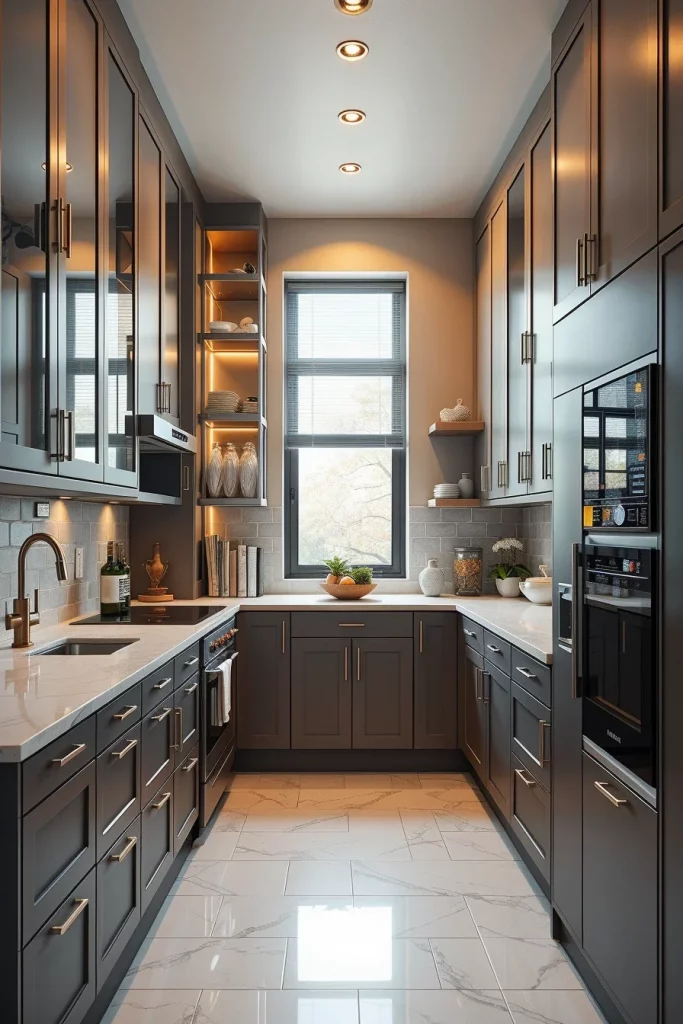
I have found that homeowners are often surprised by how much additional storage can be created through thoughtful cabinet design alone. Many professional kitchen designers emphasize functionality before aesthetics, and I strongly support this philosophy. When storage is properly planned, the kitchen naturally feels larger, more organized, and easier to use every day.
To further improve this type of kitchen, I would incorporate integrated waste and recycling stations hidden within cabinetry. These additions help maintain visual cleanliness while supporting practical daily routines.
Glass Elements And Reflective Surfaces For An Open Atmosphere
Reflective materials are one of my favorite tools for enhancing compact kitchens. By bouncing light throughout the room, glass and reflective surfaces can dramatically increase the perception of openness. Even in kitchens with limited natural light, strategic placement of reflective finishes helps brighten the space.
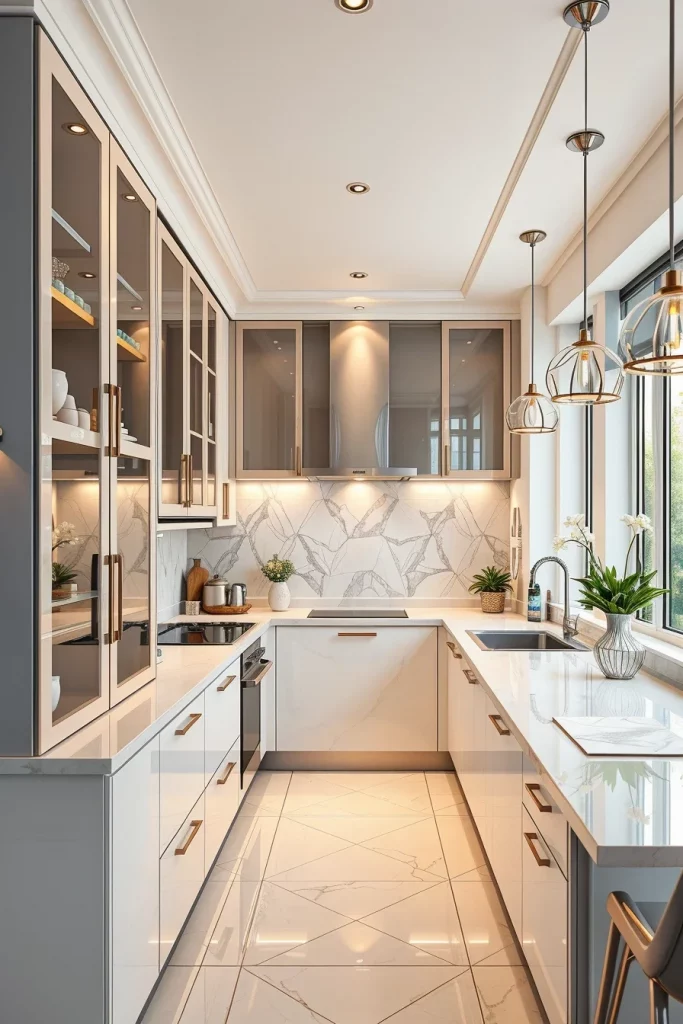
I often use glass-front upper cabinets, glossy backsplashes, polished quartz countertops, and reflective decorative accents. Glass cabinet doors break up the visual weight of large storage units while allowing attractive dishware to become part of the design. Mirrored or reflective backsplash panels can visually extend the room and create a more expansive feeling.
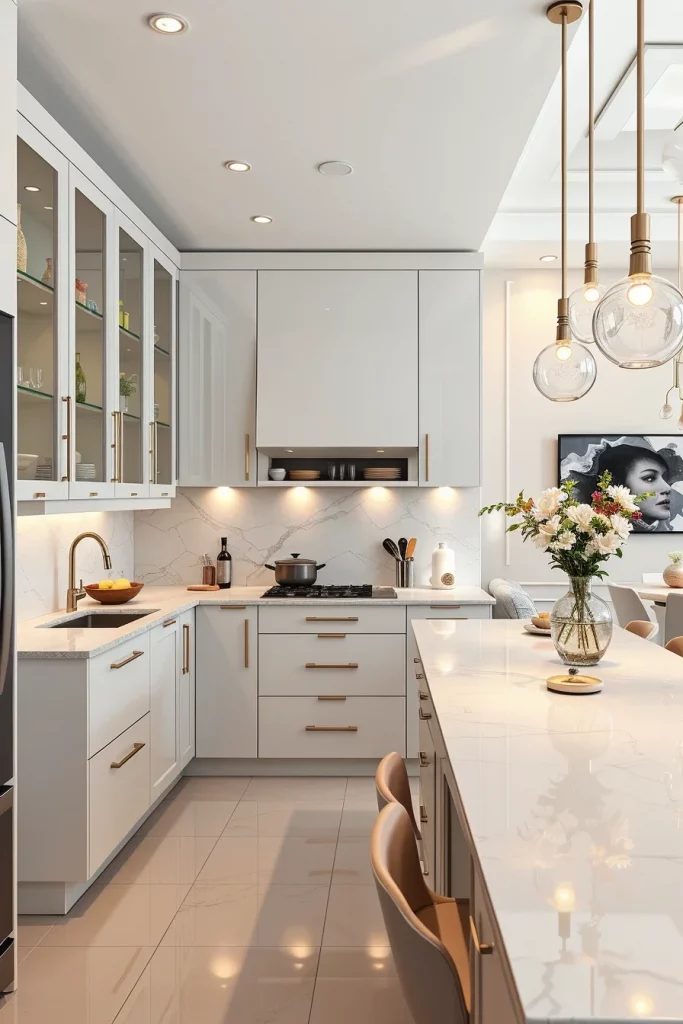
From my perspective, balance is important when working with reflective surfaces. Too many glossy elements can feel overwhelming, while a carefully selected combination creates sophistication and brightness. Contemporary kitchen designs frequently incorporate a mix of matte and reflective materials to achieve a comfortable and visually interesting environment.
I would also recommend adding under-cabinet lighting to enhance the effect of reflective surfaces. Proper illumination amplifies light distribution and highlights key design features throughout the kitchen.
Compact Dining Areas With Built-In Storage Features
Small kitchens often require dining spaces that perform multiple functions. I like incorporating compact dining areas that provide seating while also contributing valuable storage. These solutions allow homeowners to enjoy comfortable dining without sacrificing organization.
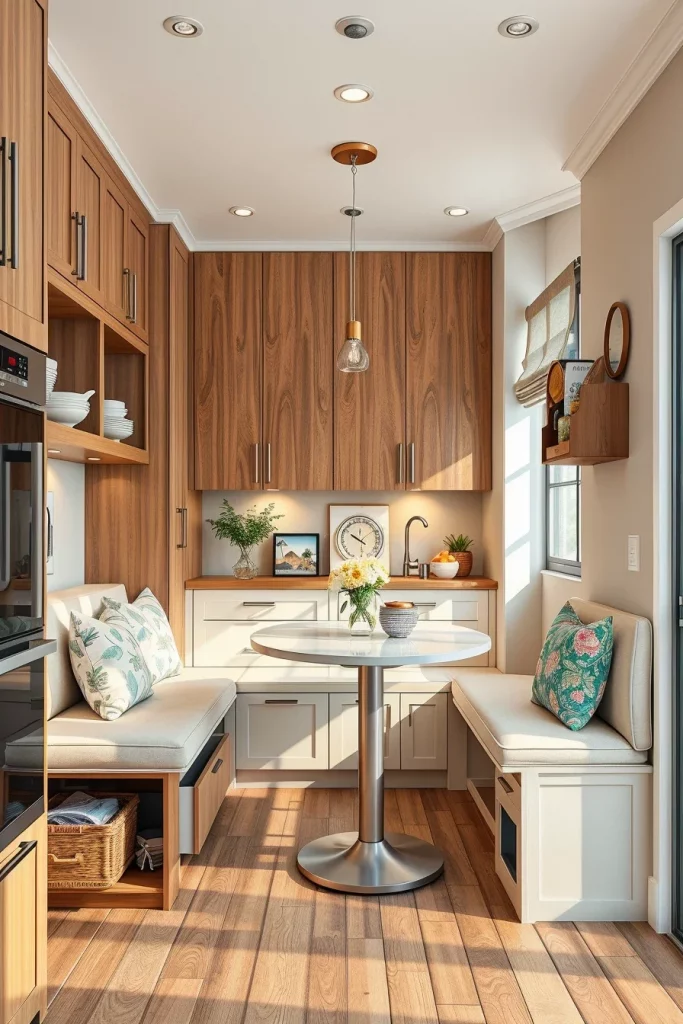
One of my preferred options is a built-in banquette with concealed storage beneath the seating. Fold-down tables, extendable dining surfaces, and slim breakfast bars can also serve as practical additions. Storage benches offer space for seasonal kitchen items, linens, or small appliances while maintaining a streamlined appearance. In many compact kitchens, multifunctional furniture becomes an essential part of the overall design strategy.
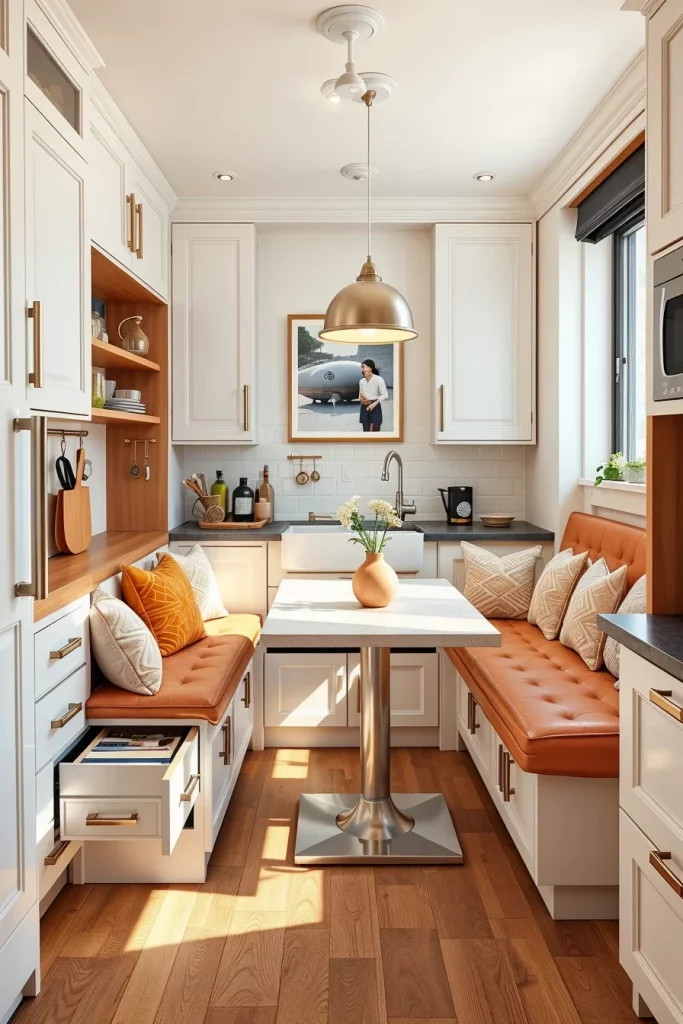
I have noticed that built-in dining solutions often make compact kitchens feel more customized and intentional. Rather than forcing separate furniture pieces into a limited space, integrated seating creates a seamless design that enhances both functionality and aesthetics.
To maximize usability, I would consider adding charging outlets, open shelving, or display niches around the dining area. These small additions can transform a simple eating space into a versatile household hub.
Smart Lighting Designs That Enhance Function And Style
Lighting plays a critical role in every compact kitchen design. I view lighting as both a practical necessity and a powerful design feature that influences how spacious and inviting the room feels. A layered lighting strategy ensures that every area remains functional while contributing to the overall atmosphere.
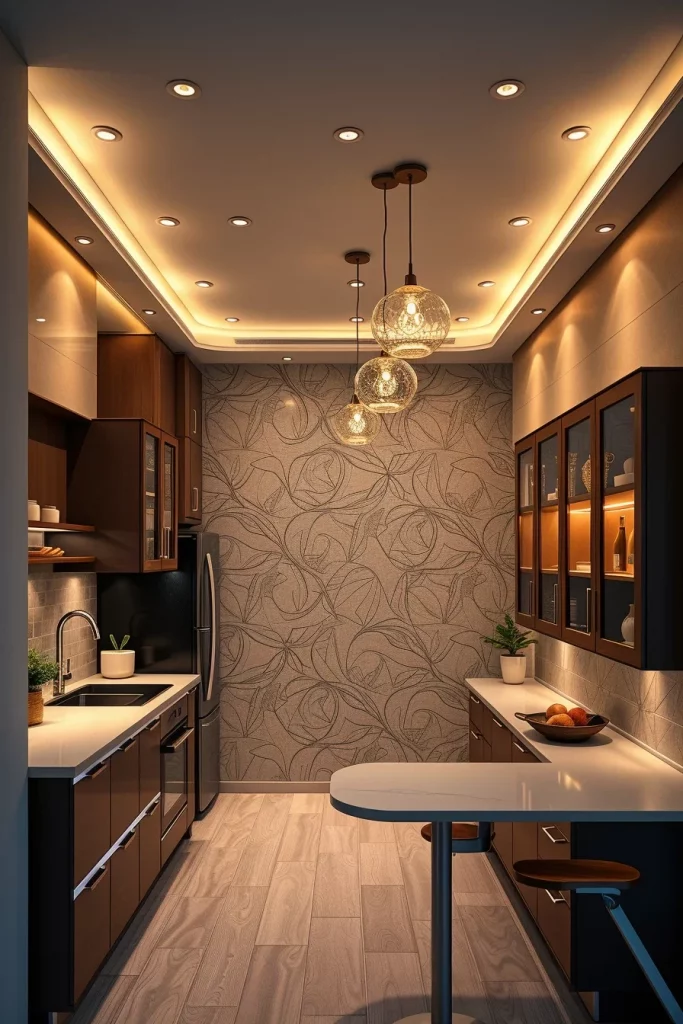
I typically combine recessed ceiling fixtures, under-cabinet LED strips, pendant lighting above dining areas, and accent lighting within glass cabinets. Under-cabinet illumination is especially important because it improves task visibility while eliminating shadows on work surfaces. Warm white lighting creates a welcoming environment, while adjustable fixtures provide flexibility for different activities.
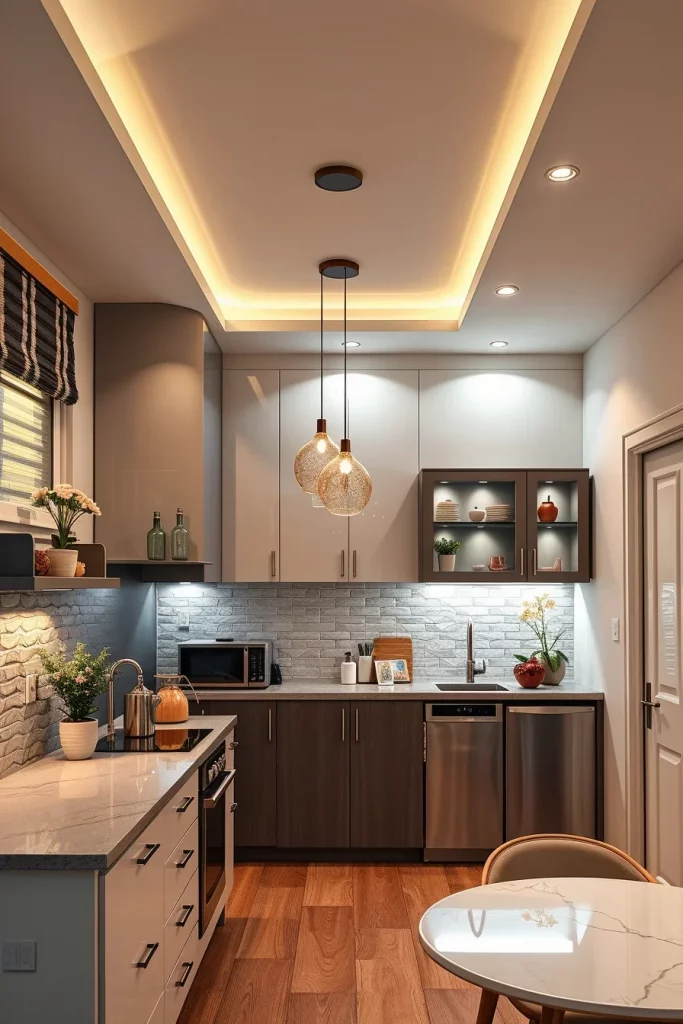
In my experience, lighting is often underestimated during the planning process. However, many professional kitchen designers emphasize that proper illumination can dramatically improve both usability and visual appeal. I consistently see how well-designed lighting schemes make compact kitchens appear larger, brighter, and more sophisticated.
For an even more advanced solution, I would integrate dimmable smart lighting controls. These systems allow homeowners to customize brightness levels throughout the day and create different moods for cooking, dining, or entertaining.
Creative Kitchen Furniture With Hidden Compartments
When I work on compact kitchens, I often focus on furniture that serves more than one purpose. Hidden storage compartments allow homeowners to maintain a clean and organized environment without adding bulky cabinets. This approach is especially effective in modern kitchens where visual simplicity is an important design goal. Multifunctional furniture makes it possible to maximize every available inch while preserving a sleek and contemporary appearance.
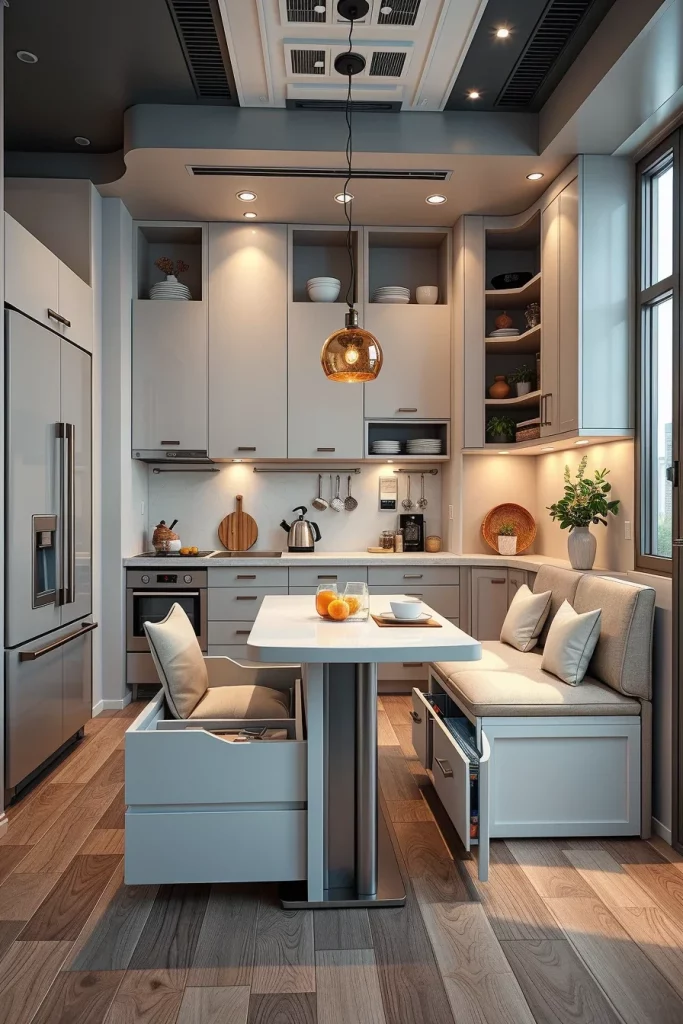
I frequently recommend kitchen islands with concealed drawers, benches with lift-up storage, pull-out countertop extensions, and compact carts that can be tucked away when not in use. Tables with hidden shelving and seating with integrated compartments provide additional space for cookware, table linens, and small appliances. These furniture solutions reduce countertop clutter and improve overall kitchen efficiency.
From my experience, hidden storage creates a sense of calm because everyday items remain accessible without being constantly visible. Many contemporary designers prioritize furniture that performs multiple functions, and I find that this strategy is particularly valuable in smaller homes and apartments where space is limited.
To enhance this concept further, I would include custom organizers within each compartment. Dividers, trays, and adjustable inserts ensure that every storage area remains practical and easy to use over time.
Luxury-Inspired Compact Kitchens With Practical Storage
A compact kitchen can feel luxurious without requiring excessive square footage. I often achieve this effect through premium materials, refined finishes, and carefully planned storage solutions. The combination of elegance and practicality allows homeowners to enjoy a sophisticated environment that remains highly functional for daily use.
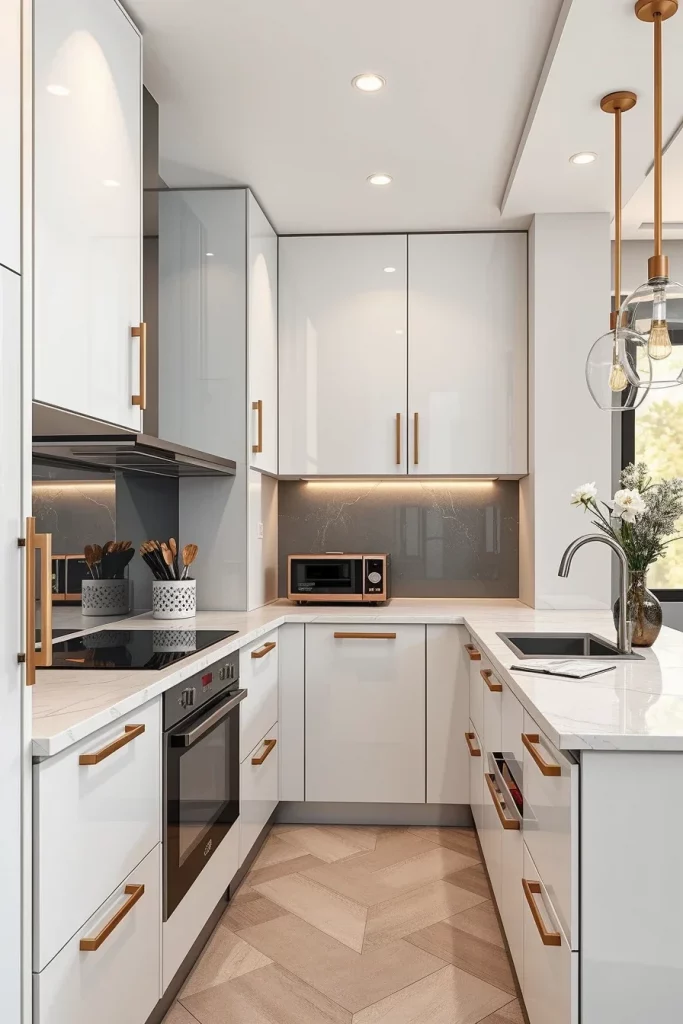
In many projects, I incorporate quartz or natural stone countertops, handleless cabinetry, integrated appliances, soft-close drawers, and decorative lighting. Full-height cabinets create a seamless appearance while maximizing storage capacity. High-quality finishes such as brushed metal accents, textured wood veneers, and custom shelving contribute to an upscale atmosphere without overwhelming the room.
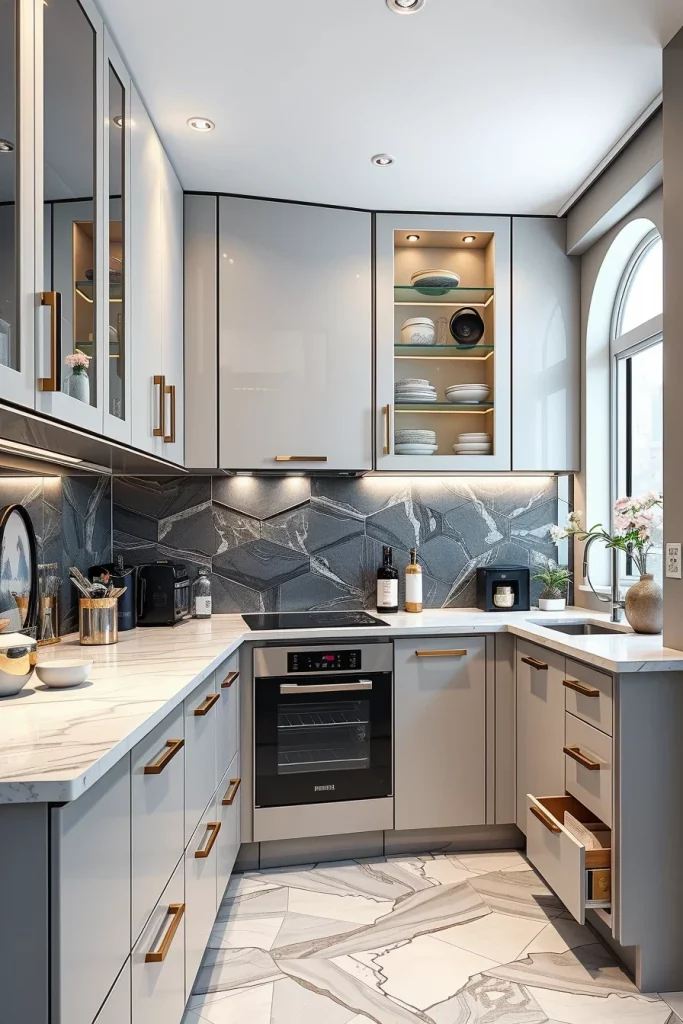
I believe luxury is not defined by size but by thoughtful design and attention to detail. Design professionals frequently emphasize the importance of quality over quantity, and I have seen firsthand how carefully selected materials can elevate even the smallest kitchen. A compact space that functions efficiently often feels more luxurious than a larger kitchen with poor organization.
To complete this style, I would add decorative accessories such as elegant bar stools, curated open shelving displays, and statement lighting fixtures that provide personality while maintaining a cohesive design.
Eco-Friendly Materials And Sustainable Storage Solutions
Sustainability has become an important consideration in modern kitchen design. When planning compact kitchens, I often prioritize environmentally responsible materials that contribute to both durability and aesthetic appeal. Sustainable choices help create healthier living spaces while reducing environmental impact.
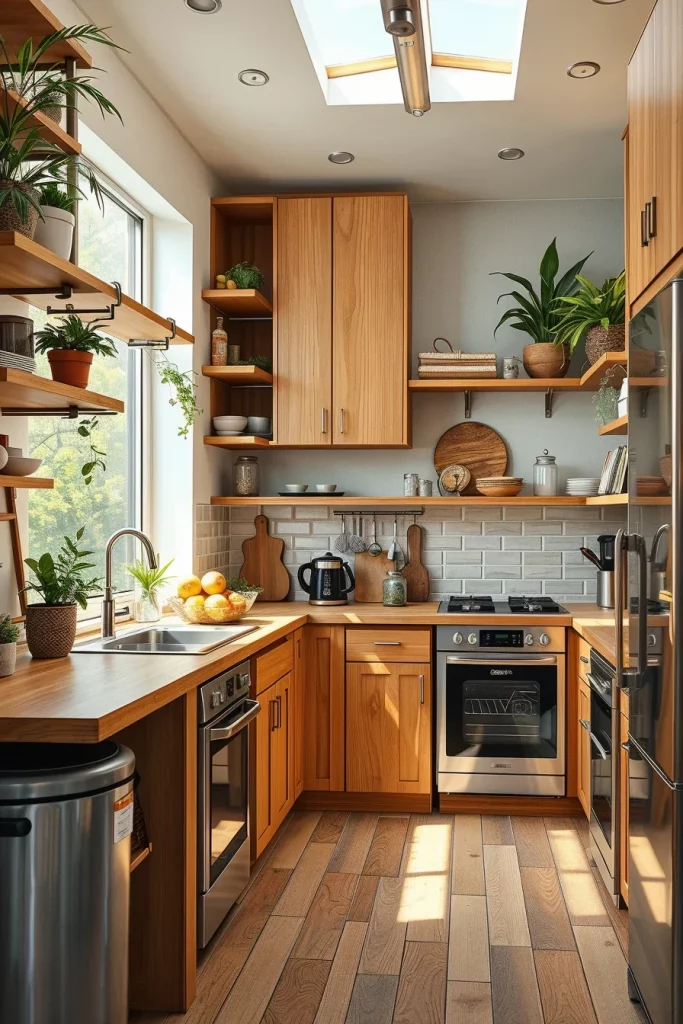
I regularly recommend cabinetry made from responsibly sourced wood, recycled materials, low-VOC finishes, and durable countertops with long life cycles. Storage systems designed for waste separation and recycling can be seamlessly integrated into cabinetry. Bamboo shelving, reclaimed wood accents, and energy-efficient appliances further support a sustainable design approach while maintaining a modern appearance.
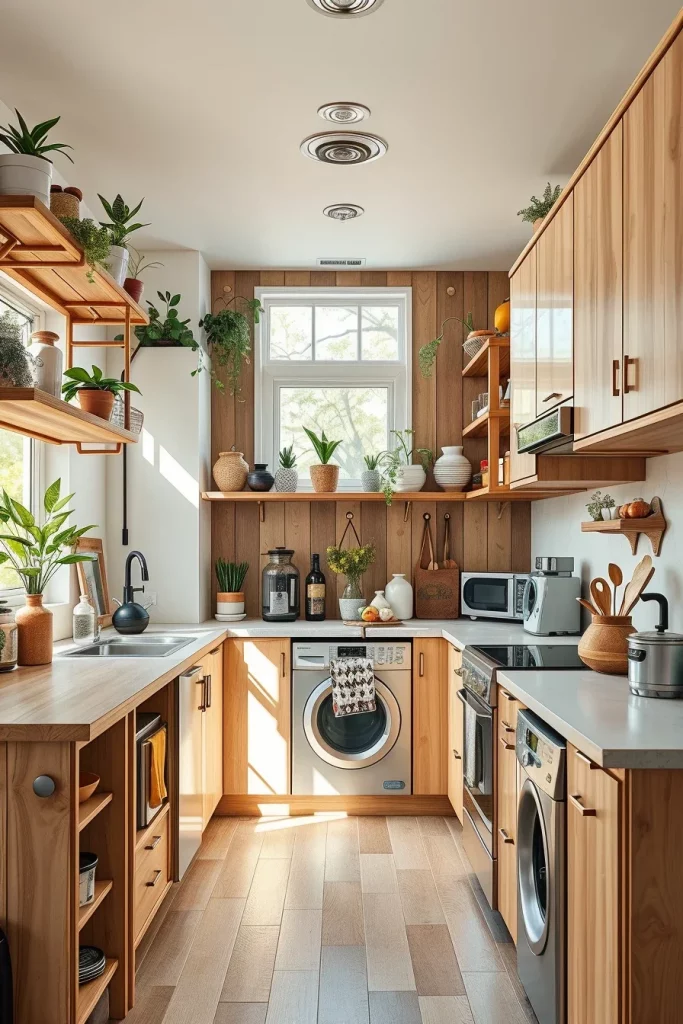
From my perspective, sustainable design is not a temporary trend but a long-term investment. Many respected design publications continue to highlight eco-conscious materials because they combine environmental responsibility with lasting performance. I appreciate how these materials often introduce natural warmth and texture into compact kitchens.
For even greater sustainability, I would include dedicated storage areas for reusable containers, compost bins, and bulk food organization systems. These additions encourage environmentally friendly habits while improving overall kitchen functionality.
High-Tech Smart Storage Features For Modern Living
Technology continues to influence how modern kitchens are designed and used. In compact kitchens, smart storage features can significantly improve convenience while helping homeowners stay organized. I often incorporate technology that enhances efficiency without complicating everyday routines.
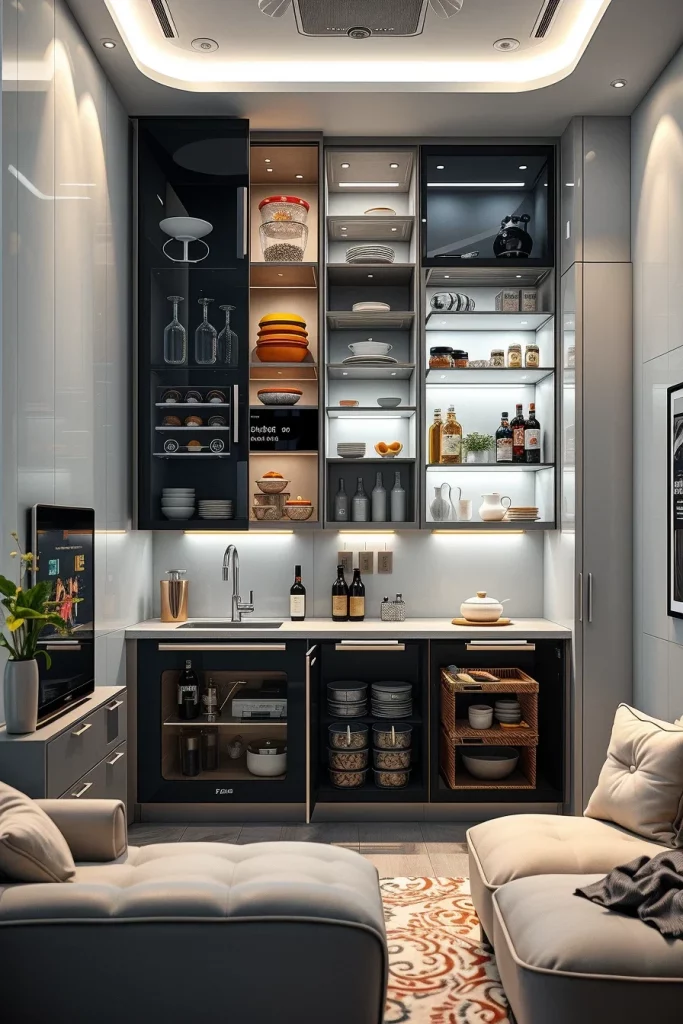
Popular solutions include motorized lift systems for upper cabinets, sensor-activated drawers, smart pantry organization systems, and app-controlled inventory management tools. Charging stations concealed within drawers keep devices accessible while reducing countertop clutter. Automated lighting inside cabinets and pull-out units further improves usability and visibility.
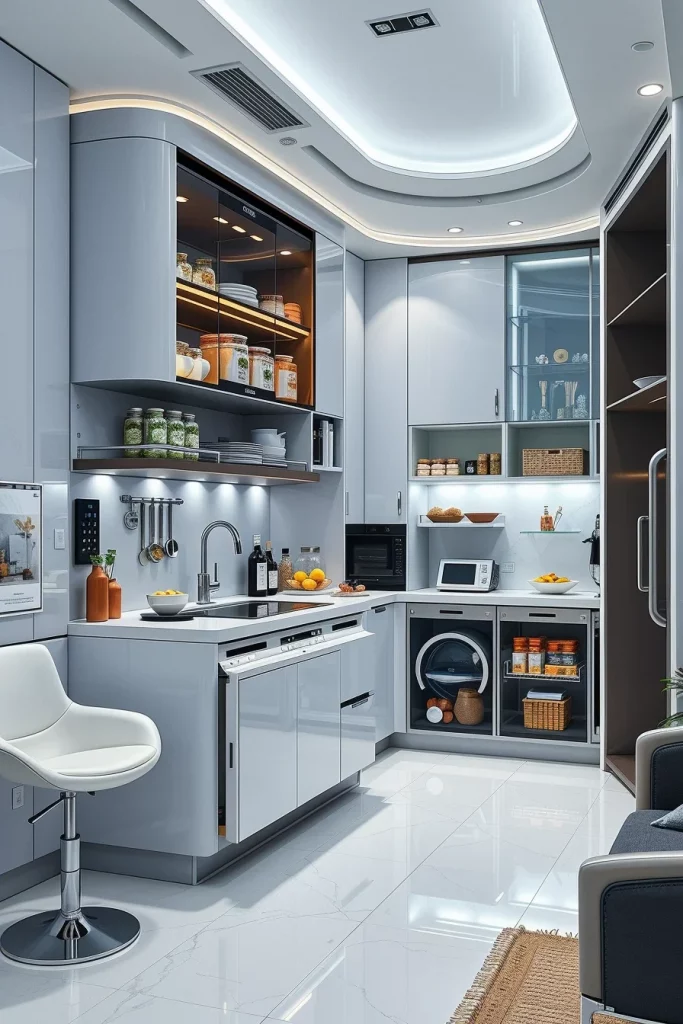
I have found that smart storage is particularly beneficial for busy households. As technology becomes more integrated into daily life, these features help simplify kitchen tasks while supporting a cleaner and more organized environment. The best smart solutions are those that feel intuitive and enhance functionality without drawing unnecessary attention to themselves.
To maximize the benefits of technology, I would combine smart storage with flexible shelving systems that can be adjusted as household needs change over time.
Designing The Ultimate Compact Kitchen That Combines Beauty And Function
The most successful compact kitchens balance aesthetics and practicality. When I design these spaces, I focus on creating a cohesive environment where every element contributes to both visual appeal and functionality. Careful planning ensures that storage, lighting, materials, and furniture work together harmoniously.
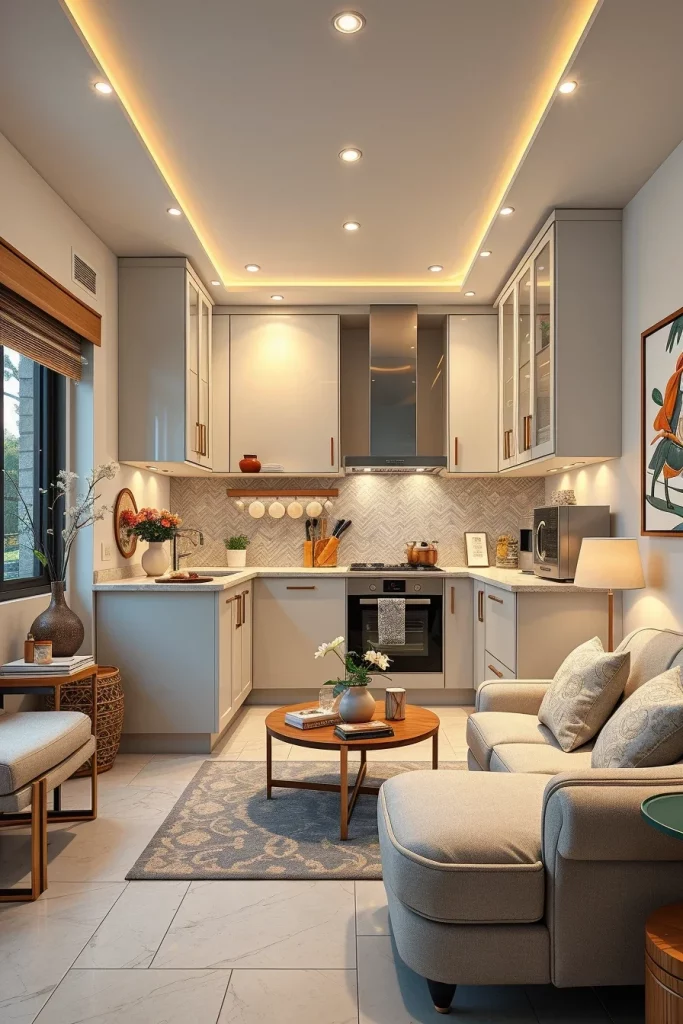
I typically combine custom cabinetry, multifunctional furniture, integrated appliances, efficient work zones, and layered lighting within a unified design scheme. Thoughtful storage solutions keep surfaces uncluttered, while carefully selected finishes add warmth and character. Every component serves a purpose, allowing the kitchen to remain attractive and highly efficient.
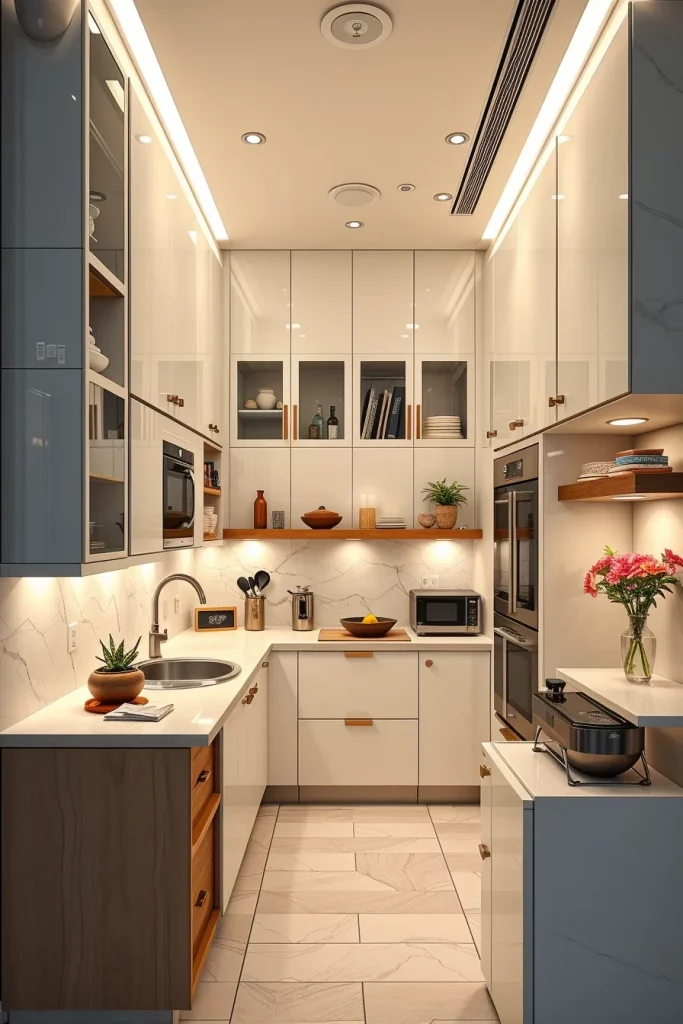
In my experience, the best compact kitchens are those that reflect the homeowner’s lifestyle. Rather than following trends alone, I prioritize solutions that support daily habits and long-term comfort. A well-designed kitchen should feel intuitive to use while maintaining a welcoming atmosphere that encourages cooking, dining, and gathering.
To perfect this type of kitchen, I would conduct a detailed assessment of storage needs before selecting cabinetry and furniture. Understanding how the space will be used allows every design decision to support both beauty and function.
A well-designed compact kitchen can be both highly functional and visually stunning when smart storage solutions are thoughtfully incorporated. By combining innovative furniture, efficient layouts, and creative organization ideas, even the smallest kitchen can feel spacious and inviting. Whether you prefer a minimalist aesthetic or a modern luxury look, the right storage features can help you maximize every inch while maintaining a clean and stylish environment. With careful planning, a compact kitchen can deliver exceptional convenience, beauty, and everyday practicality.