
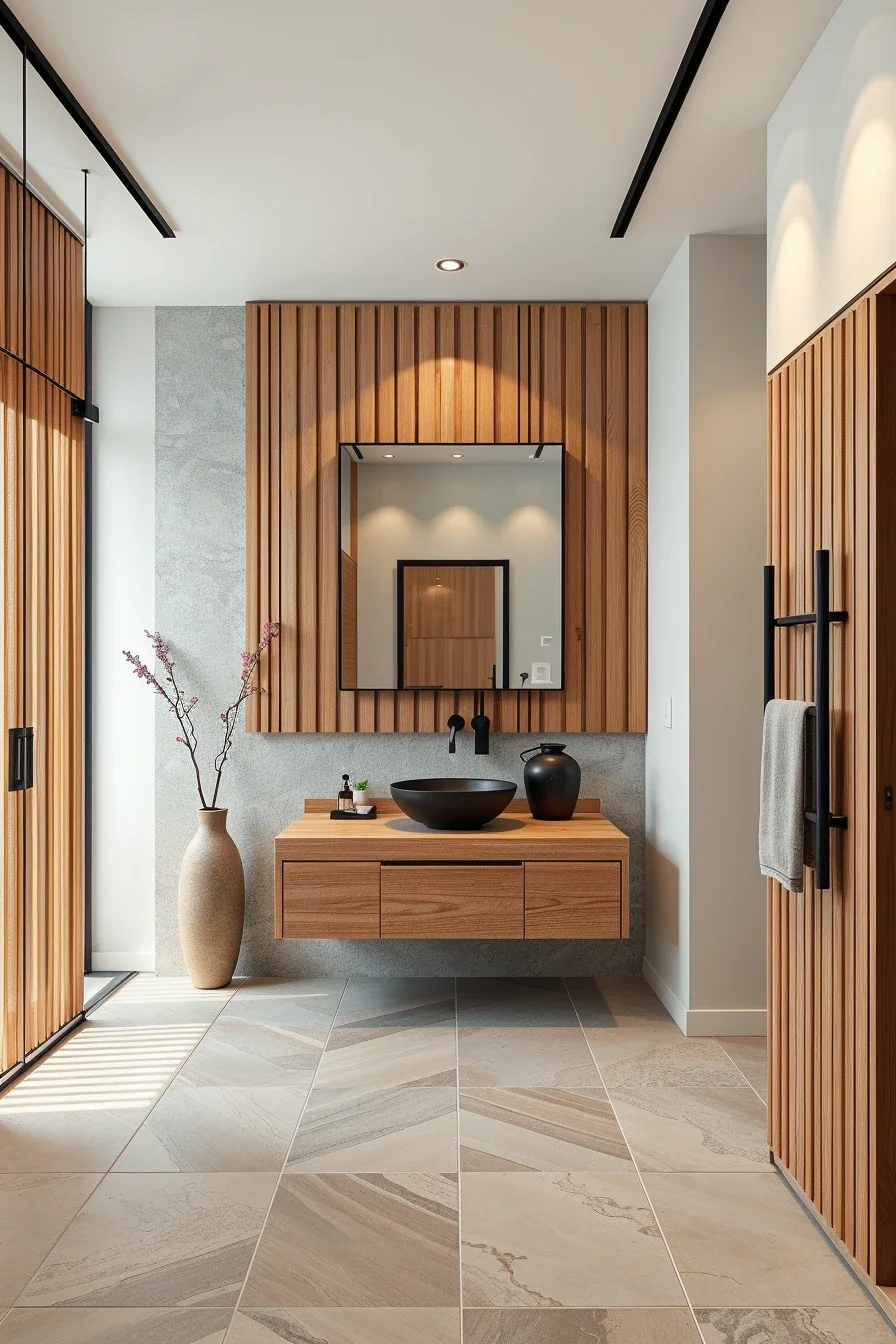
A Japandi bathroom combines the clean simplicity of Japanese design with the warm comfort of Scandinavian interiors, creating a space that feels both elegant and welcoming. This style focuses on thoughtful layouts, natural materials, calming colors, and carefully selected details that promote relaxation. Whether you’re planning a complete renovation or looking for subtle updates, Japandi principles can help transform an ordinary bathroom into a peaceful retreat. From floating vanities and freestanding tubs to textured finishes and soft lighting, every element works together to create balance and harmony. The beauty of a Japandi bathroom lies in its ability to feel luxurious without unnecessary decoration or visual clutter. In this guide, you’ll discover inspiring ideas, practical design tips, and timeless features to help you create a bathroom that is both functional and effortlessly stylish.
What Defines A Japandi Bathroom Style?
A true Japandi bathroom combines the warmth of Scandinavian interiors with the quiet simplicity of Japanese design. When I create or evaluate this style, I focus on clean architecture, uncluttered surfaces, and materials that feel authentic rather than overly polished. Every element serves a purpose, allowing the room to feel spacious even when the footprint is relatively small. Instead of chasing trends, I prefer timeless proportions, subtle textures, and thoughtful lighting that create an atmosphere of calm from the moment someone enters the room.
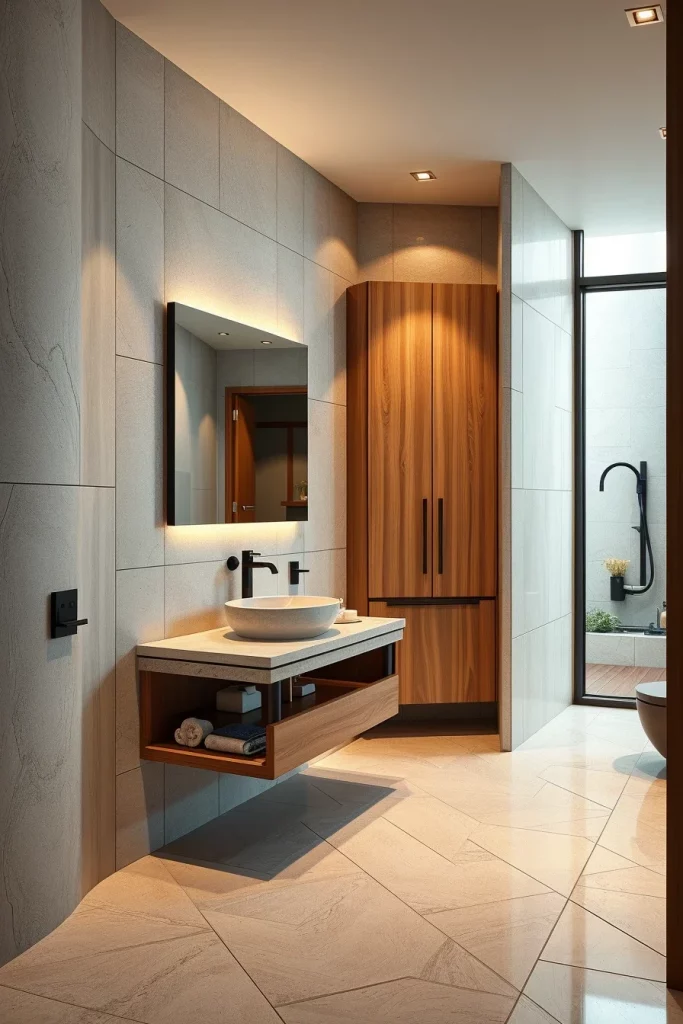
I usually begin with a restrained palette of soft whites, warm beige tones, light gray finishes, and muted earth colors. A floating vanity with simple cabinetry, integrated storage, large porcelain tiles, a frameless mirror, concealed hardware, and carefully selected fixtures all contribute to a refined appearance. Natural stone countertops, textured ceramics, matte faucets, and open shelving help the room feel balanced without becoming visually busy. Every piece of furniture supports both beauty and functionality, which is one of the defining characteristics of a successful Japandi bathroom.
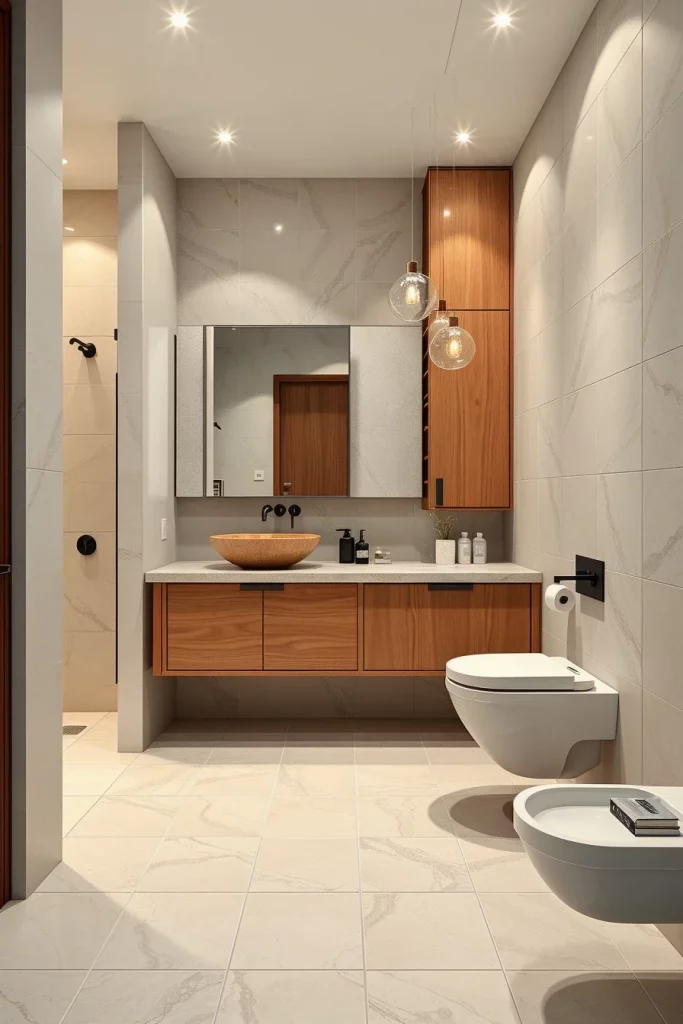
In my experience, the most successful projects avoid excessive decoration and instead allow craftsmanship to become the focal point. Designers featured by Architectural Digest and House Beautiful often emphasize that thoughtful restraint creates interiors that remain attractive for many years rather than following short-lived design trends. I have found this advice especially valuable when planning bathrooms intended for daily relaxation.
To complete this style, I would also recommend incorporating layered lighting with ambient, task, and accent illumination. Soft indirect lighting around mirrors or beneath floating cabinetry enhances depth while maintaining the peaceful atmosphere that defines authentic Japandi interiors.
Why Japandi Bathrooms Feel So Calm And Timeless
Whenever I step into a well-designed Japandi bathroom, I immediately notice how every detail contributes to a sense of calm. The layout avoids unnecessary distractions, allowing the eye to move naturally across the room. Balanced proportions, open floor space, and carefully selected finishes create an environment that feels organized instead of overwhelming. This sense of order is one reason the style continues to remain relevant year after year.
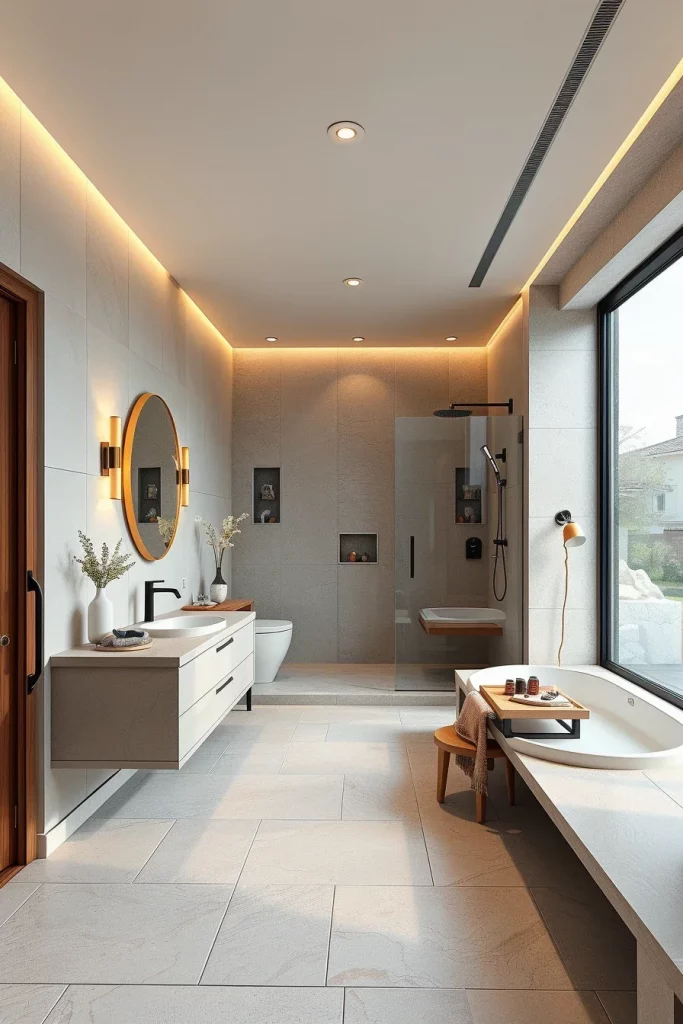
I prefer combining large-format wall tiles with simple vanities, integrated sinks, recessed storage niches, frameless shower glass, and minimal hardware. Soft textiles, understated accessories, and carefully chosen lighting fixtures support the overall atmosphere without competing for attention. The furniture remains functional, while every decorative object has a clear purpose instead of simply filling empty space.
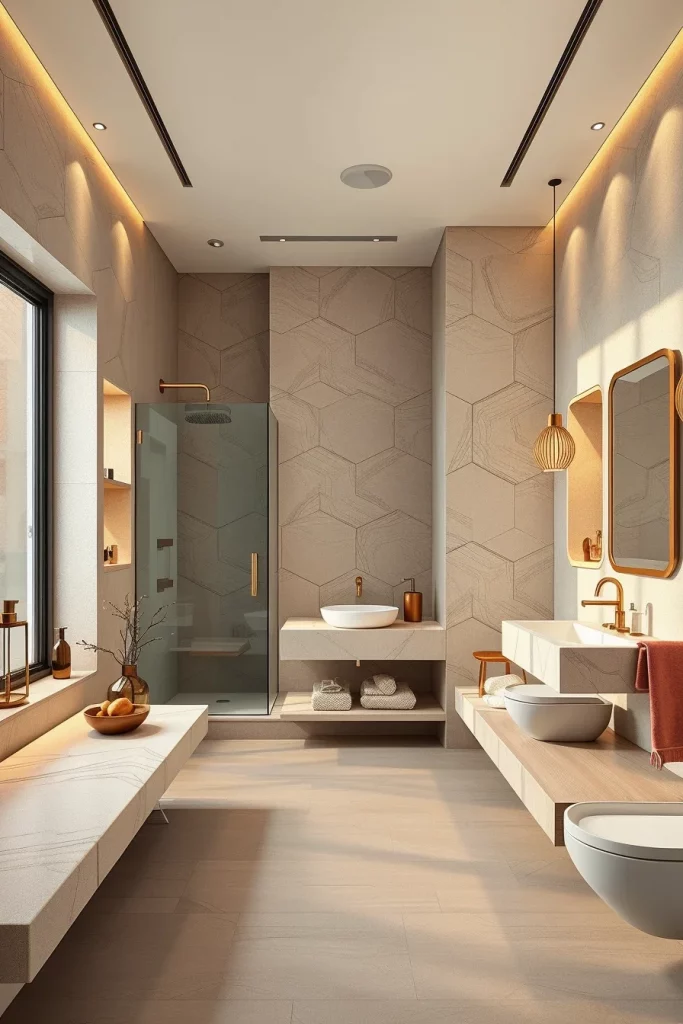
From my perspective, timeless interiors always prioritize comfort over decoration. I often recommend choosing durable materials and avoiding finishes that may quickly feel outdated. Many interior designers interviewed by Elle Decor encourage homeowners to invest in quality materials with lasting appeal, and I completely agree with that philosophy because it creates interiors that continue to feel fresh for years.
If I wanted to improve this space even further, I would include hidden storage behind mirrored cabinets or inside floating vanities. Keeping everyday essentials out of sight preserves the clean visual balance that makes a Japandi bathroom so relaxing.
Choosing A Soft Neutral Color Palette For A Japandi Bathroom
Selecting colors is one of the most important decisions I make when designing a Japandi-inspired interior. Soft neutral shades establish the mood before any furniture or decorative details are added. Instead of relying on sharp contrasts, I prefer gradual transitions between warm whites, creamy beige, soft taupe, gentle gray, and subtle sand tones. These colors reflect light beautifully while creating an inviting atmosphere that never feels cold.
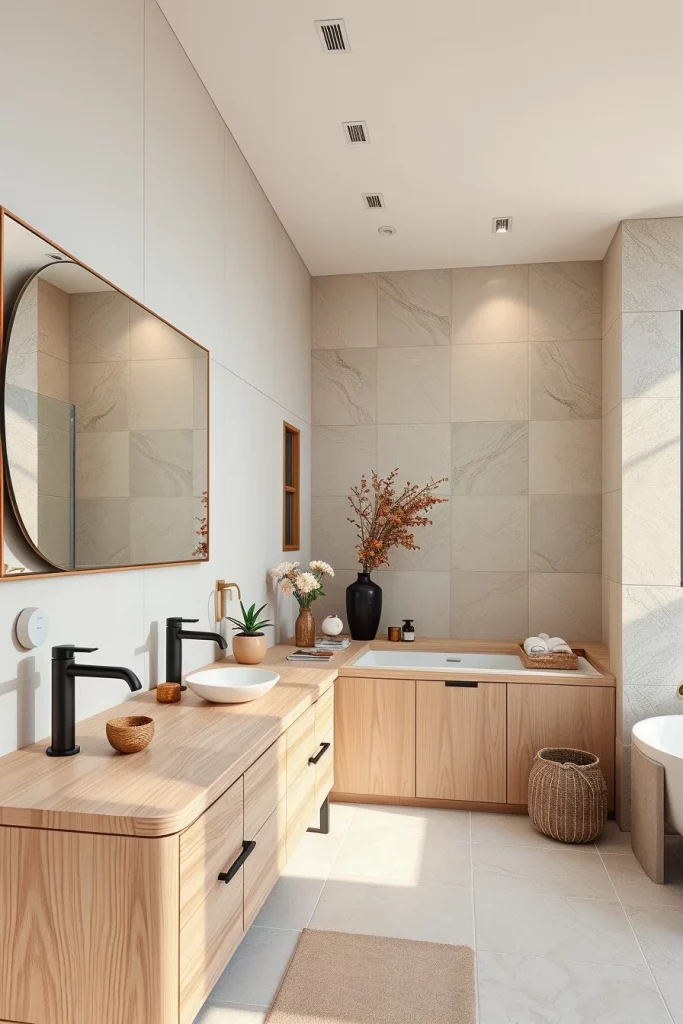
I often combine textured porcelain tiles, smooth stone surfaces, matte cabinetry, light oak finishes, minimalist mirrors, and simple bathroom accessories that blend naturally with the surrounding palette. Black accents are used sparingly through faucets, shower frames, or cabinet handles to introduce subtle definition without overwhelming the softness of the room. Carefully coordinated towels, storage baskets, and ceramic accessories reinforce the calm visual rhythm throughout the space.
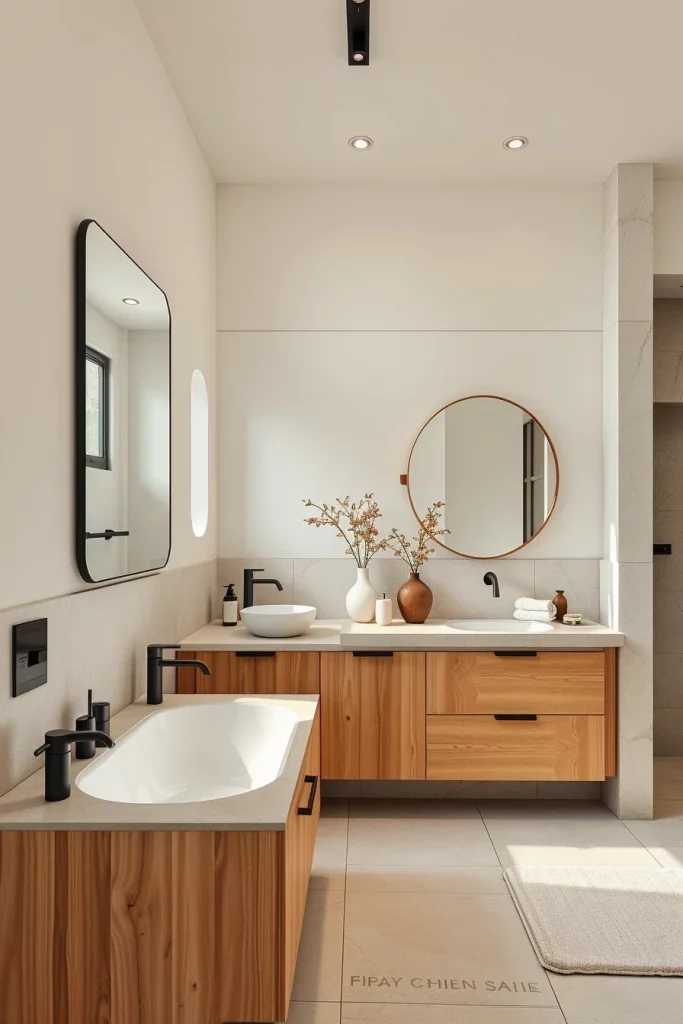
In my opinion, a restrained palette allows architectural details and natural materials to become the main attraction. Better Homes & Gardens frequently highlights the importance of layering similar neutral shades rather than relying on dramatic color combinations, and I have found this approach consistently produces elegant, welcoming bathrooms.
One additional improvement I often suggest is maximizing natural daylight through larger windows or frosted glass where privacy allows. Natural light enhances every neutral surface and makes the entire bathroom feel brighter throughout the day.
Creating A Spa-Like Atmosphere With Simple Design
Whenever I design a bathroom intended for relaxation, I concentrate on removing visual distractions rather than adding decorative features. A spa-inspired Japandi bathroom relies on generous open space, harmonious materials, comfortable movement, and soothing textures. Every design decision supports relaxation while still remaining practical for everyday routines.
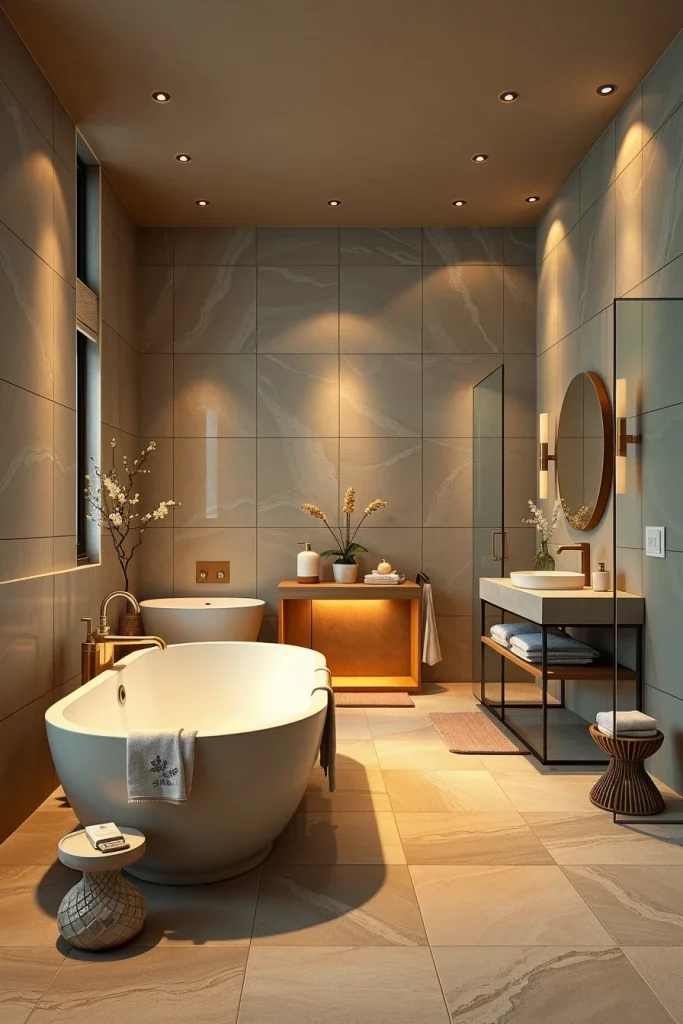
My preferred combination includes a floating vanity, integrated sink, wall-mounted faucets, frameless shower enclosure, built-in storage niches, oversized floor tiles, soft indirect lighting, and carefully selected decorative ceramics. Plush towels, simple soap dispensers, linen accessories, and elegant trays help organize everyday essentials while maintaining the minimalist appearance. Every furnishing contributes to comfort without making the room feel crowded.
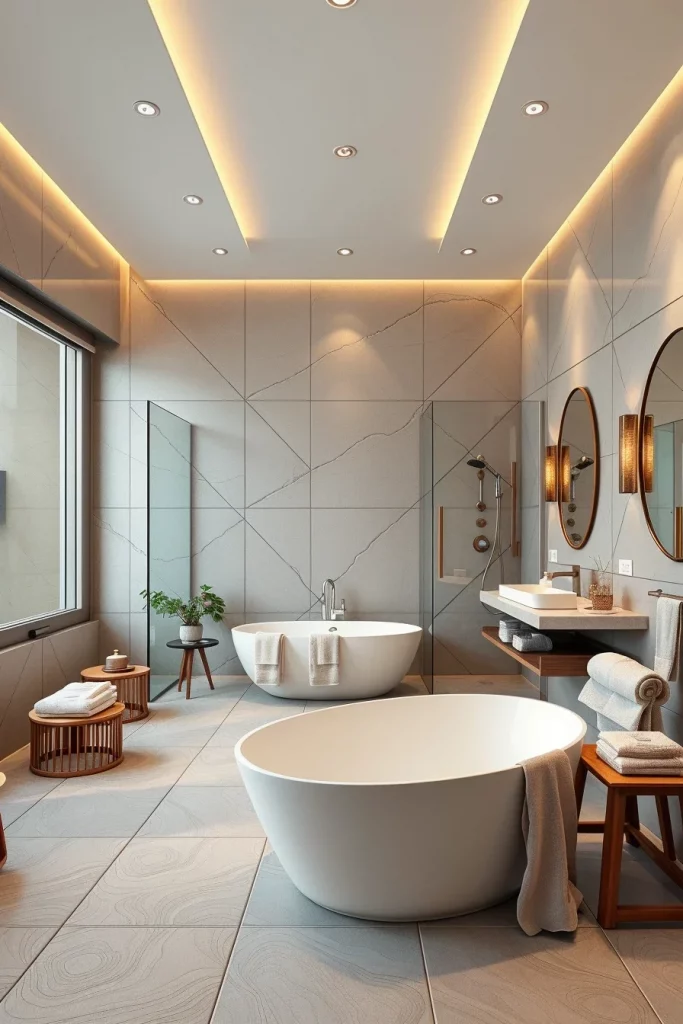
Personally, I believe successful spa-inspired bathrooms encourage slower daily routines and create opportunities to disconnect from busy schedules. Interior designers featured in Dwell often discuss the psychological benefits of uncluttered interiors, and I have experienced firsthand how simplifying a bathroom can noticeably improve the feeling of relaxation.
To strengthen the spa atmosphere even further, I would include dimmable lighting controls and underfloor heating. These practical upgrades improve everyday comfort while remaining perfectly consistent with the quiet elegance of Japandi design.
Minimalist Bathroom Layout Ideas For Better Flow
An efficient layout forms the foundation of every successful Japandi bathroom. Before selecting finishes or furniture, I carefully consider how people will move through the room. Clear circulation paths, logical placement of fixtures, and generous visual openness make even compact bathrooms feel significantly larger. I always try to eliminate unnecessary obstacles that interrupt movement or create visual clutter.
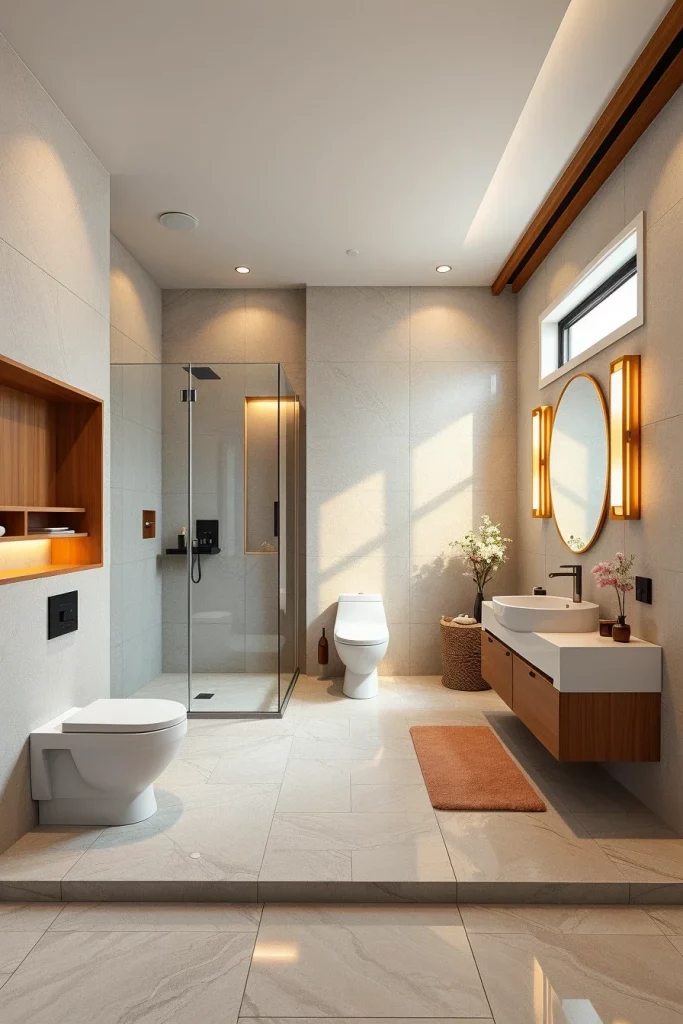
I typically arrange a floating vanity opposite a walk-in shower, while positioning storage within easy reach without dominating the room. Wall-mounted toilets, recessed shelving, concealed plumbing, frameless glass partitions, and oversized mirrors all contribute to a cleaner appearance. Every cabinet, shelf, and fixture is selected not only for its appearance but also for how efficiently it supports everyday use while maintaining the refined aesthetic of a Japandi bathroom.
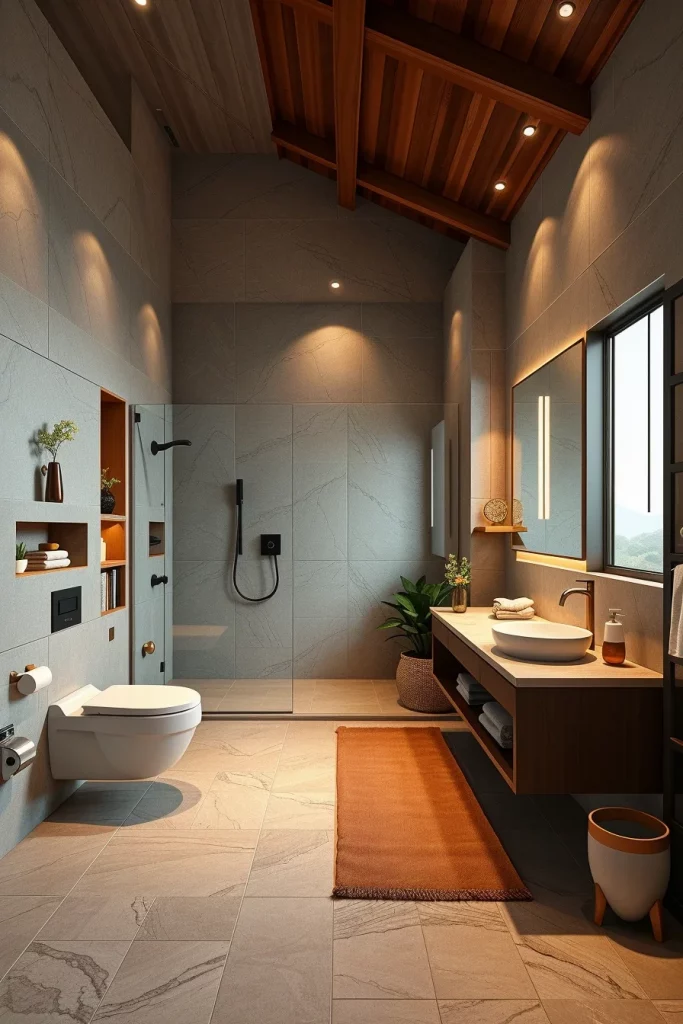
From my experience, the best minimalist layouts feel intuitive because every element is positioned exactly where it should be. Professional designers from Remodelista often recommend designing around functionality first and decoration second, and I consistently find that this principle produces bathrooms that remain practical long after construction is complete.
If I were refining this layout further, I would incorporate custom storage designed specifically for toiletries, towels, and cleaning supplies. Hidden organization preserves the minimalist character while ensuring the bathroom remains highly functional for daily living.
Floating Vanity Designs For A Clean Japandi Look
A floating vanity is one of the signature features I recommend for any Japandi bathroom because it immediately creates a lighter and more spacious appearance. By lifting the cabinetry off the floor, the room feels more open, making even compact bathrooms appear larger. This simple architectural detail also allows natural light to travel more freely throughout the space while emphasizing the clean horizontal lines that define Japandi interiors. I always aim for designs that blend effortlessly into the room instead of becoming the focal point.
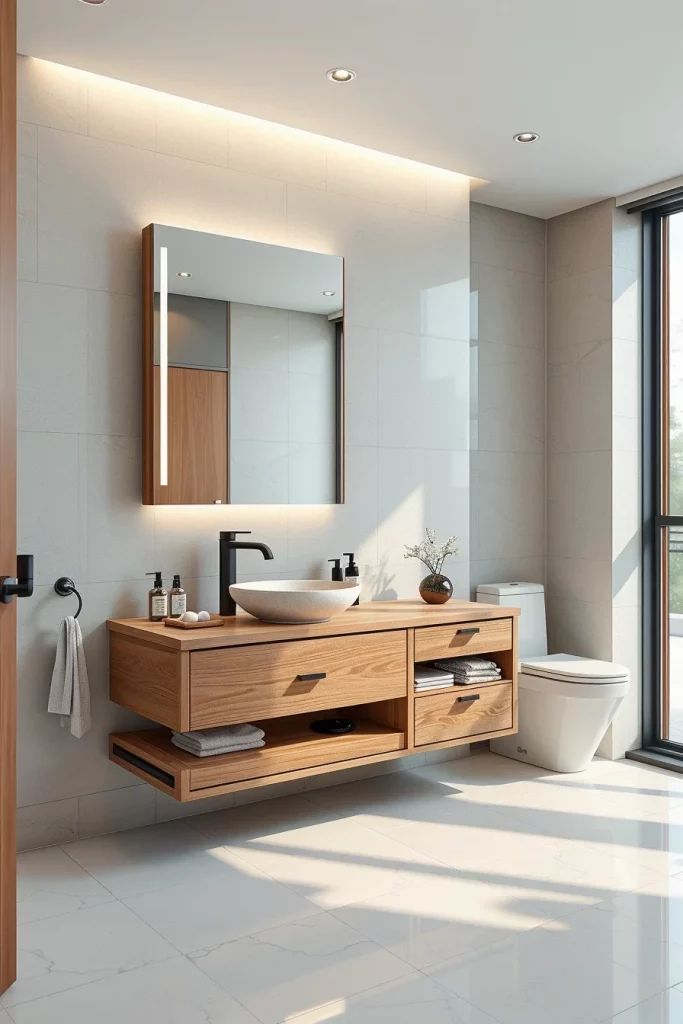
My preferred floating vanity features flat-panel cabinetry with integrated handles, a seamless stone countertop, and an under-mounted or integrated sink. I often pair it with a large frameless mirror, concealed LED lighting, matte black or brushed nickel faucets, and organized drawer storage that keeps everyday essentials hidden from view. Open shelving beneath the vanity can be added carefully to display neatly folded towels or handcrafted ceramic accessories without disrupting the minimalist aesthetic. Every component is selected to improve both visual harmony and practical functionality.
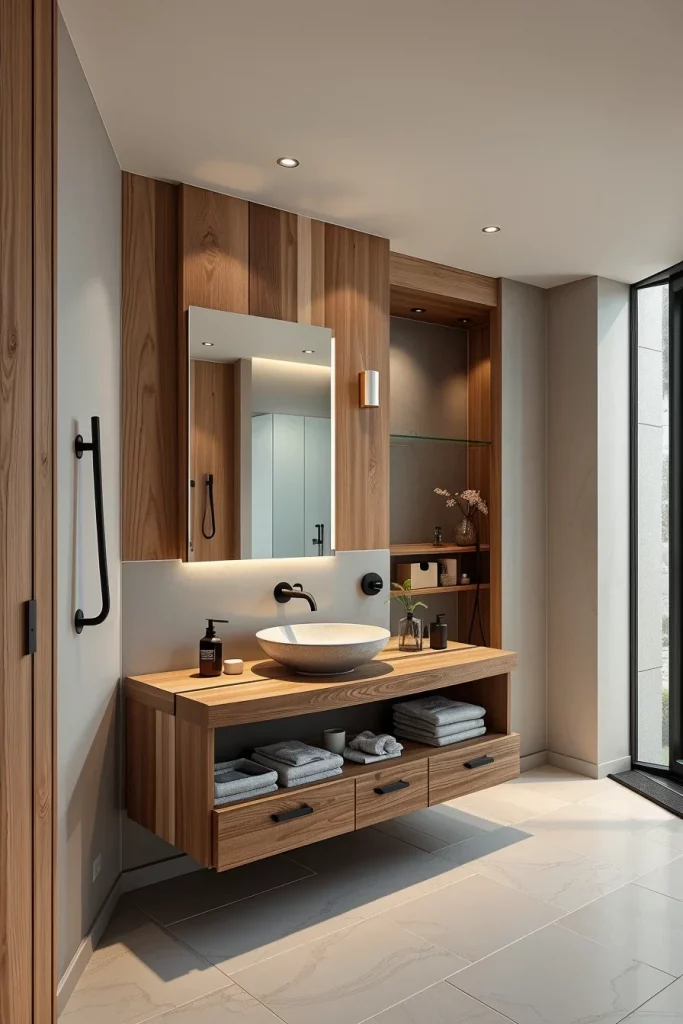
In my experience, floating vanities make routine cleaning significantly easier because the floor remains fully accessible. Interior designers featured in Architectural Digest frequently recommend wall-mounted furniture to maximize visual space, particularly in modern bathrooms with minimalist styling. I have consistently found that this approach creates interiors that feel sophisticated without sacrificing everyday convenience.
If I were enhancing this design further, I would include custom drawer organizers with dedicated compartments for toiletries, grooming tools, and skincare products. Hidden organization keeps countertops clear while supporting the uncluttered appearance that defines a successful Japandi bathroom.
Freestanding Bathtub Ideas For A Relaxing Retreat
A freestanding bathtub often becomes the centerpiece of a Japandi bathroom because it encourages relaxation without relying on elaborate decoration. Rather than placing the tub in a crowded corner, I prefer positioning it where natural light highlights its sculptural form. Clean lines, generous surrounding space, and balanced proportions allow the bathtub to feel elegant while maintaining the quiet simplicity associated with Japandi interiors. The goal is to create an environment that encourages slower, more mindful routines.
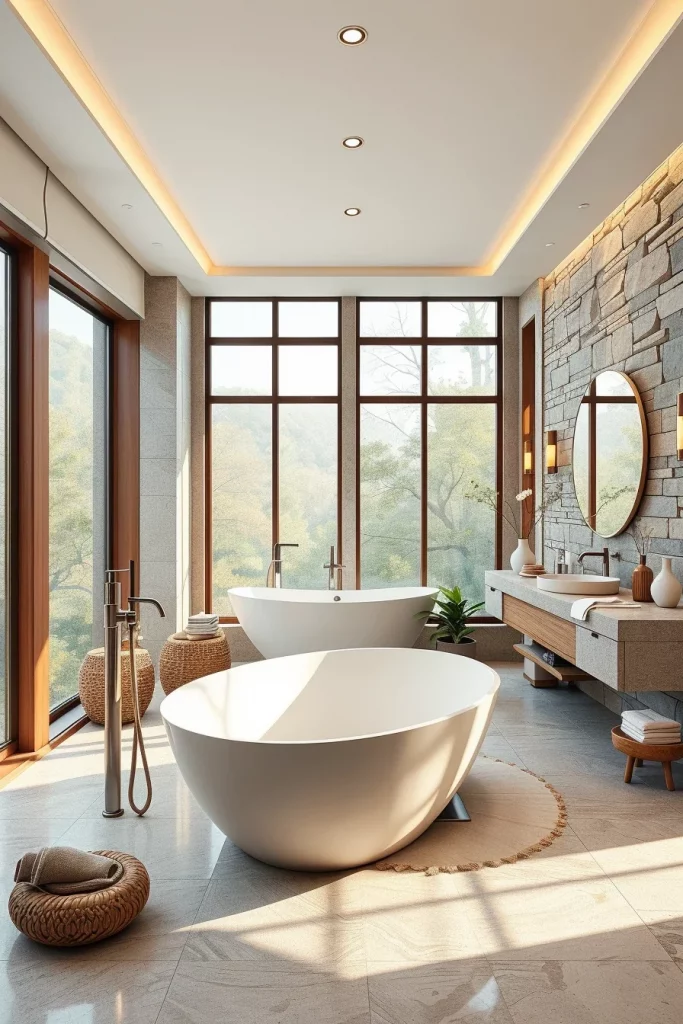
I usually recommend oval or softly curved bathtubs in matte white finishes paired with floor-mounted faucets in brushed black, stainless steel, or brushed nickel. Large-format porcelain flooring, natural stone accent walls, oversized windows with privacy glazing, and a simple wooden bath stool create a balanced composition. Soft cotton towels, handcrafted ceramic trays, woven storage baskets, and discreet shelving complete the room without introducing unnecessary visual clutter. Each furnishing supports comfort while reinforcing the minimalist philosophy.
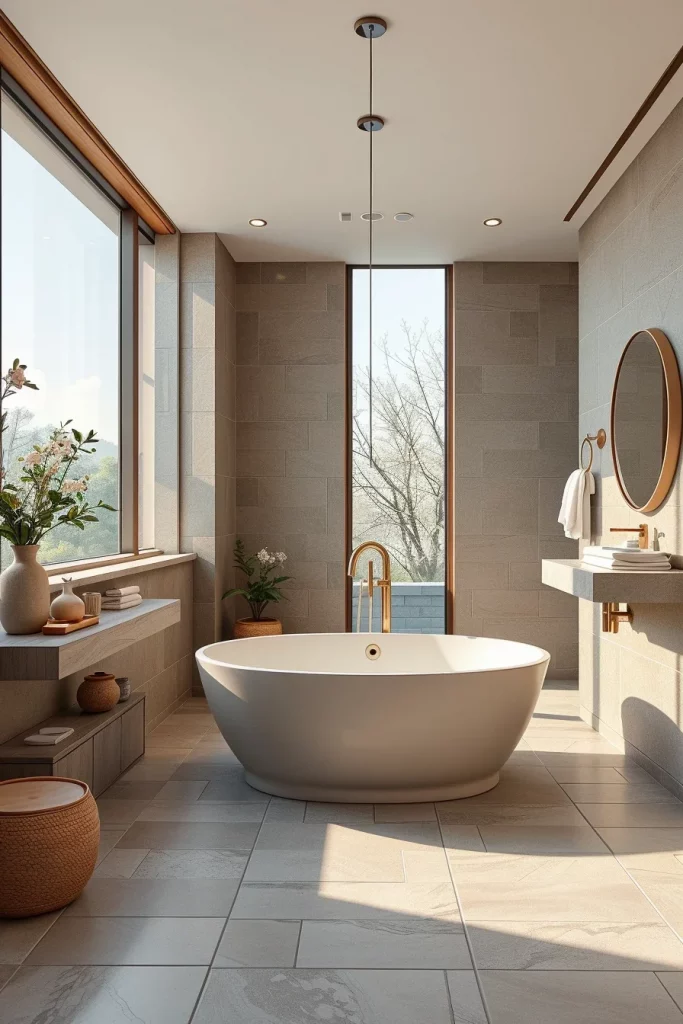
Personally, I believe a freestanding bathtub transforms an ordinary bathroom into a personal retreat. House Beautiful has highlighted the growing popularity of spa-inspired bathrooms that prioritize wellness over excessive decoration, and I agree that investing in comfort creates lasting value beyond appearance alone.
To improve this space even further, I would install dimmable wall sconces and position a small recessed niche beside the bathtub for bath essentials. These practical additions enhance convenience while preserving the room’s clean architectural character.
Walk-In Shower Designs That Match Japandi Style
Whenever I design a walk-in shower for a Japandi bathroom, I focus on openness rather than enclosure. Frameless glass panels, flush floor transitions, and continuous tile surfaces help the shower blend seamlessly into the rest of the room. This uninterrupted visual flow makes the bathroom appear larger while maintaining a calm, organized atmosphere. Every detail is selected to reduce visual distractions and improve everyday functionality.
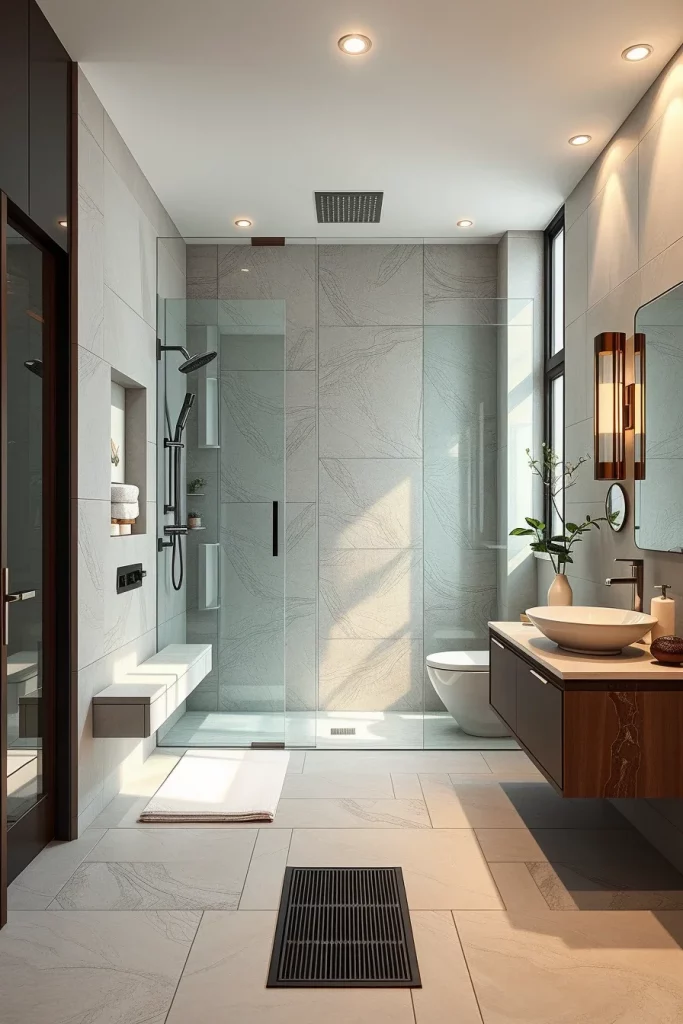
I typically specify oversized porcelain wall tiles, linear drains, built-in recessed niches, rainfall showerheads, handheld shower fixtures, and slim black or brushed metal hardware. A built-in bench finished in matching stone provides additional comfort while preserving the minimalist appearance. The shower enclosure remains almost invisible thanks to clear glass, allowing the room’s natural textures and neutral colors to remain the primary design elements.
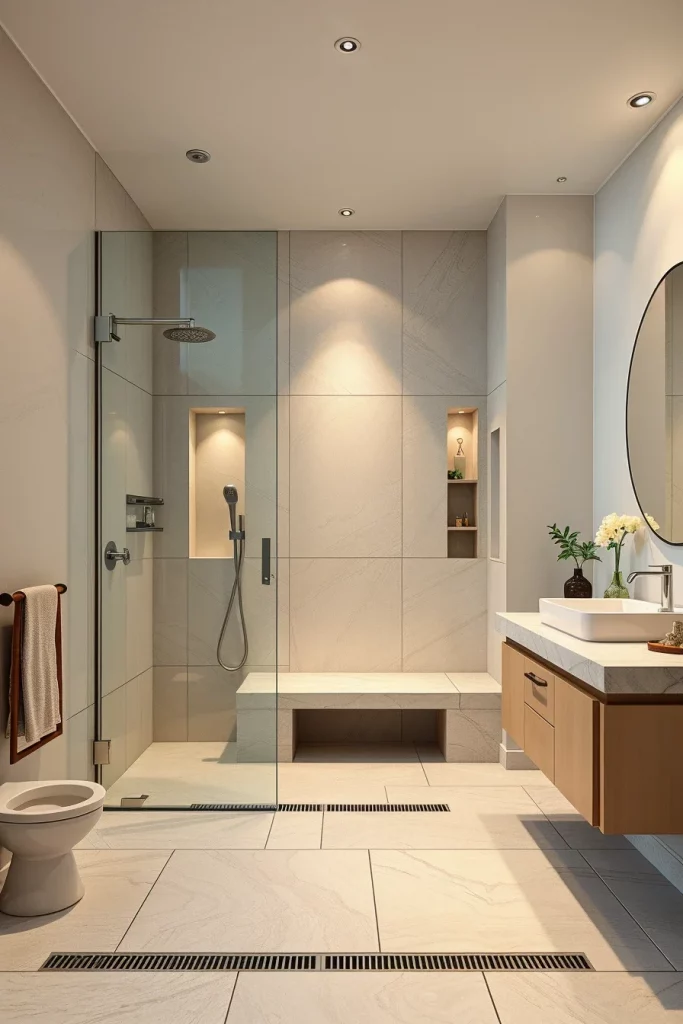
From my perspective, an excellent walk-in shower balances luxury with practicality. Designers featured by Dwell frequently recommend barrier-free shower layouts because they improve accessibility while creating a sleek contemporary appearance. I appreciate this approach because it combines timeless aesthetics with long-term usability.
One additional feature I would recommend is installing underfloor heating throughout the shower area. This upgrade significantly improves comfort while maintaining the refined simplicity that defines Japandi design.
Natural Stone Finishes For A Refined Bathroom Interior
Natural stone introduces texture, depth, and authenticity into a Japandi bathroom without relying on decorative ornamentation. I prefer selecting stone with subtle veining and soft color variation rather than dramatic patterns. Whether used on walls, countertops, shower benches, or flooring, stone creates visual interest while maintaining the restrained elegance that defines the style. Its durability also makes it an excellent long-term investment for frequently used bathrooms.
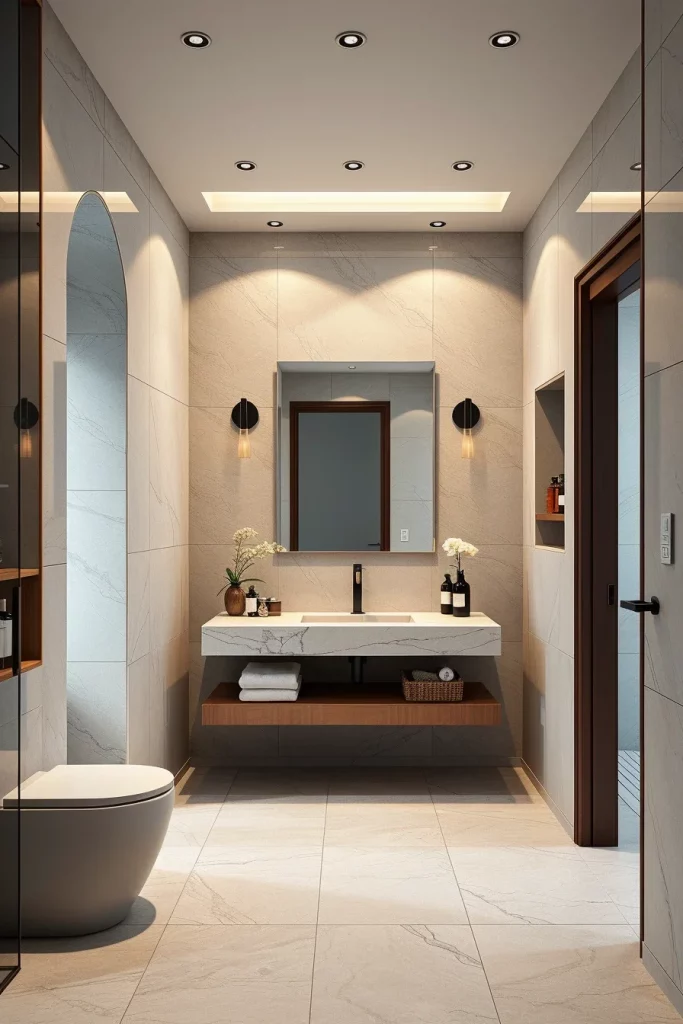
I often combine limestone, travertine, marble, or textured porcelain that realistically replicates natural stone. These finishes pair beautifully with floating vanities, integrated sinks, frameless mirrors, matte fixtures, and understated lighting. Stone shelves, shower niches, and vanity backsplashes create continuity throughout the room while adding sophisticated detail. Every surface contributes warmth and tactile richness without making the interior feel visually heavy.
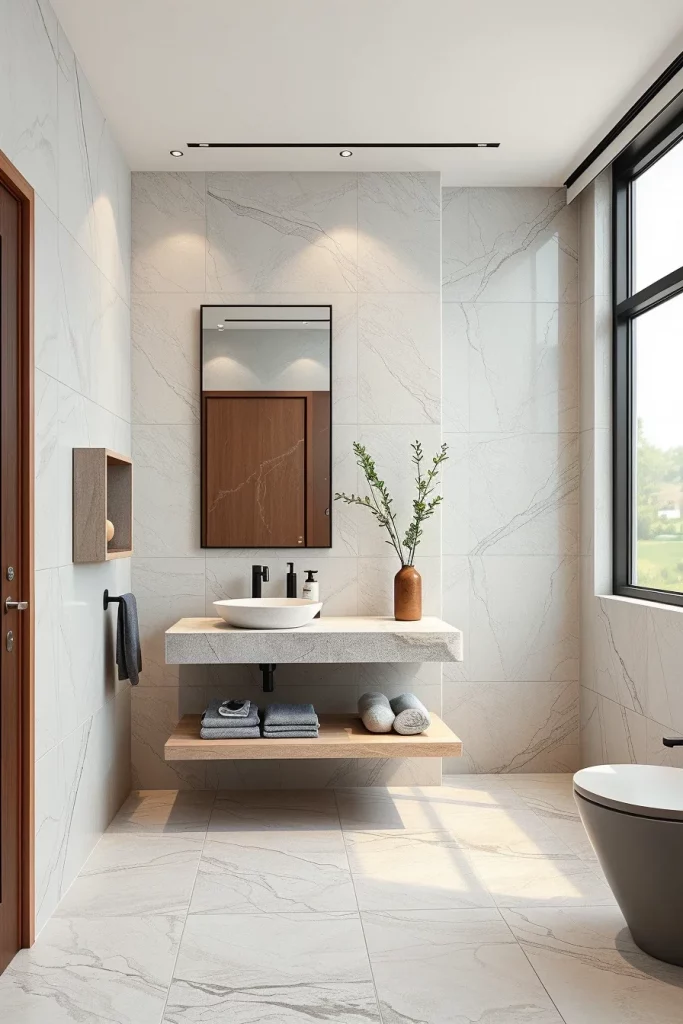
In my experience, authentic materials age gracefully and continue looking beautiful for decades. Better Homes & Gardens regularly recommends choosing timeless finishes that remain attractive despite changing trends, and I have consistently found that natural stone delivers exactly that lasting appeal.
If I wanted to further improve this design, I would include proper stone sealing and maintenance recommendations during the planning stage. Protecting natural surfaces ensures they retain their appearance while remaining easy to care for over many years.
Warm Wood Tones That Balance Modern Simplicity
Warm wood tones provide the visual warmth that prevents a minimalist bathroom from feeling cold or sterile. Although Japandi interiors embrace simplicity, I believe carefully selected wood finishes introduce character and softness that complement stone and porcelain beautifully. The contrast between smooth mineral surfaces and natural wood grain creates a balanced environment that feels both modern and welcoming.
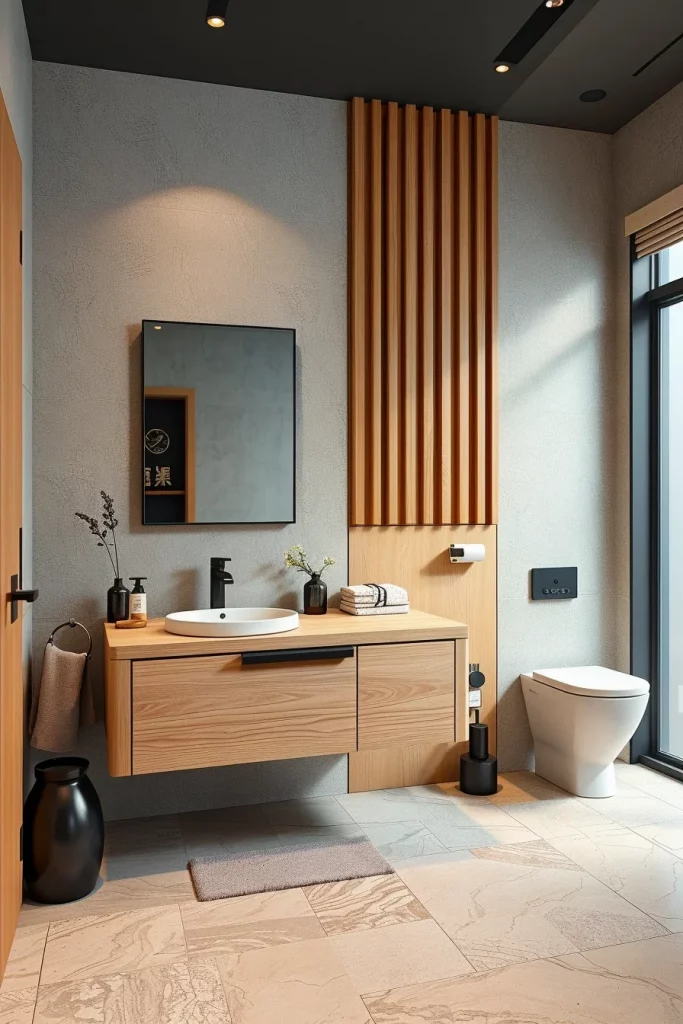
I usually select light oak, ash, walnut, or high-quality wood veneers for floating vanities, shelving, storage cabinets, and decorative accents. These finishes pair naturally with matte black fixtures, neutral stone countertops, large mirrors, linen textiles, and handcrafted ceramic accessories. Vertical wood slats can also become subtle architectural features that add texture while preserving the clean lines of the overall design. Every wooden element should appear refined, understated, and carefully integrated into the room.
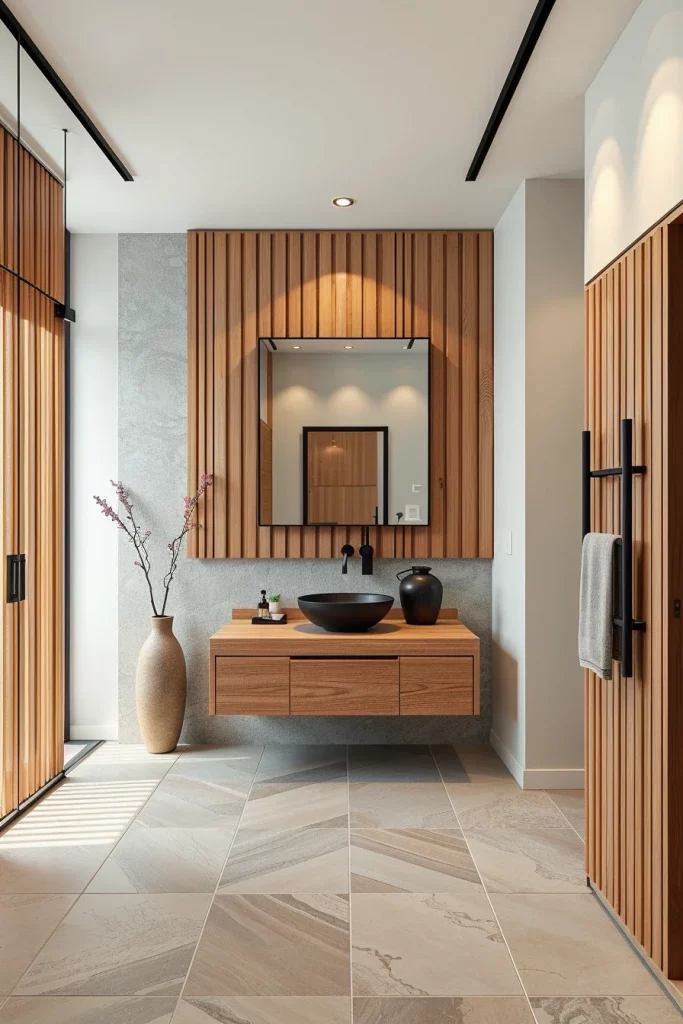
Personally, I find that warm wood transforms minimalist bathrooms into spaces that feel comfortable every season of the year. Interior designers featured in Elle Decor often emphasize balancing hard architectural materials with natural textures, and I fully agree because this combination creates interiors that remain inviting for everyday living.
To complete this section, I would recommend selecting moisture-resistant wood finishes specifically designed for bathrooms. Proper finishing protects cabinetry from humidity while preserving the beautiful natural appearance that is central to Japandi interiors.
Matte Black Fixtures For A Contemporary Japandi Bathroom
When I design a contemporary Japandi bathroom, I often begin with matte black fixtures because they provide clean definition without overwhelming the room. Their soft, non-reflective finish creates a balanced contrast against neutral surfaces while maintaining the peaceful atmosphere that defines Japandi interiors. Instead of becoming decorative focal points, these fixtures quietly frame the overall design and make every element feel intentional. I find this approach especially effective in bathrooms where visual simplicity is the priority.
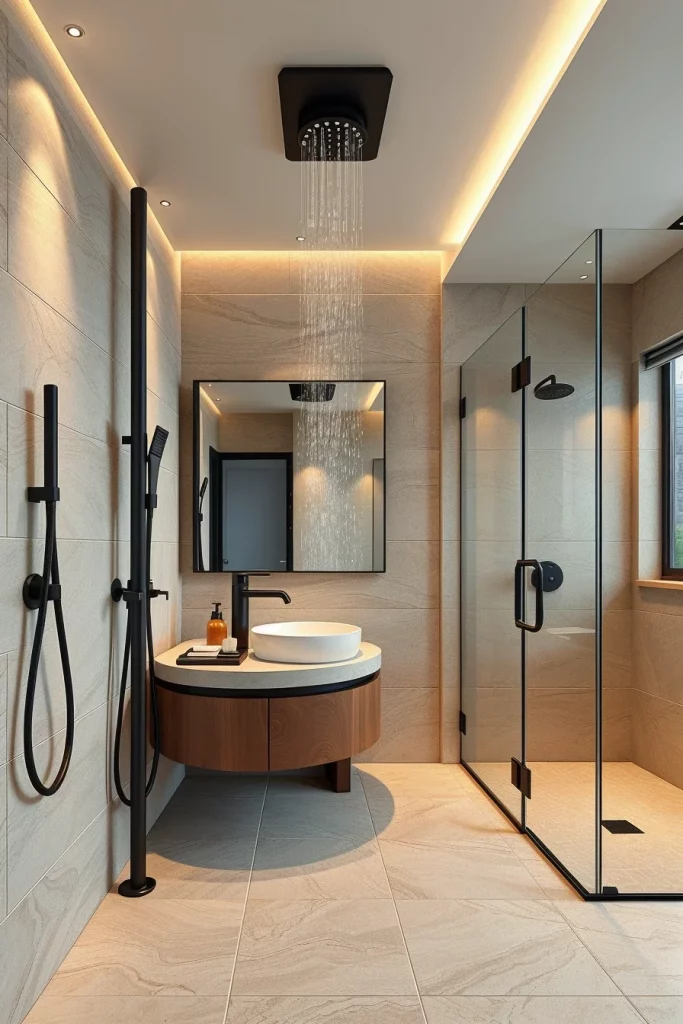
I prefer selecting a matte black rain shower, wall-mounted faucet, towel bars, shower enclosure hardware, and slim cabinet handles that all share the same finish. Consistency helps the entire bathroom feel professionally designed rather than assembled piece by piece. A floating vanity with simple lines, an oversized mirror, and a frameless glass shower enclosure complement these fixtures perfectly because they preserve the open appearance of the room while allowing every detail to feel connected.
From my experience, respected designers frequently recommend limiting the number of finishes in one bathroom to maintain visual harmony. Publications such as Architectural Digest regularly highlight the importance of material consistency in contemporary interiors, and I have found this advice especially valuable in Japandi spaces where every detail contributes to the calm atmosphere.
To complete this section, I would also recommend installing dimmable lighting that softens the appearance of the matte black finishes throughout the day. Warm lighting prevents strong contrasts and enhances the comfortable mood that every Japandi bathroom should achieve.
Soft Lighting Ideas To Enhance A Peaceful Space
Lighting has a greater influence on a Japandi bathroom than many people realize. I always focus on creating layers of warm illumination rather than relying on a single bright ceiling fixture. Soft lighting removes harsh shadows, highlights natural textures, and transforms ordinary daily routines into relaxing moments. A peaceful lighting scheme also makes the bathroom appear more spacious and welcoming throughout the day.
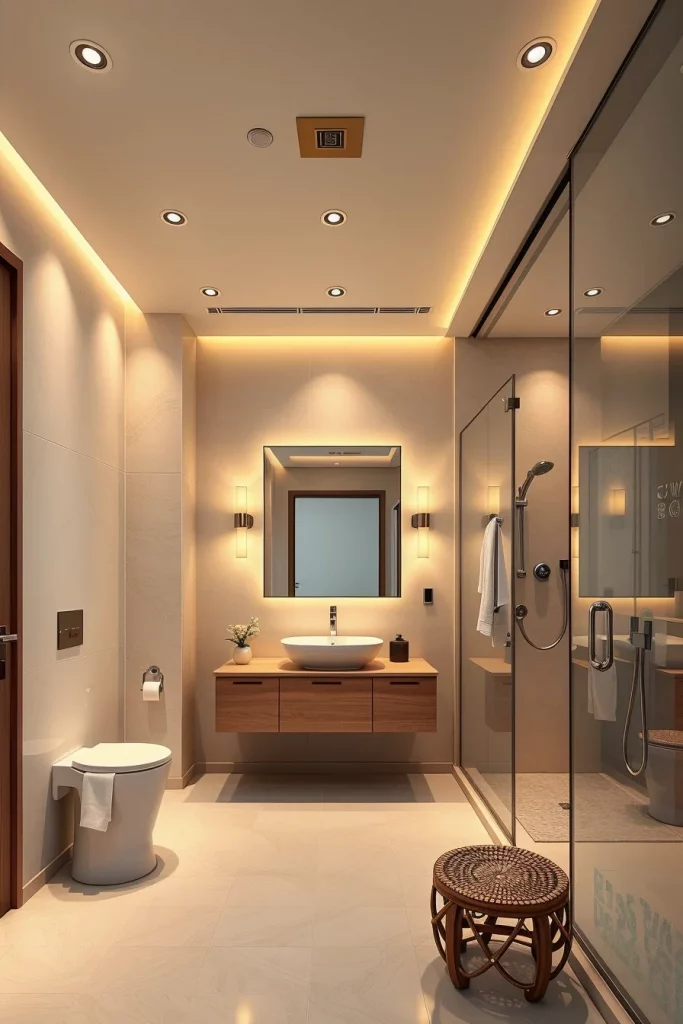
I like combining recessed ceiling lights with concealed LED strips beneath floating vanities, wall sconces beside mirrors, and subtle lighting inside recessed shower niches. Frosted glass fixtures diffuse the light evenly, while warm color temperatures create a comfortable atmosphere that never feels clinical. These carefully selected fixtures support every functional area without competing for attention.
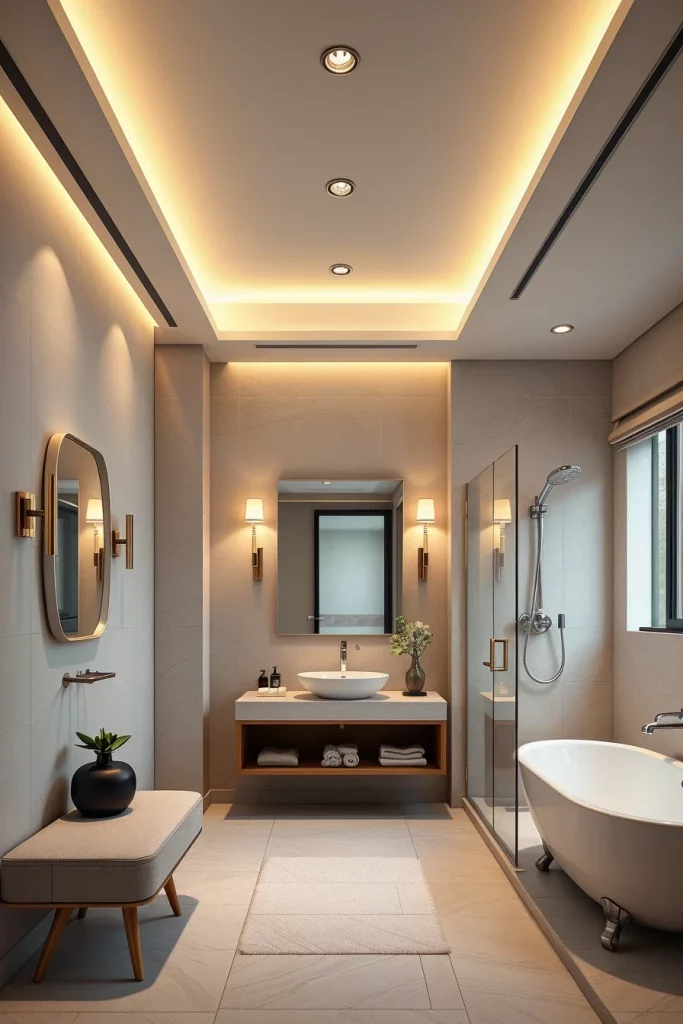
I have found that lighting recommendations published by House Beautiful and Better Homes & Gardens consistently emphasize layered illumination instead of excessive brightness. I completely agree because balanced lighting allows every texture and material to appear softer while supporting the minimalist philosophy behind Japandi interiors.
If I wanted to improve this lighting plan further, I would include smart dimmers that allow the brightness to change throughout the day. Morning routines often benefit from brighter light, while evening baths become far more relaxing under softer illumination.
Large Format Tiles For A Seamless Bathroom Design
Large format tiles immediately make a Japandi bathroom appear cleaner and more spacious. I appreciate how fewer grout lines reduce visual distractions while creating continuous surfaces that feel elegant and calming. This seamless appearance aligns perfectly with Japandi principles because the eye moves naturally throughout the room without interruption. Even compact bathrooms often appear significantly larger when oversized tiles are installed consistently across floors and walls.
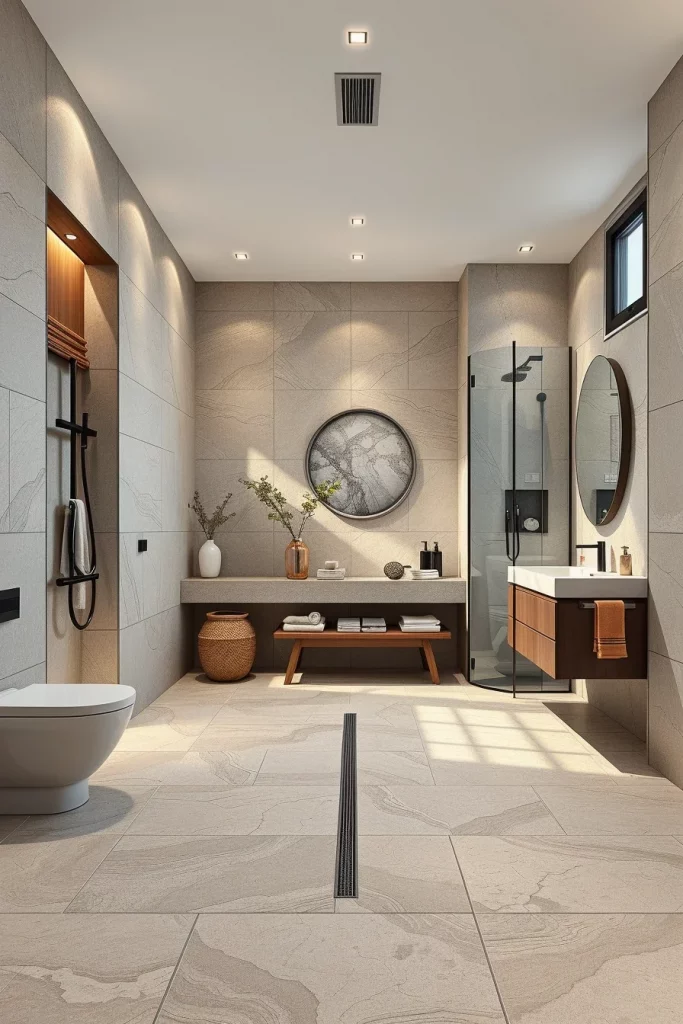
I usually recommend porcelain tiles with subtle stone-inspired textures and soft neutral colors. Full-height shower walls, continuous flooring, built-in shower benches, and minimalist linear drains all contribute to a unified appearance. Pairing these surfaces with floating cabinetry and frameless glass keeps attention on the architectural simplicity rather than decorative details.
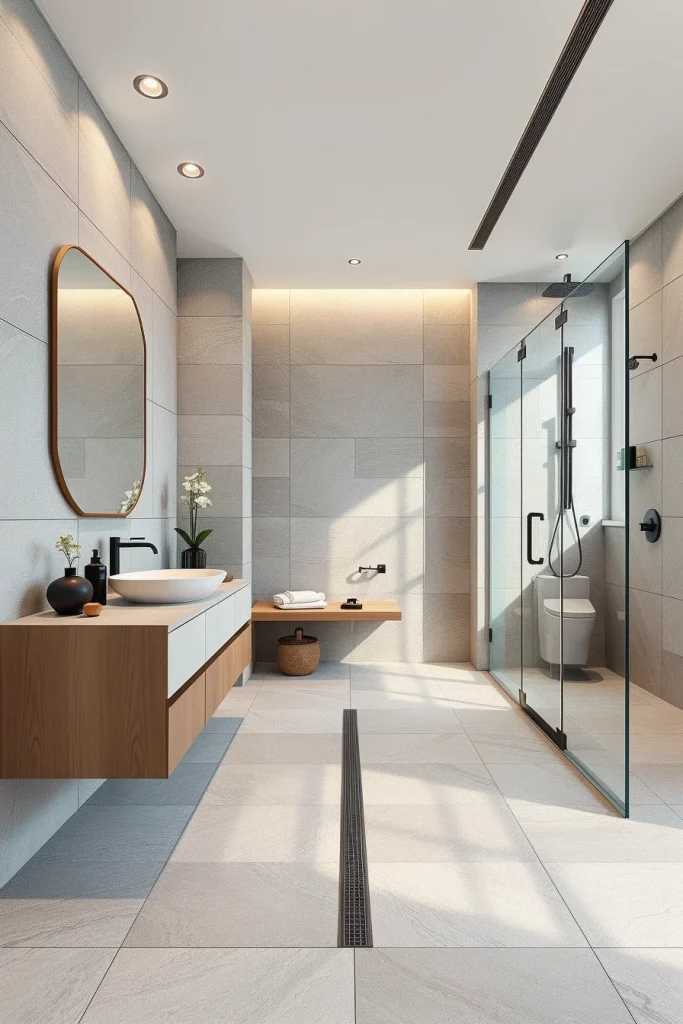
Many professional designers featured in Elle Decor have discussed the visual advantages of larger tiles in modern bathrooms. I have seen similar results in completed projects where reducing grout lines immediately creates a more luxurious yet understated environment without increasing visual complexity.
To make this design even stronger, I would extend the same flooring material into adjacent spaces whenever possible. Maintaining continuous flooring creates a natural flow that enhances the calm and spacious feeling throughout the home.
Textured Walls That Add Quiet Character
Texture introduces depth without relying on bold decoration, which is exactly why I enjoy incorporating it into Japandi bathroom designs. Instead of filling the room with accessories, I prefer allowing the walls themselves to become subtle design features. Gentle texture catches natural and artificial light differently throughout the day, giving the bathroom visual interest while preserving its peaceful atmosphere.
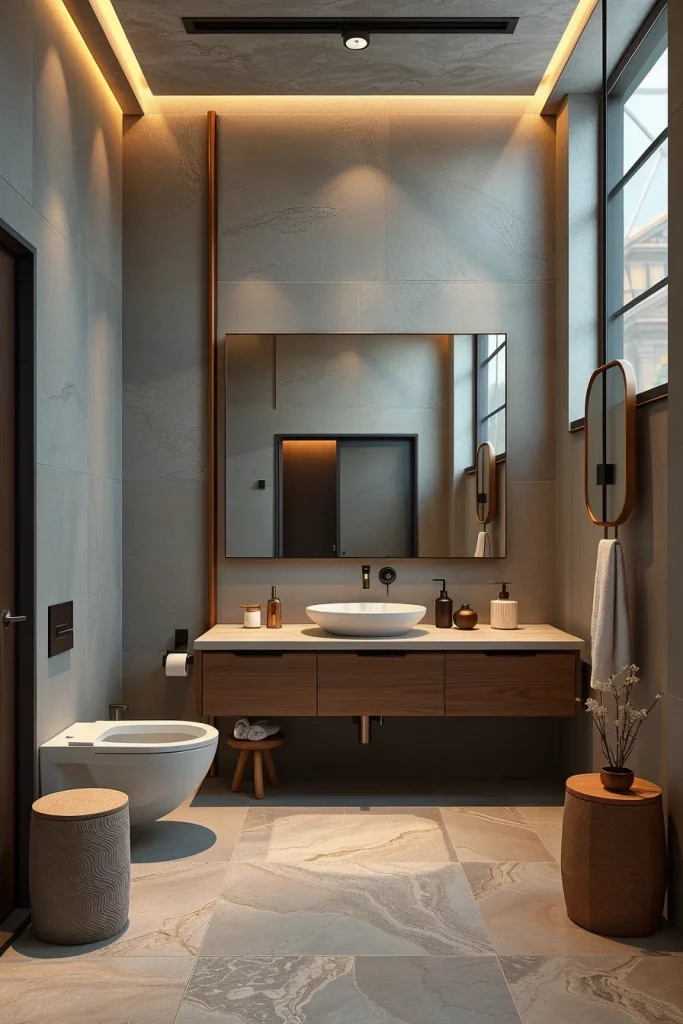
Microcement finishes, limewash-inspired surfaces, textured porcelain panels, and natural stone-look wall coverings all work beautifully within a Japandi palette. I often combine these finishes with floating vanities, frameless mirrors, concealed storage, and minimal accessories so the textures remain the primary visual feature without overwhelming the room.
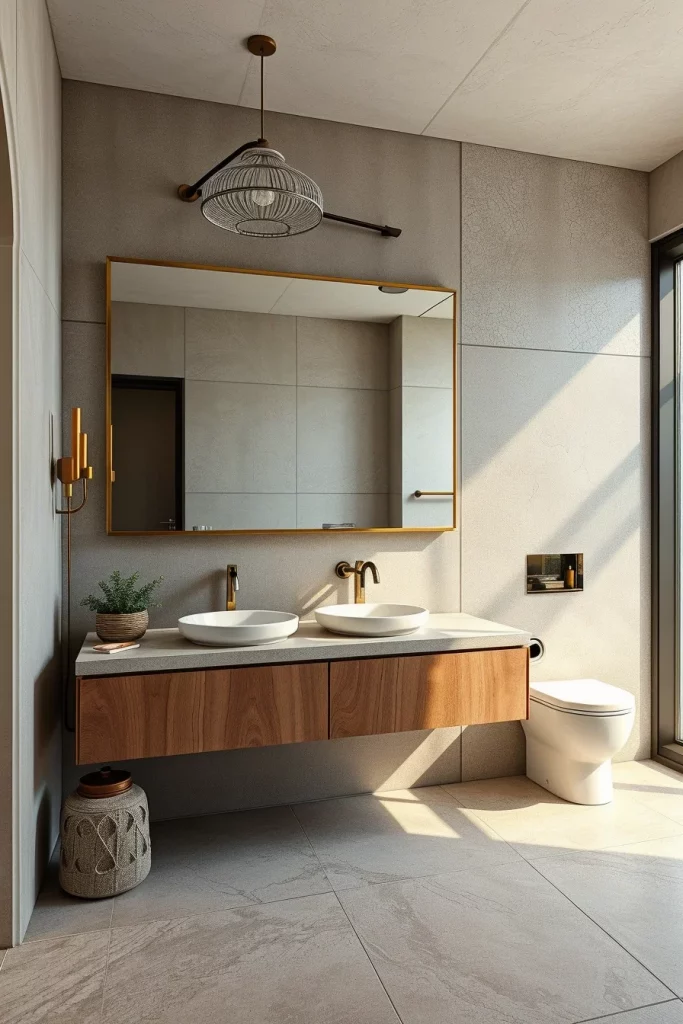
I have noticed that many interior designers featured in Dwell emphasize the importance of tactile materials when creating calming spaces. From my perspective, textured walls achieve exactly that because they provide warmth and character without adding unnecessary decoration.
To strengthen this concept, I would introduce carefully selected textiles such as soft bath towels and a high-quality bath mat in complementary neutral shades. These additions reinforce the layered texture while maintaining the clean aesthetic.
Open Shelving Ideas For Stylish Bathroom Storage
Open shelving allows a Japandi bathroom to remain functional while displaying only carefully selected everyday essentials. I approach open storage with restraint because every visible object contributes to the overall appearance of the room. When shelves are thoughtfully organized, they provide convenience without introducing unnecessary visual clutter, allowing the bathroom to feel calm and inviting.
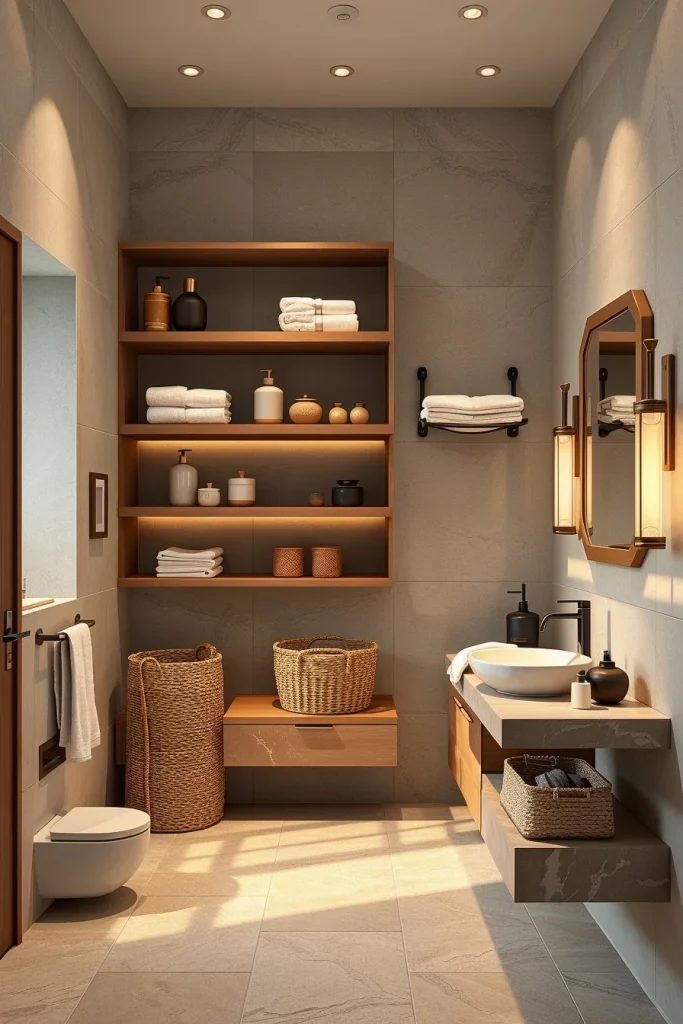
I usually recommend floating shelves with clean profiles positioned above the toilet, beside the vanity, or within recessed wall niches. Rolled towels, ceramic containers, glass dispensers, woven baskets, and neatly folded linens create an organized composition while keeping frequently used items within easy reach. Leaving generous empty space between accessories is just as important as the objects themselves because it preserves the minimalist balance.
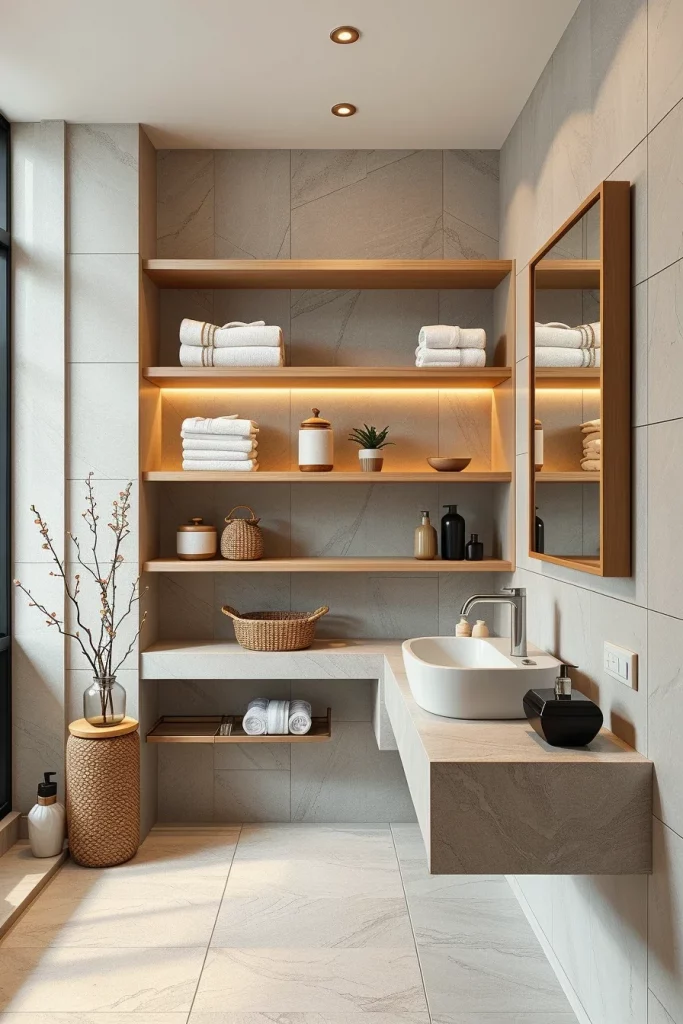
Personally, I follow the guidance often shared by professional organizers and interior designers who encourage displaying only items that are both useful and visually attractive. This philosophy perfectly supports Japandi interiors, where functionality and aesthetics should always work together rather than compete.
To complete this storage solution, I would add concealed cabinetry below the vanity so everyday necessities that do not contribute to the design remain completely hidden. This combination allows open shelving to stay beautiful, practical, and consistently organized.
Hidden Storage Solutions For A Clutter-Free Bathroom
One of the biggest goals I have when designing a Japandi bathroom is eliminating visual clutter without sacrificing functionality. Hidden storage allows the room to remain peaceful because daily essentials stay accessible but completely out of sight. This creates an environment where every visible element has a purpose, making the bathroom feel larger, cleaner, and far more relaxing. I believe concealed storage is one of the defining features of a successful Japandi bathroom because it supports both simplicity and practical living.
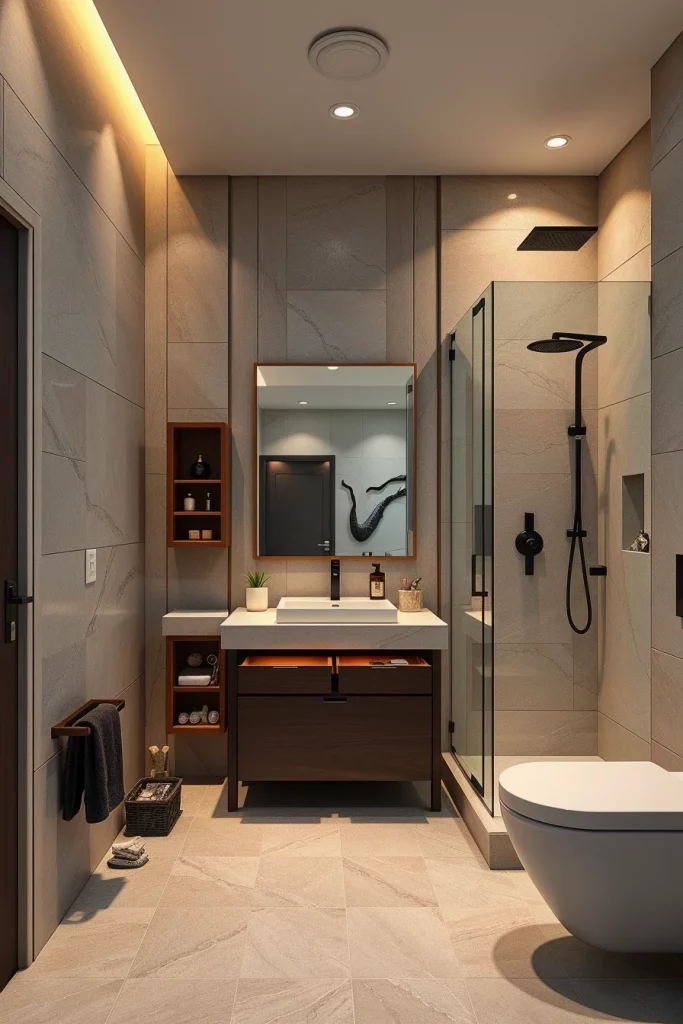
I like incorporating floating vanities with deep drawers, recessed medicine cabinets hidden behind large mirrors, built-in shower niches, pull-out organizers, and tall cabinets with flat-panel doors. Push-to-open hardware eliminates unnecessary handles, while integrated compartments keep toiletries, cleaning products, cosmetics, and extra towels neatly organized. Every storage solution should blend seamlessly into the architecture instead of becoming a decorative feature.
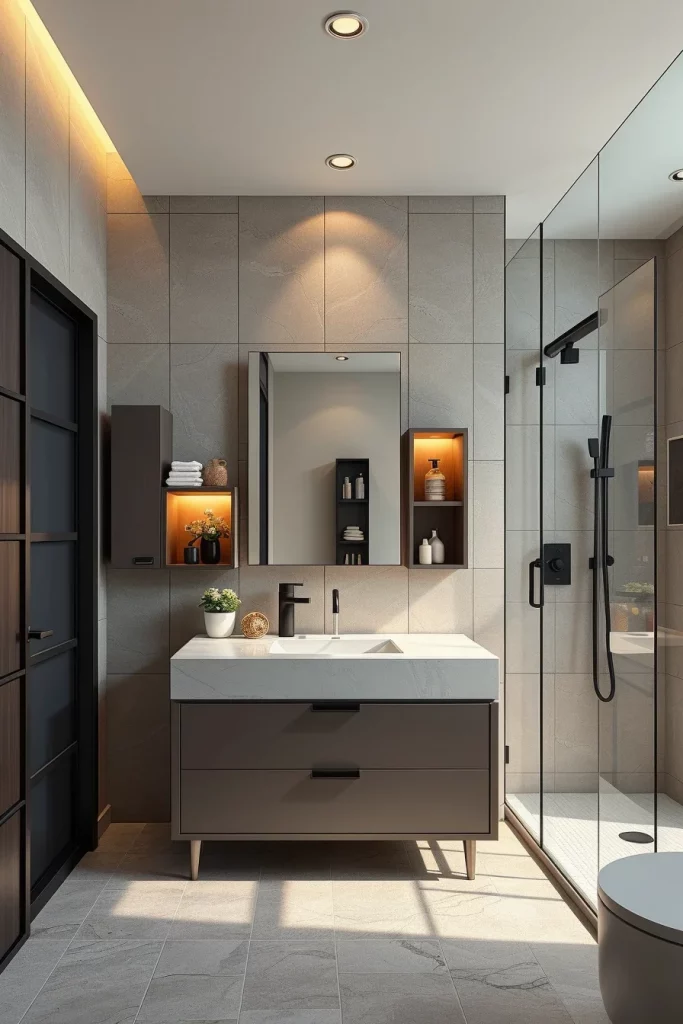
From my experience, designers frequently featured in Better Homes & Gardens recommend designing storage around everyday habits rather than simply increasing cabinet space. I completely agree because efficient organization encourages the bathroom to stay tidy with minimal effort, allowing the calming Japandi aesthetic to remain consistent over time.
To improve this storage plan even further, I would include custom drawer dividers and adjustable shelving. These additions make it easier to organize items of different sizes while preventing cabinets from becoming cluttered in the future.
Double Vanity Inspiration For Shared Japandi Bathrooms
A shared bathroom should feel calm and organized even during busy mornings, which is why I appreciate the practicality of a double vanity. Instead of creating two competing workstations, I focus on designing one continuous composition that encourages balance and symmetry. A thoughtfully planned double vanity provides each person with dedicated space while preserving the minimalist character that defines Japandi interiors.
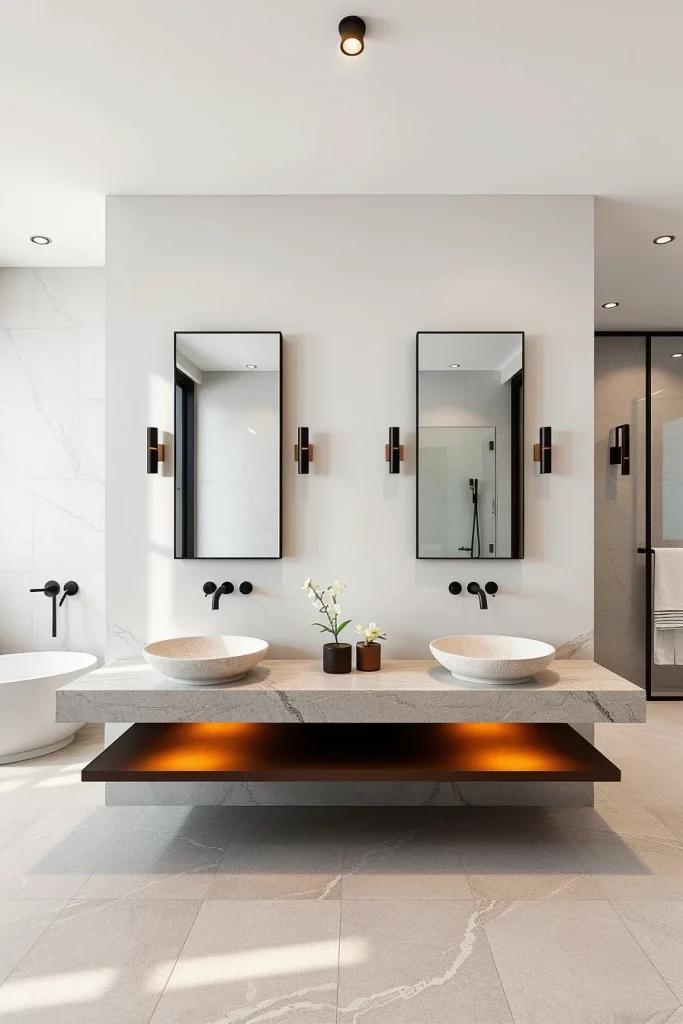
I usually recommend a floating double vanity with integrated sinks, wide drawers, large frameless mirrors, wall-mounted faucets, and discreet storage beneath each basin. Matching matte black fixtures, soft lighting, and generous countertop space help maintain a cohesive appearance. The result is a bathroom that feels elegant, functional, and visually uncluttered despite serving two people every day.
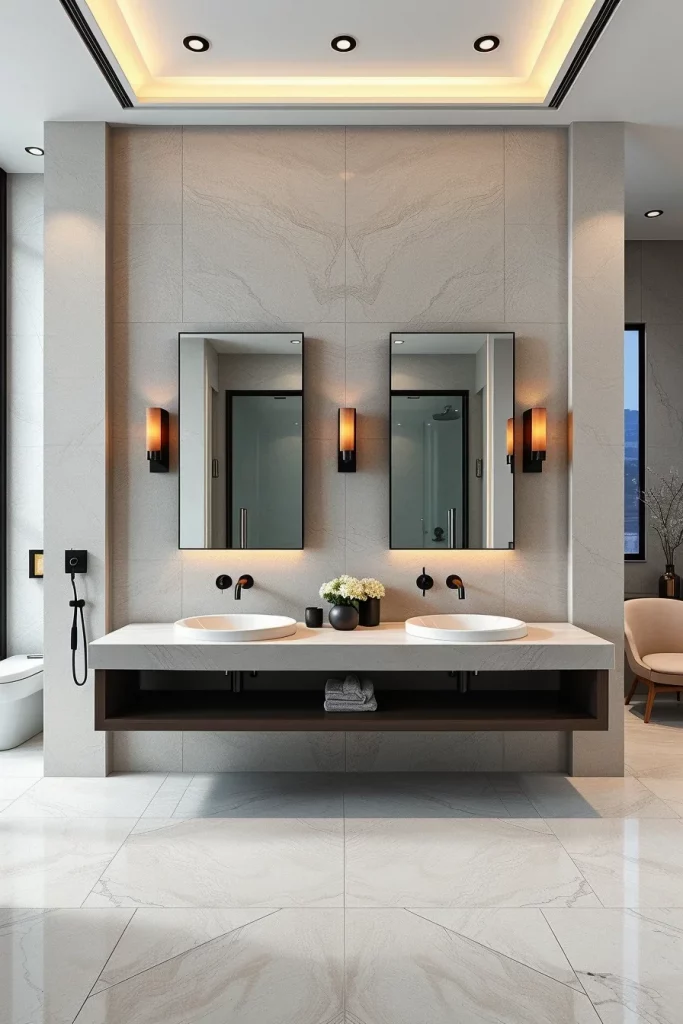
Many designers featured by Architectural Digest encourage investing in high-quality vanities because they become one of the most frequently used features in the bathroom. I have found that prioritizing durable materials and efficient storage delivers long-term value while preserving the clean appearance expected in Japandi design.
To complete this layout, I would add heated mirrors and separate lighting controls for each vanity position. These practical upgrades improve comfort without introducing unnecessary decorative elements.
Compact Japandi Bathroom Ideas For Small Spaces
A small bathroom can still capture the calming atmosphere of Japandi design when every decision serves a clear purpose. I always begin by maximizing openness through clean lines, simple forms, and thoughtful space planning. Instead of filling the room with decorative accessories, I allow carefully selected materials and balanced proportions to create visual interest. This approach makes even the smallest bathroom feel welcoming and surprisingly spacious.
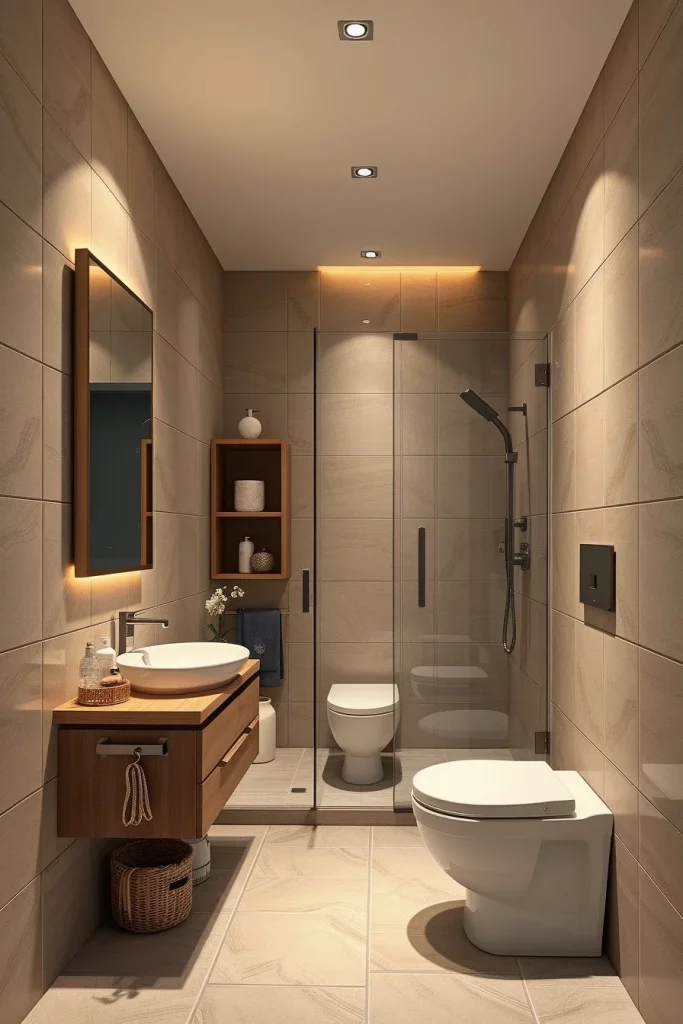
I recommend installing a floating vanity, wall-mounted toilet, frameless glass shower enclosure, oversized mirror, recessed shelving, and large format floor tiles. Compact fixtures with slim profiles preserve valuable floor space, while light neutral finishes reflect natural light throughout the room. Every piece of furniture should contribute to both storage and functionality without making the bathroom feel crowded.
Personally, I have found that many successful small-space designers focus on reducing unnecessary visual interruptions rather than simply choosing smaller furniture. I follow the same philosophy because uninterrupted surfaces and concealed storage consistently make compact bathrooms feel larger than their actual dimensions.
To make this bathroom even more practical, I would include pocket doors or sliding doors whenever possible. Eliminating the swing of a traditional door creates additional usable floor space and improves movement throughout the room.
Spacious Japandi Bathroom Layouts For Modern Homes
Designing a spacious Japandi bathroom allows me to create a true retreat where every area flows naturally into the next. Rather than filling the room simply because space is available, I prefer leaving generous open areas that reinforce the peaceful atmosphere. Spacious layouts emphasize balance, proportion, and intentional placement, allowing every design element to stand on its own without competing for attention.
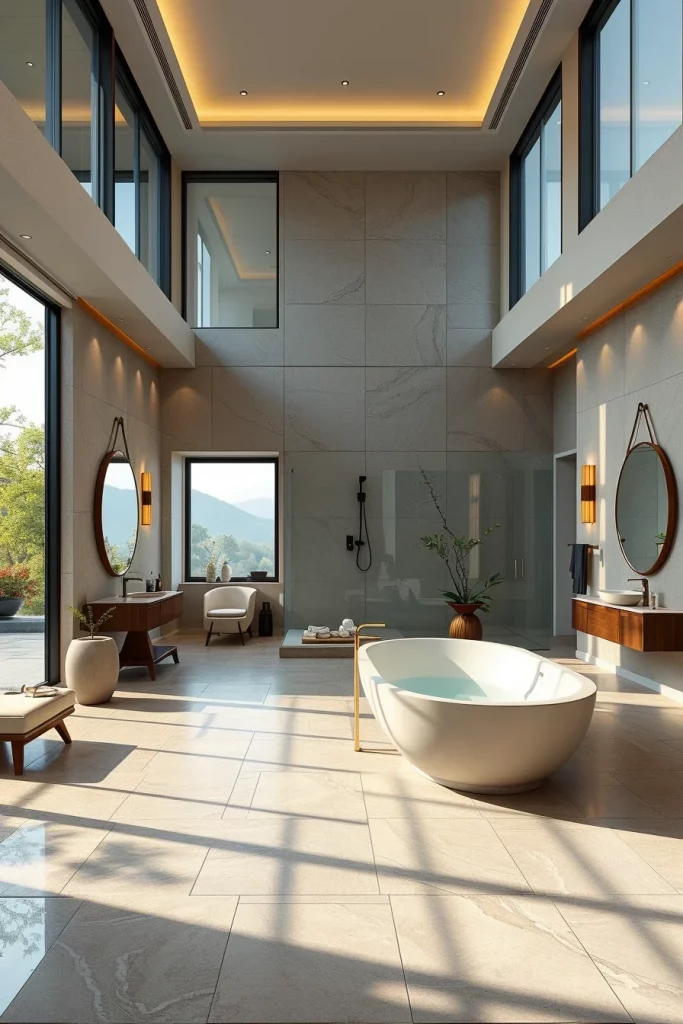
I often organize the room around clearly defined zones that include a freestanding soaking tub, walk-in shower, floating double vanity, private toilet area, and comfortable seating. Continuous flooring, oversized windows, warm lighting, and carefully selected natural textures strengthen the sense of openness while maintaining visual harmony. The furniture remains minimal, yet every piece contributes meaningfully to the overall design.
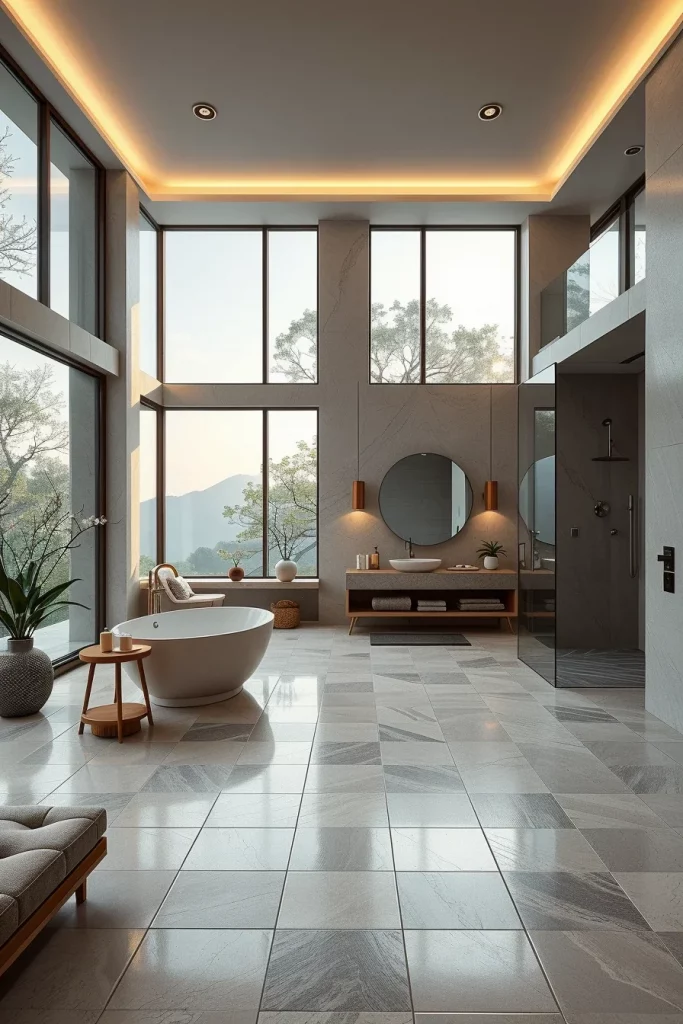
I appreciate recommendations published by Elle Decor that encourage allowing negative space to become an intentional design feature instead of viewing it as empty. In my experience, this philosophy perfectly complements Japandi interiors because spaciousness itself becomes part of the aesthetic.
To elevate this layout even further, I would include radiant heated flooring and discreet built-in ventilation. These features improve everyday comfort while preserving the clean architectural appearance of the bathroom.
Ceiling Design Ideas That Complete The Interior
The ceiling is often overlooked, but I consider it an essential part of a well-designed Japandi bathroom. A thoughtfully designed ceiling brings the entire room together while supporting the clean architectural lines below. Rather than adding elaborate decoration, I prefer subtle details that enhance depth, improve lighting, and maintain the calming atmosphere that defines the Japandi style.
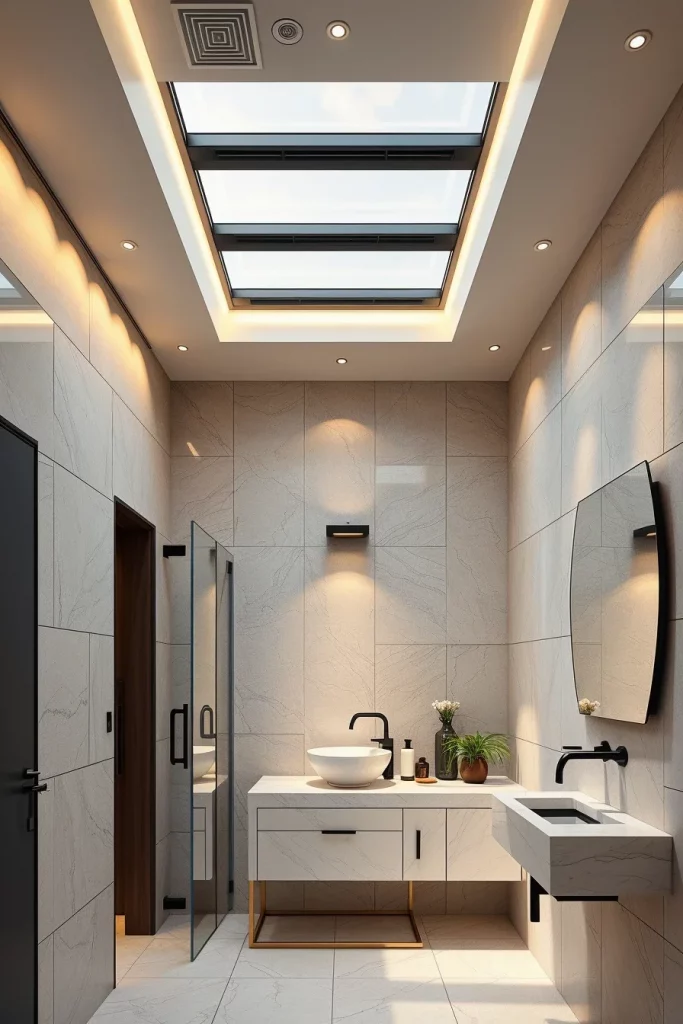
My preferred ceiling design includes smooth finishes, recessed LED lighting, concealed ventilation, narrow linear details, and carefully positioned skylights whenever natural light is available. These features contribute to a bright, uncluttered environment without drawing unnecessary attention upward. Combined with balanced proportions and soft illumination, the ceiling quietly completes the overall composition.
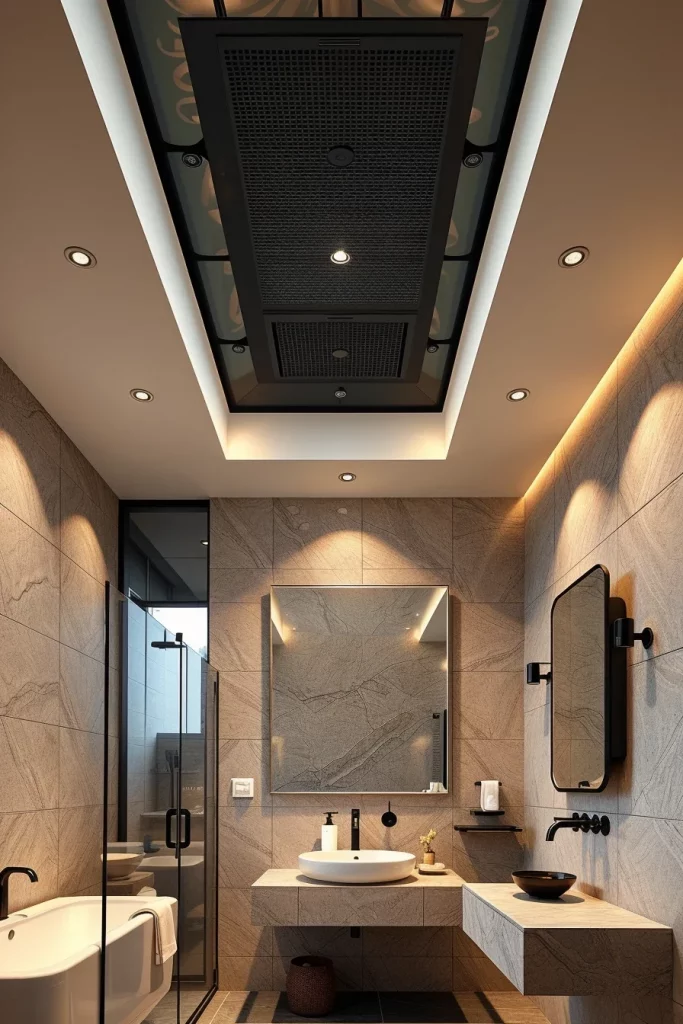
From my perspective, many modern interior architects recommend treating the ceiling as the “fifth wall” because it influences how spacious and cohesive a room feels. I have consistently found this advice valuable, especially in minimalist interiors where every surface contributes to the overall experience.
To finish the design, I would ensure the ceiling lighting is connected to dimmable controls and layered with task lighting throughout the bathroom. This flexibility allows the room to adapt comfortably to different activities while maintaining the peaceful ambiance that makes a Japandi bathroom so inviting.
Mirror Styles That Complement Japandi Bathrooms
When I design a Japandi bathroom, I always begin by selecting the mirror because it naturally becomes the visual centerpiece without overwhelming the room. A simple round, oval, or softly curved mirror creates balance against the clean architectural lines that define this design style. I prefer thin black, matte bronze, or natural oak frames because they introduce subtle contrast while preserving the calm atmosphere. Positioning the mirror to reflect natural light makes the entire bathroom feel brighter, larger, and more welcoming.
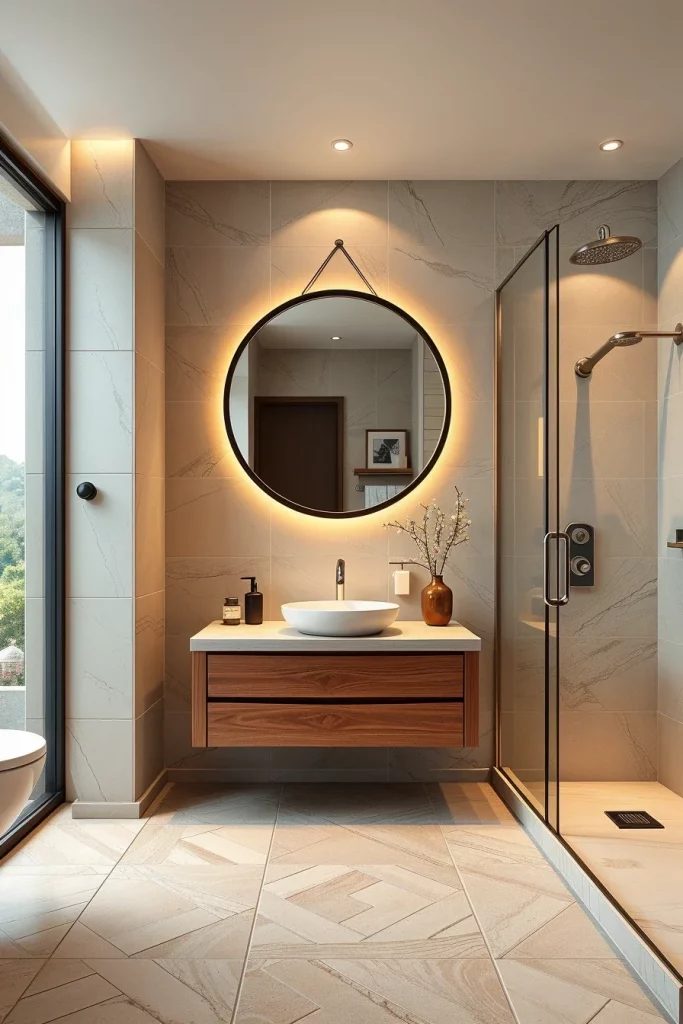
I like pairing the mirror with a floating vanity featuring flat-panel cabinetry, integrated storage, and a seamless countertop. Wall-mounted faucets, soft ambient sconces, and concealed LED backlighting enhance the mirror without creating visual clutter. Every piece should contribute to both beauty and functionality, allowing the room to remain organized while emphasizing the minimalist character that defines a Japandi bathroom. Small accessories such as handcrafted ceramic trays and neutral-colored soap dispensers reinforce the understated aesthetic.
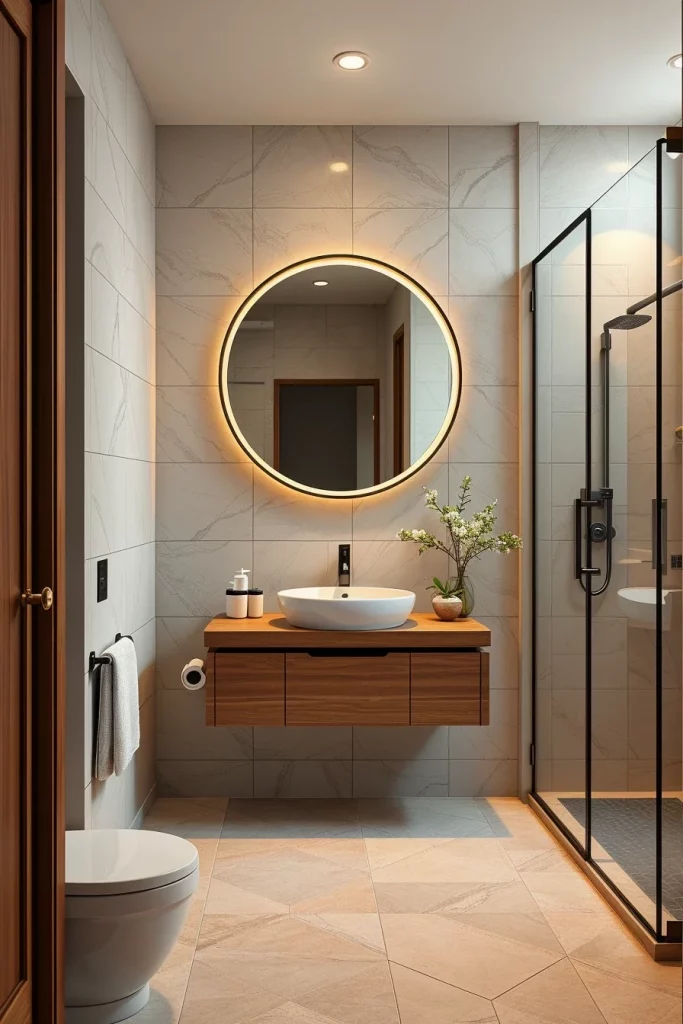
In my experience, designers from Architectural Digest and House Beautiful frequently emphasize that layered lighting around mirrors improves both comfort and practicality. I agree with this recommendation because a combination of natural daylight and warm artificial lighting highlights textures without creating harsh shadows. I have found that mirrors with gentle curves soften the overall composition and make the room feel more relaxing.
To complete this design, I would also include under-vanity lighting, concealed electrical outlets inside the vanity cabinet, and high-quality anti-fog mirror technology. These practical additions improve everyday usability while preserving the clean appearance that makes the style so appealing.
Elegant Sink Designs For A Minimal Bathroom
A sink should feel sculptural without becoming the dominant feature of the room. I often choose vessel sinks with soft organic curves or integrated solid-surface basins that blend seamlessly into the countertop. Their simple silhouettes reinforce the peaceful feeling associated with Japandi bathroom interiors while maintaining exceptional functionality. Neutral finishes such as soft white, sand, stone, or light gray help establish visual harmony throughout the room.
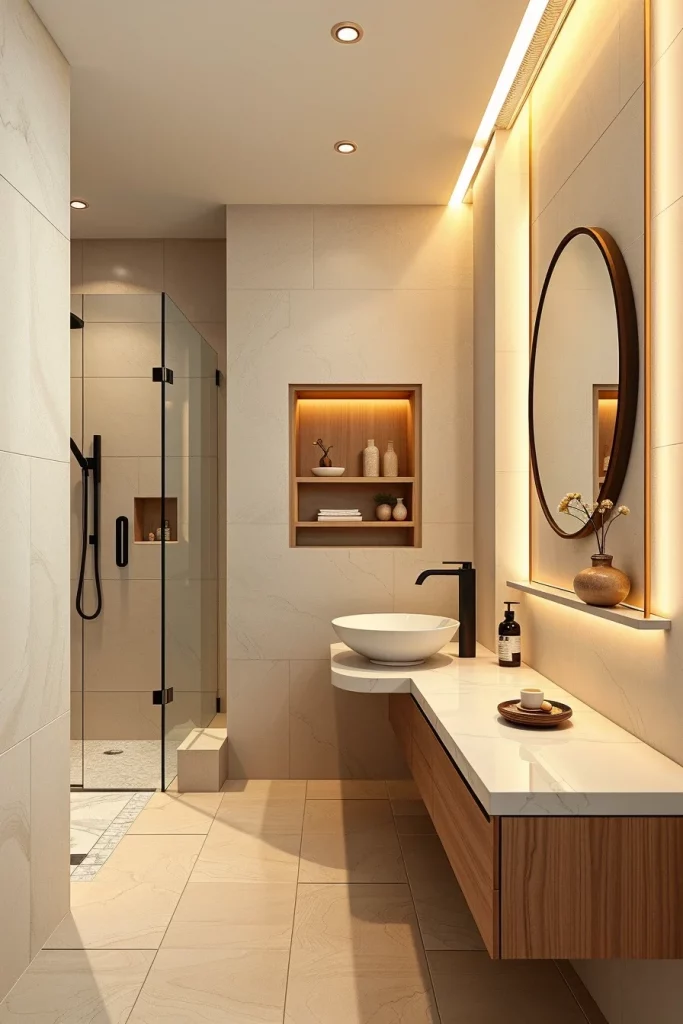
I usually combine the sink with a floating vanity that provides generous concealed storage. Flat cabinet fronts without decorative molding keep the design refined, while premium hardware in matte black or brushed nickel adds subtle sophistication. Wall-mounted faucets free additional countertop space, making cleaning easier and reinforcing the minimalist appearance. A carefully selected countertop made from porcelain, quartz, or natural stone adds durability while introducing refined texture.
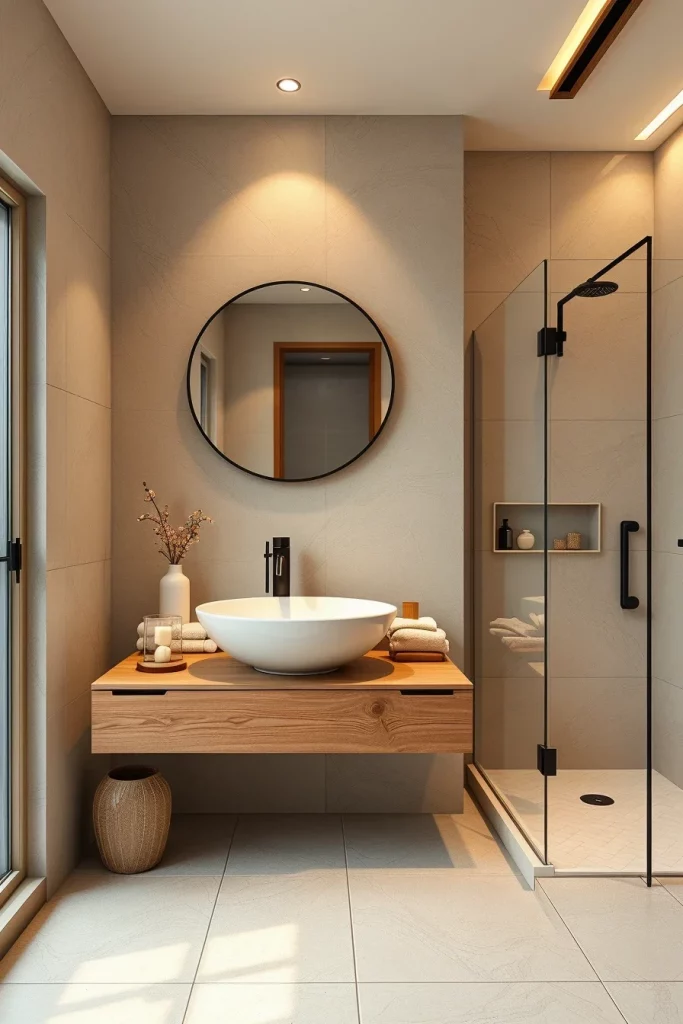
Personally, I have learned that investing in quality plumbing fixtures pays off over time. Better materials resist stains, simplify maintenance, and preserve their appearance for years. Many professional designers also recommend prioritizing ergonomic faucet placement and comfortable counter height, advice that consistently improves daily use without compromising aesthetics.
This section could be enhanced further with integrated drawer organizers, hidden laundry storage, and soft-close hardware. These details remain nearly invisible but significantly improve the bathroom’s functionality.
Mixing Smooth And Textured Materials With Balance
One of the defining characteristics of a successful Japandi bathroom is the thoughtful combination of contrasting textures. I enjoy pairing smooth porcelain walls with textured stone surfaces, fluted cabinetry, handmade ceramic accessories, and lightly textured plaster finishes. The contrast creates visual depth while maintaining the restrained elegance that makes Japandi interiors so calming. Every texture should feel intentional rather than decorative for its own sake.
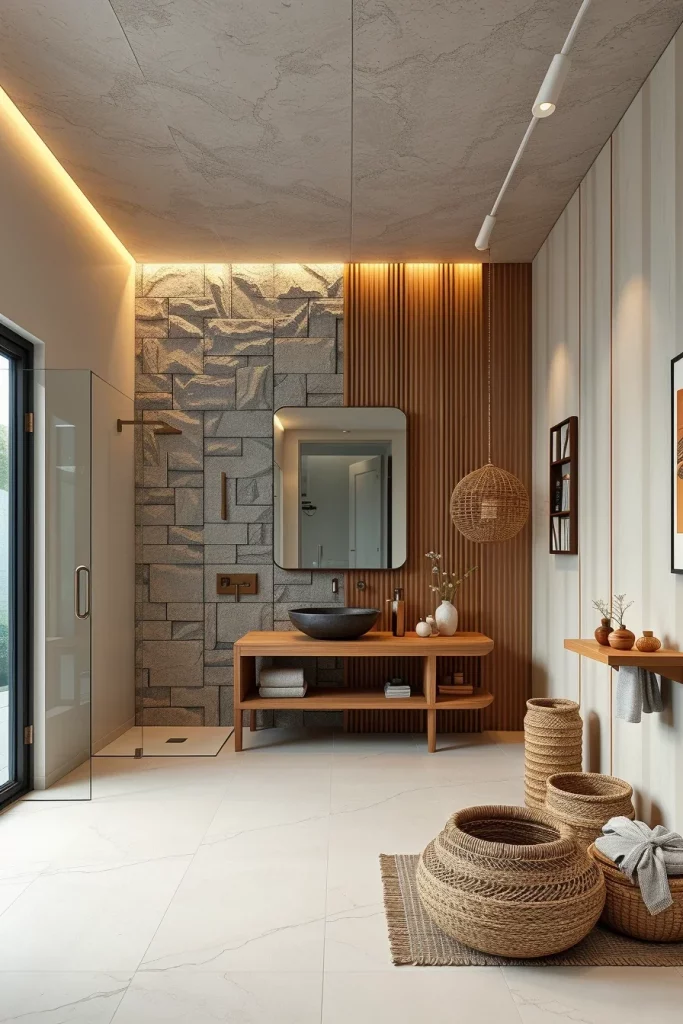
For furniture, I prefer floating vanities with subtle wood grain, minimalist shelving, and frameless glass shower enclosures. Stone countertops, ribbed cabinet panels, woven storage baskets, and linen towels introduce additional layers without making the room appear busy. Carefully balancing polished and textured surfaces allows the bathroom to feel sophisticated while remaining highly practical for daily living.
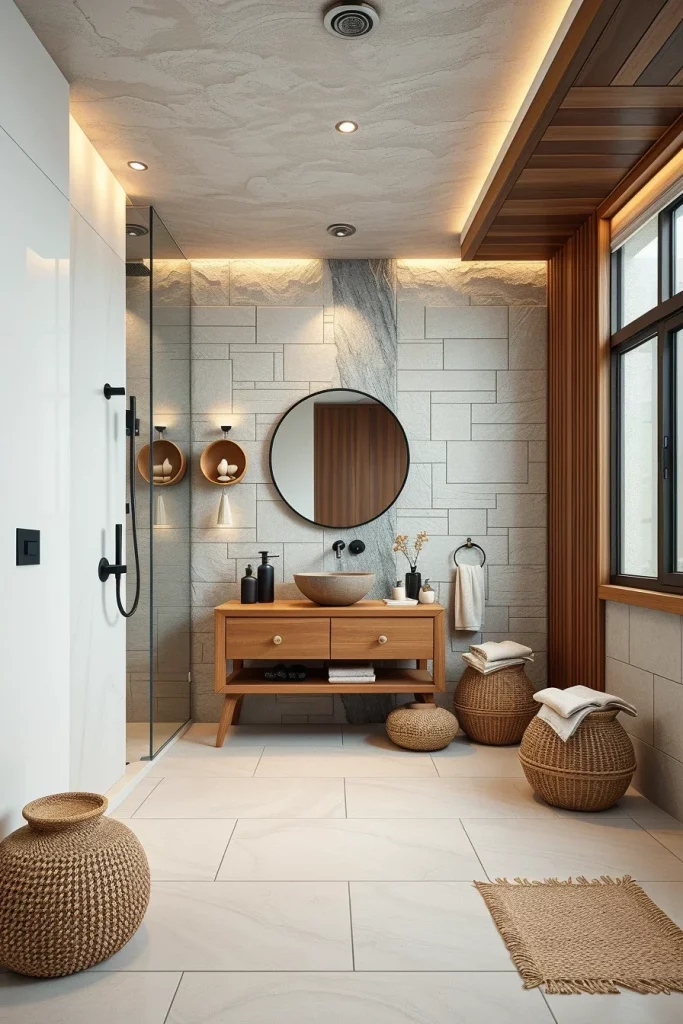
From my perspective, texture is often more important than bold color. Interior experts frequently explain that layered materials create warmth in minimalist interiors, and I completely agree. Instead of relying on excessive decoration, I prefer allowing the materials themselves to become the visual interest within the room.
I would also consider adding textured ceiling finishes, handcrafted ceramic vases, and natural stone niches inside the shower area. These subtle details enrich the design while preserving its calm visual rhythm.
Black And Beige Japandi Bathroom Color Combinations
Black and beige create one of my favorite palettes because they balance warmth with strong visual definition. Beige walls establish a relaxing backdrop, while black fixtures introduce crisp contrast without overpowering the design. This combination creates an elegant Japandi bathroom that feels contemporary yet timeless. Soft lighting further enhances both colors, allowing the room to feel inviting throughout the day.
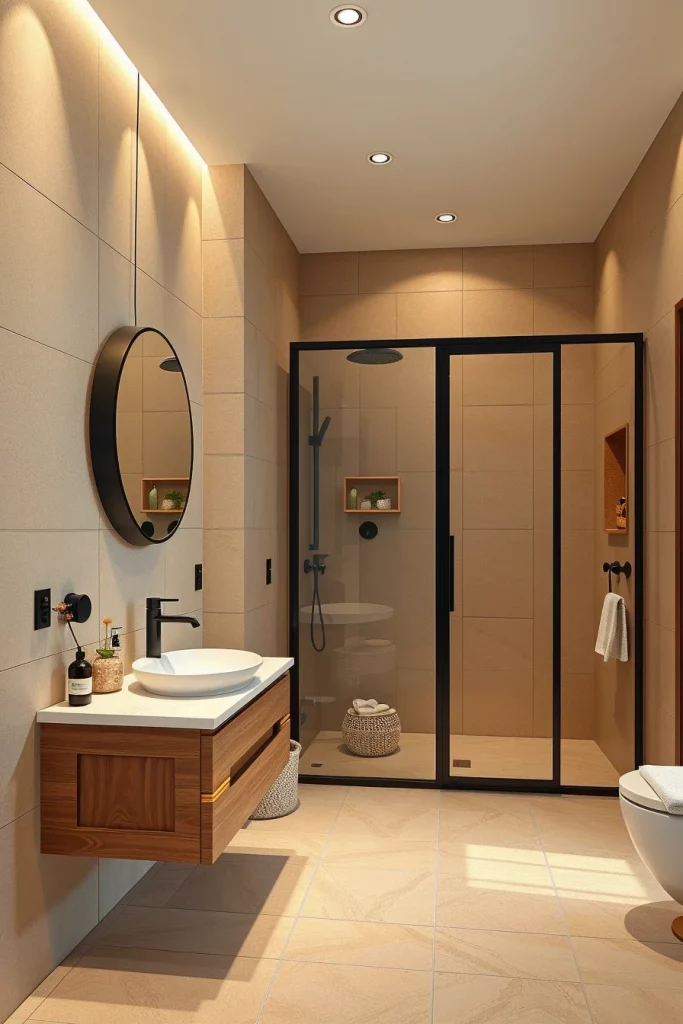
I typically combine beige porcelain tiles with floating cabinetry, matte black faucets, slim shower frames, and minimal hardware. A simple vanity with integrated storage keeps everyday items hidden while maintaining clean surfaces. Decorative accents remain minimal, allowing the carefully selected finishes and furniture to define the space instead of unnecessary accessories.
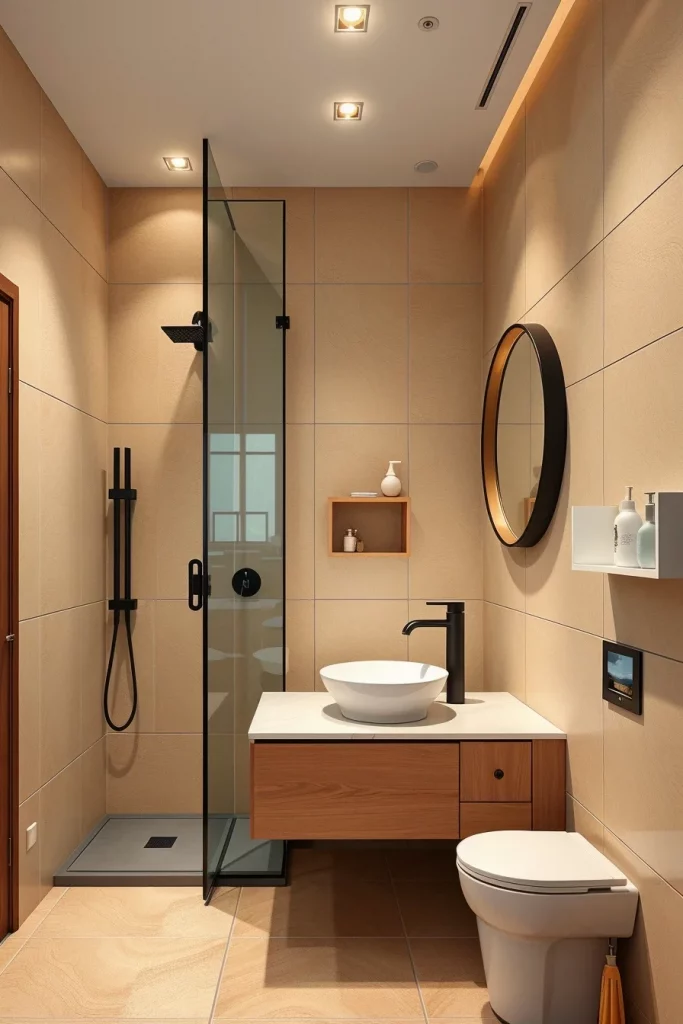
I appreciate how this color combination adapts to bathrooms of every size. Design publications often recommend limiting high-contrast elements to maintain visual balance, and I have found this advice consistently produces better results. A restrained approach keeps the room peaceful while still adding personality through refined details.
To strengthen this concept, I would include layered lighting, coordinated textiles, and carefully selected storage accessories in matching neutral tones. These additions make the space feel complete without disrupting its minimalist character.
White Japandi Bathroom Ideas With Warm Accents
A white bathroom becomes far more inviting when warm tones are introduced thoughtfully. I prefer soft white walls, pale flooring, and simple architectural lines enhanced with warm beige, light oak, or creamy stone accents. This combination creates a bright yet comfortable Japandi bathroom that feels fresh without becoming sterile. Natural daylight plays an important role by emphasizing the subtle variations in texture and finish.
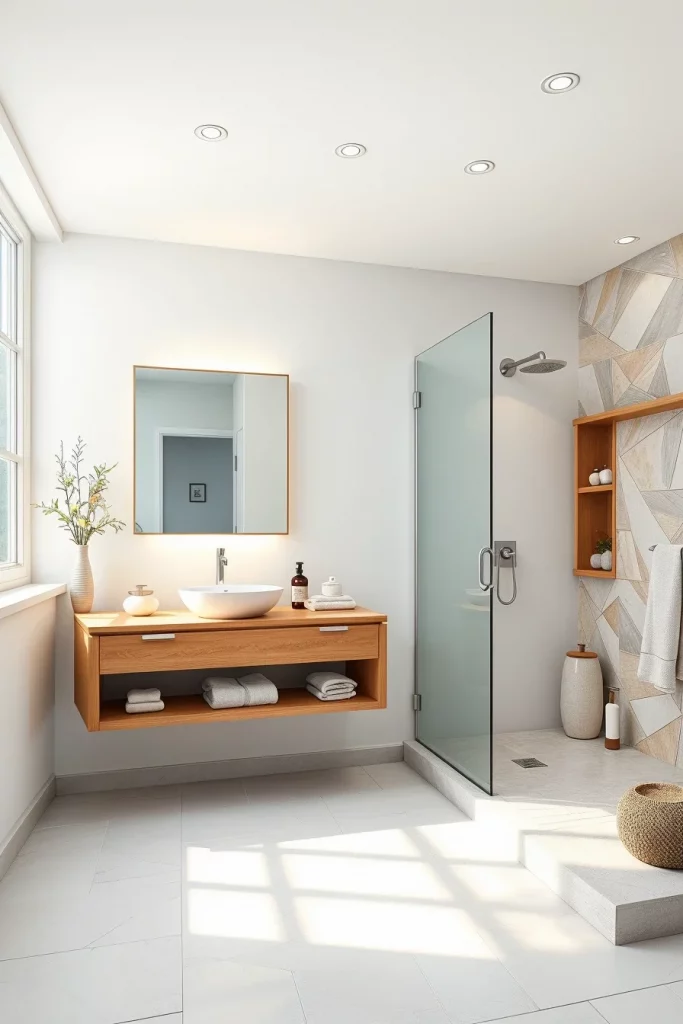
For furnishings, I choose floating vanities with integrated handles, frameless mirrors, minimalist shelving, and sleek storage cabinets that keep essentials out of sight. Soft towels, ceramic accessories, and understated lighting fixtures contribute warmth without overwhelming the minimalist design. Every element should serve both an aesthetic and practical purpose, reinforcing the calm atmosphere throughout the room.
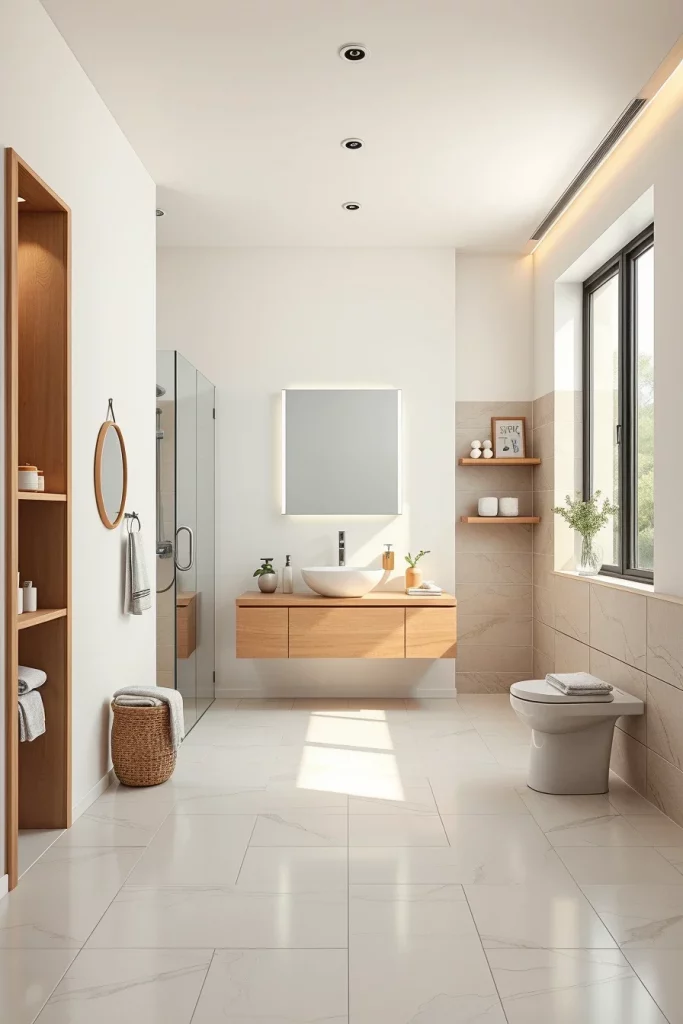
Personally, I believe that white interiors require careful attention to proportion and texture rather than additional decoration. Many respected interior designers recommend layering materials instead of introducing excessive color, and I have consistently achieved better results by following this principle. Warm lighting and balanced finishes prevent the space from feeling clinical.
I would also incorporate discreet recessed niches, heated flooring, and concealed storage compartments to improve comfort while preserving the clean architectural appearance that defines this style.
Gray And Earth-Tone Bathrooms With Japandi Appeal
I find that gray and earth-tone palettes create one of the most balanced interpretations of a Japandi bathroom. Soft gray walls combined with warm sand, taupe, clay, and stone-inspired finishes create an environment that feels calm from the moment I enter. Rather than relying on strong color contrasts, I focus on subtle tonal variation that gives the room depth without disturbing its minimalist character. This approach makes a Japandi bathroom feel timeless and adaptable to changing design trends while remaining comfortable for everyday living.
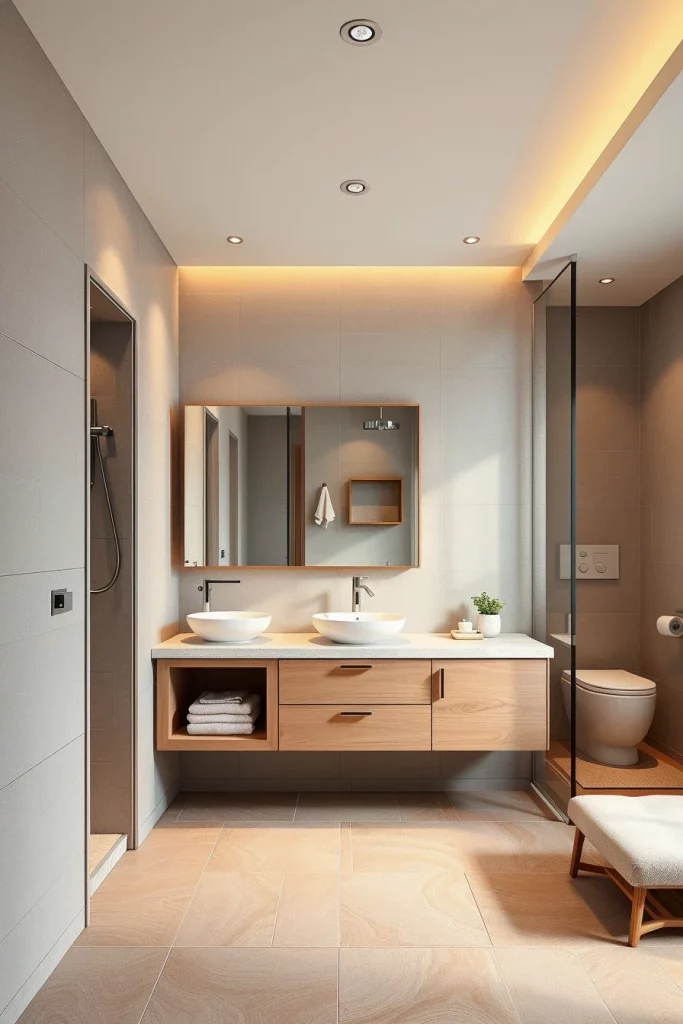
When selecting furniture and fixtures, I usually install a floating vanity with clean flat-front cabinetry finished in light ash or warm oak. A stone-look countertop, integrated sink, frameless mirror, and wall-mounted faucet maintain uninterrupted lines throughout the room. Large-format porcelain tiles reduce grout lines, making the bathroom feel larger and easier to maintain. I also prefer concealed storage, recessed shower niches, and simple matte hardware because these details reinforce the uncluttered appearance while providing practical functionality.
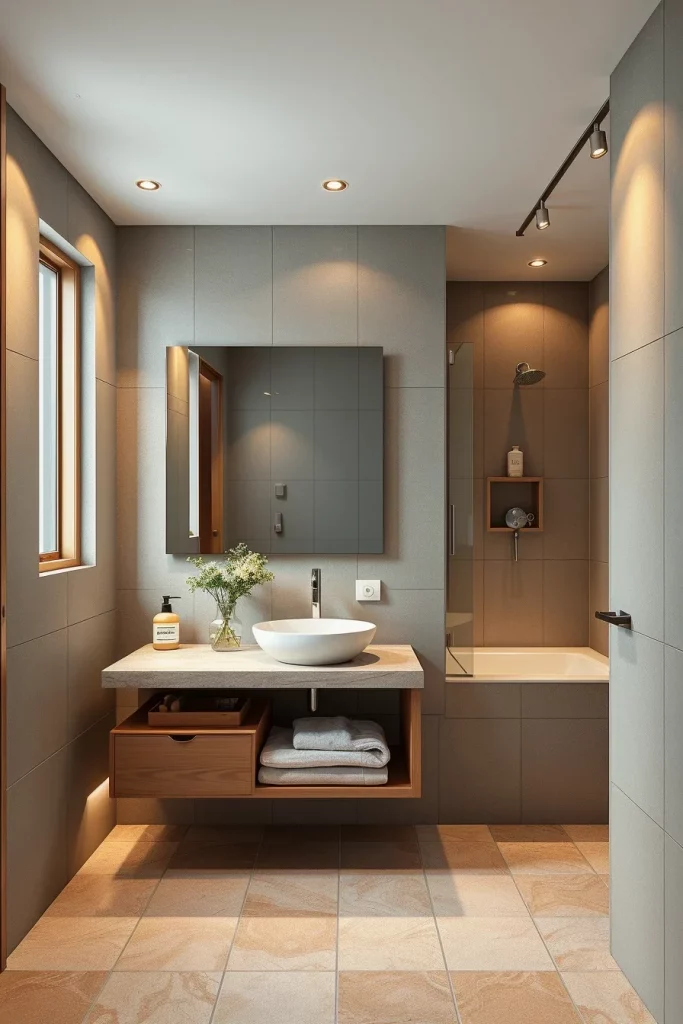
From my experience, earth-inspired color palettes remain visually comfortable over many years because they are connected to natural materials rather than short-lived trends. Interior designers frequently recommend building the room around a restrained color palette before introducing decorative accents, and I have found this advice consistently produces interiors that feel more harmonious. The subtle balance between gray and warm neutral shades creates an atmosphere that encourages relaxation.
To make this design even more complete, I would add layered lighting with dimmable fixtures, heated flooring, and coordinated textiles in linen or cotton. These additions improve comfort while preserving the peaceful simplicity that defines the Japandi aesthetic.
Luxurious Details That Keep A Minimalist Feel
Luxury in a Japandi bathroom is not created through excessive decoration but through thoughtful craftsmanship and premium materials. I believe that carefully selected finishes immediately elevate the room without compromising its minimalist philosophy. Large porcelain slabs, natural stone surfaces, seamless cabinetry, and high-quality plumbing fixtures create an elegant Japandi bathroom that feels refined instead of extravagant. Every detail should appear intentional and contribute to the room’s calm atmosphere.
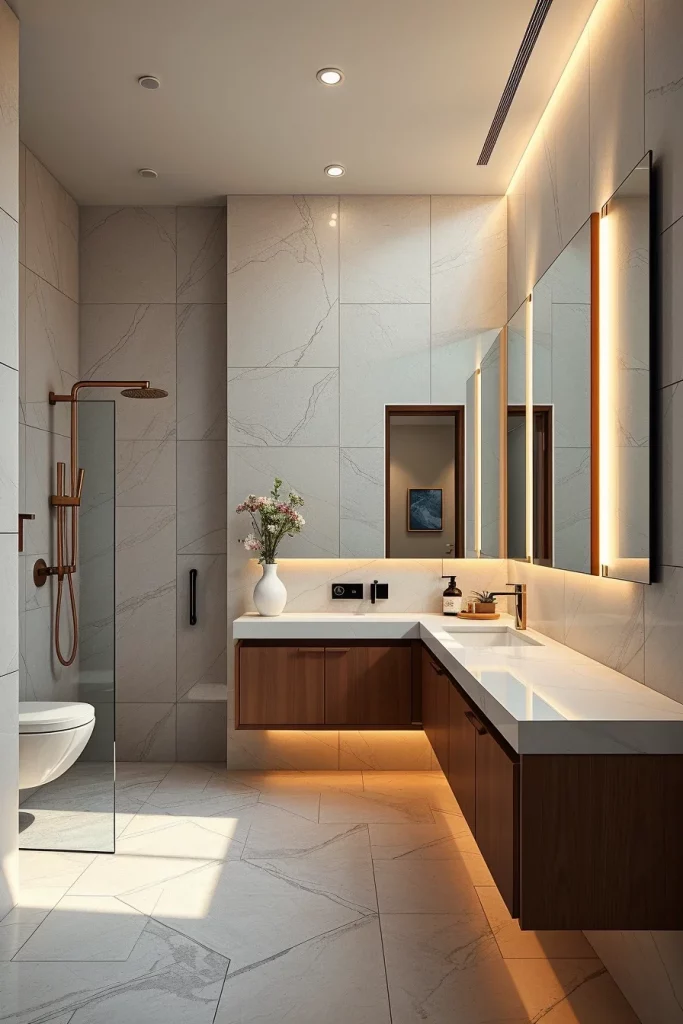
I often incorporate floating vanities with integrated lighting, oversized frameless mirrors, concealed storage, and minimalist shower systems with rainfall showerheads. Premium materials such as quartz, porcelain, and brushed metal finishes provide durability while maintaining visual restraint. Soft-close cabinetry, hidden drains, and flush-mounted hardware further enhance the clean architectural appearance. Every piece of furniture serves a purpose while contributing to the room’s overall elegance.
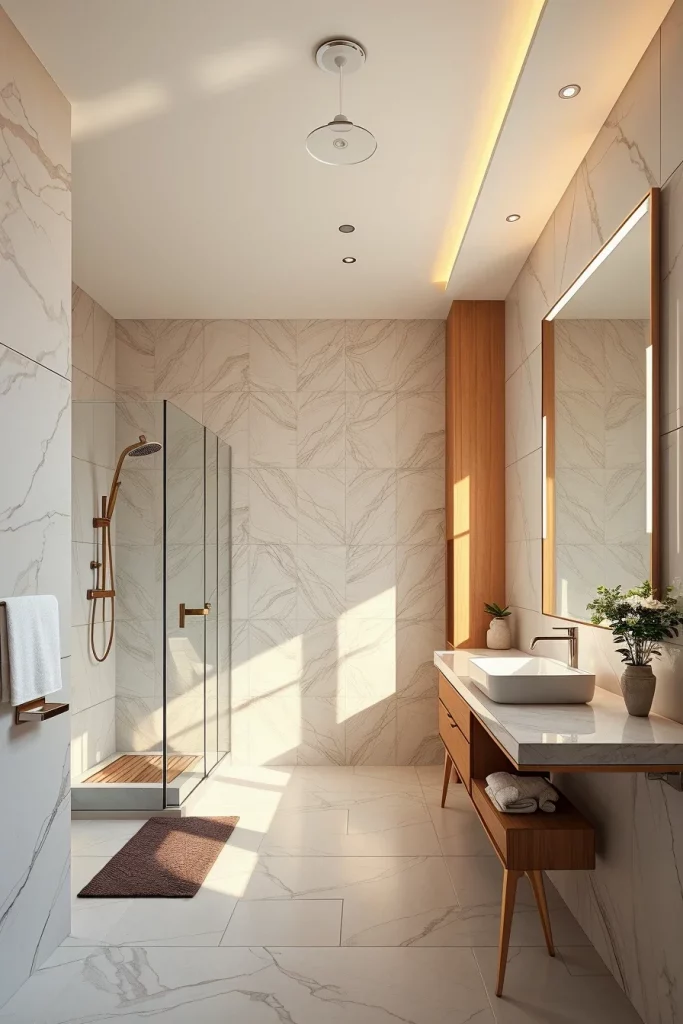
Personally, I believe that quality becomes more noticeable in minimalist interiors because there are fewer elements competing for attention. Designers featured by Architectural Digest often emphasize investing in timeless materials rather than decorative accessories, and I completely agree with this philosophy. Durable finishes continue looking beautiful long after passing trends have disappeared.
If I wanted to enhance this concept further, I would include integrated smart lighting, heated towel rails with minimalist profiles, and discreet under-vanity illumination. These additions increase comfort while remaining almost invisible within the design.
Decorating A Japandi Bathroom Without Visual Clutter
One of the biggest challenges in designing a Japandi bathroom is resisting the temptation to overdecorate. I prefer allowing open space, balanced proportions, and carefully selected materials to become the primary decorative elements. Instead of filling every shelf or countertop, I leave generous empty areas that create visual calm and allow each object to stand out naturally. This restrained approach makes even compact bathrooms feel larger and more relaxing.
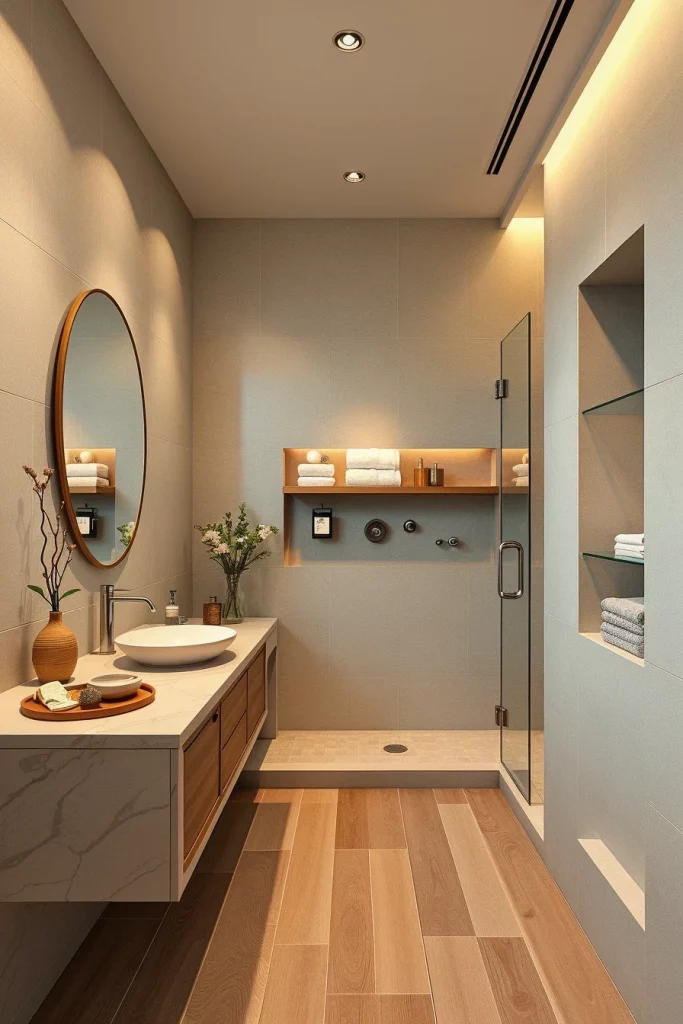
For accessories, I limit myself to a few functional pieces such as ceramic soap dispensers, neatly folded towels, simple storage trays, and understated decorative bowls. Floating shelves display only a small number of carefully selected items, while everything else remains hidden inside drawers or cabinets. Frameless shower glass, integrated niches, and wall-mounted fixtures reduce visual interruptions throughout the room. The furniture remains simple, functional, and perfectly proportioned to the available space.
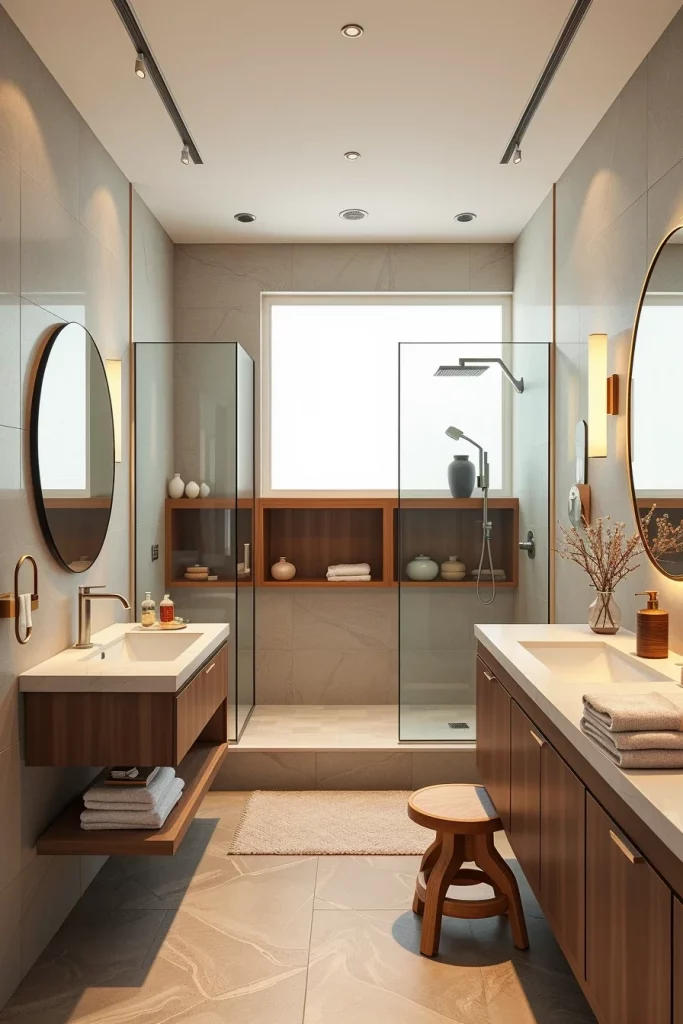
I have learned that removing unnecessary objects often improves a bathroom more than purchasing additional decorations. Professional interior designers frequently recommend editing accessories until only the most useful and meaningful items remain, and I consistently see how this advice strengthens minimalist interiors. The result feels peaceful instead of empty because every remaining element has a purpose.
To complete this section, I would recommend coordinated storage organizers inside every drawer, hidden laundry baskets, and cable management for electrical appliances. These practical solutions maintain the clean appearance long after the renovation is finished.
Common Japandi Bathroom Design Mistakes To Avoid
Even beautiful materials cannot create a successful Japandi bathroom if the overall composition lacks balance. One mistake I frequently notice is combining too many contrasting finishes or introducing decorative pieces that compete for attention. A successful Japandi bathroom depends on simplicity, consistency, and carefully controlled proportions rather than a large number of individual design features. Every addition should support the overall atmosphere instead of distracting from it.
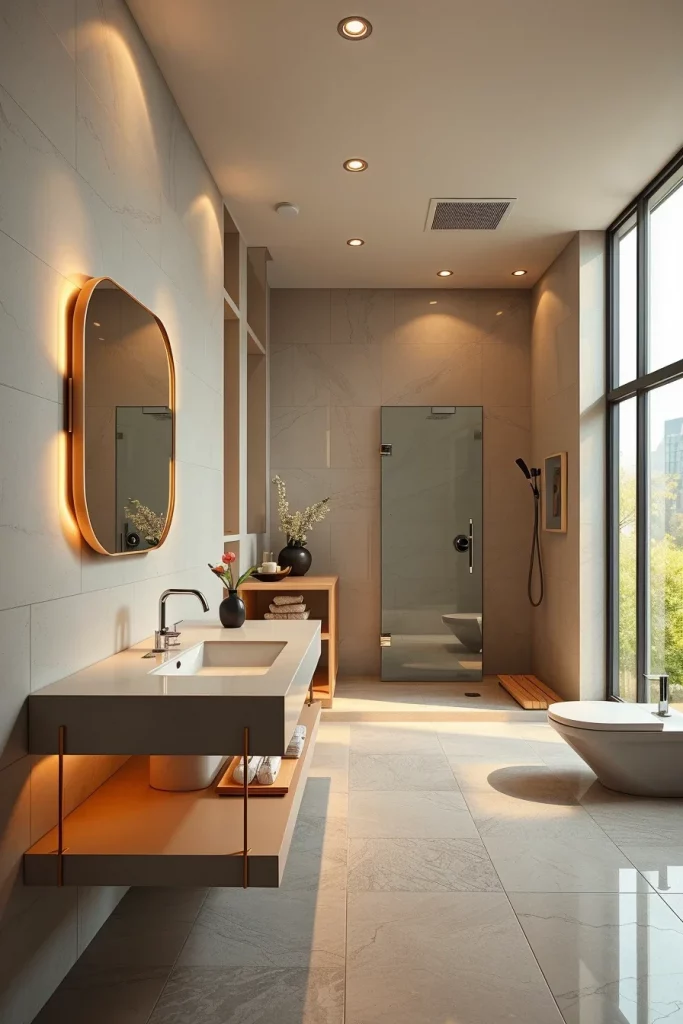
Another common issue involves poor furniture selection. Oversized vanities, bulky cabinets, and decorative hardware can quickly overwhelm the clean lines associated with Japandi interiors. I prefer floating furniture, integrated storage, concealed plumbing, and streamlined fixtures that maximize usable floor space. Inadequate lighting is another mistake because shadows can make minimalist interiors appear cold instead of welcoming.
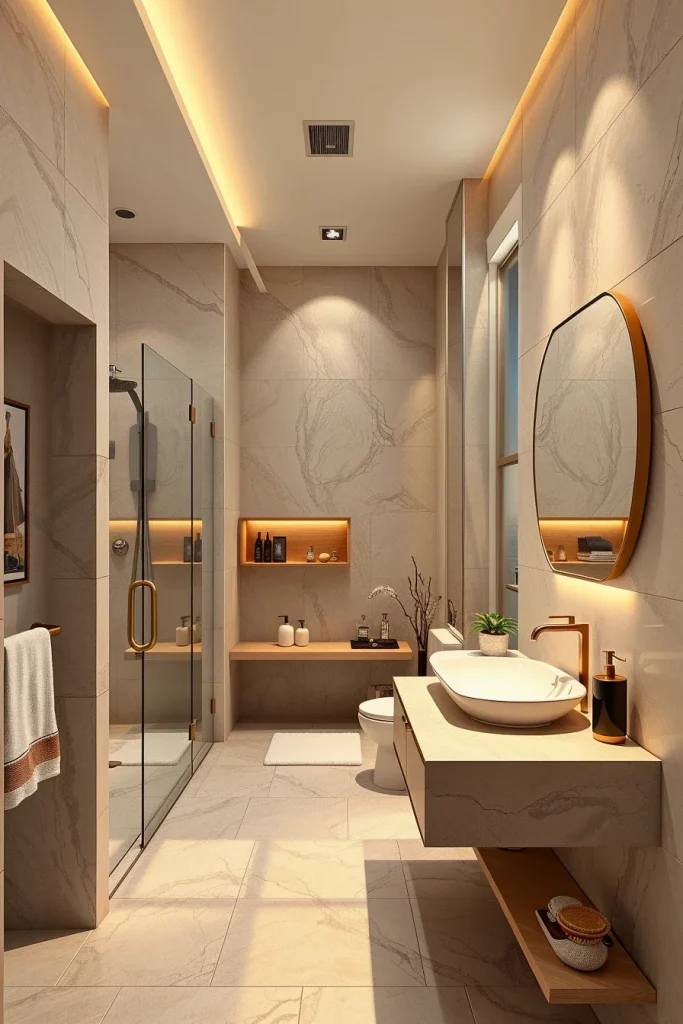
From my perspective, the most successful bathrooms are planned around daily routines rather than appearance alone. Interior professionals regularly recommend prioritizing functionality before selecting decorative finishes, and I believe this creates spaces that remain enjoyable for many years. Practical decisions almost always produce better long-term results than purely decorative ones.
I would also recommend planning electrical outlets, ventilation, storage capacity, and lighting layouts before construction begins. These invisible details have a significant impact on comfort and prevent costly modifications later.
How To Create Your Perfect Japandi Bathroom
Creating the perfect Japandi bathroom begins with understanding that simplicity is never accidental. I always start by choosing a restrained color palette, selecting durable materials, and designing an efficient layout that supports everyday life. Instead of following temporary trends, I focus on timeless finishes, balanced proportions, and practical furniture that will remain attractive for many years. The result is a bathroom that feels peaceful, organized, and naturally elegant.
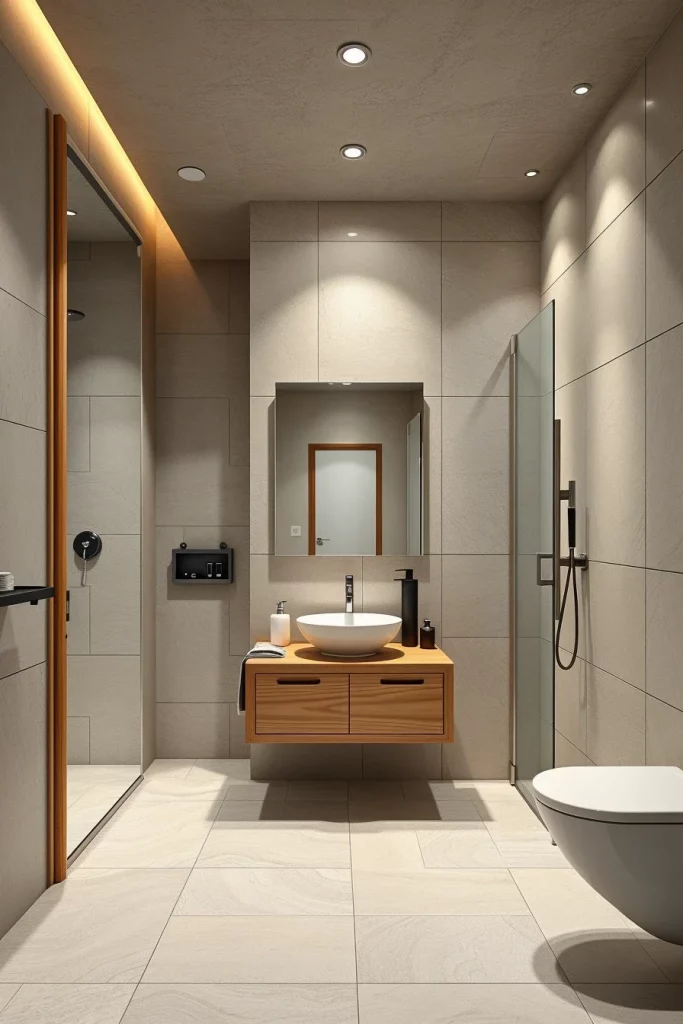
I recommend investing first in the essential elements: a floating vanity with generous concealed storage, quality plumbing fixtures, frameless mirrors, efficient lighting, and durable flooring. Once these foundations are established, decorative accessories should remain limited and carefully chosen. Soft textiles, handcrafted ceramics, and subtle lighting create warmth without interrupting the minimalist composition. Every object should contribute either practical value or visual harmony.
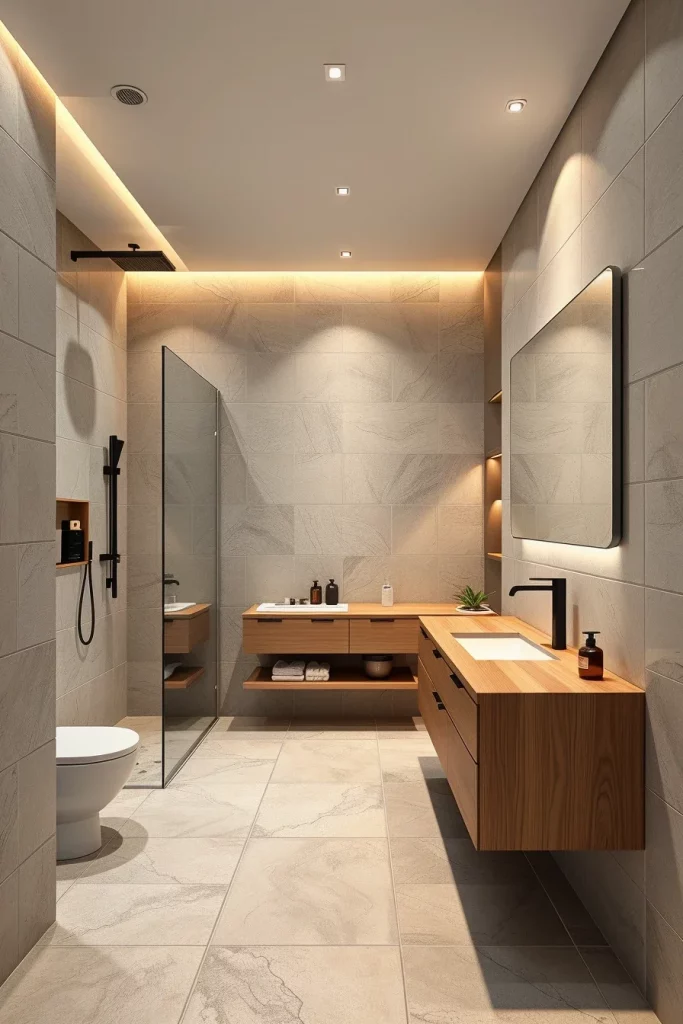
Over the years, I have found that the most satisfying interiors are those that balance comfort with simplicity. Advice shared by respected American interior designers consistently supports this philosophy, emphasizing thoughtful planning, quality materials, and timeless design over excessive decoration. I believe this approach allows a Japandi bathroom to remain beautiful long after the latest trends have changed.
If I were completing this project, I would finish with personalized touches that reflect everyday habits rather than decorative excess. Well-organized storage, comfortable lighting, quality ventilation, and durable materials ensure the bathroom continues looking elegant while functioning beautifully every day.
A Japandi bathroom is more than a beautiful design trend—it’s a timeless approach to creating a calm, functional, and inviting space. By combining clean lines, natural materials, soft color palettes, and thoughtful details, you can design a bathroom that feels both relaxing and practical for everyday living. Whether you prefer a compact layout or a spacious spa-inspired retreat, Japandi style offers endless inspiration for achieving effortless elegance that will remain stylish for years to come.