
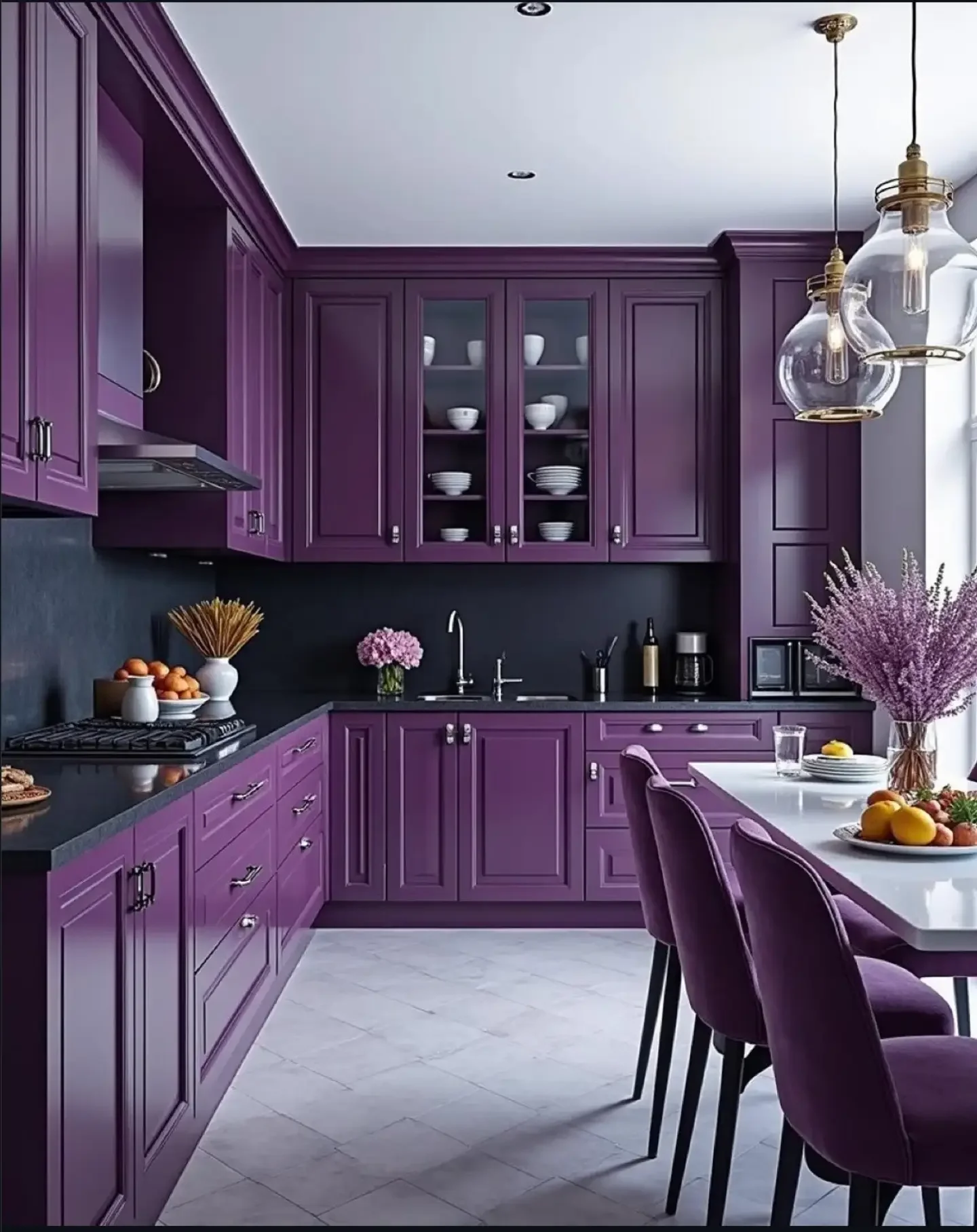
Aubergine kitchen ideas bring a rich, sophisticated color into the heart of the home while creating a distinctly modern atmosphere. From deep aubergine cabinetry to softer purple accents, this versatile shade can completely transform the character of a kitchen. I love how it pairs beautifully with white, natural wood tones, dark countertops, stainless steel, and elegant lighting. Whether you are planning a complete kitchen makeover or simply want to introduce more color, aubergine offers plenty of creative possibilities. In this collection, I’m exploring stylish kitchens that show how this dramatic shade can work across different layouts, finishes, and decorating approaches. Which aubergine kitchen idea would you be tempted to try in your own home?
Deep Aubergine Bar Cabinet With Open Display Shelves
This kitchen storage area uses a deep aubergine finish across open shelving, lower cabinets, and the surrounding cabinetry, creating a strong and cohesive backdrop. The shelves are filled with bottles, wine glasses, drinking glasses, jars, cups, and decorative containers, while a marble-look countertop provides a contrasting horizontal surface. I love the way the rich color makes the entire area feel intimate and visually defined without needing additional wall decoration.
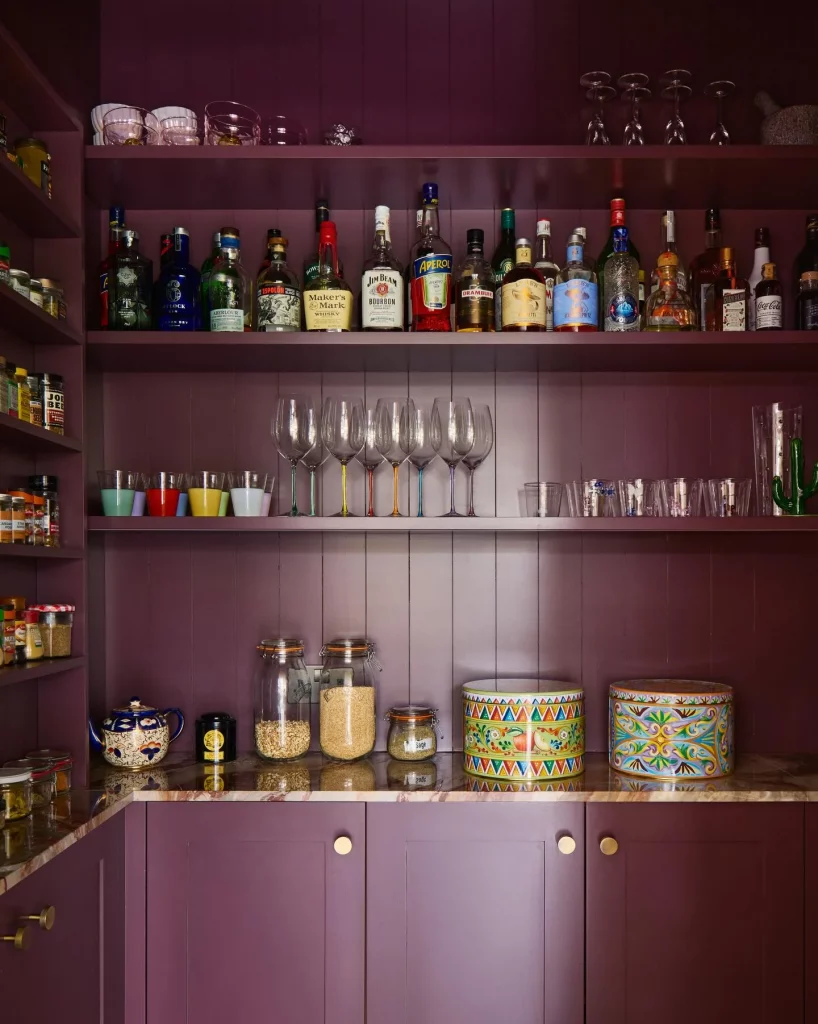
What works particularly well for me is the combination of open display storage and enclosed lower cabinetry. The shelves keep frequently used glasses and bottles visible and easy to reach, while the lower doors and drawers provide a place to keep less decorative items out of sight. The arrangement also turns everyday kitchen and entertaining pieces into part of the visual styling, which makes the storage feel intentional rather than purely practical.
If I were recreating this look, I would pay close attention to how much open shelving I actually need. This example works because the shelves are carefully organized by type, with bottles grouped together and glassware arranged in rows. I would keep the countertop relatively controlled as well, allowing the aubergine cabinetry to remain the main visual feature while the patterned containers and colorful glassware add small points of interest.
Aubergine and White Striped Kitchen Wall
Here, vertical aubergine-and-white stripes cover the main kitchen wall, creating a strong graphic backdrop against white cabinetry and a warm wood countertop. The stainless-steel range sits beneath a large white hood, while several small containers are arranged along the countertop near the window. The natural daylight coming through the large window keeps the darker purple pattern from making the room feel closed in.
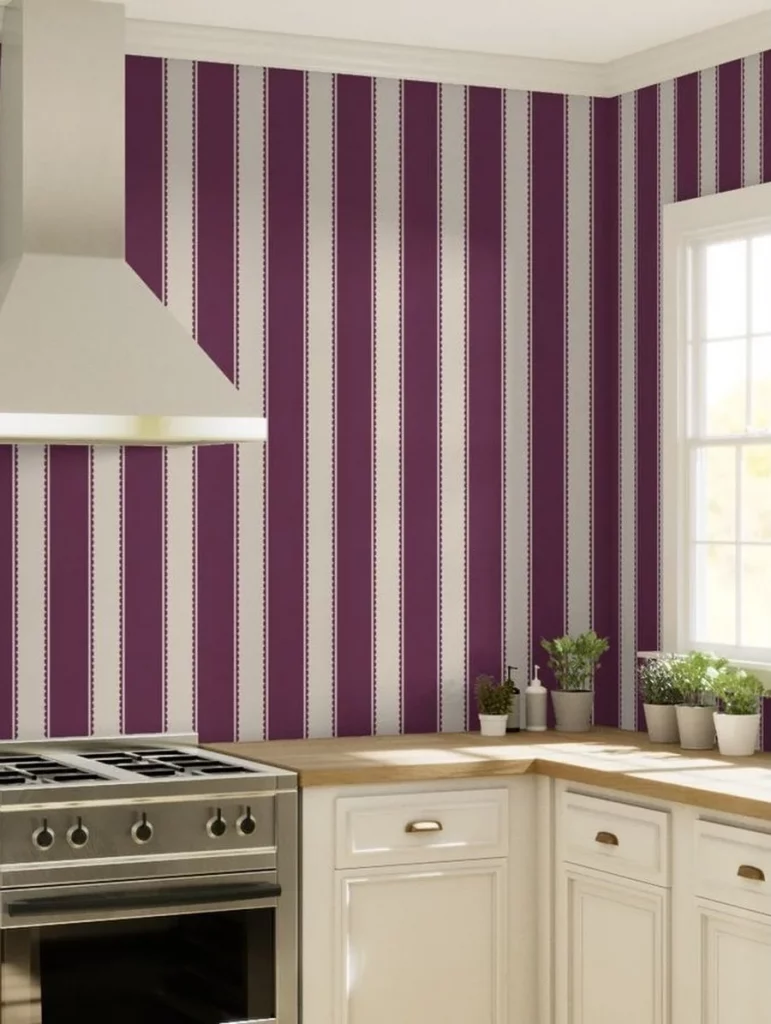
I find the contrast particularly effective because the white cabinetry visually balances the intensity of the striped wall. The wood countertop introduces another simple color transition between the patterned wall and the white lower cabinets, while the stainless-steel range adds a practical contemporary element. The vertical pattern also draws the eye upward, emphasizing the height of the kitchen wall.
For a similar result, I would let the patterned wall remain the dominant decorative feature and keep the surrounding finishes relatively restrained. The image shows how aubergine does not necessarily have to cover every cabinet to make an impact. A single strongly patterned surface can introduce the color while white cabinetry and a simple countertop maintain a lighter overall appearance.
Dark Aubergine Cabinetry With Tonal Backsplash
This kitchen takes aubergine in a much darker direction, with almost-black cabinetry surrounding a backsplash made from small rectangular tiles in a closely related dark brown-purple tone. Gold-toned cabinet knobs provide subtle contrast, while the countertop is kept light and uncluttered. A small arrangement of orange-toned blooms, a dark rounded vessel, and a shallow decorative bowl sit along the counter.
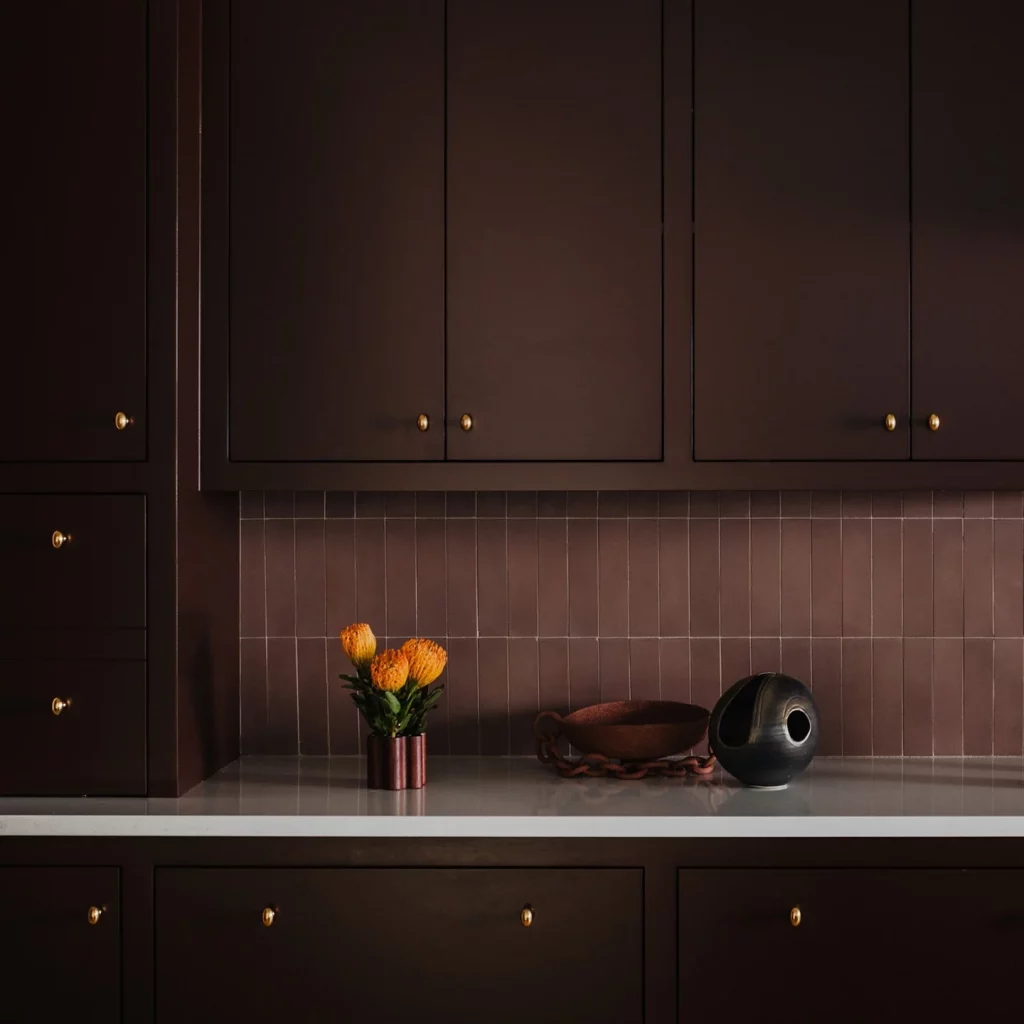
I like the tonal approach because the cabinets and backsplash feel connected without being exactly identical. The small tile pattern introduces texture and visible grid lines, preventing the darker surfaces from becoming completely flat. At the same time, the light countertop creates a clear visual break between the upper and lower cabinetry and gives the workspace a cleaner appearance.
This is a useful example for anyone who wants a more intimate kitchen atmosphere. If I were using such a dark aubergine palette, I would be selective with hardware and countertop finishes rather than adding too many competing details. The small gold knobs shown here are enough to catch the light, while the restrained countertop styling allows the cabinetry and backsplash to remain the focus.
Elegant Aubergine Kitchen With Marble-Look Island
This spacious kitchen features aubergine cabinetry throughout the room, including a large central island and tall storage around the appliances. The island has a dark green marble-look surface with pale veining, while stainless-steel appliances and a light floor create contrast. Two decorative chandeliers hang over the kitchen, and large windows bring substantial daylight into the space.
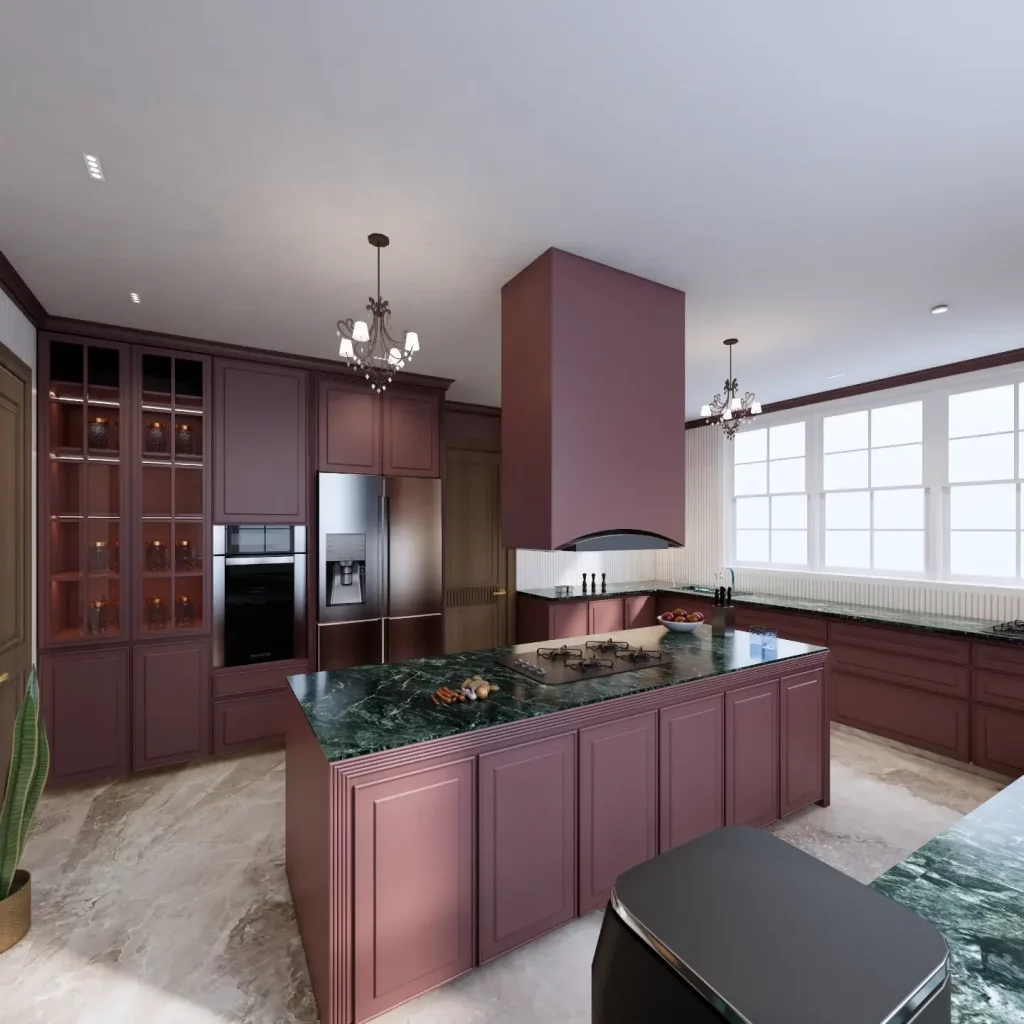
For me, the strongest element is the way the dark cabinetry is balanced by the large amount of natural light and the contrasting island surface. The central island provides a generous work area and separates the main cooking zone from the seating area, where aubergine upholstered chairs sit around a light table surface. Glass-front cabinetry also adds a display element without breaking the overall color scheme.
I would approach a kitchen like this by treating the island countertop as an important partner to the aubergine cabinetry. The dark green surface shown here adds movement and contrast without introducing a completely unrelated palette. I also like the use of stainless-steel appliances because their reflective surfaces help break up the extensive cabinetry and provide a practical contemporary finish.
Glossy Purple Cabinets in a Compact Kitchen
This compact L-shaped kitchen uses glossy purple cabinetry against white walls and a light floor. The upper cabinets have reflective doors, while the lower cabinets continue the same purple color around a stainless-steel oven and cooktop. A stainless-steel sink and countertop, small countertop appliances, utensils, and several containers complete the practical working area.
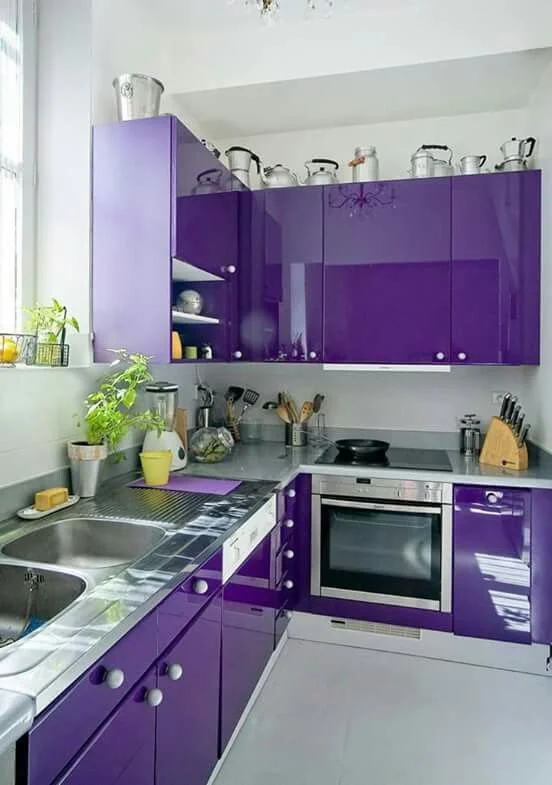
The glossy finish is especially noticeable here because it reflects the daylight entering from the large window on the left. I think that quality can be useful in a smaller kitchen because the reflective surfaces visually bounce light around the room. The L-shaped arrangement also keeps the main cooking, washing, and preparation areas close together, making efficient use of the available footprint.
From my perspective, this example shows that a strong aubergine-purple finish can work even when the kitchen is not large. The key is the visual contrast with the white walls and floor. If I wanted to achieve a similar effect, I would preserve that light surrounding palette rather than introducing several additional dark finishes that could make the compact layout feel heavier.
Compact Aubergine Kitchen With Open Side Shelving
This small kitchen combines matte aubergine cabinets with a matching open shelving unit at the end of the counter. The stainless-steel refrigerator stands on the left, while the cooking area is positioned along the adjacent wall. The open shelves display colorful bottles, glasses, bowls, and teapots, creating a practical storage feature that is also highly visible.
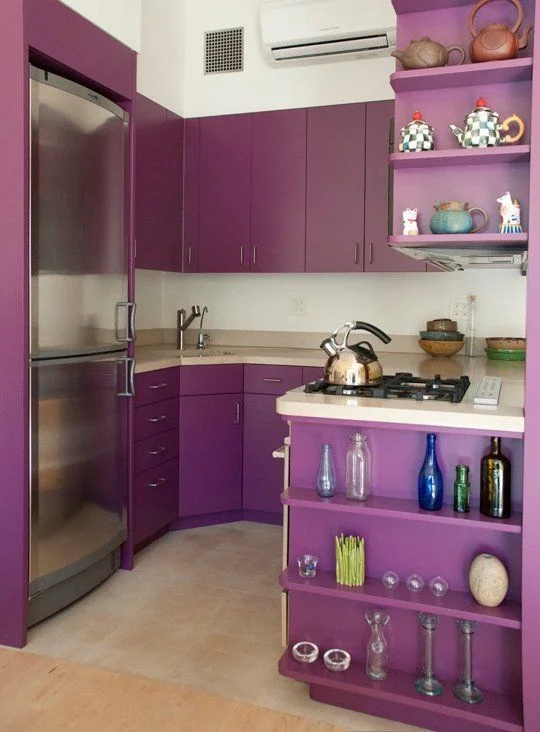
What I find clever is the way the shelving unit uses otherwise limited vertical space. Instead of leaving the end of the cabinetry visually empty, it becomes useful storage for items that can be displayed openly. The aubergine color continues across the cabinets and shelving, giving the compact kitchen a unified appearance despite the variety of objects placed on the shelves.
I would use this idea particularly carefully in a small kitchen because open shelves can become visually busy very quickly. In this example, the objects are concentrated in one clearly defined area, while the main cabinet fronts remain relatively simple. Keeping that distinction would help preserve the strong color impact without making the entire room feel crowded.
Curved Aubergine Cabinets With Dark Countertops
This compact kitchen features dark aubergine and black cabinetry arranged around a curved corner unit. The upper cabinets have a glossy dark finish, while the lower cabinetry follows the curved shape of the counter. A stainless-steel range hood, oven, sink, and white tiled backsplash create contrast, and small recessed lights illuminate the upper cabinets and work areas.
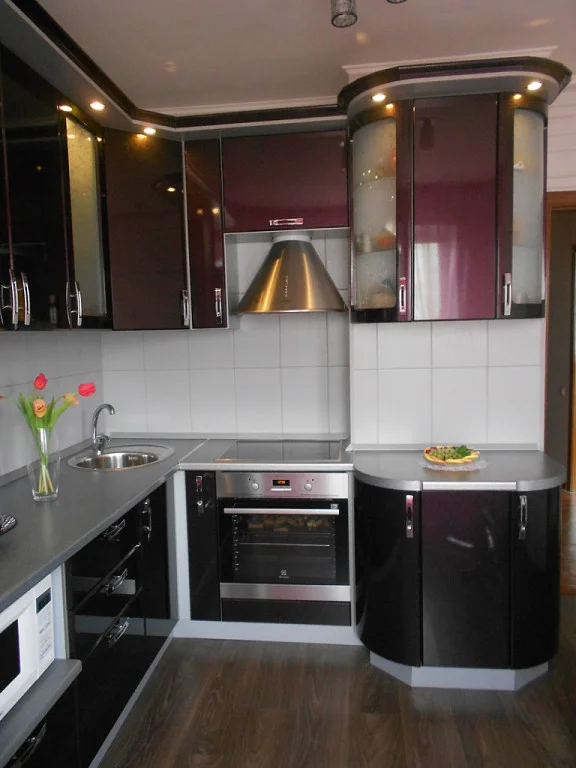
The curved cabinetry is the detail that immediately catches my attention. It softens the strong linear arrangement of the kitchen and makes the corner feel deliberately designed rather than simply fitted with standard straight units. The combination of dark cabinet fronts with the white tiled backsplash also gives the room a clear contrast between the storage and the wall behind it.
I think this arrangement demonstrates how cabinet shape can become as important as cabinet color. If I were planning a similar compact kitchen, I would first consider circulation and available floor space before choosing a curved unit. Here, the rounded lower cabinet creates a smoother transition around the corner while maintaining useful countertop and storage space.
Soft Aubergine Cabinets With a Light Wood-Look Countertop
This kitchen combines pale aubergine-purple upper cabinets with light lower cabinetry that has a subtle wood-grain appearance. A long gray countertop runs across the workspace, while the backsplash uses a horizontal decorative strip above a darker textured-looking wall surface. Stainless-steel appliances and a simple vase with tall decorative stems complete the arrangement.
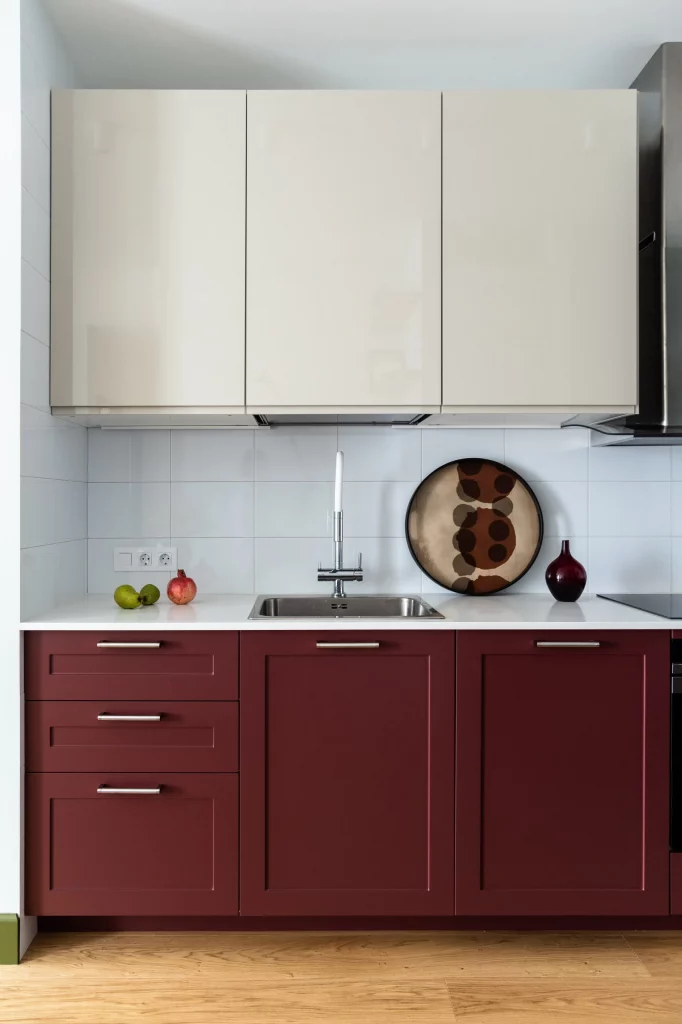
For me, the appeal comes from the softer interpretation of aubergine. Instead of using the deepest purple possible, the upper cabinets introduce a muted version of the color while the lower cabinets and light floor keep the room visually open. The long countertop also creates a continuous work surface, which is practical in a linear kitchen because it provides room for food preparation and appliances.
I would take inspiration from this approach if I wanted aubergine cabinetry but preferred a lighter overall kitchen. The color can be concentrated on the upper cabinets while the lower units use a paler finish, creating contrast without making the entire room dark. The horizontal backsplash treatment also gives the long wall some visual definition while maintaining the straightforward layout.
Classic Aubergine Cabinetry With Glass-Front Display Doors
The final kitchen uses rich aubergine cabinetry across the upper and lower sections, paired with a dark backsplash and pale floor. Several upper doors have glass fronts, revealing neatly arranged white dishes and bowls inside. A light-colored island or dining surface extends into the room with upholstered aubergine chairs, while glass pendant lights hang above it.
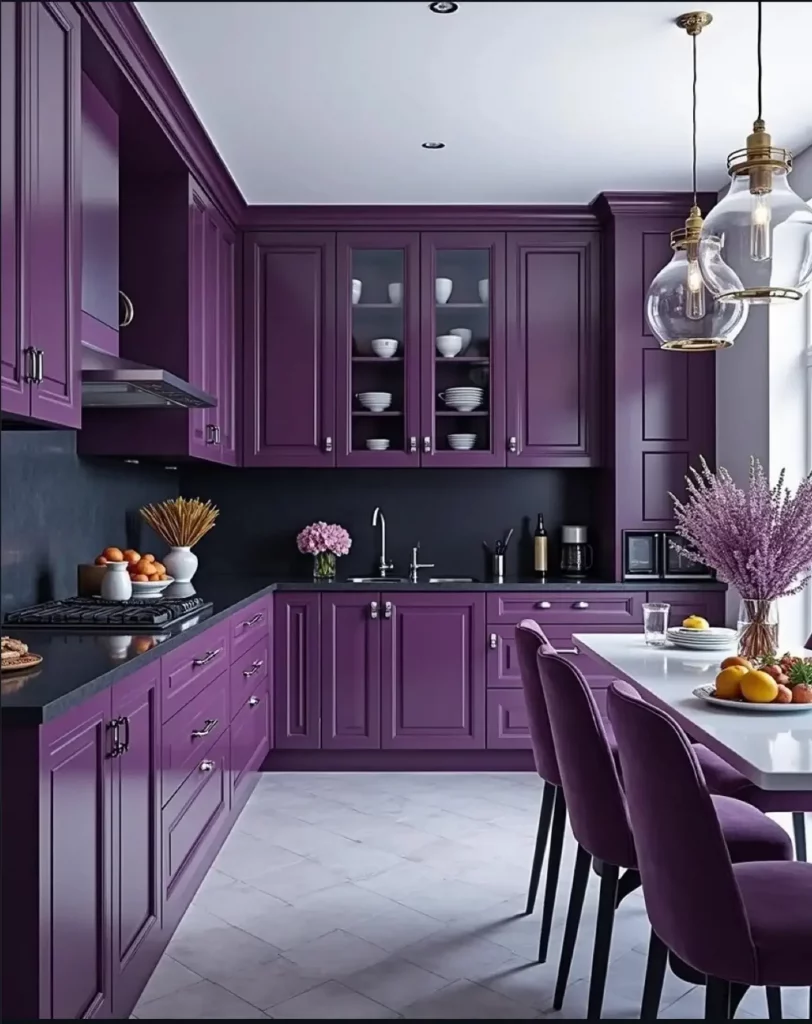
I especially like the balance between the deep cabinetry and the lighter floor and table surface. The glass-front cabinets break up the solid cabinet run and create a dedicated place for displaying the white dishes. The aubergine chairs then echo the cabinetry, connecting the dining area visually with the kitchen rather than making it feel like a separate zone.
If I were recreating this look, I would use the glass-front sections selectively rather than turning every cabinet into display storage. The image shows how a few transparent doors can provide visual variety while most of the storage remains concealed. I also like the way the clear pendant shades introduce lightness above the seating area, allowing the deep aubergine cabinetry to remain rich without overwhelming the room.
Deep Aubergine Cabinetry With Classic Paneled Doors
I love the enveloping look of this compact kitchen, where deep aubergine cabinetry covers almost the entire visible wall and extends around the corner. The traditional paneled doors are finished with small round brass-colored knobs and hinges, while an open central cabinet breaks up the continuous storage. Inside that niche, simple dishes and glasses sit above a small toaster and a loaf of bread. A stainless-steel refrigerator occupies the right side, and the dark floor adds another strong layer beneath the cabinetry.
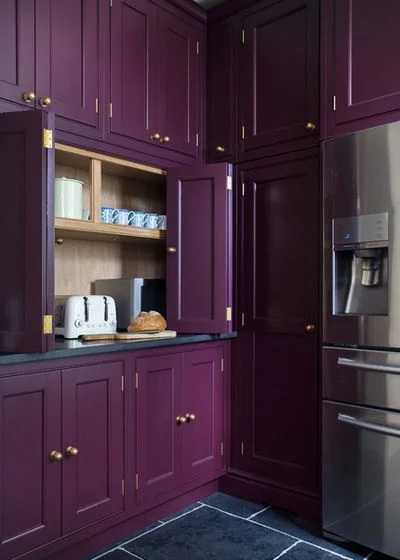
The tall cabinets make excellent use of vertical space, while the open niche provides an accessible area for everyday items without sacrificing the visual impact of the closed storage. I particularly like the contrast between the richly colored doors, the warm wood-toned shelving inside the niche, and the metallic refrigerator. The arrangement also keeps small appliances and dishes concentrated in one practical zone.
For me, this is a good example of how a dark cabinet color can work beautifully when the cabinetry itself provides plenty of visual structure. The recessed panels prevent the aubergine finish from looking completely flat, while the small hardware adds a traditional detail without overwhelming the doors. If I were recreating this idea, I would pay close attention to the proportions of the cabinetry and keep the open section purposeful rather than filling every shelf.
Aubergine L-Shaped Kitchen With Warm Wood Countertops
This kitchen takes aubergine in a more colorful, traditional direction. The purple cabinetry forms an L-shaped arrangement, with upper cabinets featuring inset display sections containing dark glasses. A stainless-steel range and oven sit beneath a simple metal hood, while a warm wood countertop runs along the lower cabinets and continues around the corner. The cream-colored wall provides a soft background, and the wood flooring repeats the warmth of the countertop.
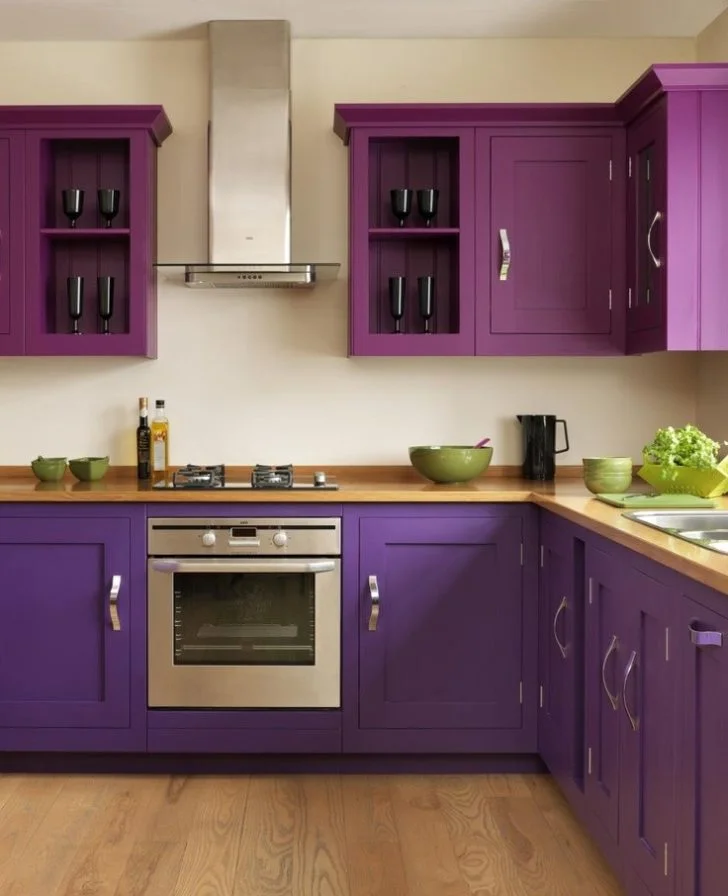
I like how the wood surfaces soften the stronger cabinet color and give the kitchen a more approachable feeling. The L-shaped layout creates a clear working area around the range and sink, while the upper display niches provide a place for frequently used or decorative glassware. The metallic appliances and cabinet handles add another practical layer without competing with the aubergine fronts.
From my perspective, this combination is especially useful when someone wants colorful cabinetry but does not want the entire kitchen to feel visually heavy. The warm countertop creates an easy transition between the purple cabinets and wood floor. I would keep the surrounding wall treatment relatively quiet, as shown here, so the cabinetry remains the defining feature of the room.
Glossy Aubergine Cabinets Paired With a Crisp White Island
This kitchen shows a completely different interpretation of aubergine. The cabinetry has a smooth, glossy finish that reflects the windows and surrounding light, while a large white island occupies the foreground. The island includes a black sink and tall curved black faucet, and white pendant lights hang above the work area. Stainless and dark appliances are integrated into the aubergine cabinetry, creating a sleek, streamlined composition.
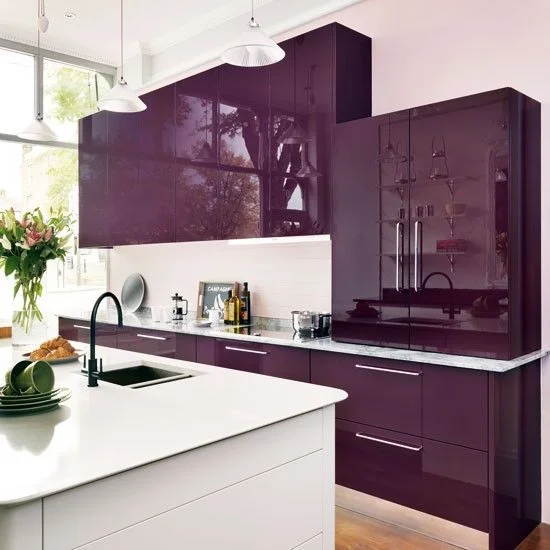
The white island immediately lightens the darker cabinetry and creates a strong central workspace. I also like the way the glossy doors reflect natural light, helping the deep color feel more open and polished. The long horizontal cabinet handles keep the modern cabinetry visually clean, while the glass-front storage section adds a small change in texture.
For me, this is a strong approach for anyone who loves aubergine but wants a contemporary kitchen rather than a traditional one. The key is restraint: the cabinetry supplies the rich color, while the white island and light walls prevent the room from becoming visually dense. I would also keep the countertop styling simple, as the reflective cabinet finish already provides plenty of visual interest.
Compact Purple Kitchen With White Tile and Dark Worktops
Here, the aubergine cabinetry has a flatter, more streamlined appearance, framed by narrow light-colored edging and long metallic handles. The upper cabinets run across the wall, with a microwave integrated into one section, while a glossy white subway-tile backsplash stretches beneath them. A dark countertop surrounds the stainless-steel sink, and the lower cabinets continue the same deep purple finish.
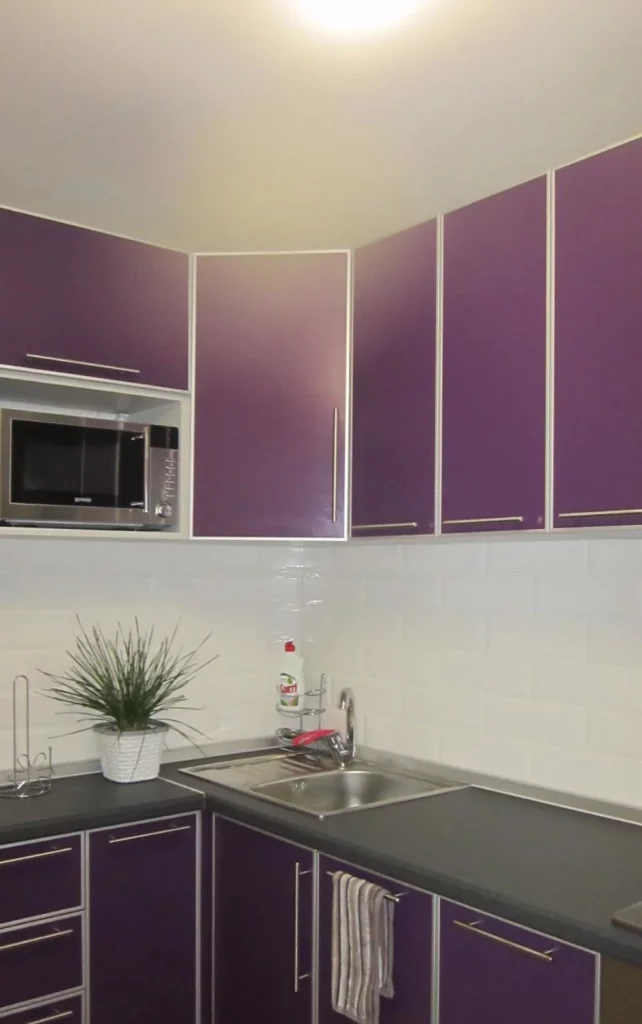
I find the contrast between the dark countertop and white tile particularly effective because it gives the compact kitchen a clear visual structure. The subway tile reflects light across the work surface, while the dark counter visually connects with the aubergine cabinetry. The integrated microwave also makes good use of the available cabinet wall and keeps the appliance from taking up valuable counter space.
This image reminds me that a small kitchen does not necessarily need pale cabinetry to feel organized. I would focus instead on creating strong horizontal and vertical lines, as this design does with its long handles, cabinet edges, and tile pattern. Keeping the countertop relatively uncluttered would preserve the clean appearance and allow the purple cabinetry to remain the focal point.
Modern Aubergine Cabinet Wall With Statement Stone Countertop
This compact kitchen has a much softer aubergine-brown cabinet color and an exceptionally streamlined layout. Smooth, handleless-looking cabinet fronts form a continuous wall, with a black microwave positioned within the upper cabinetry. Beneath it, a sink sits against a striking stone backsplash and matching countertop with natural-looking gray, cream, and brown veining. White cabinetry and a built-in black oven appear in the adjoining section, while gray-toned flooring completes the restrained palette.
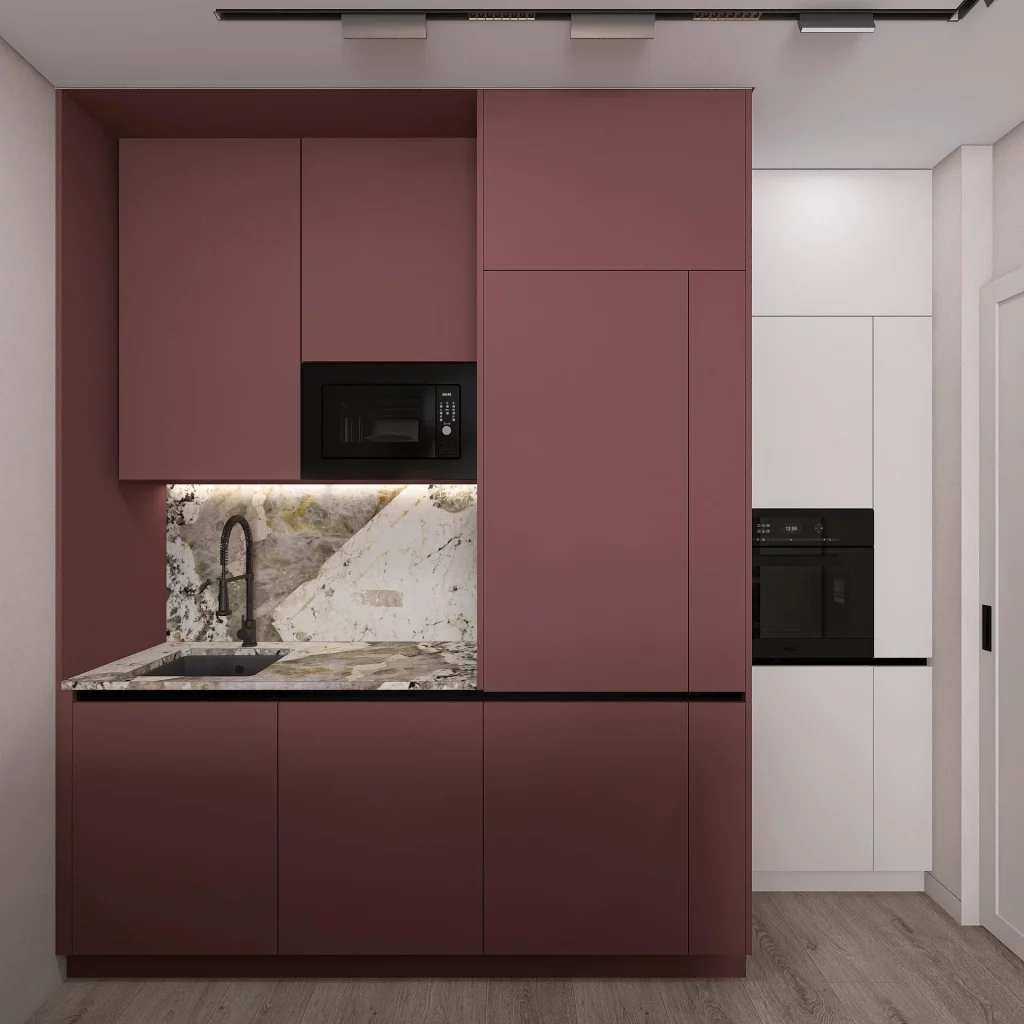
I like the way the stone becomes the main textural feature without competing with the cabinetry. The uninterrupted cabinet fronts create a calm appearance, while the contrasting white storage and black appliance establish a clear division between the two areas. The compact arrangement also demonstrates how a small kitchen can accommodate a sink, microwave, oven, and substantial storage without relying on excessive decoration.
In my view, this is one of the most contemporary ways to use aubergine because the color is slightly muted and the cabinetry has very little visual interruption. If I were adapting this idea, I would choose the countertop and backsplash together so their tones relate naturally, just as they do here. The result feels coordinated rather than overly matched.
Dark Aubergine Island With a Light, Airy Kitchen Background
The dark aubergine cabinetry on this kitchen island creates a strong foreground against a much lighter background. The island has large recessed-panel doors with small round metallic knobs, topped by a pale countertop. Behind it, light cabinetry with glass-front upper doors sits beneath warm under-cabinet lighting. A large window or glazed door brings in natural light, and a wooden tray with a simple vase arrangement rests on the island.
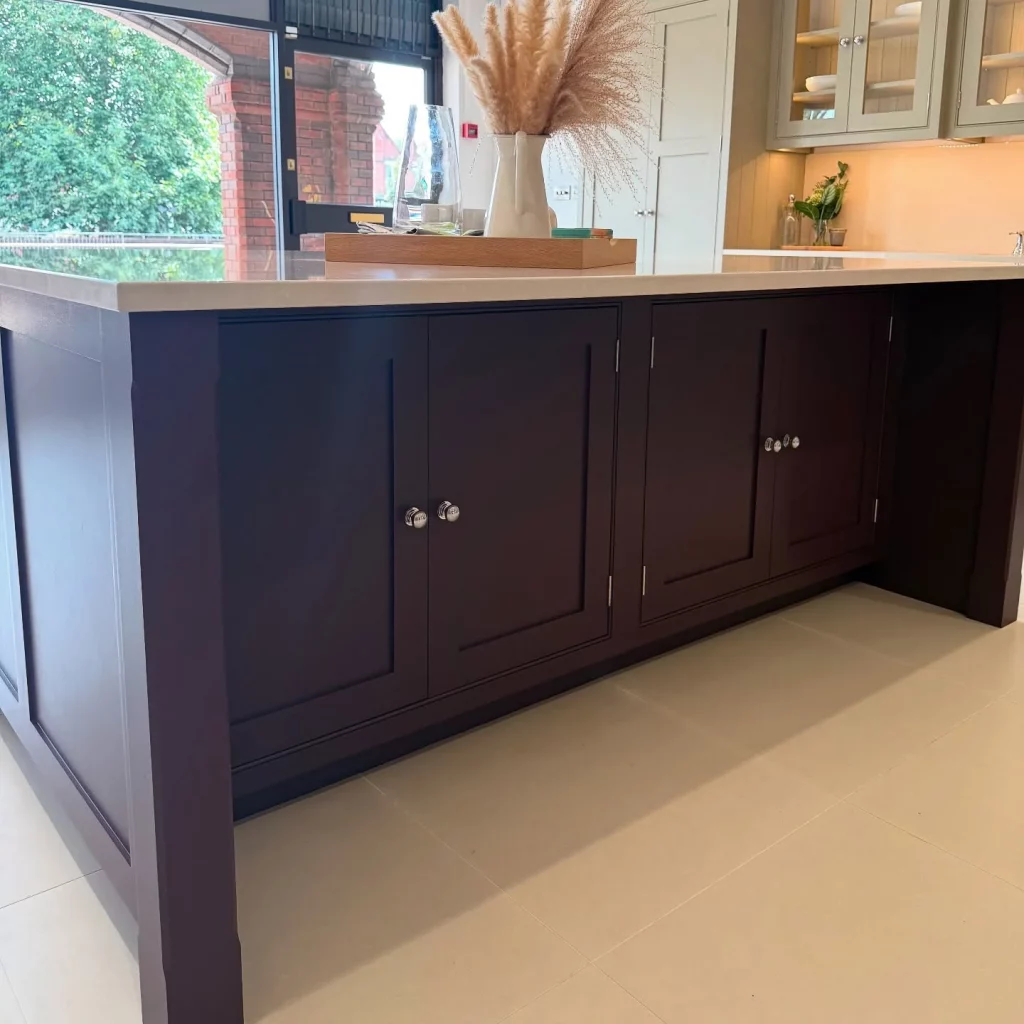
I particularly like the balance between the dark island and the lighter cabinetry behind it. Instead of covering the entire kitchen in aubergine, the color is concentrated on one major piece, giving the island a strong visual presence while keeping the surrounding space light. The generous cabinet doors also provide practical concealed storage, and the broad countertop creates a useful surface for preparation or everyday activities.
For me, this is an easy concept to translate into a modern home when a full aubergine kitchen feels like too much. A dark island can introduce the color in a controlled way while allowing the rest of the room to remain visually open. I would repeat only a few related details, such as the small metallic hardware already visible here, rather than adding many additional colors.
Soft Lavender-Aubergine Cabinetry With Brass Hardware
This kitchen shifts aubergine toward a much lighter lavender tone. The cabinetry surrounds a large range and extends across both sides of the cooking area, with brass-colored cup pulls and knobs adding warmth to the paneled fronts. A white subway-tile backsplash covers the wall, while open shelving displays dishes and a few kitchen pieces. Wooden cutting boards, containers, and utensils add natural warmth around the range, and the pale countertop continues the light palette.
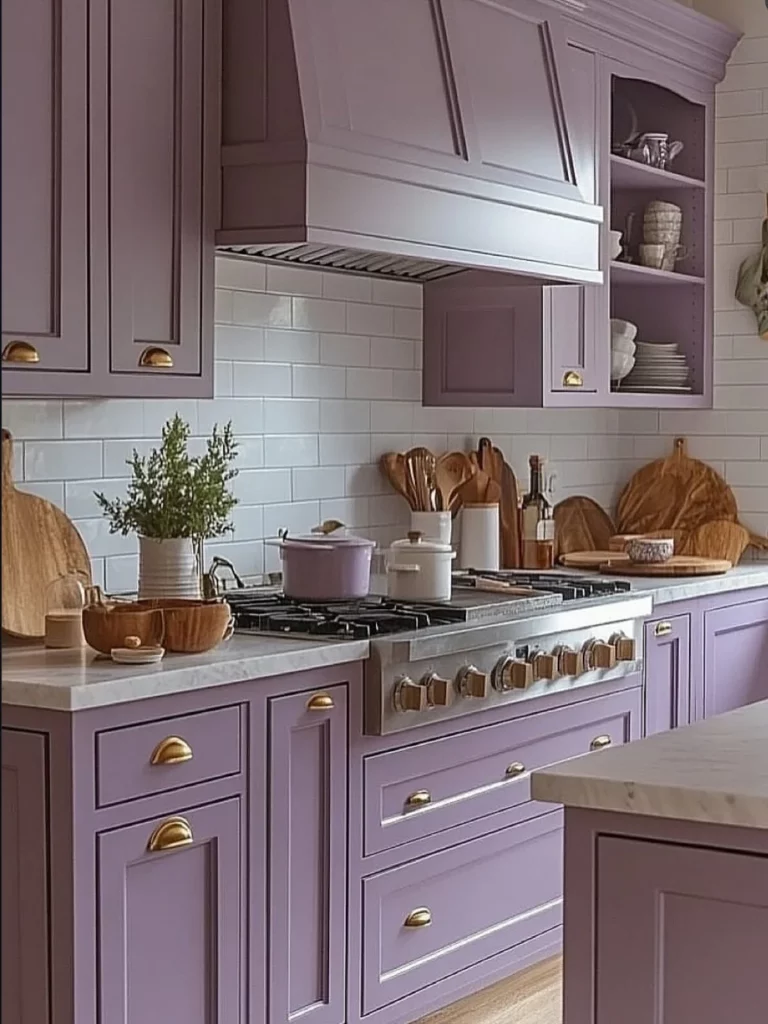
I love how the softer cabinet color makes the kitchen feel welcoming without losing the character of aubergine. The brass hardware stands out clearly against the lavender fronts, while the white tile keeps the cooking area visually fresh. The open shelves also create a practical display zone, and the cutting boards placed near the range are both useful and decorative.
This design shows me that aubergine does not have to mean an extremely dark purple. A dusty or softened variation can create a gentler atmosphere while still delivering a distinctive cabinet color. If I were recreating this look, I would keep the hardware warm and use simple light backsplash tile so the cabinetry retains its personality without making the room feel crowded.
Rich Aubergine Cabinets With Veined Marble Backsplash
This kitchen pairs rich aubergine lower cabinetry with an expansive stone backsplash covered in expressive gray and black veining. The same stone continues across the countertop, creating a strong visual connection between the two surfaces. The cabinetry has classic recessed panels and small knobs, while the cooking area includes a dark range with metallic details. Two wall sconces provide focused lighting above the backsplash, and a few carefully placed objects sit along the counter.
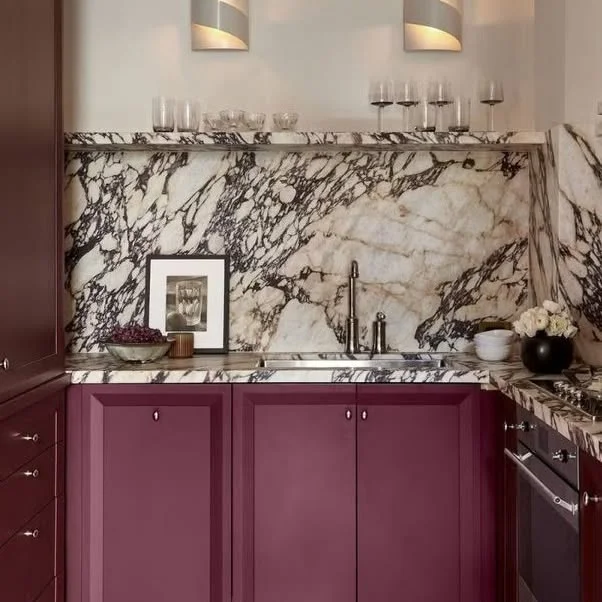
The stone immediately gives the compact kitchen a dramatic focal point while the aubergine cabinets ground the lower half of the room. I like the repetition of the stone across both the worktop and backsplash because it makes the cooking area feel cohesive. The paneled cabinet fronts also provide a quieter counterpoint to the more active stone pattern.
For me, the lesson here is to let one strong material do most of the decorative work. The marble-like surface already has substantial movement, so the simple cabinet hardware and limited countertop styling make sense. I would follow the same principle in another kitchen by choosing a powerful backsplash and allowing the aubergine cabinetry to support it rather than competing with it.
Wine-Toned Cabinets With Cream Subway Tile and a Black Range
This kitchen combines deep wine-toned cabinetry with a warm cream subway-tile wall and a large black range accented with gold-colored controls and trim. The lower cabinets include a mix of drawers and paneled doors, while the tiled cooking alcove creates a distinct zone around the range. A light stone countertop extends into the foreground, and warm wood flooring runs throughout the room. A patterned runner adds another layer across the floor.
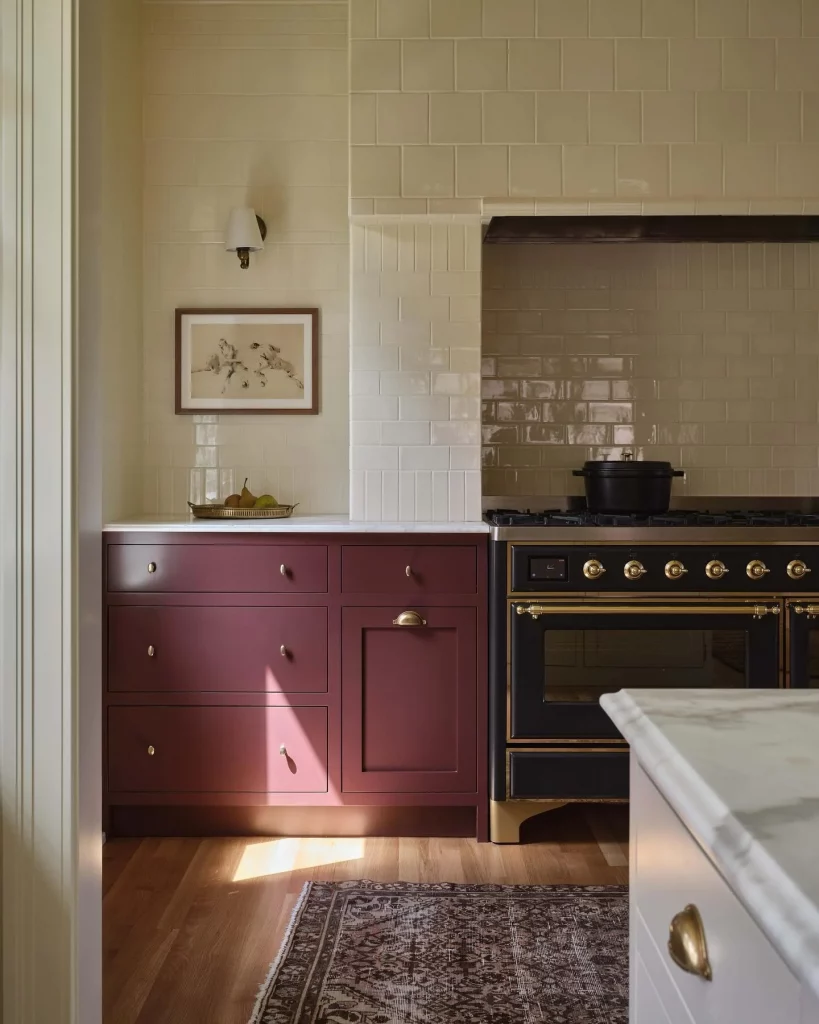
I like the warmth created by the combination of dark cabinetry, cream tile, wood flooring, and metallic range details. The drawer-and-door arrangement provides different types of storage beneath the countertop, while the cooking zone is visually framed by the tiled wall. The runner also makes the working area feel more comfortable and defined without changing the overall color scheme.
From my perspective, this is a particularly inviting interpretation of aubergine because the surrounding materials are warm rather than stark. The cream tile gives the dark cabinets breathing room, and the wood floor prevents the palette from feeling too formal. I would keep countertop accessories minimal here so the beautiful relationship between the cabinet color, tile, range, and flooring remains easy to appreciate.
Aubergine Kitchen Utility Corner With a Built-In Bench
The final image combines deep aubergine cabinetry with a charming kitchen utility area. On the left, a built-in bench sits beneath open wooden shelves, with woven baskets above and woven hats hanging from hooks. Neutral cushions and a textured throw make the bench feel comfortable. On the right, aubergine base cabinets surround a large white farmhouse-style sink, while a curved brass-colored faucet rises above it. Open wooden shelving, small woven containers, and warm lighting complete the composition, while the floor features a distinctive herringbone brick pattern.
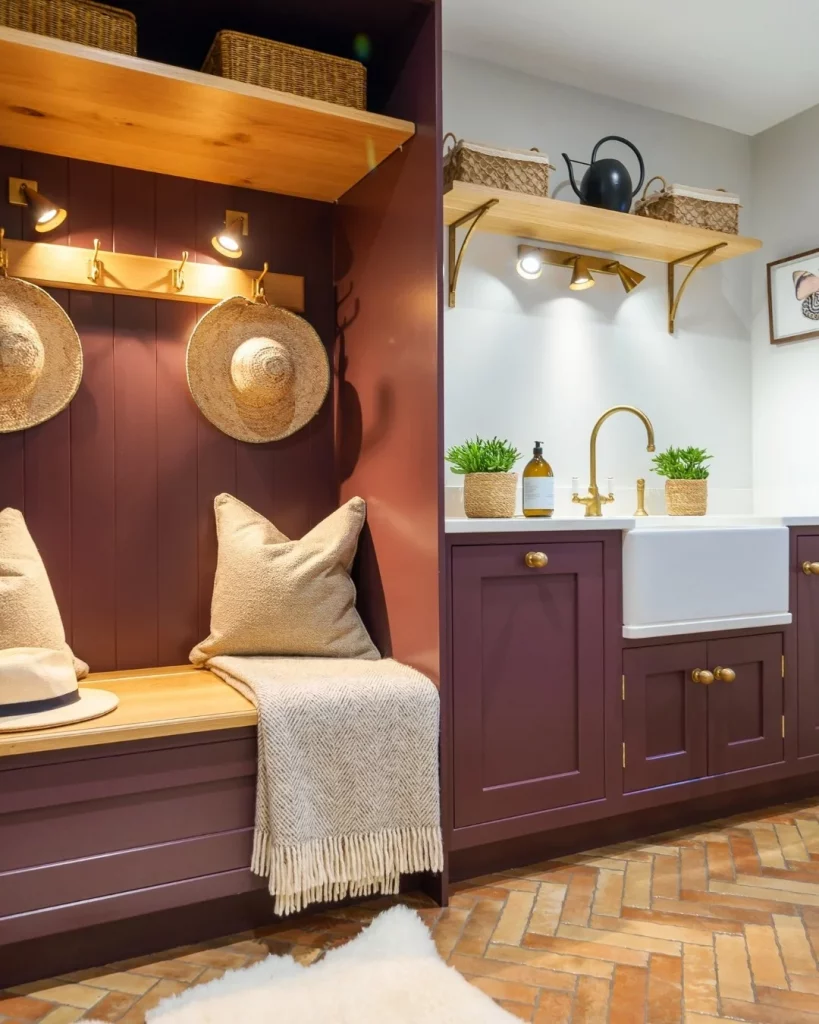
I find the combination of practical storage and comfortable seating especially appealing here. The bench makes use of a narrow area beside the kitchen, while the shelves above provide accessible storage for baskets and everyday items. The sink zone is equally functional, with generous lower cabinetry and a deep white basin contrasting beautifully against the dark aubergine fronts. The wood shelves and brick floor connect the two areas visually.
What stands out to me most is how many different textures are layered without making the space feel disconnected. Smooth painted cabinetry, warm wood, woven storage, fabric, ceramic, metal, and brick all appear within the same composition. If I were adapting this idea, I would preserve that balance and allow the aubergine cabinetry to remain the visual anchor while using practical natural-texture accessories in small amounts.
Aubergine Kitchen Island With Glass-Front Storage
The first kitchen immediately draws my attention to its large aubergine island with framed glass-front cabinet doors. I like the contrast between the deep purple cabinetry and the crisp white countertop, while the surrounding cabinets are finished in a much softer neutral shade. Inside the glass doors, white bowls and serving pieces are neatly displayed, and a simple tray with a white pitcher and dried grasses sits on the island. The warm under-cabinet lighting adds a soft glow across the back kitchen area.
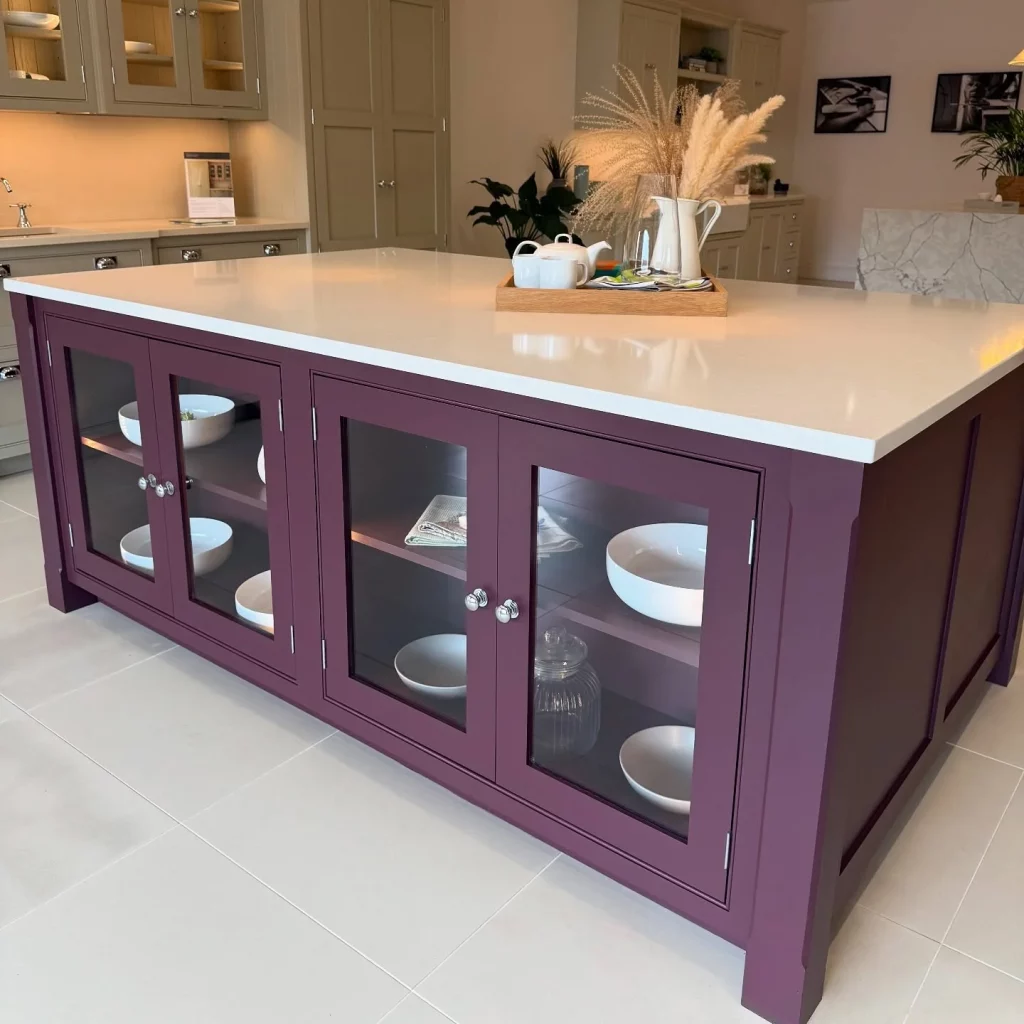
For me, this is a smart way to introduce aubergine without making the entire kitchen dark. The island becomes the visual anchor while the pale cabinetry and countertop keep the room feeling open. The glass doors are also practical because they provide accessible display storage while allowing the contents to remain visible. I particularly like how the white countertop creates a clean working surface that visually separates the rich cabinetry below.
If I were recreating this look, I would focus on keeping the strongest color concentrated in one architectural feature. A large island has enough surface area to make aubergine feel intentional rather than decorative. I would also choose simple hardware and light-colored accessories, as shown here, so the cabinetry remains the main feature.
Aubergine Cabinetry With Warm Wood and a Compact Dining Area
This narrow kitchen uses aubergine cabinetry across the lower cabinets and tall storage units, creating a rich backdrop against warm wood wall cabinets. I notice the marble-look backsplash, open shelving with jars and kitchenware, and a herringbone wood floor that leads through the entire space. A small dining table sits directly beside the kitchen, surrounded by upholstered chairs, while the aubergine tones continue into the dining area through the chair upholstery and table textiles.
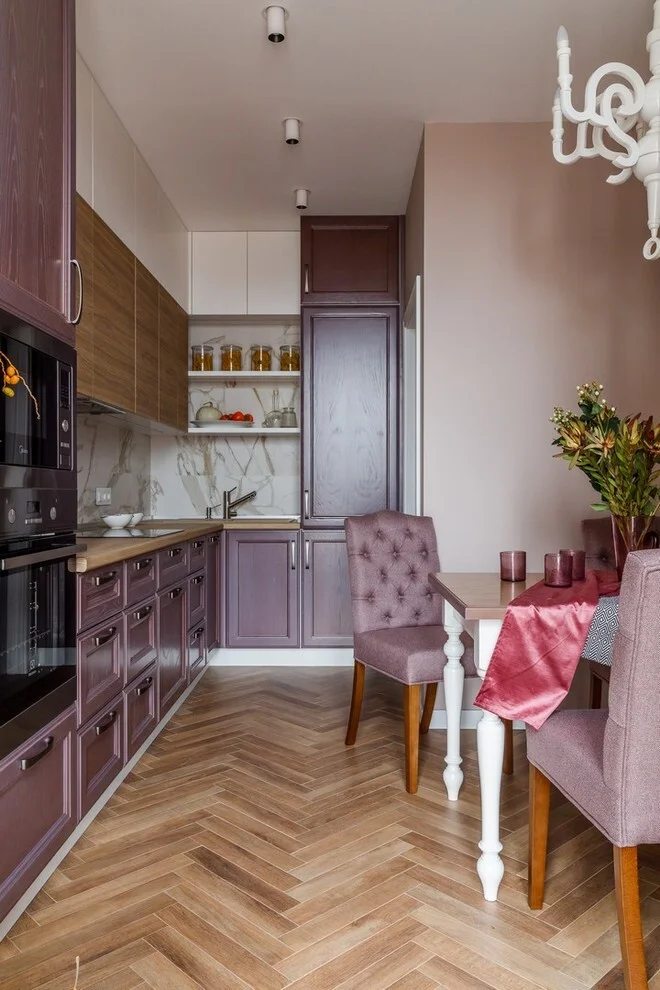
I think the layout works particularly well because the kitchen and dining zone feel connected without requiring a large open room. The combination of closed cabinets and open shelving gives the compact kitchen visual variety while keeping frequently used items easy to reach. The wood tones soften the darker cabinetry, and the patterned floor adds movement underfoot without competing with the cabinetry.
From my perspective, this is a useful example of how aubergine can be used in a smaller kitchen. Rather than trying to make every surface pale, I would let the cabinetry provide depth and then balance it with warm wood and lighter wall finishes. The close relationship between the kitchen and dining table also makes the available floor area feel purposeful and efficient.
Aubergine Accent Walls With a Sleek White Kitchen
Here, aubergine appears primarily on the walls, framing a streamlined white kitchen with glossy cabinetry and a white peninsula. I can see two slim bar stools along the peninsula, three hanging glass pendant lights, and a large window with a light-colored Roman shade. The deep aubergine wall creates a strong border around the pale kitchen while the reflective surfaces bounce light through the room.
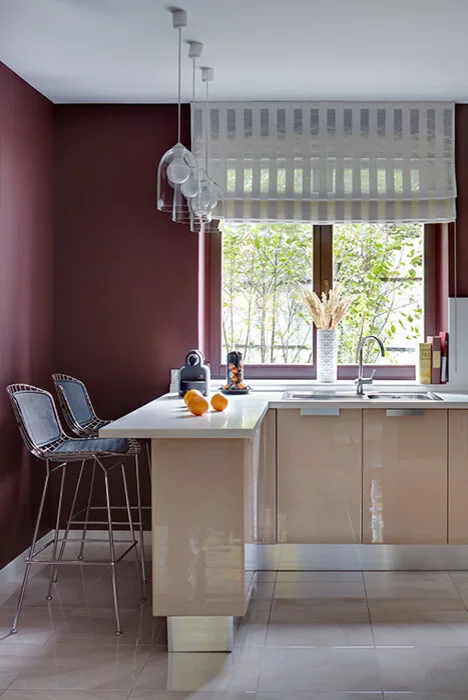
I like this approach because the color is dramatic without taking over the cabinetry or work surfaces. The white kitchen feels especially crisp against the darker walls, while the peninsula provides a practical place for casual seating and everyday meals. The generous window also brings in natural light, helping the deep wall color feel deliberate rather than heavy.
If I wanted to achieve a similar effect, I would consider aubergine as an architectural backdrop rather than automatically choosing it for cabinets. This image shows how powerful a wall color can be when paired with simple white cabinetry and restrained furniture. I would keep the surrounding elements visually clean so the contrast remains the central design feature.
Aubergine Island Against Classic White Cabinetry
The fourth kitchen takes a much lighter approach, with white cabinetry running around the room and a substantial aubergine island positioned at the center. The island has a paneled front and a white countertop that matches the surrounding work surfaces. Glass-front upper cabinets display kitchenware, while warm wood flooring adds contrast beneath the predominantly pale palette.
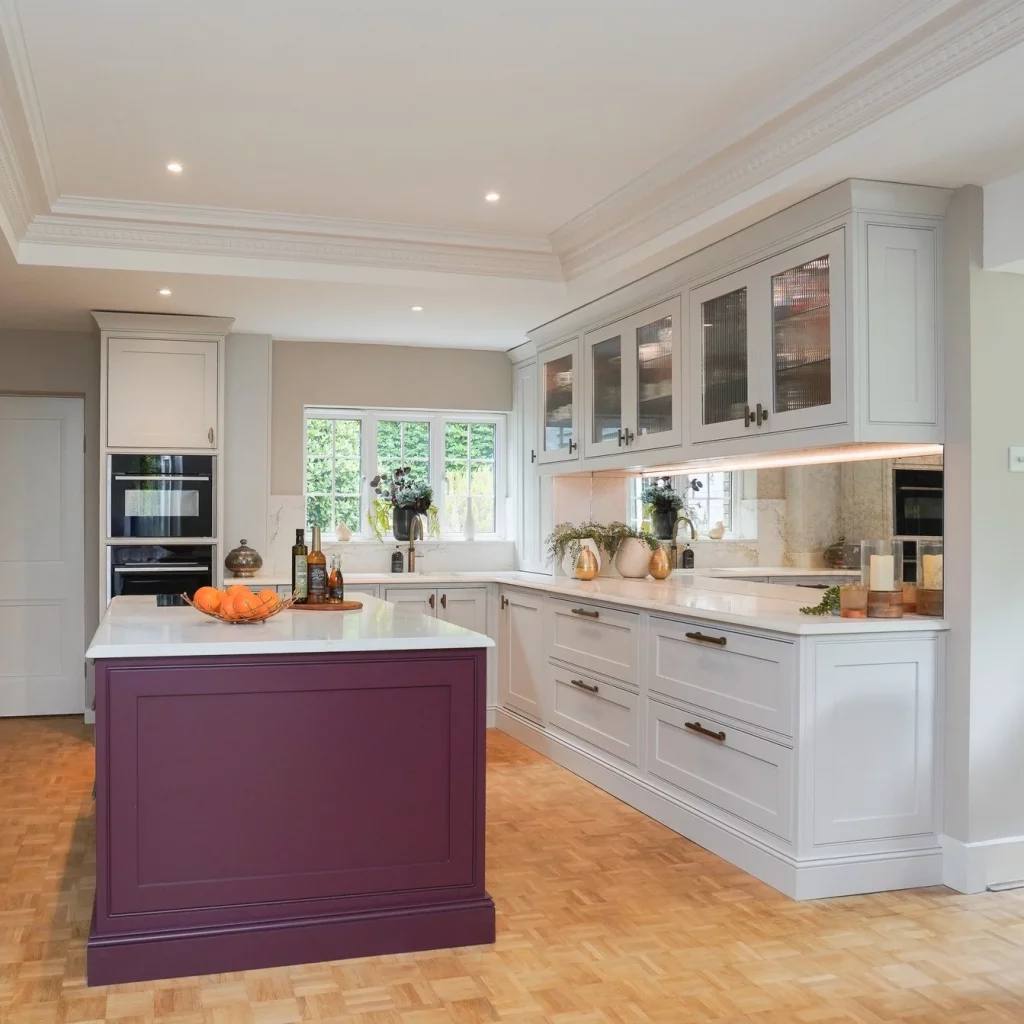
For me, the island is the element that gives this otherwise light kitchen its personality. Because the surrounding cabinetry stays white, the aubergine does not visually overwhelm the room. The island also creates a clear central work zone while providing a defined surface for preparation and gathering. The traditional cabinet detailing works naturally with the deeper color.
I would use this image as inspiration for anyone who likes aubergine but is hesitant about committing to an entire kitchen. Painting or specifying only the island in this shade can create a strong focal point while preserving a bright overall appearance. I also like the idea of repeating small amounts of the darker color elsewhere through restrained accessories rather than adding another large colored surface.
Aubergine Island With Patterned Backsplash and Deep Accent Wall
This kitchen combines several rich elements in a more contemporary composition. The main cabinetry is a muted blue-gray, while the island base and a vertical ribbed wall section are aubergine. A patterned backsplash stretches behind the cooking area, introducing geometric shapes in several muted tones. Above the island, two large round pendant lights provide warm illumination, and the stone-look island countertop extends generously around the seating area.
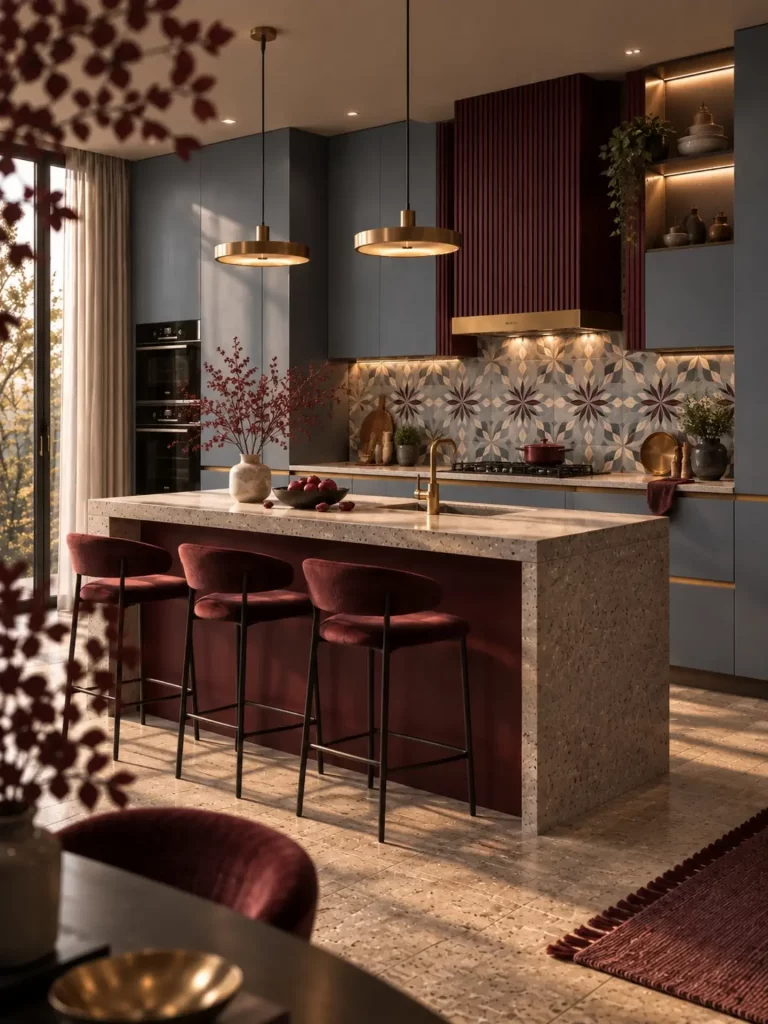
I find the balance between the colors especially interesting. The blue-gray cabinetry prevents the aubergine from becoming the only visual focus, while the patterned backsplash creates a transition between the cabinetry and the darker vertical feature. Three upholstered bar stools line the island, making it clearly designed for both food preparation and socializing.
For me, the lesson here is to give each strong finish enough space to breathe. If I were using this combination, I would avoid adding additional competing patterns because the backsplash already provides plenty of visual texture. The warm metallic lighting and faucet also help connect the different surfaces and give the composition a cohesive appearance.
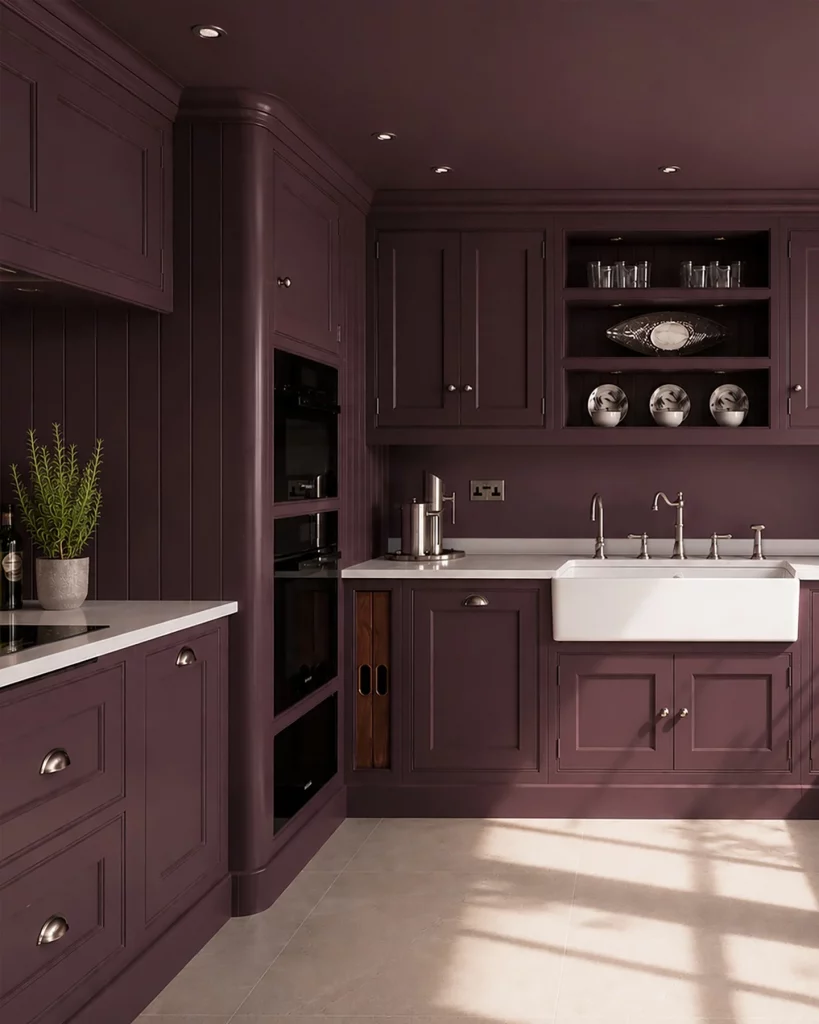
Full Aubergine Kitchen With White Worktops and Farmhouse Sink
In this kitchen, aubergine covers almost every cabinet, including the tall units, lower storage, and upper cupboards. The deep color continues onto the surrounding wall surfaces, creating an enveloping effect. A large white farmhouse sink and pale countertops provide strong contrast, while open shelving displays bowls and decorative pieces. The cabinetry includes traditional recessed panels, and sunlight falls across the pale floor in front of the sink.
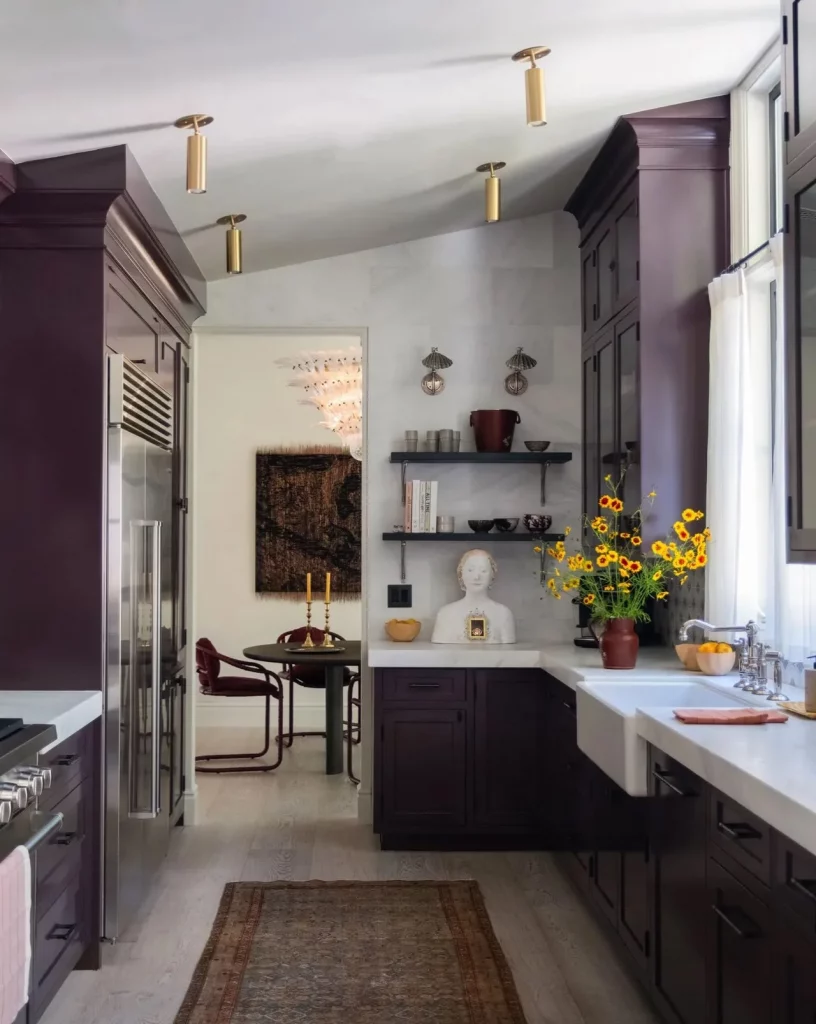
I like how the white sink becomes a clear focal point against the dark cabinetry. It provides both practical contrast and a visually substantial centerpiece. The open shelving also breaks up the continuous run of closed storage, giving the wall some breathing room while keeping selected objects on display. Integrated appliances are positioned within the cabinetry, maintaining a consistent appearance.
This is the kind of kitchen where I would pay close attention to natural light before choosing such a deep color throughout. In the image, the sunlight and white surfaces provide important balance. I would also keep the countertops and major fixtures light, as shown here, because those elements prevent the aubergine cabinetry from feeling visually flat.
Glossy Aubergine Cabinets With Reflective Mirrored Backsplash
This kitchen takes aubergine in a glamorous direction through glossy cabinetry and an intricate mirrored backsplash. The upper cabinets have glass doors that reveal rows of glassware, while the backsplash reflects the surrounding cabinets and countertop. The worktop has a strong marble pattern, and a curved metallic faucet and metallic sink add additional reflective surfaces. Small bottles, glassware, and serving pieces are arranged along the counter.
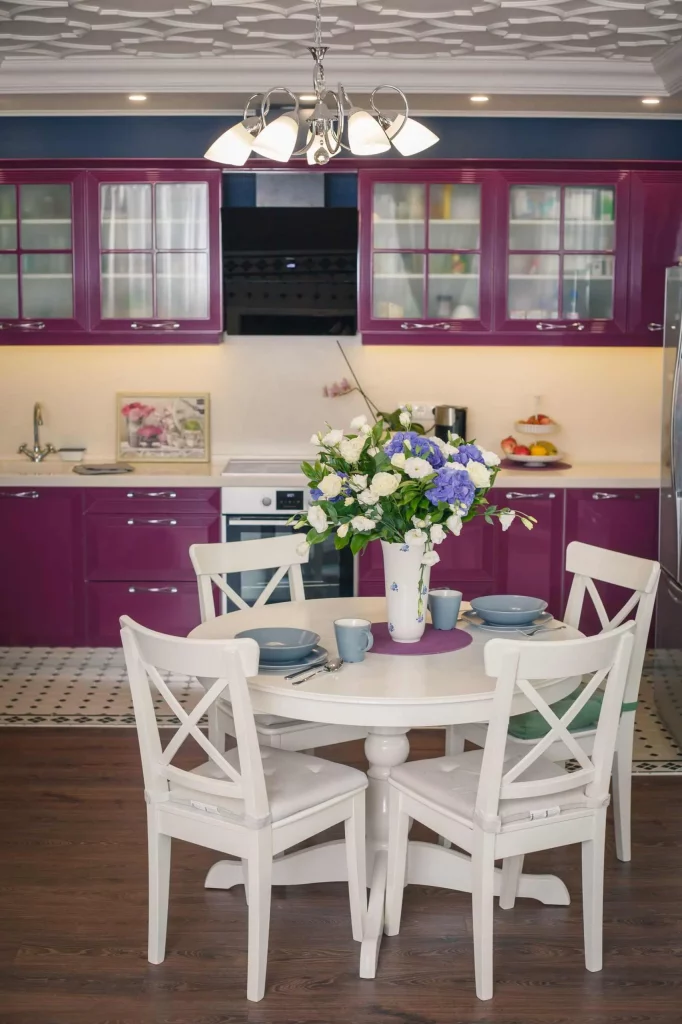
For me, the reflective backsplash is what changes the character of this design. Instead of allowing the deep cabinetry to absorb all the light, the mirrored surface introduces reflections and visual depth. The glass-front cabinets reinforce that effect by allowing the contents to catch the light. At the same time, the marble-patterned countertop gives the room a substantial horizontal surface for food preparation and entertaining.
I would approach a kitchen like this by treating reflections as part of the overall color strategy. When a deep cabinet finish is already strong, a reflective backsplash can help keep the space visually active without introducing another major color. I also like the restrained use of metallic hardware because it works naturally with the reflective surfaces already present.
Monochromatic Aubergine Kitchen With Open Display Shelving
This room takes the aubergine concept furthest by using the color across the cabinetry, walls, ceiling details, and surrounding surfaces. The paneled cabinets have a classic profile, while a white countertop and large white farmhouse-style sink stand out clearly against the dark background. Open shelves in the upper cabinetry display glasses and dishes, and integrated black appliances sit within the tall storage. Sunlight reaches the pale floor, creating a strong contrast at the base of the room.
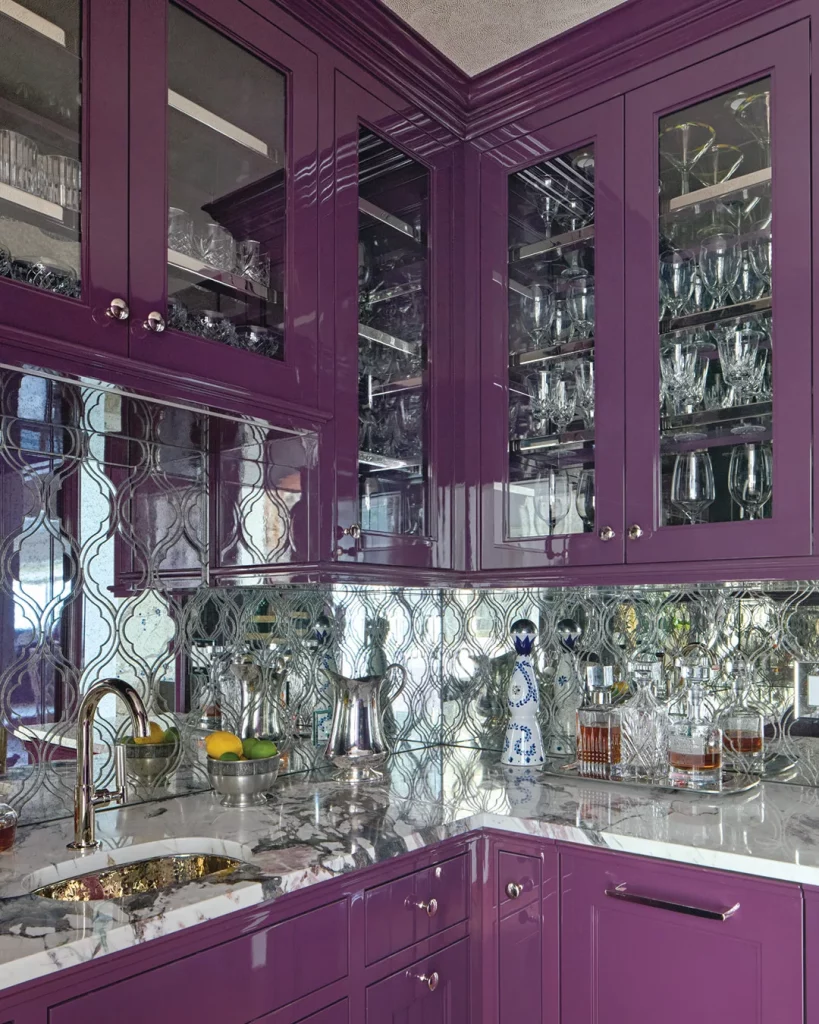
I find the monochromatic treatment surprisingly cohesive because the cabinetry profiles create the visual detail rather than relying on multiple colors. The open shelves provide a useful break in the solid cabinet runs, while the white countertop and sink introduce necessary contrast at the working level. The tall cabinetry also makes excellent use of vertical space, particularly around the integrated appliances.
For me, this image demonstrates that a single deep color can work when the room has enough architectural variation and contrasting surfaces. I would pay particular attention to lighting and countertop color in a design like this. Keeping the work surface and sink pale, as shown, gives the room a practical visual balance while allowing the aubergine cabinetry to remain the defining feature.
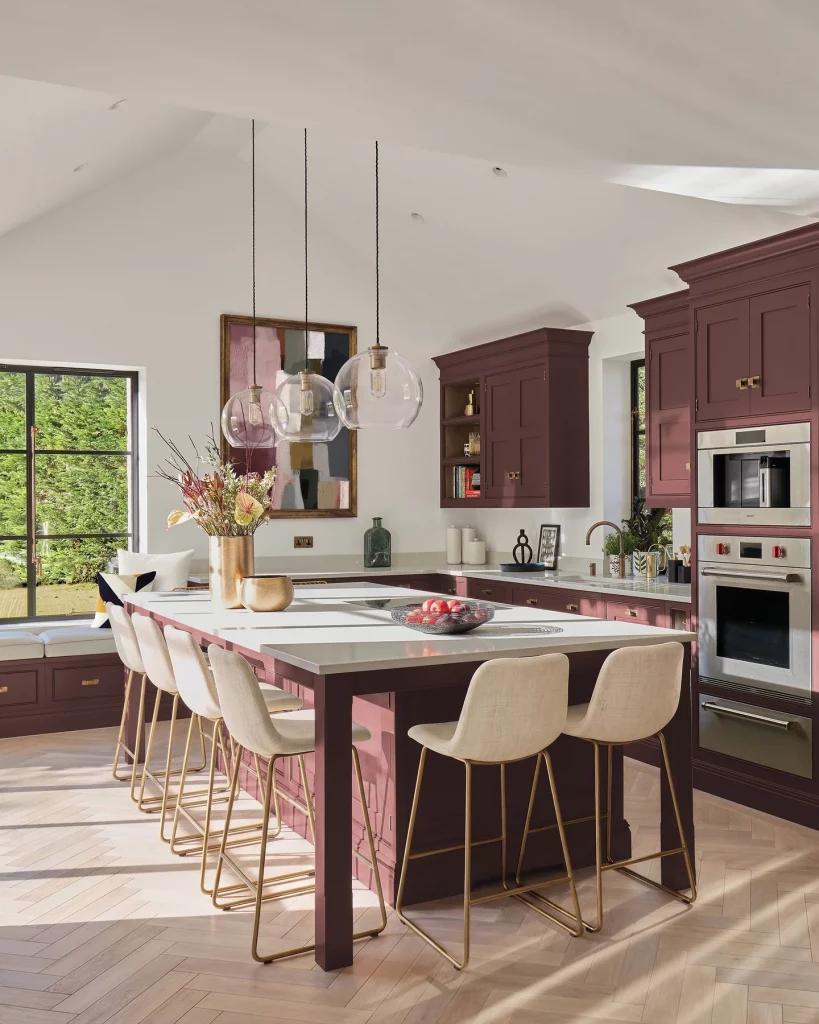
Aubergine Kitchen With Oversized Island and Gold-Toned Seating
The ninth kitchen pairs aubergine cabinetry with a large central island topped in white. The island includes seating on multiple sides, with upholstered stools supported by slim gold-toned metal legs. Matching aubergine cabinetry continues around the walls and incorporates built-in stainless-steel appliances. Large windows bring in abundant daylight, while several glass globe pendants hang above the island. A colorful artwork and simple countertop accessories add additional visual interest.
I particularly like the scale of the island because it creates a natural center for the room. The generous countertop appears suitable for preparation, serving, and casual seating, while the stools make the space feel ready for everyday interaction. The gold-toned legs introduce a subtle metallic accent that works against the deep cabinetry without requiring another dominant color.
If I were borrowing ideas from this kitchen, I would start with the relationship between the island and the surrounding cabinetry. Repeating the aubergine on both gives the room continuity, while the white island surface prevents the center from becoming too visually dense. The large windows are also important because natural light reveals the variations within the deep cabinet color.
Elegant Aubergine Cabinetry With Traditional Glass Display Doors
The final kitchen uses aubergine cabinetry with framed glass doors across the upper and lower storage. The cabinets have a polished appearance and are paired with a pale countertop. Through the glass, dishes and kitchenware remain visible, while the cabinet hardware adds small metallic details. The room is softly lit, and the aubergine cabinetry is balanced by the lighter work surface and surrounding neutral areas.
For me, this design shows how glass-front storage can make a deep cabinet color feel lighter and more layered. Instead of creating one continuous block of color, the glass allows the contents and interior shelving to become part of the composition. It also gives the kitchen a practical display area for items that are attractive enough to remain visible.
I would keep the styling inside glass cabinets fairly organized if I were recreating this look. When the cabinet color is already distinctive, a controlled display helps the doors look intentional rather than visually busy. The combination of aubergine, glass, pale countertop surfaces, and restrained hardware creates a polished kitchen that feels carefully considered from top to bottom.
Glossy Aubergine and Red Kitchen With an L-Shaped Layout
The first kitchen makes a confident statement with glossy aubergine cabinetry combined with vivid red cabinet fronts. I can see an L-shaped arrangement with a long run of lower and upper cabinets, integrated black appliances, a gas cooktop, a black range hood, and a sink positioned beneath a large window. The pale countertop and light backsplash create a clean contrast against the saturated cabinet colors, while recessed ceiling lights and warm under-cabinet lighting keep the space welcoming.
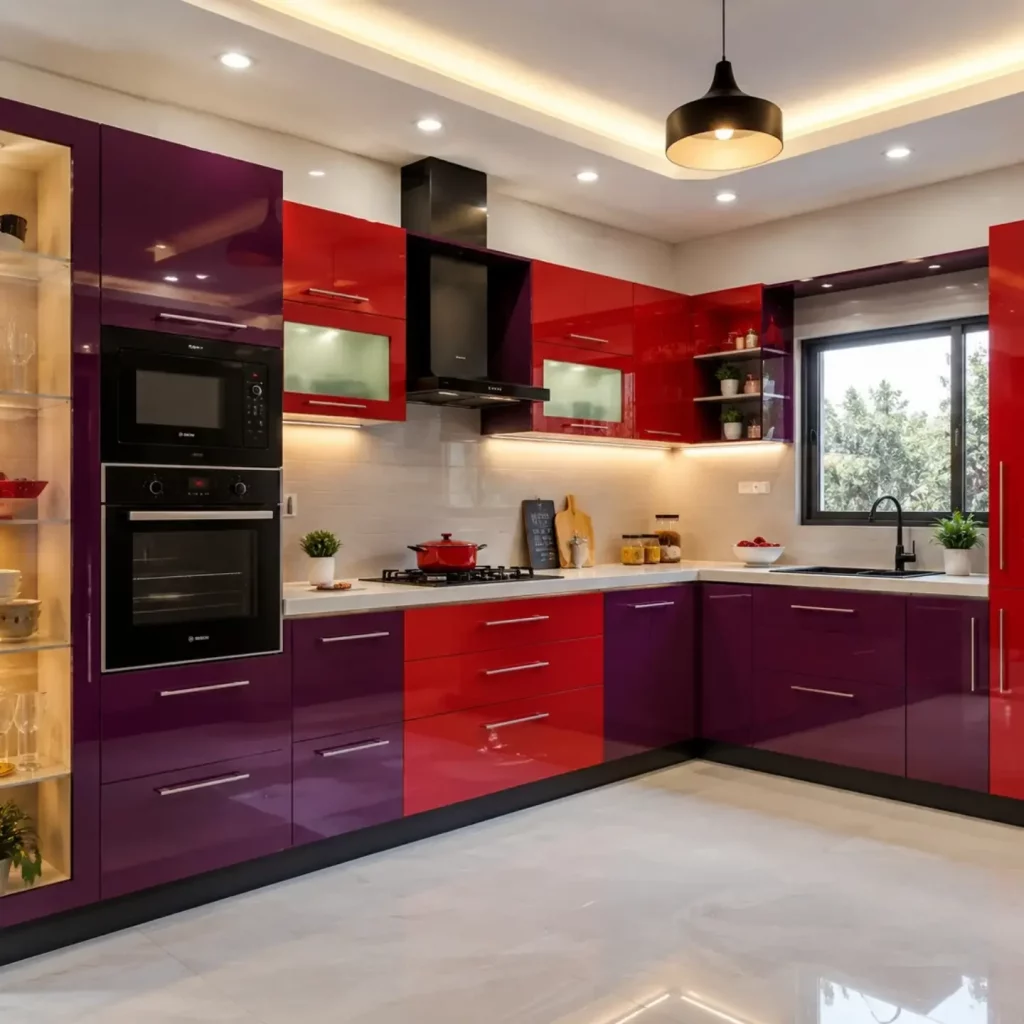
What works particularly well for me is the practical organization of this kitchen. Tall cabinetry houses the built-in microwave and oven, while the lower drawers provide generous storage along the main work area. The open shelving near the window gives a small break from the glossy cabinet fronts and provides space for everyday objects and a few decorative pieces. The combination of black appliances and dark cabinet accents also creates visual continuity throughout the room.
If I were taking inspiration from this design, I would focus on the relationship between the aubergine and red rather than trying to reproduce every detail. The two strong colors are balanced by the pale worktops, backsplash, ceiling, and floor, which prevents the room from feeling visually enclosed. I also like the way the glossy surfaces reflect the lighting, making the substantial cabinetry feel more dynamic.
Deep Aubergine Kitchen Framed by an Arched Cabinet Wall
This kitchen takes aubergine in a much deeper, more enveloping direction. The cabinetry, surrounding trim, and arched architectural frame are all finished in a rich dark aubergine-brown shade, creating a dramatic backdrop for the pale marble-look backsplash and island countertop. The island has a rounded end and a matching marble surface, while two upholstered aubergine stools sit along the front. The darker cabinetry gives the room a refined, intimate atmosphere.
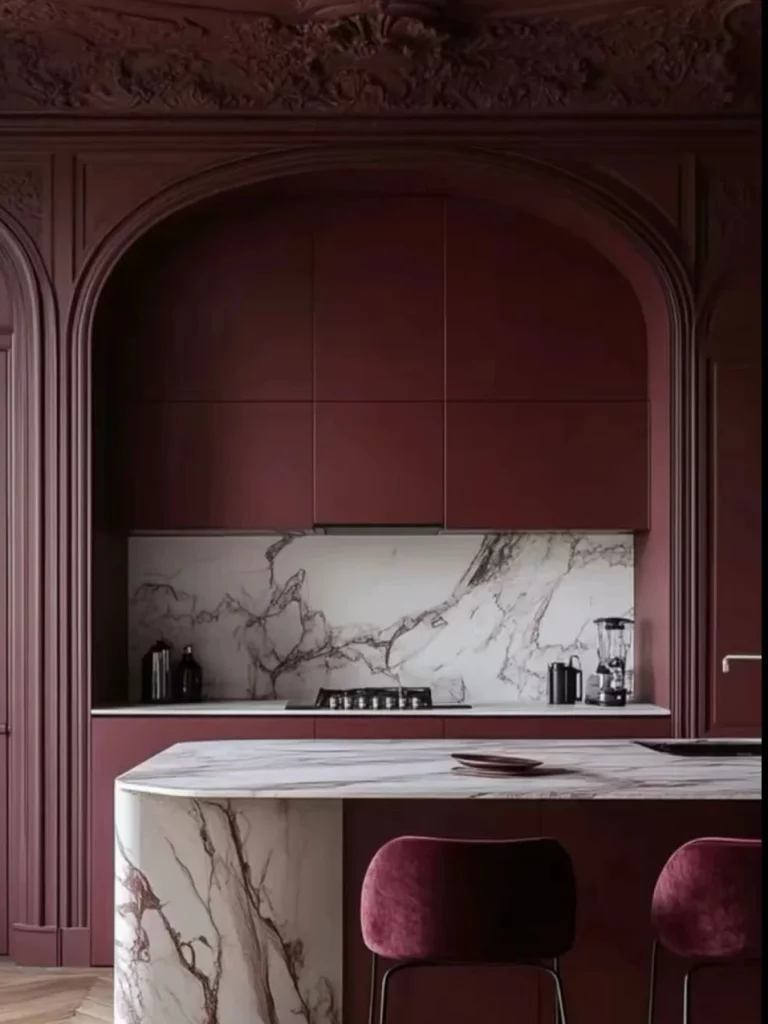
I particularly like the contrast between the deep cabinetry and the light stone surface. The marble-look backsplash extends across the cooking area and visually separates the dark upper cabinets from the worktop, while the island repeats that pale surface on a larger scale. This creates a practical visual focal point without introducing another strong color. The rounded island edge also softens the otherwise highly structured cabinetry.
For me, this is a good example of how a dark aubergine kitchen can work when the color is treated as the main architectural feature. Instead of scattering the shade around the room, the design uses it consistently across the cabinetry and framing. If I wanted to recreate this feeling, I would pay close attention to lighting and include a substantial light-colored countertop so the dark cabinetry has enough contrast.
Soft Aubergine Cabinets With Glass-Front Display Storage
Here the aubergine cabinetry has a softer, muted appearance and is paired with warm wood flooring and brass-colored hardware. I can see a tall cabinet on the left, followed by a row of glass-front upper cabinets with illuminated interiors displaying green-tinted glassware. Beneath them are closed lower cabinets and drawers, while a pale tiled backsplash provides a simple backdrop. A warm-toned countertop and carefully arranged accessories complete the compact composition.
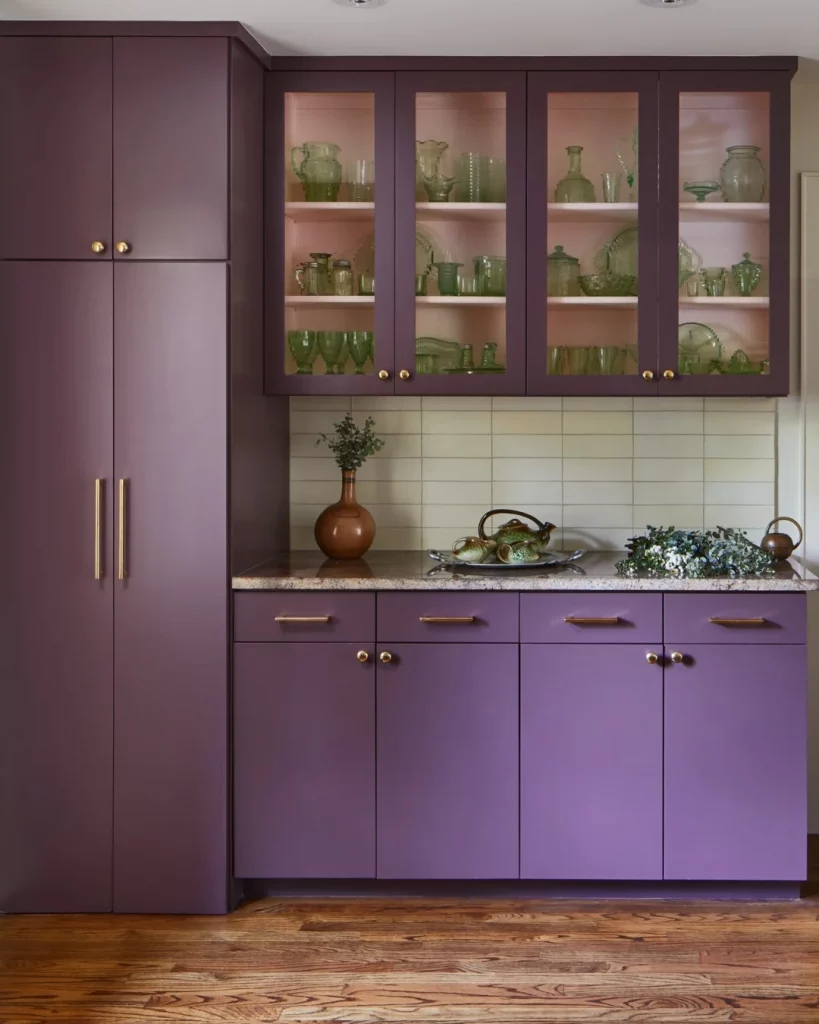
The glass-front cabinets are the feature I find most useful in this kitchen because they add openness without sacrificing storage. The glassware becomes part of the visual design while remaining protected inside the cabinetry. The combination of closed storage below and display storage above also creates a clear division between everyday organization and decorative presentation. Small brass-colored knobs and pulls add another subtle layer of detail to the aubergine fronts.
I would use this approach when I wanted aubergine cabinetry to feel sophisticated but not overly heavy. The warm flooring introduces a natural visual contrast, while the lighter backsplash keeps the wall from becoming too dark. I also like the restrained arrangement of objects inside the glass cabinets; because the shelving is neatly organized, the display contributes to the overall design rather than looking cluttered.
Light Aubergine Island With Marble Surface and Artistic Accents
This open kitchen uses a much lighter aubergine tone on the island cabinetry, creating a gentle color statement against pale walls and warm wood flooring. The large island is topped with a heavily veined stone surface that extends toward the foreground, and brass-colored handles emphasize the drawers and doors. Above the island, two sculptural pendant shades introduce warm wood tones, while framed artwork and a turquoise chair are visible in the adjoining area.
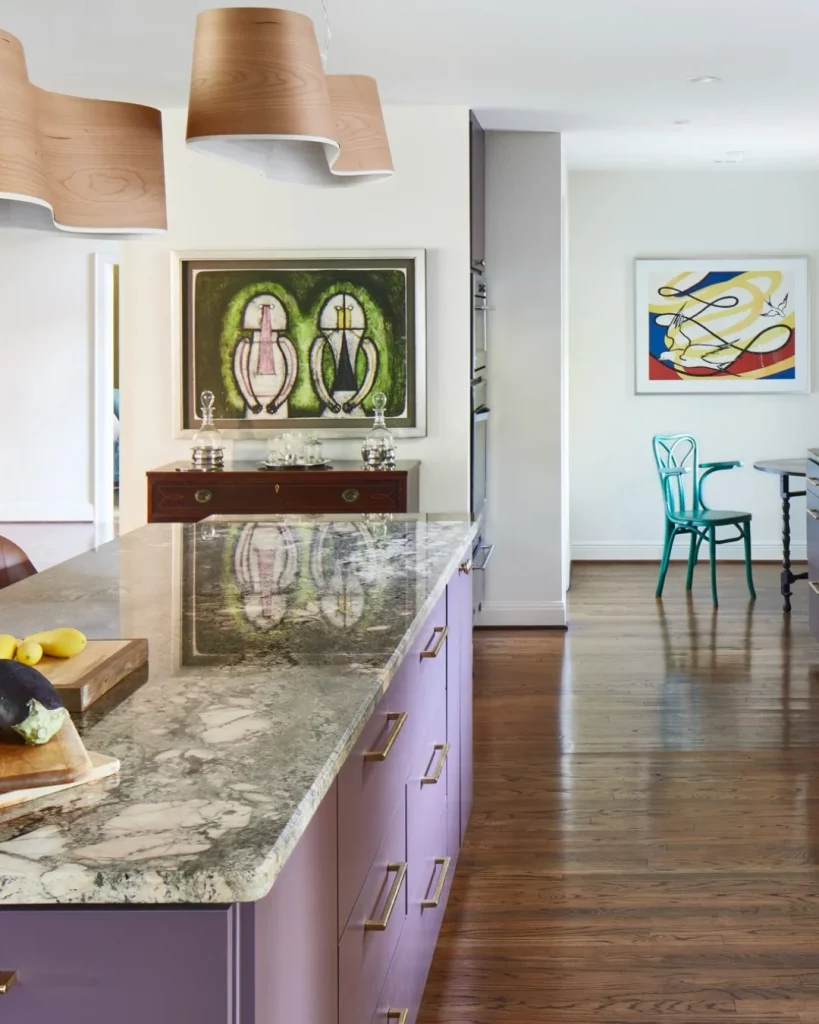
I like how the island becomes the strongest kitchen element without overwhelming the open space. The pale aubergine cabinetry sits comfortably alongside the marble surface, while the extensive countertop provides generous working space. The island also creates a natural visual connection between the kitchen and the adjoining room, where the artwork, chair, and wooden flooring continue the relaxed color story.
From my perspective, this image shows that aubergine does not have to mean a very dark or intense kitchen. A softer version of the color can add personality while still allowing the room to feel airy. The marble surface is especially effective because its varied veining adds texture without competing with the cabinet color. I would keep surrounding finishes similarly restrained if I wanted the island to remain the visual focus.
Compact Aubergine Kitchen With Warm Wood Cabinetry
The final kitchen combines glossy aubergine cabinetry with warm wood-effect lower cabinets, creating a striking two-tone composition. The upper cabinets are sleek and reflective, while the lower run uses a horizontal wood grain that brings warmth to the room. A white countertop and pale backsplash brighten the workspace, and an aubergine peninsula curves around the right side. Open wall-mounted storage holds dishes and kitchen items, while small decorative pieces add personality.
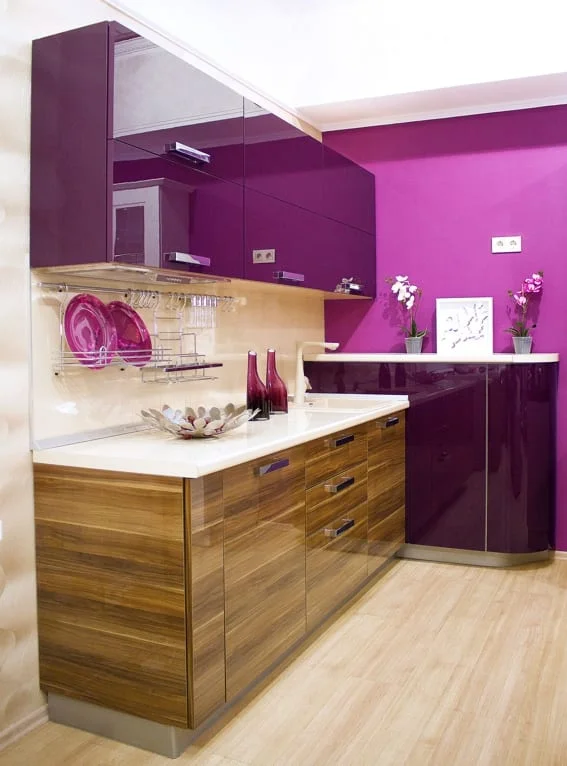
For me, the strongest feature is the balance between the saturated aubergine and the warmer wood finish. The wood-effect cabinets visually soften the glossy purple surfaces and make the compact kitchen feel more approachable. The white countertop also provides a clean working area, while the open rack keeps frequently used dishes within reach. The peninsula makes efficient use of the available corner and gives the kitchen a cohesive L-shaped feel.
I would take this idea as inspiration for a smaller kitchen where a full wall of dark cabinetry might feel too dominant. Using aubergine selectively on the upper cabinets and one section of the lower layout allows the color to remain distinctive while the wood-effect fronts introduce visual warmth. The reflective cabinet surfaces can also help bounce available light around the room, particularly when paired with a pale countertop and backsplash.
Aubergine is a beautiful way to give a modern kitchen more depth, personality, and visual warmth. From rich cabinetry to subtle purple accents, this color can be adapted to both spacious and compact spaces. I especially love how it works with white, wood tones, dark surfaces, and metallic details. Which aubergine kitchen idea inspired you the most? Leave a comment and share your favorite!