
Basements get a bad rap for being dark and uninviting, but they can actually make for some of the coziest living rooms in a house. Being below grade gives the space a natural separation from the rest of the home, which is ideal for a dedicated hangout zone.
This collection of 33 basement living room ideas shows how to work with lower ceilings, limited natural light, and open floor plans to create a room you will actually use. From sectionals that fit the footprint to media setups that make the most of the square footage, each look solves a common basement challenge.
Embrace Open-Plan Living with a Cream Bouclé Sectional
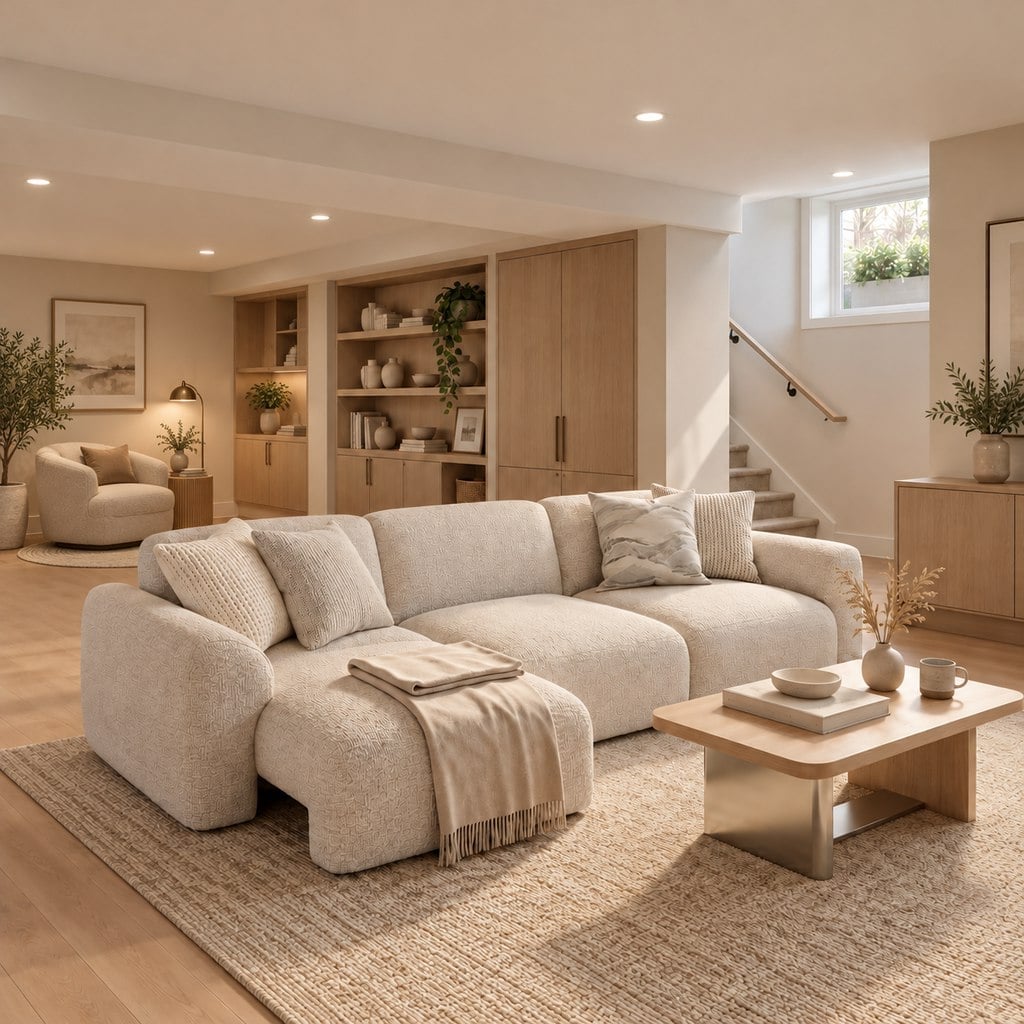
The stairs in an open-plan basement living room can make the layout feel like a pass-through, so anchoring the space around a large, textured sectional is a smart move. A cream bouclé sofa with a chunky weave gives the eye something soft to land on, while a slim wood coffee table and jute rug keep the palette simple and grounded. Recessed ceiling lights and the stairwell keep the room feeling open rather than cave-like. For a basement with low ceilings, a low-profile sectional helps the room feel taller than it is.
Curved Modular Sofa Anchors a Modern Neutral Den
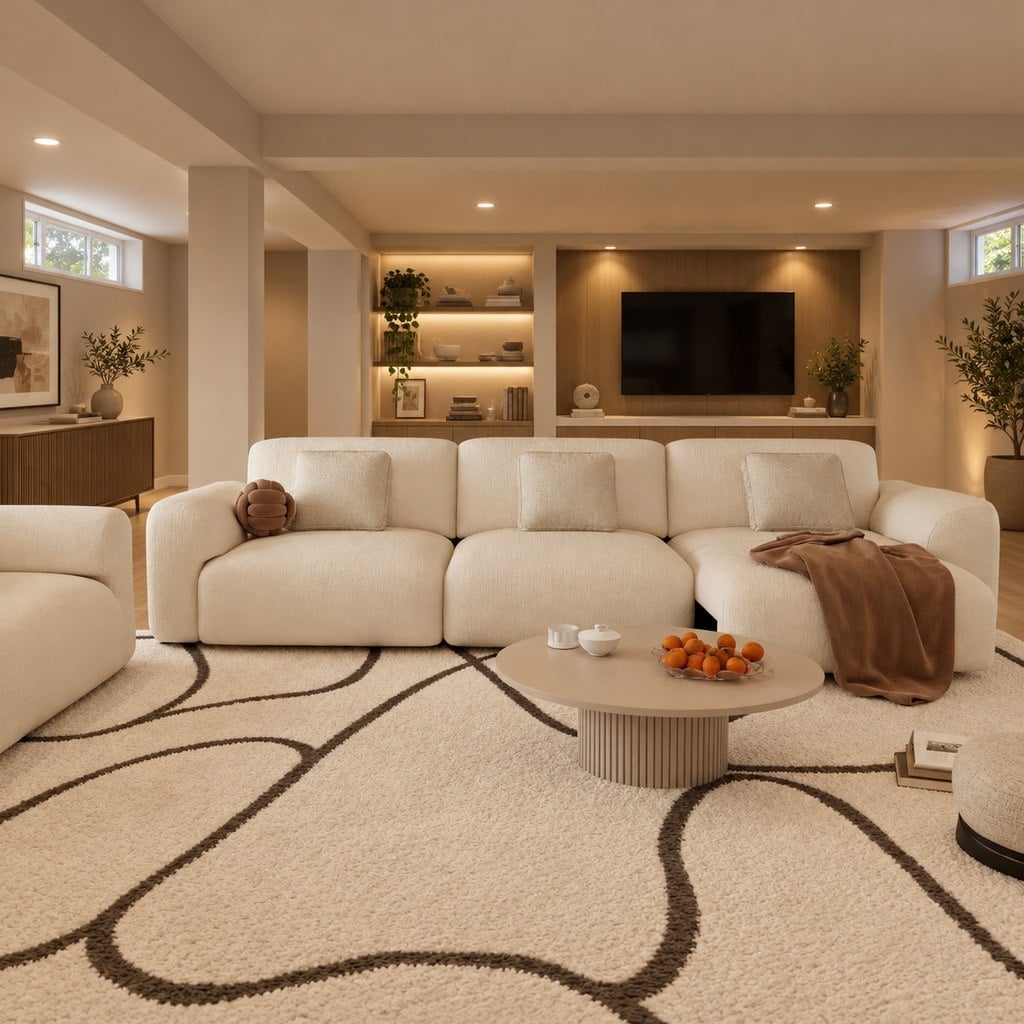
A curved modular sofa softens the straight lines of a media wall and makes the seating feel more like a destination than a row of chairs. The palette sticks to cream, beige, and wood tones, with just a few black accents in the lighting and table legs to give the eye a resting point. A round coffee table echoes the sofa’s curve and keeps traffic flow open. In a basement living room, a curved sofa also helps define the living zone without needing a wall behind it.
Vibrant Green Sectional for a Pop of Color
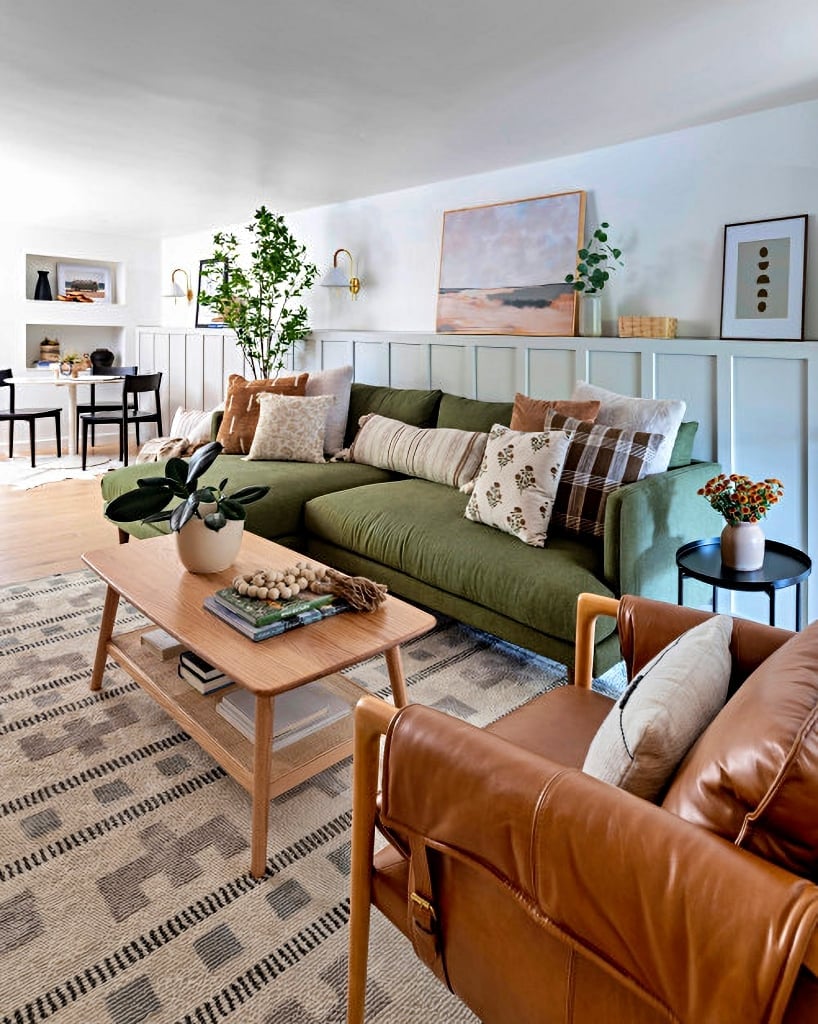
Can a single piece of furniture carry the whole color story of a basement living room? A large green sectional sofa proves it can, as long as the rest of the room stays neutral. White walls, a wood coffee table, and a light rug let the green read as intentional rather than accidental. Wall sconces on either side of the seating area add warmth without taking up floor space, which matters in a room where every square foot counts. A matching armchair in a similar green ties the seating group together and gives the layout a balanced feel. The trick is keeping the green as the only saturated color, so the eye doesn’t wander.
Rustic Charm with Dark Wood Paneling and Blue Sofa
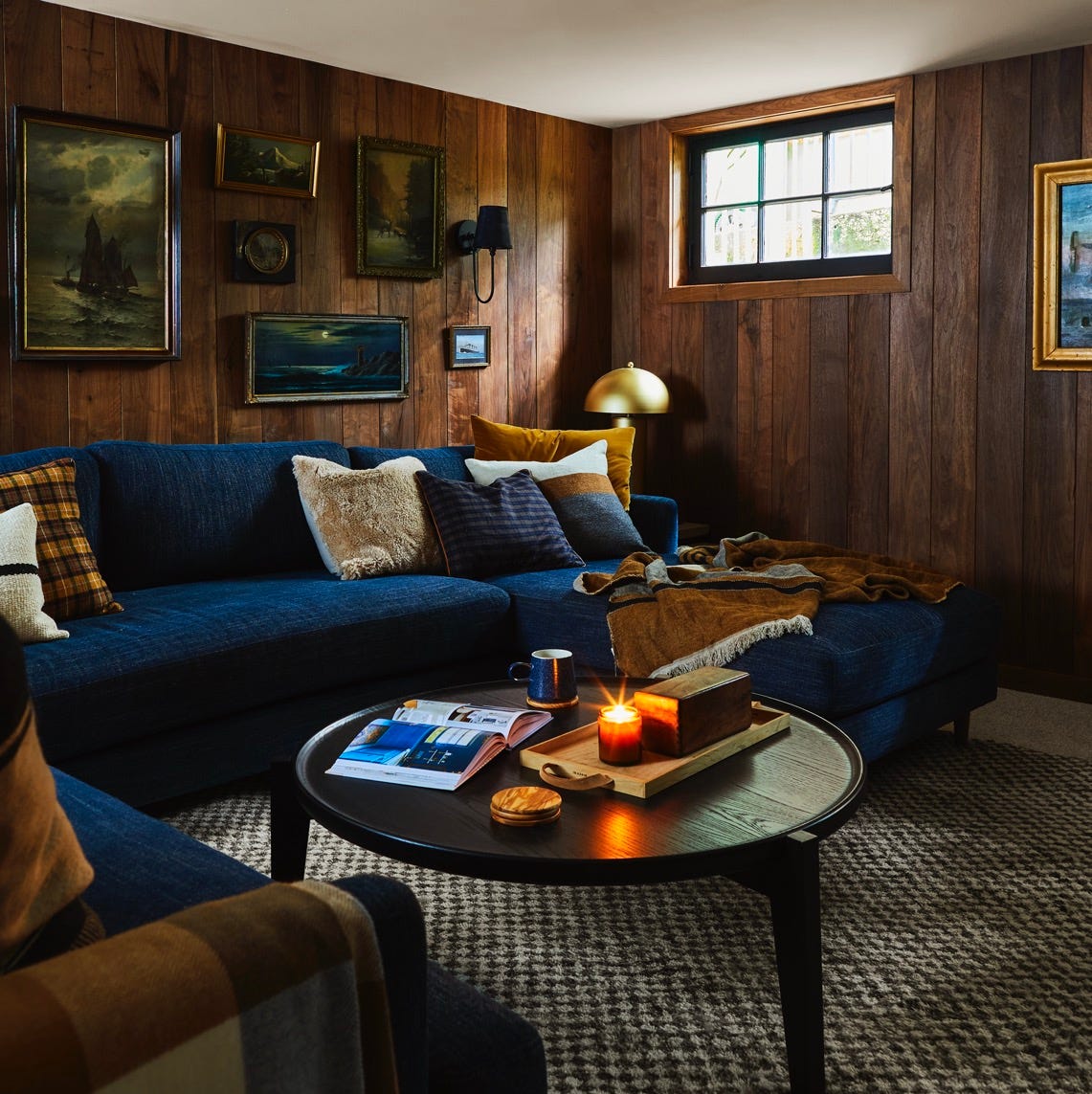
Dark wood paneling on the walls gives a basement the kind of warmth that drywall alone can’t match. Paired with a deep blue sectional, the room feels cozy without tipping into gloomy. A round coffee table in a lighter wood finish breaks up the dark tones, and a gold table lamp adds a warm glow at eye level. The key is balancing the heavy paneling with lighter fabrics and metal accents. In a basement with limited natural light, the wall sconces help spread light across the paneling rather than leaving it in shadow.
Exposed Brick Wall as a Feature for Eclectic Style
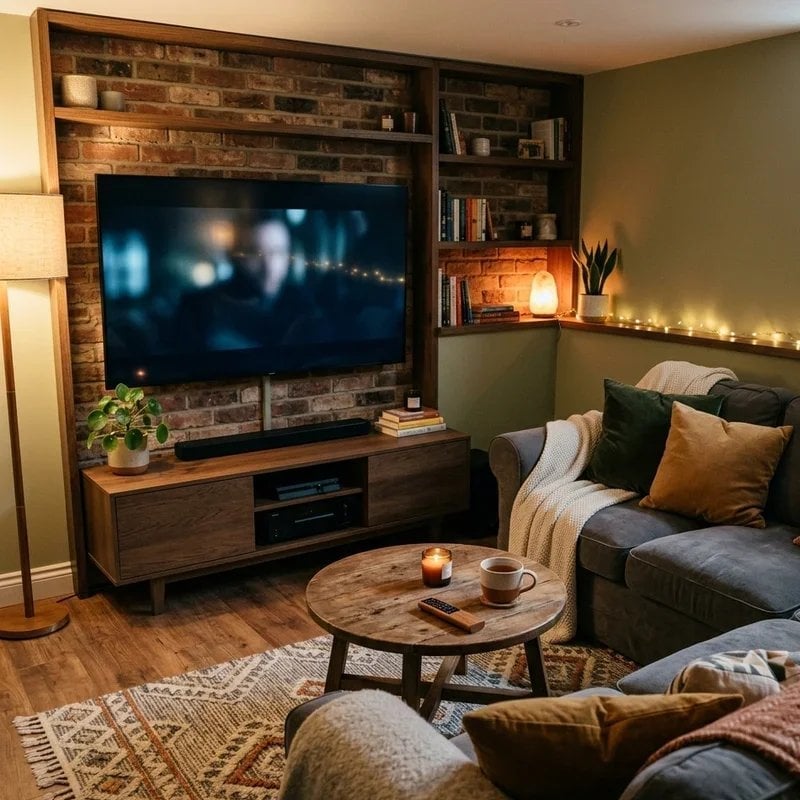
An exposed brick wall in a basement living room works best when it is treated as the backdrop. A media console and sofa in neutral tones keep the focus on the texture of the brick, while a floor lamp and string lights add warmth. The brick’s earthy red-brown color pairs naturally with wood and green upholstery, so the room feels collected. In a compact basement, letting one wall be the feature keeps the space flexible for seating and storage. Just keep the furniture low to avoid hiding the brick.
Modern Farmhouse Comfort with Abundant Textured Pillows
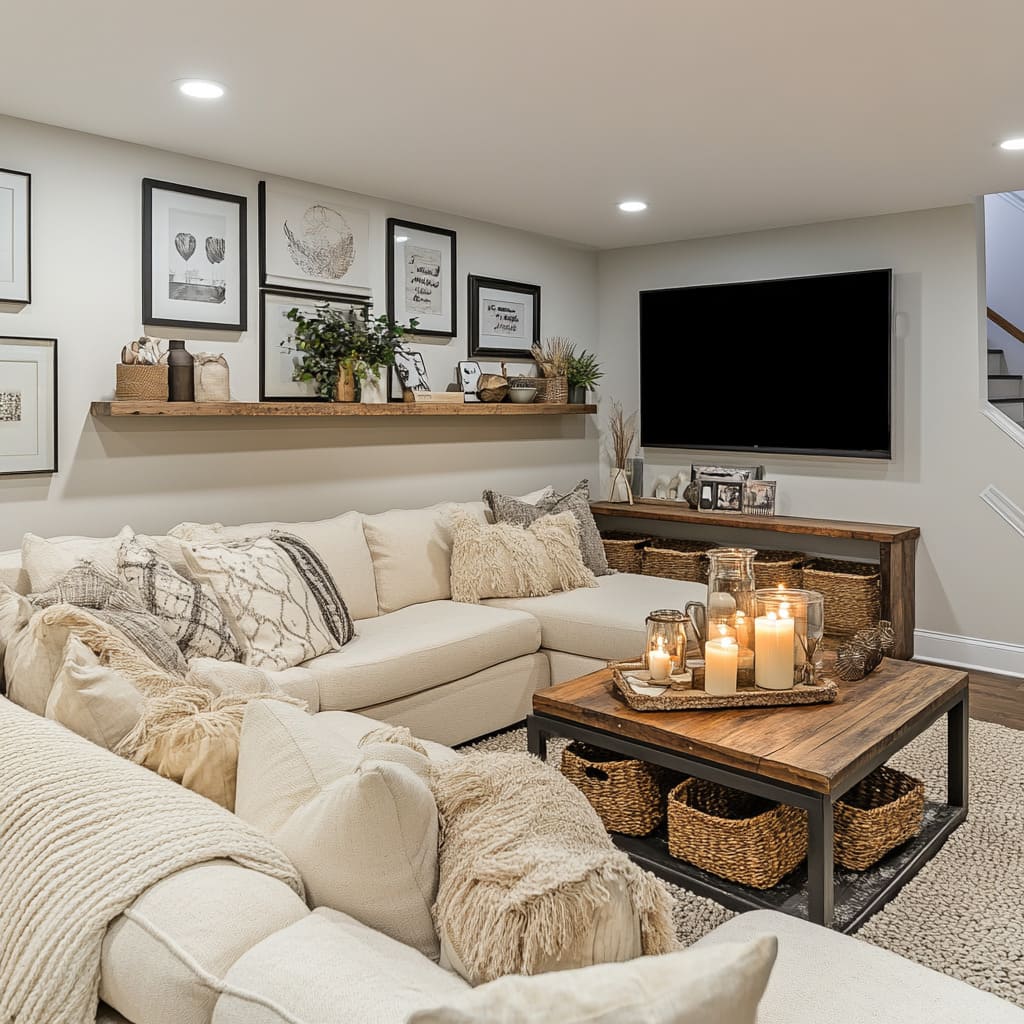
A cream boucle sectional is a natural fit for modern farmhouse style, but without the right accents it can read as too plain. This room solves that by stacking the sofa with throw pillows in linen, knit, and woven textures, creating a layered look that feels collected rather than staged. The wooden coffee table and gallery wall keep the neutral palette grounded, while the woven baskets add storage that doubles as decor. For a similar effect, swap out solid pillows for mixed textures in a tight color range: cream, beige, and wood tones. It gives the sectional a custom feel without a custom price tag.
The key is keeping the palette tight even as the textures vary. That way the sofa stays the anchor, and the pillows add comfort without competing.
Geometric Rug Defines a Modern L-Shaped Seating Area
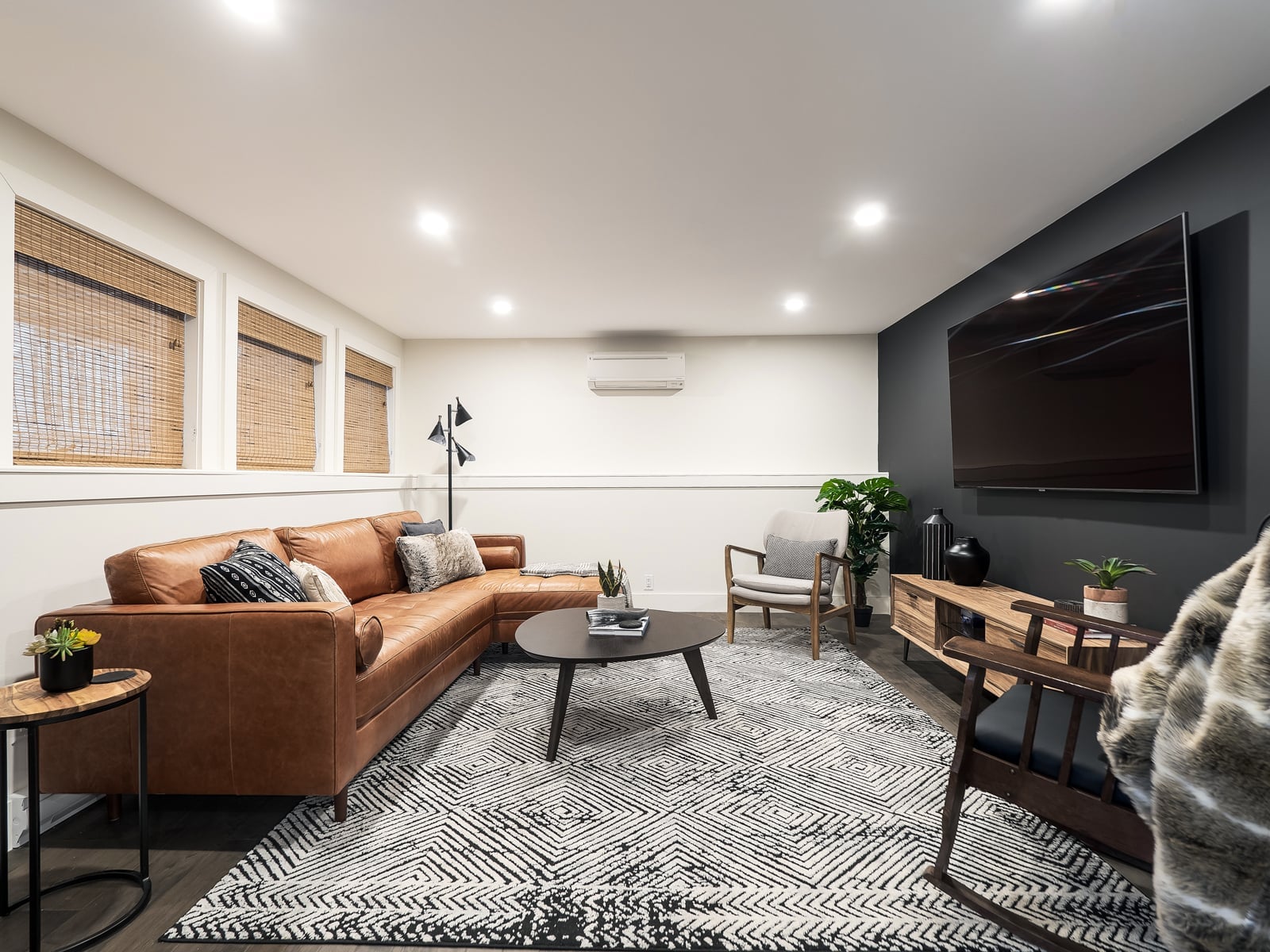
An L-shaped sectional can float in a roomy basement unless something ties it to the floor. Here a large geometric rug in black, white, and gray does that job, creating a clear seating zone within the open plan. The rug’s pattern adds visual weight without needing a bold wall color, and the leather and wood pieces play off its contrast. For renters, a rug is the easiest way to define a zone: it does not require paint or permanent changes, and it can move with you to the next space.
Sage Green Walls Create a Traditional, Cozy Atmosphere
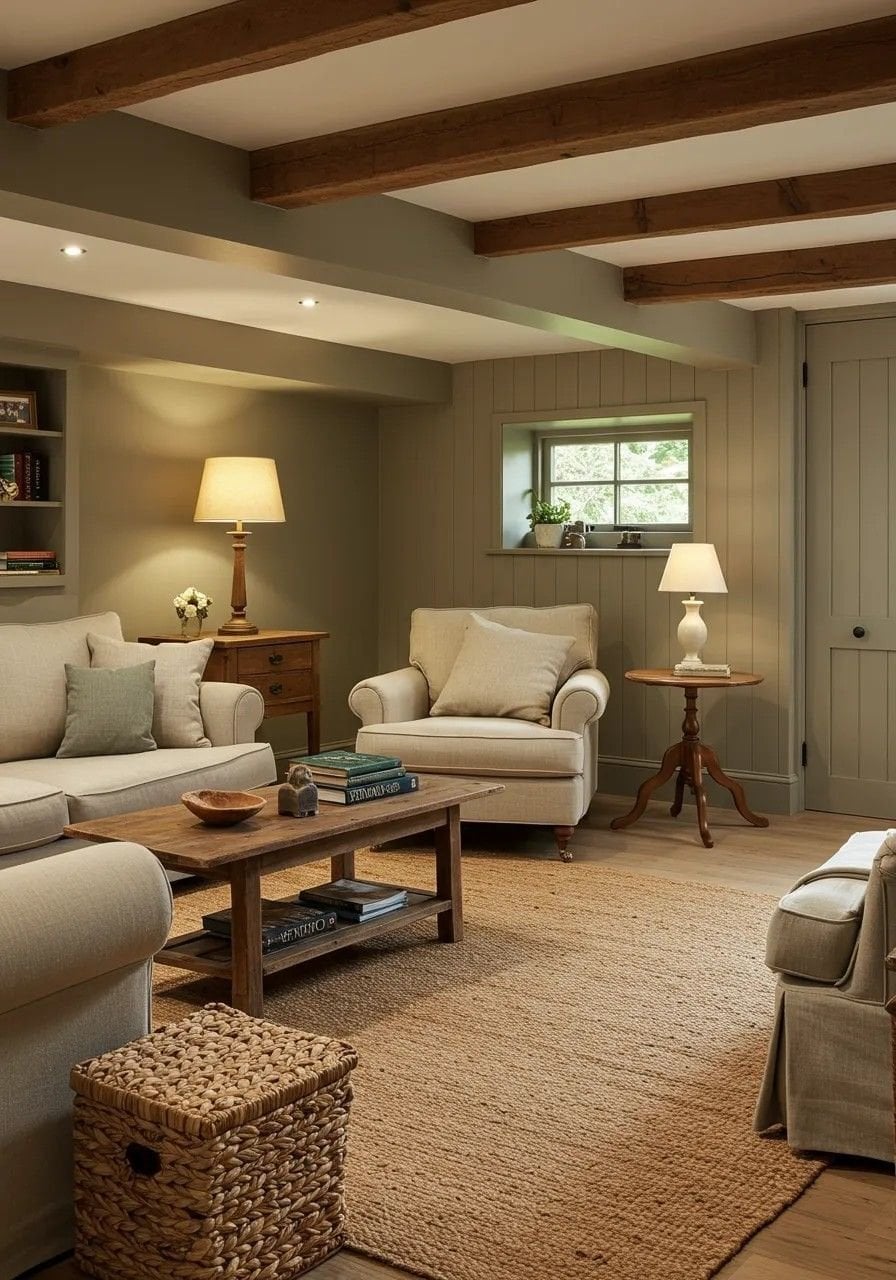
Sage green walls do the work in this compact traditional living room, giving the space a warm, grounded feel that white walls cannot match. The cream sofa and jute rug keep the palette soft, while the wood coffee table and lamp bases add warmth. The layout is a simple conversation area: a sofa and armchair facing each other across the coffee table. That arrangement works well in a smaller basement where you want the room to feel intimate rather than cramped. The palette principle here is that one mid-tone wall color can make a room feel finished without needing much else.
Stone Fireplace and Media Unit in a Transitional Space
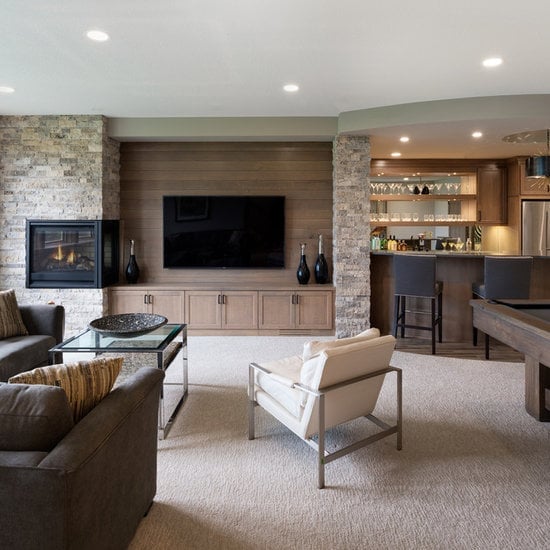
In a transitional basement, a stone fireplace feels intentional when paired with a media unit built into the same accent wall. The fireplace and TV share a single visual anchor. The palette stays neutral with stone, wood, and gray tones, and the room is open plan with distinct zones: a seating area with sofa and armchairs, a pool table, and a bar. That layout works because the stone wall acts as the spine, drawing the eye. A large stone feature works best when it serves double duty, housing both the fireplace and the media gear, so it earns its square footage.
For the seating area, keep the furniture low and simple. A low-profile sofa and armchairs let the stone wall stay the focal point, and recessed ceiling lights keep the ceiling clean.
Bold Black and White Rug Enhances Modern Gray Seating
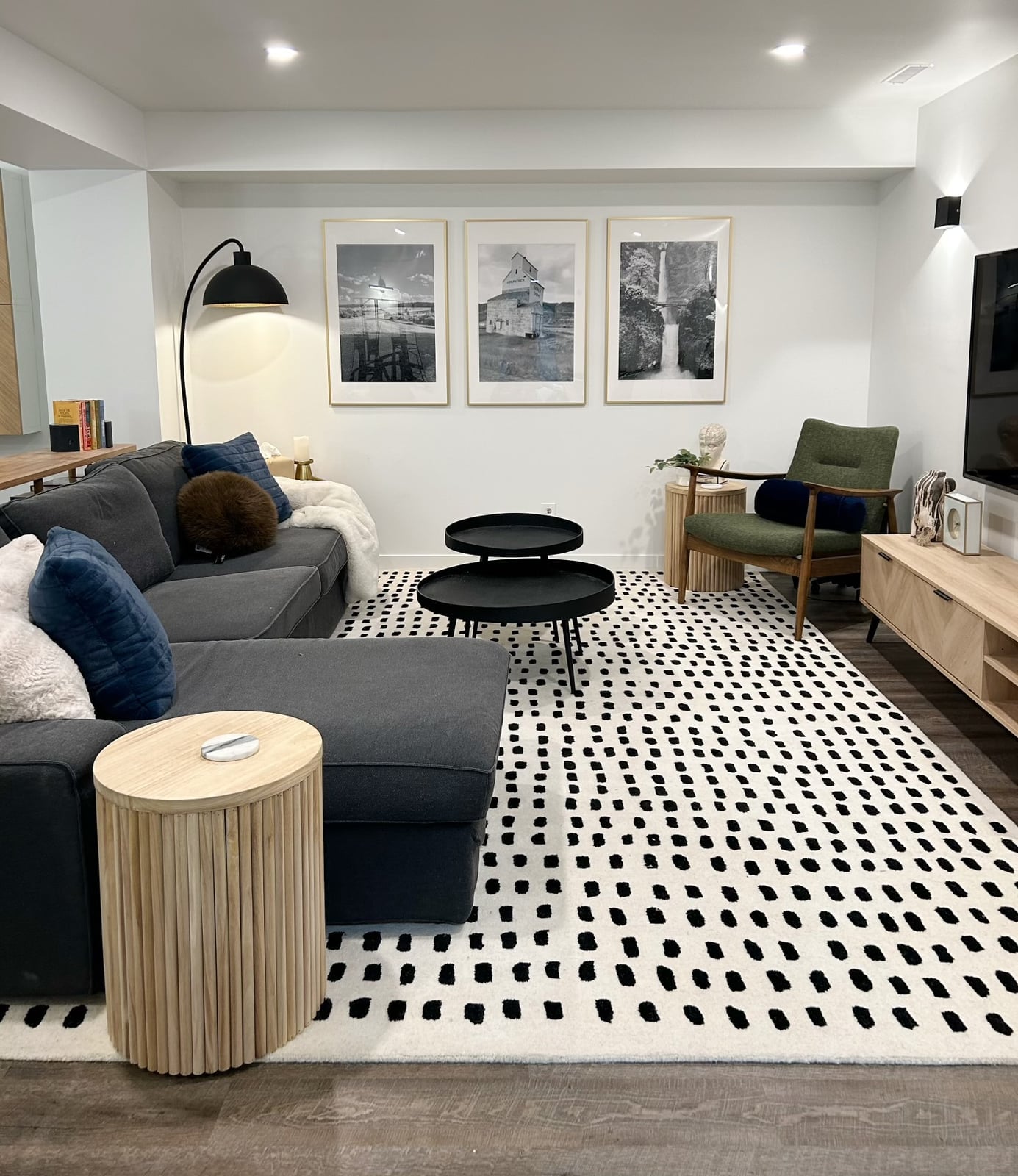
A large gray sectional can dominate a roomy basement, but this one gets balanced by a bold black and white patterned rug that anchors the seating area. The rug’s high contrast creates a clear boundary for the sofa, and the green armchair adds a single color accent that breaks the gray. Track lighting and a floor lamp provide layered light, which is useful in a basement where natural light is limited. The rule of thumb for a rug under a sectional: it should extend past the front legs by at least 12 inches to make the seating area feel connected rather than floating.
Home Theater Feel with a Large Projection Screen
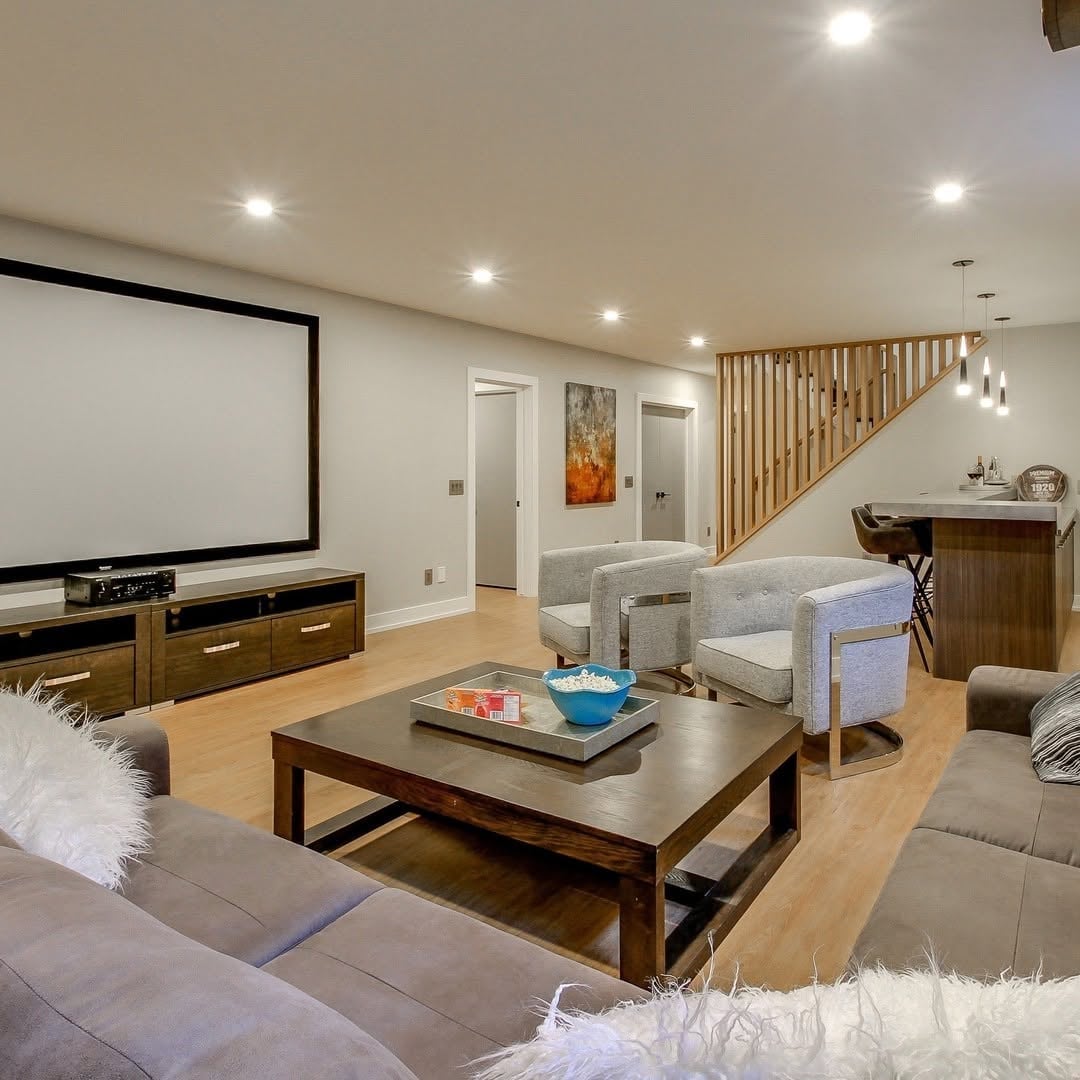
A basement can double as a home theater without turning into a dark cave. Keep the seating flexible so everyone gets a clear view of the large projection screen. This space uses a sofa and armchairs arranged in an open plan, with a media console underneath the screen for gear. Recessed ceiling lights let you dim the room for movies but still see where the popcorn is. The gray and beige palette with wood accents keeps it from feeling like a commercial cinema. The room stays livable for everyday use because the screen is just one element, not the whole identity of the space.
Dominant Stone Fireplace with Live-Edge Coffee Table
A stone fireplace can dominate a room, but it does not have to fight with the furniture for attention. A different approach would be to let the fireplace set the palette and let everything else follow. Here the stone is gray and white, and the room picks up those tones in the sofa, armchairs, and the marble accents. The live-edge wood coffee table adds a natural warmth that balances the stone.
Wall sconces and overhead lights provide even illumination, so the fireplace does not have to be the only light source in the evening. The seating is arranged around the fireplace, which makes the layout feel deliberate. The palette works because the stone is the anchor, and the wood and fabric pieces soften it.
Navy Built-In Entertainment Center for Sleek Storage
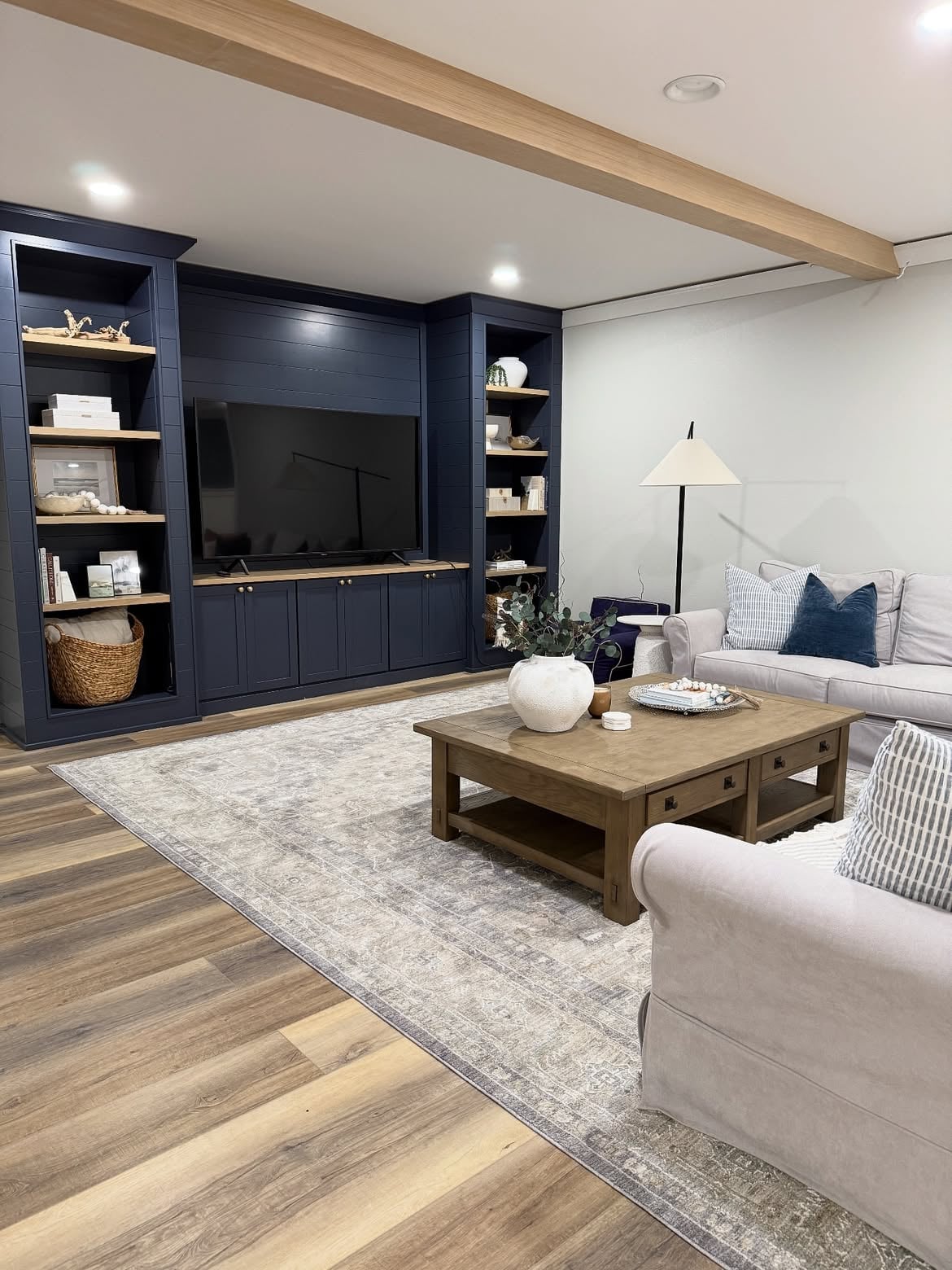
A navy built-in entertainment center uses color to turn storage into a design feature. The deep blue draws the eye to the wall unit, which holds the TV, media components, and display items in one clean line. The rest of the room stays neutral with wood tones and a warm beige sofa, so the built-in does not compete with other pieces. A floor lamp adds task lighting near the seating, while recessed lights keep the ceiling clean. The result is a room that feels spacious because the clutter is hidden inside the unit, not scattered across the floor.
Modern Farmhouse Style with Geometric Rug and Wood Coffee Table
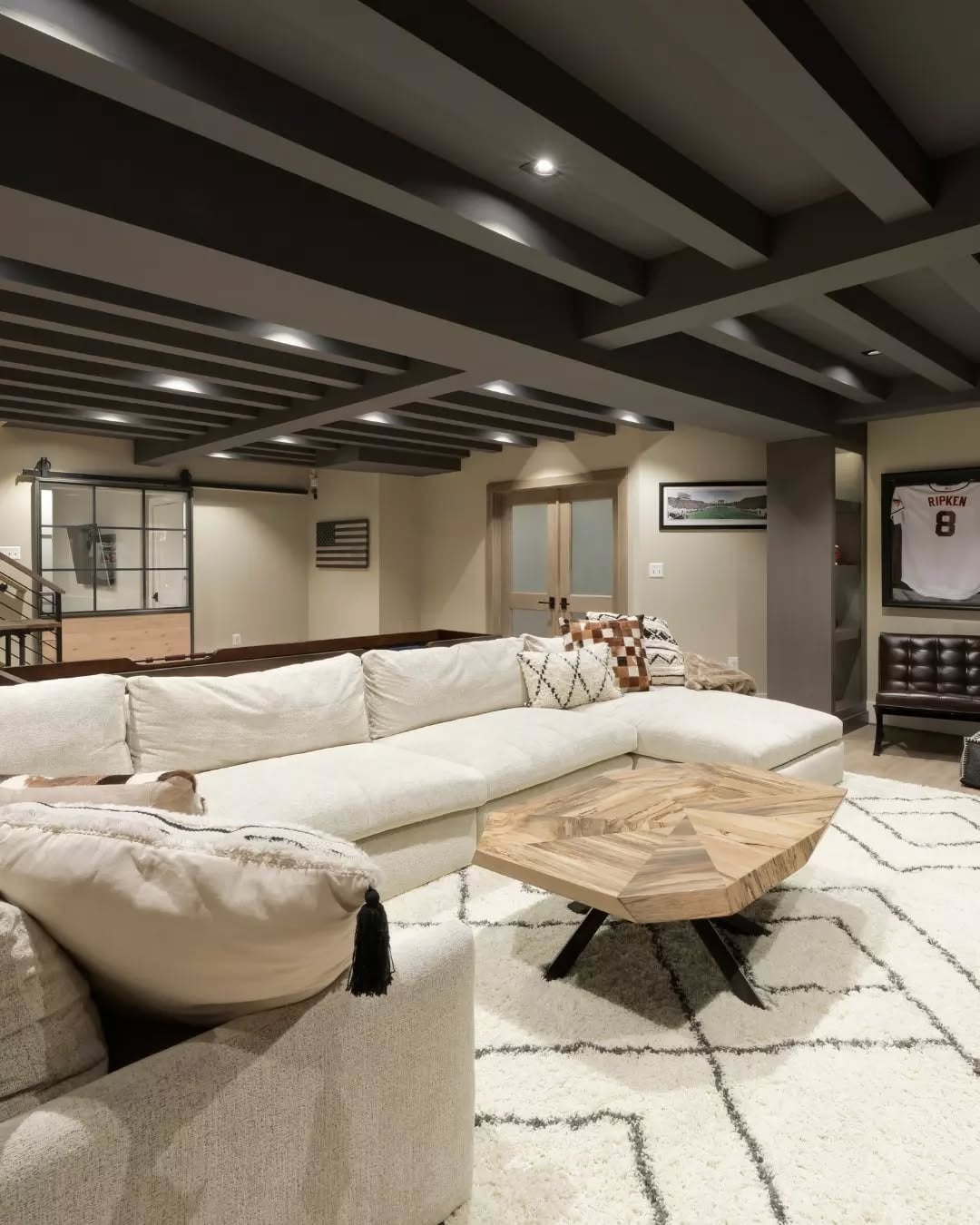
This room gets its look from a geometric rug that defines the seating area. The large sectional sofa and wood coffee table sit on top of the patterned rug, which pulls the cream, gray, and brown palette together. The style is modern farmhouse, but the geometric pattern keeps it from tipping into rustic cliche. Overhead lighting provides general illumination, and the ambient light from the rug’s lighter tones helps the room feel open. What breaks the look is the boldness of the rug itself: it is the one piece that does not play it safe, and that is exactly what makes the room memorable.
Cozy Modern Farmhouse with a Wood-Burning Stove
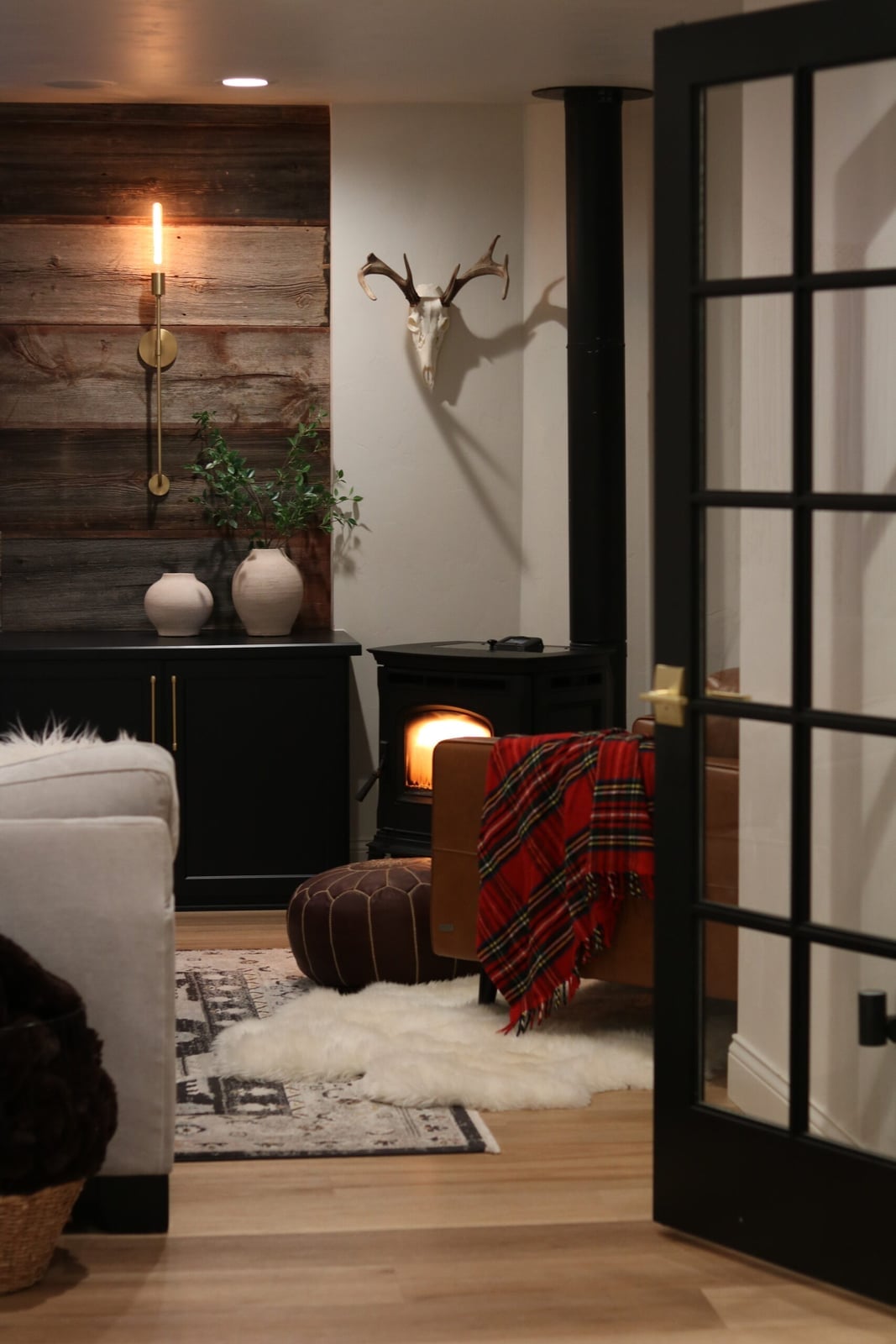
A wood-burning stove changes how a basement feels in every season. A practical rule for this layout is to place the stove on one side of the room and the sofa facing the fireplace, so both heat sources warm the seating area. This room uses a wood stove on the side wall, with a leather armchair nearby, and a sofa arranged to face the stone hearth. The wood-paneled accent wall behind the stove ties the room to the modern farmhouse style.
Wall sconces provide soft light, but the real glow comes from the fire itself. The neutral palette with black metal and wood tones keeps the room cozy without feeling heavy. The stove is the center of attention, but the layout lets the rest of the room function as a lounge, not just a fireplace viewing area.
Compact Traditional Living Room Centered Around a Stone Fireplace
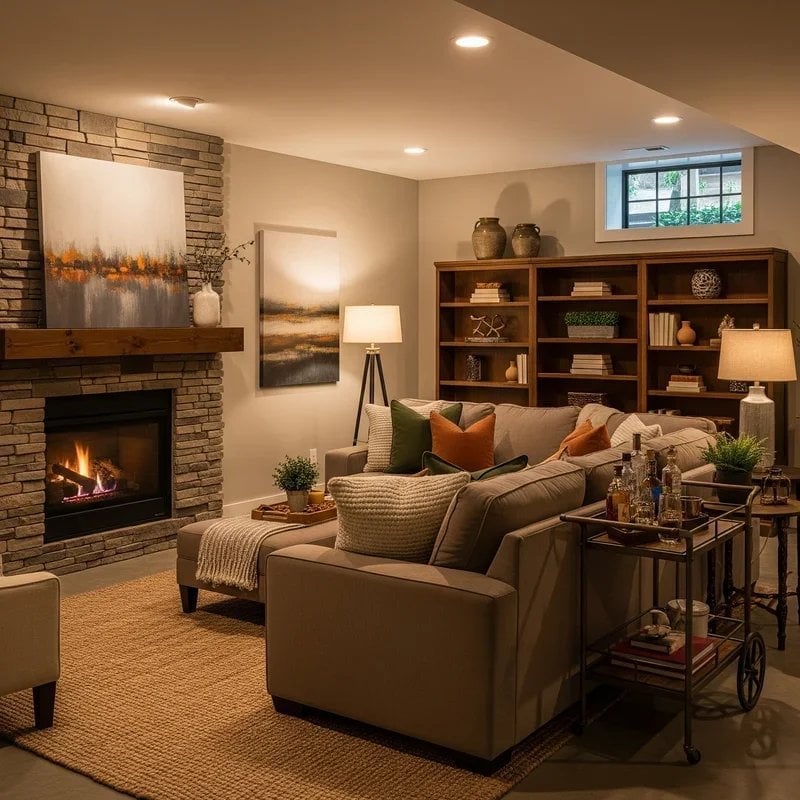
A stone fireplace sets the tone for this cozy traditional basement living room, with gray, beige, and warm tones pulling the palette together. The seating area feels defined but not crowded, with a sofa and armchair arranged to face the hearth. A bookshelf on one side fills the vertical space without eating into the floor plan. The key to making a compact room feel settled is to pick one anchor, in this case the fireplace, and let everything else support it. Recessed lighting and lamps layer in softness alongside the firelight.
Entertainment Hub with Pool Table and Bar Area
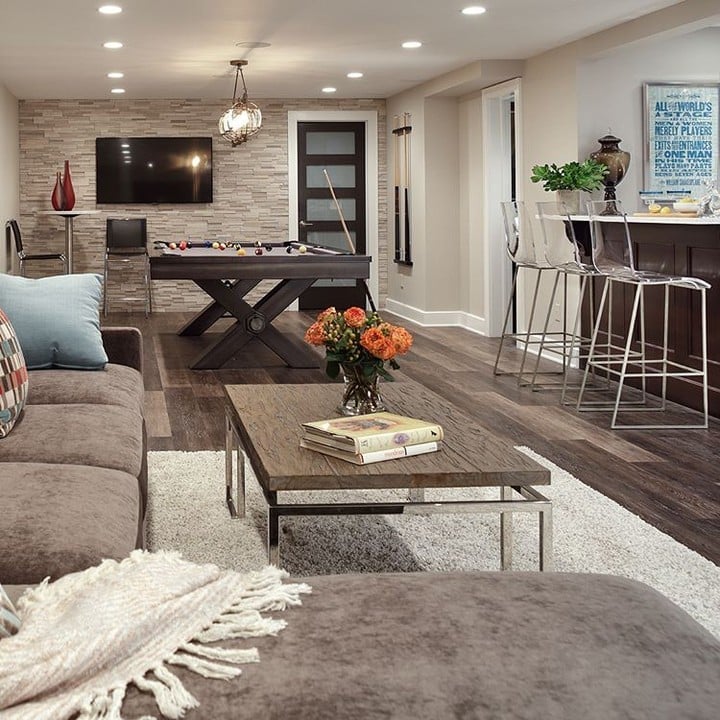
To help a basement multitask, separate activity zones without closing them off. Here a pool table and bar area sit in the same open plan as a sectional sofa, each zone marked by its own pendant or recessed lighting. The modern rustic palette of brown, beige, gray, and dark wood keeps the look cohesive. For renters, a similar setup works with a freestanding bar cart and a felt-topped table that protects the floor. The key is to keep the sightlines open so the room feels like one space, not a collection of furniture.
Dark Gray Accent Wall with Fireplace and Deer Skull Decor
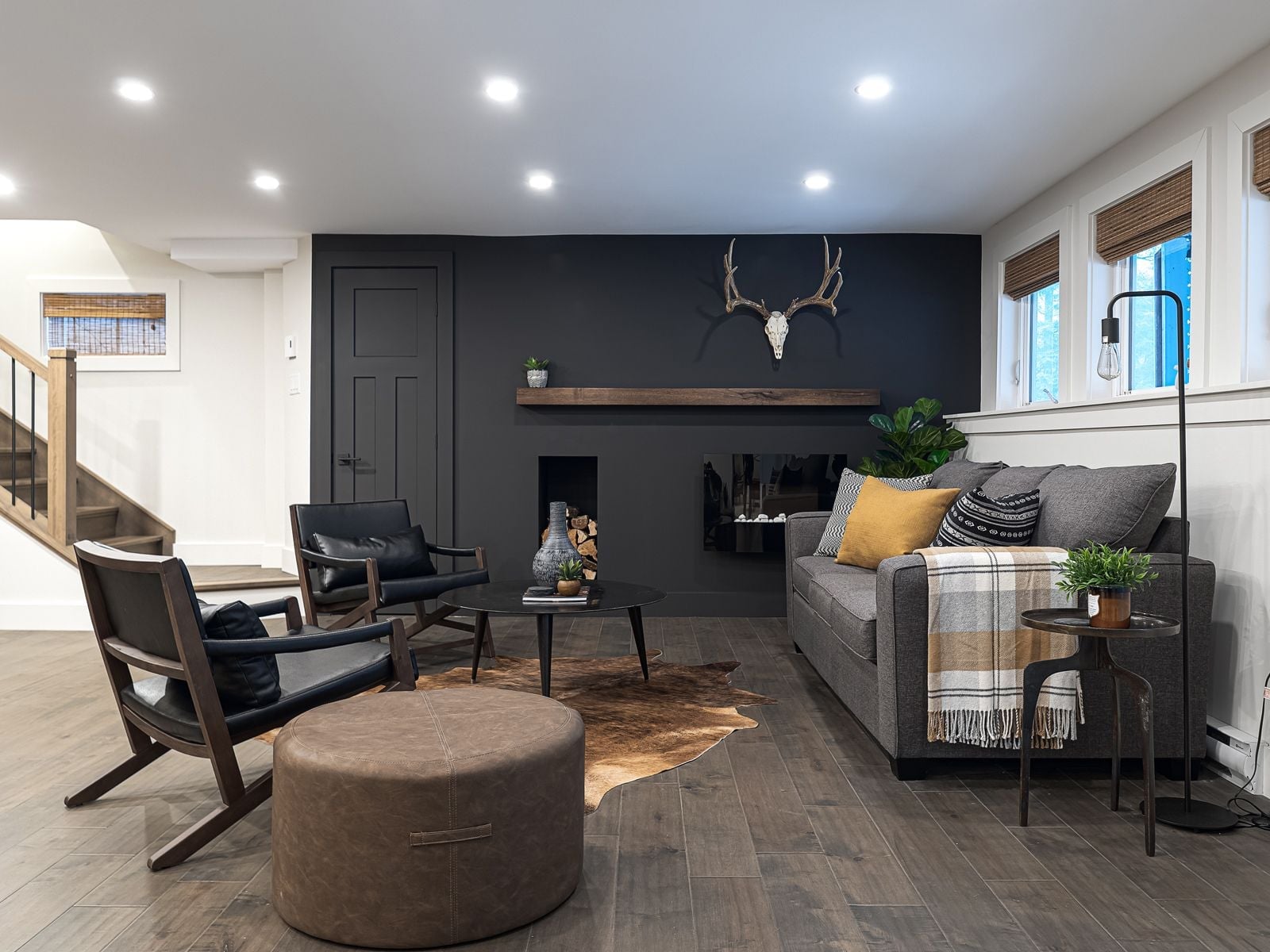
Close alternatives like a light gray or beige accent wall would soften the room, but this version leans into contrast. The dark gray wall behind the fireplace anchors the space, while the cream sofa and wood tones keep it from feeling cold. A floor lamp and recessed lights add warmth without fighting the moody palette.
The deer skull above the fireplace is the kind of piece that defines the modern style here. It works because the room is roomy enough to handle a bold focal point without feeling cluttered. The leather armchairs and ottoman echo the same earthy, textured feel. If you want to try a similar palette, start with the darkest wall and let the lighter furniture do the balancing.
Transitional Style with Central Pool Table and Tray Ceiling
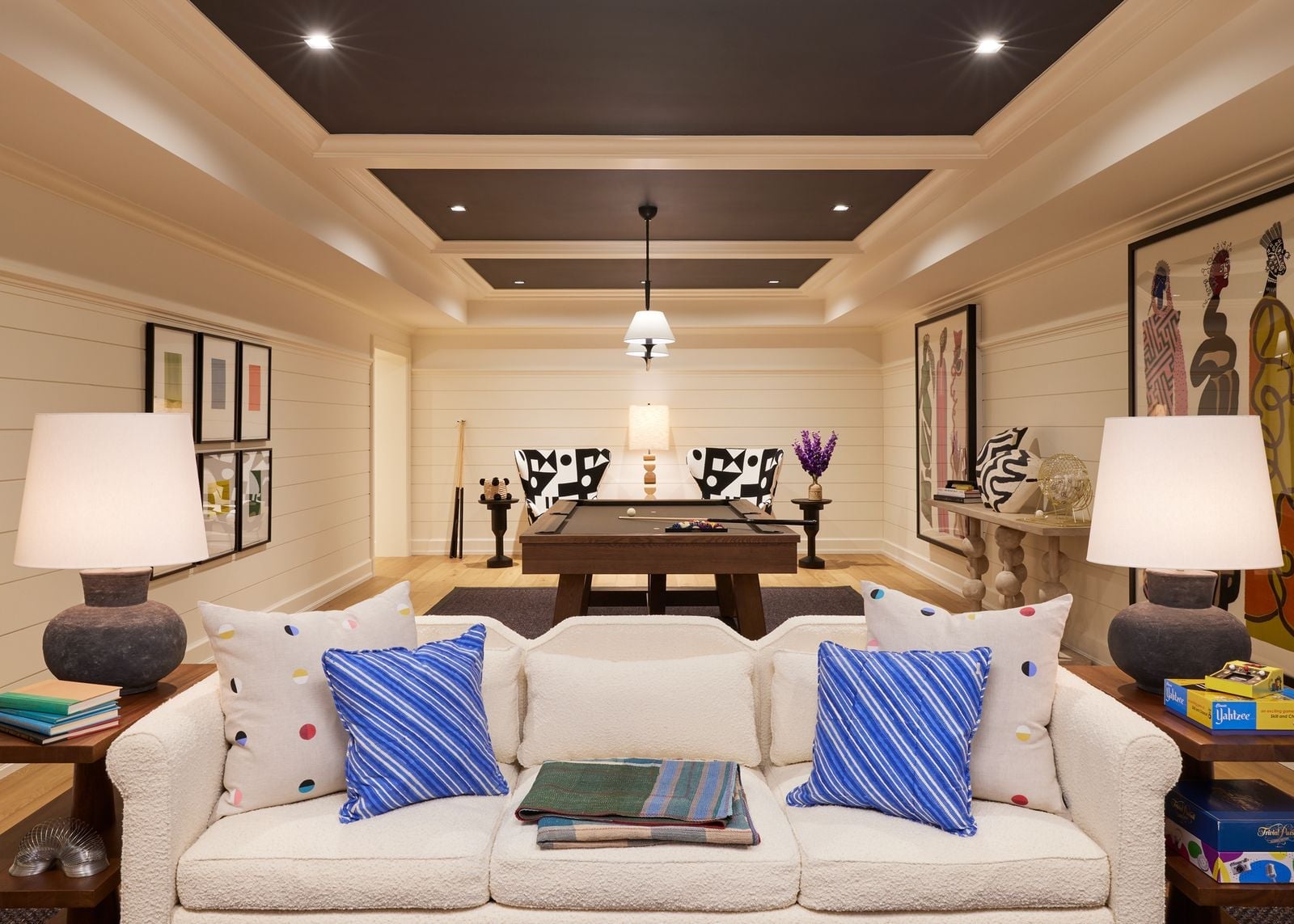
A tray ceiling with a dark finish adds architectural weight to this roomy transitional basement, while the central pool table keeps the layout from feeling empty. The cream, dark brown, and black palette gets a lift from colorful accents in the artwork and lamps. The sectional sofa and table lamps create a seating zone that feels separate from the game area. The style works because the proportions are deliberate: the pool table is large enough to hold the center, and the furniture around it is arranged to preserve clear walkways.
Modern Farmhouse with Dark Gray Walls and Plaid Ottoman
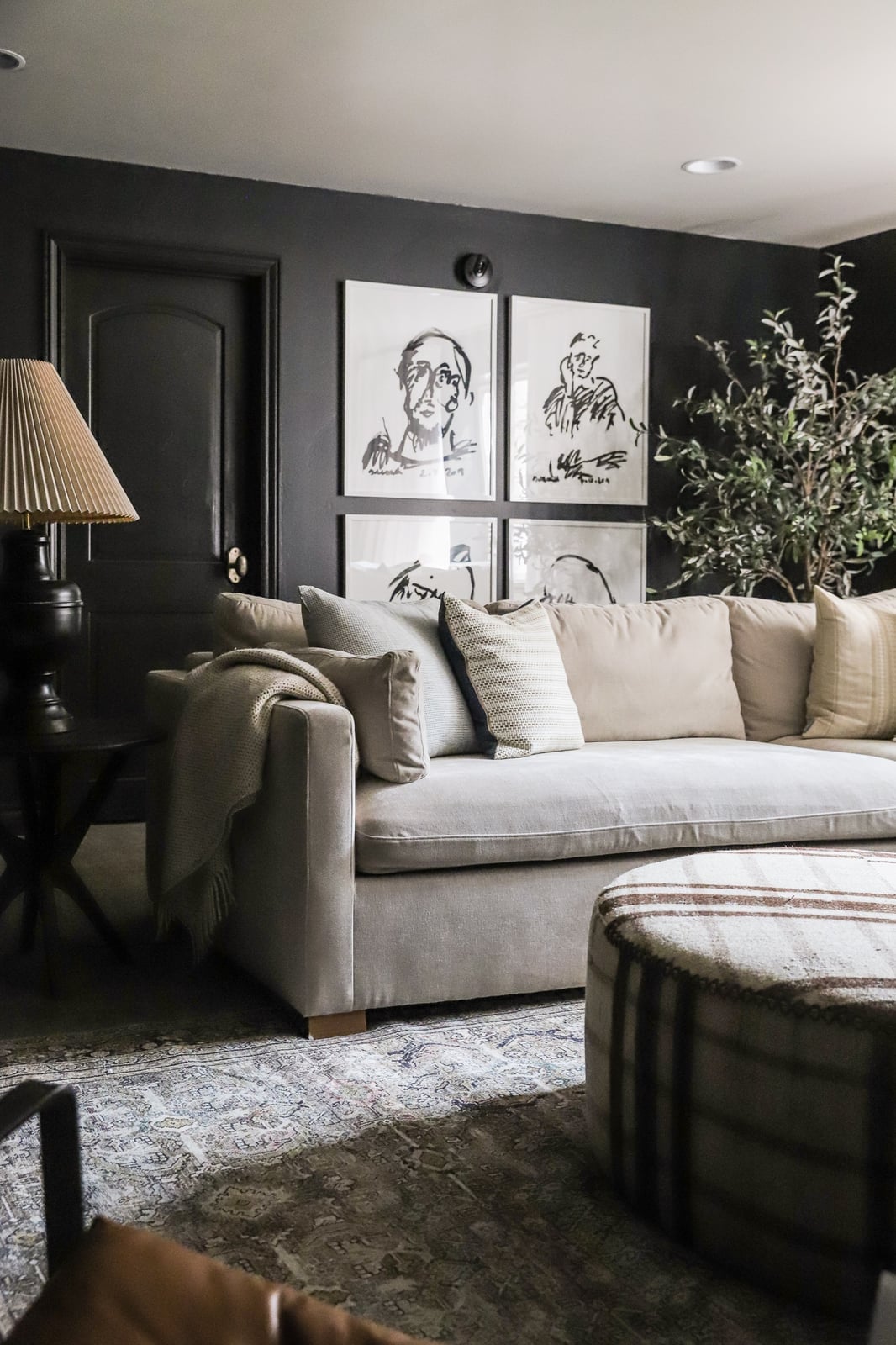
Dark gray walls give this modern farmhouse living room a grounded, cozy feel that lighter neutrals can miss. The beige sectional sofa anchors the seating, while a round plaid ottoman and patterned rug add pattern without overwhelming the palette. One clear assessment: the scale of the ottoman matches the sofa, keeping the arrangement balanced. A floor lamp and recessed lighting provide even illumination. The dark gray wall works as a backdrop for the artwork, letting the wood and metal accents in the room stand out without competing.
Monochromatic Modern with Large Abstract Art
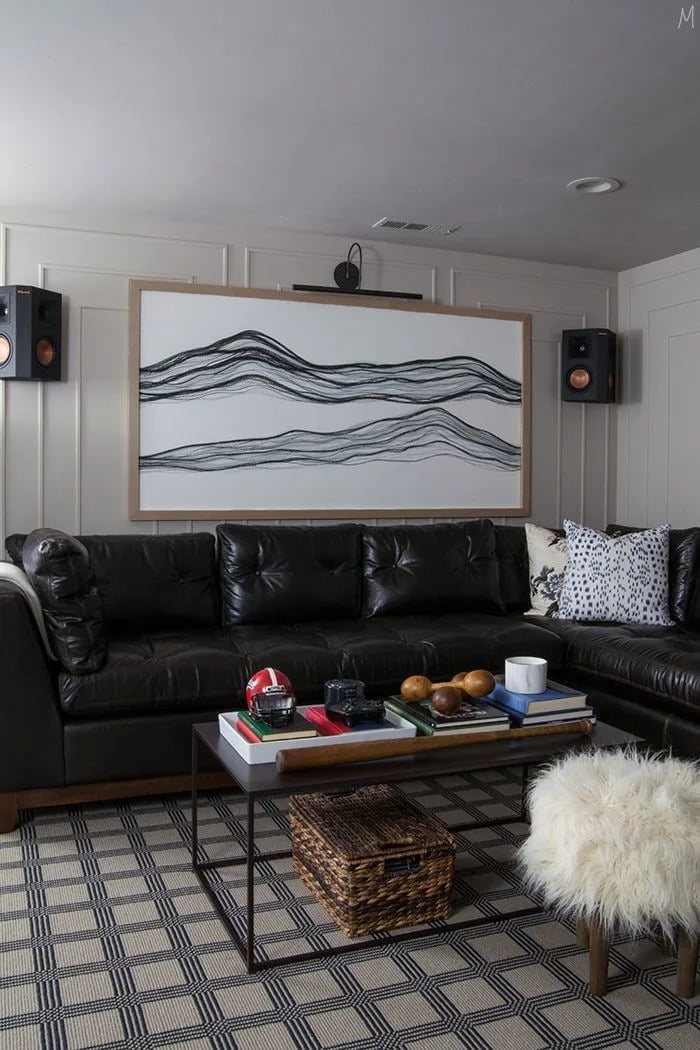
A monochromatic palette is the easiest way to make a basement living room feel larger and more considered. The black leather sofa anchors the seating area, while the large abstract wall art pulls the eye up and adds visual weight. Recessed lighting keeps the ceiling clean and directs attention to the art and furniture. Wood tones break up the black, white, and gray scheme without adding color. This layout works because the sofa is simple and lets the art do the talking.
Sleek Modern Fireplace as a Dual-Purpose Feature
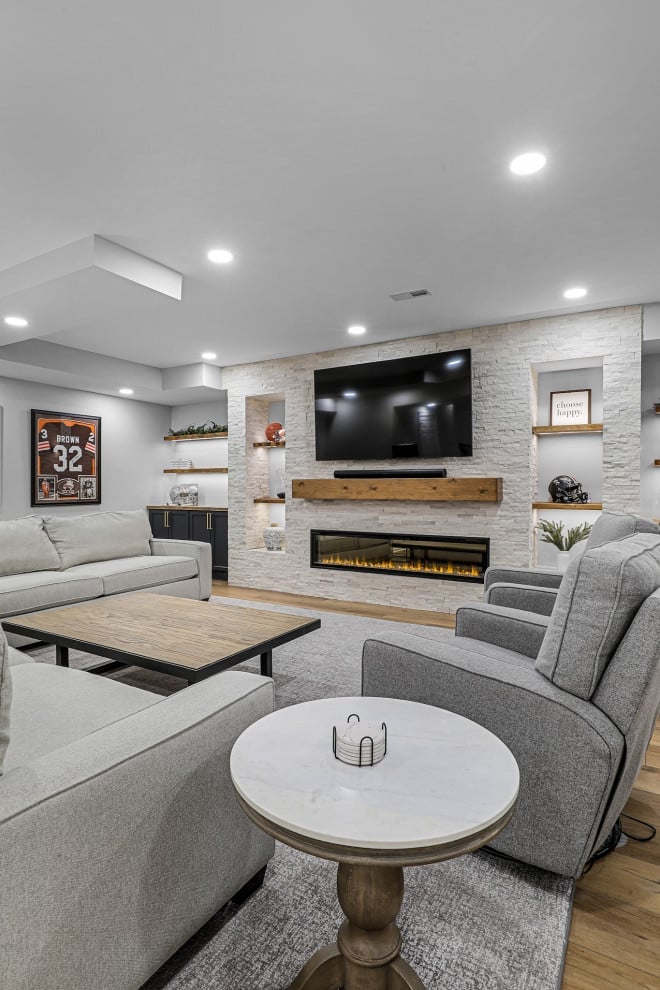
A modern fireplace in a basement living room pulls double duty as both a heat source and a visual focal point. This room pairs the fireplace with a TV mounted above it, creating a single entertainment wall. The gray and white palette keeps the space calm, while the wood coffee table and fabric sofas add warmth. Recessed and ambient lighting make the room feel open even without windows.
Farmhouse Charm with Gray Brick Fireplace and Blue Accents
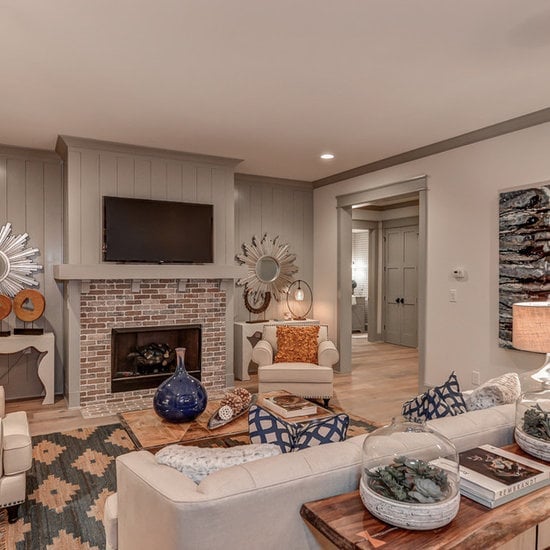
A practical rule for farmhouse style in a basement is to start with a strong material, like gray brick for the fireplace, and layer in color through accents. Here the blue sofa and armchair give the room personality without overwhelming the neutral brick. The wood coffee table and mirror add classic farmhouse touches. Recessed ceiling lights and a lamp provide flexible lighting for different times of day.
Integrated Wet Bar and Entertainment Unit for Functionality
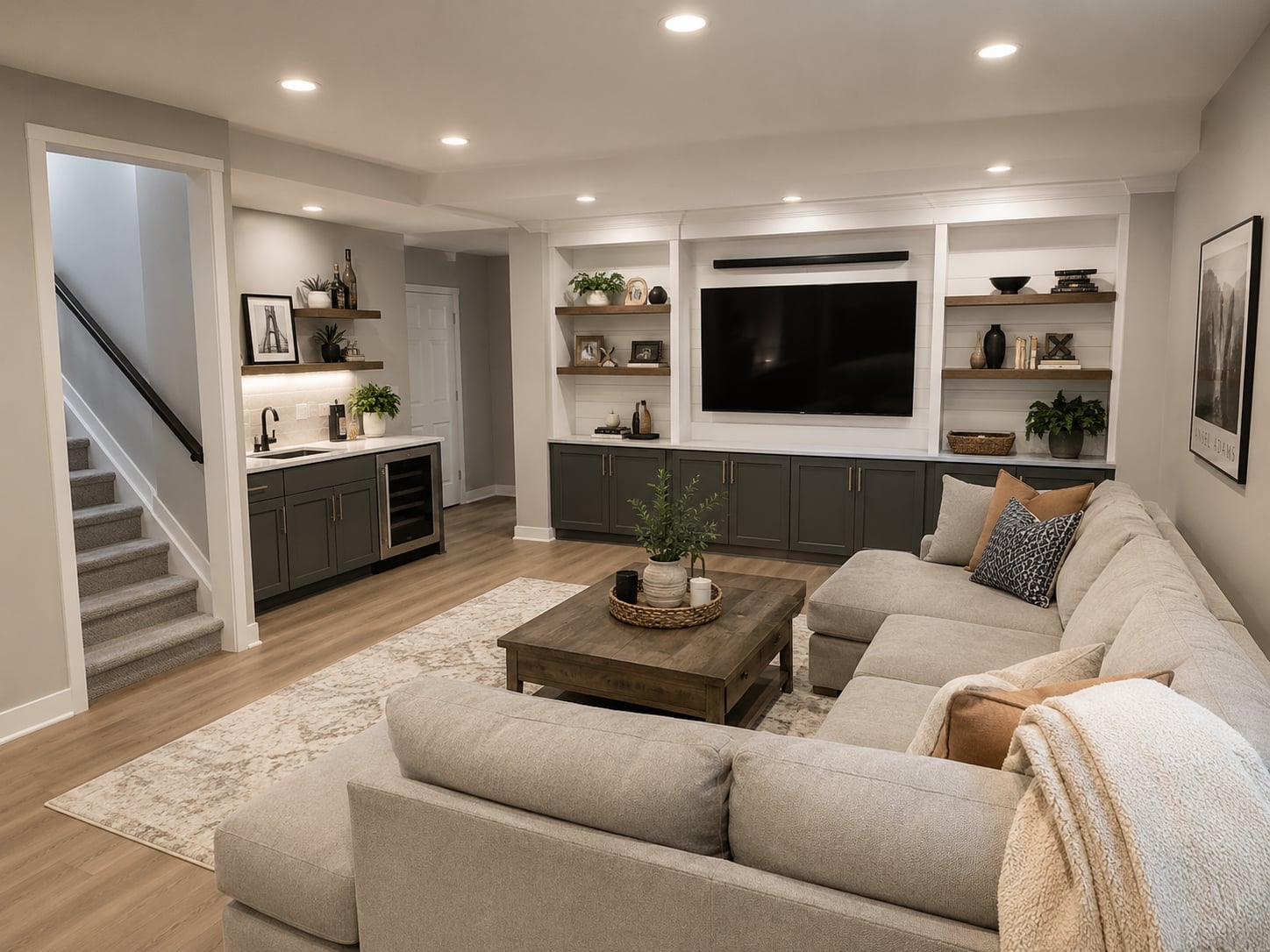
A basement living room with a wet bar might feel like two separate zones, but built-in cabinetry ties it together. The large sectional faces the entertainment unit, while the wet bar sits to the side with under-cabinet lighting for practical use. Recessed ceiling lights keep the room bright for both watching movies and mixing drinks. The gray, white, and wood palette makes the space feel cohesive rather than chopped up. Storage is handled by the built-in cabinets, so the room stays uncluttered. This setup works best for homeowners who want a home theater that also functions as a party space.
Cozy Alcove Seating with Dark Gray Built-In Bench
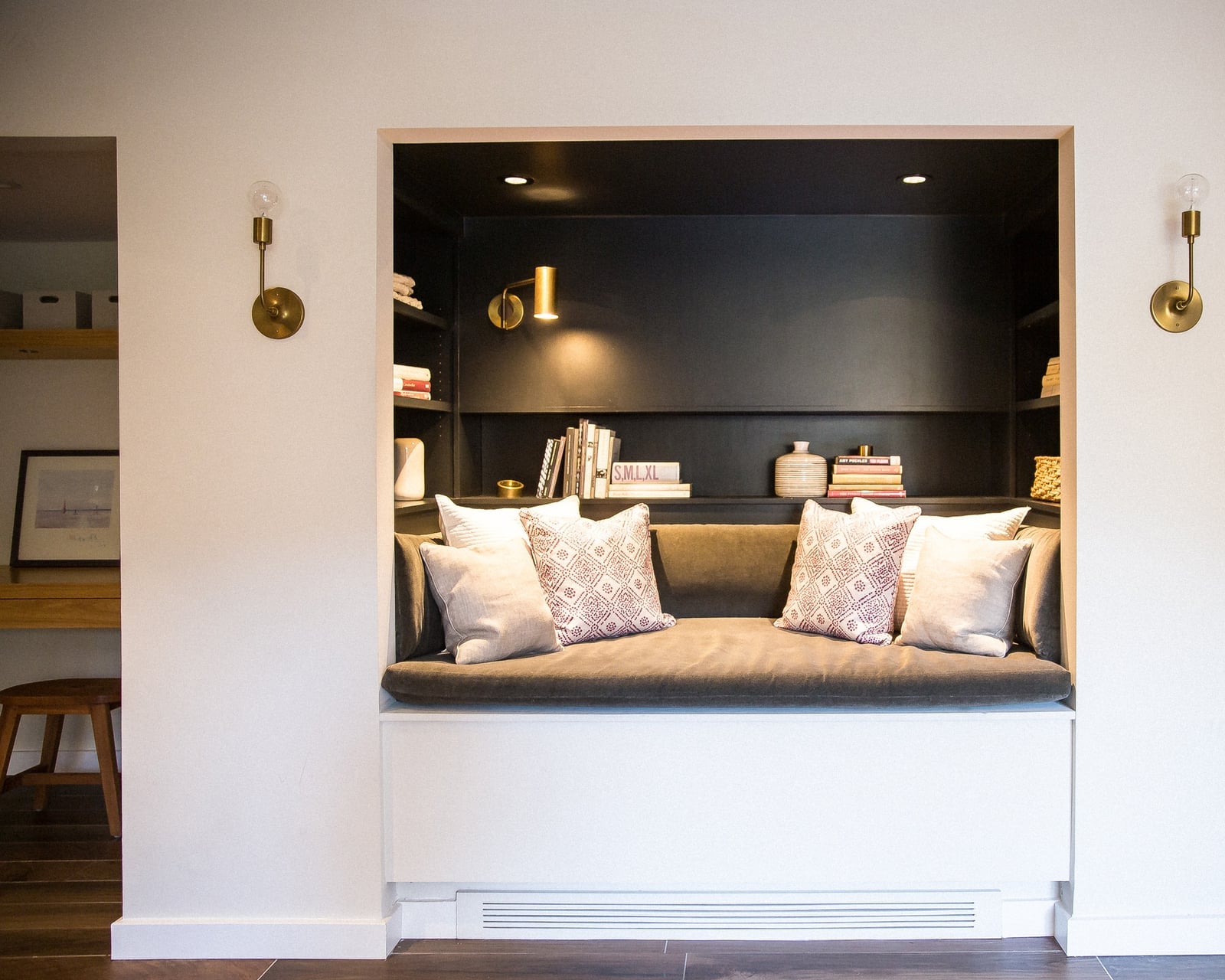
The built-in bench in dark gray creates a cozy reading nook without taking up floor space. Wall sconces provide task lighting for the alcove, while the gold accents add a touch of warmth. The bookshelves above the bench turn a corner into a functional storage spot. This layout is ideal for a basement where you want to use every inch without feeling cramped.
Olive Green Walls Complementing a Beige Sectional
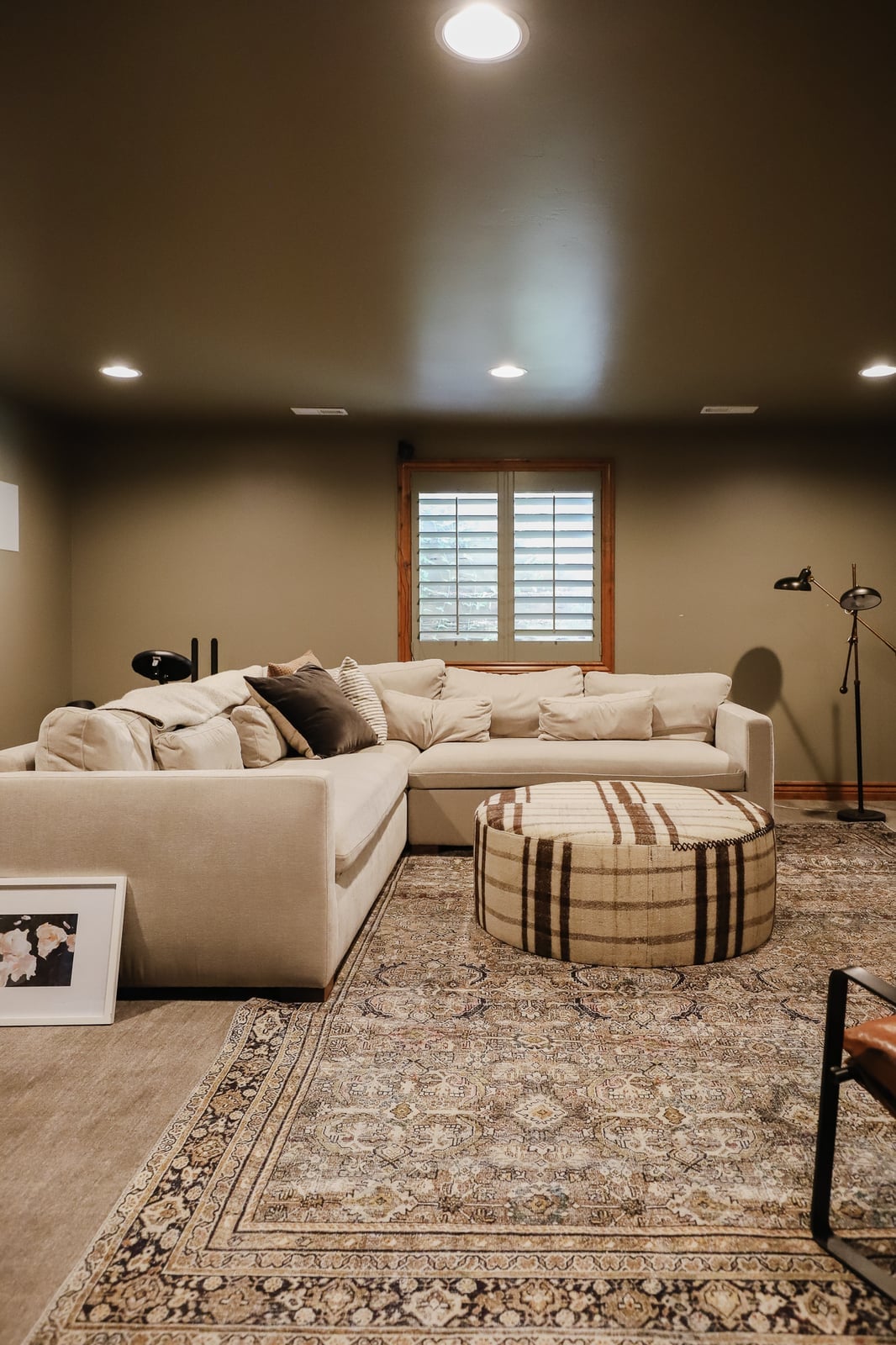
The olive green walls here take a modern farmhouse basement living room in a warmer direction than the usual gray or white. A large beige sectional sofa faces the window and a round plaid ottoman, creating a seating area that feels pulled together without matching. The brown wood coffee table and the patterned rug tie the green and beige together, so the palette looks cohesive. Recessed ceiling lights keep the ceiling clean, while a floor lamp adds a softer glow near the seating. Try a sage or olive paint on one accent wall first. It is easier to live with than a full four-wall commitment, and it plays well with beige upholstery.
Extensive Built-In Unit with Seating and Bookshelves
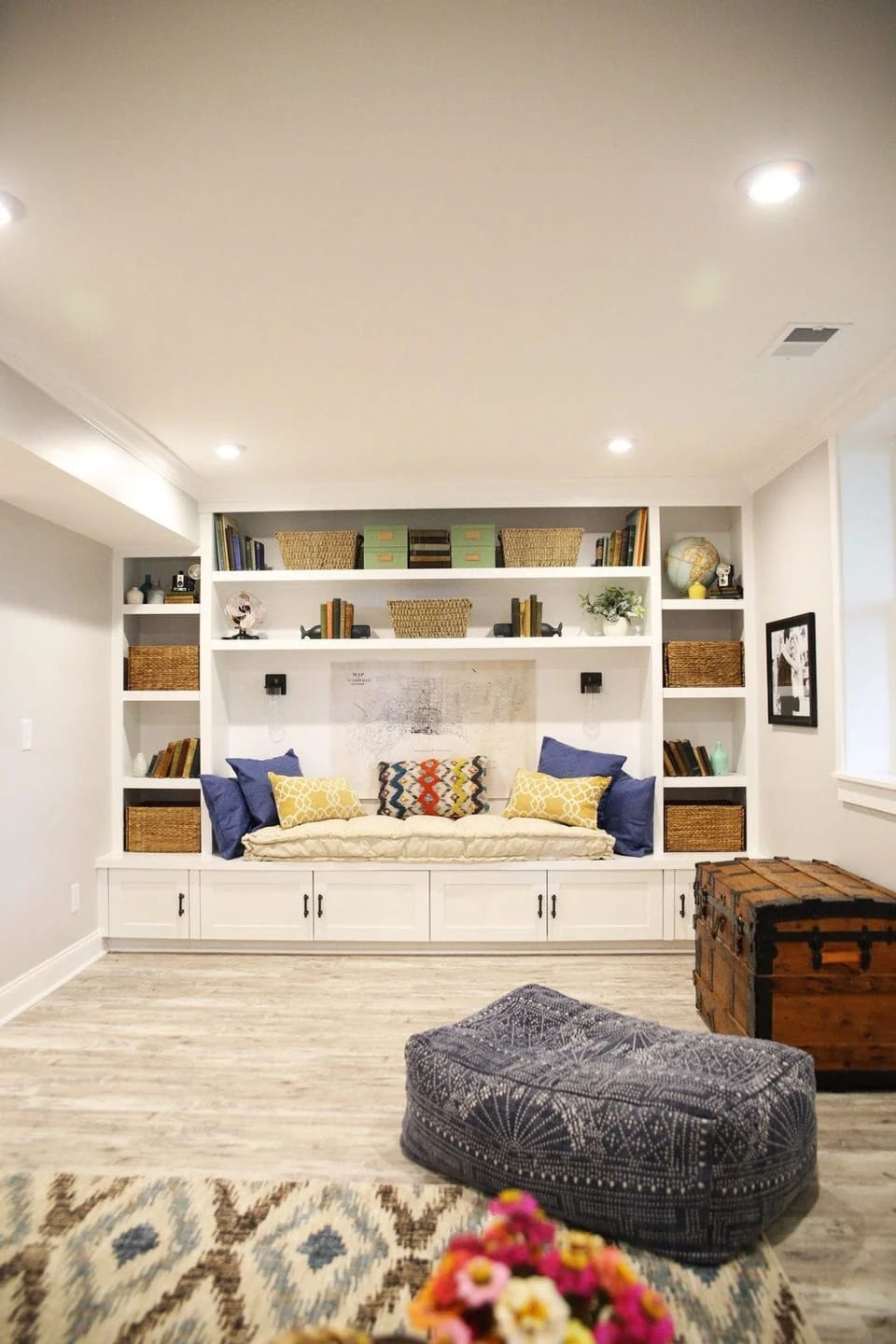
For a basement living room with low natural light, use built-in storage that doubles as seating. This roomy transitional space relies on a long built-in unit with a bench, open bookshelves, and a trunk for extra stashing. The neutral palette with touches of blue and yellow keeps the room from feeling heavy, and the recessed lighting above the unit makes the books and display objects stand out without shadows.
For renters who cannot install permanent cabinetry, a similar setup uses a low modular shelving system with a bench or storage ottoman pushed against it. Painted plywood or a ready-made media console in a warm wood tone can anchor the wall. The key is keeping the storage continuous along one wall so it looks like one piece, not a collection of separate furniture.
Moody Modern with Dark Gray Sectional and Open Kitchen Access
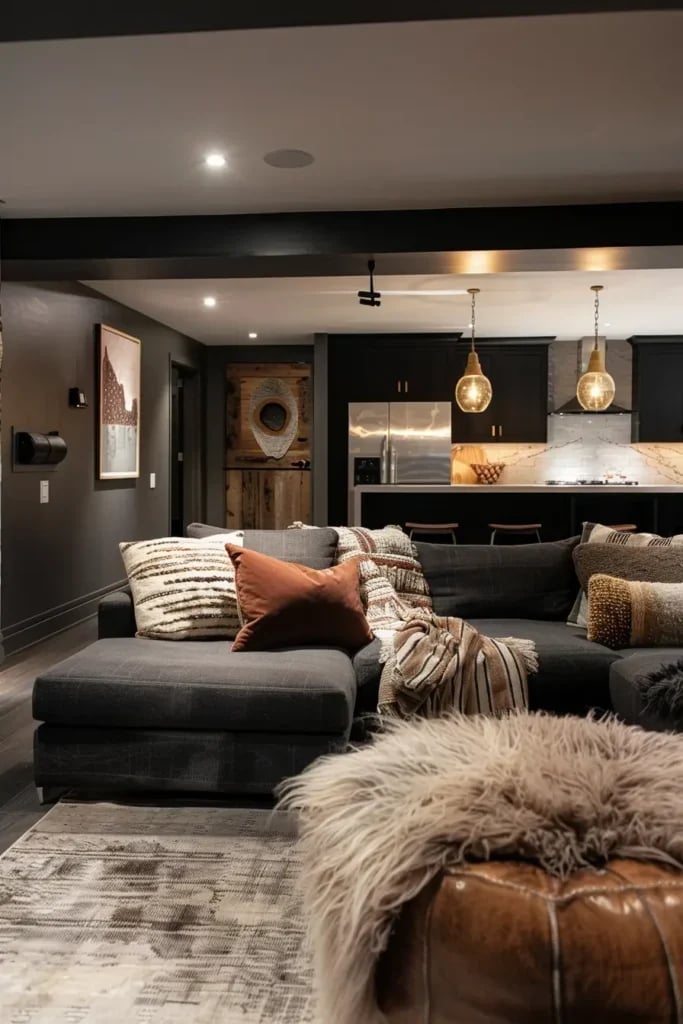
The open plan layout here connects the living room to a modern kitchen island and a bar area, making the basement feel like one continuous hangout. A large dark gray sectional anchors the seating side, with a fur ottoman and wood accent furniture adding texture without clutter. The palette stays in dark gray, black, wood tones, and cream, so the cream and fur pieces break the darkness. Pendant lights over the island and wall sconces in the living area layer the lighting, which keeps a moody room from feeling like a cave.
Modern Rustic Living with Geometric Wallpaper and Stone Fireplace
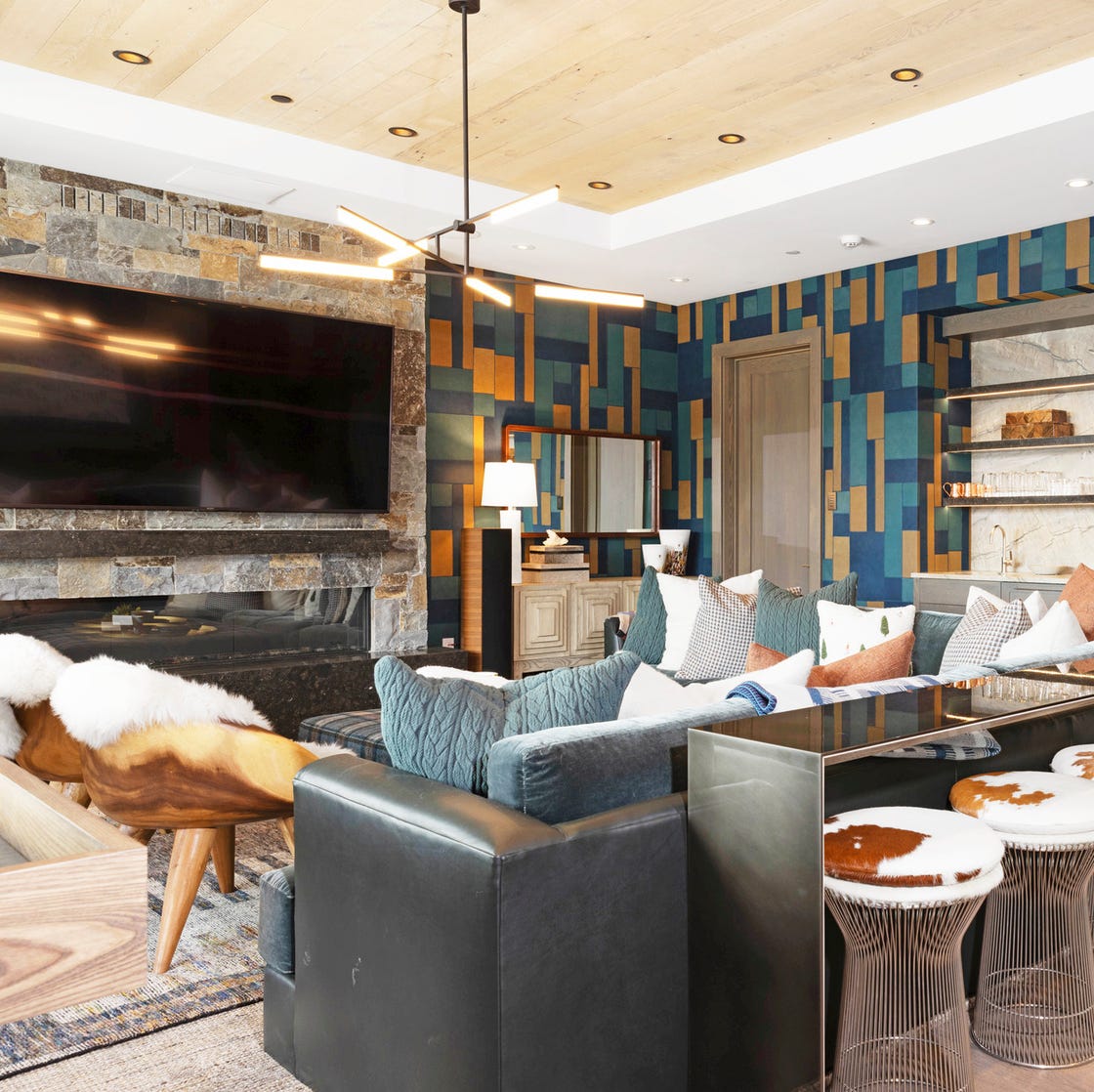
Geometric wallpaper in blue, orange, and teal covers one wall of this roomy basement living room, while a stone fireplace and leather sofas keep the look grounded. The mix of materials is what makes modern rustic work: the cool stone and metal against warm leather and cowhide stools, with wood tones tying it together. A statement chandelier and a lamp add light at different heights, so the pattern on the wallpaper does not get lost in shadows. The cowhide stools are a practical swap for upholstered seating near the fireplace, since leather and hide clean up easier than fabric.
Bohemian Corner with Vibrant Orange Tufted Sofa
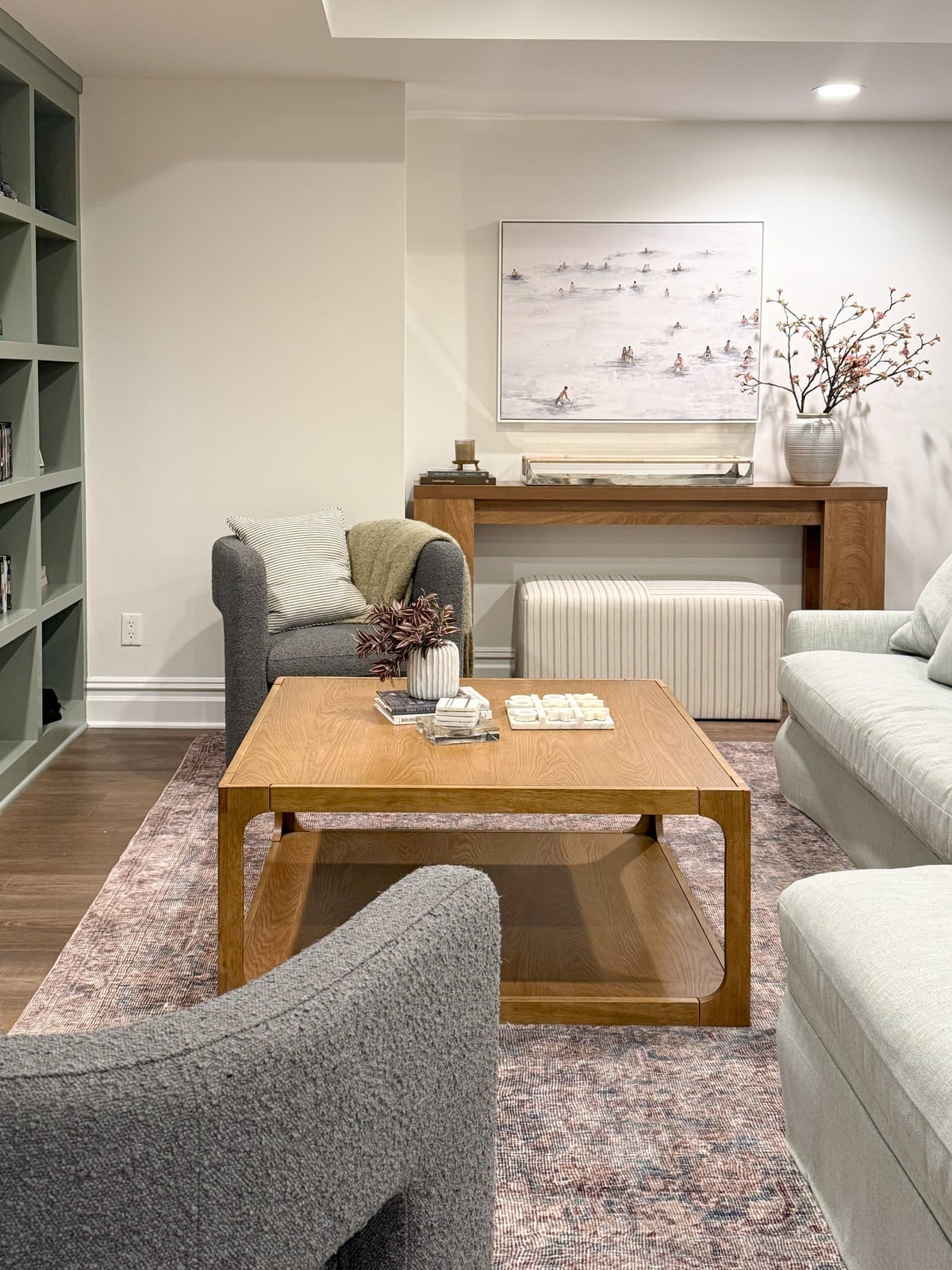
A compact corner seating area like this one does better with a single bold piece than with many small accents. The vibrant orange tufted sofa is the clear anchor, and the cream walls and wood tones let it take center stage without competing. A large piece of artwork above the sofa and a tall plant in the corner balance the weight. The wall sconce provides task light without taking up floor space, which matters in a small layout. For a similar look, choose one high-impact color for the largest piece of furniture, then keep everything else in neutrals and natural materials. That ratio keeps the room from feeling chaotic.
Rustic Modern Stone Wall Texture in Open Plan Space
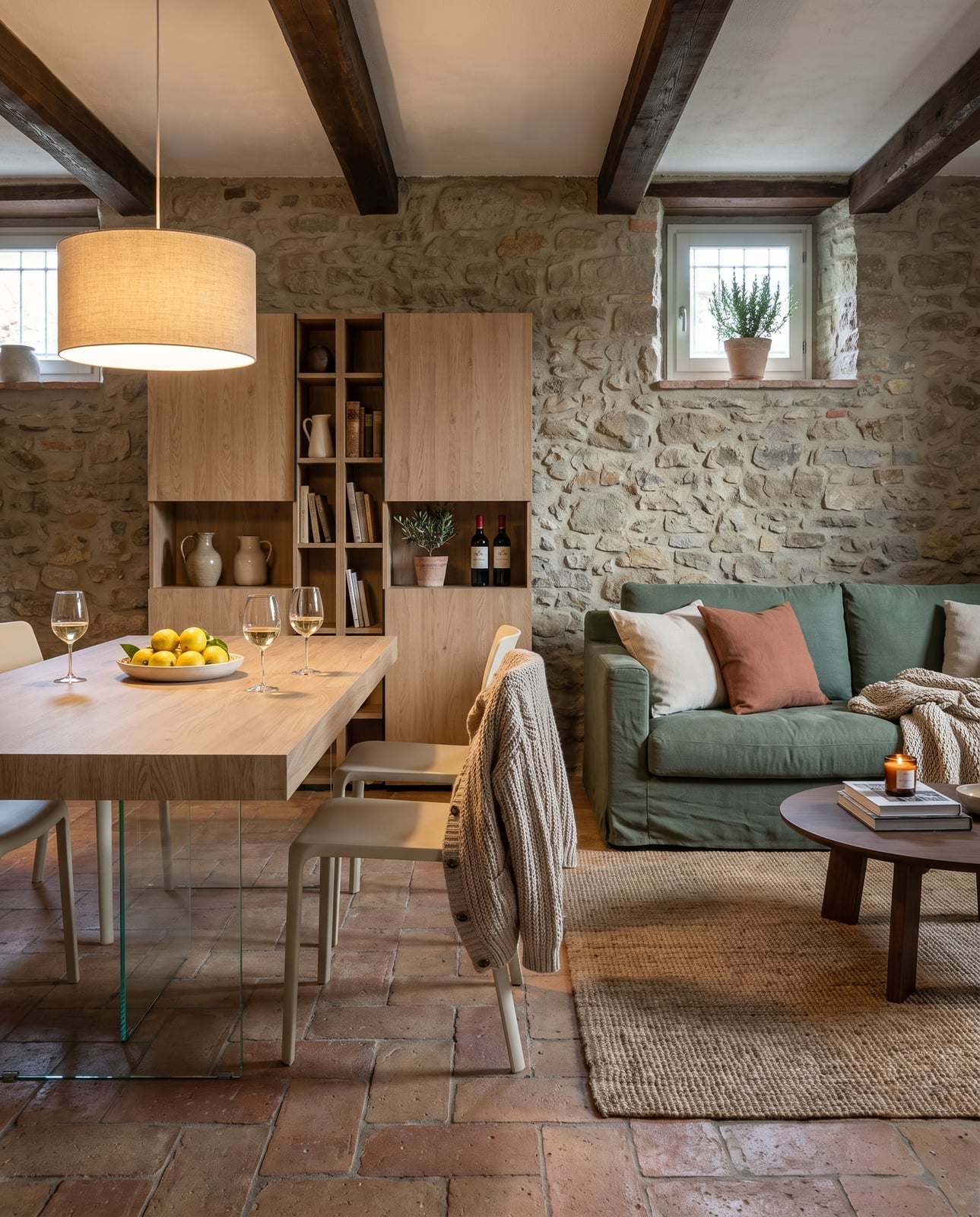
The open plan layout lets the living and dining areas share a single stone wall, which becomes the room’s main texture without overwhelming the space. A linen sofa and a wooden dining table sit on terracotta tones, while the pendant light hangs low to define the dining zone. The stone wall stays unadorned, so the eye moves between the natural materials rather than stopping at any one piece. This is a room that lives as one connected space, where the materials do the work of separating zones without walls.
Modern Farmhouse with Dark Gray Walls and Leather Chair, Indoor
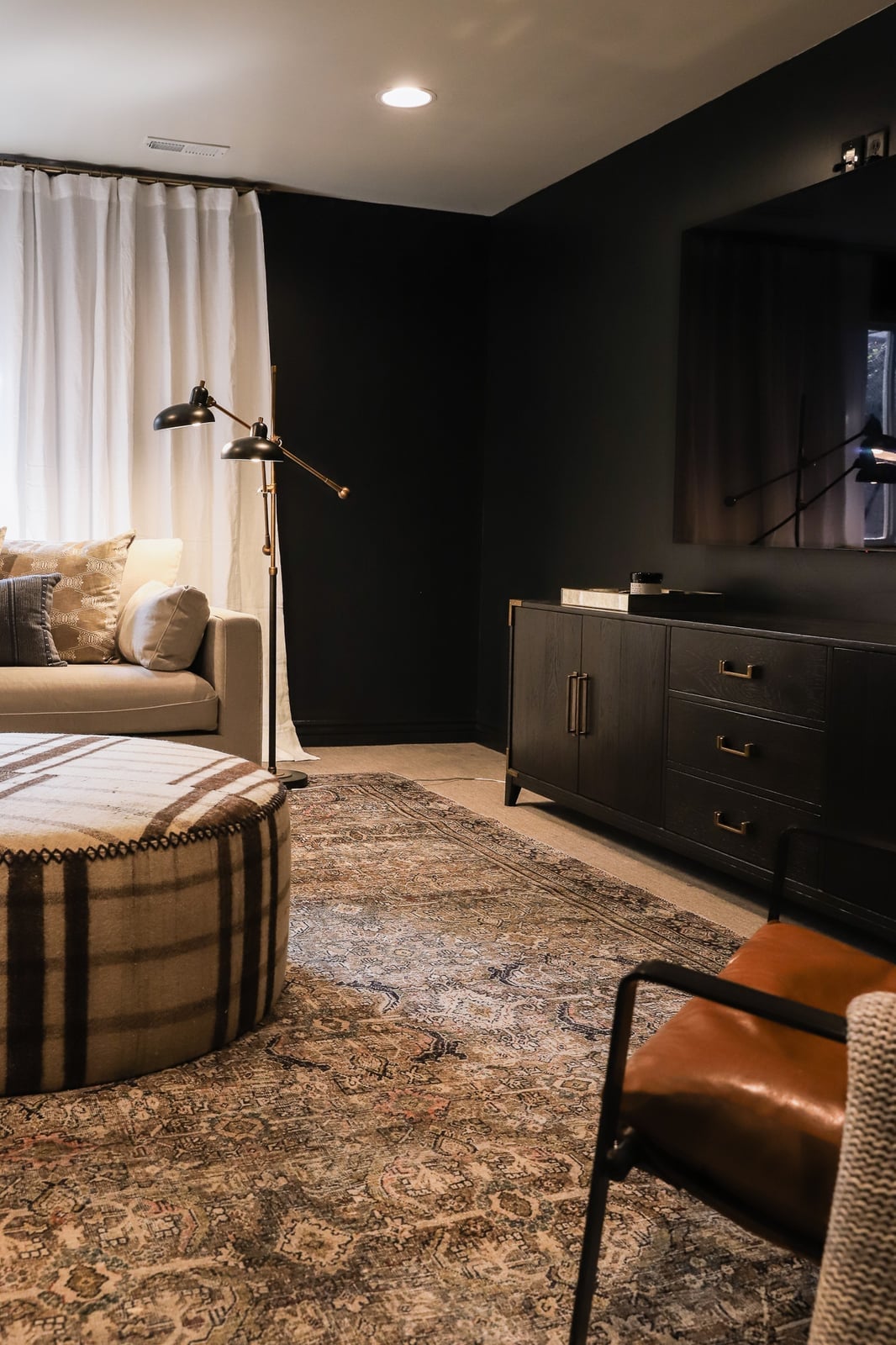
This room proves that dark gray walls can feel warm rather than heavy when the furniture pulls from the same earthy palette. The beige sectional and brown leather chair keep the room grounded, while the round plaid ottoman adds a familiar farmhouse pattern without making the space feel themed. The patterned rug ties the seating together, and the floor lamp provides a soft glow against the dark walls. What breaks the modern farmhouse look here is the leather chair, which reads more industrial than rustic. It works because the overall palette stays consistent, letting one unexpected piece add character rather than confusion.
Large Gray Sectional Sofa Anchors a Modern Living Area
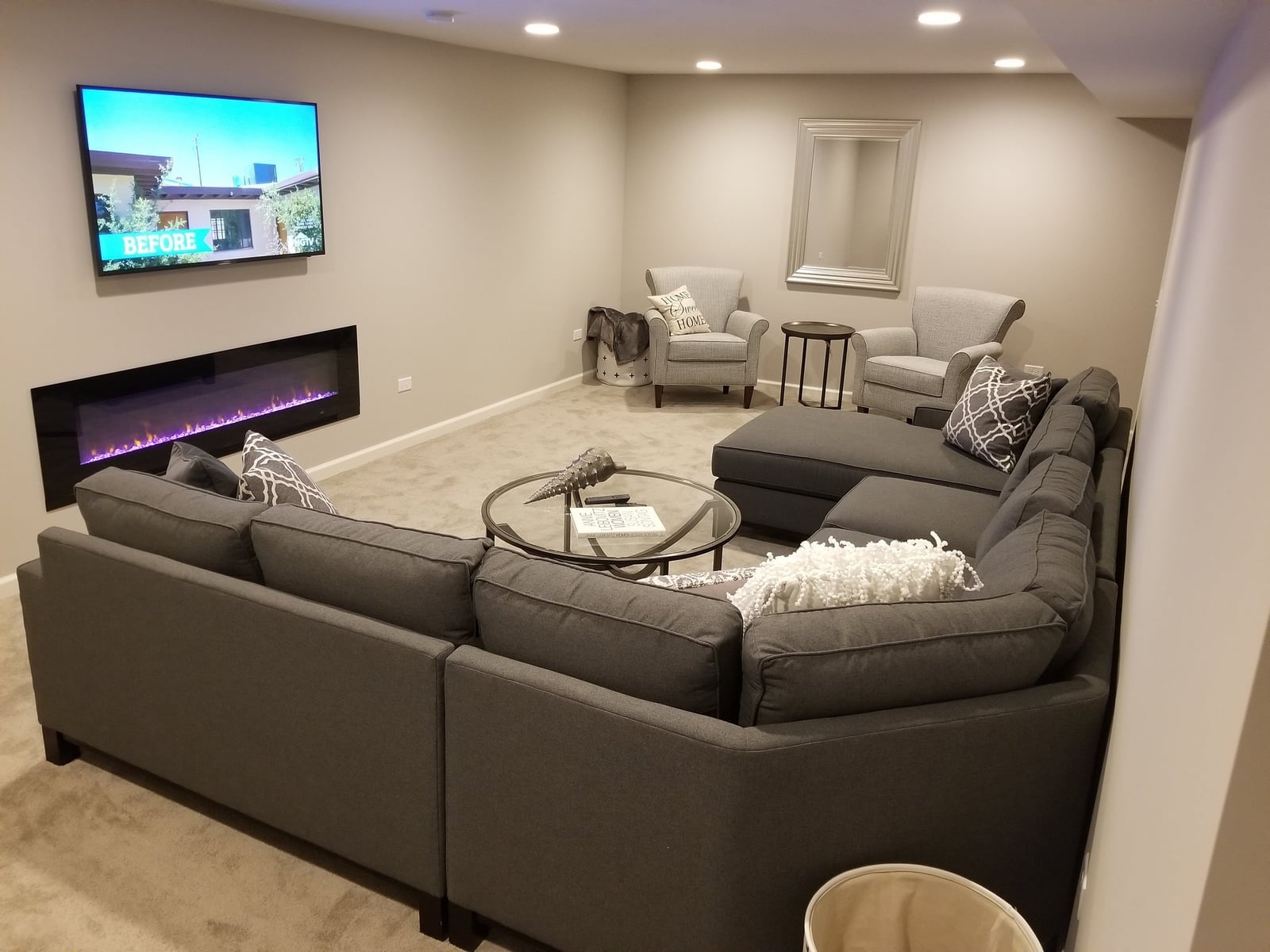
A large gray sectional can feel like it takes over a room, but a minimal surrounding keeps it balanced. The electric fireplace sits on the wall opposite the television, giving the room two focal points. The armchairs are placed to the side, creating a conversation area separate from the screen.
Recessed ceiling lights keep the ceiling clean, which matters when the sectional already commands the floor. The gray, white, and black palette means the sofa blends into the room instead of fighting it. The coffee table sits within easy reach, and the fireplace offers a visual anchor on the other side. For a basement living room, this layout makes the most of a wide space without forcing the furniture against the walls.
Final Thoughts
A basement living room should feel like it belongs to the rest of the house, not a separate cave you have to furnish differently. The common thread through these ideas is that smart layout and consistent material choices matter more than trying to fake natural light or high ceilings. Keep the palette simple, let one or two pieces anchor the seating, and add texture through rugs, pillows, and wall finishes. A well-planned basement living room will earn its keep as a favorite spot, not just a storage bin for old furniture.