
Choosing the right paint for your bathroom can feel like a gamble with all that moisture and steam. But a fresh coat of color is one of the quickest ways to change the whole feel of the room without a full renovation.
This collection of 30 bathroom paint ideas covers everything from calm neutrals to bold darks, so you can find a look that fits your space and your tolerance for upkeep. Whether you lean toward spa-like beige or a dramatic dark green, the ideas here show how paint alone can anchor a bathroom’s style.
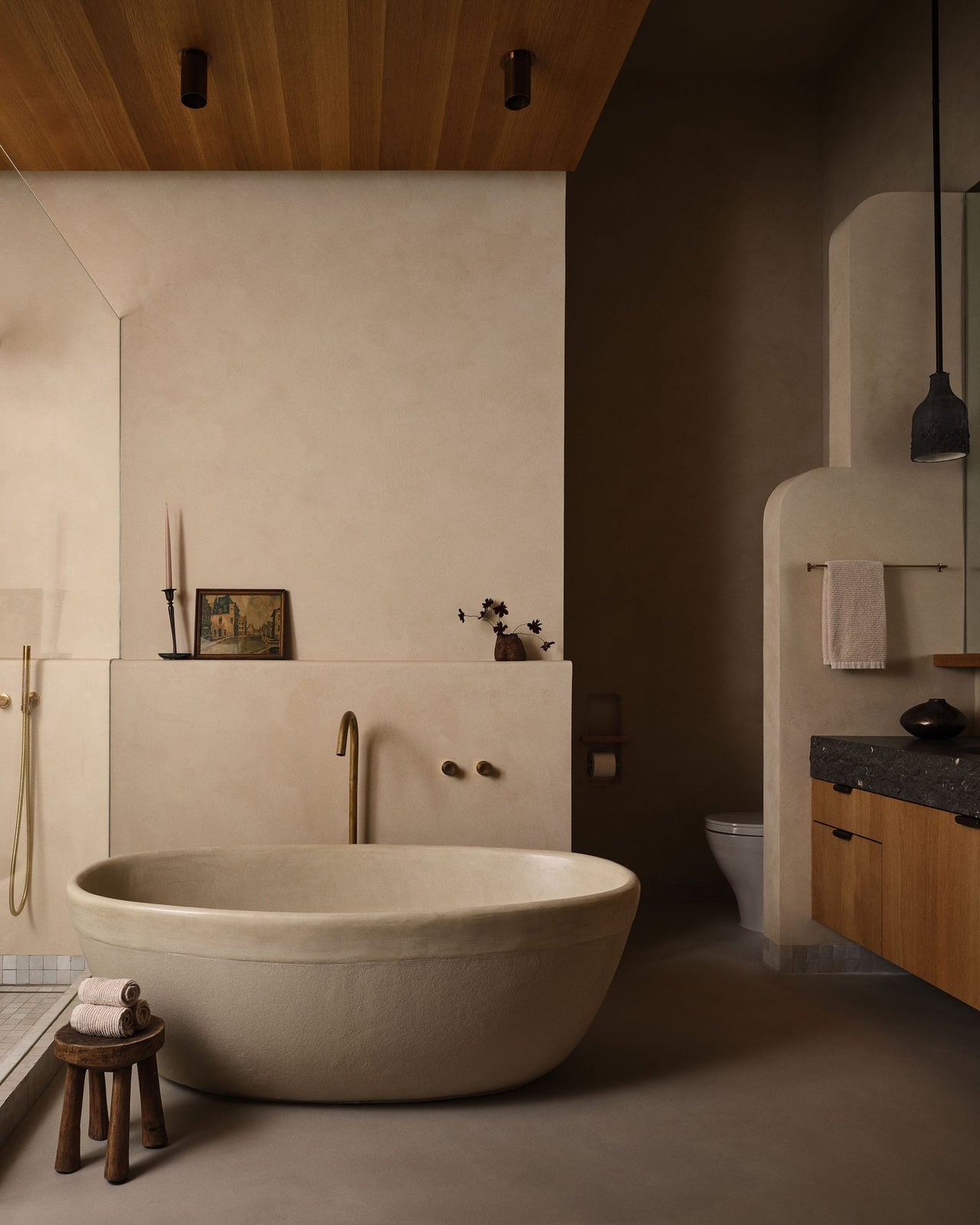
Warm Beige and Taupe Plaster Walls Create a Spa-Like Atmosphere
Beige and taupe plaster walls do something white simply can’t: they make a bathroom feel warm without trying. The texture of the plaster catches light softly, so the room reads as calm and deliberate rather than flat. A freestanding tub, a wood vanity, and stone surfaces all sit comfortably against this palette because nothing competes. The layout stays open and spa-like, with the wall finish doing the work. If you want a bathroom that feels like a retreat, start with a wall treatment that brings warmth, not just color.
Deep Green Walls Anchor a Modern Traditional Bathroom
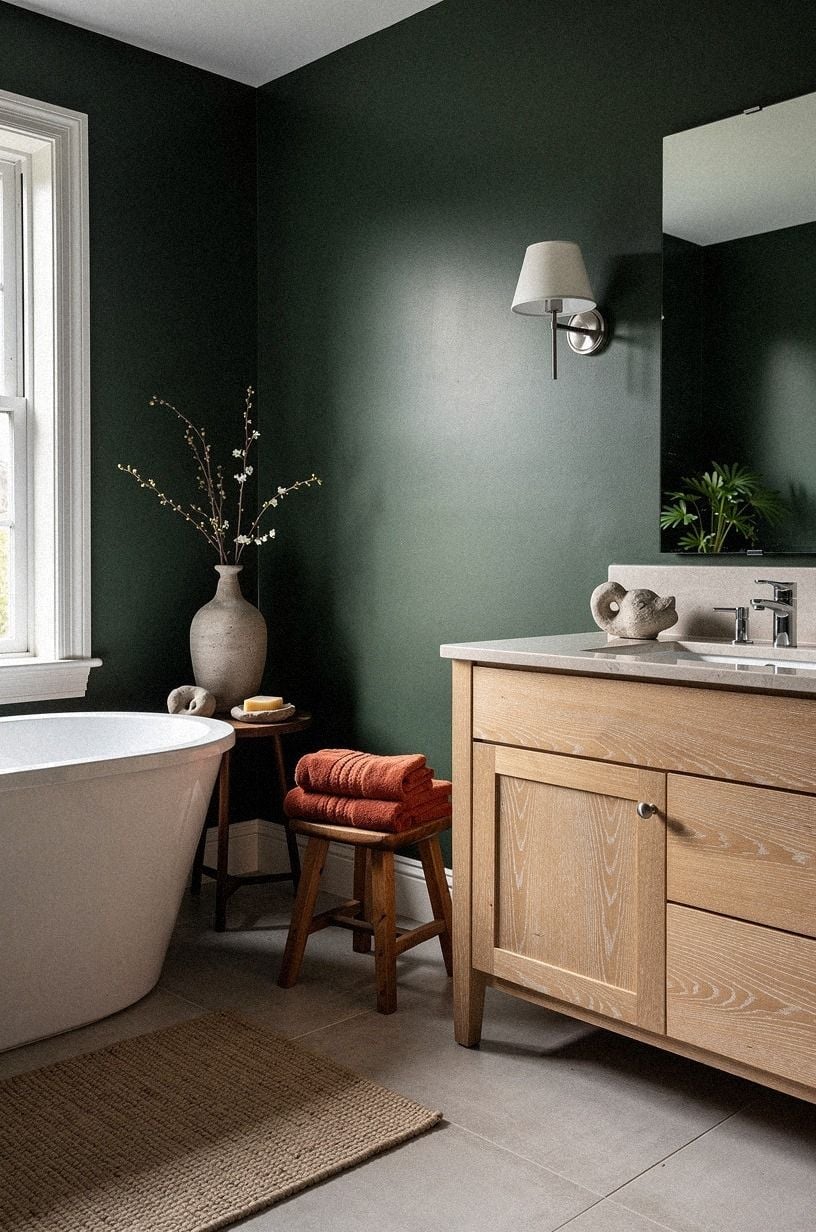
Deep green walls give a bathroom a sense of structure. The color is strong enough to anchor the room, but it doesn’t overpower the natural light or the wall sconces. A wood vanity and stone surfaces feel grounded next to it, and the white trim keeps the look clean. Modern traditional works because the green is classic, not trendy. The palette stays simple: deep green, wood tones, and warm light. That is enough. If you want a bathroom that feels both current and lasting, a single dark wall color is a straightforward way to get there.
Vibrant Teal Textured Walls Add Drama to a Shower Area
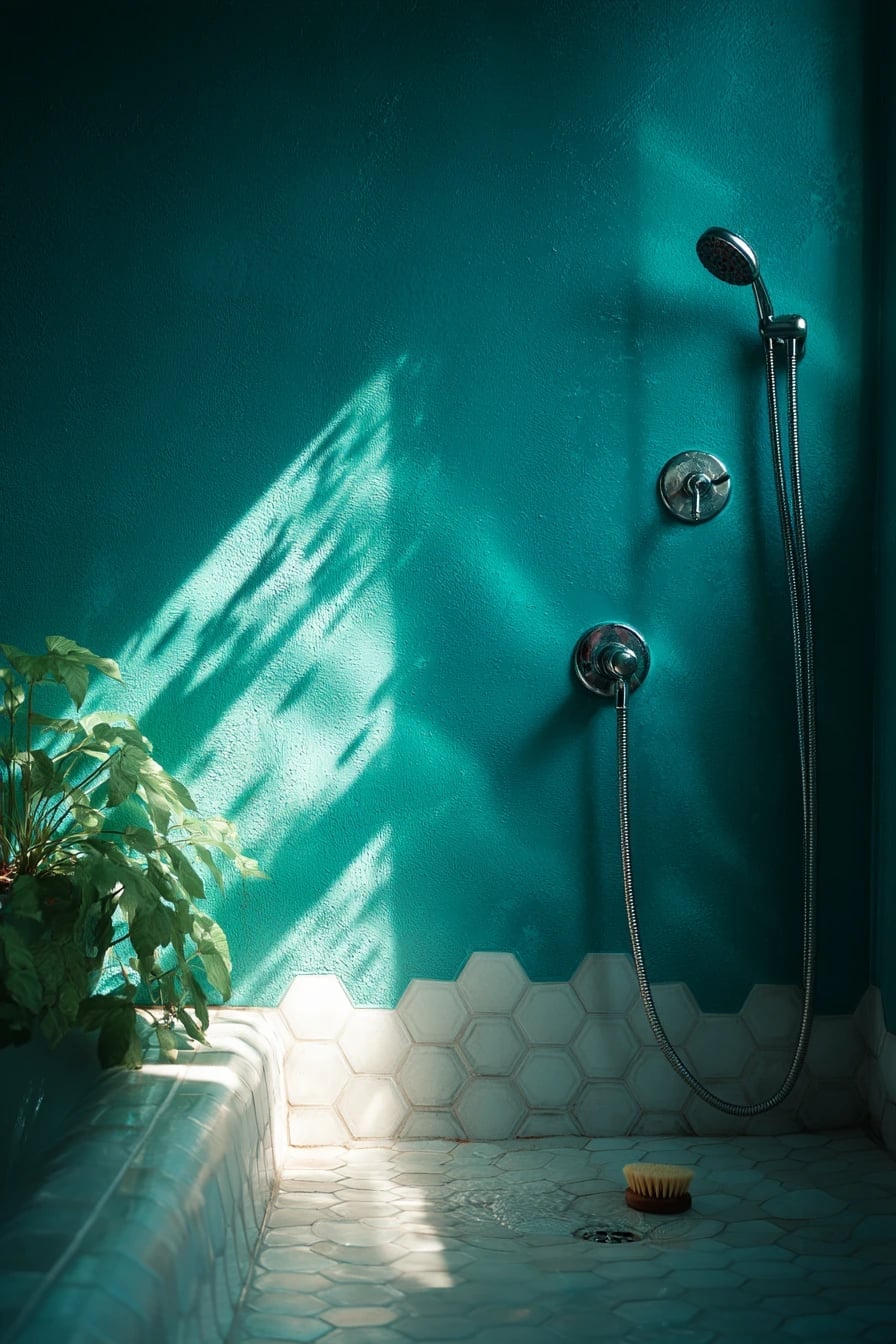
Can a wall finish change how a shower area feels? Yes, and textured teal paint proves it. The color is bold, but the texture keeps it from looking flat or harsh. Natural light hits the wall at different angles throughout the day, creating shadows that shift the mood. Chrome fixtures and white hexagonal tile keep the space from feeling heavy. The plant adds a soft organic note.
A textured finish works well in a compact shower area because it adds depth without taking up floor space. The teal is vibrant, but the texture makes it feel deliberate, not loud. If you want drama in a small bathroom, start with a wall that does more than just sit there.
Deep Matte Blue Walls Define a Modern Bath with Gold Accents
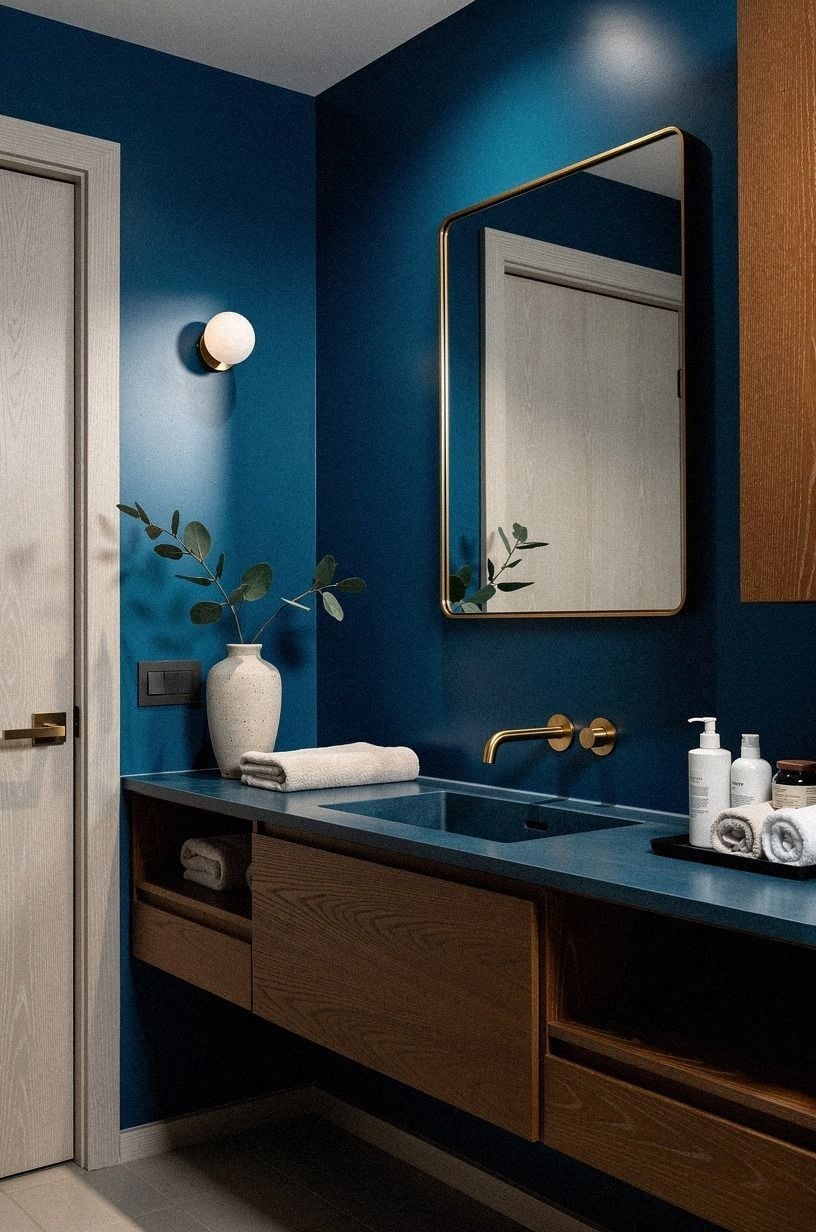
Deep matte blue walls set a calm, deliberate tone in a modern bathroom. The matte finish absorbs light, so the color feels deep rather than shiny. Gold accents on the fixtures and a stone countertop add contrast without competing. The double vanity and vessel sinks sit against the blue, and the rectangular mirror reflects light back into the room. This palette works because the blue is the anchor, and everything else supports it. If you want a bathroom that feels modern and collected, a single dark matte color with warm metal accents is a reliable formula.
Olive Green Walls Complement a Freestanding Clawfoot Tub
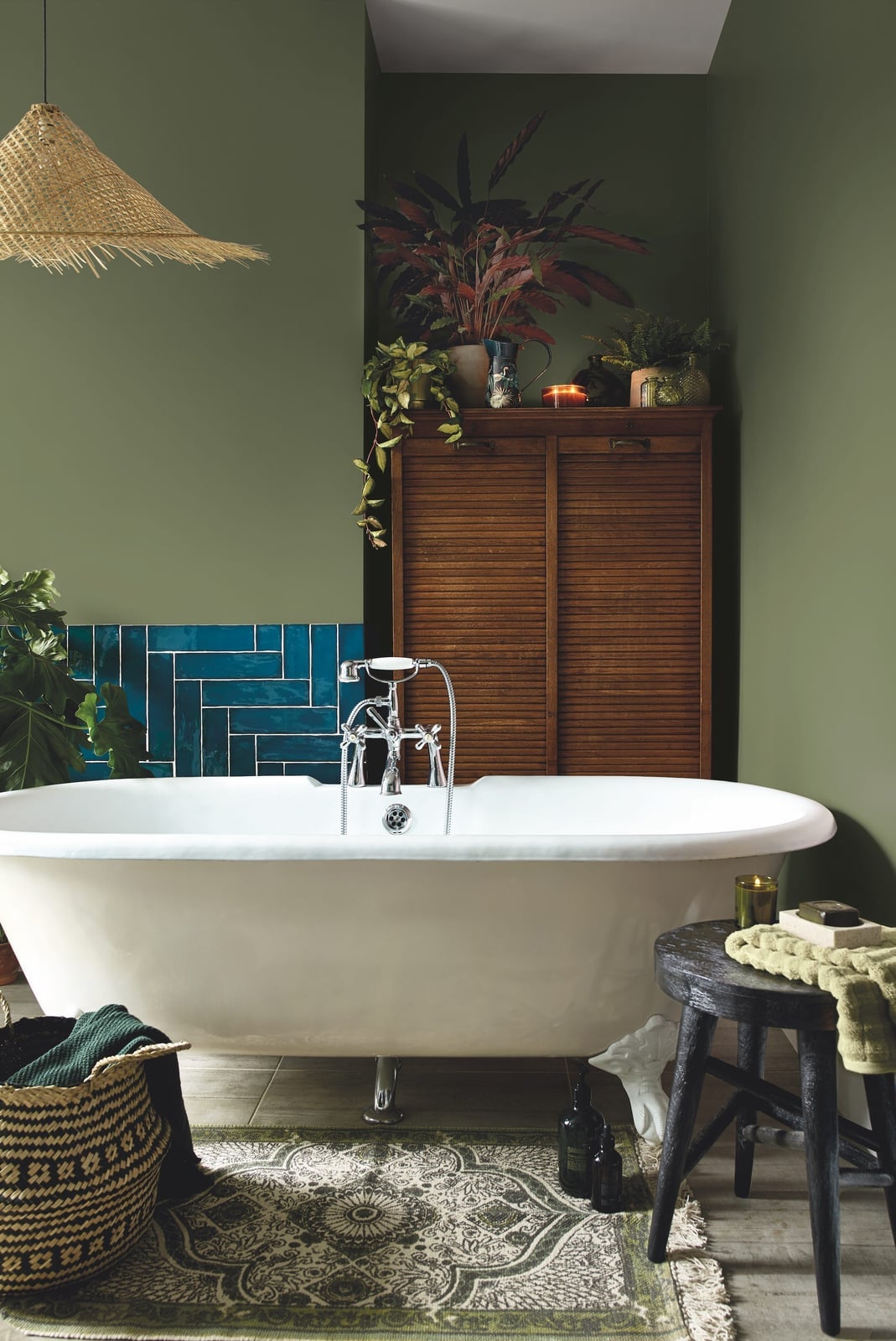
Olive green walls let a freestanding clawfoot tub stand out. The shade is warm enough to feel inviting but neutral enough to sit behind a deep blue cabinet, a woven basket, and a patterned rug. Natural light from the window keeps the green from going flat. Wood and rattan add texture. The palette mixes olive, deep blue, cream, and brown without feeling busy. Olive green walls are a solid starting point for a bathroom that looks put together without matching.
Taupe Walls Create a Neutral Canvas for a Marble Vanity
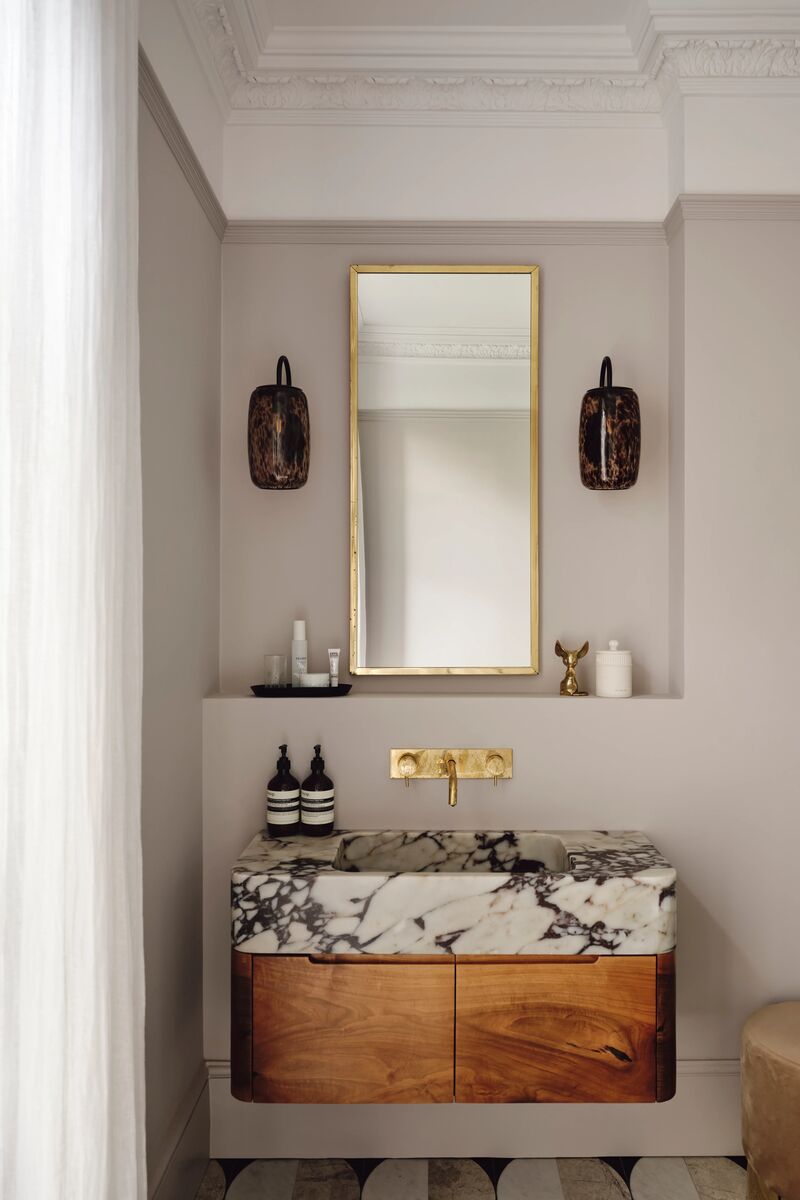
A taupe wall color is often passed over for white or beige, but it brings a warmth that both lack. In a compact modern bathroom, taupe walls let a marble-clad floating vanity take center stage without competing. The wood tones in the vanity and the brass of a wall-mounted faucet add richness, while the marble keeps the look crisp. The taupe acts as a neutral anchor that makes the vanity feel grounded. Wall sconces on either side of the mirror provide task lighting that highlights the marble veining, and a window brings in daylight to balance the taupe. The palette is simple: taupe, warm wood, marble, and brass. That restraint is what makes the room feel put together.
Shades of Grey Walls and Vanity for a Modern Look
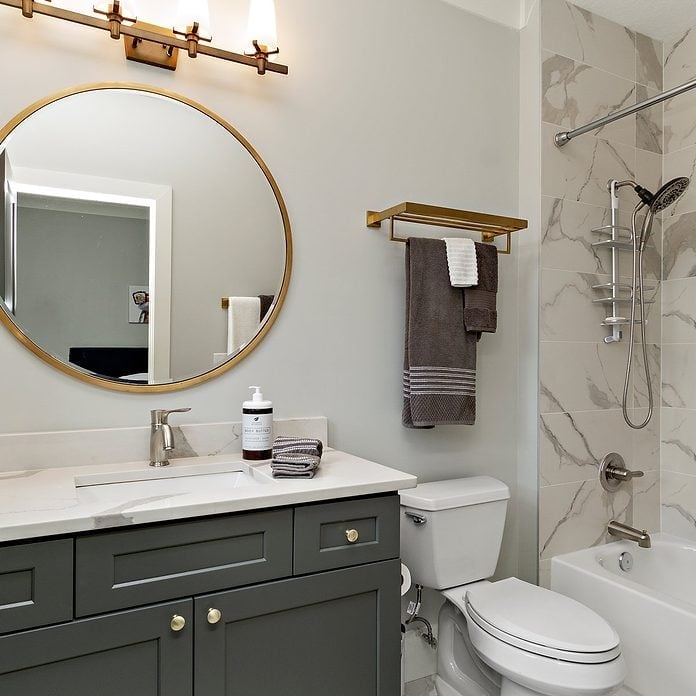
The two distinct greys here create a layered monochrome look without feeling flat. The walls are a light grey, while the vanity is a dark grey that grounds the room. White marble tile on the floor and a quartz countertop break up the grey and add a clean finish. An overhead vanity light and natural light keep the space from reading as dim. For a renter, painting only the vanity a darker shade than the walls is a low-commitment way to try a two-tone grey scheme without painting the whole room.
Warm Terracotta Walls Evoke an Earthy, Modern Vibe
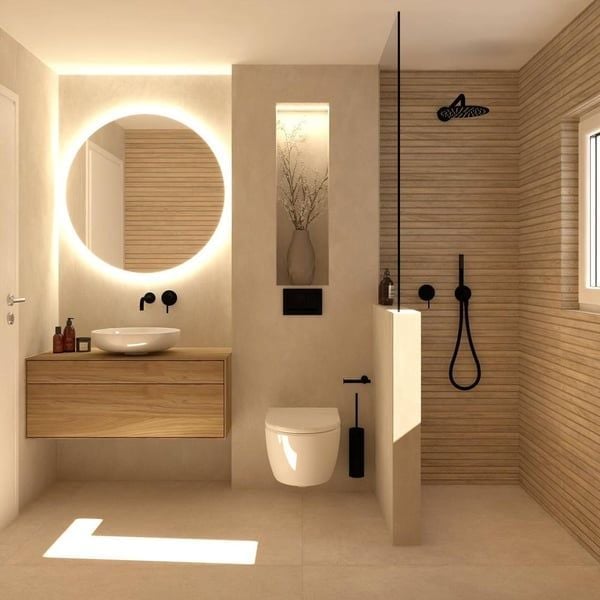
Terracotta is a strong choice for a bathroom because it brings warmth without being sugary or sweet. The walls here are a warm, earthy terracotta that pairs naturally with green plants, wood tones, and stone. A vessel sink on a wood vanity and a freestanding bathtub continue the organic feel. The green from the plants is the main contrast, and it keeps the terracotta from feeling one-note. Warm ambient lighting and natural light soften the color further. The key to making terracotta work is to keep the other materials natural and the palette tight. Too many competing colors would muddy the effect.
Matte Grey Wainscoting Paired with White Tile
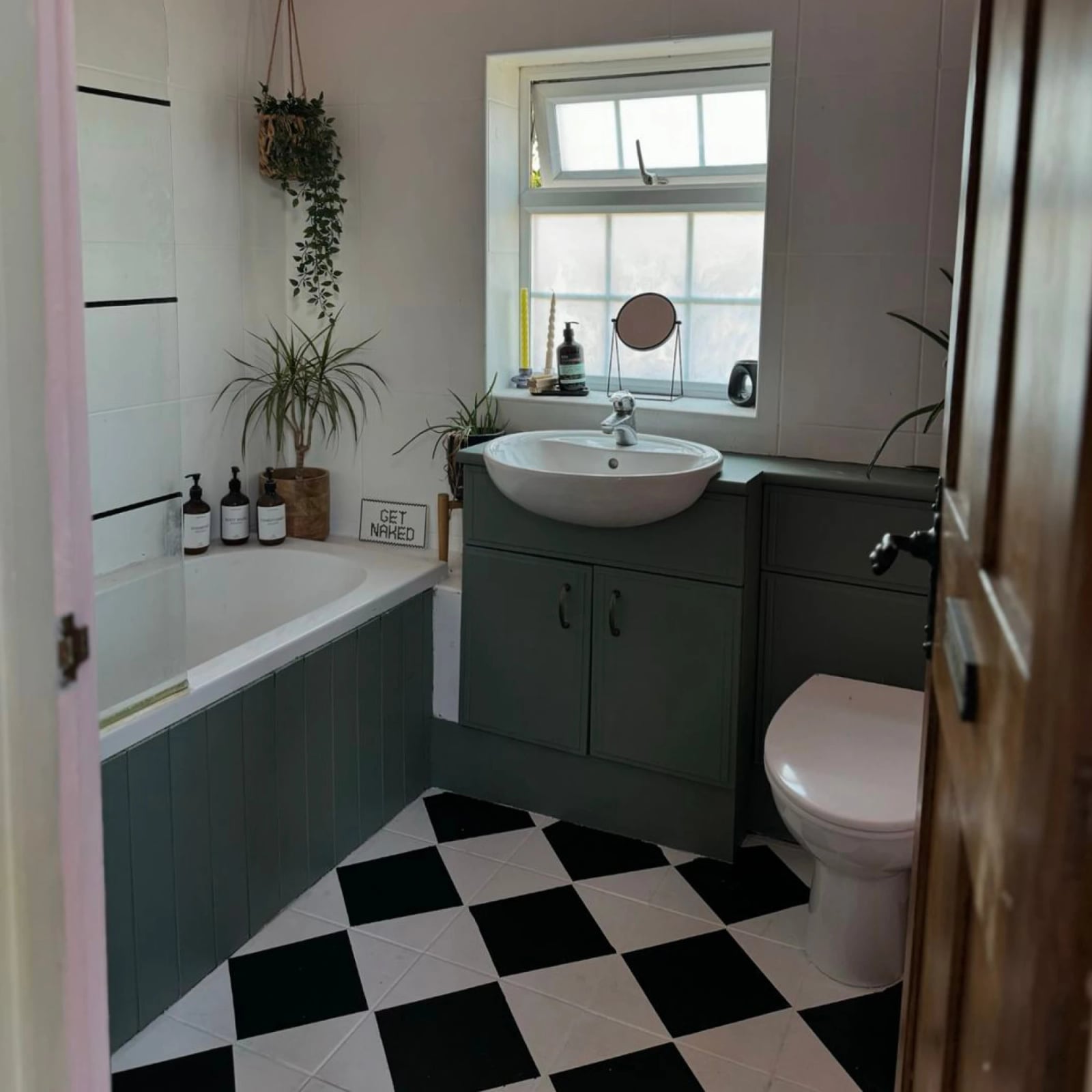
Does painted wainscoting hold up in a bathroom? Yes, if you use a high-quality satin or semi-gloss paint and let it cure fully before the room sees steam. In this compact eclectic bathroom, matte grey wainscoting runs about halfway up the wall, with white tile above. The grey is a neutral base that lets the black vanity, white sink, and a hanging plant add personality. The bathtub and toilet complete the standard layout. The painted wainscoting is a practical way to add visual weight at eye level without committing to floor-to-ceiling color. Natural light from a window prevents the grey from feeling too heavy in a small space.
Sage Green Walls Create a Serene Country Farmhouse Bathroom
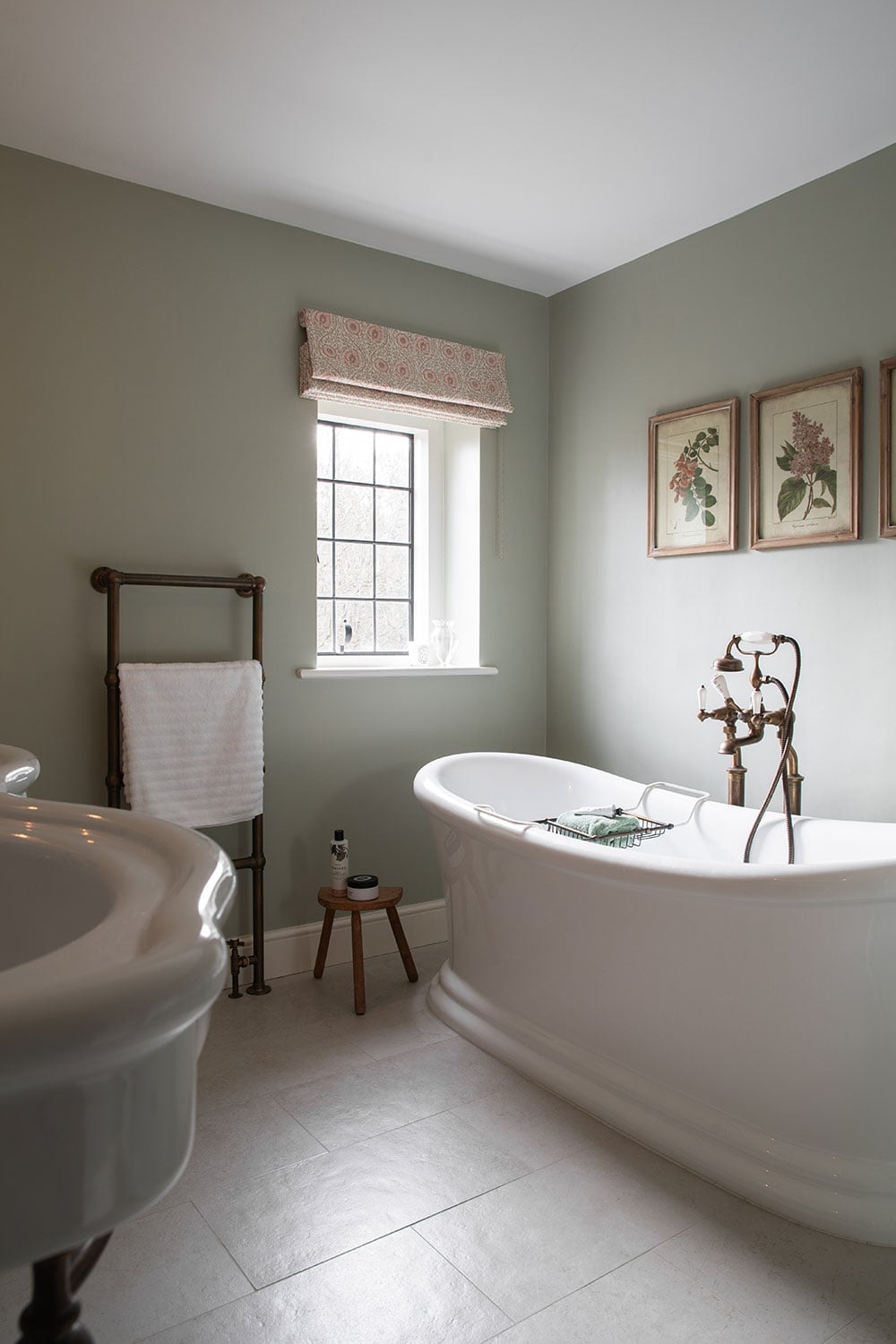
Sage green walls set the tone for a country farmhouse bathroom that is calm and uncluttered. The sage is a muted, dusty green that pairs well with cream tile, warm wood, and brass fixtures. A clawfoot tub with a vintage-style faucet is the centerpiece, and the sage walls frame it without overpowering it. Natural light keeps the green from reading as dark. The palette includes sage, cream, wood, and brass. That restraint lets the tub and the shape of the room breathe.
Playful Pink Walls Inject Fun into a Compact Bathroom
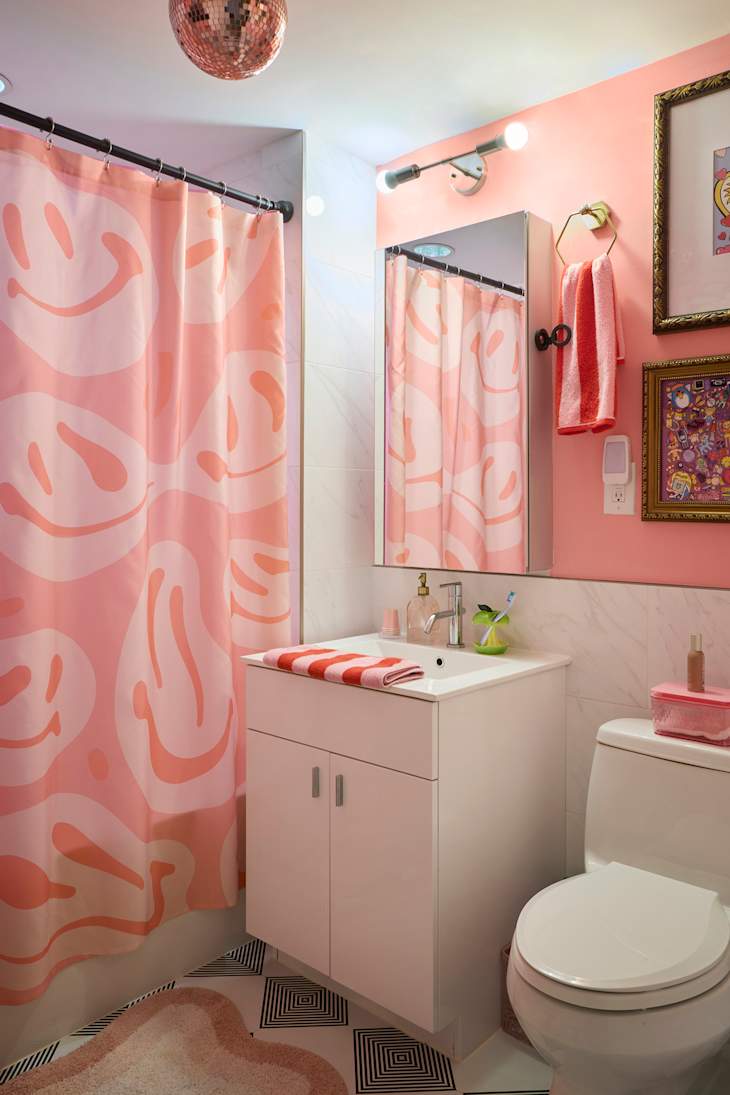
A compact bathroom reads larger when one bold color takes over the walls and the fixtures stay simple. Here pink paint turns a tight layout into its own little world, and the orange tones in the shower curtain keep it from feeling too sweet. A disco ball adds a wink of light without taking up floor space. Stick to a clean white vanity and a simple toilet so the pink stays the event. In a small room, one playful move is enough.
Dark Grey Walls Enhance a Farmhouse Bathroom with Stone Sink
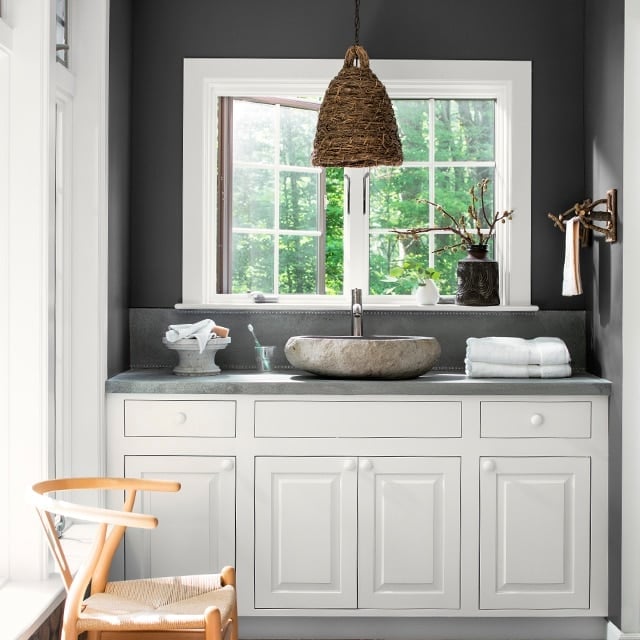
Dark grey walls might sound risky for a farmhouse look, but the natural wood cabinetry and a stone vessel sink keep it grounded rather than gloomy. The contrast works because the grey acts as a backdrop for the warm materials. White cabinets brighten the vanity area, and a woven pendant light adds texture above. A wooden chair brings in an organic note that matches the sink’s raw edge. The window lets daylight hit the grey surface, so the room stays airy despite the dark color. For a farmhouse that leans modern, this palette swaps rustic brown for a moodier grey and lets the stone do the talking.
Vibrant Multi-Colored Walls for an Eclectic Bathroom Statement
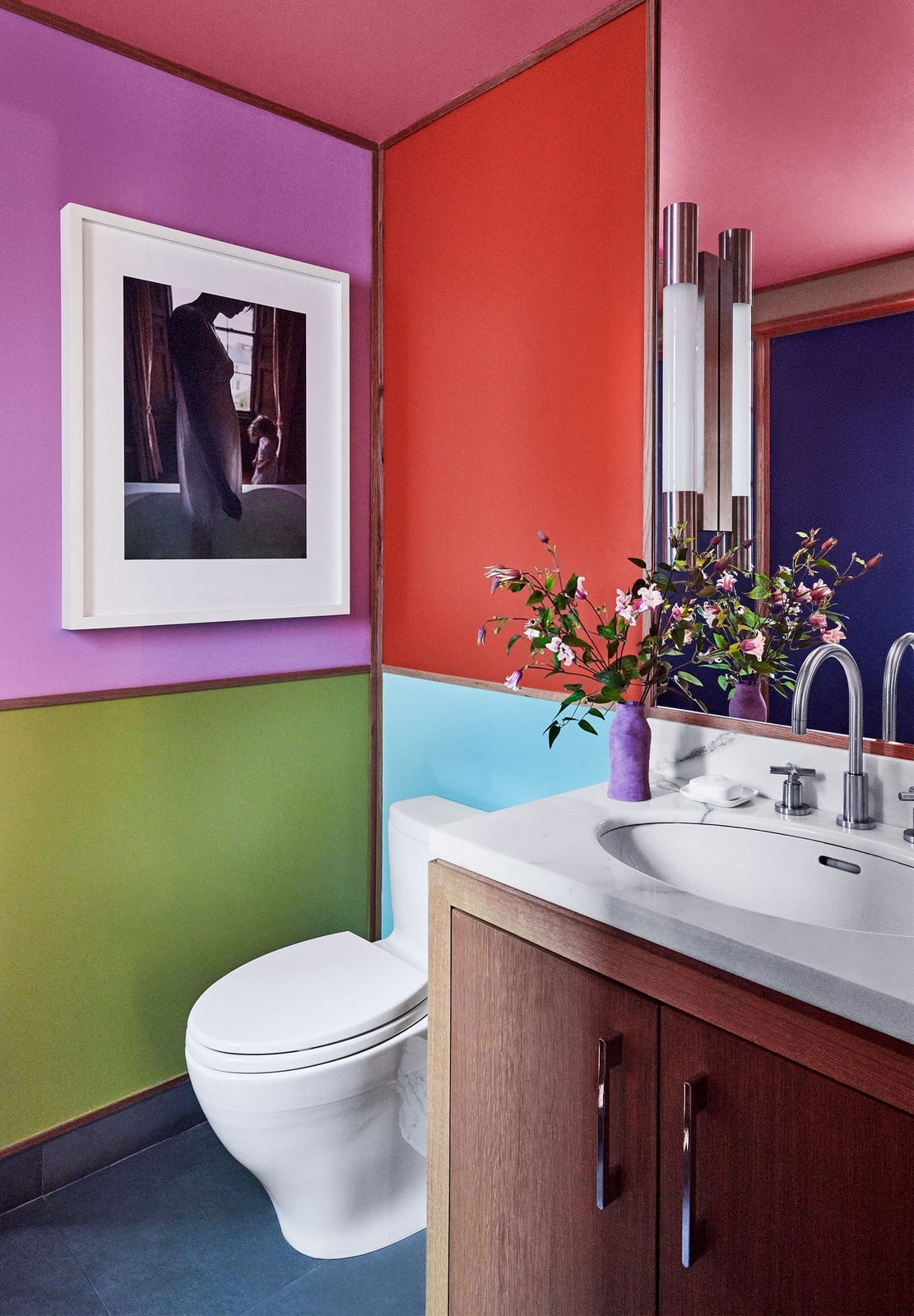
The walls here layer purple, green, red, and blue in a way that looks deliberate rather than chaotic. A white vanity and mirror give the eye a place to rest, and the natural light keeps the colors from feeling heavy. The trick is to let the walls carry all the energy and keep everything else simple. One vivid surface is enough for an eclectic room.
Grey Painted Walls with White Beadboard for a Farmhouse Feel
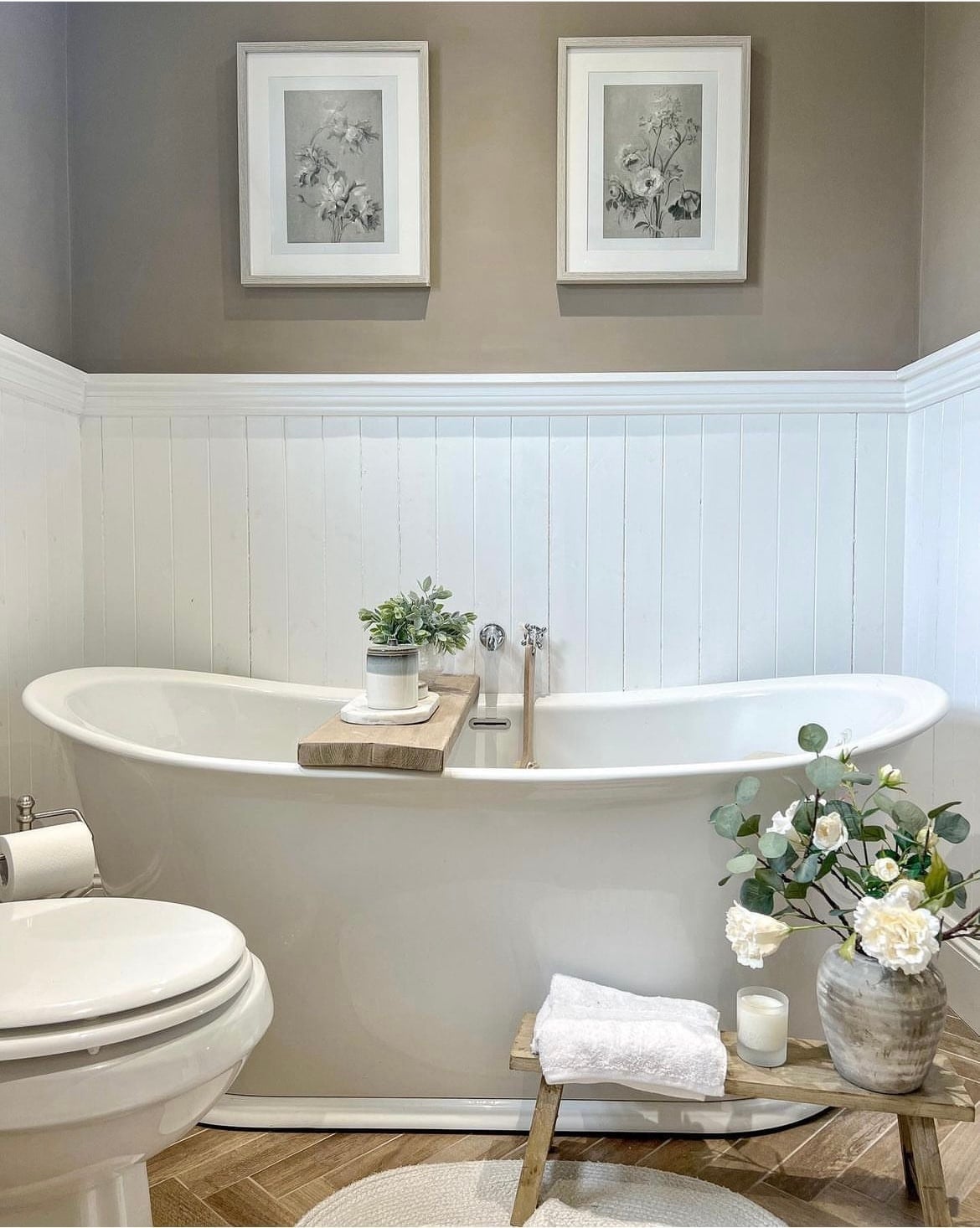
White beadboard is a practical choice for a bathroom because it handles moisture better than drywall alone. Here the upper walls are grey, and the white beadboard below breaks the color into a clean two-tone look. A clawfoot tub and a wooden stool reinforce the farmhouse feel without competing with the paint. The grey reads as soft and neutral, so the room stays light. Overhead lighting and natural light both bounce off the white panels, making the space feel roomy. This is a simple way to add farmhouse character without a full renovation.
Pale Green Walls Create a Transitional Bathroom Oasis
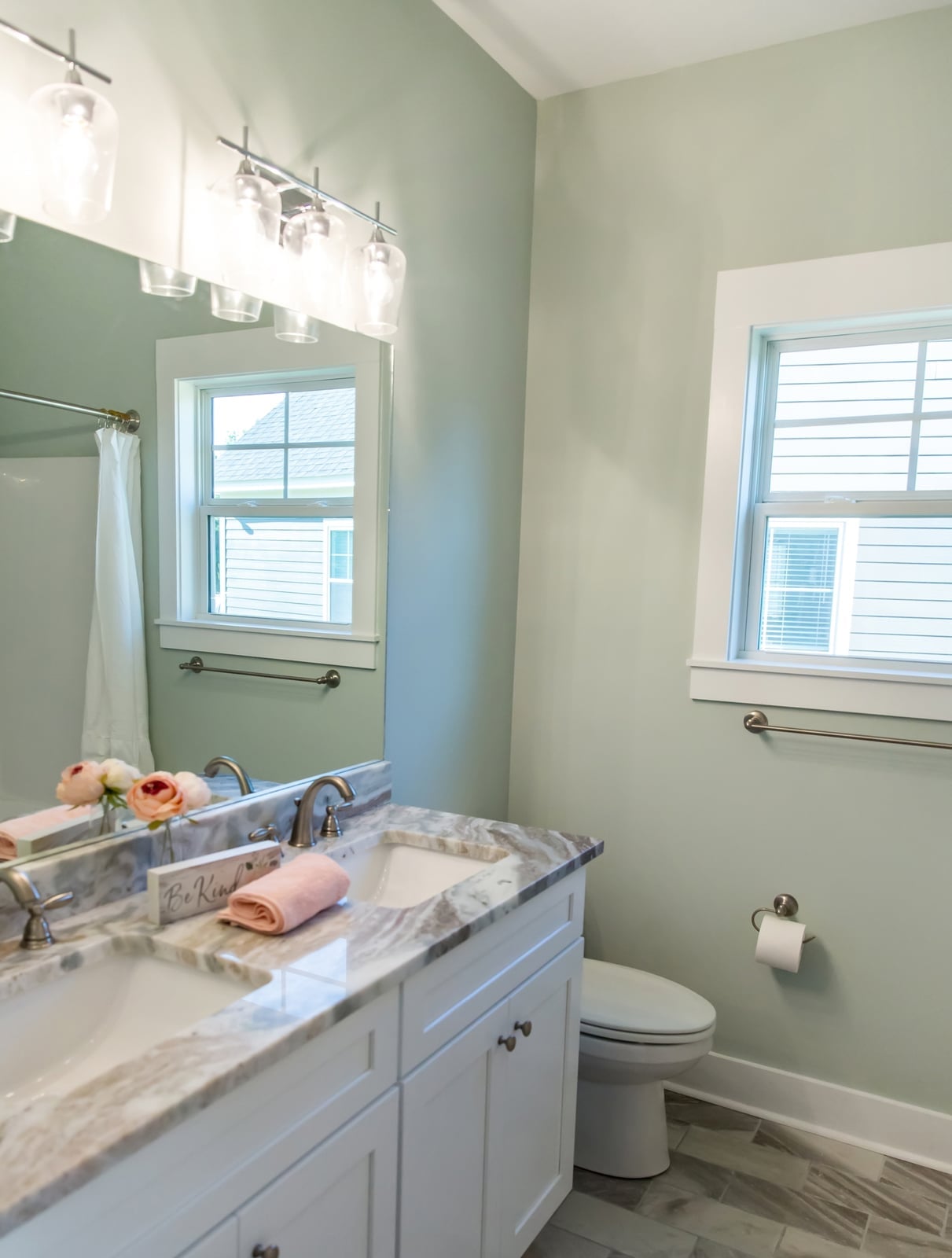
Pale green works in a transitional bathroom because it bridges the gap between cool and warm. The color sits between blue and yellow, so it pairs equally well with white marble and warm wood tones. Here a double vanity and a large mirror make the room feel generous, and the green walls soften the hard surfaces. Natural light from the window brings out the green’s freshness, while vanity lights keep the space functional at night. A pale wall color lets the marble countertop stay the focal point. In a roomy bath, a soft green keeps the mood calm without washing out the details.
Pale Pink Walls Enhance a Traditional Bathroom, Close-Up Take
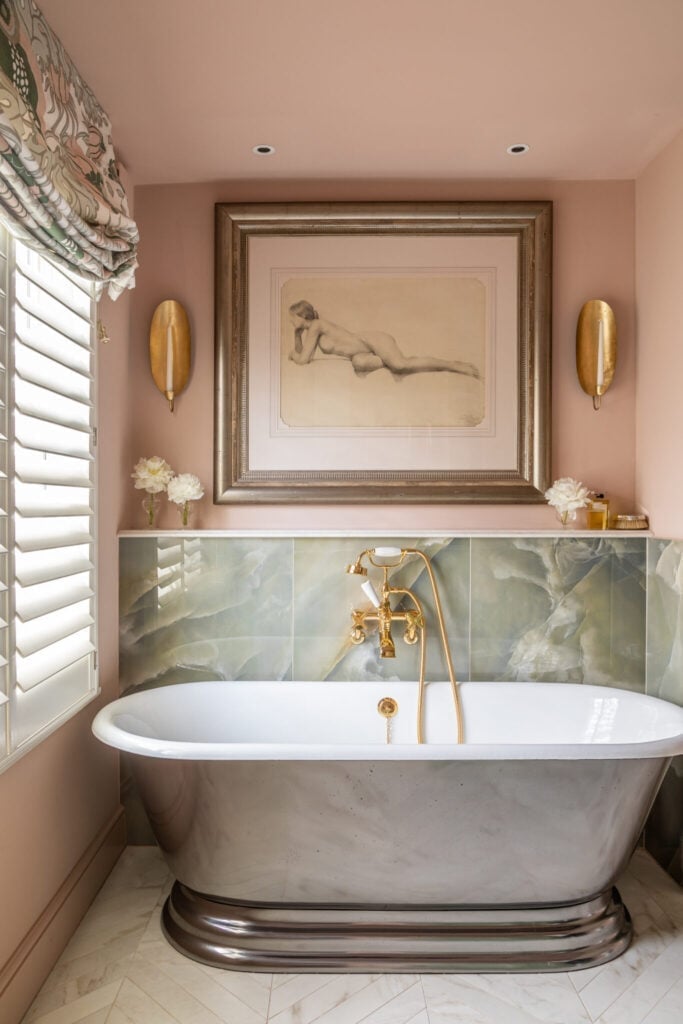
Pale pink walls are grounded by a green marble tile backsplash that runs behind a freestanding tub. The pink is soft enough to feel calm, not sugary, and the marble introduces a cool green that keeps the palette from going one-note. Gold wall sconces and brass fixtures add a warm metallic line that ties the two colors together. A framed piece of artwork on the wall picks up the green tones, making the whole look feel connected. The light hits the pink walls and the marble differently, so the room changes slightly as the day goes on.
Dark Grey Walls with a Bold Leopard Print Accent
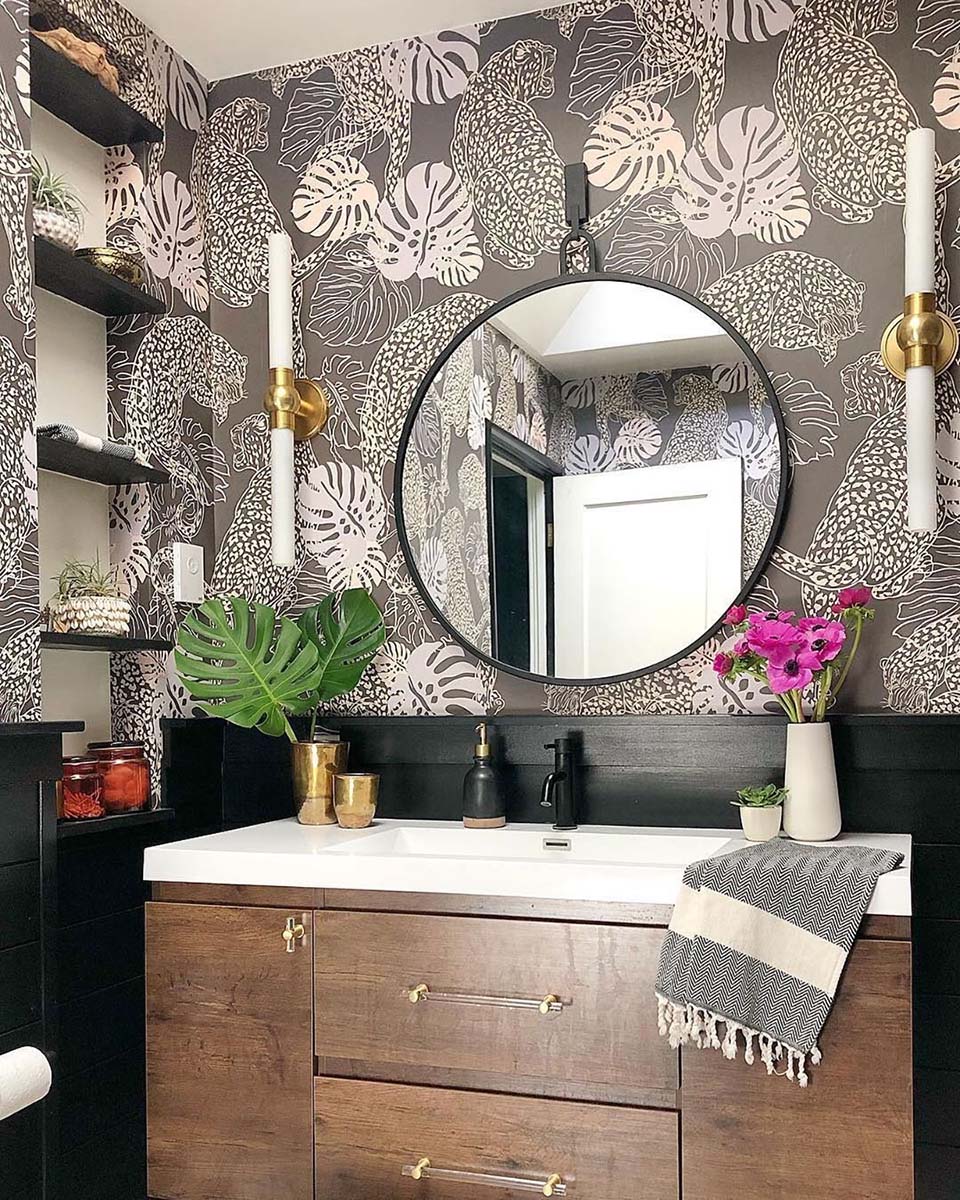
To add a bold print to a small bathroom without a full commitment, use wallpaper on one wall or a single section. Here the dark grey walls take up most of the room, and a leopard print wallpaper covers a narrow strip or accent area. The grey is a deep, matte tone that lets the wallpaper pop without competing. A dark vanity with metal hardware and open shelving keep the look grounded. A small window and wall sconces provide natural light that keeps the dark grey from feeling too heavy. For a renter safe version, use a removable wallpaper panel on the accent section. The leopard print brings energy, and the grey walls keep it from going full jungle.
Peach Painted Ceiling Adds Warmth to a Transitional, Close-Up Take
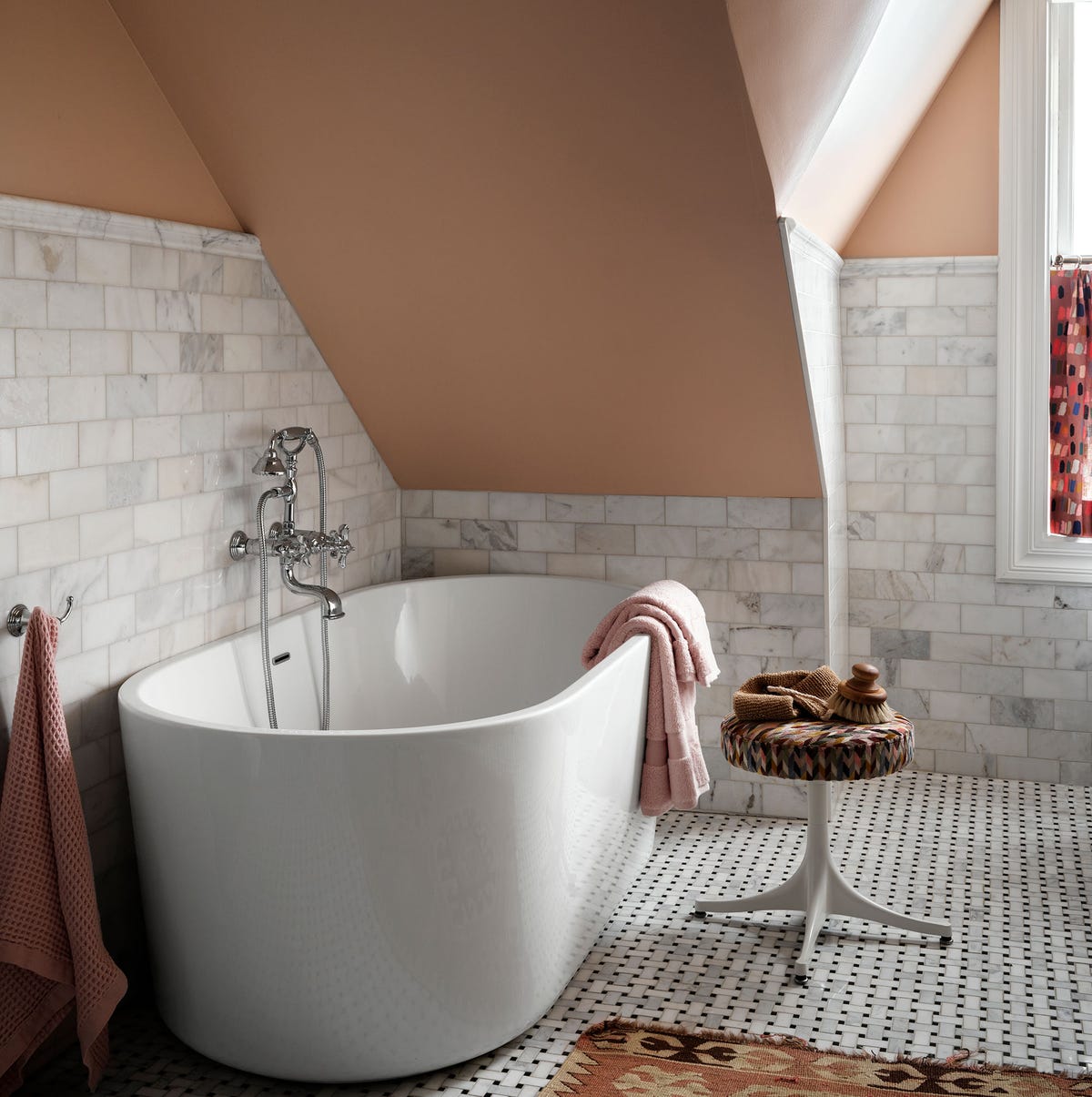
A white ceiling is the default, but a peach painted ceiling does something a neutral one cannot: it reflects warmth back into the room without taking up any floor space. In this transitional bathroom, the peach tone sits above white walls, a freestanding tub, and grey mosaic floor tile. The color is subtle, softening the white walls and the window light.
The peach ceiling pairs well with the grey and white palette because it adds a warm note that neither the marble tile nor the fabric rug provides. A patterned stool sits to the side of the tub, and the peach above ties the wood tones and the cool grey together. The ceiling becomes an unexpected fifth wall that makes the room feel finished without adding clutter.
Navy Blue Grasscloth Walls for a Coastal Bathroom, Close-Up Take
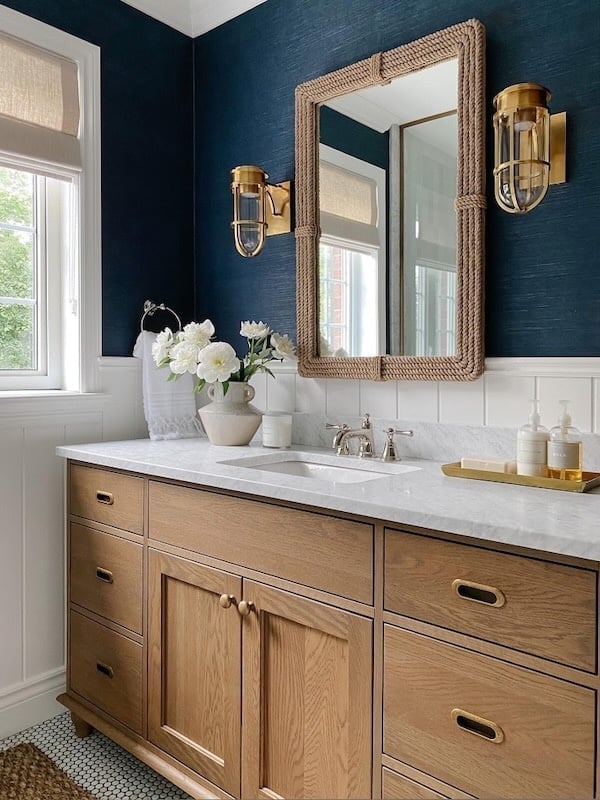
Navy blue grasscloth wallpaper adds texture to a coastal bathroom without relying on seashells or stripes. The deep navy reads as a solid color from a few feet away, but up close the woven fibers catch the light and create subtle shadows. A wood vanity and marble countertop keep the look grounded, while the mirror and sconces add a clean, polished finish. Grasscloth is a natural material, so it needs a bit more care in a bathroom: seal it properly during installation and run the fan after showers to keep humidity from damaging the fibers.
Two-Tone Light Green and Off-White Walls
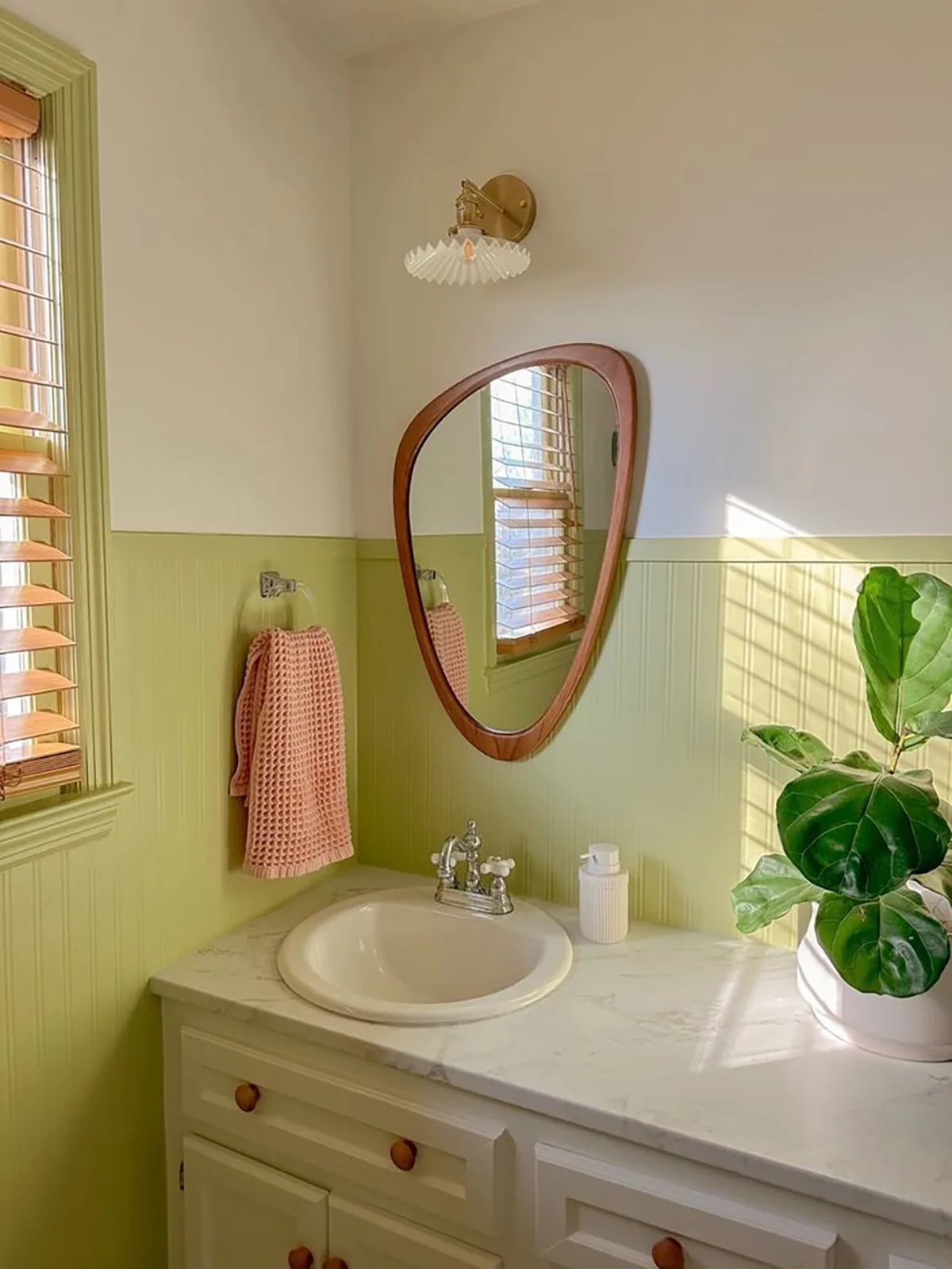
A two-tone paint scheme is a straightforward way to add structure to a compact bathroom without remodeling. Here the lower half of the wall is painted a light green, and the upper half is off-white, with the split hitting around chair-rail height. The light green brings a calm, natural feel, and the off-white keeps the room from feeling closed in. A wood vanity and marble countertop sit against the green section, grounding the palette, while natural light and a wall sconce keep the space bright. The two-tone approach works well for renters too, since it is easy to paint back to a single color when you move out.
White Subway Tile with Green Trim and Door for a Traditional Look
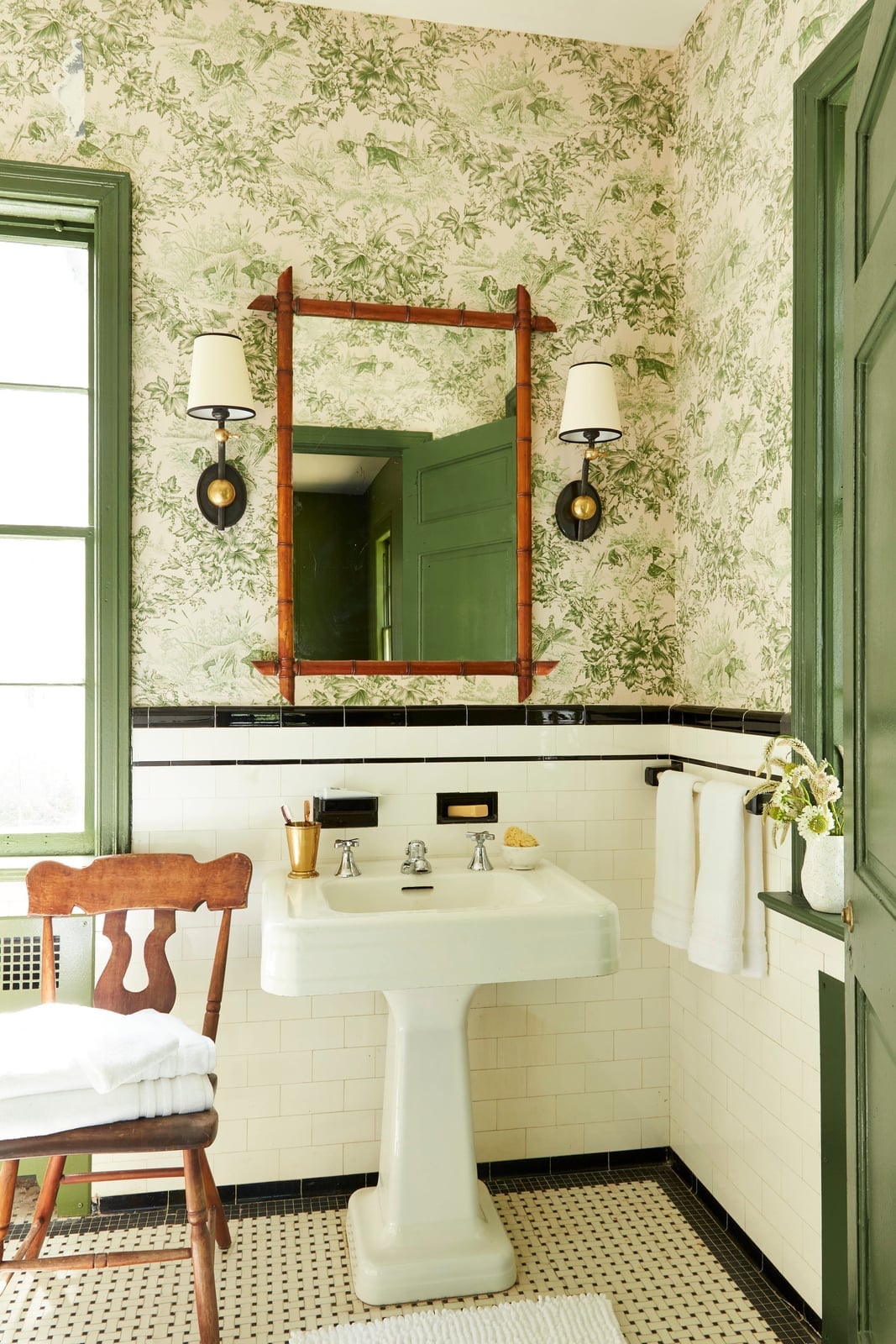
A practical rule for a compact traditional bathroom is to let a single color do the heavy work of defining the space. Here, the trim around the window and door, plus the door itself, are painted a deep green. The rest of the room stays white: white subway tile on the walls, a white pedestal sink, and a white chair. The green acts as a frame, drawing the eye around the room without needing a full wall of color. The palette is simple: white, green, and black accents from the mirror and lighting. Wall sconces on either side of the mirror provide task light, and natural light from the window keeps the white tile from feeling cold. In a small bathroom, this approach gives the room a clear focal point without cluttering the layout.
Black Upper Walls Above White Beadboard
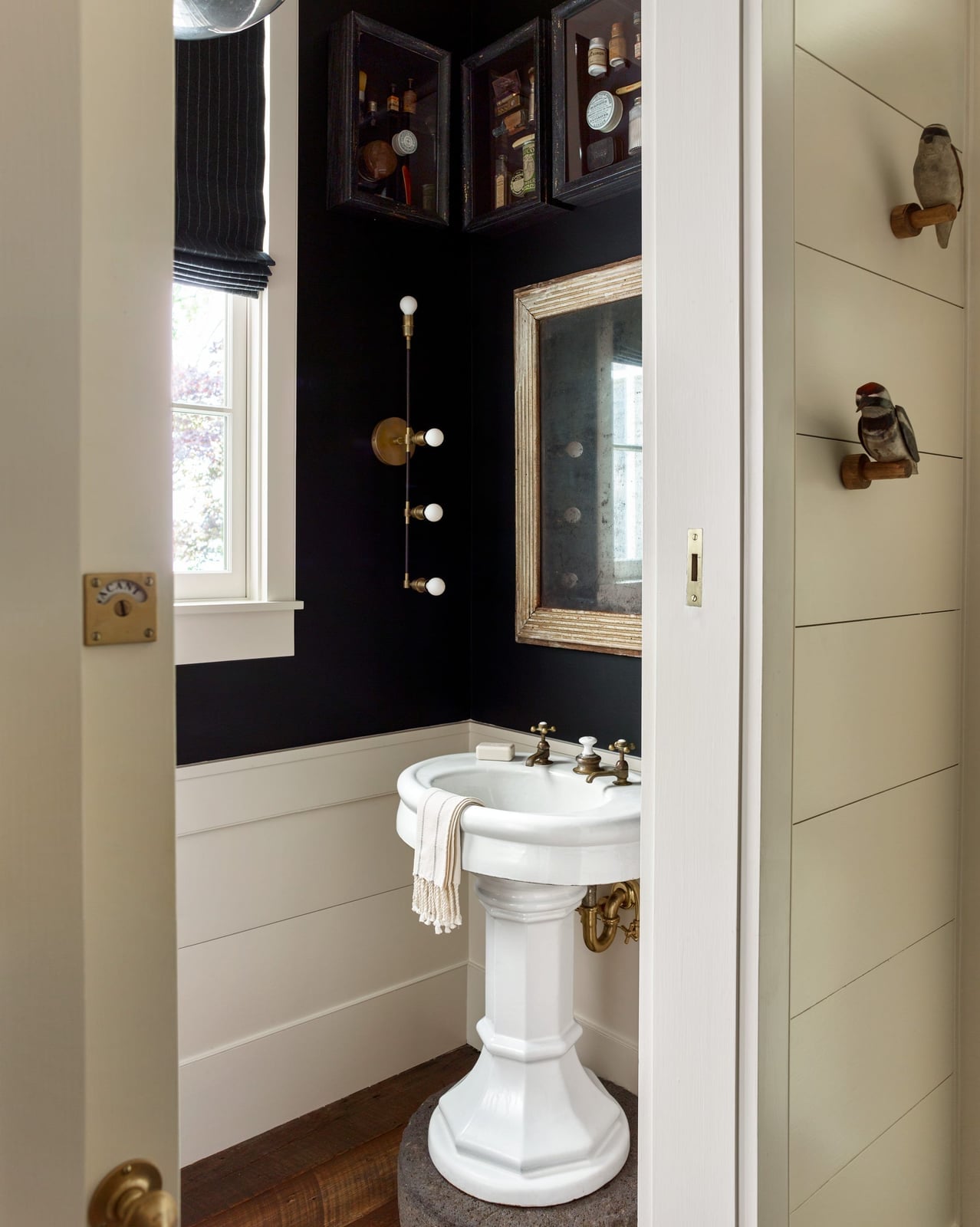
A compact traditional bathroom uses a high-contrast split: black paint on the upper walls and white beadboard below. The beadboard runs from the floor to about waist height, with a narrow shelf or trim piece marking the transition. The black upper wall makes the ceiling feel lower and the room cozier, while the white beadboard prevents the room from feeling too dark. A pedestal sink and a wall-mounted light fixture with a single bulb sit against this backdrop. Natural light from a small window and a wall sconce balance the dark paint. The wood tones of the mirror frame and floor add warmth to the black and white palette.
Vibrant Floral Wallpaper for a Maximalist Bathroom
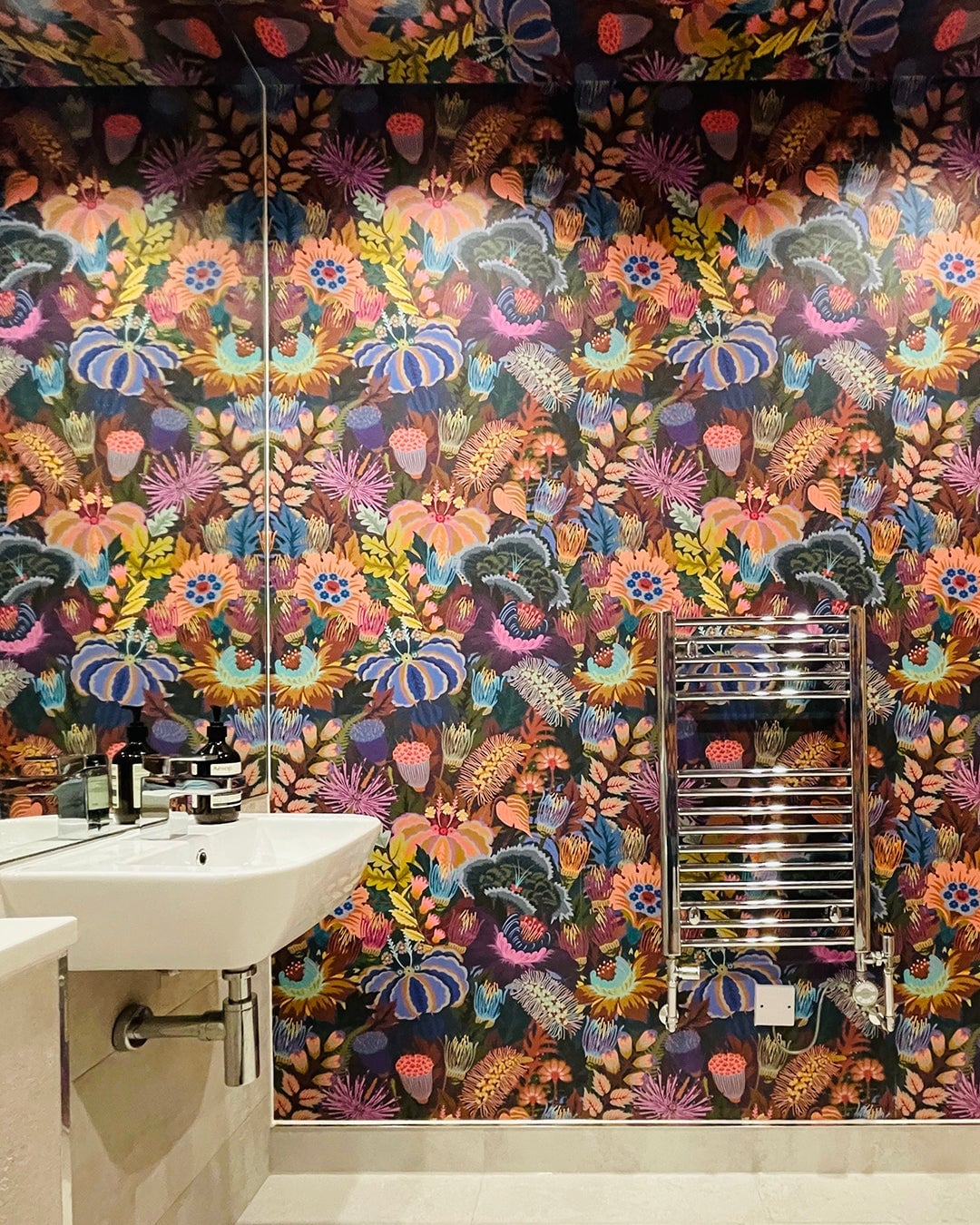
A practical rule for maximalist wallpaper in a small bathroom: let the pattern take over and keep everything else simple. This compact space uses a dense floral wallpaper with a dark background and multi-colored blooms. The wallpaper covers all visible walls, wrapping the room in pattern. Against it, a white ceramic sink and a chrome heated towel rack read as clean and minimal. The mirror has a simple metal frame, and the lighting is ambient rather than directed. The key is that the wallpaper is the only pattern in the room. No competing tile, no busy floor. The florals do all the work, and the fixtures step back.
Blue-Grey Walls Complement a White Vanity and Marble
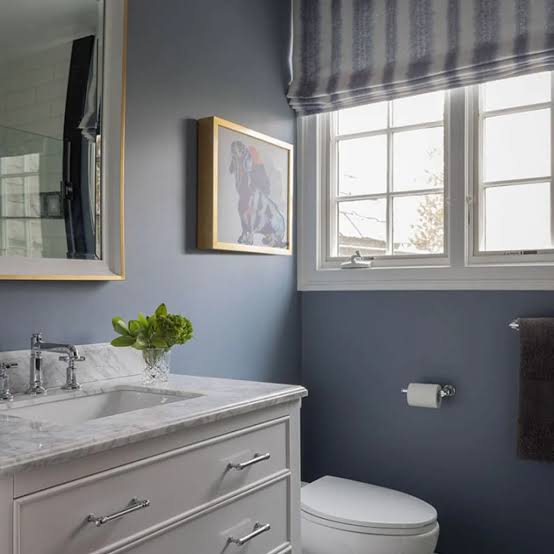
A blue-grey wall can read as cool and distant, but here it works because it is set against warm white and gold. The white vanity has a marble countertop with subtle veining, and the fixtures are chrome. The framed artwork on the wall picks up the blue-grey tone, tying the palette together. Natural light from a nearby window keeps the blue-grey from going flat. The room is compact, with the vanity and toilet sharing a corner. The blue-grey paint is the anchor, but the gold and white keep it from feeling stark. If the same wall were paired with a grey vanity and silver fixtures, the room would feel colder. The marble and gold warm it up.
Intricate Botanical Wallpaper for a Traditional Bathroom
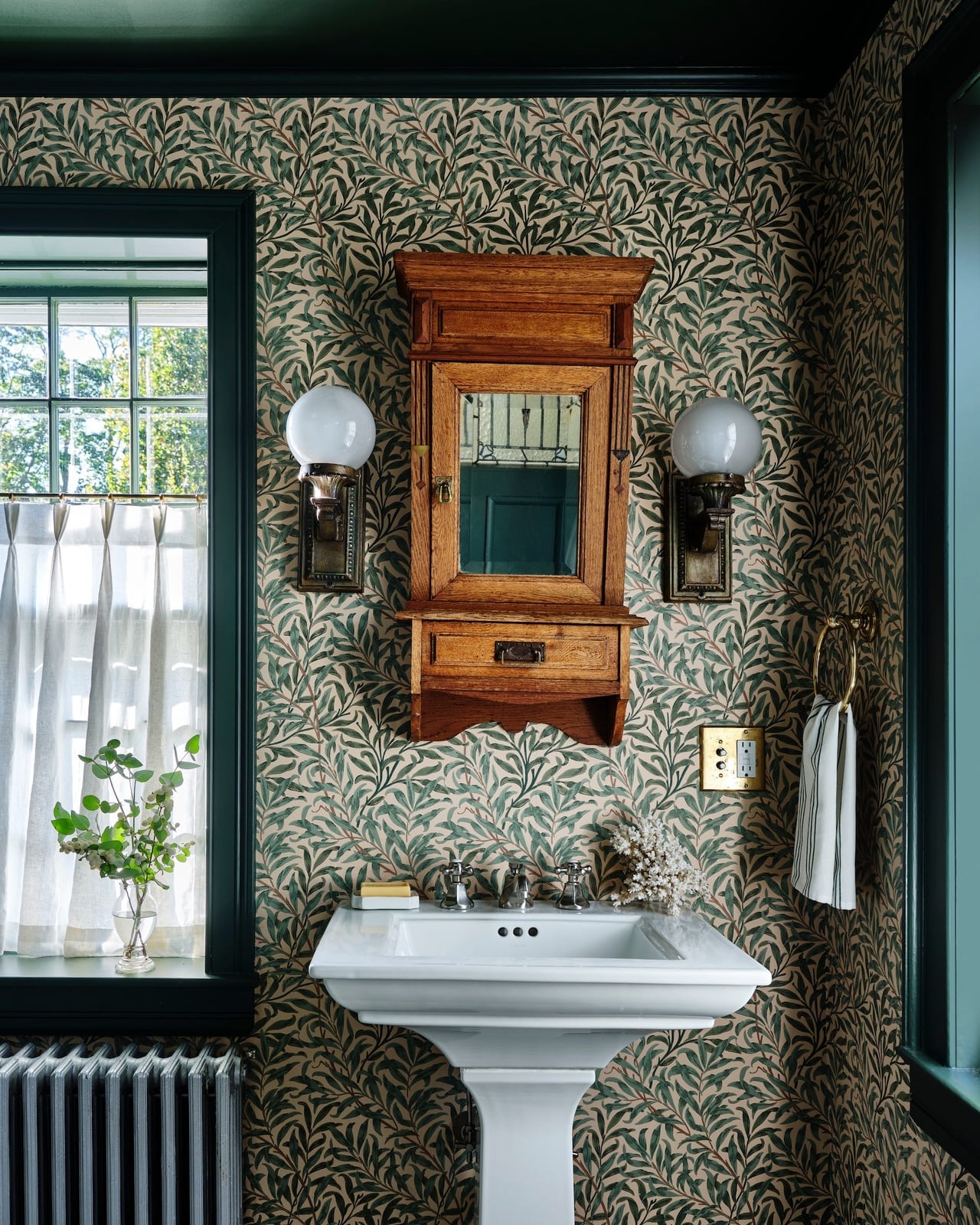
A compact traditional bathroom uses an intricate botanical wallpaper with a green and beige palette. The pattern covers the wall behind a pedestal sink, with a medicine cabinet and wall sconces mounted above. The wallpaper has a dark green background with lighter botanical motifs, creating depth without needing additional wall decor. The sink, cabinet, and sconces are all simple and traditional, letting the wallpaper be the focal point. Natural light from a window and the sconces illuminate the pattern without washing it out. The room feels complete with just these elements: no extra shelves, no clutter. The wallpaper does the work.
Beige Paneled Walls Create a Traditional Bathroom Detail
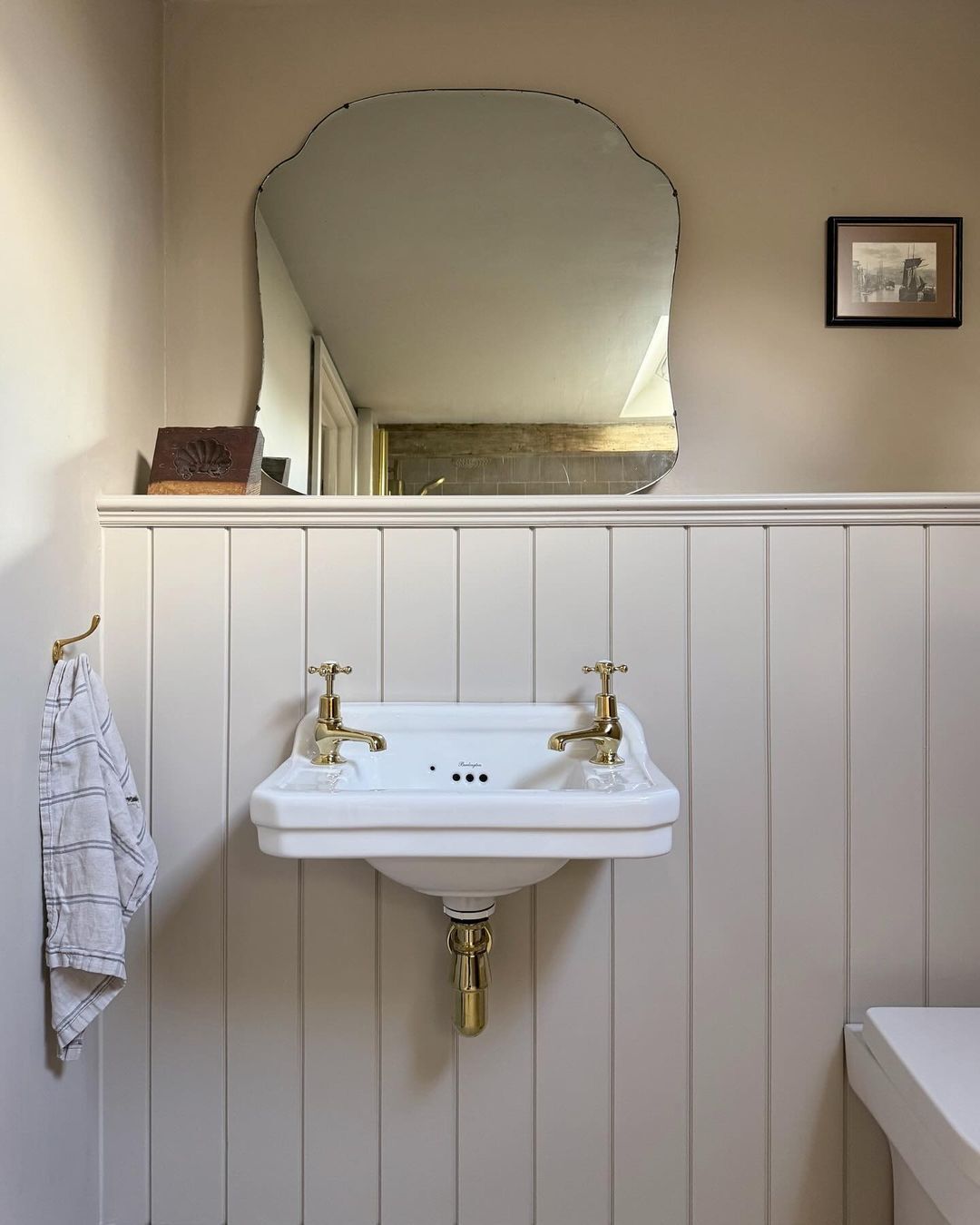
Beige paneled walls give a small bathroom a finished look without adding square footage. The warm beige tone keeps the wood paneling from feeling heavy, while the white sink and brass faucet provide a clean contrast. Natural light from the window bounces off the panels, making the room feel larger than it is. This setup works well if you want traditional character without the cost of full tile. The key is keeping the vanity simple so the wall treatment stays the hero element.
Woodland Creature Wallpaper on Dark Brown Walls and Black Ceiling
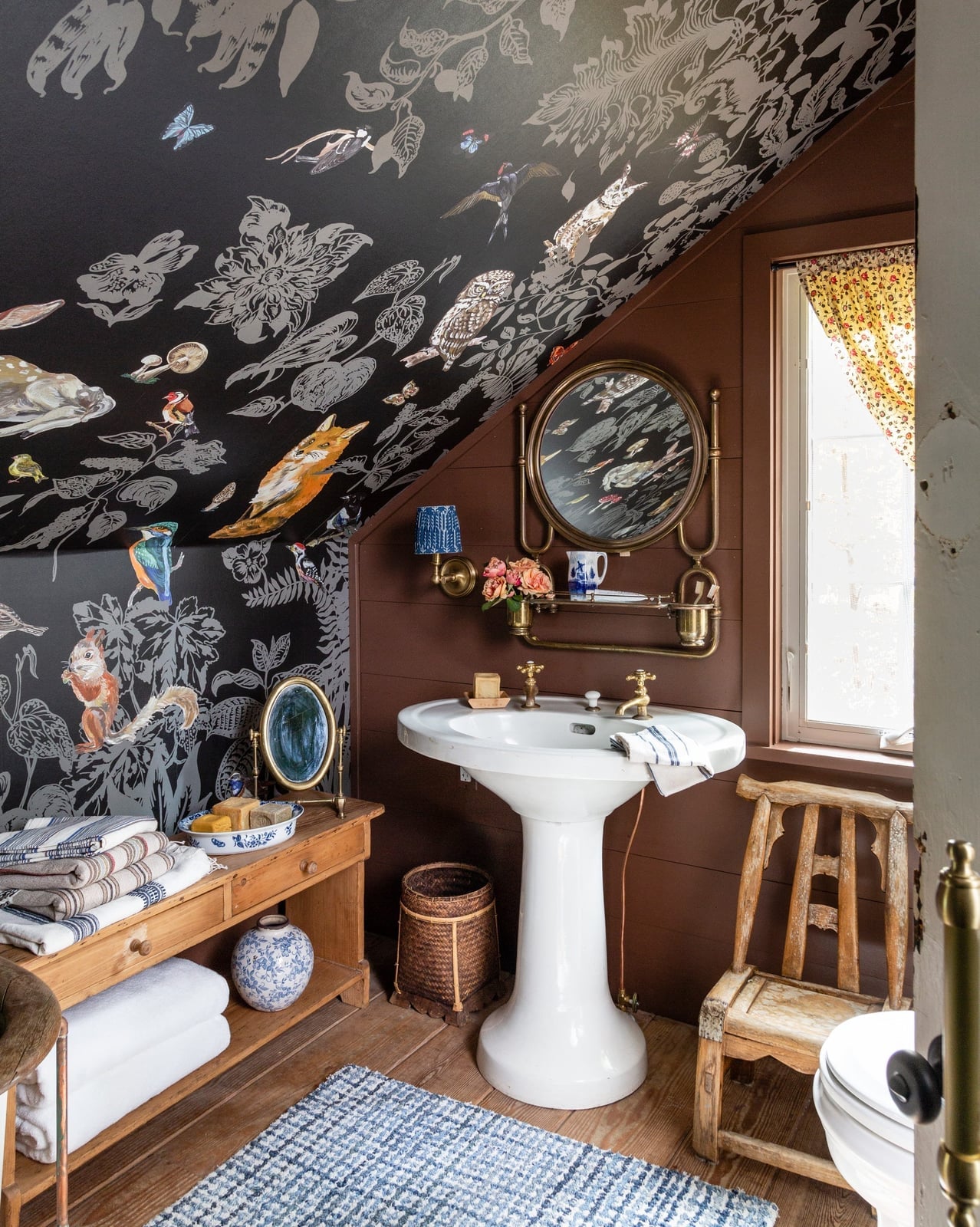
A floral wallpaper might feel expected for an eclectic bathroom, but this woodland creature print on the ceiling changes the game entirely. Dark brown walls anchor the room, while the black ceiling pulls the eye up to the whimsical pattern featuring small animals in orange, blue, and brown. A pedestal sink and wooden vanity keep the layout straightforward. The wall sconce provides task lighting near the mirror, and natural light from the window balances the dark paint. If you are renting, removable wallpaper on the ceiling is a renter-safe swap that makes a big impact without permanent changes. The compact size means the pattern does not overwhelm the space.
Textured Off-White Plaster Walls for a Modern Organic Feel
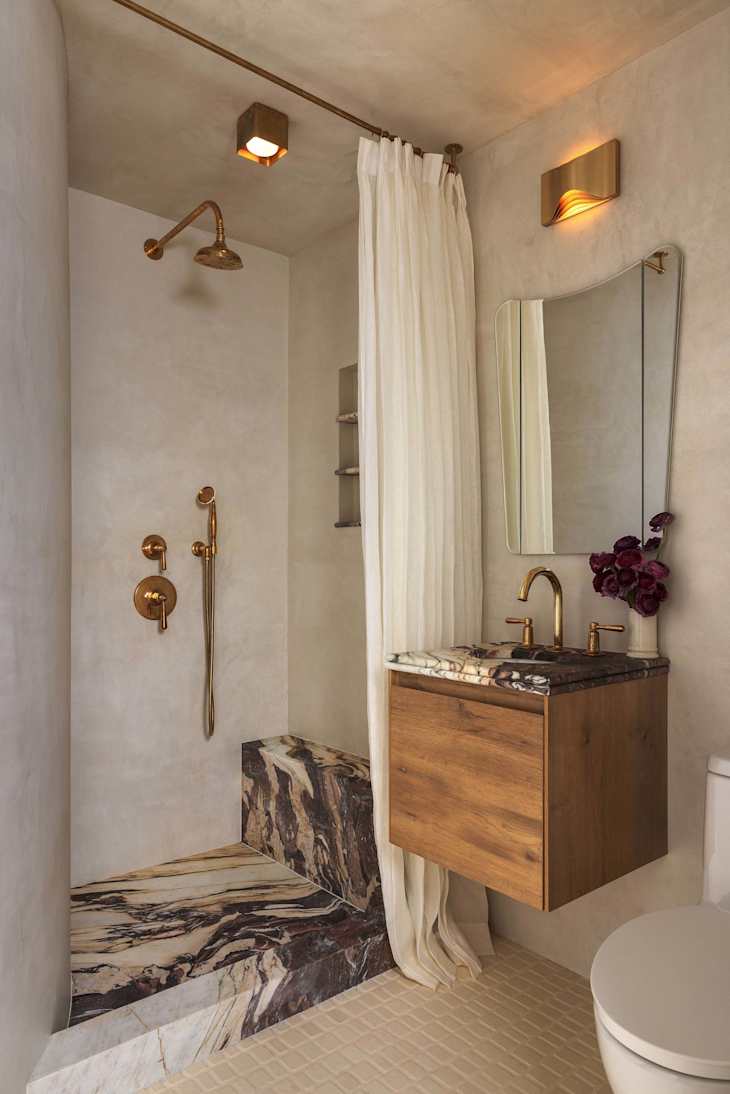
Textured off-white plaster walls add depth to a compact bathroom without introducing a second color. The hand-applied finish catches light differently than flat paint, creating subtle shadows that make the room feel layered. Marble countertops and warm wood tones keep the look from feeling cold, while brass fixtures add a touch of polish. Recessed lighting and a wall sconce ensure the texture is visible even at night.
Teal Walls with a Striking Botanical Wallpaper Accent
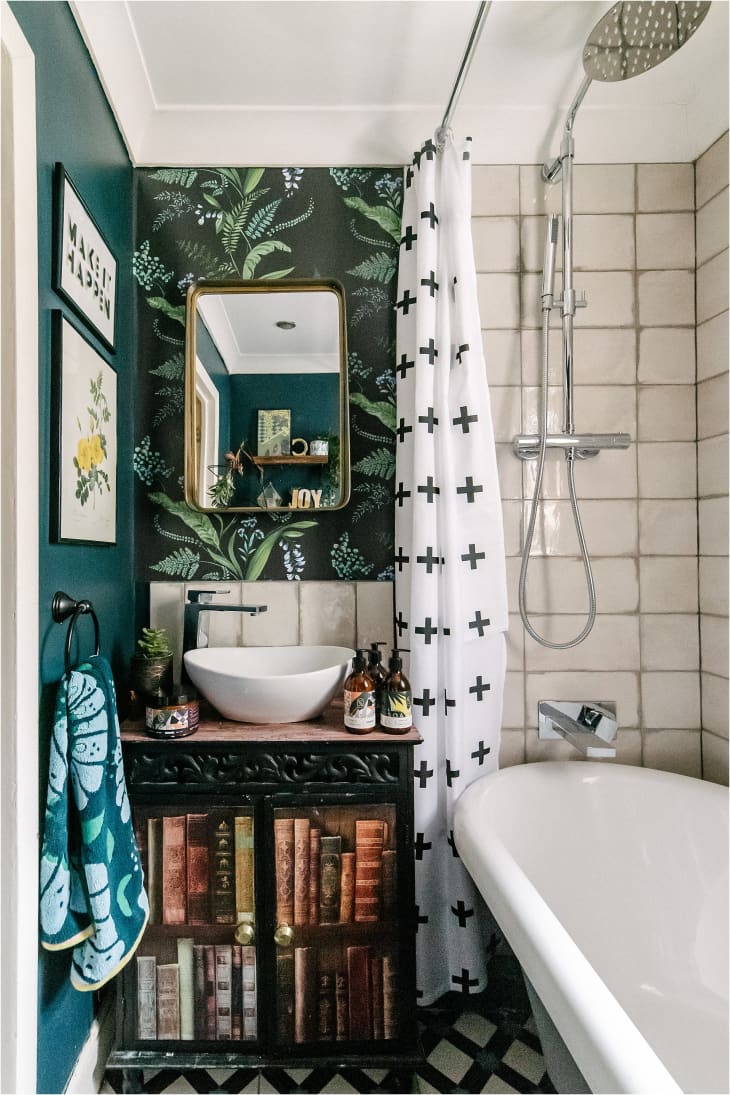
Teal paint covers the main walls, but the real move is the botanical wallpaper accent behind the vanity. The deep teal reads as a solid backdrop, while the wallpaper introduces a pattern with white and wood tones that keeps the palette from feeling flat. Natural light hits the vanity area, and the overhead light ensures the wallpaper stays visible after dark. This approach works if you want a bold color without committing to pattern on every wall.
Light Green Walls Frame a Mint Green Clawfoot Bathtub
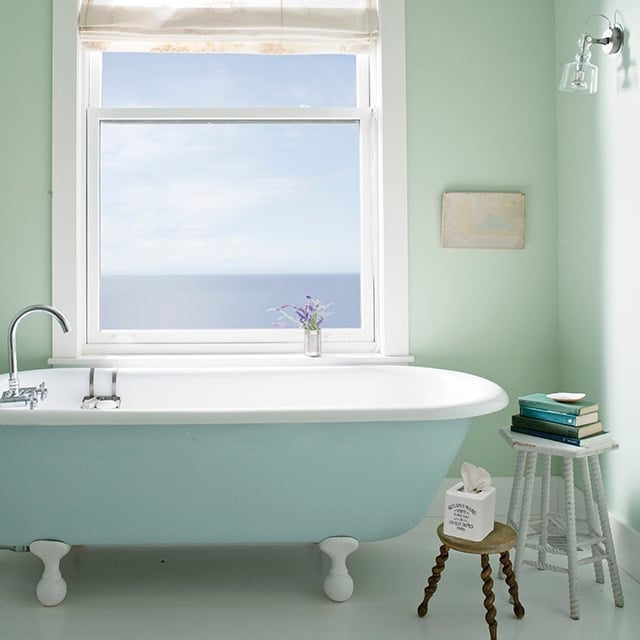
A mint green clawfoot bathtub could easily feel like a standalone statement, but light green walls make it part of a cohesive palette instead. The wall color is close enough to the tub that they look like a set, not a contrast. A wooden stool and a stack of books add a lived-in touch near the tub. The window light keeps the mint tone from feeling too cool. If you have a colorful tub, matching the wall paint to a lighter version of that color creates a coastal feel without going full nautical.
Final Thoughts
Paint is one of the few bathroom updates you can do in a weekend and still afford to change your mind next year. The best approach is to pick a color that makes you want to walk in there, not one that follows a trend. Keep the finish durable, use good primer, and let the paint do the work. These 30 ideas prove that a single coat can carry the whole room if you let it.