
Finding a vanity that works with your morning routine and the room’s size is the real trick. This guide covers 29 bathroom vanities, from compact wall-hung designs to double setups with plenty of counter space.
Each option focuses on layout, storage, and materials that hold up to daily use, so you can match one to your own space without guesswork.
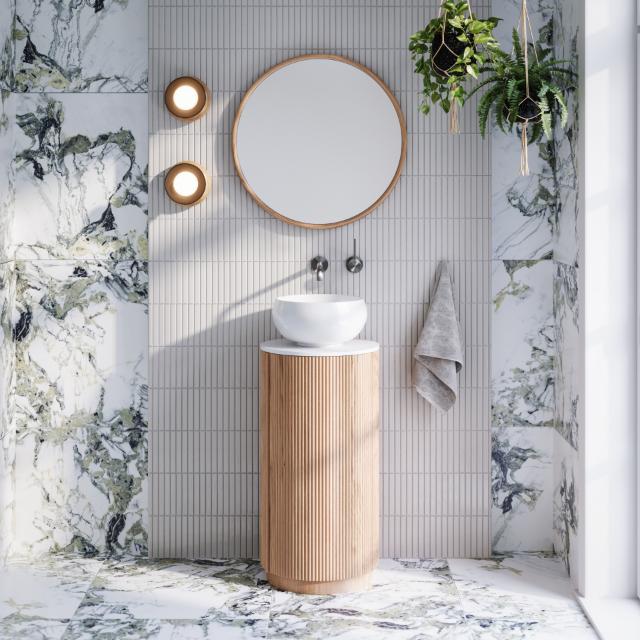
Contemporary Bathroom Vanity with Fluted Timber and Marble
The pedestal vanity anchors the room with fluted wood that draws the eye up, while the marble wall and floor create a continuous stone backdrop. Brass wall sconces add warm light, and the round mirror softens all the vertical lines. The layout keeps the sink central for an open feel where the materials do the talking. What makes this work is the ratio: the vanity is the only textured piece against a clean stone field, so the fluting appears deliberate rather than busy.
Curved Wall-Hung Vanity with Fluted Texture and Stone Top
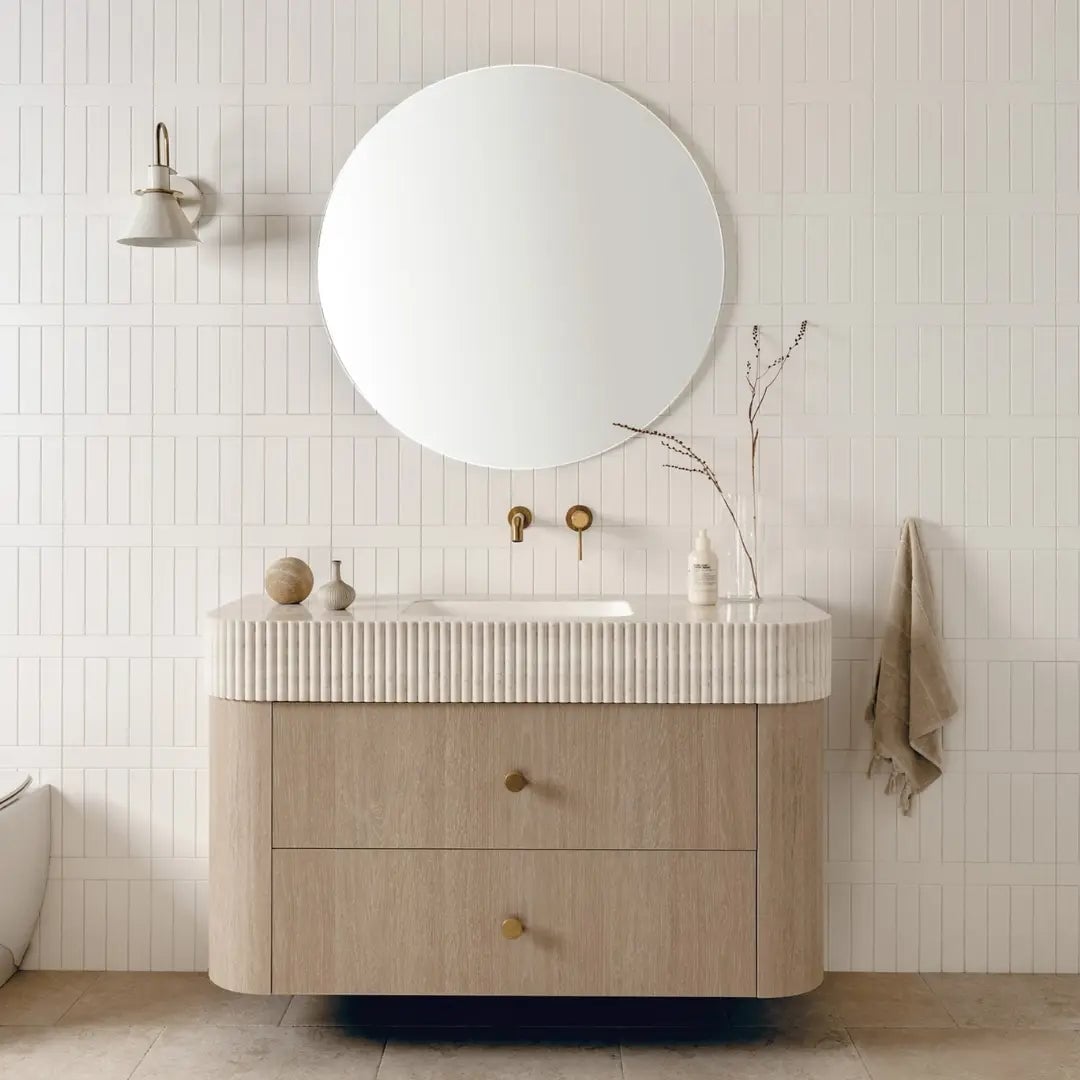
This vanity earns its place with one clear move: the curved front and fluted surface give it a sculptural quality that a flat cabinet cannot match. The wall-hung design opens up the floor, which helps a smaller bathroom feel larger, and the stone top ties the wood to the neutral palette. A single round mirror and one wall sconce keep the look simple. The palette stays within light wood, white and beige, so the fluted texture does not compete with color. If the vanity had a dark top, the room would lose that airy feel. The stone top bridges the vanity and the wall, making the whole setup feel like one piece.
Freestanding Curved Fluted Vanity with Arched Mirrors
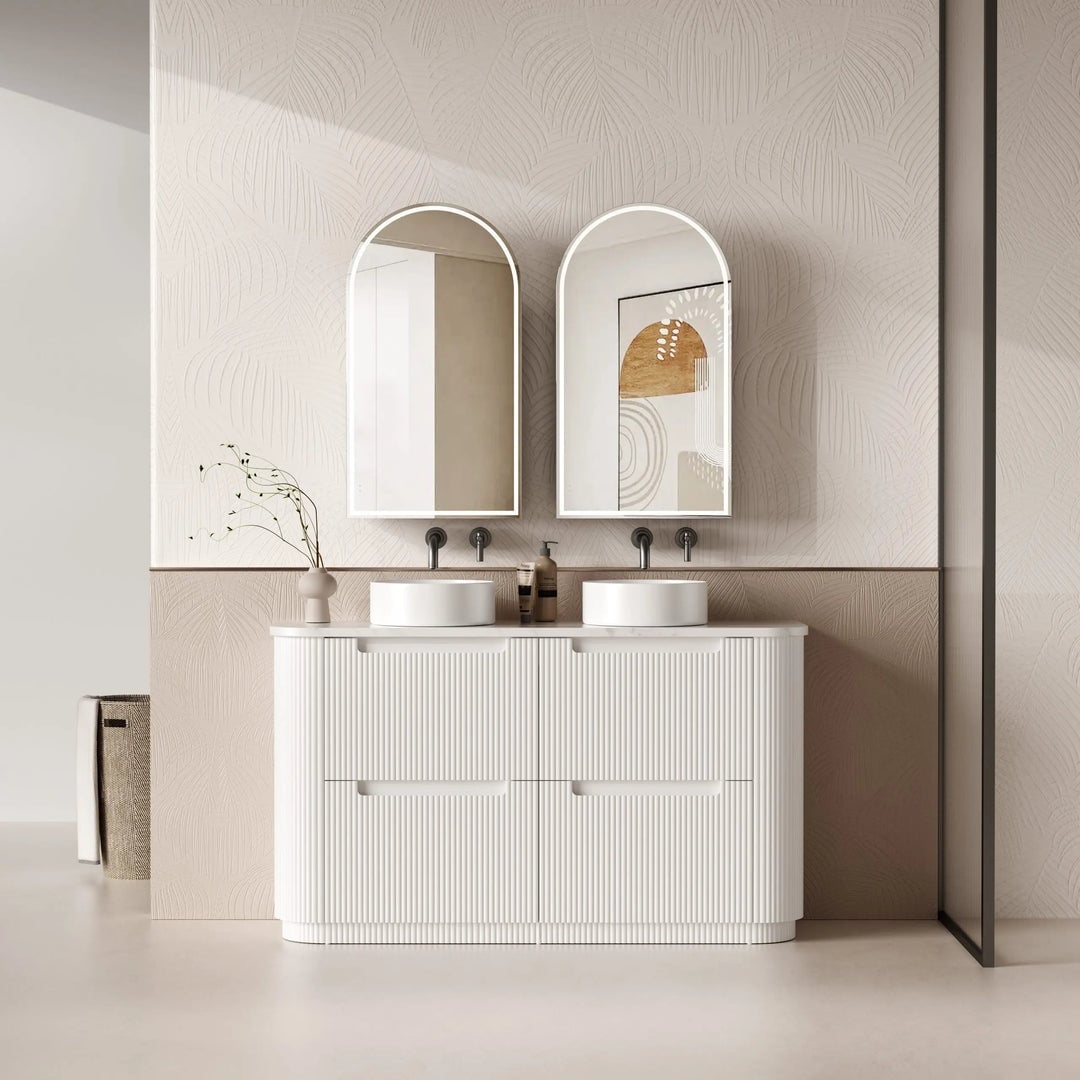
How do you fit a double vanity without the room feeling crowded? The curve helps. This freestanding vanity bows outward, so two vessel sinks sit side by side without a bulky rectangle blocking the space. The fluted texture continues the curve, and the arched mirrors repeat that soft shape above.
The palette stays to white, beige and cream, which keeps the attention on the vanity form. The integrated mirror lighting adds a practical glow for daily use. What breaks the symmetry is the slight gap between the mirrors, which lets each sink feel like its own zone. For a shared bathroom, that separation matters more than a single wide mirror would.
Modern Organic Vanity with Fluted Detail and Brass Hardware
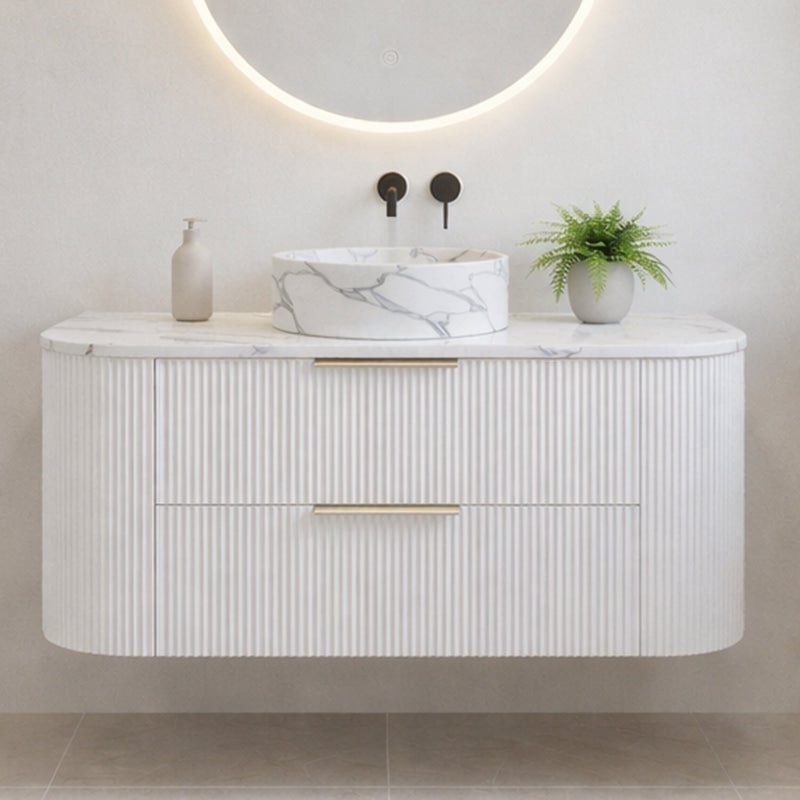
The backlit mirror casts a soft halo that reads as daylight, not a harsh task light. That warm glow pairs with the brass hardware to keep the white vanity from feeling clinical. The fluted wood adds texture without pattern, and the marble-look stone top gives the sink a clean landing. The palette is white, grey and gold, which is a standard combination, but the fluting and the curved vanity shape make it feel updated. The backlight does the work here: it defines the vanity zone without needing a second fixture.
Floating Fluted Wood Vanity with Integrated Backlit Mirror
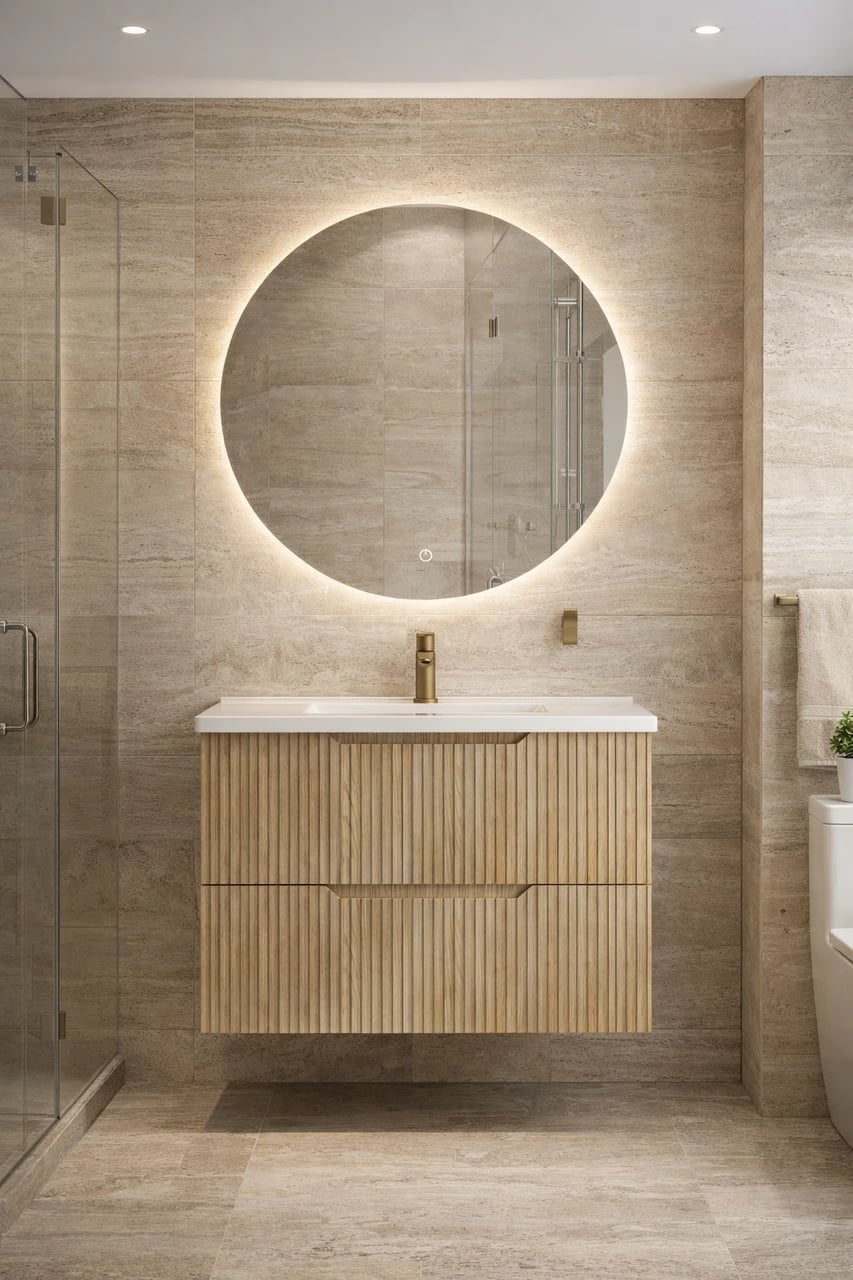
For a floating vanity, match the mirror width to the vanity width so the setup looks like one piece. This example uses a fluted wood base and a backlit round mirror that casts even light across the sink. The vessel sink sits on a stone top that extends past the cabinet, giving a small landing for a toothbrush or soap. The wood tones and beige palette keep the room warm, and the floating design makes cleaning the floor straightforward. The integrated mirror lighting removes the need for sconces, which simplifies the wall and highlights the vanity shape.
Double Vanity with Geometric Marble Base and Brass Accents
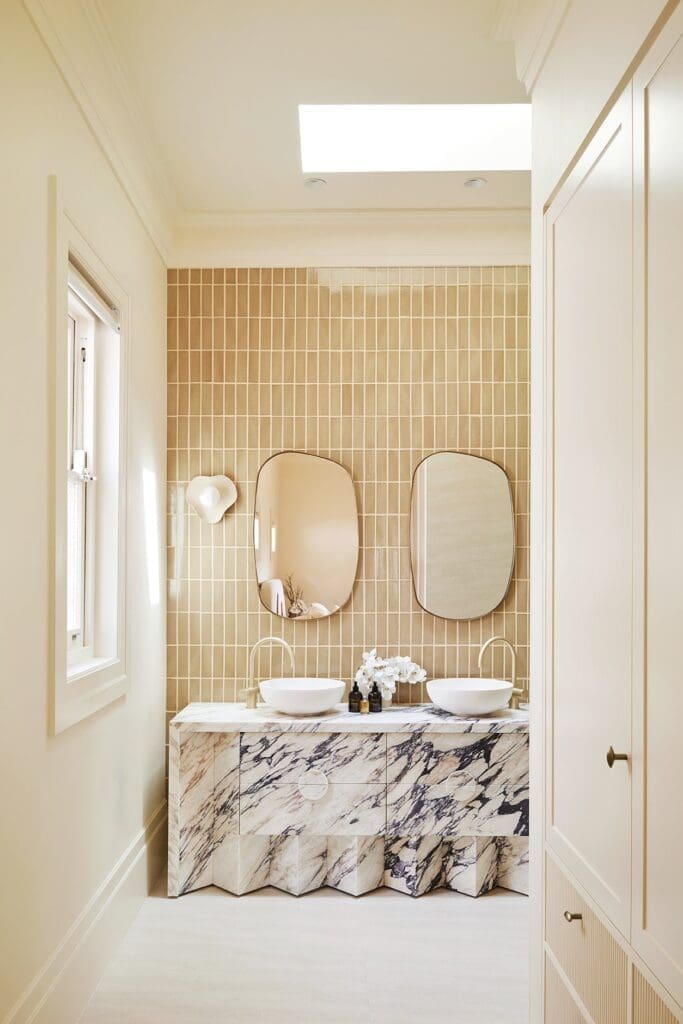
A double vanity with a geometric marble base looks like a custom piece without the custom timeline. The marble base adds visual weight at the floor, so the wood cabinetry above and the oval mirrors feel lighter by contrast. Brass accents on the faucets and sconces tie the beige and white palette together. The roomy layout keeps the vanity centered, with natural light from a window balancing the warm gold tones. This is a solid choice for a material-forward look that still leaves room for towels and countertop trays.
Compact Oak Wall-Hung Vanity with Black Accents
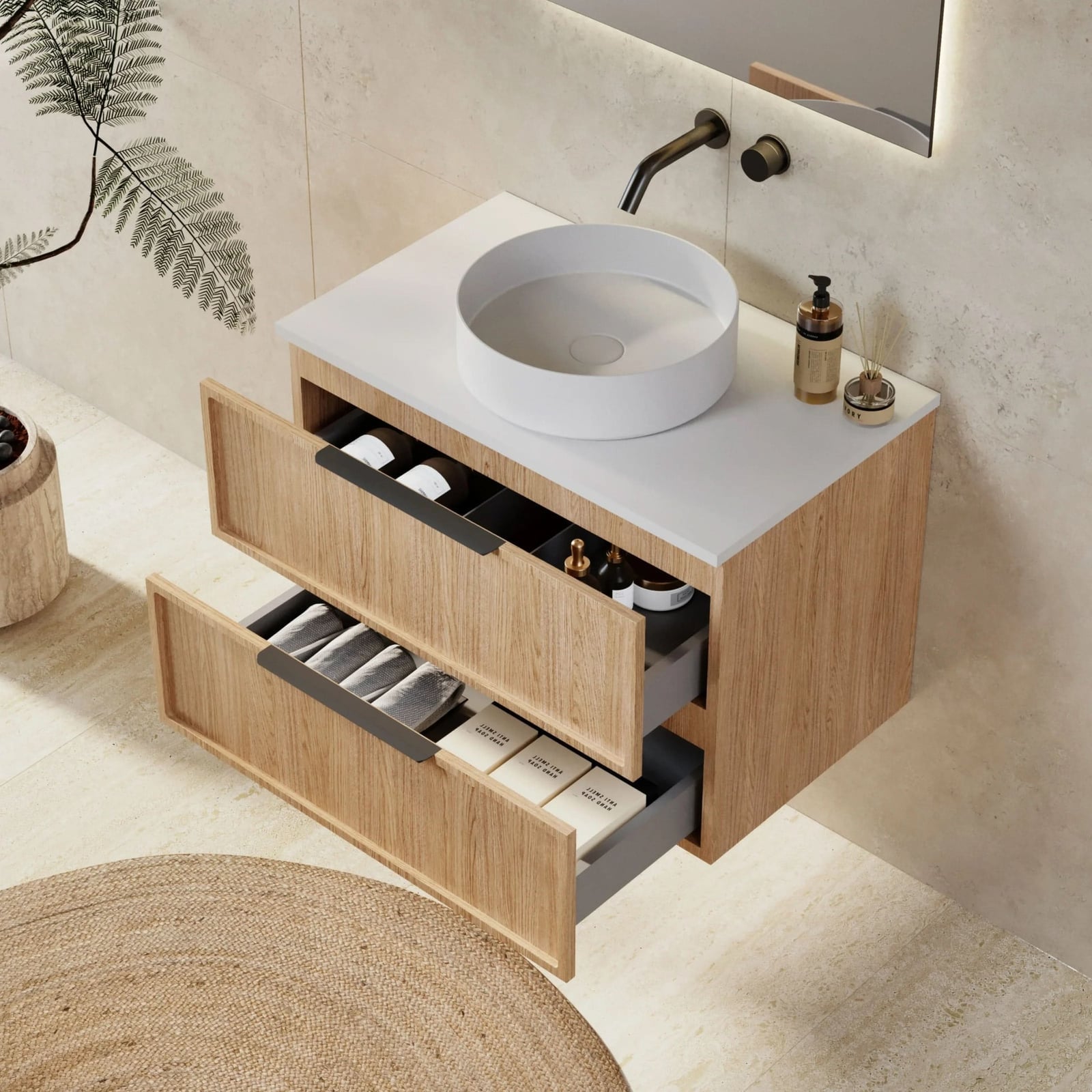
The black faucet and hardware on a compact oak wall-hung vanity create a clear focal point without adding bulk. A wall-hung design exposes more floor, which helps a small bathroom feel less crowded. The natural oak finish keeps the look warm, while the black accents add contrast. An integrated sink and medicine cabinet keep the surface clear. This setup works well in a tight space where every inch of storage counts.
Fluted Light Wood Double Vanity with Marble Countertop
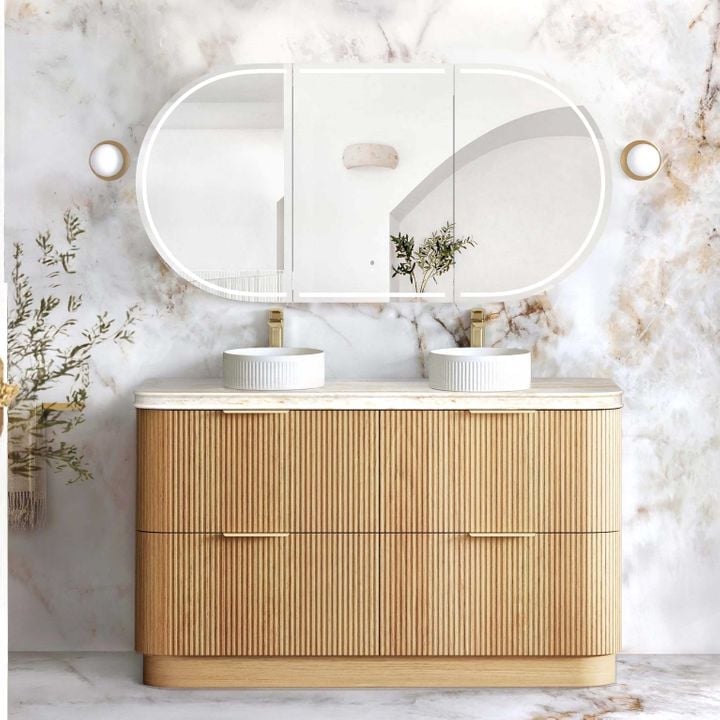
A fluted light wood double vanity paired with a marble countertop strikes a balance between texture and polish. The fluting adds vertical movement, which draws the eye up and makes the room feel taller. Vessel sinks sit on the marble surface, and wall sconces provide ambient light. The light wood keeps the look airy, while the marble adds a cool, smooth contrast. This combination works for anyone who wants a modern vanity with enough detail to feel deliberate.
Long Floating Double Vanity with Warm Wood and Stone
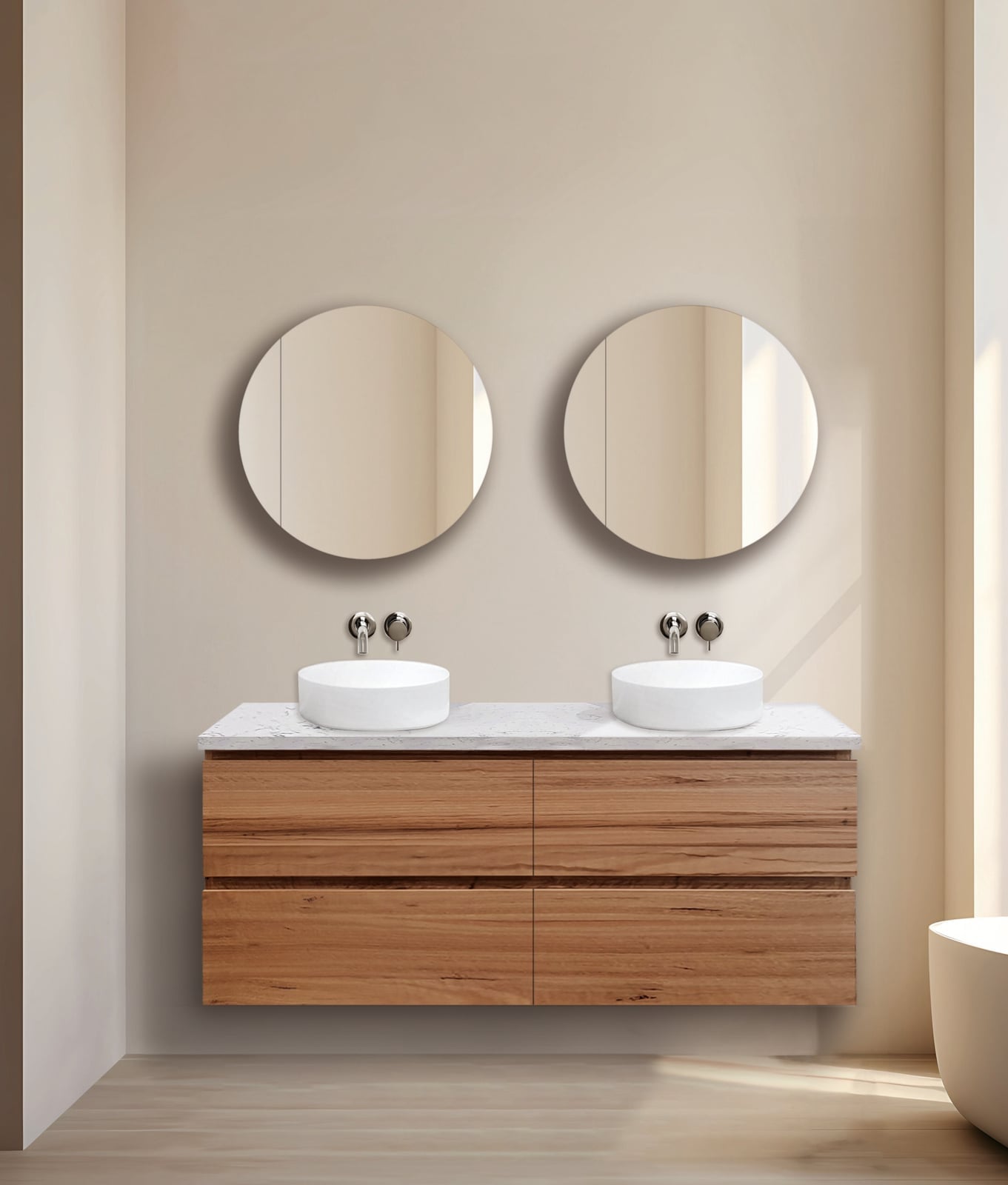
Can a long floating vanity handle daily use without showing wear? The stone countertop and ceramic vessel sinks are the key. Stone resists water spots and scratches better than most solid surfaces, and the floating mount keeps the wood base off the floor, away from standing water. The warm wood tones add warmth, while wall-mounted faucets free up counter space. The minimalist design means less grout and fewer seams to clean. This layout works best when you have the wall space to let the vanity stretch out.
Light Oak Double Vanity with Arched Mirror and Brass
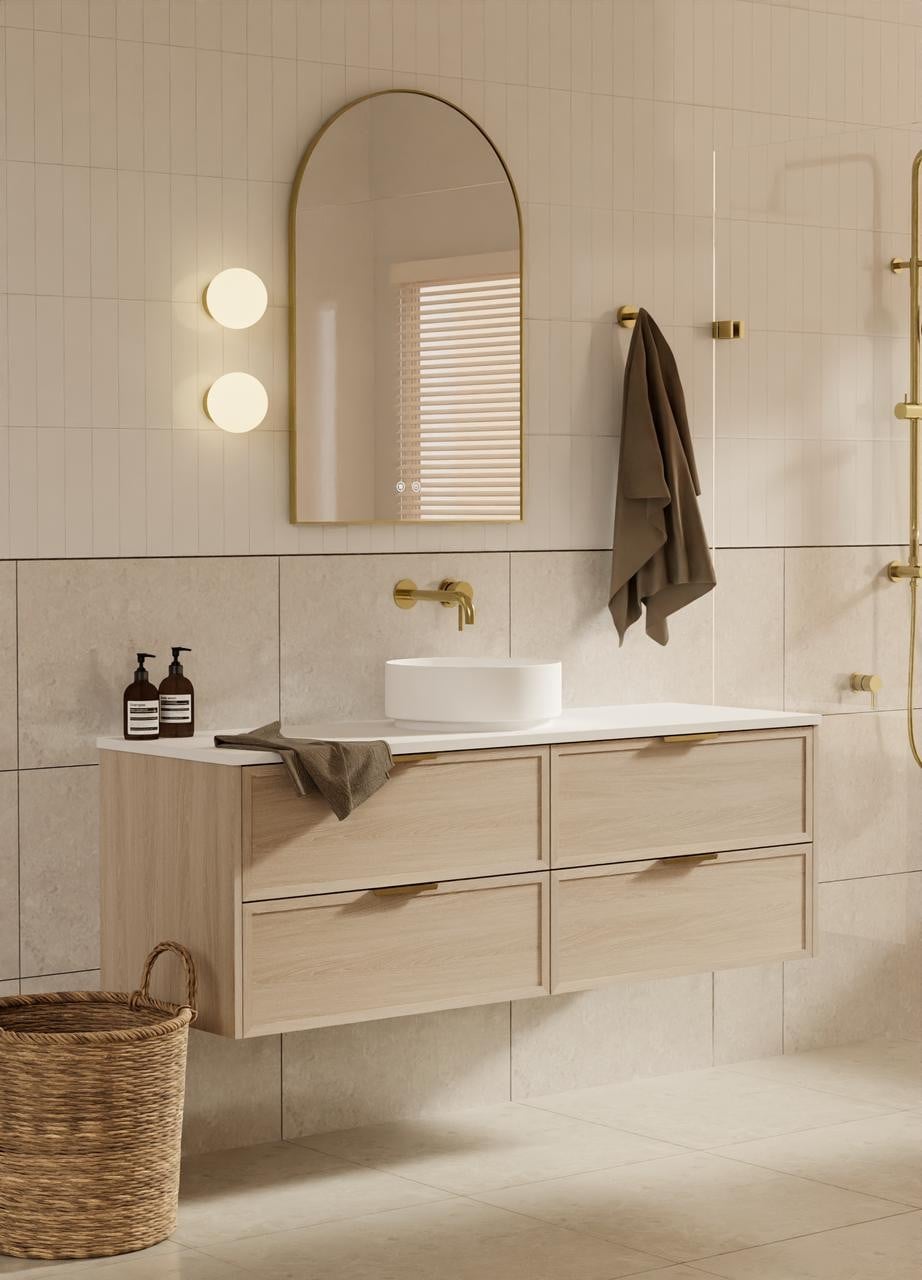
The arched mirror above a light oak double vanity softens the straight lines of the cabinetry and counter. Brass faucets and sconces add a warm metallic note that echoes the oak tone. The wall-hung design keeps the floor visible, which helps the room feel more open. Vessel sinks sit on the stone counter, and the centered layout leaves room for two people to use the space at once. The arch is a simple way to add shape without adding clutter.
Floating Reclaimed Timber Vanity with Stone Top
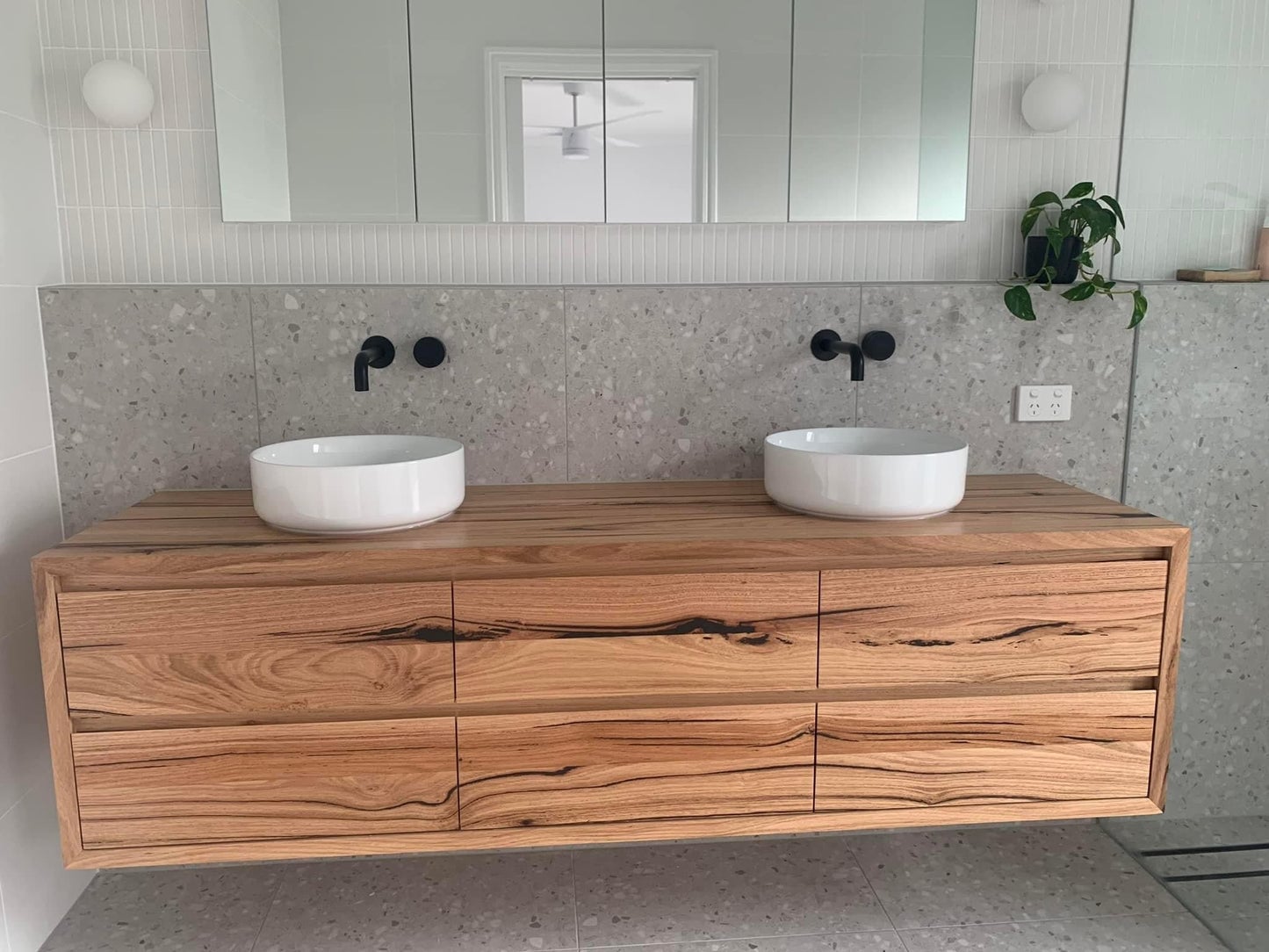
A floating vanity works best when the wall behind it stays quiet. The reclaimed timber grain is the main event, and the grey stone vessel sinks and white tile finish the composition without adding noise. Because the vanity floats, the floor stays visible, which makes a roomy double vanity feel lighter than it would on legs. Wall-mounted faucets carry that clean line up to the counter. Natural light lands on the wood and shows the grain, so nothing competes for attention. If you want this look, ask your contractor for a reclaimed timber finish with pronounced grain and pair it with stone in a neutral grey. The space feels modern organic because the materials stay honest and the layout stays simple.
Curved Wood Vanity with Unique Oval Stone Basin
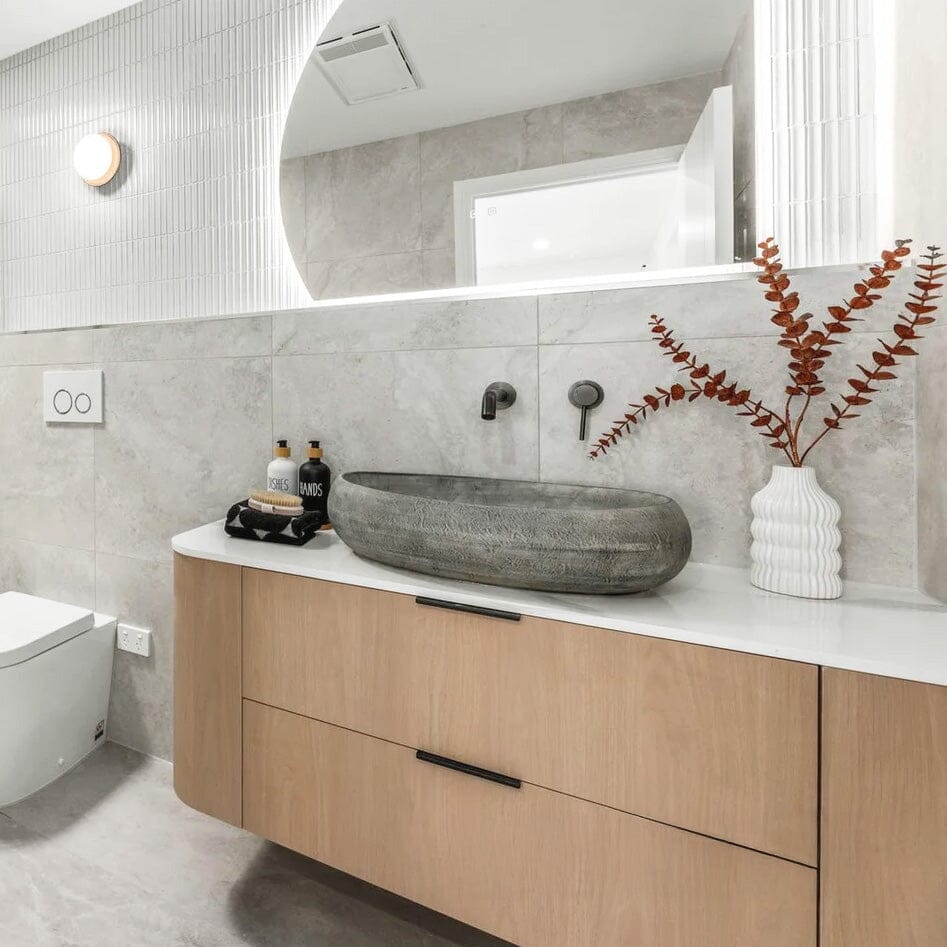
If a straight-edged vanity feels too rigid, a curved wood profile softens the whole wall. The oval stone basin sits on top as the focal point, and the round mirror echoes that shape above. Grey stone and white tile keep the palette calm while the wood warms it. Wall sconces and mirror light give the basin a gentle glow, so the vanity reads clearly even in the evening.
The curve is not just decorative. It changes how you move around the room, because there are no sharp corners to bump into. For a bathroom that gets daily use, that matters more than you might think. The stone basin is the practical hero here, since it is easy to wipe down and holds up to water. Keep the counter around it mostly clear so the oval shape stays visible. A roomy bathroom can carry this centered layout without feeling crowded.
Japandi Timber Vanity with Sage Green Vessel Sink
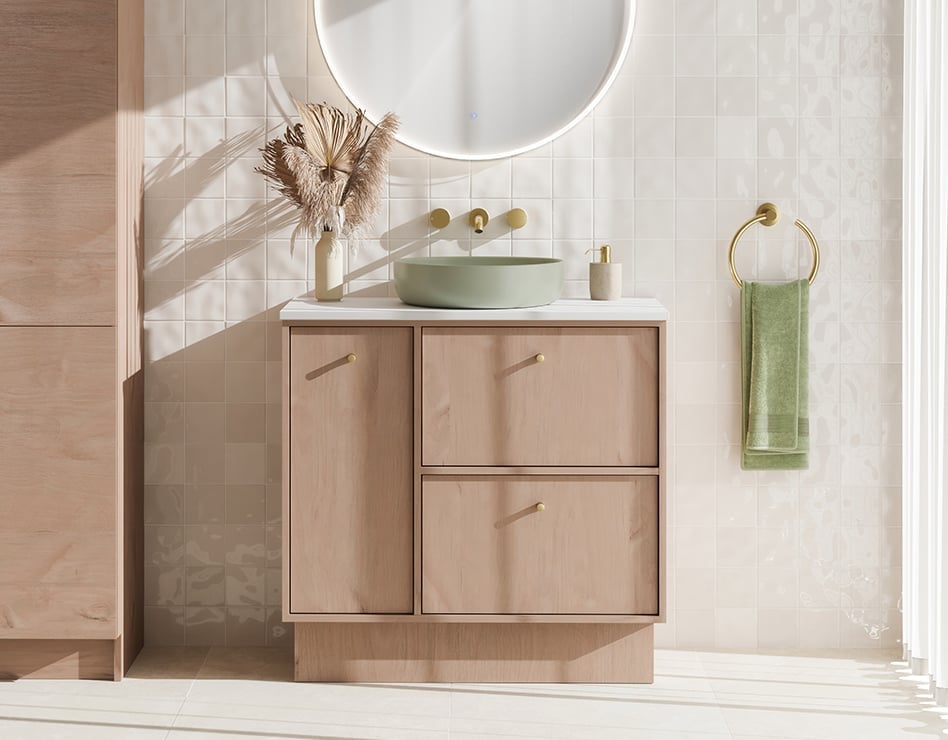
The sage green vessel sink is the quiet surprise that makes the japandi timber vanity work. Light timber, white tile, and brass details stay neutral, so the sink becomes the one color that draws your eye. The window light keeps the wood pale and the green soft. A brass towel ring adds a warm metal note without breaking the calm. For a japandi look, the ratio matters: about eighty percent light and neutral, with the green and brass as small accents. That balance prevents the room from feeling busy.
Light Wood Wall-Hung Vanity with Textured Tile Wall
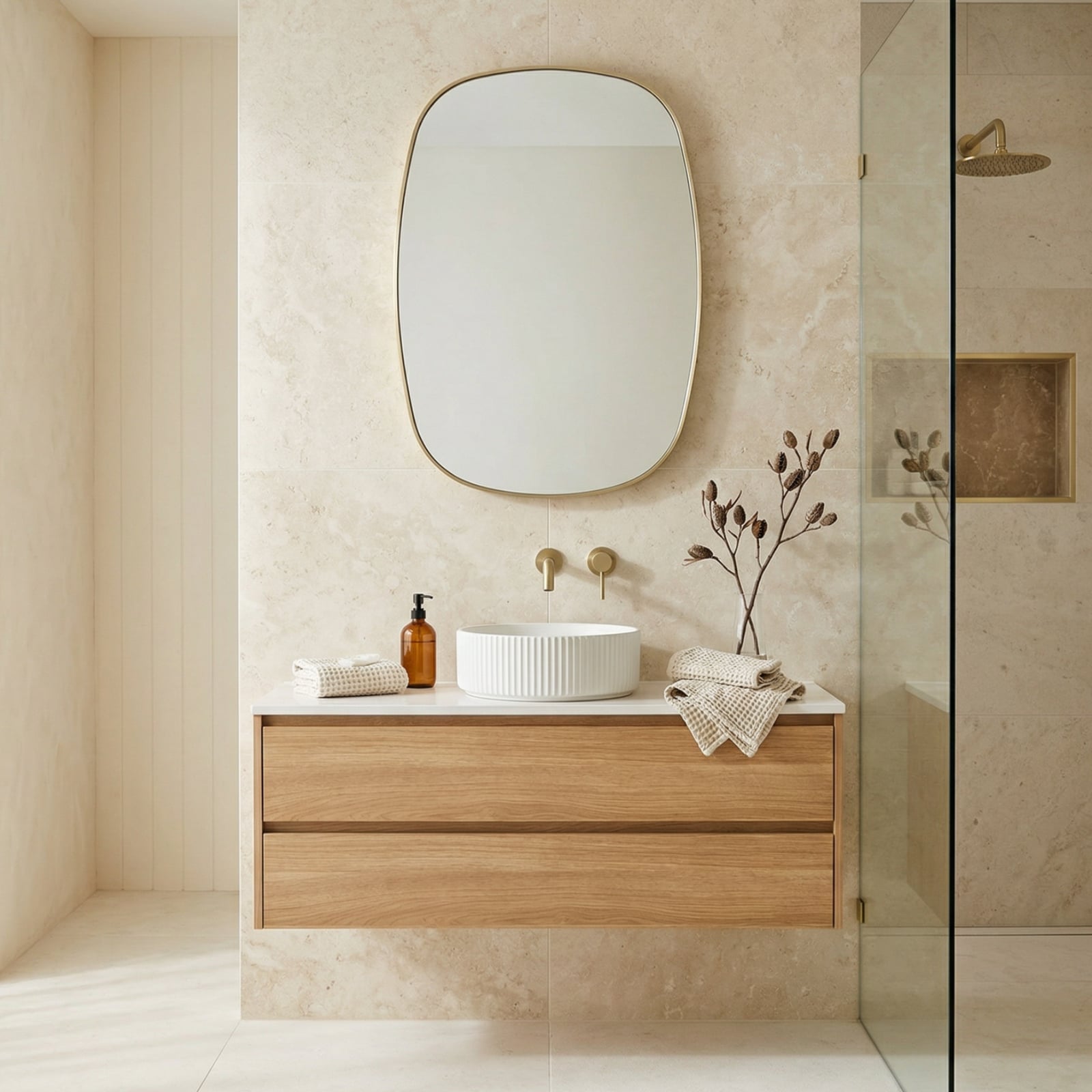
A clear one-line assessment: the textured tile wall does the decorating, so the vanity can stay simple. Light wood and a white vessel sink keep the palette neutral, while the beige tile adds depth behind the wall-hung unit. Because the vanity floats, the floor line stays open and the room feels larger. Natural light and overhead light give the texture enough shadow to read. If you want this look, choose a tile with visible relief and keep the vanity finish flat, not glossy. The contrast between rough tile and smooth wood is what makes the wall worth looking at. A frameless mirror keeps the view clean. This setup works best in a roomy bathroom where the wall can be seen from the door.
Recycled Messmate Timber Vanity with Natural Grain Detail
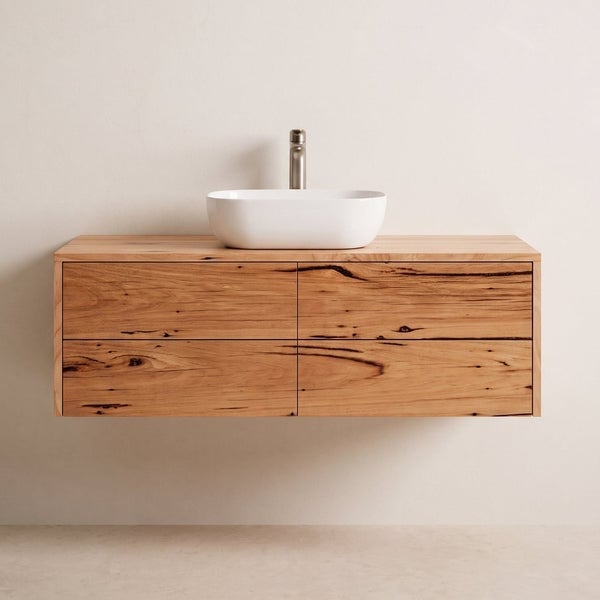
A practical rule for storage is to count drawers before you count shelves. A floating vanity with drawers keeps everyday items within reach and hides the rest. The recycled messmate timber grain is the visual payoff, so the front of the vanity should stay as open as possible. Soft ambient light lets the wood grain show without harsh shadows. Because the vanity is wall-mounted, the floor below stays clear, which makes the room feel larger and easier to clean.
For a detail vignette like this, the grain is the story. Recycled messmate has a distinctive, busy pattern that adds character you cannot get from a plain veneer. To make it work, keep the counter and walls neutral so the wood does not compete. Drawers give you a place for towels, toiletries, and cleaning supplies, so the surface can stay bare. That is the tradeoff: a striking front and a tidy top.
Floating Wood Vanity with Integrated Sink and Cabinet
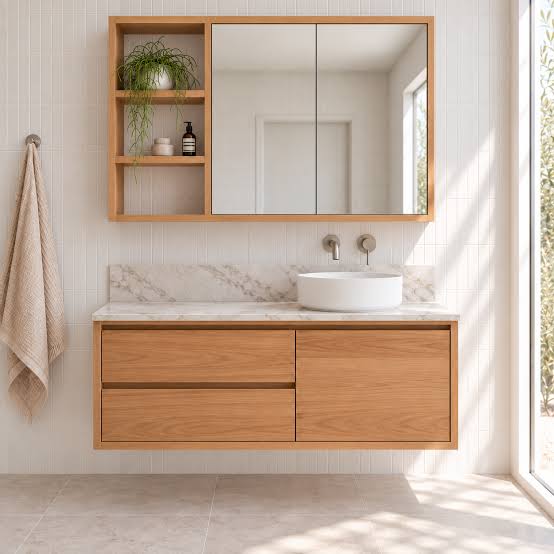
This setup combines a warm wood vanity with a built-in medicine cabinet, creating a clean line that keeps toiletries off the counter. The floating mount opens up floor space, which makes a medium bath feel roomier than it is. A light wood palette with a white marble top and grey tile keeps the look airy. Match the cabinet finish to the vanity so the wall looks like one piece instead of separate add-ons.
Dramatic Floating Black Fluted Vanity
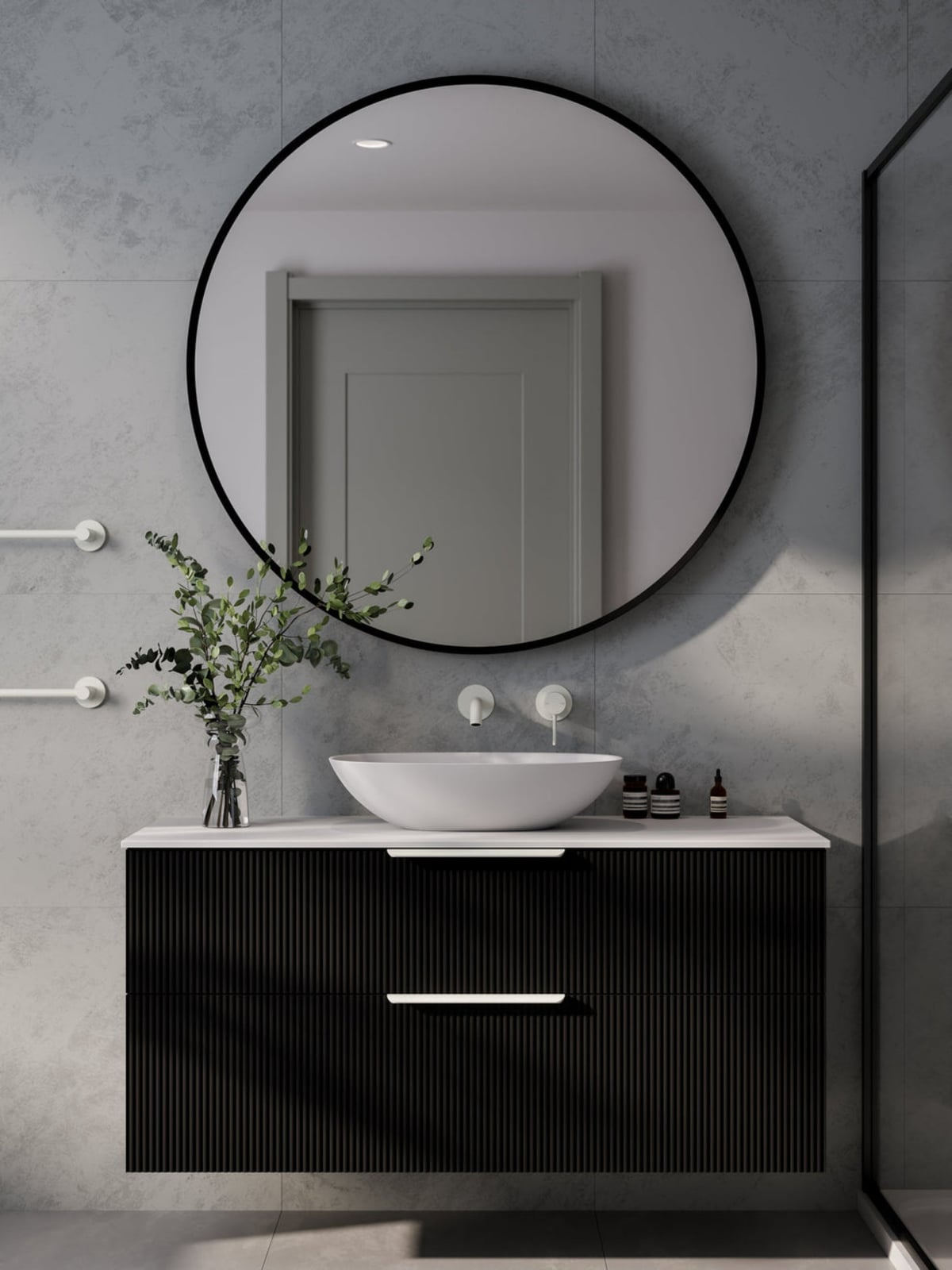
A practical rule for dark finishes in a bathroom: balance them with lighter surfaces to keep the room from closing in. This black fluted floating vanity sits against a grey and white backdrop, with a white vessel sink and a round mirror that soften the dark mass. The fluted texture adds visual depth without needing art or accessories. For a renter-safe version, apply peel-and-stick fluted paneling to an existing vanity base and paint it matte black.
Long Curved Light Wood Vanity with Double Arched Mirrors
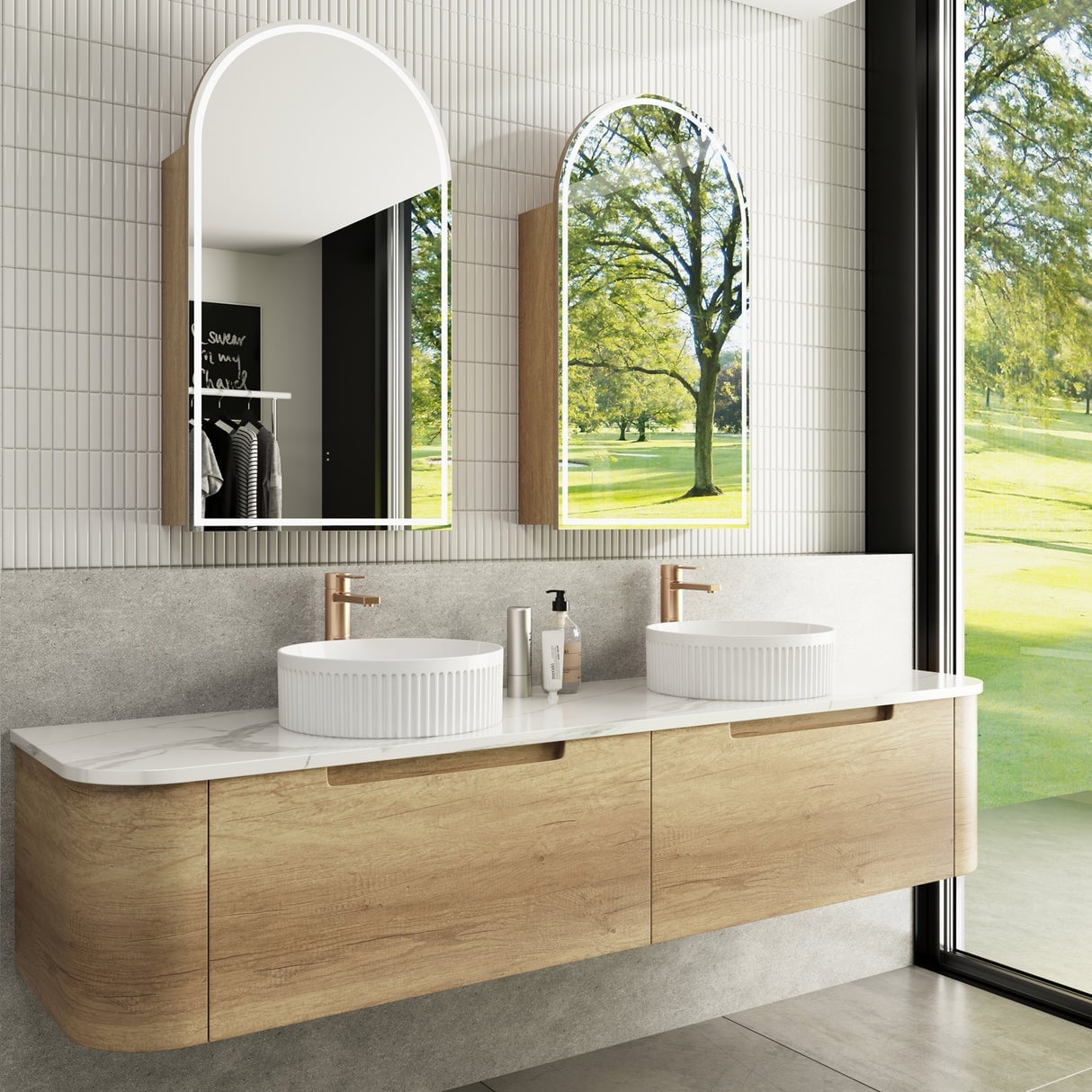
A long straight vanity does the job, but a curved front changes how you move through the room. This light wood double vanity bows outward slightly, paired with two vessel sinks and matching arched mirrors that echo the soft line. The curve creates a natural separation between two sink zones without a physical divider. Integrated mirror lighting keeps the countertop clear of lamps, and natural light adds daytime brightness. For a similar layout, allow at least 60 inches of width for two sinks with comfortable elbow room.
Transitional Green Marble Vanity with Dark Wood Base
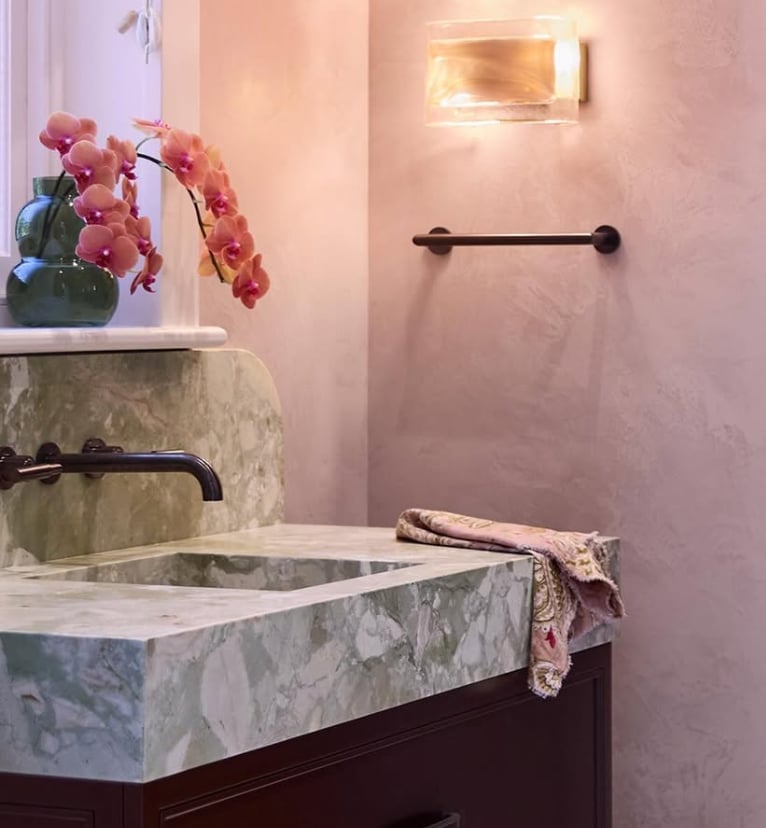
Green marble on a vanity top brings a muted color that feels neutral but not beige. This transitional design pairs the stone with a dark wood base and a bronze faucet, with a pink-toned plaster wall behind it. The marble adds a polished surface that resists water better than porous stone, though it needs sealing over time. Soft ambient light from a wall sconce keeps the green from reading as cold.
Modern Vanity with Textured Grey Stone Tile Front
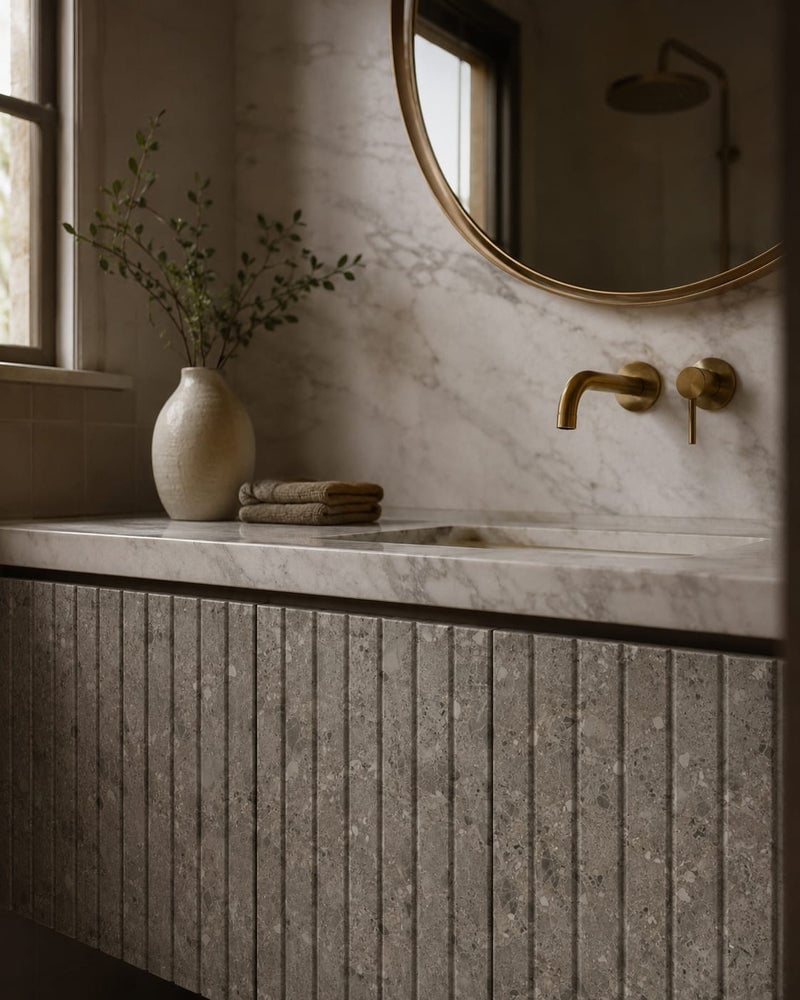
A compact vanity with a textured front can carry more visual weight than a plain one. This modern design uses vertical grey stone tile on the cabinet face, topped with a marble counter and a brass faucet. The tile texture adds interest without clutter, and the brass hardware gives a warm accent that keeps the grey from feeling flat. Natural light from a window prevents the stone from reading as heavy. For a compact bath, this approach adds detail without taking up extra inches.
Floating Oak Veneer Vanity with Resin Basin
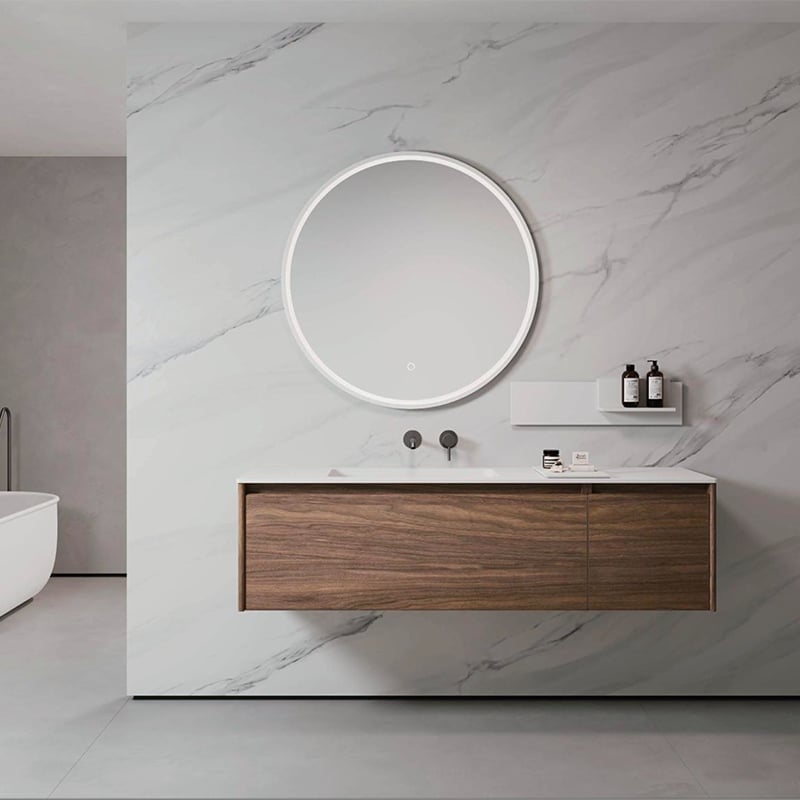
A floating vanity changes how the whole room breathes. With the cabinet lifted off the floor, the marble-look tile extends unbroken underneath, making a compact bathroom feel wider than it is. The oak veneer adds warmth without the weight of solid wood, and the resin basin keeps the surface seamless. A round mirror above repeats the soft shape, while the integrated light around it handles task lighting without extra fixtures. The layout works because the hero element stays centered and everything else stays simple. No clutter, no competing textures, just one clean line from tile to mirror.
Compact Walnut Vanity with Fluted Tile Wall
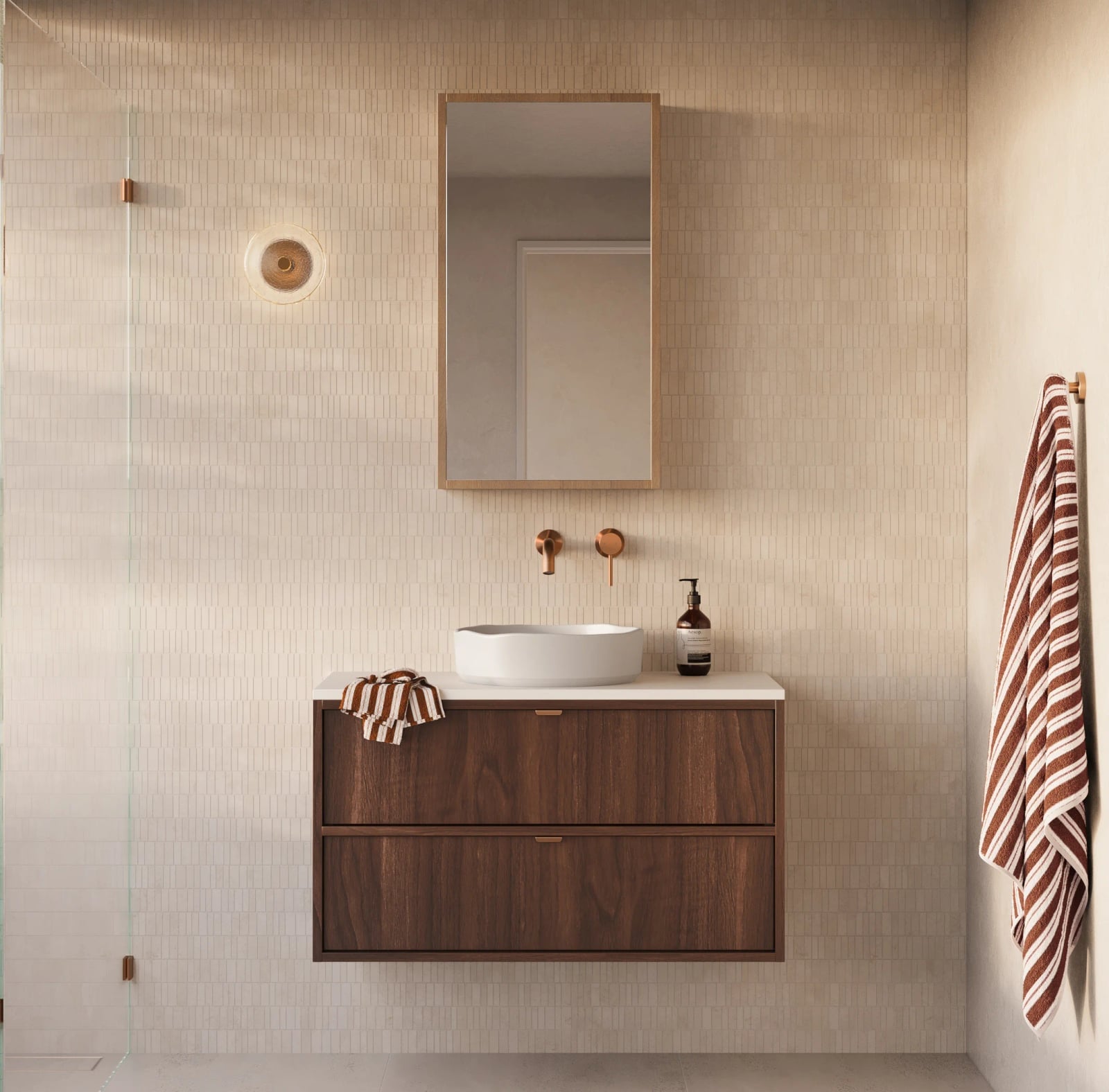
Walnut brings a deep, warm brown that anchors a small room without darkening it. The single vanity with a vessel sink sits centered, and the wall faucet keeps the counter clear. Behind it, the fluted tile wall adds vertical texture, making the compact footprint feel taller. The palette stays tight: walnut, white stone, and grey tile. Each material keeps its own place, so the space feels organized and calm.
Teak Double Vanity with Stone Vessel Sinks
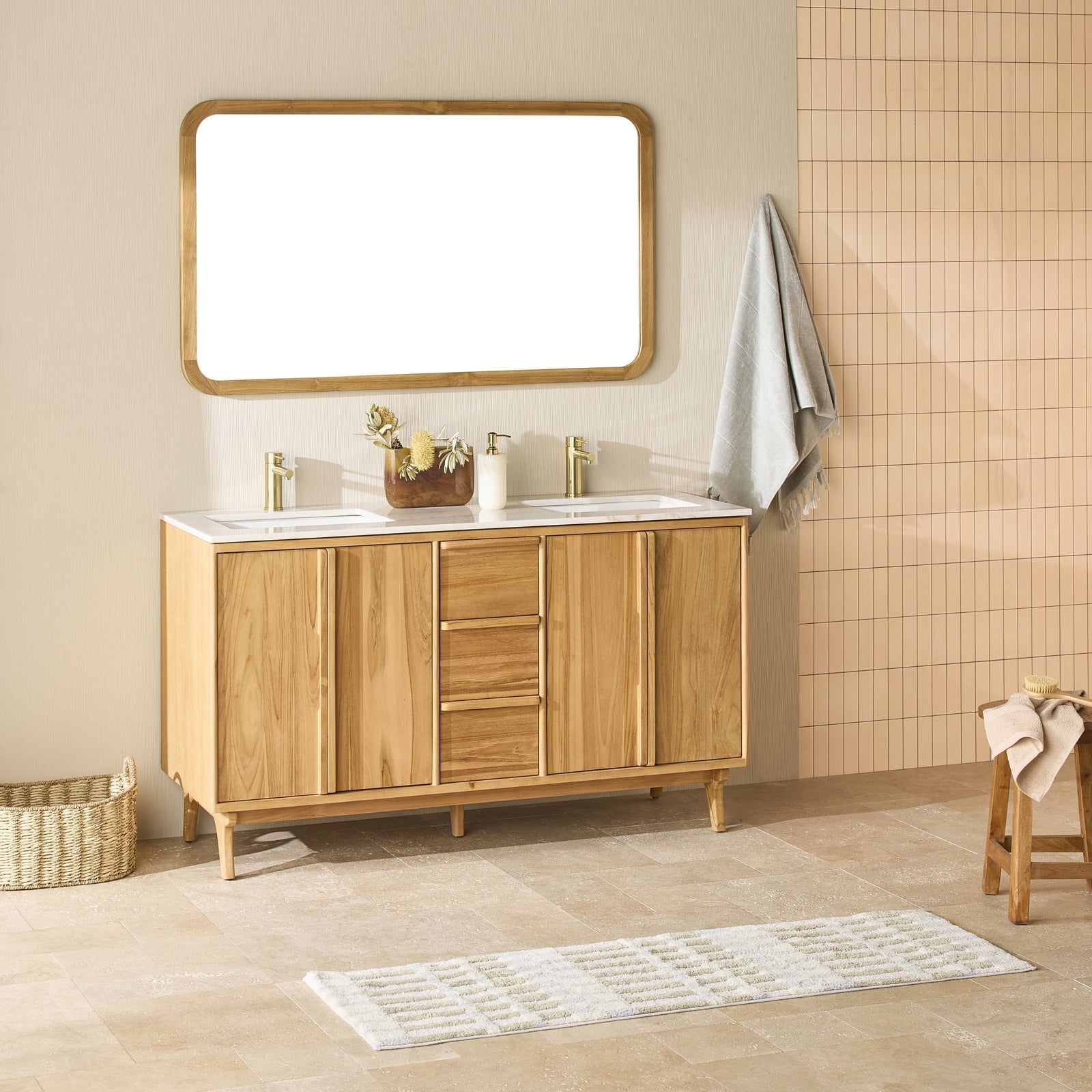
When a double vanity uses the same material for the counter and the sinks, the whole piece reads as one solid form. The stone vessel sinks sit on the stone top with no break in color, and the brass faucets add a warm metallic line against the teak cabinetry. Recessed lighting keeps the ceiling clean, so the vanity stays the focus. The room feels roomy because the palette stays restrained: teak, stone, beige. No extra patterns or competing finishes.
Wood Vanity with Contrasting Pink Vessel Sink
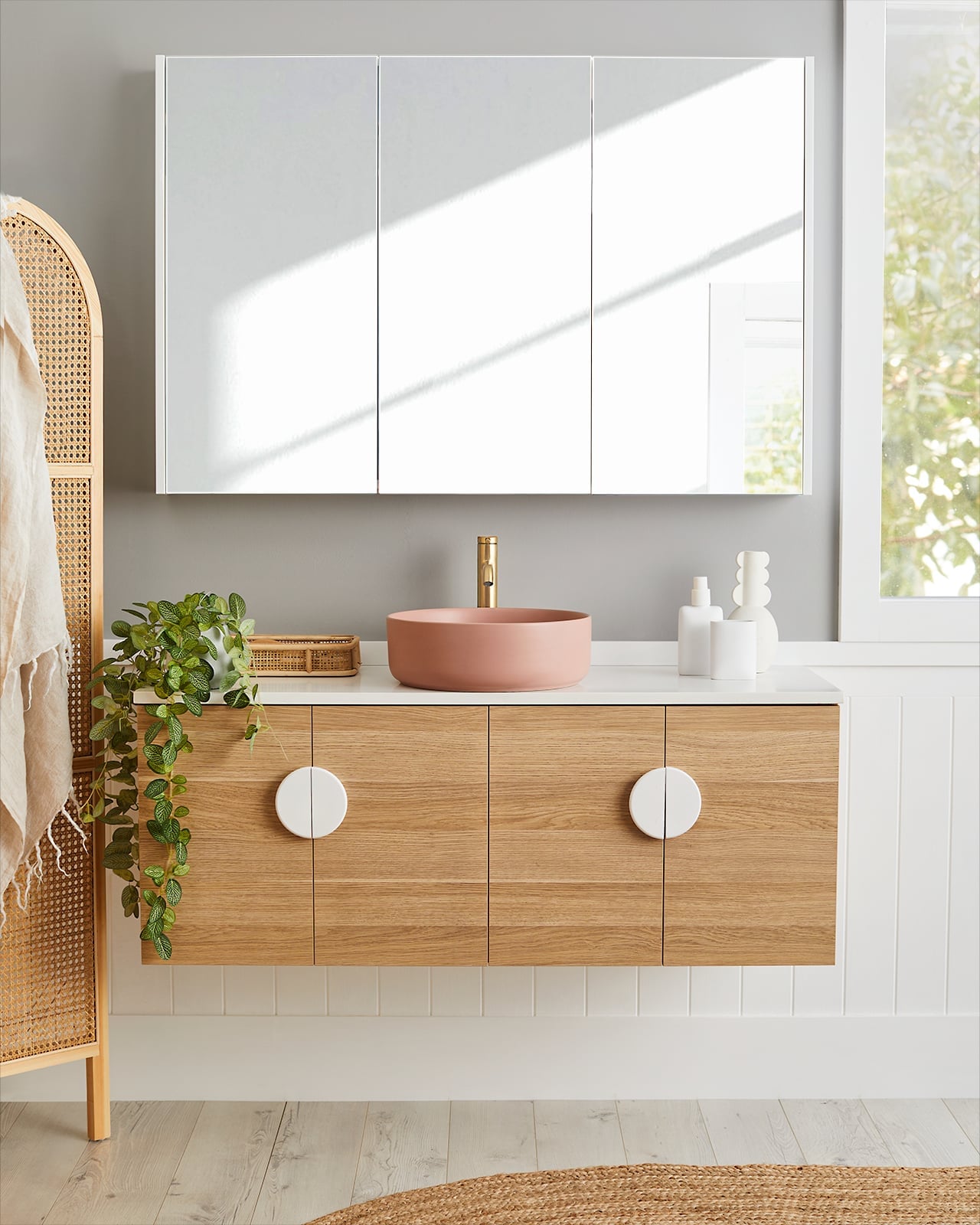
A neutral wood vanity with a white countertop is a safe choice. Swap the expected white or stone basin for a pink vessel sink, and the whole setup shifts. The pink works as a deliberate accent because the wood tones and grey undertones in the room hold it in place. Round handles on the cabinet doors echo the soft curve of the sink. Natural light keeps the pink from looking too sweet, and an overhead light balances the room at night. The contrast works because the palette stays quiet.
Compact Gloss White Vanity with Gold Mirror
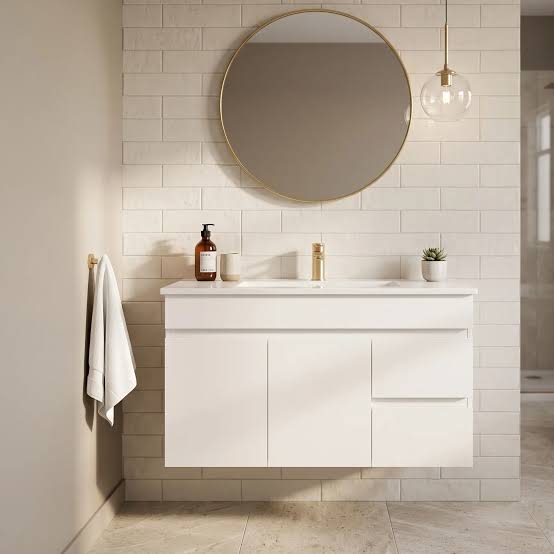
A gloss white wall-hung vanity with a ceramic top keeps the visual weight low in a compact room. The cabinet combines drawers and doors, so there is a place for both everyday items and backups. A gold mirror above adds a warm reflection without taking up counter space. The pendant light hangs centered, keeping the vanity well lit. The gloss finish bounces light around, so the room feels bigger than its footprint.
Light Wood Floor-Standing Vanity with Large Round Mirror
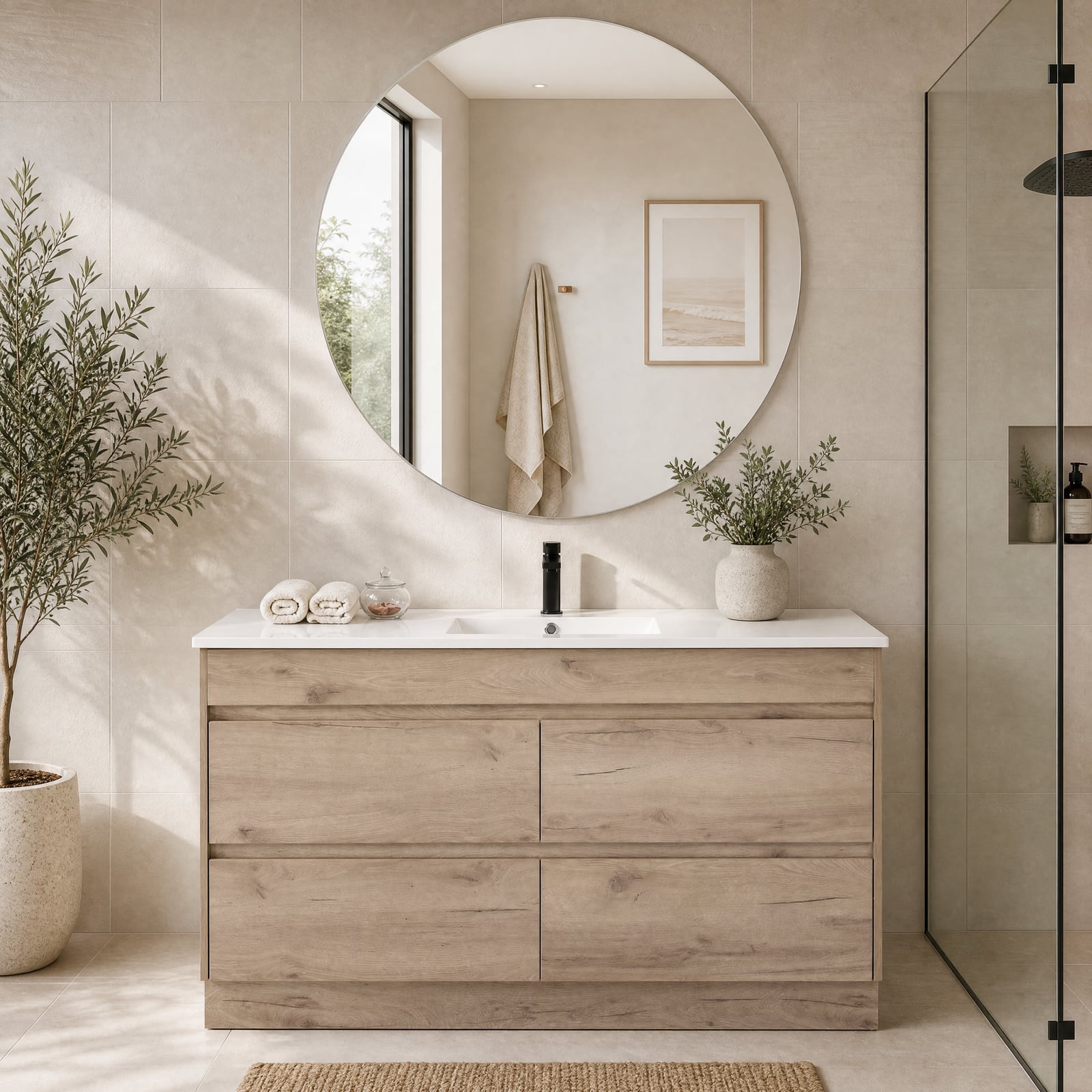
A floor-standing vanity in light wood with a large round mirror is a straightforward way to make a bathroom feel more generous. The mirror reflects light across the room, so the space feels larger than its actual footprint. A single overhead light can handle the rest, but the mirror does most of the work by spreading daylight around the sink area. Choose a mirror that is at least two-thirds the width of the vanity below it.
Rustic Modern Vanity with Live Edge Wood Top
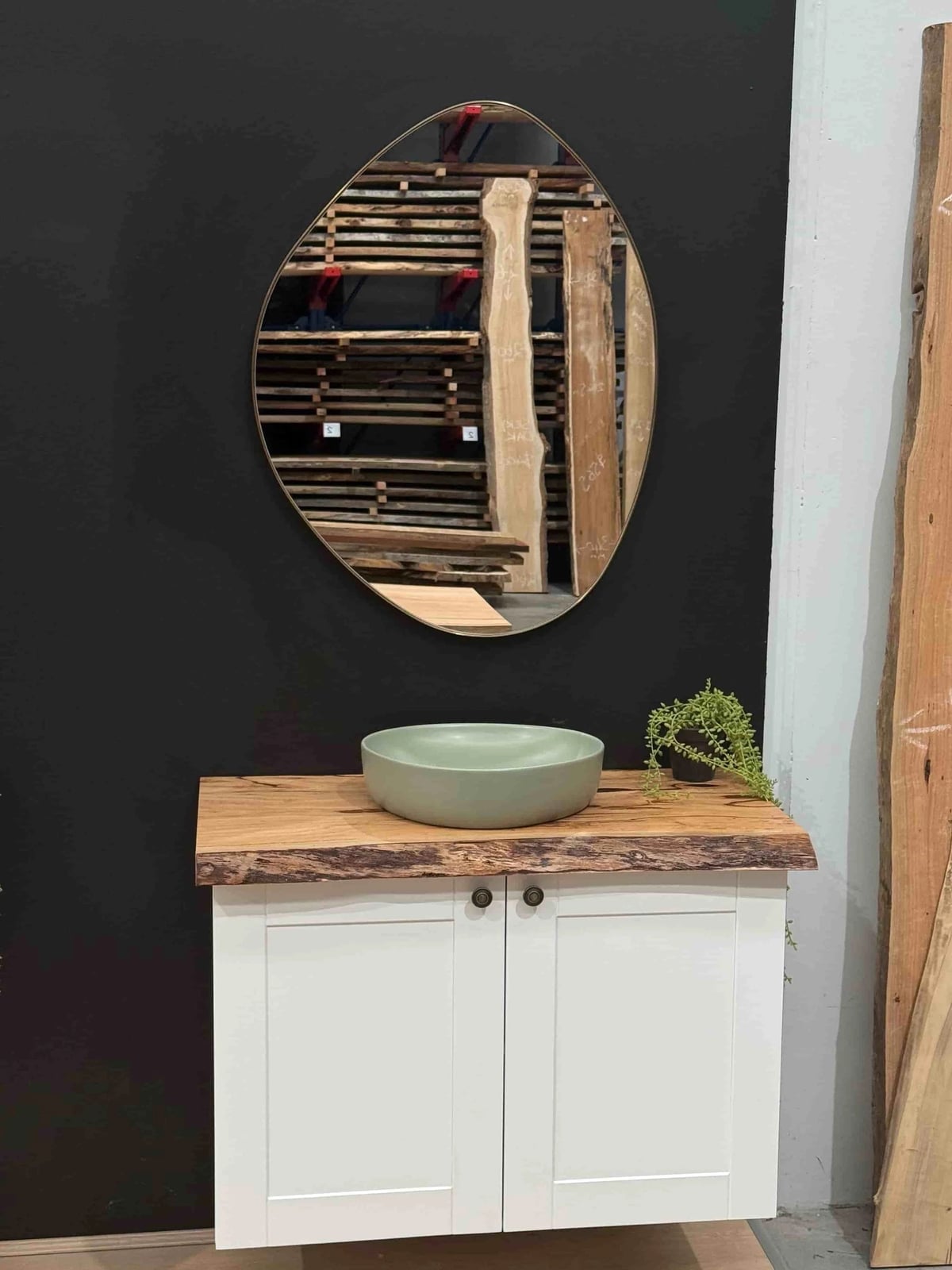
A live edge wood vanity top brings texture that a standard flat countertop cannot match. This rustic modern bathroom pairs a raw slab of wood with a crisp white cabinet and a green vessel sink, so the organic edge becomes the focal point rather than an afterthought. The cabinet below keeps towels and supplies out of sight, which lets the wood grain take center stage.
A live edge top works best in a bathroom that already has natural elements like ceramic tile or stone flooring. If the room leans more modern than rustic, swap the vessel sink for an under-mount basin to let the wood speak for itself without competing shapes.
Modern Organic Double Vanity with Curved Mirror
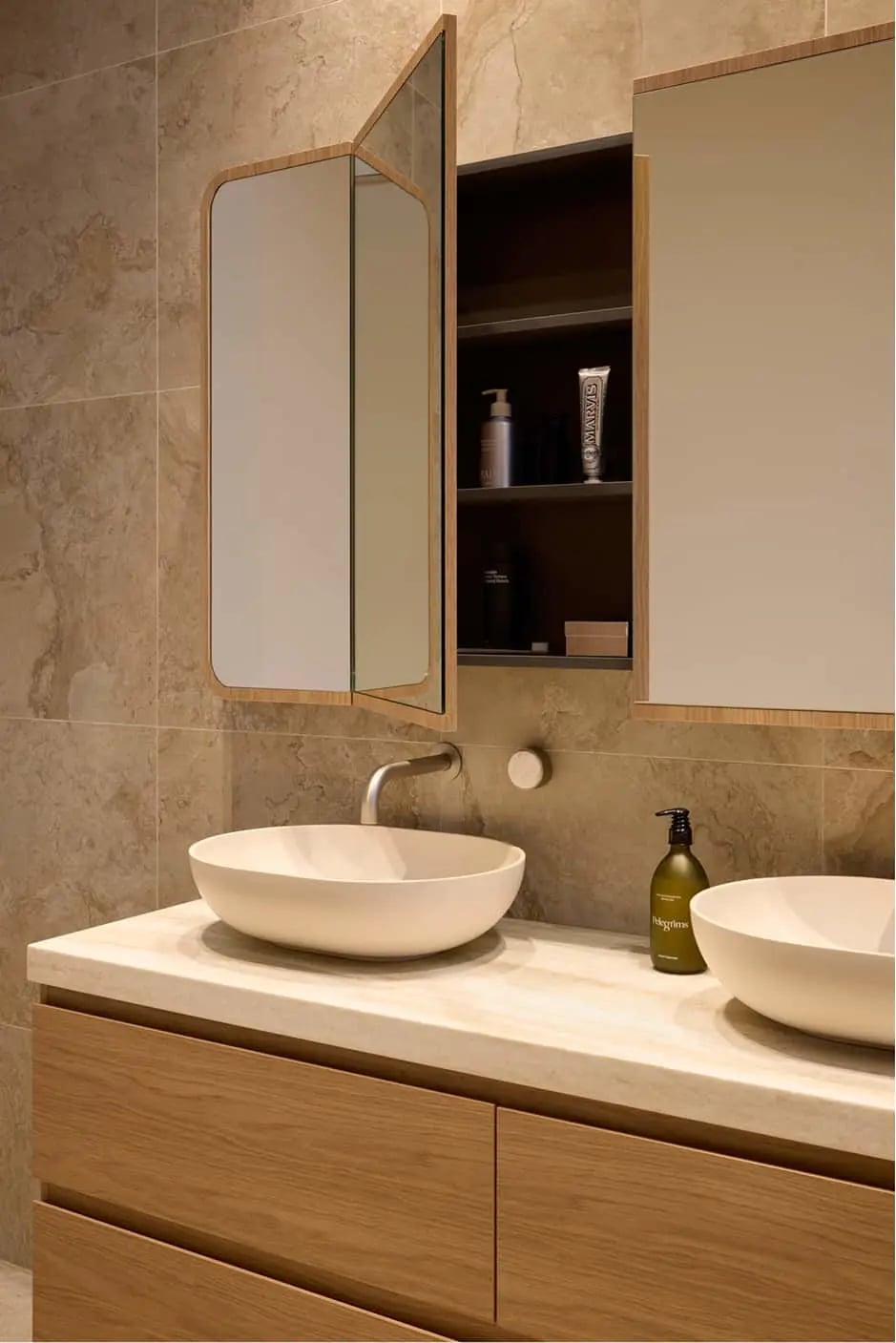
A modern organic double vanity with a curved mirror and vessel sinks softens the usual straight lines of a bathroom. The floating cabinet in light wood sits above the floor, which makes the room feel less crowded, while the wall-mounted faucets keep the countertop clear. Recessed lighting overhead and natural light balance the warm wood tones with the white stone surfaces.
Elegant Light Oak Double Vanity with Illuminated Mirror
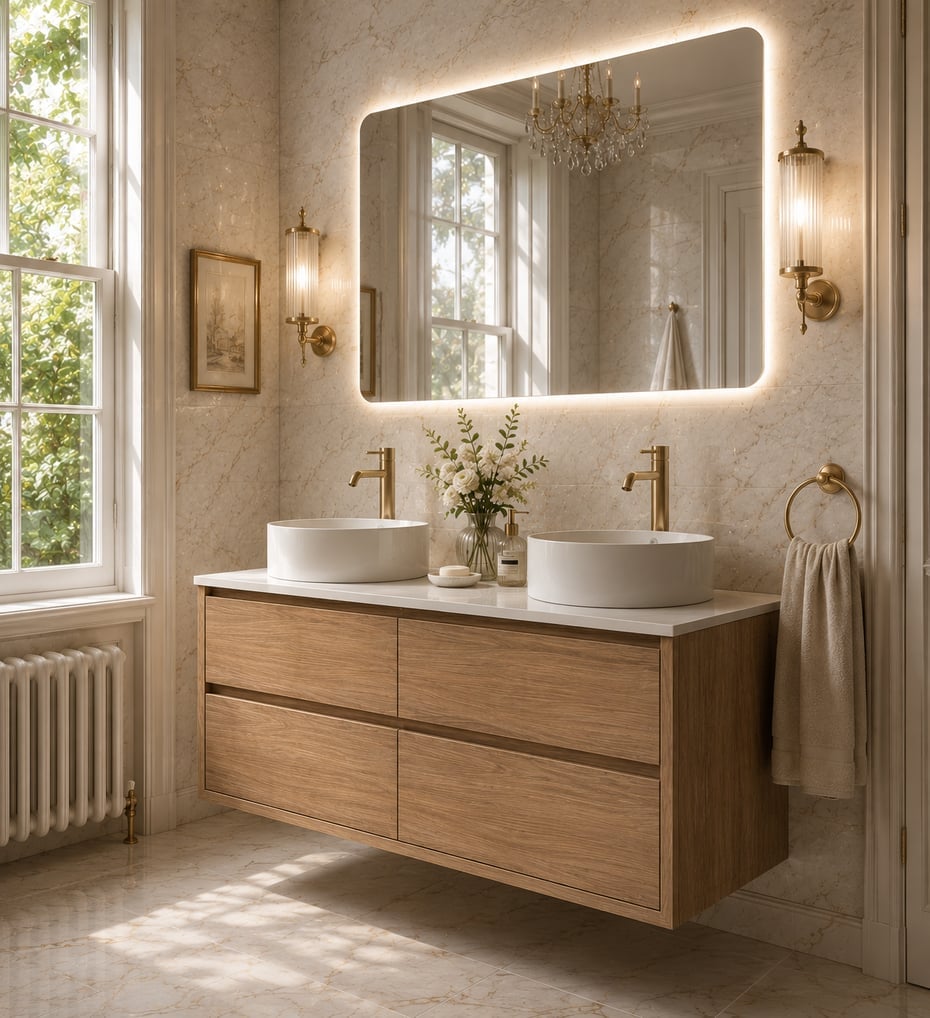
An illuminated mirror changes how a double vanity works at night. The backlit panel casts soft light across the face without shadows, so shaving or makeup application is easier than with a single overhead fixture. Wall sconces on either side add depth and keep the marble countertop free of clutter. The light oak wood veneer stays neutral enough to work with warm brass or cool chrome hardware, depending on the finish you prefer.
Final Thoughts
Choosing a vanity comes down to how the room lives. Fluted fronts add texture without clutter. Wall-hung styles open up floor space and make cleaning easier. Curved shapes soften the lines in a rectangular room. Light wood keeps things airy, while darker tones add weight. Marble and stone tops hold up to daily use but need sealing now and then. Whatever direction you take, let the vanity anchor the layout rather than compete with it. The best bathroom feels put together, not overdone.