
Choosing a bathtub is one of those decisions that can define a whole room. Whether you are planning a full renovation or just daydreaming about a future soak, the style you pick sets the tone. This roundup of 35 bathtub ideas covers a wide range of looks, from sculptural marble statements to cozy farmhouse clawfoots and modern spa oases.
Expect practical guidance on how each shape, material, and placement affects the feel of the space, plus tips on what works for different room sizes and lifestyles. No matter your taste, there is a bathtub idea here that can inspire your next bathroom project.
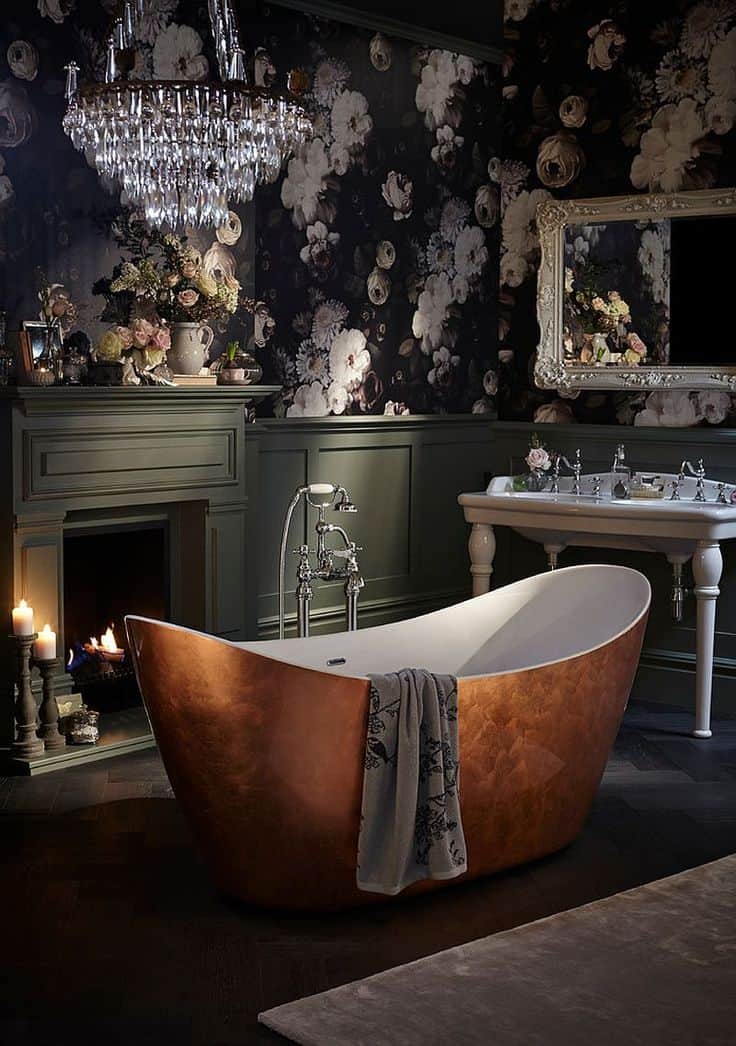
Maximalist Glamour: A Copper Bathtub in a Dramatic Setting
A copper freestanding tub holds the center of the room, and the rest of the space answers its warmth. An ornate mirror, a crystal chandelier, and a working fireplace create layers of light and reflection. Dark floral tones and marble surfaces keep the look rich without feeling busy. The style depends on a balance of shine and shadow: polished metal against dark wood, soft firelight against crystal sparkle. What keeps it from tipping into clutter is the limited palette of copper, green, white, and dark wood. Every piece stays within those four colors.
Modern Serenity: A Natural Wood Soaking Tub
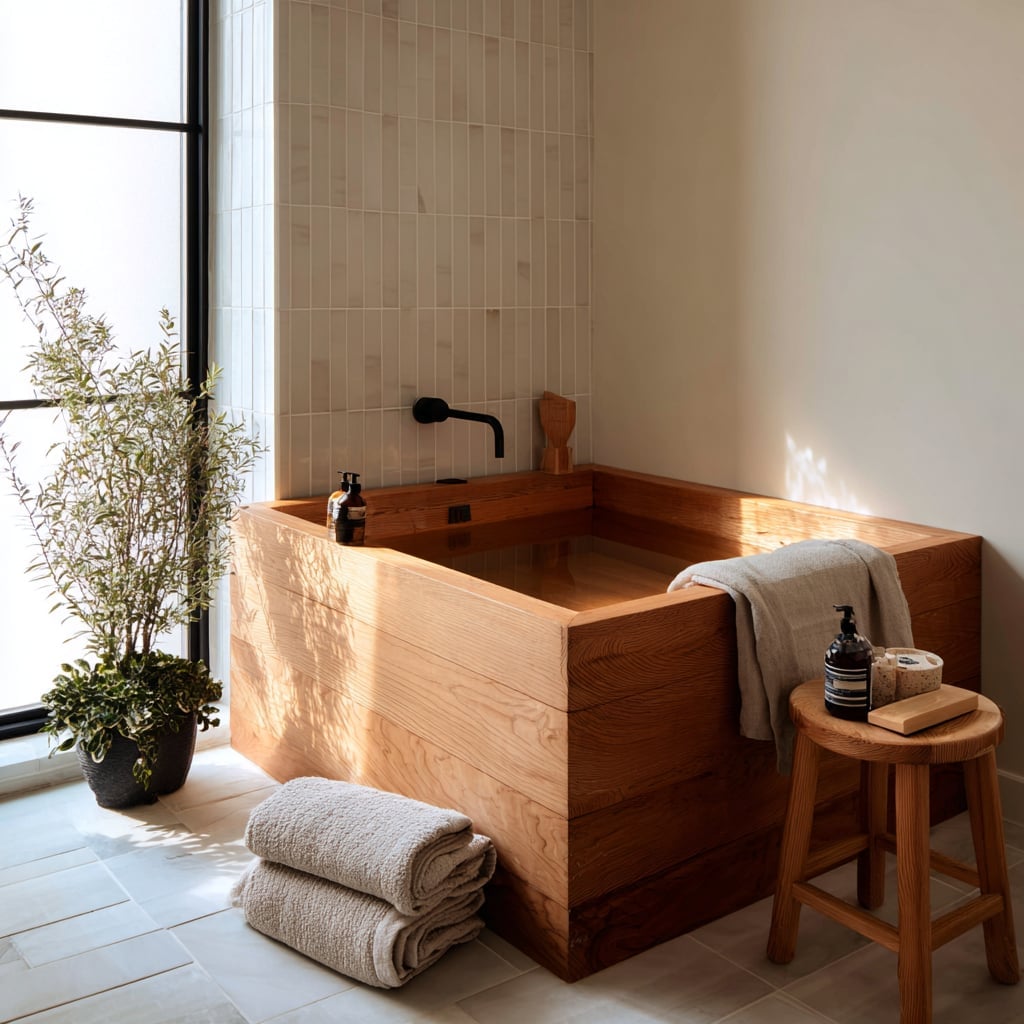
This bathroom reads as a single material story: wood, tile, and stone in natural finishes. The wooden soaking tub sits centered under a window, with a small wooden stool off to the side and a plant adding a low green note. The palette stays in white, beige, and warm wood tones, which lets the grain of the tub become the main texture. Natural light from the window hits the wood surface and changes its look through the day. The style breaks if a glossy or synthetic finish appears. The whole point is that nothing competes with the wood.
Japandi Spa: Sunken Bathtub with Tiered Stone Steps
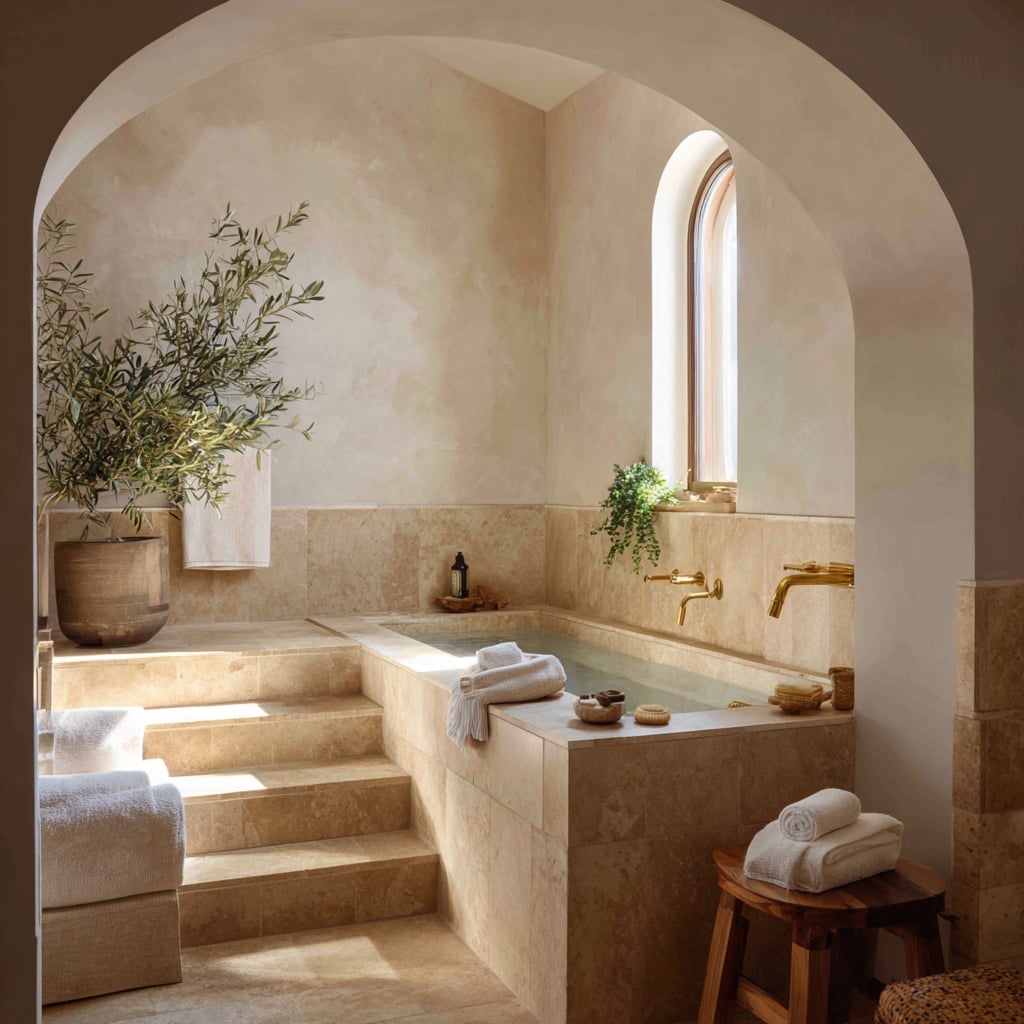
How do you make a bathtub feel like a destination rather than a fixture? Drop it below floor level and approach it by tiered stone steps. The sunken tub in this room is framed by travertine and plaster, with an olive tree and brass fixtures adding warm accents. The steps create a deliberate ritual: you step down into the bath, not just into water.
The layout separates the room into two zones, the sunken bathing area and the dry space around it. That physical transition changes how you use the room. The palette stays neutral in beige, stone, and wood, so the brass fixtures provide the only glint. The look depends on keeping the materials matte and the lines clean; a busy pattern or bright color would break the calm.
Sculptural Marble: A Statement Bathtub in a Modern Space
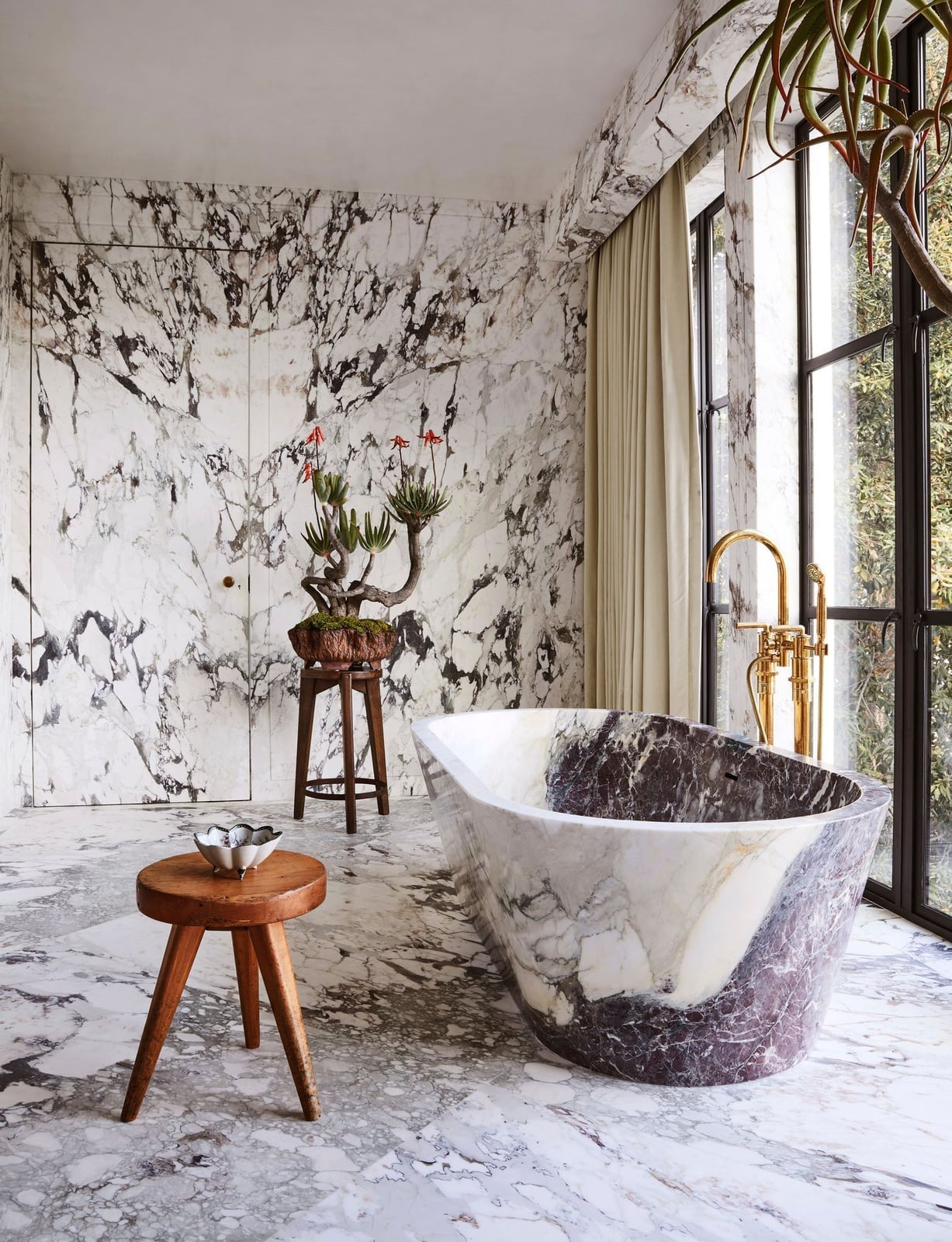
A sculptural marble bathtub near a large window gets all the attention, and the room stays out of its way. The white marble shape contrasts with a dark wood stool and a brass faucet, while the gray and gold palette prevents a cold feel. Daylight hits the carved surface and soft interior lighting fills the room. The tub is the hero, and everything else, the stool, the window, the floor, is just stage. The trick is having one strong piece and letting it carry the room.
Modern Spa Oasis: Black Freestanding Bathtub with Green Tiles
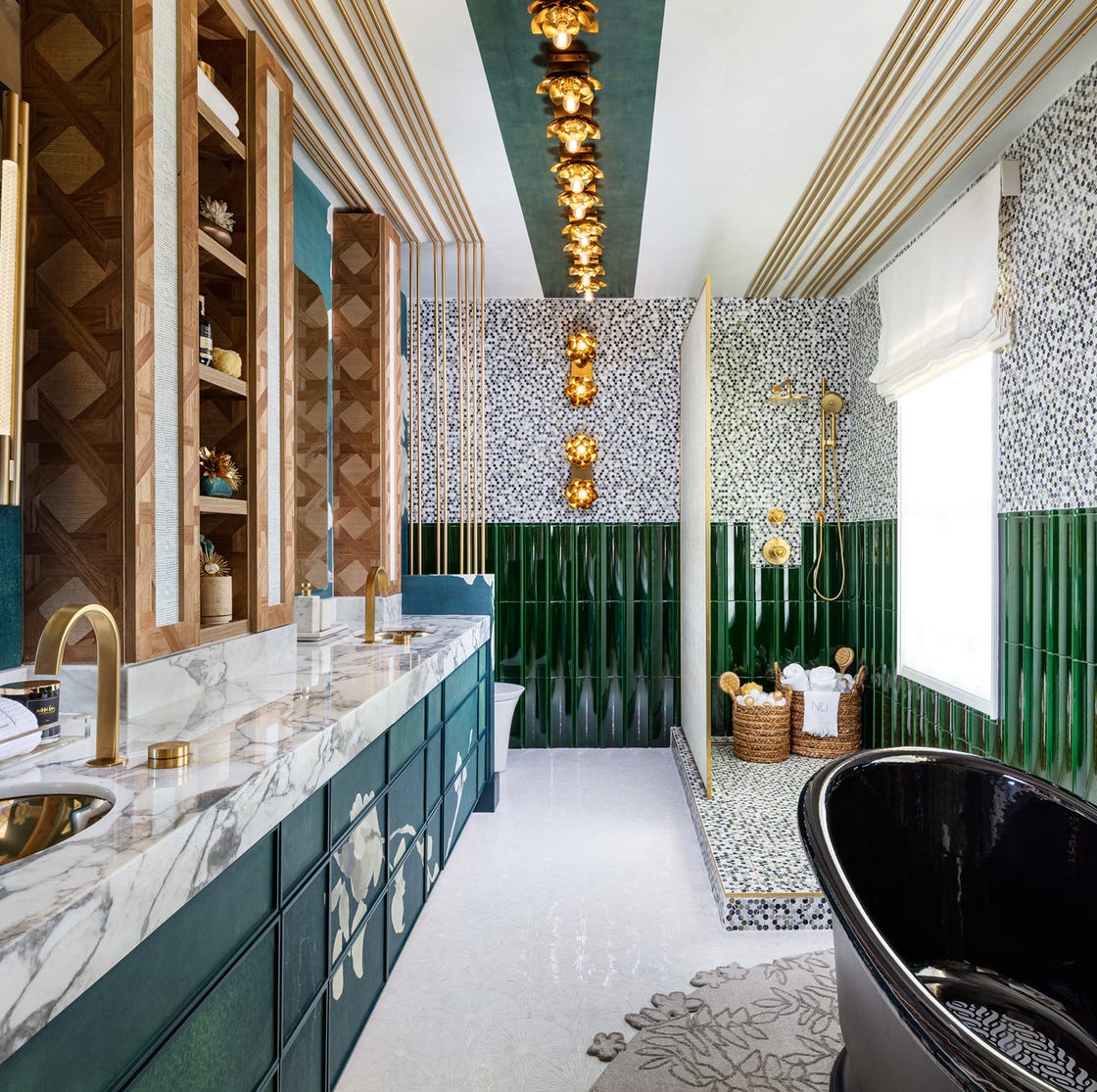
Pick one dark element and let it anchor the room. Here, a black freestanding tub sits against green tile, with a double vanity and a walk-in shower in the same open plan. Gold fixtures and warm wood tones keep the dark palette from feeling cold. The green tile provides the color, the black tub provides the weight, and the gold provides the light. The palette works because it limits itself to green, white, gold, and wood, no fifth color to confuse the eye. Layered lighting, both recessed and decorative, keeps the room from feeling like a cave.
Eclectic Charm: Black and Gold Clawfoot Bathtub
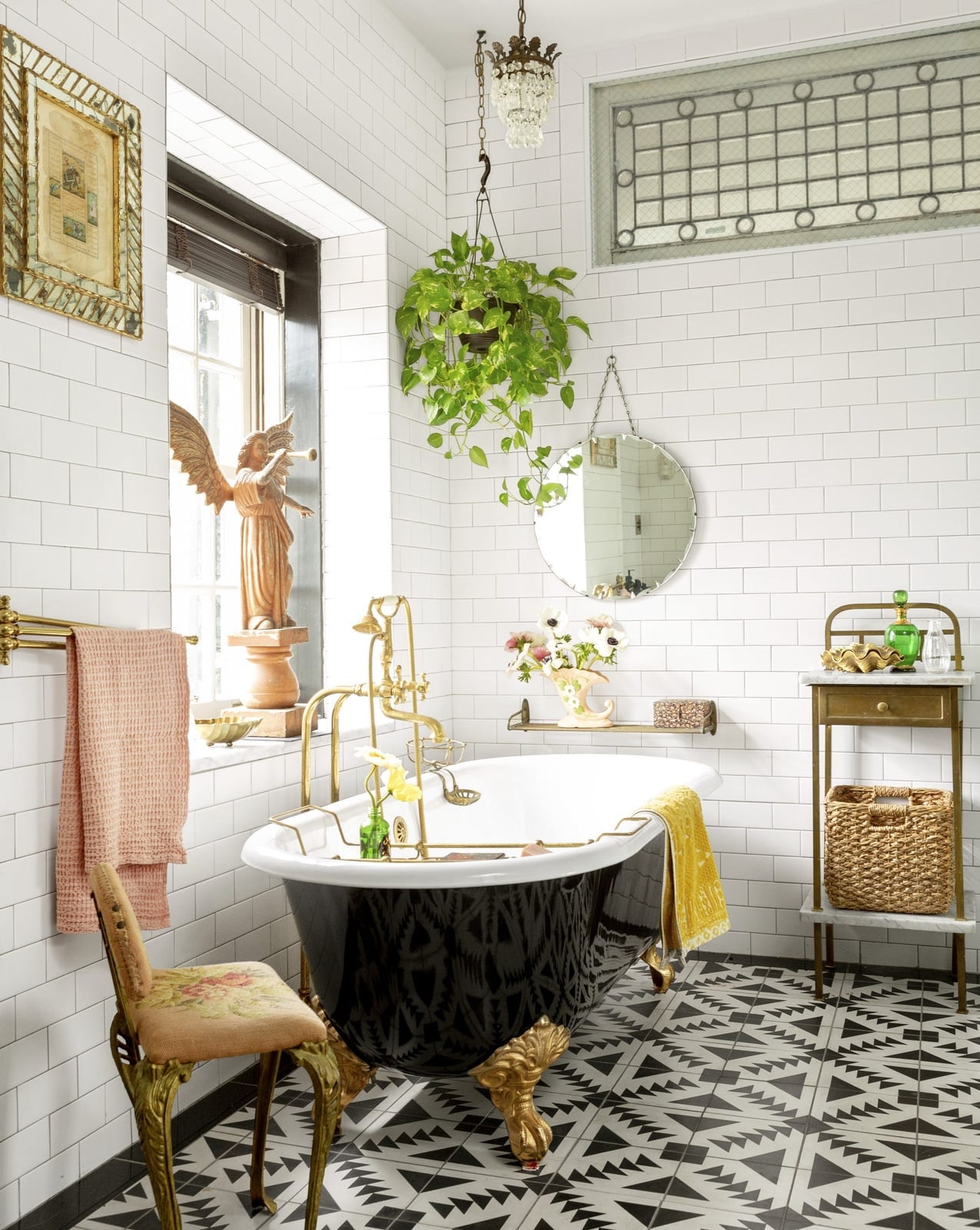
A white clawfoot tub is the standard pick, but swapping it for a black one with gold feet changes the whole room. The dark silhouette holds its own against a patterned floor and blush pink accents, so the palette feels layered rather than busy. An ornate chair nearby keeps the seating consistent with the mixed-era feel. The style works because the finishes are unified: the gold on the tub matches the brass in the light fixture and any hardware. What breaks it is adding a third metal or a competing pattern that pulls the eye away from the tub. Stick to one metallic and let the tile and textiles do the rest.
Modern Wet Room: Minimalist Oval Bathtub
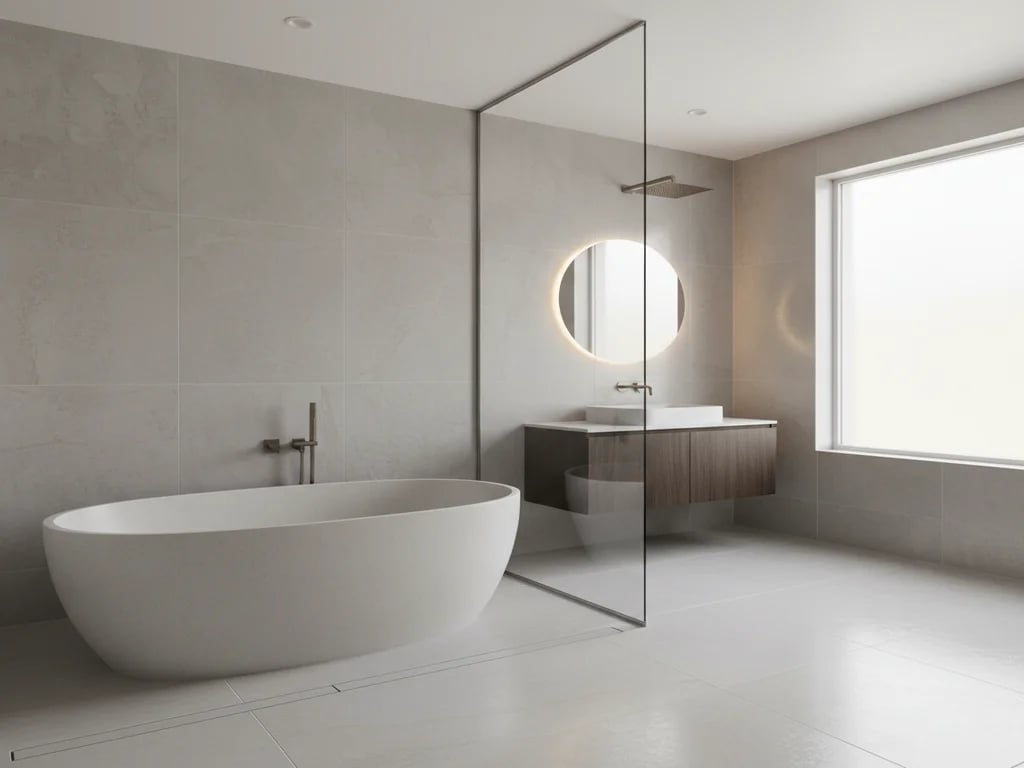
An open wet room layout puts the oval bathtub and walk-in shower on the same tiled floor, with no curb or glass between them. That single surface makes a small space feel larger and simplifies cleaning since the whole floor can be squeegeed. The freestanding tub anchors the room, while the vanity sits off to one side. For renters, the takeaway is that a wet room can be achieved without construction: a shower curtain rod and a good floor drain can create the same open feel.
Art Deco Elegance: Iridescent Green Tiles and Brass Accents
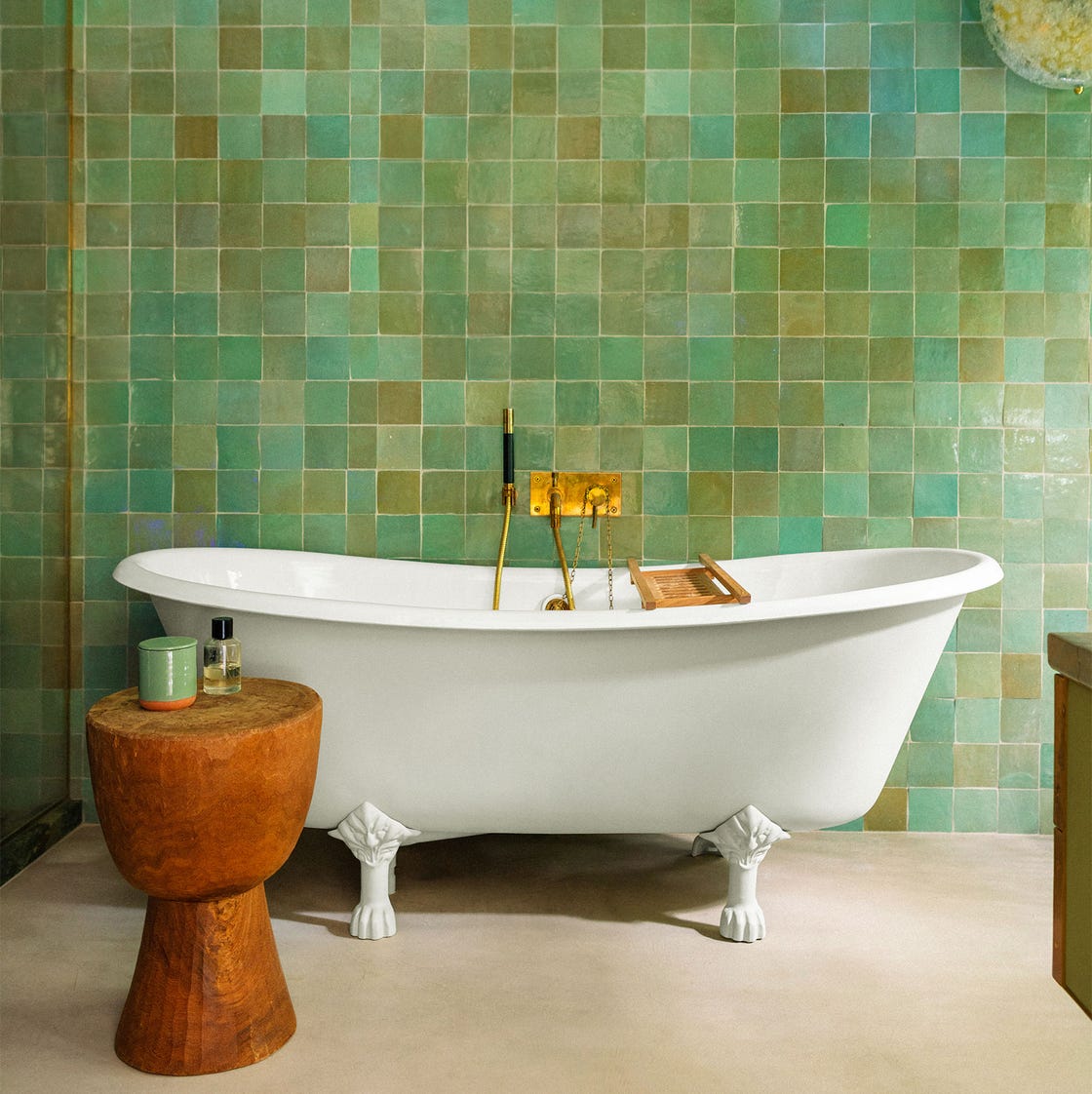
The palette here is a single strong move: iridescent green square tiles on the walls, paired with a white clawfoot tub and warm brass fixtures. The green is the star, and the brass and wood stool support it without competing. The room stays cohesive because the tile color is echoed nowhere else; the tub, trim and accessories stay neutral. What breaks this look is adding another saturated color or a pattern that fights the tile. Let the green do the work, and keep everything else quiet.
Boho Rustic Outdoor Oasis: Vintage Metal Bathtub with Flowers
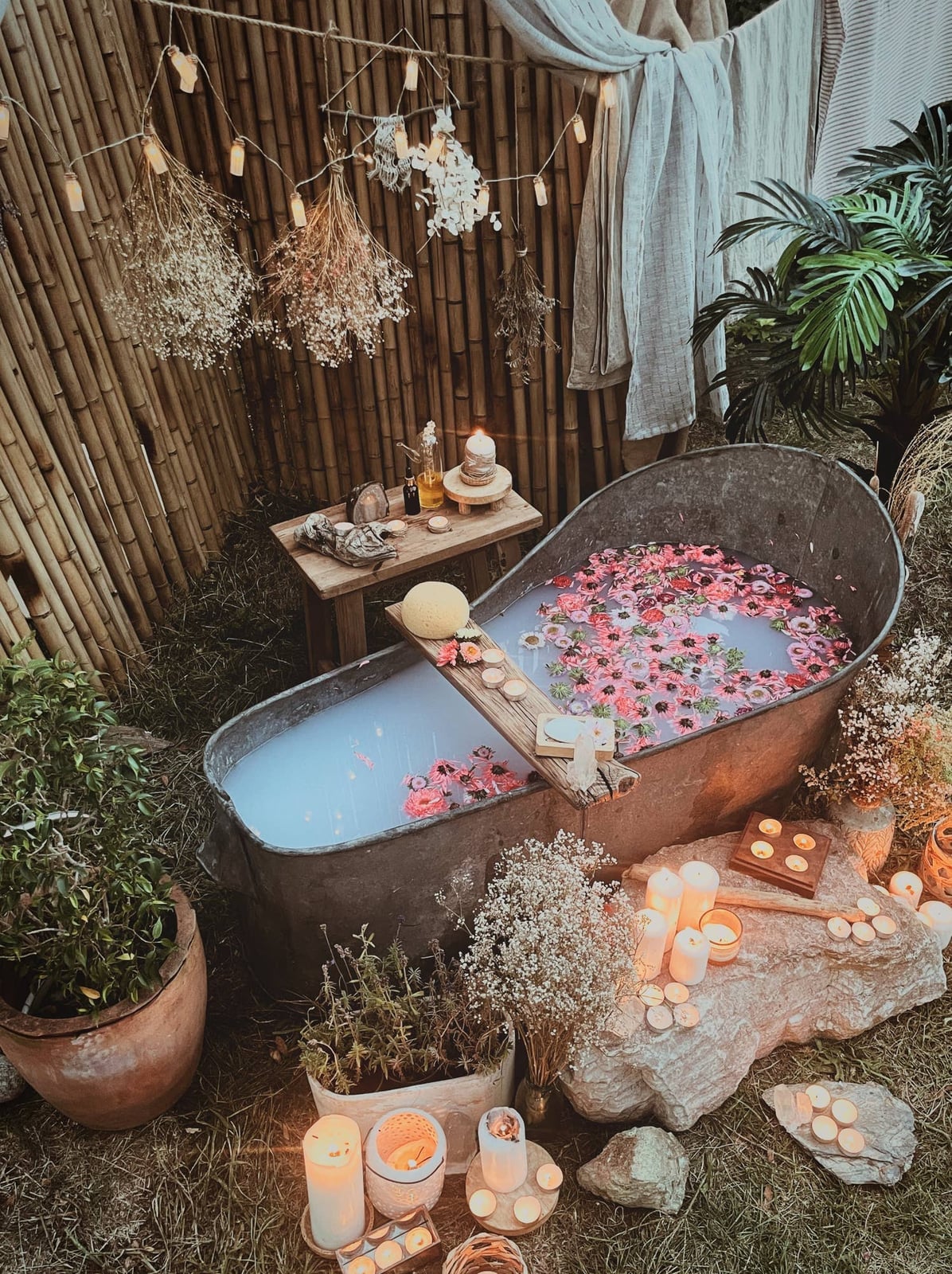
Can you really put a metal bathtub outside and have it last? Yes, if the finish is powder-coated or the tub is already aged and you accept a patina over time. This setup places the tub on grass, surrounded by potted plants, candles and string lights, with flowers floating in the water. The boho feel comes from the mix of textures: rough wood, soft petals, warm candlelight. The practical side is that an outdoor tub needs a drain solution and a cover to keep out leaves and bugs. Check your USDA zone to see how many months you can actually use it.
Modern Style: Vertical Dark Green Tiles and Brass Accents
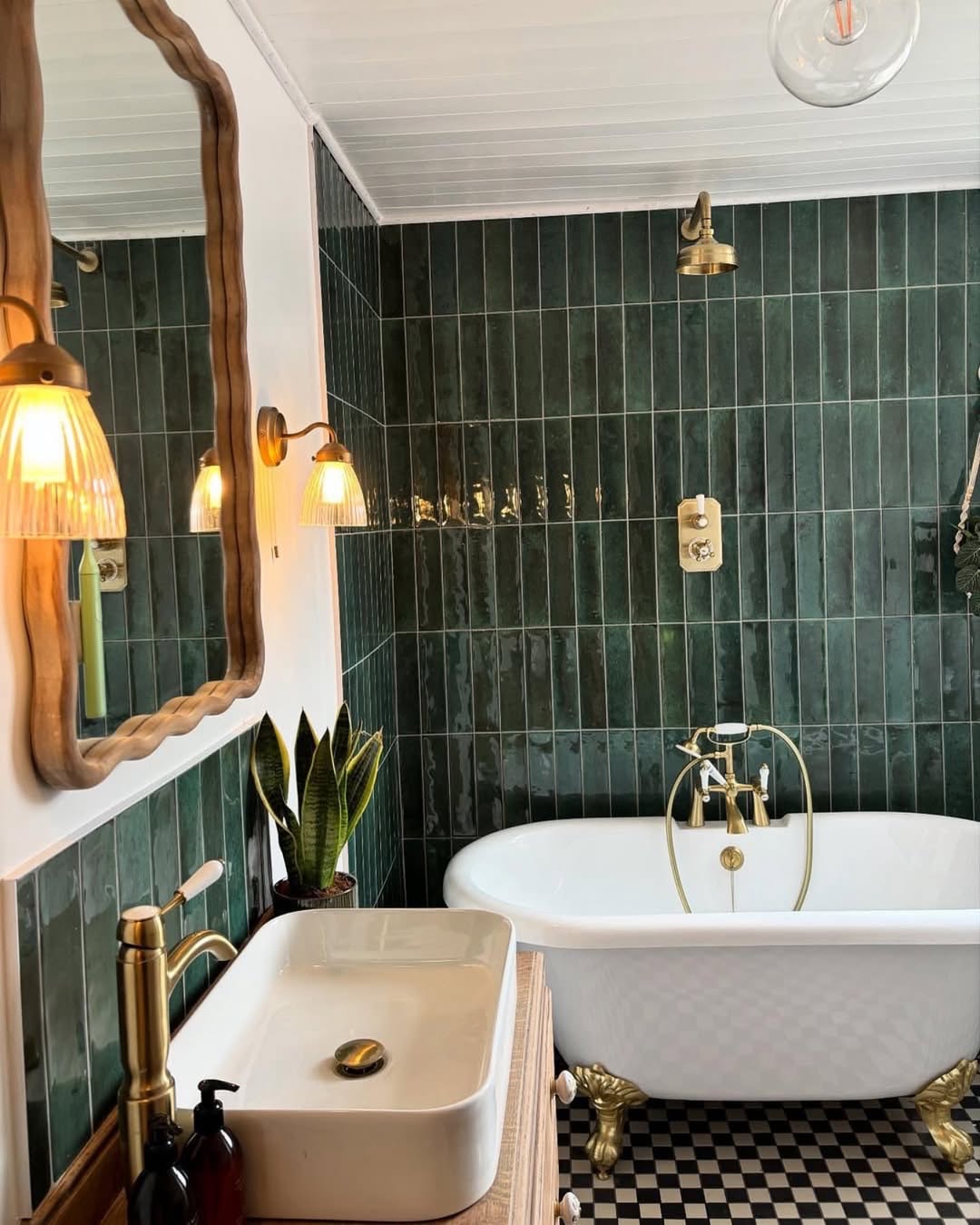
Vertical dark green tiles draw the eye upward, making a compact bathroom feel taller than it is. The freestanding tub sits adjacent to a vessel sink, with a wood mirror and brass sconces tying the warm tones together. The material mix matters here: the hard gloss of tile against the soft grain of wood, with brass as the shiny connector. For a similar effect in a smaller space, run vertical tile only on one wall or behind the tub to keep the room from feeling closed in.
Clean Lines: Modern Bathroom with Dark Wood Window Frame
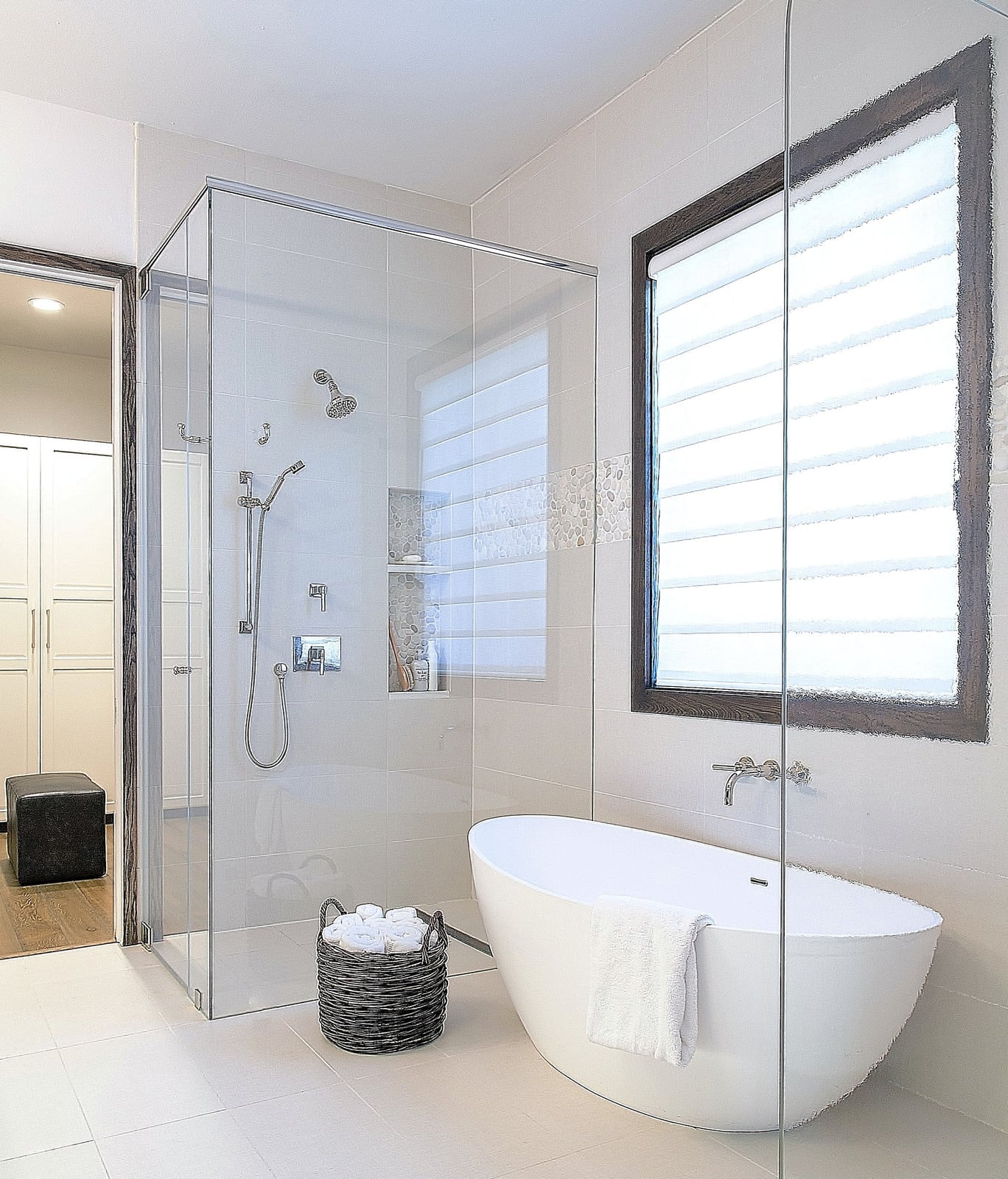
A dark wood window frame can anchor a room full of pale surfaces without making it feel heavy. In this modern bathroom, the freestanding tub sits on a neutral stone floor while a glass shower enclosure keeps the layout open and connected to natural light. The dark wood frame adds depth against white walls and tile, creating contrast that defines the space without clutter. The rule is simple: if your room reads as all one tone, introduce a single dark element near a light source to give the eye somewhere to rest.
Modern Organic: Textured Pendant Light and Natural Materials
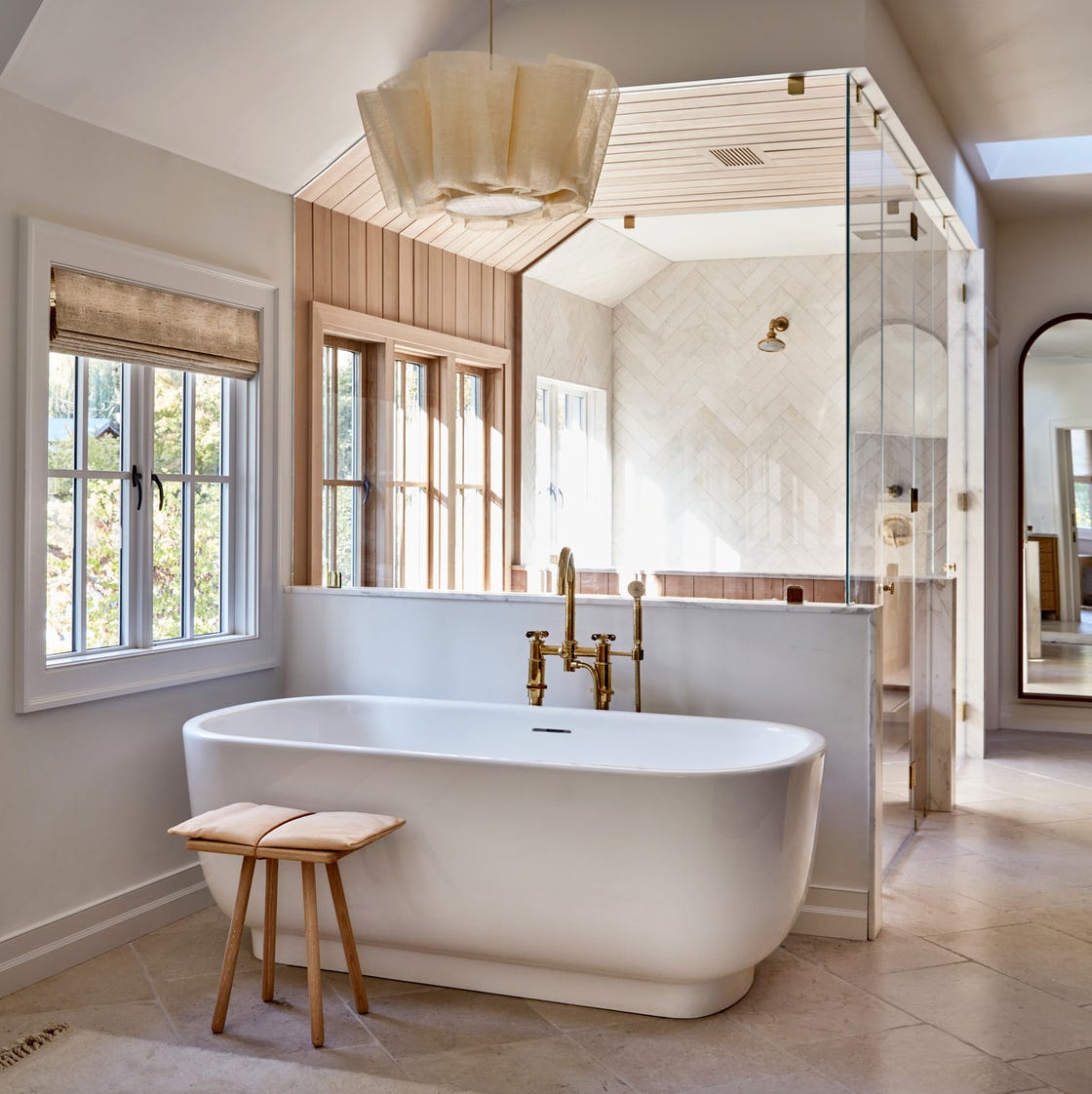
A modern organic bathroom risks feeling too spare if every surface is flat and smooth. Here, the textured pendant light changes that. It hangs above a freestanding bathtub with a wooden stool nearby, and the glass shower enclosure behind lets natural light move through the room. The palette of white, wood tones, and beige ensures the pendant becomes the point of visual interest.
The pendant breaks the evenness of the materials. Without it, the ceramic tub, tile floor, and clear glass would blend into a single quiet note. The texture adds a layer of depth, and the warm wood tones echo the stool and any wooden accents. The ratio of soft to hard surfaces stays balanced because the pendant is the only piece with visible weave or grain above eye level.
Traditional Comfort: Vintage Clawfoot Bathtub with Botanical Prints
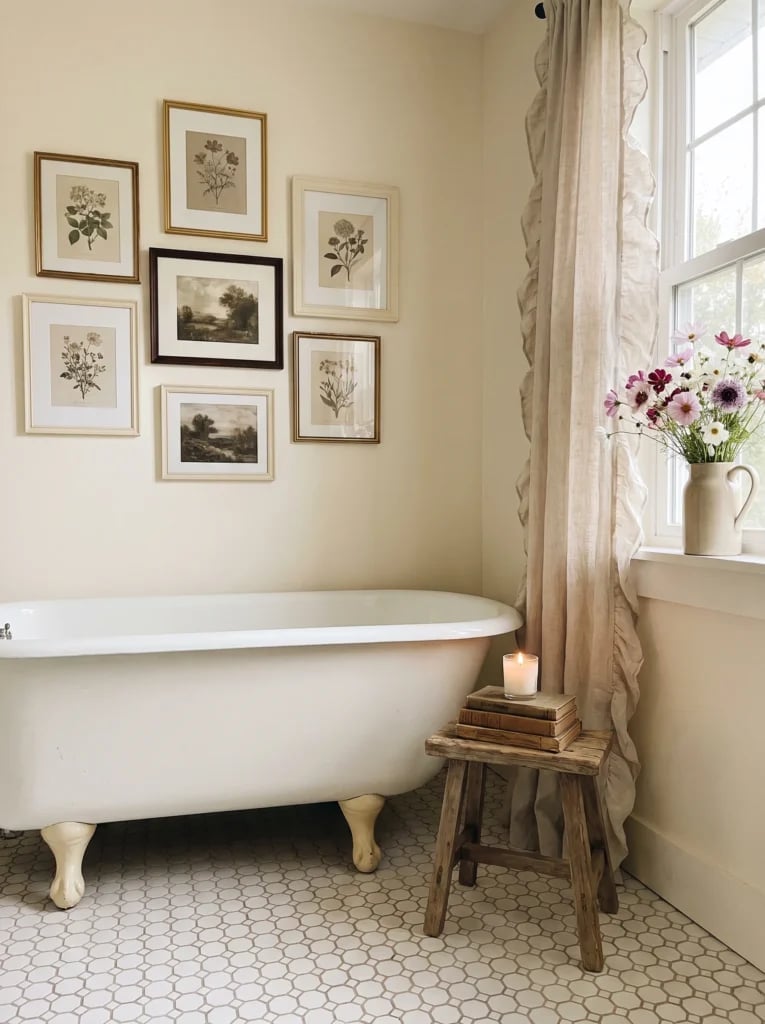
The clawfoot tub sits in a corner with framed botanical prints on the wall above it, and the combination of porcelain, wood, and linen makes the room feel settled. Natural light and a candle on the wooden stool soften the palette of cream, beige, and floral tones. The prints define the style: without them, the tub would look antique but the room would lack the traditional layer that makes it feel collected.
Eclectic Statement: Hammered Copper Bathtub Under an Archway
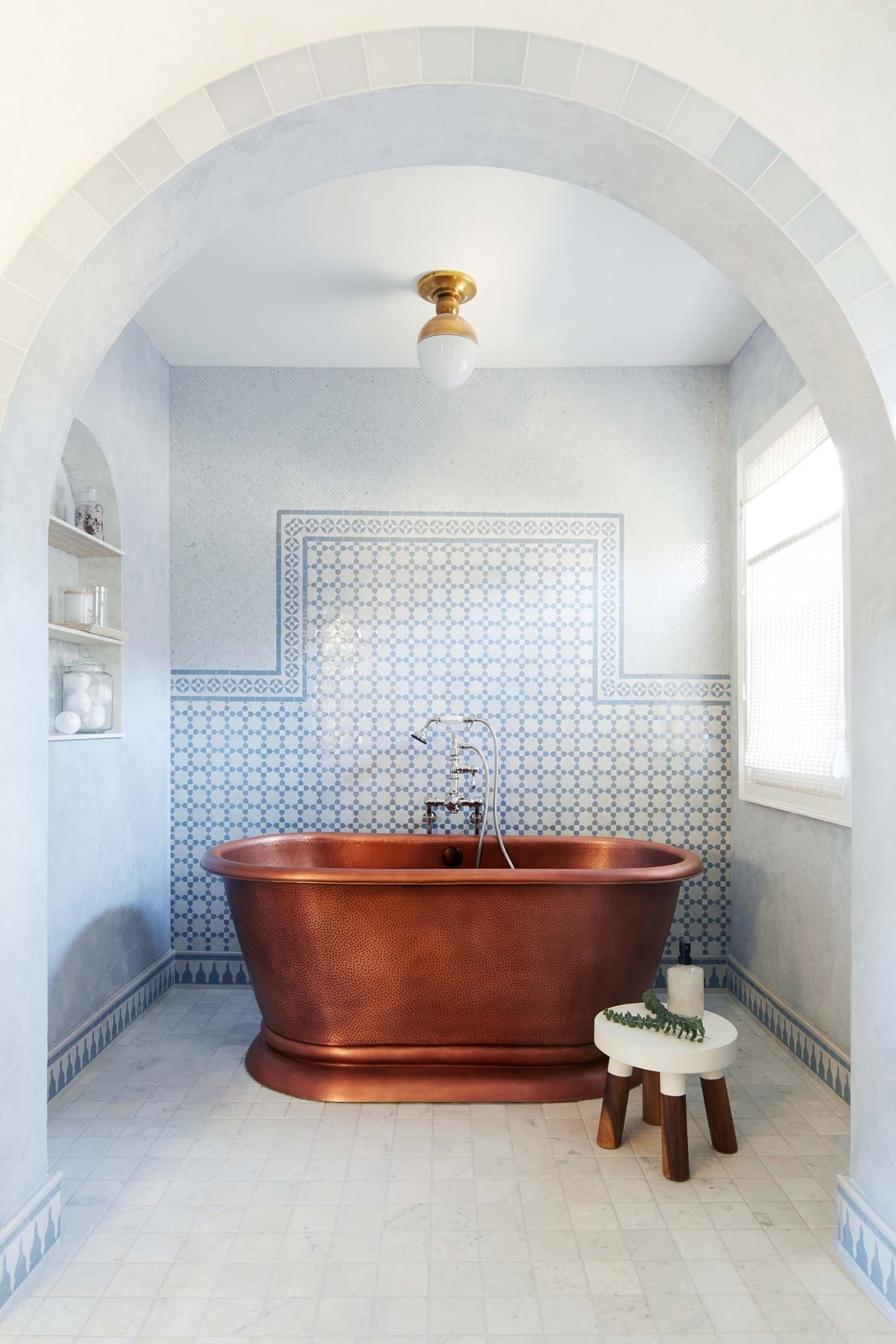
The hammered copper bathtub is the kind of piece that does not need help. Placed directly under an archway, it becomes the focal point the room was built around. The copper finish catches both overhead light and natural window light, and the mosaic tile accent behind the tub adds a blue and gray counterpoint without competing. A wooden stool nearby keeps the look grounded. The rule: when the hero element is this strong, keep the architecture simple and let the material speak.
Modern Spa: Rattan Pendant Light Above a Freestanding Tub
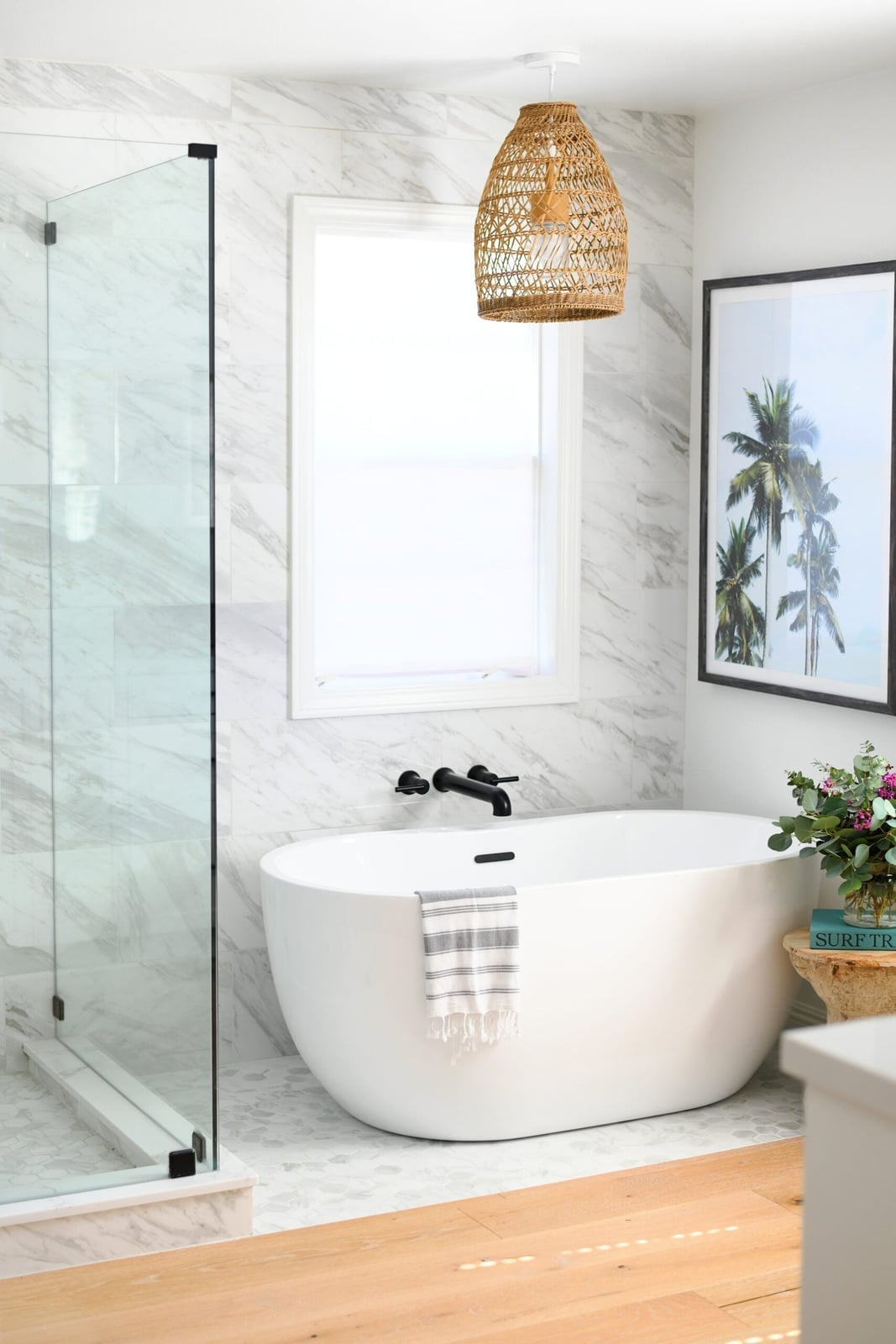
To create a spa-like bathroom, layer light sources at different heights so the room does not rely on a single harsh fixture. Here, a rattan pendant light hangs above a freestanding tub, and natural light from nearby windows fills the space. The tub sits next to a glass shower enclosure, and the palette of white, gray, and wood tones keeps the look calm.
The rattan pendant is the softest light source in the room. It casts a diffused glow that works better for evening baths than overhead can lights. The marble surfaces and clear glass reflect that light, so the room stays bright without feeling clinical. To recreate it, look for a pendant with an open weave or natural fiber that lets light pass through.
Glamorous Luxury: Bathtub Adjacent to a Glass Sauna
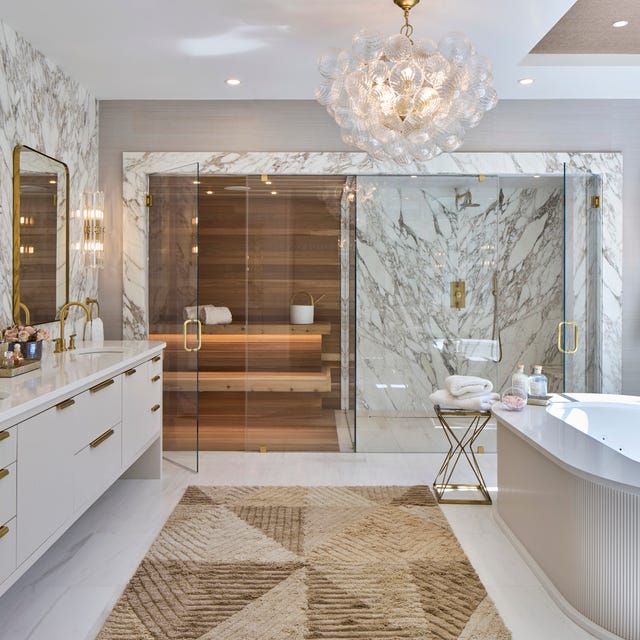
A bubble chandelier floats above a white freestanding bathtub, while a glass-walled sauna sits nearby on marble flooring. The style leans into glamour with beige and gold accents, a large rug underfoot, and a vanity that keeps the layout open. What defines the look is the balance of hard and soft materials: cool marble and glass against warm beige textiles. The ratio of sauna to tub to vanity is roughly equal, so no single piece dominates. A wooden stool or small plant breaks the polished feel, keeping the room from reading as a hotel lobby.
Traditional Charm: White Clawfoot Bathtub with Blue Shutters
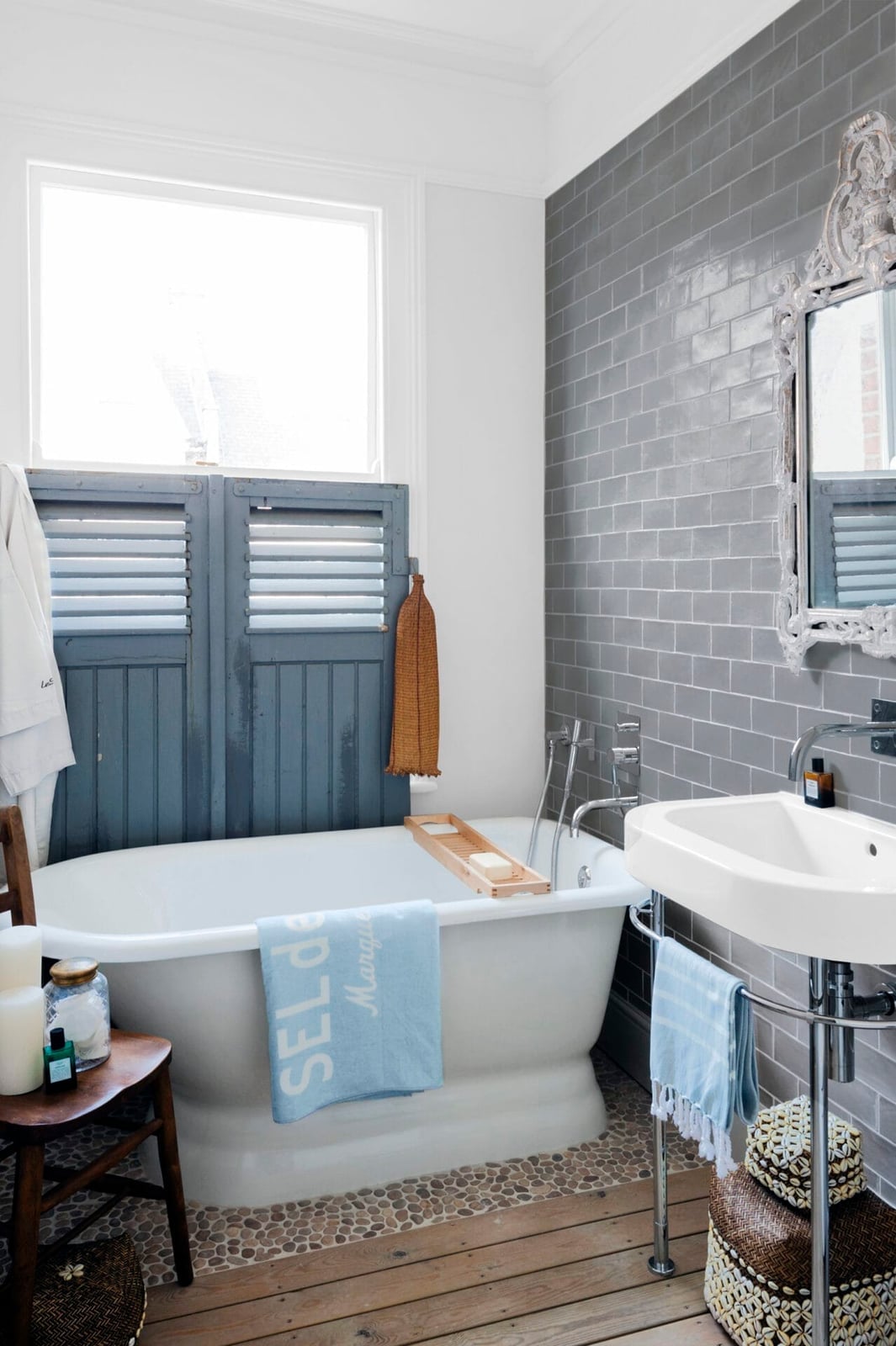
In a compact traditional bathroom, let one painted element set the palette. Blue shutters above a white clawfoot tub pull the eye upward and anchor the color scheme. The porcelain tub stays neutral, while gray tile and wood-toned vanity add warmth without competing. Natural light filters through the shutters, softening the overhead fixture. A renter-safe swap would be peel-and-stick blue window film instead of painted shutters, which reverses easily. The palette works because the blue is saturated but limited to one surface, keeping the room from feeling busy.
Contemporary Statement: Pink and Beige Onyx Bathtub Surround
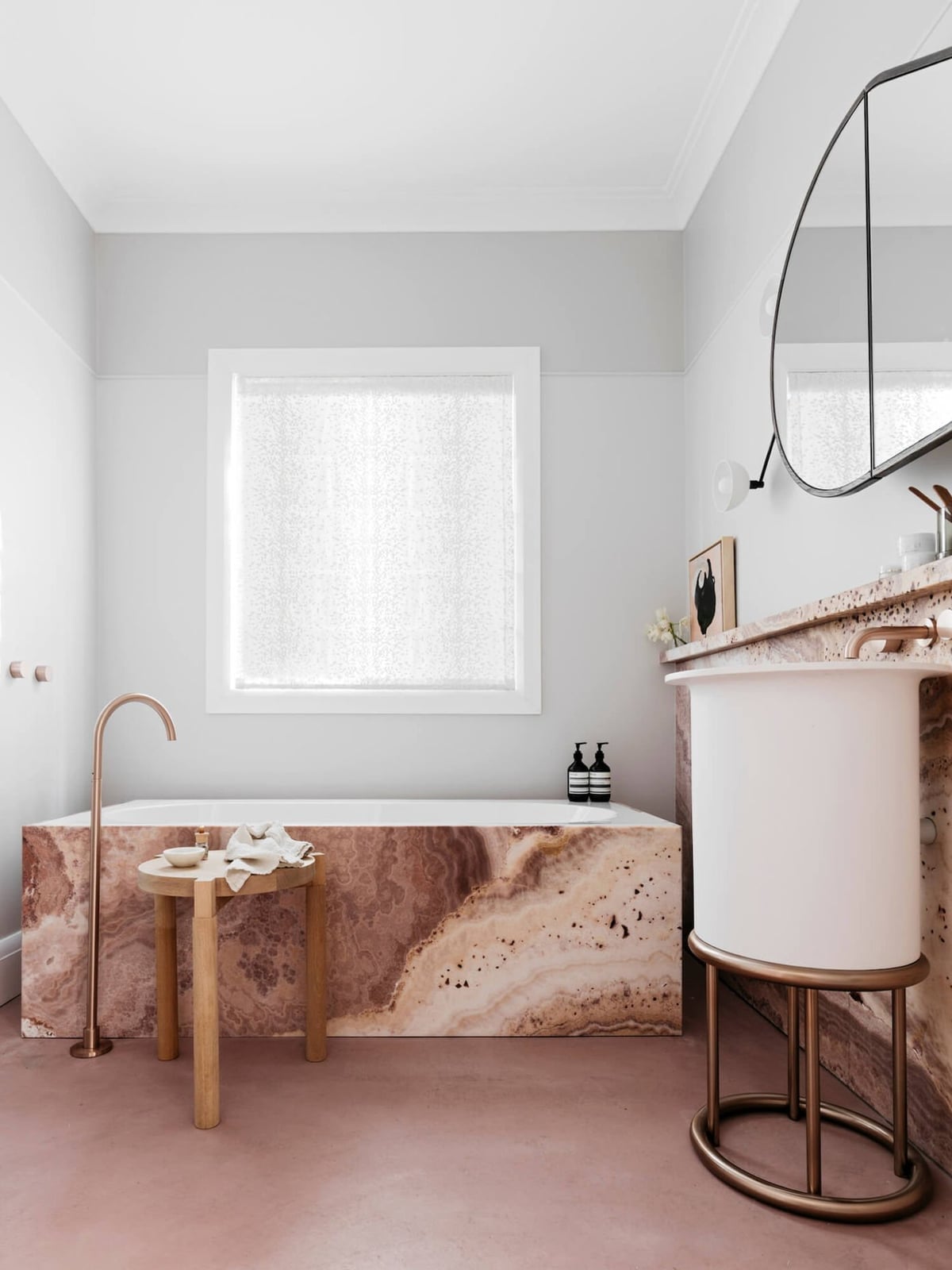
A standard white freestanding tub can read as safe. Cladding the surround in pink and beige onyx shifts the whole room into a contemporary statement. The stone wraps the tub like a sculptural object, with a brass faucet and a wooden stool as quiet companions.
Daylight hits the onyx veining, while recessed ceiling lights keep the surround as the focal point. The hero element is the stone itself, not the tub shape. To recreate it, look for a large-format porcelain tile with onyx patterning. The veining should run in one direction to avoid a busy look. A small plant or neutral bath mat grounds the composition without distracting.
Farmhouse Style: Clawfoot Bathtub with Ornate Dark Wood Cabinet
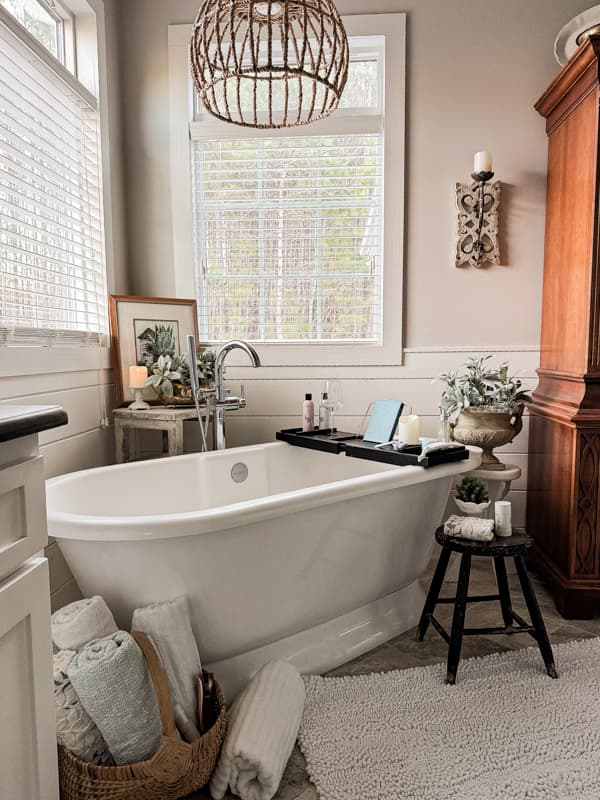
An ornate dark wood cabinet stands opposite a clawfoot bathtub, their weights balanced by a woven pendant light above. The farmhouse read comes from the contrast: the cabinet is detailed and heavy, the tub is simple and light. Cream walls and a neutral rug keep the palette calm. The cabinet doubles as storage, which is practical for towels or linens. A metal stool or fabric basket could sit nearby to hold bath salts, matching the rustic feel without adding bulk.
Luxury Grandeur: Freestanding Bathtub Framed by Arches
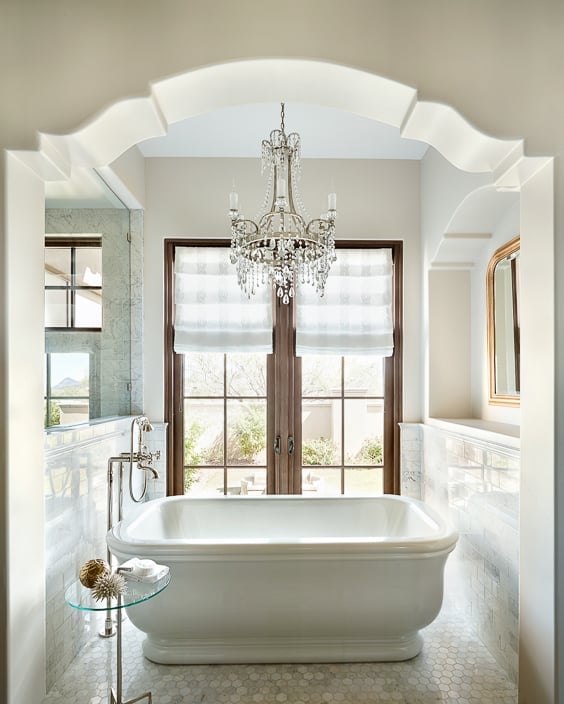
This layout relies on symmetry and scale. A white freestanding tub sits centered between two arched doorways, with a crystal chandelier hanging directly above. The marble floor and brass fixtures reinforce the luxury style, but the real trick is the negative space. The tub is the only object in the central zone, so the eye rests on it. For a room that feels grand without clutter, keep the path around the tub clear. A single stool or small table on one side is enough. More than that, and the arches lose their framing effect.
Traditional Elegance: Oval Bathtub with Warm Wood Paneling
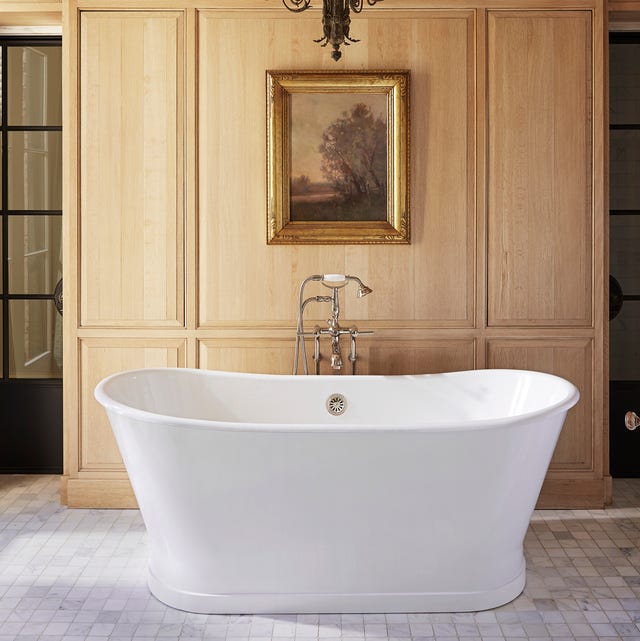
A freestanding oval bathtub placed at the center of a room asks for a setting that feels equally deliberate. Here, warm wood paneling wraps the walls, and a chandelier adds ambient light from above. The white marble floor and the brass of an ornate faucet keep the palette clean without feeling cold.
The style works because the wood paneling and the marble are the only two major materials in view. That ratio gives the room a calm, traditional look. What breaks the formality is the brass faucet, which introduces a slightly ornate detail that stops the space from feeling too plain.
Traditional Reflection: Clawfoot Bathtub and Ornate Gold Mirror
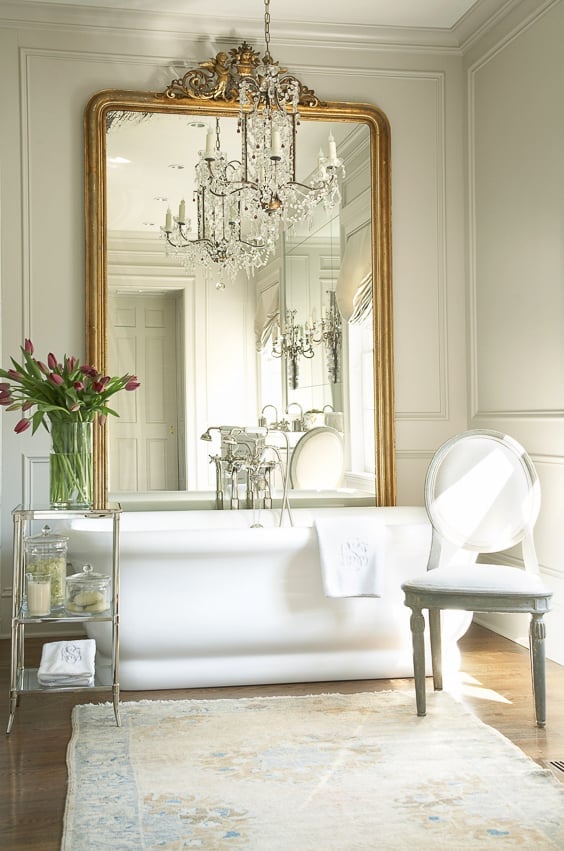
A clawfoot bathtub sits centered in a roomy bathroom, with an ornate gold mirror hung directly behind it. Natural light from a window and a chandelier above keep the space bright without glare. The palette stays white and cream, with the gold mirror and metal fixtures providing the only contrast. A small chair nearby adds a practical spot to sit, but the mirror remains the defining piece that makes the traditional style feel complete.
Transitional Style: Pale Green Subway Tile and Marble Accents
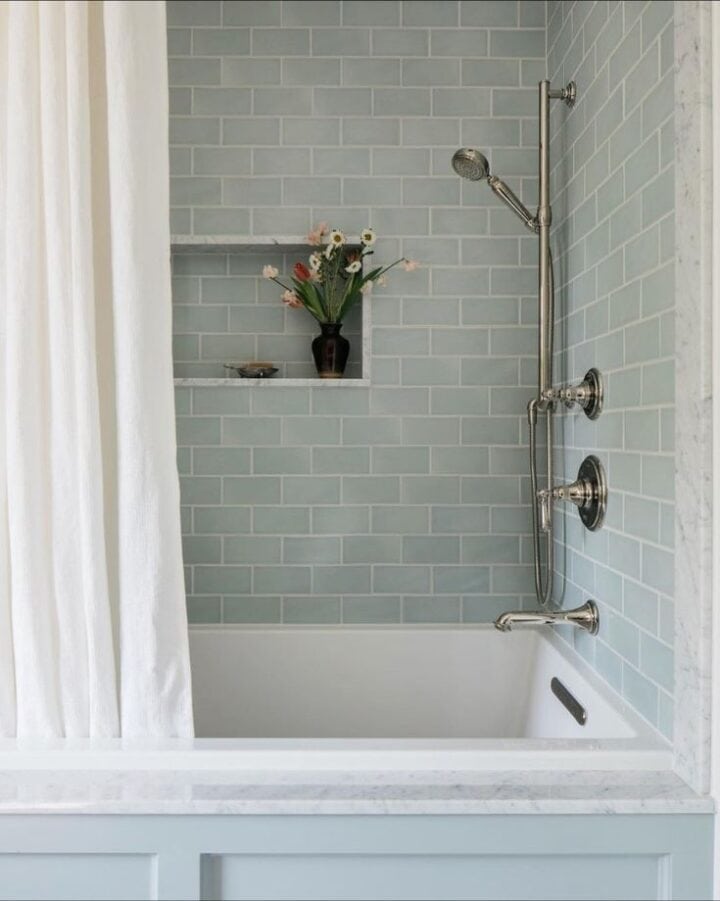
For a tub and shower combo, keep the wall finish consistent throughout the wet area. Pale green subway tile runs from floor to ceiling around the clawfoot tub and corner shower, while white marble accents on the floor and countertop tie the look together. Chrome fixtures stay simple, so the tile color carries the room. The blue, white, and pale green palette feels fresh without leaning fully modern or fully traditional.
Classic Entrance: Freestanding Bathtub Through an Arched Doorway
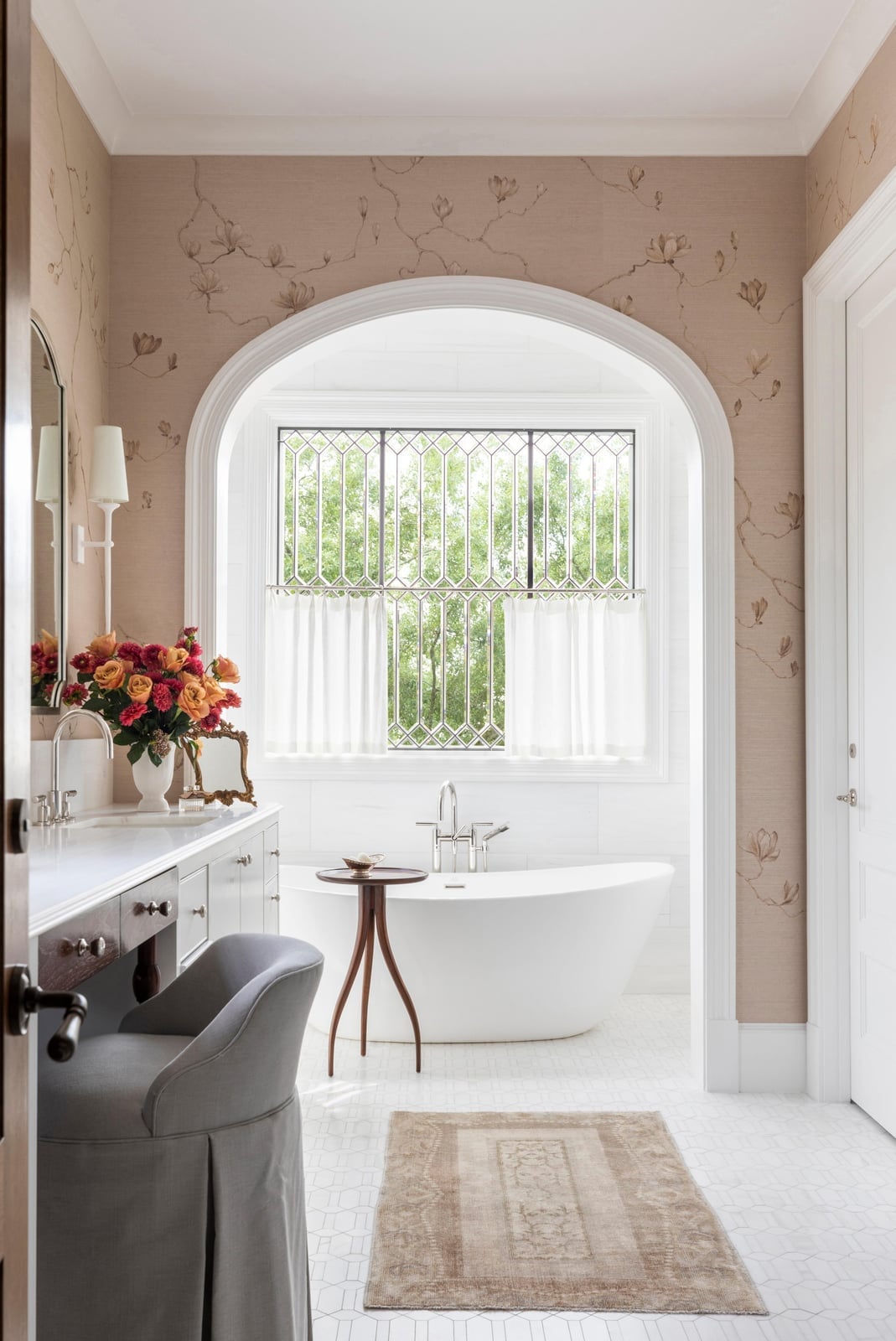
An arched doorway is a strong architectural feature, and placing a freestanding bathtub so it is visible through that arch turns a hallway view into a focal point. The beige and white palette keeps the space calm, while brass sconces and a gold-framed mirror add warmth. A window softens the edges.
Compared to a tub set against a flat wall, this layout uses the arch as a frame. The wallpaper on the far wall adds a subtle pattern that does not distract from the tub. The brass and wood details keep the classic style from feeling too stiff.
Compact Modern Design: Wood Vanity and Integrated Tub/Shower
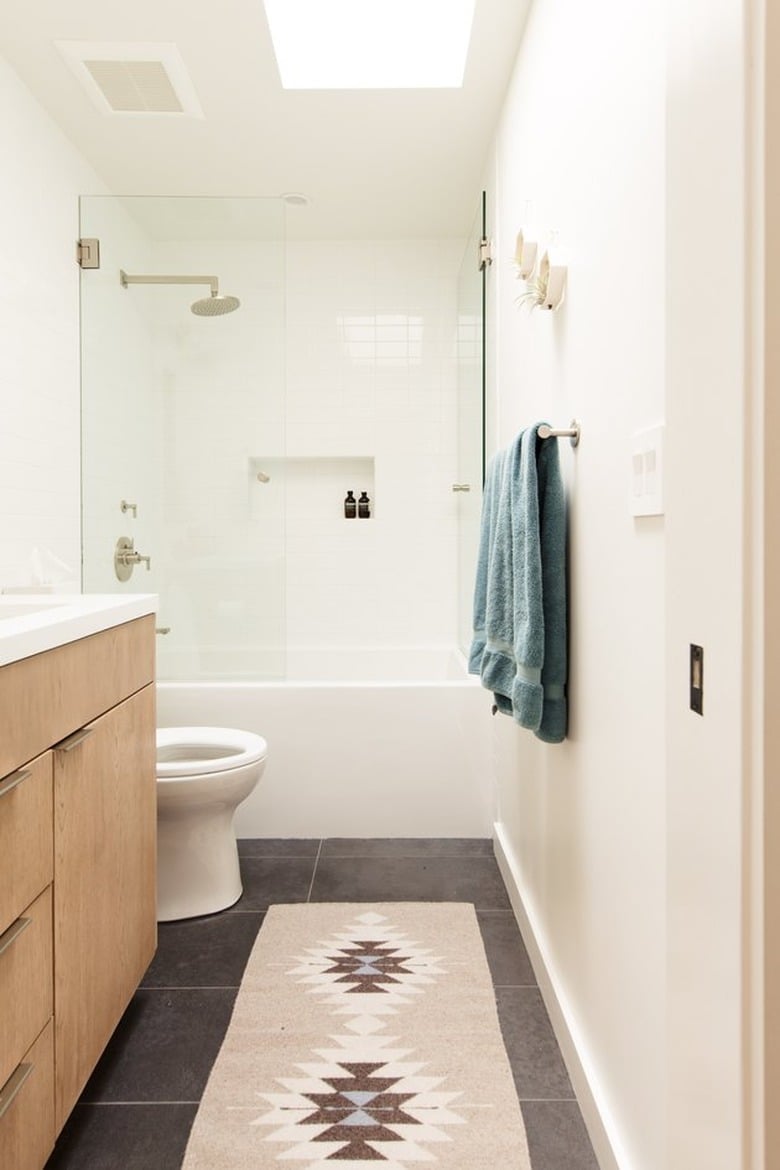
A compact layout places the toilet, a wood vanity with drawers, and a glass-enclosed tub and shower along one wall, with a skylight overhead providing even natural light. The neutral palette of white, gray, and wood tones keeps the room from feeling crowded. The wood vanity adds warmth and storage, while the glass enclosure maintains an open look. The skylight is the key detail that makes a small bathroom feel larger and more airy.
Modern Architecture: Terracotta Sloped Ceiling with Freestanding Tub
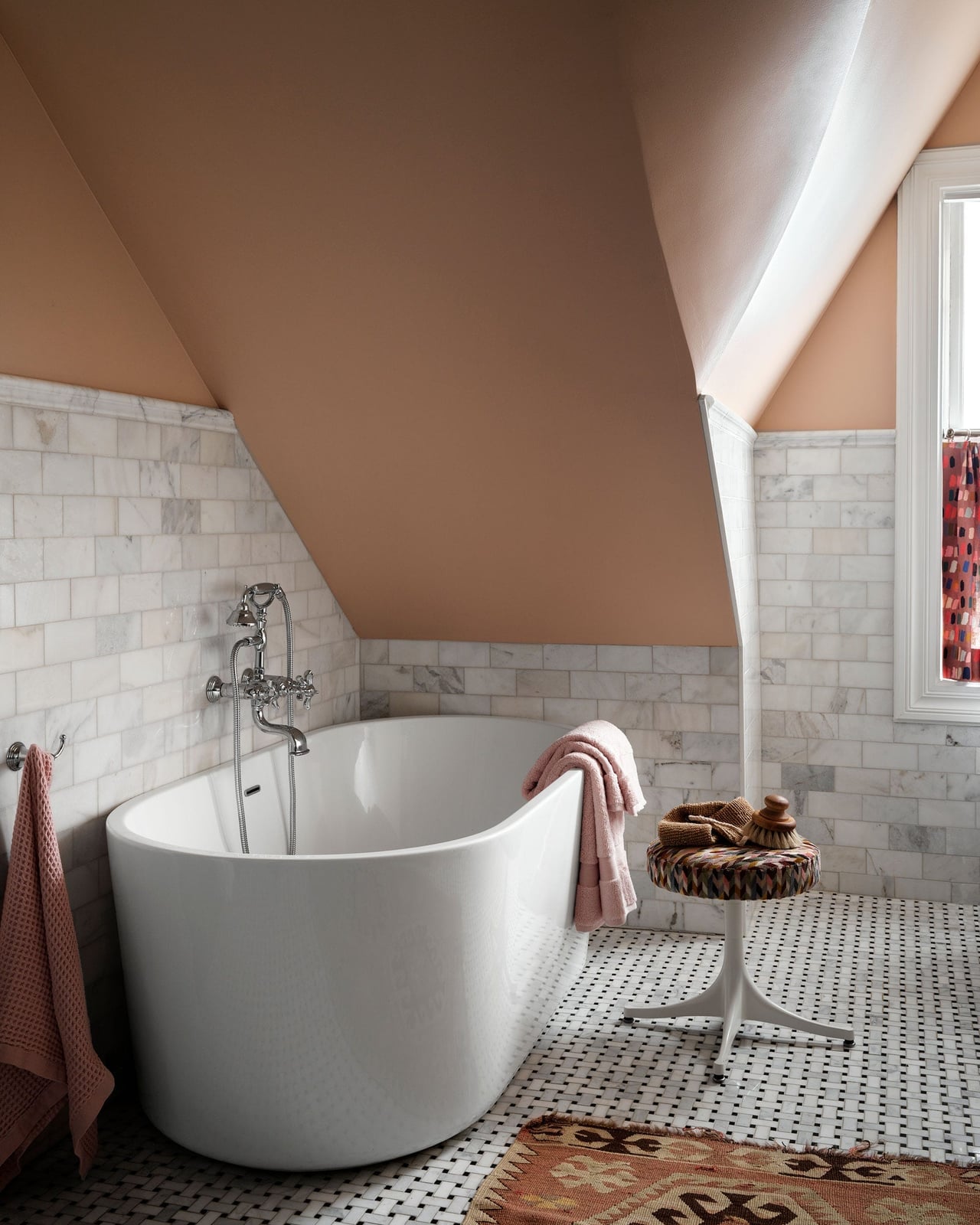
A sloped ceiling painted terracotta gives this modern bathroom a distinct architectural anchor without adding a single wall treatment. The white freestanding tub sits centered beneath the angled plane, while a small patterned stool and folded pink towels add soft contrast against the marble floor and tiled surround. The palette stays within a warm-neutral range: white, marble, terracotta, and pink. What defines this look is the ratio of color to surface. One bold ceiling adds visual structure, while everything else stays quiet. The terracotta tone breaks the all-white expectation of a modern bathroom and makes the sloped shape read as a deliberate design choice rather than leftover attic space.
Glamorous Corner Bathtub with Scalloped Yellow Mirrors
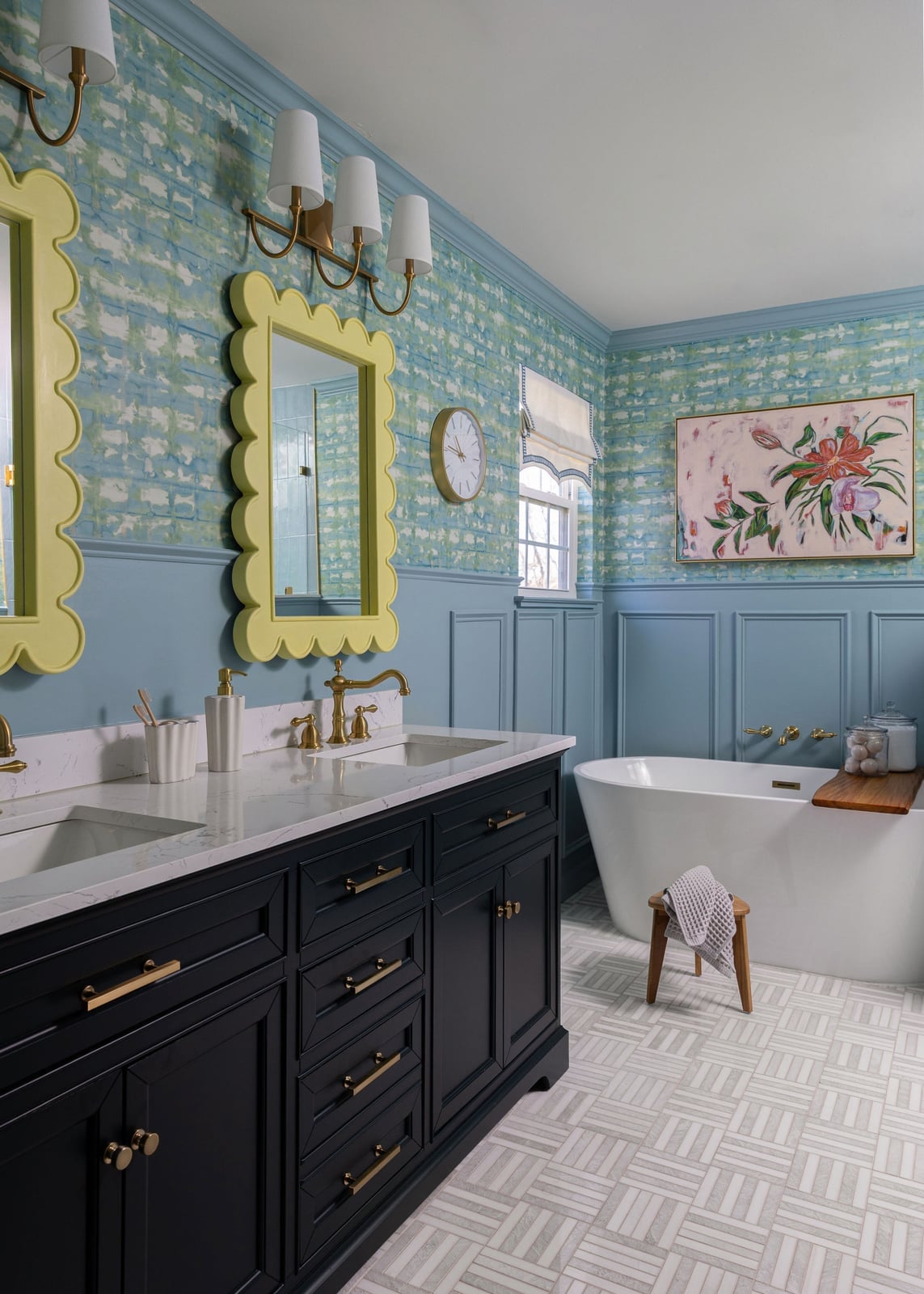
A glamorous bathroom works best when one element carries the personality while the rest stays neutral. Here, a pair of scalloped yellow mirrors above a double vanity do that job. The corner bathtub remains classic and white, the marble surfaces stay cool, and the brass sconces add warmth without competing. The yellow is the story, and everything else supports it.
The palette breaks into two clear parts: the blue and white of the tub and tile, and the yellow and gold of the mirrors and lighting. That means the room feels glam without seeming like a costume. To recreate it, look for a bathtub and vanity in a neutral finish, then let the wall decor bring the hue. It is a renter-safe swap that changes the whole room without touching plumbing or tile.
Enchanting Outdoor Shower: Pink Clawfoot Bathtub and Green Tiles
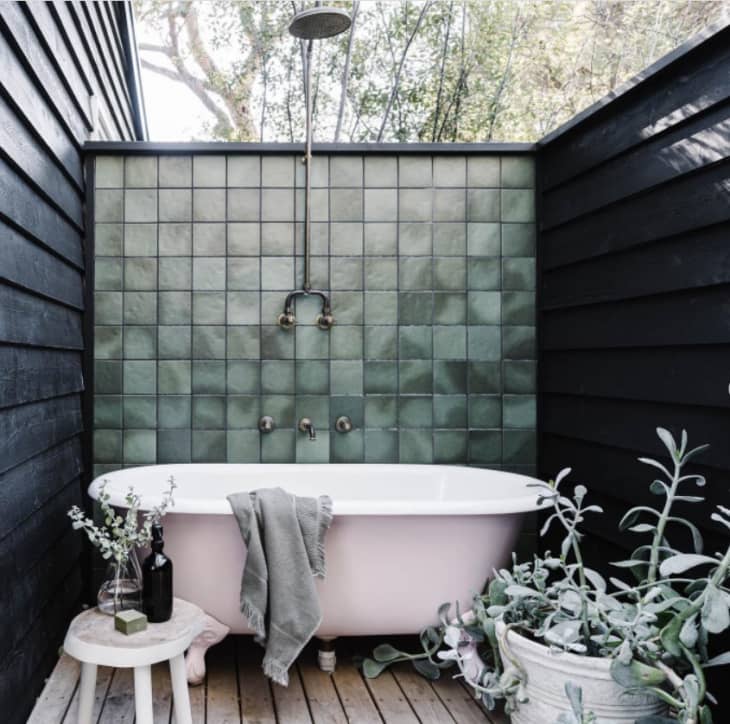
A pink clawfoot tub set against green square tiles creates a boho outdoor shower that feels more like a garden feature than a functional space. The combination of metal, wood, and tile keeps the look layered without being fussy. Dappled natural light and surrounding plants soften the edges of the bright pink. Check your USDA zone before planting anything near an outdoor tub, since moisture and shade patterns vary widely. The real trick here is the color ratio: the green tile grounds the pink so it reads as playful rather than overwhelming.
Traditional Marble Bathroom with Glass Shower Enclosure
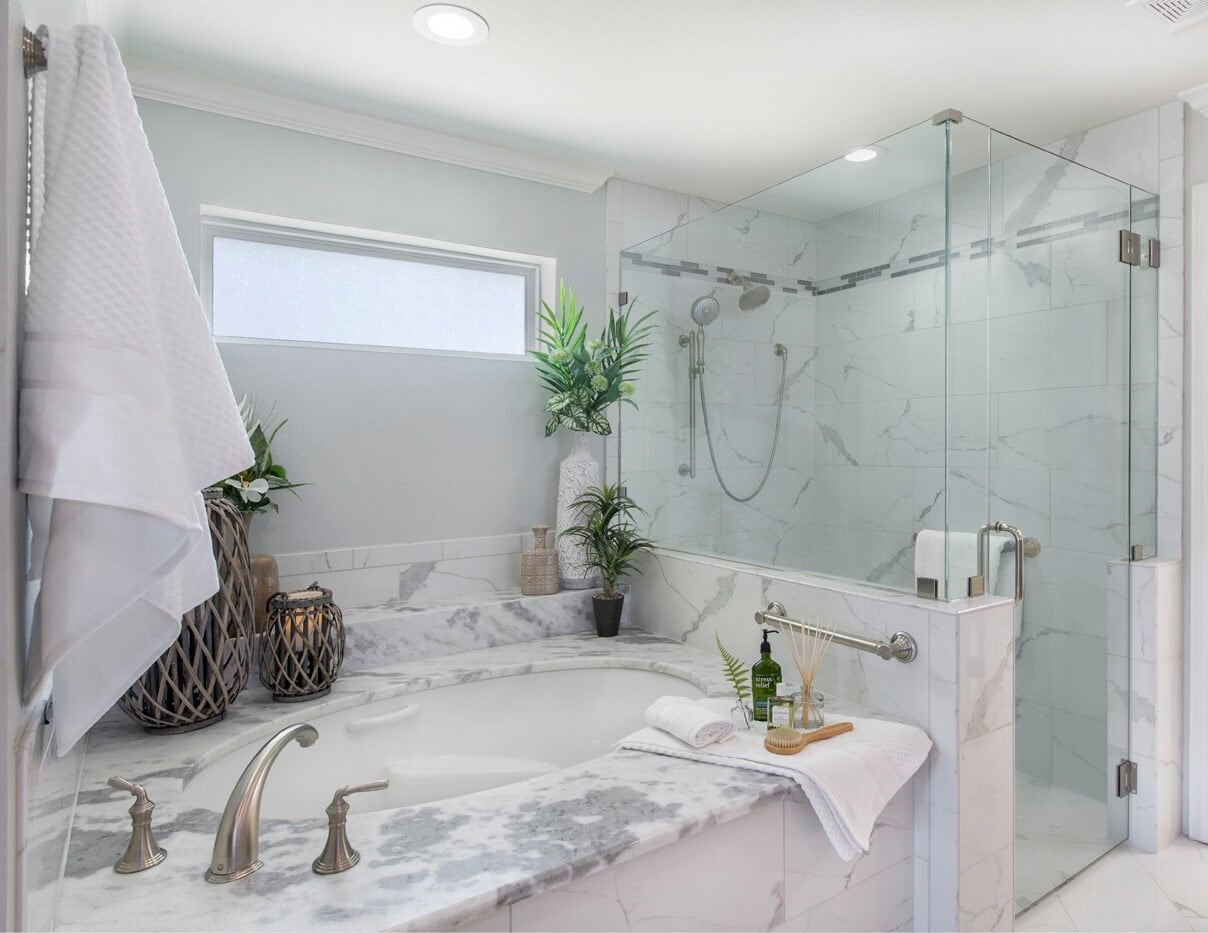
Marble surrounds the bathtub and extends into the glass shower enclosure, creating a seamless traditional look that relies on material continuity rather than pattern. The palette stays in the white, gray, and silver range, with chrome fixtures adding a cool, reflective note. Natural light from the window and ceiling light keep the marble from feeling heavy. What makes this layout work is the clear separation between wet and dry zones. The glass enclosure keeps the shower contained while the open tub area stays accessible. Marble needs sealing and regular maintenance, but the payoff is a surface that ages gracefully if cared for.
Modern Luxury: Built-in Bathtub with Blue Mosaic Tile Shower
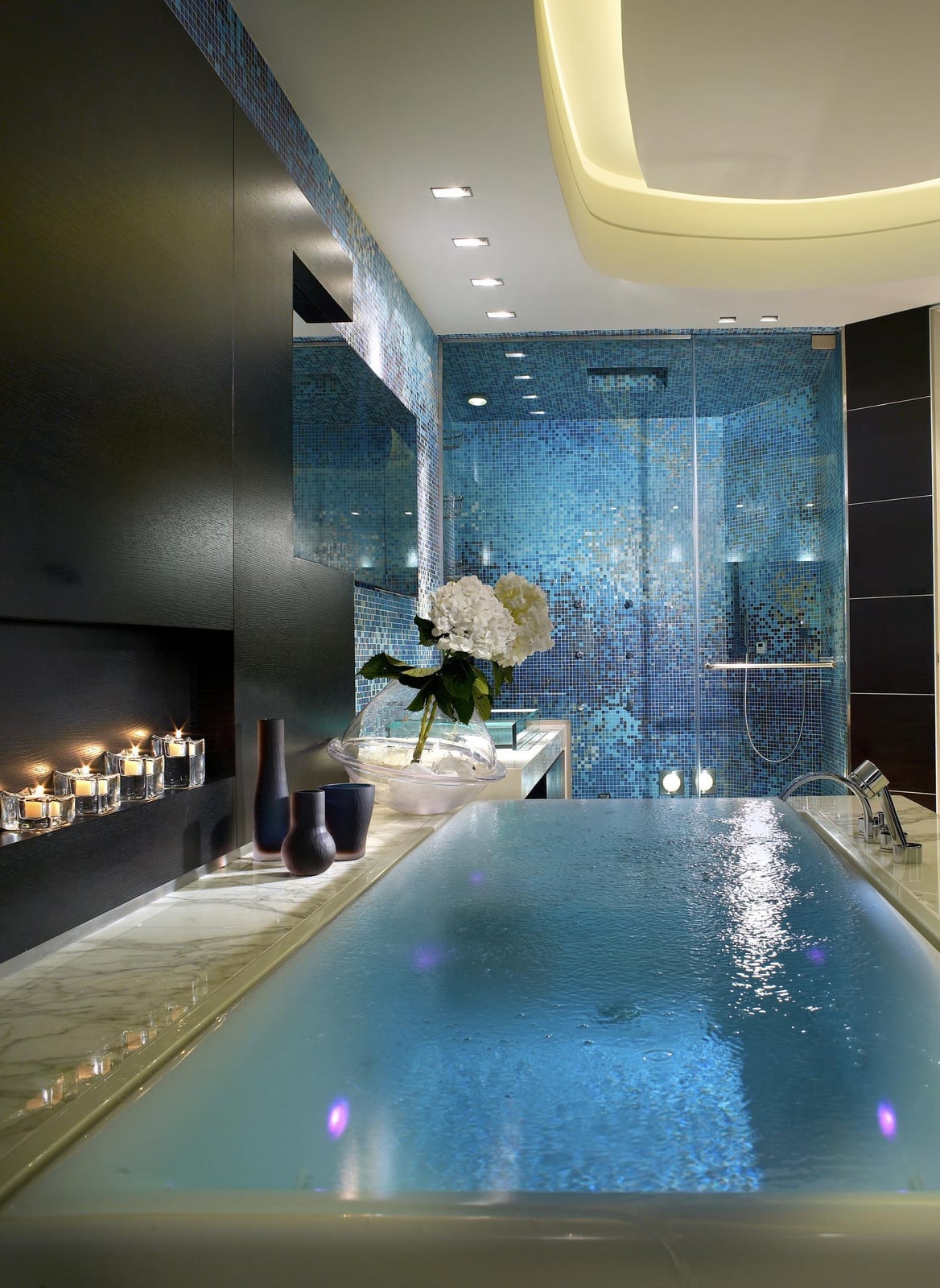
A built-in tub integrated into a marble counter reads differently from a freestanding model. Here, the tub feels like part of the architecture rather than a piece of furniture. Behind it, a glass shower enclosure with blue mosaic tile adds a concentrated burst of color. The rest of the room stays in white, black, and chrome, so the mosaic becomes the focal point without competing with the tub.
The layout works because the tub and shower share a visual language but remain physically separate. Recessed ceiling lights and accent lighting keep the space bright without glare. If you prefer a freestanding tub for its sculptural quality, this setup offers a more streamlined alternative that works well in a spacious, open-plan bathroom. The blue mosaic is the break in an otherwise neutral palette, and it is contained enough that you could change it without redoing the whole room.
Transitional Blue Marble Bathroom with Glass Enclosure
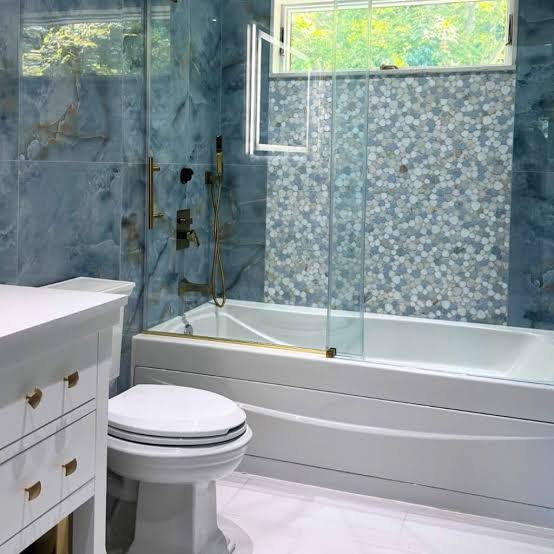
A blue marble tile, white, and gold palette sets this transitional bathroom apart from the usual neutral bath. The bathtub sits against the wall, while a vanity and toilet complete the layout. The look is defined by that marble: a blue stone that is the main color, with white as the balance and brass for a warm accent. The gold is key: too much brass or a different metal would split the palette into competing tones.
Modern Spa: Textured Beige Tiles and Wooden Bath Tray
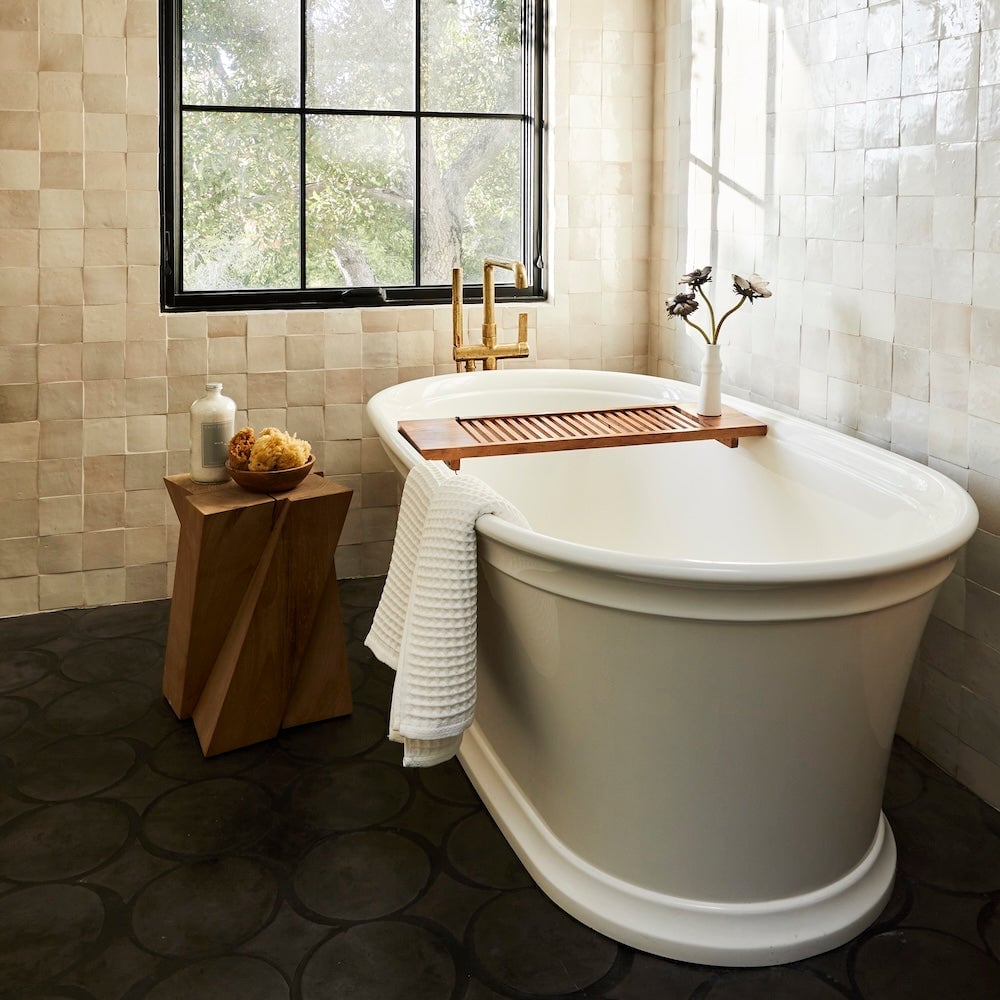
This is a modern spa bathroom that works because the palette stays restrained. White and beige tiles cover the surfaces, a dark gray stone floor adds weight, and the wood tones of the freestanding tub and wooden bath tray bring warmth. A geometric stool sits to one side, and natural light fills the roomy space. The style is defined by the ratio of materials: mostly tile and stone, with wood as the softening element. What breaks it is adding a third wood tone or a bright color that competes with the beige.
Modern Compact: Textured Cream Subway Tiles and Brass Accents
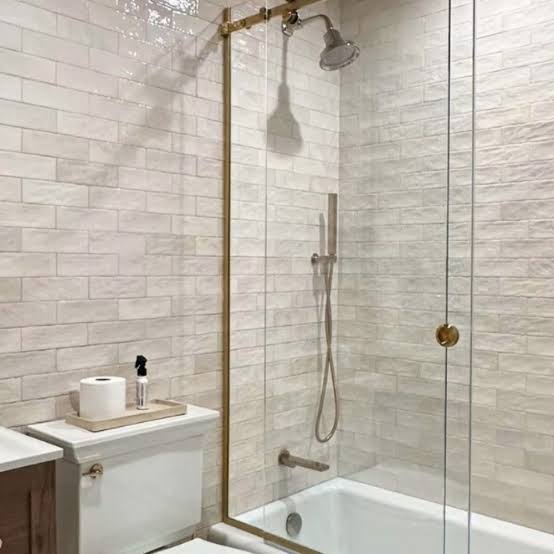
Where a standard white subway tile bathroom can feel flat, this compact modern version uses textured cream subway tile to add depth. The bathtub sits in a corner with a shower over it, a glass screen containing the spray, and a toilet nearby. Ambient light and natural light from a window keep the cream and gold palette airy. The brass accents are the defining material: a warm metal that stops the cream tile from looking cold. What breaks it is chrome or silver hardware, which would create a clash of warm and cool metals in a small space.
Natural Minimalist Outdoor Deck: Wood Soaking Tub
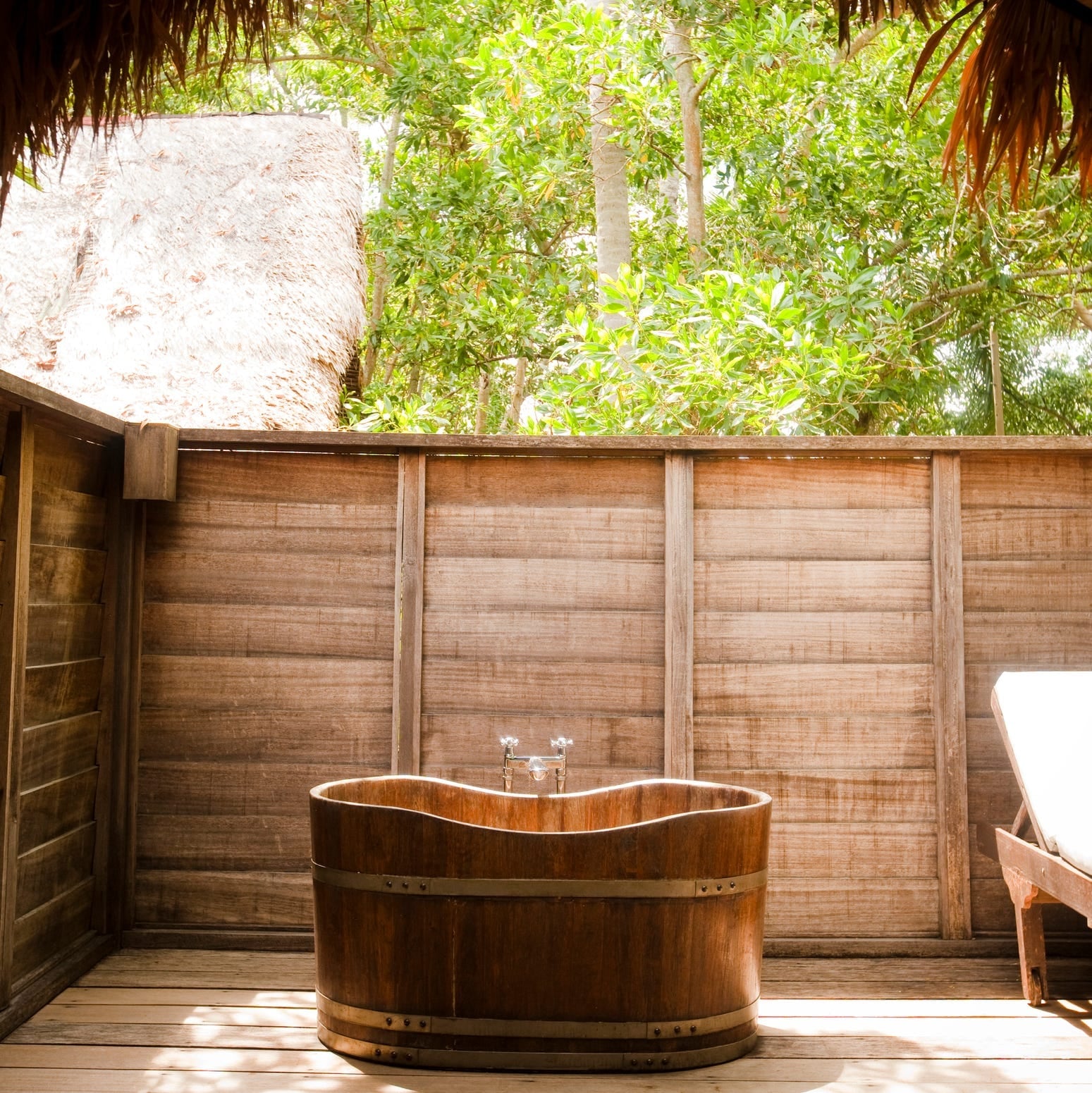
A natural wood soaking tub sits on a wooden deck under bright natural sunlight, with a lounge chair nearby and a thatch element in view. The palette is wood tones, green foliage, and white, keeping the outdoor setting calm. The design is defined by the wood tub itself: its material is the whole point, not the shape or the hardware. What breaks the natural minimalist style is adding plastic or synthetic furniture, which would interrupt the raw, organic feel that makes this outdoor spot work.
Traditional Spacious Bathroom: Jacuzzi Tub and Dark Wood Vanity
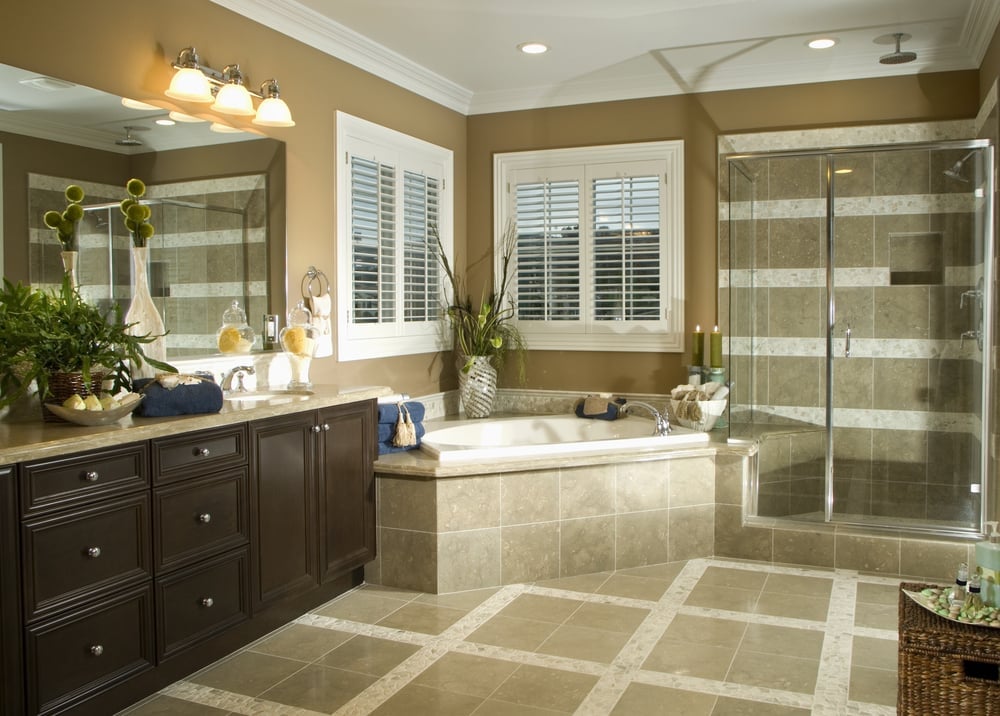
A traditional spacious bathroom relies on a dark wood vanity as its anchor piece. The jacuzzi tub sits in the roomy layout, a tiled shower is nearby, and overhead and vanity lights provide the illumination. The palette stays in the brown, beige, and cream family, with the dark wood providing the contrast. The style is defined by that vanity: its rich wood finish sets the traditional tone, while the beige tile and cream surfaces stay neutral. What breaks it is a light wood or painted vanity, which would shift the look from traditional to farmhouse or cottage.
Final Thoughts
A bathtub is more than a fixture; it is the anchor of your bathroom’s personality. From the warm patina of hammered copper to the clean lines of a modern oval, each choice changes how the room lives. Keep the surrounding palette simple if the tub is the star, or let tile and texture carry the look. Maintenance wise, natural stone and wood need regular sealing, while acrylic and enamel are easier to wipe down. Outdoor tubs depend on your climate, so check your USDA zone before planning. The best idea is the one that fits your space and your daily routine. Let these 35 ideas be your starting point, not your final answer.