
Choosing the right paint color can transform a bedroom from a place you sleep into a place you want to be. But with endless swatches and samples, it’s easy to get stuck. This collection of 35 bedroom paint ideas cuts through the noise, offering real, livable color combinations that work with different styles and layouts.
From soft neutrals to bold jewel tones, you will find a palette that fits your space without the guesswork. Whether you are refreshing a rental or starting from scratch, these ideas focus on the paint itself as the hero of the room. The furniture and accessories stay simple and supportive, letting each color take center stage.
Light Blue Walls with a Natural Wood Accent
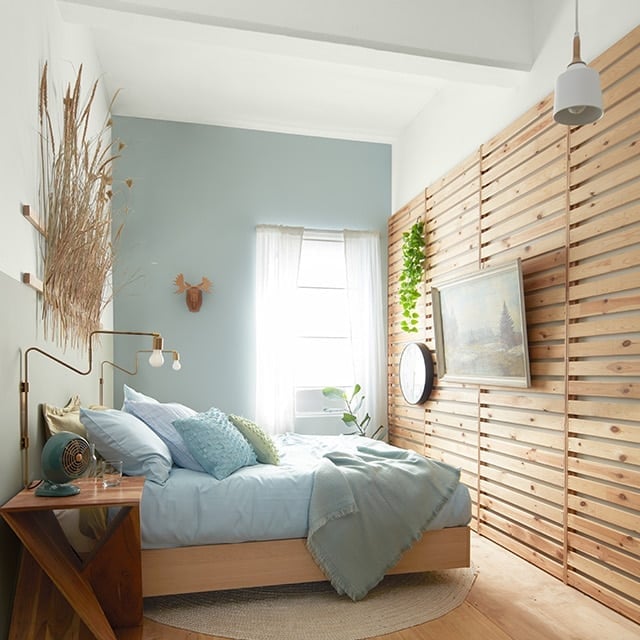
A slatted wood wall behind the bed brings warmth to pale blue paint without making the room feel smaller. The wood tone is light and natural, so it reads as a textured accent rather than a heavy statement. White bedding and a few dried grasses keep the look airy. A pair of wall sconces frees up the bedside tables and draws the eye upward, which helps a compact room breathe. The palette stays in the cool-warm middle, which makes it a flexible choice for layering in more pattern later.
Traditional Bedroom with Red Toile Wallpaper
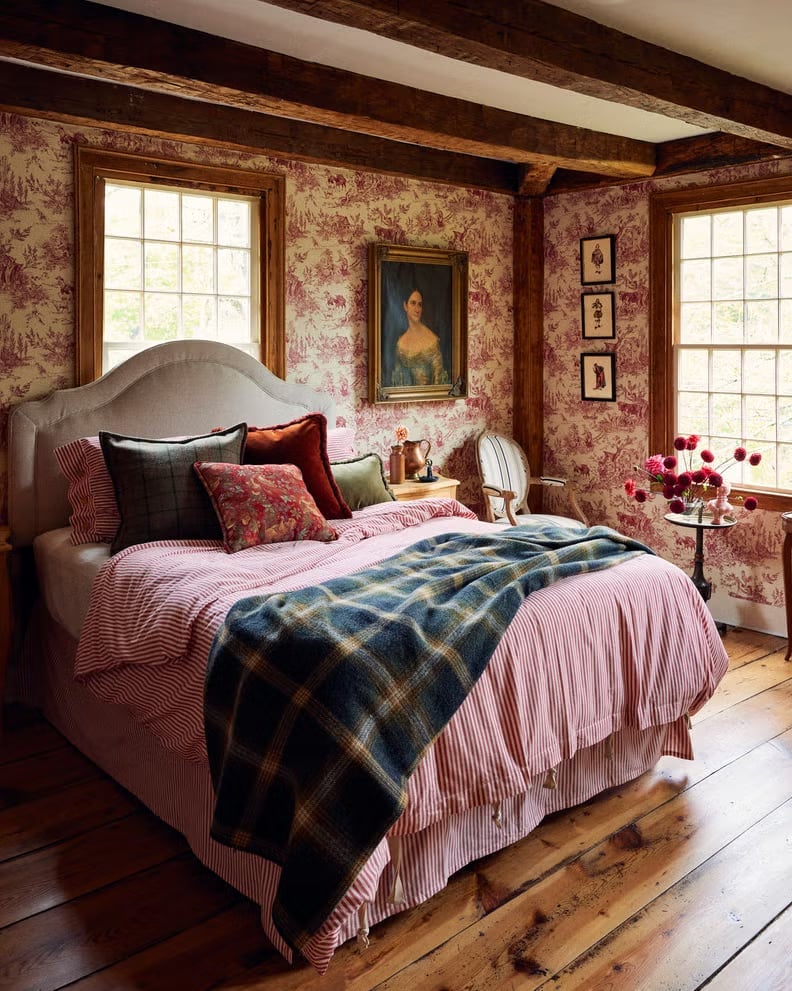
Red toile wallpaper on all walls is a bold commitment, but the cream background keeps it from feeling heavy. The tiny floral and pastoral scenes read as classic rather than fussy when paired with simple wood furniture and a plaid armchair. A landscape painting in a brown frame echoes the wallpaper’s rural mood without competing with it. The natural light from the window keeps the red from going flat, which matters for a pattern this dense. If the room had white walls instead, the same furniture would look sparse.
Deep Blue Accent Wall with Rattan Headboard
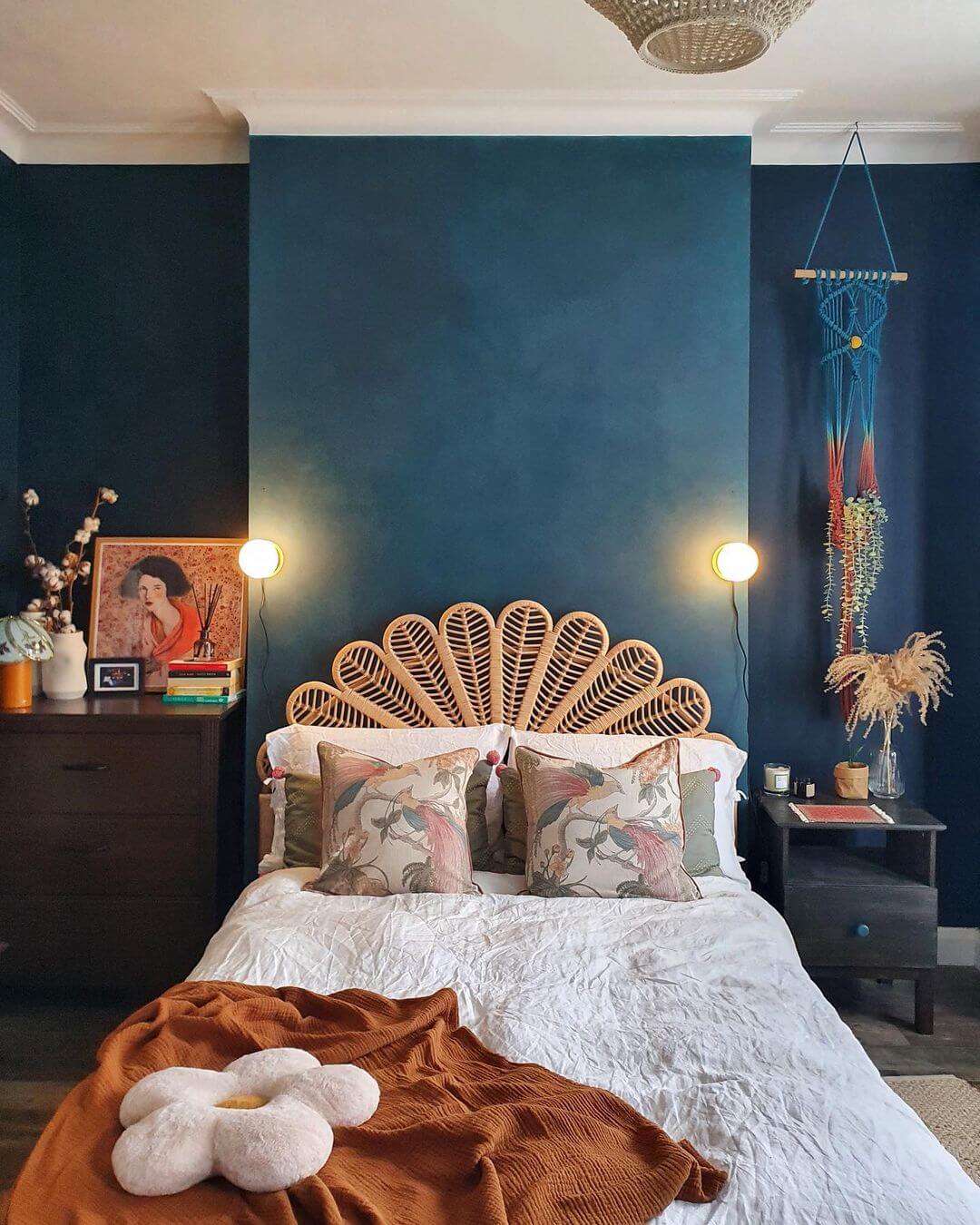
Can a dark wall make a room feel bigger? It can when the rest of the space stays light and the accent wall sits behind the bed. The deep blue wall anchors the rattan headboard, letting the warm wood and woven texture stand out. A macrame hanging adds softness without blocking the color. The dresser on the left side keeps the layout symmetrical enough for the eye to rest. The trick is choosing an accent wall that the bed faces into, not one that competes with a window or doorway. That way the dark paint becomes a backdrop rather than a barrier.
Olive Green Walls in a Cozy Bedroom
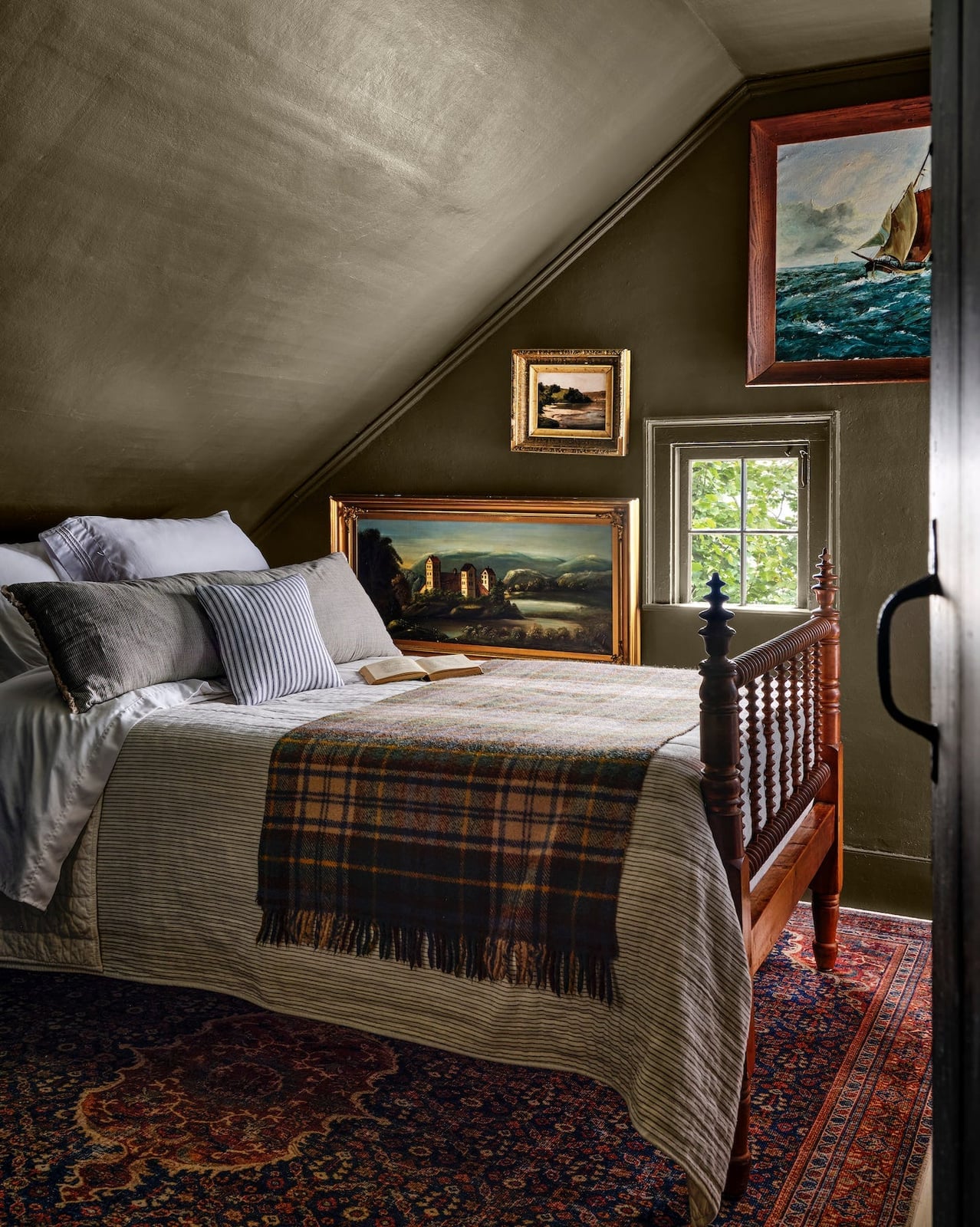
The olive green paint runs onto the ceiling here, which visually lowers the height and makes the room feel more enclosed. A wooden bed frame and a plaid rug in brown tones keep the palette earthy. The window lets in enough natural light to stop the green from turning muddy. In a compact room, taking the color to the ceiling is a deliberate trade-off: you lose some perceived height, but you gain a cocooned feel that works well for sleeping.
Dark Green Textured Walls for Modern Sophistication
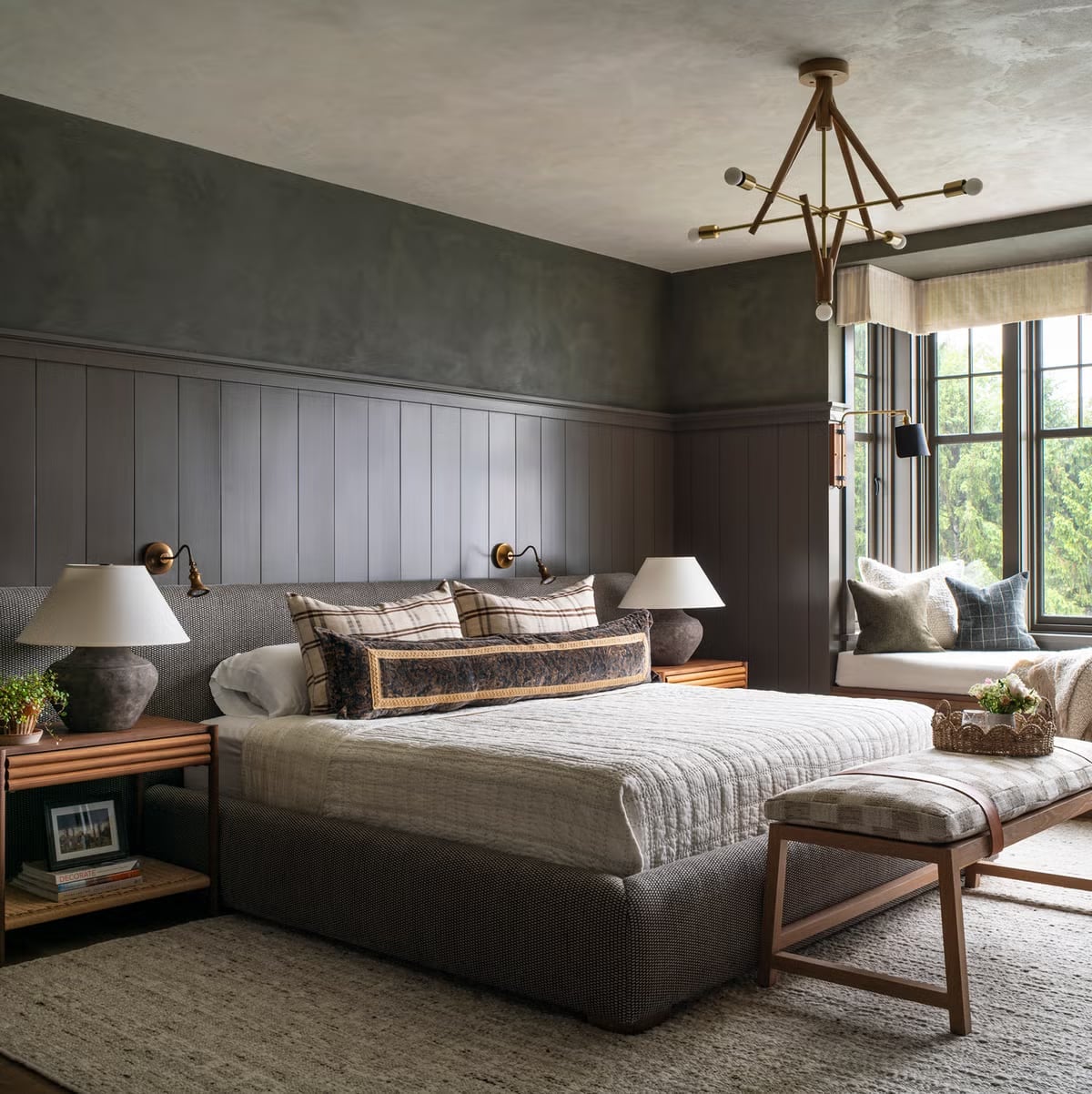
Dark walls need texture to avoid reading as a flat void. Here the dark green finish has visible plaster or paneling texture that catches side light from the window and the modern chandelier. A four-poster bed with an upholstered headboard in a lighter gray fabric stops the room from going too dark. The window seat by the window adds a place for natural light to land. Linen bedding in a soft neutral keeps the palette grounded. The texture does the work that a pattern would normally do.
Deep Blue Walls with Skylight Accents
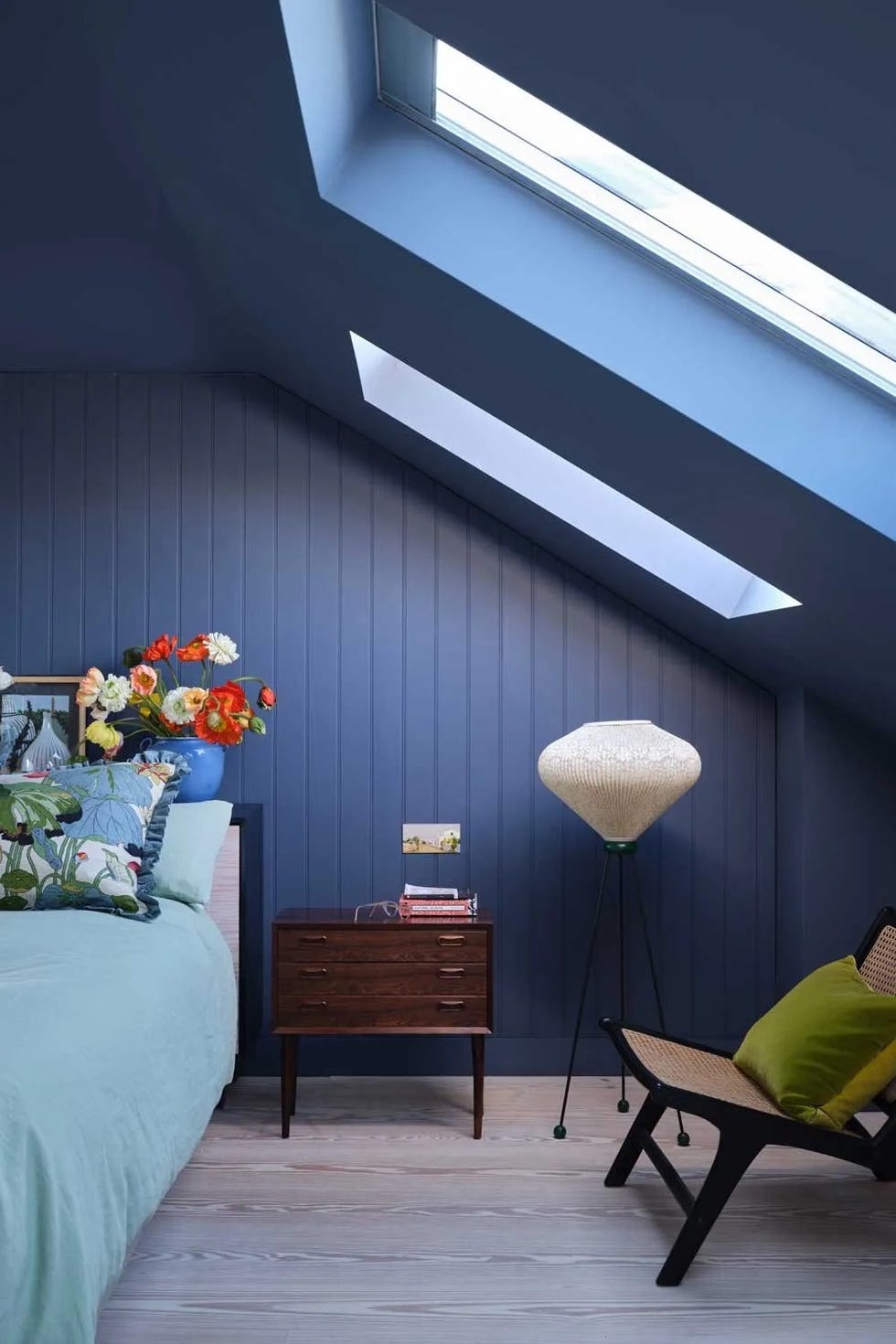
Deep blue walls and ceiling might feel like a gamble in a compact bedroom, but a skylight changes the math entirely. The natural light from above keeps the room from reading as a cave, while the blue adds a cocooning effect that lighter colors can’t match. The eclectic mix comes from the materials: a wooden bed frame, a rattan chair, and a fabric floor lamp. The layout keeps it simple with the bed against one wall and a nightstand beside it. For a similar effect in a room without a skylight, try a floor lamp with a bright bulb and a white shade placed near the darkest corner. It won’t mimic direct overhead light, but it will keep the deep blue from swallowing the space.
Pale Pink Walls for a Soft, Inviting Bedroom
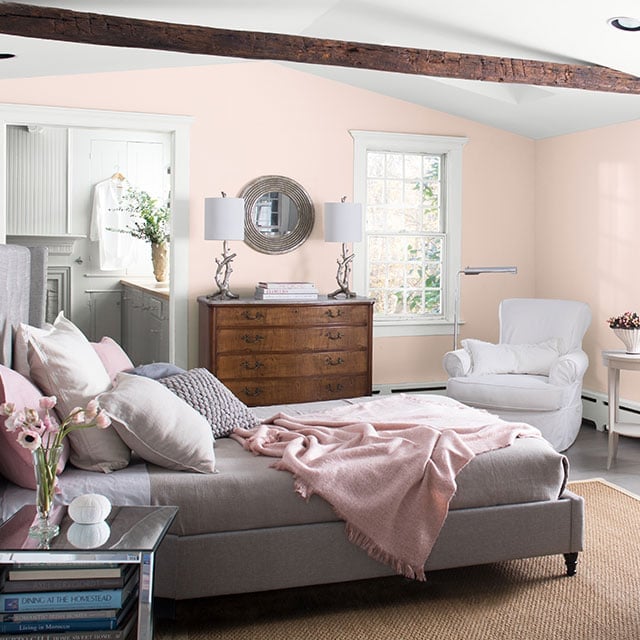
What makes pale pink work here is that it acts as a neutral backdrop. The walls recede, allowing the dresser’s wood tones and the armchair’s gray upholstery to stand out. The palette stays in the blush to gray range, with white trim keeping the edges crisp. This traditional bedroom uses the pale pink as a backdrop for the centered bed and the small seating area by the window. The trick is keeping the other colors quiet. Once the pink has to compete with bright yellows or bold greens, it loses that soft, inviting quality.
Green Walls Featuring a Stone Fireplace
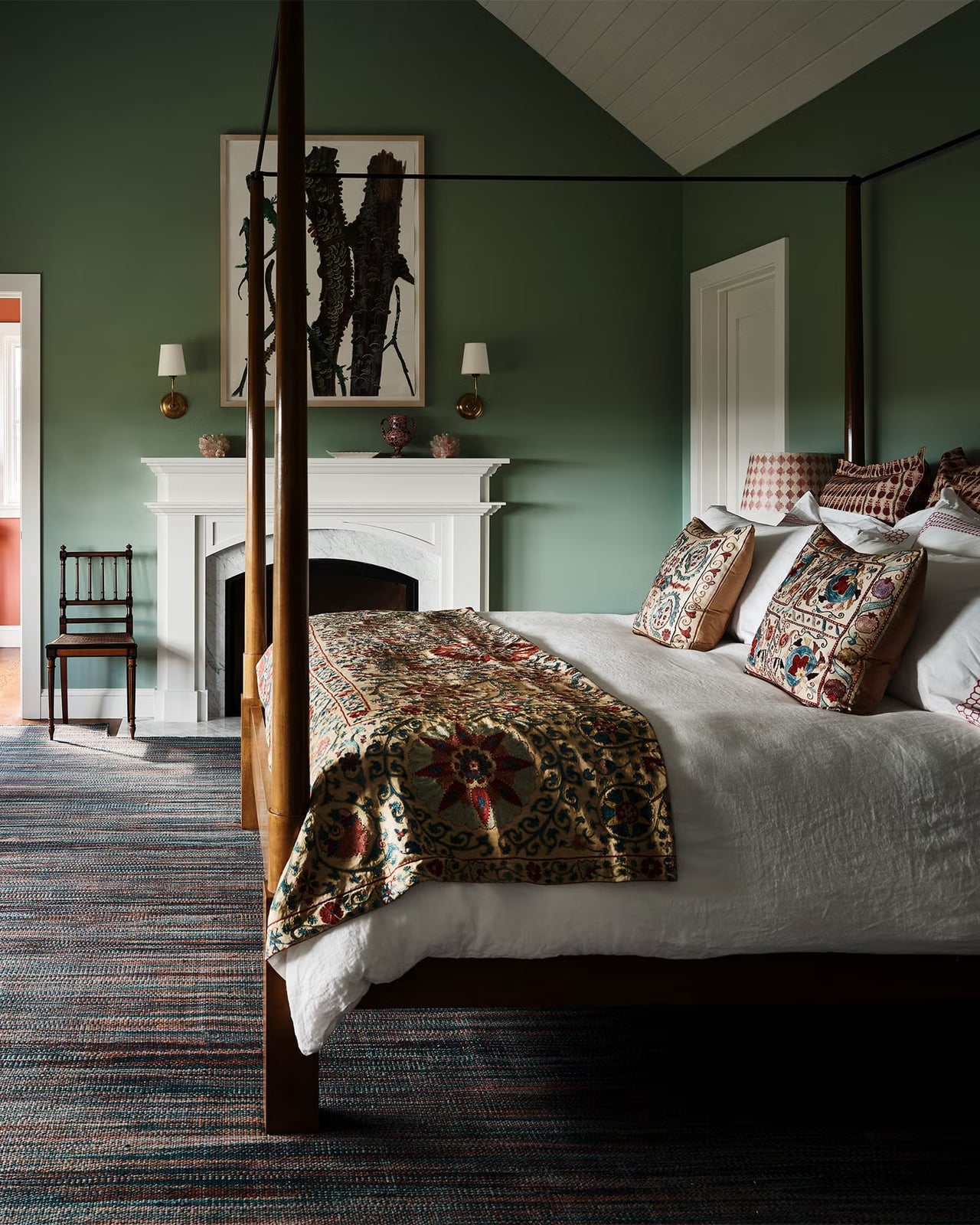
Green walls paired with a stone fireplace create a natural anchor for this traditional bedroom. The green acts as a backdrop that makes the multi-color tones in the ornate rug and the cream in the stonework stand out. The four-poster bed faces the fireplace, which is a layout choice that gives the room a clear focal point. Wall sconces provide soft light on either side of the fireplace, while natural light from windows fills the rest of the space. The stone adds a texture that painted drywall can’t match, and the green bridges the cool stone and warm wood in the room. Keep the artwork and fabric patterns within the same warm-cream family to let the green and stone lead.
Off-White Walls in a Serene Minimalist Bedroom
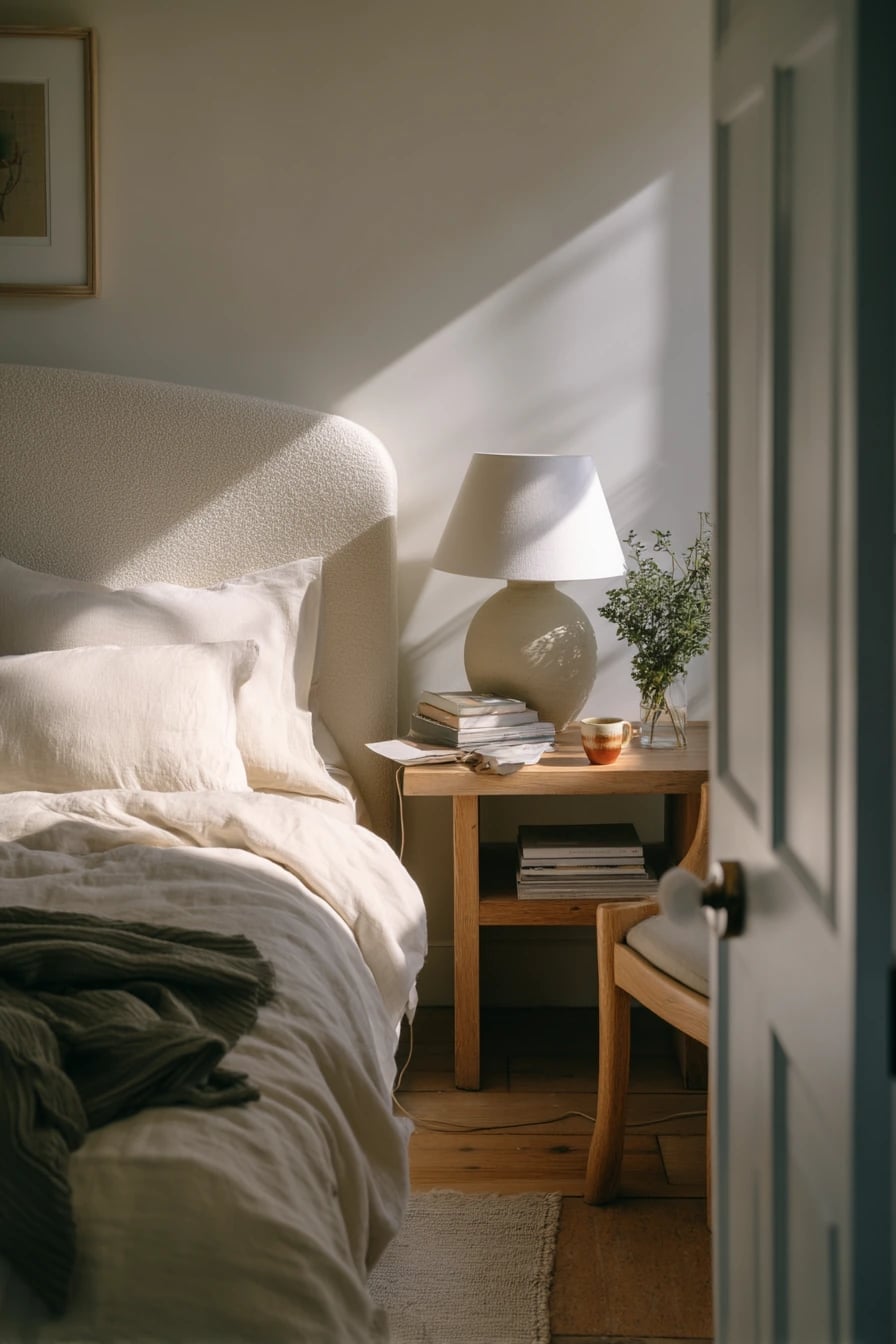
Can off-white walls really hold their own in a minimalist room, or do they just look unfinished? The answer is in the texture. A boucle headboard, a linen chair, and a wooden nightstand each bring their own surface quality, so the pale walls don’t have to carry the visual weight alone. The palette stays in the off-white-to-beige range, with a single green plant adding the only contrast. The layout is straightforward: the bed against one wall, a nightstand beside it, and a chair in the corner. Natural light and a table lamp keep the room from feeling flat. That boucle headboard is the piece that keeps the room from reading as sterile.
Vibrant Orange Walls with a White Fireplace
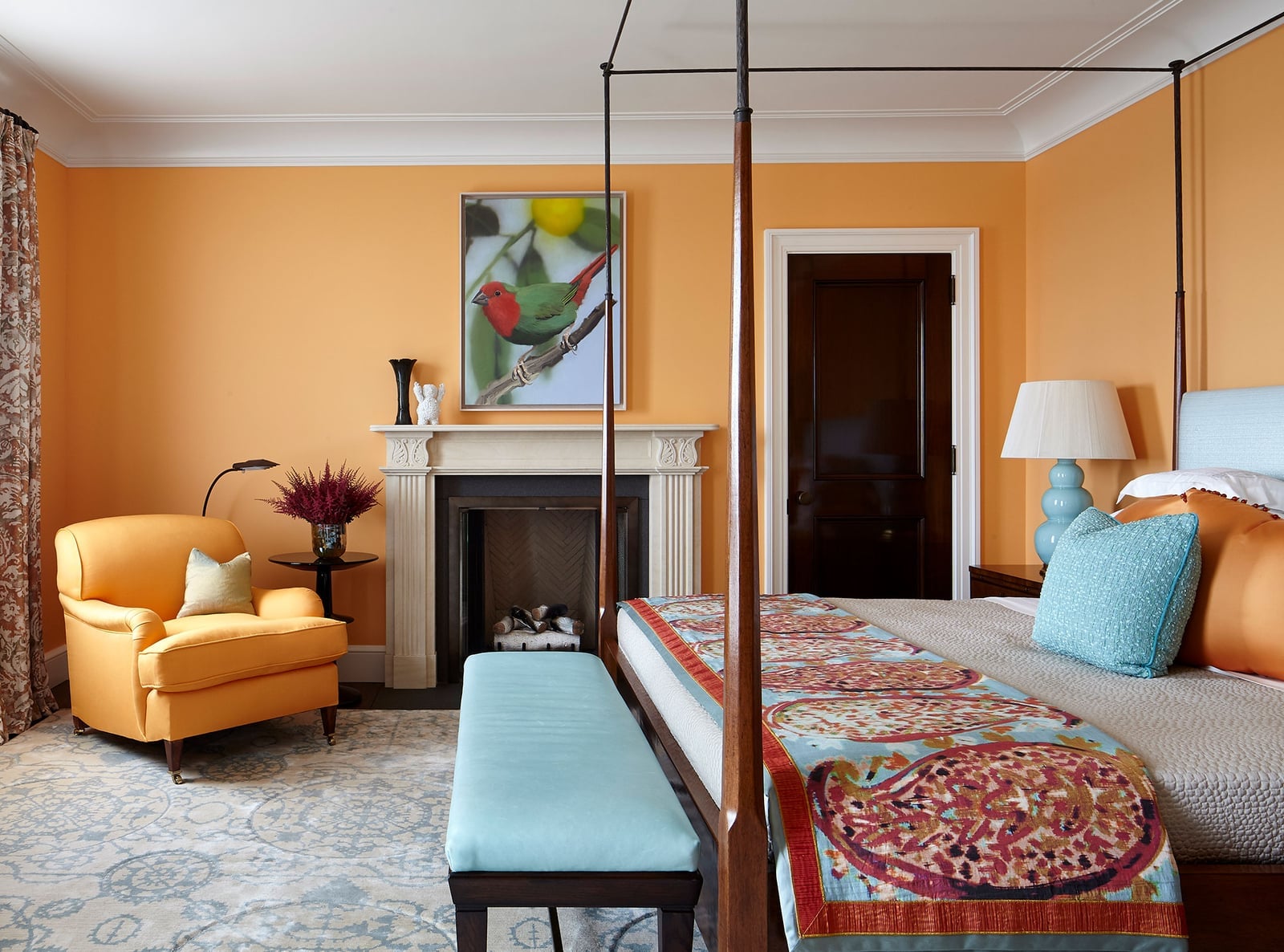
Vibrant orange walls cover three of the four walls in this traditional bedroom, with the fourth wall featuring a white fireplace. The orange is a bold choice, but the white fireplace and the cream in the bedding and armchair keep it from overwhelming the room. A blue fabric on the bench and a cream rug add balance without competing. The four-poster bed sits centered, with the fireplace to the left, creating a layout that makes the room feel deliberate rather than chaotic. The orange-to-cream ratio is about three to one, which is a solid rule for any high-saturation color: let it dominate, but give the eye a place to rest.
Soft Coral Walls for a Warm Modern Bedroom
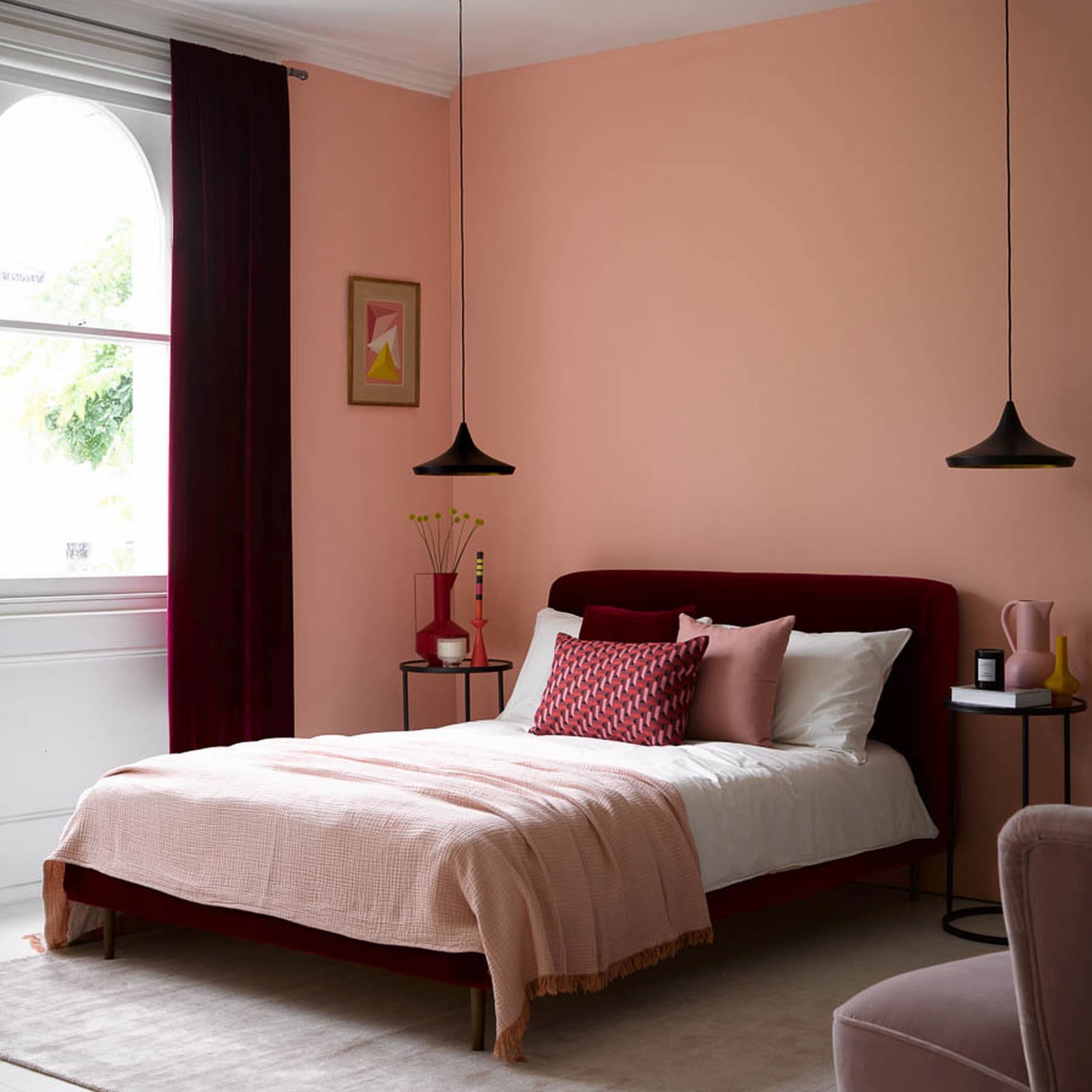
A warm paint color works best with a simple room. Soft coral walls set the tone here, and the palette stays in the pink and burgundy family. Velvet fabric on the bed and metal pendant lights add texture without stealing attention. The pendant lights hang above the bed, which keeps the layout symmetrical and the focus on the wall color. A roomy bedroom like this one can handle a bold wall without feeling closed in.
Muted Green Walls with a Bold Patterned Headboard
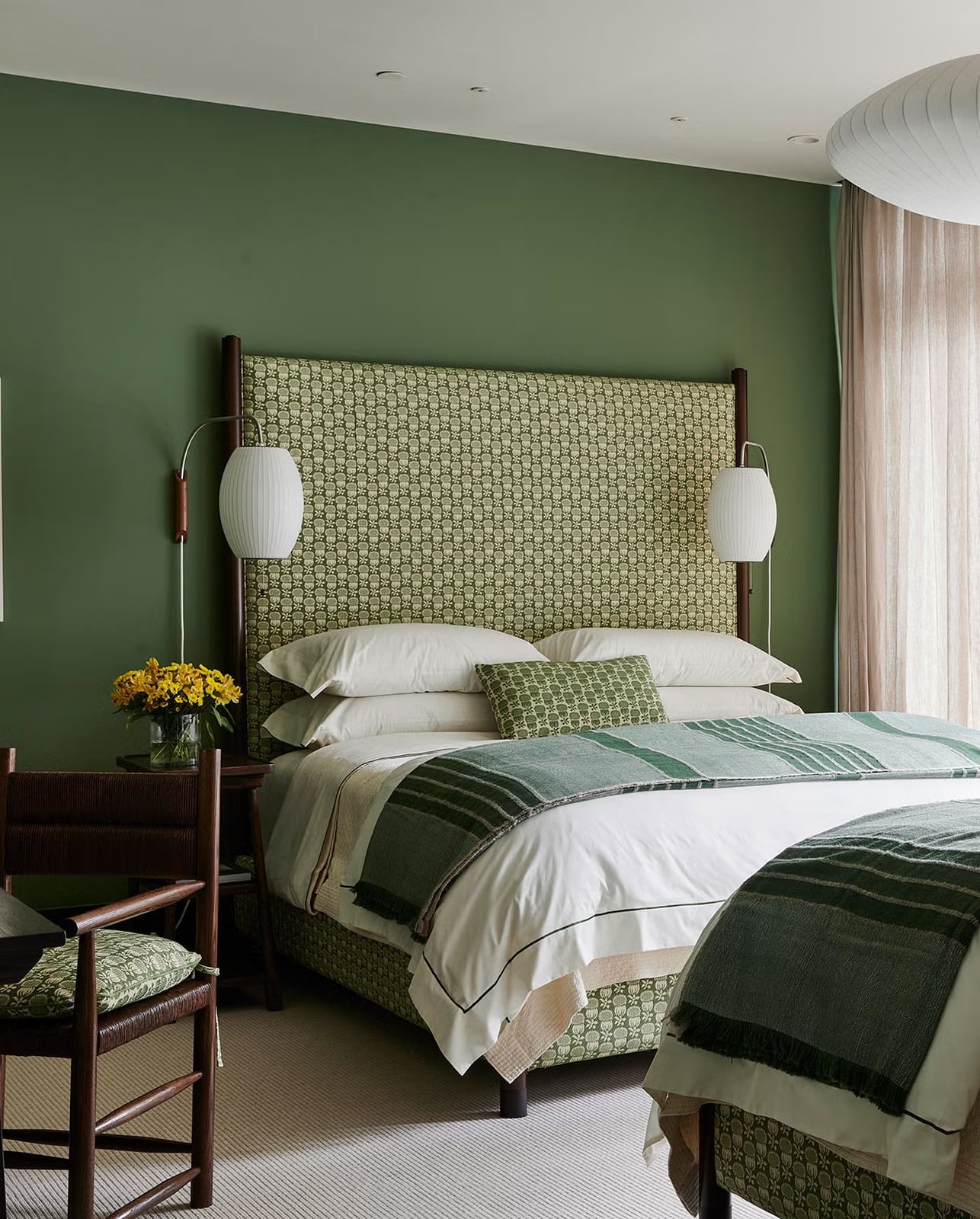
A large patterned headboard can easily overwhelm a room, but muted green walls keep the look grounded. The green acts as a neutral backdrop for the bold pattern, letting the headboard stand out without competing. Wood tones in the chair and linen on the beds add natural texture that softens the modern feel.
Wall sconces on each side of the beds provide focused light, which helps the pattern read clearly at night. The palette stays in green, white, and wood tones, so nothing feels busy. Two beds side by side in a roomy layout need a unifying element, and the green walls provide that anchor.
Pale Peach Walls with a Large Abstract Artwork
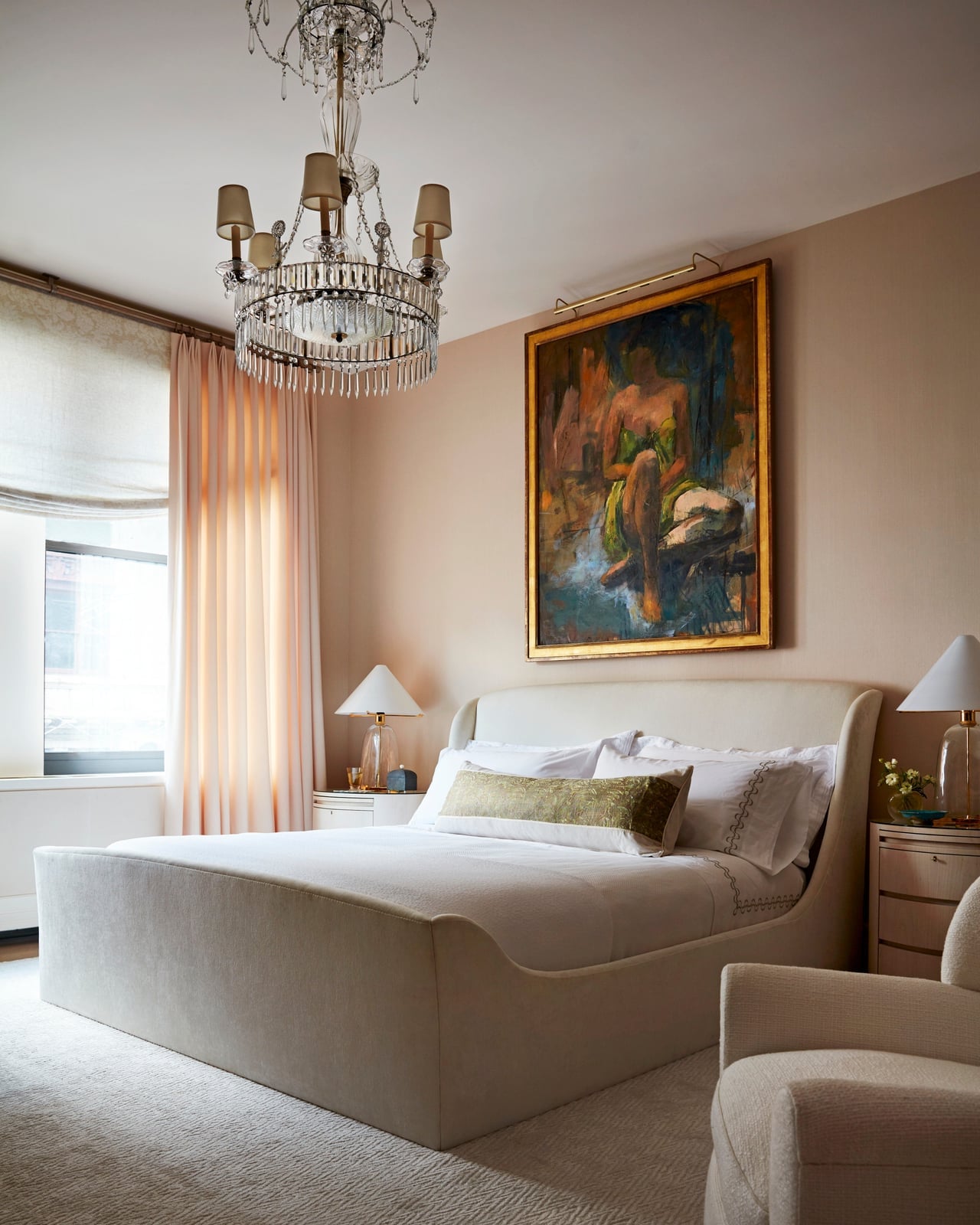
A large abstract artwork pulls the eye immediately, but pale peach walls let the art hold the attention without shouting. The palette stays in pale peach, cream, and gold, which keeps the room warm without going sweet. A chandelier and table lamps add soft light that plays well with the natural light. The bed sits centered between nightstands, a classic layout that gives the room a traditional feel.
Peach Painted Walls with a Scalloped Rattan Headboard
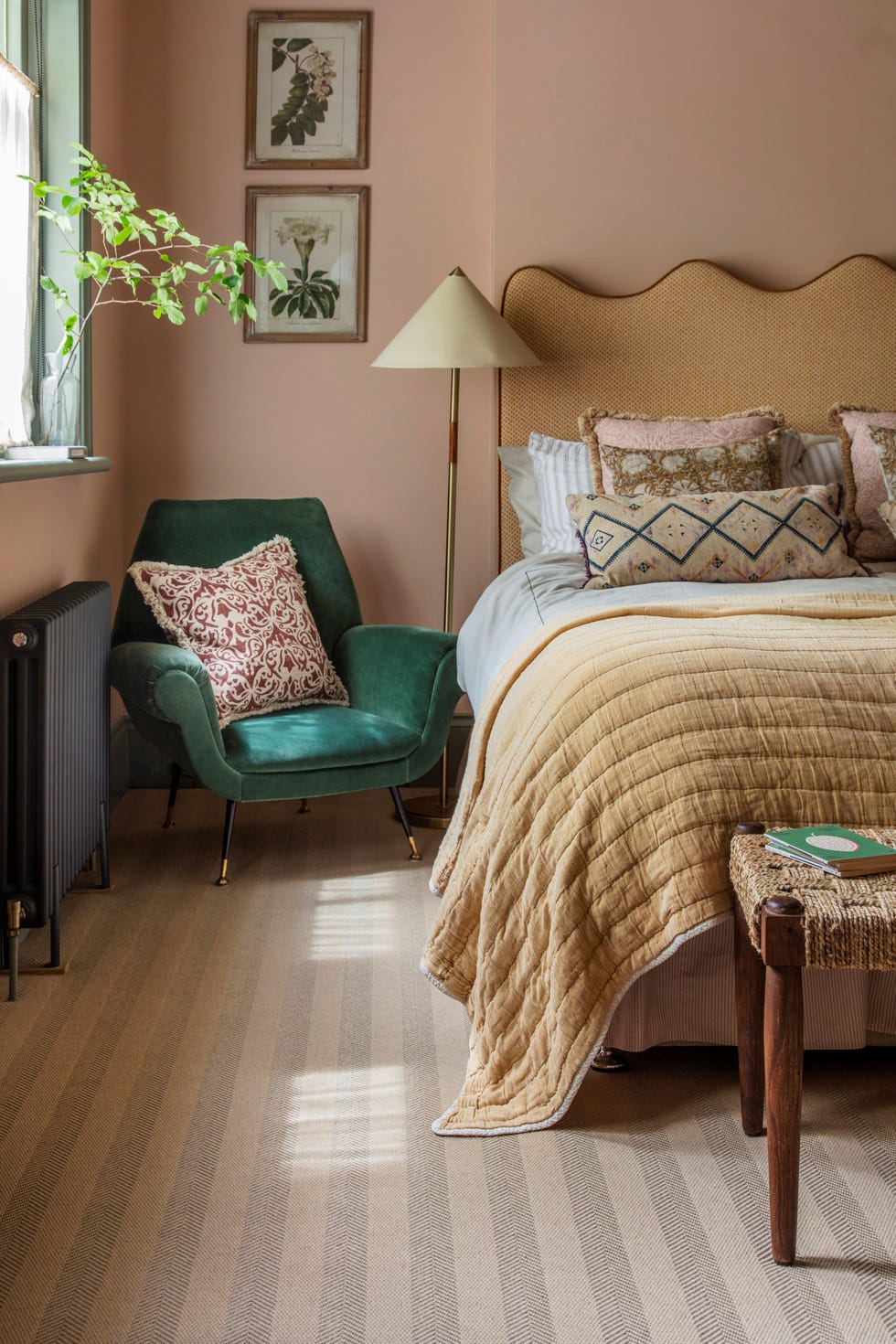
Peach walls and a scalloped rattan headboard work because they share a relaxed boho mood. The peach color warms the room without being loud, and the rattan adds natural texture that keeps the look from feeling too polished. Velvet fabric on the bed and a floor lamp by the armchair add contrast without breaking the casual feel. Natural light from a window helps the peach read as soft rather than bright. A roomy layout with the bed centered and an armchair to the side gives the space a comfortable, lived-in quality.
Vibrant Coral Wall as a Bedroom Vignette
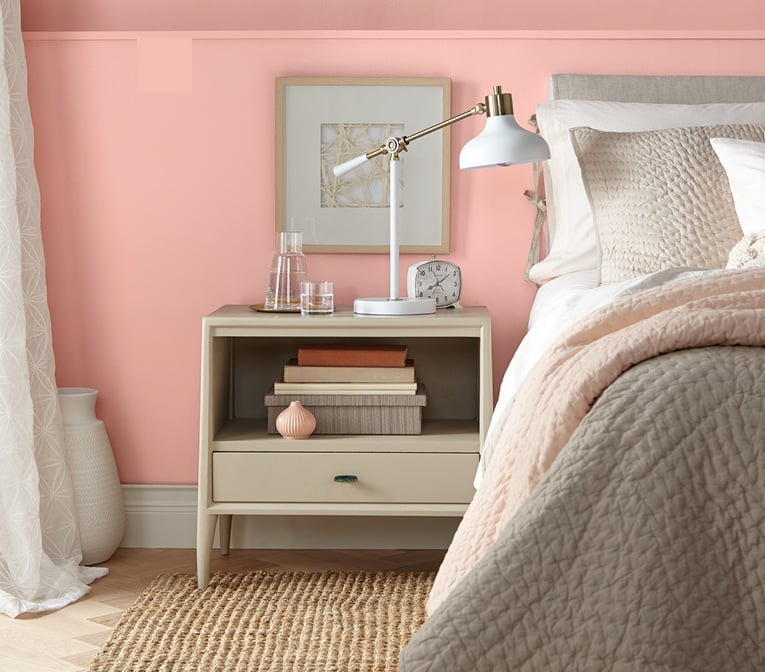
Keep surrounding furniture neutral when using a bold wall color. The vibrant coral wall here pairs with beige, gray, and white pieces, so the color looks planned. A simple wood nightstand and a metal desk lamp provide contrast without competing.
The framed art on the wall picks up the coral tone, which ties the vignette together. This approach works well for a smaller bedroom or a corner where you want a punch of color without painting the whole room. The coral wall becomes the focal point, and the neutral furniture lets it stay that way.
Cream Walls with White Beadboard Wainscoting
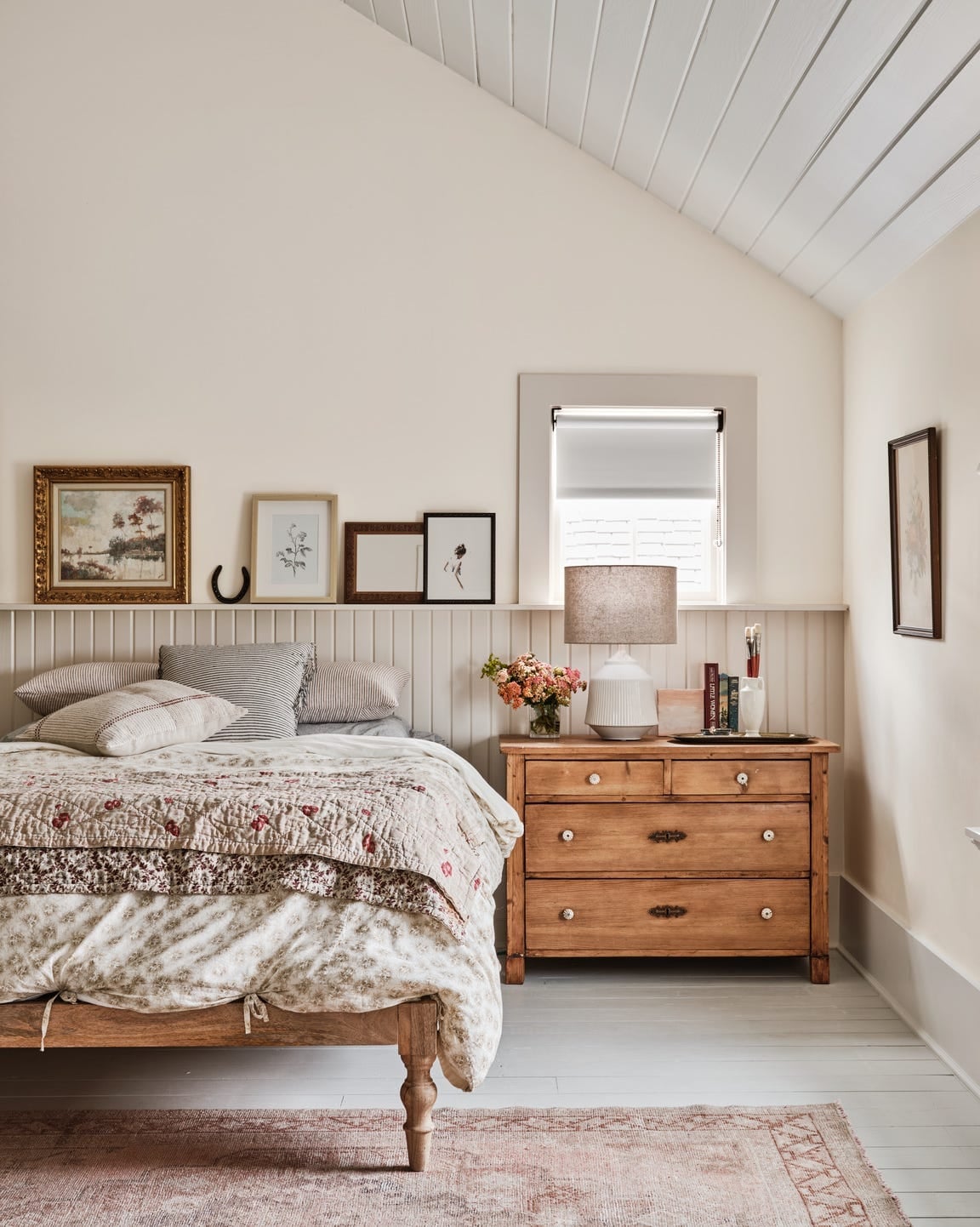
Cream walls paired with white beadboard wainscoting create a clean backdrop that lets the wood tones in the room do the talking. The wainscoting adds texture at eye level, which can make a roomy bedroom feel more grounded without closing it in. A wooden dresser and patterned bedding bring warmth, while natural light keeps the cream from reading too yellow. To recreate it, look for beadboard panels that install over existing drywall for a farmhouse look without full renovation.
Soft Pink Walls with a Brass Bed Frame
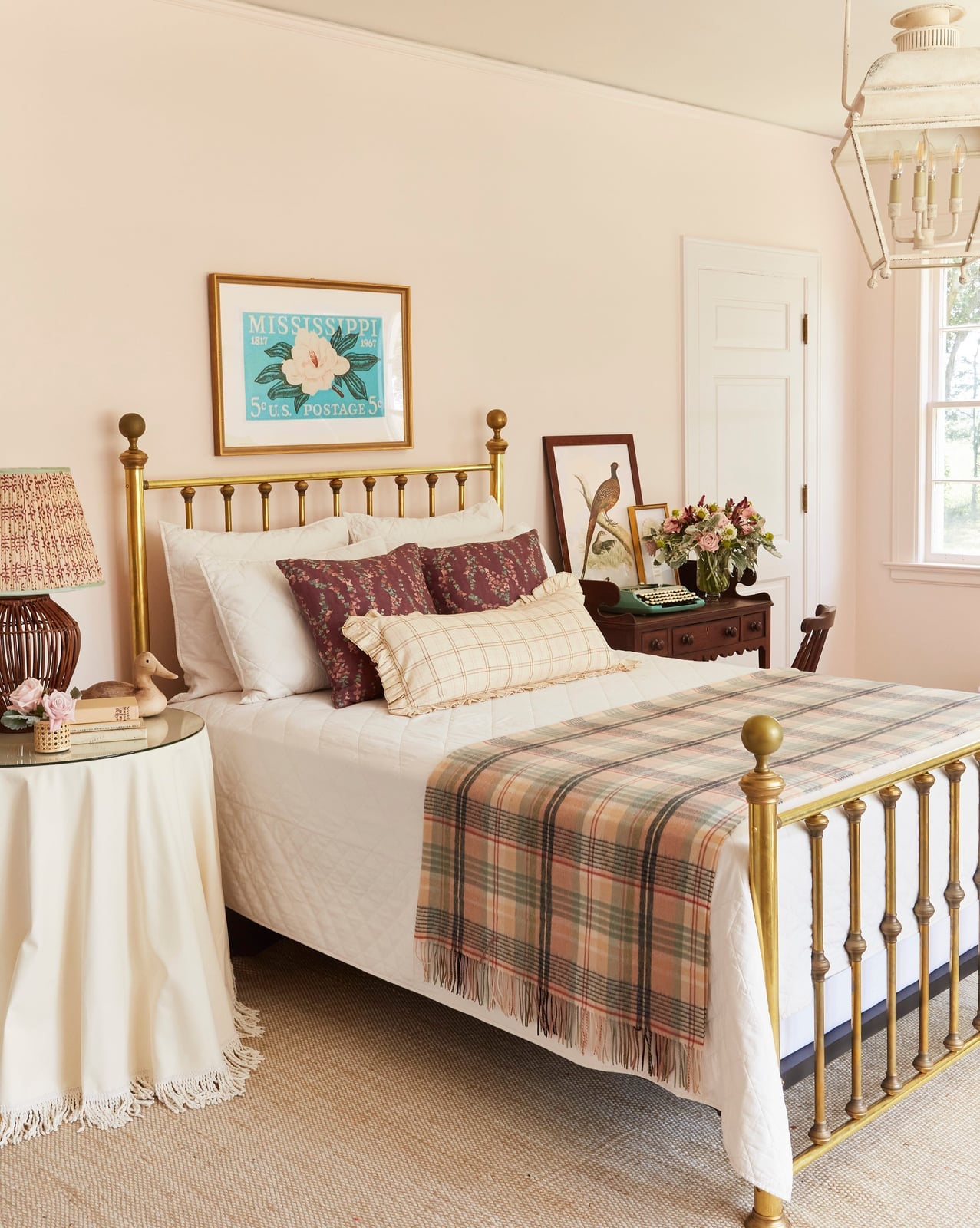
Soft pink on plaster walls becomes a neutral backdrop when paired with a brass bed frame. The warm metal adds a traditional weight that balances the delicate color. A white lamp and light wood nightstand balance the palette against the pink. For a renter safe version, use a peel and stick wallpaper in a similar blush tone on the wall behind the bed instead of painting the whole room.
Dark Green Walls with Decorative Paneling
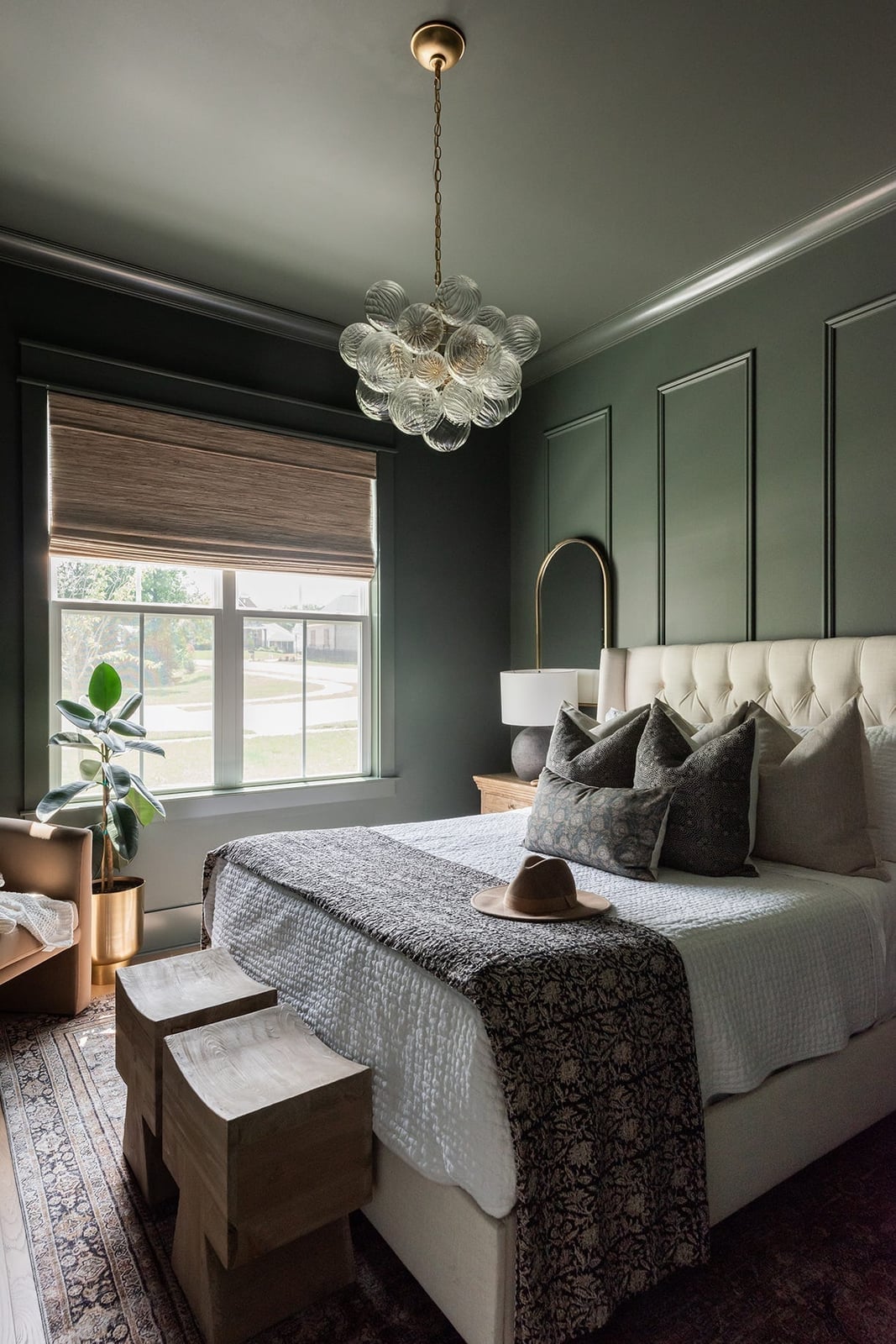
Dark green walls with decorative paneling can feel formal, but this room proves that a pendant light and a rattan armchair soften the look. The deep green absorbs light, so the cream bedding and gray upholstered chair become the visual relief. Paneling adds structure to the green, breaking up what could otherwise be a heavy color on four walls.
The transitional style here works because the materials balance each other. Wood, metal, and rattan prevent the paneling from reading as strictly traditional. A plant near the window adds a natural element that echoes the green without matching it. If dark green feels too bold for a full room, try paneling on one wall and keep the others a light cream.
Pink Walls and Upholstered Headboard for a Modern Look
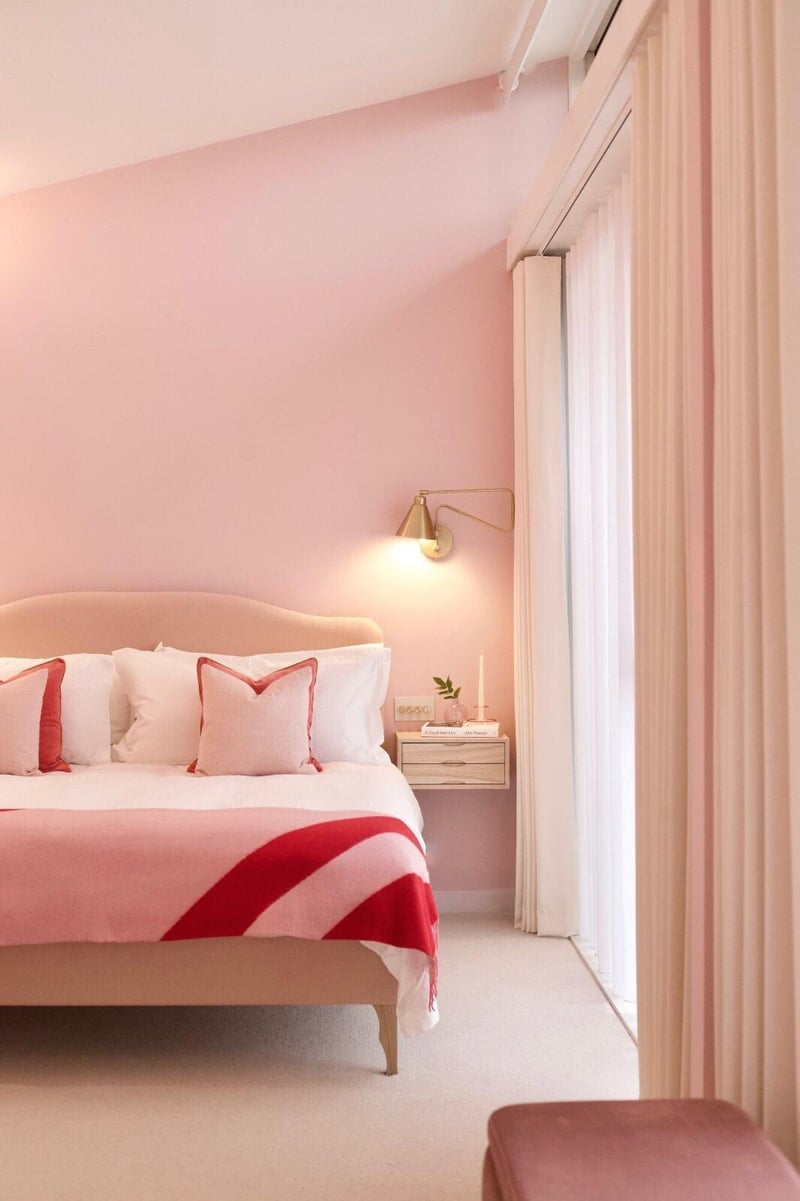
Pink walls and red-toned bedding create a palette that feels intentional rather than accidental. The modern look comes from the contrast between the soft pink and the deeper red in the duvet and throw pillow. A wall sconce above the bed provides focused light without taking up nightstand space. The upholstered headboard in a neutral fabric keeps the pink from dominating the room. The palette ratio leans heavily on pink, with white and red as supporting notes.
Peach Walls with a Red Metal Four-Poster Bed
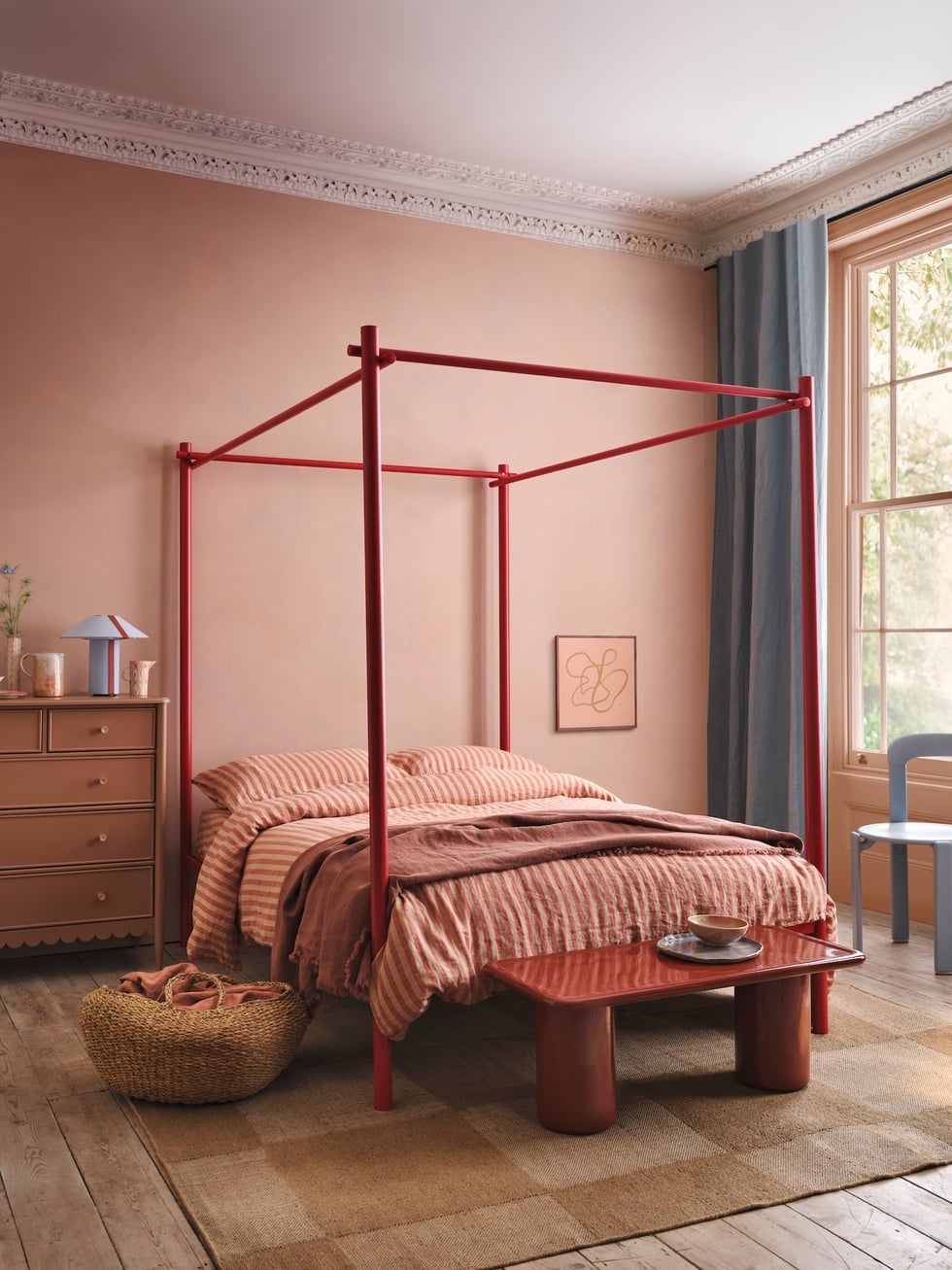
This peach bedroom with a red metal four-poster bed is a clear case of contrast driving the design. Peach walls in a warm terracotta range sit opposite a bright red bed frame, and the two colors stay in balance because of the neutral elements around them. A woven basket and a blue-toned dresser add texture without pulling the palette off course. The four-poster bed takes up visual space, so the peach walls act as a soft envelope rather than a competing feature. The scale of the bed against the wall color works because neither tries to be the only focal point.
Cream Walls with a Textured Headboard
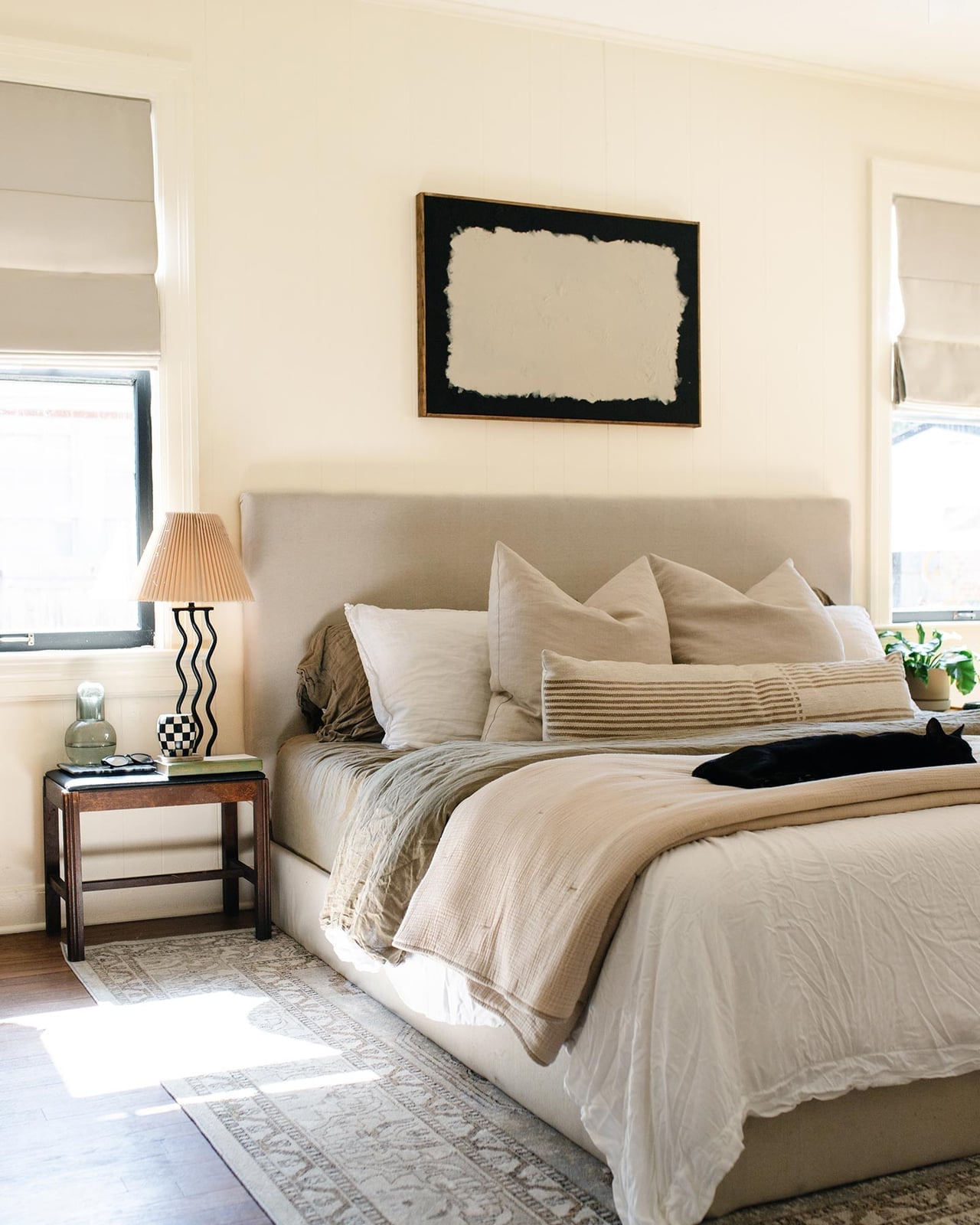
A textured headboard is one of the simplest ways to add depth to a neutral room. Cream walls paired with a linen-upholstered headboard create a soft contrast that keeps the palette from falling flat. The beige and taupe tones in the bedding and nightstand tie back to the walls without matching them exactly. A glass table lamp on the nightstand brings a bit of shine into the mix. The bed sits centered on the wall, which lets the headboard do the work. For a cream bedroom with a textured headboard in a modern neutral scheme, the trick is to vary the materials rather than the colors. Wood, linen, and glass each catch the light differently, so the room stays layered even when the palette is restrained.
Soft Lavender Walls with a Grand Four-Poster Bed
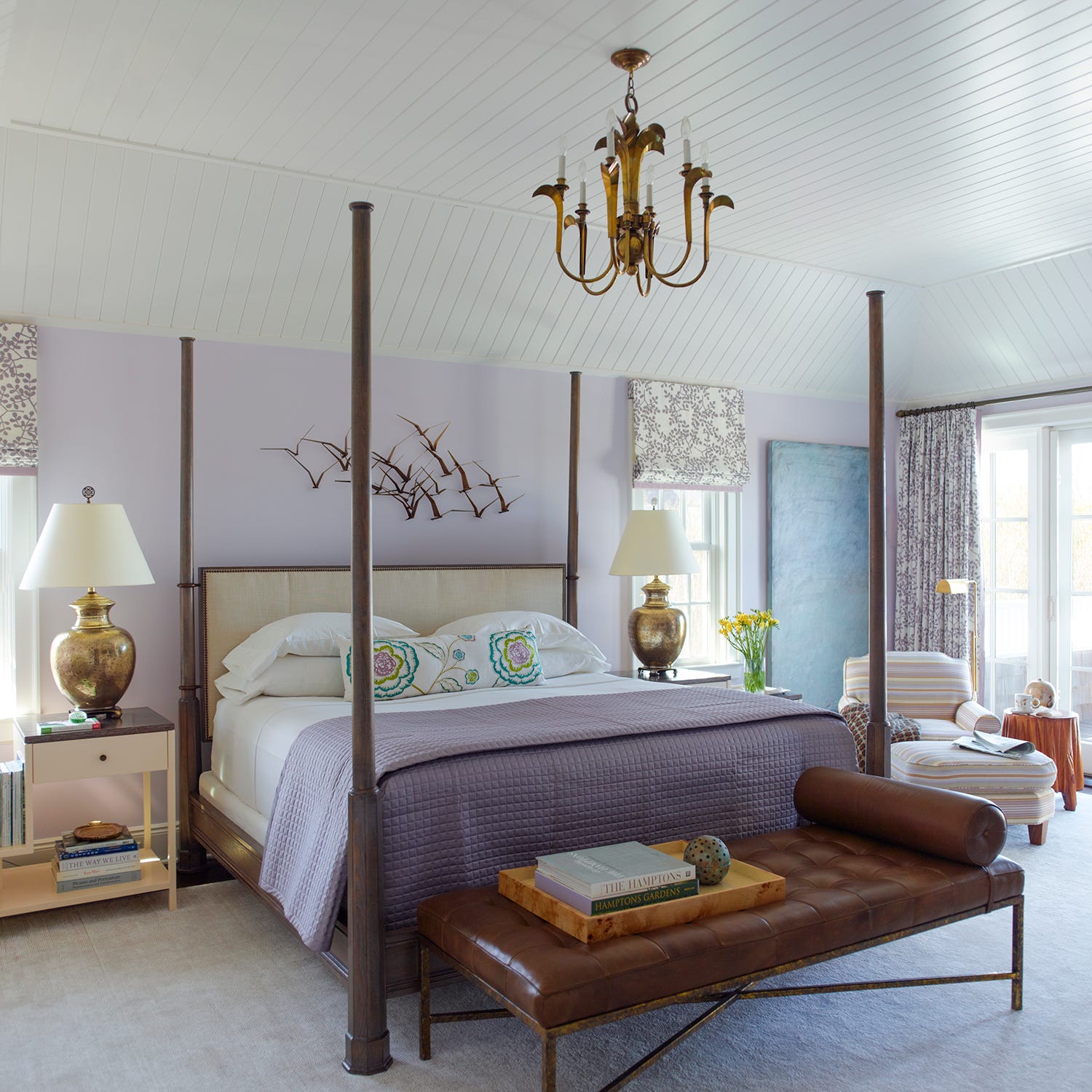
Soft lavender walls make a spacious room feel inviting without shrinking it. The four-poster bed stands centered between matching nightstands, with a bench at the foot for symmetry. White and gray tones in the bedding and curtains keep the lavender from reading as too sweet, while the wood tones in the furniture add warmth. A chandelier overhead and table lamps on both sides provide layered light. The palette works because the lavender is the only cool color; everything else pulls from neutrals or warm wood. For a lavender bedroom with a four-poster bed in a transitional style, the balance between the soft wall color and the substantial bed frame is what makes the room feel complete.
Pink Walls and Ceiling in a Maximalist Bedroom
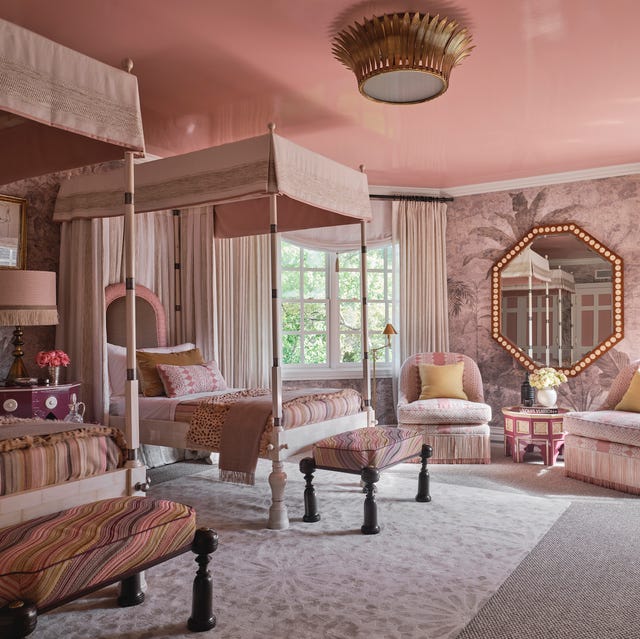
A practical rule for maximalist color is to commit fully to one shade before adding patterns. Pink walls and a pink ceiling create a continuous envelope that makes the room feel wrapped in color. Two four-poster beds with pink canopies sit symmetrically, with armchairs and an ottoman forming a seating area nearby. Gold accents in the mirror and hardware break up the pink, while striped patterns in the wallpaper and fabrics add visual rhythm. An overhead fixture and wall lamps provide even light across the room. The style works because the pink is the anchor; the patterns and metallics are the variations on it. For a pink maximalist bedroom with a pink ceiling, the trick is to let the color lead and the patterns follow.
Pale Blue Walls for a Minimalist Sanctuary
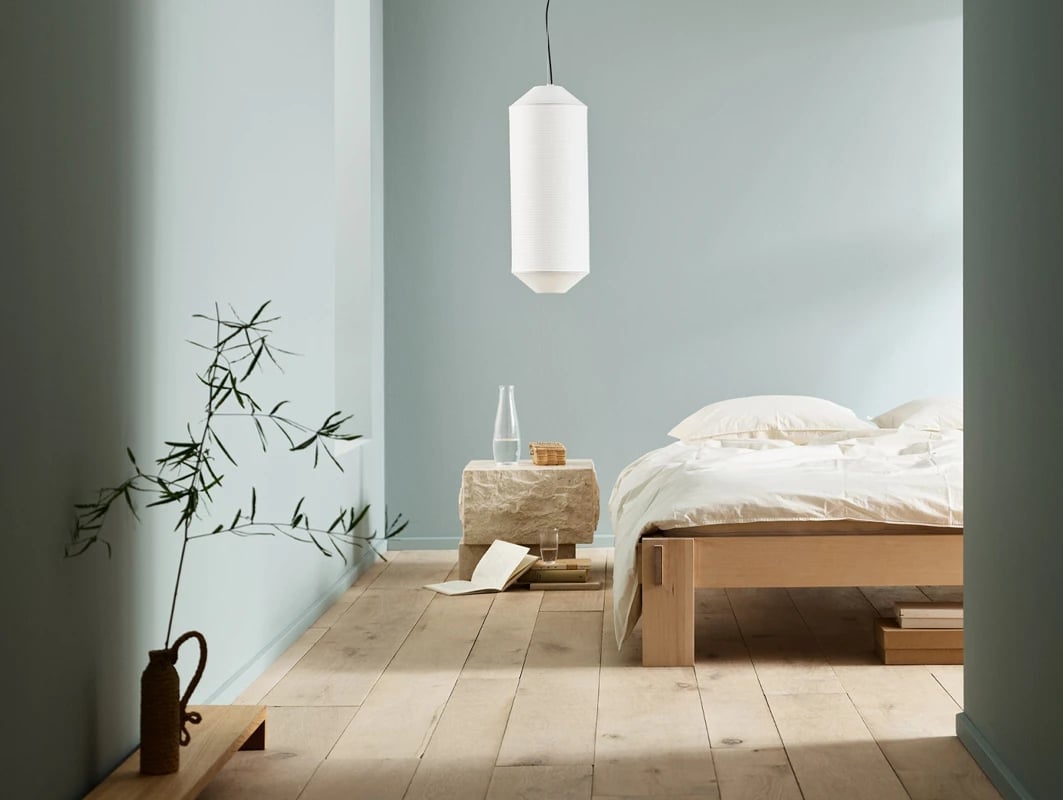
Pale blue is often compared to white for a minimalist room, but it does something white cannot: it adds a cool, airy quality without feeling stark. The walls here are a soft pale blue that reads almost like a tinted white in bright daylight. A simple bed sits centered on the wall, with a single bedside table and a pendant light overhead. The palette stays minimal with white bedding and natural wood tones in the furniture. Plaster walls and a glass pendant add texture without clutter. The room feels roomy because the pale blue recedes visually, making the space seem larger than it is. For a pale blue minimalist bedroom that feels serene, the key is to keep the furniture sparse and let the wall color set the mood.
Deep Blue Walls in an Eclectic Bedroom
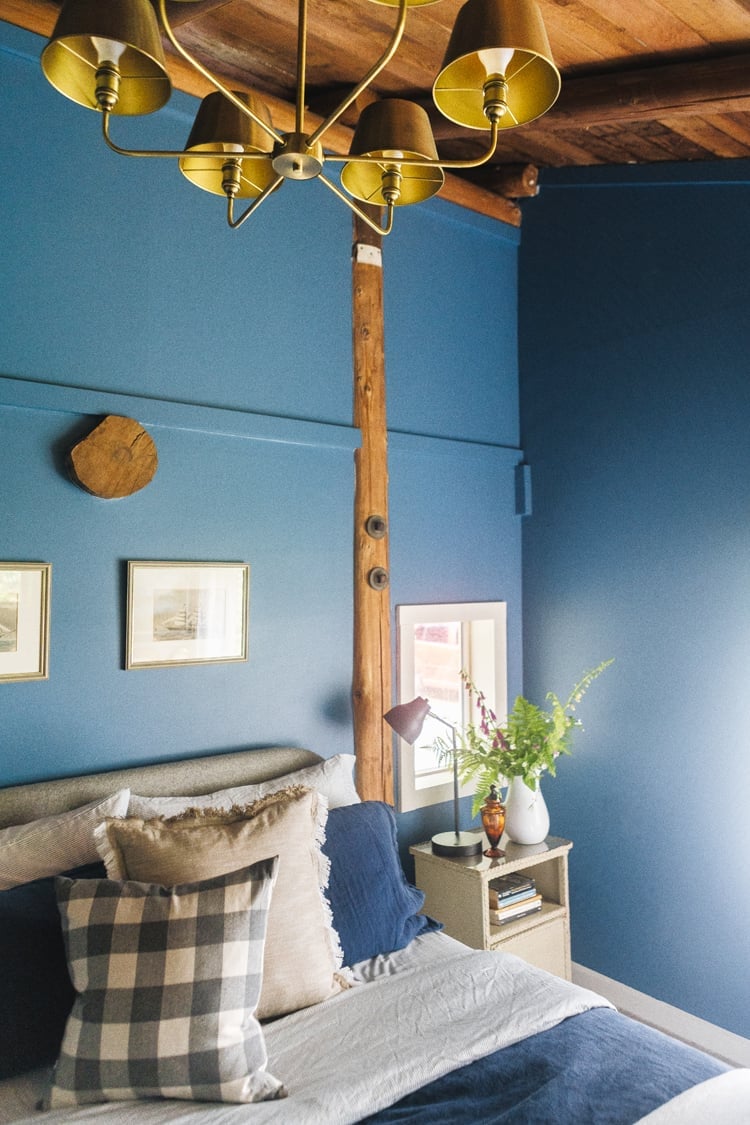
Deep blue walls anchor an eclectic room and pull the varied pieces together. The bed is layered with pillows in gray, white, and patterned fabrics, while a wood nightstand and a metal desk lamp add different textures. A framed artwork above the bed introduces another color note. The deep blue acts as a backdrop that keeps the mismatched pillows and lamp feeling cohesive. For a deep blue eclectic bedroom that feels cozy, the palette stays grounded by the wall color, so the varied elements come together naturally.
Teal and Peach Wall Design with a Semi-Circle Accent
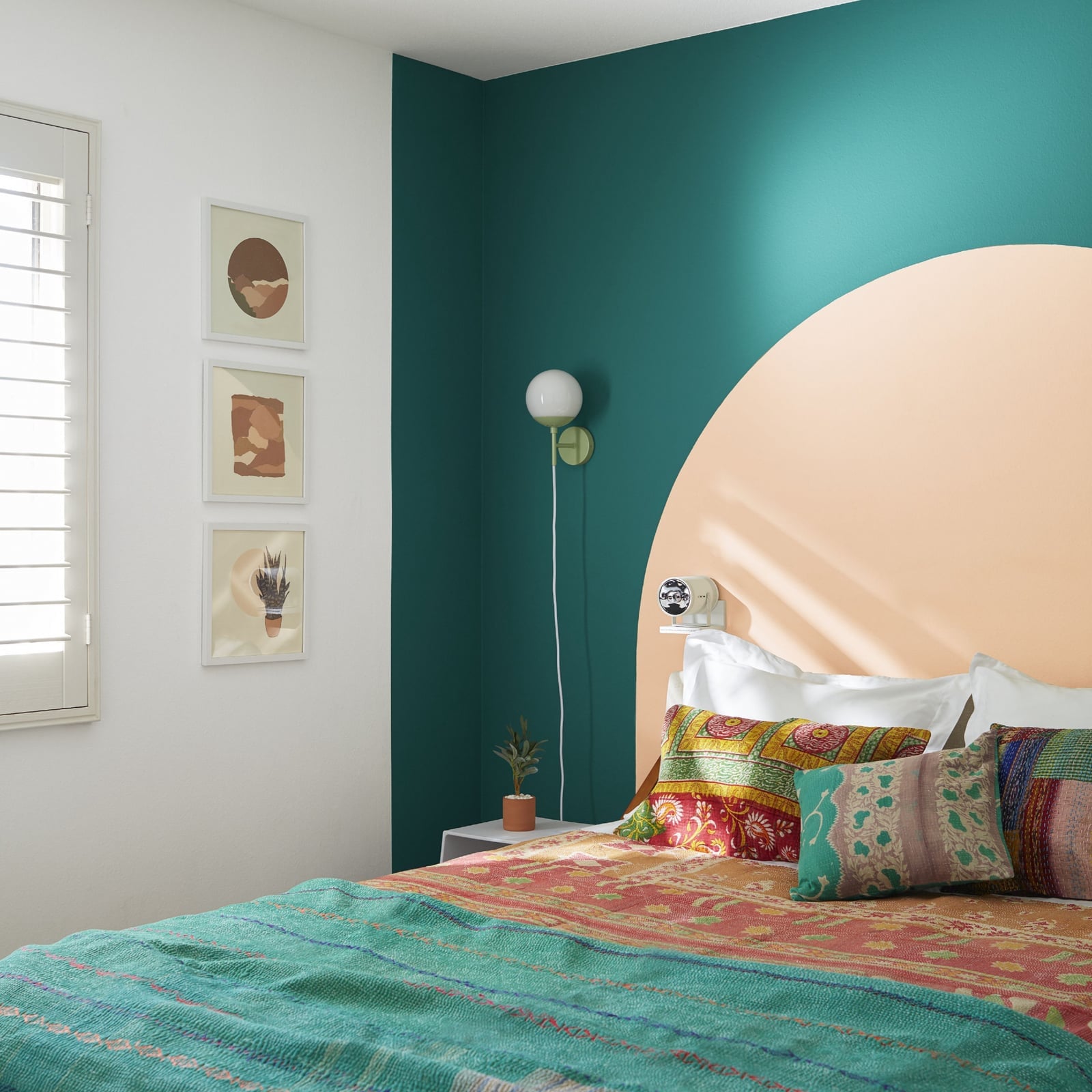
This paint design uses a large peach semi-circle on a teal wall, with the bed placed directly against it. White trim and a wall sconce keep the look clean, while the boho palette of teal and peach softens the geometry. The semi-circle shape breaks the rectangle of the wall, a useful trick when you want a focal point without committing to a full accent wall. For this layout, center the bed on the shape so the curve frames the headboard. The peach and teal combination is a natural pair that feels fresh.
Soft Mint Green Walls for a Modern Coastal Vibe
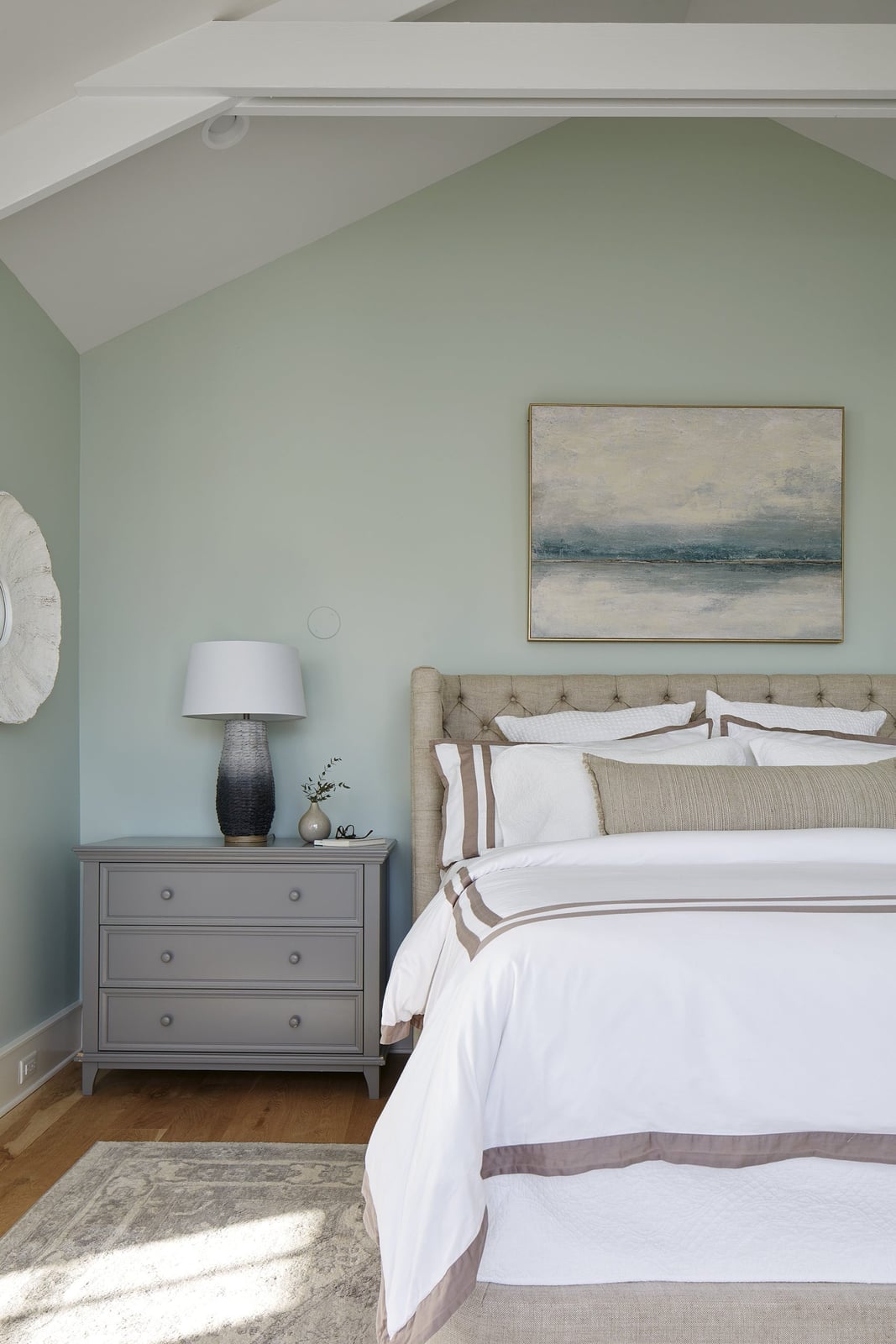
Soft mint green works as a neutral paint color while still adding a subtle hue. In this bedroom, the mint walls sit quietly against white trim and gray-blue accents. The walls are the hero element, and the room stays simple: a tufted bed, a wood nightstand, and a table lamp. The palette of mint, white, gray, and blue keeps the room airy without feeling cold. The window brings in natural light that softens the mint green. For renters, this shade works with most existing furniture because it does not compete with warm wood or cool metal. The coastal feel comes from the palette, not from any themed decor.
Dark Gray Paneled Accent Wall
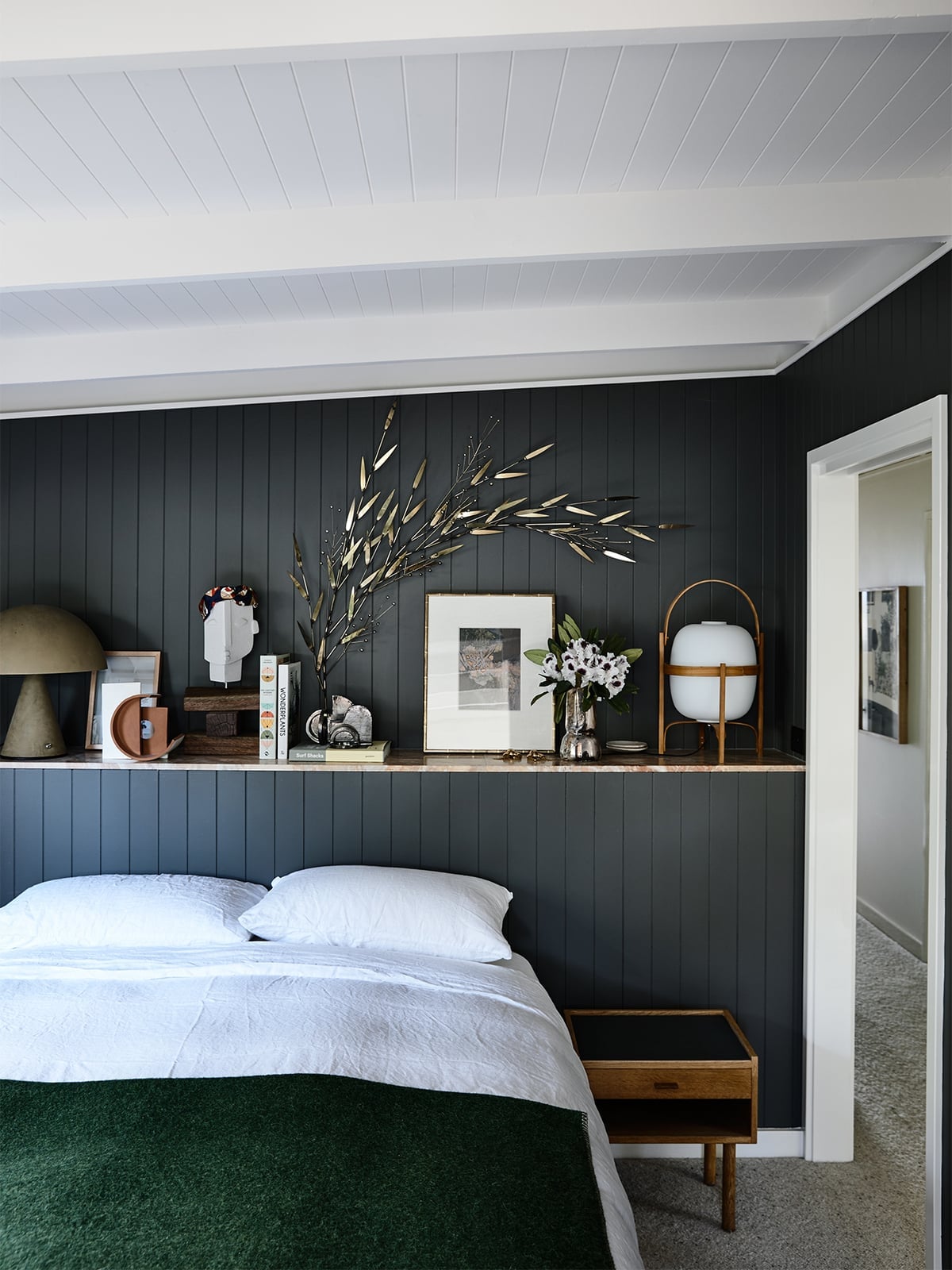
The dark gray paneled wall runs floor to ceiling behind the bed, with the panels creating vertical lines that draw the eye upward. The bed is centered against it, and a shelf sits above the headboard. Natural light from the doorway keeps the dark gray from feeling heavy. The palette of dark gray, white, and green is simple: the gray does the work, and the white and green offer contrast. The panels add texture without needing wallpaper or a second color. This is a modern take on an accent wall that relies on material rather than pattern.
Gray Walls with Decorative Paneling and Checkered Curtains
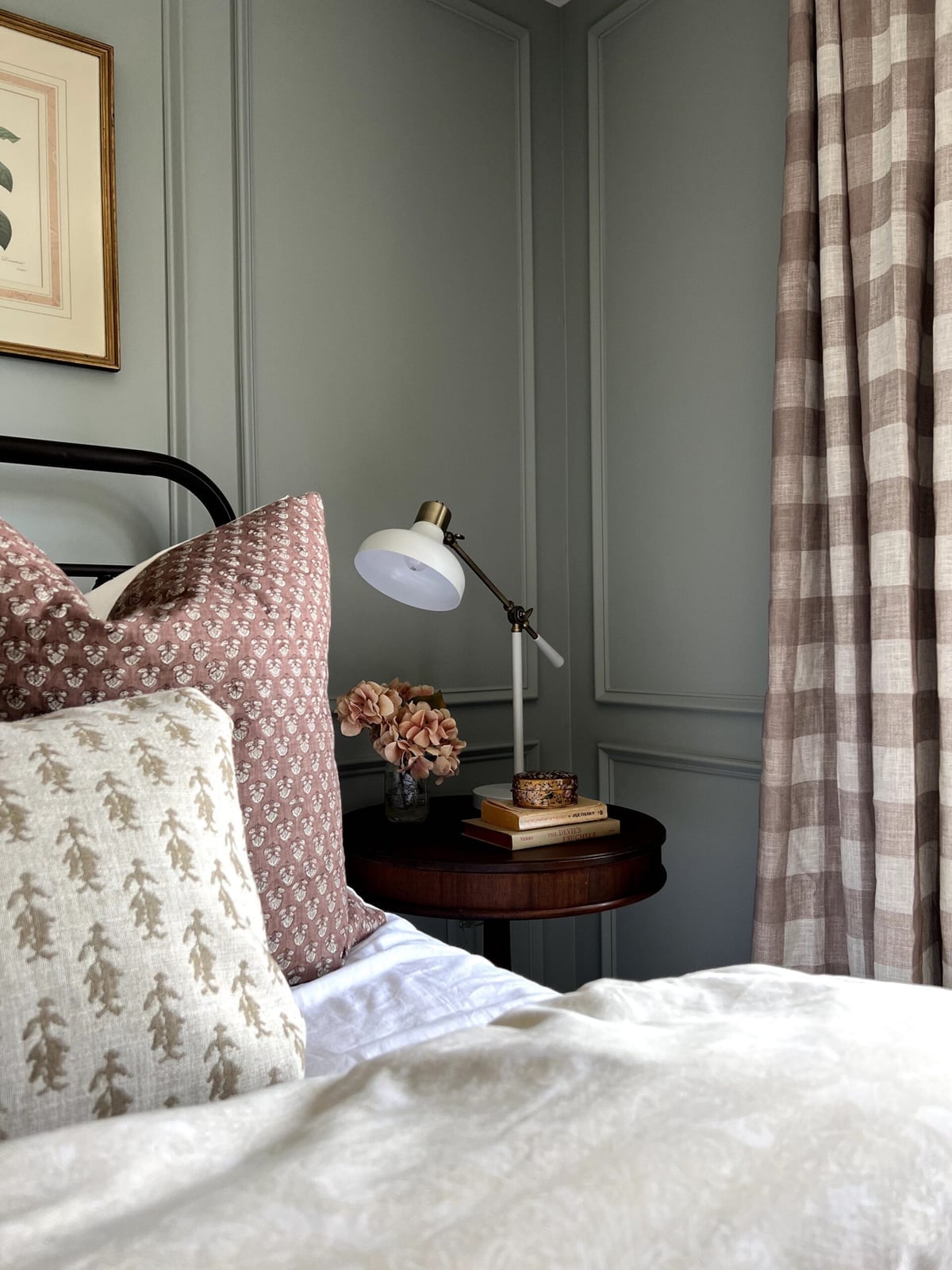
The gray walls here are paired with decorative paneling that runs partway up, creating a traditional wainscoting effect. The checkered curtains are the surprise: they add a pattern that breaks up the solid gray without clashing. The bed sits in a corner with a bedside table and a lamp providing task lighting. The palette of gray, brown, and white is grounded by the wood tones in the paneling and furniture. The checkered pattern works because it’s contained to the curtains, so it doesn’t overwhelm the room. This is a practical way to add pattern to a neutral room: keep it to one textile and let the walls stay calm.
Geometric Paint Design with Orange, Coral, and Green Zones
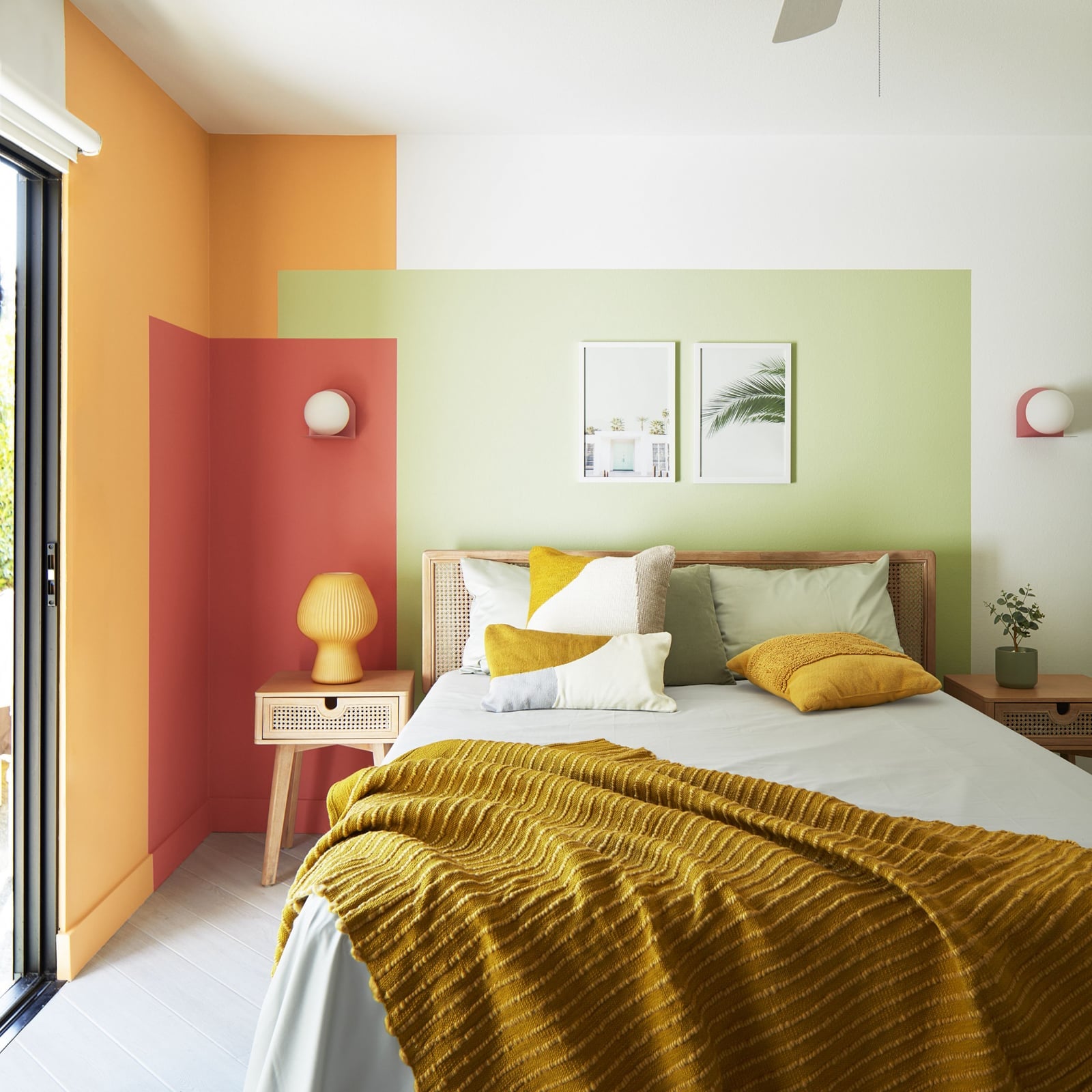
This is not a wallpaper moment or a single accent wall. The geometric paint design uses zones of orange, coral, and light green on the walls, with the bed centered between them. The color blocking creates distinct areas without needing furniture to define them. Wall sconces on either side of the bed anchor the layout. The palette of orange, coral, and green is warm and unexpected, but the white ceiling and trim keep it from feeling chaotic. The trick with geometric paint is to keep the shapes simple and the colors related. Here, the orange and coral are close on the color wheel, and the green acts as a cool counterpoint. The room feels modern because the paint does the work of defining the space.
Deep Red Walls and Coffered Ceiling
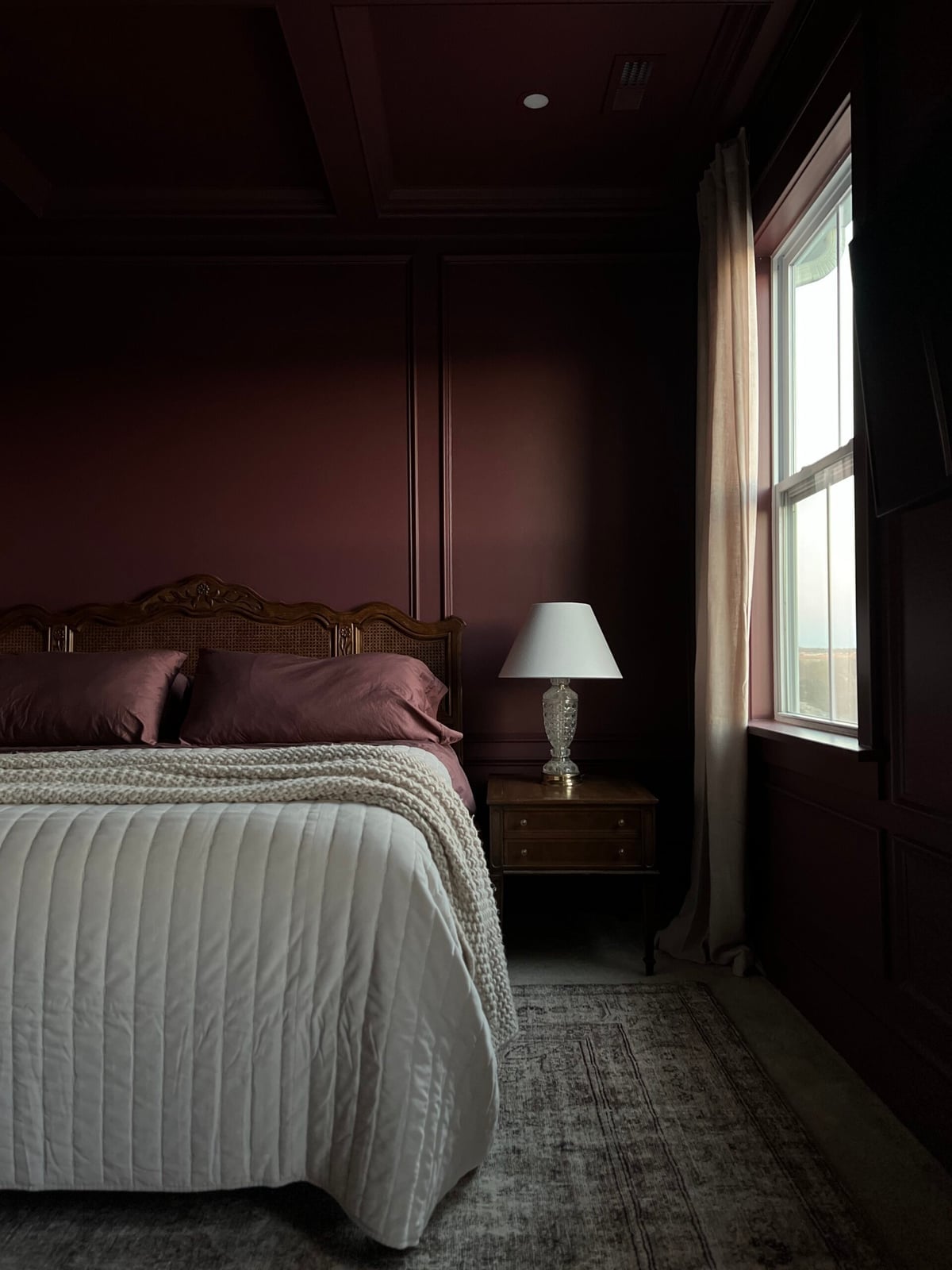
Deep red on both the walls and a coffered ceiling creates a room that feels wrapped in color. The palette stays in the warm zone with beige bedding and cane accents on the nightstand. A table lamp adds a softer glow next to the window, which brings in natural light during the day. The bed sits centered, making the deep red the main event without competing with the furniture. This kind of coverage works best when the room gets enough daylight to keep the red from reading as flat.
Green Walls with a Vintage Wooden Headboard
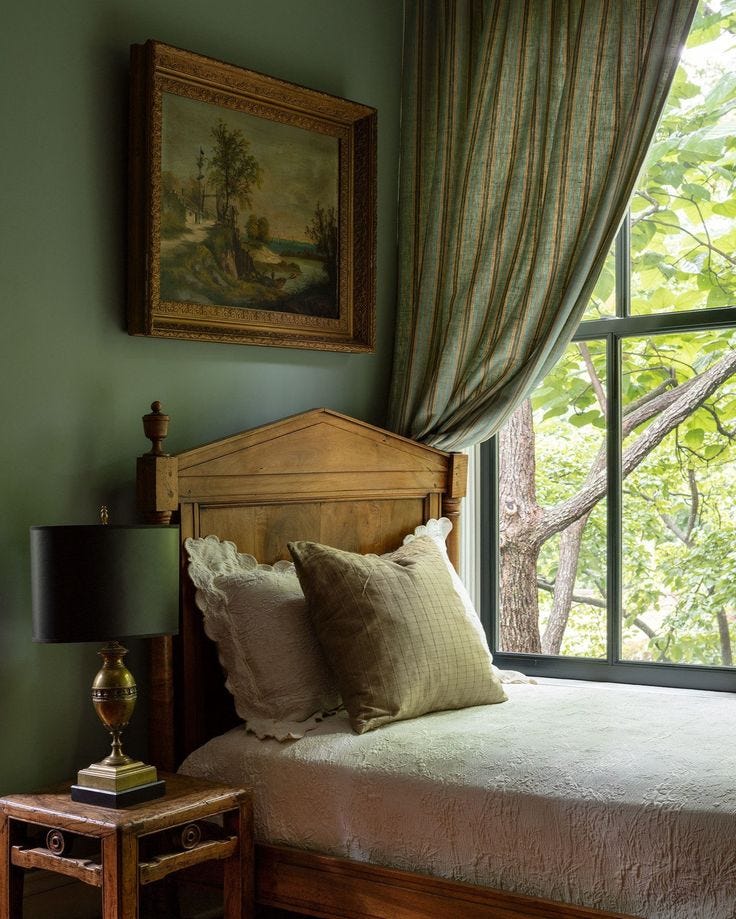
Green walls give this compact bedroom a grounded feel, and the vintage wooden headboard is what makes it interesting. The wood brings a darker brown tone that sits well against the green, while cream bedding and a glass lamp keep the look from getting too heavy. A table lamp provides enough brightness for the corner layout. The artwork on the wall adds another layer without pulling focus. To recreate it, look for a deeper wood tone with a muted green so the contrast feels deliberate.
Dark Teal Painted Wall for a Serene Bedroom
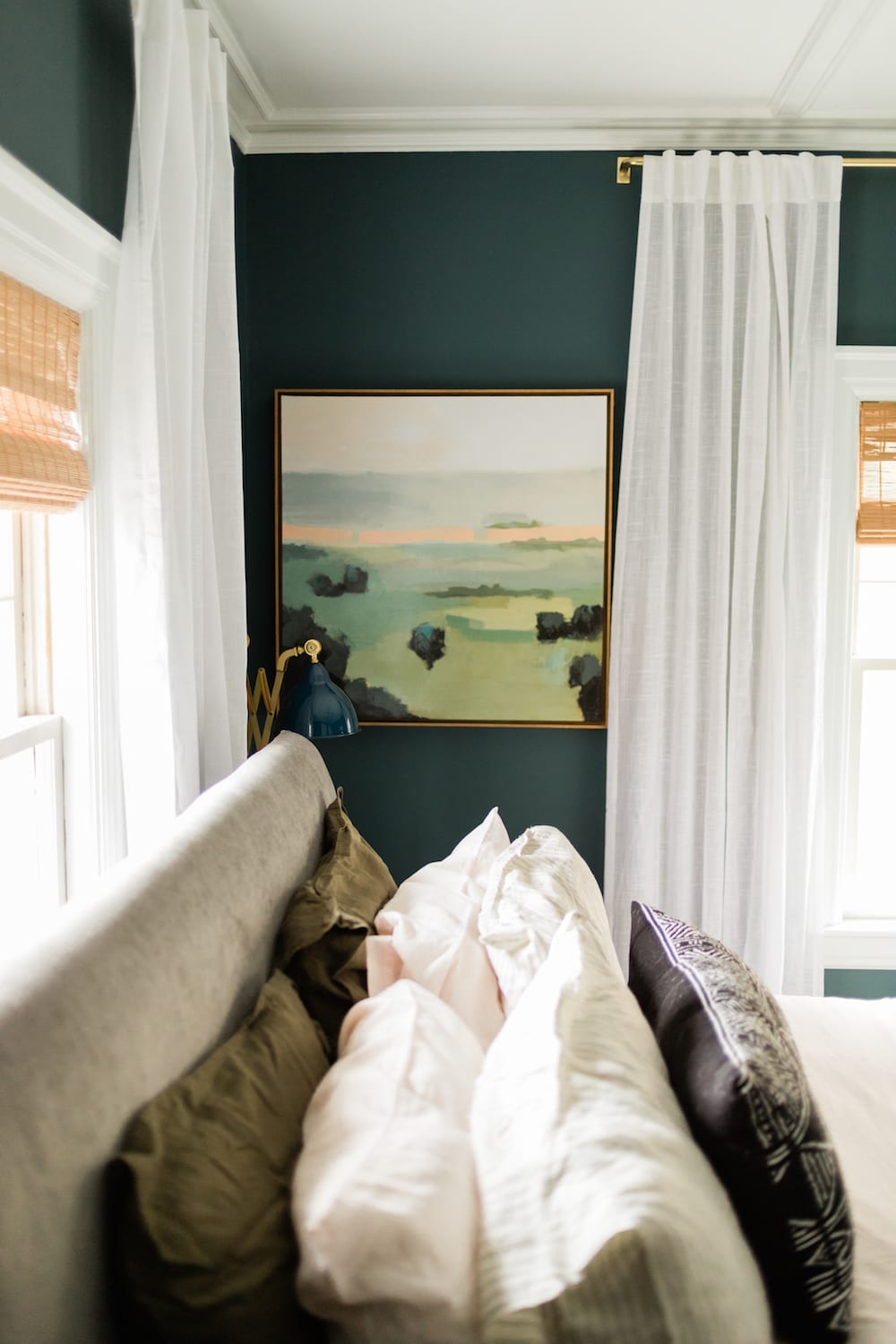
Dark teal can lean serene in a bedroom. The wall behind the bed is painted in a deep teal that pairs with white curtains and beige linen bedding. The combination prevents a closed in feel, even with the darker shade on one surface.
The layout is a detail vignette with the bed facing forward, partially obscured by the bedding and pillows. Natural light from a window hits the teal wall, and ambient room light fills the space. This setup works for a bedroom where you want a strong color without committing to four walls. The white and beige around it keep the room breathable.
Sage Green Walls with a Checkered Headboard
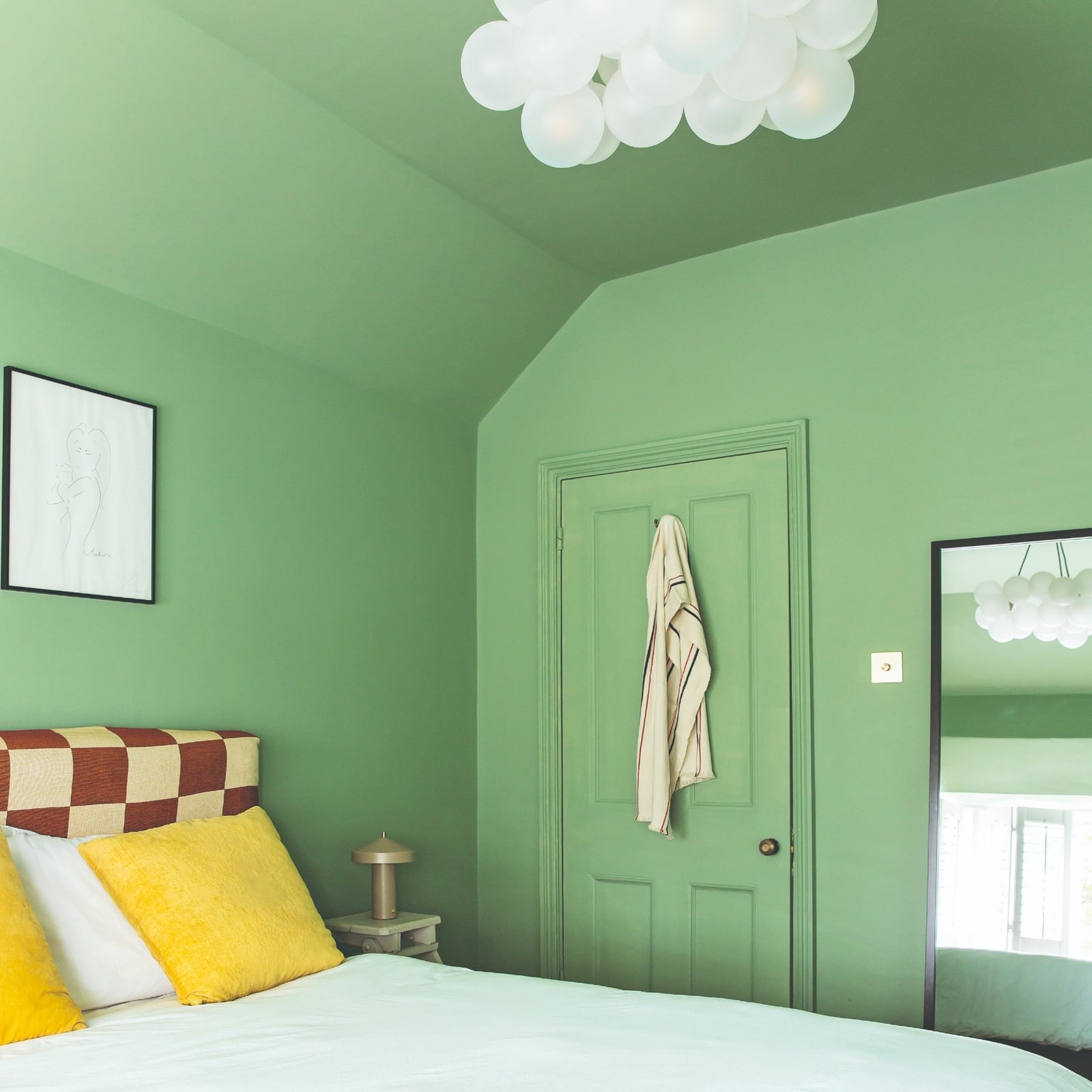
Sage green walls and a matching door create a continuous look in this bedroom corner. The checkered headboard adds a pattern that breaks up the solid green without clashing. White trim and a brown wood floor keep the palette simple. A ceiling light provides general illumination, and natural light from the window softens the sage during the day. The mirror on the wall reflects some of that light back into the room. This is a straightforward way to use one color across multiple surfaces while letting a single patterned piece do the talking.
Vibrant Red Accent Wall with Gray Walls
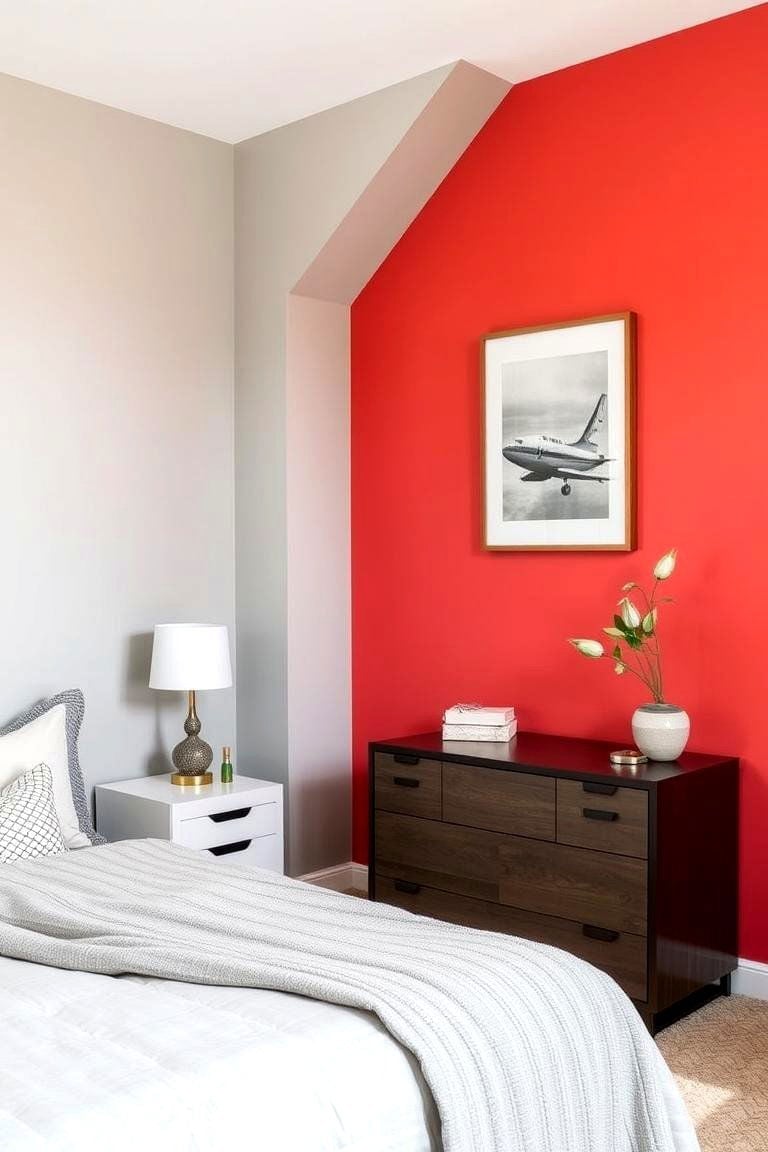
A vibrant red accent wall gives this bedroom a clear focal point without overwhelming the rest of the space. The other walls are gray, which keeps the palette balanced and lets the red stand out. The bed sits against the gray wall, so the red wall becomes a backdrop for the dresser and nightstand. A table lamp and natural light provide enough illumination for the layout. This approach works for anyone who wants a bold color but prefers to keep it to one surface. The gray acts as a neutral anchor, making the red feel energetic rather than aggressive.
Final Thoughts
Paint is one of the most affordable ways to change a bedroom’s feel. From soft pastels to deep darks, each color brings its own mood. The key is to let the paint be the anchor and keep furniture and decor minimal. Test samples on your wall first, and consider the natural light in the room. A well-chosen shade can make a small space feel larger or a large one feel cozier. Start with one wall if you’re unsure, and build from there.