
If you are thinking about a blue kitchen, you are in good company. Blue is one of the most versatile colors for the heart of the home, working just as well with warm wood and brass as it does with cool marble and white tile.
This article looks at 32 blue kitchens that range from deep navy to soft pastel, each with a different layout, palette, and set of materials. You will get practical ideas for cabinetry, backsplashes, lighting, and storage that you can adapt to your own space, whether you are planning a full renovation or just a refresh.
Layout: Galley Kitchen with Central Range
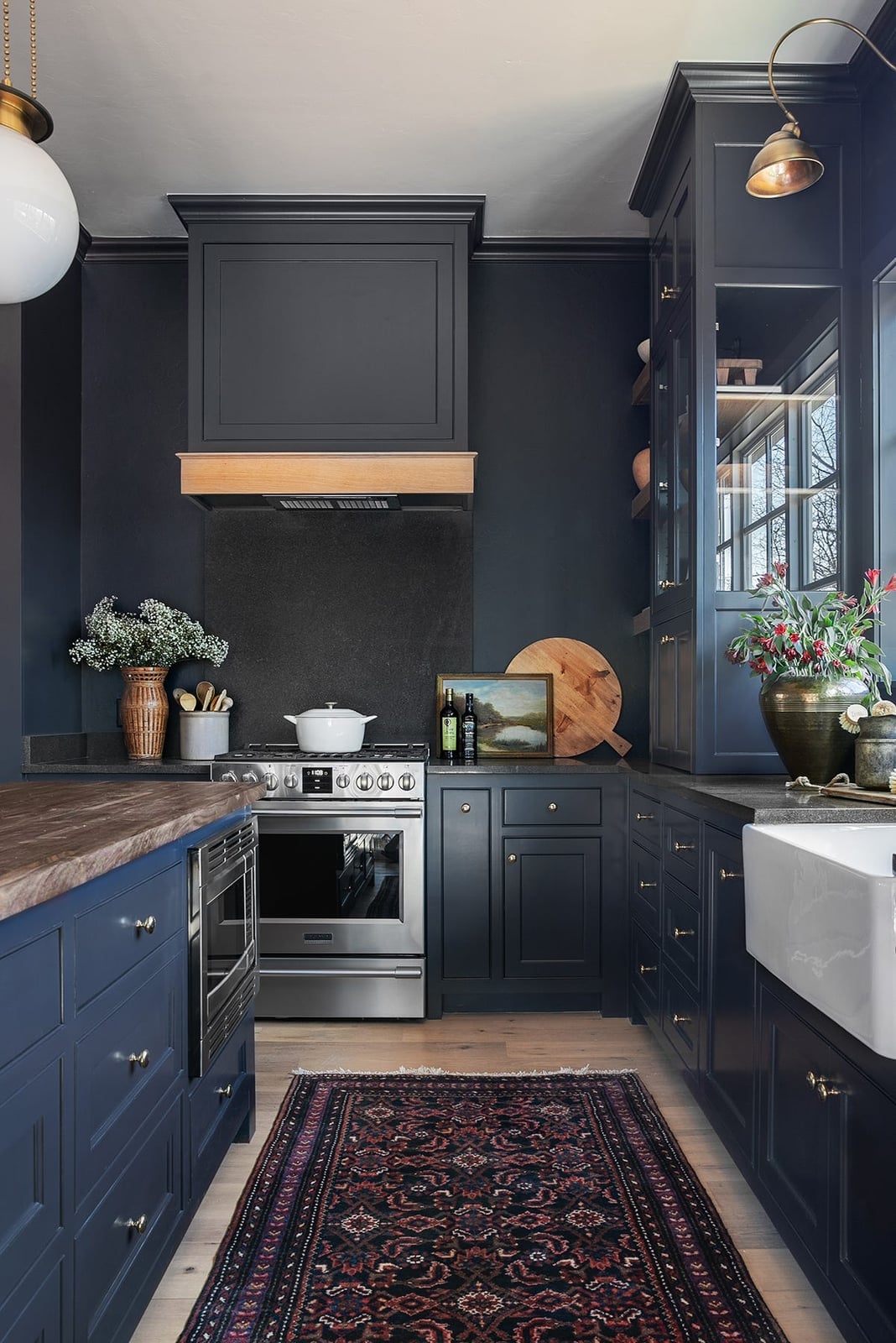
A galley kitchen with a central range is a rare layout that turns the cooktop into the room’s natural anchor. Here, deep blue cabinetry lines both sides of the narrow footprint, while a wood hood and a cream-toned stone surround frame the range. The symmetry creates a clear path for movement, and the dark blue cabinets keep the long sightline from feeling monotonous. A single pendant light above the range reinforces the focal point.
Palette: Balancing Deep Blue with Crisp White
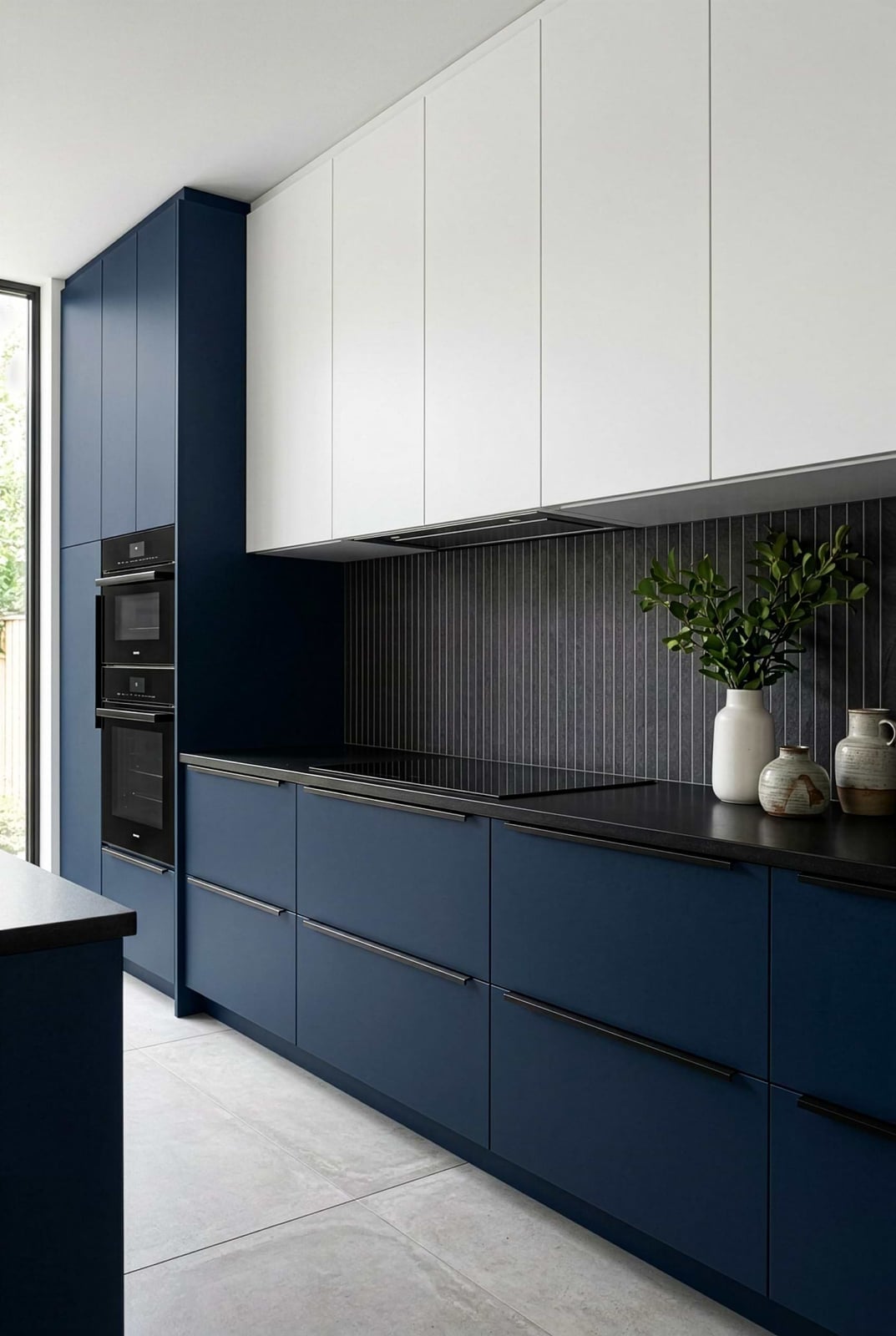
Deep blue lower cabinets paired with white upper cabinets is a palette that grounds the room without closing it in. The dark blue anchors the lower half of the kitchen, while the white uppers and a white subway tile backsplash keep the space feeling airy. Gray stone countertops add a neutral bridge between the two tones, and natural light softens the contrast. This split-palette approach works for kitchens that need both drama and brightness: the darker color hides wear near the floor, and the lighter color above bounces light around the room.
Materials: Wood, Tile, Stone, and Brass Accents
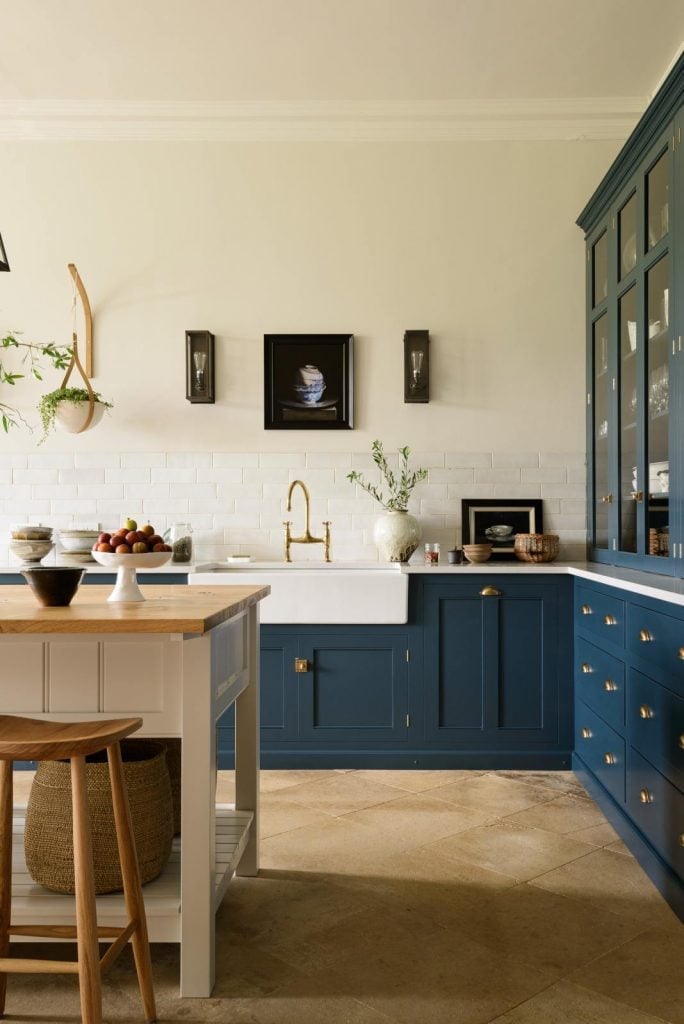
How do you combine four materials without the kitchen feeling busy? The trick is to let each one serve a distinct role. Here, the dark blue cabinets provide the dominant color, while white subway tile covers the backsplash in a clean, uniform grid. A wood range hood and open wood shelving bring warmth to the upper half of the room, breaking up the expanse of tile and painted cabinetry.
A brass faucet and brass cabinet hardware add a reflective note that catches the eye without overwhelming the palette. The stone countertops are a quiet gray, letting the wood and brass take turns as the secondary texture. The brass accents are the smallest material by surface area, which is exactly why they work: they act as jewelry, not as another wall. For a renter-safe swap, consider a brass faucet and cabinet pulls as an easy upgrade that shifts the whole material balance.
Lighting: Ambient and Pendant Illumination
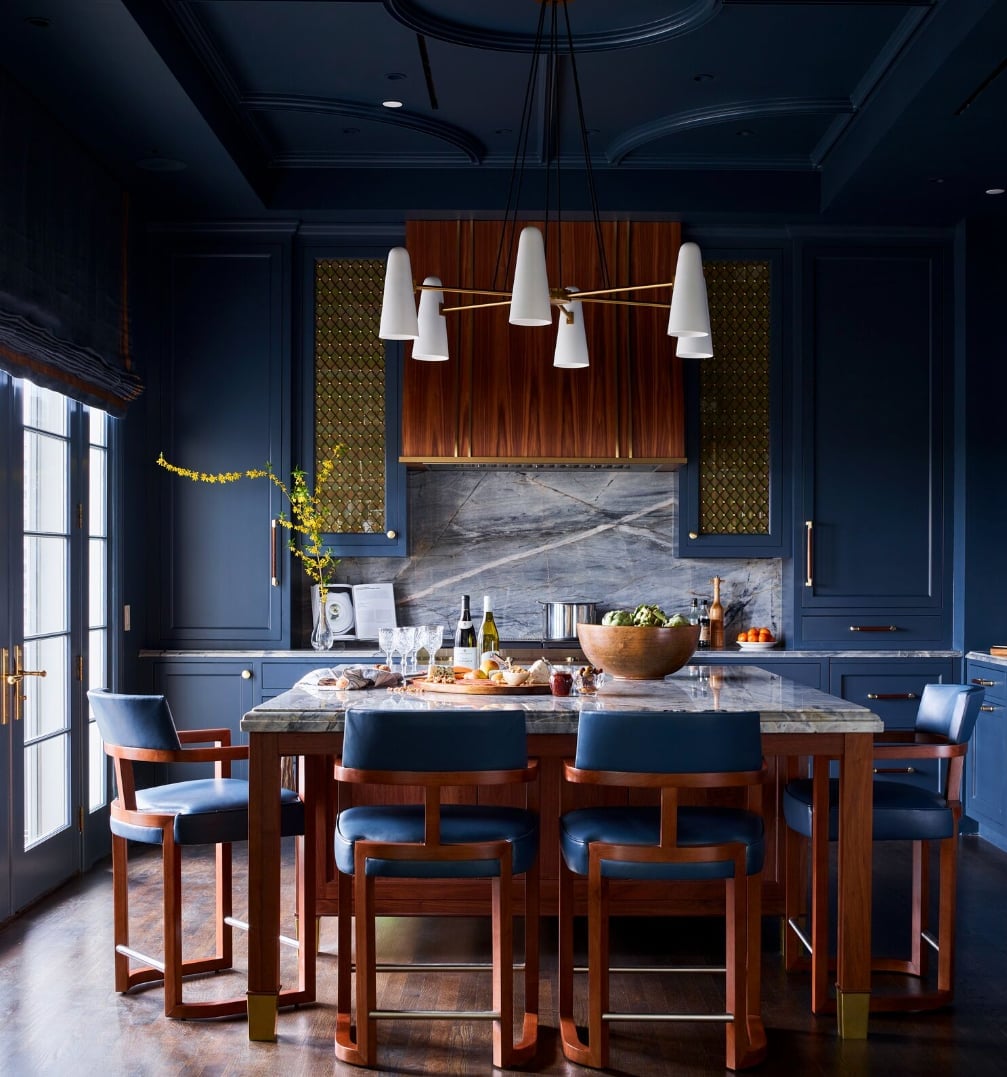
This kitchen uses two distinct light sources to cover the whole room. Recessed ceiling lights provide even ambient illumination across the open plan, while a chandelier over the island adds a focused pool of light for prep and dining. The dark blue cabinets and wood hood absorb more light than white cabinetry would, so the combination of overhead and pendant fixtures prevents shadowy corners. The chandelier also serves as a visual anchor above the marble island.
Styling Variation: Glam Modern with Teal Velvet
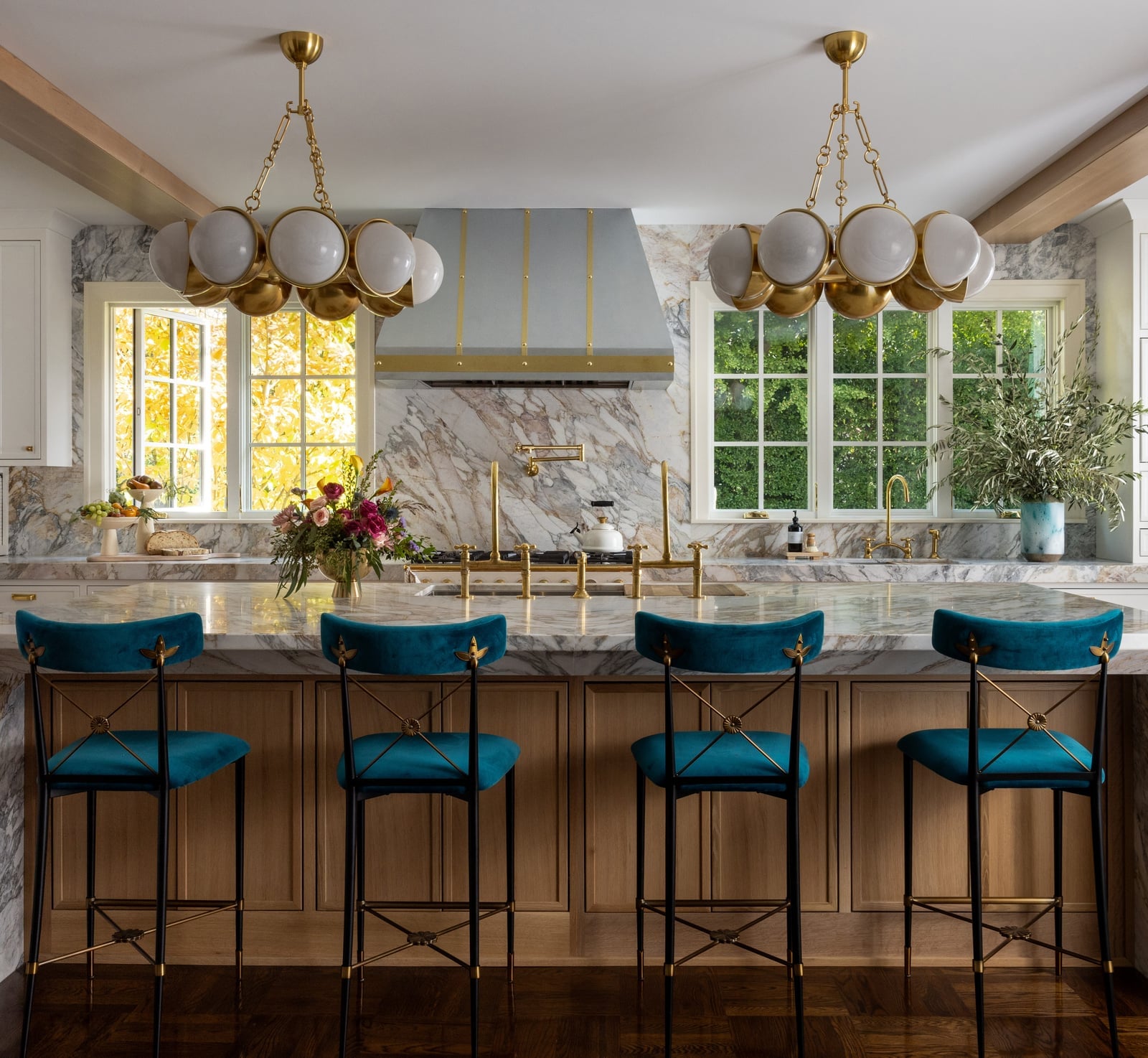
A practical rule for adding a bold accent to a neutral kitchen is to limit it to furniture you can move. Here, teal velvet bar stools pull up to a marble island, introducing a saturated color that contrasts with the wood tones and gold hardware. The stools are upholstered in velvet, which softens the hard surfaces of marble and brass. Statement chandeliers overhead echo the gold accents, while the teal reads as a deliberate departure from the neutral palette rather than an accident. The ratio is roughly one part teal to four parts neutral, which keeps the look glam without letting the velvet take over the room.
Storage: Island with Integrated Wine Storage
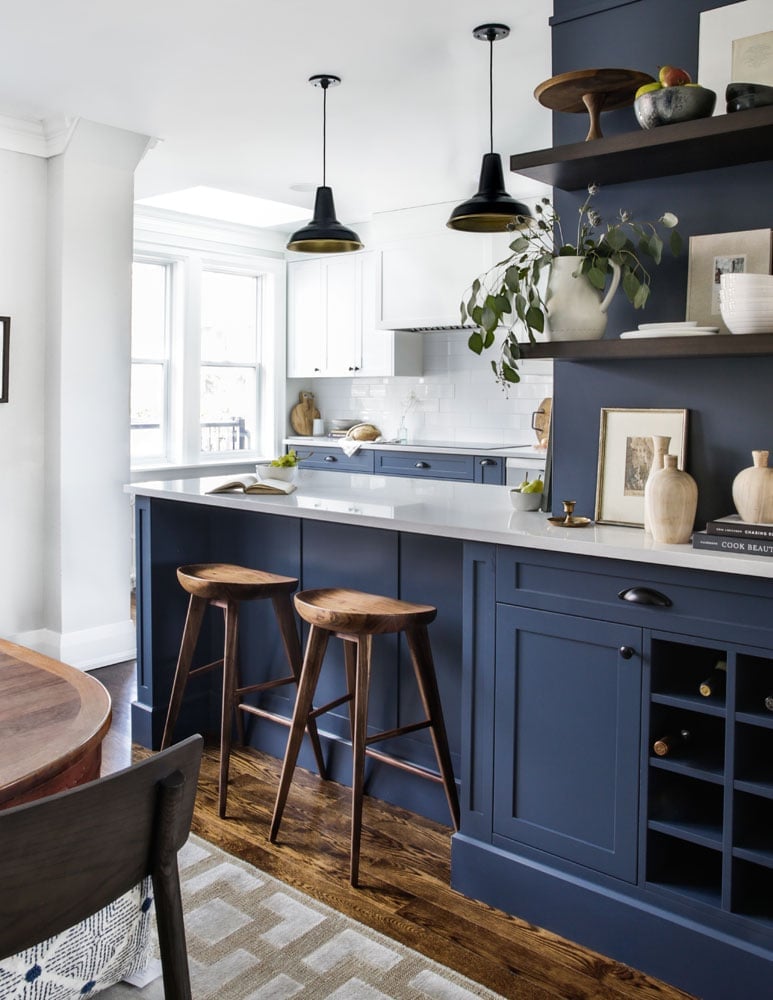
A large island is the obvious place to stash extra storage, but the usual approach, stacking cabinets on both sides, can make the kitchen feel boxed in. This one does it differently. The dark blue island houses a dedicated wine rack on one end, keeping bottles accessible without crowding the countertop. Open shelving above the rack holds a few glass decanters, so the setup reads as display rather than afterthought. The rest of the island face stays clean, with paneled fronts that match the perimeter cabinetry. The trick is picking one storage function per zone. Wine storage lives on the island. Everyday pots and pans stay in the base cabinets along the wall. That separation keeps the kitchen from feeling like one big catch-all.
Scale and Proportion: Spacious Kitchen with Large Island
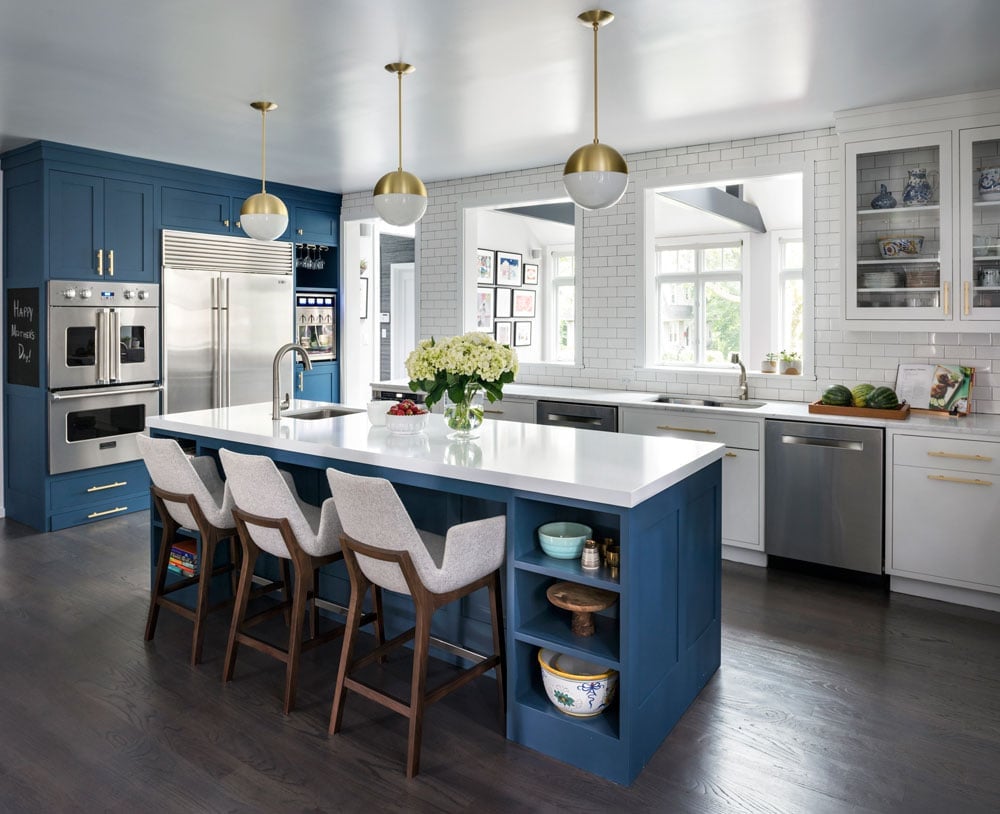
The deep blue cabinetry wraps the perimeter, but the white waterfall island is what claims the room. Its marble surface drops straight down both sides, creating a solid block of brightness that breaks up all that dark paint. The stainless steel appliances blend into the background, so the eye settles on the two main colors: navy and white. For a renter-safe version, skip the built-in island and bring in a large white butcher block cart. Park it in the center of the kitchen, and you get the same visual anchor without committing to a permanent fixture.
Palette: Light Blue Cabinetry with Marble Island
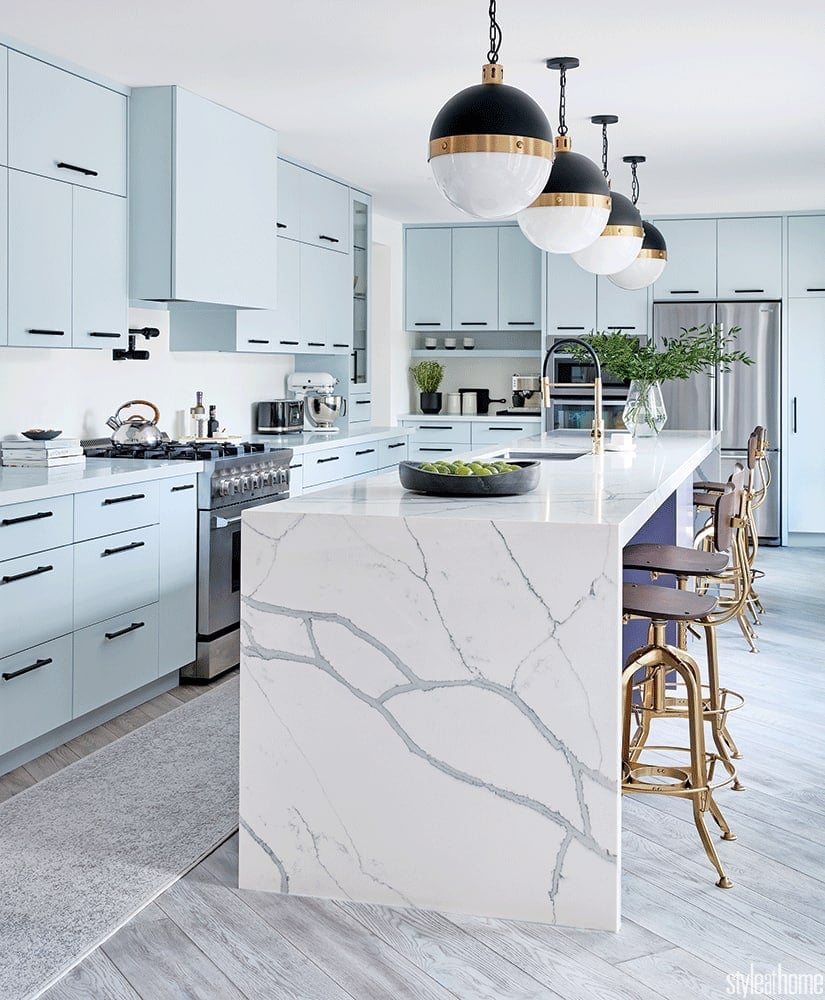
Light blue cabinetry reads as a softer take on the trend. Paired with a marble island that carries dramatic gray veining, the palette stays cool without feeling cold. Gold bar stool frames and brushed brass pendant lights add the necessary warmth. The ratio is roughly two-thirds light blue to one-third white marble, with the gold worked in as thin lines throughout. What breaks the look is adding a third saturated color, a bright red appliance or orange counter stool would pull the eye in too many directions. Stick to white, marble, and a single metallic accent.
Lighting: Abundant Natural Light and Pendant Fixtures
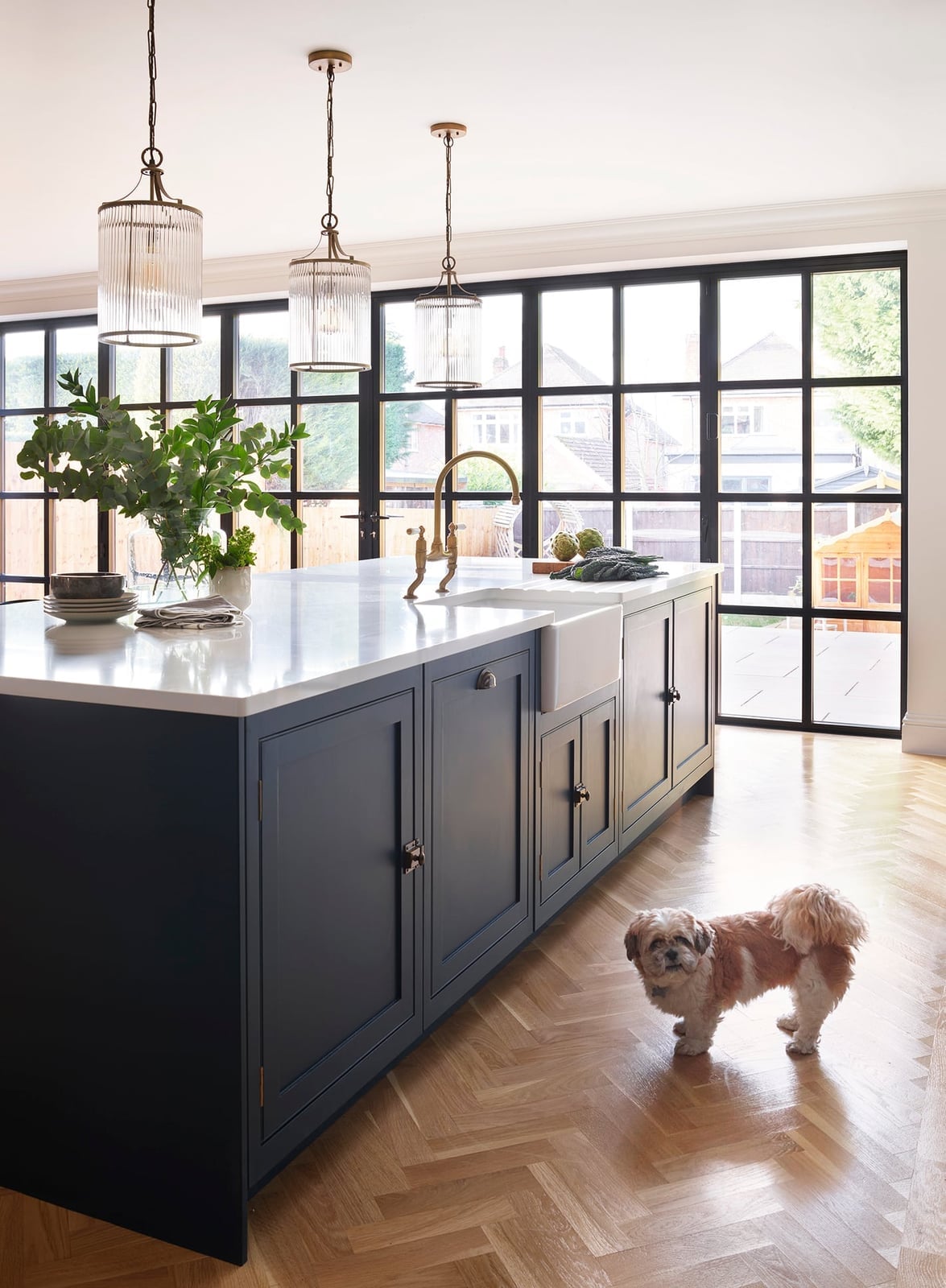
Can a dark blue island work in a kitchen that doesn’t get much sun? It depends on how you handle the light. This kitchen has a row of large windows on one wall, flooding the island with natural light during the day. That daylight keeps the dark paint from swallowing the room. Overhead, a set of pendant lights with glass shades hang above the sink area, adding task light for washing up. The brass finishes catch the sun and create small warm reflections across the marble counter. If your kitchen runs dim, swap dark blue for a medium blue or add a second layer of under-cabinet lighting before committing to the darker shade.
Materials: Wood and Glass Cabinetry Accents
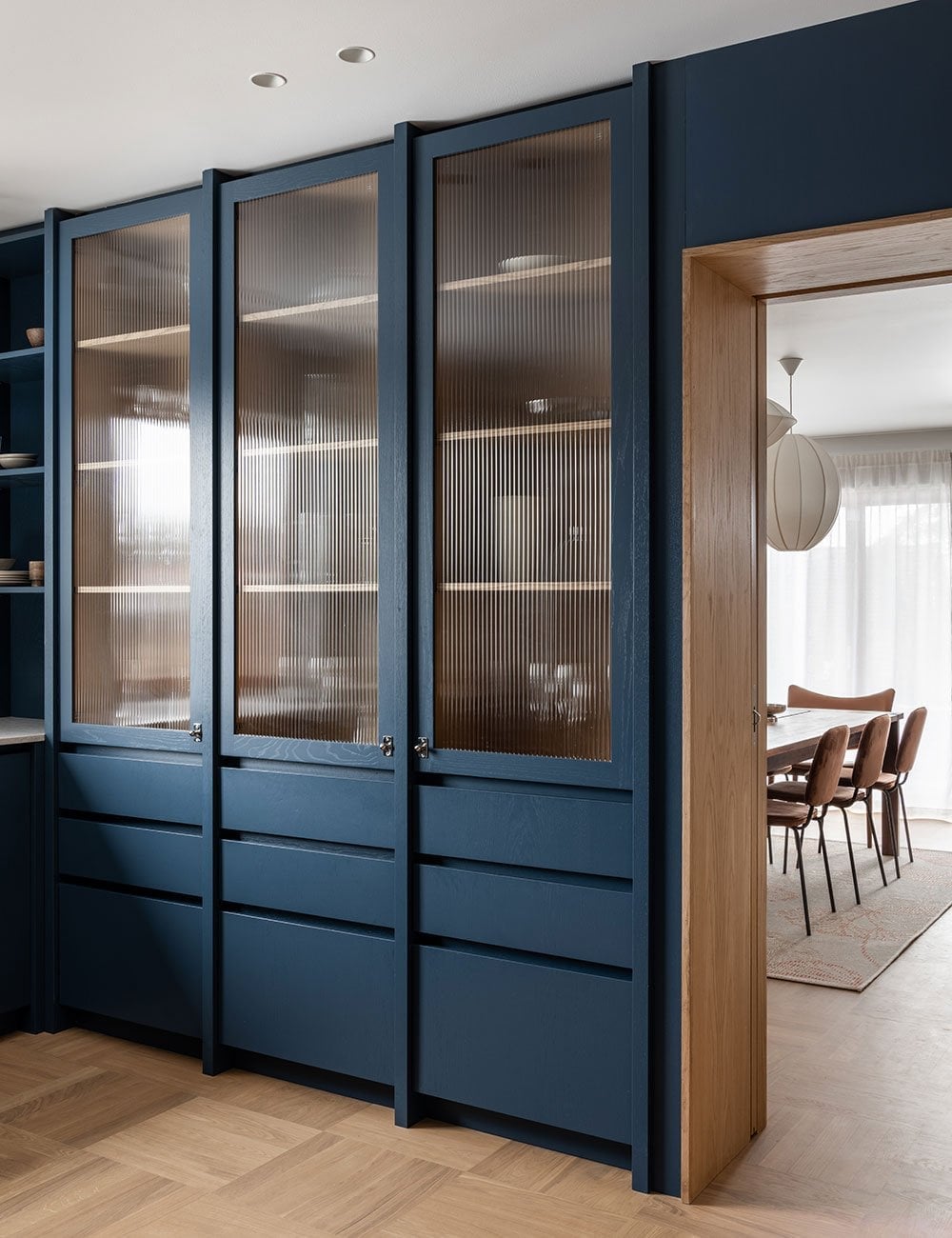
A wall of tall deep blue cabinets runs from floor to ceiling, but a few of the upper doors swap painted wood for fluted glass. The ribbed glass obscures whatever is stored inside while still letting some light pass through, so the wall reads as solid but not heavy. Wood accents, a floating shelf and the countertop on the sideboard, break up the blue and tie back to the warm tone floor. The mix works because the glass sections are narrow and spaced evenly among the solid doors. If every cabinet had glass, the rhythm would feel busy rather than deliberate.
Storage: Open Shelving for Display
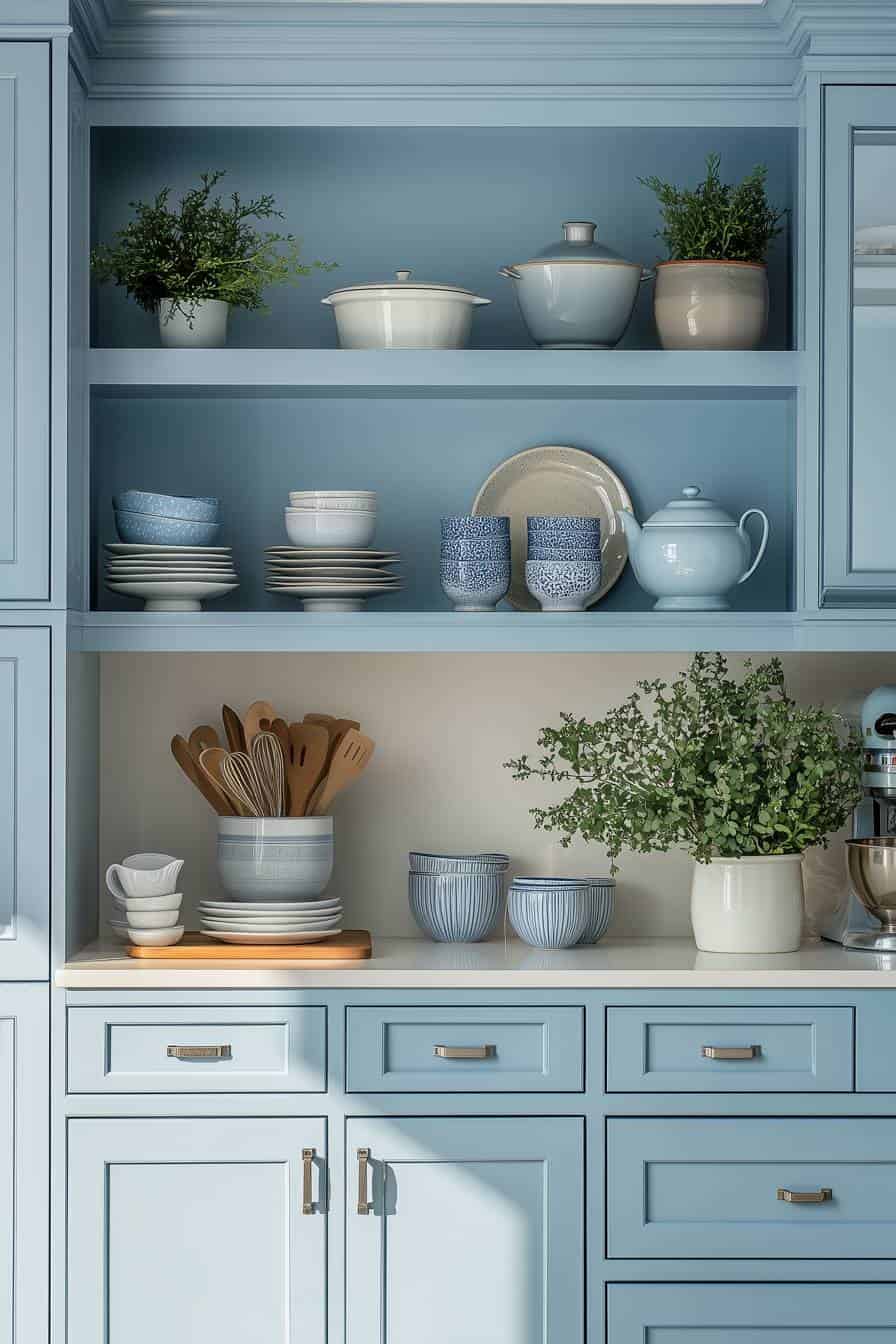
A good rule for open shelving is to treat it as part of the palette, not as overflow storage. In this modern farmhouse kitchen, light blue cabinets keep the perimeter calm while a light blue open shelving unit repeats the color above the counter. White subway tile and natural light keep the look airy, and the green accents from plants or small ceramics add a fresh contrast. The trick is to edit what goes on the shelves, a few practical pieces and a touch of green are enough to make the storage feel like decor.
Styling Variation: Eclectic with a Vibrant Blue Range
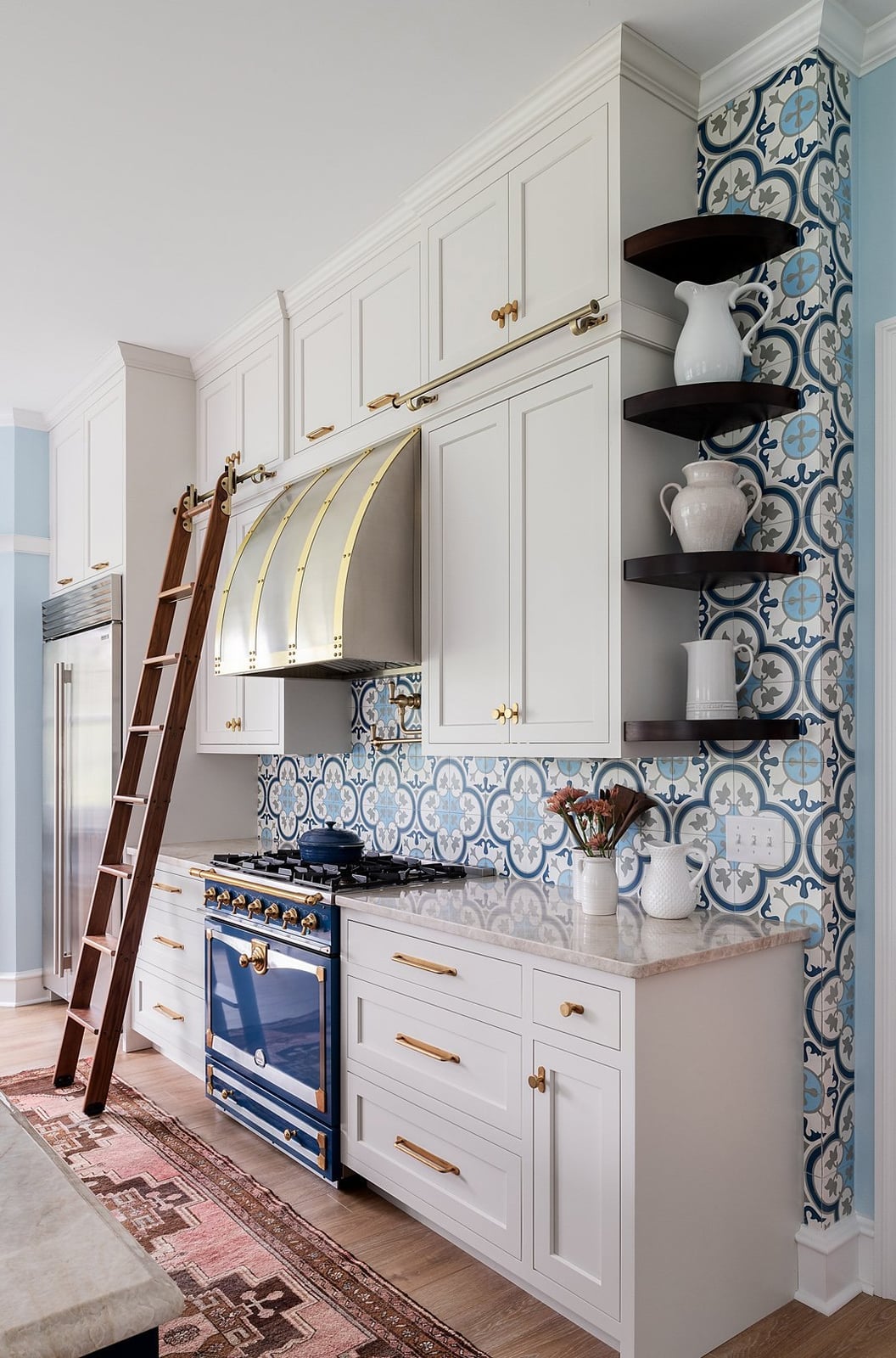
A navy blue range could read as traditional, but here it leans eclectic thanks to the company it keeps. The vibrant blue range sits against a patterned tile backsplash that mixes geometric and floral motifs, while brass hardware on the cabinets adds a warm metallic thread. White cabinetry and a marble countertop keep the palette from feeling heavy, and natural light from a nearby window softens the contrast.
The wood floor and open shelving introduce an organic note that balances the polished tile and brass. The look works because the range is the loudest element. The rest of the kitchen stays neutral or textural. If the range feels too bold, a matte navy or a softer blue would still hold the same eclectic energy without shouting.
Layout: Compact Corner Kitchen Design
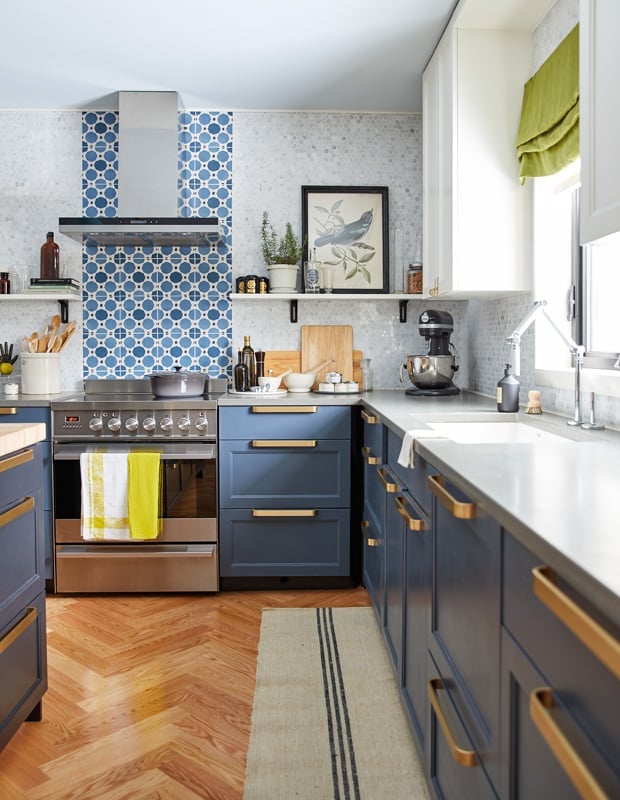
The corner kitchen layout makes every inch count, and the geometric blue tile backsplash is what gives this one its personality. Blue cabinets wrap the L-shaped counters, with the range and sink placed within easy reach. Open shelving above keeps essentials visible without eating into counter space. The natural light from a small window helps the blue feel crisp rather than cramped, and the wood tones in the shelving and floor add warmth to the cool palette.
Materials: Wood Shelving with Light Blue Cabinets
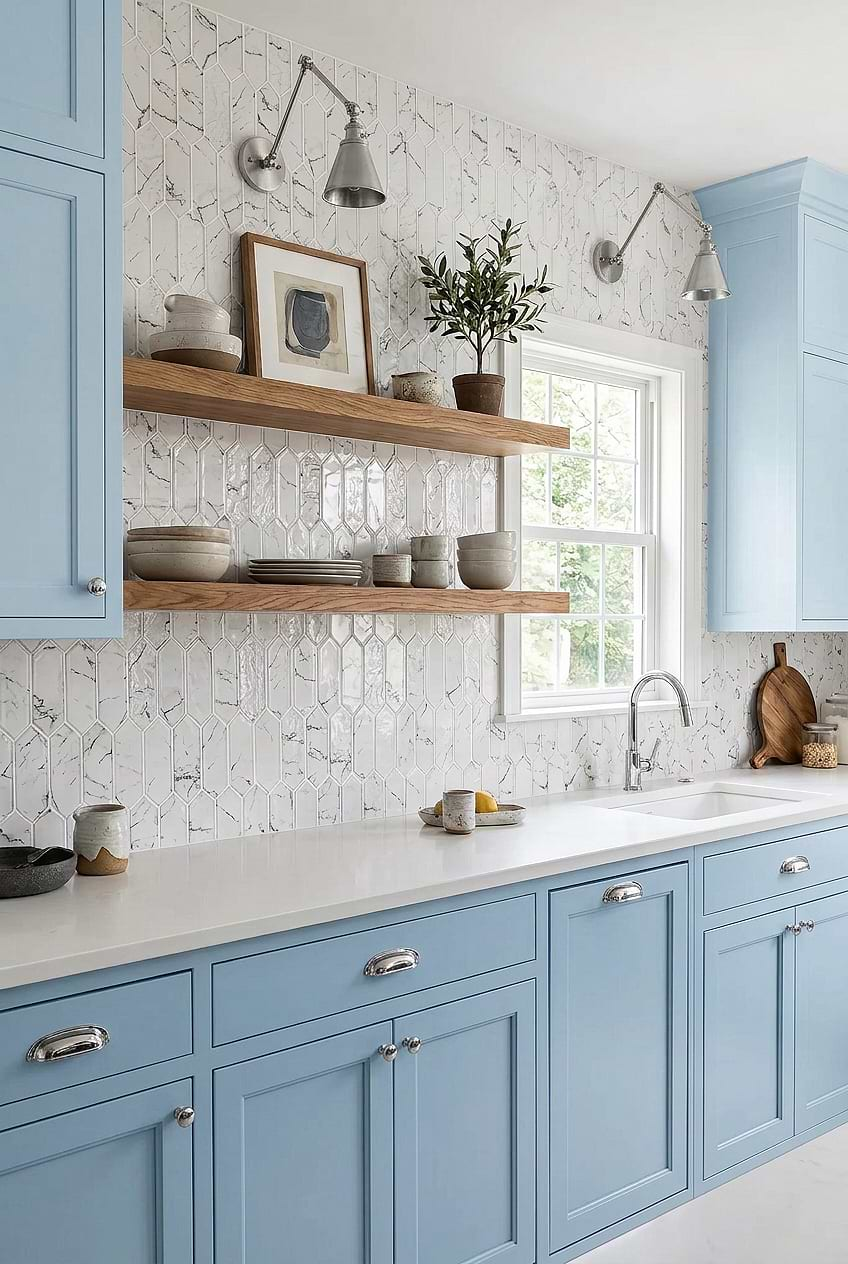
Light blue cabinets and wood shelves are a straightforward combination that works in a modern kitchen. The light blue keeps the room feeling open, while the wood shelves add warmth and a natural line against the wall. A marble tile backsplash behind the counter introduces a subtle pattern without competing with the cabinets. Wall sconces mounted above the shelves provide focused light that highlights both the dishes and the texture of the wood. The mix of materials stays clean and practical, with each surface serving a clear purpose.
Durability: Navy Blue Cabinets with Wooden Countertops
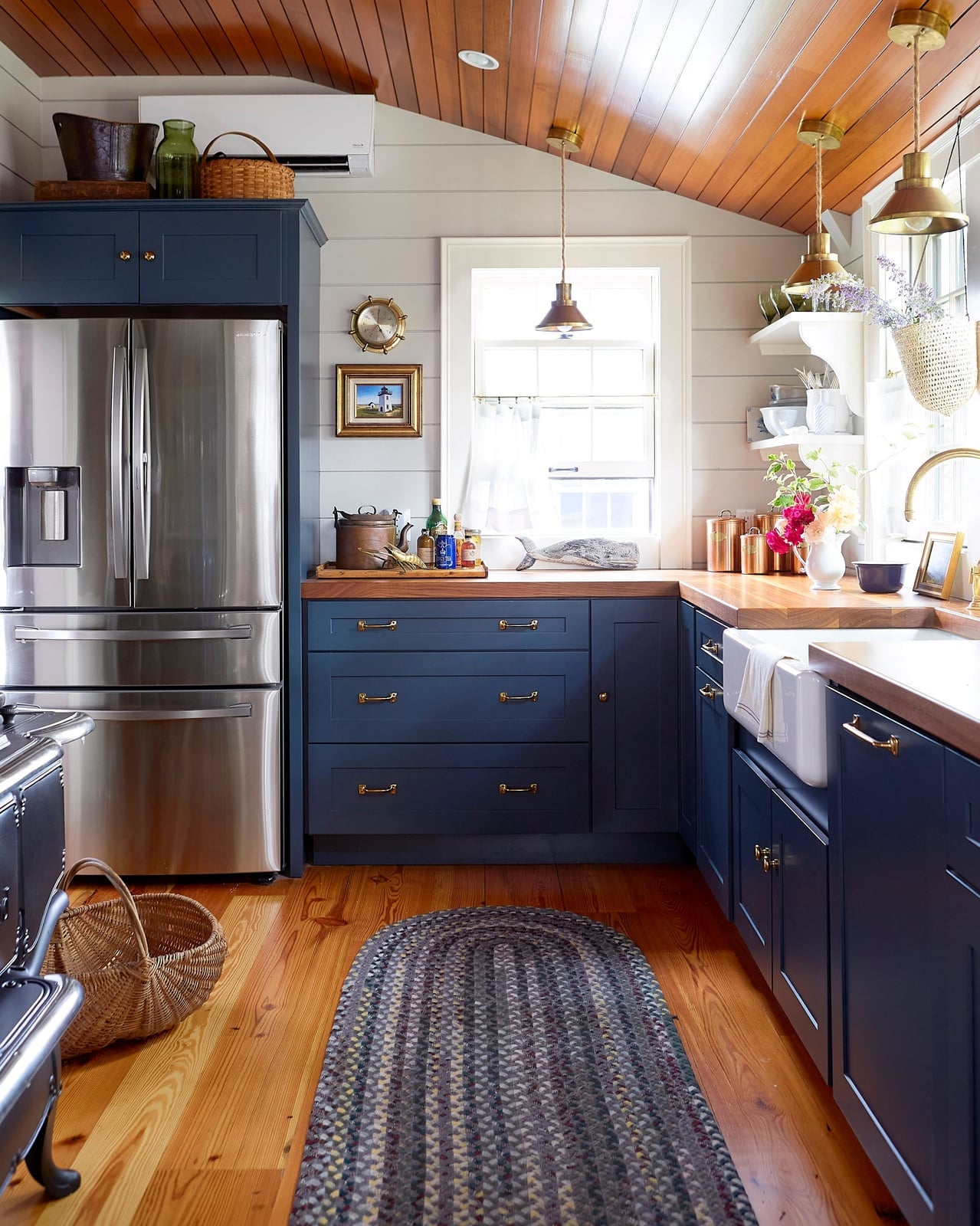
In a busy kitchen, durable cabinetry paired with surfaces that handle daily use is a smart choice. Navy blue cabinets offer a deep, forgiving color that hides smudges and wear better than a lighter finish. Wooden countertops add warmth and a farmhouse feel, but they need regular sealing to protect against water and stains. The farmhouse sink and stainless steel refrigerator are easy to wipe down, and a braided rug underfoot catches crumbs and adds cushion at the sink.
Pendant lights above the counter keep the navy from feeling too dark, while the wood ceiling ties the warm tones together. For anyone who wants a kitchen that looks lived-in without showing every fingerprint, this palette is a practical option.
Scale and Proportion: Open Plan with Wood Island
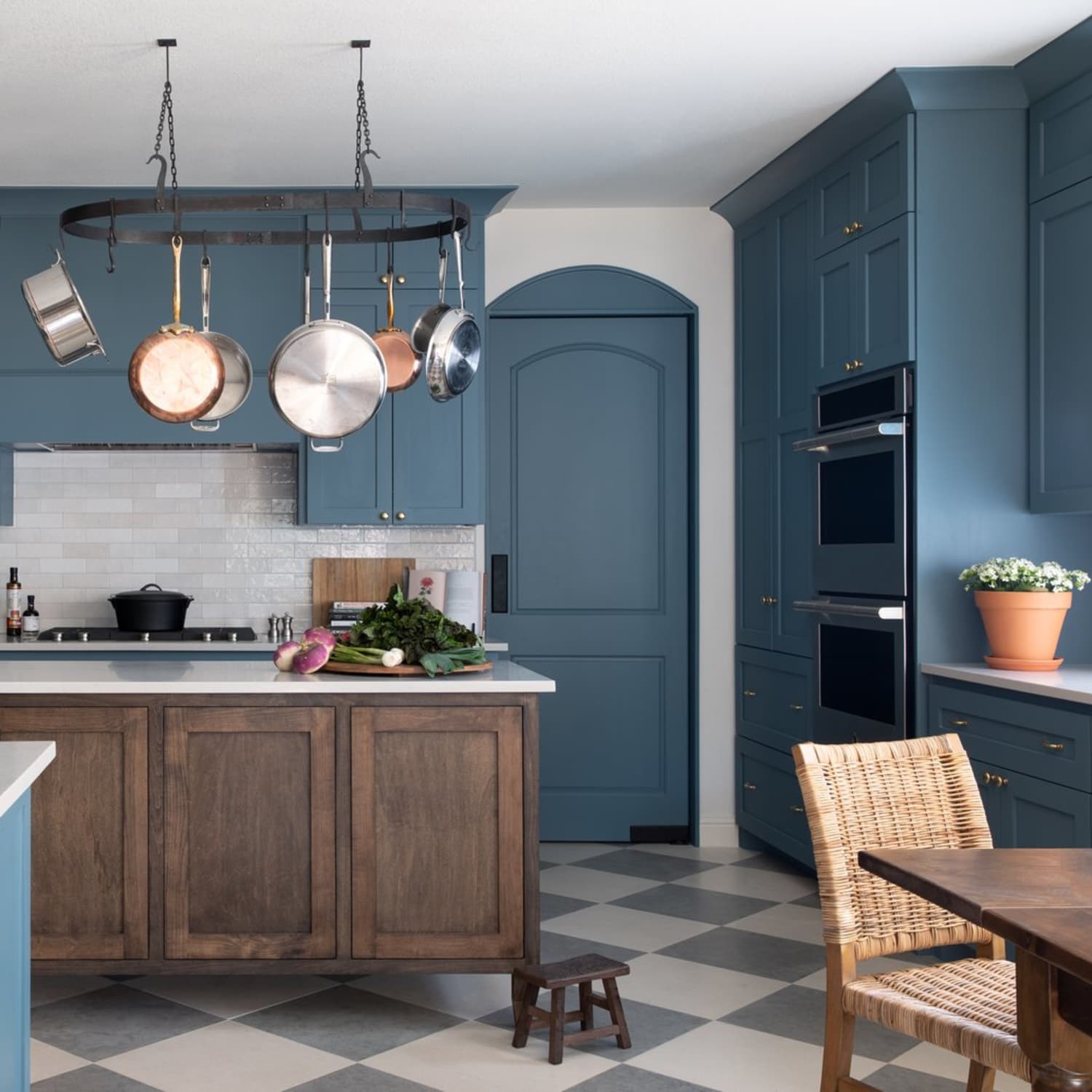
An arched doorway draws the eye through this open plan, where deep blue cabinetry and a wood island set the pace. The island’s warm tone breaks up the cool palette of white and gray without competing for attention. A pot rack suspended overhead keeps cookware within reach and fills vertical space that might otherwise feel empty. In a roomy layout like this, one large piece in a contrasting material keeps the eye moving rather than settling on a single spot.
Styling Variation: Modern with Round Knobs
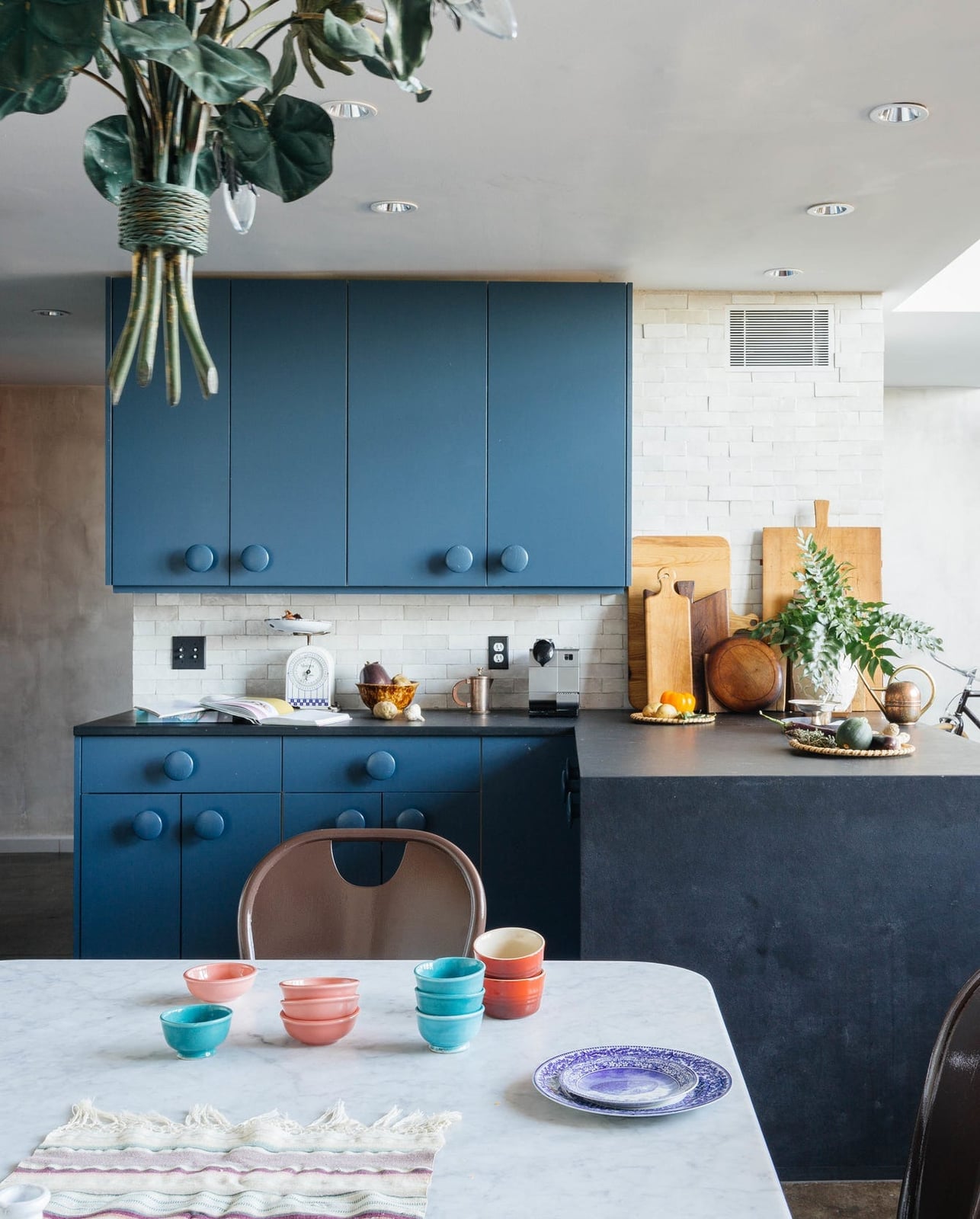
Hardware is the fastest way to shift a kitchen’s personality without touching the cabinets themselves. Here, round knobs on blue cabinets soften the modern lines and add a tactile detail that flat fronts lack. The white brick backsplash keeps the backdrop neutral, while a dark countertop grounds the two-tiered island. Wooden cutting boards leaning against the backsplash bring in warmth and reinforce the natural material mix. For renters, swapping knobs is a weekend project that reverses in minutes. Choose a finish that picks up another metal in the room, like the faucet or light fixture, so the change reads as planned rather than random.
Materials: Marble Backsplash with Navy Lower Cabinets
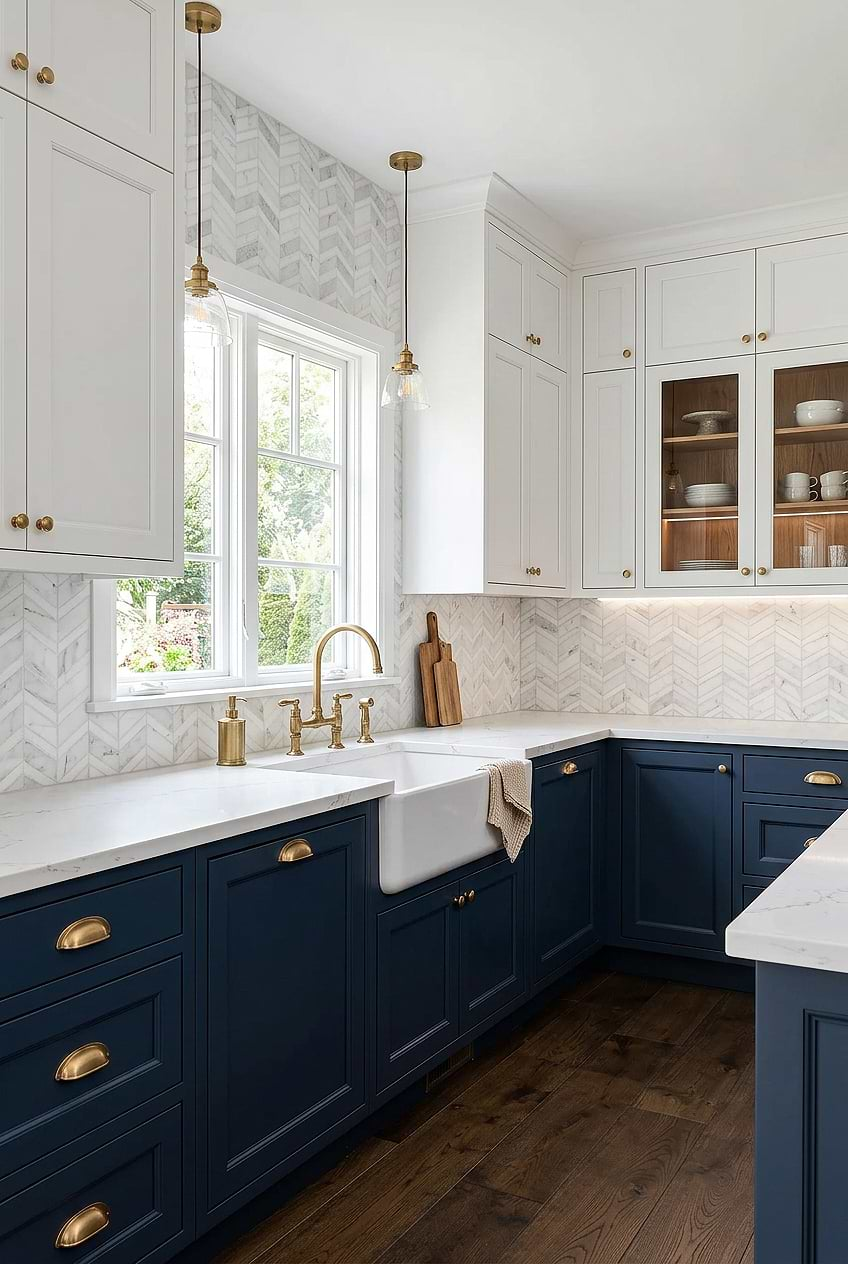
White upper cabinets keep a kitchen feeling open, while navy lowers anchor the space. This corner layout uses a herringbone marble backsplash to connect the two zones. The marble’s veining adds movement without competing with the clean lines of the shaker-style lowers. A farmhouse sink in white bridges the dark lower cabinets and the light counter, and a brass faucet introduces a warm metal note.
Palette: Sage Green Sink Area with Blue Accents
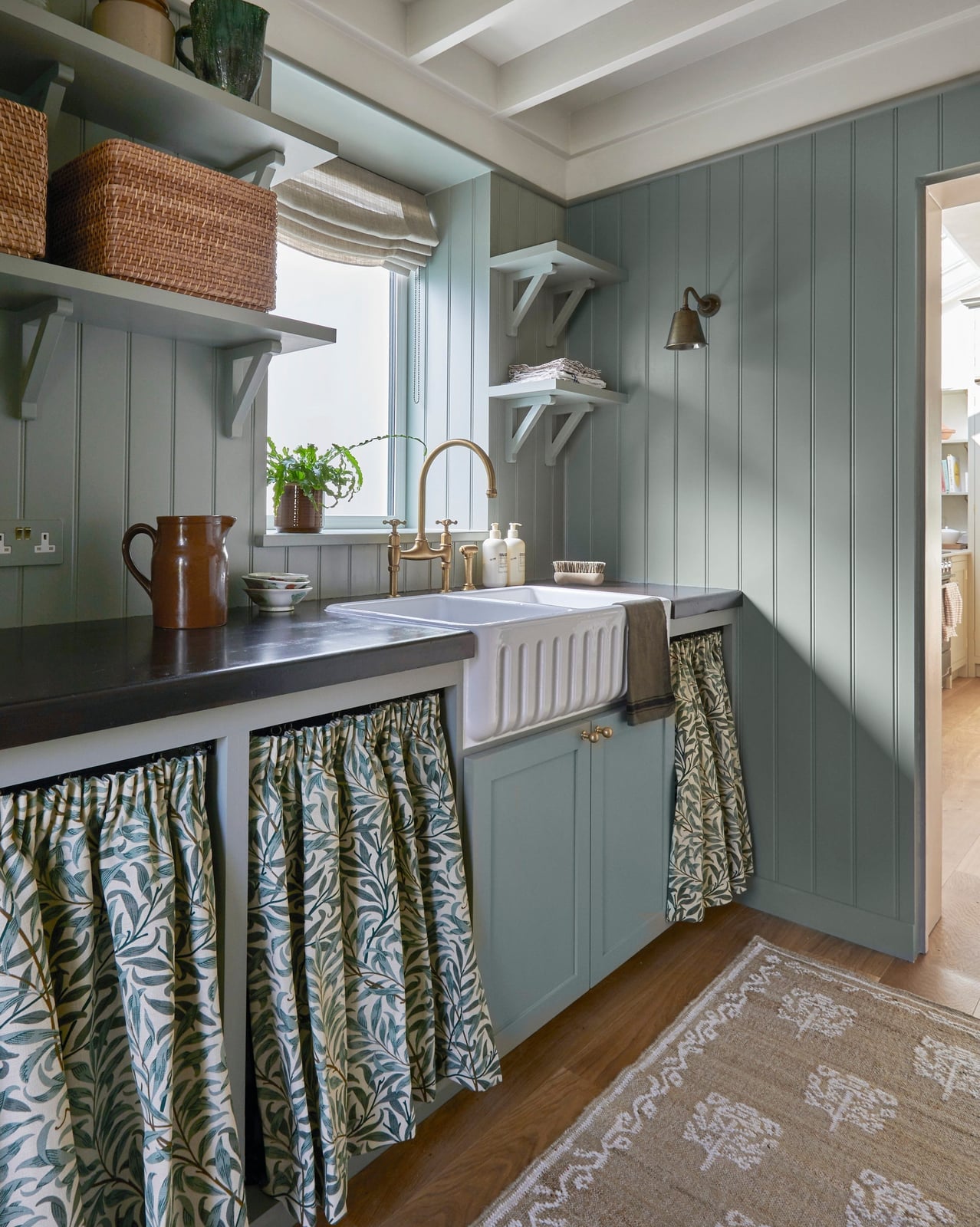
Sage green paneled walls wrap the sink area in a soft, earthy tone that reads as a separate zone within the kitchen. The farmhouse sink and brass faucet keep the look classic, while patterned curtains at the window add a casual layer. Blue accents elsewhere in the room tie the sage back to the broader palette. This approach works well when you want to define a work zone without building a wall. The green reads as an intentional pause rather than a leftover color.
Scale and Proportion: Soft Blue Cabinetry and Marble Island
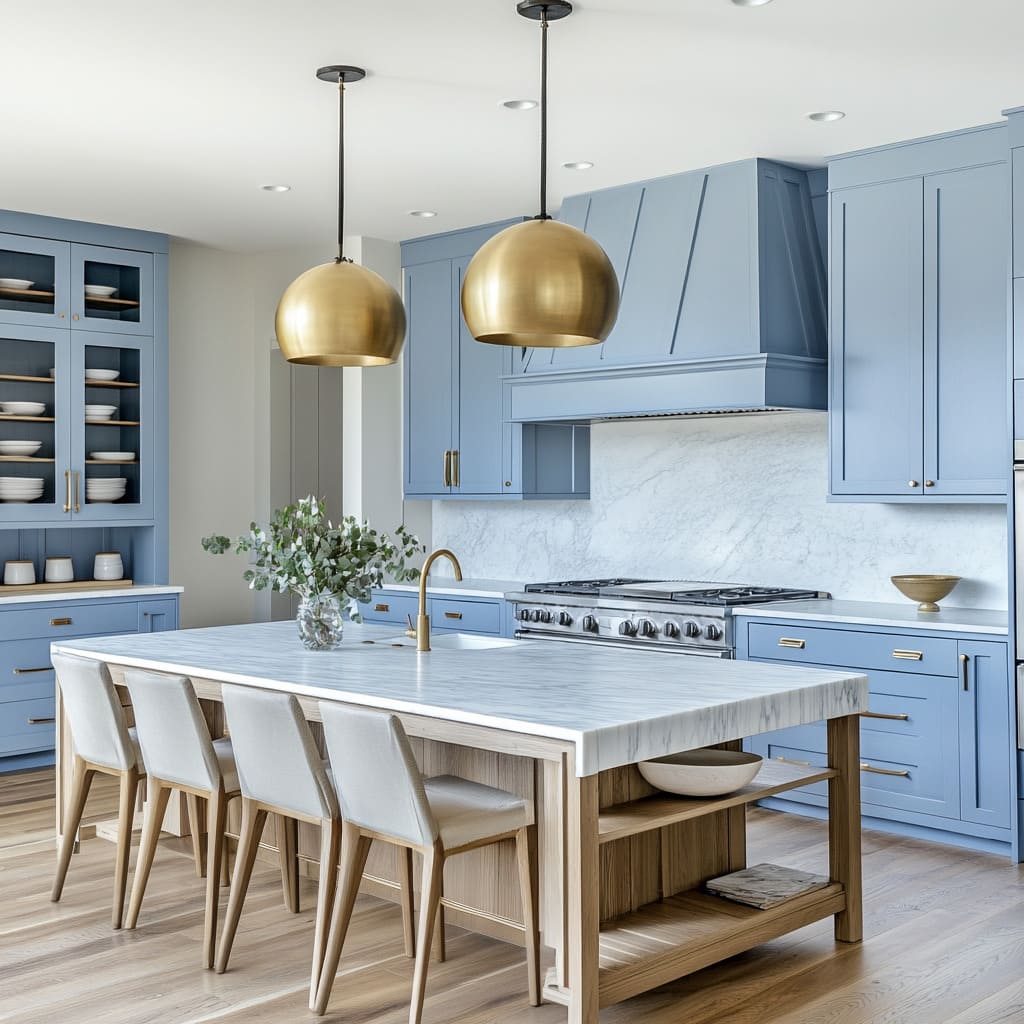
This kitchen is a study in proportion: light blue cabinets wrap the perimeter, and a marble island sits at the center without overwhelming the room. The island’s waterfall edge and brass hardware echo the cabinet pulls, creating a visual line across the open plan. Pendant lights hang low enough to define the island as a separate zone but high enough to keep the view clear. In a roomy layout, a single large island in a lighter stone keeps the space from feeling crowded. The soft blue reads as a backdrop, letting the marble do the talking.
Storage: Blue Shaker Cabinets with Open Wood Shelving
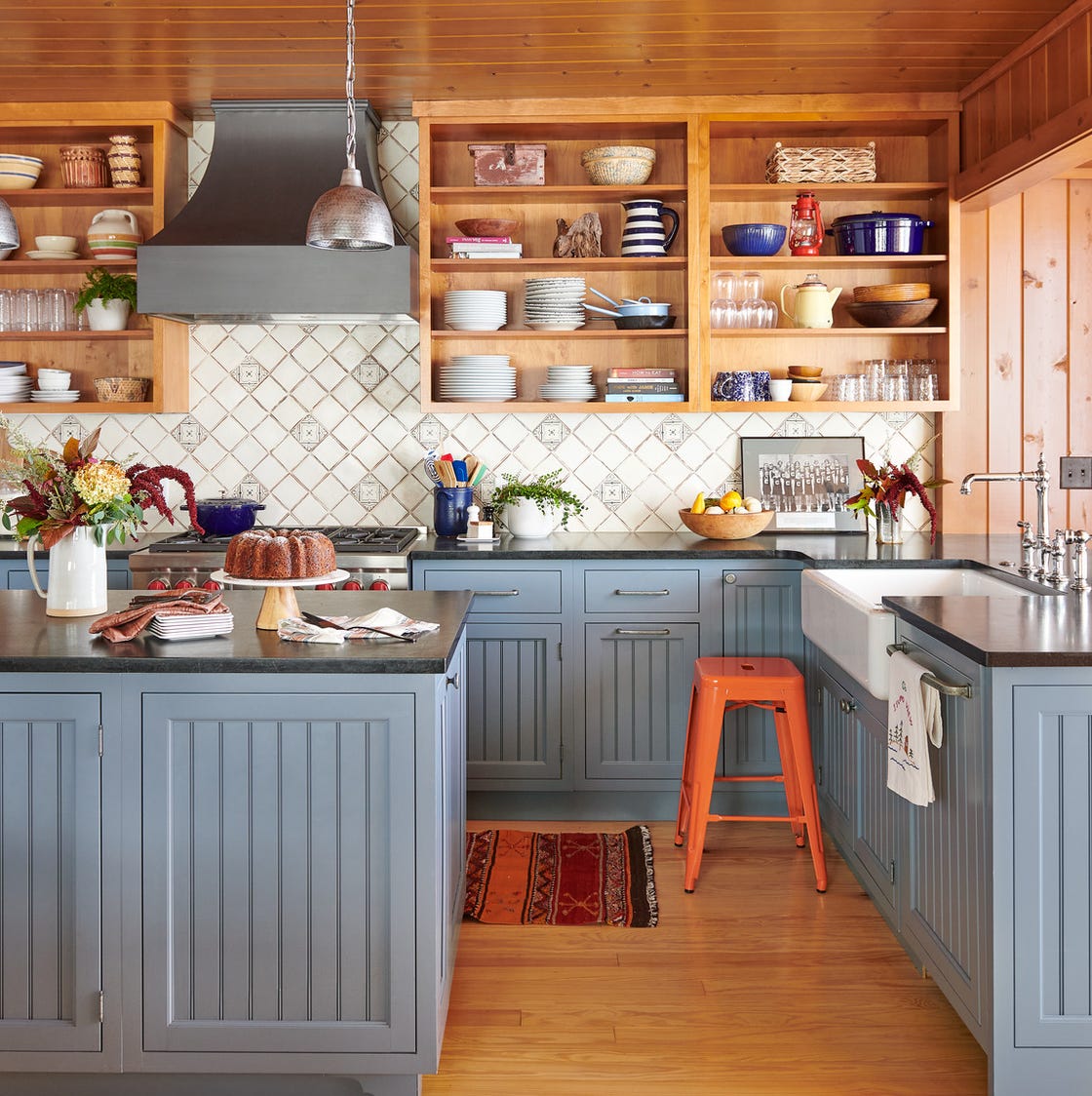
A galley kitchen can still feel generous when storage is split between closed cabinets and open shelving. Blue shaker cabinets keep the bulk of cookware out of sight, while open wood shelves above the farmhouse sink put everyday dishes on display. The orange accents in the ceramic pieces warm up the blue and wood palette, so the shelves look like intentional decor. Overhead and window light keep the compact layout from feeling closed in. The island adds prep space without blocking the flow, making the most of a smaller footprint without sacrificing function.
Palette: Muted Blue Cabinetry with Warm Wood Accents
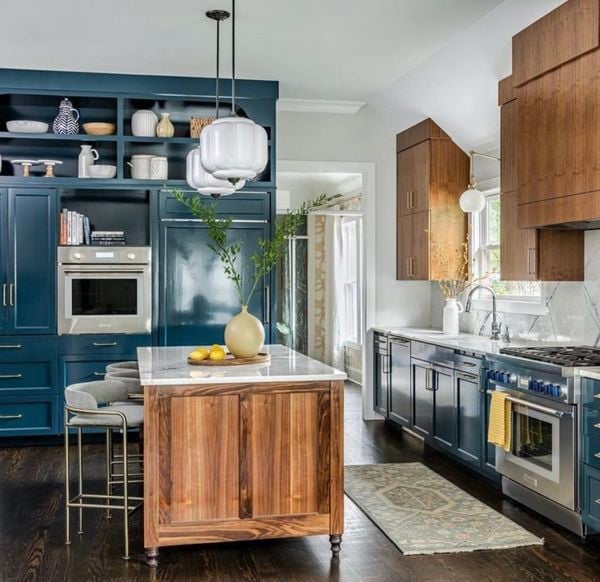
Muted blue cabinetry pulls back on saturation, so it pairs easily with marble countertops and wood accents without competing for attention. The white counters keep the look crisp, while the warm wood tones in the island and open shelving stop the palette from feeling cold. Pendant lights in a metal finish add a subtle contrast. The blend of soft blue, white, and wood creates a transitional kitchen that feels calm rather than stark.
Styling Variation: Coastal Open Plan with Light Blue Island
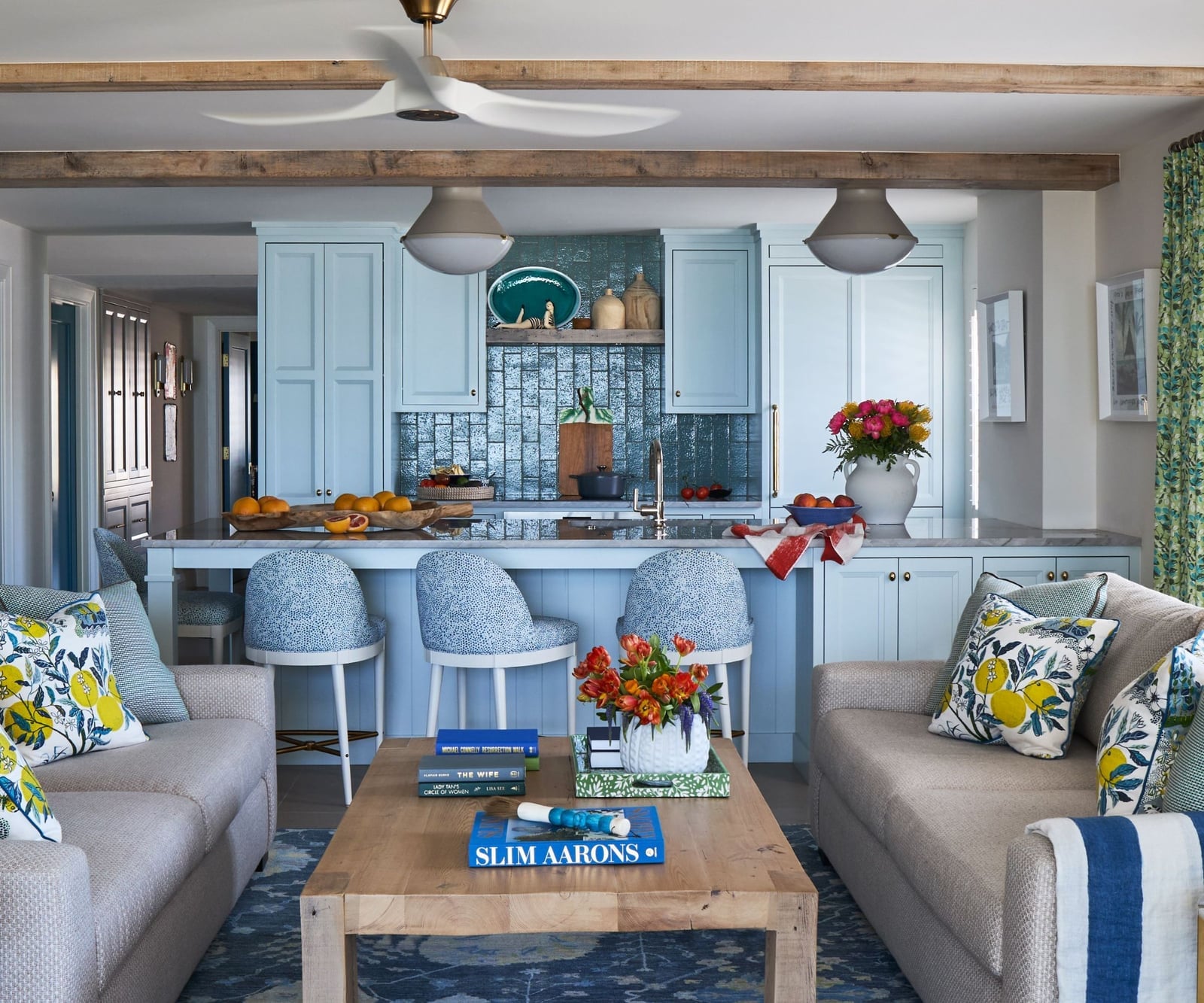
In an open plan, a light blue kitchen island can anchor the cooking zone without visually cutting off the living area. The bar stools face sofas and a coffee table, so the layout flows naturally from prep to seating. Beige and white tones in the upholstery and walls keep the palette airy, while green plants reinforce the coastal feel. Pendant lights hang above the island, and natural light from nearby windows keeps the whole space bright. A ceiling fan adds practicality for warmer months without disrupting the clean sightlines.
Durability: Deep Blue Shaker Cabinets and Subway Tile
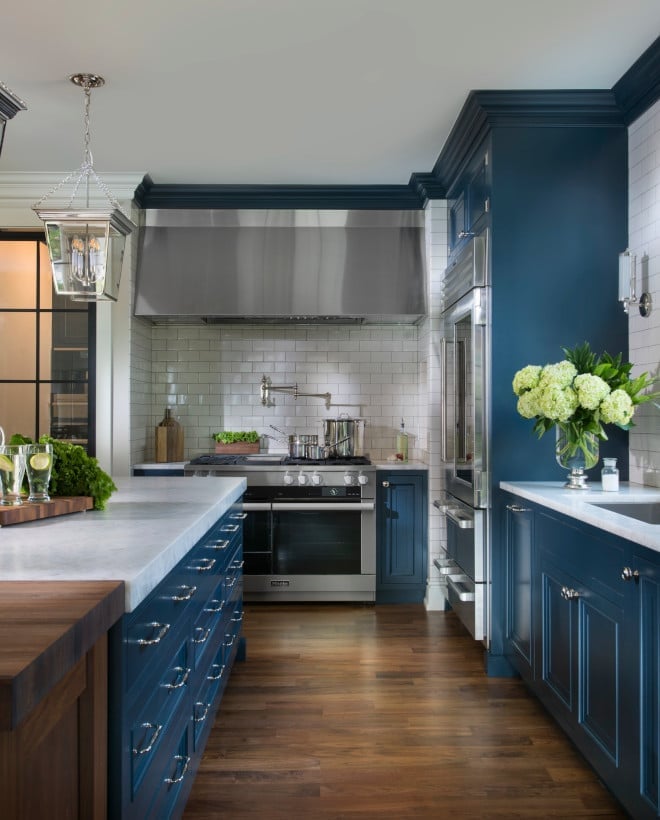
Deep blue shaker cabinets can read traditional or modern depending on what you pair them with. Here, the classic subway tile backsplash and white countertops lean toward the traditional side, while the simple cabinet profile keeps it current. The range sits in the L-shaped layout, with the island across from it for easy access. Pendant lights and natural light balance the darker cabinetry. The contrast between deep blue and white creates a clean backdrop that works with either brass or chrome hardware, depending on the look you want.
Styling Variation: Vibrant Blue Cabinets with Rustic Wood
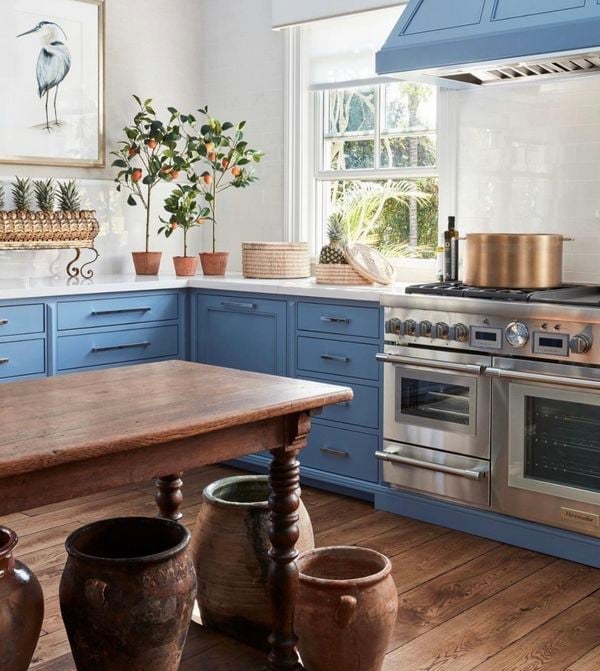
Vibrant blue cabinetry stands out more when it is set against rustic wood and ceramic pots instead of polished stone. The large range becomes a natural focal point, and the wooden table nearby softens the transition between the bright cabinets and the L-shaped counter layout. The blue reads as lively rather than heavy, and the overhead light fills in during evening hours. The mix of glossy tile, matte wood, and ceramic textures gives the room depth without adding clutter.
Scale and Proportion: Bold Blue Cabinetry and White Marble
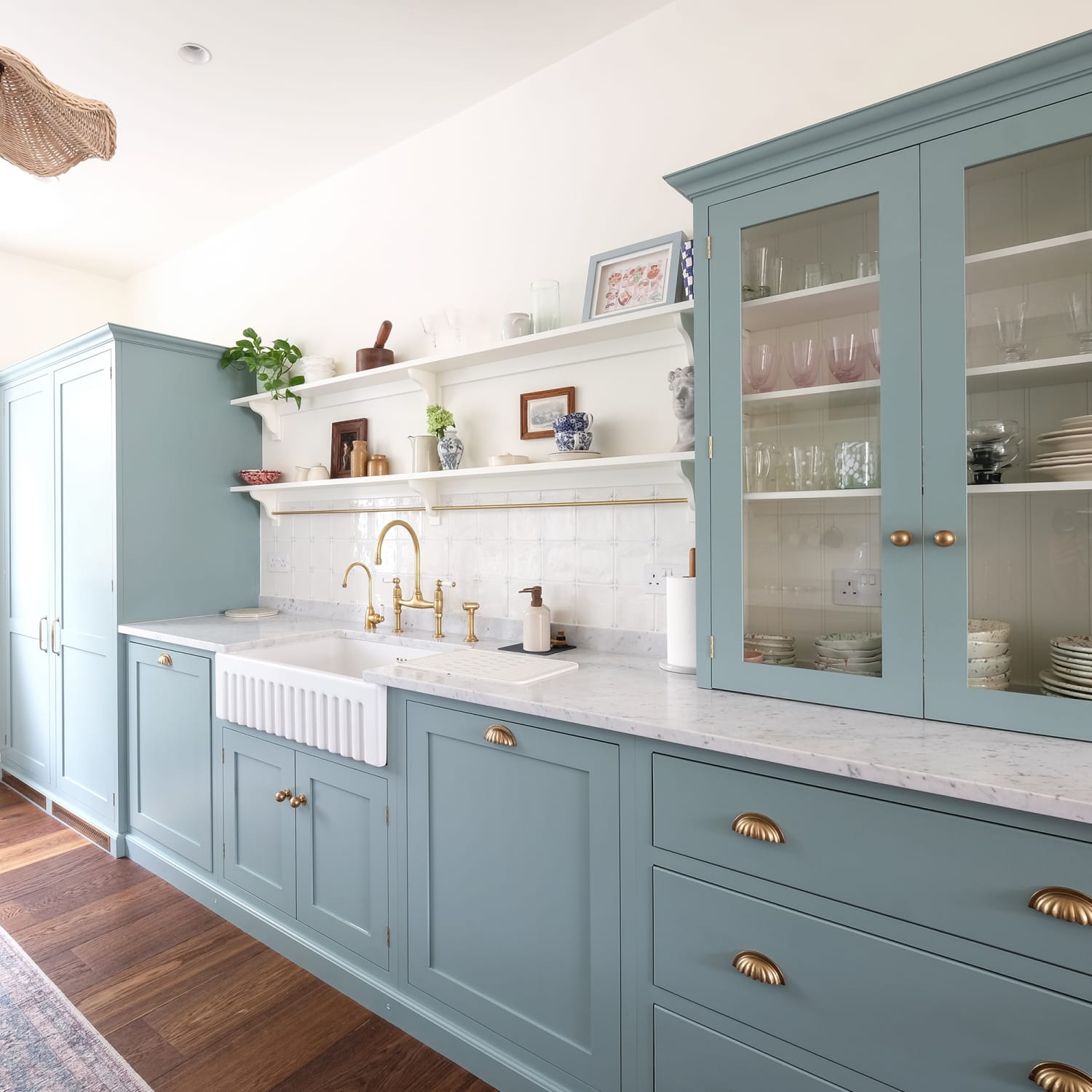
This kitchen makes a case for going all-in on a single saturated color. The bold blue cabinetry wraps the perimeter and the large island, creating a unified block of color that anchors the room. White marble countertops and a matching marble backsplash keep the look airy. The flooring and a few open shelves in wood tones add warmth. The result is a modern kitchen that feels deliberate. The palette works because the blue is the only dominant color, with white and wood playing supporting roles. That ratio, roughly 60 percent blue to 30 percent white and 10 percent wood, keeps the space from feeling like a themed room.
Materials: Bright Blue Glass-Front Cabinets
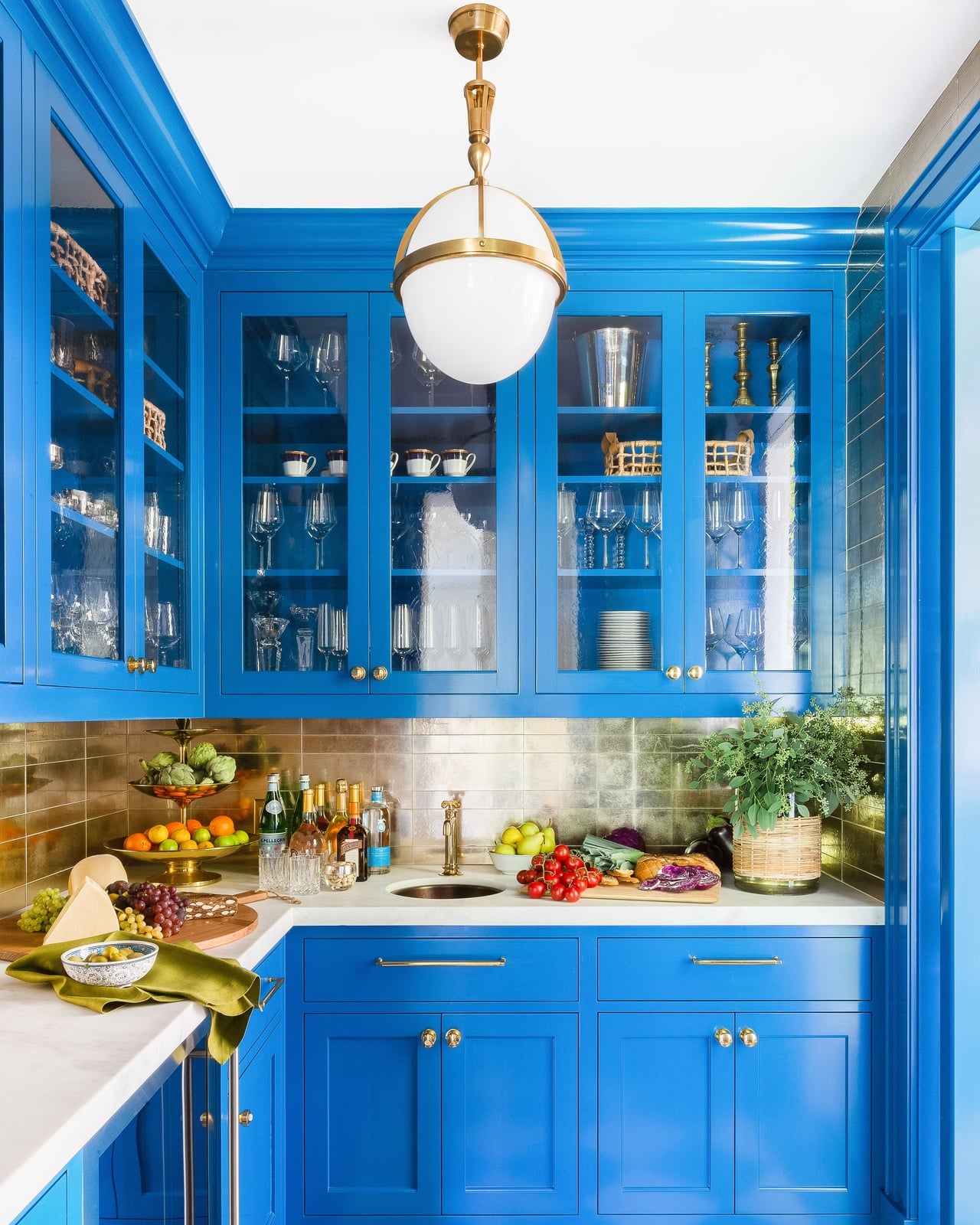
A practical rule for a bar area or a kitchen with limited display space: glass-front cabinets let you treat storage as decor. Here, bright blue lacquer frames the glass, with gold hardware adding a polished note. The interior shelves hold glassware and bar tools, so the setup is useful and ornamental at the same time. A marble countertop below provides a durable surface for mixing drinks or setting out small plates.
For a renter-friendly take, consider a freestanding glass-front cabinet in a bold color. It gives you the same look without painting existing cabinets or making permanent changes. Pair it with a marble-look butcher block cart or a small bar table. The gold hardware is a detail you can add with stick-on pulls or by swapping out the handles on a secondhand piece. The effect is glam without the commitment.
Lighting: Woven Pendant Lights with Muted Blue Cabinetry
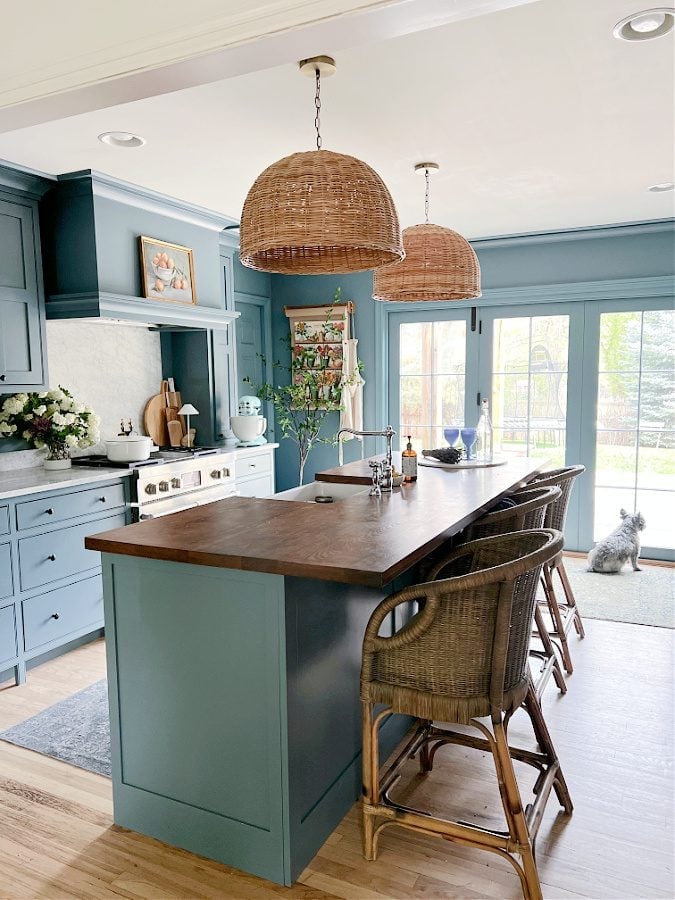
The pendant lights here are large enough to read as sculptural objects. Woven rattan shades soften the hard lines of a marble island and muted blue cabinetry, adding texture at eye level. Natural light from nearby doors keeps the room bright during the day, while the pendants provide focused illumination for food prep and dining. The choice of woven shades rather than metal or glass keeps the look relaxed. It is a reminder that lighting can do more than light a room, it can set the tone for the whole kitchen.
Styling Variation: Coastal Island with Rattan Stools
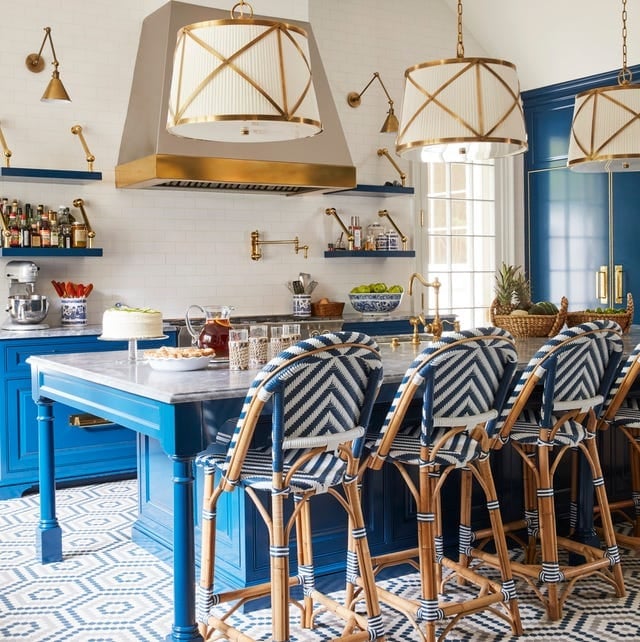
A vibrant blue island pulls the eye immediately, but the kitchen stays neutral. White cabinetry, marble countertops, and a white tile backsplash let the island take center stage. Rattan bar stools introduce a natural, coastal feel without competing with the island’s saturated finish. Wall sconces near the range hood add soft light and a bit of symmetry. The look is clean and beachy, but it avoids the usual nautical cliches. The key is restraint: one bold piece, natural textures, and plenty of white space.
Materials: Dark Blue Cabinets and Blue Patterned Tile
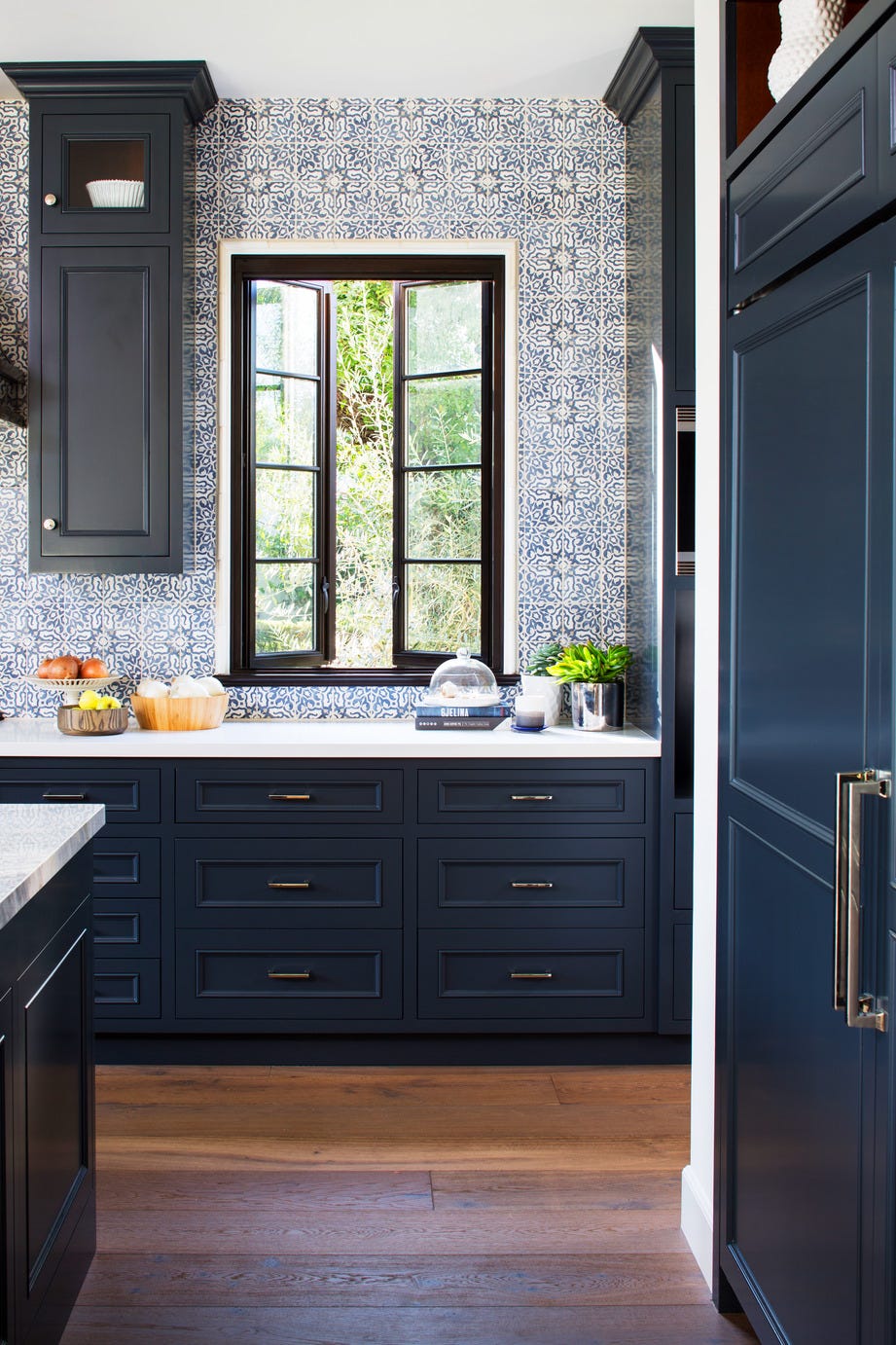
A dark blue cabinet can feel heavy without contrast. This kitchen avoids that by pairing the cabinets with a blue patterned tile backsplash that is a lighter, more playful version of the same color. The tile becomes the focal point, drawing the eye without fighting the cabinetry. White countertops and a light wood floor keep the kitchen from feeling too dark.
This approach works well for a transitional style kitchen. The patterned tile adds personality, but the palette stays within a single color family, so the look is cohesive. To recreate it, look for a backsplash tile that includes the cabinet color in its pattern. It ties the two elements together without requiring an exact match.
Lighting: High-Gloss Blue Cabinetry with Statement Chandelier
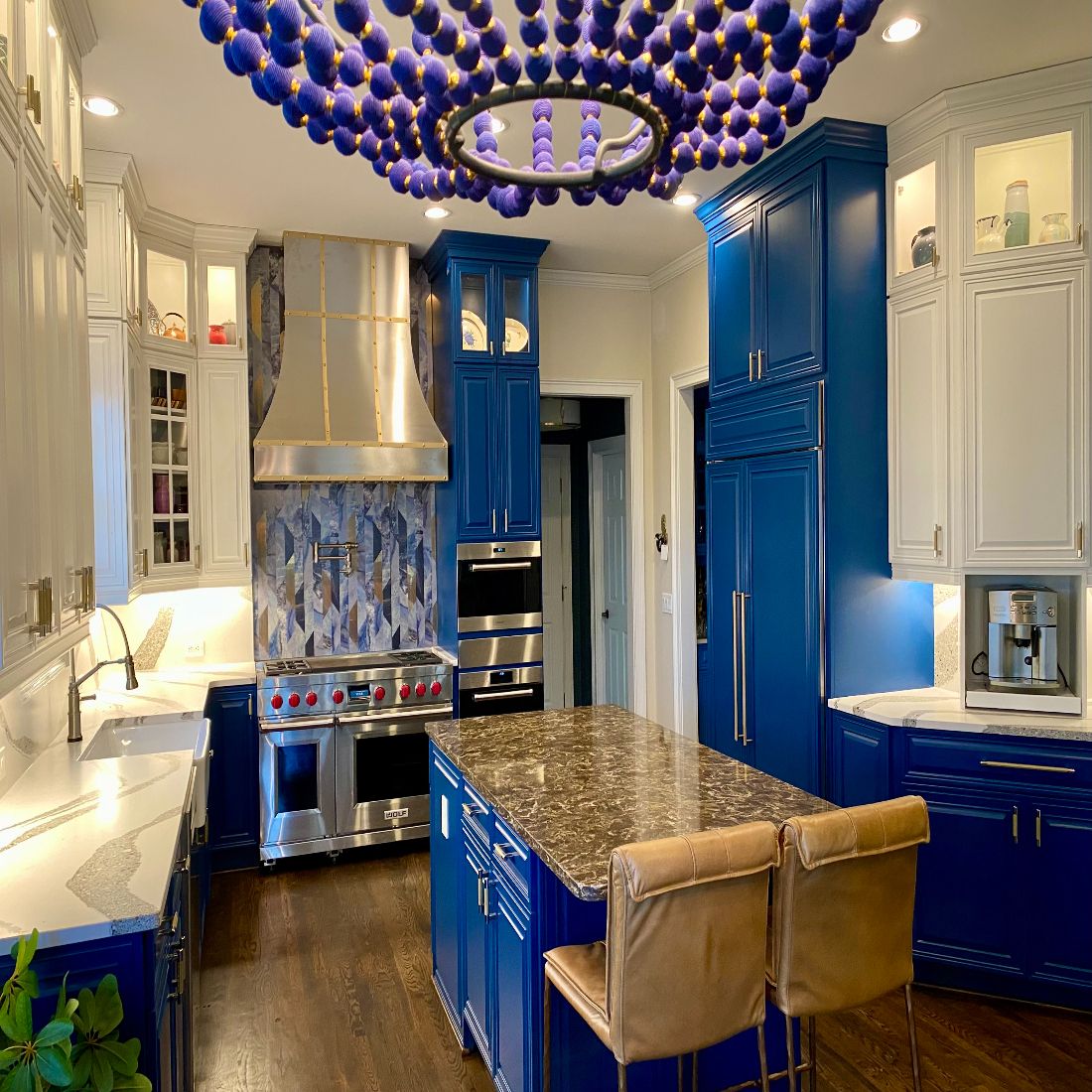
A blue spherical chandelier turns a modern kitchen into a room with a clear focal point. The glossy lacquer cabinets and large island anchor the open plan, while the orb-shaped fixture adds a sculptural contrast to the straight lines of cabinetry and the professional range. Recessed lights and under-cabinet lighting handle the task work. The chandelier is the element that makes the space feel deliberate rather than purely functional. For a similar effect in a smaller kitchen, a single pendant with a rounded shade can provide the same visual pull without overwhelming the ceiling line.
Styling Variation: Dark Blue Herringbone Tile Backsplash
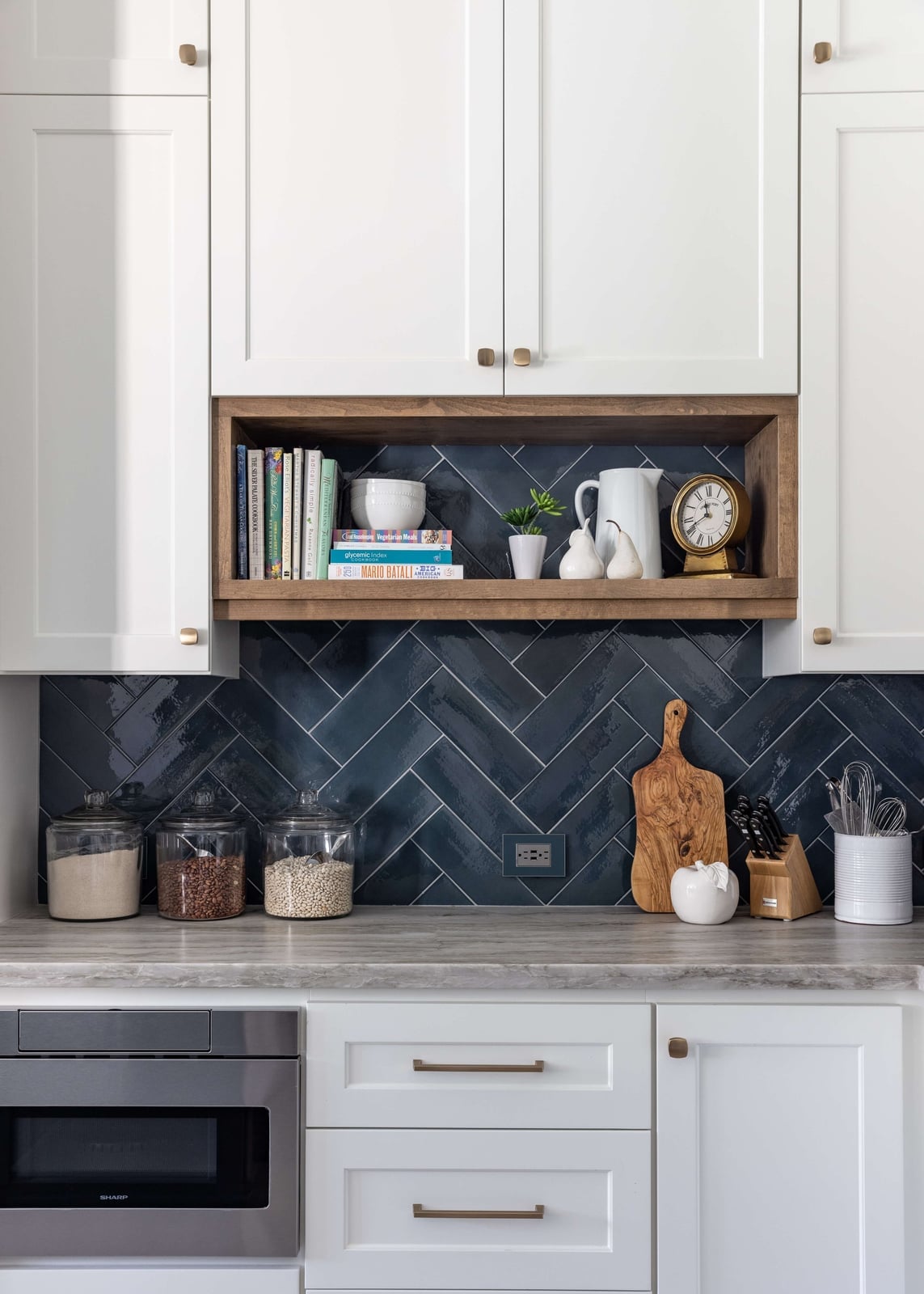
A dark blue herringbone tile backsplash changes how the whole kitchen feels. Against white cabinets and a neutral stone countertop, the pattern adds texture and a clear color anchor without making the room feel closed in. The herringbone layout gives a traditional tile shape a more modern movement. It works especially well in a compact kitchen, where a single strong surface can do the work of several decorative elements. The white cabinetry keeps the look balanced, so the backsplash adds depth without feeling heavy. The combination of a deep blue pattern with light upper cabinets is a reliable ratio for adding depth without losing brightness.
Final Thoughts
Blue is a color that adapts to whatever mood you want in your kitchen, from cozy and traditional to sleek and modern. The kitchens we have walked through show how small choices, like cabinet finish, hardware, or a tile pattern, shift the whole feel of the space. When you bring in blue, you are not just picking a paint color. You are setting the tone for how the room lives every day. Let your own light, layout, and daily habits guide which shade of blue fits best. That is the real takeaway here: blue works when it works for you.