
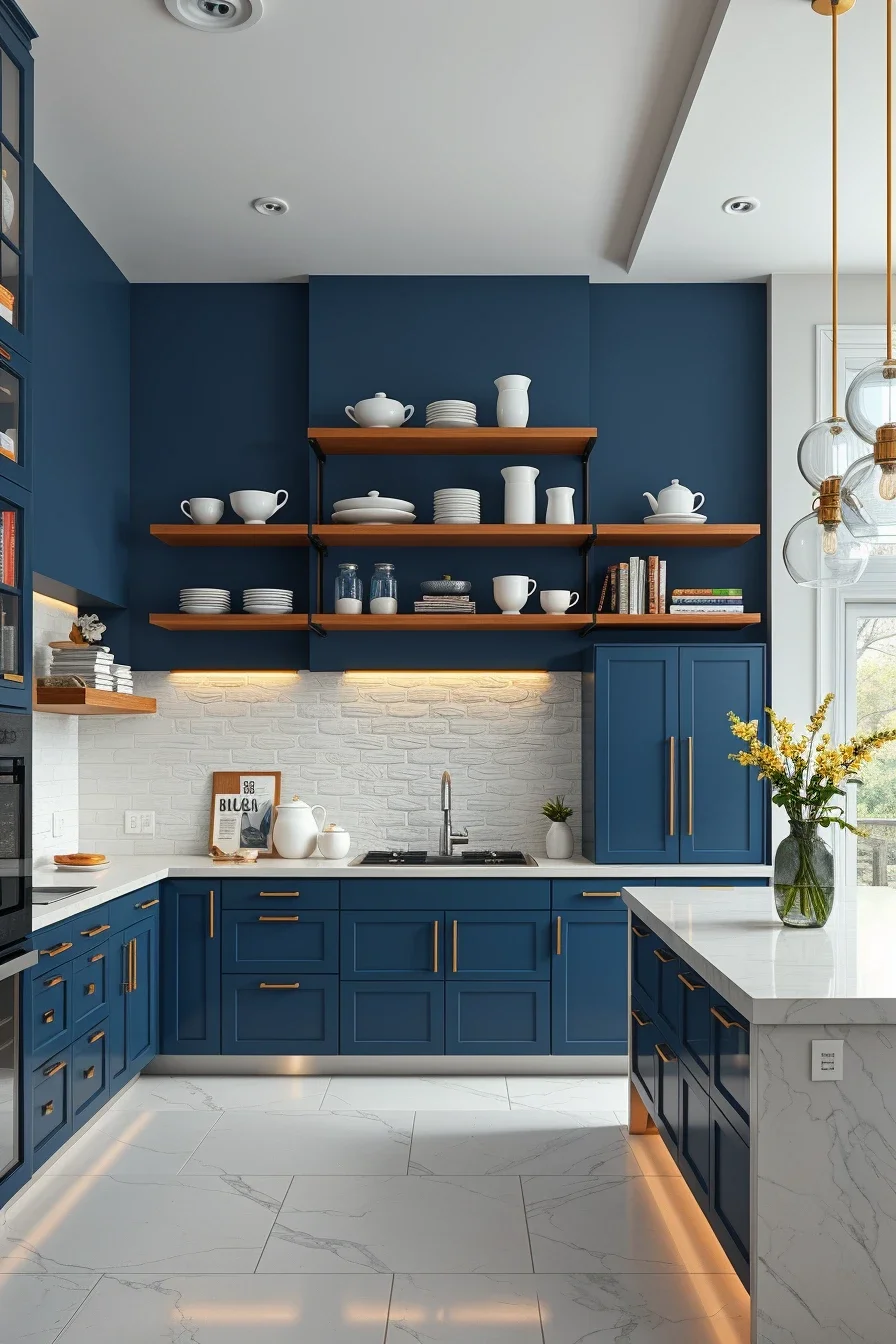
Blue and white kitchen layout inspiration continues to be one of the most popular choices for creating a fresh, stylish, and welcoming home. This timeless color combination works beautifully in both compact kitchens and spacious open-concept layouts. From rich navy cabinetry to soft powder blue accents, there are countless ways to personalize the design while maintaining a bright, balanced look. Smart layouts, modern materials, and carefully selected finishes can make the space feel both functional and visually stunning. Whether you’re planning a complete renovation or looking for simple design ideas, blue and white kitchens offer endless possibilities. This collection of inspiring layouts will help you discover creative ways to design a kitchen that feels elegant, practical, and uniquely your own.
Why Blue And White Kitchens Feel Timeless Yet Modern
I have always believed that the lasting popularity of blue and white kitchens comes from the perfect balance between warmth, freshness, and sophistication. White naturally reflects light and makes even compact layouts feel open, while blue introduces depth without overwhelming the room. Whether I choose rich navy, soft powder blue, or vibrant cobalt, the pairing creates a clean foundation that easily adapts to changing design trends. This combination feels equally appropriate in contemporary homes and traditional interiors, making it one of the safest long-term investments for any renovation.
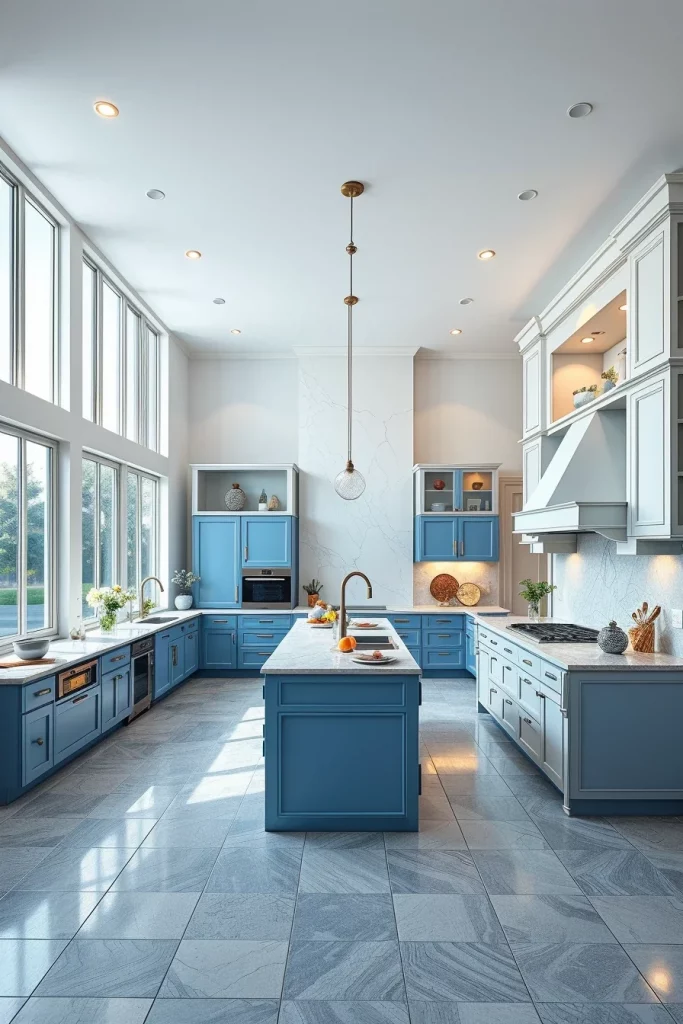
When I design this type of kitchen, I carefully balance cabinetry, countertops, flooring, and lighting so no single element dominates the space. White cabinetry keeps the room bright, while blue cabinets, an island, or decorative accents create visual interest. Quartz countertops, integrated appliances, sleek hardware, oversized windows, layered lighting, and comfortable seating all contribute to a practical layout that feels comfortable for everyday cooking and entertaining. Every piece serves both a functional and aesthetic purpose.
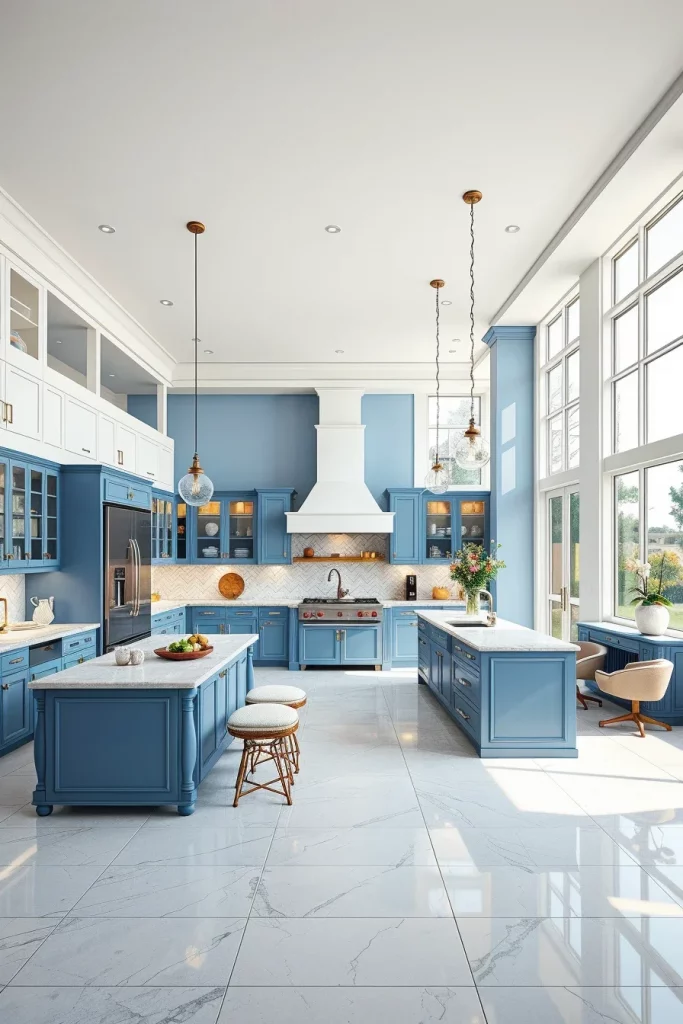
I often recommend following the approach promoted by respected publications like Architectural Digest and House Beautiful, which emphasize combining timeless materials with restrained color palettes rather than chasing short-lived trends. From my experience, this philosophy allows homeowners to update accessories over time without replacing major elements. I find that blue and white kitchens age gracefully because the color pairing remains elegant regardless of changing fashions.
To complete this design, I would add layered ambient lighting, subtle texture through backsplashes, comfortable seating near the island, and carefully selected decorative accessories that personalize the room without cluttering the overall composition.
Navy Blue Cabinets With Crisp White Countertops
Whenever I want to create a kitchen with dramatic contrast that still feels inviting, I choose deep navy cabinetry paired with bright white countertops. Navy grounds the room with confidence while the white surfaces bounce natural light throughout the space. This layout immediately creates a polished atmosphere without becoming overly formal, making it suitable for both busy family homes and open-concept entertaining spaces.
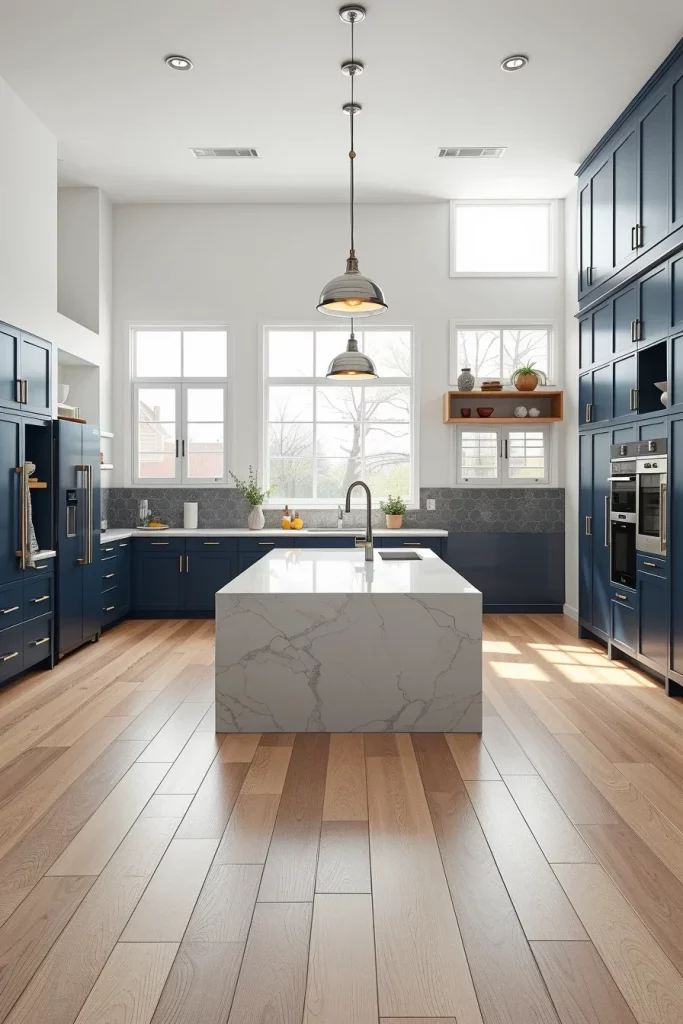
I like pairing full-height navy cabinets with white quartz countertops, a matching waterfall island, concealed storage, integrated appliances, minimalist hardware, and large pendant lighting above the island. White walls, oversized windows, and light flooring prevent the darker cabinetry from making the room feel enclosed. I also include open shelving with carefully selected ceramics and glassware to soften the stronger cabinet color.
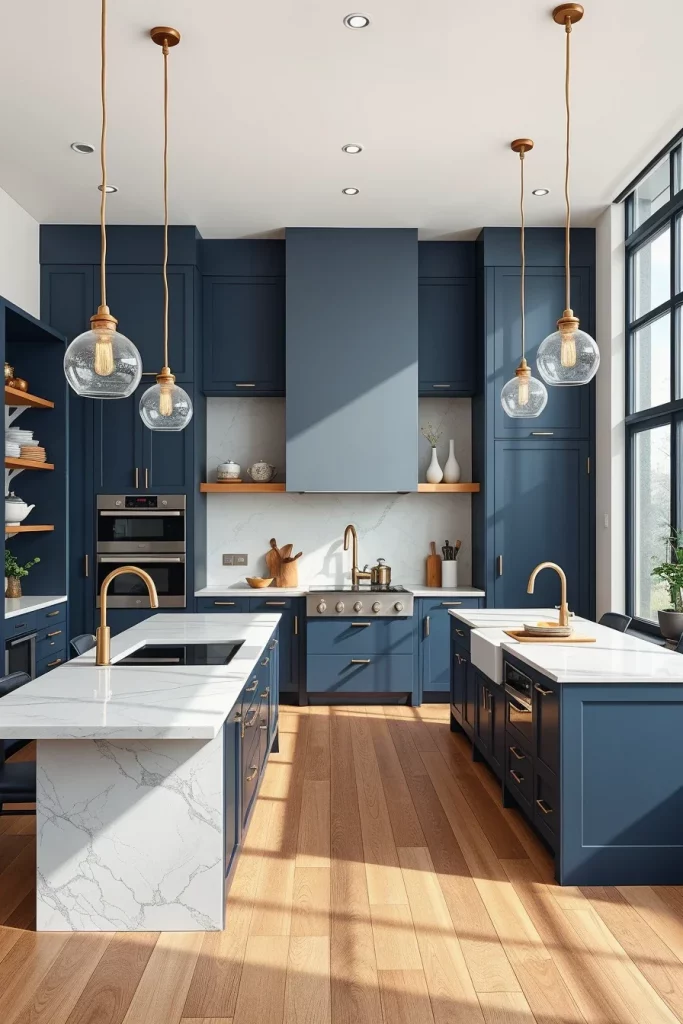
From my experience, this combination remains one of the easiest luxury-inspired looks to maintain over many years. Designers frequently recommend repeating navy throughout the room using smaller decorative details instead of introducing several competing colors. I have found this creates a much calmer visual flow while allowing the cabinetry to remain the focal point.
I would also include under-cabinet LED lighting, organized pantry storage, and comfortable counter stools that encourage people to gather naturally around the island.
Soft Sky Blue Kitchens Filled With Natural Light
Whenever I want a kitchen to feel calm and welcoming from the moment someone enters, I often choose soft sky blue combined with bright white finishes. This lighter palette reflects daylight beautifully and creates an airy atmosphere that works especially well in homes with large windows or glass doors. I find that this combination immediately makes the room feel larger while maintaining plenty of visual interest.
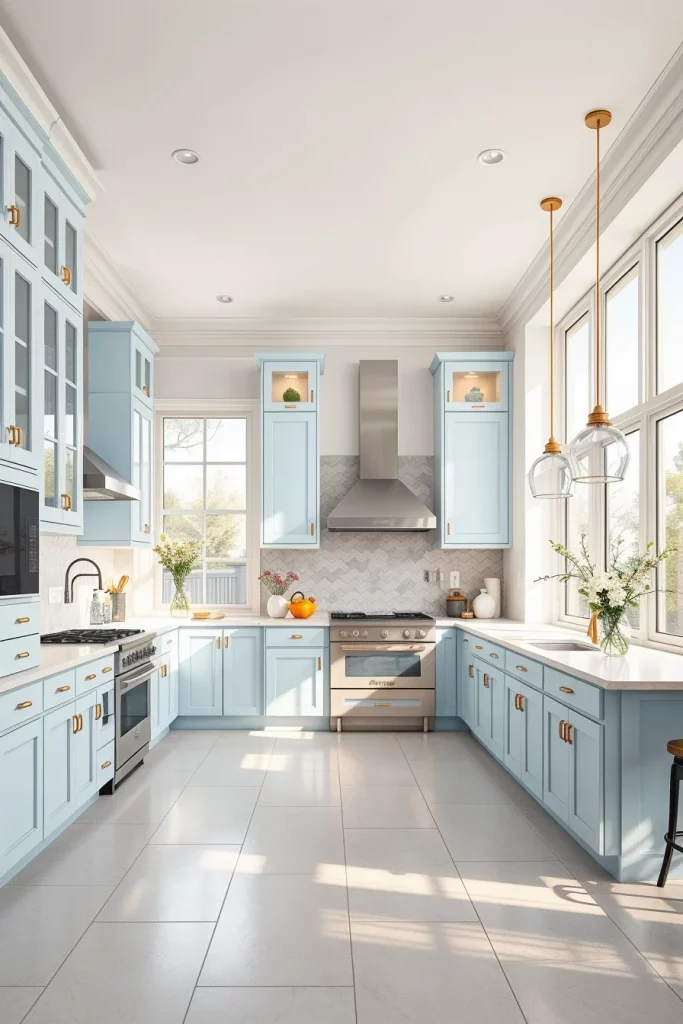
I usually combine sky blue cabinets with white countertops, white upper cabinets, light flooring, slim-profile hardware, simple backsplash tiles, and comfortable dining furniture positioned near the windows. Large glass pendants, subtle decorative bowls, woven seating, and understated textiles add texture without distracting from the clean color palette. Every furnishing contributes to a relaxed yet highly functional environment.
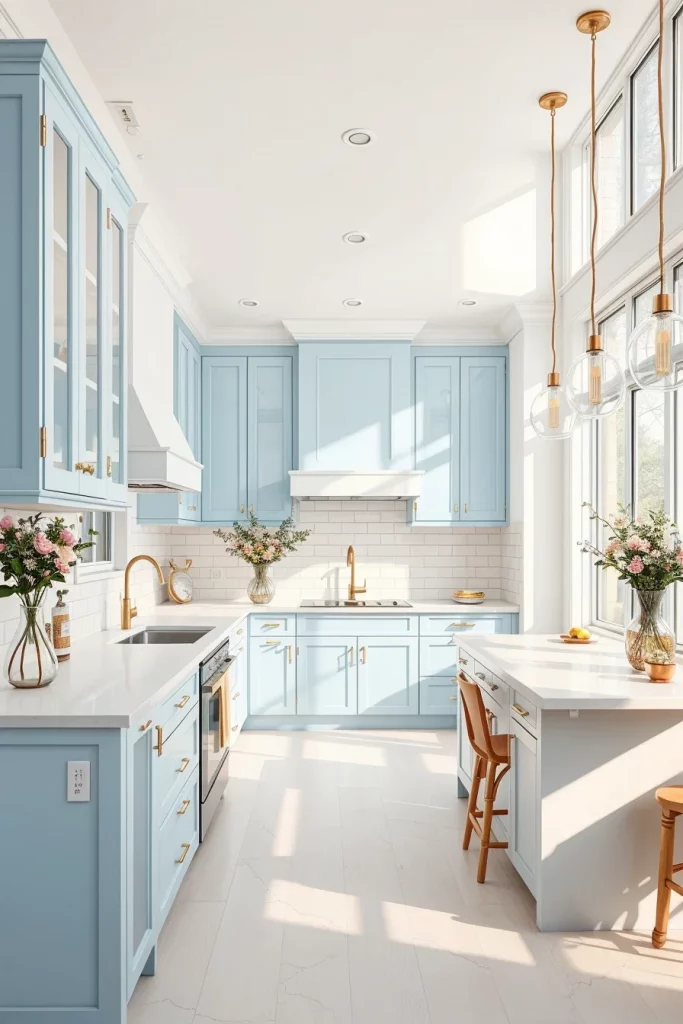
Many interior designers encourage maximizing daylight instead of relying entirely on artificial lighting, and I completely agree with that approach. In my own projects, I notice that lighter blues continuously change throughout the day as sunlight shifts, giving the kitchen a dynamic appearance without requiring additional decoration.
To complete this layout, I would include window treatments that preserve natural light, organized drawer systems, hidden recycling storage, and a few carefully chosen decorative accessories that introduce subtle warmth.
Deep Cobalt Kitchen Layout With Minimal Details
I enjoy using deep cobalt when I want a kitchen to make a bold statement while maintaining a refined appearance. The rich color immediately captures attention, but by keeping the surrounding details minimal, the overall layout remains balanced rather than overwhelming. White ceilings, white countertops, and uncluttered surfaces allow the cobalt cabinetry to become the star of the room without making the kitchen feel visually busy.
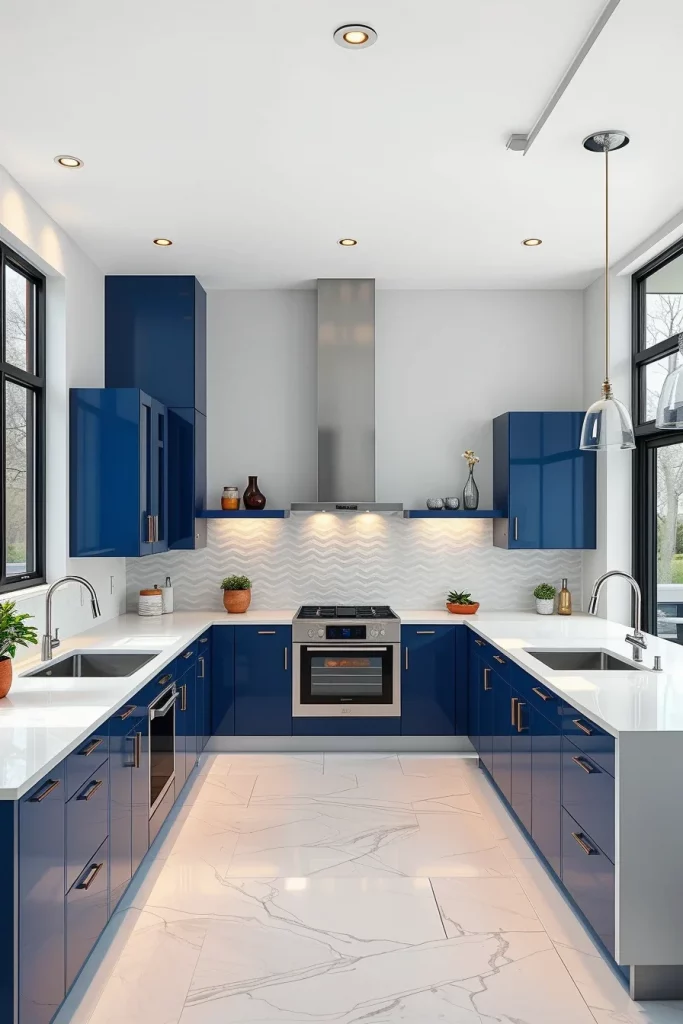
I typically combine flat-panel cobalt cabinets with integrated appliances, white quartz countertops, large-format flooring, concealed storage, streamlined hardware, and minimal open shelving. A simple backsplash, oversized windows, recessed lighting, and carefully positioned seating preserve the clean architectural appearance while keeping the kitchen highly practical for everyday use.
From my perspective, restraint is the key to making strong colors successful. Many contemporary designers recommend limiting decorative accessories whenever saturated cabinetry becomes the focal point, and I have consistently found that advice produces more sophisticated interiors. The result is a kitchen that feels confident, modern, and remarkably easy to enjoy for years.
I would finish this design with hidden organizational systems, soft-close cabinetry, layered task lighting, and a few understated decorative objects that complement the cobalt palette instead of competing with it.
Blue Kitchen Islands That Become The Focal Point
I often recommend making the kitchen island the centerpiece of the room, especially in an open-concept layout where it naturally attracts attention. A bold blue island immediately creates visual interest while allowing the surrounding white cabinetry to keep the space feeling bright and balanced. This approach works beautifully because it introduces color without overwhelming the kitchen, making the design feel both sophisticated and welcoming. I also appreciate how a statement island helps define the cooking and gathering zones in larger spaces.
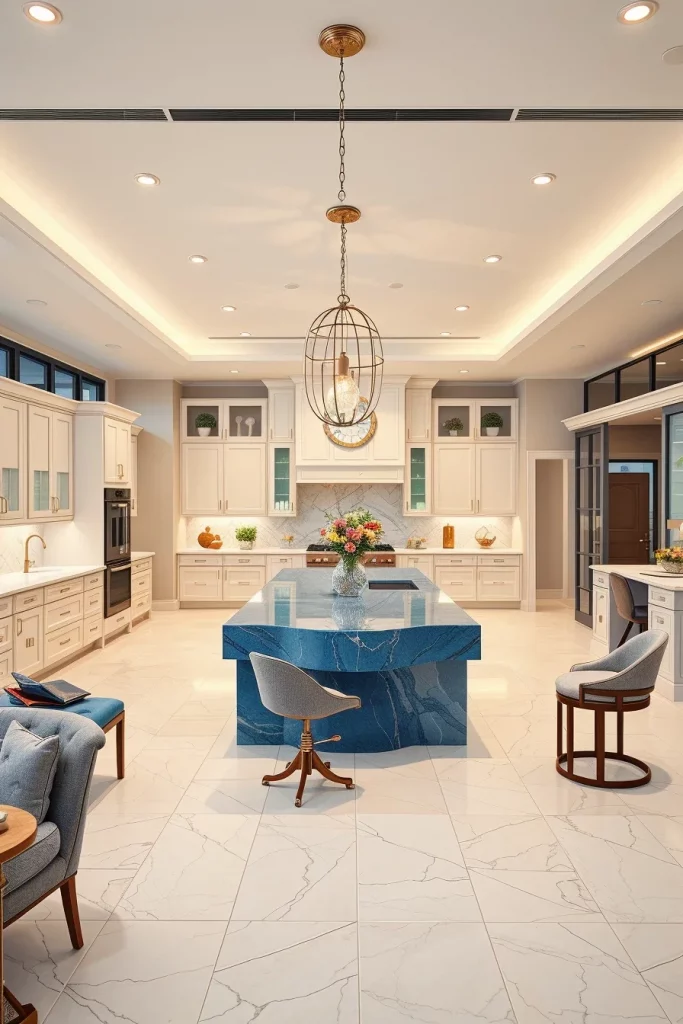
When designing this layout, I usually choose a generously sized blue island with a white quartz waterfall countertop, comfortable seating for family and guests, integrated storage drawers, and hidden electrical outlets for convenience. Surrounding the island with white cabinets, stainless steel appliances, understated hardware, and oversized pendant lights creates an elegant contrast. I also like incorporating a built-in microwave drawer, deep storage cabinets, and open shelving at one end of the island to maximize functionality while maintaining a clean appearance.
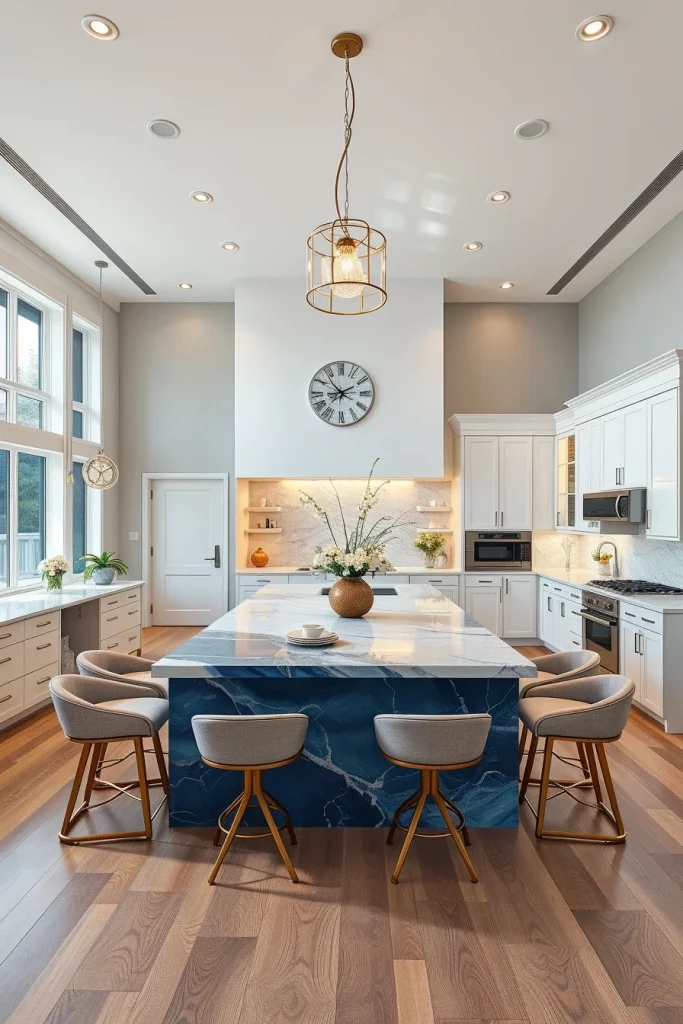
Many designers featured in Better Homes & Gardens recommend treating the island as both a workspace and a social hub, and I fully agree with that philosophy. In my experience, families naturally gather around the island throughout the day, whether preparing meals, enjoying breakfast, or simply spending time together. Investing in high-quality finishes for this feature often has the greatest visual impact on the entire kitchen.
To complete this design, I would add comfortable upholstered counter stools, under-island LED lighting, durable flooring around the seating area, and a decorative centerpiece that changes with the seasons without creating unnecessary clutter.
White Cabinets Paired With Bold Blue Accent Walls
I enjoy using white cabinetry together with a striking blue accent wall because it creates depth while preserving an open and airy atmosphere. Instead of relying entirely on colorful cabinetry, this layout allows the architectural features of the room to stand out. The white cabinets remain timeless and versatile, while the bold wall introduces personality that can easily be updated with new artwork or accessories over time.
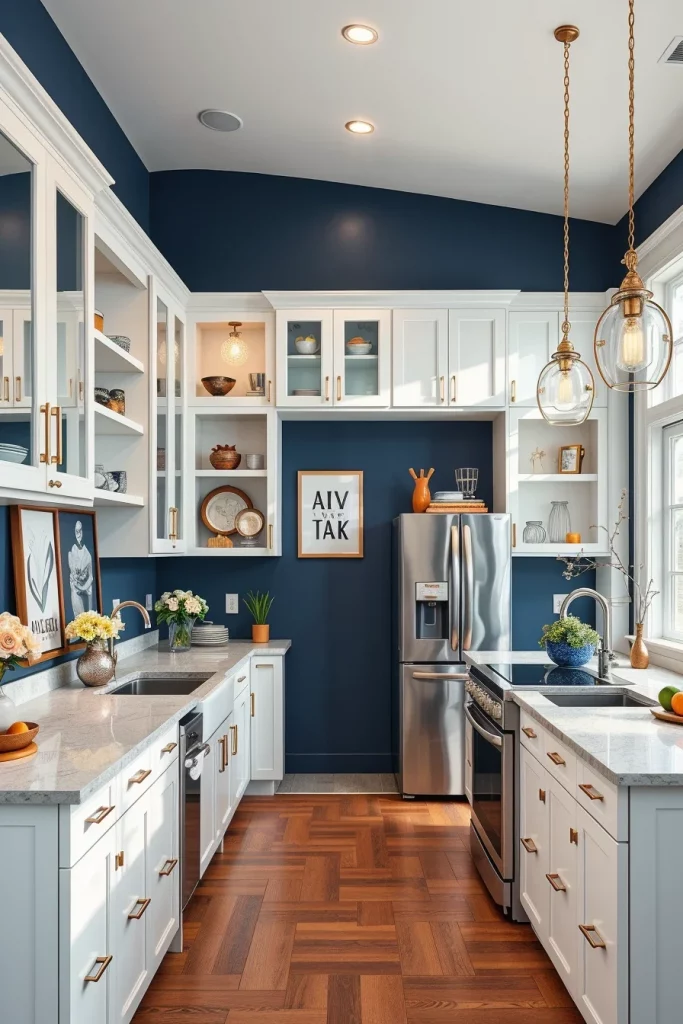
I typically pair full-height white cabinets with a rich navy or cobalt accent wall behind open shelving or the dining area. White quartz countertops, subtle backsplashes, brushed metal hardware, integrated appliances, and large windows maintain a bright interior despite the darker wall color. Decorative elements such as framed artwork, ceramic vases, and carefully selected lighting fixtures further enhance the contrast without making the space feel busy.
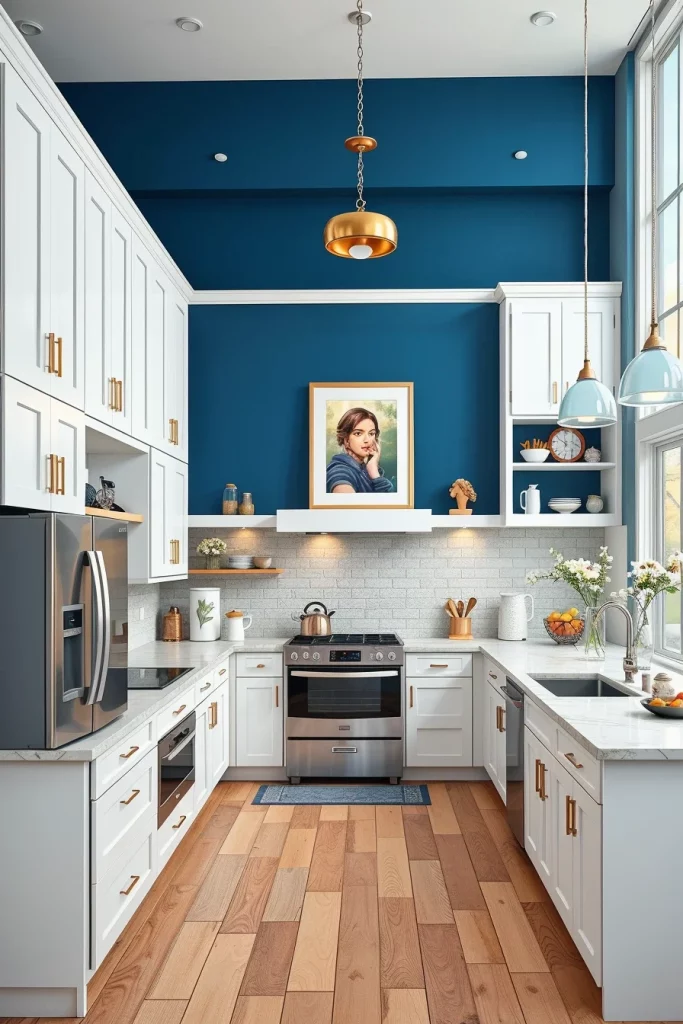
I have found that using color on the walls rather than throughout the cabinetry offers greater flexibility if design preferences change in the future. Many professional designers encourage limiting bold colors to one primary architectural surface, creating a balanced composition that remains visually appealing for many years. I appreciate this approach because it delivers strong visual impact with relatively simple design decisions.
To strengthen this layout even further, I would include layered lighting that highlights the accent wall, coordinated textiles, and decorative shelving that introduces texture without competing with the bold background.
Two-Tone Cabinet Layouts With Blue Lower Cabinets
One of my favorite layouts combines white upper cabinets with blue lower cabinets because it naturally balances lightness and visual weight. The white cabinetry keeps the upper portion of the room feeling spacious, while the blue base cabinets provide stability and character. I often recommend this arrangement for kitchens of nearly any size because it creates an elegant transition between the floor and ceiling without making the room feel top-heavy.
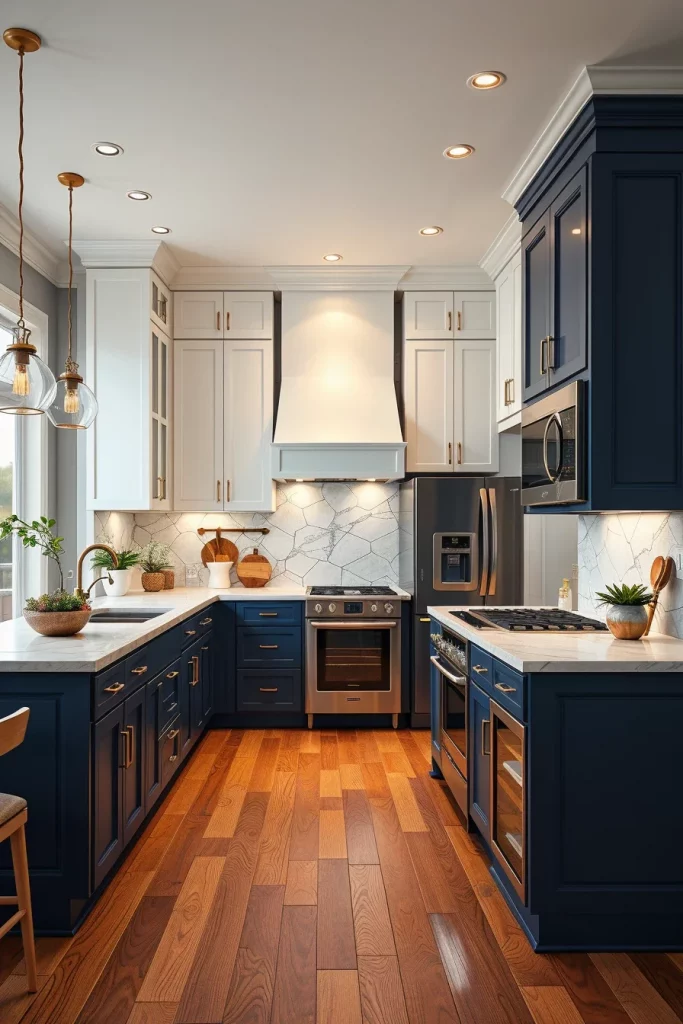
For this design, I usually install white shaker-style upper cabinets, deep blue lower cabinets, white stone countertops, a matching backsplash, integrated appliances, streamlined hardware, and a generously sized island if space allows. Warm flooring, under-cabinet lighting, organized drawer systems, and large windows further improve both functionality and comfort. Every element contributes to a kitchen that feels cohesive while remaining practical for everyday living.
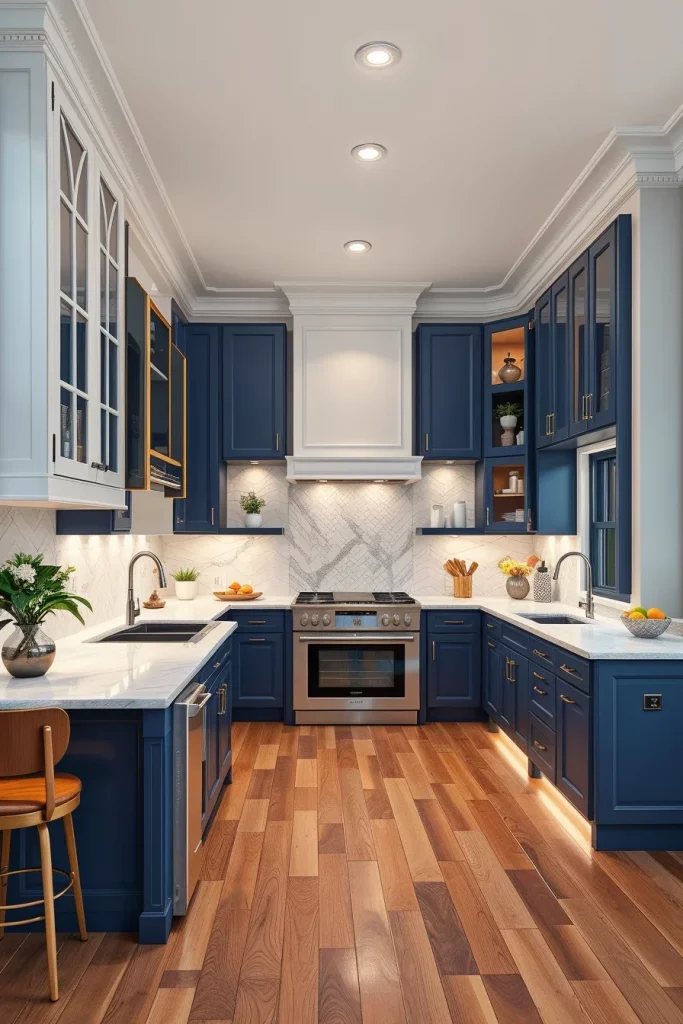
From my experience, this two-tone strategy is one of the most adaptable kitchen layouts available today. Interior designers frequently recommend using darker tones below eye level because they naturally conceal daily wear while keeping the overall room visually bright. I have consistently found this combination to be both beautiful and highly practical for active households.
I would also include pantry organizers, pull-out storage, soft-close drawers, and coordinated seating that echoes the blue cabinetry to reinforce the overall design language.
Glossy Blue Cabinet Finishes For A Contemporary Look
Whenever I want to create a sleek contemporary kitchen, I often select glossy blue cabinetry that reflects both natural and artificial light. The polished surfaces add energy to the room while making the overall layout appear larger and brighter. Combined with crisp white finishes, the glossy cabinets create a refined aesthetic that feels clean, sophisticated, and perfectly suited for modern living.
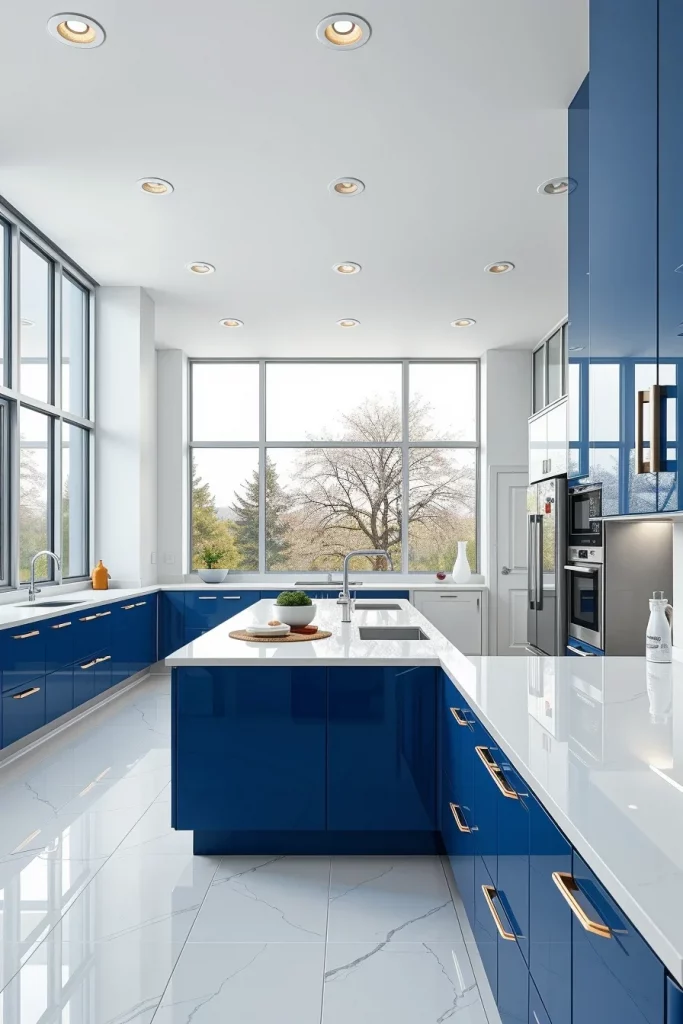
I like combining high-gloss blue cabinets with white quartz countertops, handleless cabinet fronts, integrated appliances, large porcelain floor tiles, recessed lighting, and oversized windows. A streamlined island, minimalist bar stools, and simple decorative accessories maintain the uncluttered appearance while allowing the reflective cabinetry to become the primary design feature. Every furnishing supports a cohesive contemporary aesthetic.
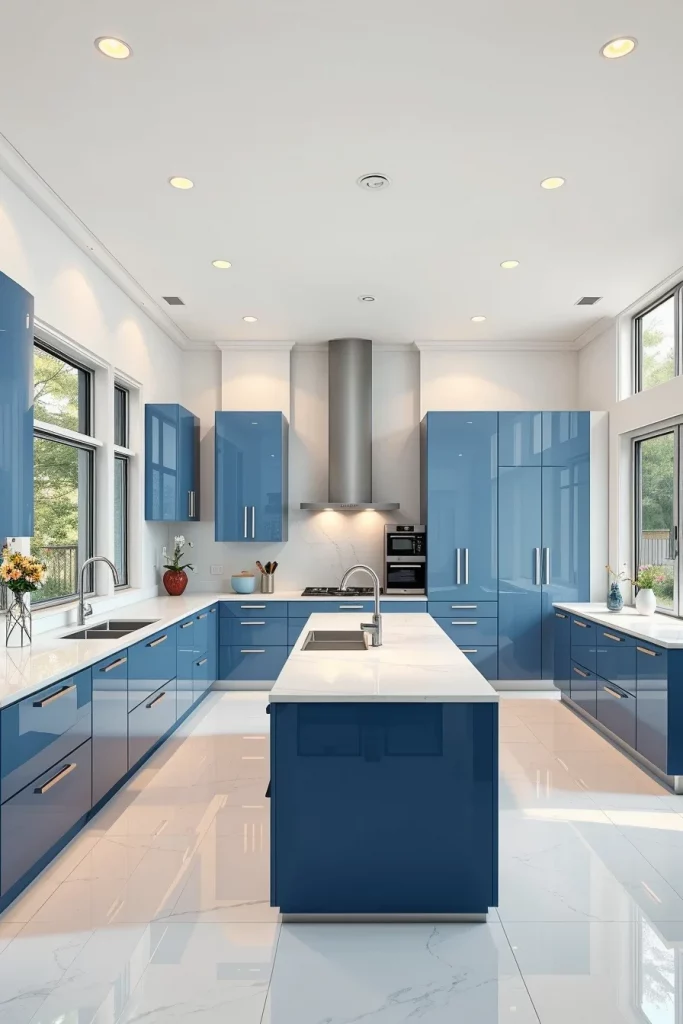
In my opinion, glossy cabinetry performs best when paired with restrained decoration and simple architectural lines. Many modern kitchen specialists recommend avoiding excessive ornamentation so the reflective surfaces remain the focus of the room. I have found that this creates a polished interior that feels elegant without becoming cold or sterile.
To enhance this layout further, I would add concealed storage solutions, integrated charging stations, subtle LED lighting, and carefully selected decorative objects with matte finishes to balance the glossy cabinetry.
Matte Blue Kitchen Designs With Clean Architectural Lines
I appreciate matte blue cabinetry because it offers a softer, more understated appearance while still introducing rich color into the kitchen. Unlike glossy finishes, matte surfaces absorb light and create a calm atmosphere that complements clean architectural forms. When paired with white countertops and uncluttered layouts, the result is a kitchen that feels sophisticated, comfortable, and effortlessly modern.
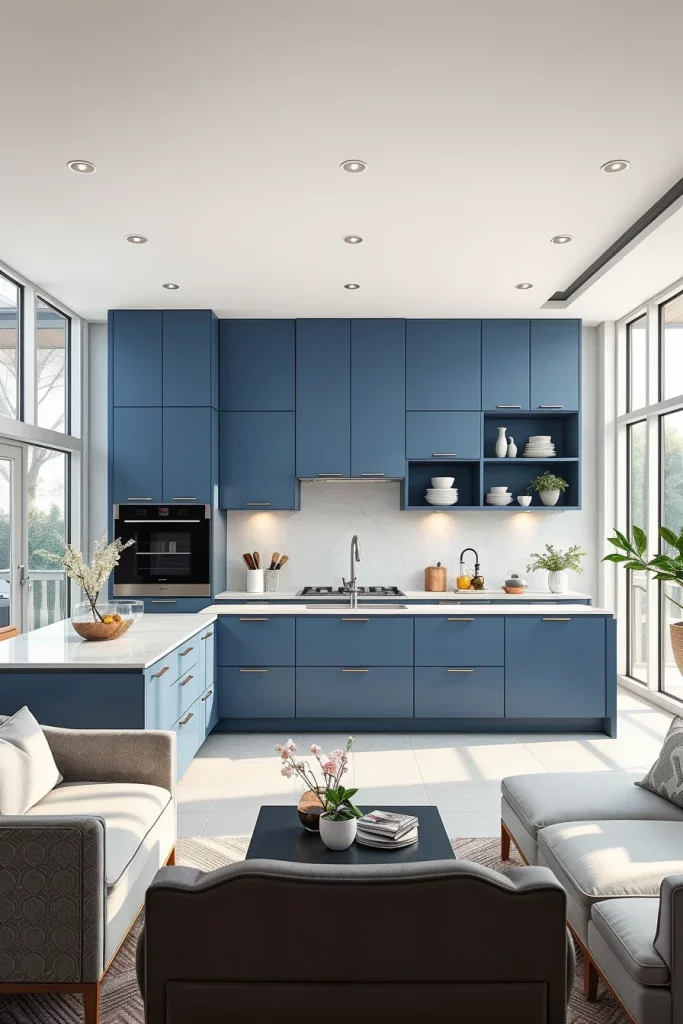
For this style, I typically select matte blue flat-panel cabinets, white quartz countertops, integrated appliances, minimalist hardware, slim open shelving, and a simple full-height backsplash. Large windows, recessed ceiling lighting, spacious walkways, and carefully planned storage maintain the clean geometry of the room. I also prefer comfortable seating with soft upholstery that subtly contrasts with the crisp cabinetry.
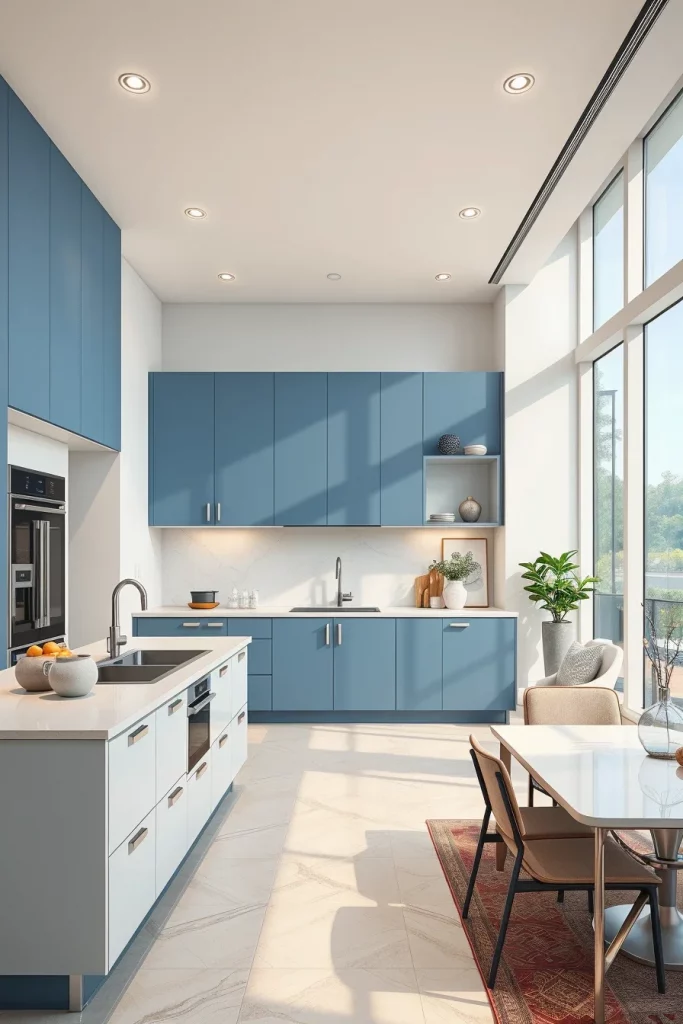
I have noticed that matte finishes are exceptionally forgiving in busy households because fingerprints and minor imperfections tend to be less visible than on highly polished surfaces. Many contemporary designers also appreciate matte cabinetry for its ability to highlight architectural proportions rather than surface reflections. I find this creates interiors that remain visually balanced throughout the day under different lighting conditions.
To complete this kitchen, I would include hidden pantry storage, layered task lighting, integrated waste sorting systems, and a few sculptural decorative pieces that reinforce the clean, architectural character of the overall design.
Elegant Marble Surfaces In Blue And White Kitchen Layouts
I find that marble is one of the easiest ways to make a blue-and-white kitchen feel refined without making it appear overly formal. Whether I choose white marble with soft gray veining or a polished quartz surface with a marble appearance, it instantly brightens deep blue cabinetry and reflects natural light throughout the room. This combination creates a timeless atmosphere while remaining practical for everyday cooking and entertaining. Large windows, balanced proportions, and uncluttered layouts allow the marble surfaces to become a natural focal point.
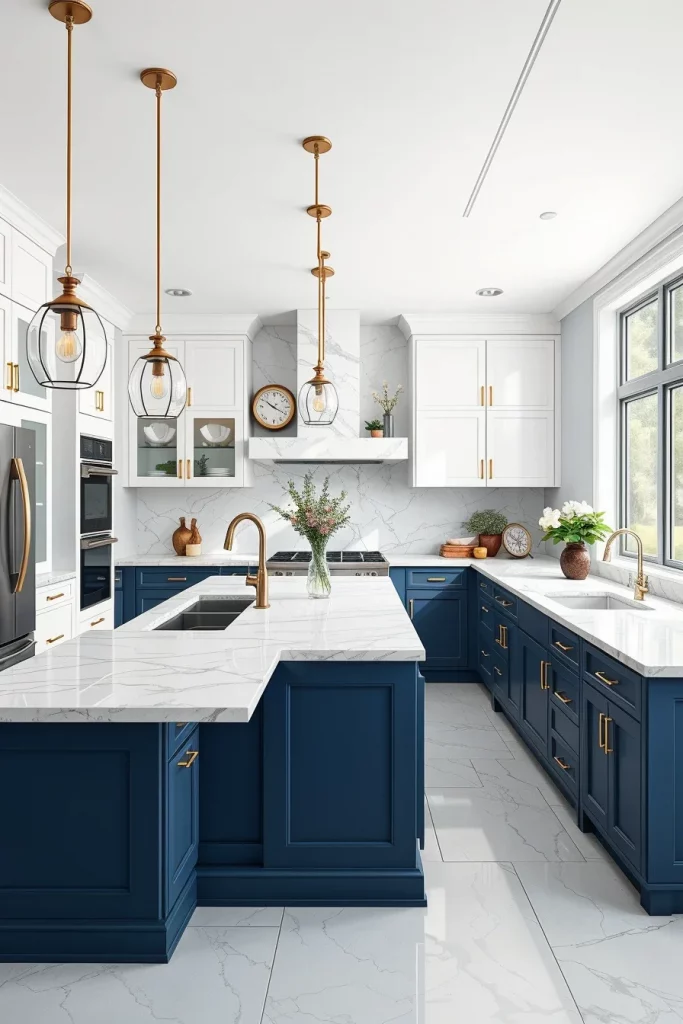
When I design this type of kitchen, I like to combine navy or medium-blue cabinets with wide marble countertops, a full-height marble backsplash, and white upper cabinets to maintain visual openness. I often include brushed brass or matte black hardware, integrated appliances, comfortable counter stools, and a spacious island that doubles as both a workspace and gathering area. Soft under-cabinet lighting highlights the marble texture while keeping the entire room warm and inviting.
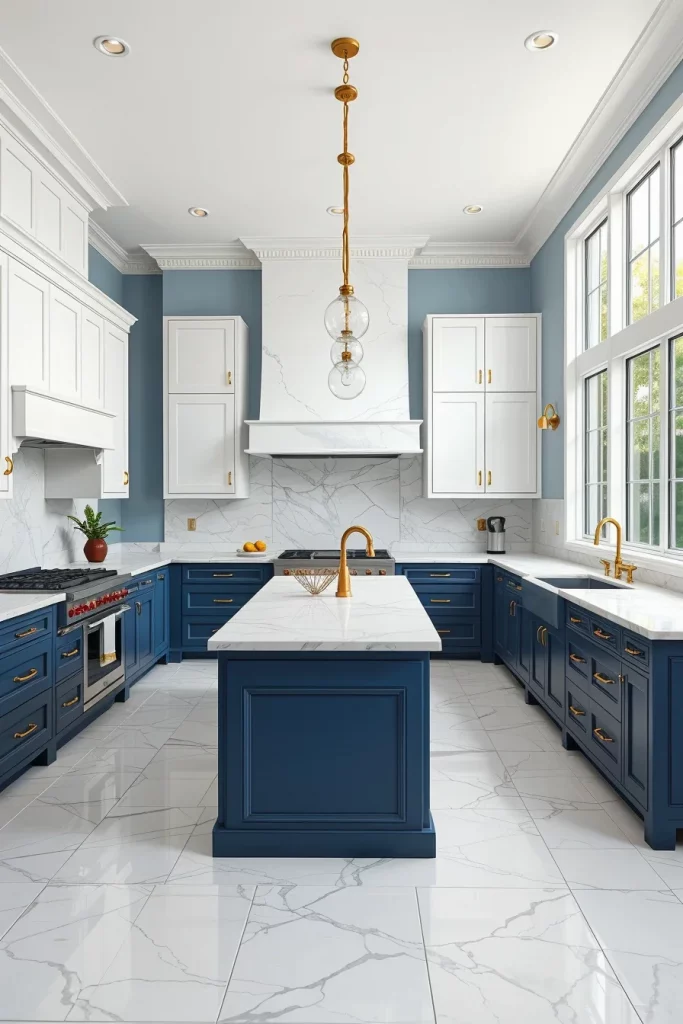
I appreciate that many designers featured by well-known publications such as Architectural Digest and House Beautiful often recommend investing in durable countertop materials because they combine long-term value with everyday performance. I have found that marble-inspired surfaces work beautifully when paired with simple accessories, allowing the blue cabinetry to remain the star of the room without overwhelming the design.
If I wanted to complete this layout even further, I would add oversized pendant lights above the island, fresh white ceramic vases, hidden storage organizers inside cabinets, and a subtle textured runner that introduces warmth without competing with the marble pattern.
Open Concept Blue And White Kitchens For Spacious Living
I enjoy open-concept kitchens because they naturally connect cooking, dining, and relaxing into one cohesive space. Blue lower cabinets paired with crisp white walls and ceilings help define the kitchen while maintaining an airy atmosphere that flows into adjacent living areas. This layout feels especially welcoming for families and anyone who enjoys entertaining guests without feeling separated from the conversation.
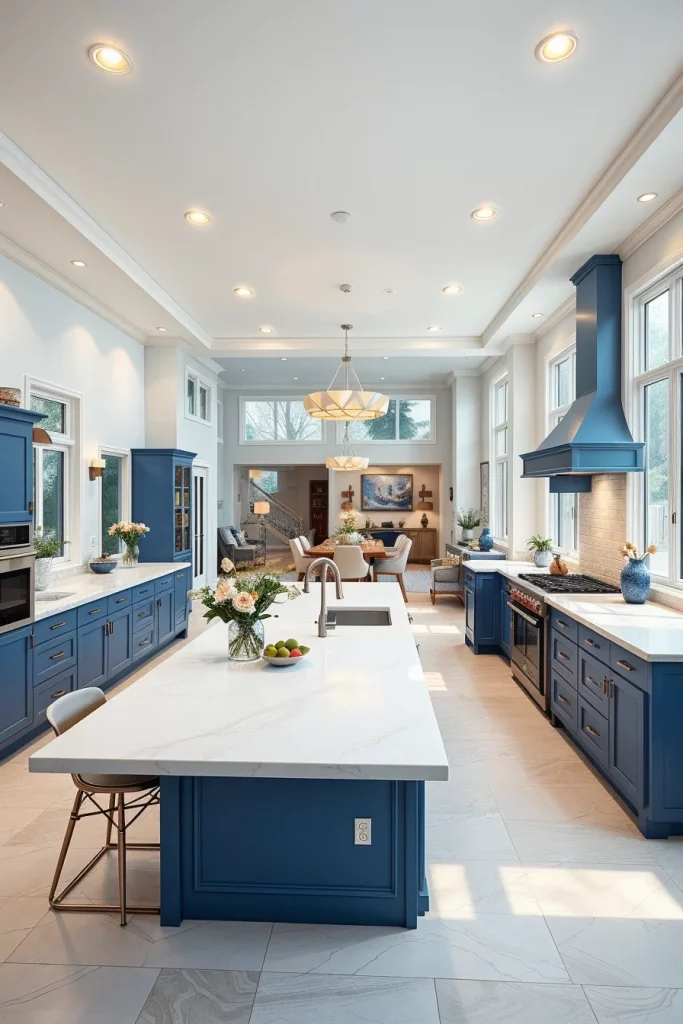
I usually recommend installing a large central island that includes seating, generous storage, and additional preparation space. White quartz countertops, full-height pantry cabinets, built-in appliances, wide-plank flooring, and comfortable upholstered dining chairs create a seamless transition between functional work zones and relaxing social spaces. Carefully placed recessed lighting and oversized windows maximize brightness throughout the entire room.
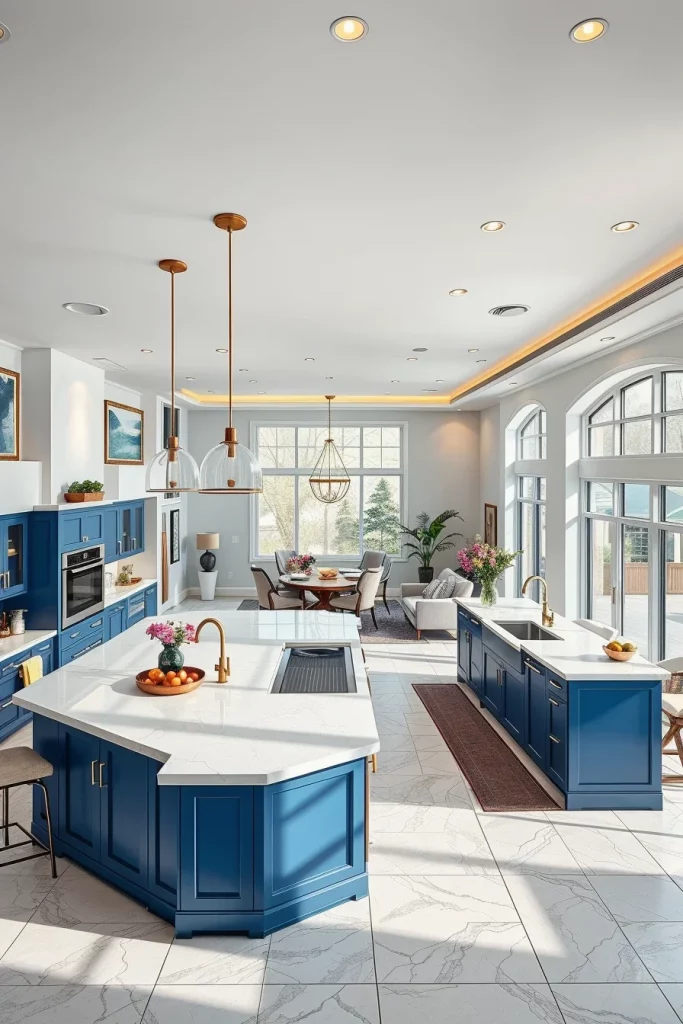
From my experience, open layouts perform best when every area shares a consistent color palette and coordinated materials. Interior designers frequently emphasize maintaining visual continuity between connected spaces, and I have found that repeating blue accents through artwork, bar stools, or decorative accessories creates a balanced appearance without making the room feel repetitive.
To make this kitchen even more complete, I would include concealed charging stations, pull-out pantry storage, integrated recycling bins, layered lighting controls, and a few carefully selected decorative pieces that personalize the space while preserving its clean appearance.
Compact Blue And White Kitchen Layout Inspiration For Small Spaces
Small kitchens can still feel luxurious when every inch is thoughtfully planned. I often use this blue white kitchen layout inspiration for apartments and compact homes because lighter finishes visually expand the room while blue cabinetry introduces depth and personality. Keeping the layout simple allows movement to remain comfortable even when the available footprint is limited.
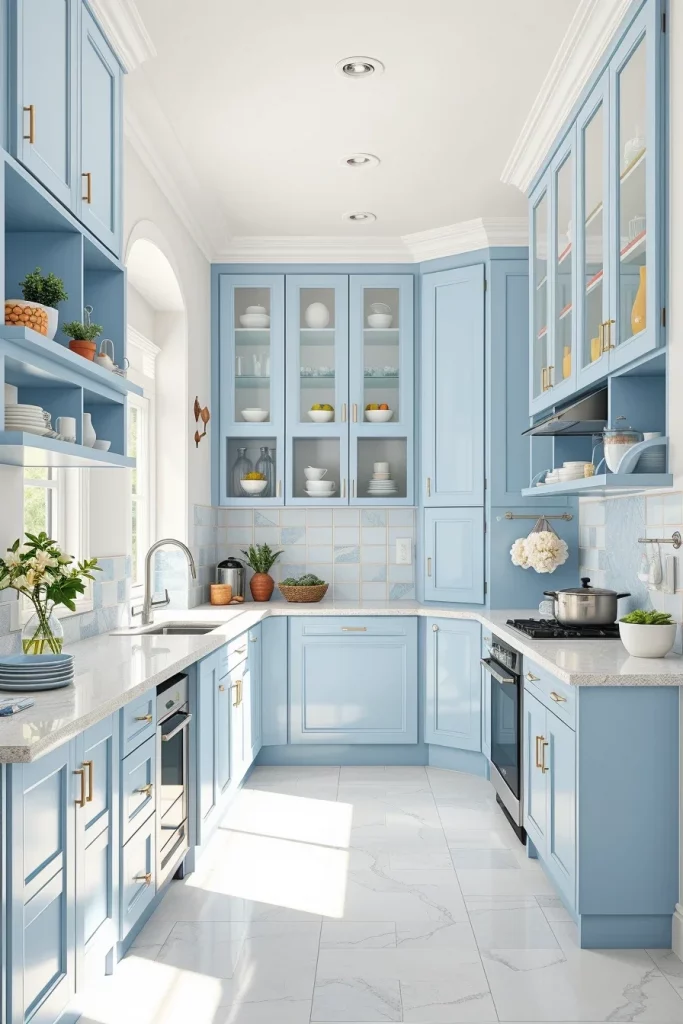
I like using slim shaker cabinets in soft blue tones with white walls, compact appliances, floating shelves, and a narrow dining peninsula that serves multiple purposes. Vertical storage, deep drawers, hidden organizers, and ceiling-height cabinets maximize storage without making the kitchen feel crowded. Reflective backsplash tiles and strategically placed lighting help the room appear significantly larger.
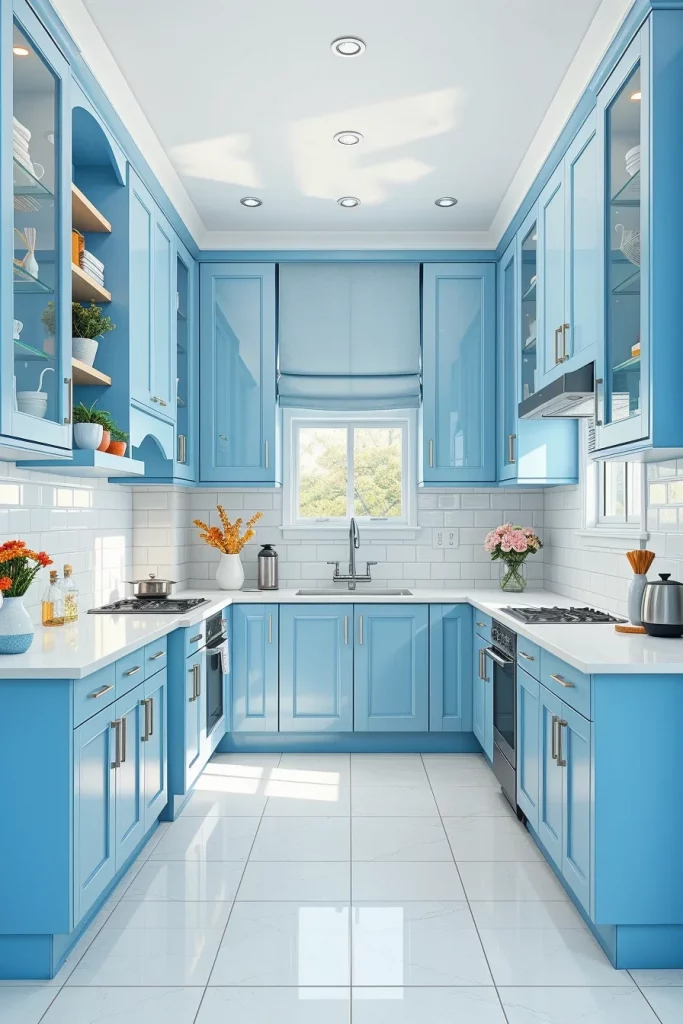
Personally, I have found that restraint is one of the most valuable design tools in smaller kitchens. Rather than filling every available surface with decorations, I prefer selecting a few carefully chosen accessories that complement the cabinetry. Design experts often recommend prioritizing function before decoration, and I completely agree with this approach in compact layouts.
If I wanted to improve this design further, I would add foldable seating, integrated spice storage, concealed waste sorting, under-shelf lighting, and a large mirror or reflective decorative element to increase the perception of space.
U-Shaped Blue And White Kitchens With Maximum Storage
Whenever storage is the top priority, I frequently recommend a U-shaped layout because it surrounds the workspace with cabinets while keeping everything within easy reach. Blue base cabinets combined with bright white upper cabinetry prevent the room from feeling enclosed while maintaining a sophisticated and balanced appearance. This arrangement creates highly efficient work zones that simplify daily cooking.
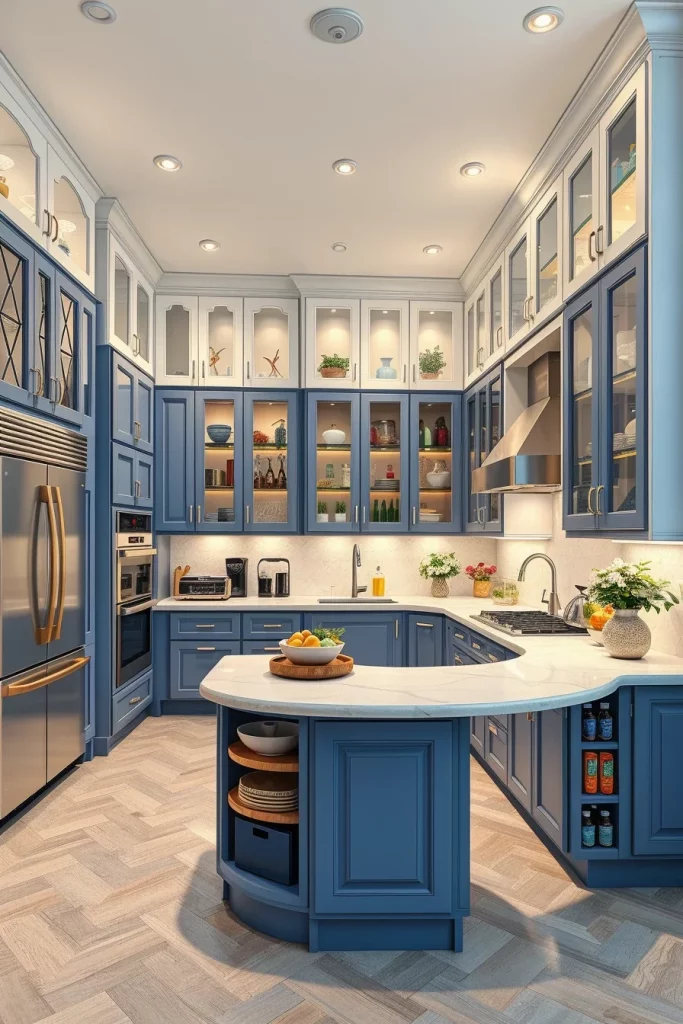
I usually include floor-to-ceiling pantry cabinets, deep corner storage systems, wide drawers for cookware, integrated appliances, and generous countertop space on three sides. White countertops brighten every corner, while glass-front cabinets and subtle display shelving introduce visual variety without sacrificing functionality. Comfortable task lighting beneath upper cabinets improves both safety and convenience.
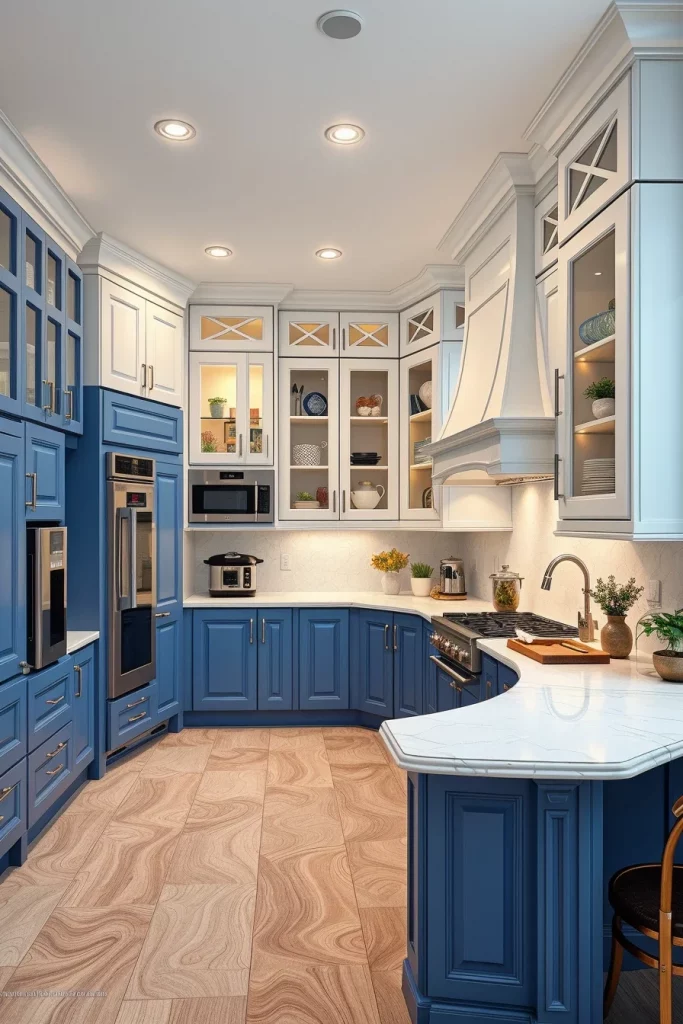
I appreciate that efficient kitchen planning often focuses on reducing unnecessary movement between preparation, cooking, and cleaning areas. In my own experience, the U-shaped layout naturally supports this workflow while providing significantly more storage than many alternative configurations.
To make this kitchen even more practical, I would include pull-out corner organizers, appliance garages, hidden charging drawers, adjustable shelving, and labeled pantry containers that help maintain organization over time.
L-Shaped Kitchen Layouts With Sophisticated Blue Accents
An L-shaped kitchen remains one of my favorite layouts because it balances openness with functionality. Blue cabinets positioned along two connected walls create visual structure while allowing plenty of room for a dining table or central island if space permits. White walls, ceilings, and countertops keep the room feeling bright, clean, and welcoming throughout the day.
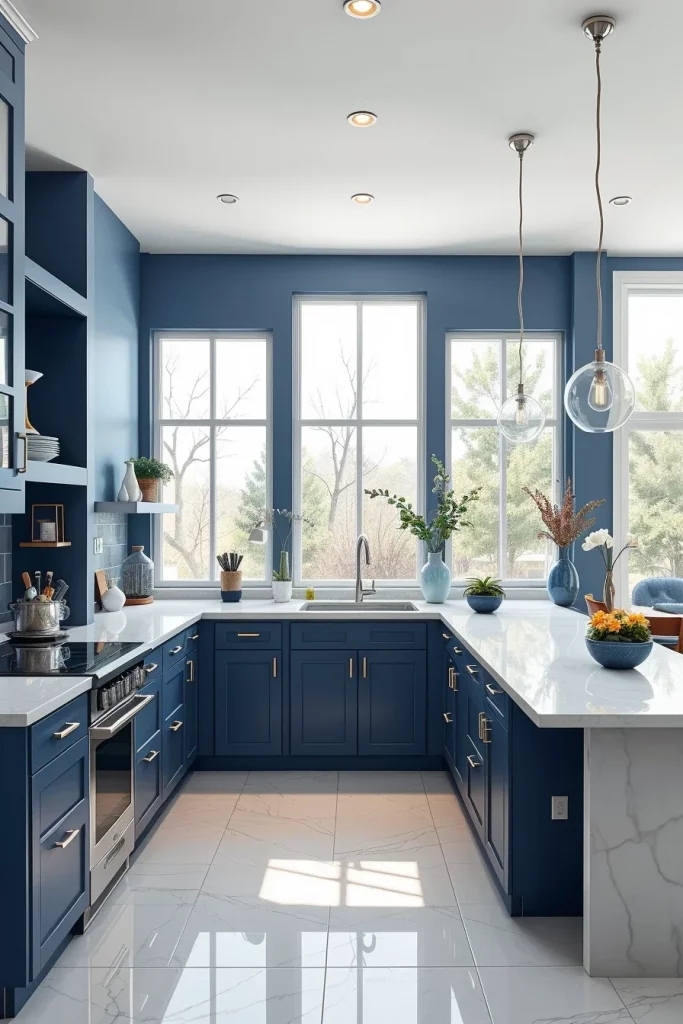
I often pair deep blue cabinetry with white waterfall countertops, minimalist hardware, built-in ovens, open display shelving, and comfortable seating nearby. Large windows allow natural light to enhance the contrast between the blue finishes and lighter surfaces, while decorative ceramics, simple artwork, and greenery add personality without creating clutter.
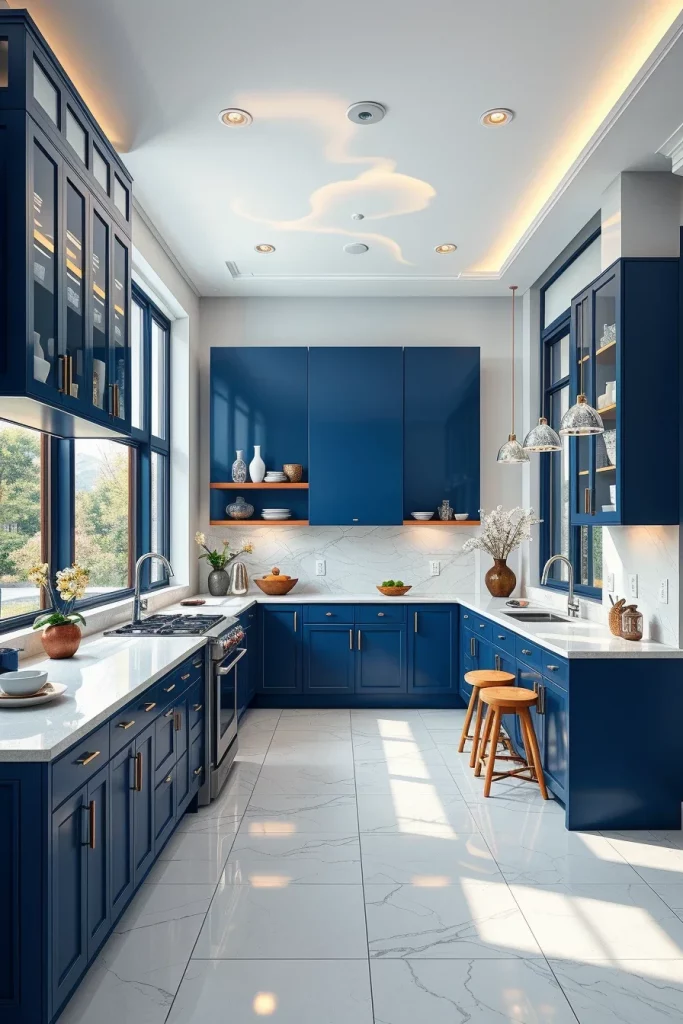
In my opinion, this layout offers exceptional flexibility because it adapts equally well to smaller homes and larger open-plan interiors. Many professional designers recommend preserving clear walking paths around work areas, and I have consistently found that this improves both comfort and efficiency.
To finish the overall design, I would add layered lighting, integrated pantry storage, soft-close cabinetry, durable flooring, and a coordinated dining area that visually connects with the kitchen while maintaining its own identity.
Galley Kitchens That Blend White Brightness With Blue Style
I often recommend a galley kitchen when I want to maximize efficiency without sacrificing style. A blue-and-white color palette helps this narrow layout feel open rather than confined, especially when white walls, cabinetry, and countertops reflect natural light throughout the space. I prefer placing rich blue cabinetry along one side and balancing it with bright white finishes on the opposite wall to create visual harmony. The result is a kitchen that feels organized, elegant, and comfortable for everyday use.
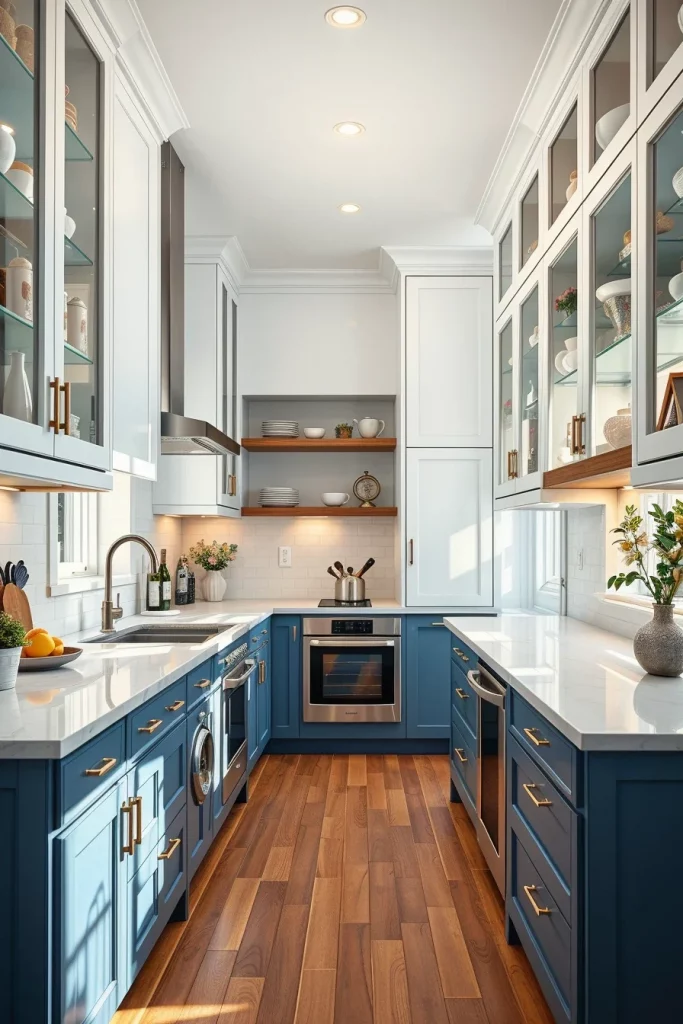
When designing a galley kitchen, I like to include tall pantry cabinets, integrated appliances, deep drawers, and slim-profile hardware to maintain a clean appearance. White quartz countertops provide generous preparation space, while blue lower cabinets introduce depth and character. I also recommend under-cabinet lighting, a durable backsplash, and open shelving at one end of the room to display carefully selected dishes and decorative accessories without making the kitchen feel crowded.
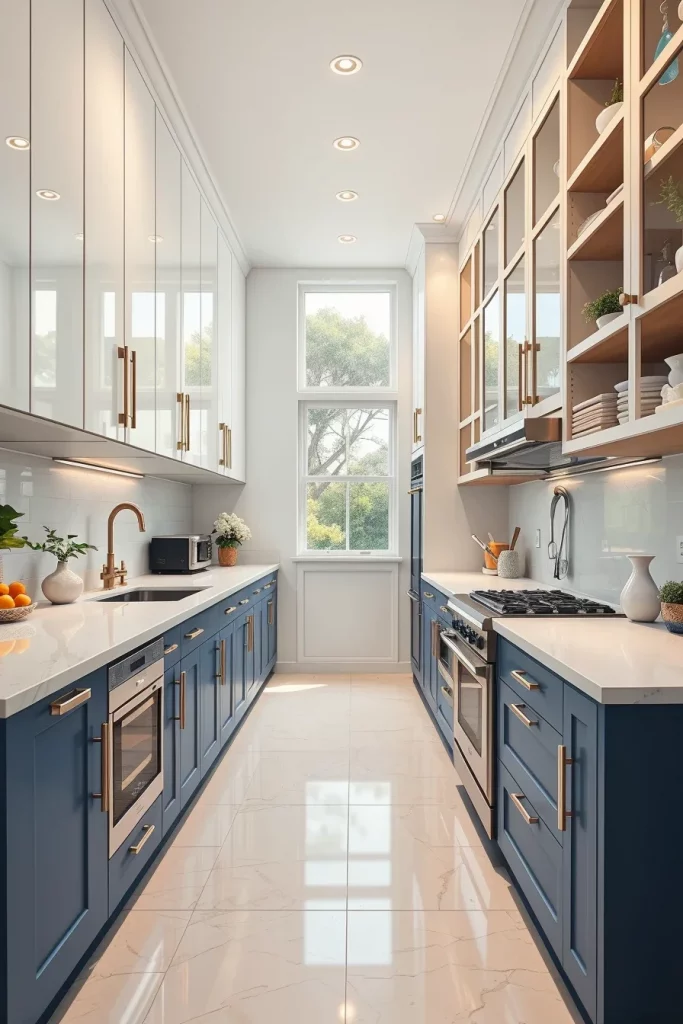
From my experience, galley kitchens perform exceptionally well when every element has a purpose. Designers frequently recommend minimizing unnecessary visual clutter in narrow spaces, and I have found that concealed storage and coordinated finishes help maintain a calm atmosphere while improving daily functionality.
To complete this layout, I would add soft-close cabinetry, pull-out pantry organizers, layered lighting, and a runner rug that introduces texture while preserving the clean, sophisticated look of the kitchen.
Large Family Kitchens Featuring Balanced Blue And White Designs
I believe a family kitchen should be welcoming, functional, and able to accommodate multiple activities at the same time. A spacious blue-and-white layout provides enough room for cooking, dining, homework, and entertaining while maintaining a refined appearance. Blue cabinetry anchors the room, while white walls and ceilings keep the overall design bright and inviting throughout the day.
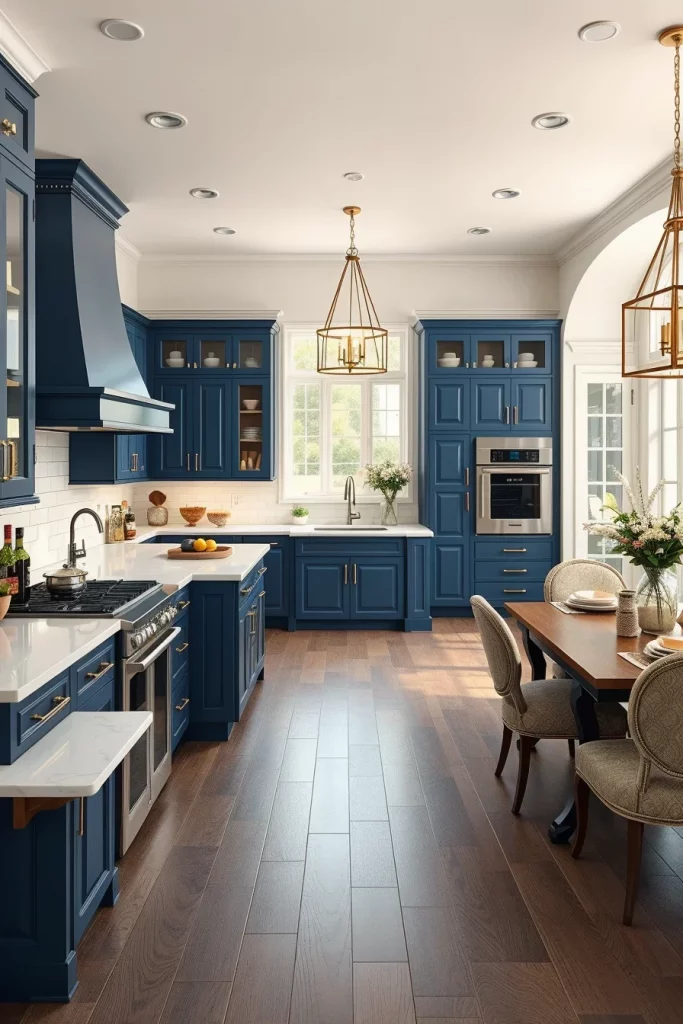
I usually incorporate an oversized island with comfortable seating, double ovens, a large refrigerator, generous pantry storage, and wide walkways between work zones. White countertops brighten the entire space, while blue cabinetry creates a timeless foundation that pairs beautifully with upholstered dining chairs, decorative pendant lights, and carefully selected accessories. Built-in storage solutions keep everyday essentials organized without compromising the room’s elegant appearance.
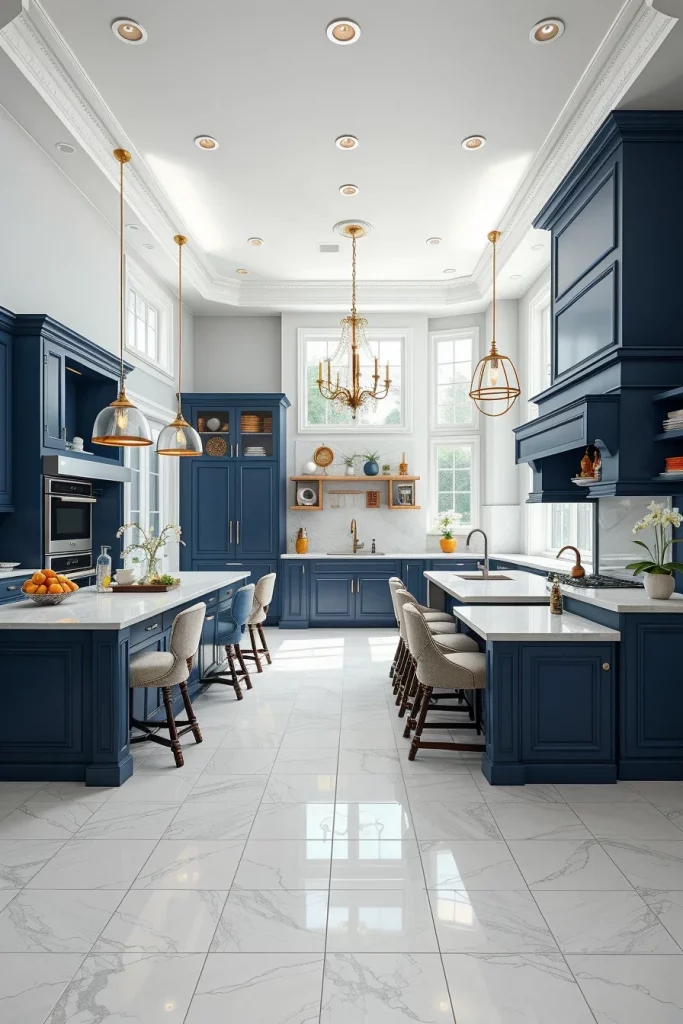
Personally, I appreciate kitchens that encourage family interaction while remaining highly practical. Interior designers often recommend creating distinct zones for food preparation, dining, and conversation, and I have found this approach makes larger kitchens feel more organized and enjoyable for everyone.
If I wanted to improve this design further, I would include a beverage station, concealed charging drawers, extra pantry organization systems, comfortable window seating, and display shelves for meaningful decorative pieces that personalize the space.
Ceiling Design Ideas That Elevate Blue And White Kitchens
I have learned that the ceiling deserves as much attention as the cabinetry because it significantly influences the feeling of the entire kitchen. A thoughtfully designed ceiling can add depth, elegance, and architectural interest while complementing blue-and-white finishes. Even simple ceiling details create a more polished appearance when they are coordinated with the rest of the room.
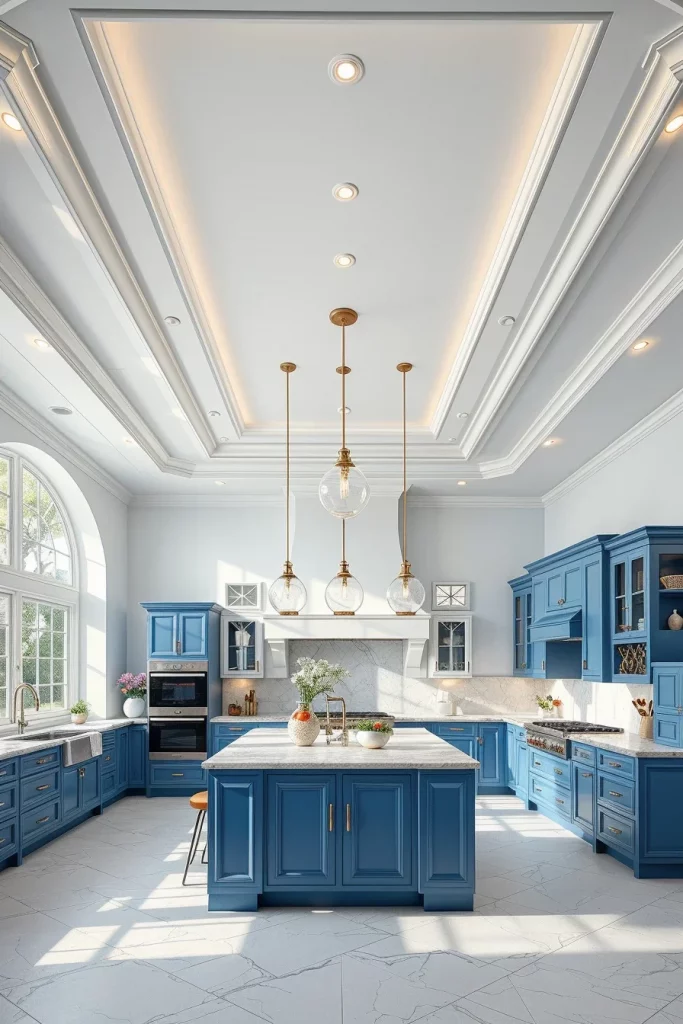
I often choose recessed lighting, subtle ceiling beams, elegant tray ceilings, or clean linear ceiling details that enhance the overall design without overwhelming it. White ceilings maintain brightness, while carefully positioned lighting highlights blue cabinetry, marble-inspired countertops, and decorative features below. I also recommend integrating ventilation and lighting into the ceiling design so the space feels seamless and uncluttered.
In my opinion, ceiling design is frequently overlooked despite its ability to transform a kitchen. Many interior experts emphasize the importance of layered lighting, and I have consistently found that combining ambient, task, and accent lighting produces a kitchen that feels both beautiful and highly functional.
To complete this ceiling concept, I would include dimmable lighting controls, discreet ventilation systems, architectural trim, and pendant fixtures positioned to emphasize the kitchen island or dining area.
Statement Lighting For A Stylish Blue And White Kitchen
Lighting is one of the first features I consider because it shapes both the atmosphere and functionality of the kitchen. In a blue-and-white interior, statement lighting becomes a decorative centerpiece while also providing the illumination needed for cooking, dining, and entertaining. Carefully selected fixtures bring warmth and personality without competing with the cabinetry or countertops.
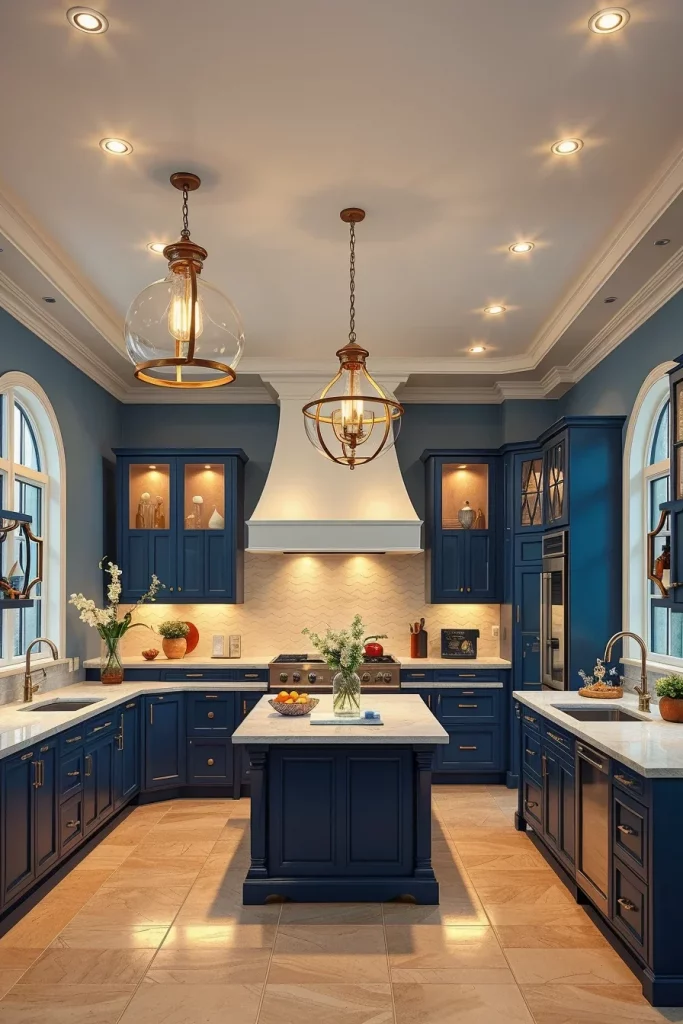
I enjoy combining oversized pendant lights above the island with recessed ceiling lighting and discreet under-cabinet illumination. Glass, metal, and softly textured finishes complement blue cabinetry beautifully while allowing white surfaces to reflect additional light throughout the room. Warm lighting temperatures create a welcoming environment that remains comfortable during both daytime and evening use.
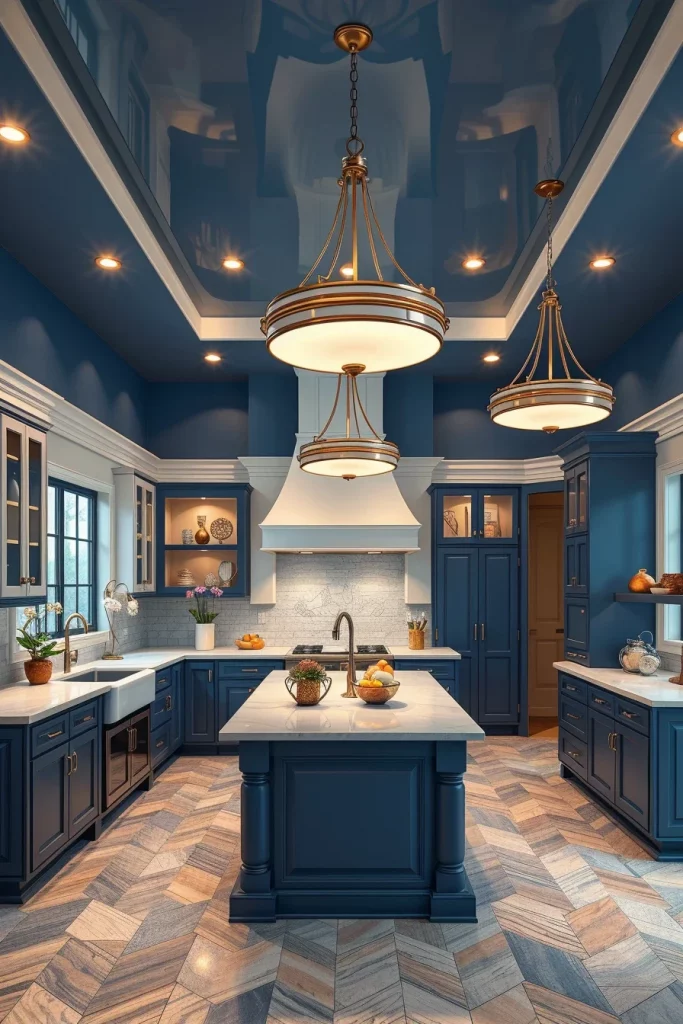
From my own experience, investing in high-quality lighting is one of the most effective ways to elevate a kitchen’s appearance. Design professionals consistently recommend layering multiple light sources rather than relying on a single ceiling fixture, and I have found this approach creates a far more balanced and inviting environment.
To make this lighting plan even more effective, I would include dimmers, accent lighting inside glass cabinets, toe-kick illumination, and decorative wall sconces that contribute additional warmth and visual interest.
Creative Backsplash Ideas That Complement Blue Cabinets
I always view the backsplash as an opportunity to introduce additional texture and personality while protecting the walls from everyday use. In blue-and-white kitchens, the backsplash can either create a subtle backdrop or become a refined focal point that enhances the cabinetry without overpowering the room. Choosing materials that complement both colors helps maintain a timeless appearance.
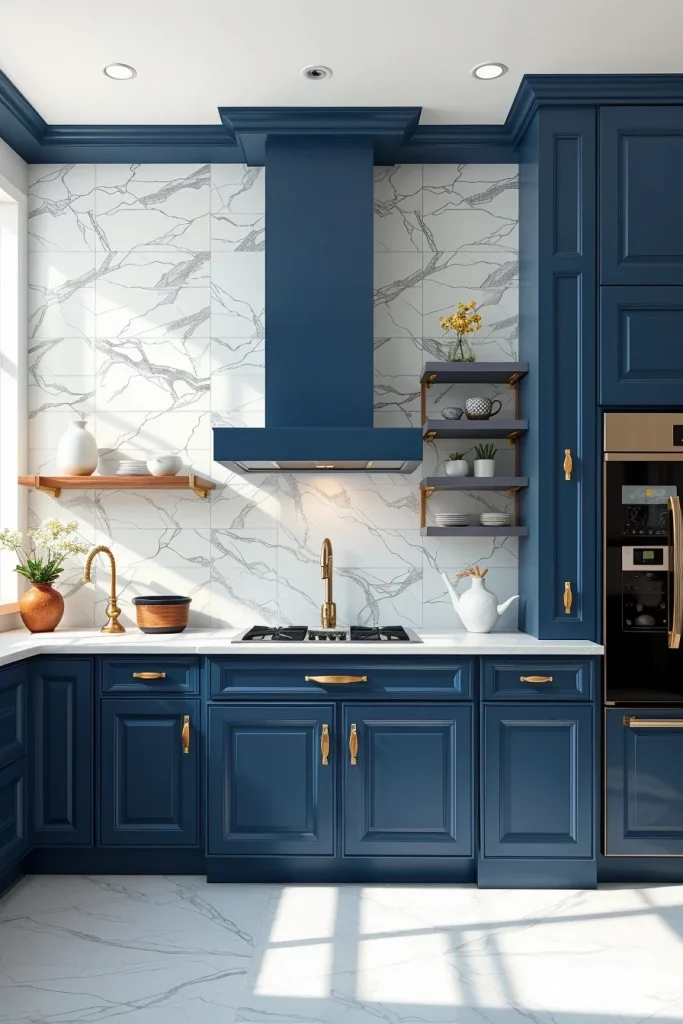
I frequently recommend large-format porcelain panels, handcrafted white tiles, marble-look slabs, textured ceramic finishes, or geometric tile patterns that coordinate naturally with blue cabinetry. White grout keeps the overall design bright, while carefully selected hardware, floating shelves, and integrated lighting complete the composition. A continuous backsplash extending to the ceiling behind the range often creates an especially sophisticated visual effect.
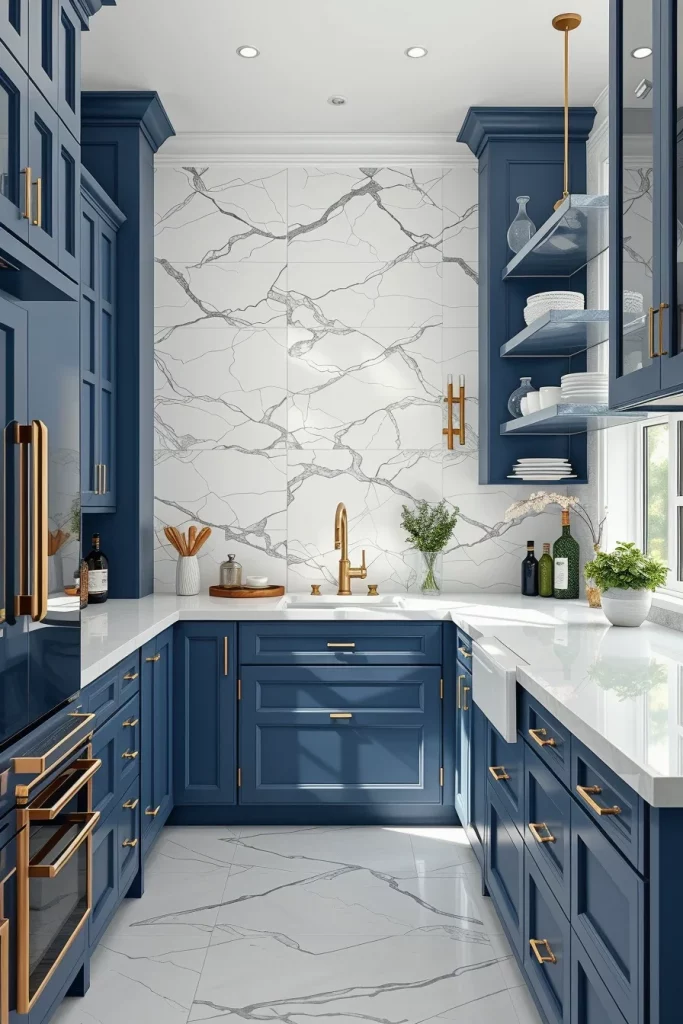
I have found that the most successful backsplash designs balance beauty with practicality. Well-known design publications regularly highlight durable, easy-to-clean materials for busy kitchens, and I completely agree that selecting quality finishes provides long-lasting value without sacrificing style.
To finish this kitchen beautifully, I would incorporate matching countertop materials, coordinated decorative accessories, concealed electrical outlets, and subtle open shelving that allows decorative pieces to enhance the overall composition without creating visual clutter.
White Quartz Countertops That Brighten Blue Kitchens
When I design a blue-and-white kitchen, one of the first features I recommend is a white quartz countertop. It instantly reflects natural and artificial light, making deep blue cabinetry appear brighter without losing its rich character. This combination creates a clean, sophisticated atmosphere that feels open even in smaller kitchens. I find that quartz works especially well in both contemporary apartments and spacious family homes because it balances elegance with everyday practicality.
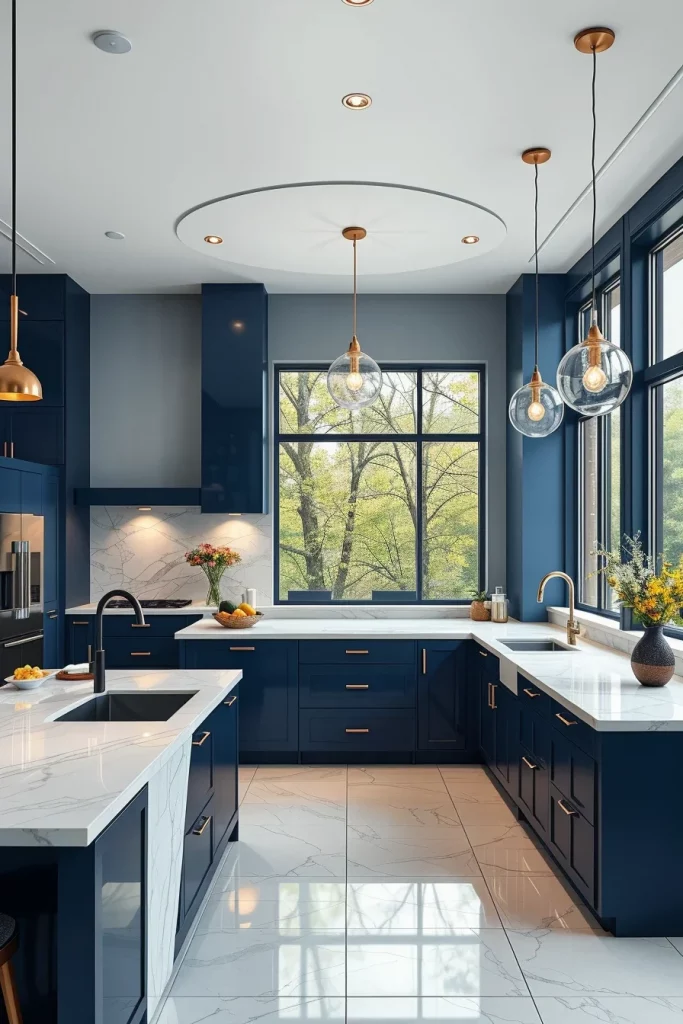
I like pairing polished white quartz with matte navy or soft blue cabinets, a full-height white backsplash, integrated sinks, and wide preparation zones. Simple cabinet hardware, under-cabinet LED lighting, and streamlined bar stools help maintain a balanced appearance without distracting from the contrast between the cabinetry and countertops. Large windows, subtle decorative accessories, and carefully selected dining furniture complete the space while keeping the kitchen visually light.
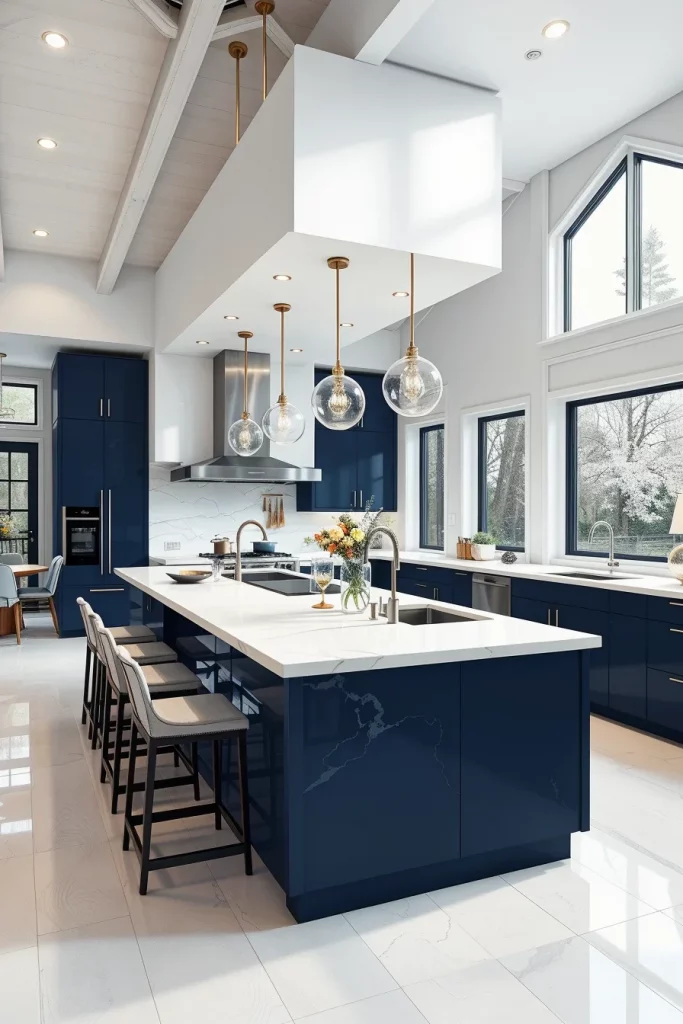
Many designers, including recommendations frequently shared by Architectural Digest, emphasize choosing durable materials that remain attractive for years instead of following short-lived trends. I completely agree with that approach because quartz combines durability, stain resistance, and timeless style. In my experience, homeowners rarely regret investing in quality countertops since they influence both the appearance and daily functionality of the kitchen.
To complete this design, I would also include a waterfall island edge, hidden power outlets inside the island, and layered lighting with pendant fixtures above the workspace. These additions improve convenience while highlighting the luxurious appearance of the white quartz surface.
Sleek Built-In Appliances For A Seamless Kitchen Layout
I believe built-in appliances are one of the easiest ways to create a clean and organized blue-and-white kitchen. Integrated refrigerators, ovens, dishwashers, and coffee machines allow cabinetry to become the visual focus instead of individual appliances. The uninterrupted cabinet lines make the room appear larger and more refined while preserving valuable floor space.
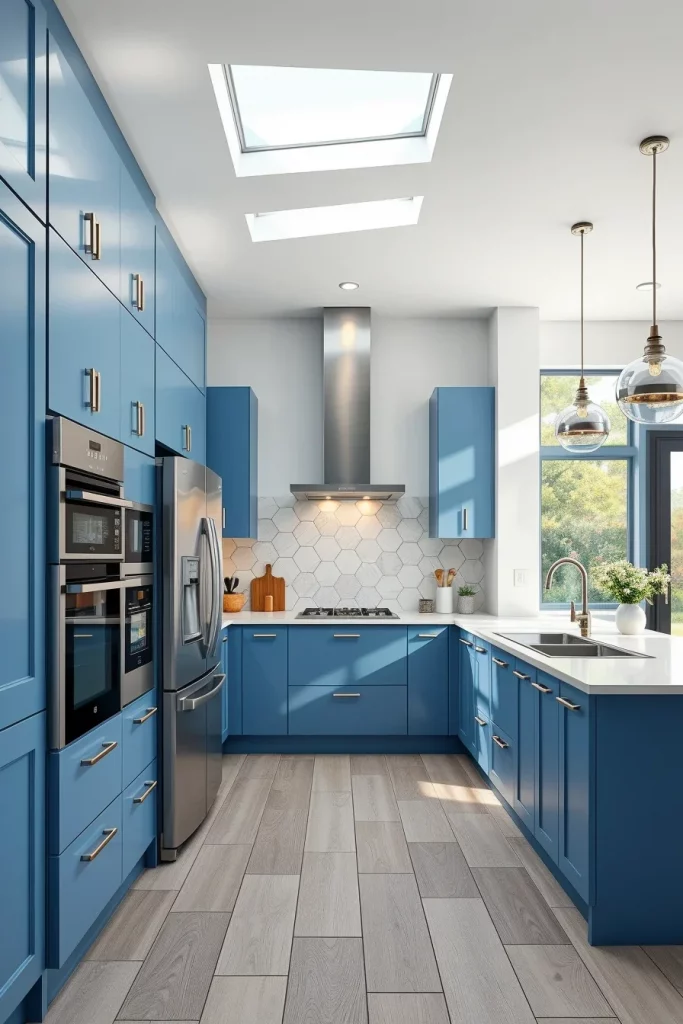
I usually recommend panel-ready refrigerators, built-in ovens installed at eye level, induction cooktops, concealed range hoods, and integrated dishwashers that match surrounding cabinets. Tall pantry cabinets surrounding the appliances create a custom appearance, while soft-close drawers and hidden storage keep everyday items out of sight. The result feels organized without sacrificing accessibility.
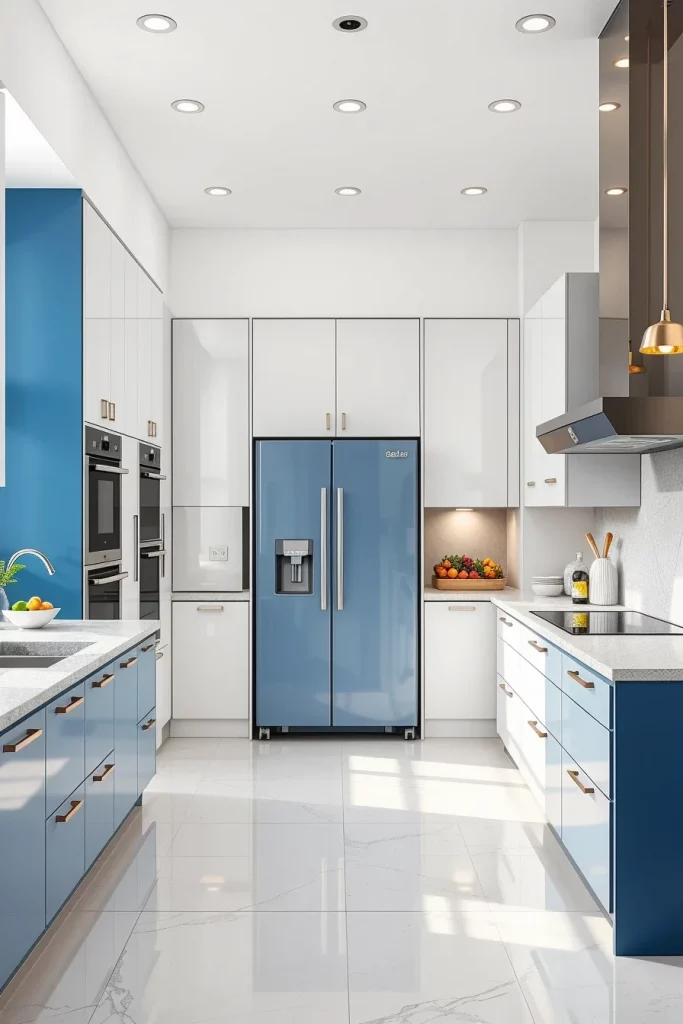
Personally, I appreciate this layout because it reduces visual clutter and allows decorative features such as blue cabinetry, white walls, and statement lighting to stand out. Many kitchen specialists featured by HGTV also encourage integrated appliances for homeowners seeking a cohesive and long-lasting design, and I have found their advice practical in real projects.
If I wanted to improve this kitchen further, I would incorporate appliance garages for small countertop appliances and charging stations hidden inside drawers. These thoughtful additions keep work surfaces clear while supporting modern daily routines.
Floor Designs That Enhance Blue And White Color Harmony
Flooring has a significant influence on how blue and white colors interact throughout the kitchen. I often recommend choosing floors that visually connect every part of the layout rather than competing with the cabinetry. Soft neutral tones create continuity while allowing the blue cabinets to become the focal point without overwhelming the room.
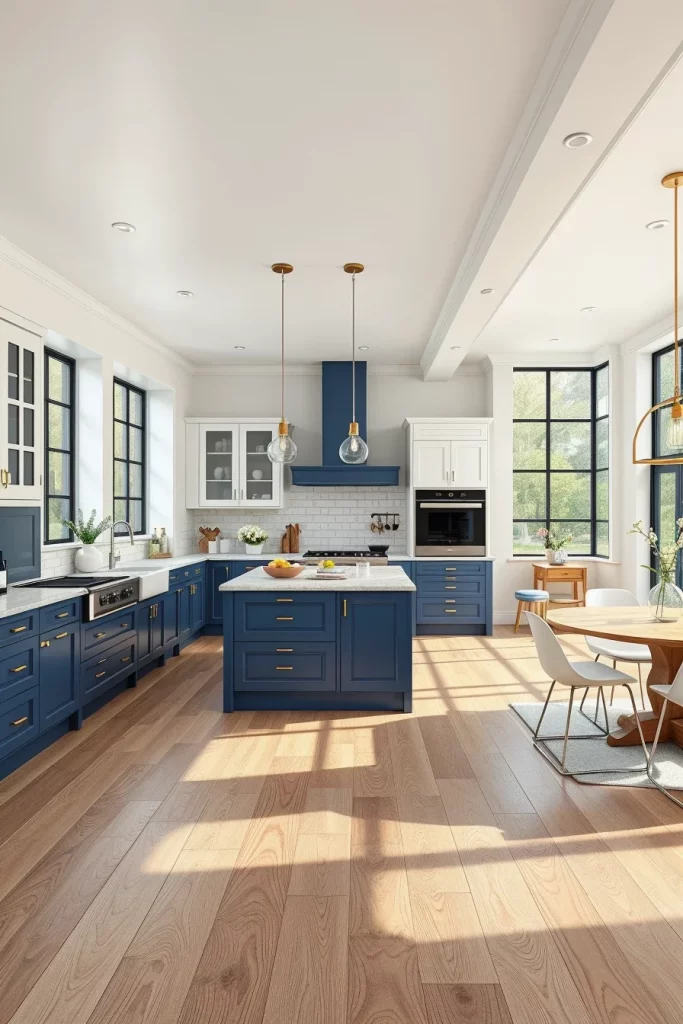
Large-format porcelain tiles, light oak flooring, pale stone-look surfaces, or subtle geometric tile patterns all complement blue-and-white kitchens beautifully. I prefer continuous flooring that extends into nearby dining or living spaces because it creates a more spacious feeling. Matching floor tones with white walls and carefully selected lighting further enhances the overall balance.
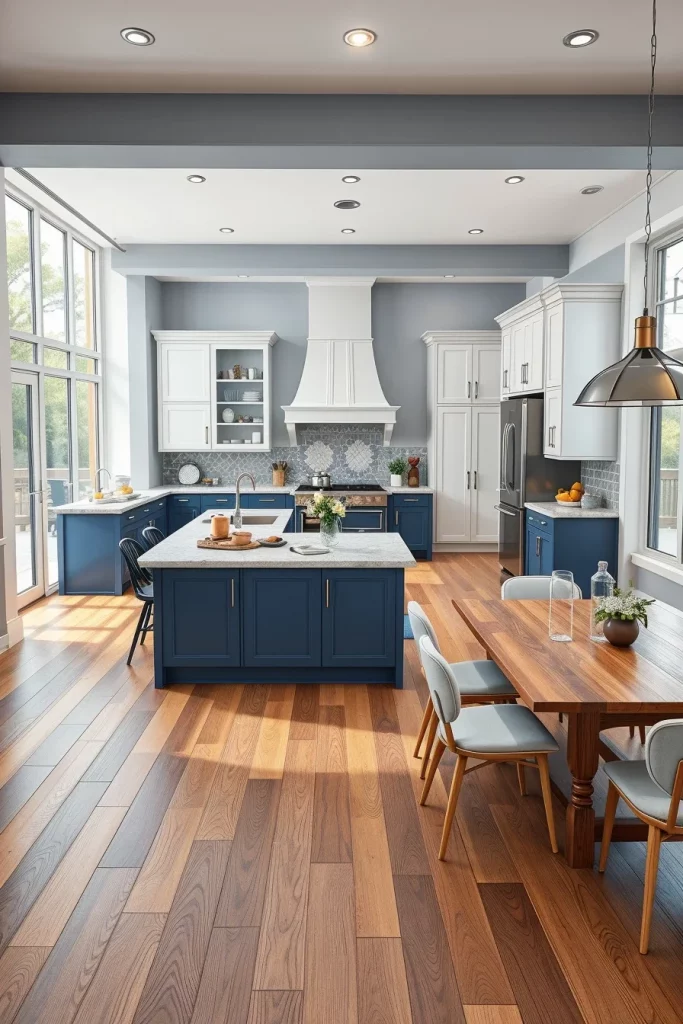
In my opinion, flooring should support the design instead of dominating it. Better Homes & Gardens frequently recommends selecting durable materials that combine easy maintenance with timeless appeal, and I fully agree because kitchen floors experience constant daily use. Attractive flooring should remain practical for busy households as well.
To complete this layout, I would add discreet floor heating beneath the tiles and durable area rugs near preparation zones. These additions improve comfort while introducing subtle texture without interrupting the clean visual flow.
Mixing Warm Metallic Finishes With Blue And White Kitchens
One of my favorite ways to make blue-and-white kitchens feel warmer is by introducing metallic accents in carefully selected locations. Brass, brushed gold, or warm bronze finishes soften the crisp contrast between blue cabinetry and white surfaces while adding depth and elegance. Even small metallic details can completely transform the atmosphere without making the space feel excessive.
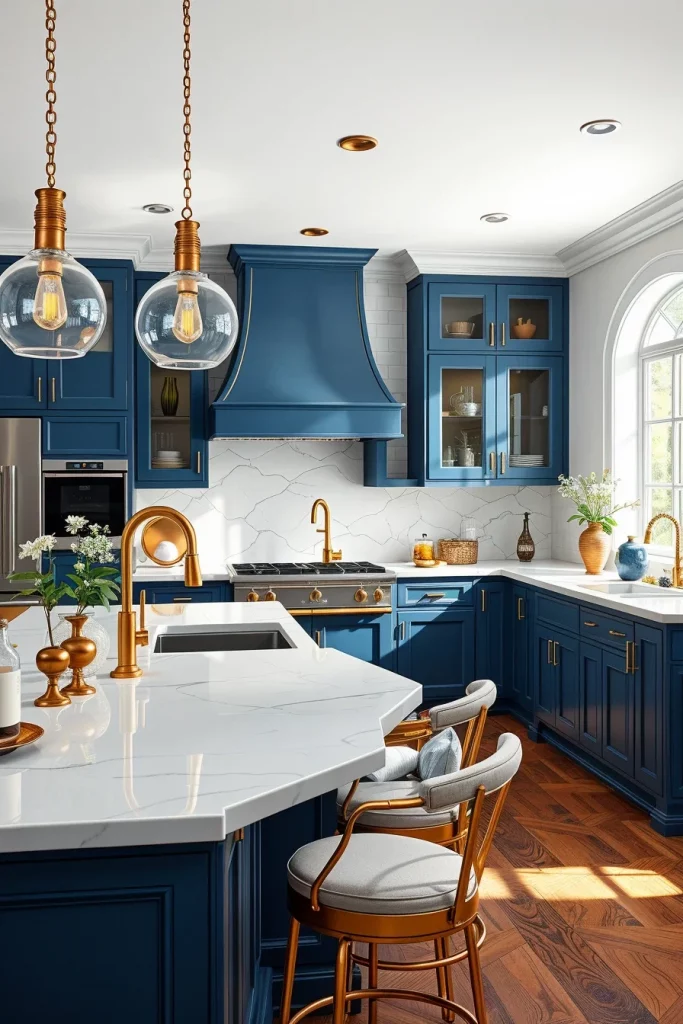
I usually incorporate metallic finishes through cabinet handles, faucets, pendant lighting, shelving brackets, bar stool frames, and decorative accessories. These elements create visual continuity throughout the kitchen while remaining subtle enough to complement the overall design. I avoid mixing too many metal finishes because consistency produces a calmer and more sophisticated appearance.
From my experience, warm metallic accents make kitchens feel more welcoming, especially when combined with natural daylight and layered lighting. Interior designers frequently featured in Elle Decor often recommend limiting metallic finishes to one or two complementary tones, and I have consistently found that advice produces the most harmonious results.
I would also introduce decorative bowls, framed artwork, and carefully selected lighting dimmers to enhance the atmosphere throughout different times of the day. These finishing touches help the kitchen feel polished while remaining functional.
Decorative Open Shelving In Modern Blue And White Layouts
Open shelving allows me to personalize a blue-and-white kitchen without overwhelming the design. Instead of filling every wall with cabinets, I like using floating shelves to display attractive dishes, glassware, cookbooks, and carefully chosen decorative pieces. This approach creates an airy atmosphere while making everyday items easier to access.
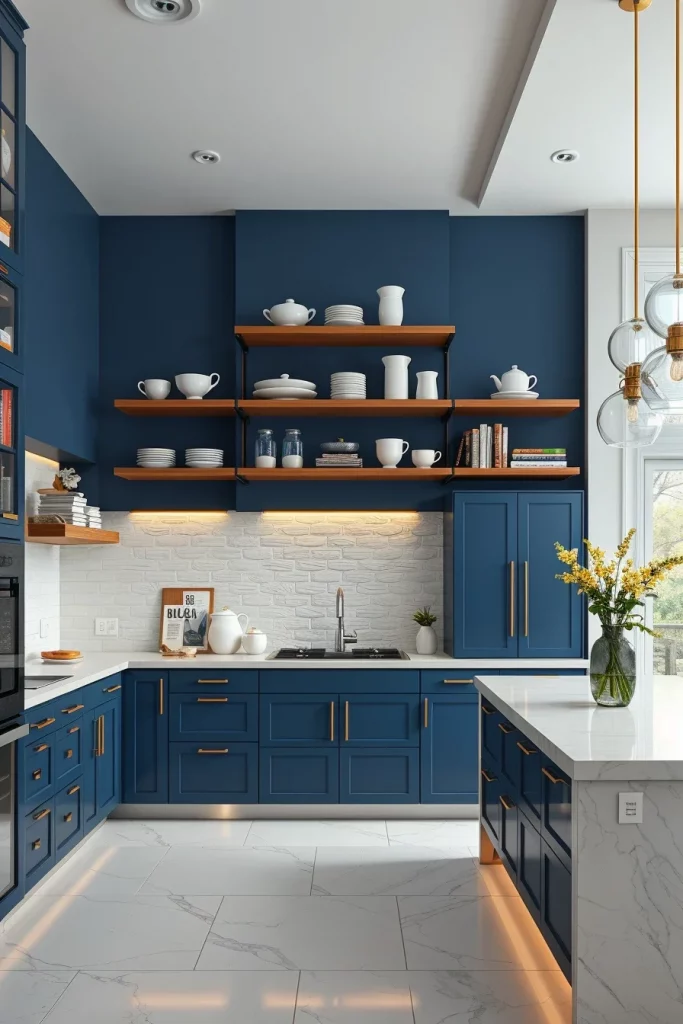
I prefer thick floating shelves installed above white backsplashes or between tall cabinets. White ceramic dishes, textured bowls, clear glass containers, small sculptures, and coordinated storage jars create an organized display that complements the blue cabinetry. Balanced spacing between decorative objects prevents the shelves from looking cluttered while maintaining visual interest.
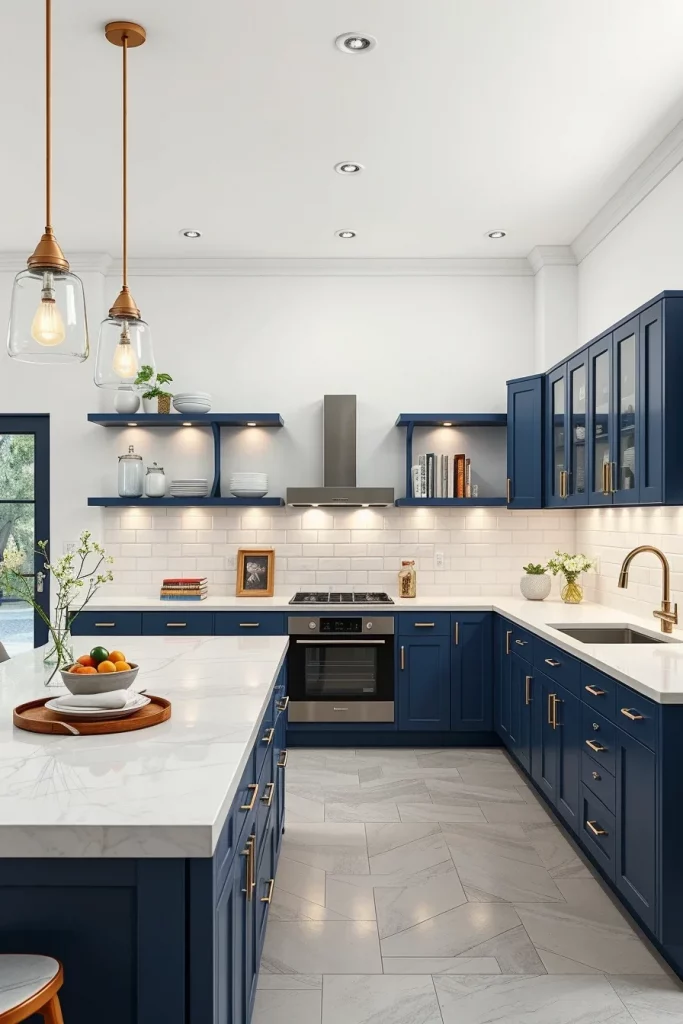
Personally, I think open shelving works best when every displayed object has both practical and decorative value. Professional designers frequently recommend editing shelf displays regularly instead of filling every available space, and I have found that this simple habit keeps kitchens looking fresh and intentional throughout the year.
To complete this section, I would add subtle LED shelf lighting and concealed support brackets. These additions emphasize decorative displays while preserving the clean contemporary appearance that defines a successful blue-and-white kitchen.
Curved Kitchen Islands For A Softer Contemporary Design
I often recommend a curved kitchen island when homeowners want to soften the structured appearance of a blue-and-white kitchen. Gentle curves create natural movement throughout the space and make the layout feel more welcoming while maintaining a clean contemporary aesthetic. I find that rounded forms work especially well in open-concept homes because they improve circulation and encourage conversation without creating sharp visual interruptions.
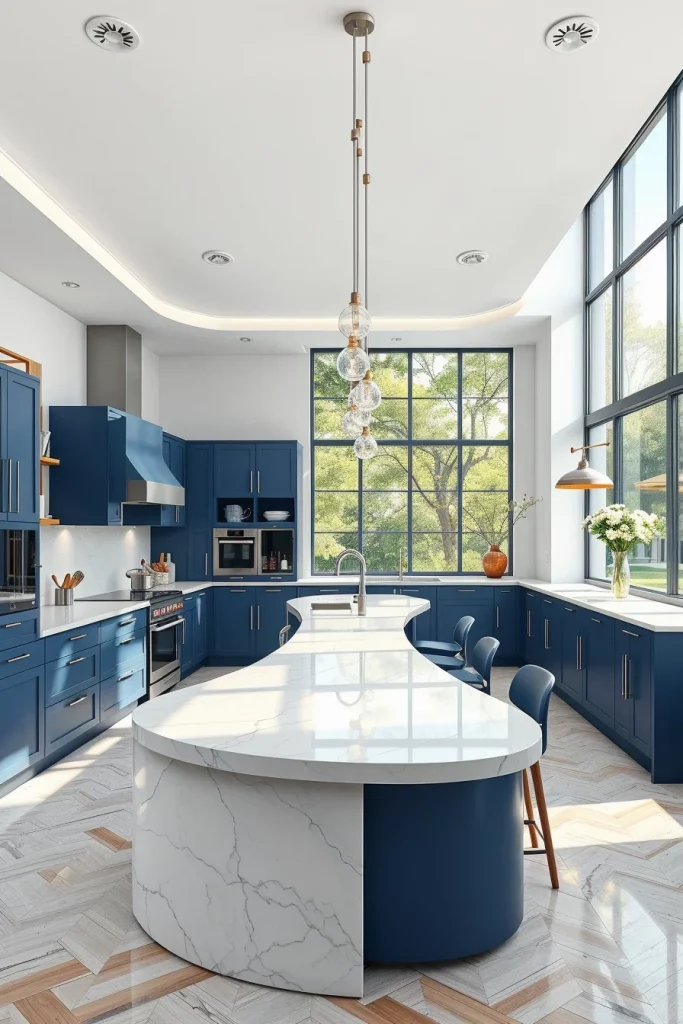
I usually design the island with smooth rounded corners, a white quartz countertop, blue base cabinetry, integrated storage drawers, and comfortable seating for family meals or casual gatherings. Pendant lighting centered above the island emphasizes its sculptural shape, while hidden electrical outlets and additional preparation space improve everyday functionality. I also like incorporating open shelving at one end of the island for cookbooks or decorative serving pieces that add personality without creating clutter.
From my experience, curved islands create a more relaxed atmosphere than traditional rectangular designs. Interior designers featured by House Beautiful have highlighted how rounded furniture and architectural details contribute to more comfortable, human-centered interiors. I appreciate this philosophy because it blends visual elegance with practical everyday use.
To make this layout even more functional, I would include under-island LED lighting, integrated recycling bins, and a waterfall countertop that follows the curved silhouette. These details enhance both convenience and the custom appearance of the entire kitchen.
Floor-To-Ceiling Cabinet Layouts For A Luxury Appearance
Whenever I want a blue-and-white kitchen to feel organized and sophisticated, I recommend extending cabinetry all the way to the ceiling. This approach creates a seamless architectural look while maximizing storage for seasonal cookware, pantry items, and small appliances. I also find that tall cabinetry visually raises the ceiling, making the entire kitchen feel larger and more refined.
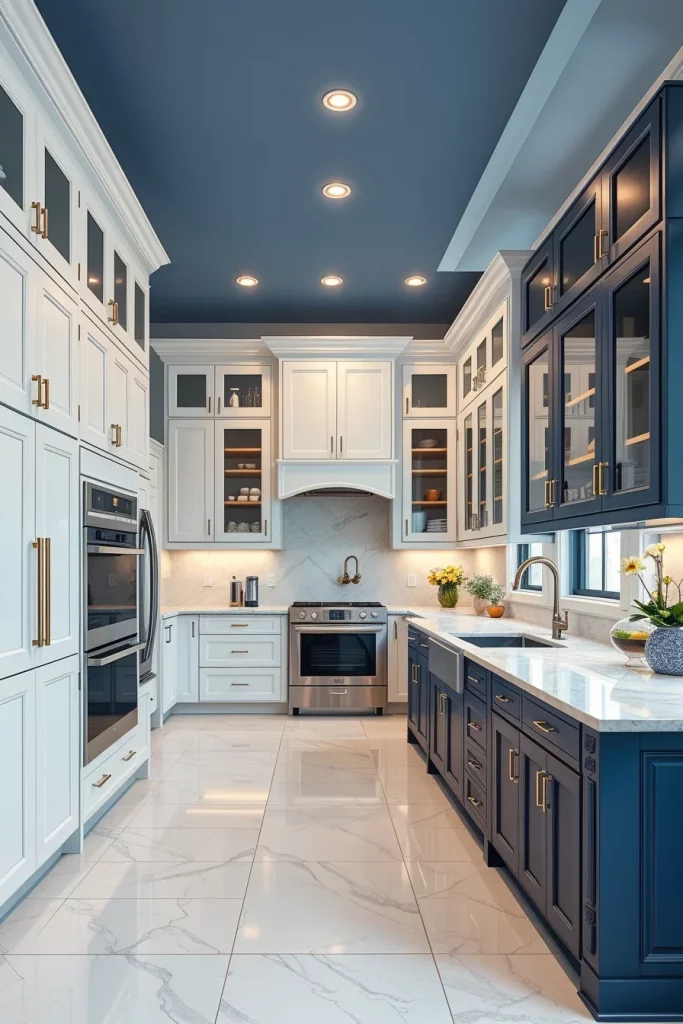
I prefer combining deep blue lower cabinets with white upper sections or incorporating white cabinet interiors behind glass-front doors to maintain brightness. Hidden pantry compartments, integrated appliance towers, soft-close mechanisms, and full-extension drawers help every inch of storage remain accessible. Minimal hardware and carefully aligned cabinet lines reinforce the clean, luxurious appearance.
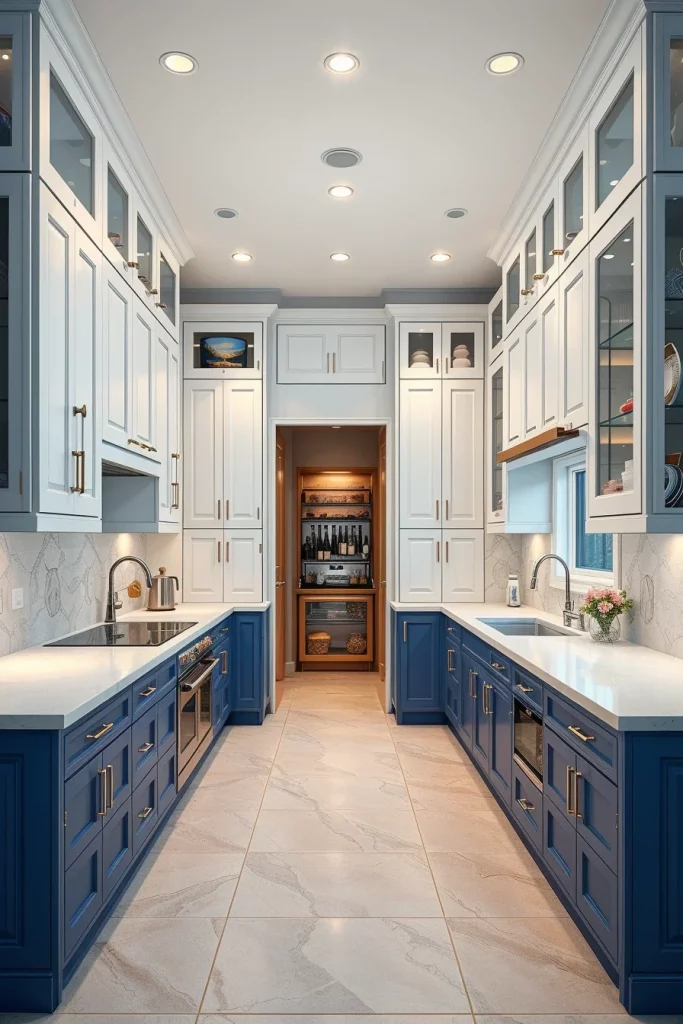
Personally, I believe this layout is one of the most practical long-term investments for busy households. Many kitchen specialists recommend maximizing vertical storage instead of expanding the footprint of the kitchen, and I agree because efficient organization improves daily routines without sacrificing style.
I would also add discreet interior cabinet lighting, pull-out pantry organizers, and adjustable shelving. These features increase usability while preserving the elegant appearance that floor-to-ceiling cabinetry naturally creates.
Minimalist Blue And White Kitchens With Hidden Storage
A minimalist kitchen succeeds when every visible element has a purpose. I like using hidden storage solutions to maintain uncluttered countertops while allowing the blue-and-white color palette to remain the visual highlight. This approach creates a calm environment that feels spacious, even in compact kitchens.
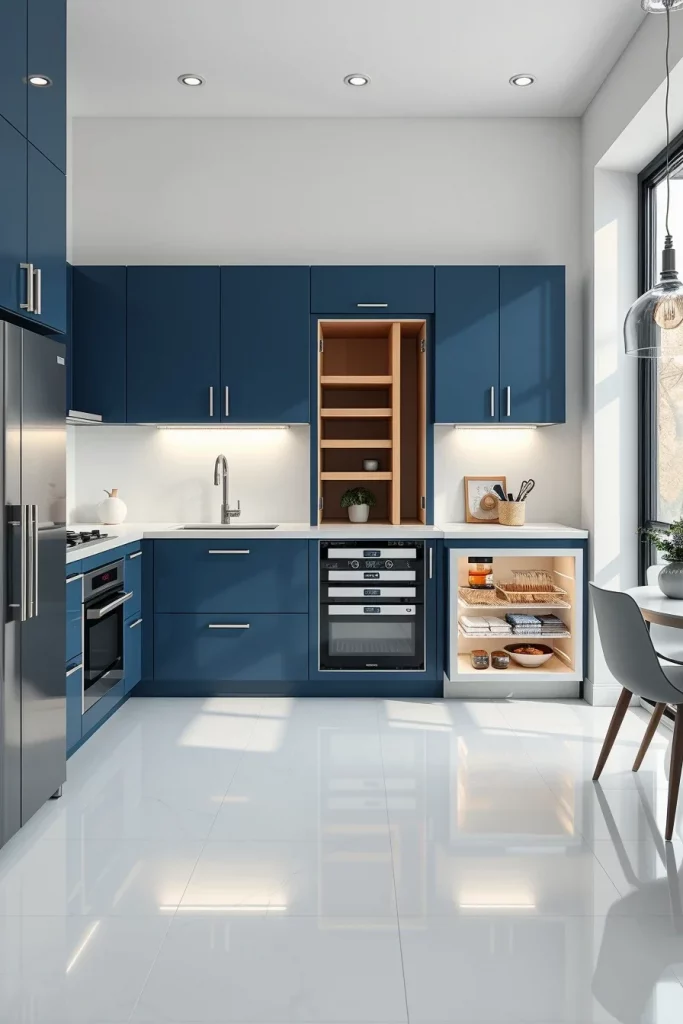
I usually include push-to-open cabinets, concealed pantry doors, deep drawer organizers, appliance garages, hidden recycling compartments, and integrated spice storage. Large uninterrupted cabinet fronts create a sleek appearance, while carefully planned internal organization ensures that everyday essentials remain easy to reach. White walls, blue cabinetry, and subtle lighting complete the minimalist composition without making the space feel cold.
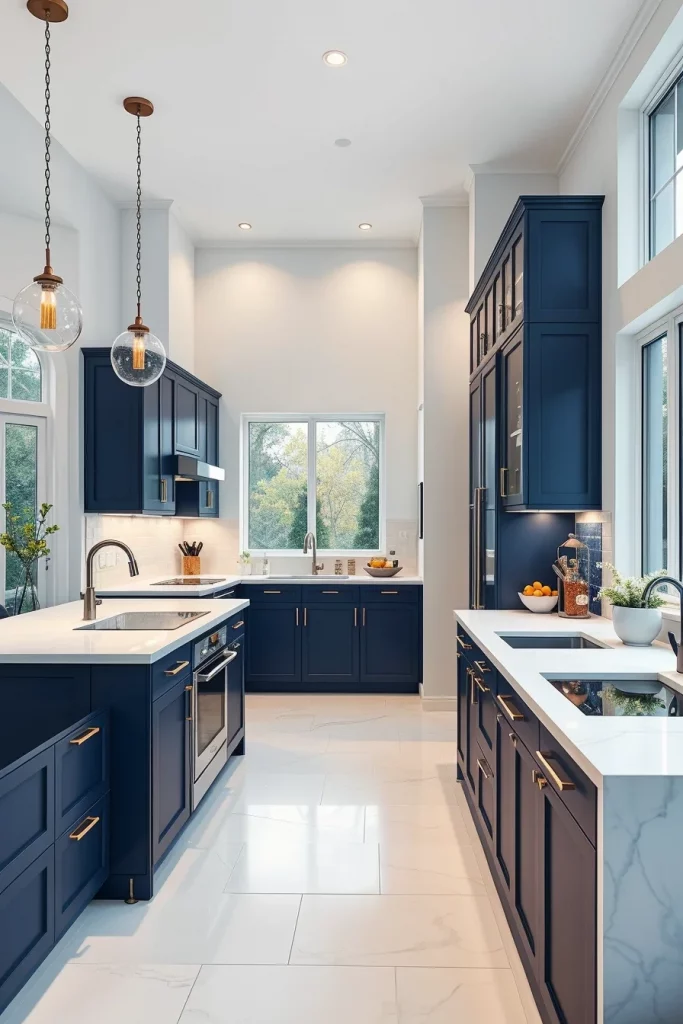
I have learned that hidden storage dramatically improves how a kitchen functions on a daily basis. Professional designers frequently emphasize that successful minimalist interiors rely on thoughtful planning rather than simply reducing decoration. I completely agree because practical organization allows the beauty of the design to remain visible.
To strengthen this layout, I would install hidden charging stations, pull-out countertop extensions, and interior drawer lighting. These additions support modern lifestyles while preserving the clean appearance that defines minimalist kitchens.
Bold Geometric Details That Transform Blue And White Kitchens
Geometric patterns can completely change the personality of a blue-and-white kitchen when they are used thoughtfully. I enjoy introducing clean geometric shapes through backsplashes, flooring, lighting, or cabinet detailing because they add visual interest without overwhelming the overall design. Carefully balanced patterns make the kitchen feel distinctive while preserving harmony between blue and white surfaces.
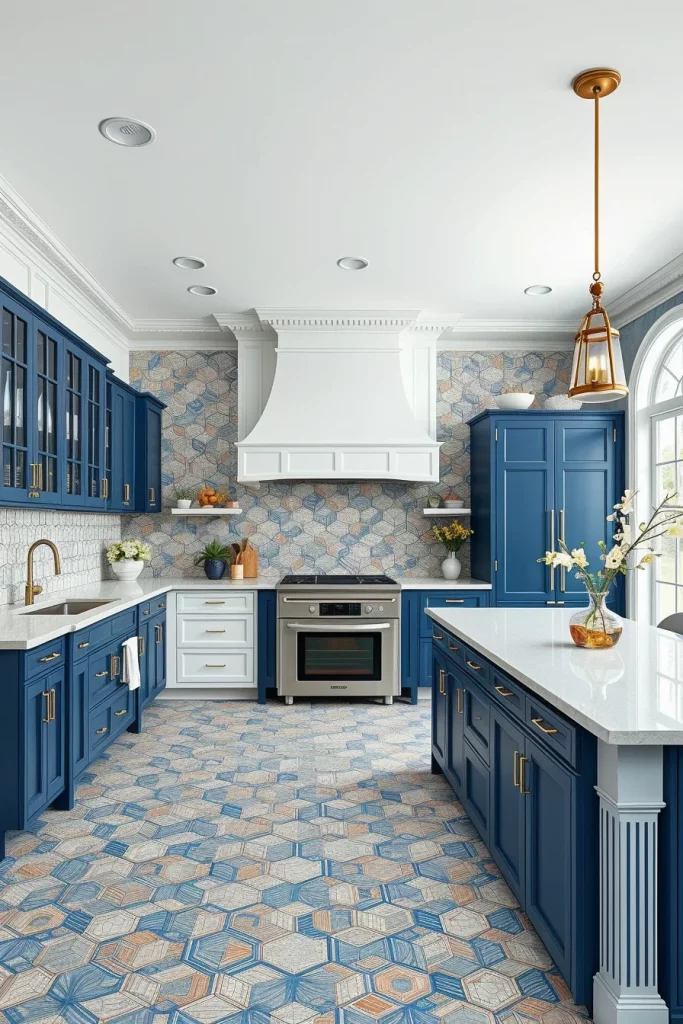
I often recommend hexagonal backsplash tiles, geometric pendant lighting, fluted cabinet panels, patterned floor tiles, and symmetrical shelving arrangements. Simple furniture with clean lines complements these decorative elements while allowing the geometric details to become subtle focal points. Maintaining a restrained color palette ensures that the patterns remain elegant rather than distracting.
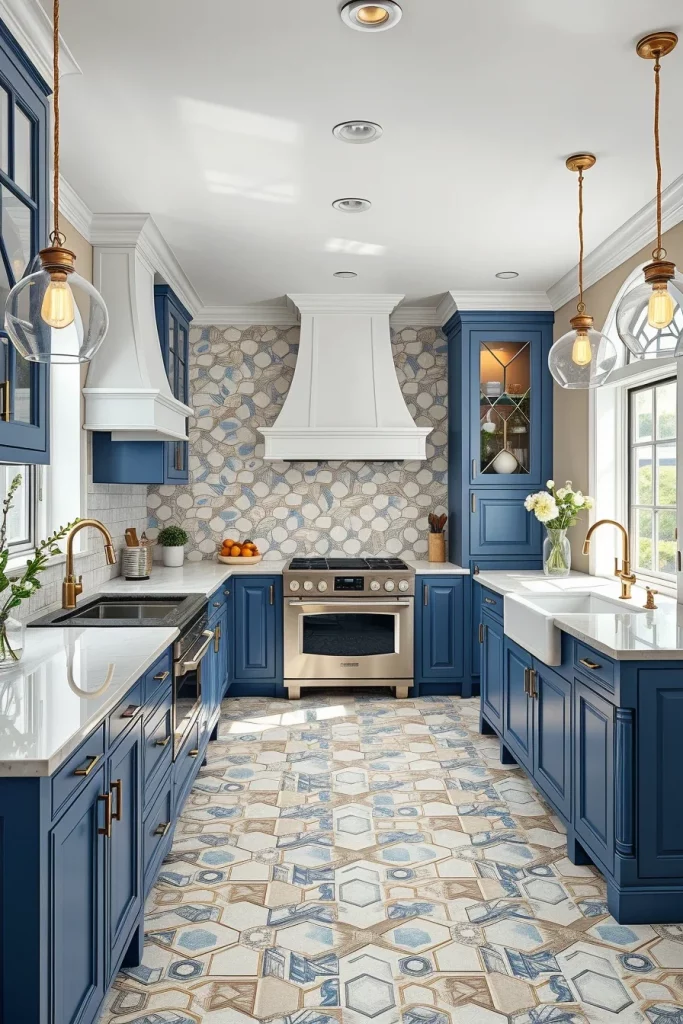
From my perspective, geometric accents work best when they appear consistently throughout the kitchen instead of being concentrated in one location. Design publications such as Dwell frequently showcase projects that use repetition and proportion to create cohesive interiors, and I find that principle highly effective in residential kitchens.
To complete this concept, I would add textured seating, decorative ceramic accessories, and carefully positioned artwork that echoes the same geometric language. These finishing touches help unify the entire kitchen while reinforcing its contemporary character.
Designer Styling Tips For A Cohesive Blue And White Kitchen Layout
Creating a cohesive kitchen is about much more than selecting beautiful colors. I always begin by establishing a balanced relationship between blue cabinetry, white surfaces, lighting, flooring, and decorative accents. When every element supports the overall vision, the kitchen feels intentionally designed rather than assembled from unrelated pieces.
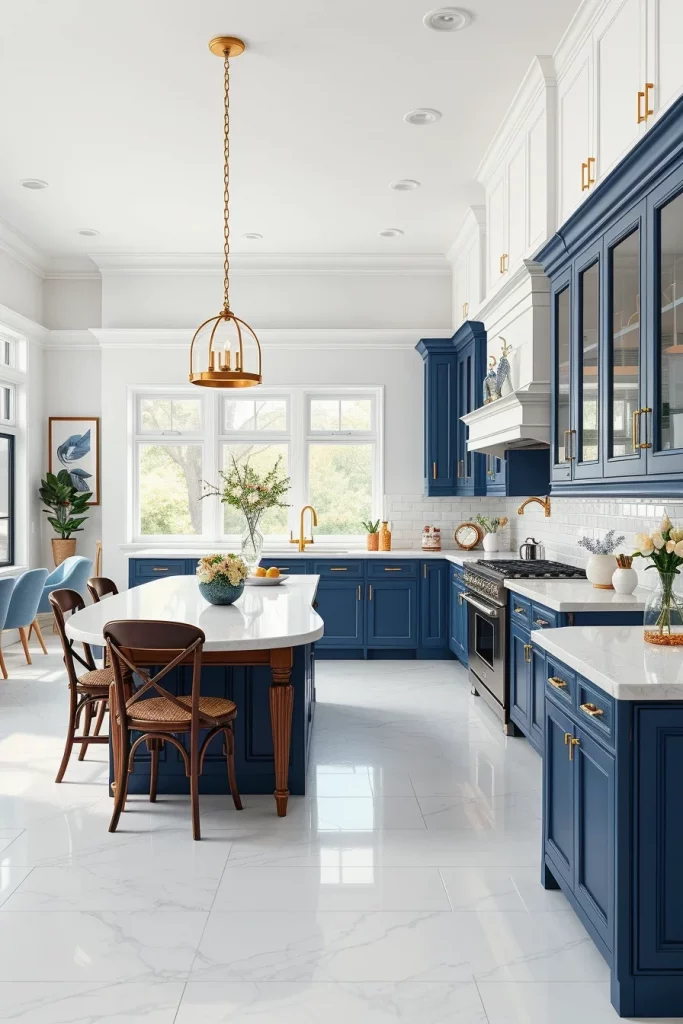
I recommend repeating materials and finishes throughout the space to create continuity. Matching cabinet hardware with lighting fixtures, coordinating countertop materials with the backsplash, and selecting dining furniture that complements the cabinetry all contribute to a unified appearance. Decorative accessories should remain simple, allowing the architecture and carefully chosen finishes to remain the focal point.
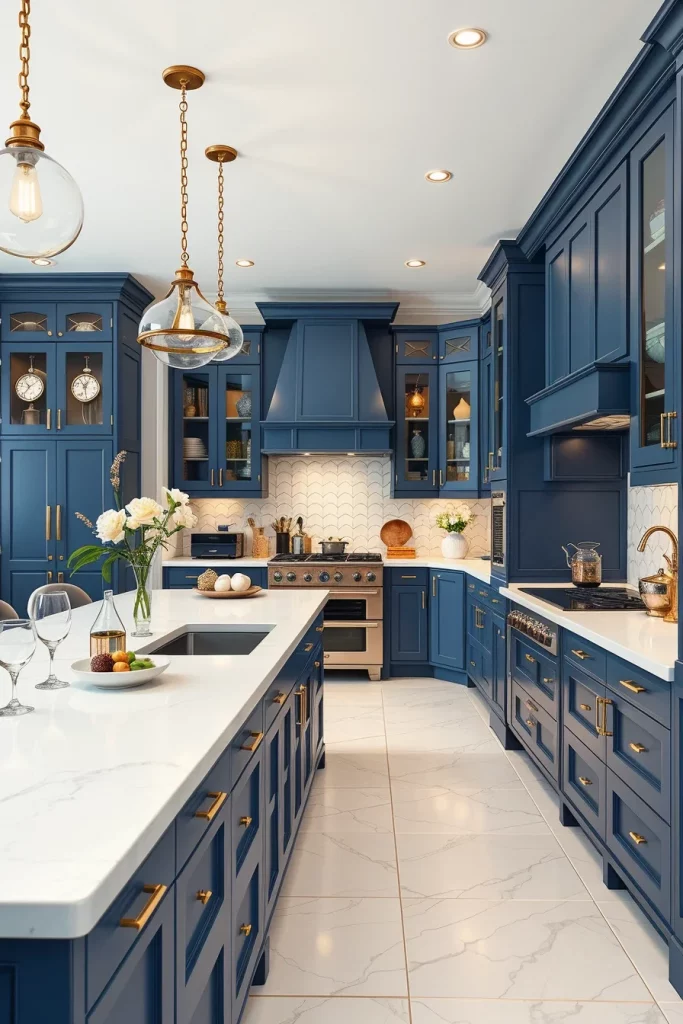
In my experience, restraint is often the key to exceptional kitchen design. Many respected interior designers advise limiting the number of colors and materials used within one room, and I consistently find that this approach produces interiors that remain attractive for many years instead of following temporary trends.
I would finish the design with layered lighting, carefully selected artwork, high-quality textiles, and functional decorative accessories that reflect the homeowner’s personality. These thoughtful details make the kitchen feel complete while preserving its elegant and timeless appeal.
Scandinavian living room design is all about creating a space that feels warm, functional, and effortlessly stylish. By combining light colors, natural materials, comfortable furniture, and thoughtful décor, you can achieve a timeless look that reflects your personal style. Let these Scandinavian living room design inspiration ideas guide you toward a home that is both beautiful and inviting for everyday living.