
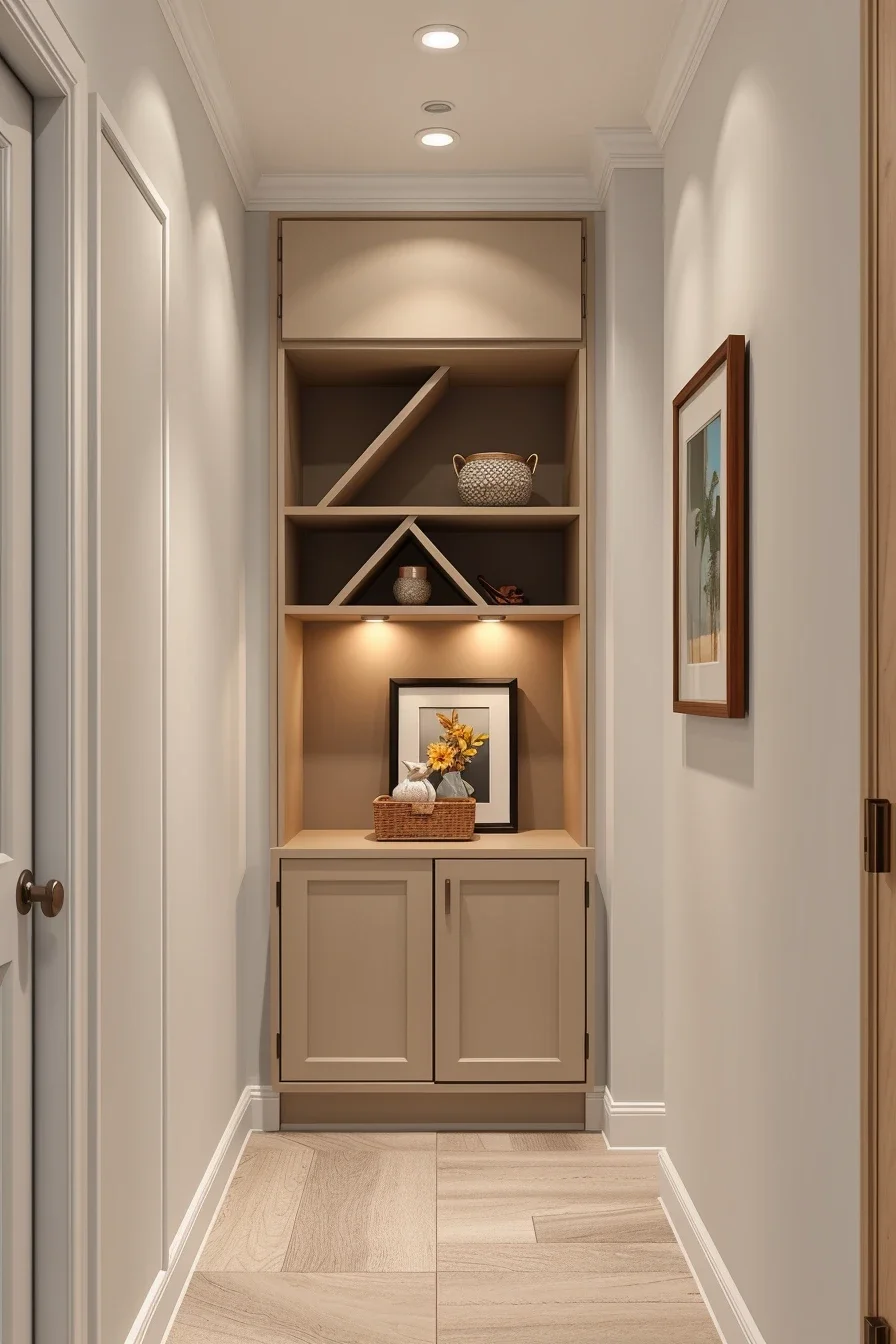
A well-designed hallway can make a lasting first impression while providing valuable storage and organization in even the smallest homes. Creative furniture small hallway design focuses on choosing smart, multifunctional pieces that maximize every inch without making the space feel crowded. From floating consoles and compact benches to slim shoe cabinets and wall-mounted storage, the right furniture can completely transform a narrow entryway. Thoughtful layouts, clever storage solutions, and modern furniture designs help create a hallway that is both practical and visually appealing. Whether you are furnishing a tiny apartment or updating a compact entrance, creative furniture ideas can improve both style and everyday convenience. This guide explores inspiring furniture solutions that help small hallways look larger, stay organized, and welcome guests with confidence.
Smart Entryway Storage Furniture For Small Hallways
When I design a compact hallway, I always begin with storage that works harder than it looks. A well-planned entryway should organize coats, shoes, bags, and daily essentials while maintaining an open feeling. Choosing tall yet slim storage furniture allows me to keep the floor as clear as possible, making the hallway appear wider than it actually is. This approach creates a practical entrance that remains comfortable to move through even during busy mornings.
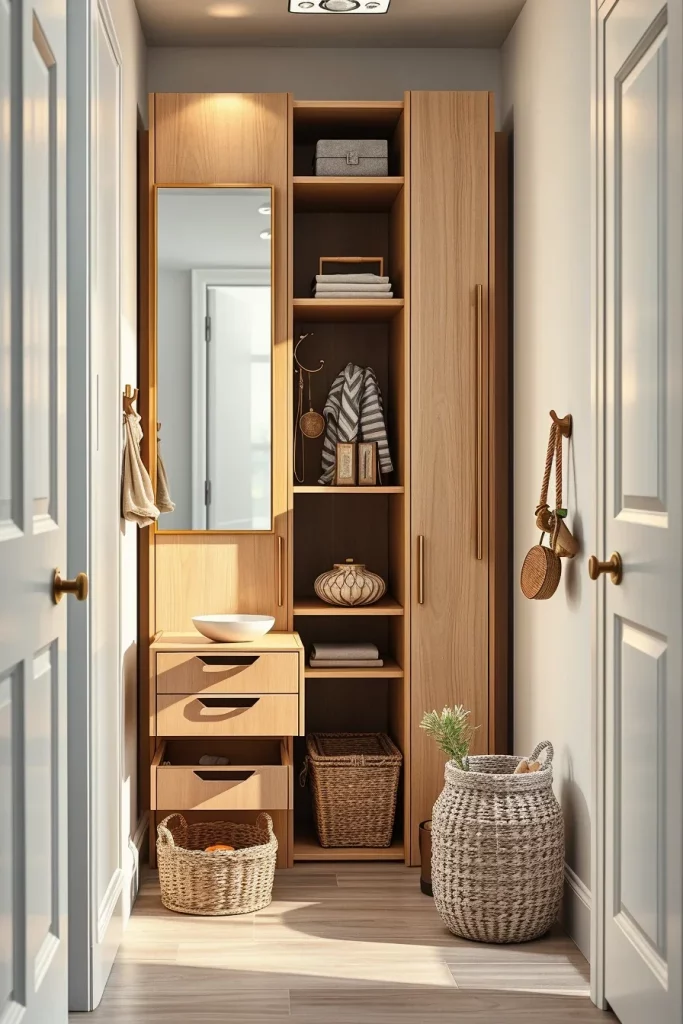
I usually recommend a combination of a narrow storage cabinet, wall hooks, closed compartments, and a shallow drawer for keys and mail. Soft-close doors reduce noise, while adjustable shelves make it easy to store seasonal accessories. A full-length mirror integrated into the cabinet saves additional wall space and reflects light throughout the hallway. Small decorative accents such as a ceramic tray, woven basket, or framed artwork add personality without creating clutter.
I agree with recommendations often shared by interior experts from Architectural Digest, who emphasize combining hidden storage with clean lines to maintain a calm visual appearance in compact homes. In my experience, closed storage instantly makes a small hallway feel larger because everyday items remain out of sight while staying within easy reach.
If I wanted to improve this design even further, I would add integrated LED lighting inside the cabinet and beneath floating shelves. Better lighting makes the entryway safer, highlights architectural details, and creates a welcoming atmosphere when arriving home.
Slim Console Tables That Keep Narrow Hallways Open
Whenever I work with an especially narrow hallway, I prefer slim console tables that provide functionality without reducing walking space. A shallow profile keeps circulation comfortable while still offering a convenient surface for everyday essentials. I find that furniture with clean silhouettes helps the hallway feel airy rather than overcrowded.
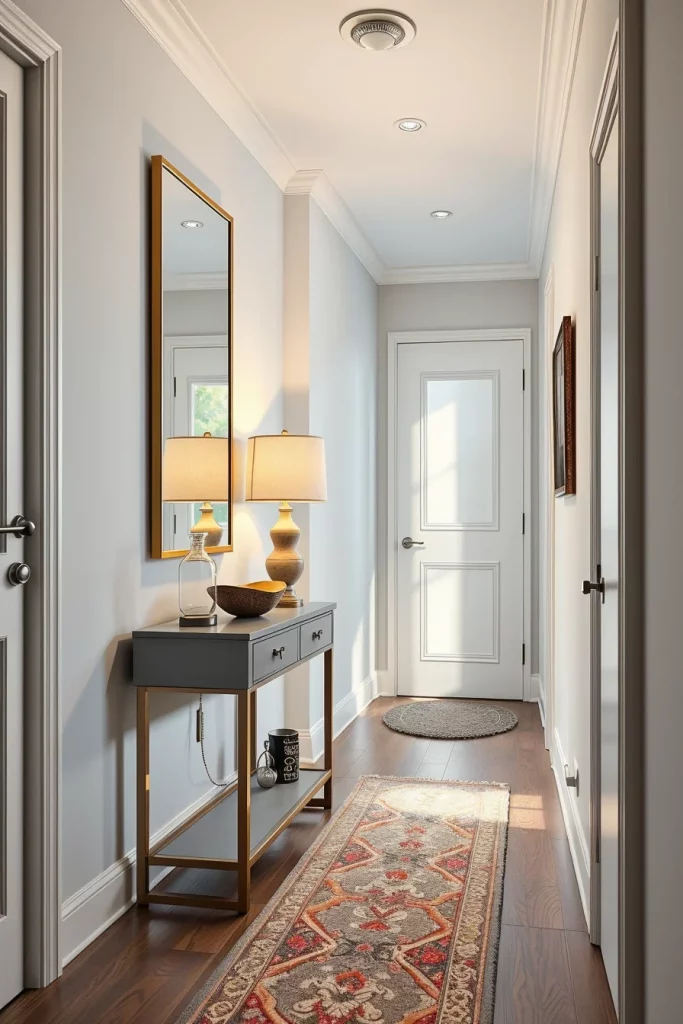
I like choosing console tables with narrow drawers, open lower shelving, and durable finishes that resist scratches from daily use. A large mirror placed above the table visually doubles the available space, while a small table lamp or rechargeable accent light creates warmth during the evening. Decorative bowls, books, and a simple vase complete the arrangement without overwhelming the room.
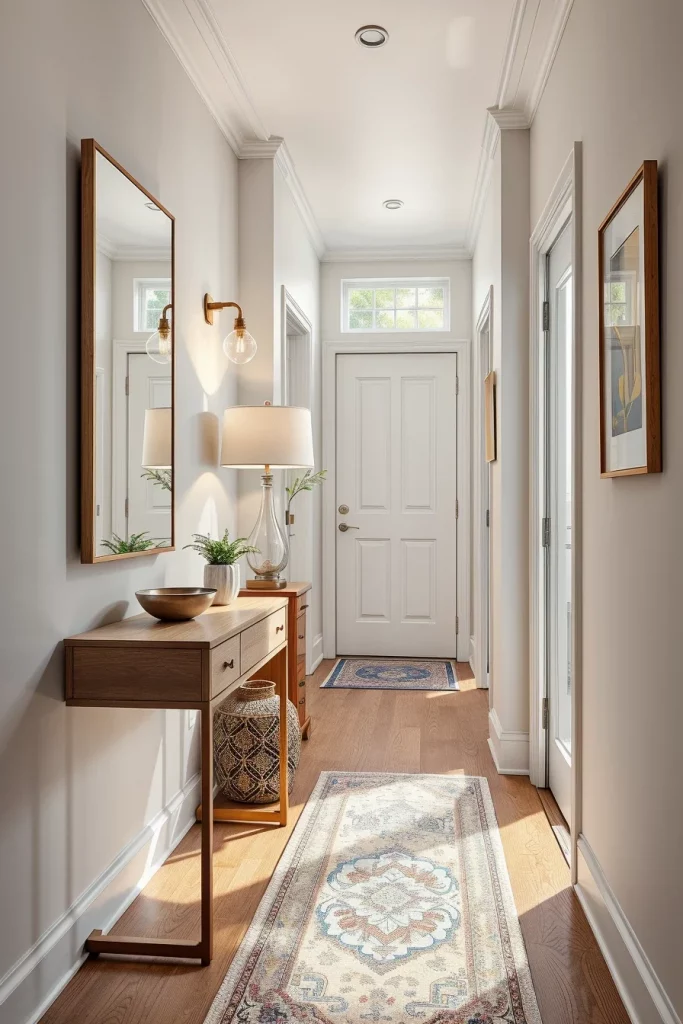
Many designers featured by House Beautiful recommend using reflective surfaces and lightweight furniture in compact entryways, and I have found this advice consistently effective. By limiting decorative accessories and prioritizing useful pieces, I can maintain both elegance and practicality.
To complete this hallway, I would include a washable runner rug with subtle texture. It protects the flooring, softens footsteps, and visually guides visitors toward the rest of the home while maintaining a clean modern aesthetic.
Multifunctional Hallway Benches With Hidden Storage
A storage bench is one of my favorite additions to any small hallway because it combines comfort and organization in a single piece of furniture. Instead of occupying valuable space with separate seating and storage units, I can achieve both functions while keeping the entryway tidy. This solution works especially well for families who need quick access to shoes and seasonal accessories.
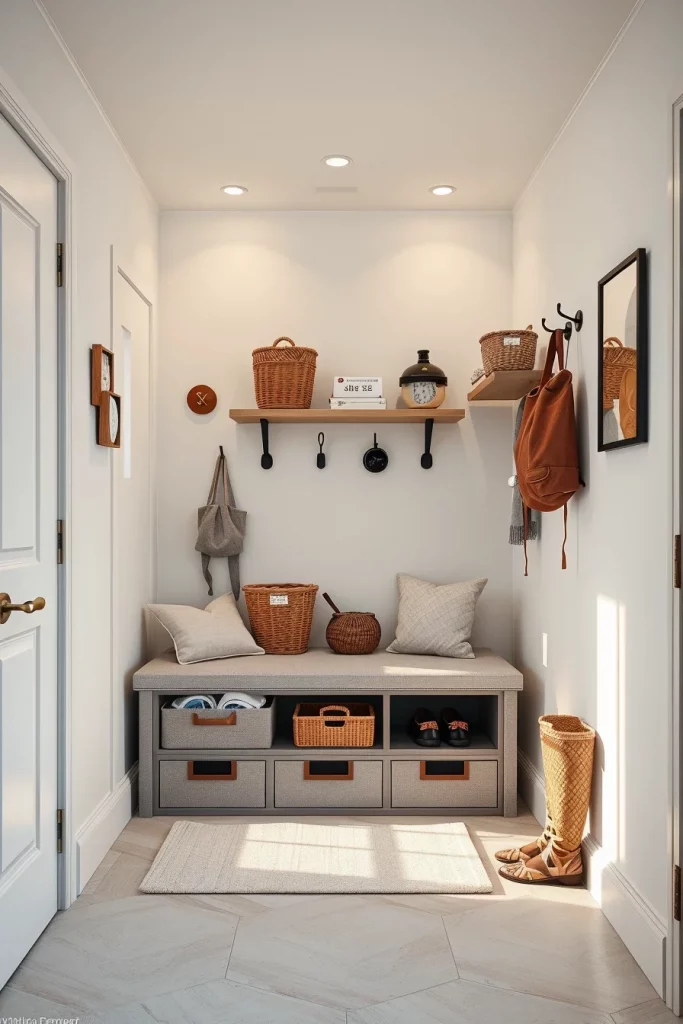
I prefer benches with lift-up seats, divided storage compartments, and durable upholstery that can withstand everyday use. Built-in baskets help organize scarves, gloves, umbrellas, and reusable shopping bags. Adding comfortable seat cushions encourages people to sit while putting on shoes, making the hallway more functional for every member of the household.
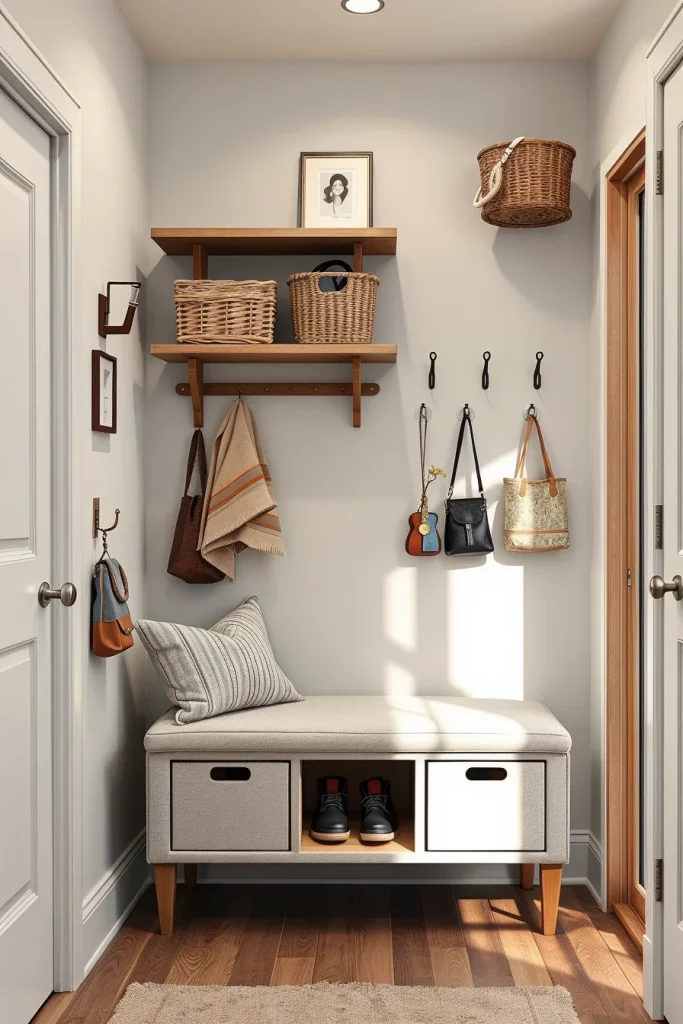
I appreciate recommendations from Better Homes & Gardens that encourage selecting multifunctional furniture for compact homes. In my own projects, storage benches consistently reduce visible clutter while improving daily routines because everything needed before leaving the house stays in one organized location.
If additional space is available above the bench, I would install floating shelves or decorative hooks to create a complete entry station for jackets, hats, and personal accessories without making the room feel crowded.
Floating Furniture Ideas For A Spacious Hallway Look
Floating furniture completely changes the way I approach compact hallway design. Mounting cabinets, shelves, and storage units on the wall exposes more of the floor, which immediately creates the illusion of a larger space. Even the smallest hallway feels lighter and more open when furniture appears to float instead of resting heavily on the floor.
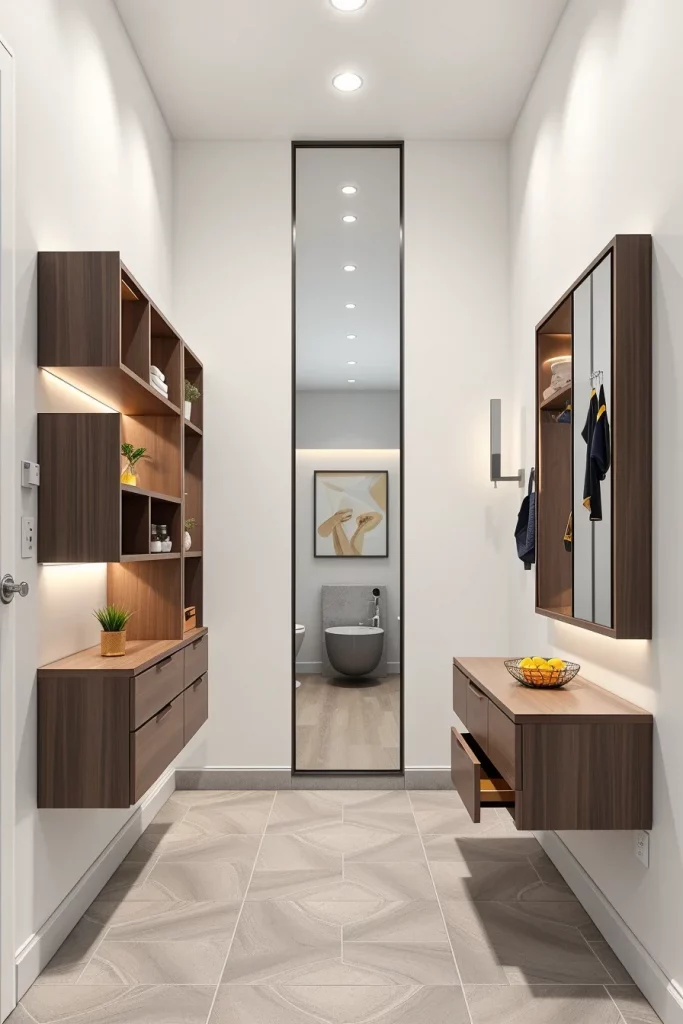
I usually combine floating cabinets with wall-mounted shelves, hidden drawers, and integrated lighting. Open floor space underneath makes cleaning much easier while also providing room for decorative baskets or temporary shoe storage when needed. Simple hardware and handle-free cabinet fronts maintain a streamlined appearance that suits modern interiors.
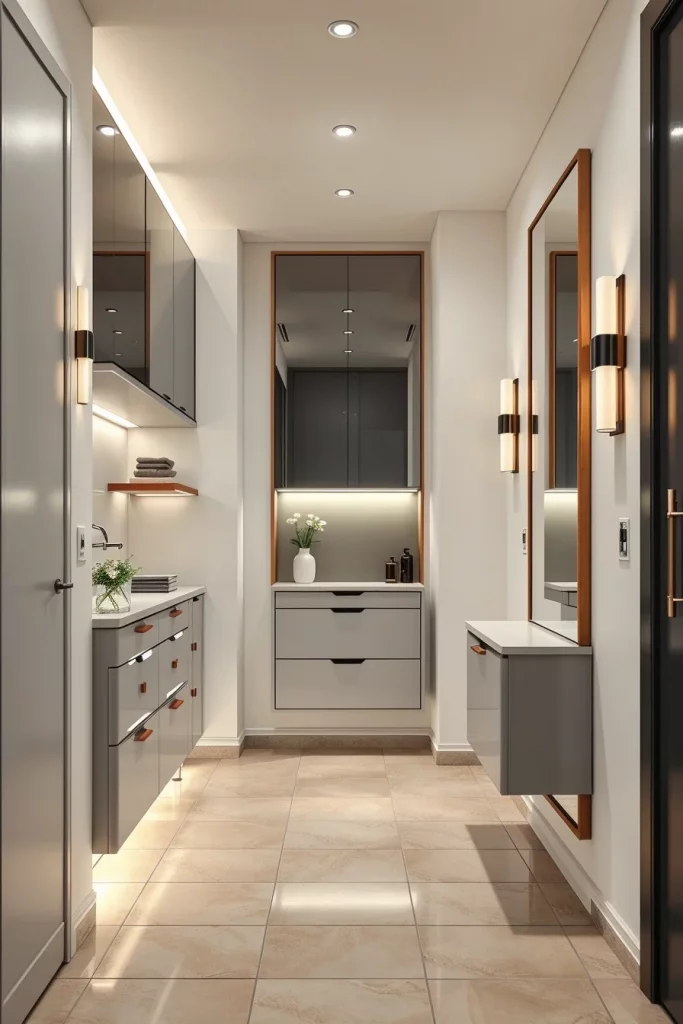
Many contemporary designers featured in Elle Decor highlight floating furniture because it reduces visual weight and improves spatial perception. I have seen this strategy dramatically improve narrow entryways where every centimeter matters, especially in apartments with limited square footage.
To finish this arrangement, I would include a large vertical mirror and carefully positioned wall sconces. These additions increase brightness, reflect natural light, and strengthen the spacious feeling created by floating furniture.
Compact Shoe Cabinets That Reduce Everyday Clutter
Shoe storage often determines whether a small hallway feels organized or chaotic. I always prioritize compact shoe cabinets because they hide everyday footwear while maintaining a clean and welcoming entrance. Slim cabinets designed specifically for narrow hallways make excellent use of limited depth without interfering with movement through the space.
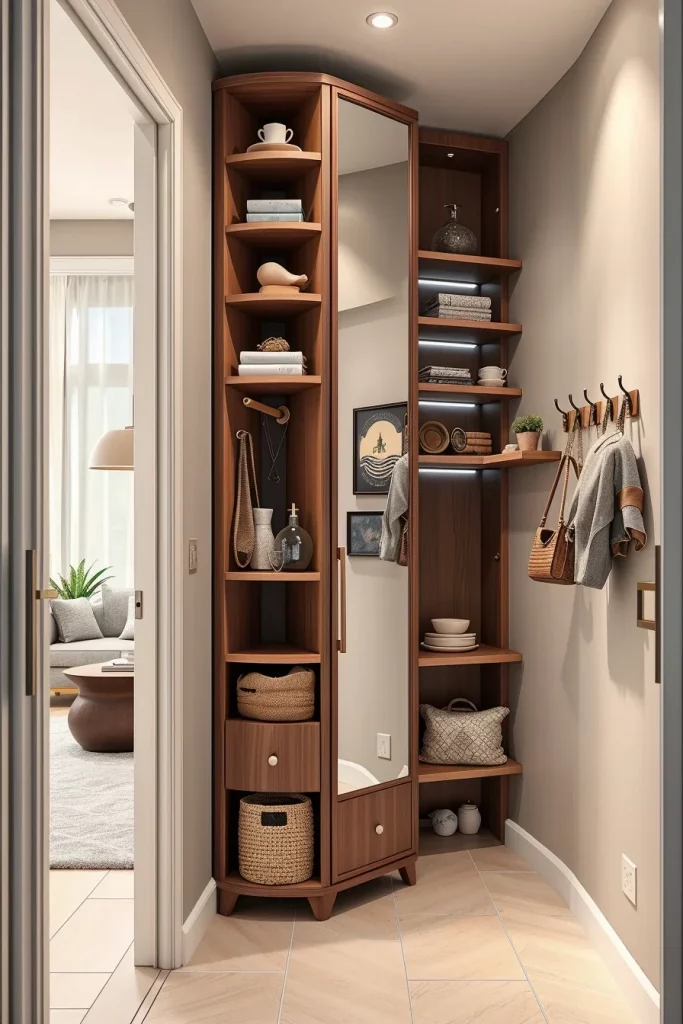
I recommend shoe cabinets with tilt-out compartments, adjustable shelving, and ventilated interiors that help shoes dry properly after daily use. Models with a flat top also provide extra space for decorative accessories, keys, or a small plant. Durable finishes that resist moisture and scratches help the furniture maintain its appearance over many years.
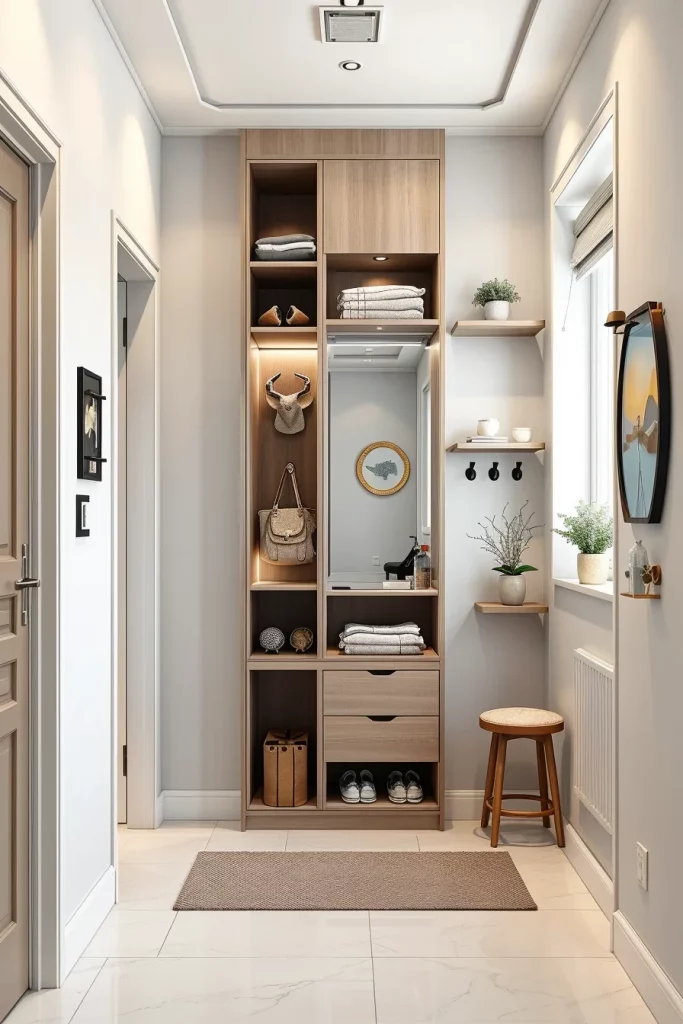
I frequently follow advice shared by HGTV designers, who recommend assigning every everyday item a dedicated storage location. In my experience, this simple habit makes compact entryways feel significantly larger because visible clutter disappears almost immediately.
To improve this storage area further, I would add labeled storage baskets for seasonal footwear and install a nearby umbrella stand with a removable drip tray to keep the hallway clean throughout the year.
Wall Mounted Furniture Solutions For Tiny Entryways
Wall-mounted furniture has become one of my favorite solutions whenever I work with an extremely compact hallway. Keeping furniture off the floor instantly creates a more open appearance while preserving valuable walking space. Even the narrowest entryway can feel organized when every piece serves a purpose without adding unnecessary visual weight. This approach works especially well for apartments where every square foot must perform multiple functions.
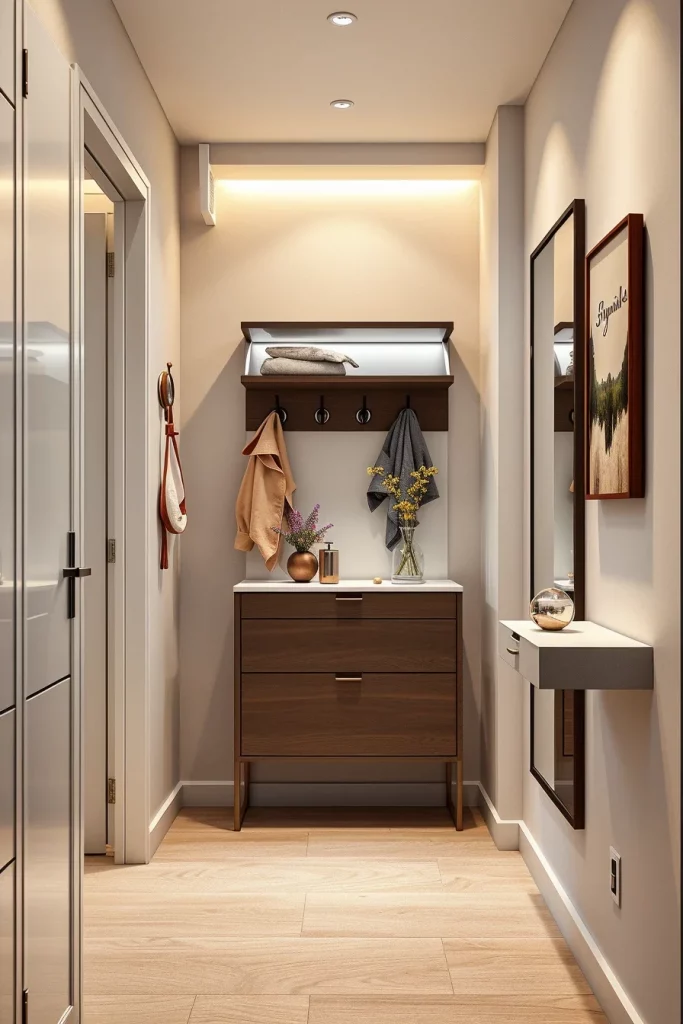
I usually combine a floating storage cabinet, wall-mounted coat hooks, a compact shelf for keys, and a slim mirror to create a complete entry station. A small floating drawer keeps everyday essentials hidden, while open shelves display only a few carefully selected decorative objects. I also like incorporating a magnetic organizer for keys and mail, which reduces countertop clutter and keeps important items within easy reach before leaving home.
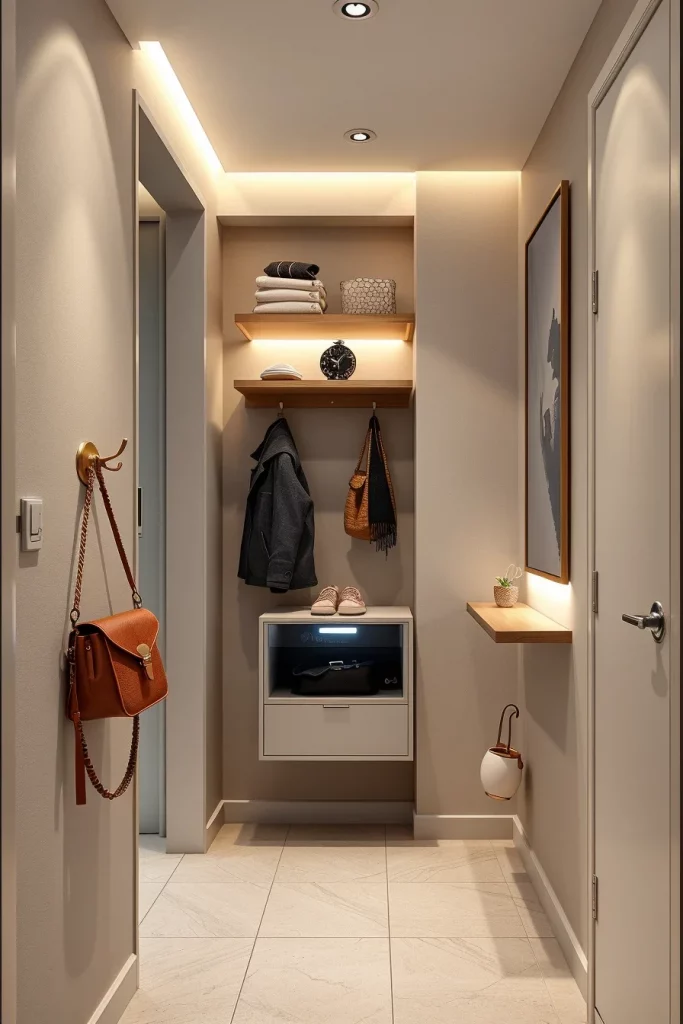
Many designers featured by Dwell recommend wall-mounted furnishings because they create a lighter visual composition while simplifying cleaning underneath. I have found this advice particularly valuable in compact homes, where uninterrupted flooring makes the hallway feel noticeably larger than its actual dimensions.
To complete this design, I would add recessed wall lighting or slim LED strips beneath floating shelves. These details improve visibility, highlight the furniture, and create a warm, welcoming atmosphere without occupying any additional space.
Foldable Furniture Designs For Flexible Hallway Spaces
Whenever flexibility is important, I often recommend foldable furniture that adapts to changing daily needs. A hallway should remain comfortable whether someone is quickly leaving for work or welcoming guests. Fold-away furniture allows the space to transform in seconds while maintaining a clean, uncluttered appearance throughout the day.
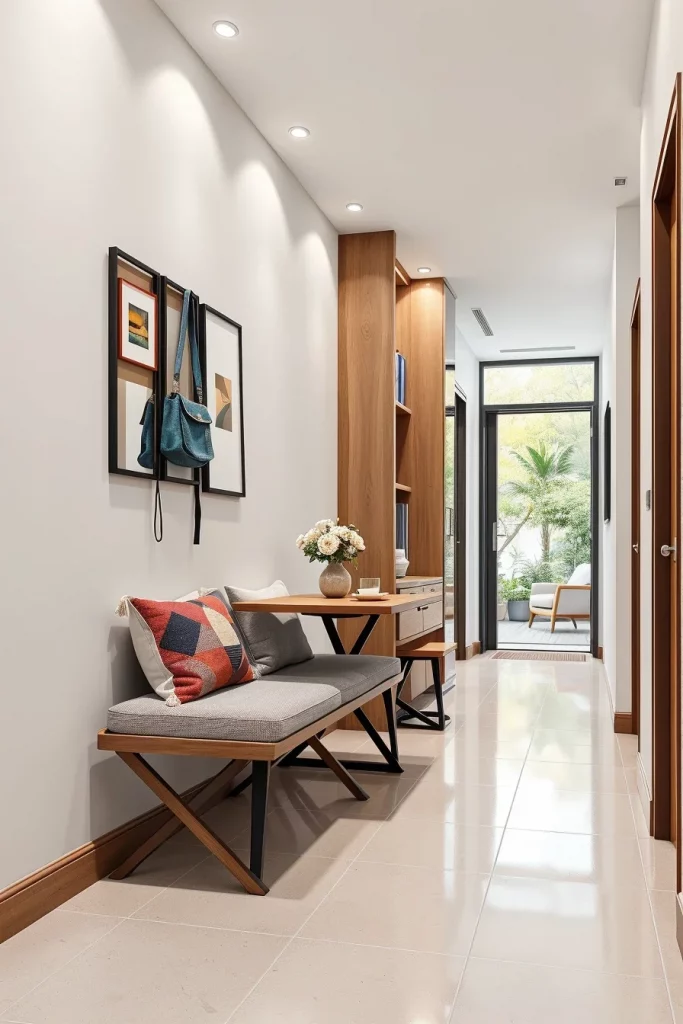
I prefer folding benches, retractable wall tables, collapsible seating, and drop-down storage compartments that disappear when not in use. Modern hardware makes these mechanisms reliable and smooth, while durable finishes ensure long-term performance. Combining foldable furniture with concealed storage creates an entryway that feels much larger because unnecessary furniture never blocks circulation.
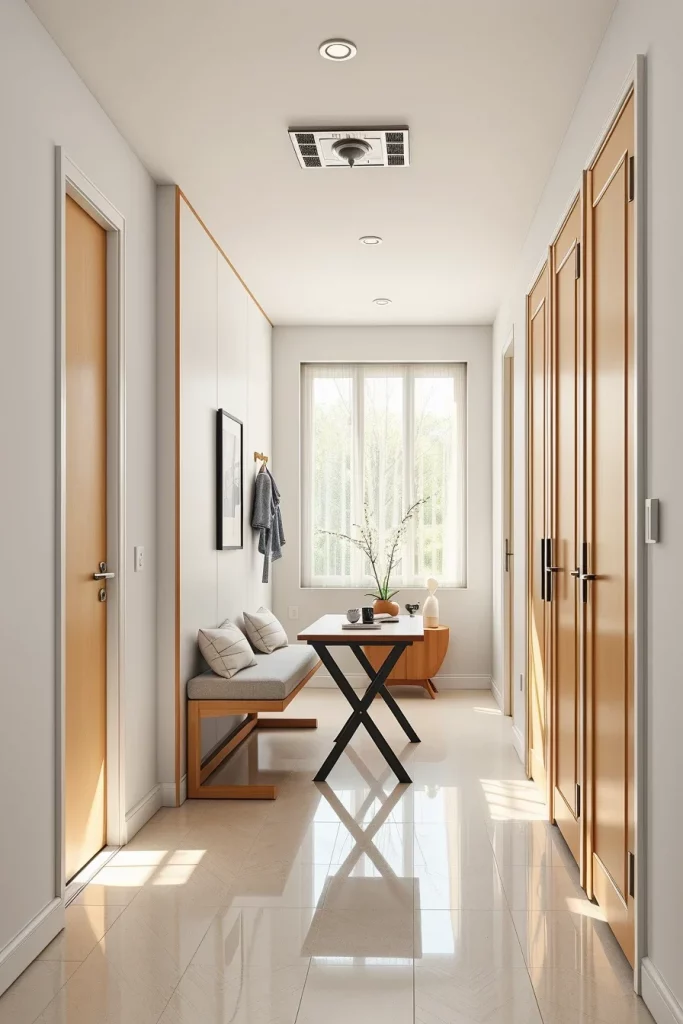
Interior designers frequently featured in Apartment Therapy emphasize adaptable furniture for smaller homes, and I completely understand why. In my own experience, flexible furniture extends the usefulness of a hallway without requiring permanent floor space. It provides convenience while preserving an open and comfortable environment.
If I were refining this layout further, I would include a foldable umbrella rack and a compact charging station hidden inside one of the cabinets. These additions improve everyday convenience without affecting the hallway’s minimalist appearance.
Corner Furniture Ideas To Use Every Available Inch
Corners are often overlooked in hallway design, but I see them as valuable opportunities for additional storage. Making use of every available inch allows even a very compact entryway to become organized and functional. Carefully designed corner furniture fills awkward spaces that would otherwise remain unused while maintaining smooth movement through the hallway.
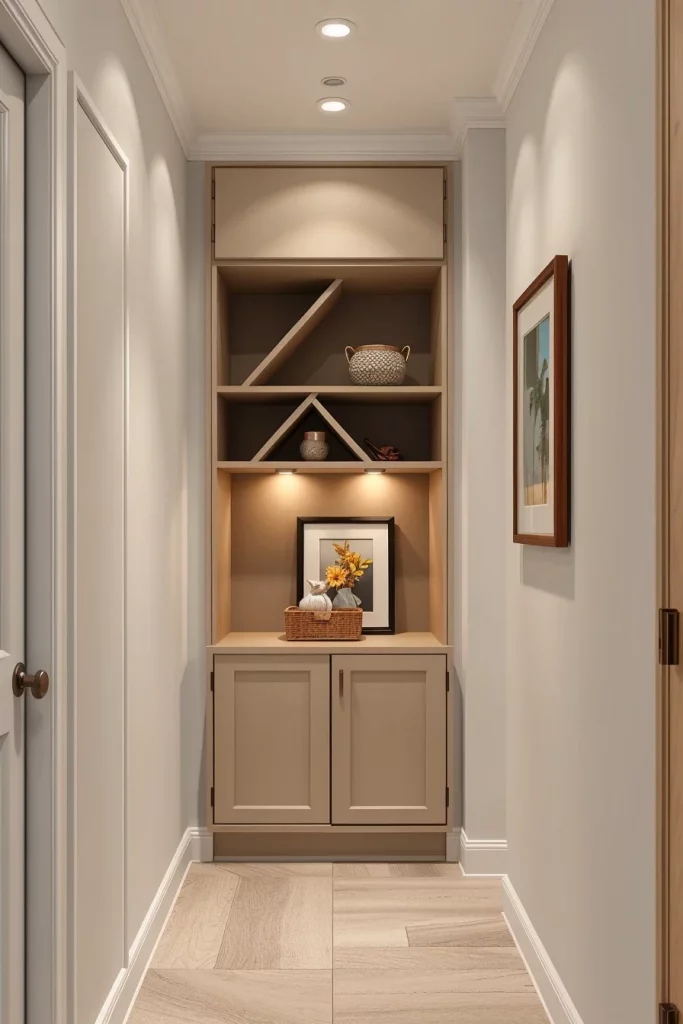
I often select triangular cabinets, corner shelving, narrow seating, or custom-built storage units designed specifically for difficult layouts. Rounded edges help improve circulation, while vertical compartments maximize storage capacity without extending into the walkway. Decorative accessories such as framed artwork, sculptural bowls, or subtle lighting complete the corner without overwhelming the space.
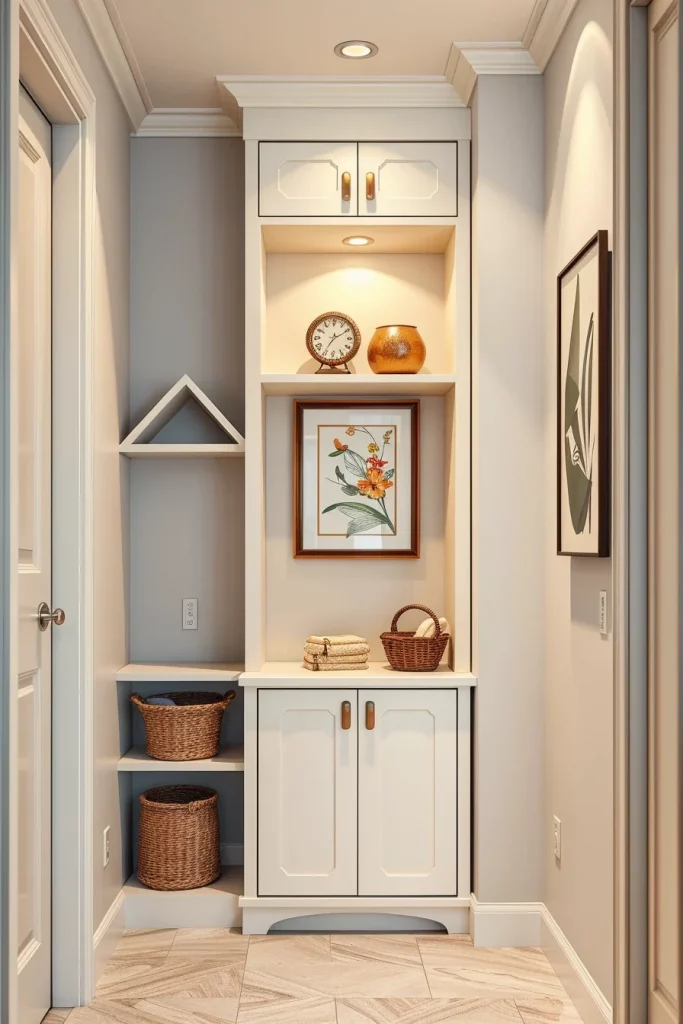
Many professional organizers recommend evaluating overlooked spaces before purchasing additional furniture, and I fully agree with that philosophy. In my projects, corner storage frequently eliminates the need for larger cabinets elsewhere in the hallway, resulting in a cleaner and more balanced interior.
To maximize this solution, I would install a small accent light above the corner furniture and include one decorative basket for seasonal accessories. These finishing touches make the corner feel intentional rather than forgotten.
Vertical Storage Furniture That Maximizes Wall Space
Vertical storage is one of the most effective strategies I use when designing compact hallways. Instead of expanding outward into valuable walking areas, I build upward to utilize the full height of the room. This simple adjustment dramatically increases storage capacity while preserving an open floor plan that feels comfortable and uncluttered.
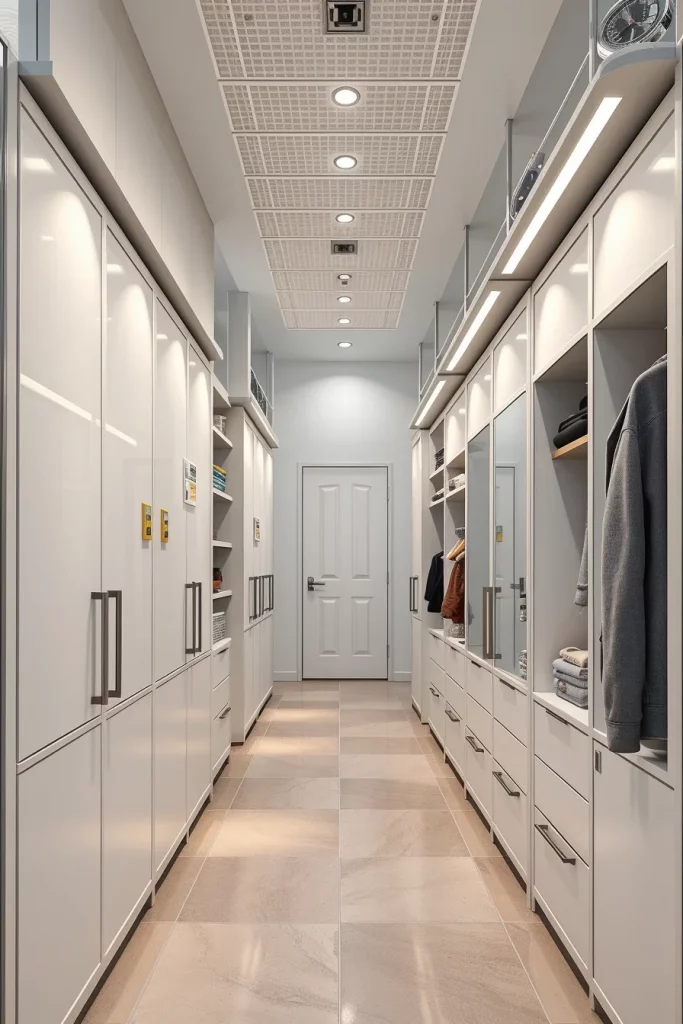
I usually recommend tall storage cabinets, stacked shelving, overhead compartments, and adjustable vertical organizers that accommodate changing storage needs. Closed upper cabinets are perfect for seasonal items, while lower open shelves keep everyday essentials accessible. Combining different storage heights creates visual balance while making the most of every section of wall.
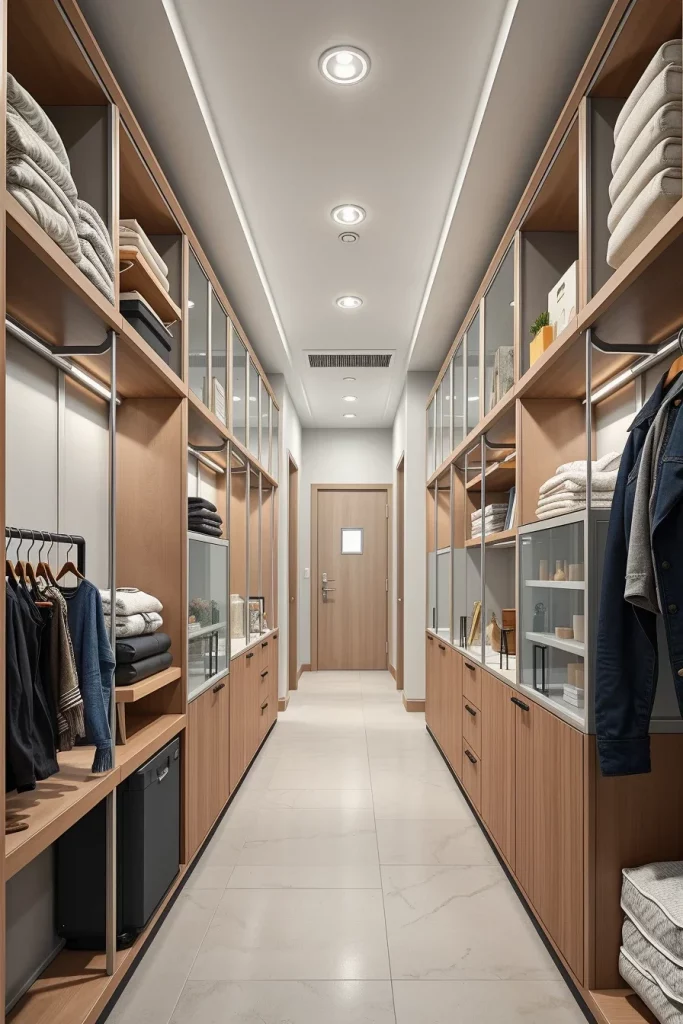
Experts from Better Homes & Gardens often suggest taking advantage of vertical space before adding more furniture, and I have consistently found this advice practical. Tall storage solutions allow compact hallways to remain organized throughout the year while preventing unnecessary clutter from accumulating near the entrance.
To finish this arrangement, I would add integrated cabinet lighting and a decorative ladder-style accessory rack for scarves or lightweight bags. These additions increase both functionality and visual interest without compromising valuable floor space.
Creative Decorative Furniture Accents That Complete A Small Hallway
After solving storage challenges, I always focus on decorative furniture accents that make the hallway feel inviting. Functional furniture should never come at the expense of character. Carefully selected accessories add warmth and personality while maintaining the clean, organized appearance established throughout the design.
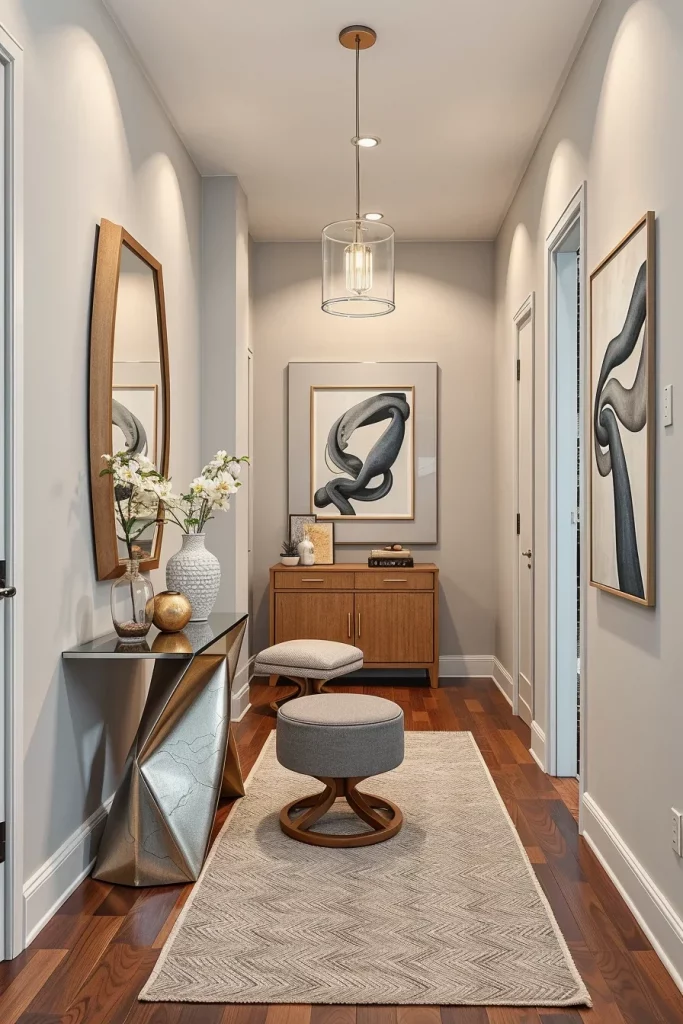
I like incorporating upholstered stools, sculptural side tables, decorative mirrors, textured runners, minimalist artwork, and elegant lighting fixtures. Every decorative element should have a clear purpose, whether it improves comfort, reflects light, or introduces subtle visual interest. Limiting decorative accessories prevents the hallway from becoming visually crowded while preserving its practical function.
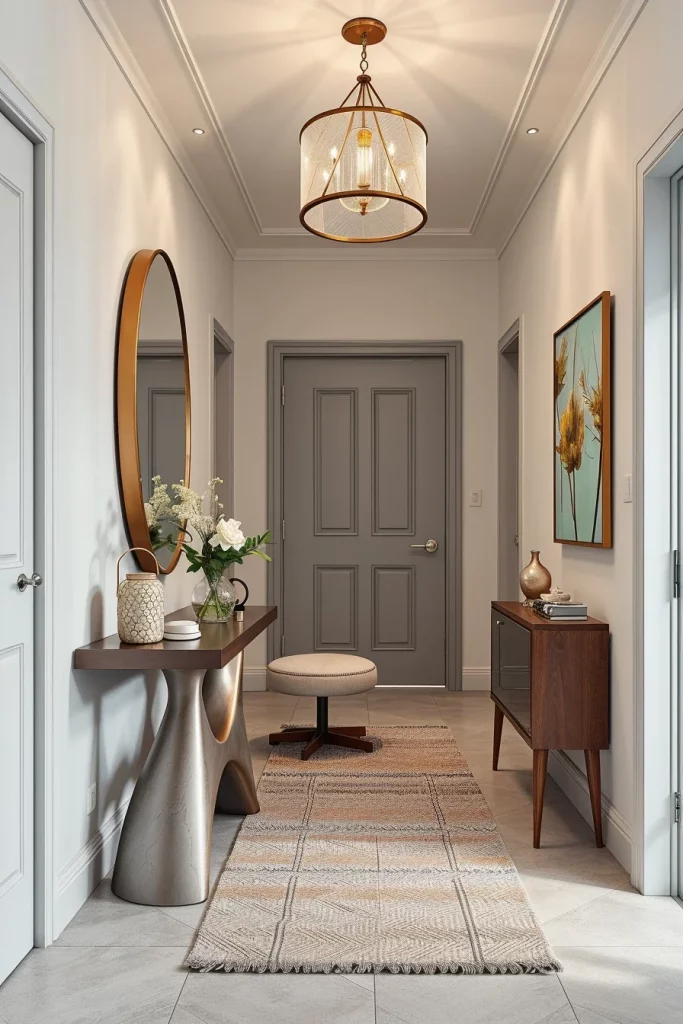
Many interior stylists recommend treating the entryway as the home’s introduction rather than simply a passageway. I share this perspective because the hallway establishes the atmosphere visitors experience immediately upon entering the home. Thoughtful furniture and restrained decoration create an entrance that feels welcoming without appearing excessive.
If I wanted to complete this design even further, I would introduce subtle seasonal accessories that can be easily updated throughout the year. Rotating decorative elements keeps the hallway fresh while allowing the furniture itself to remain timeless.
Mirror Furniture Combinations That Expand Small Hallways
Whenever I design a compact hallway, I look for ways to make the room appear larger without changing its footprint. One of my favorite solutions is combining mirrored furniture with clean-lined storage pieces. A mirrored console cabinet or a slim cabinet with mirrored doors reflects both natural and artificial light, creating the illusion of a brighter and more open entrance. When paired with light finishes and a simple layout, this arrangement immediately reduces the closed-in feeling that many small hallways have.
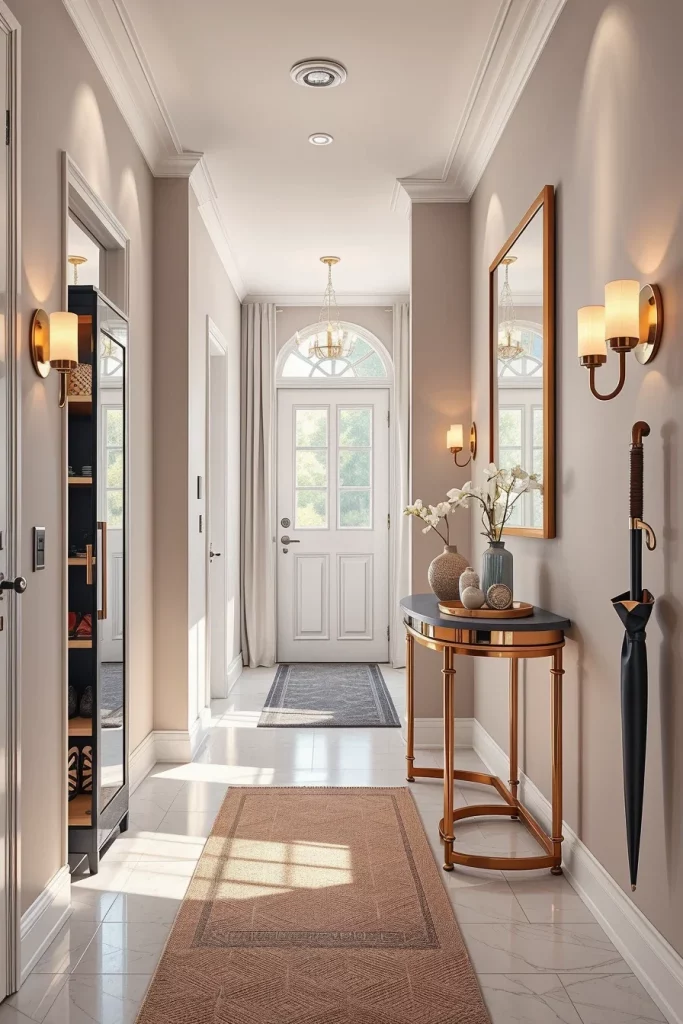
I prefer selecting furniture that performs more than one task. A narrow mirrored shoe cabinet can keep footwear organized while visually enlarging the room. Above it, I often install a large wall mirror that aligns with the furniture below, creating a seamless composition. Decorative trays, ceramic bowls for keys, concealed drawers, and a compact umbrella stand complete the arrangement without overwhelming the space. Soft wall sconces or LED lighting positioned beside the mirror enhance reflections and improve everyday functionality.
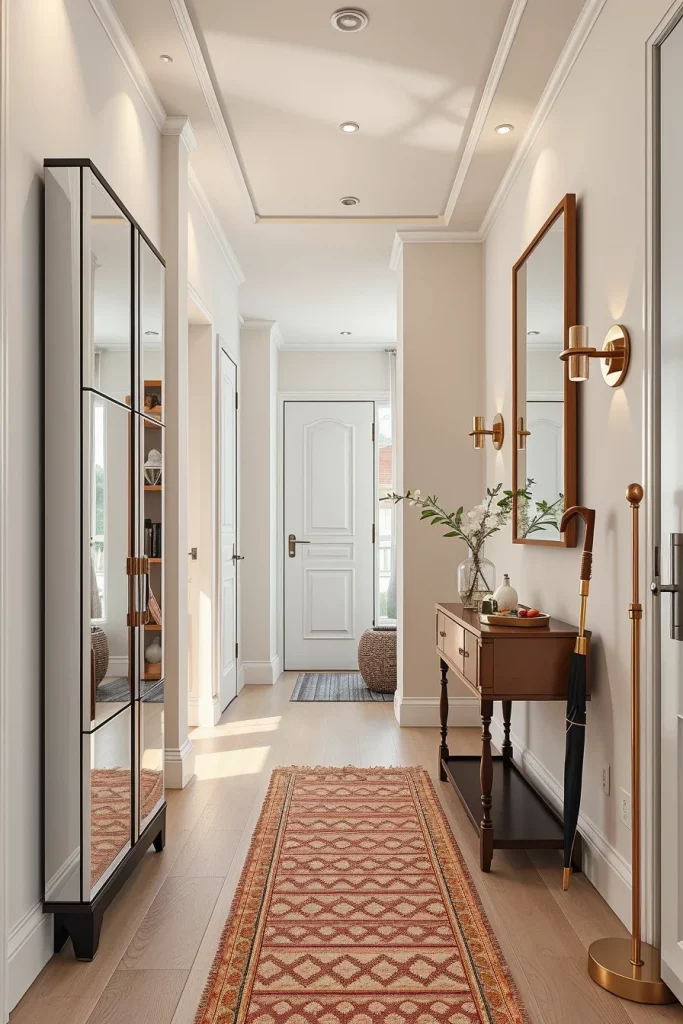
From my experience, designers featured in publications such as Architectural Digest often emphasize that reflective materials should be balanced with simple shapes to avoid visual clutter. I completely agree with this approach because mirrors work best when the surrounding furniture remains clean and understated. The result feels elegant rather than excessive, while the hallway remains practical for daily use.
To complete this design, I would also include a durable runner rug with a subtle texture, concealed cable management for lighting, and a small indoor plant placed beside the cabinet to soften the reflective surfaces while maintaining an uncluttered appearance.
Custom Built Furniture For Awkward Hallway Layouts
Every hallway has unique dimensions, and I have found that awkward layouts benefit the most from custom-built furniture. Alcoves, narrow corners, sloped ceilings, or irregular wall lengths can become valuable storage opportunities when furniture is designed specifically for the available space. Instead of leaving difficult areas unused, I prefer transforming them into functional storage that blends naturally with the architecture.
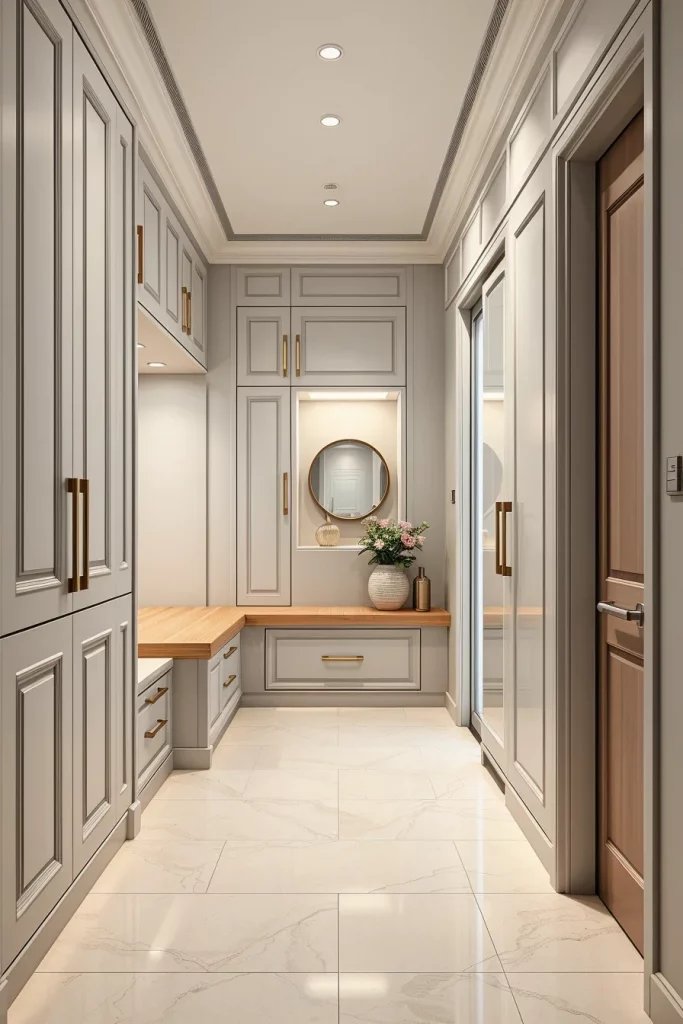
Built-in cabinets reaching from floor to ceiling allow me to maximize vertical space while keeping the hallway visually calm. I often include hidden compartments for seasonal accessories, drawers for shoes, hooks concealed behind cabinet doors, and integrated benches that create a comfortable place to sit while putting on shoes. Open niches with warm LED lighting can display decorative objects without making the hallway feel crowded.
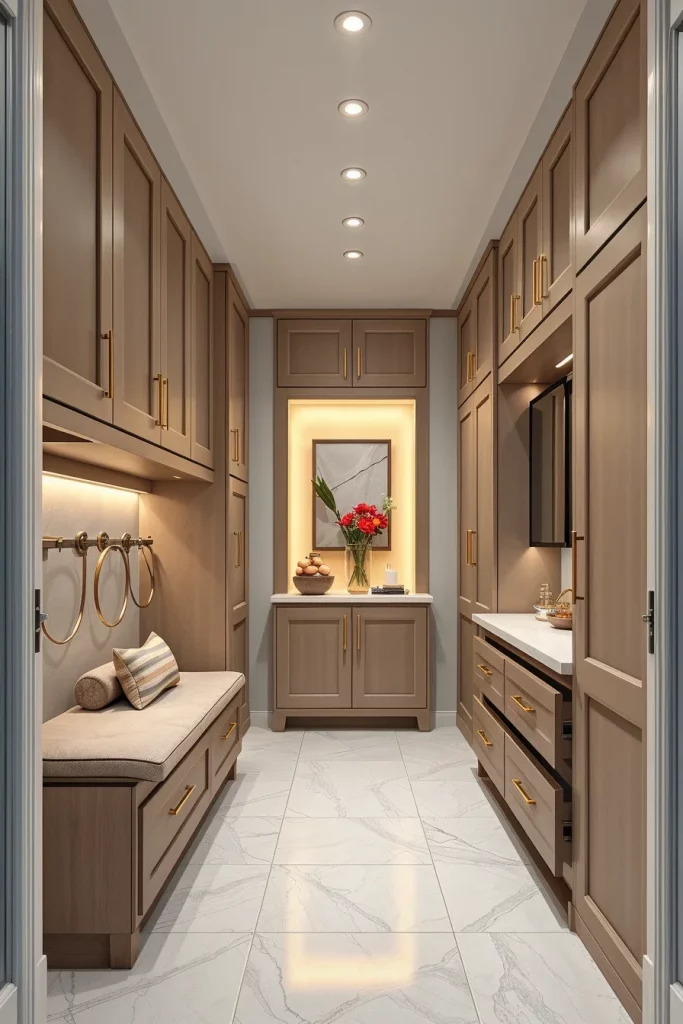
I appreciate advice shared by many professional interior designers, including experts regularly featured by House Beautiful, who recommend investing in custom storage when dealing with unusual floor plans. In my own projects, this strategy consistently delivers better organization while preserving valuable walking space, something that freestanding furniture often struggles to achieve.
I would also add soft-close hardware, moisture-resistant finishes near exterior doors, integrated charging outlets for portable devices, and adjustable shelving that can easily adapt as storage needs change over time.
Open Shelving Furniture That Feels Light And Airy
I often recommend open shelving when I want a small hallway to feel less confined. Unlike bulky enclosed cabinets, slim open shelves maintain visual openness while still providing practical storage for everyday essentials. This approach works especially well in compact apartments where every piece of furniture should contribute to both function and appearance.
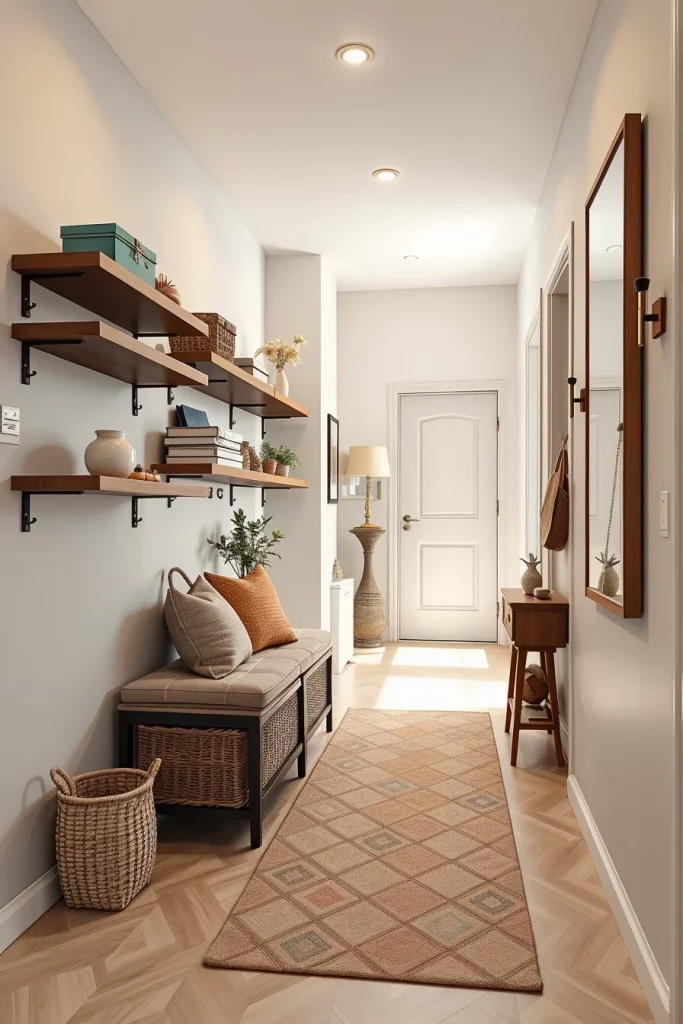
My preferred arrangement includes floating wooden-look shelves, a slim storage bench underneath, woven storage baskets, decorative boxes for smaller accessories, and a few carefully selected decorative objects that personalize the entrance. Hooks mounted below the shelves provide convenient storage for jackets and bags while keeping frequently used items within easy reach. The key is limiting decorative pieces so the shelving remains organized instead of appearing cluttered.
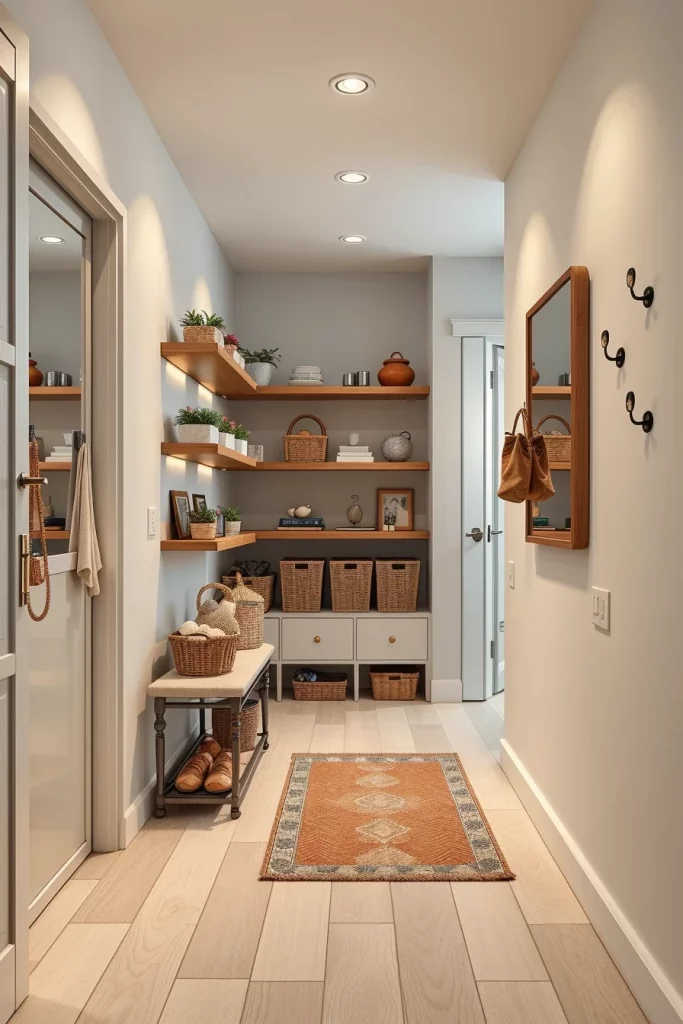
Personally, I believe open shelving succeeds only when homeowners commit to regular organization. Many interior editors at Better Homes & Gardens have highlighted the importance of editing decorative displays to prevent visual overload, and I have seen firsthand how this simple habit keeps even the smallest hallway feeling fresh and inviting throughout the year.
To improve this layout further, I would include labeled storage baskets, discreet wall-mounted lighting above the shelving, moisture-resistant shelf finishes near the entrance, and a coordinating mirror that reflects light across the entire hallway.
Minimalist Furniture Arrangements For Clean Hallway Design
Minimalism has become one of my preferred approaches for designing compact hallways because it focuses on keeping only the furniture that truly serves a purpose. Rather than filling the space with multiple cabinets or decorative pieces, I concentrate on creating a balanced layout where every item contributes to organization and visual comfort. This allows the hallway to feel open even when its dimensions are limited.
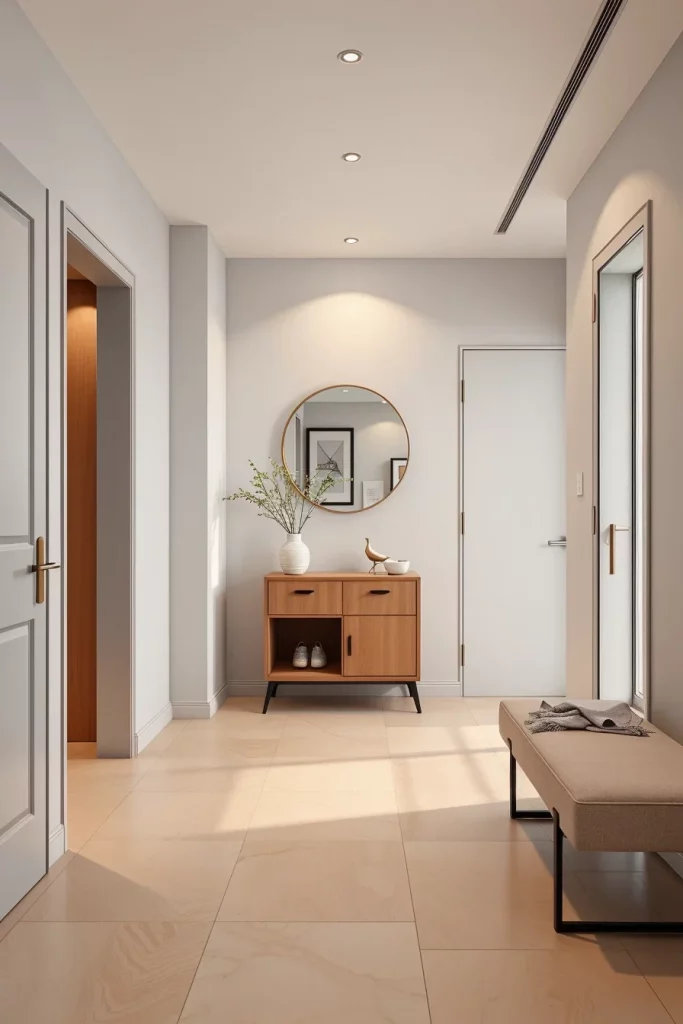
I usually begin with a slim console table, a wall-mounted mirror, concealed shoe storage, and a compact storage cabinet with handle-free doors. Neutral finishes combined with clean geometric forms help maintain visual continuity from the entrance into the rest of the home. A simple bench with hidden storage offers practical seating without interrupting circulation through the hallway.
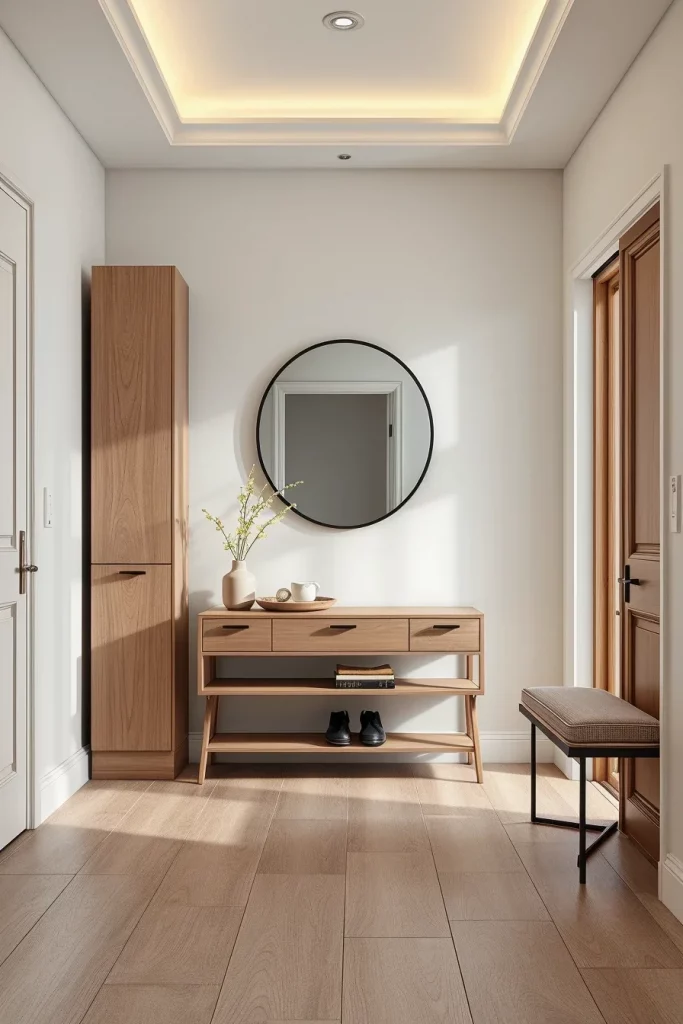
From my own experience, I have learned that restraint often produces the strongest results. Professional designers featured by Elle Decor frequently recommend removing unnecessary furniture before adding new pieces, and I find this advice especially valuable for compact spaces where every centimeter matters. A carefully edited layout always feels calmer and more functional.
I would enhance this design by incorporating integrated wall hooks that disappear when not in use, durable flooring with minimal pattern variation, concealed storage for cleaning supplies, and layered lighting that combines ceiling fixtures with soft accent illumination.
Modern Hall Tree Furniture With Multiple Functions
When clients ask me for the single most practical furniture piece for a compact hallway, I often recommend a modern hall tree. It combines seating, coat storage, shoe organization, shelving, and sometimes even mirrors into one compact unit. This eliminates the need for several separate furniture pieces and creates a more organized entryway from the moment someone walks inside.
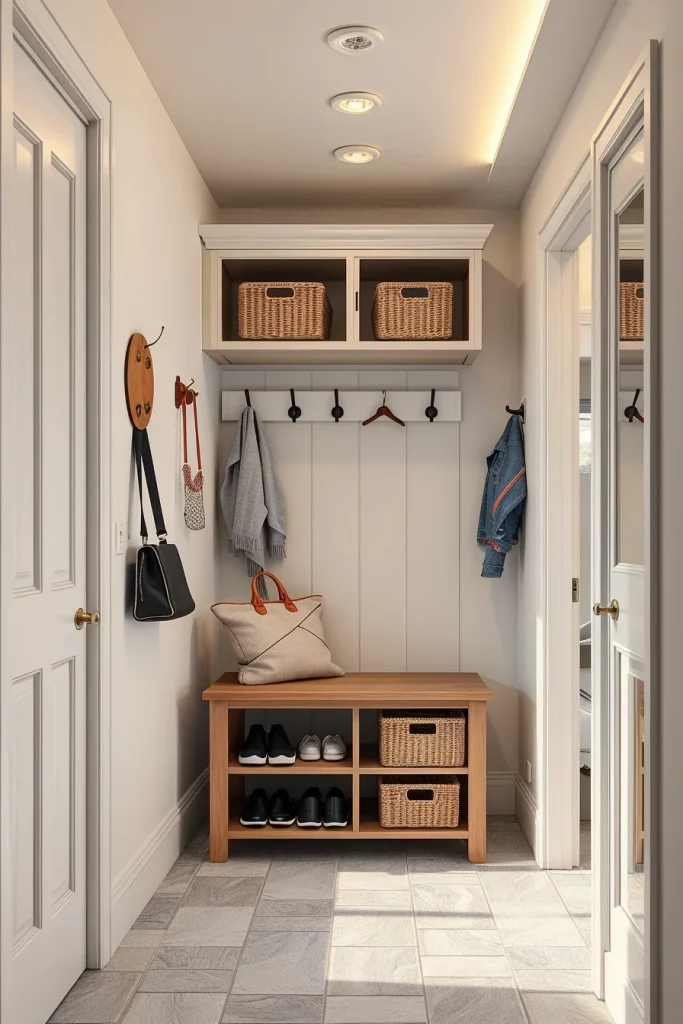
I like hall trees with slim profiles, integrated benches, upper storage cabinets, open shelves, sturdy coat hooks, and lower compartments for shoes. Adding woven baskets inside the lower shelves helps separate seasonal accessories while maintaining a clean appearance. Finishes in soft neutral colors with matte hardware allow the furniture to blend naturally into both contemporary and transitional interiors.
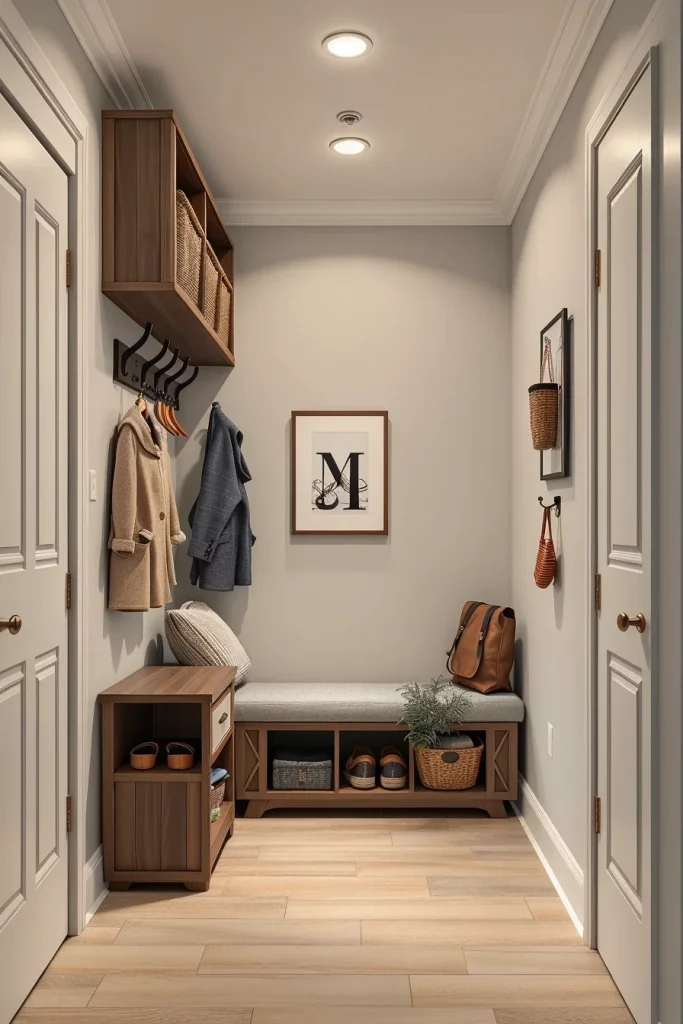
In my opinion, multifunctional furniture provides the greatest value in small homes because every element performs multiple tasks. Many American interior designers encourage investing in adaptable furniture rather than accumulating individual pieces, and I have consistently found this recommendation improves both organization and long-term usability.
To complete this section, I would add integrated LED lighting beneath the upper shelves, removable seat cushions for comfort, durable scratch-resistant finishes, concealed compartments for valuables, and nearby wall-mounted organizers for mail and everyday essentials.
Seating Furniture That Adds Comfort Without Bulk
When I work with a small hallway, I always try to include seating that feels inviting without occupying valuable floor space. A thoughtfully selected bench or compact stool makes everyday routines more comfortable while preserving an open layout. I focus on furniture with slim proportions, clean lines, and practical storage so the hallway remains organized and easy to navigate. Even in the smallest entryway, a lightweight seating solution can make the space feel more welcoming.
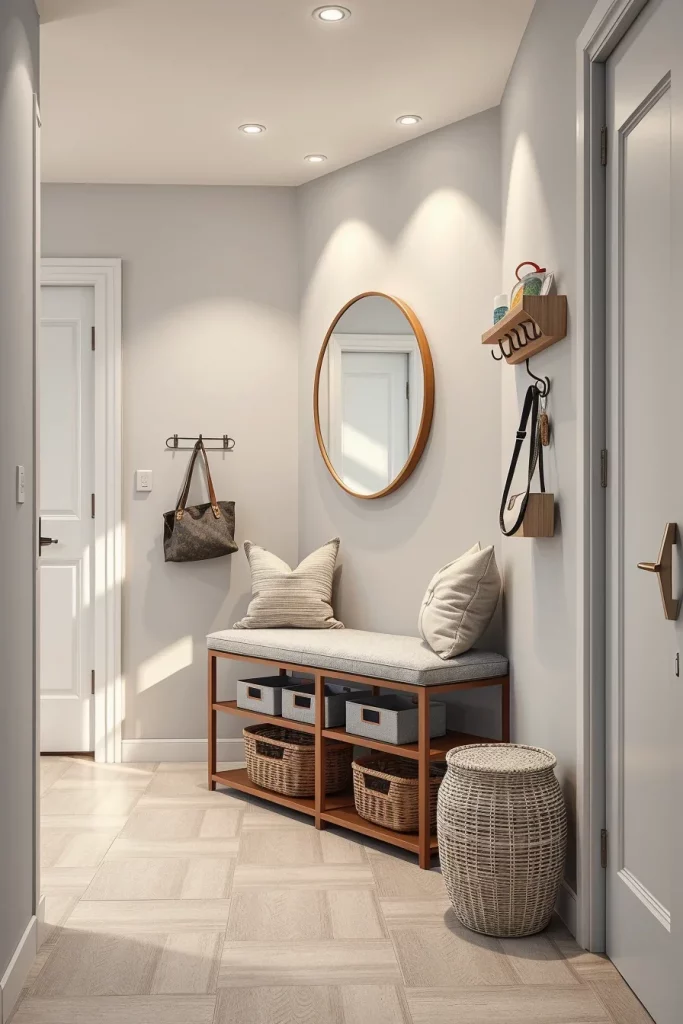
I usually recommend a narrow storage bench with a lift-up seat, a floating bench mounted directly to the wall, or an upholstered bench with open shelving underneath for shoes. A soft seat cushion adds comfort, while woven baskets beneath the bench help organize scarves, gloves, or pet accessories. Pairing the seating with a nearby mirror, a small side shelf for keys, and discreet wall hooks creates a complete entryway without making the room appear crowded.
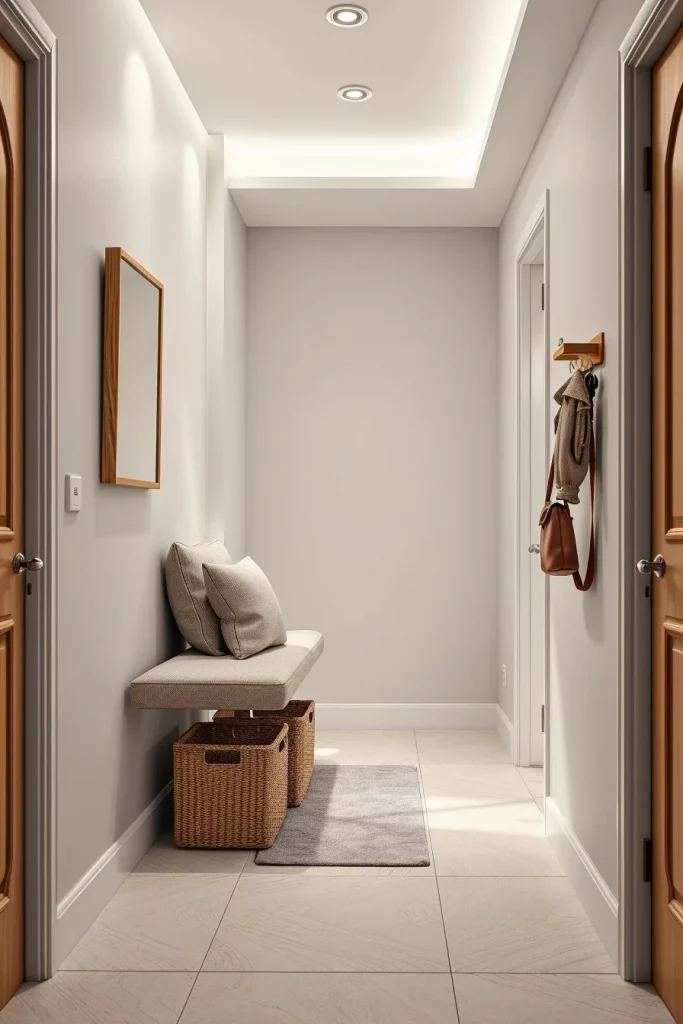
From my experience, comfortable seating is often overlooked during hallway planning, yet it significantly improves daily life. Interior designers frequently featured by Better Homes & Gardens recommend incorporating seating wherever space allows because it creates a more functional and inviting entrance. I have found this advice especially useful in family homes where convenience is essential.
To improve this arrangement even further, I would include durable stain-resistant upholstery, anti-slip floor protection beneath the bench, soft indirect lighting nearby, and a compact decorative pillow that introduces texture without overwhelming the minimalist design.
Modular Furniture Systems For Changing Storage Needs
One of the most flexible solutions I recommend for compact hallways is modular furniture. As storage requirements evolve over time, modular systems can be expanded, rearranged, or simplified without replacing the entire setup. This flexibility makes them an excellent investment for apartments, growing families, or homeowners who enjoy updating their interiors periodically.
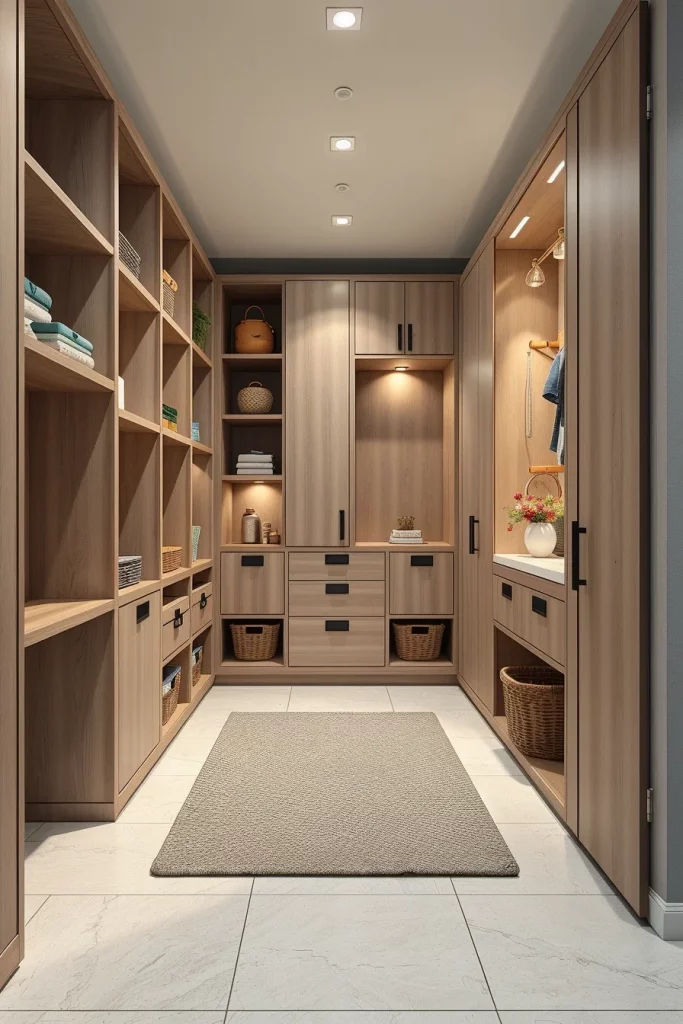
I often combine modular cabinets, stackable shelving units, adjustable drawers, removable baskets, and interchangeable wall panels. This allows me to create a personalized storage solution that adapts to changing seasons and daily routines. Closed modules hide clutter, while selected open compartments display decorative accessories or frequently used items. Uniform finishes throughout the system create visual consistency and prevent the hallway from feeling busy.
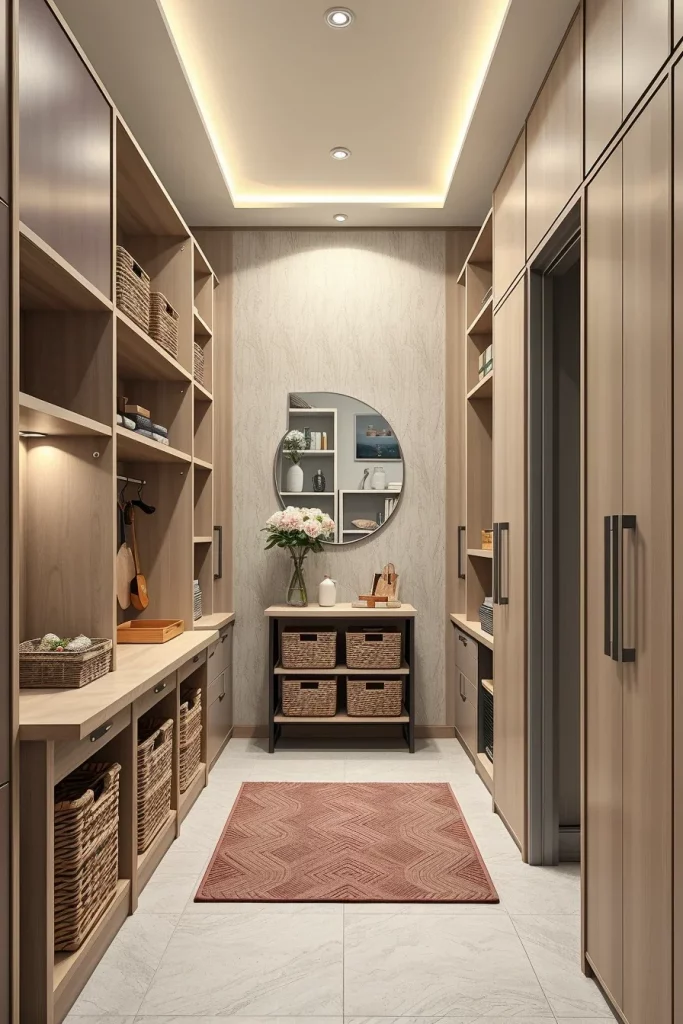
Personally, I appreciate modular furniture because it grows alongside the household instead of becoming outdated. Many professional designers have noted that adaptable storage contributes to longer-lasting interiors, and I have consistently seen how modular systems simplify future renovations while maintaining a polished appearance.
To complete this design, I would add adjustable shelving heights, integrated lighting within selected modules, removable storage bins for seasonal accessories, and concealed charging stations for electronic devices used before leaving home.
Hidden Storage Furniture For A Clutter Free Entryway
Whenever I want a hallway to feel calm and spacious, hidden storage becomes one of my highest priorities. Furniture that conceals everyday belongings immediately reduces visual clutter and creates a more relaxing first impression. Instead of displaying shoes, bags, umbrellas, and seasonal accessories, I prefer incorporating furniture that keeps everything neatly out of sight while remaining easily accessible.
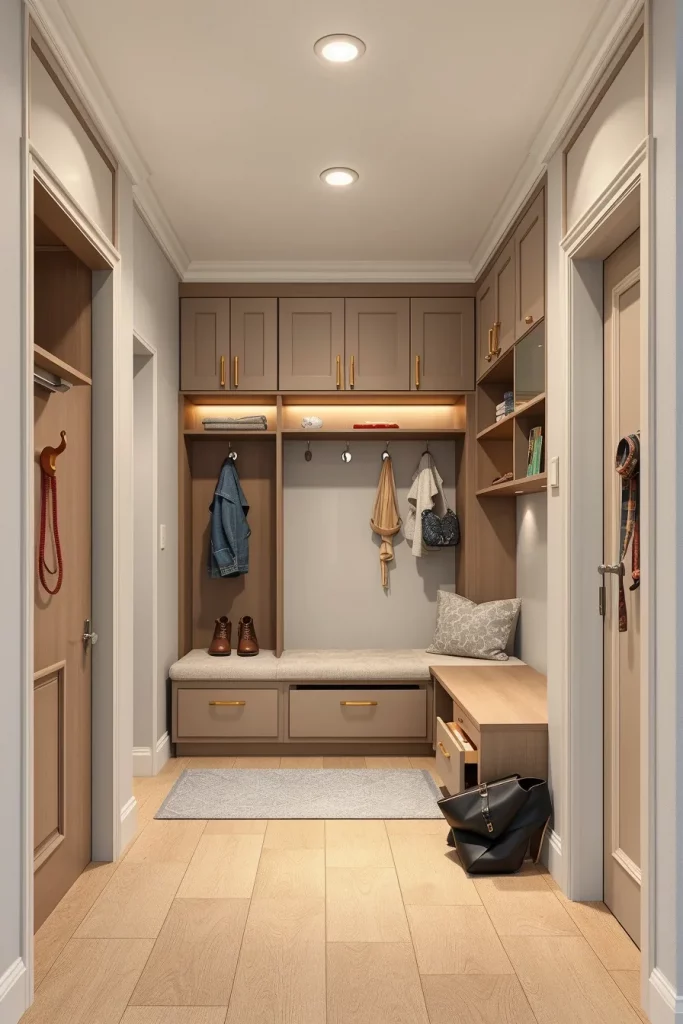
My preferred layout includes a slim cabinet with concealed shoe compartments, a storage bench with hidden interior space, wall-mounted cabinets above eye level, and drawers integrated into console furniture. Hidden hooks behind cabinet doors, pull-out organizers, and concealed compartments for keys or mail help maintain an orderly entrance without sacrificing convenience. Soft-close hardware enhances both comfort and durability.
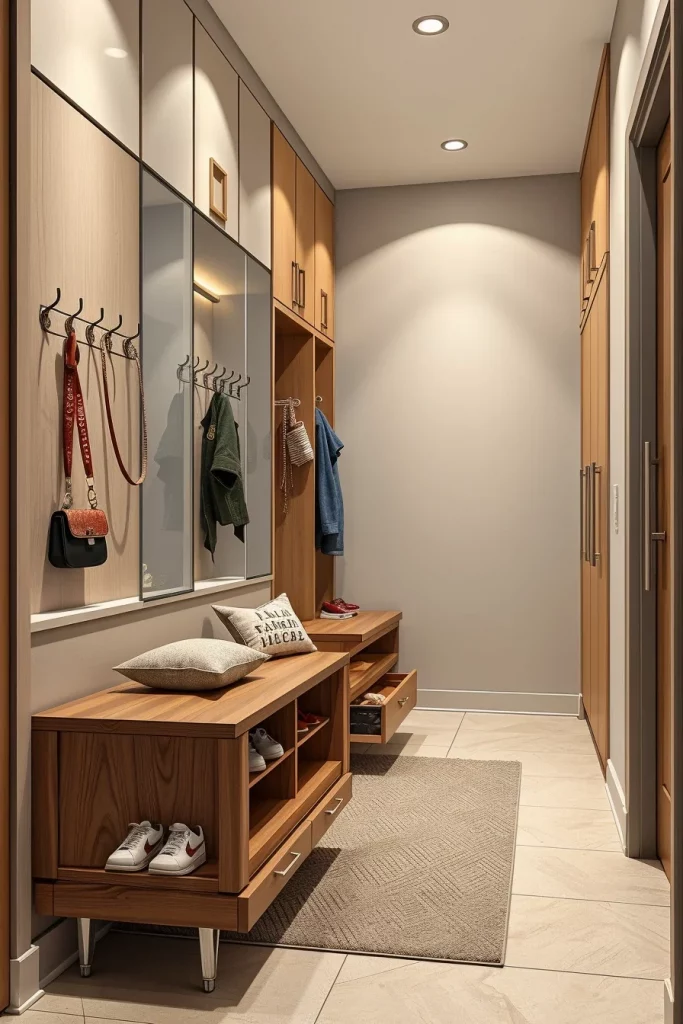
In my experience, hidden storage works especially well for busy households because it encourages consistent organization. Advice shared by interior experts at House Beautiful often highlights the importance of reducing visible clutter to make compact spaces feel larger, and I have repeatedly found this principle to be true in real homes.
I would also include labeled internal compartments, moisture-resistant finishes for wet shoes, discreet ventilation inside enclosed cabinets, and integrated lighting that automatically activates when cabinet doors are opened.
Space Saving Coat Rack Furniture For Daily Organization
A thoughtfully designed coat rack can completely transform a compact hallway by organizing outerwear without consuming unnecessary floor space. I prefer vertical storage solutions that utilize wall height rather than hallway width. This keeps circulation clear while ensuring jackets, bags, hats, and umbrellas remain within easy reach every day.
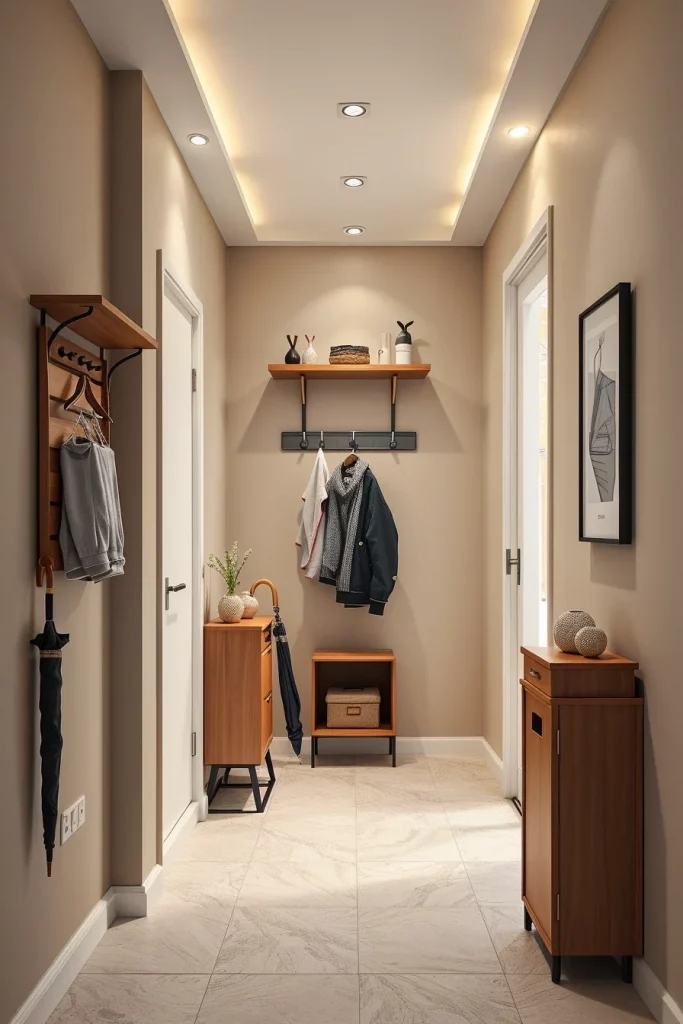
I often choose wall-mounted coat racks with integrated shelving, folding hooks, narrow overhead cabinets, and a matching umbrella holder below. Combining the coat rack with a slim shoe cabinet creates one cohesive storage zone that keeps daily essentials together. Decorative storage boxes placed on the upper shelf maintain a tidy appearance while providing additional concealed storage.
I believe that simplicity is the key to successful hallway organization. Professional designers regularly recommend avoiding oversized freestanding coat racks in compact spaces because wall-mounted alternatives provide the same functionality while preserving valuable walking space. I have consistently achieved cleaner and more efficient layouts by following this approach.
To make the design even more practical, I would include retractable hooks, moisture-resistant wall panels behind hanging coats, integrated accent lighting above the rack, and a compact tray beneath for umbrellas during rainy weather.
Narrow Furniture Pieces That Fit Compact Hallways Perfectly
Selecting furniture with reduced depth is one of the simplest ways I improve functionality in a small hallway. Narrow furniture preserves comfortable movement while still providing essential storage. Rather than forcing oversized cabinets into a limited space, I prioritize slim designs that complement the proportions of the room and create a balanced appearance.
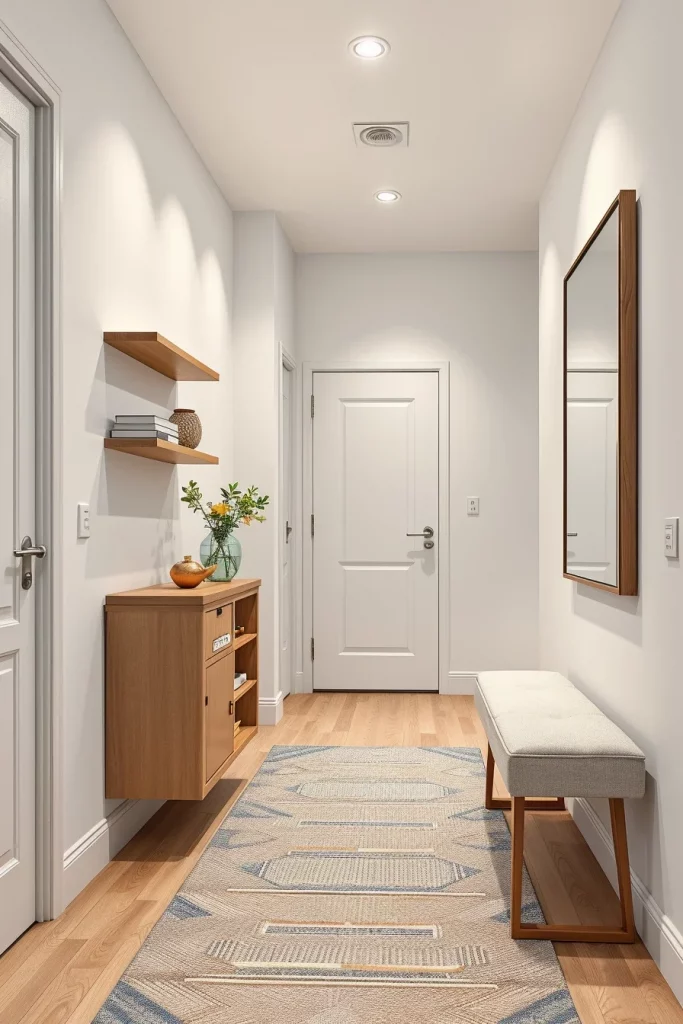
I typically combine a shallow console table, a narrow shoe cabinet, floating shelves, a compact mirror, and a slim storage bench positioned against one wall. Furniture with rounded corners helps improve circulation, while vertical storage maximizes unused wall space. Light finishes, concealed handles, and continuous lines contribute to an uncluttered and visually spacious interior.
In my opinion, proportion matters more than the quantity of furniture. Many interior designers emphasize measuring every available centimeter before selecting hallway furniture, and I completely agree with this recommendation. Choosing furniture specifically designed for narrow spaces consistently produces more comfortable and attractive results than adapting standard-sized pieces.
To finish this hallway, I would add soft layered lighting, durable flooring that visually extends into adjoining rooms, a decorative runner that defines the walkway, concealed storage for everyday accessories, and a few carefully selected decorative accents that personalize the entrance without creating unnecessary clutter.
Creative Furniture Layouts For Long And Narrow Hallways
When I design a long and narrow hallway, my first priority is creating a layout that allows people to move comfortably without making the space feel crowded. Instead of filling both walls with furniture, I prefer placing functional pieces along only one side while keeping the opposite wall visually open. This immediately creates a wider appearance and improves everyday circulation. A slim console table, a floating storage cabinet, or a narrow bench can provide excellent functionality without overwhelming the room. I also like to keep the central walking path completely unobstructed so the hallway remains practical for busy households.
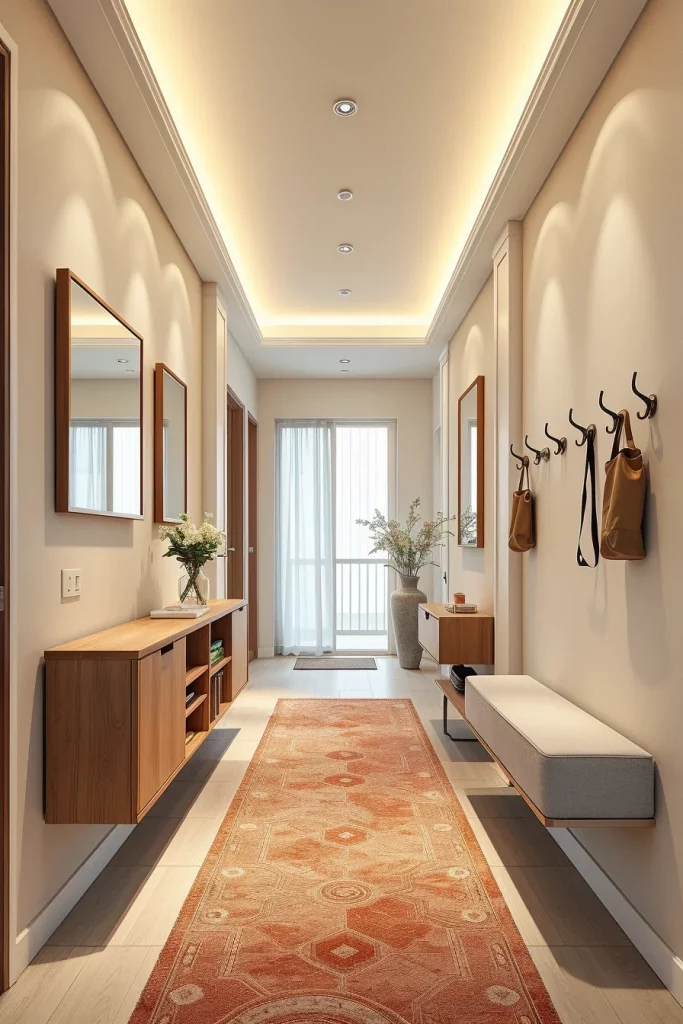
I usually combine floating cabinets with vertical storage because they keep the floor visible, making the hallway appear larger than it actually is. A narrow bench with hidden storage offers seating while providing a place to store shoes, baskets, or seasonal accessories. Above the furniture, I often install a large mirror that reflects natural and artificial light throughout the space. Wall hooks positioned above the bench add convenience for coats and bags while maintaining a clean appearance. Every furniture piece serves multiple purposes, which is one of the biggest advantages of creative furniture small hallway design.
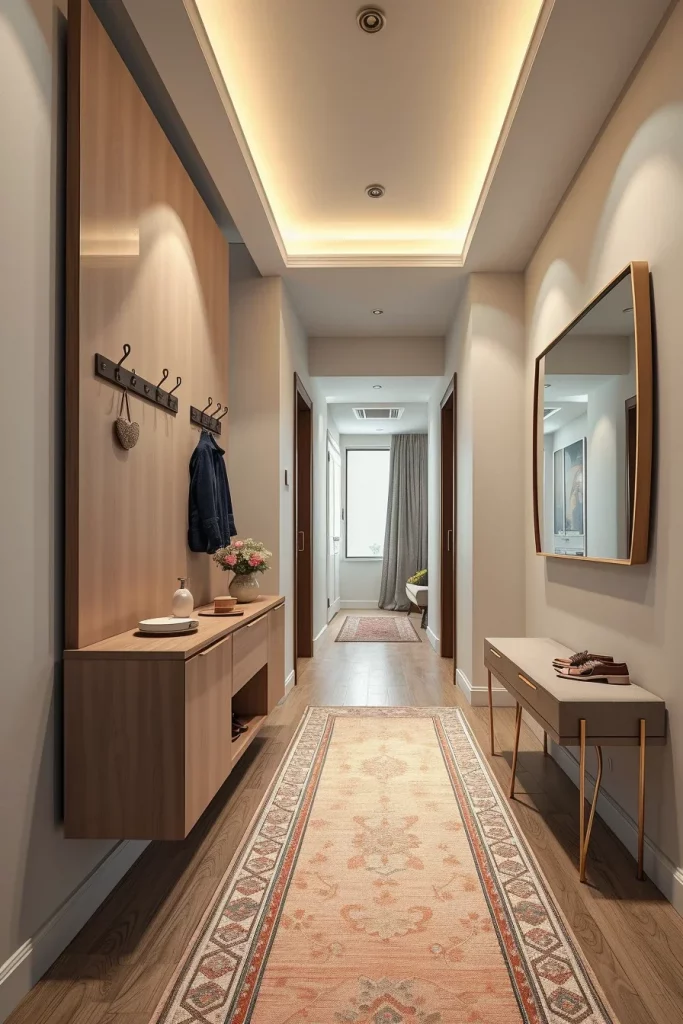
Personally, I have found that maintaining visual simplicity is just as important as choosing the right furniture. Designers featured in Architectural Digest frequently recommend reducing unnecessary visual clutter and allowing functional furniture to become part of the design itself. I completely agree because a hallway with fewer but better-designed pieces always feels more elegant and relaxing. Rather than purchasing several small storage items, I prefer investing in one well-designed multifunctional cabinet that performs several tasks at once.
To complete this layout, I would add layered lighting that includes ceiling fixtures and subtle wall lighting to eliminate dark corners. A durable runner rug with a simple pattern also helps visually guide movement through the hallway while making the entire entrance feel warmer and more welcoming.
Stylish Furniture Combinations That Create A Welcoming Entrance
I believe the entrance sets the mood for the entire home, so I always focus on combining furniture that feels both welcoming and organized. Even in a compact hallway, carefully selected pieces can create an inviting first impression. Rather than matching every item perfectly, I prefer combining complementary furniture with similar proportions and finishes. This creates visual harmony while allowing each piece to serve a practical purpose.
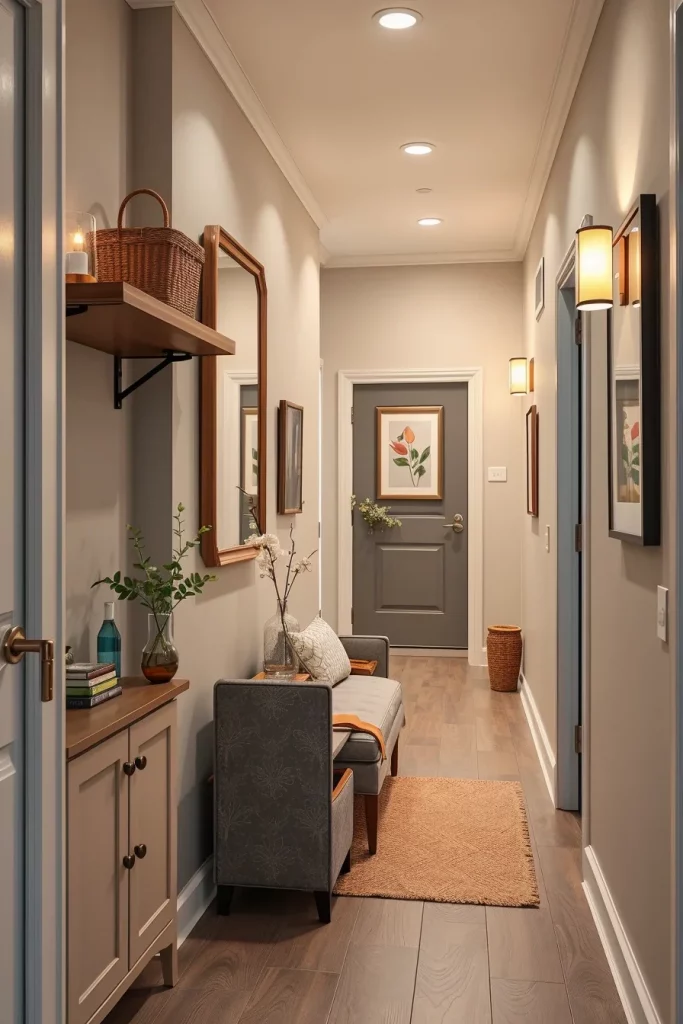
One of my favorite combinations includes a slim storage cabinet, a comfortable upholstered bench, a tall mirror, and a compact side table for decorative accessories. A wall-mounted shelf above the bench provides additional storage without taking up valuable floor space. Decorative baskets help organize scarves, gloves, or pet accessories while maintaining a clean appearance. I also enjoy incorporating soft lighting through wall sconces or table lamps whenever electrical outlets are available, creating a warmer atmosphere for guests entering the home.
In my experience, House Beautiful often emphasizes layering functional furniture with decorative accents instead of treating entryways as purely transitional spaces. I follow a similar philosophy because a thoughtfully designed hallway immediately makes the home feel more comfortable. Small decorative objects, framed artwork, and textured fabrics can personalize the entrance without reducing functionality.
If I wanted to improve this design further, I would introduce subtle greenery or dried botanical arrangements on the console table to soften the furniture lines. Adding coordinated storage boxes inside cabinets would also help maintain long-term organization.
Light Color Furniture Ideas That Make Small Hallways Feel Bigger
Whenever I work with a compact hallway, I naturally gravitate toward light-colored furniture because it instantly changes the perception of space. Soft white, warm beige, pale gray, and light oak finishes reflect more light and reduce the visual weight of furniture. This approach makes even the narrowest hallway feel noticeably more open while maintaining a timeless appearance. I often pair light furniture with neutral flooring to create a continuous visual flow from the entrance into the rest of the home.
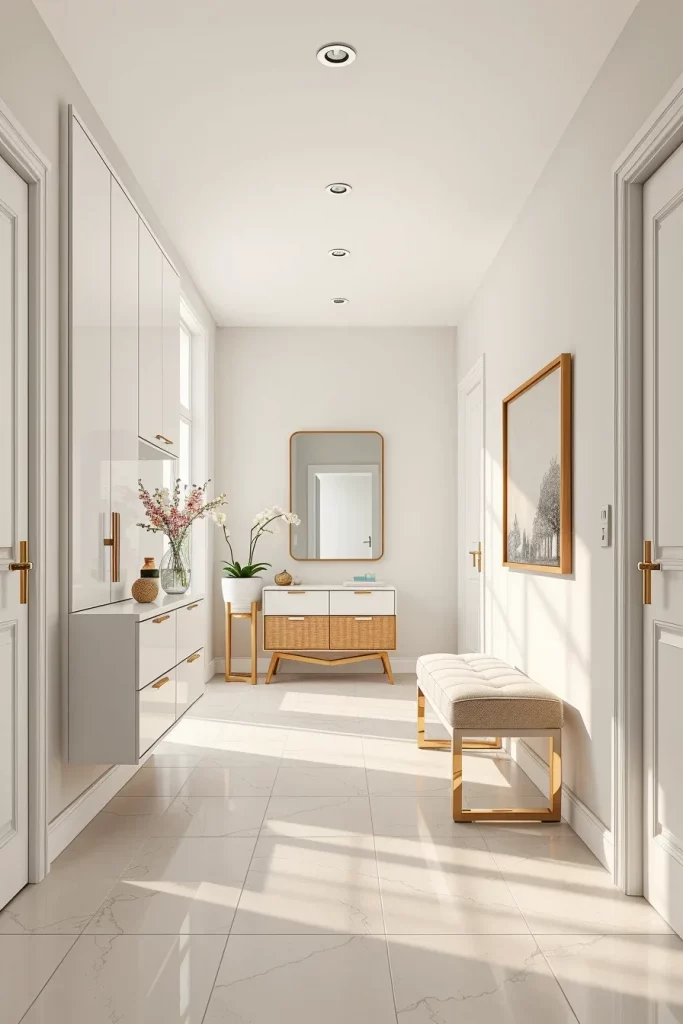
My preferred furniture selection includes floating cabinets with clean lines, a light-colored upholstered bench, and slim shelving units that maintain an airy feeling. Large mirrors framed in subtle finishes multiply available light while decorative ceramic accessories introduce gentle texture without creating clutter. Hidden storage compartments remain essential because visible clutter can quickly diminish the spacious feeling created by lighter furniture.
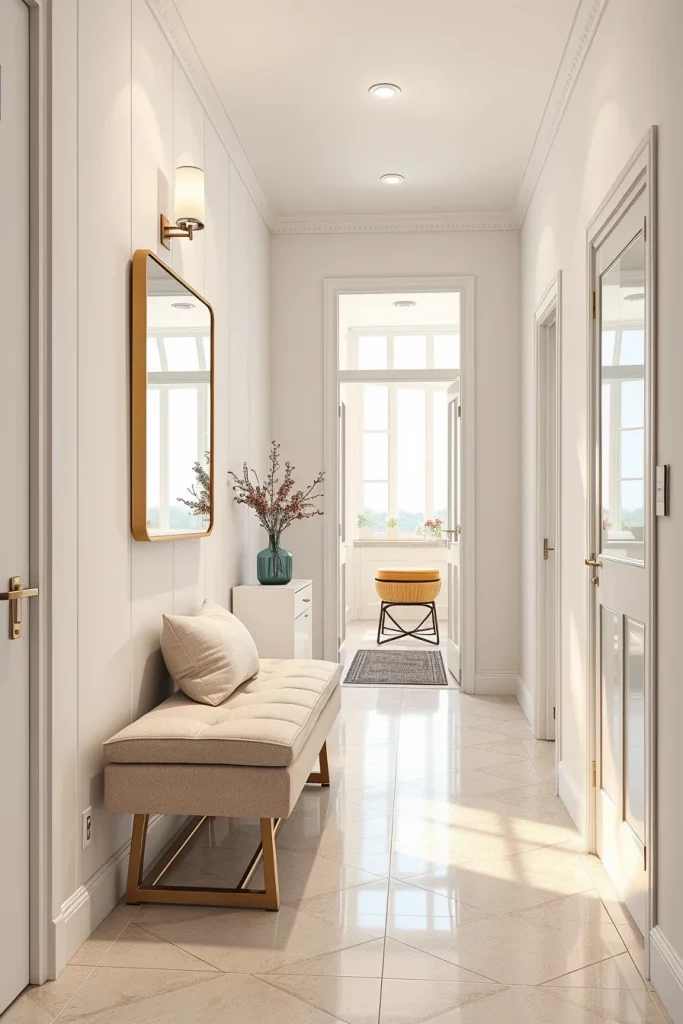
From my perspective, Better Homes & Gardens regularly demonstrates how lighter palettes can significantly improve smaller interiors by maximizing brightness and reducing visual complexity. I have applied this principle repeatedly, and it consistently makes compact hallways feel calmer and more comfortable. The combination of bright furniture and thoughtful organization often delivers a much stronger impact than simply repainting the walls.
To make this section even stronger, I would recommend selecting matte finishes rather than highly reflective surfaces because they hide fingerprints better while preserving the elegant appearance of light-colored furniture over time.
Mixed Material Furniture For A Contemporary Hallway Style
I enjoy combining different materials because they create depth and visual interest without requiring excessive decoration. A small hallway benefits from carefully balanced contrasts that add sophistication while keeping the overall design simple. Rather than relying on one material throughout the room, I prefer combining natural wood textures, matte metal frames, glass elements, upholstered seating, and stone-inspired surfaces. These combinations make the furniture itself become an important design feature.
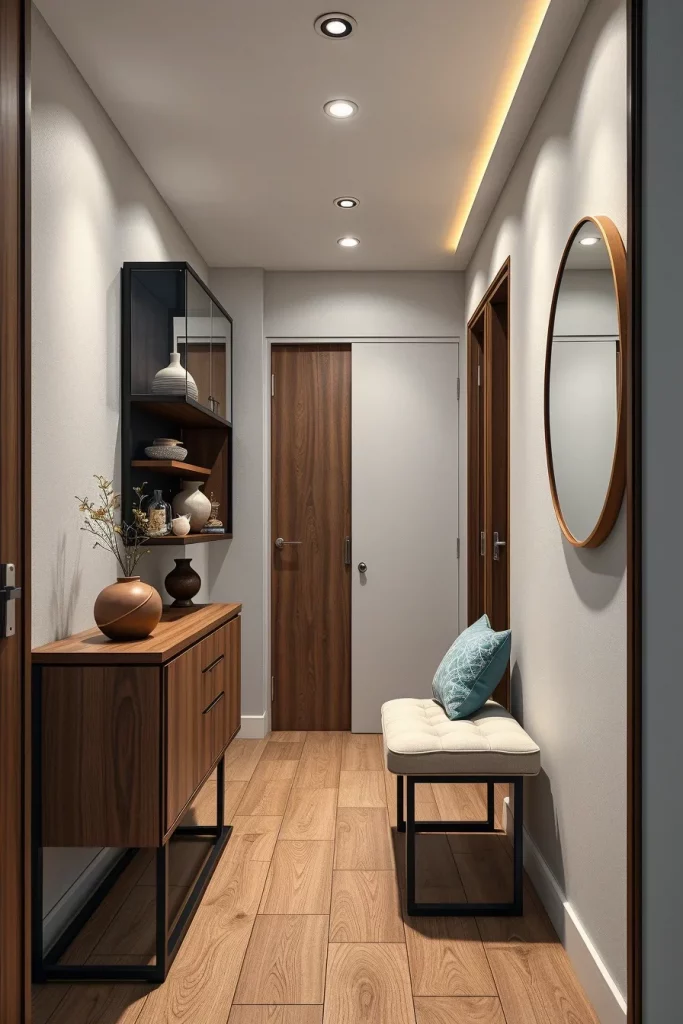
A floating cabinet with wood fronts and black metal details pairs beautifully with an upholstered bench featuring textured fabric. I often add a round mirror with a slim metal frame, complemented by glass decorative vases and ceramic accessories placed on a narrow console. Wall-mounted shelving with concealed brackets maintains a clean appearance while offering practical display space for everyday essentials.
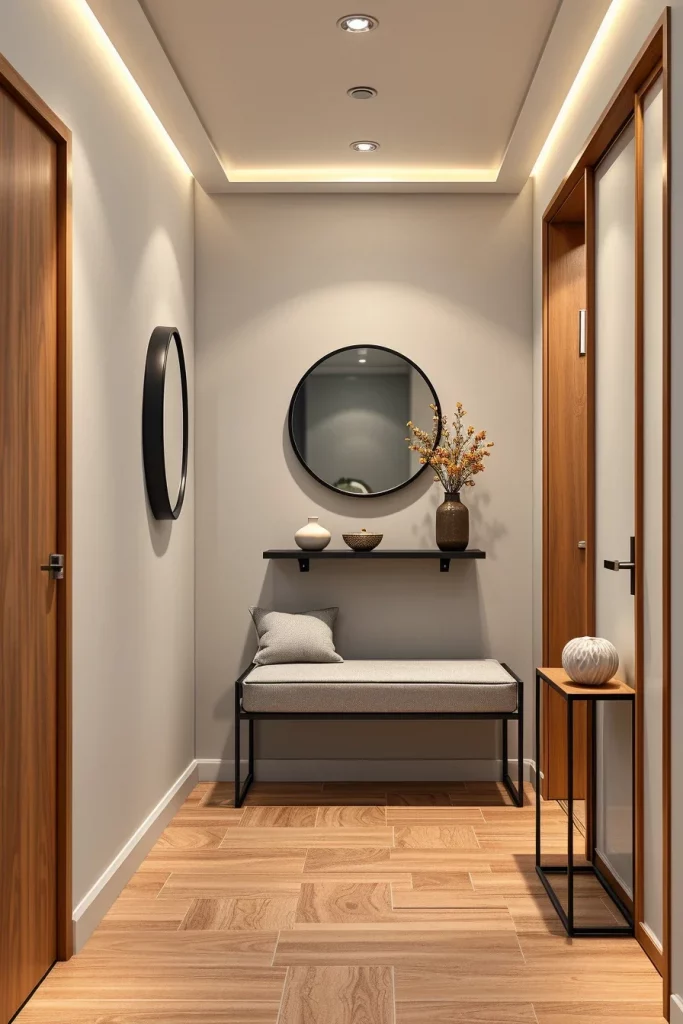
I have noticed that contemporary designers frequently recommend balancing warm and cool materials instead of relying on a single finish throughout an interior. I find this advice particularly valuable because it allows small hallways to feel curated without appearing busy. By limiting the overall color palette, the different textures become the primary source of visual interest rather than competing colors.
To finish this design, I would include subtle integrated LED lighting beneath floating furniture to emphasize its suspended appearance. This simple addition enhances both functionality and the contemporary atmosphere while visually expanding the room.
Family Friendly Hallway Furniture For Busy Homes
For family homes, I always prioritize furniture that simplifies daily routines while remaining attractive. A busy hallway experiences constant activity throughout the day, so every piece should help maintain organization. I prefer durable furniture with rounded edges, washable surfaces, and generous hidden storage that accommodates shoes, backpacks, coats, and seasonal accessories without making the entrance feel overcrowded.
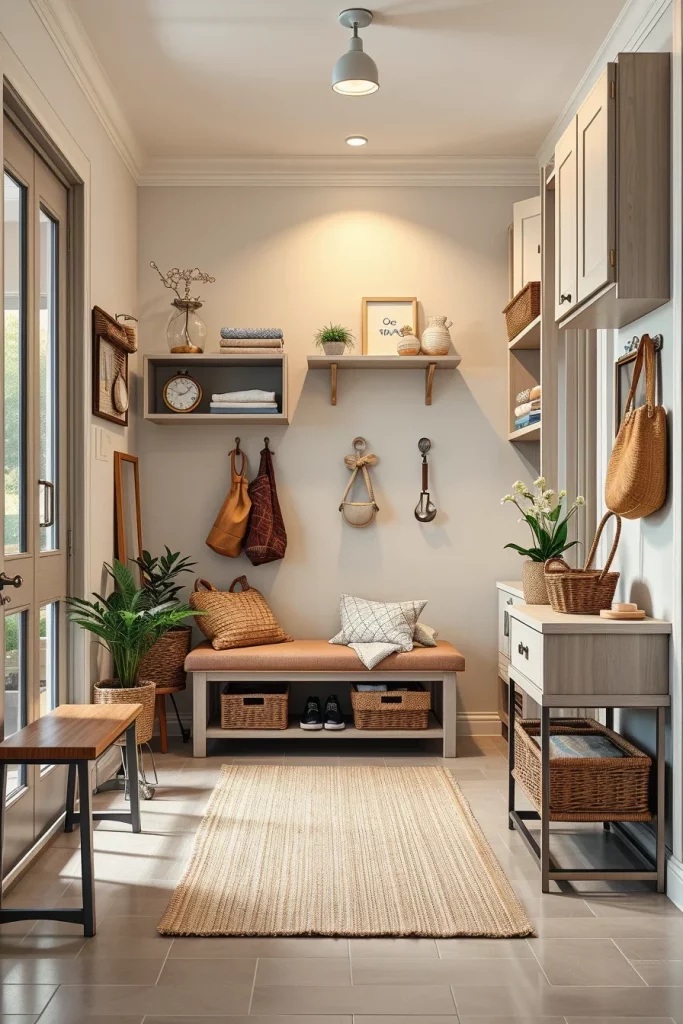
My ideal arrangement includes a spacious storage bench, tall cabinets with adjustable shelving, sturdy wall hooks installed at different heights, and labeled storage baskets that encourage every family member to stay organized. A narrow console with drawers provides a convenient location for keys, mail, and everyday essentials, while a durable runner protects the flooring from heavy foot traffic. Choosing furniture with easy-to-clean finishes also makes long-term maintenance significantly easier.
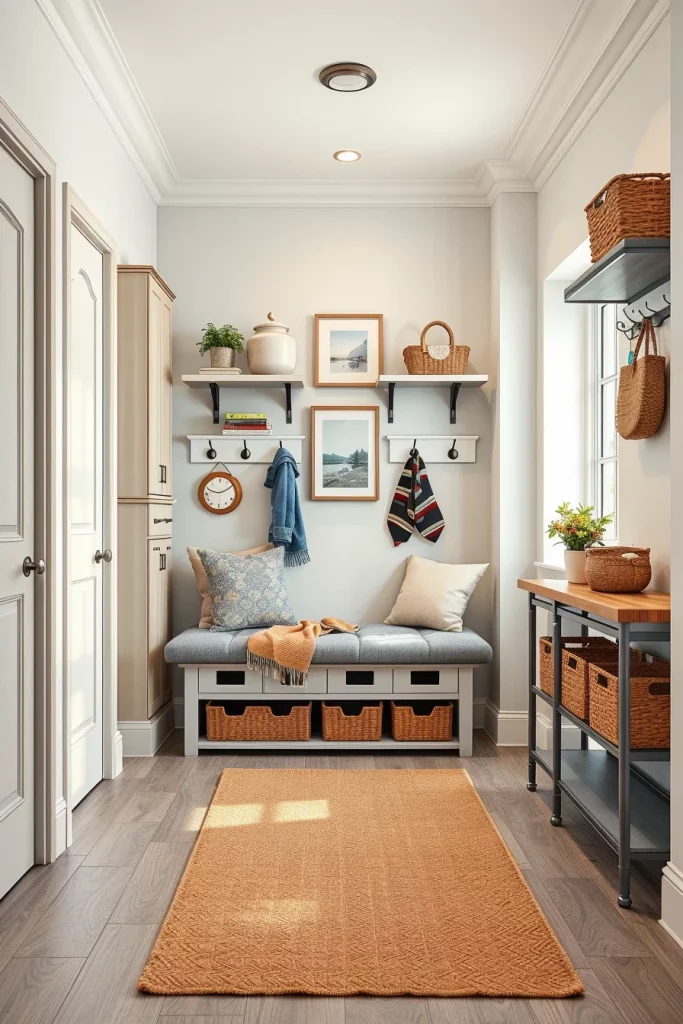
Personally, I appreciate recommendations from HGTV designers who emphasize creating designated storage zones for every family member. I have found this strategy extremely effective because it reduces daily clutter and makes returning home much less stressful. Even children quickly develop better organizational habits when storage areas are clearly assigned and easily accessible.
If I were expanding this design, I would include a charging drawer for electronic devices and an integrated message board or calendar to help coordinate busy family schedules while keeping the hallway neat.
Apartment Hallway Furniture Ideas For Compact Living
Living in an apartment often means working with a hallway that serves multiple purposes, so I always focus on furniture that offers flexibility without occupying valuable floor space. I prefer designs that combine storage, seating, and decorative appeal in one compact solution. A thoughtfully furnished apartment hallway should feel open while still providing enough room for everyday essentials. Careful placement of furniture helps create a smooth transition between the entrance and the rest of the home while making the area feel intentionally designed rather than overlooked.
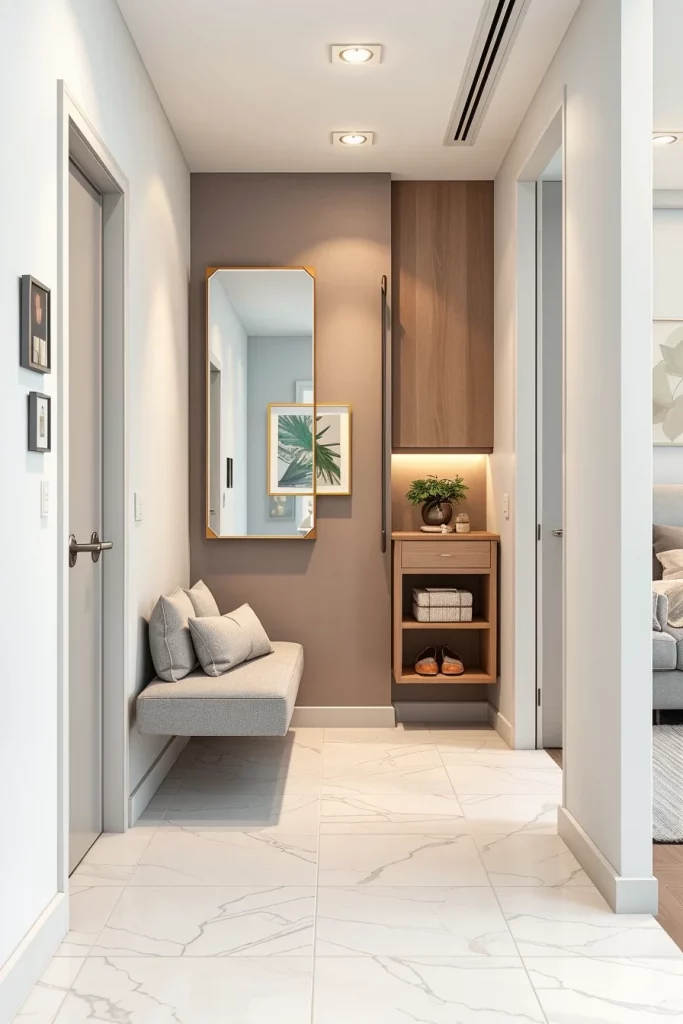
I usually recommend a floating shoe cabinet with concealed compartments, paired with a narrow upholstered bench that includes hidden storage beneath the seat. A slim mirror mounted above the cabinet reflects light and visually expands the hallway. I also like adding a floating shelf with a small tray for keys and mail, while discreet wall hooks keep jackets and bags organized without overwhelming the space. Choosing furniture with clean lines and elevated legs helps maintain an airy atmosphere that works especially well in apartment interiors.
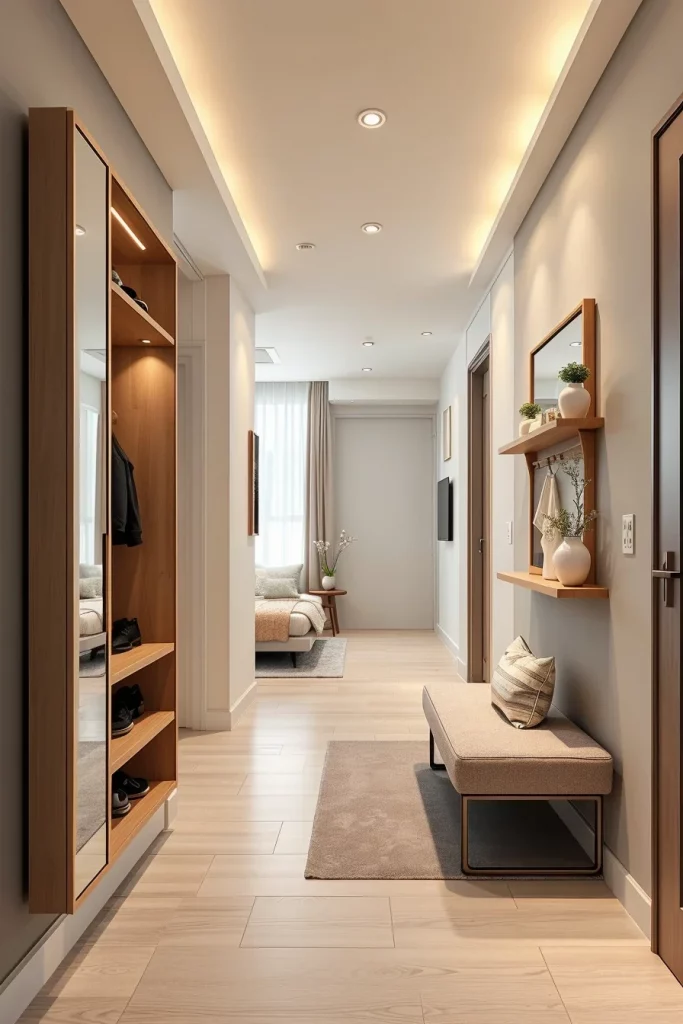
From my experience, apartment entryways benefit from restraint more than decoration. Interior designers featured by Apartment Therapy often recommend selecting fewer, higher-quality furniture pieces that serve several functions instead of filling the hallway with multiple small items. I completely agree because this approach creates a cleaner appearance and makes daily routines much easier. Every item should contribute to both organization and comfort.
To complete this design, I would introduce soft indirect lighting beneath the floating cabinet and install a full-height mirror near the entrance. These additions improve both functionality and the perception of spaciousness while complementing the overall furniture arrangement.
Decorative Furniture Accents That Add Character To Small Entryways
I believe decorative furniture should enhance a hallway without distracting from its practical purpose. Even the smallest entryway can develop its own personality through carefully selected accent pieces that balance beauty and functionality. Rather than relying on excessive decorations, I prefer allowing distinctive furniture to become the focal point. Sculptural forms, curved silhouettes, and refined finishes introduce visual interest while preserving valuable floor space.
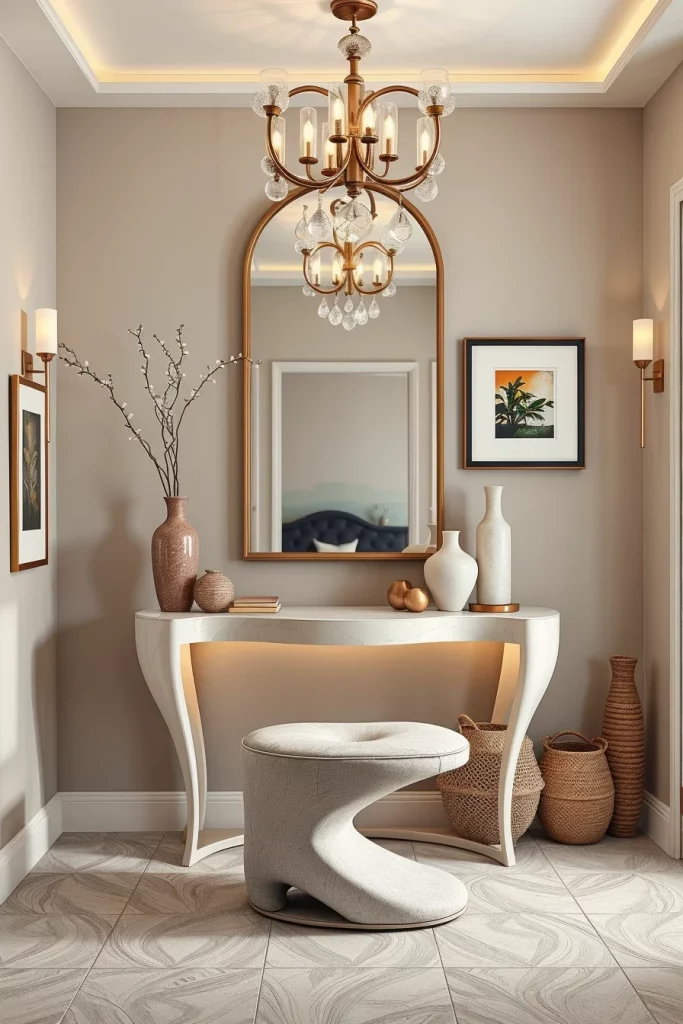
One of my favorite combinations includes a curved console table, a compact accent stool, an oversized mirror, and a floating shelf displaying carefully chosen decorative objects. Ceramic vases, sculptural bowls, framed artwork, and textured baskets bring warmth without creating unnecessary clutter. I also enjoy incorporating subtle metallic details on furniture hardware, adding sophistication without overpowering the overall design. Every decorative element should support the furniture rather than compete with it.
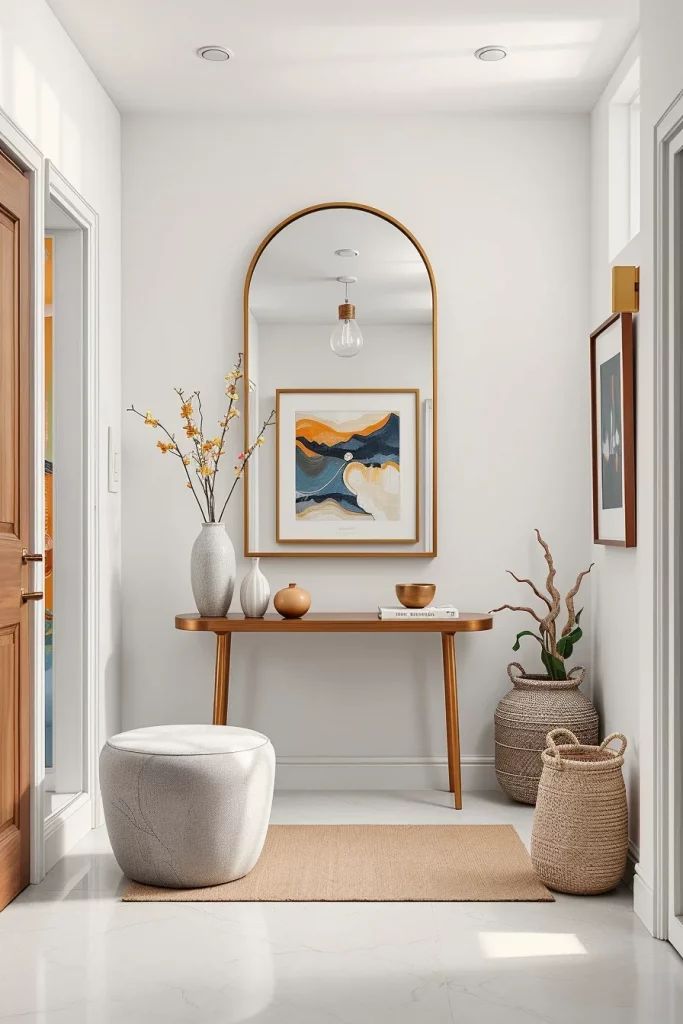
Personally, I appreciate how designers featured in Elle Decor often emphasize investing in one or two statement furniture pieces instead of filling an entryway with numerous accessories. I have found that this philosophy works especially well in compact hallways because it creates a memorable impression while maintaining simplicity. The furniture itself becomes part of the home’s overall design story.
If I wanted to enrich this hallway further, I would include carefully selected lighting that highlights the sculptural qualities of the furniture. Soft illumination creates depth and allows decorative accents to stand out during both daytime and evening hours.
Budget Friendly Furniture Ideas For Small Hallway Makeovers
Creating an attractive hallway does not require an unlimited budget, and I often find that affordable furniture can deliver impressive results when selected thoughtfully. My approach focuses on maximizing function before adding decorative details. By choosing versatile furniture with multiple uses, it becomes possible to refresh a hallway without replacing every element. Even simple improvements can dramatically increase both organization and visual appeal.
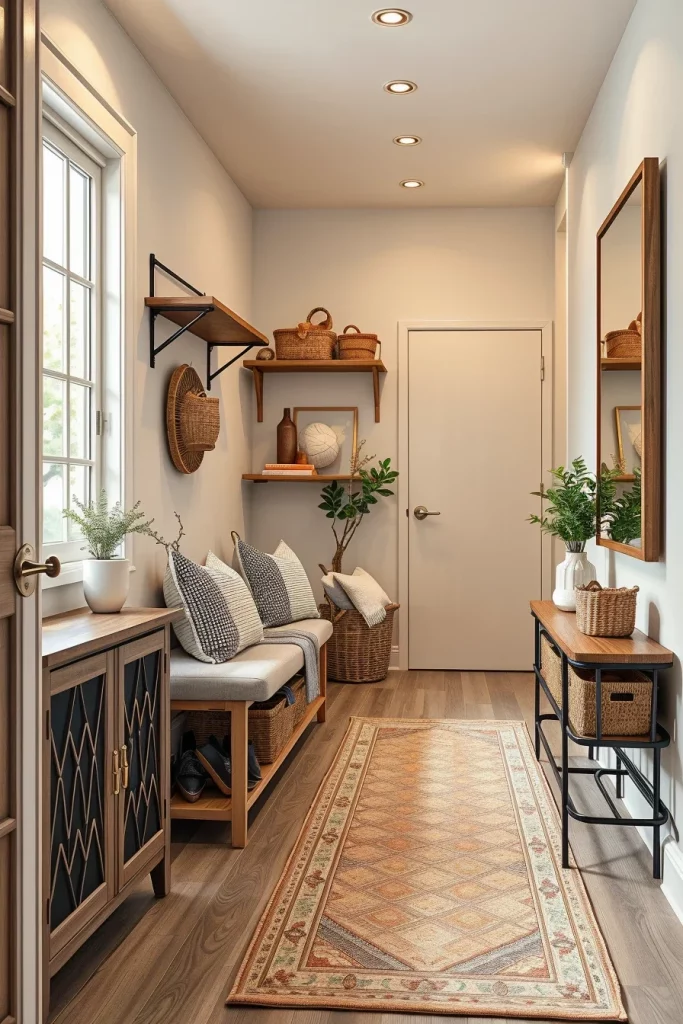
I usually begin with a compact shoe cabinet, an affordable storage bench, and a wall-mounted shelf that provides extra storage without consuming floor space. Decorative baskets help organize smaller items while maintaining a neat appearance. A large mirror creates the illusion of additional space, and updated cabinet handles can give inexpensive furniture a more customized look. Adding comfortable cushions and a durable hallway runner further improves both comfort and style while remaining budget-conscious.
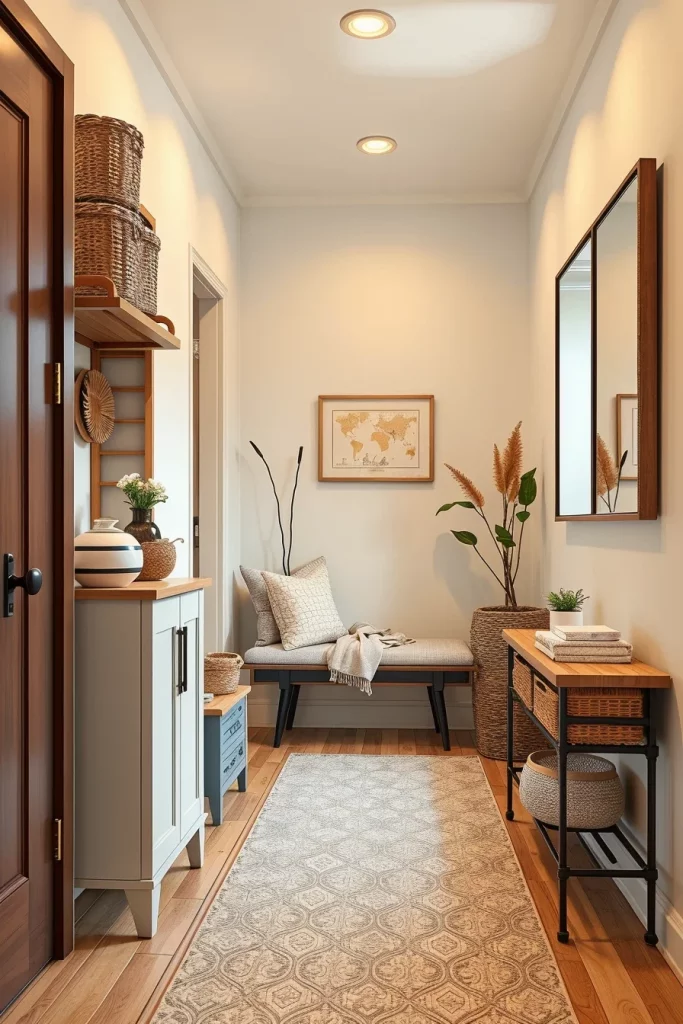
I have learned that successful budget makeovers rely more on careful planning than expensive purchases. Better Homes & Gardens frequently recommends improving organization before investing in decorative upgrades, and I have consistently seen how effective this strategy can be. Well-organized furniture immediately makes a hallway feel more valuable regardless of its overall cost.
To finish this makeover, I would recommend installing energy-efficient lighting with a warm color temperature. Combined with freshly organized storage, better lighting can transform the atmosphere while remaining one of the most affordable improvements available.
Designer Inspired Furniture Trends For Small Hallways
Current furniture trends for small hallways focus on balancing minimalism with warmth, and I find this direction especially practical for modern homes. Rather than following temporary fashions, I prefer incorporating timeless furniture with contemporary details that remain attractive for years. Rounded edges, floating storage, integrated lighting, and multifunctional furniture continue to define many of today’s most successful hallway designs. These features improve everyday convenience while contributing to a refined overall appearance.
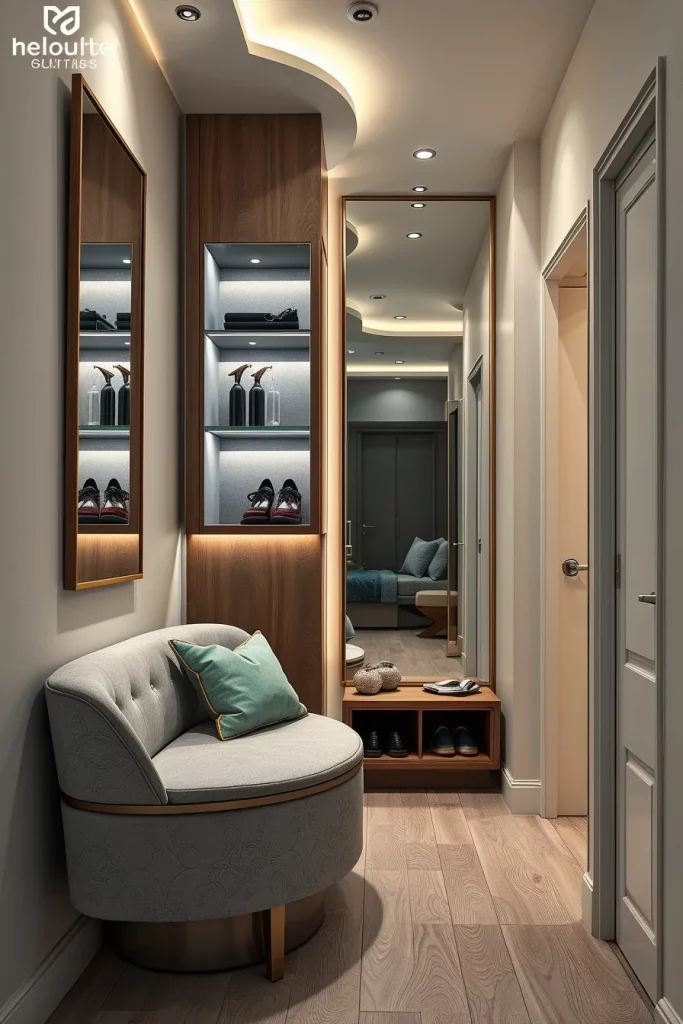
My preferred furniture arrangement includes a floating storage cabinet with integrated lighting, a softly upholstered bench, concealed shoe storage, and a full-height mirror framed in slim metal. Curved furniture profiles soften narrow spaces, while subtle textured finishes introduce depth without overwhelming the room. Decorative accessories remain intentionally limited so that the furniture itself becomes the primary design feature.
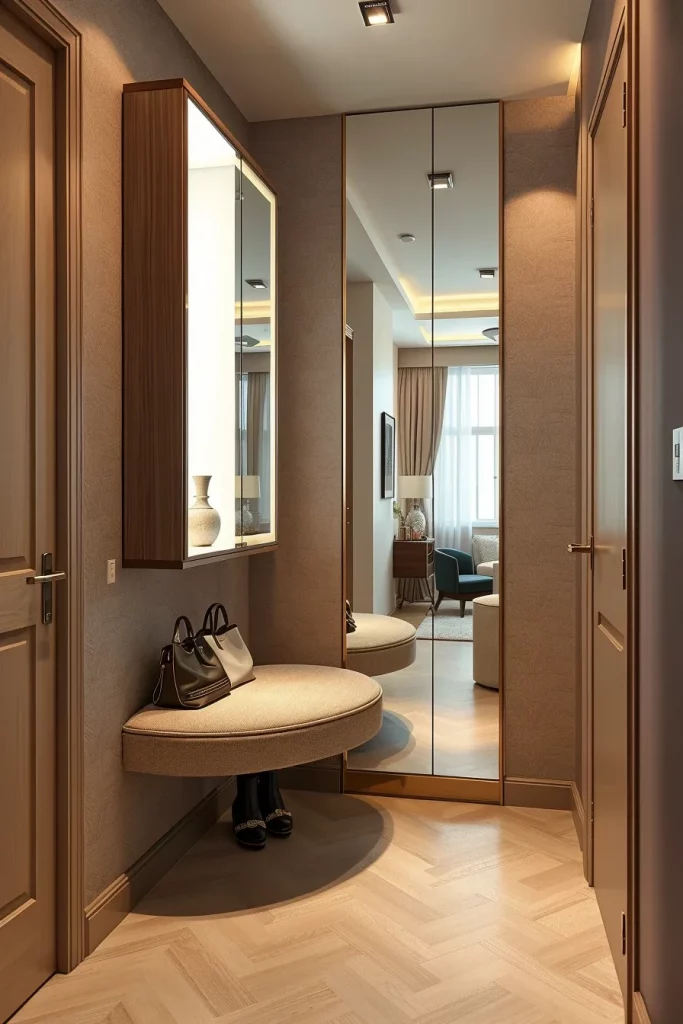
In my opinion, many contemporary designers are moving toward furniture that combines craftsmanship with practicality rather than unnecessary ornamentation. Publications such as Architectural Digest regularly highlight interiors where simplicity allows materials, proportions, and lighting to create elegance naturally. I appreciate this philosophy because it produces hallways that remain functional while still feeling sophisticated.
If I were refining this concept even further, I would incorporate smart storage accessories inside cabinets, including adjustable shelving, pull-out organizers, and dedicated compartments that simplify daily organization without affecting the clean exterior appearance.
Best Creative Furniture Small Hallway Design Ideas For A Functional Home
When I combine all of the ideas discussed throughout this article, I see that the most successful hallway designs always begin with thoughtful planning. A functional hallway is never defined by its size but by how effectively each furniture piece contributes to everyday living. By selecting versatile furniture, maintaining visual balance, and maximizing vertical storage, even the smallest entrance can become one of the most practical spaces in the home. The goal is to create an environment that feels welcoming from the moment someone steps through the front door.
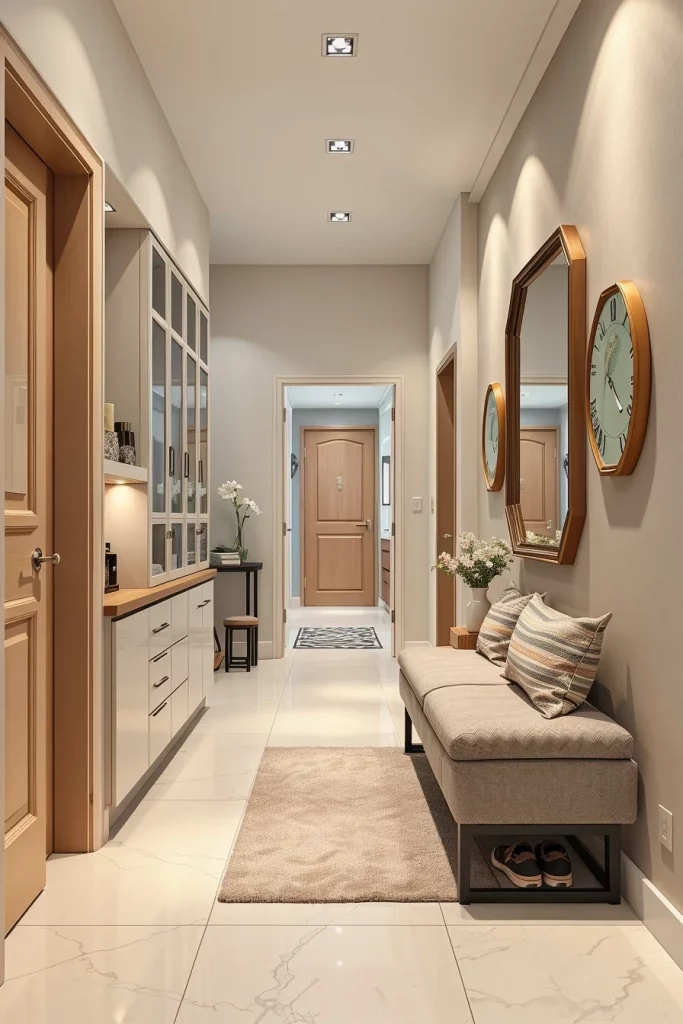
My ideal hallway would include floating storage cabinets, a multifunctional upholstered bench, concealed shoe storage, a large mirror, layered lighting, carefully selected decorative accents, and practical organization systems that keep daily essentials easily accessible. Every furniture element would perform more than one function while maintaining a cohesive contemporary appearance. This balanced approach allows the hallway to remain beautiful while supporting the routines of everyone living in the home.
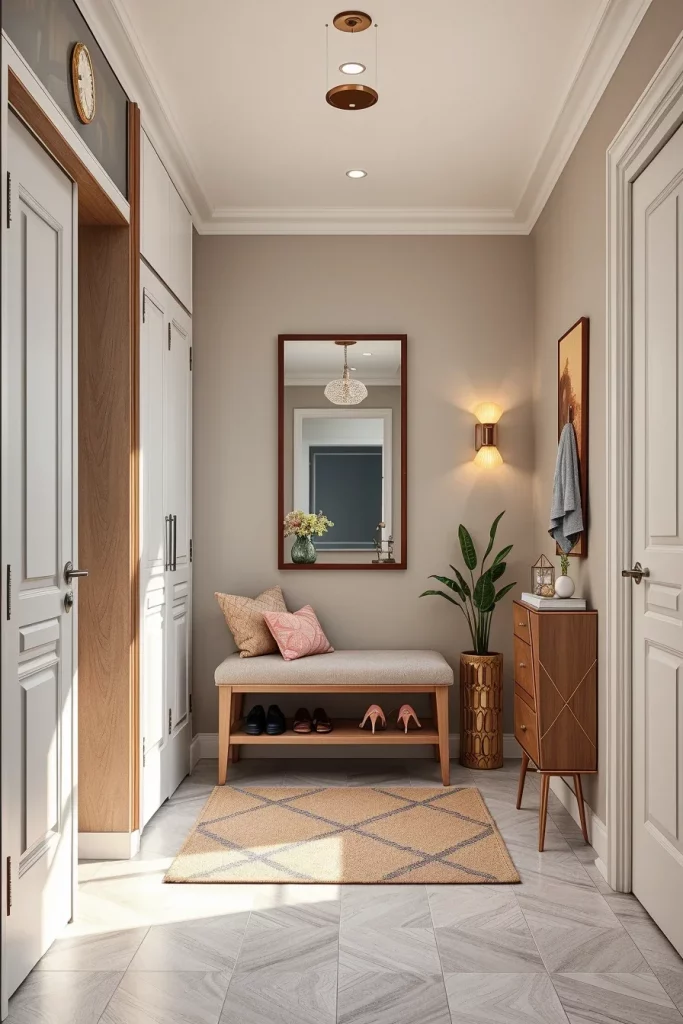
After experimenting with many different layouts, I have become convinced that the best interiors prioritize comfort, simplicity, and long-term usability over short-lived trends. Thoughtfully selected furniture continues to perform well year after year while adapting easily to changing household needs. Investing time in planning always produces better results than simply filling available space with additional furniture.
If I wanted to improve this hallway even further, I would customize the interior storage according to the specific needs of the household, ensuring that every cabinet, shelf, and drawer has a clearly defined purpose. Small adjustments like these often make the greatest difference in everyday convenience.
Creative furniture small hallway design proves that even the most compact entryway can become both stylish and highly functional with the right furniture choices. By combining smart storage, space-saving layouts, and versatile pieces, you can create a welcoming entrance that stays organized every day. Use these ideas as inspiration to design a small hallway that reflects your style while making the most of every available inch.