
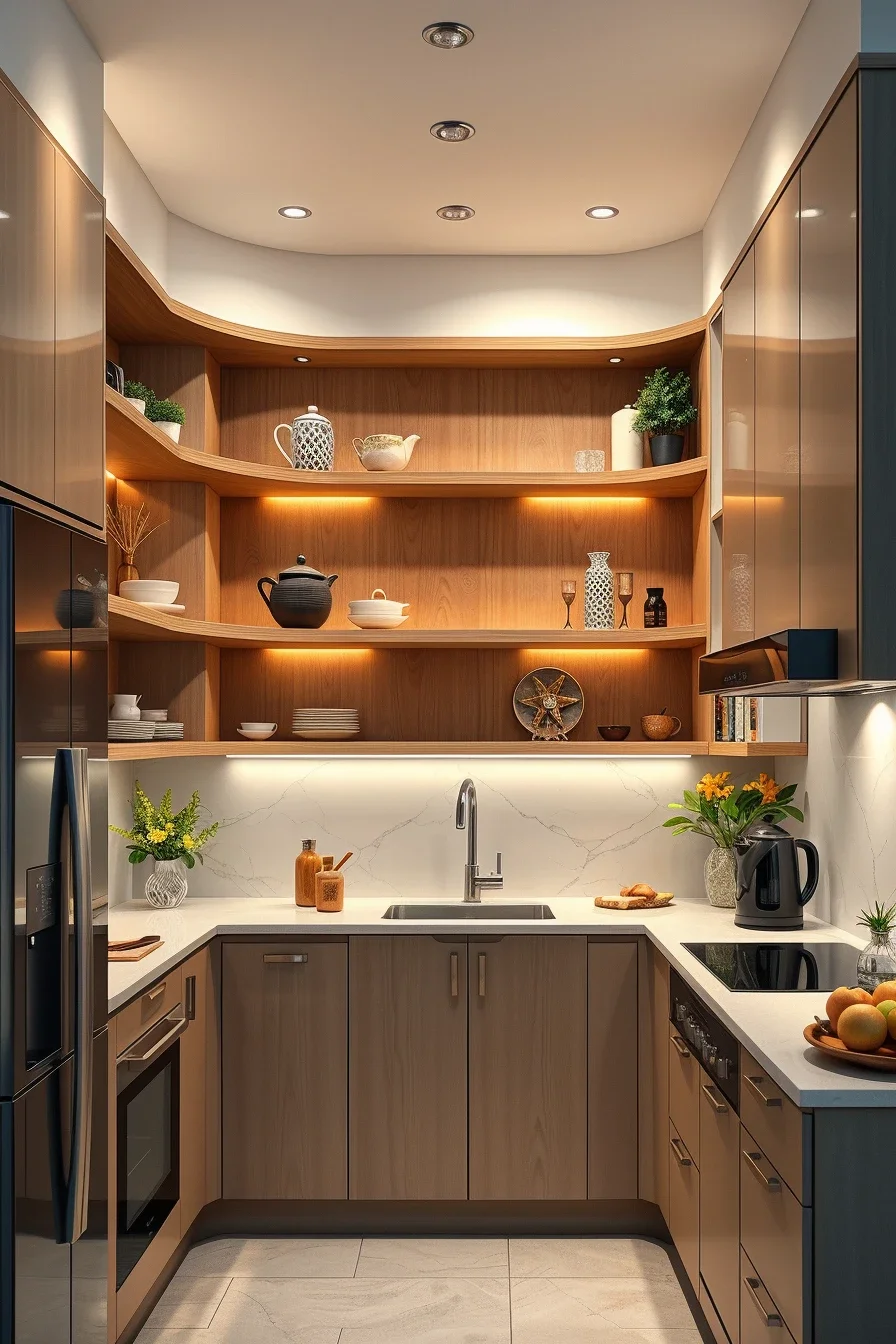
Small kitchens can feel surprisingly spacious and sophisticated when designed with curved furniture. Soft, rounded shapes create a smoother visual flow, making compact spaces appear larger and more inviting. From sculptural islands and crescent-shaped banquettes to elegant curved cabinetry, these unique pieces add both style and functionality. Curved furniture also eliminates harsh corners, improving movement and enhancing comfort in busy kitchen areas. Whether you prefer a minimalist aesthetic or a bold contemporary look, curved elements can completely transform a small kitchen. In this article, you’ll discover creative and stylish curved furniture small kitchen design ideas that maximize space while creating a truly distinctive interior.
Curved Banquette Seating For Cozy Small Kitchen Corners
In my experience, curved banquette seating is one of the most effective ways to maximize underused corners in a small kitchen. Instead of leaving awkward angles empty, a rounded banquette creates a welcoming dining nook while improving traffic flow. The soft lines naturally make the room feel less confined, which is especially important in compact layouts. I often recommend upholstered seating in neutral shades paired with a round table to maintain visual harmony.
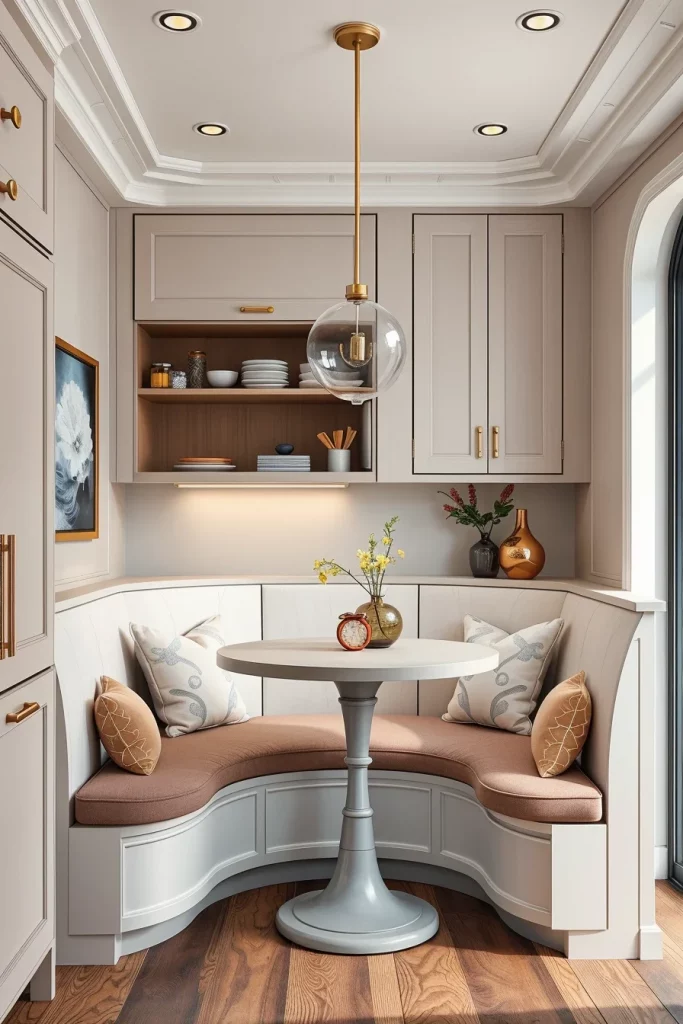
I like to include built-in storage beneath the banquette because every inch matters in a small kitchen. Cushioned seats, a pedestal dining table, and curved backs provide both comfort and practicality. A slim pendant light above the dining area helps define the space without overwhelming it. Adding textured fabrics and subtle decorative accents creates warmth while preserving an uncluttered appearance.
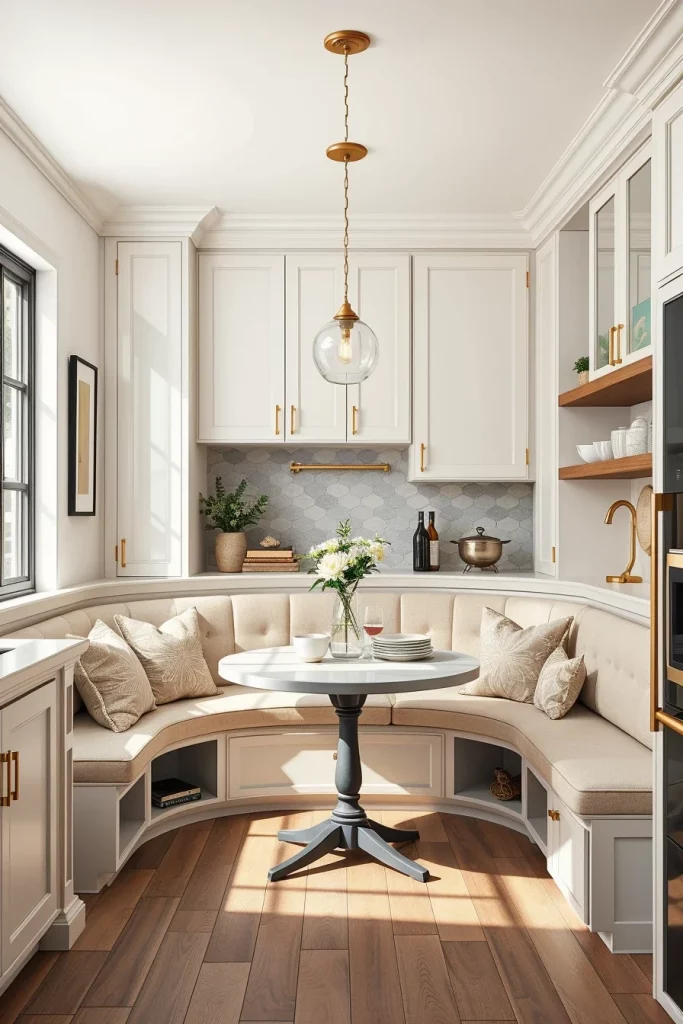
Personally, I have found that curved banquettes encourage longer, more comfortable gatherings. Designers featured in publications such as Architectural Digest frequently emphasize the importance of rounded forms in creating intimate social spaces, and I agree completely. In a small kitchen, comfort should never be sacrificed for efficiency.
To complete this design, I would add concealed storage drawers under the seating and layered lighting to make the corner functional throughout the day.
Sculptural Curved Kitchen Islands That Maximize Limited Space
A sculptural curved island can dramatically improve circulation in a small kitchen. Unlike traditional rectangular islands, rounded edges eliminate sharp corners that often obstruct movement. In my projects, I have noticed that curved islands make compact kitchens appear larger because the eye naturally follows the flowing lines throughout the room.
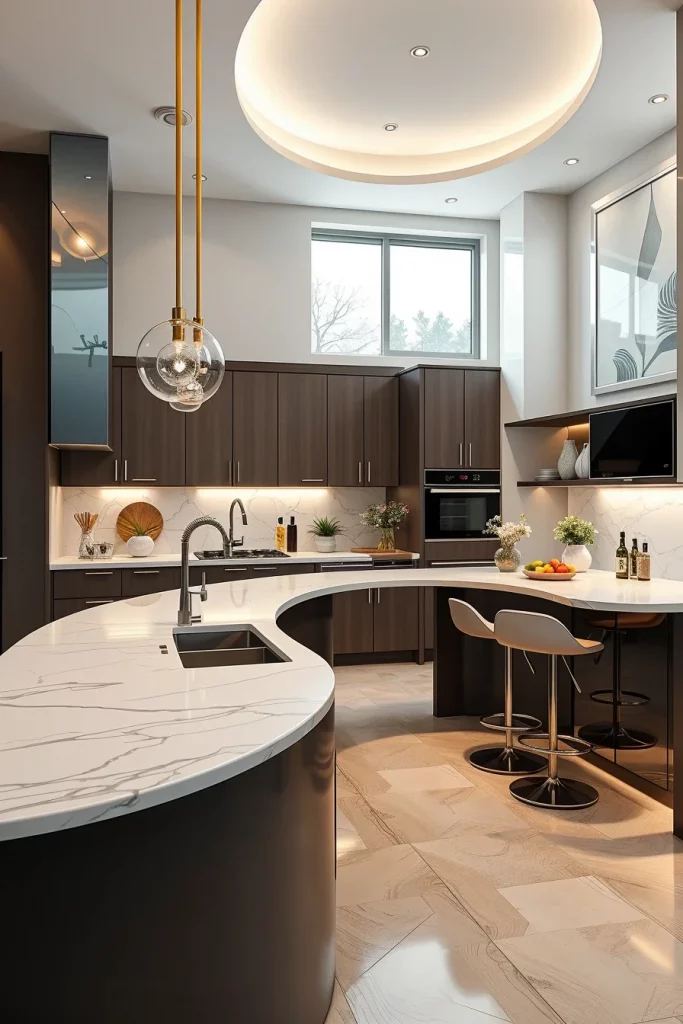
I prefer islands with waterfall countertops, integrated storage, and softly curved bases. Materials such as quartz or solid surfaces enhance the seamless appearance. Including hidden drawers, open display niches, and built-in seating further increases functionality without overcrowding the room. Sleek bar stools with rounded silhouettes complement the island beautifully.
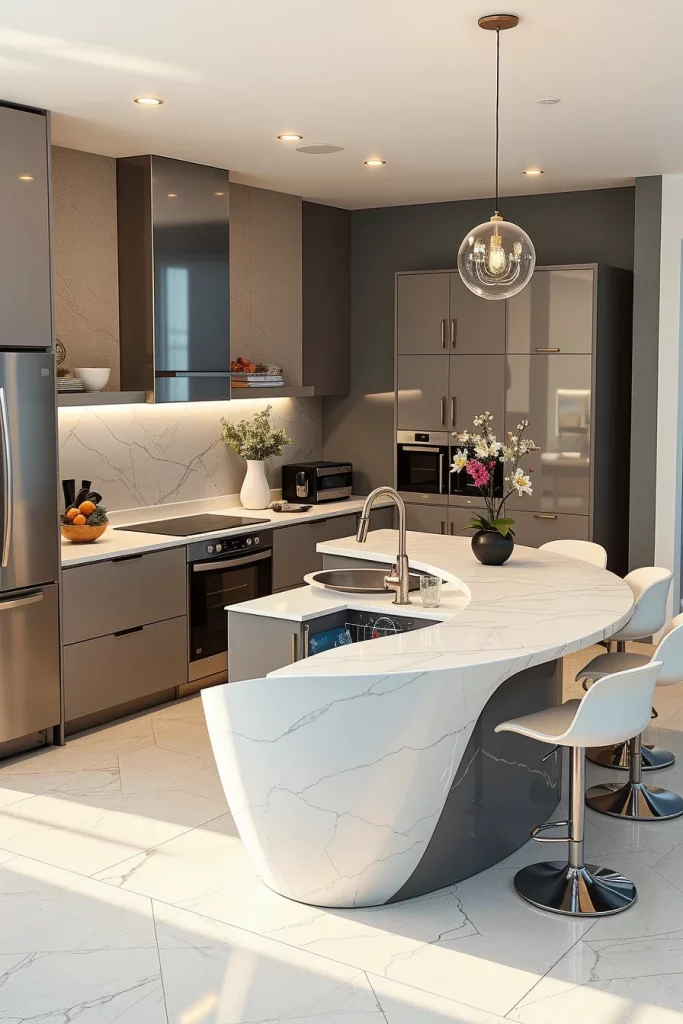
From my perspective, a curved island works best in open-concept kitchens where uninterrupted movement is essential. Many interior experts recommend maintaining generous circulation pathways around islands, and curved shapes help achieve this goal in limited square footage.
I would also include subtle under-cabinet lighting beneath the island to emphasize its sculptural qualities and create additional ambiance.
Rounded Breakfast Nooks For Compact Kitchen Layouts
Rounded breakfast nooks offer an elegant solution for compact kitchens that lack a formal dining area. I often design these spaces near windows because natural light enhances the cozy atmosphere. Circular arrangements eliminate harsh lines and make small rooms feel significantly more inviting.
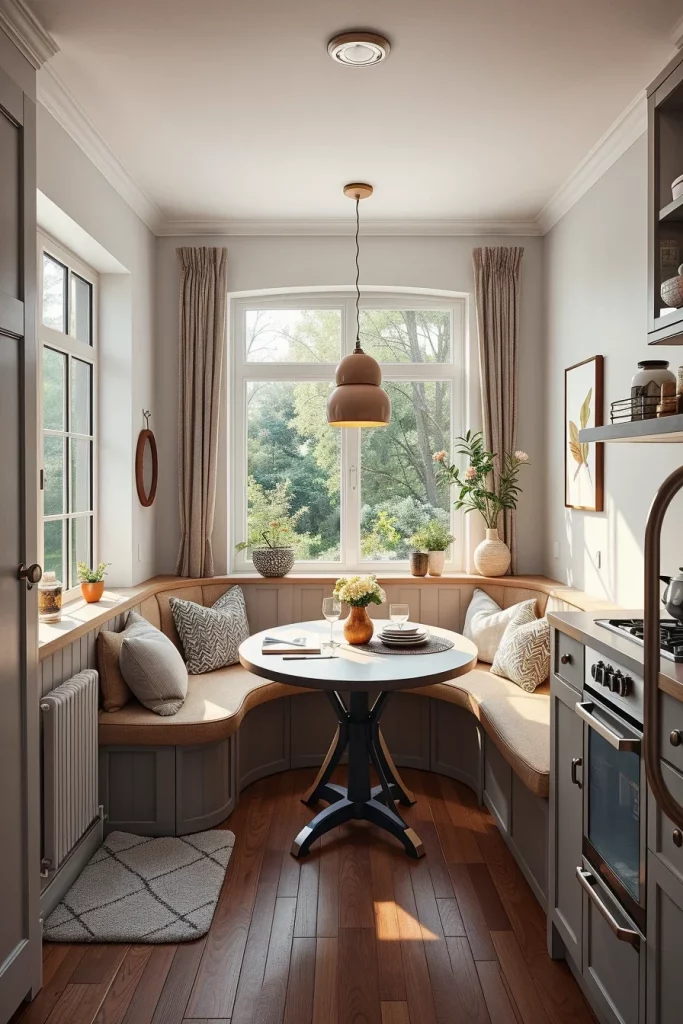
For furniture, I typically select a curved bench paired with a round or oval table. Compact dining chairs with soft silhouettes preserve visual continuity. Light finishes, layered textiles, and simple decorative accessories contribute to a balanced look while ensuring the area remains functional for daily use.
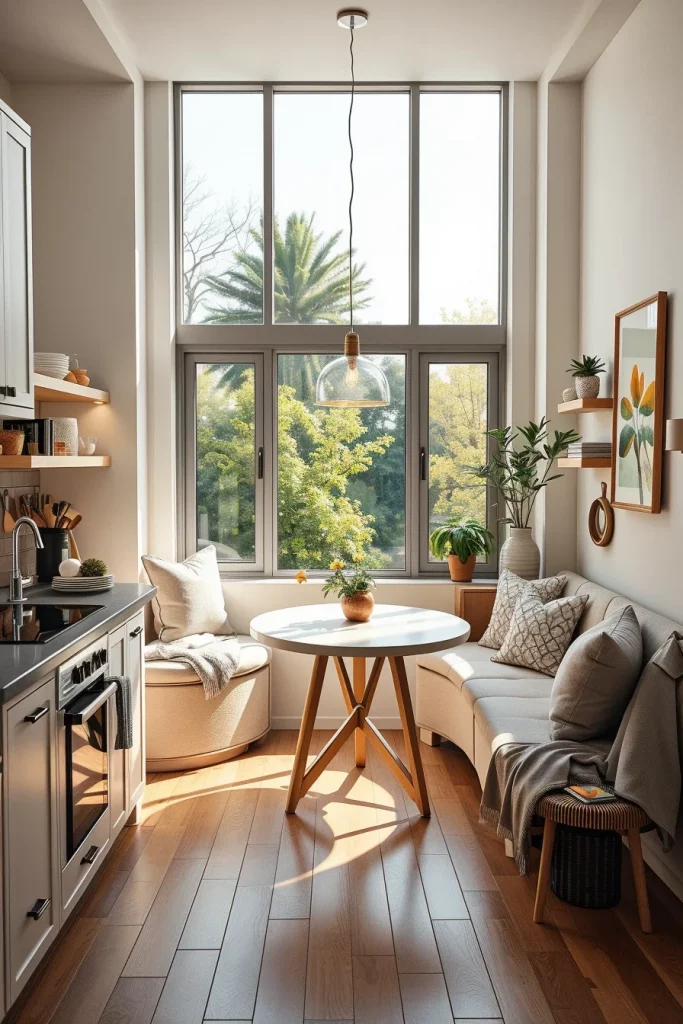
In my experience, breakfast nooks quickly become the heart of the kitchen. I appreciate how they encourage casual meals, conversations, and even remote work. Design professionals frequently note that curved seating arrangements naturally foster interaction, which is particularly valuable in smaller homes.
To enhance this space further, I recommend incorporating built-in shelving nearby for cookbooks, decorative objects, or additional storage.
Curved Open Shelving Designs For Small Kitchens
Curved open shelving introduces softness and visual interest into compact kitchens. Traditional straight shelves can sometimes appear rigid in small spaces, whereas curved shelves create a more fluid and sophisticated aesthetic. I often use them to soften transitions between cabinetry and walls.
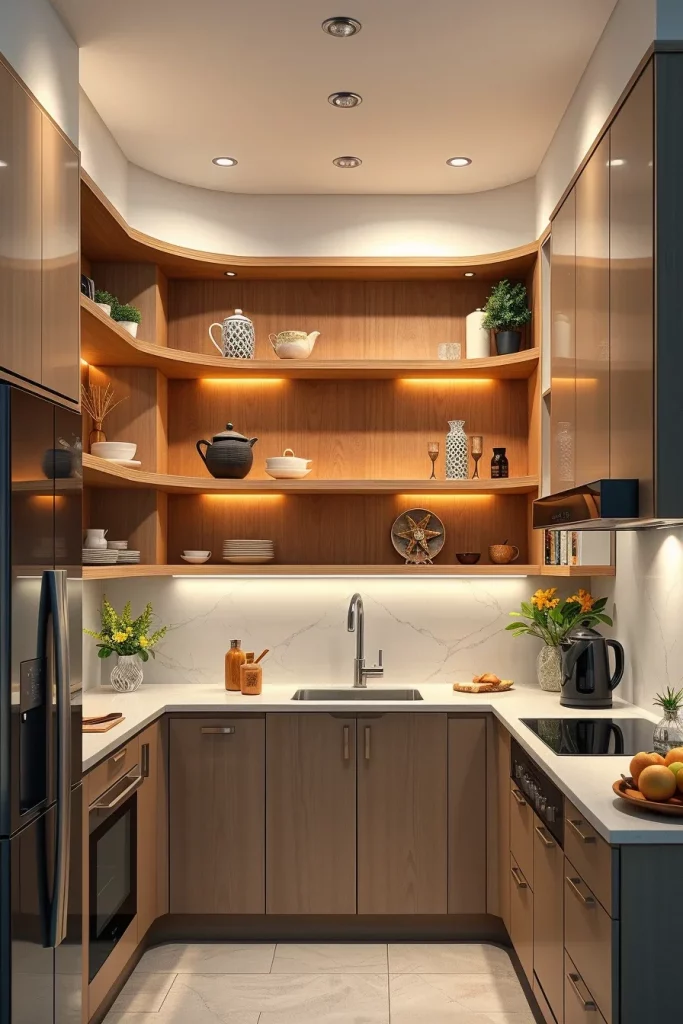
I usually install rounded corner shelves, floating curved units, or arched shelving systems. These elements are ideal for displaying everyday dishes, glassware, or decorative ceramics while maintaining accessibility. Combining open shelves with concealed storage ensures the kitchen remains organized and visually balanced.
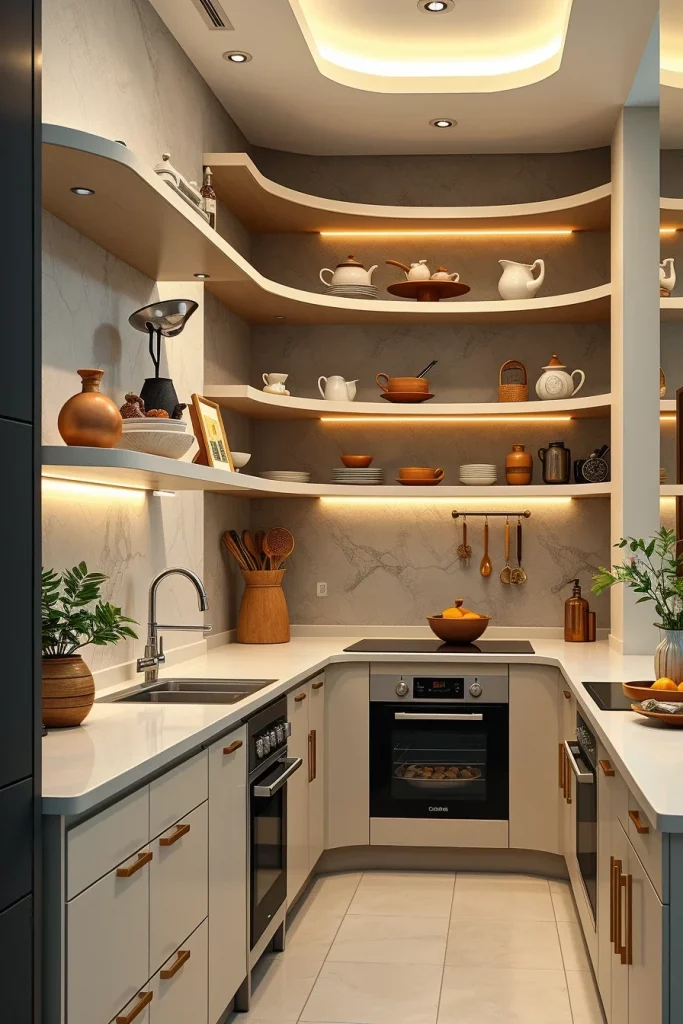
Personally, I believe curved shelving works particularly well in contemporary kitchens because it adds architectural character without occupying additional floor space. Many designers featured in leading interior publications have embraced organic forms, and curved shelving reflects this growing trend beautifully.
For maximum practicality, I suggest adding integrated lighting to highlight displayed items and create depth within the kitchen.
Small Kitchen Designs With Elegant Curved Cabinetry
Elegant curved cabinetry can completely transform the appearance of a small kitchen. In my experience, replacing sharp cabinet corners with rounded edges immediately creates a softer and more luxurious atmosphere. Curved cabinetry also improves movement by eliminating protruding corners in narrow layouts.
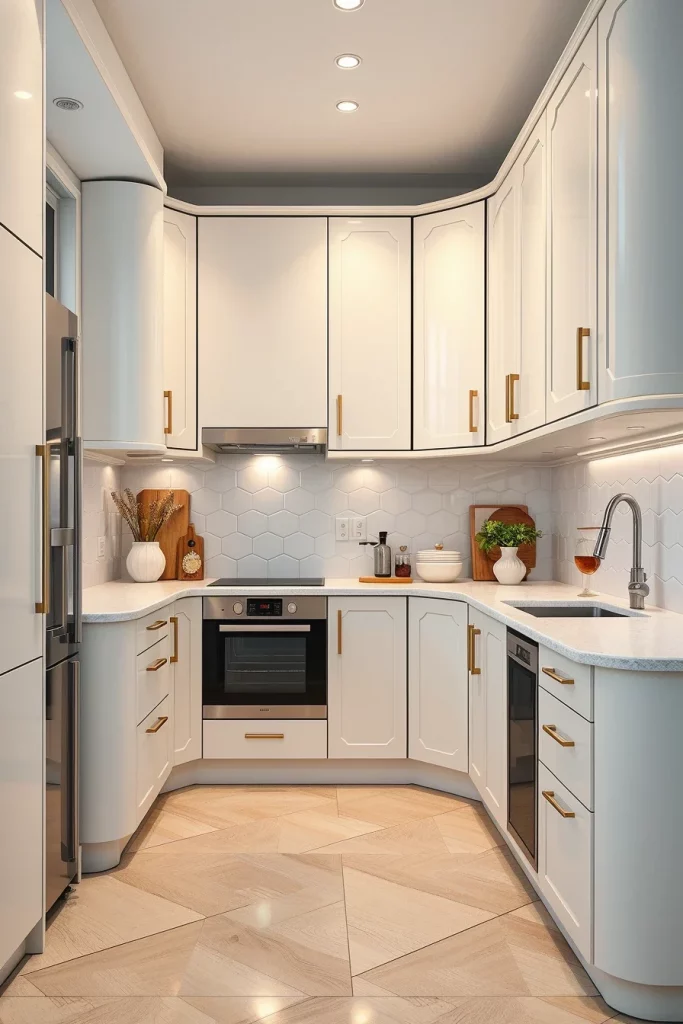
I often incorporate rounded end cabinets, curved corner units, and softly contoured doors. Handleless fronts enhance the seamless aesthetic, while integrated appliances maintain visual continuity. Light-toned finishes, subtle textures, and reflective surfaces further contribute to an airy appearance.
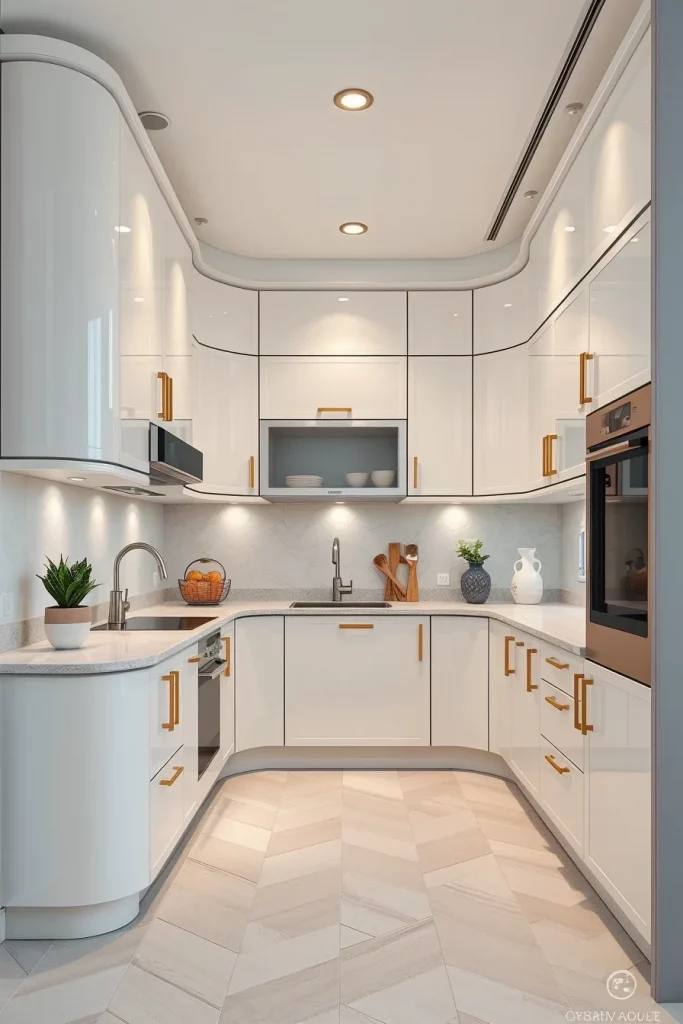
I have consistently observed that curved cabinetry elevates even the smallest kitchens. Interior specialists often emphasize that smooth transitions between surfaces reduce visual clutter, and curved cabinets achieve this exceptionally well. They feel custom, sophisticated, and highly functional.
To complete this design, I would include concealed organizational systems inside cabinets to maximize storage efficiency while preserving the clean exterior lines.
Space-Saving Curved Dining Tables For Tiny Kitchens
In my experience, a curved dining table is one of the smartest additions to a tiny kitchen. Traditional rectangular tables often create visual barriers and make movement difficult, while rounded or oval tables encourage a smoother flow. The absence of sharp corners immediately makes the kitchen feel more open and comfortable, especially in homes where every square foot matters.
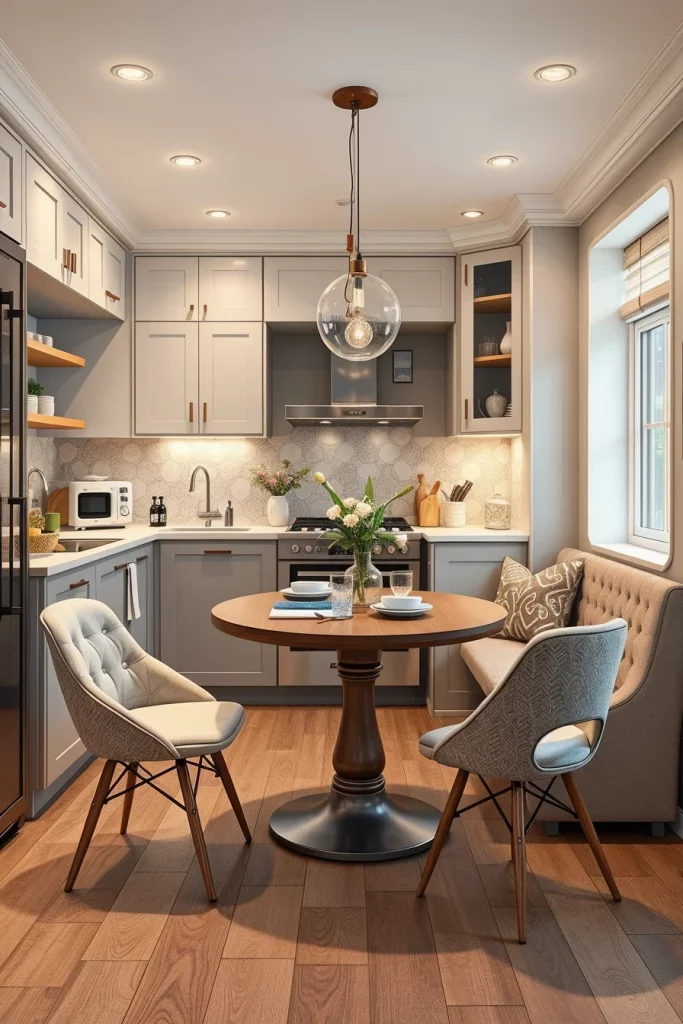
I usually recommend pedestal dining tables because they provide more legroom and flexibility. Compact curved chairs, upholstered stools, or even built-in seating pair beautifully with these tables. Materials such as glass or light-toned stone help maintain an airy atmosphere, while slim table profiles prevent the dining area from overwhelming the room.
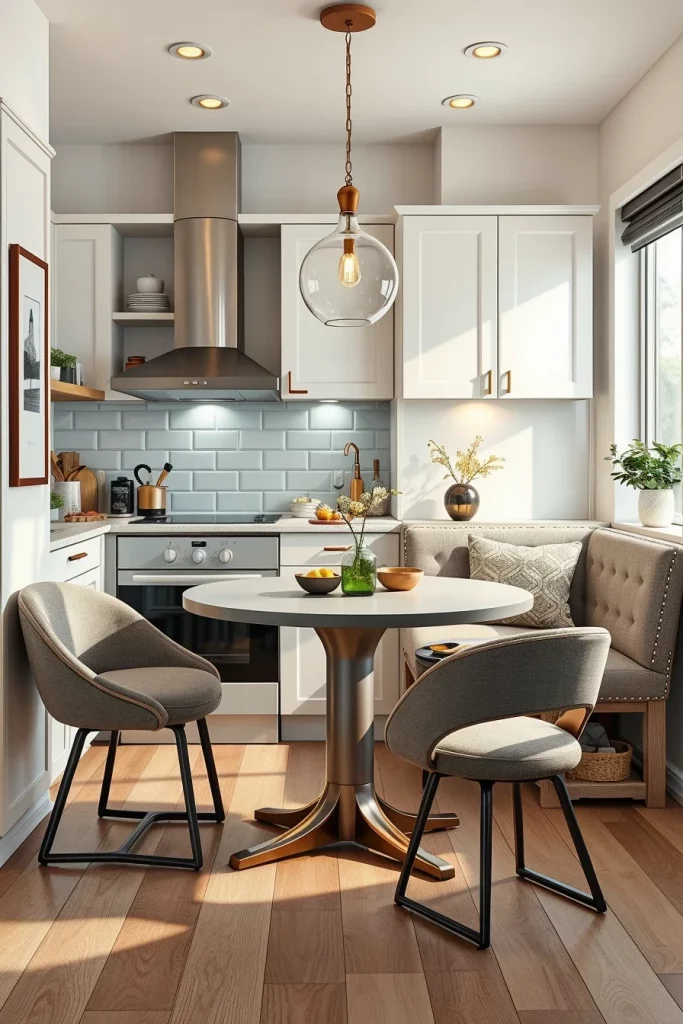
Personally, I have noticed that families naturally gather around round tables more often because the arrangement feels inclusive and relaxed. Many designers featured in House Beautiful and Better Homes & Gardens emphasize that curved dining furniture is particularly beneficial in compact interiors because it improves circulation and reduces visual clutter.
To make this arrangement even more functional, I would include a statement pendant light above the table and multifunctional seating with hidden storage.
Crescent-Shaped Kitchen Peninsulas For Better Flow
A crescent-shaped peninsula is an excellent alternative to a full island in a small kitchen. I often recommend this solution when homeowners want additional workspace without sacrificing valuable floor area. The curved silhouette naturally guides movement throughout the kitchen and eliminates tight corners that can interrupt daily routines.
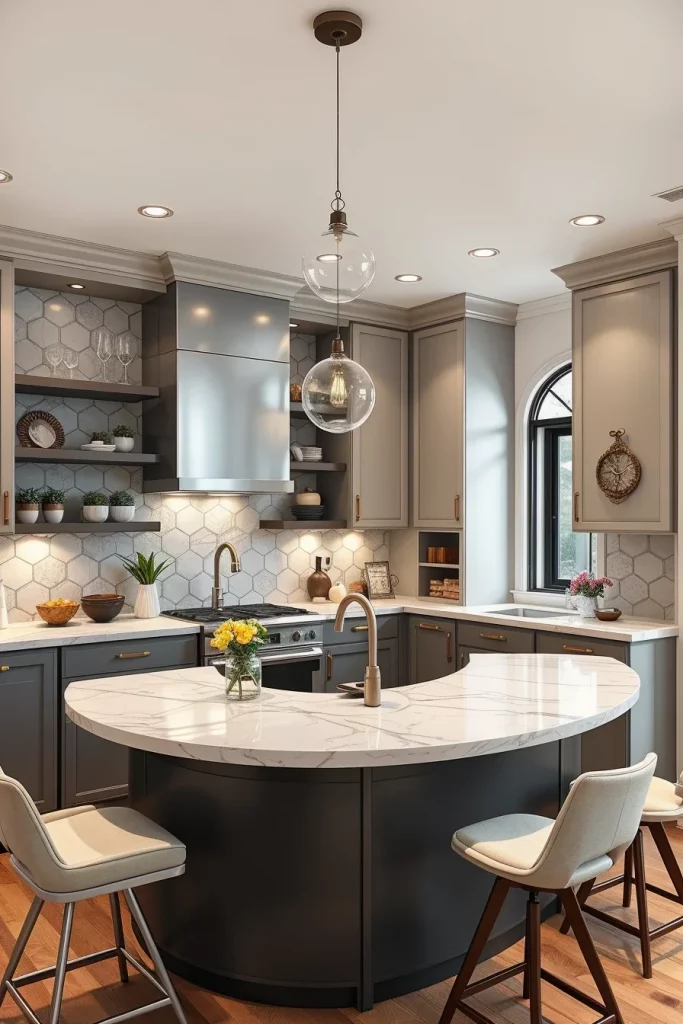
I like to design crescent peninsulas with integrated storage, open shelving, and comfortable seating on the outer curve. Quartz countertops, rounded cabinetry, and concealed appliances contribute to a streamlined appearance. This layout creates a clear distinction between cooking and dining zones while preserving an open feel.
From my perspective, curved peninsulas are particularly useful in open-plan homes because they encourage social interaction while cooking. Interior experts frequently suggest using organic shapes to soften compact spaces, and a crescent peninsula accomplishes this beautifully.
I would also incorporate under-counter lighting and strategically placed electrical outlets to increase both functionality and convenience.
Stylish Curved Bar Counters In Narrow Kitchens
Narrow kitchens often present significant design challenges, but a curved bar counter can dramatically improve both style and usability. I have found that rounded counters reduce the feeling of confinement and create a more welcoming atmosphere. Instead of abrupt edges, the flowing lines visually expand the available space.
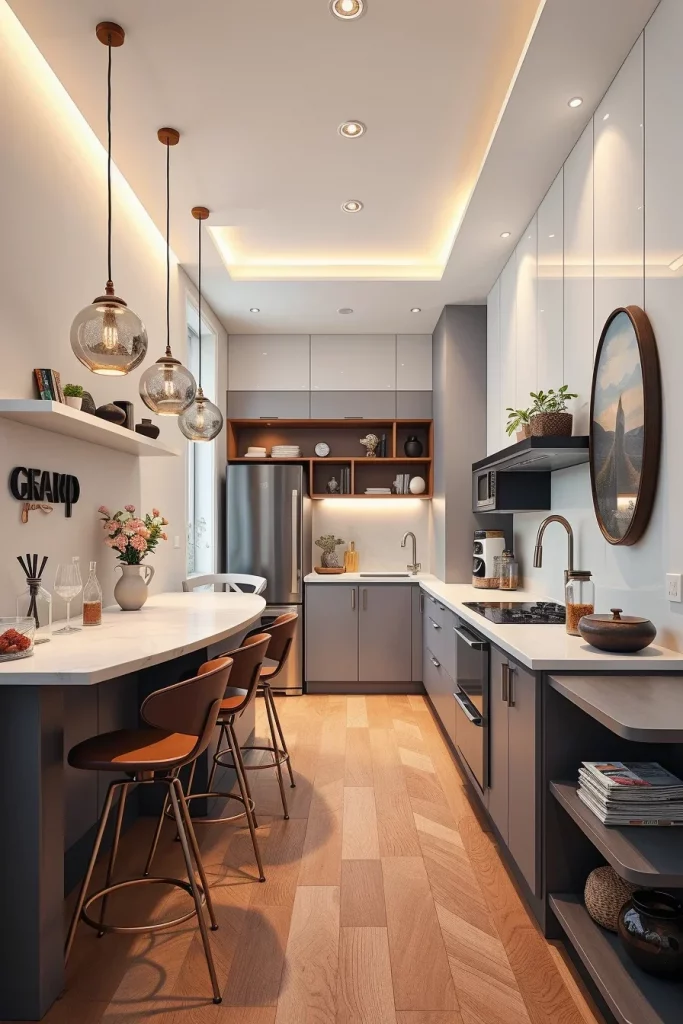
For these kitchens, I prefer slim curved counters with integrated shelving and compact seating. Curved bar stools with minimal frames maintain openness while providing comfortable seating for quick meals or casual conversations. Materials such as natural stone, quartz, or matte finishes complement modern kitchen aesthetics exceptionally well.
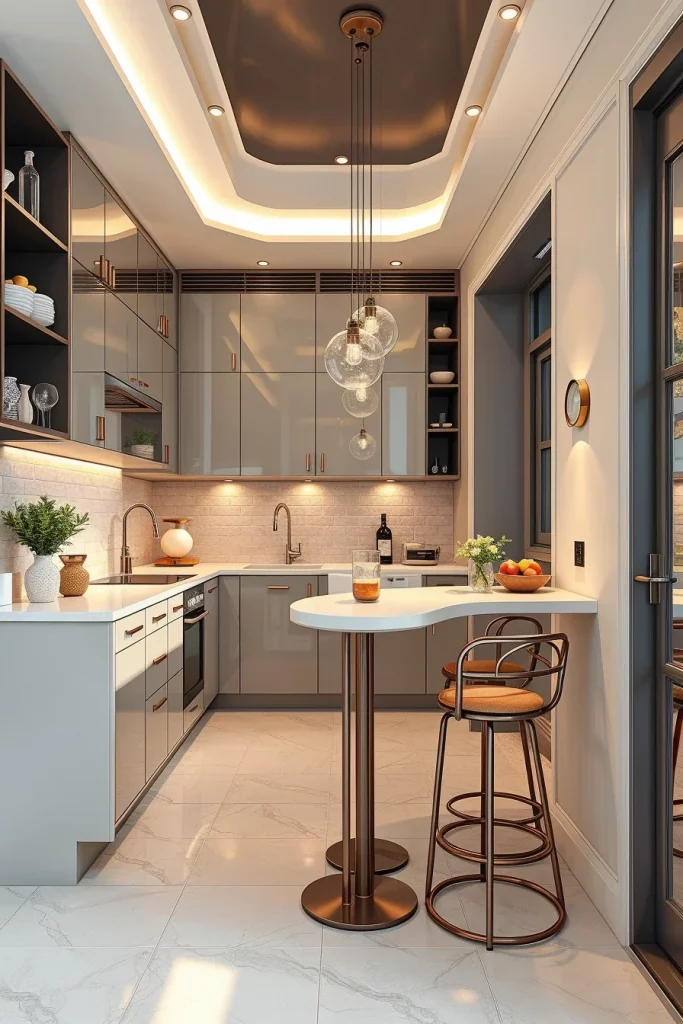
Personally, I appreciate how curved bar counters transform transitional areas into functional gathering spaces. According to many contemporary kitchen designers, incorporating rounded forms into narrow rooms improves both ergonomics and visual balance, and I have consistently seen these benefits in practice.
To complete this design, I would add decorative pendant lighting and subtle accent lighting beneath the countertop to highlight its elegant shape.
Soft-Edge Curved Furniture For Family-Friendly Small Kitchens
When designing kitchens for families, I frequently prioritize soft-edge curved furniture because safety and comfort are essential considerations. Rounded furniture reduces the risk of accidental bumps while creating a more relaxed and welcoming environment. In small kitchens where movement is constant, eliminating sharp corners makes a noticeable difference.
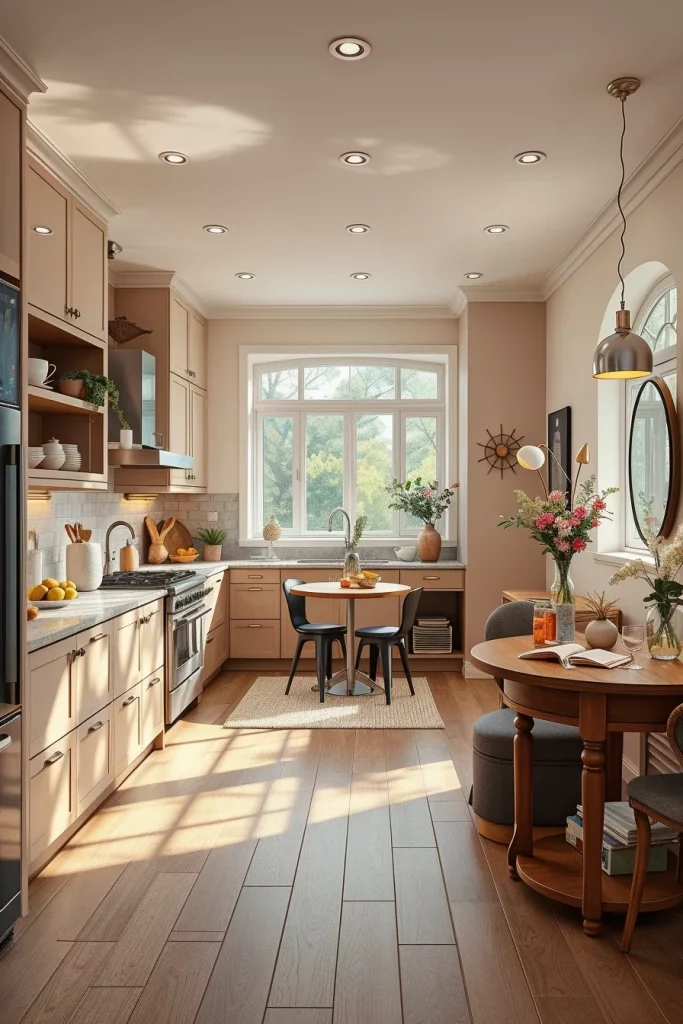
I often include curved islands, rounded dining tables, soft-edge cabinetry, and upholstered seating. Durable, easy-to-clean materials are particularly important for family kitchens. Rounded storage solutions, curved shelves, and smooth countertop edges further enhance both practicality and aesthetics.
In my own experience, families appreciate how curved furniture creates a calmer atmosphere while improving daily functionality. Design professionals regularly recommend soft organic forms in family homes because they encourage easier movement and foster a sense of comfort.
I would also include layered lighting and stain-resistant textiles to ensure the kitchen remains both beautiful and practical for everyday use.
Floating Curved Cabinets For An Airy Kitchen Appearance
Floating curved cabinets are among my favorite solutions for visually enlarging a small kitchen. By lifting cabinetry off the floor, the room immediately feels lighter and more spacious. The addition of curved forms further softens the design and creates an elegant contemporary appearance.
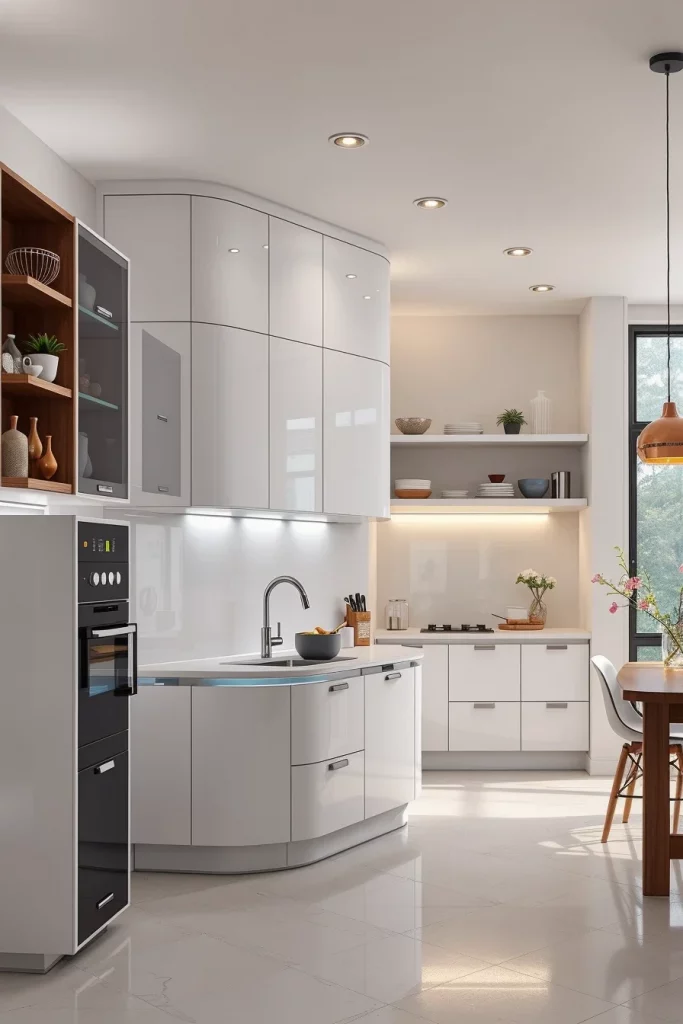
I typically use wall-mounted curved cabinets with integrated lighting and handleless fronts. Combining floating lower cabinets with open shelving enhances the sense of openness while still providing sufficient storage. Light finishes, reflective surfaces, and minimal hardware contribute to a clean, sophisticated look.
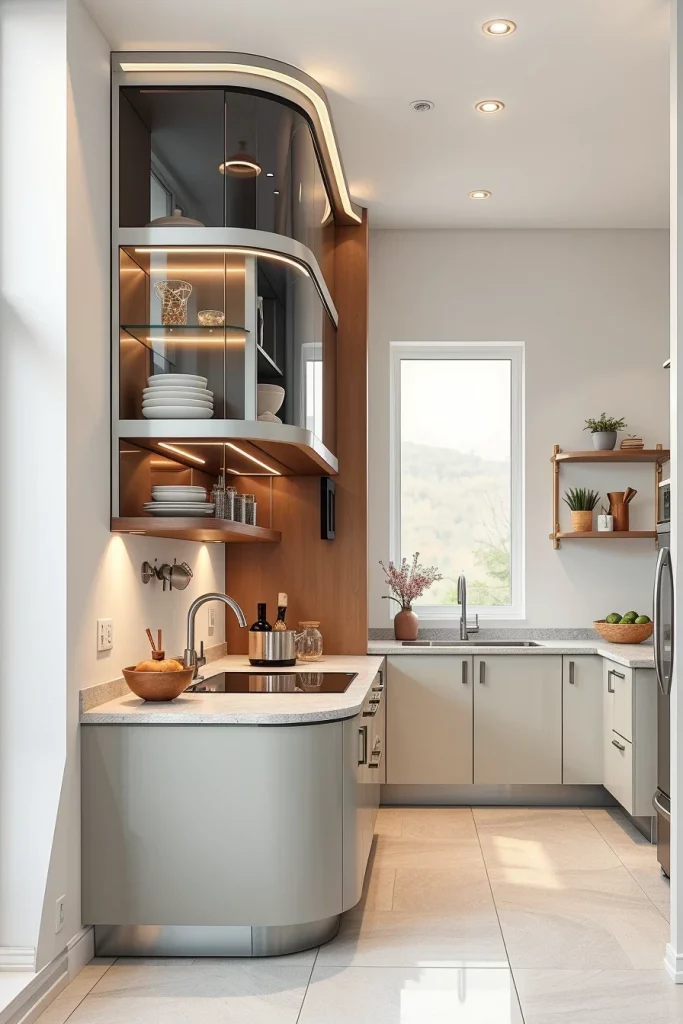
Personally, I believe floating cabinetry represents one of the most effective ways to modernize a compact kitchen. Contemporary interior publications frequently highlight wall-mounted storage as a strategy for increasing visual space, and curved floating units elevate this concept even further.
To maximize the effect, I recommend installing LED lighting beneath the cabinets and selecting flooring that continues uninterrupted throughout the space.
Curved Kitchen Seating Ideas For Multifunctional Spaces
In my experience, curved seating is one of the most effective ways to make a compact kitchen serve multiple purposes. A built-in curved banquette placed against a wall instantly creates a dining zone without overwhelming the room. The gentle lines soften the overall appearance, making even narrow kitchens feel less confined. I often recommend this solution for households that use the kitchen for dining, working, and socializing.
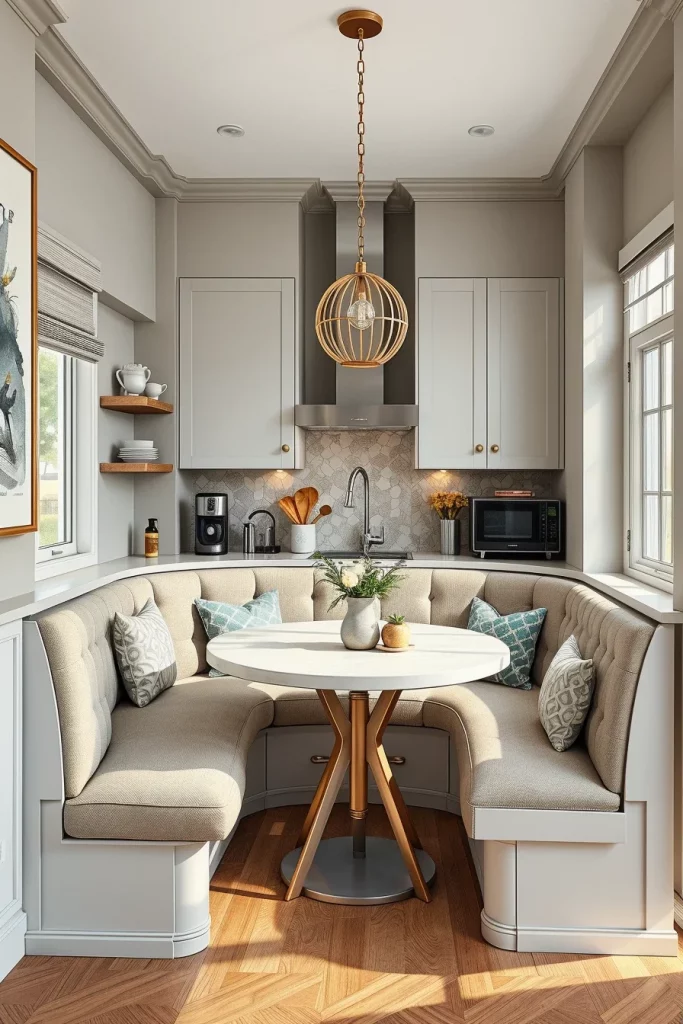
I prefer combining a curved upholstered bench with a round or oval dining table because this arrangement improves circulation and eliminates sharp corners. Slim-profile chairs, hidden storage beneath the seating, and integrated lighting further increase practicality. Adding soft textiles and a compact pendant light above the table helps define the area while maintaining visual openness.
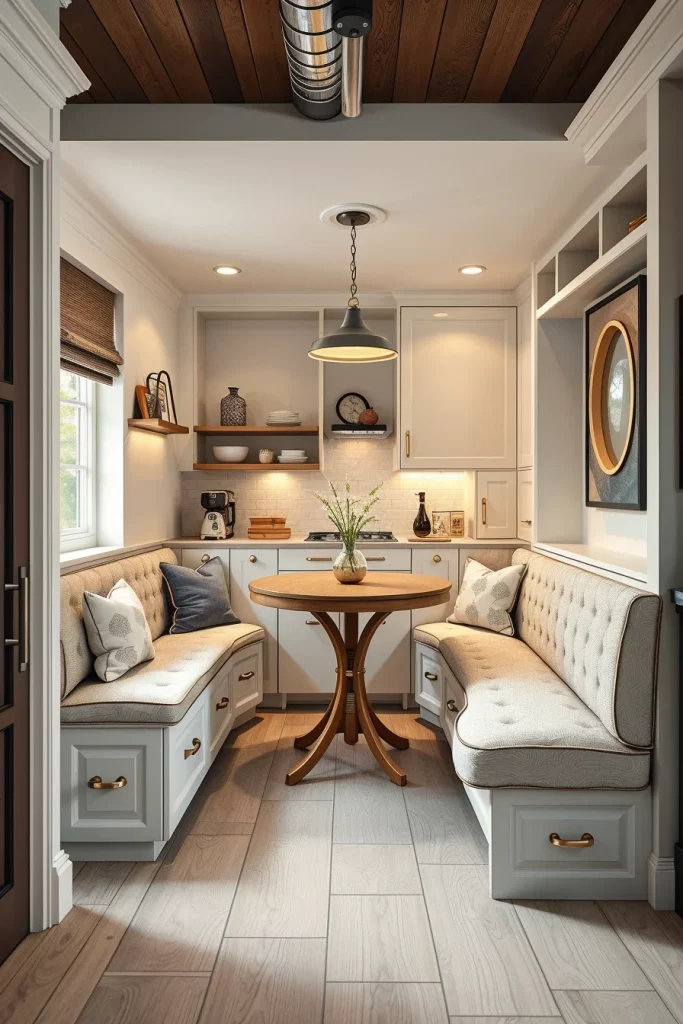
I have noticed that designers frequently emphasize the importance of flexible dining areas in small homes. Publications such as Architectural Digest often highlight banquette seating as an efficient solution for maximizing square footage. Personally, I find curved seating especially useful because it encourages conversation and comfortably accommodates additional guests.
To complete this design, I would add adjustable wall sconces, concealed charging outlets, and a compact storage niche nearby. These additions make the seating area suitable not only for meals but also for remote work and casual entertaining.
Unique Oval Kitchen Islands For Modern Small Interiors
A compact oval island can dramatically change the functionality of a small kitchen. Unlike rectangular islands, curved silhouettes allow easier movement around the space and minimize visual bulk. In my projects, oval islands often become the centerpiece while maintaining excellent traffic flow in narrow layouts.
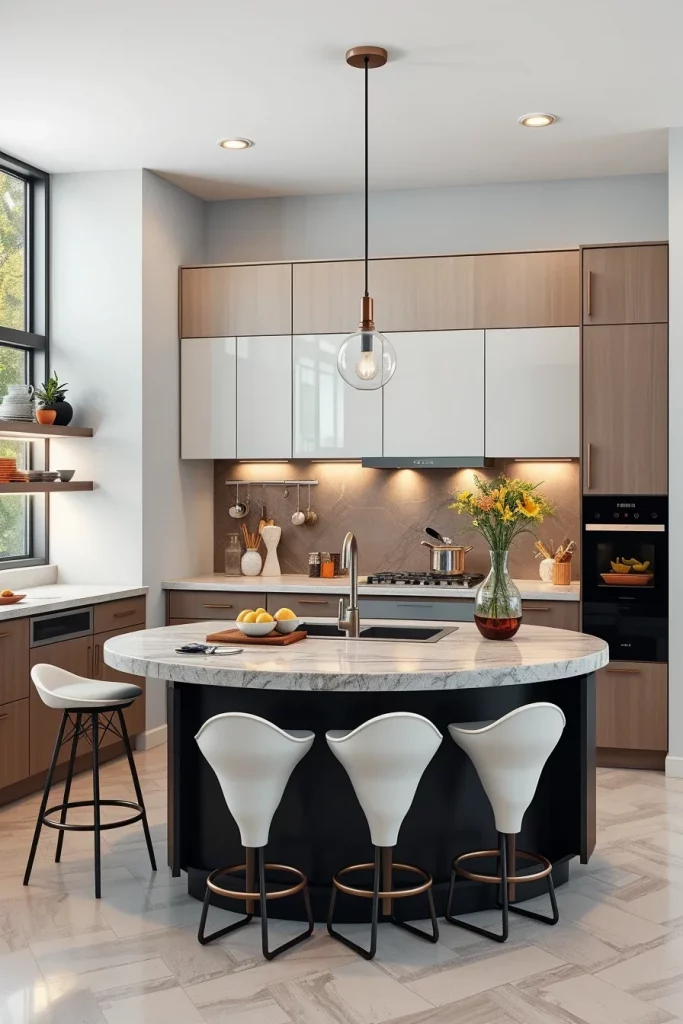
I like incorporating waterfall countertops, integrated shelving, and rounded cabinetry into oval island designs. Bar seating with curved stools complements the shape beautifully while preserving harmony throughout the room. Built-in appliances within the island can further optimize the available footprint.
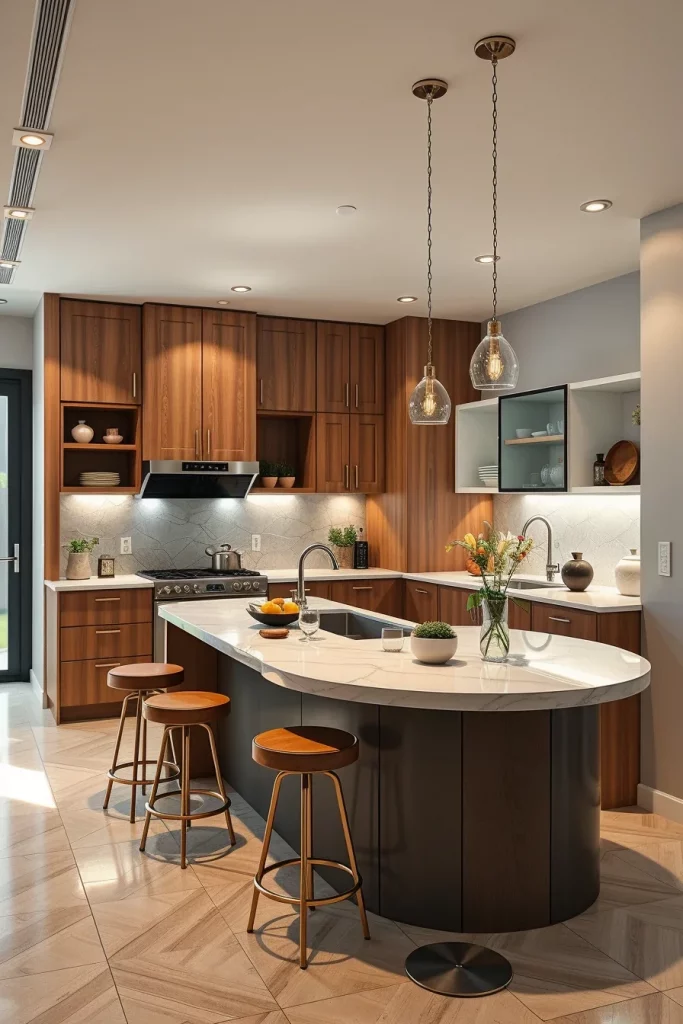
From my perspective, oval islands work particularly well in open-concept apartments where every piece must serve multiple functions. Many interior experts recommend rounded islands because they reduce obstacles and create a more welcoming environment. I have personally found that families with children appreciate the absence of sharp edges.
I would also include under-counter LED lighting and concealed storage compartments inside the island. These details increase both functionality and visual sophistication without occupying additional space.
Curved Furniture Paired With Built-In Storage Solutions
Combining curved furniture with built-in storage creates a highly efficient small kitchen layout. I often use rounded cabinetry integrated directly into walls to achieve a seamless appearance. This approach reduces visual clutter while maximizing storage capacity in difficult areas.
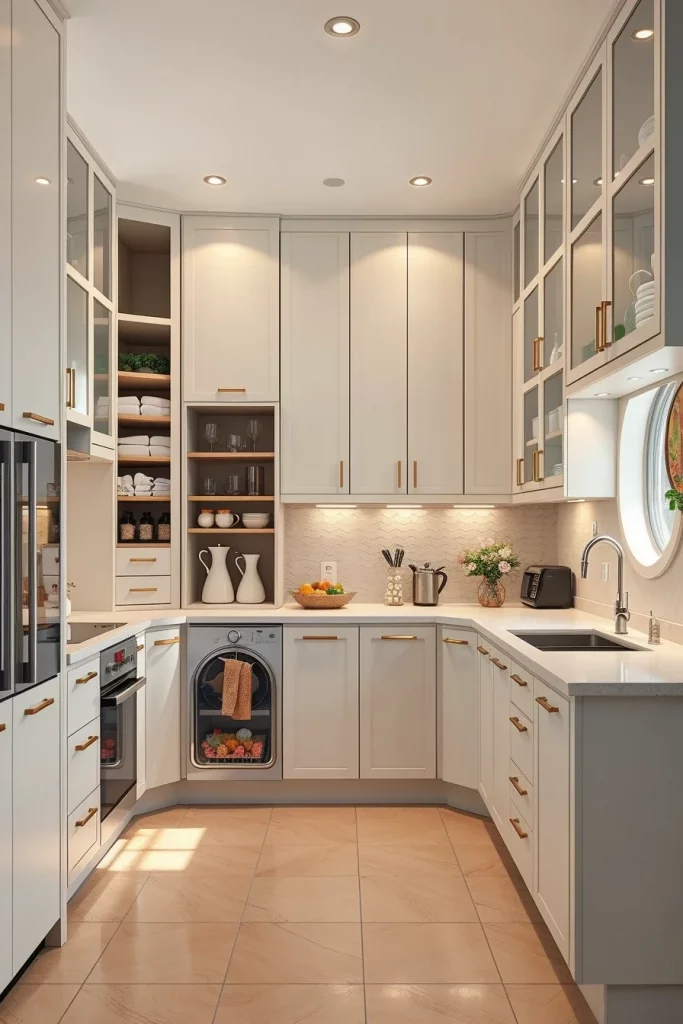
Curved pantry units, rounded open shelving, and integrated appliance garages can dramatically improve organization. I usually recommend matte finishes and handleless cabinetry to reinforce the clean appearance. Soft-close mechanisms and customized internal organizers ensure that every inch serves a purpose.
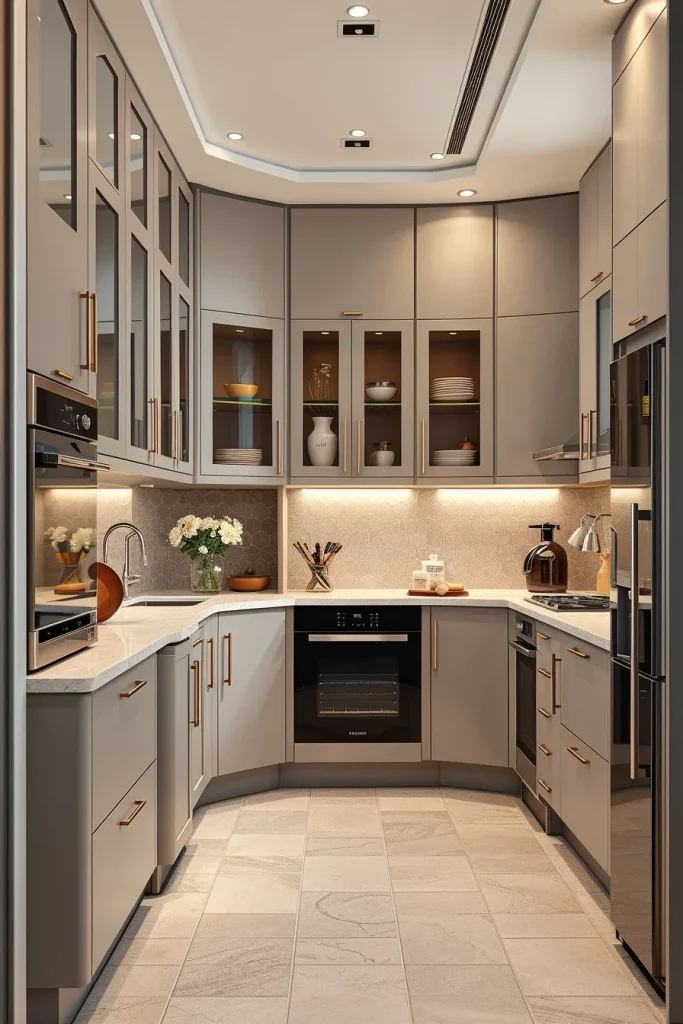
In my experience, homeowners frequently underestimate the storage potential of curved built-ins. Interior designers featured in House Beautiful regularly emphasize custom millwork as one of the best investments for compact kitchens. I agree because tailored solutions eliminate wasted corners and awkward gaps.
To make this concept even more practical, I would add pull-out organizers, hidden recycling bins, and vertical storage inserts. These features ensure that curved cabinetry remains both beautiful and exceptionally functional.
Compact Curved Coffee Stations For Small Kitchen Designs
A dedicated coffee station can significantly improve daily routines, even in the smallest kitchens. I prefer compact curved cabinetry because it occupies minimal floor space while creating a distinct beverage zone. Rounded forms help the station blend naturally into the surrounding kitchen design.
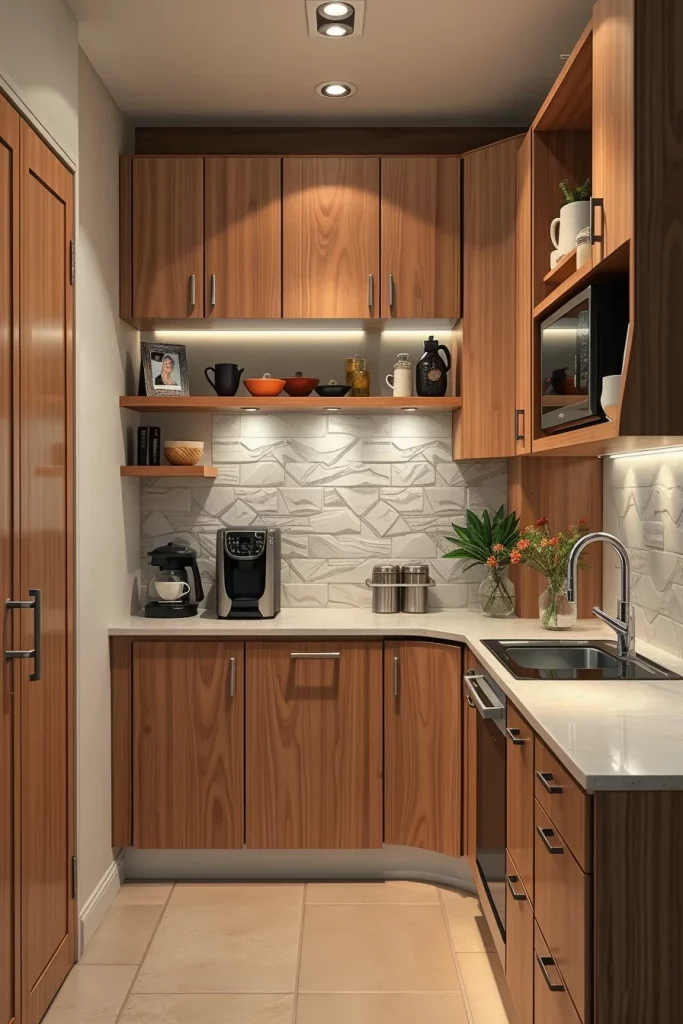
A successful curved coffee station may include floating shelves, integrated cup storage, concealed appliance compartments, and a small quartz countertop. I often install under-shelf lighting to illuminate the preparation area while adding warmth and ambiance. Curved cabinetry doors contribute to a cohesive and elegant aesthetic.
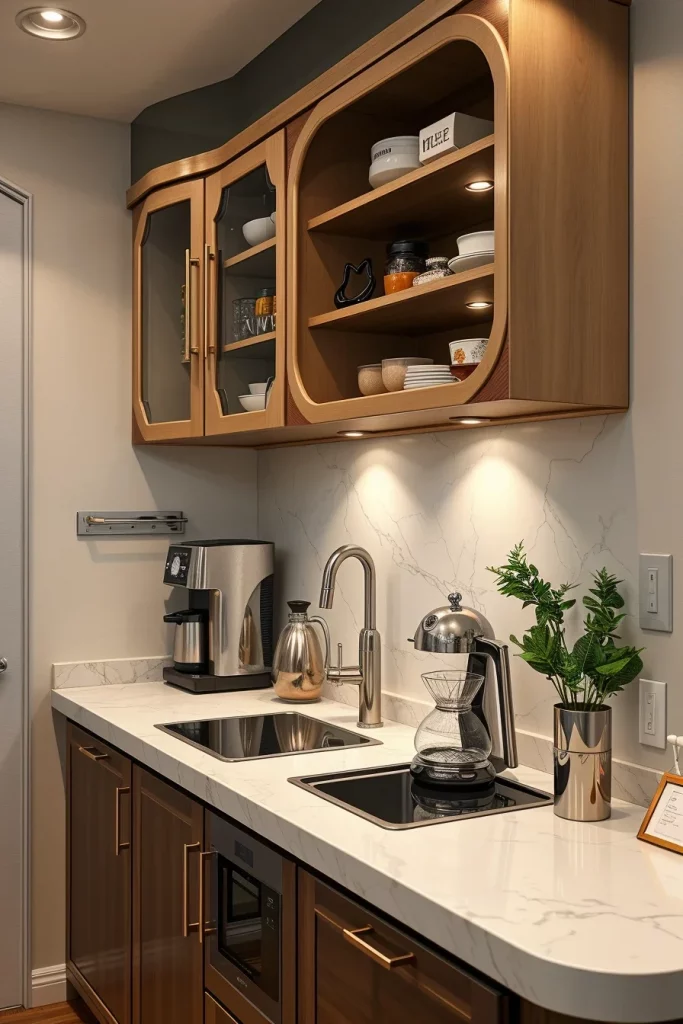
Personally, I find that dedicated coffee areas help reduce countertop clutter throughout the rest of the kitchen. Many design publications encourage creating specialized zones in compact spaces, and I have consistently seen positive results when implementing this strategy.
What I would add to this concept is a small pull-out tray, built-in electrical outlets, and a narrow display shelf for decorative accessories. These details enhance convenience while preserving a streamlined appearance.
Statement Curved Furniture Pieces That Become Kitchen Focal Points
In small kitchens, a single statement piece can define the entire interior. I often recommend selecting one dramatic curved element, such as a sculptural island, a rounded breakfast nook, or an arched display cabinet. This approach introduces personality without overcrowding the room.
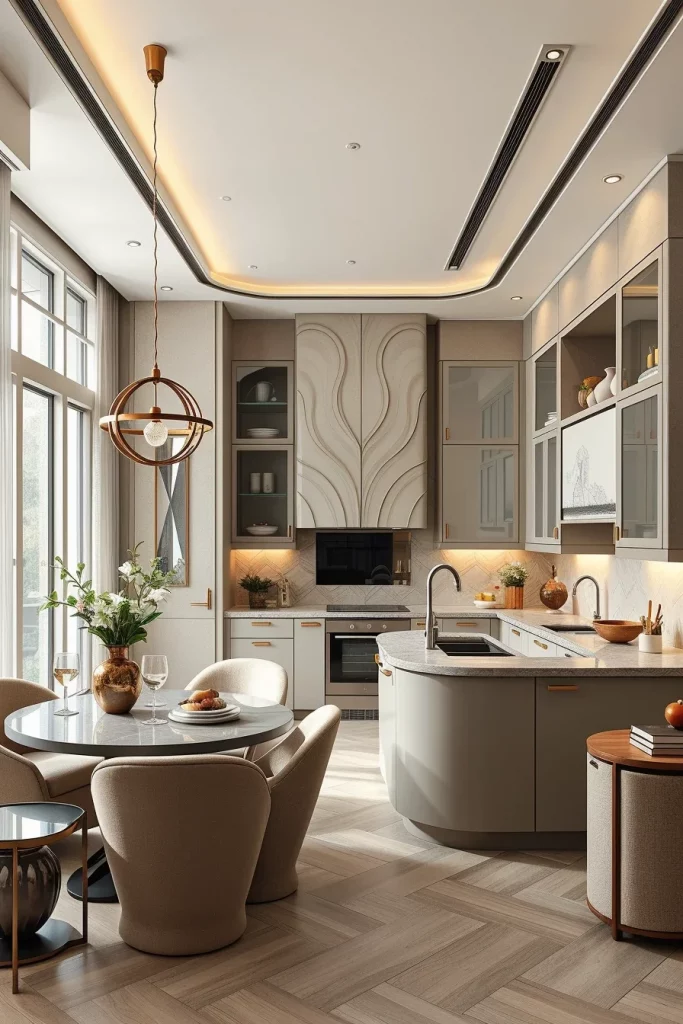
The key is balancing the focal piece with simpler surrounding furnishings. I usually pair statement furniture with neutral cabinetry, subtle finishes, and restrained décor to prevent visual competition. Curved pendant lights, rounded stools, and soft textiles reinforce the design language without overwhelming the space.
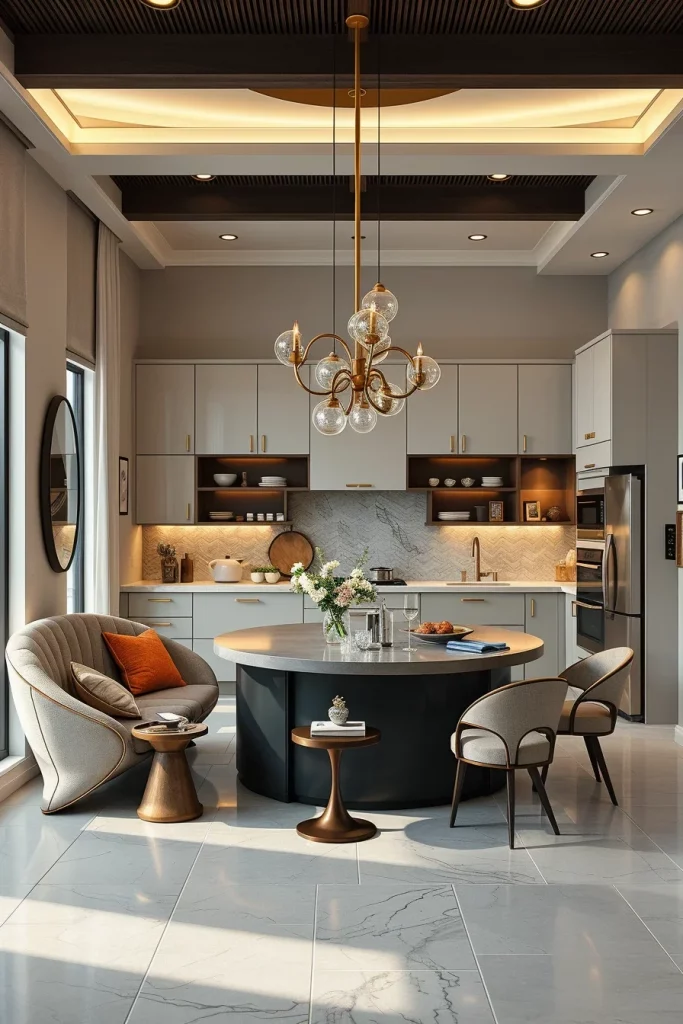
From my experience, focal furniture works best when it combines beauty with practicality. Designers frequently advise allowing one standout feature to anchor a room, and I have found this principle particularly effective in compact kitchens where excessive decoration can feel overwhelming.
To complete the space, I would incorporate layered lighting and carefully selected decorative accents that emphasize the curves while maintaining a cohesive, modern aesthetic.
Minimalist Curved Furniture For Sleek Small Kitchens
Minimalist interiors and curved furniture complement each other exceptionally well in small kitchens. I often use streamlined curved cabinetry and rounded furniture pieces to create a calm, uncluttered environment. The absence of sharp angles helps the room feel more spacious, while minimalist styling ensures that every element serves a practical purpose. This combination is particularly effective in apartments where the kitchen is visible from adjacent living spaces.
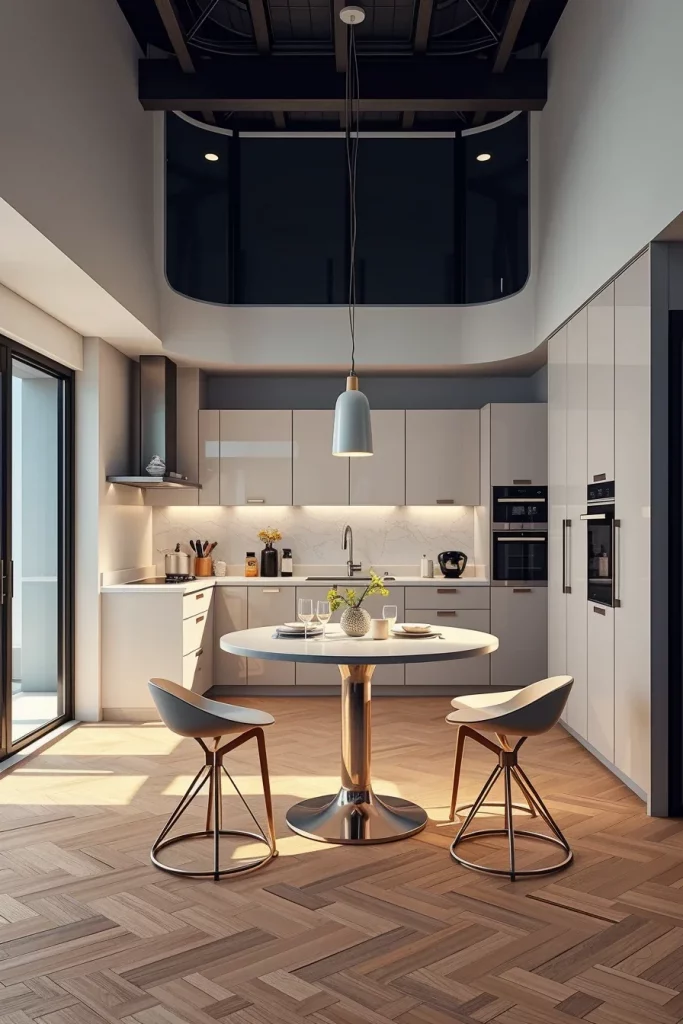
I usually select curved base cabinets, slim-profile rounded stools, and compact dining tables with soft edges. Handleless fronts, integrated appliances, and concealed storage maintain the minimalist aesthetic while maximizing functionality. Neutral color palettes such as soft white, warm beige, and muted gray further enhance the sleek appearance and allow the curved forms to stand out subtly.
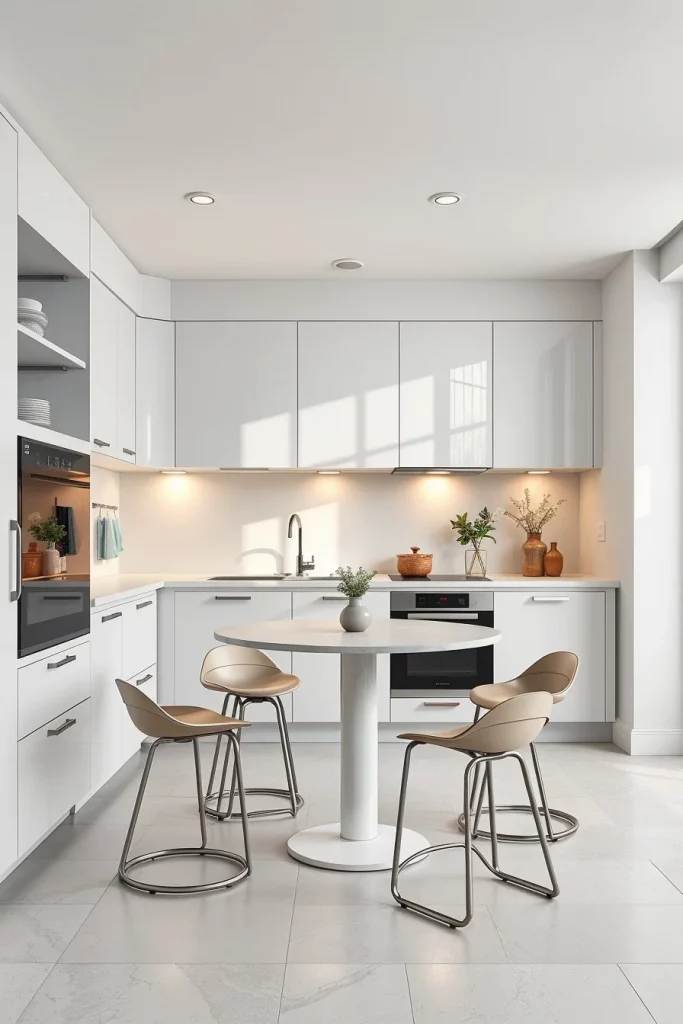
From my experience, less truly is more in compact kitchens. Design experts from publications like Elle Decor often emphasize restraint in small interiors, and I agree that carefully edited spaces tend to feel larger and more inviting. I have found that curved minimalist furniture brings warmth to otherwise simple interiors without adding unnecessary visual complexity.
To complete this look, I would include discreet under-cabinet lighting, a few sculptural accessories, and subtle textural contrasts. These additions keep the kitchen visually interesting while preserving its clean and sophisticated atmosphere.
Layering Curved Furniture With Textured Finishes In Small Kitchens
Layering textures is one of my favorite ways to add depth to small kitchens featuring curved furniture. Soft curves naturally create visual movement, and combining them with varied finishes prevents the space from appearing flat or monotonous. Even compact kitchens can feel rich and inviting when textures are thoughtfully balanced.
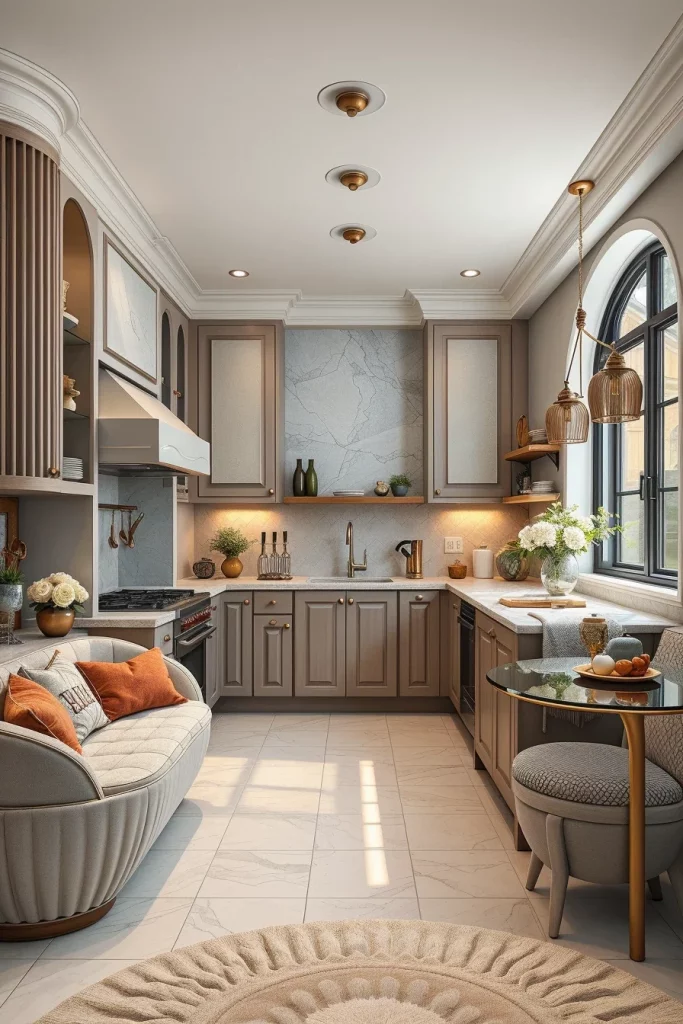
I often combine curved cabinetry with fluted panel details, textured stone countertops, ribbed glass inserts, and matte finishes. Rounded seating upholstered in boucle or performance fabric adds softness, while textured backsplashes introduce additional dimension. The key is maintaining a consistent palette so that the textures enhance rather than overwhelm the design.
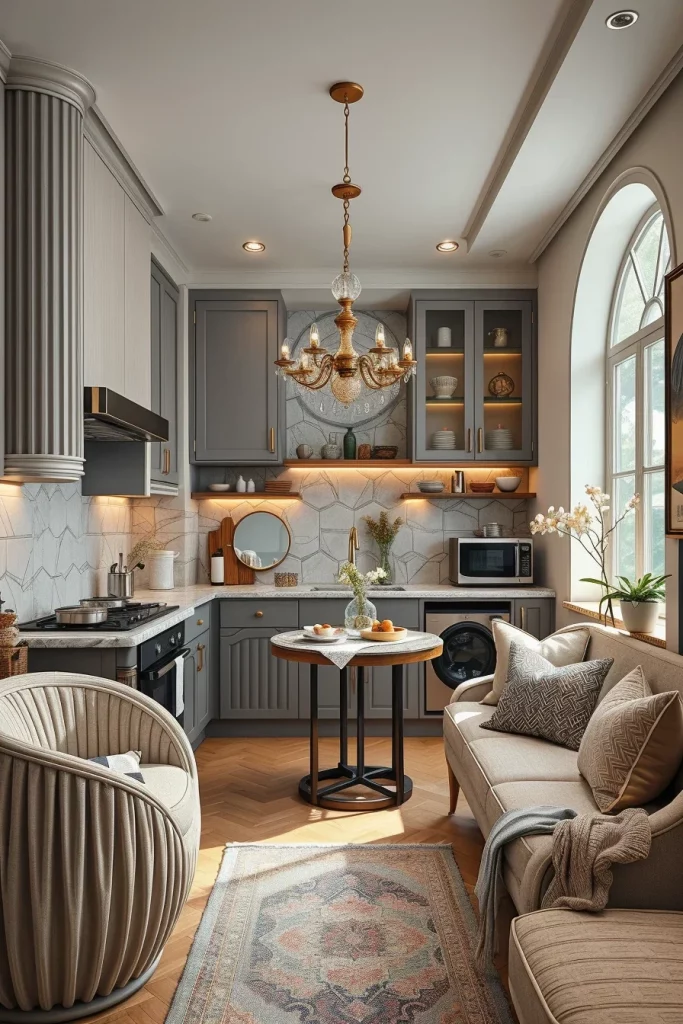
Personally, I have noticed that textured surfaces make small kitchens feel more customized and refined. Many interior designers recommend layering materials to create visual interest in minimalist spaces, and I consistently see positive results when using this approach. Curves paired with tactile finishes create interiors that feel both contemporary and welcoming.
I would also add subtle metallic accents, ambient lighting, and a few handcrafted decorative objects. These finishing touches reinforce the layered aesthetic and help highlight the beauty of the curved forms.
Creative Curved Corner Cabinets To Eliminate Dead Space
Awkward corners are common in small kitchens, which is why I frequently recommend curved corner cabinets. These solutions transform previously unusable areas into valuable storage while improving the room’s overall flow. Rounded corners also soften the layout and reduce the visual heaviness often associated with traditional cabinetry.
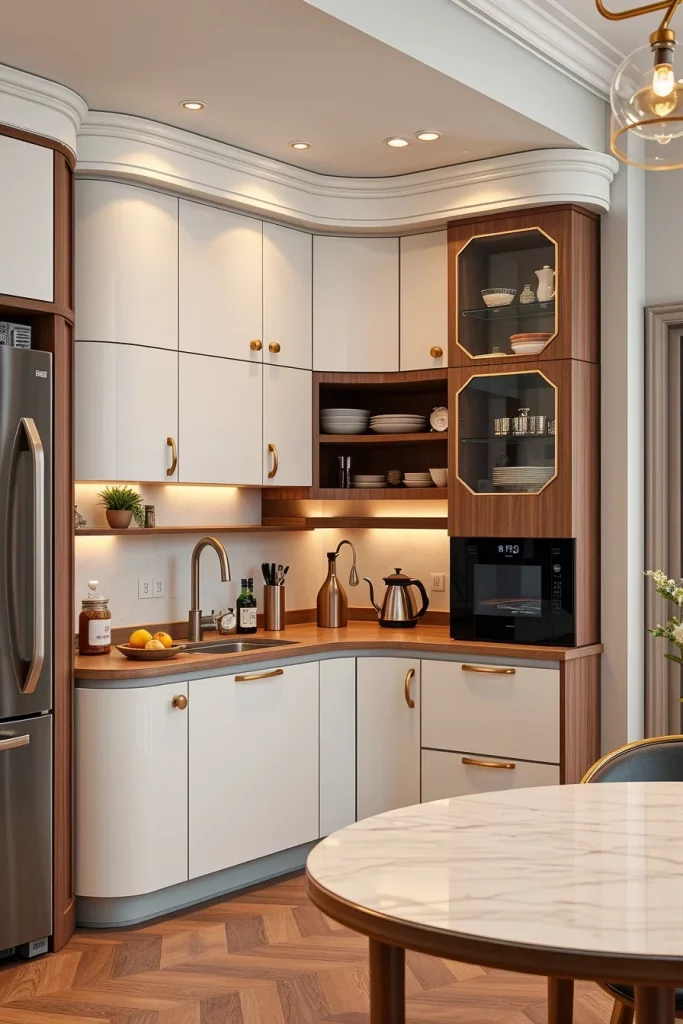
Curved corner cabinets can incorporate rotating shelves, pull-out organizers, or deep storage compartments. I prefer integrating them seamlessly with the surrounding cabinetry so that the entire kitchen feels cohesive. Rounded cabinet fronts also improve safety by eliminating sharp edges in narrow walkways.
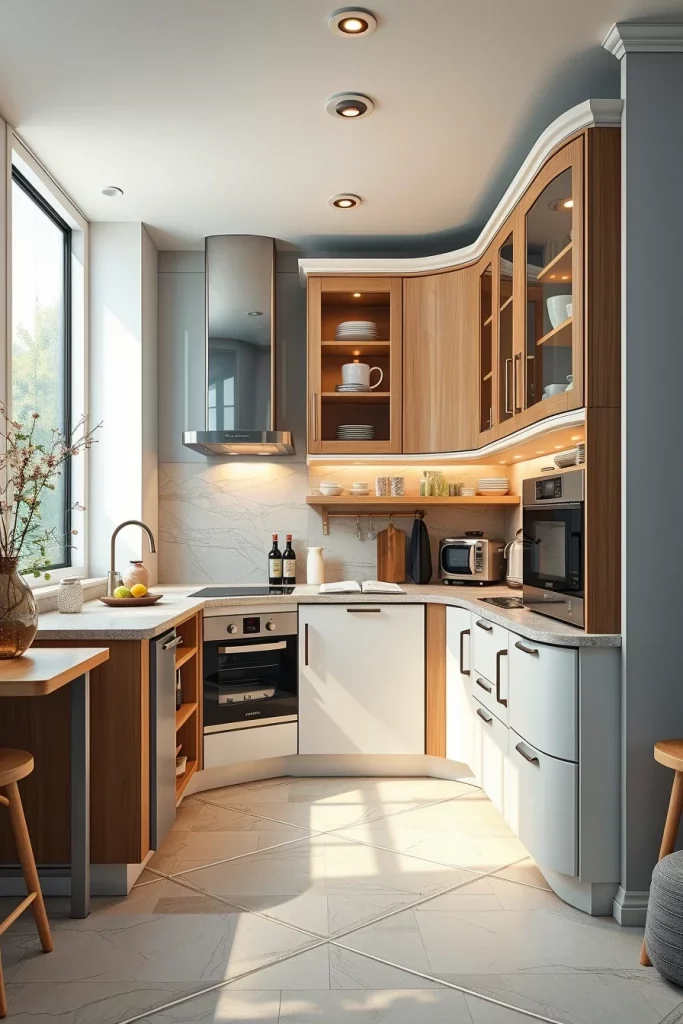
In my experience, homeowners are often surprised by how much storage curved corner units provide. Design professionals regularly emphasize the importance of maximizing corner space in compact kitchens, and I have found that customized curved cabinetry accomplishes this beautifully while enhancing aesthetics.
To further improve functionality, I would add interior lighting, adjustable shelving, and dedicated storage accessories. These features ensure that every corner remains easily accessible and highly practical.
Small Kitchens Featuring Curved Glass Display Cabinets
Curved glass display cabinets introduce elegance and visual lightness into small kitchens. I often use these cabinets to break up long runs of solid cabinetry and create a sense of openness. The transparent surfaces reflect light throughout the room, making compact kitchens appear larger and brighter.
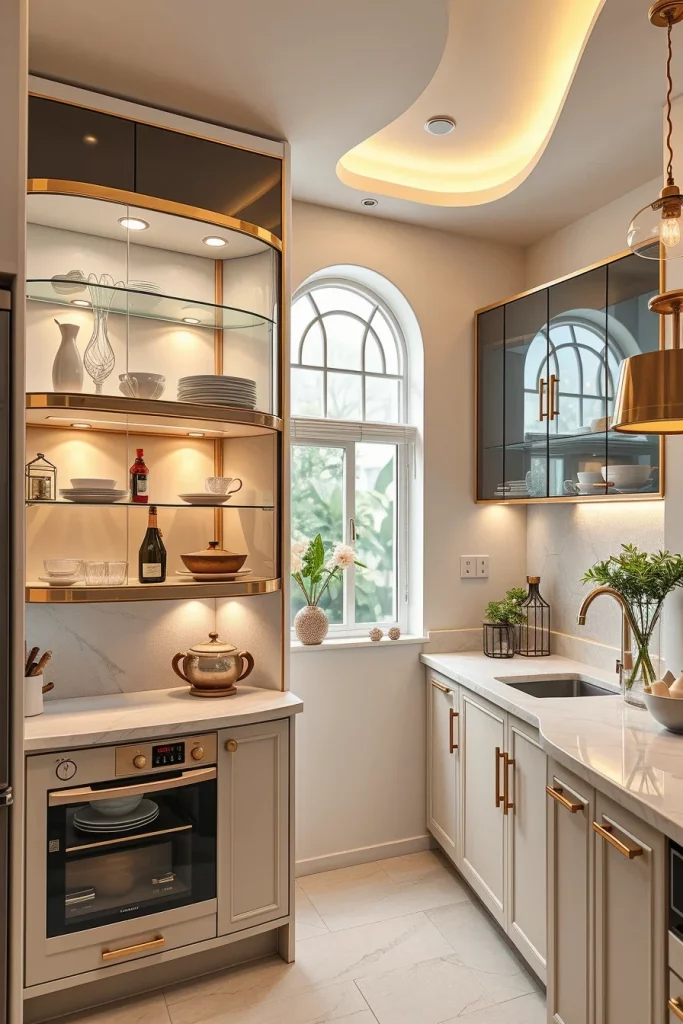
I like incorporating curved glass doors with integrated lighting, allowing homeowners to display attractive dishware, glassware, or decorative pieces. Slim metal frames, floating shelves, and softly illuminated interiors contribute to a refined and contemporary appearance. Frosted or lightly tinted glass can provide additional privacy while maintaining an airy feeling.
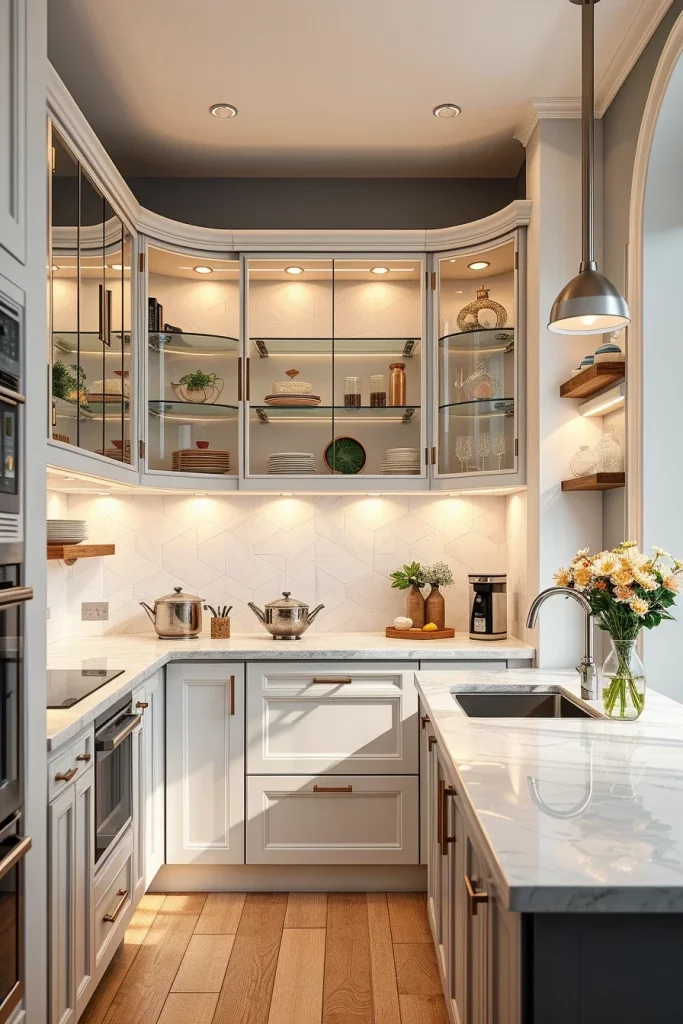
From my perspective, display cabinets work best when they are carefully curated. Architectural Digest frequently highlights the importance of intentional styling, and I agree that displaying only a few meaningful pieces creates a more sophisticated result. I personally prefer balancing decorative objects with everyday essentials to maintain practicality.
What I would add to this concept is dimmable interior lighting and mirrored back panels. These details amplify light, enhance visual depth, and make the cabinet a true design feature within the kitchen.
Rounded Furniture Layouts That Improve Kitchen Circulation
Efficient circulation is essential in any small kitchen, and rounded furniture layouts can significantly improve movement throughout the space. I often design kitchens with curved islands, rounded dining tables, and softly shaped cabinetry to eliminate obstacles and create intuitive pathways. This approach makes even compact rooms feel more comfortable and functional.
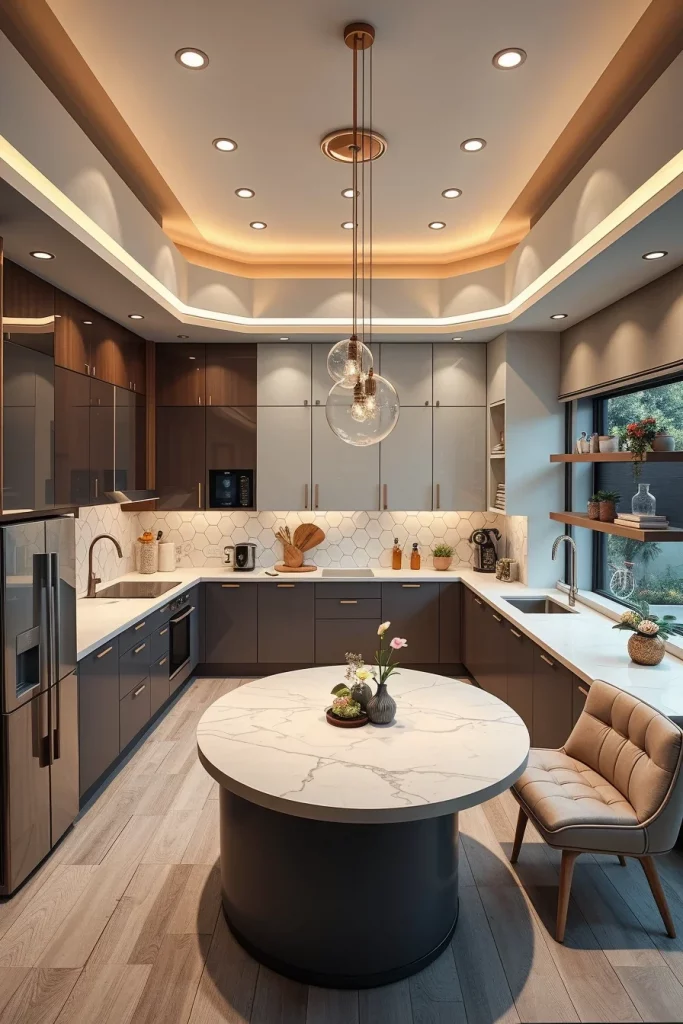
I typically arrange furniture to encourage smooth transitions between cooking, dining, and storage zones. Oval tables, curved seating, and rounded countertops reduce congestion while maintaining generous circulation areas. In open-plan homes, these layouts also help visually connect the kitchen with adjacent living spaces.
In my experience, homeowners immediately notice the difference when sharp corners are replaced with curved forms. Many professional designers advocate for improving traffic flow before focusing on decorative elements, and I fully support this philosophy. Better circulation not only enhances convenience but also makes the kitchen safer and more enjoyable to use daily.
To perfect the layout, I would incorporate layered lighting, clear sightlines, and multifunctional furnishings. These additions ensure that the kitchen remains highly efficient while preserving its stylish and contemporary character.
Curved Furniture Ideas For Open-Concept Small Kitchens
Open-concept layouts often benefit greatly from soft, flowing shapes, and I find that curved furniture creates a natural transition between the kitchen and adjoining living spaces. In a small open-plan home, rounded kitchen islands, curved breakfast bars, and arched cabinetry help improve circulation while visually expanding the room. This approach makes a curved furniture small kitchen design feel less confined and more welcoming.
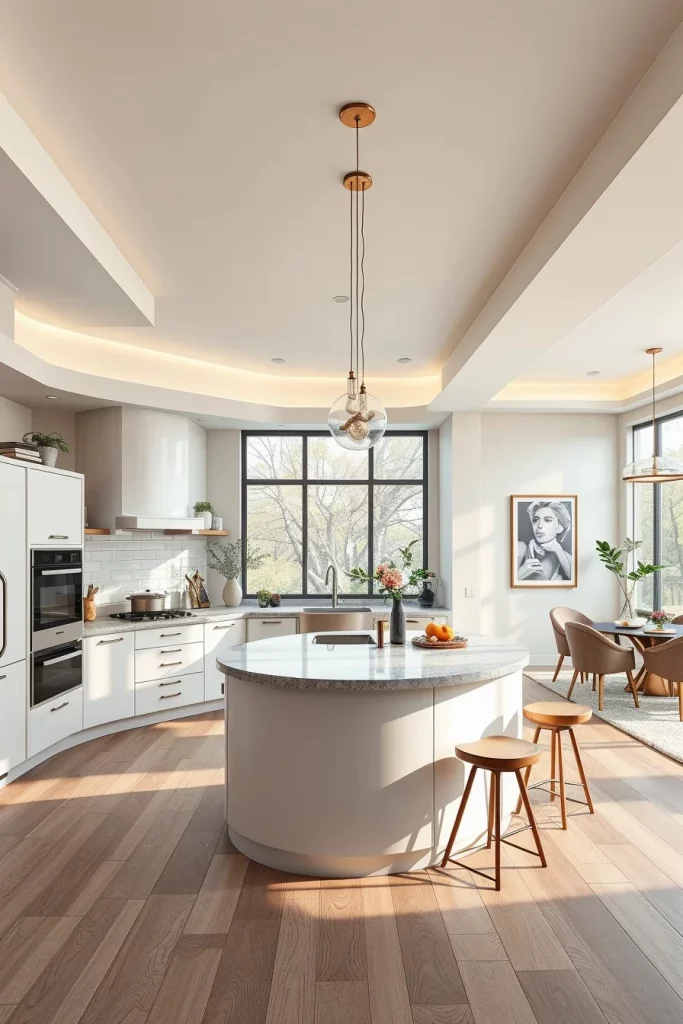
I usually recommend incorporating a curved peninsula with integrated seating, rounded lower cabinets, and streamlined open shelving. These elements eliminate sharp corners, making movement safer and more comfortable. Curved pendant lighting suspended above the island further reinforces the fluid aesthetic while providing essential task lighting.
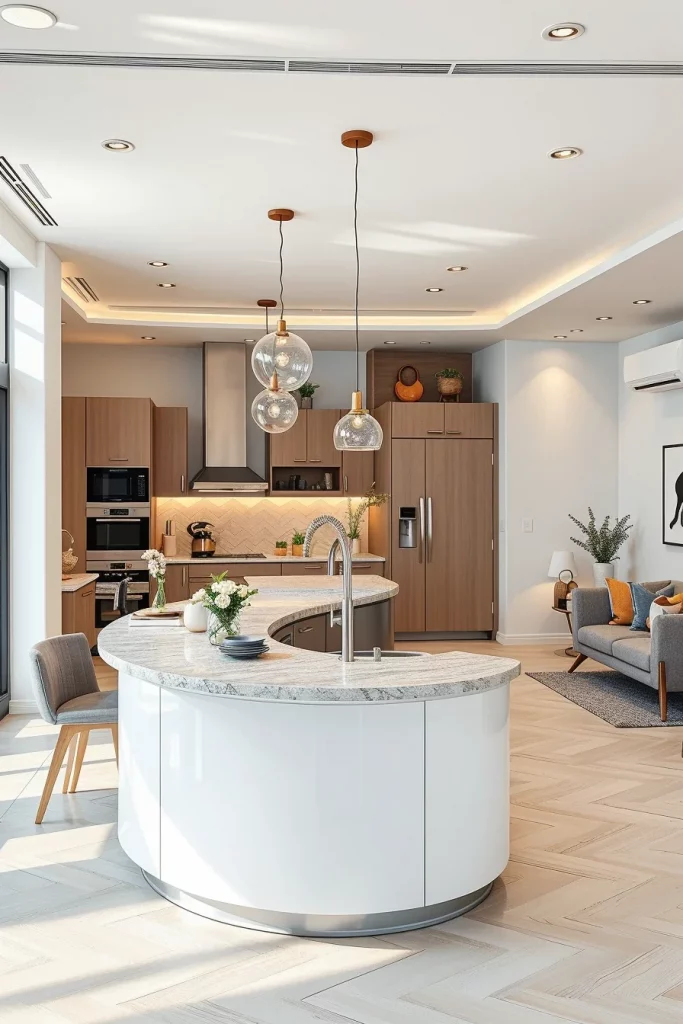
Personally, I appreciate how curved furnishings soften the overall atmosphere. Interior designers frequently featured in publications such as Architectural Digest emphasize that rounded forms encourage social interaction because they naturally draw people together. In my experience, this is especially valuable in compact open-concept homes.
To complete this design, I would add continuous flooring throughout adjacent spaces and subtle recessed lighting to visually connect the kitchen with surrounding rooms.
Contemporary Curved Furniture In Monochromatic Kitchen Designs
A monochromatic palette paired with curved furnishings creates a refined and highly contemporary kitchen. I often use varying shades of a single color because they make small kitchens appear larger while allowing sculptural furniture forms to become focal points. Neutral monochromatic schemes work particularly well in creative and unique interiors.
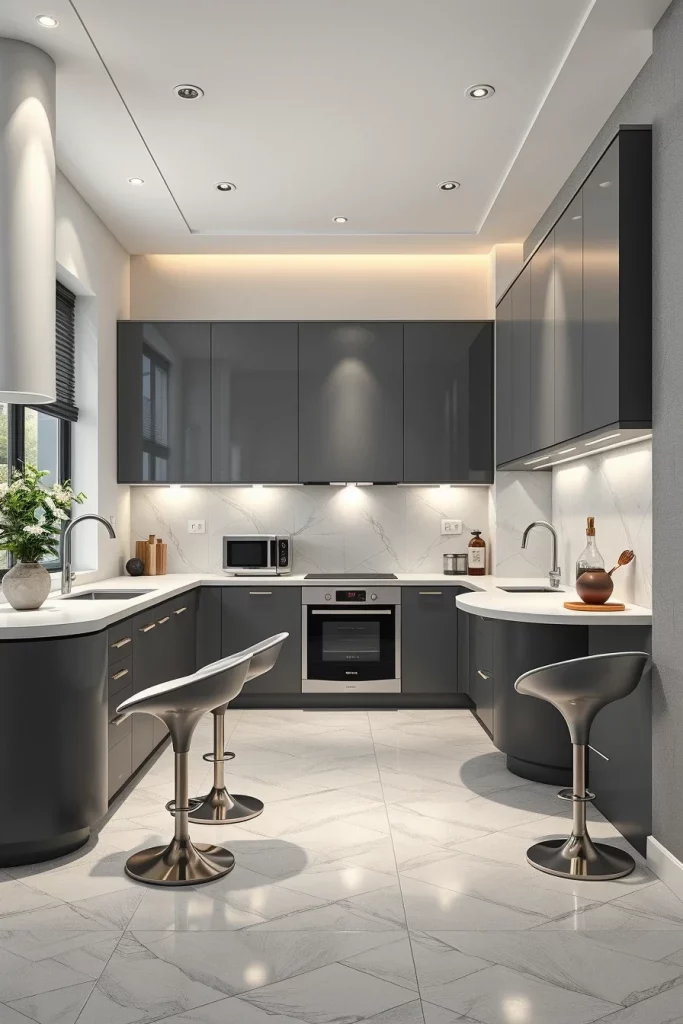
Rounded cabinetry, curved kitchen islands, seamless countertops, and softly contoured bar stools are essential in this style. I prefer matte finishes because they emphasize elegant curves without overwhelming the room. Integrated appliances hidden behind curved cabinet fronts maintain visual continuity and reduce clutter.
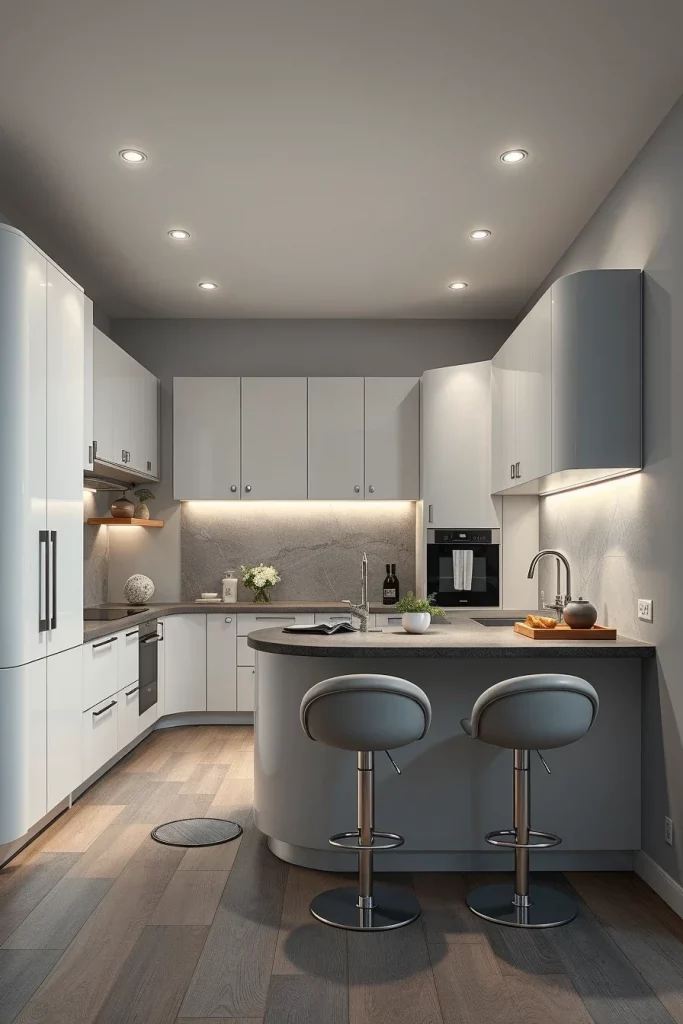
From my perspective, monochromatic kitchens succeed when texture is carefully layered. Designers featured in Elle Decor often recommend mixing finishes such as matte lacquer, fluted panels, and stone surfaces to prevent monochrome spaces from feeling flat. I have found this advice extremely effective in compact kitchens.
I would also introduce concealed LED lighting beneath cabinets to highlight architectural curves and add dimension to the overall composition.
Mixing Curved And Linear Elements In Compact Kitchens
Combining curved and straight lines creates balance in compact kitchens. I often use this strategy when clients want modern interiors that feel dynamic without appearing overly futuristic. Curved forms soften the space, while linear elements maintain order and functionality.
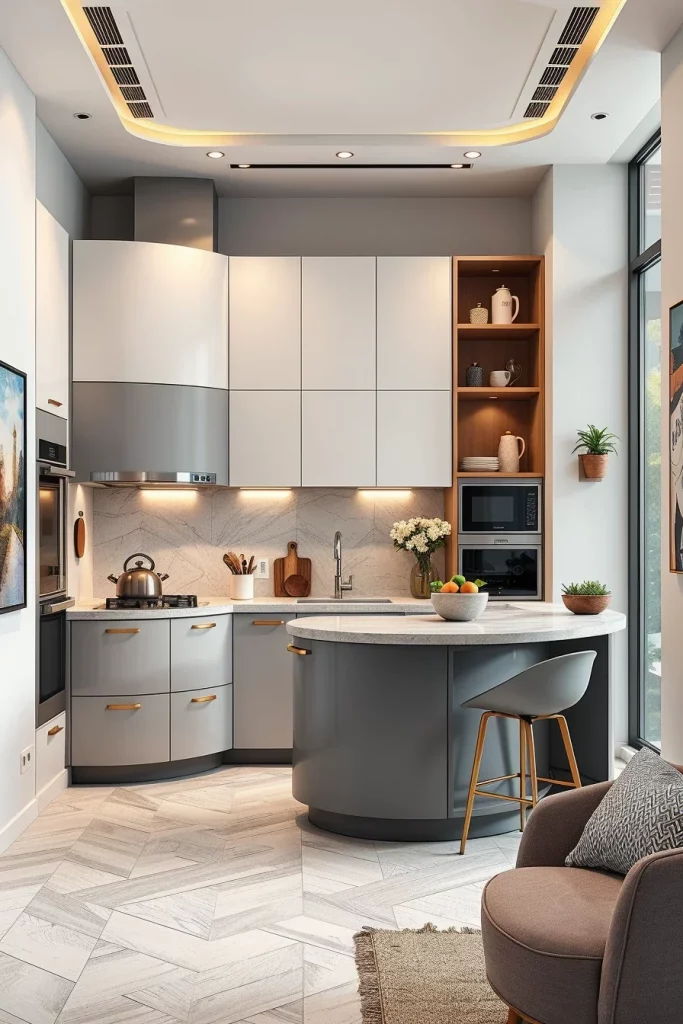
A practical arrangement may include straight upper cabinets paired with a curved island or rounded dining nook. I also recommend incorporating linear backsplashes, sleek countertops, and curved open shelving. This combination ensures efficient storage while introducing visual movement throughout the room.
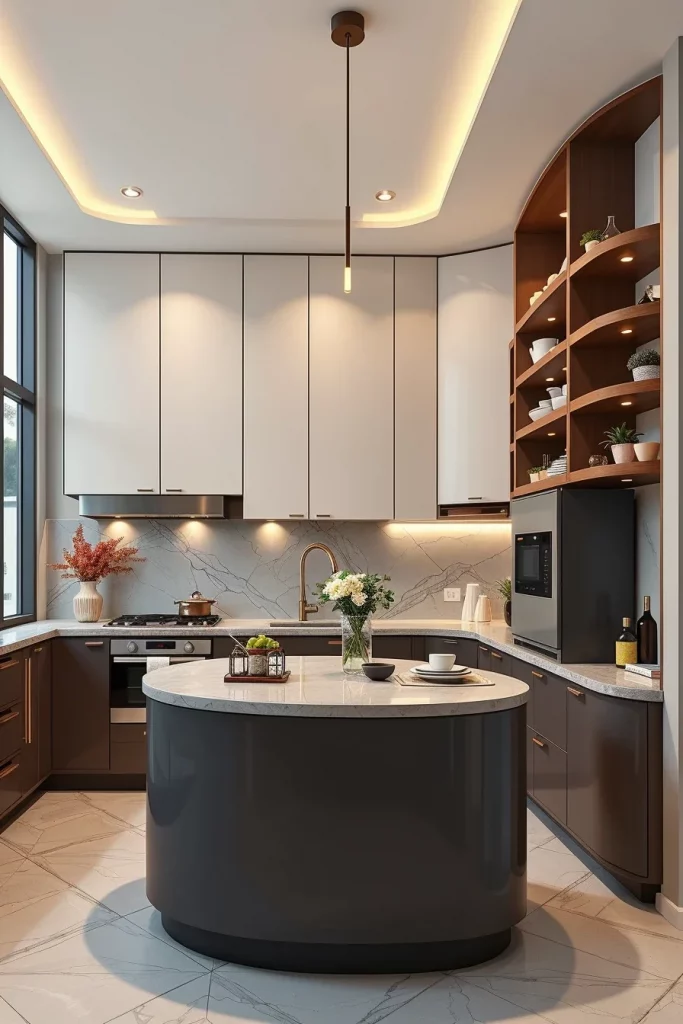
In my experience, contrast is key. Too many curved elements can overwhelm a small kitchen, while excessive straight lines may feel rigid. House Beautiful frequently highlights interiors that successfully blend both forms, demonstrating how balanced geometry creates timeless appeal.
For additional harmony, I suggest repeating curved motifs in lighting fixtures, chairs, or decorative accessories while keeping major storage components linear.
Custom Curved Furniture Solutions For Awkward Kitchen Layouts
Small kitchens with unusual floor plans often require customized solutions. I have found that bespoke curved furniture can transform difficult corners, narrow passages, or irregular walls into highly functional zones. Custom pieces maximize every available inch while creating a polished appearance.
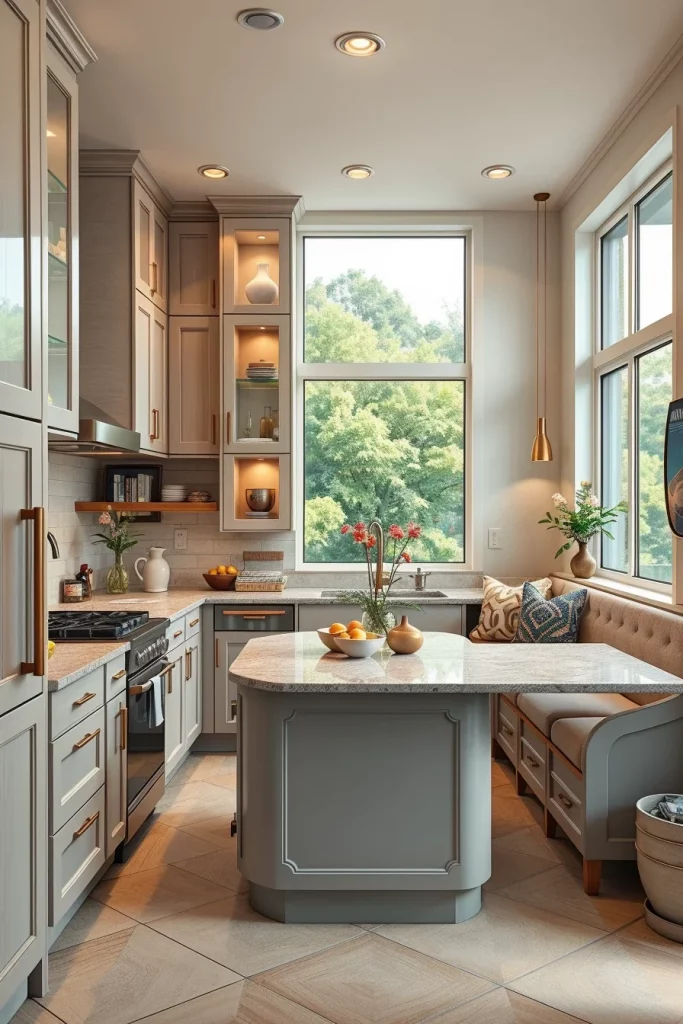
Curved corner cabinets, rounded banquettes, custom islands, and built-in storage benches are particularly useful. Instead of leaving awkward areas unused, these tailored solutions turn them into practical workspaces or seating areas. Custom cabinetry also allows appliances to be integrated more efficiently.
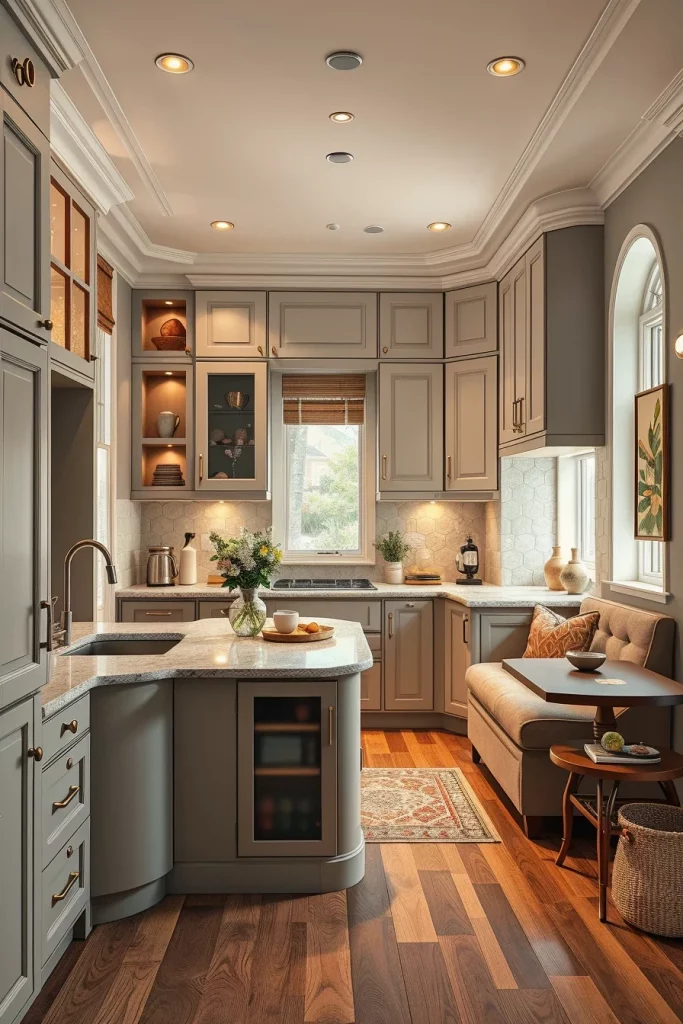
Personally, I believe custom curved furniture represents one of the smartest investments for challenging layouts. According to many American kitchen designers, personalized cabinetry significantly improves workflow and storage capacity in compact homes. I have consistently observed these benefits in real projects.
What is often missing in awkward kitchens is layered lighting. I would add under-cabinet lighting and strategically placed wall sconces to ensure every zone remains functional.
Small Kitchen Designs With Dramatic Curved Ceiling Features
Ceilings are frequently overlooked in small kitchens, yet dramatic curved ceiling features can dramatically transform the perception of space. I often use subtle vaulted curves, arched soffits, or flowing ceiling panels to draw the eye upward and create a sense of height.
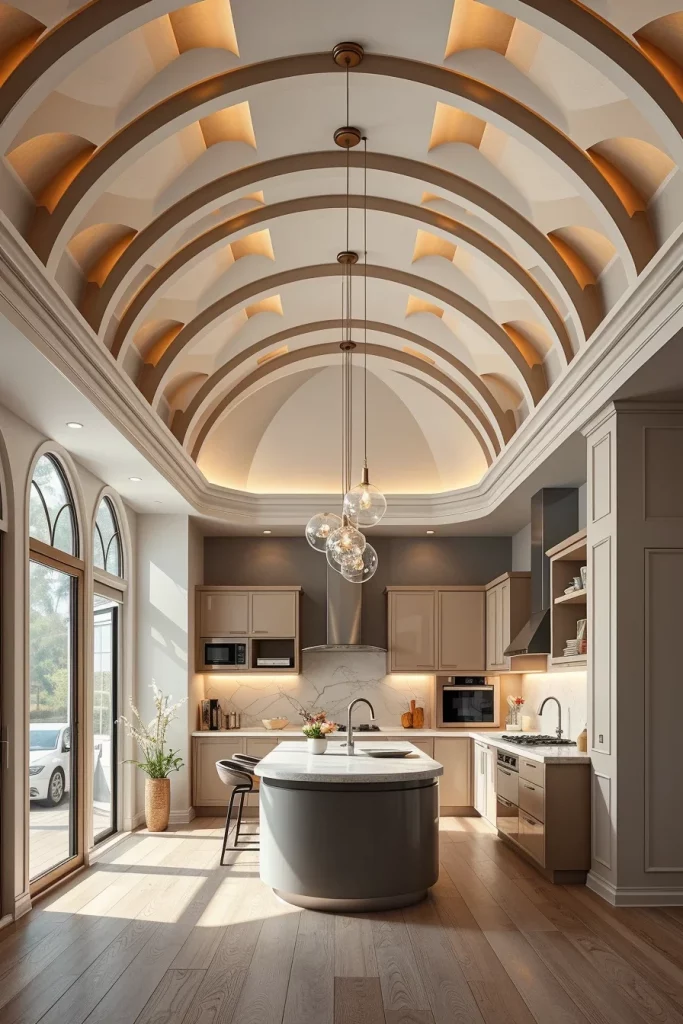
A curved ceiling pairs beautifully with rounded cabinetry, circular pendant lights, and curved dining furniture. I recommend maintaining a restrained color palette so that the ceiling feature remains the architectural centerpiece. Indirect lighting concealed within curved ceiling details enhances the sculptural effect.
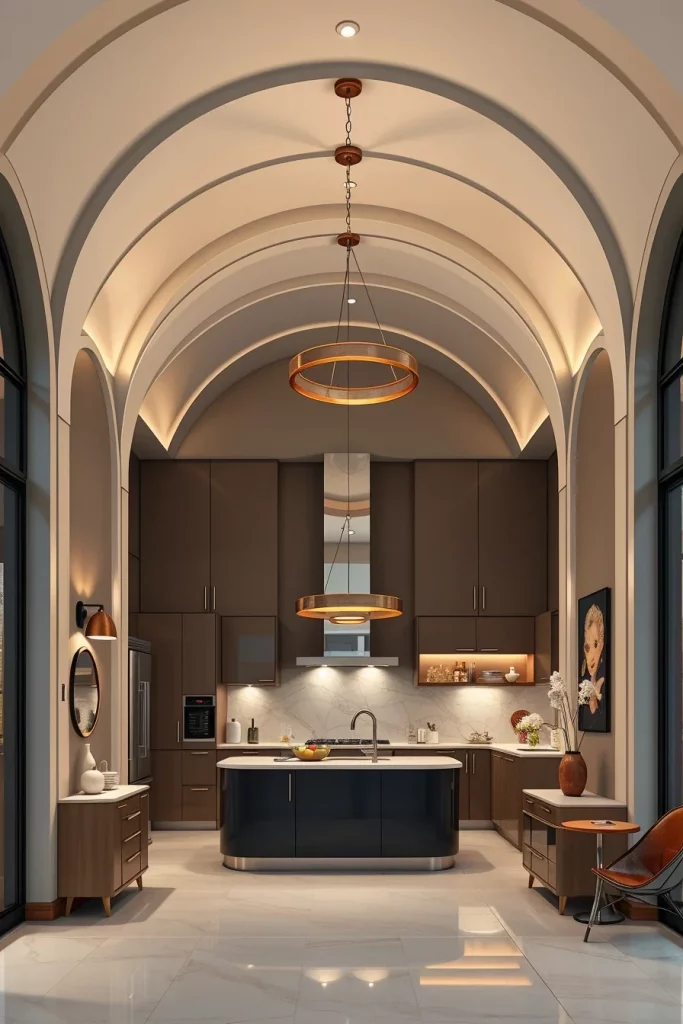
From my experience, dramatic ceiling treatments work best when balanced with simple furnishings. Architectural Digest designers often emphasize that architectural features should enhance rather than dominate a room. I completely agree, especially in compact kitchens where visual balance is essential.
To further enrich this concept, I would incorporate reflective finishes or oversized windows to amplify natural light and emphasize the graceful ceiling lines.
Curved Furniture With Hidden Storage For Tiny Kitchens
In extremely compact kitchens, every inch of storage matters. I often recommend incorporating curved furniture with concealed storage because it allows homeowners to maintain a clean, uncluttered appearance while maximizing functionality. Rounded cabinetry and curved islands soften the room visually, making tiny kitchens feel larger and more inviting. This type of curved furniture small kitchen design is particularly effective in apartments and studio homes where space is limited.
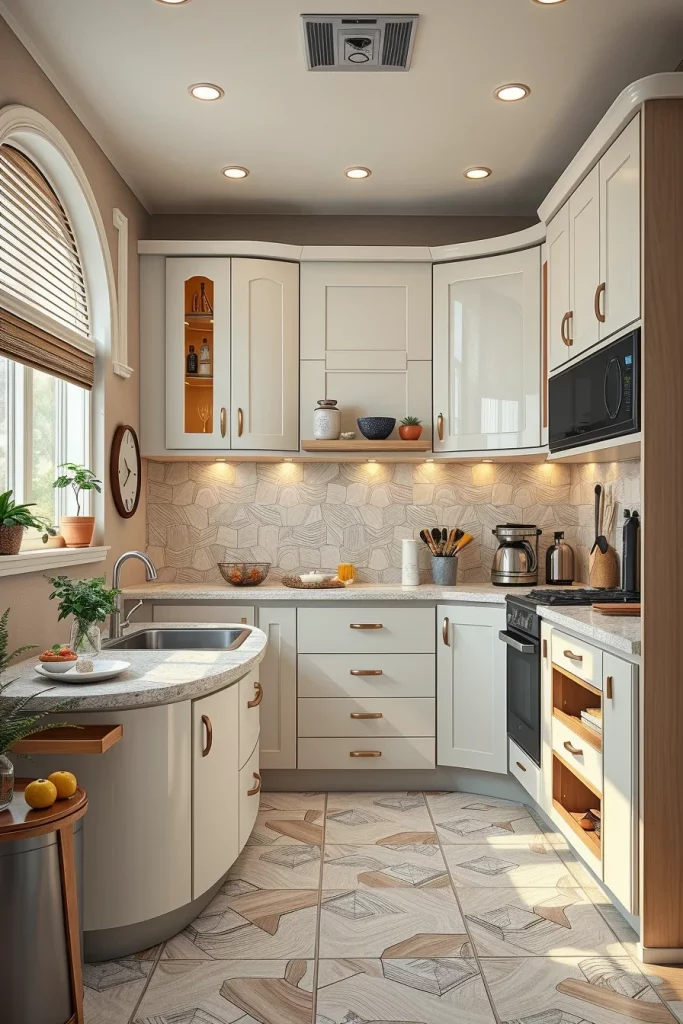
I like to include curved banquettes with lift-up seating, rounded islands with hidden drawers, and custom cabinets featuring pull-out pantry systems. Curved corner units can also conceal recycling bins, small appliances, or cookware that would otherwise occupy valuable countertop space. Integrated storage keeps daily essentials accessible without compromising the elegant design.
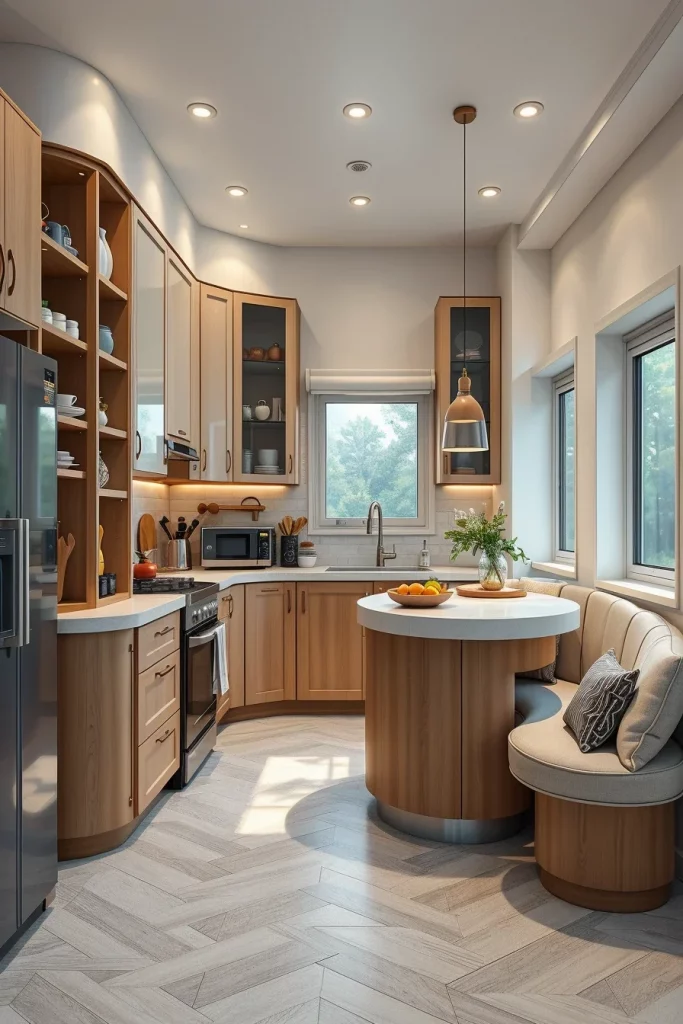
Personally, I find that hidden storage dramatically improves how a small kitchen functions. Designers frequently featured by Better Homes & Gardens recommend minimizing visible clutter in compact spaces because clean surfaces create a greater sense of openness. In my own projects, concealed storage consistently delivers both practical and aesthetic benefits.
To make this concept even more effective, I would add vertical storage solutions such as curved floor-to-ceiling cabinetry and integrated lighting inside storage compartments.
Artistic Curved Furniture Designs Inspired By Organic Shapes
Organic forms inspired by nature bring a unique sense of movement and artistry to small kitchens. I often use furniture with flowing silhouettes that resemble pebbles, waves, or sculptural forms because they create a highly creative and unusual interior. Organic curves make even the smallest kitchen feel intentionally designed rather than purely functional.
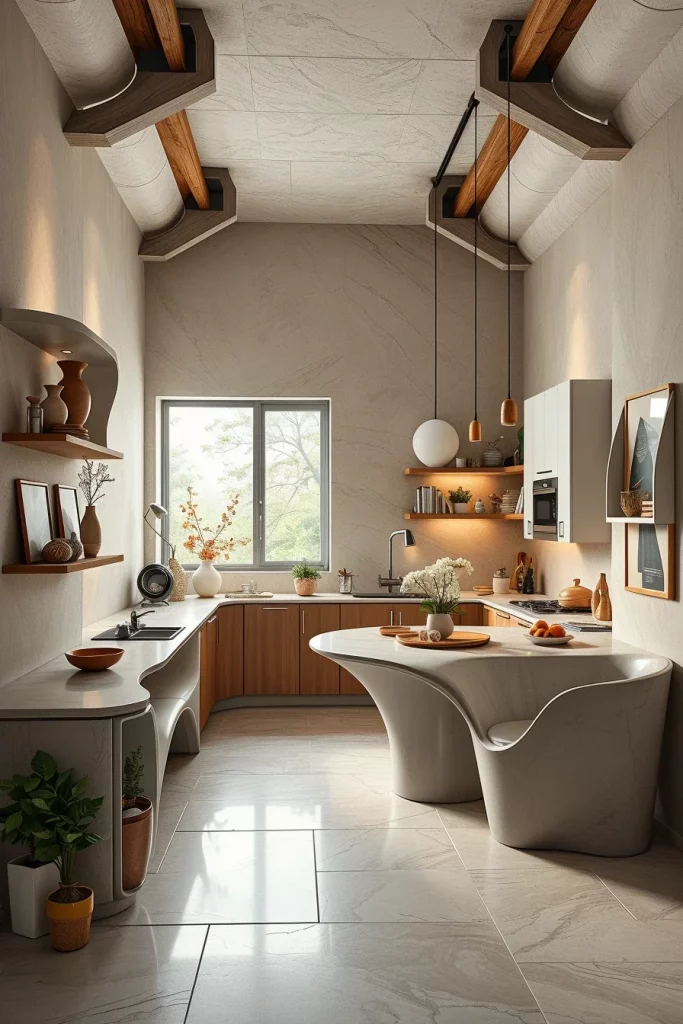
Key elements may include sculptural kitchen islands, asymmetrical curved shelving, rounded dining tables, and softly contoured cabinetry. I prefer pairing these pieces with natural textures such as stone countertops, textured wall finishes, and subtle metallic accents. The result is a sophisticated space that feels both modern and artistic.
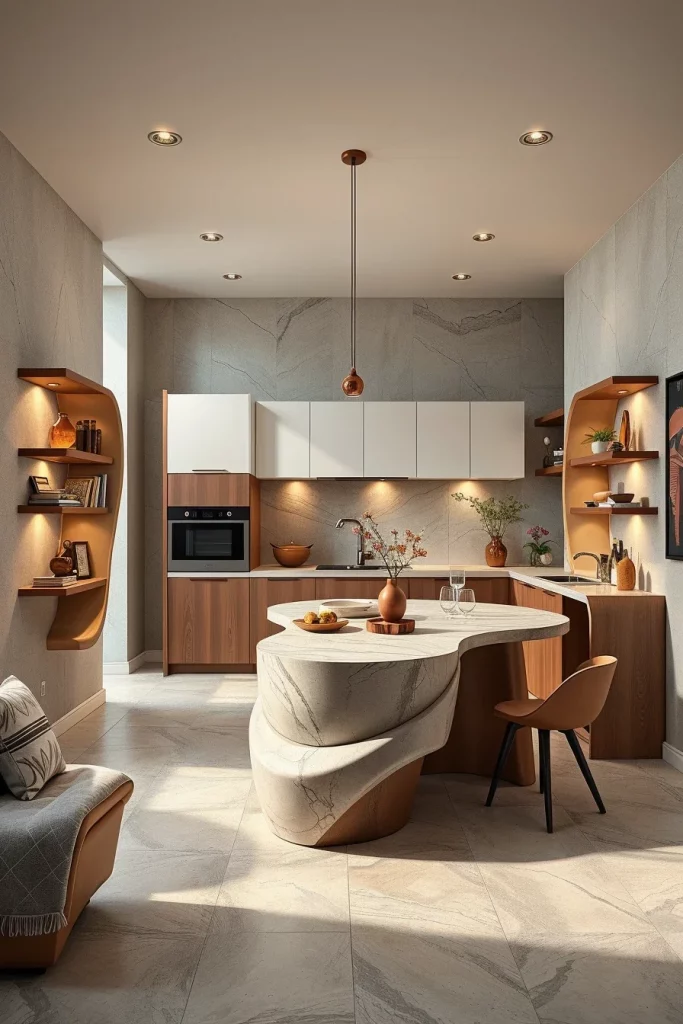
From my experience, organic design works best when carefully balanced. Elle Decor frequently showcases interiors where sculptural furniture serves as functional art while maintaining usability. I appreciate this philosophy because it allows homeowners to express individuality without sacrificing practicality.
I would also incorporate statement lighting inspired by organic forms to reinforce the flowing aesthetic and create visual cohesion throughout the kitchen.
Luxurious-Looking Curved Furniture For Small Kitchen Spaces
A small kitchen can still feel refined and upscale when curved furniture is thoughtfully selected. I often create luxurious-looking interiors by combining elegant curves with premium finishes and sophisticated detailing. Rounded forms naturally introduce softness and sophistication, elevating the overall appearance of compact kitchens.
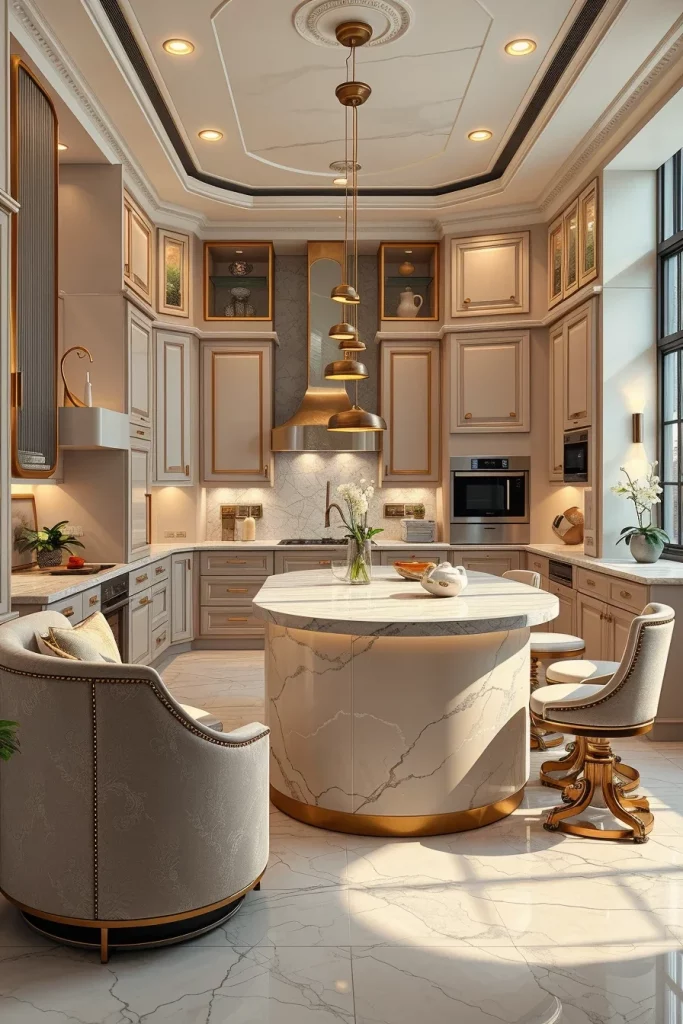
I recommend incorporating a curved waterfall island, upholstered curved seating, seamless cabinetry, and integrated appliances. High-quality materials such as quartz countertops, fluted cabinet fronts, and brushed metal accents contribute to a polished aesthetic. Reflective surfaces and carefully placed lighting further enhance the sense of luxury.
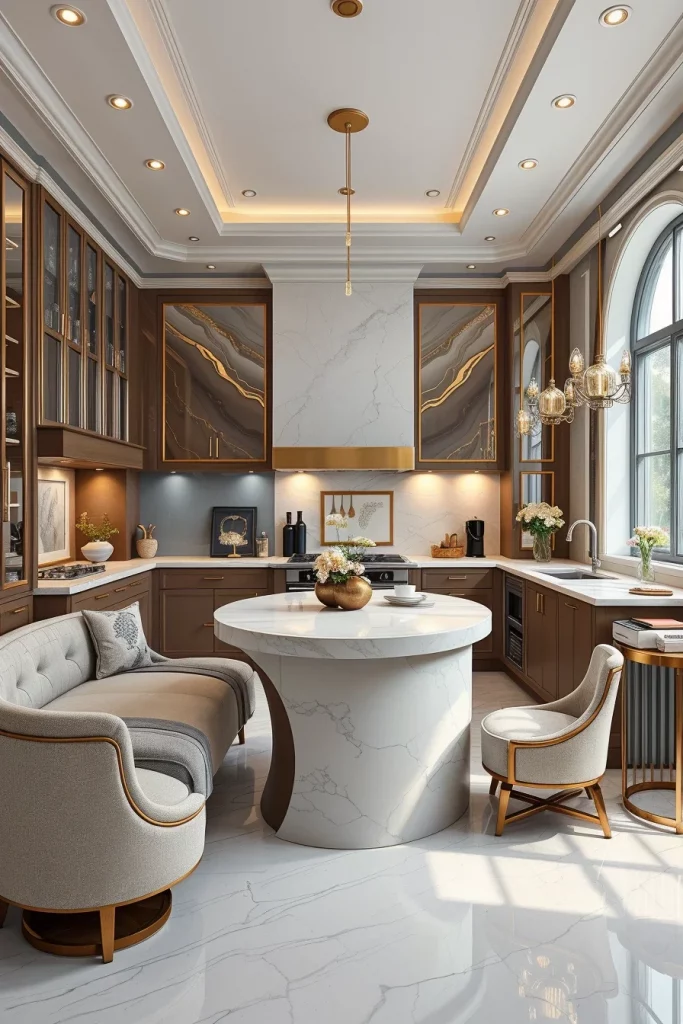
Personally, I have found that luxury in small kitchens is less about size and more about thoughtful design choices. Architectural Digest designers often emphasize investing in a few high-impact features rather than overcrowding a room with expensive finishes. I strongly agree with this approach because restraint often produces the most elegant results.
To complete this design, I would add layered lighting that includes pendants, under-cabinet LEDs, and subtle accent lighting to create depth and atmosphere.
Bold Color Combinations That Highlight Curved Kitchen Furniture
Color plays a significant role in emphasizing the beauty of curved kitchen furniture. I often encourage homeowners to experiment with bold combinations that draw attention to sculptural forms while preserving balance in a small space. Strategic color choices can transform curved furniture into the focal point of the entire kitchen.
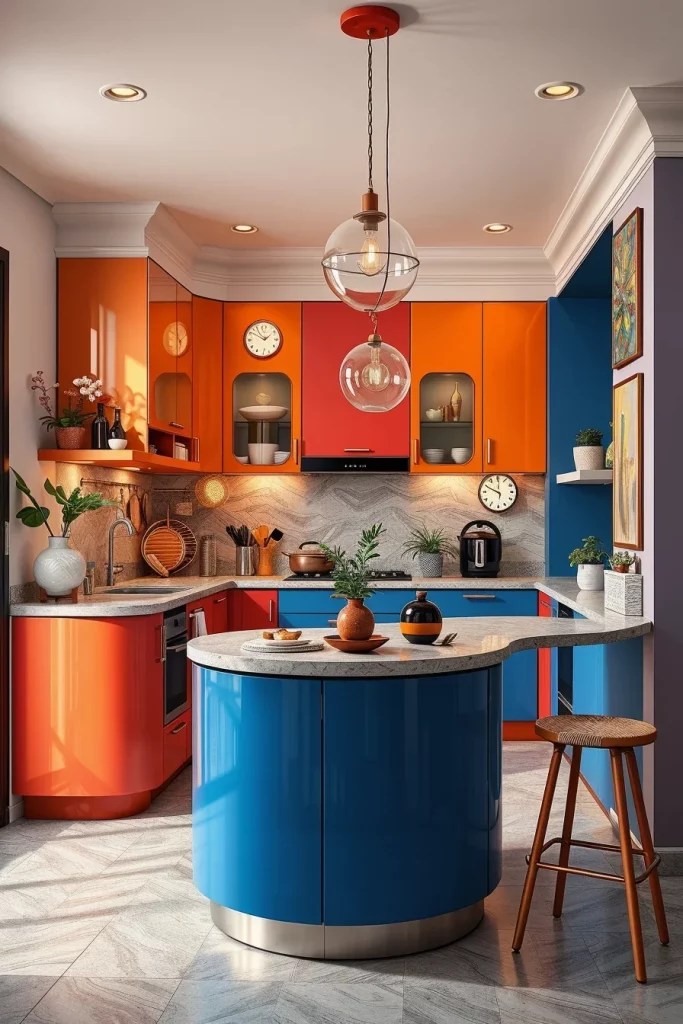
Some of my favorite combinations include charcoal with warm beige, deep navy with soft cream, forest green with muted gold accents, or terracotta paired with light gray. Curved cabinetry, rounded islands, and circular seating become especially striking when contrasted against complementary colors. I typically recommend limiting the palette to two or three dominant shades to avoid visual clutter.
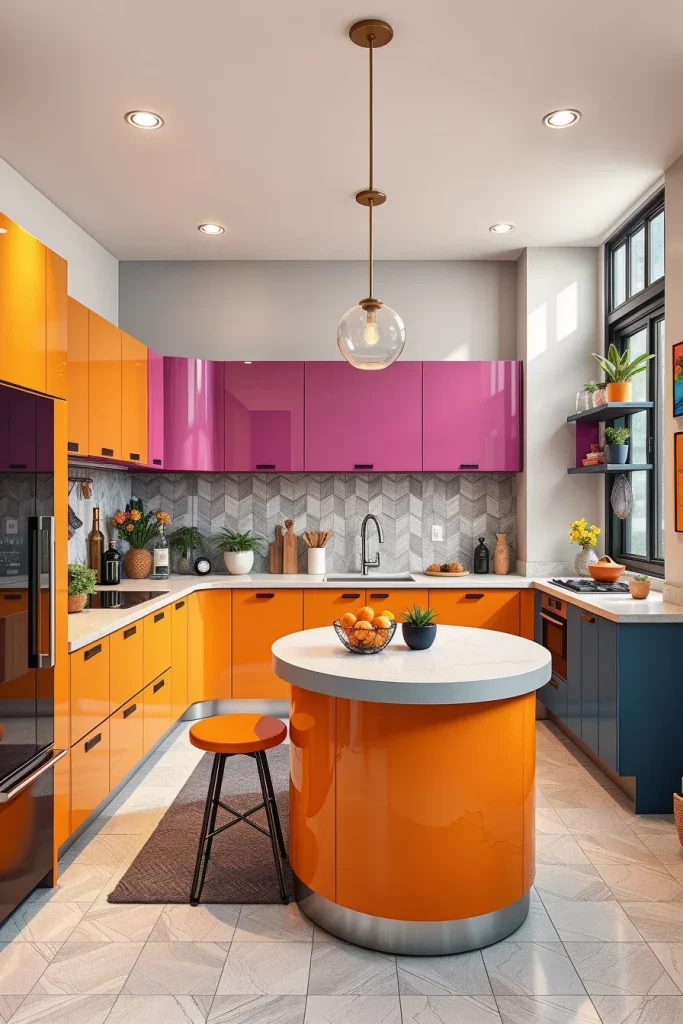
In my experience, bold colors are most successful when paired with adequate lighting. House Beautiful designers frequently suggest testing colors under both natural and artificial light before making final decisions. I have followed this advice for years and consistently achieve better design outcomes.
What many colorful kitchens lack is textural variation. I would introduce textured backsplashes, fluted surfaces, or subtle stone veining to add richness without overwhelming the space.
Future-Inspired Curved Furniture Trends For Small Kitchen Design
Future-inspired interiors continue to influence modern kitchen design, and curved furniture plays a central role in this evolution. I see growing interest in sleek, aerodynamic forms that create streamlined and highly functional environments. These futuristic kitchens feel innovative while remaining comfortable and practical for everyday use.
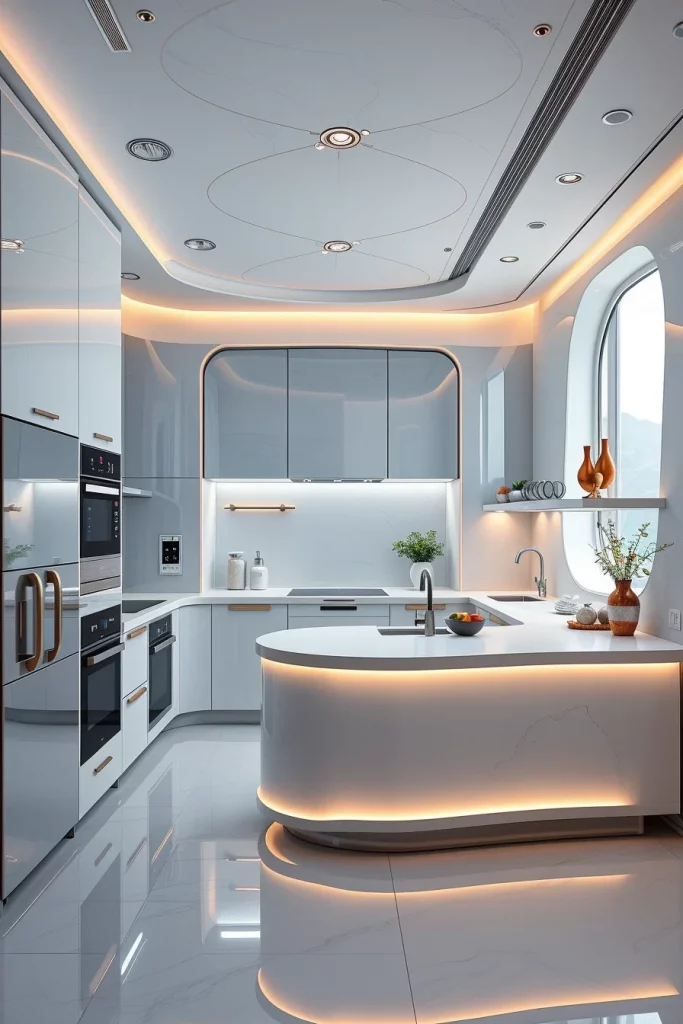
I recommend incorporating seamless curved cabinetry, integrated smart appliances, rounded multifunctional islands, and concealed storage systems. Materials such as matte finishes, glass, and engineered surfaces contribute to the futuristic appearance. Soft ambient lighting integrated into cabinetry and ceilings further enhances the modern atmosphere.
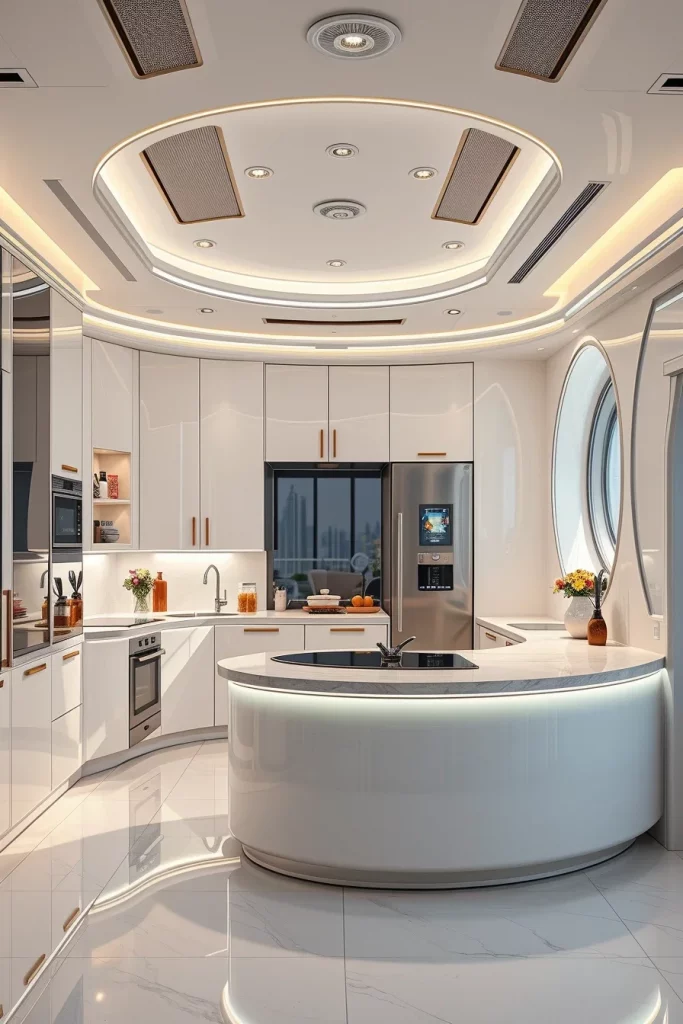
Personally, I believe future-inspired kitchens should prioritize both technology and human comfort. Many contemporary designers featured in leading design publications advocate for interiors that combine advanced functionality with warm, welcoming aesthetics. I have found that curved furniture successfully achieves this balance.
To strengthen this concept, I would add smart lighting controls, touchless fixtures, and adaptable furniture pieces that can evolve alongside changing household needs.
Curved furniture can completely redefine the look and functionality of a small kitchen. Its soft lines create a sense of openness while adding a stylish and sophisticated touch to compact spaces. Whether incorporated through rounded islands, curved cabinetry, or sculptural seating, these unique elements make small kitchens feel more inviting and visually dynamic. By choosing thoughtfully designed curved pieces, you can maximize every inch of space while creating a kitchen that feels both modern and truly one of a kind.