
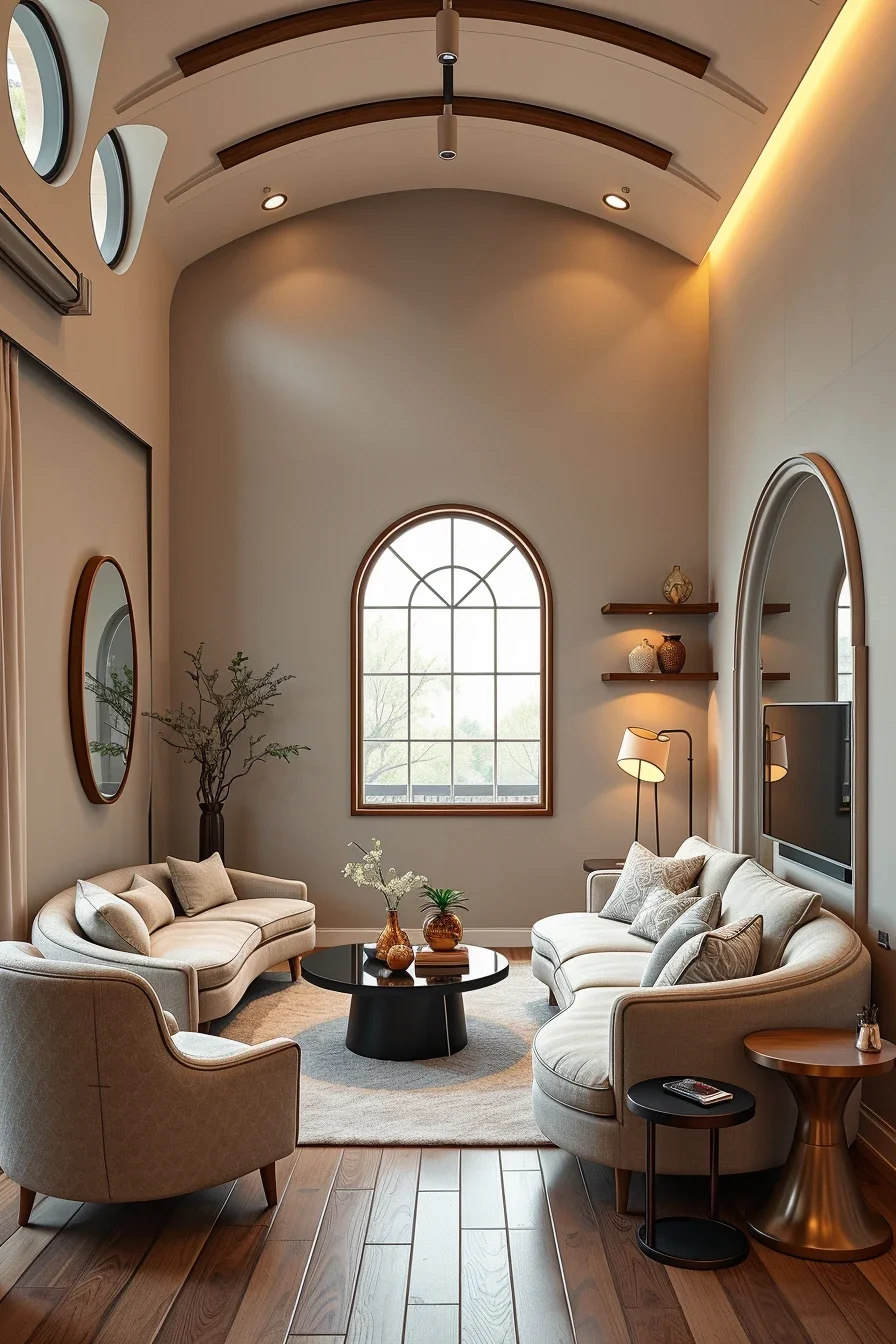
Curved furniture is transforming the way designers approach small living room layouts, bringing softness, elegance, and improved flow to compact spaces. Unlike traditional boxy pieces, rounded sofas, circular tables, and sculptural chairs create a more inviting atmosphere while maximizing every square foot. Curves naturally guide movement throughout the room, making even the smallest living areas feel more open and less crowded. From minimalist apartments to cozy family spaces, curved furniture can adapt to a variety of interior styles and color palettes. Thoughtful placement of rounded pieces also helps eliminate harsh visual lines, resulting in a balanced and harmonious design. In this article, you’ll discover inspiring curved furniture small living room design ideas that combine comfort, functionality, and modern style.
Curved Sofa As The Focal Point In A Small Living Room
A curved sofa can instantly become the centerpiece of a compact living room while making the space feel more open. In my experience, replacing a traditional rectangular sofa with a gently curved silhouette creates better movement throughout the room and eliminates harsh visual lines. This approach works especially well in apartments and narrow living rooms where every inch matters. A curved sofa naturally guides the eye around the room, making the entire area appear larger.
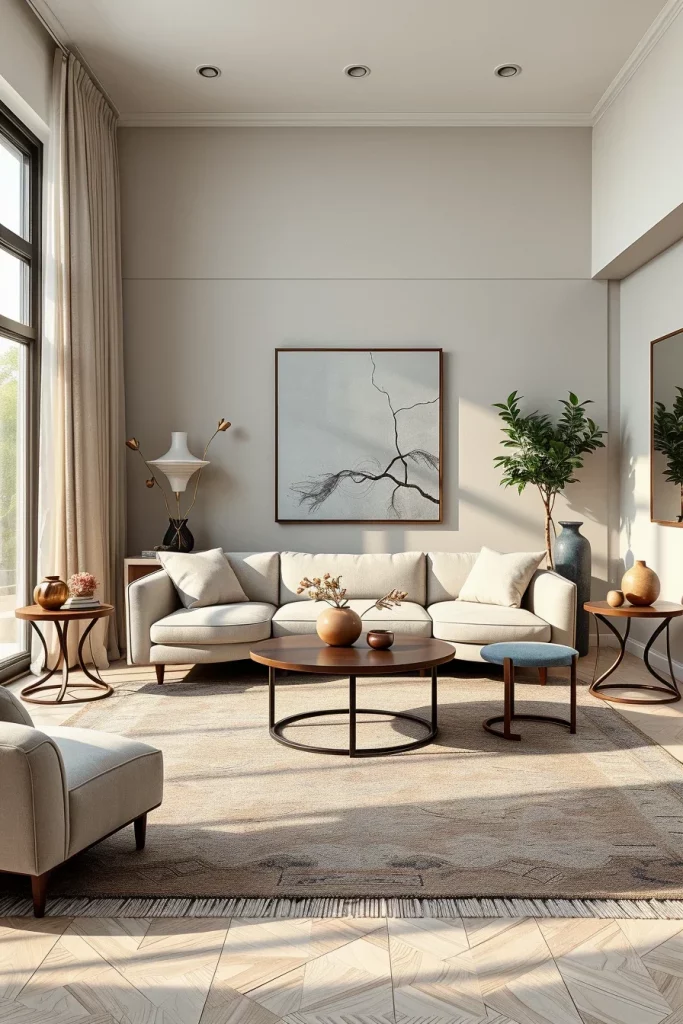
I usually recommend pairing the sofa with a compact round coffee table, a textured area rug, and slim side tables to preserve floor space. Soft lighting, layered textiles, and a minimal media console complement the curved shape without overwhelming the room. Wall art with organic forms and subtle décor accessories further reinforce the cohesive design. Every furniture piece should contribute to an uncluttered and balanced environment.
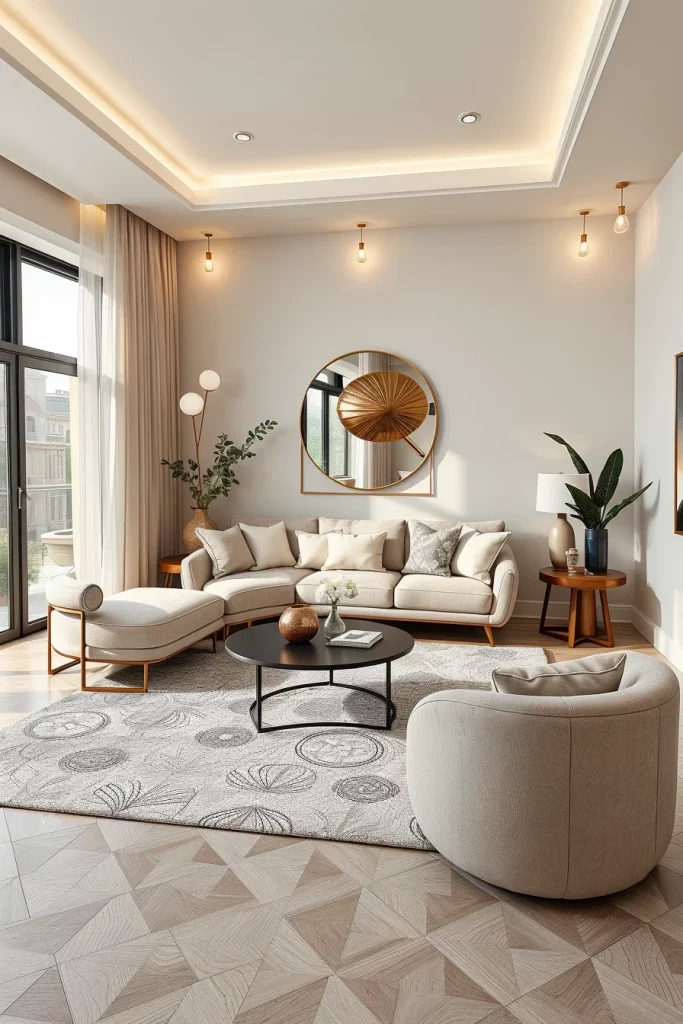
Personally, I have found that curved sofas encourage a more social atmosphere because seating angles naturally face inward. Designers frequently featured in interior publications such as Architectural Digest often emphasize the importance of creating conversation-friendly layouts, particularly in smaller homes. I agree that this arrangement makes a living room feel significantly more welcoming.
To complete this design, I would add floor-to-ceiling curtains, a large mirror to reflect natural light, and a few sculptural accessories that echo the sofa’s flowing lines.
Space-Saving Crescent Sectionals For Compact Layouts
Crescent-shaped sectionals offer exceptional functionality in small living rooms because they maximize seating without creating visual bulk. I often use these sectionals in compact layouts where homeowners need comfortable seating for multiple people while maintaining openness. Their curved profiles soften corners and improve circulation pathways throughout the room.
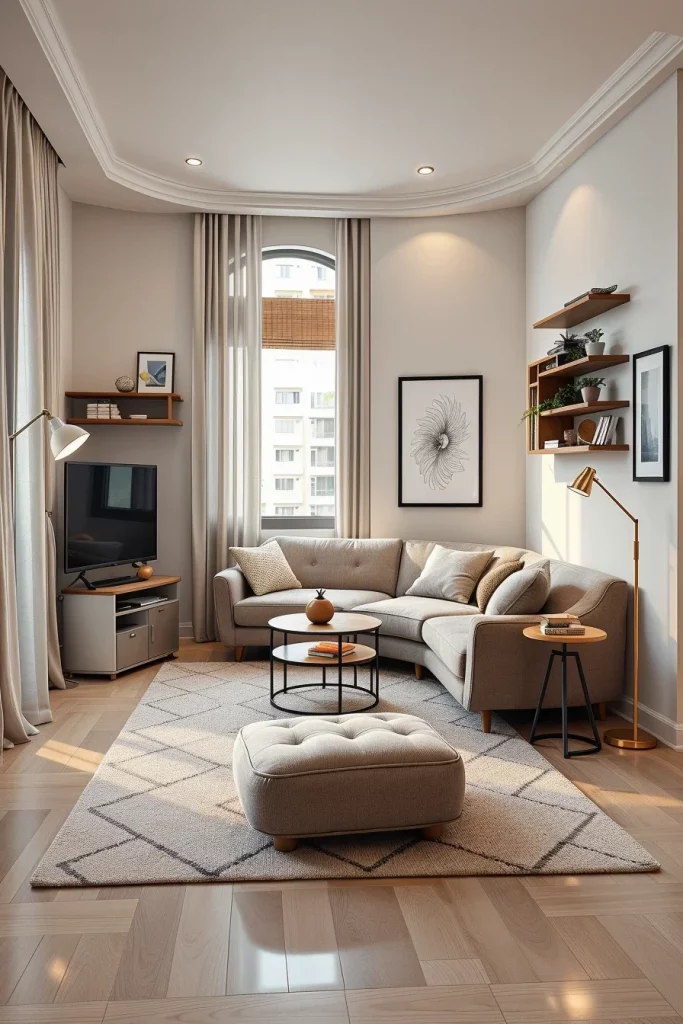
A low-profile crescent sectional works best when combined with nesting tables, wall-mounted shelving, and streamlined storage solutions. I prefer sectionals with slim legs because visible floor space makes the room appear larger. Adding soft accent pillows, a minimalist floor lamp, and a light-toned rug enhances comfort while maintaining a modern aesthetic.
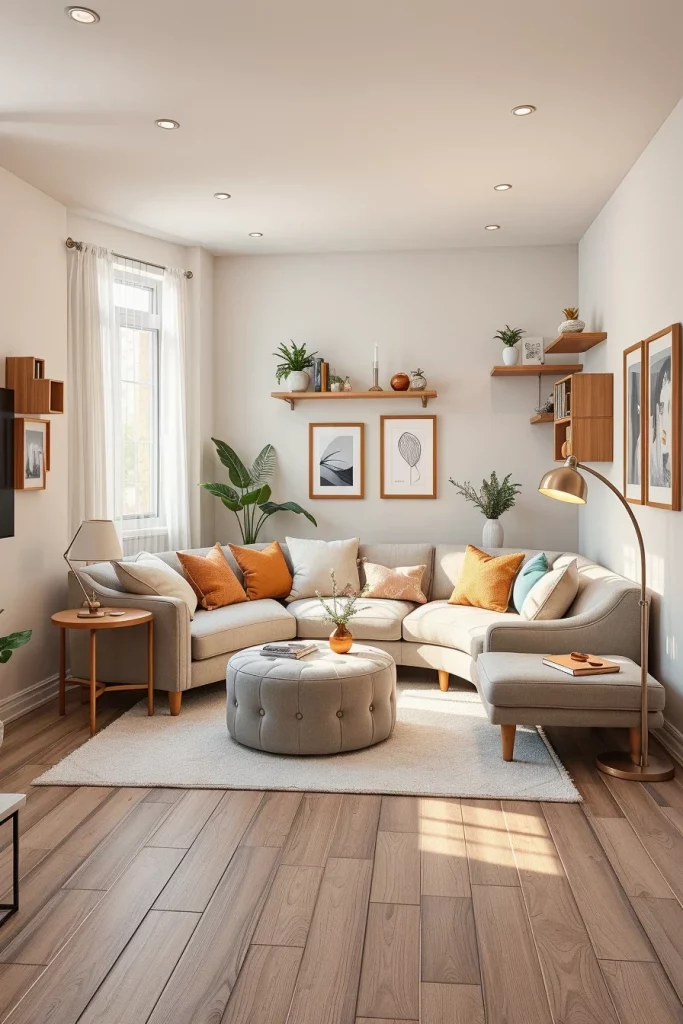
From my perspective, modular crescent sectionals are particularly practical because they can adapt to changing needs. Many professional designers recommend flexible furniture in small spaces, and I have consistently seen how adaptable seating arrangements improve long-term usability. Investing in multifunctional furniture often provides the best value in compact homes.
This design would benefit from hidden storage ottomans and integrated lighting to further improve functionality without sacrificing style.
Pairing Rounded Armchairs With A Small Seating Area
Rounded armchairs are an excellent addition to a small seating area because they introduce softness without occupying excessive space. I frequently incorporate barrel chairs or curved accent chairs to create additional seating while maintaining visual flow. Their gentle contours prevent the room from feeling overly structured or confined.
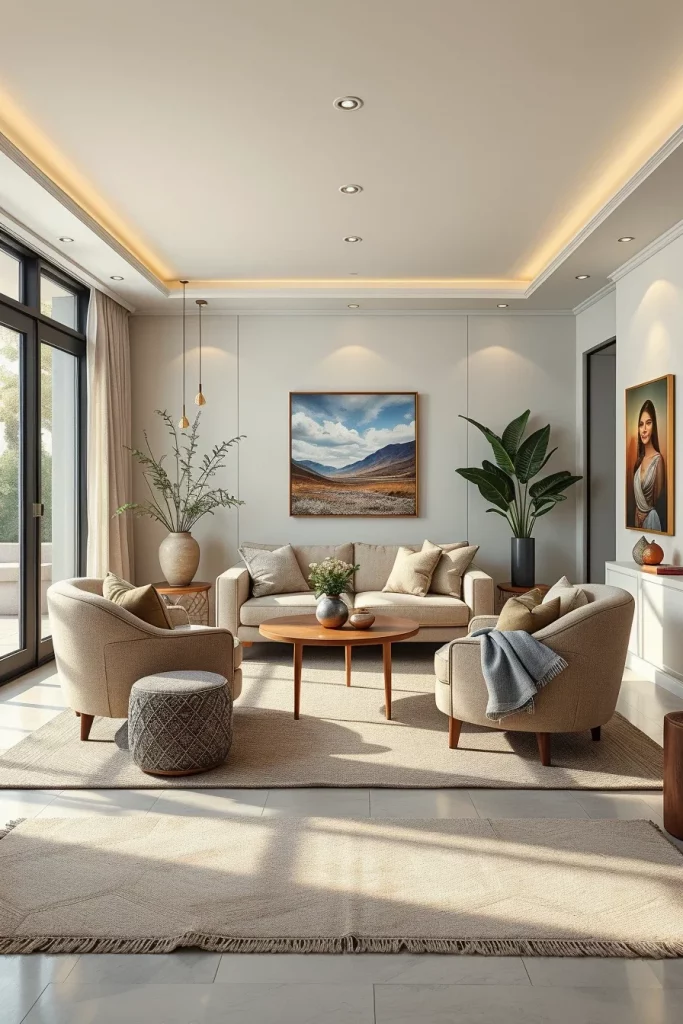
When designing this type of arrangement, I typically pair two rounded armchairs with a petite sofa and a circular side table. Upholstery in neutral tones keeps the space feeling airy, while textured fabrics add warmth and depth. A compact rug anchors the seating arrangement, and strategically placed lighting enhances the inviting atmosphere.
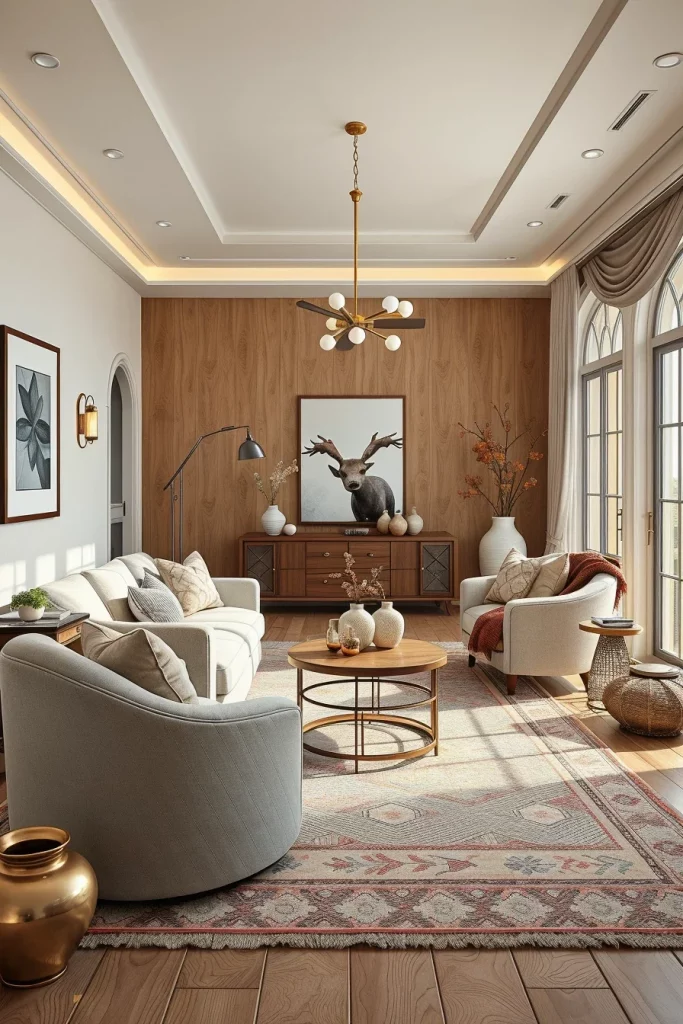
I have noticed that rounded chairs often make small rooms feel less crowded because they lack the sharp edges associated with traditional furniture. Interior designers regularly recommend incorporating organic shapes to soften compact interiors, and I completely agree with this approach after using it in numerous projects.
For additional character, I would include layered throw blankets, sculptural ceramic décor, and subtle metallic accents to enrich the overall composition.
Designing A Cozy Conversation Zone With Curved Seating
Creating a dedicated conversation area is one of the most effective ways to improve a small living room. I often arrange curved seating in a semi-circular formation because it encourages interaction while optimizing available square footage. This layout naturally creates intimacy without requiring a large footprint.
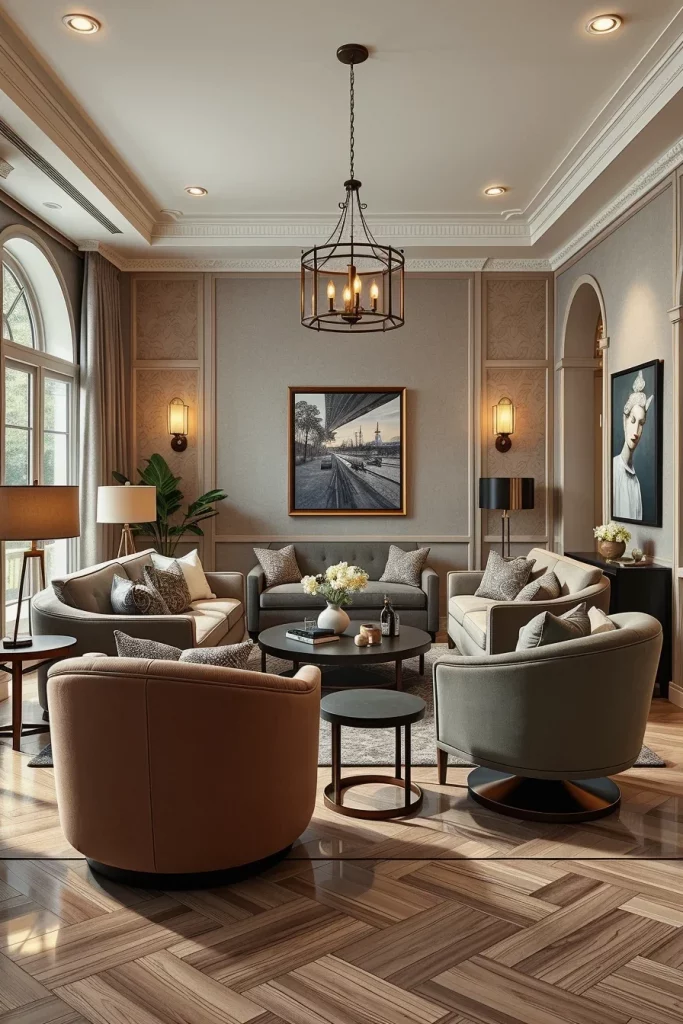
Curved loveseats, swivel chairs, and round ottomans work particularly well in these arrangements. I recommend positioning furniture around a central coffee table to establish a clear focal point. Soft lighting, plush cushions, and layered textures contribute to the cozy atmosphere while maintaining a sophisticated appearance.
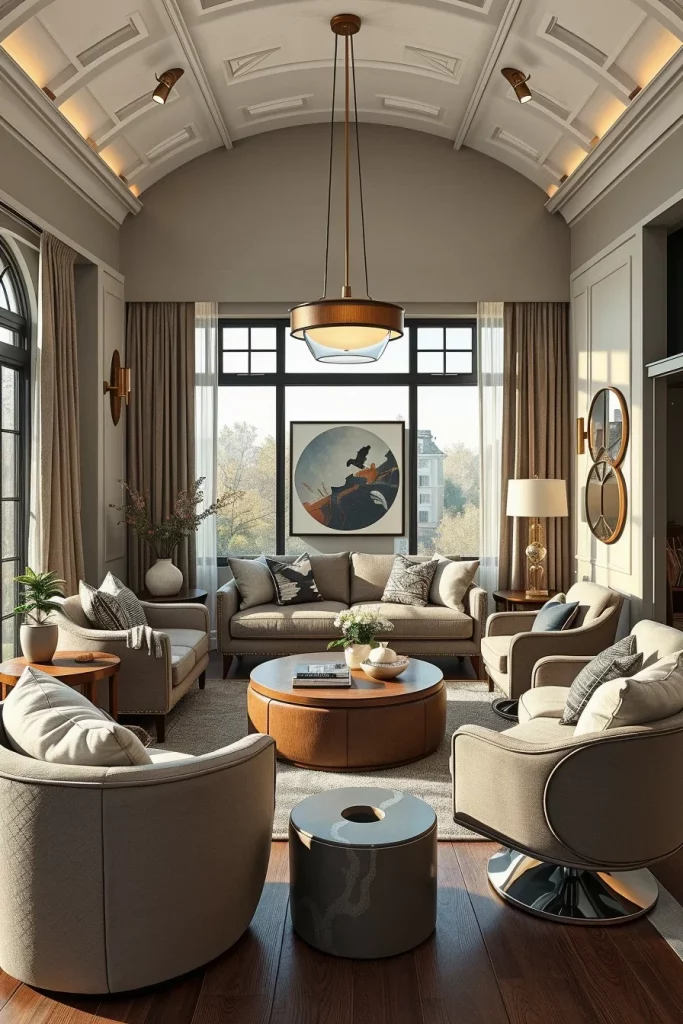
In my experience, homeowners frequently underestimate how much furniture arrangement influences comfort. Publications such as House Beautiful often highlight conversational layouts as essential elements of successful living room design. I have consistently found that curved seating arrangements make even the smallest rooms feel more inviting.
To enhance this setting further, I would add a statement pendant light, wall sconces, and acoustic textiles that improve both comfort and functionality.
Floating Curved Furniture In An Open Small Living Room
Floating furniture away from walls can dramatically improve the functionality of an open small living room. I often position curved sofas and chairs toward the center of the room to establish distinct zones without blocking circulation. This strategy creates a more intentional and professionally designed appearance.
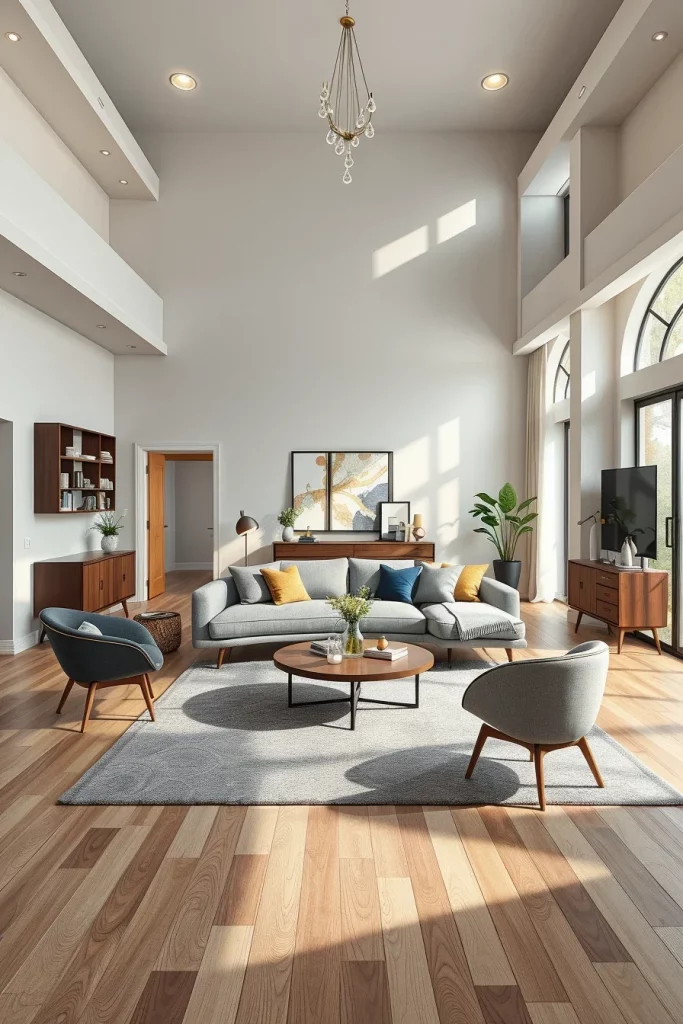
A floating arrangement works best with furniture that features exposed legs and lightweight profiles. I usually combine a curved sofa with a round coffee table, an area rug, and slim accent chairs to define the seating area. Open shelving, subtle artwork, and carefully selected accessories help maintain visual continuity throughout the space.
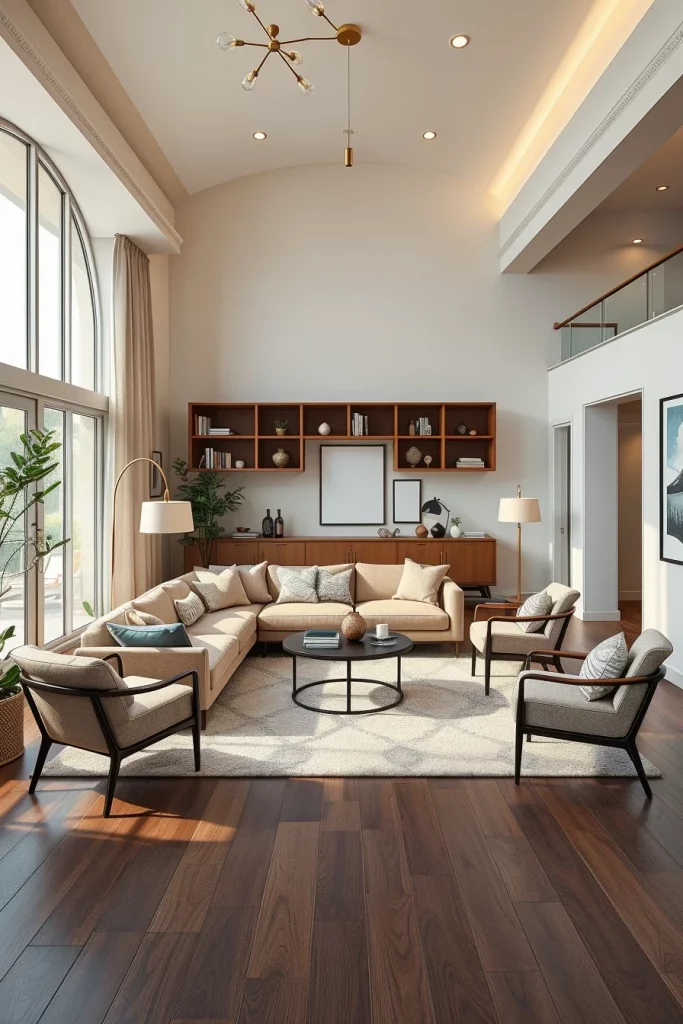
I have found that many homeowners initially hesitate to pull furniture away from walls, assuming it will make the room feel smaller. In reality, interior designers frequently recommend floating layouts because they improve flow and create better spatial balance. Once implemented, this technique often transforms the entire room.
To complete the design, I would introduce layered lighting, greenery, and a console table behind the sofa to add both storage and visual interest.
Small Living Room Layouts Built Around A Circular Coffee Table
A circular coffee table can completely change the functionality of a small living room. I often use this piece as the anchor for the entire layout because its rounded shape improves movement and eliminates awkward traffic patterns. Unlike rectangular tables, circular designs allow people to move comfortably around the room, making compact spaces feel less restricted. This approach works especially well in rooms that already feature curved furniture small living room design elements.
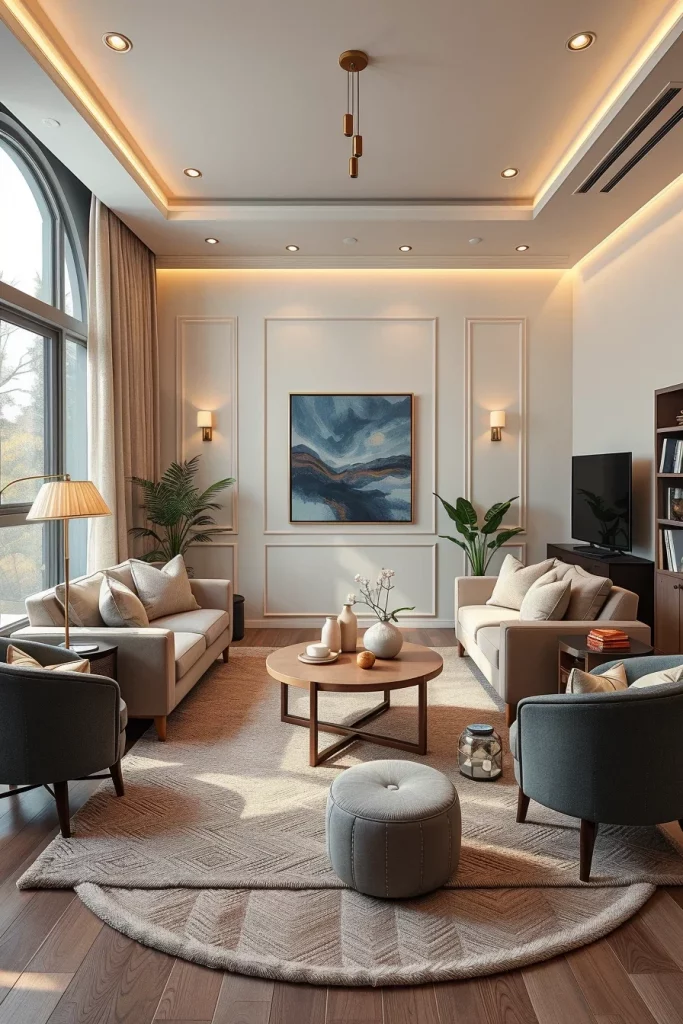
I usually pair a circular coffee table with a curved sofa or rounded accent chairs to create visual harmony. Materials such as glass, stone, or light wood finishes help maintain an airy appearance. A low-profile table with hidden storage adds practicality, while decorative accessories such as books, candles, and sculptural trays provide personality without creating clutter.
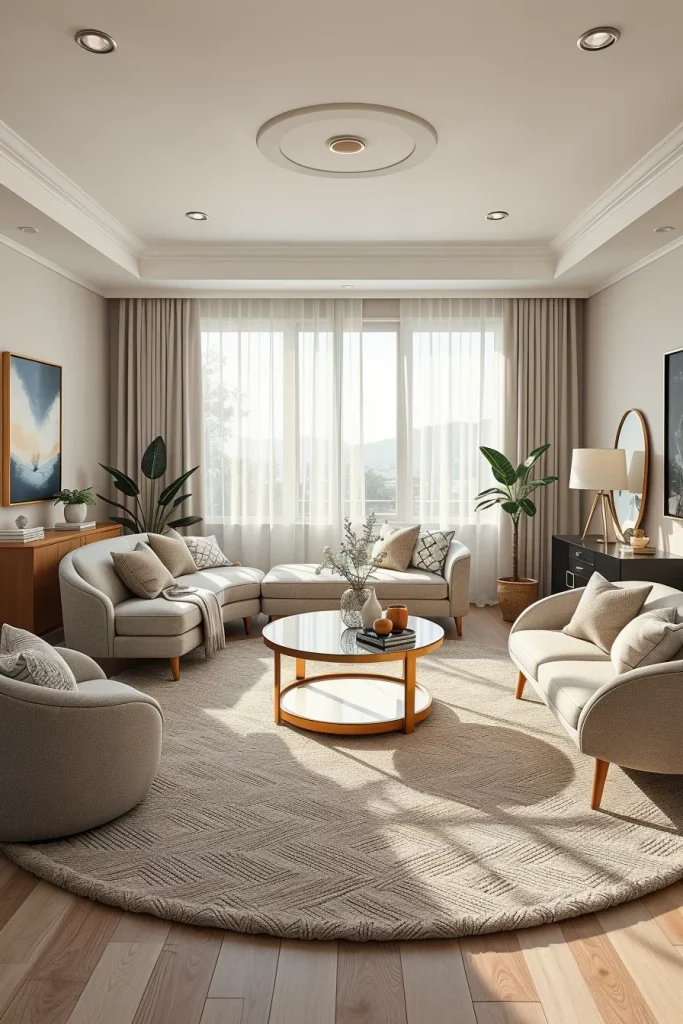
From my experience, circular coffee tables encourage better interaction because everyone can easily access the center of the seating area. Many designers featured by Elle Decor recommend incorporating rounded tables in smaller rooms because they soften the layout and improve functionality. I have repeatedly found this advice valuable when designing compact interiors.
To complete this arrangement, I would add a large textured rug beneath the table and incorporate layered lighting to define the seating zone more clearly.
Softening Sharp Corners With Rounded Furniture Pieces
Small living rooms often contain numerous architectural angles that can make the space feel rigid. I like introducing rounded furniture pieces because they immediately soften these sharp lines and create a more relaxing environment. Curved silhouettes visually reduce tension and make compact rooms feel more welcoming.
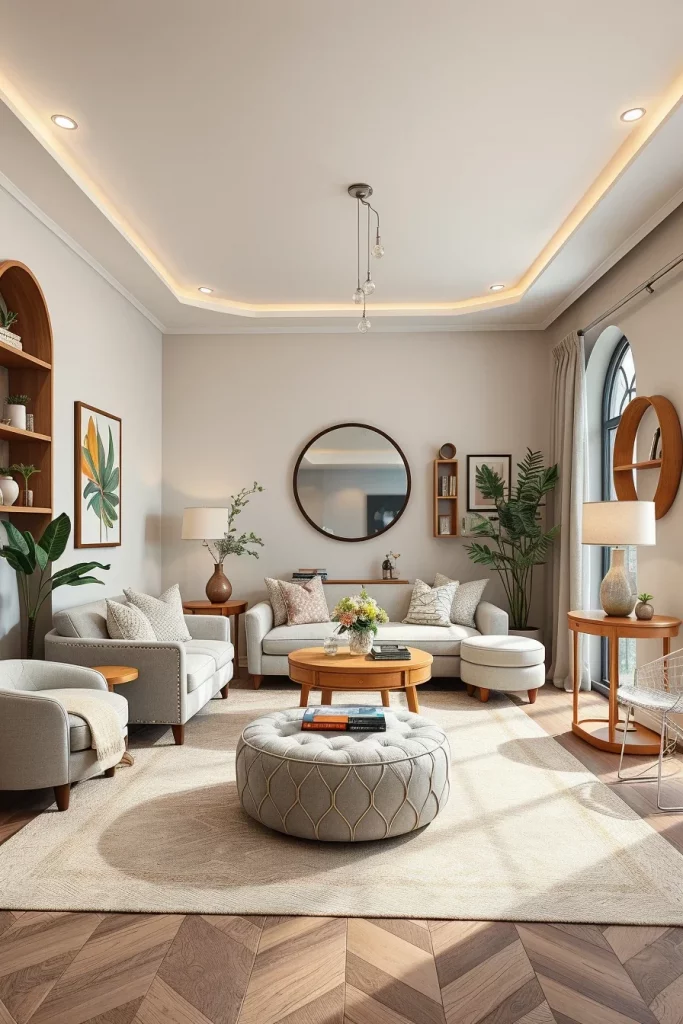
In this design approach, I often combine rounded side tables, curved benches, oval ottomans, and arched shelving. Even small details, such as circular mirrors or curved floor lamps, contribute to the overall softness of the room. Upholstery in soft textures and neutral colors further enhances the calming effect while maintaining a sophisticated look.
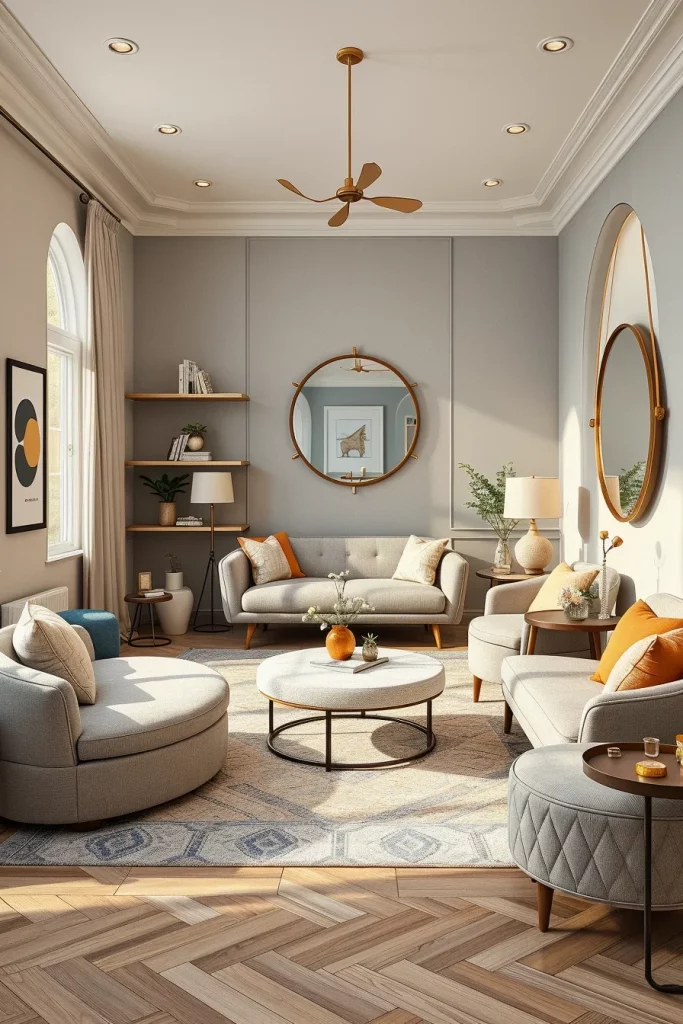
Personally, I believe that balancing straight architectural lines with organic furniture shapes creates the most comfortable interiors. Interior experts frequently emphasize the importance of mixing forms to avoid overly formal spaces, and I have consistently seen how rounded pieces improve the atmosphere in small living rooms.
I would also recommend incorporating curved artwork and layered textiles to reinforce the organic theme and make the room feel cohesive.
Minimalist Small Living Rooms Featuring Curved Sofas
Minimalist interiors and curved furniture complement one another beautifully in small living rooms. I often design minimalist spaces around a single curved sofa because it serves as both a functional seating solution and a sculptural focal point. The simplicity of minimalist design allows the unique shape of the sofa to stand out without overwhelming the room.
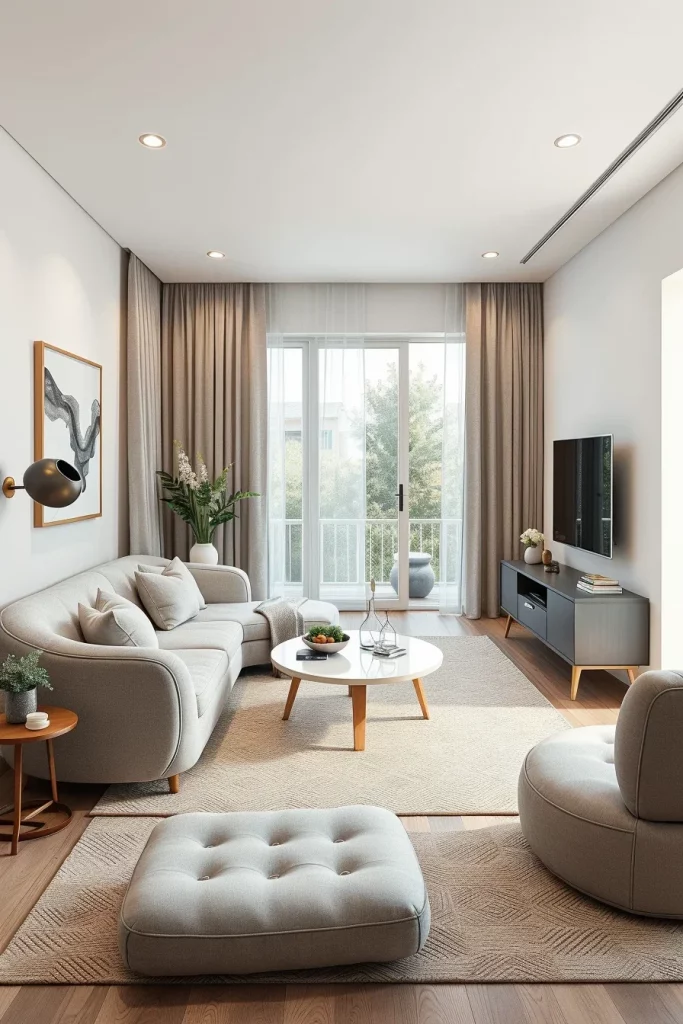
I prefer selecting curved sofas with clean lines, low profiles, and neutral upholstery. Furniture should remain limited to essential pieces, such as a round coffee table, a sleek media console, and discreet storage units. Decorative elements should be carefully chosen, with emphasis on texture rather than quantity. Soft rugs, linen curtains, and subtle accent lighting maintain warmth within the minimalist setting.
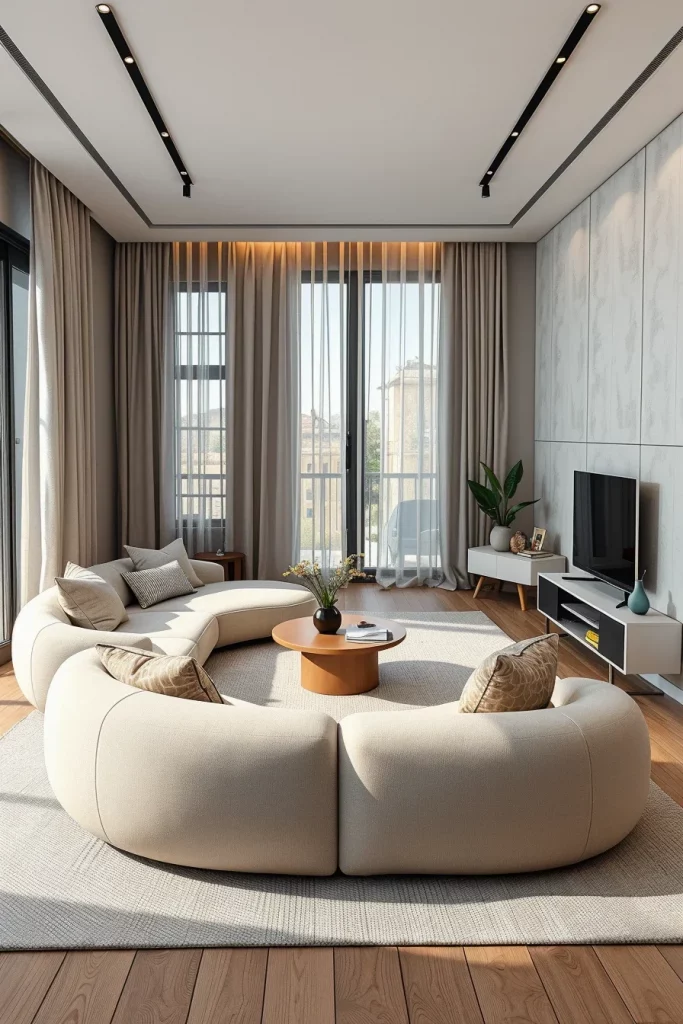
In my experience, minimalist rooms benefit greatly from curved furniture because the organic shapes prevent the space from feeling sterile. Architectural Digest has highlighted how sculptural furnishings can add personality to minimalist interiors without compromising simplicity. I agree with this philosophy and frequently apply it in my own projects.
To enrich this design, I would add natural materials such as stone accessories, textured ceramics, and a statement pendant light that complements the sofa’s curves.
Modern Neutral Color Palettes For Curved Furniture Spaces
Color selection plays a major role in the success of a curved furniture layout. I generally recommend modern neutral palettes because they enhance the softness of curved silhouettes while helping small living rooms appear larger. Shades of warm white, beige, taupe, greige, and soft gray create a timeless foundation that supports a variety of furniture styles.
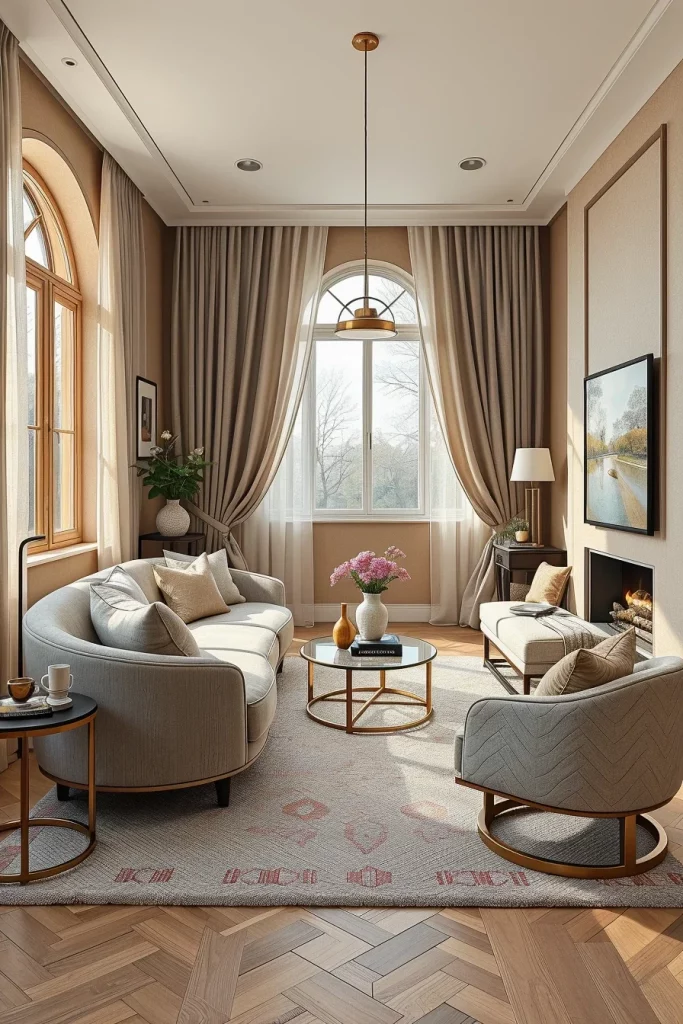
When working with neutral palettes, I like incorporating different textures to add visual interest. Bouclé upholstery, wool rugs, linen drapery, and matte finishes prevent the room from feeling flat. Accent pieces in muted earth tones, soft black, or brushed metal finishes introduce contrast while maintaining an elegant atmosphere.
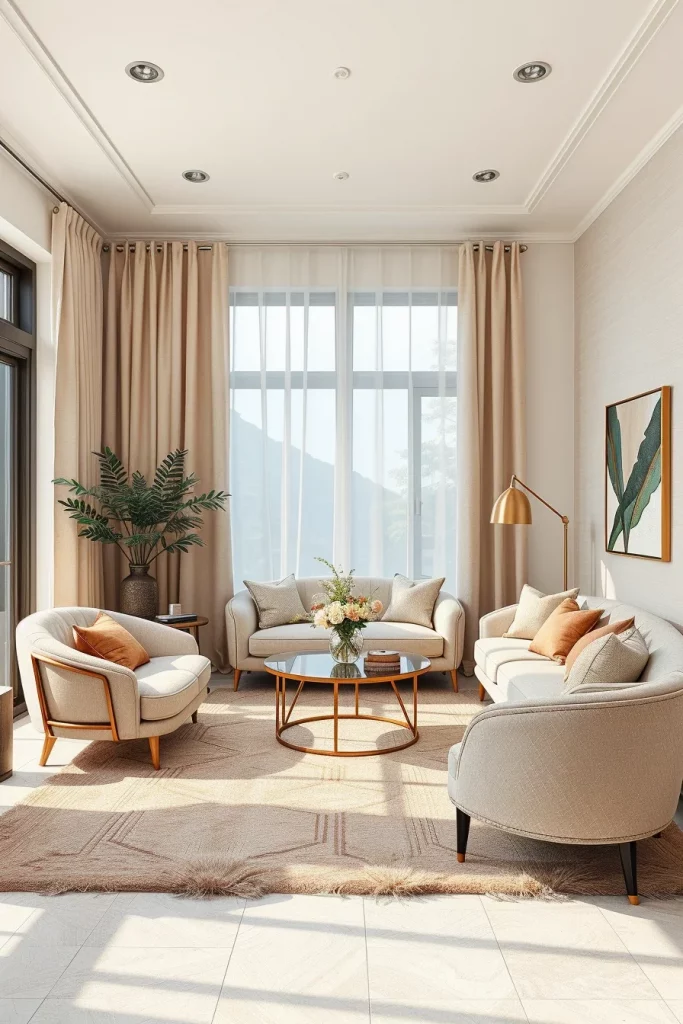
I have found that neutral color schemes offer exceptional flexibility over time. Homeowners can easily refresh the room by changing accessories rather than replacing major furniture pieces. Many leading interior designers recommend layered neutrals for compact spaces because they create depth without visual clutter, and I have repeatedly seen excellent results with this strategy.
This design could be further enhanced with subtle tonal artwork, integrated lighting, and reflective surfaces that maximize natural light.
Creating Visual Flow With Arched And Curved Elements
One of the most effective ways to elevate a small living room is by repeating curved forms throughout the space. I often combine curved furniture with arched architectural details because this creates strong visual continuity and allows the room to feel naturally connected. Repetition of organic shapes encourages the eye to move smoothly throughout the interior.
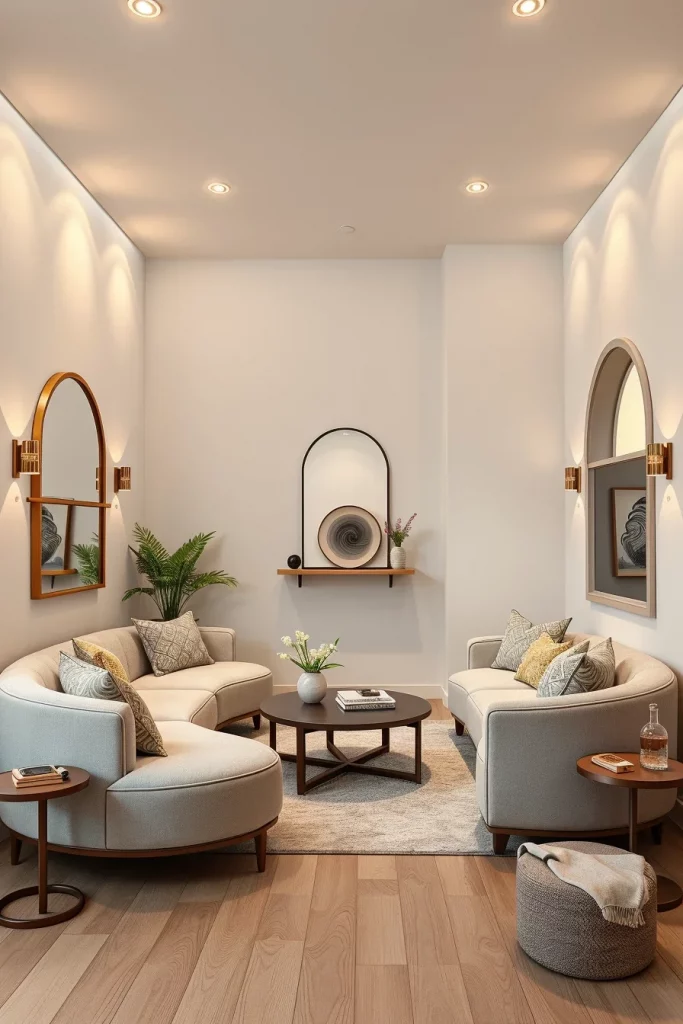
Arched mirrors, rounded shelving, curved sofas, circular coffee tables, and soft-edged lighting fixtures work together to establish this visual flow. I also like incorporating arched doorways or decorative wall niches whenever possible. These features reinforce the design concept while adding architectural interest to the room.
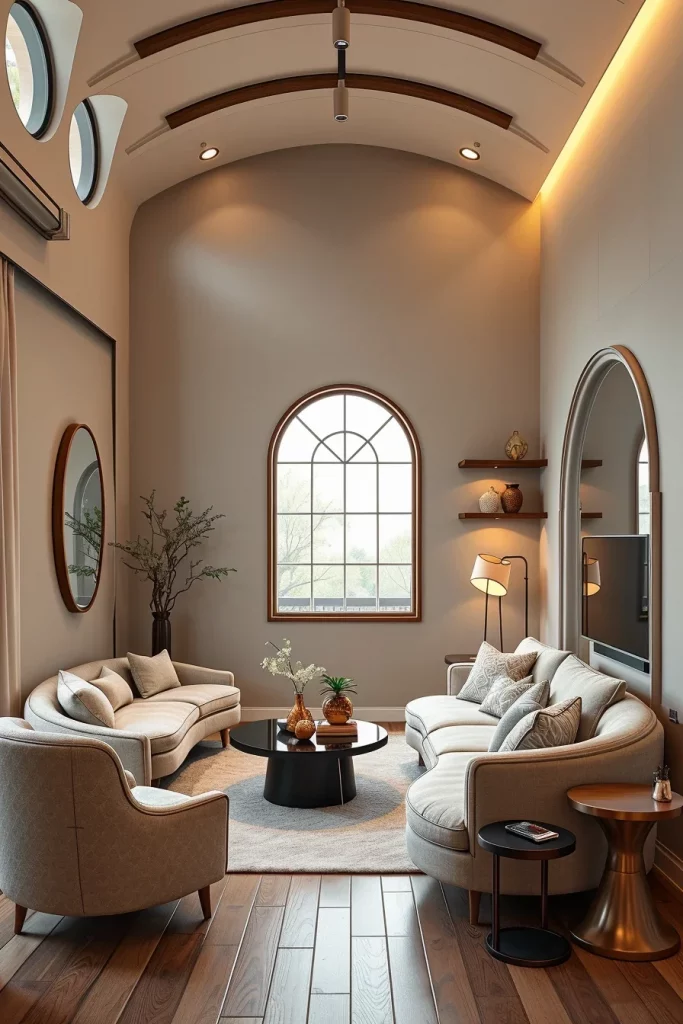
In my experience, rooms with consistent shapes always feel more harmonious than those containing conflicting design elements. Many contemporary designers advocate repeating forms throughout an interior to create cohesion, and I have found this principle especially valuable in smaller spaces where every design decision is highly visible.
To perfect this look, I would include sheer curtains, sculptural accessories, and layered lighting that highlights the elegant curves present throughout the room.
Compact Curved Loveseats For Apartment Living Rooms
When I design a compact apartment living room, I often begin with a curved loveseat because it immediately softens the space and creates a more inviting layout. In a small room, sharp furniture edges can make the layout feel rigid and cramped, whereas a gently curved silhouette encourages visual flow. A compact loveseat with rounded arms works especially well in studio apartments or open-plan homes where every inch matters. This approach perfectly illustrates how curved furniture small living room design can maximize comfort without sacrificing style.
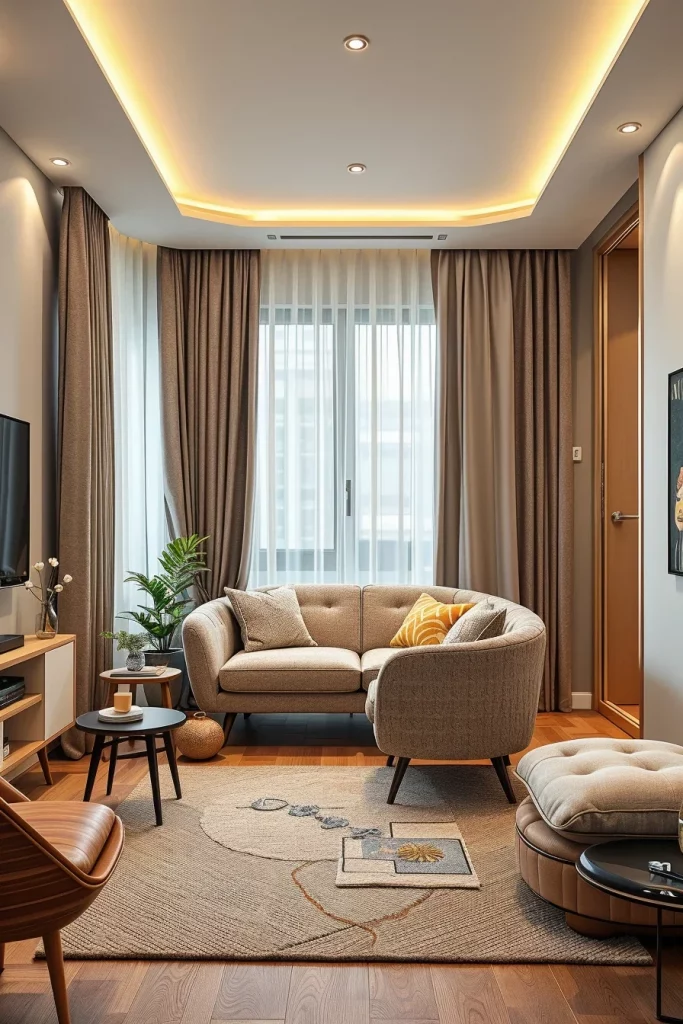
I typically pair the loveseat with a slim side table, a textured area rug, and floor-to-ceiling curtains to create visual height. Upholstered curved loveseats in boucle, linen, or performance fabrics provide both durability and comfort. I also recommend choosing furniture with elevated legs, as exposed flooring underneath helps make the room feel larger. A wall-mounted media console keeps the floor open and complements the softness of the curved seating.
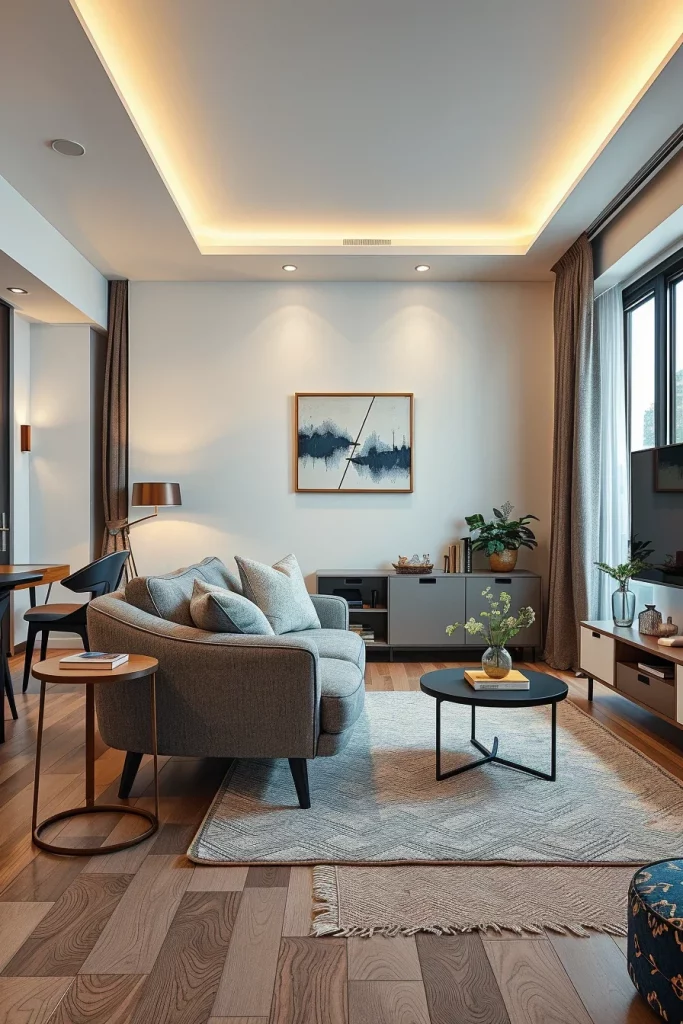
From my experience, designers frequently featured by publications such as Architectural Digest recommend selecting fewer but more sculptural pieces in small spaces. I completely agree because one well-designed curved loveseat often creates a stronger visual impact than multiple bulky seating options.
To complete this arrangement, I would add layered lighting, including a modern floor lamp and wall sconces, to enhance the cozy atmosphere without occupying valuable floor space.
Mixing Curved Furniture With Straight Architectural Lines
Many small living rooms feature straight walls, rectangular windows, and linear architectural details. I find that introducing curved furniture into these structured spaces creates an appealing contrast that immediately adds sophistication. Rounded forms soften the room’s geometry while preventing the space from feeling overly formal or boxy.
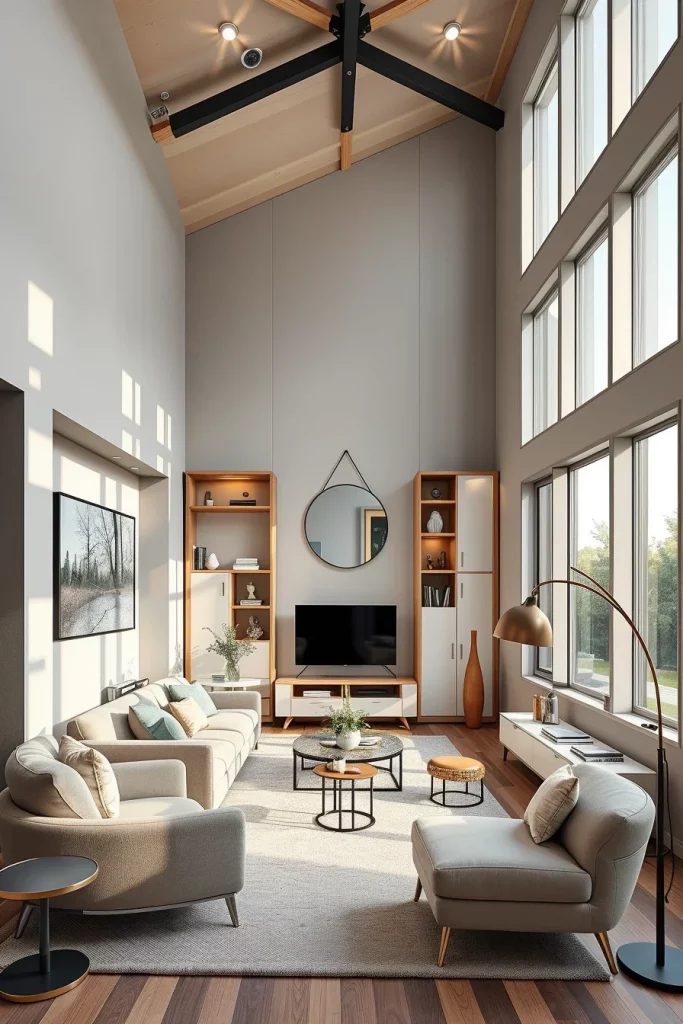
I usually combine a curved sofa or rounded armchairs with straight-lined built-in shelving, minimalist media units, and rectangular windows. This balance creates harmony rather than visual competition. Softly curved furniture also draws attention away from awkward room proportions, making compact spaces feel more intentional and carefully designed.
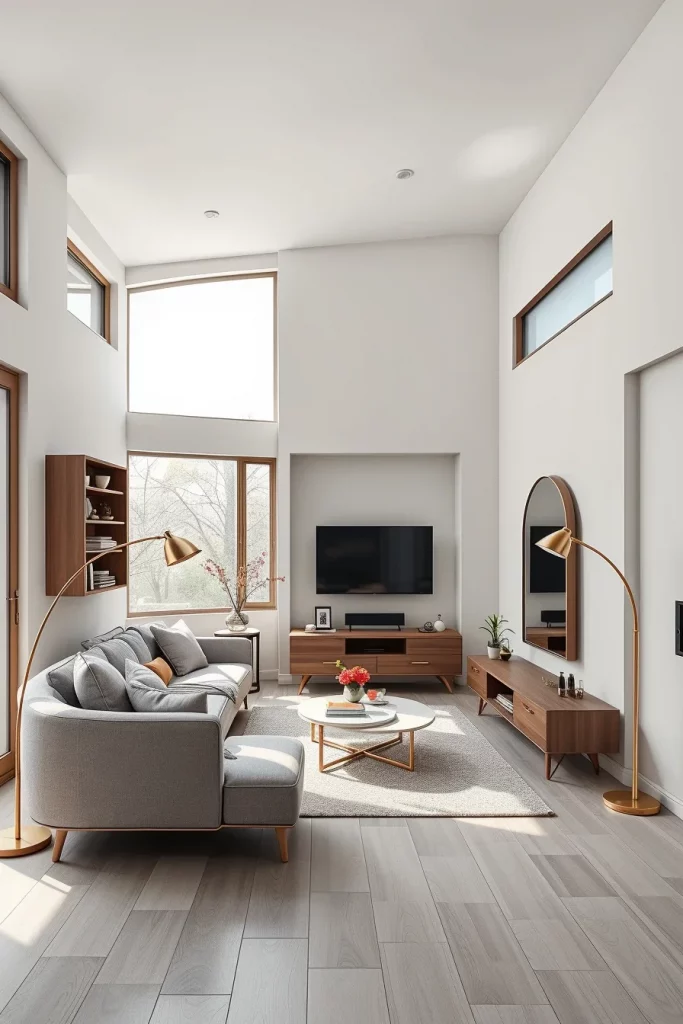
Personally, I believe contrast is one of the most effective design tools. Interior designers at Elle Decor often emphasize mixing shapes to create visual interest, and I have consistently seen this principle work beautifully in smaller homes. Straight architecture provides structure, while curved furnishings introduce warmth and personality.
If I were enhancing this layout further, I would include a large round mirror or curved floor lamp to reinforce the soft forms throughout the room.
Layering Textures Around Rounded Living Room Furniture
Texture plays a crucial role in successful curved furniture small living room design. Because rounded furniture naturally creates softness, layering complementary textures helps the room feel rich and inviting instead of overly simple. I always focus on combining tactile materials to create depth within limited square footage.
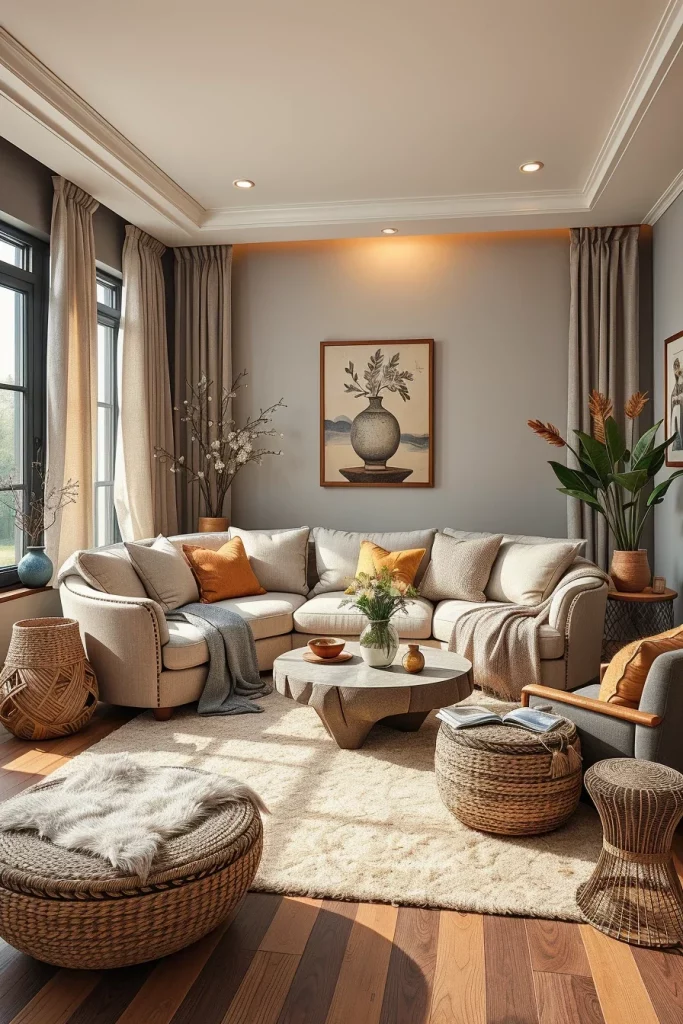
In practice, I often pair a curved boucle sofa with a plush wool rug, linen curtains, ceramic decor accessories, and natural stone surfaces. Textured cushions in varying fabrics add dimension while maintaining a cohesive palette. I also like incorporating ribbed wood panels, woven baskets, and soft throws to balance the smooth curves of upholstered pieces.
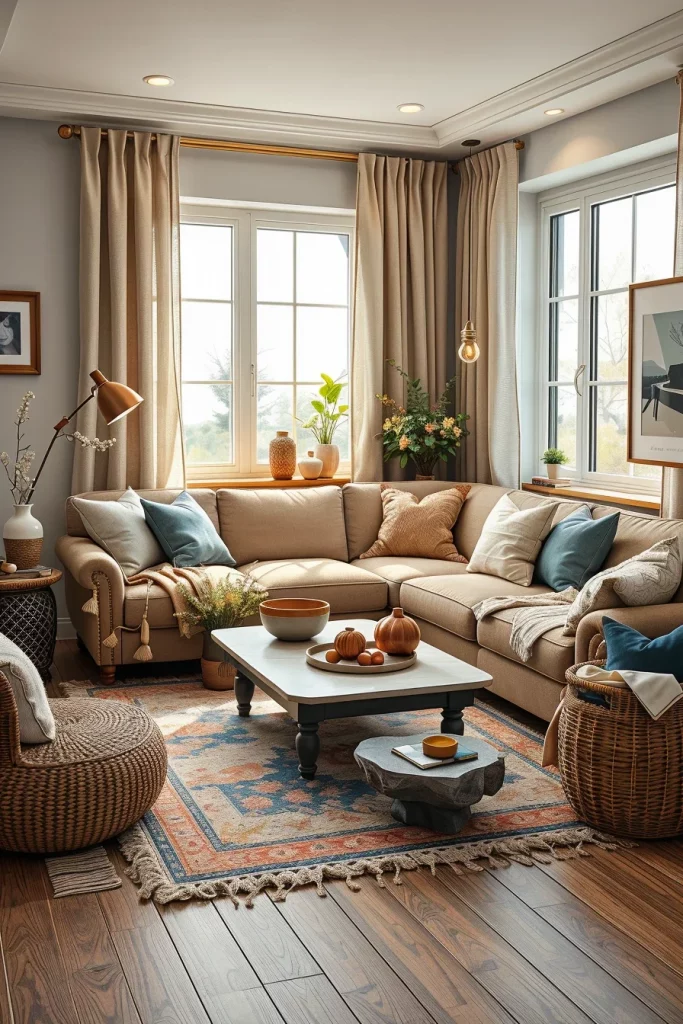
From my experience, texture is often more important than excessive decoration in small spaces. Rather than overcrowding a room with accessories, I prefer selecting a few high-quality materials that introduce visual richness. This strategy allows rounded furniture to remain the focal point while ensuring the room feels complete.
To further elevate this design, I would add subtle ambient lighting to emphasize the different textures during evening hours.
Small Living Room Designs With A Curved Accent Chair
A curved accent chair can transform a compact living room without requiring significant floor space. When clients hesitate to commit to a curved sofa, I often suggest beginning with a single rounded chair. Even one sculptural seating piece can introduce softness and modern character.
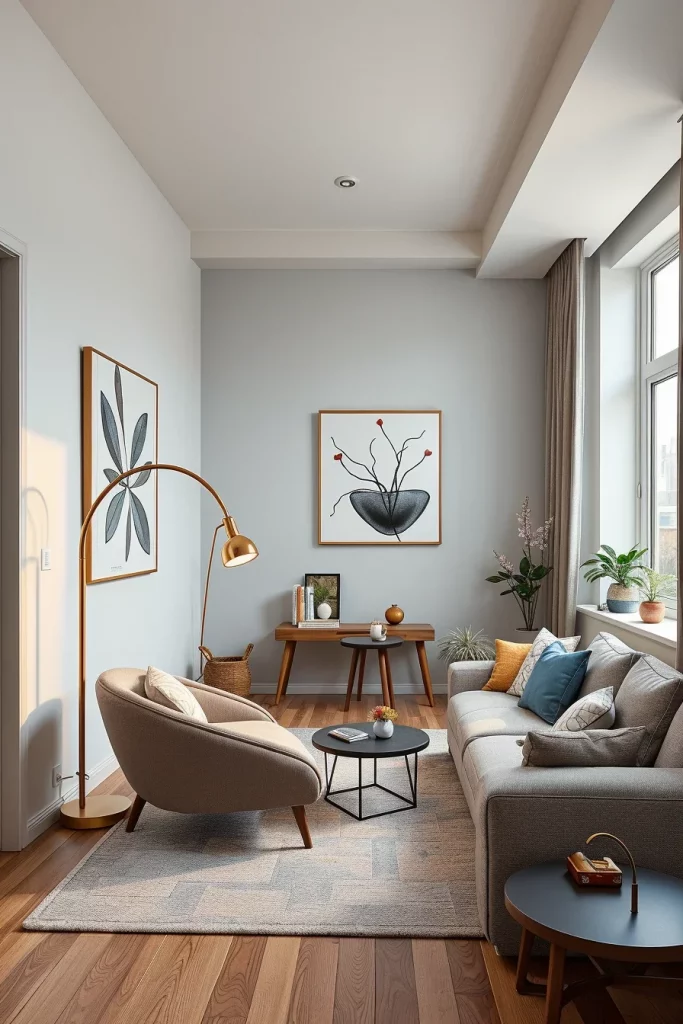
I usually position a curved accent chair near a window or adjacent to a compact sofa to create a conversational seating arrangement. Swivel chairs are particularly useful because they offer flexibility in multifunctional living areas. Pairing the chair with a small side table and an arched floor lamp creates a comfortable reading corner while maintaining openness.
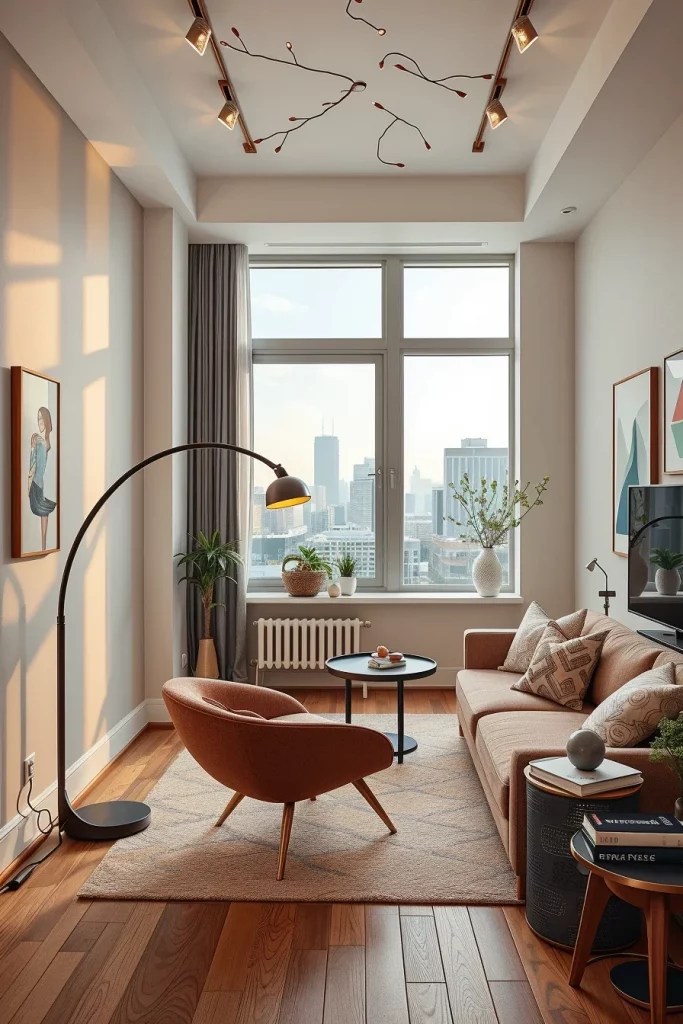
In my own projects, I have found that accent chairs with rounded backs feel less visually heavy than traditional boxy chairs. This makes them ideal for apartments and smaller homes where maintaining an airy appearance is essential.
For an even more polished result, I recommend incorporating artwork with organic shapes to visually connect with the chair’s curved silhouette.
Using Oval Coffee Tables To Enhance Traffic Flow
One of the simplest ways to improve functionality in a compact living room is by replacing a rectangular coffee table with an oval design. In my experience, oval tables significantly improve circulation because they eliminate sharp corners that interrupt movement pathways. This is particularly beneficial in homes with children or narrow walkways.
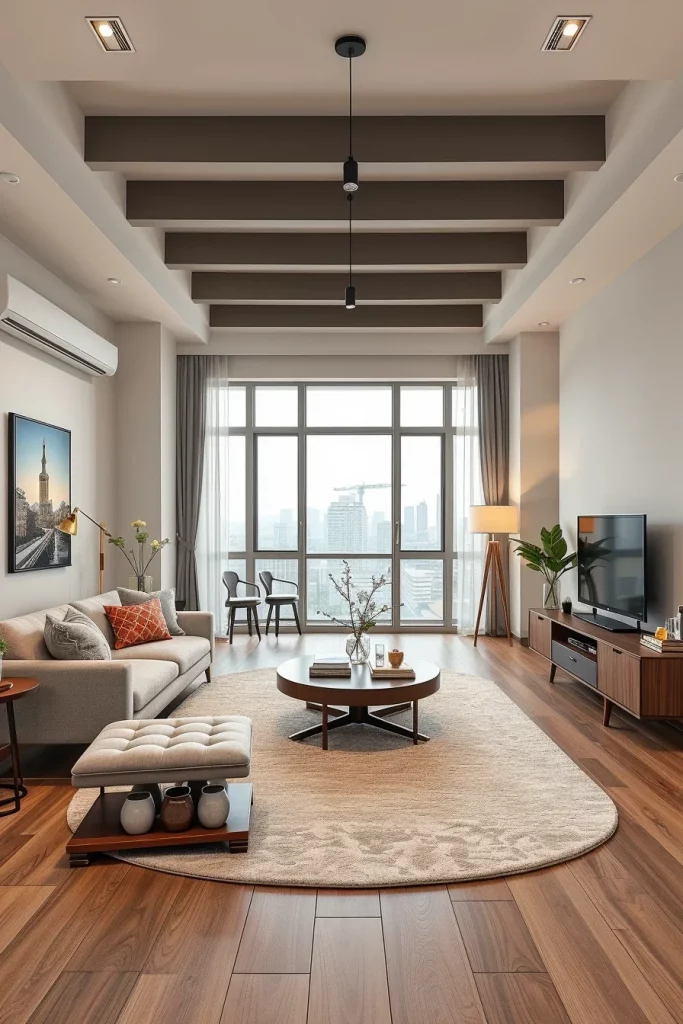
I frequently select oval coffee tables with slim profiles, stone tops, or glass surfaces to preserve visual openness. Storage-friendly designs featuring lower shelves or hidden compartments are especially practical in small living rooms. Positioned centrally, an oval table naturally complements curved seating arrangements and reinforces the room’s flowing aesthetic.
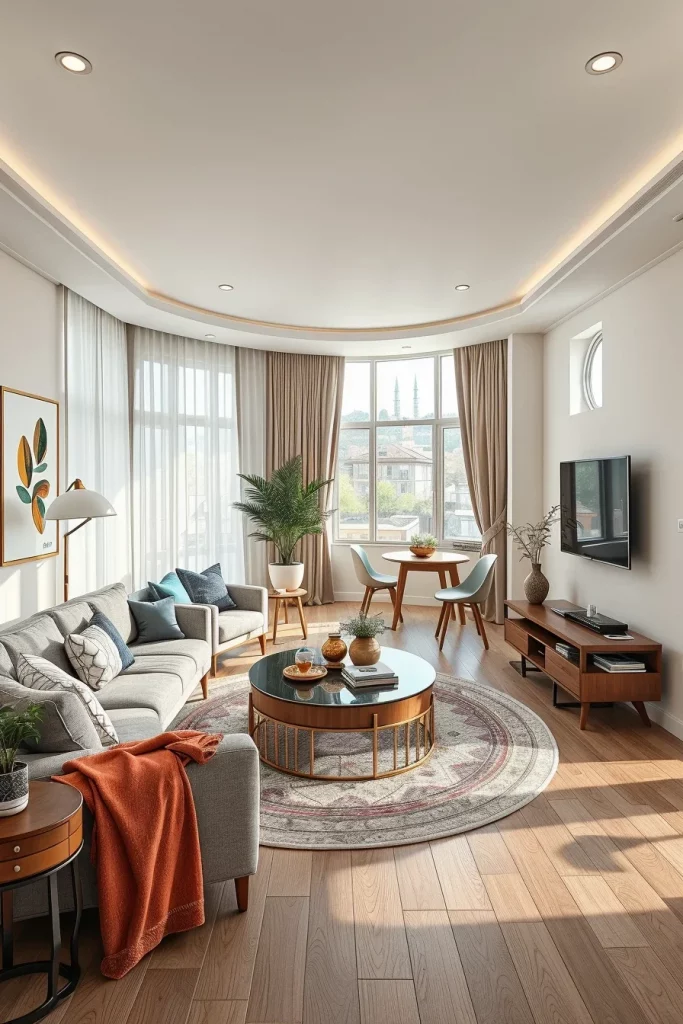
Personally, I have noticed that clients immediately appreciate how much easier it becomes to navigate around an oval table. The softer silhouette contributes to a more relaxed atmosphere while supporting the overall principles of curved furniture small living room design.
To maximize this setup, I would include a large area rug beneath the seating arrangement to visually anchor the furniture grouping.
Contemporary Small Living Rooms With Sculptural Curved Pieces
Contemporary interiors often benefit from a few sculptural furnishings that act as both functional pieces and artistic statements. In a small living room, I prefer incorporating one or two sculptural curved elements rather than filling the room with excessive decor. This strategy allows the space to feel sophisticated and uncluttered while showcasing the beauty of curved furniture small living room design. Organic silhouettes naturally create movement and soften the overall atmosphere.
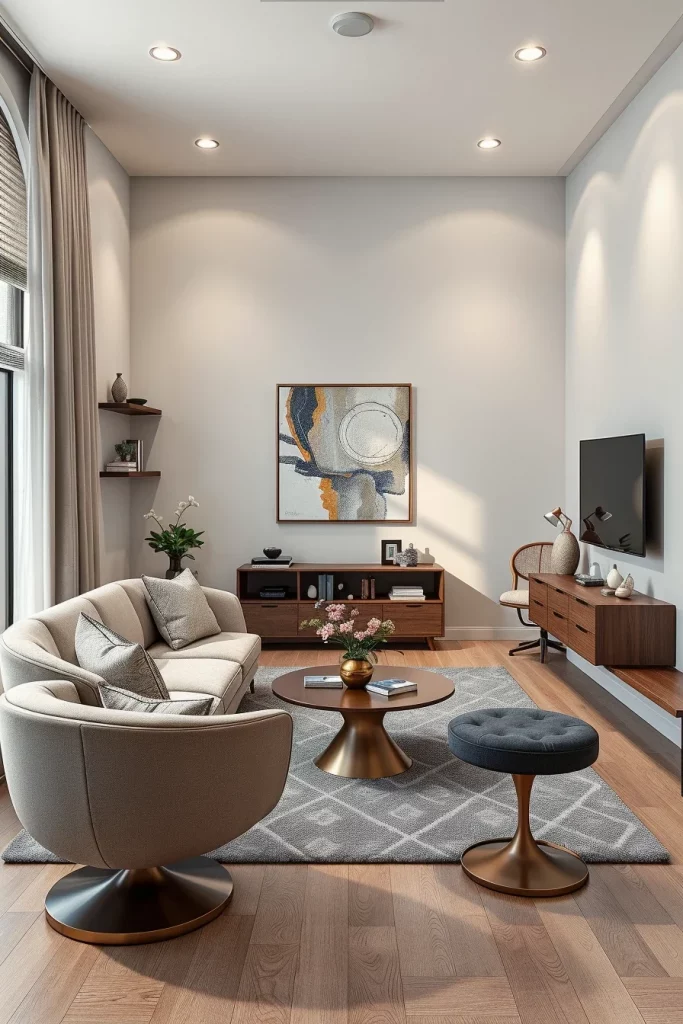
I usually select a sculptural curved sofa, an asymmetrical accent chair, or a rounded pedestal coffee table as the focal point. To support these statement pieces, I include simple furnishings with clean lines, such as floating shelves or minimalist media consoles. Soft lighting, textured rugs, and understated accessories help maintain balance while ensuring the sculptural furniture remains the star of the room.
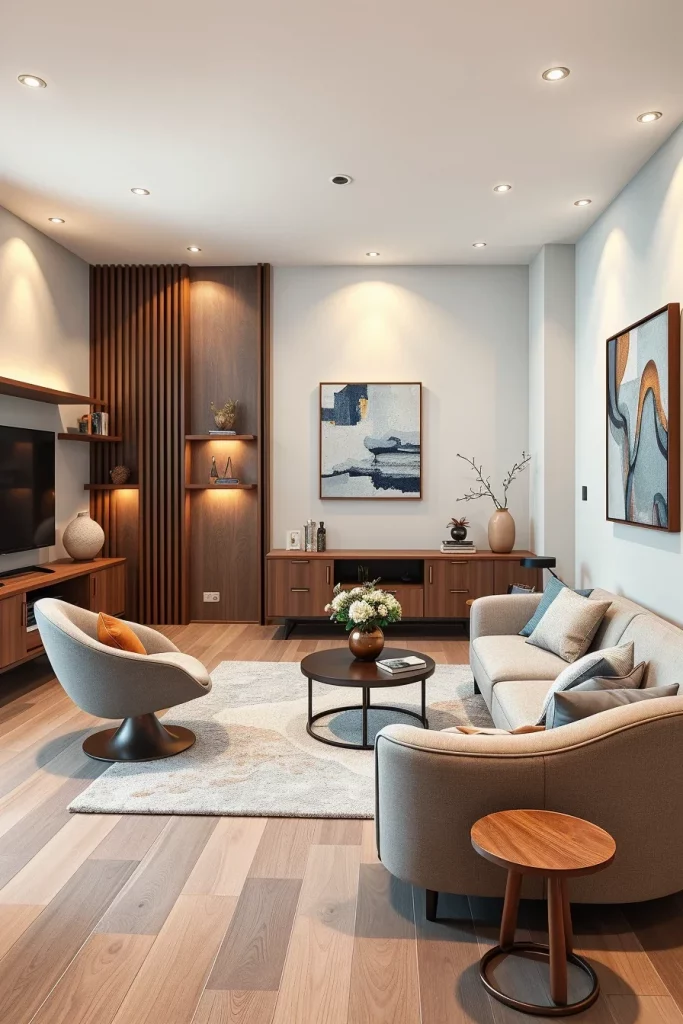
From my experience, contemporary spaces succeed when there is restraint. Publications such as House Beautiful frequently highlight the importance of allowing statement furniture room to breathe, and I fully agree with this approach. A carefully selected sculptural piece often provides more visual interest than numerous smaller decorative items.
To make this design even more successful, I would add oversized abstract artwork featuring curved forms that echo the furniture’s flowing lines.
Incorporating Curved Storage Furniture In Limited Spaces
Storage is essential in compact homes, but bulky storage solutions can overwhelm a small living room. I often recommend curved storage furniture because rounded edges reduce visual heaviness while maintaining practicality. Curved cabinets, consoles, and shelving units help soften the room and improve circulation within tight layouts.
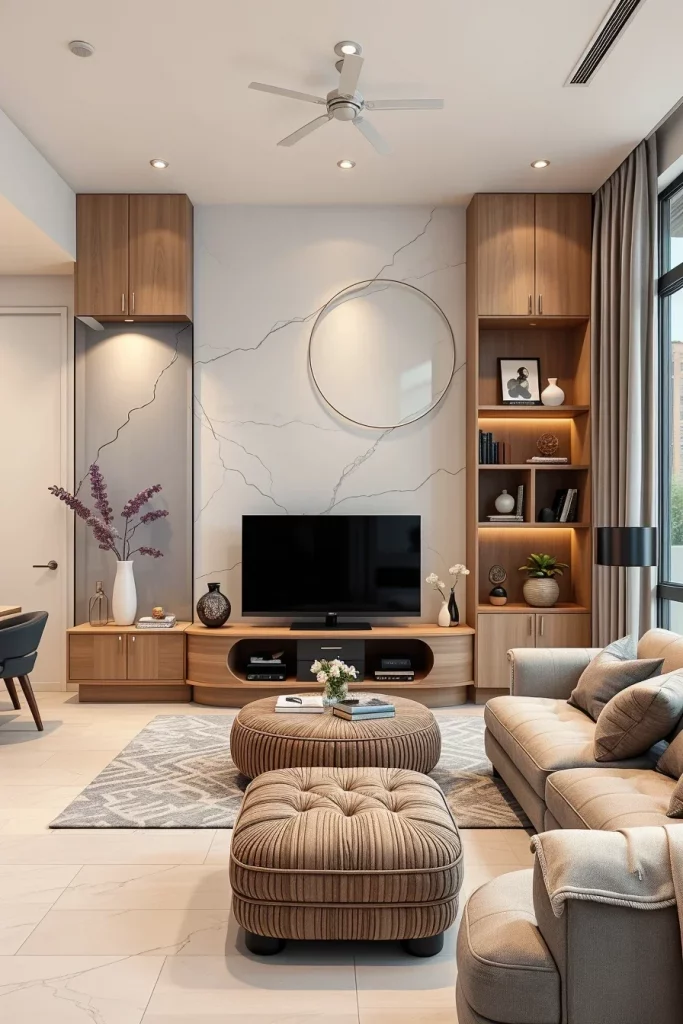
In my projects, I frequently use curved media consoles with concealed storage compartments to minimize clutter. Rounded sideboards, compact storage ottomans, and curved open shelving provide additional functionality without making the room feel crowded. Light finishes, ribbed textures, and elevated bases further enhance the sense of openness.
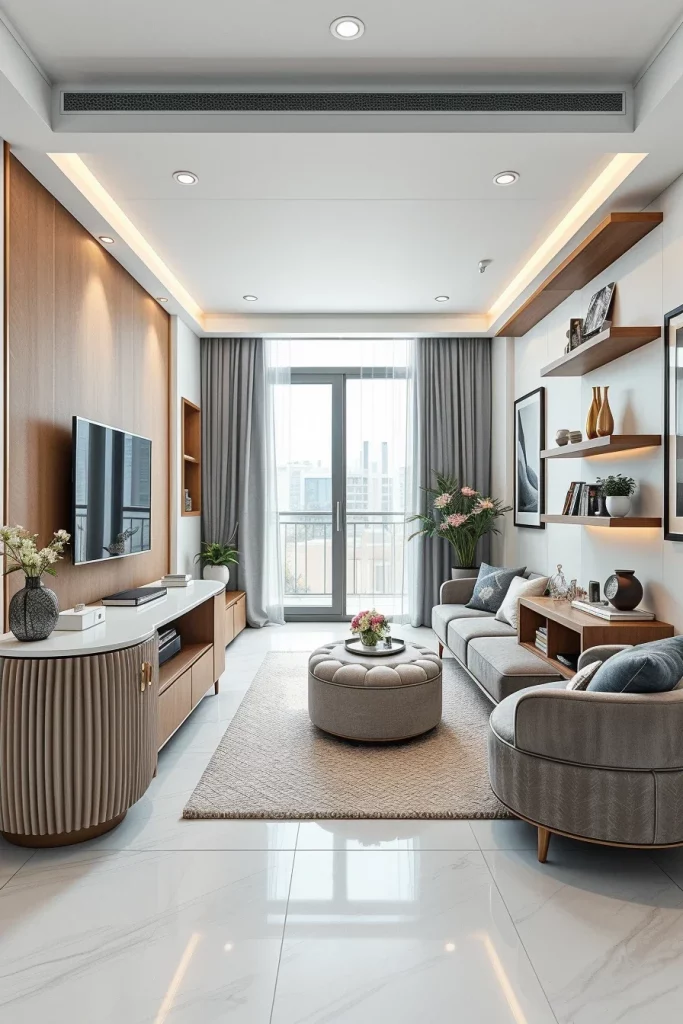
Personally, I find that multifunctional furniture is indispensable in smaller homes. A curved storage bench or ottoman can serve as seating, storage, and an accent piece simultaneously. This flexibility is particularly valuable in apartments where every piece of furniture should work hard.
For maximum efficiency, I would incorporate built-in wall storage above eye level to free up floor space while maintaining a streamlined appearance.
Monochromatic Small Living Room Designs With Rounded Furniture
A monochromatic palette paired with rounded furnishings can make even the smallest living room feel calm and cohesive. I often recommend selecting one primary color and layering subtle tonal variations throughout the room. This design approach minimizes visual clutter while emphasizing the elegant silhouettes of curved furniture.
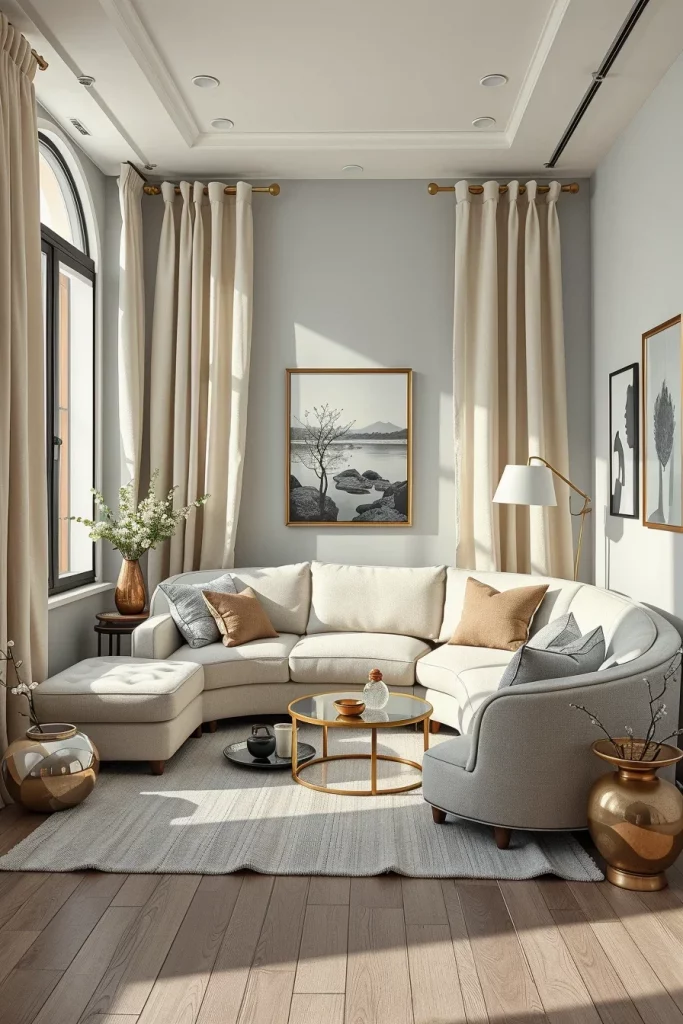
I typically start with a curved sofa in a neutral shade such as cream, soft gray, or warm beige. Matching or complementary accent chairs, rugs, and drapery reinforce the monochromatic concept. Textural differences become especially important in these spaces, so I incorporate boucle upholstery, linen fabrics, matte finishes, and ceramic accessories to create depth.
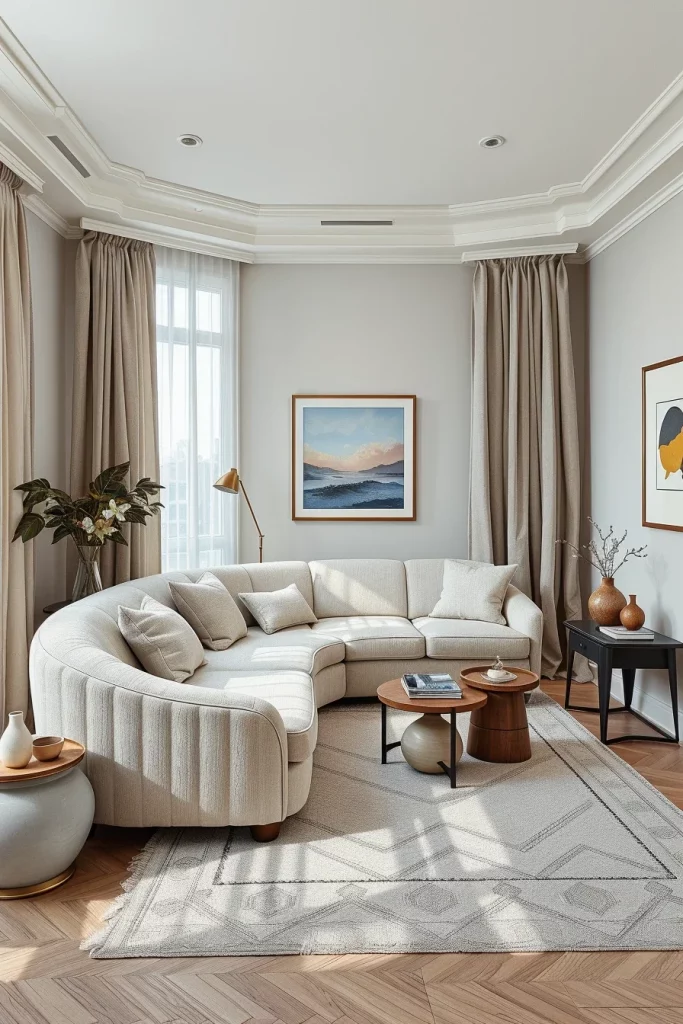
In my experience, monochromatic rooms rarely feel boring when texture and shape are thoughtfully layered. Many professional designers featured in Architectural Digest advocate tonal decorating because it creates serenity and visual continuity, especially in compact interiors.
To complete this design, I would introduce subtle metallic accents through lighting fixtures or decorative objects to add sophistication without disrupting the cohesive palette.
Curved Furniture Ideas For Narrow Small Living Rooms
Narrow living rooms present unique design challenges, but curved furniture can significantly improve the functionality of these difficult layouts. I have found that rounded edges create smoother pathways and reduce the feeling of confinement often associated with long, narrow spaces. Proper furniture placement is essential for maintaining comfortable circulation.
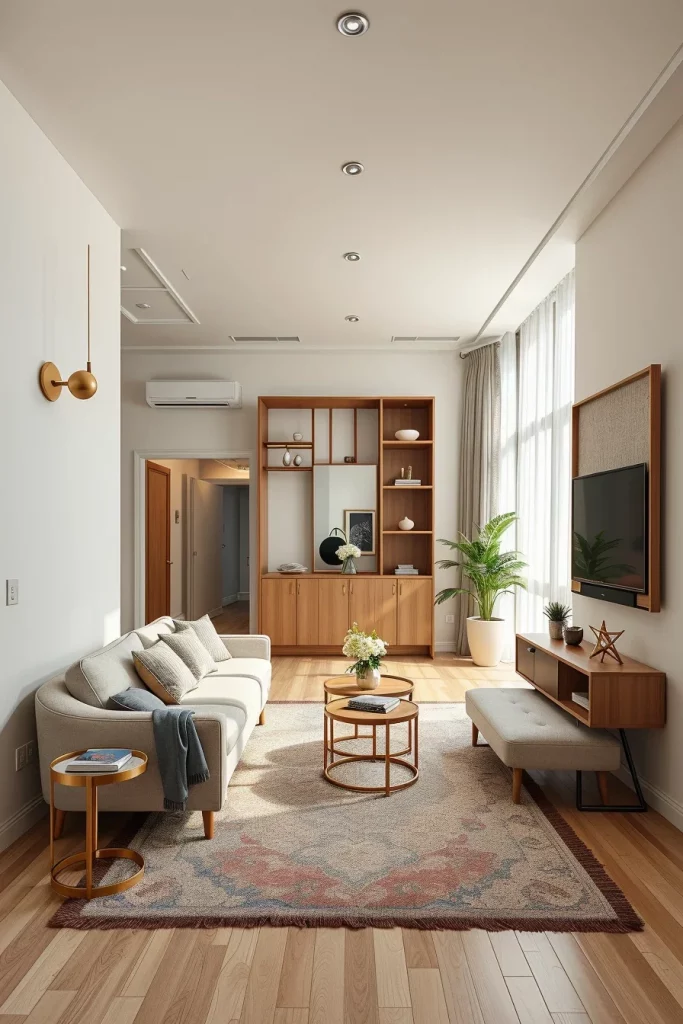
I usually choose a slim curved sofa positioned against one wall, paired with nesting tables or compact rounded stools that can be moved as needed. Armless seating options also work exceptionally well because they occupy less visual space. Vertical storage, wall-mounted lighting, and elongated rugs help reinforce the room’s proportions while preserving openness.
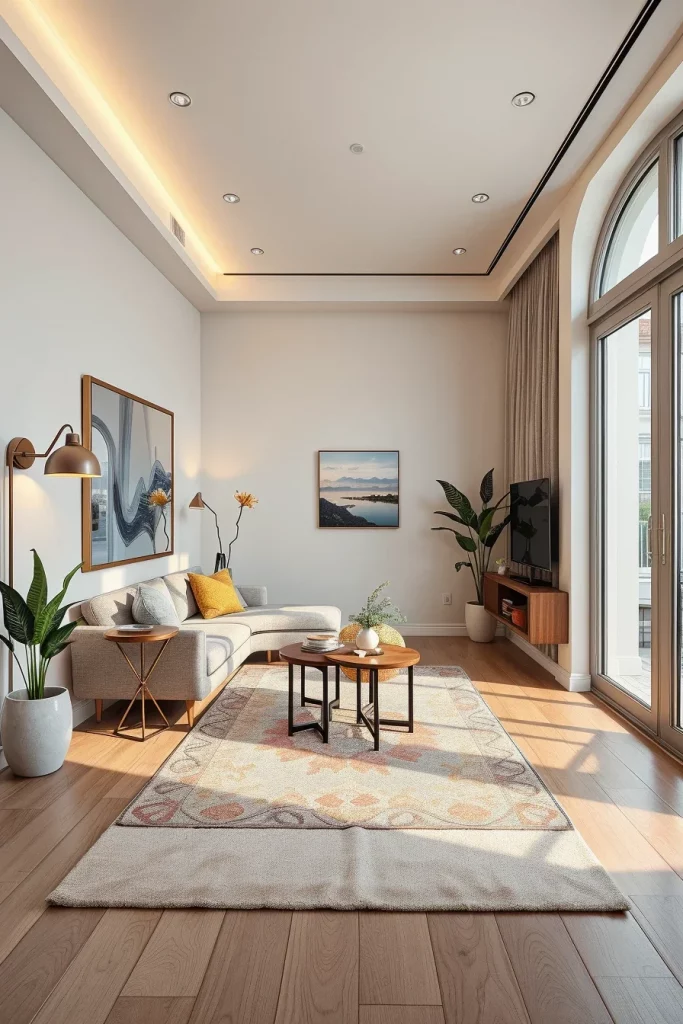
From my perspective, narrow rooms benefit greatly from furniture with soft silhouettes because harsh angles can emphasize the limited width. I consistently see improved traffic flow when rounded pieces replace traditional boxy furniture arrangements.
If I were refining this layout further, I would install a large mirror along one wall to reflect light and visually expand the space.
Styling A Small Living Room With A Rounded Chaise Lounge
A rounded chaise lounge can instantly elevate a small living room by introducing both comfort and elegance. Although many homeowners assume chaise lounges require large rooms, compact curved versions fit surprisingly well in smaller interiors. I often use them to create a dedicated relaxation zone without overwhelming the overall layout.
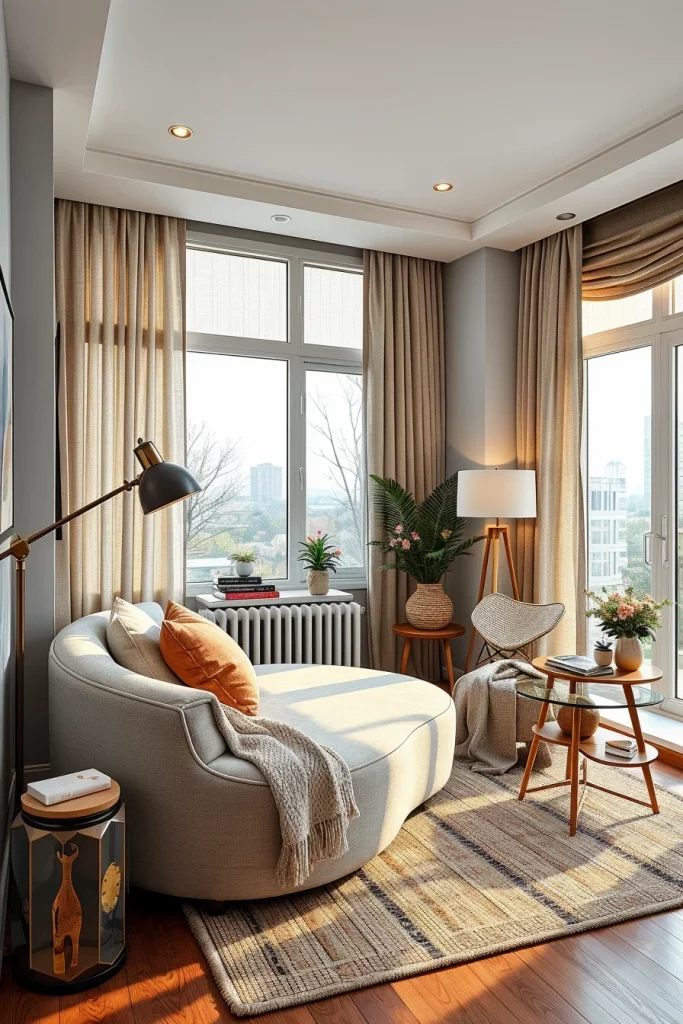
I generally position the chaise near a window or in an unused corner to establish a cozy retreat for reading or unwinding. Pairing it with a small side table, soft throw blanket, and floor lamp creates a functional vignette while maintaining visual flow. Upholstered models in soft fabrics such as boucle or velvet add luxurious texture and reinforce the room’s organic aesthetic.
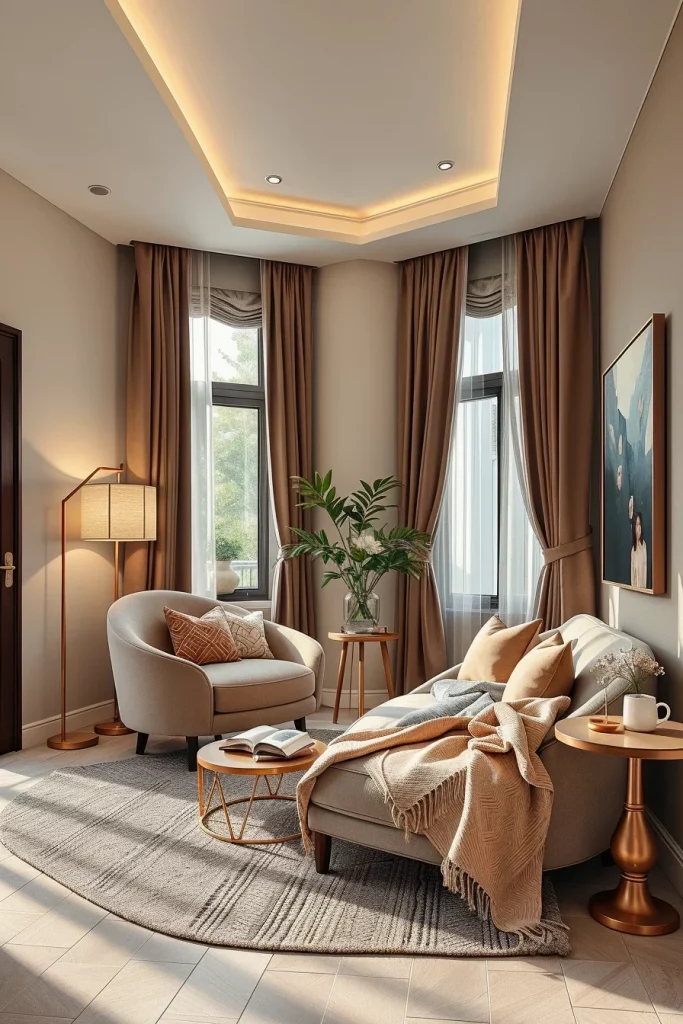
Personally, I appreciate how a rounded chaise lounge introduces a sense of sophistication without compromising practicality. In many of my projects, clients find that this single piece transforms the atmosphere of the room and encourages more frequent use of the space.
To enhance this arrangement further, I would add layered window treatments and a textured area rug to define the seating zone and increase comfort.
Layering Area Rugs Beneath Curved Furniture Arrangements
When I design a small living room with curved furniture, I often begin with the rug. Layering area rugs beneath curved seating arrangements helps define the conversation zone while visually anchoring the soft lines of the furniture. In compact rooms, this approach creates structure without making the space feel rigid. A large neutral rug topped with a smaller textured accent rug can make the room appear more spacious and intentionally designed.
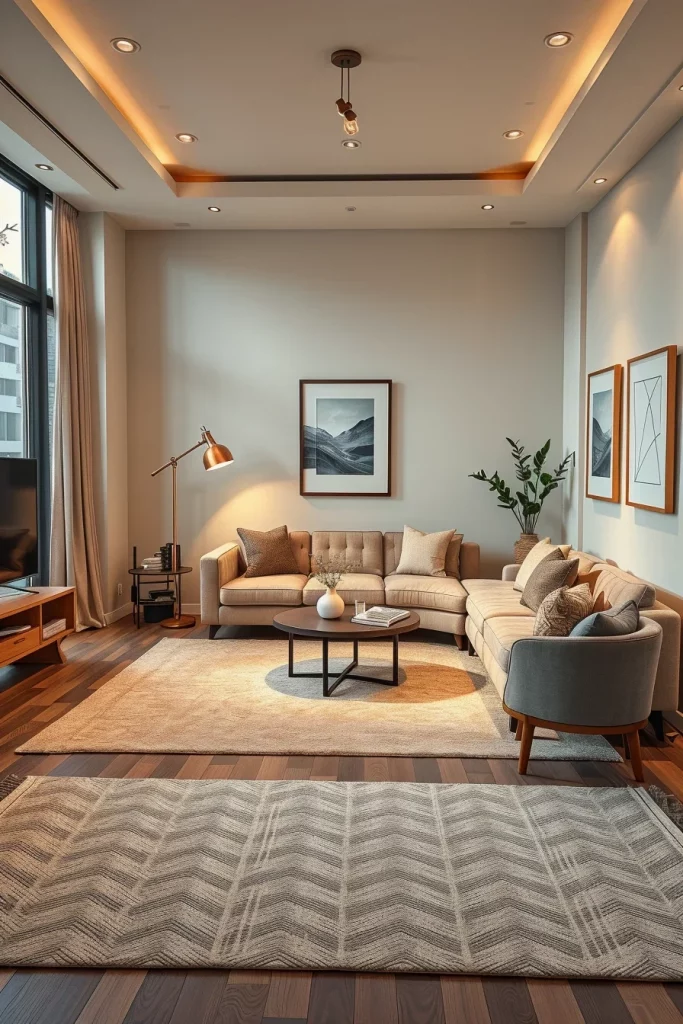
I typically pair a curved sofa with a rounded coffee table placed over layered rugs featuring subtle textures or geometric patterns. I also recommend incorporating an accent chair with soft contours, a slim side table, and low-profile storage pieces. These furnishings maintain visual continuity and allow circulation paths to remain open, which is essential in a curved furniture small living room design.
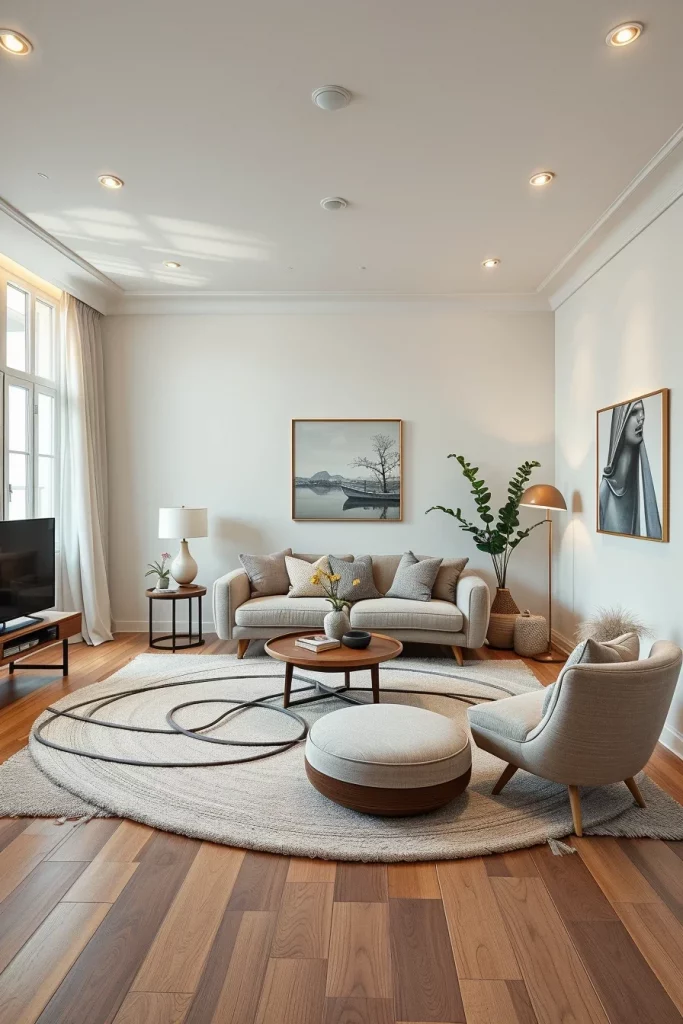
From my experience, layered rugs work especially well when the upper rug echoes the shape of the furniture. Designers frequently featured in Architectural Digest suggest using oversized rugs in smaller spaces to avoid visually chopping up the room, and I have found this advice extremely effective.
I would also add soft floor lighting or a compact ottoman to complete this arrangement and further emphasize the welcoming atmosphere.
Elegant Lighting Choices For Curved Living Room Designs
Lighting plays a major role in enhancing curved interiors. In small living rooms, I prefer fixtures that echo the gentle lines of the furniture rather than introducing sharp contrasts. Soft illumination combined with rounded silhouettes creates a harmonious environment and highlights the sculptural qualities of curved seating.
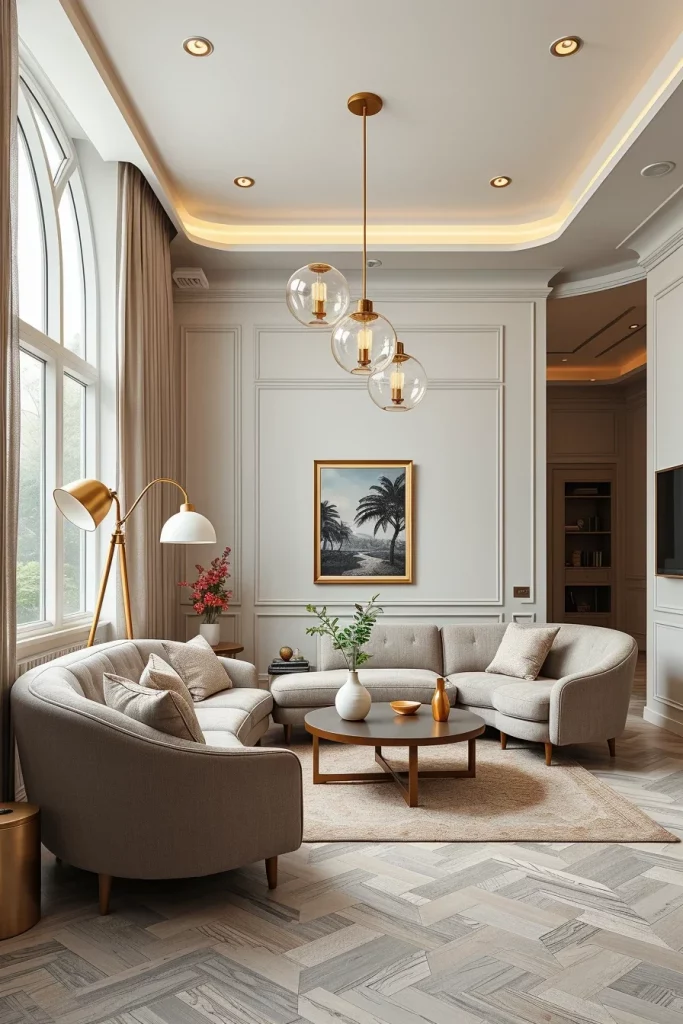
I often select globe pendants, arched floor lamps, or rounded wall sconces to complement curved sofas and accent chairs. A central coffee table with an oval profile, paired with layered lighting sources, ensures both functionality and ambiance. Reflective finishes such as brass or smoked glass add sophistication without overwhelming the room.
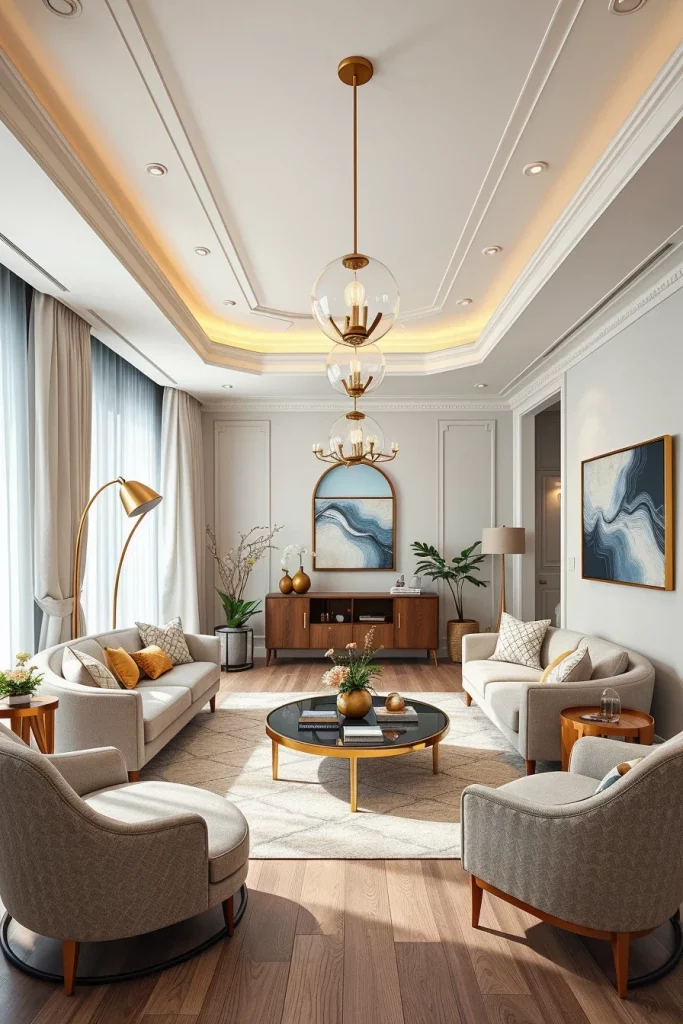
Personally, I have noticed that arched floor lamps are particularly effective in small spaces because they provide overhead illumination without requiring ceiling modifications. Interior designers from Elle Decor frequently recommend layered lighting for compact rooms, and I completely agree with this approach.
To strengthen the design, I would include dimmable lighting controls, allowing the room to transition easily from daytime functionality to evening relaxation.
Mixing Different Curved Furniture Shapes In One Small Space
Many homeowners worry that combining multiple curved pieces may create visual clutter. In my experience, mixing various curved shapes actually adds character and dimension when done thoughtfully. The key is maintaining balance through scale, spacing, and material consistency.
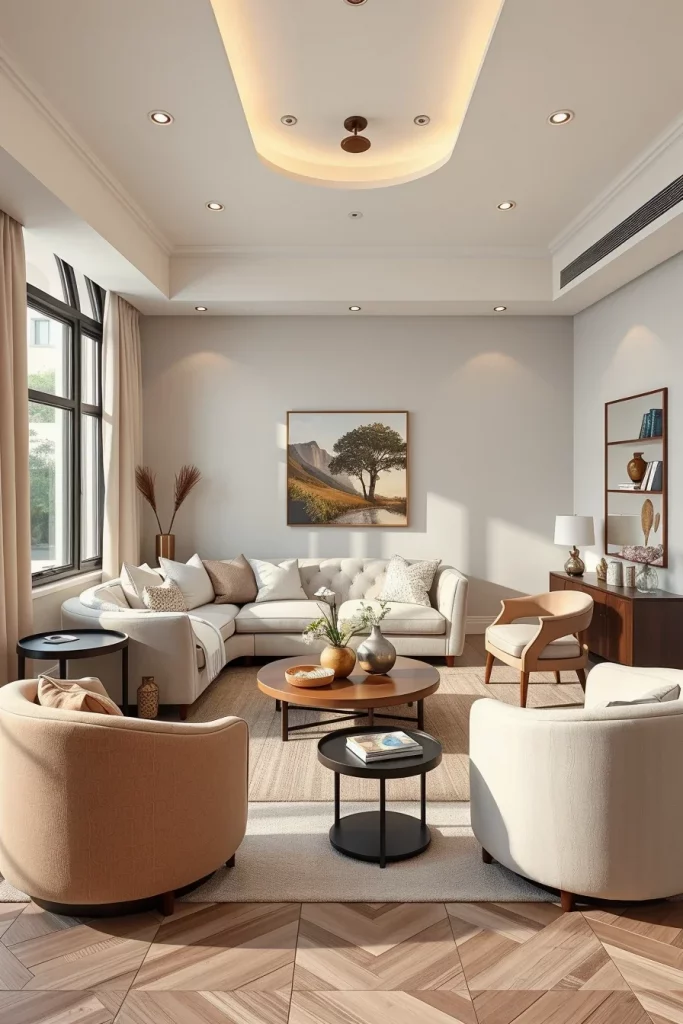
I usually combine a crescent-shaped sofa with circular side tables, an oval coffee table, and softly curved accent chairs. To prevent overcrowding, I prefer furniture with exposed legs and streamlined silhouettes. A neutral color palette further unifies the different forms while allowing each piece to contribute its own personality.
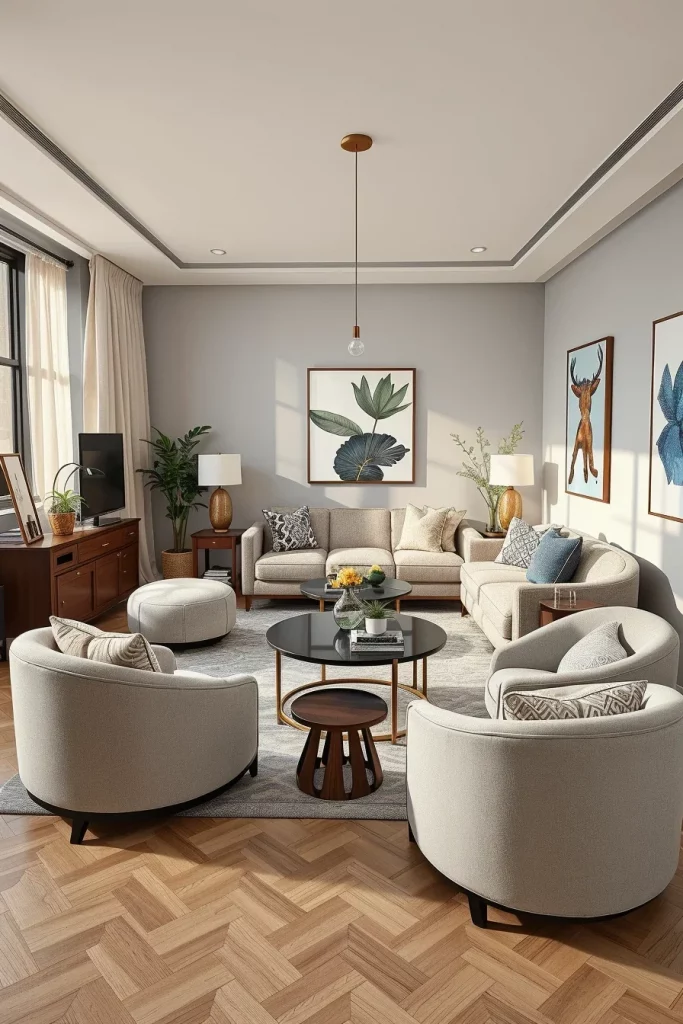
I have found that varying the degree of curvature creates the most interesting interiors. For example, pairing dramatic curves with subtly rounded accessories prevents the room from feeling overly thematic. This layered approach creates a sophisticated curved furniture small living room design that remains timeless.
Additional texture through boucle upholstery, woven baskets, or ribbed ceramics can enrich the space while preserving visual cohesion.
Creating A Luxurious Feel With Velvet Curved Furniture
Velvet upholstery instantly elevates a small living room, especially when applied to curved furniture. I often recommend velvet because its soft texture enhances the elegant lines of rounded seating while introducing warmth and visual depth. In compact rooms, luxurious materials can make the entire interior feel intentionally curated.
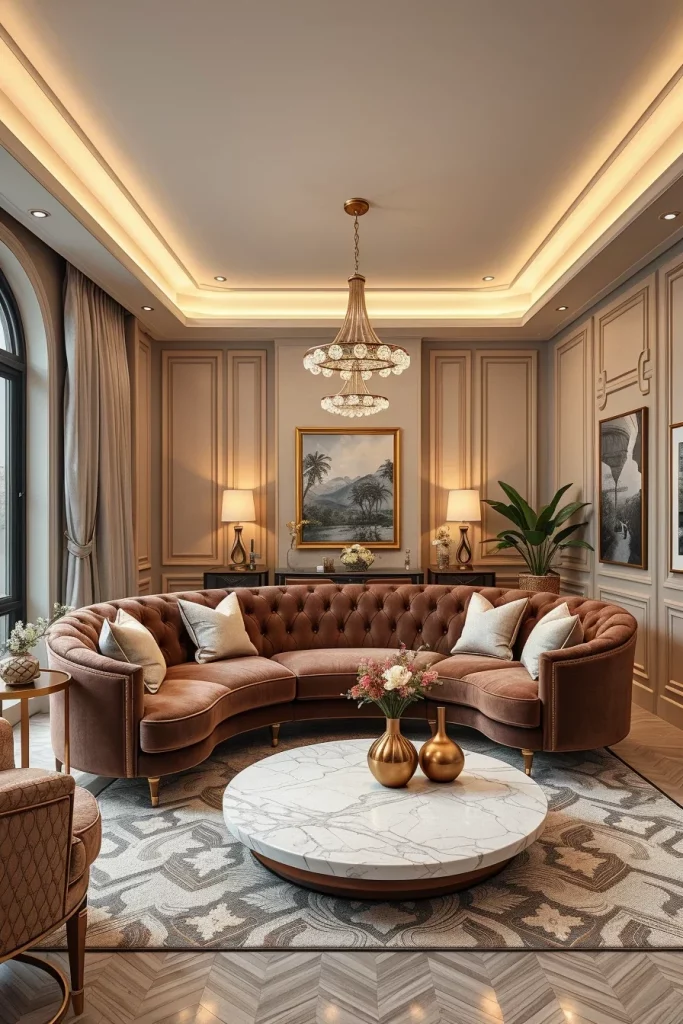
A velvet curved sofa in soft beige, muted olive, or deep charcoal becomes a natural focal point. I usually complement it with marble or stone-look tables, metallic accents, and plush cushions in varying textures. Lightweight curtains and minimal cabinetry help maintain openness while allowing the velvet to remain the star of the room.
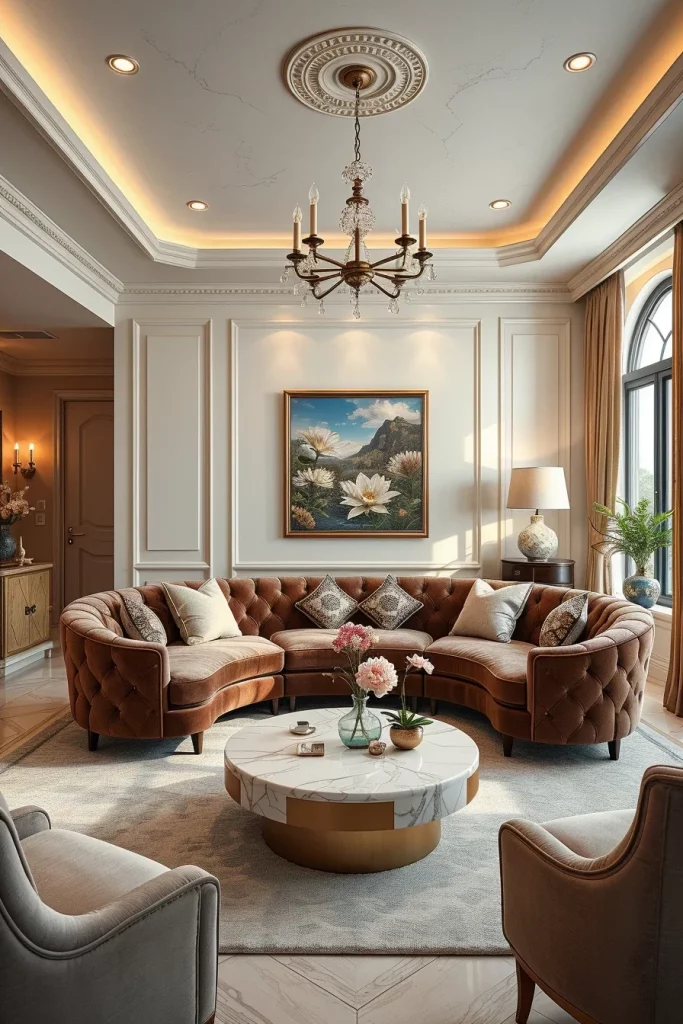
From my perspective, moderation is essential when incorporating luxurious materials. I prefer limiting velvet to one or two major pieces and balancing them with understated finishes. Many designers featured by House Beautiful recommend mixing luxurious textures with simpler materials, and I have consistently seen excellent results with this strategy.
To complete the setting, I would introduce subtle ambient lighting and a large mirror to amplify both light and elegance.
Small Living Room Designs Featuring Rounded Modular Seating
Rounded modular seating offers exceptional flexibility for small living rooms. I appreciate these systems because they adapt easily to changing needs while preserving the soft aesthetic associated with curved interiors. Modular pieces can be rearranged for entertaining, lounging, or everyday family use.
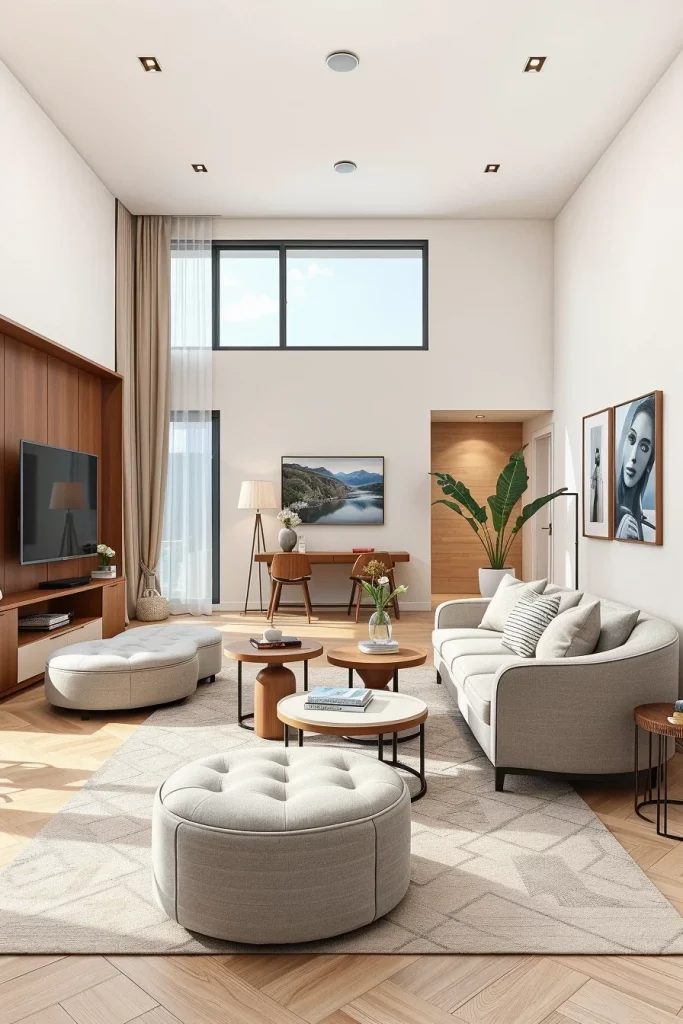
I often choose modular seating with gently rounded corners, combining it with nesting tables, compact storage units, and multifunctional ottomans. These pieces maximize floor space while maintaining comfortable circulation. Selecting modules in light neutral tones also helps the room feel brighter and more spacious.
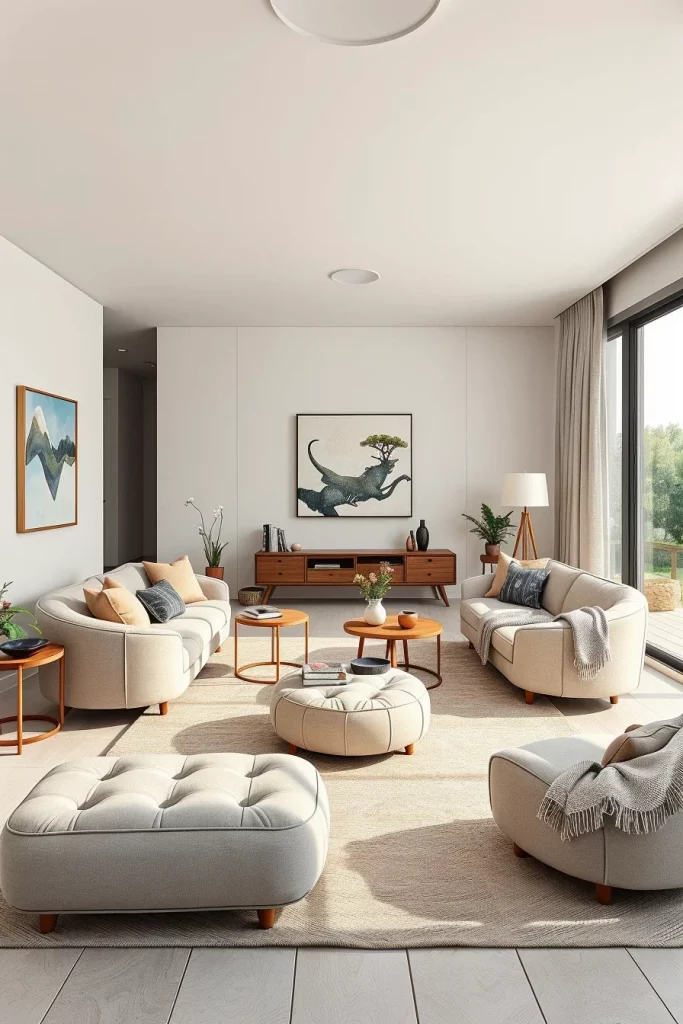
In my own projects, modular seating has proven especially useful in apartments and multifunctional living areas. The ability to reconfigure seating layouts ensures long-term practicality without sacrificing style. This flexibility makes modular solutions one of my favorite strategies for a curved furniture small living room design.
I would also consider adding concealed storage within ottomans or benches to improve organization in limited spaces.
Balancing Curved Furniture With Organic Decorative Accessories
One of my favorite ways to make a small living room feel cohesive is by pairing curved furniture with organic decorative accessories. Soft, nature-inspired shapes help reinforce the flowing lines of curved seating while making the room feel calm and welcoming. In compact spaces, this approach prevents the interior from appearing overly structured or formal.
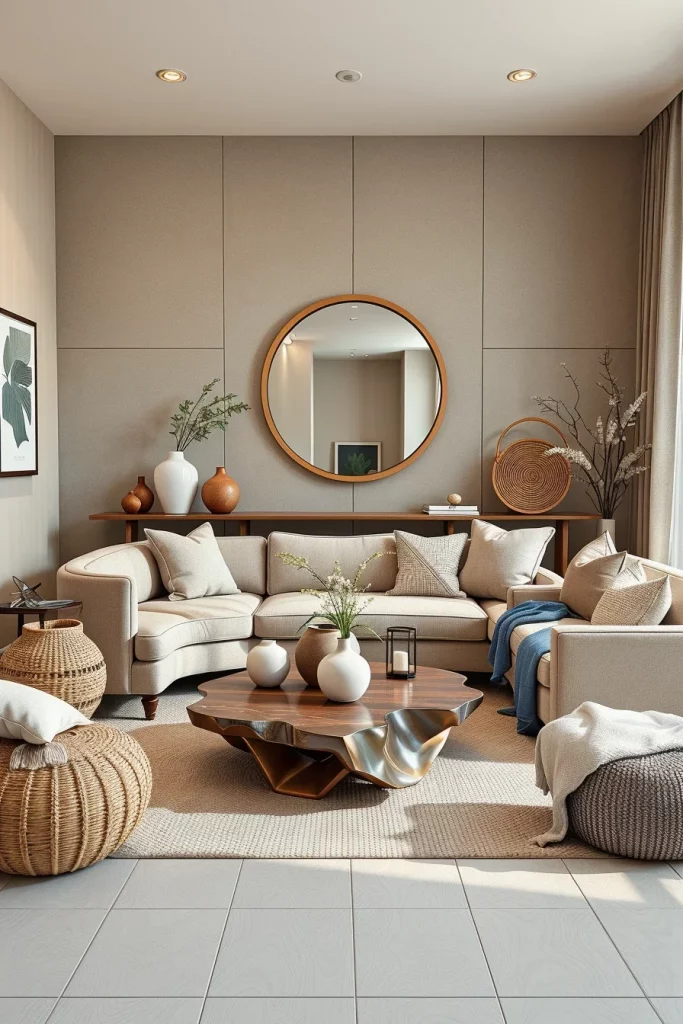
I usually incorporate sculptural ceramic vases, rounded bowls, textured throw pillows, and woven baskets to complement curved sofas and chairs. These accessories echo the soft silhouettes of the furniture and create visual harmony throughout the room. I also like to include an organic-shaped coffee table or side table because it strengthens the natural flow of the design.
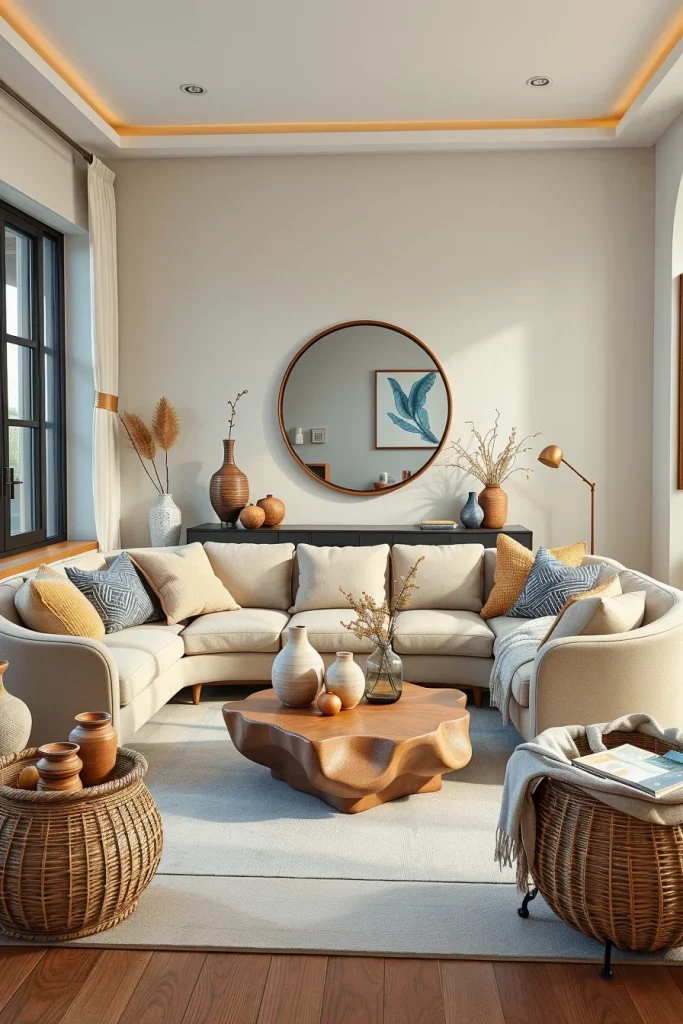
From my experience, combining various textures is just as important as choosing the right shapes. Interior designers often recommend layering materials such as boucle, linen, ceramic, and natural fibers to create warmth and depth. I have found that this combination makes a curved furniture small living room design feel more personal and inviting.
To complete this look, I would add subtle greenery, soft ambient lighting, and a few handcrafted decorative objects to enhance the relaxed atmosphere.
Scandinavian-Inspired Small Living Rooms With Soft Curves
Scandinavian interiors naturally pair well with curved furniture because both styles emphasize comfort and simplicity. When designing a small living room in this style, I focus on creating an open and airy environment with soft silhouettes and minimal visual clutter.
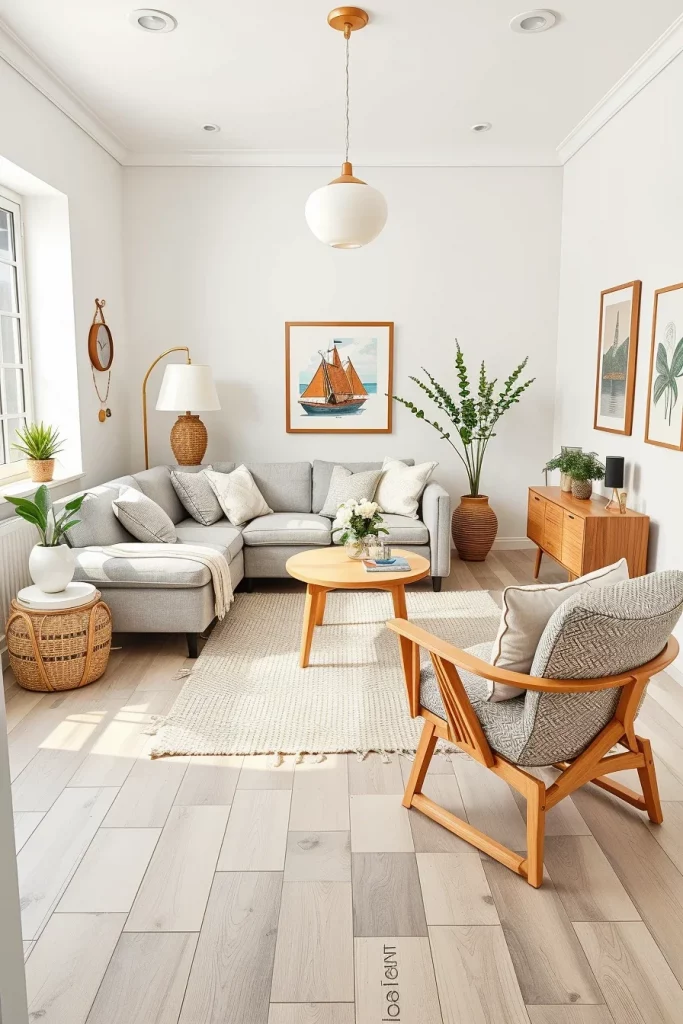
I typically start with a curved sofa upholstered in a light neutral fabric. Then I add pale wood side tables, simple shelving units, and a textured area rug. Soft textiles such as wool throws and boucle accent chairs help introduce warmth while maintaining the clean aesthetic associated with Scandinavian interiors.
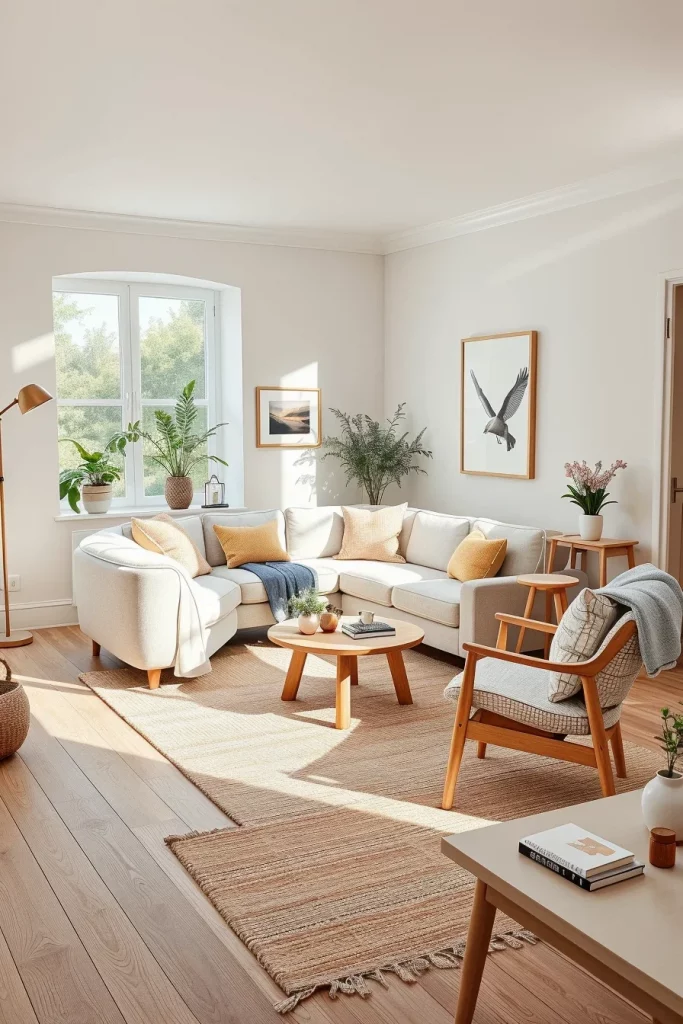
Personally, I appreciate how soft curves make minimalist spaces feel more approachable. In many of my projects, replacing angular furniture with gently rounded pieces instantly made the room feel more comfortable and welcoming. This strategy works exceptionally well in a curved furniture small living room design because it softens the entire space.
I would also recommend maximizing natural light with sheer curtains and limiting decorative accessories to only a few meaningful pieces.
Curved Furniture Ideas For Studio Apartment Living Areas
Studio apartments require furniture that can define spaces without blocking them visually. I often recommend curved furniture for studio living areas because soft silhouettes encourage movement and create a seamless transition between different functional zones.
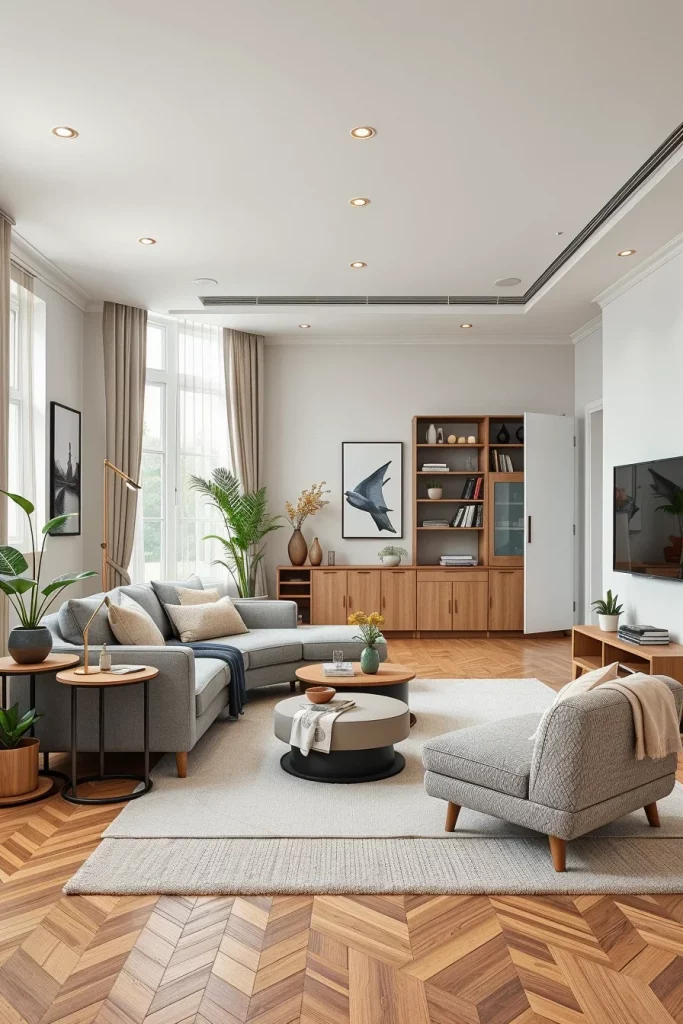
A compact curved sofa can easily become the focal point of the living area while maintaining openness. I usually pair it with nesting tables, multifunctional ottomans, and lightweight accent chairs. Open shelving units and low-profile storage pieces help separate the living zone without interrupting sightlines across the apartment.
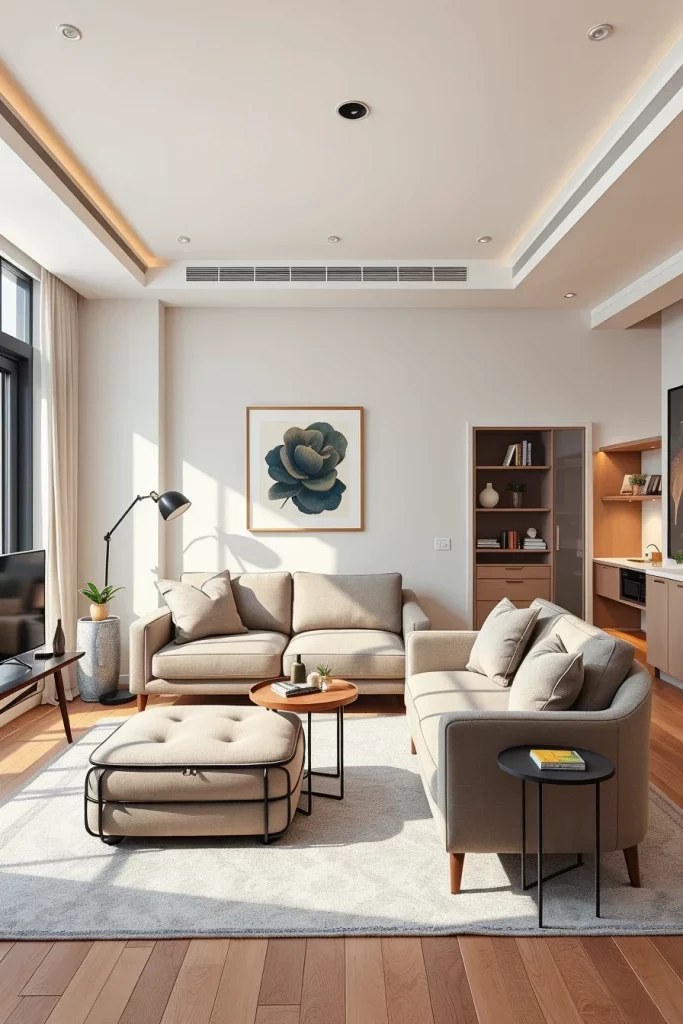
In my experience, curved furniture works particularly well in studio layouts because it eliminates harsh visual boundaries. The result is a more fluid and spacious environment that feels comfortable rather than crowded. This makes curved pieces an excellent investment for anyone creating a curved furniture small living room design in a studio apartment.
To improve functionality even further, I would include hidden storage solutions and wall-mounted lighting fixtures to preserve valuable floor space.
Adding Depth With Mirrors In Curved Furniture Layouts
Mirrors are one of the most effective tools I use when designing small living rooms with curved furniture. They reflect light, visually expand the room, and emphasize the elegant forms of rounded furnishings. In compact spaces, mirrors can dramatically improve the sense of openness.
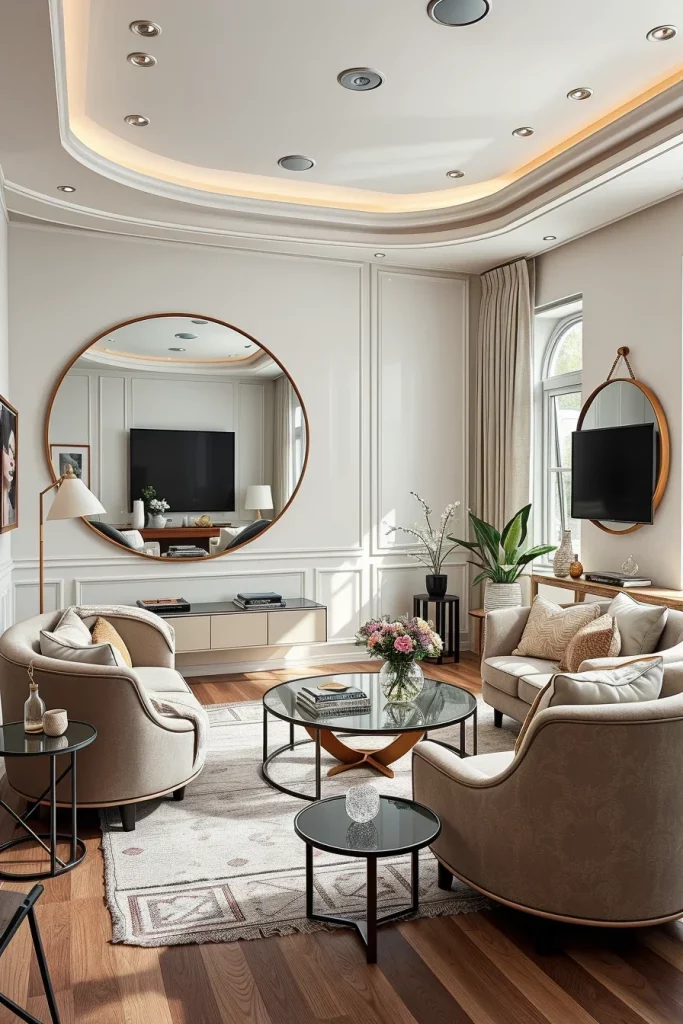
I often place a large rounded mirror above the sofa or opposite a window to maximize natural light. Mirrored side tables, glass coffee tables, and reflective accessories can further brighten the room. When combined with curved seating, these elements create a layered and sophisticated appearance.
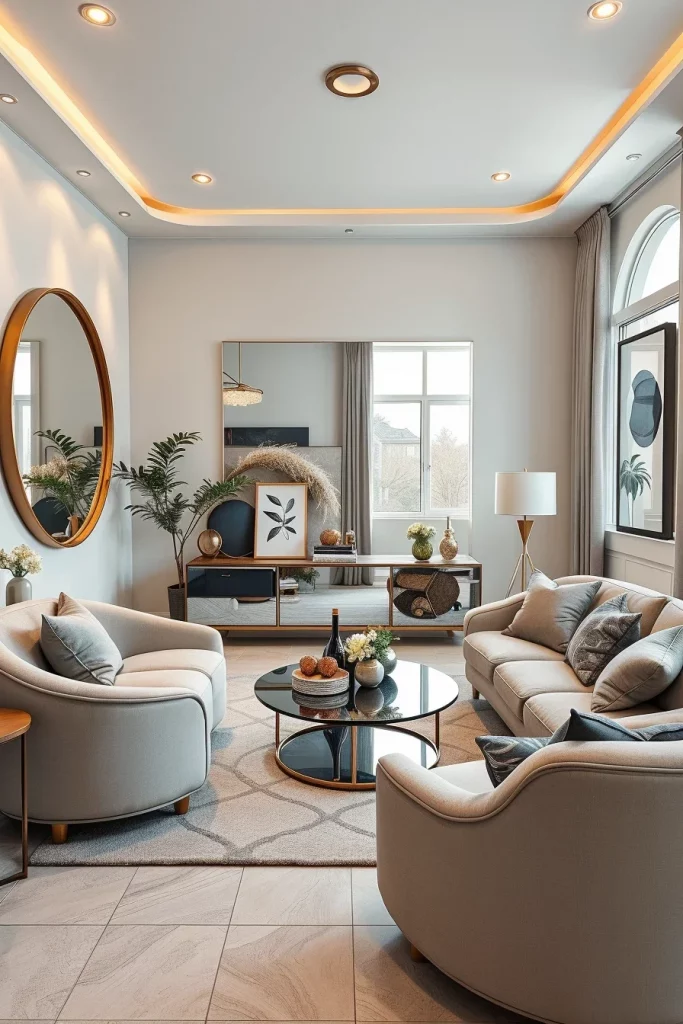
I have repeatedly seen how strategically placed mirrors transform small interiors. Many professional designers recommend oversized mirrors in compact rooms, and I agree because they instantly make the entire space feel larger and more refined.
For additional depth, I would pair mirrors with layered lighting and metallic accents that enhance reflection throughout the room.
Designing A Functional Yet Stylish Small Living Room With Curved Furniture
A successful small living room should be both beautiful and practical. Whenever I design with curved furniture, I carefully consider circulation, seating needs, and storage requirements to ensure the room functions efficiently every day.
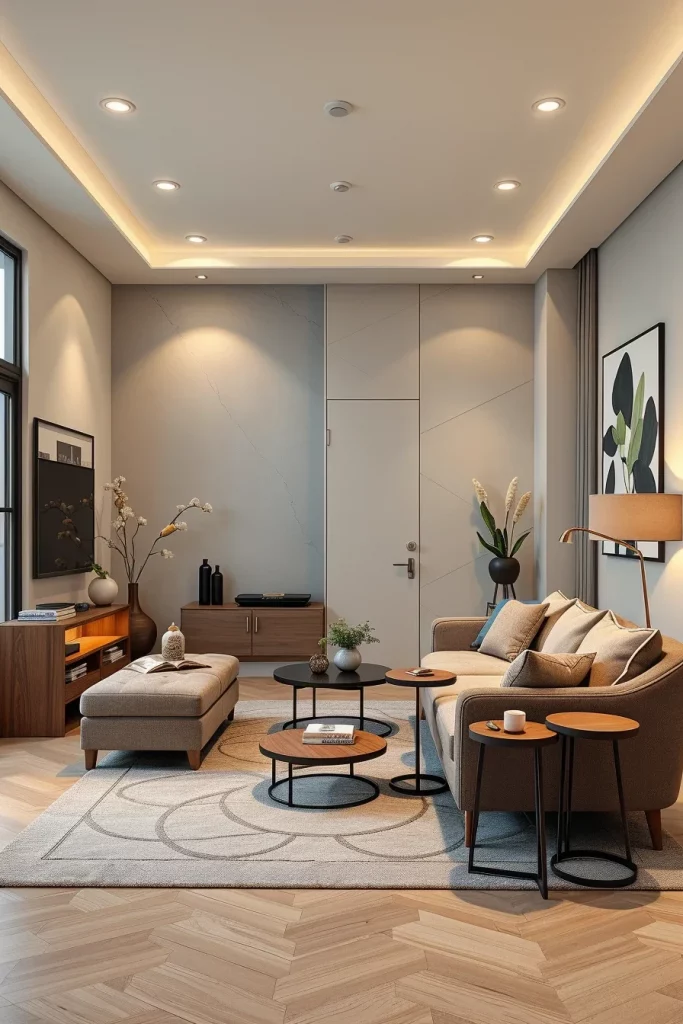
I generally combine a curved sofa with multifunctional pieces such as storage ottomans, nesting tables, and compact media units. Keeping furniture appropriately scaled is essential because oversized pieces can quickly overwhelm a small room. I also prefer furniture with exposed legs to maintain an open visual appearance.
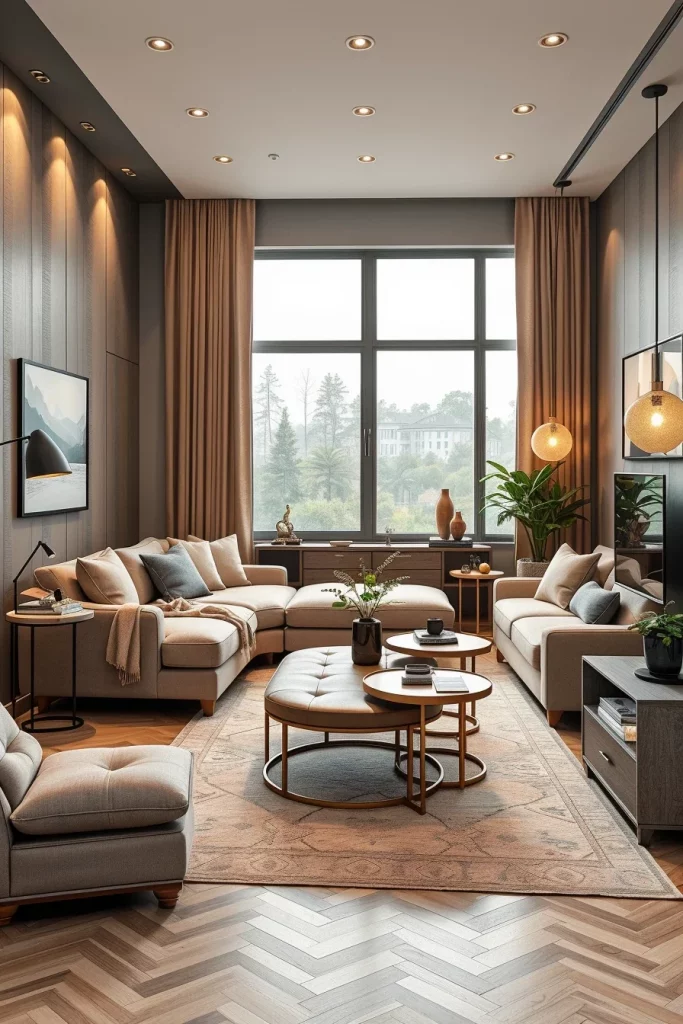
From my perspective, flexibility is one of the greatest advantages of curved furniture. Rounded seating naturally encourages conversation while improving movement throughout the room. With thoughtful planning, homeowners can easily achieve an elegant and highly functional curved furniture small living room design.
I would complete the space with layered lighting, concealed storage, and a restrained color palette to maintain visual balance and long-term practicality.
Curved furniture offers a stylish and practical way to transform small living rooms into inviting, functional spaces. From rounded sofas to circular tables and sculptural accents, soft curves can improve flow, maximize space, and create a cozy atmosphere. By thoughtfully incorporating curved pieces, you can achieve a modern, balanced design that feels both spacious and comfortable. Whether your style is minimalist, contemporary, or Scandinavian-inspired, curved furniture can bring elegance and personality to even the smallest living room.