
A green front door is the easiest way to give your home a pulse. It reads as classic without being predictable, and it works on everything from a brick townhouse to a modern farmhouse. This roundup gathers 25 real green front doors, each with its own shade and setting, so you can see how the color behaves in different light, with different materials, and against different landscapes.
Whether you are repainting your current door or just dreaming about the next one, these examples show the range green can hold. You will find deep olive, soft sage, bright lime, and quiet teal, all doing the same job: making the entrance feel like the best part of the house.
Victorian Charm with an Olive Green Front Door
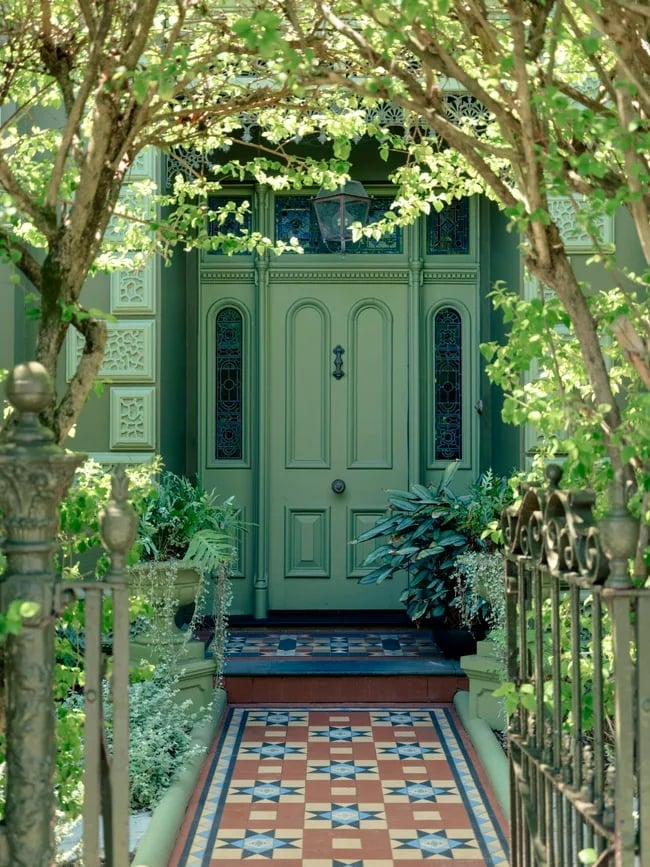
An olive green door and stained glass panels work together to set a Victorian entry apart. The deep green pulls warmth from the terracotta tiles underfoot, while the cream trim and wrought iron gate keep the look grounded rather than precious. That stained glass is the clever piece: it breaks up the wood without adding clutter, and the pattern catches interest from the street. A simple overhead lantern is all the light you need here. The palette does the work.
Classic European Entryway with a Deep Olive Green Door
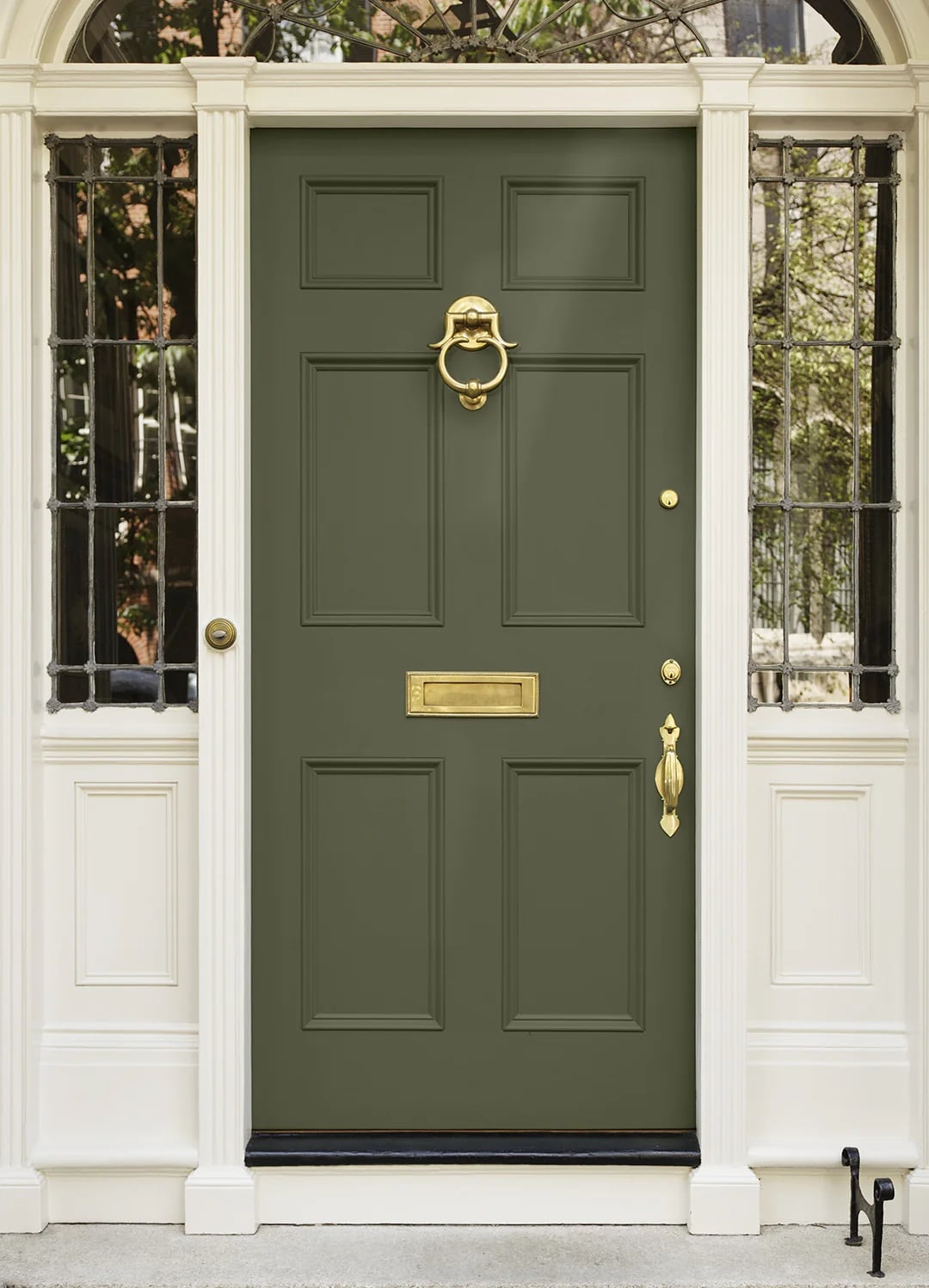
This entry gets its polish from the brass hardware. The deep olive green door is paneled in a classic pattern, and the flanking windows let daylight reach the threshold. The ornate knocker and mail slot are the focal points: they break up the solid paint finish and give the eye somewhere to land. White trim keeps the green balanced. A matching lantern above the door ties the metal finishes together. The layout is symmetrical, which makes the whole entrance feel deliberate. Brass against dark green reads as traditional, not fussy.
Farmhouse Freshness with a Sage Green Front Door
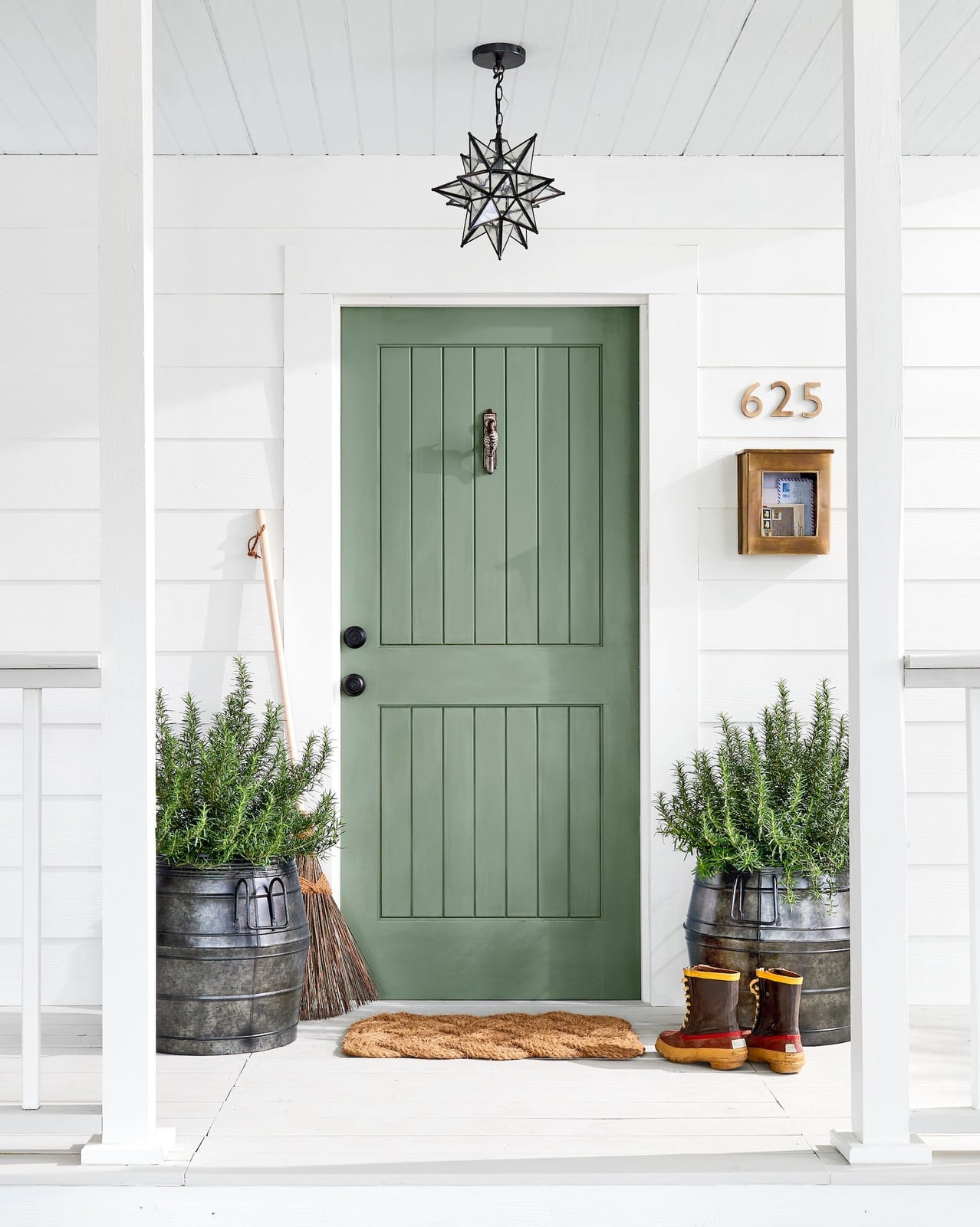
Can a sage green door carry a farmhouse porch without looking too sweet? It can, if you let the materials do the talking. The door itself is a soft sage, but the metal planters and galvanized bucket add an industrial edge. The coir doormat and broom are practical pieces that belong there, not decor you have to swap out. A star pendant light hangs overhead, its metal finish echoing the planters. That mix of painted wood and raw metal is what makes farmhouse work: soft color, hard texture.
Vibrant Lime Green Double Doors for a Traditional Home
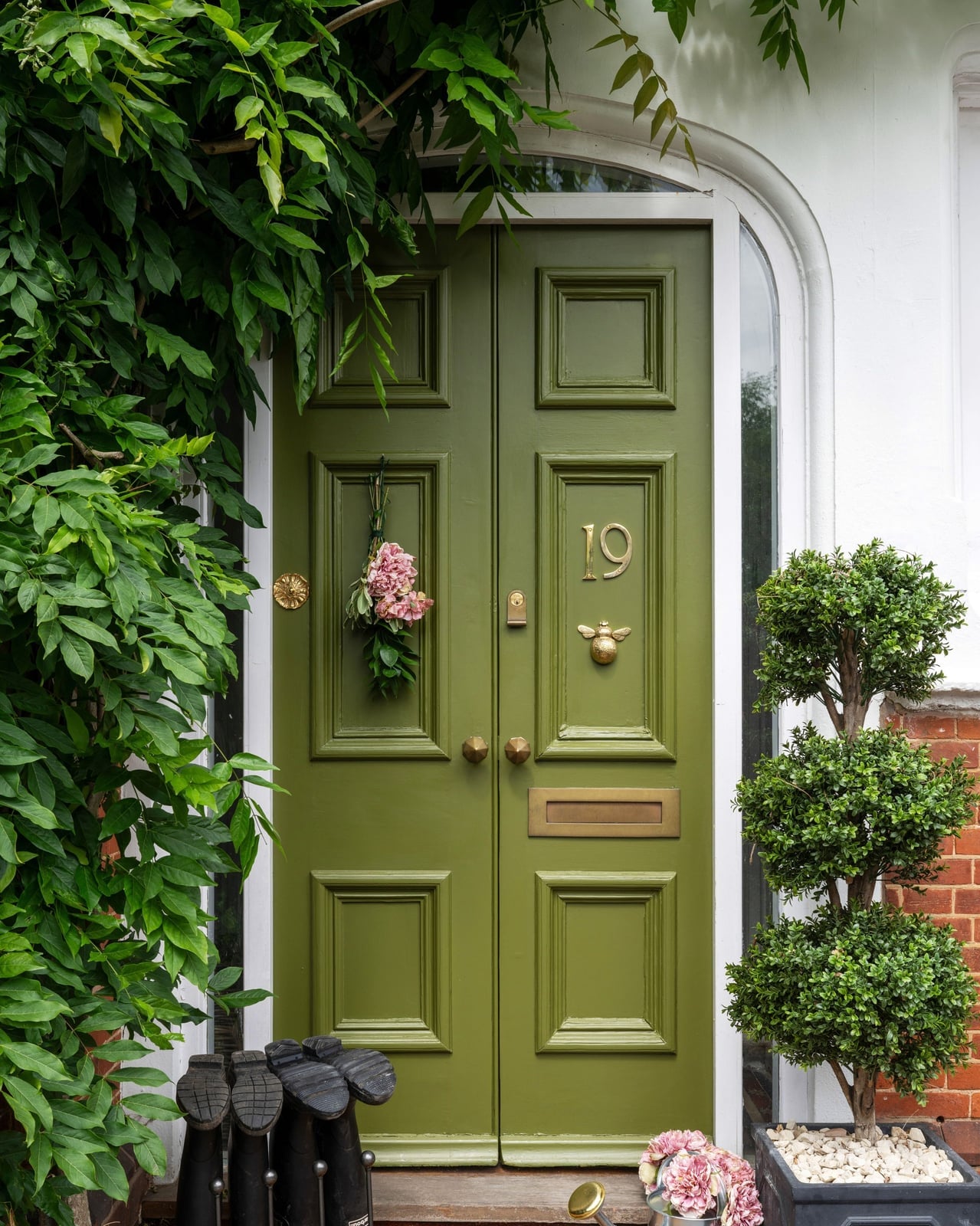
A lime green door reads as bold because it is. The double doors here face a brick facade, and the green is saturated enough to hold its own against the warm brick. Brass hardware and a pair of topiaries in matching planters give the entrance a formal rhythm. The palette is actually simple: lime green, brick red, and brass. No competing colors, so the doors pop without the whole entry feeling loud. That is the trick with a bright front door: the rest of the scheme should stay quiet.
Regency Elegance with High-Gloss Dark Green Double Doors
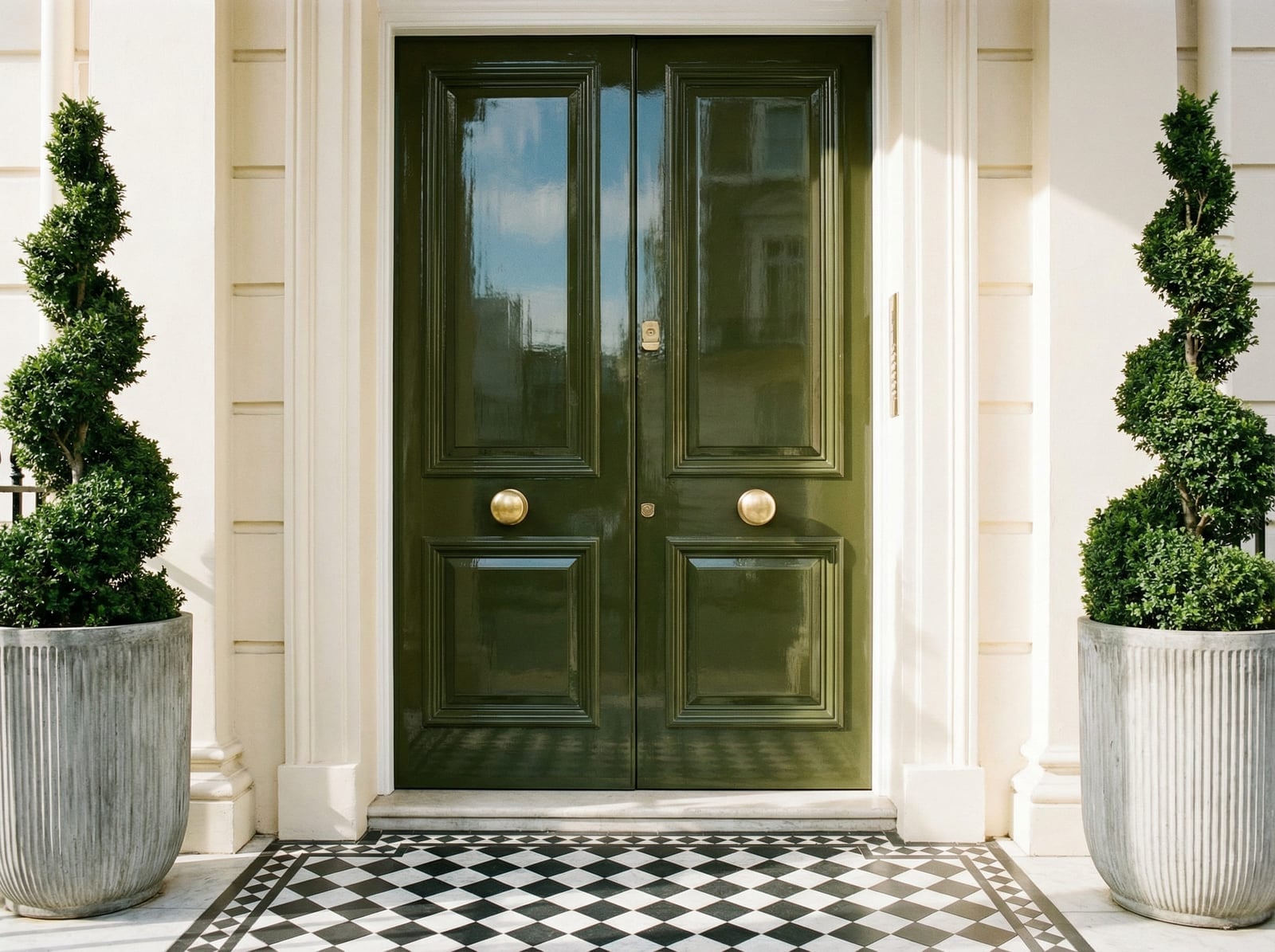
High-gloss paint on a front door works best when the surrounding materials are matte. Here, the glossy dark green double doors sit above a black and white checkered tile floor and beside marble steps. The sheen catches daylight, while the floor pattern stays flat. Brass knobs and flanking planters in matching urns continue the formal Regency feel. If you want this level of polish, the layout needs symmetry: centered doors, matching planters, even spacing. The finish is the statement, so keep the hardware classic and the palette tight.
Modern Entrance with a Vibrant Green Door and Wood Paneling
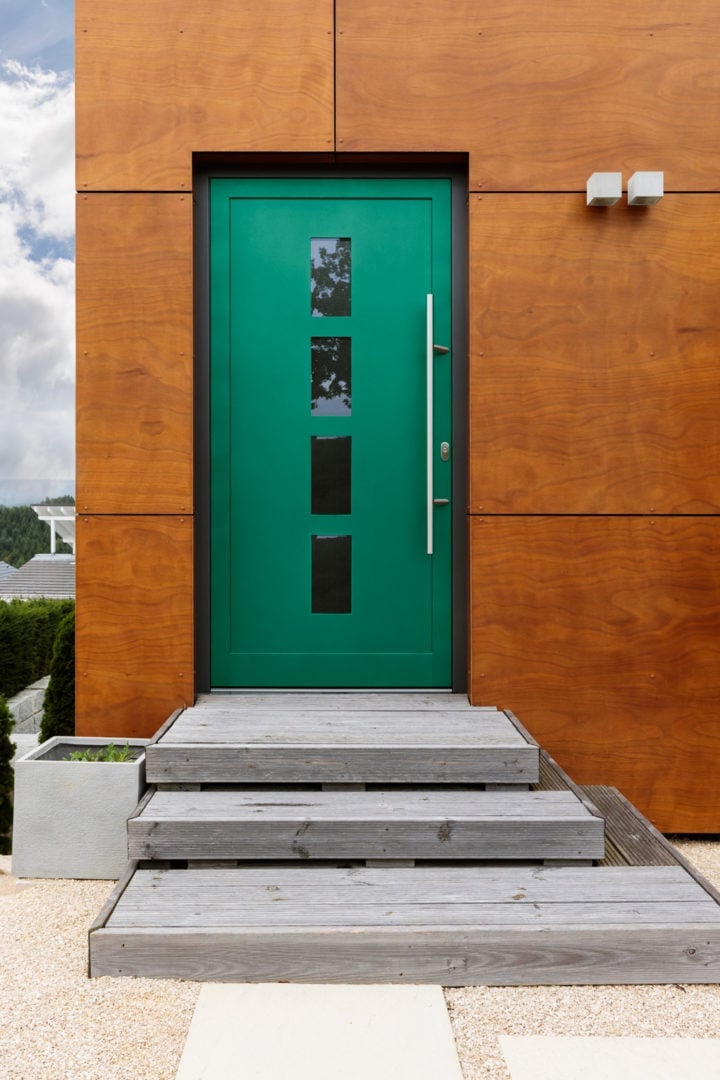
A green door with glass panels reads less formal than a solid wood one, which works for a modern entry that wants to stay approachable. Wood paneling on the exterior and wooden steps keep the palette grounded, while metal door hardware and exterior sconces add the crisp contrast a vivid green needs. The layout keeps the door centered with steps leading straight up, so the eye lands on the color first. What defines this look is the ratio of warm wood to cool green, roughly two thirds wood tones to one third painted surface. The glass panels break the solid weight of the color and let daylight pass through, softening the modern lines.
Farmhouse Entry with Sage Green Door and Floral Wreath
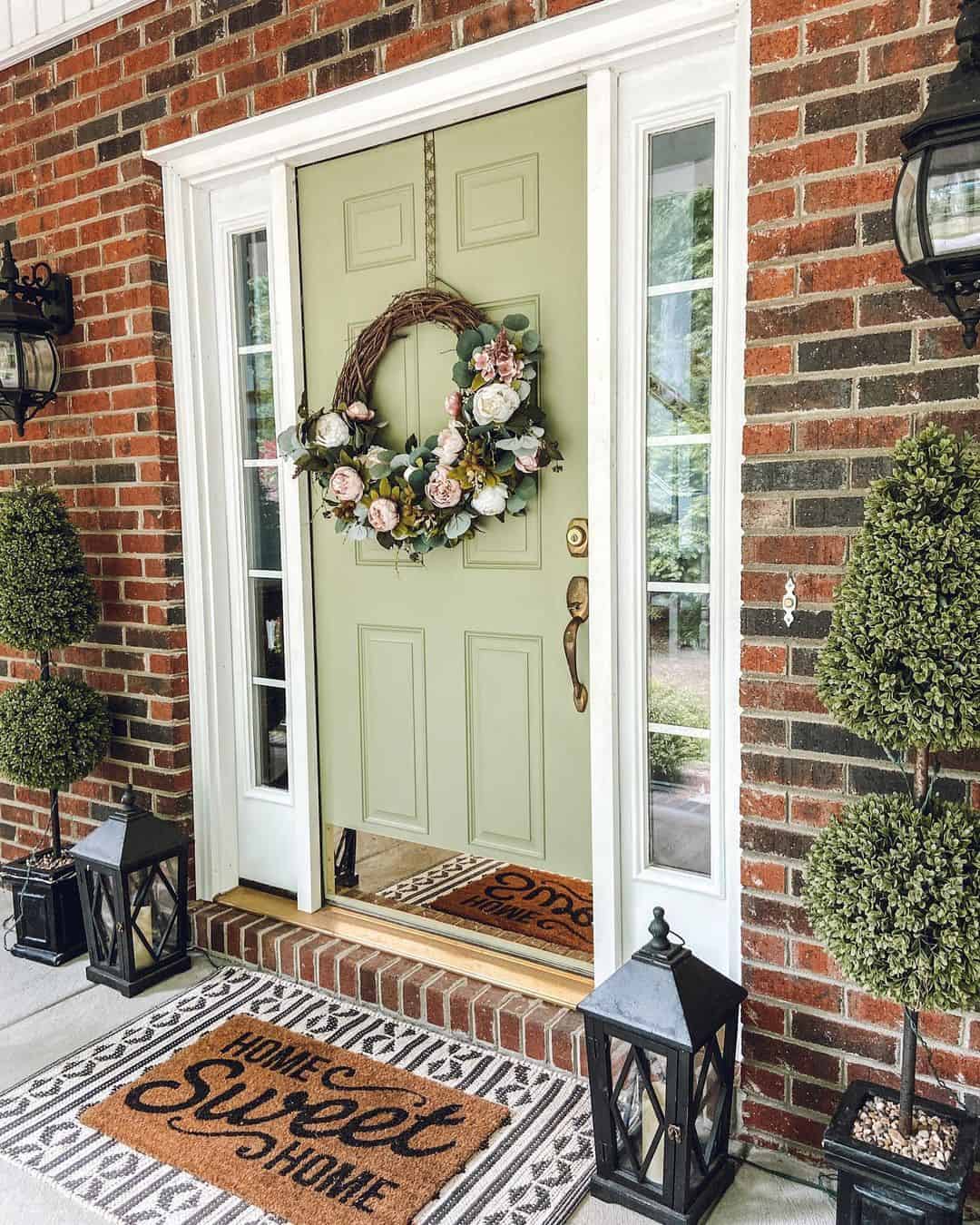
Sage green on a front door with sidelights reads as soft because the color sits between gray and green, never fully committing to either. The red brick wall and white trim frame it without competing, and the floral wreath adds the one seasonal note that keeps the entry from feeling staged. For a renter, a door color this neutral works with most brick tones, and a wreath hung on a command hook changes the look without paint.
Coastal Style with Aqua Green Double Doors and Urns
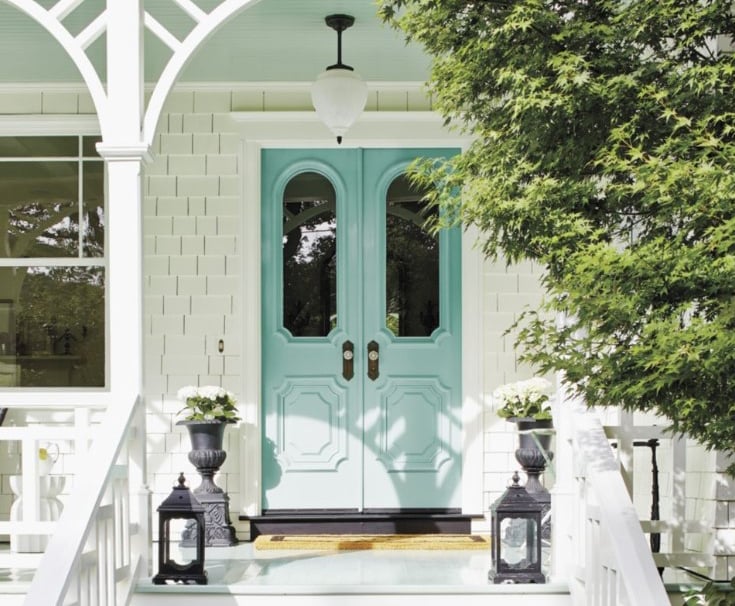
Aqua green double doors with white trim and black lanterns hit the coastal note without resorting to pale blue or navy. The urns flanking the steps anchor the width of the double doors, and the overhead lantern repeats the black hardware from the doors. The layout stairs lead straight up to a centered pair of doors, which makes the entrance feel generous. The coastal effect comes from the equal mix of aqua and white, with black used as a thin outline on the hardware and lanterns. The stone steps break the soft palette with a natural texture.
Traditional Teal Front Door in an Arched Brick Entryway
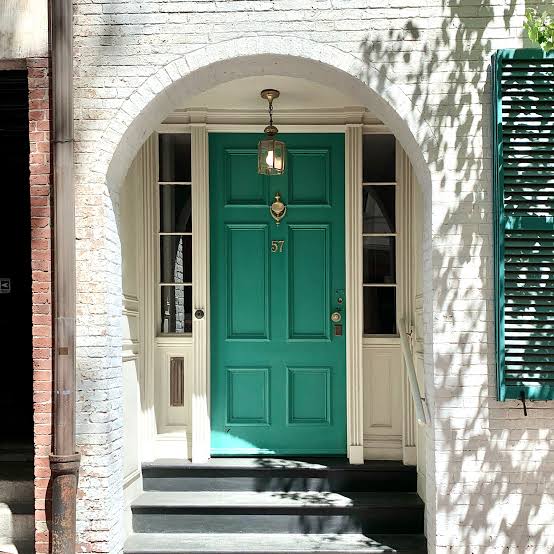
Can teal work on a traditional brick house without feeling too nautical? It can, if the shade leans toward deep green rather than blue and the brick is a warm red tone. This teal door sits inside an arched brick surround, with white trim and a brass knocker that pick up the warm notes in the brick. The recessed doorway and steps create a small landing that gives the color room to register before you reach the door. What defines this palette is the contrast between the cool teal and the warm brick, roughly one third door color to two thirds masonry. The overhead lantern adds a metal element that keeps the brass knocker from standing alone.
Modern Farmhouse Forest Green Door with Black Accents
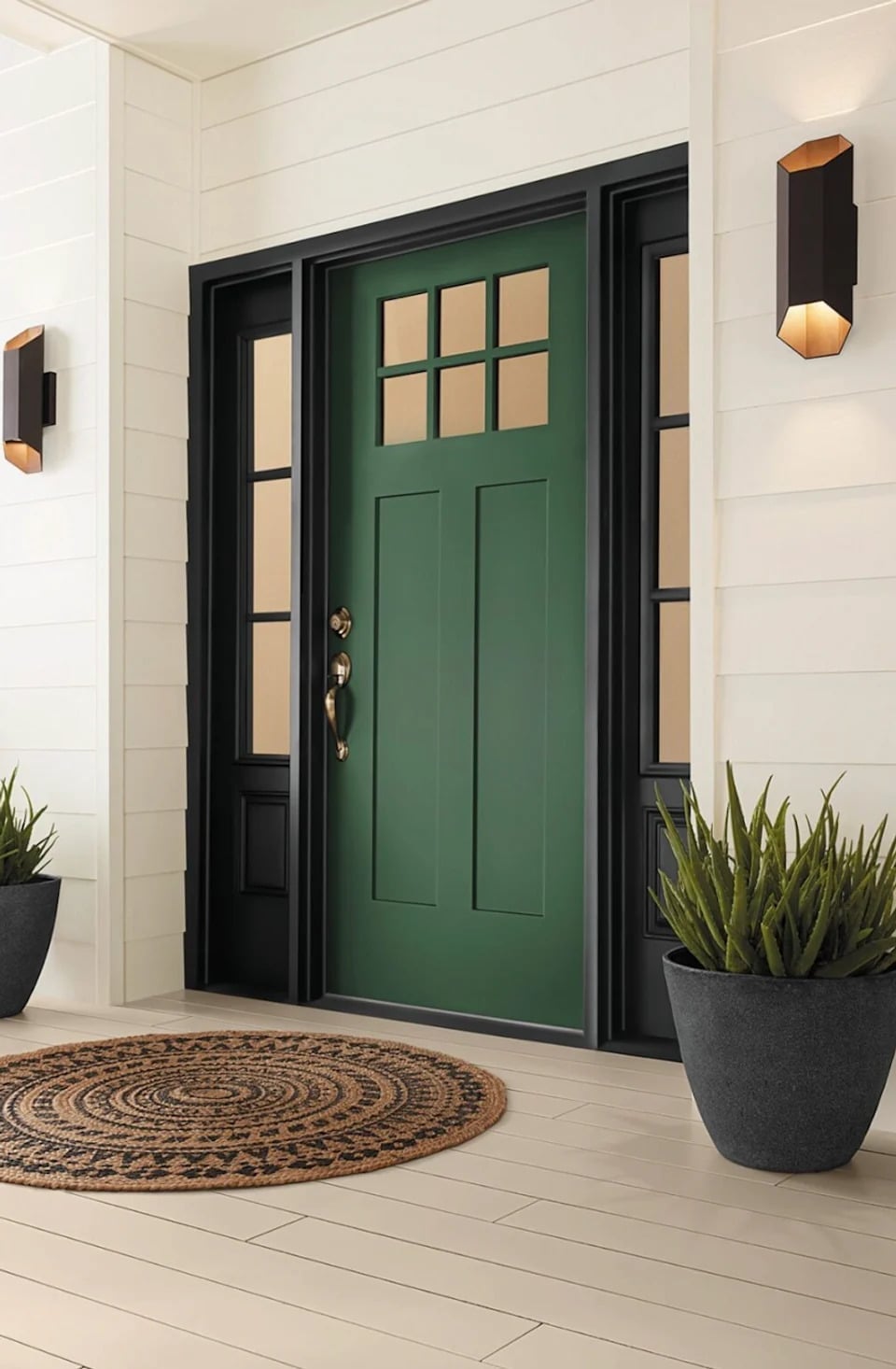
A forest green paneled door with a glass top looks modern farmhouse because the black trim around the door and windows creates a clean outline. Gold wall sconces add a warm metal note that keeps the black and green from feeling cold. The round rug on the porch softens the geometry of the panels and trim. The palette uses roughly three parts green to one part black, with gold as the accent that breaks the dark tones.
Farmhouse Porch with Sage Green Door and Gray Shutters
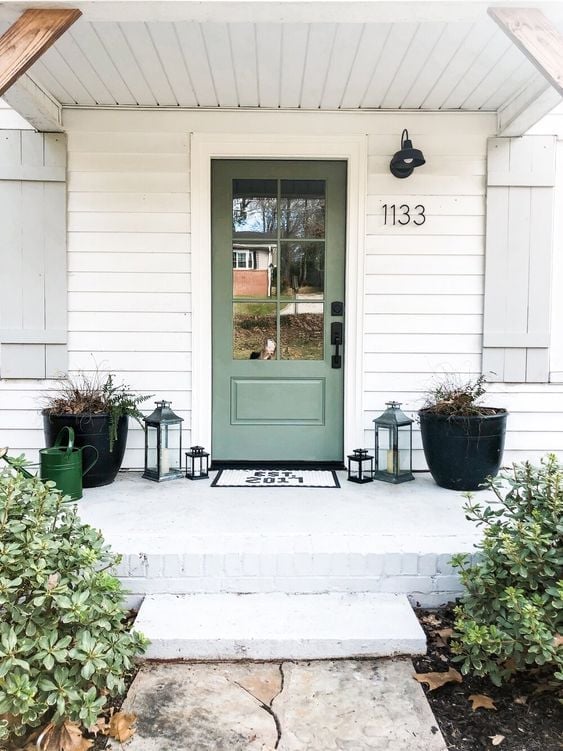
A sage green front door with gray shutters keeps the porch in the same muted range. The glass panes in the door let daylight into the entry without needing a sidelight. White trim keeps the wood door from feeling too heavy against the concrete floor. Planters flanking the door echo the vertical line of the shutters, which avoids a scattered look. The style is defined by the ratio of gray to sage: the shutters are close in value to the door, so neither one competes. What breaks it would be a bright welcome mat or a glossy black lantern, because the whole point is the quiet contrast of two cool neutrals.
Coastal Porch with Muted Teal Door and Seasonal Decor
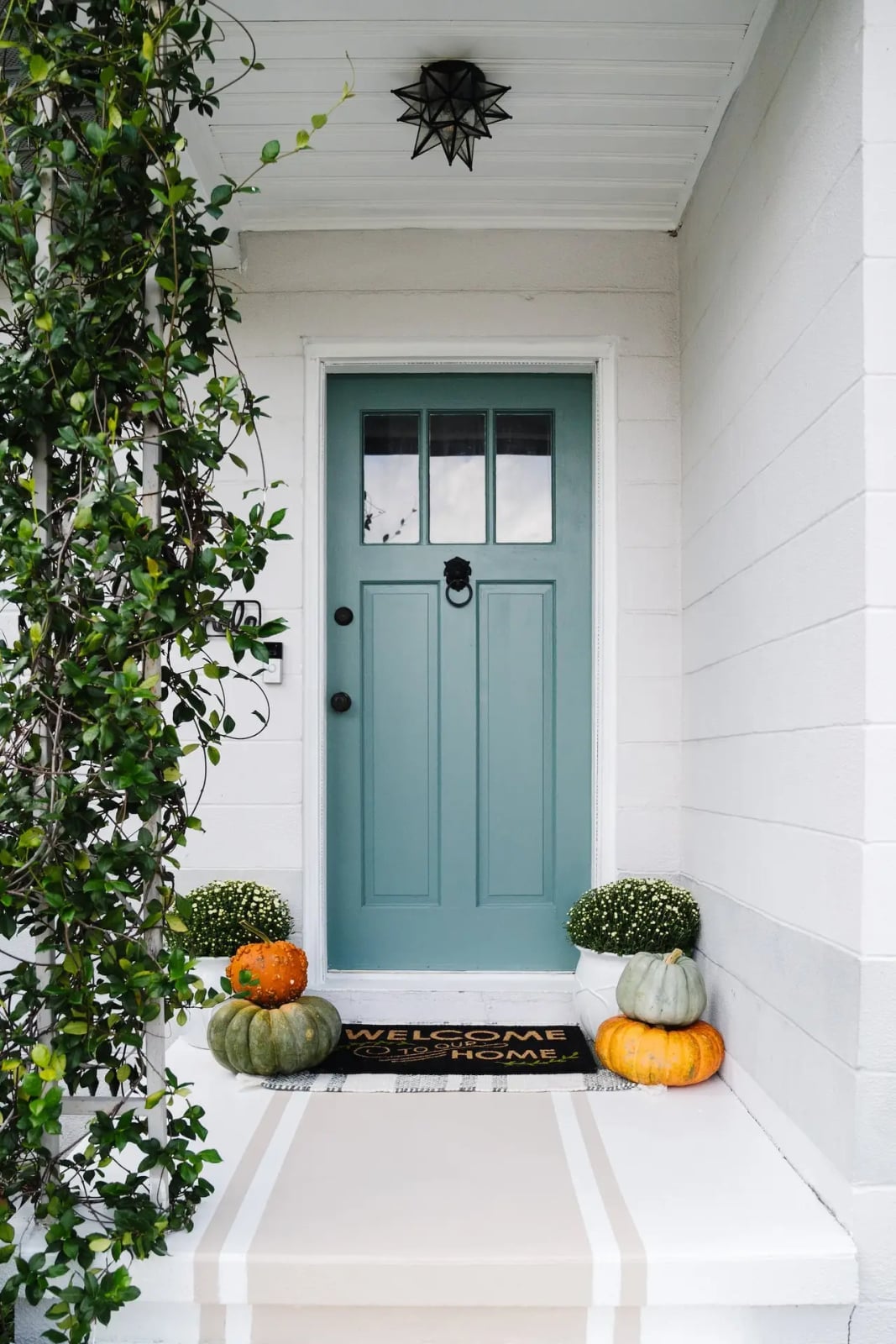
A muted teal door reads differently than a bright aqua one. Where aqua leans toward tropical, teal with a gray base feels settled and works with natural wood tones and soft white vinyl siding. The porch here treats the door as the anchor, then layers in seasonal pieces like pumpkins and a simple welcome mat. The orange of the pumpkins is the one warm note, and it works because it sits opposite teal on the color wheel without being a full saturation match.
Modern Farmhouse Sage Green Double Doors with Black Lanterns
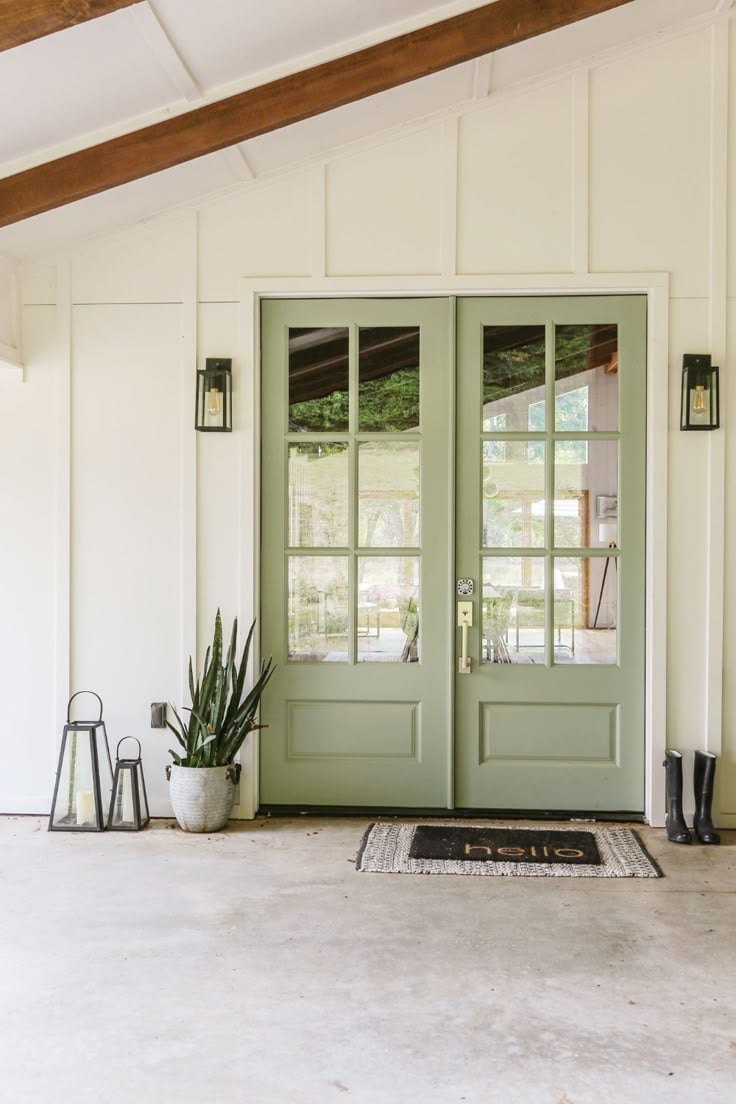
The double doors here are sage green with a matte finish, and the black lanterns are mounted directly on the wood, not on the wall beside them. That placement keeps the eye moving horizontally across the entrance rather than up to the ceiling. A single potted plant on one side and a pair of boots on the other break the symmetry just enough to feel lived in. The concrete floor and wood ceiling keep the porch grounded without adding more color.
Traditional Deep Green Door with Wooden Trellises
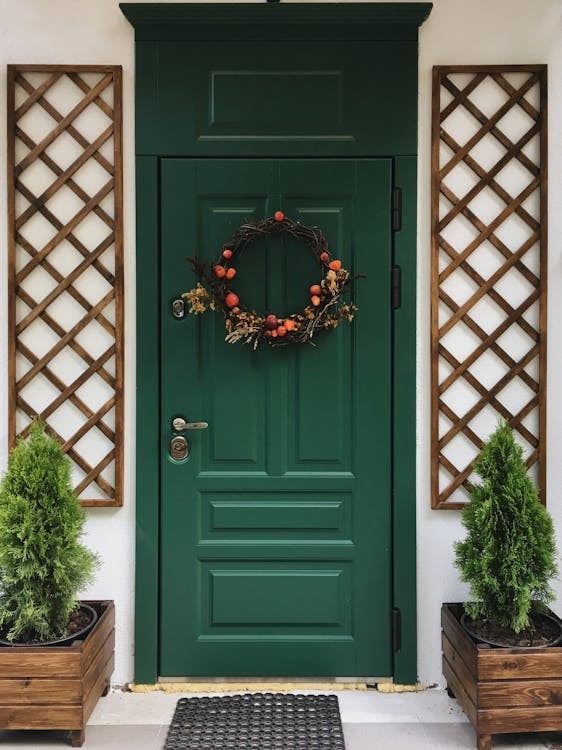
This entrance relies on vertical lines. The deep green door is a standard paneled style, but the wooden trellises on either side draw the eye up and make the doorway feel taller. Small trees in pots at the base of each trellis repeat the green of the door in a softer, natural form. The white trim around the door keeps the dark color from closing in the entry. The trellises are the material that defines the look, not the door itself.
Grand Traditional Entrance with Deep Green Double Doors
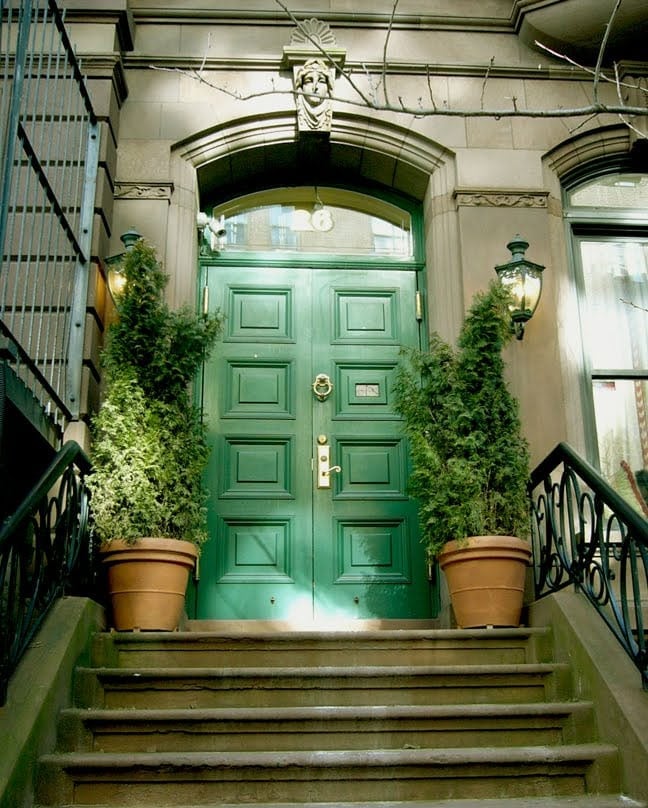
A grand entrance needs a door that can hold the scale. Deep green double doors with ornate trim do that because the darkness adds weight and the double width fills the opening. Flanking potted trees and stone urns repeat the vertical line of the doors, and the exterior lanterns on either side match the bronze tone of the hardware. The stone floor and steps keep the palette grounded in earth tones, so the green feels like a natural choice.
Period Townhouse Dark Green Door on Yellow Brick
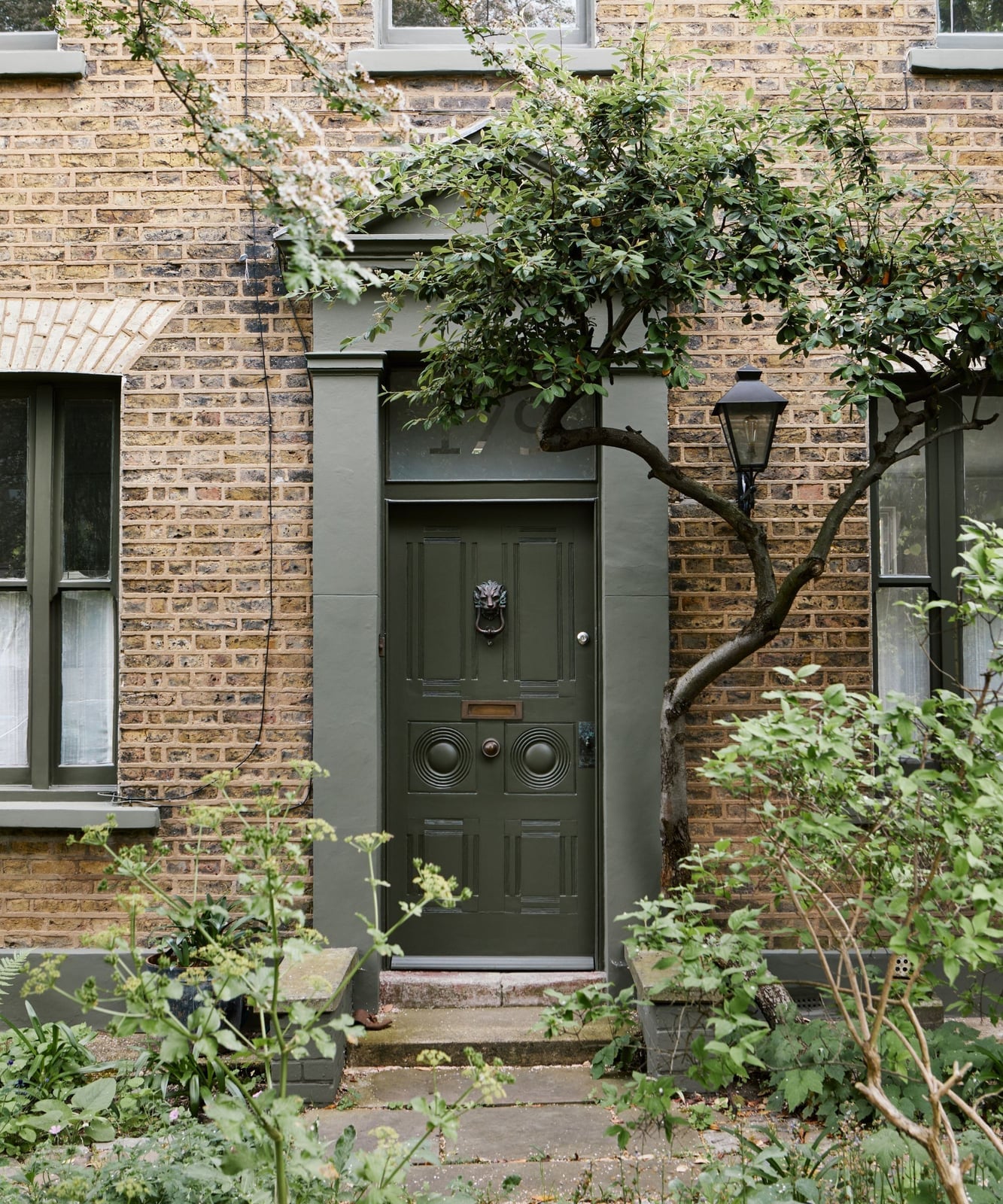
A dark green paneled door with a lion knocker set against yellow brick is a palette that knows its own mind. The deep green reads as grounded and formal, while the warm yellow brick keeps the facade from turning somber. Gray stone trim and white window frames add the crisp edges this combination needs. The palette defines the look: cool and dark against warm and light, with nothing competing for attention. What breaks it is adding another strong color to the mix. A third saturated hue would crowd the conversation between the green door and the brick.
Traditional Dark Green Door with Fall Wreath and Pumpkins
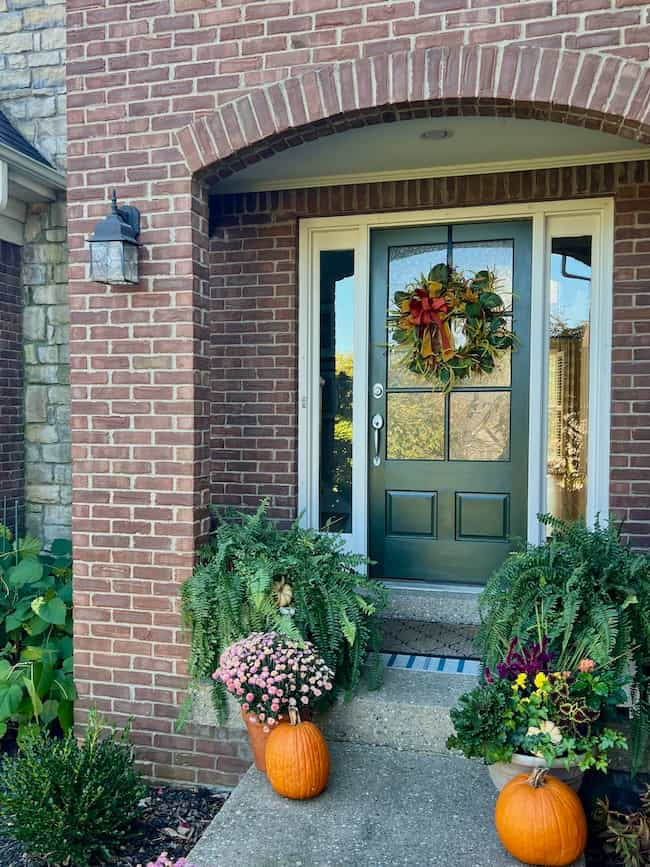
For seasonal styling, let the door color set the tone and let the decor follow. Here a dark green door with glass sidelights holds a wreath of dried oranges and foliage, while pumpkins in orange and yellow cluster on the brick porch. The dark green acts as a neutral backdrop, so the warm fall colors become accents without clutter. Ferns in flanking planters add a green bridge between the door and the pumpkins. A lantern on the wall echoes the metal of the door hardware. The look is traditional but not stiff, because the orange and yellow are allowed to be the story.
Mediterranean Olive Green Arched Door with Potted Plants
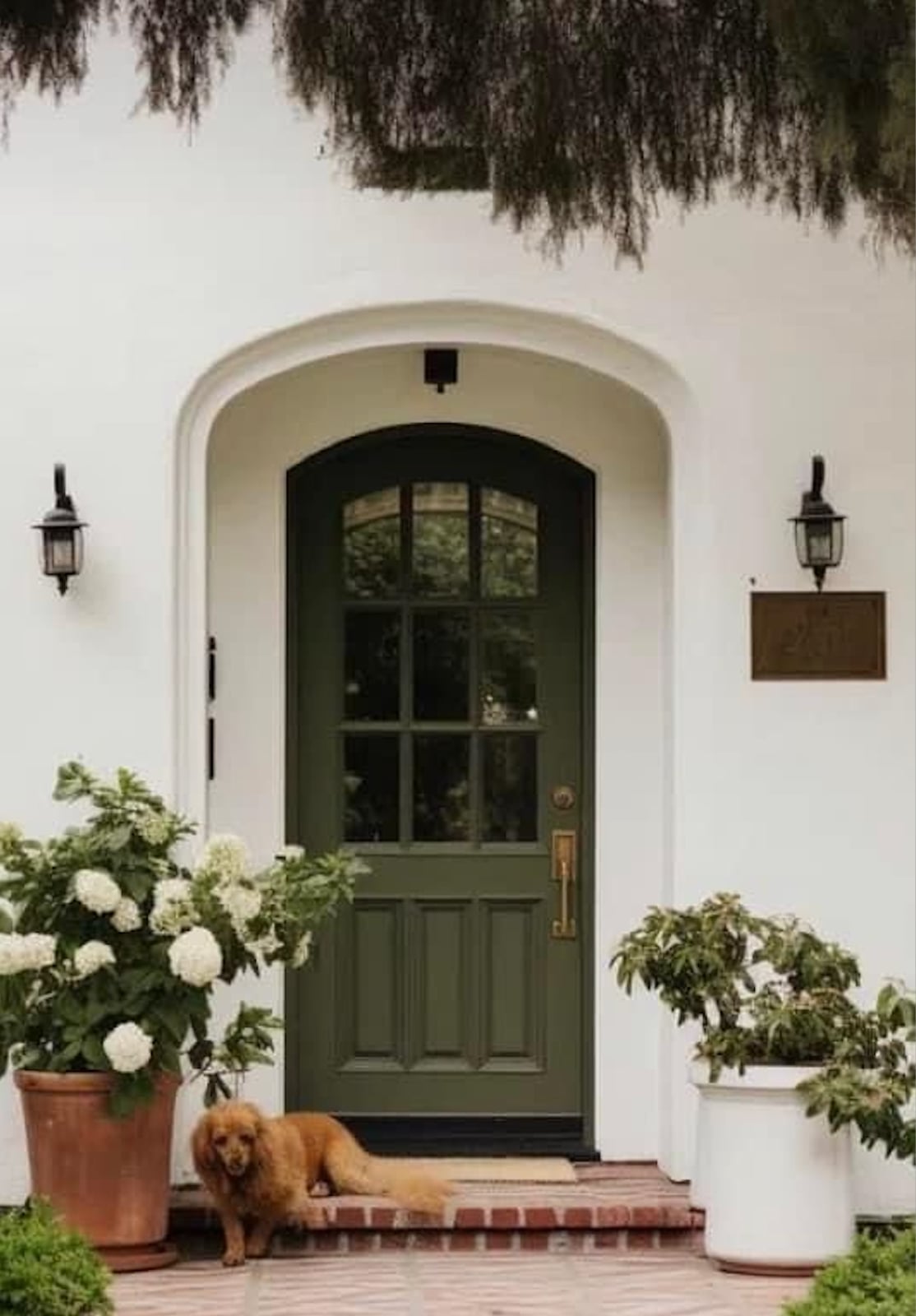
An olive green arched front door reads differently than a darker green on the same shape. The olive tone leans warm and earthy, which suits the Mediterranean palette of white stucco walls and terracotta pots. A dog lying by the door reinforces the relaxed, lived-in feel that this style needs.
The palette stays simple: olive green, white, and terracotta. The arched shape of the door softens the geometry of the facade, and the potted plants on either side echo the curve. The door is the only large green element, so it stands out. Adding another green element, like painted trim or a green planter, would dilute the focus.
Georgian Deep Green Door with Ornate Pediment
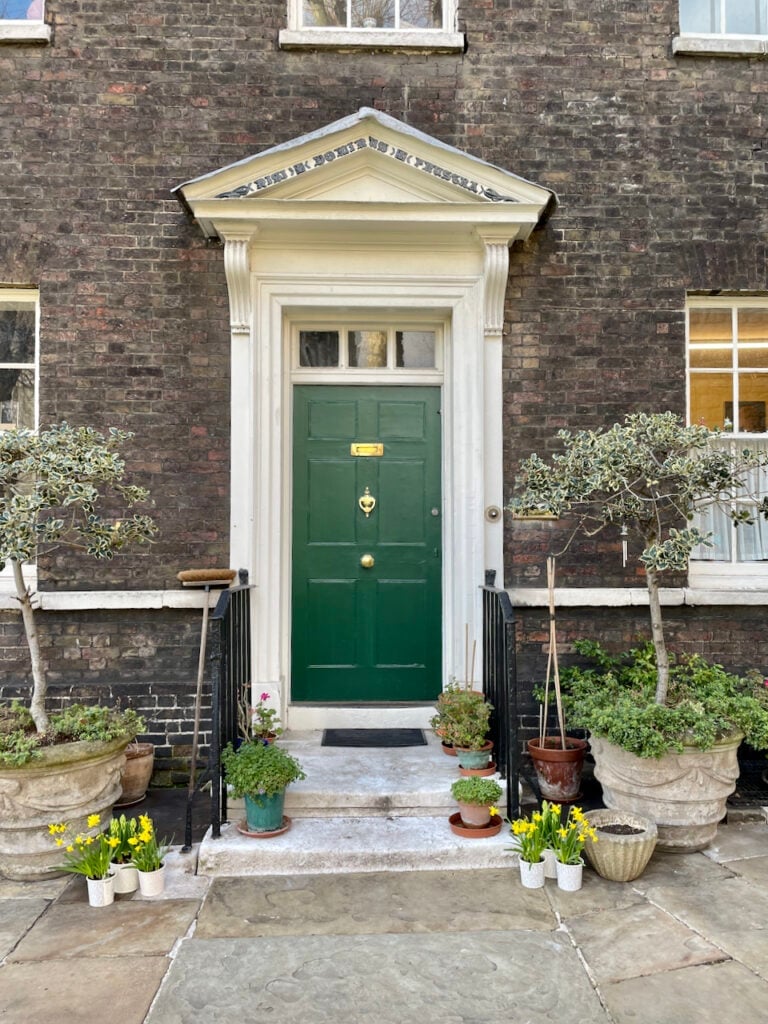
A deep green door with an ornate pediment sits centered in a gray stone facade, flanked by potted trees and railings. The material story here is about weight and permanence. The stone is heavy and textured, the wood door is smooth and glossy, and the metal railings add a fine line detail. The potted trees introduce a living element that softens the formality. This combination works because the materials are distinct enough to read separately. If the stone were painted or the door were matte, the hierarchy would blur. The deep green holds its own against the stone because it is dark and saturated, not light or muted.
Traditional Dark Green Door with Checkered Tile Porch
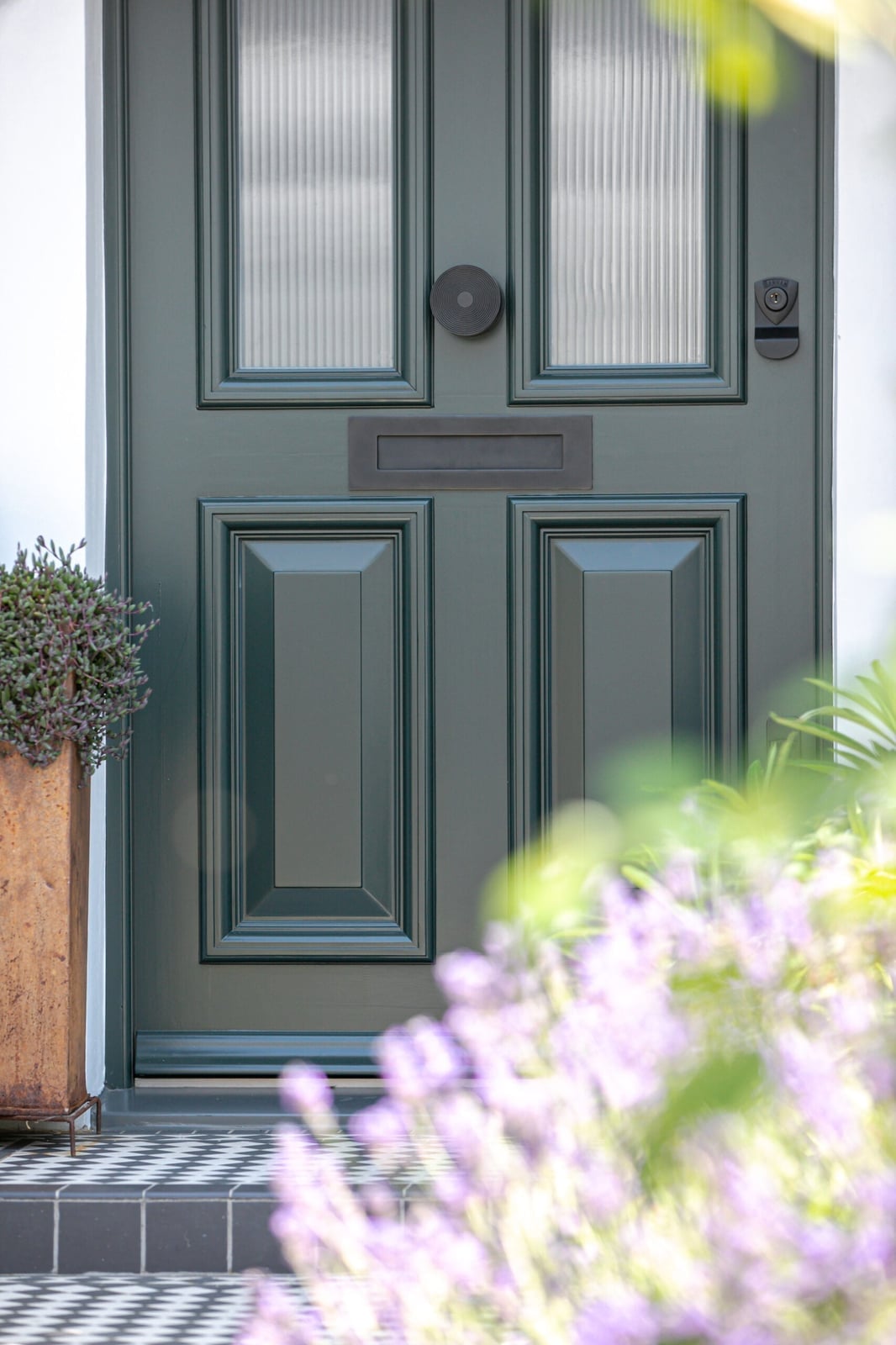
This is a layout that understands proportion. A paneled dark green door with a mail slot and round knocker sits centered on a porch with a black and white checkered tile floor. The tile pattern anchors the entrance and gives the eye a clear path to the door. Potted plants on each side frame the doorway and repeat the vertical lines of the door panels. The copper accents on the lantern and planter add a warm note against the cool green and white. The layout works because the door is the focal point and everything else supports it. Adding a rug over the tile or a bench against the wall would break the symmetry and crowd the entry.
Traditional Dark Green Door in a Brick Facade with Arched Entryway
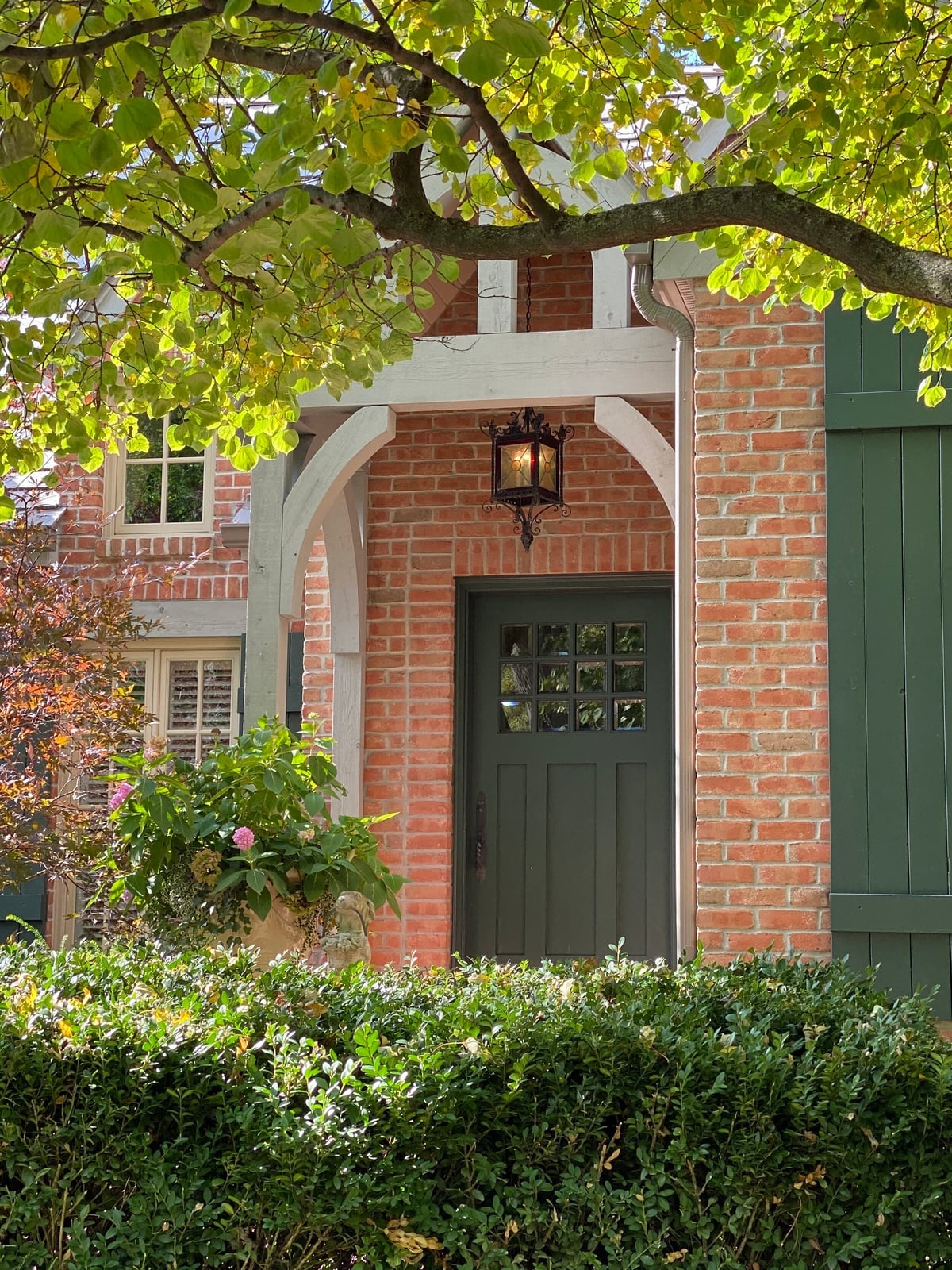
A dark green front door holds its ground best when the entryway frames it. The brick facade and arched opening create a natural border that keeps the eye on the door. A single lantern mounted beside it adds warm light. The dark green looks grounded because the brick red and gray stone work as neutral partners. This palette feels established, not experimental. The arched entryway gives the door a sense of occasion without extra trim or columns. If your own entrance lacks an arch, a painted door in the same deep green can still anchor the facade as long as the surrounding materials stay quiet. Let the brick do the talking and the door do the welcoming.
Modern Farmhouse Sage Green Door to Mudroom
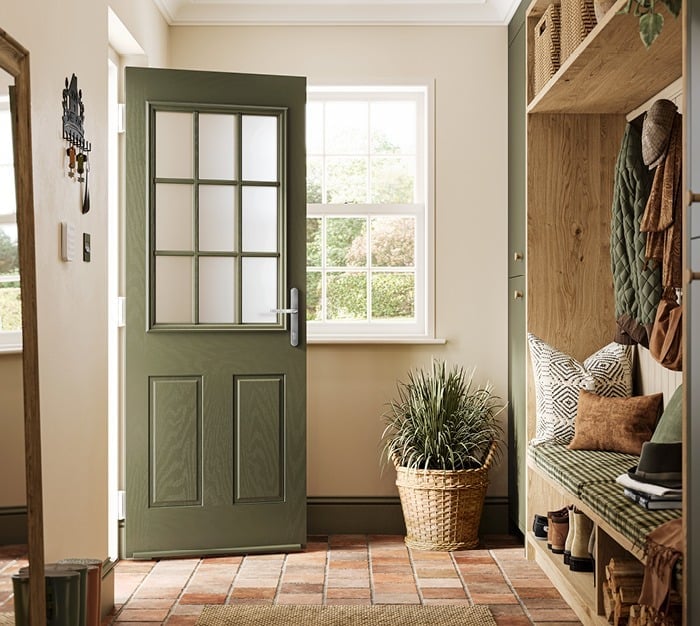
The sage green door in this mudroom connects the indoor and outdoor spaces without a hard break. Its glass panel lets daylight pass through, so the color reads softer than a solid door would. The wood bench and shelving alongside it keep the palette warm and functional. Sage green works here because it echoes the greenery outside without competing with the cream walls or wood tones. The layout places the door at one end, with storage lining the opposite wall, which keeps the path clear for coming and going. This is a modern farmhouse approach that treats the door as part of the room’s rhythm, not just an exit.
Traditional Home with Sage Green Door and Shutters
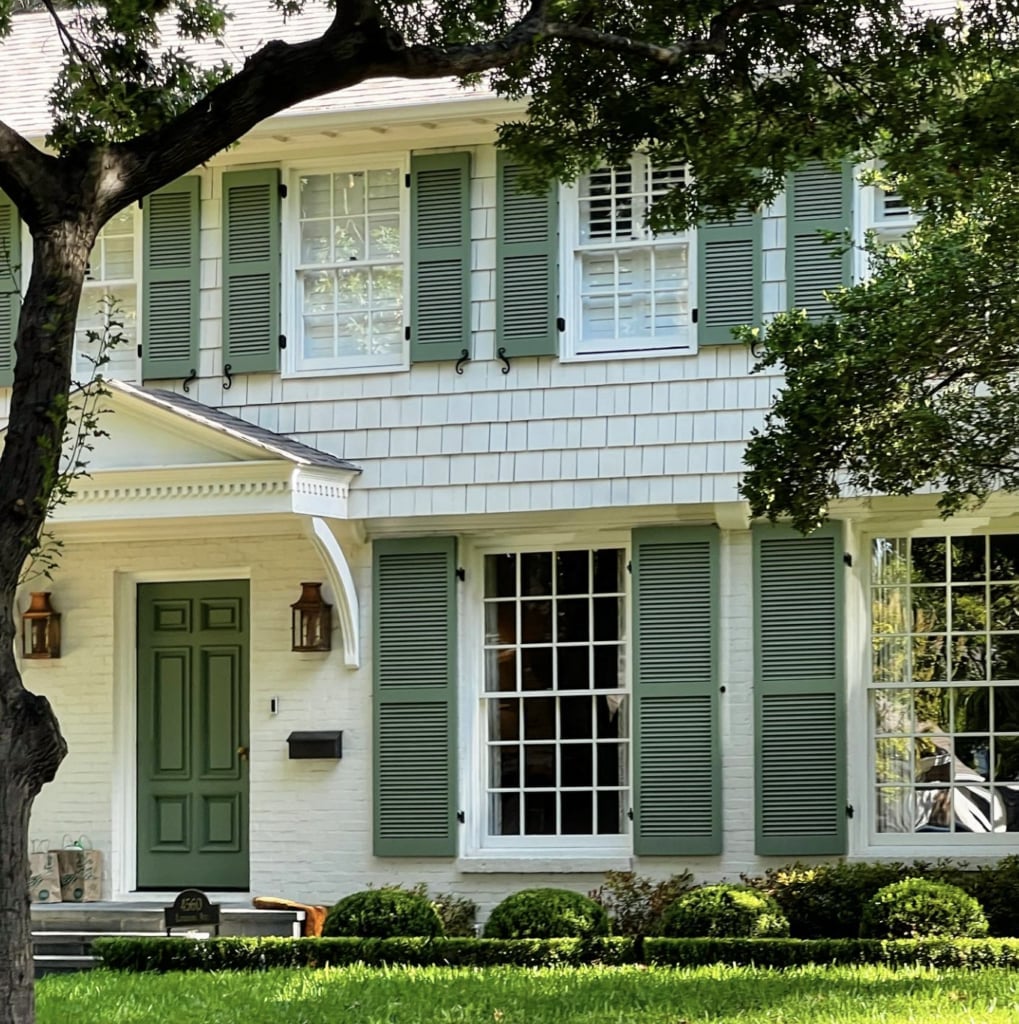
Matching a door to shutters works best when the color is identical but the materials differ. The sage green front door and shutters here are the same shade, which creates a unified look across the white siding and brick foundation. The door has glass panels that catch daylight, while the shutters stay solid, so the repetition feels intentional rather than flat. Large windows on either side balance the composition and keep the facade from feeling door-heavy. The palette stays in the green-white-wood family, with the sage acting as the middle ground between the bright white and the darker brick. This approach works for traditional homes because it honors symmetry without demanding perfect matching elsewhere.
Traditional Bright Green Door with Black Mail Slot
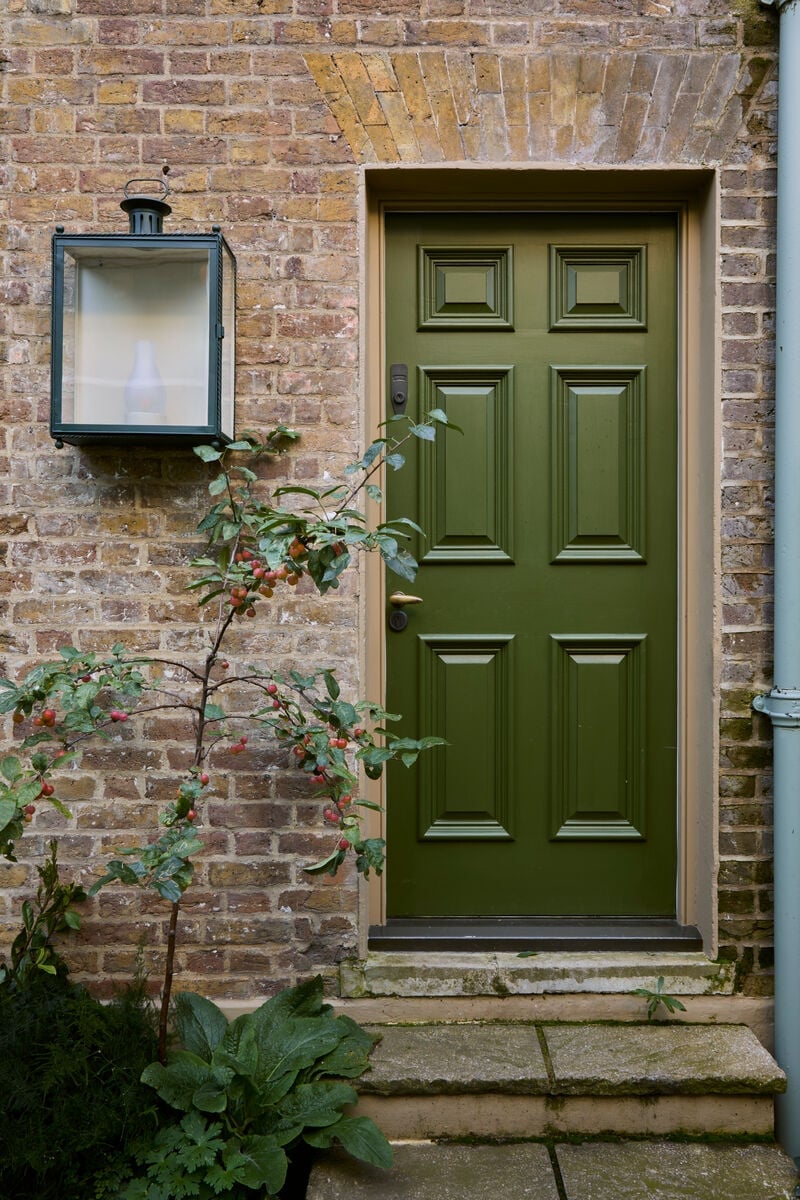
A bright green front door can feel playful, but the restrained entry keeps it grounded. This four-panel door uses a vivid green, and the black mail slot and white trim balance it. The black hardware gives the eye a place to land, while the white steps and small potted plants keep the palette clean. The door is centered with steps leading up, so the layout already draws attention. The bright green becomes the accent, not the whole story. If you prefer something less saturated, a deeper green would still work with the same black and white anchors. The key is contrast: the brighter the door, the simpler the surrounding palette should stay.
Traditional Lime Green Door with Arched Porch and Landscaping
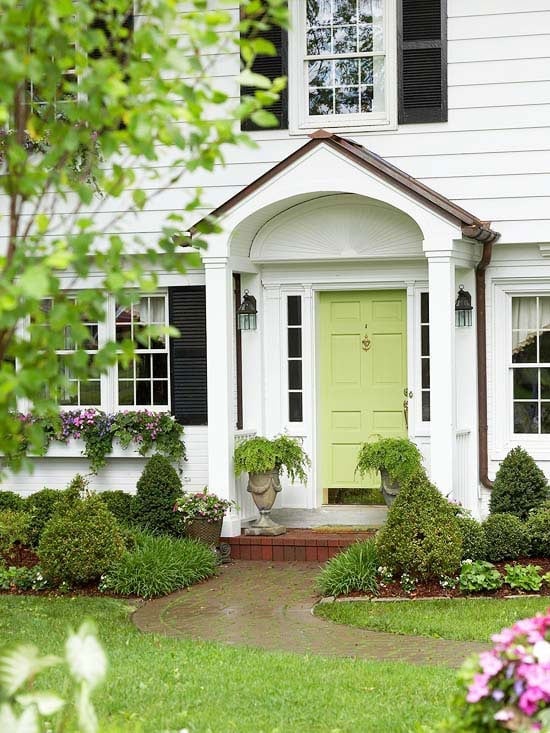
The lime green door here sits within an arched porch that softens its boldness. The white siding and brick steps keep the facade neutral, so the door can be the focal point without overwhelming the house. Manicured shrubs and an urn planter on either side add structure and echo the green tone in a quieter way. The arched porch is the detail that makes this work: it contains the bright color within a defined shape, so the eye travels from the arch to the door to the landscaping. This is a traditional home that uses a bold green door as a seasonal accent that stays current year-round.
Final Thoughts
Green front doors are forgiving in a way other colors are not. Dark shades hide dust and wear, while lighter sages soften a harsh facade. Notice how the best examples pair the door with something quiet, like black hardware, white trim, or natural stone, so the green stays the point. Seasonal decor looks good against it too, especially in fall. If you are trying to decide, start with the undertone you already like in your home. Olive leans warm, sage stays neutral, teal adds a little blue. Pick one that makes you smile every time you pull into the driveway. That is the whole test.