
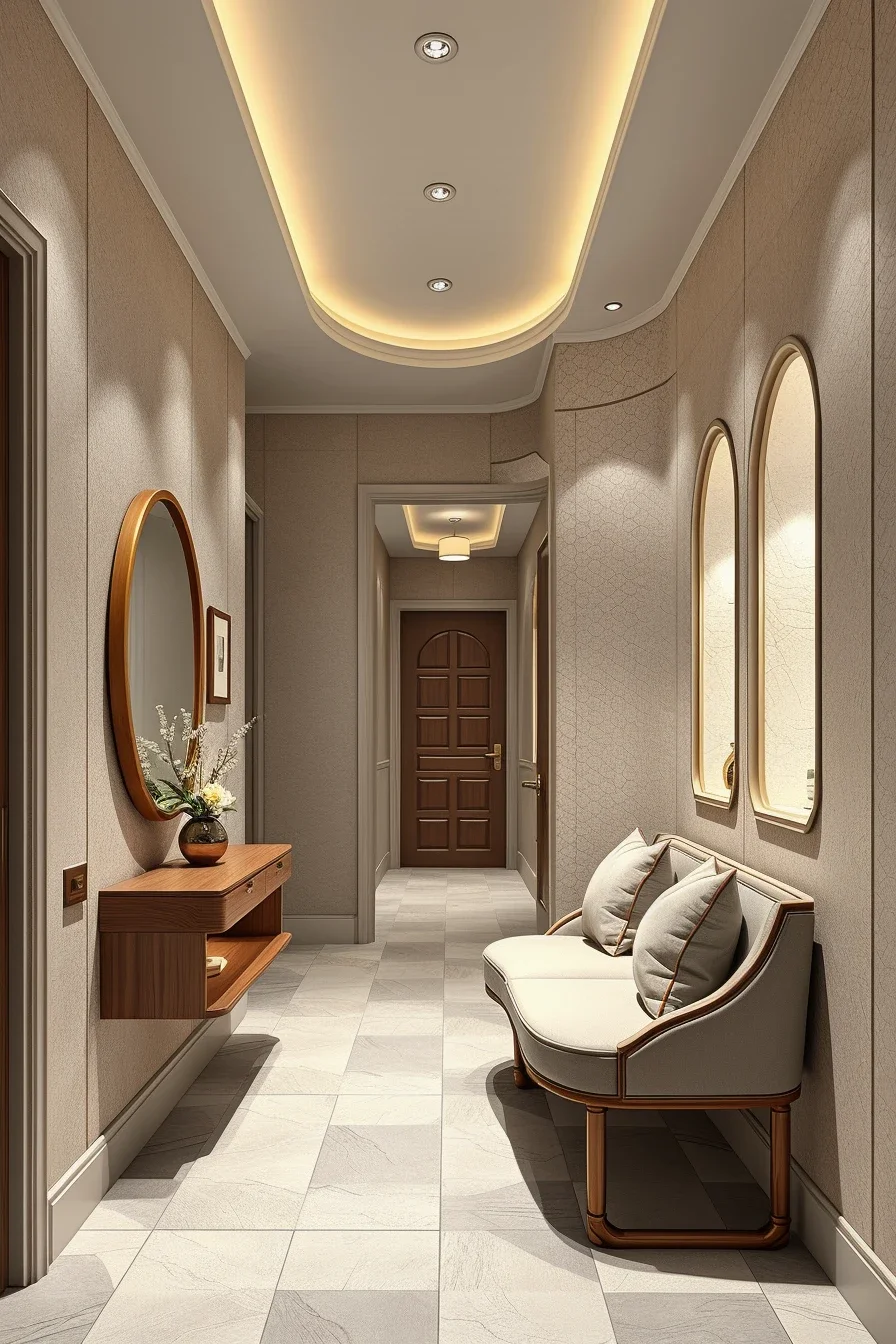
A hallway accent wall is one of the easiest ways to give an entryway more personality, depth, and visual appeal without remodeling the entire space. Whether your hallway is narrow, spacious, modern, or traditional, the right accent wall can instantly create a memorable first impression. From textured panels and elegant stone finishes to bold paint colors and geometric designs, there are countless ways to customize this often-overlooked area. Thoughtfully selected materials, lighting, and decorative details can make the hallway feel brighter, more inviting, and seamlessly connected to the rest of your home. An accent wall also provides the perfect opportunity to showcase your personal style while adding architectural interest and dimension. In this guide, you’ll discover inspiring hallway accent wall ideas that combine beauty, functionality, and timeless design for every type of interior.
Hallway Accent Wall Ideas That Transform First Impressions
I always consider the entry hallway the introduction to the entire home. A carefully planned hallway accent wall immediately establishes character and directs the eye toward the most attractive architectural feature instead of focusing on the limited size that many hallways have. Whether the space is compact or spacious, I find that selecting one statement wall creates balance while preventing visual clutter. Neutral flooring, concealed lighting, and a clean ceiling design allow the accent wall to become the natural focal point without overwhelming the room.
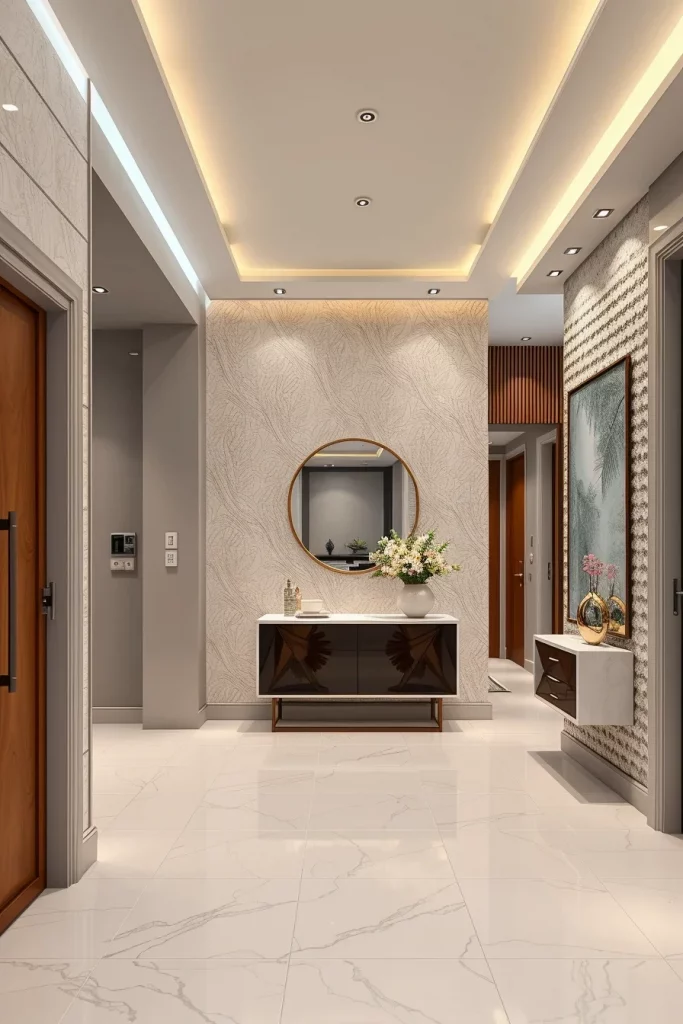
When designing this type of hallway, I usually combine a statement wall with a slim console table, an oversized mirror, concealed storage, and decorative lighting. These elements improve functionality while reinforcing the visual impact of the wall itself. I prefer streamlined furniture with simple silhouettes because it allows the accent surface to remain the primary design feature. A carefully selected runner rug, sculptural vase, and minimal artwork complete the composition without competing for attention.
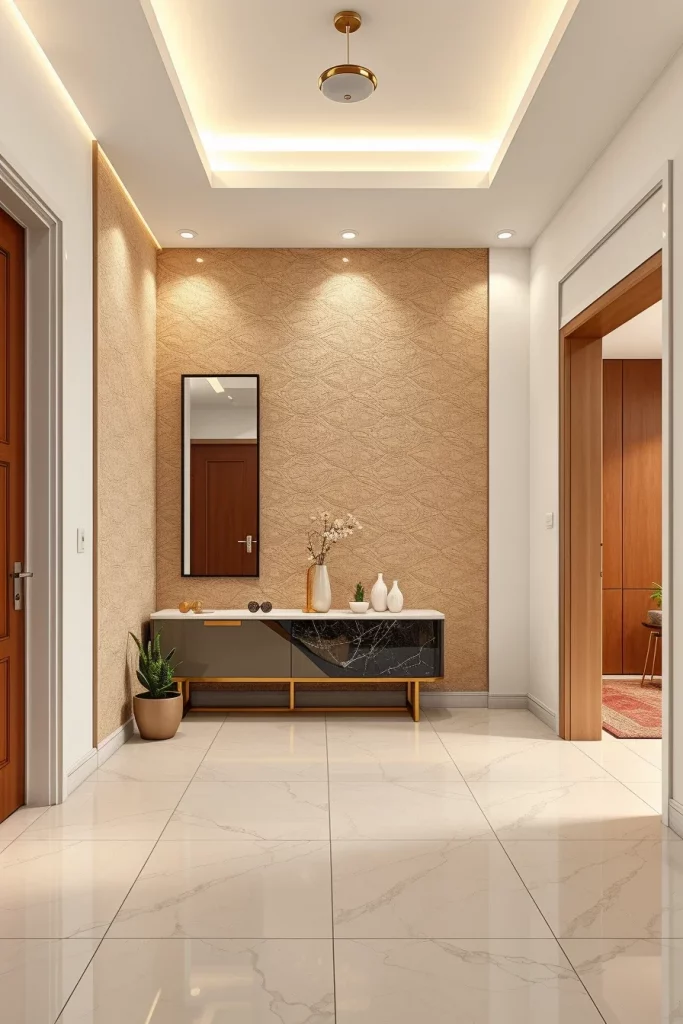
I often recommend following advice shared by respected interior publications such as Architectural Digest and House Beautiful, which frequently emphasize creating a memorable entry by layering texture, lighting, and proportion instead of relying solely on bold decoration. In my own projects, I have found that a well-balanced hallway accent wall creates a welcoming atmosphere while increasing the perceived value of the entire home.
If I wanted to improve this design further, I would include dimmable wall sconces or recessed LED lighting that changes throughout the day. Adjustable lighting allows every decorative detail to remain visible during both daylight and evening hours while creating a warm first impression for anyone entering the home.
Modern Hallway Accent Wall With Clean Architectural Lines
I find that clean architectural lines create one of the most timeless approaches to a modern hallway. Rather than relying on excessive decoration, I prefer using crisp wall moldings, recessed panel details, and carefully aligned proportions that make the hallway feel structured and elegant. The accent wall becomes an architectural feature rather than simply a painted surface, allowing the entire space to feel custom designed. Soft neutral colors further enhance the clean geometry while keeping the hallway bright and inviting.
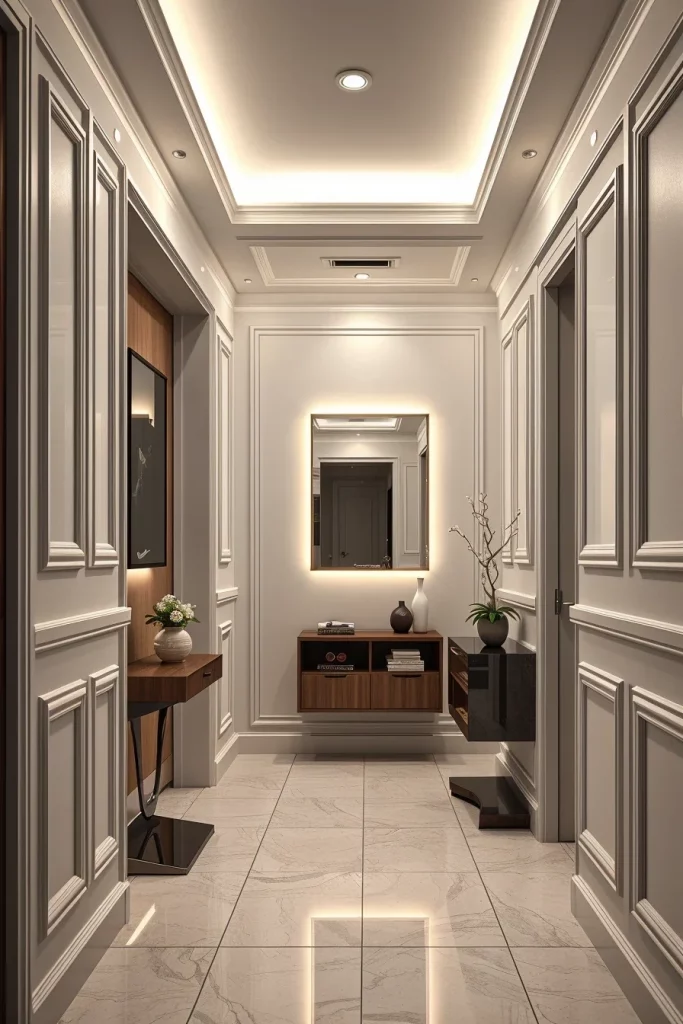
To support this design, I usually include a floating console, a frameless mirror, integrated LED strip lighting, and a discreet storage cabinet for everyday essentials. Hidden storage keeps the hallway organized without interrupting the clean visual flow. Matte finishes on furniture, minimalist hardware, and subtle decorative accessories contribute to the contemporary appearance while ensuring the architectural wall remains the focal point.
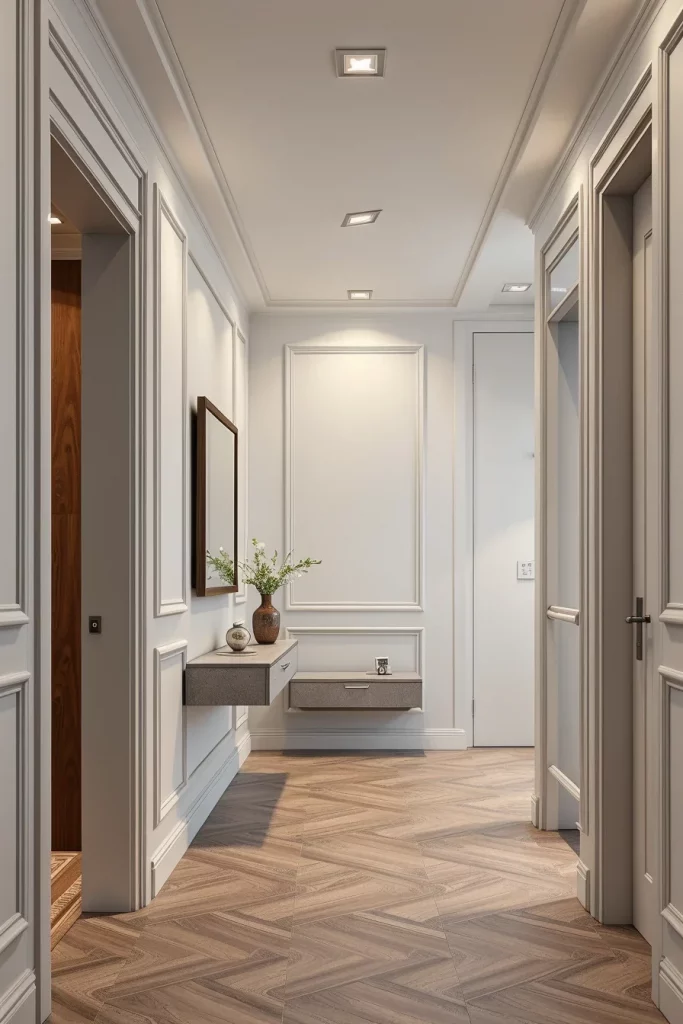
From my experience, this approach works especially well in modern homes because it combines simplicity with sophistication. Designers featured in Elle Decor often recommend emphasizing proportion and lighting instead of excessive ornamentation, and I completely agree. I have found that these restrained architectural details continue to look current even as decorating trends evolve.
If I were adding one final improvement, I would integrate concealed ceiling lighting that gently washes the wall with light. This subtle illumination highlights every architectural detail while adding depth to the hallway throughout the evening.
Textured Hallway Accent Wall For Added Depth And Dimension
Whenever I want to make a hallway feel more inviting, I introduce texture instead of relying solely on color. A textured hallway accent wall creates movement, depth, and visual interest even when using a restrained color palette. Plaster finishes, microcement surfaces, decorative wall coatings, or subtle relief panels catch natural and artificial light differently throughout the day, making the hallway feel more dynamic and sophisticated.
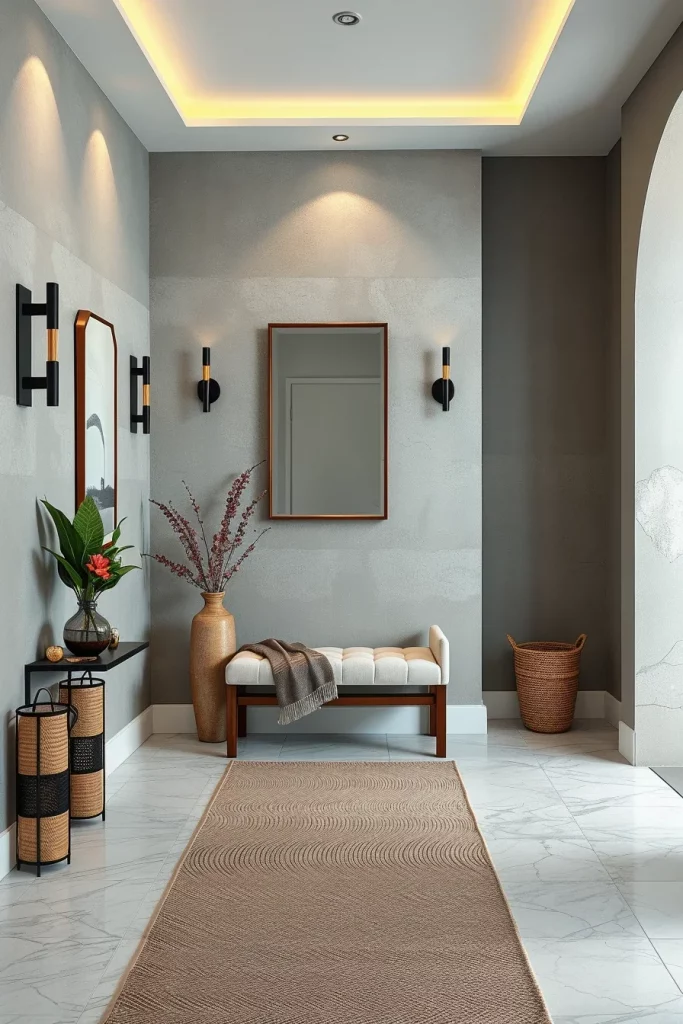
I like pairing textured walls with simple furniture that allows the surface to remain the star of the design. A narrow wooden bench with upholstered seating, a contemporary mirror, concealed coat storage, black wall sconces, and woven decorative baskets create warmth while maintaining practicality. Soft textiles such as a runner rug help balance the harder wall textures and improve acoustic comfort in narrow spaces.
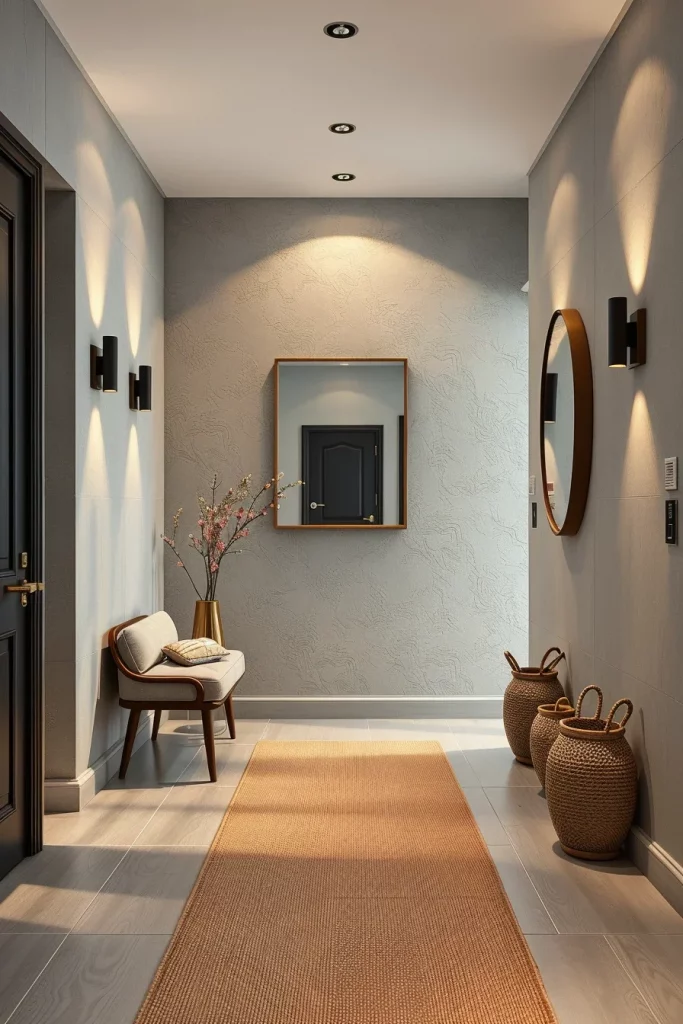
Personally, I appreciate textured finishes because they introduce character without overwhelming smaller hallways. Better Homes & Gardens has frequently highlighted the importance of layering materials to create welcoming interiors, and I have consistently found this advice useful in real projects. Texture adds visual richness while remaining versatile enough to complement changing furniture or seasonal décor.
To complete this hallway, I would consider adding subtle recessed ceiling lighting positioned to graze the textured wall. Proper lighting dramatically enhances shadows and highlights, allowing every surface variation to become part of the overall design experience.
Floor-To-Ceiling Panel Hallway Accent Wall Designs
Floor-to-ceiling wall panels create an immediate sense of height and refinement. I often recommend this solution when homeowners want their hallway to feel more luxurious without relying on excessive decoration. Continuous vertical panels visually elongate the room while introducing rhythm and elegance. Whether painted in soft neutrals or darker contemporary tones, full-height panels give the hallway a custom-built appearance that feels intentional and timeless.
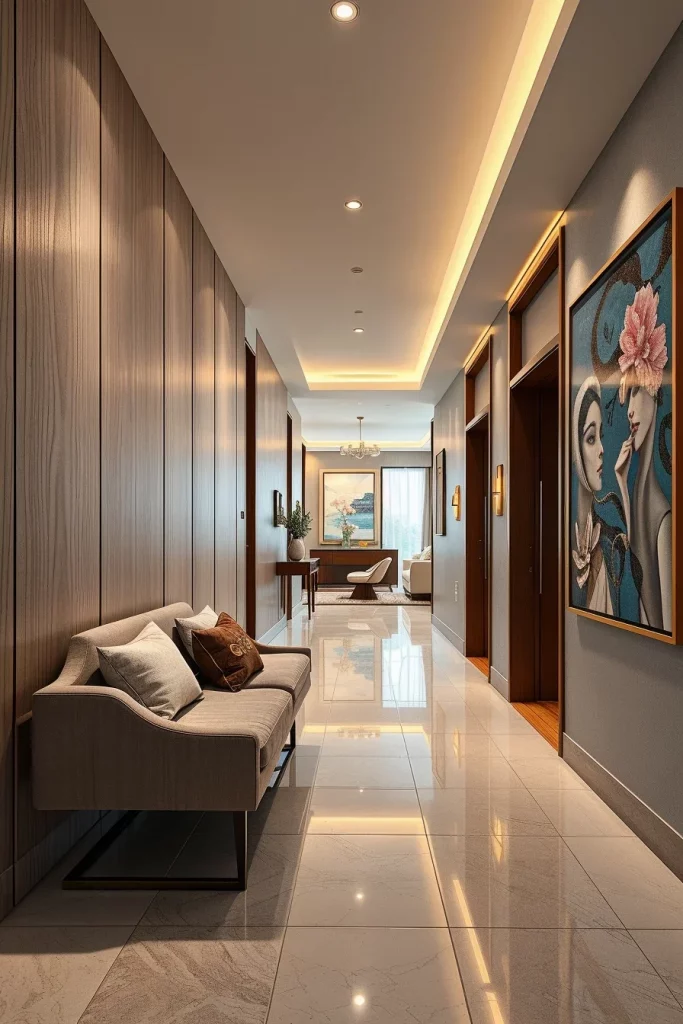
I usually combine these panels with a floating storage cabinet, an upholstered bench, concealed shoe storage, oversized artwork, and minimalist lighting fixtures. Full-height doors with hidden frames complement the uninterrupted vertical lines, while integrated lighting softly emphasizes the panel details. Decorative accessories remain limited so the architectural treatment remains the primary visual feature.
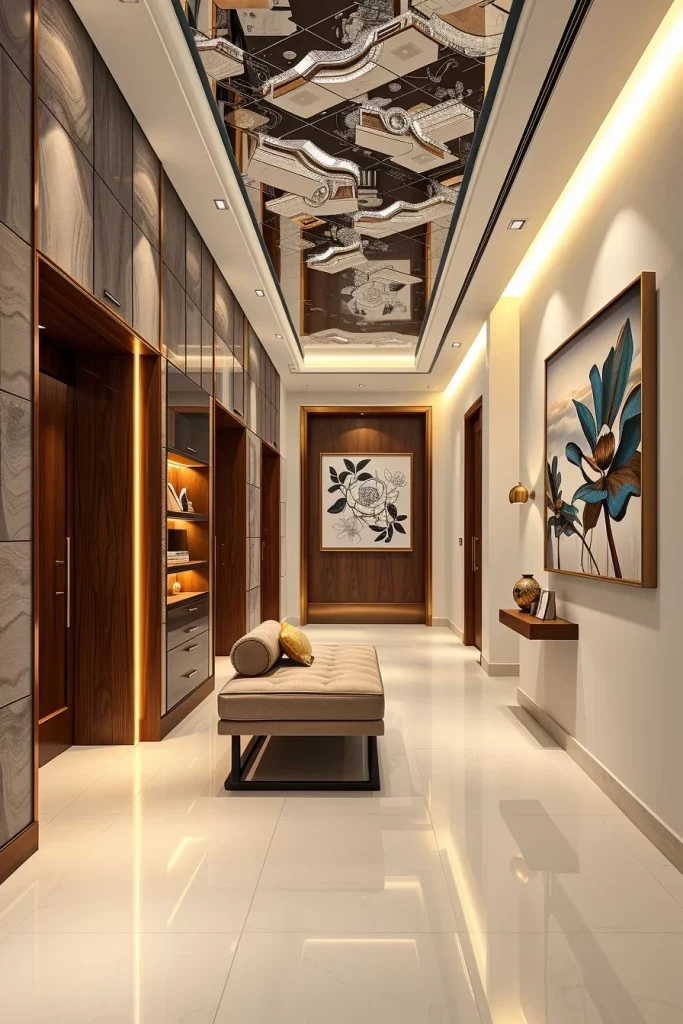
From my perspective, floor-to-ceiling paneling represents an investment that significantly elevates everyday spaces. Many designers featured in Architectural Digest recommend incorporating architectural details before adding decorative accessories because permanent design elements have a greater long-term impact. I have repeatedly seen how this approach creates a polished, professionally designed hallway.
If additional refinement is desired, I would include integrated LED lighting concealed within the panel joints. This subtle feature enhances the wall’s vertical geometry while creating a warm and welcoming entrance after sunset.
Vertical Slat Hallway Accent Wall For A Contemporary Look
Vertical slat walls remain one of my favorite contemporary design solutions because they introduce texture, rhythm, and architectural interest without making the hallway feel busy. Even in narrow entryways, evenly spaced slats naturally guide the eye upward, making ceilings appear taller while adding depth to otherwise plain walls. Depending on the finish, the design can feel warm, minimal, or boldly modern while maintaining a clean overall appearance.
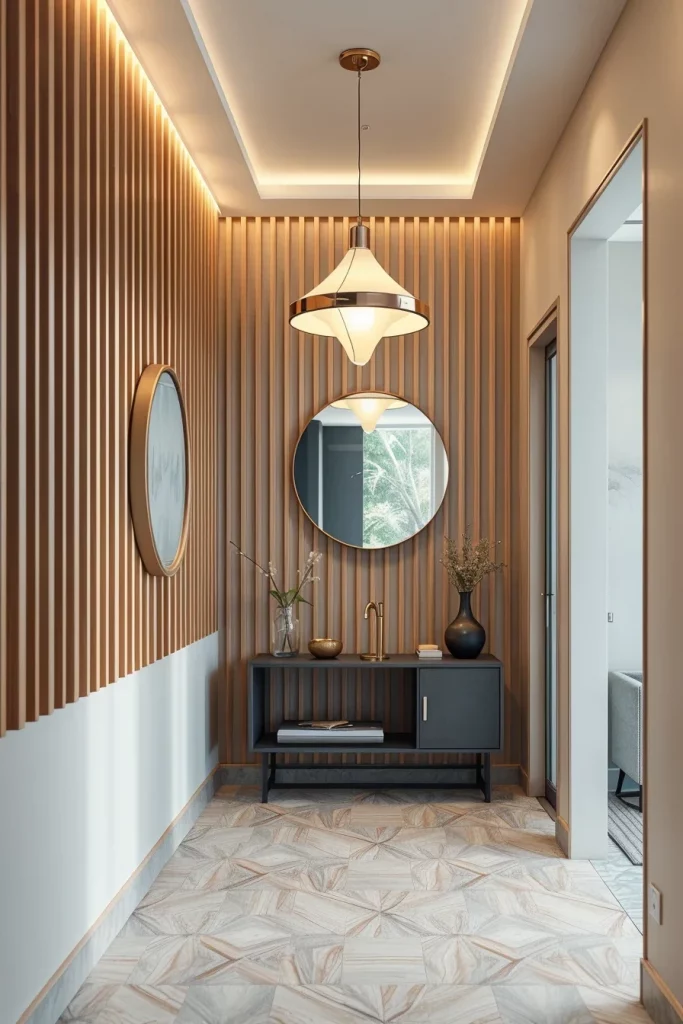
To complement vertical slats, I prefer using a slim floating console, concealed storage cabinetry, a large circular mirror, sculptural pendant lighting, and simple decorative objects. Hidden hooks and integrated seating improve daily functionality without interrupting the visual rhythm of the slats. I also like incorporating indirect LED lighting that softly illuminates the spaces between each vertical element, emphasizing the wall’s architectural quality.
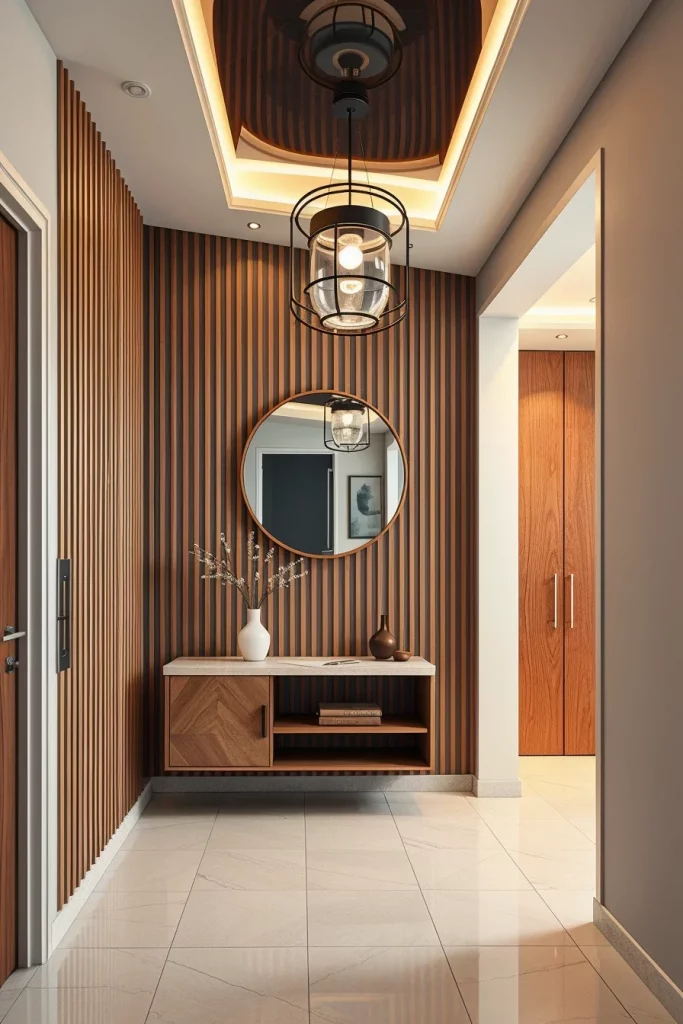
In my experience, vertical slats work particularly well because they balance decorative appeal with simplicity. Interior designers featured by House Beautiful often suggest introducing repeated architectural elements to create visual cohesion throughout transitional spaces, and I have found that this strategy consistently produces elegant results. A thoughtfully designed slat wall remains visually interesting without dominating the hallway.
If I wanted to refine this concept even further, I would introduce a coordinated ceiling treatment or matching doorway trim that echoes the same vertical rhythm. This continuity strengthens the overall composition and gives the hallway a cohesive custom-designed appearance.
Geometric Hallway Accent Wall Patterns That Stand Out
I often recommend geometric wall patterns when a hallway needs a strong visual identity without relying on excessive decoration. Carefully balanced geometric shapes instantly transform a flat wall into an architectural feature that draws attention from the moment someone enters the home. I prefer using repeating linear patterns, oversized diamonds, hexagons, or subtle three-dimensional motifs because they introduce movement while maintaining a clean, contemporary appearance. A restrained color palette allows the pattern itself to become the focal point without making the hallway feel overwhelming.
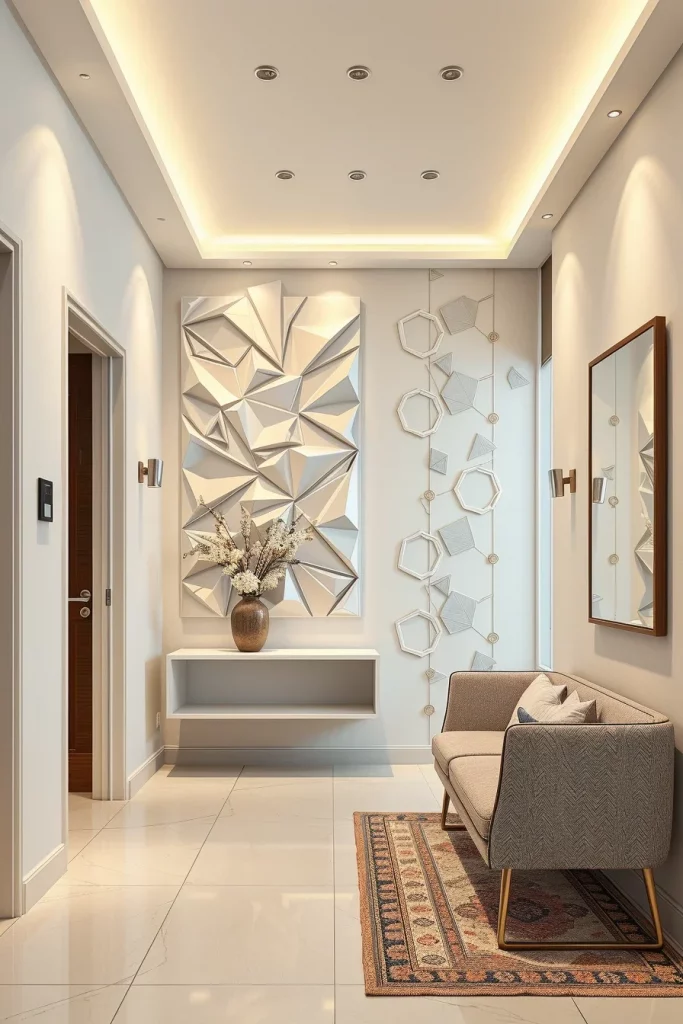
To complement this design, I usually include a floating console table with clean lines, a large frameless mirror, minimalist wall sconces, concealed shoe storage, and a narrow upholstered bench. Decorative accessories should remain limited to a sculptural vase, a tray for everyday essentials, and a simple runner rug that softens the flooring. Hidden storage keeps the hallway organized while allowing the geometric accent wall to remain the primary design statement.
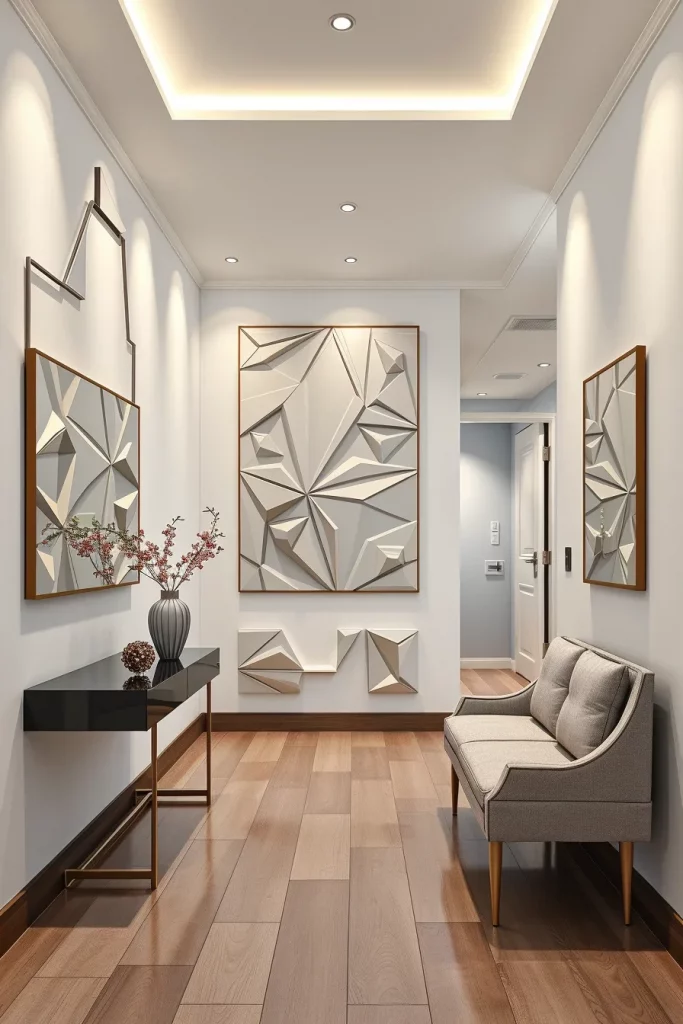
From my experience, geometric patterns work particularly well because they combine artistic expression with timeless architectural order. Interior designers featured in Architectural Digest frequently recommend repeating shapes throughout a room to establish rhythm and visual consistency. I have found that even subtle geometric relief panels create an impressive first impression without competing with the surrounding furnishings.
If I wanted to enhance this hallway further, I would add concealed LED lighting that gently highlights the raised edges of the geometric design. Proper lighting increases the depth of the pattern and creates elegant shadow lines throughout the evening.
Stone Hallway Accent Wall For Timeless Character
Whenever I want a hallway to feel grounded and welcoming, I often suggest incorporating a natural stone accent wall. Stone introduces texture, permanence, and understated elegance that immediately elevates the entrance without appearing overly decorative. Whether using limestone, travertine, slate, or stacked stone, I find that the organic variation in color and texture makes the hallway feel warm and authentic. A balanced combination of natural materials and clean architectural lines keeps the design contemporary while preserving the timeless beauty of stone.
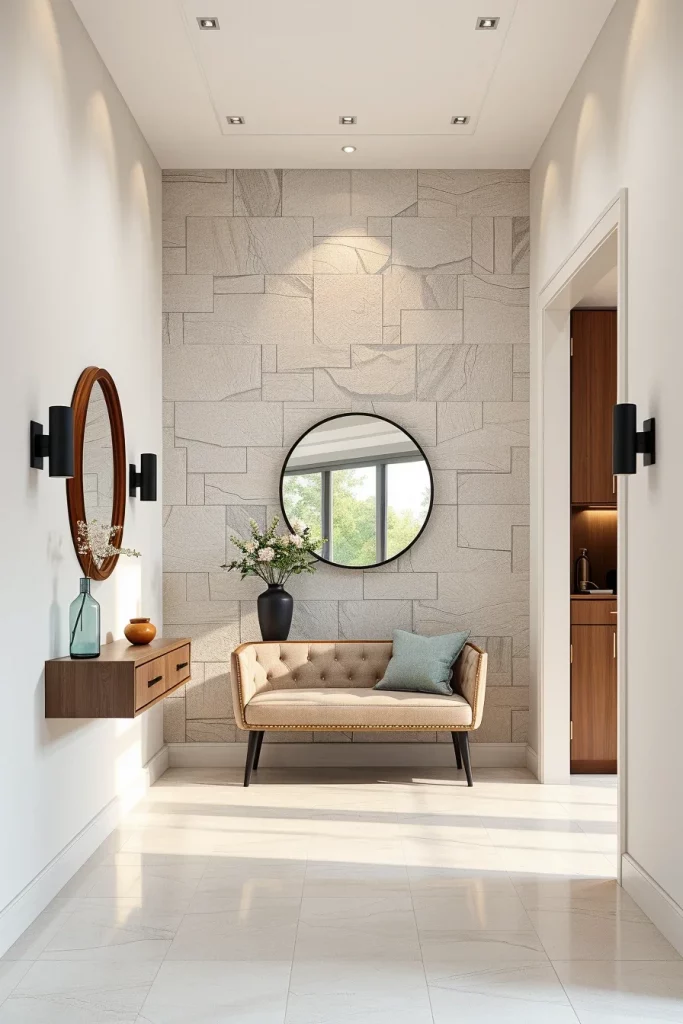
I typically pair the stone wall with a floating wood console, a round mirror, built-in storage cabinetry, black metal lighting fixtures, and a comfortable upholstered bench. A neutral runner rug softens the flooring while ceramic decorative objects add subtle personality. I avoid excessive decoration because the natural texture of the stone already provides visual richness that deserves to remain the center of attention.
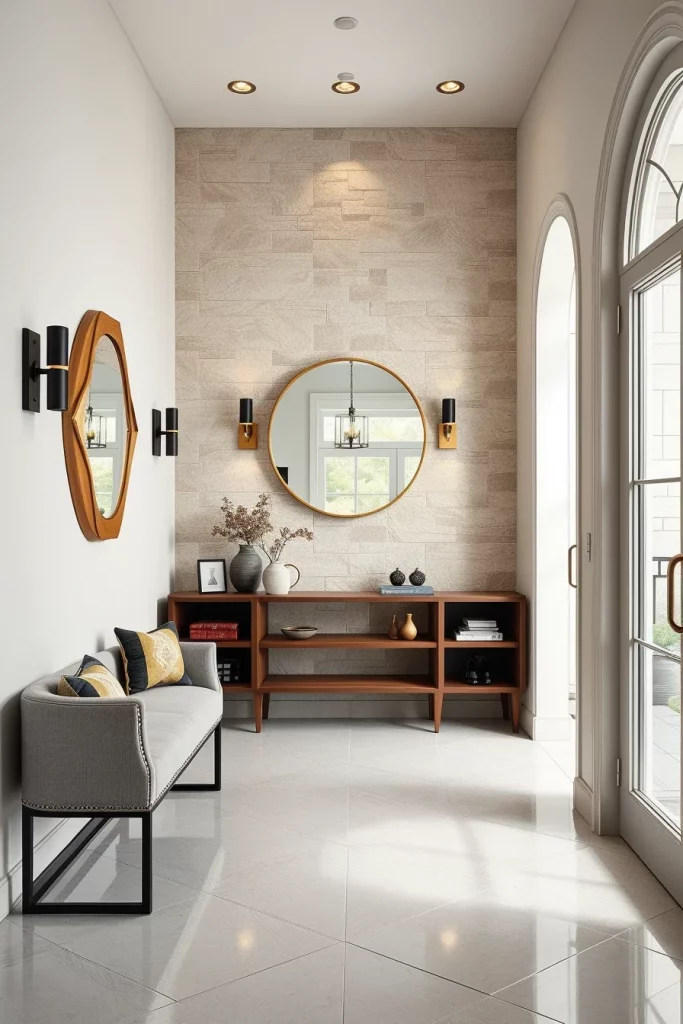
In my own projects, I have seen stone walls maintain their appeal for many years because they age gracefully and complement a wide range of interior styles. Designers from House Beautiful often emphasize introducing authentic materials that add long-term value rather than following short-lived decorating trends. I agree with this philosophy because natural stone continues to look elegant regardless of changing fashions.
To complete this hallway, I would include soft wall washing lights that reveal the stone’s texture throughout the day and evening. Good lighting dramatically enhances every natural variation while making the hallway feel inviting from the moment someone enters.
Marble Hallway Accent Wall With Elegant Finishes
A marble accent wall immediately creates an atmosphere of refined sophistication while maintaining a clean and modern appearance. I often recommend marble when homeowners want their hallway to feel luxurious without becoming visually busy. Large marble slabs with delicate veining create seamless elegance and reflect natural light beautifully, helping even narrow hallways appear brighter and more spacious. Soft neutral colors allow the intricate veining to become the room’s natural artwork.
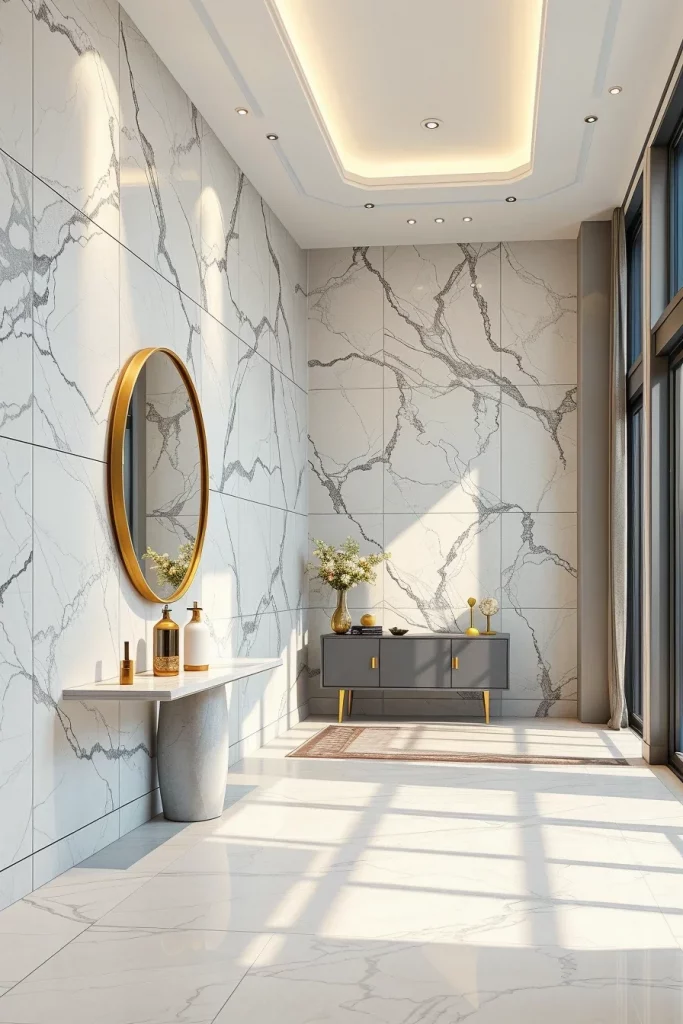
To complement marble, I usually select minimalist furniture with premium finishes. A floating console, integrated storage, an oversized mirror, elegant wall sconces, and subtle decorative accessories maintain visual balance while highlighting the marble surface. Brass or matte black hardware introduces contrast without distracting from the natural beauty of the stone. Every furnishing should support the luxurious atmosphere while remaining practical for everyday use.
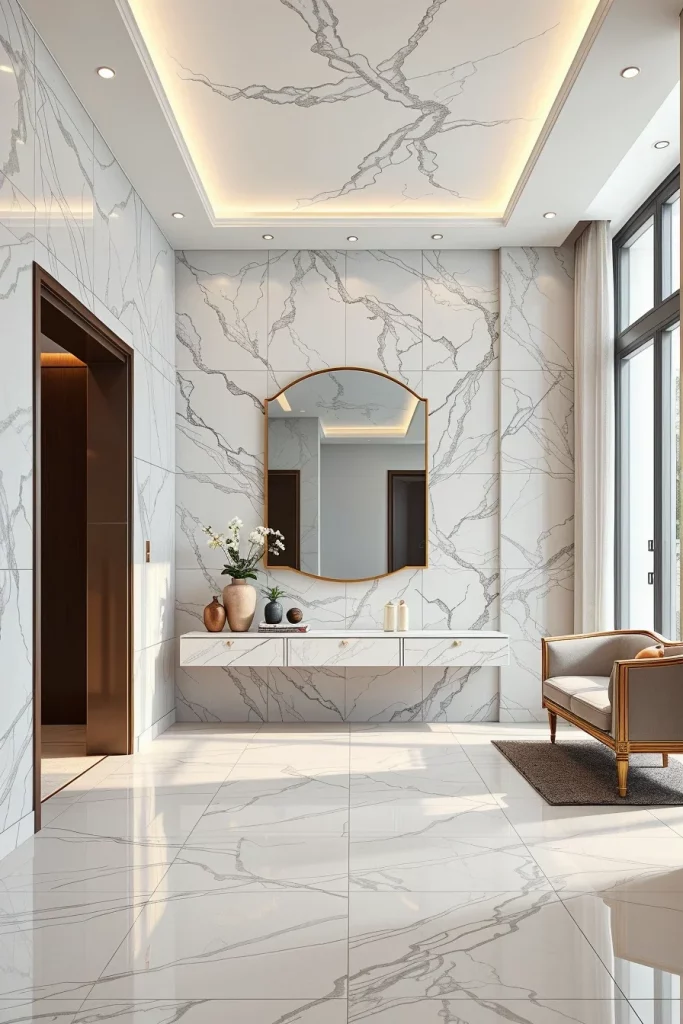
Personally, I appreciate marble because it combines durability with timeless elegance. Elle Decor frequently highlights natural stone as a material that brings lasting value and sophistication to modern interiors, and I have consistently found this recommendation to be accurate. When properly illuminated, marble becomes an impressive architectural feature rather than simply another wall finish.
If I wanted to improve this design even further, I would install concealed ceiling lighting positioned to emphasize the marble veining. This subtle enhancement reveals the depth and character of the stone while creating a welcoming ambiance throughout the evening.
Large Format Tile Hallway Accent Wall Inspiration
Large format tiles create one of the cleanest and most contemporary hallway accent walls I regularly recommend. Their minimal grout lines produce a seamless appearance that visually enlarges the hallway while emphasizing simplicity and precision. Porcelain slabs with concrete-inspired finishes, soft stone textures, or elegant mineral patterns provide impressive durability while maintaining a sophisticated aesthetic suitable for modern homes. I particularly appreciate how these oversized surfaces reduce visual interruptions and create an uncluttered appearance.
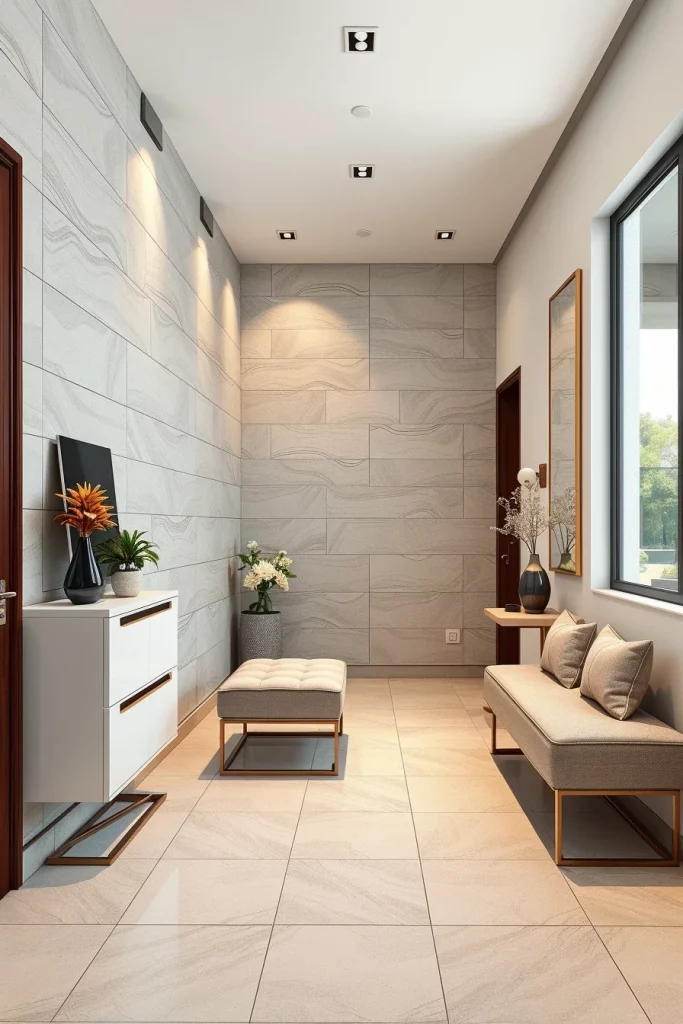
To complete this design, I normally include floating storage cabinetry, a slim upholstered bench, integrated coat storage, a large mirror, and recessed lighting. Decorative accessories remain intentionally restrained, allowing the tile surface to dominate the composition. Soft textiles such as a runner rug introduce warmth while maintaining the minimalist character of the hallway.
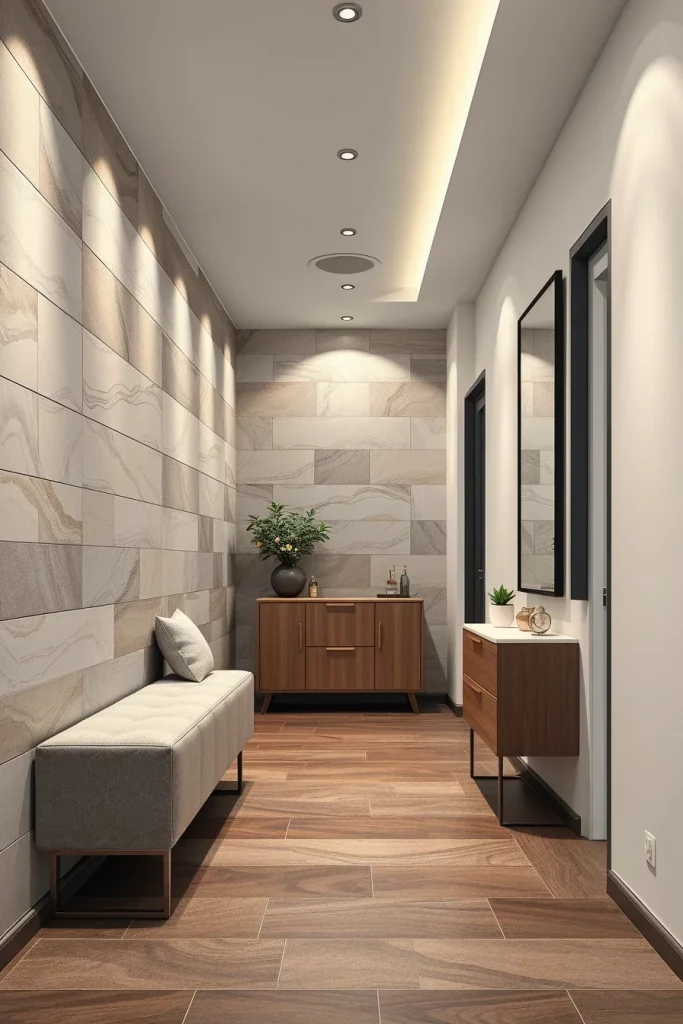
I have found that large format tiles perform exceptionally well in busy entryways because they combine elegant design with excellent resistance to moisture, scratches, and everyday wear. Better Homes & Gardens frequently recommends selecting durable materials in high-traffic areas, and this advice aligns perfectly with my own experience. The result is a hallway that remains beautiful while requiring minimal maintenance.
If I were refining this concept further, I would add integrated LED lighting beneath the floating console and inside recessed wall niches. These subtle details introduce warmth and enhance the architectural simplicity of the overall design.
Painted Hallway Accent Wall With Bold Color Contrast
A carefully chosen painted accent wall remains one of the most affordable yet effective ways to transform a hallway. I enjoy using bold color contrast to introduce personality while maintaining a modern and balanced interior. Deep charcoal, rich navy, warm olive, or earthy terracotta can create dramatic impact when paired with lighter surrounding walls. The contrast immediately defines the entryway and gives the entire home a stronger sense of character without requiring extensive renovation.
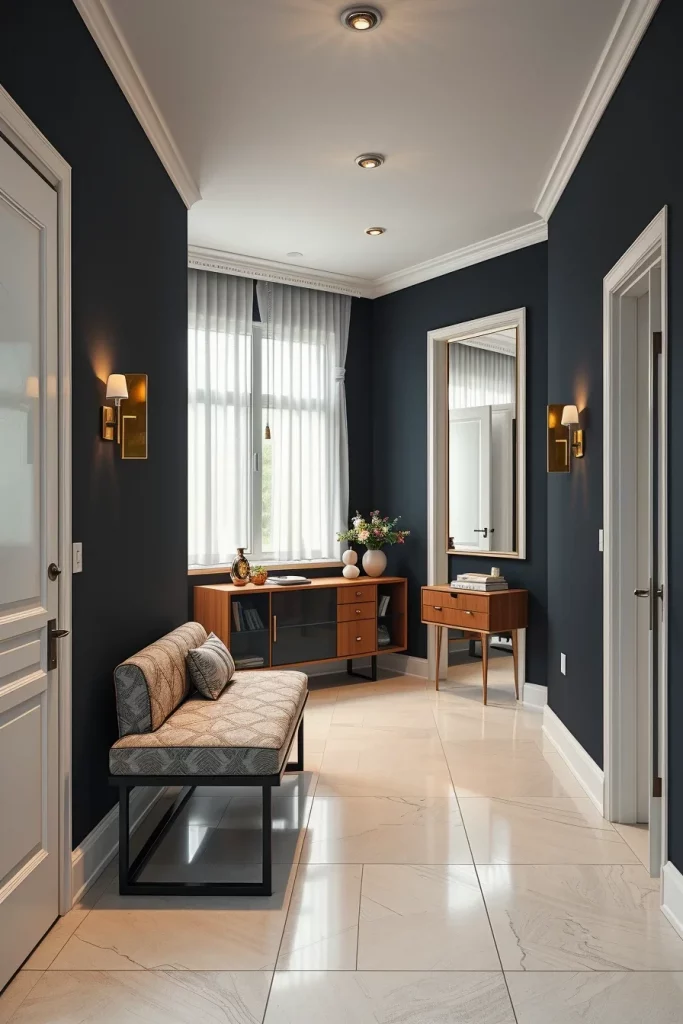
I usually combine a painted accent wall with a minimalist console table, an oversized mirror, upholstered seating, decorative wall lighting, and concealed storage solutions. Artwork with simple frames reinforces the chosen color palette while maintaining visual harmony. Neutral flooring and understated accessories prevent the darker accent wall from making the hallway feel enclosed, allowing the space to remain welcoming and bright.
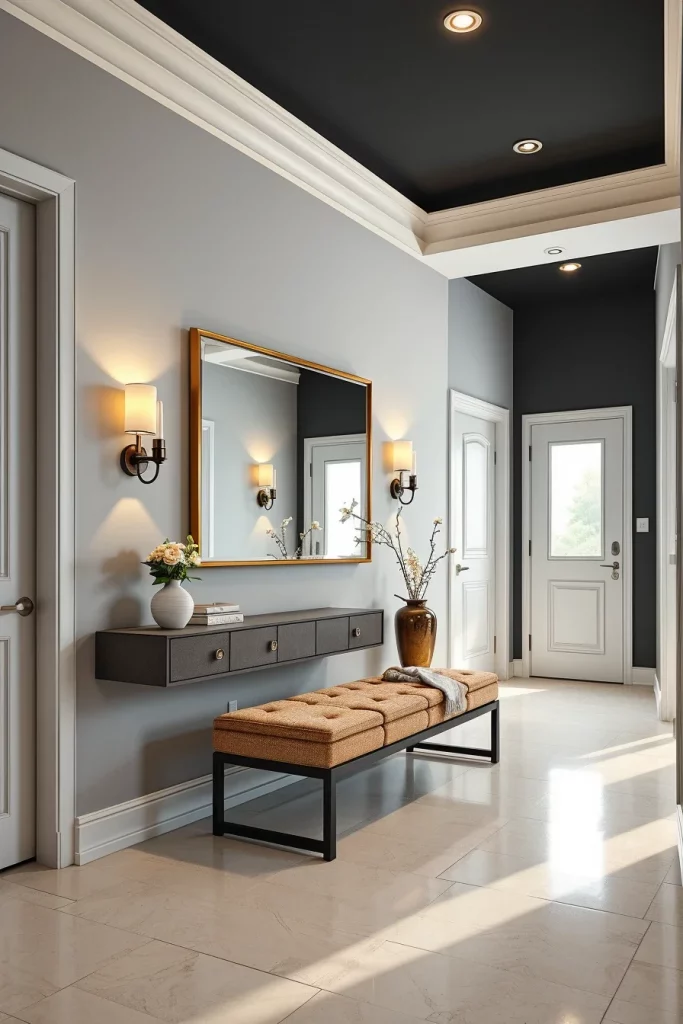
From my perspective, painted accent walls offer exceptional flexibility because homeowners can easily refresh the space as trends or personal preferences evolve. Interior designers featured by HGTV often recommend using bold color strategically on a single feature wall instead of covering an entire room, and I have found this approach consistently produces elegant results while avoiding visual fatigue.
If I wanted to complete this hallway, I would introduce layered lighting with dimmable wall sconces and warm ceiling illumination. Adjustable lighting enhances the richness of the paint color throughout the day while creating a comfortable atmosphere for both family members and guests.
Neutral Hallway Accent Wall For A Calm And Airy Entry
A neutral hallway accent wall is one of my favorite ways to create a welcoming entrance that never feels overwhelming. I like using warm whites, soft beige, creamy greige, or light taupe because these shades reflect natural light and make even compact hallways appear larger. A carefully designed hallway accent wall in neutral tones creates visual interest without competing with surrounding rooms, making it a timeless solution for both modern and transitional interiors.
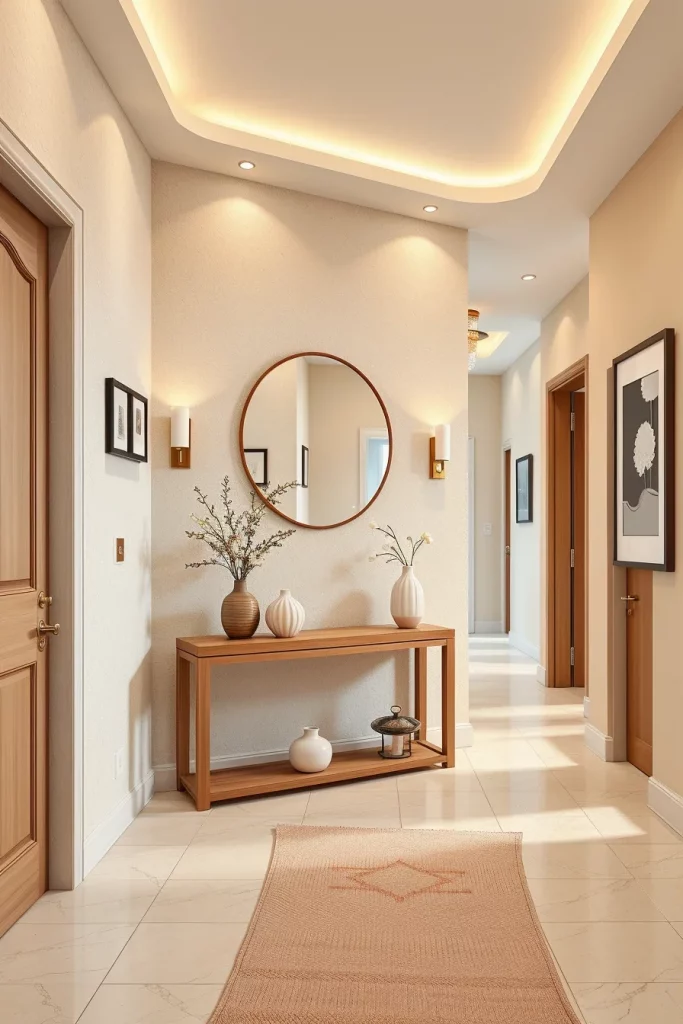
When I design this type of hallway, I focus on combining texture instead of relying on bold color. A limewash finish, subtle plaster texture, or finely textured paint pairs beautifully with a slim console table, an oversized mirror, elegant wall sconces, and a soft runner rug. Hidden storage, decorative trays, ceramic vases, and carefully selected artwork help complete the space while maintaining a calm and uncluttered appearance. Every element contributes to a balanced entry that feels sophisticated without becoming busy.
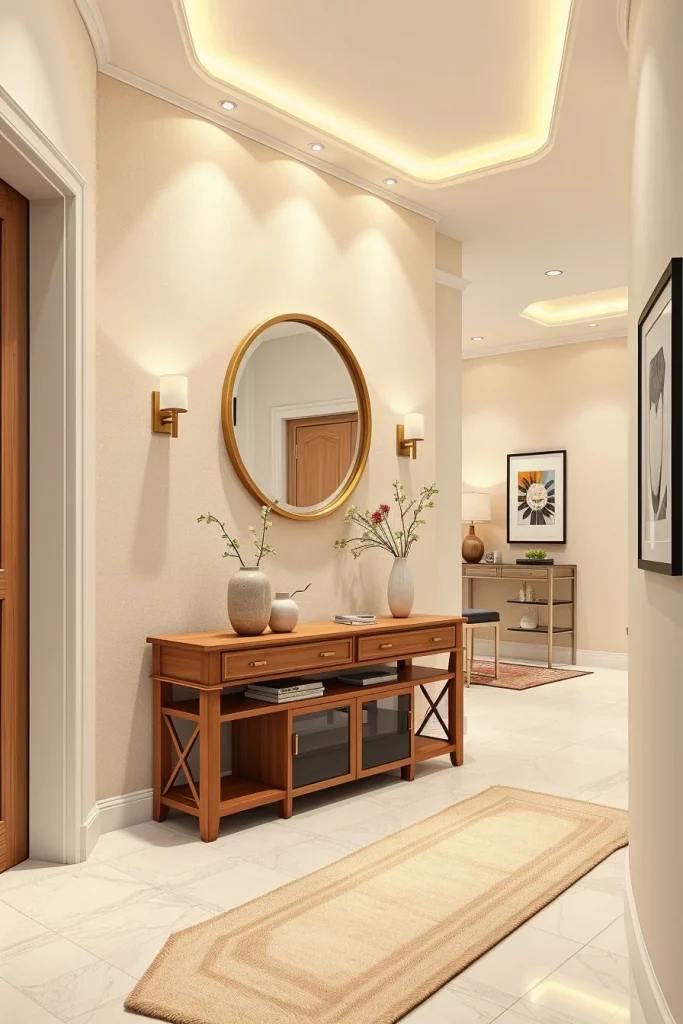
I often recommend following the design principle promoted by leading interior publications such as Architectural Digest, which encourages layering texture rather than adding unnecessary decoration. From my experience, this approach creates a hallway that remains visually appealing for years because it is built around quality materials instead of temporary trends.
If I wanted to improve this space even further, I would add discreet ceiling lighting with a warm color temperature and a few natural decorative accents to create depth throughout the hallway during both daytime and evening hours.
Black Hallway Accent Wall That Creates A Dramatic Statement
A black accent wall can completely redefine the character of a hallway when it is balanced with proper lighting and lighter surrounding finishes. I like using deep charcoal or matte black finishes to establish a sophisticated focal point that immediately captures attention. Instead of making the hallway feel smaller, a carefully planned dark wall often creates impressive depth while emphasizing architectural details.
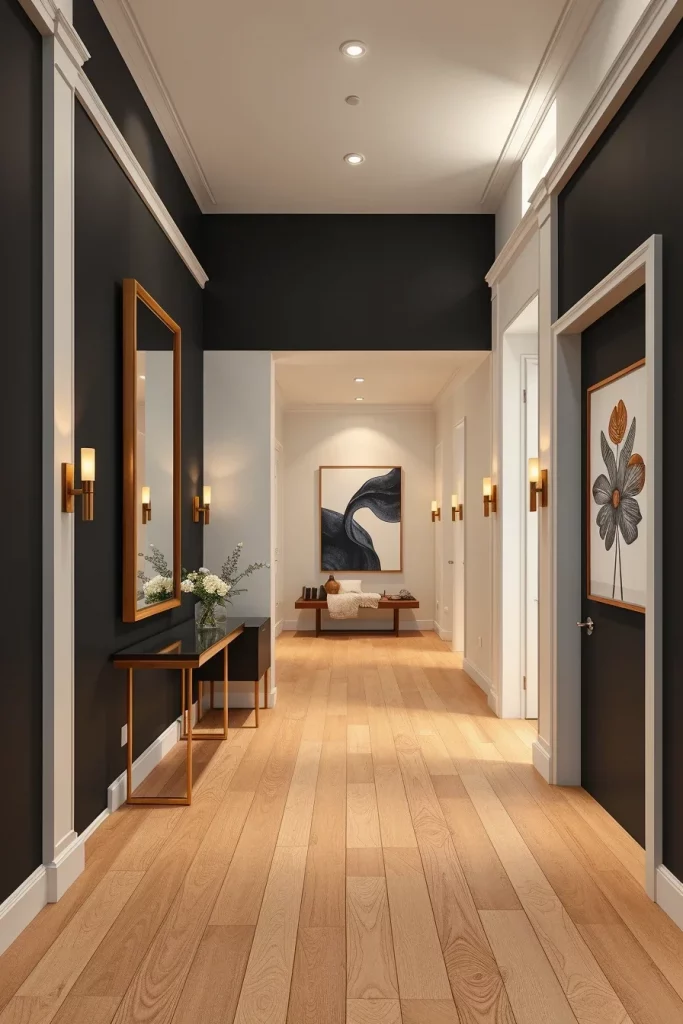
To keep the space balanced, I pair the dark wall with light flooring, a white ceiling, minimal cabinetry, and sleek metallic accents in brushed brass or matte black. Large mirrors become especially important because they reflect both natural and artificial light while visually expanding the hallway. Contemporary artwork with neutral colors helps soften the contrast without distracting from the overall composition.
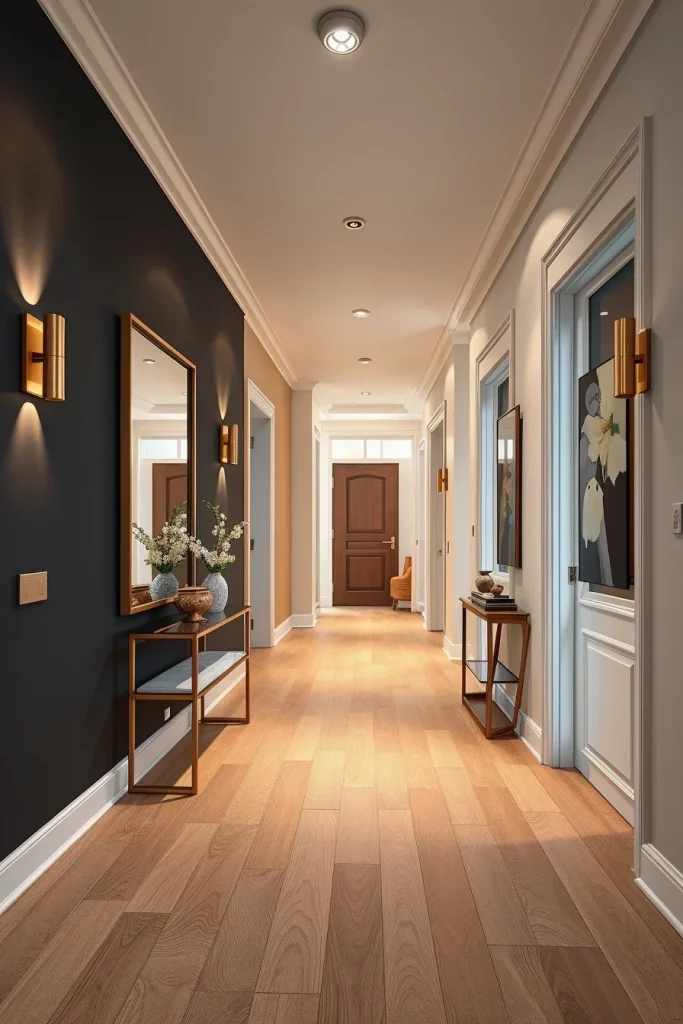
Many professional designers featured by House Beautiful recommend using dark walls in transitional spaces where strong contrast creates visual impact without overwhelming frequently occupied rooms. I have found this advice especially useful because hallways naturally benefit from bold focal points that connect neighboring spaces.
To complete the design, I would install layered lighting that combines recessed ceiling fixtures with wall sconces. This additional lighting highlights the richness of the black finish and prevents dark corners from developing.
White Hallway Accent Wall With Layered Texture
A white accent wall becomes far more interesting when texture replaces color as the primary design element. I enjoy creating bright hallways that rely on subtle relief, plaster finishes, vertical grooves, or handcrafted wall treatments rather than decorative clutter. This approach allows the hallway to remain bright while still feeling luxurious and visually engaging.
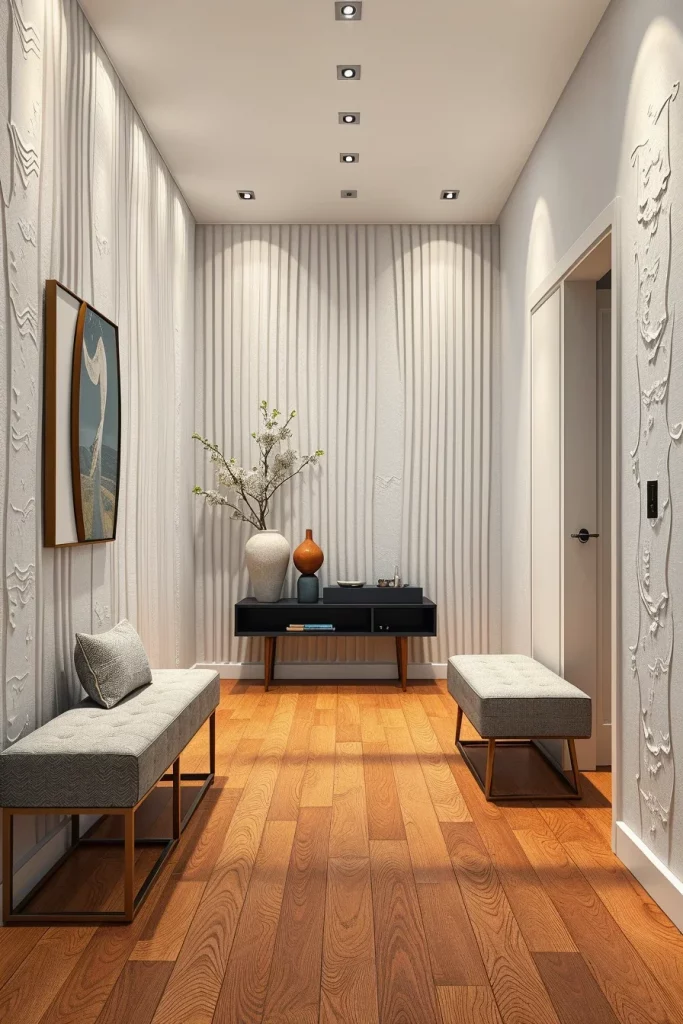
For furniture, I usually recommend a floating console, a simple upholstered bench, concealed shoe storage, and carefully selected decorative objects that complement the monochromatic palette. Warm wood flooring or light stone tile introduces natural variation, while soft lighting emphasizes every texture across the wall surface. The combination creates a space that feels refined without appearing sterile.
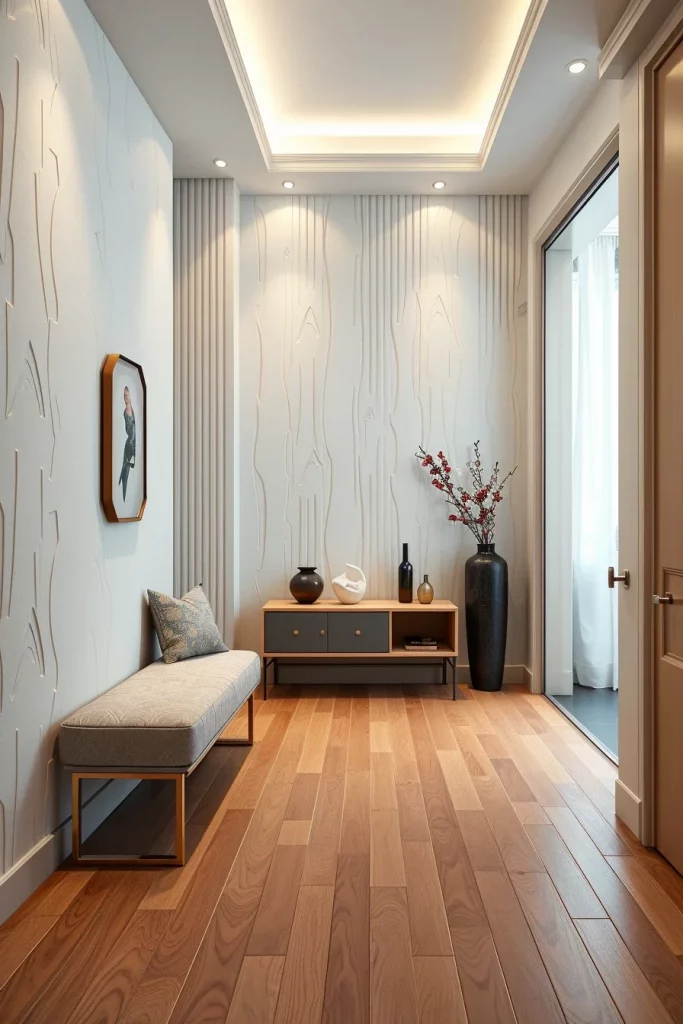
Design experts from Elle Decor frequently highlight layered texture as one of the most effective methods for adding personality to neutral interiors. I appreciate this philosophy because it allows homeowners to refresh accessories over time without needing to redesign the entire hallway.
If additional architectural interest is desired, I would incorporate subtle recessed lighting that gently washes across the textured surface and enhances its dimensional qualities throughout the day.
Gray Hallway Accent Wall That Complements Every Interior
Gray remains one of the most versatile choices for a hallway because it easily connects rooms with different color palettes. I often choose warm gray shades instead of cool tones because they create a more welcoming atmosphere while maintaining a contemporary appearance. A gray hallway accent wall serves as a neutral backdrop that supports modern furniture, traditional details, and everything in between.
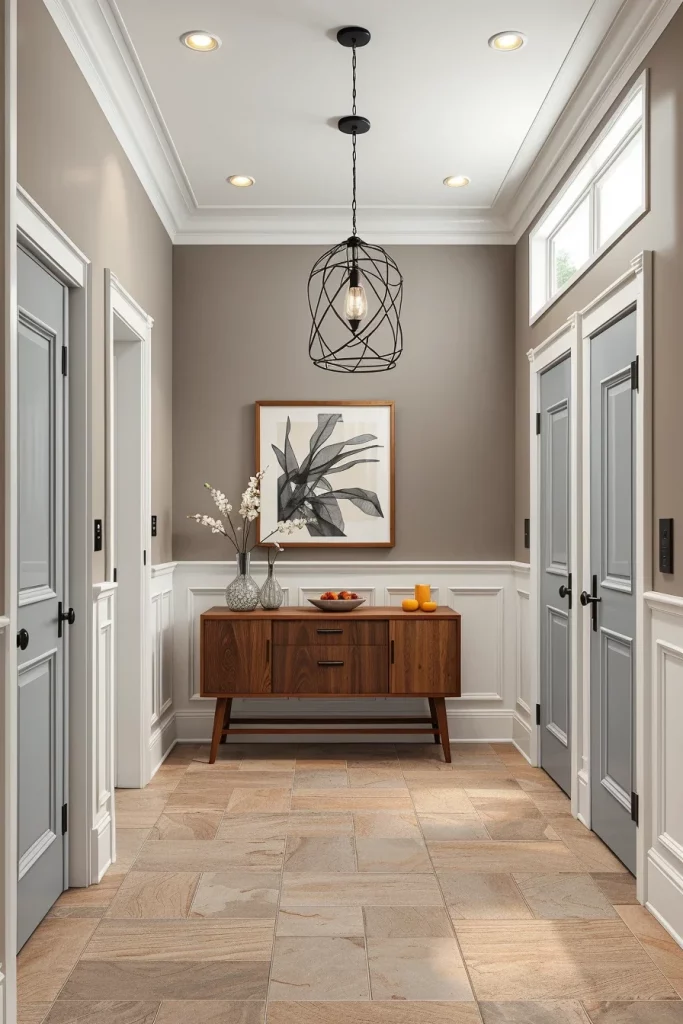
I usually combine gray walls with white trim, black hardware, natural stone flooring, and simple wooden furniture that introduces warmth into the composition. Decorative mirrors, sculptural lighting, and carefully framed artwork provide visual rhythm without making the hallway feel crowded. Every item serves both an aesthetic and practical purpose, helping the space remain organized and attractive.
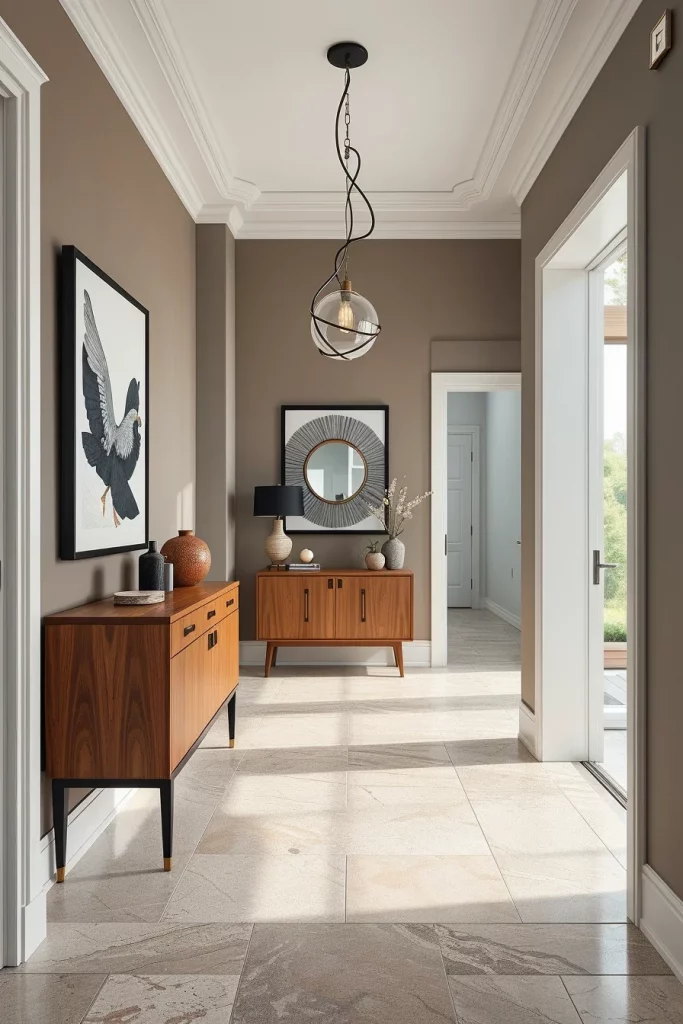
I frequently notice that designers featured in Better Homes & Gardens recommend building neutral interiors around balanced gray palettes because they remain adaptable as decorating styles evolve. My own experience confirms that this flexibility allows homeowners to refresh accessories without repainting the entire hallway.
To strengthen this design, I would include layered lighting and subtle greenery placed near the entrance to soften the architectural lines while preserving the clean overall aesthetic.
Curved Hallway Accent Wall Features For Soft Visual Flow
Curved architectural details introduce movement into a hallway while reducing the rigid appearance created by long straight walls. I enjoy incorporating softly rounded niches, arched transitions, curved corners, or gently flowing plaster forms because they naturally guide the eye from one space to another. This type of hallway accent wall feels artistic while remaining highly functional.
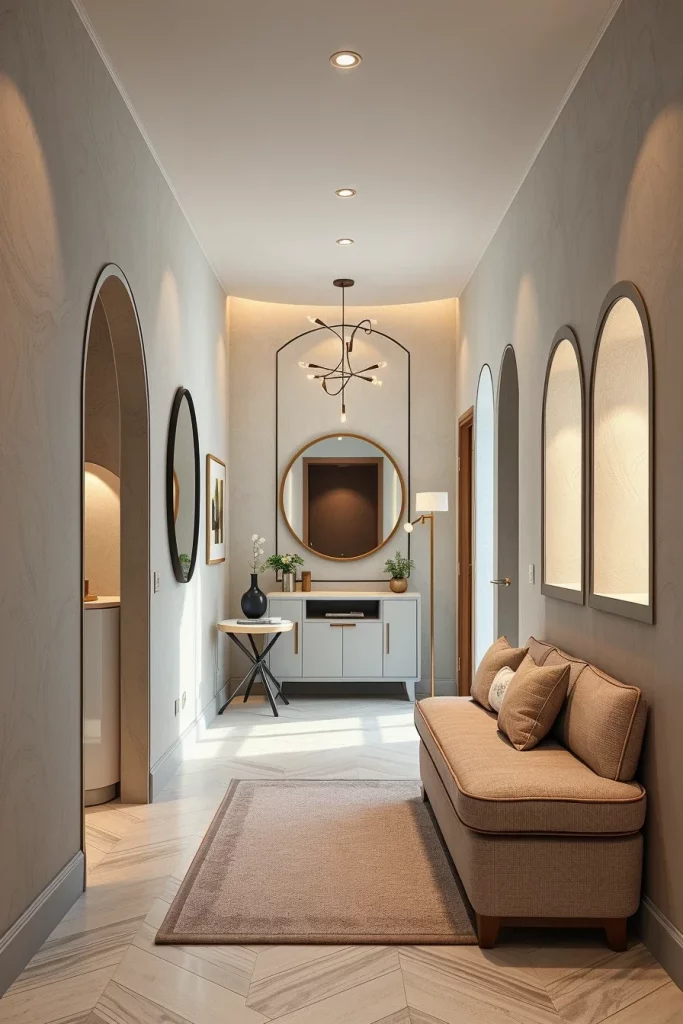
I complement these architectural curves with rounded mirrors, sculptural lighting fixtures, curved benches, and circular decorative accessories that reinforce the same visual language throughout the hallway. Hidden storage keeps everyday items out of sight, allowing the architectural elements to become the primary focal point. Soft indirect lighting enhances every curve and creates elegant shadows across the wall.
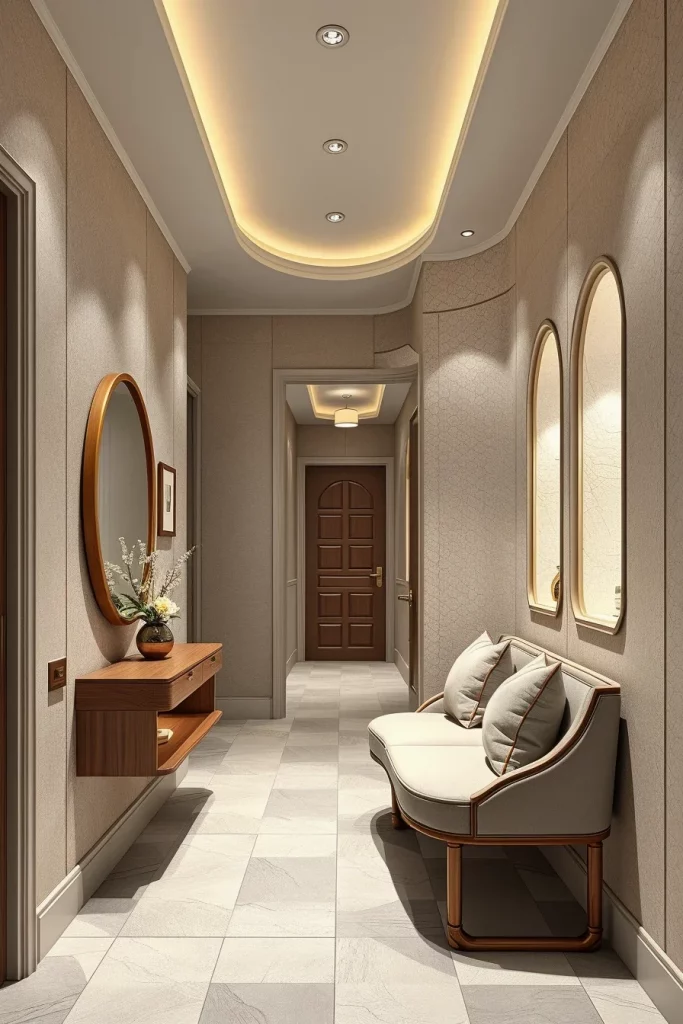
Many contemporary American interior designers have embraced curved architecture because it creates more welcoming interiors without requiring excessive decoration. I personally find that gentle curves make even narrow hallways feel less confined while adding a custom-designed appearance.
If I wanted to elevate this hallway further, I would include integrated LED lighting inside curved niches and select a textured plaster finish that emphasizes every architectural contour without overwhelming the overall design.
Hallway Accent Wall With Built-In Shelving And Display Niches
A hallway accent wall with built-in shelving instantly transforms a simple passage into a functional design feature. I like using recessed shelves because they provide valuable storage without reducing walking space. Carefully integrated niches create depth while giving the entire hallway a custom-built appearance. A thoughtfully designed hallway accent wall with display shelving also allows homeowners to showcase artwork, ceramics, books, or travel souvenirs without cluttering the space.
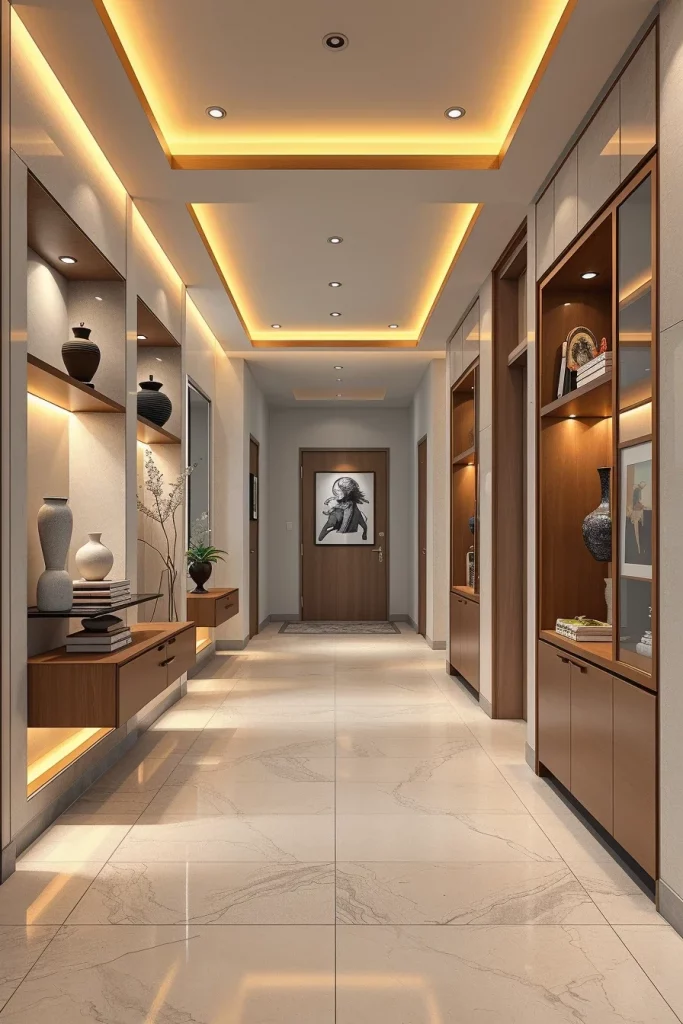
When designing this type of wall, I prefer symmetrical shelving with concealed LED lighting inside each niche. A floating console beneath the display adds another practical surface while maintaining a clean appearance. Decorative objects should vary in height and texture, including ceramic sculptures, stacked books, framed photographs, glass vases, and small decorative bowls. Hidden storage cabinets below keep everyday essentials out of sight while preserving a minimalist aesthetic. Every element contributes to a hallway that feels organized, elegant, and highly functional.
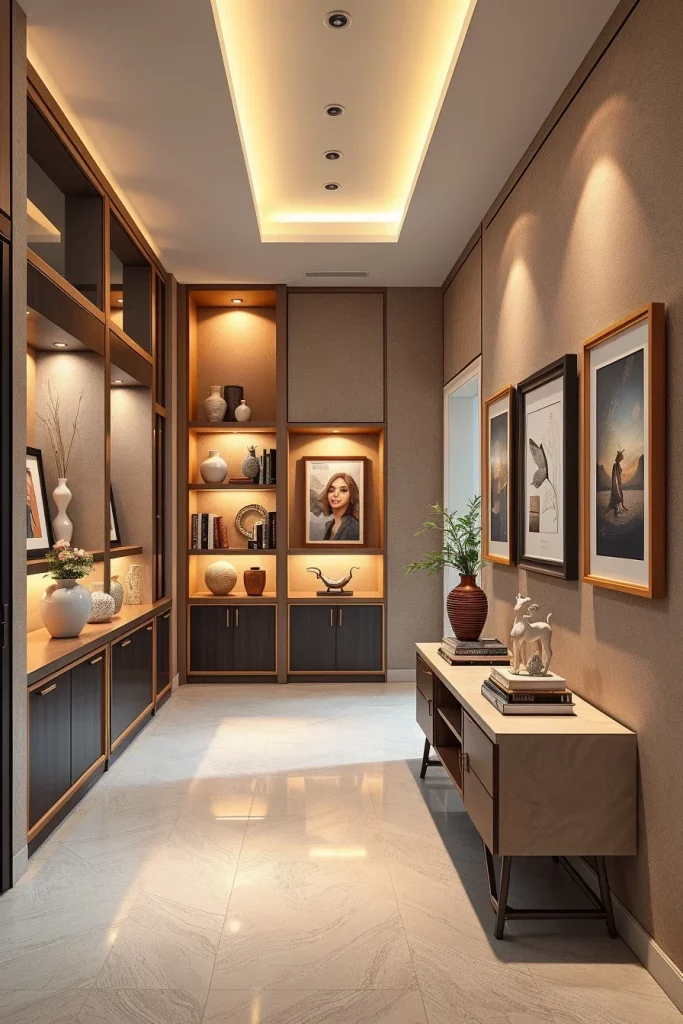
I have noticed that many designers featured in Architectural Digest recommend limiting the number of displayed objects so every piece has room to stand out. I completely agree with this philosophy because excessive decoration quickly overwhelms narrow hallways. In my own projects, I focus on quality rather than quantity, allowing lighting and carefully selected accessories to become the primary visual attraction.
To complete this section, I would also include electrical outlets inside selected cabinets for charging cordless devices or illuminating decorative objects. These practical details improve long-term usability while keeping visible wiring completely hidden.
Hallway Accent Wall With Decorative Wall Molding
Decorative wall molding adds architectural character that instantly elevates even the simplest hallway. I enjoy using clean-lined molding patterns because they create elegance without making the space feel traditional or overly ornate. Whether painted in a matching tone or highlighted with subtle contrast, molding gives the hallway accent wall visual depth while emphasizing the proportions of the hallway.
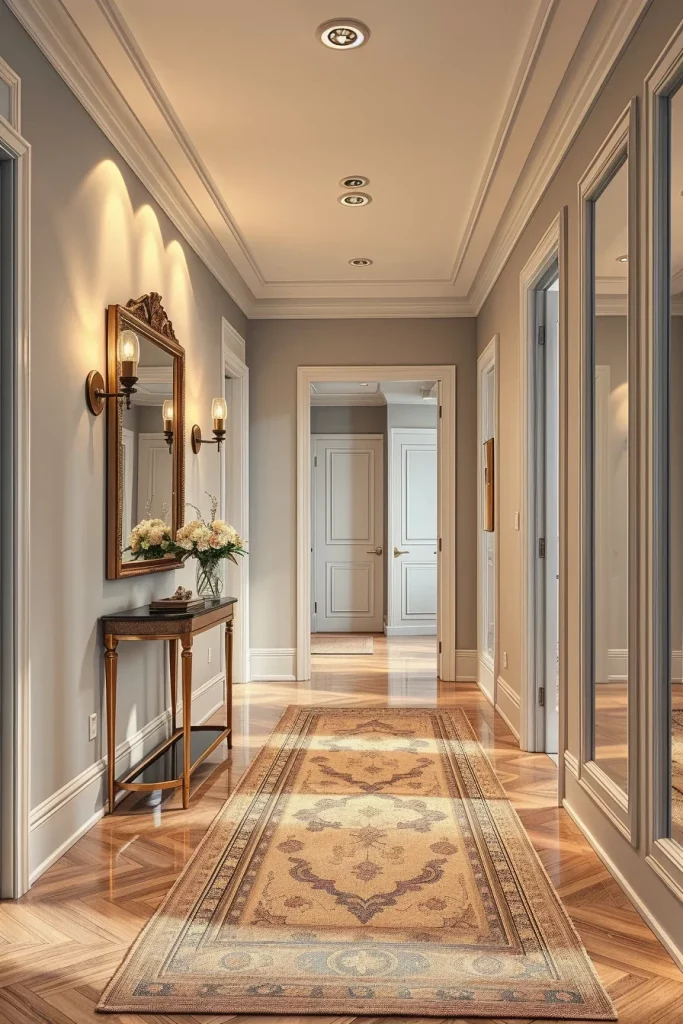
I typically pair decorative molding with a slim console table, an oversized mirror, elegant sconces, and a textured runner. Simple ceiling trim creates a seamless transition between walls and ceiling, while tall baseboards complete the architectural composition. Matte paint finishes enhance the crisp edges of the molding and prevent unwanted glare. Carefully selected artwork centered within larger molding panels adds another layer of sophistication without overcrowding the wall.
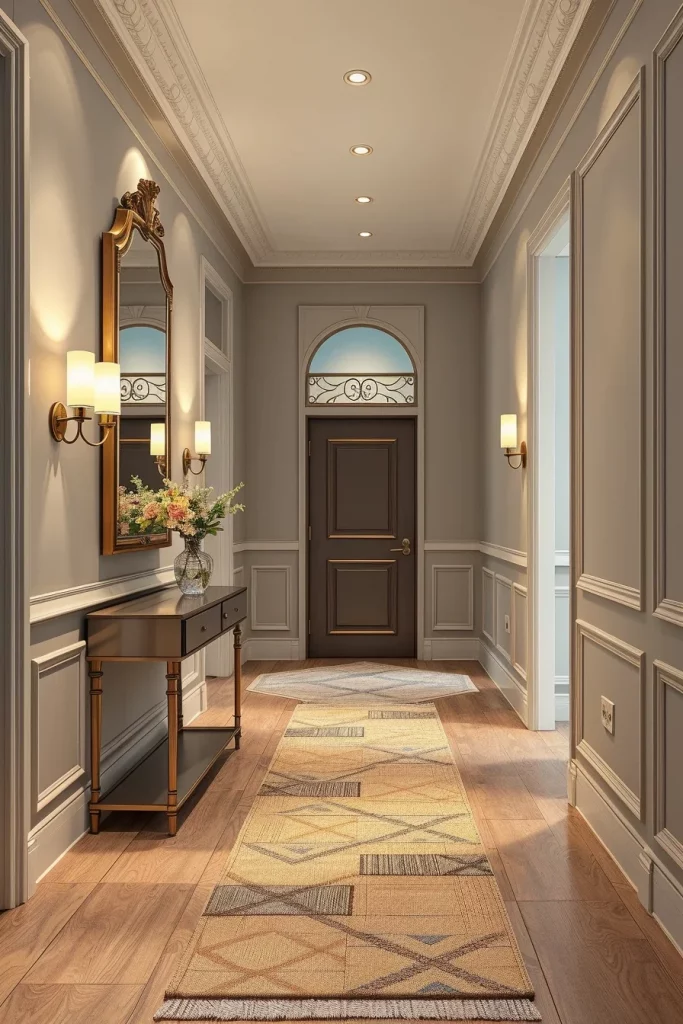
Many interior designers featured by House Beautiful recommend using proportionally sized molding that complements the dimensions of the hallway instead of copying large-scale designs from spacious living rooms. I have found that maintaining balanced proportions produces a much more refined result while preserving an open feeling throughout the space.
If I wanted to improve this design further, I would introduce dimmable wall sconces positioned between molding panels to emphasize their shadows during the evening and create a more inviting atmosphere.
Hallway Accent Wall Featuring Oversized Artwork
Oversized artwork is one of the simplest ways to establish an unforgettable focal point without making structural changes. I often recommend selecting one large statement piece rather than several smaller frames because it creates a cleaner composition and naturally draws attention through the hallway. A carefully chosen hallway accent wall featuring large-scale artwork immediately establishes the style of the home.
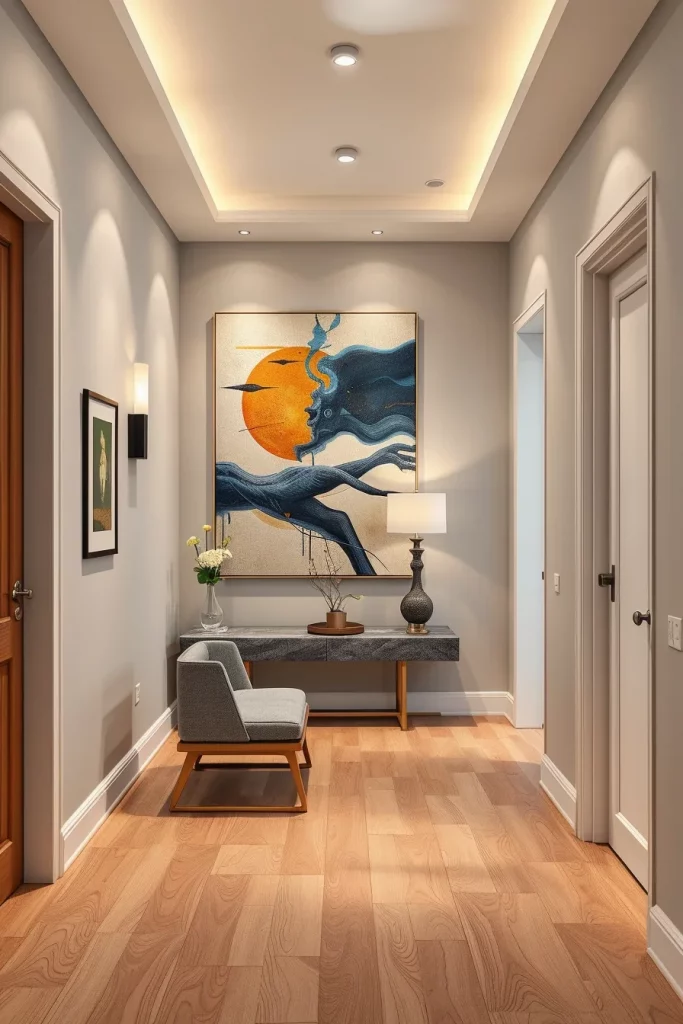
To support the artwork, I usually keep surrounding furniture understated. A floating console, upholstered bench, sculptural table lamp, and decorative tray provide functionality while allowing the artwork to remain the center of attention. Neutral wall colors work particularly well because they highlight the colors, textures, and details within the artwork itself. Integrated picture lighting positioned above the frame enhances the display during evening hours.
Many professional designers emphasize that artwork should be selected according to scale rather than simply personal preference. I agree because an undersized picture often disappears on a long hallway wall, while a properly proportioned piece creates balance and strengthens the overall design.
To enrich this space even more, I would add museum-style lighting with adjustable brightness and UV protection to preserve the artwork while creating an elegant gallery-inspired atmosphere.
Hallway Accent Wall With Backlit Architectural Details
Backlit architectural details combine modern technology with timeless architectural design. I like using concealed LED strips behind wall panels, recessed niches, floating elements, or vertical architectural features because they create depth without adding visual clutter. This style of hallway accent wall becomes especially impressive during the evening when soft indirect lighting transforms the hallway into an inviting transition space.
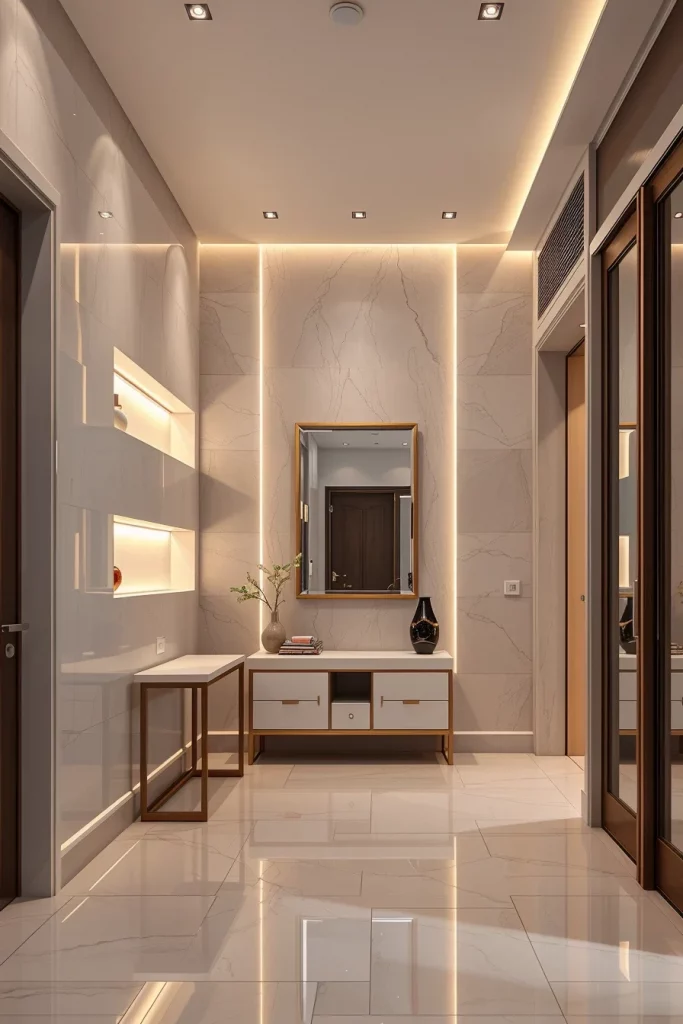
I usually combine illuminated wall features with large-format flooring, minimalist furniture, frameless mirrors, concealed storage, and matte finishes that allow the lighting effects to remain the primary attraction. Warm white LED lighting produces a comfortable atmosphere, while hidden electrical components maintain the clean appearance of the architecture. Every design decision supports both practicality and visual elegance.
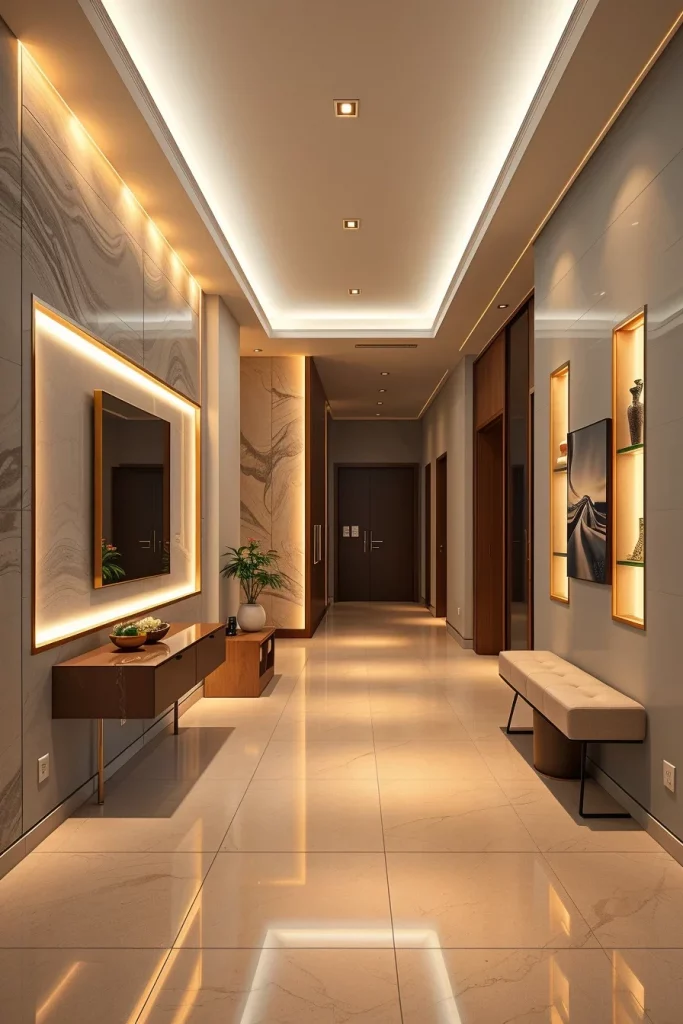
Many lighting specialists recommend layering ambient, accent, and task lighting rather than relying solely on ceiling fixtures. I have consistently found this approach to create more comfortable interiors while highlighting architectural details with greater sophistication.
If this hallway were part of a new renovation, I would also install smart lighting controls that allow brightness and color temperature to be adjusted throughout the day for maximum flexibility and energy efficiency.
Hallway Accent Wall Using Three-Dimensional Wall Panels
Three-dimensional wall panels introduce texture, movement, and sculptural depth that completely changes the character of a hallway. I enjoy using geometric relief patterns because they create visual interest even when painted in a single neutral color. A modern hallway accent wall with dimensional panels allows light and shadow to become part of the design itself, producing an elegant appearance throughout the day.
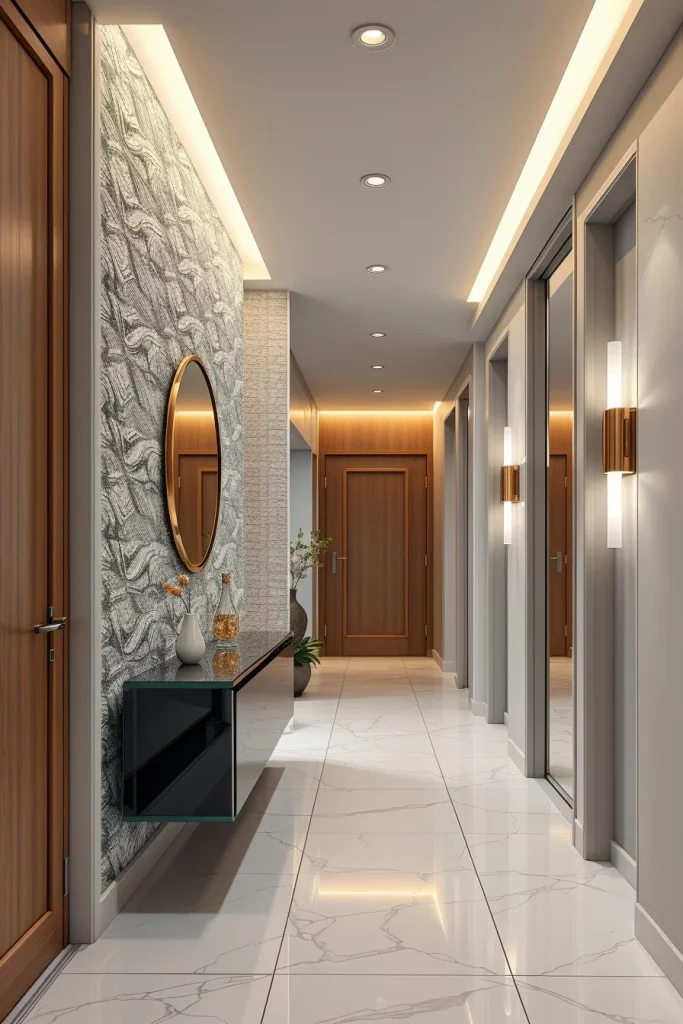
I typically pair textured wall panels with simple contemporary furniture to prevent the hallway from feeling visually overloaded. A floating console, frameless mirror, integrated storage, minimalist artwork, and discreet wall lighting create a balanced composition. Smooth flooring contrasts beautifully with textured walls, while warm lighting enhances every contour and shadow produced by the panels.
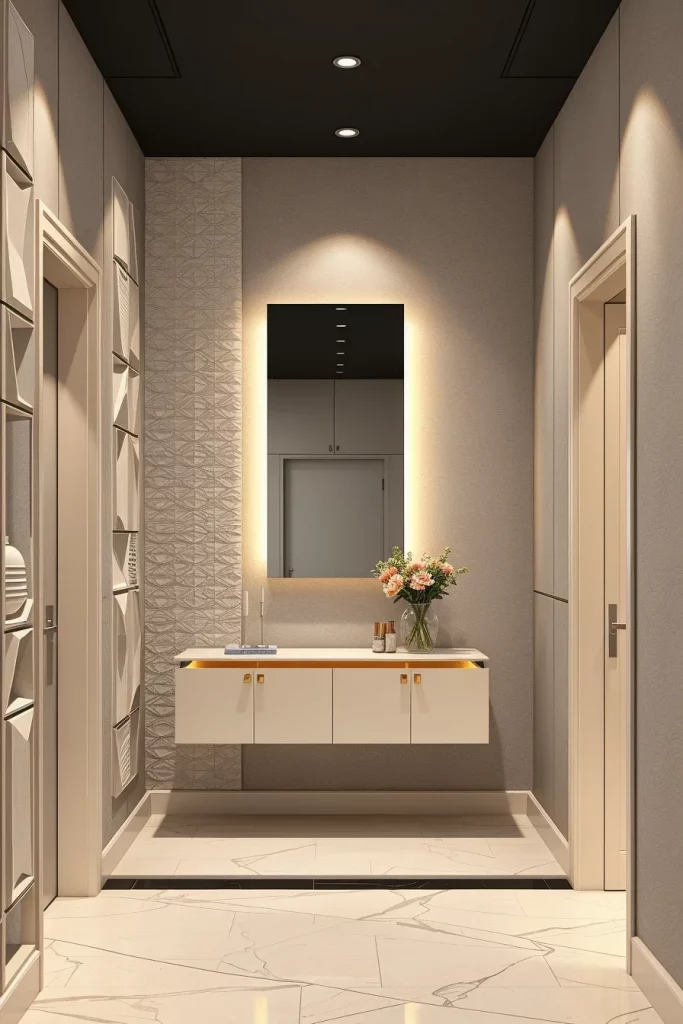
Design professionals frequently recommend limiting highly textured surfaces to one feature wall so the room maintains visual balance. I have found this advice extremely practical because it allows the architectural texture to remain the centerpiece without competing with excessive decoration elsewhere in the hallway.
To make this design even more complete, I would specify high-quality acoustic wall panels that combine decorative texture with sound absorption, creating a quieter and more comfortable entrance while maintaining the same sophisticated appearance.
Mirror Hallway Accent Wall That Expands Small Spaces
I have found that a mirror-focused hallway accent wall is one of the most effective ways to visually enlarge a confined entrance. A full-height mirror or a carefully arranged collection of framed mirrors reflects natural and artificial light throughout the hallway, making even the smallest space feel more open. Instead of relying only on decorative finishes, I prefer combining reflective surfaces with clean architectural details so the hallway appears brighter without feeling cluttered.
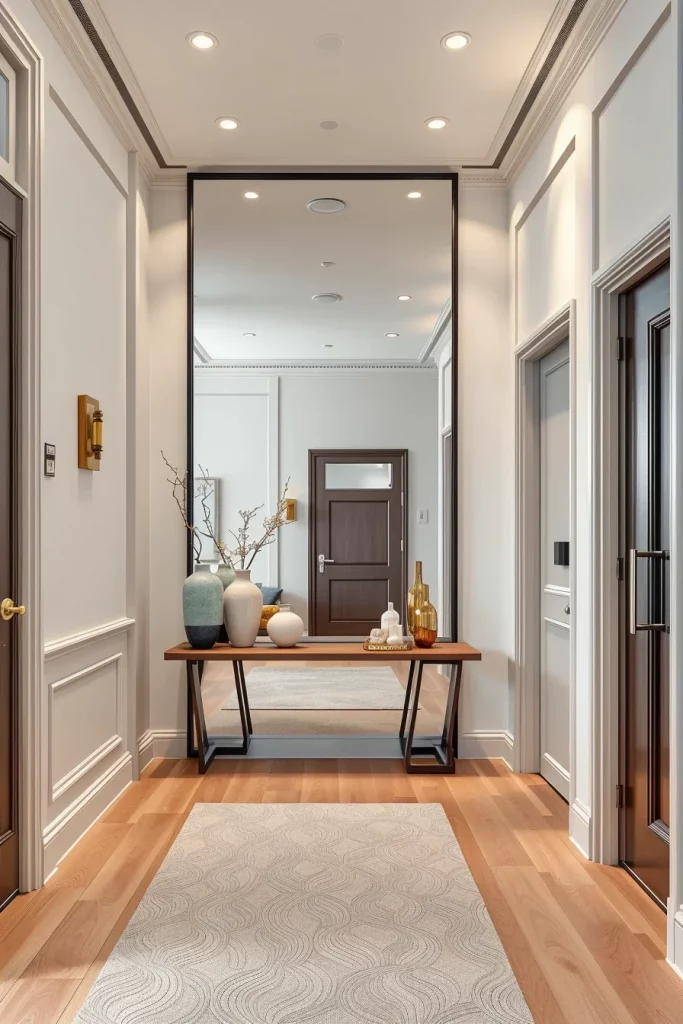
When designing this feature wall, I usually include a slim console table, concealed storage, elegant wall sconces, and a soft area runner that guides movement through the space. Large mirrors with thin metal frames keep the design contemporary, while decorative molding behind the mirror introduces subtle depth. I also recommend placing artwork, ceramic vases, or sculptural décor on the console to prevent the wall from feeling empty while maintaining visual balance.
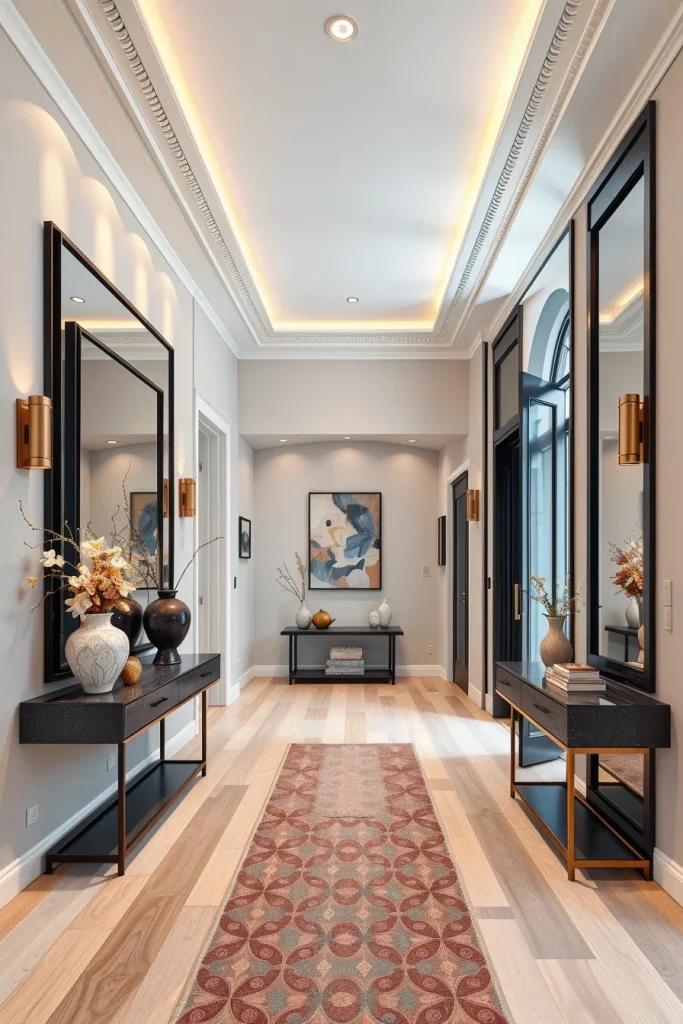
In my experience, many American interior designers recommend using mirrors strategically rather than excessively. Publications such as Architectural Digest frequently highlight reflective surfaces as an effective solution for compact entryways because they improve brightness without requiring structural changes. I have used this approach in several projects, and it consistently makes the hallway feel more inviting from the moment someone enters the home.
To complete this design, I would also include layered lighting with dimmable wall sconces or recessed ceiling lights. Proper lighting enhances reflections, minimizes dark corners, and ensures the mirror becomes a sophisticated architectural feature instead of simply a functional object.
Minimalist Hallway Accent Wall With Subtle Design Elements
I believe a minimalist hallway accent wall succeeds when every detail serves a purpose. Rather than filling the wall with decorative accessories, I prefer using texture, soft color variation, or simple geometric paneling to create quiet visual interest. This approach allows the hallway to feel calm and uncluttered while still becoming a memorable part of the home.
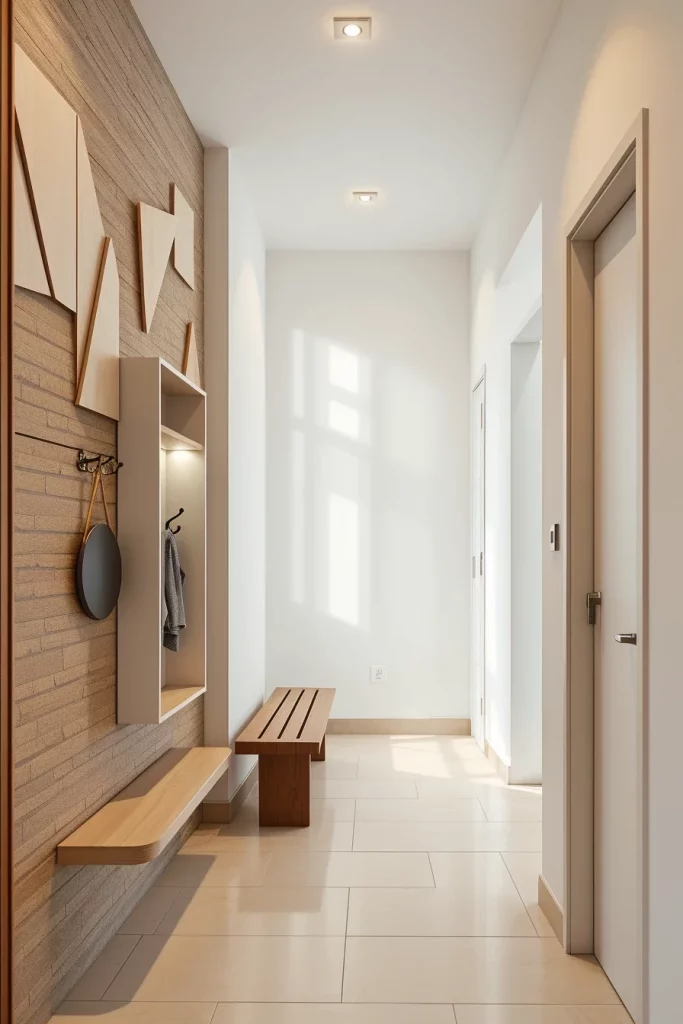
I typically pair this accent wall with floating storage cabinets, concealed hooks, a simple bench, and understated decorative objects. Neutral paint colors, matte finishes, integrated lighting, and clean lines maintain a cohesive appearance throughout the entryway. Every piece of furniture should contribute to organization while preserving generous walking space.
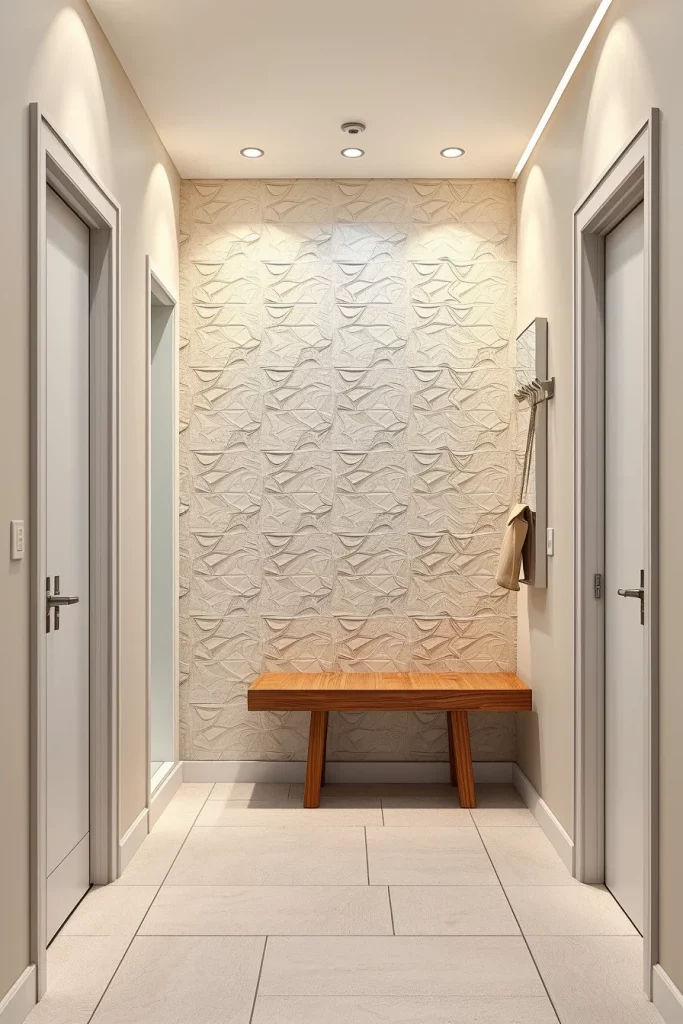
From my perspective, minimalism works best when high-quality materials replace unnecessary decoration. Designers frequently featured in Dwell emphasize restraint, proportion, and thoughtful material selection instead of excessive ornamentation. I have found that investing in fewer but better-designed pieces creates a hallway that remains attractive for many years without following temporary trends.
One addition I never overlook is discreet storage for everyday essentials. Hidden compartments for shoes, bags, or seasonal accessories help preserve the clean appearance that defines successful minimalist interiors.
Luxury Hallway Accent Wall With Premium Finishes
When I want to create a sophisticated first impression, I focus on luxurious materials that immediately elevate the atmosphere. A premium hallway accent wall may feature natural stone, polished plaster, decorative wall panels, oversized artwork, or custom millwork. The goal is not excessive decoration but refined craftsmanship that feels elegant from every viewing angle.
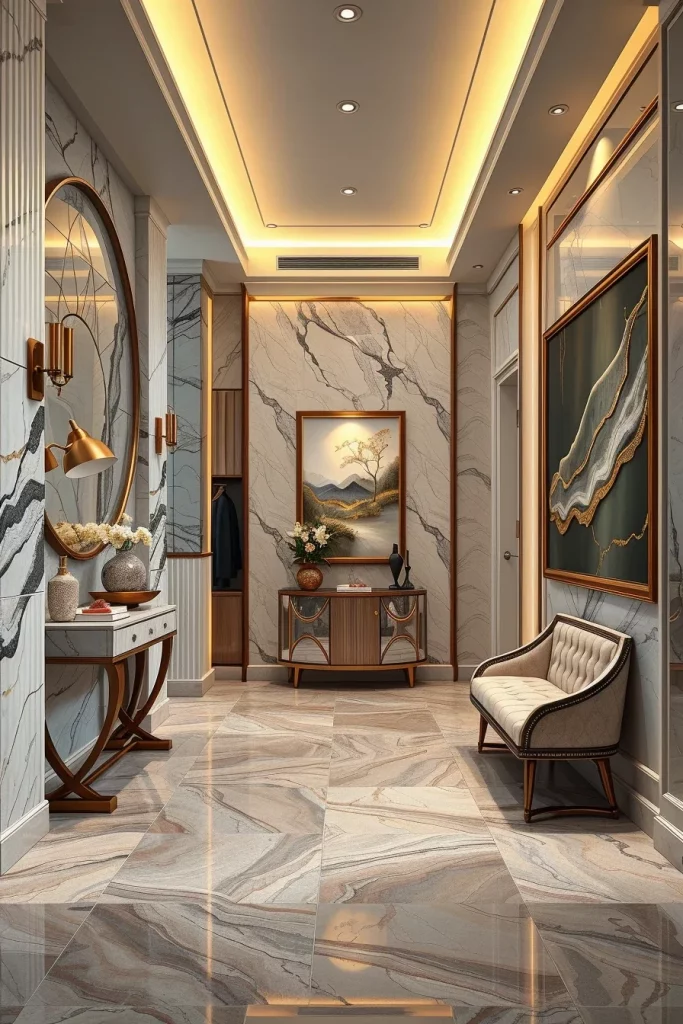
I like combining statement lighting, designer consoles, upholstered benches, decorative mirrors, and carefully selected accessories with these premium wall finishes. Brass details, textured stone, fluted panels, and large-format porcelain slabs create depth while maintaining visual harmony. Soft indirect lighting highlights material textures without overpowering the rest of the hallway.
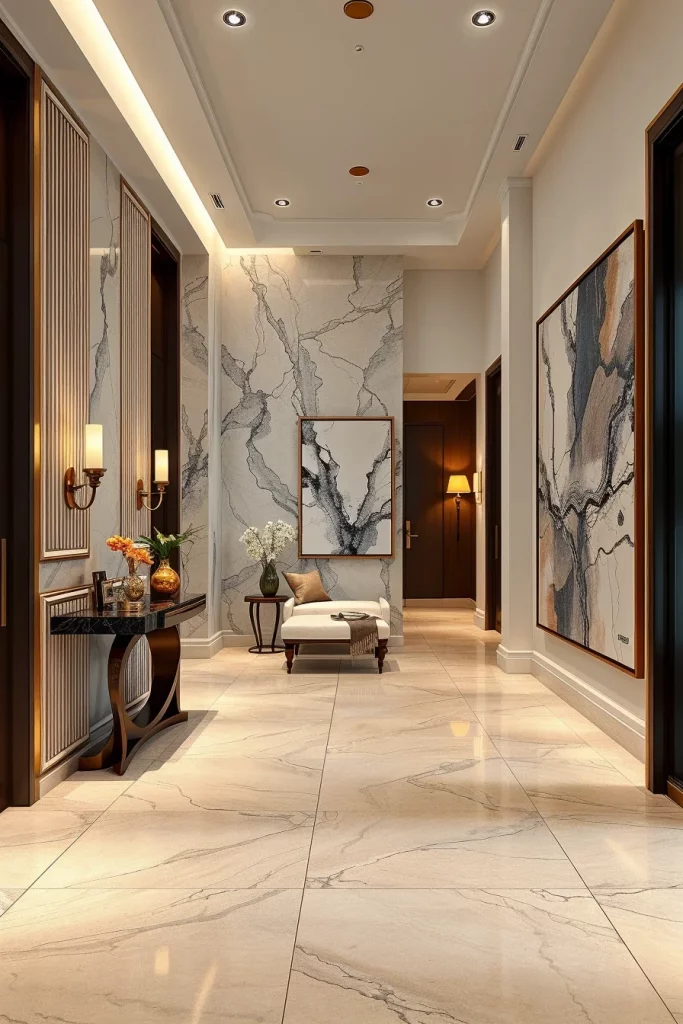
Personally, I believe luxury interiors depend more on thoughtful composition than expensive products alone. Interior designers frequently featured by Elle Decor emphasize layering quality materials, excellent lighting, and carefully edited accessories instead of filling every available surface. I have found that restraint often produces a more sophisticated result than excessive decoration.
To strengthen this design further, I recommend incorporating custom cabinetry that blends seamlessly into the accent wall. Hidden storage preserves the elegant appearance while improving daily functionality for homeowners.
Narrow Hallway Accent Wall Ideas That Maximize Visual Space
Designing for a narrow hallway requires careful planning because every visual element influences how spacious the area feels. I usually recommend choosing a hallway accent wall with vertical paneling, subtle linear textures, or elongated artwork that naturally draws the eye forward. Combined with bright finishes and consistent flooring, these features make the hallway appear significantly longer and more open.
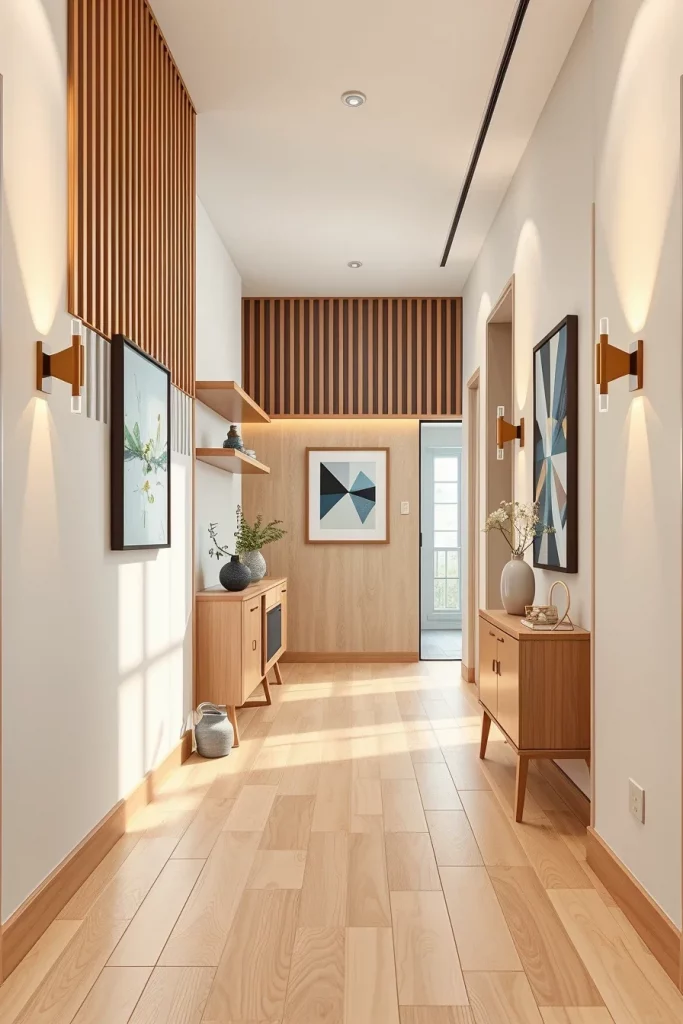
My preferred furniture selection includes narrow floating shelves, slim storage cabinets, wall-mounted lighting, and compact seating where space allows. I avoid bulky furniture that interrupts circulation and instead focus on lightweight pieces that maintain openness. Continuous flooring and coordinated wall colors also help eliminate unnecessary visual interruptions.
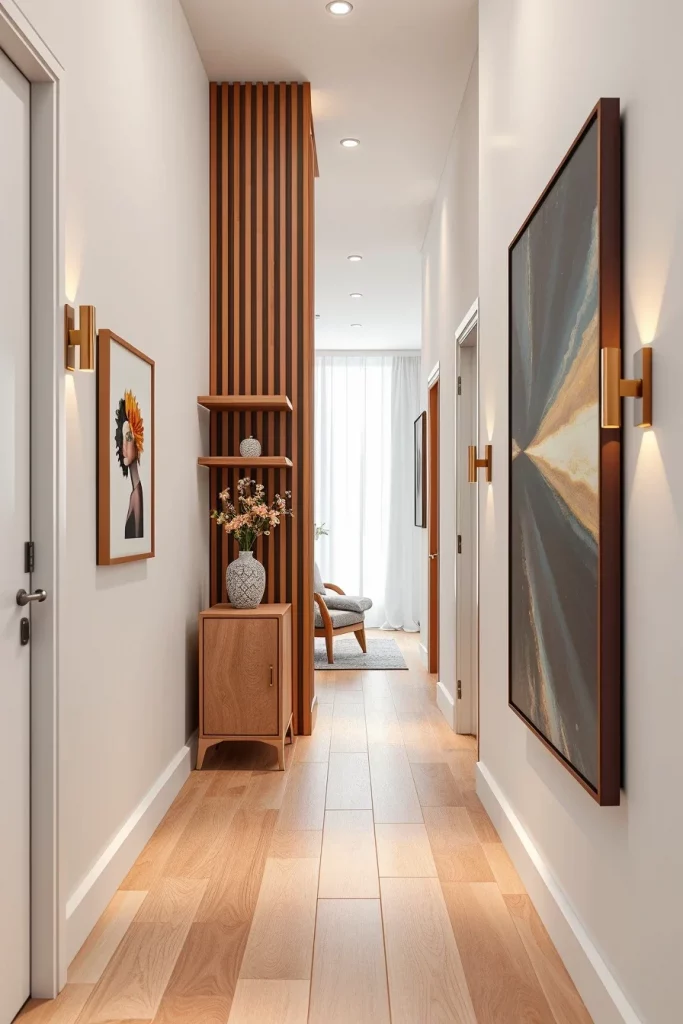
In my experience, lighting is just as important as color selection. Better Homes & Gardens has often emphasized the importance of evenly distributed lighting in narrow spaces, and I completely agree with this recommendation. I have noticed that layered lighting creates depth while reducing the tunnel-like feeling common in long hallways.
One improvement I always consider is replacing oversized decorative accessories with fewer but larger statement pieces. This approach reduces visual clutter and allows the hallway architecture itself to become the primary design feature.
Apartment Hallway Accent Wall Solutions For Compact Homes
Apartment hallways often have limited square footage, so I focus on maximizing both functionality and visual appeal. A carefully planned hallway accent wall can define the entrance while providing practical storage without overwhelming the available space. Soft paint colors, decorative paneling, textured wallpaper, or vertical slats help create character while preserving an airy atmosphere.
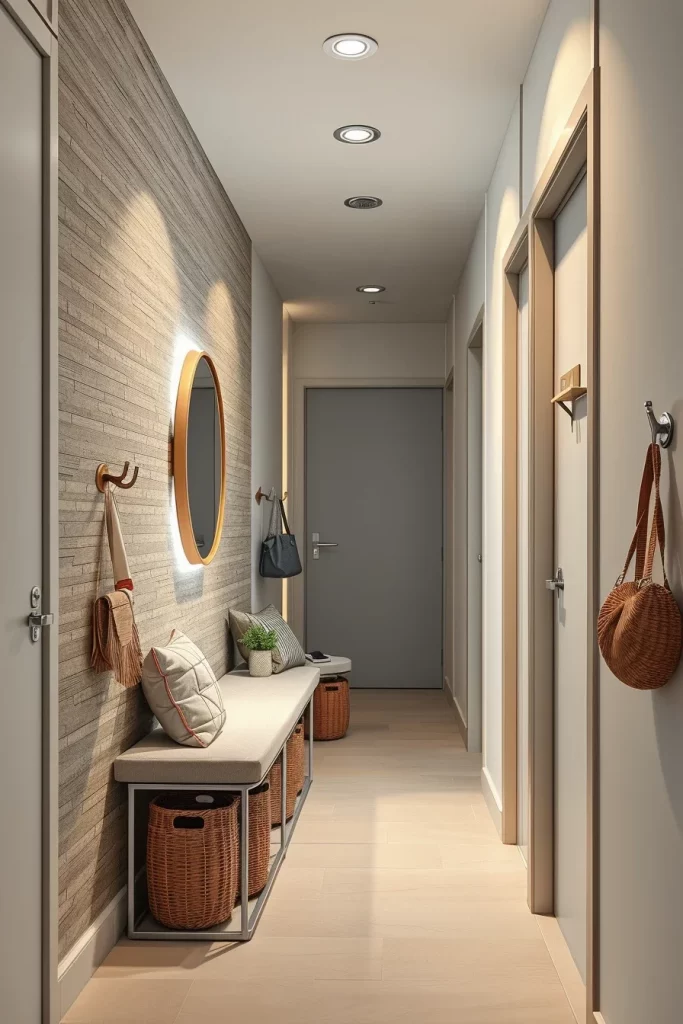
I usually combine the accent wall with multifunctional furniture such as storage benches, floating cabinets, concealed coat hooks, compact mirrors, and wall-mounted organizers. Every item should perform more than one function whenever possible. Decorative baskets, small framed artwork, and integrated LED lighting help personalize the hallway without sacrificing valuable floor area.
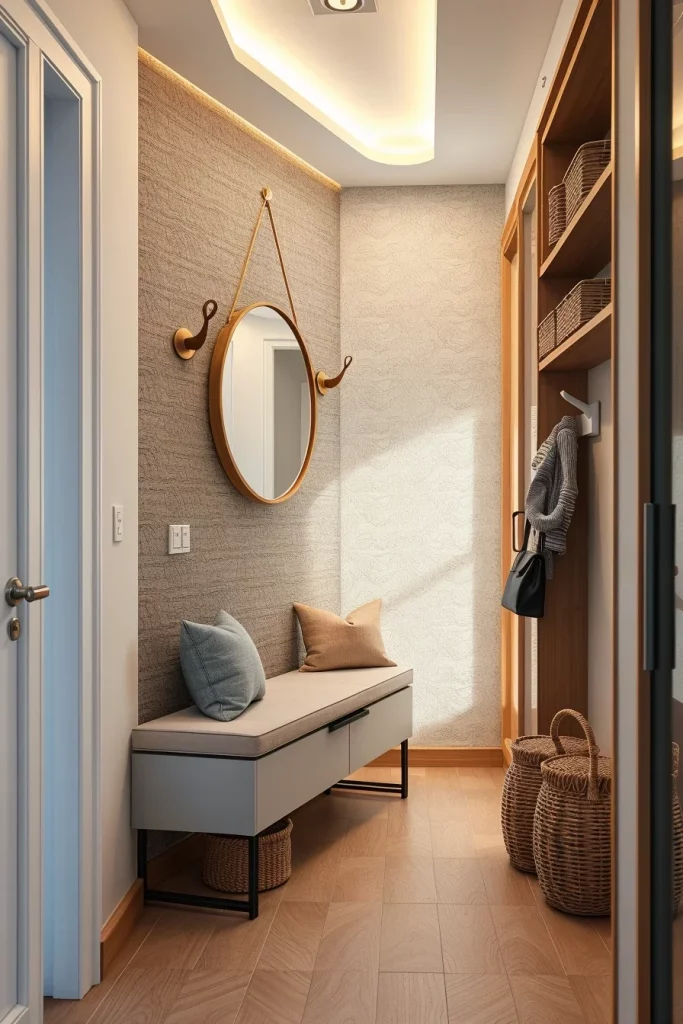
I have found that apartment design benefits greatly from consistency. Designers featured by House Beautiful frequently recommend maintaining the same color palette between the hallway and adjacent living spaces to improve visual flow. I follow this principle because it makes compact homes feel larger and more cohesive.
To complete the design, I would also add practical finishing touches such as a durable runner rug, organized shoe storage, and concealed charging space for everyday electronics. These details improve daily convenience while keeping the entrance neat and welcoming.
Entryway Hallway Accent Wall That Connects The Entire Interior
I always view the entryway as the space that introduces the design story of the entire home. A thoughtfully designed hallway accent wall should establish visual continuity between the entrance and the surrounding rooms. I like using the same color family, complementary materials, and repeated design details that appear throughout the house. This creates a natural transition that makes every room feel connected rather than separated. Whether the home is modern, transitional, or Scandinavian-inspired, a cohesive accent wall helps establish balance from the moment someone walks through the front door.
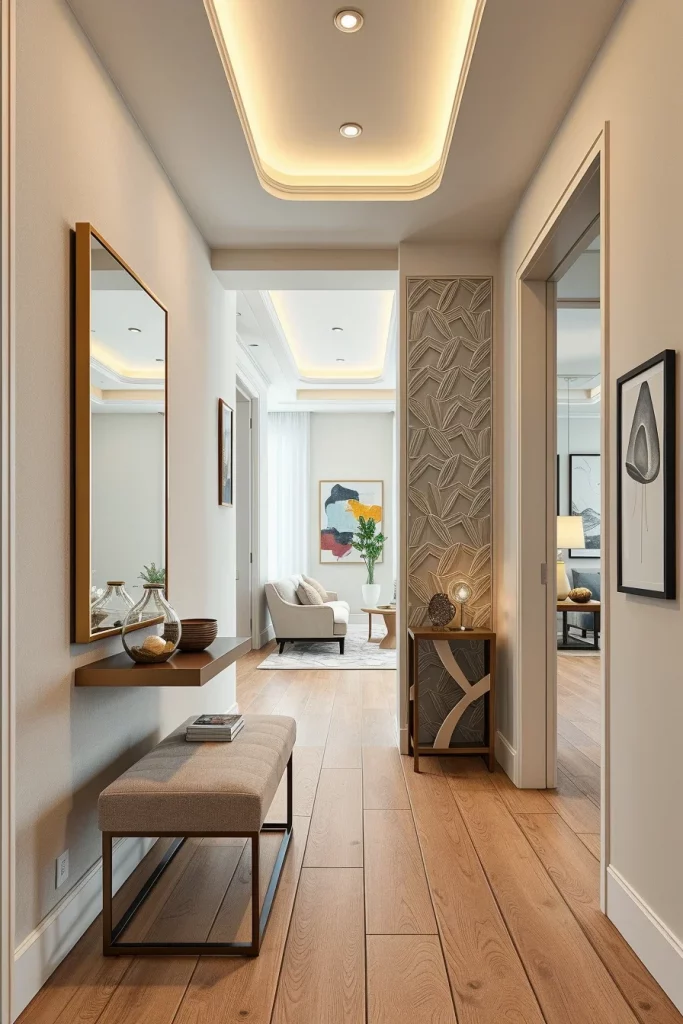
When planning this type of accent wall, I usually combine decorative wall panels, a slim console table, a large statement mirror, upholstered seating, and carefully selected decorative accessories. A neutral palette paired with textured finishes creates visual depth without overwhelming the space. Integrated storage keeps daily essentials organized while decorative lighting draws attention to the feature wall. I also prefer adding artwork that reflects the color palette used throughout adjacent rooms, strengthening the visual flow between spaces.
From my experience, creating continuity is one of the most overlooked aspects of interior design. Designers frequently featured by House Beautiful recommend repeating finishes, lighting styles, and architectural details across connected spaces to create a more harmonious home. I have applied this principle in many entryway renovations, and it consistently makes even modest homes feel professionally designed and much more inviting.
To complete this section, I would also recommend coordinating flooring materials and ceiling finishes with the accent wall. Continuous flooring and consistent trim details reinforce the connection between the hallway and the rest of the interior while maintaining a clean, seamless appearance.
Hallway Accent Wall Lighting Ideas For Maximum Impact
Lighting can completely transform a hallway accent wall, often becoming just as important as the wall finish itself. I always begin by considering how natural and artificial light interact throughout the day. Proper illumination enhances textures, highlights architectural details, and creates depth that cannot be achieved through paint or wallpaper alone. Even a simple accent wall becomes dramatically more sophisticated when illuminated with carefully planned lighting.
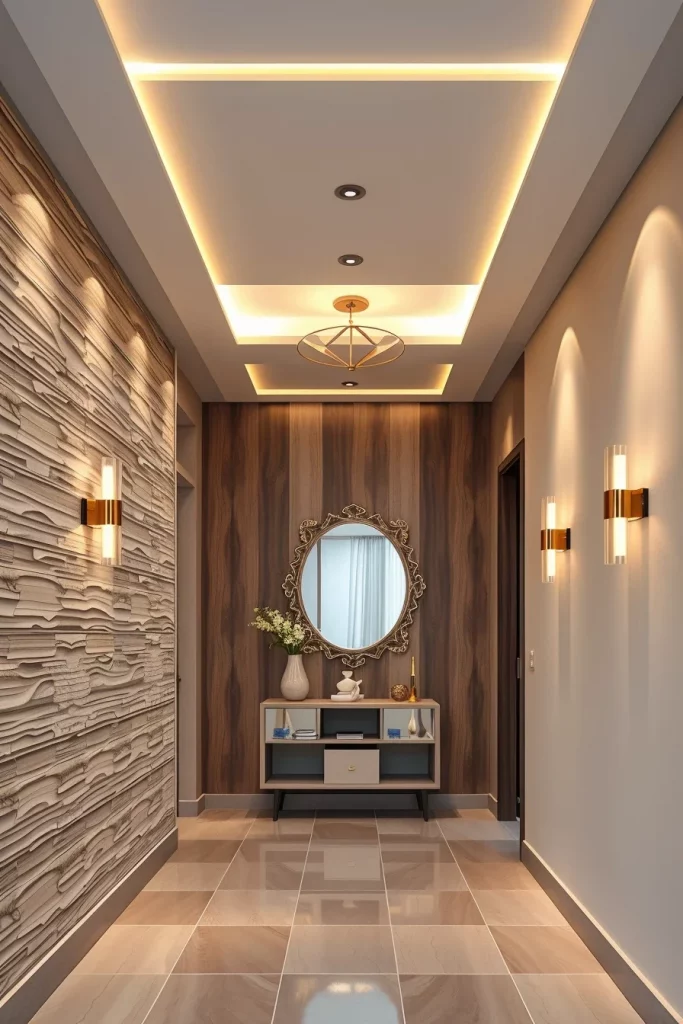
I typically combine recessed ceiling lights, decorative wall sconces, concealed LED strips, and accent spotlights to create multiple layers of illumination. Vertical lighting emphasizes textured wall panels, while hidden LED lighting behind mirrors or floating cabinets produces a soft ambient glow. Decorative table lamps placed on a console can introduce additional warmth and make the hallway feel more welcoming during the evening.
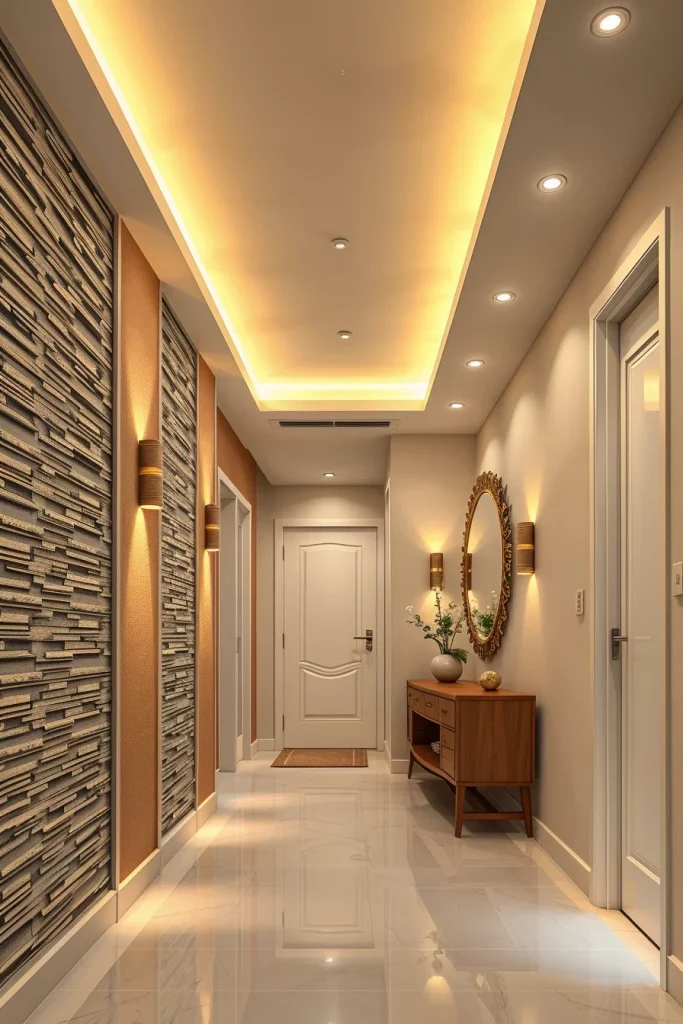
Personally, I have learned that lighting should never be treated as an afterthought. Architectural Digest regularly highlights layered lighting as one of the defining characteristics of successful contemporary interiors. I fully agree because even premium wall finishes lose much of their visual appeal without thoughtful illumination that reveals texture and dimension.
One detail I always recommend adding is a dimmer control system. Adjustable lighting allows homeowners to create bright illumination during the day while producing a softer atmosphere at night, making the hallway both functional and comfortable.
Ceiling And Hallway Accent Wall Combinations That Elevate Design
I often encourage homeowners to think beyond the walls and consider the ceiling as an extension of the overall design. Combining an elegant ceiling treatment with a hallway accent wall creates a cohesive architectural statement that makes the entire entryway feel more refined. Coordinated colors, decorative beams, recessed ceiling details, or subtle ceiling textures naturally guide the eye upward and increase the perceived height of the space.
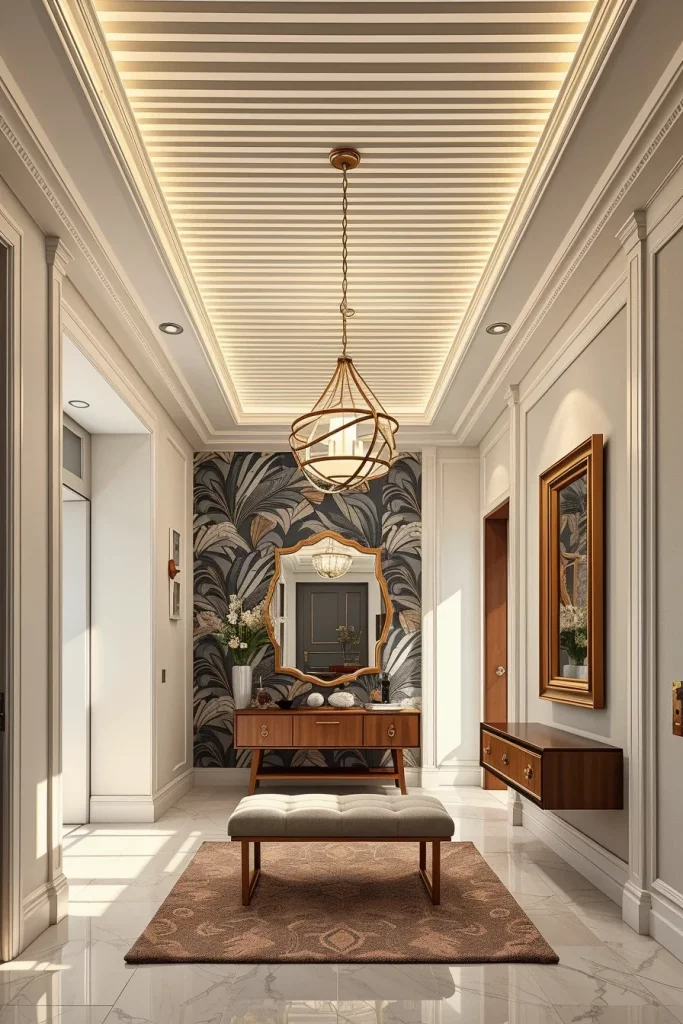
My preferred combination includes decorative wall molding, smooth ceiling coffers or linear wood-look slats, integrated LED lighting, and simple contemporary furnishings. A floating console, upholstered bench, oversized mirror, and sculptural pendant light complete the design while maintaining visual balance. I avoid overcrowding the space because the architectural elements themselves should remain the primary focal point.
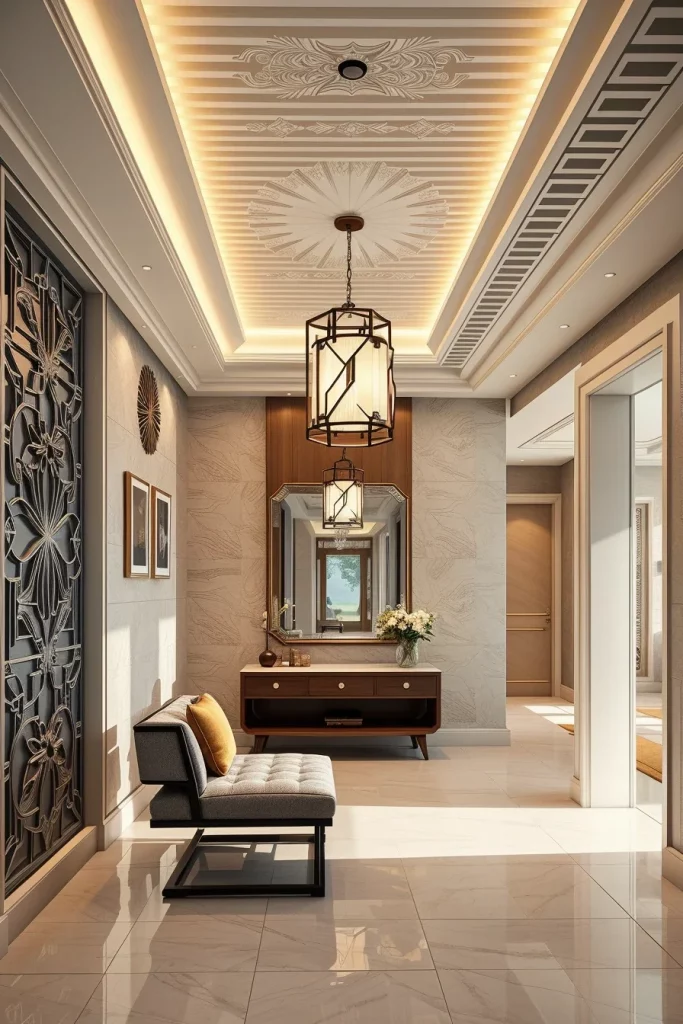
In my experience, successful interiors rely on harmony between vertical and horizontal surfaces. Interior designers frequently recommend treating the ceiling as the “fifth wall,” and I believe this advice significantly improves hallway design. By coordinating ceiling finishes with the accent wall, I consistently achieve interiors that appear larger, more polished, and carefully planned.
To strengthen this concept further, I would include matching trim profiles around doors and ceilings. These architectural details tie every surface together while reinforcing the sophisticated appearance of the hallway.
Budget-Friendly Hallway Accent Wall Ideas With High-End Appeal
Creating an impressive hallway accent wall does not always require an expensive renovation. I often achieve outstanding results by selecting affordable materials and arranging them thoughtfully. Paint, decorative molding, peel-and-stick wall panels, textured wallpaper, or vertical slats can produce a custom appearance without exceeding a reasonable budget. Careful planning usually has a greater impact than purchasing costly finishes.
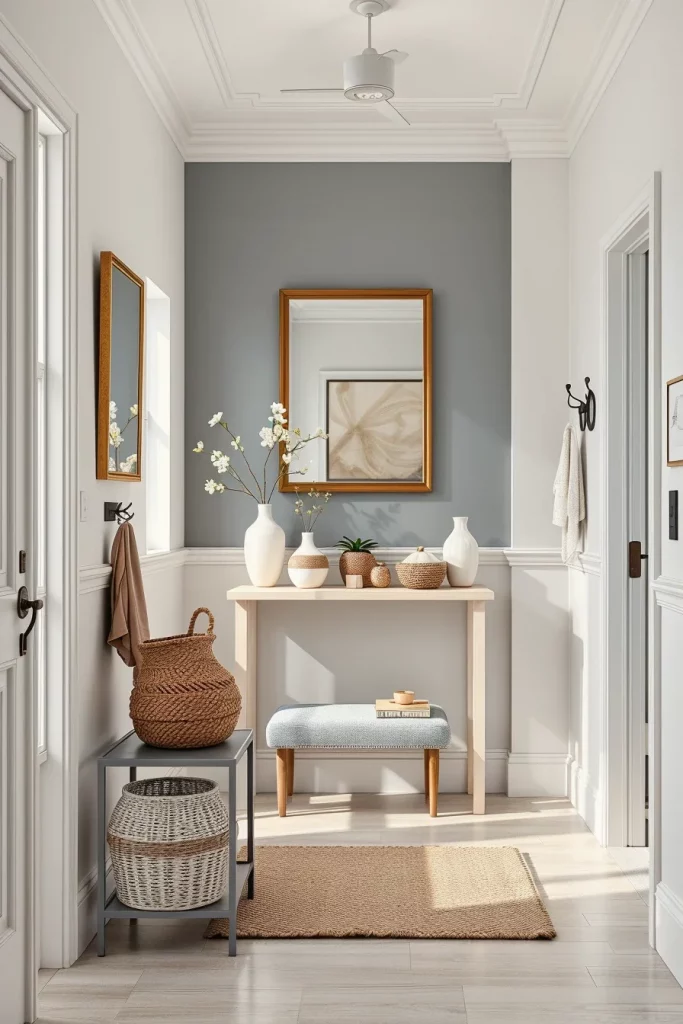
For furniture, I recommend a simple console table, a framed mirror, compact storage baskets, stylish coat hooks, and a comfortable bench. Affordable decorative accessories such as ceramic vases, framed artwork, and woven textiles add personality without making the hallway feel overcrowded. A coordinated neutral palette also creates a more expensive appearance because it allows individual design elements to work together harmoniously.
I have found that investing in a few high-quality focal pieces while saving on secondary elements produces the best value. Better Homes & Gardens frequently recommends prioritizing lighting, mirrors, and paint because these features have the greatest visual impact for the lowest investment. I have followed this approach in numerous projects with consistently successful results.
To finish the space, I would also include durable flooring runners and concealed storage solutions. These additions improve everyday practicality while preserving the polished appearance of the hallway for years to come.
Hallway Accent Wall Design Trends And Styling Tips
The most successful hallway accent wall designs combine timeless principles with carefully selected contemporary details. Rather than following every new trend, I focus on ideas that will remain attractive for many years. Textured wall panels, soft neutral colors, oversized artwork, integrated lighting, and architectural molding continue to define many of today’s most elegant hallways because they balance visual interest with long-term versatility.
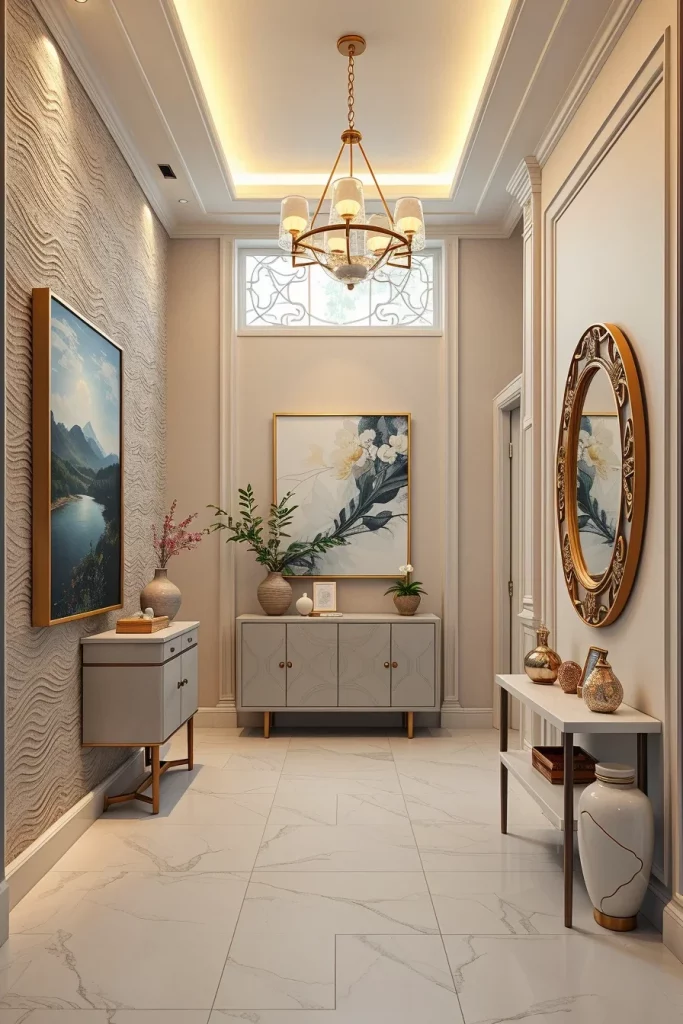
When styling these spaces, I usually combine sculptural lighting, floating furniture, decorative mirrors, indoor ceramics, subtle textiles, and carefully curated artwork. Every decorative piece should contribute to the overall composition without competing for attention. Maintaining consistent proportions between furniture, lighting, and architectural elements keeps the hallway comfortable and visually organized.
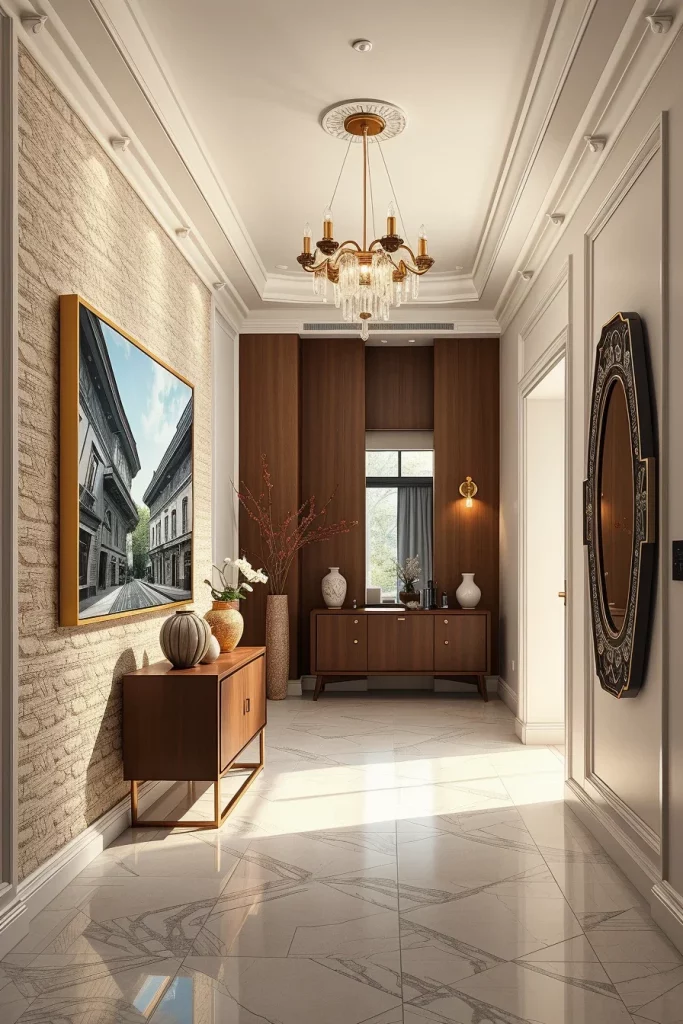
Personally, I believe trends should inspire rather than dictate every design decision. Designers featured by Elle Decor often recommend incorporating timeless materials first and adding fashionable accessories that can easily be updated in the future. I follow this philosophy because it creates interiors that remain elegant even as decorating trends evolve.
The final element I always recommend is thoughtful personalization. Family photography, meaningful artwork, handcrafted accessories, or unique decorative objects transform a professionally designed hallway into a welcoming space that genuinely reflects the people who live there.
A well-designed hallway accent wall can completely transform the look and feel of your home by turning an ordinary passage into a stylish focal point. Whether you prefer clean modern lines, textured finishes, bold colors, or timeless materials, there are endless ways to create a space that reflects your personal style. Use these hallway accent wall ideas as inspiration to design an entryway that is both beautiful and welcoming.