
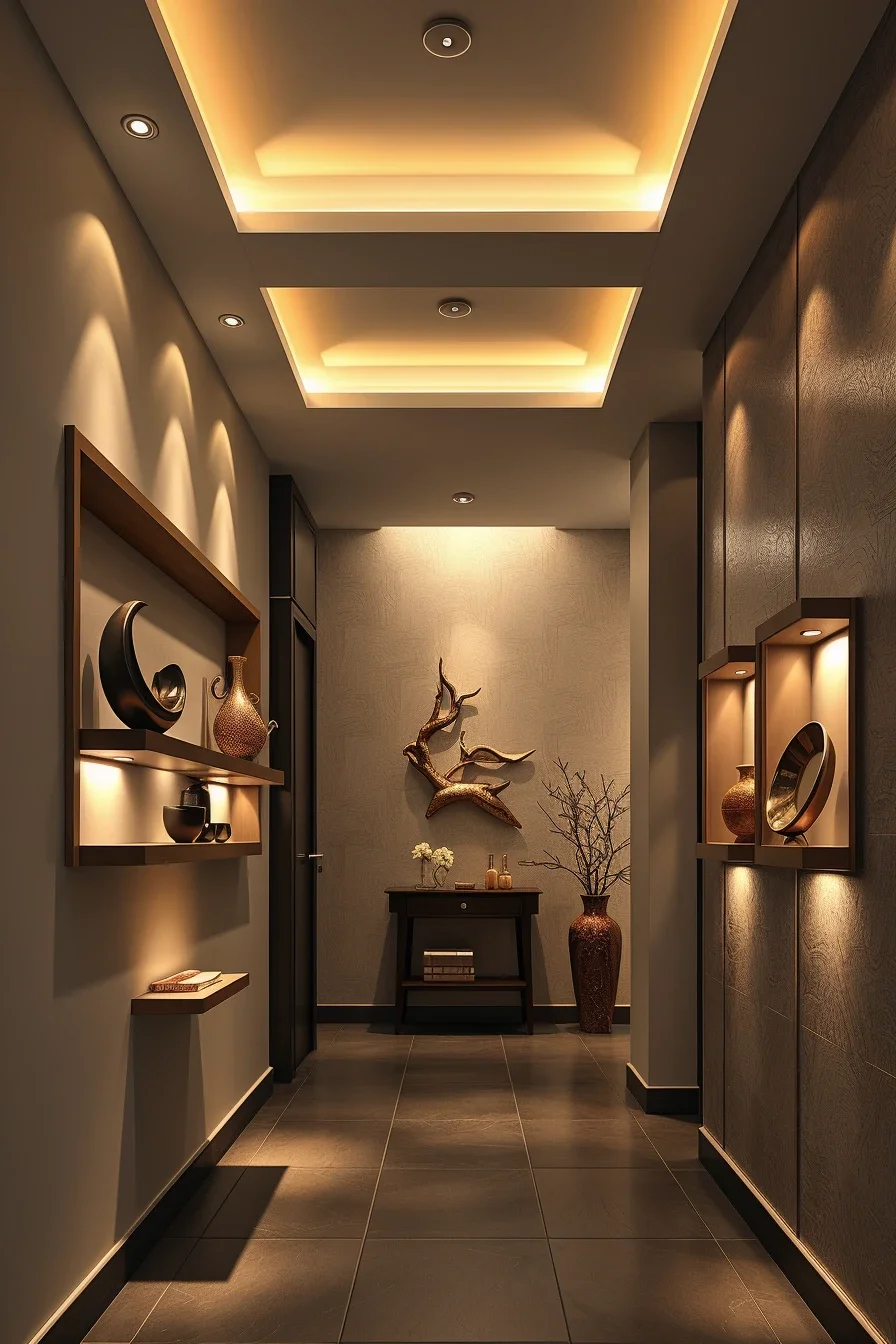
Your hallway is the first space that welcomes guests and sets the tone for the rest of your home, making thoughtful lighting an essential design element. The best hallway lighting ideas combine beauty and functionality, creating a bright, inviting atmosphere while enhancing architectural details. From sculptural pendant lights and elegant wall sconces to sleek recessed fixtures and artistic LED designs, there are countless ways to elevate this often-overlooked area. Choosing the right lighting can make narrow hallways feel more spacious, highlight decorative features, and add warmth to everyday living. Whether your style is modern, minimalist, or bold and creative, the perfect lighting solution can completely transform your entryway. This guide explores inspiring hallway lighting ideas that blend style, comfort, and practicality to help you create a memorable first impression.
Sculptural Pendant Lights For Artistic Hallway Design
When I want a hallway to feel like a carefully designed gallery rather than a simple passage, I start with sculptural pendant lighting. A bold pendant immediately becomes the focal point while providing balanced illumination throughout the space. I find this approach especially effective in hallways with higher ceilings, where decorative fixtures have enough room to stand out without overwhelming the interior. Organic shapes, geometric forms, and asymmetrical silhouettes all introduce personality while maintaining a modern appearance.
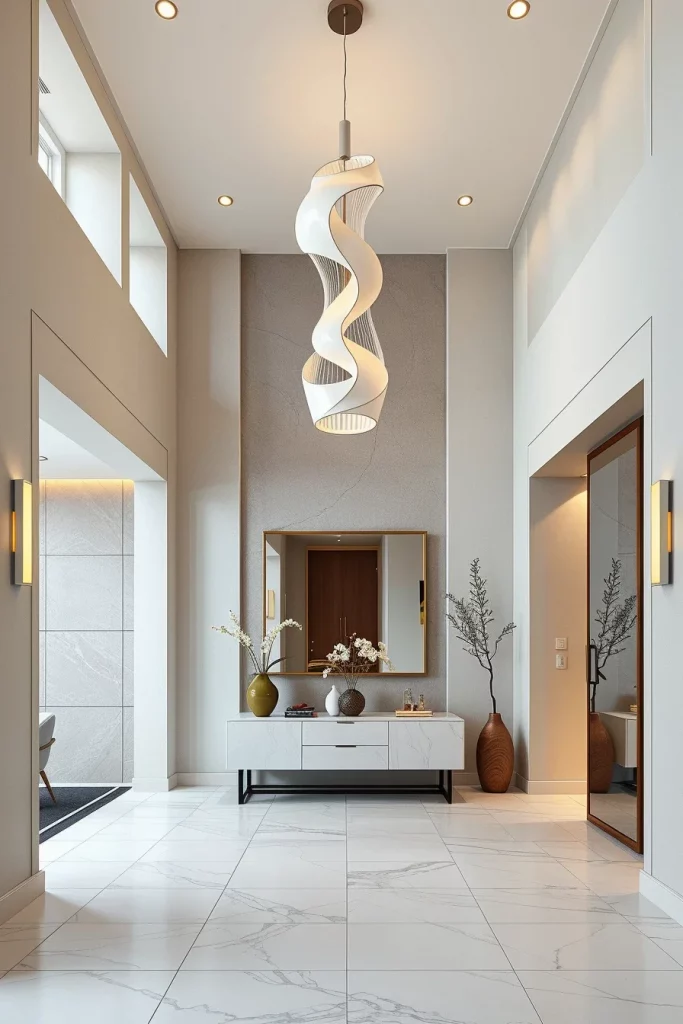
I like pairing sculptural pendants with smooth wall finishes, large-format flooring, slim console tables, and oversized mirrors. These elements reflect light beautifully and prevent the hallway from feeling narrow. A simple bench, hidden storage cabinet, or elegant decorative bowl completes the design without competing with the lighting fixture. Warm white lighting around 2700K to 3000K creates a welcoming atmosphere while highlighting architectural details throughout the hallway.
From my experience, many professional designers recommend selecting one statement fixture instead of filling the ceiling with multiple decorative lights. Publications such as Architectural Digest frequently emphasize that oversized lighting can define an entire entry sequence when its proportions match the room. I agree because a carefully selected pendant creates an intentional design rather than visual clutter.
I also recommend installing a dimmer switch with sculptural pendants. This allows the hallway to transition from bright daytime illumination to a softer evening atmosphere while extending the versatility of the lighting throughout the day.
Modern Linear Ceiling Lights For Long Hallways
Long corridors often suffer from uneven lighting, which is why I frequently recommend modern linear ceiling fixtures. Their elongated design naturally follows the architecture of the hallway, distributing light consistently from one end to the other. Instead of creating isolated pools of brightness, linear fixtures establish continuous illumination that makes the entire hallway appear wider and more balanced.
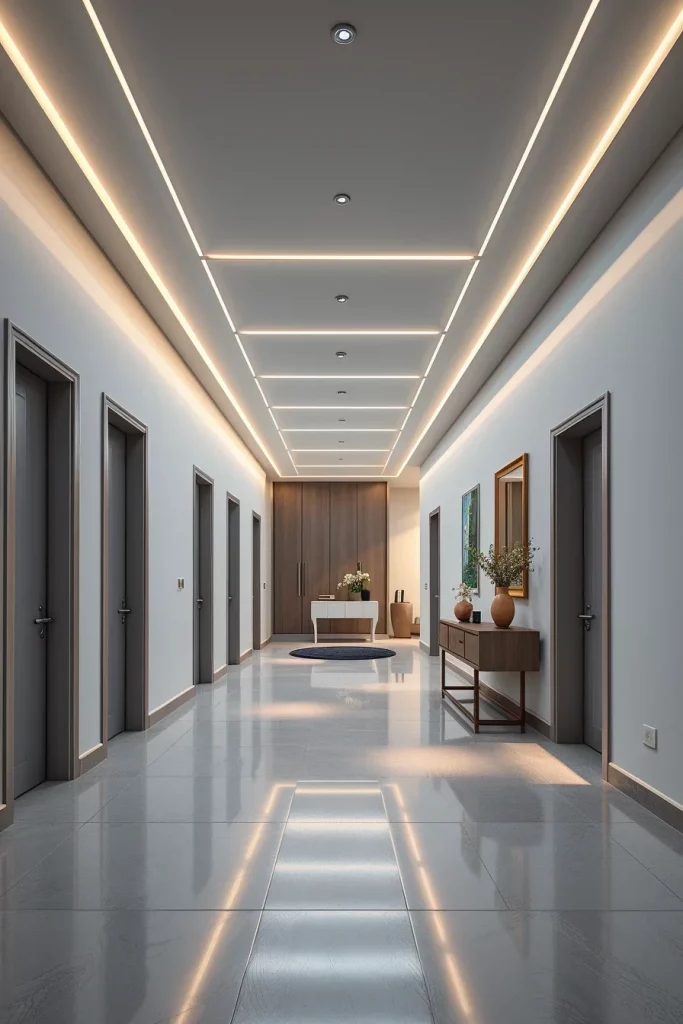
I usually combine these fixtures with flush cabinetry, frameless doors, smooth ceilings, and subtle decorative accents. Continuous flooring further strengthens the visual flow, while matte finishes minimize glare. A narrow console with minimal décor maintains openness without interrupting circulation. The clean geometry of linear lighting complements contemporary homes particularly well.
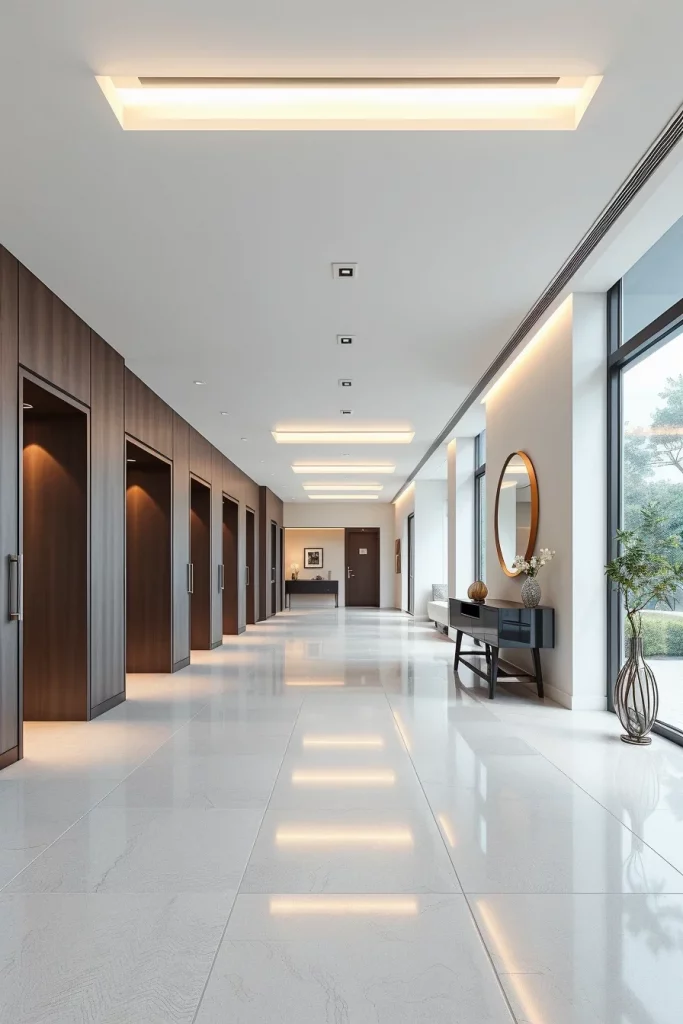
In my opinion, one of the greatest strengths of linear lighting is its ability to blend into the architecture while remaining visually elegant. Many interior professionals suggest keeping hallway lighting simple when the surrounding finishes already contain texture or bold materials. I have found this advice especially useful in modern interiors where restraint creates sophistication.
Adding concealed motion sensors is another feature I often recommend. They improve convenience, reduce energy consumption, and ensure the hallway always feels welcoming without requiring manual operation.
Statement Chandeliers That Transform Entry Spaces
A statement chandelier instantly elevates an entry hallway from functional to memorable. Whenever ceiling height allows, I enjoy using dramatic fixtures that introduce scale and elegance while drawing the eye upward. Even contemporary chandeliers with clean lines can create a luxurious arrival experience without feeling overly formal. The lighting becomes both illumination and artwork.
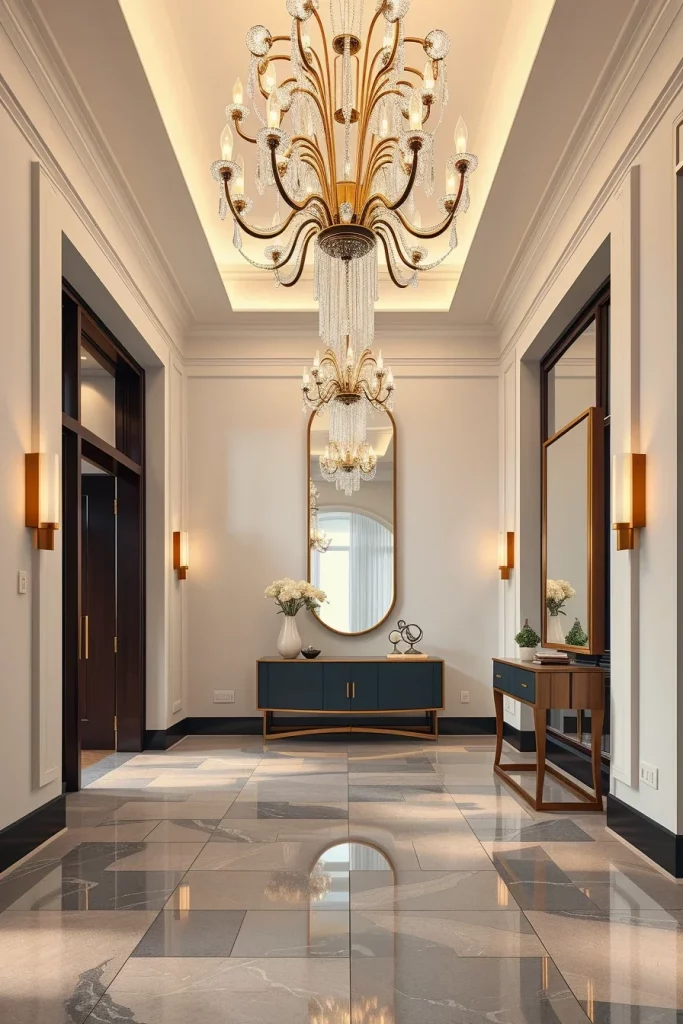
To support the chandelier, I prefer furnishings with refined proportions such as a slim console table, a large mirror, sculptural artwork, and carefully selected decorative accessories. Neutral walls allow the fixture to remain the visual centerpiece, while polished stone, porcelain tile, or wide-plank flooring reflects the light throughout the space. The result feels bright, open, and cohesive.
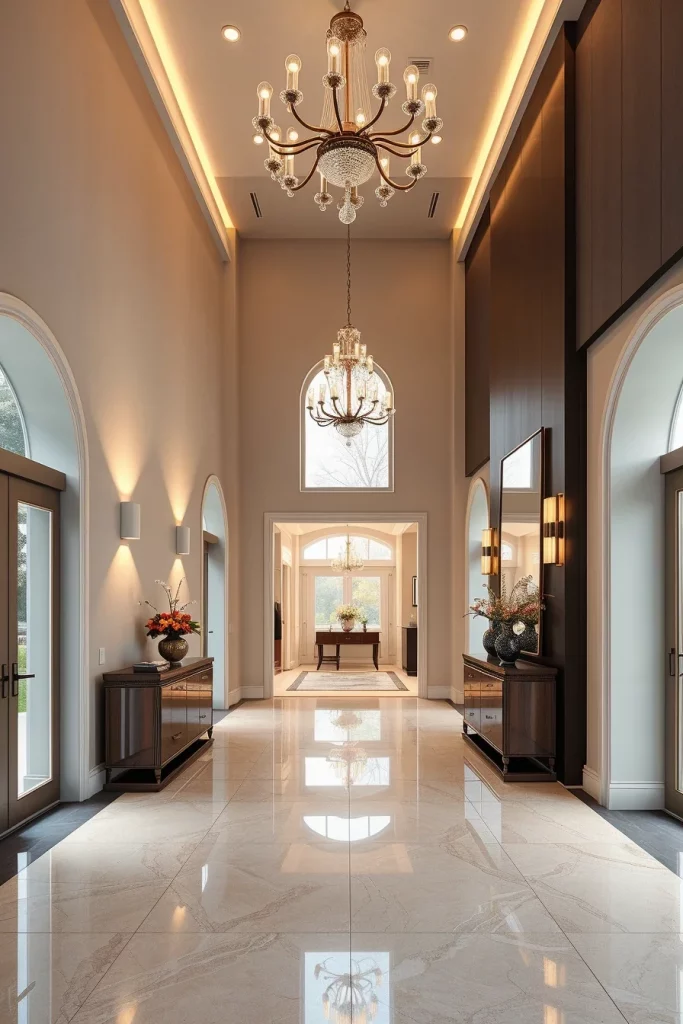
Personally, I always pay close attention to the size of the chandelier before installation. Designers featured by House Beautiful often remind homeowners that proportion matters more than ornamentation. I completely agree because an oversized fixture in a compact hallway can overwhelm the room, while one that is too small loses its visual impact.
If the hallway includes a staircase or double-height ceiling, I recommend choosing a chandelier with multiple suspended levels. This fills vertical space beautifully while maintaining balanced illumination across the entire entry.
Creative Wall Sconces With Architectural Appeal
Wall sconces allow me to introduce both functional lighting and architectural character without occupying ceiling space. They work exceptionally well in narrow hallways where ceiling fixtures alone cannot eliminate shadows. Modern sconces with sculptural forms or textured finishes create attractive layers of light while emphasizing wall surfaces and artwork.
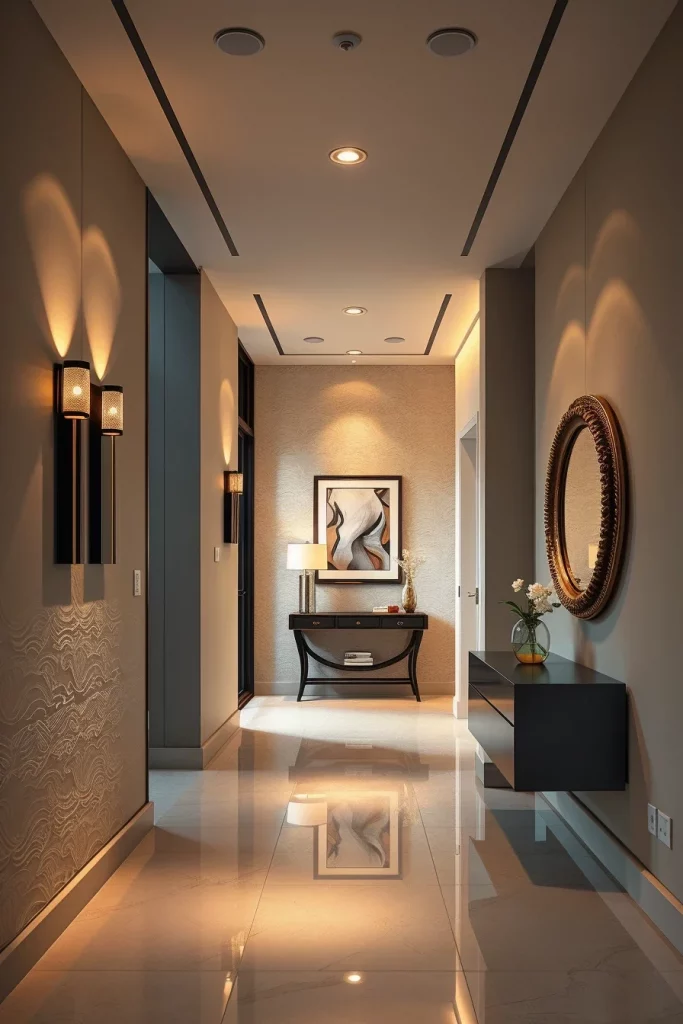
I often position sconces alongside decorative mirrors, framed artwork, textured wall panels, or built-in niches. Their indirect illumination softens the hallway while creating comfortable visual contrast. Floating consoles, hidden storage, and minimal accessories preserve openness while allowing the lighting itself to become part of the interior composition.
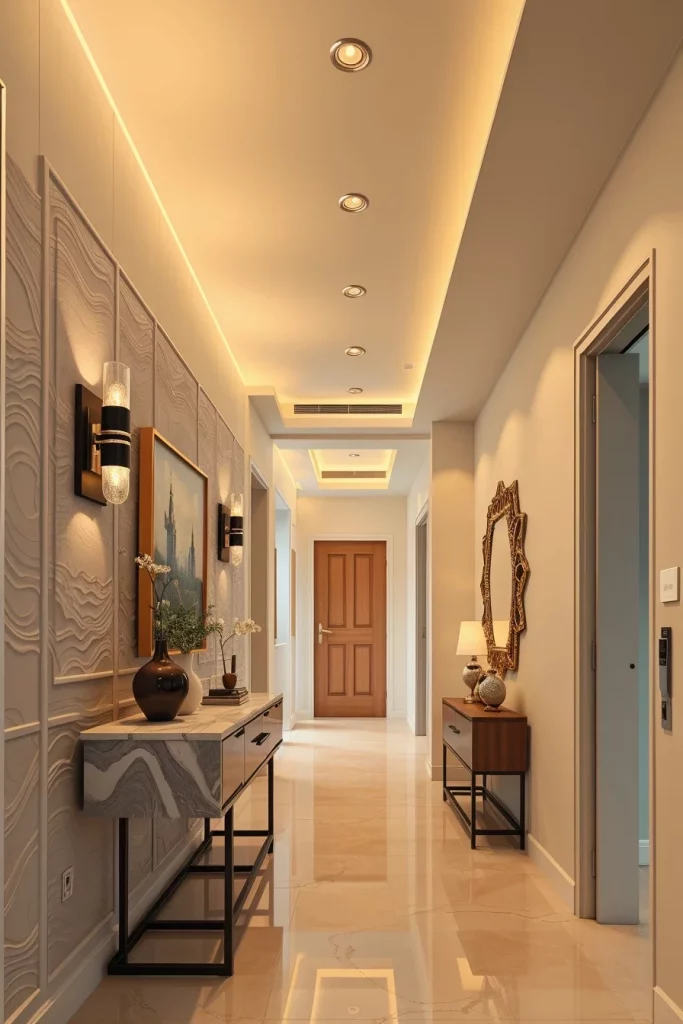
From my experience, thoughtful placement is more important than the number of fixtures. Interior designers frequently recommend installing sconces at consistent heights to maintain visual rhythm throughout the corridor. Following this principle results in a hallway that feels professionally designed and naturally balanced.
I also suggest selecting dimmable wall sconces with high-quality LED bulbs that provide excellent color rendering. This helps artwork, decorative finishes, and natural materials appear more vibrant under artificial lighting.
Minimalist Recessed Lighting For A Clean Contemporary Look
Whenever I design a minimalist hallway, recessed lighting becomes my preferred solution because it delivers clean illumination without distracting from the architecture. Small recessed fixtures disappear into the ceiling, allowing materials, proportions, and furnishings to define the space. This approach creates an uncluttered appearance that suits both compact and spacious homes.
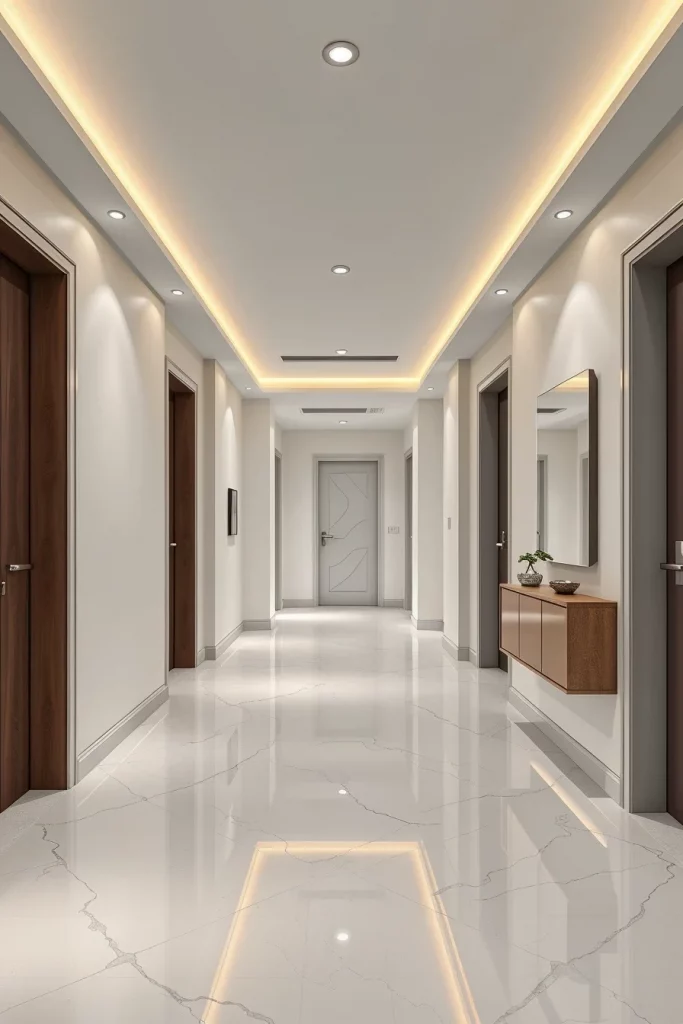
I usually arrange recessed lights in evenly spaced rows while coordinating them with concealed storage, flush doors, frameless mirrors, and understated decorative objects. Large floor tiles, seamless wall finishes, and subtle ceiling details enhance the continuous visual flow. Every design element supports simplicity while maximizing brightness throughout the hallway.
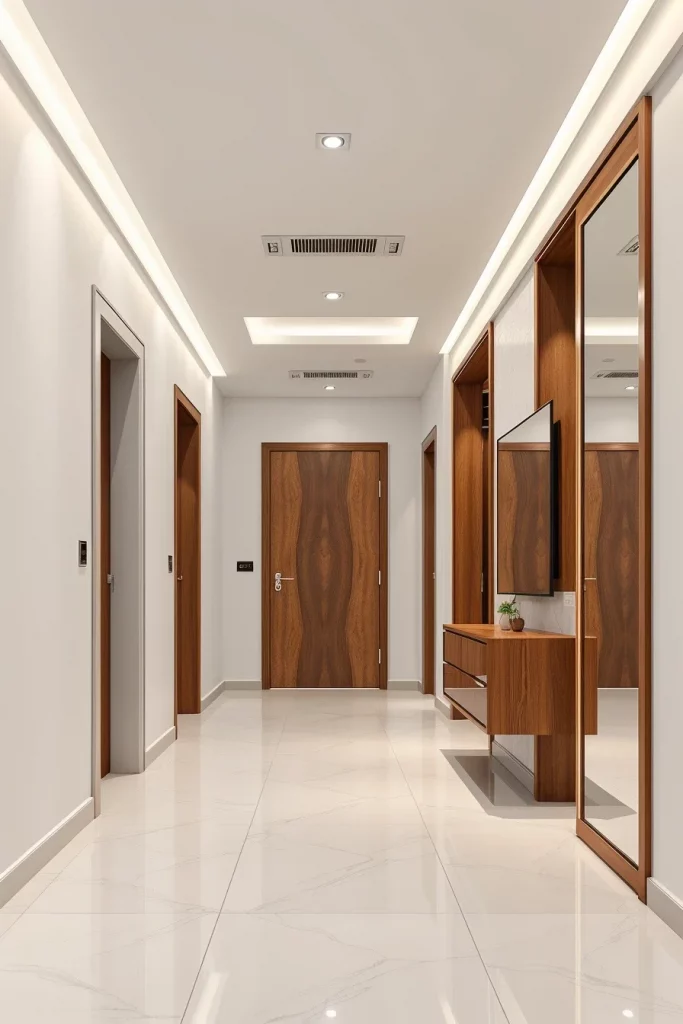
I appreciate that recessed lighting offers remarkable flexibility for modern interiors. According to recommendations commonly shared by lighting professionals, using multiple lower-output fixtures often creates more comfortable illumination than relying on a few extremely bright lights. I have consistently found this approach produces softer, more even lighting with fewer harsh shadows.
To complete the design, I recommend combining recessed lighting with hidden LED strips beneath floating furniture or inside recessed wall niches. These subtle accents introduce depth while preserving the minimalist character of the hallway.
Layered Hallway Lighting Ideas For Depth And Dimension
When I design a hallway that feels warm and visually dynamic, I rarely rely on a single light source. Instead, I combine ceiling lighting, wall sconces, accent lighting, and concealed LEDs to build layers that make the hallway feel larger and more welcoming. Layered lighting allows each architectural detail to stand out while creating a balanced atmosphere that changes naturally throughout the day. This approach works equally well in spacious entryways and compact corridors because every layer serves a specific purpose.
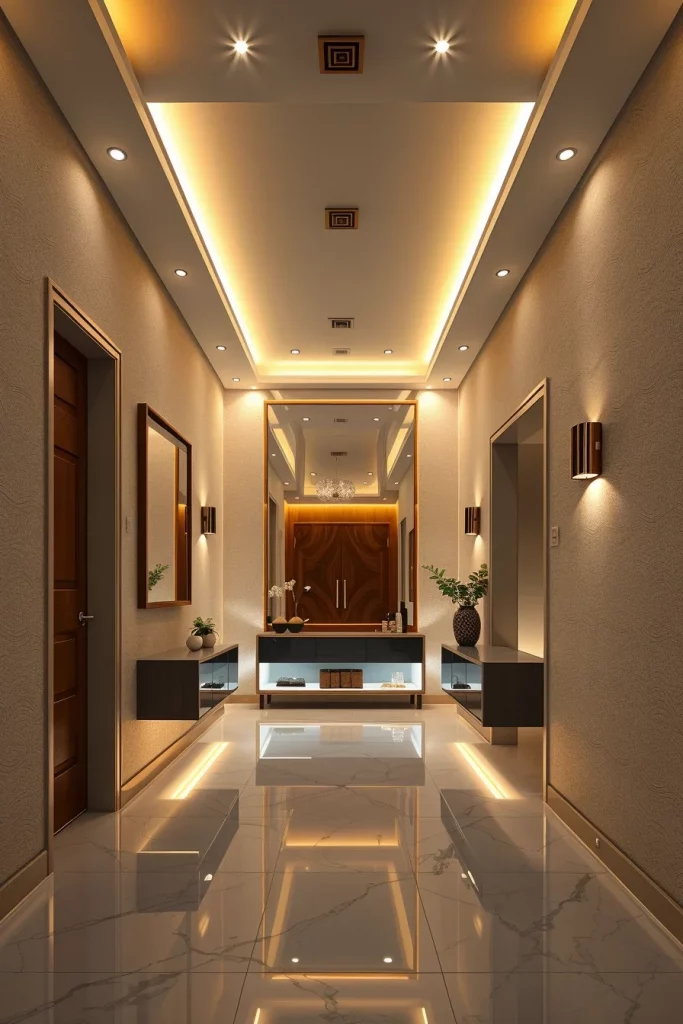
I usually begin with general ceiling lighting for overall brightness, then introduce decorative wall sconces to soften the walls and eliminate shadows. Hidden LED strips beneath floating consoles or inside recessed shelves provide subtle ambient light, while picture lights or directional spotlights emphasize artwork and decorative niches. Large mirrors multiply every lighting layer, making the hallway appear brighter without increasing energy consumption. Neutral finishes, textured walls, and carefully selected decorative accessories complete the composition.
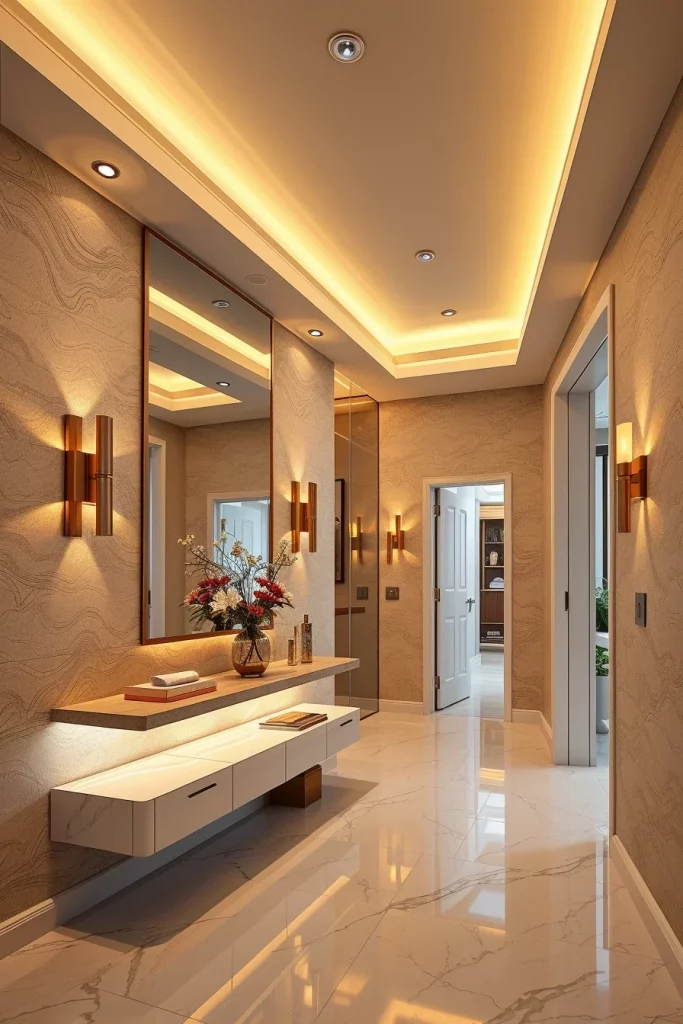
In my experience, layered lighting is one of the techniques most often recommended by professional lighting designers because it creates flexibility for different situations. Better Homes & Gardens frequently highlights the importance of combining ambient, task, and accent lighting instead of depending on a single fixture. I have found that this strategy consistently produces interiors that feel comfortable, sophisticated, and functional throughout the day.
I also recommend placing each lighting layer on separate dimmer controls. This makes it possible to adjust brightness depending on natural daylight, entertaining guests, or creating a calm evening atmosphere.
Unique LED Strip Lighting For Floating Effects
One of my favorite ways to modernize a hallway is by incorporating concealed LED strip lighting. Hidden illumination creates the illusion that furniture, shelves, or architectural details are floating, adding depth without introducing visual clutter. Rather than becoming the focal point itself, the lighting quietly enhances the surrounding design and produces an elegant contemporary atmosphere.
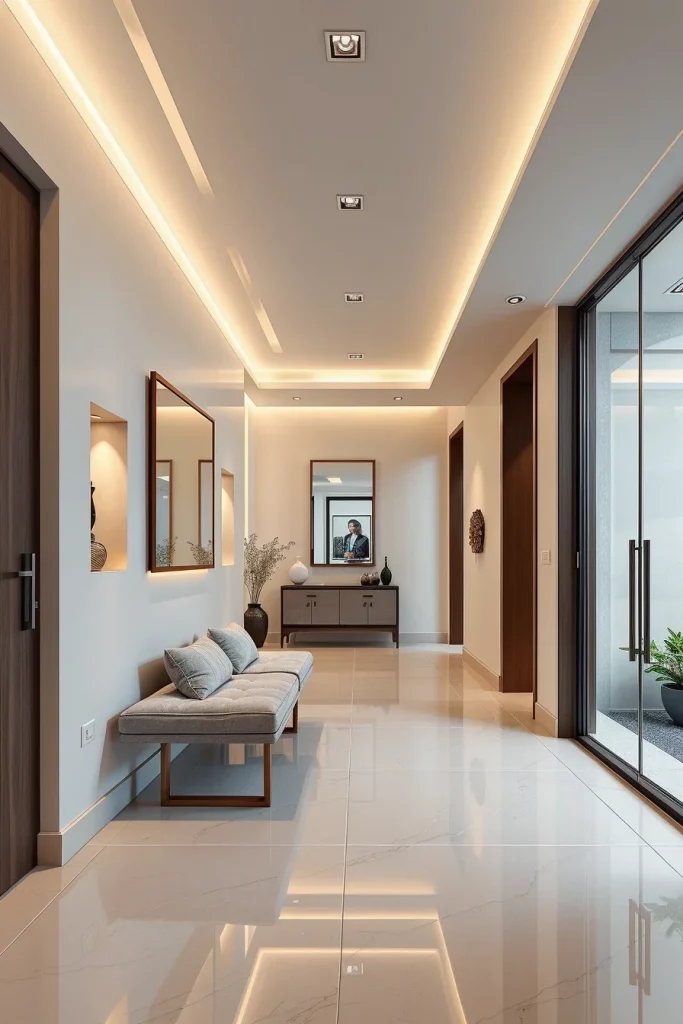
I often conceal LED strips beneath floating benches, inside ceiling coves, behind mirrors, under console tables, or along recessed wall niches. Continuous light lines visually lengthen the hallway while emphasizing clean architectural geometry. Matte surfaces soften reflections, while porcelain flooring and light-colored walls gently distribute the glow across the room. Minimal accessories allow the lighting effects to remain refined rather than overwhelming.
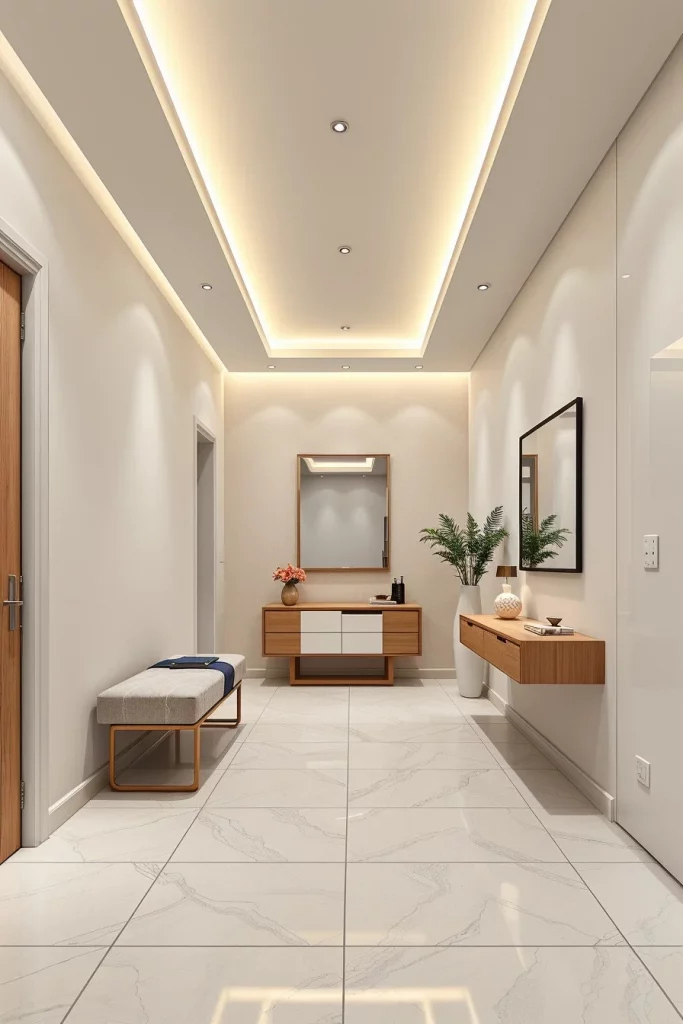
Personally, I believe concealed LED lighting represents one of the most versatile technologies available for residential interiors today. Many lighting specialists recommend selecting high-quality LED strips with excellent color rendering and consistent brightness to avoid uneven illumination. I agree because premium lighting significantly improves the overall appearance of every finish and material.
To maximize longevity, I recommend installing aluminum channels with diffusers. They help dissipate heat, protect the LED strips, and create perfectly continuous lines of light without visible individual diodes.
Curved Light Fixtures That Add Soft Sculptural Style
Curved lighting introduces a sense of movement that instantly softens the straight architectural lines often found in hallways. Whenever I want to create a welcoming entrance with artistic character, I choose fixtures featuring flowing curves instead of rigid geometric forms. These sculptural designs add visual interest while maintaining the calm simplicity associated with contemporary interiors.
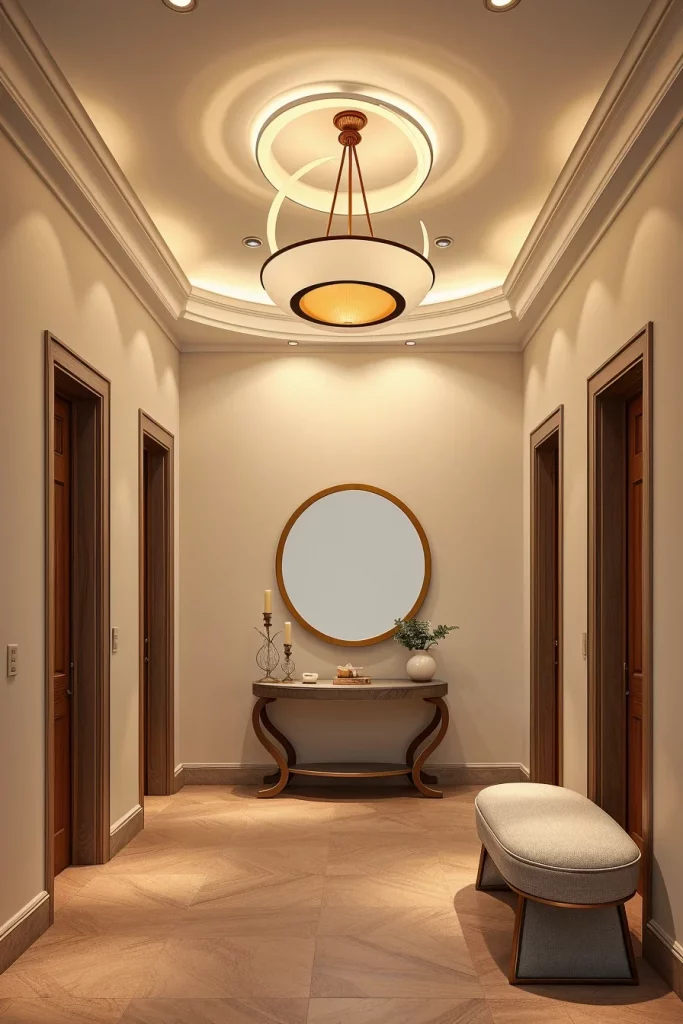
I like combining curved ceiling fixtures with rounded mirrors, softly shaped console tables, upholstered benches with curved edges, and decorative ceramic accessories. Gentle forms contrast beautifully against smooth walls and large-format flooring while maintaining an uncluttered appearance. Warm indirect lighting enhances the sculptural qualities of every curved surface and creates a relaxed atmosphere throughout the hallway.
From my perspective, curved lighting works especially well in homes where modern minimalism feels slightly too formal. Interior designers have increasingly embraced softer forms because they introduce warmth without sacrificing simplicity. I appreciate how these fixtures become elegant design features while still providing practical everyday illumination.
I also recommend repeating curved shapes elsewhere in the hallway through furniture, mirrors, or decorative objects. This creates a cohesive composition instead of allowing the lighting fixture to appear isolated.
Artistic Glass Lighting Fixtures That Become Functional Art
Glass lighting fixtures allow me to combine illumination with artistic craftsmanship. Whether the glass is clear, frosted, ribbed, or lightly textured, these fixtures create beautiful reflections that enrich the hallway without making it feel crowded. During both daylight and evening hours, the glass interacts naturally with surrounding surfaces, producing subtle visual movement that changes throughout the day.
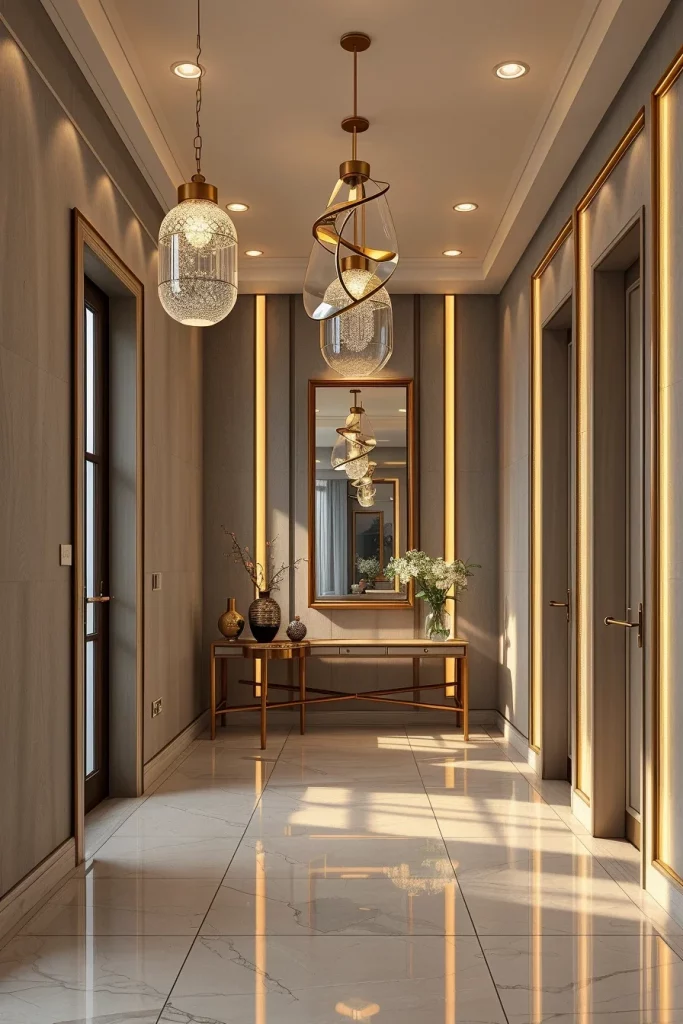
I often pair artistic glass lighting with minimalist furniture so the fixture remains the visual centerpiece. Slim console tables, oversized mirrors, elegant wall panels, natural stone flooring, and carefully selected decorative objects complement the transparency of the glass rather than competing with it. Metallic accents in brushed brass, matte black, or satin nickel further enhance the refined appearance while maintaining a contemporary aesthetic.
In my experience, handcrafted glass lighting brings timeless elegance that rarely goes out of style. Publications such as Elle Decor regularly feature sculptural glass fixtures because they balance artistic expression with everyday functionality. I appreciate how these designs provide both exceptional lighting quality and lasting visual appeal.
To complete this type of hallway, I recommend selecting dimmable warm LED bulbs that enhance the depth and texture of the glass. This creates beautiful reflections while maintaining comfortable illumination throughout the space.
Oversized Ceiling Lights For Dramatic Hallway Interiors
I often recommend oversized ceiling lights when I want to transform a hallway from a simple transitional space into a memorable design feature. A generously scaled chandelier or sculptural ceiling fixture naturally draws the eye upward, making even a long corridor feel more balanced and visually engaging. This approach works especially well in homes with high ceilings, where larger fixtures help fill the vertical space without overwhelming the room. I always pay close attention to the proportions so the lighting becomes the focal point while maintaining comfortable circulation throughout the hallway.
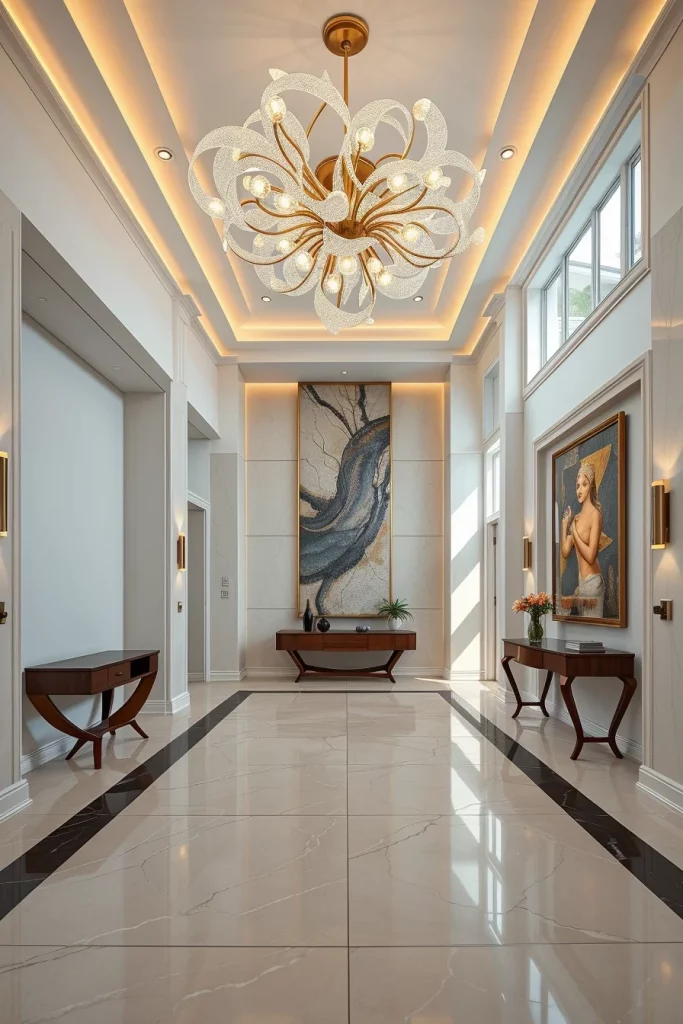
When designing this type of hallway, I prefer pairing the statement light with smooth ceilings, wide walkways, large-format flooring, and a restrained color palette that allows the fixture to stand out. A slim console table, an oversized mirror, and a carefully selected piece of wall art complement the lighting without creating visual clutter. I also recommend selecting warm LED bulbs with excellent color rendering so finishes, artwork, and decorative accessories appear natural throughout the day and evening.
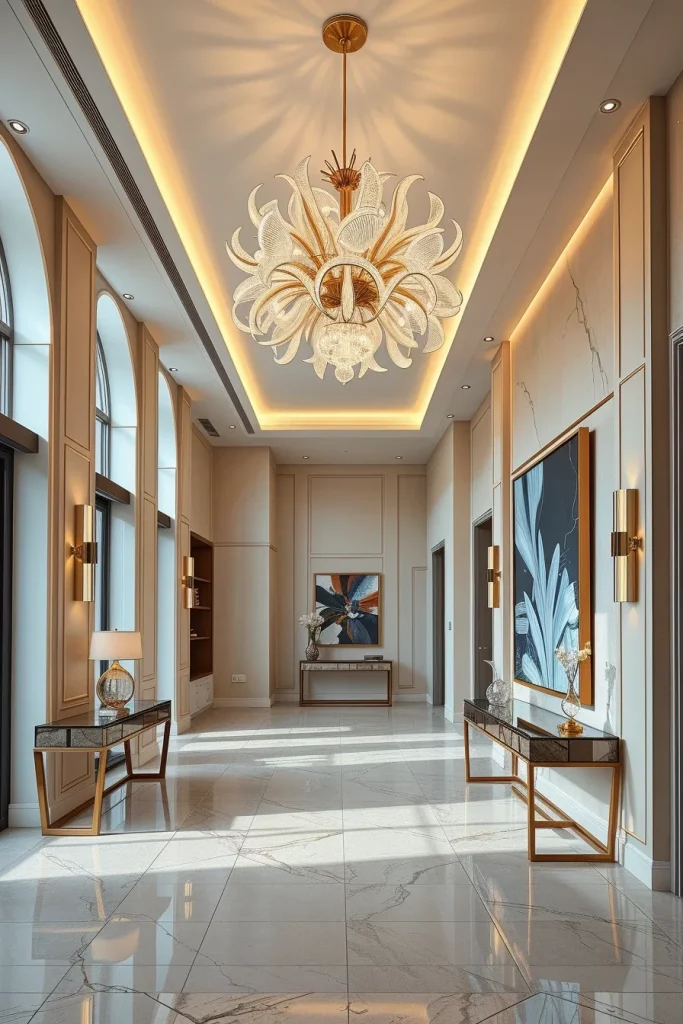
From my experience, oversized fixtures create the greatest impact when installed with proper spacing and hanging height. Interior designers frequently featured by Architectural Digest recommend selecting lighting that complements the home’s architectural style rather than simply choosing the largest available fixture. I have found this advice consistently leads to interiors that feel timeless instead of overly trendy.
To complete this hallway, I would also include a dimmer switch and layered accent lighting. This combination allows the dramatic ceiling fixture to remain impressive while providing softer illumination for everyday use and evening relaxation.
Black And Gold Hallway Lighting Ideas For Modern Elegance
One of my favorite combinations for a sophisticated hallway is black and gold lighting. The contrast creates visual depth while maintaining a refined appearance that suits both contemporary and transitional homes. I often use matte black finishes to anchor the space, while brushed gold details introduce warmth and subtle luxury without becoming overwhelming. Together they create a hallway that feels elegant from the moment someone enters the home.
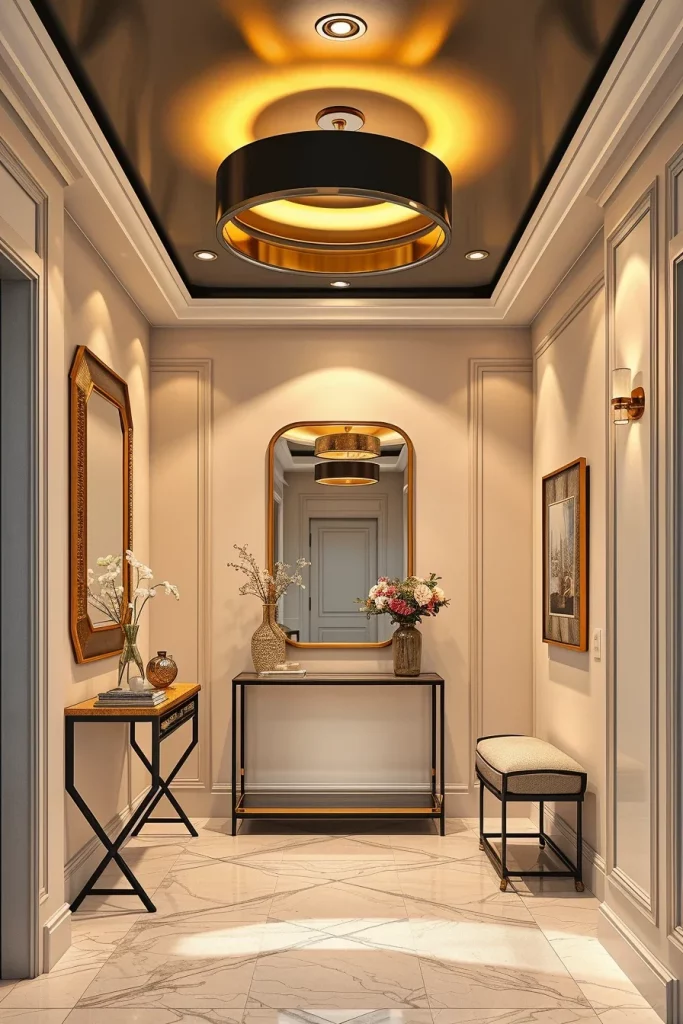
I like combining black and gold pendant lights or flush-mount fixtures with matching door hardware, slim framed mirrors, and understated decorative accents. Soft wall colors help the fixtures become the visual centerpiece, while textured rugs and clean-lined furniture provide balance throughout the space. I usually recommend concealed storage benches or floating consoles because they preserve openness while adding practical function.
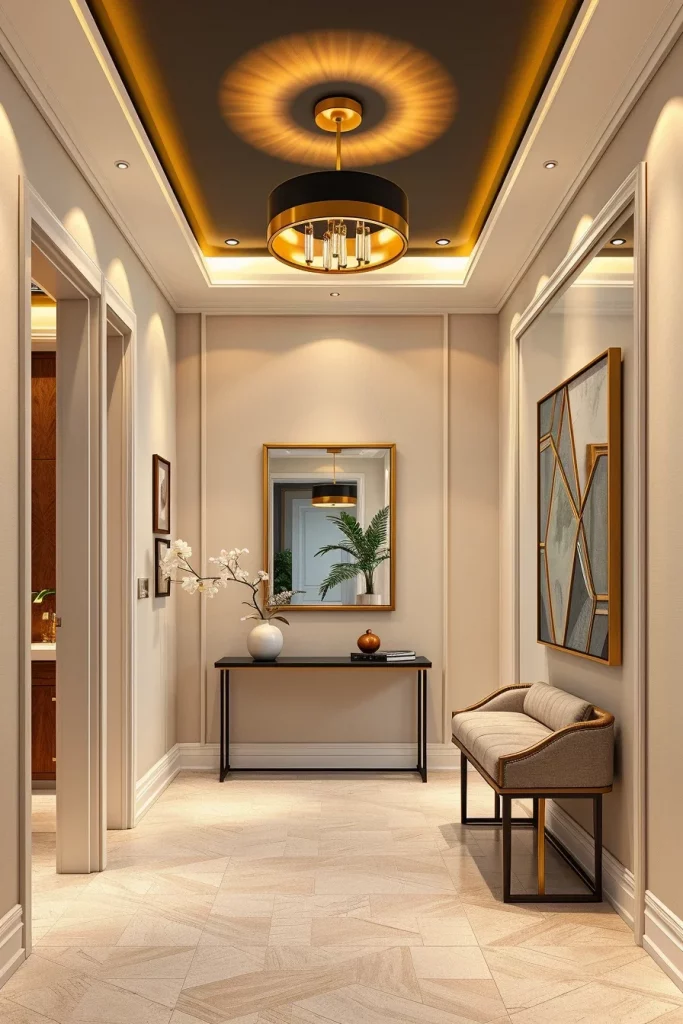
Personally, I appreciate how versatile this palette has become. Designers featured by House Beautiful often suggest repeating metallic finishes throughout the hallway instead of introducing several competing metals. I have used this principle repeatedly because it creates a more cohesive and professionally designed appearance.
If I wanted to enhance this hallway further, I would add subtle wall sconces that echo the same black and gold finishes. This additional layer of lighting improves visibility while reinforcing the overall design concept.
Warm Ambient Lighting That Creates A Welcoming Atmosphere
Whenever I want a hallway to feel comfortable and inviting, I prioritize warm ambient lighting over excessively bright illumination. Soft lighting immediately changes the mood of a space and creates a pleasant transition between rooms. I generally recommend a color temperature between 2700K and 3000K because it produces a natural glow that flatters wall finishes, flooring, and decorative details without creating harsh shadows.
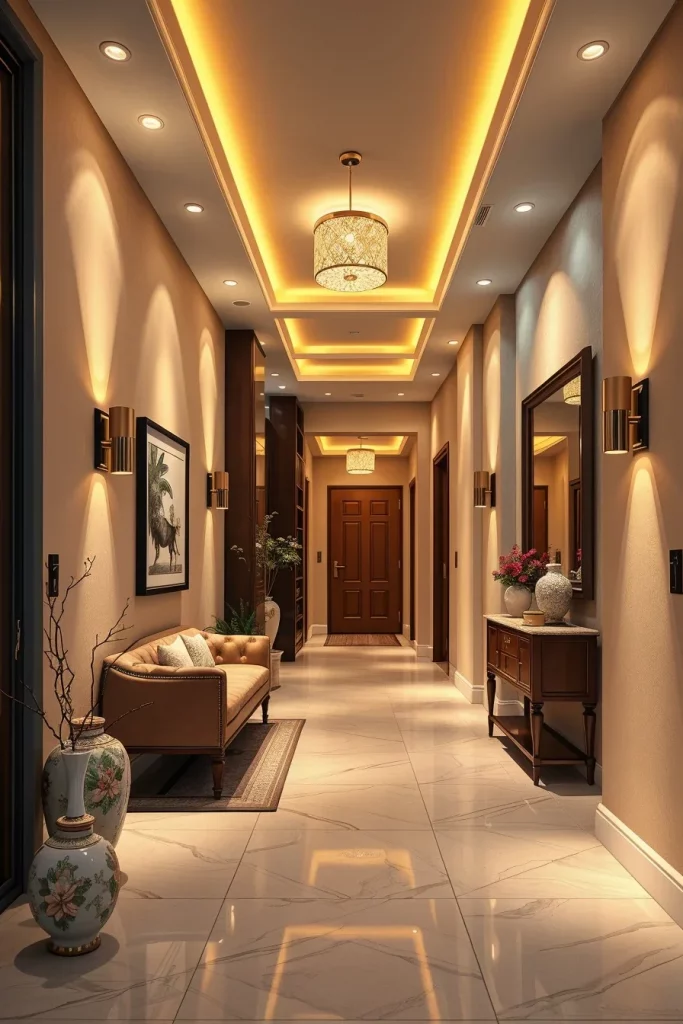
To support this atmosphere, I combine ceiling fixtures with discreet wall sconces or recessed lighting placed at regular intervals. I also enjoy incorporating textured finishes, upholstered benches, framed artwork, and decorative ceramics that become more visually appealing under warm lighting. Mirrors help reflect the glow throughout the hallway, making the space appear brighter without increasing energy consumption.
In my own projects, I have noticed that layered warm lighting consistently improves how comfortable a hallway feels during the evening. Many lighting professionals recommend avoiding cool white bulbs in residential entryways because warmer tones create a more relaxing and welcoming environment. I completely agree with this recommendation after seeing the difference in finished interiors.
I would also include smart dimmers in this design so the lighting intensity can easily adapt throughout the day. This small addition greatly improves both comfort and energy efficiency.
Geometric Light Fixtures For Contemporary Hallway Design
Geometric lighting is one of the easiest ways I introduce a modern architectural element into a hallway. Clean lines, sculptural forms, and balanced proportions immediately create visual interest without requiring excessive decoration elsewhere. Whether the fixture features circles, rectangles, hexagons, or intersecting linear elements, it becomes an artistic centerpiece while maintaining excellent functionality.
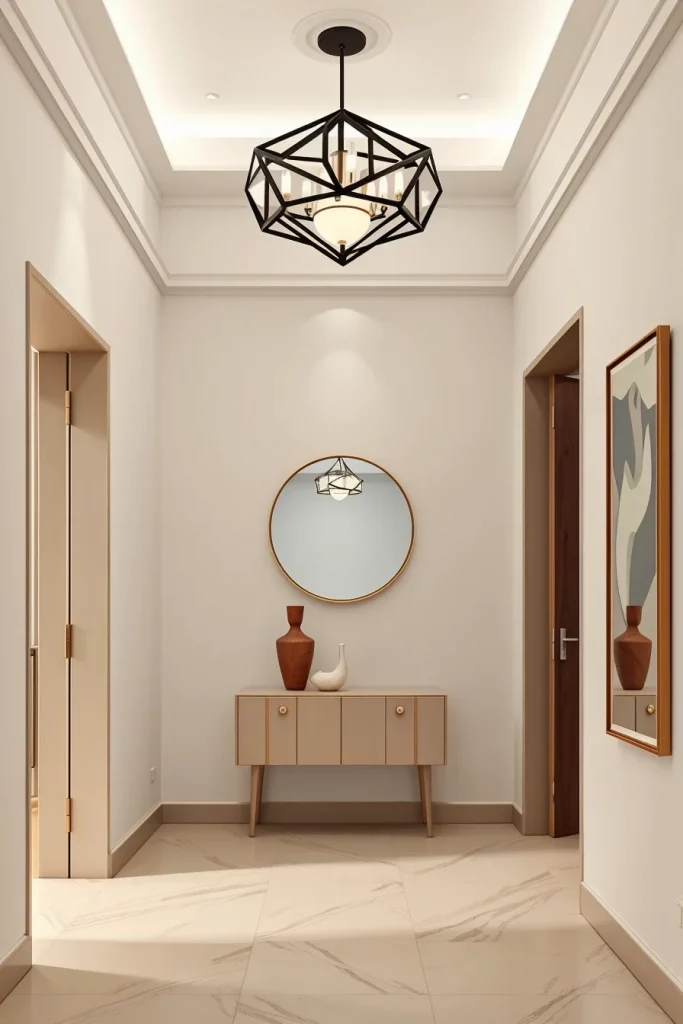
I usually combine geometric fixtures with minimalist furniture, concealed storage, large mirrors, smooth wall finishes, and carefully selected decorative objects. Neutral flooring allows the lighting design to receive full attention, while subtle textures prevent the hallway from feeling too sterile. I also recommend maintaining generous negative space around the fixture so its shape remains clearly visible from multiple viewing angles.
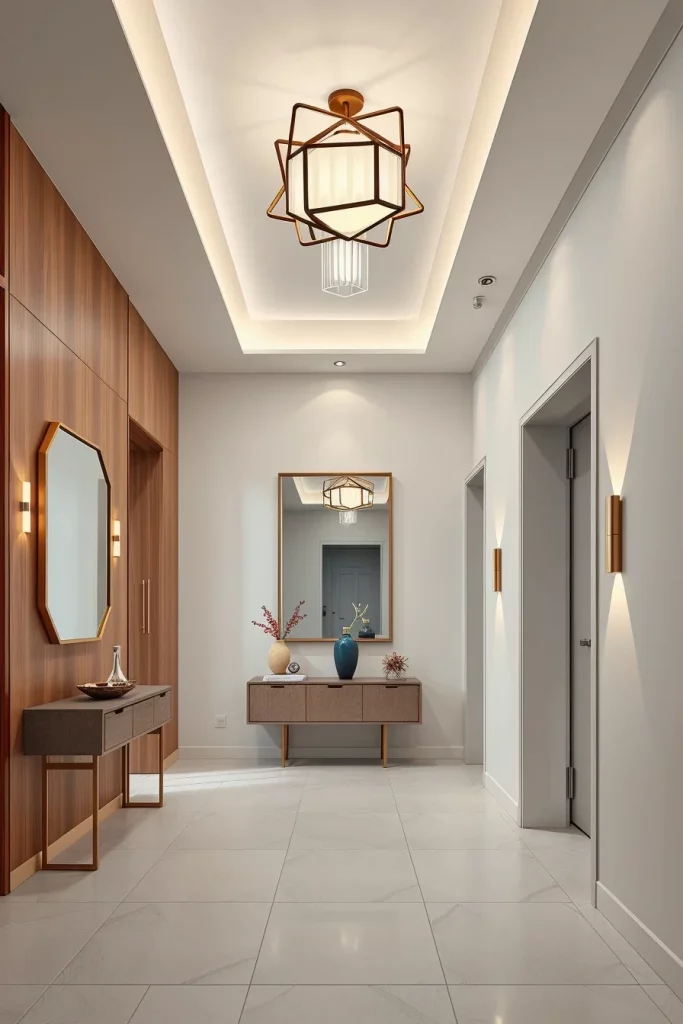
From my perspective, geometric lighting works best when the surrounding architecture remains simple. Interior designers regularly featured by Elle Decor often emphasize balancing bold lighting with restrained finishes, and I have consistently found this creates interiors that remain visually appealing for many years rather than following short-lived trends.
To complete this hallway, I would consider adding discreet recessed floor lighting or illuminated artwork that complements the geometric ceiling fixture without competing for attention.
Creative Ceiling Designs Enhanced With Integrated Lighting
Integrated lighting allows the ceiling itself to become part of the overall design rather than simply supporting a light fixture. I enjoy creating layered ceiling compositions with recessed LED channels, floating ceiling details, or subtle architectural recesses that distribute light evenly throughout the hallway. This approach creates a clean, sophisticated appearance while reducing visual clutter and emphasizing the room’s proportions.
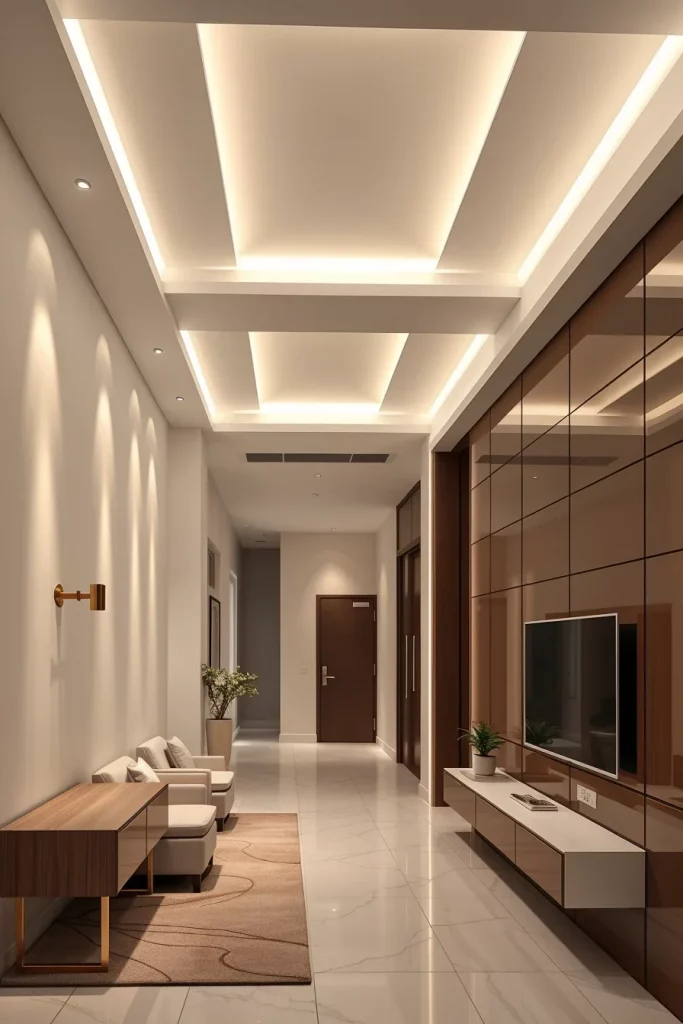
I often combine integrated lighting with smooth ceiling finishes, concealed wiring, minimalist furniture, floating storage, and large-format wall panels that reinforce the modern aesthetic. The lighting gently washes across the surfaces, highlighting textures without producing harsh contrasts. I also recommend selecting energy-efficient LED systems with high color rendering so every finish appears natural and refined.
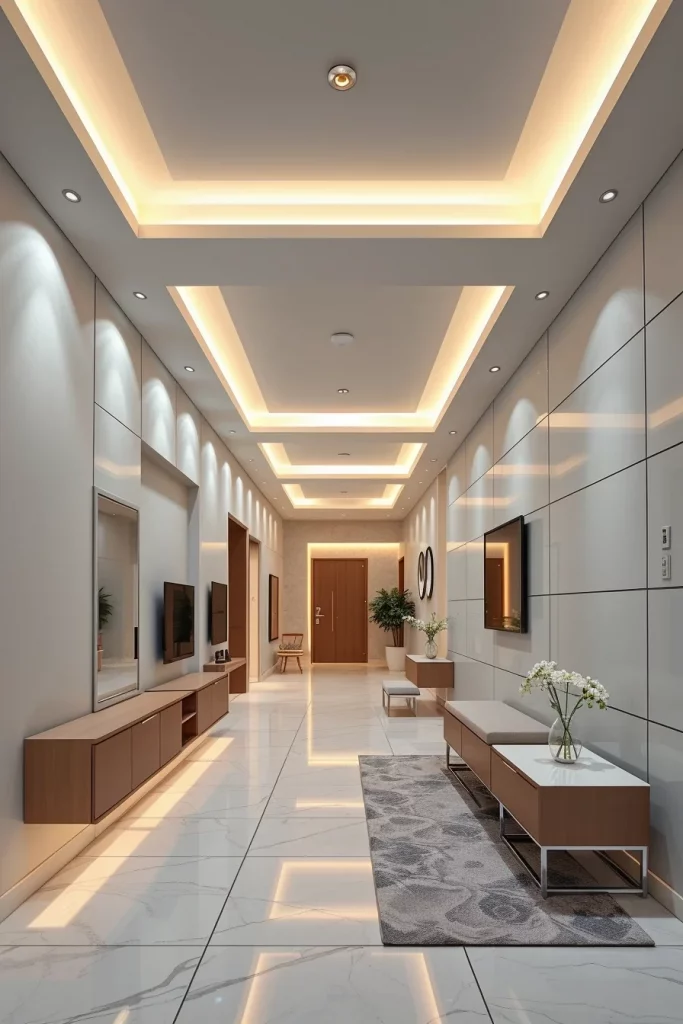
In my experience, integrated lighting provides one of the most versatile solutions for contemporary hallways because it works equally well during the day and at night. Many professional lighting designers recommend layering indirect illumination with focused task lighting instead of relying on a single central fixture. I have repeatedly seen how this strategy creates a more comfortable and visually balanced interior.
To further improve this hallway, I would add programmable lighting scenes that adjust brightness automatically depending on the time of day, making the space both practical and visually impressive.
Hallway Mirror Lighting Ideas That Expand Visual Space
Whenever I want a hallway to feel noticeably larger without changing its footprint, I rely on illuminated mirrors. A well-positioned mirror with integrated lighting reflects both natural and artificial light, making the entire hallway appear brighter and more open. I usually install the mirror where it can reflect architectural features or a statement light fixture, creating additional depth while maintaining a clean and elegant appearance. This solution is especially effective in narrow hallways where every visual trick contributes to a more spacious atmosphere.
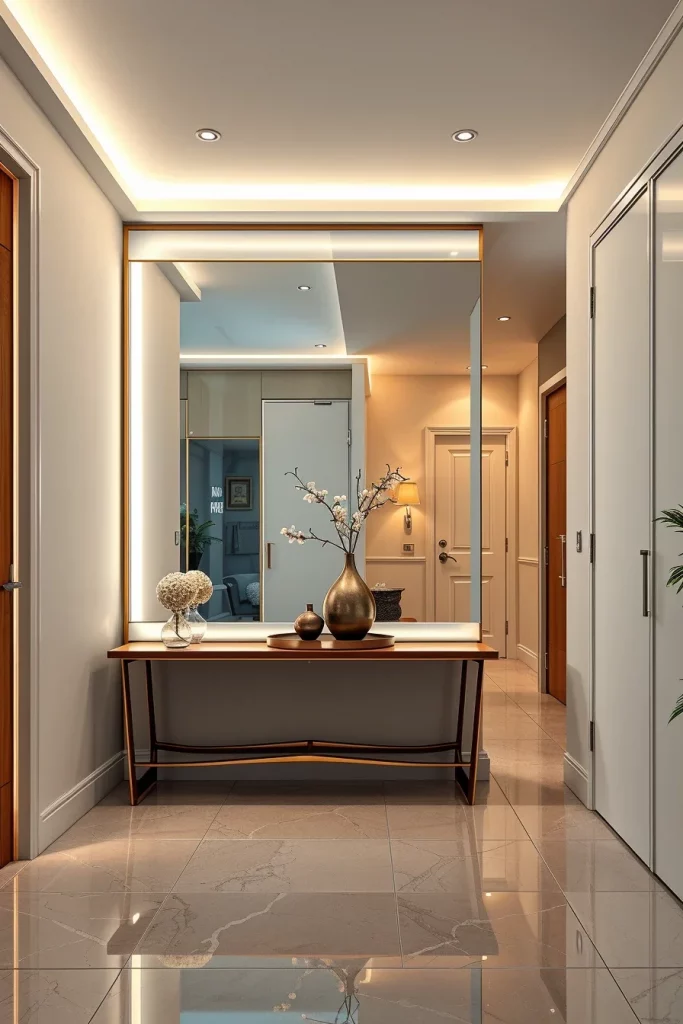
I prefer selecting full-height mirrors with slim metal frames and concealed LED strips around the edges. Floating console tables, decorative trays, sculptural vases, and minimalist wall hooks complement the mirror without overwhelming the space. Warm LED illumination softens reflections while highlighting surrounding finishes, allowing flooring, wall textures, and decorative accessories to become part of the overall composition. I also recommend placing the mirror opposite artwork or attractive architectural details to maximize its visual impact.
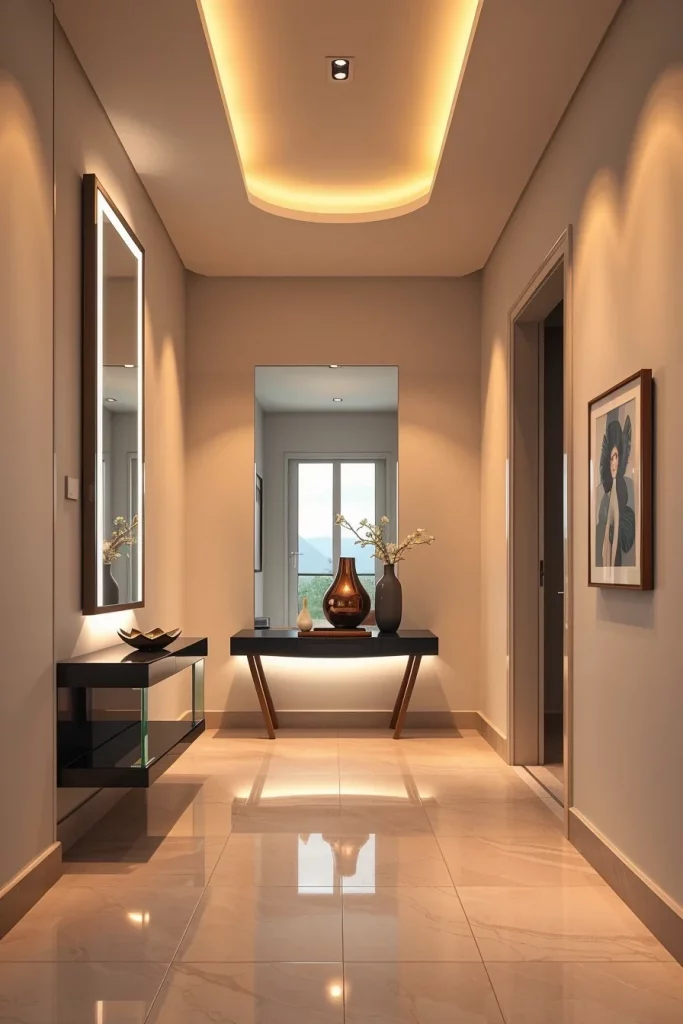
From my experience, illuminated mirrors provide one of the highest returns for relatively little effort. Interior designers frequently featured by Better Homes & Gardens recommend using mirrors strategically to distribute light throughout smaller interiors rather than relying solely on brighter fixtures. I have found this advice consistently improves both comfort and aesthetics in modern homes.
To complete this hallway, I would also include a concealed power outlet inside the console or behind the mirror so charging devices and cords remain hidden while preserving the clean design.
Smart Hallway Lighting Ideas For Everyday Convenience
Smart lighting has completely changed how I design modern hallways because it combines comfort, energy efficiency, and automation in one solution. Motion sensors, programmable schedules, and voice-controlled lighting eliminate the need to search for switches while carrying groceries or moving through the house at night. I find that this technology makes everyday routines noticeably more convenient without changing the visual style of the hallway.
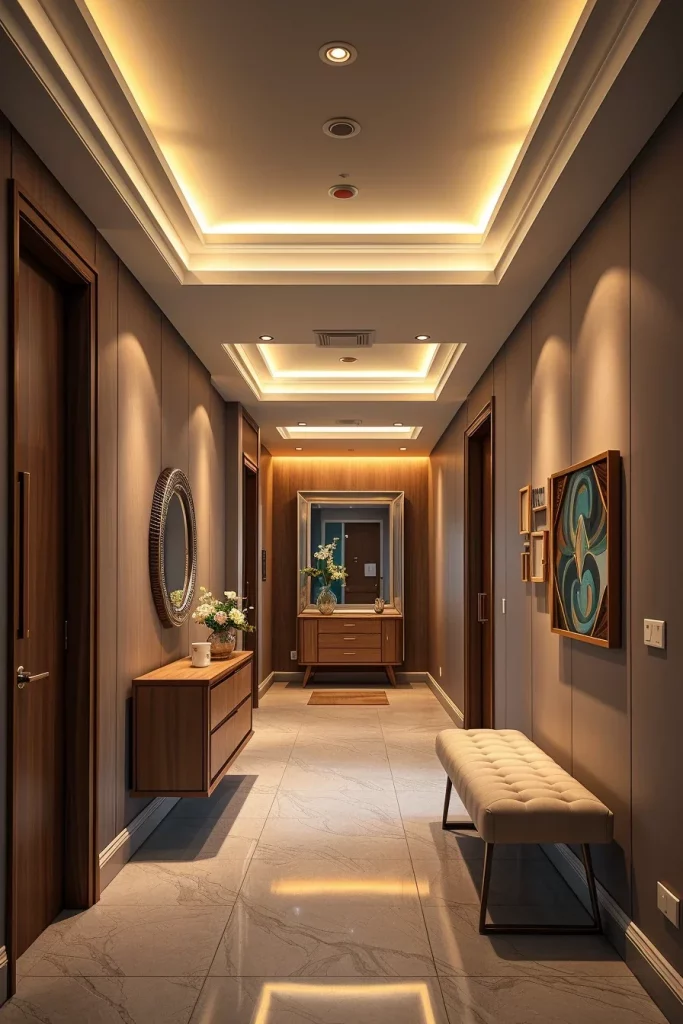
I usually install recessed smart ceiling lights together with discreet motion sensors and wireless dimmers. A floating console, concealed storage cabinet, minimalist bench, and decorative mirror create a functional layout while maintaining a clean appearance. I also recommend choosing smart bulbs with adjustable color temperature so the hallway can automatically shift from bright morning illumination to softer evening lighting depending on the schedule.
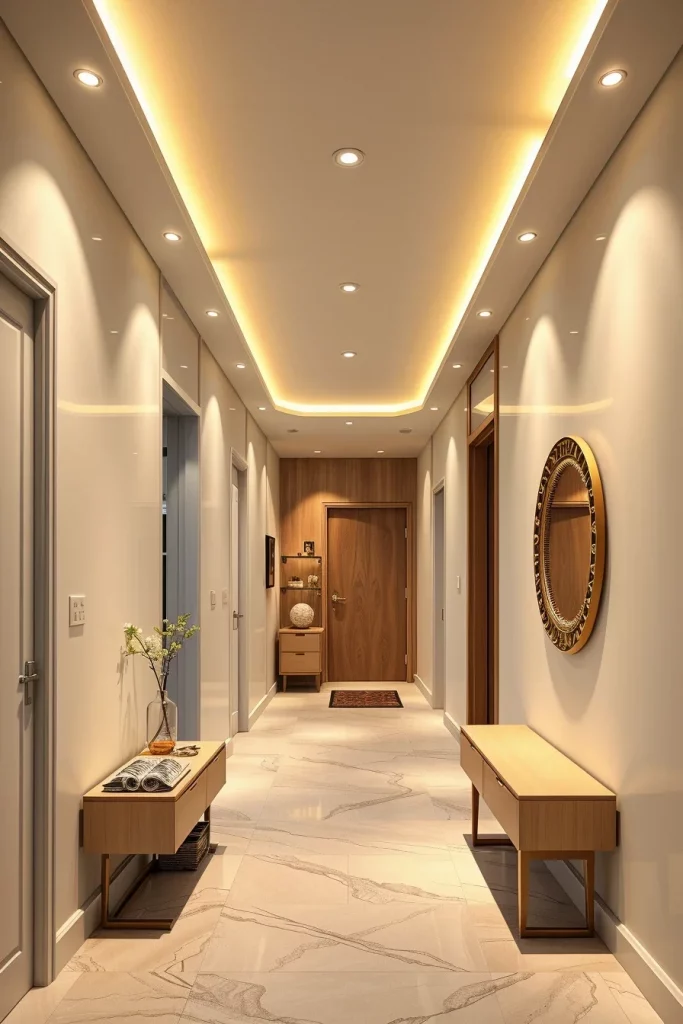
Personally, I appreciate that smart lighting is becoming more accessible every year. Experts frequently featured by HGTV encourage homeowners to layer automated lighting rather than depending on one central fixture because this creates greater flexibility while reducing unnecessary energy use. After incorporating these systems into multiple interiors, I completely understand why they have become a standard feature in contemporary homes.
I would further improve this hallway by integrating the lighting with a smart home platform that controls other devices such as security cameras, entry locks, and climate settings for a seamless daily experience.
Hidden Cove Lighting For A Sophisticated Modern Finish
Hidden cove lighting is one of my favorite techniques for creating an elegant hallway because the light source itself remains almost invisible. Instead of drawing attention to the fixture, the illumination gently washes across ceilings and walls, producing a refined atmosphere with soft shadows and balanced brightness. This approach works particularly well in minimalist interiors where clean architectural lines become the primary decorative feature.
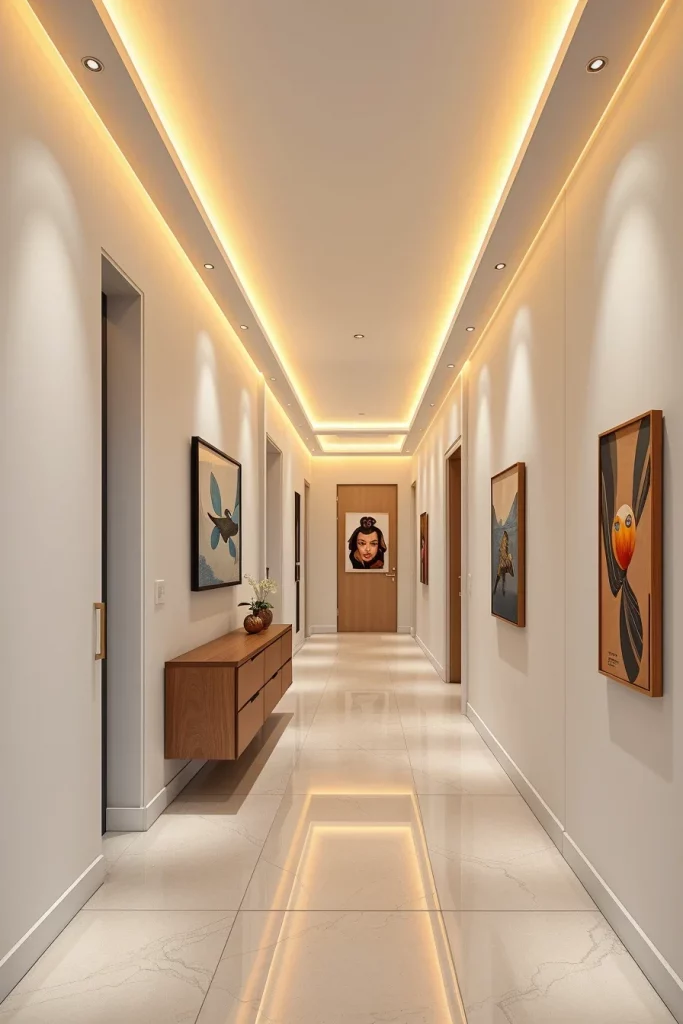
I typically incorporate recessed LED strips within ceiling coves or narrow architectural recesses. Smooth wall finishes, large-format flooring, floating storage, simple artwork, and understated decorative objects complement the indirect lighting beautifully. I avoid excessive ornamentation because the subtle illumination deserves to remain the visual focus. Warm white LEDs create a welcoming atmosphere while preserving accurate color throughout the hallway.
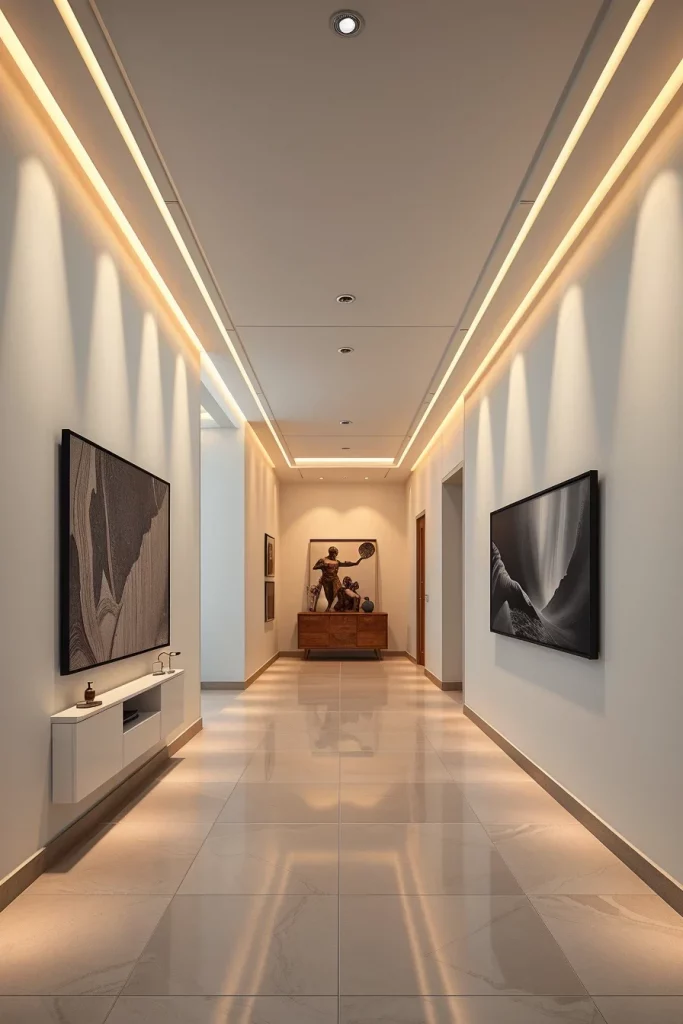
From my perspective, indirect lighting often feels more luxurious than relying entirely on exposed fixtures. Designers regularly featured by Architectural Digest recommend combining hidden lighting with architectural details rather than treating lighting as an afterthought. I have consistently seen how this approach creates interiors that appear professionally designed and visually balanced.
To complete this hallway, I would install dimmable LED drivers that allow the indirect lighting to transition smoothly from daytime brightness to soft evening illumination while maintaining excellent energy efficiency.
Artistic Cluster Pendant Lights For High Ceilings
When designing hallways with generous ceiling height, I often recommend artistic cluster pendant lights because they fill vertical space while introducing sculptural elegance. Multiple pendants suspended at varying heights create movement, visual rhythm, and an impressive focal point that transforms an ordinary corridor into a gallery-like interior. I always ensure the arrangement feels balanced so the installation enhances the architecture without obstructing circulation.
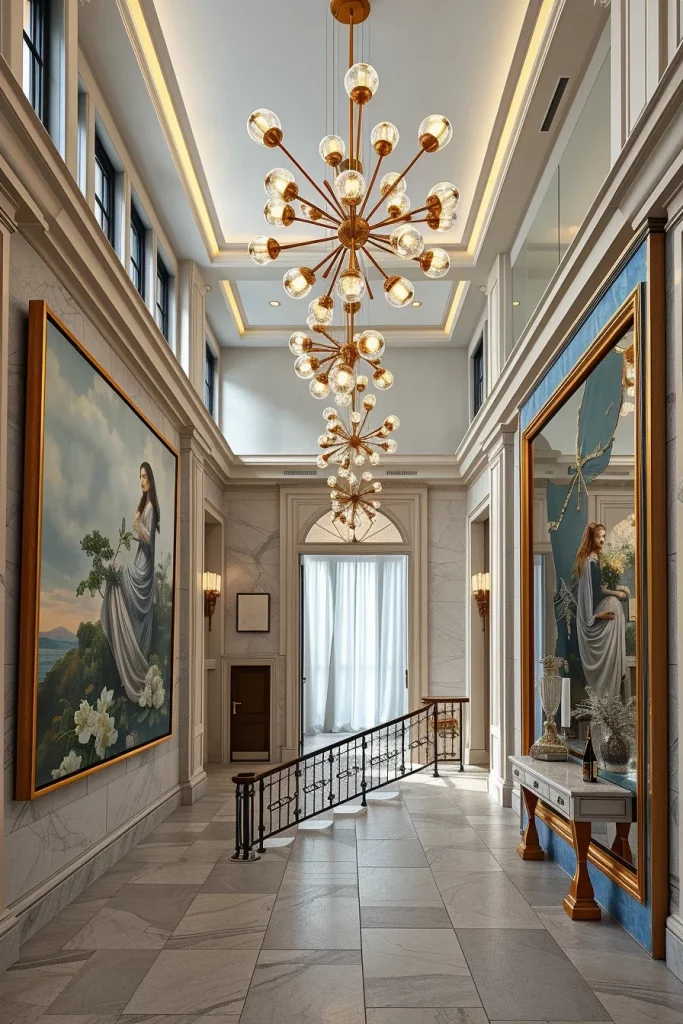
I usually combine cluster pendants with tall walls, oversized artwork, elegant staircases, minimalist furniture, and large decorative mirrors. Natural stone flooring, subtle textures, and neutral wall colors help emphasize the lighting composition without creating unnecessary distractions. Glass, brushed metal, and frosted finishes allow the pendants to appear sophisticated while diffusing light evenly throughout the hallway.
In my experience, pendant clusters perform best when customized for the proportions of the space rather than purchased as a standard arrangement. Interior designers frequently highlighted by Elle Decor recommend varying pendant heights to introduce depth and visual interest while maintaining consistent spacing. I have applied this principle successfully in many modern interiors.
I would also incorporate accent lighting directed toward artwork or architectural niches so the dramatic pendant installation works together with additional layers of illumination instead of standing alone.
Accent Lighting That Highlights Hallway Architecture
Accent lighting allows me to emphasize the architectural details that make a hallway unique. Rather than illuminating every surface equally, I focus attention on textured walls, decorative niches, arches, ceiling details, or custom millwork. This selective approach creates depth, improves visual balance, and gives the hallway a refined character that changes beautifully throughout the day.
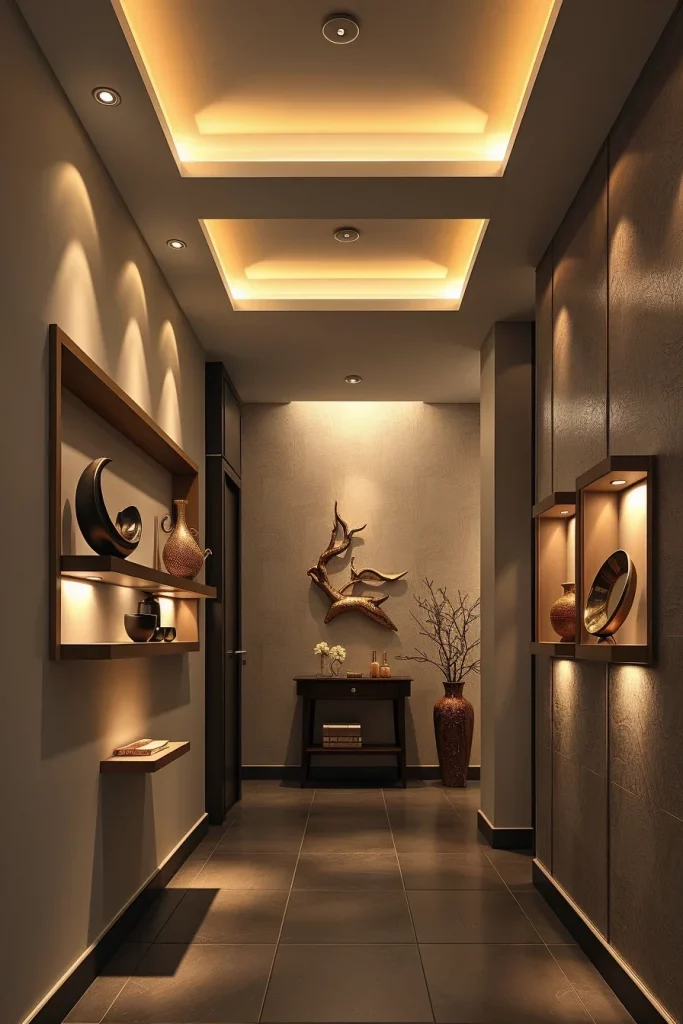
I generally combine adjustable recessed spotlights with wall washers and discreet LED strips positioned to highlight architectural features. Floating shelves, sculptural accessories, framed artwork, and carefully selected decorative objects become more noticeable under focused illumination. I also recommend maintaining uncluttered surfaces so the lighting remains the primary design element rather than competing with excessive decoration.
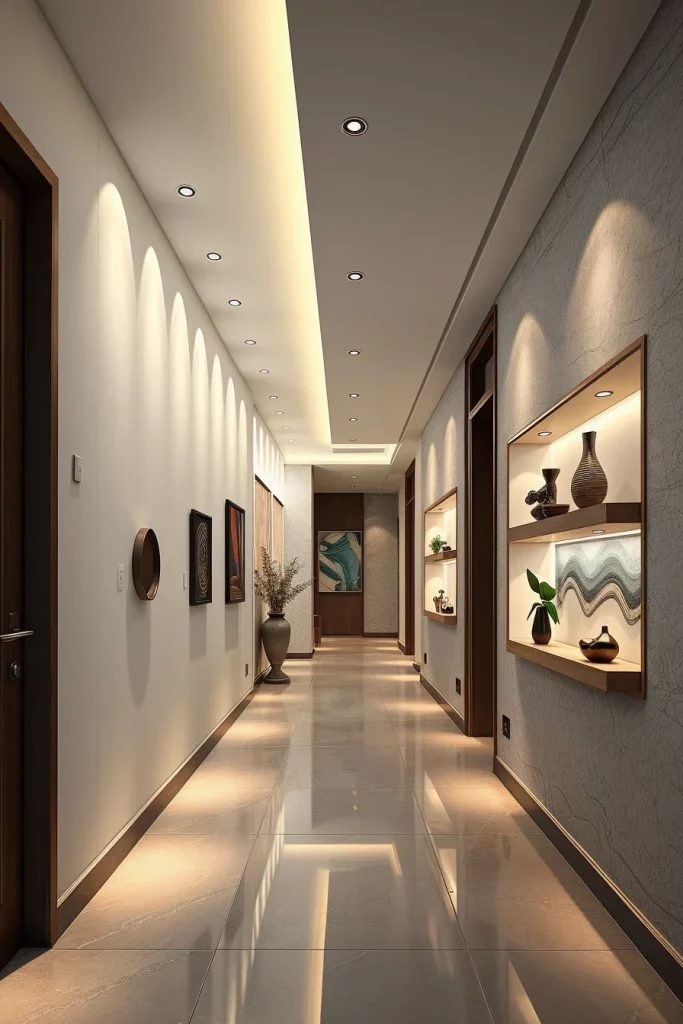
Personally, I believe accent lighting adds personality that cannot be achieved through general illumination alone. Professional lighting designers often recommend layering ambient, task, and accent lighting together because each serves a different purpose while contributing to a cohesive interior. After experimenting with this strategy in numerous projects, I consistently find that layered lighting produces the most comfortable and visually engaging hallways.
To make this hallway even more functional, I would include adjustable fixtures that allow artwork or architectural features to be highlighted differently whenever the décor changes.
Luxury Crystal Lighting Ideas With Contemporary Style
I believe that crystal lighting is no longer limited to traditional interiors. Modern crystal fixtures feature sleek silhouettes, geometric forms, and refined finishes that create an elegant focal point without overwhelming the hallway. I often recommend placing a statement crystal chandelier or semi-flush fixture in hallways with higher ceilings because it instantly elevates the entire space while providing balanced illumination. Carefully selected reflective surfaces also help distribute light evenly throughout the corridor.
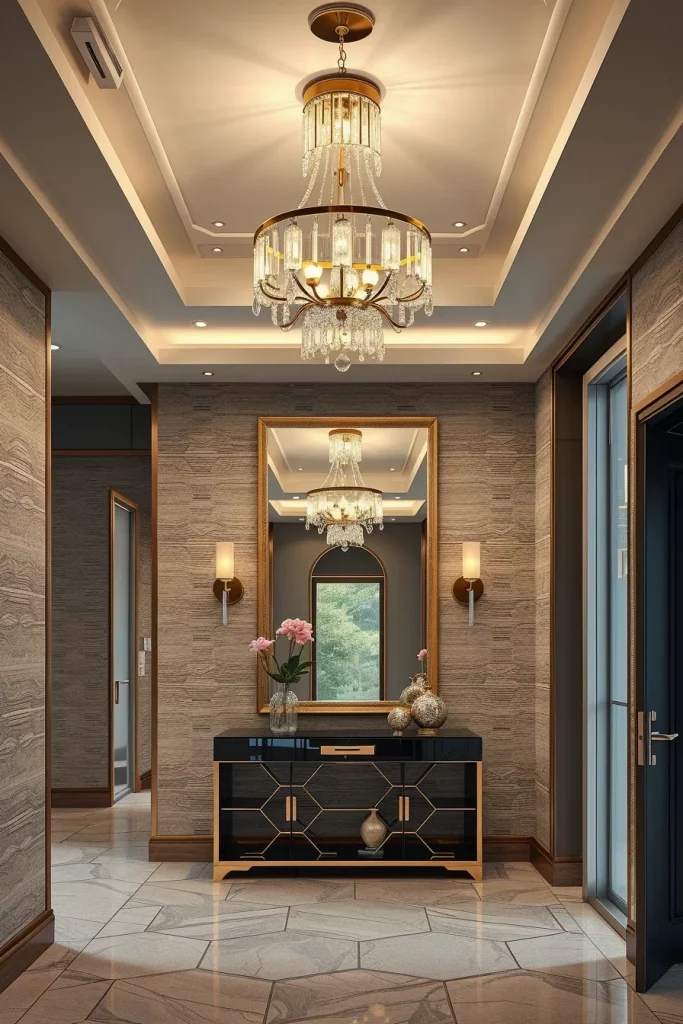
When I design a hallway with contemporary crystal lighting, I combine the fixture with clean-lined furniture, a slim console table, oversized mirrors, textured wall finishes, and subtle decorative accessories. I find that matte metal finishes in black, brushed brass, or satin nickel pair beautifully with crystal details, creating a sophisticated contrast. Built-in storage keeps the hallway organized, allowing the lighting fixture to remain the visual centerpiece.
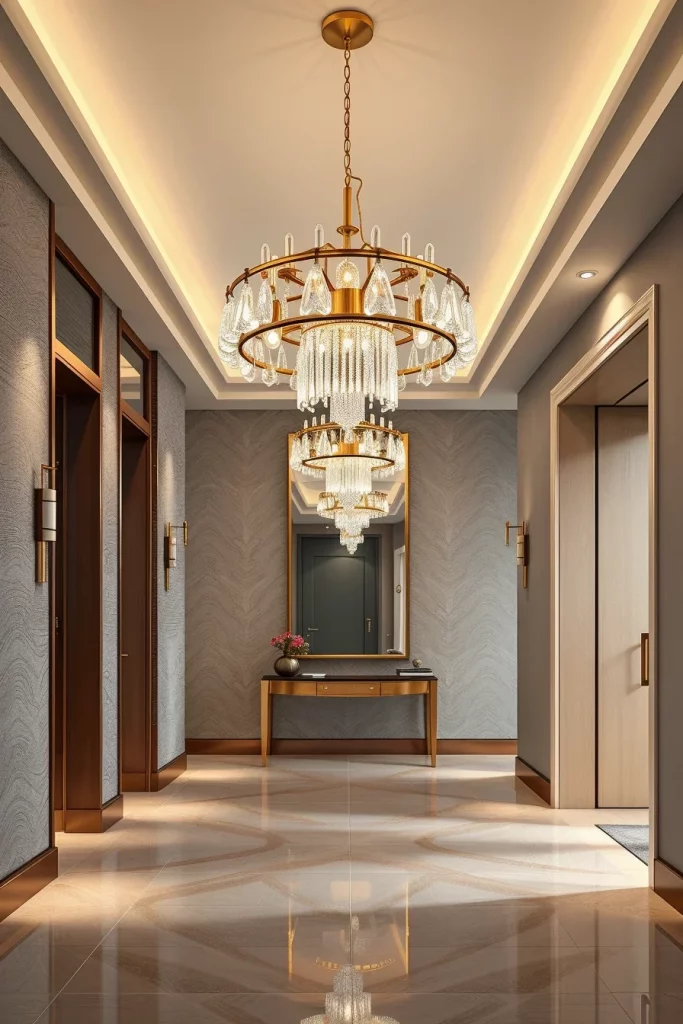
From my experience, many American interior designers recommend layering ambient and accent lighting instead of relying on a single ceiling fixture. Publications such as Architectural Digest frequently demonstrate how modern crystal lighting works exceptionally well when combined with minimalist interiors because the contrast creates visual balance rather than excess. I have found this approach to produce timeless results that remain elegant for years.
To complete this design, I would also add a dimmer switch, coordinated wall sconces, and a large mirror positioned opposite the fixture to maximize reflections and create an even brighter hallway.
Nature-Inspired Lighting Fixtures With Organic Shapes
I enjoy using lighting fixtures inspired by nature because they soften the appearance of long hallways while introducing subtle artistic character. Organic curves, flowing silhouettes, and sculptural forms create movement that makes the space feel more welcoming. Instead of becoming purely decorative, these fixtures provide comfortable illumination while acting as functional artwork.
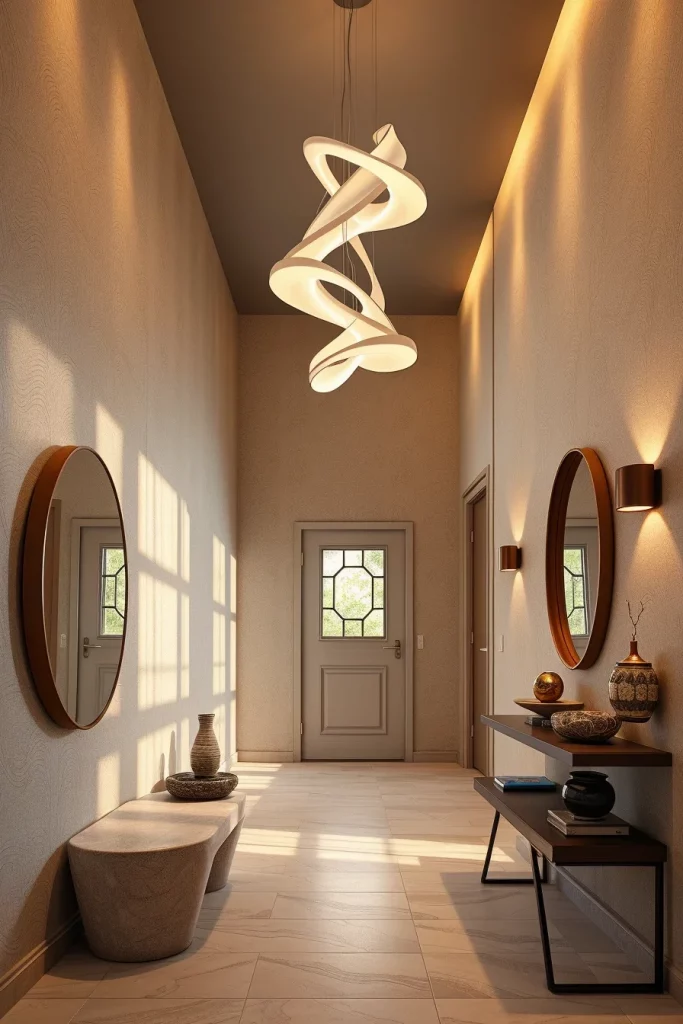
I usually pair these lights with curved benches, rounded mirrors, stone accessories, ceramic vases, woven baskets, and textured finishes that complement the natural forms. Neutral colors help the sculptural lighting stand out without making the hallway feel busy. I also prefer concealed storage solutions that preserve the calm appearance of the space.
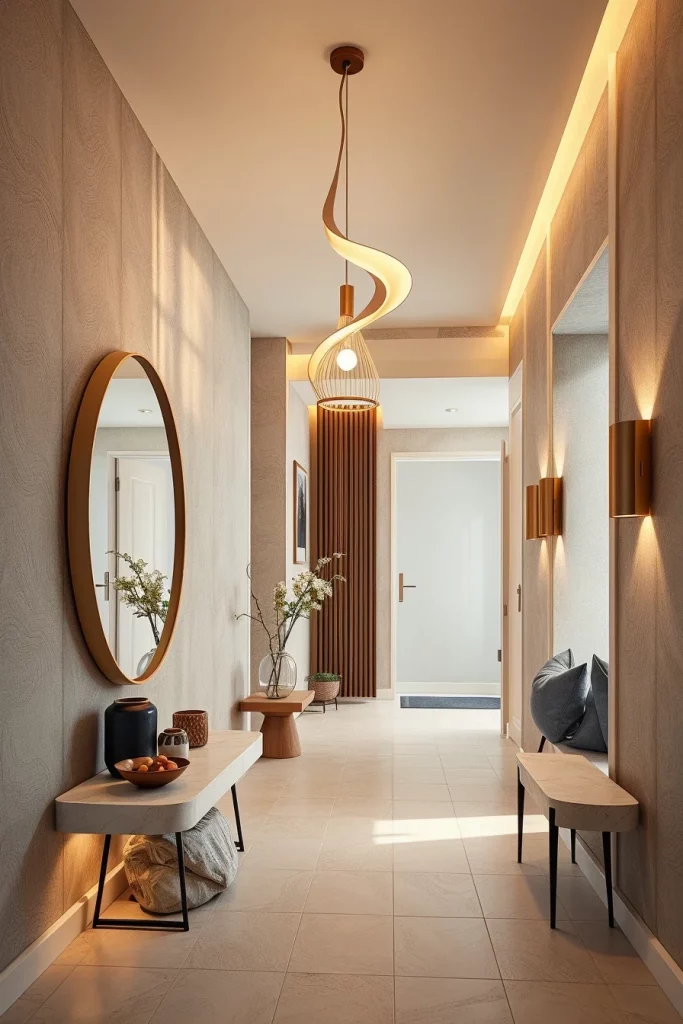
Personally, I appreciate how many professional designers emphasize biophilic design principles, encouraging homeowners to incorporate natural forms into interior spaces. Even when actual plants are not the focus, lighting inspired by leaves, branches, flowing water, or soft curves creates a calming atmosphere that people immediately notice when entering the home.
To strengthen this concept further, I would include subtle indirect LED lighting along the ceiling or beneath a floating console to complement the sculptural ceiling fixture and add visual depth during the evening.
Floating Shelf Lighting Ideas For Functional Hallways
I often recommend floating shelves with integrated lighting because they combine storage, display space, and illumination without making the hallway appear crowded. This solution works particularly well in compact homes where every square foot matters. Soft LED strips beneath each shelf create gentle layers of light while making decorative objects easier to appreciate.
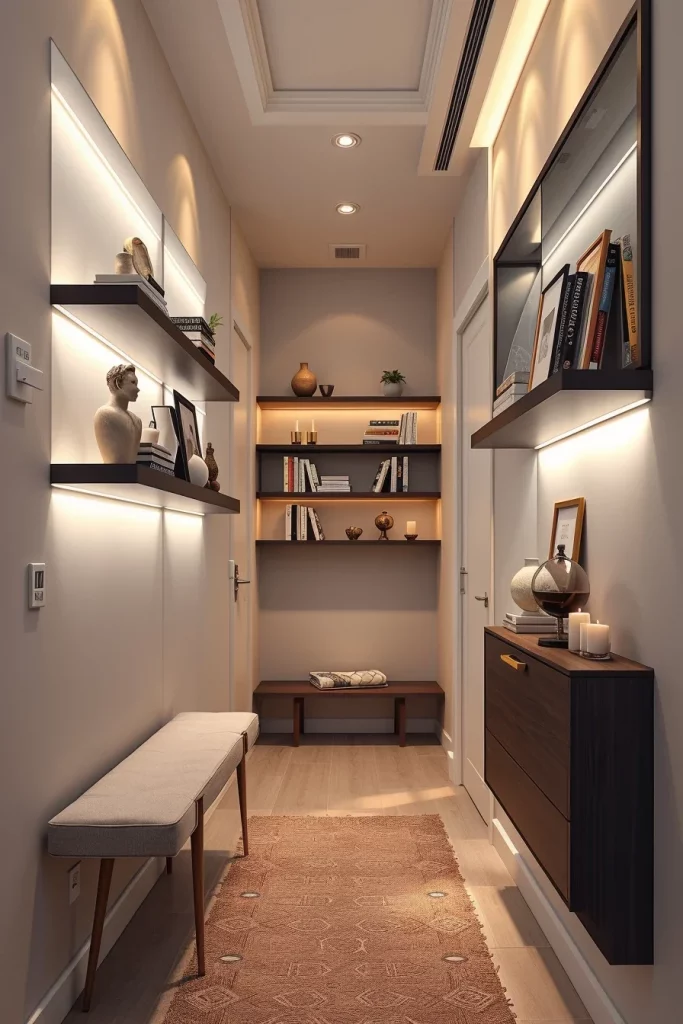
I like combining illuminated floating shelves with framed artwork, decorative books, ceramic sculptures, scented candles, and small storage boxes that keep everyday essentials organized. A slim bench or narrow console beneath the shelves provides additional functionality while maintaining an open feeling. I always try to leave enough empty space so the shelves never appear overloaded.
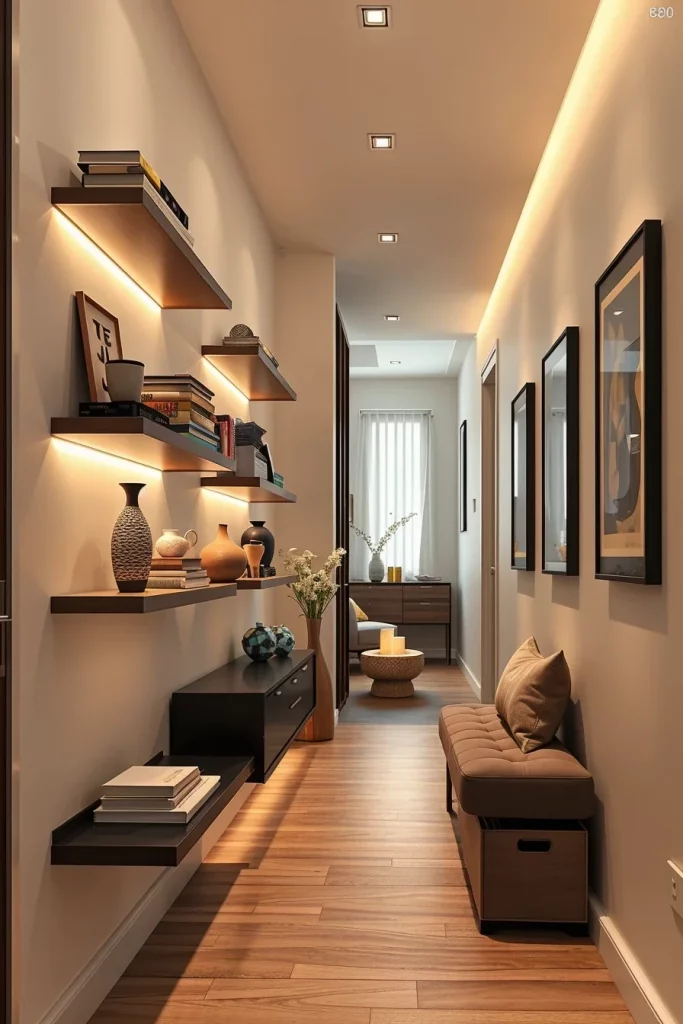
From my experience, thoughtful lighting beneath shelving dramatically improves both practicality and atmosphere. Many professional interior designers recommend indirect lighting because it reduces harsh shadows while making narrow hallways appear wider. I have consistently found that this simple addition makes the entire entry sequence feel more luxurious.
To make this section even more functional, I would include concealed cable management, adjustable shelf heights, and smart lighting controls that automatically adjust brightness depending on the time of day.
Textured Wall Lighting Effects That Add Character
I find that textured walls become much more impressive when illuminated correctly. Directional wall lighting emphasizes every subtle detail, whether the surface features decorative plaster, stone panels, fluted finishes, or dimensional wall treatments. Instead of simply lighting the hallway, carefully positioned fixtures create dramatic shadows that add depth and visual interest.
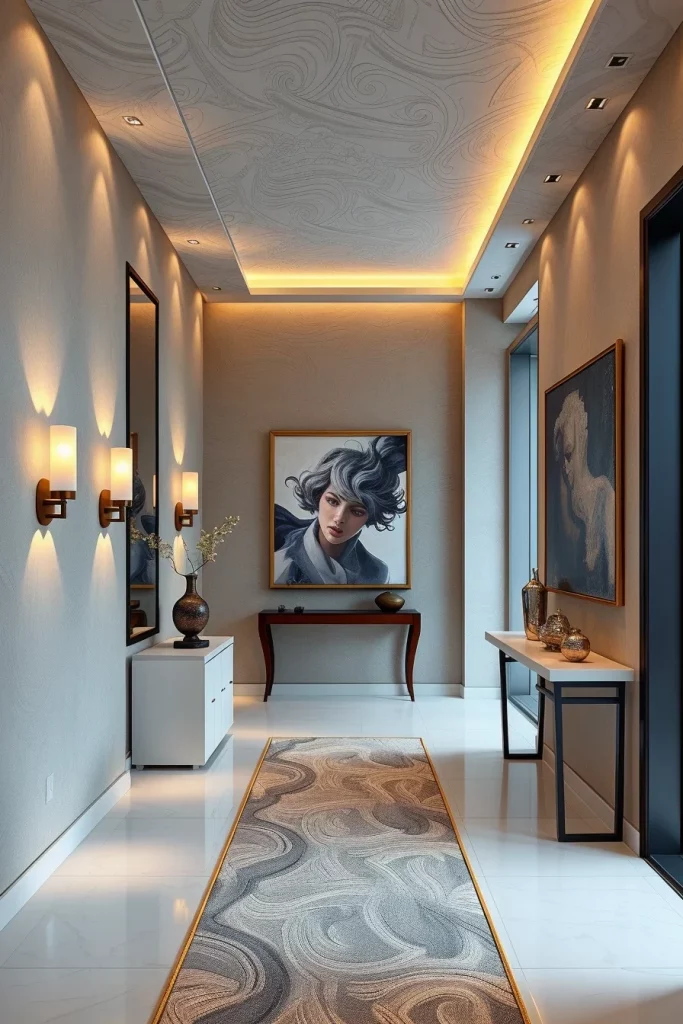
I usually install wall sconces or recessed directional fixtures that graze the textured surface rather than shine directly toward the viewer. This technique highlights the material while avoiding glare. I often combine these walls with minimalist furniture, oversized artwork, elegant runners, and simple decorative accessories so the wall remains the primary visual feature.
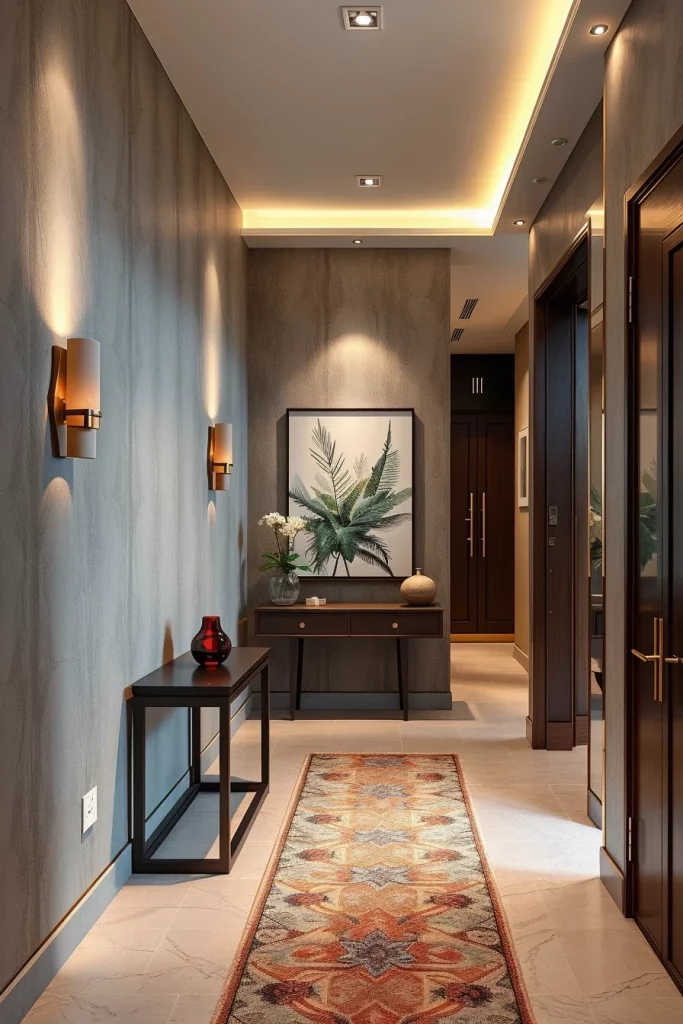
Personally, I appreciate how professional lighting designers frequently use wall grazing techniques to emphasize texture in residential interiors. Publications from respected design magazines regularly showcase this approach because it adds architectural sophistication without requiring expensive structural changes. I have successfully applied this principle in both large and compact hallways.
I would also consider adding adjustable lighting controls so the wall texture appears equally attractive during bright afternoons and relaxed evening hours.
Mixed Material Lighting Fixtures With Modern Personality
I enjoy working with lighting fixtures that combine multiple materials because they instantly introduce visual richness into otherwise simple hallways. Glass paired with metal, stone combined with brass, or concrete mixed with warm finishes creates a balanced design that feels modern without becoming overly decorative. These combinations add personality while maintaining practical everyday lighting.
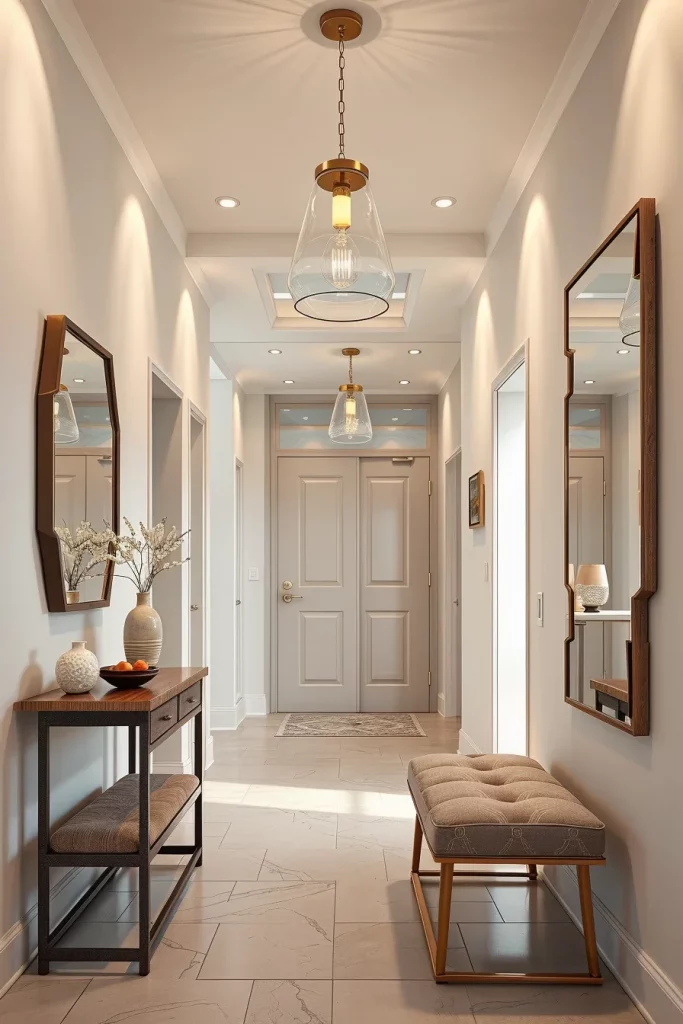
When designing around mixed-material fixtures, I coordinate complementary furniture including a contemporary console table, upholstered bench, large mirror, decorative trays, ceramic accessories, and subtle metallic accents. Repeating one or two materials throughout the hallway creates harmony while allowing the lighting fixture to remain the central design element.
In my experience, balanced material combinations create interiors that feel collected rather than manufactured. Many leading American interior designers recommend repeating textures throughout the room instead of introducing too many unrelated finishes. I have found this advice especially valuable in hallways because smaller spaces benefit from visual consistency.
To complete this design, I would add layered lighting through recessed ceiling lights or discreet wall sconces, ensuring the hallway remains functional while emphasizing the beauty of the mixed-material centerpiece.
Color Temperature Tips For Beautiful Hallway Lighting
I always pay close attention to color temperature because it influences how the entire hallway feels from the moment someone enters the home. Warm white lighting creates a comfortable and welcoming atmosphere, while neutral white offers greater clarity and works well in modern interiors. I usually avoid overly cool lighting in residential hallways because it can make the space feel less inviting. Selecting the proper light temperature allows architectural details, finishes, and decorative elements to appear more natural throughout the day.
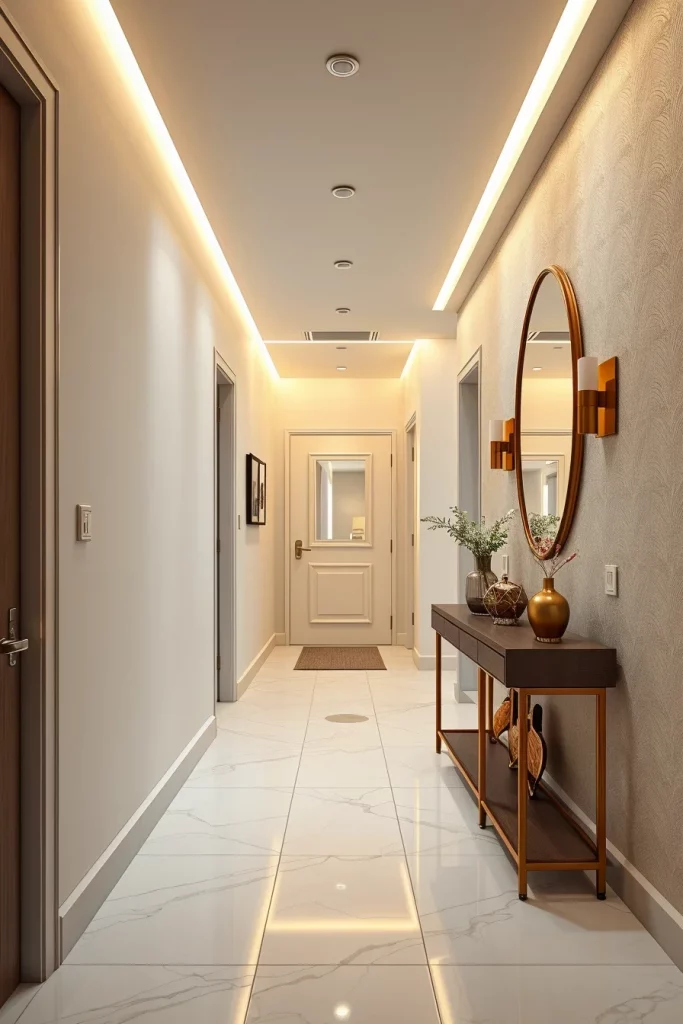
When planning the hallway, I coordinate the lighting temperature with the flooring, wall finishes, ceiling color, mirrors, and furniture. Warm-toned wood floors, beige walls, and brass fixtures look especially attractive under warm white light around 2700K to 3000K. If the hallway features gray finishes, black accents, or contemporary cabinetry, I often recommend neutral white lighting around 3500K for a crisp but comfortable appearance. Consistency between all light sources creates a balanced environment without distracting color shifts.
In my experience, lighting professionals frequently recommend maintaining the same color temperature throughout connected living spaces to improve visual flow. The experts at the American Lighting Association often emphasize that residential lighting should enhance comfort while accurately displaying colors. I have found that following this principle creates interiors that remain visually pleasing during every season.
To improve this design even further, I would add dimmable LED fixtures with adjustable color temperature, allowing the hallway to transition from brighter daytime illumination to softer evening lighting with ease.
Space-Saving Lighting Ideas For Narrow Hallways
I often work with narrow hallways where every design decision matters. Choosing compact lighting fixtures helps preserve valuable space while ensuring the corridor remains bright and comfortable. Instead of oversized chandeliers, I usually recommend slim ceiling lights, recessed fixtures, or elegant wall sconces that provide generous illumination without visually lowering the ceiling or restricting movement.
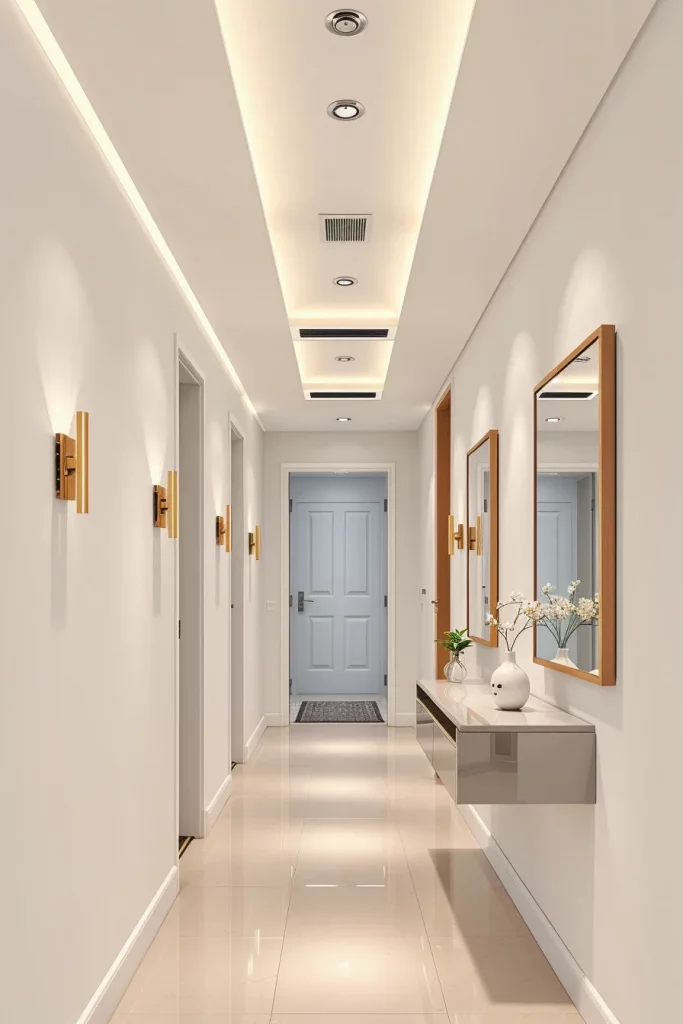
I like pairing these lighting solutions with floating consoles, narrow storage cabinets, frameless mirrors, concealed coat storage, and minimalist decorative accessories. Vertical design elements naturally guide the eye along the hallway, making it appear longer and more spacious. Every furniture piece should serve a practical purpose while maintaining a clean and uncluttered appearance.
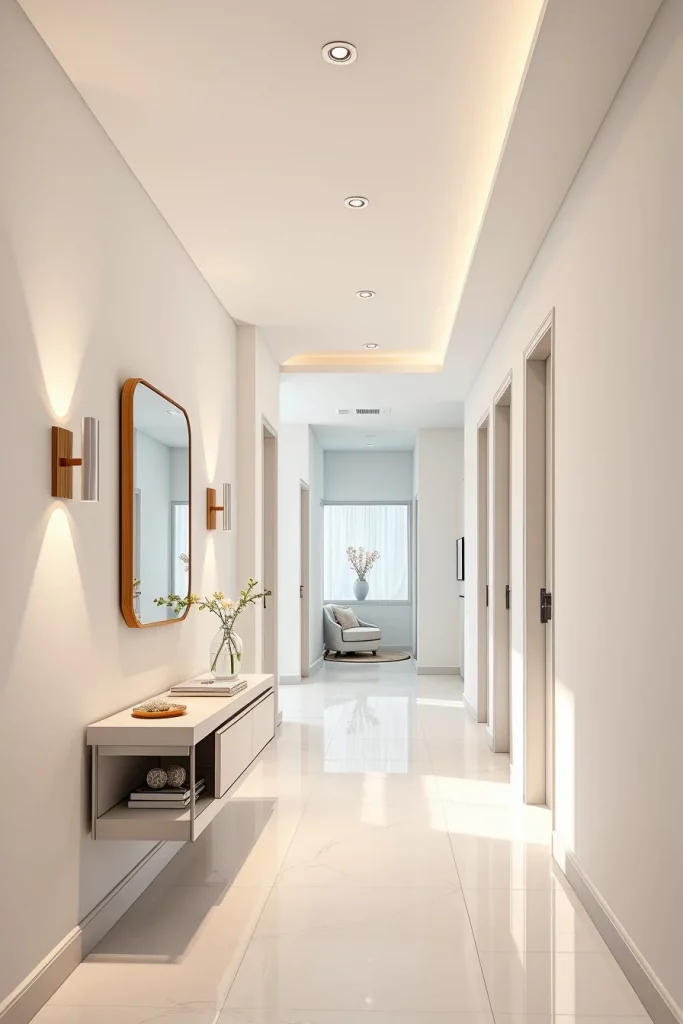
Personally, I have found that simplicity often produces the strongest visual impact in compact hallways. Many interior designers featured in publications such as House Beautiful recommend minimizing visual clutter and maximizing reflected light to make small entryways feel significantly larger. This advice consistently delivers impressive results in modern homes.
I would also install motion sensors for selected lighting fixtures, allowing the hallway to illuminate automatically while improving convenience and energy efficiency.
Gallery-Style Lighting To Showcase Artwork And Decor
I enjoy transforming hallways into personal galleries where carefully selected lighting highlights artwork, photography, and decorative objects. Adjustable picture lights or directional ceiling fixtures create focused illumination that emphasizes every detail while adding sophistication to an otherwise transitional space. Proper lighting encourages visitors to slow down and appreciate the design rather than simply pass through.
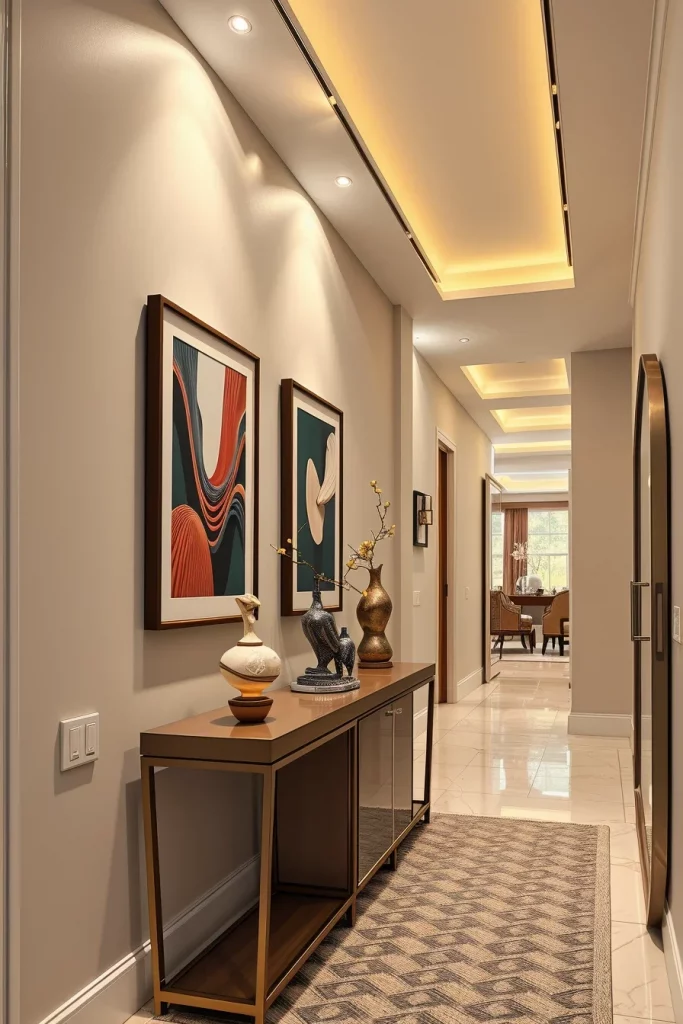
I usually arrange framed artwork with a slim console table, decorative sculptures, elegant mirrors, books, and carefully selected accessories that complement the displayed collection. Track lighting is especially useful because each spotlight can be individually adjusted to illuminate different pieces without creating unwanted shadows. Neutral wall colors help the artwork remain the primary visual attraction.
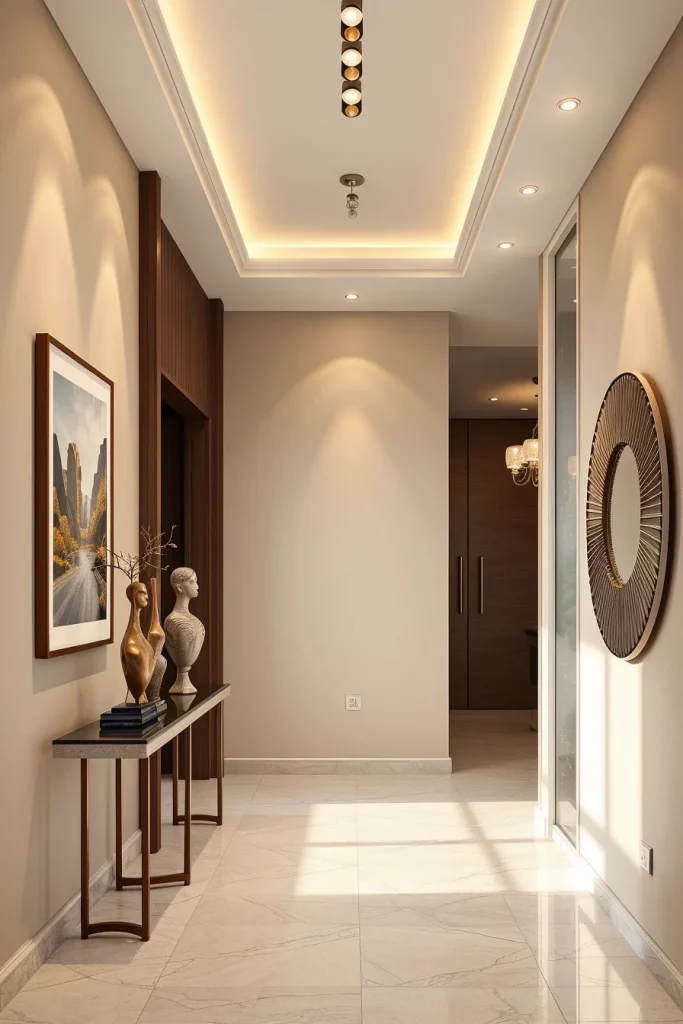
From my experience, museum-inspired lighting techniques work exceptionally well in residential interiors when applied with restraint. Professional lighting designers often recommend using adjustable beam angles and high-quality LED lamps with excellent color rendering to display artwork accurately. I have found that these details make a noticeable difference in both daytime and evening lighting conditions.
To complete this gallery concept, I would include artwork labels or coordinated frames with consistent spacing to create a polished and professionally curated appearance throughout the hallway.
Custom Designer Lighting Ideas For One-Of-A-Kind Hallways
I appreciate custom lighting because it allows every hallway to reflect the homeowner’s personality while solving practical design challenges. Bespoke fixtures can be scaled precisely to fit the available ceiling height, hallway width, and architectural style. Rather than selecting standard lighting from a showroom, I enjoy exploring designs that become unique artistic features within the home.
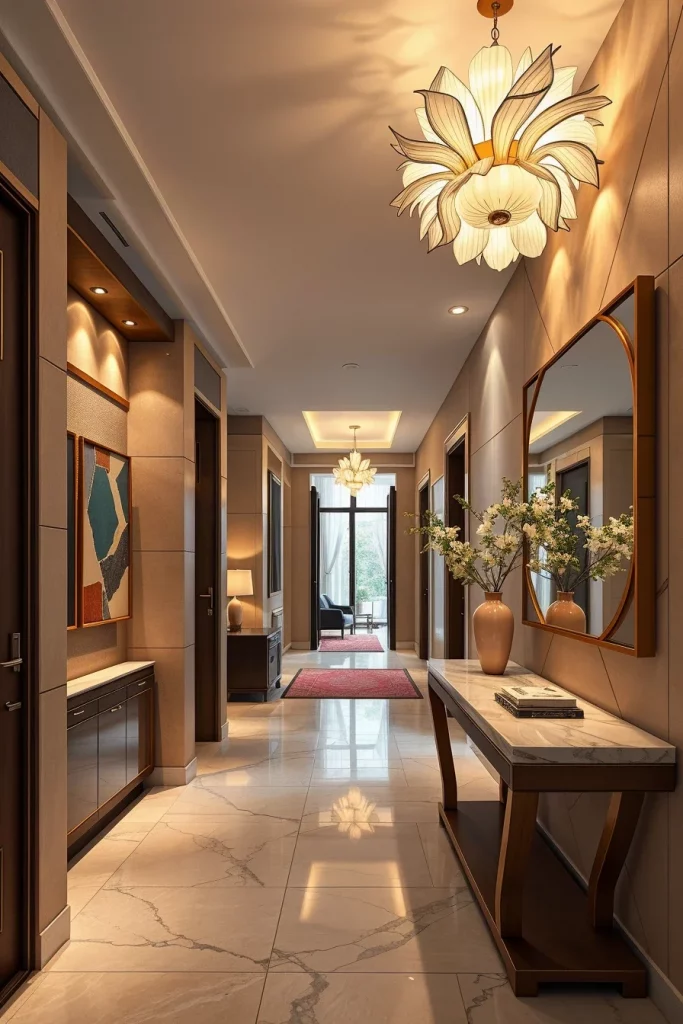
I often combine custom fixtures with handcrafted furniture, architectural wall panels, integrated storage, decorative ceiling details, and premium finishes that reinforce the overall design concept. Every material, finish, and proportion is carefully coordinated so that the lighting appears fully integrated rather than added as an afterthought. This level of planning creates a highly refined interior.
Personally, I believe custom lighting offers long-term value because it creates a memorable impression while remaining perfectly suited to the space. Many respected interior designers encourage investing in one exceptional statement fixture instead of several average decorative elements. I have repeatedly seen how this strategy elevates even relatively simple hallways.
To make the design even more complete, I would incorporate smart home controls that allow personalized lighting scenes for entertaining, everyday living, and nighttime navigation.
How To Combine Style, Function, And Personality In Hallway Lighting
I believe the most successful hallway lighting combines beauty with everyday practicality. Every lighting fixture should contribute to the atmosphere while making the hallway safe, comfortable, and visually inviting. Instead of focusing on only one decorative feature, I always consider how ambient, task, and accent lighting work together to create a balanced environment that serves the household throughout the day.
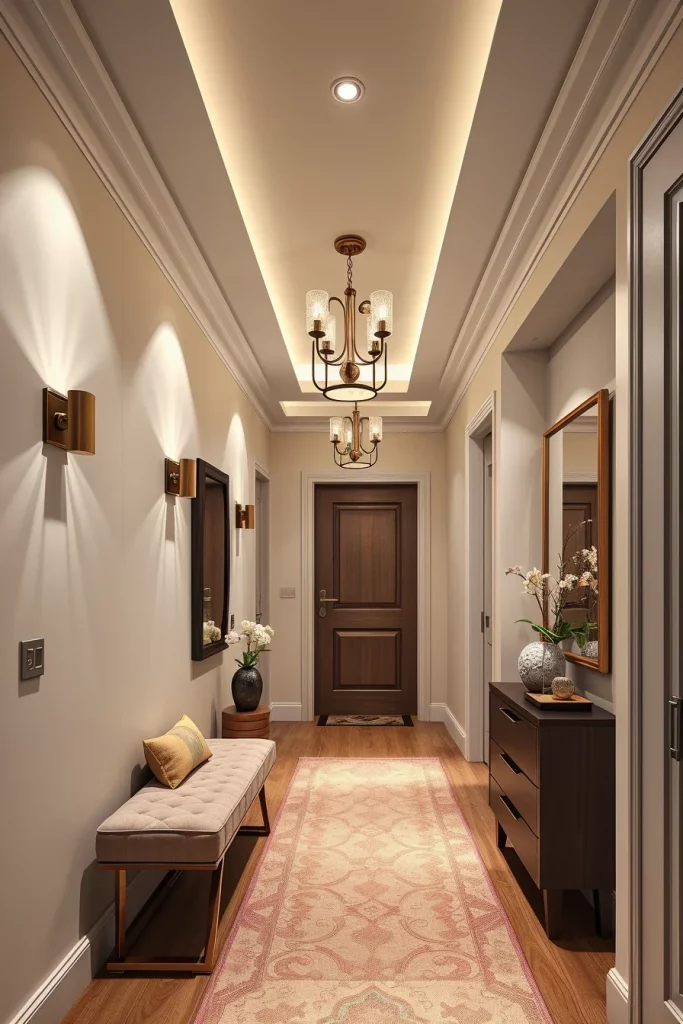
When finalizing a hallway design, I coordinate ceiling fixtures, wall sconces, recessed lighting, mirrors, storage furniture, benches, decorative accessories, and carefully selected finishes. Consistent materials and thoughtful proportions help each element support the others without competing for attention. The result is a hallway that feels organized, elegant, and welcoming from every angle.
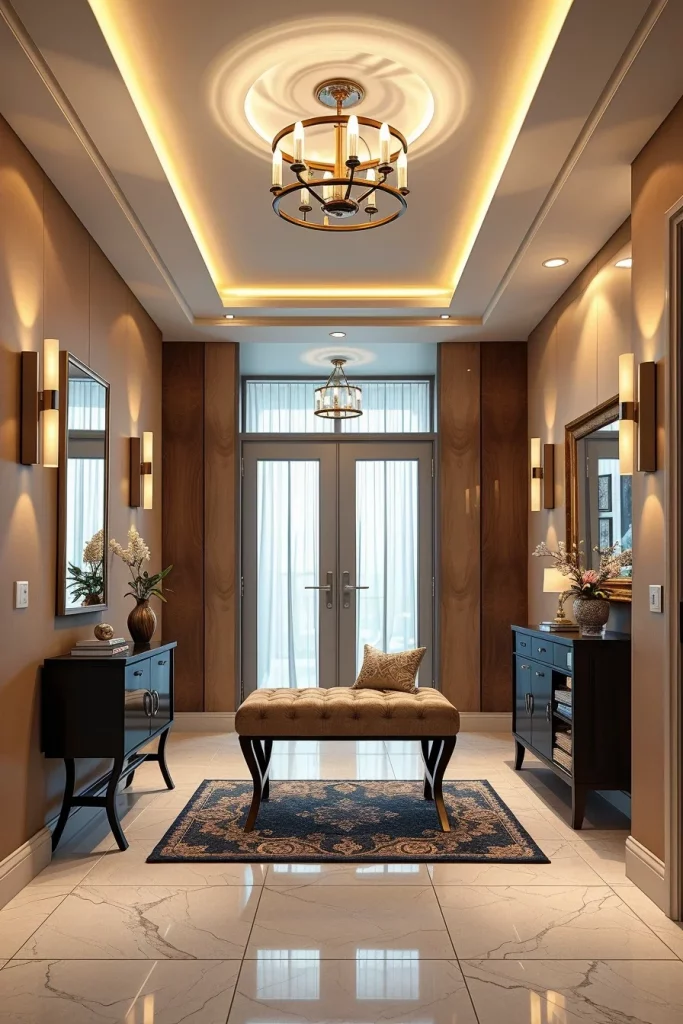
Over the years, I have learned that the best interiors are rarely created by following trends alone. Advice shared by respected American designers consistently emphasizes designing for comfort, functionality, and longevity before decorative details. I have found that this balanced approach produces hallways that remain attractive and practical for many years.
I would finish the project by carefully adjusting lighting levels after all furniture and accessories are installed, ensuring every area feels comfortable while architectural details, artwork, and decorative elements receive the attention they deserve.
The right hallway lighting does much more than brighten a passage—it enhances your home’s character, creates a welcoming atmosphere, and highlights your favorite design features. Whether you prefer sculptural fixtures, minimalist lighting, or artistic statement pieces, there are endless ways to make your hallway both functional and visually impressive. By combining layered lighting, thoughtful placement, and stylish fixtures, you can transform any hallway into a beautiful space that leaves a lasting impression.