
Choosing an exterior color for your house can feel like a high-stakes decision. You want something that stands out but still fits the neighborhood.
This collection of 25 house exterior colors offers a range of looks, from bold modern blues to classic white farmhouses. Each idea focuses on how the palette works with the architecture and surrounding landscape, giving you a practical starting point for your own update.
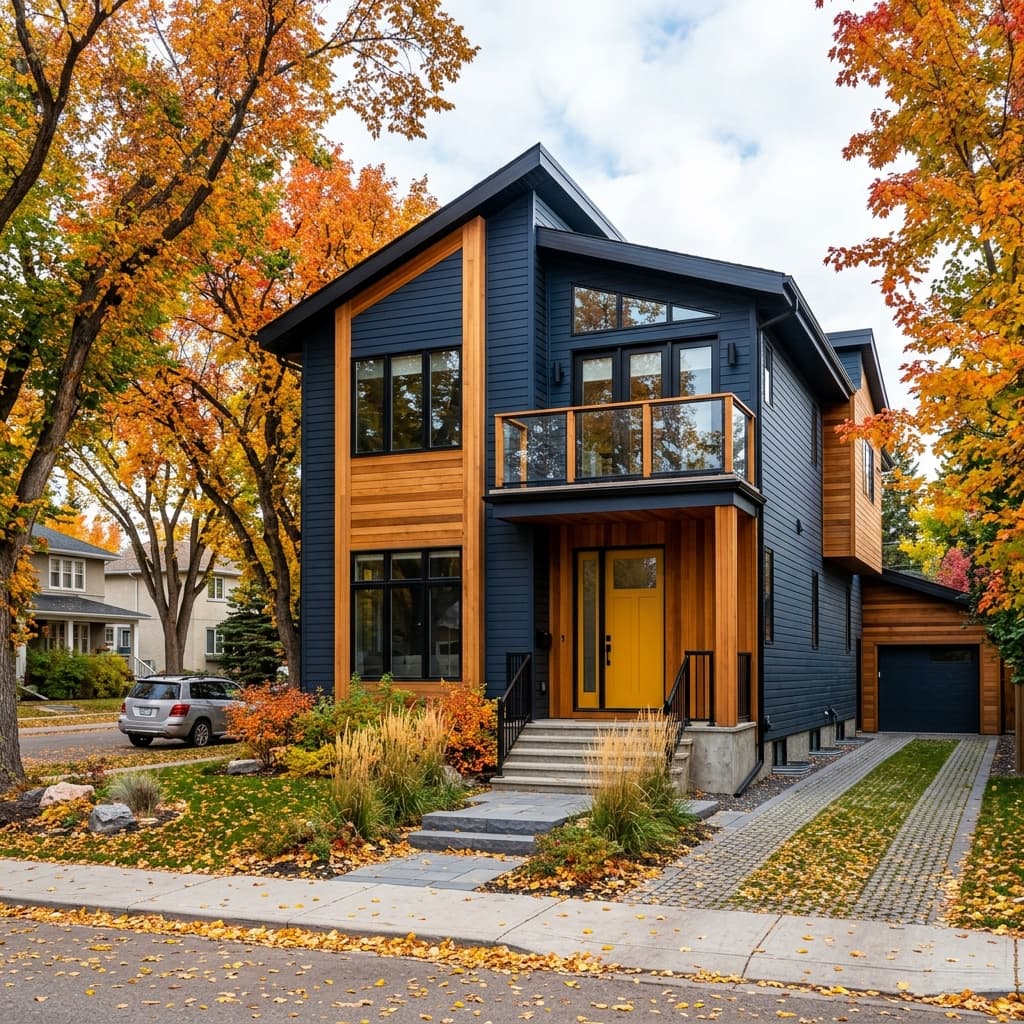
Modern Home Exterior with Bold Blue Siding and Warm Wood Accents
A dark blue facade reads as a confident choice when it is balanced by warm wood paneling and a single yellow door. The wood tones keep the deep siding from feeling cold, while the door adds a point of interest without competing. A stone base anchors the whole look to the ground, making the color contrast feel intentional rather than accidental. The palette defines the style here: one saturated main color, one neutral texture, one bright accent. That ratio is what makes it work.
Warm Brown Wood Facade with Clean White Trim and Stone Pathways
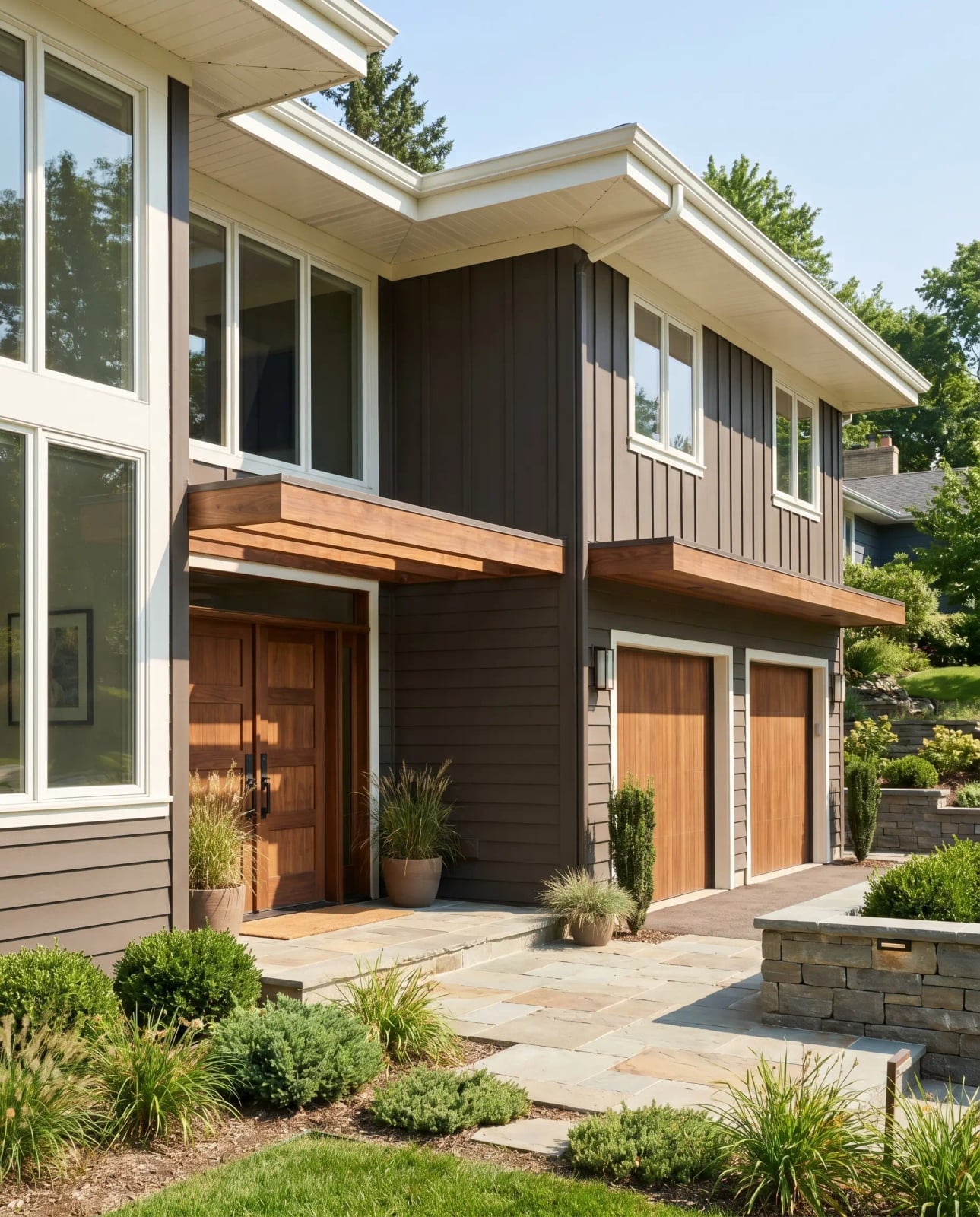
This exterior proves that a wood facade does not have to read as rustic. The brown siding is uniform and smooth, with clean white trim around the windows and garage doors that sharpens the overall profile. A stone pathway leading to the entry repeats the neutral palette in a different texture, which adds depth without clutter. The layout puts the garage and entry side by side, so the white trim pulls them into one composed front. Large windows keep the wood from feeling heavy by letting daylight play across the surface.
Dramatic All-Black Modern Home with Integrated Wood Deck and Pool
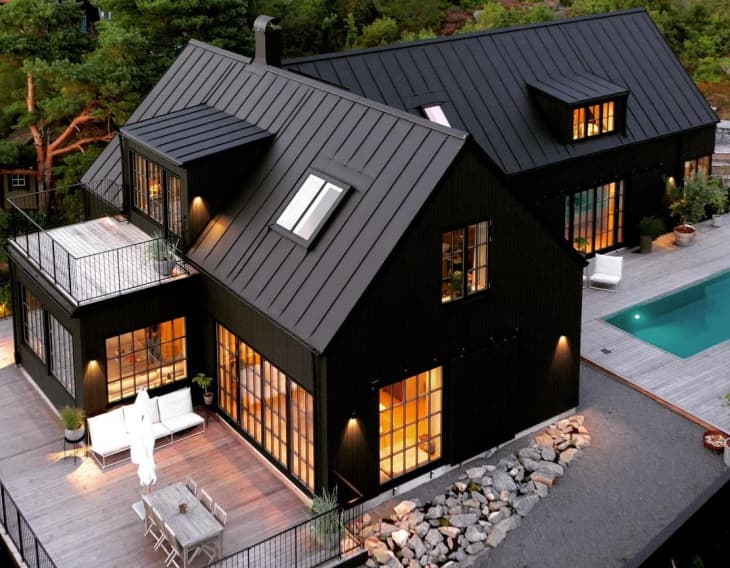
Can an all-black house feel inviting? Only if you give it something warm to reflect. This one uses a wood deck and interior lights that glow through large windows, turning the dark metal siding into a backdrop instead of a wall. The black and gray palette is offset by evening light from inside, which creates a soft contrast that keeps the facade from looking flat. Exterior spotlights pick out the deck and pool below, so the house feels grounded in its site.
Modern Farmhouse Exterior in Off-White with Charcoal Accents and Green
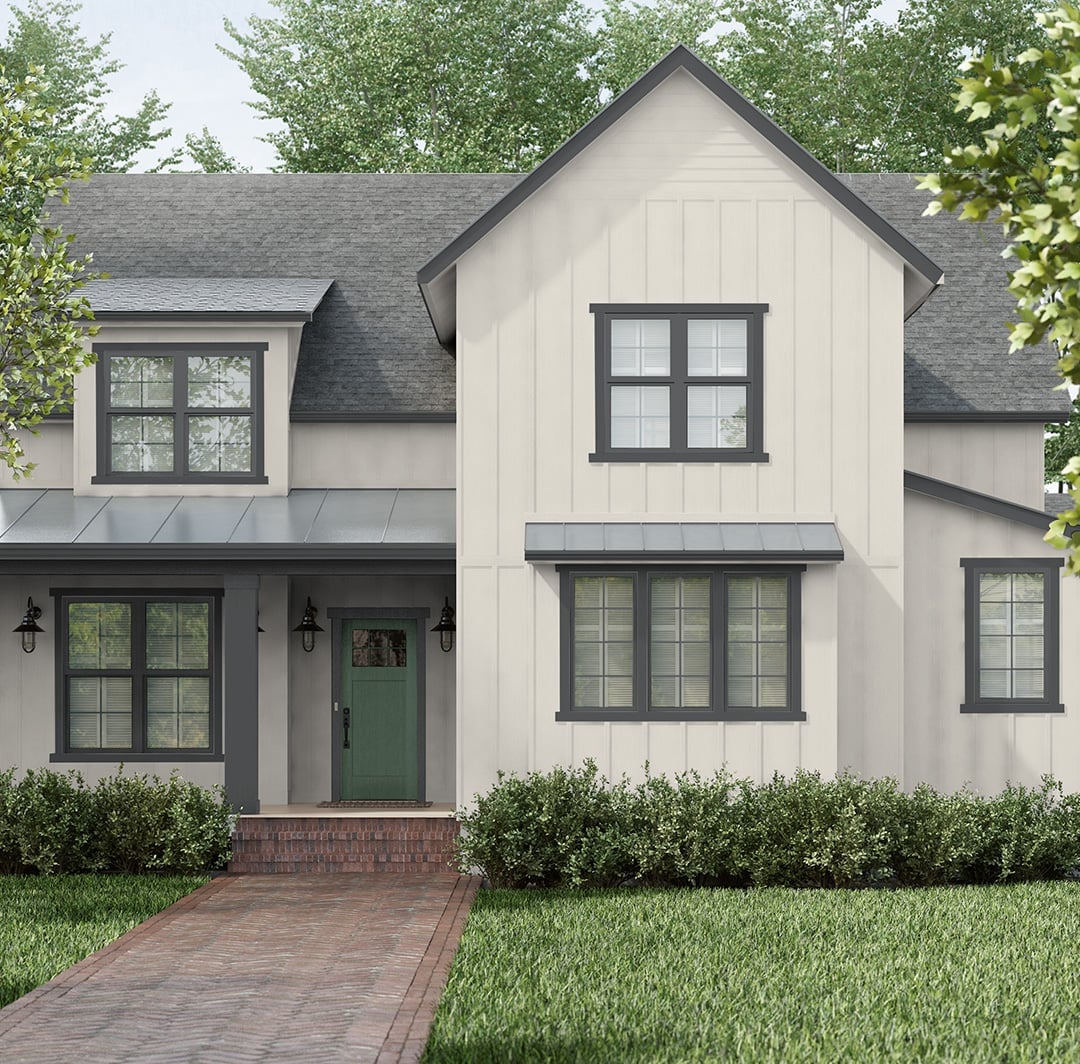
Off-white board and batten siding is the neutral base here, but the charcoal window frames and green door give the farmhouse style an edge. The dark trim defines the windows without needing shutters, and the green door adds a color that feels natural without being expected. An overcast sky softens the light, so the contrasts appear crisp. The palette works because the off-white is warm enough to keep the charcoal from feeling severe.
Modern Farmhouse with Dark Gray Siding and Striking Natural Wood Door
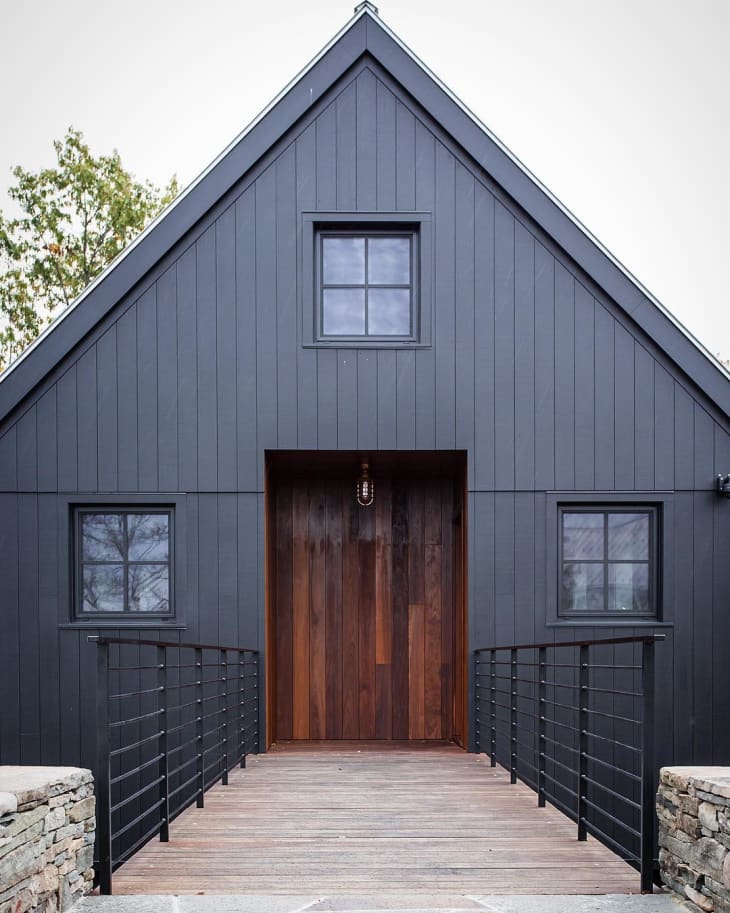
A dark exterior works best when one material stands out. Here the dark gray wood siding creates a calm backdrop, and the large natural wood door becomes the focal point. The metal railing on the bridge adds a slim vertical line that breaks up the siding without introducing a new color. The overhead light fixture frames the entrance. The centered layout directs the eye straight to the wood grain and its warm tone against the gray.
Traditional White Brick Home with Arched Wooden Doorway and Ferns
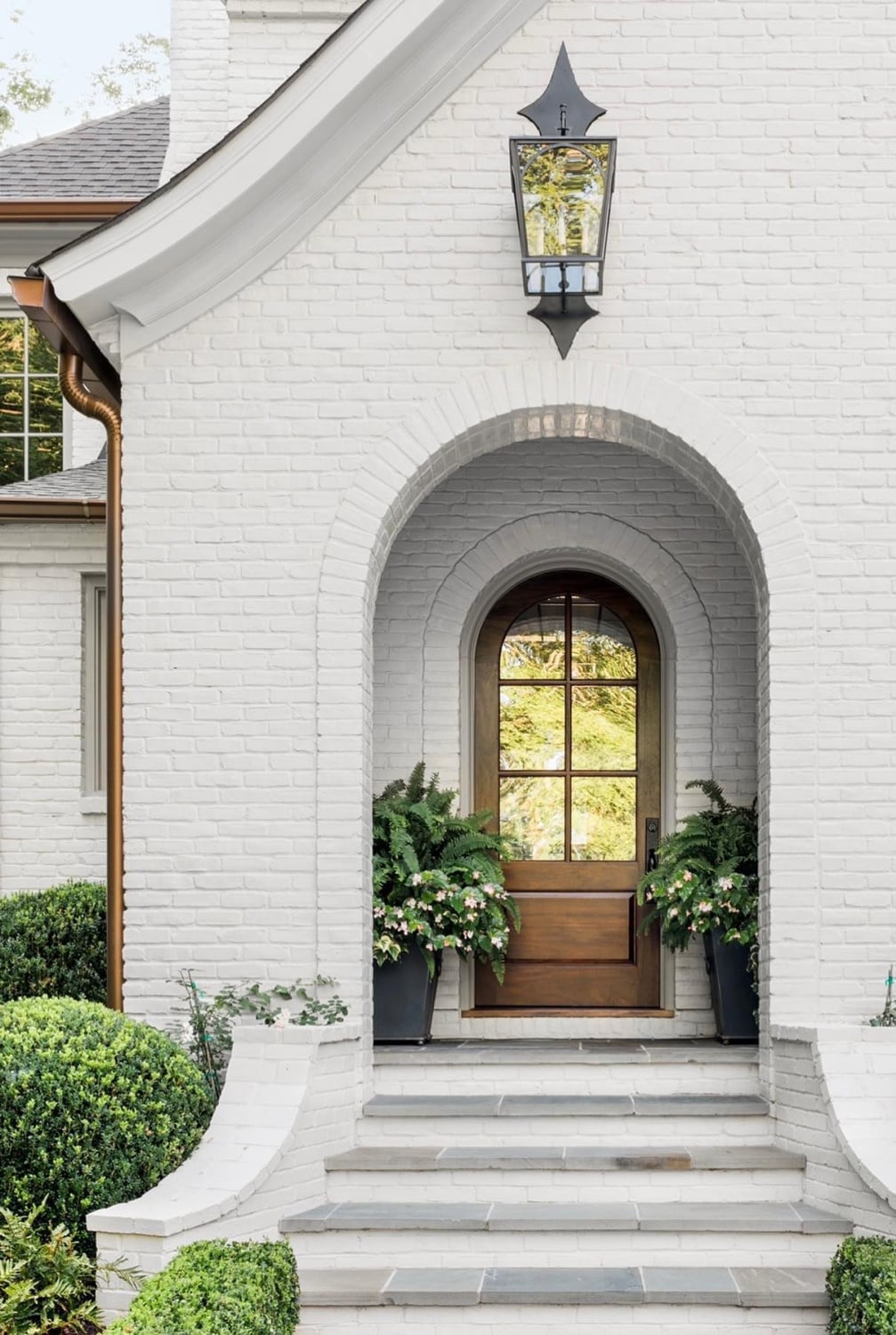
A white brick facade can lean formal, but this version keeps it approachable. The arched wooden door is the focal point, with its natural wood tone warming up the crisp white surround. Matching wood planters on either side hold ferns, which add softness and a hit of green. The stone path and metal lanterns stay neutral so the door and plants do the work. If your own entrance feels flat, try swapping a standard door for one with an arch. It is a single change that shifts the whole look without touching the rest of the house.
Charming Brown Cottage Exterior with White Porch and Rose Garden
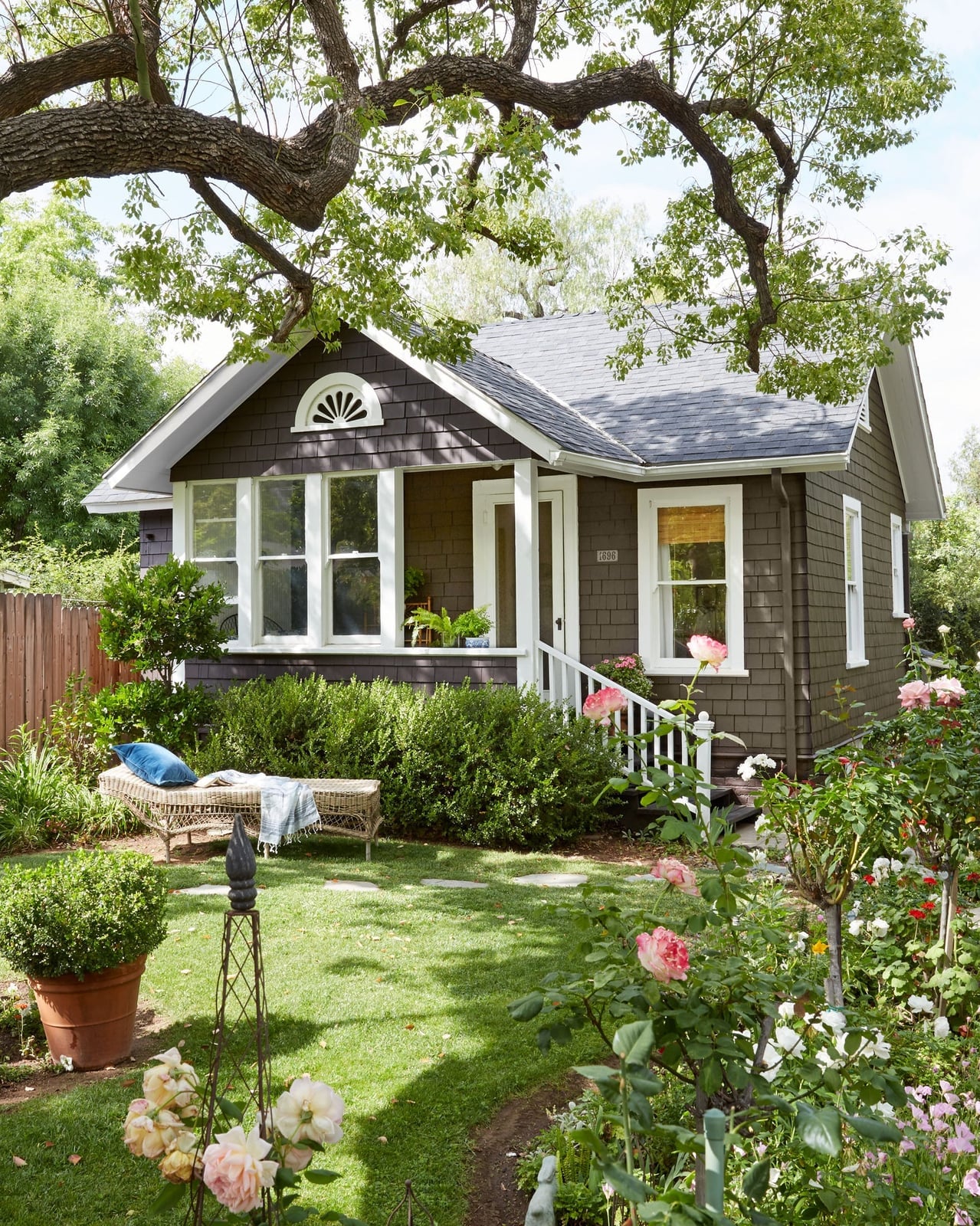
The brown shingle siding here is darker than expected for a cottage, which gives it weight. White porch trim and railings keep the look from going too heavy, while the climbing roses add a soft pink layer. A wooden garden bench on the porch makes the small entrance feel like a place to sit, not just pass through. For renters, this palette is a good reference: brown and white work on most siding types, and you can bring in the pink with container plants that leave no trace when you move.
Moody Dark Gray Modern Farmhouse with Wood Shingle Roof
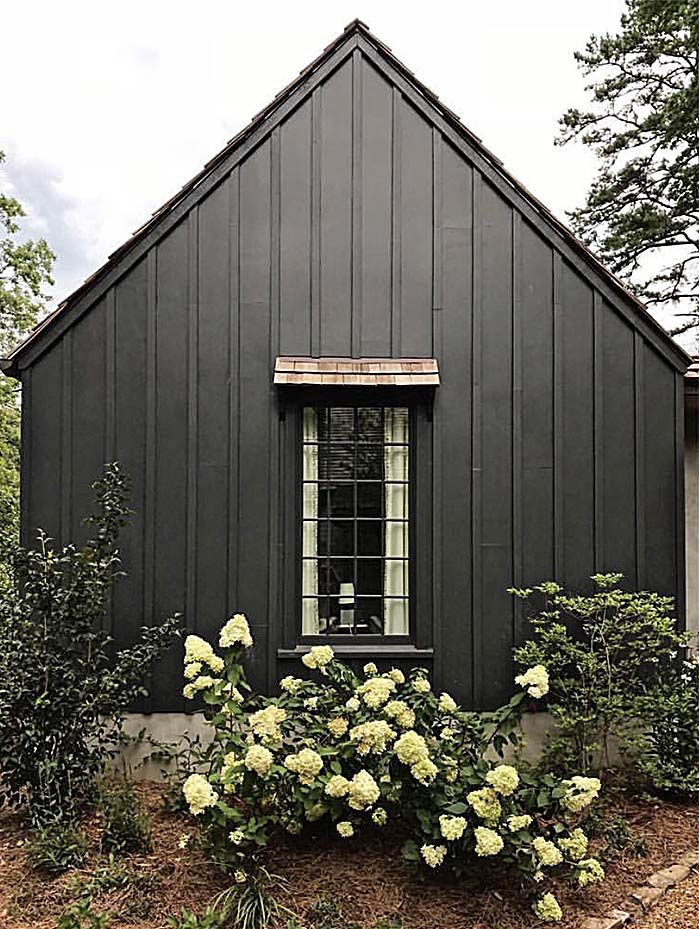
Dark gray vertical siding paired with a wood shingle roof creates a compact house that feels grounded. The wood roof is the unexpected material here, adding texture where a metal roof would look flat. A single awning over the window breaks up the dark facade and adds a practical overhang. This exterior works because it uses two materials in similar tones without high contrast. The palette stays tight, so even a small structure looks deliberate instead of plain.
Mediterranean Villa with White Stucco, Wood Shutters, and Terracotta
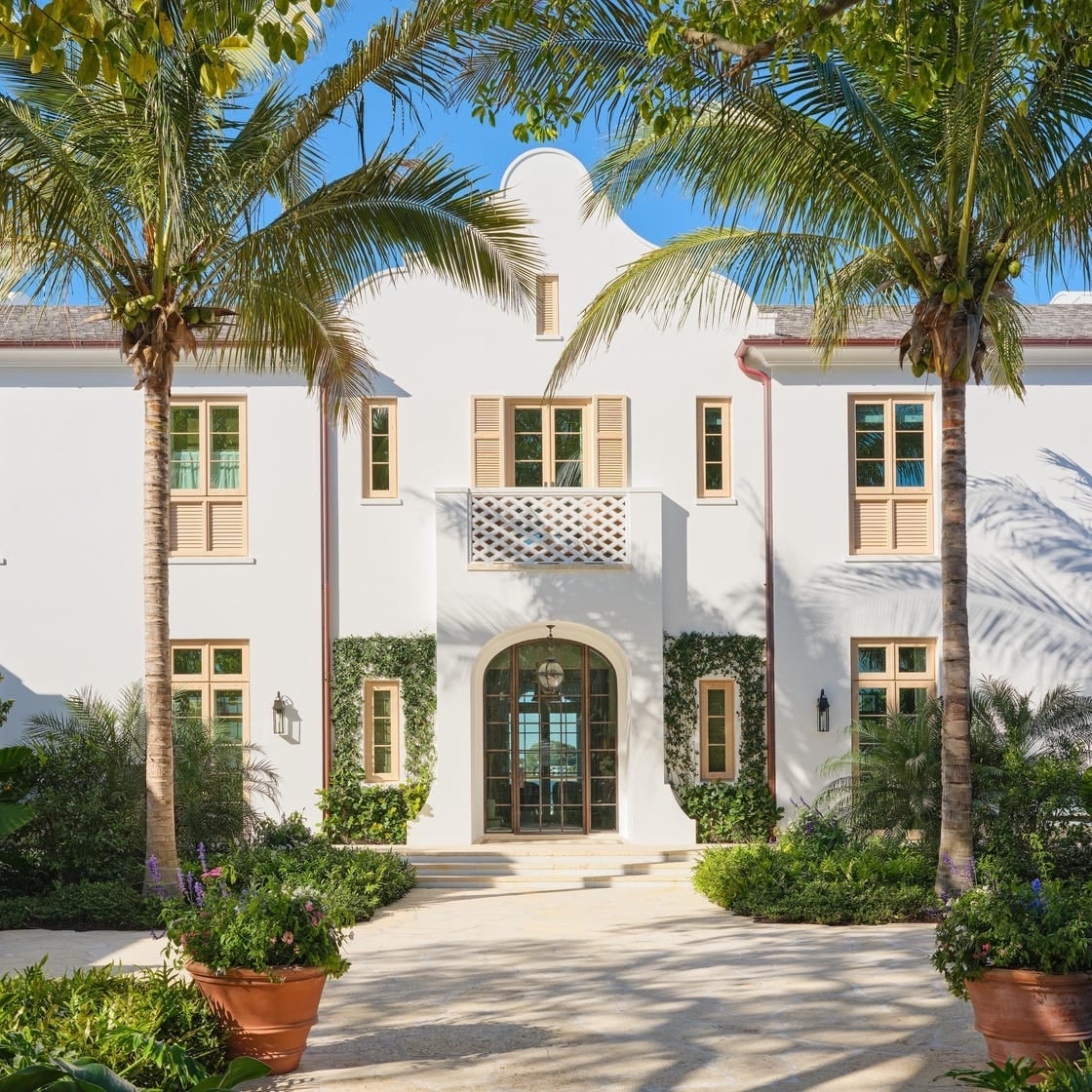
How do you make a large white facade feel warm instead of sterile? This Mediterranean villa answers with wood shutters and terracotta planters. The white stucco looks clean and classic, but the warm wood and clay tones stop it from feeling cold. The arched entryway and balcony add symmetry, while the olive or citrus trees in large terracotta pots reinforce the regional look. If your home has a plain stucco exterior, adding wood shutters is a practical first step. They do not require structural work and can be painted to match your trim or left natural for contrast.
Crisp White Brick Modern Farmhouse with Black Roof and Windows
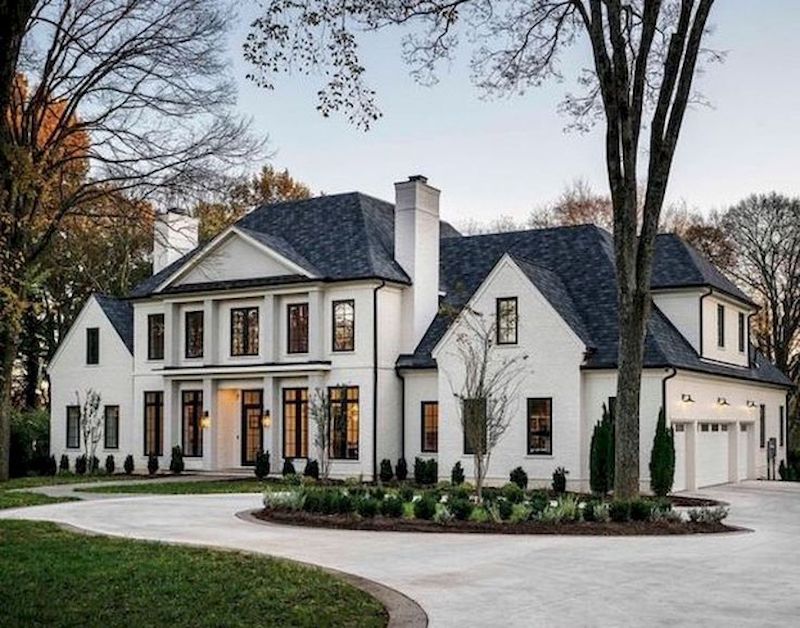
White brick covers the entire facade, but the black roof and black window frames stop it from washing out. The dark roof anchors the house visually, while the black windows repeat that color at human scale. A wide driveway and manicured landscaping keep the composition balanced, with the white brick acting as a neutral backdrop. This palette works because the ratio of white to black is heavily weighted toward white. The black shows up only in the roof and windows, so it acts as an accent.
Traditional Blue Siding with Stone Base and White Trim
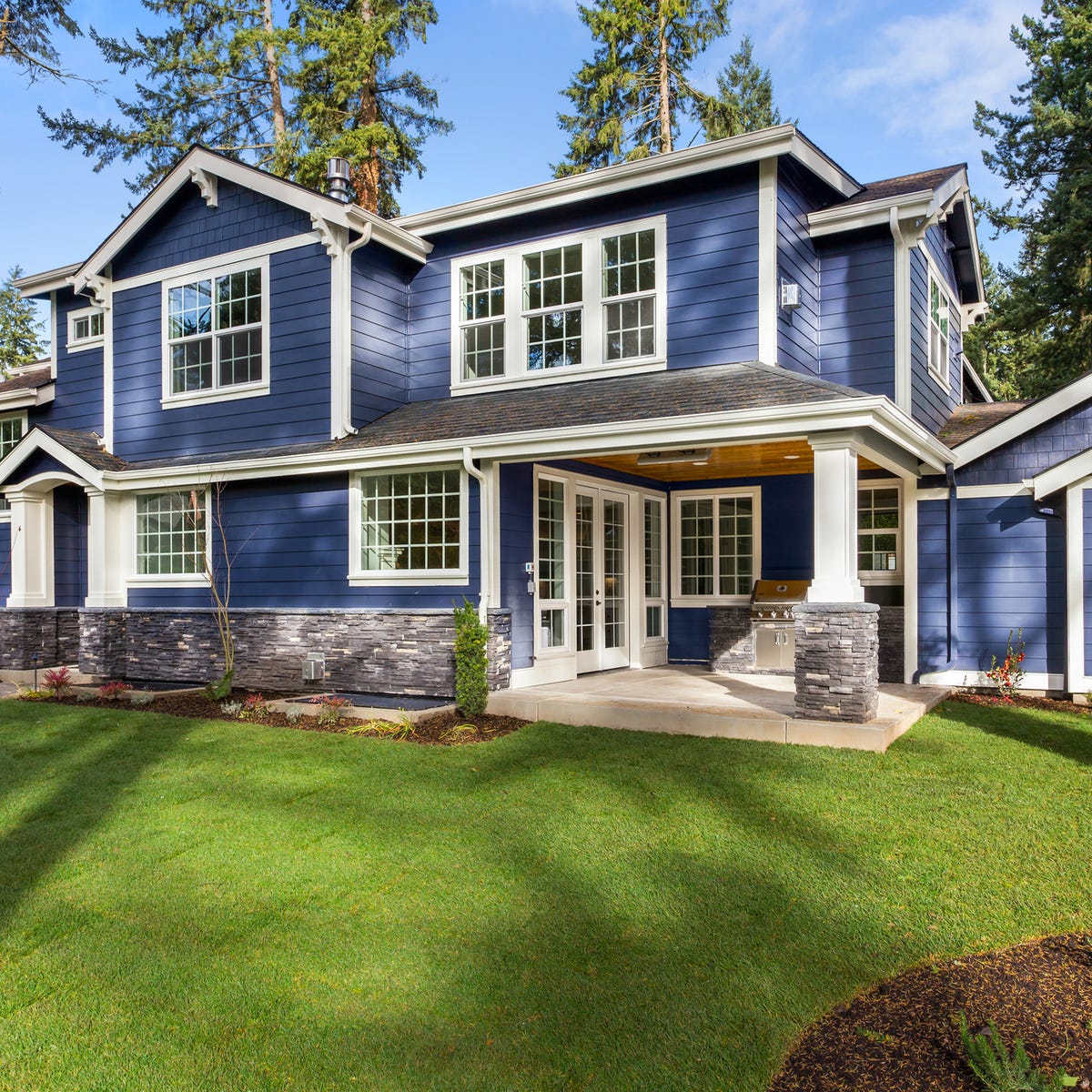
For a traditional exterior, let one material anchor the design and another carry the color. Here, the blue siding supplies the character while the stone base grounds the house and the white trim keeps the edges crisp. The smooth siding and the rough stone give the facade depth without adding extra shapes or layers. On a sunny day, the blue reads brighter and the white trim reflects light, so the house feels bigger than its footprint. This is a palette that works for a full renovation, but renters can borrow the idea with a blue front door and white window boxes.
Classic White Traditional Home with Dark Green Shutters and Wood Door
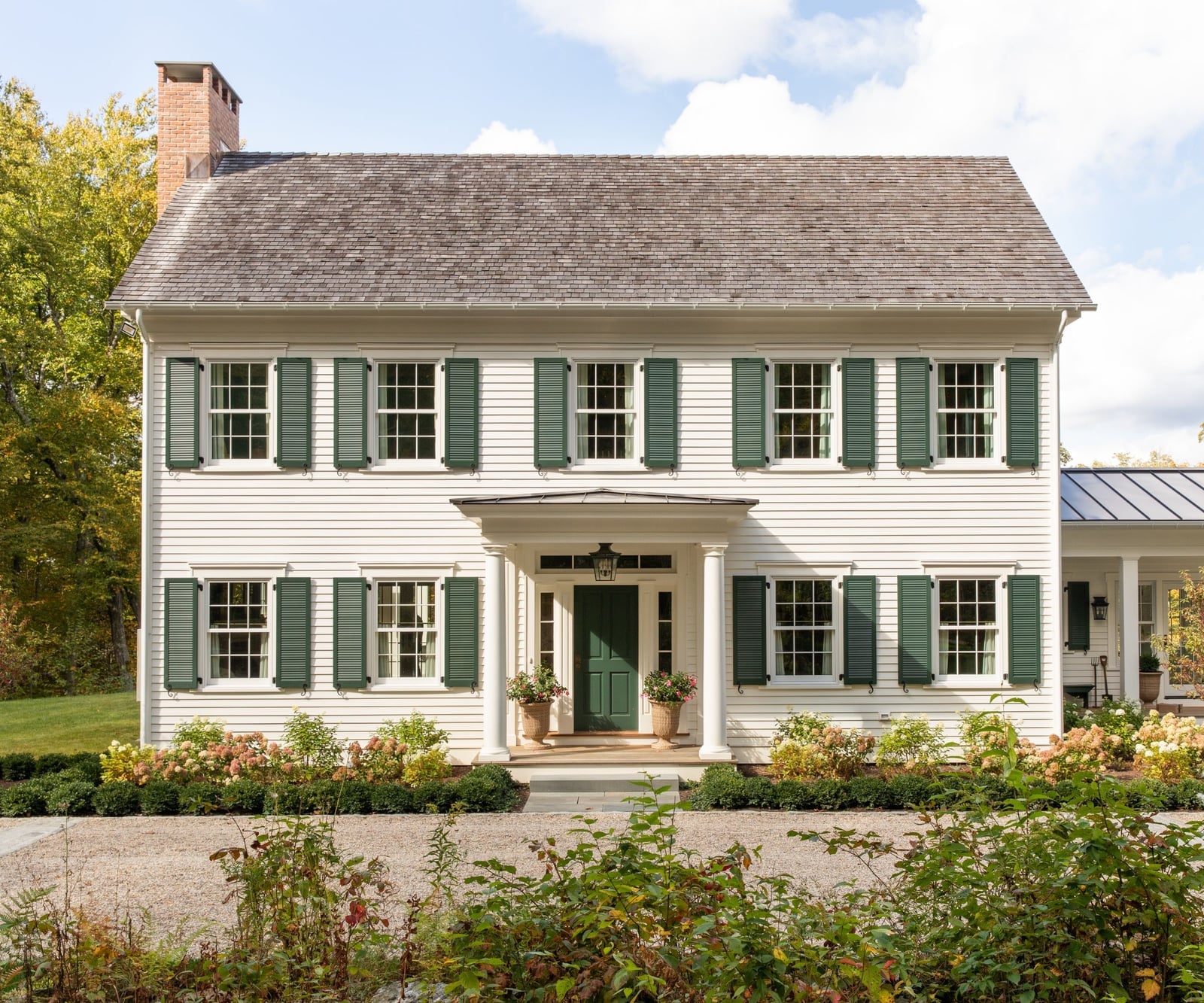
Set a classic white traditional home against a close alternative, say a pale gray or cream body, and you will see why white wins here. The white siding lets the dark green shutters and the wood door carry the color, which keeps the facade calm and the details noticeable. Overcast light softens the palette, so the green does not glare and the wood stays warm. The brick steps and the columns add a formal rhythm that matches the shutters. What breaks this look is adding a third strong color, like a red door or blue trim, because the green and wood already hold the interest. A simple swap for a rental is painting the front door and keeping the shutters as they are.
Mid-Century Modern Sage Green Siding with Gray Door and Concrete
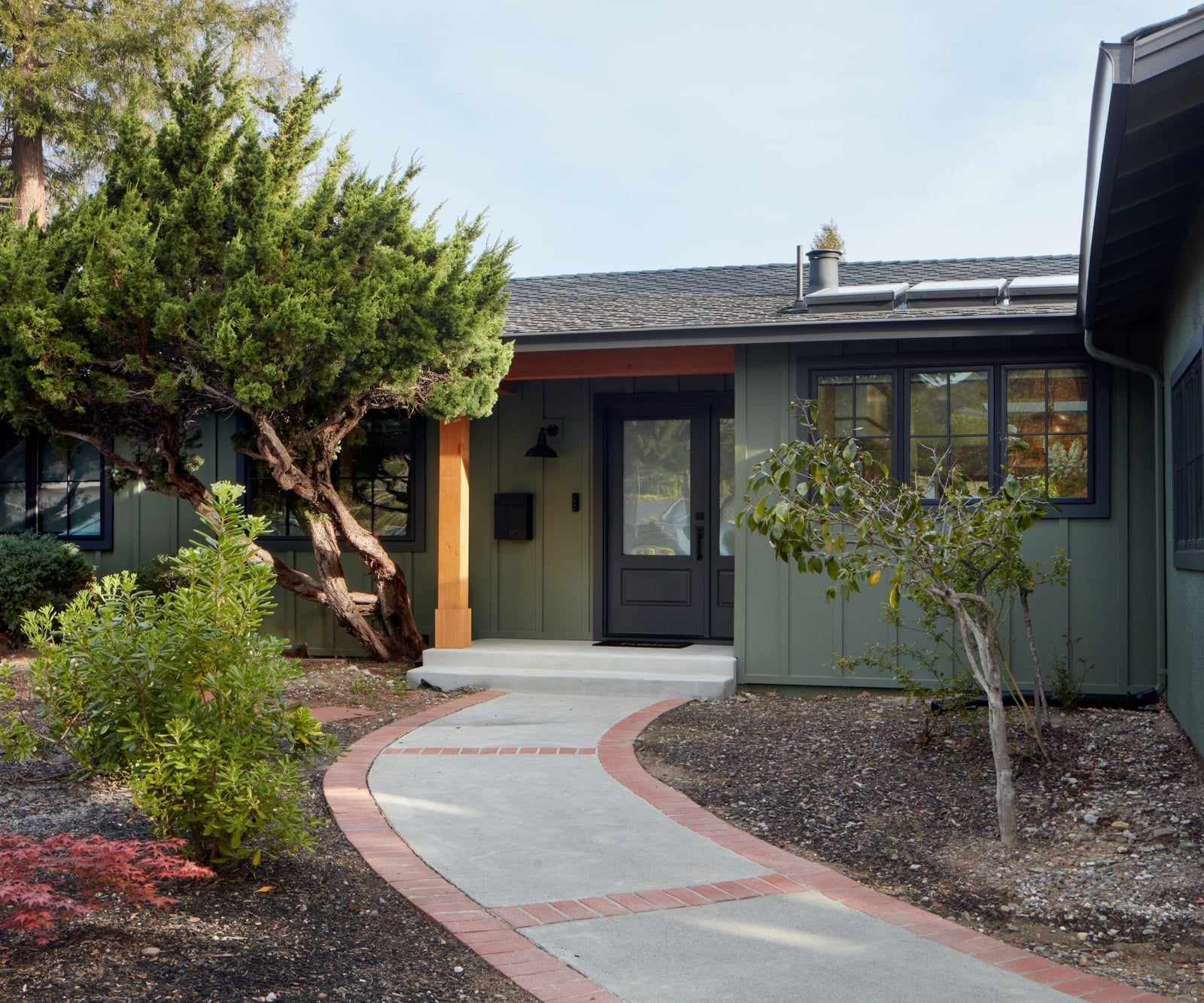
The curving pathway to the entrance is the quiet hero of this mid-century modern exterior. The sage green siding sits low and calm, and the gray door matches the concrete path, so your eye follows the walkway instead of jumping to the house. Soft daylight lets the wood siding show its grain without glare. This is a style that suits a home with clean lines and a bit of landscape, because the green needs a natural setting to feel right.
Sleek Black Modern Exterior with Warm Wood Accents
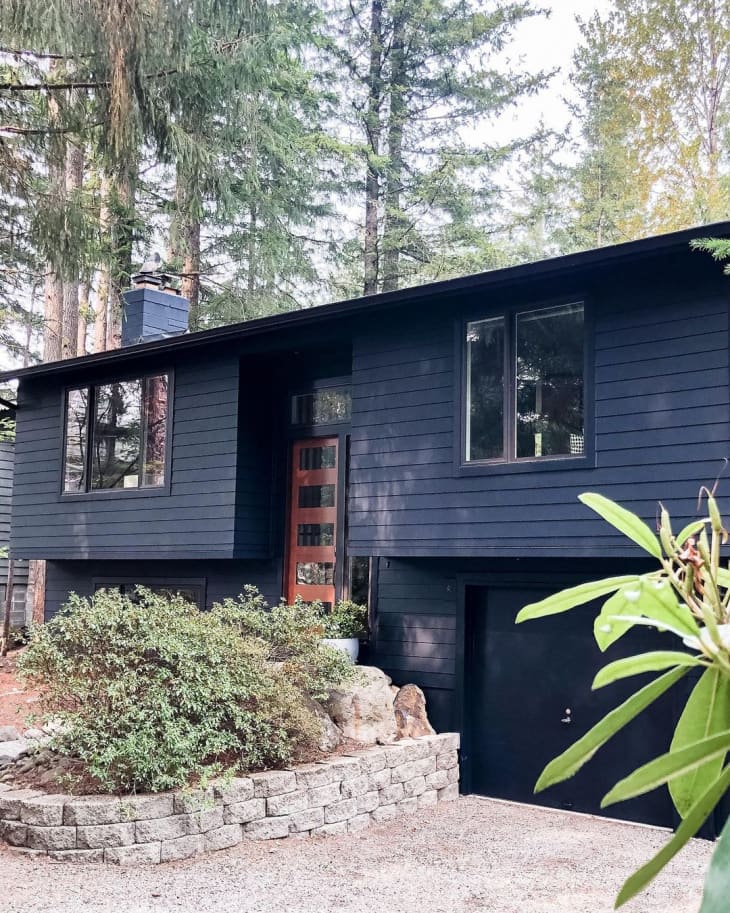
An all-black exterior is a sleek choice, but only if something warm breaks the darkness. Here, the horizontal black siding pairs with wood accents that soften the mass and add a natural rhythm. Bright daylight keeps the black from flattening into a void, and the glass surfaces pick up the sky and the trees. The multi-level design means the wood accents appear at different heights, which prevents the facade from feeling like a single block. For a rental, you cannot repaint the siding, but a black door with wood trim gives the same contrast.
Victorian Home with Multi-Tone Purple, Green, and Cream Paint Scheme
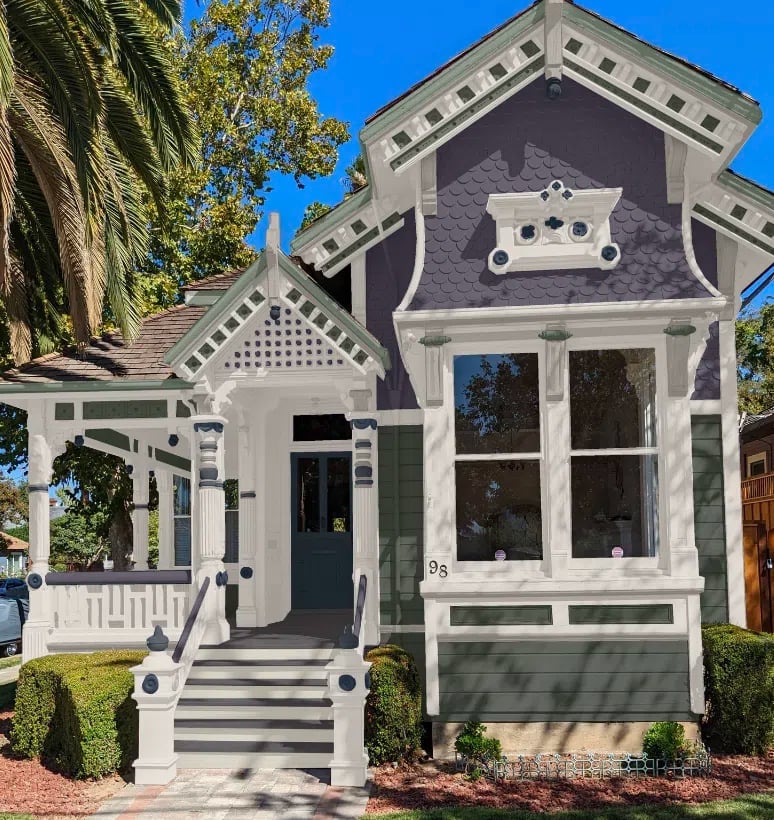
A Victorian facade works best when each paint color has a specific architectural job. The dark purple covers the main shingles, the green picks out the trim and the bay window, and the cream highlights the porch and the wood details. Bright sun makes the purple look deeper and the cream look brighter, so the house gains dimension from the light. The ornate trim and the bay window give the colors places to land, which is why this scheme works. What breaks it is making every surface a different shade, because then the eye has nowhere to rest. A renter can borrow the idea with a purple door and green window boxes.
Classic White Farmhouse with Wood Doors and Gray Metal Roof
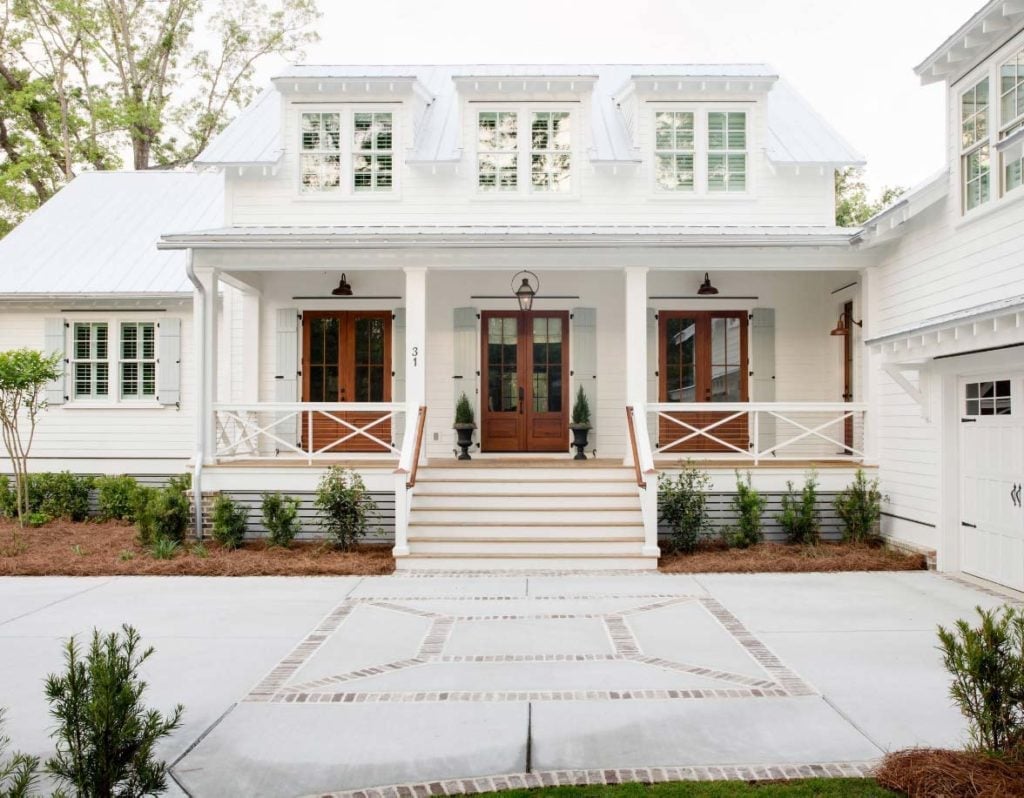
A white farmhouse with a gray metal roof and dormer windows uses wood tones to keep the facade from feeling flat. The double wood doors add warmth against the crisp siding, while the brick-pattern driveway repeats that natural texture at ground level. What defines this farmhouse palette is the ratio: white covers most of the volume, wood and gray each get about a quarter. The gray metal roof breaks the all-white look by adding a cool contrast that stops the house from feeling like a wedding cake.
Modern Craftsman in Deep Blue with Gray Stone and Wood Trim
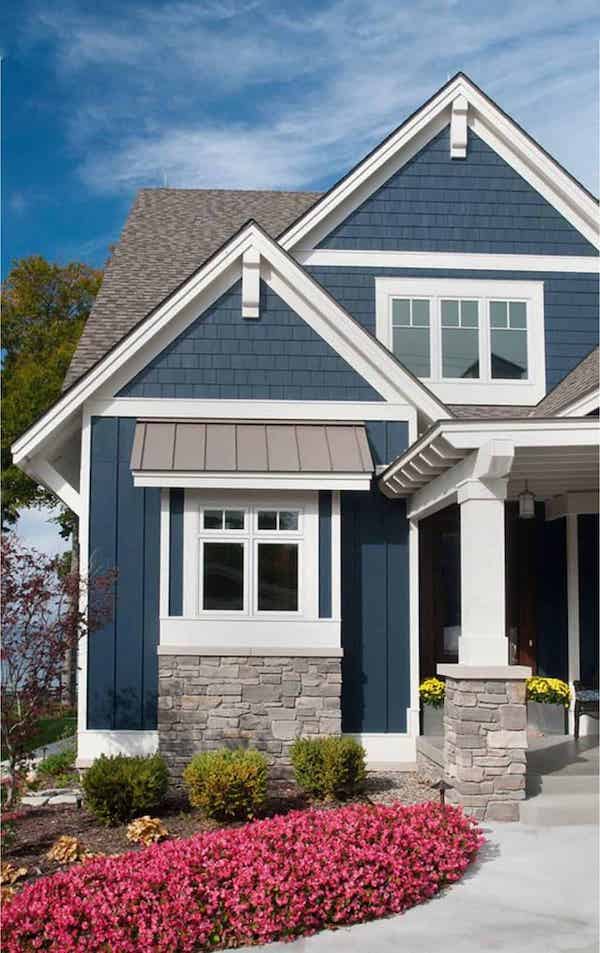
Use the darkest shade on the largest surface and lighter accents on the details. This modern craftsman does that with deep blue siding, gray stone at the base, and wood trim on the windows and porch. The palette ratio is roughly 60 percent blue, 25 percent stone, and 15 percent wood. What defines the look is the cool blue and the warm wood. The wood trim breaks what could be a monotone facade by adding a natural, organic line that catches the eye.
Traditional Cream Brick House with Dark Green Shutters and Columns
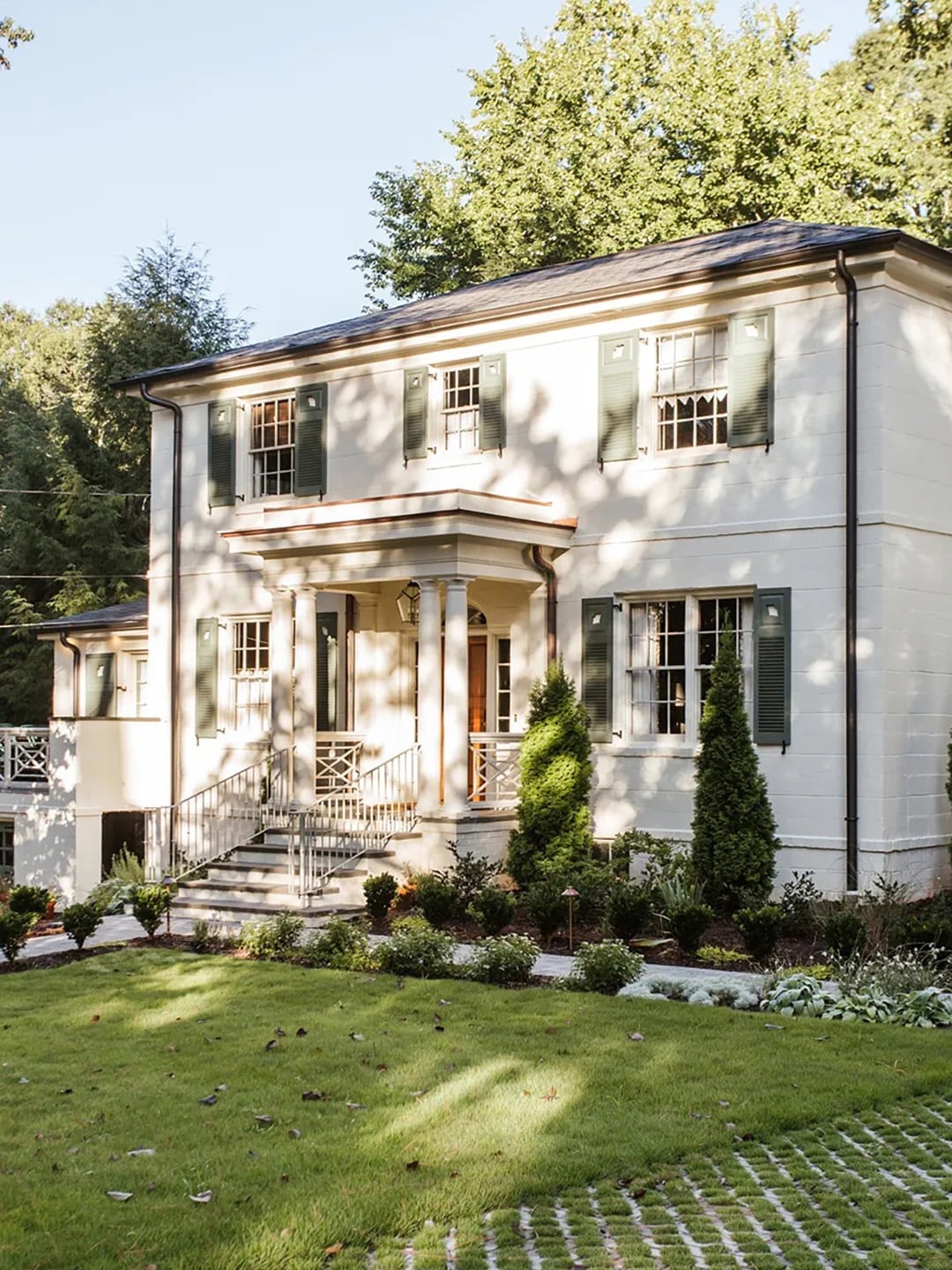
A cream brick house with dark green shutters and columns is a close cousin to the more common white brick with black shutters, but the shift in color changes the feel completely. The cream brick looks softer and warmer, while the dark green adds a grounded, garden-inspired note that black cannot match.
The palette works because the dark green covers only the shutters and columns, about 15 percent of the facade, while the cream brick handles the rest. The brown wood door and stone landscaping tie the two together. What defines this look is the relationship between the warm cream and the cool green, a pairing that appears carefully chosen.
Modern Farmhouse Dark Blue Siding with Teal Door and Orange Chairs
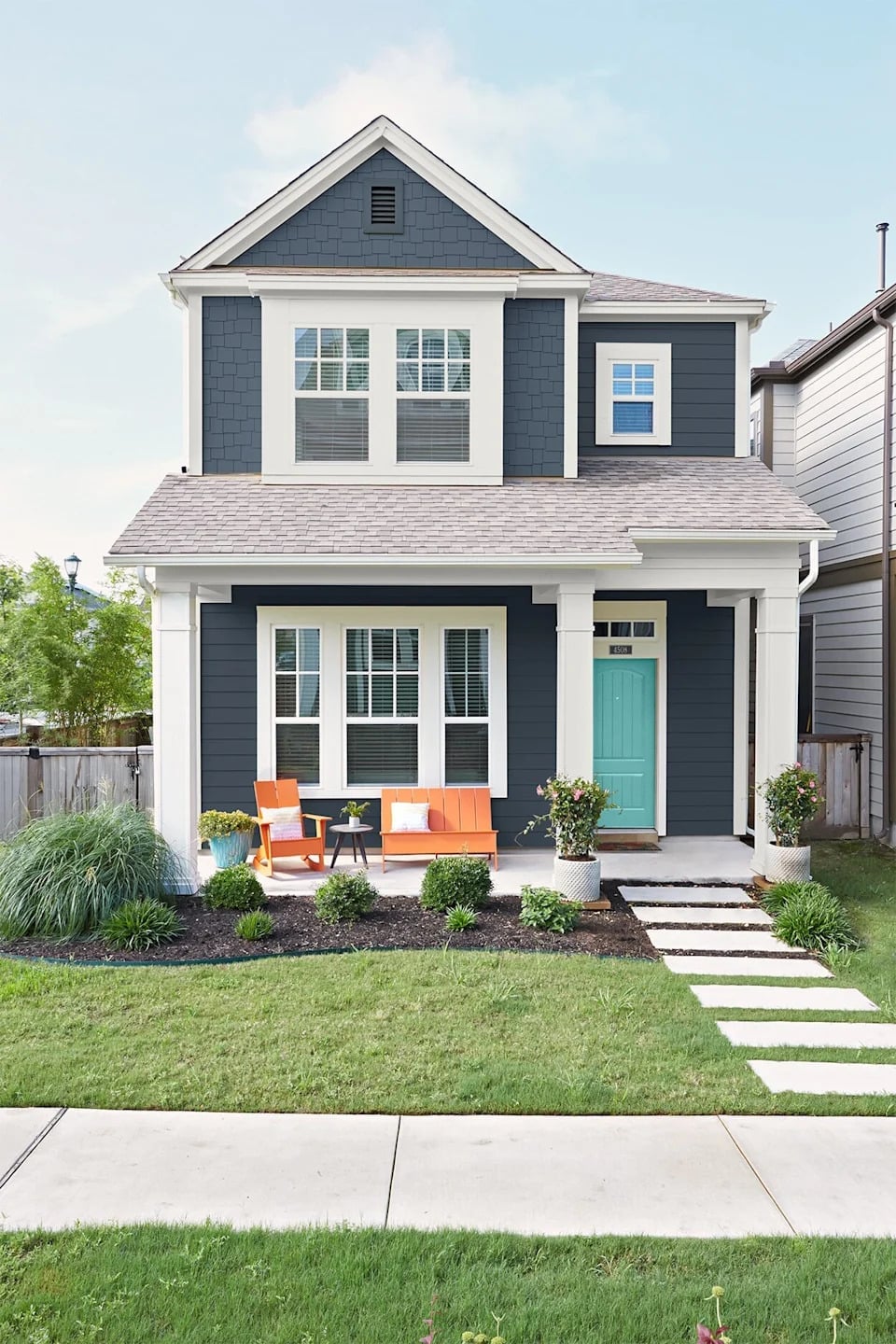
The dark blue siding on this modern farmhouse reads as almost navy from a distance, but the teal door pulls out the green undertones in the blue. The orange chairs on the porch add a complementary pop that keeps the facade from settling into a single mood. The palette ratio is about 70 percent dark blue, 20 percent white trim, and 10 percent teal and orange combined. What defines the look is the way the teal door bridges the cool blue and the warm orange, creating a color story that feels deliberate.
Charming Dark Gray Cottage with White Trim and Paved Walkway
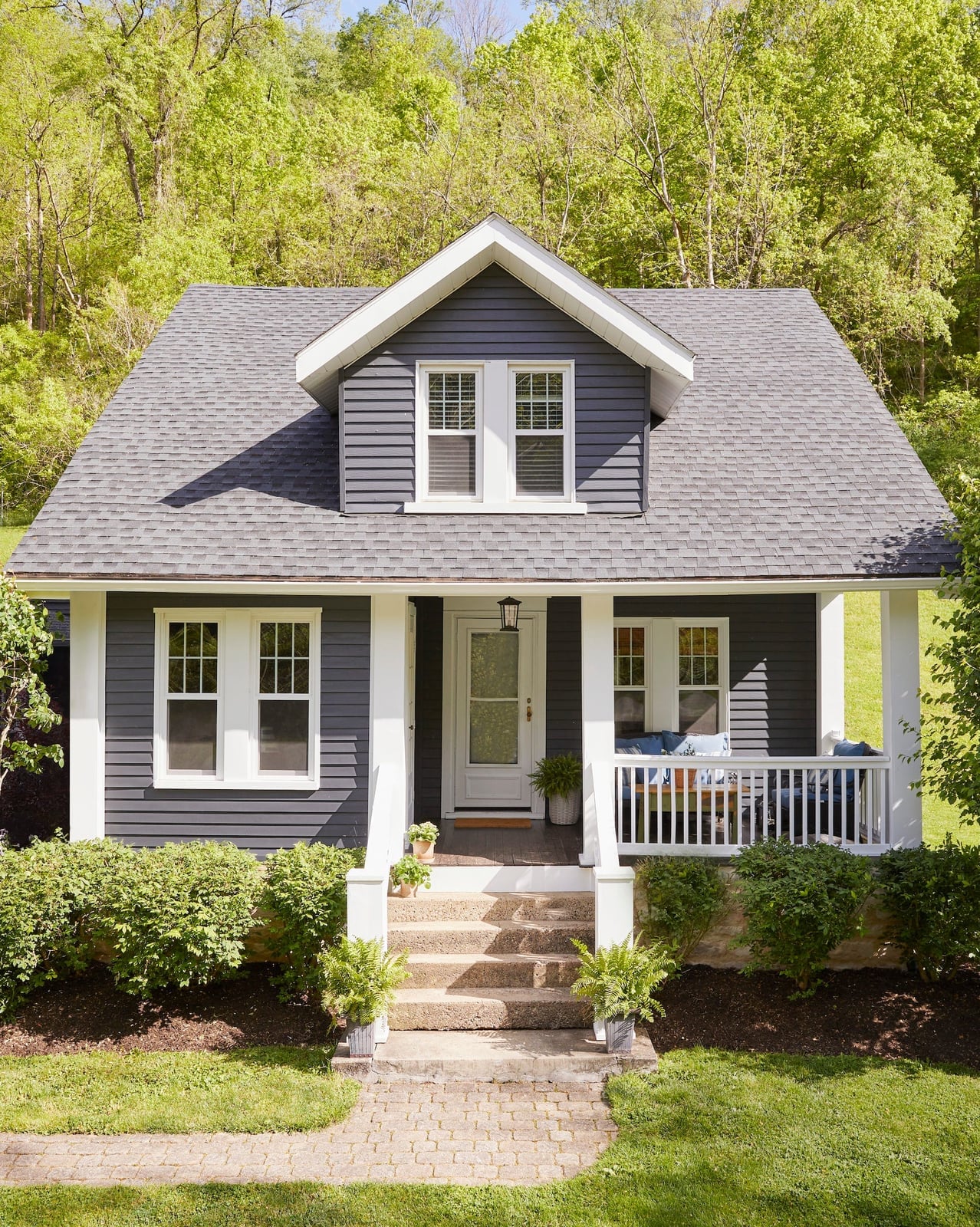
This dark gray cottage proves that a compact house can carry a deep color without feeling heavy. The white trim around the windows and porch lightens the mass, and the wood door adds a warm focal point. The paved walkway and stone steps repeat the gray in a lighter tone, creating a visual path from the street to the entrance. What defines this palette is the ratio: dark gray covers about 60 percent, white trim another 30 percent, and the wood door the remaining 10. The wood breaks the gray-white scheme by adding a natural element that keeps the exterior from reading as too neat.
Traditional Dark Blue House with Gray Roof and White Trim
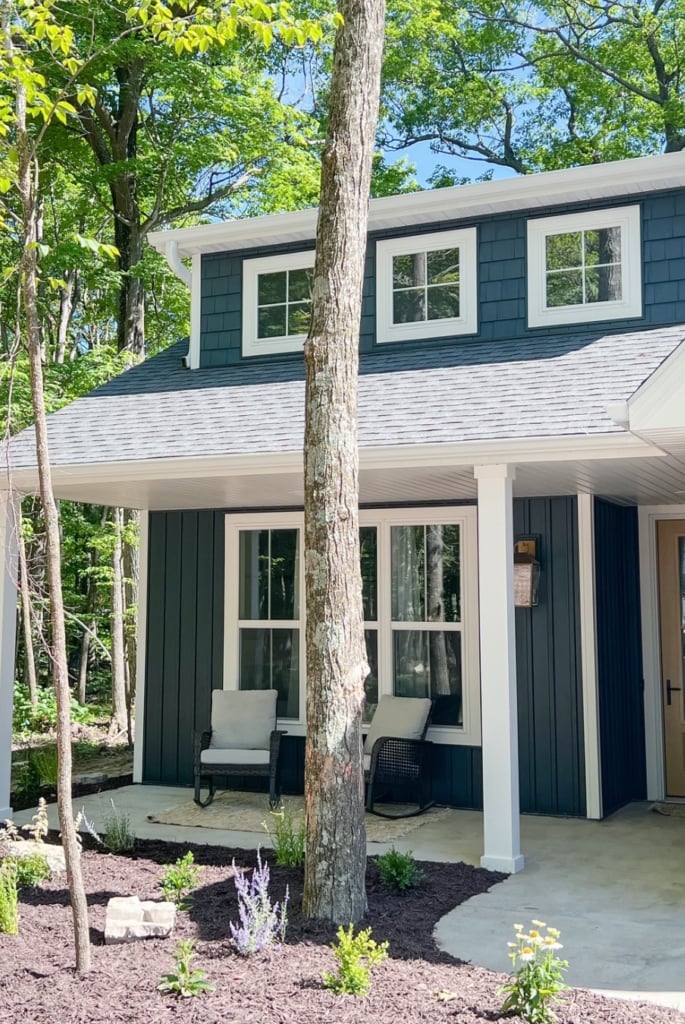
A palette with three clear stops keeps a traditional exterior from looking busy. Dark blue siding covers most of the facade, giving the house a grounded presence that works well with a gray roof above it. White trim cuts clean lines at the edges, so the dark blue does not feel heavy. The landscaping adds soft green and brown tones, which break up the hard color blocks without competing with them. This is a palette that follows a simple ratio: one dominant color, one neutral for the roof, and one accent for the trim. The white trim is what stops the dark blue from pulling the house too dark on overcast days. It is a traditional scheme that relies on contrast to define the shape of the house, not on extra details.
Craftsman Home with Gray Board and Batten Siding and Stone Veneer
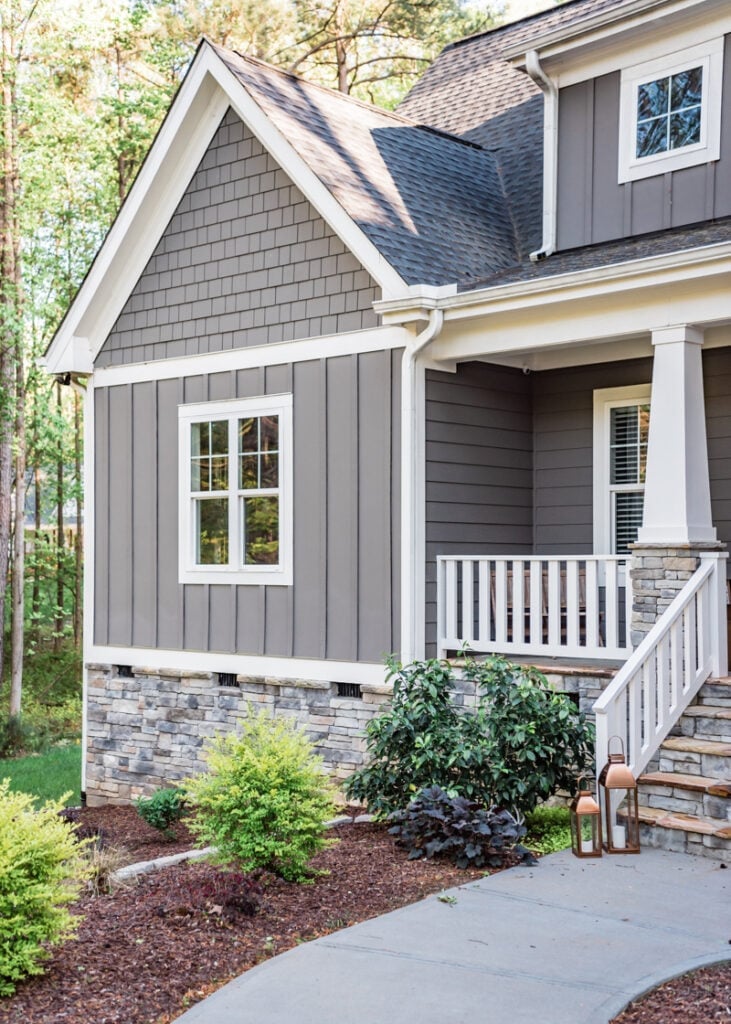
Craftsman exteriors often pair vertical siding with a heavier base material, and this one does exactly that. Gray board and batten siding runs up the main body of the house, while stone veneer wraps the lower portion and the front porch columns. The vertical lines of the board and batten draw the eye upward, which makes the multi-level layout feel taller. The stone veneer is a practical choice for the porch area, where foot traffic and weather hit hardest. The porch itself has wood railings that add a warm middle tone between the cool gray and the stone. The mix of materials gives the house texture without needing pattern or extra color.
Modern Traditional Gray Siding with White Trim and Dark Windows
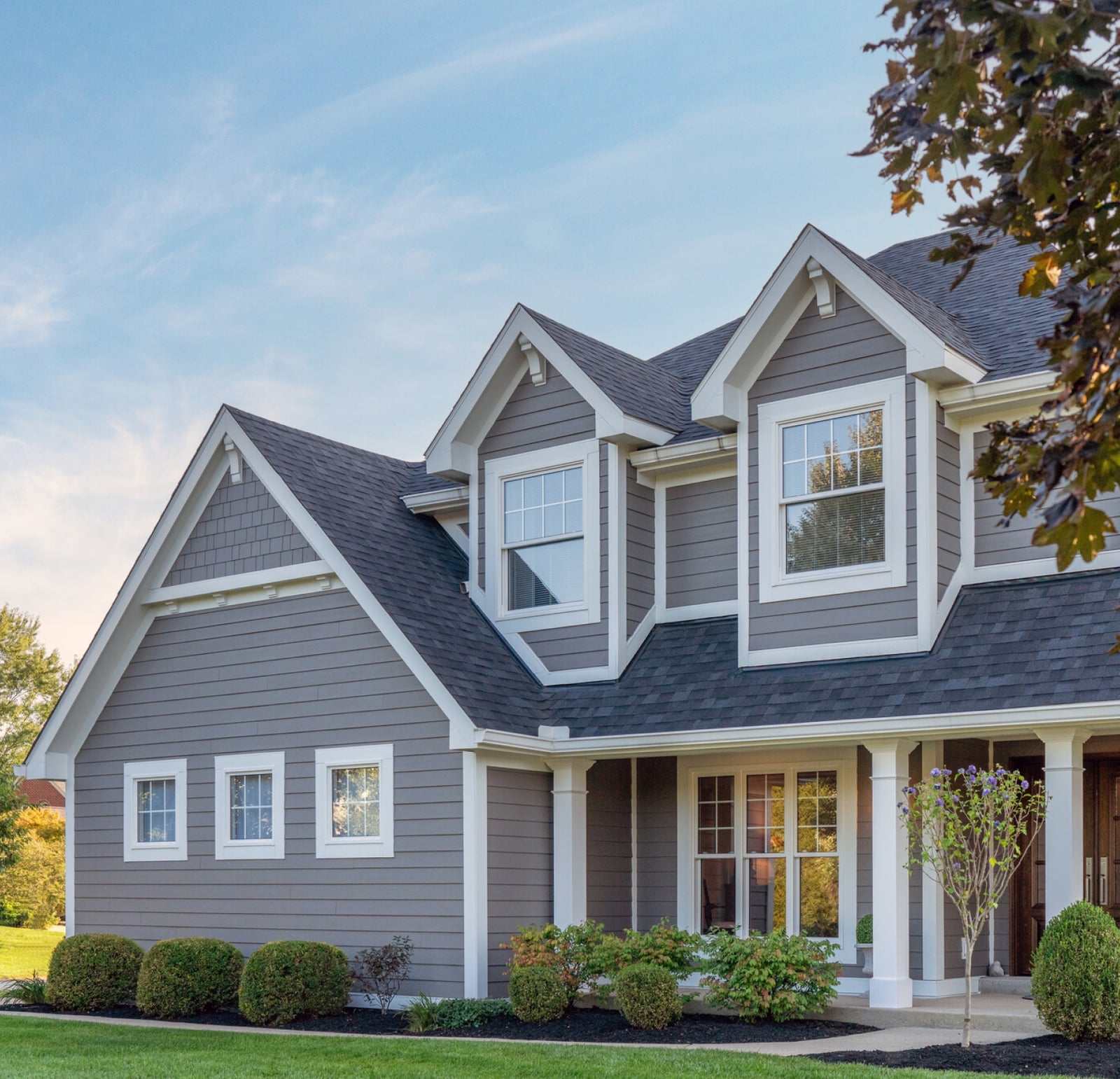
A practical rule for exterior color schemes is to match the window frames to the roof or the trim, not to the siding. Here the gray siding has a visible texture that catches light differently across the facade, so it does not read as flat even on overcast days. White trim frames the windows and corners, while the dark window frames stand out against the lighter siding. The dark windows create a strong focal point that anchors the front of the house. Stone accents near the base add a third material without pulling attention from the siding. Landscaping with green shrubs and a small tree softens the hard edges of the house. The palette works because the dark windows and white trim are the only high-contrast elements against the mid-tone gray.
Farmhouse Exterior in Cream with Stone Base and Natural Wood Doors
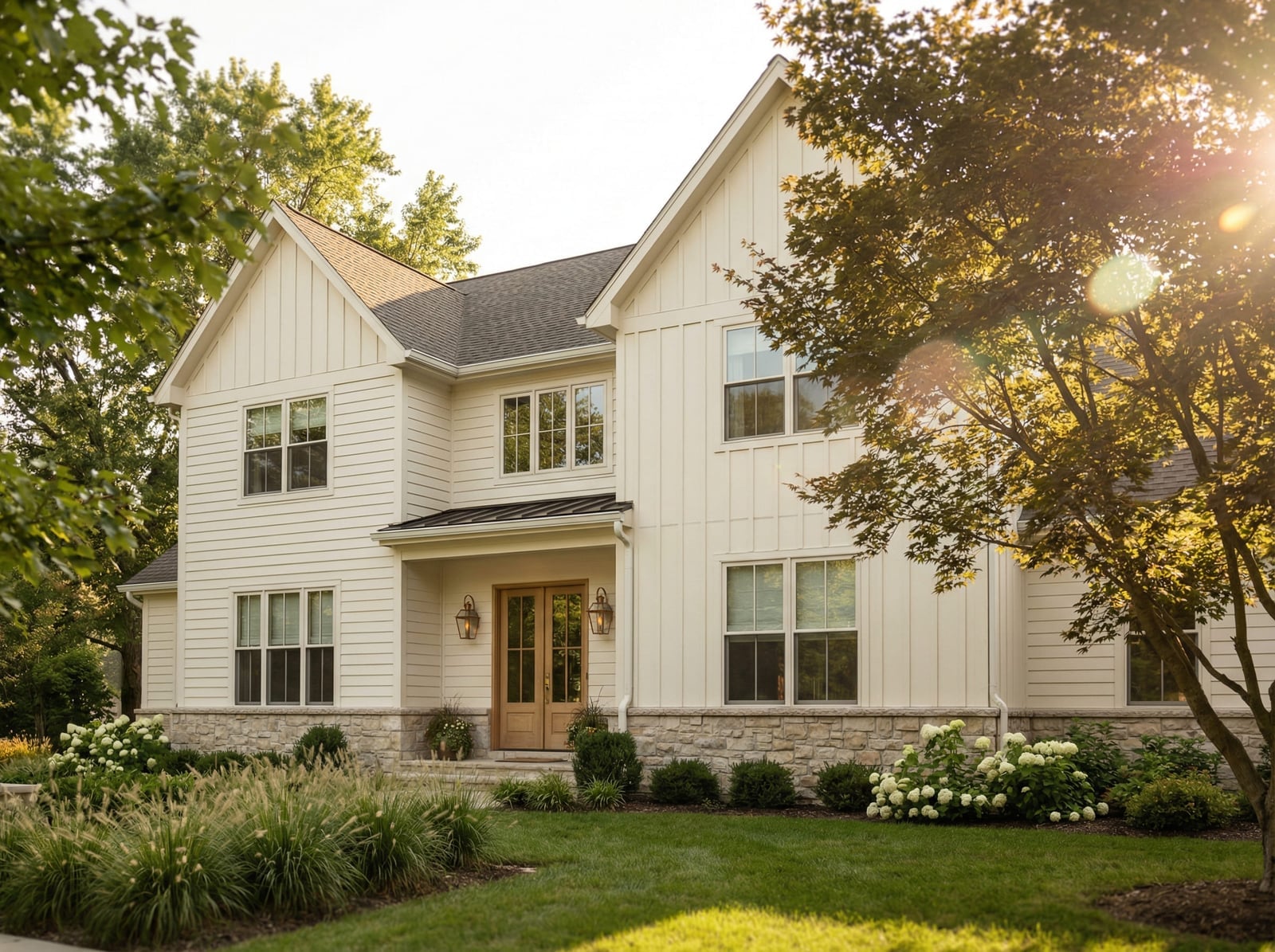
A cream farmhouse can feel washed out in direct sun, but this one avoids that by pairing it with a stone base and natural wood doors. The cream siding stays light and open, while the stone base adds visual weight near the ground. The double wood doors have warm grain that catches the golden hour sun, making the entrance the warmest spot on the house. The stone base is a practical choice for a farmhouse because it handles splash and dirt better than siding alone. The palette is essentially three tones: warm cream, cool stone, and medium wood. The wood doors break up the cream and stone scheme, giving the eye a place to rest. Without the wood tone, the house would read as two flat neutrals stacked on top of each other.
Modern Entrance with White Wood Paneling and Large Glass Door
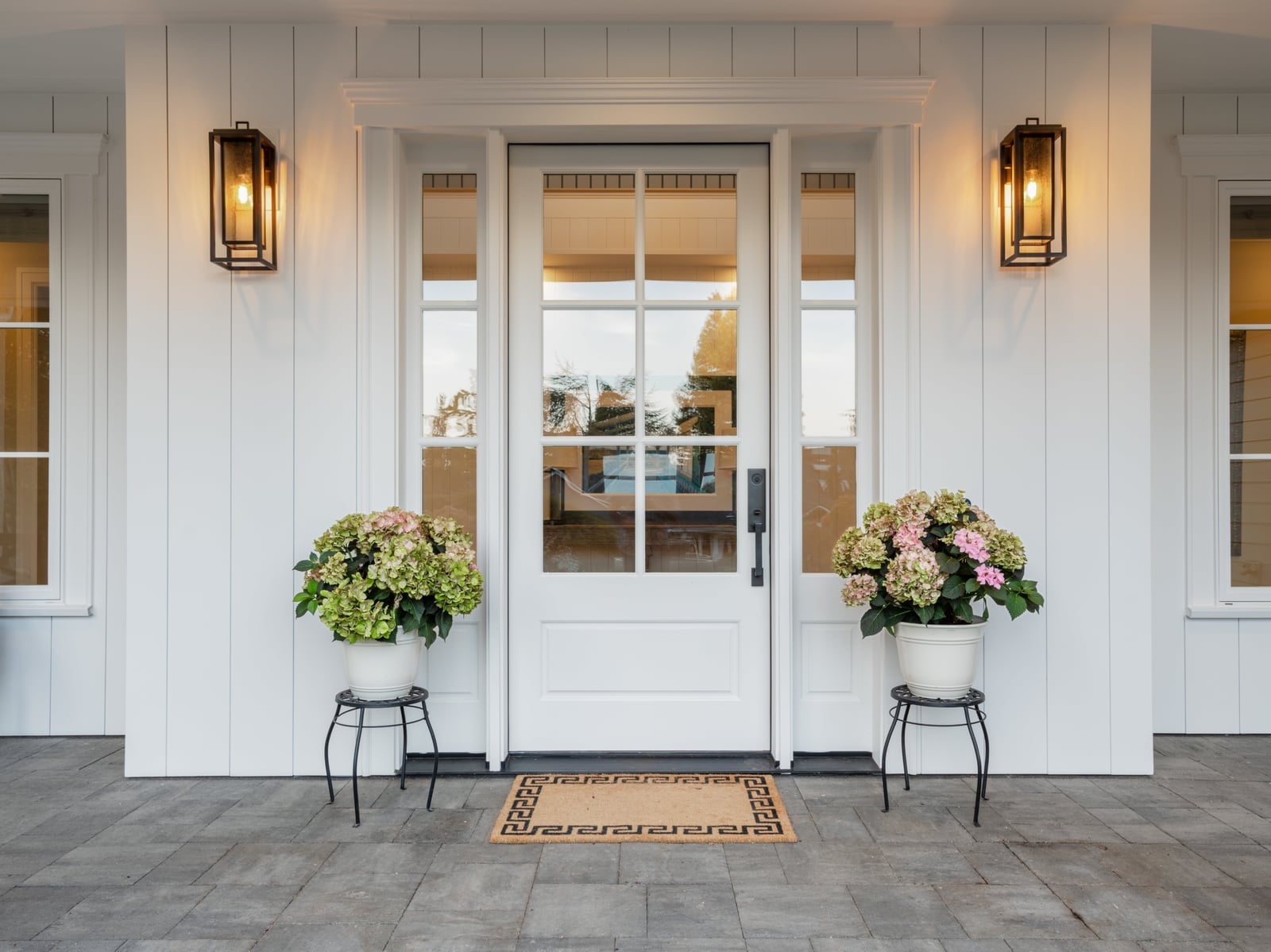
The entrance uses white wood paneling as a backdrop for a large glass door, which makes the door itself the most visible element. Wall sconces on either side of the door provide warm artificial light that balances the cool daylight. The glass door lets light pass through the entrance, so the white paneling does not feel like a solid wall. Potted plants add green at ground level and near the door handle, which breaks the white and black palette. The metal frame on the glass door is black, matching the sconces and the door hardware. This is an entrance that works because the glass door is the hero element, and everything else stays simple enough to let it stand out.
Final Thoughts
The best exterior color is the one that suits your home’s architecture, your climate, and your own taste. Dark shades hide dirt well but show dust in dry areas; lighter colors reflect heat but need more frequent washing. Wood accents add warmth but require sealing every few years. Before committing, test samples on different sides of the house and check how they change from morning to dusk. A thoughtful palette makes the whole property feel intentional and finished.