
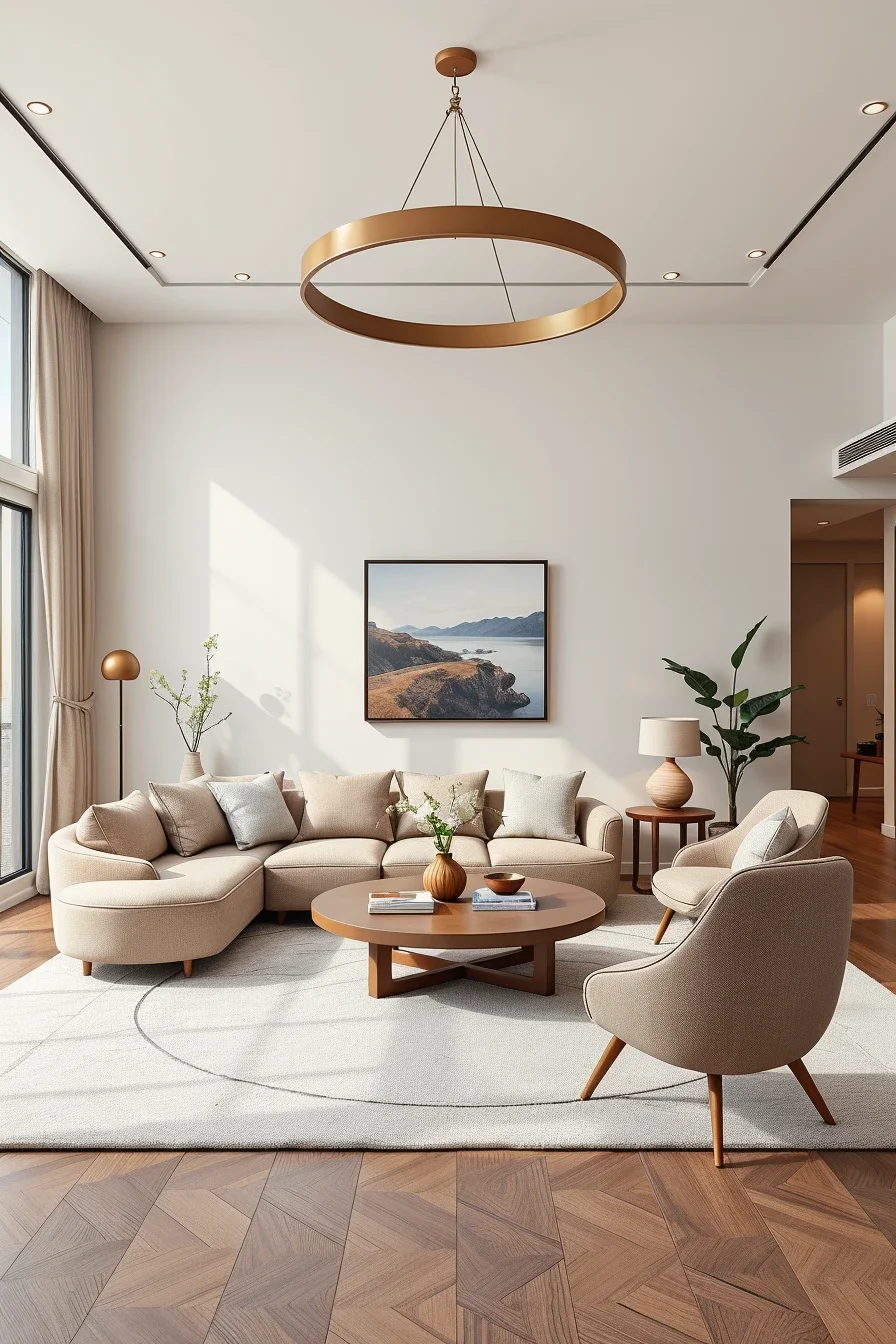
A minimalist apartment living room combines simplicity, functionality, and modern style to create a space that feels both elegant and inviting. Clean lines, carefully selected furniture, and a clutter-free layout are the foundation of this timeless design approach. Whether you live in a compact apartment or a spacious urban home, minimalist interiors can make any living room appear larger and more organized. Neutral color palettes, natural light, and smart storage solutions play a key role in achieving this refined aesthetic. Thoughtful decorative accents add personality without overwhelming the space. In this article, you’ll discover inspiring minimalist apartment living room ideas that blend comfort, practicality, and contemporary design.
Open Concept Minimalist Apartment Living Room Layout Ideas
Open-concept layouts are one of the most effective ways to make a minimalist apartment living room feel larger and more connected. I often recommend removing unnecessary visual barriers whenever possible because an uninterrupted flow between the living, dining, and kitchen areas creates a sense of openness. A minimalist layout works particularly well in apartments because every square foot serves multiple purposes while maintaining a clean appearance.
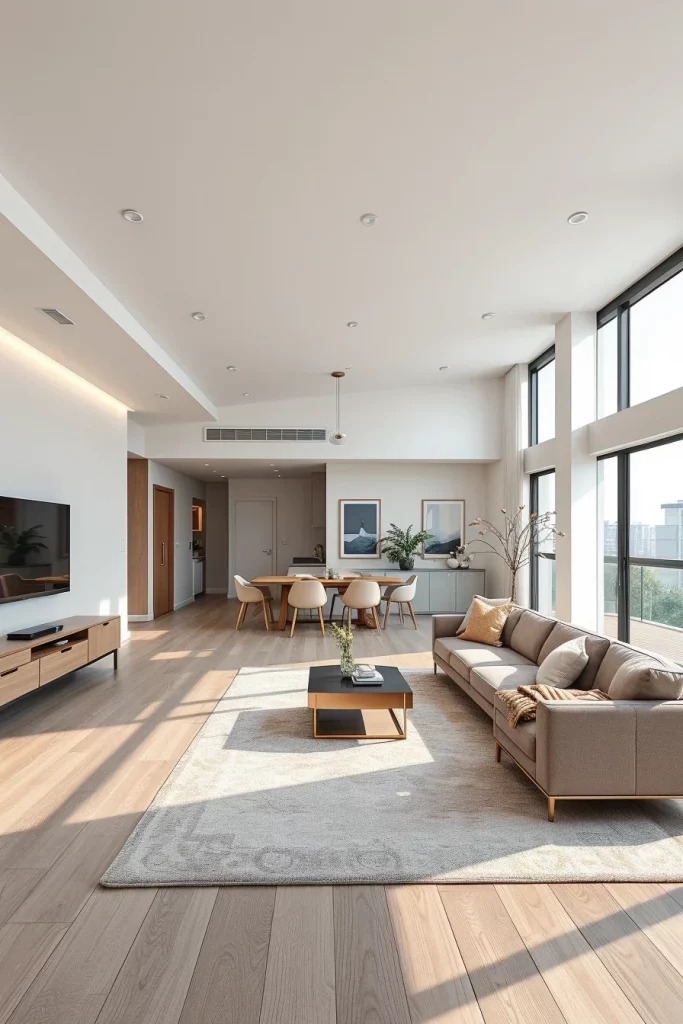
In this type of interior, I prefer a streamlined sectional sofa, a compact dining table, and simple storage units with clean lines. A large area rug can subtly define the seating zone without adding visual clutter. Low-profile furniture keeps sightlines open, while integrated shelving provides storage without overwhelming the room. Minimal lighting fixtures with geometric shapes reinforce the modern aesthetic.
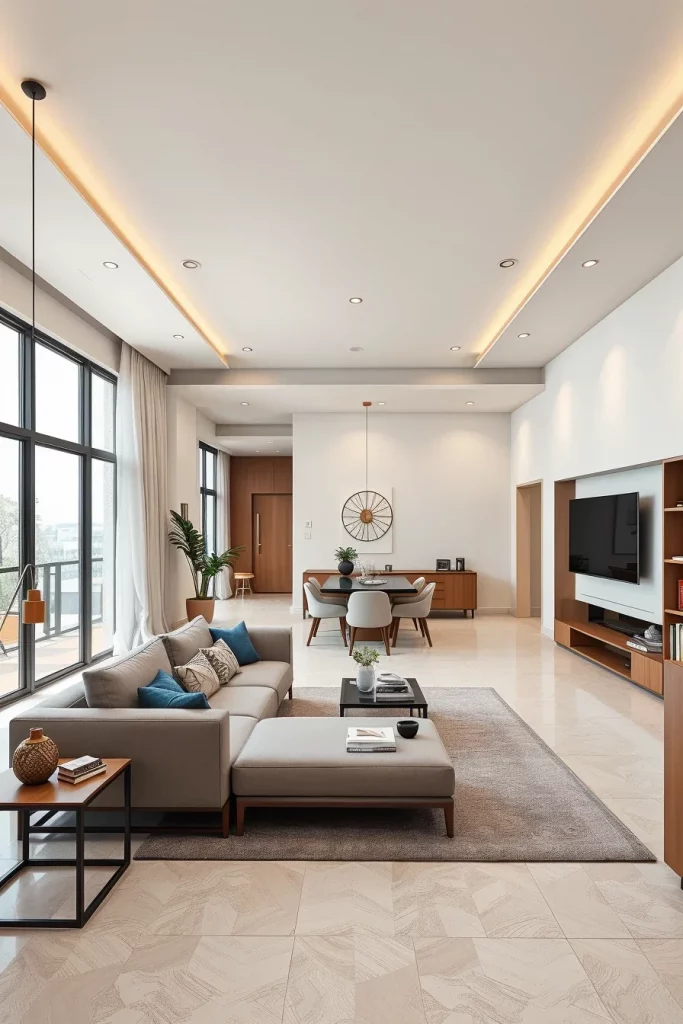
From my experience, open layouts succeed when furniture placement feels intentional. Designers frequently featured in publications such as Architectural Digest recommend establishing clear functional zones while preserving visual continuity. I have found that maintaining consistent finishes and color tones throughout the space creates a cohesive atmosphere that feels calm and sophisticated.
To complete this design, I would add layered lighting, including recessed ceiling lights and discreet floor lamps. Soft textiles and a few carefully chosen decorative objects can also make the room feel more welcoming without compromising the minimalist style.
Neutral Color Palette For A Calm Minimalist Apartment Living Room
A neutral palette remains a cornerstone of modern minimalist interiors because it instantly creates serenity. I often use soft shades such as warm white, beige, greige, taupe, and light gray to establish a peaceful environment. These understated colors allow architectural details and carefully selected furnishings to become the focal points.
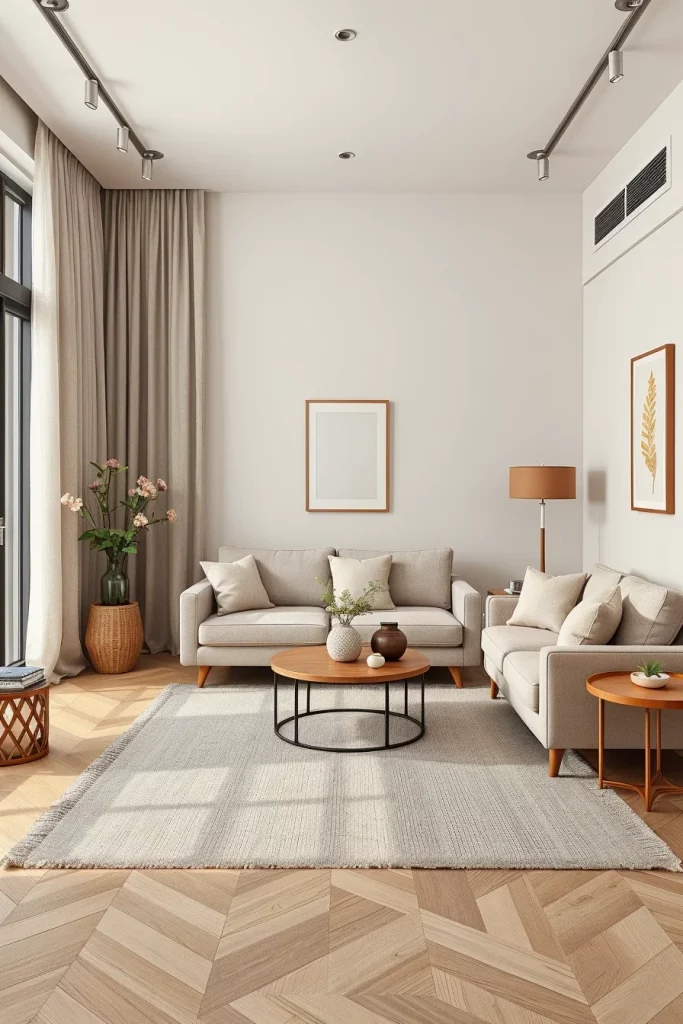
For furniture, I recommend upholstered seating in neutral fabrics, complemented by simple accent chairs and understated cabinetry. Linen curtains, textured rugs, and matte finishes introduce depth while preserving visual harmony. Minimal artwork in monochromatic tones can enhance the walls without making the room appear busy.
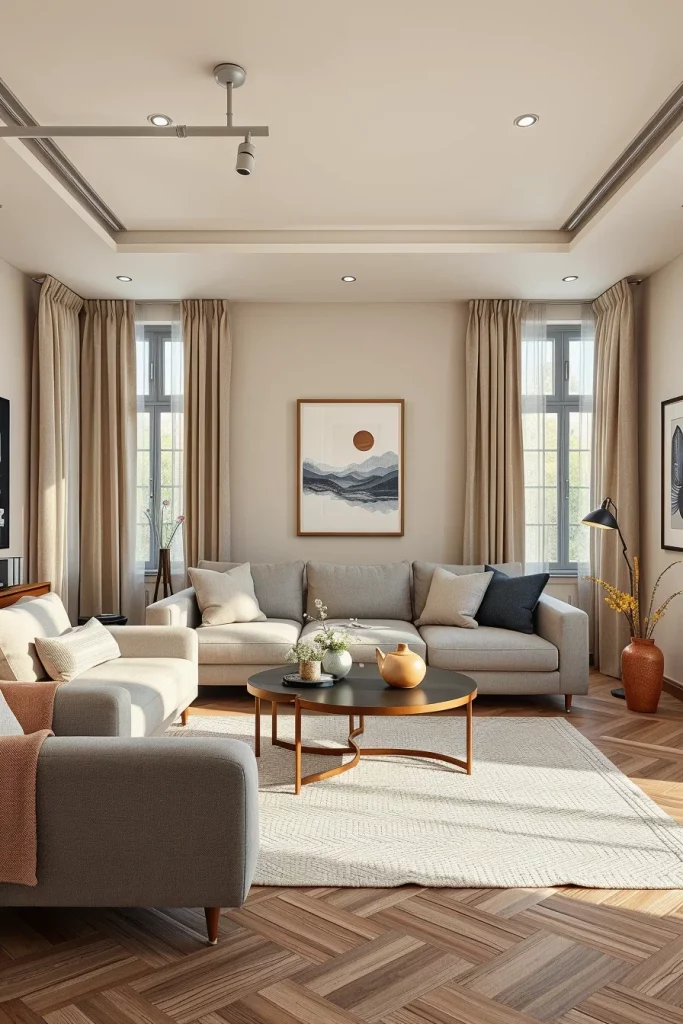
Personally, I have noticed that neutral spaces never feel outdated when texture is prioritized. Interior designers from Elle Decor frequently emphasize the importance of layering materials rather than relying on strong colors. I agree with this approach because subtle texture variations create warmth and sophistication.
If something feels missing, I would introduce natural stone accessories, ceramic vases, or a sculptural table lamp. These additions enrich the space while maintaining the tranquil atmosphere that defines a minimalist interior.
Floor-To-Ceiling Windows In A Modern Minimalist Living Space
Floor-to-ceiling windows can completely transform a minimalist apartment by maximizing natural light and visually expanding the room. I often consider abundant daylight one of the most valuable design elements because it enhances every aspect of minimalist styling. Large windows blur the boundary between indoors and outdoors, making even small apartments feel more spacious.
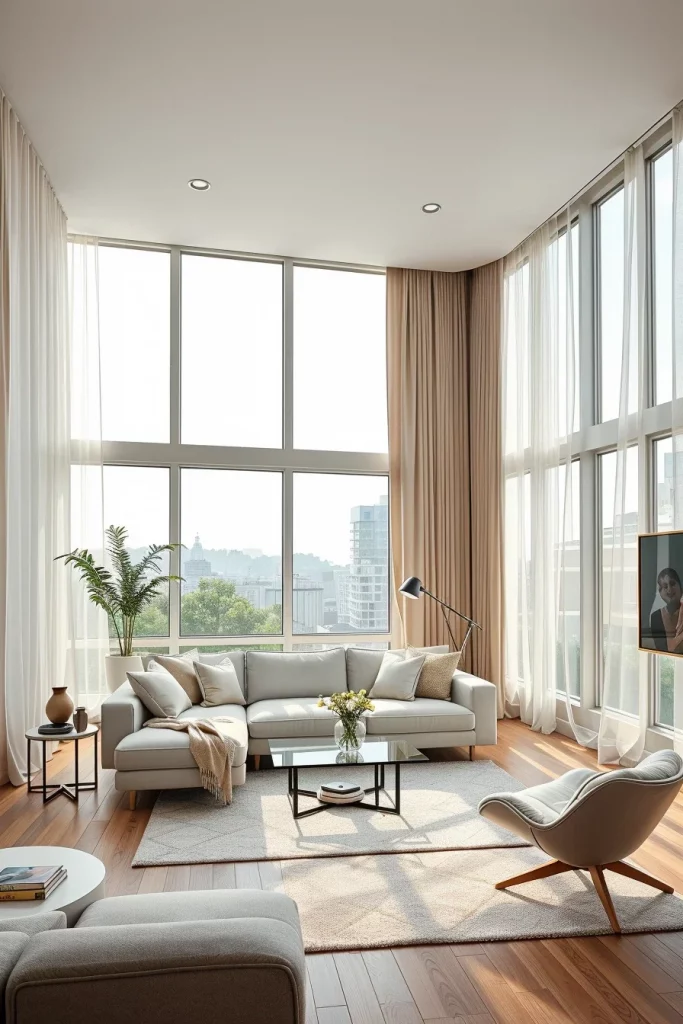
When designing around expansive windows, I prefer low-profile sofas, sleek lounge chairs, and minimal window treatments. Sheer curtains or motorized shades preserve privacy while allowing sunlight to filter through softly. Furniture placement should highlight the view rather than obstruct it, creating an effortless sense of openness.
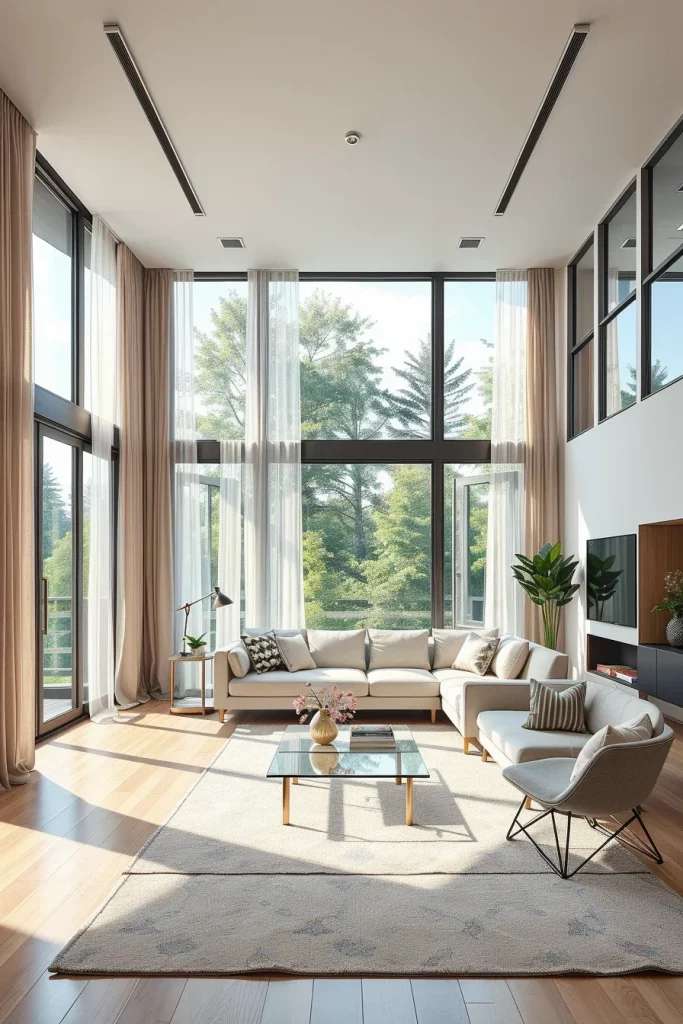
In my experience, natural light significantly influences how colors and materials are perceived throughout the day. Many interior experts recommend prioritizing daylight before selecting finishes, and I fully support this advice. A naturally illuminated room often requires fewer decorative elements because the changing light itself becomes part of the design.
To further enhance this space, I would incorporate reflective materials such as glass tables or subtle metallic accents. These details amplify daylight and contribute to a brighter, more airy interior.
Sleek Modular Sofa Designs For Minimalist Apartments
Modular sofas offer exceptional flexibility for apartment living, making them ideal for a modern minimalist living room. I appreciate modular seating because it adapts to changing needs without sacrificing style. Whether entertaining guests or relaxing alone, adjustable configurations provide practical solutions for compact homes.
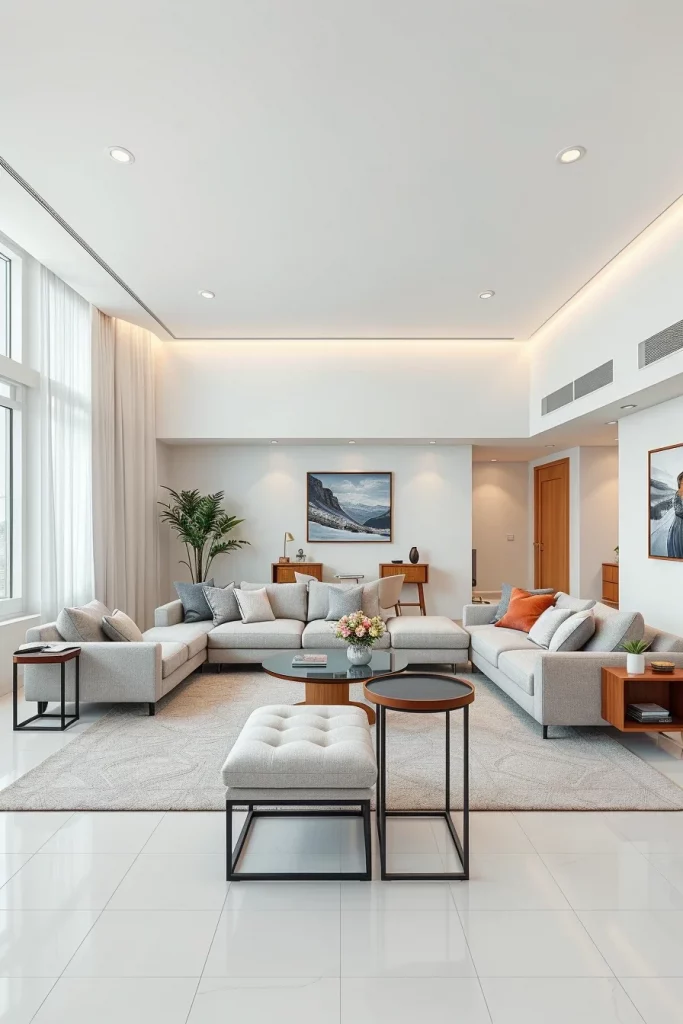
I usually select modular sofas with streamlined silhouettes, slim arms, and neutral upholstery. Pairing the sofa with a minimalist coffee table, concealed storage units, and understated lighting creates a balanced arrangement. The ability to rearrange sections also allows homeowners to refresh the room without purchasing additional furniture.
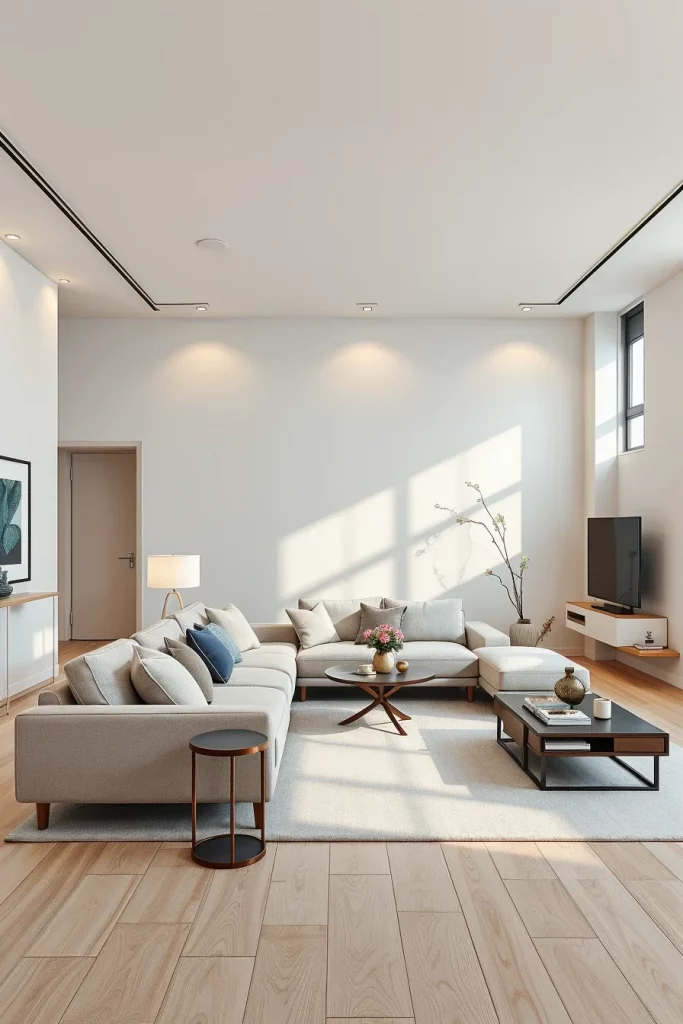
From personal experience, investing in high-quality seating is one of the most worthwhile decisions in apartment design. Designers featured in House Beautiful often recommend prioritizing comfort alongside aesthetics, and I agree completely. A beautiful room should also support everyday living.
To make the seating area even more functional, I would consider adding nesting side tables or an ottoman with hidden storage. These pieces increase versatility while preserving the uncluttered appearance essential to minimalist interiors.
Monochrome Minimalist Apartment Living Room Inspiration
A monochrome palette can give a minimalist apartment living room a distinctly sophisticated character. I often use varying shades of white, gray, black, or beige to establish depth while maintaining simplicity. The key is to create contrast through materials, proportions, and textures rather than excessive decoration.
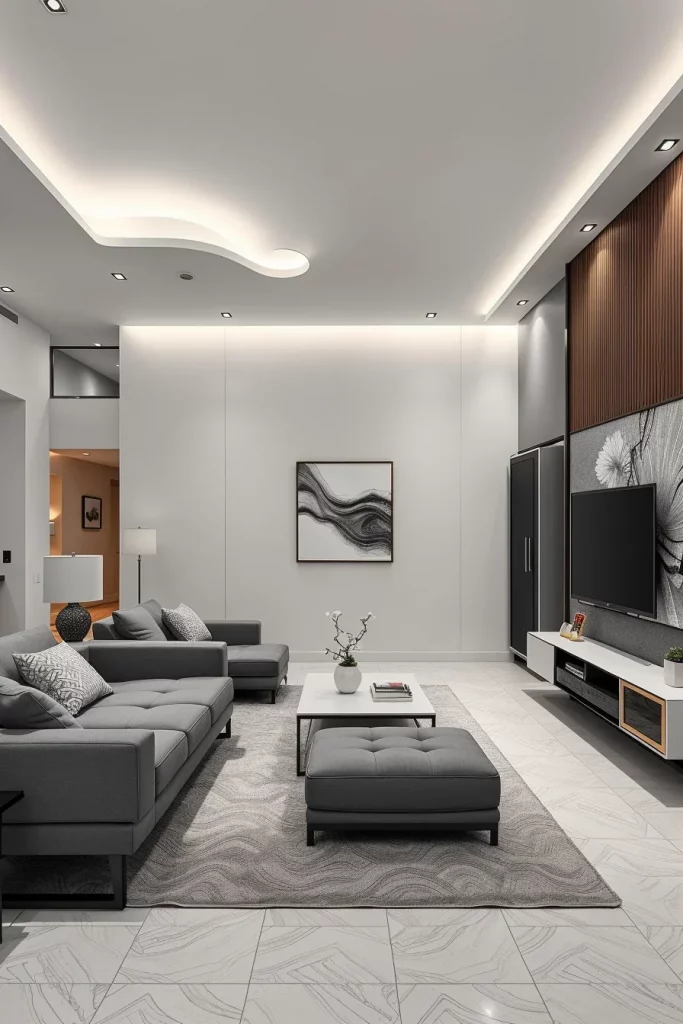
Within a monochrome design, I recommend combining upholstered seating, minimalist shelving, sleek media units, and subtle decorative accessories. Textured fabrics, matte finishes, and sculptural lighting prevent the room from feeling flat. Large abstract artwork in complementary tones can also add visual interest without overwhelming the space.
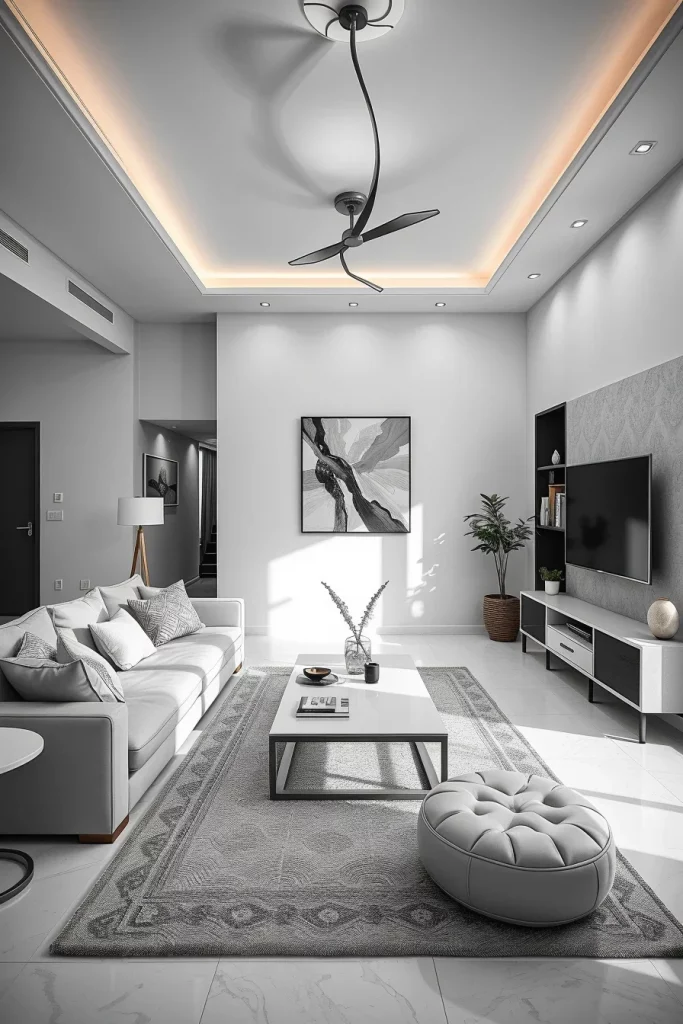
I have found that monochrome interiors appear especially elegant when clutter is carefully controlled. Interior publications such as Dwell frequently highlight the importance of editing possessions in minimalist homes, and I believe this principle is essential for maintaining visual harmony.
If I wanted to refine this design further, I would introduce tactile elements such as boucle cushions, textured rugs, or ribbed ceramic accessories. These details add dimension while preserving the clean aesthetic.
Warm Beige Minimalist Living Room With Contemporary Accents
A warm beige palette can make a minimalist apartment living room feel inviting without sacrificing simplicity. I often recommend beige as a foundation because it creates a soft, relaxing atmosphere while maintaining the clean aesthetic that defines minimalist interiors. Unlike stark white spaces, warm neutrals add subtle depth and make the room feel more comfortable for everyday living.
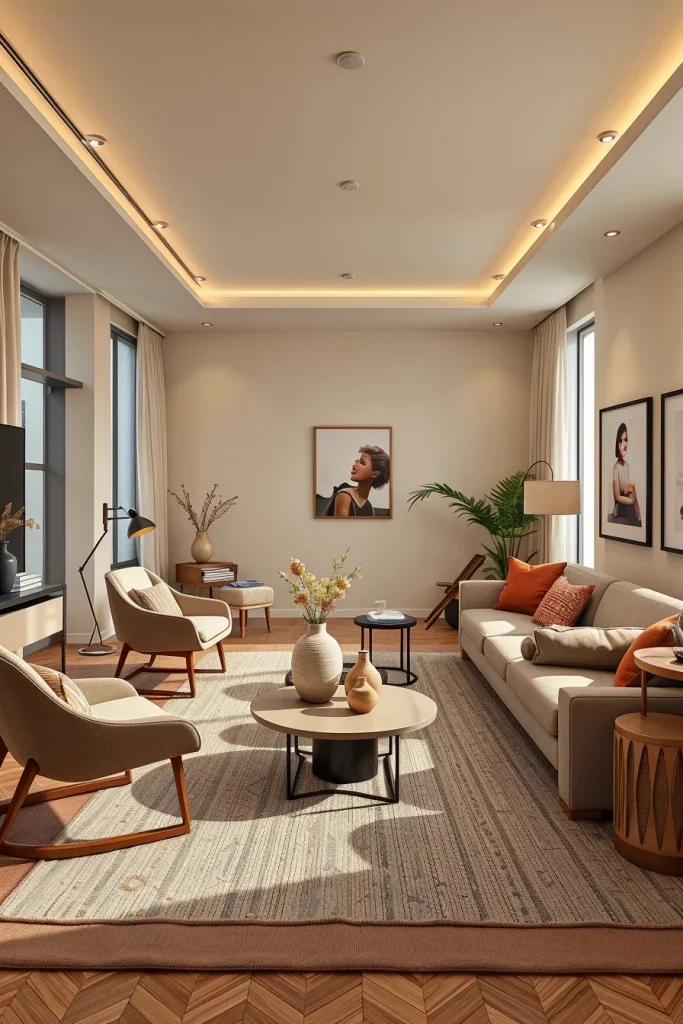
For this design, I prefer a beige upholstered sofa paired with contemporary accent chairs featuring simple silhouettes. A sleek coffee table, minimalist media console, and textured area rug help anchor the room. Decorative elements should remain restrained, so I usually include sculptural ceramic pieces, modern table lamps, and understated artwork to add character while preserving visual balance.
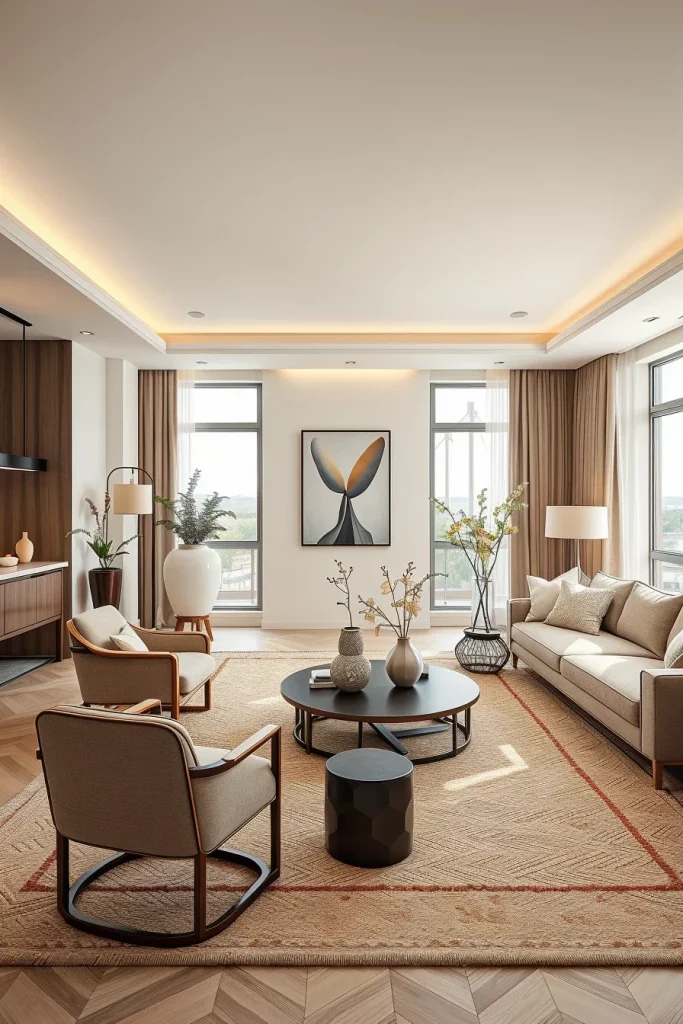
From my experience, warm minimalist interiors tend to feel more timeless than trend-driven spaces. Interior designers frequently featured in Better Homes & Gardens often suggest combining warm neutral tones with varied textures, and I agree because texture prevents monochromatic spaces from feeling flat or sterile.
To complete this room, I would add layered lighting through floor lamps and recessed fixtures. Soft linen curtains and a few carefully selected decorative accessories would further enhance the cozy atmosphere.
Minimalist Apartment Living Room With A Statement Coffee Table
A statement coffee table can become the focal point of a minimalist apartment living room while allowing the rest of the space to remain understated. I often use a distinctive coffee table to introduce personality into minimalist interiors because it creates visual interest without requiring excessive decor.
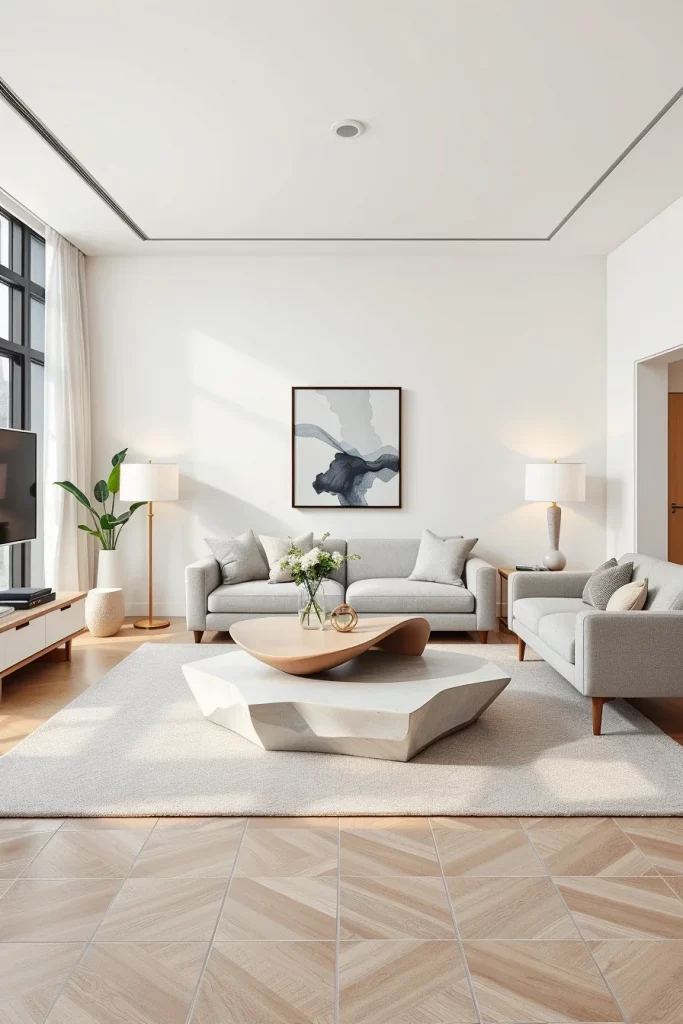
I typically select coffee tables made from materials such as stone, glass, or textured finishes with sculptural forms. The surrounding furniture should remain simple, including a streamlined sofa, minimalist side tables, and discreet storage units. Keeping accessories limited to a few books, candles, or decorative objects ensures that the coffee table remains the center of attention.
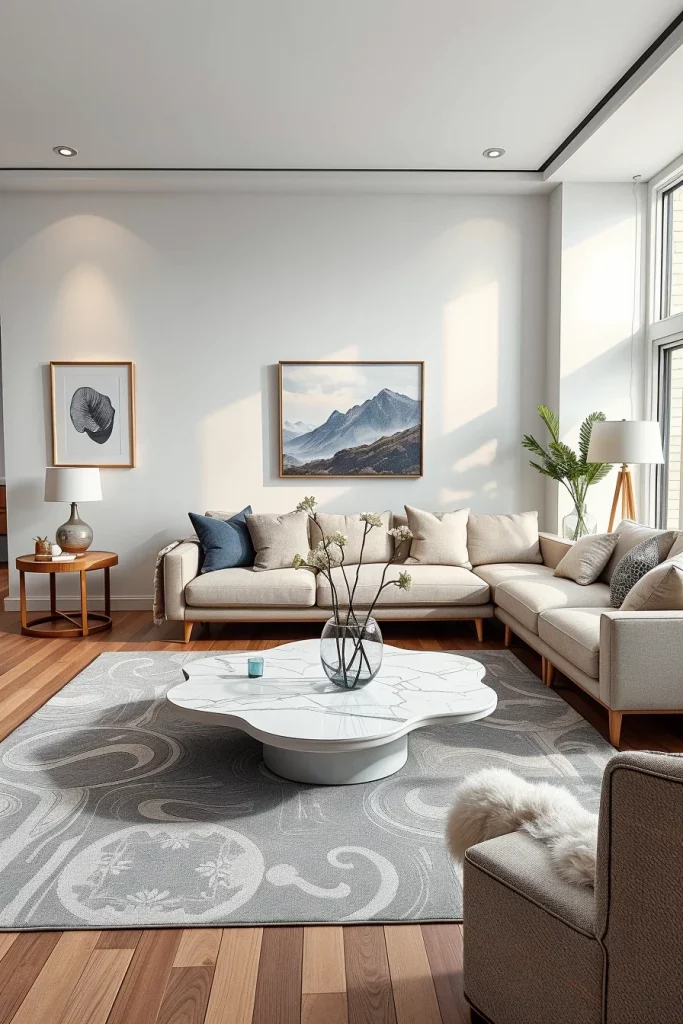
Personally, I have found that a well-chosen centerpiece can transform an entire room. Many designers featured in Architectural Digest emphasize investing in one standout piece rather than filling a room with numerous decorative items. I believe this approach perfectly aligns with minimalist design principles.
If I were refining this design, I would incorporate subtle accent lighting to highlight the coffee table and create additional visual depth during the evening hours.
Creating A Cozy Minimalist Living Room With Soft Textures
Minimalist spaces do not have to feel cold or impersonal. I often create cozy interiors by layering soft textures while maintaining clean lines and uncluttered surfaces. Texture introduces warmth and comfort without compromising the minimalist aesthetic.
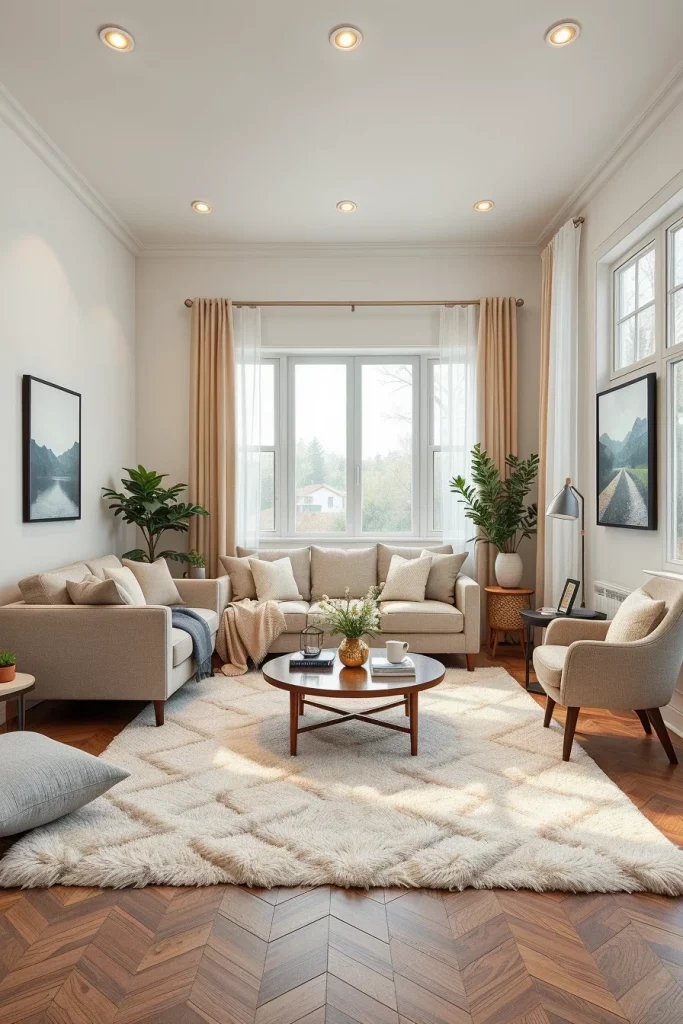
In this type of living room, I prefer plush area rugs, boucle or linen upholstery, soft throw blankets, and textured cushions in neutral shades. A comfortable sofa, upholstered accent chair, and simple wooden or stone tables provide functionality while contributing to the layered appearance. Minimal window treatments and soft lighting further enhance the welcoming atmosphere.
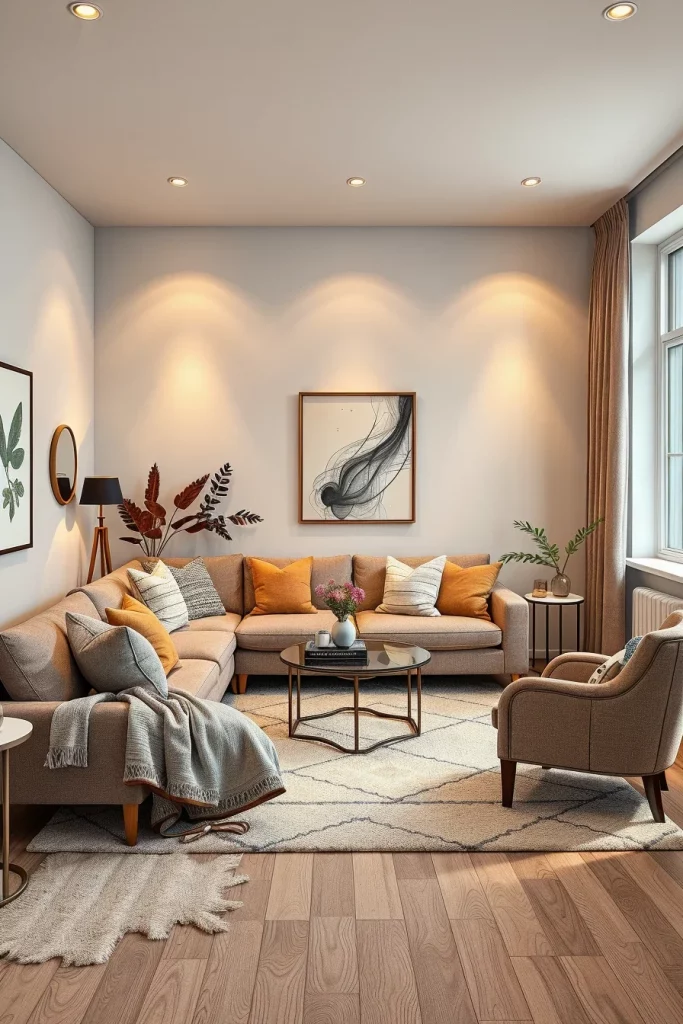
In my experience, texture is often the element that makes minimalist interiors truly livable. Elle Decor frequently highlights the importance of tactile materials in contemporary homes, and I completely agree. A thoughtfully layered room feels both sophisticated and inviting.
I would also consider adding a soft ottoman or upholstered bench to increase comfort and provide additional seating without introducing visual clutter.
Space-Saving Furniture Ideas For Small Minimalist Apartments
Space-saving furniture is essential when designing a small minimalist apartment living room. I always prioritize multifunctional pieces because they maximize usability while preserving open floor space. Carefully selected furniture can make even compact apartments feel significantly larger.
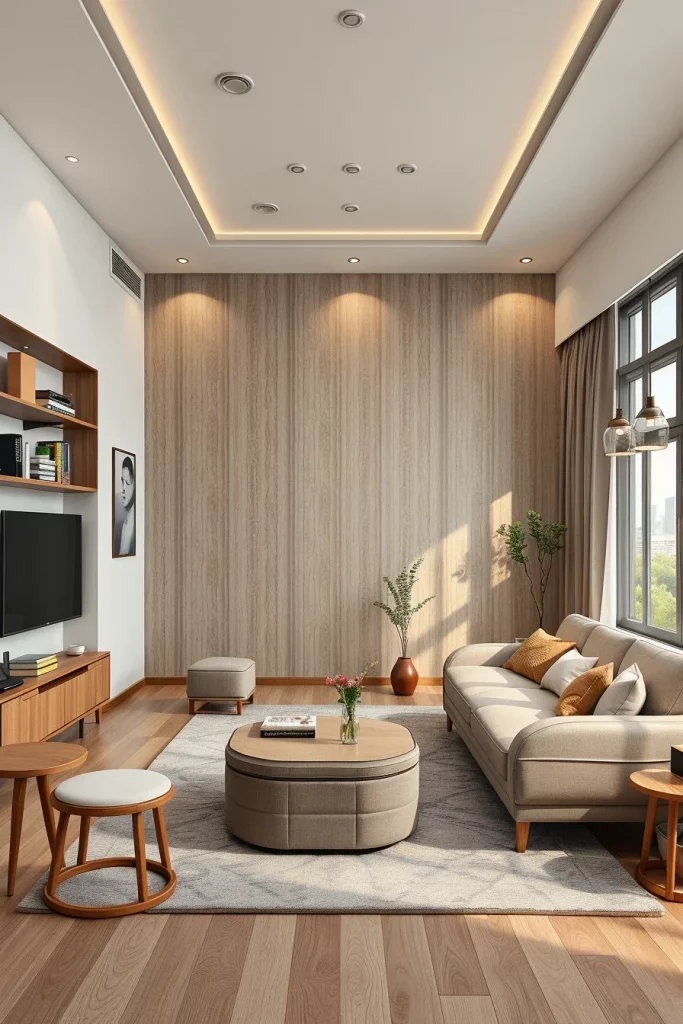
I usually recommend nesting tables, storage ottomans, wall-mounted shelving, extendable tables, and compact modular seating. Furniture with slim profiles and raised legs creates a lighter visual appearance, helping the room feel more spacious. Wall-mounted media units and foldable furniture are also excellent solutions for maximizing functionality.
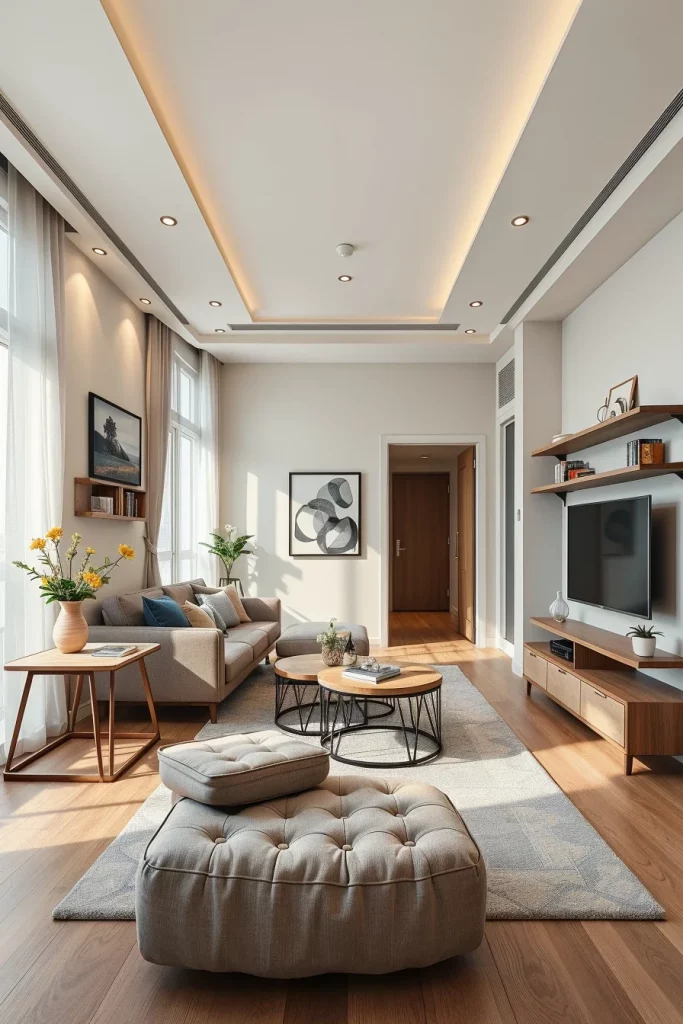
From my experience, small apartments benefit most from furniture that serves multiple purposes. Designers from Dwell regularly emphasize flexible living solutions for urban homes, and I have seen firsthand how transformative these pieces can be.
To optimize this space further, I would incorporate vertical storage solutions and ensure that circulation pathways remain unobstructed throughout the room.
Minimalist Apartment Living Room With Hidden Storage Solutions
Hidden storage is one of the most valuable features in a minimalist apartment living room because it allows the space to remain organized and visually calm. I often advise homeowners to conceal everyday items whenever possible since visible clutter can quickly disrupt a minimalist aesthetic.
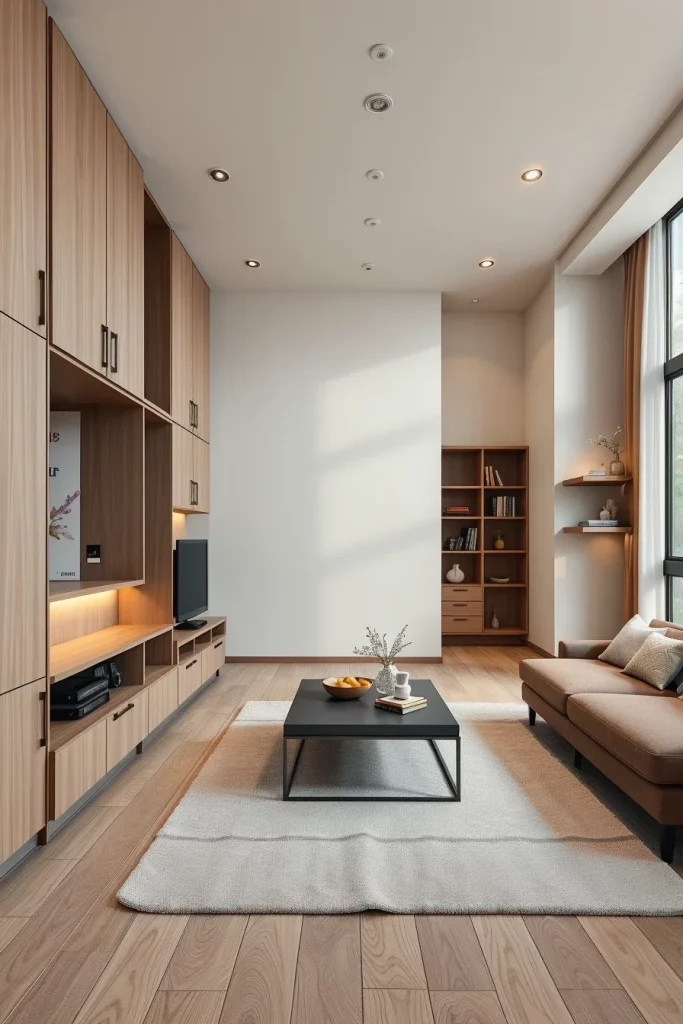
For this design, I recommend storage coffee tables, built-in cabinetry, concealed media units, storage benches, and sofas with hidden compartments. Floor-to-ceiling cabinetry with handleless fronts maintains clean lines while providing generous storage capacity. Floating shelves with concealed supports can also contribute to the streamlined appearance.
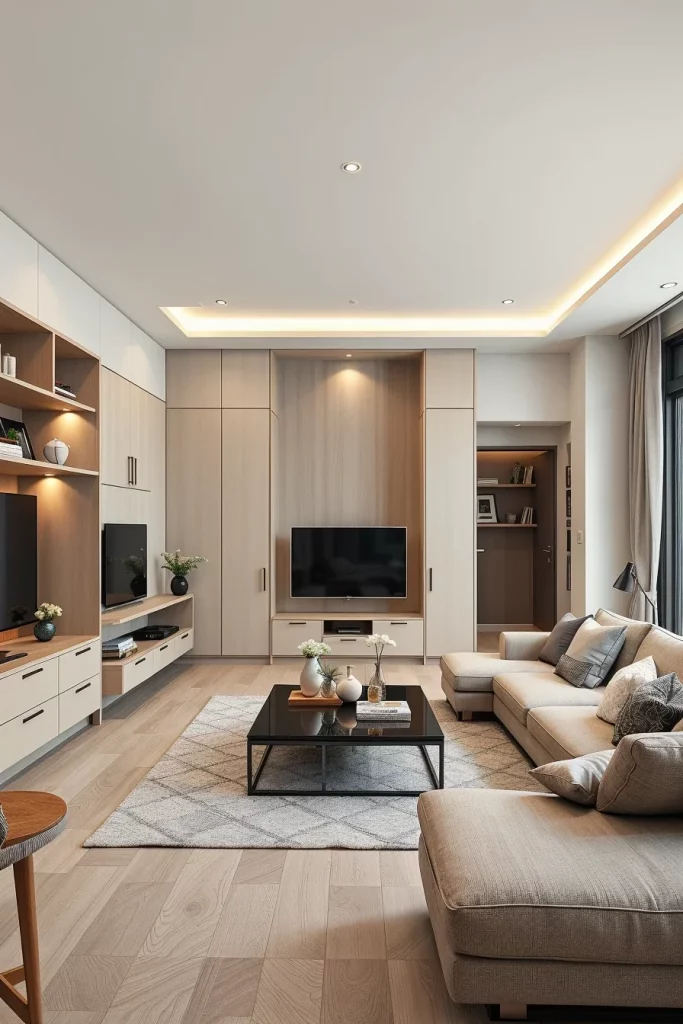
I have found that well-designed storage significantly improves both functionality and aesthetics. Professional organizers and interior designers alike emphasize that successful minimalist spaces depend on thoughtful storage systems rather than simply owning fewer items. I strongly agree with this perspective.
If additional functionality is needed, I would add custom built-ins around the television wall or near windows to maximize every available inch while maintaining a seamless look.
Floating Shelves For A Clean And Airy Living Room Design
I find that floating shelves are one of the most effective ways to create a clean and open atmosphere in a minimalist apartment living room. By keeping storage elevated, the floor remains visually uncluttered, making even compact apartments feel larger. Floating shelves also provide an opportunity to display carefully selected decorative objects without overwhelming the space. A balanced arrangement contributes to the calm and airy aesthetic that defines modern minimalism.
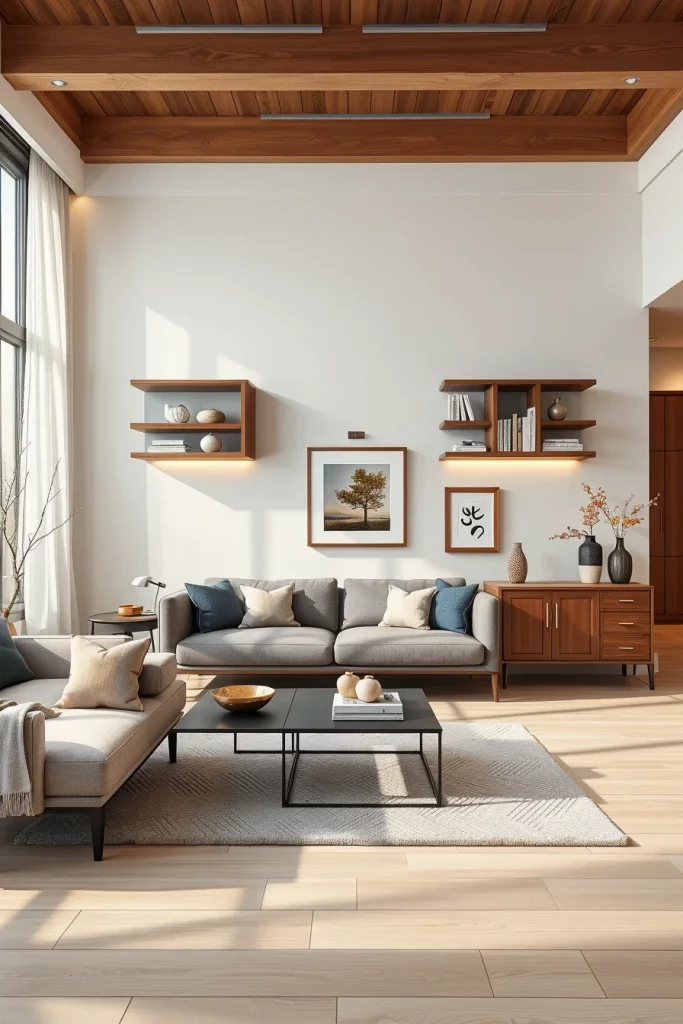
In my experience, the best floating shelf compositions combine functionality with restraint. I usually recommend slim wall-mounted shelves in matte finishes paired with a streamlined sofa, a low-profile coffee table, and concealed storage cabinets. Decorative elements should remain minimal: a few ceramic vases, stacked books, sculptural accents, or framed artwork are often enough. Limiting accessories prevents visual noise and preserves the minimalist atmosphere.
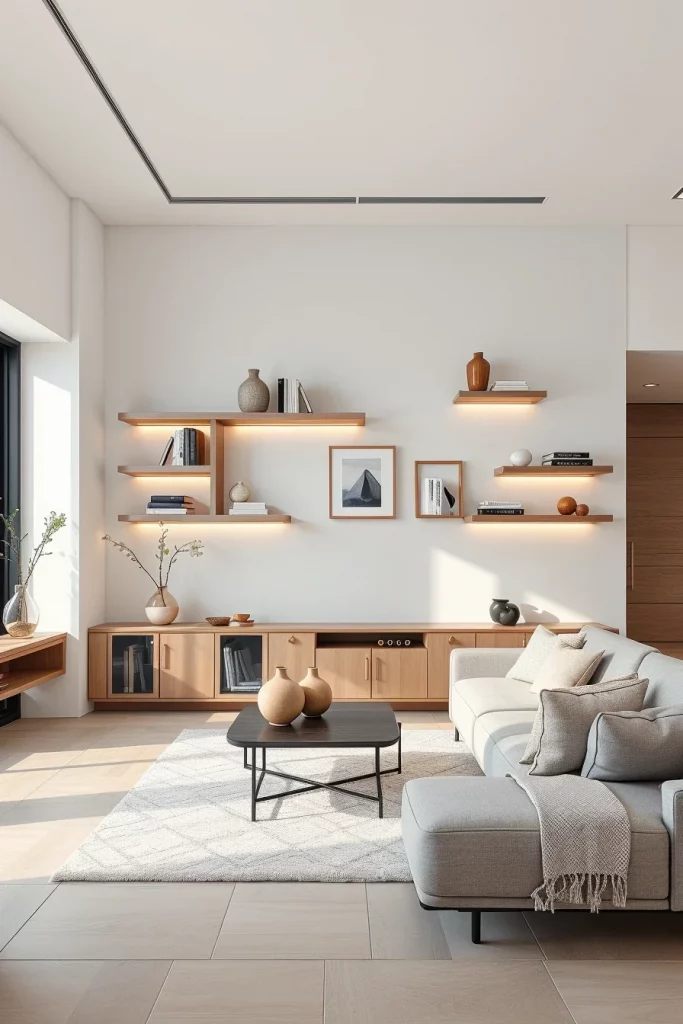
Personally, I appreciate advice frequently shared by publications such as Architectural Digest, which often emphasizes thoughtful editing rather than excessive decorating. I have found that displaying fewer but more meaningful objects creates a sophisticated and timeless living room.
To complete this design, I would add integrated LED shelf lighting. Subtle illumination highlights decorative pieces while adding warmth during evening hours without introducing bulky lighting fixtures.
Elegant Lighting Ideas For A Minimalist Apartment Living Room
Lighting plays a defining role in shaping the mood of a minimalist living room. I always begin by maximizing natural light through large windows, sheer curtains, and unobstructed layouts. Natural daylight enhances simplicity and allows neutral color palettes to feel more dynamic throughout the day.
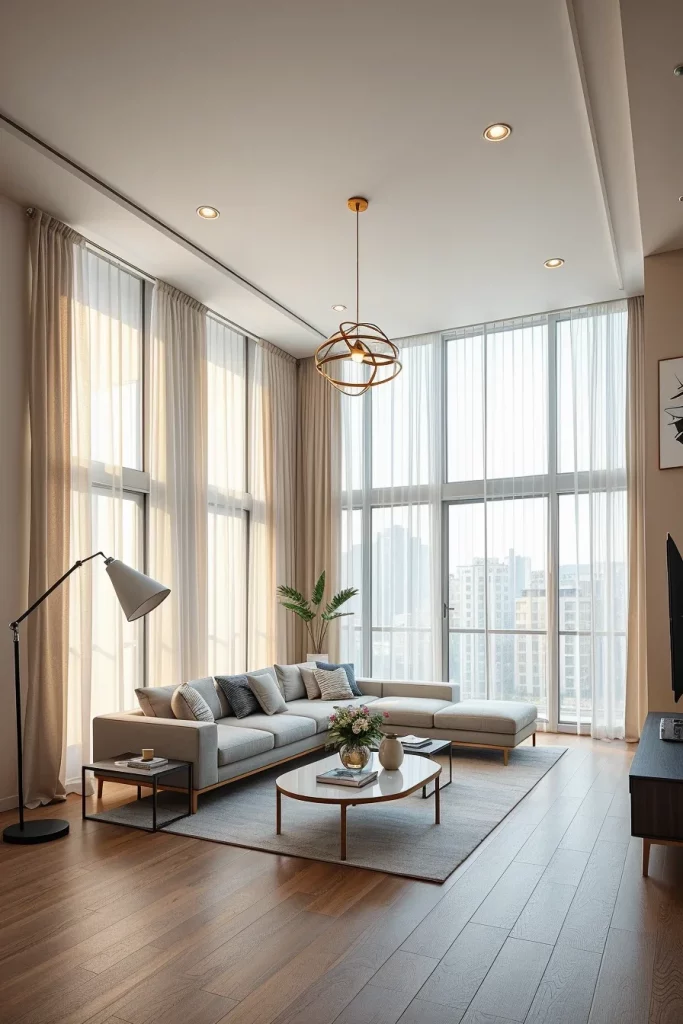
When selecting fixtures, I prefer clean-lined pendant lights, recessed ceiling lighting, and sculptural floor lamps. These pieces provide layered illumination while maintaining visual simplicity. A modern sectional sofa, compact side tables, and understated decor work particularly well when paired with elegant lighting solutions. Dimmable fixtures are especially useful because they allow the room to adapt from daytime functionality to evening relaxation.
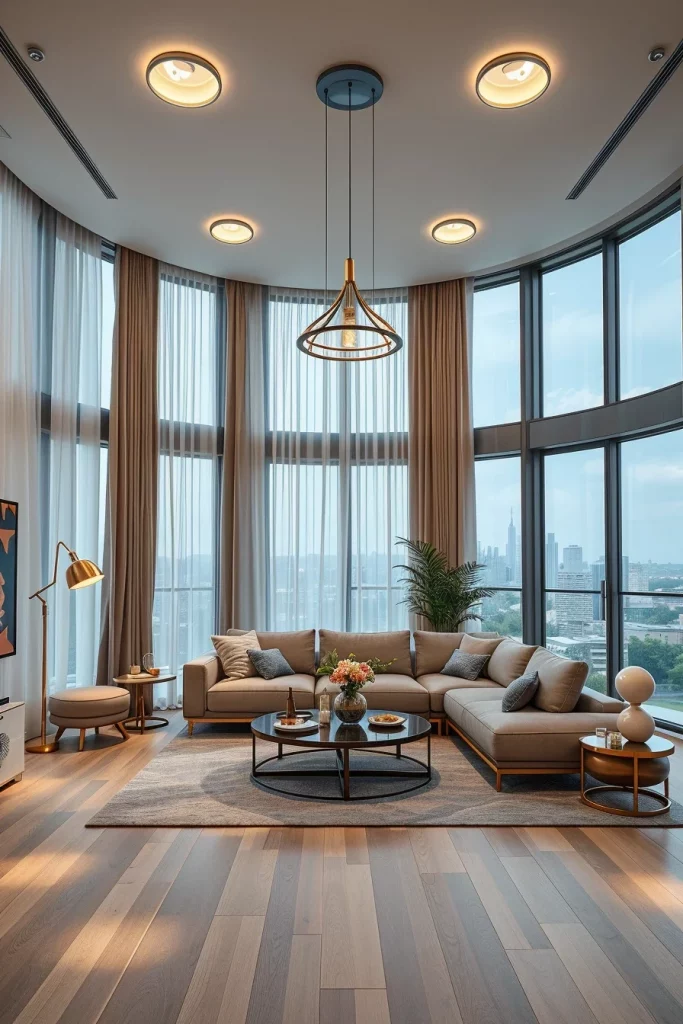
I often notice that interior designers featured in Elle Decor recommend layering ambient, task, and accent lighting even in minimalist spaces. I agree with this approach because it adds depth without compromising simplicity.
For an even more refined result, I would incorporate smart lighting controls. Adjustable brightness and color temperature significantly improve both comfort and energy efficiency.
Minimalist Living Room With A Textured Accent Wall
A textured accent wall can transform a simple minimalist apartment living room by introducing subtle visual interest without relying on excessive decoration. I prefer finishes such as microcement, plaster, or textured panels because they add dimension while preserving the clean lines associated with minimalist interiors. This approach creates a sophisticated focal point without overwhelming the room.
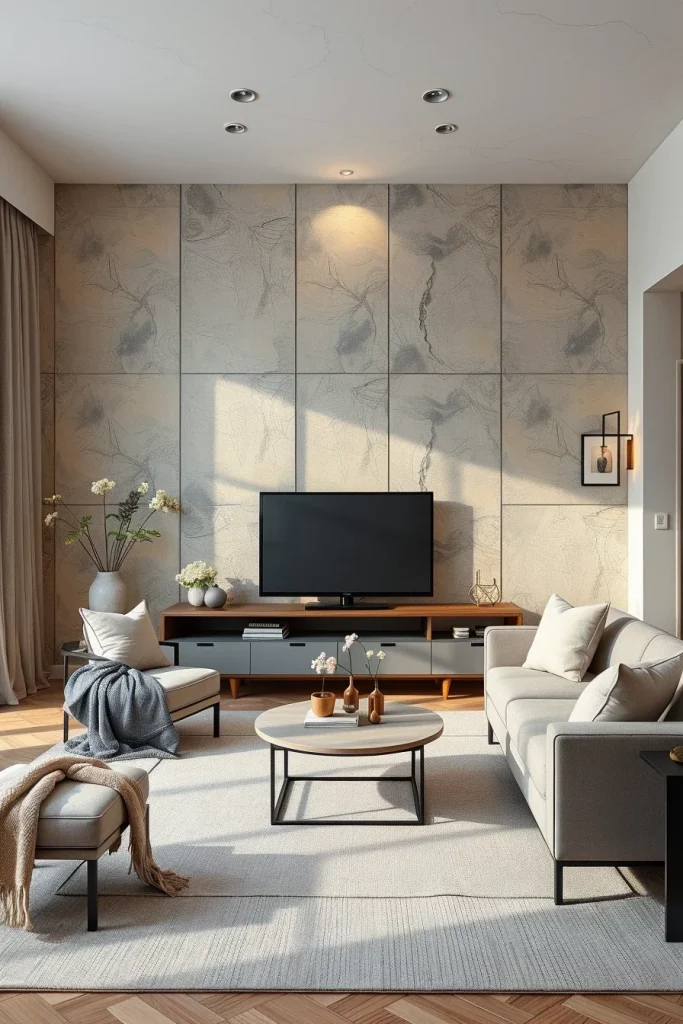
I typically pair textured walls with simple furnishings, including a neutral sofa, sleek media console, minimalist coffee table, and carefully selected decorative accents. Soft textiles such as linen cushions and wool throws complement the wall texture while maintaining visual harmony. The key is ensuring that every piece contributes to the overall sense of balance.
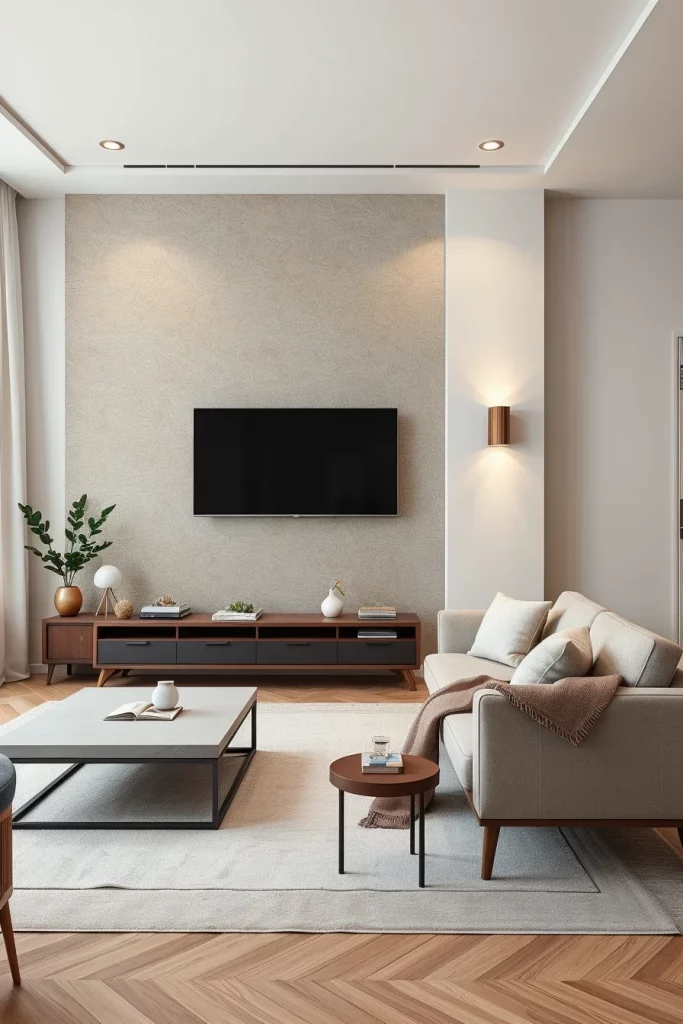
From my perspective, textured surfaces are particularly effective in apartments where architectural details are limited. House Beautiful frequently highlights textured finishes as an excellent alternative to excessive wall decor, and I have seen this strategy work beautifully in many contemporary interiors.
If I were enhancing this space further, I would add subtle wall washing lighting to emphasize the texture and create additional depth in the evening.
Scandinavian-Inspired Minimalist Apartment Living Room
A Scandinavian-inspired approach remains one of my favorite interpretations of the minimalist apartment living room. This style combines simplicity, comfort, and functionality while creating an inviting environment. Light color palettes, natural textures, and abundant daylight help small apartments feel significantly more spacious.
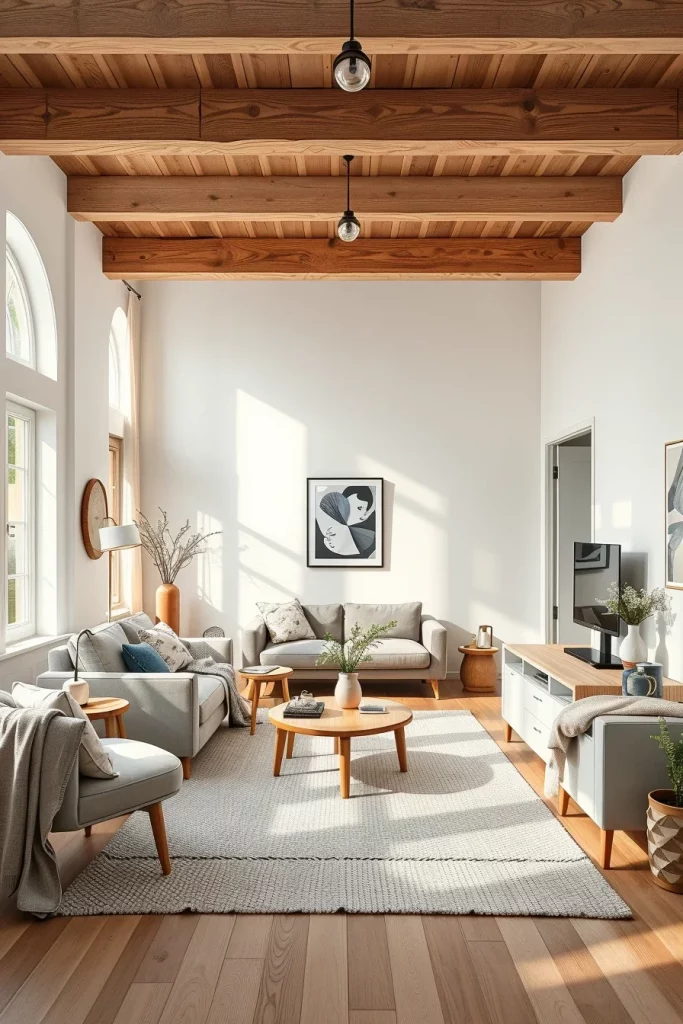
For furniture, I recommend a comfortable neutral sofa, streamlined armchairs, simple storage units, and a functional coffee table with clean silhouettes. Soft textiles, including textured throws, area rugs, and understated cushions, add warmth without creating clutter. Decorative elements should remain intentional, with only a few carefully chosen accessories displayed throughout the room.
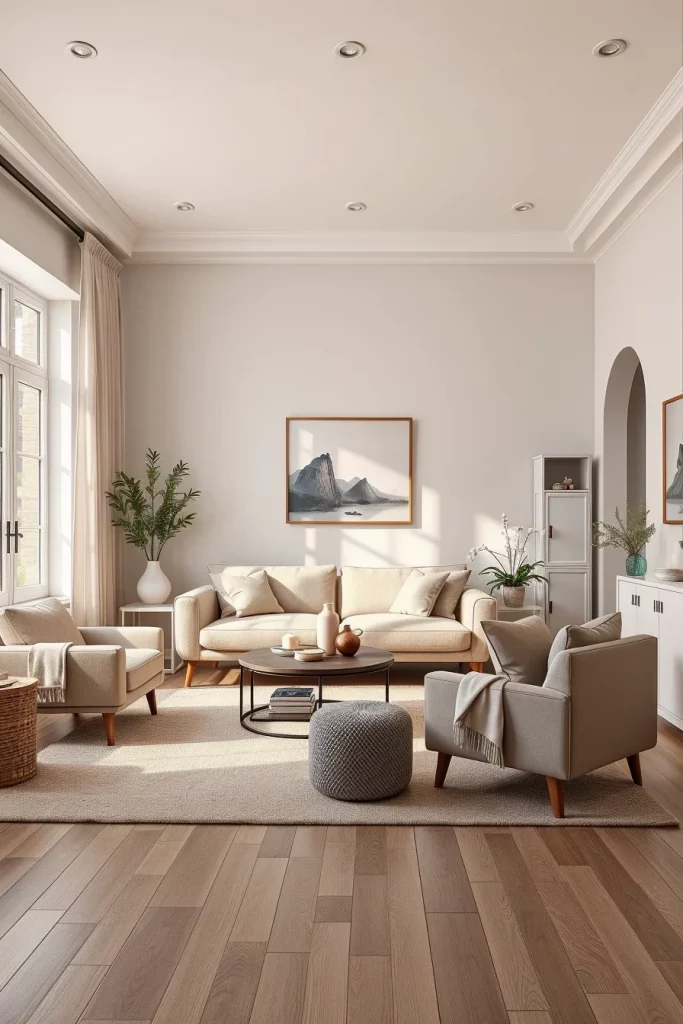
I personally appreciate the Scandinavian principle of combining beauty with practicality. Every item should serve a purpose while contributing positively to the room’s overall aesthetic. This philosophy makes everyday living easier and more enjoyable.
I would also include layered lighting, such as table lamps and floor lamps with warm illumination, to reinforce the cozy atmosphere often associated with Scandinavian interiors.
Black And White Minimalist Living Room Styling Ideas
A black-and-white palette offers timeless elegance in a minimalist living room. I often recommend this combination because it creates strong visual contrast while maintaining simplicity. The monochromatic scheme allows architectural features and carefully selected furnishings to become the focal points of the room.
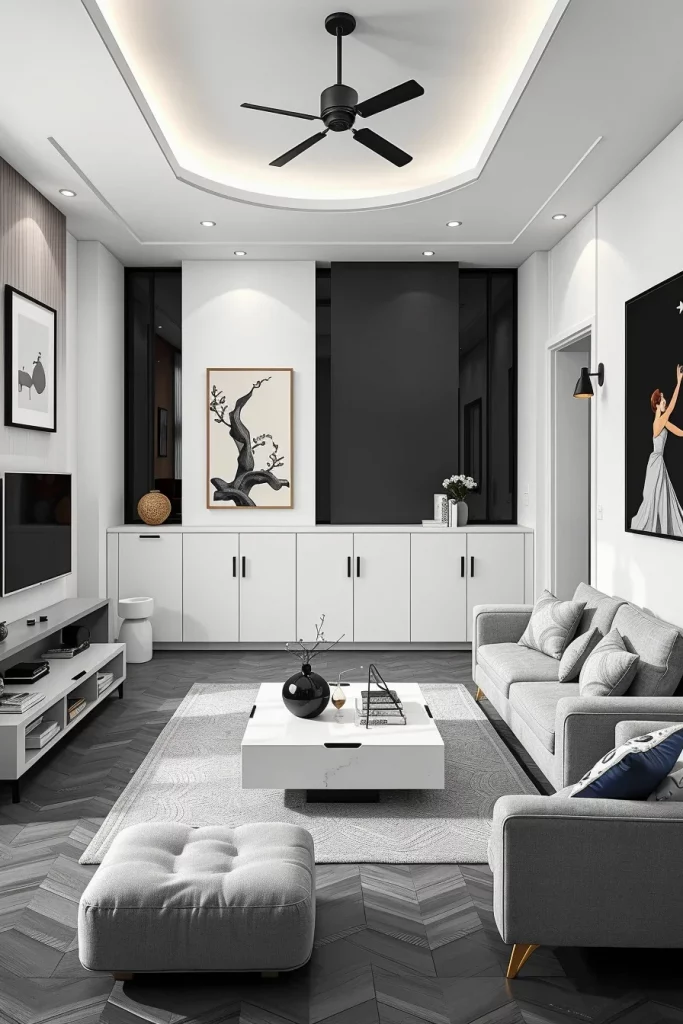
When designing this style, I usually combine a white backdrop with black accent furniture, minimalist artwork, and subtle decorative accessories. A streamlined sofa, geometric coffee table, simple media unit, and understated lighting fixtures establish a balanced composition. Incorporating soft textures through rugs, cushions, and curtains prevents the space from feeling cold or overly formal.
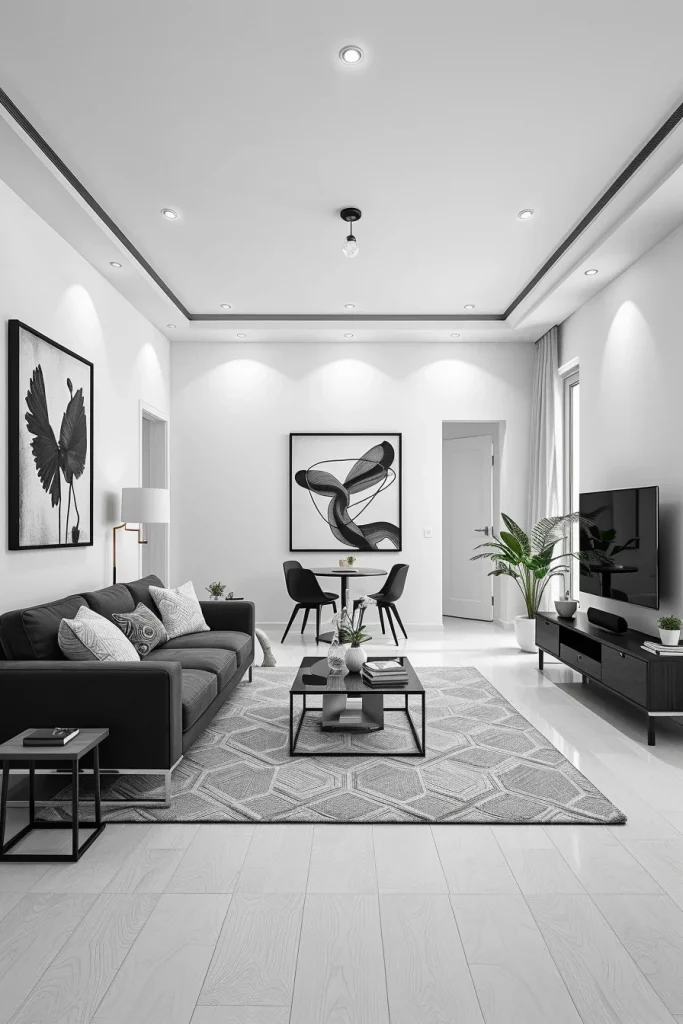
In my experience, moderation is essential when working with high-contrast interiors. I have found that introducing varying textures rather than additional colors creates a more sophisticated and welcoming environment.
To further refine this concept, I would consider incorporating matte finishes alongside occasional reflective surfaces to create additional visual depth.
Curved Furniture Trends In Minimalist Apartment Interiors
Curved furniture has become one of the most interesting trends in the modern minimalist apartment living room. I appreciate how soft silhouettes instantly make a space feel more welcoming while preserving the simplicity that minimalism requires. Rounded forms soften sharp architectural lines often found in apartment buildings and create a more relaxed atmosphere. Even in small spaces, curved furniture can improve flow by eliminating harsh corners.
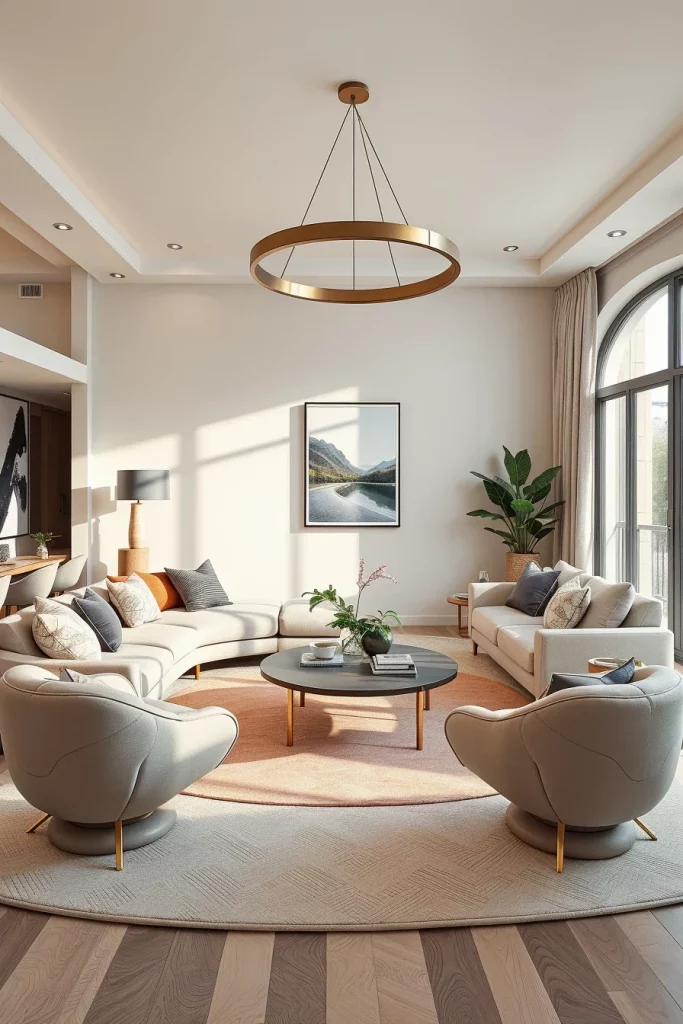
When designing with this trend, I usually choose a curved sofa as the focal point of the room. I often pair it with a round coffee table, softly shaped accent chairs, and minimalist side tables. Upholstery in neutral shades such as beige, cream, gray, or soft taupe maintains the understated aesthetic. Decorative elements should remain limited, allowing the sculptural forms of the furniture to stand out naturally.
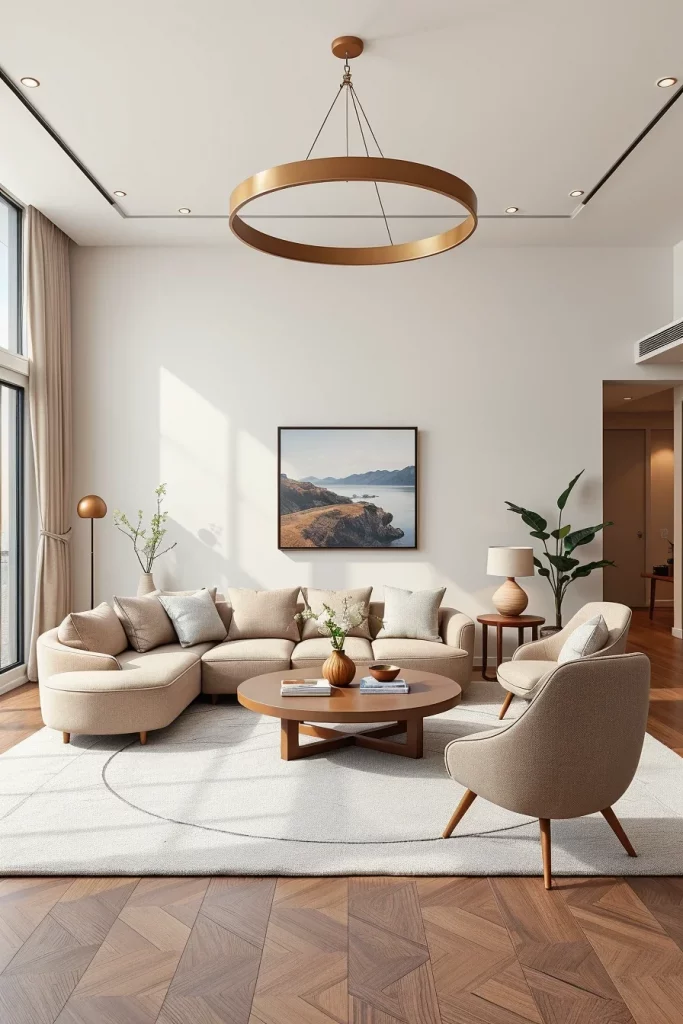
Personally, I have found that curved furniture makes minimalist interiors feel less rigid and more comfortable for everyday living. Many contemporary designers featured in Architectural Digest have embraced rounded forms because they introduce visual softness without sacrificing modernity.
I would complement this design with a circular pendant light or an organically shaped area rug to reinforce the gentle lines throughout the room.
Minimalist Apartment Living Room With Large Area Rugs
A large area rug can dramatically improve the appearance and functionality of a minimalist living room. In my experience, oversized rugs help define seating zones, especially in open-concept apartments where living, dining, and kitchen areas share the same space. A properly sized rug creates visual cohesion and makes the room appear larger rather than smaller.
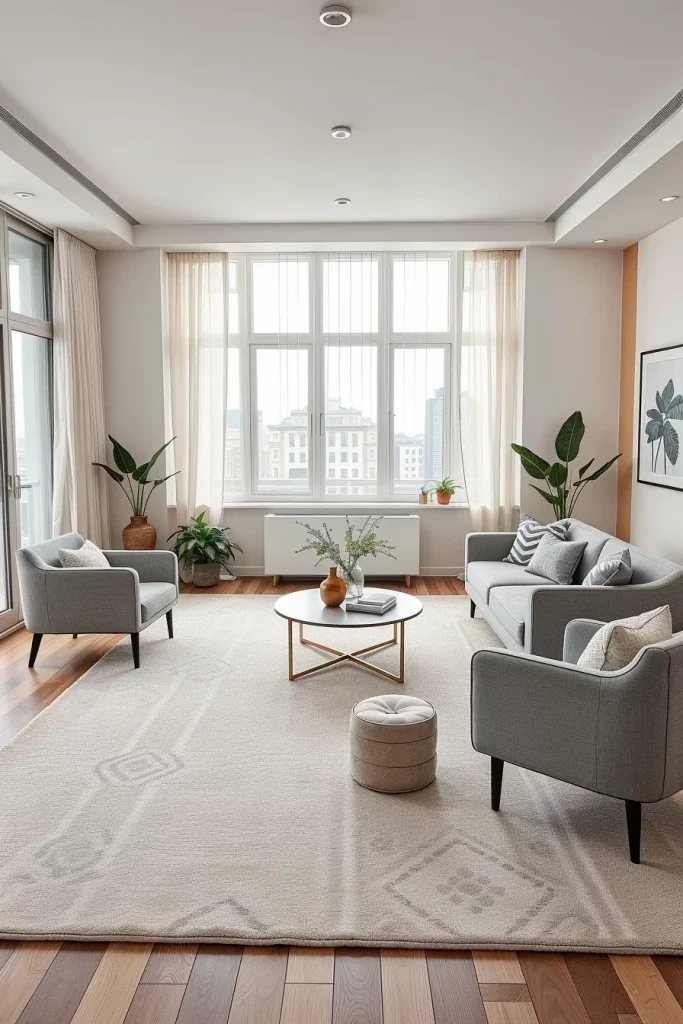
I generally recommend selecting rugs in subtle patterns or solid neutral colors. A large rug should extend beneath the sofa and major furniture pieces to anchor the entire seating arrangement. Pairing the rug with a streamlined sofa, minimalist armchairs, a simple coffee table, and understated lighting creates a cohesive and elegant design. Natural textures such as wool or low-pile fabrics work especially well in minimalist interiors.
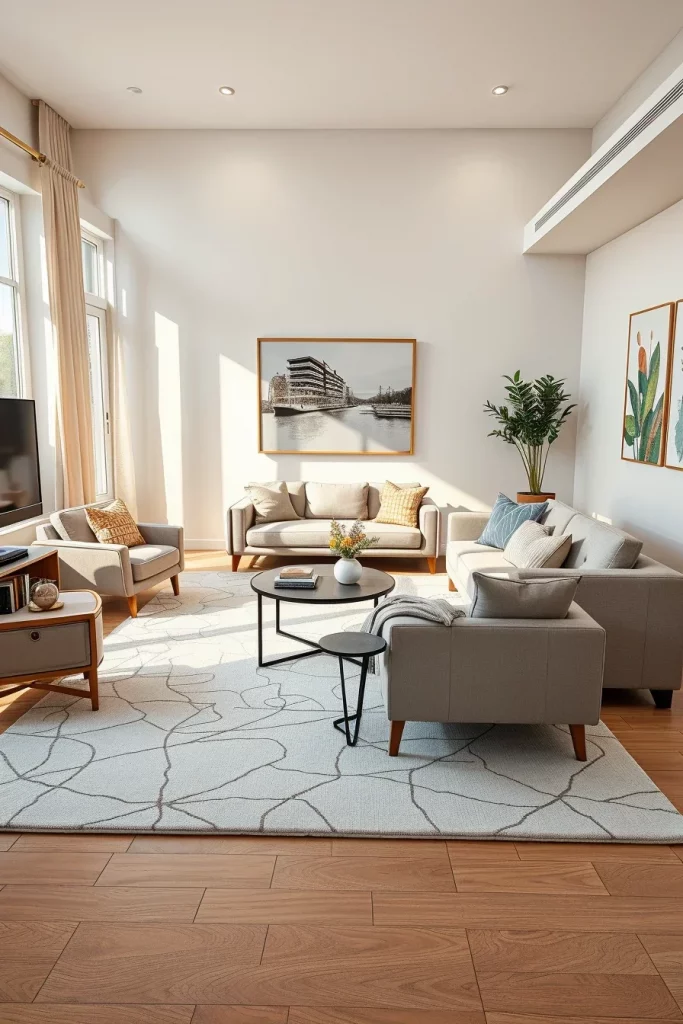
I often advise homeowners not to choose rugs that are too small. According to interior designers frequently quoted in House Beautiful, undersized rugs can make even beautifully designed spaces feel disconnected. I completely agree with this recommendation based on my own experience.
To make this design even more inviting, I would add soft accent cushions and a textured throw that subtly echo the tones found in the rug.
Glass And Metal Elements In Modern Minimalist Living Rooms
Glass and metal finishes contribute significantly to the sleek appearance of a minimalist apartment living room. I often incorporate these materials because they reflect light beautifully and enhance the sense of openness. Glass surfaces maintain visual transparency, while metal accents introduce sophistication and refined contrast.
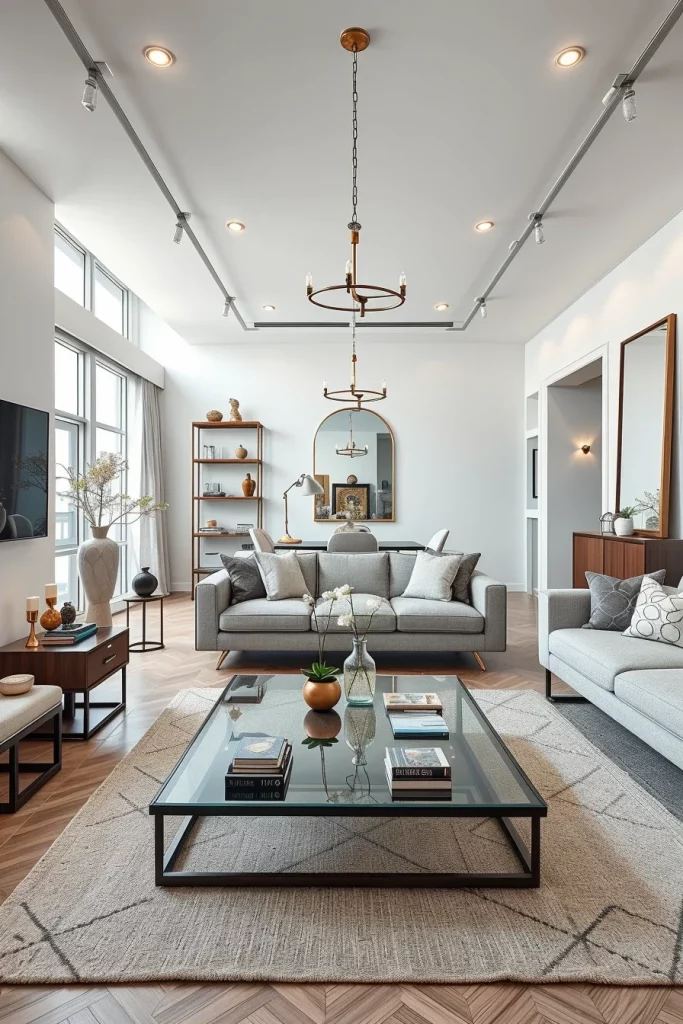
For furniture, I prefer glass coffee tables with slim metal frames, minimalist shelving systems, and elegant lighting fixtures featuring brushed metal finishes. These elements pair exceptionally well with neutral upholstered seating and streamlined storage solutions. Black, brushed brass, chrome, and matte nickel are all effective choices depending on the overall color palette.
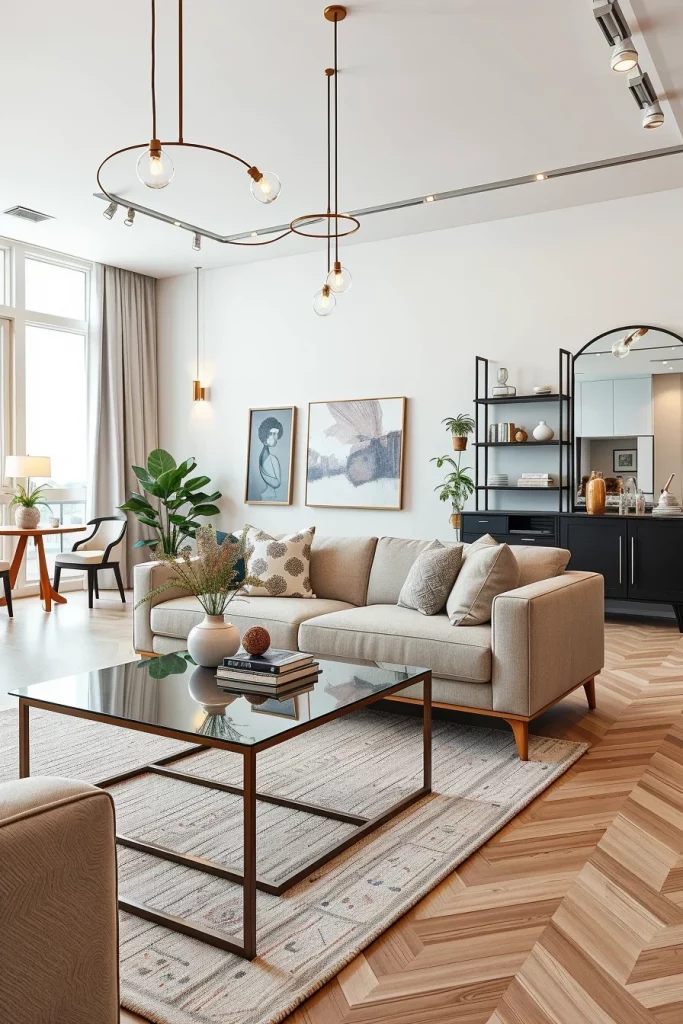
From my perspective, combining glass and metal prevents minimalist interiors from appearing flat or monotonous. The subtle contrast between materials adds depth while preserving simplicity. I have found this approach particularly successful in compact apartments where maximizing visual space is essential.
I would complete this interior by introducing a large mirror with a slim metal frame to amplify natural light and further enhance the spacious feeling.
Small Minimalist Apartment Living Room With Multifunctional Furniture
In a compact minimalist apartment living room, multifunctional furniture is often essential rather than optional. I believe that every piece should serve more than one purpose whenever possible. This approach maximizes functionality while maintaining the uncluttered appearance that defines minimalist design.
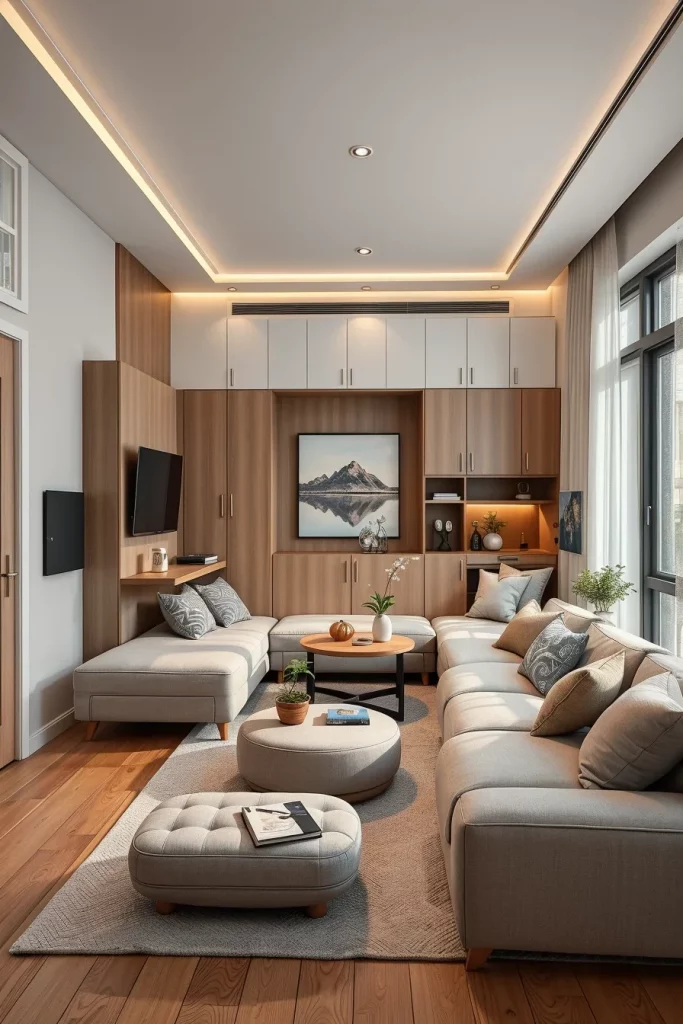
I frequently recommend modular sofas with hidden storage, nesting tables, storage ottomans, and extendable coffee tables. Wall-mounted desks, foldable seating, and concealed cabinetry can also significantly improve usability in smaller apartments. Selecting furniture with clean lines and integrated storage helps eliminate unnecessary clutter while keeping daily essentials easily accessible.
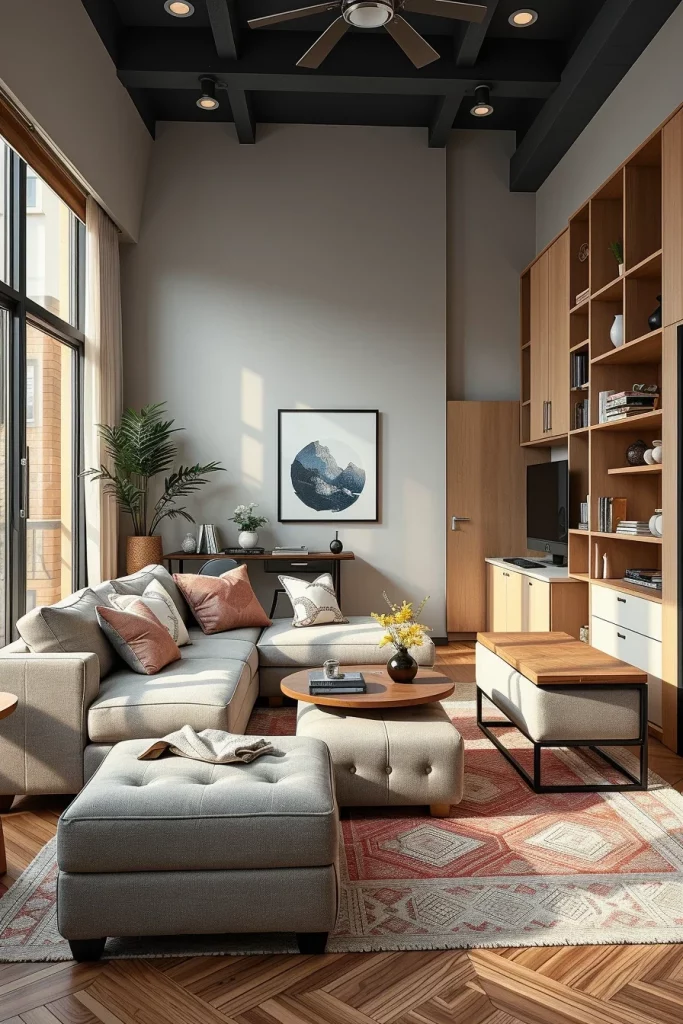
Personally, I have lived in smaller spaces where multifunctional furniture transformed the way the room functioned. Publications such as Elle Decor regularly emphasize investing in versatile furnishings for urban apartments, and I strongly support this advice.
To further improve practicality, I would incorporate vertical storage solutions that utilize wall space without occupying valuable floor area.
Minimalist Living Room Featuring Built-In Media Units
Built-in media units provide an elegant storage solution for a modern minimalist living room. I appreciate how custom cabinetry creates a seamless appearance while concealing electronics, cables, and everyday items. Built-ins contribute to the clean aesthetic that minimalist interiors strive to achieve while maximizing available wall space.
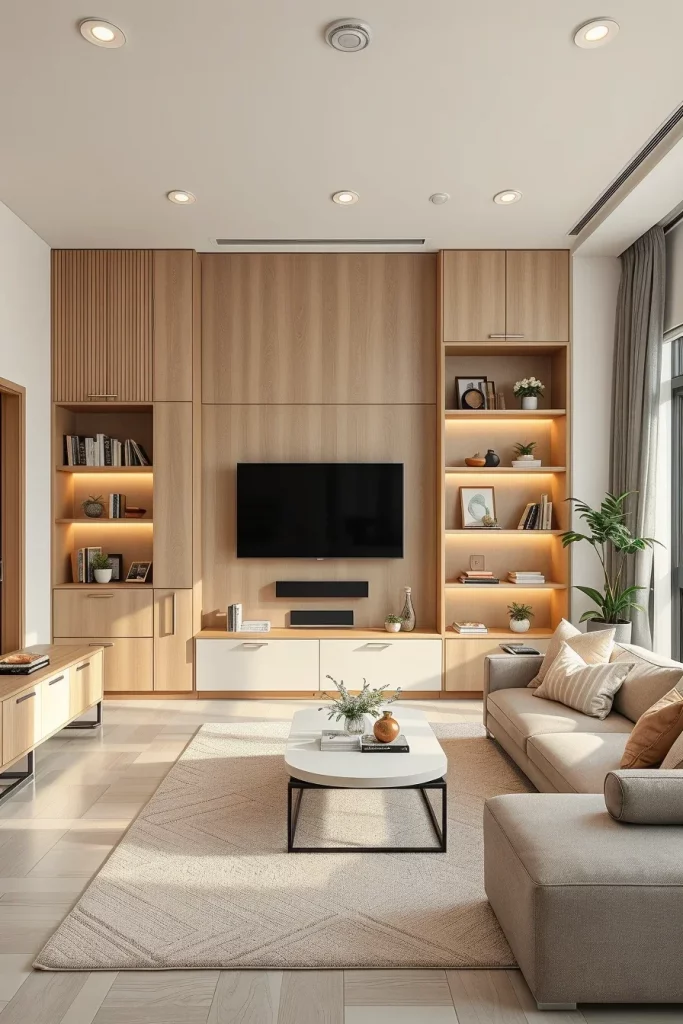
When designing a built-in media wall, I typically favor floor-to-ceiling cabinetry with handleless fronts and integrated lighting. Open shelving can be included selectively for displaying books, ceramics, or artwork, but I recommend keeping these displays carefully curated. A low-profile sofa, simple coffee table, and restrained decorative accessories allow the media unit to remain the focal point.
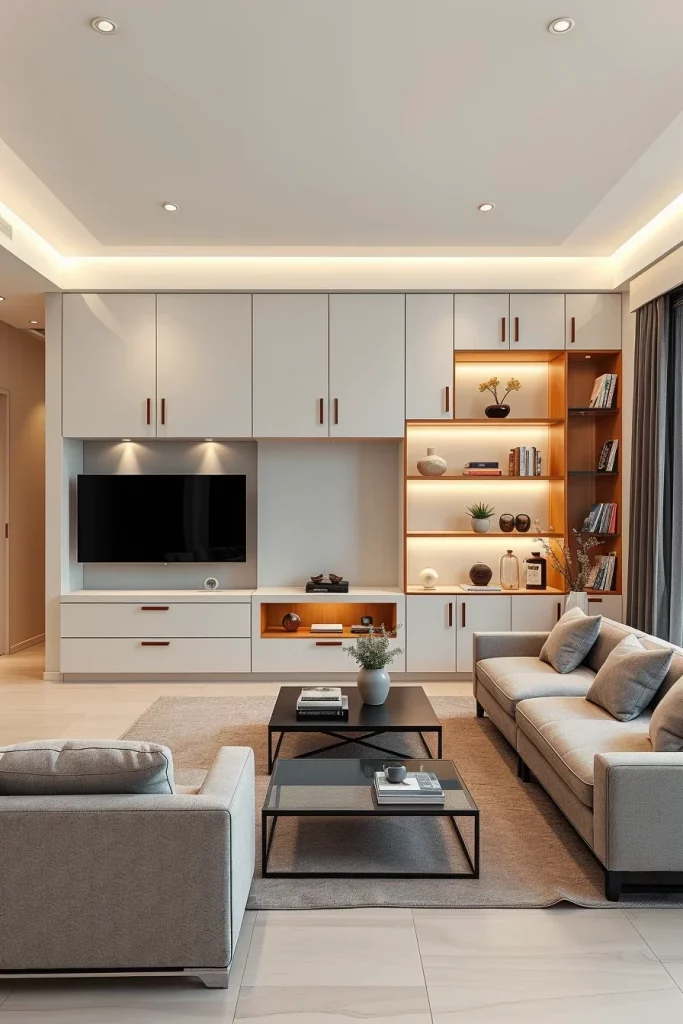
In my experience, built-in storage significantly reduces visible clutter and improves long-term organization. I often advise clients to prioritize concealed storage because it simplifies daily maintenance and preserves the calm atmosphere of the room.
For additional sophistication, I would include recessed LED lighting within shelving niches to highlight decorative objects while enhancing the room’s ambiance.
Stylish Minimalist Apartment Living Room With Indoor Green Accents
I find that incorporating indoor greenery is one of the easiest ways to make a minimalist living room feel more inviting. In a modern apartment, a restrained color palette of white, beige, warm gray, and soft taupe creates a calm backdrop, while carefully selected greenery introduces freshness and visual contrast. Instead of filling the room with numerous decorative pieces, I prefer using a few statement plants to maintain the clean aesthetic associated with a stylish minimalist apartment living room.
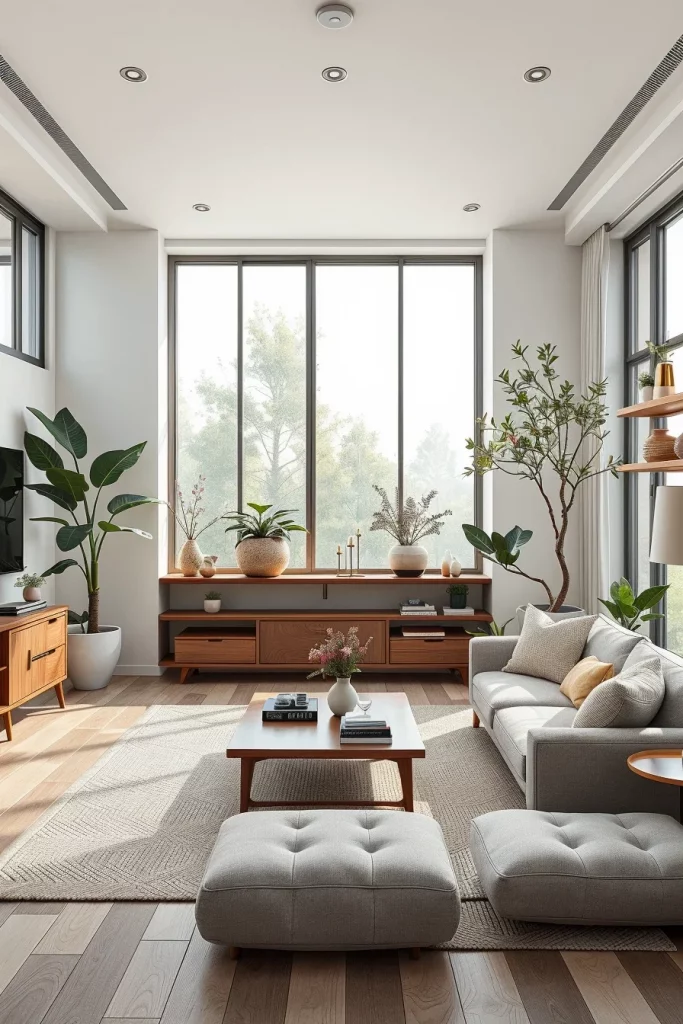
For furniture, I recommend a streamlined sofa with simple lines, a low-profile coffee table, and concealed storage cabinets that reduce visual clutter. A large potted fiddle leaf fig or olive tree placed near the window instantly softens the architecture. Smaller plants on floating shelves or a minimalist console add subtle layers without overwhelming the room. Natural textures such as linen upholstery, ceramic planters, and a textured area rug further enhance the organic atmosphere.
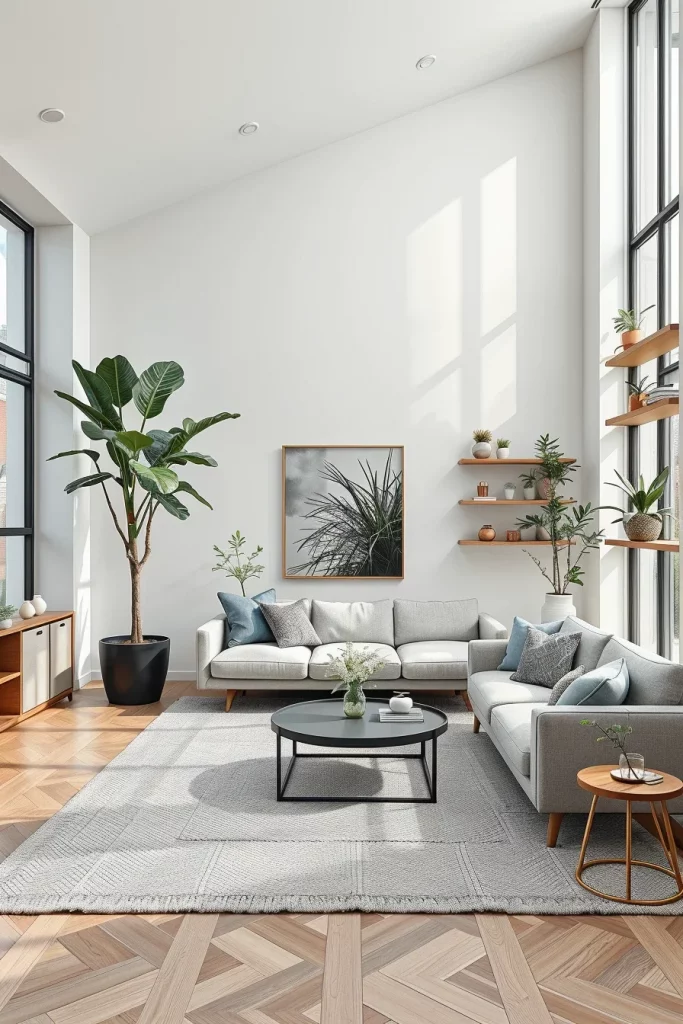
In my experience, many American designers, including those featured in Architectural Digest, suggest limiting decorative accessories and allowing greenery to become the focal point. I have found that this approach creates a balanced environment where every element feels intentional.
To complete this space, I would add sheer window treatments to maximize daylight while maintaining privacy. Proper lighting ensures that both the room and the greenery remain visually appealing throughout the day.
Contemporary Minimalist Living Room With Artistic Decor
A contemporary minimalist living room does not need to be devoid of personality. I often use carefully selected artwork to introduce character while preserving the uncluttered essence of minimalist design. Large-scale abstract art, monochromatic photography, or sculptural wall pieces can serve as elegant focal points without compromising simplicity.
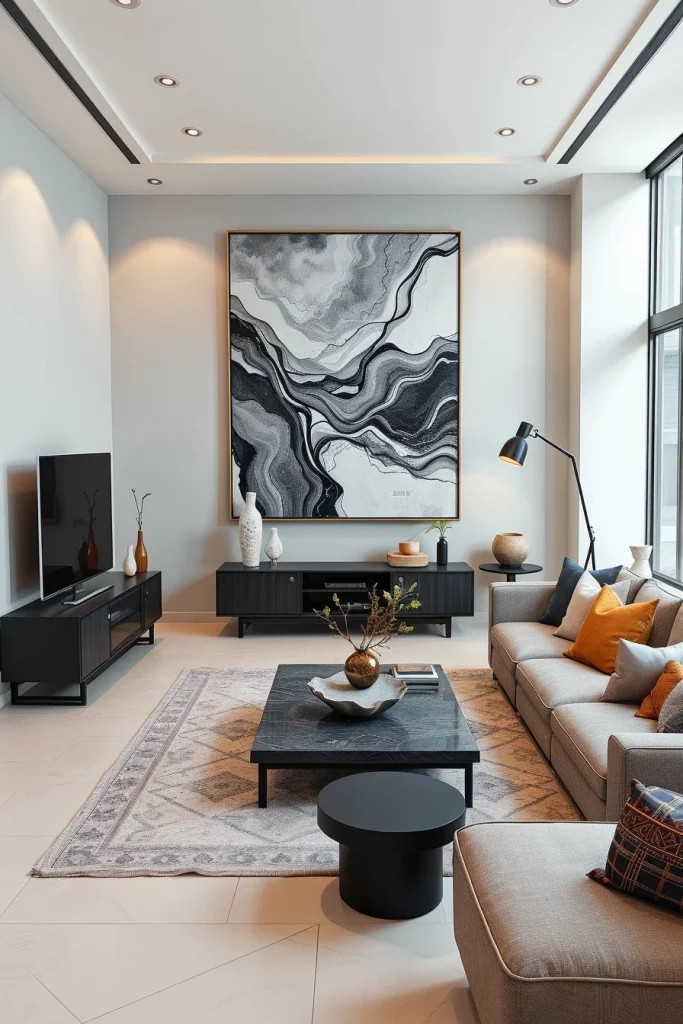
I usually begin with foundational furniture such as a modular sofa, a sleek media unit, and a simple accent chair. Once these essential pieces are in place, I incorporate one or two oversized art pieces instead of multiple small accessories. Sculptural decor objects, a minimalist floor lamp, and a refined coffee table arrangement help maintain visual cohesion. This strategy works exceptionally well in a minimalist apartment living room because it avoids overcrowding.
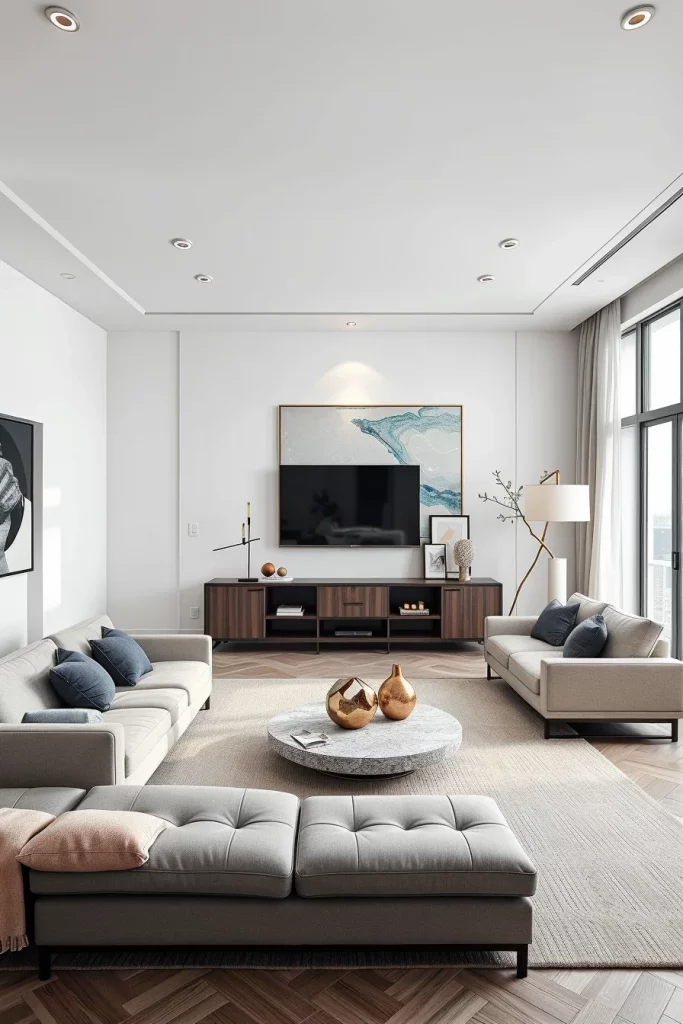
Personally, I prefer investing in quality artwork rather than excessive decor. Interior publications such as Elle Decor frequently emphasize that statement art can define a room while keeping the overall aesthetic refined and modern. I have consistently seen this principle elevate even compact apartment spaces.
If something is missing from this design, I would add subtle textural variation through boucle upholstery, stone surfaces, or matte finishes to prevent the room from feeling overly stark.
Minimalist Apartment Living Room With Soft Ambient Lighting
Lighting dramatically influences how a minimalist living room feels. I always prioritize layered ambient lighting because apartment living rooms often need to transition from daytime workspaces to relaxing evening retreats. Soft illumination creates warmth while highlighting architectural simplicity.
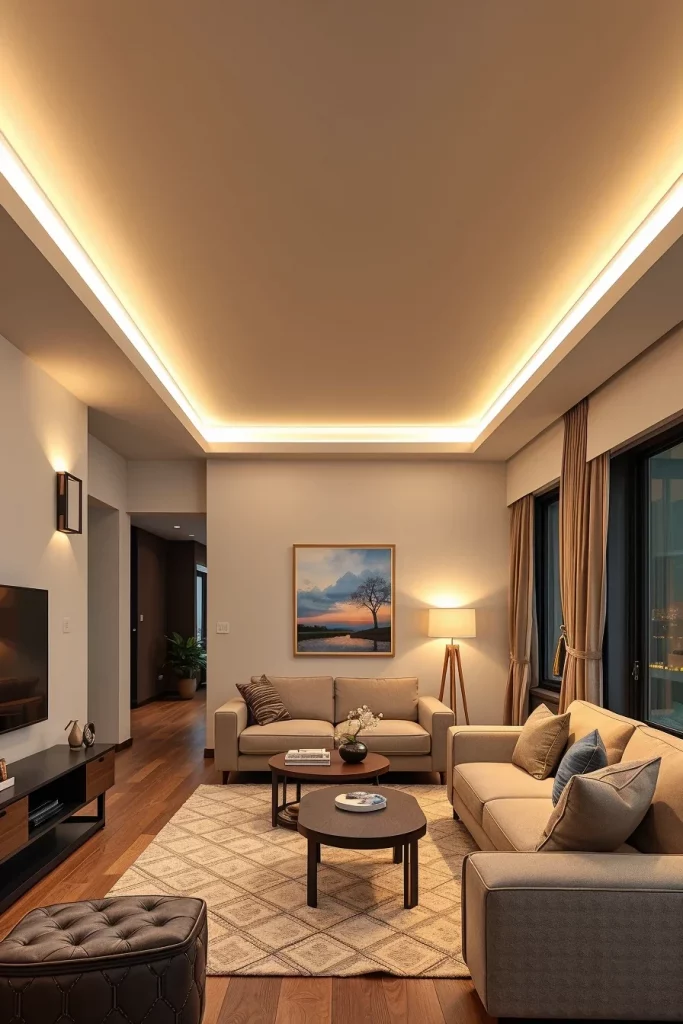
I recommend combining recessed ceiling lights with concealed LED strips, wall sconces, and floor lamps featuring simple silhouettes. Warm white lighting around 2700K creates a comfortable atmosphere without appearing harsh. I also like using dimmable fixtures because they allow flexibility depending on mood and activity. In a modern minimalist apartment living room, lighting itself can function as decor.
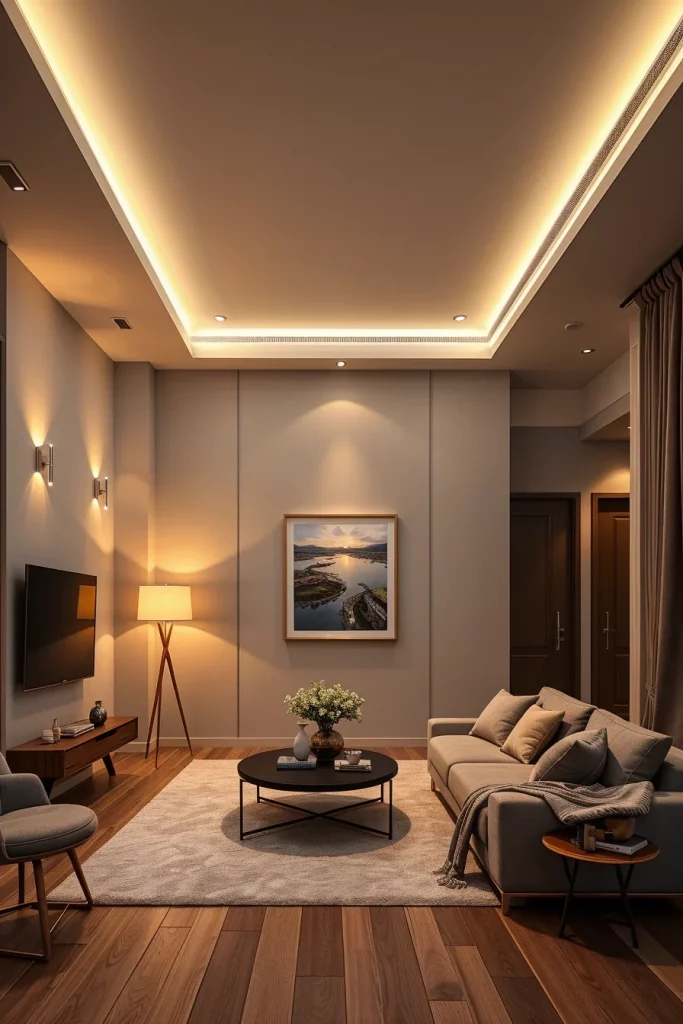
From my experience, soft lighting prevents minimalist interiors from feeling cold. Many designers featured in House Beautiful advocate using multiple light sources instead of relying solely on overhead fixtures. I have found that this technique significantly enhances comfort, especially in smaller apartments.
To further improve this space, I would incorporate reflective elements such as glass side tables or subtle metallic accents that gently distribute light throughout the room.
Creating Visual Balance In A Minimalist Living Room Design
Visual balance is essential in minimalist interiors because every object becomes highly noticeable. I focus on symmetry, proportion, and negative space to ensure the room feels harmonious rather than empty. Thoughtful placement of furniture helps create a calming environment that supports both relaxation and functionality.
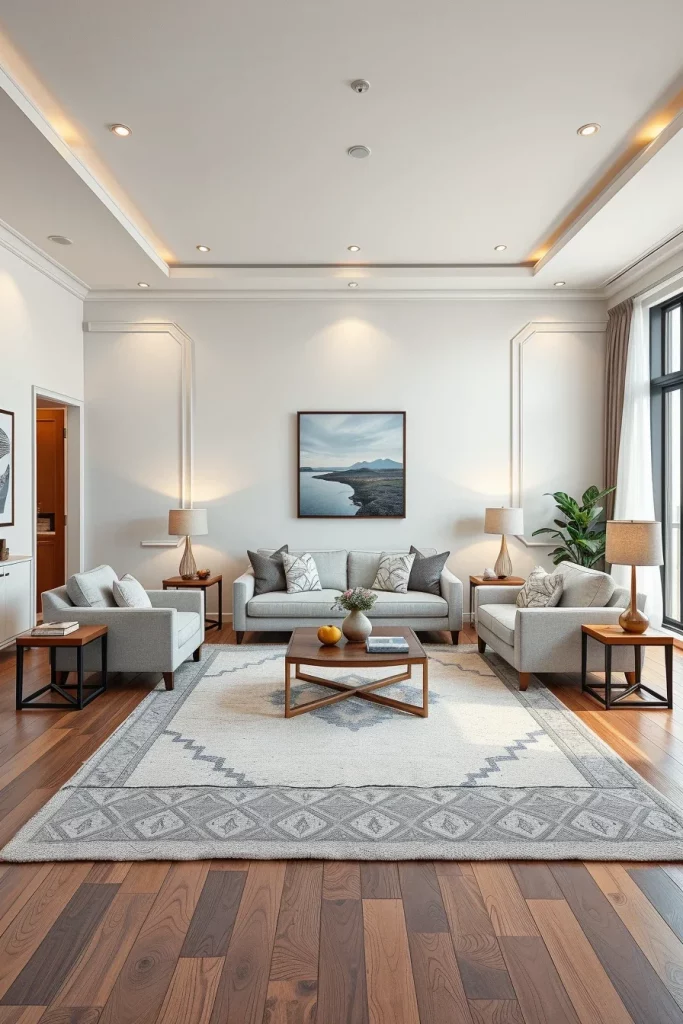
I often anchor the room with a centered sofa and position complementary elements, such as matching side tables or balanced lighting fixtures, around it. A properly sized area rug defines the seating zone, while open floor space preserves the airy feeling that minimalist interiors are known for. Consistent materials and a restrained color palette also contribute to visual balance.
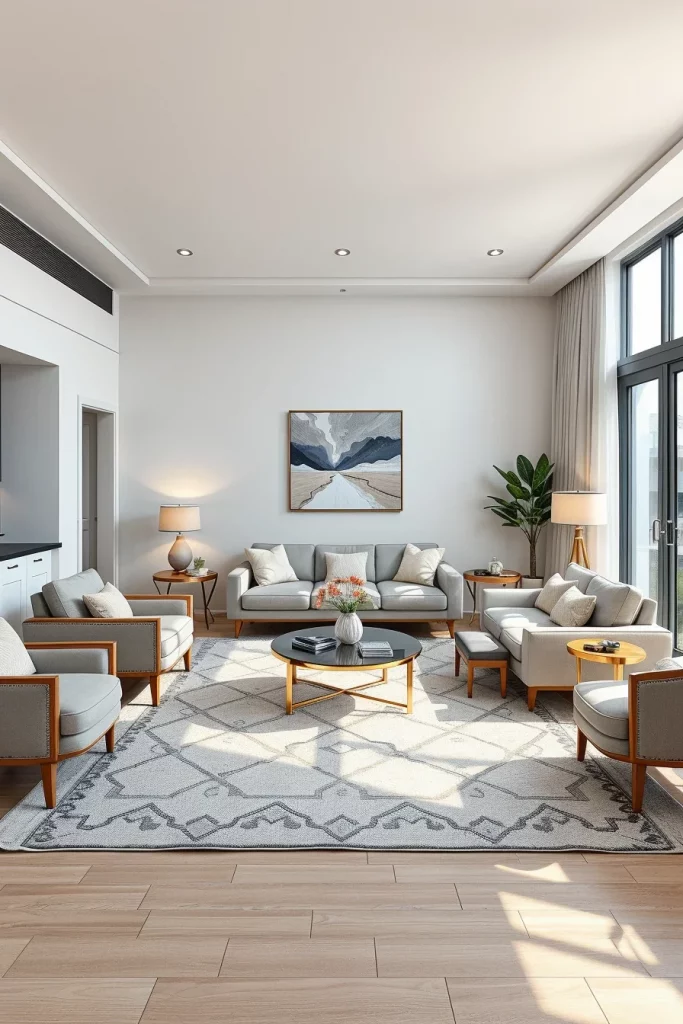
In my own projects, I regularly step back and evaluate whether any single element dominates the room excessively. Designers frequently recommend editing decor until only the most meaningful and functional pieces remain. I have found this process crucial for maintaining an elegant minimalist aesthetic.
I would also ensure that storage solutions are fully integrated into the design. Hidden storage reduces visual noise and supports long-term organization.
Minimalist Apartment Living Room With Low-Profile Furniture
Low-profile furniture is particularly effective in apartments because it visually expands the room and creates a sense of openness. I often recommend furnishings with clean horizontal lines that sit closer to the floor, making ceilings appear taller and spaces feel larger.
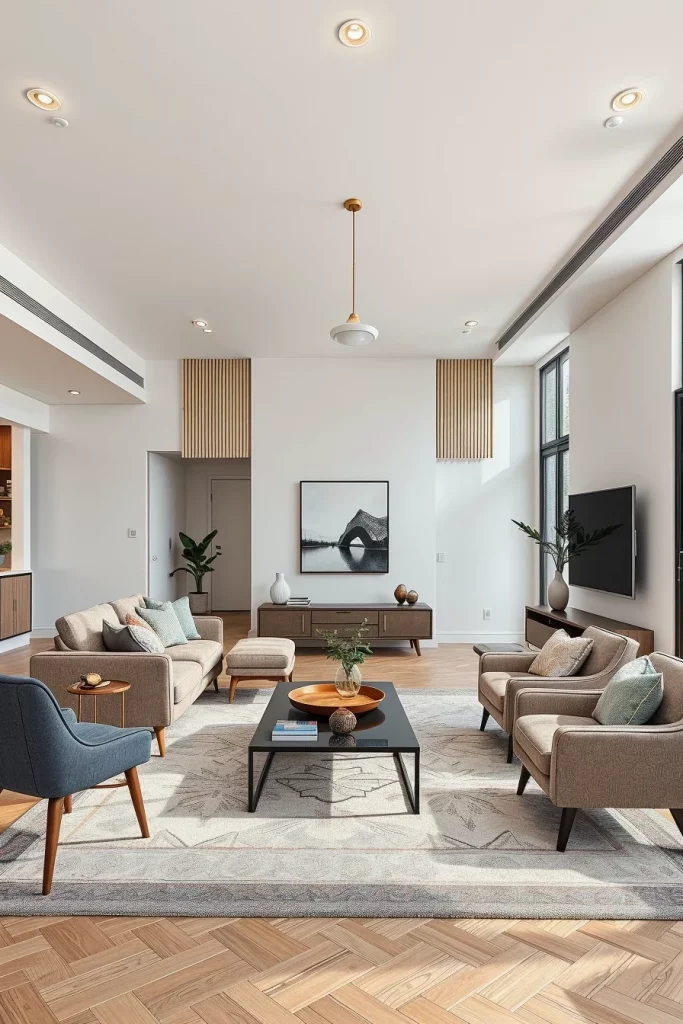
A low sofa, streamlined coffee table, minimalist media console, and simple accent chairs establish a contemporary foundation. Furniture with exposed legs further enhances openness by allowing more visible floor area. I also favor multifunctional pieces, such as nesting tables or storage ottomans, to maximize usability in smaller living spaces.
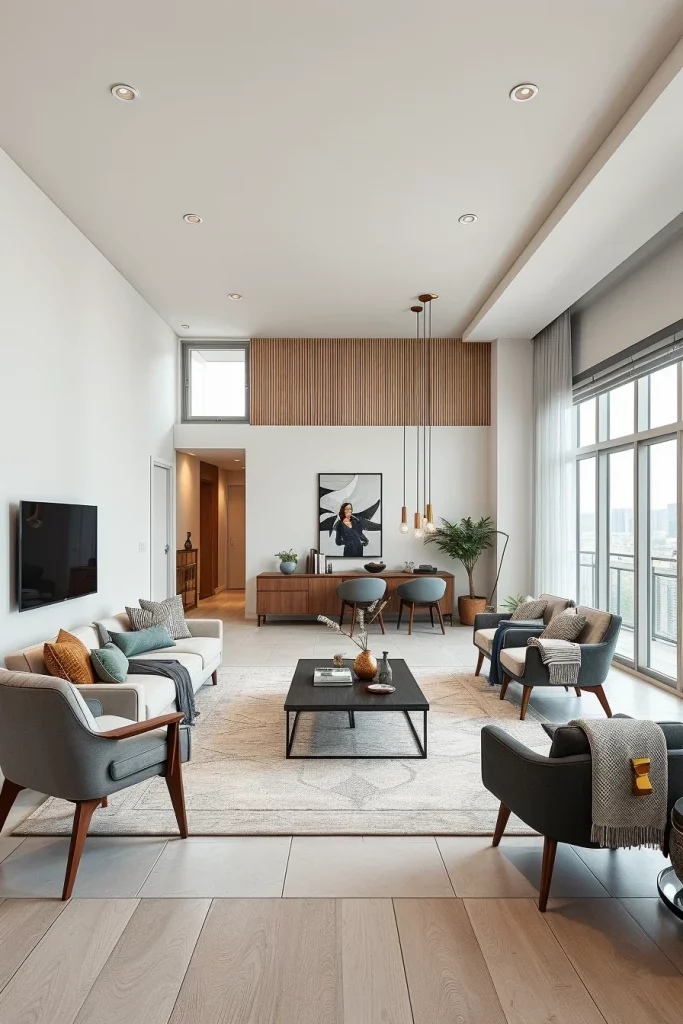
Personally, I have noticed that low-profile furniture immediately changes the perception of scale within an apartment. Many modern interior designers utilize this approach to create sophisticated yet practical living environments. The result is a room that feels spacious without sacrificing comfort.
To perfect this design, I would incorporate layered textiles such as area rugs, cushions, and throws to introduce softness and prevent the low furniture arrangement from appearing too rigid.
Layering Fabrics In A Modern Minimalist Living Space
Layering fabrics is one of my favorite techniques for making a minimalist living room feel comfortable and inviting without sacrificing simplicity. While minimalist interiors are often associated with clean lines and limited decor, carefully selected textiles can add warmth, depth, and sophistication. In a modern apartment, combining various textures creates visual interest while maintaining a refined aesthetic.
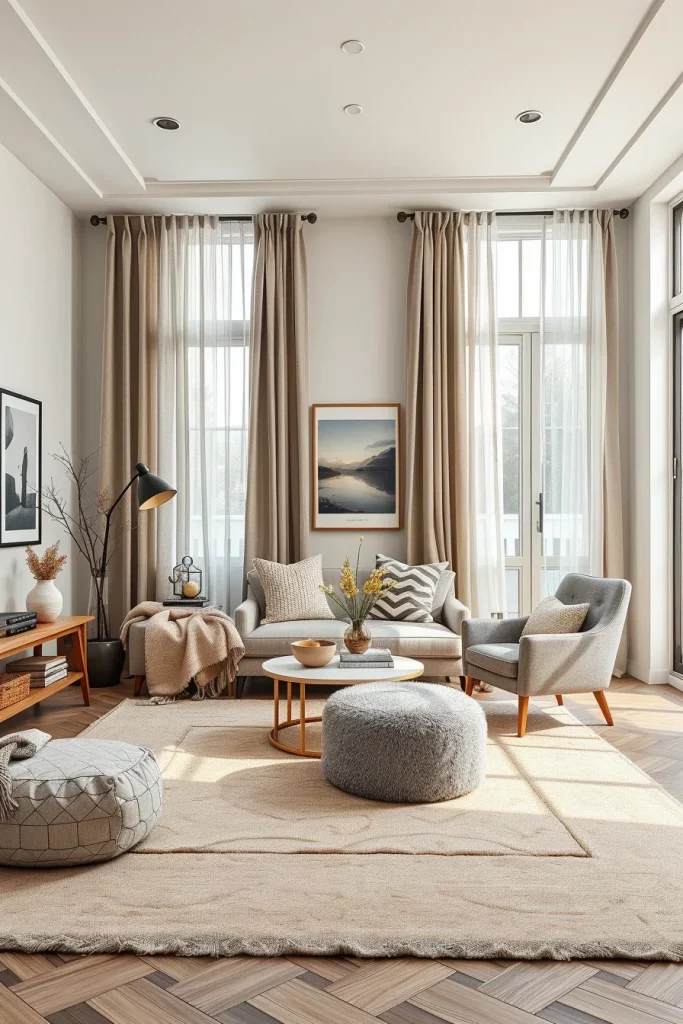
I typically start with a neutral foundation, such as a large wool or flat-weave area rug, and then introduce linen curtains, soft throw blankets, and textured cushions. A boucle accent chair or upholstered ottoman can further enrich the room without creating clutter. I prefer sticking to a cohesive palette of whites, beiges, grays, and muted earth tones because it preserves the calm atmosphere expected in a minimalist apartment living room.
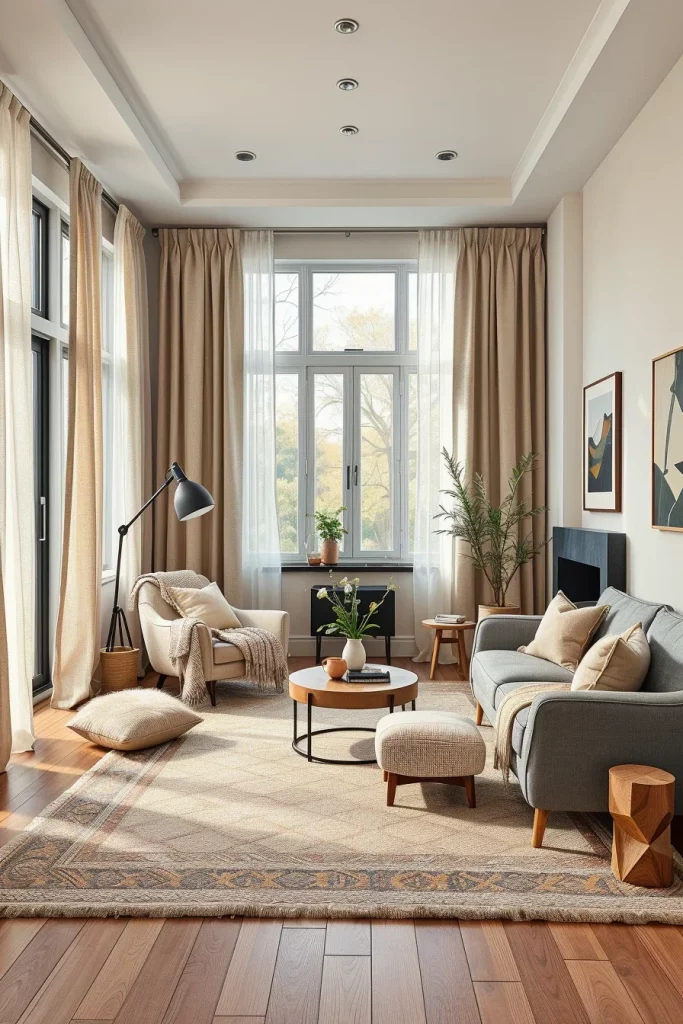
From my experience, layered fabrics significantly improve both comfort and acoustics, especially in apartment settings with hard flooring surfaces. Designers featured in Better Homes & Gardens often recommend mixing textures rather than colors to achieve a sophisticated minimalist look. I consistently use this approach to ensure minimalist spaces feel welcoming rather than sterile.
To complete this design, I would add floor-length curtains with subtle texture, as they soften architectural lines while enhancing privacy and light control.
Minimalist Living Room Ideas With Natural Light As The Focal Point
Natural light should always be treated as a design element in a minimalist interior. I often arrange the entire room around window placement to maximize daylight and create an airy, open atmosphere. Large windows naturally enhance spaciousness, making even small apartments feel significantly larger.
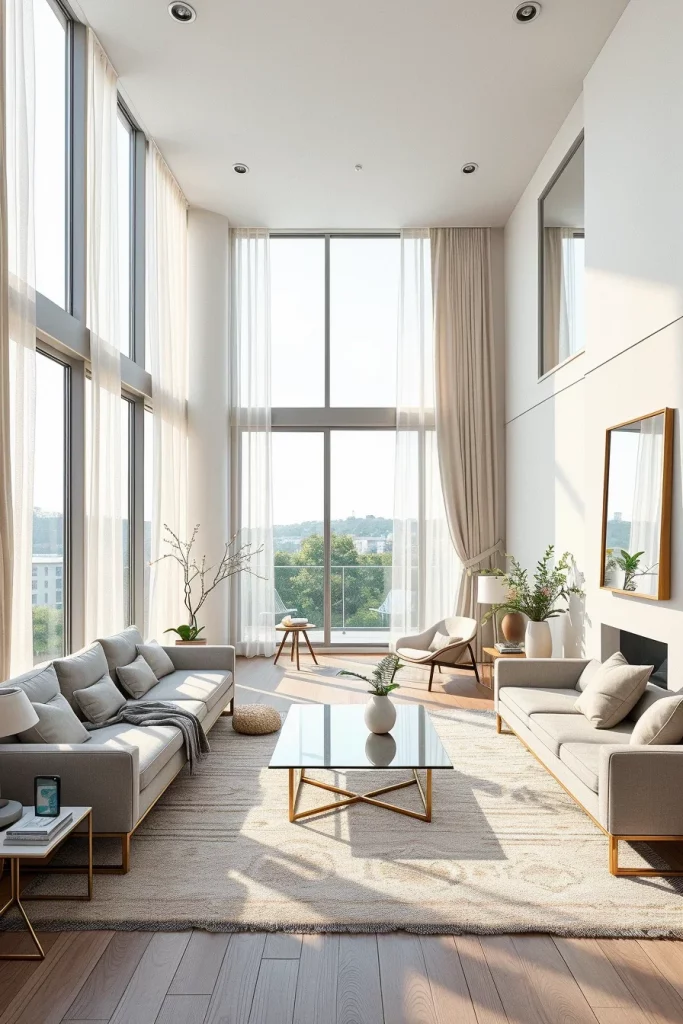
I recommend keeping window treatments simple and lightweight. Sheer curtains, roller shades, or even uncovered windows can help preserve uninterrupted light flow. Furniture placement should avoid blocking windows, allowing sunlight to illuminate the entire room. Reflective materials such as glass tables, mirrors, and light-colored finishes further amplify brightness throughout the minimalist apartment living room.
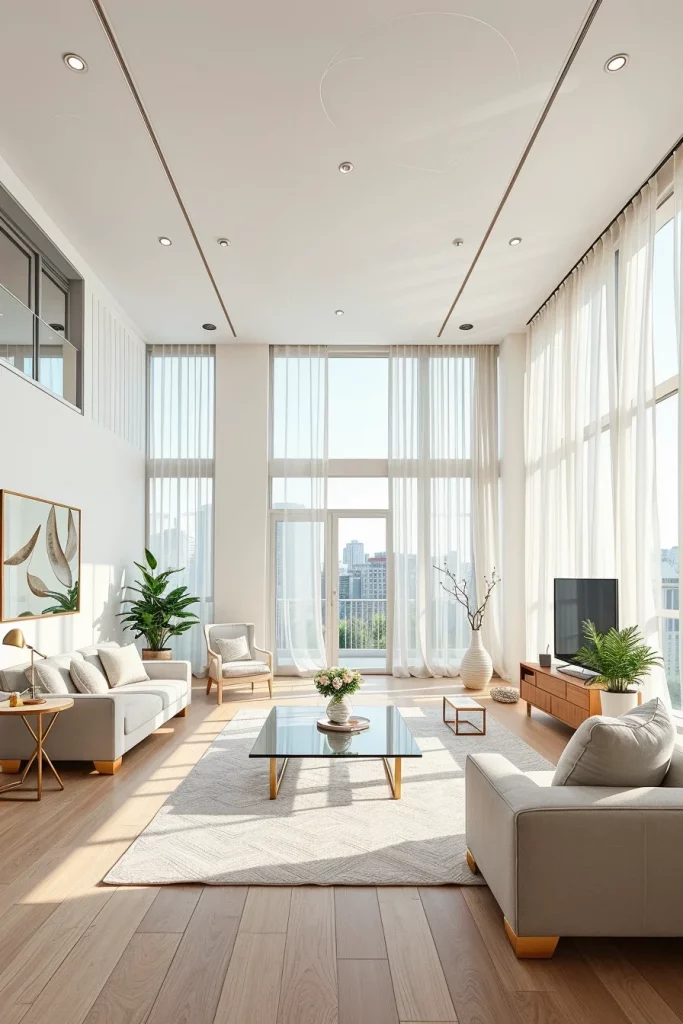
Personally, I believe natural light is one of the most valuable features in any apartment. Architectural Digest frequently highlights the importance of embracing daylight in modern interiors, and I have found that rooms designed around natural illumination consistently feel more relaxing and visually expansive.
If additional enhancement is needed, I would incorporate strategically placed mirrors opposite windows to distribute daylight deeper into the living space.
Smart Technology Integration In A Minimalist Apartment Living Room
Modern minimalist interiors benefit greatly from discreet technology integration. I always aim to incorporate smart features in ways that enhance convenience without disrupting the clean visual appearance of the room. Hidden technology allows residents to enjoy advanced functionality while preserving simplicity.
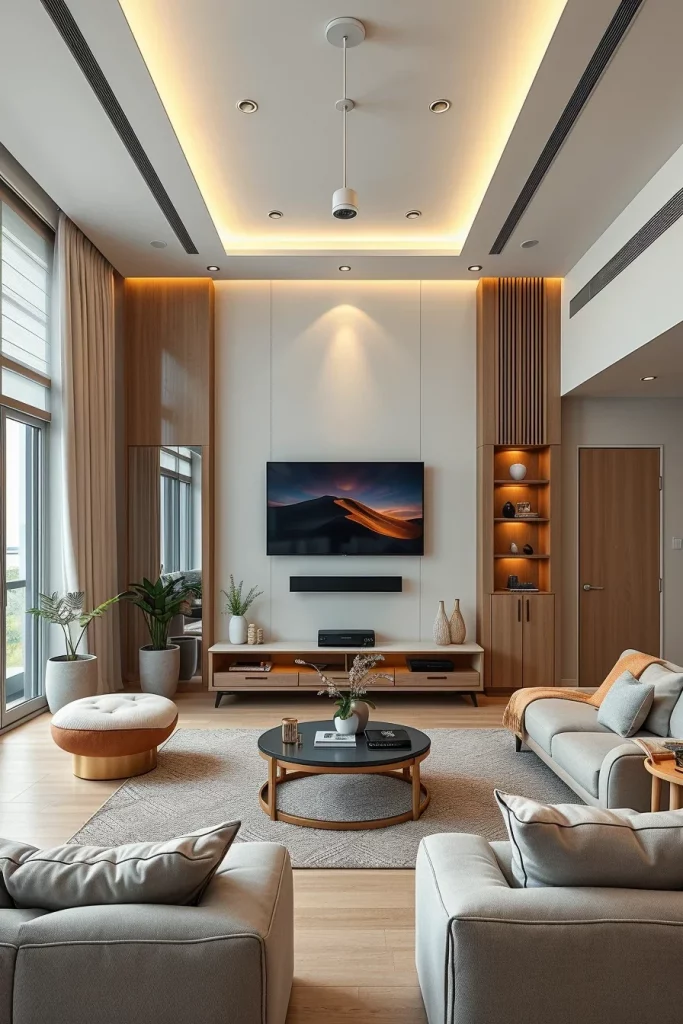
I usually recommend wall-mounted televisions with concealed wiring, integrated sound systems, and smart lighting controlled through mobile applications or voice assistants. Motorized window treatments, wireless charging surfaces, and multifunctional furniture with built-in technology also contribute to a streamlined living environment. In a contemporary minimalist apartment living room, technology should remain nearly invisible when not in use.
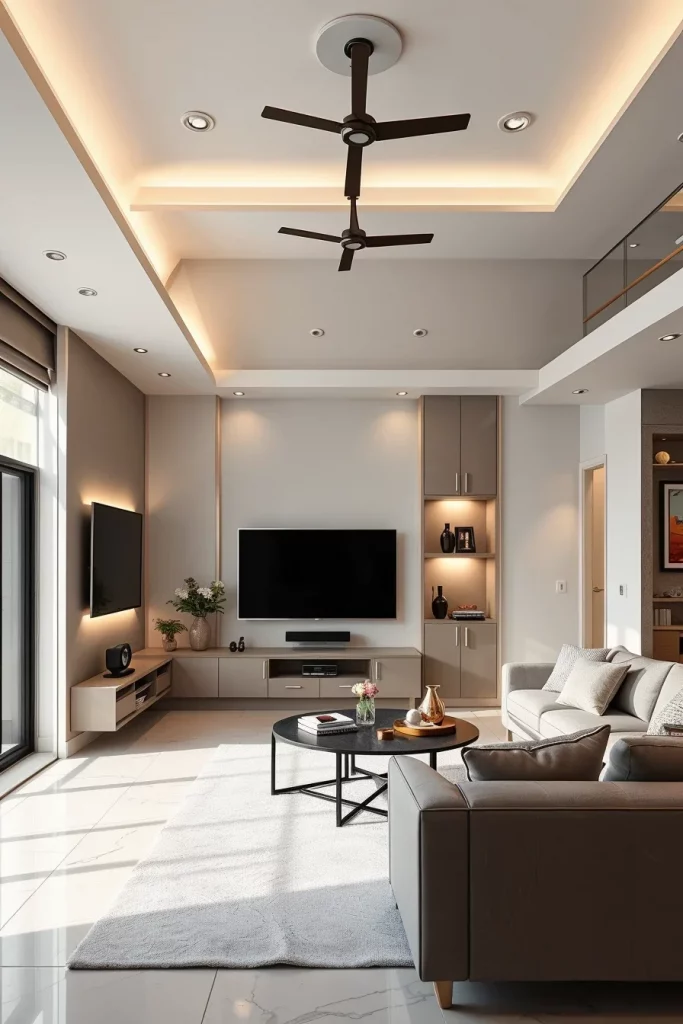
In my own experience, carefully integrated smart systems reduce visual clutter by eliminating unnecessary cords, remotes, and standalone devices. Many interior designers now prioritize seamless technological integration as an essential component of modern apartment living.
I would also include hidden cable management systems and custom cabinetry to ensure that all technological components remain neatly organized and out of sight.
Luxury-Inspired Details In A Minimalist Apartment Living Room
Minimalism and luxury can coexist beautifully when high-quality materials and thoughtful details are prioritized. Rather than filling the room with decorative objects, I prefer focusing on craftsmanship, premium finishes, and timeless materials that elevate the overall atmosphere.
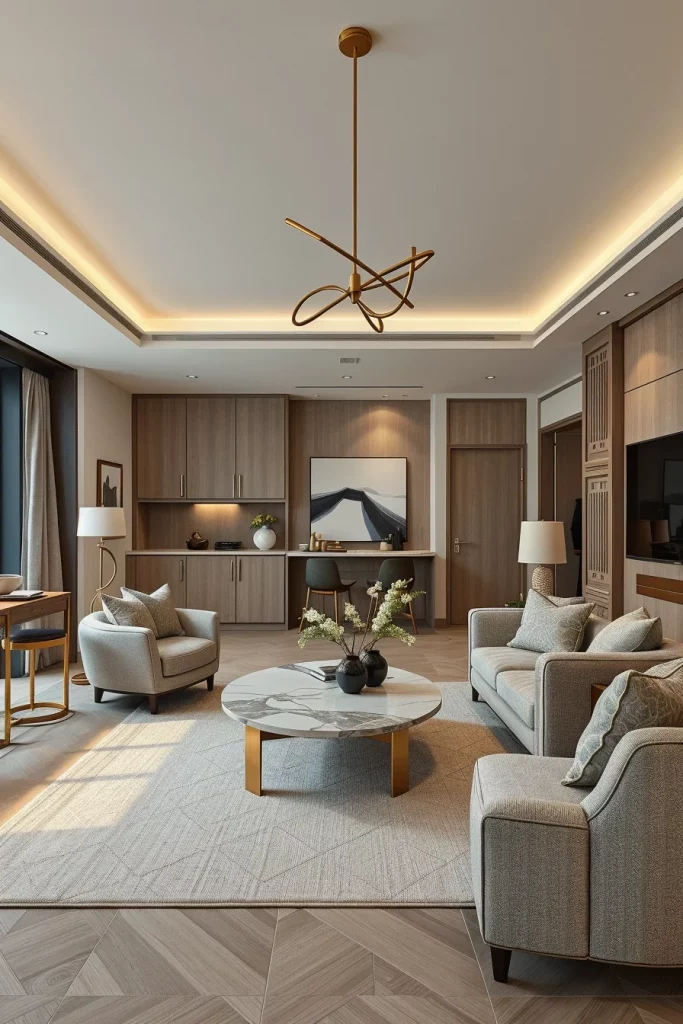
I often incorporate marble or stone coffee tables, tailored upholstery, brushed metal accents, and custom cabinetry. Rich textures such as wool, cashmere, and natural linen add understated elegance without overwhelming the space. Statement lighting fixtures with sculptural forms can also introduce sophistication while remaining aligned with minimalist principles. These subtle enhancements transform a simple minimalist apartment living room into a refined retreat.
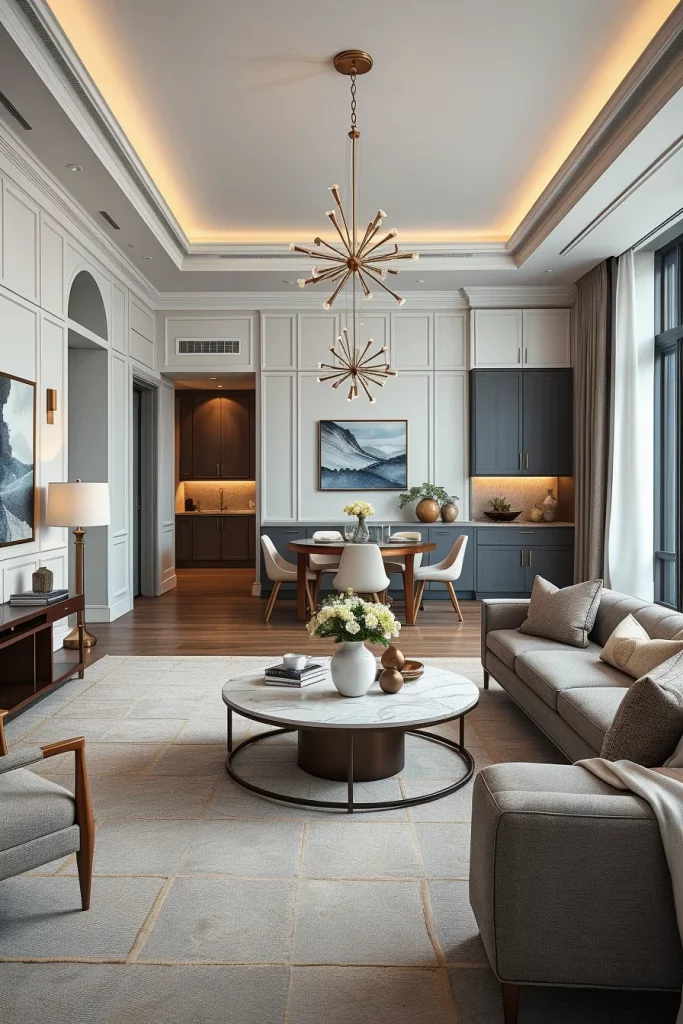
Personally, I believe luxury in minimalist design comes from restraint rather than excess. Elle Decor frequently emphasizes investing in fewer but higher-quality pieces, and I strongly agree with this philosophy. Carefully selected furnishings tend to age gracefully and maintain their appeal for many years.
To further enrich this space, I would consider incorporating custom built-ins or bespoke furniture pieces tailored specifically to the apartment’s dimensions.
Finishing Touches For A Perfect Minimalist Apartment Living Room
The finishing touches determine whether a minimalist living room feels thoughtfully curated or incomplete. I always approach the final styling stage carefully, ensuring that every accessory contributes meaningfully to the overall design rather than merely filling empty space.
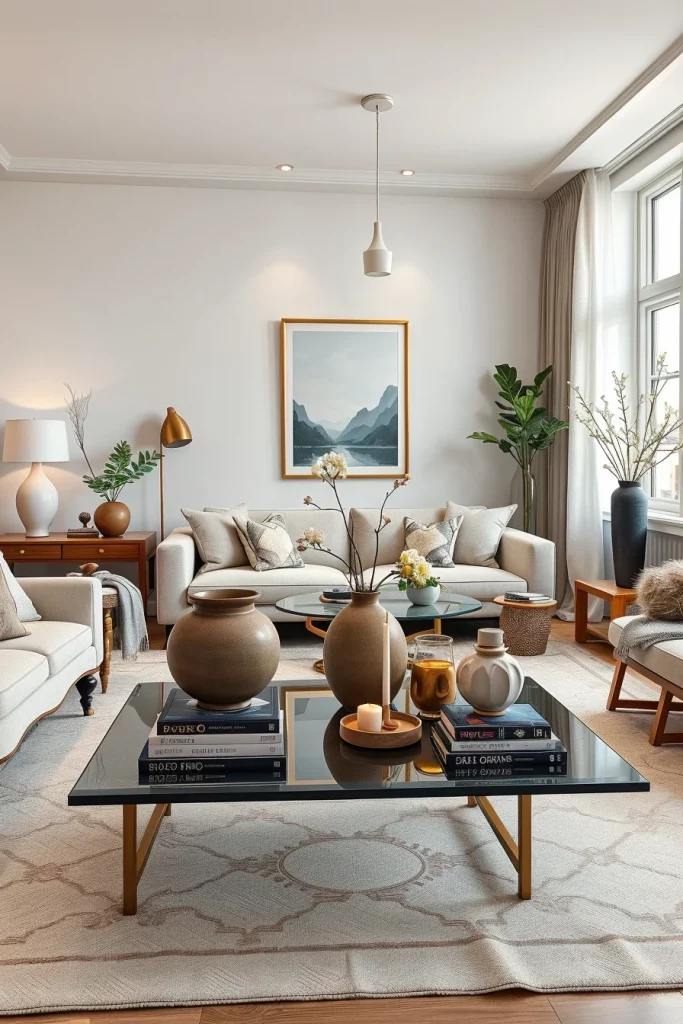
I usually select a limited number of decorative elements, such as sculptural vases, carefully chosen books, ceramic objects, or a single statement centerpiece for the coffee table. Scented candles, subtle artwork, and organic materials can add warmth while preserving visual clarity. Maintaining adequate negative space remains essential because empty areas allow the eye to rest and emphasize the room’s architectural features.
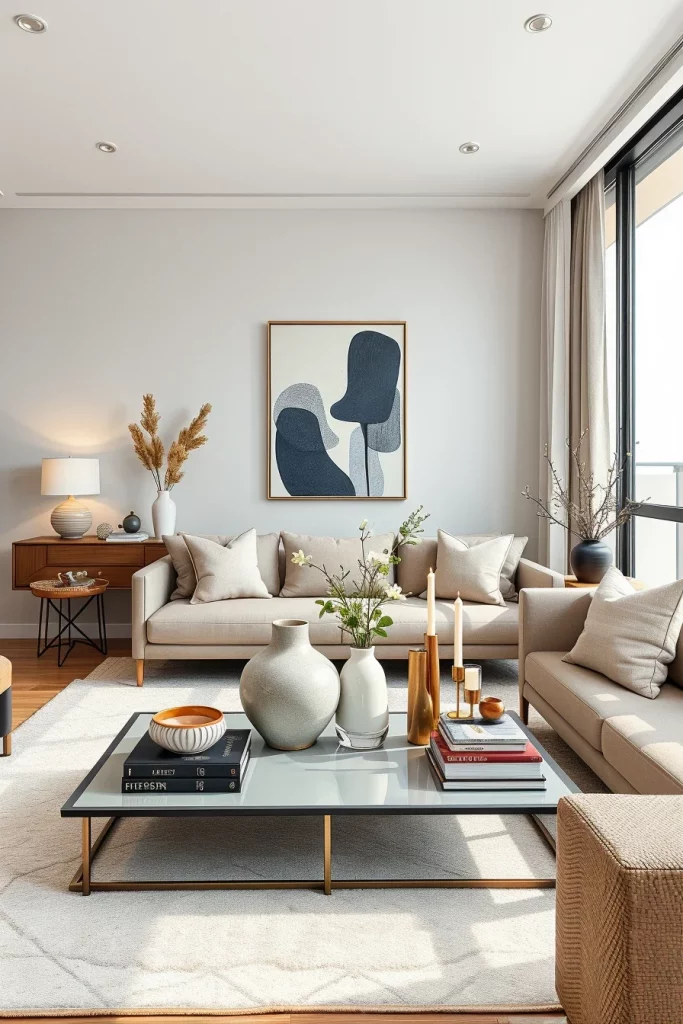
From my experience, editing is one of the most important stages in minimalist design. I often remove several accessories after initially styling a room because a more restrained approach almost always produces a stronger visual impact. Minimalist interiors succeed when every element serves either a practical or aesthetic purpose.
I would recommend reassessing the room seasonally and removing unnecessary items to maintain the clean, organized appearance that defines modern minimalist living.
A minimalist apartment living room proves that simplicity can be both stylish and functional. By focusing on clean lines, thoughtful furniture choices, and a balanced color palette, you can create a space that feels calm, spacious, and welcoming. Use these ideas as inspiration to design a modern living room that reflects your personal style while maintaining the beauty of minimalism.