
Your front yard is the first thing people see, so why not make it something worth stopping for? These 35 front yard landscape ideas prove that curb appeal doesn’t have to mean a boring lawn and a single shrub.
From modern minimalist setups with geometric water features to cottage gardens with winding stone paths, you will find practical inspiration that suits your home’s architecture and your local climate.
Modern Minimalist Front Yard with Geometric Water Feature
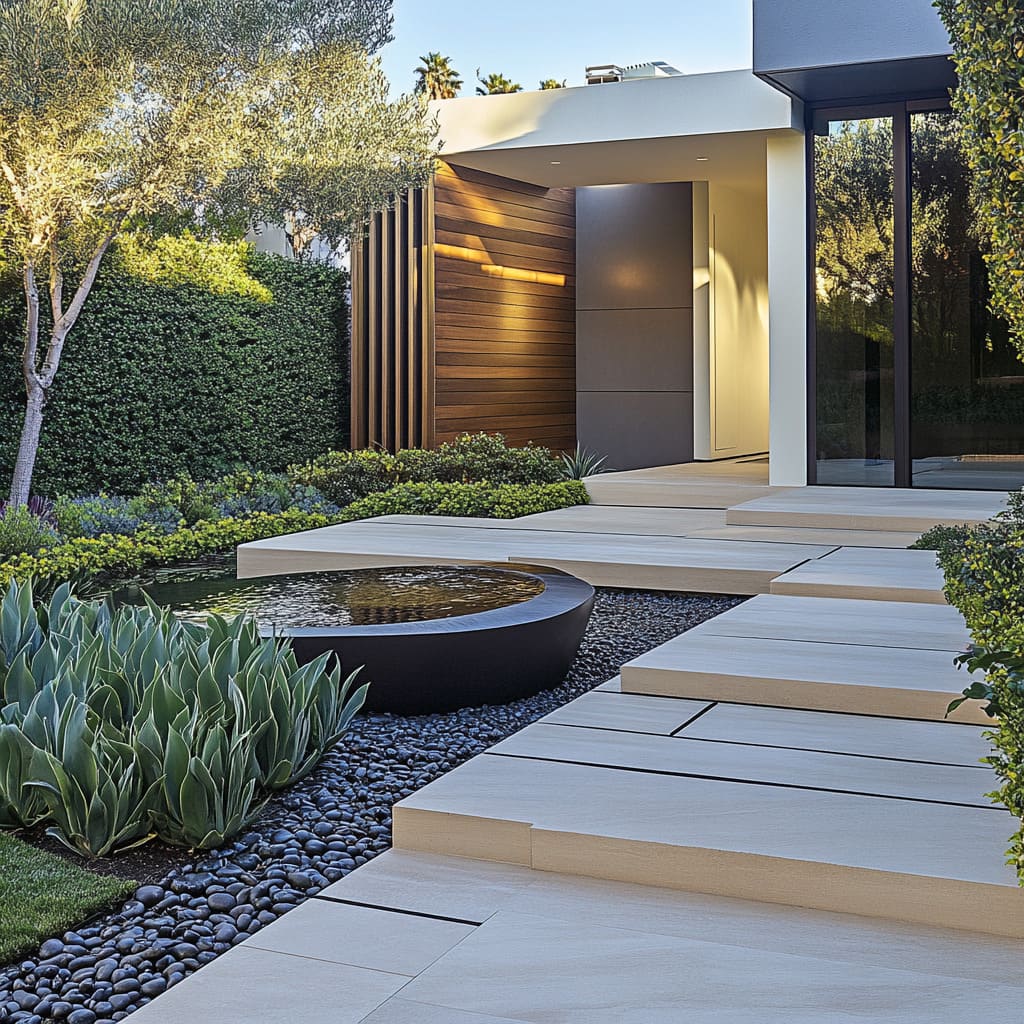
A rectangular water basin set into a grey stone pathway does more than reflect the sky; it anchors the entire front yard landscape. The clean lines of the water feature echo the geometry of the concrete steps and the horizontal slats of a wood privacy screen nearby. Gravel beds and low green planting keep the eye moving along the path toward the modern house entrance. This layout works because the water element is both a focal point and a directional cue, guiding visitors without the need for a traditional walkway.
Striking Modern Front Yard with Copper Roof and Concrete Pathway
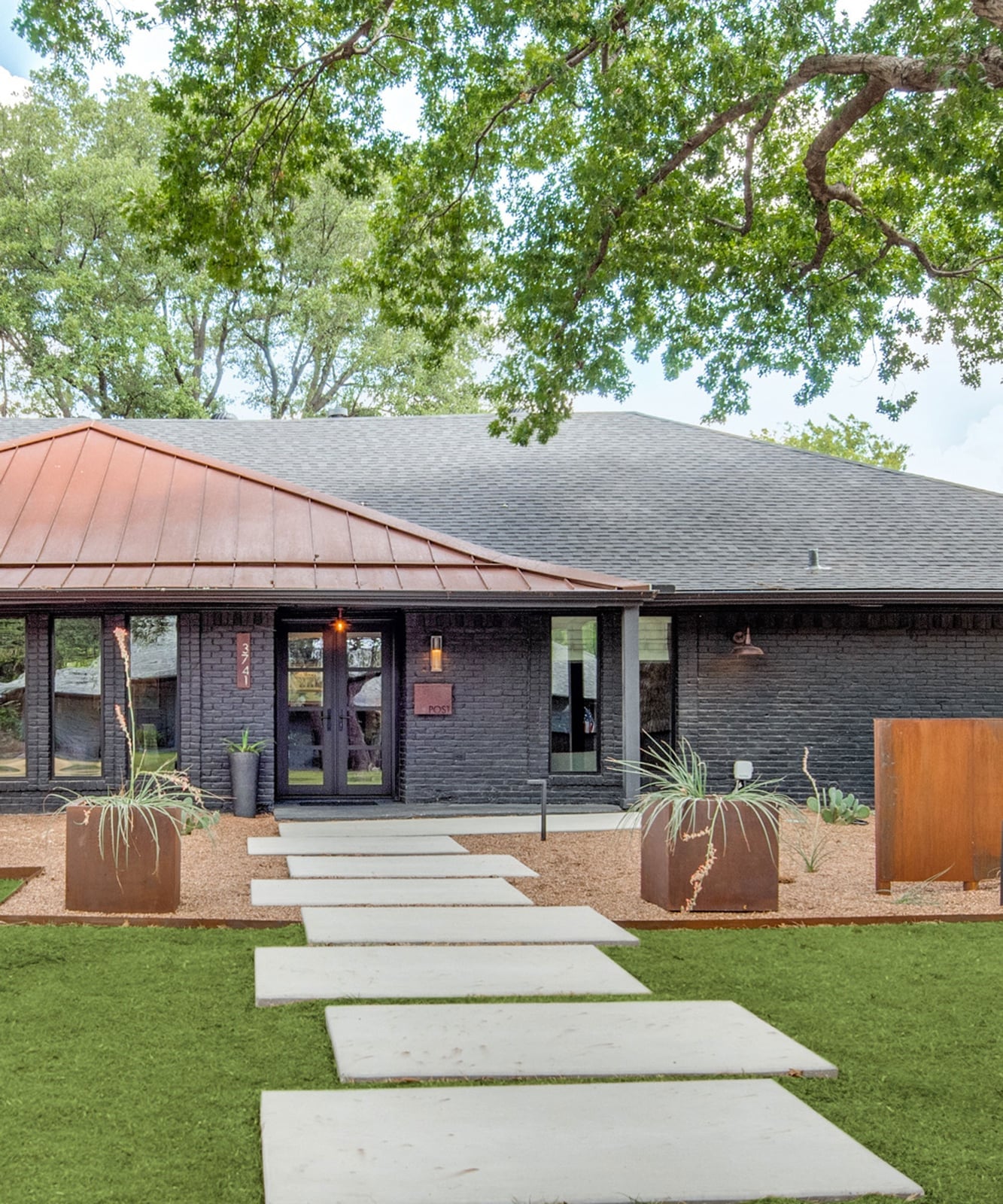
A dark brick facade sets a serious tone, but the copper roof and concrete stepping stones keep the front yard landscape from feeling heavy. Large square planters with low green shrubs add a soft, living contrast to the hard materials. The pathway uses wide, flat concrete slabs spaced apart, which makes the walk to the entrance feel deliberate rather than rushed. Gravel fills the gaps between the stones, helping drainage and giving the ground a uniform texture. The copper roof is the surprise element; its warm metallic tone breaks up the black and grey palette without adding clutter.
Clean-Lined Modern Front Yard with Grass and Concrete Pathway
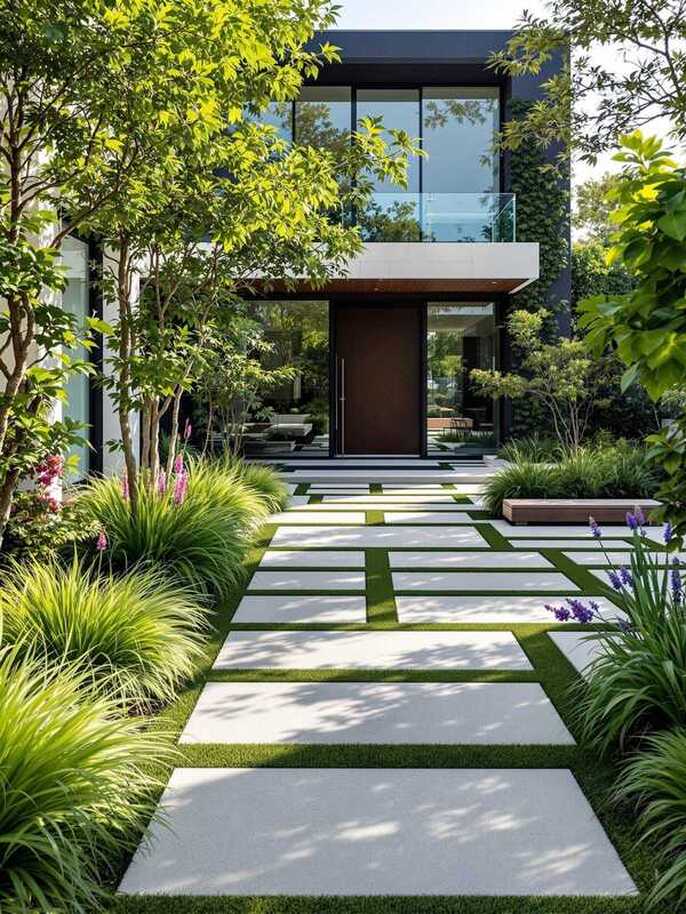
A pathway of oversized concrete slabs set into a green lawn makes a front entrance feel both open and intentional. Each stone is large enough to stand on comfortably, so the walkway reads as a series of landings rather than a narrow strip. The lawn around the slabs stays low and even, which keeps the overall front yard landscape clean and unfussy.
A modern house with white and brown exterior finishes sits behind the path, and the simplicity of the materials lets the architecture stand out. No fences, no borders, no extra planting. The grass and concrete work together as a single surface, just broken into two textures. For a yard that gets steady foot traffic, this setup means less worn grass and a clear route that does not fight with the yard.
Geometric Driveway and Walkway in a Modern Front Yard
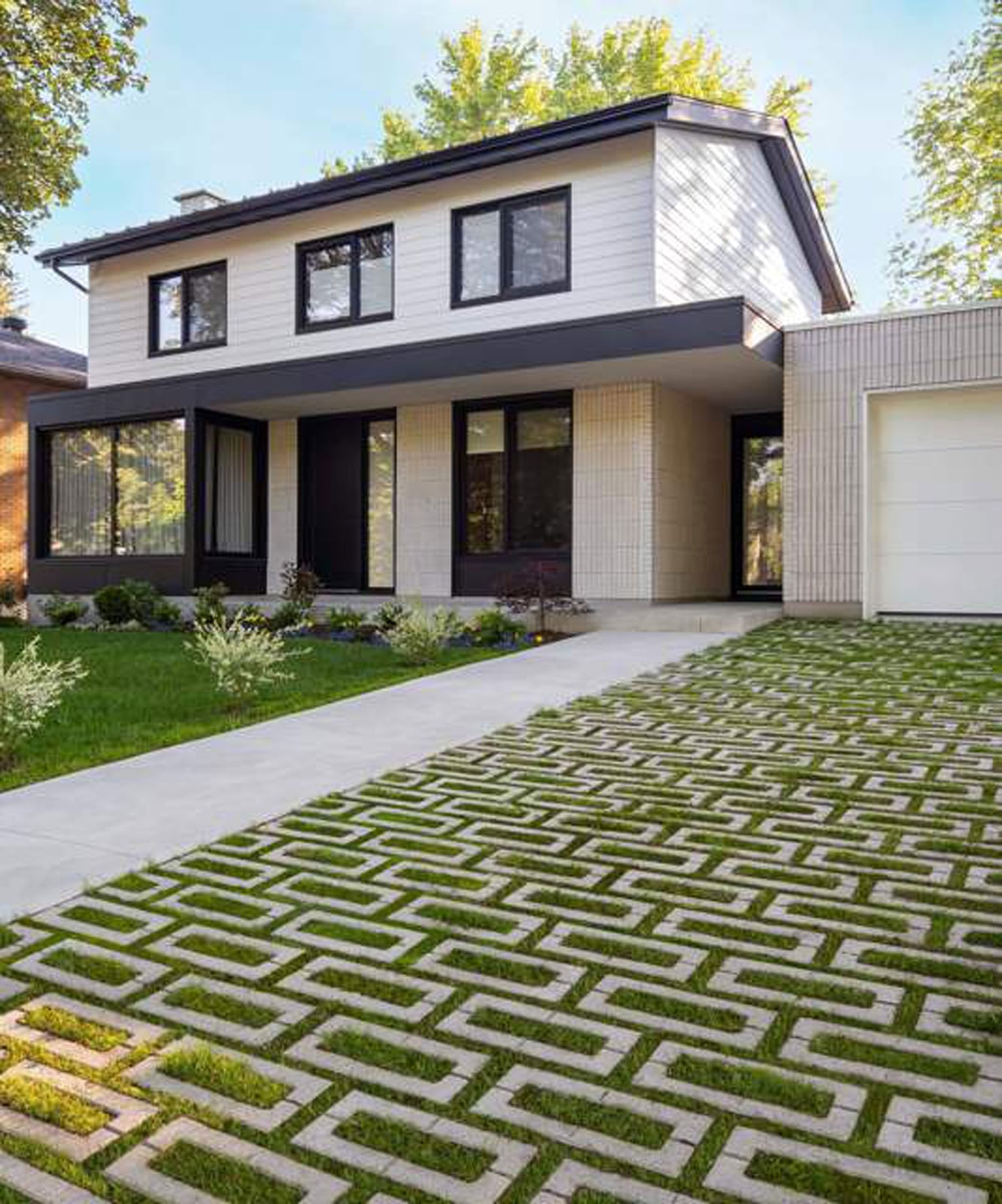
A grid of concrete rectangles set into a grass surface turns a driveway and walkway into a design feature. The repeating pattern breaks up what could be a large expanse of pavement and lets the lawn breathe between the slabs. Bright daylight sharpens the contrast between the pale grey concrete and the green grass, making the geometric layout even more pronounced. The modern house behind it has clean lines that match the structured paving, so nothing feels mismatched. This front yard landscape proves that a driveway does not have to be a plain slab; it can be part of the visual order.
Autumnal Modern Front Yard with Stone House and Vibrant Gardens
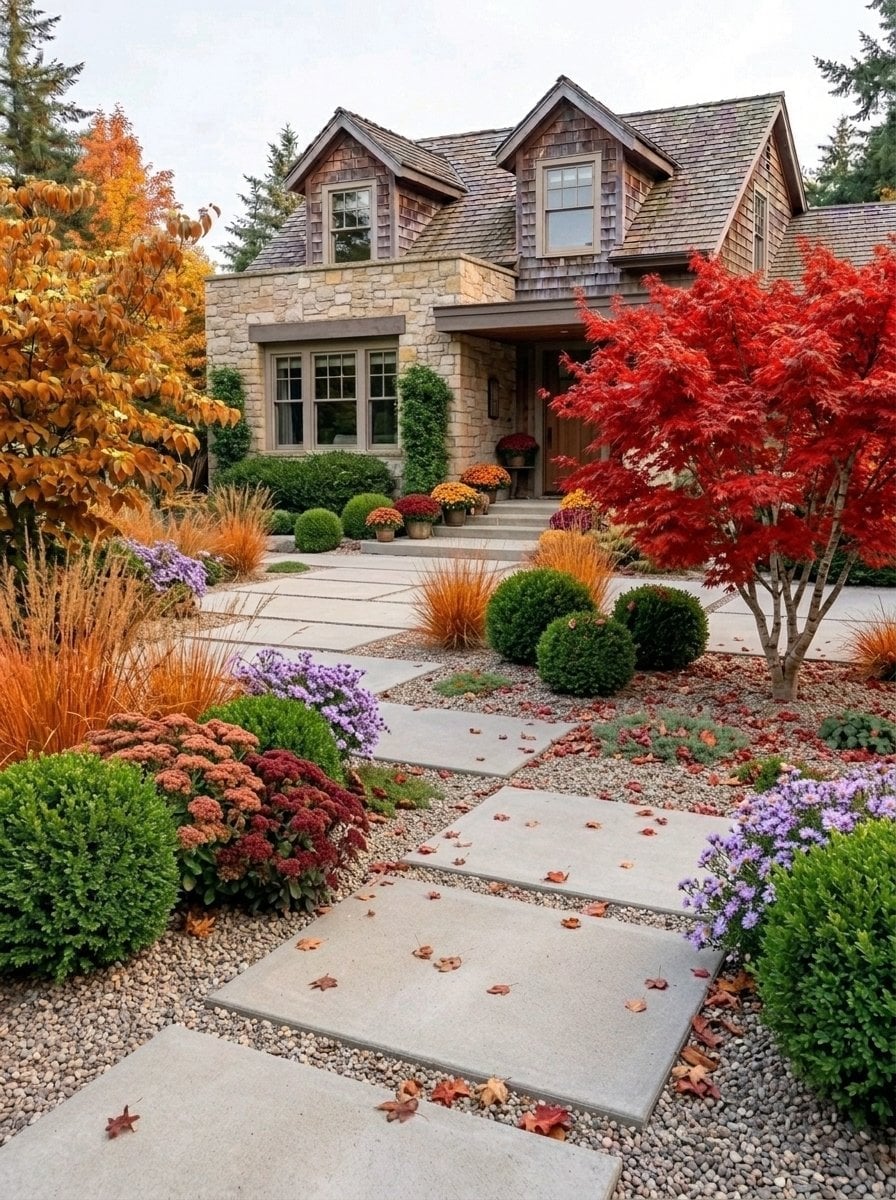
A practical rule for fall color in the front yard is to pair warm foliage with cool hardscape. Here, a stone house in muted grey provides the neutral backdrop for ornamental trees turning red and orange. A straight concrete path cuts through garden beds filled with purple and green plants, giving the eye a clear route to the entrance. The palette shifts with the season, but the stone, concrete, and gravel stay consistent year-round. That balance means the front yard landscape can change its colors without requiring a full redesign. Just swap in seasonal blooms or let the trees do the work.
Contrasting Gravel Beds in a Modern Minimalist Front Yard
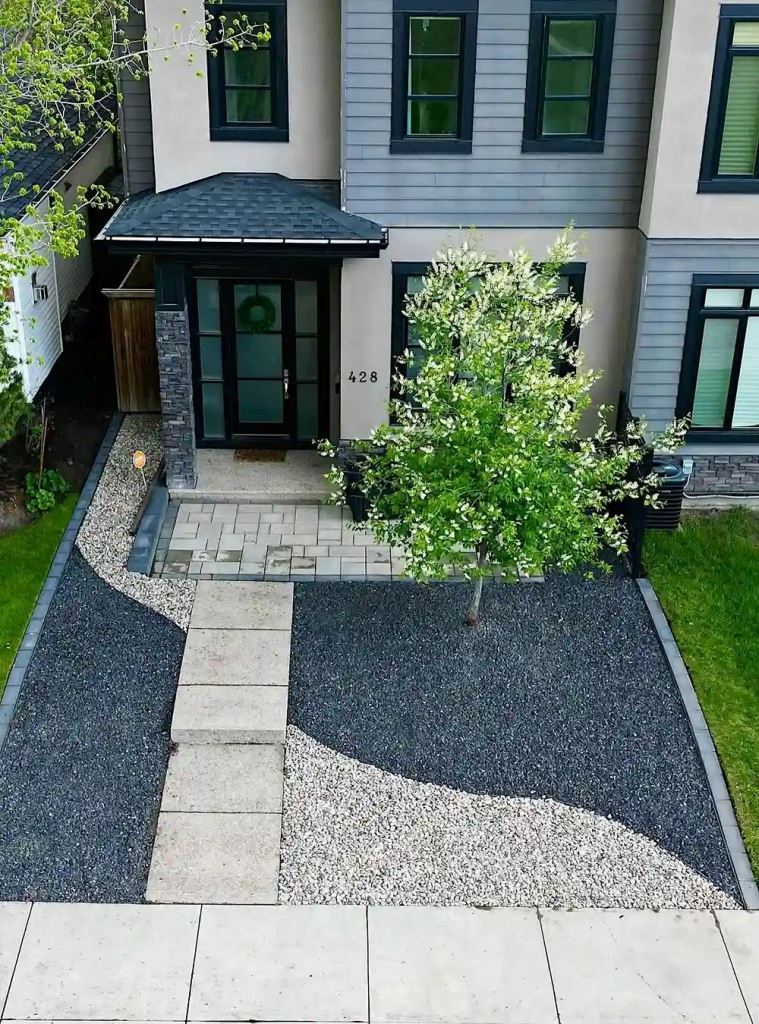
A minimalist front yard with a single type of gravel can feel flat. This design solves that by pairing two distinct gravel textures in separate beds. A straight concrete path cuts through the space, while the gravel beds curve around it, adding visual movement without clutter. The dark grey gravel near the house contrasts with a lighter grey bed closer to the street, and a small tree planted in one bed breaks up the horizontal plane. The palette stays restrained: grey, black, white and green. Choose gravel that contrasts in tone or particle size. The straight path keeps the layout grounded, so the contrasting beds feel deliberate. This approach works when the yard stays simple.
Room mode explains the whole space. The front yard lives as one composition: the pathway anchors it, the gravel beds frame it, and the modern house sets the backdrop. The layout uses a straight line for circulation and curves for the planted areas, which keeps the roomy yard from feeling empty. The material mix of stone, concrete and gravel repeats the house’s clean geometry. Overcast daylight softens the contrast between the gravel tones, so the palette still feels cohesive.
Terraced Hillside Front Yard with Stone Pathway and Concrete Stairs
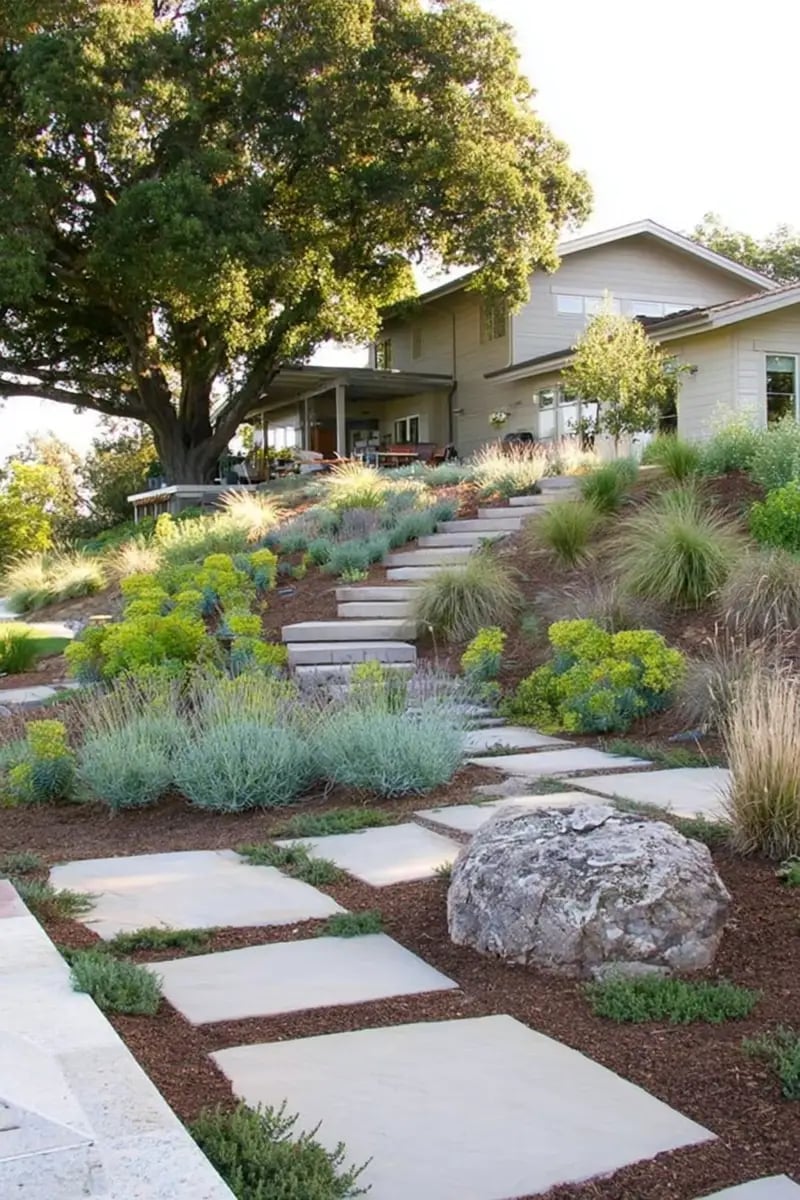
The stone pathway and concrete stairs are built directly into the slope, creating one integrated system on the terraced hillside. Large stone slabs form the walkway, with concrete steps managing the change in elevation. The palette of green, grey, beige and yellow ties the hardscape to the drought-tolerant plants and the large rock placed near the path. For a renter-friendly approach, use permeable gravel or mulch between terraced beds instead of pouring concrete. The terraced layout breaks the hillside into usable flat zones, which makes the roomy yard feel like a series of outdoor rooms. Slightly overcast light keeps the stone and concrete tones muted, letting the plant foliage stand out.
Geometric Raised Garden Beds in a Modern Front Yard
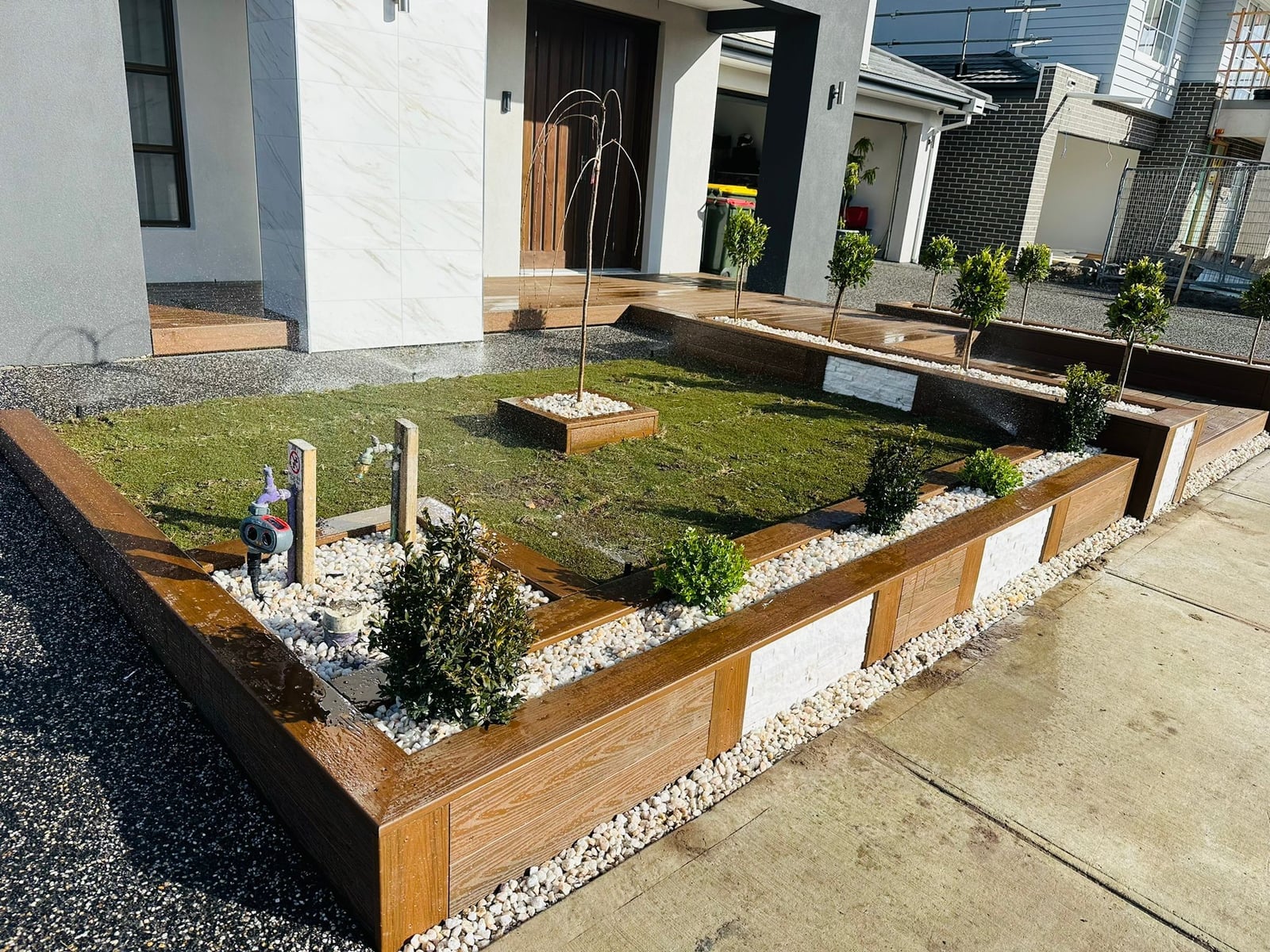
Raised garden beds define this modern front yard. The beds are made from wood composite and stone, arranged in geometric shapes with pathways between them. Small trees and shrubs are planted inside the beds, while grass fills the open areas. The palette stays natural: green, brown, white and grey. The layout uses the raised beds as structural elements that organize the space without fencing or walls. Because the beds are geometric, they echo the house’s architecture. The beds keep the yard looking tidy even when the plants are not in full bloom. Daylight makes the wood composite and stone textures readable, which adds depth to the simple palette.
Traditional Front Yard with Green Lawn and Purple Salvia Border
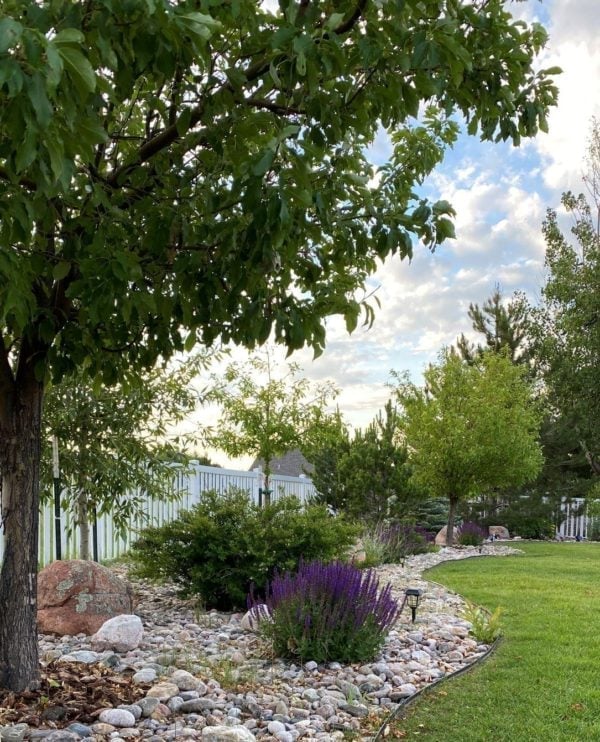
How do you add color to a traditional front yard without a full garden redesign? A purple salvia border along a curved stone edge does the job with one plant. The lawn stays green and open, while the salvia creates a distinct purple line that separates the grass from the foundation planting. White flowers appear in the beds near the house, so the palette is green, purple and white. The curved stone border softens the transition between lawn and garden. Choose a single flowering plant in a strong color and repeat it along the border. This approach works because the lawn remains the dominant element, and the color acts as an accent. Overcast daylight keeps the purple tone from washing out, and the stone border adds texture where the lawn meets the bed.
Modern Front Yard with White Raised Planter and Cascading Plants
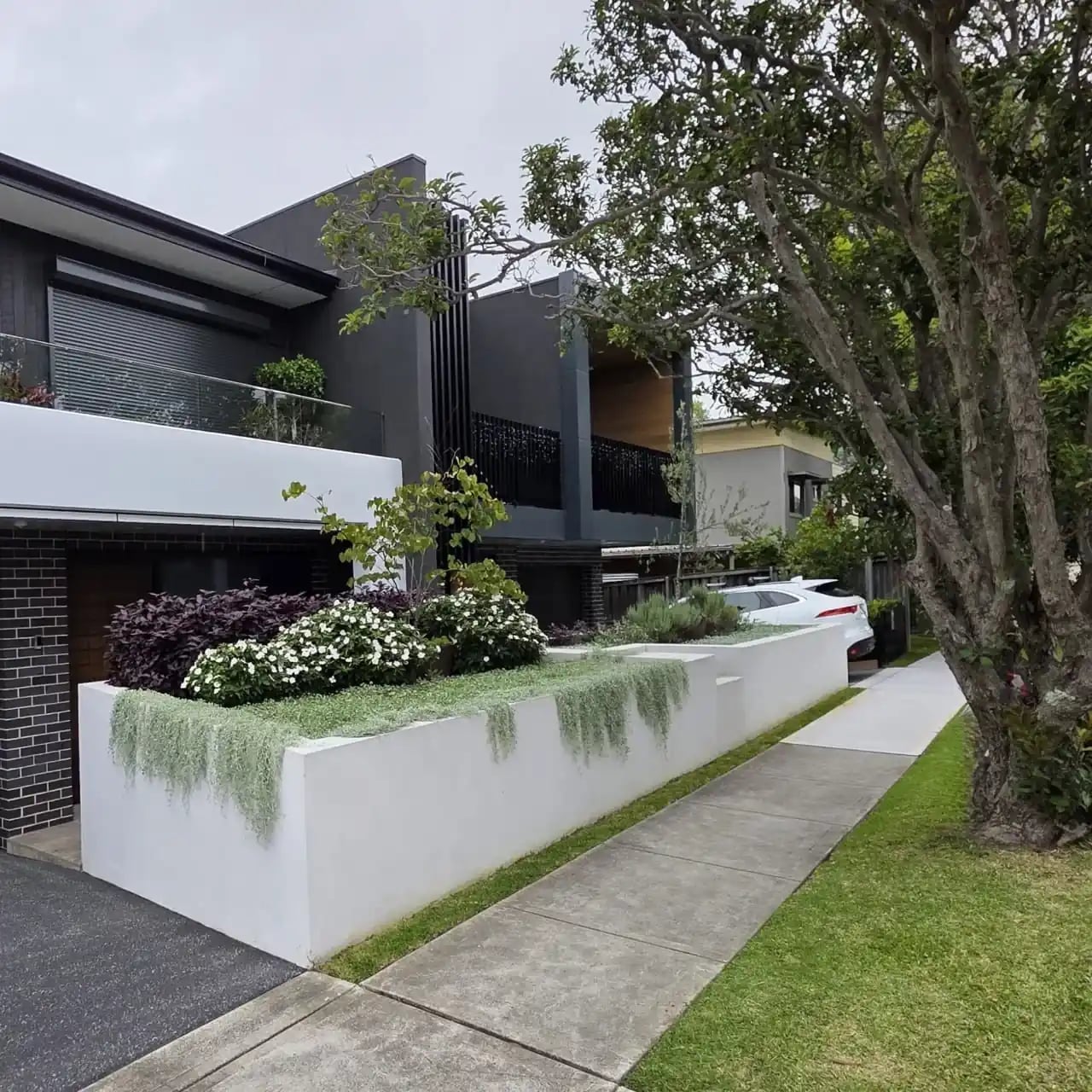
A white concrete raised planter sits at the center of this modern front yard, with cascading plants spilling over its edges. The planter is large enough to act as a sculptural element, and its white finish contrasts with the dark grey of the house and the grey stone ground cover. Artificial turf fills the area around the planter, which keeps the yard green without the upkeep of grass. Choose a planter that is oversized relative to the house so it becomes a focal point, not an accessory. The cascading plants soften the planter’s hard edges, which prevents the yard from feeling too rigid. Overcast daylight flattens shadows on the white planter, so the cascading shapes become the main visual interest.
Formal Garden Backyard with Circular Fountain and Gravel Paths
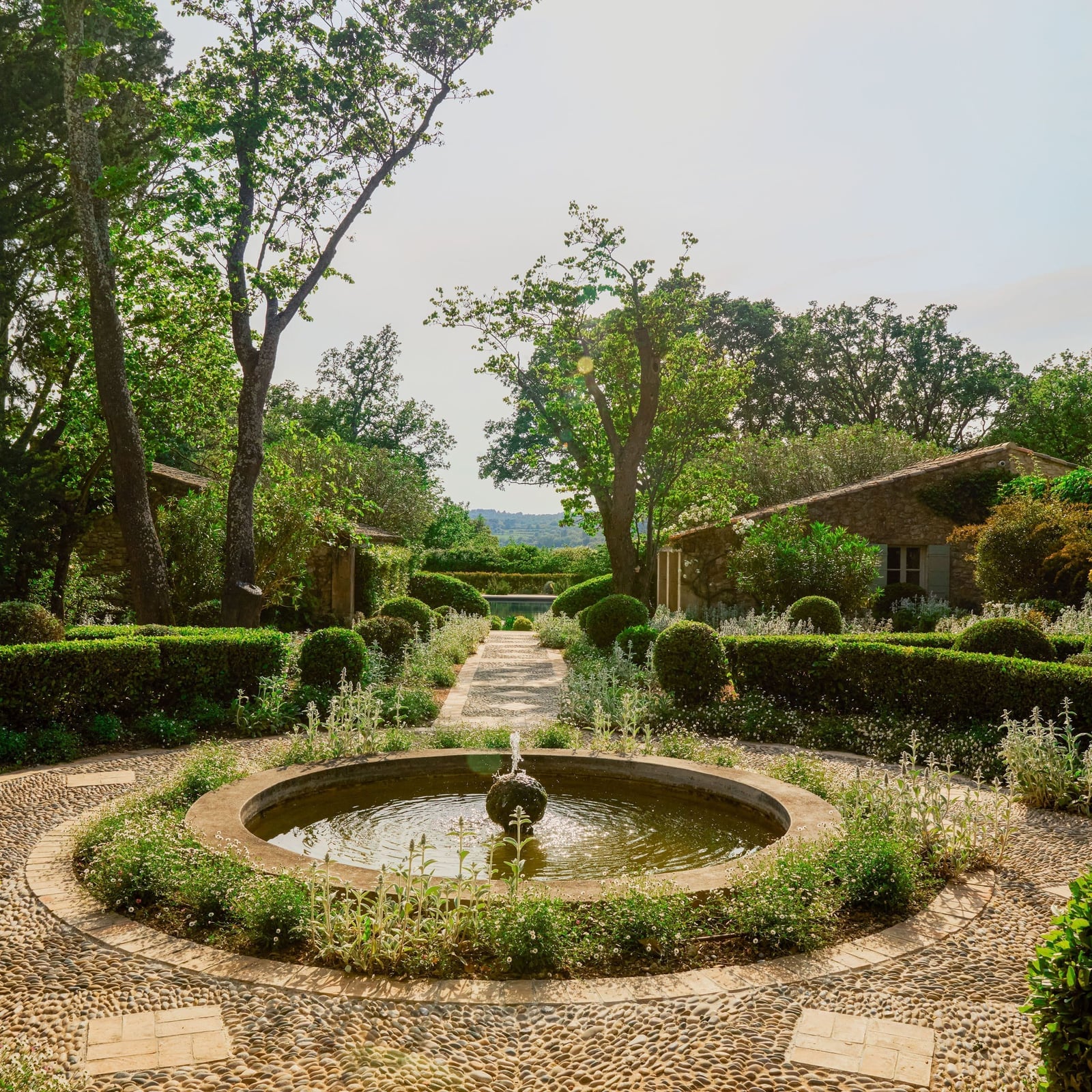
A formal garden layout is anchored by a single central feature. Here, a circular fountain sits at the center of a symmetrical backyard, with gravel paths radiating outward between manicured hedges. The stone fountain and pale beige gravel keep the palette restrained, while the green hedges provide structure. Bright daylight highlights the water and white stone against the lawn. The arrangement creates a clear visual order that guides the eye from any point in the garden back to the fountain. To recreate it, look for one focal point and build your paths and planting beds around it.
Southwestern Xeriscape Front Yard with Large Agave
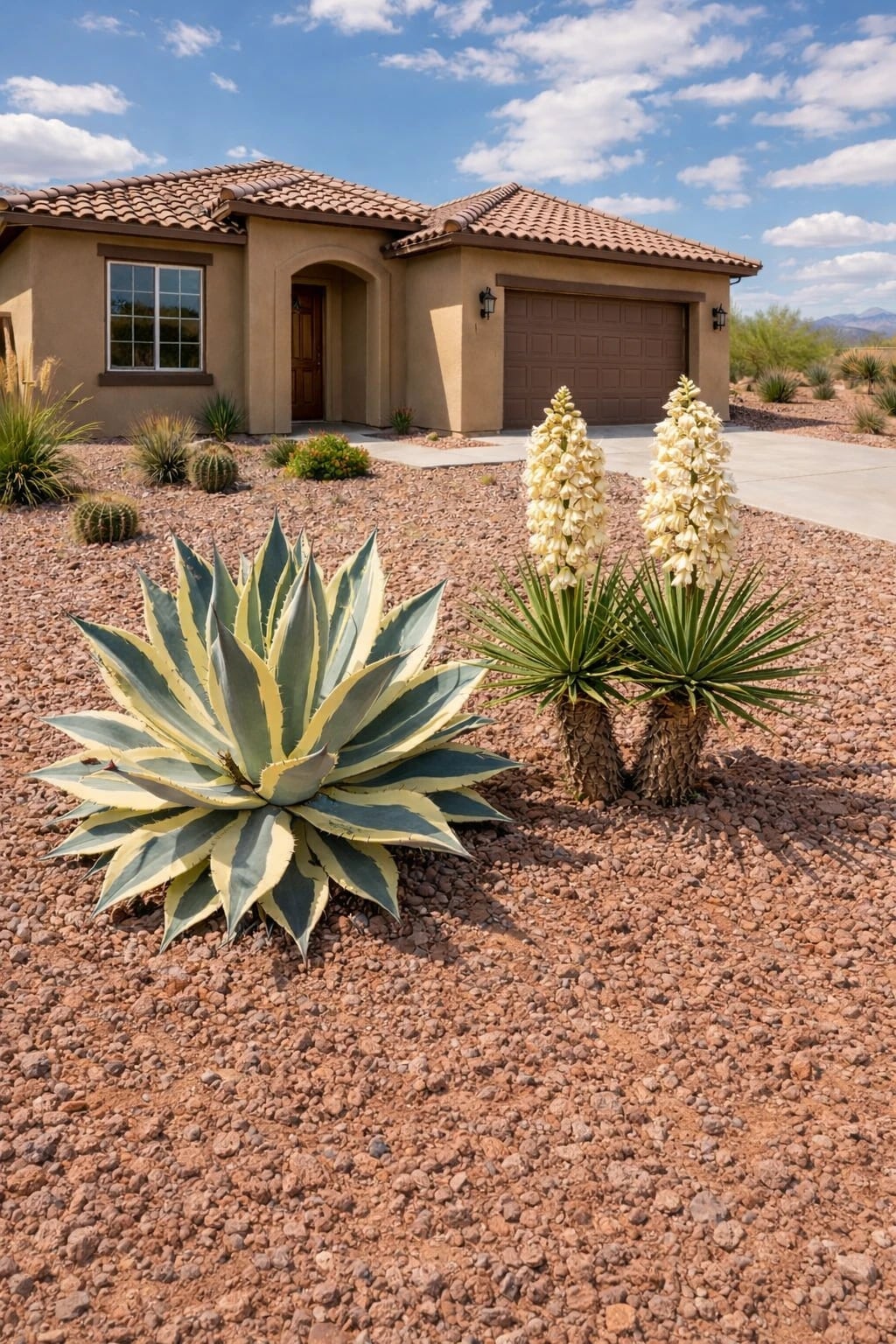
A xeriscape front yard trades a thirsty lawn for a palette anchored by a single bold specimen. A large variegated agave takes center stage here, its blue-green and yellow striped leaves rising from a bed of tan gravel. Around it, yucca and cacti repeat the same muted tones of green, yellow, and blue against the warm stucco house. The clear sky and natural daylight wash the scene without shadows that would compete with the plants’ own sculptural forms.
The gravel ground cover does more than save water. It sets off each plant like a piece on a gallery floor, letting the agave’s repeating leaf pattern and the yucca’s vertical spikes each read clearly. The palette is tight but not boring, because the plants offer variation in texture and silhouette rather than color.
Naturalistic Backyard with Stone Patio and Water Feature
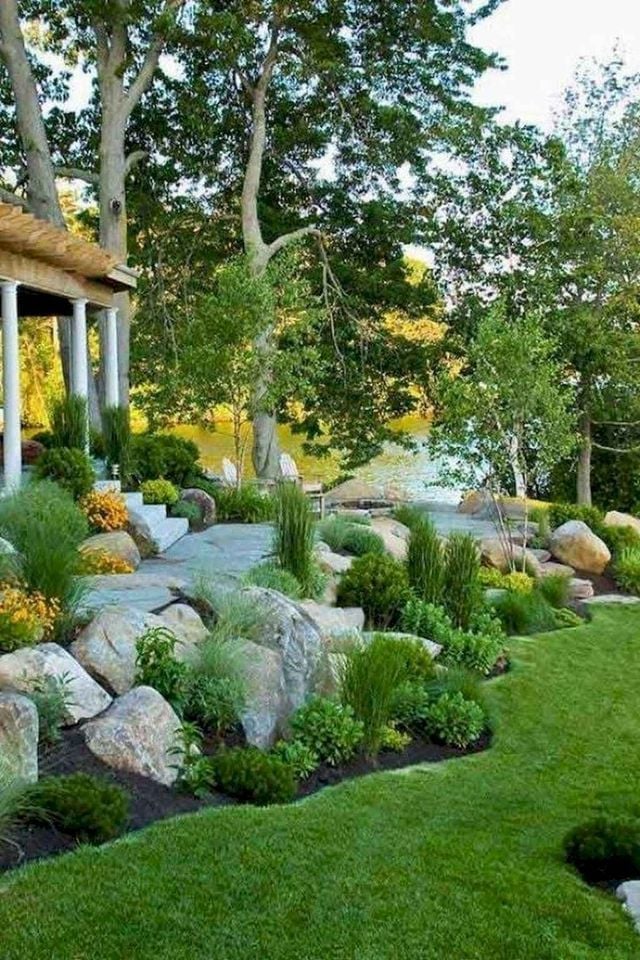
The stone patio here feels like it grew out of the ground rather than being laid on top of it. Large boulders sit at the edge of a flagstone patio, with lush greenery crowding up to the stone and a water feature tucked into the planting. The grey stone, green leaves, and blue water share a muted natural palette that softens the boundary between built and wild. Mulch paths curve away from the patio into the garden. The effect is a backyard that looks established and settled, as if the stone has been there long enough for the plants to reclaim the edges.
Modern Front Yard with Winding Pathway and Colorful Gardens
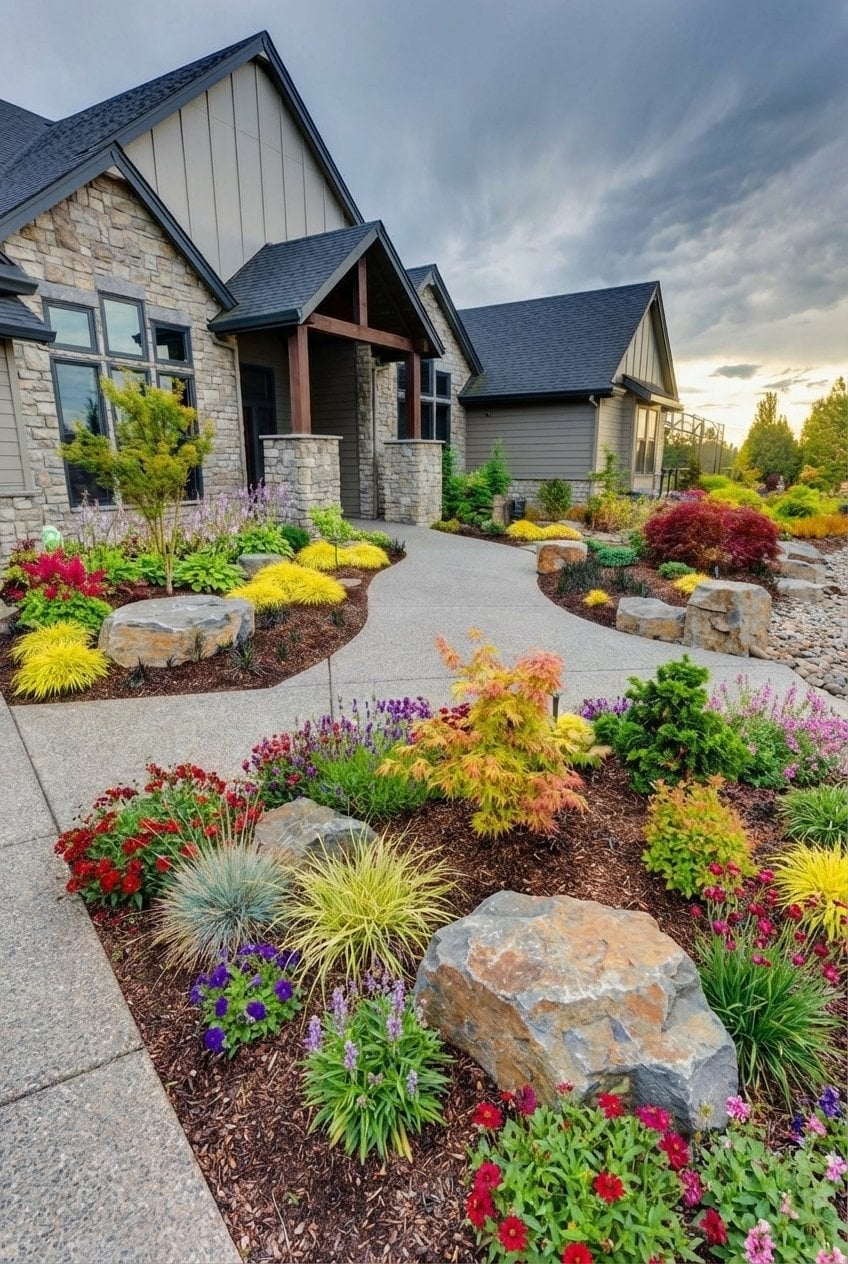
This front yard proves that a modern landscape does not have to mean all green and grey. A winding concrete path cuts through dense planting beds packed with yellow, red, and purple flowers alongside ornamental grasses and large boulders. The palette is deliberately high-contrast: the cool grey concrete and beige gravel set off the warm flower colors, while the boulders add a neutral anchor point. Under overcast daylight, the colors stay saturated without harsh shadows. The path curves just enough to hide the front door from view at the street, which makes the walk to the entrance feel longer and more intentional.
Naturalistic Front Yard with Grass-Inlaid Flagstone Pathway
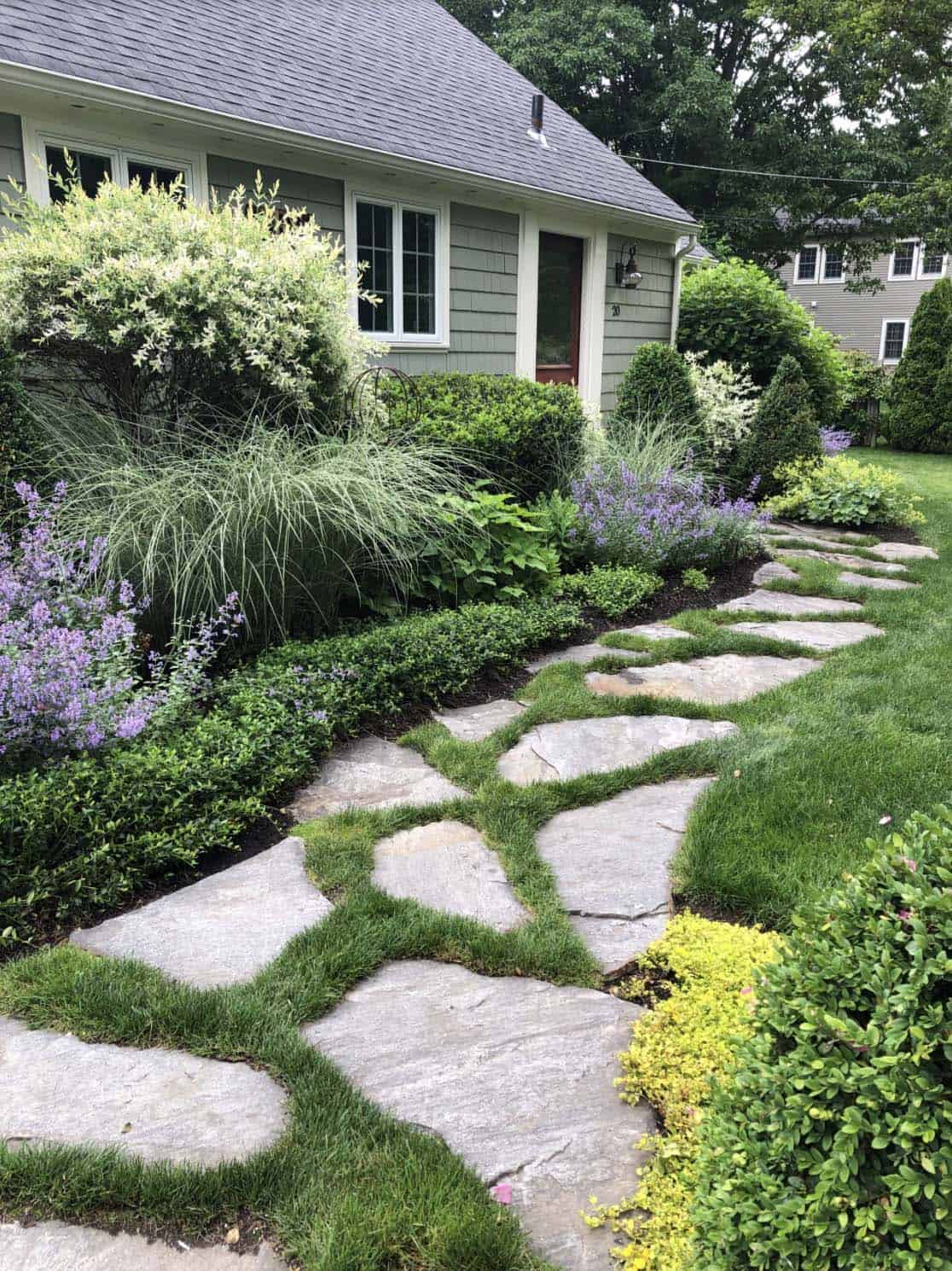
A pathway that lets grass grow between the stones signals a relaxed, established landscape. Here, a flagstone path winds through lush garden beds toward a small house, with purple flowers and green foliage spilling over the edges of the stone. The grass growing in the gaps softens the hard lines of the irregular flagstones and blends the path into the lawn. For this look, the stones should be set at ground level so a mower can pass over the grass without hitting the stone edges.
The natural daylight keeps the greens and purples true without washing them out. The path’s winding route through the planting beds makes a compact front yard feel larger by drawing the eye along a meandering line instead of a straight shot to the door.
Modern Cottage Front Yard with Layered Planting and Curved Path
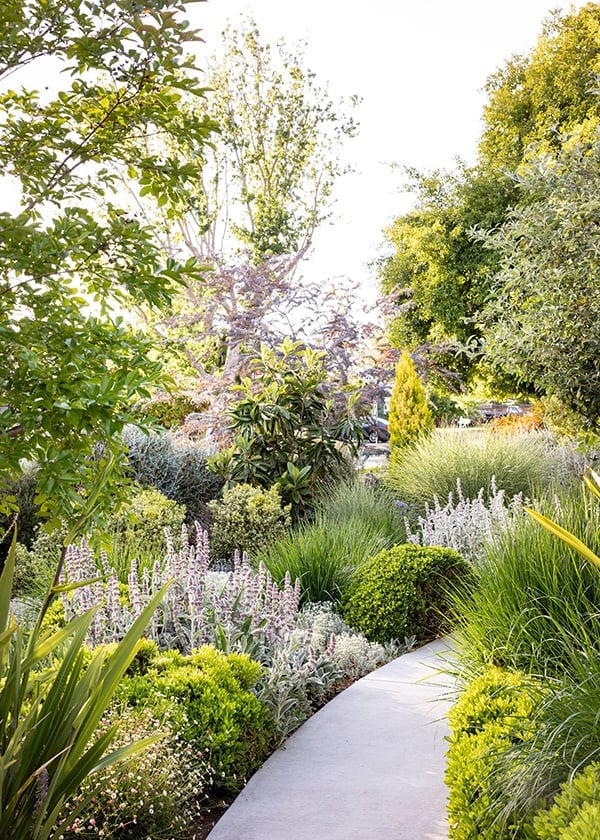
A curved path forces you to slow down, which is exactly what a cottage garden needs to feel settled. This front yard uses a winding stone path that cuts through garden beds filled with green, grey, white, and purple plants, so the walkway feels like part of the planting rather than a line drawn through it. The layered planting means taller shrubs sit at the back, with lower perennials and ground cover spilling onto the gravel and stone. The palette stays restrained enough that the cottage style does not tip into chaos, and the compact layout keeps the garden from feeling empty. A straight path would rush the eye to the door. This one lets the planting lead.
Traditional Garden Path with Irregular Stone Pavers, Close-Up Take
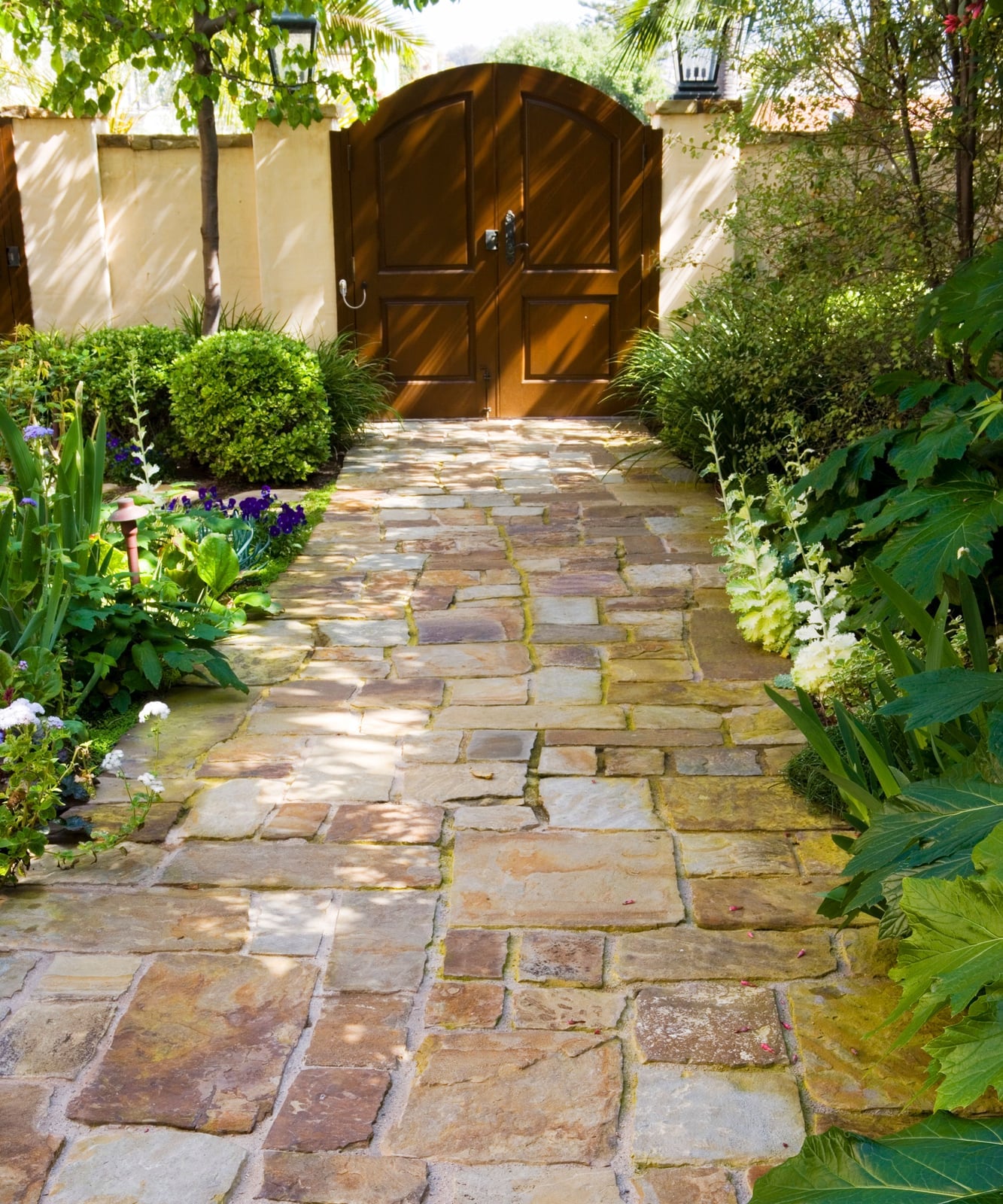
Irregular stone pavers look more established the more they vary in shape and size. This traditional garden path uses tan and grey stones set into a bed of greenery, with purple and white flowers spilling in from both sides. The irregular edges keep the path from looking like a factory product, and the dappled sunlight filtering through overhead trees softens the hard stone against the soft planting. A wooden gate at the end of the path adds a natural stopping point. For a renter-friendly version, you can lay large concrete stepping stones directly onto soil or gravel, no mortar needed. The same irregular spacing works, and you can pull them up when you move.
Contemporary Front Yard with Stone Paving and Gravel, Close-Up Take
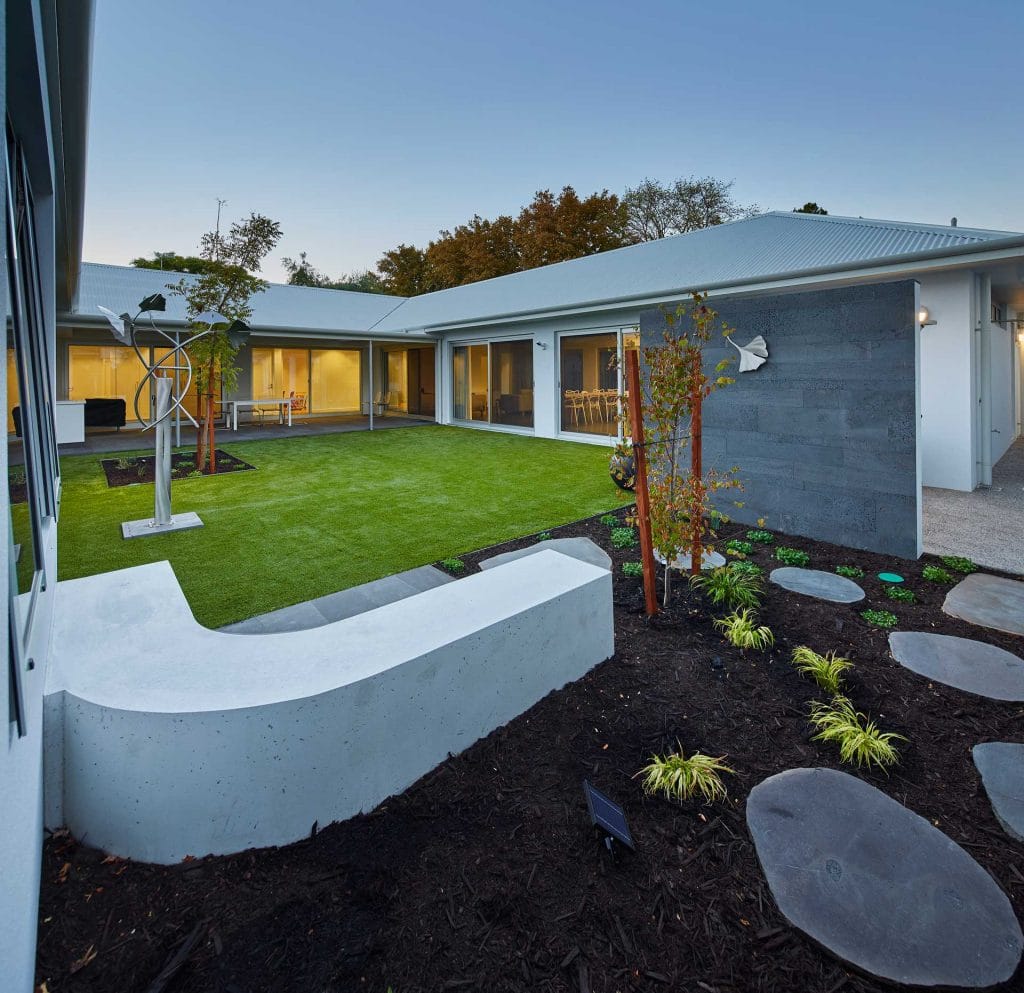
A contemporary front yard can lean too hard on concrete and end up feeling like a parking lot. This one avoids that by pairing stone paving with gravel areas, letting the two materials define different zones without a hard boundary. The stone paving forms the main pathway and a small patio area near the house, while the gravel fills the garden beds and softens the transition between hardscape and planting. The palette of green, grey, brown, and white keeps the look cohesive, with low shrubs and ornamental grasses rising from the gravel beds.
The modern house facade provides the clean backdrop, so the landscaping does not have to compete. The gravel also helps with drainage, which is useful in a yard that sees heavy rain. The combination of stone and gravel gives the yard a structured but relaxed feel, and the diverse planting keeps it from looking like a showroom.
Modern Native Front Yard with Winding Brick Path, Close-Up Take
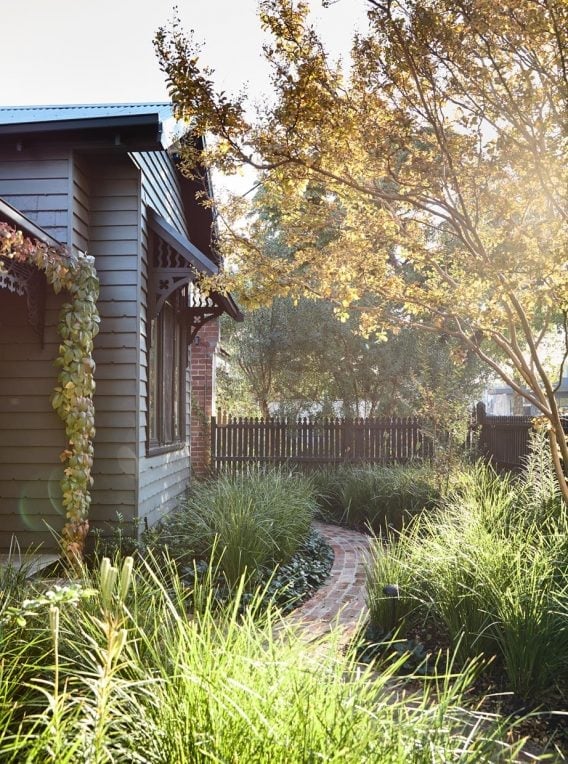
The golden hour light turns the native grasses and the winding brick path into a single warm glow, proving that a modern native front yard does not need a lot of color to feel rich. The path curves through layered planting beds filled with green and yellow grasses and white flowers, with dark mulch holding moisture around the roots. Stone edging separates the path from the beds, so the line between walkway and planting stays clean even as the plants grow. The daylight shift from bright to warm changes how the yard reads, but the layout stays the same: a winding route that makes a roomy front yard feel like a destination rather than a pass-through.
Cottage Garden Front Yard with Winding Stone Pathway, Close-Up Take
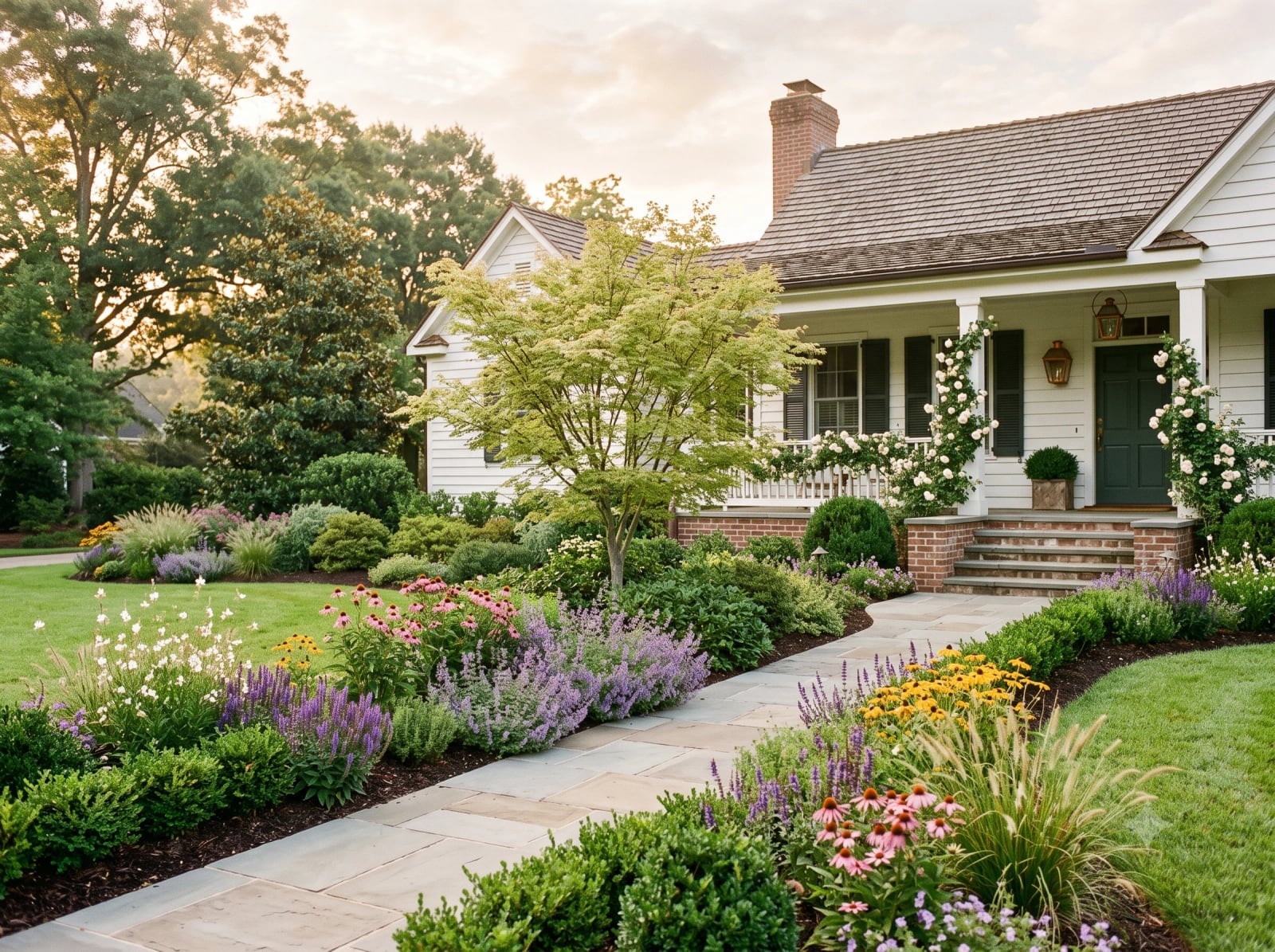
A winding stone pathway through abundant flower beds is the defining move of a cottage garden front yard, and this one gets the scale right. The stone path is wide enough for two people to walk side by side, so the lush planting on either side feels generous rather than cramped. The palette runs on green, pink, purple, and yellow, with the flowers layered from low ground cover up to taller perennials near the porch. A wooden porch and brick foundation keep the house grounded in the same natural materials as the path. The layout works because the path does not race to the door; it curves gently, letting each flower bed have its own moment.
Informal Cottage Garden Path with Lush Planting and Sunlit Trees
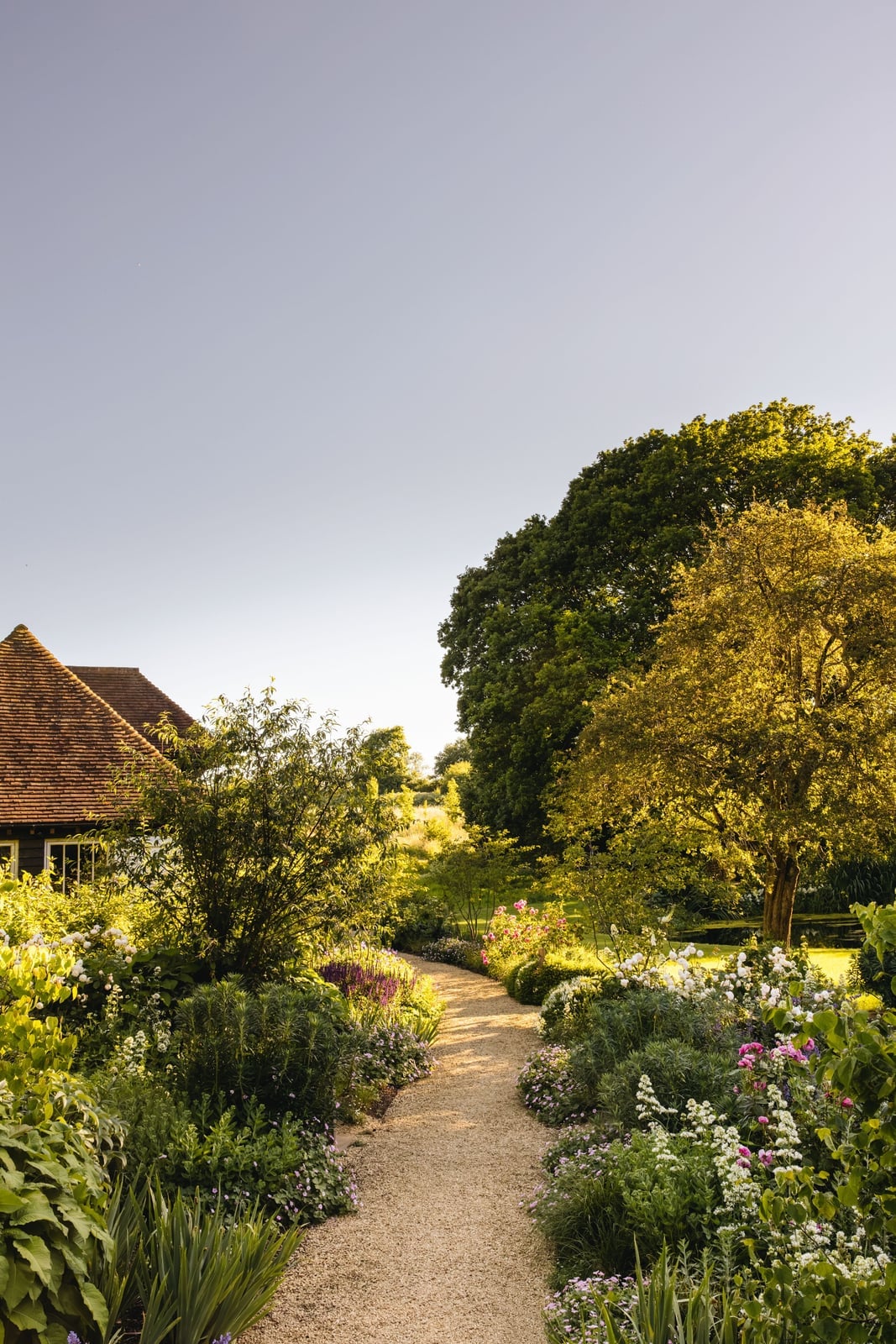
A winding path through planting that leans in from both sides slows you down, which is the whole point of a cottage garden. Here the gravel, stone, and wood path curves past mature trees and a rustic building, with green, pink, purple, and yellow blooms spilling over the edges. The layout makes you follow the route instead of cutting across, turning a walk to the door into a stroll. For a similar feel, keep the path narrow and let plants crowd the edges. A straight, wide walkway would be formal, not informal.
Modern Minimalist Front Yard with Stone Pathway and Gravel Beds
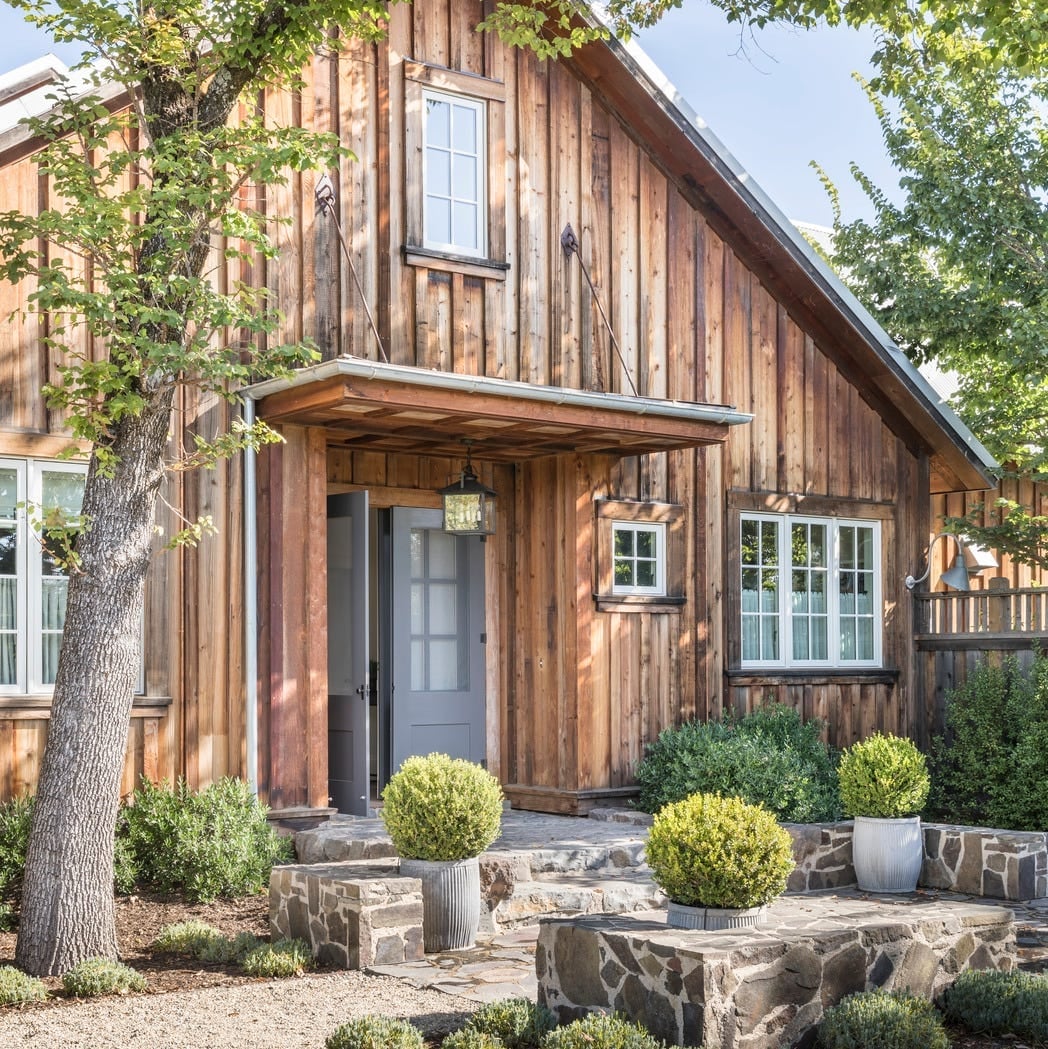
The stone pathway and gravel beds here form a clean, low-maintenance front yard in green, grey, brown, and white. Low shrubs and modern planters sit between the path and the house, with wood and concrete adding texture beside the stone. The palette stays restrained so nothing competes, which is the point: the eye follows the path to the entrance without distraction.
Modern Front Yard with Curved Brick Edging and Artificial Turf
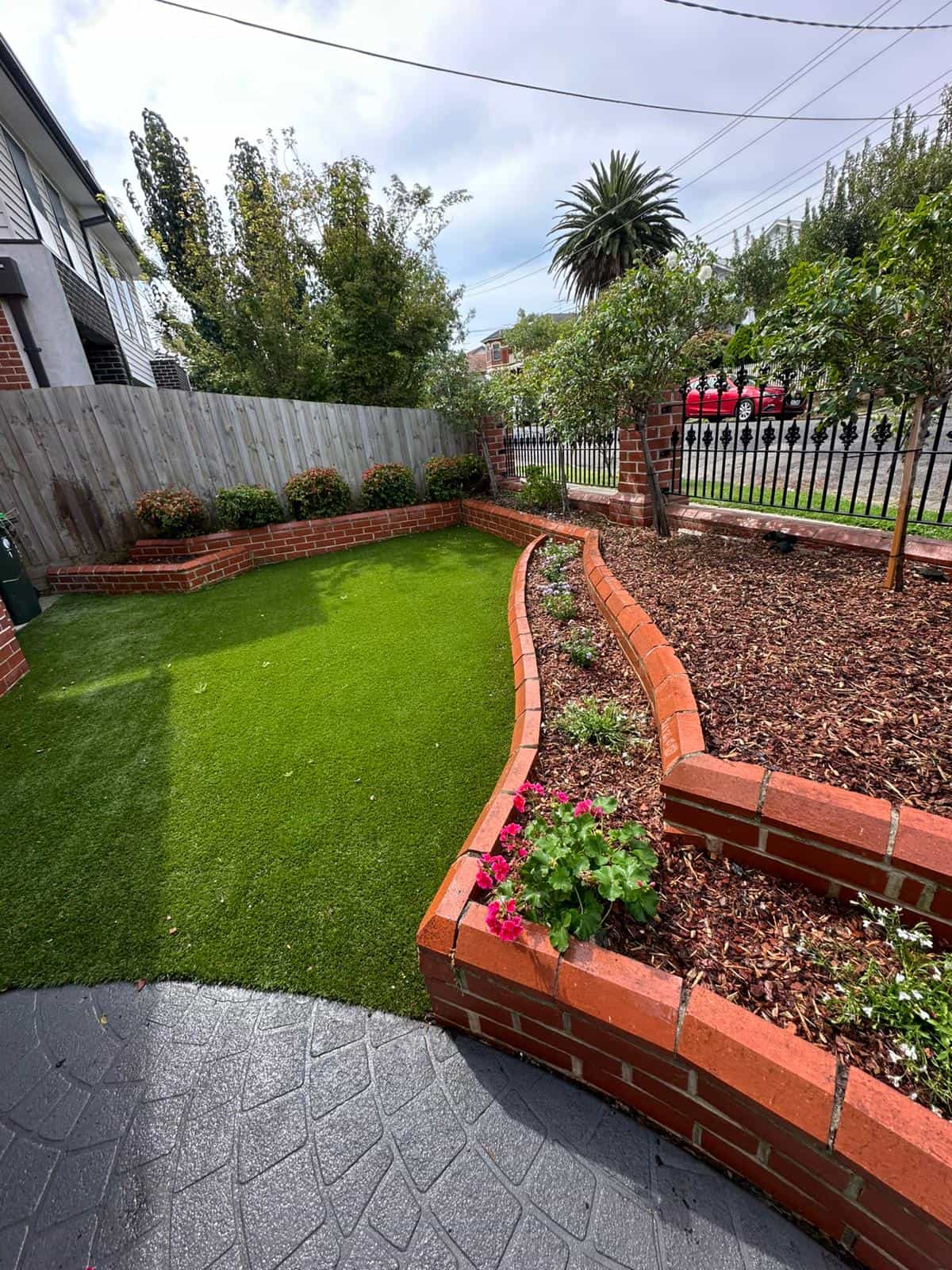
When you want defined zones in a compact yard, curved brick edging draws a clear line between materials without needing a hard fence. Here low red brick borders an artificial turf lawn, with dark mulch beds holding small plants around it. The soft green turf and rough red brick create a distinct visual separation, and the curve softens what could feel like a rigid geometry.
Classic Traditional Front Yard with Arched Entryway and Hedges
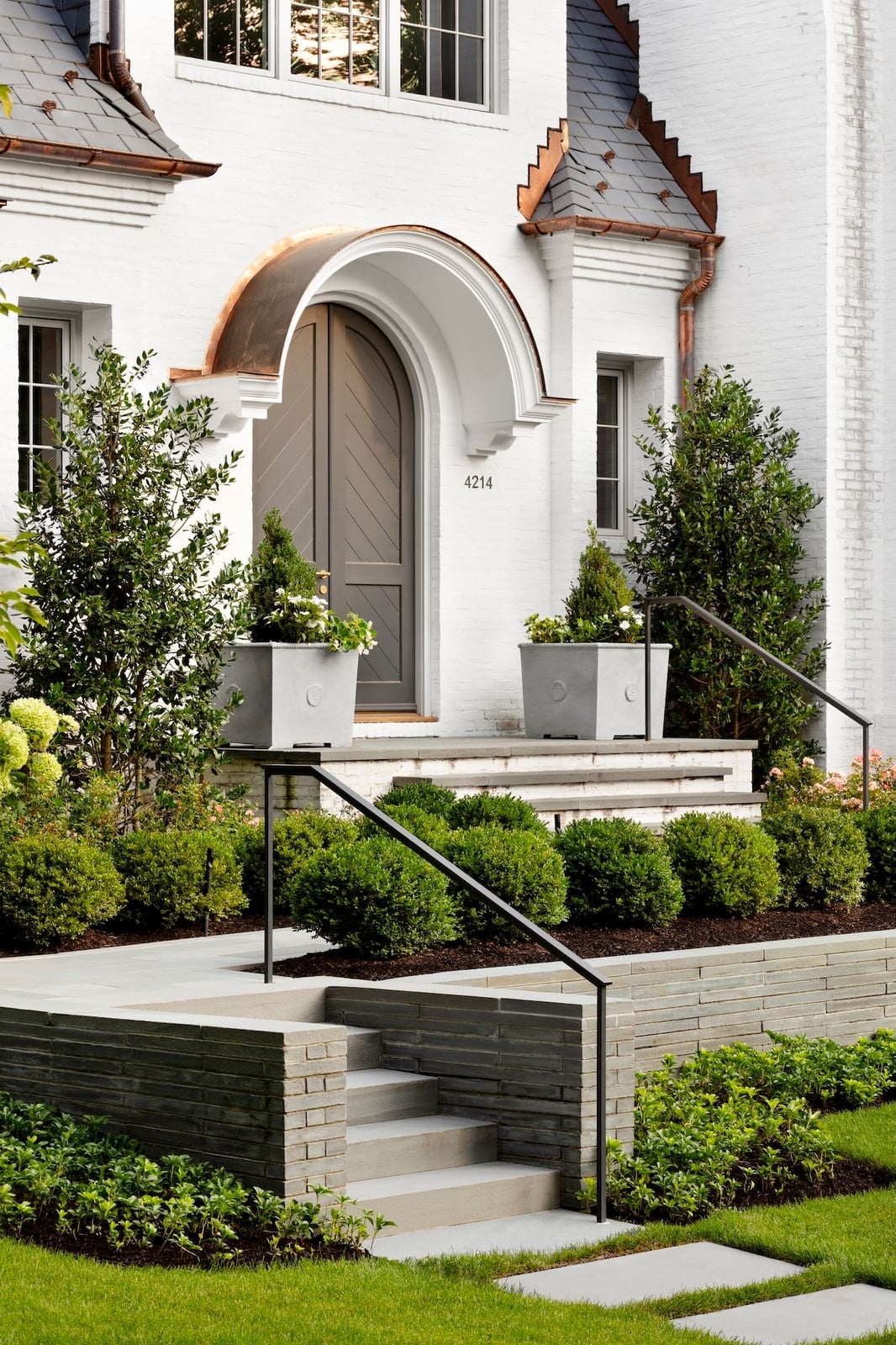
A formal symmetrical front yard can feel stiff, but this one avoids that by keeping the planting lush rather than clipped tight. Manicured hedges and potted plants frame the stone steps and arched entryway in green, white, grey, and copper. The natural daylight is enough during the day, but subtle exterior lights at the entry would keep the symmetry readable after dark. If you want a formal look that still feels welcoming, match the planters on each side of the door but let the greenery inside them grow a little loose.
Naturalistic Hillside Front Yard with Stacked Stone Retaining Walls
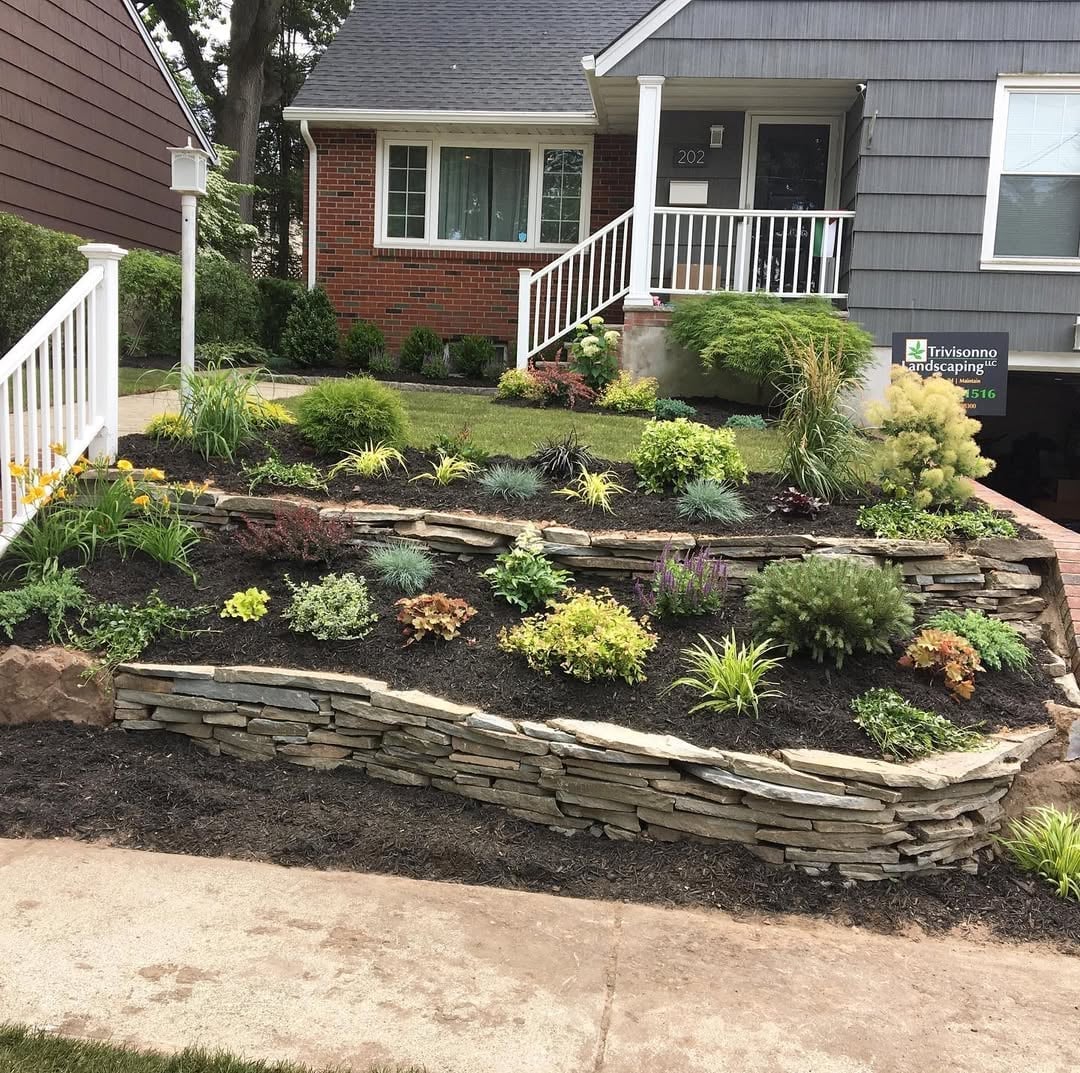
The stacked stone retaining walls here turn a slope into a series of terraced garden beds, each one a distinct layer of green, brown, grey, and pink plants. The stone anchors the hill and prevents erosion, while the varied planting softens the hard edge. This layout works because the walls follow the natural contour of the land rather than forcing a straight line.
Modern Front Yard with Manicured Lawn and Curved Pathway
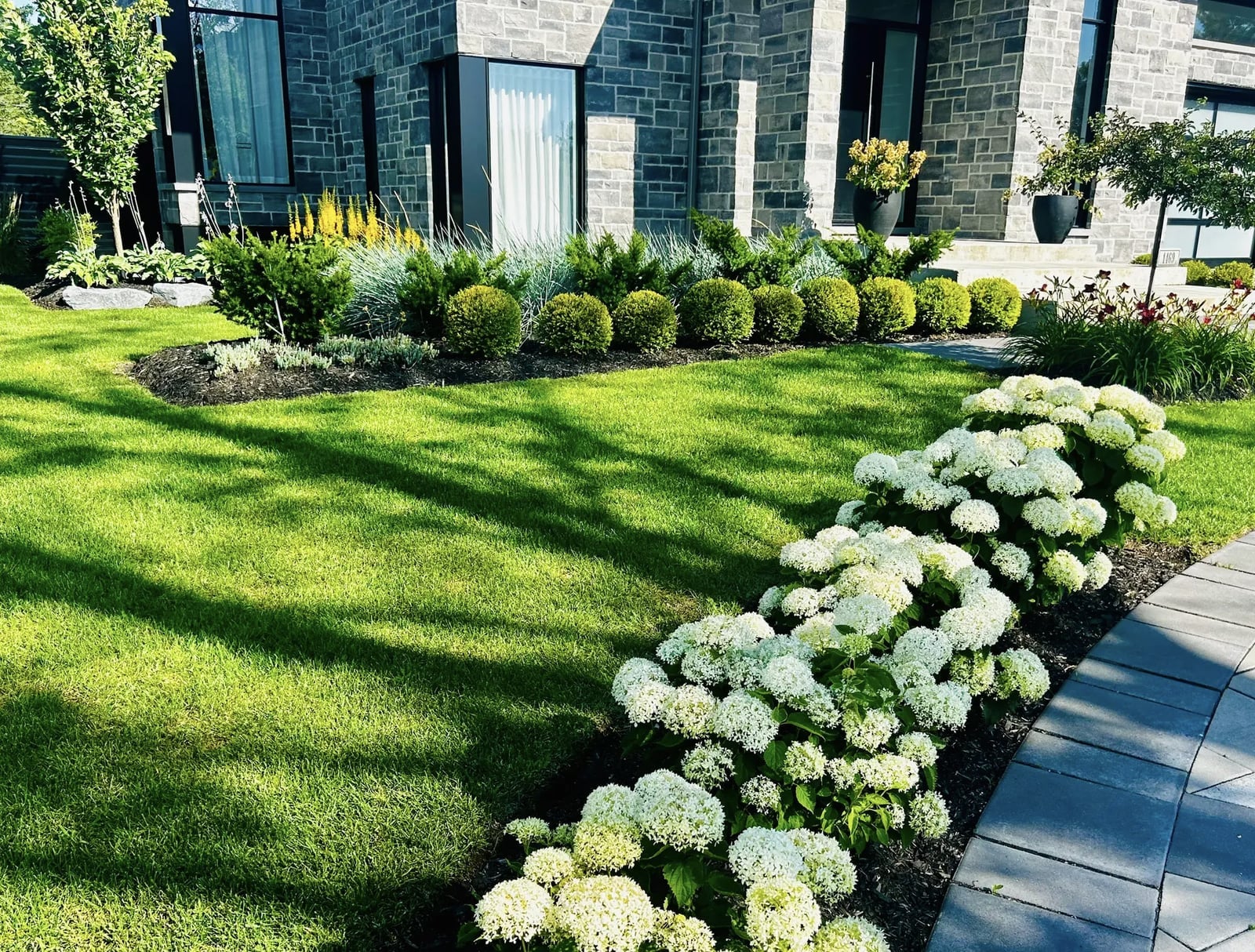
A curved brick pathway cuts through this front yard, softening the clean lines of the manicured lawn and hedges. The layout works because the path leads the eye from the street to the entry without a straight shot, making the yard feel wider than it is. Grey stone stepping pads or a brick border keep the green from reading as one flat carpet. In a modern front yard manicured lawn curved pathway, the contrast between hardscape and soft planting is what gives the space structure. For a renter-safe swap, lay a temporary curved path using large concrete pavers set into the grass no digging required.
Cottage Garden Front Yard with Stone Pathway and Wooden Gate
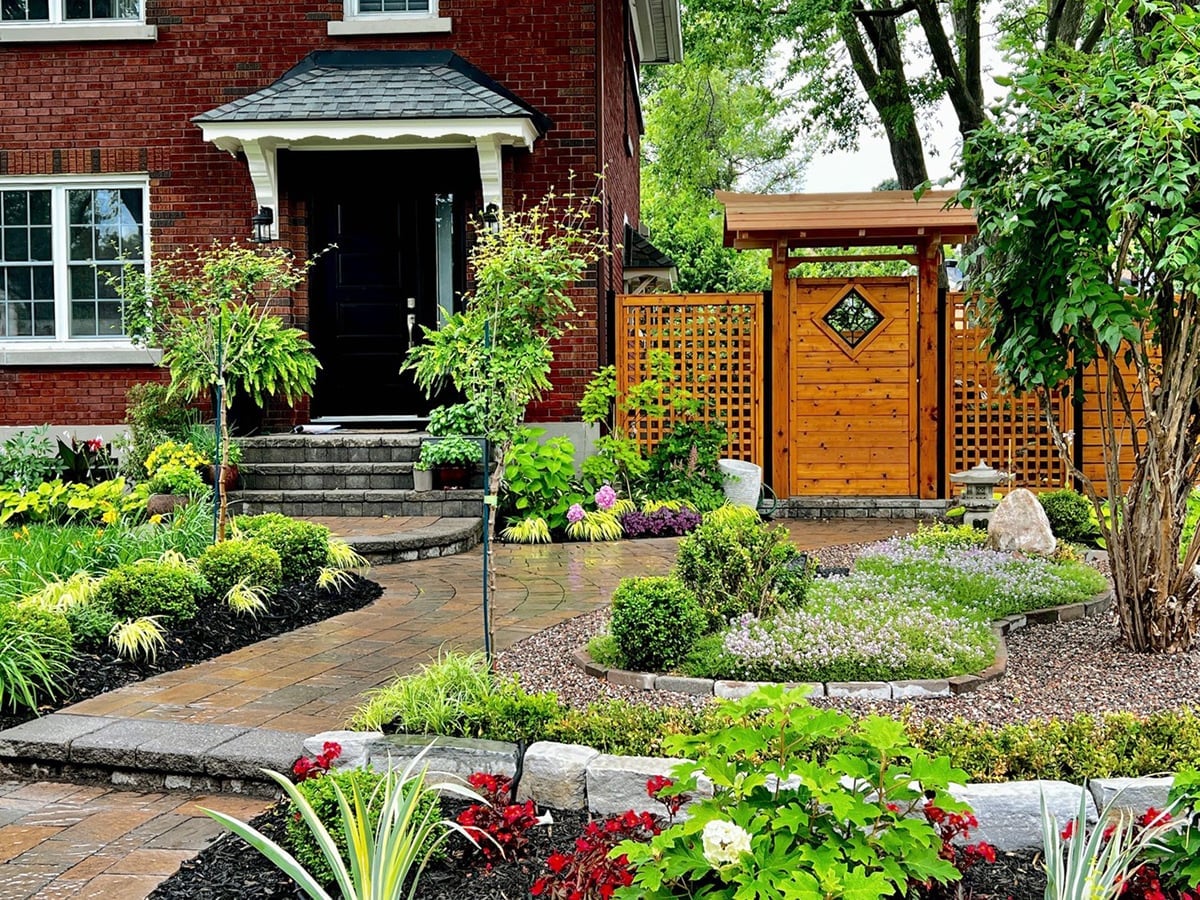
A practical rule for cottage garden front yard wooden gate stone path layouts is to let the walkway curve just enough that you cannot see the gate from the starting point. That small reveal makes the garden feel deeper and more private than a straight line ever could.
Modern Xeriscape Front Yard with Stepping Path and Boulders
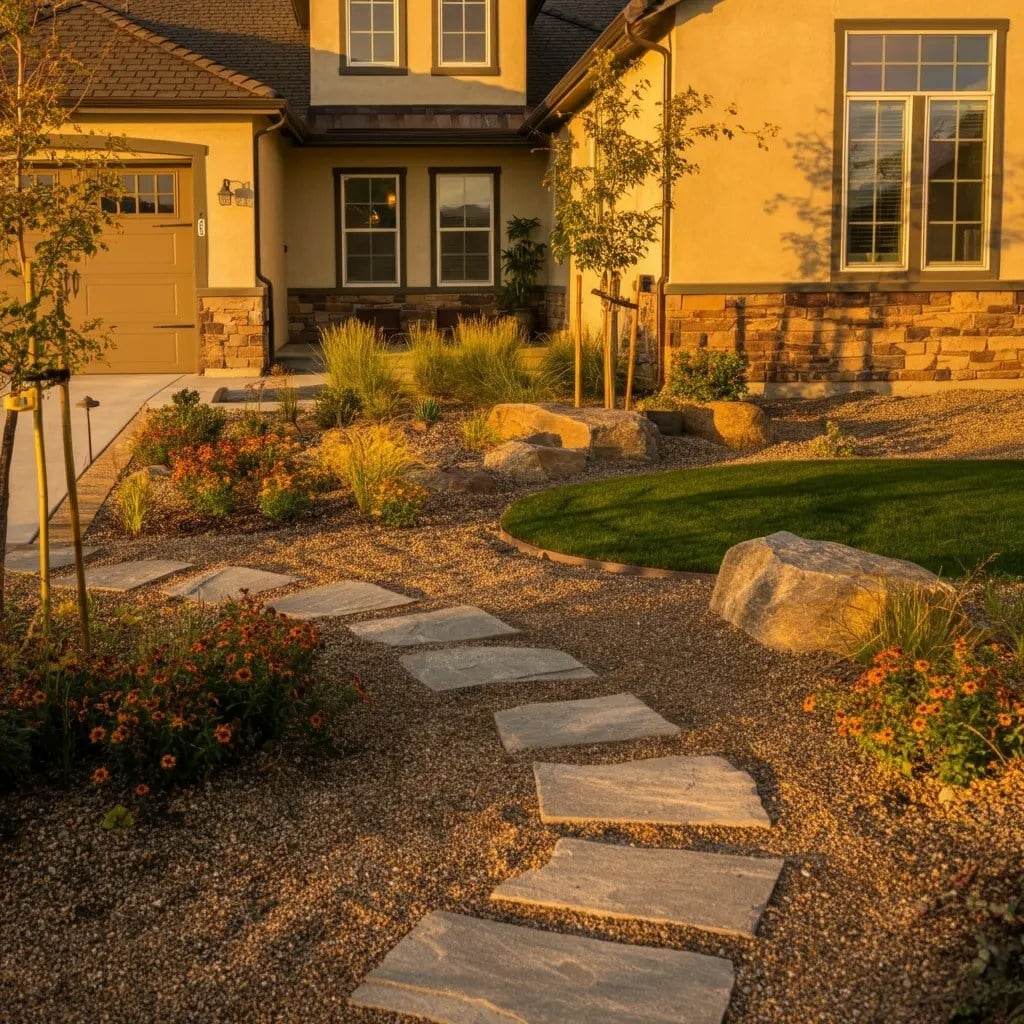
The warm golden hour light hitting the stone stepping path and boulders turns a modern xeriscape front yard stepping path golden hour into a study in contrast. Tan gravel and grey stone veneer on the house provide a neutral base, while ornamental grasses and a few flowering plants add soft orange and green notes. The low-angle sun elongates shadows across the gravel beds, which makes the winding path read as more deliberate. If your yard gets full sun, this palette handles heat better than a traditional lawn and needs less water to stay presentable.
Traditional Front Yard with Vibrant Flowering Trees and Shrubs
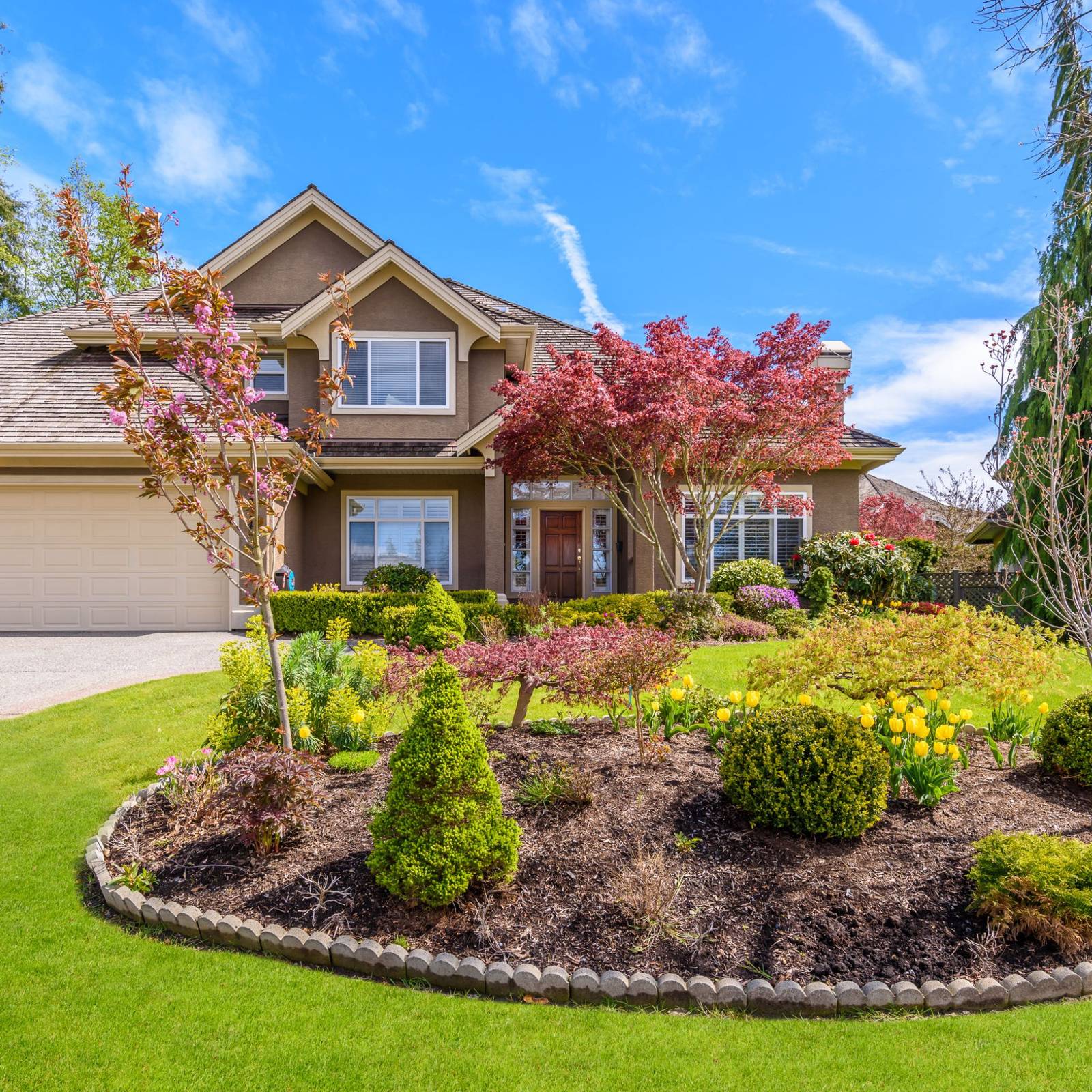
A traditional front yard flowering trees shrubs arrangement uses color in layers: a pink flowering tree rises above red and yellow shrubs, with green foliage filling the space between. The palette works because the warm tones are repeated, not scattered, so the eye travels from one bloom to the next rather than jumping around. Brown wood mulch and grey stone edging keep the ground neutral so the flowers do not compete with the base. This kind of layered planting also extends the bloom season, since trees, shrubs, and perennials peak at different times.
Naturalistic Front Yard with Autumnal Plantings and Stone Pathway
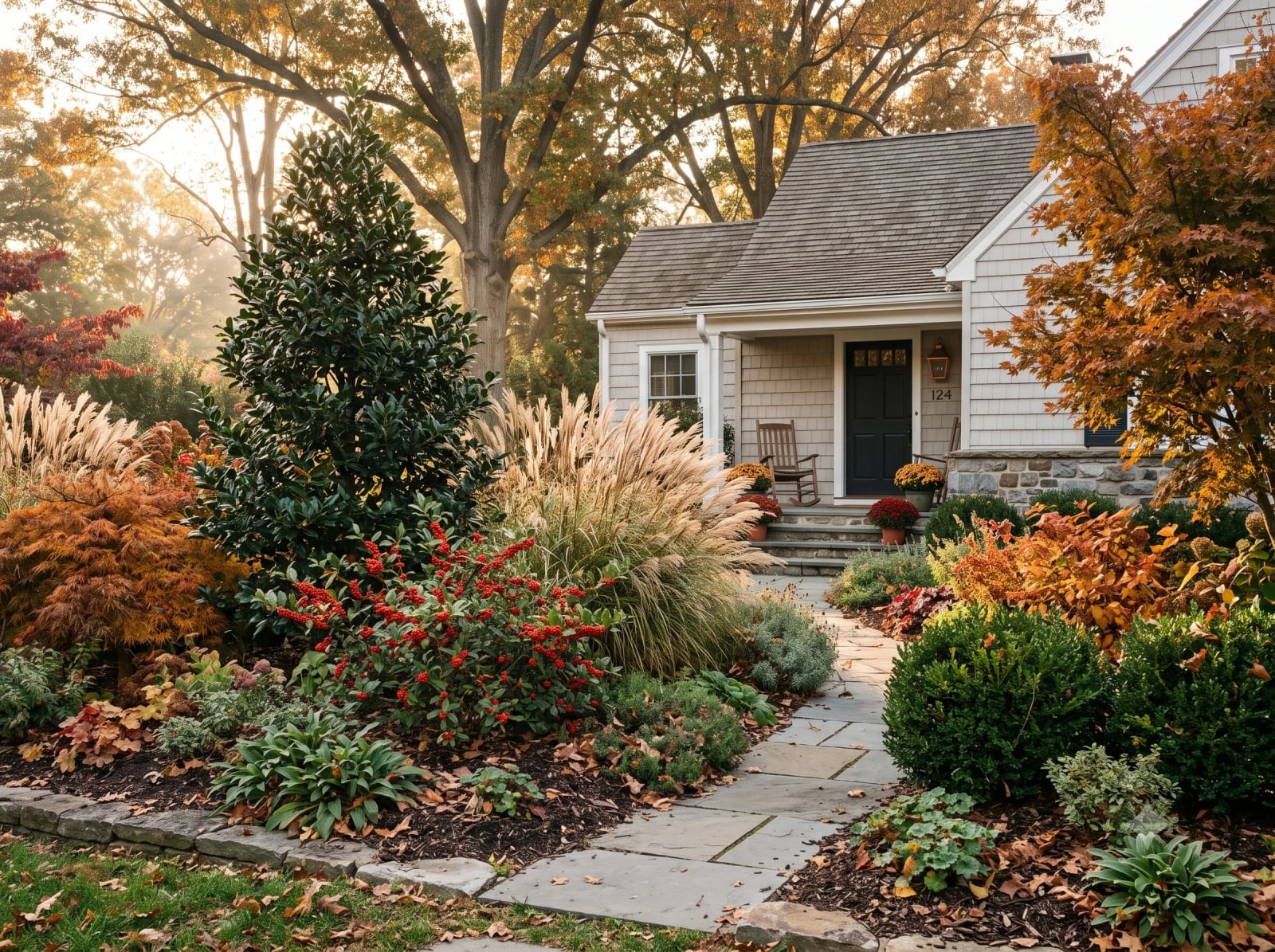
Unlike a manicured lawn that stays green all season, a naturalistic front yard autumnal planting stone path leans into change. Orange and red ornamental grasses mix with beige seed heads and low shrubs, so the yard looks intentional even as leaves drop and colors fade. The stone pathway cuts through the dense planting without interrupting it, which keeps the overall feel loose rather than rigid.
Traditional Front Yard with Lush Lawn and White Flowers
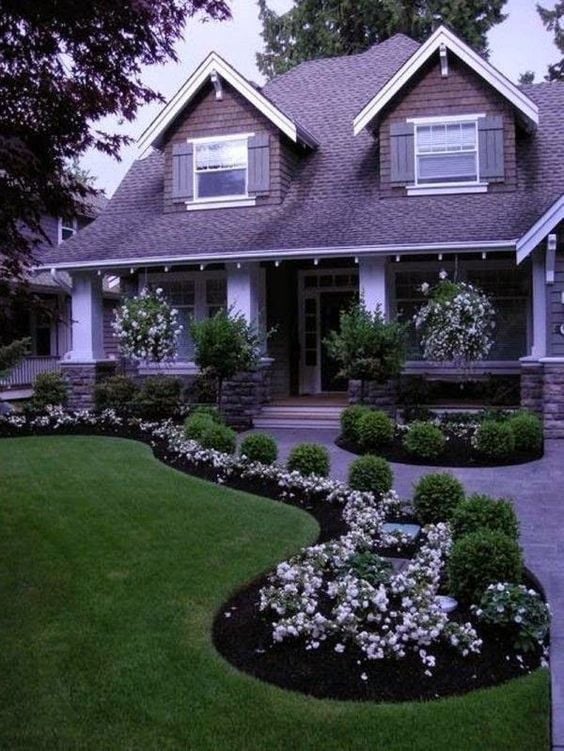
A front yard that leans into tradition does not need a lot of fuss to feel established. The layout here uses curving beds and a central walkway to break up the green lawn without making the space feel chopped up. The palette stays simple, green, white, grey, and brown, which lets the abundant white flowers on the shrubs do the talking. A roomy front yard like this one benefits from keeping the planting beds layered instead of lined up in a single row. The soft daylight filtering through the porch and trees gives the white blooms a clean appearance.
Modern Native Garden Bed with Blue Succulents and Layered Plants
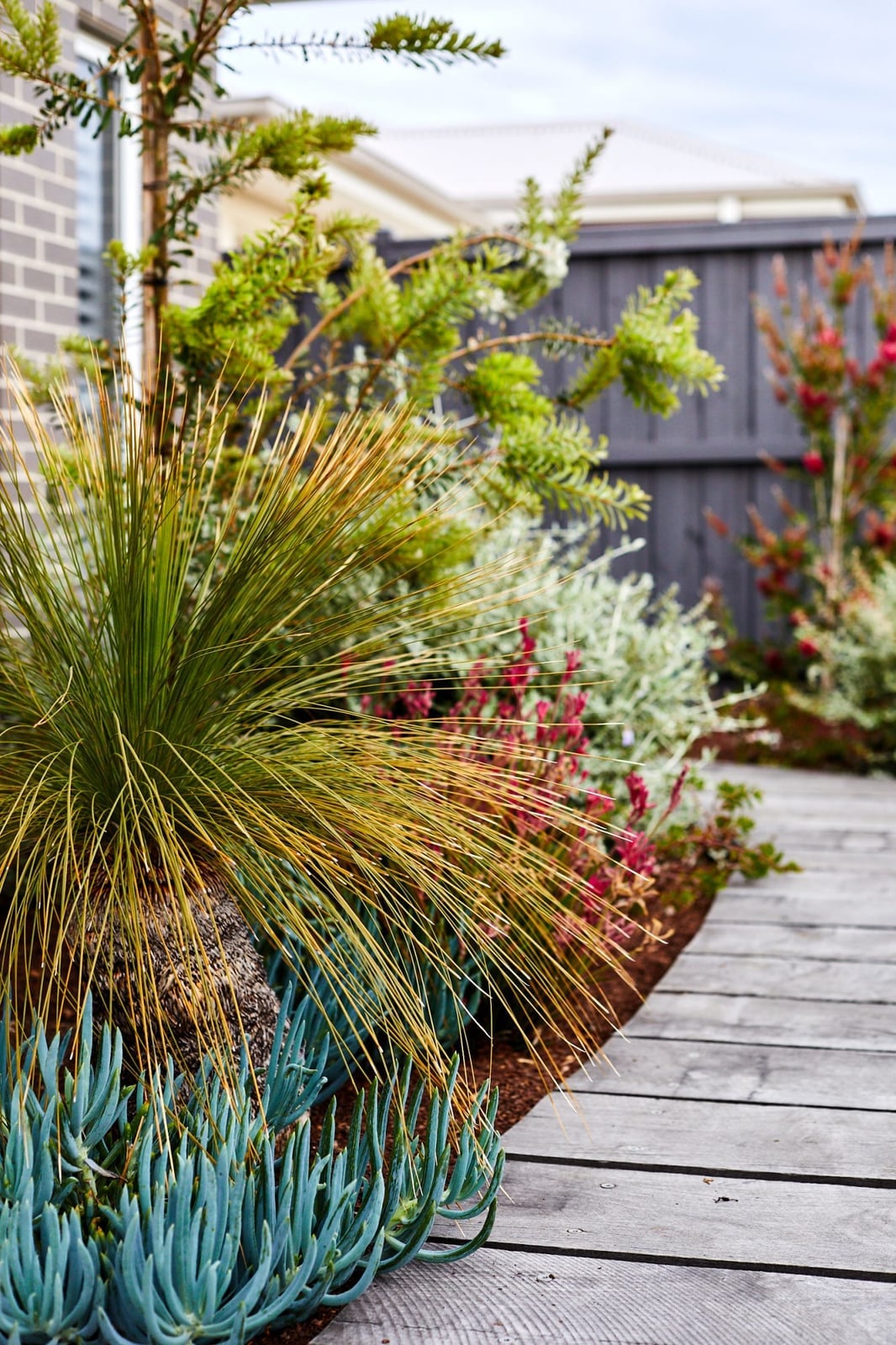
This garden bed proves that a compact space can still carry a strong color story. The palette leans on green, blue, pink, and grey, with the blue succulents acting as the unexpected anchor. They sit low and dense, while grasses and flowering plants rise behind them along a wooden path. The layering matters here, the tall plants create a backdrop, the mid-height flowers add softness, and the succulents hold the front edge. Mulch keeps the bed tidy and helps the stone and wood path feel like part of the planting rather than an interruption. A modern native garden bed like this one works because the colors are intentional but the arrangement looks natural.
Modern Compact Front Yard with Layered Drought-Tolerant Plants
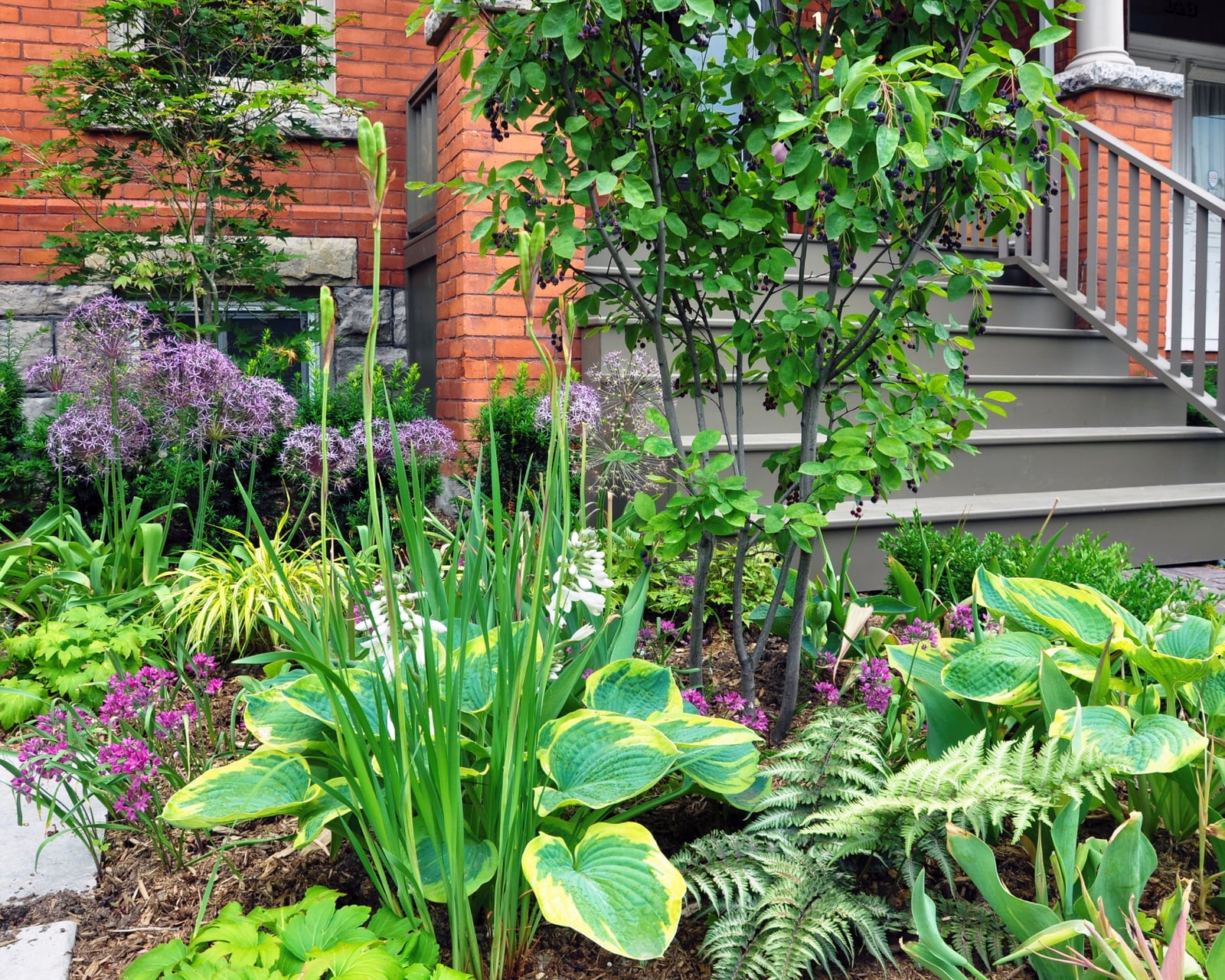
A compact front yard can feel tight if the hardscape takes over, but this one avoids that by letting the planting lead. The winding path cuts through garden beds instead of running straight, which makes the space feel longer and more intentional. The palette stays restrained, green, grey, white, and purple, with drought-tolerant plants filling in at different heights.
The path is the practical backbone, but the layering is what gives the yard its character. Low plants soften the edges of the stone and gravel, while taller varieties break up the sightline so you see the garden in sections. For a small front yard, that trick of hiding and revealing parts of the planting makes the whole space feel larger than it is. The materials are simple, but the way they’re arranged keeps the eye moving.
Modern Front Yard with Geometric Grass and Concrete Driveway
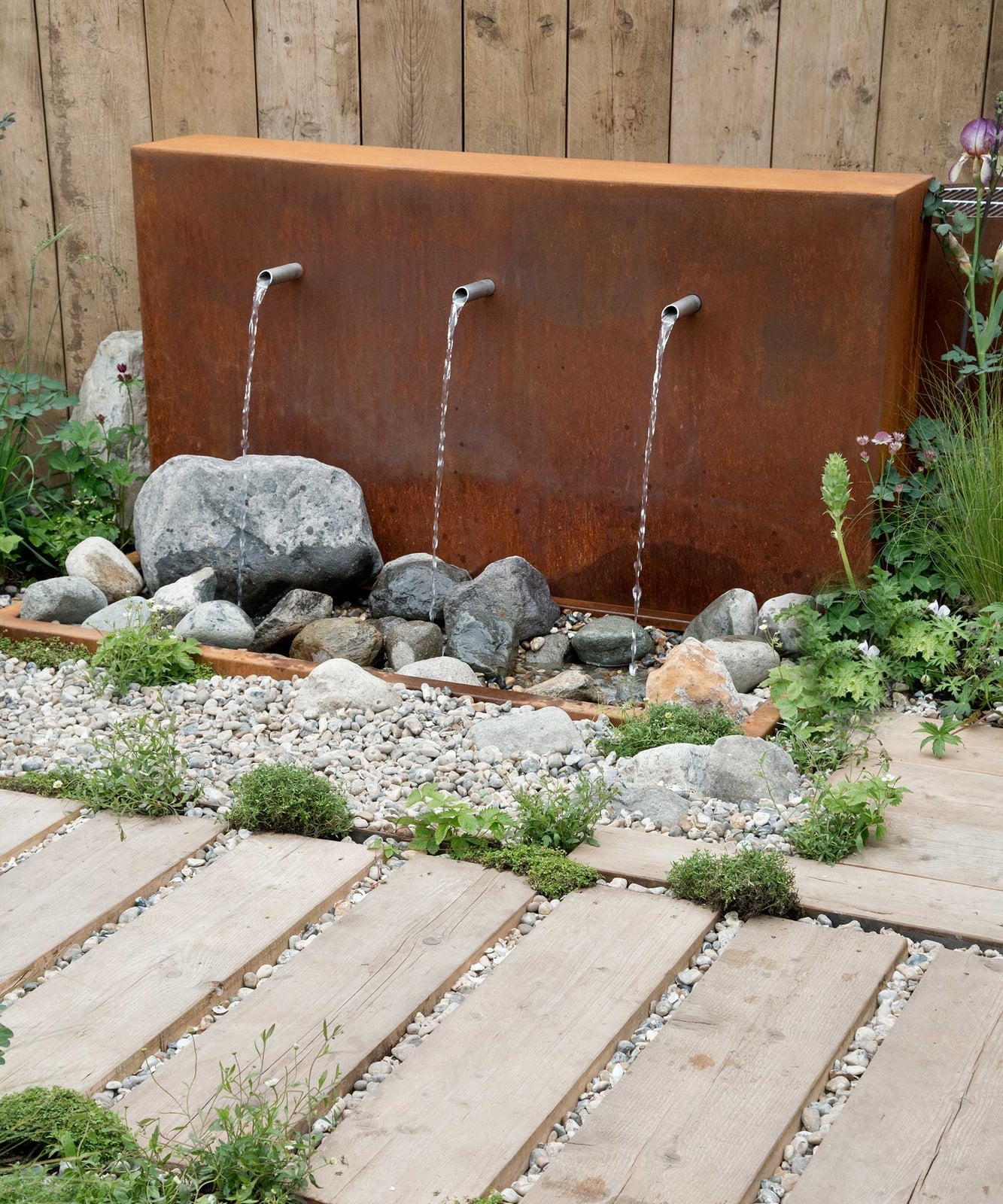
The driveway and walkway in this front yard are laid out as a single geometric system, with concrete rectangles framed by strips of grass. That grid gives the entrance a structured rhythm that the minimalist planting doesn’t interrupt. The palette stays tight, grey, white, and green, so the eye reads the shapes first. Bright daylight sharpens the contrast between the hard concrete and the soft grass strips, making the pattern stand out even from a wide view. A front yard like this one relies on the layout doing the work, not the plants.
Expansive Modern Front Yard with Harmonious Architecture
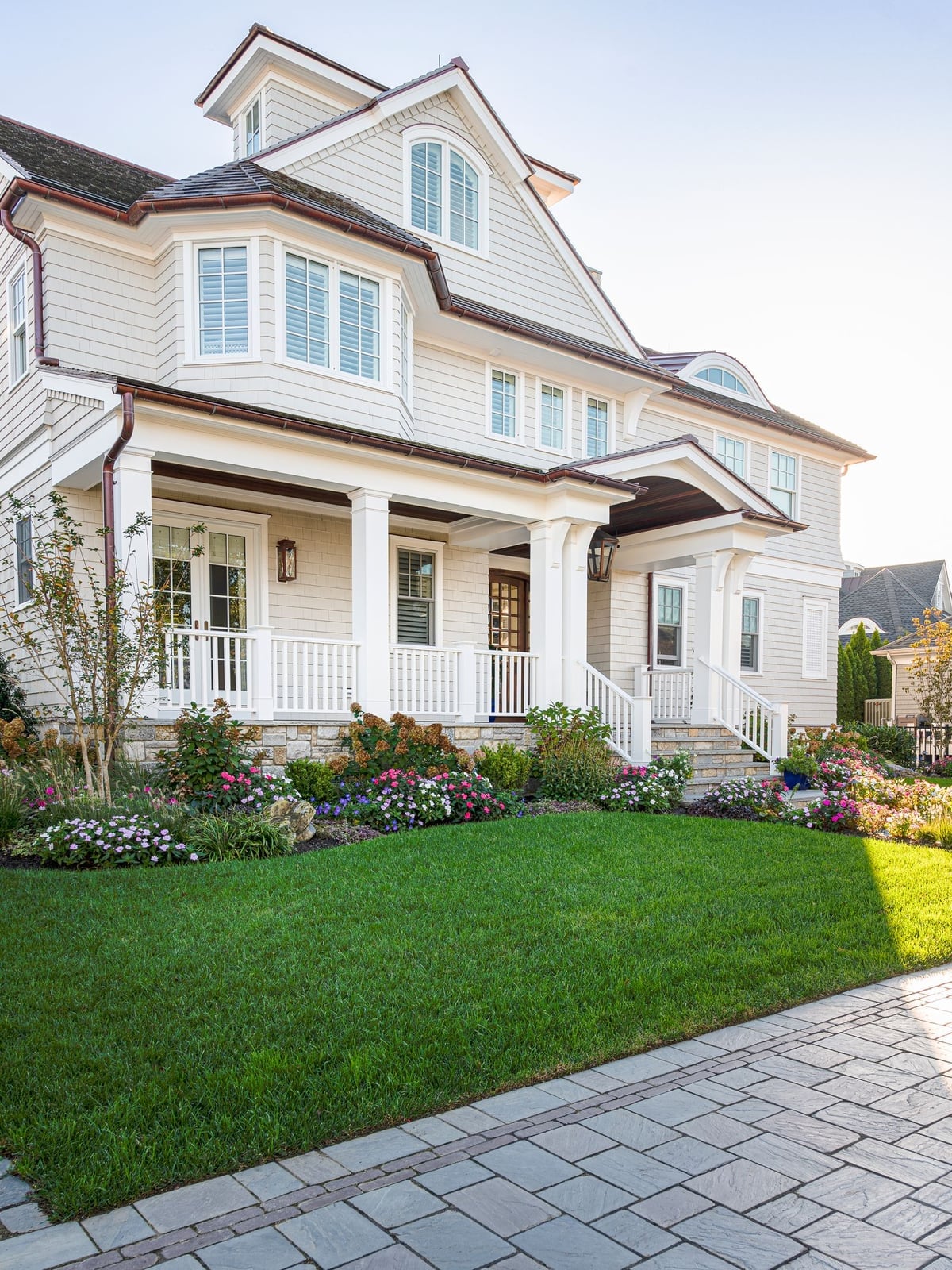
An expansive front yard with a large house needs a landscape that can hold its own without competing. This one does it with a manicured lawn that acts as the quiet center, surrounded by layered planting beds that add pink and purple flowers against neutral wood siding and stone. The layout keeps the lawn open so the house stays the focus, but the garden beds have enough height and color to frame it. Subtle integrated lighting along the path and beds extends the visual interest past daylight hours. The scale works because nothing fights for attention. The house, the lawn, and the plants each have their own zone.
Final Thoughts
A well-planned front yard landscape balances curb appeal with how you actually use the space. The best designs here pair hardscape, like concrete pathways, gravel beds, or flagstone, with plants that thrive in your region. Before you dig, check your USDA zone for plant choices and call 811 for utility lines if you’re moving earth. For pathways, think about traffic patterns: a straight walk to the door feels formal, while a winding one invites a slower approach. Keep beds mulched and edged to maintain that clean look through the seasons. The takeaway? Let your home’s architecture guide the layout, then layer in plants for texture and color. A front yard that works with its site, not against it, will feel right for years.