
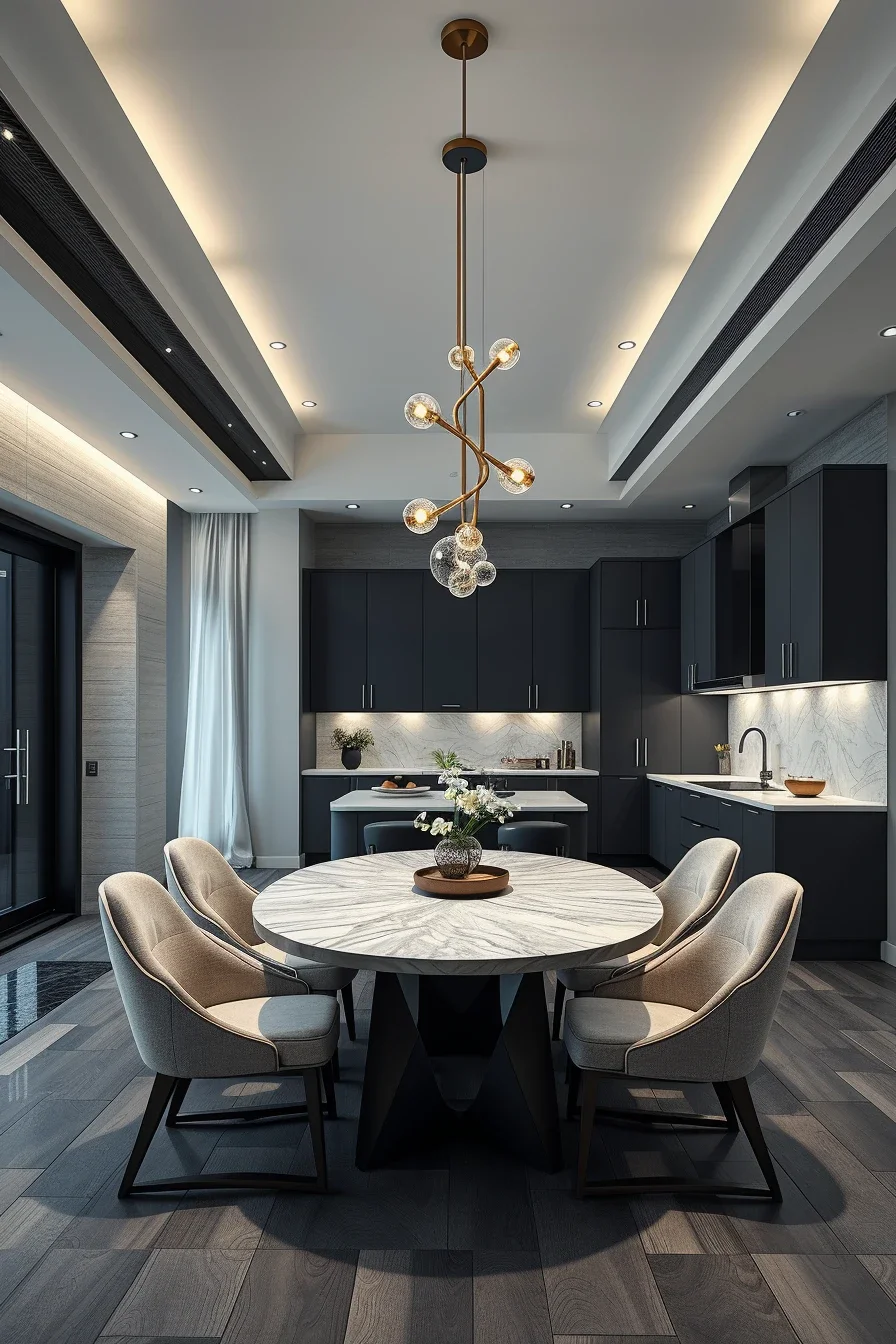
A monochrome kitchen proves that a single-color palette can be both timeless and incredibly expressive. By combining sculptural forms, layered textures, and thoughtfully selected materials, these kitchens create interiors that feel elegant, modern, and visually balanced. Whether you prefer an all-white space, dramatic black finishes, or sophisticated shades of gray, a monochrome design offers endless possibilities for personalization. Architectural details, statement lighting, and seamless cabinetry can transform a simple layout into a stylish focal point of the home. The key is balancing clean lines with subtle contrasts that add depth without disrupting the cohesive aesthetic. In this guide, you’ll discover inspiring monochrome kitchen ideas, creative design techniques, and practical tips for creating a space that is both functional and unforgettable.
What Defines A Modern Monochrome Kitchen Design?
A modern monochrome kitchen is much more than choosing one color and repeating it throughout the room. When I design or evaluate this style, I focus on creating depth through materials, finishes, lighting, and architectural details rather than relying on contrasting colors. A successful monochrome kitchen feels balanced because every element contributes to one cohesive visual story. Matte cabinetry, textured stone, subtle woodgrain alternatives, fluted surfaces, and carefully positioned lighting all help prevent the room from appearing flat while maintaining a unified aesthetic.
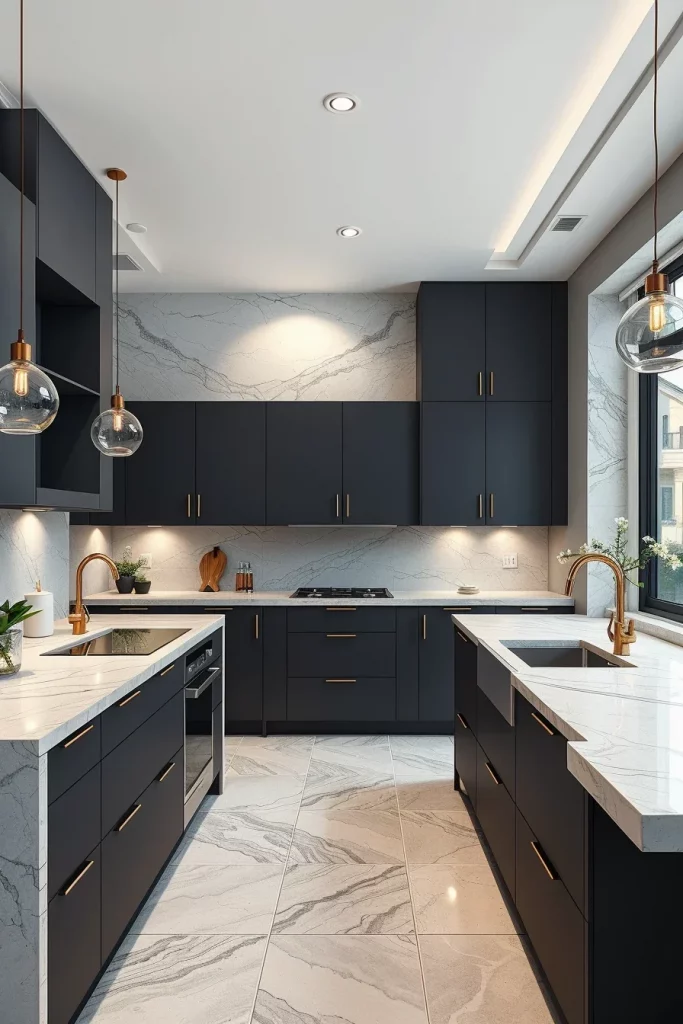
I always pay close attention to cabinetry because it occupies the largest visual area in the room. Seamless cabinet fronts, integrated appliances, concealed storage, oversized kitchen islands, sculptural pendant lighting, and minimalist hardware work together to strengthen the monochromatic appearance. I also recommend choosing countertops and backsplashes that remain within the same tonal family while introducing gentle texture through natural veining or honed finishes. This combination creates a sophisticated interior that feels creative, artistic, and highly functional without overwhelming the space.
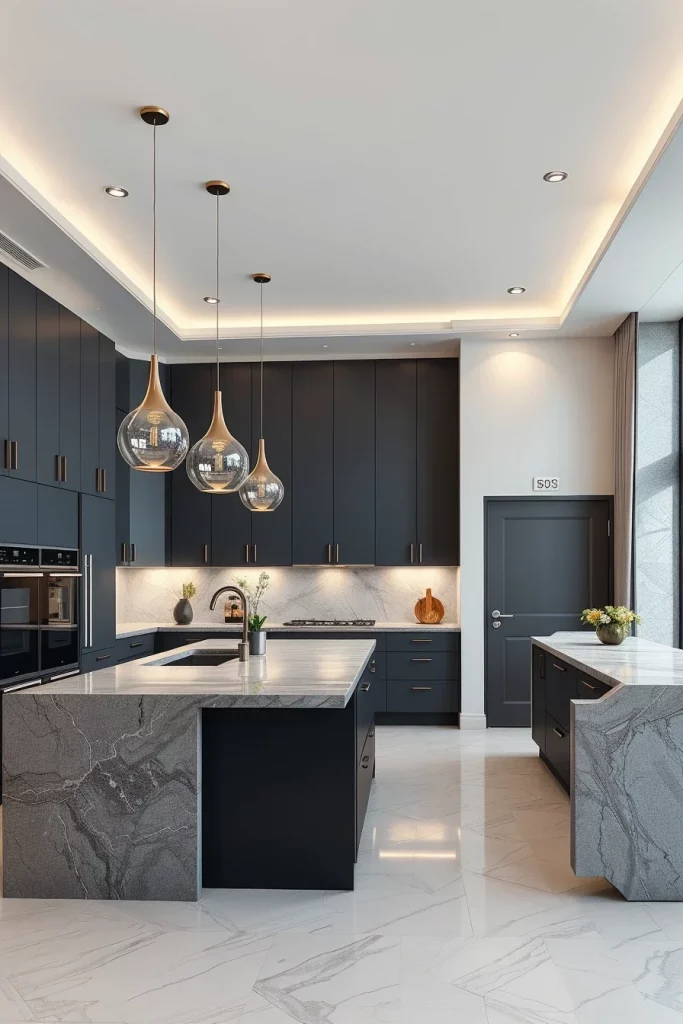
Many respected American designers featured by Architectural Digest frequently emphasize that texture and light are just as important as color in minimalist interiors. I completely agree with this philosophy because I’ve found that subtle material variation creates lasting visual interest while preserving simplicity. Instead of adding unnecessary decorative items, I prefer allowing premium materials and carefully planned proportions to become the focal point of the room.
To complete this type of kitchen, I would also include layered ambient, task, and accent lighting, discreet open shelving for carefully selected decorative objects, and a few sculptural accessories that reinforce the overall design without interrupting the monochrome concept.
Creating A Sculptural Monochrome Kitchen With Bold Geometry
One of my favorite ways to make a monochrome kitchen memorable is by introducing sculptural forms and strong geometric lines. Rather than depending on decorative patterns, I let architectural elements become the artwork. Curved islands, oversized arches, dramatic ceiling details, and bold cabinet compositions immediately create a unique atmosphere while maintaining a restrained color palette. These features allow the kitchen to feel contemporary and visually dynamic even with minimal color variation.
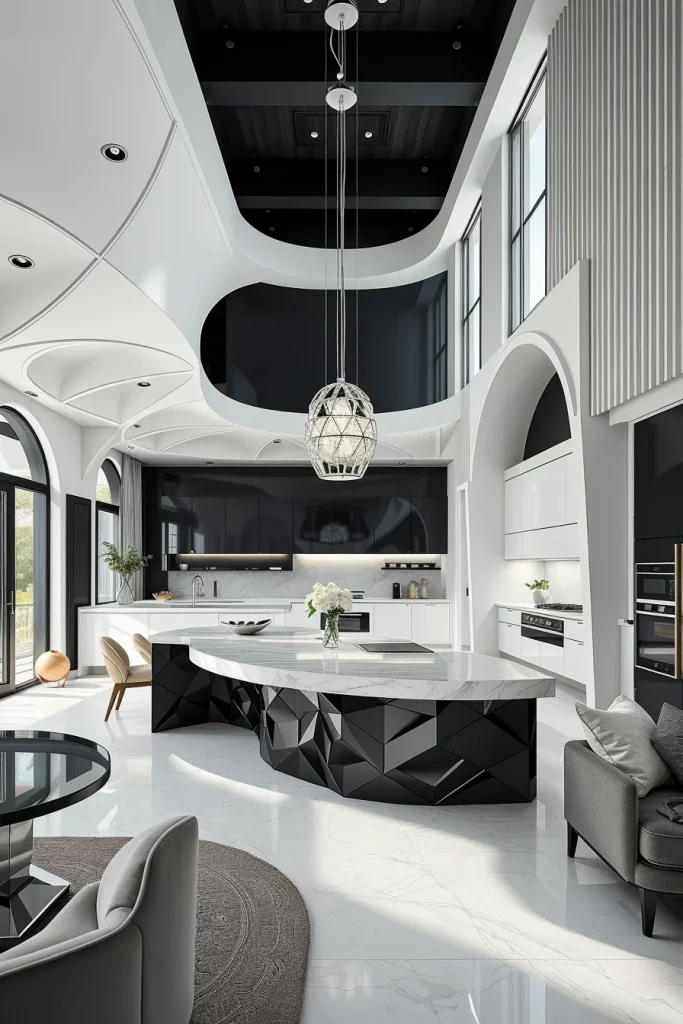
I carefully combine rounded furniture with clean linear cabinetry to create balance throughout the room. Large waterfall islands, monolithic countertops, fluted cabinet panels, integrated seating, statement range hoods, and oversized pendant fixtures contribute to a refined composition. Every piece serves both a practical and artistic purpose, helping the room feel cohesive while maximizing everyday functionality.
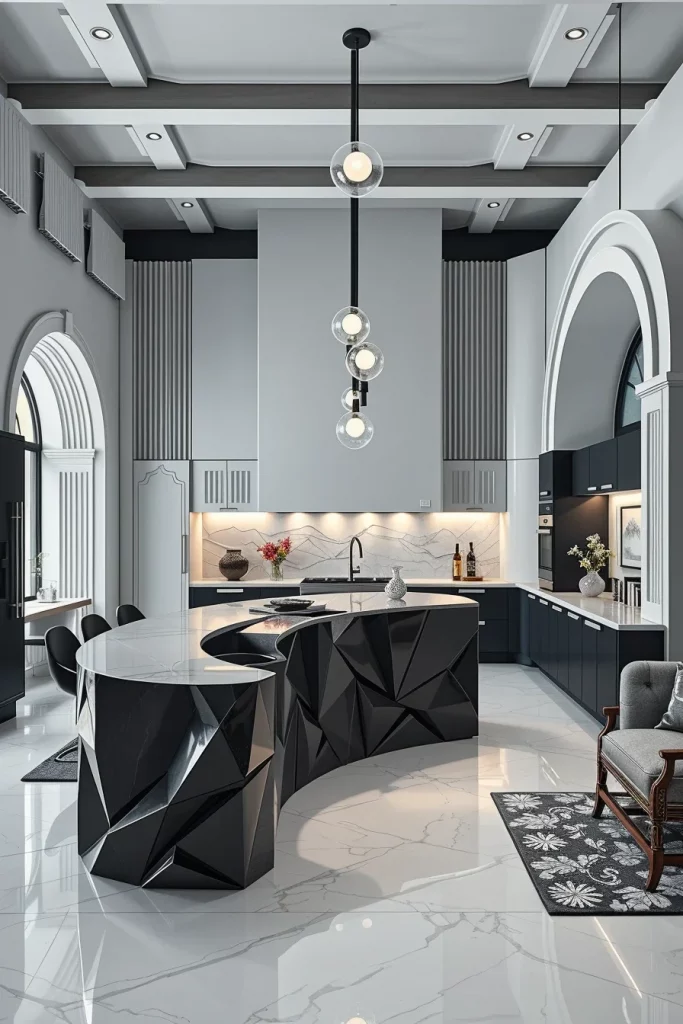
Personally, I believe sculptural kitchens remain relevant for many years because they rely on timeless forms rather than temporary decorating trends. Interior designers regularly featured by Elle Decor often recommend investing in architectural details instead of excessive ornamentation, and I think this advice results in interiors that continue looking fresh long after seasonal trends disappear.
If I wanted to enhance this concept even further, I would introduce concealed storage solutions, integrated LED lighting beneath floating elements, and subtle shadow gaps between cabinetry to emphasize the geometric composition.
Black And White Monochrome Kitchen Ideas That Feel Timeless
A black-and-white monochrome kitchen continues to be one of the most recognizable interior styles because it creates instant visual clarity while remaining incredibly versatile. I find that the secret to keeping this classic palette modern is avoiding excessive contrast and instead focusing on carefully balanced proportions. Soft matte finishes, gentle lighting, and thoughtfully selected materials help the room feel welcoming rather than stark.
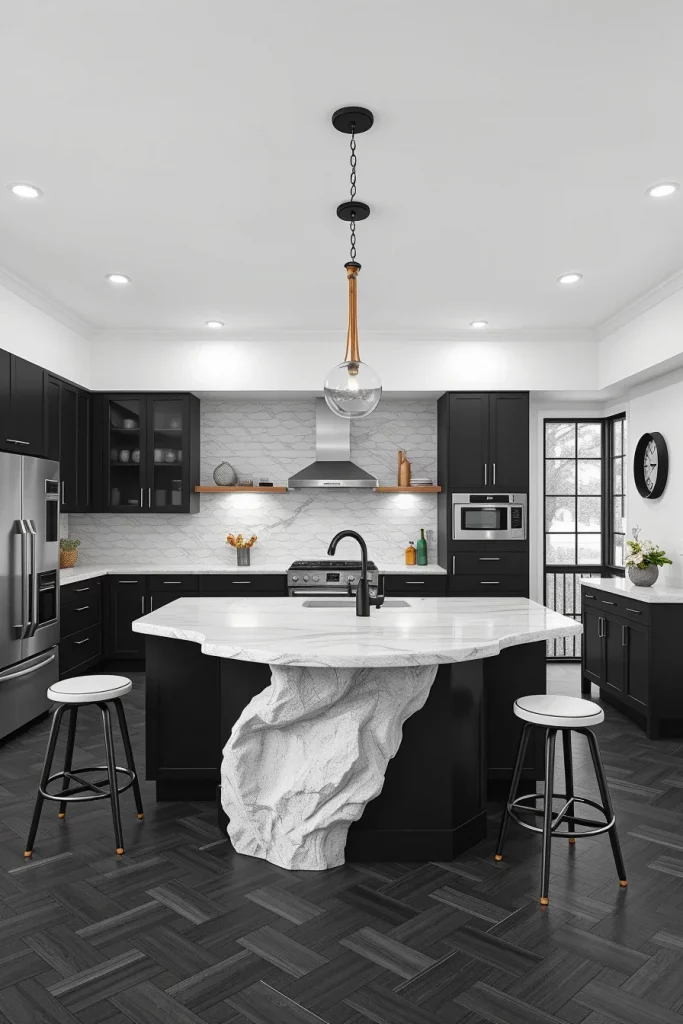
I usually pair matte black cabinetry with crisp white countertops, oversized islands, integrated appliances, minimal hardware, and subtle textured backsplashes. Comfortable counter stools with simple silhouettes, slim pendant lights, and concealed storage preserve the clean appearance while making daily cooking more enjoyable. Every furnishing contributes to both functionality and visual harmony without competing for attention.
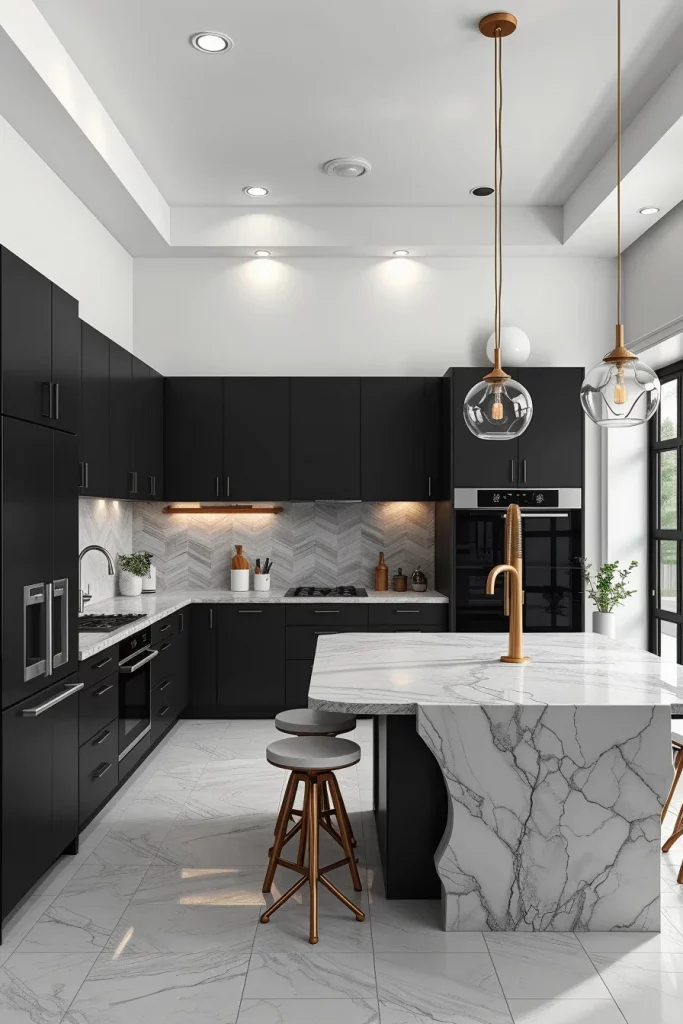
I appreciate how adaptable this palette becomes when natural daylight changes throughout the day. Better Homes & Gardens has frequently highlighted the importance of layering texture within black-and-white interiors, and my own experience confirms that textured stone, ribbed surfaces, and matte finishes create significantly more warmth than glossy materials alone.
To make the room feel even more complete, I would incorporate dimmable lighting, carefully positioned decorative ceramics, and a few architectural shelving displays that reinforce the monochromatic character without adding visual clutter.
Soft Gray Monochrome Kitchen Designs With Elegant Depth
Soft gray palettes offer an elegant interpretation of the monochrome kitchen because they create depth through subtle tonal variation instead of strong contrast. I enjoy working with gray because it adapts beautifully to changing natural light while maintaining a peaceful atmosphere. Different shades of gray allow every architectural detail to stand out without making the room feel overly dramatic, resulting in an interior that feels sophisticated and calming.
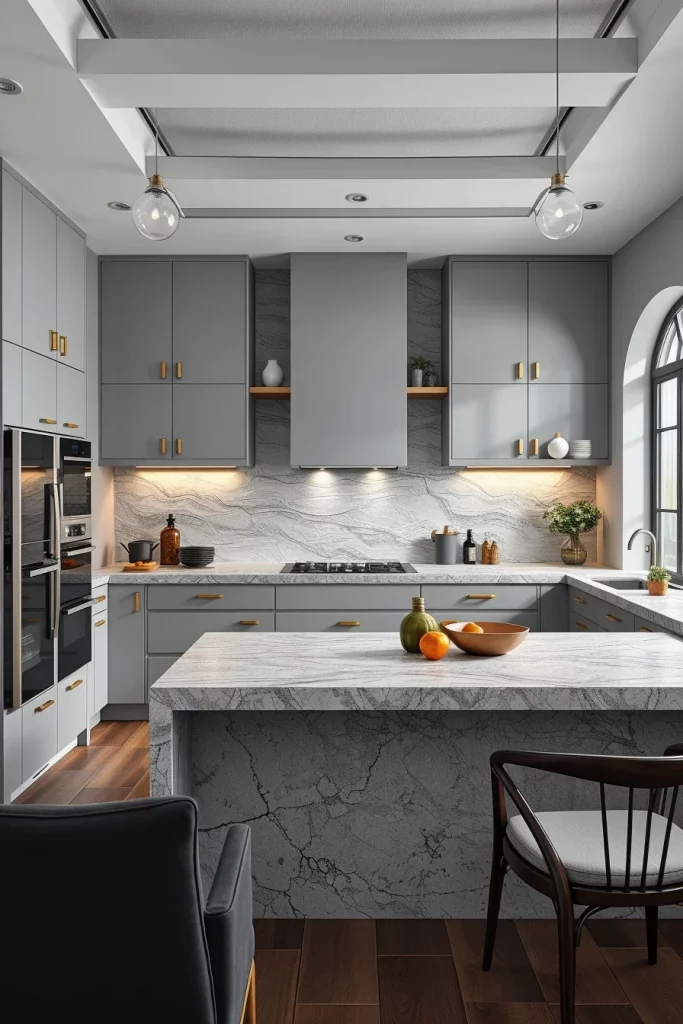
For this approach, I combine light gray cabinetry, medium-gray islands, textured stone countertops, matching backsplashes, integrated appliances, minimalist shelving, and understated lighting fixtures. Soft fabrics on dining chairs, satin finishes, and textured wall treatments contribute additional layers while preserving visual consistency. Each element strengthens the monochromatic composition without introducing unnecessary distractions.
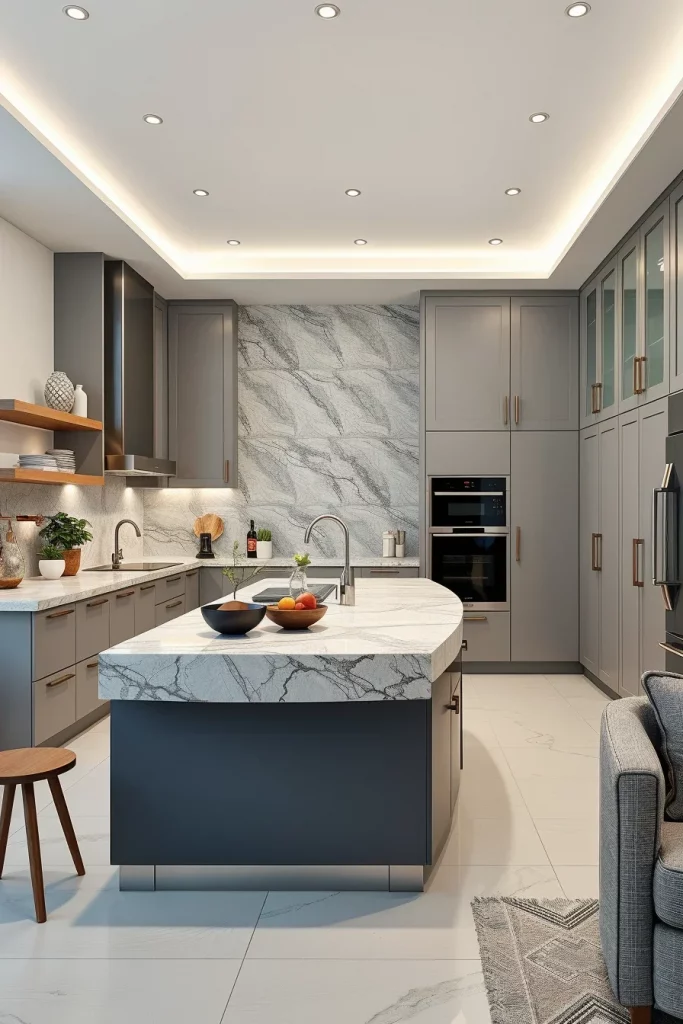
I have found that gray kitchens often age gracefully because they provide flexibility for future decorative updates. Designers frequently recommend varying texture more than color in neutral interiors, and I consistently see how this approach produces elegant, timeless spaces that remain visually interesting for years.
I would also include indirect lighting beneath cabinetry, subtle architectural ceiling details, and carefully selected decorative accessories in matching tones to further enrich the layered appearance.
All-Black Monochrome Kitchen Interiors With Artistic Character
An all-black monochrome kitchen makes a dramatic statement while still feeling refined when every surface is carefully considered. I believe dark interiors succeed when they balance rich materials with generous lighting and open layouts. Instead of making the room feel smaller, an intelligently designed black kitchen can create remarkable depth, intimacy, and architectural presence that immediately captures attention.
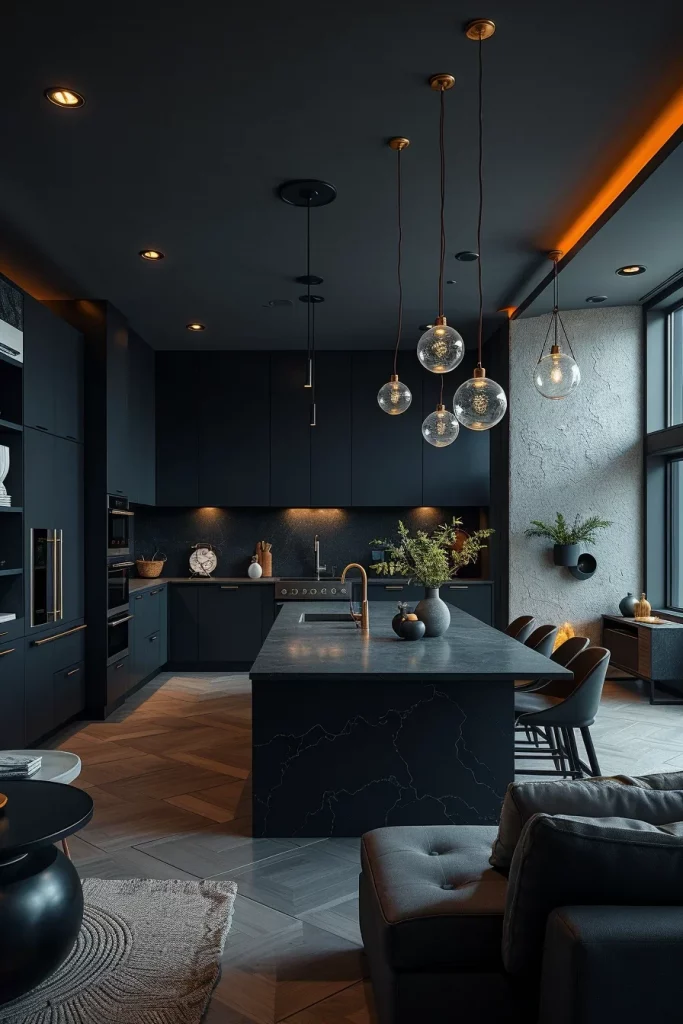
I prefer combining matte black cabinetry with charcoal stone countertops, integrated black appliances, textured wall finishes, sculptural islands, concealed hardware, and carefully positioned pendant lighting. Reflective accents are used sparingly, allowing textured materials to become the primary source of visual interest. Comfortable seating, hidden storage, and streamlined layouts ensure the kitchen remains highly practical despite its bold appearance.
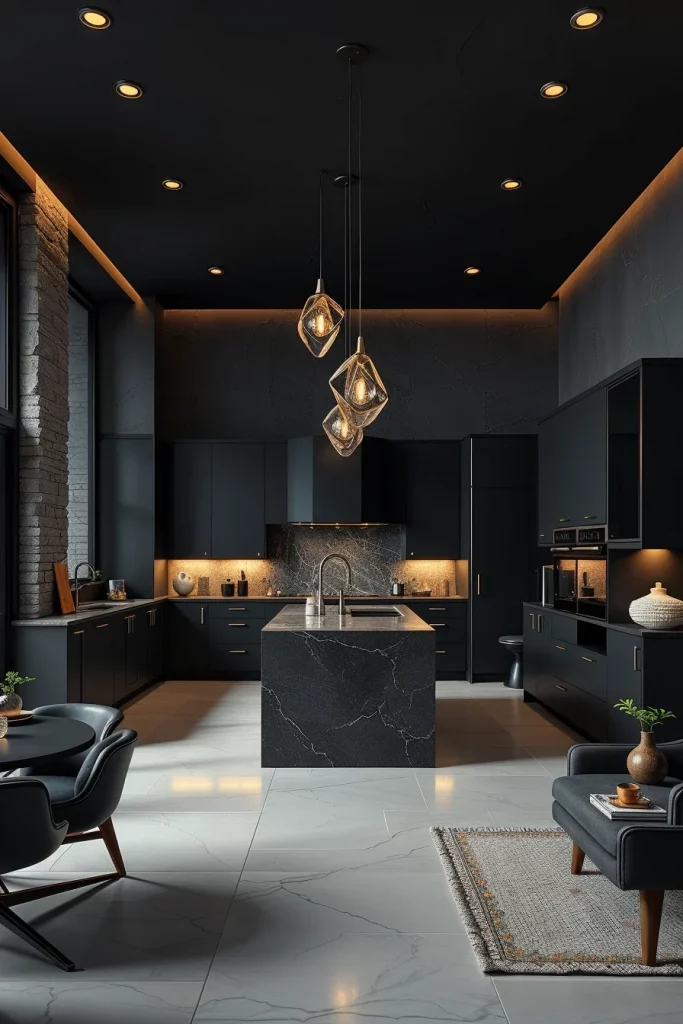
From my experience, black interiors reward thoughtful planning more than almost any other color palette. Architectural Digest has repeatedly demonstrated how layered lighting transforms dark kitchens, and I have seen firsthand that combining ambient, task, and accent lighting prevents the room from feeling heavy while highlighting its artistic qualities.
If I wanted to refine this concept further, I would incorporate illuminated shelving niches, subtle stone textures, oversized sculptural accessories, and concealed LED lighting that softly defines the architecture without interrupting the monochromatic aesthetic.
Crisp White Monochrome Kitchen Concepts For Minimal Living
A crisp white monochrome kitchen creates an atmosphere that feels open, peaceful, and effortlessly modern. I believe this design works especially well for homeowners who appreciate simplicity without sacrificing elegance. Instead of relying on decorative colors, I focus on architectural details, natural light, and subtle textures that give the room dimension. White surfaces reflect daylight beautifully, making even compact kitchens appear larger while creating a fresh backdrop for everyday living. The result is a stylish and unique interior that remains timeless despite changing design trends.
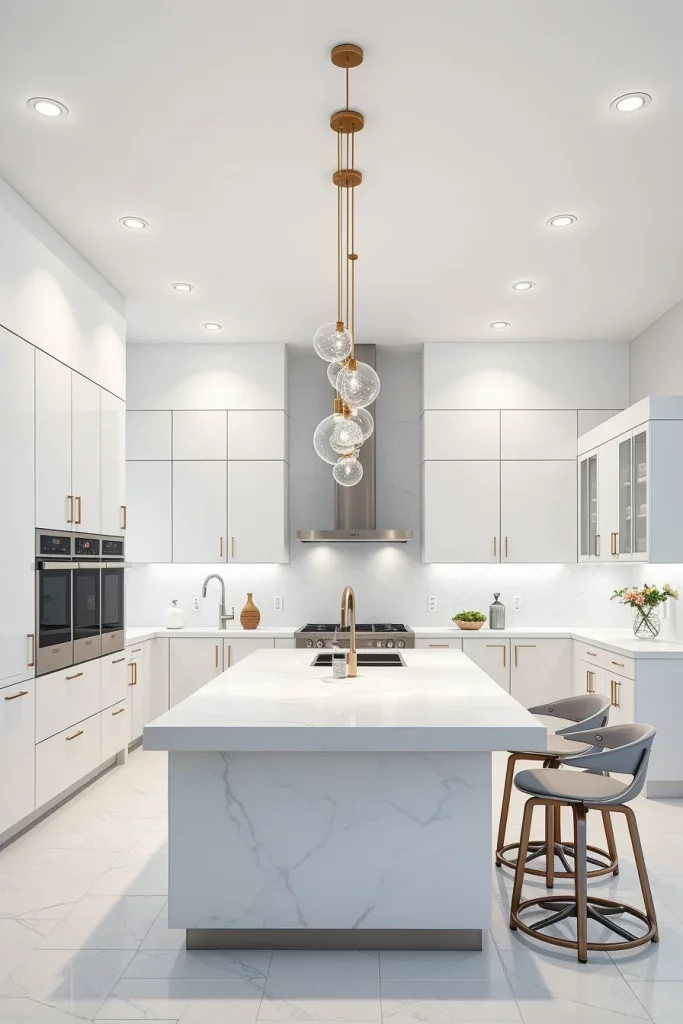
I recommend using seamless white cabinetry with integrated handles, white quartz countertops, a matching backsplash, concealed appliances, and a waterfall island to maintain visual continuity. Soft matte finishes reduce glare while introducing a sophisticated appearance. Minimalist dining chairs, sculptural pendant lighting, recessed ceiling lights, and discreet open shelving complete the room without adding unnecessary visual weight. Every piece contributes to a balanced environment where practicality and aesthetics work together naturally.
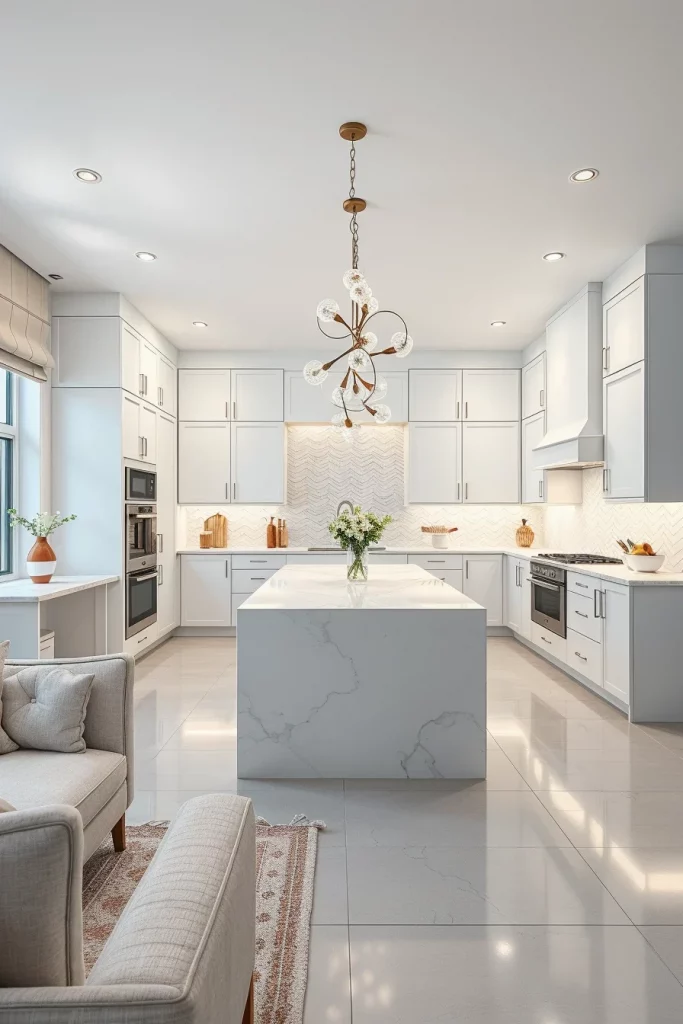
From my experience, restraint is one of the greatest strengths of an all-white kitchen. House Beautiful has often highlighted the importance of combining different textures instead of introducing multiple colors, and I have found this advice incredibly valuable. Fluted cabinet panels, lightly veined stone, and subtle plaster-inspired wall finishes keep the room visually engaging while preserving its minimalist identity.
To complete this design, I would include layered lighting with adjustable brightness, carefully selected ceramic accessories in matching tones, and concealed pantry storage that keeps everyday items organized while protecting the clean appearance of the kitchen.
Layering Different Shades Within A Single Color Palette
One of the most effective ways to make a monochrome kitchen feel sophisticated is by layering multiple shades of the same color instead of relying on a single flat tone. I enjoy using this approach because it creates natural visual movement while preserving harmony throughout the room. Slight variations between cabinetry, countertops, walls, and flooring allow the eye to appreciate depth without disrupting the overall monochromatic concept. This technique produces a creative and artistic interior that feels refined rather than repetitive.
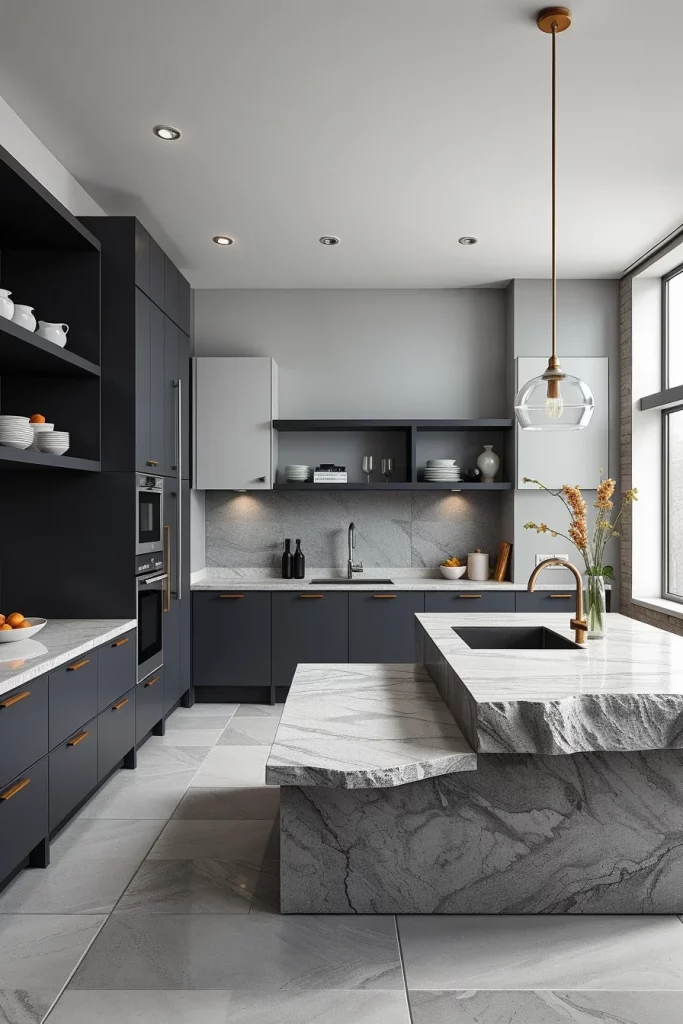
I often combine several tones ranging from very light to deeper variations within the same palette. For example, lighter upper cabinets can be paired with darker lower cabinetry, while the island introduces an intermediate shade that connects both elements. Matching stone surfaces, textured backsplashes, minimalist seating, integrated appliances, and carefully selected lighting reinforce the layered effect. Every finish contributes to a cohesive composition that remains elegant and highly functional.
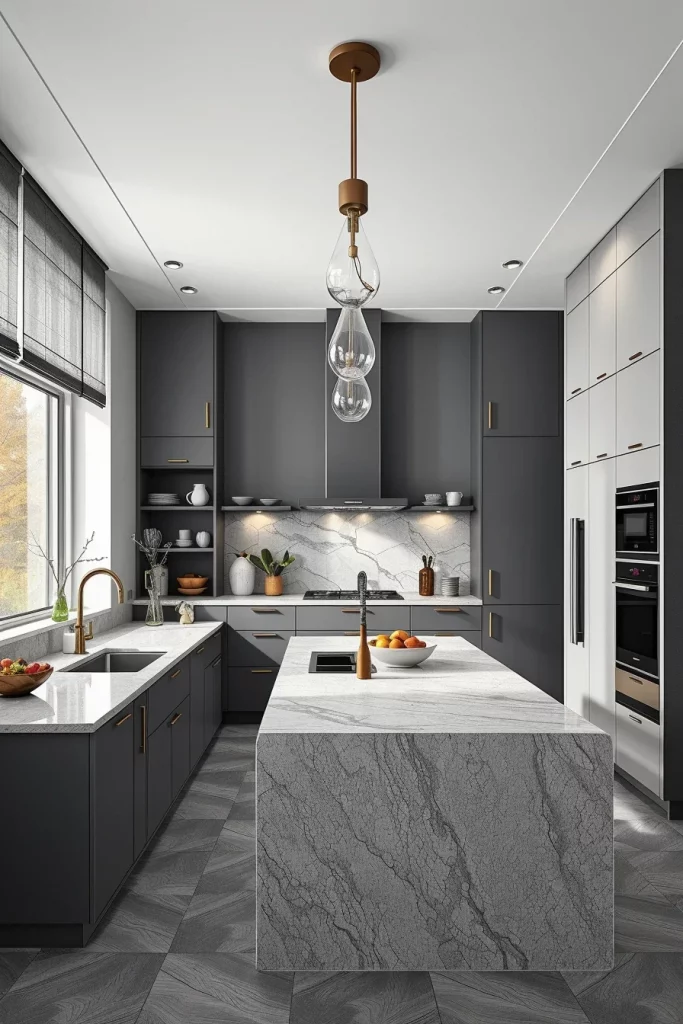
Personally, I find this strategy much more forgiving than using only one identical finish across every surface. Interior designers regularly recommend tonal variation because it creates richness without clutter, and I completely agree. Even subtle differences in matte, satin, and textured materials can dramatically improve the final appearance while maintaining a calm atmosphere.
I would also introduce textured wall panels, decorative stone accessories, and indirect LED lighting beneath cabinetry to emphasize the gentle transitions between each shade and enhance the room’s architectural character.
Statement Kitchen Islands That Become Sculptural Centerpieces
A statement island can completely transform a monochrome kitchen by becoming both its visual centerpiece and its most practical feature. I often begin planning the entire room around the island because it naturally becomes the place where cooking, dining, entertaining, and conversation come together. Rather than treating it as a standard work surface, I view it as a sculptural object that defines the personality of the entire interior.
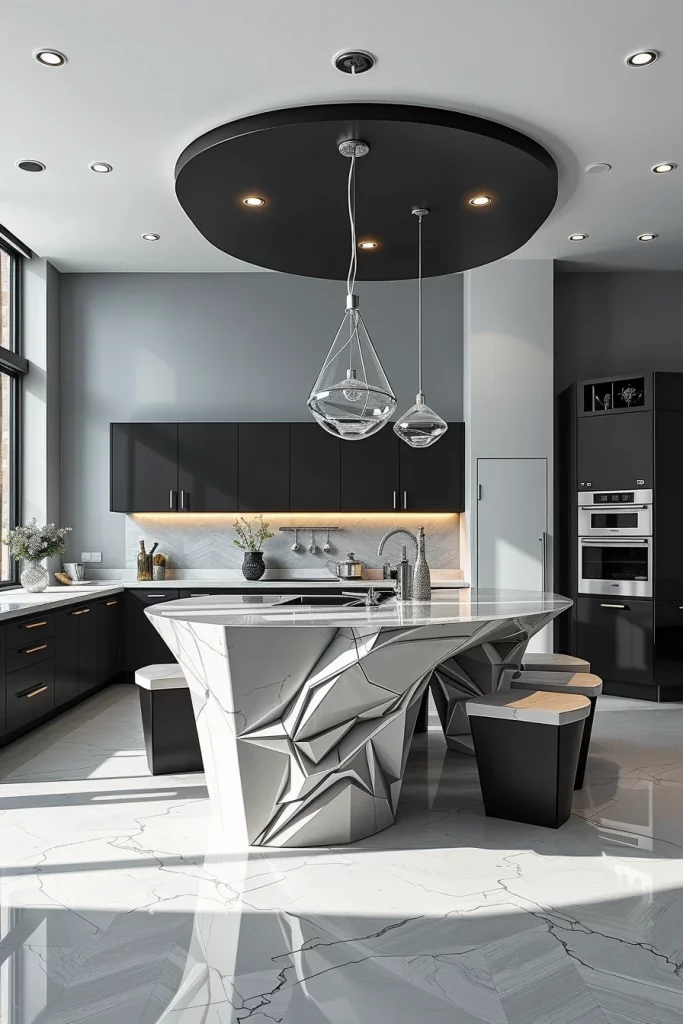
My preferred designs feature oversized waterfall countertops, monolithic bases, integrated seating, concealed storage, and seamless paneling that blends perfectly with surrounding cabinetry. Curved edges, rounded corners, and bold geometric forms introduce artistic character without interrupting the monochromatic palette. Pendant lighting suspended directly above the island highlights its architectural form while improving everyday functionality.
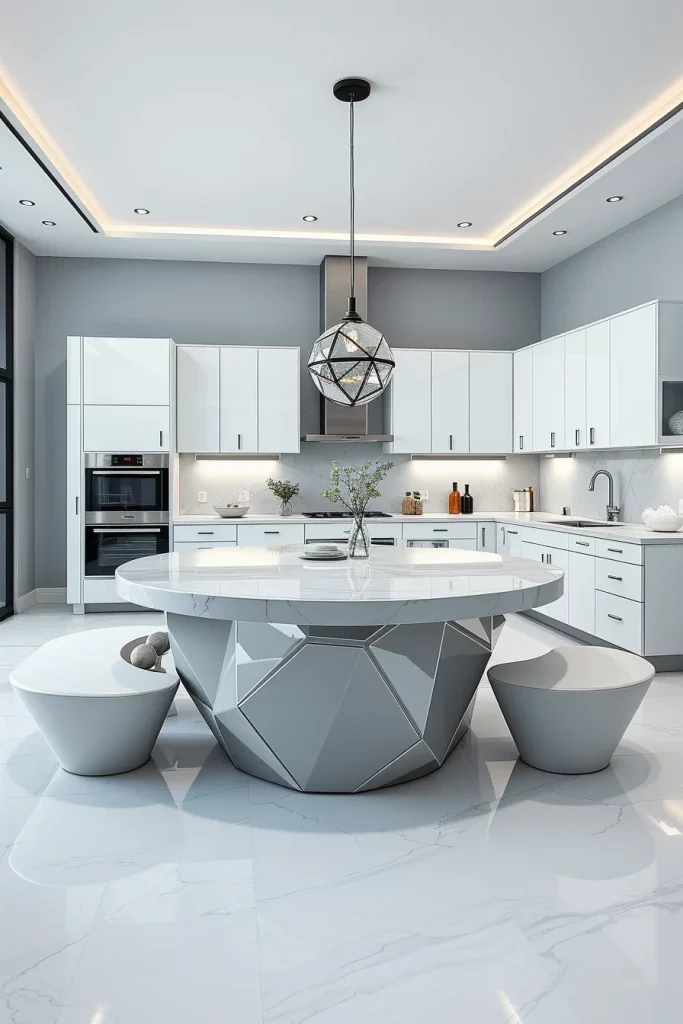
I have found that investing in a beautifully designed island delivers more long-term value than adding numerous decorative accessories throughout the room. Designers frequently emphasize that one exceptional architectural feature creates greater visual impact than many small decorative elements, and my own projects consistently support this idea.
To make this section even more complete, I would recommend incorporating built-in charging stations, hidden power outlets, integrated wine storage, and subtle under-island LED lighting that enhances both convenience and the sculptural appearance.
Creative Cabinet Designs With Seamless Monochrome Appeal
Cabinetry forms the visual foundation of every monochrome kitchen, which is why I believe thoughtful cabinet design deserves as much attention as the color palette itself. Seamless cabinetry immediately creates a sophisticated appearance because uninterrupted surfaces emphasize clean lines and architectural simplicity. When every cabinet works together as a unified composition, the kitchen feels larger, calmer, and considerably more refined.
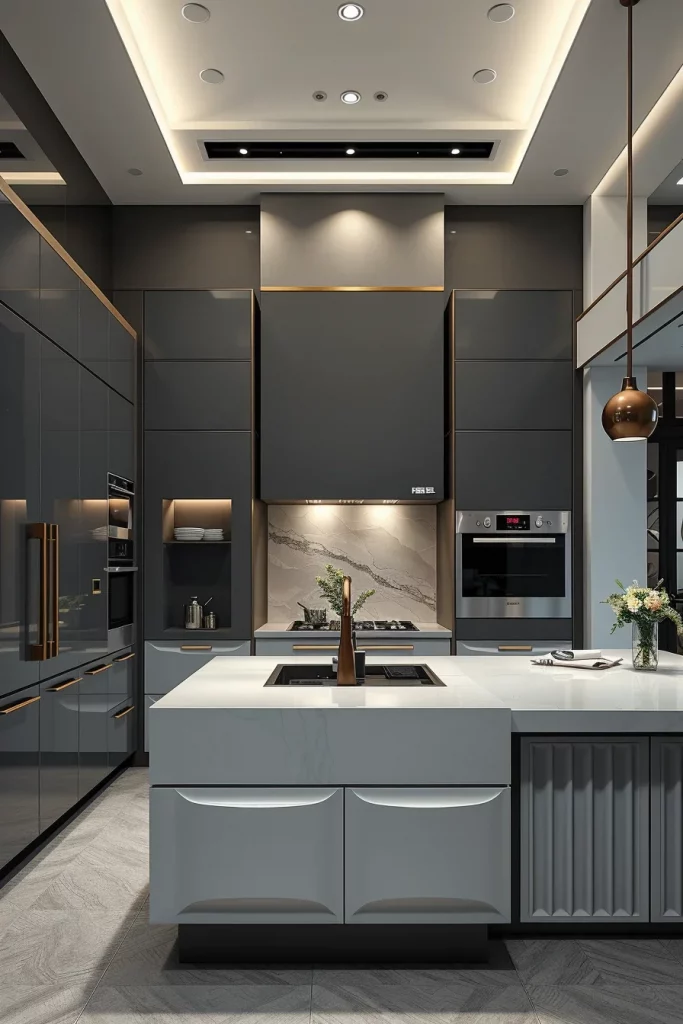
I usually recommend full-height cabinets, integrated appliances, concealed handles, push-to-open mechanisms, and matching end panels that eliminate visual interruptions. Flat-panel doors, fluted textures, softly rounded corners, and carefully proportioned storage solutions allow the cabinetry to become an artistic architectural feature instead of simply providing storage. Internal organization systems further improve functionality while keeping countertops free from unnecessary clutter.
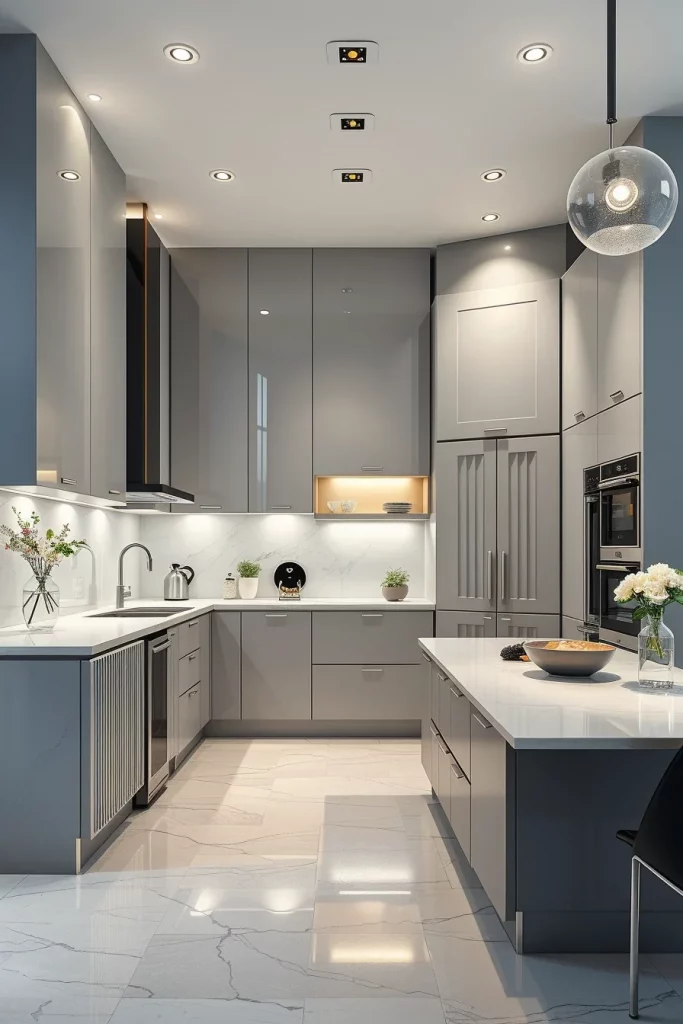
In my experience, exceptional cabinetry always makes the entire room feel more expensive and thoughtfully designed. Publications such as Architectural Digest frequently showcase kitchens where the cabinetry itself becomes the primary design statement, and I appreciate how this approach prioritizes craftsmanship over excessive decoration.
I would also include interior cabinet lighting, hidden pull-out organizers, integrated recycling systems, and custom pantry solutions that maximize storage while preserving the seamless monochromatic appearance.
Unique Countertop Ideas That Elevate Monochrome Kitchens
Countertops play an essential role in defining the personality of a monochrome kitchen because they connect every major surface within the room. I always encourage selecting materials that complement the chosen palette while introducing subtle movement through texture or natural veining. The goal is not to create strong contrast but to add elegant visual interest that enhances the overall design. A carefully selected countertop can transform a simple kitchen into a stylish and artistic space.
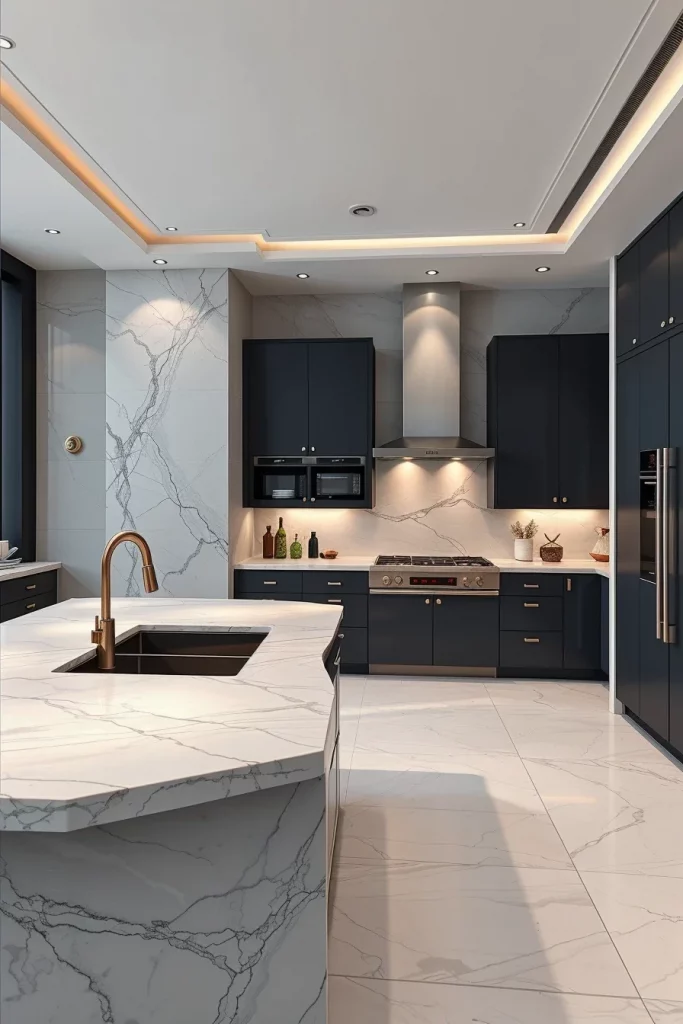
I prefer large-format stone surfaces with waterfall edges, matching backsplashes, integrated sinks, and minimal visible joints. Honed finishes, subtle veining, textured composite materials, and sculptural edge profiles create sophistication without overwhelming the monochromatic concept. When paired with seamless cabinetry and integrated appliances, these surfaces establish a cohesive environment that feels luxurious, functional, and remarkably timeless.
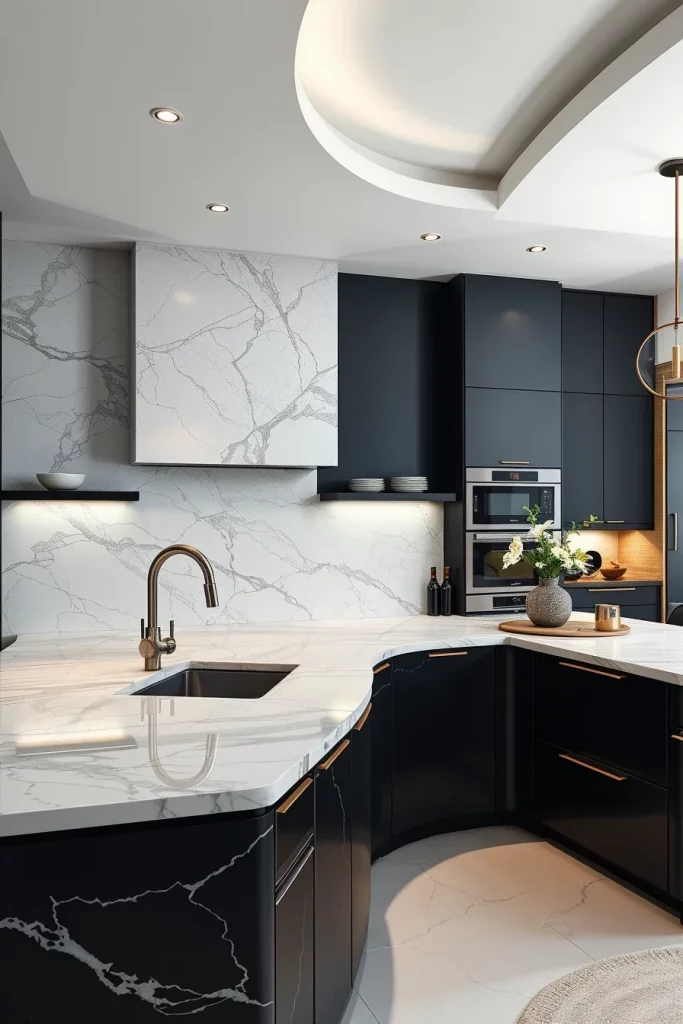
Personally, I believe investing in premium countertop materials is one of the smartest long-term design decisions. Better Homes & Gardens has often noted that durable surfaces combining beauty and practicality provide lasting value, and I fully agree after seeing how quality materials continue looking elegant even after years of everyday use.
To finish this design successfully, I would add coordinated shelving materials, matching window ledges, integrated draining grooves beside the sink, and subtle decorative objects that reinforce the monochrome palette without distracting from the sculptural beauty of the countertops.
Artistic Backsplash Designs For A Refined Monochrome Space
When I design a monochrome kitchen, I always see the backsplash as an opportunity to introduce personality without disturbing the calm color palette. Instead of relying on color, I focus on texture, scale, relief, and artistic composition. A full-height stone slab with delicate veining, geometric porcelain panels, or handcrafted ceramic tiles can instantly elevate the entire room while maintaining visual harmony. These details allow the backsplash to become a focal point that feels sophisticated rather than overwhelming.
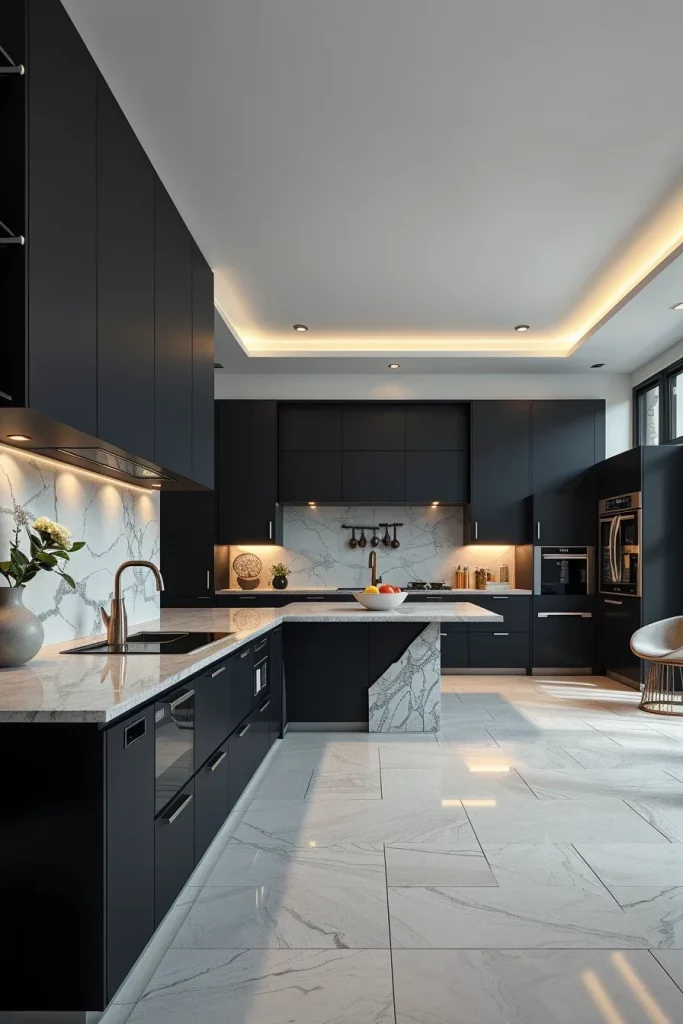
I carefully coordinate the backsplash with flat-panel cabinetry, integrated appliances, concealed storage, and streamlined countertops. I find that large-format porcelain, honed marble, textured quartz, or fluted wall panels pair beautifully with minimalist cabinetry because they create subtle movement across the surface. I also like using continuous slabs behind open cooking areas because they reduce grout lines, simplify maintenance, and strengthen the seamless appearance of the kitchen. Every material contributes to a clean yet artistic atmosphere.
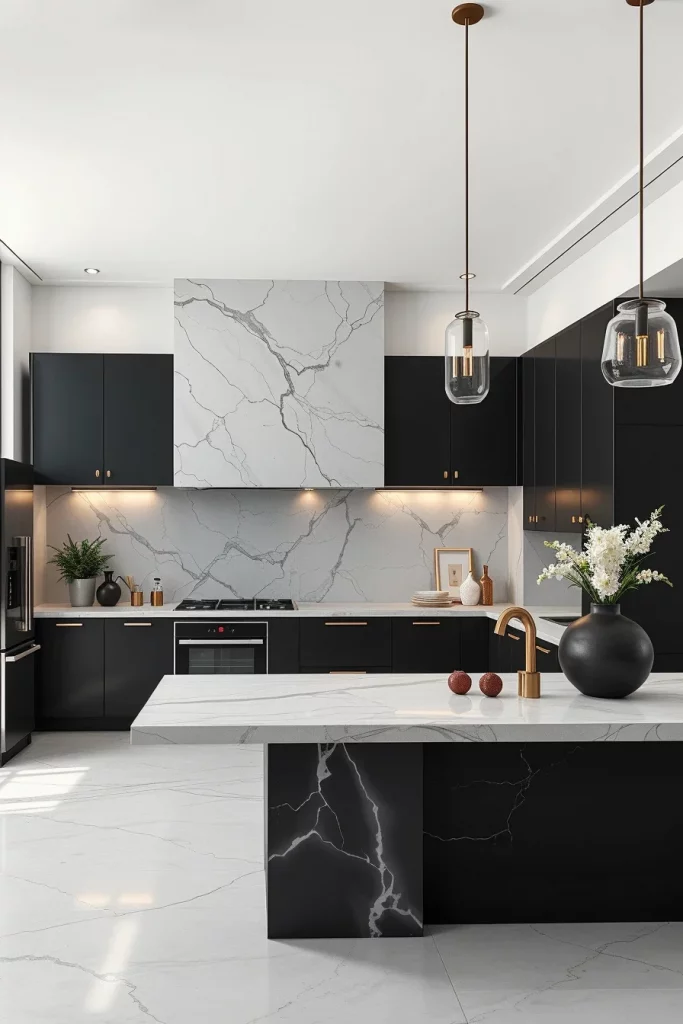
I appreciate advice frequently shared by interior experts from Architectural Digest, who often emphasize layering textures instead of introducing excessive color in modern minimalist interiors. I have found this approach especially effective in monochrome kitchens because even slight variations in texture become highly noticeable. Rather than competing for attention, every surface supports the overall architectural composition while maintaining visual calm.
To complete this design, I would also incorporate discreet under-cabinet LED lighting that softly highlights the backsplash texture during the evening. This simple addition reveals depth throughout the day while making food preparation more comfortable and enhancing the sculptural quality of the materials.
Stylish Lighting Fixtures That Transform Monochrome Kitchens
Lighting is one of the first elements I plan because it completely changes how a monochrome kitchen feels throughout the day. A restrained palette depends on light to reveal shadows, textures, and architectural forms. Sculptural pendant lights, recessed ceiling lighting, hidden LED strips, and carefully positioned accent fixtures allow every material to display its true character. Instead of adding decoration, I let lighting become part of the design itself.
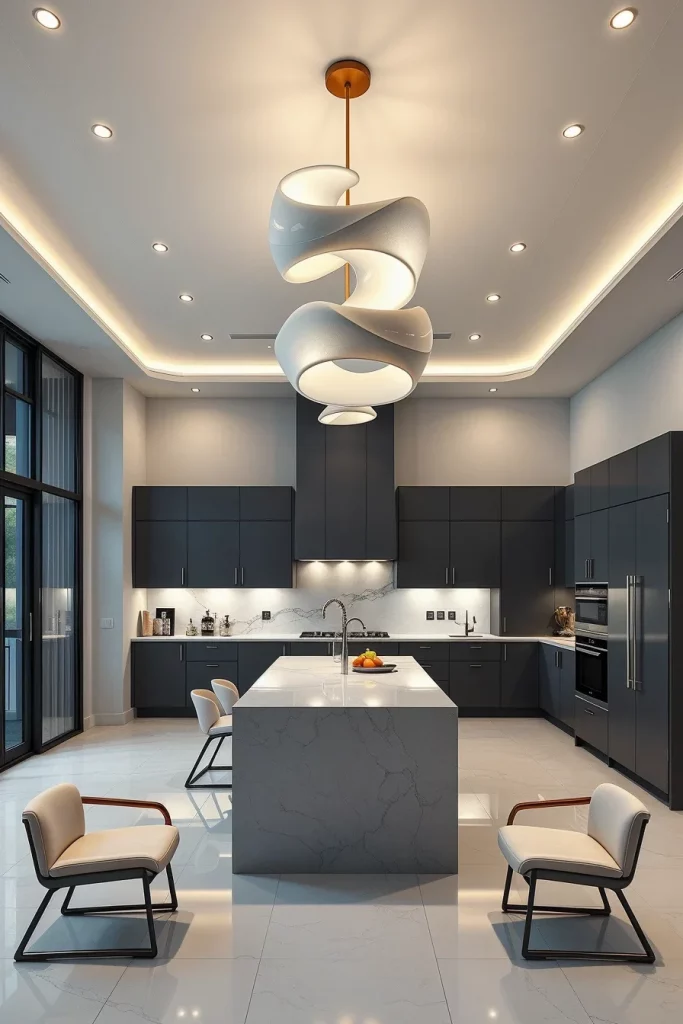
I usually combine oversized pendants above the island with recessed ceiling fixtures and integrated cabinet lighting. Matte black fixtures, brushed nickel finishes, smoked glass pendants, or minimalist white lighting all work beautifully depending on the kitchen’s overall direction. I also recommend dimmable lighting systems because they allow the space to shift from bright task lighting during cooking to a soft ambient atmosphere for entertaining guests. Layered illumination makes the entire kitchen feel more dynamic.
Many designers featured in Elle Decor recommend creating several independent lighting zones instead of relying on one central fixture. I completely agree with this philosophy because separate lighting layers improve both functionality and visual comfort. From my experience, thoughtful lighting is one of the simplest ways to make a monochrome kitchen appear more luxurious without adding unnecessary decorative objects.
If I wanted to improve this section even further, I would include smart lighting controls with programmable scenes that automatically adjust brightness throughout the day. This modern feature increases convenience while complementing the clean aesthetic of a contemporary monochrome interior.
Mixing Matte And Gloss Finishes For Visual Interest
One technique I frequently recommend is combining matte and glossy finishes within the same monochrome palette. Since color contrast is intentionally limited, differences in surface reflection become much more important. Matte cabinetry absorbs light and creates a calm backdrop, while polished stone countertops, glossy backsplash panels, or reflective cabinet accents introduce movement and depth. The balance between these finishes keeps the room visually engaging without becoming busy.
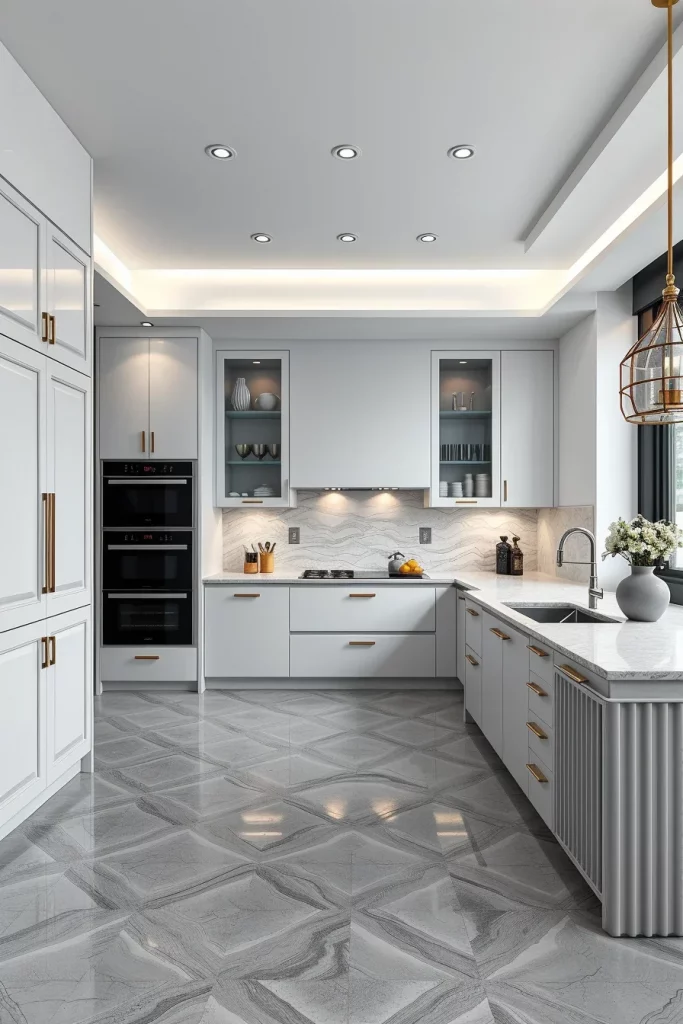
I often pair ultra-matte cabinet fronts with polished quartz countertops, satin metal hardware, ribbed glass cabinets, and subtle reflective accessories. These combinations create gentle contrast while preserving the minimalist character of the kitchen. I also pay close attention to how natural daylight interacts with every finish because reflections change dramatically from morning to evening, giving the room an evolving appearance throughout the day.
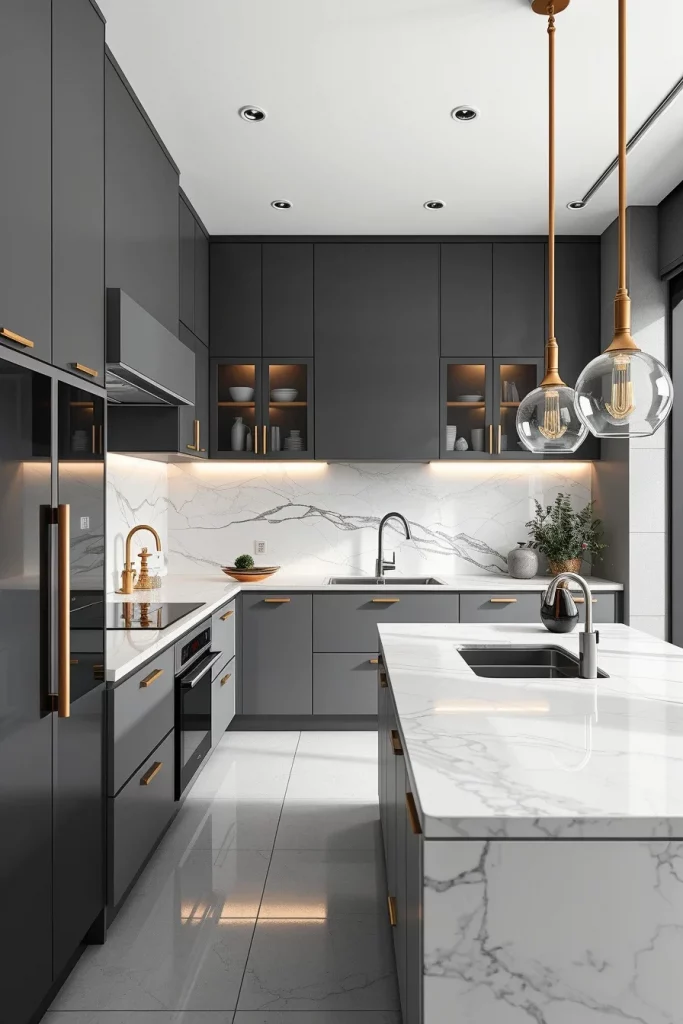
I have noticed that many professional kitchen designers recommend limiting highly reflective materials to carefully selected areas. I completely support this approach because excessive gloss can dominate the room and reduce the elegance of a monochrome design. Controlled contrast always produces a more balanced and timeless result.
To strengthen this concept, I would also introduce textured fabrics through dining chairs or window treatments. These soft materials complement both matte and glossy finishes while making the kitchen feel warmer and more comfortable without interrupting the monochrome palette.
Curved Architectural Details In Contemporary Monochrome Kitchens
Curved architecture brings softness to the strong geometry often found in modern kitchens. I enjoy introducing rounded islands, arched doorways, curved cabinet corners, and gently shaped range hoods because they make the room feel more welcoming while preserving a clean contemporary appearance. Within a monochrome palette, these sculptural forms become even more noticeable since attention naturally shifts toward shape instead of color.
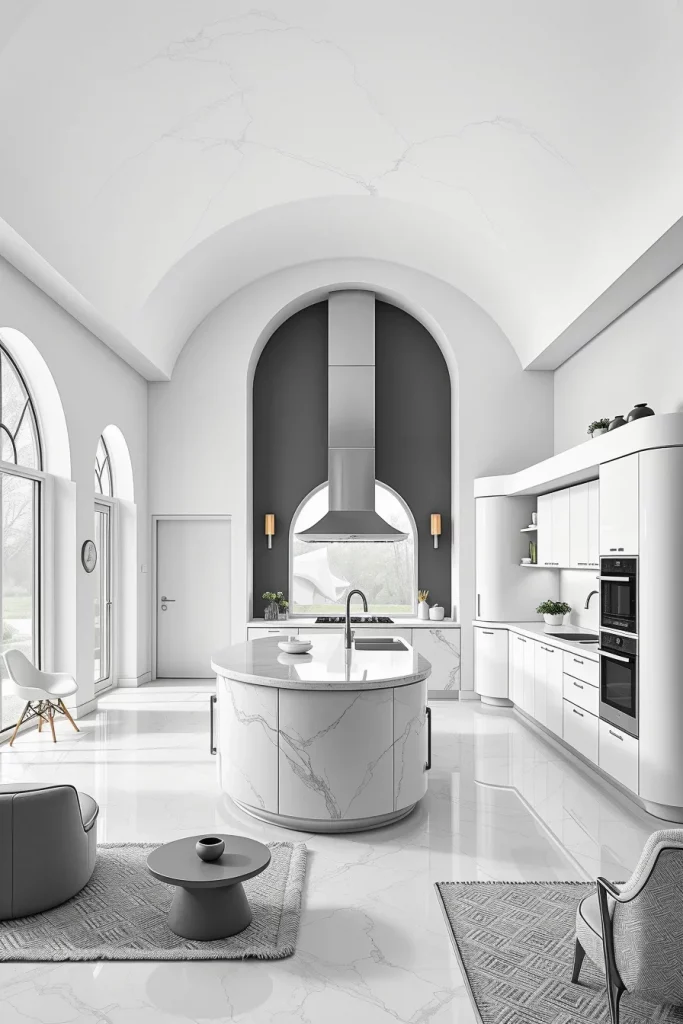
I frequently combine curved islands with waterfall countertops, seamless cabinetry, integrated appliances, rounded shelving, and minimalist seating. Soft transitions between surfaces improve movement through the room while reducing harsh visual lines. Even subtle curved details on cabinet edges or decorative wall niches contribute to a more refined and artistic environment. These architectural elements create a memorable kitchen without relying on excessive ornamentation.
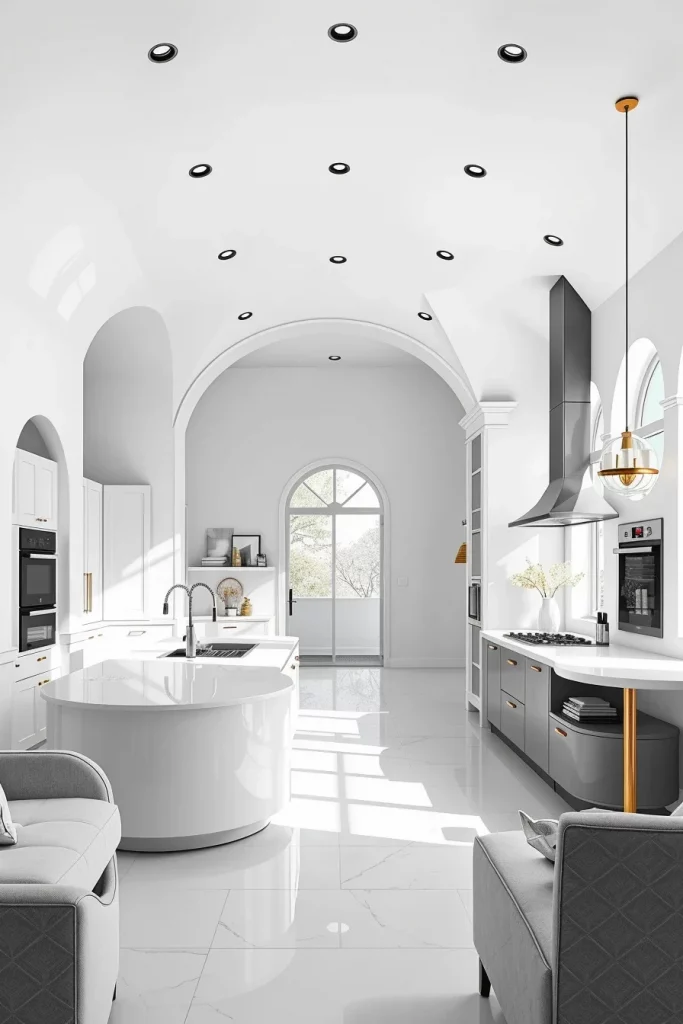
Interior designers featured in publications such as House Beautiful often highlight the growing popularity of soft architectural forms because they make modern interiors feel more approachable. I have incorporated similar ideas into many design concepts and consistently find that curves balance minimalist spaces exceptionally well while maintaining excellent functionality.
If I were expanding this concept further, I would add sculptural plaster wall details or softly curved ceiling transitions that continue the architectural language throughout the entire open-plan living area.
Open Shelving Styled Within A Monochrome Color Story
Open shelving allows me to personalize a monochrome kitchen while maintaining its uncluttered appearance. Rather than filling every shelf, I carefully curate objects that contribute to the overall composition. Neutral ceramics, sculptural bowls, monochrome artwork, glass containers, and carefully selected cookbooks create visual interest through form, proportion, and texture instead of color. The result feels intentional and highly sophisticated.
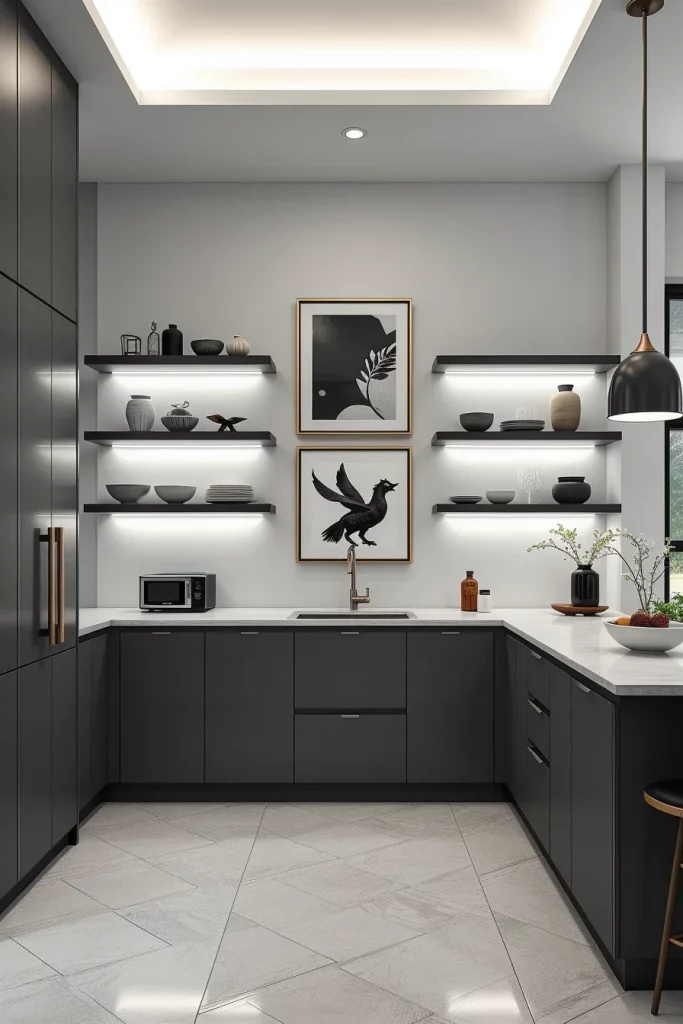
I usually install floating shelves in matching finishes that blend naturally with surrounding cabinetry. Decorative pieces are arranged with generous spacing so every object has room to stand out. I also like incorporating concealed LED shelf lighting because it gently highlights ceramics, textured stone accessories, and matte decorative objects without becoming distracting. Functional storage remains balanced with carefully selected decorative elements.
From my own experience, restraint is the key to successful open shelving. Design professionals frequently remind homeowners that negative space is just as important as the objects themselves. I completely agree because overcrowded shelves quickly diminish the calm atmosphere that defines a monochrome kitchen.
To make this design even stronger, I would introduce seasonal decorative accents in different shades of black, white, and gray while maintaining the same restrained styling approach. This keeps the shelves feeling fresh throughout the year without disrupting the monochrome aesthetic.
Floor Designs That Complete A Sophisticated Monochrome Kitchen
When I plan a monochrome kitchen, I always begin with the flooring because it visually connects every part of the room. The floor should support the cabinetry, island, and surrounding architecture without competing for attention. Large-format porcelain tiles, polished concrete, natural stone, or seamless resin flooring work exceptionally well because they create an uninterrupted surface that makes the entire kitchen appear larger and more refined. Even within a limited palette, subtle variations in texture and finish provide depth while preserving the clean monochrome aesthetic.
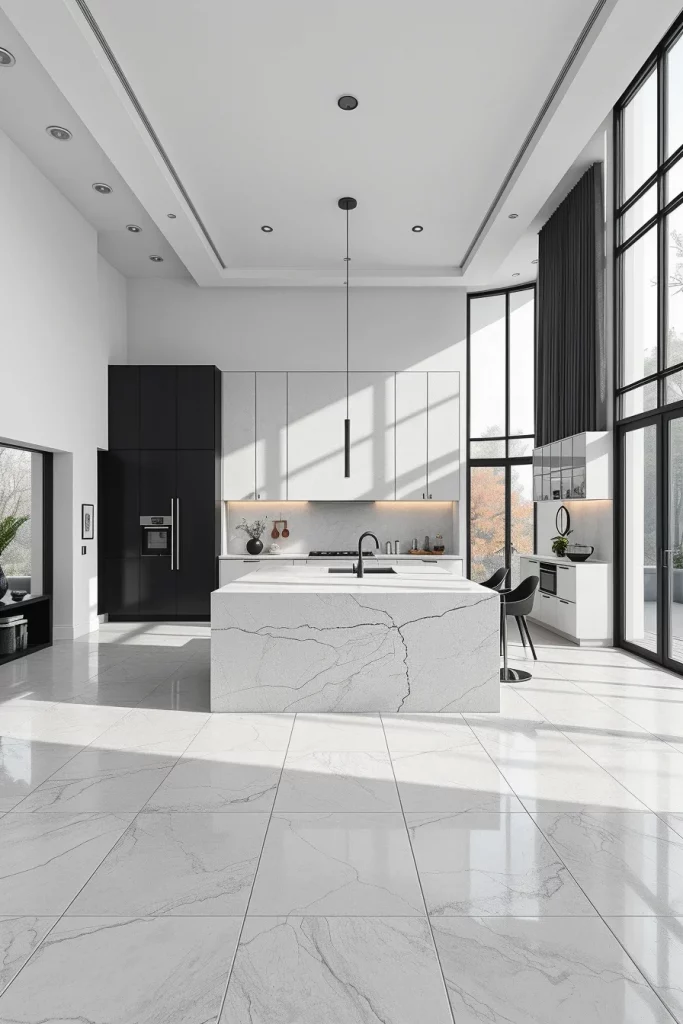
I often coordinate the flooring with waterfall countertops, minimalist cabinetry, and concealed storage to maintain visual continuity. Matte porcelain tiles with delicate stone patterns create a calm atmosphere, while lightly polished concrete reflects natural light without becoming distracting. I also recommend underfloor heating whenever possible because it increases comfort while allowing the design to remain free of visible heating elements. Minimal grout lines further strengthen the seamless appearance that defines a contemporary monochrome kitchen.
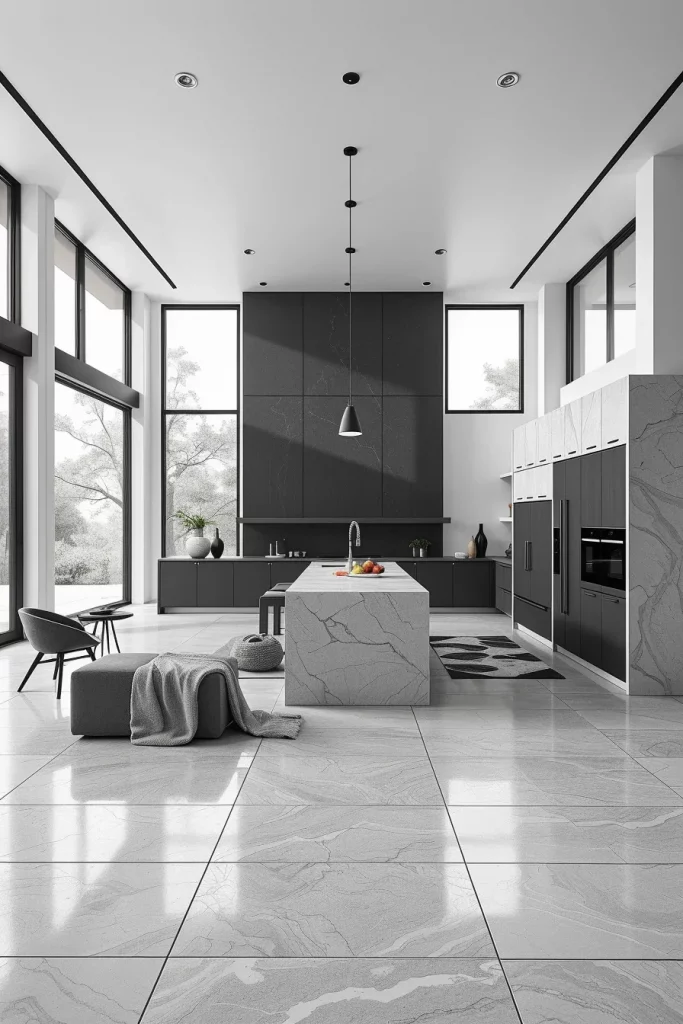
Many interior designers featured by Dezeen emphasize the importance of selecting flooring that enhances architecture instead of becoming the focal point. I fully agree with this approach because the strongest monochrome interiors rely on proportion, material quality, and thoughtful composition rather than decorative excess. In my experience, carefully selected flooring quietly elevates every other design element.
To complete this concept, I would add oversized floor-to-ceiling windows that flood the room with daylight. Natural light allows subtle differences in texture and finish to become more noticeable throughout the day, making the monochrome palette feel dynamic rather than static.
Ceiling Treatments That Add Modern Architectural Style
The ceiling is often overlooked, but I consider it one of the most valuable architectural surfaces in a monochrome kitchen. Instead of leaving it completely flat, I like incorporating subtle recessed details, floating ceiling panels, linear wood-free slats, integrated lighting channels, or sculptural plaster forms. These architectural elements draw the eye upward and make the room feel taller while preserving the restrained elegance of the monochrome palette.
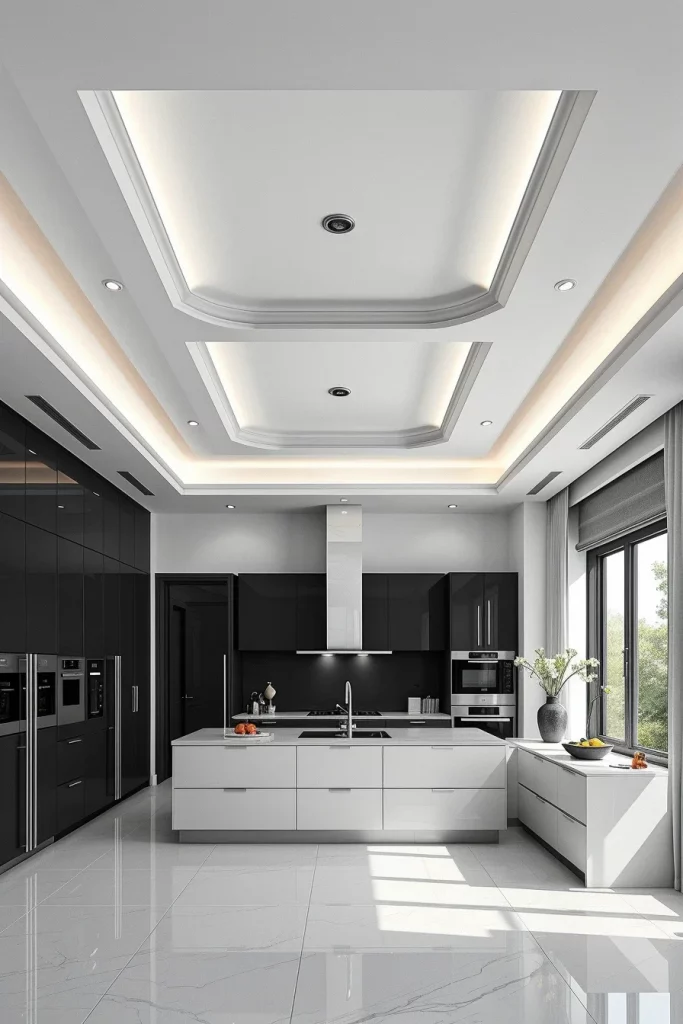
I usually combine recessed ceiling lighting with hidden LED coves that softly illuminate the perimeter of the room. Slim architectural beams, shadow gaps, and flush ventilation systems help maintain a clean visual composition. Every ceiling detail should feel intentional and integrated with the cabinetry below. The result is a kitchen where every architectural plane contributes to the overall design language.
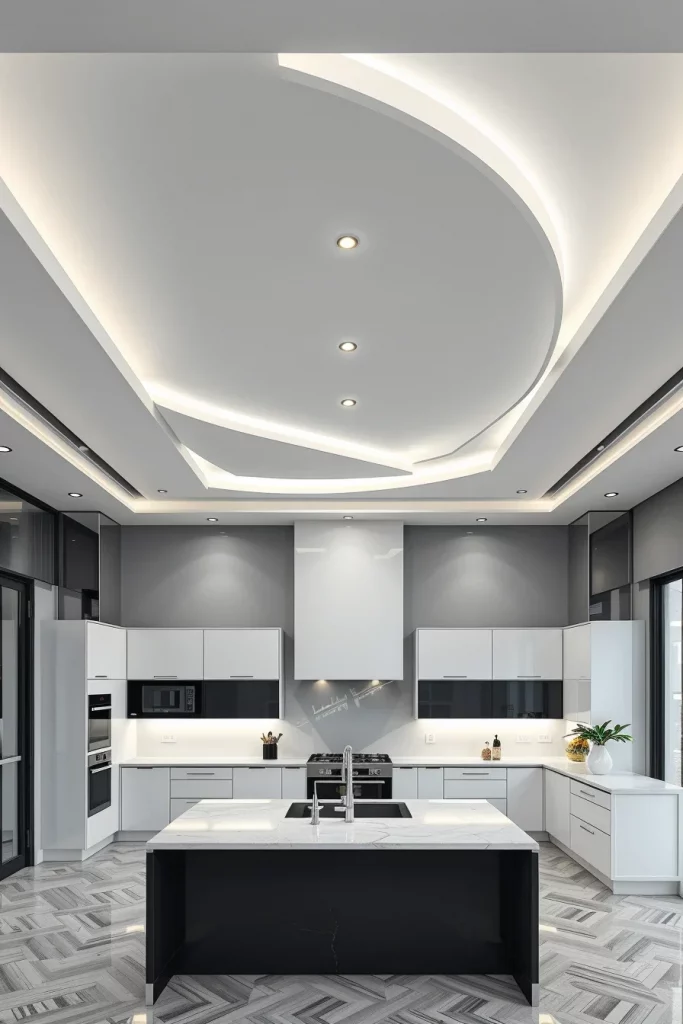
Architectural Digest has frequently highlighted how layered ceilings can transform minimalist interiors without introducing unnecessary decoration. I appreciate this philosophy because architectural depth creates visual interest while allowing the monochrome color scheme to remain calm and sophisticated. In my own projects, subtle ceiling treatments consistently make the entire kitchen feel more custom and thoughtfully designed.
If I wanted to refine this space further, I would integrate discreet acoustic ceiling panels finished in matching monochrome tones. They improve sound quality during everyday conversations while remaining almost invisible within the overall composition.
Elegant Dining Areas Connected To Monochrome Kitchens
An open dining area should feel like a natural continuation of the monochrome kitchen rather than a separate room. I focus on maintaining consistent materials, proportions, and finishes so both spaces feel connected. A sculptural dining table, comfortable upholstered seating, and carefully selected lighting establish a welcoming environment while preserving the refined atmosphere of the kitchen. Continuity creates an interior that feels balanced and effortless.
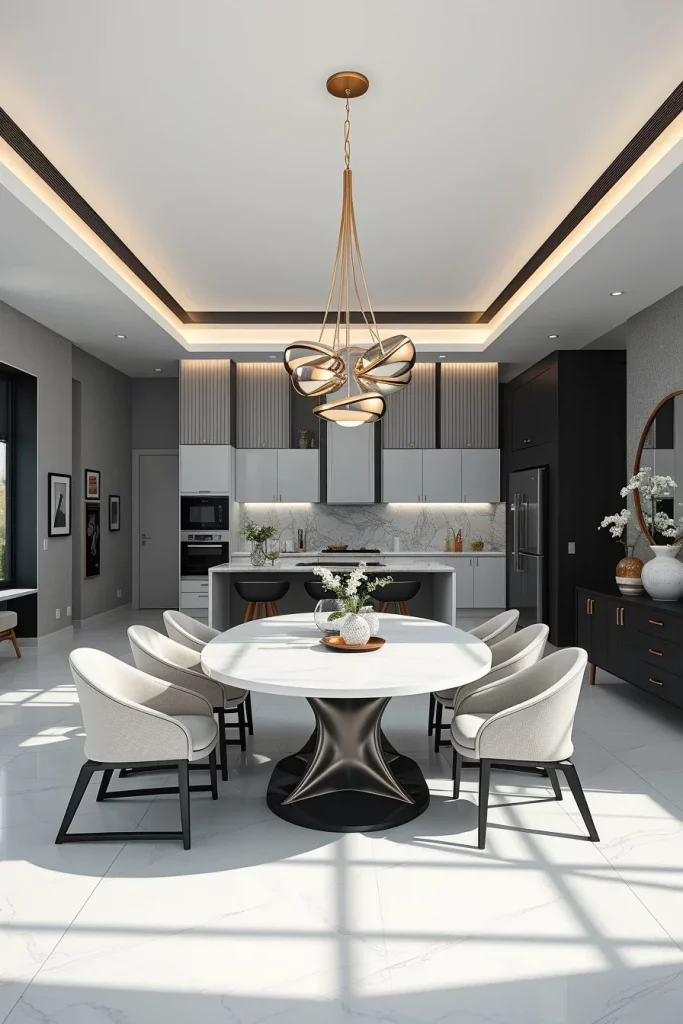
I often pair an oval dining table with minimalist upholstered chairs, sculptural pendant lighting, and a large monochrome area rug to define the dining zone. Built-in storage, concealed sideboards, and elegant shelving maintain functionality without introducing clutter. Decorative accessories remain restrained, allowing beautiful materials and carefully considered furniture forms to become the primary visual interest.
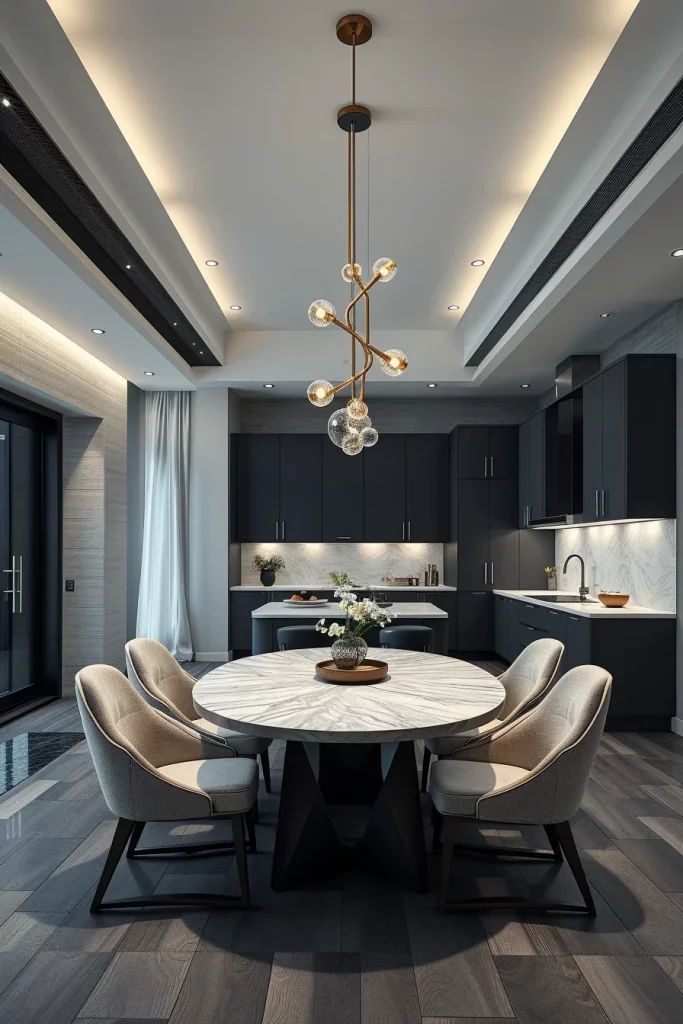
Many designers featured in House Beautiful recommend repeating similar finishes throughout connected living spaces to strengthen visual flow. I have found this advice especially valuable in monochrome interiors because consistency prevents abrupt transitions between functional zones. The dining area becomes an extension of the kitchen instead of feeling disconnected.
To complete this arrangement, I would include large contemporary artwork in monochrome tones or textured wall panels that reinforce the sculptural character of both spaces while preserving the calm atmosphere.
Sculptural Seating Ideas For Contemporary Kitchen Islands
Kitchen island seating has become an important design feature rather than simply a functional necessity. In a monochrome kitchen, I prefer stools with sculptural silhouettes that introduce artistic character without disrupting the restrained palette. Curved forms, elegant proportions, and premium upholstery allow seating to become part of the architecture itself. Comfortable seating also encourages people to gather naturally around the island during everyday life.
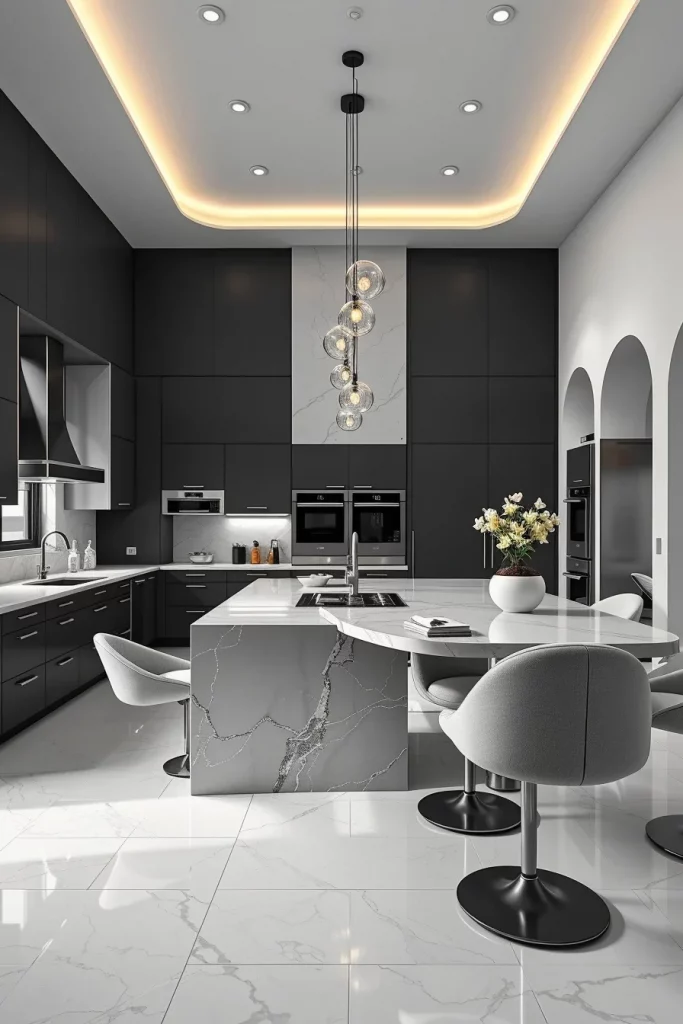
I frequently select upholstered counter stools with rounded backs, slim metal frames, integrated footrests, and soft textured fabrics in black, white, or gray. The seating should complement the island instead of overwhelming it. Carefully balanced proportions ensure there is generous circulation space while maintaining visual harmony. Every chair contributes to both comfort and the artistic identity of the room.
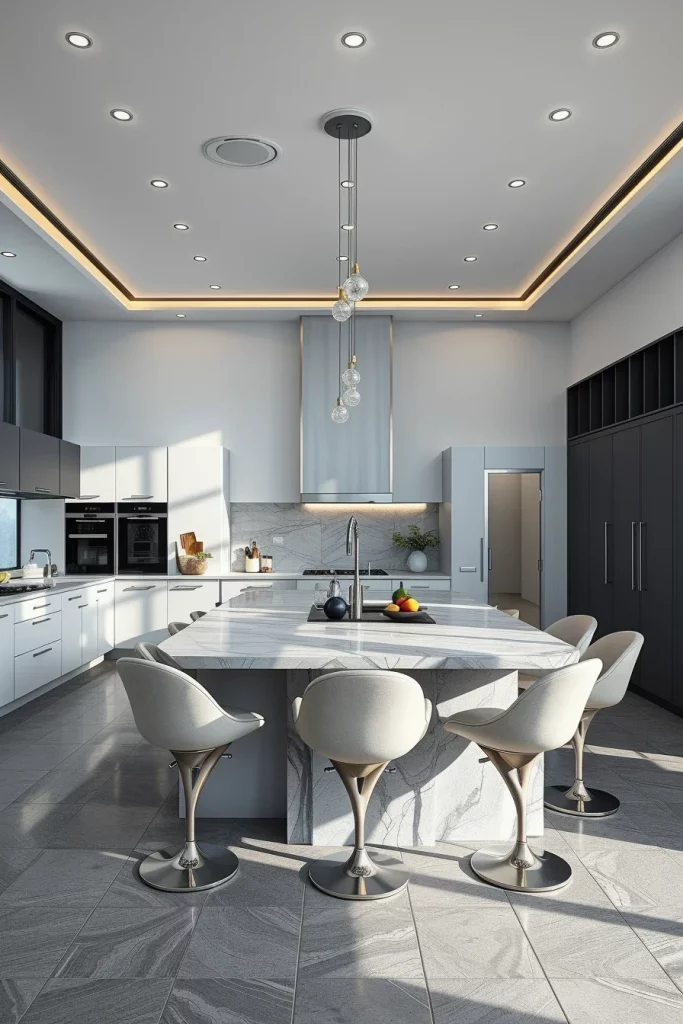
Interior designers often remind homeowners that furniture should feel as carefully selected as the architecture itself. I strongly agree because sculptural seating introduces personality without relying on decorative accessories. From my experience, beautifully designed stools often become one of the most memorable features in a monochrome kitchen.
To improve this space even further, I would introduce adjustable pendant lighting directly above the island so the sculptural forms of the seating remain beautifully illuminated throughout the day and evening.
Minimal Decor That Makes A Powerful Visual Statement
Minimal decoration does not mean an empty room. Instead, I carefully select a few meaningful objects that enhance the architectural character of a monochrome kitchen. Sculptural vases, textured ceramics, elegant bowls, monochrome artwork, and carefully arranged books create personality without introducing unnecessary visual noise. Every decorative element should have a purpose and contribute to the overall balance of the room.
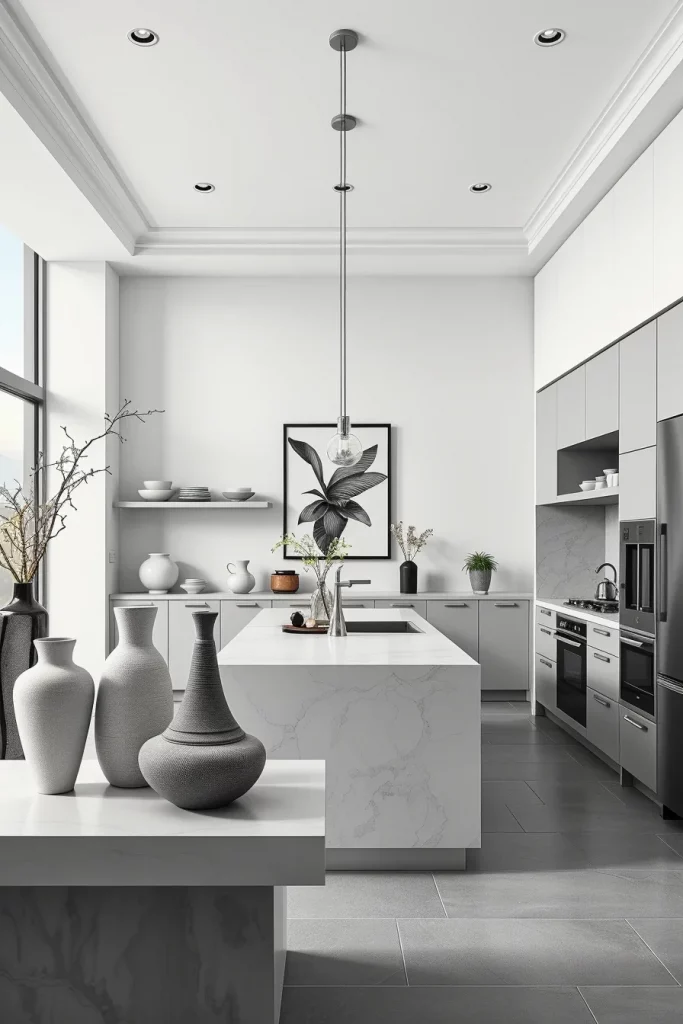
I usually display decorative pieces on open shelving, kitchen islands, or dining tables while leaving generous empty space around them. This approach allows every object to be appreciated individually. Natural stone accessories, matte ceramics, smoked glass, and brushed metal finishes complement monochrome interiors exceptionally well because they introduce texture rather than competing colors. The result feels refined, calm, and timeless.
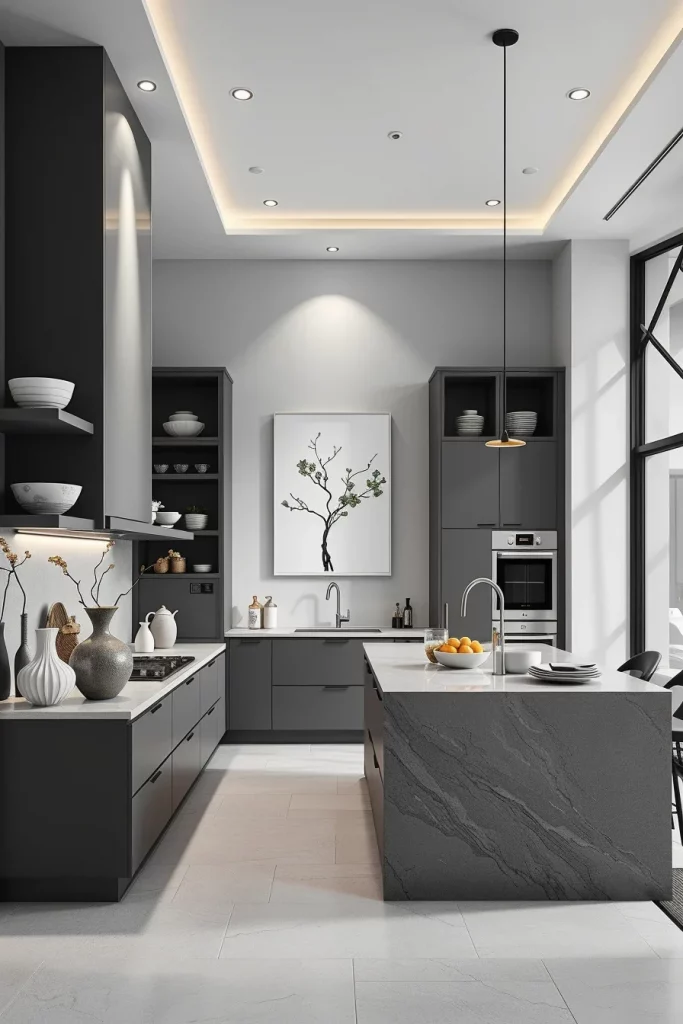
I often follow the advice shared by designers in Elle Decor, who encourage homeowners to edit decorative collections regularly instead of continuously adding new objects. I have found this practice extremely effective because restraint is what allows a monochrome kitchen to maintain its elegant appearance over time.
To finish the room, I would include fresh architectural branches displayed in a simple sculptural vase. This subtle natural element introduces organic movement while remaining fully consistent with the restrained monochrome design philosophy.
Artistic Storage Solutions Hidden Within Clean Kitchen Lines
I always believe that storage should disappear into the architecture instead of competing with it. In a monochrome kitchen, uninterrupted cabinet lines create a calm atmosphere while making the room appear larger and more organized. Handleless cabinetry, concealed pantry walls, integrated pocket doors, and hidden appliance garages maintain the minimalist appearance without sacrificing functionality. I often recommend extending cabinetry to the ceiling because it increases storage while emphasizing the clean geometry that defines a sophisticated monochrome interior.
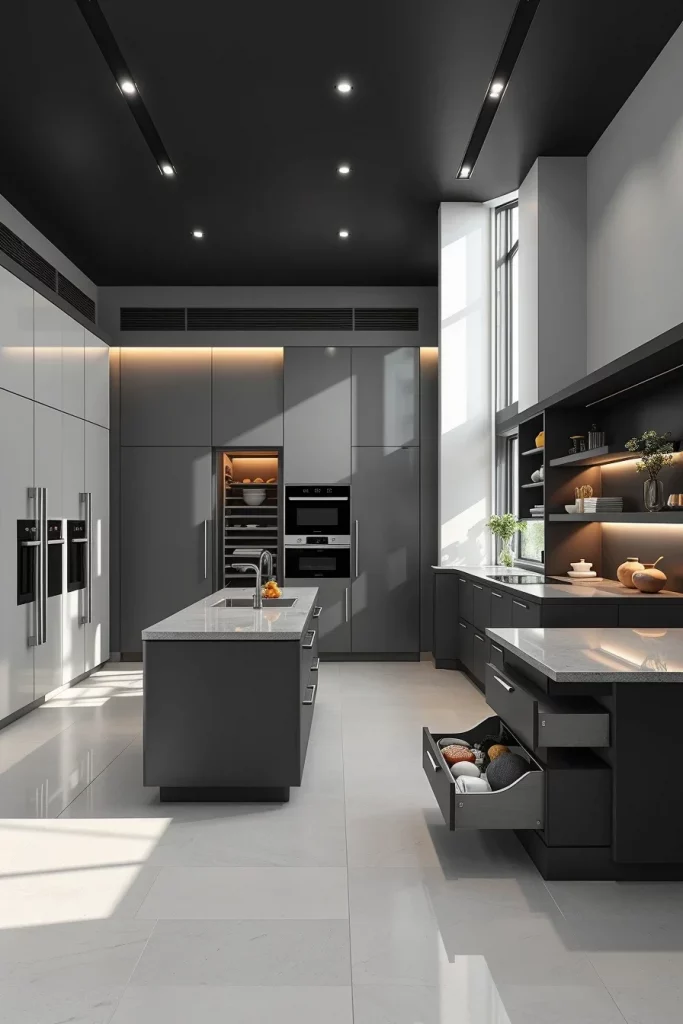
When designing storage, I carefully select push-to-open cabinets, integrated drawers, custom interior organizers, hidden recycling compartments, and pull-out pantry systems. Every element serves a purpose while remaining visually quiet. Sculptural kitchen islands with concealed storage become practical focal points, while floating shelving in matching finishes provides display space without interrupting the balanced composition. I find that consistency in color and finish allows each storage solution to blend seamlessly into the surrounding cabinetry.
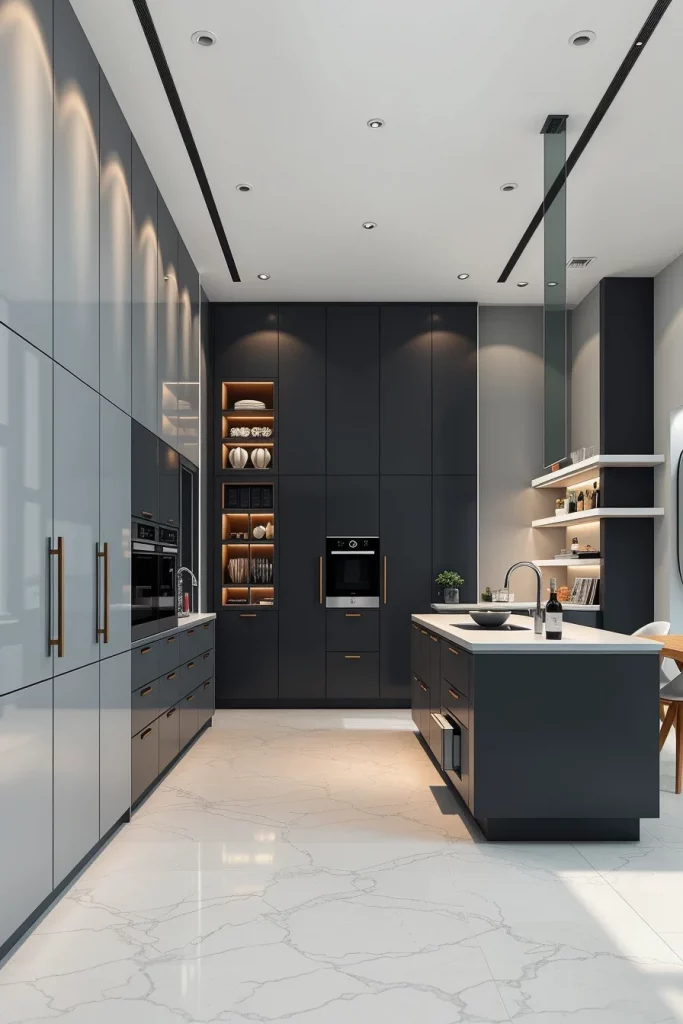
Many interior designers featured by Architectural Digest frequently emphasize that exceptional kitchens succeed because every functional element is intentionally integrated rather than exposed. I have found this advice especially valuable when planning a monochrome kitchen because visual simplicity requires even greater attention to organization. The less visual clutter remains, the more impressive the architectural details become.
I would also include layered cabinet lighting that activates automatically when drawers and pantry sections open. This small addition dramatically improves everyday usability while maintaining the clean appearance of the overall design.
Monochrome Kitchens With Dramatic Natural Light Effects
Natural light completely changes how I approach a monochrome kitchen. Throughout the day, sunlight reveals subtle variations in texture, creating depth even when the entire room stays within one carefully selected color family. Large windows, skylights, and open layouts allow shadows and reflections to become part of the design itself. Instead of relying on contrasting colors, I use changing daylight to introduce movement and visual interest.
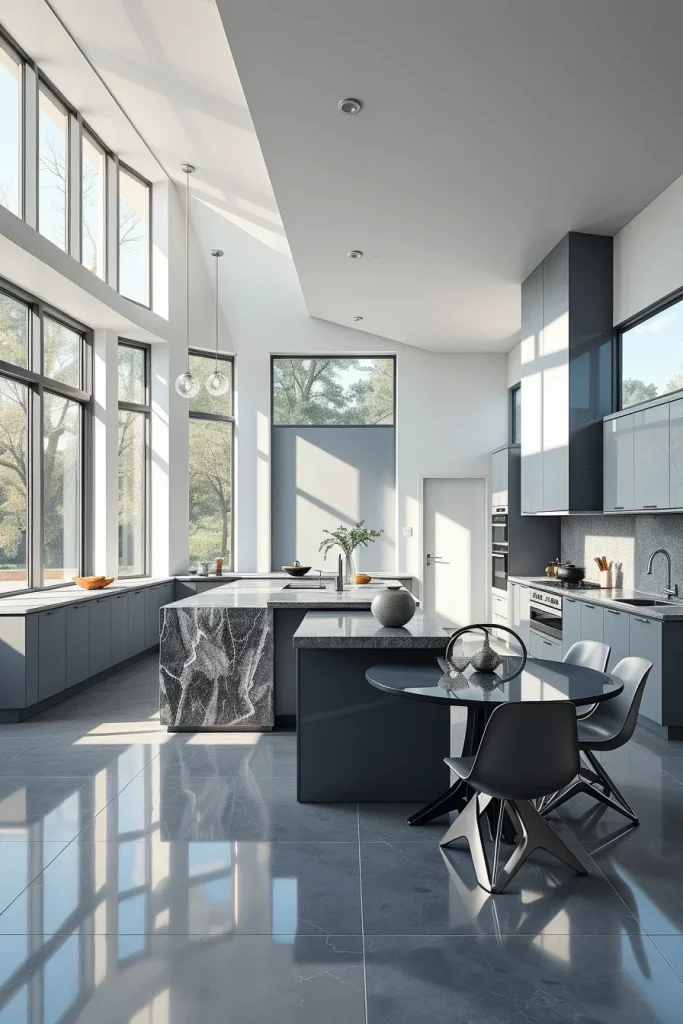
I combine matte cabinetry with polished stone countertops, lightly textured walls, reflective glass backsplashes, and satin-finished metals to capture natural light differently across every surface. A waterfall island reflects sunlight from multiple directions, while slim open shelving prevents daylight from being blocked. I also position dining furniture where natural light highlights sculptural chairs and elegant tables without creating harsh glare.
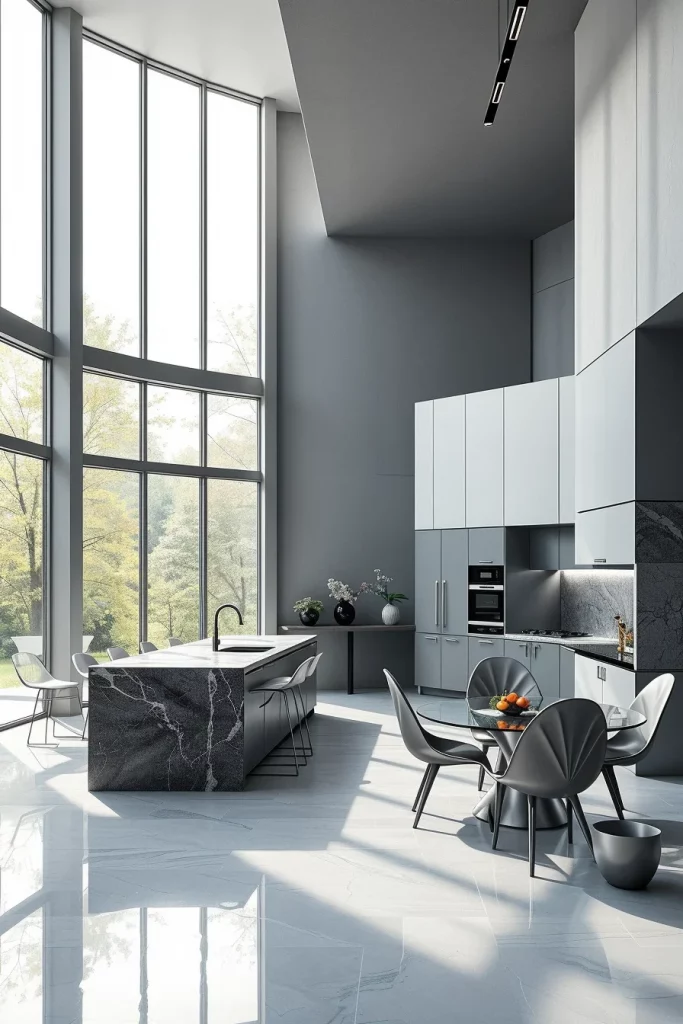
House Beautiful has often highlighted the importance of balancing reflective and matte finishes within modern kitchens, and I completely agree with that recommendation. In my experience, this combination creates visual richness without disrupting the calm appearance expected from a monochrome palette. It allows the room to evolve naturally from morning until evening.
If the architecture limits natural daylight, I recommend introducing discreet ceiling lighting that mimics daylight temperatures during daytime hours. This addition helps preserve the same balanced atmosphere throughout the entire day.
Creative Window Designs That Complement A Monochrome Interior
Windows are far more than sources of light in a monochrome kitchen. I see them as architectural features that define the character of the room while strengthening the minimalist composition. Oversized picture windows, slim black-framed glazing, corner glass installations, and clerestory windows create uninterrupted views that visually expand the kitchen without adding unnecessary decoration.
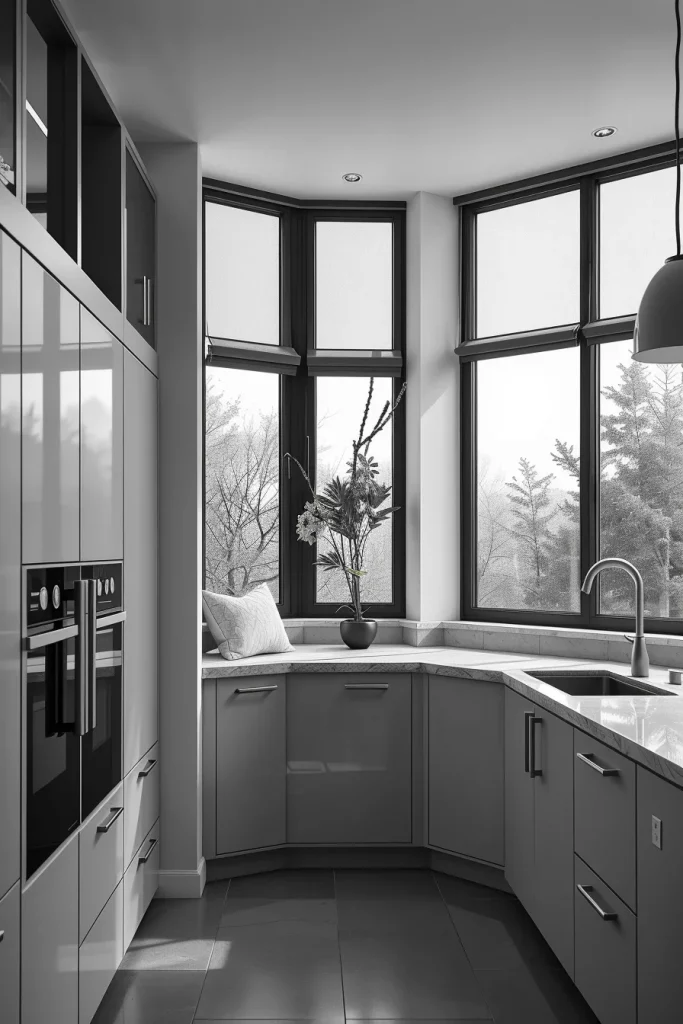
I carefully coordinate window frames with cabinetry, flooring, and countertops so every architectural element feels connected. Minimal roller shades, concealed curtain tracks, recessed window niches, and deep stone sills maintain the clean aesthetic while adding practical functionality. I also enjoy incorporating built-in seating beneath large windows because it introduces another sculptural element without disrupting the monochrome palette.
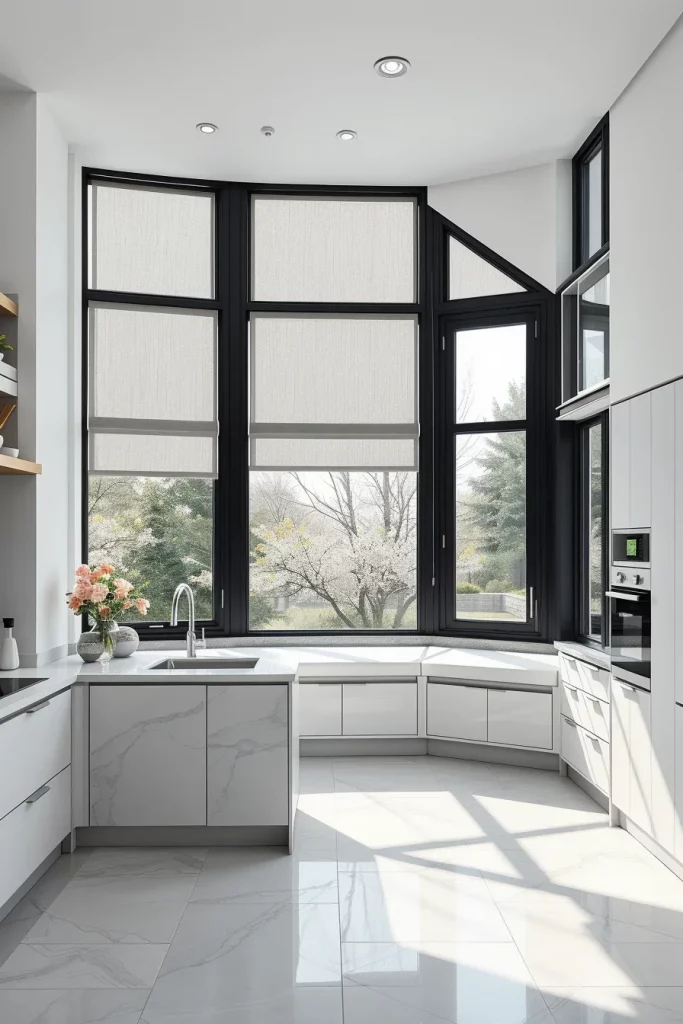
Design professionals featured by Elle Decor often recommend treating windows as part of the overall architectural composition rather than isolated openings. I consistently follow this philosophy because it helps every component of the kitchen contribute to one cohesive visual story instead of competing for attention.
One additional feature I like to include is carefully selected landscaping outside the windows. Simple greenery, stone pathways, or architectural planting creates an attractive view that naturally complements the restrained interior.
Mixing Stone, Glass, And Metal Within One Monochrome Palette
One of my favorite ways to make a monochrome kitchen feel luxurious is by combining multiple materials that share the same overall color direction. Instead of introducing contrasting colors, I create visual depth through texture and surface variation. Smooth quartz, honed stone, smoked glass, brushed stainless steel, and textured plaster each reflect light differently while maintaining a unified appearance.
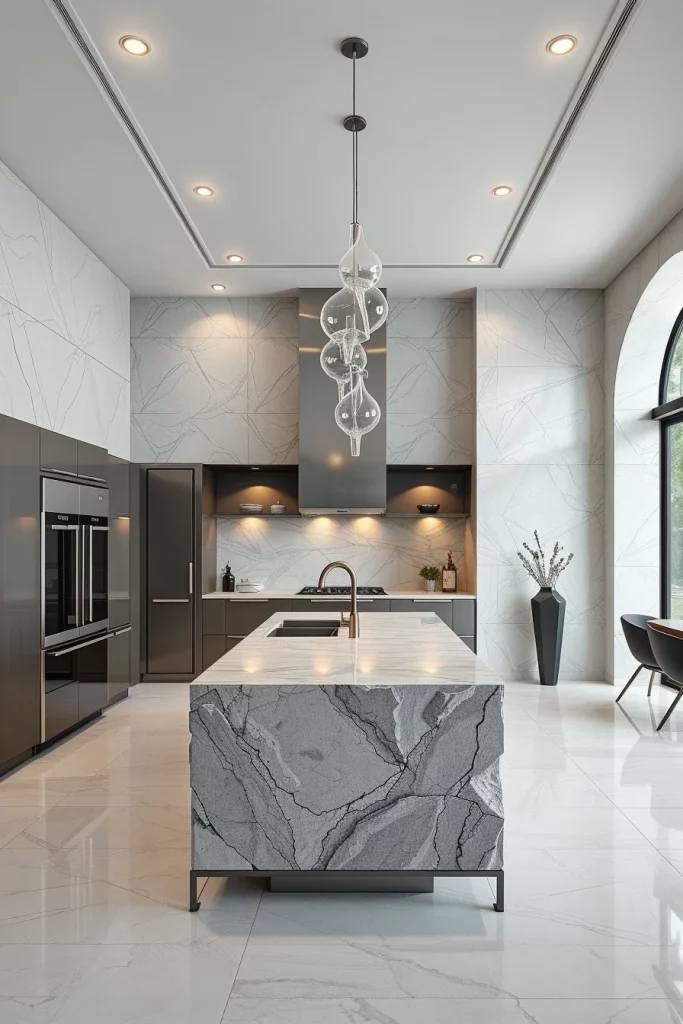
I often combine waterfall stone islands with fluted glass cabinet inserts, slim metal shelving, integrated stainless appliances, and textured wall finishes. Matching grout, continuous countertops, and full-height backsplashes strengthen the visual flow throughout the room. Sculptural pendant lighting introduces another layer of interest without overwhelming the simplicity of the monochrome design.
Interior designers regularly featured in Veranda emphasize that layering materials creates richness far more effectively than introducing additional colors. My own projects have consistently confirmed this principle because carefully selected textures allow a monochrome kitchen to remain elegant while avoiding a flat appearance.
I also recommend adding subtle tactile accessories such as ceramic bowls, handcrafted vases, or textured seating upholstery in matching tones. These finishing touches make the kitchen feel welcoming while preserving its refined aesthetic.
High-End Appliances That Blend Into Monochrome Cabinetry
I believe premium appliances should enhance the architecture instead of dominating it. Fully integrated refrigerators, concealed dishwashers, built-in coffee systems, and flush-mounted ovens help maintain uninterrupted cabinet lines while delivering exceptional performance. When appliances visually disappear, the overall composition feels calmer, larger, and more sophisticated.
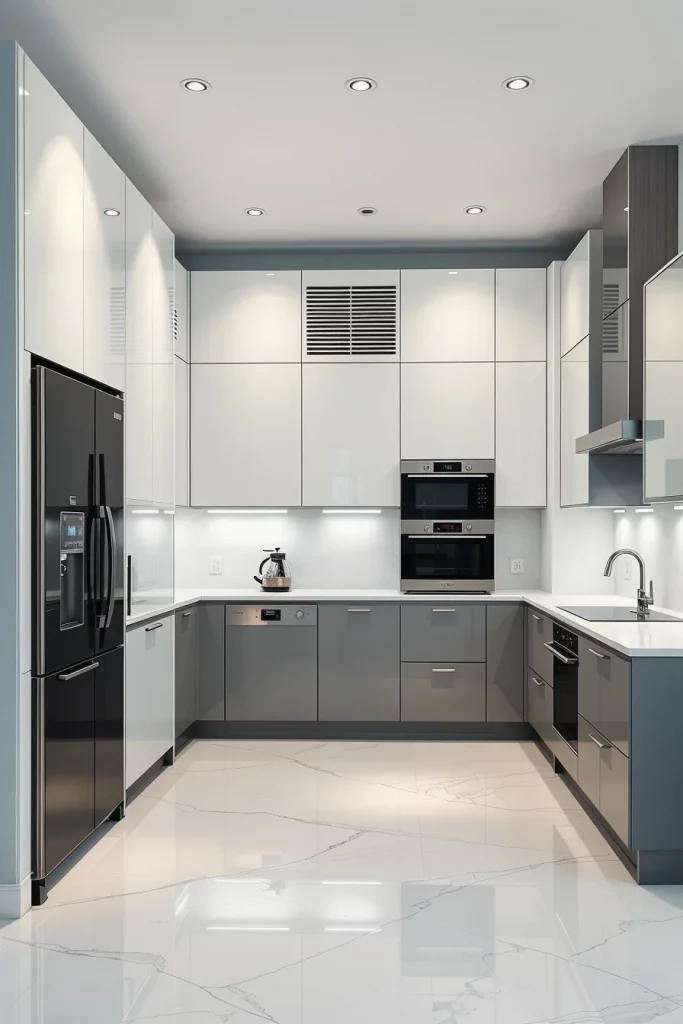
I carefully coordinate appliance finishes with cabinetry, selecting integrated ventilation, induction cooktops, hidden charging stations, built-in wine storage, and seamless microwave installations. Slim shadow gaps, matching panels, and concealed handles allow every appliance to become part of the cabinetry rather than standing apart from it. Even the smallest details contribute to a cleaner visual rhythm throughout the kitchen.
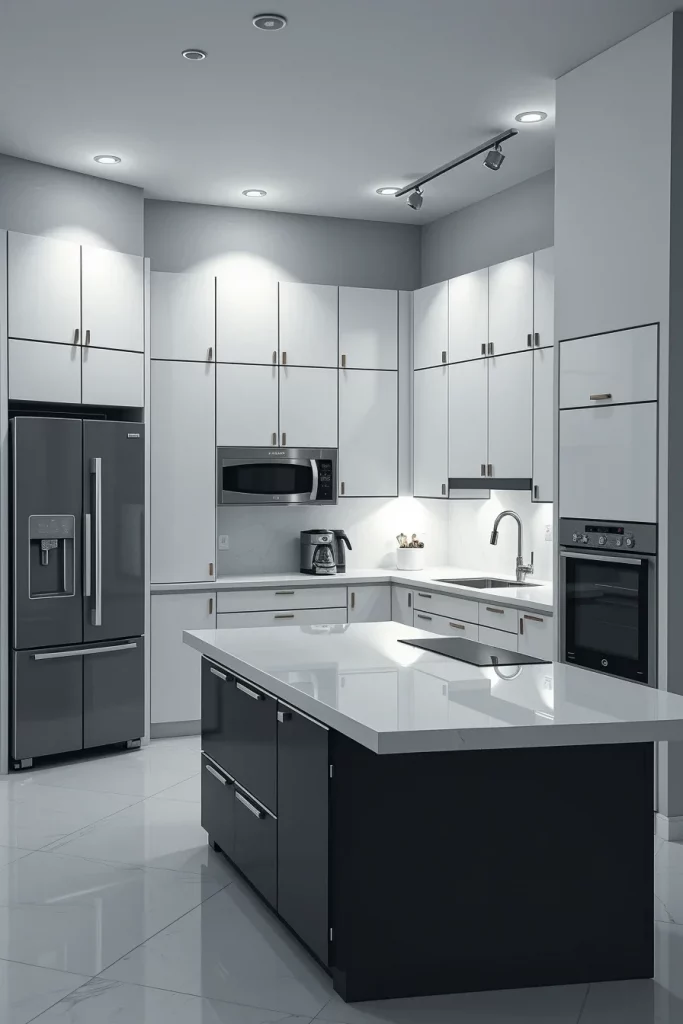
Many kitchen specialists featured by Better Homes & Gardens recommend prioritizing integrated appliances when designing contemporary kitchens because they improve both functionality and visual harmony. I have consistently found that concealed appliances create a timeless appearance that ages gracefully while supporting everyday convenience.
To complete this design, I recommend including a carefully planned lighting system that highlights work areas without exposing unnecessary visual clutter. Under-cabinet lighting, recessed ceiling fixtures, and discreet accent lighting provide functionality while preserving the elegant simplicity of the monochrome kitchen.
Small Monochrome Kitchen Ideas With Exceptional Style
I often find that a small monochrome kitchen offers more design opportunities than a large one because every decision has a visible impact. Limiting the color palette creates a seamless appearance that visually expands the room while making it feel calm and organized. I focus on uninterrupted cabinetry, simple architectural lines, and carefully balanced proportions to ensure the kitchen feels open rather than crowded. A creative monochrome design can transform even the smallest footprint into a stylish and highly functional living space.
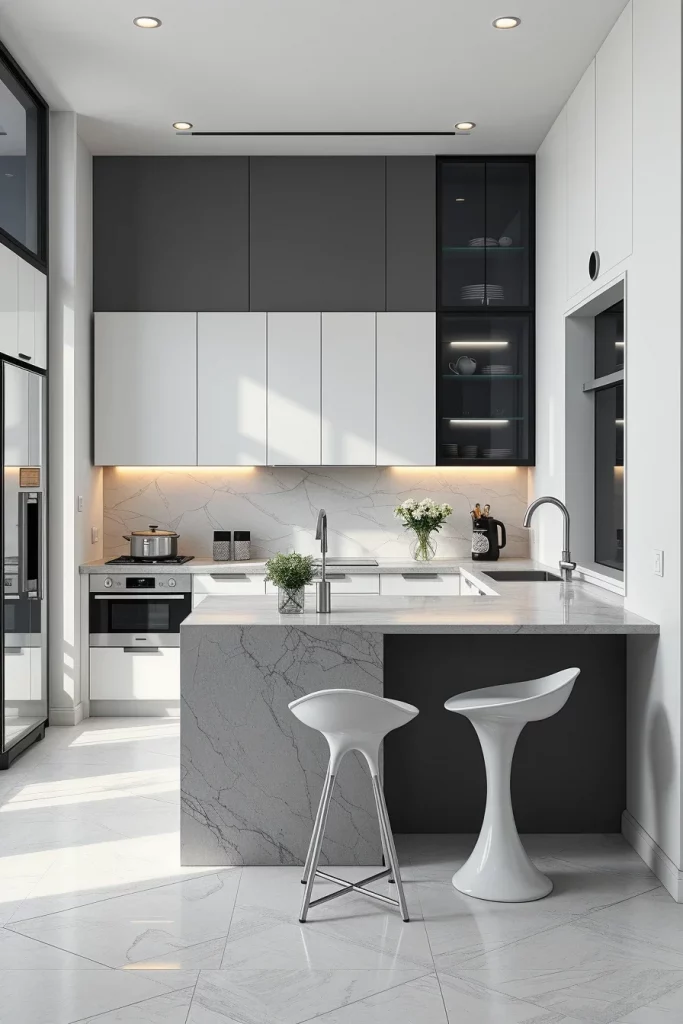
When furnishing a compact kitchen, I prioritize slim full-height cabinets, integrated appliances, floating shelves, and a narrow island or peninsula when space allows. Reflective backsplashes, light stone countertops, and discreet under-cabinet lighting help brighten the room without introducing visual clutter. I also recommend choosing sculptural bar stools with clean silhouettes so they contribute to the design without overwhelming the space. Every piece should work together to maximize storage while maintaining an elegant appearance.
Better Homes & Gardens frequently recommends keeping visual interruptions to a minimum in compact kitchens, and I have consistently found this advice effective. Hidden storage, integrated lighting, and continuous materials create an impression of spaciousness that cannot be achieved simply by reducing furniture. In my experience, thoughtful planning is more valuable than increasing the room’s size.
If I were completing this kitchen, I would include a custom pull-out pantry beside the refrigerator and concealed charging drawers inside the island. These additions increase functionality without changing the minimalist aesthetic.
Large Open-Concept Monochrome Kitchens With Gallery Appeal
A spacious monochrome kitchen allows me to think beyond basic functionality and create an environment that feels like a carefully curated gallery. Open layouts emphasize long sightlines, balanced proportions, and sculptural architectural elements. Rather than filling the room with decorative objects, I rely on carefully selected materials, oversized islands, and dramatic ceiling heights to establish visual impact. Every element contributes to an atmosphere that feels sophisticated yet welcoming.
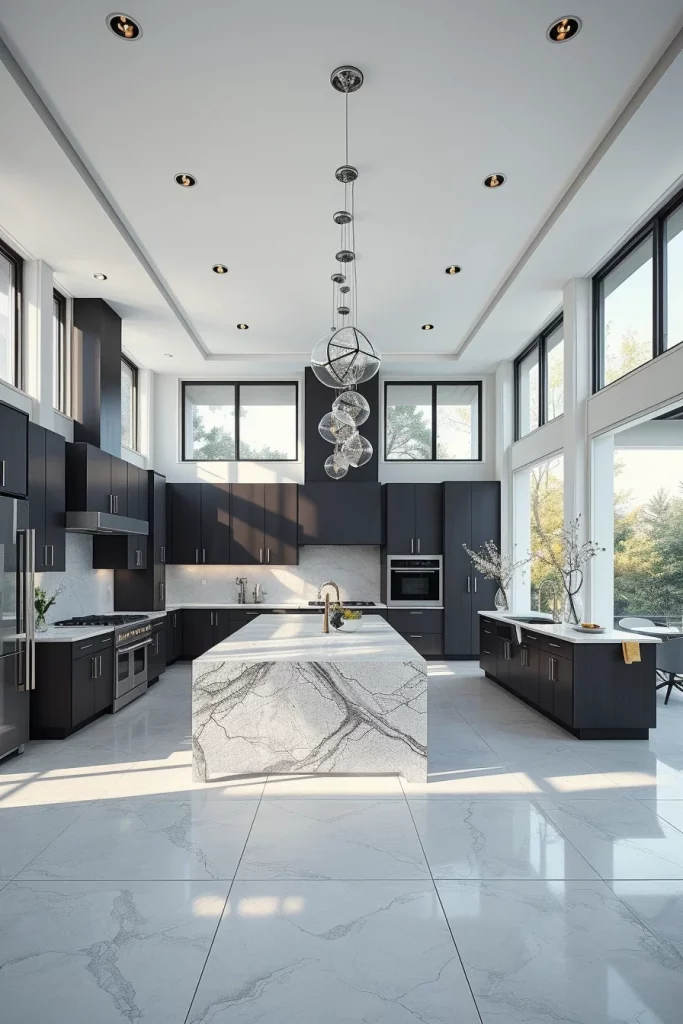
I usually select a large waterfall island as the centerpiece, surrounded by seamless cabinetry, integrated appliances, statement pendant lighting, and generous dining areas. Floor-to-ceiling cabinets strengthen the architectural rhythm, while carefully placed open shelving introduces subtle opportunities for displaying ceramics or sculptural accessories. Matching flooring throughout the open-plan space visually connects the kitchen with adjacent living and dining areas, creating one continuous composition.
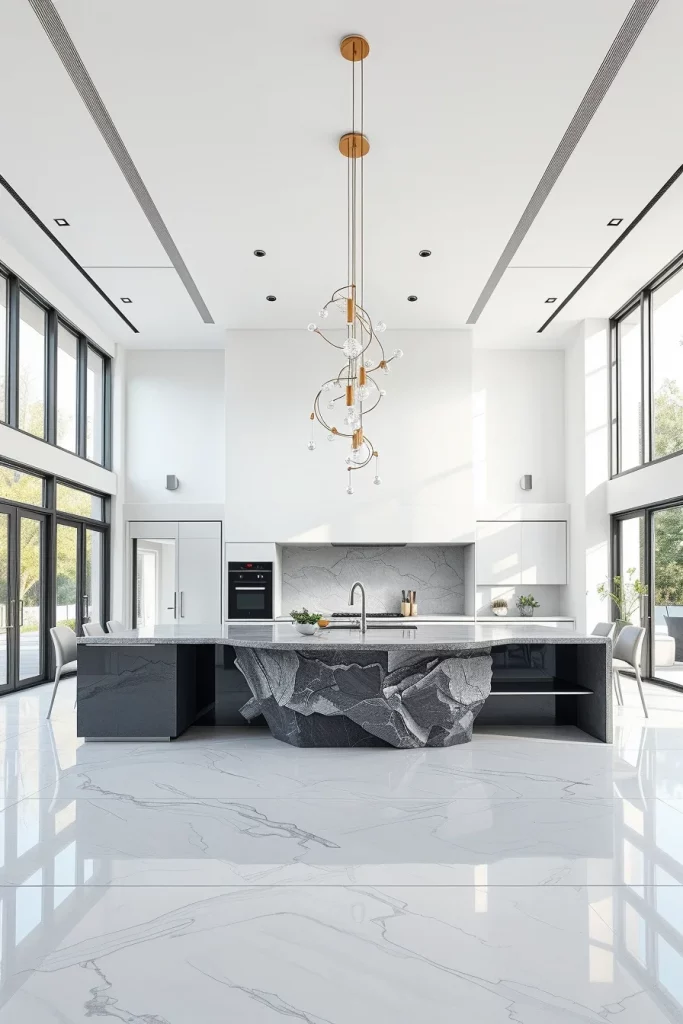
Architectural Digest often highlights that luxury open-concept kitchens benefit from restraint rather than excessive decoration. I agree completely because a monochrome palette naturally emphasizes form, proportion, and craftsmanship. I have learned that fewer carefully selected elements almost always produce a stronger visual result than numerous competing focal points.
One feature I would recommend adding is a sculptural ceiling treatment with recessed linear lighting. This architectural detail reinforces the gallery-inspired atmosphere while improving illumination throughout the entire space.
Luxury-Inspired Monochrome Kitchen Details Worth Copying
Luxury in a monochrome kitchen is rarely defined by expensive materials alone. I believe true elegance comes from precision, craftsmanship, and consistency across every surface. Flush cabinetry, seamless stone installations, carefully aligned joints, and invisible storage solutions create an environment that feels refined without appearing excessive. Even subtle details become noticeable when working within a restrained monochrome palette.
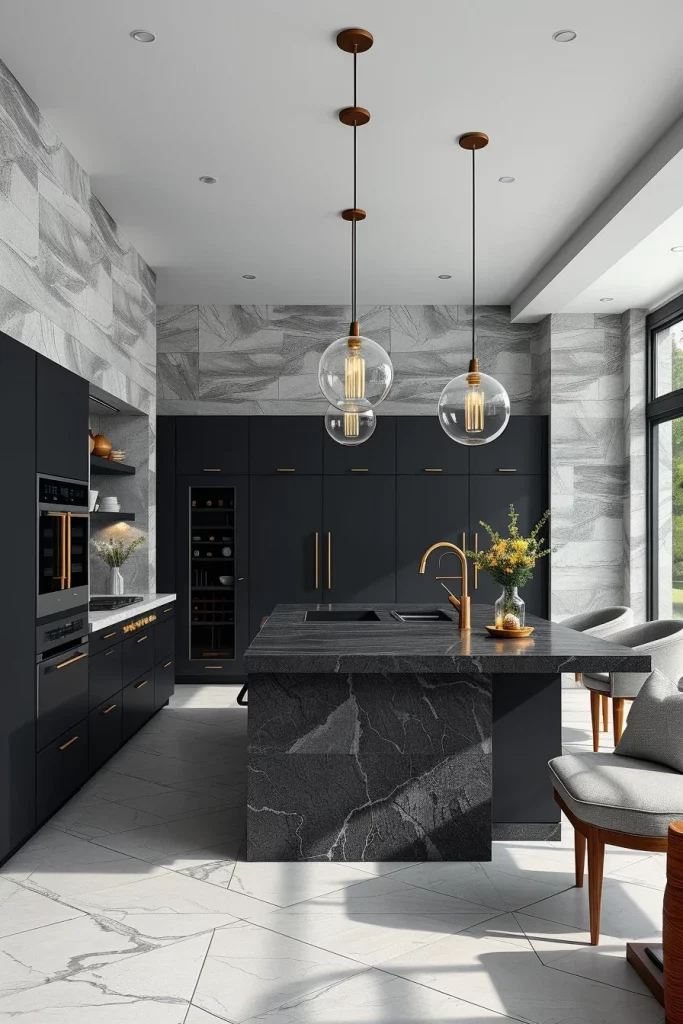
I like incorporating bookmatched stone slabs, oversized waterfall islands, integrated wine storage, concealed ventilation, minimalist faucets, and handcrafted lighting fixtures. Soft-close cabinetry, premium drawer organizers, and custom shelving further elevate the experience of using the kitchen every day. Upholstered dining chairs, textured fabrics, and carefully selected decorative ceramics soften the minimalist architecture while maintaining visual harmony.
Elle Decor has repeatedly featured kitchens where material quality and thoughtful detailing create lasting value instead of relying on trends. I share that philosophy because timeless design remains attractive long after fashionable features have disappeared. Investing in exceptional craftsmanship often delivers greater satisfaction than constantly updating decorative elements.
To complete this type of kitchen, I would introduce carefully controlled ambient lighting that highlights architectural features during the evening while preserving the calm atmosphere established during the day.
Common Design Mistakes To Avoid In A Monochrome Kitchen
Although a monochrome kitchen appears simple, I have found that it requires careful planning to avoid common mistakes. One of the biggest errors is relying on a single flat finish throughout the room, which can leave the space feeling lifeless. Successful monochrome interiors depend on variation in texture, proportion, and lighting rather than dramatic color contrasts. I always balance matte, satin, polished, and textured finishes to create subtle visual depth.
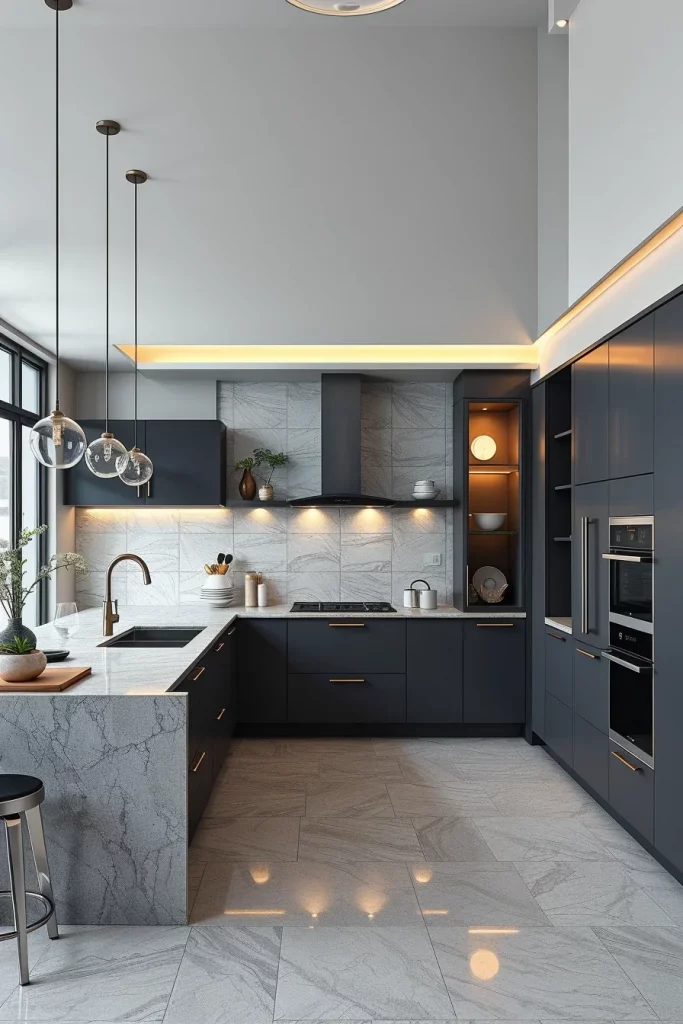
Another mistake is introducing too many decorative accessories that compete with the clean architectural lines. I recommend limiting countertop items, selecting integrated appliances, and maintaining concealed storage wherever possible. Poor lighting is another frequent issue because insufficient illumination hides the beautiful textures that make monochrome interiors interesting. Layered lighting should always include ambient, task, and accent illumination.
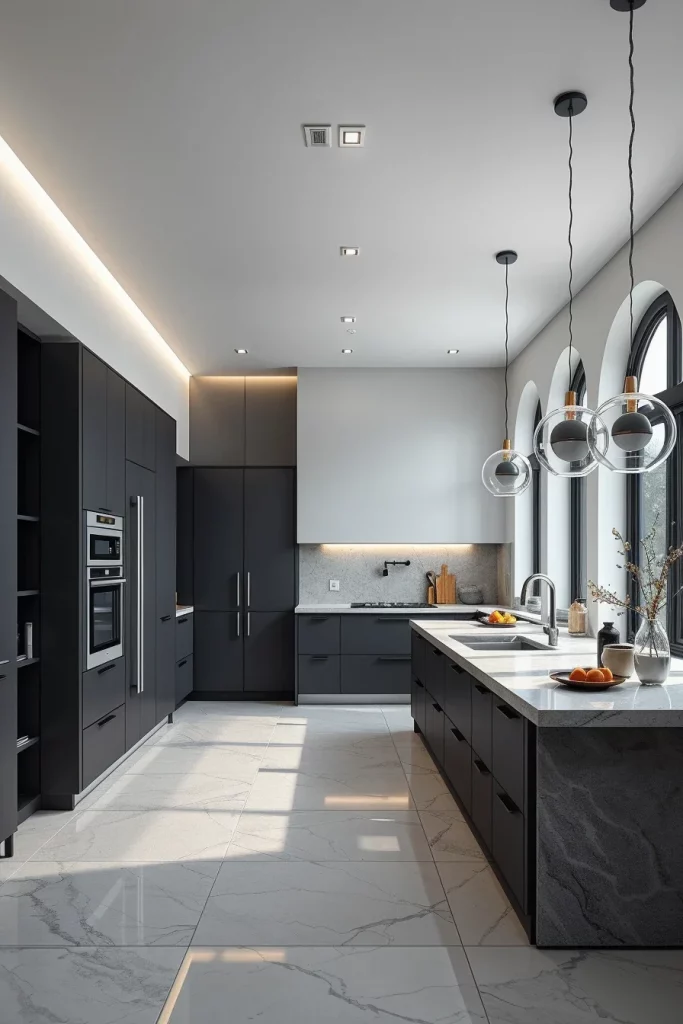
House Beautiful regularly emphasizes that successful minimalist kitchens require thoughtful editing rather than simply removing decoration. I completely agree because every remaining object becomes more noticeable. In my own projects, simplifying the design always requires greater attention to quality, proportion, and functionality.
I would also recommend testing material samples together under both daylight and evening lighting before making final decisions. This simple step helps prevent unexpected differences in tone once the kitchen is completed.
Inspiring Monochrome Kitchen Ideas For A Sophisticated Home
The most memorable monochrome kitchen ideas combine creativity with everyday practicality. I enjoy designing kitchens that feel artistic while remaining comfortable enough for daily life. Sculptural islands, continuous cabinetry, elegant lighting, and carefully layered materials demonstrate that a restrained palette can still produce a distinctive and highly personal interior. A sophisticated monochrome kitchen never depends on bold colors because its beauty comes from thoughtful composition and refined details.
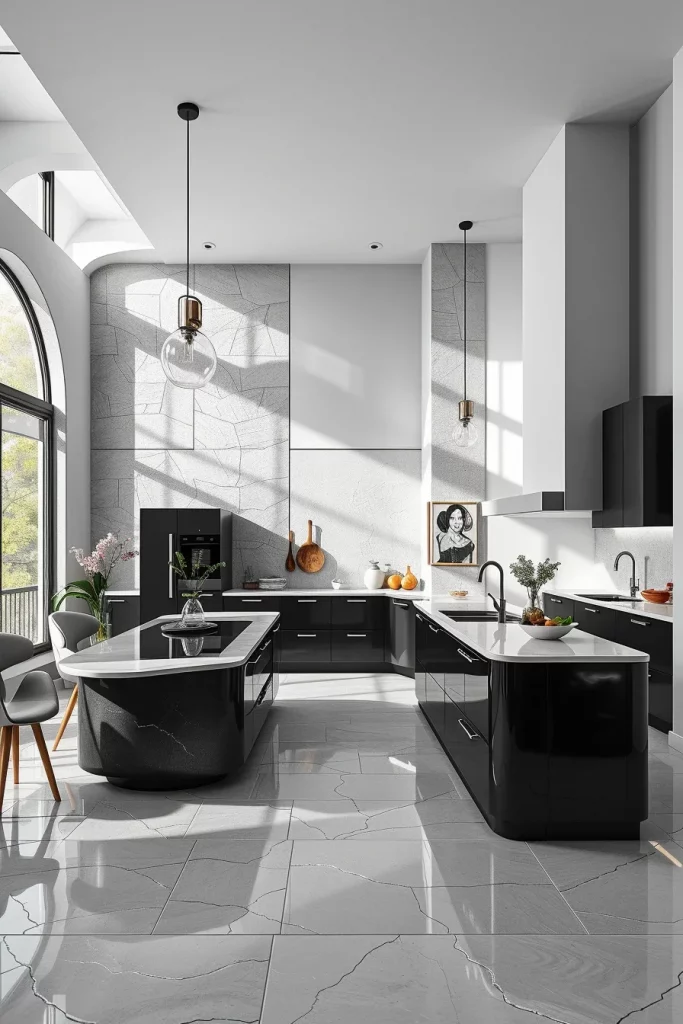
When bringing these ideas together, I combine seamless storage, integrated appliances, statement lighting, textured stone, architectural windows, comfortable seating, and carefully selected decorative accessories. Every piece supports the overall composition while maintaining visual consistency. Organic shapes soften the linear cabinetry, and subtle textures prevent the room from feeling cold or repetitive.
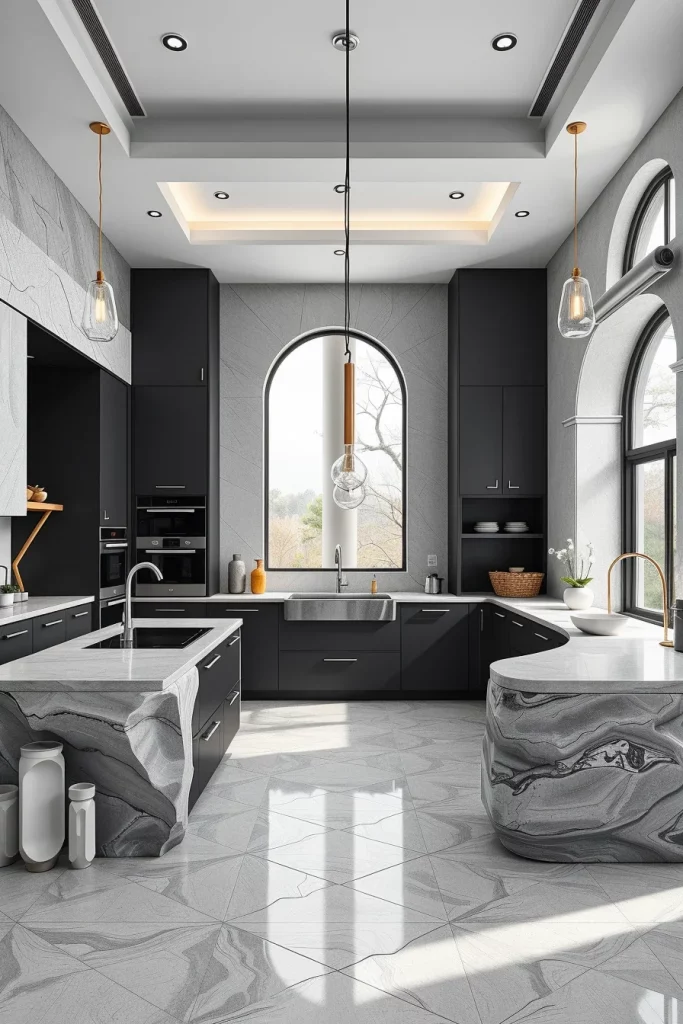
Many leading American designers encourage homeowners to invest in timeless layouts before considering decorative trends. I strongly support this approach because an intelligently planned monochrome kitchen adapts easily as tastes evolve over time. In my experience, timeless architecture always outlasts temporary fashion.
I would finish the design with carefully selected artwork, handcrafted ceramics, and subtle greenery placed strategically throughout the space. These finishing touches introduce warmth and personality while preserving the sophisticated monochrome aesthetic.
A monochrome kitchen is more than a design trend—it’s a timeless approach that celebrates simplicity, balance, and refined style. By combining cohesive colors with sculptural shapes, layered textures, and thoughtful details, you can create a space that feels both functional and visually striking. Whether your kitchen is large or compact, a monochrome palette offers endless opportunities to design an elegant interior that reflects your personal taste. Let these ideas inspire you to create a monochrome kitchen that feels modern, artistic, and uniquely your own.