
Natural stone bathrooms have become a favorite choice for homeowners who want a space that feels elegant, timeless, and connected to nature. From luxurious marble and dramatic granite to warm travertine and textured slate, natural stone offers endless possibilities for creating a unique bathroom design. Every type of stone brings its own color variations, patterns, and character, making each bathroom one of a kind. Whether you prefer a minimalist retreat, a spa-inspired sanctuary, or a bold contemporary look, natural stone can transform an ordinary bathroom into a stunning focal point. Thoughtful combinations of stone surfaces, lighting, fixtures, and architectural details help create a space that is both functional and visually impressive. In this guide, you’ll discover inspiring natural stone bathroom ideas, creative design solutions, and practical tips for choosing the perfect stone for your dream bathroom.
Marble Walls With Seamless Veining Elegance
When I want a bathroom to feel sophisticated without relying on excessive decoration, I always consider large marble slabs with continuous veining. Seamless marble walls create visual flow throughout the room, making even a compact bathroom appear more spacious. I prefer extending the same stone from the shower walls to the vanity backsplash because uninterrupted surfaces reduce visual clutter while highlighting the natural movement of the stone. Soft lighting reflects beautifully across polished marble, emphasizing every unique vein without overwhelming the space.
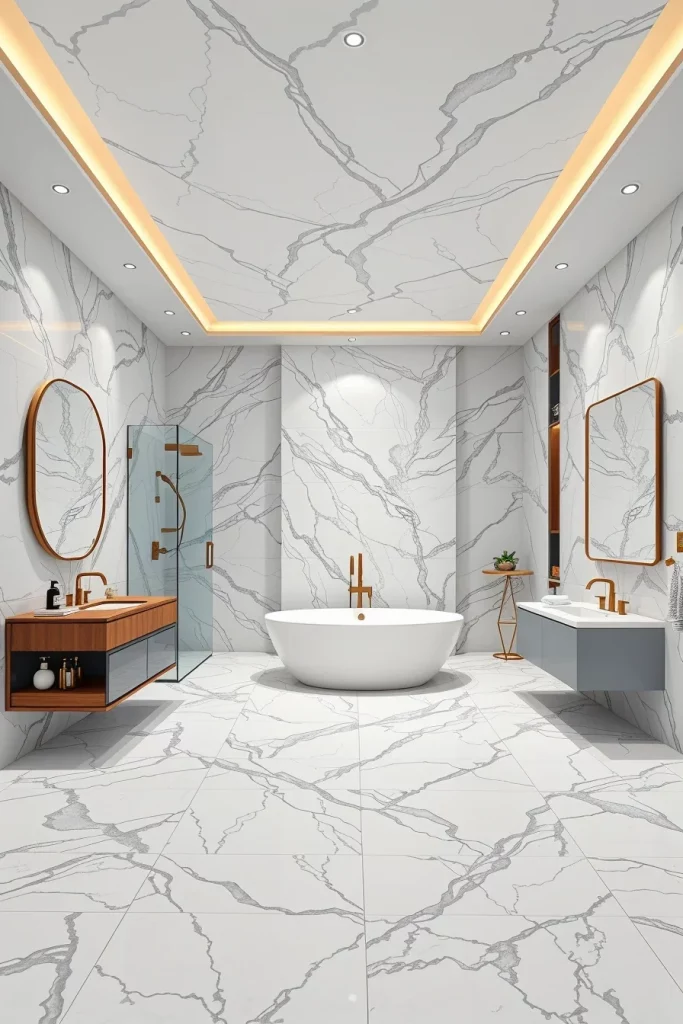
I like pairing marble walls with floating oak or walnut vanities, minimalist cabinetry, frameless glass shower panels, and simple brushed nickel or warm brass fixtures. A freestanding soaking tub becomes the natural focal point, while recessed shelving carved into the stone keeps toiletries organized without interrupting the clean design. Large mirrors, integrated LED lighting, and subtle ceiling illumination enhance the depth of the marble and create an atmosphere that feels bright throughout the day.
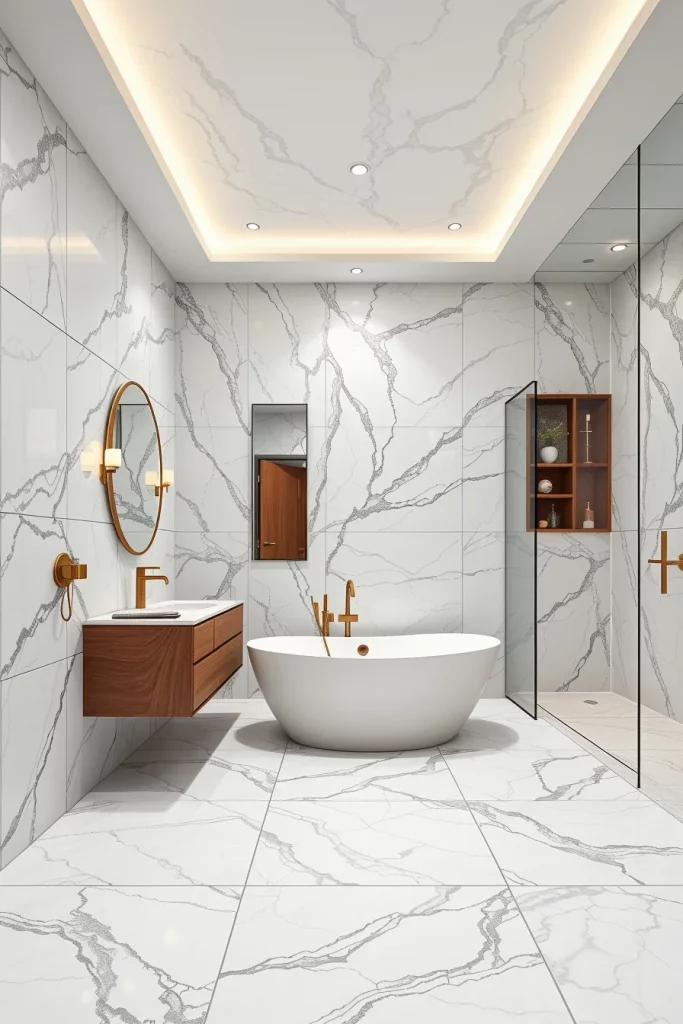
In my experience, restraint is the key to making marble feel timeless rather than overly formal. Designers frequently featured by Architectural Digest recommend allowing premium materials to remain the visual centerpiece instead of competing with bold accessories. I have found this advice especially useful because the stone itself already provides enough movement and character.
To complete this design, I would add underfloor radiant heating, oversized stone floor tiles that closely match the wall slabs, concealed linear drains, soft white towels, and carefully selected decorative ceramics. These finishing details make the bathroom feel cohesive while preserving the elegant simplicity of the marble.
Travertine Bathrooms With Soft Organic Texture
Travertine creates a welcoming atmosphere that immediately feels warm and comfortable. I enjoy using its naturally textured surface because it softens modern architecture without making the room appear busy. Large travertine wall panels combined with matching flooring establish a calm environment where every element feels connected. The subtle variation in tone makes the room interesting while maintaining a relaxing appearance.
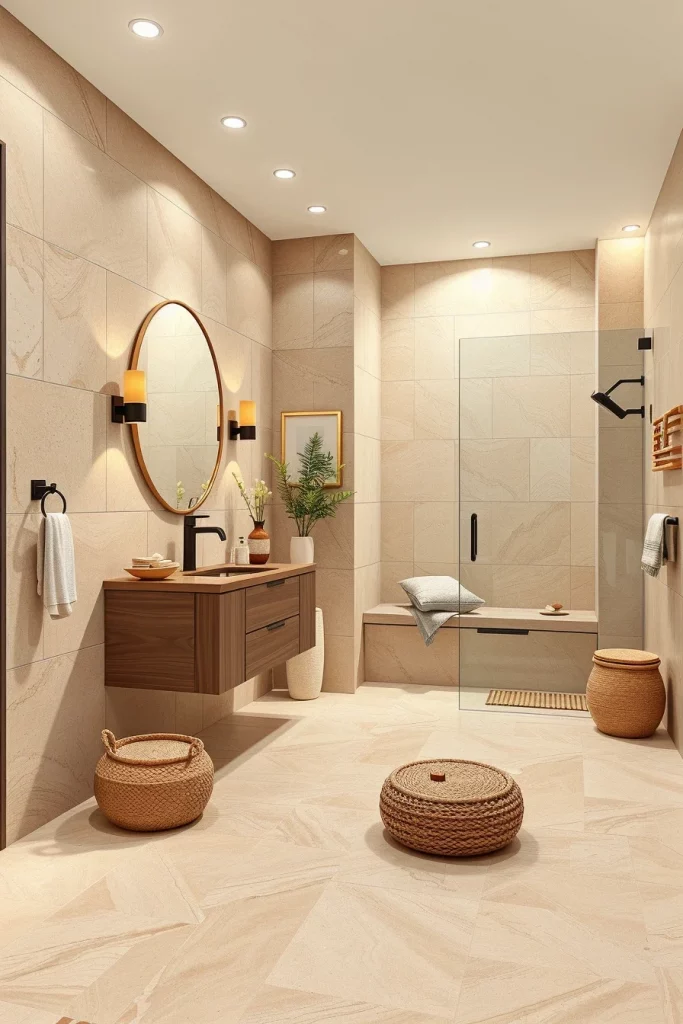
I usually combine travertine with floating wood cabinetry, curved mirrors, matte black faucets, and built-in shower benches made from the same stone. Textured linen window treatments, woven storage baskets, and concealed storage help maintain a clean layout without sacrificing practicality. A spacious walk-in shower enclosed with clear glass allows the travertine to remain visible from every angle of the room.
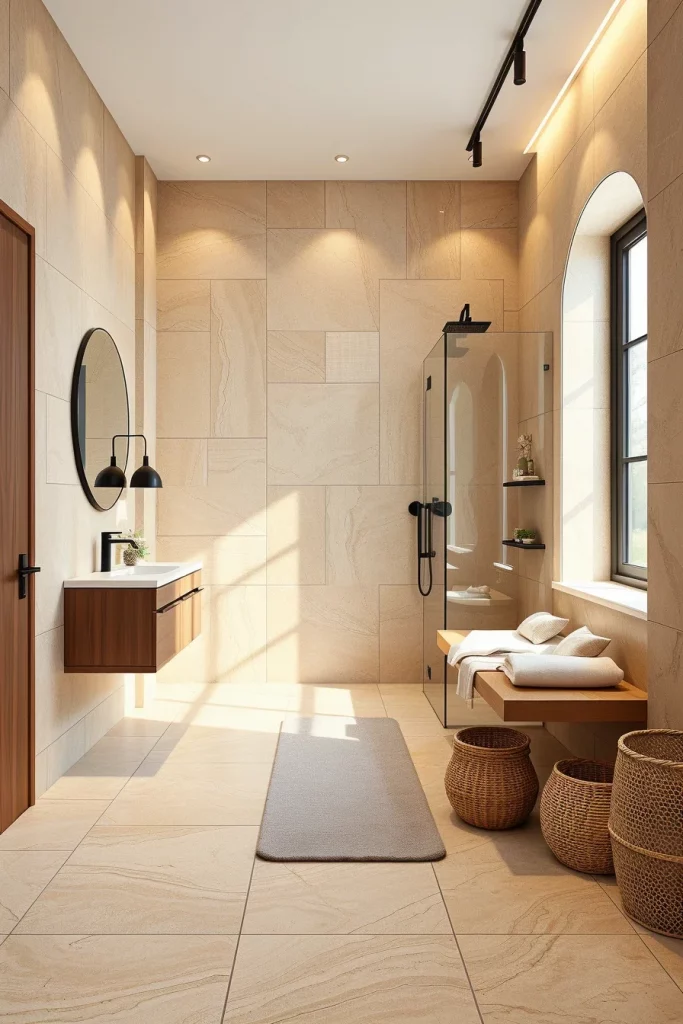
From my perspective, travertine performs best when the color palette stays neutral. Interior designers regularly featured in House Beautiful often recommend layering natural textures instead of introducing strong color contrasts. I appreciate this approach because it creates interiors that remain visually appealing for many years.
I would also include dimmable lighting, oversized niches for bath products, high-quality ventilation, plush bath mats in warm neutral tones, and discreet decorative accessories that complement the organic character of the stone instead of distracting from it.
Limestone Interiors That Feel Calm And Refined
Whenever I design a bathroom intended to promote relaxation, limestone is one of my favorite materials. Its smooth appearance and understated texture create an environment that feels peaceful without becoming plain. I prefer using limestone on both walls and floors to establish visual continuity, especially in bathrooms that receive abundant natural light. The soft finish creates an inviting atmosphere that supports a slower, more comfortable daily routine.
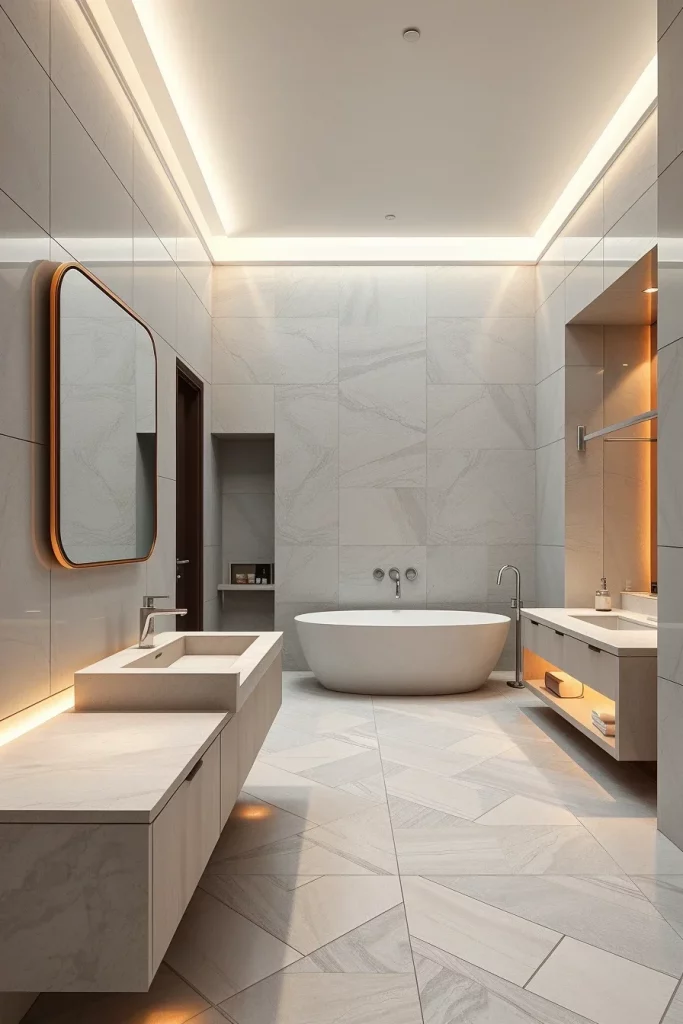
I like combining limestone with floating vanities featuring simple cabinetry, integrated stone sinks, frameless mirrors, recessed medicine cabinets, and sleek chrome fixtures. A built-in bathtub surrounded by limestone creates a seamless architectural look, while concealed storage maintains clean surfaces throughout the room. Soft lighting placed beneath the vanity adds depth without distracting from the simplicity of the overall composition.
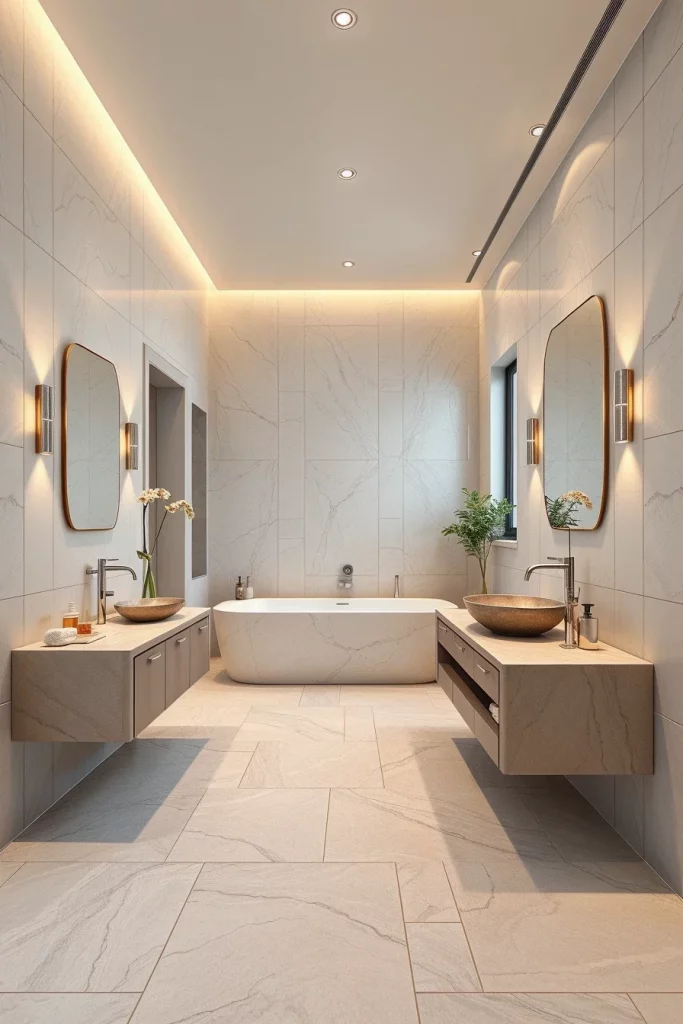
I have noticed that limestone works exceptionally well in minimalist interiors because it introduces subtle texture without demanding attention. Many designers published by Elle Decor emphasize the importance of balancing premium materials with uncluttered layouts, and I find this advice consistently produces harmonious interiors.
To strengthen this design further, I would incorporate heated flooring, oversized windows where possible, custom stone shelving, premium ventilation, and carefully selected neutral accessories that preserve the refined atmosphere while improving everyday comfort.
Dramatic Black Stone Bathroom Designs
Black natural stone creates an unforgettable statement while remaining surprisingly versatile. I enjoy designing bathrooms where dark stone wraps the walls, shower, and vanity area, creating an immersive environment with remarkable depth. When balanced with thoughtful lighting, black stone feels elegant rather than overwhelming. I typically use large-format slabs to minimize grout lines and allow the dramatic veining to become the room’s defining feature.
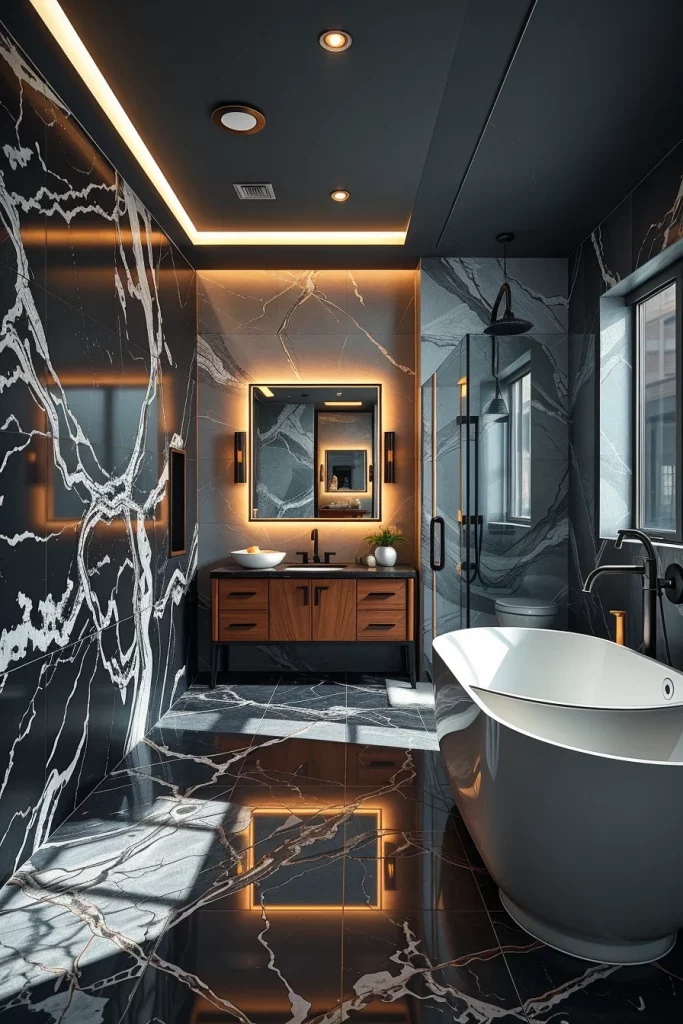
For furniture and fixtures, I often select floating walnut cabinetry, illuminated mirrors, matte black hardware, smoked glass shower enclosures, and sculptural freestanding bathtubs in white to create contrast. Layered lighting is particularly important because it highlights the stone’s natural texture while preventing darker finishes from making the room feel enclosed. Hidden storage and integrated shelving maintain the clean architectural appearance.
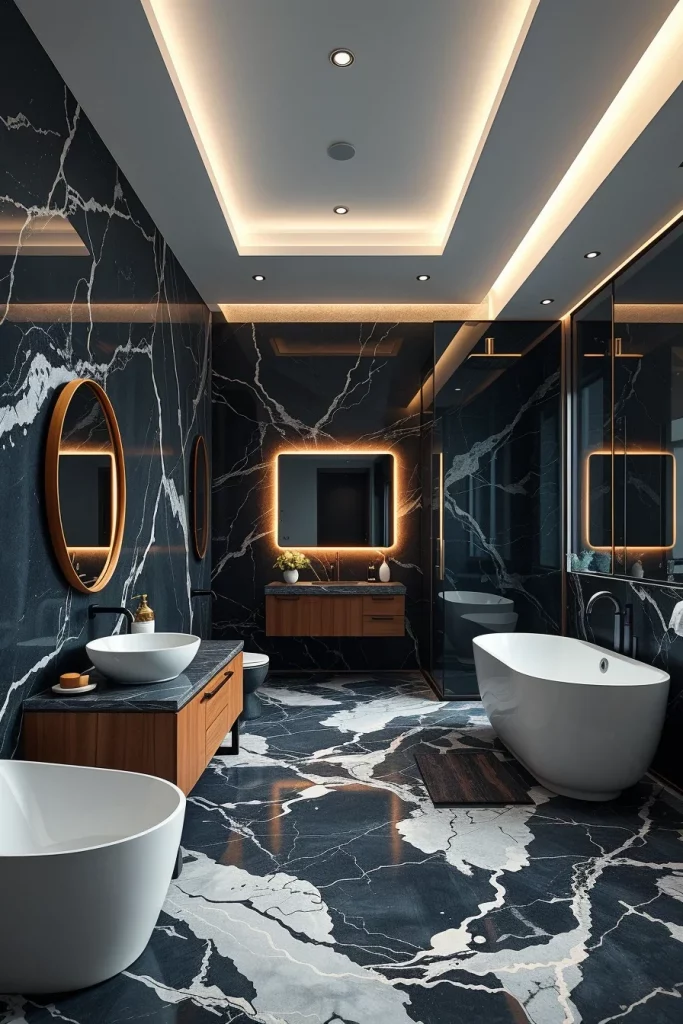
Personally, I believe black stone bathrooms demonstrate that bold materials can still feel welcoming when proportions are carefully considered. Interior experts from Architectural Digest frequently recommend balancing darker finishes with reflective surfaces and generous lighting, and I have found this strategy highly effective in everyday residential spaces.
To complete the design, I would include under-cabinet lighting, oversized mirrors, heated towel rails, subtle metallic accents, and premium textiles that soften the dramatic appearance while maintaining the luxurious atmosphere.
White Natural Stone Bathrooms With Timeless Appeal
White natural stone remains one of the most versatile choices for homeowners who appreciate interiors that never feel outdated. I often recommend combining white marble, quartzite, or limestone with expansive wall surfaces to maximize brightness and create a clean architectural appearance. The subtle variations in natural stone prevent the room from looking flat while allowing every surface to reflect light beautifully. This approach works equally well in compact bathrooms and spacious primary suites.
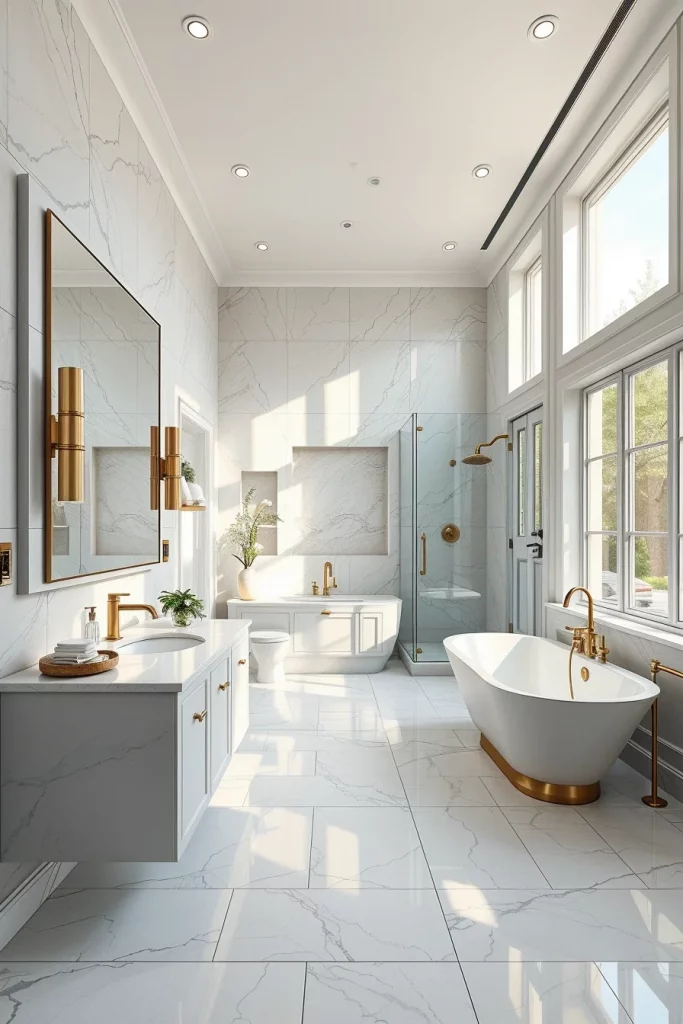
I usually furnish these spaces with floating vanities, integrated stone countertops, frameless shower enclosures, oversized mirrors, recessed storage niches, and elegant brushed brass or polished nickel fixtures. Soft layered lighting enhances every natural detail of the stone, while carefully selected accessories such as textured towels, handcrafted ceramic containers, and simple artwork provide personality without disrupting the timeless aesthetic. A freestanding tub positioned beneath a large window often becomes the room’s most inviting feature.
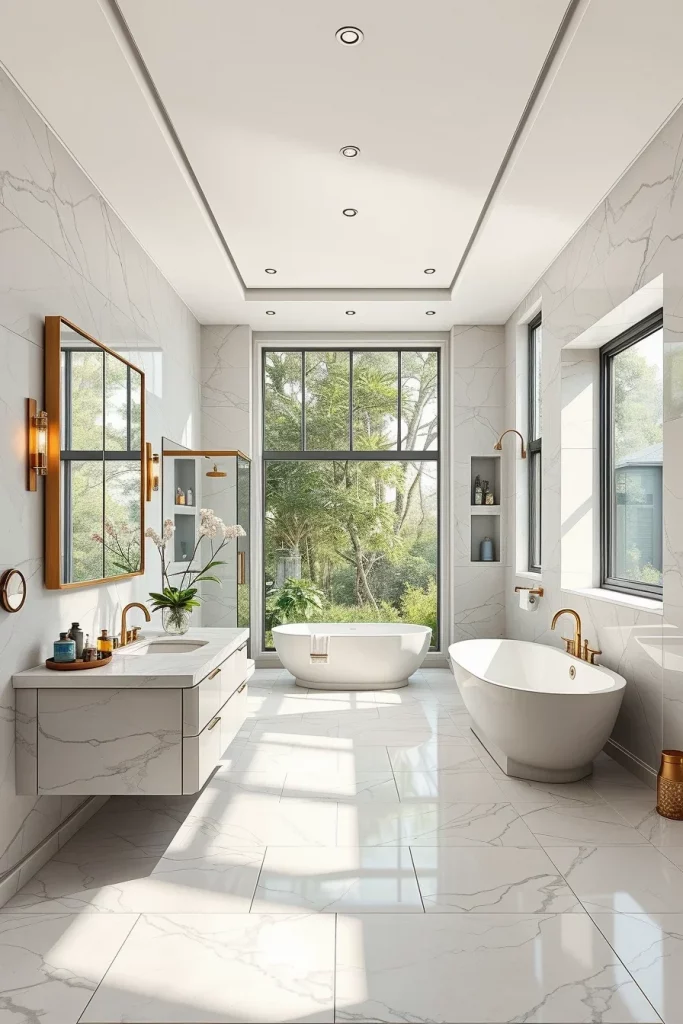
In my experience, timeless bathrooms depend more on material quality than temporary trends. Designers frequently featured by Better Homes & Gardens recommend investing in durable finishes with enduring appeal, and I completely agree because authentic natural stone continues to look beautiful even as decorating styles evolve.
I would finish this bathroom by adding radiant heated floors, concealed storage for everyday essentials, integrated ventilation, large-format stone flooring, and subtle decorative accents that reinforce the calm, elegant atmosphere without overwhelming the simplicity of the design.
Green Stone Bathrooms Inspired By Nature
Green natural stone instantly creates a relaxing atmosphere that feels connected to the outdoors while maintaining an elegant, contemporary appearance. I enjoy using green marble, serpentine, or other richly veined green stone as a feature material because it introduces depth and personality without relying on excessive decoration. Large stone slabs surrounding the shower, vanity, and bathtub allow the natural patterns to become the room’s artwork. Combined with generous natural light, the varying shades of green make the bathroom feel peaceful throughout the day.
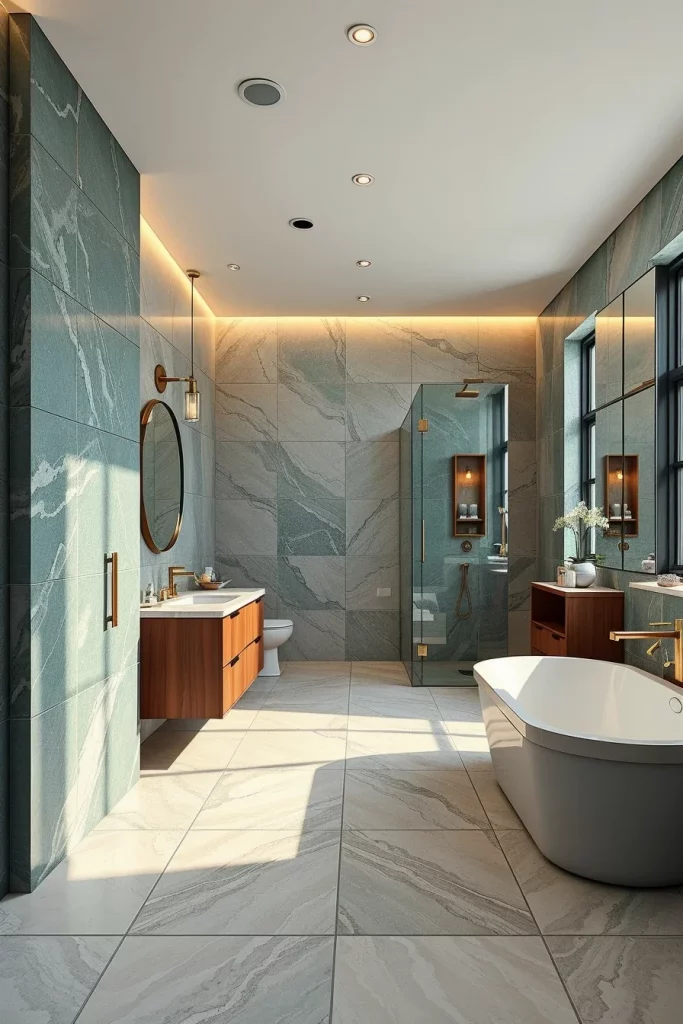
I typically pair green stone with floating walnut or light oak vanities, integrated stone countertops, brushed brass fixtures, frameless glass shower enclosures, and minimalist mirrors with concealed LED lighting. A freestanding soaking tub positioned near a window enhances the relaxing atmosphere, while built-in storage niches finished in matching stone preserve visual continuity. Soft neutral textiles and handcrafted ceramic accessories complement the stone without competing with its distinctive patterns.
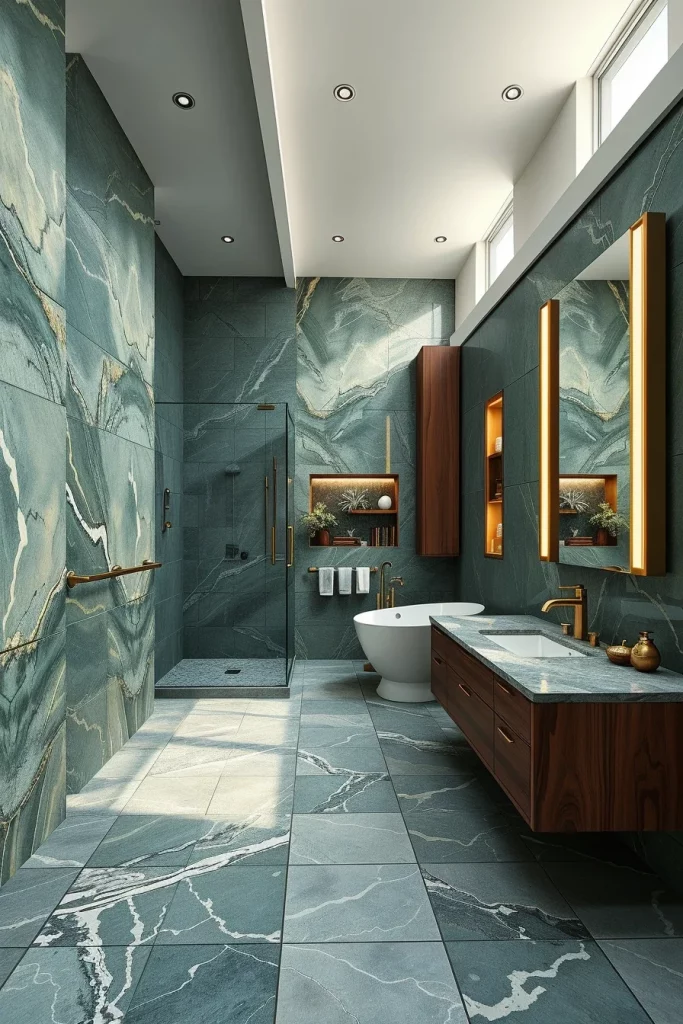
I have found that green stone works best when every additional material supports its natural beauty instead of overpowering it. Designers frequently featured in Architectural Digest recommend balancing bold natural stone with restrained furnishings and a simple color palette. I appreciate this philosophy because it allows the unique character of the stone to remain the focal point of the room.
To elevate this design even further, I would include radiant heated flooring, discreet ceiling lighting, oversized porcelain flooring in complementary tones, concealed storage, premium ventilation, and carefully selected decorative accents that emphasize comfort without creating visual clutter.
Onyx Feature Walls That Glow Beautifully
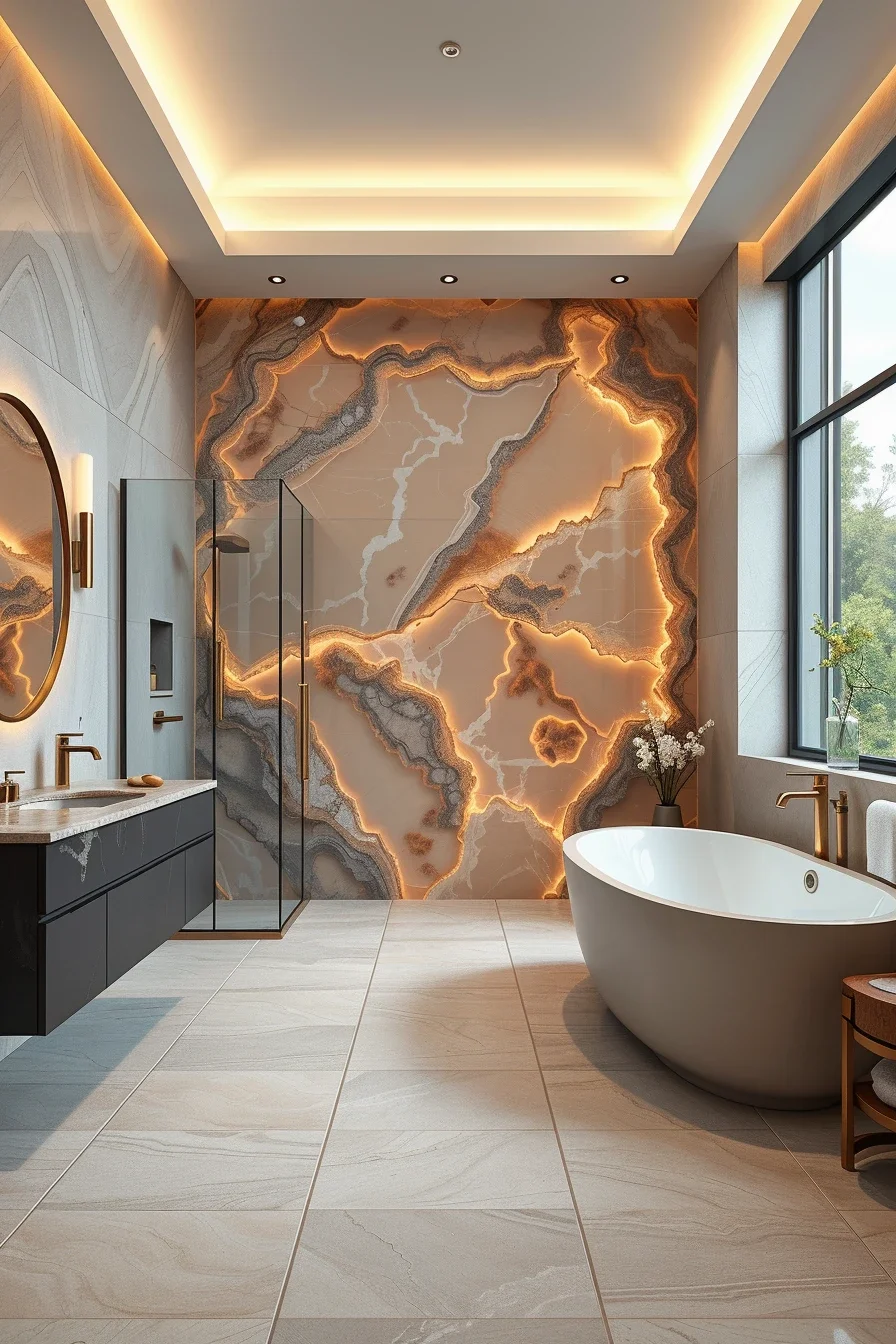
Few materials create the same visual impact as natural onyx. Whenever I want a bathroom to feel extraordinary, I consider using backlit onyx as a dramatic feature wall behind the vanity or bathtub. The translucent qualities of the stone allow light to pass through, revealing intricate patterns and warm tones that transform the bathroom into a luxurious retreat. Rather than covering every surface, I prefer using onyx strategically so it remains a memorable focal point.
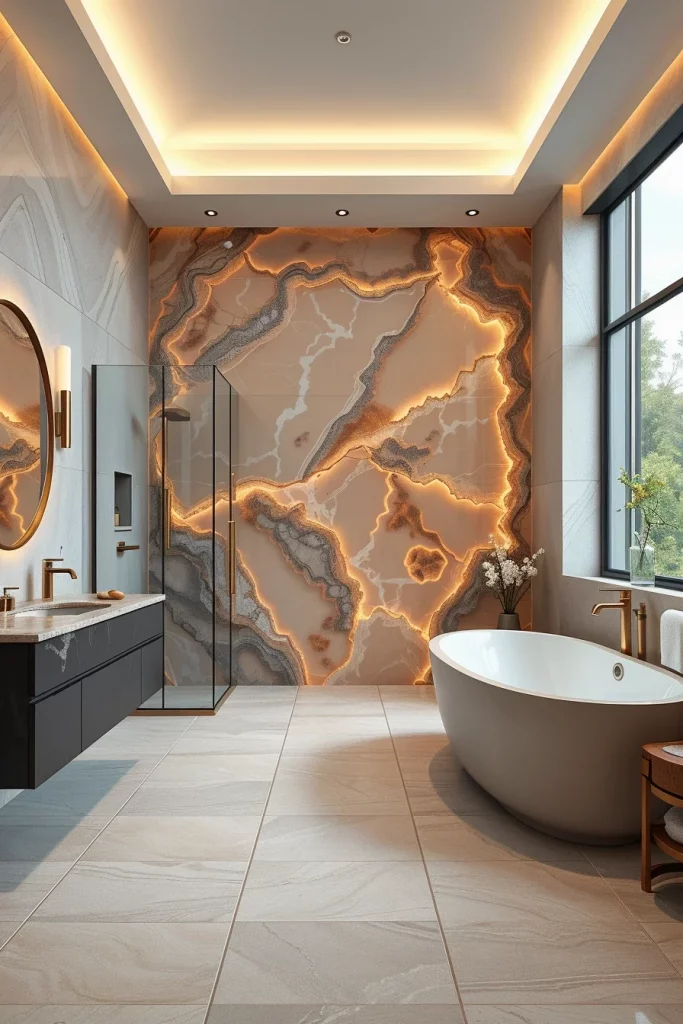
To support the feature wall, I usually choose floating cabinetry with clean lines, integrated stone sinks, frameless mirrors, simple chrome or brushed brass fixtures, and large-format neutral floor tiles. A glass shower enclosure preserves open sightlines across the room, while concealed LED lighting behind the onyx creates a soft glow that changes the atmosphere from day to evening. Minimal accessories help maintain the sophisticated appearance.
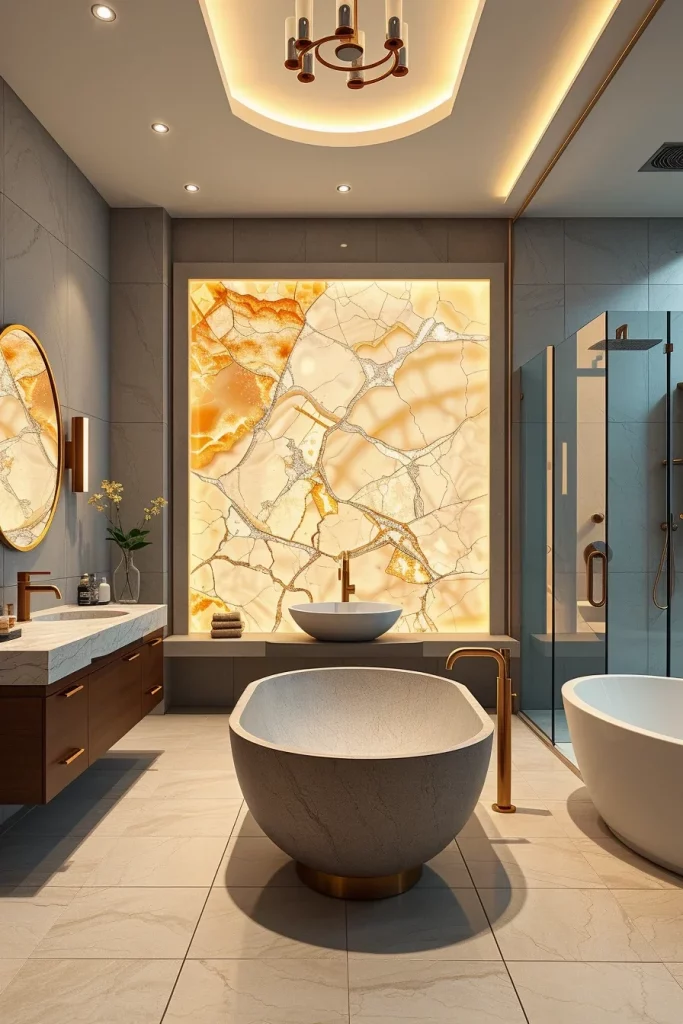
In my experience, onyx is most successful when used thoughtfully instead of excessively. Interior designers published by Elle Decor often recommend treating statement materials as focal architectural elements rather than repeating them throughout the room. I have consistently found that this approach produces elegant interiors that remain visually balanced.
I would complete this bathroom by adding dimmable lighting controls, heated floors, premium ventilation, custom storage, plush neutral textiles, and carefully selected decorative objects that complement the luminous qualities of the stone without distracting from them.
Granite Bathrooms With Bold Character
Granite remains one of the most durable natural stones available, making it an excellent choice for bathrooms that combine beauty with everyday practicality. I appreciate its distinctive movement, rich mineral composition, and impressive resistance to moisture when properly sealed. Large granite slabs on vanity tops, shower walls, or accent panels introduce striking natural patterns while maintaining exceptional durability for daily use.
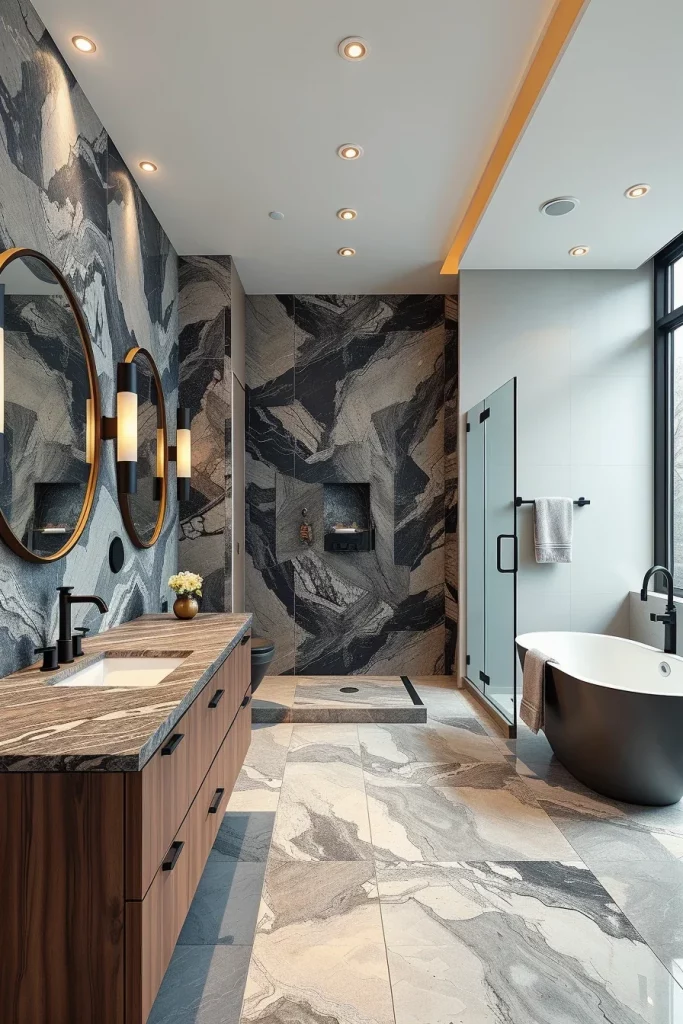
I often combine granite with floating wood cabinetry, vessel or integrated stone sinks, matte black or brushed nickel fixtures, frameless shower glass, and oversized mirrors. Built-in shelving, recessed lighting, and spacious drawers provide practical storage while allowing the stone to remain the visual highlight. A freestanding bathtub positioned against a granite feature wall creates a balanced focal point that feels substantial yet refined.
Personally, I believe granite deserves greater attention in modern bathroom design because today’s fabrication techniques showcase its natural patterns more effectively than ever before. Better Homes & Gardens has frequently highlighted the value of investing in durable materials that perform well over time, and I agree that granite offers an outstanding balance between longevity and style.
To make this design even more functional, I would incorporate heated flooring, integrated towel storage, concealed electrical outlets within the vanity, premium ventilation, and layered lighting that emphasizes the depth and texture of the stone throughout the room.
Slate Bathrooms With Rich Earthy Texture
Slate introduces depth and tactile character that few other natural materials can match. I enjoy using slate because its layered texture immediately creates warmth while maintaining a sophisticated contemporary appearance. Large slate wall panels combined with matching flooring establish a cohesive design that feels grounded and inviting. The subtle variations in color and texture ensure that every bathroom becomes completely unique.
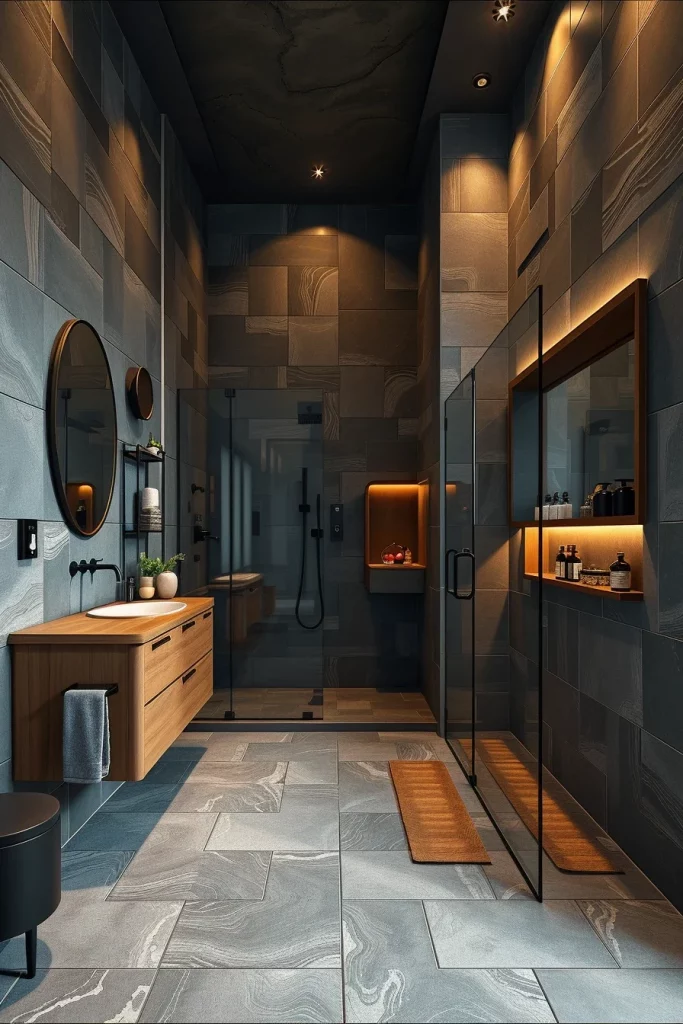
I like pairing slate with floating wood vanities, black metal fixtures, frameless shower enclosures, oversized mirrors, and integrated shelving carved into the surrounding walls. Soft indirect lighting highlights the stone’s textured surface, while minimalist furniture keeps the room visually open. Warm neutral towels and handcrafted accessories soften the stronger appearance of the slate without reducing its dramatic impact.
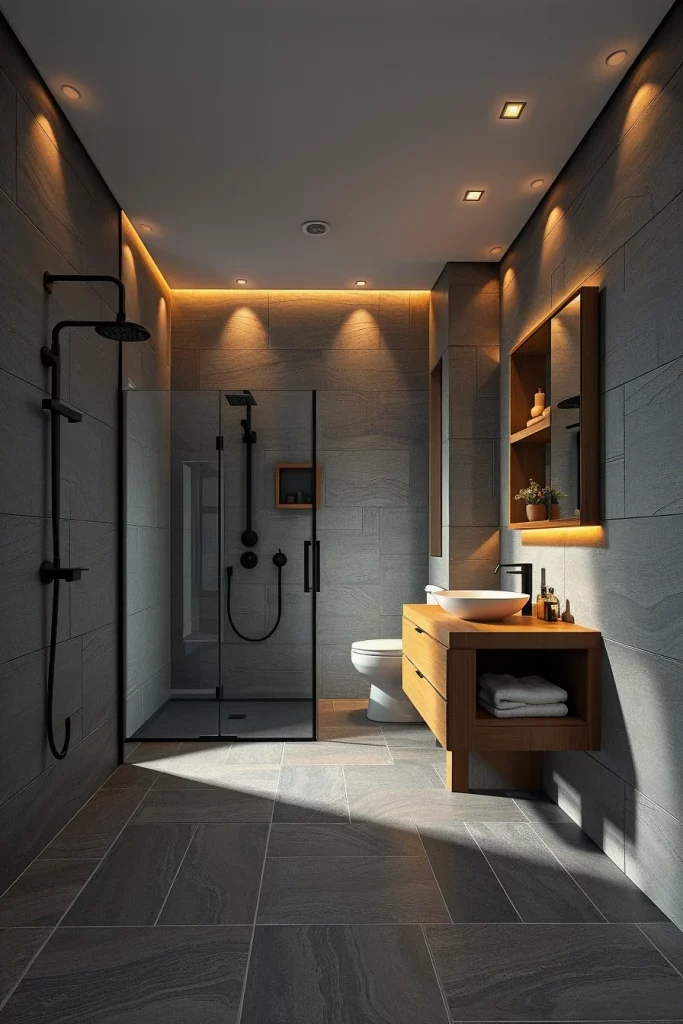
From my perspective, slate performs exceptionally well in bathrooms that emphasize natural materials and architectural simplicity. Designers featured in House Beautiful often recommend layering texture instead of introducing excessive decorative accessories, and I have found this advice especially valuable when working with richly textured stone.
To complete the room, I would install radiant floor heating, custom shower niches, discreet ventilation, oversized windows whenever possible, and carefully selected natural accessories that reinforce the earthy atmosphere while maintaining a refined overall appearance.
Quartzite Bathrooms With Luxurious Natural Patterns
Quartzite offers the refined appearance of marble while providing outstanding durability, making it one of my preferred materials for luxurious contemporary bathrooms. Its distinctive veining and crystalline texture create impressive visual interest without sacrificing practicality. I often use quartzite on expansive wall surfaces, shower surrounds, vanity countertops, and feature walls to establish continuity throughout the entire room.
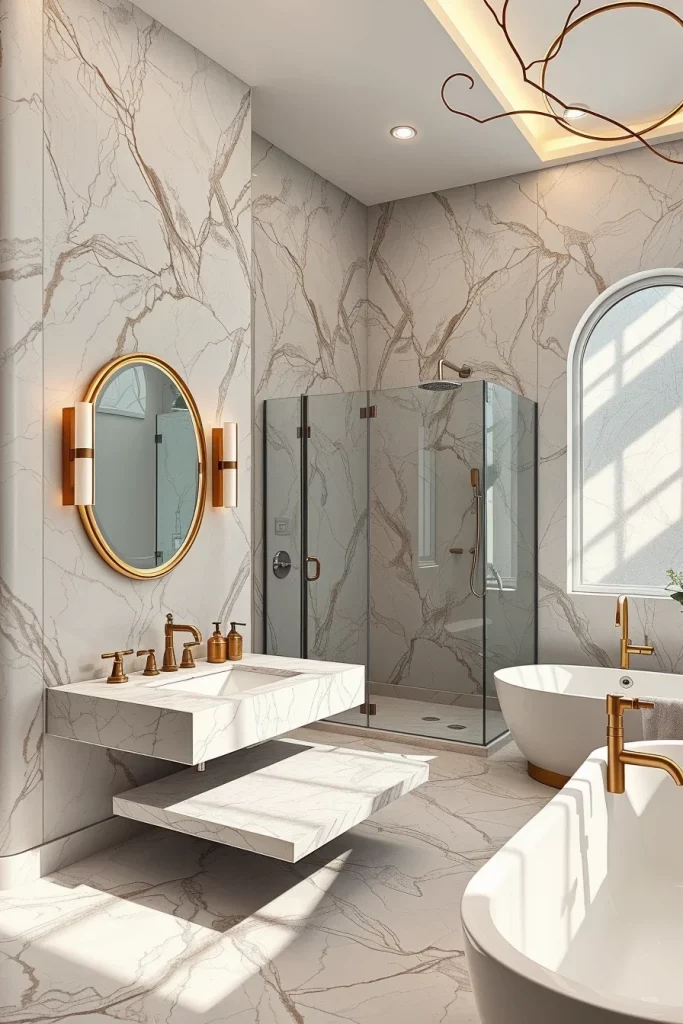
I generally furnish quartzite bathrooms with floating custom cabinetry, integrated stone sinks, frameless glass showers, elegant brushed brass fixtures, oversized illuminated mirrors, and sculptural freestanding bathtubs. Carefully positioned recessed lighting enhances the natural depth of the stone, while generous storage solutions keep countertops uncluttered and allow the quartzite to remain the room’s primary design feature.
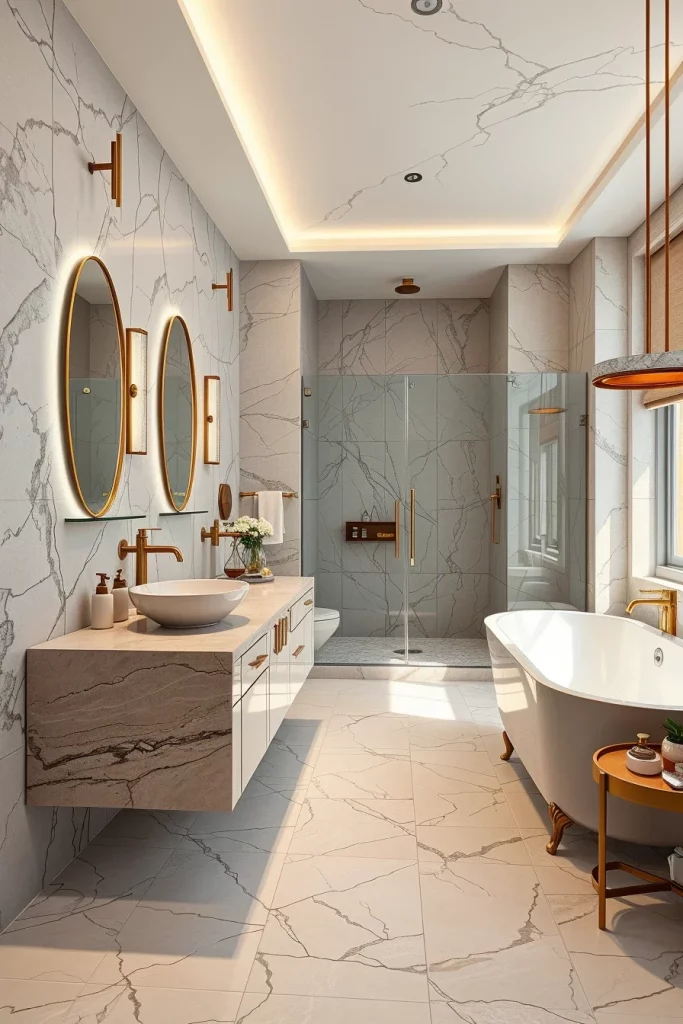
I believe quartzite represents an excellent long-term investment because it combines exceptional durability with timeless elegance. Many interior designers featured by Architectural Digest recommend selecting authentic materials that age gracefully instead of following short-lived trends, and I have found quartzite consistently delivers both beauty and performance.
To finish this design, I would include heated flooring, concealed storage compartments, integrated ventilation, oversized stone floor tiles, premium textiles, and subtle decorative accessories that highlight the luxurious character of the stone without overwhelming the clean architectural design.
Floor-To-Ceiling Stone Bathroom Designs
I believe one of the most impressive ways to create a memorable bathroom is by covering the walls from floor to ceiling with natural stone. This approach immediately gives the room a seamless appearance while allowing the beauty of marble, travertine, limestone, or quartzite to become the focal point. Large-format stone slabs reduce visible grout lines, making the bathroom appear larger and more sophisticated. I often recommend this design for homeowners who want a timeless space that remains elegant for decades rather than following short-lived trends.
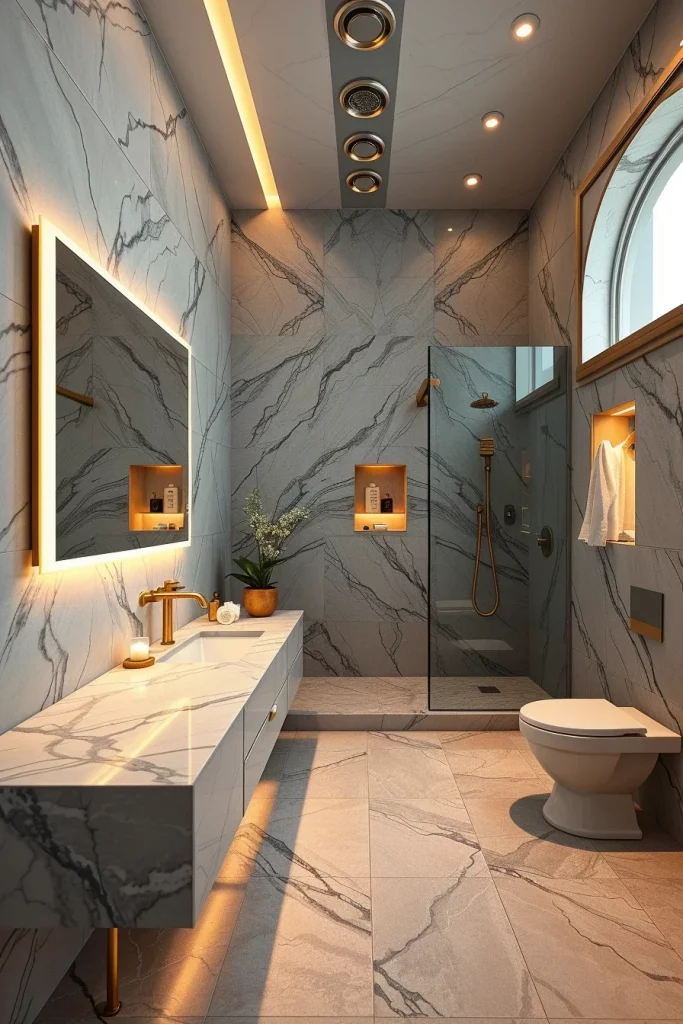
To balance the richness of the stone, I prefer floating wood or matte lacquer cabinetry, frameless glass shower enclosures, concealed storage, and minimalist plumbing fixtures in brushed nickel, matte black, or brushed brass. A large illuminated mirror softens the stone surfaces while layered lighting highlights the natural veining and texture. Heated flooring, recessed wall niches, and integrated shelving improve daily functionality without distracting from the clean architectural look.
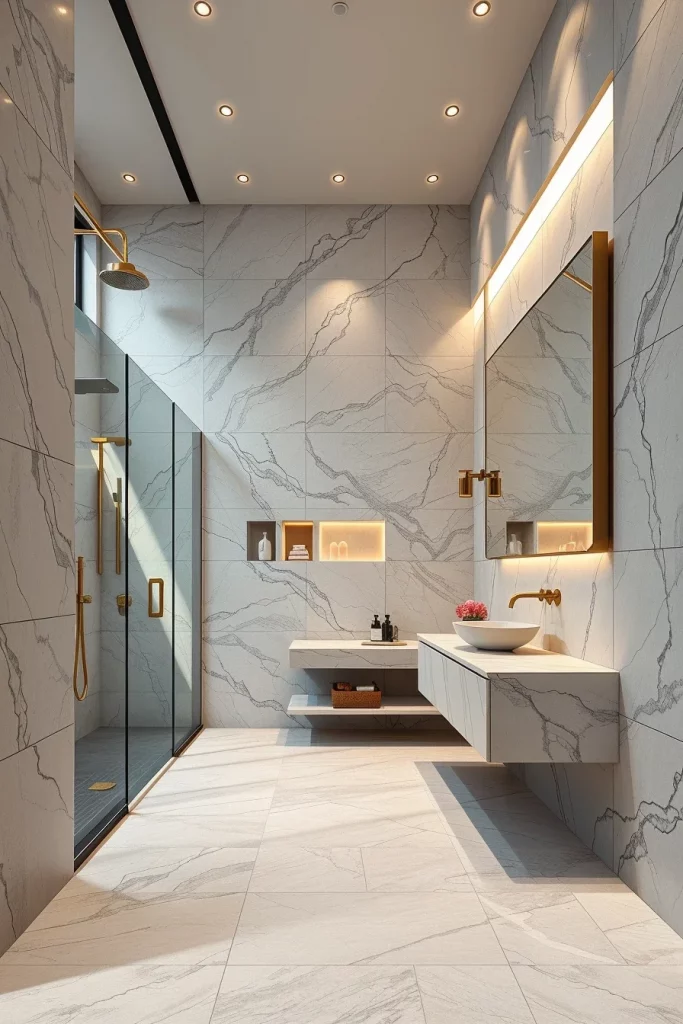
I appreciate that many respected American designers and publications, including Architectural Digest, frequently emphasize the importance of combining natural materials with restrained furnishings instead of overcrowding a luxury space. I have found that allowing premium stone to remain the visual centerpiece creates a more refined and relaxing environment than adding excessive decorative accessories.
To complete this design, I would include under-cabinet LED lighting, high-quality ventilation, plush neutral textiles, and carefully selected accessories made from natural materials such as stone, ceramic, or glass. These finishing touches make the bathroom feel warm without competing with the dramatic surfaces.
Floating Stone Vanities With Sculptural Appeal
I enjoy using floating stone vanities because they combine visual lightness with the strength and durability of natural materials. A vanity carved from marble, travertine, or limestone appears almost sculptural when mounted to the wall, creating additional visible floor space that makes the bathroom feel larger. This idea works especially well in modern interiors where clean geometry and premium materials define the overall atmosphere.
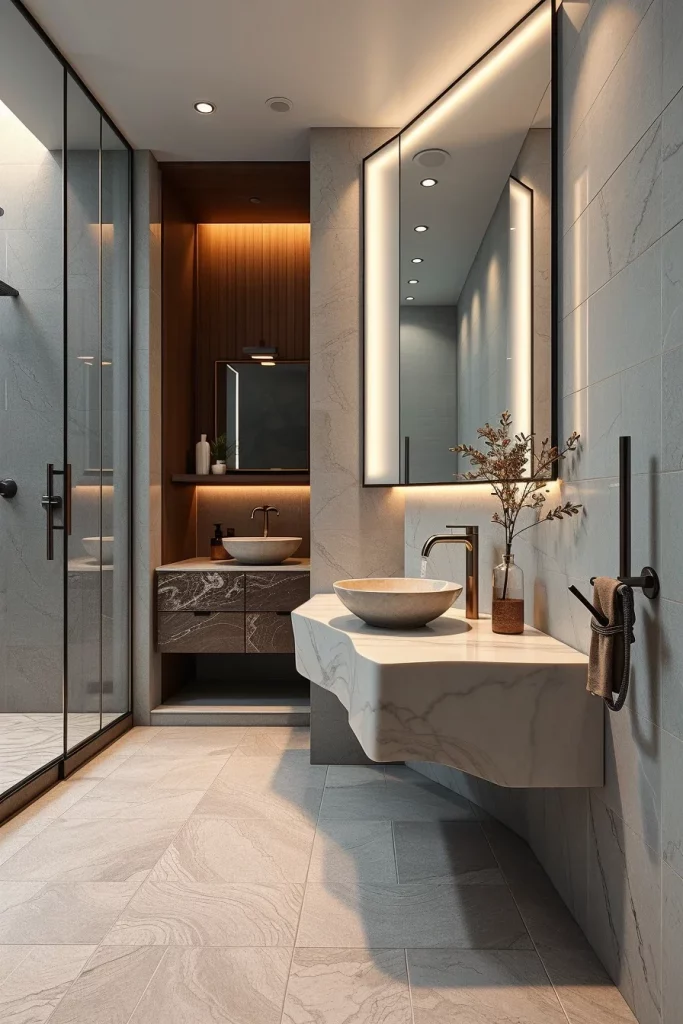
I usually pair the vanity with integrated stone sinks, wall-mounted faucets, oversized mirrors, hidden drawer organizers, and subtle LED lighting underneath the cabinet. These elements improve both aesthetics and functionality while keeping the room organized. Soft-close drawers, stone countertops with gentle edge profiles, and minimalist hardware contribute to a refined appearance without unnecessary decoration.
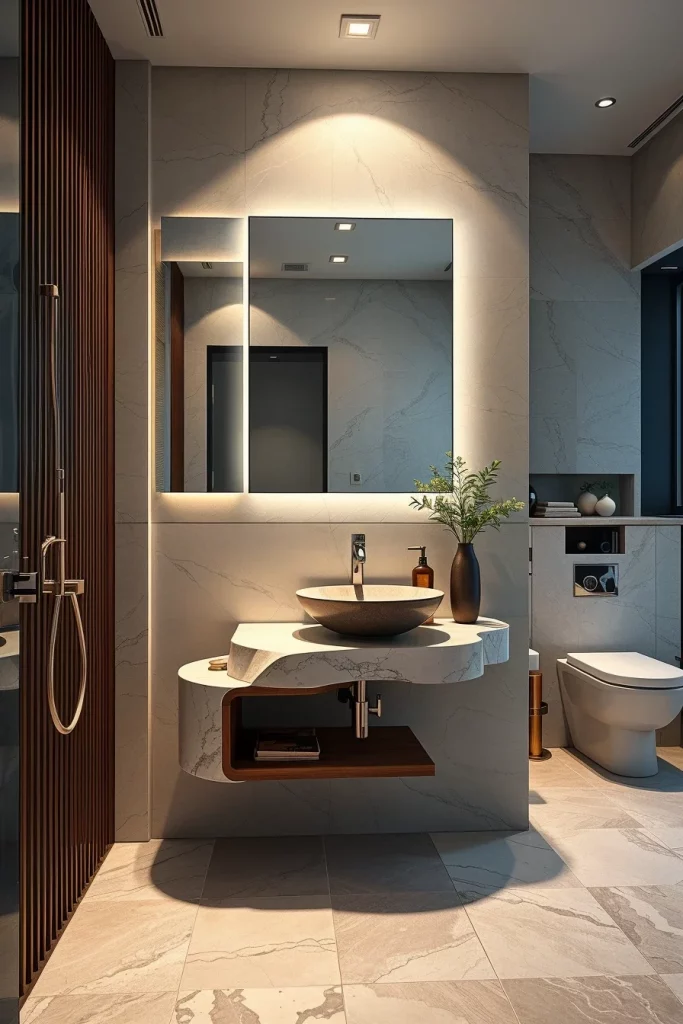
From my experience, a sculptural vanity becomes even more impressive when the surrounding finishes remain intentionally understated. Designers featured in Elle Decor often recommend allowing one architectural feature to become the focal point rather than competing with multiple statement pieces. I have consistently seen this approach create a more balanced and elegant bathroom.
To make this section even stronger, I would also include a matching stone shelf, discreet towel storage, and a coordinating stone window ledge if natural light is available. These details reinforce the continuity of the design while improving everyday convenience.
Curved Stone Bathtubs As Statement Pieces
I believe a freestanding curved stone bathtub instantly transforms a bathroom into a luxurious retreat. Unlike traditional rectangular tubs, sculptural curved designs introduce softness that balances the natural weight of the stone. Whether crafted from marble, limestone, or composite natural stone, these bathtubs become the unmistakable centerpiece of the room while maintaining a calm and welcoming atmosphere.
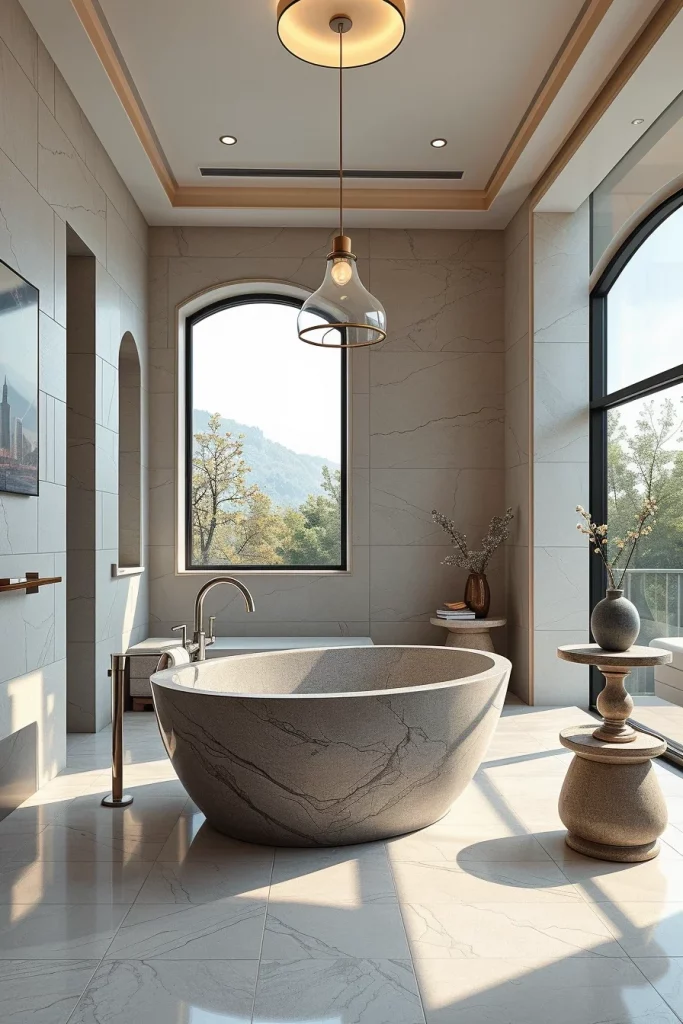
I like placing the bathtub near oversized windows whenever possible or positioning it beneath elegant pendant lighting to emphasize its organic silhouette. A simple side table made from matching stone, minimalist floor-mounted faucets, textured towels, and discreet recessed shelving complete the composition without overwhelming it. Keeping the surrounding palette neutral allows the bathtub itself to remain the primary visual attraction.
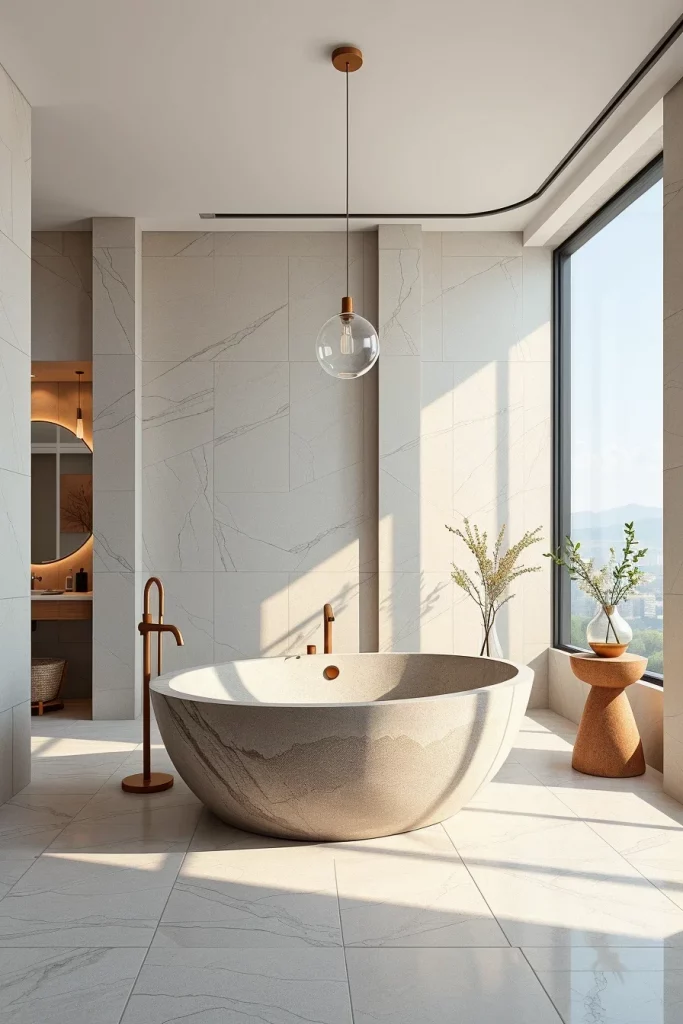
Personally, I have found that curved forms make larger stone bathrooms feel more inviting and comfortable. Several American interior designers have also noted that organic shapes help soften contemporary spaces dominated by straight architectural lines. I think this balance between structure and softness is one of the reasons these bathrooms remain timeless.
I would enhance this layout with radiant heated floors, dimmable lighting, natural linen window treatments, and carefully selected greenery positioned away from moisture-sensitive areas. These additions make the bathing experience even more relaxing while preserving the minimalist aesthetic.
Natural Stone Walk-In Shower Inspirations
I often recommend spacious walk-in showers finished entirely with natural stone because they combine durability, elegance, and easy maintenance. Large stone slabs create a continuous appearance that minimizes grout lines while making the shower feel significantly more spacious. A curbless entrance improves accessibility and contributes to the clean architectural design that many homeowners appreciate today.
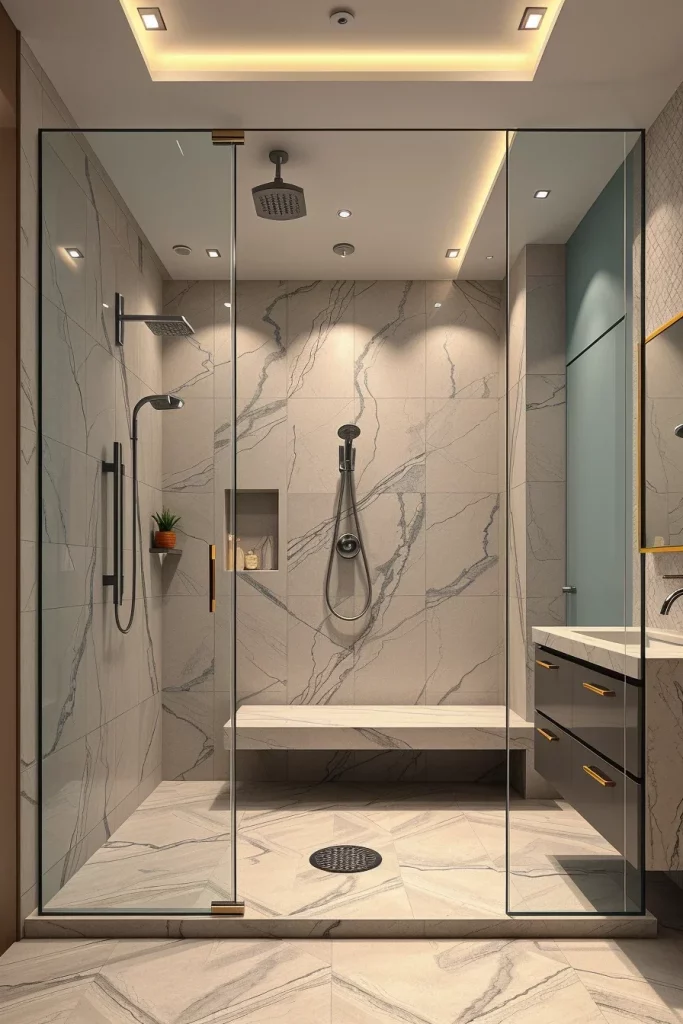
I prefer frameless glass panels that allow the stone to remain fully visible throughout the shower. Built-in niches, floating benches made from matching stone, oversized rainfall showerheads, handheld fixtures, and linear drains all contribute to a practical yet visually refined environment. Soft indirect lighting placed inside recessed niches enhances the natural texture without becoming distracting.
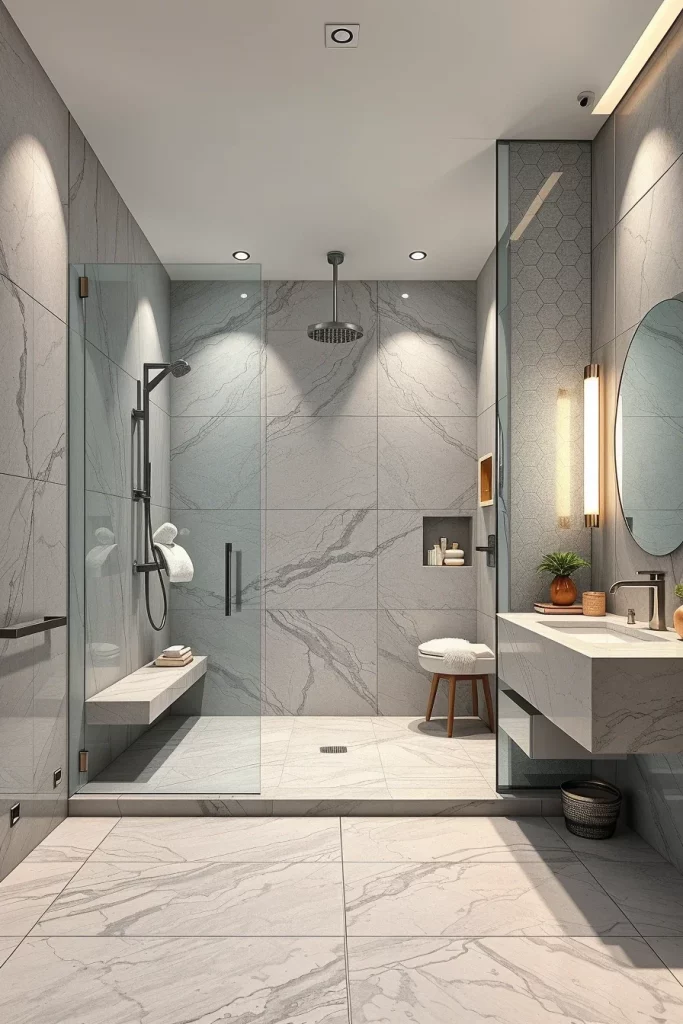
From my perspective, investing in high-quality waterproofing and professional stone installation is every bit as important as selecting beautiful materials. Industry experts consistently stress that proper preparation protects the longevity of premium natural stone installations, and I completely agree with that recommendation after seeing long-lasting results in professionally designed bathrooms.
To improve this shower even further, I would include anti-slip stone finishes on the floor, integrated seating, premium glass treatments that reduce water spots, and concealed storage for everyday toiletries.
Textured Stone Accent Walls That Add Dimension
I enjoy using textured natural stone as an accent wall because it introduces depth without overwhelming the entire bathroom. Three-dimensional limestone, stacked stone, split-face marble, or textured travertine immediately create visual interest while maintaining a sophisticated appearance. A single accent wall behind the vanity or bathtub often becomes the defining architectural feature of the room.
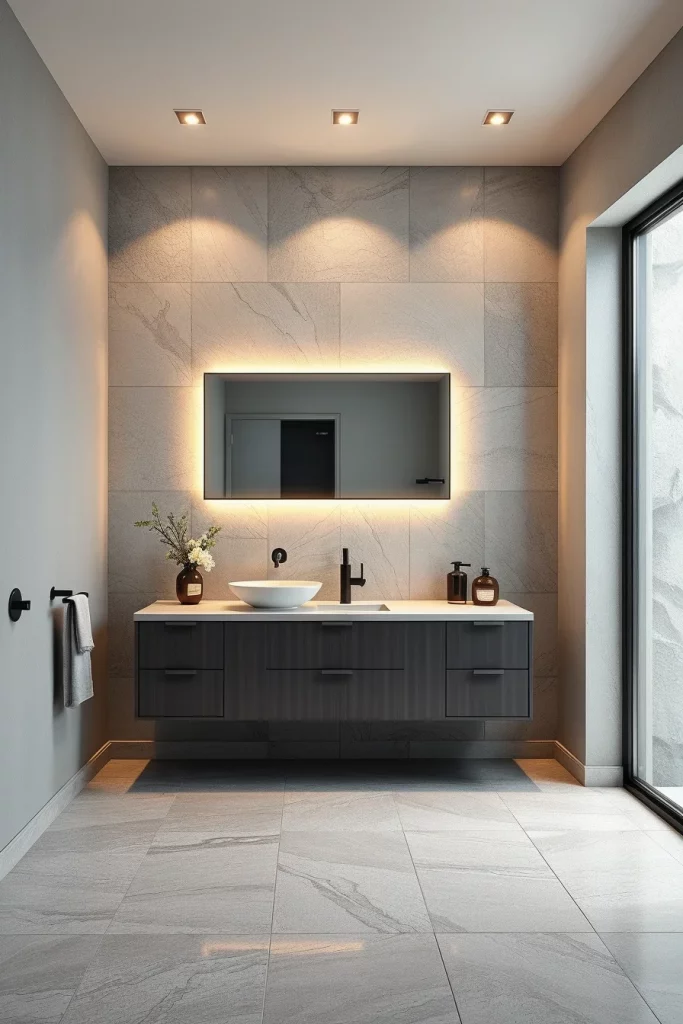
I usually combine the textured surface with smooth stone flooring, minimalist cabinetry, large mirrors, concealed lighting, and simple contemporary fixtures. This contrast allows each material to stand out while preventing the space from feeling visually busy. Soft lighting placed above or below the textured wall enhances the natural shadows and highlights every unique detail.
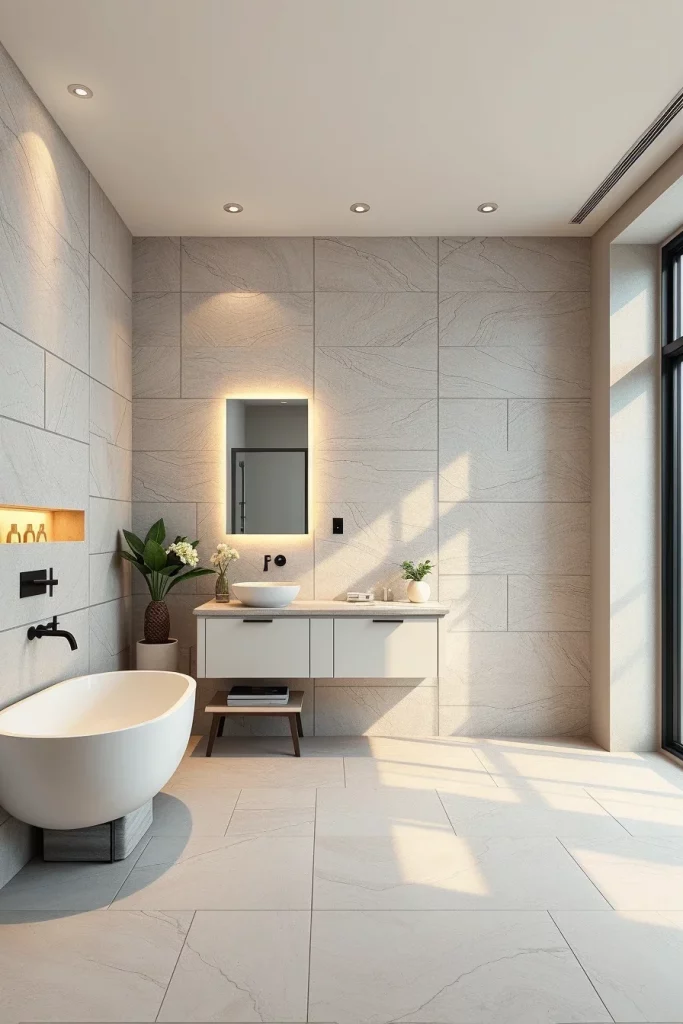
In my opinion, restraint is especially important when working with richly textured materials. I have noticed that the most successful bathrooms feature only one highly detailed surface surrounded by quieter finishes. Many professional designers recommend this layered approach because it creates balance while allowing the craftsmanship of the stone to remain the focus.
To finish this design, I would add coordinated stone accessories, high-quality ambient lighting, moisture-resistant artwork, and luxurious towels in warm neutral shades that complement the natural color variations of the stone.
Mixed Stone Combinations For Custom Bathroom Designs
I enjoy combining multiple natural stones because the result feels highly personalized without sacrificing elegance. Pairing marble with travertine, limestone with slate, or quartzite with textured stone creates visual contrast while maintaining harmony through similar undertones. Rather than relying on a single material throughout the room, I like giving each surface its own purpose. For example, polished marble can become the focal wall behind the vanity, while textured limestone adds warmth inside the shower. This layered approach gives natural stone bathrooms a custom-designed appearance that feels both luxurious and inviting.
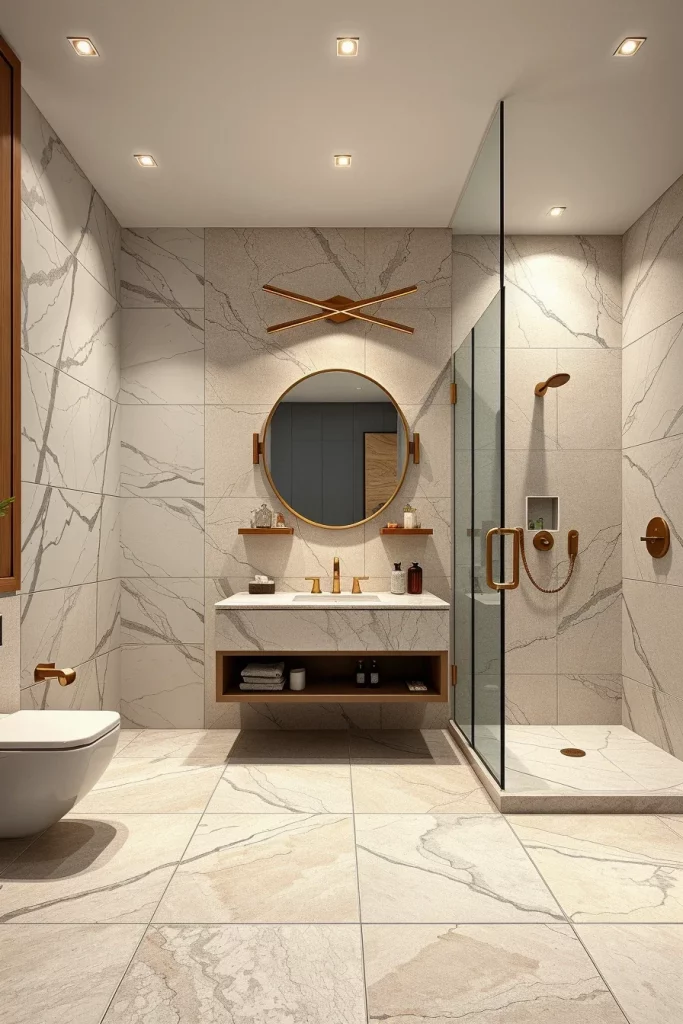
I usually balance mixed stone surfaces with simple furniture and clean architectural details. A floating vanity with a stone countertop, frameless shower glass, recessed storage niches, and minimalist mirrors allow the different stones to remain the visual focus. Matte metal fixtures, integrated LED lighting, and carefully selected accessories in ceramic or glass prevent the room from feeling busy. Keeping cabinetry in soft neutral colors helps every stone surface stand out while maintaining a cohesive design.
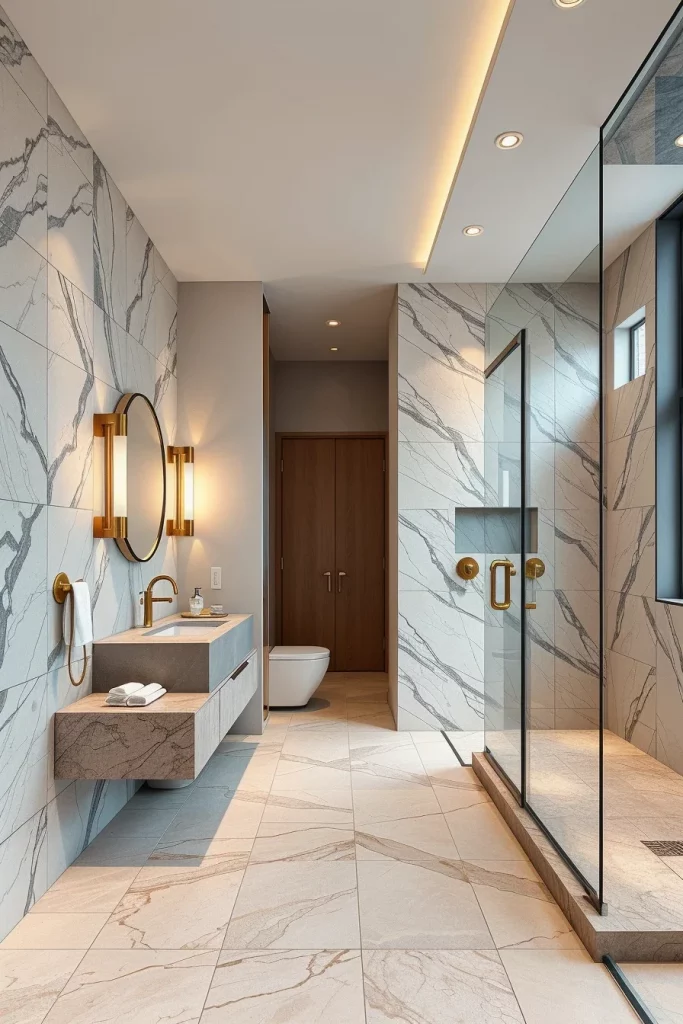
From my experience, the secret to mixing stone successfully is limiting the color palette instead of introducing too many competing patterns. Professional designers featured by House Beautiful often recommend selecting one dominant stone and one or two complementary materials rather than treating every surface differently. I have found that this strategy creates a sophisticated bathroom that feels curated instead of overwhelming.
To complete this concept, I would add coordinated stone shelving, matching window sills, heated flooring, and luxurious neutral textiles that tie every surface together. These details reinforce the layered design while improving everyday comfort.
Warm Beige Stone Bathrooms With Cozy Sophistication
I find that warm beige stone instantly creates one of the most welcoming bathroom environments. Travertine, creamy limestone, and soft sandstone introduce subtle color variation without becoming visually overwhelming. These materials reflect natural light beautifully, making both small and large bathrooms feel brighter and more relaxing. I often recommend this palette for homeowners who want timeless elegance with a comfortable atmosphere instead of a cold, ultra-modern appearance.
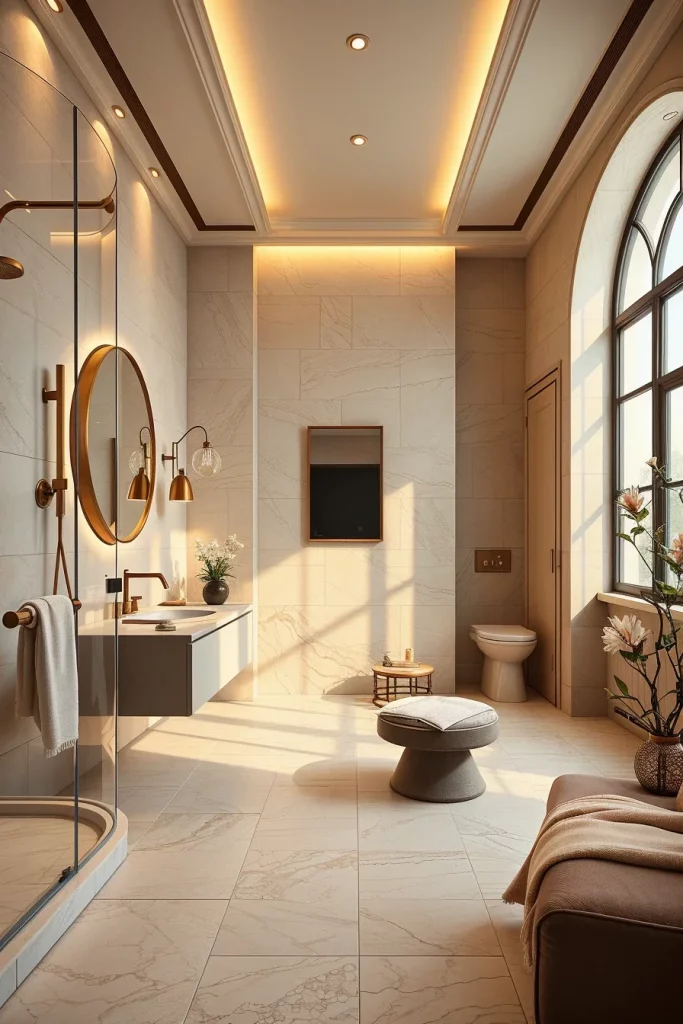
I like pairing beige stone with floating oak-inspired cabinetry, rounded mirrors, brushed brass fixtures, soft linen textiles, and layered lighting. Built-in shower benches, stone countertops, and oversized porcelain accessories complement the natural surfaces without distracting from them. Warm lighting emphasizes the gentle color variation found within the stone and enhances the cozy feeling throughout the room.
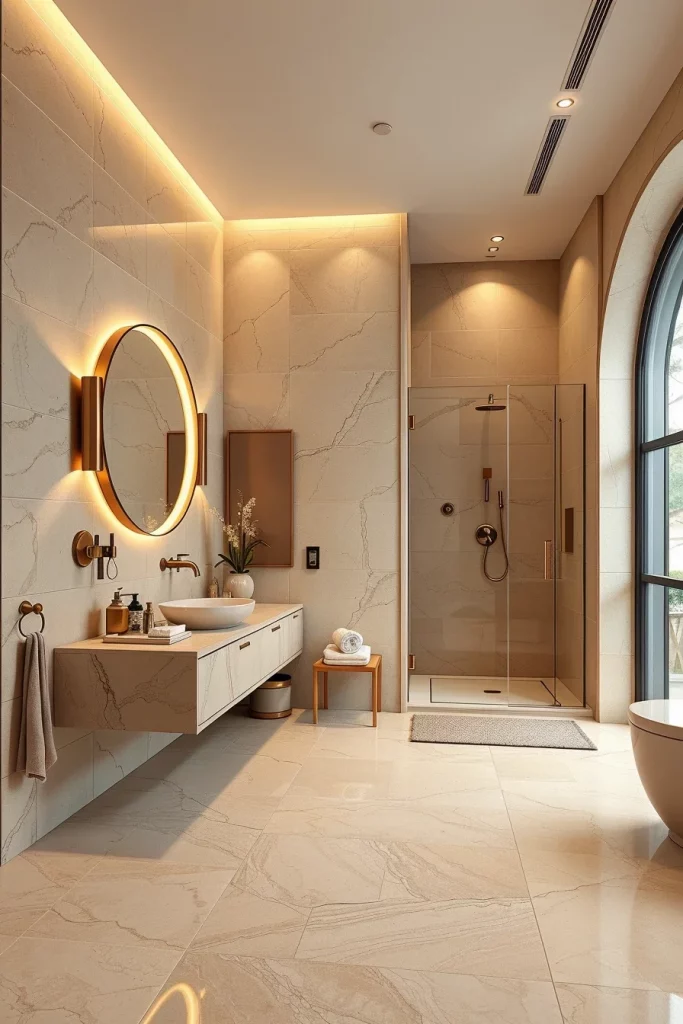
Personally, I believe beige stone offers exceptional versatility because it works equally well with minimalist interiors and more decorative contemporary spaces. Many American interior designers continue to favor warm neutral palettes because they remain attractive over time while adapting easily to changing decorative accents. I appreciate this flexibility when designing bathrooms intended to last for many years.
I would finish the room with subtle decorative elements such as woven baskets, elegant candles, premium towels, and discreet greenery positioned near natural light. These additions make the space feel lived-in while preserving its refined character.
Gray Stone Bathrooms With Contemporary Style
I often recommend gray natural stone for homeowners who appreciate clean contemporary interiors with timeless appeal. Gray marble, slate, and quartzite provide a sophisticated foundation that works exceptionally well with modern architecture. The natural veining and subtle movement found in these stones prevent monochromatic bathrooms from appearing flat while maintaining a calm and balanced atmosphere.
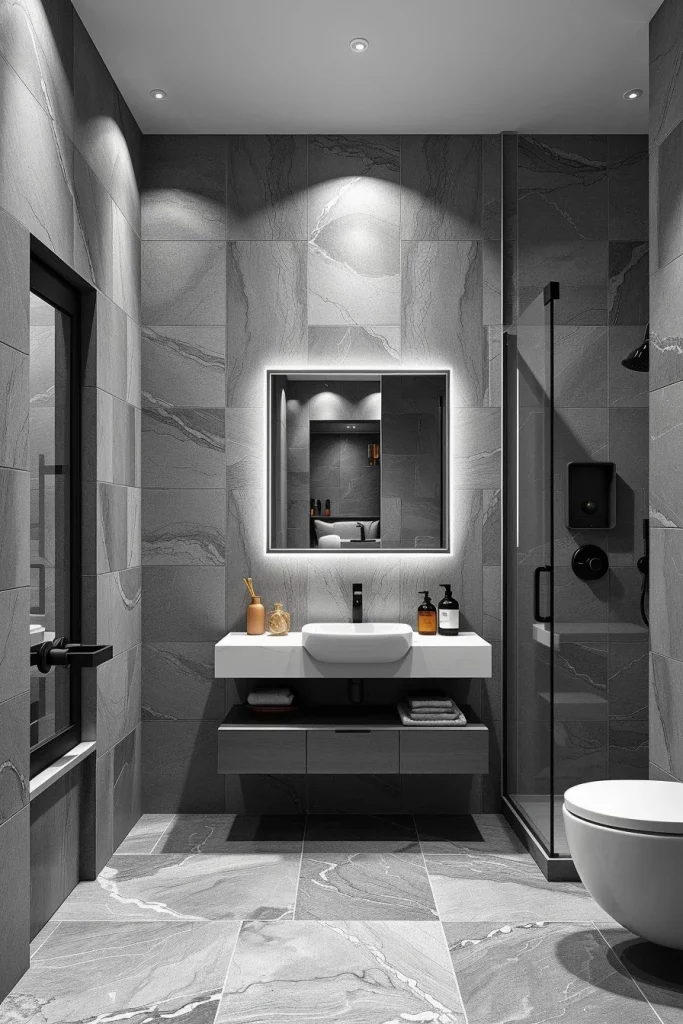
To complement gray stone, I typically choose floating vanities, frameless mirrors, concealed storage, black or brushed nickel fixtures, and oversized walk-in showers with frameless glass. Linear lighting beneath cabinetry and recessed ceiling fixtures highlight the stone texture without creating harsh contrasts. I also prefer large-format floor tiles that reduce grout lines and contribute to a seamless appearance.
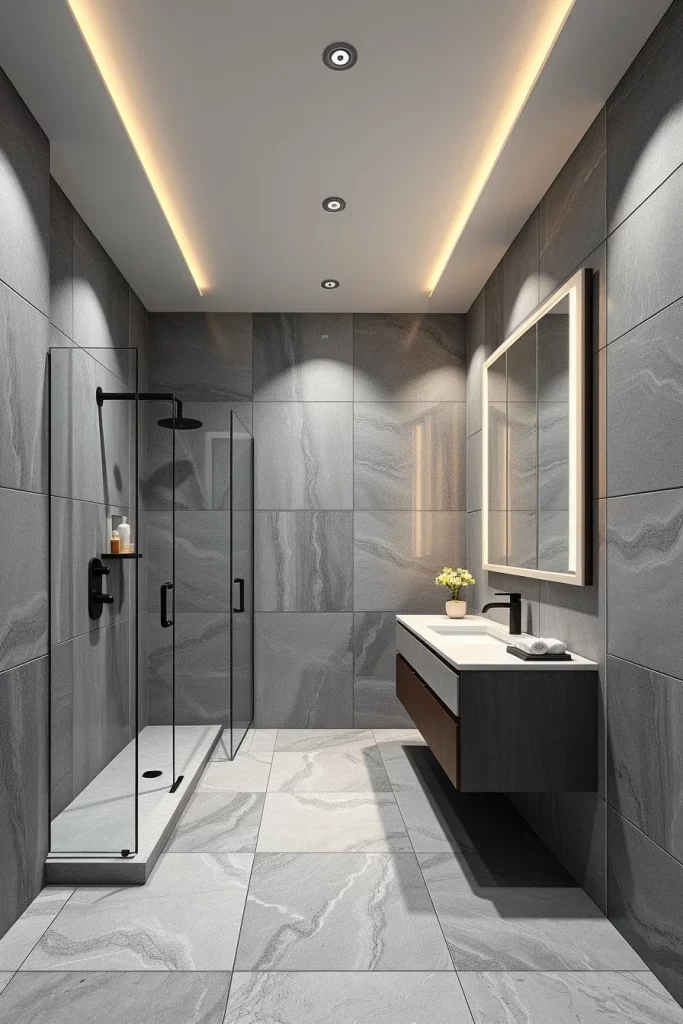
I have noticed that gray stone performs especially well when different surface finishes are combined thoughtfully. Mixing honed stone on the walls with lightly textured flooring improves visual interest while maintaining consistency. Interior specialists frequently recommend this combination because it balances elegance with everyday practicality, and I completely agree with that approach.
To make this design even stronger, I would introduce subtle wood accents, integrated smart lighting controls, heated towel racks, and premium storage solutions that keep everyday essentials neatly organized while preserving the minimalist aesthetic.
Earth-Toned Stone Bathrooms With Organic Beauty
I love using earth-toned natural stone because it immediately creates a calming connection with nature. Rich browns, sandy taupes, soft terracotta shades, and muted olive undertones found in many natural stones bring warmth and character into the bathroom without relying on excessive decoration. These colors create a peaceful environment that feels grounded and timeless while celebrating the unique variations found in every stone slab.
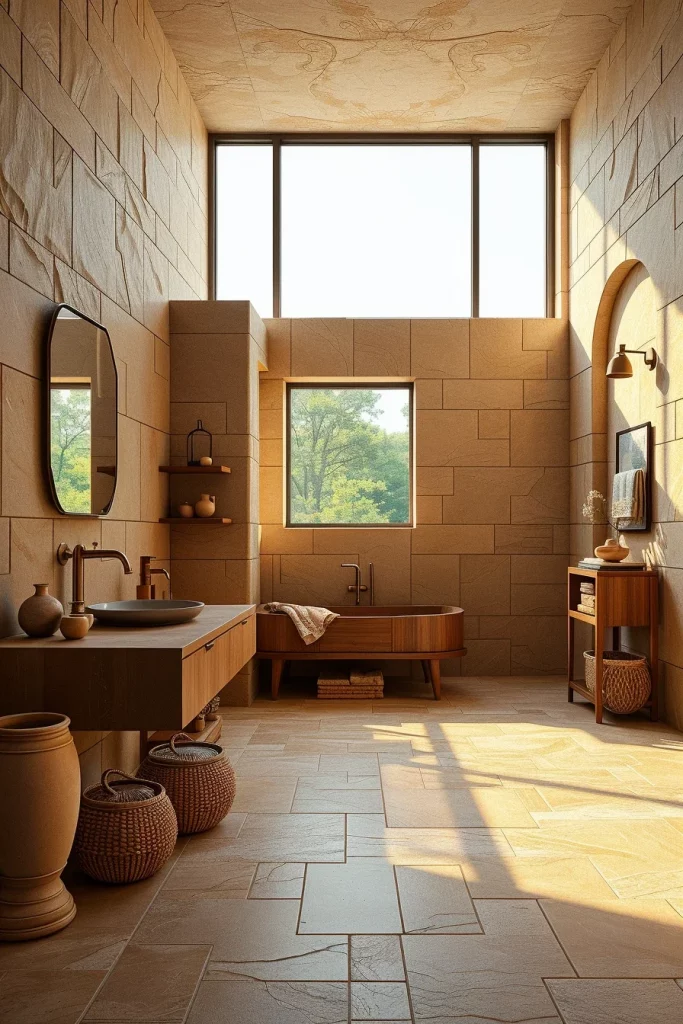
I usually combine earth-toned stone with floating cabinetry, textured ceramic accessories, woven storage baskets, brushed bronze fixtures, and large windows that maximize natural daylight. Minimalist furniture allows the beautiful variation within the stone to remain the centerpiece of the design. Layered lighting enhances the warm tones during the evening while maintaining a relaxing atmosphere.
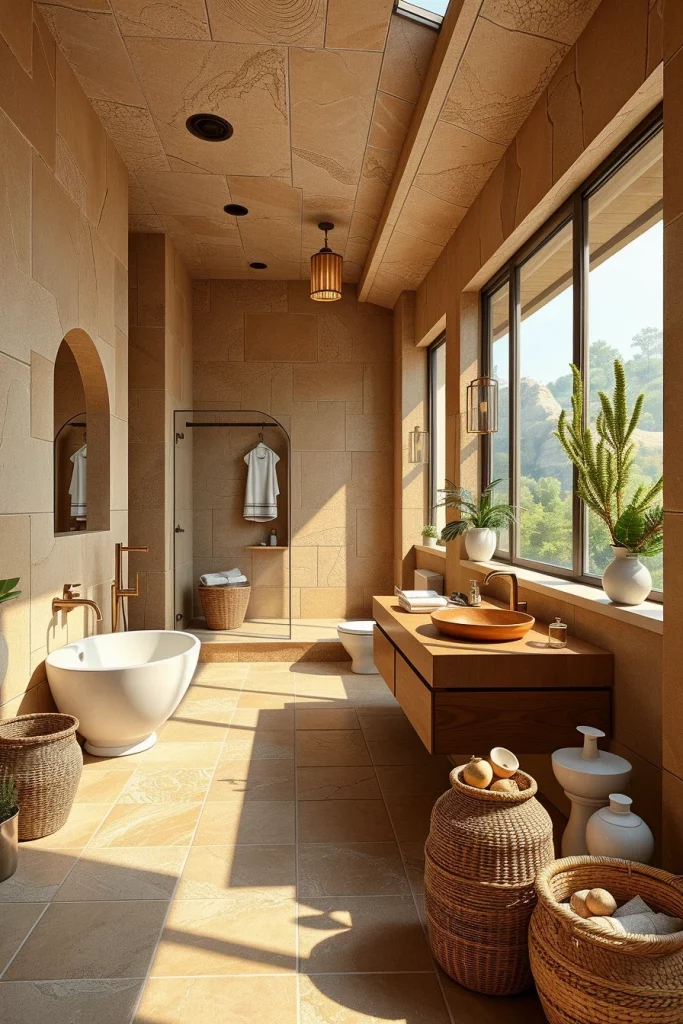
From my perspective, earth-toned interiors remain among the easiest to personalize because they accommodate many decorative styles without requiring major renovations. Designers frequently emphasize that authentic natural materials age gracefully, and I have consistently seen these warm color palettes remain attractive long after passing trends disappear.
I would complete this bathroom with integrated shelving, oversized mirrors, premium textiles, and carefully selected decorative pottery that complements the natural color palette while reinforcing the organic feeling throughout the space.
Minimalist Natural Stone Bathrooms With Clean Lines
I believe minimalism allows the natural beauty of stone to become the true centerpiece of the bathroom. Instead of filling the room with decorative accessories, I focus on flawless proportions, premium materials, and carefully considered architectural details. Large stone slabs, hidden storage, and uncluttered surfaces create a peaceful environment where every element serves a practical purpose. This philosophy makes natural stone bathrooms feel spacious, elegant, and highly functional.
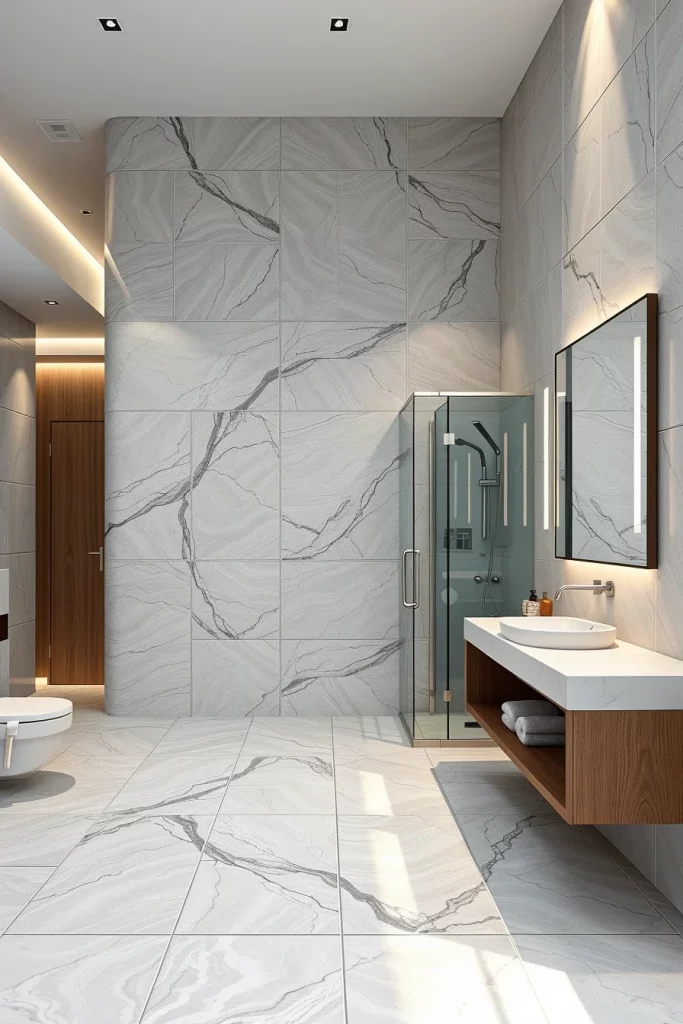
I prefer floating vanities with integrated sinks, frameless shower enclosures, concealed drains, recessed niches, and oversized mirrors without decorative frames. Neutral stone flooring continues seamlessly into the shower, reinforcing the open layout. Slim linear lighting, wall-mounted faucets, and discreet storage maintain the clean aesthetic while supporting comfortable everyday use.
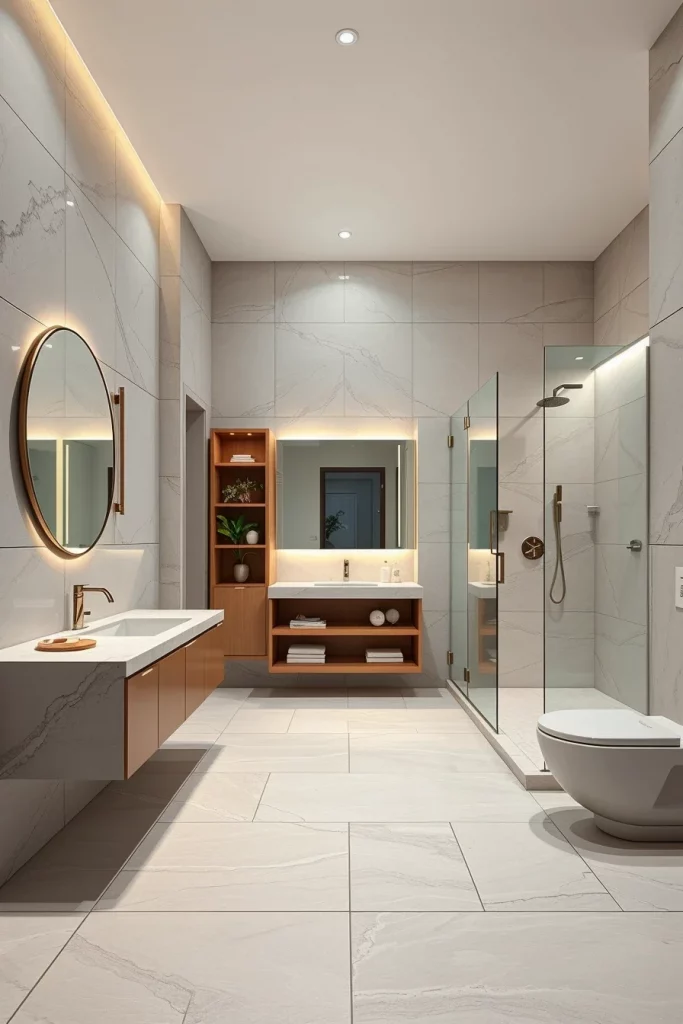
Personally, I have found that the most successful minimalist bathrooms rely on exceptional craftsmanship rather than expensive decoration. Well-known design publications consistently highlight quality materials, thoughtful proportions, and careful detailing as the defining characteristics of timeless minimalist interiors. I completely agree that simplicity requires greater attention to every design decision.
To perfect this bathroom, I would add invisible storage solutions, underfloor heating, premium ventilation, smart lighting controls, and luxurious neutral textiles. These final details improve comfort while preserving the clean architectural appearance.
Spa-Inspired Stone Bathrooms For Everyday Relaxation
When I design a spa-inspired bathroom, I always begin with natural stone because it instantly creates a calming atmosphere that never feels artificial. Large limestone or travertine walls paired with matching stone flooring establish visual continuity, while oversized windows allow daylight to enhance every natural texture. I like combining soft neutral tones with generous open space so the room feels peaceful instead of crowded. A freestanding soaking tub becomes the centerpiece, surrounded by carefully selected stone surfaces that encourage relaxation after a busy day.
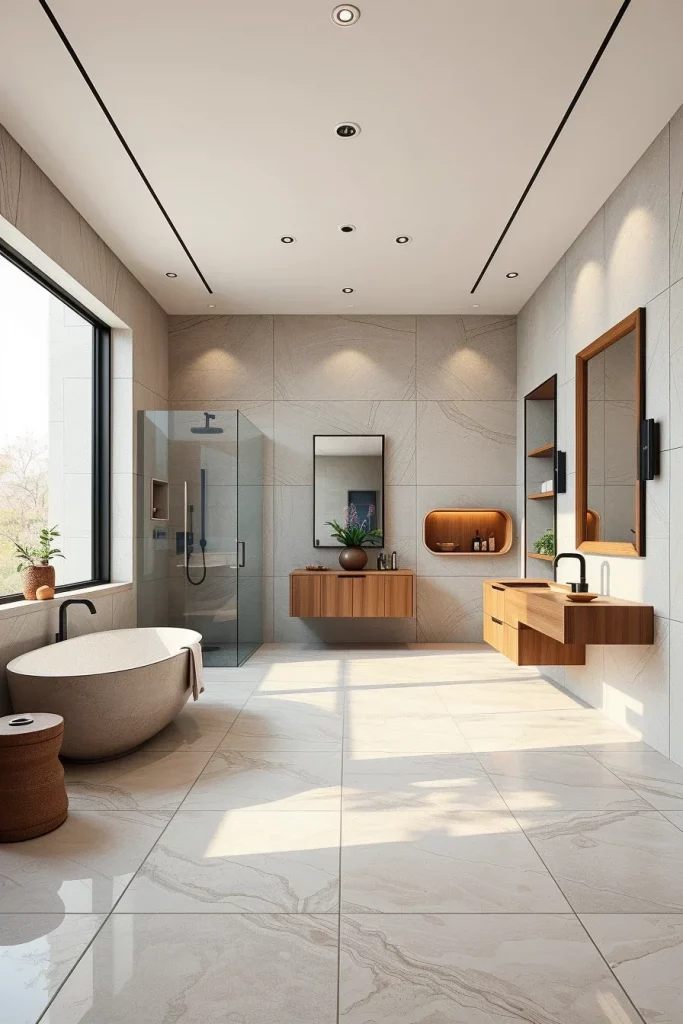
I usually include floating oak cabinetry with simple hardware, frameless glass shower panels, recessed storage niches, and oversized mirrors that reflect natural light throughout the room. Heated stone flooring adds comfort throughout the year, while concealed linear drains keep the shower area visually clean. Matte black or brushed nickel fixtures provide subtle contrast without distracting from the stone itself. Every element serves both a practical purpose and contributes to the tranquil atmosphere.
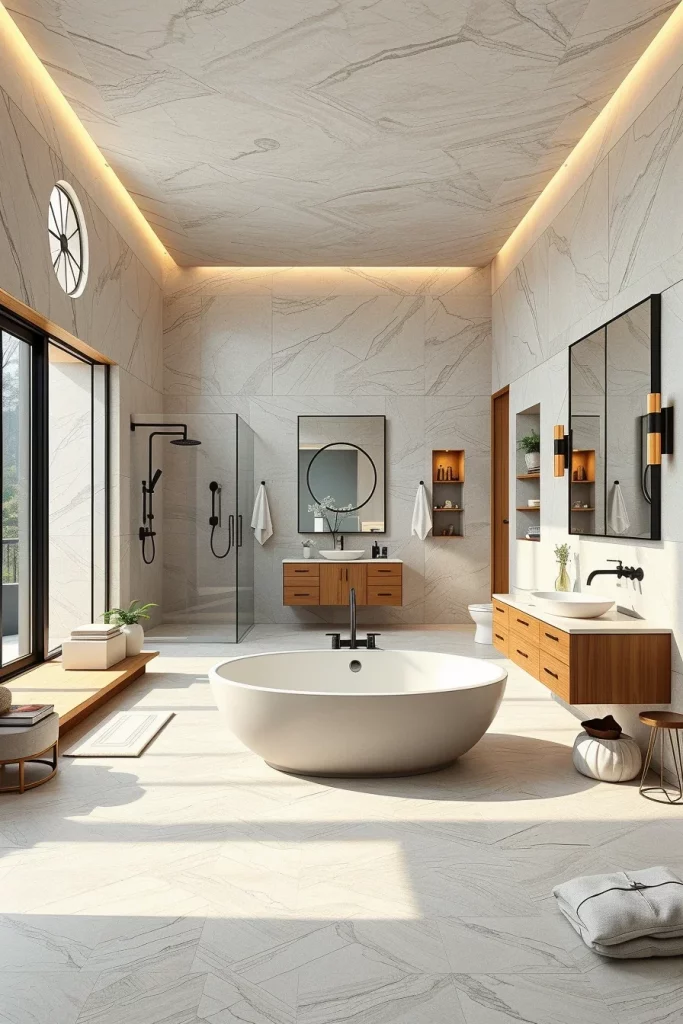
I often recommend following the approach promoted by Architectural Digest and experienced American interior designers who suggest limiting the material palette in spa bathrooms. In my experience, using only a few carefully selected finishes allows the natural beauty of the stone to become the true highlight instead of competing with numerous decorative materials.
If I wanted to make this space even more functional, I would add integrated under-cabinet lighting, soft linen storage, aromatic accessories, and discreet towel warming solutions that complete the spa experience without overwhelming the overall design.
Stone Niches And Shelving With Built-In Elegance
I believe built-in stone niches make a bathroom look significantly more refined while solving everyday storage challenges. Instead of adding bulky shelving units, I prefer carving recessed compartments directly into the shower walls and beside the vanity. Matching the niche material with the surrounding stone creates a seamless appearance that feels custom designed from the beginning. These architectural details remain beautiful while keeping frequently used products organized and accessible.
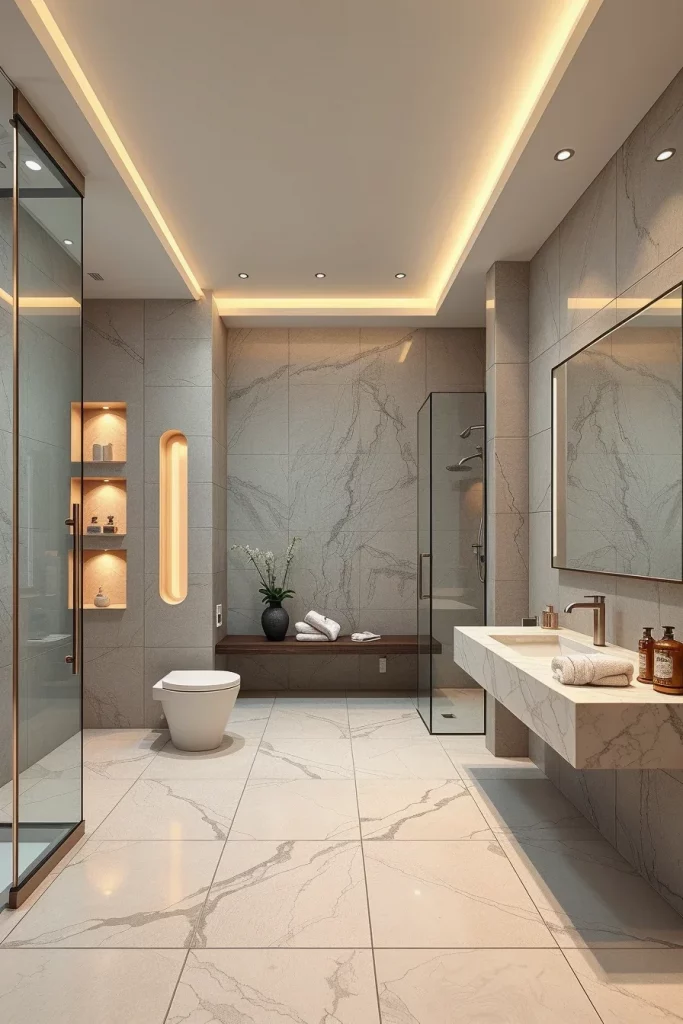
I like installing illuminated niches with concealed LED lighting that gently highlights the texture of marble, limestone, or quartzite. Floating stone shelves near the vanity provide space for decorative trays, candles, rolled towels, and carefully selected accessories without creating visual clutter. Every shelf is thick enough to appear substantial while maintaining elegant proportions. I also make sure every niche is properly waterproofed before the stone is installed to ensure long-term durability.
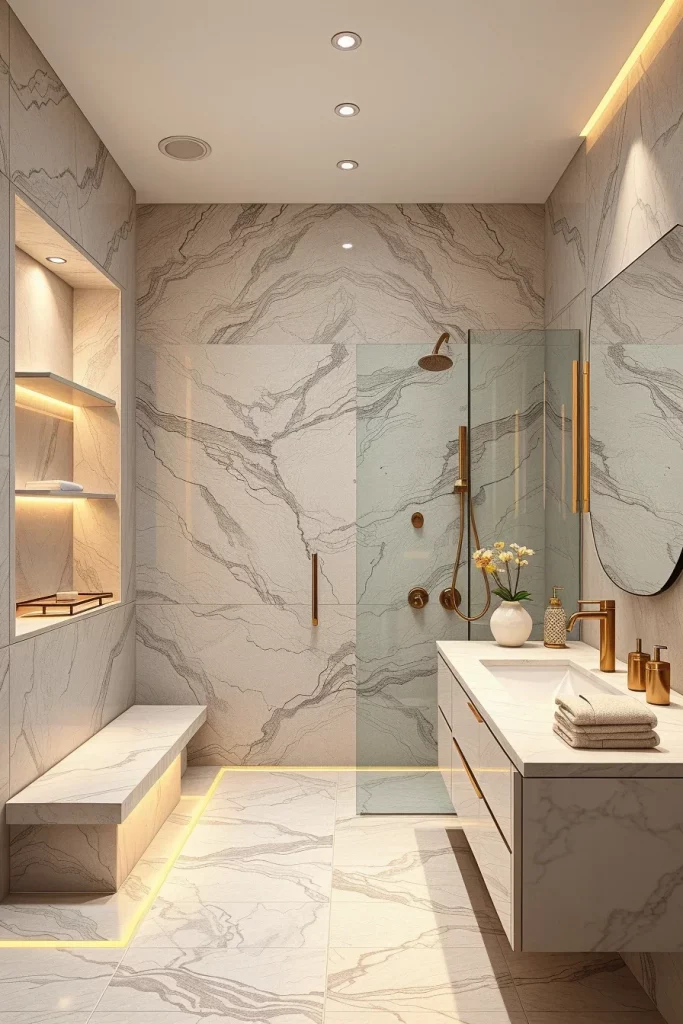
Many professional designers featured in publications like House Beautiful recommend integrating storage directly into the architecture whenever possible. I completely agree because hidden storage allows the bathroom to remain visually calm while still supporting daily routines efficiently.
To improve this concept further, I would include matching stone window sills, coordinated shelving beside the bathtub, and integrated electrical outlets hidden inside cabinetry for charging grooming devices discreetly.
Waterfall Stone Countertops For A Premium Look
Whenever I want a vanity to become the visual centerpiece of the bathroom, I choose waterfall stone countertops. Allowing the stone to continue vertically down both sides creates a sculptural appearance while showcasing the natural veining in a dramatic yet sophisticated way. This technique works especially well with marble, quartzite, and richly textured granite because the uninterrupted pattern emphasizes the material’s unique character. The result feels luxurious without unnecessary ornamentation.
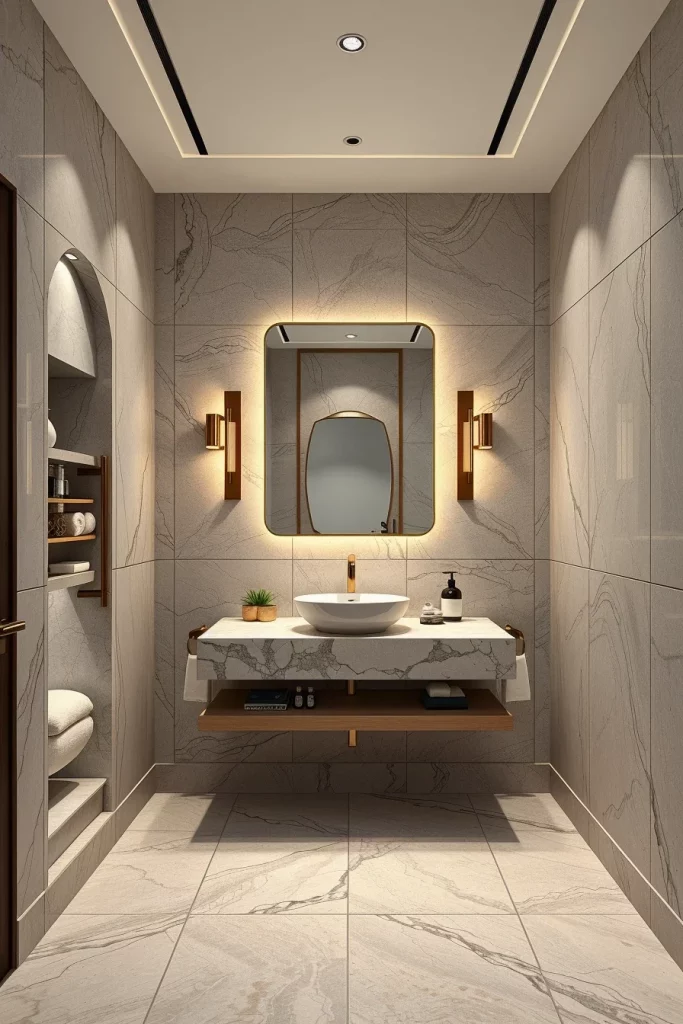
I pair waterfall countertops with floating vanities to create a lighter visual effect despite the substantial stone surfaces. Under-mounted sinks preserve clean lines, while wall-mounted faucets simplify cleaning and maximize countertop space. Large backlit mirrors complement the premium materials without competing for attention. I also prefer handle-free cabinetry because it allows the stone to remain the primary focus throughout the room.
I have found that investing in high-quality stone fabrication makes a significant difference in the finished appearance. Perfectly aligned veining, carefully polished edges, and precision installation demonstrate craftsmanship that homeowners appreciate for many years.
To complete this design, I would add coordinated stone backsplashes, hidden drawer organizers, integrated lighting inside vanity drawers, and subtle decorative objects that emphasize quality instead of quantity.
Large Format Stone Slabs For Seamless Luxury
Large-format stone slabs completely change how I experience a bathroom because they minimize grout lines and allow the natural patterns to flow uninterrupted across the walls. The continuous surfaces create an elegant architectural appearance that makes even modest bathrooms feel more spacious. Whether I choose marble, porcelain with natural stone appearance, or genuine quartzite slabs, the result always feels clean, refined, and timeless.
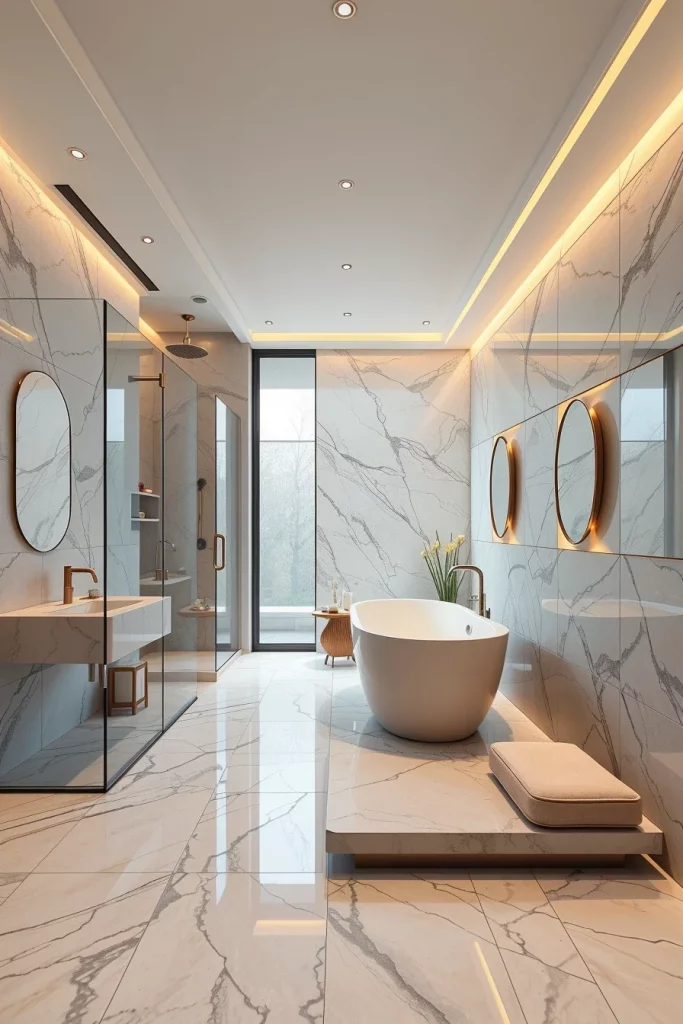
I usually extend the same slab material into the shower enclosure, vanity backsplash, and feature wall behind the bathtub to create visual harmony. Frameless glass shower partitions preserve uninterrupted sightlines, while linear lighting emphasizes the scale of the stone. Floating furniture, concealed storage, and minimal hardware prevent visual distractions from interrupting the continuous surfaces.
Many luxury residential designers recommend reducing the number of visible joints because fewer visual interruptions help the room appear calmer and more sophisticated. I have consistently found this advice valuable, especially in contemporary bathrooms where simplicity becomes part of the luxury.
If I wanted to elevate this concept further, I would include matching stone thresholds, integrated shower benches carved from the same material, and custom ventilation details that blend seamlessly into the architectural design.
Natural Stone Bathrooms With Soft Ambient Lighting
Lighting has the ability to completely transform natural stone bathrooms, and I always design the lighting plan alongside the material selection rather than treating it as an afterthought. Soft indirect lighting enhances every subtle variation in the stone while creating a warm atmosphere that feels relaxing throughout the day and evening. Instead of relying on one bright ceiling fixture, I layer multiple light sources to produce comfortable, balanced illumination.
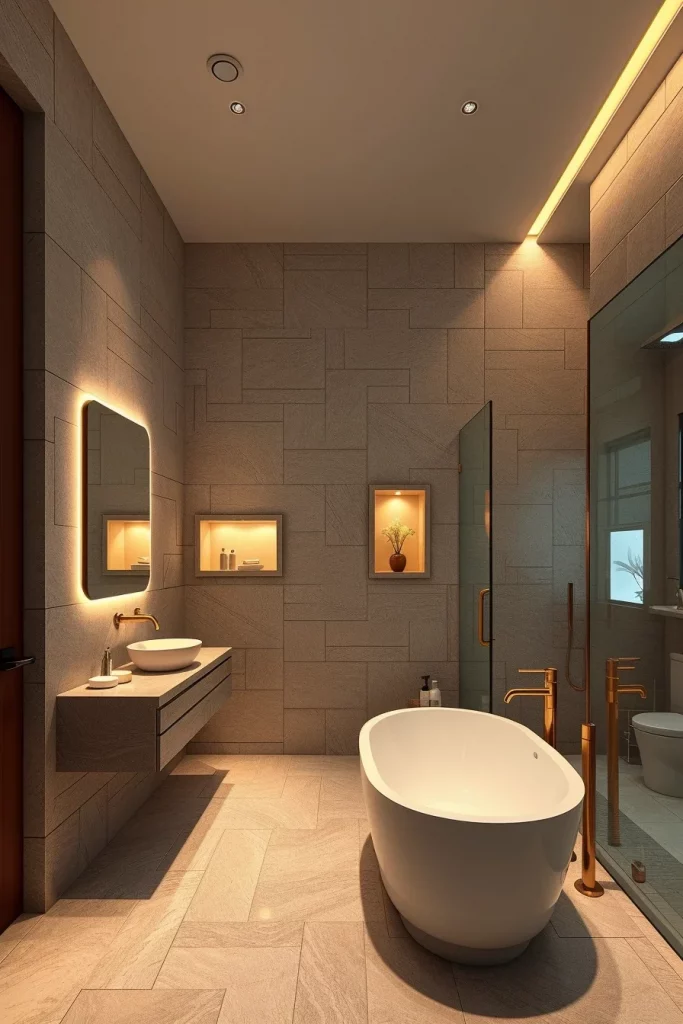
I prefer installing concealed LED strips beneath floating vanities, behind mirrors, inside recessed niches, and along ceiling coves. Wall sconces positioned beside the mirror provide flattering illumination for everyday routines, while dimmable ceiling lighting allows the atmosphere to change depending on the time of day. Matte stone surfaces become especially beautiful when illuminated from several directions because their texture creates gentle shadows that add depth.
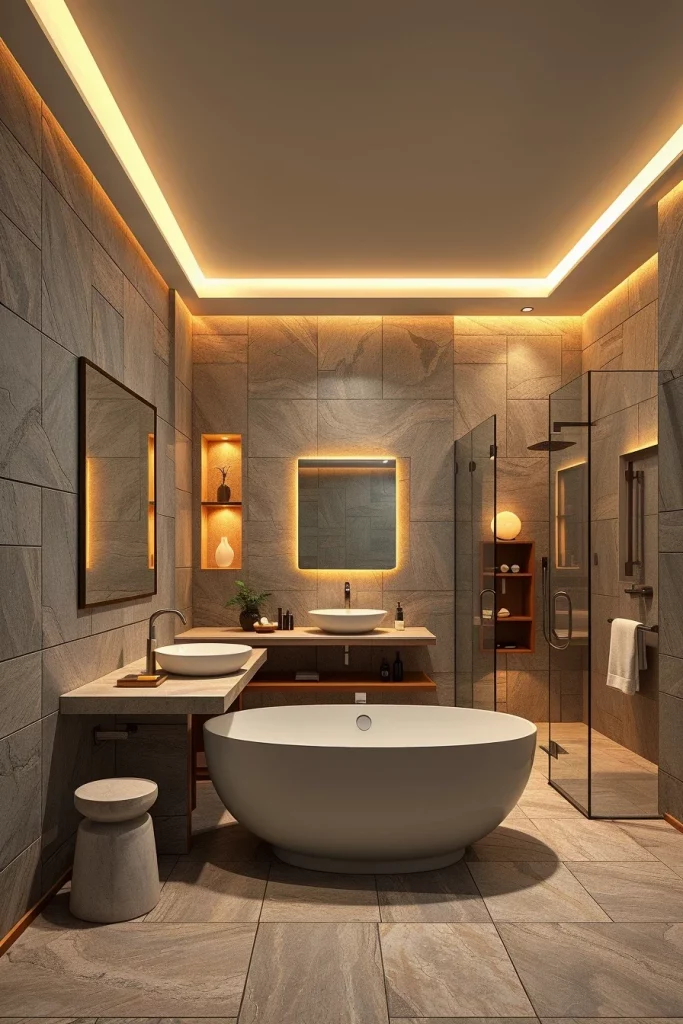
Personally, I have noticed that carefully planned lighting often has as much impact as the stone itself. Designers frequently emphasize layered lighting because it allows premium materials to display their natural texture without harsh reflections or uncomfortable glare.
To finish this bathroom, I would include programmable lighting scenes, illuminated shelving, subtle floor-level night lighting, and coordinated smart controls that make adjusting the atmosphere effortless.
Artistic Stone Mosaic Bathroom Features
I believe stone mosaics allow a bathroom to become more than a functional room—they transform it into a personalized work of art. Instead of covering every wall with identical slabs, I like introducing handcrafted mosaic details that create texture and visual movement. A mosaic feature wall behind the freestanding bathtub or inside the shower instantly attracts attention while maintaining the timeless elegance of natural stone. Using marble, travertine, or limestone pieces in complementary shades keeps the composition sophisticated rather than overwhelming.
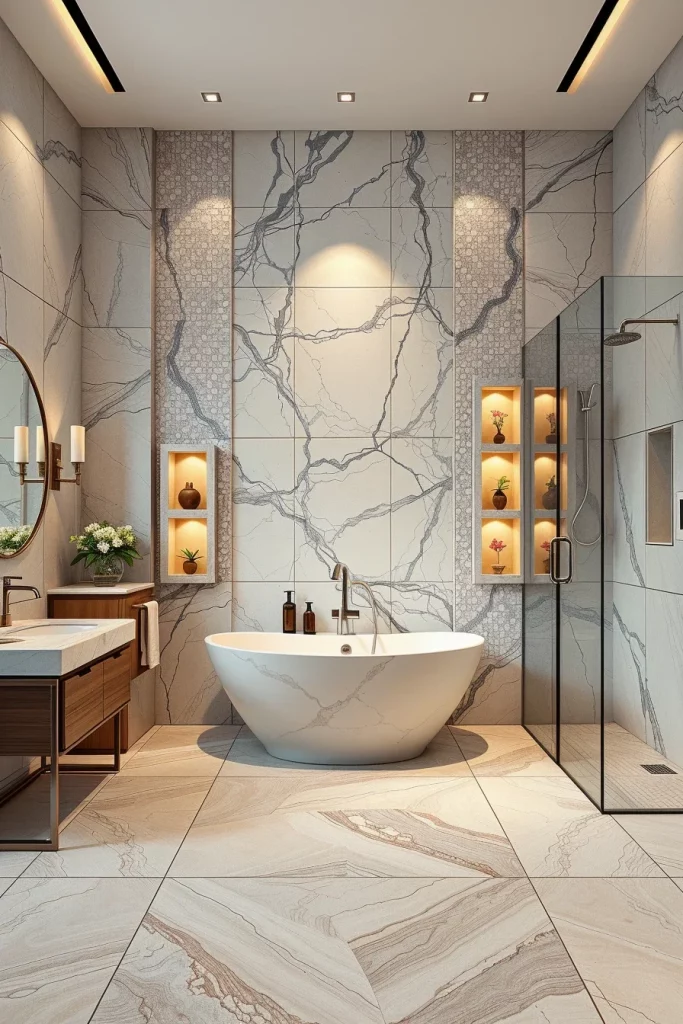
I usually combine mosaic panels with large-format stone walls so the decorative areas remain the focal point. Floating vanities with clean lines, frameless shower glass, recessed shelving, and oversized mirrors balance the detailed craftsmanship of the stone pattern. I also prefer simple lighting that softly highlights the texture without creating harsh reflections. The furniture and fixtures remain understated because they should support the artistry of the mosaic rather than compete with it.
In my experience, less is often more when working with stone mosaics. Many professional designers featured in leading interior design publications recommend using one carefully planned mosaic installation instead of decorating every surface. I have found this approach creates a more refined and timeless result that homeowners continue to appreciate for years.
If I wanted to enhance this design even further, I would introduce coordinated stone accessories, a custom mosaic shower bench, and subtle accent lighting that emphasizes every handcrafted detail while preserving the calm atmosphere.
Rustic Modern Bathrooms With Authentic Stone Charm
I enjoy combining rustic textures with modern architecture because the contrast creates interiors that feel welcoming without appearing outdated. Natural stone walls with visible texture establish authenticity, while clean architectural lines and minimal detailing introduce contemporary sophistication. Large windows bring in abundant daylight, allowing every variation in the stone to become part of the overall design. The balance between organic materials and modern simplicity creates a bathroom that feels comfortable every day.
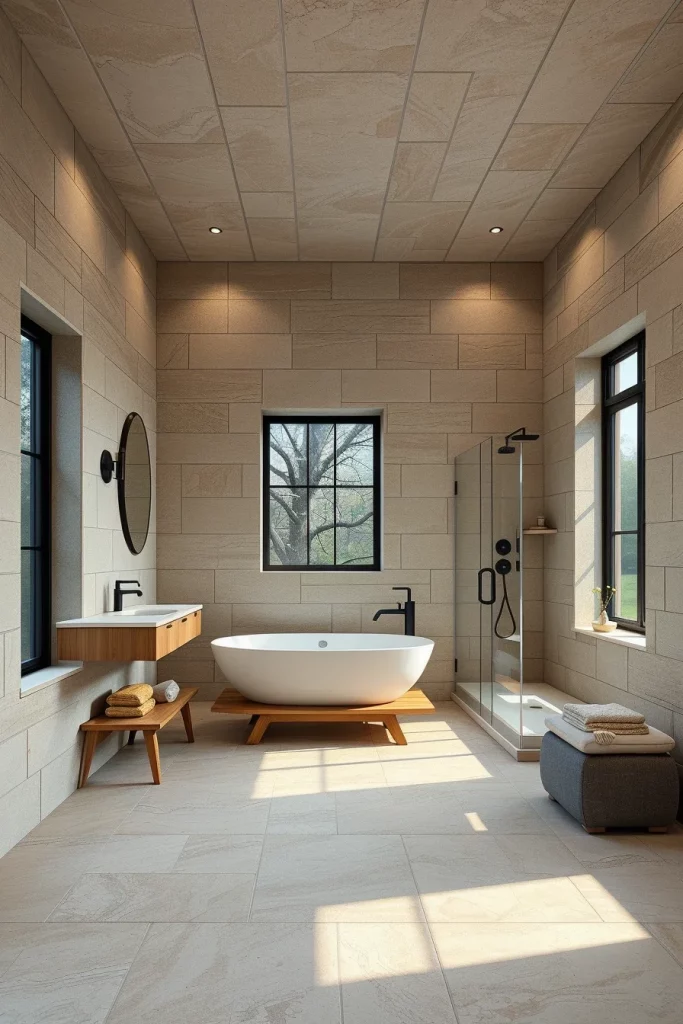
I often pair textured stone with floating wood vanities, black metal fixtures, frameless shower enclosures, and large freestanding bathtubs. A simple stone bench inside the shower improves comfort while reinforcing the natural material palette. Soft woven textiles, ceramic accessories, and discreet storage maintain warmth without introducing unnecessary visual clutter. Every element contributes to a practical bathroom that remains elegant through changing design trends.
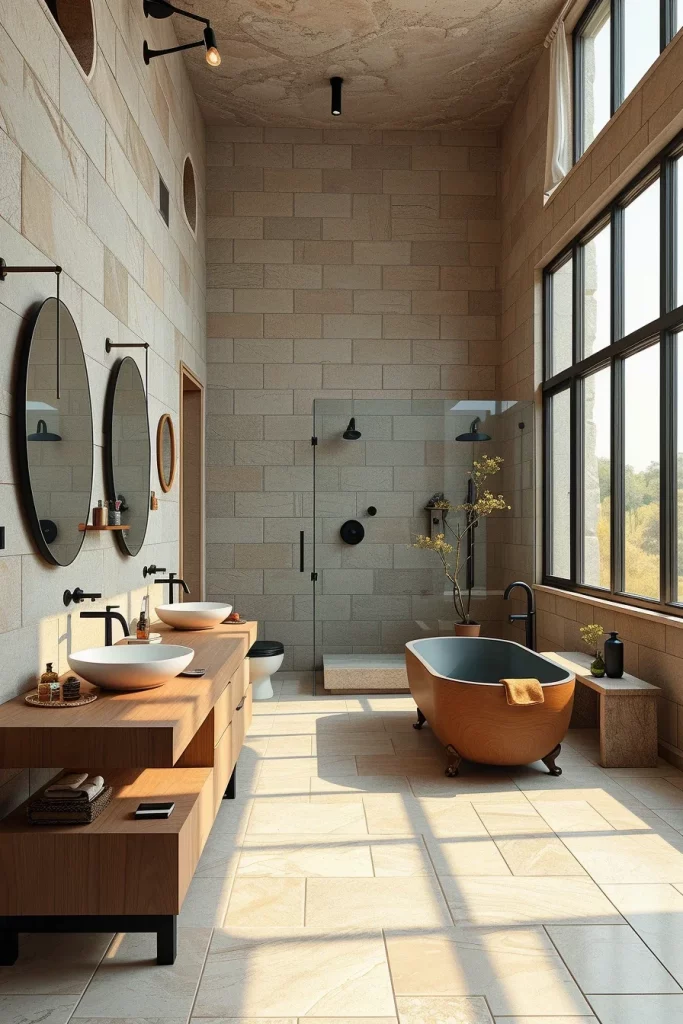
Personally, I have learned that authentic materials age beautifully when they are combined thoughtfully. Rather than trying to recreate a traditional rustic interior, I prefer selecting only a few natural textures and allowing contemporary furniture to keep the room fresh and functional.
To complete this bathroom, I would add heated stone flooring, integrated towel storage, concealed lighting beneath the vanity, and durable finishes that simplify everyday maintenance while preserving the room’s natural character.
Sculptural Stone Sinks That Become The Focal Point
Whenever I want to create an unforgettable bathroom, I choose a sculptural stone sink carved from a single block of natural material. Whether crafted from marble, granite, travertine, or river stone, these sinks immediately become artistic centerpieces that elevate the entire room. Their organic forms celebrate the natural beauty of the stone while adding individuality that cannot be achieved with mass-produced fixtures. I find that even a simple bathroom becomes memorable when the sink itself is treated as functional sculpture.
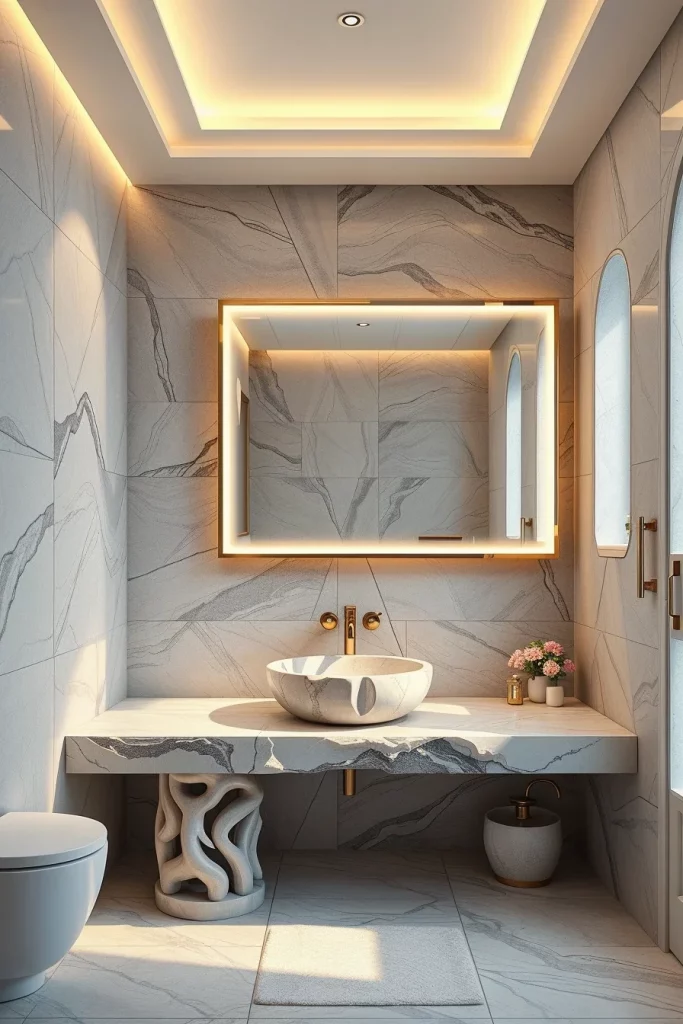
To keep attention on the sink, I prefer floating vanities with minimalist profiles, wall-mounted faucets, large frameless mirrors, and discreet storage solutions. Neutral stone countertops complement rather than compete with the carved basin. Carefully positioned lighting emphasizes the sink’s natural texture and handcrafted details throughout the day. Every surrounding element is intentionally restrained so the sculptural feature remains the dominant visual attraction.
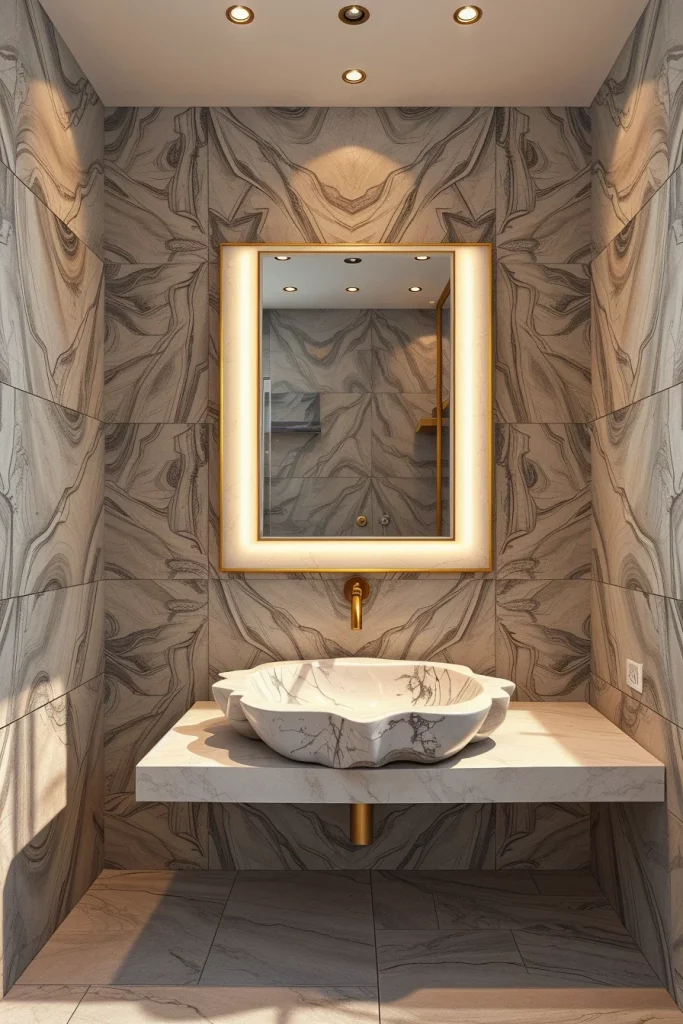
I appreciate that many luxury designers encourage investing in one exceptional focal point rather than filling a room with multiple decorative statements. In my experience, a beautifully crafted stone sink creates lasting visual impact while maintaining timeless elegance.
To enrich this design further, I would include matching stone accessories, coordinated wall cladding, integrated drawer organization, and premium plumbing fixtures that complement the handcrafted quality of the sink.
Boutique Hotel Inspired Natural Stone Bathrooms
I often look to boutique hotels for inspiration because they successfully combine luxury, comfort, and practical functionality. A bathroom designed in this style uses premium natural stone throughout the space while maintaining an uncluttered and relaxing atmosphere. Continuous stone surfaces, elegant lighting, and generous proportions create the feeling of an exclusive retreat that can be enjoyed every day at home. The overall design feels refined without becoming overly formal.
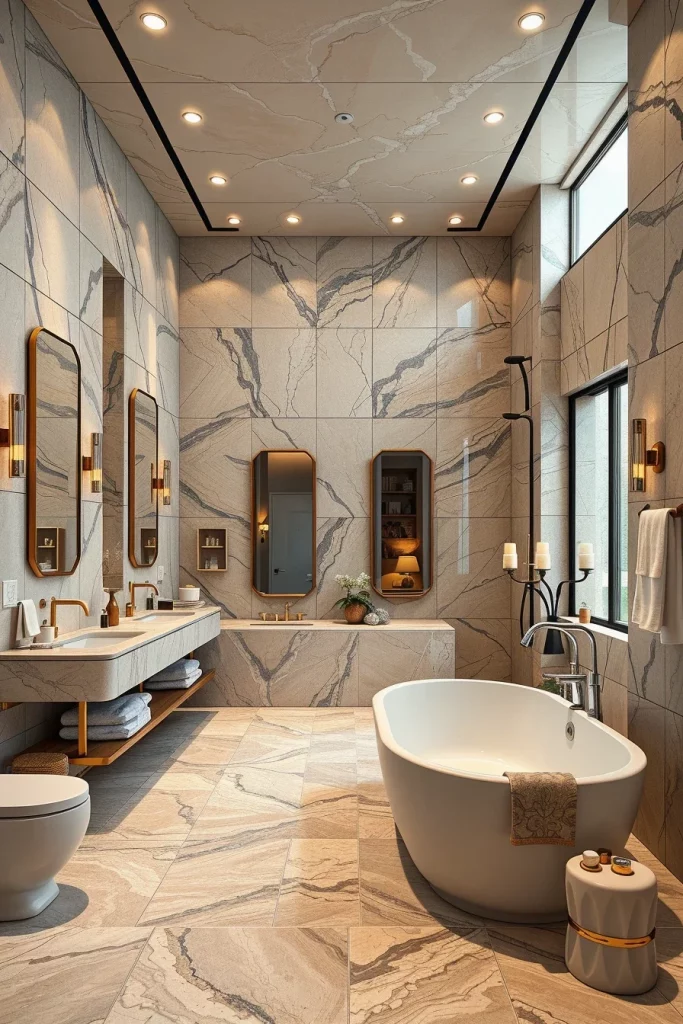
I like incorporating floating double vanities, oversized mirrors, frameless walk-in showers, freestanding bathtubs, concealed storage, and coordinated stone flooring throughout the room. Plush towels, elegant trays, and carefully selected decorative objects add warmth without distracting from the architecture. High-quality faucets and integrated lighting complete the sophisticated hotel-inspired experience while remaining practical for everyday use.
I have noticed that the finest boutique hotels rarely rely on excessive decoration. Instead, they focus on premium materials, thoughtful layouts, and exceptional craftsmanship. Applying the same principles at home creates bathrooms that remain stylish long after temporary trends disappear.
If I were refining this design further, I would include built-in seating, hidden laundry storage, programmable lighting scenes, and luxury accessories that enhance convenience while preserving the calm aesthetic.
Creative Natural Stone Bathrooms With Custom Architectural Details
Some of the most inspiring natural stone bathrooms I have seen incorporate custom architectural elements that cannot be found in standard designs. Curved stone walls, integrated benches, recessed arches, floating partitions, and carved niches transform the room into a unique architectural composition. These personalized details allow the beauty of natural stone to become part of the building itself rather than simply acting as surface decoration. The result feels original, sophisticated, and highly functional.
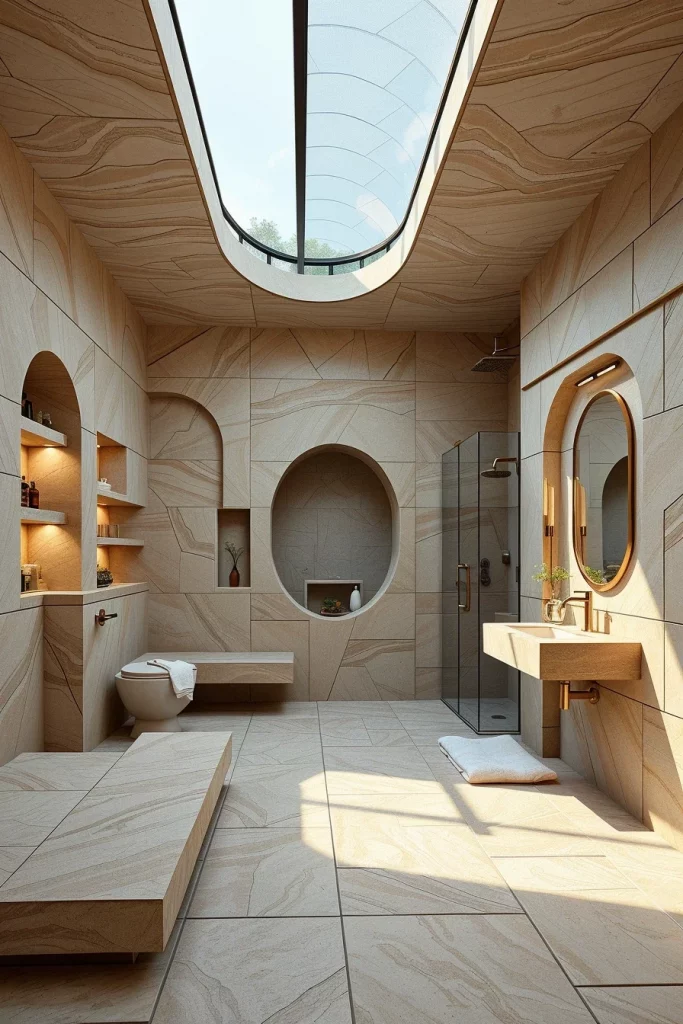
I enjoy combining custom stone features with floating cabinetry, oversized skylights, concealed storage, seamless shower enclosures, and carefully integrated lighting. Matching stone thresholds, window surrounds, and built-in shelving strengthen visual continuity across the entire room. Every architectural detail is designed with both aesthetics and long-term usability in mind, ensuring the bathroom remains practical despite its artistic appearance.
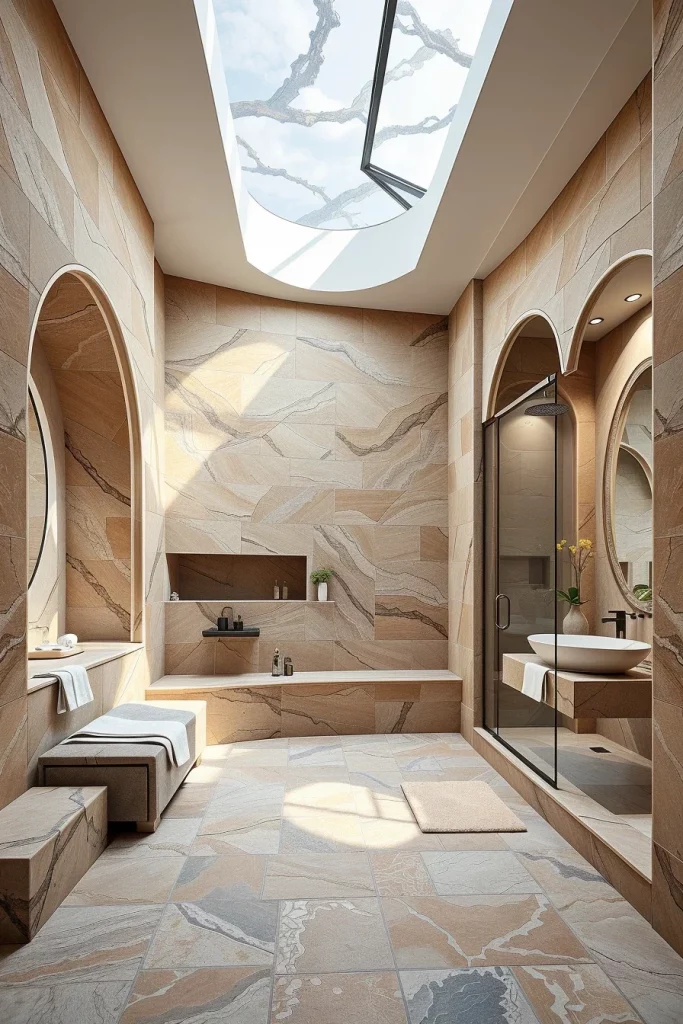
From my perspective, custom architectural features create lasting value because they make the space genuinely unique rather than dependent on fashionable accessories. Investing in thoughtful craftsmanship produces results that homeowners appreciate every day and that continue to feel relevant for many years.
To perfect this concept, I would add smart climate controls, integrated sound systems, hidden ventilation, and custom storage solutions that preserve the clean architectural lines while improving everyday comfort.
Natural stone bathrooms combine timeless beauty, lasting durability, and distinctive character in a way few other materials can. Whether you choose marble, travertine, granite, limestone, slate, or quartzite, the right design can transform your bathroom into a sophisticated and relaxing retreat. By pairing natural textures with thoughtful lighting, elegant fixtures, and well-planned layouts, you can create a space that feels both luxurious and inviting. Let these ideas inspire you to design a natural stone bathroom that reflects your personal style while offering comfort and beauty for years to come.