
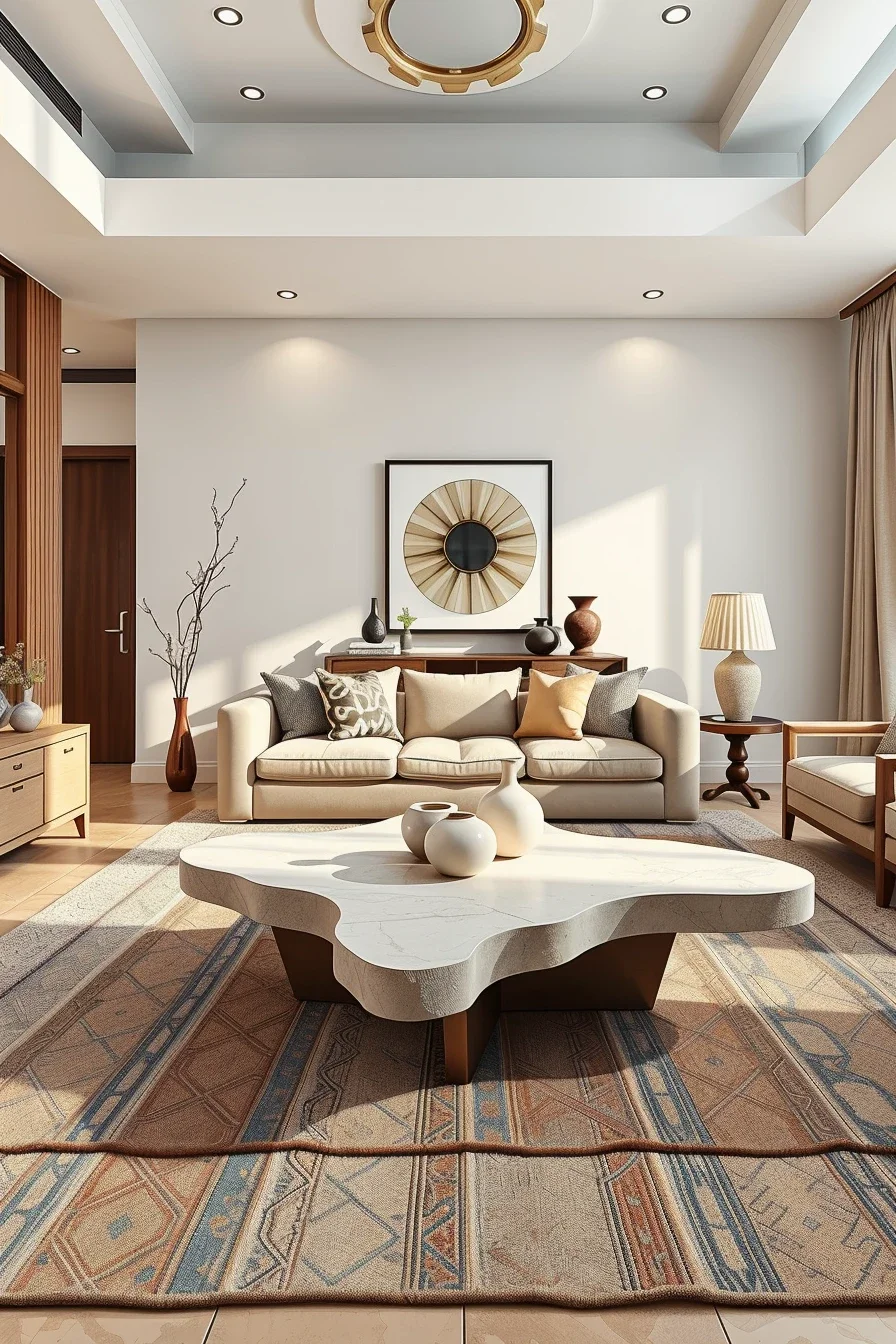
Neutral small living room styling proves that compact spaces can feel sophisticated, artistic, and incredibly inviting. A carefully selected neutral palette creates a calm atmosphere while making even the smallest rooms appear larger and brighter. By combining sculptural furniture, layered textures, and curated decor, you can design a living room that feels both functional and visually stunning. Soft tones such as beige, cream, taupe, and warm white provide the perfect backdrop for creative styling choices. Thoughtful details like statement lighting, organic shapes, and textured finishes add personality without overwhelming the space. In this article, you’ll discover inspiring ideas to transform your neutral small living room into a stylish and serene retreat.
Sculptural Sofa Arrangements For Neutral Small Living Rooms
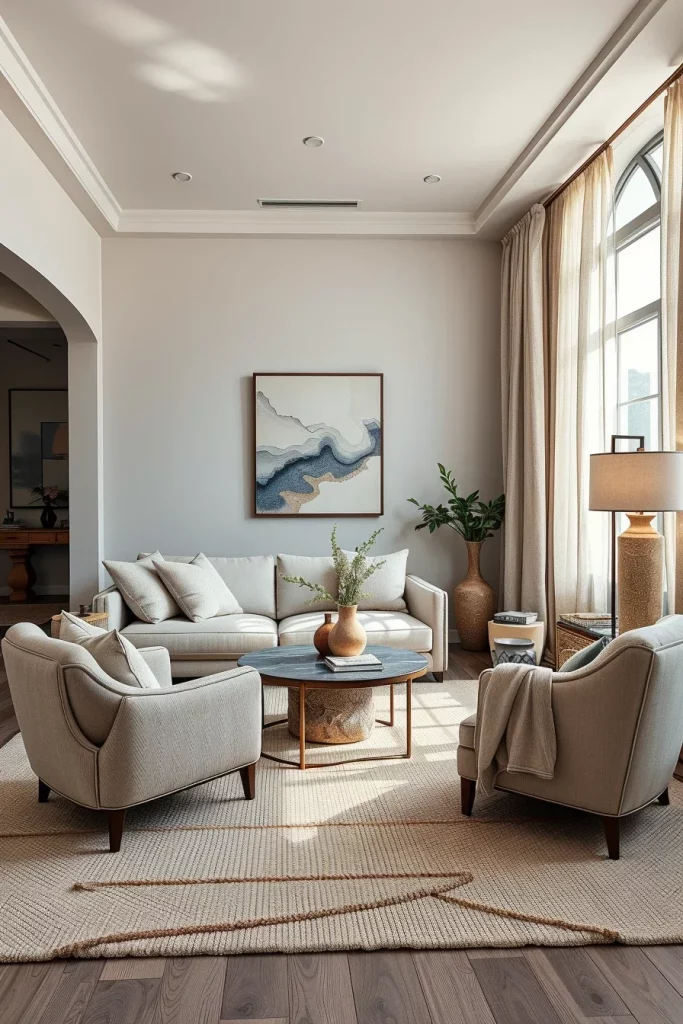
When I design a compact living room, I often start with a sculptural sofa because it instantly establishes character. In neutral small living room styling, curved silhouettes and distinctive forms create visual interest without overwhelming the space. A softly rounded sofa placed slightly away from the wall can improve circulation while making the room feel intentionally designed rather than crowded. Neutral shades such as oatmeal, sand, and warm ivory keep the arrangement light and airy.
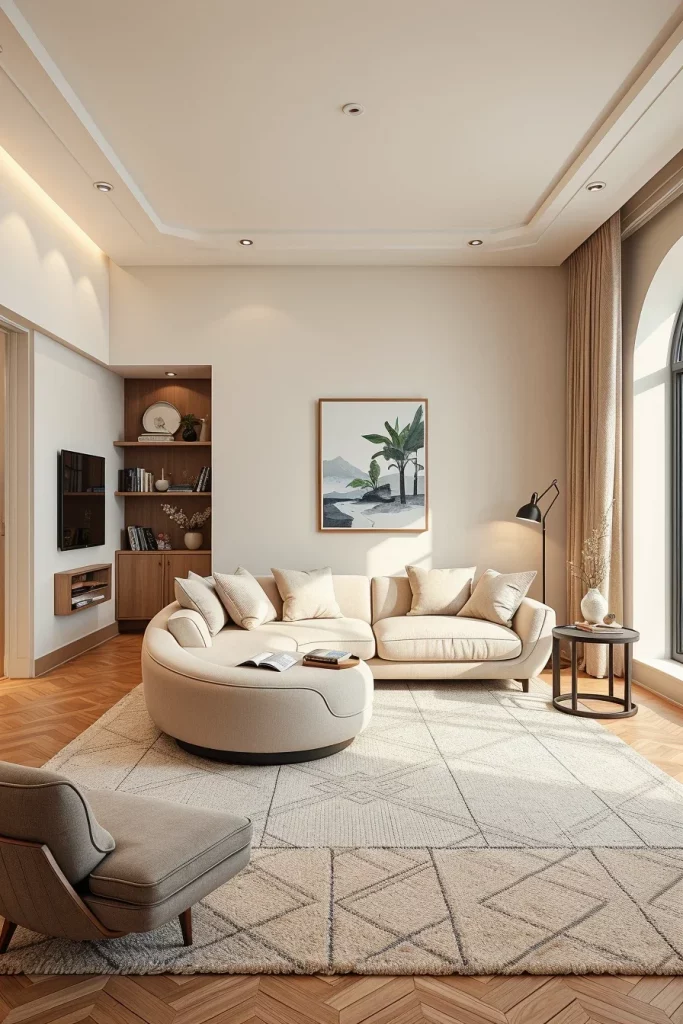
I prefer pairing a sculptural sofa with a slim side table, a textured area rug, and a floor lamp with an artistic profile. These elements complement the sofa without competing for attention. Built-in shelving or low-profile storage pieces are especially practical in small rooms because they preserve valuable floor space while maintaining a clean aesthetic.
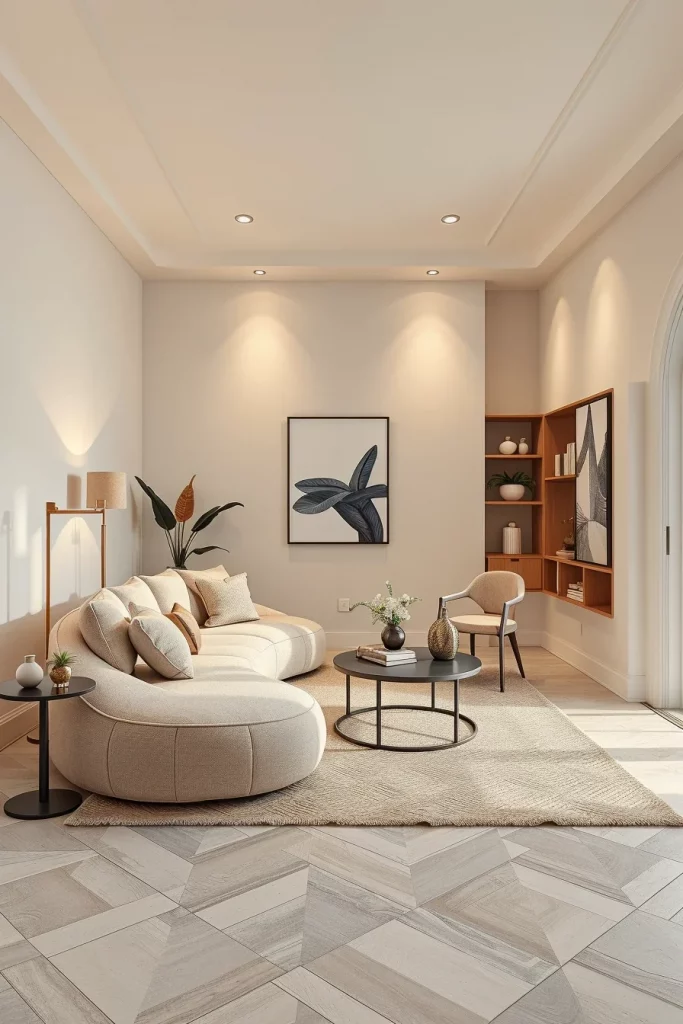
From my experience, designers frequently recommend investing in one statement piece rather than filling a room with numerous small items. Publications such as Architectural Digest often highlight sculptural seating as an effective way to introduce personality into minimalist interiors. I find this approach particularly successful in small living rooms.
To complete this arrangement, I would add layered lighting with table lamps and wall sconces. Multiple light sources emphasize the sofa’s sculptural shape and create a warm atmosphere during the evening.
Curved Seating Ideas That Soften Compact Neutral Spaces
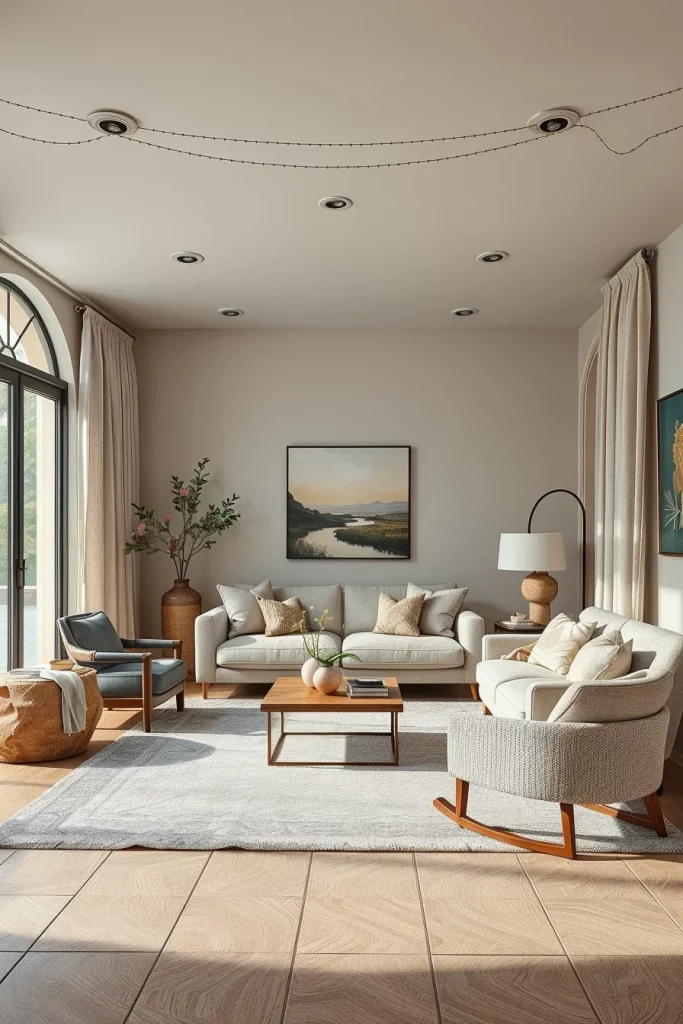
Curved furniture has become one of my favorite solutions for compact interiors. Gentle curves naturally soften sharp architectural lines and improve movement throughout the room. In stylish neutral small living rooms, rounded seating arrangements create a welcoming environment while visually expanding limited square footage.
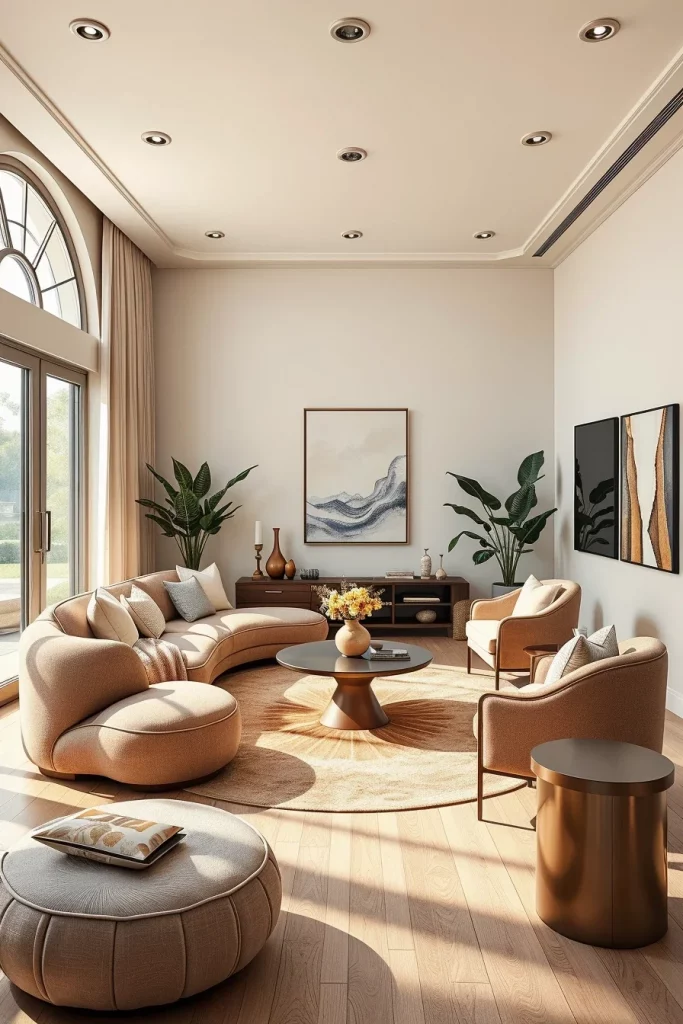
I often combine a curved loveseat with a rounded ottoman or a pair of compact barrel chairs. Upholstery in cream, taupe, or soft mushroom tones preserves a cohesive palette. A circular rug beneath the seating arrangement further reinforces the organic composition and contributes to a harmonious design.
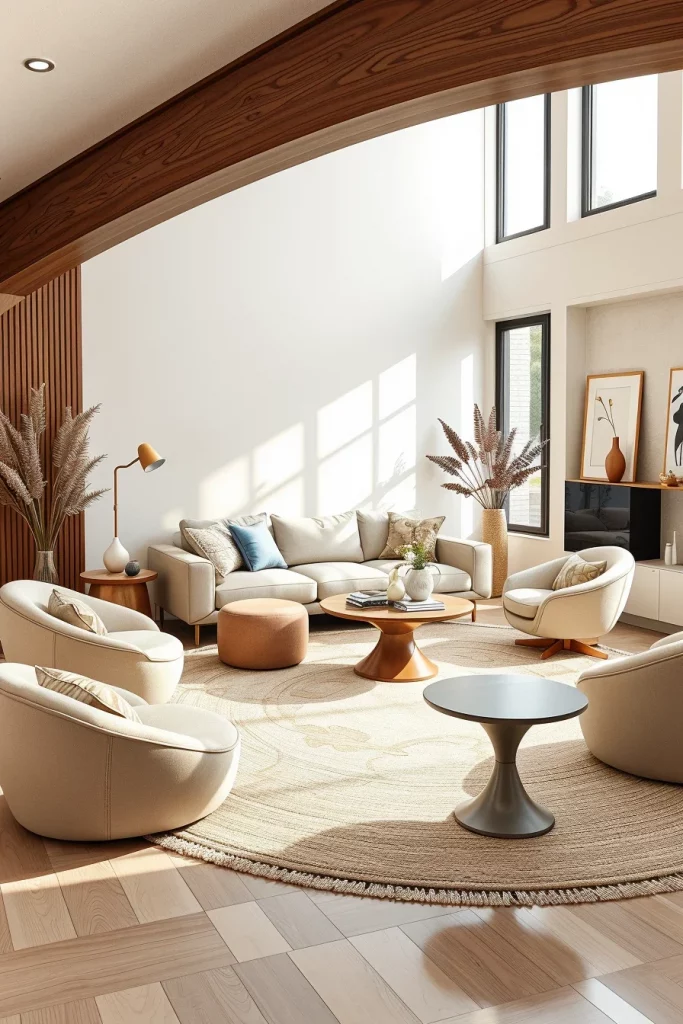
Personally, I have noticed that curved seating encourages conversation because furniture naturally faces inward. Interior designers featured in Elle Decor frequently emphasize the emotional comfort created by rounded forms, and I completely agree with that observation.
If space permits, I recommend adding a small sculptural pedestal table between seating pieces. It introduces additional functionality while enhancing the artistic quality of the room.
Layering Warm Beige Tones In A Small Neutral Living Room
One of the most effective ways I create depth in a neutral room is by layering multiple shades of beige. Rather than relying on a single color, I combine warm sand, camel, linen, almond, and soft taupe tones. This technique gives creative neutral living room ideas richness and prevents the interior from appearing flat.
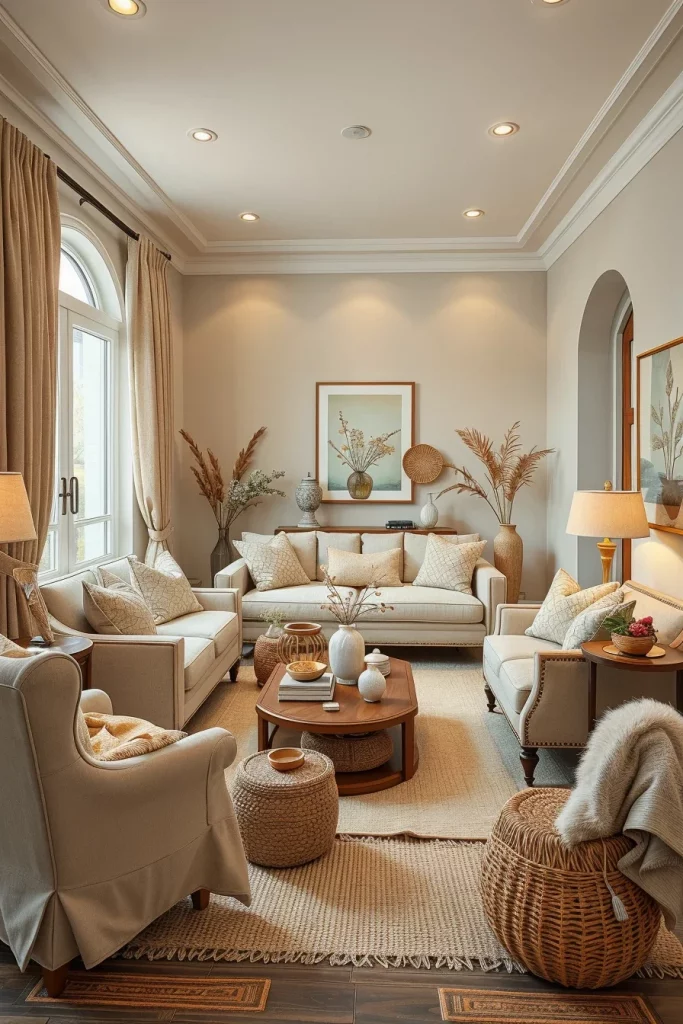
I usually begin with a light beige wall color, followed by a slightly deeper sofa, textured throw pillows, boucle upholstery, and natural fiber rugs. Linen curtains, ceramic accessories, and woven baskets introduce additional variation while maintaining visual consistency. The subtle contrast between tones creates a sophisticated atmosphere.
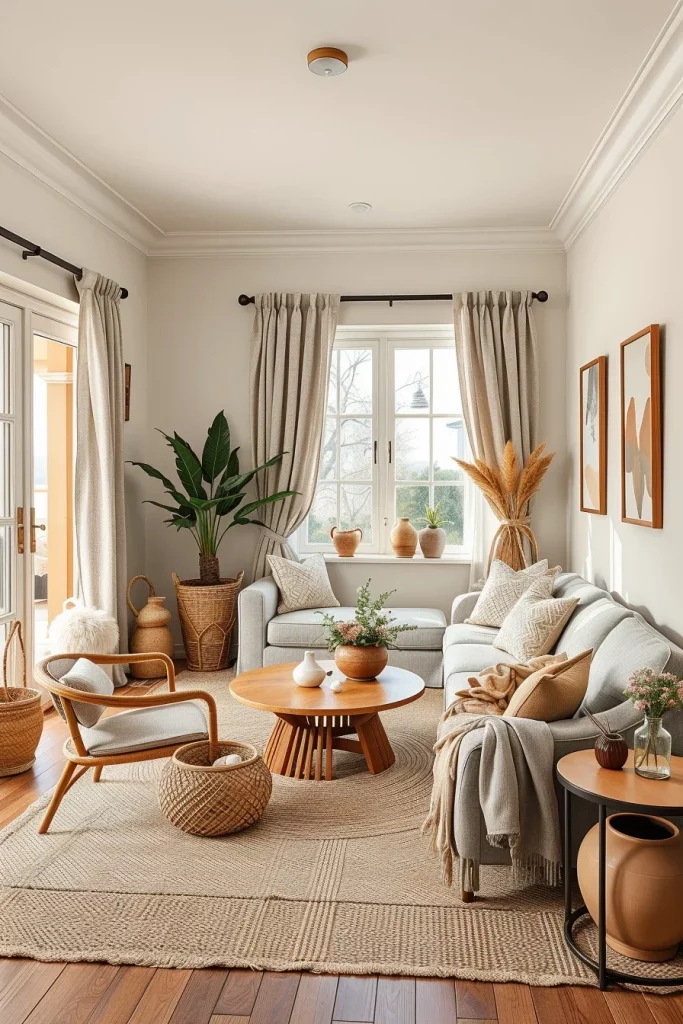
In my own projects, layered neutrals always photograph beautifully because they capture natural light exceptionally well. Many professional stylists recommend working with varying textures instead of contrasting colors, and I have consistently found this advice useful.
For additional warmth, I suggest incorporating ambient lighting with fabric lampshades and soft LED accent lighting. These details enhance the cozy character of layered beige interiors.
Artistic Coffee Tables As Statement Pieces In Small Living Rooms
In a small living room, every piece should contribute both function and beauty. An artistic coffee table can serve as the centerpiece of the entire design. I often select sculptural tables featuring rounded forms, asymmetrical bases, or handcrafted finishes to introduce artistic expression into neutral spaces.
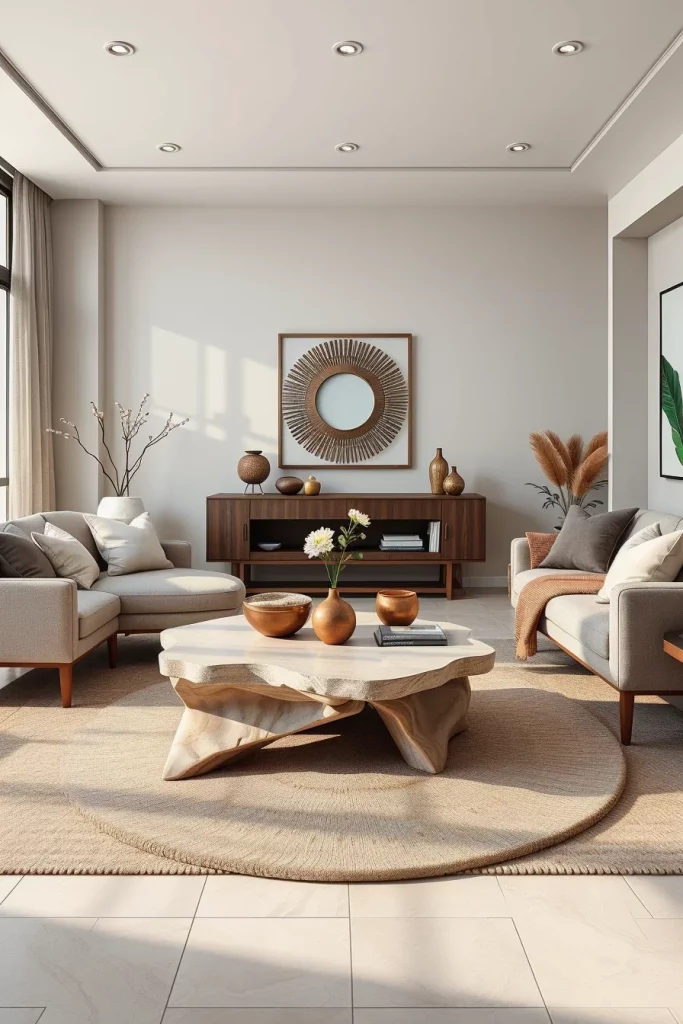
Materials such as travertine, plaster, stone composites, and textured finishes work especially well in neutral interiors. I prefer pairing these statement tables with understated seating so the coffee table remains the focal point. Decorative books, ceramic vessels, and a single sculptural object are usually sufficient styling elements.
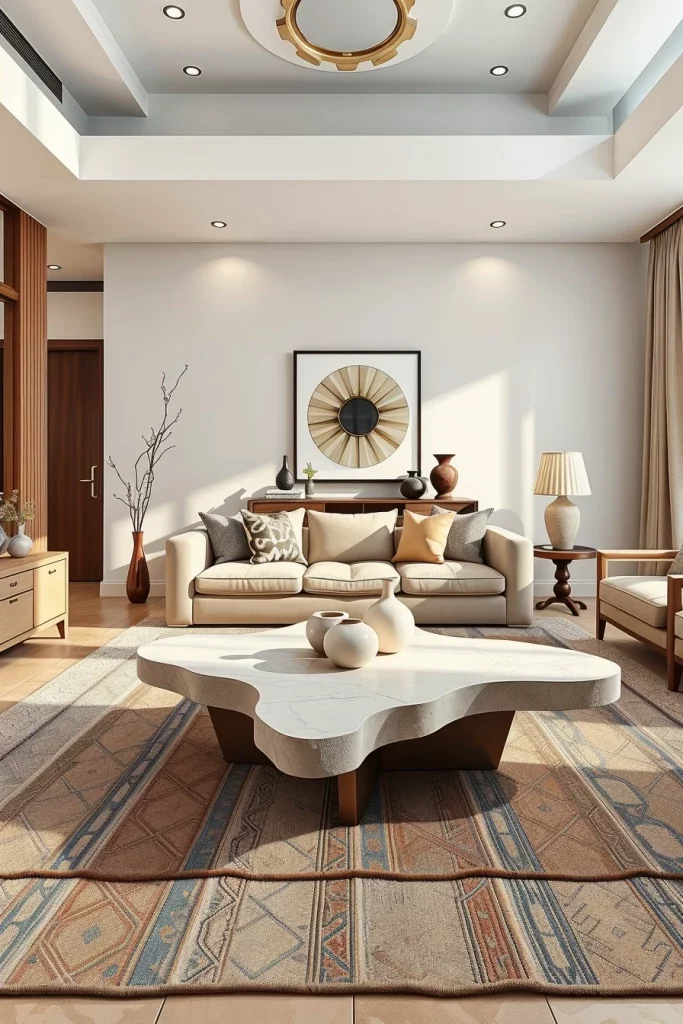
From my perspective, small spaces benefit significantly from furniture that doubles as art. Design experts regularly encourage homeowners to choose fewer but more meaningful furnishings, and I believe artistic coffee tables perfectly embody this principle.
To complete the arrangement, I would incorporate concealed storage nearby to maintain a clutter-free environment while preserving the room’s elegant appearance.
Creating A Gallery-Inspired Neutral Small Living Room
A gallery-inspired approach can transform even the smallest living room into a refined and highly personal space. I like using carefully curated artwork to add visual depth while maintaining a restrained neutral palette. Oversized art or thoughtfully arranged collections immediately elevate the room.
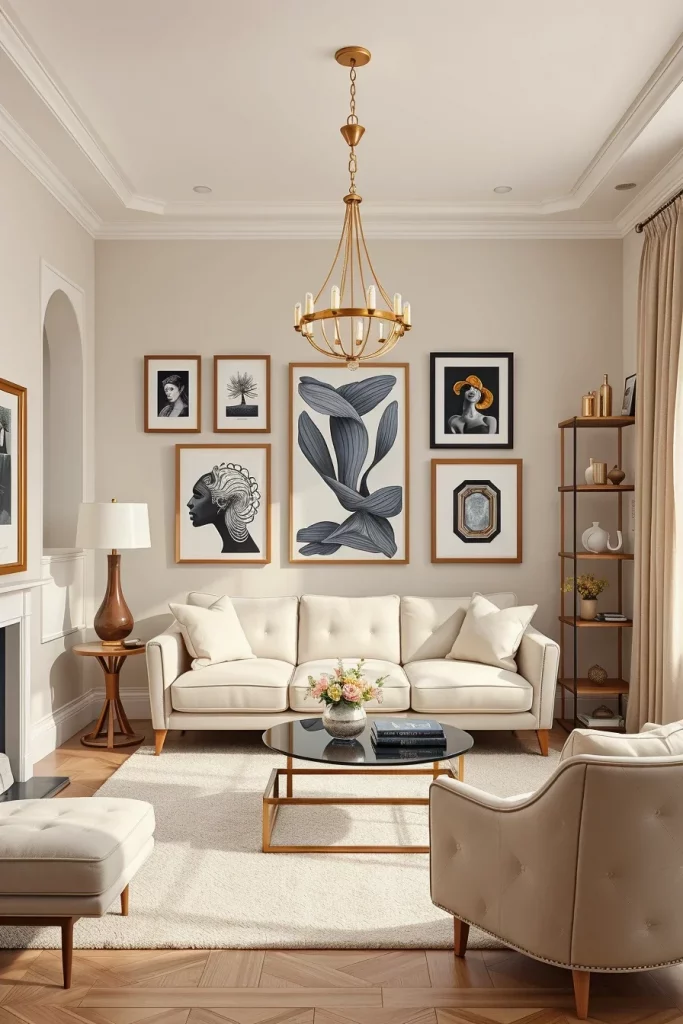
For furniture, I typically choose streamlined pieces in ivory, greige, or warm beige tones. Minimal shelving, sculptural lighting, and a simple sofa allow artwork to remain the primary focus. Frames in natural wood, matte black, or soft metallic finishes create cohesion without distracting from the artwork itself.
I have found that gallery-inspired interiors feel especially sophisticated when negative space is respected. Rather than covering every wall, I prefer leaving areas intentionally empty. Many interior stylists emphasize that restraint is essential when curating art displays, particularly in compact rooms.
I would also add adjustable picture lighting or directional sconces to highlight artwork and create a true gallery atmosphere within the home.
Textured Wall Finishes For Stylish Neutral Interiors
Textured walls can completely transform a compact room, especially when working with a restrained color palette. In neutral small living room styling, I often rely on subtle plaster finishes, limewash effects, or textured paint treatments to add dimension without introducing strong color contrasts. These finishes reflect light beautifully and make a small room feel layered and sophisticated rather than flat.
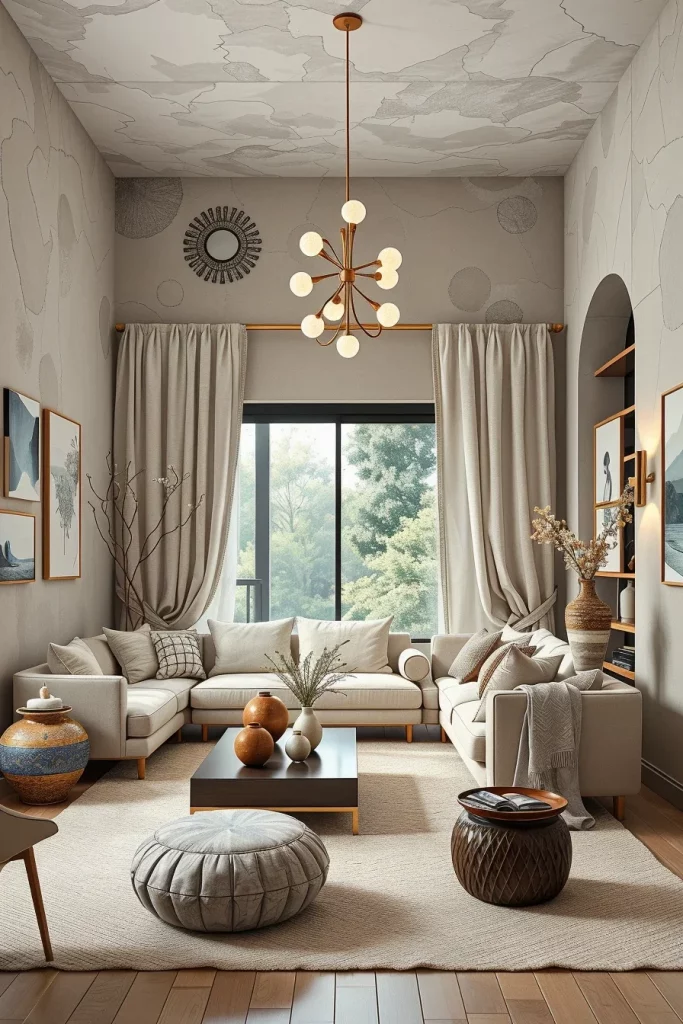
I usually combine textured walls with simple furnishings so the surface treatment becomes part of the design story. A soft ivory sofa, sculptural side tables, linen drapery, and ceramic accessories work exceptionally well against textured walls. I also like incorporating natural stone or plaster lamps because they reinforce the tactile quality of the interior.
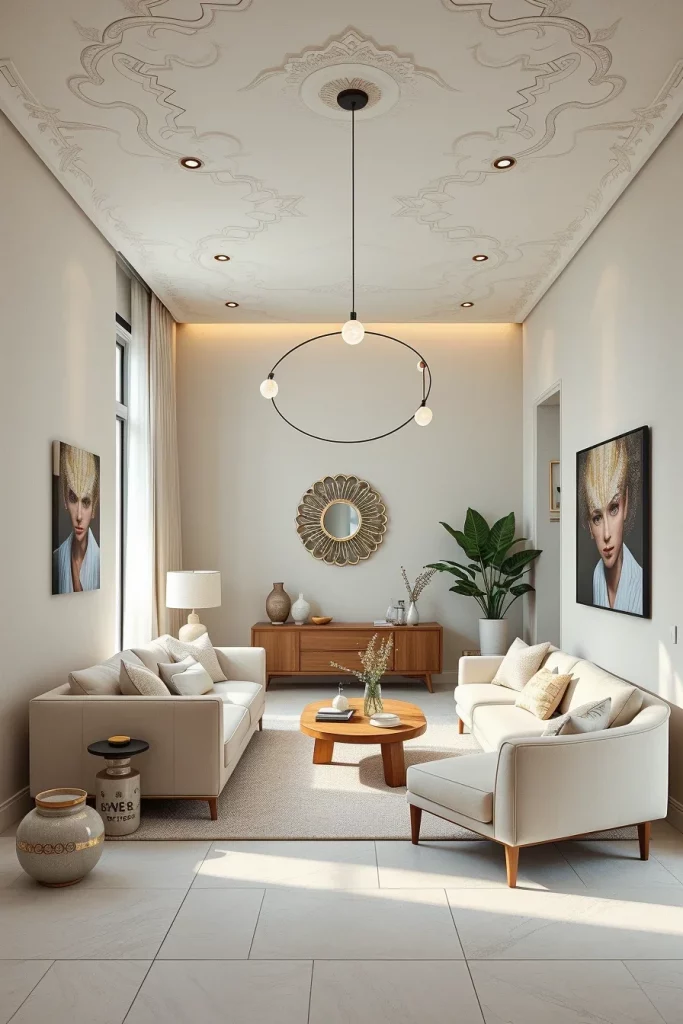
From my experience, textured finishes create a more luxurious and curated appearance than standard painted walls. Designers frequently featured in House Beautiful recommend using texture as an alternative to bold patterns in small spaces, and I have found this approach particularly effective in maintaining a serene atmosphere.
To enhance the effect, I would add wall sconces or directional lighting. Proper lighting highlights surface variations and emphasizes the artistic character of the room.
Minimalist Neutral Small Living Room Styling With Sculptural Decor
Minimalism does not have to feel cold or impersonal. I believe the most successful neutral small living room styling balances simplicity with sculptural elements that add personality. By reducing visual clutter and focusing on a few carefully selected pieces, even a compact living room can feel spacious and refined.
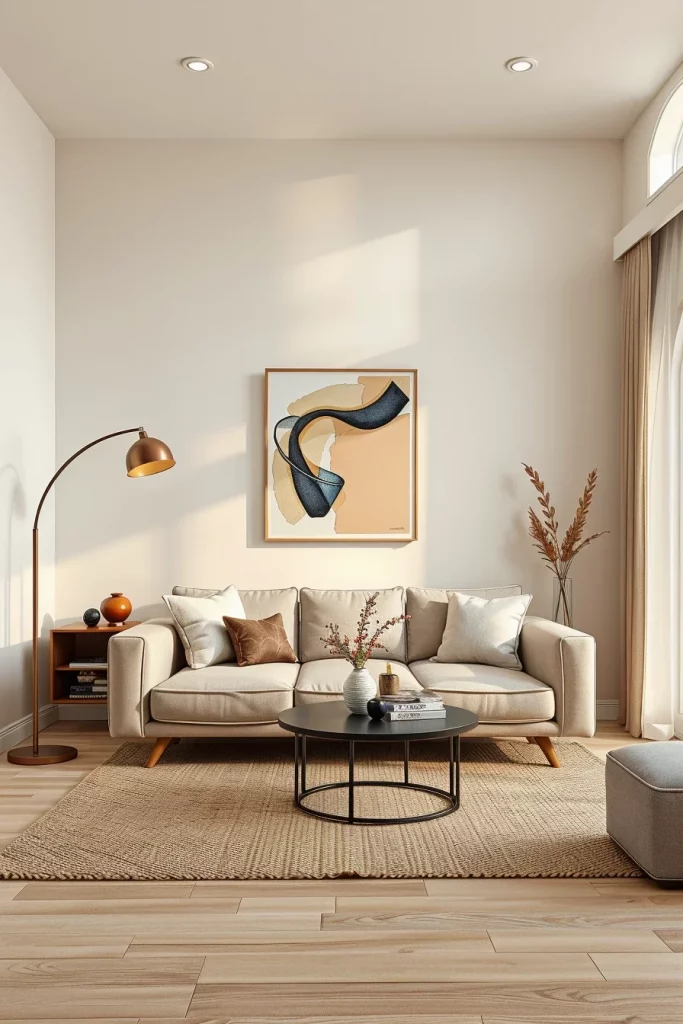
I typically begin with a streamlined sofa in a soft neutral fabric and pair it with sculptural decor such as abstract ceramic vases, curved floor lamps, or artistic side tables. Hidden storage solutions are essential because they preserve the clean lines that define minimalist interiors. A textured rug and a few oversized accessories usually provide sufficient visual interest.
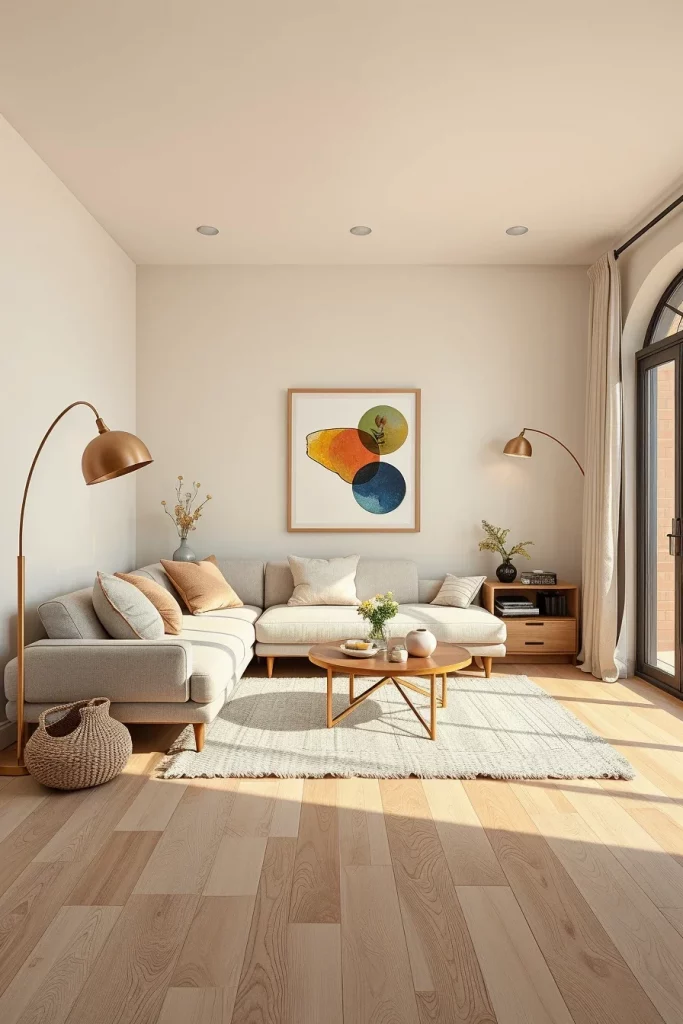
Personally, I prefer decorating minimalist rooms with objects that have strong forms rather than decorative excess. Interior stylists often emphasize the importance of intentional editing, and I agree that every item in a minimalist space should serve either a functional or aesthetic purpose.
What I would add to complete this room is a large-scale piece of abstract art. It introduces personality while maintaining the simplicity that defines minimalist design.
Designing Around A Curved Accent Chair In A Small Space
A curved accent chair can become the focal point of a small living room while improving comfort and flow. I often use one statement chair to introduce sculptural beauty into compact interiors. The rounded silhouette softens rigid architectural lines and contributes to a more inviting environment.
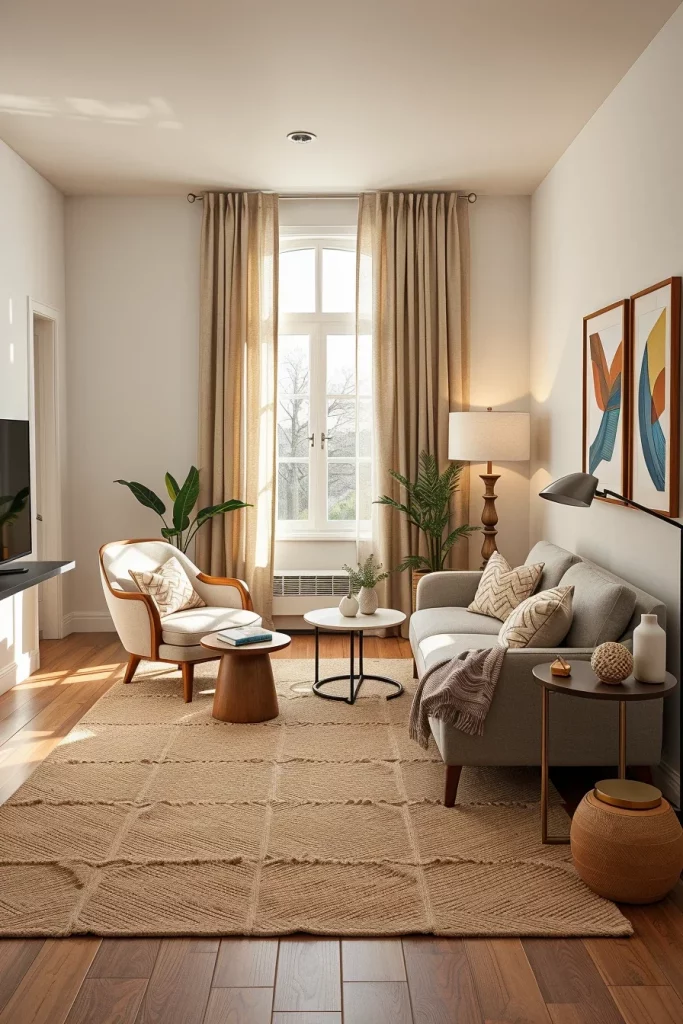
For the surrounding furnishings, I recommend a compact sofa, a small round side table, and a textured area rug. Upholstery in shades of cream, taupe, or warm gray ensures visual continuity. I also like positioning the accent chair near a window to create a cozy reading corner without sacrificing openness.
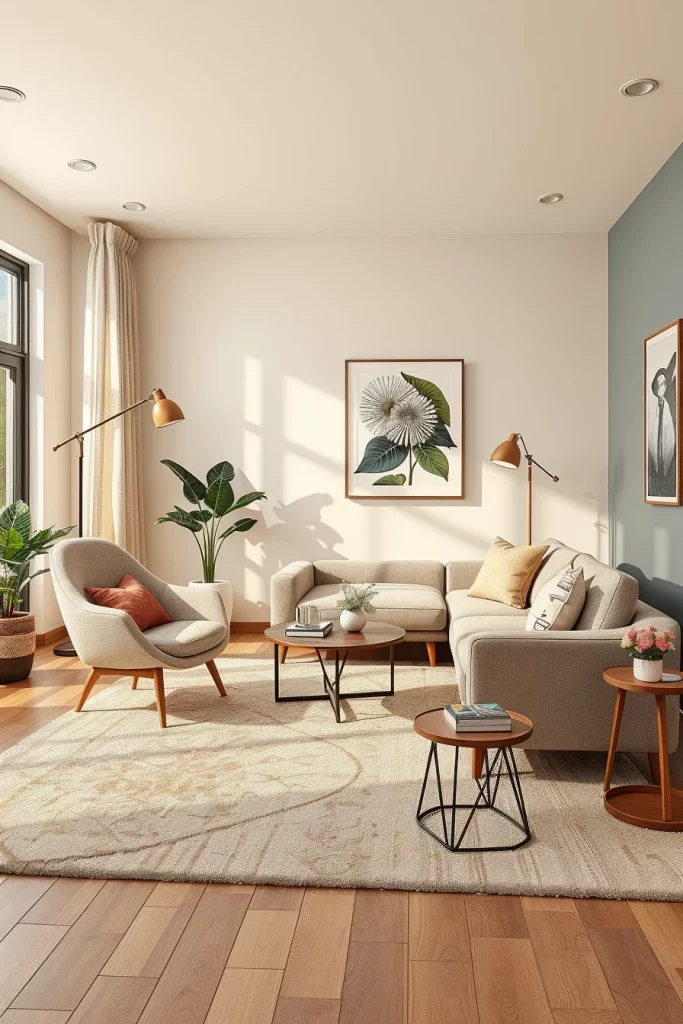
In many of my projects, a curved chair instantly elevates the overall design. Publications such as Elle Decor regularly showcase curved seating because it creates a sophisticated, contemporary aesthetic while remaining highly practical.
I would also incorporate a floor lamp beside the chair. This addition enhances functionality and transforms the seating area into a dedicated retreat for reading or relaxation.
Soft Monochromatic Color Schemes For Cozy Living Rooms
Soft monochromatic palettes are among my preferred strategies for designing small spaces. Using variations of a single neutral tone creates visual continuity and allows a room to appear larger. In stylish neutral small living rooms, monochromatic schemes establish calmness while still feeling warm and inviting.
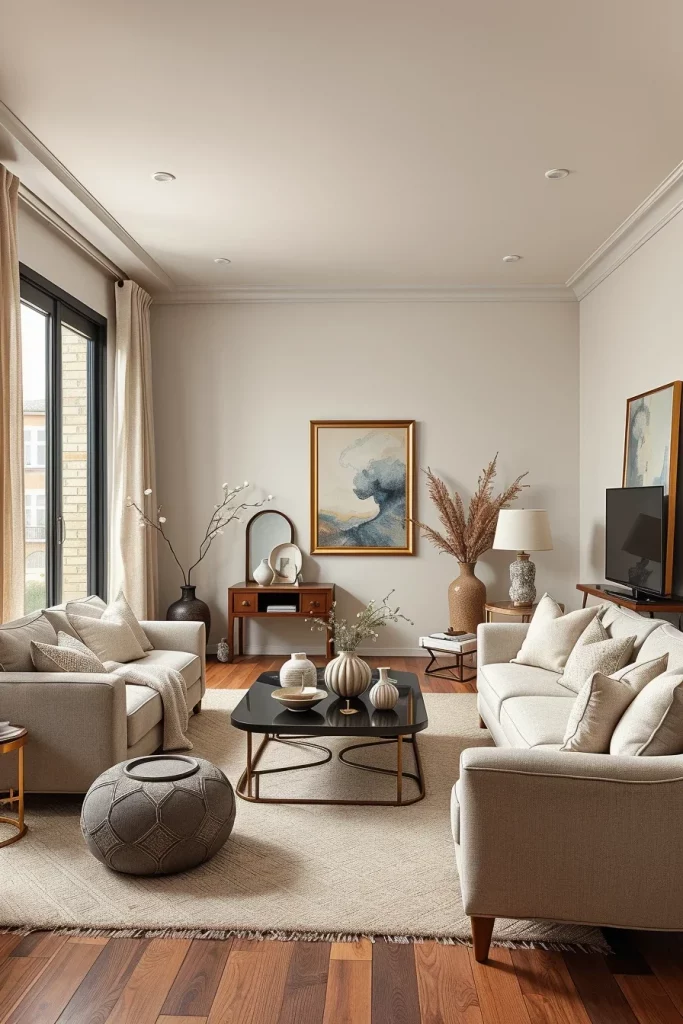
I often layer ivory, cream, sand, and warm beige throughout the room. Upholstered furniture, curtains, rugs, and decorative accessories should feature subtle tonal differences to avoid monotony. Boucle fabrics, linen textiles, and textured ceramics are especially effective because they add depth while preserving the cohesive palette.
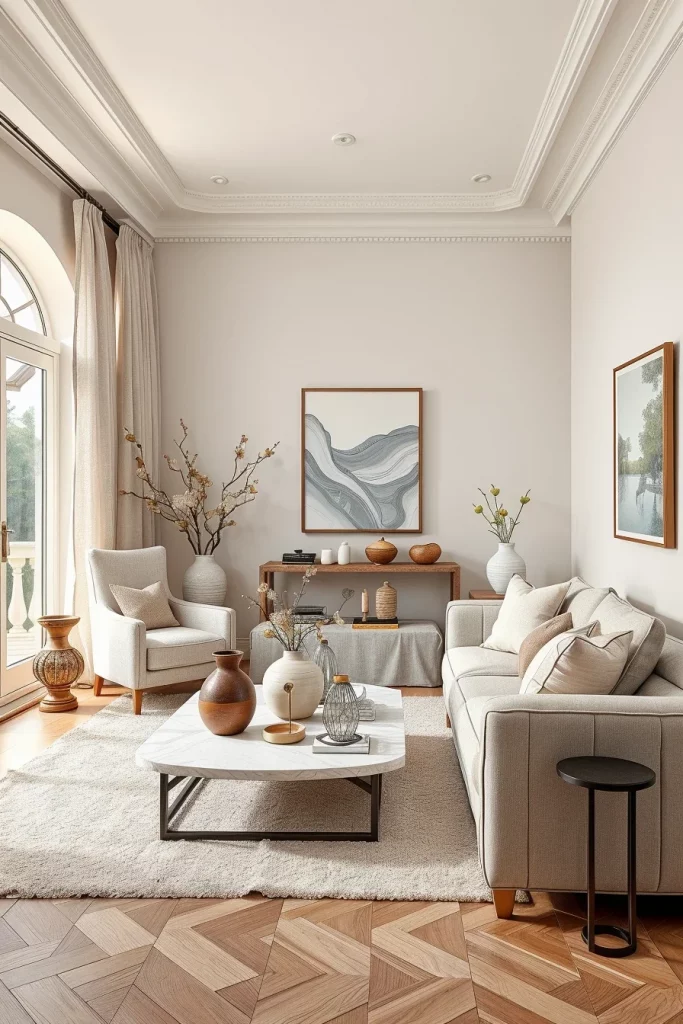
In my experience, monochromatic interiors feel particularly timeless. Many professional designers recommend combining different textures when working within a limited color range, and this advice consistently produces elegant results.
To enrich the composition, I would add a few sculptural accessories or a textured wall treatment. These details provide visual contrast without disrupting the monochromatic aesthetic.
Neutral Small Living Room Styling With Organic Shapes
Organic shapes play a significant role in creating creative neutral living room ideas. I find that furniture and decor inspired by natural forms bring softness and movement to compact spaces. Curved silhouettes, irregular outlines, and asymmetrical compositions prevent neutral interiors from appearing too structured or predictable.
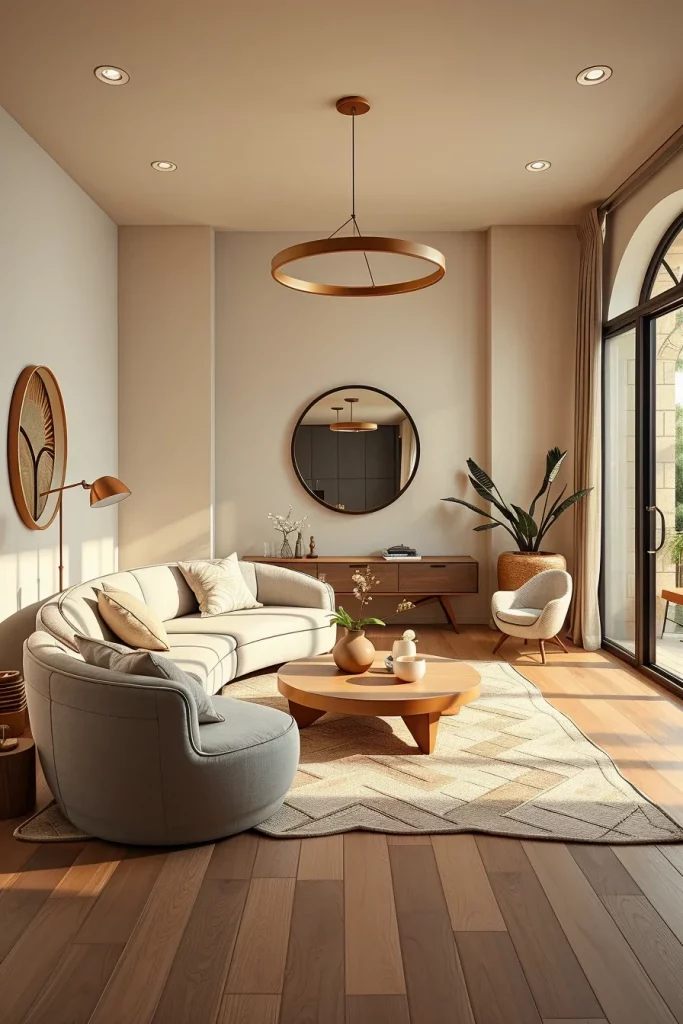
I like incorporating organic elements through curved sofas, freeform coffee tables, rounded mirrors, and sculptural lighting. Accessories such as handmade ceramics, textured textiles, and soft-edged rugs further reinforce the natural aesthetic. Keeping the palette within warm neutrals ensures that these forms remain the primary source of visual interest.
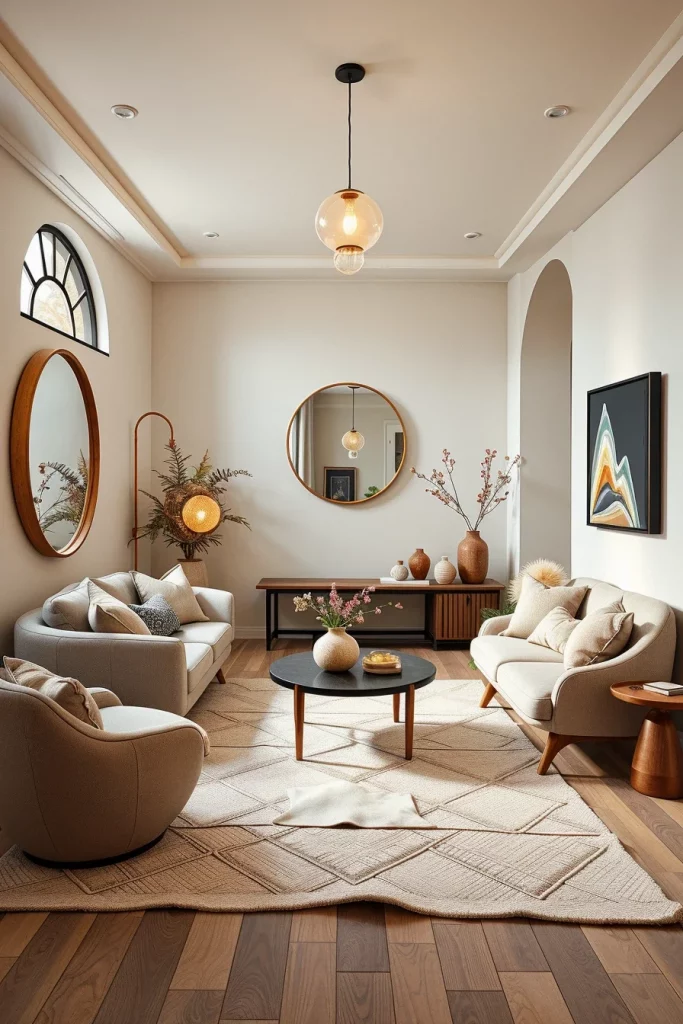
Personally, I believe organic design makes small living rooms feel more relaxed and welcoming. Contemporary interior designers increasingly favor softer forms because they encourage comfort and create a stronger emotional connection to the space.
To complete this look, I would introduce natural daylight as much as possible through sheer window treatments. Soft, filtered light beautifully accentuates organic shapes and enhances the overall atmosphere.
Incorporating Plaster And Stone Elements For An Artistic Look
I often recommend plaster and stone finishes when designing a neutral small living room because they instantly add depth without relying on bold color. Textured plaster walls, limewash finishes, and stone accents introduce subtle variation that makes a compact room feel curated and artistic. In a small space, these natural materials create visual interest while maintaining a calm and cohesive atmosphere. Soft beige, ivory, sand, and warm gray tones work particularly well for this approach.
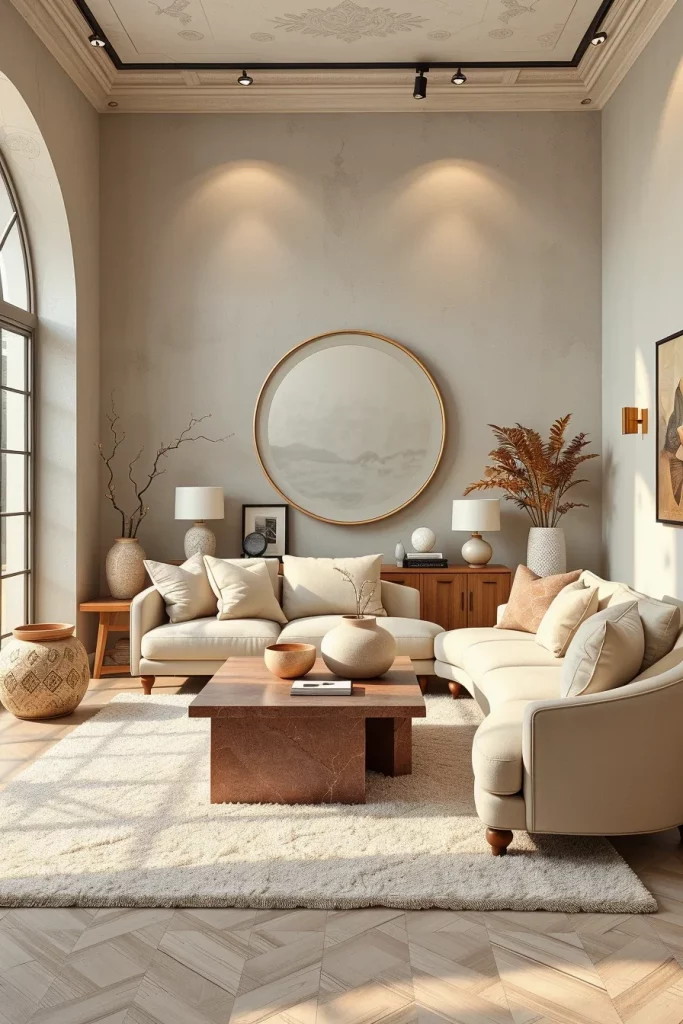
For furniture, I like pairing plaster walls with a curved sofa in a light neutral fabric, a low-profile stone coffee table, and minimal shelving. Travertine side tables, sculptural ceramic accessories, and textured vases reinforce the refined aesthetic. A plush area rug softens the harder materials and makes the room feel inviting. I also suggest adding concealed lighting to emphasize the texture of the walls during evening hours.
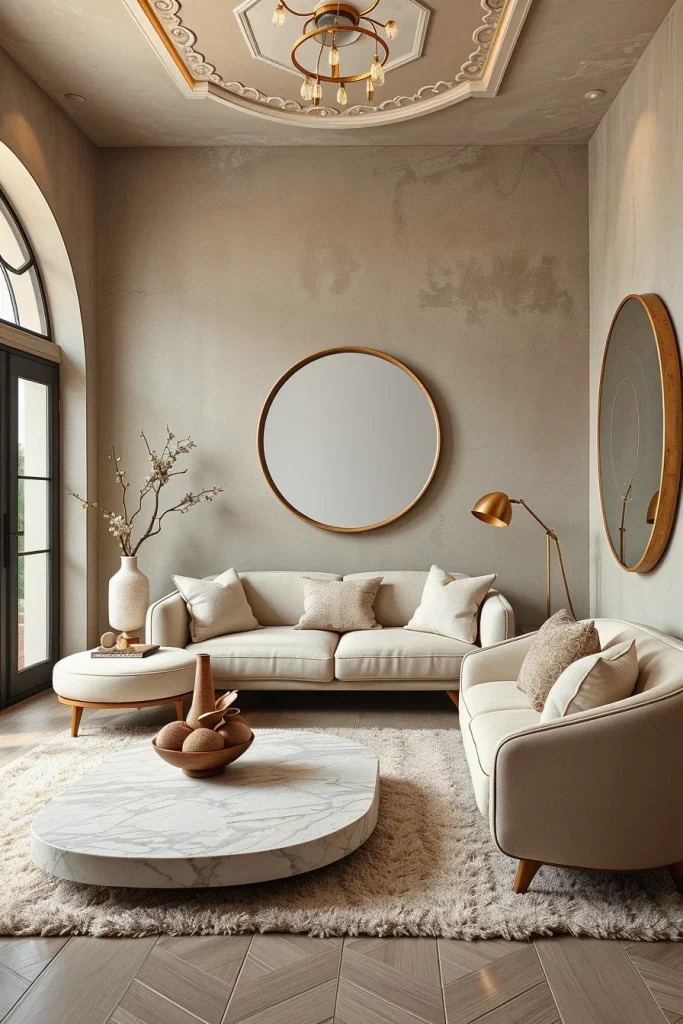
Personally, I find that plaster and stone finishes age beautifully. Designers frequently featured in Architectural Digest note that tactile surfaces create emotional warmth and prevent minimalist interiors from feeling sterile. I have seen even very small living rooms appear larger and more sophisticated after introducing a single stone feature wall.
To complete this design, I would add handcrafted ceramic décor and a large organic-shaped mirror. These elements reflect light and strengthen the artistic quality of the room.
Floating Shelving Ideas For Elegant Small Living Rooms
Floating shelves are one of my favorite solutions for neutral small living room styling because they provide storage without visually crowding the room. Unlike bulky cabinets, floating shelves maintain openness while allowing decorative objects to become part of the design. In compact living rooms, they help maximize vertical space and keep floors uncluttered.
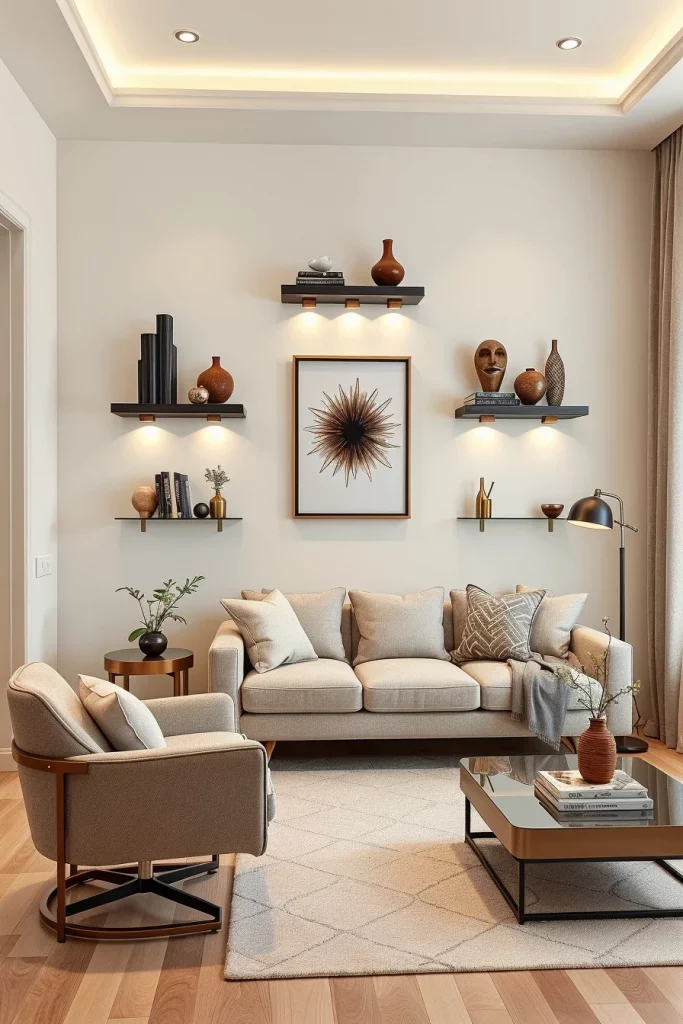
I usually recommend slim floating shelves in plaster, oak-toned finishes, or painted surfaces that match the wall color. Styling should remain restrained: sculptural objects, stacked design books, ceramic vessels, and framed artwork are often enough. Below the shelving, I prefer a streamlined sofa paired with an understated coffee table and a comfortable accent chair to preserve circulation.
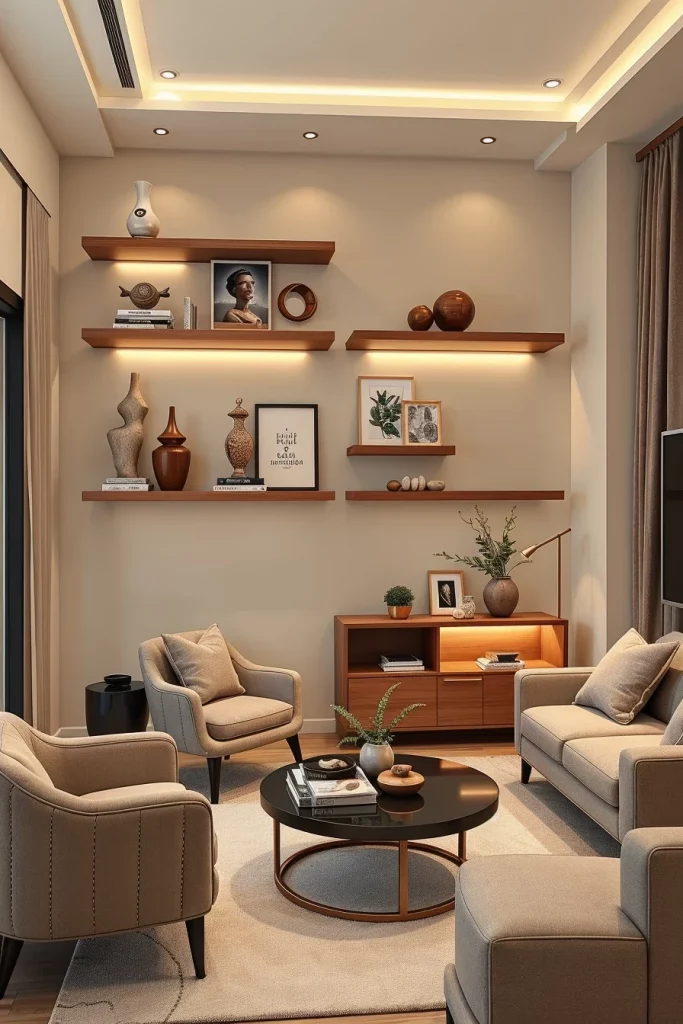
In my experience, less is always more when styling open shelving. Interior stylists from House Beautiful often suggest leaving intentional empty spaces on shelves so displays feel collected rather than crowded. I regularly edit shelf arrangements several times before achieving the right balance.
Something many homeowners overlook is integrated LED lighting beneath the shelves. I find that subtle illumination highlights decorative pieces and creates a warm ambiance during the evening.
Statement Lighting Designs For Neutral Compact Spaces
A striking light fixture can become the focal point of a small neutral living room. I believe statement lighting is essential in compact interiors because it introduces sculptural character without taking up valuable floor space. Oversized pendants, artistic chandeliers, and organic forms can instantly elevate a restrained palette.
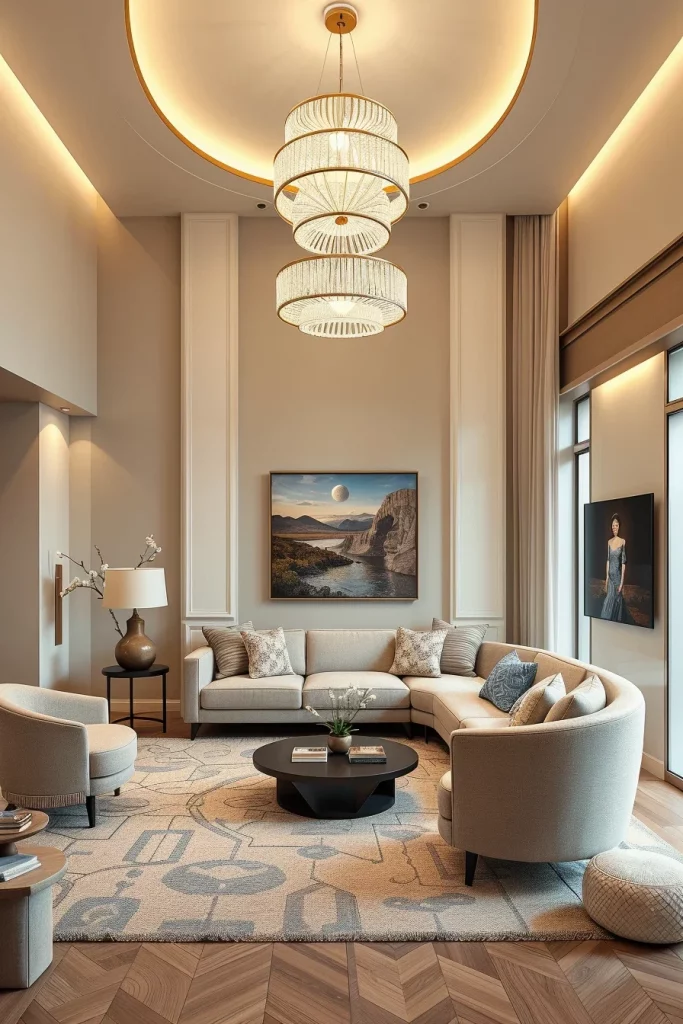
I often choose fixtures made from plaster, linen, alabaster, frosted glass, or textured metal in soft finishes. These materials complement neutral interiors while adding dimension. The surrounding furniture should remain simple: a tailored sofa, a sculptural armchair, and a minimalist coffee table allow the lighting fixture to stand out. Layered lighting, including wall sconces and discreet floor lamps, ensures the room remains practical.
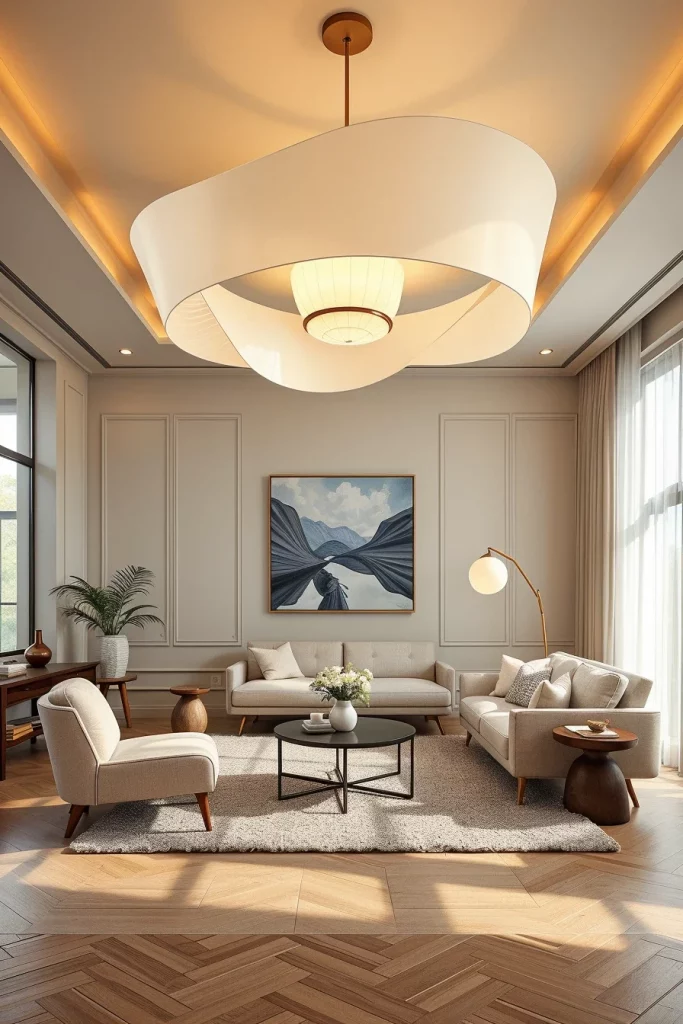
Personally, I gravitate toward organic pendant lights with soft curves because they bring movement to a room dominated by neutral tones. Many designers featured in Elle Decor emphasize the importance of varying light sources to create atmosphere, and I fully agree with this approach.
To make the space even more functional, I would incorporate dimmers. Adjustable lighting allows the room to transition seamlessly from daytime activities to evening relaxation.
Styling A Small Living Room With Oversized Art Pieces
Many people assume large artwork belongs only in spacious homes, but I have found the opposite to be true. In a small neutral living room, one oversized art piece often creates a stronger visual impact than multiple smaller items. A single statement artwork reduces visual clutter while establishing a clear focal point.
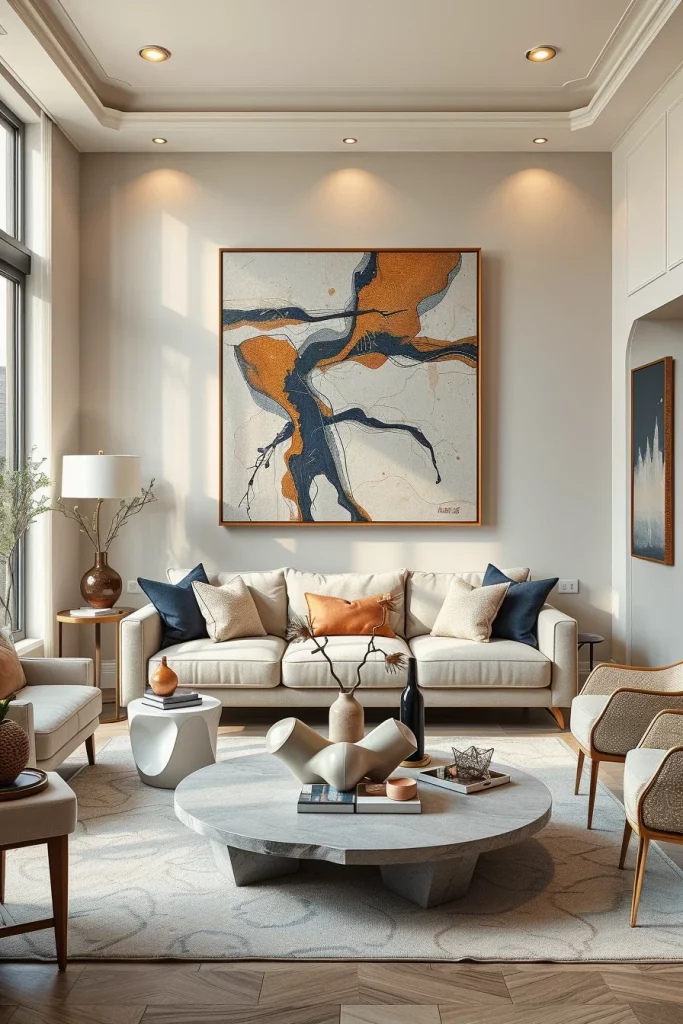
I prefer abstract or textured pieces in neutral shades such as ivory, taupe, charcoal, and sand. Oversized canvases pair beautifully with streamlined furnishings, including a neutral sofa, sculptural coffee table, and soft accent seating. The artwork should occupy a prominent wall, ideally above the sofa, allowing the composition to anchor the entire room.
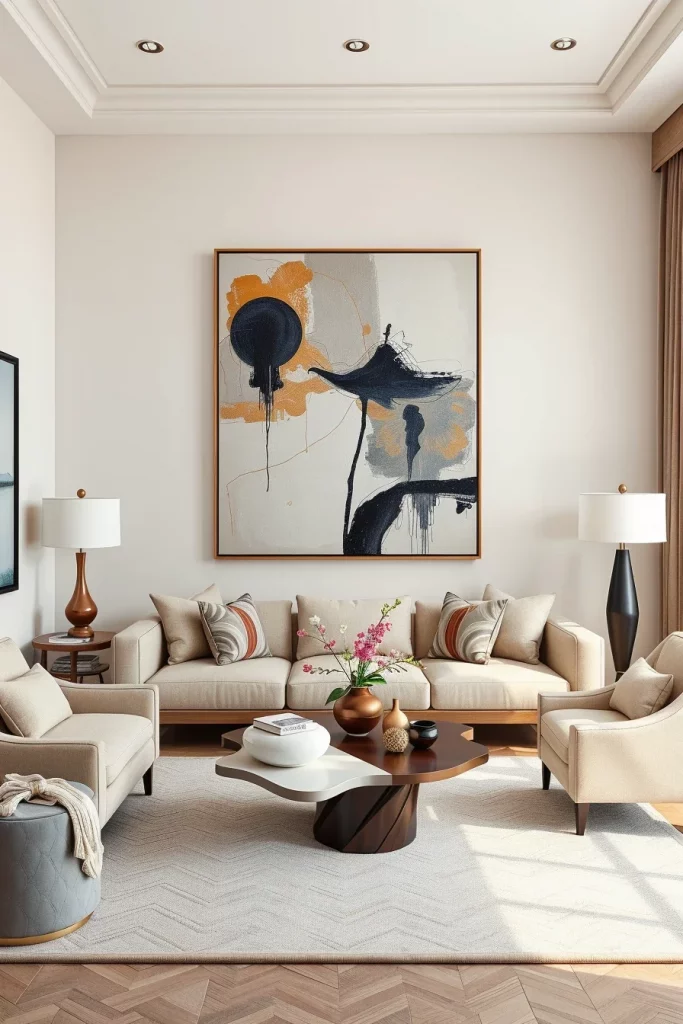
From my perspective, large-scale art introduces personality without disrupting the serenity of a neutral palette. I frequently reference design projects published by Domino magazine, where oversized art is used to make compact interiors feel curated and sophisticated rather than cramped.
I also recommend complementing the artwork with subtle accessories rather than competing decorative pieces. This restraint ensures the art remains the star of the room.
Layering Rugs To Add Depth In Neutral Living Rooms
Layering rugs is one of the most effective ways I know to make a small neutral living room feel richer and more inviting. Multiple layers introduce texture, define seating areas, and create visual depth without relying on strong colors. This technique is especially useful in open-concept homes where living zones need subtle separation.
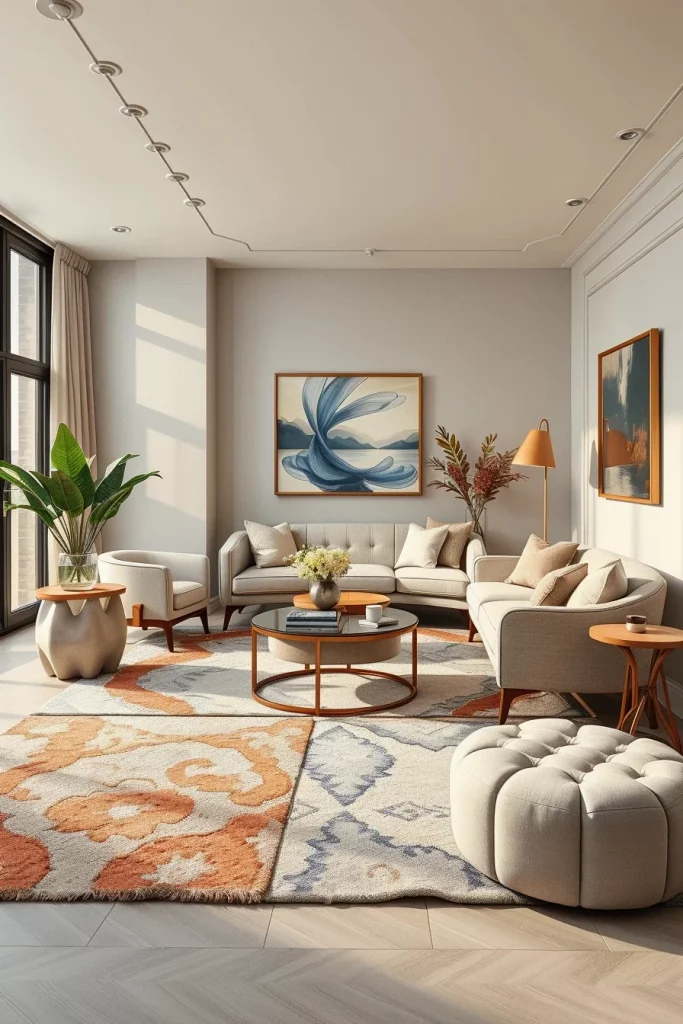
I usually start with a large neutral foundation rug in wool or sisal and then layer a smaller textured rug on top. Bouclé, high-pile wool, and subtle geometric patterns work exceptionally well. Combined with a curved sofa, upholstered ottoman, and sculptural side tables, layered rugs help establish a cozy yet elegant environment.
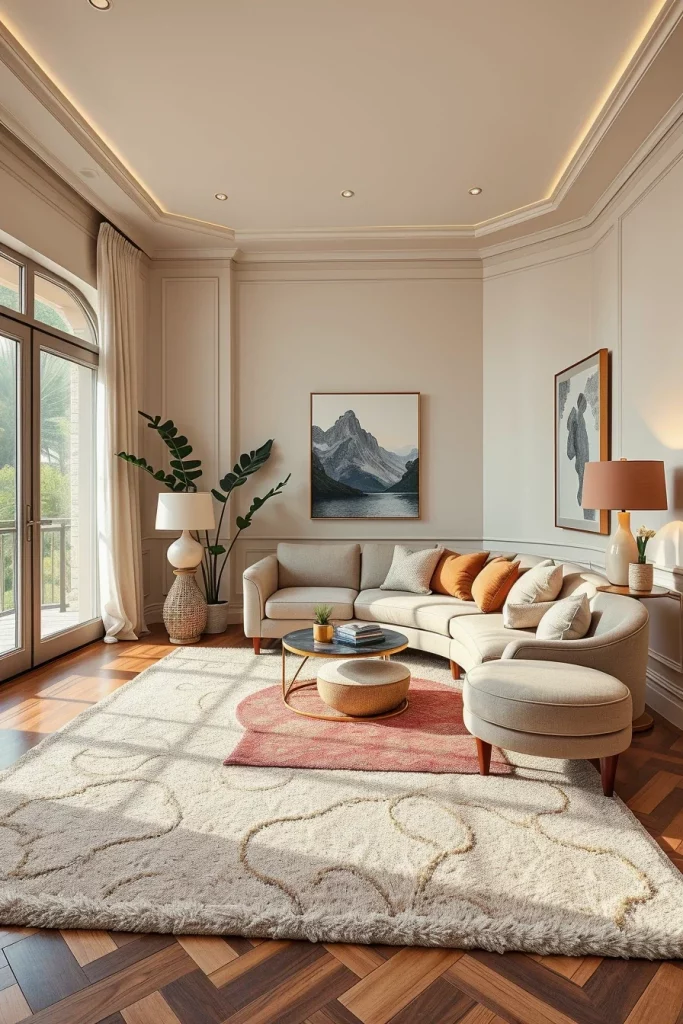
I have found that varying textures rather than colors creates the most sophisticated result. Soft textiles, tactile upholstery, and layered floor coverings make neutral interiors feel intentionally designed rather than unfinished.
To complete the look, I would include oversized floor cushions or a textured pouf. These additions enhance comfort while reinforcing the layered aesthetic.
Architectural Details That Elevate Small Neutral Interiors
Architectural details can completely transform a compact living room, and I believe they are often overlooked in neutral small living room styling. Features such as wall molding, arched openings, recessed niches, and subtle ceiling treatments add sophistication without consuming precious floor space. In small neutral interiors, these details create depth and visual interest while maintaining a calm and cohesive appearance.
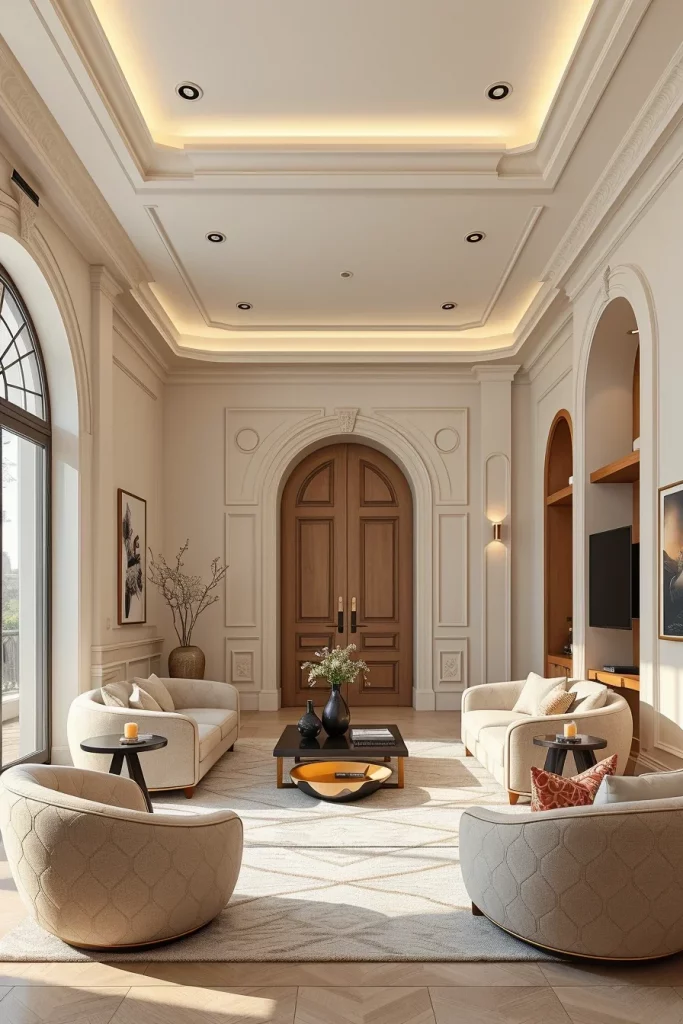
When designing these spaces, I like to incorporate simple panel molding painted the same color as the walls to create understated elegance. Arched built-ins, curved doorways, and recessed shelving contribute a sculptural quality that feels both modern and timeless. Furnishings should complement these features rather than compete with them, so I usually choose streamlined seating, rounded coffee tables, and understated décor.
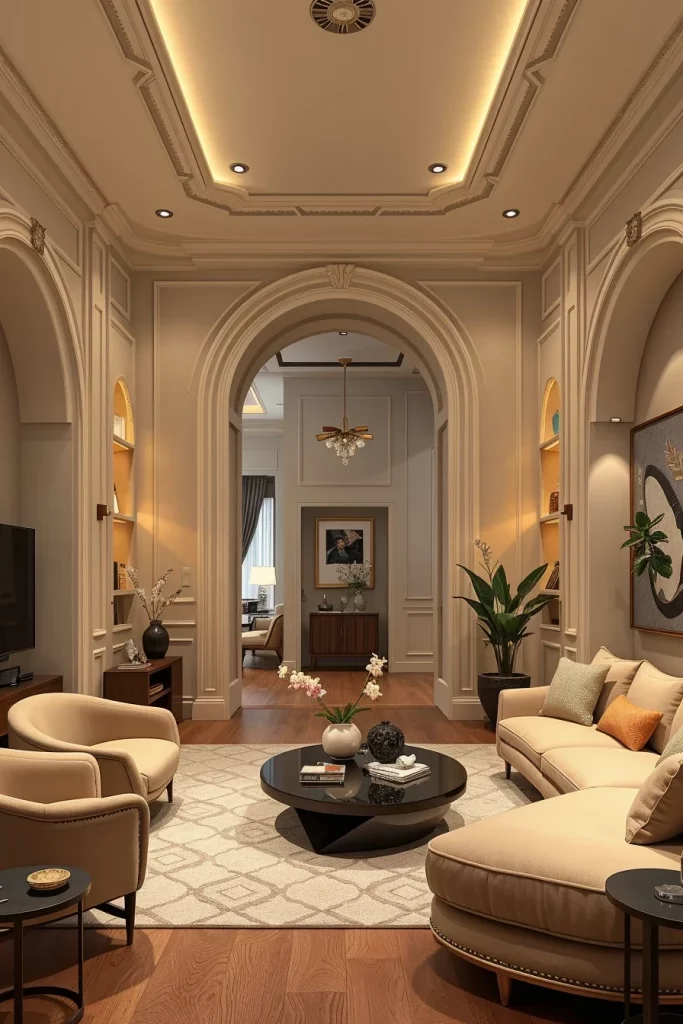
Personally, I have found that architectural elements make even the simplest neutral room feel custom-designed. Many designers featured in Veranda magazine emphasize that thoughtful architectural details provide lasting value because they transcend trends. I agree completely, especially in smaller homes where every design decision matters.
To further enhance these interiors, I would add subtle wall sconces or concealed lighting within niches. These additions highlight the architectural features and create a warm, inviting atmosphere.
Sculptural Side Tables That Maximize Style In Small Rooms
In compact living rooms, every piece of furniture should be both functional and beautiful. Sculptural side tables accomplish exactly that by serving as practical surfaces while acting as artistic focal points. I often recommend this approach when creating creative, sculptural, artistic, and stylish neutral small living rooms because it introduces personality without overwhelming the space.
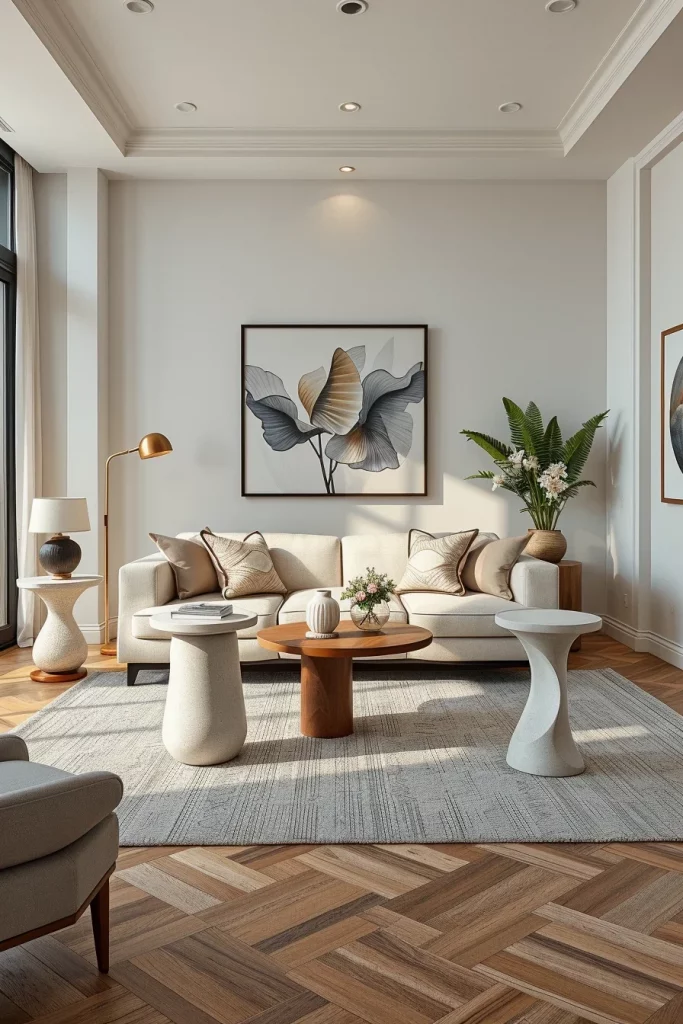
I prefer side tables with organic silhouettes, pedestal bases, or carved forms in materials such as travertine, marble, plaster, or textured resin. These pieces pair beautifully with neutral sofas and accent chairs while requiring minimal floor space. In many cases, a single sculptural table can replace multiple decorative accessories because it naturally draws attention.
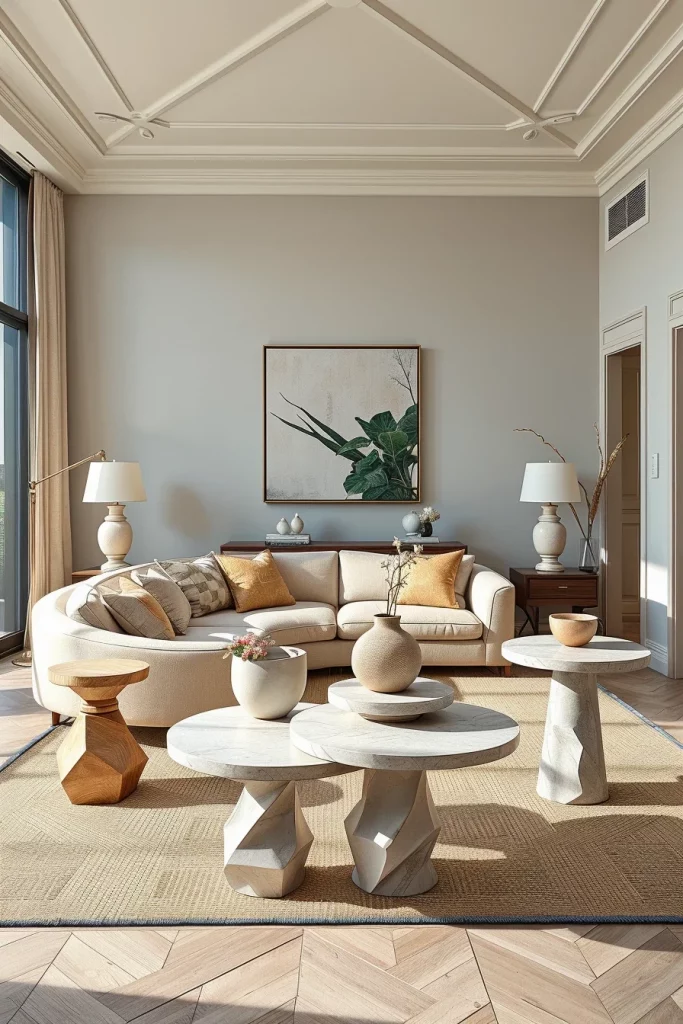
From my experience, sculptural furniture helps neutral interiors avoid looking flat or predictable. I often encourage clients to invest in one standout piece rather than numerous smaller decorative items. This strategy keeps compact spaces feeling curated and visually calm.
I would also include a small decorative tray, a ceramic vase, or a sculptural lamp on the table. These finishing touches add warmth while preserving the table’s artistic presence.
Using Linen And Bouclé Textures In Neutral Living Room Styling
Texture is essential when decorating with neutral colors, and linen and bouclé are two materials I consistently rely on. Since neutral palettes lack strong color contrast, tactile fabrics become the primary source of visual richness. Linen introduces softness and casual elegance, while bouclé contributes warmth and depth.
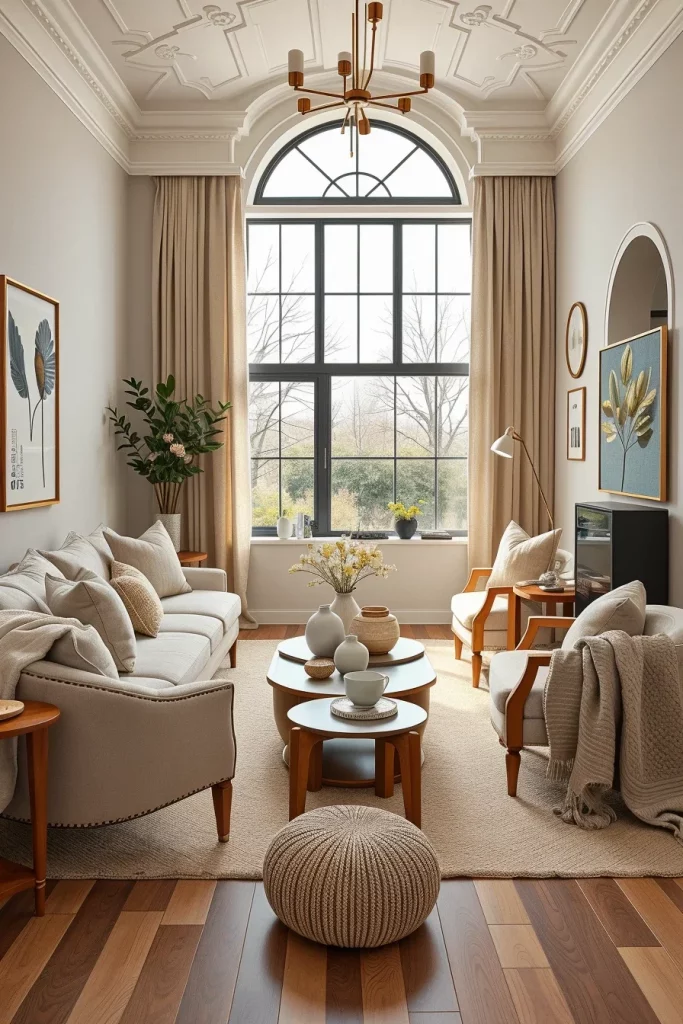
I typically use linen for drapery, slipcovered sofas, and accent pillows because it feels relaxed yet refined. Bouclé works exceptionally well on accent chairs, ottomans, and benches, adding subtle dimension to the room. To balance these fabrics, I often incorporate stone, ceramic, and textured wood-toned accents throughout the space. The combination creates an inviting environment that feels layered rather than monotonous.
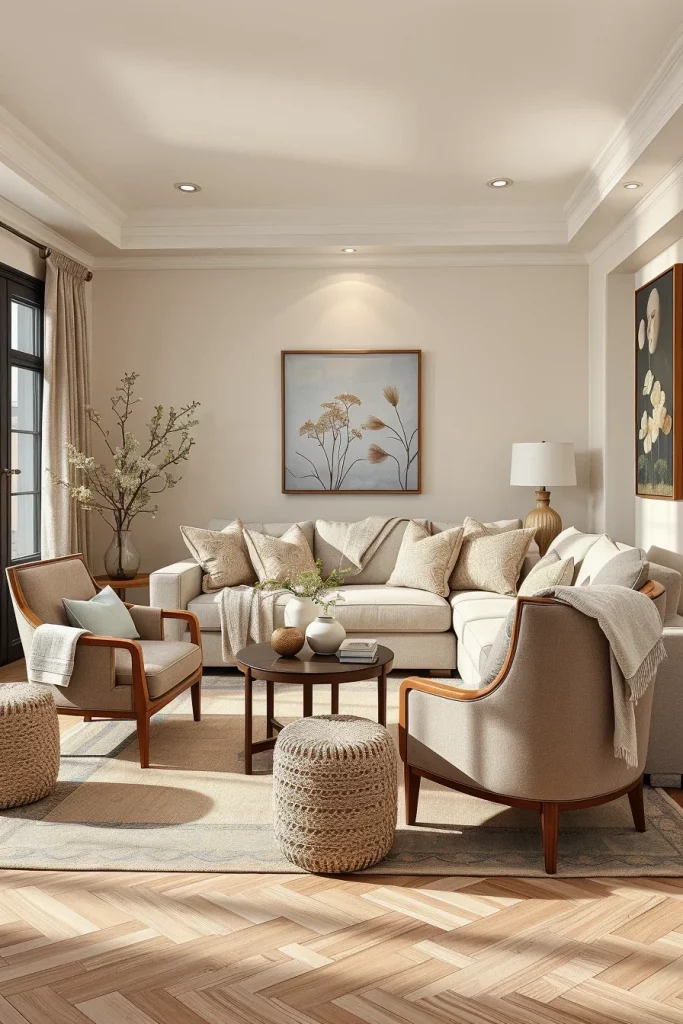
Personally, I find that rooms featuring multiple textures always feel more comfortable and sophisticated. Interior experts at House & Garden frequently recommend combining contrasting textures instead of adding excessive decorative objects, and this advice aligns perfectly with my own design approach.
To complete the scheme, I would introduce knitted throws and oversized cushions in complementary neutral tones. These elements enhance comfort while reinforcing the serene aesthetic.
Floor-To-Ceiling Drapery Ideas For Small Neutral Spaces
Floor-to-ceiling drapery is one of the simplest ways I know to make a small living room appear larger. Full-height curtains draw the eye upward, emphasizing verticality and creating the illusion of higher ceilings. In neutral interiors, this technique contributes elegance while maintaining visual softness.
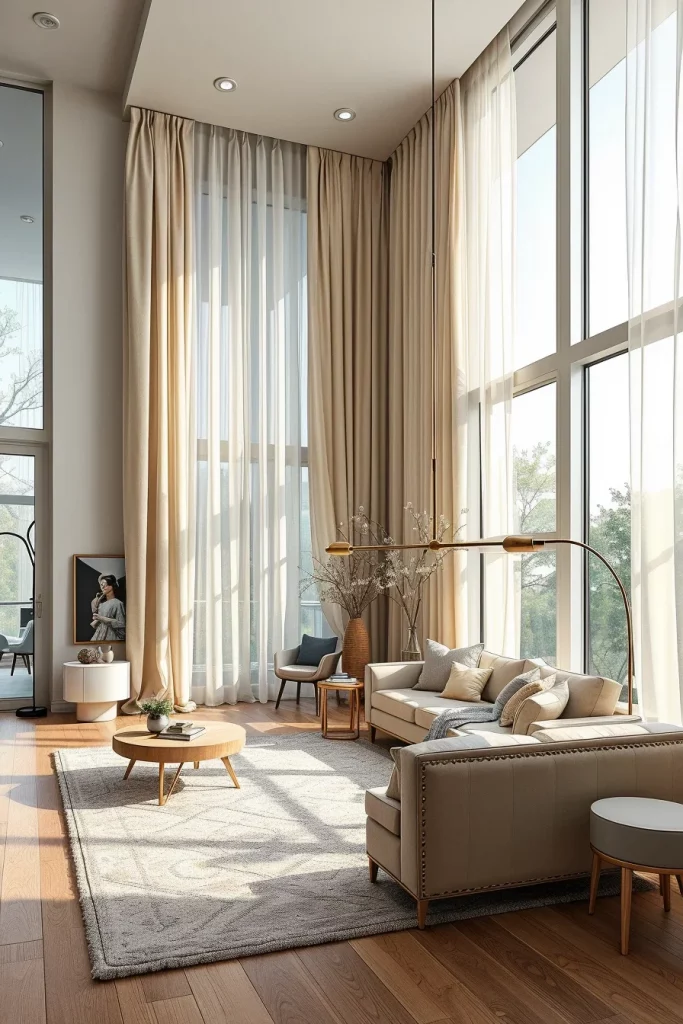
I generally recommend lightweight linen or textured woven fabrics in shades of ivory, sand, taupe, or soft greige. Curtains should extend from ceiling to floor and ideally be mounted close to the ceiling line. Paired with a neutral sofa, layered rugs, and sculptural lighting, full-height drapery creates an effortlessly refined atmosphere.
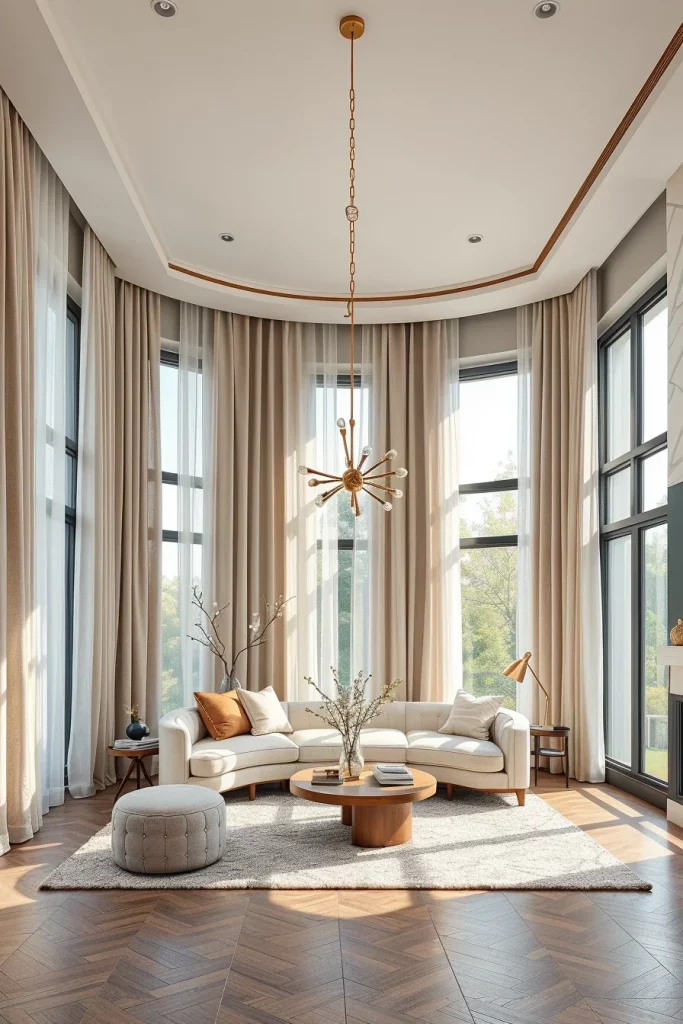
In my experience, homeowners often underestimate the importance of generous curtain proportions. I have seen dramatic improvements in room proportions simply by replacing short curtains with properly scaled drapery. Designers regularly featured in Elle Decor also advocate mounting drapery as high as possible to maximize perceived height.
I would additionally include sheer curtain layers behind the primary drapery panels. This provides privacy while allowing natural light to filter softly throughout the room.
Creating A Serene Neutral Living Room With Tonal Decor
A tonal approach is one of my preferred methods for designing serene neutral living rooms. Rather than relying on contrasting colors, tonal decorating layers multiple shades within the same color family to create subtle complexity. This strategy is particularly effective in small spaces because it promotes visual continuity and openness.
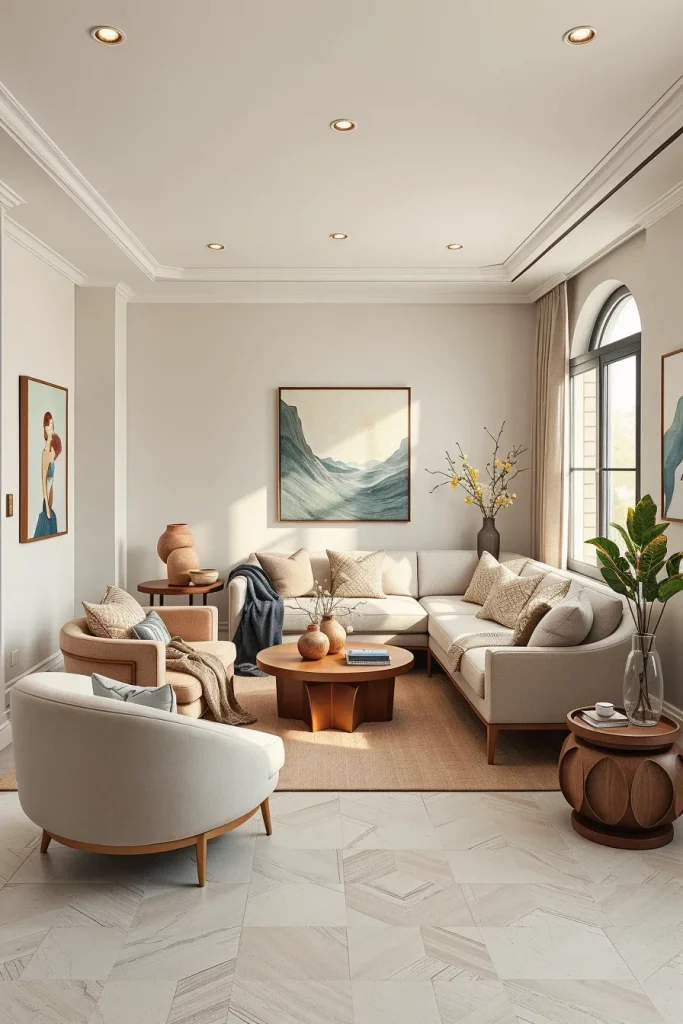
I often combine ivory, cream, beige, taupe, and warm gray throughout upholstery, rugs, artwork, and decorative accessories. A curved sofa in soft cream, textured accent chairs, sculptural ceramics, and layered textiles establish a harmonious composition. By varying finishes and materials, the room remains visually engaging while preserving a peaceful atmosphere.
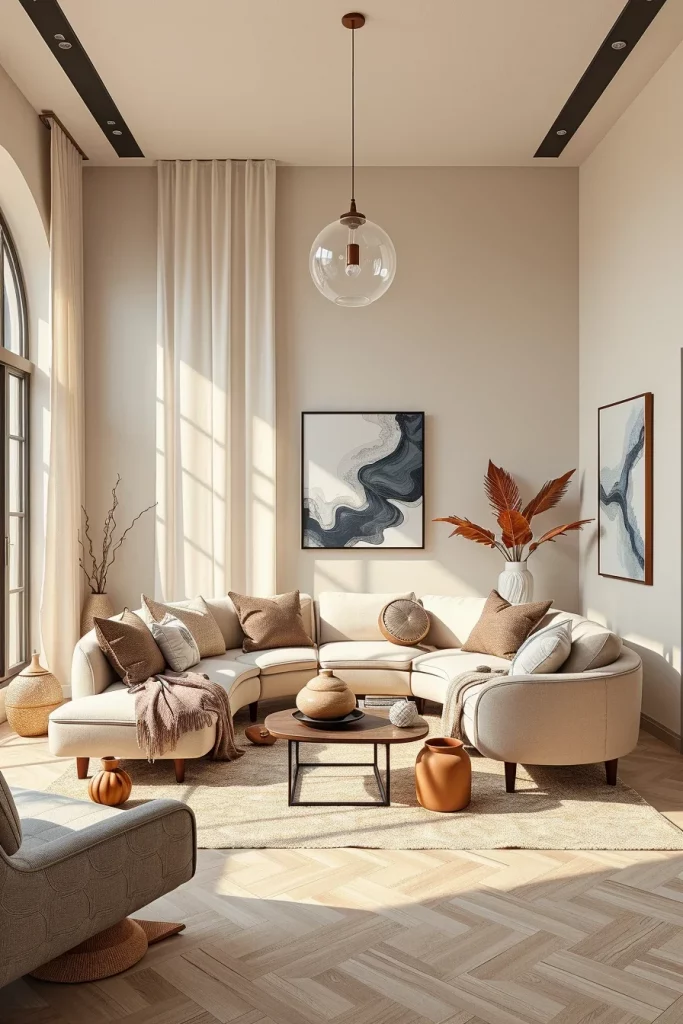
Personally, I believe tonal decorating produces some of the most timeless interiors. I frequently return to this approach because it allows architectural features, textures, and sculptural forms to become the stars of the space. The result always feels elegant, calming, and highly livable.
To perfect this design, I would incorporate subtle metallic accents in aged brass or matte finishes. These details introduce understated sophistication without disrupting the tranquil palette.
Artistic Fireplace Styling In A Small Neutral Living Room
An artistic fireplace can become the focal point of neutral small living room styling, even in compact spaces. I often recommend treating the fireplace as a sculptural element rather than simply a functional feature. A minimalist plaster surround, softly curved silhouette, or textured stone finish immediately adds depth while maintaining a calm palette. In a small room, keeping the surrounding walls light and uncluttered allows the fireplace to command attention without overwhelming the space.
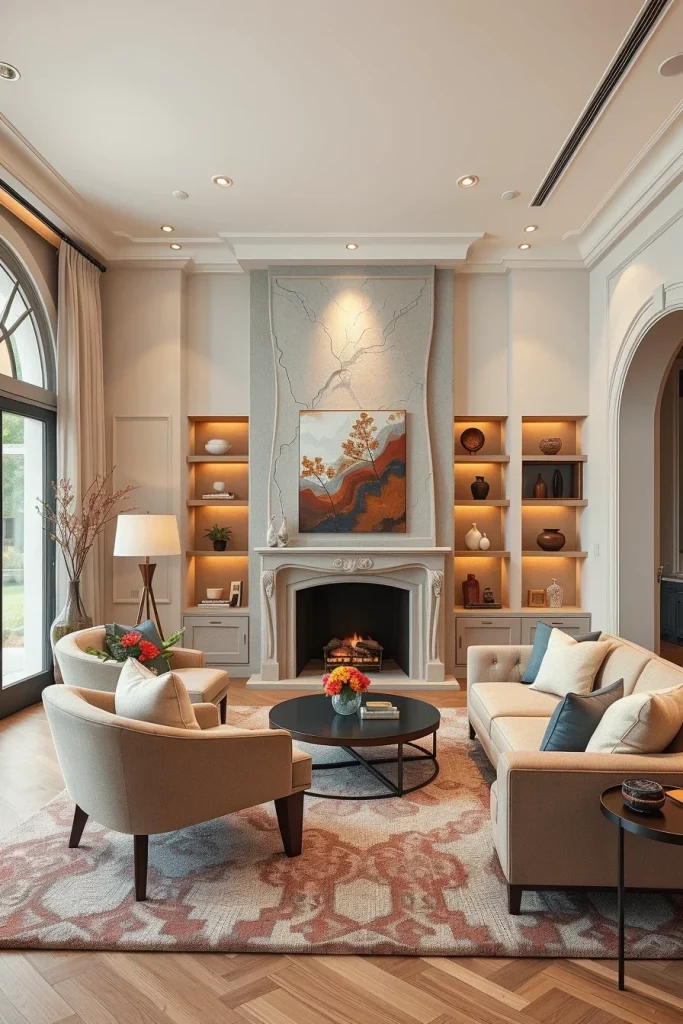
I prefer pairing the fireplace with a low-profile sofa in oatmeal or warm beige upholstery, a sculptural accent chair, and a textured area rug. Slim built-in shelves flanking the fireplace can display ceramics, art books, and handmade objects while preserving valuable floor space. Layered lighting, such as wall sconces and discreet floor lamps, enhances the architectural quality of the fireplace and creates a cozy atmosphere during the evening.
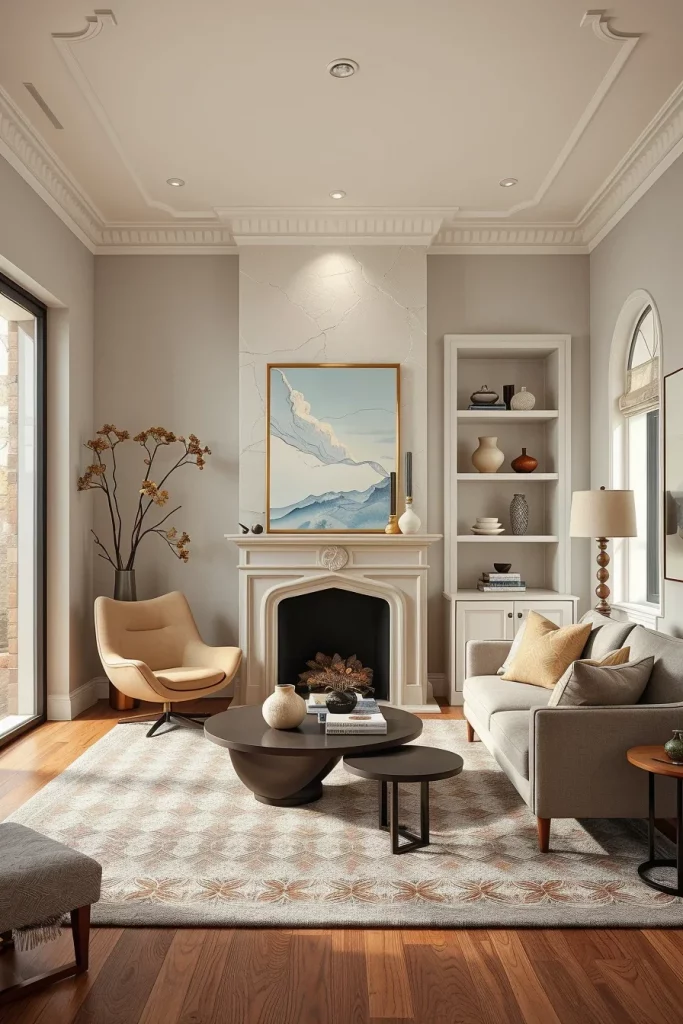
Personally, I have found that artistic fireplaces instantly elevate compact interiors. Designers featured in Architectural Digest frequently emphasize the importance of creating a strong focal point in small rooms, and I completely agree. Even a decorative electric fireplace with an elegant surround can transform the entire room.
To complete this design, I would add oversized ceramic vessels or a sculptural coffee table nearby. These pieces reinforce the artistic character of the room while maintaining visual balance.
Balancing Negative Space In Compact Living Room Designs
One of the most overlooked aspects of neutral small living room styling is the careful use of negative space. In compact interiors, every surface does not need to be filled. I intentionally leave portions of walls, shelving, and floor areas visually open because empty space helps a room feel larger and more serene.
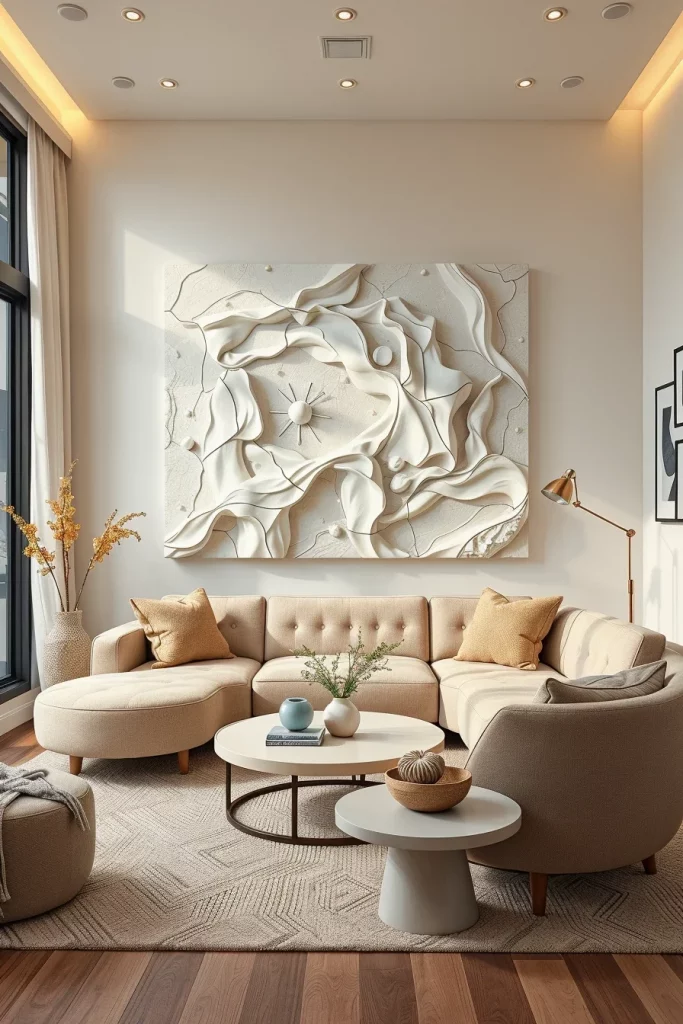
For furniture, I recommend selecting pieces with exposed legs and clean lines. A streamlined sofa, a pair of slender side tables, and a floating media console provide functionality without creating visual heaviness. Limiting decorative accessories to a few meaningful objects allows each piece to stand out and contributes to an artistic atmosphere.
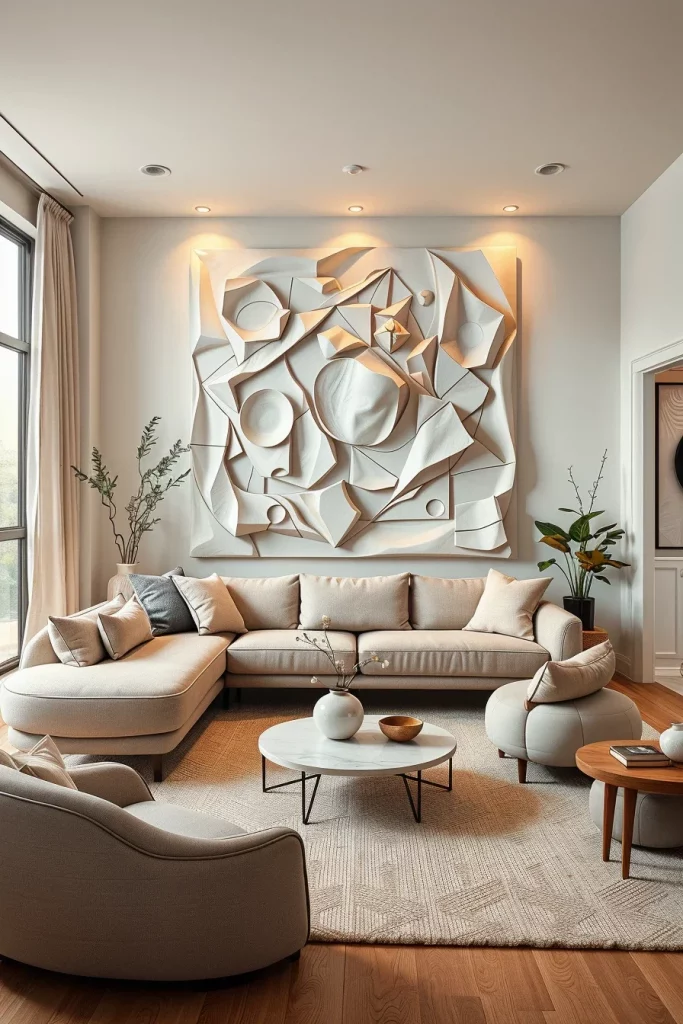
In my experience, homeowners often try to maximize storage by adding too many furnishings. However, respected interior publications such as Elle Decor regularly highlight that restraint is essential in smaller rooms. I have found that removing unnecessary items often improves both comfort and aesthetics.
To further enhance negative space, I suggest incorporating a large statement artwork or a single sculptural floor lamp. These elements create visual interest without cluttering the room.
Stylish Built-In Storage Ideas For Neutral Small Living Rooms
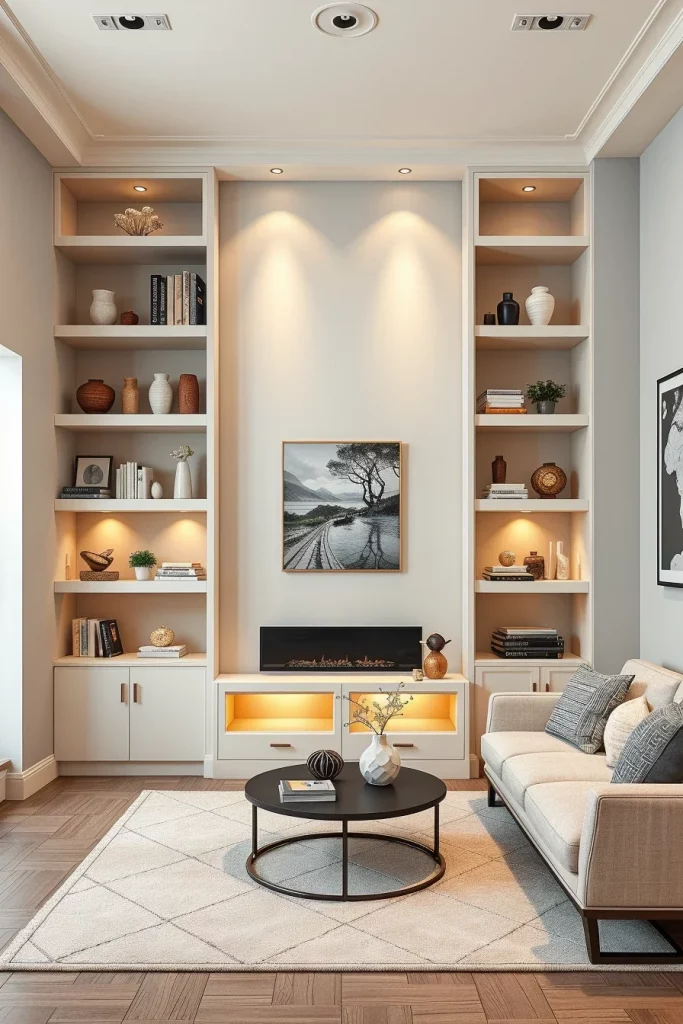
Built-in storage is invaluable in neutral small living rooms because it combines practicality with refined aesthetics. I like designing floor-to-ceiling cabinetry that seamlessly blends with wall colors, creating a cohesive and spacious appearance. Soft greige, warm white, or sandy tones work exceptionally well for this approach.
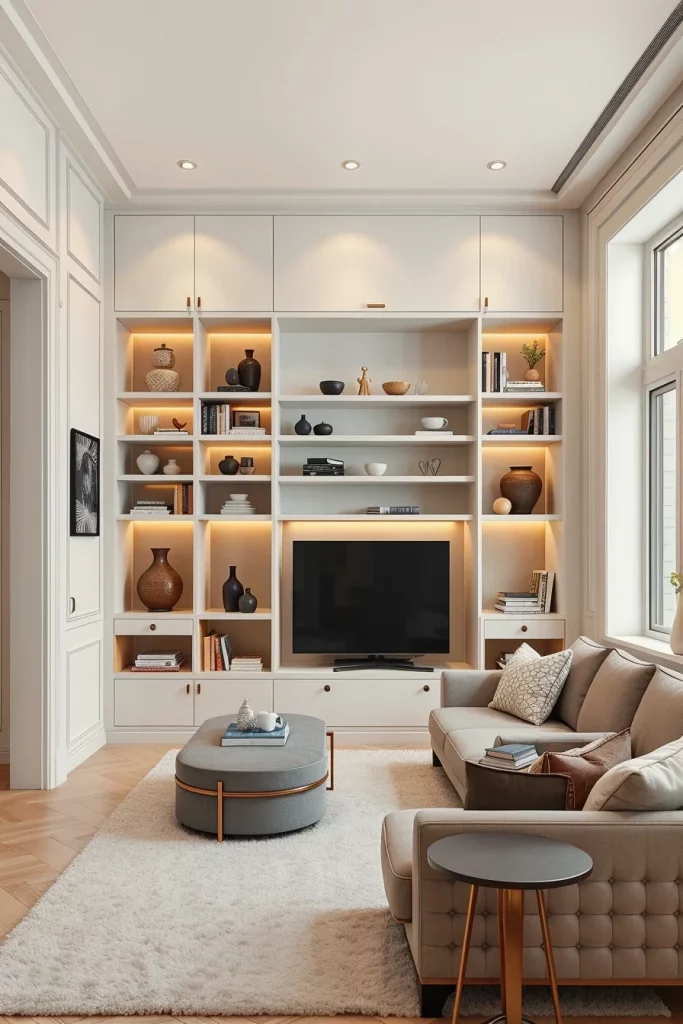
Integrated shelving provides opportunities to display decorative objects while concealing everyday essentials. I recommend mixing closed cabinetry with open shelves to achieve balance. Decorative ceramics, stacked books, framed artwork, and sculptural objects can be styled on open shelves, while electronics and miscellaneous items remain hidden behind cabinet doors.
From my perspective, custom built-ins are one of the smartest investments for small homes. They maximize every inch while contributing architectural character. I often advise clients to include subtle integrated lighting within shelving to showcase decorative pieces and create ambiance.
Something frequently missing from built-in designs is textural variation. I like introducing ribbed cabinet fronts, plaster finishes, or recessed detailing to ensure the storage feels sophisticated rather than purely functional.
Mixing Matte And Natural Finishes For A Refined Look
A refined neutral interior relies heavily on material selection. When approaching neutral small living room styling, I intentionally combine matte surfaces with natural finishes to create depth and visual richness. Because the palette remains restrained, texture becomes essential for preventing the room from feeling flat.
I often pair matte painted walls with linen upholstery, textured rugs, plaster accessories, and lightly grained furniture. Stone side tables, boucle seating, ceramic lighting, and woven accents introduce subtle contrast while preserving harmony. The combination of smooth and tactile surfaces creates a layered, curated aesthetic.
Personally, I believe texture is what transforms a simple room into a memorable one. Many leading designers featured in House Beautiful advocate layering materials instead of introducing excessive color, and I consistently see this strategy succeed in compact spaces.
To further refine the room, I would add oversized linen drapery and handcrafted decorative accessories. These additions soften the interior and contribute to a serene atmosphere.
Neutral Small Living Room Styling With Sculptural Wall Art
Sculptural wall art introduces personality and artistic expression while preserving the calming atmosphere associated with neutral interiors. I often use three-dimensional wall panels, plaster relief art, or oversized abstract pieces to create a sophisticated focal point in small spaces.
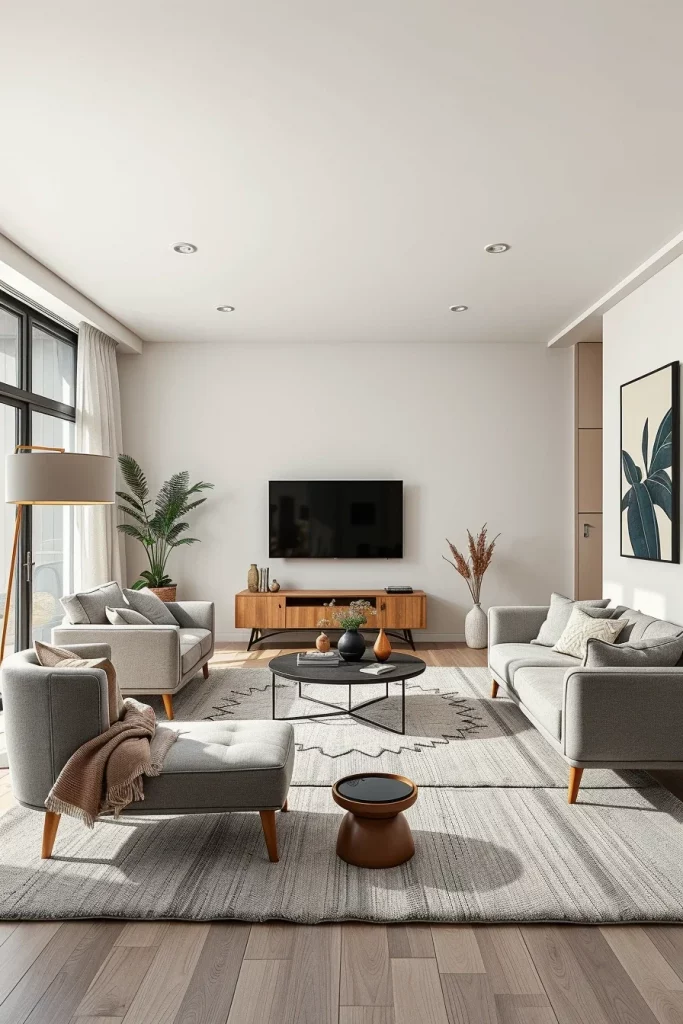
The furniture should remain understated when sculptural artwork is featured prominently. A curved sofa, minimalist coffee table, and understated accent chairs allow the artwork to remain the visual centerpiece. Soft lighting directed toward the artwork further enhances shadows and highlights, emphasizing its sculptural qualities.
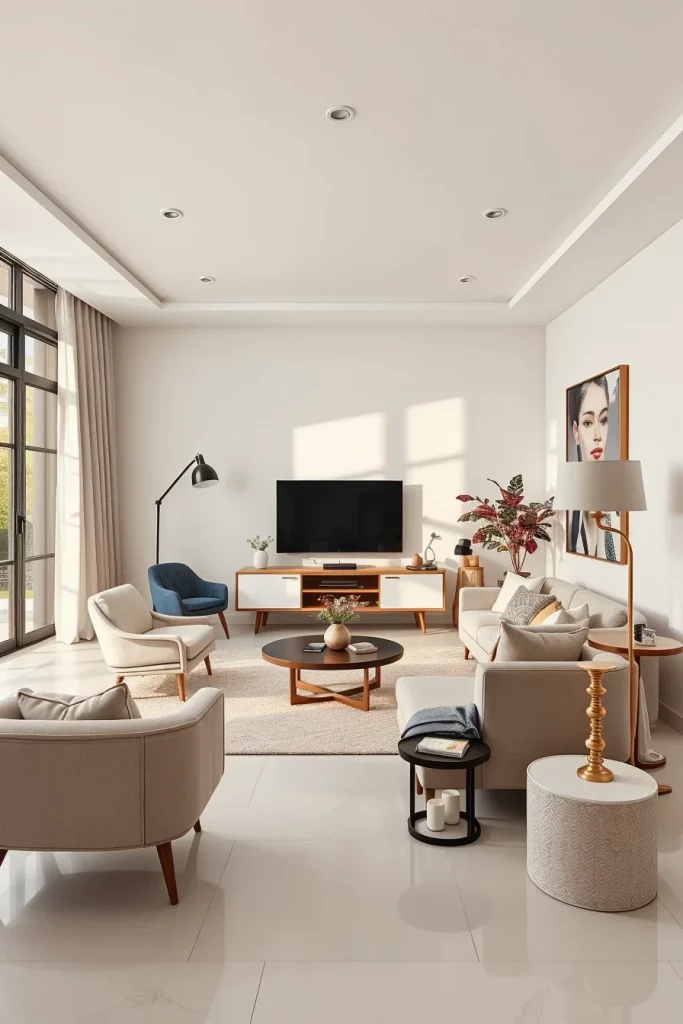
In my own projects, I have noticed that sculptural wall art adds dimension without occupying precious floor space. Interior stylists frequently recommend investing in one impactful piece rather than multiple smaller decorations, and I find this advice particularly valuable in compact rooms.
If I were completing this room, I would introduce a sculptural floor vase or artistic side table nearby to visually connect the wall installation with the rest of the interior.
Designing A Cozy Reading Nook In A Small Neutral Living Room
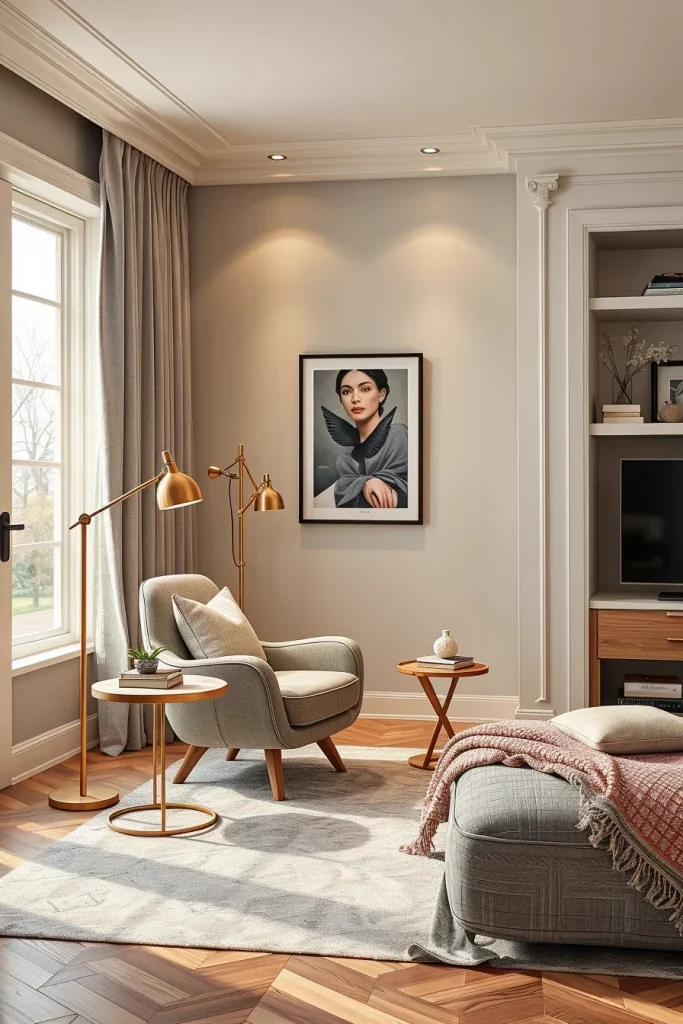
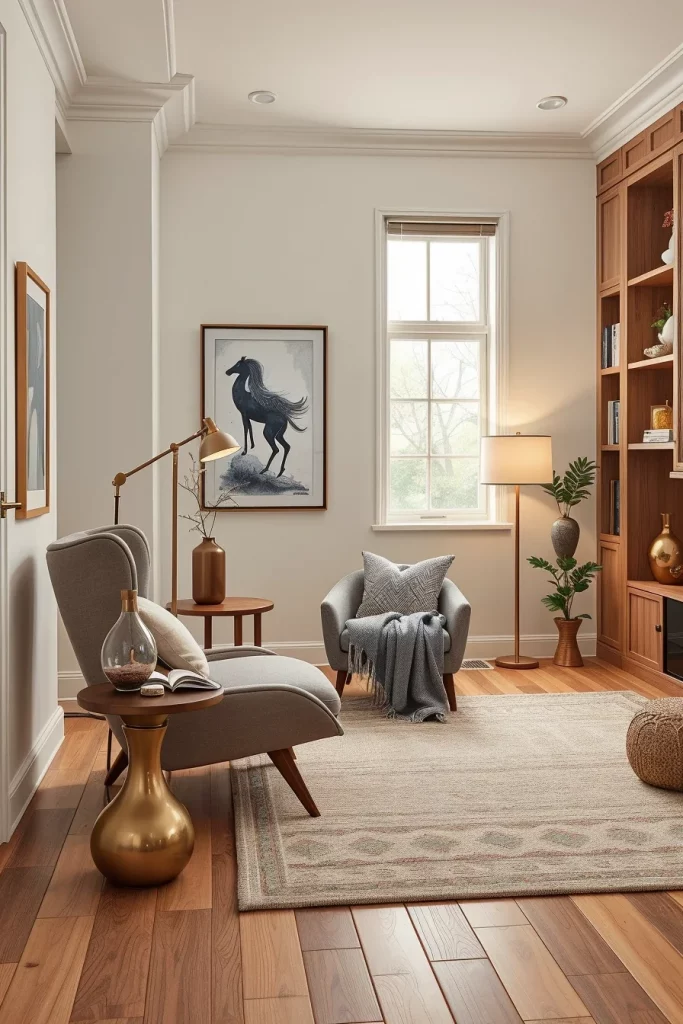
A thoughtfully designed reading nook can significantly enhance neutral small living room styling by adding both functionality and comfort. In compact interiors, I often utilize underused corners near windows or beside built-in shelving to create an intimate retreat. Keeping the palette soft with shades of cream, sand, taupe, and warm gray ensures the nook blends seamlessly with the rest of the room while maintaining a calm atmosphere.
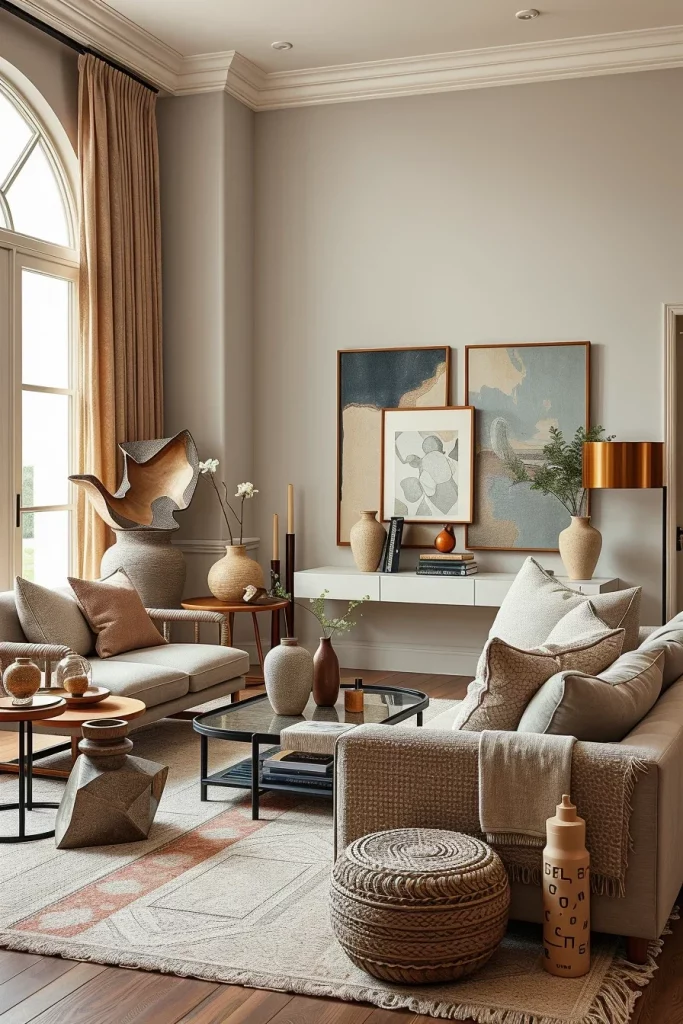
I usually start with a comfortable accent chair featuring sculptural lines and soft upholstery. A compact side table is essential for holding books or beverages, while a slim floor lamp provides focused task lighting without occupying excessive space. Layering a textured throw blanket and a plush cushion introduces warmth and softness, making the nook inviting throughout the year.
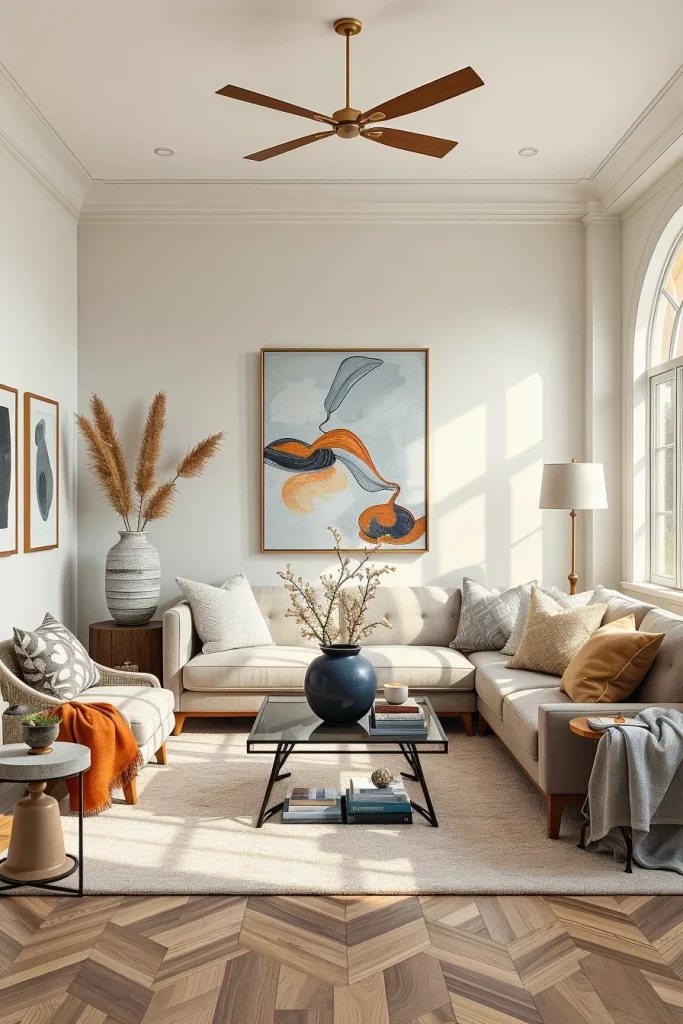
From my experience, a dedicated reading area encourages homeowners to use their living rooms more intentionally. Designers frequently recommend creating zones within small spaces, and I have found that even a modest reading nook makes a compact room feel more personalized and functional.
To complete the space, I would add a small stack of art books, a ceramic vase, or a subtle piece of wall art above the chair. These details reinforce the artistic aesthetic without introducing clutter.
Coffee Table Styling Ideas For A Curated Neutral Space
Coffee table styling plays an important role in making neutral small living rooms feel curated rather than unfinished. I prefer approaching coffee table decor as a composition of varying heights, textures, and sculptural forms. In smaller rooms, restraint is key, so I focus on a few meaningful objects instead of excessive accessories.
A sculptural coffee table in stone, plaster, or light oak serves as the foundation. I typically style it with stacked design books, handcrafted ceramic vessels, a decorative tray, and a small candle. Organic shapes work particularly well in neutral interiors because they introduce visual interest while preserving the serene palette.
Personally, I believe coffee table styling should evolve with the seasons and the homeowner’s lifestyle. Interior stylists often recommend following the rule of three when arranging decorative objects, and I consistently use this principle to create balanced compositions.
What is often missing from coffee table arrangements is negative space. I intentionally leave portions of the surface empty to maintain a sophisticated appearance and prevent the room from feeling crowded.
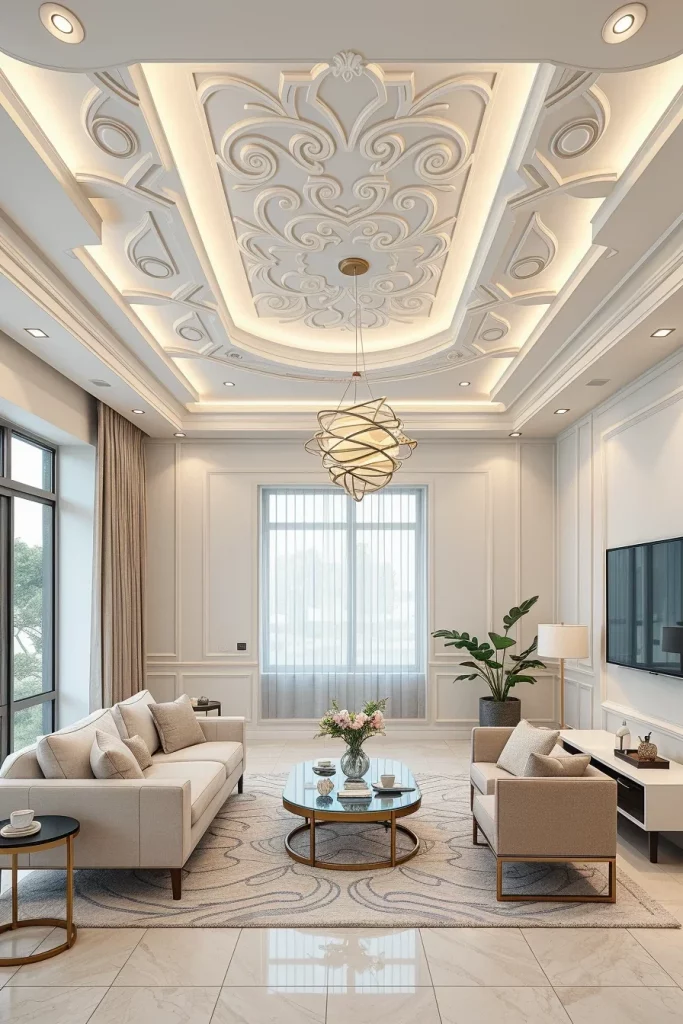
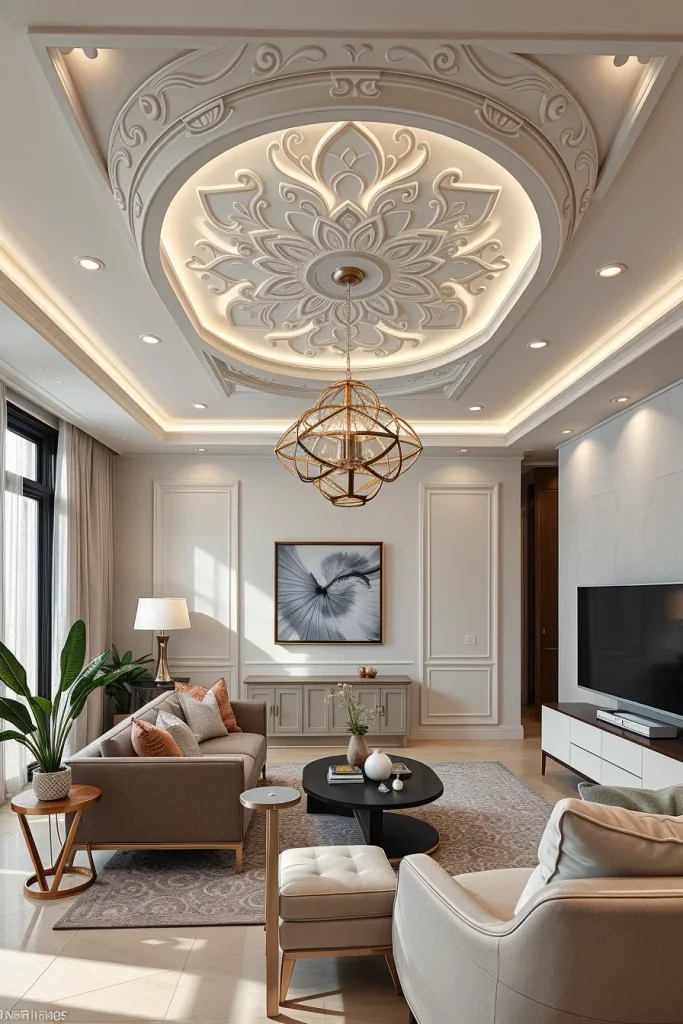
Modern Ceiling Treatments For Neutral Small Living Rooms
Ceilings are frequently overlooked in neutral small living room styling, yet they offer tremendous potential for enhancing a compact space. I often use subtle architectural treatments to draw the eye upward and create a more dynamic interior. Soft plaster finishes, recessed details, and delicate beam treatments can introduce character without overwhelming the room.
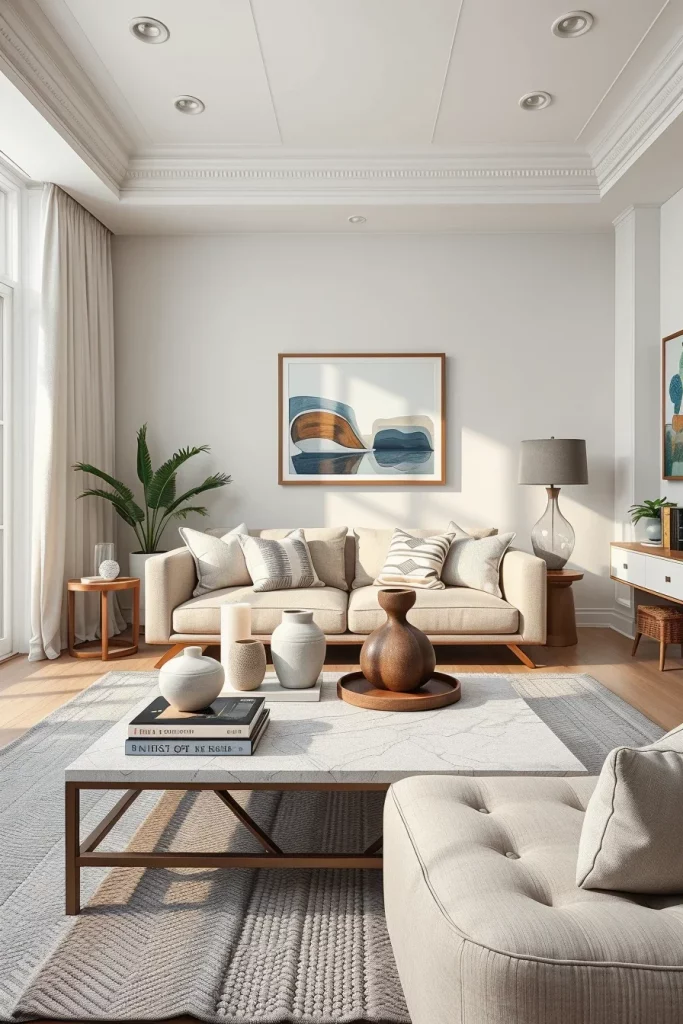
In small neutral spaces, I favor monochromatic ceiling designs that blend seamlessly with the walls. Integrated LED lighting, slim recessed fixtures, and sculptural pendant lights provide both illumination and visual interest. A statement light fixture can act as an artistic centerpiece while preserving valuable floor space.
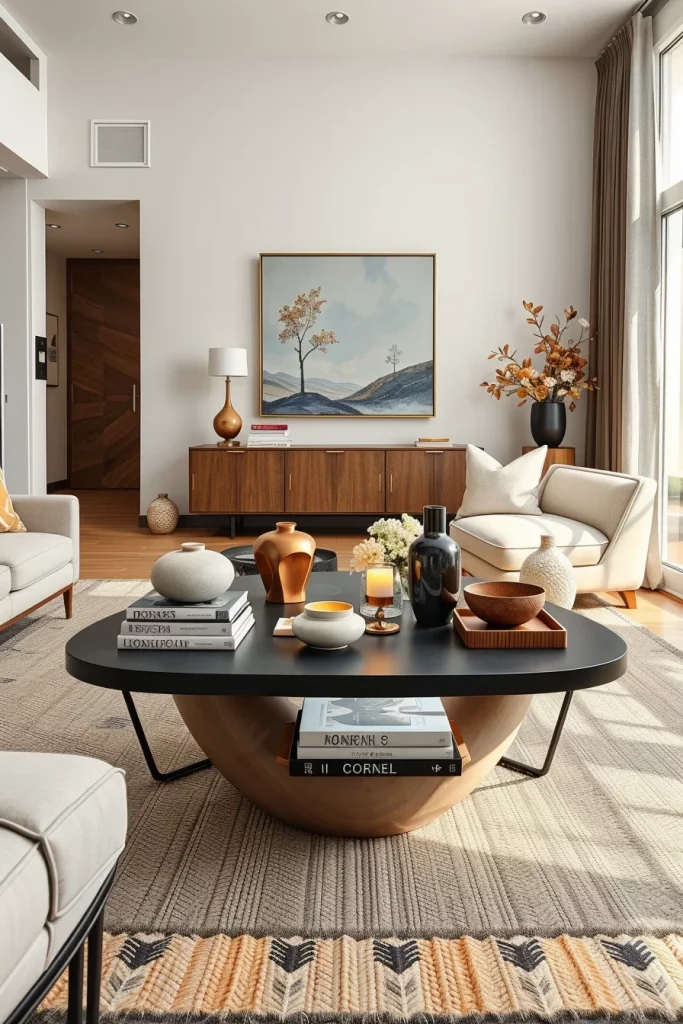
I have noticed that enhancing the ceiling dramatically changes the perception of room size. Many interior designers emphasize the importance of considering every surface in a room, and I agree that the ceiling should never be treated as an afterthought.
If I were refining this design further, I would incorporate subtle cove lighting around the perimeter. This feature softly illuminates the ceiling and contributes to a warm, gallery-like ambiance.
Creating Visual Height In A Small Neutral Living Room
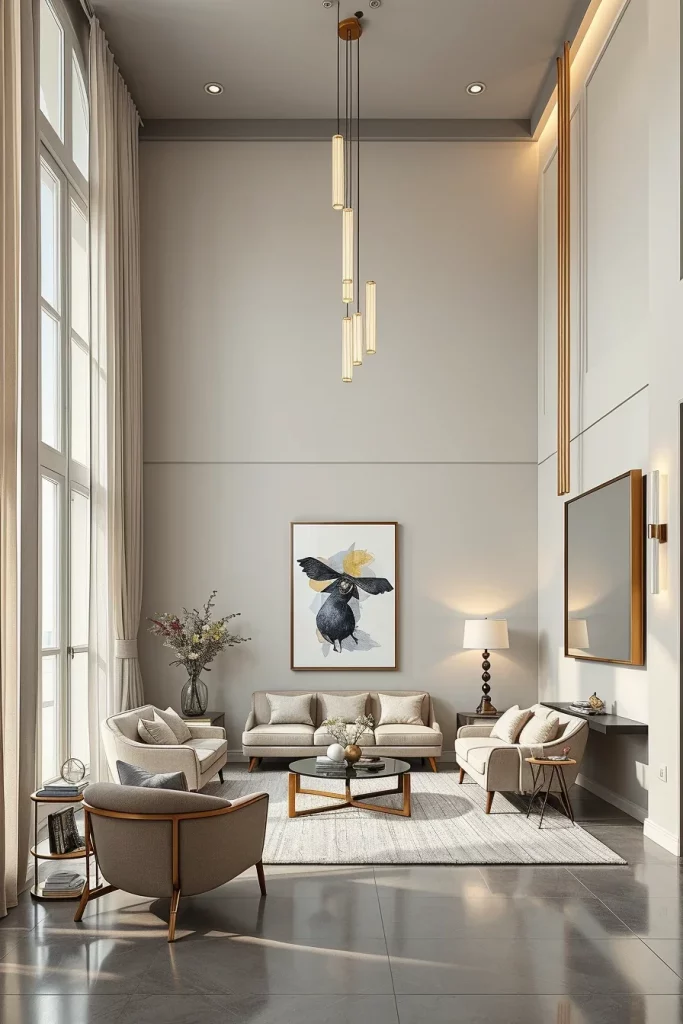
Creating visual height is one of the most effective techniques in neutral small living room styling. Even rooms with standard ceiling heights can appear taller when proportions and furnishings are carefully selected. I regularly use vertical design elements to guide the eye upward and create an enhanced sense of spaciousness.
Floor-to-ceiling drapery is one of my favorite strategies because it elongates the walls and adds softness. Tall shelving units, vertically oriented artwork, and slender lighting fixtures reinforce the vertical emphasis. Furniture with raised legs also contributes to an airy appearance by allowing more floor area to remain visible.
In my experience, many homeowners underestimate the impact of properly scaled window treatments. Publications such as House & Garden frequently recommend hanging drapery close to the ceiling, and I have consistently seen this simple adjustment transform small interiors.
To maximize the effect, I would introduce a large mirror positioned strategically to reflect natural light. This addition amplifies brightness while visually expanding the room.
Finishing Touches That Make Neutral Small Living Rooms Feel Artistic
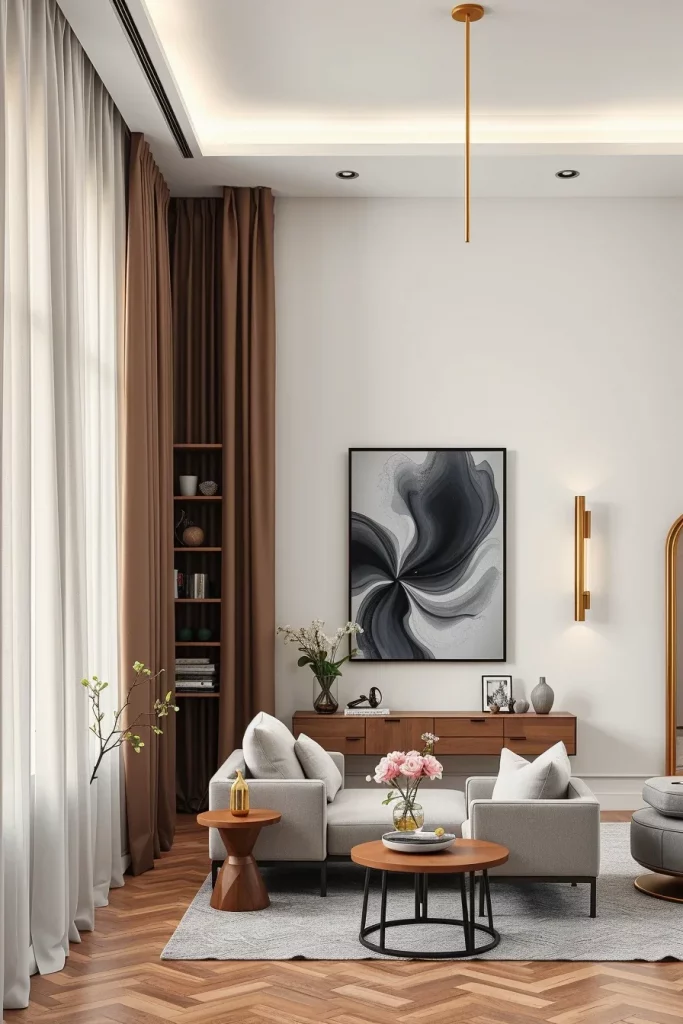
The finishing touches ultimately determine whether a neutral interior feels ordinary or truly artistic. In neutral small living room styling, I focus on carefully selected decorative elements that contribute personality while maintaining cohesion. Sculptural accessories, handmade ceramics, and thoughtfully chosen artwork add depth without compromising simplicity.
I like incorporating oversized vases, textured pillows, artisanal bowls, and curated book collections. Layered lighting is equally important, combining ambient, accent, and task lighting to create a warm and inviting environment. Natural textiles such as linen and boucle introduce softness and enhance the tactile quality of the room.
Personally, I believe that artistic interiors should reflect the homeowner’s personality rather than follow trends exclusively. Some of the most memorable neutral rooms I have designed feature collected objects with personal significance, creating spaces that feel authentic and timeless.
One detail I always recommend adding is scent. A beautifully designed candle or subtle diffuser completes the sensory experience and makes the living room feel welcoming and refined.
Neutral small living room styling is all about balancing simplicity, comfort, and artistic expression. With the right combination of soft colors, sculptural furniture, layered textures, and thoughtful decor, even the smallest living room can feel elegant and spacious. By embracing a neutral palette and curated design details, you can create a timeless space that is both stylish and welcoming.