
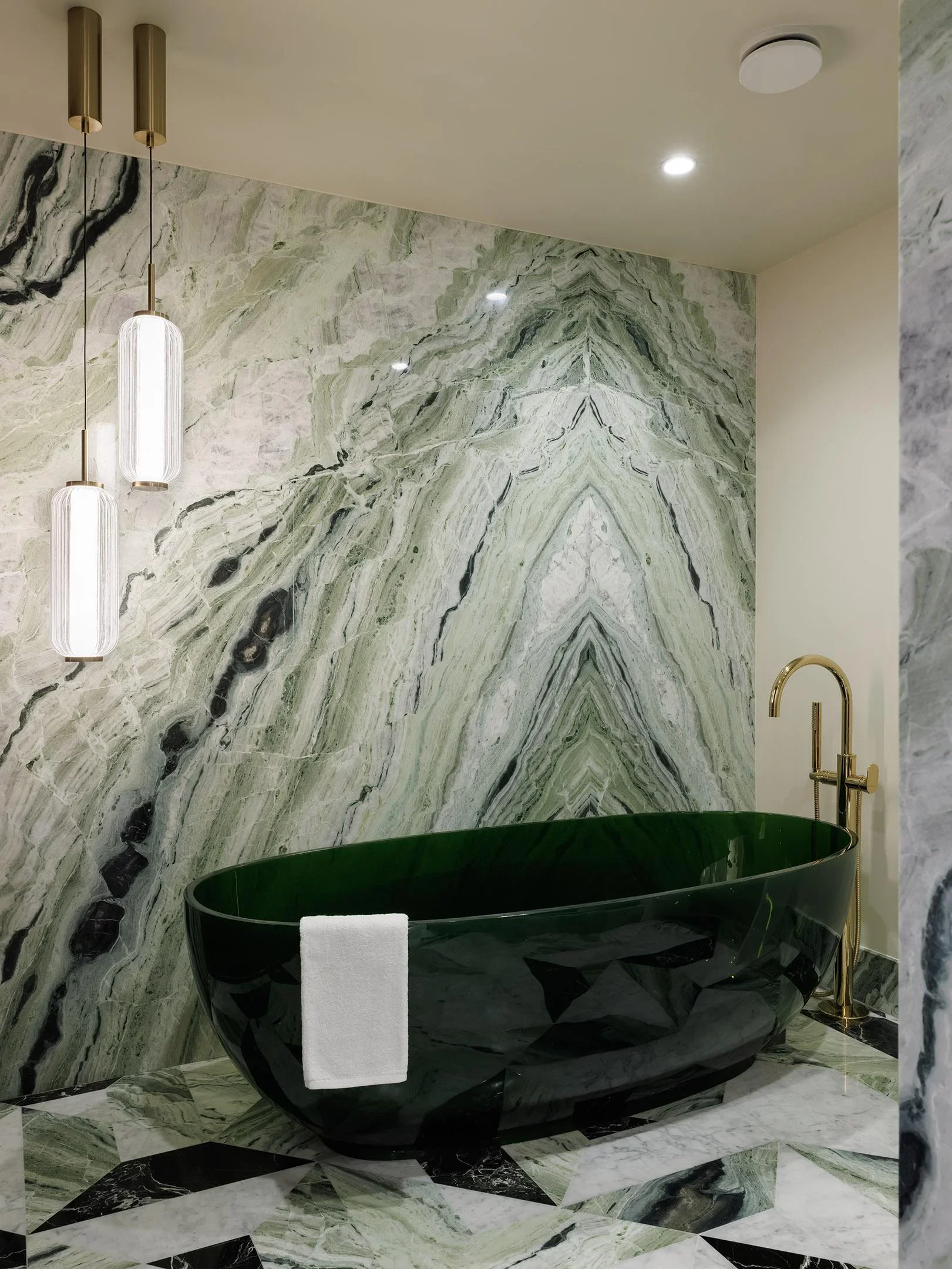
Olive green is becoming one of my favorite ways to bring depth, softness, and a distinctly autumnal mood into the bathroom. For the Fall 2026 season, this versatile shade feels especially appealing because it can look calm and understated or rich and expressive depending on how it is used. In this collection, I’m exploring bathrooms that pair olive and muted green tones with crisp white surfaces, warm wood, graphic tilework, reflective mirrors, and carefully chosen lighting. Some designs use green across the walls, while others introduce it through vertical tiles or layered patterns around the bathtub and shower. I love how these spaces prove that a green bathroom can feel sophisticated and welcoming without becoming visually overwhelming. As you look through the ideas, you’ll find practical inspiration for creating your own olive green bathroom while keeping the overall design balanced, comfortable, and current for fall.
Deep Olive Green Bathroom With Warm Natural Textures
The first bathroom makes a strong impression with deep olive green covering the walls and ceiling, creating an enveloping atmosphere around the pale bathtub and warm beige flooring. A dark shower system stands against the green wall, while the built-in bathtub has a simple rectangular form. On the left, a natural-toned vanity adds warmth, and small woven baskets sit on open shelves above it. Large leafy greenery in woven floor baskets fills the right side of the room, while a textured rectangular rug softens the floor. I love how the combination of dark green, beige, woven textures, and greenery creates a cozy, earthy bathroom with a distinctly autumnal feeling.
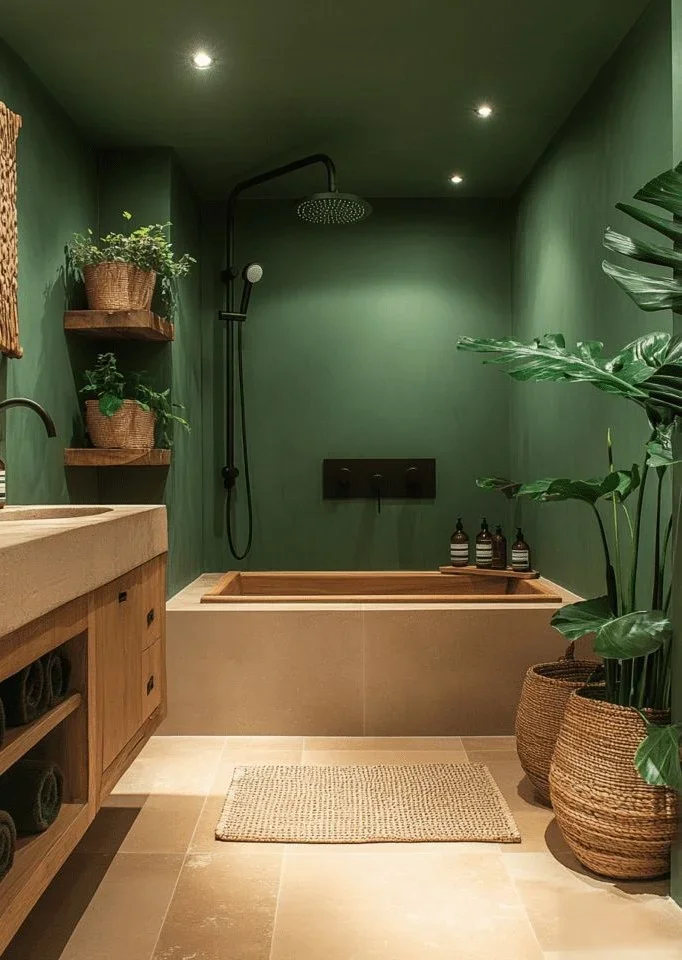
The layout works particularly well because the deep wall color gives the compact bathroom visual continuity instead of breaking it into separate zones. The open shelves provide accessible storage for the visible baskets and greenery, while the vanity keeps the main counter area organized. The bathtub remains the central architectural feature, and the large floor baskets use an otherwise empty corner effectively. The restrained palette also allows the texture of the baskets, rug, cabinetry, and foliage to become part of the decoration.
From my perspective, this is a wonderful example of how a dark olive green can work in a smaller bathroom when the surrounding finishes remain warm and relatively simple. I would keep the lighting layered exactly as shown, with recessed ceiling lights creating small pools of illumination across the green surfaces. The result feels intimate rather than heavy, which is one of the reasons I find this approach particularly appealing for the fall season.
Olive Green Vanity With Statement Botanical Wall
Here, olive green cabinetry becomes the foundation for a much lighter bathroom design. The vanity has a marble-look countertop, framed cabinet doors, brass-toned hardware, and an open shelving section filled with neatly folded towels and baskets. Above it hangs a large round mirror with a thin warm metallic frame. The wall behind the vanity features a detailed botanical pattern in muted green and neutral tones, while matching botanical imagery continues around the room. Tall decorative greenery and warm wall lighting frame the mirror, giving the space a polished yet natural atmosphere.
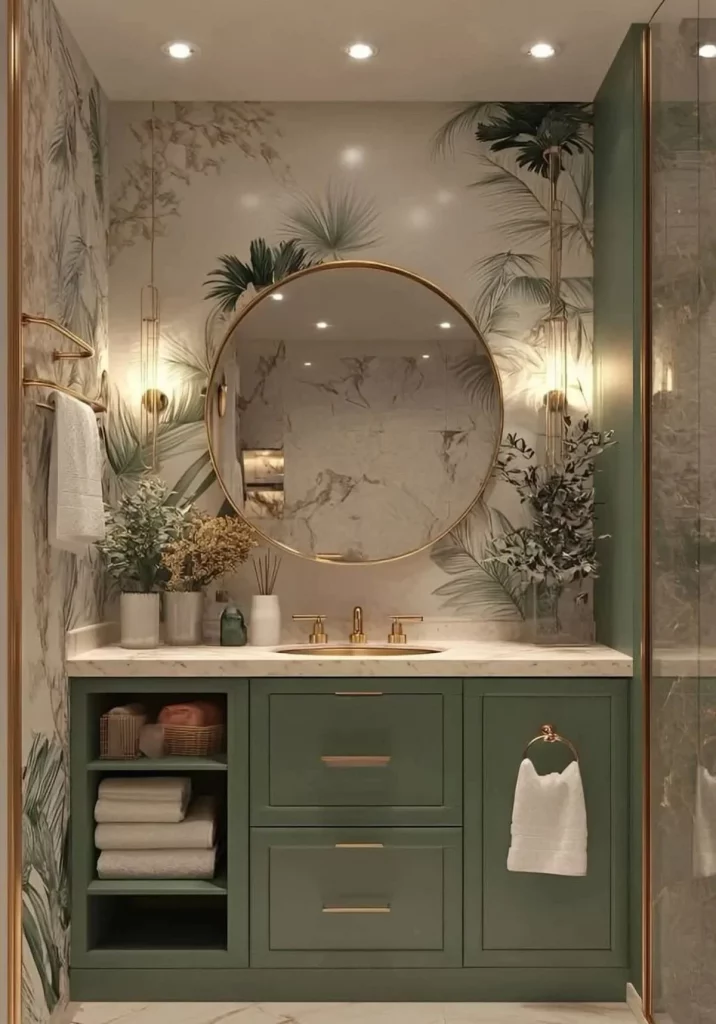
I particularly like the way the vanity combines concealed and open storage. The closed drawers and cabinets hide everyday bathroom items, while the open shelving makes towels immediately accessible and adds a sense of depth. The round mirror also provides a softer shape against the more structured cabinetry, and the warm metallic details connect naturally with the lighting and hardware. The glass shower enclosure at the side keeps the room visually open rather than interrupting the composition.
For a similar look, I would focus on pairing olive cabinetry with one strong patterned surface rather than introducing several competing patterns. In my experience, a large round mirror can also be an easy way to soften a bathroom dominated by straight cabinet lines. The image demonstrates how green can feel sophisticated when it is repeated through cabinetry, wall artwork, and accessories without making every surface identical.
Compact Olive Green Bathroom With Botanical Shower Curtain
This compact bathroom takes a much lighter approach, using soft neutral walls and cabinetry alongside a dramatic green botanical shower curtain. The curtain separates the bathtub from the vanity area and features an oversized leafy pattern in several shades of green. Above the tub, a textured green wall panel adds another layer of color, while the rest of the room remains predominantly white and pale beige. The floating vanity has a clean white countertop and light wood-toned drawers, with a woven basket positioned underneath.
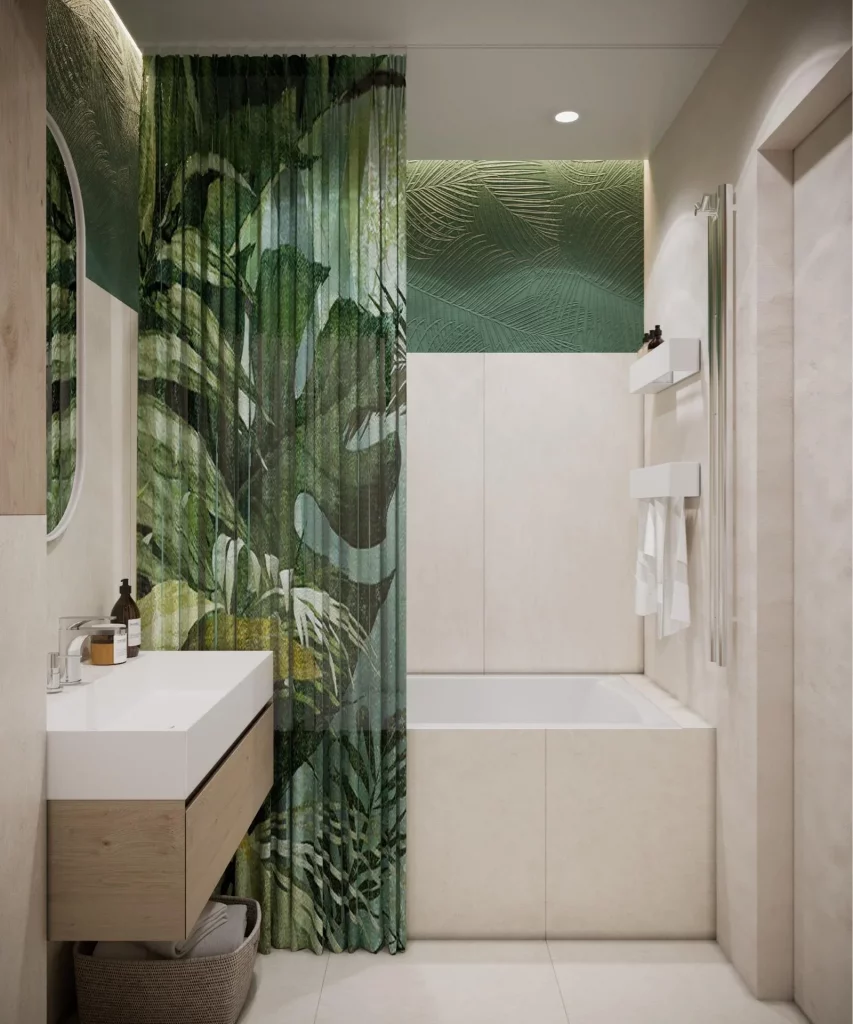
The strength of this design is its flexibility. The green elements are concentrated in specific areas, so the bathroom remains visually airy despite the strong botanical pattern. The shower curtain can also define the bathing zone without requiring a permanent change to the room’s structure. I like the floating vanity because the visible floor beneath it helps maintain a sense of openness, which is particularly useful in a narrow bathroom.
If I were recreating this look, I would treat the shower curtain as the main decorative statement and keep the surrounding finishes restrained. The image shows that a small bathroom does not need every wall to carry color or pattern. A carefully positioned green accent can have a surprisingly strong effect while allowing the white surfaces and light cabinetry to keep the room feeling spacious.
Olive Green Tile Wall With Colorful Decorative Tile Accents
This bathroom uses olive green tile across the bathtub wall and lower surrounding surfaces, creating a strong geometric backdrop. Scattered among the green tiles are decorative patterned tiles in muted blue, terracotta, cream, yellow, and pink tones. The surrounding walls are softer and pale, while a white bathtub and modern white toilet keep the main fixtures visually simple. A small wooden stool beside the tub provides a practical surface for bathroom bottles and accessories, while open shelving on the left holds neatly arranged towels and baskets.
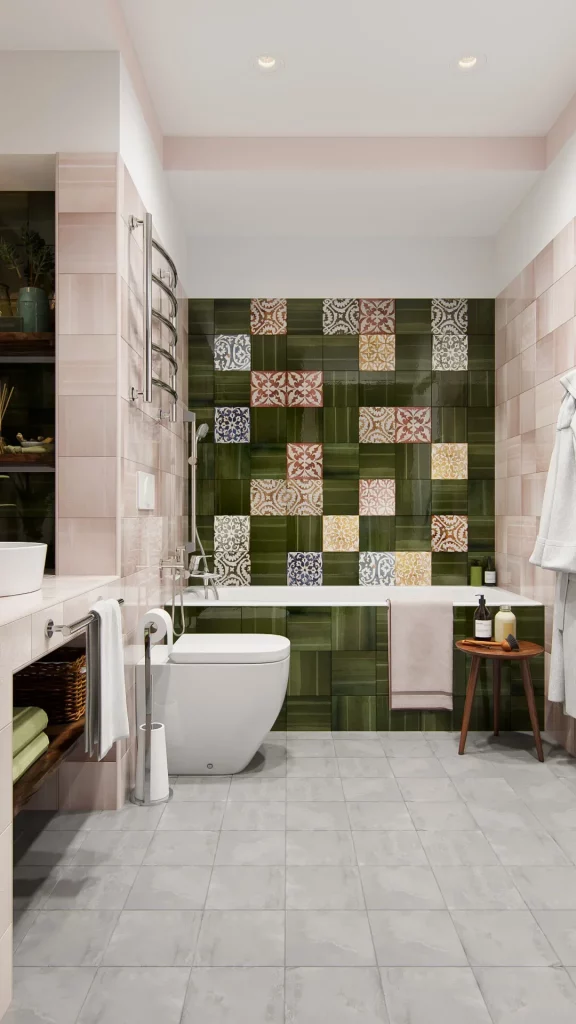
I think the scattered decorative tiles are what give this bathroom its personality. Instead of covering the entire wall with a complicated pattern, the design uses individual patterned pieces against the consistent olive green field. This keeps the composition organized while still making the bathtub area the focal point. The open shelving also makes excellent use of the narrow wall beside the vanity area, providing storage without visually closing in the room.
For me, this is a great lesson in using decorative tile with restraint. If the goal is to achieve a similar effect, the image suggests that one consistent background color can provide enough structure to support several accent patterns. The combination feels especially appropriate for fall because the olive backdrop allows the warmer terracotta, cream, and ochre details to stand out naturally.
Fresh White And Green Bathroom With Sculptural Green Vanity
This bathroom presents a much cleaner contrast between white and green. White wall tile surrounds the bathtub and shower, while olive green detailing frames the upper portion of the room and continues onto the vanity countertop. A simple white vessel sink sits on the green surface, accompanied by a round wall mirror. Above the sink, two stacked ribbed green glass pendant lights introduce a subtle decorative element. On the right, a tall translucent green vase holds twisting branches, adding height and an organic shape to the otherwise streamlined space.
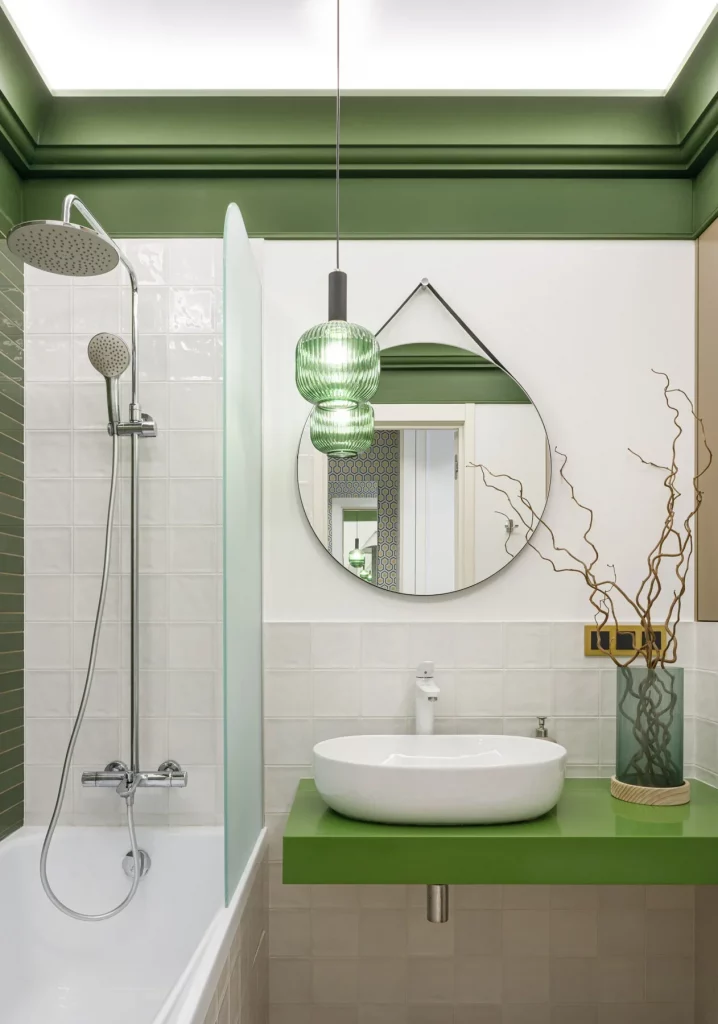
The visual balance here is particularly effective because the green is concentrated around the most important focal points. The green vanity immediately draws attention to the sink area, while the matching upper trim visually connects it to the bathing zone. The white tile prevents the darker color from dominating the room, and the round mirror echoes the rounded shape of the vessel sink and glass lights. I also like the way the tall vase fills the vertical space beside the vanity without cluttering the countertop.
When I look at this design, I am reminded that olive green does not always need to be matte or muted. A glossy or translucent green accent can introduce light and movement while maintaining the overall palette. For a fall 2026 bathroom, I would take inspiration from this controlled approach: choose one or two substantial green elements and let the white surroundings give them room to breathe.
Warm Olive Bathroom With Full-Height Slatted Storage
This bathroom combines soft olive-toned wall tile with warm wood cabinetry and a large full-height storage unit with horizontal slatted doors. The vanity has a white countertop and a fluted front, while the round mirror sits above a clean, minimal sink area. On the left, open shower shelving holds bottles and small bathroom products, making them easy to reach. A bathtub occupies the lower left portion of the room, and the pale floor keeps the overall composition light. The wood tones bring warmth to the olive and cream palette.
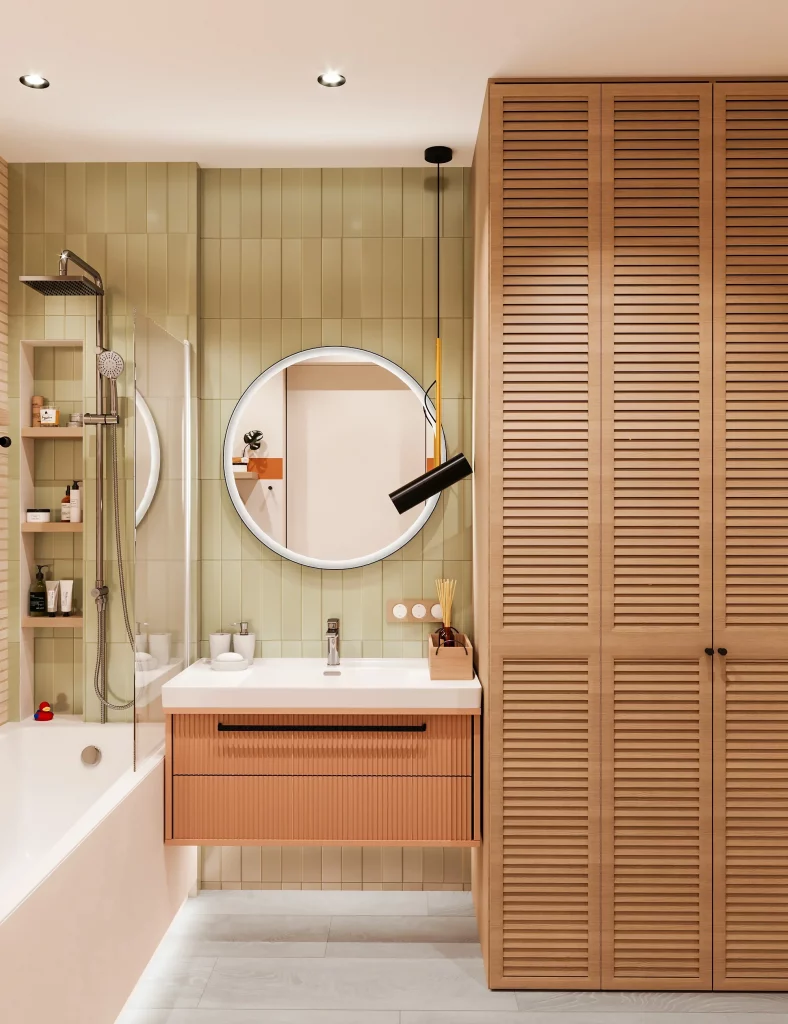
The storage is the standout practical feature for me. The tall slatted cabinet uses vertical wall space efficiently and provides a substantial amount of concealed storage without requiring additional small pieces of furniture. The open shower niches create a convenient place for frequently used products, while the vanity offers another compact storage zone. I also like how the wood cabinetry visually balances the olive walls instead of competing with them.
This image is a good reminder that storage can be an important part of bathroom design rather than something added afterward. If I were planning a similar room, I would prioritize one substantial storage element and make sure its finish complements the green palette. The horizontal slats also introduce texture and repetition, giving the large cabinet a more refined appearance than a completely flat surface would provide.
Botanical Green Bathroom With Patterned Bathtub Wall
This bathroom uses a large botanical pattern as its main visual feature, covering the wall behind the bathtub with oversized leafy imagery in soft green and olive tones. The bathtub itself is white and enclosed by a clean rectangular surround. A simple gray-green shelf runs along the patterned wall for bottles and toiletries. On the left, a pale green vanity with warm wood-toned cabinet fronts continues the natural palette, while a white countertop keeps the sink area fresh and understated. The large mirror and neutral surfaces prevent the botanical wall from feeling too enclosed.
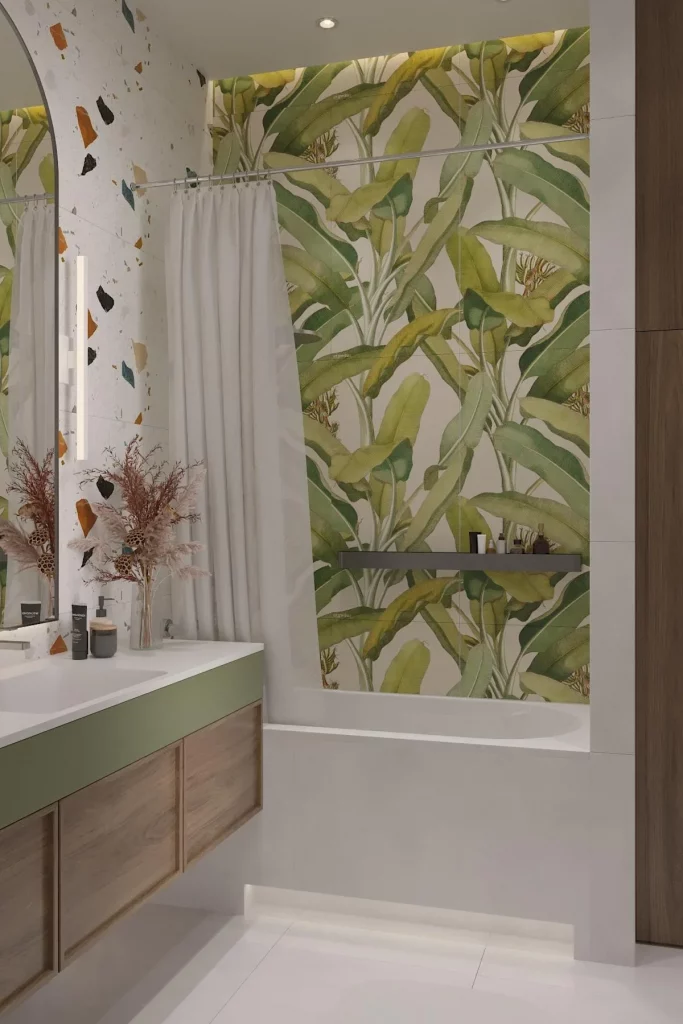
The composition works because the patterned wall establishes a clear focal point while the rest of the room remains relatively restrained. The floating vanity creates visual breathing room underneath, and the narrow wall shelf provides storage without interrupting the large botanical design. I especially like the contrast between the detailed wall and the plain bathtub surround because it gives the pattern enough space to be appreciated.
For a similar result, I would allow one large patterned surface to do most of the decorative work. In my view, the image demonstrates why botanical imagery can pair so naturally with olive green: both introduce an organic quality without requiring numerous accessories. The warm wood-toned vanity fronts also show how a small amount of natural color can make a green-and-white bathroom feel more welcoming.
Elegant Olive Green Bathroom With Fluted Wall Panels
This bathroom takes olive green in a more architectural direction. Large vertical panels cover the wall behind the wall-mounted toilet, with thin dark lines defining each section. The green cabinetry at the vanity continues the same color and features a curved fluted front. A pale stone-look countertop sits above it, while brass-toned fixtures add warmth. The floor has a dramatic dark marble-like pattern, and a circular chandelier with multiple glowing glass spheres hangs overhead. Matching spherical wall lights reinforce the elegant lighting scheme.
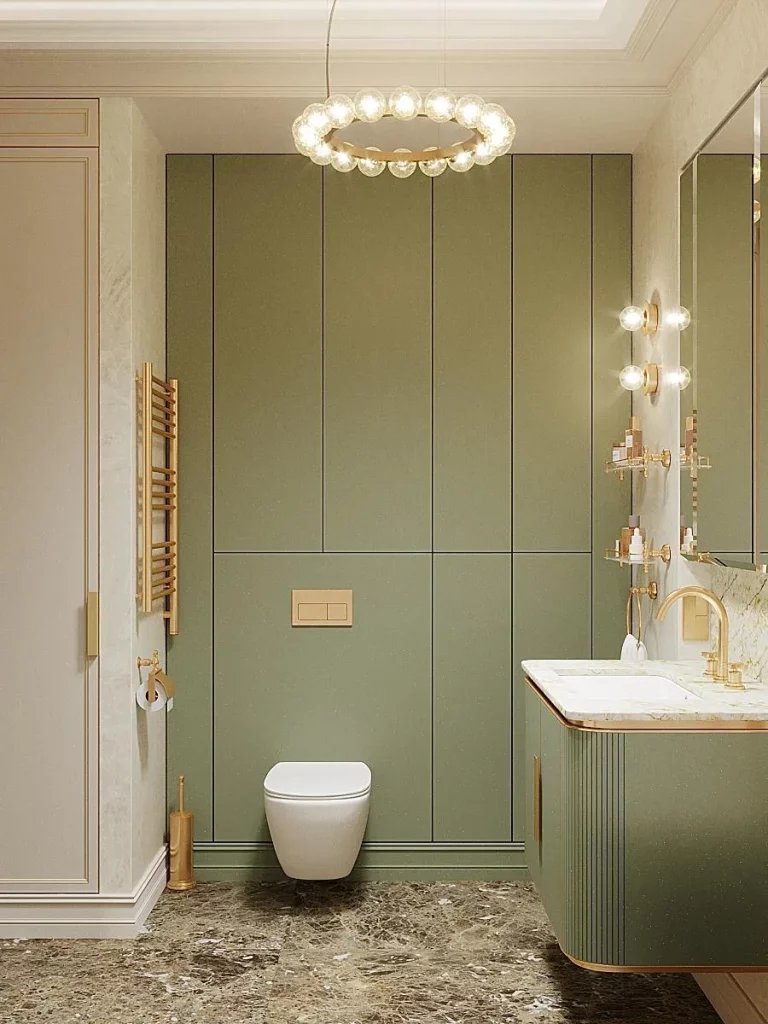
I find the repeated vertical lines especially successful here because they give the compact room a taller, more structured appearance. The fluted vanity introduces texture without relying on a busy pattern, while the marble-look floor adds contrast beneath the calmer green walls. The brass hardware and lighting create another layer of warmth, making the olive color feel refined rather than overly earthy.
This image shows me how powerful repetition can be in a small bathroom. Rather than introducing many unrelated decorative details, the room repeats curves, vertical lines, olive green, and warm metallic accents in several places. If I wanted to recreate the atmosphere, I would concentrate on those same visual relationships and let the architecture and lighting carry most of the decoration.
Moody Dark Green Bathroom With Glass Shower Enclosure
This bathroom moves into a deeper, moodier interpretation of green. Dark green rectangular tiles cover the bathing area and extend around the bathtub, while the ceiling and upper wall treatment continue the dark palette. A clear glass shower screen separates the wet area from the vanity. On the right, a dark blue-green vanity supports a white vessel sink, and a large round mirror with a textured white frame is mounted above it. A narrow open shelving unit on the left provides visible storage for bathroom products. The floor has an irregular pale stone-like pattern that contrasts with the dark walls.
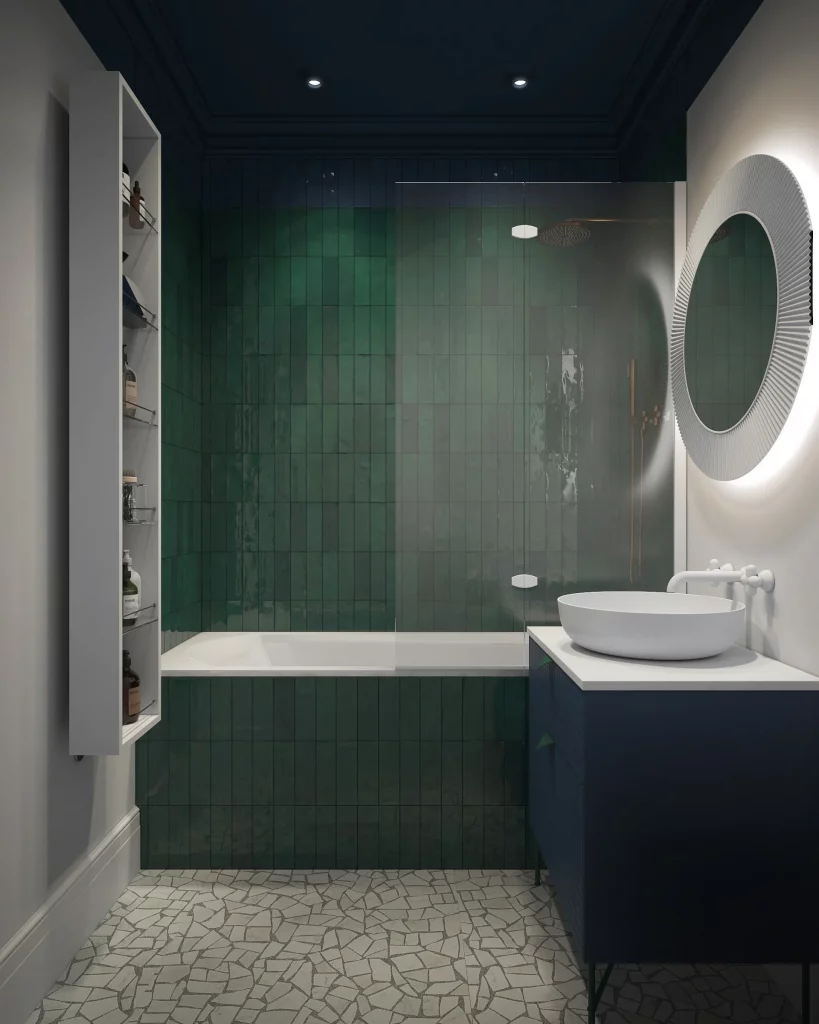
The contrast between the dark green walls and white fixtures is what makes this bathroom work so well. The glass screen preserves the visual connection between the bathtub and vanity, while the open shelving makes use of a narrow vertical space without adding visual bulk. The white sink and mirror frame stand out clearly against the darker background, giving the room a crisp focal point even though the overall atmosphere is intentionally moody.
Personally, I think this is one of the strongest examples in the collection for anyone who wants an autumn-inspired bathroom with a dramatic character. The key is contrast. Dark green works beautifully here because the sink, mirror, floor, and surrounding white wall elements provide enough visual relief. I would resist adding too many additional colors and instead allow the existing green, white, and blue-green combination to remain the main story.
Classic Cream Vanity With Deep Green Tile Backsplash
The final bathroom offers a softer interpretation of olive green by combining a cream-colored vanity with a deep green glossy tile backsplash. The vanity has traditional framed doors and drawers with small round brass-toned pulls, while the countertop is a pale stone-like surface. A slim mirror with a warm metallic frame sits above the sink, and a matching brass-toned faucet adds a subtle accent. The green tile extends across the wall behind the vanity, creating a strong horizontal band of color against the warm cream walls. A sculptural neutral vase and neatly folded towels complete the countertop styling.
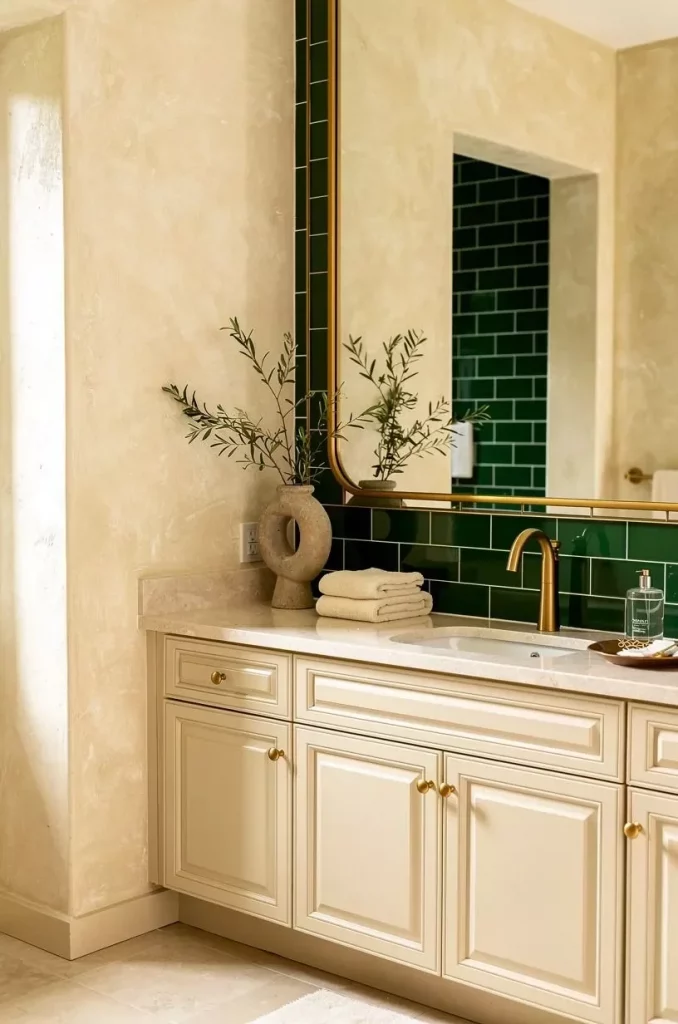
I like the balance between the classic vanity and the more contemporary glossy green tile. The cream cabinetry keeps the bathroom light and warm, while the deep green backsplash gives the sink area a clear focal point. The brass details connect the mirror, faucet, and cabinet hardware, creating consistency without overwhelming the simple composition. Even the folded towels contribute to the calm, organized appearance of the space.
For me, this is an especially approachable way to bring olive or deep green into a bathroom. Instead of committing to green cabinetry or covering every wall, the color can be concentrated behind the vanity and allowed to become the main decorative feature. The image also shows how warm cream and brass can soften a deeper green, creating a bathroom that feels polished, comfortable, and particularly well suited to the richer mood of fall.
Olive Green Tile With Warm Wood and Sculptural Lighting
This bathroom immediately draws me in with its deep olive green tiled walls, warm wood vanity, and dark glass shower enclosure. A floating vanity with two wide drawers provides generous storage while keeping the floor underneath visually open. Above it, a large wood-framed mirror reflects the unusual pendant light made from a vertical stack of glowing round forms. A terracotta-colored vessel sink, matching towel, neutral ceramics, and a simple branch arrangement add warmth against the green backdrop, while the white freestanding bathtub softens the darker palette.
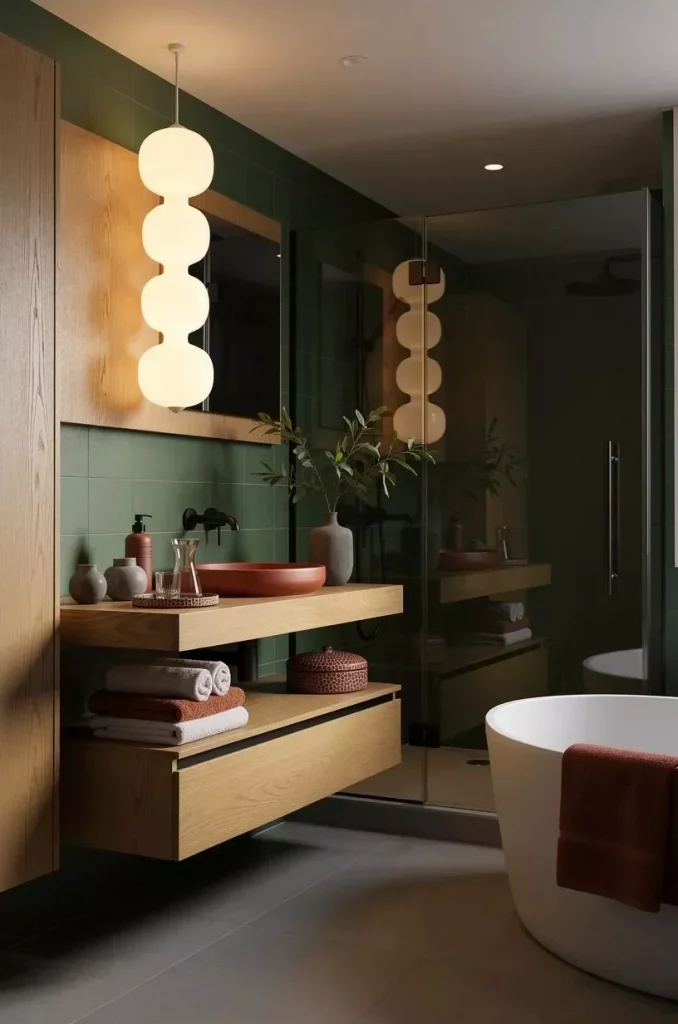
I like how the room balances several strong materials without allowing any single element to dominate. The olive tile creates a continuous backdrop, while the natural-looking wood adds warmth and makes the green feel more approachable. The floating vanity is especially practical because it offers storage without creating a bulky visual block at floor level. The glass shower enclosure also keeps the compact composition open and allows the dark green tile to continue visually through the room.
For me, this is one of the strongest approaches to an olive green bathroom for fall because the palette feels warm rather than strictly seasonal. I would use the same principle when recreating the look: let olive green provide the main visual foundation, then introduce warm wood and small terracotta accents to keep the room comfortable. The sculptural pendant is another lesson here; a distinctive light can become part of the design rather than simply serving a practical purpose.
White Double Vanity With Geometric Green Tile
This bathroom takes a much lighter approach, pairing a crisp white double vanity with two matching arched mirrors and a geometric backsplash in several shades of green. The vanity has four large drawers with slim gold-toned handles, while the two white vessel sinks sit above a clean white countertop. Gold-toned faucets and wall-mounted fixtures repeat the warmth of the hardware. Round wall sconces flank the mirrors, and the reflection reveals a black-framed glass shower enclosure.
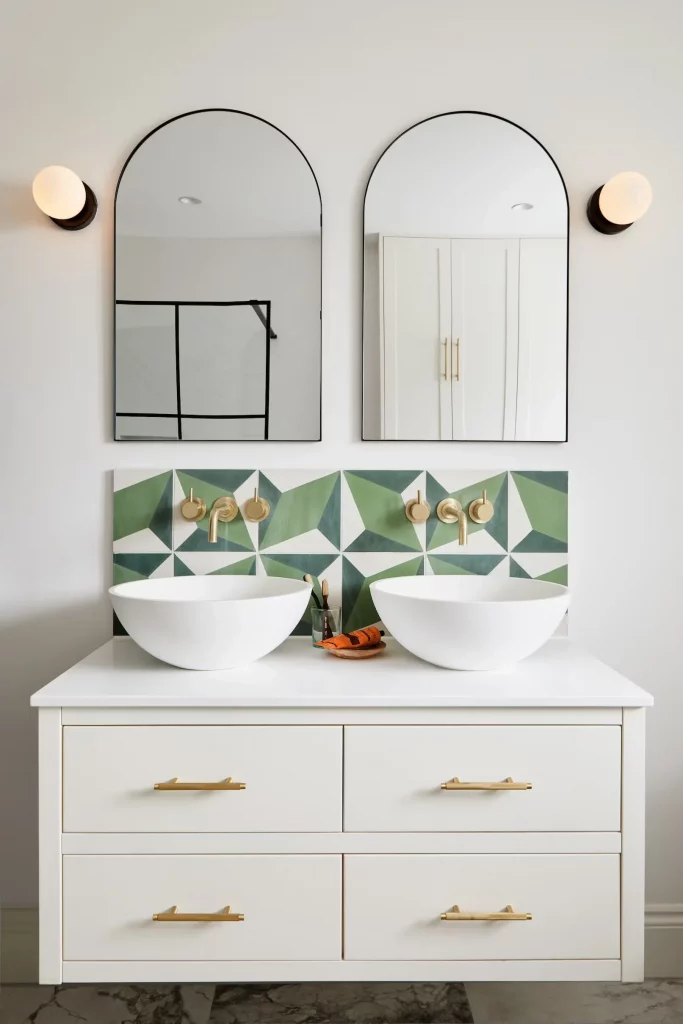
What works especially well for me is the contrast between the simple white cabinetry and the patterned green backsplash. The geometric tile becomes the focal point without overwhelming the room because everything around it remains restrained. Two sinks make the vanity practical for a shared bathroom, while the separate mirrors give each side its own defined zone. The arched shapes also introduce softness against the straight lines of the vanity and rectangular tile pattern.
I would take inspiration from this image if I wanted olive green to feel fresh and graphic rather than dark. Instead of covering every wall, I could concentrate the color and pattern behind the vanity, allowing white surfaces to provide visual breathing room. The repeated gold details are also useful because they connect the mirrors, faucets, and cabinetry into one cohesive composition.
Deep Green Vanity With Classic Black-and-White Flooring
Here, a deep green vanity stretches across the bathroom beneath a white countertop with two integrated sinks. Matching tall cabinetry continues the green finish on the left, creating a strong sense of built-in storage. Slim black-framed mirrors sit above the sinks, while long horizontal light fixtures add a polished touch. The floor introduces a highly graphic black-and-white pattern, and a black-framed glass partition on the right gives the bathroom an airy, open quality.
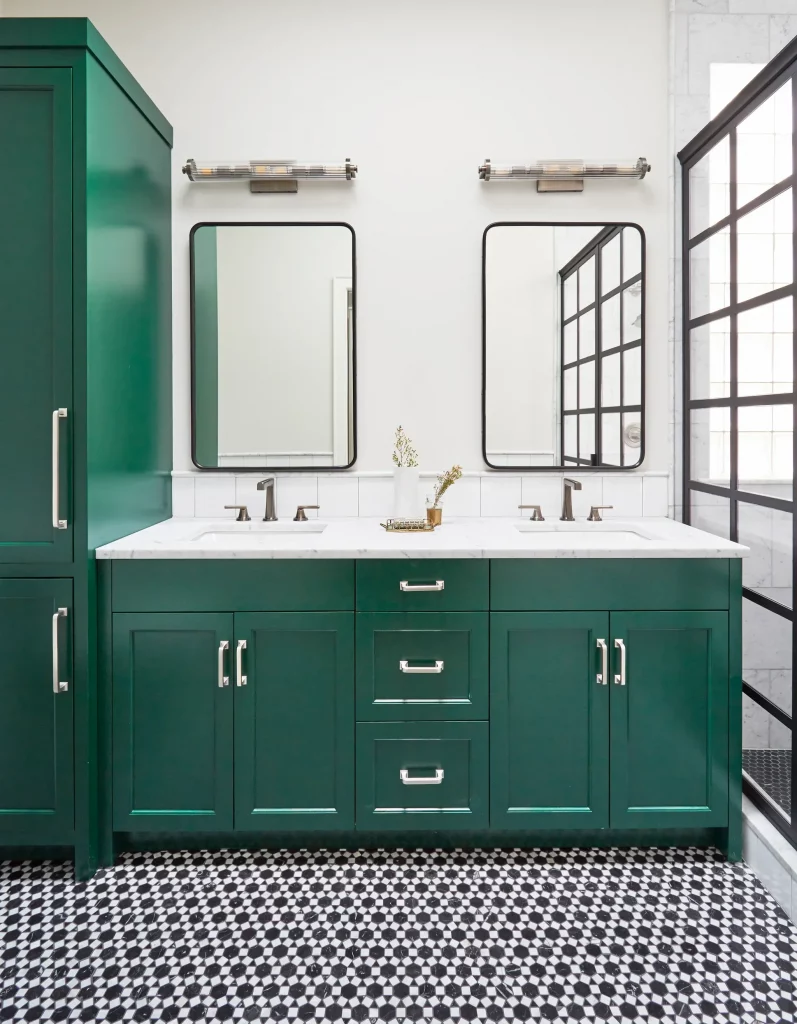
I especially like the way the cabinetry provides such a large amount of enclosed storage while keeping the countertop relatively uncluttered. The white countertop creates a clean break between the saturated green cabinetry and the patterned floor. Because the walls remain predominantly white, the dark green feels intentional rather than excessive. The glass partition is another smart choice because it separates the wet area without visually closing off the room.
For a similar look, I would keep the strongest green on cabinetry and allow the floor or another architectural feature to provide the pattern. This image reminds me that an olive or deep green vanity can function almost like a piece of furniture, giving the bathroom a distinctive identity while remaining practical. I would also repeat one dark finish, such as the black framing, in several small areas so the room feels connected.
Soft Green Botanical Wallpaper With Decorative Mirrors
This bathroom shifts into a much softer interpretation of green, with a pale green botanical wallpaper covering the walls behind a long white vanity. The wallpaper features delicate branches, birds, and white blossoms, creating an intricate backdrop. Two ornate arched mirrors with warm metallic frames sit above the vanity, while the cabinetry combines white doors with textured woven-looking inset panels. A decorative vase with pink flowers stands between the sinks, adding another gentle color accent.
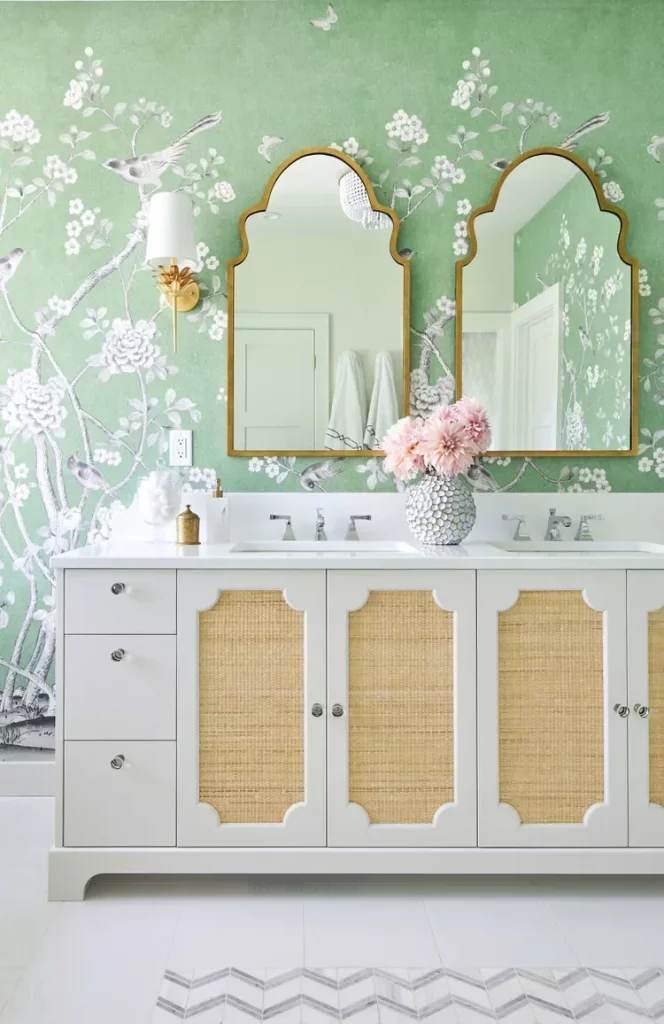
The proportions make this vanity particularly appealing to me because the long cabinet provides substantial storage for a shared bathroom. The white cabinetry keeps the room feeling light even though the wallpaper is visually detailed. I also like the way the mirrors echo the decorative quality of the wallpaper instead of competing with it. The result feels layered, but the white floor and countertop keep the overall composition controlled.
If I were adapting this idea for fall, I would focus on the relationship between the muted green background and the warm metallic mirror frames. The image shows that green does not have to be deep or saturated to influence the atmosphere of a room. A patterned green wall can become the main decorative feature while simpler cabinetry and fixtures provide the practical foundation.
Olive Vertical Tile Around a Compact Tub and Shower
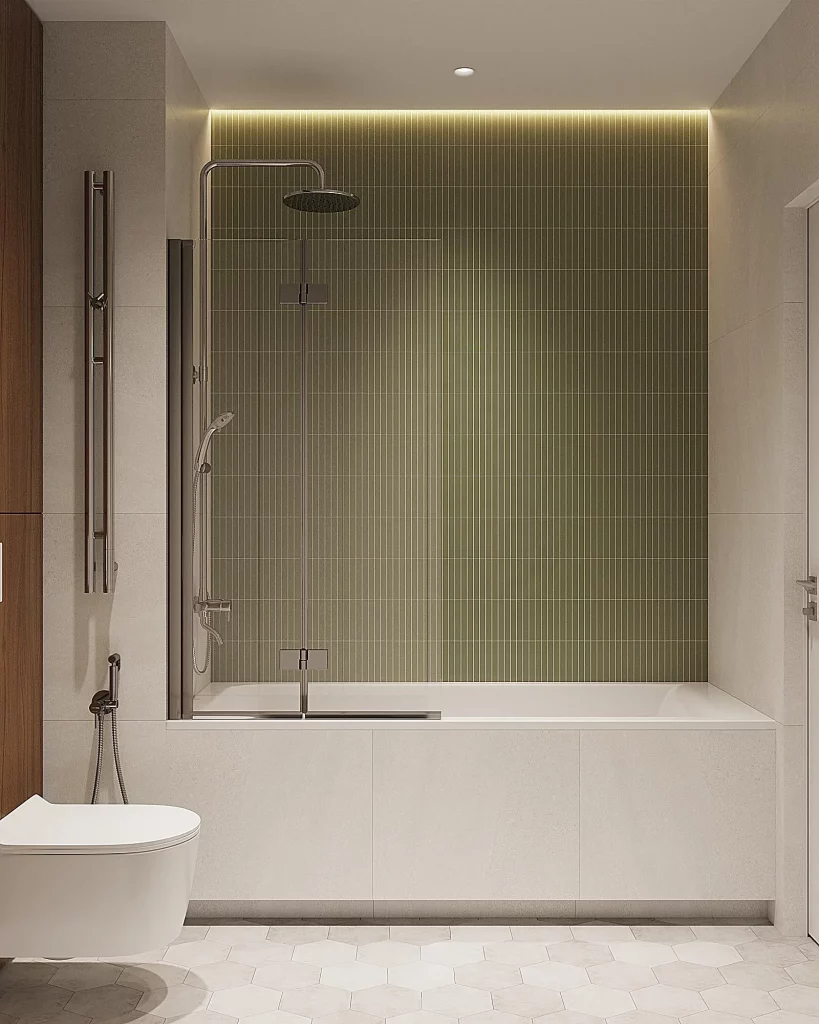
This bathroom uses olive-toned vertical rectangular tiles across the main shower wall, creating a strong linear backdrop for the white bathtub. The space also includes a large oval mirror with a dark frame, a white vessel sink, a pale stone countertop, and a floating wood shelf beneath the vanity. Black shower hardware provides a crisp contrast against the green tile, while large pale stone surfaces cover the adjacent walls and floor.
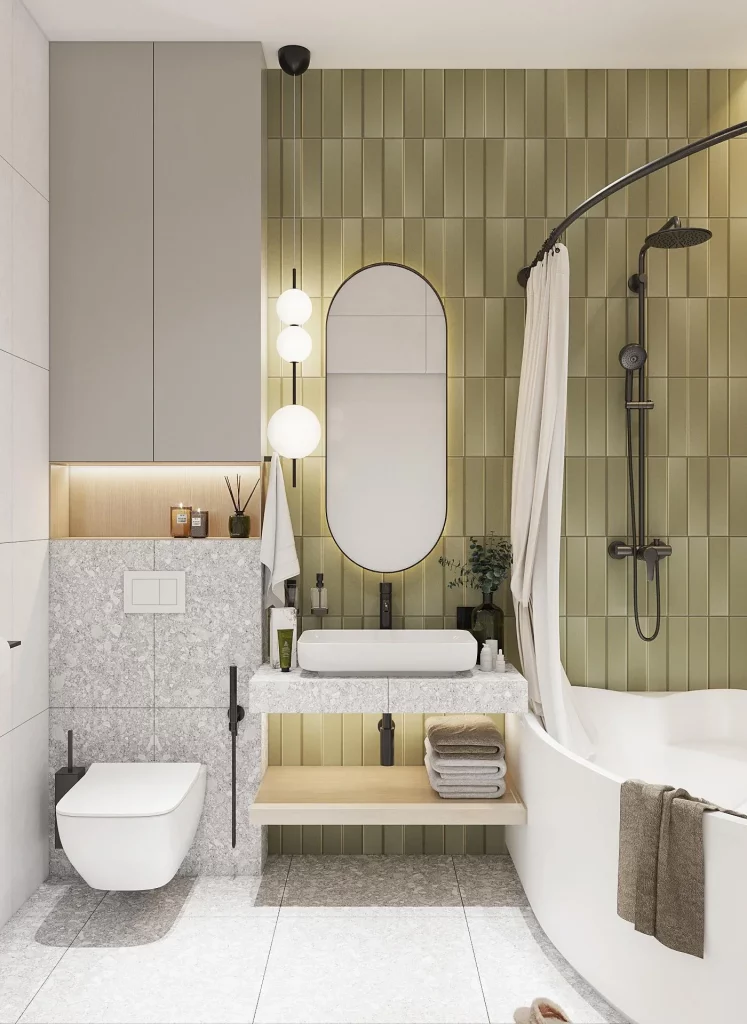
I find the vertical tile especially effective because it emphasizes the height of the bathroom and gives the compact room a more structured appearance. The floating shelf adds useful open storage without crowding the floor, and the pale wood tone introduces warmth beneath the cooler stone countertop. The white bathtub and sink provide a clean visual counterpoint to the olive wall, making the green feel sophisticated rather than overpowering.
For a similar bathroom, I would use a vertical tile format when I want a green feature wall to feel architectural. I also like the restraint shown here: the green is concentrated in one major zone, while stone, white ceramics, and wood provide balance. The black fixtures are another practical design detail because they are visually clear against the olive background and reinforce the room’s clean lines.
Glossy Green Tile With a Stone Vessel Sink
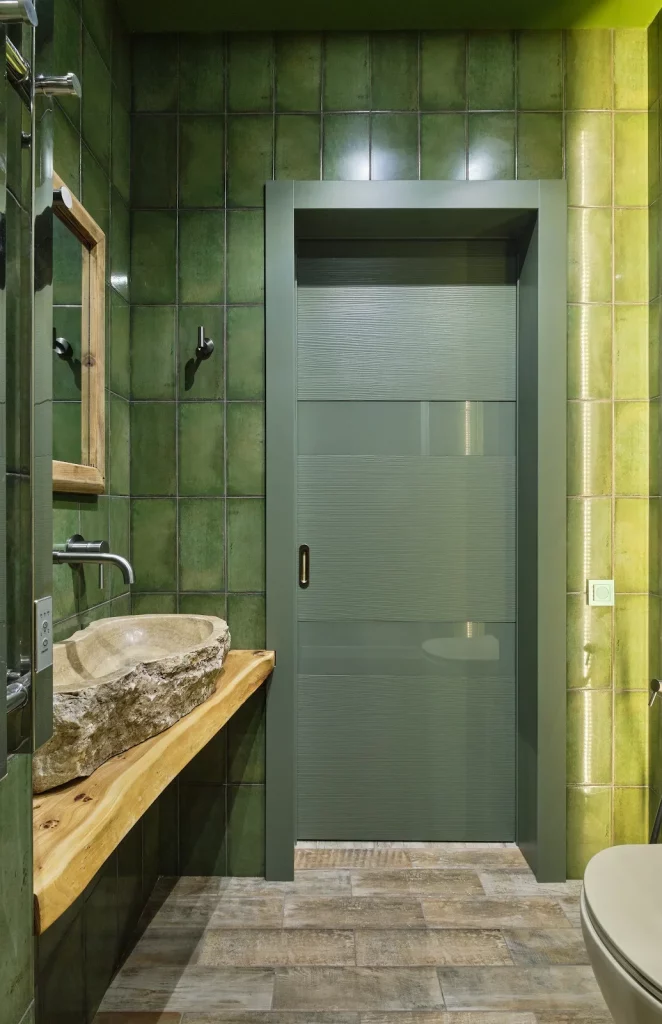
This compact bathroom embraces a richer, more textural version of green with glossy square tiles covering the walls. On the left, a natural stone vessel sink sits on a thick wood countertop, creating a striking contrast with the green tile. A framed mirror reflects the tiled wall, while a muted green frosted-glass door occupies the center of the room. The floor uses a weathered-looking rectangular tile that adds another layer of texture.
The strongest feature for me is the contrast between the irregular stone basin and the orderly grid of glossy wall tiles. The combination creates visual interest without requiring a lot of additional decoration. The wood countertop also warms the green surroundings and gives the sink area a substantial, handcrafted appearance. The frosted door keeps the compact space visually private while allowing light to pass through its translucent surface.
I would approach this design by choosing one highly textured element, such as the stone basin, and letting the surrounding green tile act as a calmer background. In a small bathroom, this is a useful strategy because the wall finish can provide most of the personality while the number of separate accessories remains limited. The mix of glossy tile, stone, wood, and translucent glass also shows how different surfaces can make a small room feel thoughtfully designed.
Sage Green Vanity With Warm Terracotta and Graphic Tile
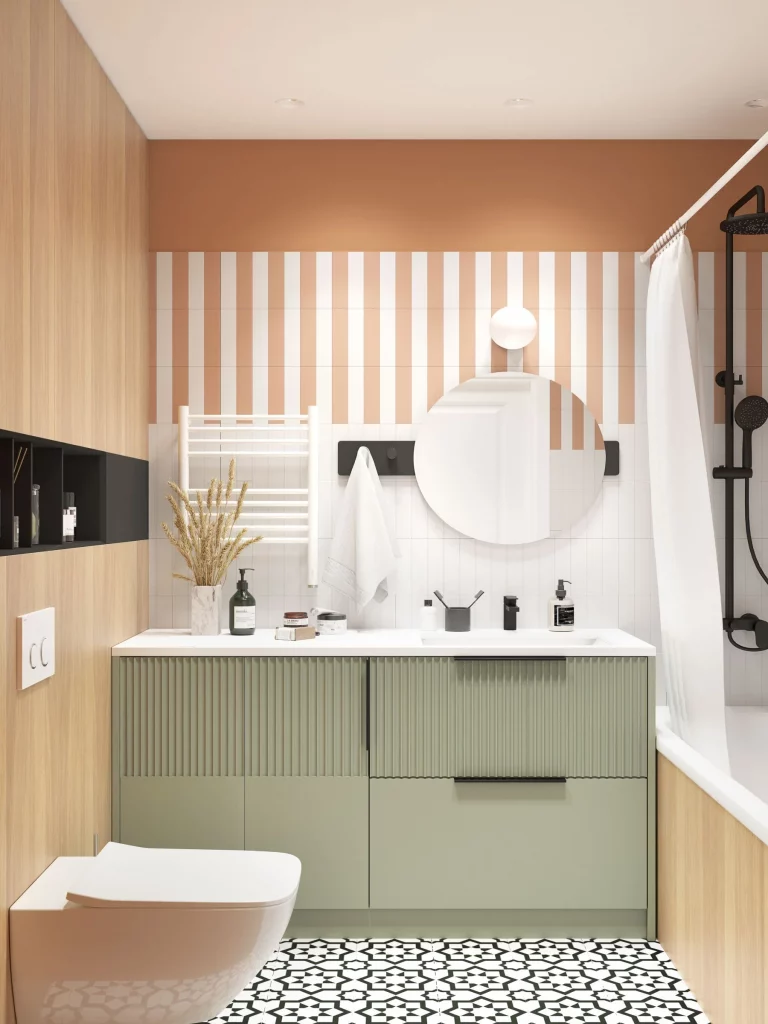
This bathroom combines a muted sage-green vanity with warm terracotta tones and a striking patterned floor. The vanity has vertically ribbed upper drawer fronts and smoother lower panels, topped with a white countertop and rectangular sink. Behind it, white wall tile is interrupted by vertical terracotta-and-white stripes, while the upper wall is painted a warm terracotta shade. Light wood cabinetry frames the room, and black details appear in the open shelving, shower hardware, and wall-mounted towel rail.
I like the layered palette because the green is not isolated; it is balanced by warm terracotta, pale wood, white, and black. The ribbed vanity adds texture without needing additional decoration, while the patterned floor gives the lower part of the room a strong graphic identity. The open black shelving also provides accessible storage and creates a useful visual connection with the shower fittings.
For me, this image is a good reminder that olive and sage greens can work beautifully with warm earth tones. If I wanted to reproduce the atmosphere, I would keep the cabinetry color muted and allow one warm accent color to appear in the wall or tile. The key is to repeat each major finish enough to make it feel intentional, as this bathroom does with its wood, black details, white surfaces, and warm terracotta elements.
Olive Green Bath Wall With Freestanding Tub
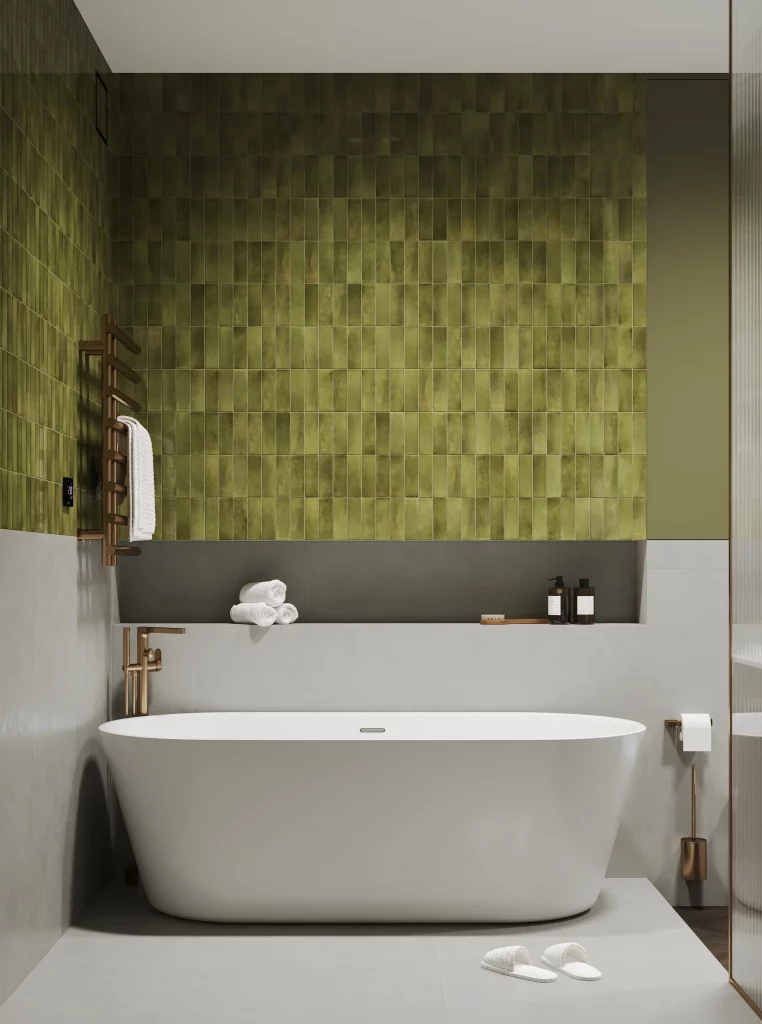
This bathroom places a large freestanding white bathtub in front of a wall covered with small olive green rectangular tiles. The green tile extends across the main wall and continues onto the left side, while a darker horizontal band separates it from the lower light-colored wall treatment. A bronze-toned towel warmer and matching bath fixtures add warmth, and the white tub provides a simple sculptural centerpiece. The floor and surrounding walls remain pale, allowing the green tiled section to dominate the composition.
I think the layout works because the bathtub is given a clear focal position without competing with too many other elements. The olive tile creates a defined zone behind it, while the lighter lower walls prevent the room from feeling visually enclosed. The towel warmer is both practical and decorative, and its warm metallic finish complements the green rather than introducing a harsh contrast.
This is an approach I would recommend when someone loves olive green but does not want to commit to a fully green bathroom. A single tiled wall can create the atmosphere of the entire room while leaving the remaining surfaces neutral. I also like the idea of pairing a saturated green with a simple white bathtub because the contrast keeps the overall look calm and contemporary.
Dark Green Botanical Wall With Built-In Storage
This bathroom takes green into a deeper, more atmospheric direction. Dark green wall surfaces surround a white wall-mounted toilet and bidet, while a botanical mural introduces delicate pale plant-like forms across the main wall. Built-in open niches on the right provide storage for bottles, and a white bathtub sits farther into the room beneath a window with a neutral shade. Dark trim outlines the upper edges of the walls, while a large light-colored rug softens the floor.
I like the way the wall-mounted sanitary fixtures leave more visible floor beneath them, helping the bathroom maintain a clean appearance despite its dark palette. The recessed shelving is particularly practical because it keeps everyday products organized without adding freestanding storage furniture. The botanical wall treatment also creates a strong focal point while the surrounding green surfaces make the different parts of the bathroom feel connected.
For a fall bathroom, this is one of the moodier green directions I would consider. The image shows how dark green can feel elegant when it is paired with white fixtures and carefully controlled storage. I would keep the strongest decorative pattern concentrated on one wall, as shown here, and let the remaining green surfaces provide continuity rather than competing for attention.
Deep Green Bathroom With Botanical Artwork and Concealed Appliances
The final bathroom combines deep green wall cabinetry and surfaces with a large botanical artwork panel above the toilet area. The artwork depicts delicate pale stems and foliage against the green background, creating a nature-inspired focal point without covering every surface with pattern. A wall-mounted toilet and bidet sit beneath it, while recessed shelves beside the bathtub provide storage for toiletries. On the far left, stacked laundry appliances are integrated into the cabinetry, making the room highly functional as well as decorative.
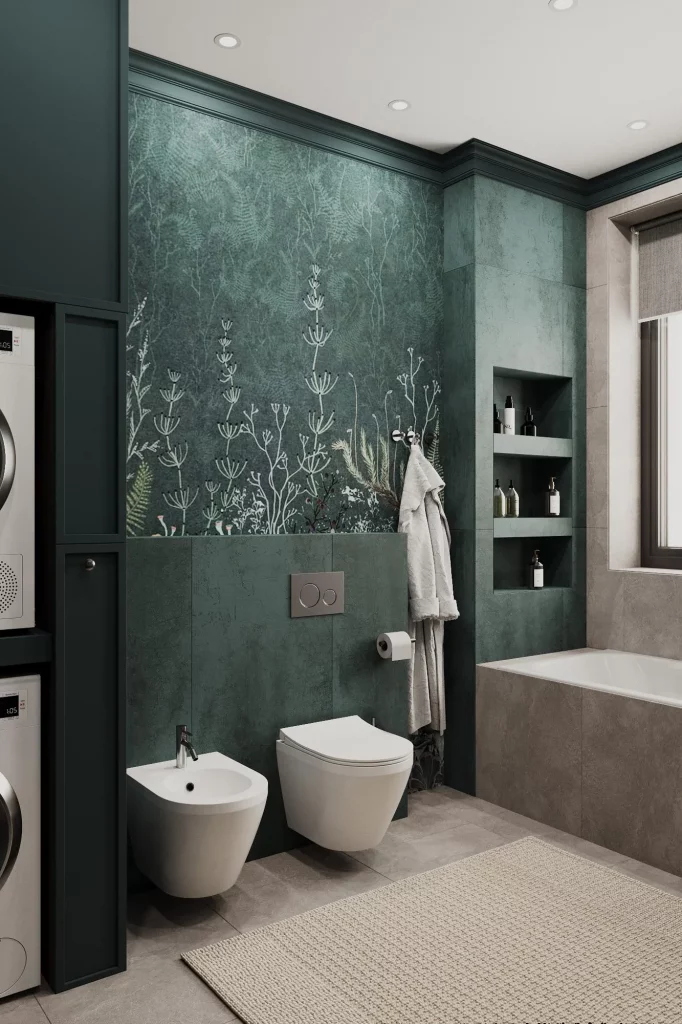
What stands out to me most is the efficient use of space. The laundry appliances are incorporated directly into the tall cabinetry, while the recessed shelves take advantage of otherwise unused wall depth. The bathroom also keeps the fixtures visually simple, allowing the green surfaces and botanical panel to carry the personality. A neutral bathtub and pale floor provide enough contrast to prevent the deep green from becoming too visually dense.
I would take this image as inspiration for a bathroom where storage and utility need to coexist with a strong design concept. The integrated laundry area is especially practical because it keeps bulky appliances from visually dominating the room. For a similar fall-ready look, I would concentrate on a deep green backdrop, one carefully selected botanical feature, and concealed or recessed storage so the room retains the calm, organized quality shown here.
Soft Olive Green Tiles With Classic White Bathroom Details
The first bathroom uses a soft olive green tile across the lower portion of the walls, while the upper walls are finished in large creamy white tiles. I immediately notice the decorative horizontal border separating the two surfaces, adding a traditional detail without overwhelming the room. A white vanity with multiple drawers sits beside the shower, and the large framed mirror reflects the towel warmer and tiled walls. Yellow towels provide a small warm accent against the restrained green-and-white palette.
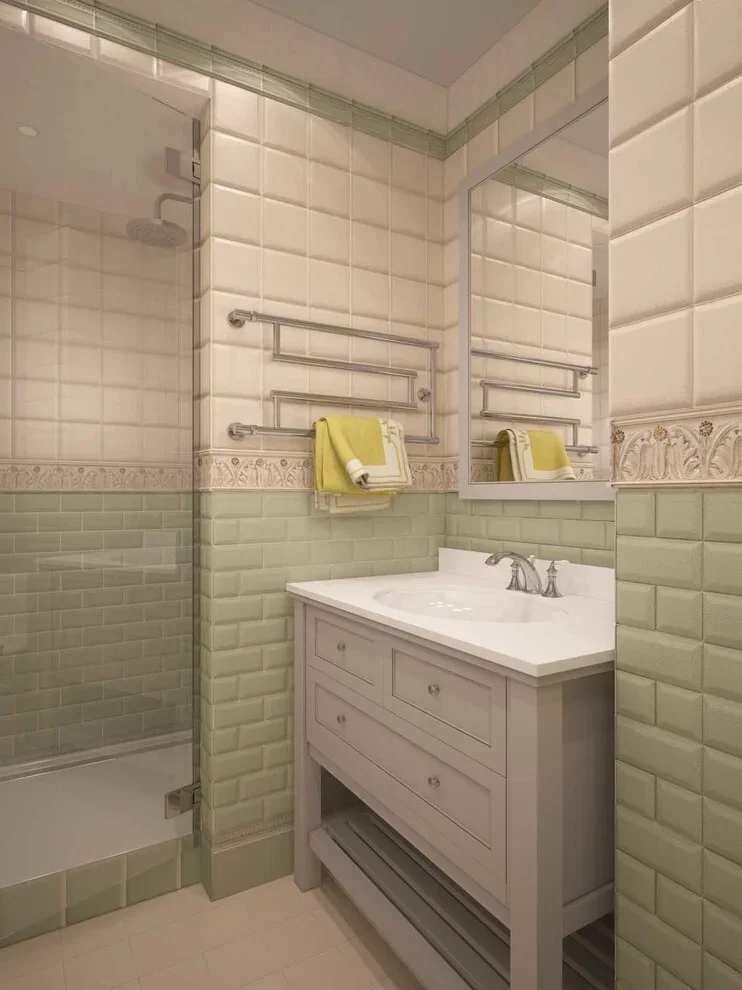
I think this layout works particularly well because the darker green is kept lower on the walls, making the bathroom feel grounded while the lighter upper section keeps the compact space visually open. The vanity provides substantial closed storage, and the open lower shelf creates a practical place for additional towels. The wall-mounted towel warmer is also positioned conveniently near the vanity and shower area, making the arrangement feel thoughtfully planned.
For a similar look, I would combine muted olive green tiles with warm white tiles rather than using a single color throughout the entire room. The decorative border shown here is especially effective because it creates a clear transition between the two finishes. I also like the restrained use of color in the accessories; the yellow towels add personality without competing with the green tile.
Deep Green Wall With Arched Mirror And Natural Wood Vanity
This bathroom takes a much stronger approach to green, with a deep olive-green wall extending across the main vanity area. A large arched mirror becomes the focal point, with concealed lighting around its curved edge creating a soft halo against the wall. The vanity combines a natural wood drawer front with a black metal frame and open lower shelving. White wall tiles and a patterned white floor balance the darker green, while a freestanding white bathtub sits at the left.
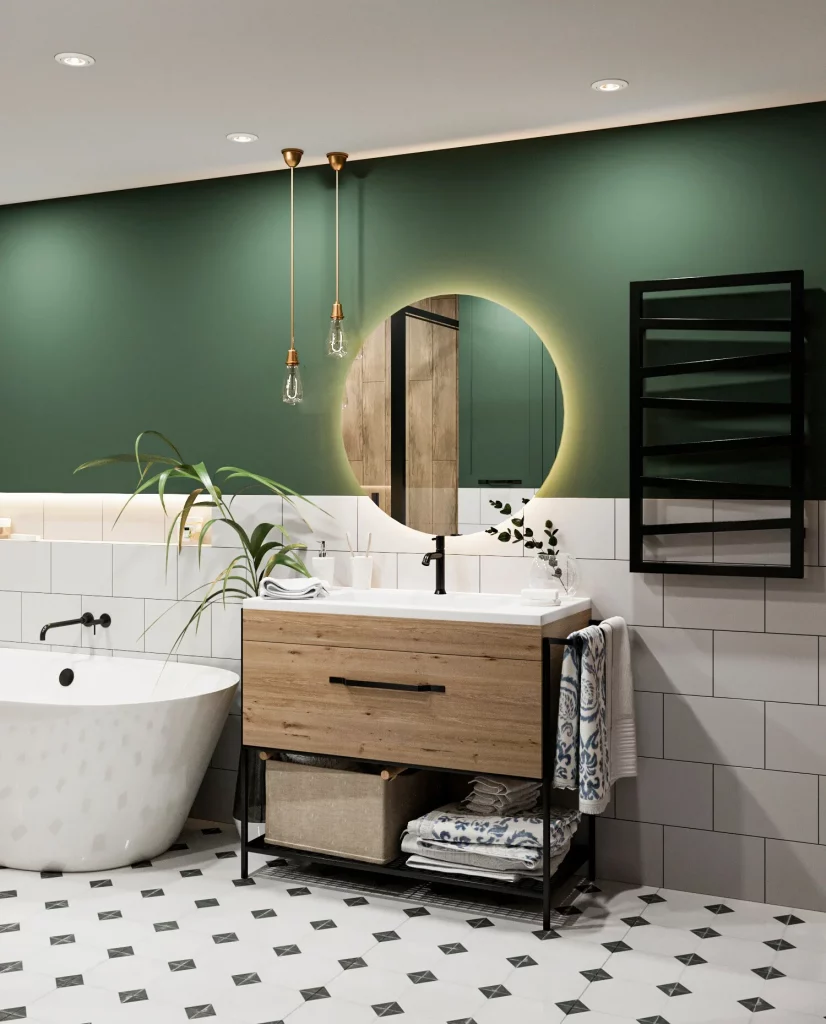
I particularly like the contrast between the solid green wall, warm wood vanity, crisp white surfaces, and black metal details. The open frame underneath the vanity keeps the furniture from looking visually heavy, while the lower shelf provides accessible storage for folded towels and a basket. The freestanding bathtub also gives the room a comfortable focal point without requiring additional decorative furniture.
If I were recreating this atmosphere, I would let one large surface carry the deeper olive tone and keep the surrounding finishes much lighter. The curved mirror is another detail worth borrowing because its shape softens the strong horizontal lines of the tiles and vanity. Warm pendant bulbs and black fixtures reinforce the sophisticated character already visible in the room.
Monochromatic Olive Vanity With Sculptural Round Mirrors
Here, olive green appears across the vanity cabinetry and surrounding walls, creating a beautifully cohesive monochromatic effect. The vanity has clean flat fronts with slim warm-toned edging, while a white countertop provides a crisp visual break. Above it, two round mirrors are arranged vertically within an elongated curved metal frame. A textured white wall panel behind the mirrors introduces a subtle surface contrast, while the floor remains a pale neutral marble-like finish.
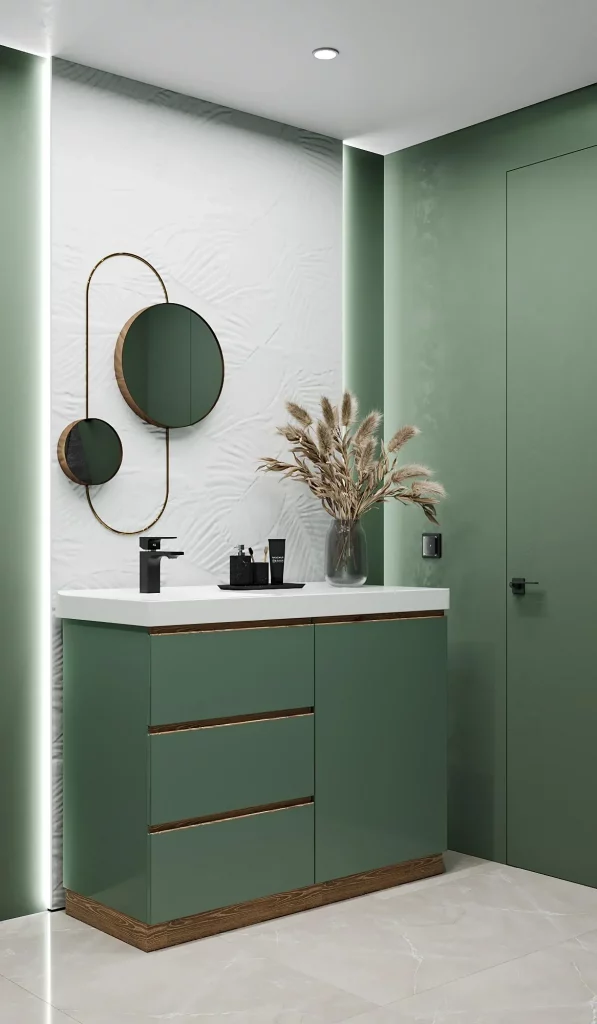
This arrangement works because the cabinetry, walls, and door are visually connected, making the bathroom feel unified rather than fragmented. The generous vanity offers both drawers and cabinet storage, and the white countertop keeps the green from becoming too dense around the sink. I also find the paired circular mirrors practical as well as decorative because they create visual interest while maintaining a simple, uncluttered composition.
For Fall 2026, I would take inspiration from this restrained approach if I wanted an olive green bathroom that felt contemporary but not overly complicated. Keeping most of the cabinetry and walls in closely related green tones allows the unusual mirror shapes and textured white backdrop to stand out naturally. Warm edging on the vanity is another subtle detail that makes the green feel softer and more dimensional.
Dark Green Bathtub Against Dramatic Green Veined Marble
This bathroom turns olive green into a rich statement through a dark green freestanding bathtub positioned directly in front of an expansive green-and-white veined marble wall. The same expressive stone continues onto the floor around the tub, creating a strong visual connection. Tall white pendant lights hang to one side, while a polished gold faucet introduces a warm metallic contrast. The glossy tub reflects the surrounding surfaces and becomes the unmistakable centerpiece of the room.
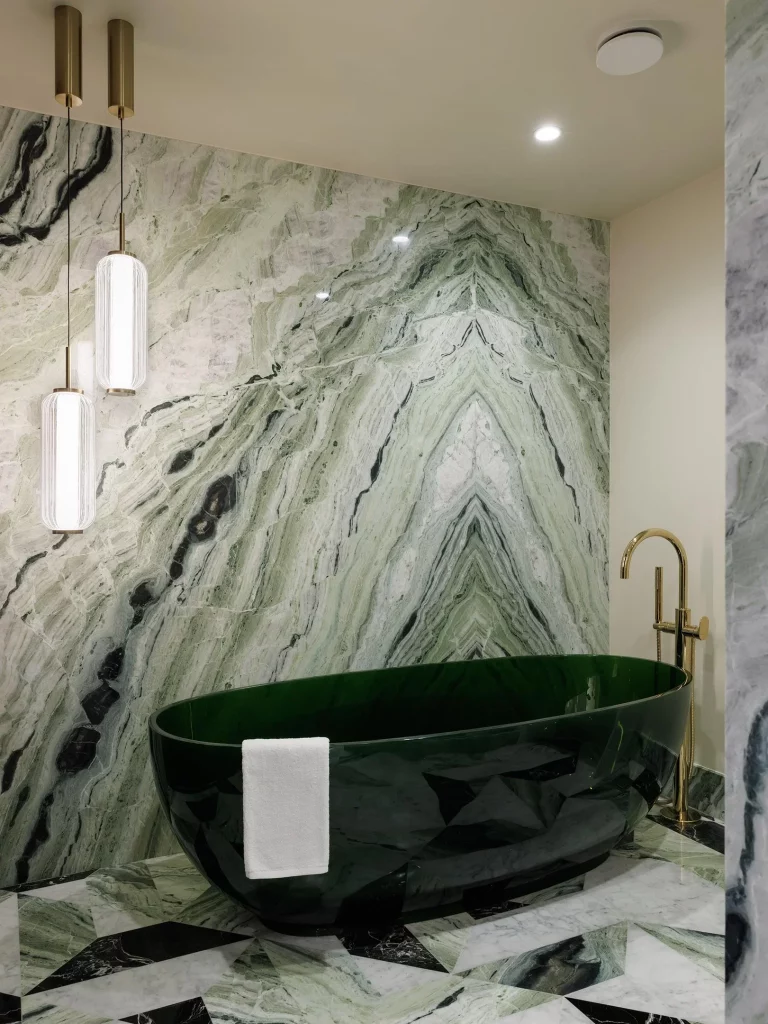
I like how the composition is intentionally simple because the marble and bathtub already provide plenty of visual character. The open space around the tub allows its curved silhouette to remain prominent, while the large-scale stone pattern gives the wall a naturally decorative quality. The gold floor-mounted faucet adds function without interrupting the strong relationship between the tub and marble backdrop.
In my view, this is a good example of why olive green does not have to mean soft or pale. A deeper green can create a much moodier bathroom when it is paired with expressive stone and controlled lighting. If using a similarly bold combination, I would keep the major fixtures uncomplicated so the marble pattern and sculptural bathtub remain the stars of the room.
Olive Botanical Pattern Behind A Compact Wood Vanity
This bathroom introduces olive green through a botanical-style patterned wall behind the vanity and along the adjacent wall. The pattern combines muted green, pale neutral, and soft yellowish details against a light background. A warm wood vanity sits beneath a white sink, while an open wood-framed storage cabinet above provides shelves and enclosed compartments. The shower and bathtub occupy the left side, creating a practical arrangement within the narrow room.
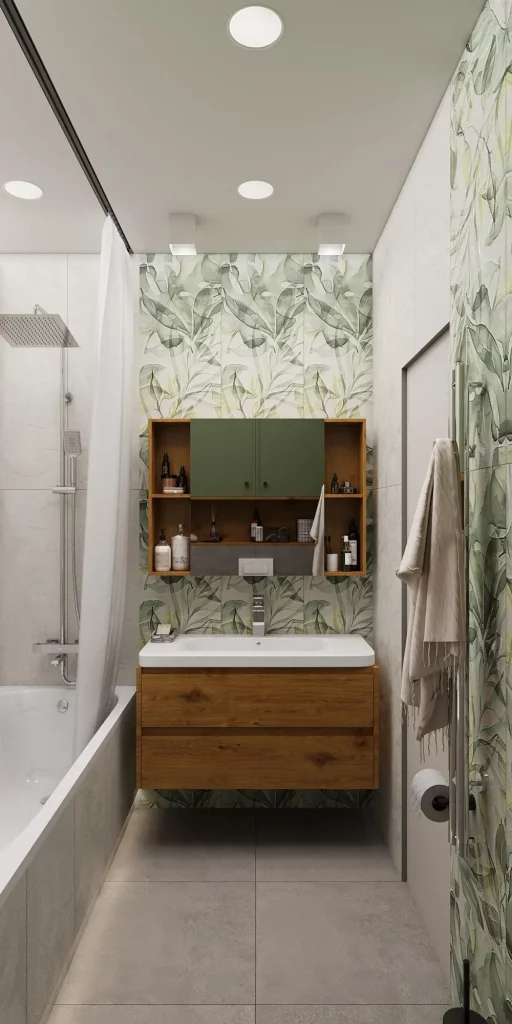
The storage solution is one of my favorite features here because the open shelving keeps everyday bathroom products accessible while the central closed cabinets provide a cleaner visual zone. The wood cabinetry also works beautifully with the green patterned wall, giving the room a warmer character. Because the remaining large surfaces are relatively light, the patterned green wall becomes a clear focal point without making the narrow bathroom feel too enclosed.
I would use this idea when I wanted olive green to feel decorative rather than solid. A patterned surface can introduce several closely related tones at once, which makes it easier to coordinate the vanity and accessories. The key lesson I take from this room is to let one patterned area do most of the visual work and keep the surrounding fixtures relatively simple.
Olive Green Vanity With Marble Surround And Fluted Wall Detail
This spacious bathroom combines an olive green floating vanity with large white marble-effect wall surfaces. The vanity stretches across much of the room and features broad, handleless drawers beneath a white countertop and rectangular vessel sink. On the left, a tall section of vertically fluted green paneling adds texture and depth. An illuminated mirrored cabinet occupies the central wall, while a white toilet and the edge of a bathtub complete the practical arrangement.
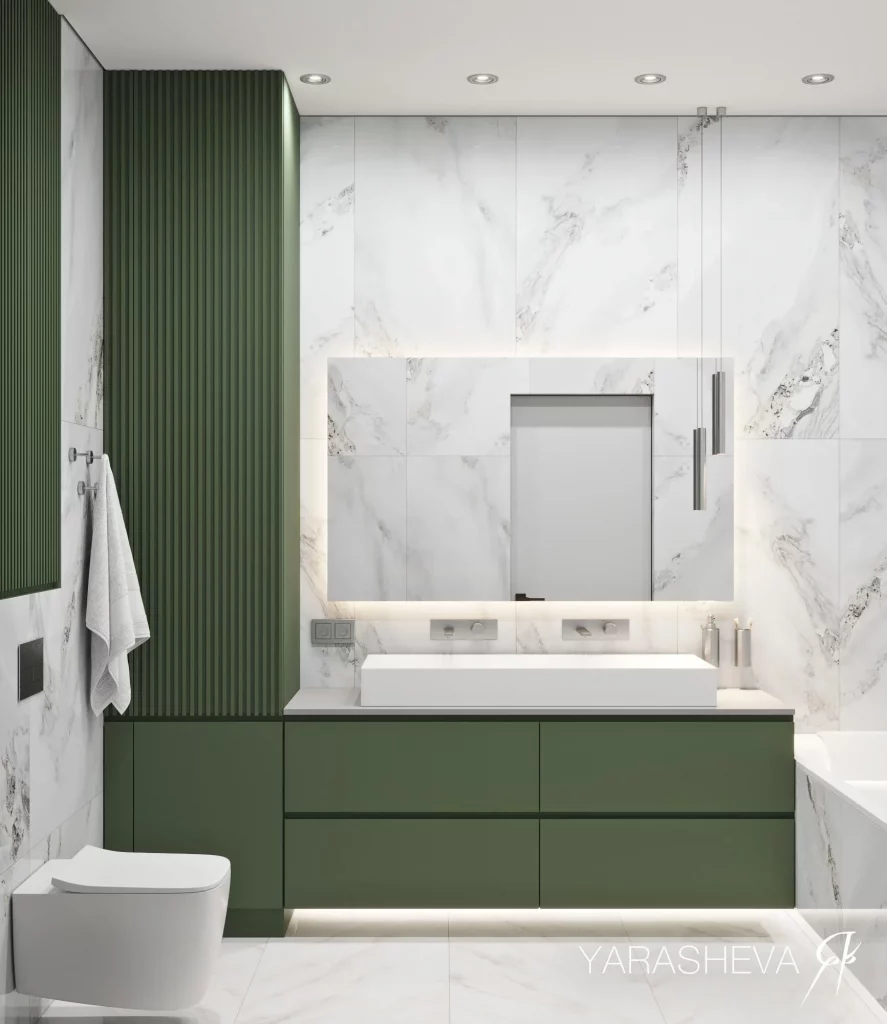
The floating vanity is especially effective because the open space beneath it gives the room a lighter appearance despite its generous size. I also like the way the green is repeated in the tall fluted section, creating a connection between the cabinetry and vertical wall treatment. The large mirror provides useful storage while visually extending the marble wall, and the under-vanity lighting adds another layer of practical illumination.
For a similar bathroom, I would pair a muted olive vanity with large pale marble-look surfaces to create this same balance between color and openness. The vertically fluted panel is a particularly useful inspiration because it adds texture without introducing another strong color. Keeping the hardware and fixtures understated allows the green cabinetry and wall texture to remain the defining details.
Muted Olive Vertical Tiles With A Simple White Vanity
This bathroom uses a softer olive-green shade across the shower wall and the bathtub surround, with narrow vertical tiles creating a ribbed visual effect. The vanity is white and suspended from the wall, while a large illuminated oval mirror adds a rounded contrast to the linear tile pattern. The floor uses the same muted green family, and a pale wood door adds a warm neutral element on the right.
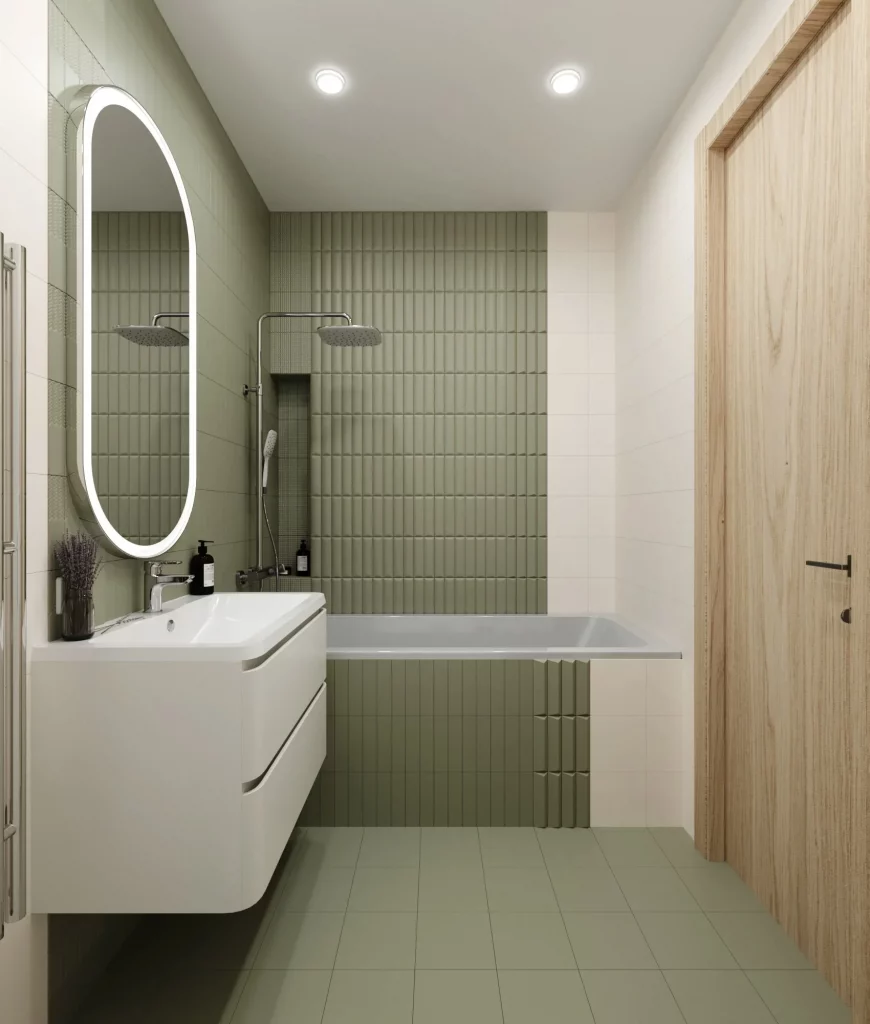
I find this room particularly successful because the vertical tile pattern creates height and texture without relying on a complicated layout. The wall-mounted vanity leaves the floor visually clear, which can make a bathroom feel more spacious and easier to clean. The large oval mirror also breaks up the repetition of the vertical lines and gives the vanity area a softer focal point.
To achieve a similar look, I would keep the green within a muted, grayish range and repeat it across the main wall and floor as shown here. A simple white vanity provides enough contrast to keep the space fresh, while the pale wood door introduces warmth without competing with the tile. I would also keep the mirror shape rounded to create the same pleasing contrast with the vertical surfaces.
Olive-Brown Square Tile Feature Wall Around A Built-In Tub
This compact bathroom uses a warm olive-brown square tile to define the wall behind the bathtub. The tile is arranged in a straightforward grid and continues down the center of the tub area, with clear glass shelves placed across the tiled section for bathroom products. The rest of the room is finished in warm pale neutrals, including the tub surround, floor, shower curtain, and walls. A stainless-steel towel warmer adds a practical feature on the right.
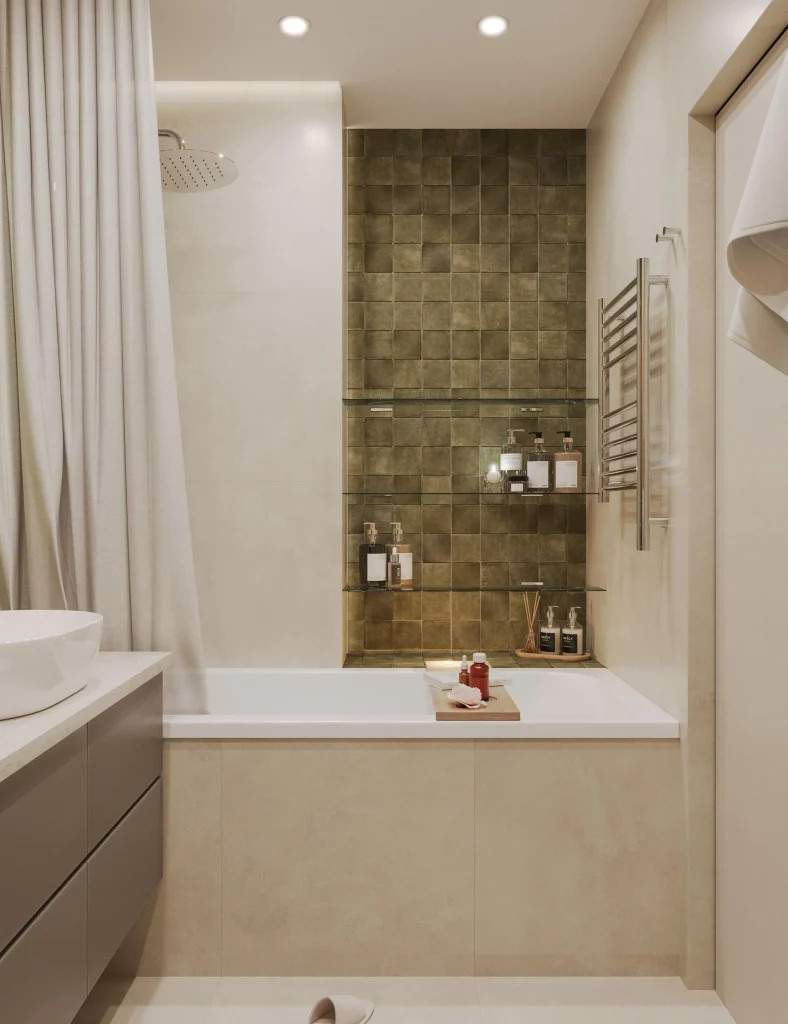
The built-in arrangement makes good use of the available space because the tub occupies the back portion of the room while the tiled wall creates a clear visual destination. The glass shelves are particularly practical because they provide storage without visually blocking the tile. I also like the restrained palette, since the warm olive-brown tile adds depth while the surrounding pale finishes prevent the narrow room from feeling too dark.
This is an approach I would consider for a smaller bathroom where a full green treatment might feel excessive. A single tiled feature wall can bring the olive family into the room while leaving most of the surfaces light. Keeping the storage shelves transparent, as shown, is another smart choice because the products remain accessible without adding a bulky cabinet to the compact layout.
Olive Green Tile And Cabinetry With A Freestanding Bathtub
This bathroom combines a rich olive-green tiled wall with large smooth olive cabinetry above and beside a white freestanding bathtub. The green tiles have subtle variations in tone that give the surface depth, while the lower walls around the tub remain pale. A warm metallic faucet, matching toilet fittings, and a brown-toned herringbone floor add warmth to the overall scheme. A tall ribbed glass partition is positioned at the left.
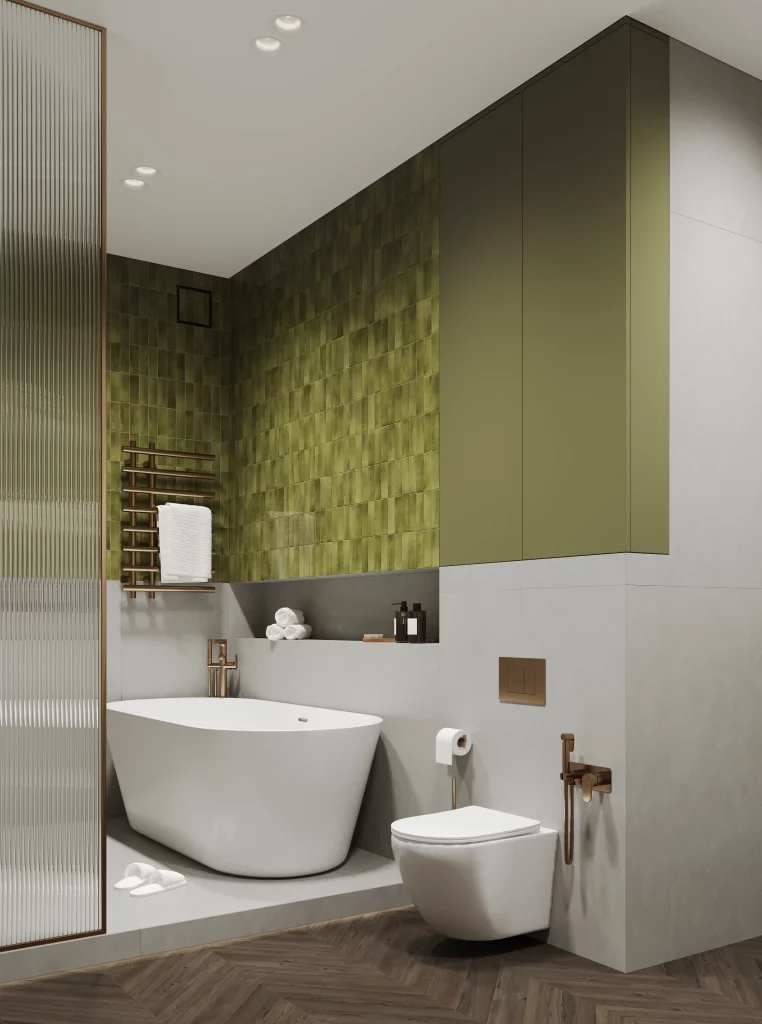
I like the way the room separates the stronger green zone from the lighter lower section. The cabinetry uses the upper wall efficiently without visually filling the entire room, while the freestanding tub sits in front of a lower ledge that provides a practical transition between surfaces. The herringbone floor introduces movement underfoot, but its warm brown tone stays close enough to the cabinetry and metallic accents to feel connected.
For me, this is one of the most sophisticated examples in the collection because several textures are layered without relying on excessive decoration. If I were adapting the idea, I would focus on the relationship between the olive tile, smooth green cabinetry, warm floor, and metallic fixtures. Repeating the same green in different surface textures is what gives the room its depth.
White Bathroom With Olive Green Tile Border And Patterned Center
The final bathroom uses olive green as a carefully controlled accent. White square tiles cover most of the walls, while a horizontal band of dark green tiles frames a central decorative panel above the bathtub. The center features a repeating curved pattern in green and pale neutral tones. A white vanity sits to the right of the tub, and a stainless-steel towel warmer is mounted on the opposite wall. A warm pendant light hangs from the ceiling, adding softness to the otherwise crisp space.
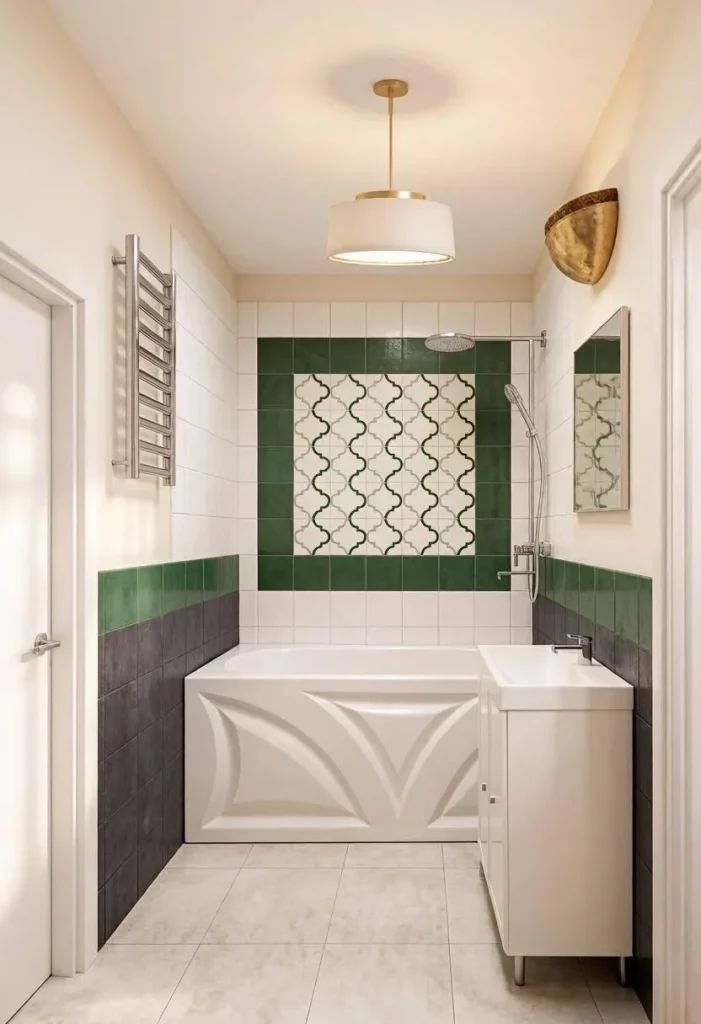
This design works especially well because the green is concentrated in clearly defined areas rather than covering the entire room. The darker lower tile band visually anchors the walls, while the patterned center creates a focal point above the bathtub. The predominantly white surroundings keep the compact bathroom feeling open, and the simple vanity does not compete with the decorative tile treatment.
I would recommend this approach to anyone who likes olive green but prefers a lighter overall bathroom. Instead of committing to green cabinetry or full-height green walls, the color can be introduced through a tile border and a small patterned feature. The combination shown here proves that even a relatively modest amount of olive green can completely change the character of a white bathroom while keeping the design balanced and practical.
Deep Olive Green Tile With a Sculptural Terracotta Basin
This bathroom makes a strong first impression with deep green square tiles covering the lower wall and continuing onto the floor, while the upper wall is painted in a closely related dark green tone. A slim terracotta-colored shelf supports a long, rounded rectangular basin with pronounced horizontal ridges. Black wall-mounted plumbing adds definition, while a small round mirror and a simple wood-toned pedestal complete the composition. The overall atmosphere feels intimate, dark, and highly considered.
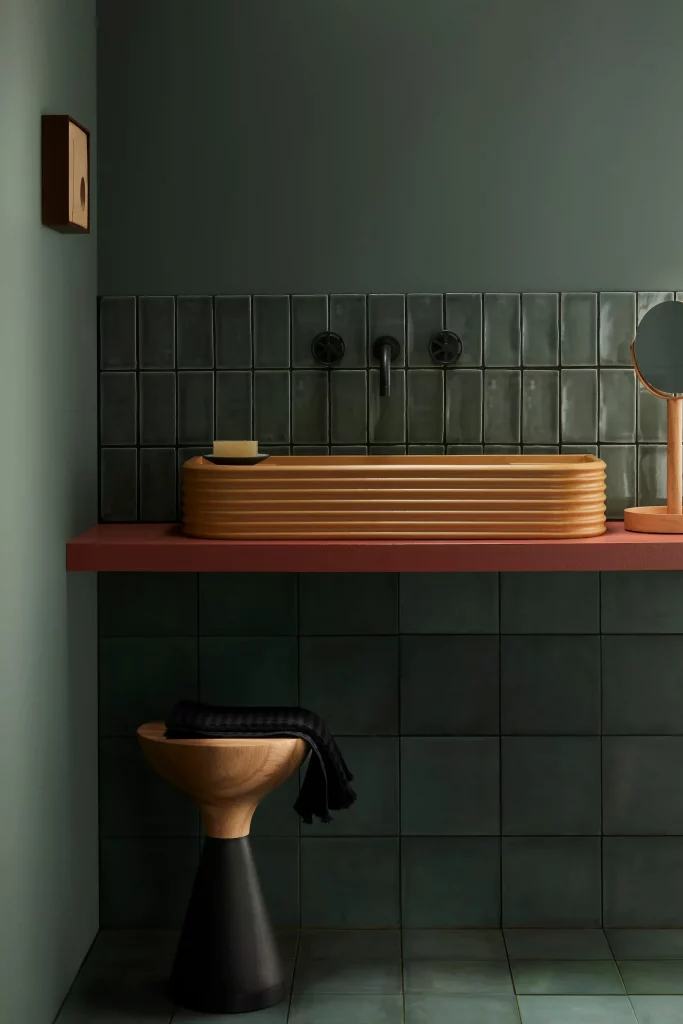
I like the way the different surfaces create depth without relying on a complicated layout. The tiled lower portion gives the basin wall a substantial visual base, while the painted upper section keeps the room from becoming completely tile-heavy. The open shelf also provides a practical vanity solution without introducing bulky cabinetry, which is especially useful in a compact bathroom.
For me, this is a great example of how olive green can become the main architectural color rather than simply an accent. If I were recreating the look, I would pay close attention to the relationship between the dark green surfaces and the warm terracotta basin, because that contrast is what keeps the room from feeling flat. The restrained black fixtures and simple mirror allow the unusual basin to remain the focal point.
Soft Green Vanity Against Fine Vertical Wall Tile
Here, a muted green floating vanity sits against a wall covered almost entirely in fine vertical light-gray tile. The vanity has two broad drawers and a pale countertop with a simple white vessel sink, paired with a black faucet. A large round mirror sits centrally above it, while a tall rectangular green wall panel occupies the right side. Soft dusty-pink walls around the tiled area add warmth, and the pale stone-look floor keeps the room feeling airy.
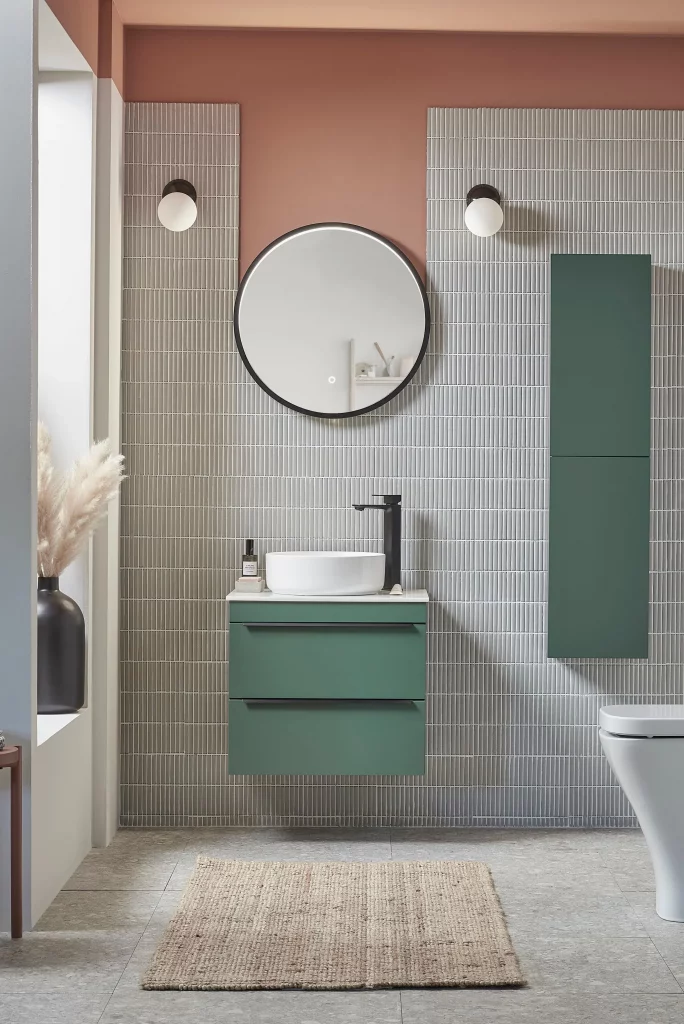
The vertical tile creates a strong sense of height and gives the relatively simple vanity wall plenty of texture. I also like the floating installation because the open floor underneath makes the compact bathroom feel less crowded. The green vanity and matching wall panel create visual continuity without covering every surface in the same color.
This is one of the approaches I would consider when someone wants olive green to feel fresh rather than dramatic. The combination of muted green, pale tile, dusty pink, and black accents demonstrates how a green bathroom can remain light and approachable. I would keep the color palette similarly edited and let the vertical tile provide most of the visual movement.
Olive Marble Vanity With an Organic Sculptural Mirror
This bathroom takes a much more enveloping approach, with green-gray stone surfaces covering the vanity wall and surrounding area. The floating vanity has a broad stone countertop and a rectangular vessel sink that appears to be made from the same or a closely related material. A tall mirror with an irregular, softly undulating outline is framed in gold, while two textured wall lights flank it. A small pale vase and a single trailing green stem add a delicate finishing detail.
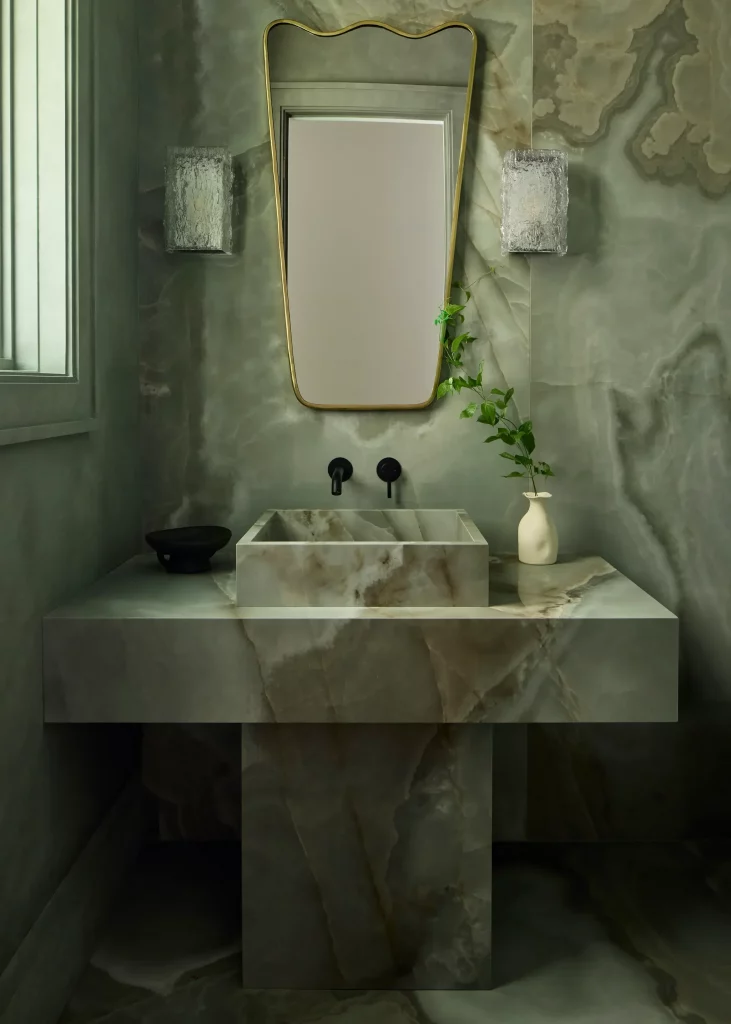
The strength of this design comes from its tonal layering. Instead of introducing several unrelated colors, the room stays within a family of green, gray, cream, and muted stone tones, allowing the natural-looking surface variation to become the decoration. The wall-mounted vanity also leaves the floor visually open, which helps the substantial stone surfaces feel less heavy.
I particularly like the unusual mirror because it softens the otherwise rectilinear vanity and rectangular sink. For my own design approach, I would use a similarly sculptural mirror when the bathroom already has strong stone patterns, since a more conventional rectangular mirror could make the composition feel overly rigid. The dark faucet and understated accessories provide enough contrast without competing with the stone.
Muted Olive Tile With Terracotta and Brass Accents
This bathroom combines pale olive and beige-green rectangular tiles with a distinctive central band of vertically textured tiles. A small muted green wall-mounted sink sits in the middle, complemented by warm brass plumbing and a matching brass drain detail. The lower part of the wall introduces a terracotta-colored tile border, which continues onto the floor. A peach-toned pendant light and a small framed artwork add additional warmth.
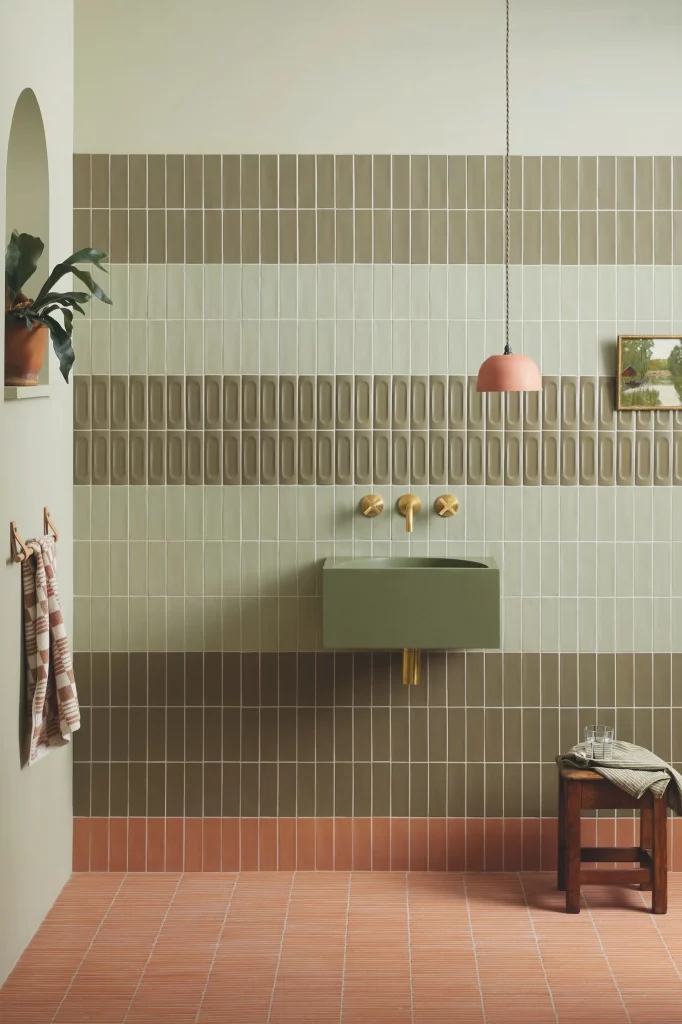
I find the horizontal arrangement particularly effective because it divides the wall into several subtle zones without making the room feel busy. The green sink visually connects with the surrounding tile, while the terracotta floor and lower border ground the palette. The compact wall-mounted basin also preserves open floor area, making the space feel practical and uncluttered.
This photograph is a good reminder that olive green does not need to stand alone. I would pair a muted green with a warm clay or terracotta tone when I wanted the bathroom to feel especially inviting. The brass fixtures work here because they repeat the warmth already established by the floor and pendant rather than introducing a completely separate accent.
Dark Olive Walls With Warm Wood Paneling and a Freestanding Tub
This bathroom uses a deep olive green wall color above warm wood paneling, creating a rich backdrop for a white freestanding bathtub. The vanity has a dark, highly figured wood front with a coordinating countertop, while a large wood-framed mirror reflects the surrounding room. A framed abstract artwork hangs above the paneling, and a small wall sconce adds a warm glow. Folded towels, books, and a simple vase contribute to the lived-in styling.
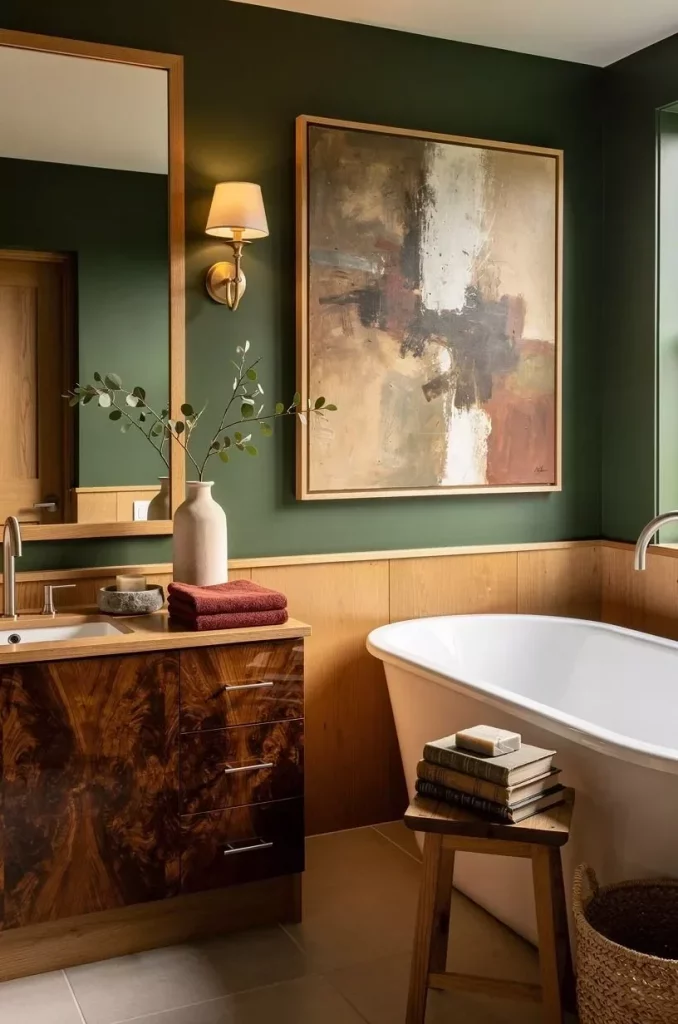
What works particularly well for me is the balance between the dark upper walls and the warmth of the wood below. The bathtub remains visually crisp against the deeper background, while the vanity and mirror make the room feel cohesive. The combination of open floor space, a freestanding tub, and a compact vanity creates a comfortable arrangement without overwhelming the room with too many large pieces.
I would use this approach when I wanted olive green to feel sophisticated and cozy without making the bathroom entirely dark. The wood paneling is especially important because it breaks up the green wall and adds warmth at eye level. I also like the decision to keep the artwork and accessories relatively restrained, allowing the materials themselves to provide most of the character.
Fresh Green Patterned Walls With a White Tub and Vanity
This bathroom presents a much lighter interpretation of green, with a delicate green-and-white patterned wall covering extending around the room. A white bathtub sits at the back behind patterned curtains with a scalloped green-trimmed valance. The white vanity occupies the right side, while framed artwork and a decorative mirror add personality. A dark-edged floor rug introduces a subtle contrast against the pale floor.
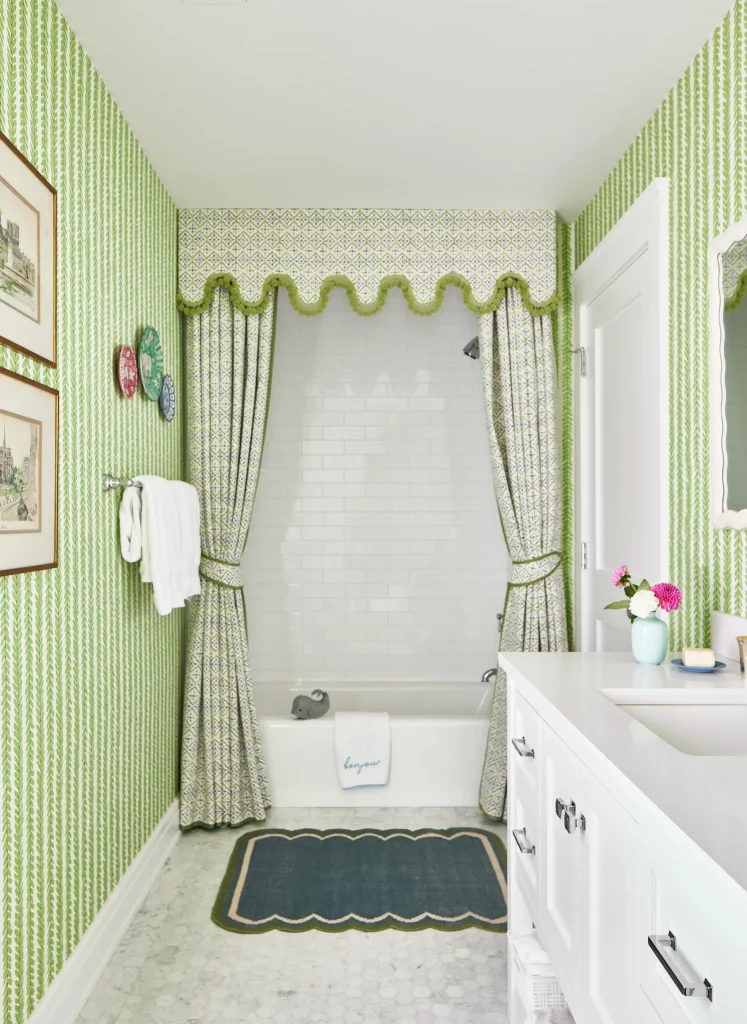
The room works because the white fixtures and cabinetry provide plenty of visual breathing space around the patterned green surfaces. Rather than making every element compete for attention, the walls carry most of the pattern while the bathtub and vanity remain simple. The curtains reinforce the pattern and create a coordinated focal point around the tub.
For me, this is a useful example of how green can be playful without dominating the entire bathroom. If I were taking inspiration from it, I would choose one patterned green surface and allow the major fixtures to remain white. That approach keeps the room bright and makes it easier to appreciate the pattern without visual fatigue.
Olive Green Shower Tile With Built-In Shelving
This modern bathroom features a deep olive green vertical tile installation surrounding the bathtub, contrasted with large pale gray floor tiles and white walls. A tall built-in shelving unit beside the tub provides multiple open compartments with integrated lighting, while a matching green shelving structure appears on the opposite side. The bathtub surround is finished in a pale stone-like material, and dark shower hardware provides a crisp contrast.
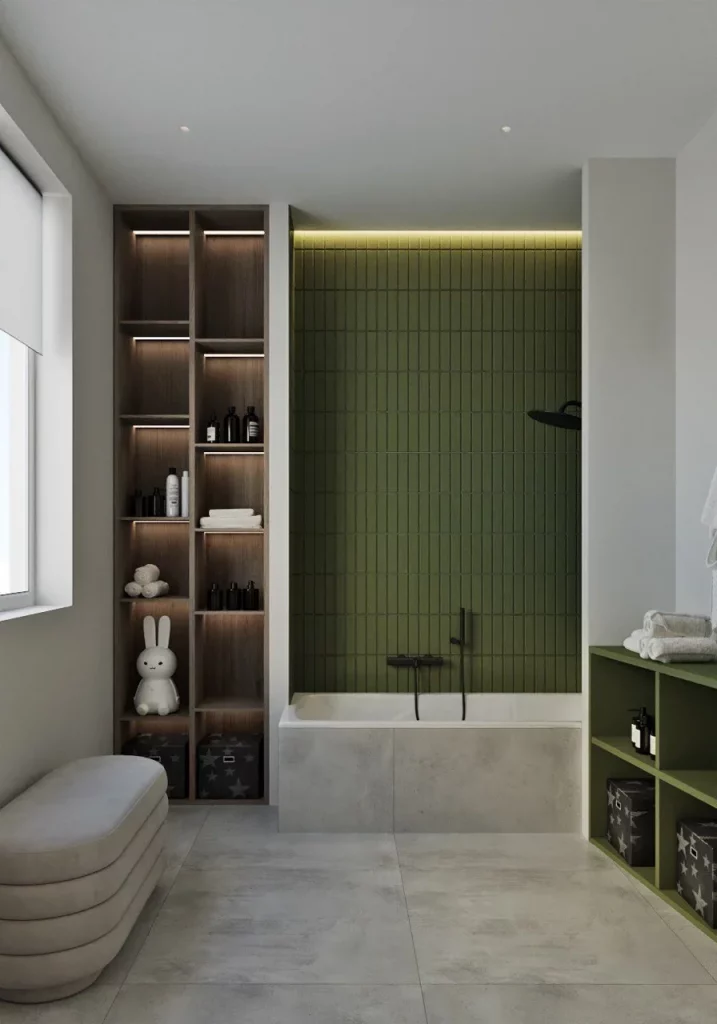
I particularly appreciate the storage strategy here. The tall shelving makes use of otherwise narrow wall space and provides dedicated areas for bottles, towels, and small belongings, while the integrated lighting makes the shelves more useful and visually defined. The green tile establishes the bathing zone as a strong focal point without covering the entire room.
This is the kind of olive green bathroom idea I find especially practical because the color and storage work together. The vertical tile emphasizes the height of the tub wall, while the open shelving prevents the space from feeling enclosed. If I were adapting the idea, I would preserve the generous open compartments and keep everyday items neatly grouped so the architectural lines remain visible.
Olive and Terracotta Herringbone Tile Statement Bathroom
This bathroom turns the wall and floor into a coordinated geometric composition using alternating dark green and terracotta herringbone tiles. A freestanding copper-toned bathtub sits against the patterned wall, while a large leafy plant occupies one side of the room. A small wooden stool holds a folded textile near the tub, and a curtain hangs along the opposite edge. The lower wall includes a narrow band of vertical green tiles that connects visually with the floor.
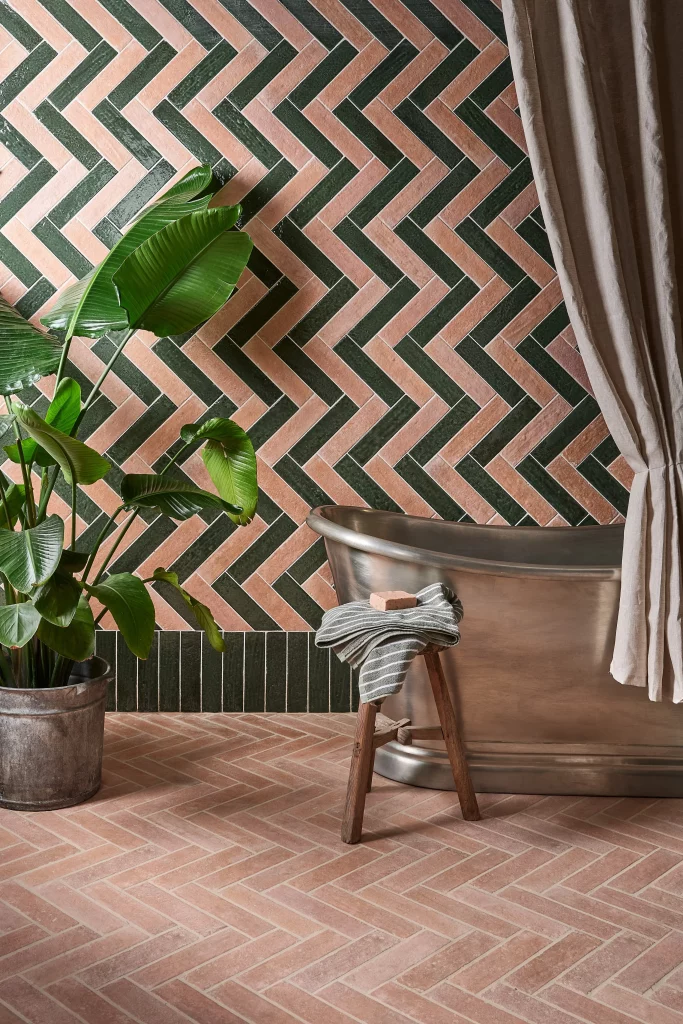
The repetition of the herringbone pattern creates a strong sense of movement, but the limited two-color palette keeps it organized. I like how the warm terracotta echoes the bathtub while the deep green links the wall and floor together. The simple tub shape and restrained accessories give the pattern enough room to remain the star.
I would approach a design like this with restraint everywhere else. When both the wall and floor already have a powerful pattern, adding numerous competing decorative elements could easily make the bathroom feel crowded. The photograph shows that a few carefully placed pieces, such as the stool and plant, can be enough to make the space feel complete.
Soft Pink and Green Bathroom With a Deep Green Tub Surround
This cheerful bathroom combines soft pink painted walls with pale green scalloped tiles covering the walls around the bathtub. The tub itself has a deep green paneled surround, creating a clear visual anchor. Gold-toned plumbing adds warmth, while pale wood shelving, a woven basket, and a patterned gray-and-white floor bring additional texture. The rounded shelving niche and curved mirror reinforce the softer shapes already present in the tile.
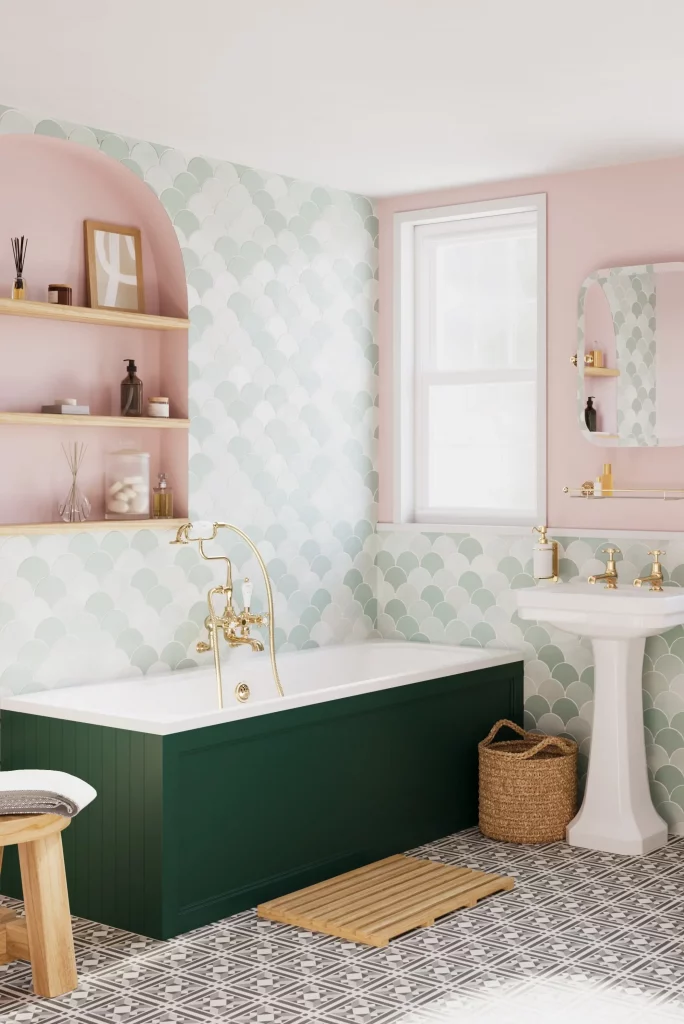
I love how many different elements are coordinated without looking identical. The green tile and darker green tub surround belong to the same color family, while the pink walls provide a gentle counterpoint. The patterned floor adds visual interest at the bottom of the room, and the open shelves provide accessible storage for small bathroom essentials.
This image shows how olive green can work beautifully with a softer surrounding palette. Rather than treating green as a serious or dark-only color, I would use a muted version alongside blush pink and creamy white when I wanted something more relaxed. The rounded forms are also worth noticing because they make the patterned surfaces feel softer and more welcoming.
Olive Green Countertop With a Rounded Terracotta-Framed Mirror
The final bathroom takes a clean and contemporary approach, with a broad olive green countertop and integrated rectangular sink extending across the vanity wall. An open shelf underneath provides storage through three light-colored perforated boxes, while a large rounded mirror has a warm terracotta-colored frame. Simple pale walls surround the vanity, and two slim vertical wall fixtures with round details frame the mirror. A light stone-patterned floor completes the room.
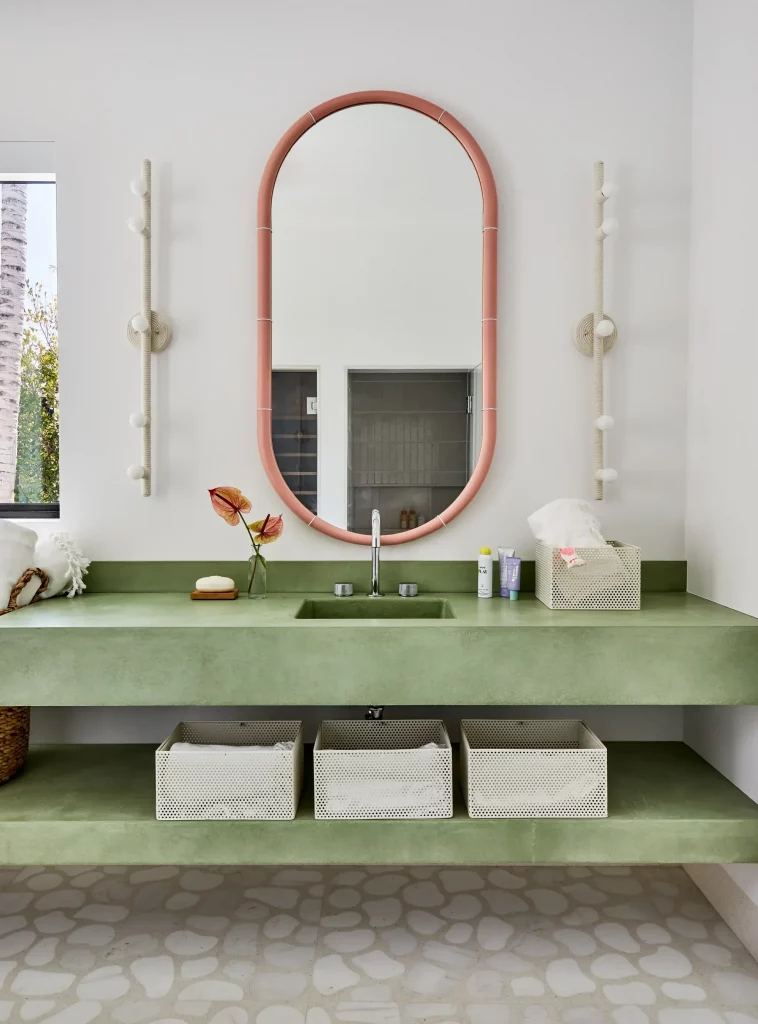
The long countertop gives the bathroom generous surface area while the open shelf keeps storage accessible without adding visual bulk. I also like the way the terracotta mirror frame introduces warmth into the predominantly green and pale palette. The rounded mirror contrasts nicely with the long horizontal countertop, creating a more interesting composition than a collection of strictly rectangular shapes would.
For me, this is an especially approachable way to bring olive green into a bathroom for Fall 2026. Instead of committing to green tile across an entire room, the color is concentrated in one substantial surface and supported by smaller coordinating details. I would use the same principle when working with an existing neutral bathroom: one olive green vanity surface, paired with a warm-toned mirror or similarly subtle accent, can create a noticeable transformation without changing every finish.
Soft Green Bathroom With Black-And-White Geometric Details
The first bathroom immediately caught my attention with its soft green walls, matching window trim, and classic white fixtures. A freestanding white bathtub sits beside a white pedestal-style sink with chrome legs, while white subway tile with dark grout wraps the lower portion of the walls. The black-and-white geometric floor adds a strong graphic element, and the tall leafy greenery near the window brings height and movement to the room. I especially like how the warm brass wall light and chrome plumbing introduce subtle contrast without disturbing the calm green palette.
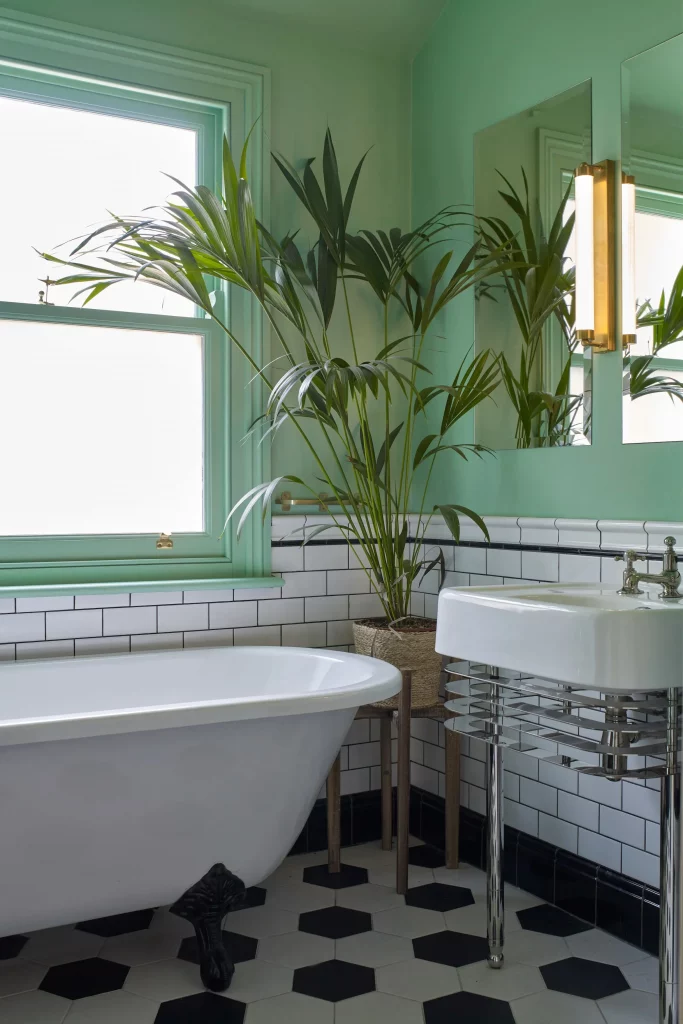
The layout feels open and visually balanced because the bathtub, sink, window, and tall greenery each have their own clear presence. The large window provides abundant natural light, while the mirrors reflect both the room and the greenery, making the space feel more layered. I also find the combination of white tile and dark grout particularly practical because it creates definition around the bathing area while keeping the walls visually clean.
For me, this is a good example of how a softer olive-green direction can work beautifully in a bathroom without making the space feel heavy. If I were recreating this look, I would pay close attention to the relationship between the wall color and the white tile, allowing the green to remain the main atmospheric element. The patterned floor can then provide just enough contrast to give the room character.
Olive Green Vertical Tile With Warm Wood Vanity
This bathroom takes a more restrained approach to olive green, using muted green vertical tiles across the lower half of the wall behind a compact vanity. The floating vanity has a warm brown wood finish and a pale stone-like countertop, topped with a rounded vessel sink and a slim chrome faucet. Above it, a tall arched mirror with a dark frame becomes the focal point, flanked by two spherical wall lights with warm metallic details. A narrow open storage section beside the mirror adds practical shelving, while the neutral floor and upper walls keep the composition light.
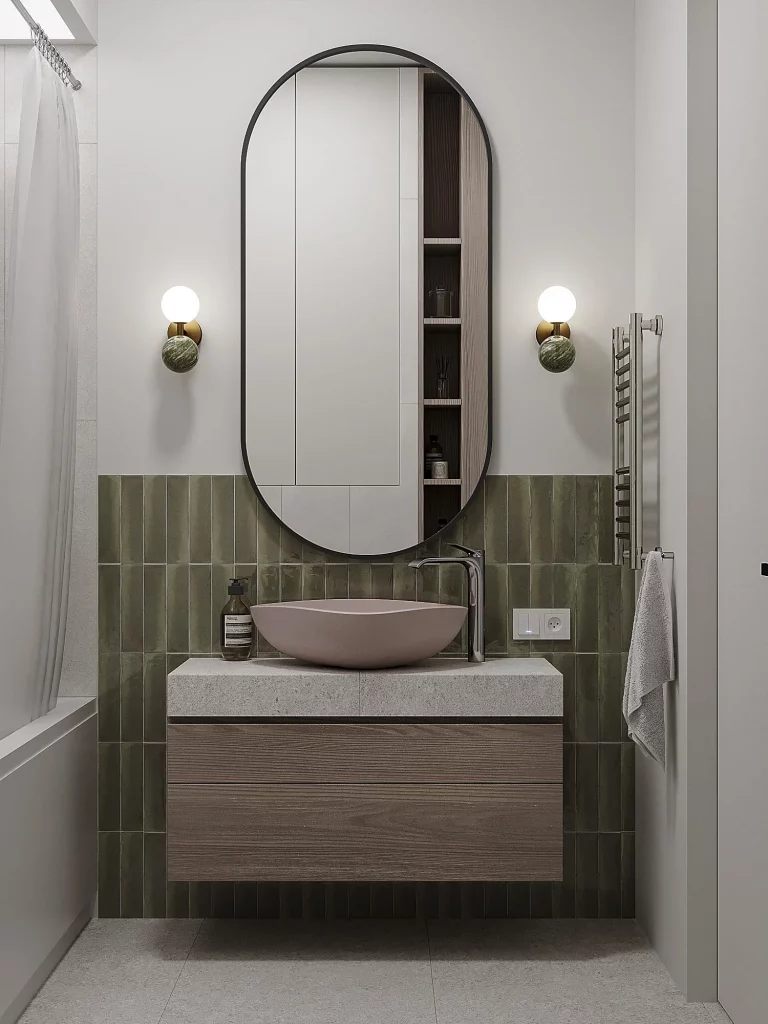
I think the proportions work especially well in this relatively compact bathroom. The vertical tile installation draws the eye upward, while the arched mirror reinforces that sense of height. The floating vanity also leaves visible floor space underneath, which helps the room feel less crowded. At the same time, the integrated open shelving beside the mirror provides a convenient place for the small bottles and accessories that are visible in the photograph.
What I particularly like here is the balance between the muted olive-green tile and the warmth of the wood vanity. Neither element competes with the other. In my experience, this kind of pairing is an easy way to make a green bathroom feel current for fall while keeping the palette sophisticated and livable. The rounded mirror and basin soften the straight lines of the tiles and cabinetry, creating a pleasing contrast in shapes.
Olive Green Bath With Layered Tilework And Built-In Storage
The third bathroom makes a stronger statement with green tile covering the shower and bathtub walls, while a decorative band of patterned tile separates the larger rectangular tiles from the smaller pale green tiles below. A white bathtub occupies the center of the composition, with a glass shower screen and dark shower hardware above it. On the left, a tall built-in shelving unit provides open storage for folded towels and bathroom products, with a closed green cabinet section at the bottom. The walls and floor remain predominantly white, allowing the green tilework to define the space.
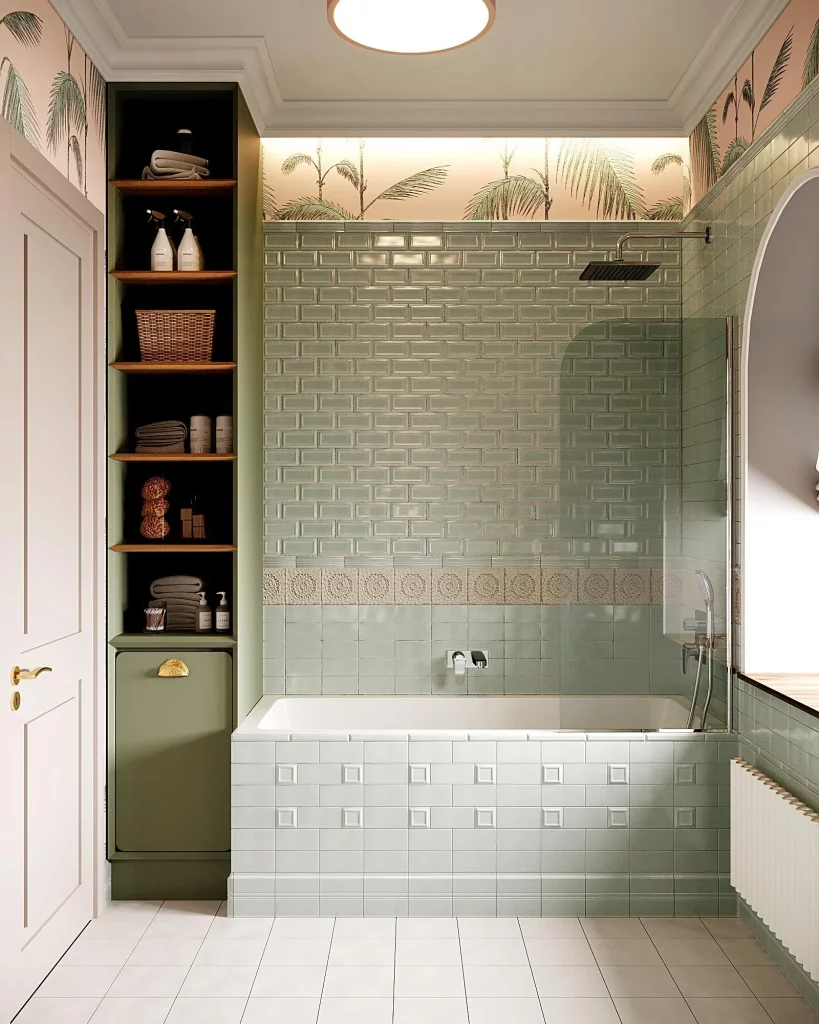
I find the storage arrangement particularly useful because everything is concentrated along one side of the bathroom without interrupting the main bathing area. The open shelves make towels and everyday products easy to reach, while the lower enclosed cabinet keeps some items visually contained. The bathtub surround also demonstrates how several tile formats can be combined within one green palette to create depth without relying on a large number of decorative objects.
From my perspective, this is the boldest interpretation in the collection and a particularly interesting direction for the fall season. The combination of olive-green tile, white surfaces, and dark shower hardware gives the bathroom a defined personality while remaining practical. If I were taking inspiration from this photograph, I would focus on repeating the same green family across different tile shapes rather than introducing many unrelated colors. That approach keeps the room cohesive while allowing the tilework itself to become the main design feature.
Olive green brings a warm, grounded character to the bathroom and feels especially fitting for the Fall 2026 season. Whether used as a soft wall color, vertical tile, or a more layered tile composition, it can create a space that feels both stylish and inviting. I love how these examples balance green with white surfaces, warm wood, metallic details, and simple practical features. If you’re planning a bathroom refresh, even one carefully chosen olive green element can make a noticeable difference. Which of these olive green bathroom ideas is your favorite? Leave a comment and share the design you would love to recreate.