
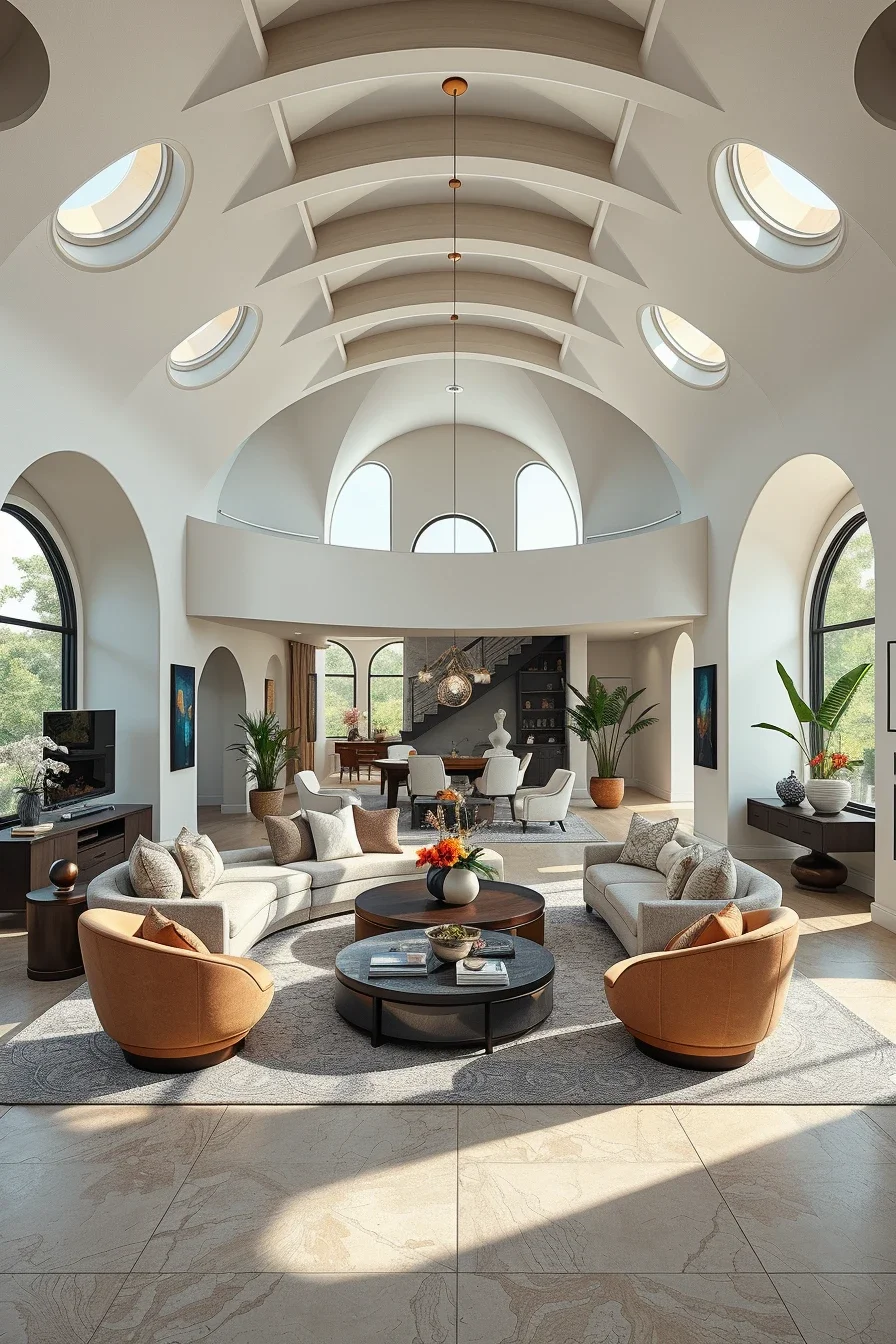
Open concept living room design has become one of the most popular approaches to modern interior living, offering a seamless blend of style, comfort, and functionality. By removing unnecessary walls and barriers, these layouts create spacious environments that encourage connection, natural light, and effortless movement throughout the home. Today’s open concept living rooms go far beyond simple layouts, incorporating sculptural furniture, artistic details, and creative design elements that transform everyday spaces into stunning visual experiences. From minimalist aesthetics to luxurious designer-inspired interiors, open living areas provide endless opportunities for personalization and innovation. Thoughtfully selected furniture, lighting, textures, and architectural features help define different zones while maintaining a cohesive and inviting atmosphere. In this article, you’ll discover inspiring open concept living room design ideas that showcase modern creativity, unique furnishings, and elegant solutions for contemporary living.
Open Concept Living Room Design With Sculptural Curved Sofas And Artistic Layouts
I find that one of the most captivating approaches to open concept living room design is incorporating sculptural curved sofas as the focal point of the space. In an open floor plan, curved furniture naturally softens architectural lines and encourages better movement between living, dining, and kitchen areas. This approach creates visual flow while making the room feel more inviting and cohesive. I often recommend balancing dramatic curves with clean architectural backgrounds to ensure the furniture remains the star of the design.
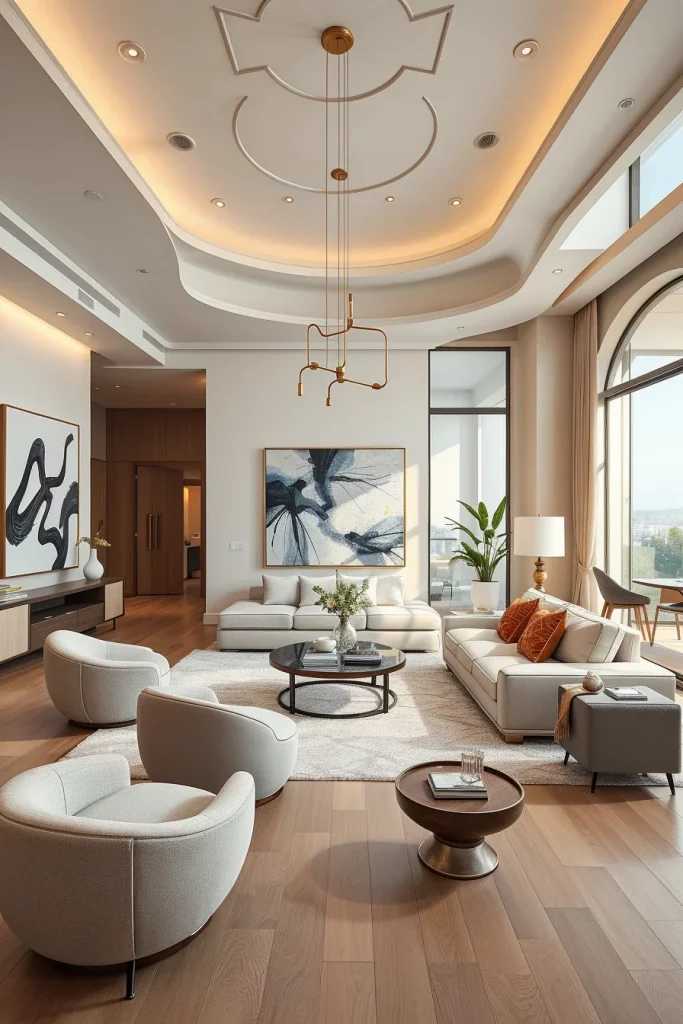
When designing this type of interior, I like to include a large curved sectional sofa upholstered in textured fabric, paired with rounded lounge chairs and a sculptural coffee table. Organic-shaped area rugs help define the seating zone without disrupting openness. Statement lighting, such as oversized pendant fixtures, enhances the artistic quality of the room, while minimalist storage keeps the overall composition uncluttered. Carefully selected decorative objects add personality without overwhelming the space.
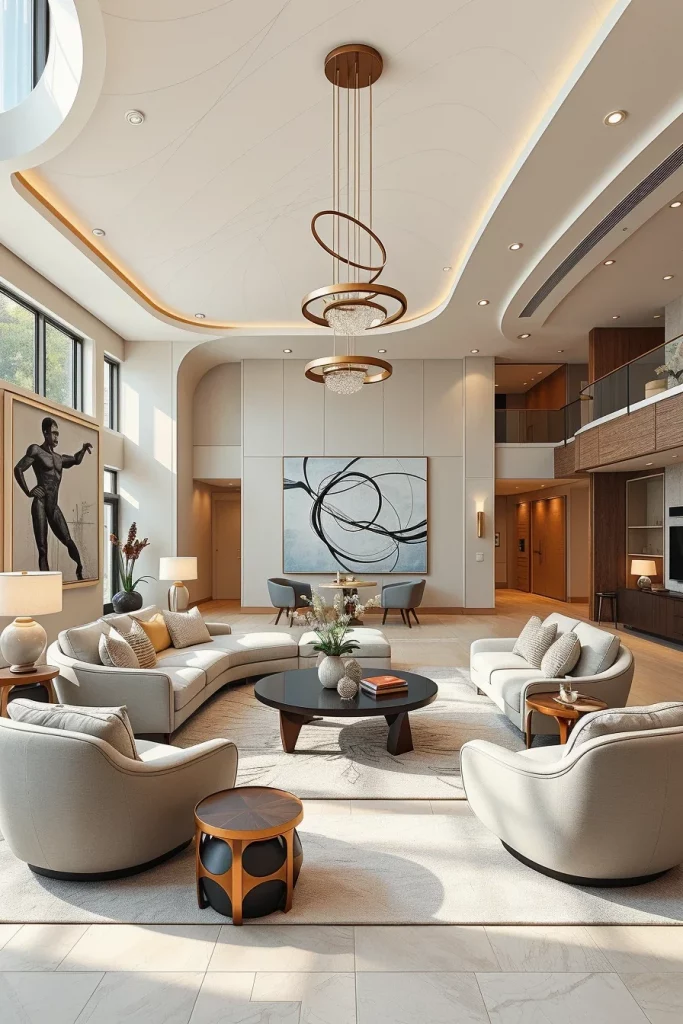
From my experience, many designers featured in publications like Architectural Digest emphasize the importance of creating conversation-friendly layouts in open spaces. I agree with this approach because curved seating naturally brings people together while maintaining an elegant appearance. The result feels both luxurious and highly practical for everyday living.
To complete this design, I would add large-scale artwork with flowing forms, layered lighting sources, and subtle architectural details such as curved wall niches or custom shelving. These additions reinforce the sculptural aesthetic and create a stronger visual connection throughout the room.
Modern Open Concept Living Room Design Featuring Statement Furniture And Bold Forms
A modern open concept living room design becomes instantly memorable when statement furniture and bold forms take center stage. I often use oversized furniture pieces with distinctive silhouettes to establish visual hierarchy in large open spaces. This strategy helps define functional zones while maintaining a cohesive overall appearance. Strong geometric forms also create a sense of confidence and sophistication.
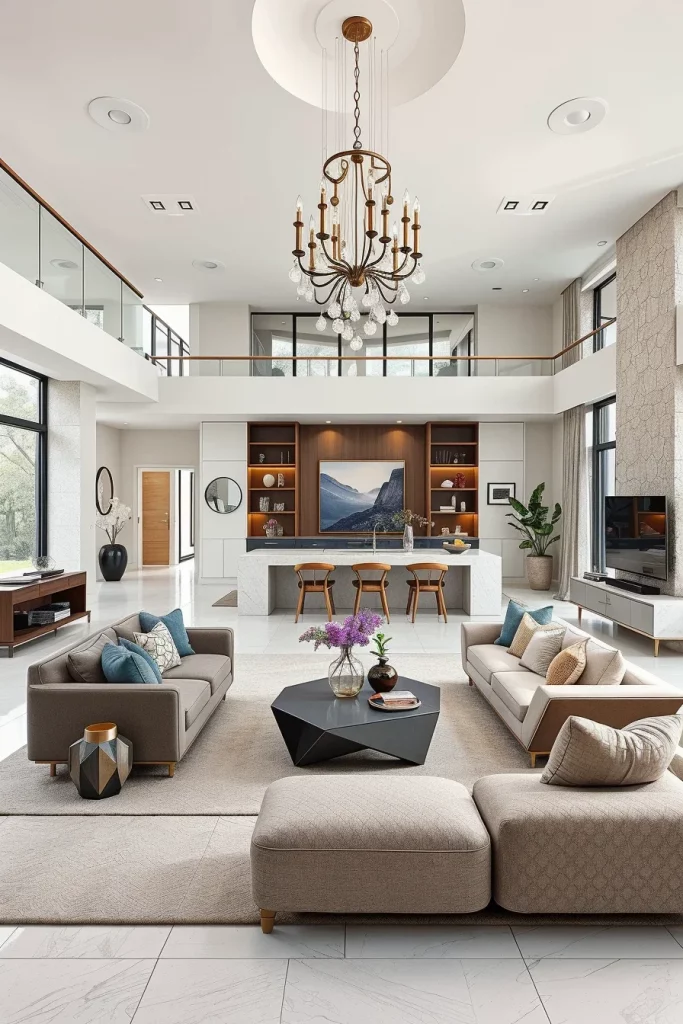
In this type of design, I prefer incorporating a statement sofa with angular lines, sculptural accent chairs, and a striking coffee table made from stone or metal. Large contemporary light fixtures act as functional artwork, while bold shelving systems provide both storage and visual interest. Rich textures such as boucle fabrics, polished stone surfaces, and matte finishes add depth without creating clutter.
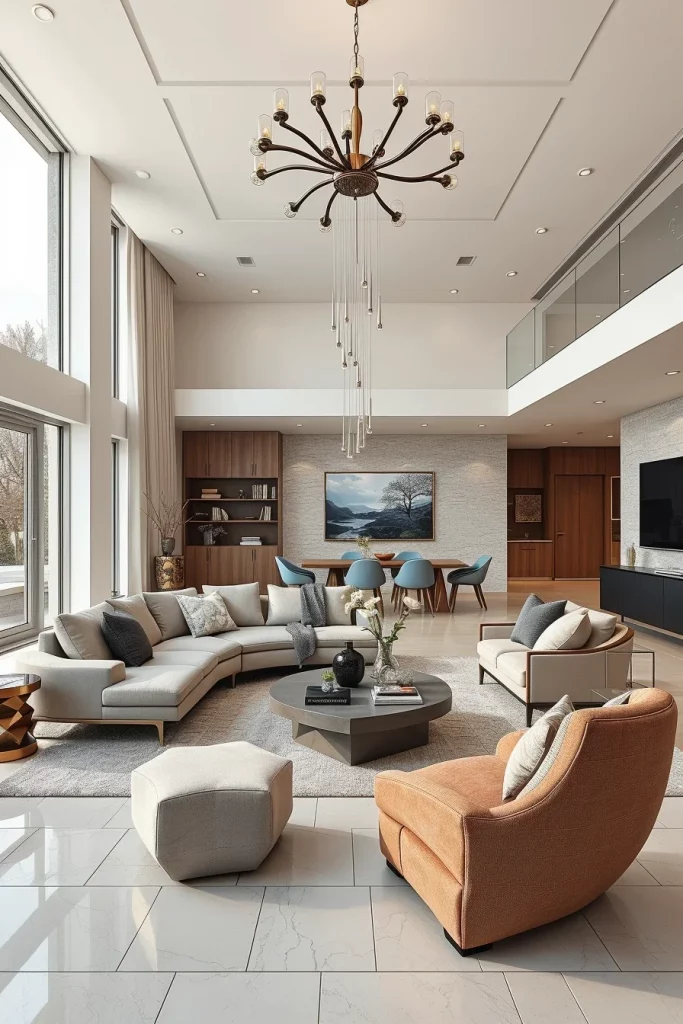
I have found that successful modern interiors rely on balance. While statement pieces attract attention, the surrounding environment should remain refined and intentional. Many leading interior designers recommend limiting the number of dominant focal points, and I believe this advice is especially important in open-concept spaces where visual harmony is essential.
If I were refining this room further, I would introduce oversized decorative vases, architectural greenery, and custom wall treatments that emphasize verticality. These details help strengthen the room’s modern identity while preserving an elegant atmosphere.
Luxury Open Concept Living Room Design With Floor-To-Ceiling Windows And Designer Pieces
One of the most impressive examples of stylish and unique open living spaces combines floor-to-ceiling windows with carefully selected designer furniture. I appreciate how expansive glazing floods the interior with natural light while visually connecting indoor and outdoor environments. This creates a sense of openness that perfectly complements luxury living.
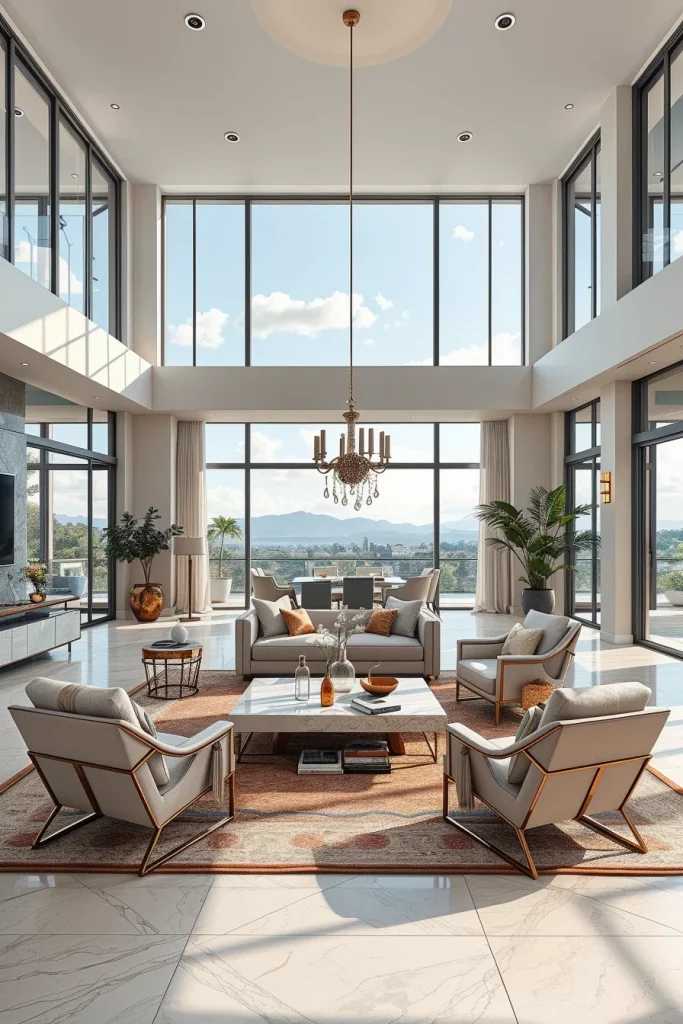
For furnishings, I typically select designer sofas, premium lounge chairs, custom coffee tables, and high-end materials such as marble, brass, and natural wood. Layered textiles provide comfort, while large rugs help define zones within the open floor plan. Elegant lighting fixtures contribute to the luxurious atmosphere while enhancing functionality throughout the day and evening.
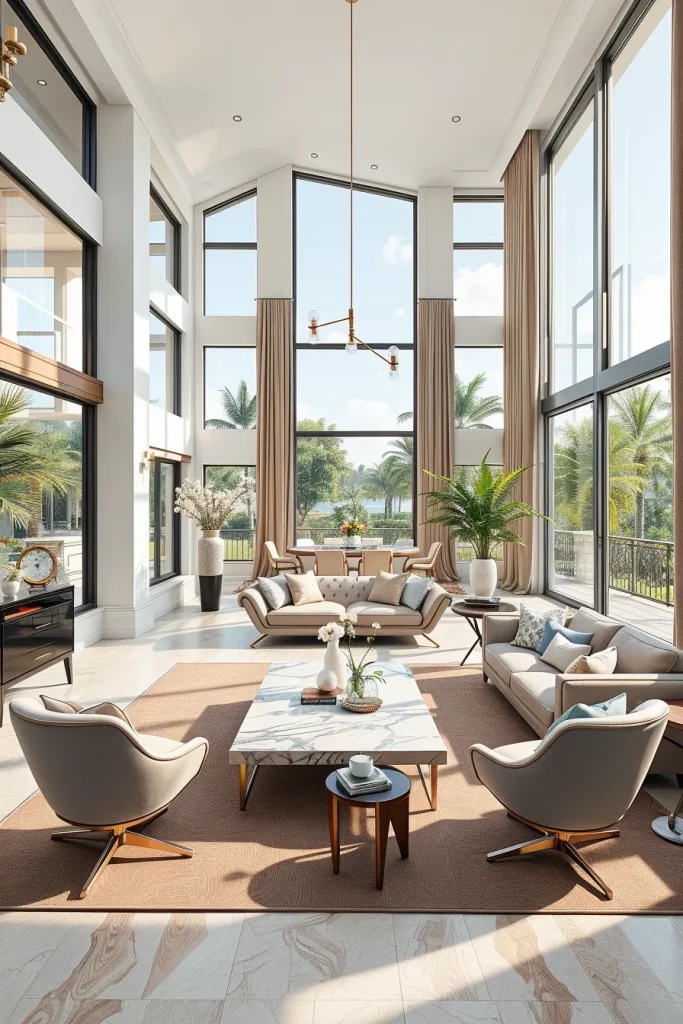
In my opinion, natural light is one of the most valuable design elements available. Publications such as Elle Decor frequently highlight its ability to enhance spatial perception and improve overall ambiance. I consistently notice that rooms with abundant daylight feel more welcoming, spacious, and visually balanced.
To elevate this design even further, I would incorporate automated window treatments, custom-built cabinetry, and curated decorative accessories. These elements enhance convenience while maintaining a refined aesthetic worthy of a luxury residence.
Minimalist Open Concept Living Room Design With Clean Lines And Contemporary Elegance
A minimalist open concept living room design focuses on simplicity, functionality, and timeless elegance. I often recommend this approach to homeowners who want a space that feels calm and uncluttered. By reducing visual distractions, the architecture and proportions of the room become more noticeable and impactful.
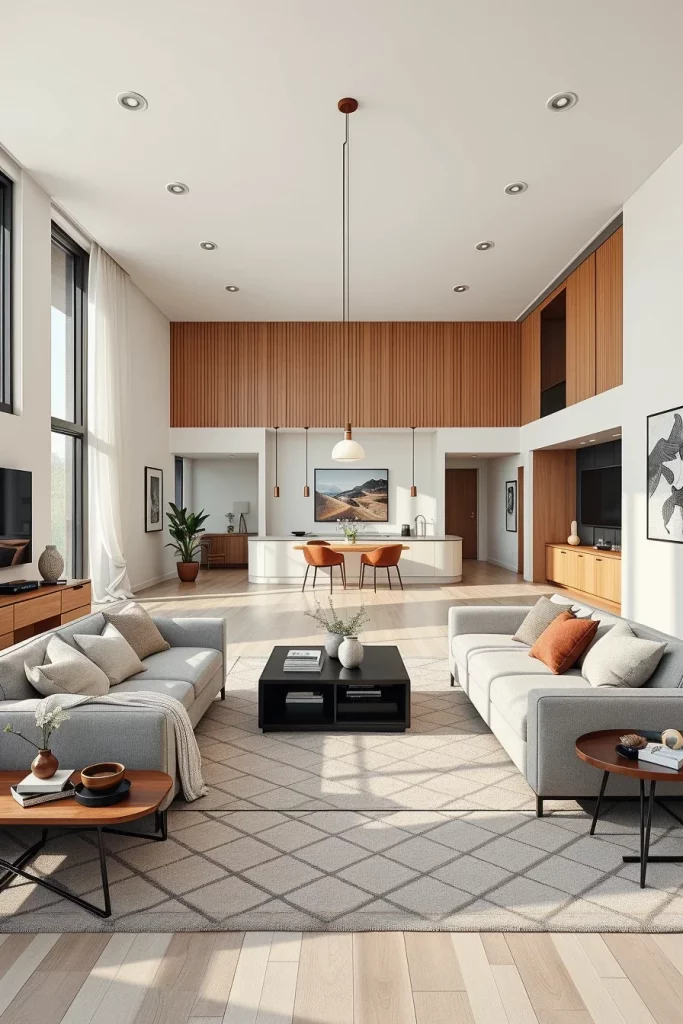
I usually furnish these interiors with streamlined sofas, low-profile coffee tables, and discreet storage solutions. Neutral color palettes dominated by soft whites, warm grays, and natural wood tones create a serene atmosphere. Carefully selected lighting fixtures and subtle textures prevent the room from feeling sterile while preserving its minimalist character.
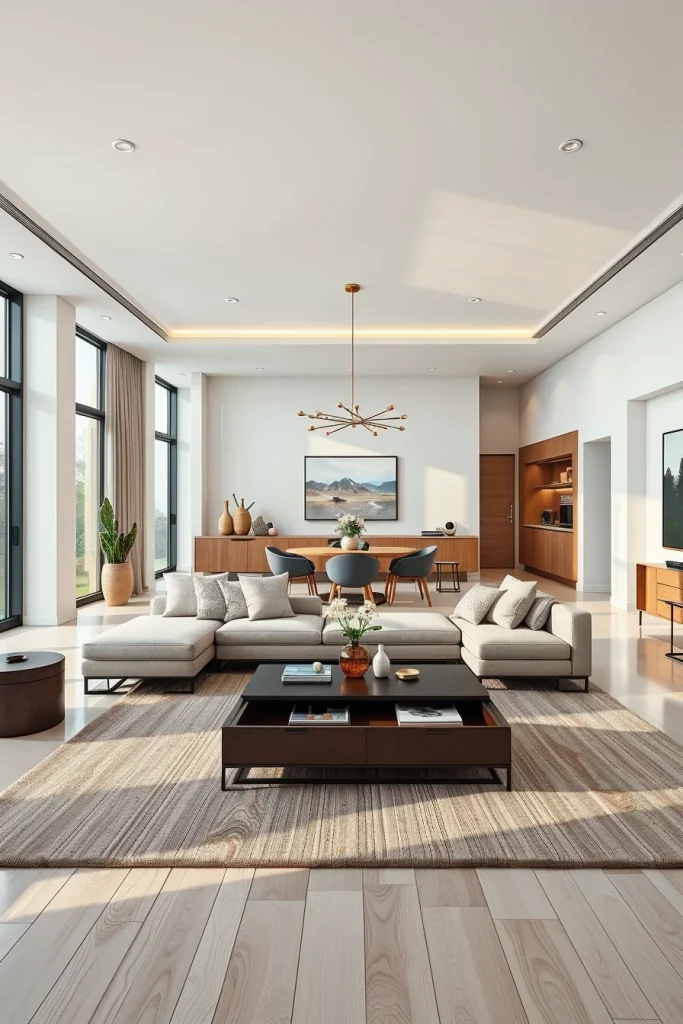
Personally, I believe successful minimalism requires restraint rather than emptiness. The best minimalist interiors feature fewer but higher-quality elements that contribute to both aesthetics and function. This philosophy creates spaces that remain visually appealing for years without feeling dated.
To enrich the room further, I would add textured wall finishes, handcrafted accessories, and strategically placed greenery. These subtle enhancements provide warmth and personality while maintaining the clean and sophisticated appearance.
Creative Open Concept Living Room Design Using Organic Shapes And Fluid Spaces
A creative and artistic interpretation of open concept living room design often embraces organic shapes and fluid spatial arrangements. I enjoy using this concept because it creates a dynamic environment that feels natural and inviting. Curved pathways, asymmetrical furniture placement, and flowing visual transitions encourage exploration throughout the space.
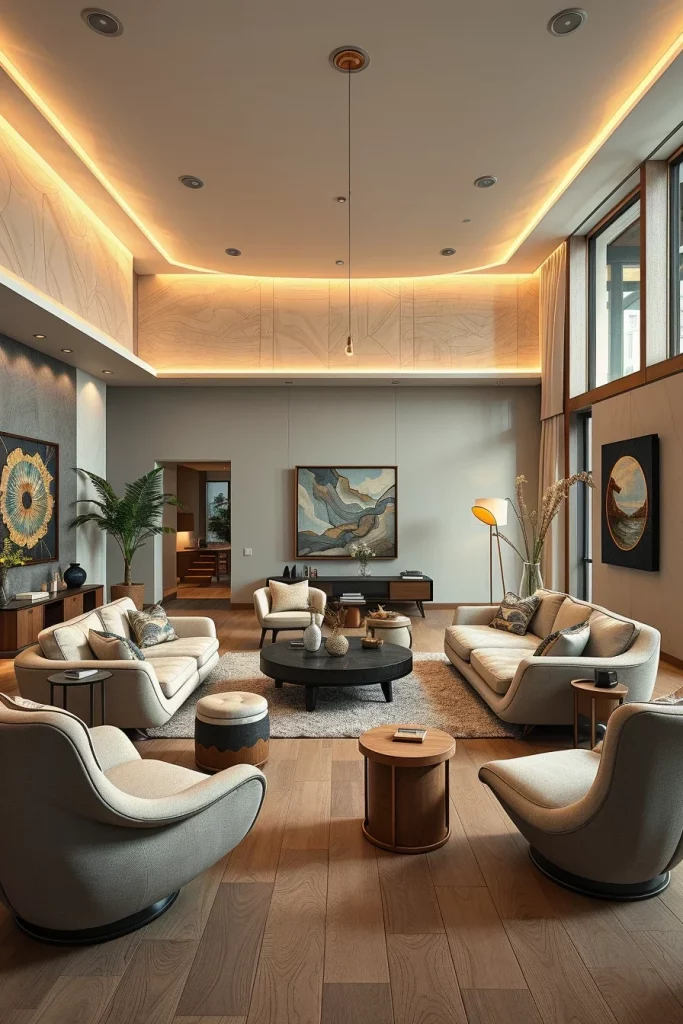
For furnishings, I typically select organically shaped sofas, rounded coffee tables, sculptural chairs, and custom shelving with soft contours. Natural materials such as wood, stone, and textured fabrics reinforce the connection to nature. Decorative elements often include abstract artwork, handmade ceramics, and statement lighting inspired by organic forms.
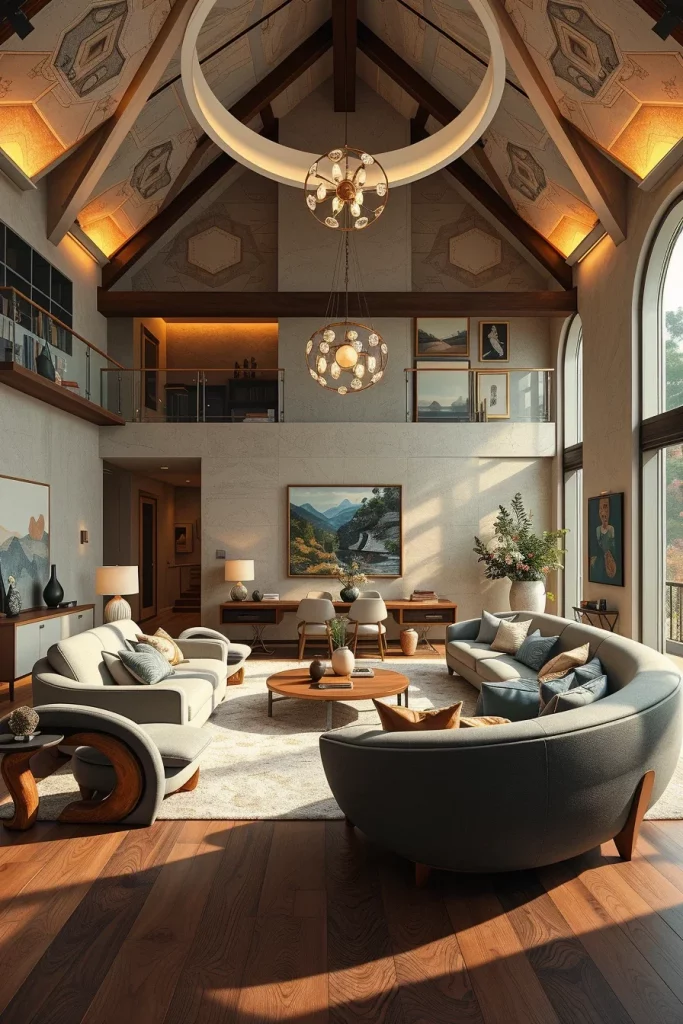
In my experience, organic interiors create a stronger emotional connection than highly rigid layouts. Many contemporary designers are moving toward softer forms because they make large open spaces feel more approachable and comfortable. I have seen this approach work particularly well in family homes and creative environments.
To strengthen the concept, I would incorporate curved architectural features, layered textures, and integrated greenery throughout the room. These additions help establish a cohesive design language while enhancing comfort and visual interest.
Open Concept Living Room Design With Architectural Lighting And Artistic Ambiance
I believe architectural lighting is one of the most transformative elements in a stylish open concept living room design. Rather than relying solely on decorative fixtures, I use integrated lighting solutions to shape the mood and highlight the room’s best features. Recessed ceiling lighting, illuminated wall panels, and concealed LED strips help define different zones while preserving the openness of the floor plan. This approach creates a sophisticated atmosphere that feels both functional and artistic.
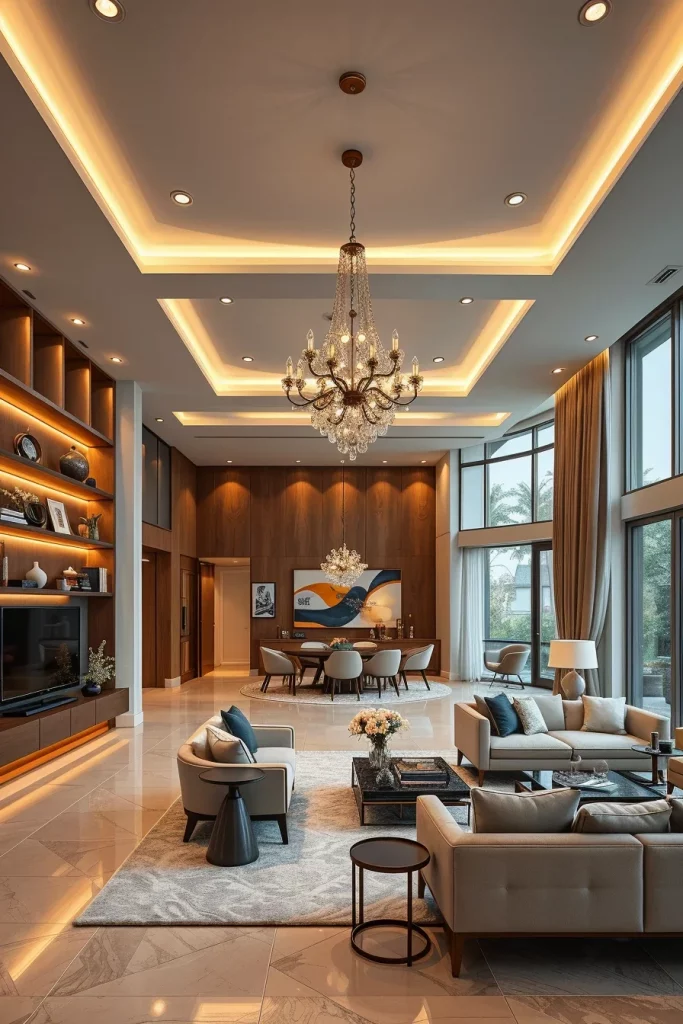
When designing this type of interior, I incorporate layered lighting at multiple levels. A sculptural chandelier often serves as the focal point, while cove lighting emphasizes architectural details. Floor lamps positioned near seating areas provide warmth and comfort, and illuminated shelving adds depth to the room. I also recommend selecting furniture with clean silhouettes so that the lighting remains an important design feature rather than competing with excessive visual elements.
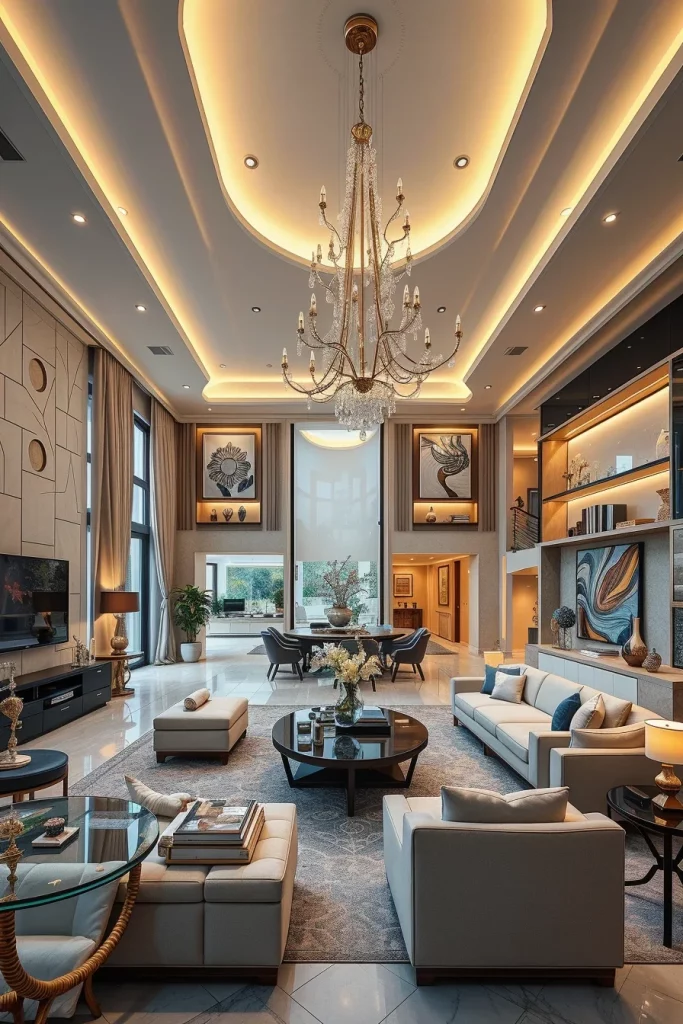
From my experience, proper lighting dramatically changes how a room feels throughout the day. Designers frequently emphasize the importance of combining ambient, task, and accent lighting, and I completely agree with this strategy. In large open-concept rooms, lighting helps establish intimacy while maintaining spaciousness.
To complete the design, I would add dimmable controls, reflective surfaces such as glass and polished stone, and carefully curated artwork that can be accentuated by directional lighting. These additions enhance both functionality and visual drama.
Contemporary Open Concept Living Room Design Featuring Floating Furniture Arrangements
A contemporary open concept living room design does not always require furniture to be pushed against walls. In fact, I often prefer floating furniture arrangements because they create stronger spatial organization and encourage natural movement throughout the room. This strategy allows the living area to function as a defined zone while preserving the openness of the overall layout.
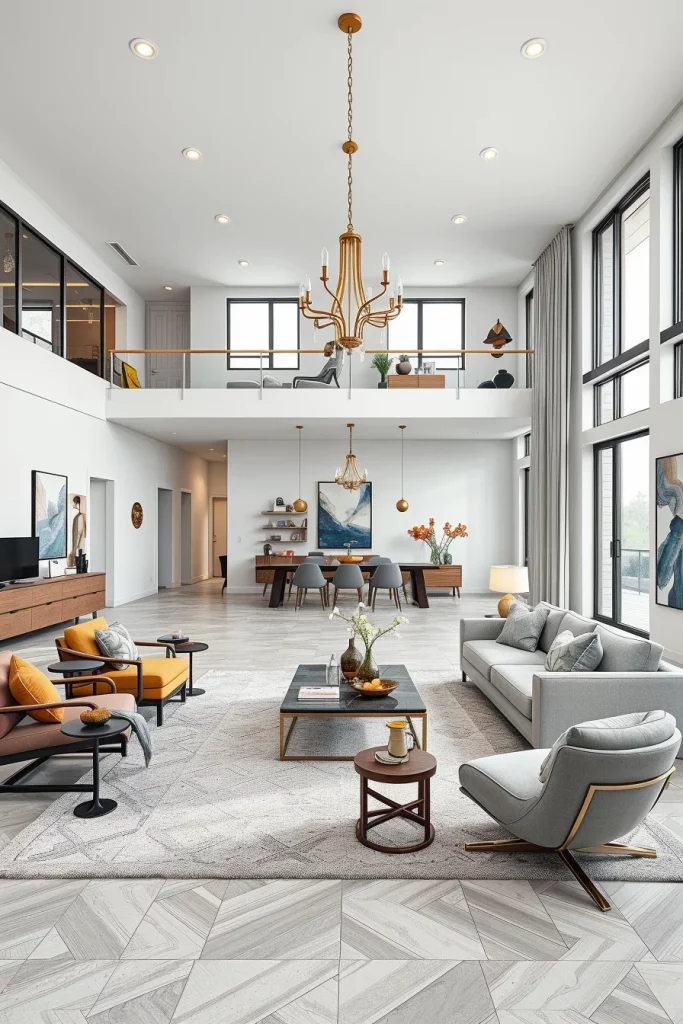
For this design, I position the sofa and chairs toward the center of the room around a large area rug. A statement coffee table anchors the arrangement, while console tables behind the sofa create additional functionality. Contemporary shelving, minimalist media units, and strategically placed accent chairs contribute to a balanced composition. Every furniture piece serves a purpose while helping establish visual structure.
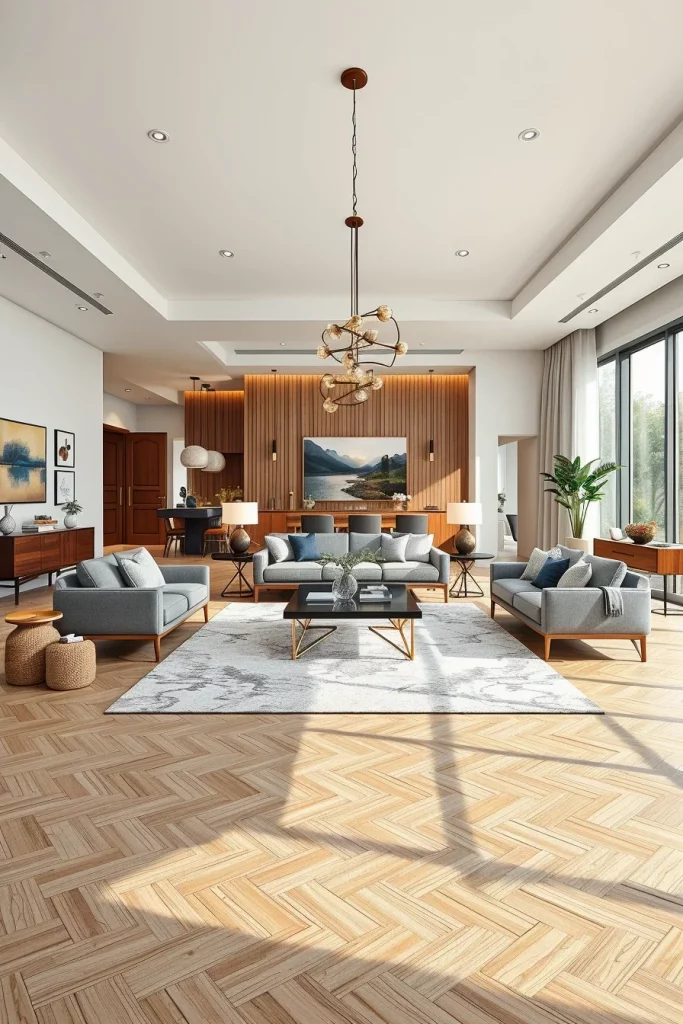
I have found that floating furniture arrangements make large rooms feel more intentional and welcoming. Rather than allowing open spaces to feel empty or disconnected, this layout creates clear destinations for conversation, relaxation, and entertaining. It is a technique that many experienced designers use to improve both aesthetics and functionality.
If I were refining this space further, I would incorporate ceiling treatments, oversized pendant lights, and subtle room dividers such as open shelving units. These features help reinforce the layout without interrupting visual flow.
Sculptural Open Concept Living Room Design With Curved Seating And Unique Coffee Tables
A truly sculptural and unique living room embraces furniture that doubles as art. I particularly enjoy combining curved seating with one-of-a-kind coffee tables because these elements instantly establish character within an open floor plan. The soft curves create movement and contrast beautifully with architectural surfaces such as walls, floors, and ceilings.
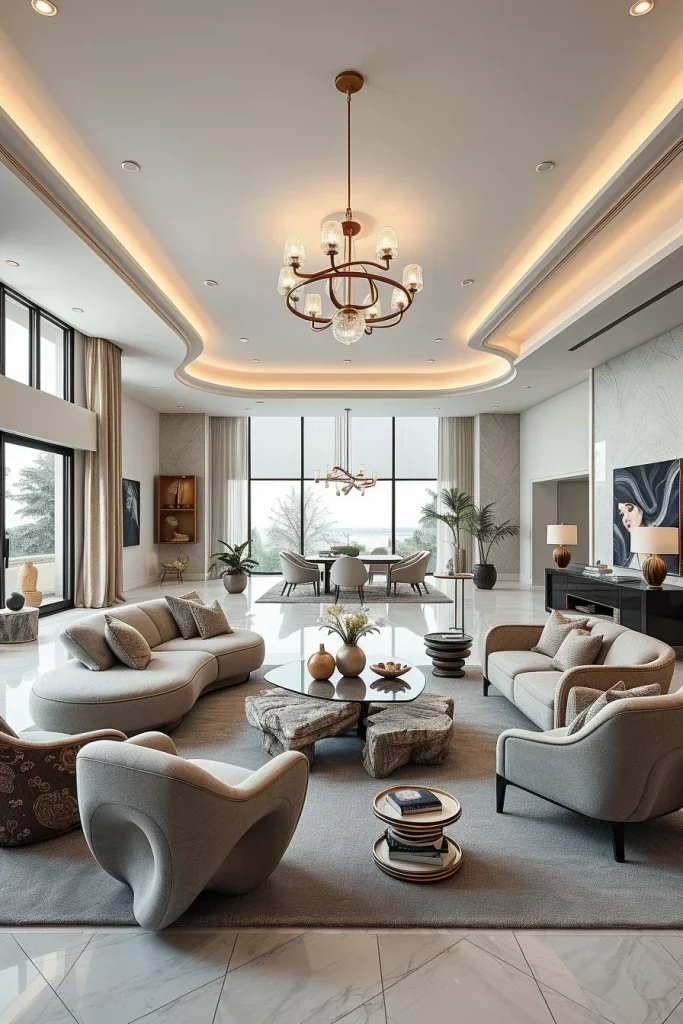
In this setting, I typically select a curved modular sofa, rounded accent chairs, and a coffee table crafted from stone, glass, or artistic resin. Layered textiles add comfort, while sculptural lighting fixtures reinforce the artistic identity of the room. Decorative accessories remain carefully edited so that the furniture itself becomes the primary visual attraction.
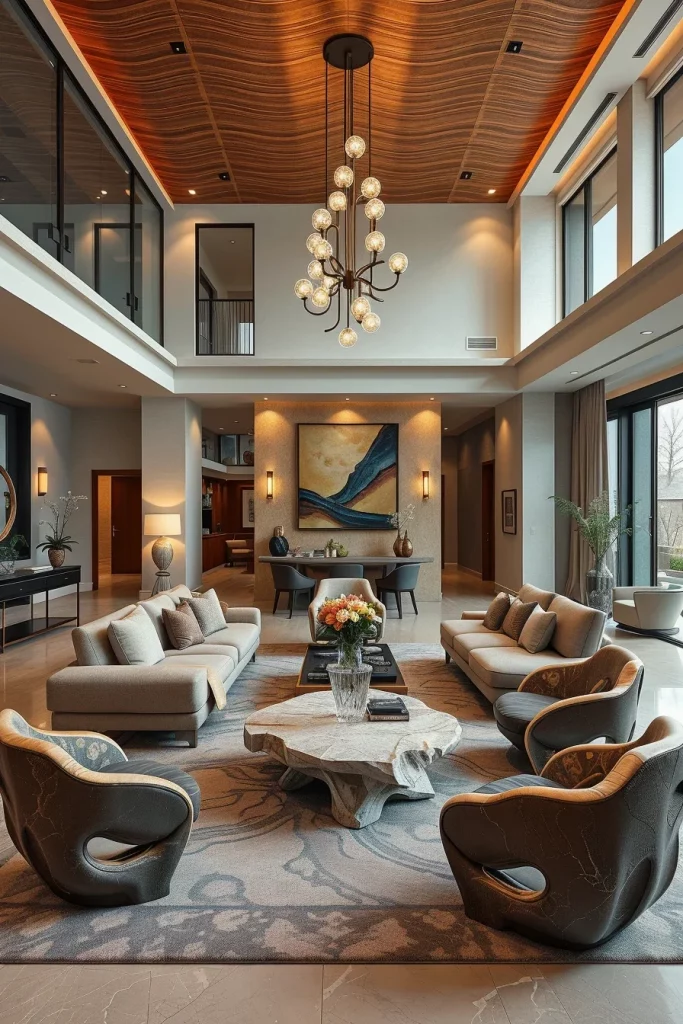
Personally, I think sculptural furniture works best when surrounded by simple architectural elements. This contrast allows each piece to stand out while maintaining a sophisticated appearance. I often advise homeowners to focus on quality rather than quantity when selecting statement furniture for open spaces.
To further enhance the room, I would introduce oversized artwork, custom rugs featuring organic patterns, and subtle architectural curves integrated into shelving or wall treatments. These additions strengthen the room’s cohesive sculptural aesthetic.
Open Concept Living Room Design Inspired By Gallery-Style Interiors And Modern Art
A gallery-inspired open concept living room design offers an excellent opportunity to showcase modern art while maintaining a refined residential atmosphere. I appreciate how this approach turns everyday living spaces into curated environments where architecture, furniture, and artwork work together harmoniously. Clean surfaces and generous wall space allow each artistic element to receive proper attention.
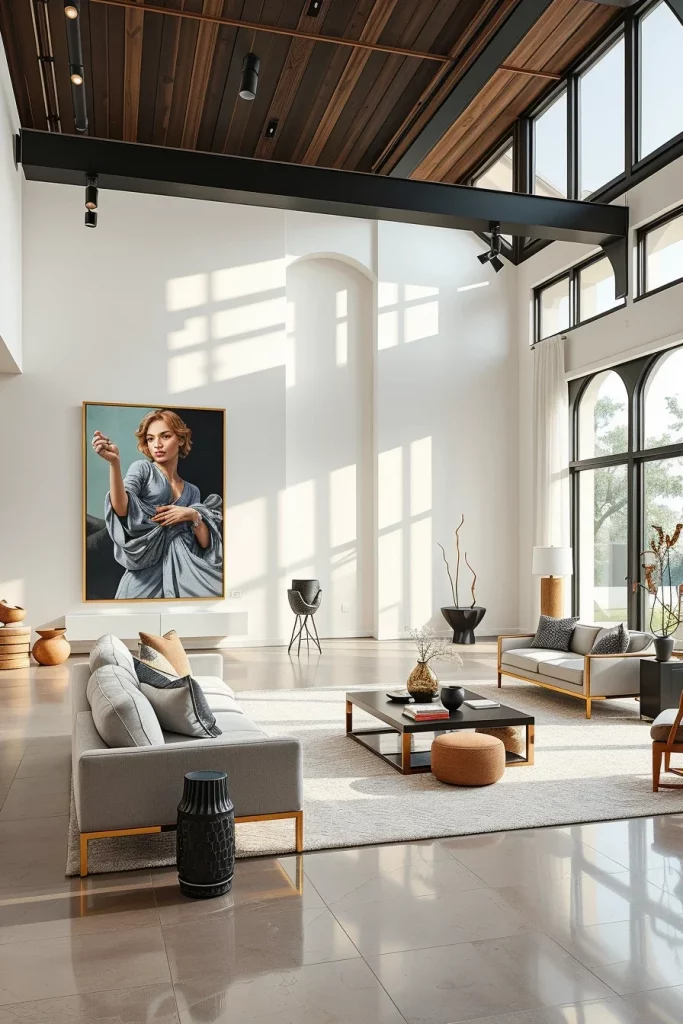
For furnishings, I generally choose streamlined sofas, minimalist coffee tables, and understated accent seating. The furniture serves as a supporting framework rather than competing with the artwork. Large paintings, sculptures, and mixed-media installations become focal points throughout the room. Neutral colors help unify the space and ensure visual balance.
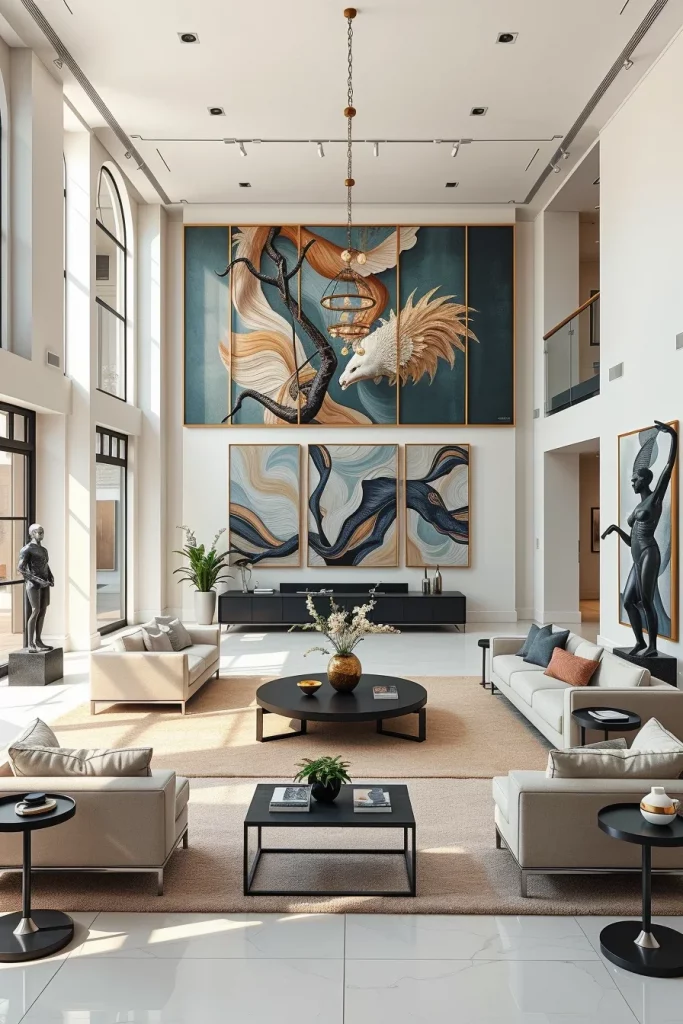
In my opinion, successful gallery-inspired interiors require careful editing. Many respected design publications recommend allowing negative space around artwork, and I follow this principle whenever possible. A room that feels too crowded can diminish the impact of even the most impressive pieces.
To elevate this concept further, I would add museum-style lighting, custom display pedestals, and integrated storage solutions that keep everyday items concealed. These additions preserve the clean and curated atmosphere that defines gallery-style living.
Warm Open Concept Living Room Design With Natural Materials And Creative Details
Warmth is often the missing ingredient in many contemporary interiors, which is why I enjoy creating creative open living spaces that emphasize natural materials. Wood, stone, linen, and wool bring texture and authenticity into an open concept living room design, making large spaces feel more inviting and comfortable. The result is both elegant and approachable.
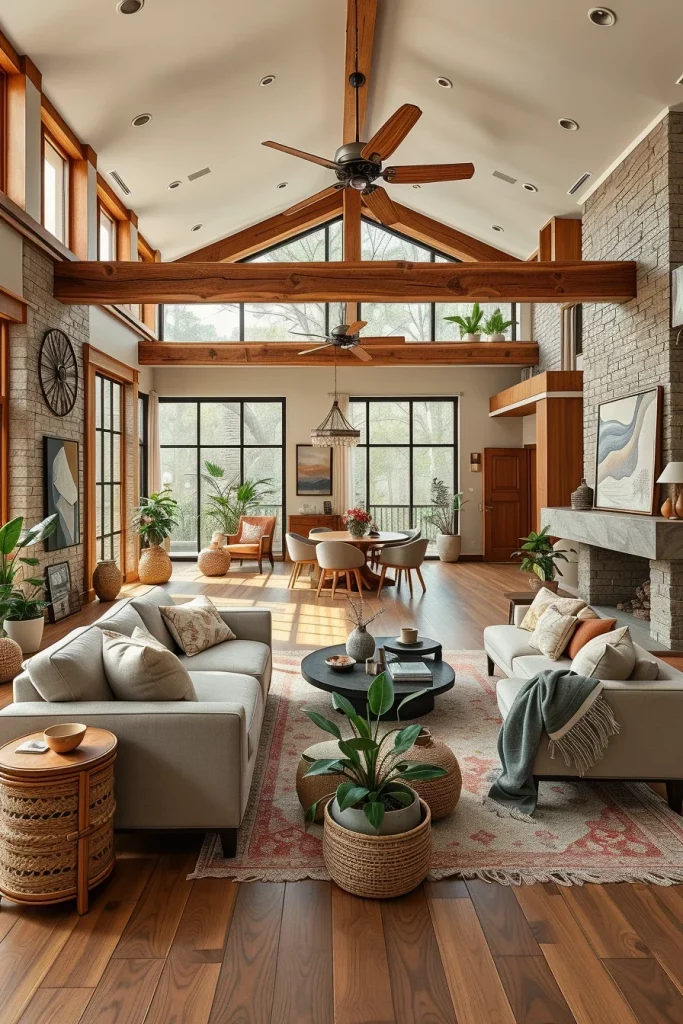
I typically include a generously sized sofa upholstered in natural fabrics, complemented by solid wood tables and handcrafted accessories. Textured area rugs, woven baskets, ceramic decor, and indoor plants contribute additional layers of warmth. Lighting fixtures featuring natural finishes help reinforce the organic character of the room.
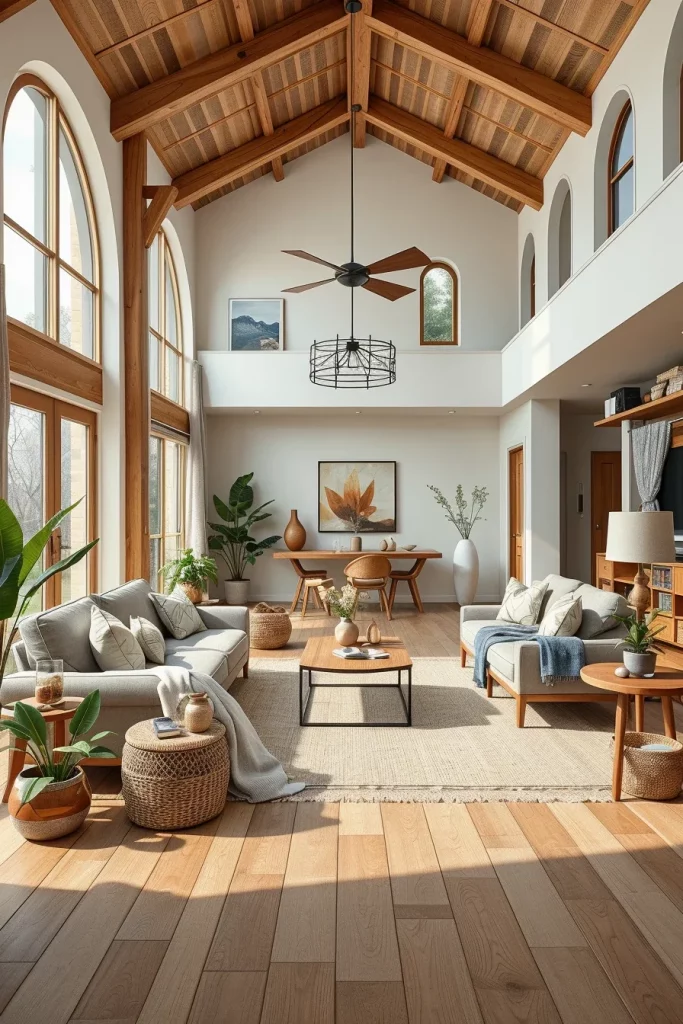
From my experience, homeowners often respond positively to interiors that feel connected to nature. Warm materials age beautifully and create timeless appeal that remains relevant despite changing design trends. I have found that combining contemporary furniture with organic textures achieves the ideal balance between sophistication and comfort.
To complete this design, I would incorporate large indoor plants, custom wood paneling, and layered textiles such as throw blankets and decorative cushions. These finishing touches help transform an open-concept space into a welcoming environment suitable for everyday living and entertaining.
Open Concept Living Room Design With Dramatic Ceiling Features And Modern Character
When I design an open concept living room design with dramatic ceiling features, I focus on creating a strong architectural statement that immediately draws the eye upward. High vaulted ceilings, exposed beams, geometric ceiling panels, or recessed lighting details can define the entire atmosphere of the room while preserving the openness of the layout. These elements add dimension and visual interest, helping large spaces feel intentional rather than empty. I find that dramatic ceilings are especially effective in contemporary homes where architectural details become part of the décor.
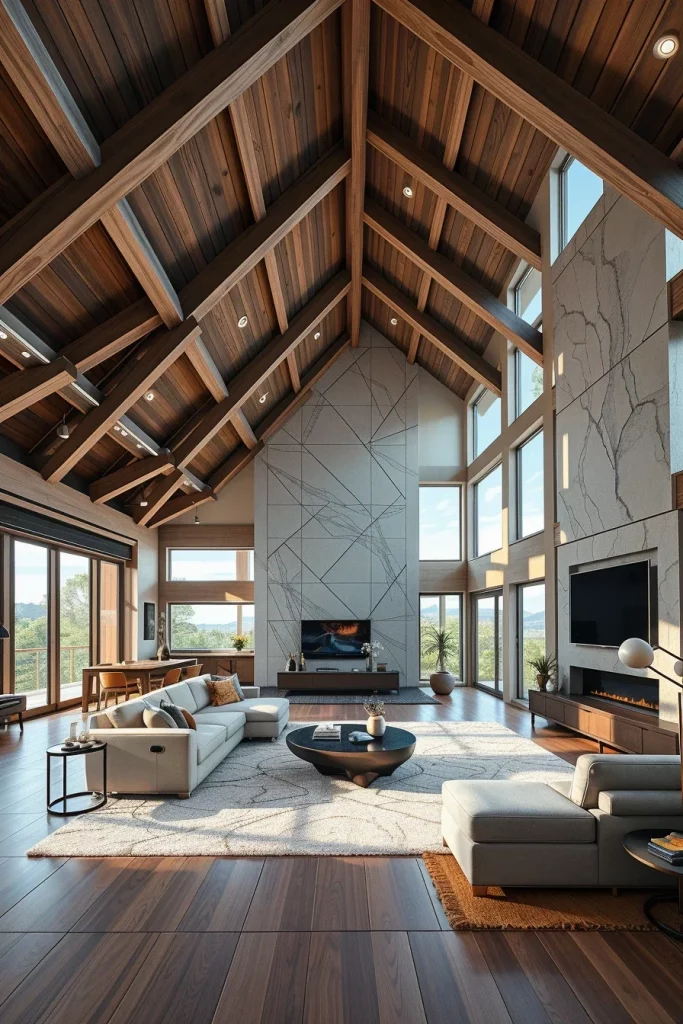
In this type of interior, I often include a large modular sofa, a sculptural coffee table, oversized area rugs, and sleek media units with clean lines. Floor-to-ceiling windows complement the ceiling design by emphasizing vertical space and maximizing natural light. Contemporary accent tables, minimalist shelving, and statement artwork contribute to a balanced aesthetic without competing with the architectural features above. Every furnishing serves a purpose while supporting the room’s modern character.
From my experience, leading interior design publications often emphasize the importance of treating ceilings as a “fifth wall.” I agree with this philosophy because it encourages homeowners to view the entire room as a cohesive composition. A dramatic ceiling can transform an ordinary open-plan space into an unforgettable interior while maintaining functionality and comfort.
To strengthen this concept further, I would add integrated smart lighting systems that highlight architectural details throughout the day and evening. This additional layer of lighting enhances depth, mood, and flexibility within the space.
Elegant Open Concept Living Room Design Combining Functionality And Artistic Expression
An elegant open concept living room design should balance practical everyday living with visually compelling artistic elements. I often use refined materials such as natural stone, wood veneers, textured fabrics, and subtle metallic finishes to establish sophistication without creating visual clutter. The goal is to allow the living, dining, and kitchen zones to flow naturally while maintaining a unified design language throughout the space.
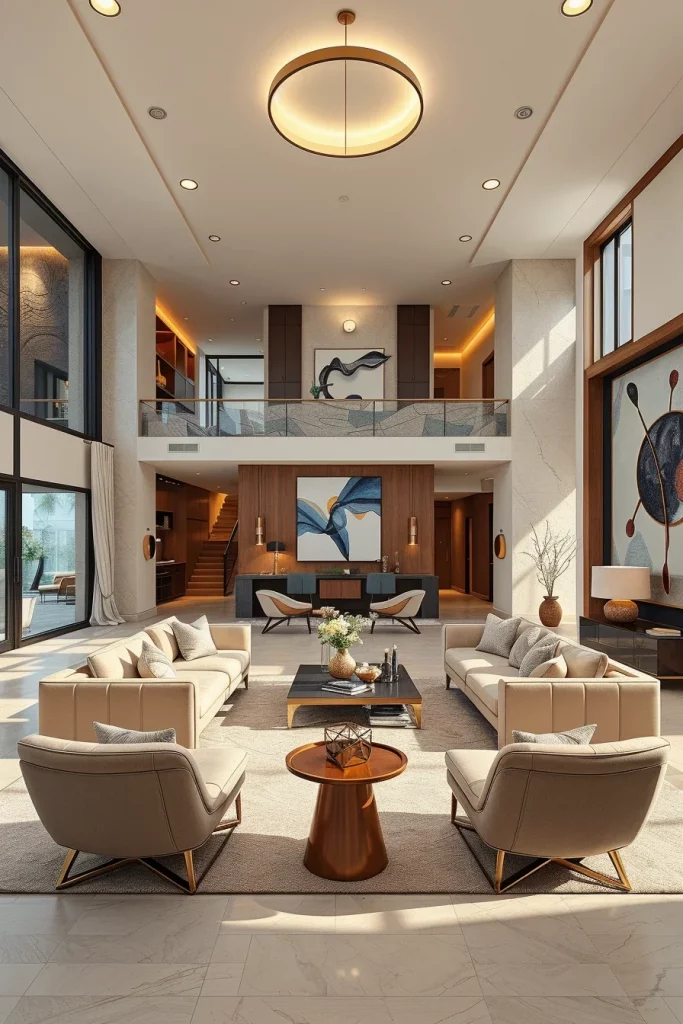
For furnishings, I prefer tailored sofas, curved lounge chairs, artistic coffee tables, and custom cabinetry that blend storage with visual appeal. Sculptural vases, oversized abstract artwork, and carefully selected decorative objects contribute personality while preserving elegance. A neutral color palette with strategic accents helps maintain harmony across the open layout.
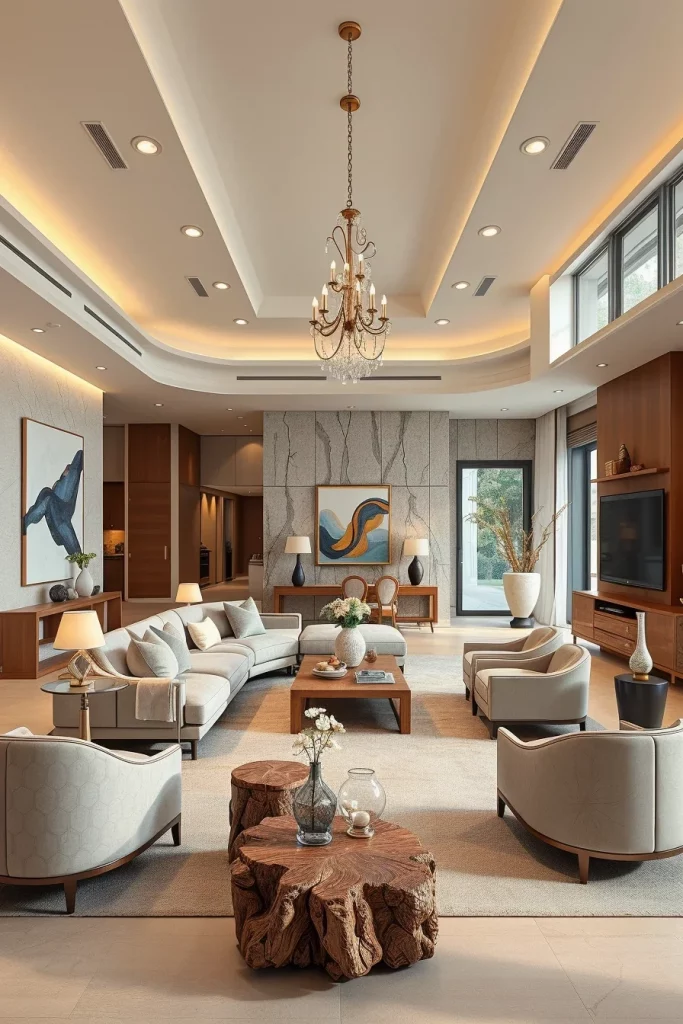
Personally, I find that artistic expression works best when it feels intentional rather than excessive. Many respected American interior designers recommend choosing a few impactful statement pieces instead of filling every surface with accessories. I have found this approach creates a more timeless and sophisticated result while allowing individual design elements to stand out.
To complete this environment, I would consider incorporating custom window treatments and layered lighting solutions. These additions improve comfort, privacy, and ambiance while reinforcing the room’s elegant character.
Open Concept Living Room Design With Statement Accent Chairs And Sculptural Decor
One of my favorite ways to enhance an open concept living room design is through statement accent chairs and sculptural décor. These pieces introduce personality and visual movement without disrupting the openness of the floor plan. Carefully selected seating can function as both practical furniture and artistic focal points, helping define conversation areas within larger spaces.
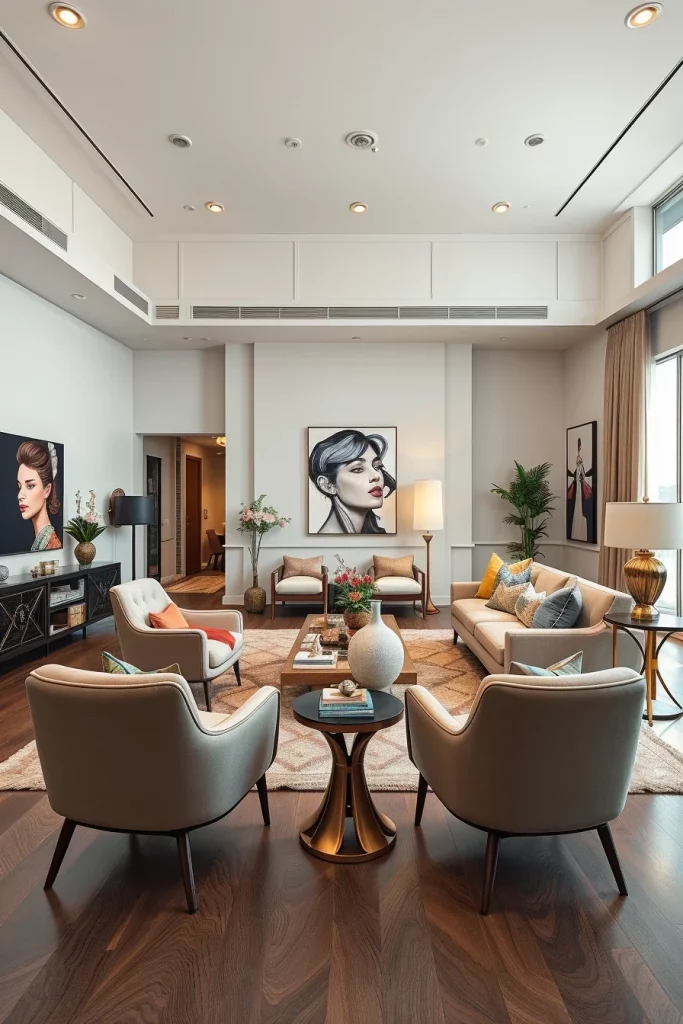
I often choose bold accent chairs with unique silhouettes, luxurious upholstery, or unexpected materials. These are paired with sculptural side tables, abstract floor lamps, oversized ceramics, and contemporary artwork. A comfortable sectional sofa typically anchors the space, while accent pieces create layers of interest that encourage exploration from different viewpoints throughout the room.
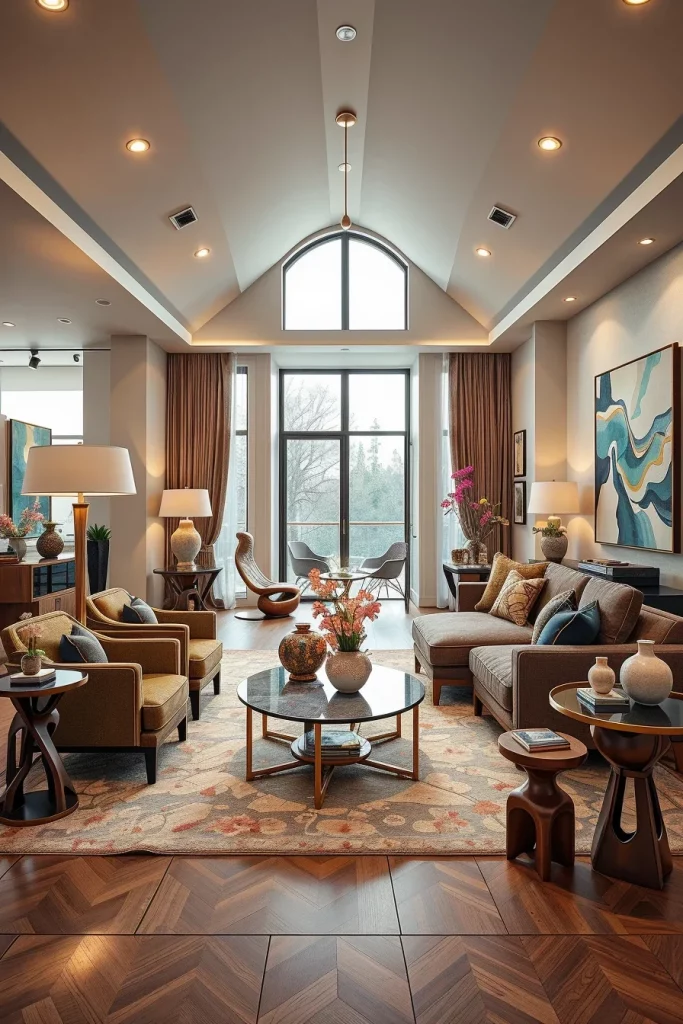
In my experience, sculptural furnishings are most successful when balanced with simpler foundational elements. Rather than competing for attention, each statement piece should complement the overall composition. This creates a curated environment that feels sophisticated and inviting rather than overwhelming.
If I were expanding this design concept, I would introduce additional texture through area rugs, decorative wall panels, or architectural millwork. These details would strengthen the visual depth of the room while supporting the sculptural theme.
Modern Open Concept Living Room Design Featuring Textured Surfaces And Layered Elements
A modern open concept living room design becomes far more engaging when multiple textures are layered throughout the space. I often combine smooth stone, natural wood, woven textiles, glass, and metal finishes to create depth and warmth. Since open-concept layouts can sometimes feel expansive or minimal, texture helps make the environment more inviting and visually dynamic.
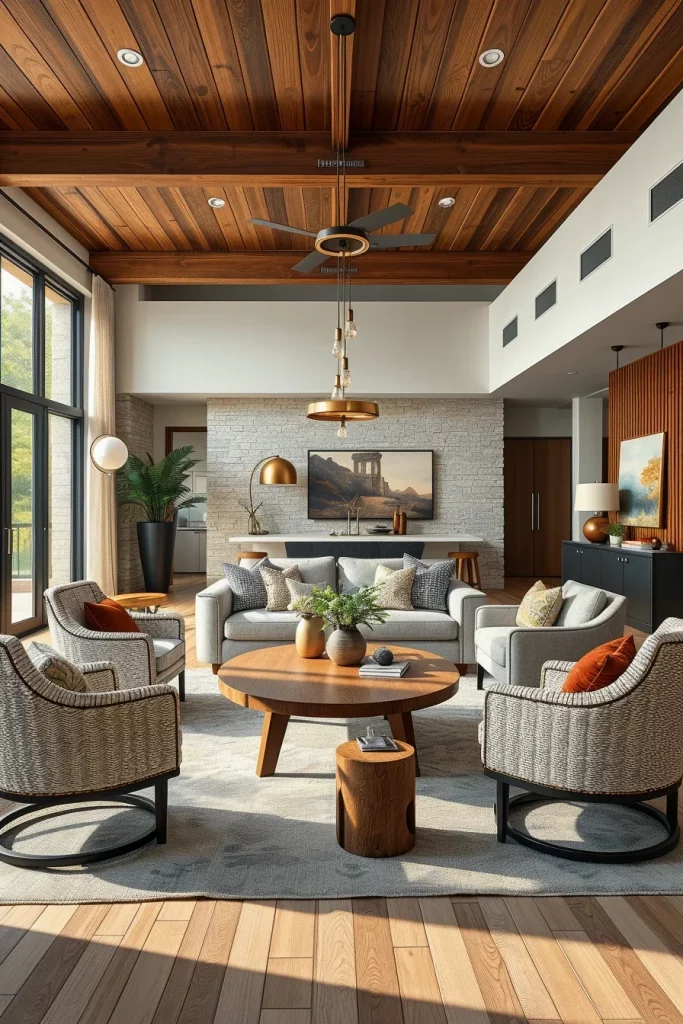
Furniture selection plays a significant role in achieving this effect. I like incorporating boucle sofas, textured accent chairs, wood coffee tables, ribbed cabinetry, and layered rugs. Decorative cushions, throws, and large-scale artwork further enrich the interior. By mixing materials thoughtfully, the room gains complexity without sacrificing its contemporary aesthetic.
From my perspective, layered design is one of the most effective strategies for preventing modern interiors from feeling cold. Many professional designers emphasize contrast in material selection, and I consistently find that combining soft and hard surfaces produces the most balanced results.
To enhance this concept even further, I would consider adding textured wall treatments or decorative ceiling details. These features create additional visual interest while maintaining the clean lines associated with modern design.
Open Concept Living Room Design With Creative Room Dividers And Seamless Flow
An effective open concept living room design often requires subtle methods for separating functional zones while preserving visual openness. Creative room dividers provide this balance by defining areas without introducing full walls. I frequently use open shelving systems, decorative screens, slatted wood partitions, and glass dividers to organize the space while maintaining natural light and sightlines.
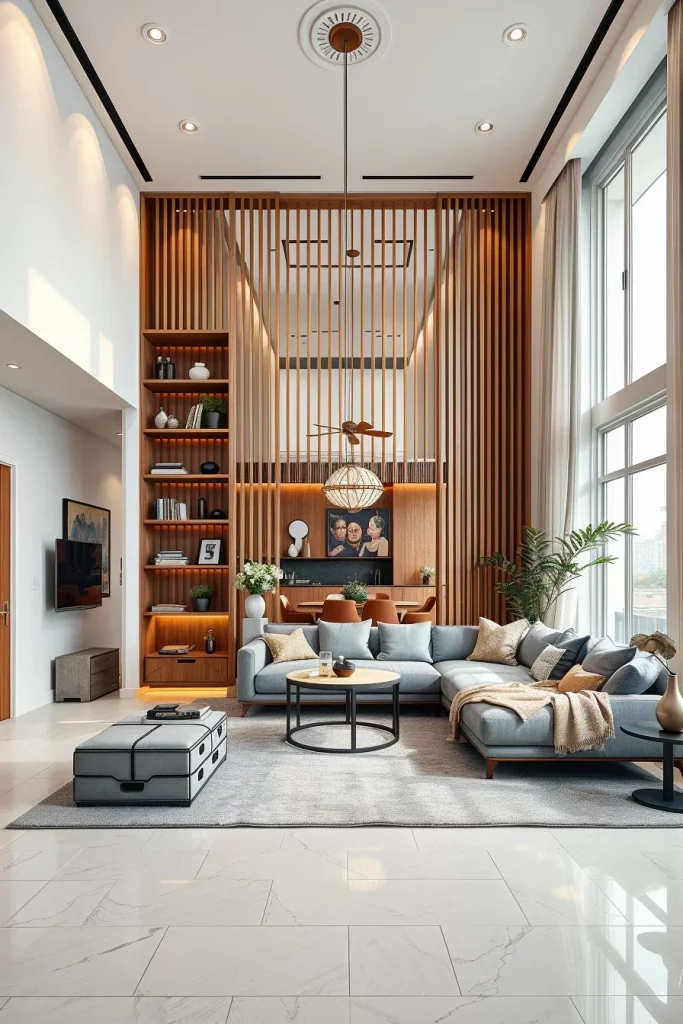
In these interiors, furniture placement becomes especially important. Sofas can act as natural boundaries between living and dining areas, while console tables, bookshelves, and area rugs reinforce spatial organization. Contemporary lighting fixtures help distinguish individual zones without interrupting the overall flow. Every element contributes to both structure and openness.
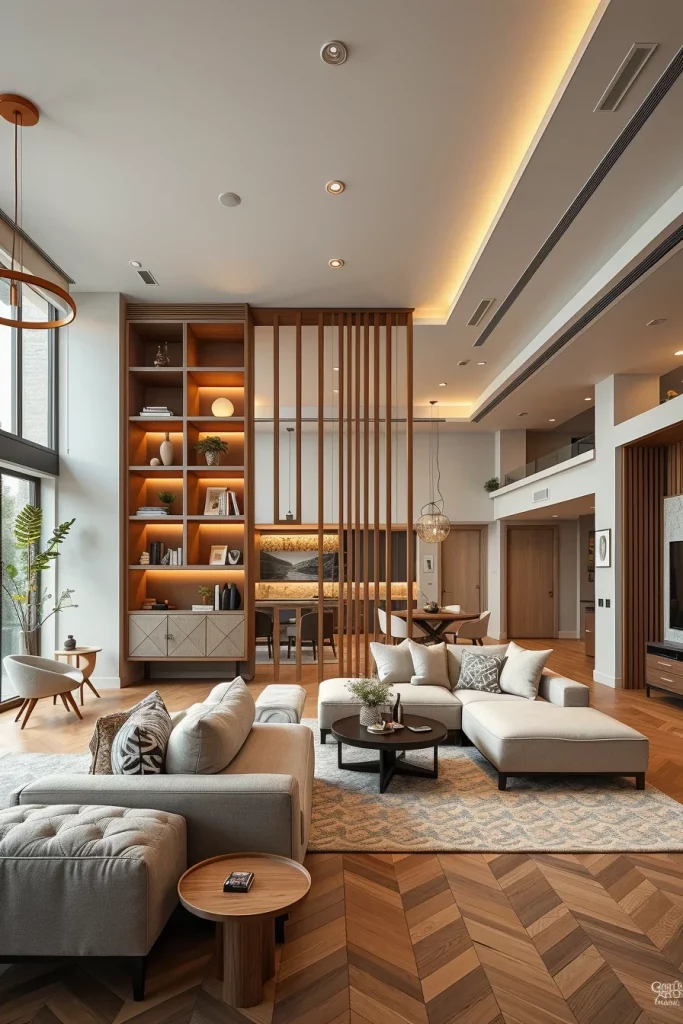
I have found that the most successful room dividers serve multiple purposes. Open shelving, for example, provides storage, display opportunities, and spatial definition simultaneously. This multifunctional approach aligns perfectly with modern living requirements while preserving aesthetic appeal.
To improve this concept further, I would add cohesive flooring materials throughout the entire open-plan space. Consistent flooring strengthens visual continuity and enhances the seamless transition between different functional areas.
Artistic Open Concept Living Room Design Using Oversized Lighting Installations
When creating an artistic open concept living room design, I often use oversized lighting installations as the central visual feature. Large pendant fixtures, sculptural chandeliers, and creative suspended lighting elements help establish identity within expansive layouts. These installations naturally draw attention upward while connecting different functional zones beneath them. In open-concept spaces, lighting can become both a practical necessity and a piece of art that defines the room’s overall atmosphere.
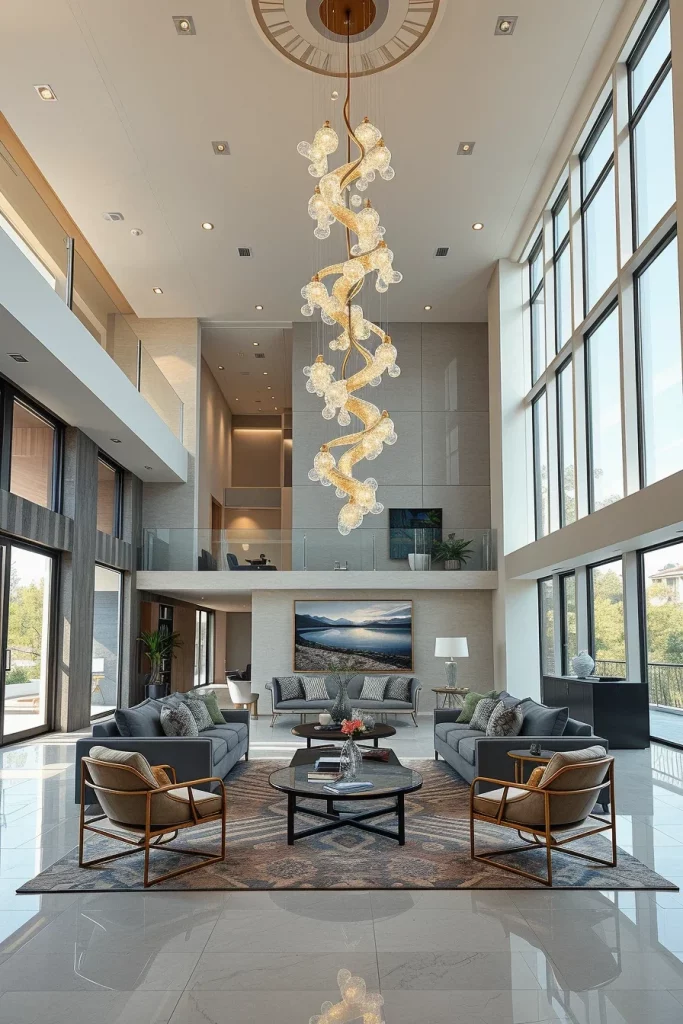
I typically pair dramatic lighting with contemporary furniture that complements rather than competes with the installation. A low-profile sectional sofa, elegant lounge chairs, minimalist coffee tables, and streamlined storage pieces help maintain balance. Decorative accessories are kept intentional and refined, allowing the lighting fixture to remain the primary focal point. Large windows and reflective surfaces further enhance the effect by amplifying natural and artificial light throughout the space.
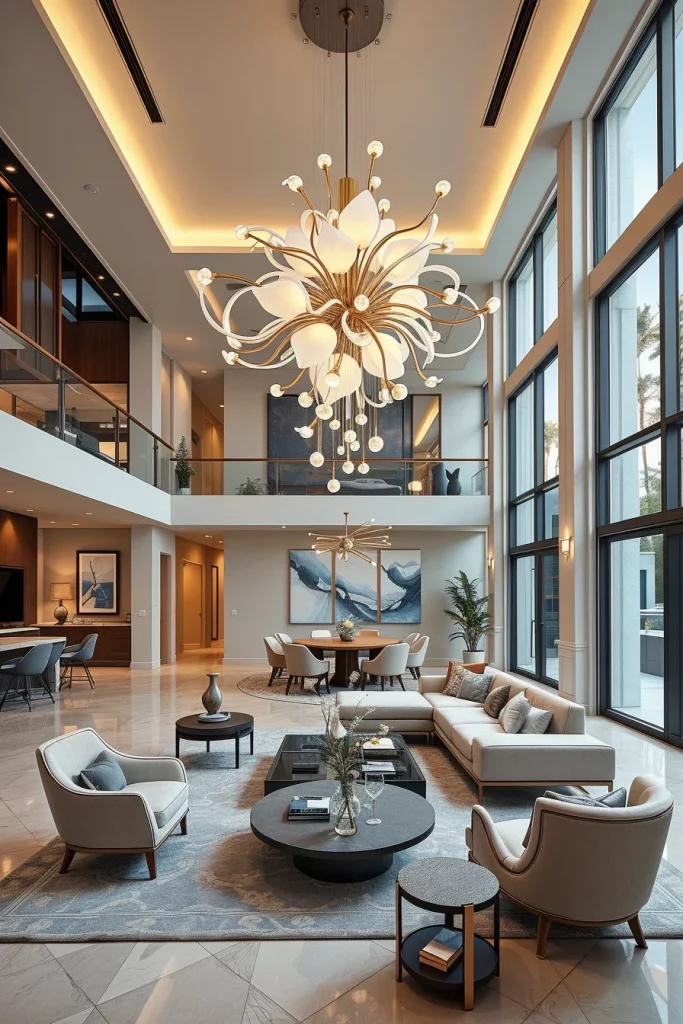
From my experience, oversized lighting works best when scaled appropriately to the dimensions of the room. Many professional designers recommend selecting fixtures that feel substantial enough to anchor the space without overwhelming it. I find that thoughtfully chosen lighting immediately elevates the character of an open-plan interior and creates a memorable visual experience.
To strengthen this concept further, I would add layered lighting sources such as wall sconces, recessed fixtures, and accent lighting. This combination provides flexibility while highlighting architectural and decorative features throughout the room.
Open Concept Living Room Design With Bold Monochromatic Styling And Modern Furniture
A bold monochromatic approach can transform an open concept living room design into a sophisticated and highly cohesive environment. I often work with varying shades of a single color to create visual depth while maintaining consistency across the entire open-plan layout. This strategy allows architectural features, furniture shapes, and textures to become more prominent without relying on multiple contrasting colors.
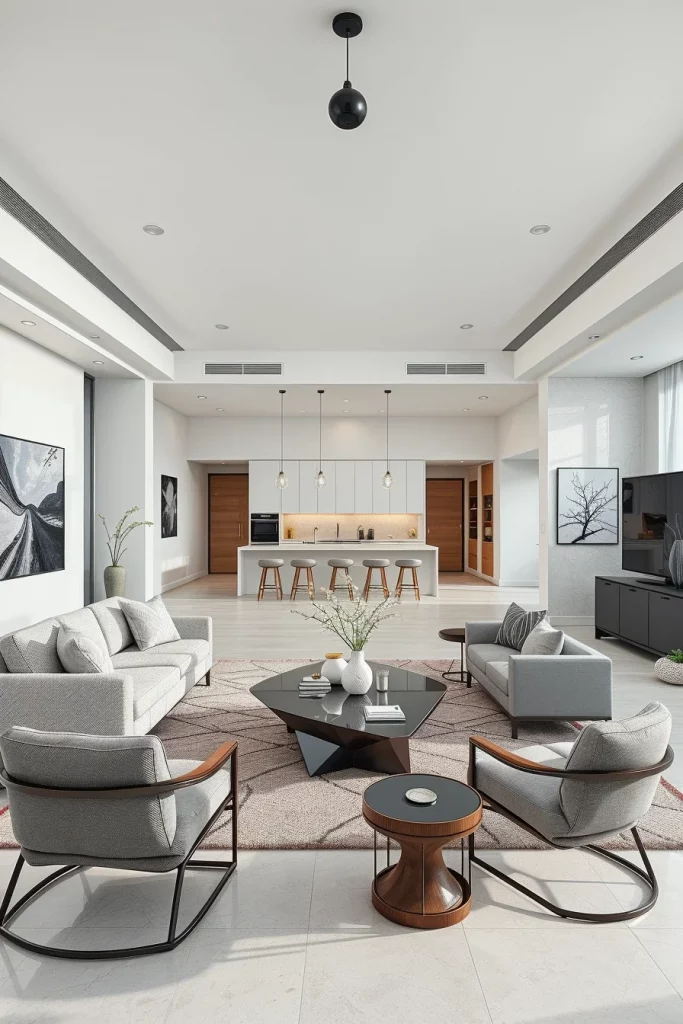
In these interiors, I typically select modern furniture with strong silhouettes and clean lines. A monochromatic sectional sofa, contemporary accent chairs, geometric coffee tables, and sleek storage units create a polished foundation. Textured fabrics, stone surfaces, matte finishes, and subtle metallic accents help introduce variety while remaining within the chosen color palette. The result is a layered yet unified design.
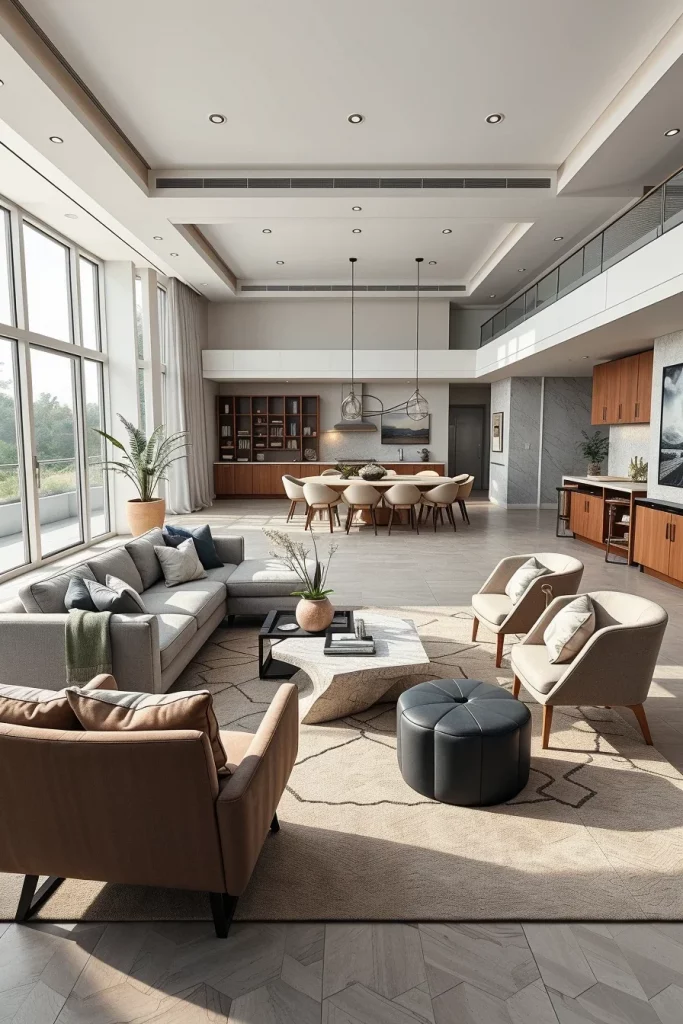
Personally, I appreciate monochromatic interiors because they feel intentional and timeless. By limiting the color palette, I can focus on proportion, texture, and material quality. This often results in a more refined appearance that remains visually appealing for years without feeling tied to short-lived trends.
To enhance this style, I would incorporate oversized artwork and architectural details that reinforce the monochromatic theme while adding visual interest and dimension to the room.
Scandinavian-Inspired Open Concept Living Room Design With Contemporary Simplicity
A Scandinavian-inspired open concept living room design embraces simplicity, comfort, and functionality. I focus on creating bright, welcoming spaces that maximize natural light while maintaining a calm and uncluttered atmosphere. Light color palettes, natural materials, and thoughtful furniture placement contribute to an environment that feels both modern and inviting.
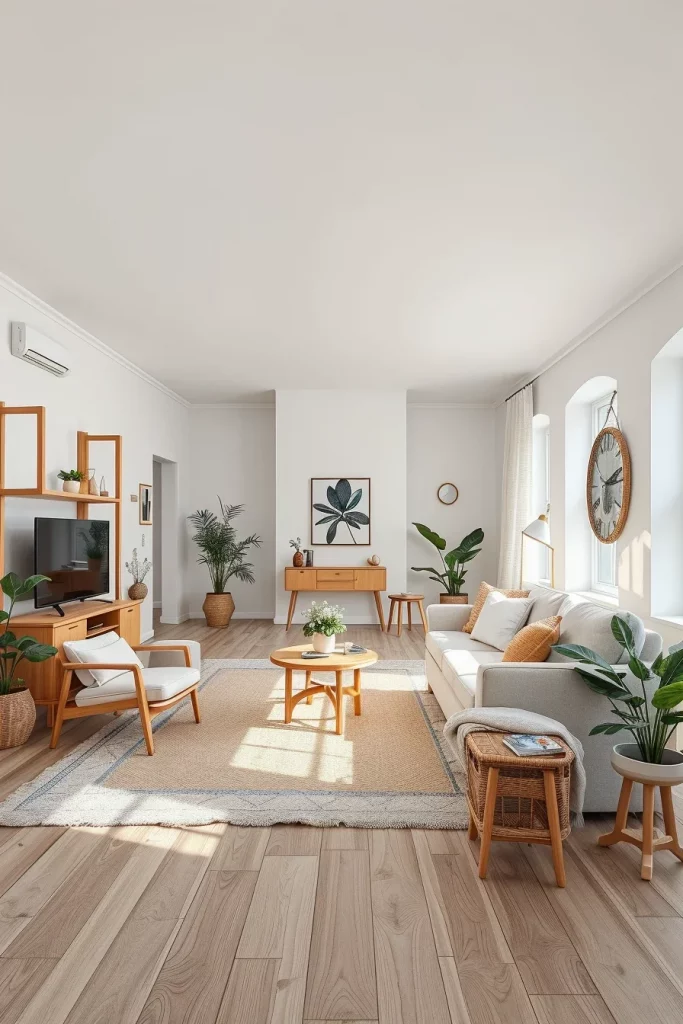
For furnishings, I typically choose comfortable sofas with clean lines, light wood coffee tables, minimalist shelving, and functional storage solutions. Soft textiles such as wool throws, linen cushions, and textured area rugs introduce warmth without compromising simplicity. Decorative elements remain understated, allowing natural materials and craftsmanship to become the primary design features.
I have always admired the Scandinavian philosophy of prioritizing quality over quantity. Many respected design publications highlight the importance of creating interiors that support everyday living rather than focusing solely on aesthetics. I find that this approach leads to spaces that are both beautiful and highly practical.
If I were expanding this design concept, I would include additional indoor plants and carefully selected natural materials. These elements further strengthen the connection between the interior and the natural world while enhancing comfort.
Open Concept Living Room Design Featuring Custom Built-In Features And Unique Storage
A thoughtfully planned open concept living room design benefits greatly from custom built-in features that enhance organization without disrupting visual flow. I often incorporate built-in shelving, entertainment units, display niches, and integrated storage solutions that maximize functionality while maintaining a clean and cohesive appearance. These custom elements help open spaces feel organized and purposeful.
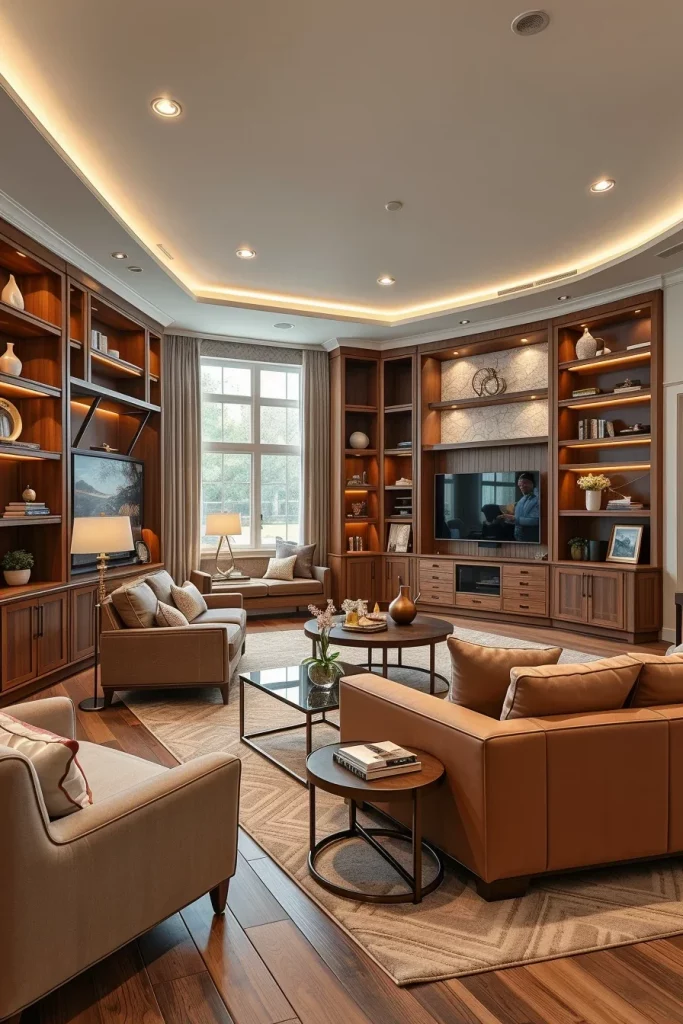
When designing built-ins, I focus on creating a balance between storage and display opportunities. Open shelving allows decorative objects, books, and artwork to contribute to the room’s character, while concealed storage keeps everyday items out of sight. Custom media walls, window seating, and integrated cabinetry further improve efficiency while complementing the overall architectural design.
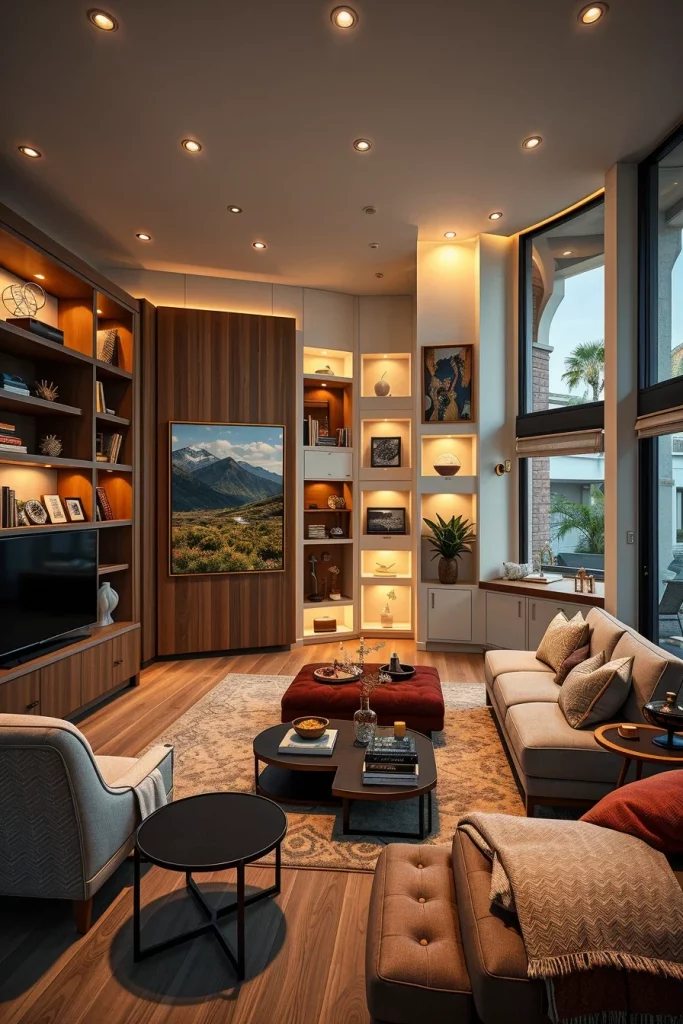
From my perspective, custom storage solutions are among the most valuable investments homeowners can make in an open-plan interior. They help reduce visual clutter and allow furniture and decorative elements to take center stage. Well-designed built-ins often appear as natural extensions of the architecture rather than separate pieces of furniture.
To complete this concept, I would consider incorporating integrated lighting within shelving and cabinetry. This feature enhances functionality while adding depth and sophistication to the overall design.
Sculptural Open Concept Living Room Design With Curved Architectural Elements
A sculptural open concept living room design featuring curved architectural elements introduces softness and movement into contemporary interiors. I often use curved walls, arched openings, rounded ceilings, and flowing architectural details to create a more organic environment. These features help break up rigid lines while maintaining the openness that defines modern floor plans.
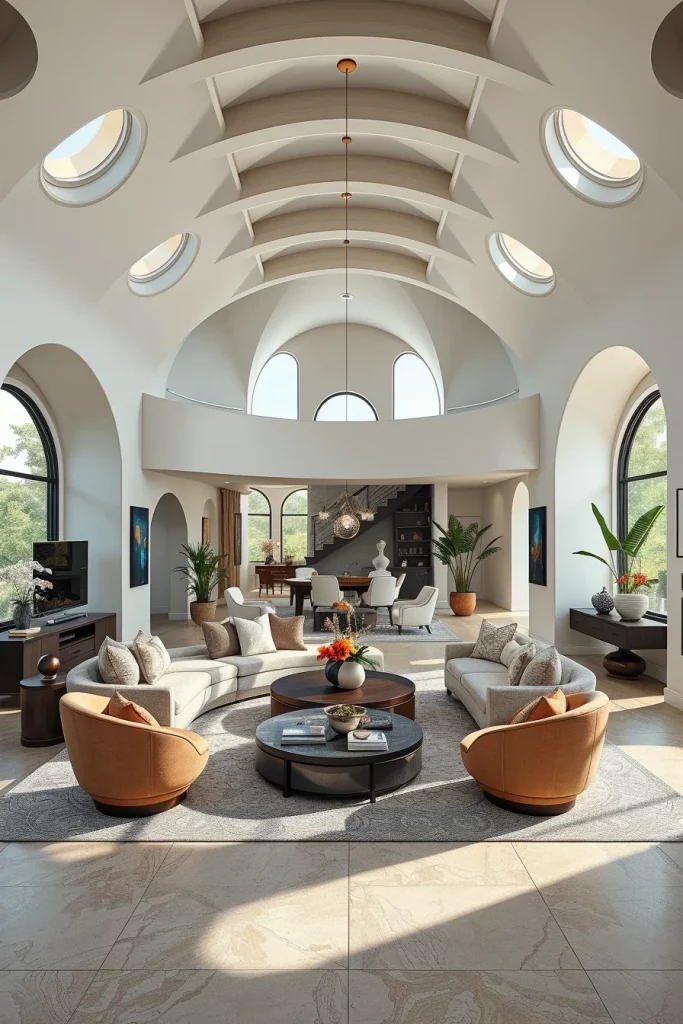
Furniture selection is essential in reinforcing this design language. I typically choose curved sofas, rounded coffee tables, sculptural accent chairs, and circular lighting fixtures that echo the architectural forms. Soft textiles, natural materials, and carefully selected decorative objects contribute to a cohesive composition that feels elegant and inviting.
In my experience, curved elements create a more welcoming atmosphere than strictly angular spaces. Many contemporary designers have embraced organic forms because they add visual interest while promoting a sense of comfort and flow. I find that these shapes encourage movement throughout the room and create a more dynamic interior experience.
To elevate this concept further, I would introduce custom wall finishes and artistic sculptural décor that complement the architectural curves. These additions strengthen the overall theme while enhancing the room’s unique identity.
Open Concept Living Room Design With Mixed Materials And Designer-Inspired Finishes
I find that one of the most effective ways to create depth in an open-concept living room is through the thoughtful combination of materials. Natural stone, warm wood, polished metal, textured plaster, and glass can coexist beautifully within the same space. This layered approach helps define different functional zones without the need for walls, allowing the room to feel open while maintaining visual interest. Designer-inspired finishes elevate the overall appearance and create a refined atmosphere that feels intentional and balanced.
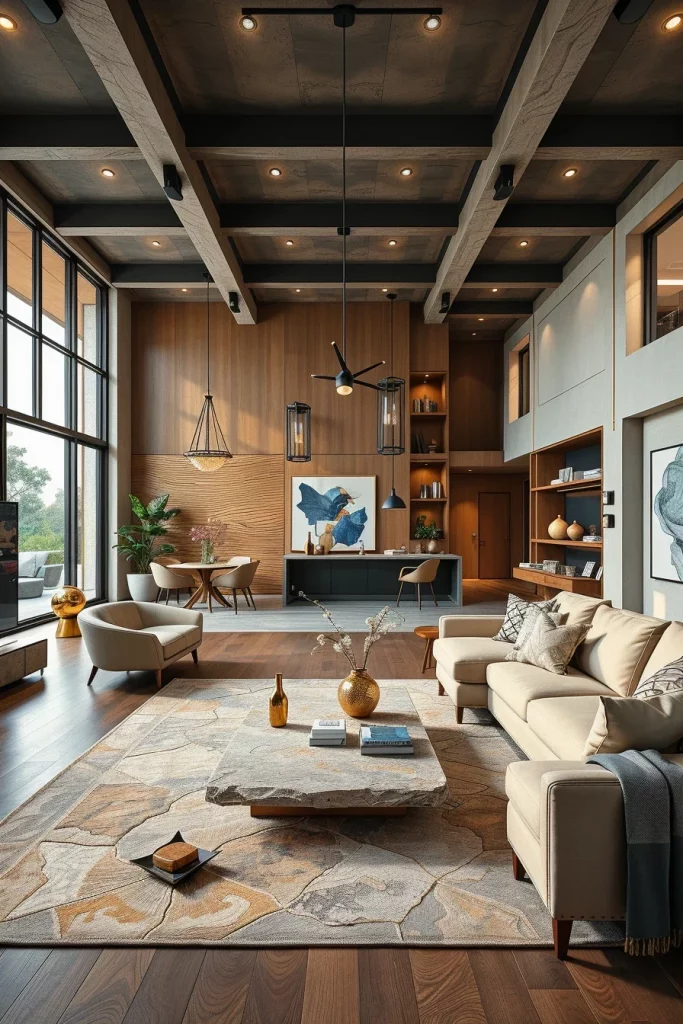
When designing a room like this, I typically recommend a large sectional sofa upholstered in performance fabric, paired with a natural stone coffee table and accent chairs featuring metal frames. Wood slat wall panels add warmth, while brushed brass lighting introduces sophistication. I also like incorporating textured rugs, matte cabinetry, and custom shelving because they contribute to the richness of the overall composition while remaining practical for daily use.
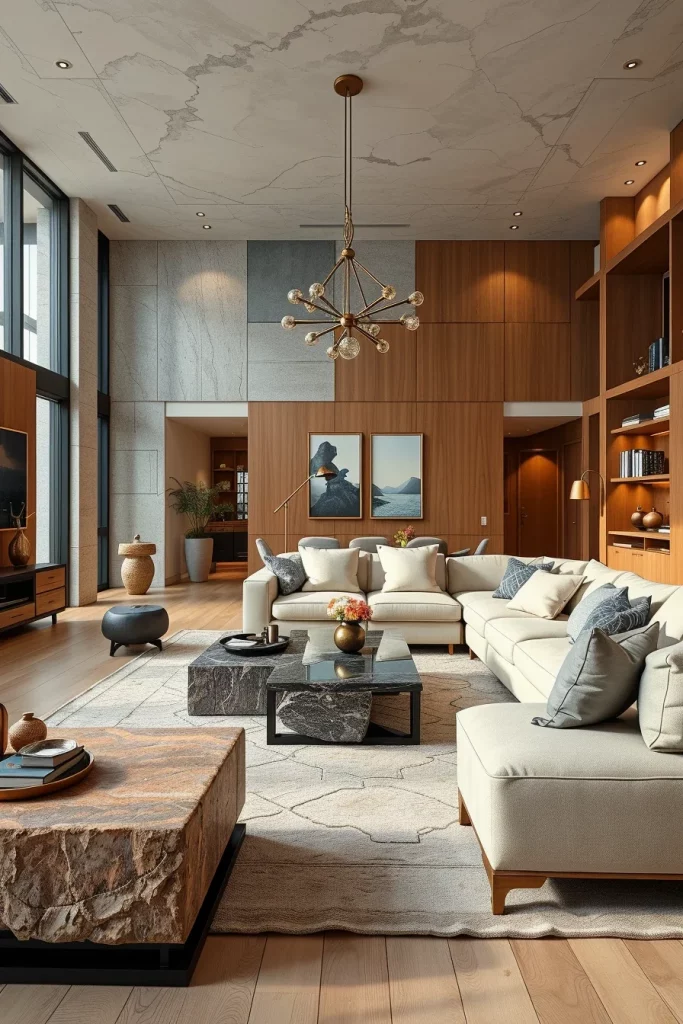
In my experience, many professional designers emphasize the importance of contrast when mixing materials. Publications such as Architectural Digest frequently highlight interiors where contrasting finishes create dynamic yet harmonious environments. I have found that combining rough and smooth textures makes open spaces feel more curated and inviting.
To complete this design, I would add integrated lighting systems that emphasize material textures during the evening. Subtle illumination can dramatically enhance the visual impact of stone surfaces, wood grain, and decorative wall treatments.
Creative Open Concept Living Room Design Featuring Conversation Pit Concepts
I believe conversation pits are making a strong comeback because they offer a unique way to create intimacy within large open spaces. By slightly lowering the seating area, the design naturally encourages social interaction while maintaining the openness of the overall floor plan. This approach creates a focal point that feels both nostalgic and contemporary when executed with modern materials and furnishings.
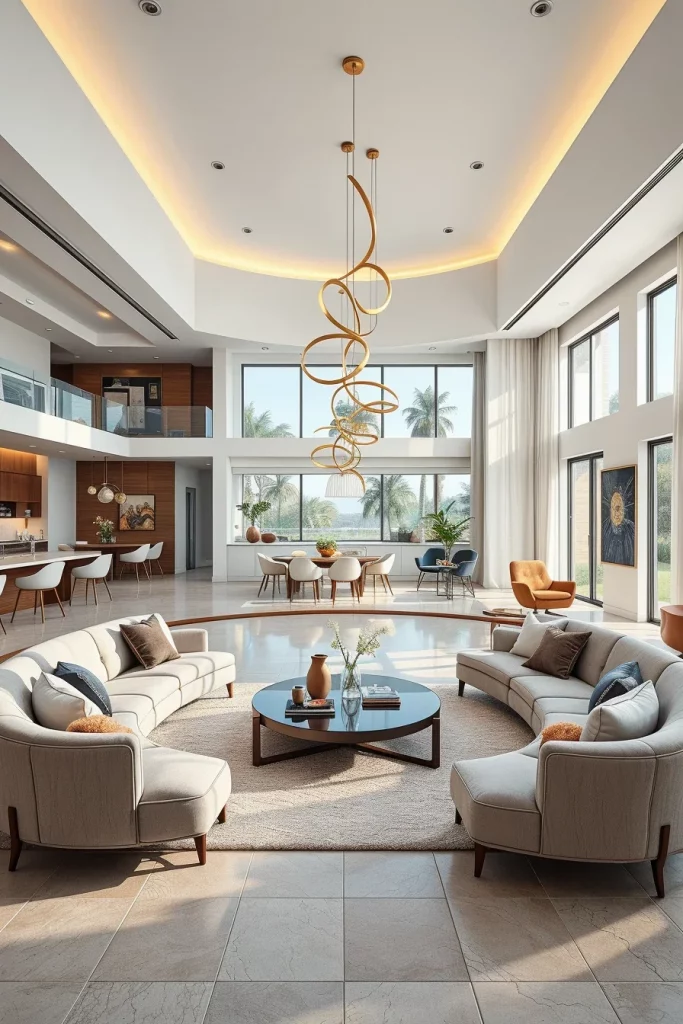
For this concept, I recommend built-in upholstered seating surrounding a central coffee table. Modular cushions allow flexibility, while curved forms soften the geometry of the room. Above the conversation pit, sculptural pendant lighting can define the area without introducing visual barriers. Surrounding spaces may include a dining zone and kitchen that remain visually connected yet distinct.
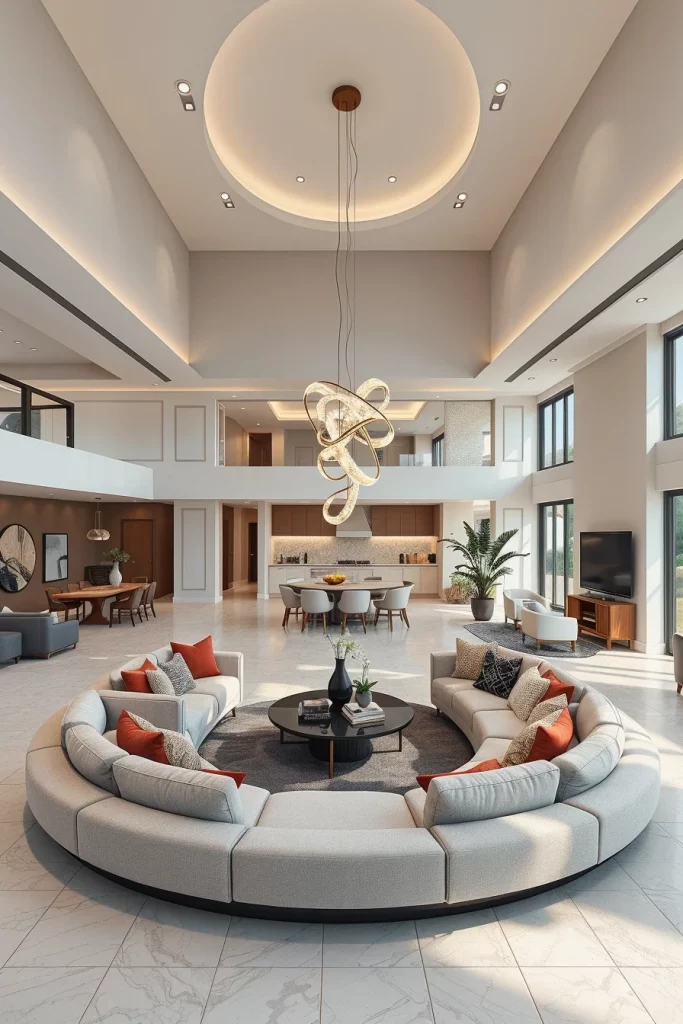
Personally, I appreciate how conversation pits encourage meaningful interaction. Instead of arranging furniture around a television, the focus shifts toward communication and shared experiences. Many contemporary designers are revisiting this concept because it offers a refreshing alternative to conventional living room layouts.
I would also consider incorporating hidden storage beneath the seating platforms. This practical addition increases functionality while preserving the clean aesthetic of the overall design.
Open Concept Living Room Design With Artistic Wall Treatments And Statement Textures
I often recommend artistic wall treatments when homeowners want to introduce personality without overwhelming an open floor plan. Textured plaster, decorative limewash finishes, dimensional wall panels, and custom murals can transform large surfaces into architectural features. These elements create visual rhythm and make expansive spaces feel more engaging.
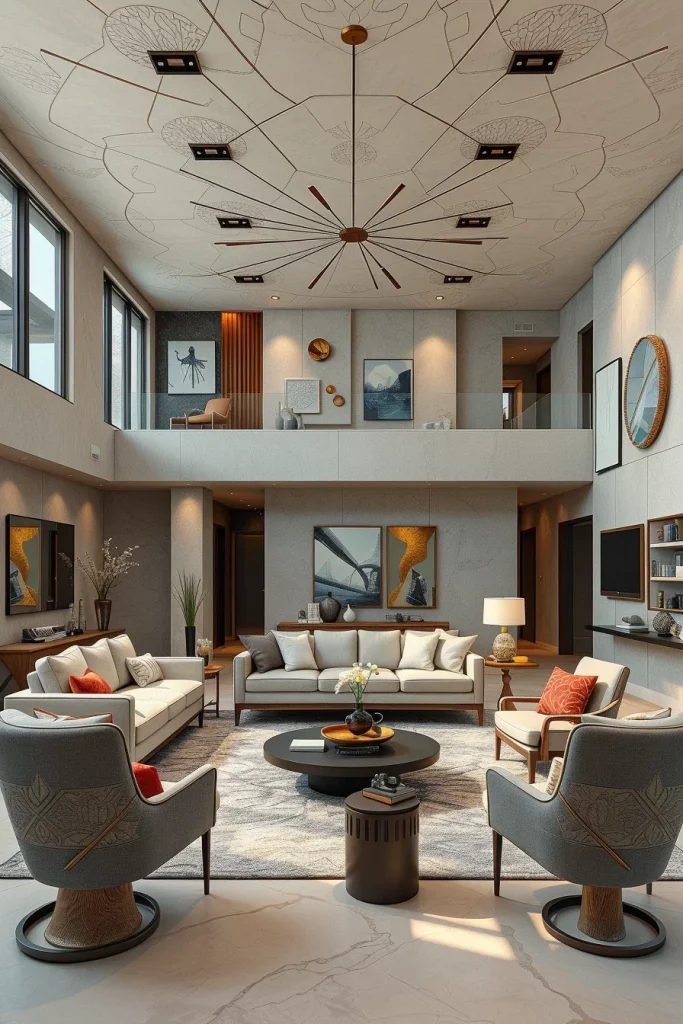
In this type of interior, I like pairing neutral furniture with expressive wall textures. A streamlined sofa, sculptural lounge chairs, and minimalist shelving allow the wall treatments to become the centerpiece. Layered textiles, such as boucle upholstery and wool rugs, complement the tactile quality of the walls and contribute to a cohesive design narrative.
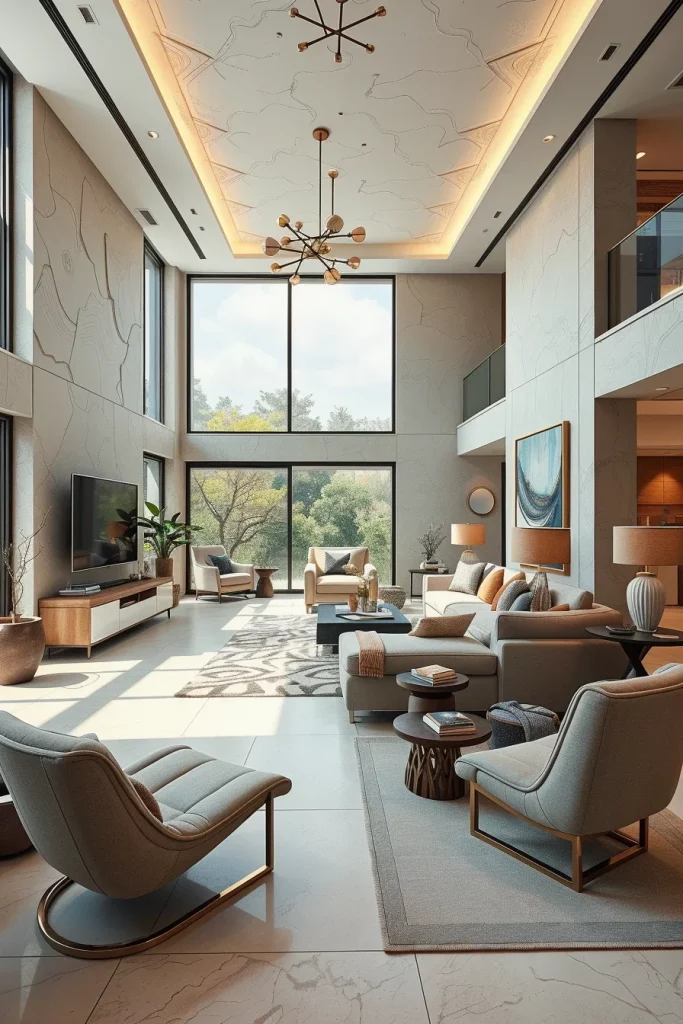
From my perspective, statement textures are most successful when balanced with restraint. Rather than adding numerous decorative objects, I prefer allowing one or two standout features to command attention. This approach creates a sophisticated environment that feels curated rather than cluttered.
To enhance the design further, I would introduce strategically placed wall washers and accent lighting. Proper illumination highlights texture variations and creates dramatic visual effects throughout the day.
Contemporary Open Concept Living Room Design With Multifunctional Furniture Solutions
I consider multifunctional furniture essential for modern open-concept living. Flexible furnishings maximize usability while maintaining an uncluttered appearance. This strategy is particularly valuable in homes where the living room serves multiple purposes, including entertaining, relaxing, and remote work.
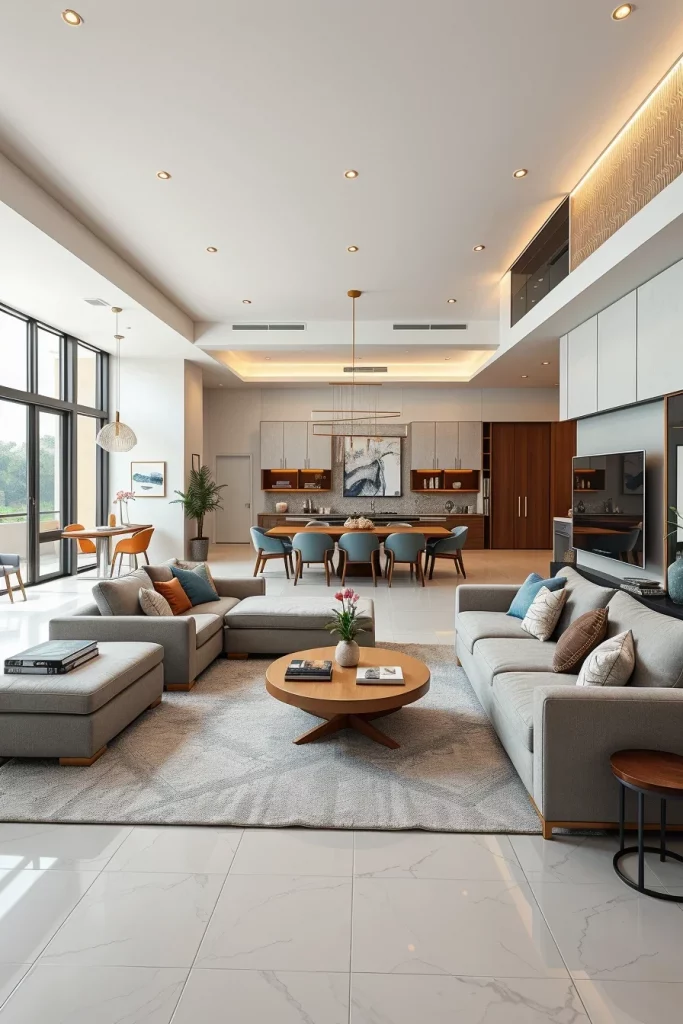
My preferred furniture selections include modular sectionals, expandable coffee tables, storage ottomans, and movable shelving units. Convertible furniture pieces allow the room to adapt to changing needs throughout the day. I also recommend incorporating concealed storage wherever possible to keep everyday items organized and out of sight.
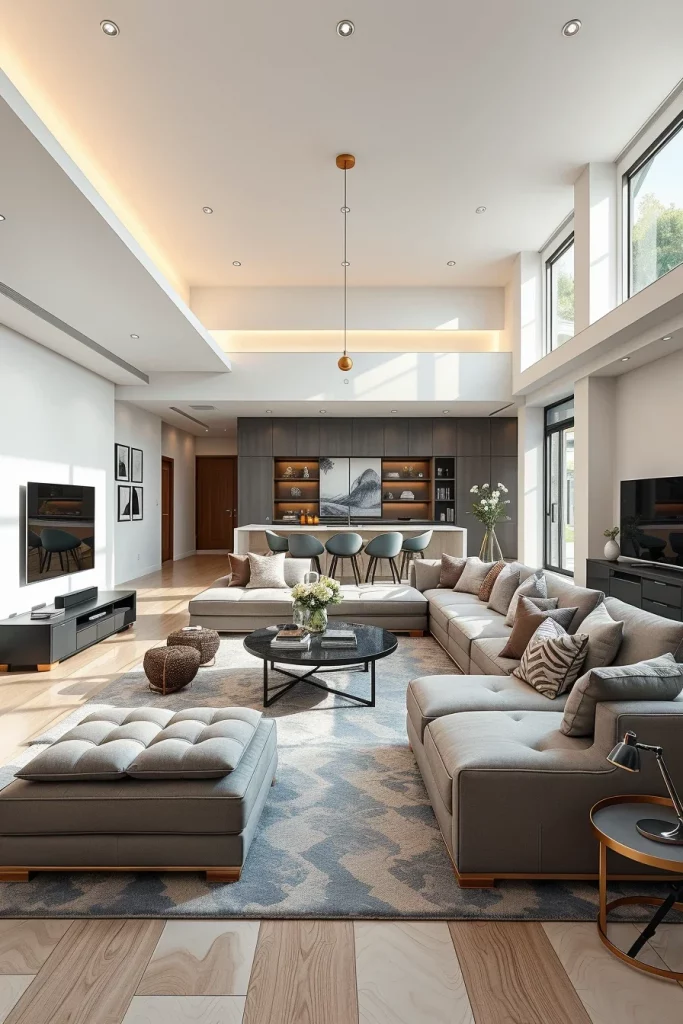
In my experience, the best multifunctional spaces never feel compromised. Instead, every furniture piece serves both practical and aesthetic purposes. Many leading interior designers advocate for adaptable layouts because they support modern lifestyles without sacrificing visual appeal.
I would additionally include smart furniture technology, such as integrated charging stations and adjustable lighting systems. These features improve convenience while preserving the sleek character of the room.
Open Concept Living Room Design Inspired By Modern Boutique Hotel Interiors
I often draw inspiration from boutique hotels because they masterfully combine luxury, comfort, and memorable design experiences. In an open-concept living room, this approach creates an environment that feels sophisticated yet welcoming. Rich materials, layered lighting, and carefully selected furnishings contribute to a sense of understated elegance.
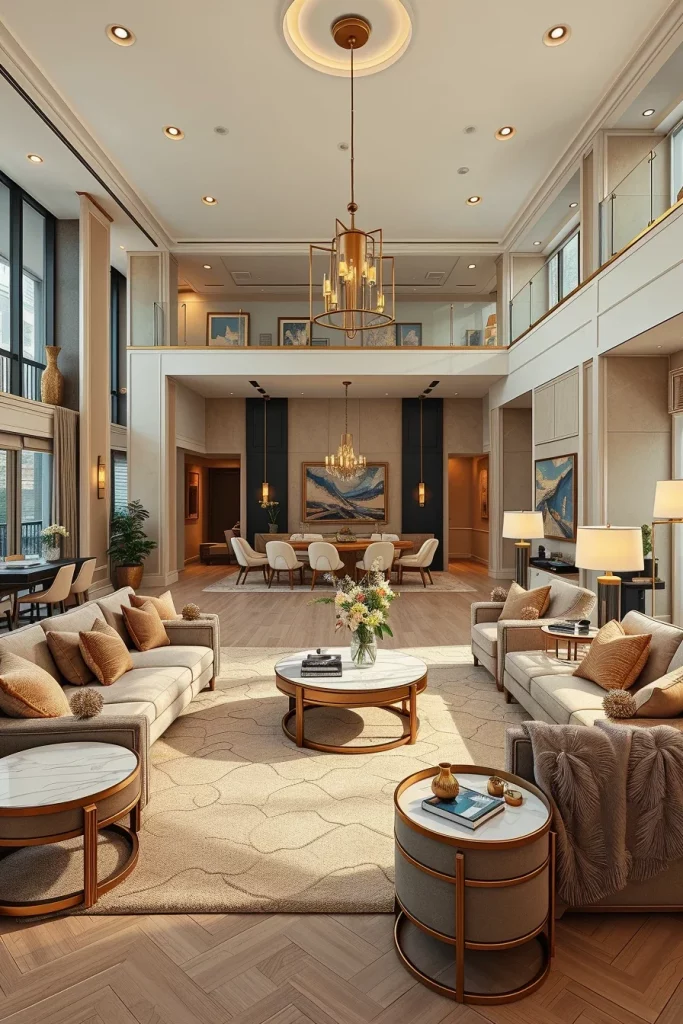
For this style, I recommend plush sofas, custom lounge chairs, marble accent tables, and oversized area rugs. Decorative lighting plays a significant role, with table lamps, floor lamps, and statement chandeliers working together to establish a warm ambiance. Carefully curated accessories such as books, ceramics, and sculptural objects complete the refined atmosphere.
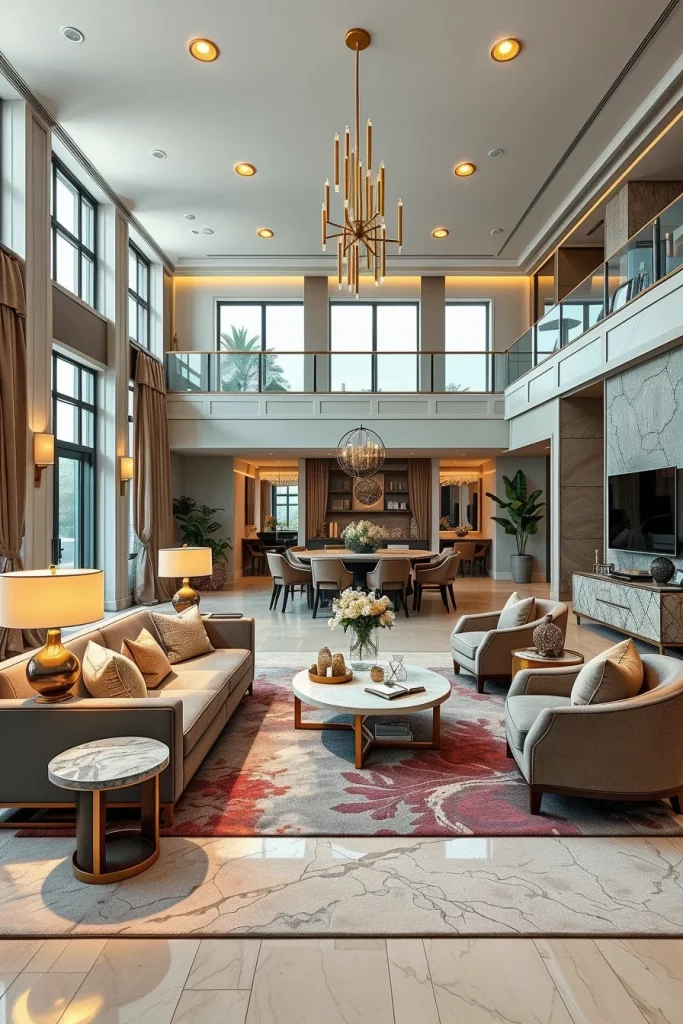
Personally, I admire how boutique hotel interiors prioritize both aesthetics and comfort. Design publications such as Elle Decor frequently showcase hospitality-inspired residential spaces because they offer timeless appeal and exceptional functionality. I find that adopting these principles can elevate an ordinary living room into a truly memorable environment.
To strengthen the hotel-inspired experience, I would incorporate subtle scent elements, luxurious fabrics, and layered window treatments that enhance comfort while adding visual depth.
Open Concept Living Room Design With Large-Scale Art And Creative Visual Impact
I often recommend incorporating large-scale artwork into an open-concept living room because expansive wall surfaces provide an excellent opportunity to introduce character and visual drama. Oversized paintings, abstract compositions, mixed-media installations, and gallery-inspired displays can instantly transform a simple room into a sophisticated design statement. In open layouts, large art pieces also help establish focal points that guide the eye throughout the space.
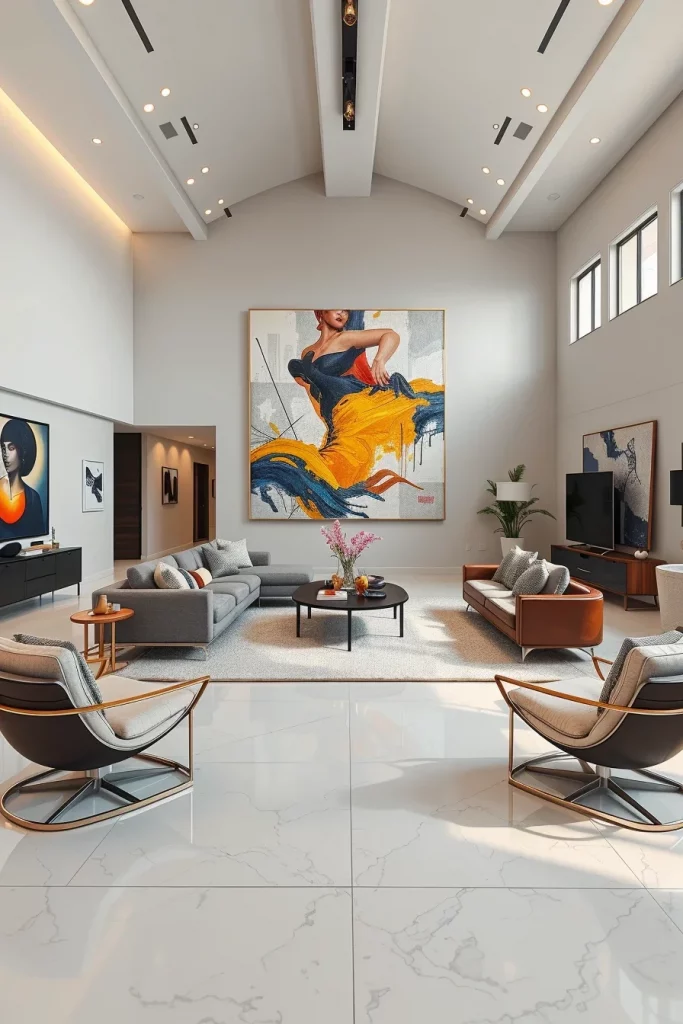
When planning this type of interior, I prefer selecting furniture that complements rather than competes with the artwork. A streamlined sectional sofa, elegant accent chairs, and minimalist storage units create a balanced backdrop for artistic expression. I also like incorporating subtle decorative accessories that echo colors found within the artwork, creating a cohesive visual story without overwhelming the room.
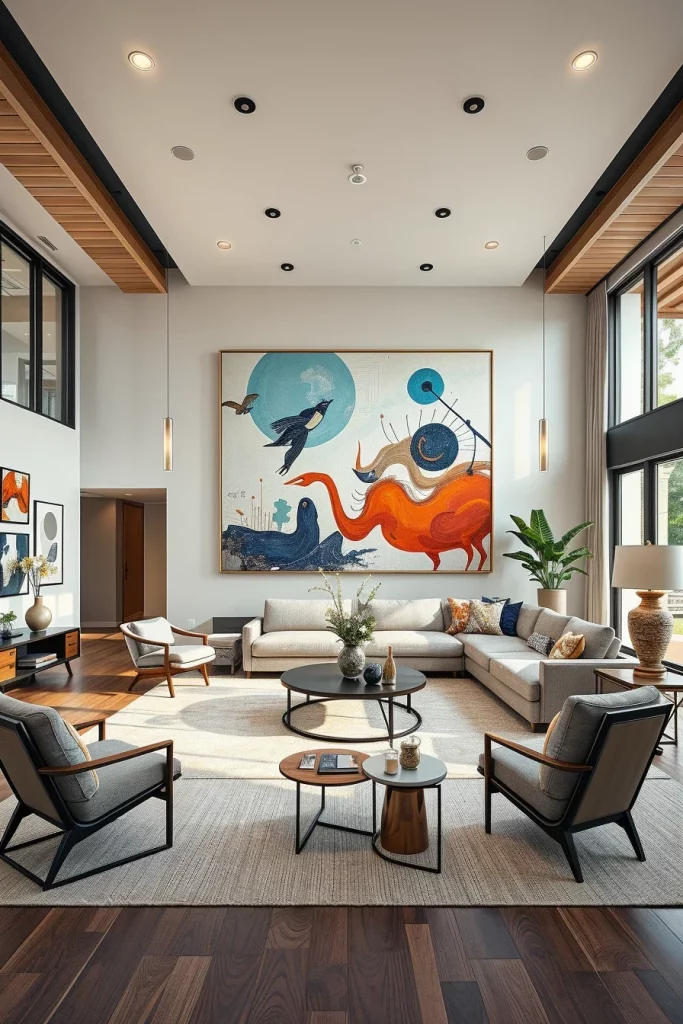
In my experience, many professional designers encourage homeowners to treat artwork as an essential design element rather than an afterthought. Major interior publications frequently showcase homes where large-scale art serves as the defining feature of the entire living environment. I have found that investing in a meaningful statement piece often delivers greater impact than numerous smaller decorative items.
To enhance this concept further, I would add museum-style lighting systems that properly illuminate the artwork while contributing to the room’s overall atmosphere and sophistication.
Elegant Open Concept Living Room Design Featuring Sculptural Tables And Modern Decor
I believe sculptural furniture is one of the most effective ways to introduce artistry into an open-concept living room. Tables with organic forms, architectural silhouettes, and unexpected materials can function as both practical furnishings and visual centerpieces. This approach allows the room to feel refined and distinctive while maintaining functionality.
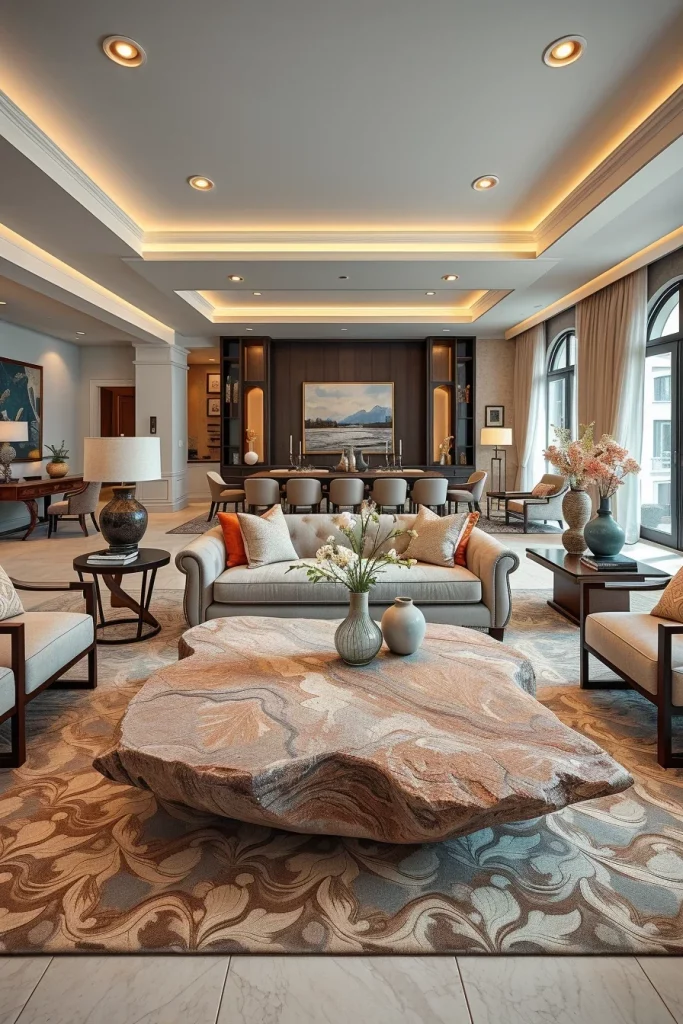
For this design, I recommend a sculptural coffee table crafted from stone, wood, or composite materials, paired with elegant side tables featuring curved or geometric forms. Modern sofas with clean lines provide balance, while carefully selected decor such as ceramic vases, decorative books, and artistic lighting reinforce the contemporary aesthetic. Soft textiles and layered rugs help soften the strong visual presence of sculptural furnishings.
Personally, I appreciate interiors where every furniture piece contributes to the design narrative. Rather than filling a room with numerous accessories, I prefer selecting fewer but more impactful items that offer both beauty and utility. This approach often results in a cleaner and more sophisticated environment.
I would also consider adding custom shelving or built-in display niches that showcase decorative objects while maintaining the open and uncluttered character of the space.
Open Concept Living Room Design With Seamless Indoor-Outdoor Connections
I find that one of the most desirable features in contemporary homes is a strong connection between indoor and outdoor living spaces. Large sliding glass doors, retractable walls, and floor-to-ceiling windows can visually expand the living room while allowing natural light to flood the interior. This design strategy creates a sense of openness that perfectly complements the open-concept floor plan.
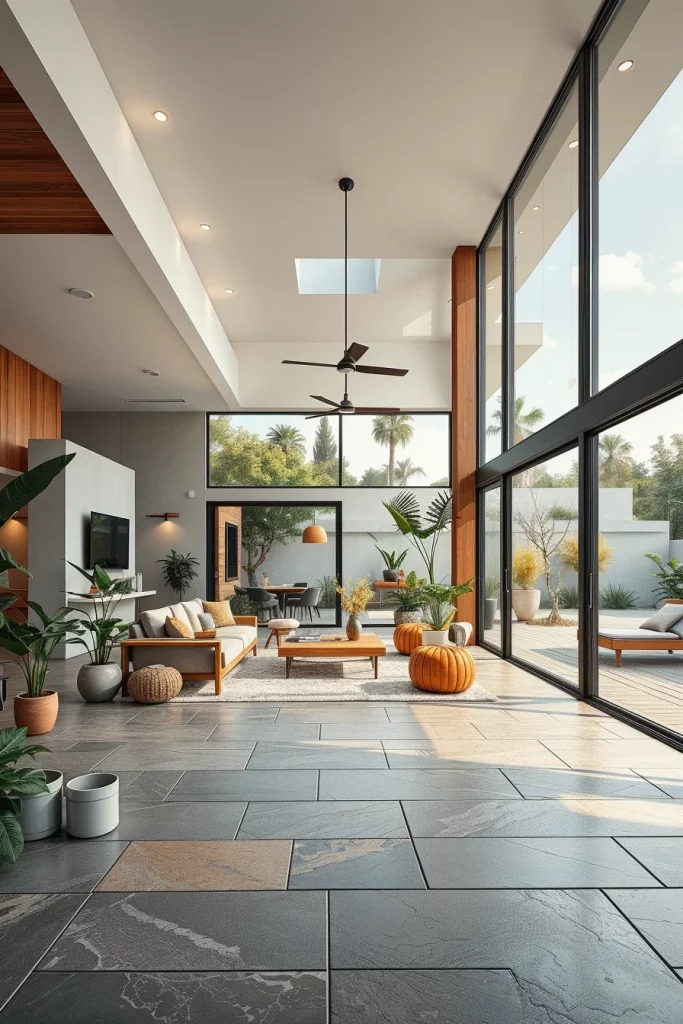
When creating this environment, I recommend using similar materials and color palettes both inside and outside the home. Outdoor lounge furniture that echoes the interior design helps establish continuity, while natural stone flooring and wood accents reinforce the connection between spaces. Comfortable seating, layered textiles, and greenery contribute to a welcoming atmosphere that feels integrated with nature.
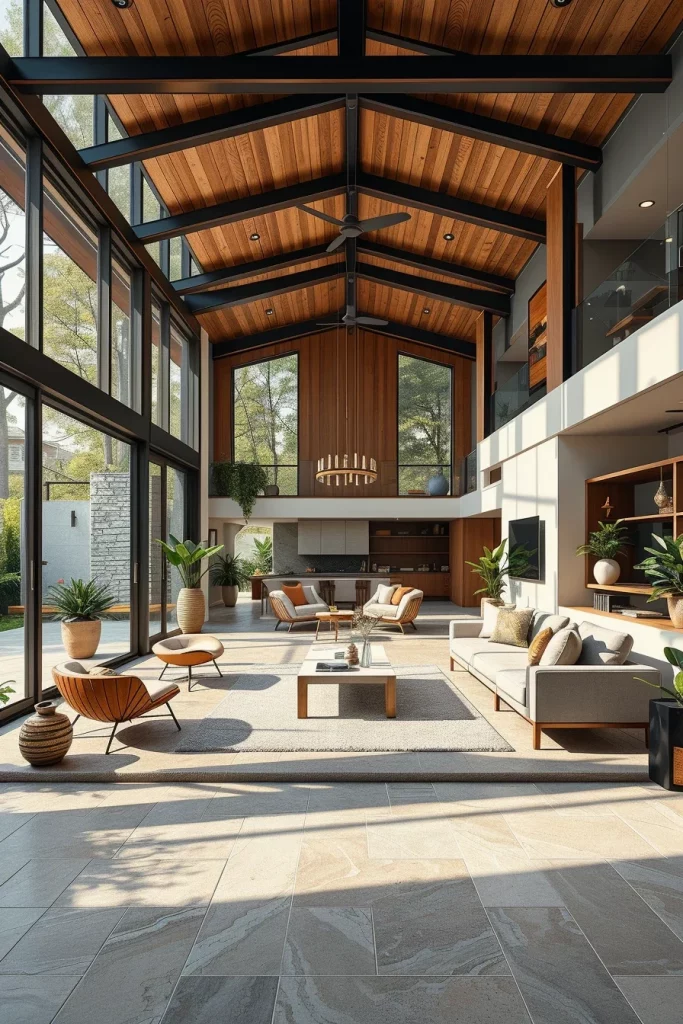
In my experience, homeowners consistently appreciate the lifestyle benefits of seamless indoor-outdoor living. The ability to transition effortlessly between entertaining areas increases the functionality of the home while enhancing everyday comfort. Many respected architects emphasize this relationship because it improves both visual flow and overall quality of life.
To strengthen this concept, I would incorporate landscaping elements that can be viewed directly from the living room, creating attractive focal points throughout the year.
Creative Open Concept Living Room Design With Unexpected Furniture Pairings
I often encourage clients to explore unconventional furniture combinations when designing a creative open-concept living room. Unexpected pairings can introduce personality and prevent the space from feeling overly predictable. Mixing contemporary pieces with vintage finds, sculptural furniture with minimalist forms, or luxurious materials with casual textures can produce a highly distinctive result.
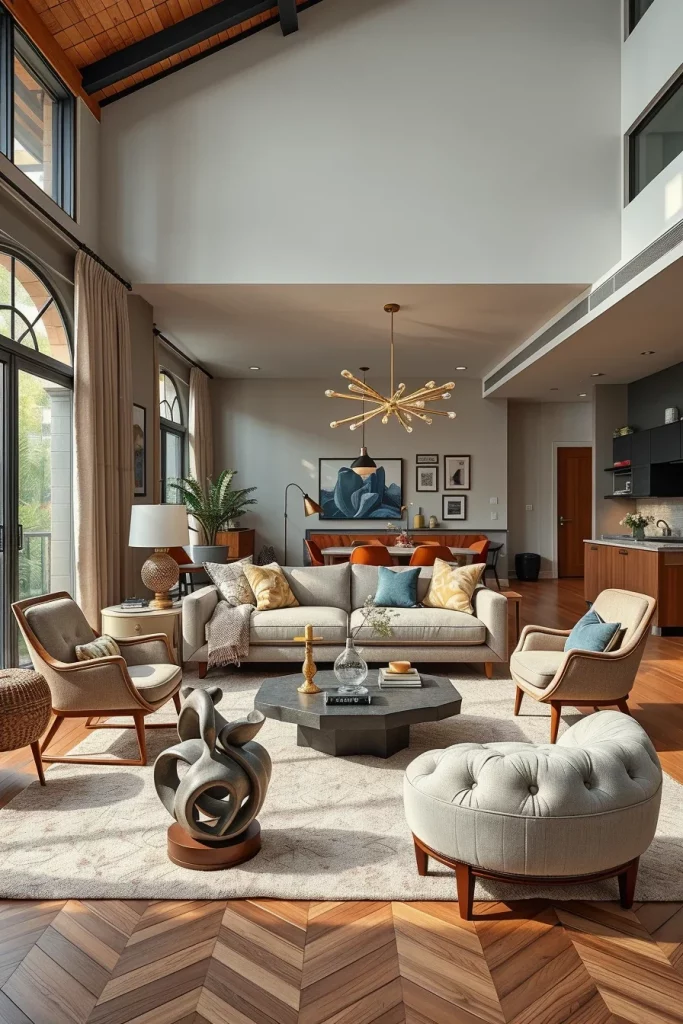
For this type of design, I like combining a sleek modern sofa with vintage-inspired accent chairs, unique coffee tables, and statement lighting fixtures. Contrasting materials such as velvet, leather, metal, and natural wood create visual complexity while maintaining harmony through a consistent color palette. Carefully selected accessories help bridge the gap between diverse design elements.
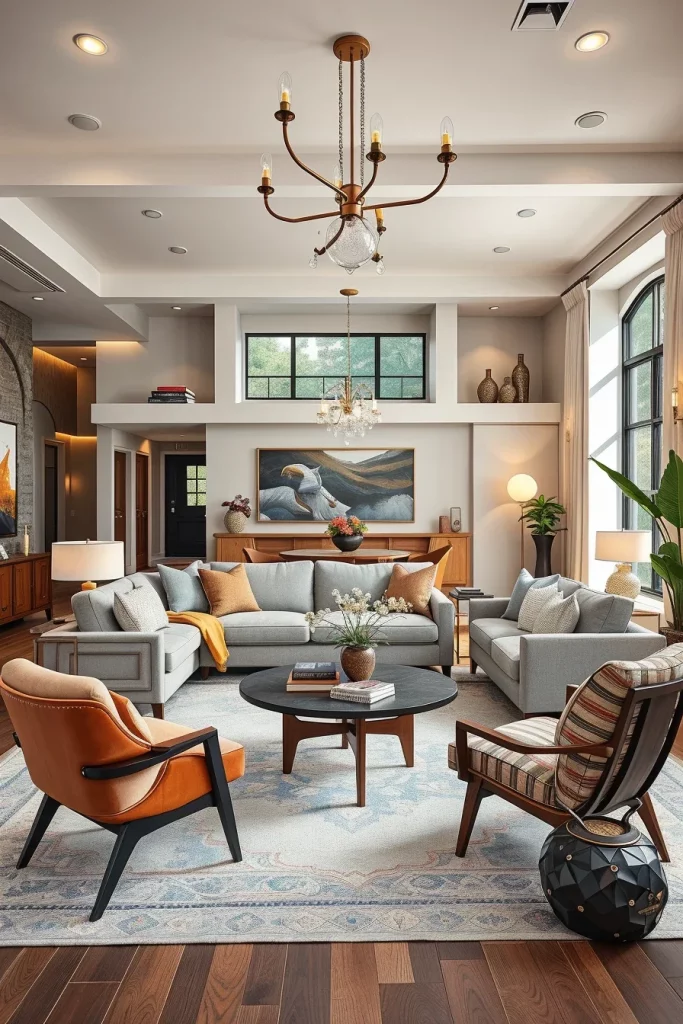
Personally, I believe the most memorable interiors often include a degree of contrast and surprise. While maintaining balance is important, introducing unexpected combinations can make a room feel authentic and highly personalized. I frequently find that these unique pairings become the aspects of the home that guests remember most.
I would also add custom artwork or handcrafted accessories that reinforce the individuality of the design while connecting the various furniture styles within the room.
Future-Forward Open Concept Living Room Design With Innovative Shapes And Artistic Appeal
I see future-forward design as an exciting opportunity to explore new forms, materials, and spatial concepts within an open-concept living room. Curved architecture, innovative furniture silhouettes, and artistic installations can create a space that feels contemporary and visionary. These interiors often emphasize fluidity, movement, and creativity while maintaining comfort and practicality.
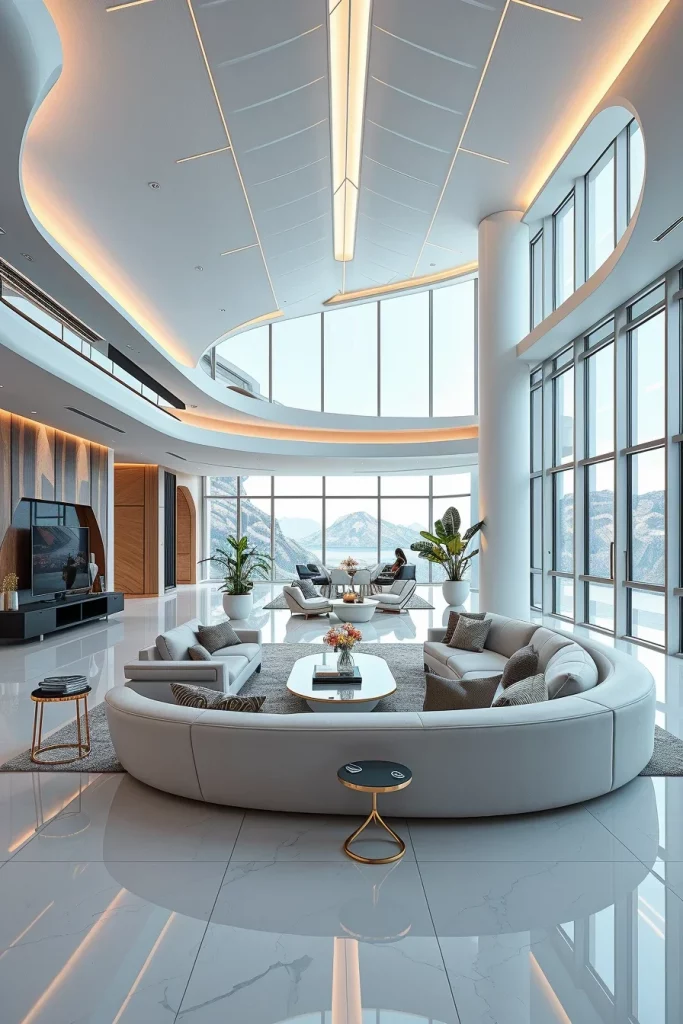
When designing such a room, I recommend curved sofas, asymmetrical tables, sculptural lounge chairs, and statement lighting with futuristic forms. Advanced materials, integrated technology, and minimalist detailing help maintain a clean and sophisticated aesthetic. Soft neutral tones combined with subtle metallic accents create a modern atmosphere without feeling cold or overly experimental.
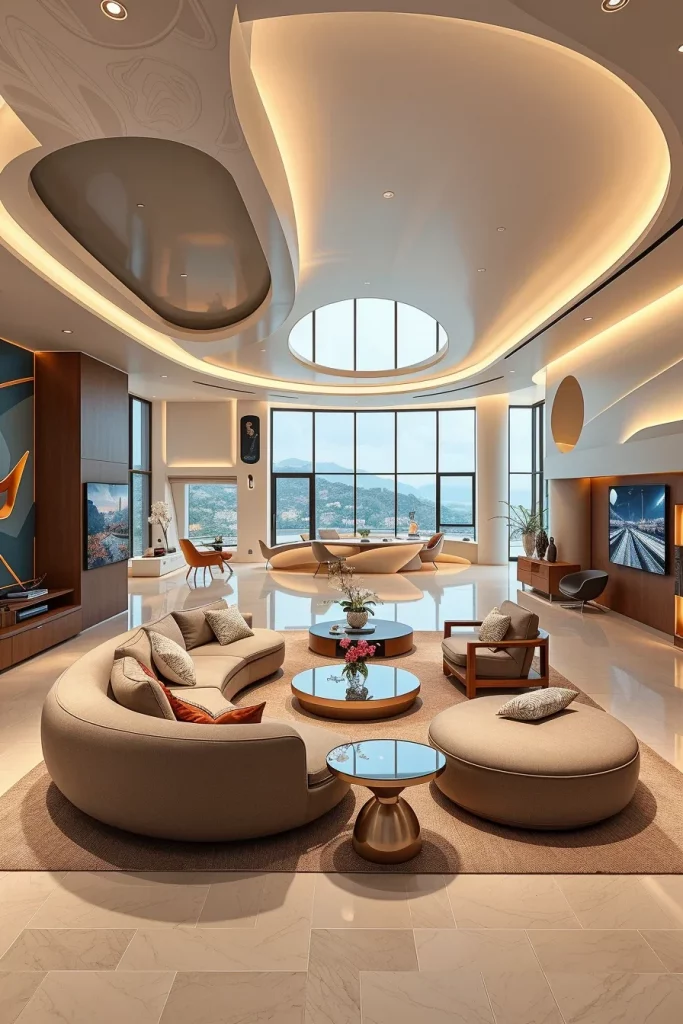
From my perspective, successful future-focused interiors balance innovation with livability. While dramatic design elements can create visual excitement, they should always support the daily needs of the people who use the space. Many contemporary designers advocate for this balance because it ensures long-term functionality alongside aesthetic appeal.
To complete this design, I would integrate smart home technology, hidden storage solutions, and customizable lighting scenes that enhance convenience while supporting the artistic vision of the room.
Open concept living room design offers the perfect balance of openness, functionality, and modern style. Whether you prefer minimalist elegance, artistic furnishings, or bold architectural features, these versatile spaces can be tailored to reflect your personality and lifestyle. By combining creative layouts, sculptural furniture, and thoughtful design details, you can create a living area that feels both visually impressive and exceptionally comfortable. With the right inspiration, an open concept living room can become the stunning centerpiece of any contemporary home.