
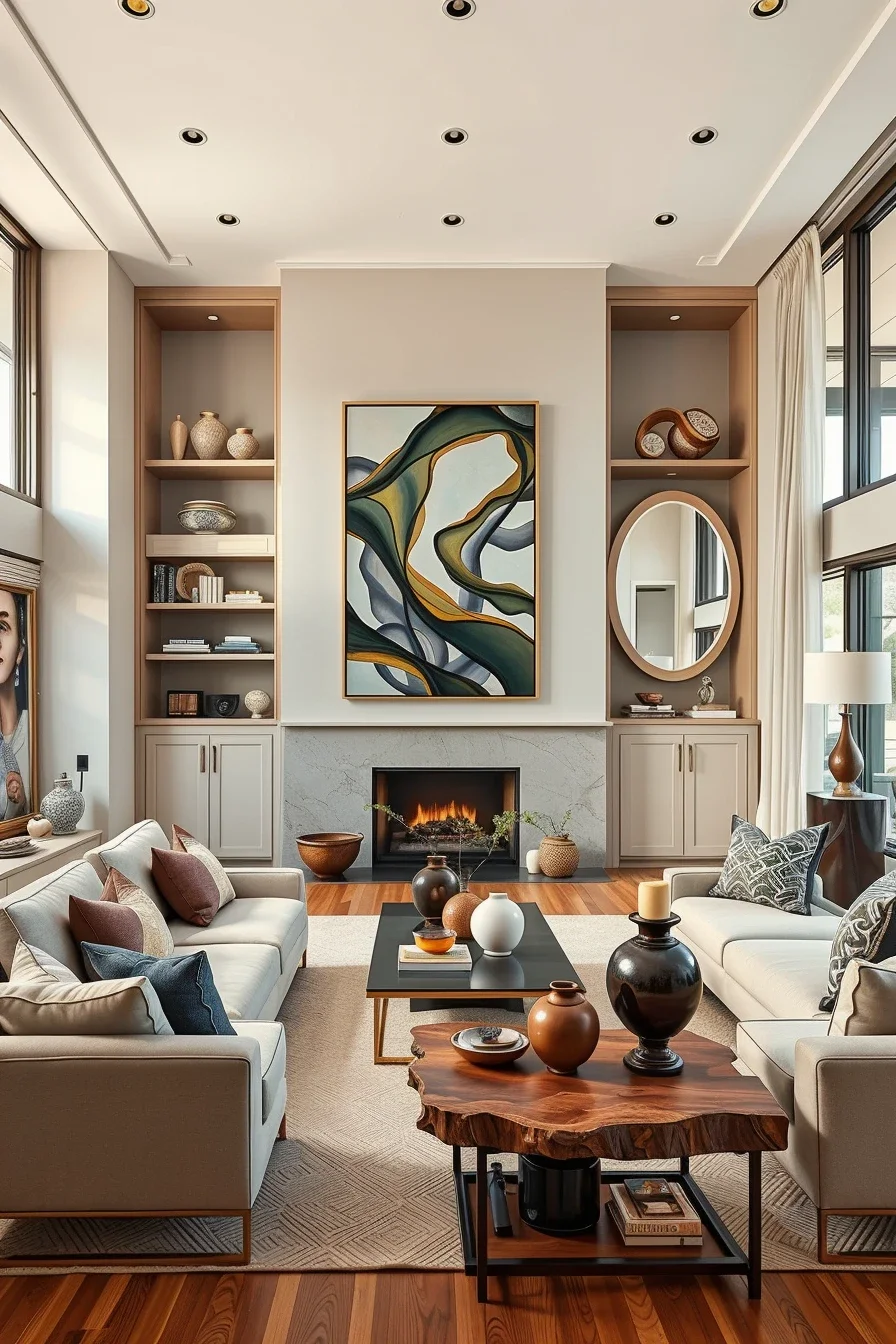
An open concept living room creates a bright, welcoming space where every area flows together with ease. Whether you’re designing a new home or updating an existing layout, the right ideas can make the room feel larger, more functional, and effortlessly stylish. From statement furniture and creative lighting to eye-catching architectural details, every design choice plays a role in shaping the atmosphere. This versatile layout also makes it easier to entertain guests, spend time with family, and enjoy everyday living without barriers. In this collection, you’ll discover inspiring open concept living room ideas that combine comfort, elegance, and practical design solutions. Explore these unique spaces to find the perfect inspiration for creating a home that feels both beautiful and connected.
Why Open Concept Living Rooms Continue To Define Modern Homes
When I design or evaluate an open concept living room, I always begin by looking at how naturally the space allows people to move from one area to another. Removing unnecessary walls creates better visual flow while allowing natural light to travel throughout the home. Instead of separating every activity into its own room, I find that an open layout encourages interaction while making even average-sized homes feel larger. This approach also offers remarkable flexibility because furniture arrangements can evolve as family needs change.
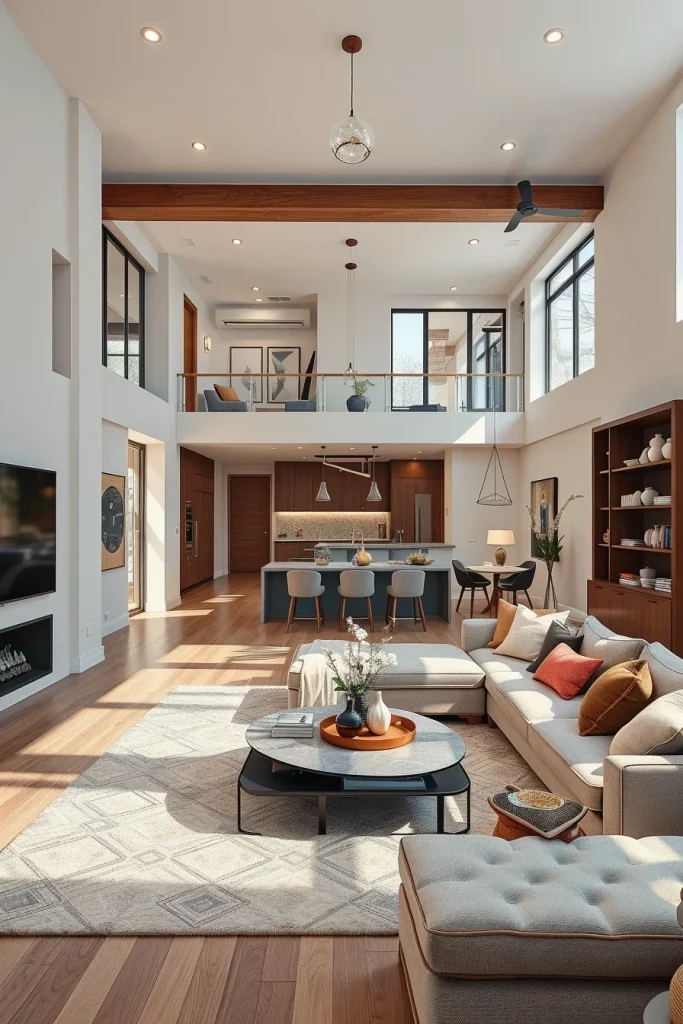
I always recommend establishing subtle zones instead of physical barriers. A large sectional sofa can define the seating area, while a generously sized area rug visually anchors the conversation space. A dining table positioned between the kitchen and living room naturally creates another functional zone without interrupting the openness. Built-in shelving, low-profile consoles, and carefully selected coffee tables help organize the space without making it feel crowded. Layered lighting also plays an essential role by giving each area its own identity.
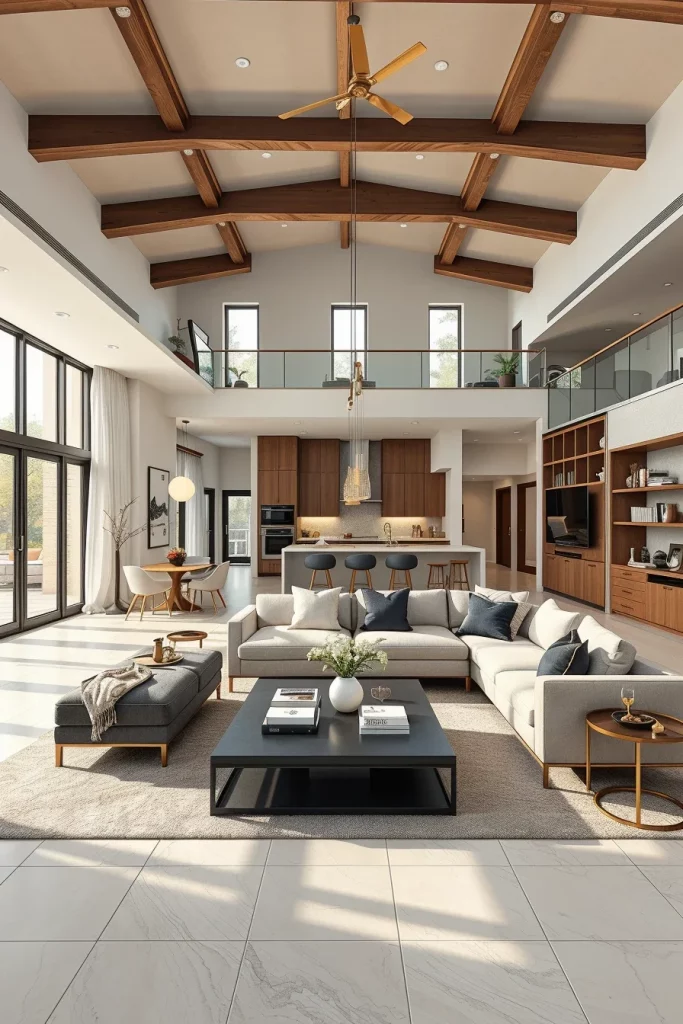
Personally, I appreciate how timeless this design philosophy has become. Designers frequently featured by Architectural Digest and House Beautiful often emphasize that successful open layouts rely on thoughtful furniture placement rather than simply removing walls. I have found this advice especially valuable because balance always feels more important than filling every available corner with furniture. A carefully edited room nearly always appears more luxurious than one filled with unnecessary pieces.
I also believe every successful open concept living room benefits from intentional storage. Built-in cabinetry, concealed storage benches, and multifunctional furniture help maintain the clean appearance that makes open spaces feel calm and organized over time.
Spacious Open Concept Living Room With Floor-To-Ceiling Windows
Whenever I see floor-to-ceiling windows incorporated into an open living room, I immediately notice how dramatically they transform the atmosphere without relying on excessive decoration. Large windows flood the interior with daylight, blur the boundary between indoors and outdoors, and make the entire space feel significantly larger. I always consider natural light one of the most valuable design elements because it enhances every finish, texture, and color inside the room.
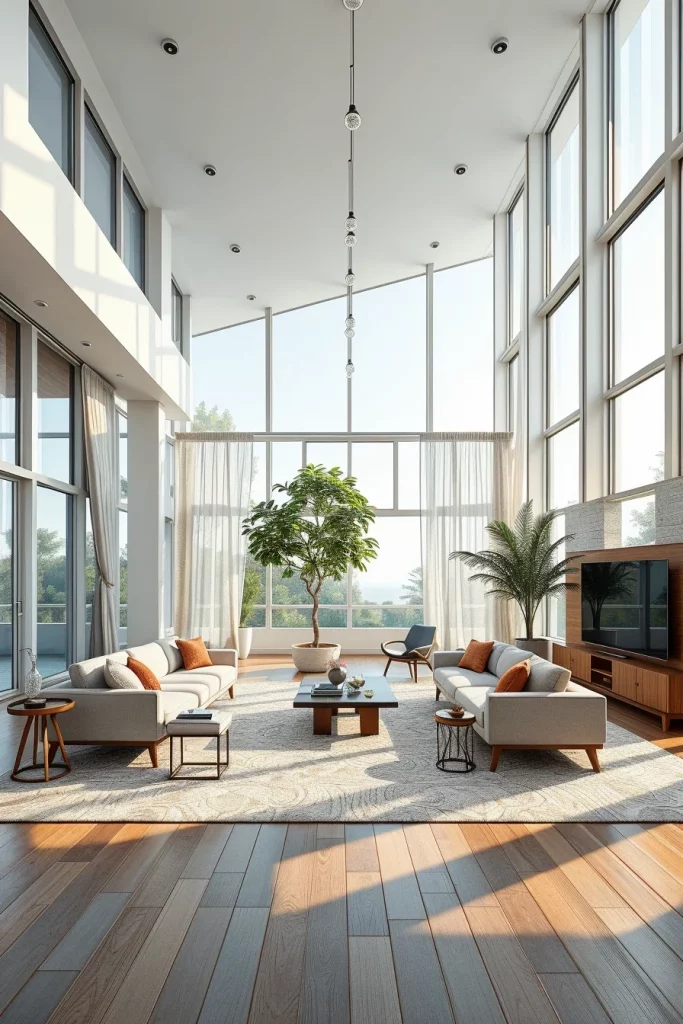
To complement expansive windows, I prefer streamlined furniture with clean silhouettes that never obstruct the view. Low-profile sofas, minimalist armchairs, elegant nesting tables, and slim media consoles preserve openness while maintaining everyday comfort. Light-filtering linen drapery softens sunlight without hiding the architecture, while oversized indoor trees and carefully placed decorative accessories introduce visual interest without overwhelming the room.
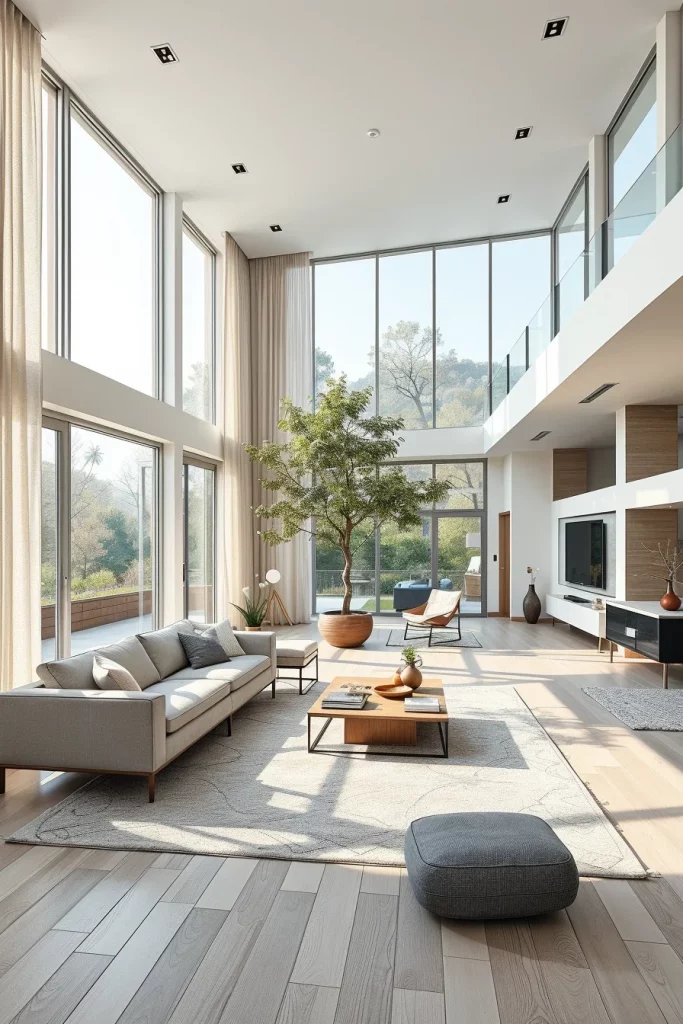
From my experience, rooms with generous natural light require fewer decorative elements because sunlight itself becomes part of the design. Designers at Elle Decor frequently highlight the importance of maximizing daylight before adding additional decorative features, and I completely agree with this principle. I consistently notice that bright interiors appear more welcoming throughout every season.
If I were refining this space further, I would add layered evening lighting that includes recessed ceiling fixtures, floor lamps, and concealed LED accents. This ensures the room maintains its inviting atmosphere long after sunset while preserving the same sense of openness.
Warm Neutral Color Palette That Connects Every Zone Naturally
One of my favorite approaches to designing an open concept living room is using a warm neutral color palette that visually connects every functional area. Rather than assigning completely different colors to the living room, kitchen, and dining space, I prefer allowing soft beige, warm white, creamy taupe, gentle greige, and subtle sand tones to flow continuously throughout the home. This consistency creates harmony while allowing architectural features to stand out naturally.
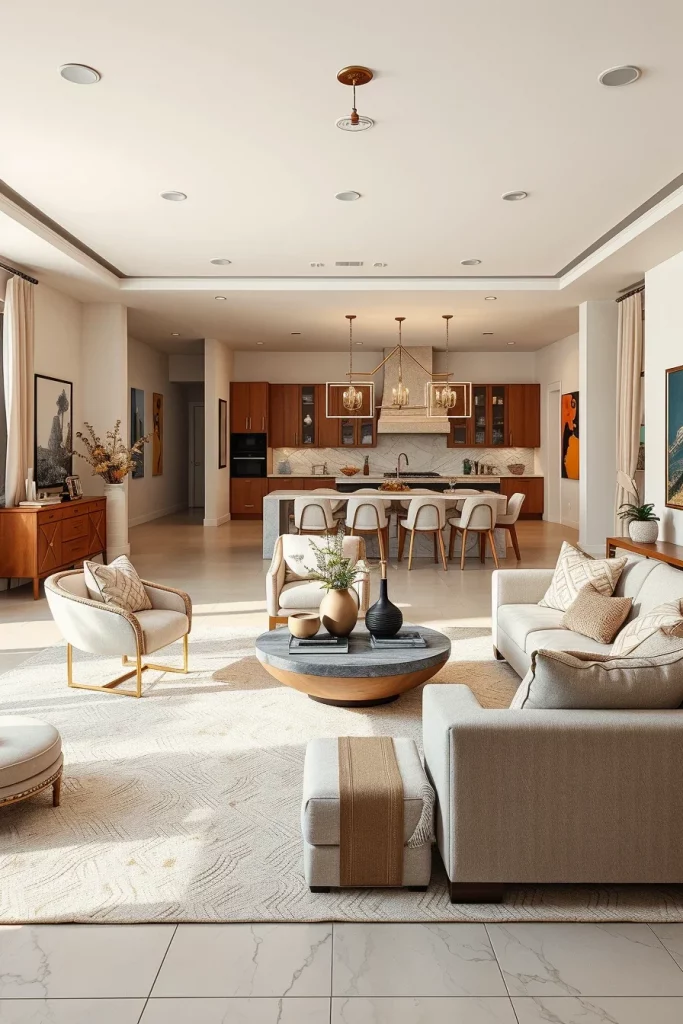
Furniture selection becomes especially important when working with neutral interiors. I often combine upholstered sofas, textured accent chairs, natural stone coffee tables, woven rugs, upholstered dining chairs, matte cabinetry, and simple wood accents to create depth without relying on bold color contrasts. Layering different materials prevents neutral spaces from appearing flat while preserving the calm atmosphere that makes open layouts so appealing.
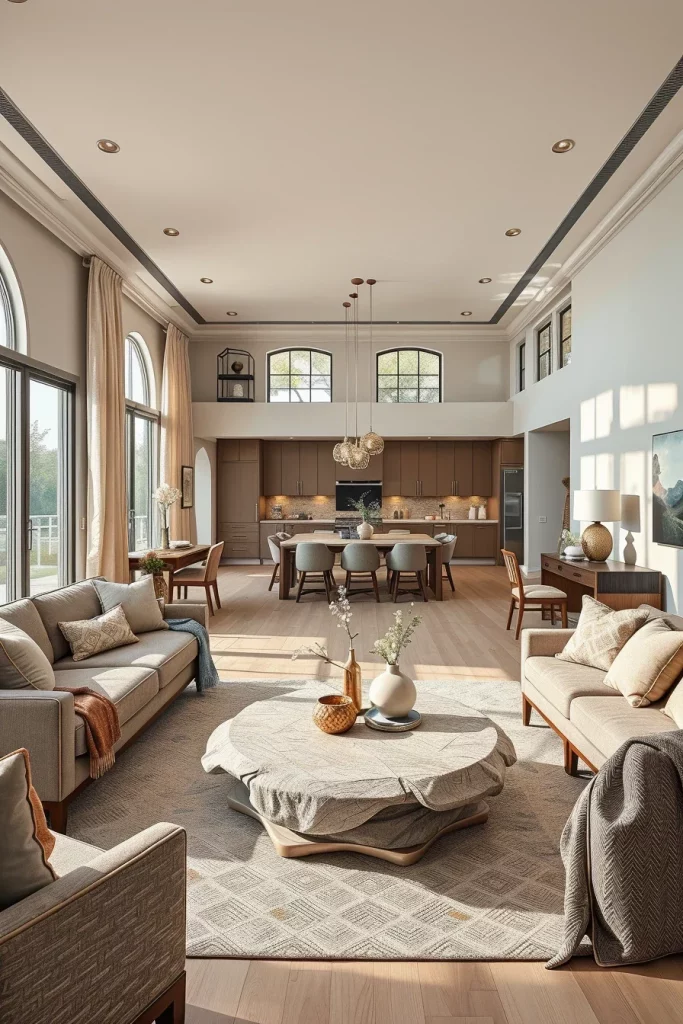
I have learned that neutral interiors succeed when texture becomes the primary source of visual interest. Better Homes & Gardens has frequently recommended mixing fabrics, stone, glass, ceramics, and natural fibers instead of introducing too many competing colors, and I have found this advice consistently produces sophisticated results. Small variations in texture often have greater impact than additional decorative accessories.
To complete this design, I would include carefully selected artwork, oversized ceramic vases, linen cushions, and subtle metallic finishes. These finishing touches introduce personality while preserving the peaceful character of the overall space.
Statement Curved Sofa As The Center Of The Open Layout
Whenever I want to soften the clean architectural lines of an open concept living room, I often begin with a statement curved sofa. Unlike traditional straight seating, a curved silhouette naturally encourages conversation while adding movement to the overall design. In large open layouts, I find that curved furniture helps define the living area without requiring additional partitions or bulky room dividers.
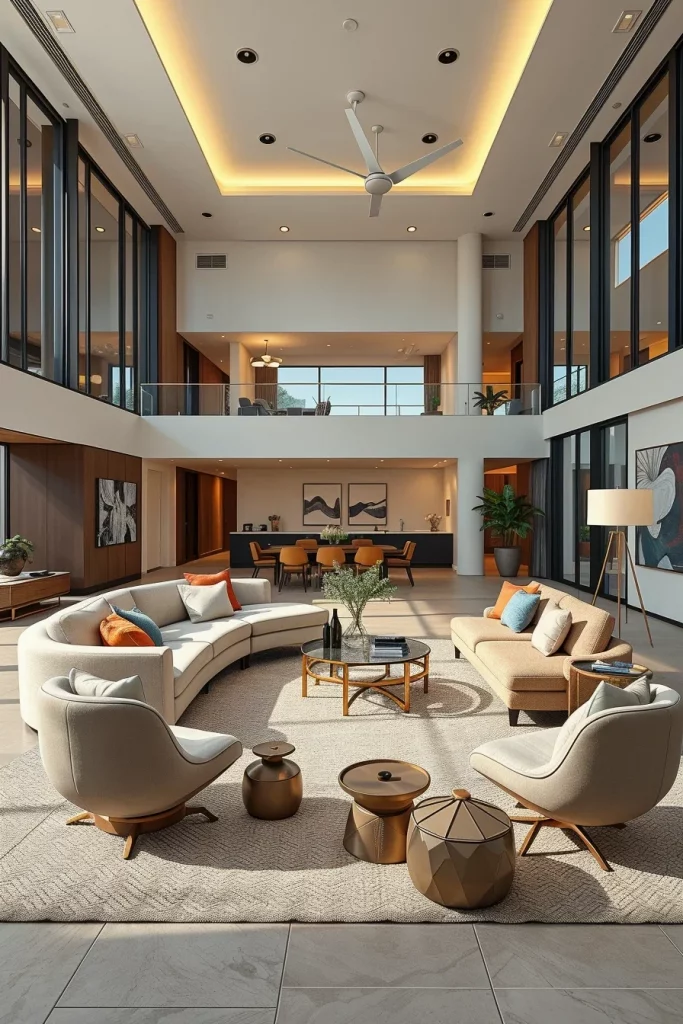
I usually pair a curved sofa with a round coffee table, sculptural accent chairs, soft area rugs, and elegant side tables that complement its organic form. Rounded furniture creates comfortable walking paths throughout the room while making the entire layout feel more relaxed. Decorative cushions, textured throws, and carefully positioned floor lamps complete the seating area without disrupting the openness of the design.
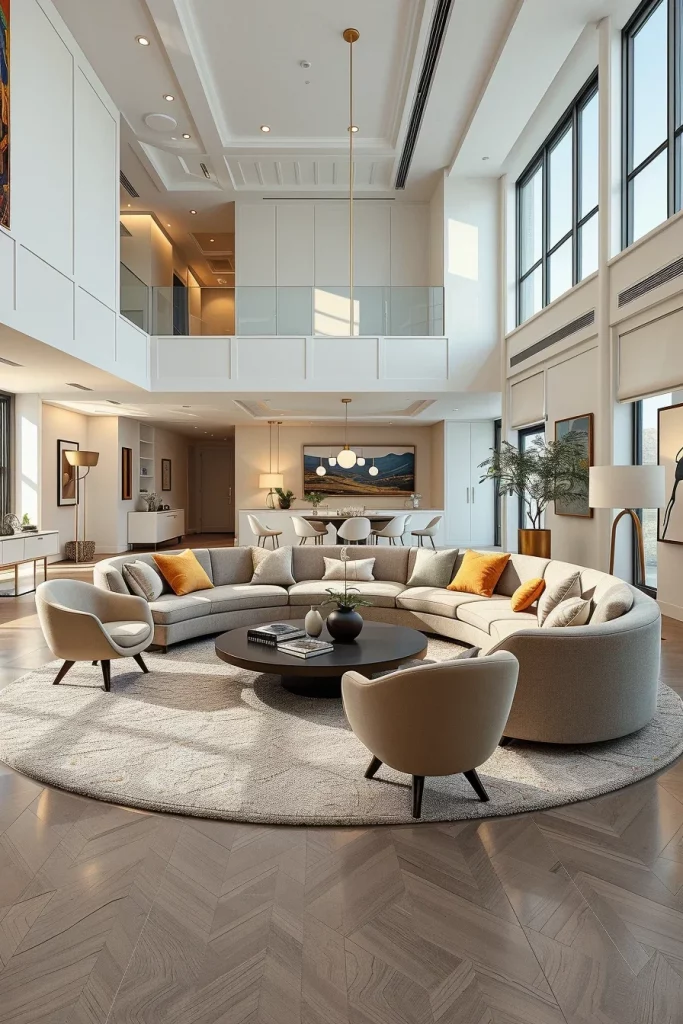
From my perspective, curved furniture has become increasingly popular because it introduces softness into homes dominated by straight architectural lines. Interior designers featured in publications like House Beautiful have often noted that rounded forms make larger spaces feel more inviting, and I completely understand why. Even a single curved centerpiece can dramatically change the emotional feel of a room.
If I wanted to enhance this layout further, I would incorporate a circular chandelier above the seating area along with subtle curved shelving or rounded decorative accessories. These additions reinforce the flowing geometry while maintaining visual consistency throughout the open space.
Double-Height Ceiling That Adds A Grand Sense Of Space
Whenever I walk into an open concept living room with a double-height ceiling, the sense of openness immediately becomes unforgettable. Vertical space dramatically changes how the room feels by drawing the eye upward and allowing every design element to breathe. I find that tall ceilings create an impressive architectural statement while making natural light even more effective throughout the interior.
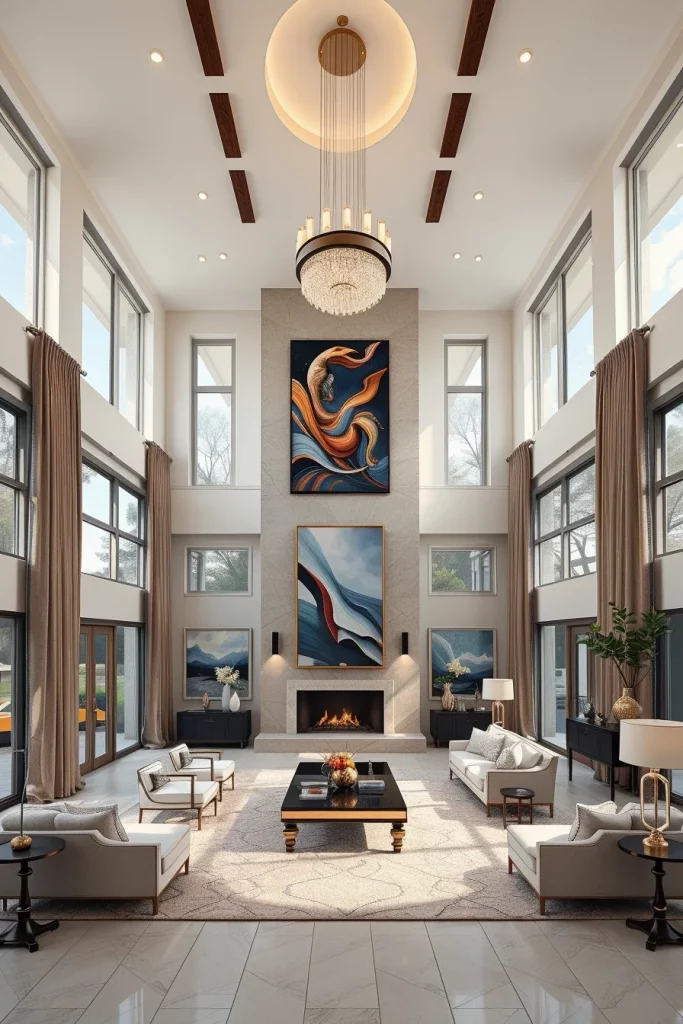
To make full use of this height, I recommend oversized windows, full-height curtains, dramatic pendant lighting, and carefully proportioned furniture that matches the scale of the room. Large artwork, tall shelving units, architectural beams, and elegant fireplaces all help balance the vertical proportions without making the space feel empty. Every furnishing should contribute to the overall sense of scale rather than competing with it.
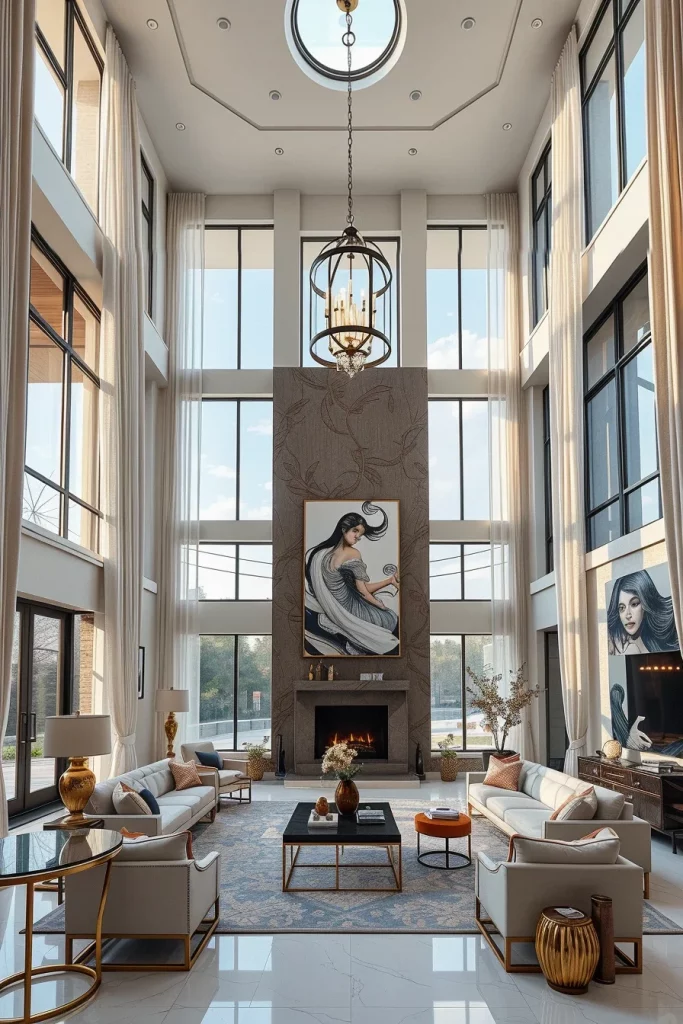
In my experience, rooms with high ceilings require restraint just as much as decoration. Architectural Digest frequently emphasizes respecting architectural proportions instead of filling every wall surface, and I have found this advice consistently produces interiors that feel refined instead of overwhelming. Carefully selected focal points almost always outperform excessive decoration.
If I were completing this room, I would add acoustic treatments through upholstered furnishings, layered textiles, and area rugs to improve comfort while preserving the dramatic architectural impact that makes double-height living rooms so memorable.
Floating Fireplace That Separates Spaces Without Closing Them Off
One of the smartest architectural features I recommend in an open concept living room is a floating fireplace. Instead of building a solid wall between the living room and dining area, a suspended or double-sided fireplace creates a subtle visual boundary while preserving the openness that makes this layout so appealing. I appreciate how this feature provides warmth, creates a natural focal point, and allows the eye to travel freely across the entire space. It is a practical solution for homeowners who want clearly defined zones without sacrificing the spacious feeling.
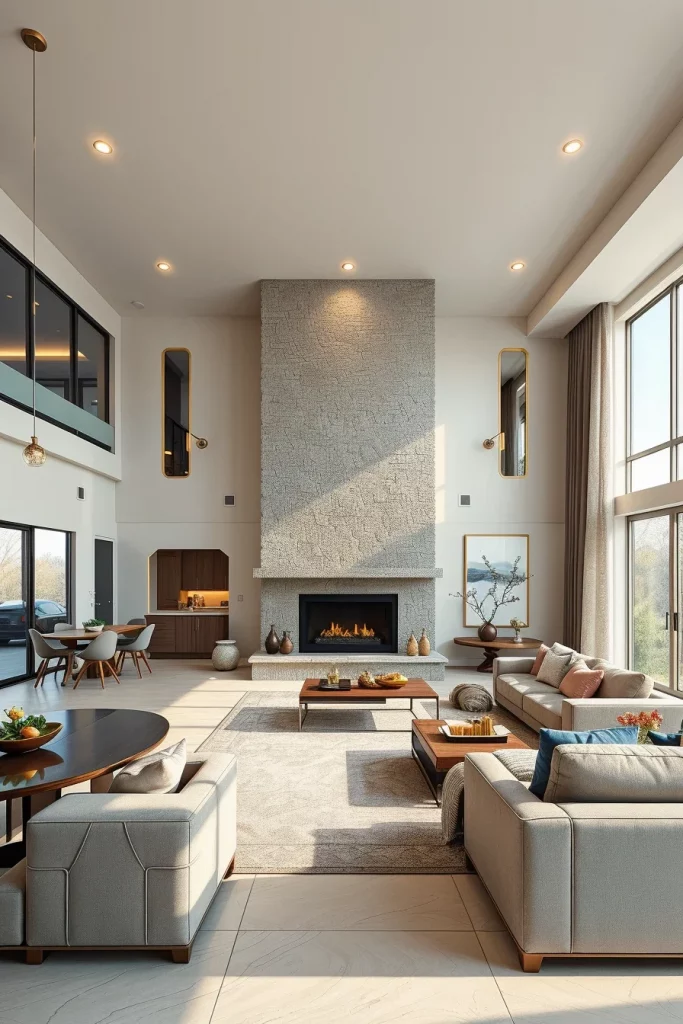
When planning this type of layout, I usually position the seating area so the fireplace becomes visible from multiple angles. A modular sofa, comfortable accent chairs, a large textured rug, and a simple coffee table naturally gather around the fireplace. On the opposite side, the dining table can enjoy the same warmth and visual appeal. I also recommend built-in wood or stone details around the fireplace, recessed lighting, and a discreet media wall if a television is included. Every element should support the fireplace instead of competing with it.
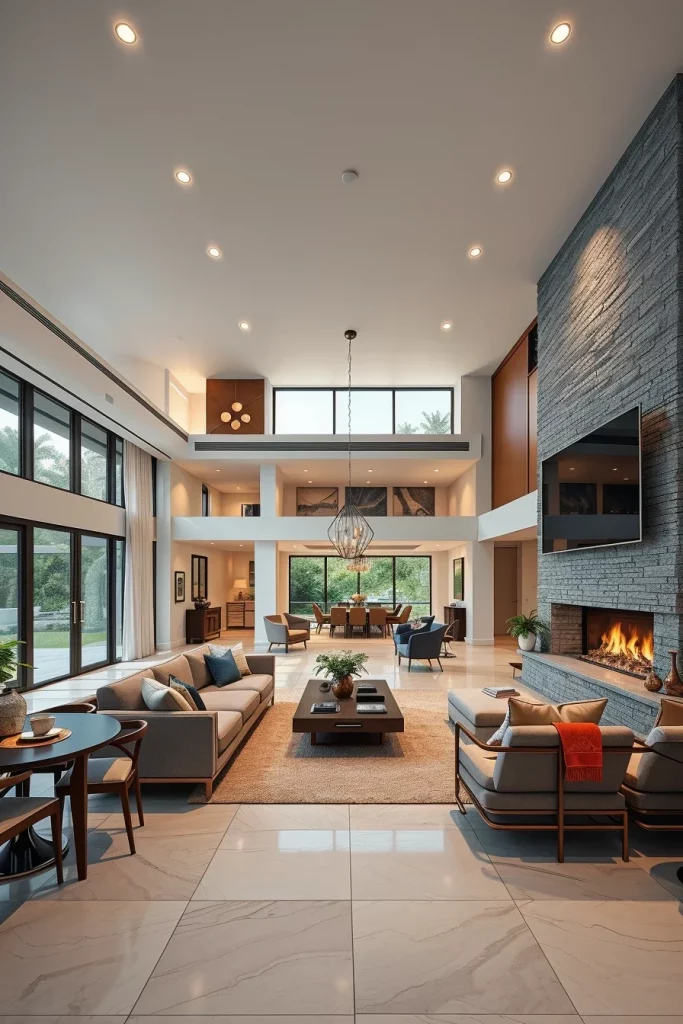
From my experience, a floating fireplace works best when it remains visually light. Interior designers featured by Architectural Digest often recommend keeping the surrounding finishes simple so the architectural feature becomes the centerpiece. I agree with this philosophy because excessive shelving or heavy finishes can reduce the sense of openness that makes the design successful.
If I were adding one more feature, I would include integrated storage or a low built-in cabinet beneath the fireplace where appropriate. This provides additional functionality while maintaining the clean, uninterrupted lines that define a modern open concept living room.
Seamless Living Room And Kitchen With A Large Island
One of my favorite layouts combines the living room and kitchen into one continuous environment centered around a large island. This arrangement encourages conversation because family members and guests can comfortably interact whether they are cooking, relaxing, or entertaining. I find that the island naturally becomes the social heart of the home while improving workflow and making the entire interior feel more connected.
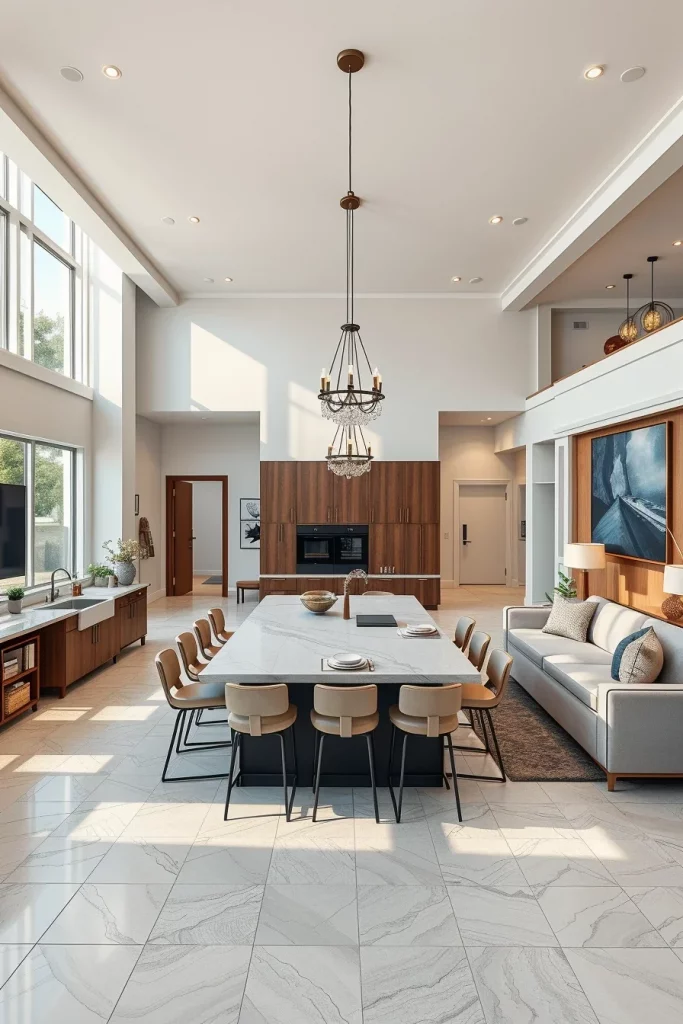
I like selecting a generously sized island with comfortable counter seating, durable stone countertops, integrated storage, and understated pendant lighting. In the living area, I usually choose a spacious sectional sofa, an oversized coffee table, and a media console that complements the cabinetry rather than matching it exactly. Consistent flooring throughout both areas strengthens the visual connection, while coordinated finishes help every zone feel intentionally designed.
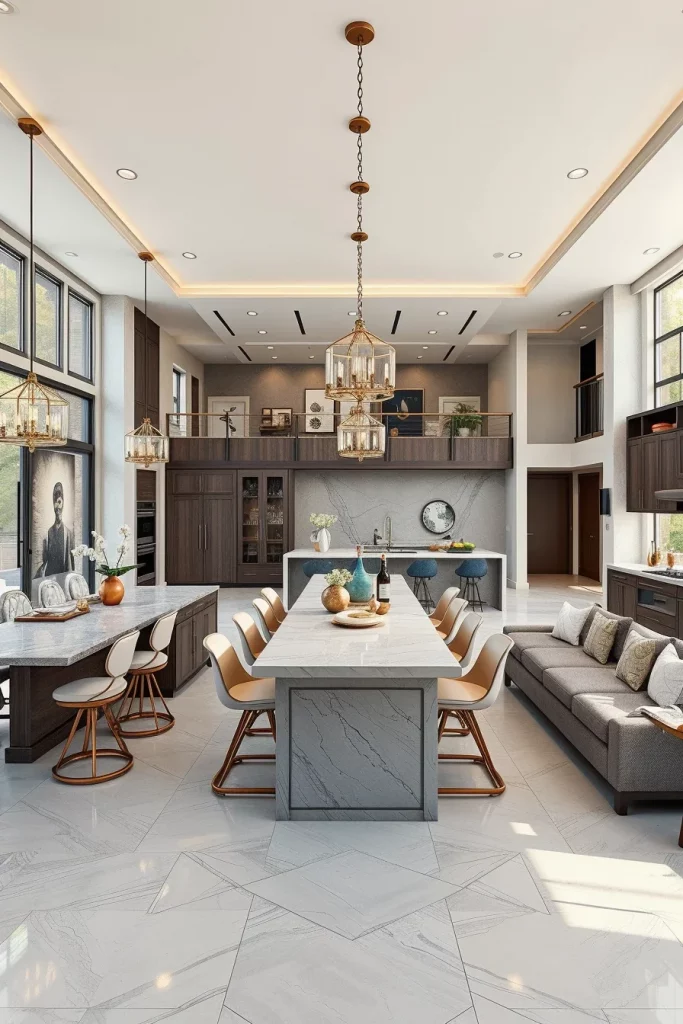
Personally, I believe this layout succeeds because it supports everyday living without sacrificing style. House Beautiful has often highlighted that the kitchen has evolved into the true gathering place of modern homes, and I have found that combining it with the living room creates an environment that feels welcoming throughout the day. The result is a home that functions equally well for quiet evenings and larger gatherings.
To make this layout even more practical, I would add a walk-in pantry or additional concealed storage near the kitchen. This helps keep countertops uncluttered, allowing the island to remain the attractive focal point of the entire open space.
Elegant Dining Area That Blends Beautifully Into The Living Space
An elegant dining area should feel like a natural extension of the living room rather than a completely separate room. When designing an open concept layout, I focus on creating harmony between these spaces through proportion, materials, and color rather than identical furniture. This approach allows each area to have its own identity while maintaining a cohesive appearance across the entire home.
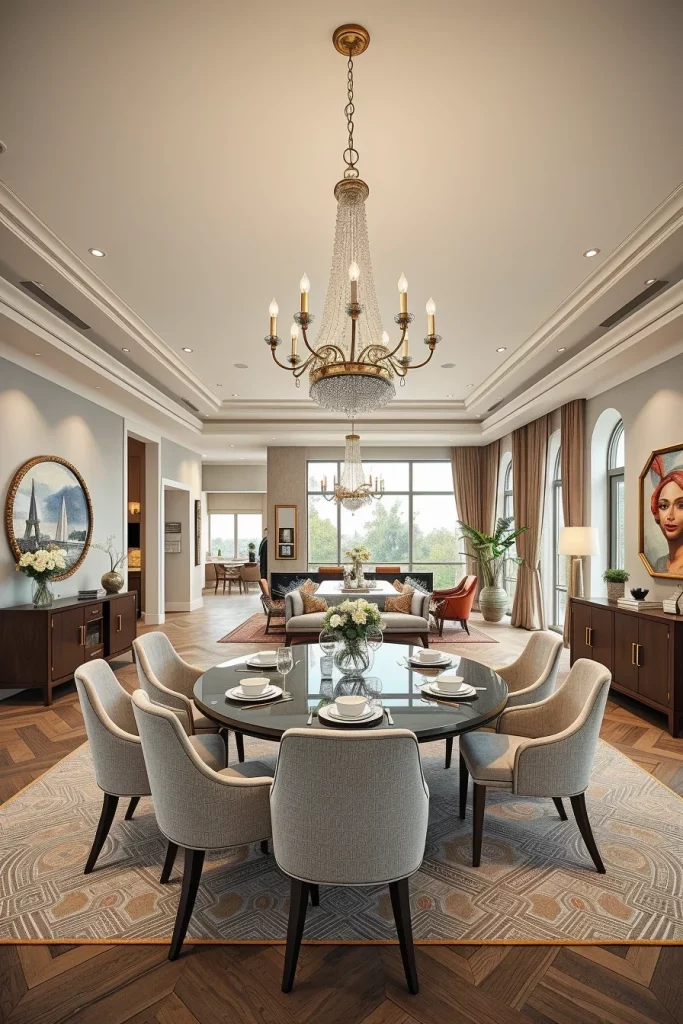
I often select a large dining table with comfortable upholstered chairs that echo the textures used in the living room. A statement chandelier positioned above the table immediately defines the dining zone without adding walls. Sideboards, decorative ceramics, artwork, and carefully chosen table accessories complete the space while providing useful storage. I also prefer leaving generous walking paths around the table so movement between the kitchen and living room remains effortless.
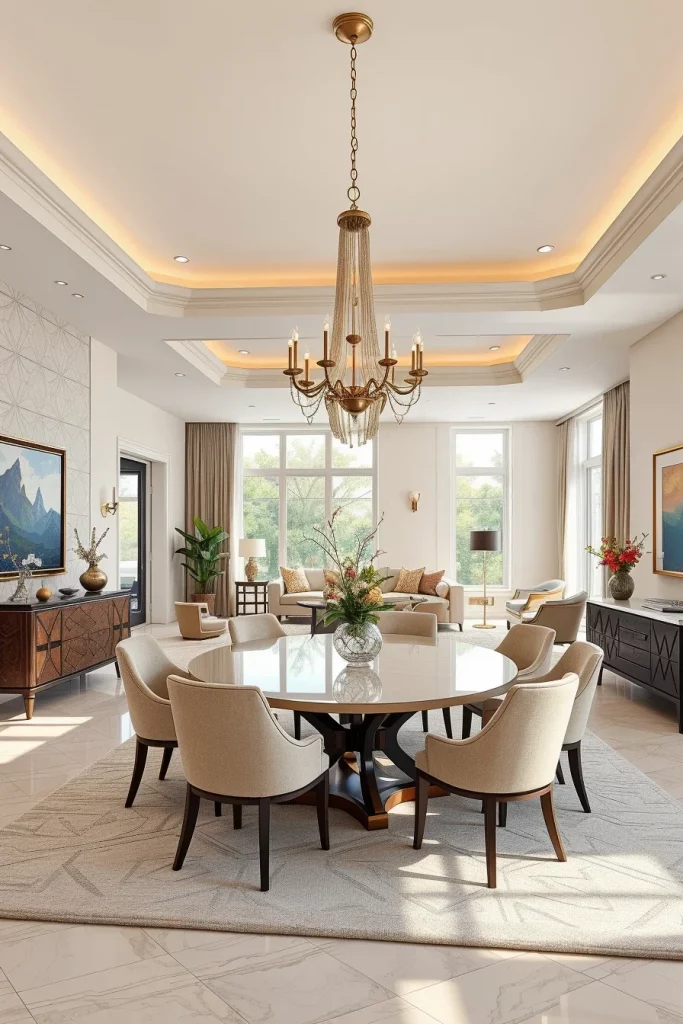
In my opinion, successful dining areas are designed for everyday use rather than only for special occasions. Better Homes & Gardens frequently recommends investing in comfortable seating because people naturally spend more time around the table when the furniture encourages conversation. I completely agree, as comfort is often what transforms a beautiful room into one that is genuinely enjoyed.
If I wanted to enhance this area further, I would introduce a large mirror or carefully selected artwork to create additional depth while reflecting natural light into both the dining and living spaces.
Bold Stone Accent Wall That Creates A Luxurious Focal Point
Whenever I want to introduce character into an open concept living room, I often begin with a bold stone accent wall. Natural stone immediately adds texture, depth, and architectural interest without relying on excessive decoration. In an open layout where several functional areas share one space, a carefully designed feature wall helps establish a strong visual anchor that draws attention while maintaining balance throughout the interior.
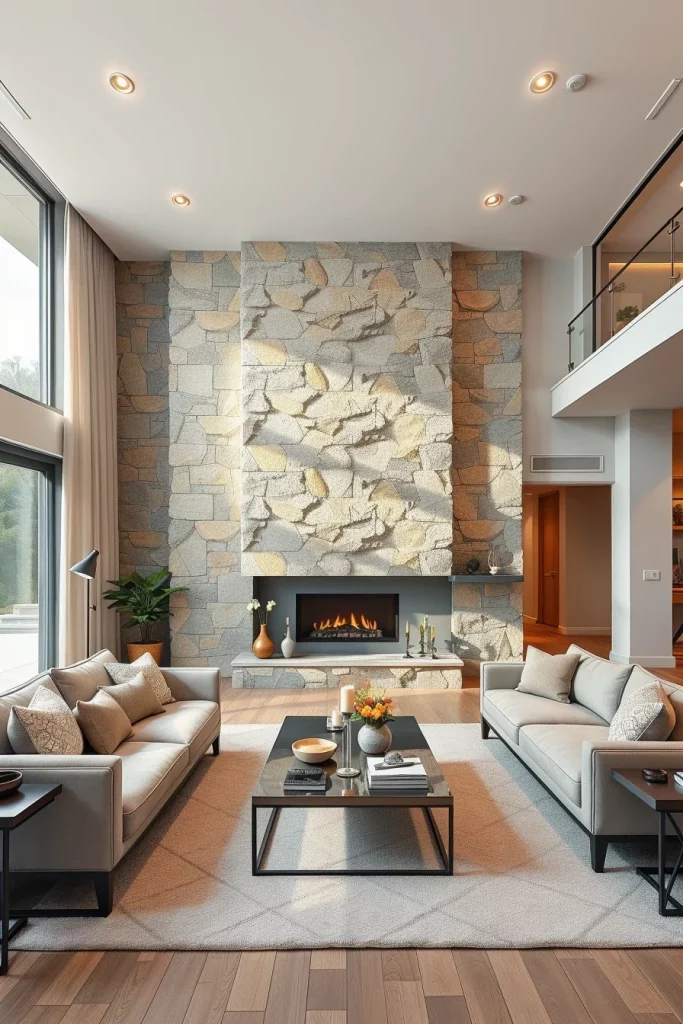
I prefer using large-format stone slabs or textured natural stone behind the fireplace or television. Surrounding furniture should remain elegant and uncomplicated, allowing the stone to remain the primary feature. Soft upholstered seating, sleek coffee tables, warm lighting, and subtle decorative objects complement the rich texture without creating visual clutter. I also recommend coordinating smaller stone details within the kitchen to strengthen the connection between both spaces.
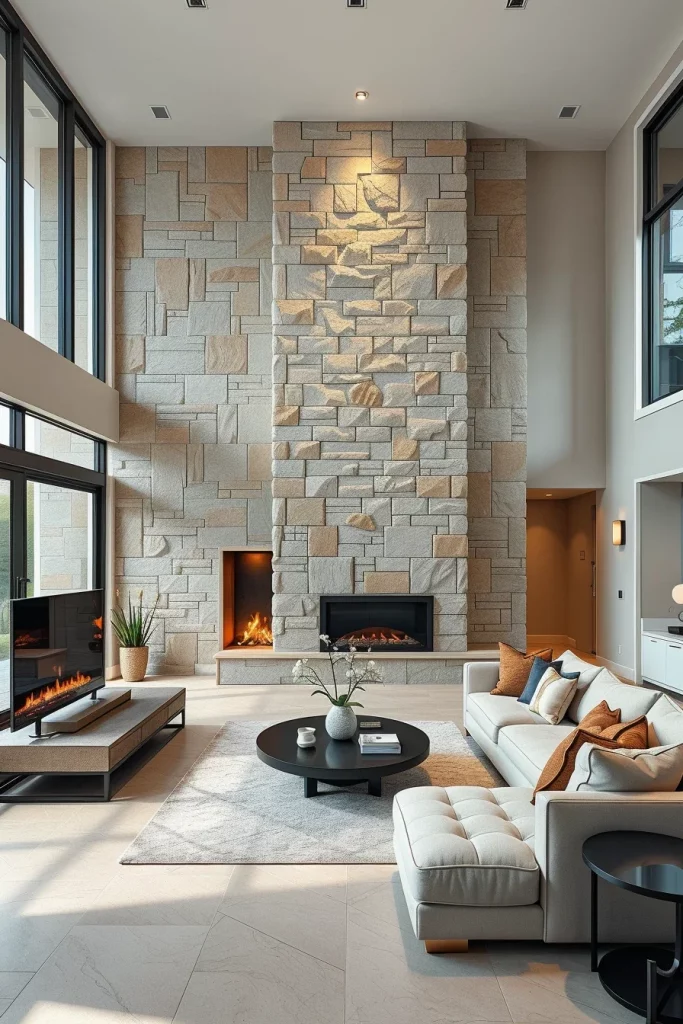
From my perspective, natural materials introduce timeless appeal that rarely goes out of style. Elle Decor has frequently emphasized combining stone with softer materials to achieve balance, and I have consistently found that this contrast produces sophisticated interiors. The richness of stone becomes even more striking when paired with comfortable textiles and warm lighting.
To complete this design, I would add concealed LED lighting that gently highlights the stone texture during the evening. This simple detail enhances depth while creating an inviting atmosphere without overwhelming the room.
Sculptural Lighting That Defines Different Functional Areas
Lighting is one of the most effective tools I use to organize an open concept living room. Rather than relying on walls, I prefer allowing carefully selected light fixtures to visually separate the living, dining, and kitchen areas. Sculptural lighting not only provides illumination but also acts as functional artwork that enhances the architecture of the home. Well-planned lighting makes every area feel purposeful while preserving the openness of the floor plan.
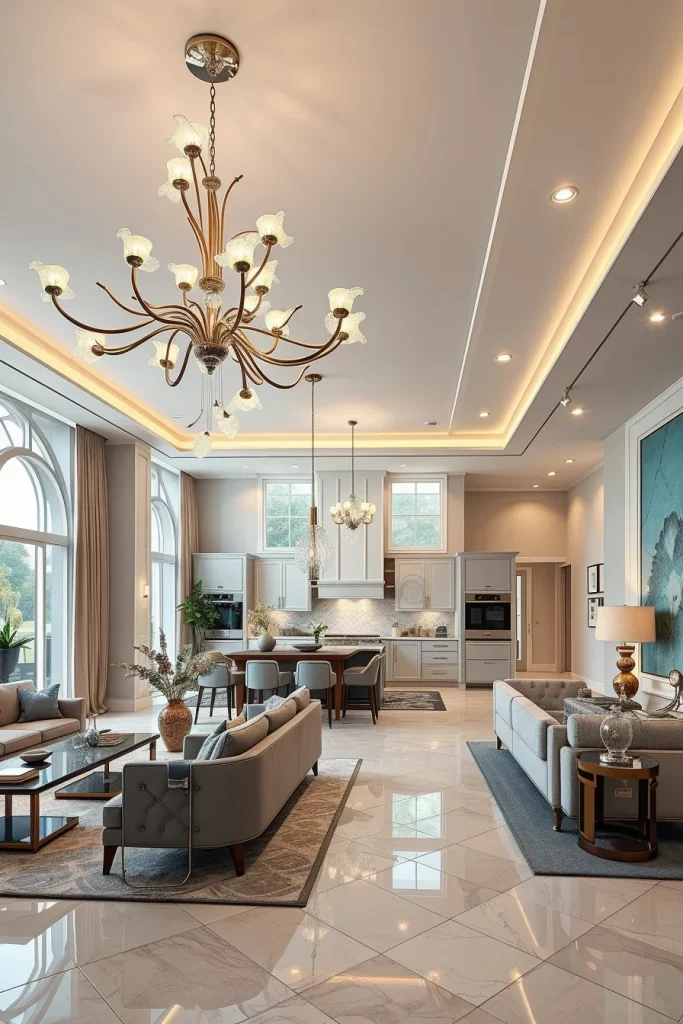
I typically combine a dramatic chandelier above the seating area, elegant pendant lights above the kitchen island, and a refined fixture over the dining table. Recessed ceiling lighting provides even illumination throughout the space, while floor lamps, wall sconces, and concealed LED strips create additional layers that improve comfort during the evening. Choosing fixtures with complementary finishes ensures every lighting element contributes to a unified design.
I have learned that layered lighting has a greater impact than increasing brightness alone. Designers featured by Architectural Digest regularly recommend combining ambient, task, and accent lighting to create interiors that remain functional throughout the day. I follow this approach because it allows each area to adapt easily to different activities and moods.
If I were refining this lighting plan further, I would include dimmer controls and smart lighting systems. These additions allow homeowners to adjust brightness for entertaining, relaxing, dining, or everyday living while maximizing both comfort and energy efficiency.
Oversized Area Rug That Brings The Seating Arrangement Together
One of the first elements I recommend in an open concept living room is a generously sized area rug. Without physical walls separating the living area from the dining room or kitchen, I rely on the rug to visually define the seating zone. A large rug immediately creates structure while allowing the entire space to remain open and connected. I find that it also softens hard flooring, improves acoustics, and makes the room feel intentionally designed rather than loosely arranged.
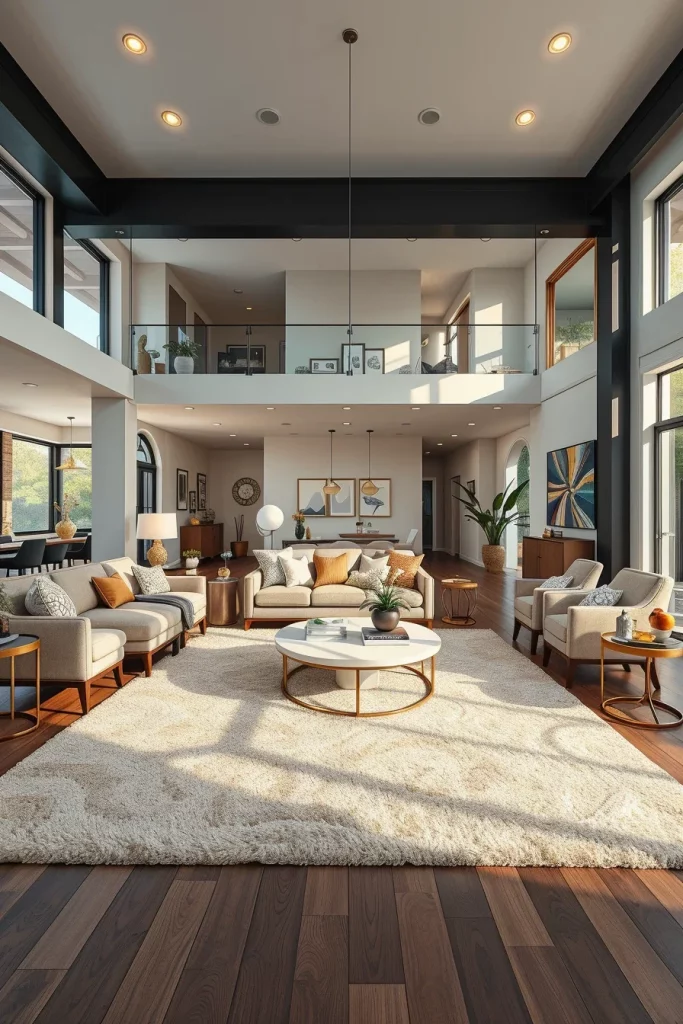
I prefer placing every major seating piece at least partially on the rug. A comfortable sectional, accent chairs, a coffee table, and even side tables feel like one cohesive composition instead of separate pieces scattered across the room. Neutral rugs with subtle texture work well because they complement changing décor over time, while geometric patterns can introduce gentle movement without overwhelming the interior. Layering soft fabrics through cushions and throws enhances the welcoming atmosphere while maintaining visual balance.
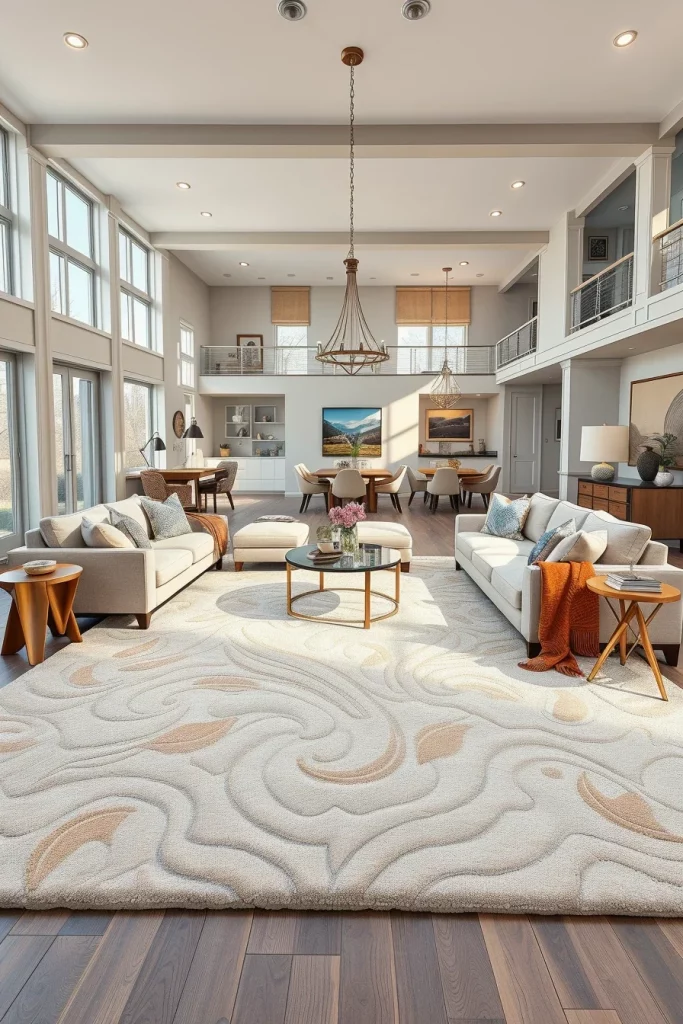
From my experience, many interior designers, including professionals featured by Architectural Digest, recommend choosing a rug that is larger than homeowners initially expect. I have found this advice to be consistently effective because a properly sized rug makes the room appear larger rather than smaller. Instead of floating furniture around the room, every element feels intentionally connected, creating a harmonious gathering space.
I also like adding sufficient clearance around the rug so circulation remains comfortable. A nearby floor lamp, a pair of nesting tables, and carefully positioned decorative accessories complete the seating arrangement without creating visual clutter.
Hidden Storage Solutions That Keep The Room Minimal And Organized
A successful open concept living room always looks organized because there are very few walls to hide everyday items. I prefer incorporating concealed storage into the design from the very beginning. Hidden cabinets, multifunctional furniture, and built-in compartments allow the room to remain clean while still accommodating everything needed for daily living. This approach preserves the open atmosphere without sacrificing practicality.
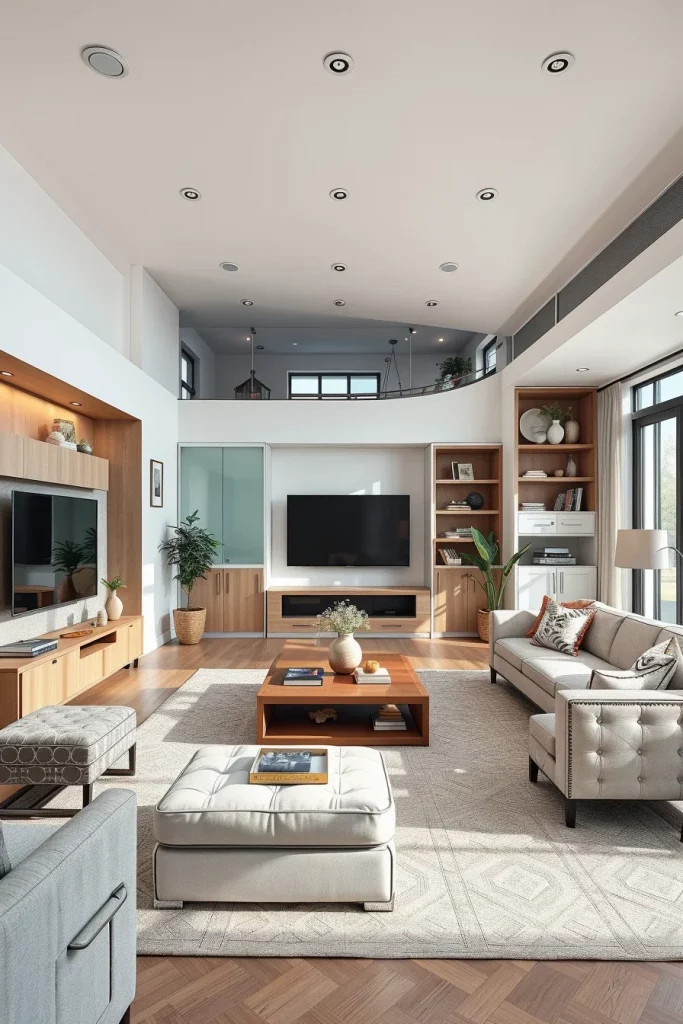
I often select coffee tables with hidden compartments, upholstered storage ottomans, media consoles with closed cabinetry, and benches that double as storage units. These pieces allow blankets, electronics, books, children’s toys, and seasonal décor to stay out of sight while remaining easily accessible. Cabinet finishes that match surrounding walls help storage blend seamlessly into the architecture, making the room feel larger and more refined.
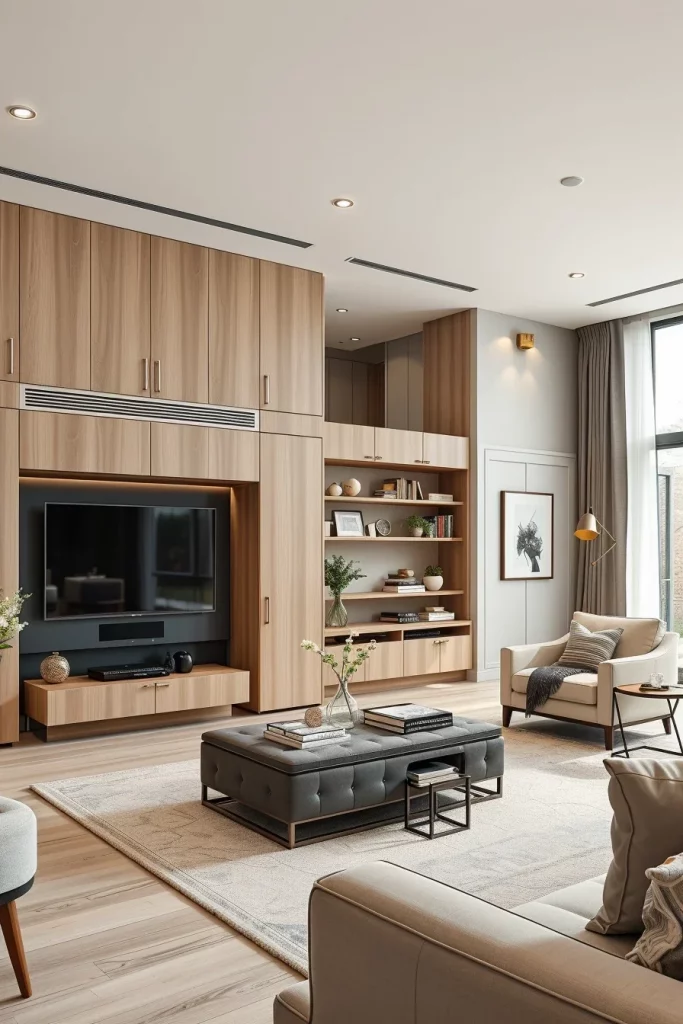
Personally, I believe hidden storage is one of the smartest investments in any open floor plan. Designers frequently featured by House Beautiful emphasize that visual simplicity contributes to a calming environment, and I completely agree. When surfaces remain uncluttered, architectural details, lighting, and carefully selected furnishings receive the attention they deserve.
To improve functionality even further, I recommend including integrated charging stations, adjustable shelving, and interior drawer organizers. These small additions make everyday routines easier while maintaining the minimalist appearance that works so well in open interiors.
Indoor Trees And Greenery That Add Freshness Without Clutter
Bringing nature indoors is one of my favorite ways to make a large open space feel alive. Carefully selected greenery introduces softness, texture, and natural color without disrupting the clean design. Instead of filling every corner with decorations, I often rely on a few well-positioned indoor trees to create visual interest while maintaining an uncluttered environment.
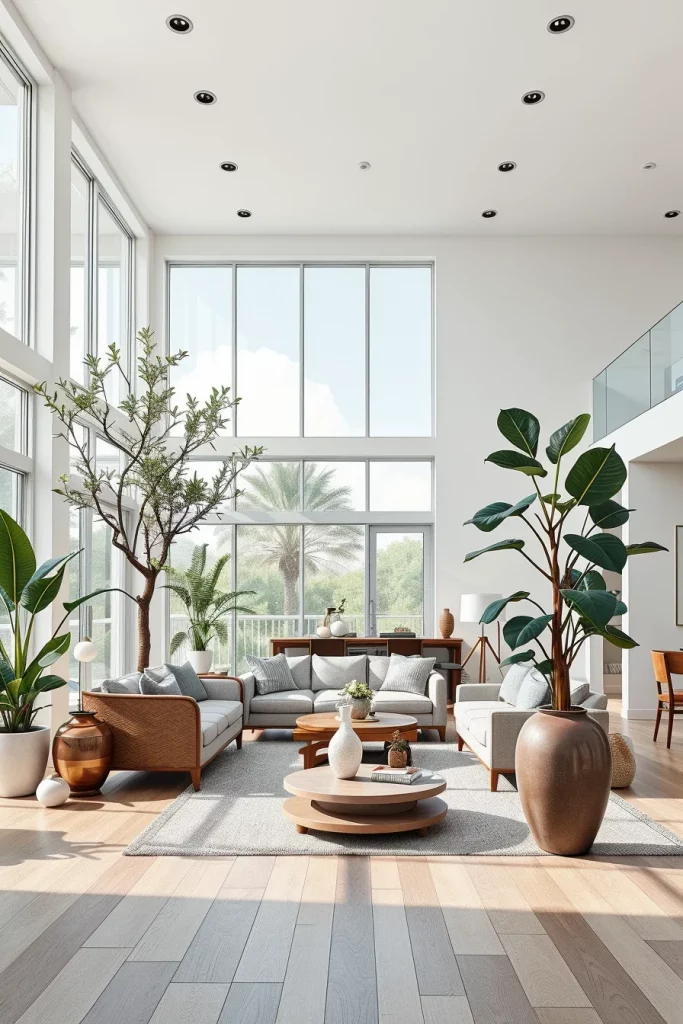
Tall olive trees, fiddle leaf figs, rubber plants, or elegant kentia palms work beautifully in spacious interiors because they naturally draw the eye upward and emphasize ceiling height. I usually place them near large windows where they receive sufficient natural light. Simple ceramic planters in neutral tones complement modern interiors without competing with the furniture. Smaller greenery on shelves or console tables provides subtle continuity throughout the room.
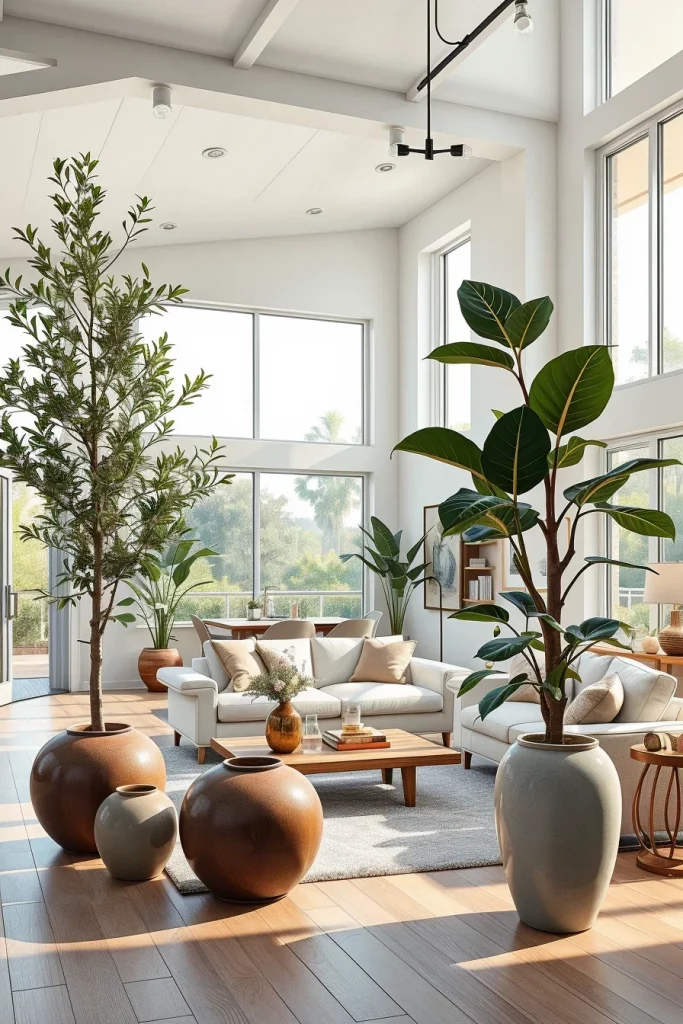
In my experience, greenery has a remarkable ability to soften modern architecture. Better Homes & Gardens has often highlighted how indoor plants improve the overall feeling of a home, and I appreciate how they visually connect indoor living spaces with the surrounding landscape. Even a single large tree can become an elegant focal point that requires very little additional decoration.
I also recommend selecting plant varieties that match the available light conditions and your maintenance preferences. Healthy plants always contribute more to the design than numerous struggling ones, so choosing the right species is just as important as selecting beautiful furniture.
Glass Walls That Fill The Interior With Natural Light
Large glass walls completely transform the atmosphere of an open concept home. I love how expansive glazing removes the visual boundary between interior and exterior spaces while flooding the room with natural daylight. The entire living area immediately feels larger, brighter, and more connected to the surrounding landscape. Even on cloudy days, generous windows create an inviting environment that artificial lighting cannot fully replicate.
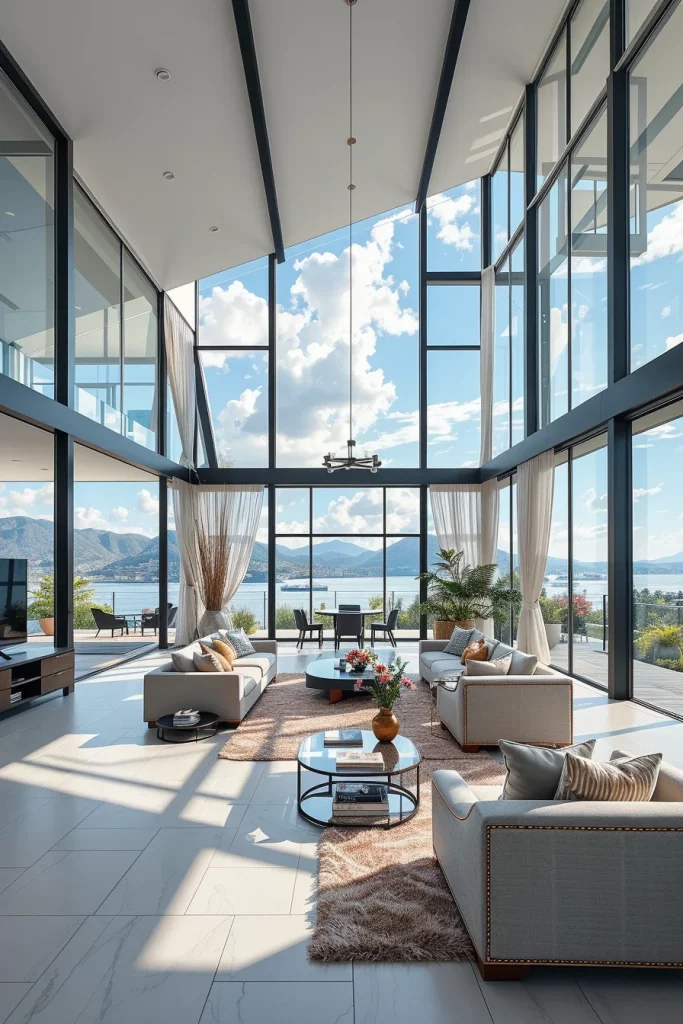
To maximize this effect, I usually pair floor-to-ceiling glass with slim window frames that preserve uninterrupted views. Comfortable seating is arranged to enjoy both the natural light and outdoor scenery, while light-colored flooring helps reflect sunlight throughout the room. Sheer curtains provide privacy without blocking brightness, allowing the space to remain open and airy throughout the day.
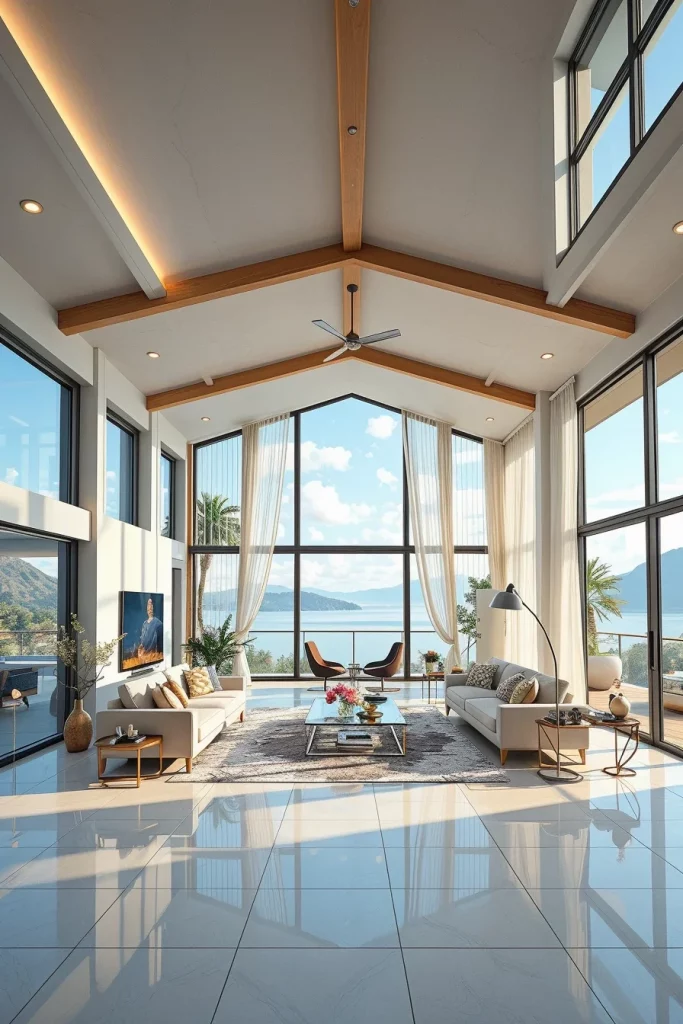
I have consistently found that natural light enhances every material inside the room, from textured fabrics to stone surfaces and warm wood finishes. According to many residential design experts featured in Elle Decor, maximizing daylight is one of the most effective ways to improve both the appearance and functionality of modern interiors. I completely agree because bright rooms naturally feel more welcoming and comfortable.
If privacy is a concern, I recommend combining large glass walls with thoughtful landscaping outside the home. Carefully positioned trees, hedges, or architectural screens preserve openness while creating a comfortable sense of seclusion.
Soft Layered Textures That Make Large Spaces Feel Cozy
Large open interiors can sometimes feel visually cold if every surface is smooth and minimal. That is why I always introduce multiple layers of texture to create warmth without overcrowding the room. Soft fabrics, woven materials, natural finishes, and subtle contrasts make expansive spaces feel inviting while preserving their spacious character.
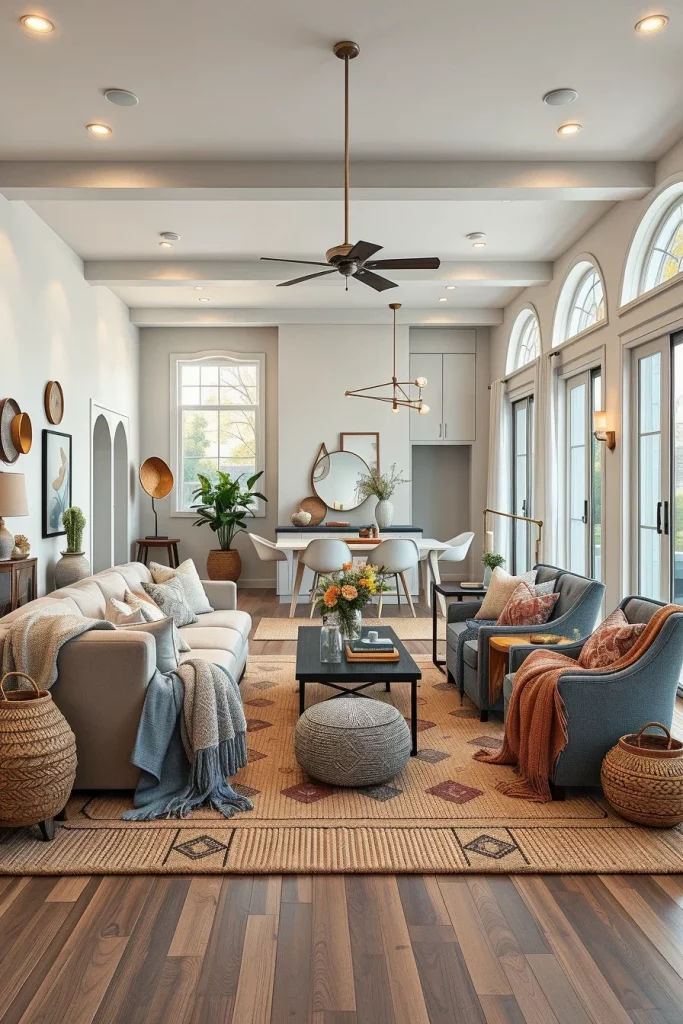
I like combining linen sofas, boucle accent chairs, chunky knit throws, velvet cushions, woven baskets, textured area rugs, ceramic accessories, and matte finishes throughout the room. Rather than relying on bold colors, I create visual richness through contrasting materials that complement one another. This layered approach makes the room feel comfortable while remaining elegant and cohesive.
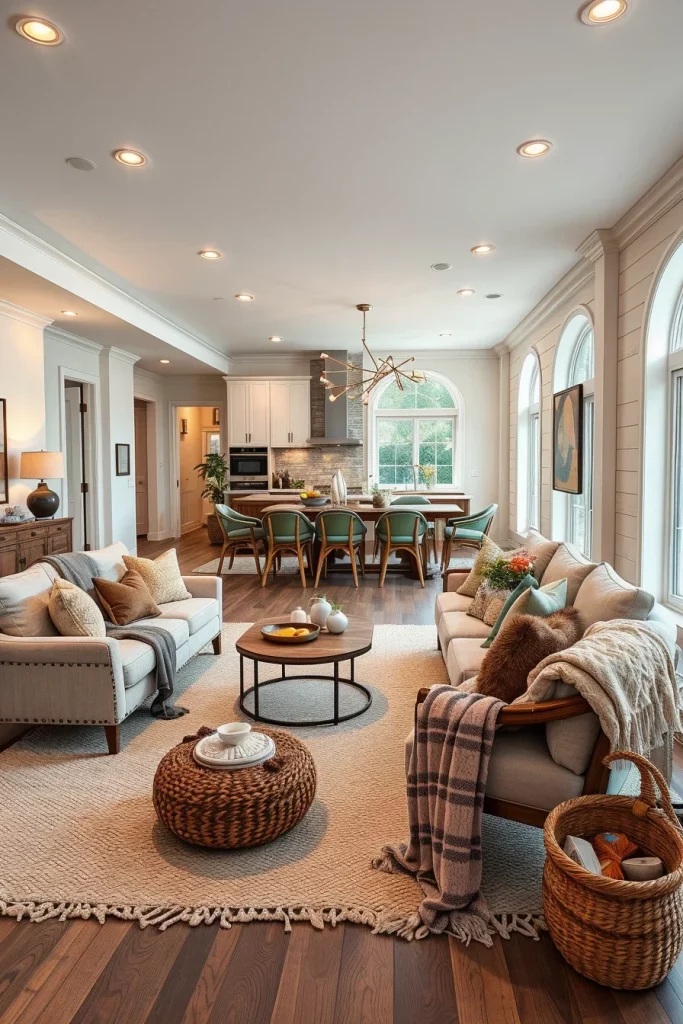
From my perspective, texture often has a greater impact than additional decoration. Many designers featured in Architectural Digest recommend mixing tactile materials to achieve depth, and I have found this advice especially valuable in open floor plans. Every layer contributes to a more relaxed atmosphere without interrupting the clean architectural lines.
To complete the design, I suggest adding soft ambient lighting through table lamps, wall sconces, and dimmable ceiling fixtures. The combination of gentle illumination and layered textures creates an environment that feels equally suitable for entertaining guests or enjoying a quiet evening at home.
Modern Built-In Shelving That Combines Display And Storage
Built-in shelving is one of the most practical features I include in an open concept living room because it serves both decorative and functional purposes. Instead of filling the room with multiple freestanding cabinets, I prefer custom shelving that blends into the architecture. This approach keeps the floor plan visually open while providing generous storage for books, artwork, decorative objects, and everyday essentials. A thoughtfully designed shelving wall also creates a natural focal point without overwhelming the room.
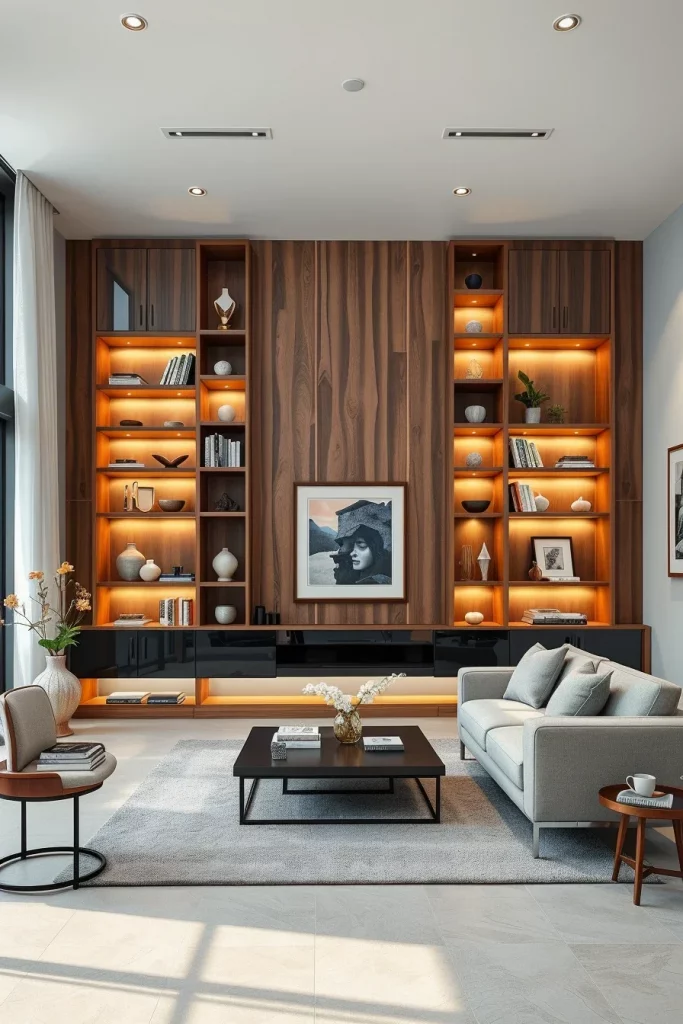
When planning built-in shelving, I like combining open shelves with closed cabinets below. Open sections are perfect for displaying framed photographs, sculptural décor, books, ceramic vases, and carefully selected accessories, while concealed cabinets keep less attractive items out of sight. Integrated LED lighting highlights decorative pieces and adds a warm atmosphere during the evening. I also recommend maintaining generous spacing between objects so every shelf feels curated rather than crowded.
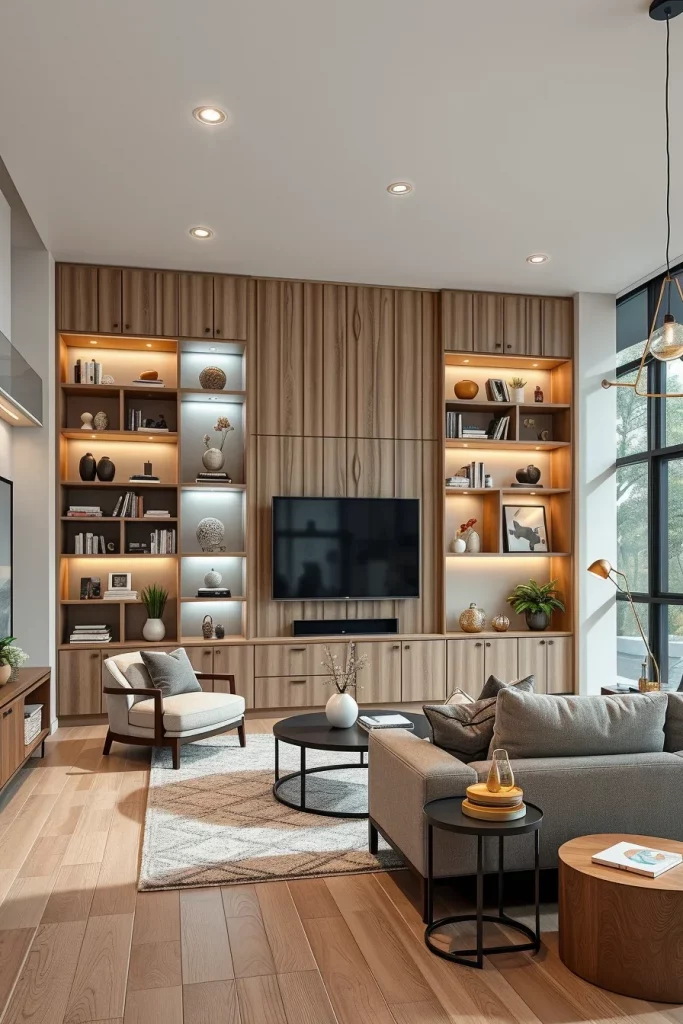
From my perspective, built-in shelving increases both the functionality and long-term value of a home. Designers featured in House Beautiful often recommend mixing storage with display to avoid visual clutter, and I have found this strategy especially successful in open floor plans. Instead of constantly searching for storage solutions, everything already has a dedicated place, making the room easier to maintain every day.
To make the shelving even more useful, I recommend including adjustable shelves, hidden cable management, and a combination of different shelf heights. These details allow the storage system to adapt as your needs change while preserving a polished appearance.
Open Concept Living Room With A Dramatic Black And White Palette
A black and white palette creates one of the most striking interpretations of an open concept living room. I enjoy using this timeless combination because it emphasizes architecture, clean lines, and carefully selected furnishings rather than relying on excessive decoration. The contrast immediately defines the space while maintaining an elegant and sophisticated atmosphere that never feels outdated.
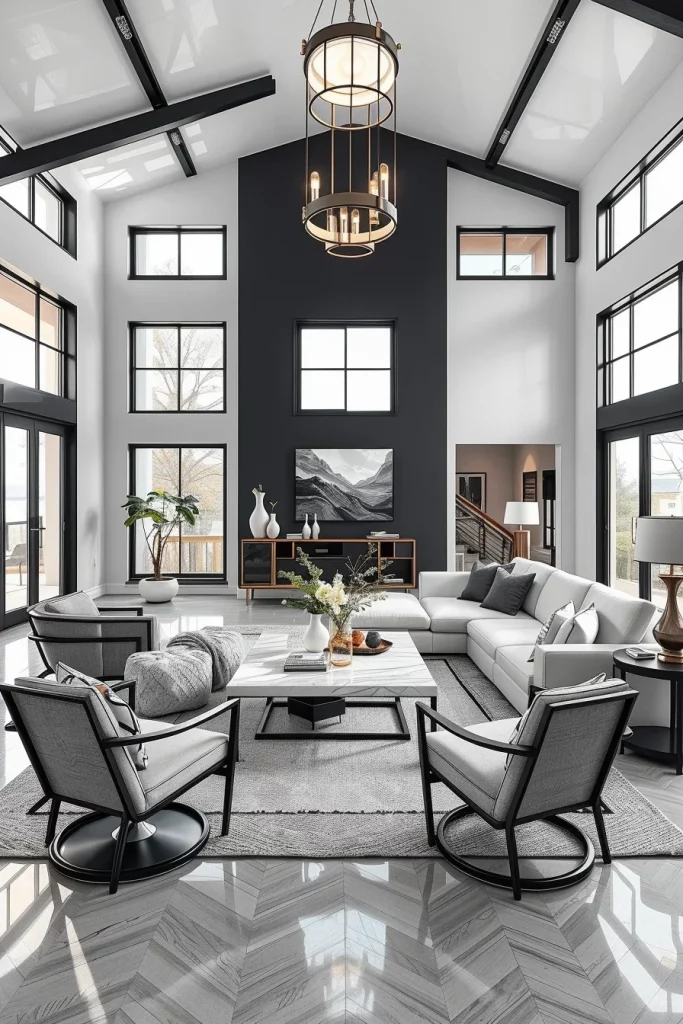
I usually begin with warm white walls and ceilings to maximize natural light before introducing black through window frames, lighting fixtures, built-in cabinetry, or statement furniture. A large white sectional paired with black accent chairs, marble coffee tables, textured rugs, and metallic details creates visual balance. I also like incorporating subtle wood accents to soften the contrast without reducing the overall impact of the monochromatic design.
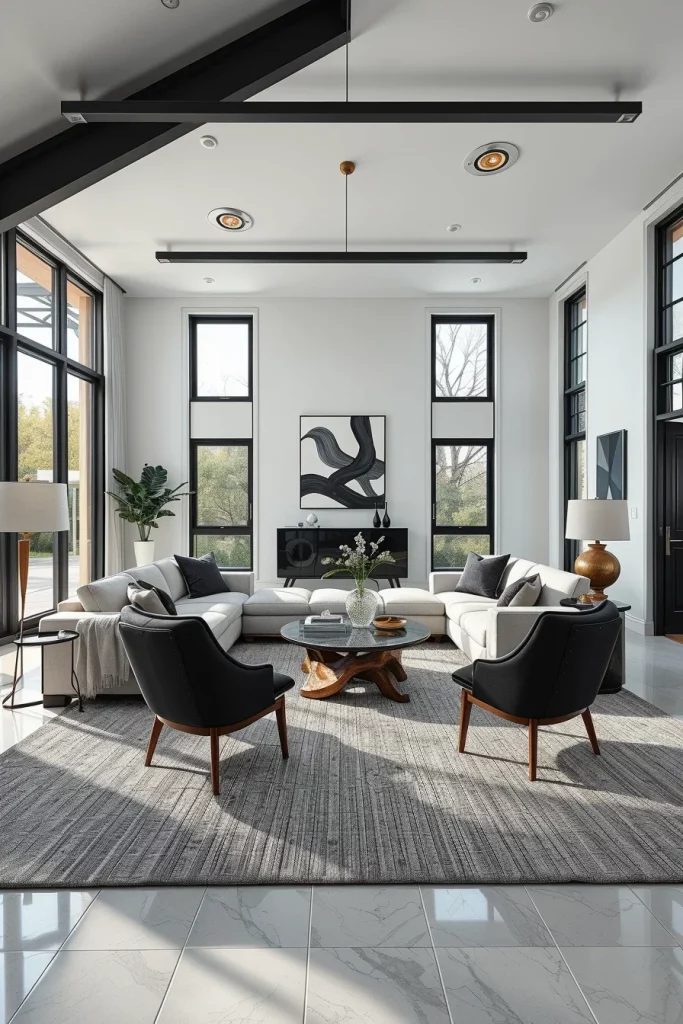
In my experience, balance is essential when working with high-contrast interiors. Architectural Digest frequently showcases black and white living spaces that succeed because they include texture rather than relying solely on color. I completely agree with this approach since boucle fabrics, natural stone, linen, and matte finishes prevent the room from feeling cold or overly formal.
I also recommend using layered lighting throughout the space. Pendant lights, wall sconces, floor lamps, and concealed LED lighting soften the strong contrast during the evening while highlighting architectural details.
Earth-Tone Interior That Feels Calm And Inviting
Earth-tone interiors have a timeless quality that makes an open concept living room feel welcoming from the moment I enter. Warm shades inspired by nature create a relaxed atmosphere that encourages conversation and everyday comfort. Rather than following short-lived trends, I prefer building the entire color palette around soft beige, warm taupe, sand, clay, olive, caramel, and muted brown because these colors remain beautiful for many years.
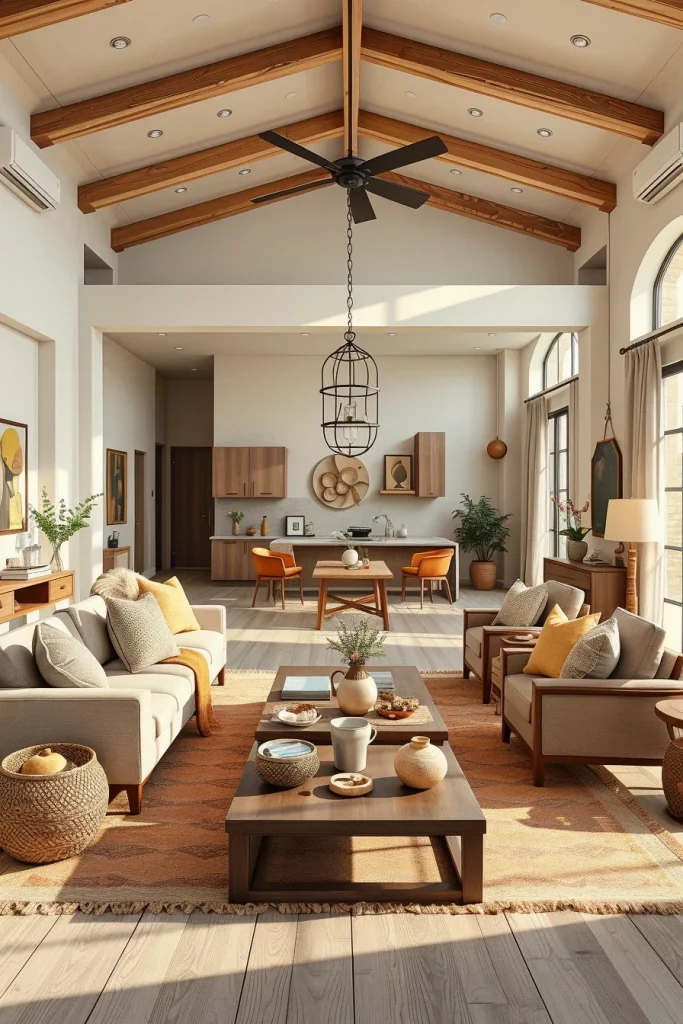
To achieve this look, I combine comfortable upholstered seating with textured rugs, linen curtains, wooden coffee tables, stone accessories, woven baskets, and soft ceramic décor. Each material contributes subtle variation while remaining within the same calming palette. Large windows enhance these natural colors by allowing daylight to shift their appearance throughout the day, making the room feel dynamic without becoming visually busy.
Personally, I find earth tones especially effective in homes where the living room connects directly with the kitchen and dining area. Many designers featured in Better Homes & Gardens recommend nature-inspired palettes because they create continuity throughout open interiors. I appreciate how easily these colors coordinate with changing furniture, artwork, and seasonal accessories.
To complete the design, I suggest incorporating soft ambient lighting and a few carefully selected natural materials. These finishing touches reinforce the calm atmosphere without introducing unnecessary visual distractions.
Rich Jewel Tones That Add Depth To An Open Floor Plan
While neutral interiors remain popular, I also enjoy introducing rich jewel tones when I want an open concept living room to feel more distinctive. Deep emerald, sapphire, burgundy, and rich navy create impressive visual depth without reducing the openness of the layout. When used thoughtfully, these colors establish elegant focal points while preserving a refined and balanced atmosphere.
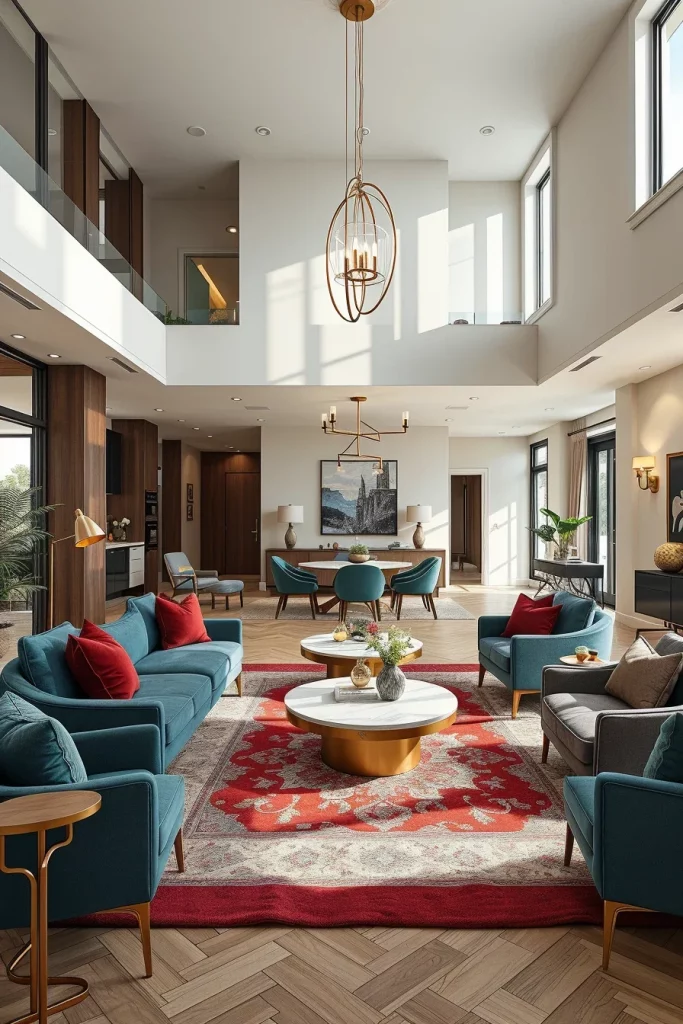
I typically introduce jewel tones through upholstered furniture, decorative cushions, artwork, area rugs, and accent chairs rather than covering entire walls. These rich colors pair beautifully with brass lighting, marble surfaces, dark wood furniture, glass coffee tables, and soft neutral backgrounds. By limiting the strongest colors to selected pieces, the room feels luxurious while remaining bright and comfortable.
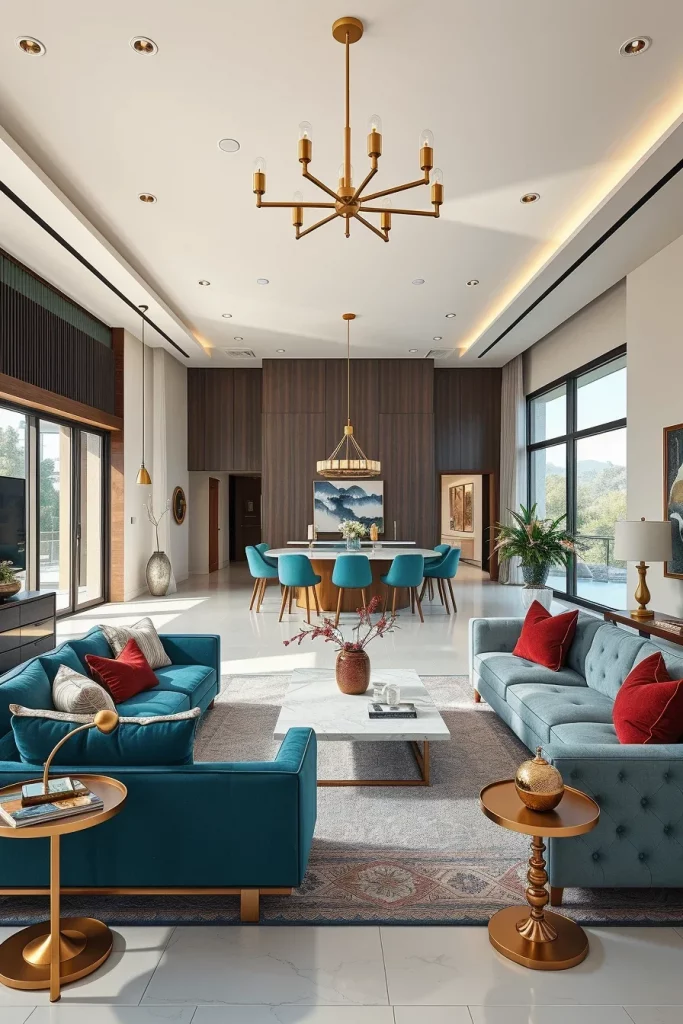
From my experience, jewel tones work best when natural light fills the room throughout the day. Elle Decor has frequently demonstrated how saturated colors gain sophistication when balanced with lighter architectural elements, and I have consistently achieved the best results using this principle. The combination allows bold furniture to become the focal point without dominating the entire interior.
I also recommend adding reflective materials such as mirrors, metallic accessories, and glass lighting fixtures. These elements distribute light throughout the room and prevent darker colors from making the space feel enclosed.
Minimalist Open Concept Living Room With Clean Architectural Lines
Minimalism is one of my favorite approaches to designing an open concept living room because every element serves a clear purpose. Instead of filling the space with numerous decorative pieces, I focus on proportion, high-quality materials, and thoughtful furniture placement. The result is a calm interior that feels spacious, organized, and highly functional for everyday living.
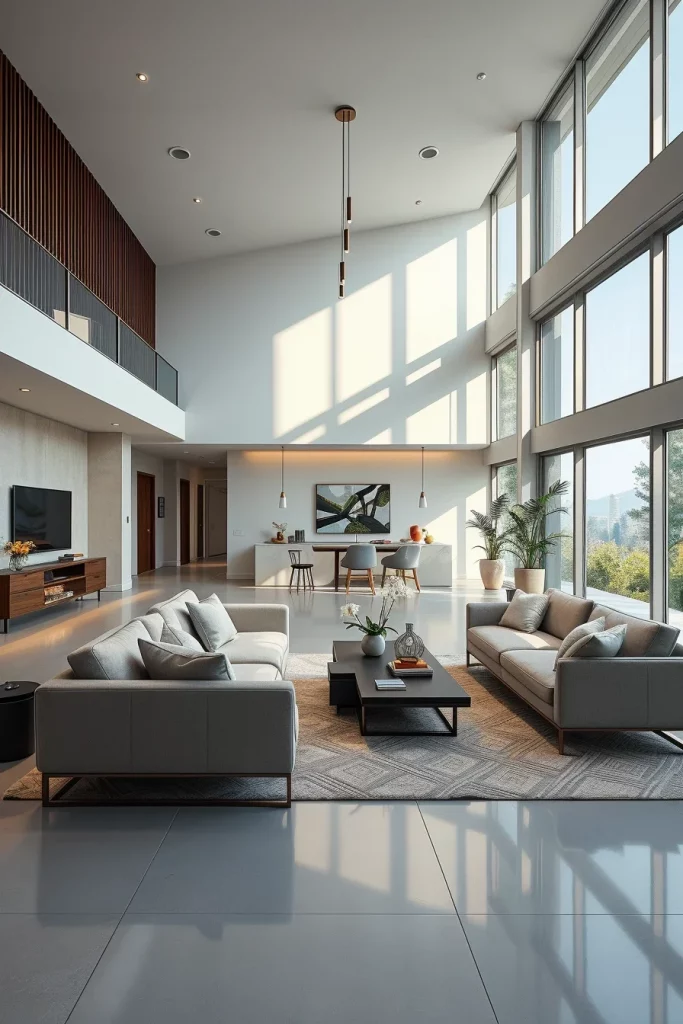
I usually choose low-profile sofas, simple accent chairs, streamlined coffee tables, concealed storage, and integrated lighting. Straight architectural lines remain the dominant visual feature, while neutral colors create a quiet backdrop for natural textures. Carefully selected artwork, sculptural lighting, and a limited number of decorative accessories provide personality without interrupting the simplicity of the design.
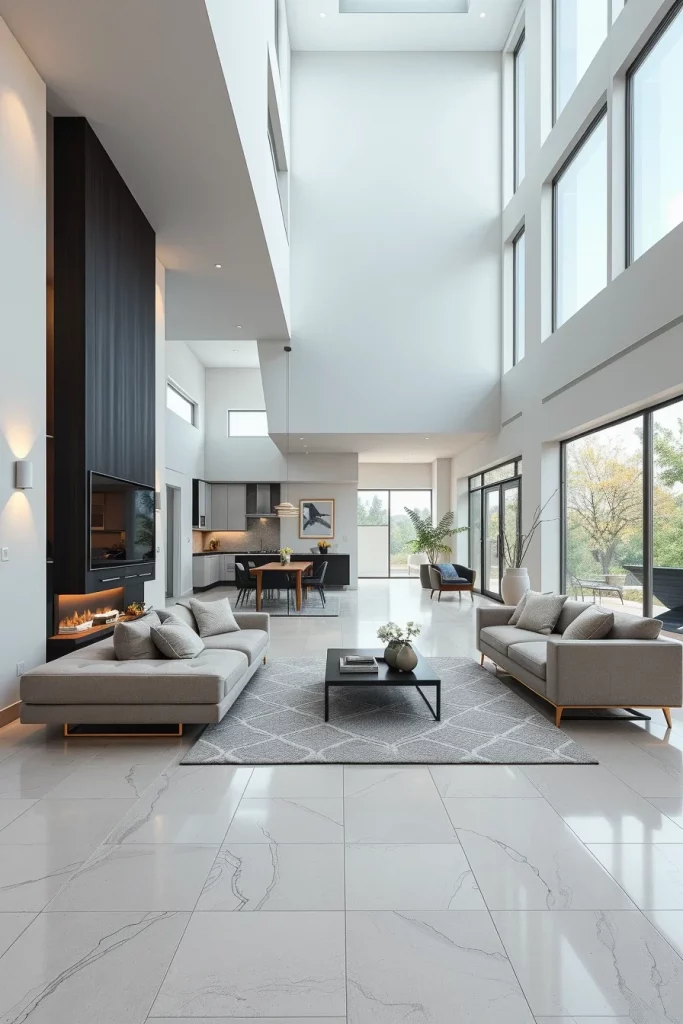
In my opinion, successful minimalism requires discipline rather than empty space. Designers featured by Dwell often emphasize investing in fewer but higher-quality furnishings, and I completely agree with this philosophy. Well-made furniture, durable materials, and timeless forms create interiors that remain attractive for many years while requiring very few updates.
To maintain the minimalist appearance, I recommend planning storage carefully before adding decorative elements. When every object has its own place, the room naturally remains clean, functional, and visually relaxing.
Contemporary Interior Featuring Mixed Natural Materials
One of my favorite ways to design an open concept living room is by combining natural materials that complement one another without overwhelming the space. I like to create visual harmony by mixing stone, linen, leather, glass, wool, and warm wood finishes so every area feels connected while maintaining its own personality. In an open floor plan, these materials help define different functional zones without requiring physical walls, making the entire room feel spacious and inviting. The result is an interior that looks sophisticated while remaining comfortable enough for everyday living.
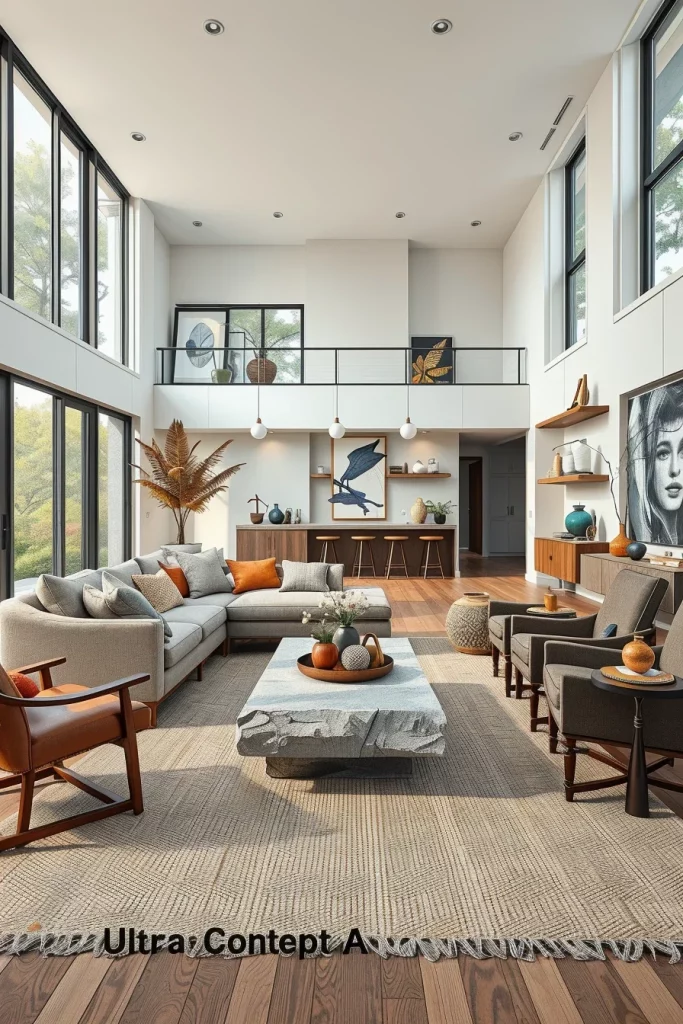
When selecting furniture, I usually begin with a generously sized sectional sofa upholstered in textured fabric because it naturally anchors the seating area. I pair it with a stone coffee table, accent chairs featuring soft leather or boucle upholstery, woven area rugs, floating shelving, and slim metal lighting fixtures. Large ceramic vases, textured cushions, handcrafted bowls, and oversized artwork introduce additional layers without creating visual clutter. Every material has its own purpose, contributing texture, warmth, and depth while maintaining a cohesive overall appearance.
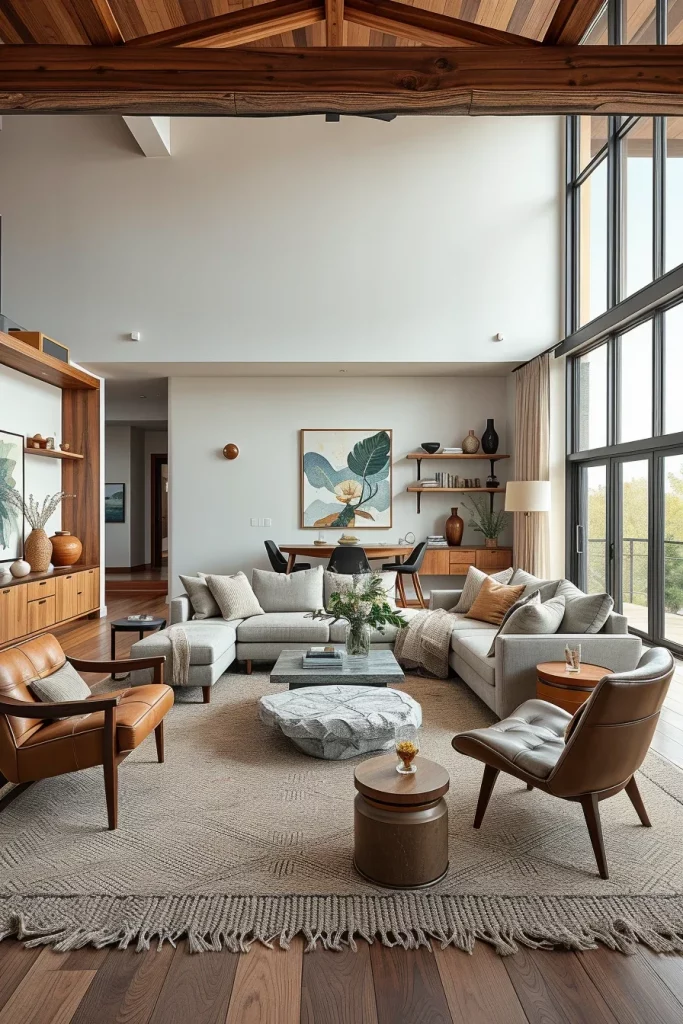
From my experience, the most successful interiors never rely on expensive finishes alone. Publications such as Architectural Digest frequently highlight the importance of layering authentic textures instead of filling a room with excessive decoration, and I completely agree with that philosophy. I have found that when each material has enough room to stand out, the living room feels more refined, comfortable, and timeless regardless of changing design trends.
To complete this design, I would include large indoor trees, subtle window treatments that maximize natural light, and carefully selected accessories that repeat the room’s color palette. These finishing details make the entire open concept living room feel intentional from every viewing angle.
Luxury Open Concept Living Room With Designer Furniture
A luxurious open concept living room is not simply about purchasing expensive furniture. I believe true luxury comes from thoughtful planning, balanced proportions, and furniture that feels comfortable while making a strong visual statement. Since every area remains visible from multiple directions, each piece should contribute to a cohesive composition rather than competing for attention. A carefully planned layout creates elegance that feels effortless.
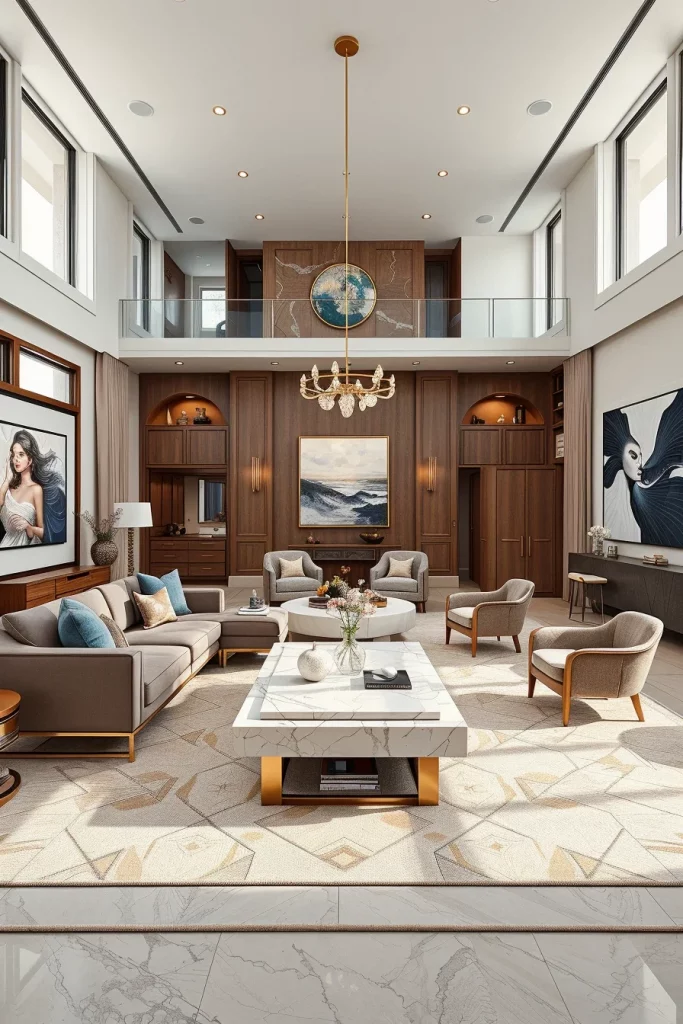
I often start with a sculptural sectional sofa accompanied by designer lounge chairs that introduce contrasting shapes. A large marble coffee table becomes the focal point, while custom built-in cabinetry provides discreet storage without interrupting the clean architectural lines. Upholstered benches, sophisticated side tables, oversized floor lamps, and curated decorative objects complete the arrangement. High-quality fabrics such as velvet, boucle, and premium linen add depth while maintaining a welcoming atmosphere.
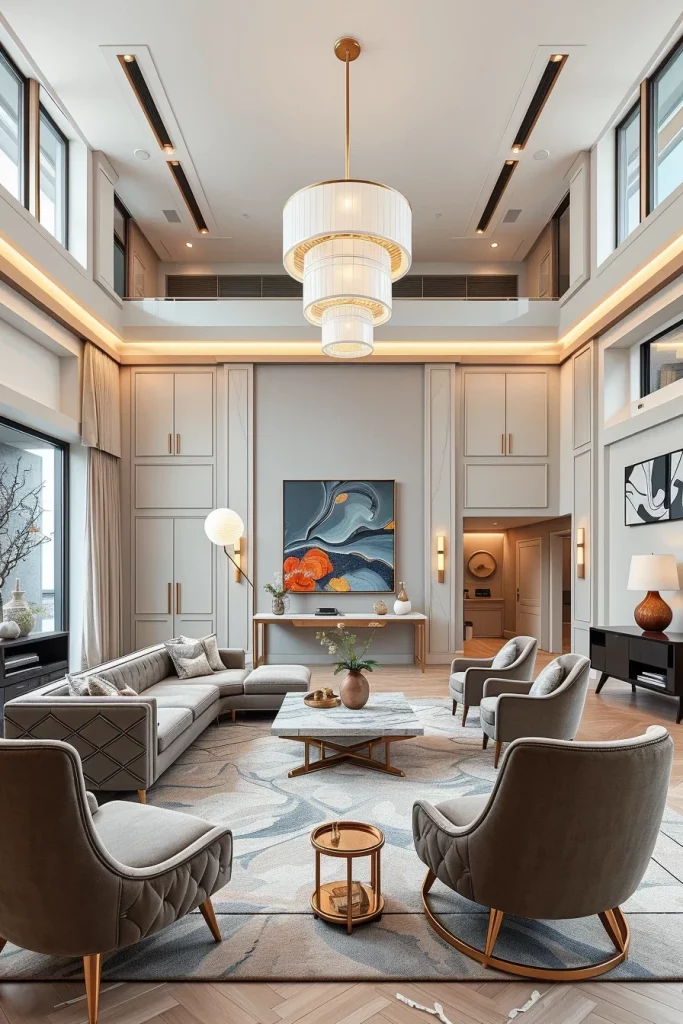
Personally, I appreciate interiors that prioritize comfort alongside visual appeal. Interior designers featured in Elle Decor often emphasize investing in fewer but better-quality furnishings, and I have seen firsthand how this approach creates rooms that remain beautiful for many years. Instead of following every new trend, I prefer timeless silhouettes that continue to look elegant regardless of changing fashions.
To further elevate this space, I would incorporate custom drapery extending from ceiling to floor, oversized artwork with subtle textures, concealed storage solutions, and carefully positioned greenery to soften the refined architectural elements.
Creative Ceiling Designs That Transform The Entire Space
The ceiling is one of the most overlooked elements in an open concept living room, yet it can dramatically influence how spacious and cohesive the entire interior feels. I always encourage homeowners to think beyond a flat white ceiling and instead consider architectural details that naturally organize different functional areas. Even subtle ceiling treatments can visually separate the living room from the dining area without interrupting the openness of the floor plan.
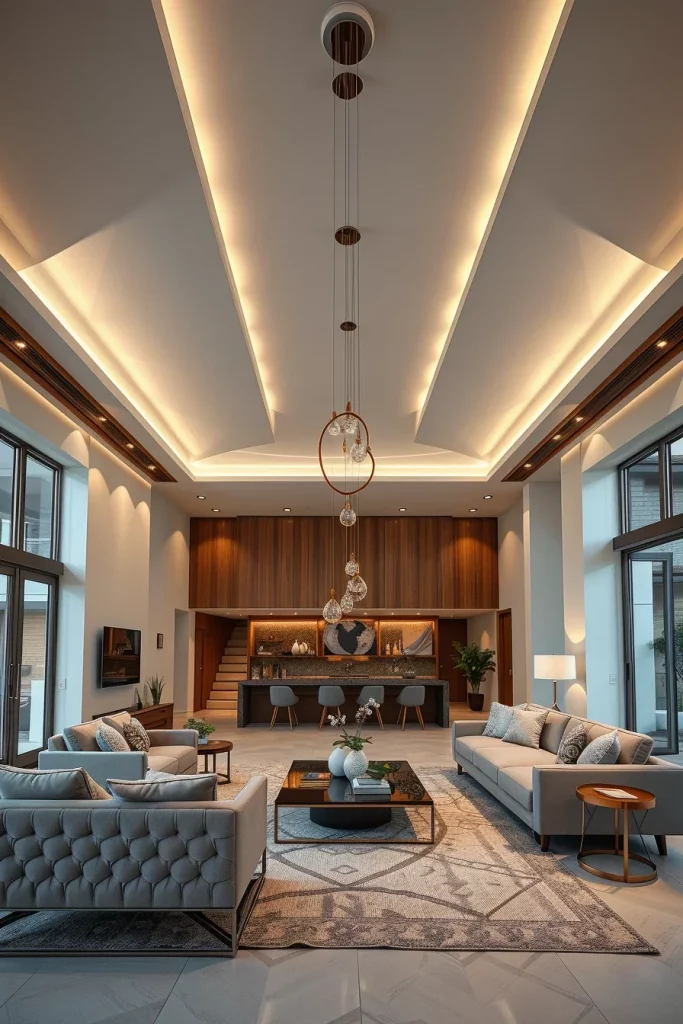
Depending on the home’s style, I may recommend recessed ceiling details, elegant wood slats, linear beam arrangements, concealed LED lighting channels, or geometric ceiling panels. Pendant lighting positioned above seating areas further defines the room while providing a decorative focal point. These architectural features guide the eye throughout the interior and create a stronger sense of proportion without making the room feel smaller.
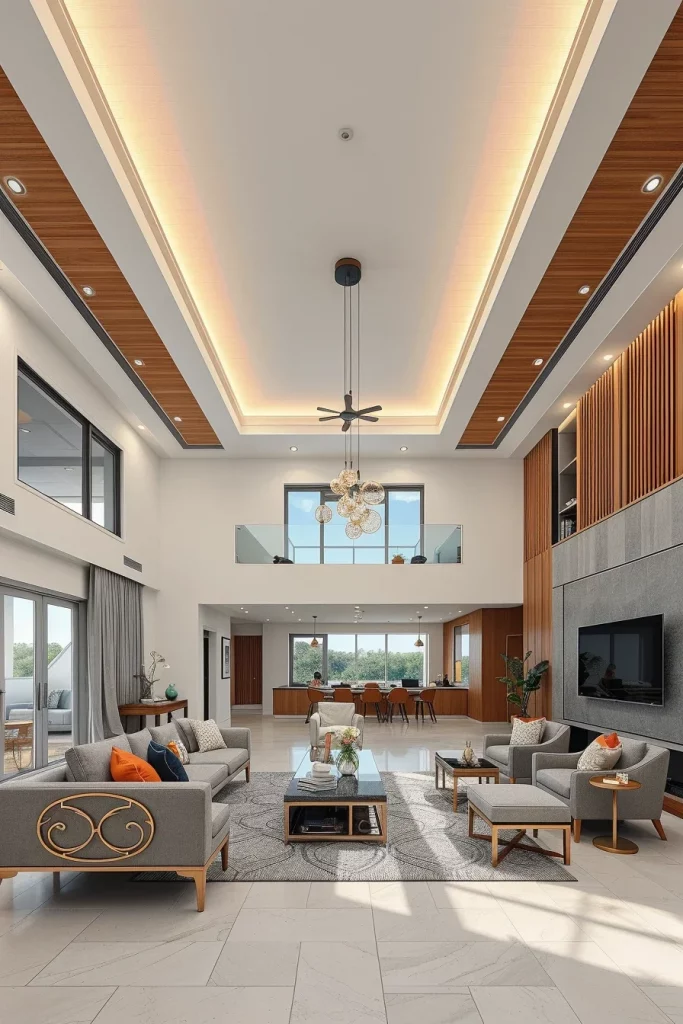
I have noticed that thoughtful ceiling design often receives the greatest compliments because people instinctively notice how comfortable the space feels without immediately recognizing why. Many leading interior designers recommend treating the ceiling as a “fifth wall,” and after working with numerous layouts, I completely understand this advice. A well-designed ceiling quietly enhances every other feature within the room.
I would also include integrated ventilation grilles, discreet acoustic solutions, layered dimmable lighting, and coordinated ceiling colors that complement the surrounding architectural finishes for a polished final result.
Large Sliding Glass Doors That Blur Indoor And Outdoor Living
One of the greatest advantages of an open concept living room is the opportunity to create a seamless transition between indoor and outdoor spaces. I find that expansive sliding glass doors immediately increase the feeling of openness by allowing natural light to flow throughout the home while maintaining uninterrupted views of the surrounding landscape. Even during colder seasons, the visual connection to nature makes the interior feel larger and more relaxing.
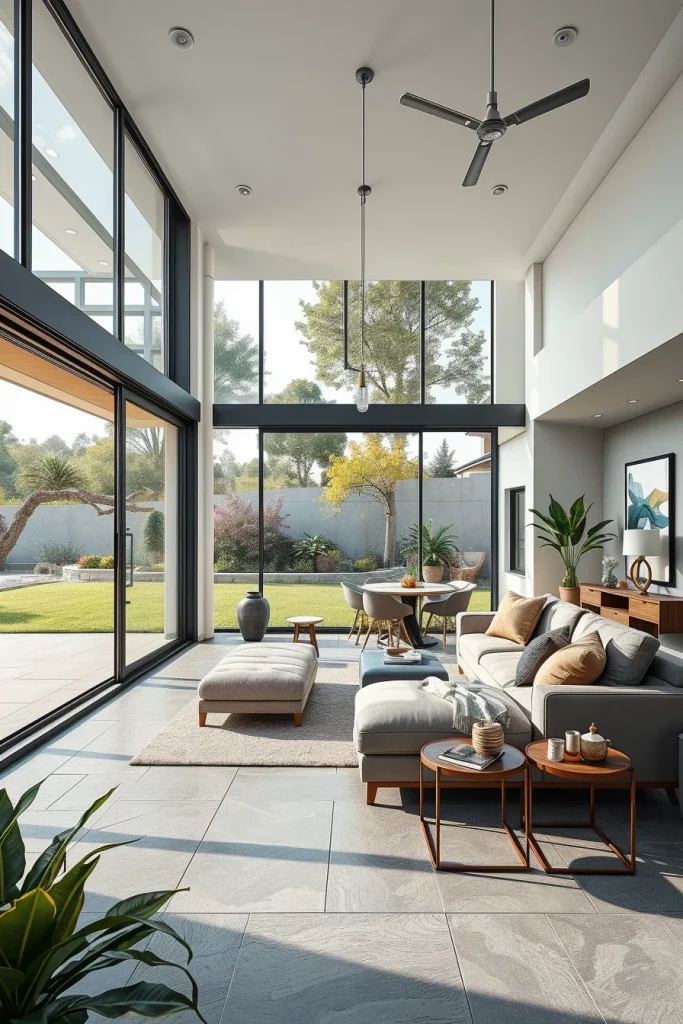
I prefer slim-framed sliding glass systems paired with comfortable outdoor seating that visually continues the interior design. Matching flooring materials, coordinated textiles, neutral outdoor furniture, decorative lanterns, and strategically placed planters strengthen the relationship between both environments. Inside, I often arrange the seating to face the garden, patio, or pool, ensuring that the outdoor scenery becomes part of the overall design composition.
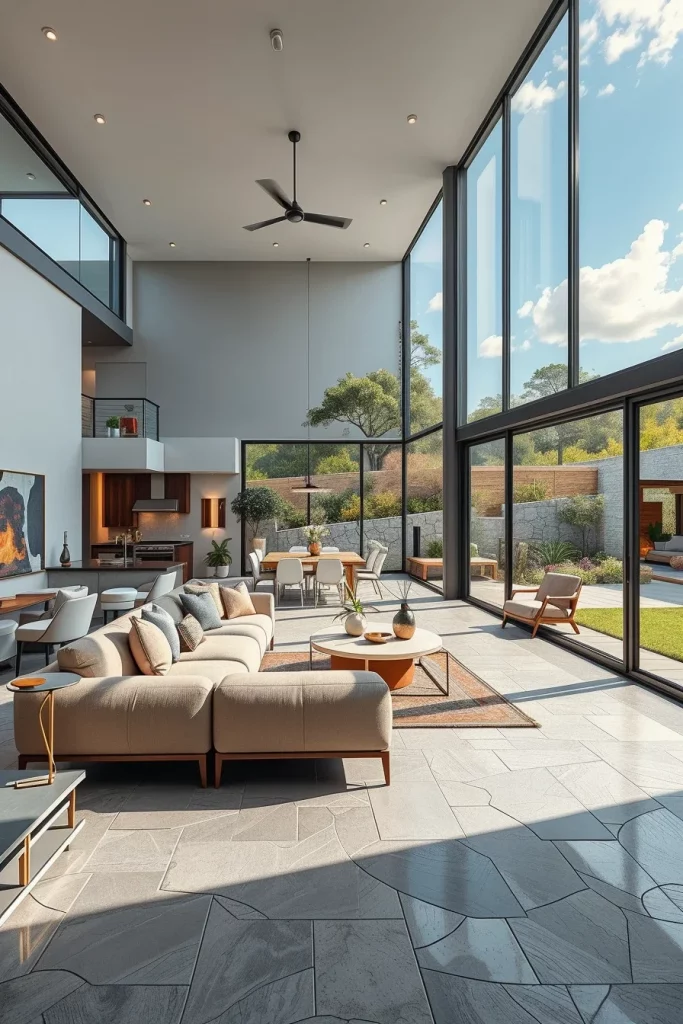
From my perspective, natural daylight remains one of the most valuable design elements available. Better Homes & Gardens has repeatedly highlighted the positive impact of daylight on both comfort and well-being, and I have consistently found that brighter interiors feel more welcoming for everyday life as well as entertaining guests.
To enhance this concept further, I would add motorized window treatments, weather-resistant outdoor fabrics, subtle exterior lighting, and transitional decorative accessories that visually unite the indoor and outdoor spaces.
Artistic Coffee Table Styling That Elevates The Whole Room
The coffee table often becomes the visual center of an open concept living room, so I treat it as more than a functional surface. Thoughtful styling creates balance while reinforcing the personality of the entire interior. Rather than filling the table with numerous decorative items, I prefer a carefully edited arrangement that feels intentional and complements the surrounding furniture.
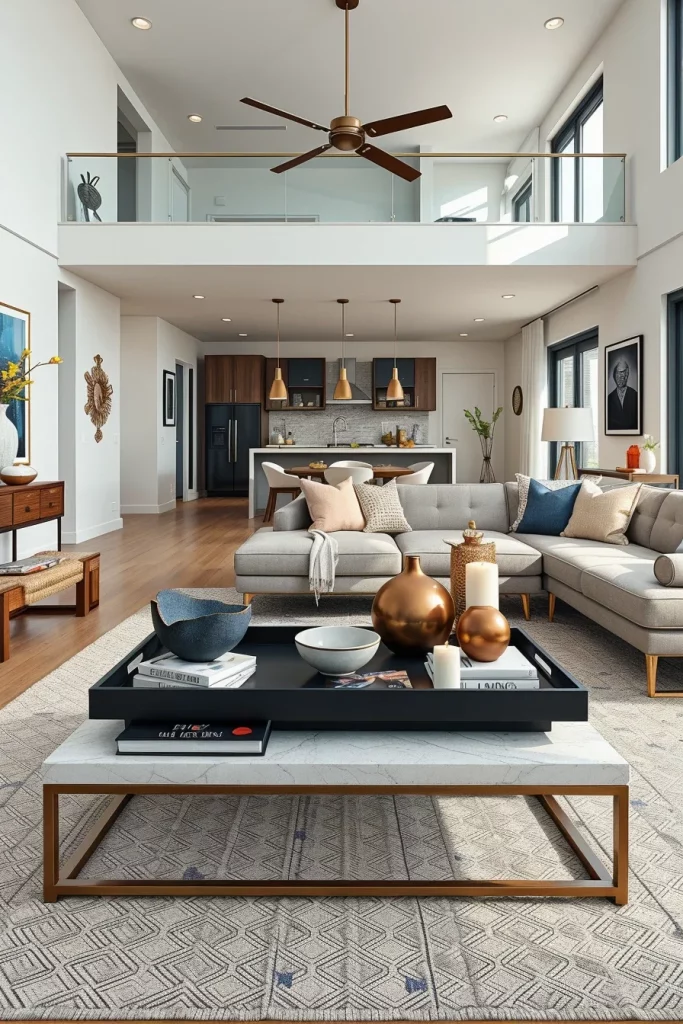
I usually begin with a decorative tray to organize smaller accessories before adding several large-format design books, sculptural objects, ceramic bowls, candles, fresh greenery, and textured decorative boxes. These items introduce varying heights and materials while keeping the arrangement visually clean. The coffee table should remain practical enough for everyday use while still acting as an elegant focal point that connects the seating area.
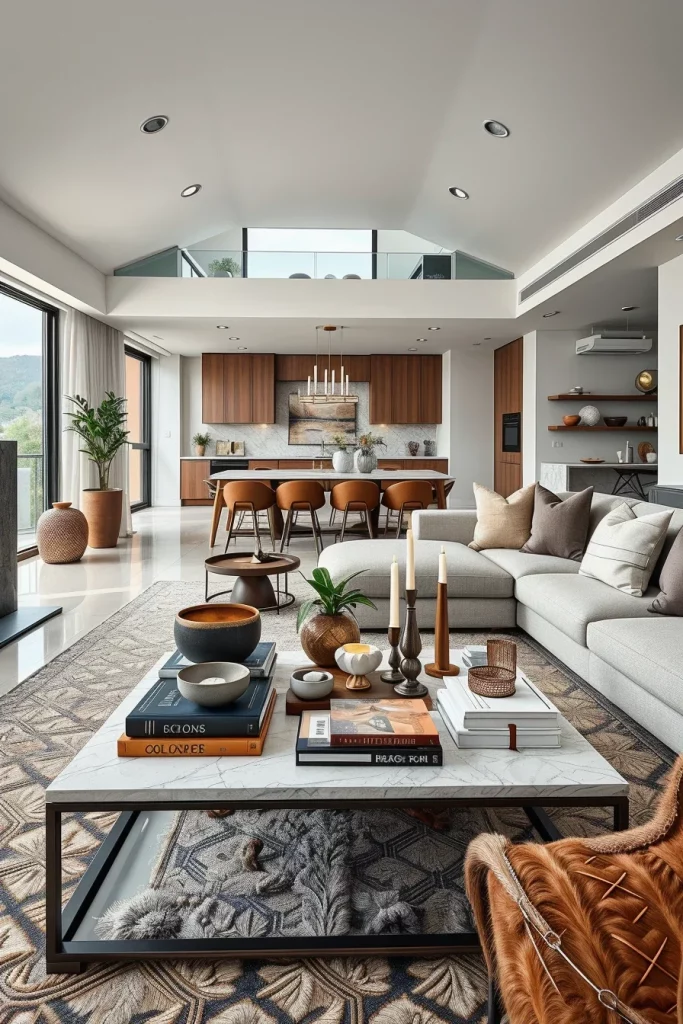
In my own projects, I have learned that restraint often produces the strongest visual impact. Designers featured in House Beautiful frequently recommend grouping decorative objects in odd numbers and varying heights to create natural balance, and I find this principle consistently effective. Small adjustments in styling can completely refresh the appearance of an entire living room without replacing major furniture pieces.
To finish this area, I would include a soft area rug beneath the table, coordinated accent pillows nearby, subtle seasonal accessories, and concealed storage for remote controls and everyday essentials, ensuring the centerpiece remains both attractive and functional.
Smart Lighting Layers For Daytime And Evening Ambiance
Lighting is one of the most important elements in an open concept living room because it influences both functionality and atmosphere throughout the day. I always recommend thinking beyond a single ceiling fixture and instead creating several layers of light that work together. During the daytime, natural light should remain the primary source of illumination, while thoughtfully placed fixtures take over as daylight fades. This layered approach allows the room to feel bright for daily activities and comfortably intimate during the evening.
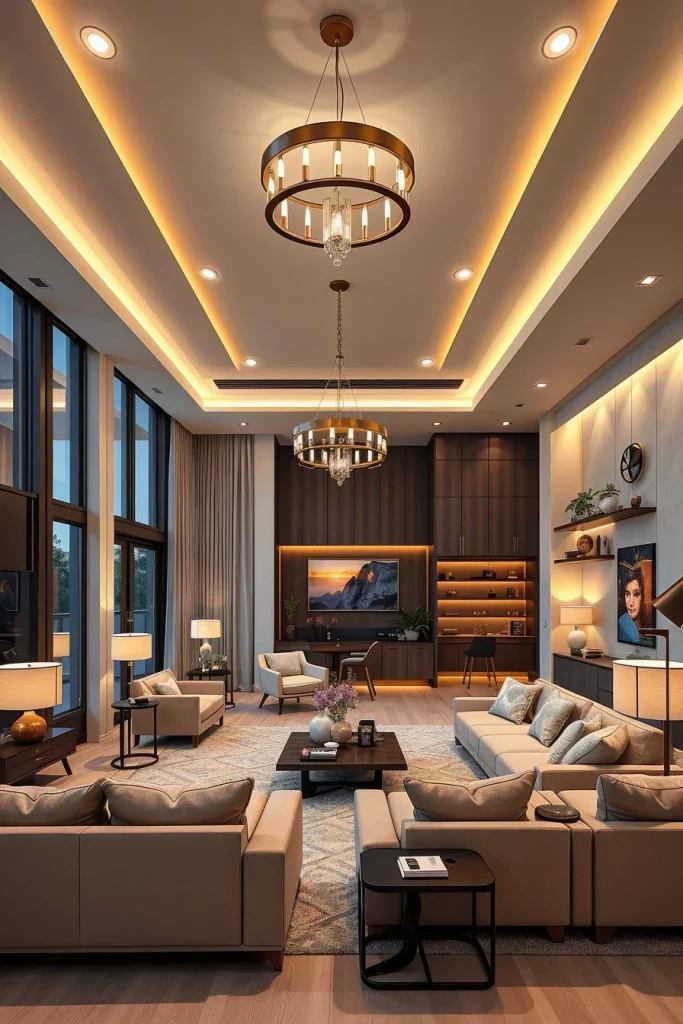
I typically begin with recessed ceiling lighting to provide even ambient illumination across the entire space. Next, I introduce decorative pendant lights above the coffee table or dining area to create visual interest. Floor lamps beside lounge chairs, table lamps on console tables, LED strips inside shelving, and subtle accent lighting for artwork help define different zones within the open layout. Dimmable controls are especially valuable because they allow each lighting layer to adapt to different occasions without changing the overall design.
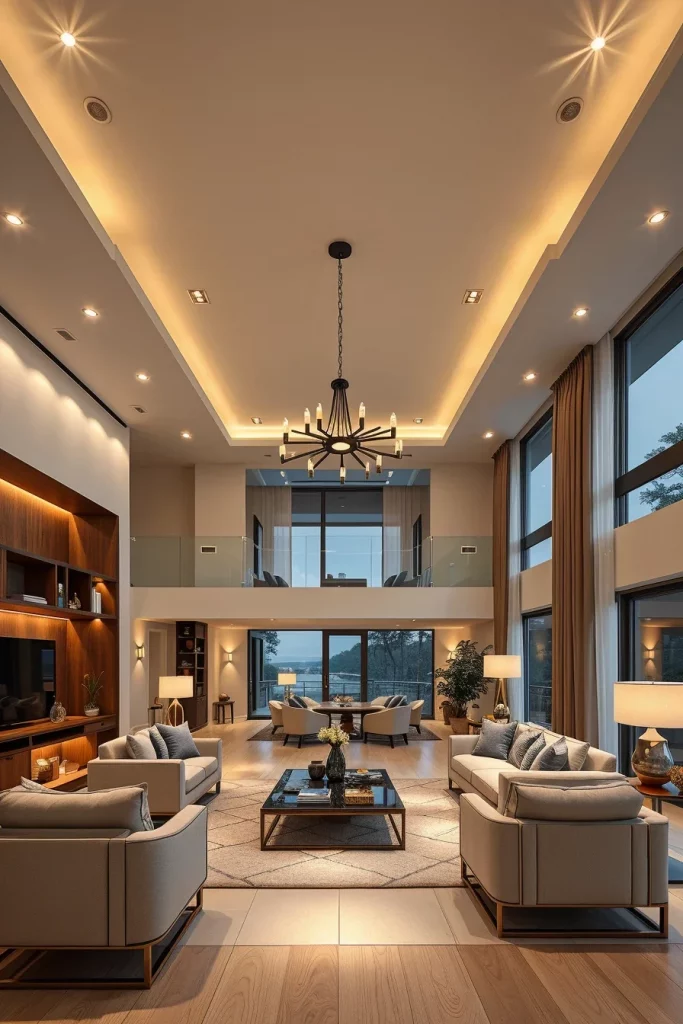
In my experience, lighting has the ability to completely change how furniture, textures, and finishes appear. Designers from Architectural Digest often recommend combining ambient, task, and accent lighting rather than relying on one bright fixture, and I have consistently found this advice produces interiors that feel far more comfortable and visually balanced. Proper lighting also highlights architectural features that might otherwise go unnoticed.
To complete this design, I would include smart lighting controls, warm white bulbs with consistent color temperature, discreet under-cabinet lighting if the kitchen shares the same space, and automated evening lighting schedules for added convenience.
Cozy Reading Corner Integrated Into The Open Living Area
Even within a spacious open concept living room, I believe every home benefits from having a quiet place dedicated to reading and relaxation. A reading corner introduces a sense of intimacy without disrupting the openness of the layout. By positioning this area near a window or slightly away from the main seating arrangement, it becomes a peaceful retreat while remaining visually connected to the rest of the room.
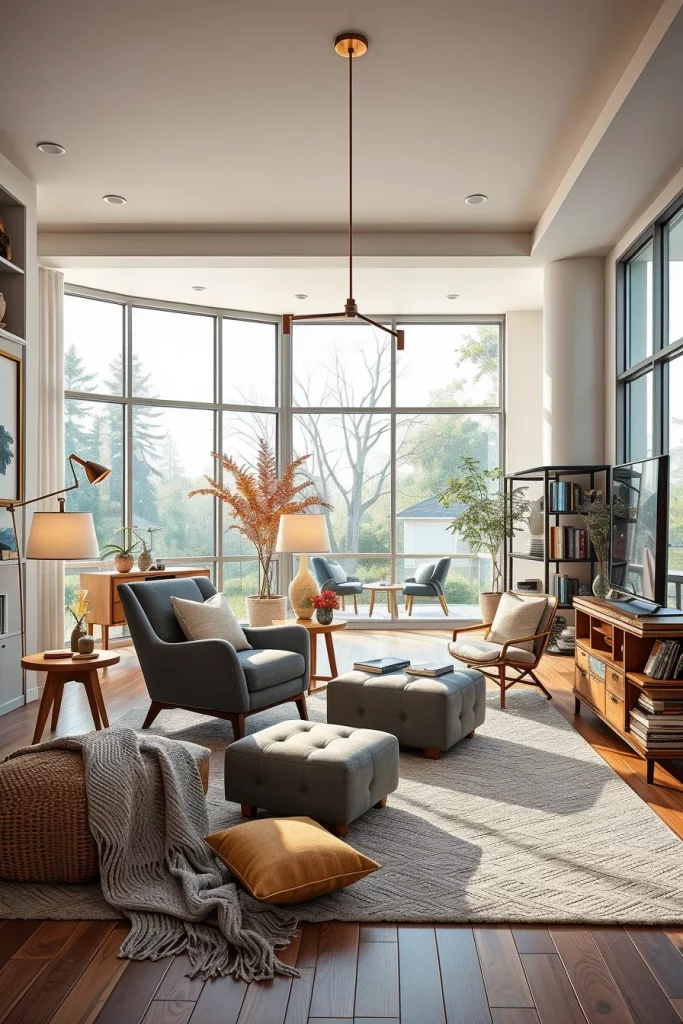
I usually furnish this space with a generously cushioned armchair, a matching ottoman, and a compact side table large enough to hold books and a cup of coffee. A floor lamp with adjustable lighting provides focused illumination for reading, while a soft throw blanket and textured accent pillow add comfort. A nearby bookshelf, decorative basket, and small indoor tree complete the corner without making it feel crowded. Every piece contributes to both comfort and practicality.
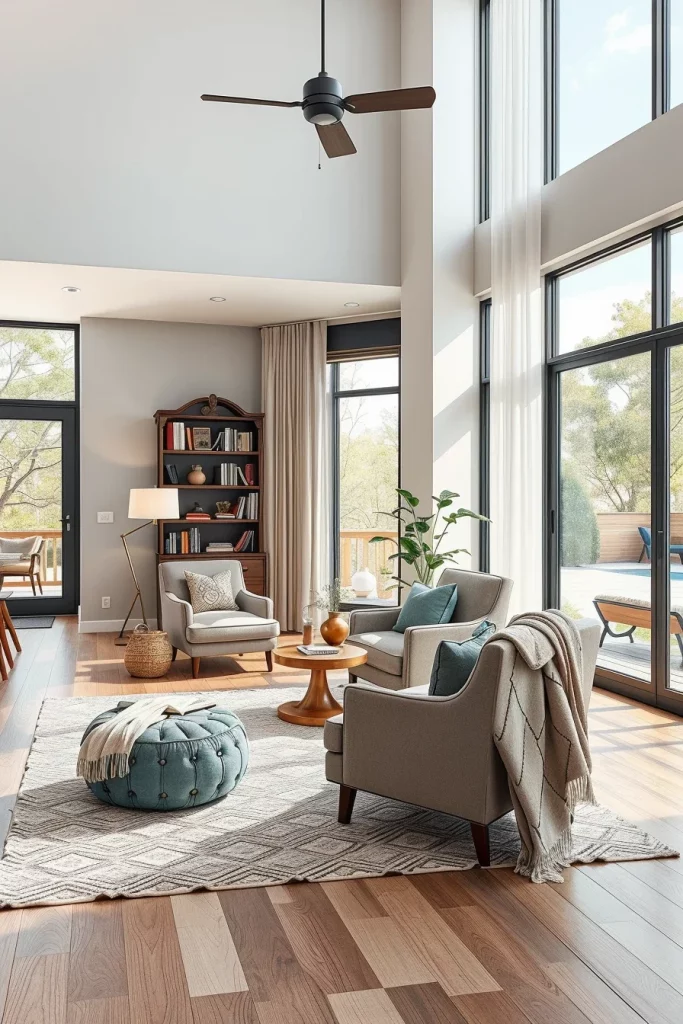
Personally, I appreciate how a dedicated reading space encourages people to slow down, even in busy households. Better Homes & Gardens has often highlighted the value of creating functional zones within open floor plans, and I agree that these purposeful spaces make a home feel more personal and inviting. I have found that even a relatively small reading corner adds warmth to the entire interior.
To make this area even more enjoyable, I would add layered window treatments to control daylight, a plush area rug beneath the chair, and nearby storage for books, magazines, and personal accessories to keep the space organized.
Custom Decorative Details That Give The Room A Unique Identity
Decorative details are what transform an attractive open concept living room into a home with genuine personality. I always encourage homeowners to include custom elements that reflect their lifestyle rather than simply copying showroom displays. These personalized touches create visual interest while helping the entire room feel thoughtfully curated and welcoming.
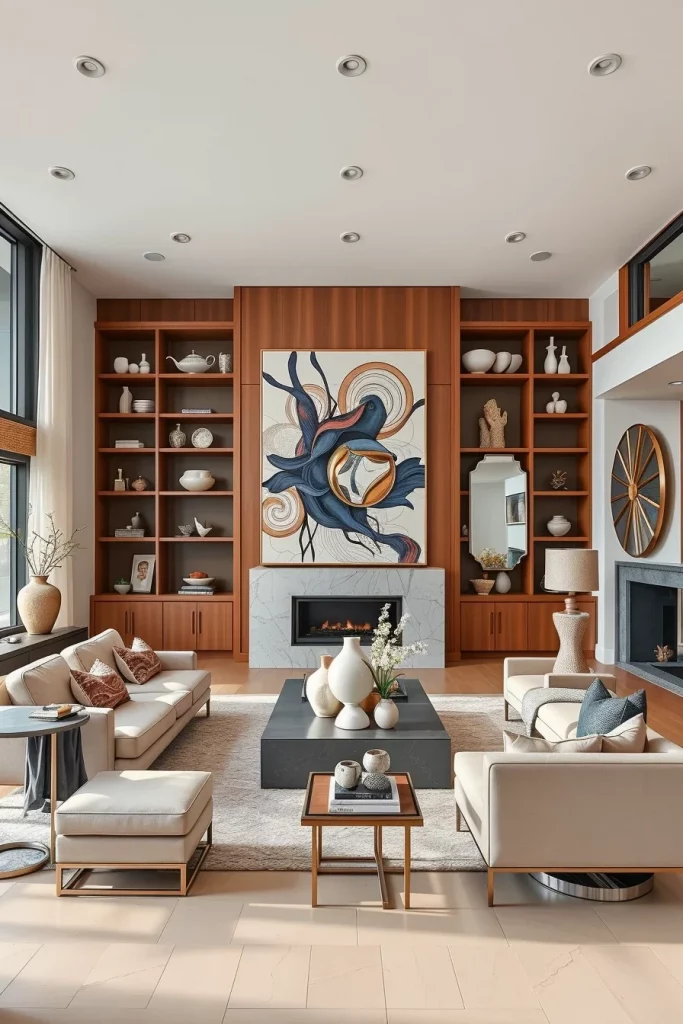
I often incorporate custom-built shelving, oversized artwork, handcrafted ceramics, textured wall panels, designer mirrors, sculptural accessories, and carefully selected textiles. Decorative cushions, woven baskets, elegant trays, and distinctive vases help repeat colors and textures throughout the room, creating a consistent visual flow. Rather than filling every available surface, I prefer leaving open areas that allow individual decorative pieces to stand out naturally.
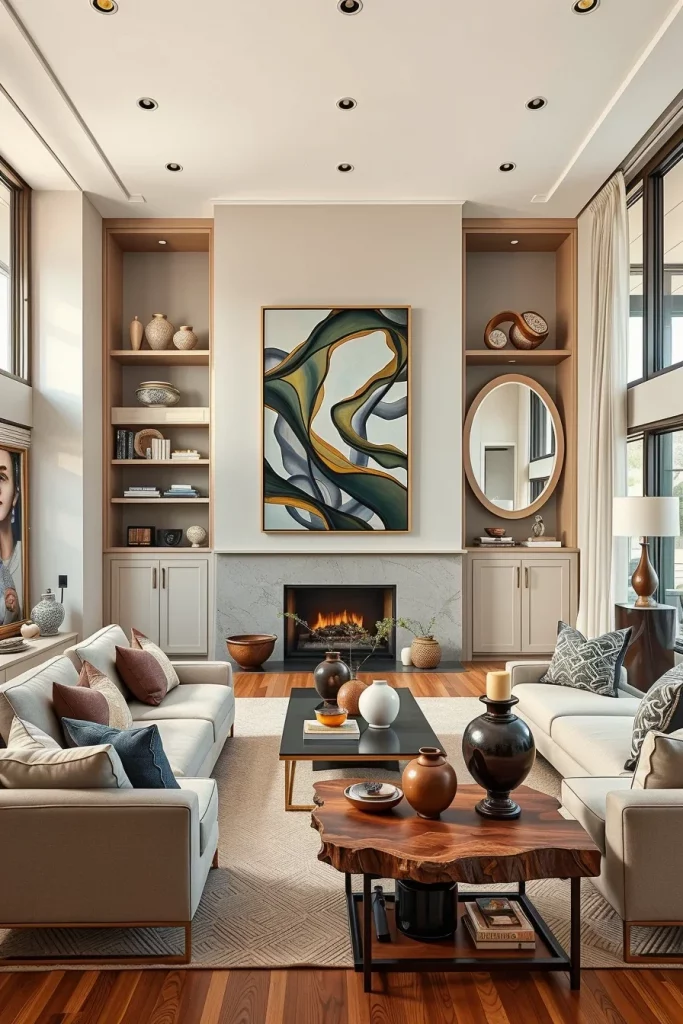
From my perspective, successful decorating is about editing rather than adding more. House Beautiful regularly emphasizes the importance of displaying meaningful objects instead of excessive accessories, and I have found this philosophy creates interiors that remain timeless. A few carefully chosen decorative elements usually have far greater impact than dozens of unrelated pieces.
I would also recommend incorporating custom cabinetry, concealed storage for everyday items, coordinated hardware finishes, and decorative accents that can be updated seasonally without changing the overall design of the room.
Open Concept Living Room Design Mistakes To Avoid For A Balanced Layout
Although an open concept living room offers tremendous flexibility, several common design mistakes can reduce both comfort and functionality. I have seen beautiful homes lose their sense of balance because furniture was arranged without considering traffic flow or because too many unrelated styles competed within the same space. Careful planning helps avoid these problems before they become expensive to correct.
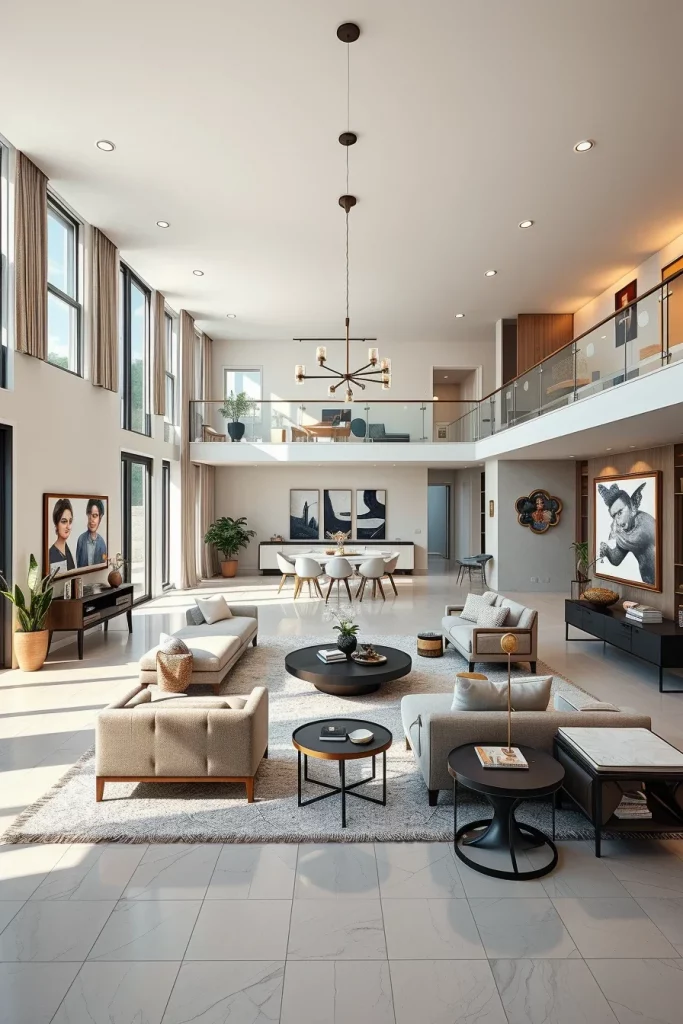
One of the most common mistakes is selecting furniture that is either too large or too small for the available floor area. Another frequent issue is failing to define separate functional zones with rugs, lighting, or furniture placement. I also recommend avoiding inconsistent color palettes, excessive decorative accessories, poor lighting distribution, and insufficient storage. Each of these decisions affects how organized and spacious the room ultimately feels.
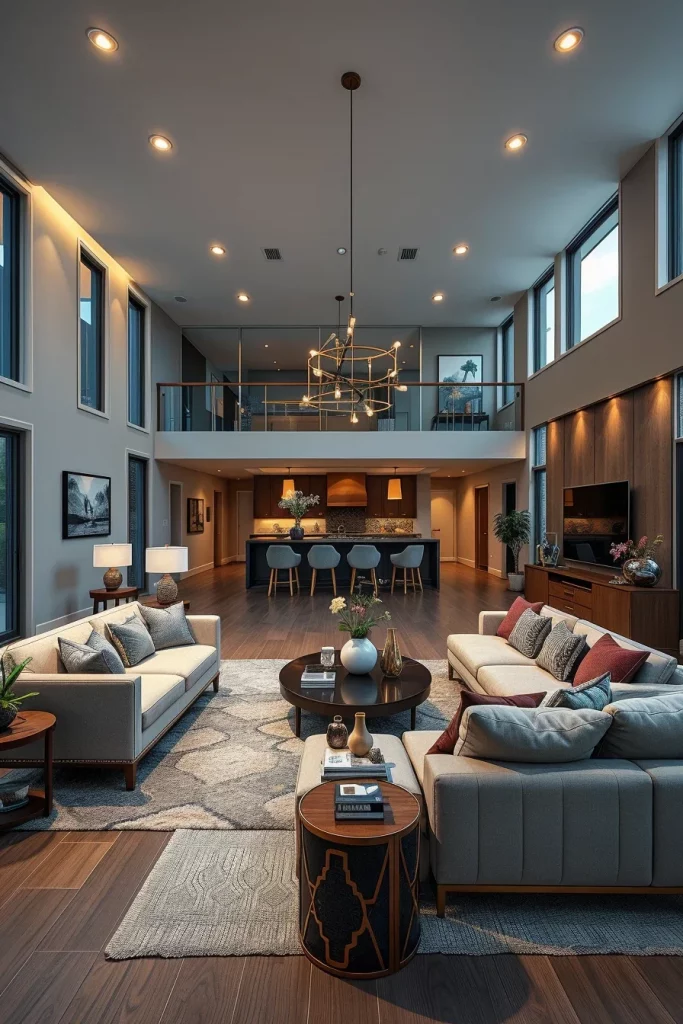
In my own experience, I achieve the best results by planning the layout before purchasing furniture. Many professional interior designers recommend establishing focal points first and arranging seating around conversation rather than television placement alone. I have found that this strategy naturally creates interiors that feel more welcoming and practical for everyday living.
Finally, I would always leave enough open circulation space between furniture pieces, introduce hidden storage wherever possible, and review the room from multiple viewpoints before considering the design complete. Small adjustments often make a significant difference in creating a balanced and comfortable open concept living room.
An open concept living room offers endless opportunities to create a home that feels spacious, stylish, and welcoming. By combining thoughtful layouts, beautiful materials, and functional design elements, you can achieve a space that fits both your lifestyle and personal taste. Whether you prefer a minimalist look or a bold statement interior, the right design choices can transform the heart of your home into a place you’ll enjoy every day. Let these ideas inspire your next living room makeover and help you create an open space that is both timeless and uniquely yours.