
Paint can change a room more than any other single element, but picking the right color is the hard part. This collection of 26 paint colors ideas covers the full spectrum, from quiet neutrals to bold statement shades, so you can see how each one actually lives in a real space.
Whether you are starting from scratch or just refreshing a single wall, these examples show what a color can do when it takes center stage.
Soft Taupe Walls for a Modern Living Room
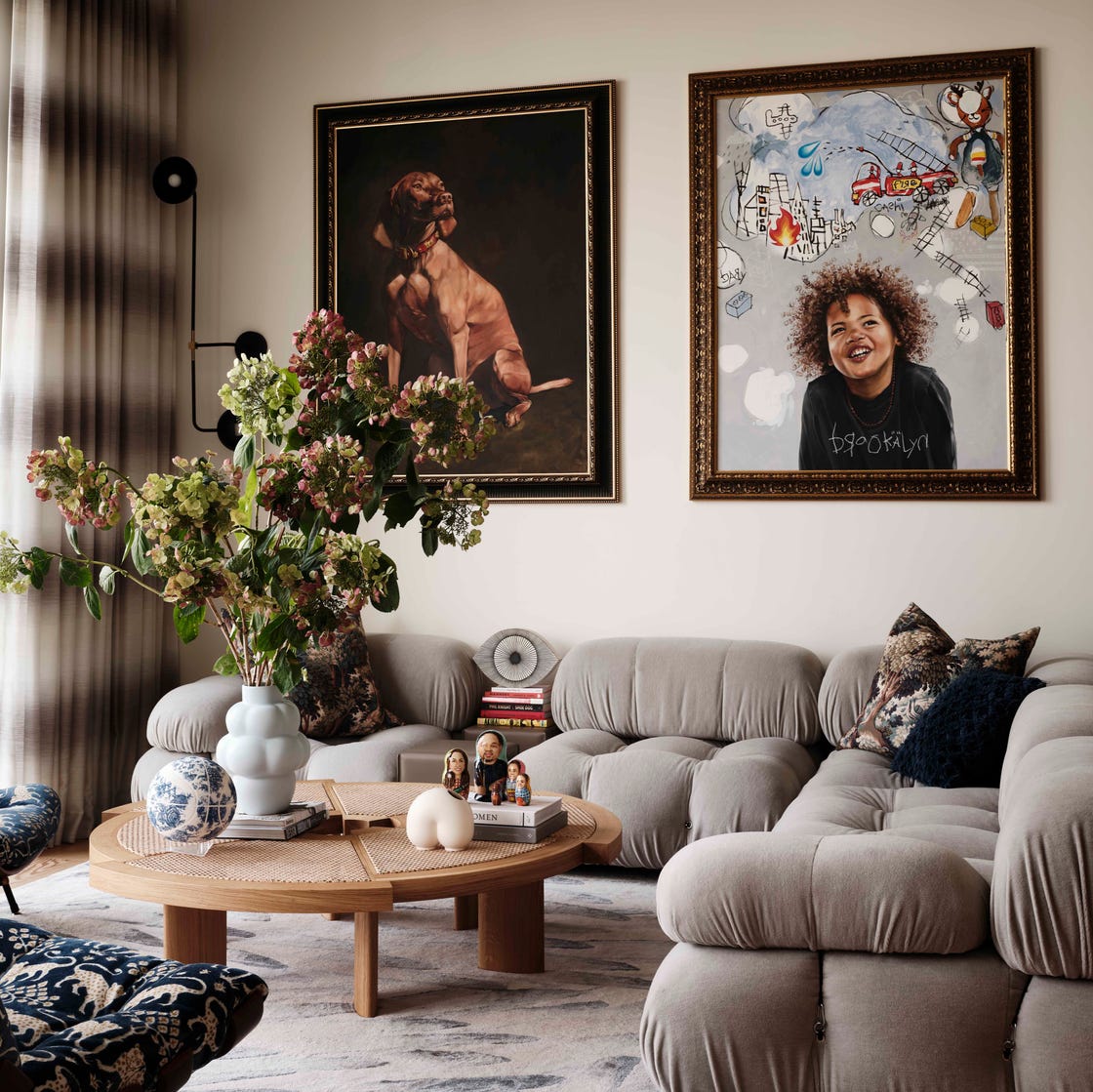
Soft taupe walls give a modern living room a grounded feel without turning cold. The neutral taupe sits between grey and beige, so it pairs naturally with cream upholstery and warm wood tones on the coffee table and floor. A grey armchair and a cream sofa keep the palette restrained, while the plaster finish on the walls catches daylight from the window. The overhead light adds a second source, so the room stays even-toned into the evening. For a similar effect, choose a taupe with a hint of grey undertone rather than pink. It reads as more architectural and less decorative.
Textured Olive Green Walls in a Modern Living Space
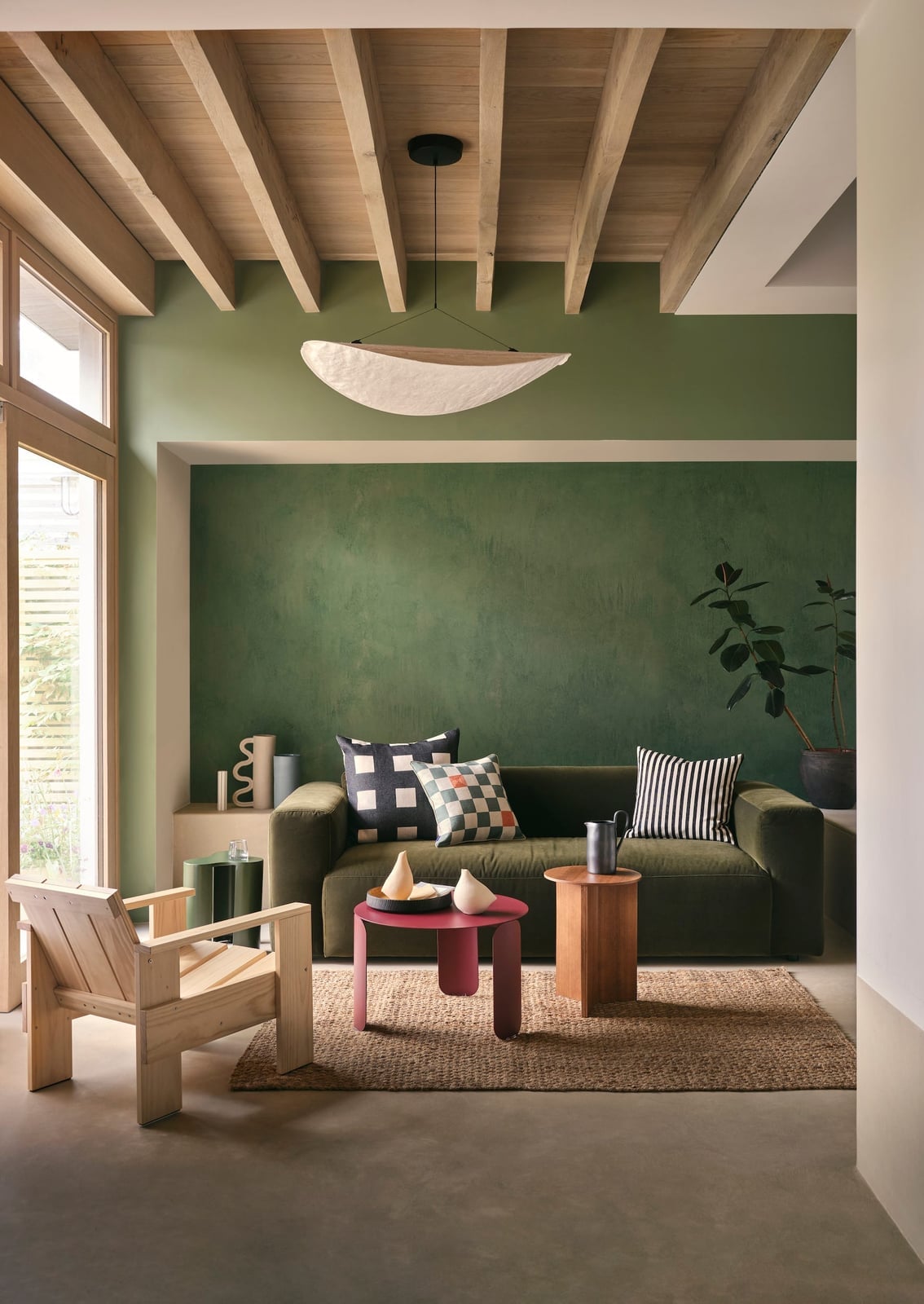
An olive green wall with visible texture changes how the color behaves. The plaster finish catches light unevenly, so the green shifts between muted and rich depending on the time of day. That texture also softens what could be a heavy color, making it feel more like a natural surface than a painted one. A green sofa echoes the wall without matching it exactly, and cream linen cushions and a wooden chair keep the palette from going too dark. A rattan piece adds a lighter, open weave that breaks up the solid plaster. The pendant light hangs low enough to cast direct light on the textured surface, which is worth planning for if you try this finish. A single overhead source at the right height makes the texture read clearly.
Dusty Pink Walls in a Boho Bedroom
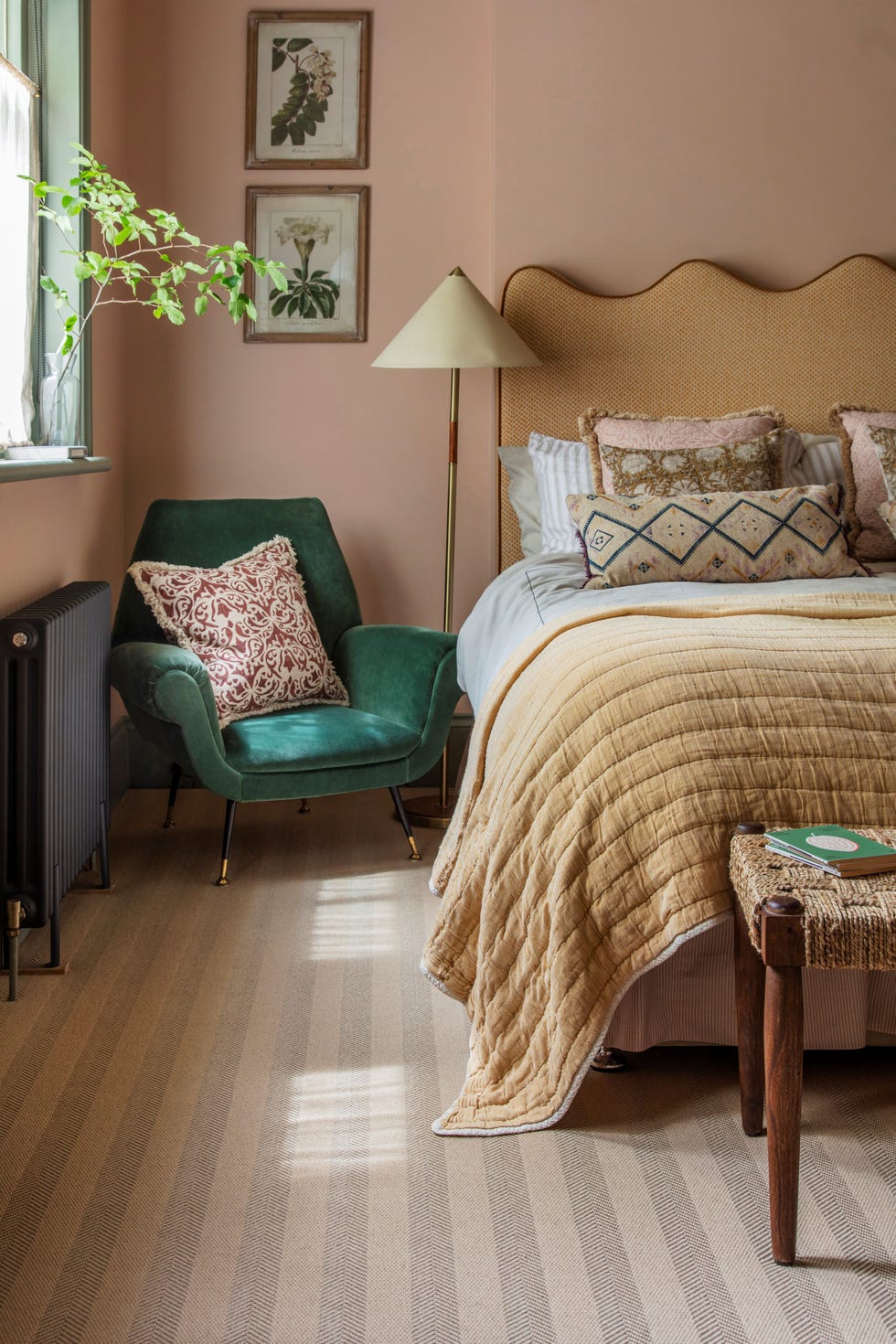
Can dusty pink walls feel warm without reading as sweet? In a boho bedroom, the answer depends on what you put next to them. A wicker headboard adds natural texture that keeps the pink from looking too polished. A yellow quilt and a green armchair bring in contrast, so the pink becomes part of a layered palette rather than the whole story.
Linen bedding and a metal floor lamp continue the mix of materials. The pink works because it is dusty, not bright. It has enough grey in it to sit alongside earthy tones like beige and olive. If the pink were clearer or lighter, it would compete with the wicker and the yellow. The corner layout places the bed as the focal point, with the armchair off to the side, so the pink wall wraps around both without feeling like too much of one color.
Dark Green Walls for a Cozy Modern Bedroom
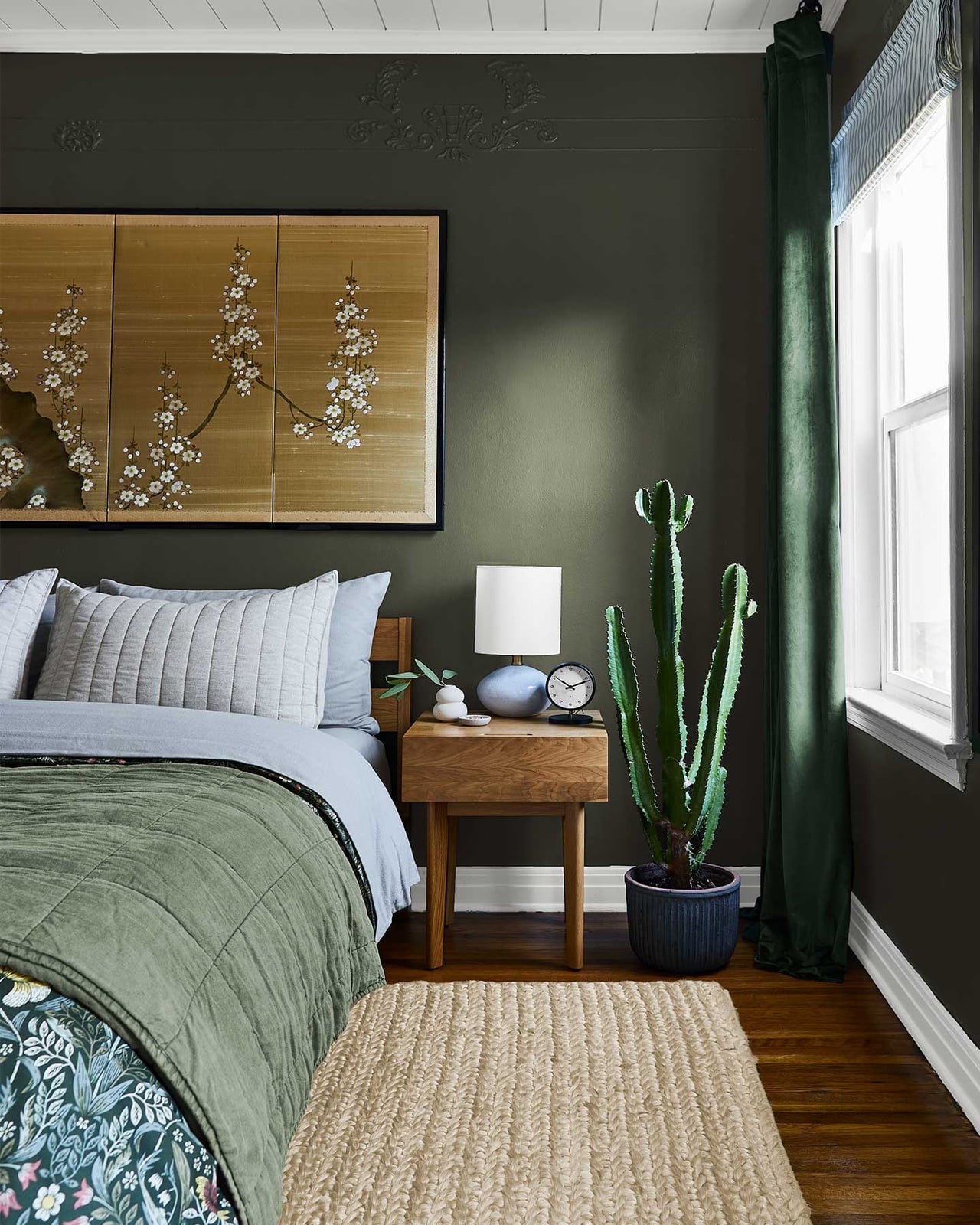
Dark green walls make a compact bedroom feel enclosed in a deliberate way. The deep color absorbs light, so the room reads as smaller and more intimate. A wooden bed frame and a green quilt keep the palette continuous, while gold accents on a lamp or frame add a warm metallic break. A large cactus in a simple pot introduces a living shape that stands out against the flat painted plaster. The bedside lamp provides a focused pool of light, which is important with dark walls, ambient light alone would leave the room feeling too dim. Jute or natural fiber on the floor keeps the texture grounded and prevents the room from feeling heavy.
Off-White Walls with a Dark Green Arched Niche
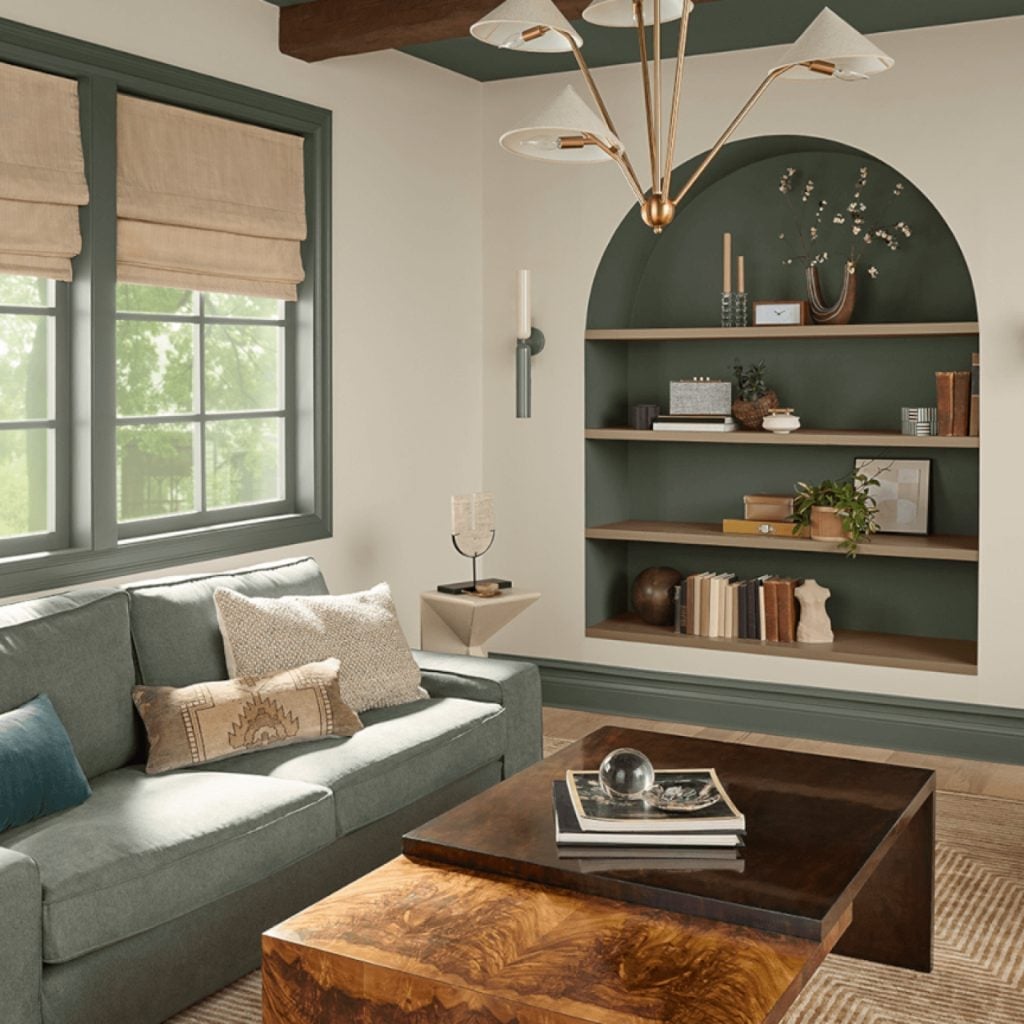
An arched niche works best when treated as a separate zone with its own color. Off-white walls keep the living room airy and open, while the dark green inside the arched built-in shelves draws the eye forward. The contrast makes the niche feel like an alcove. A sofa placed facing the built-ins gives the room a clear focal point, and the coffee table sits within easy reach. A chandelier above and accent lights inside the niche layer the lighting so the green shows in both daylight and at night. The wood tones on the shelves and floor tie the two colors together. If you paint a niche a darker color, keep the surrounding walls light to maintain the sense of depth.
Warm Beige Wood Paneling in a Traditional Living Room
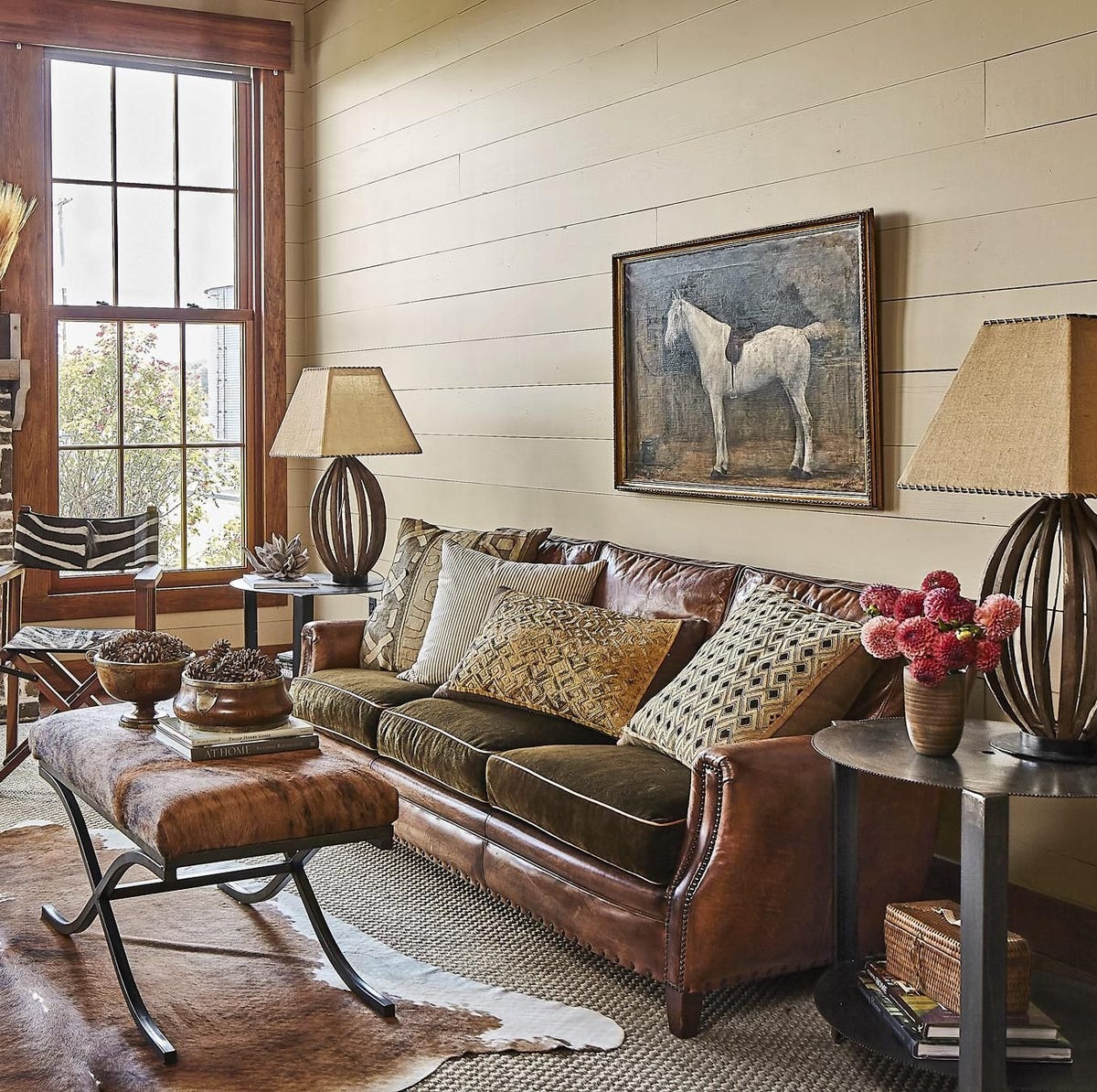
Think of warm beige wood paneling as the more grounded cousin of plain white walls. It adds texture without the commitment of a dark color, making the room feel substantial but not heavy. The painted paneling works with a rich leather sofa and velvet accent chairs, giving the traditional space a layered, lived-in look. A cowhide rug and olive green accents keep the palette from going too neutral. The key is letting the wall finish do the work, so furniture can stay simple and sturdy.
Vibrant Teal Accent Wall in a Bohemian Bedroom
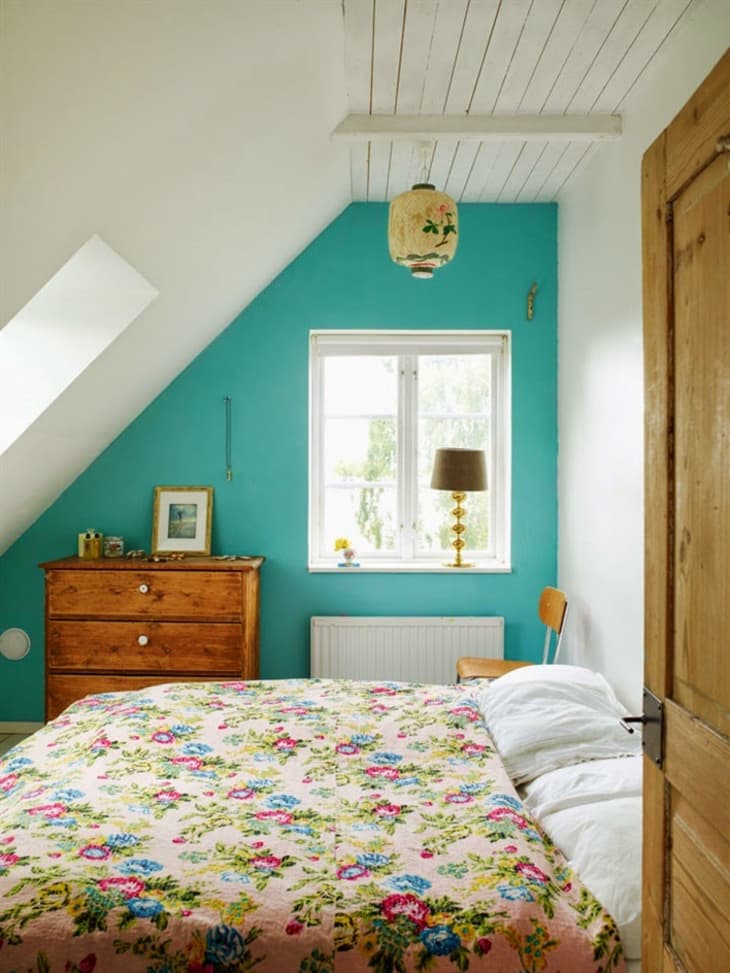
A single teal wall gives a compact bedroom a focal point without overwhelming the square footage. The bold color contrasts with the white walls and wood tones, while a floral quilt brings in pinks and greens that soften the look. A wooden dresser and a pendant light keep the bohemian style grounded. For renters, this is a straightforward weekend project that comes off easily with a good primer when it is time to move.
Rustic Bedroom with Dark Green Walls and Exposed Beams
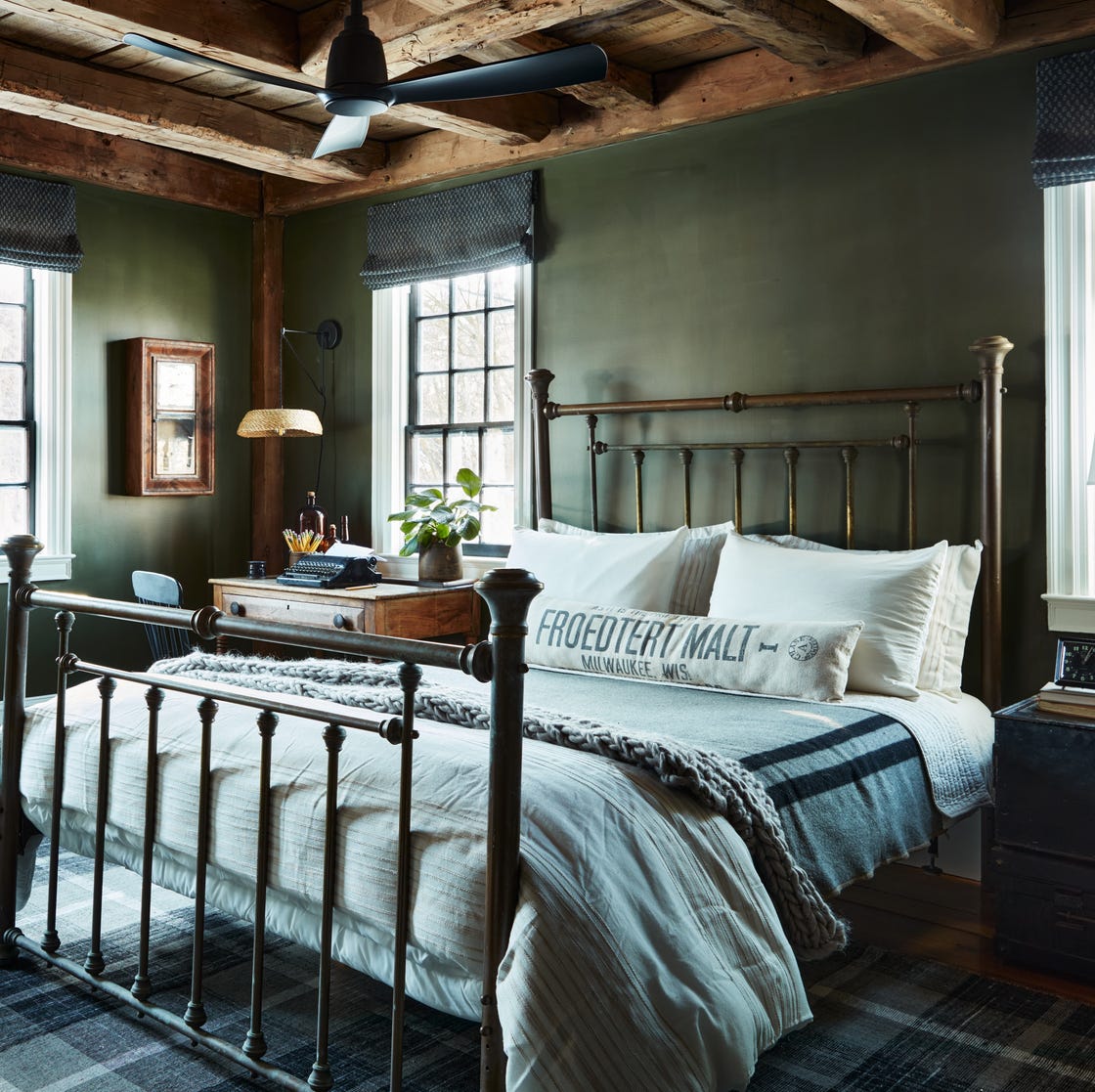
Dark green walls make a rustic bedroom feel like a retreat. The deep color pairs naturally with exposed wood beams and a metal bed frame, while white linens and a simple desk keep the room from going too cave-like. A wall sconce provides warm light that prevents the green from reading as flat. The palette works because it sticks to wood tones and white, letting the dark green be the anchor without competing with the brick and metal accents.
Eclectic Living Room with Blue Walls and Green Ceiling
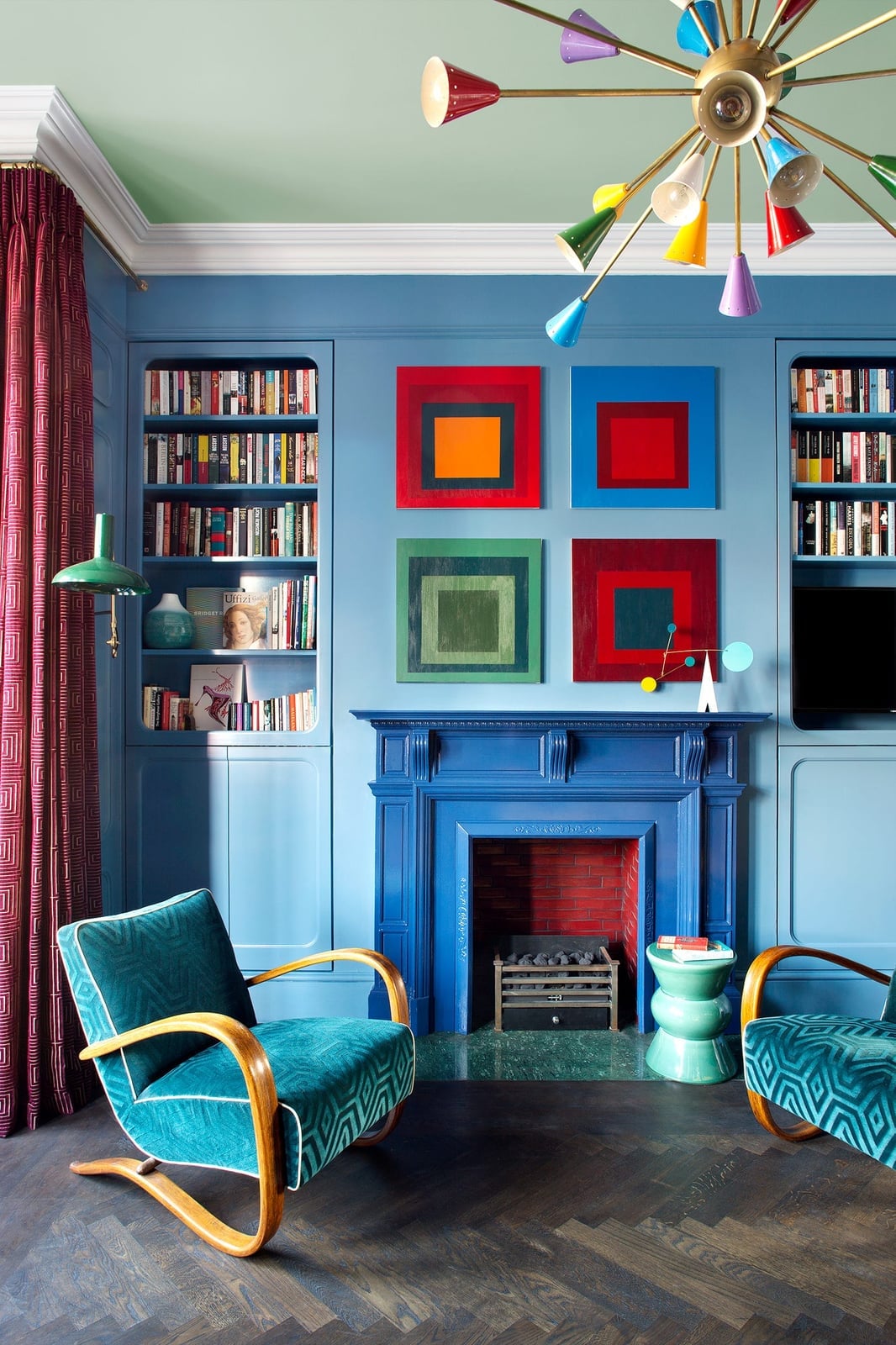
Can a ceiling take on a color without making the room feel shorter? In this eclectic living room, a green ceiling above blue walls does exactly that. The trick is keeping the palette deliberate: orange and red accents in the art and furniture keep the blue and green from blending into one flat tone. The layout stays symmetrical around the fireplace, so the bold color feels controlled. Bookshelves and a mix of seating add the eclectic layer.
Vibrant Coral Walls in an Eclectic Hallway
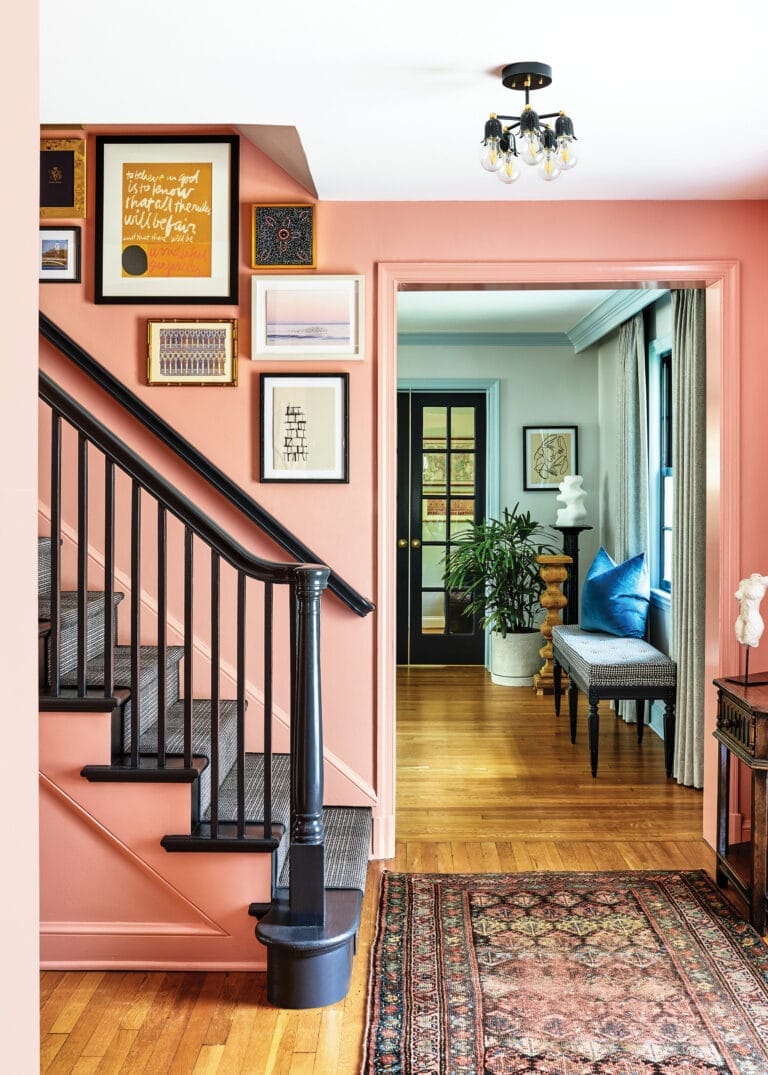
Coral walls turn a hallway from a pass-through into a destination. The warm hue works with black frames on the gallery wall and wood tones on the staircase, while a grey bench and carpet keep the color from feeling too sweet. The open layout lets the coral carry through to the next room without closing off the space. It is a confident choice for a narrow area that needs personality.
Dark Green Accent Wall in a Compact Bathroom
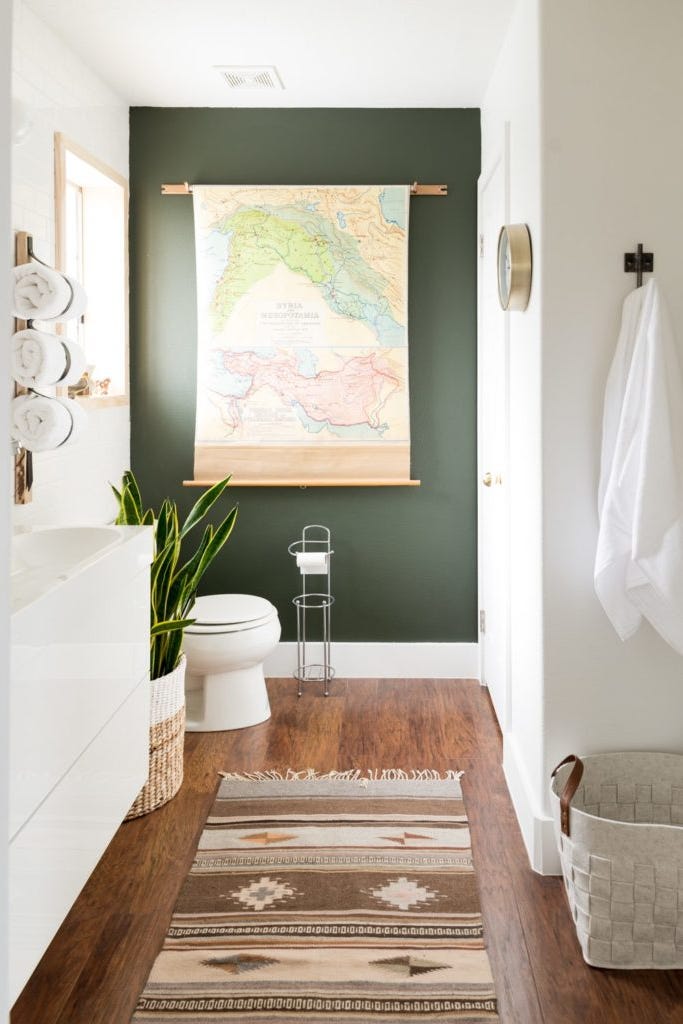
A compact bathroom gains depth when one wall goes dark. Here the dark green wall anchors the room, with a toilet and sink along the opposite wall so the space does not feel crowded. The white tile and natural wood keep the palette clean, while the hanging map and woven rug add a personal touch. Let the accent wall be the focal point and keep everything else simple. Daylight prevents the dark paint from making the room feel smaller than it is.
Pale Pink Walls in a Traditional Bathroom
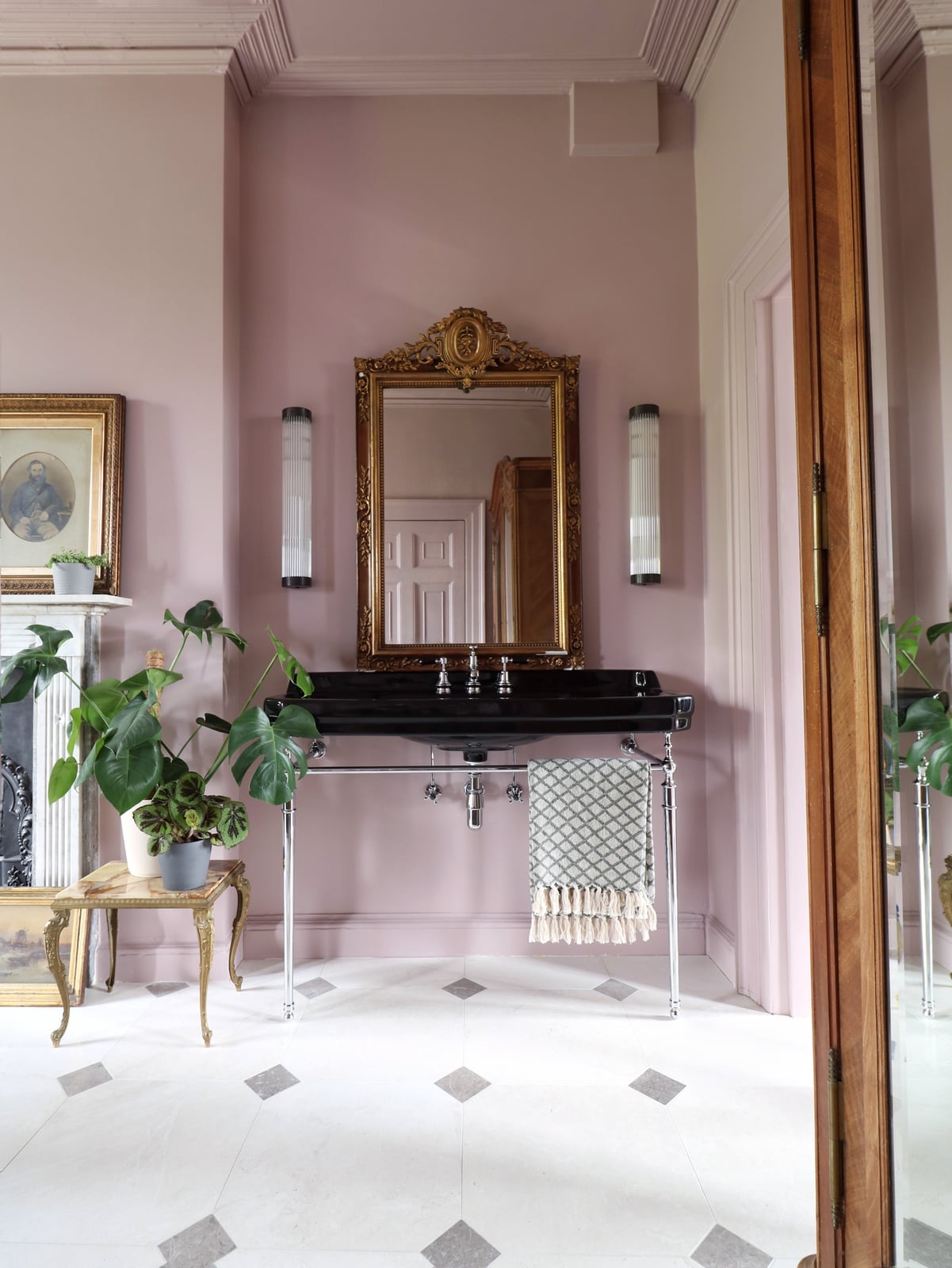
Pale pink can read as too sweet if paired with the wrong finishes. In this traditional bathroom, the pale pink walls sit against a black vanity and gold-framed mirror, which shifts the look toward grown-up and elegant. The marble countertop and chrome sconces add a cool, clean contrast that keeps the pink from feeling heavy or overly feminine.
Geometric Paint Blocking in a Boho Bedroom
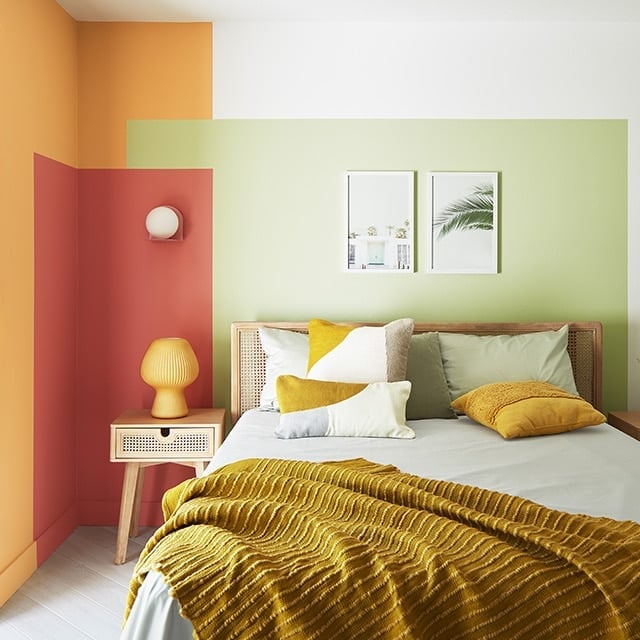
The paint here is not a single color but a composition of coral, lime green, orange, and yellow blocks. The shapes break up the wall behind a rattan bed frame, making the compact bedroom feel playful without needing much furniture. A yellow throw on the bed pulls one of the paint colors into the room, tying the whole look together. The natural daylight and simple wall sconce keep the focus on the color blocking.
Vibrant Blue Painted Fireplace in a Farmhouse Living Room
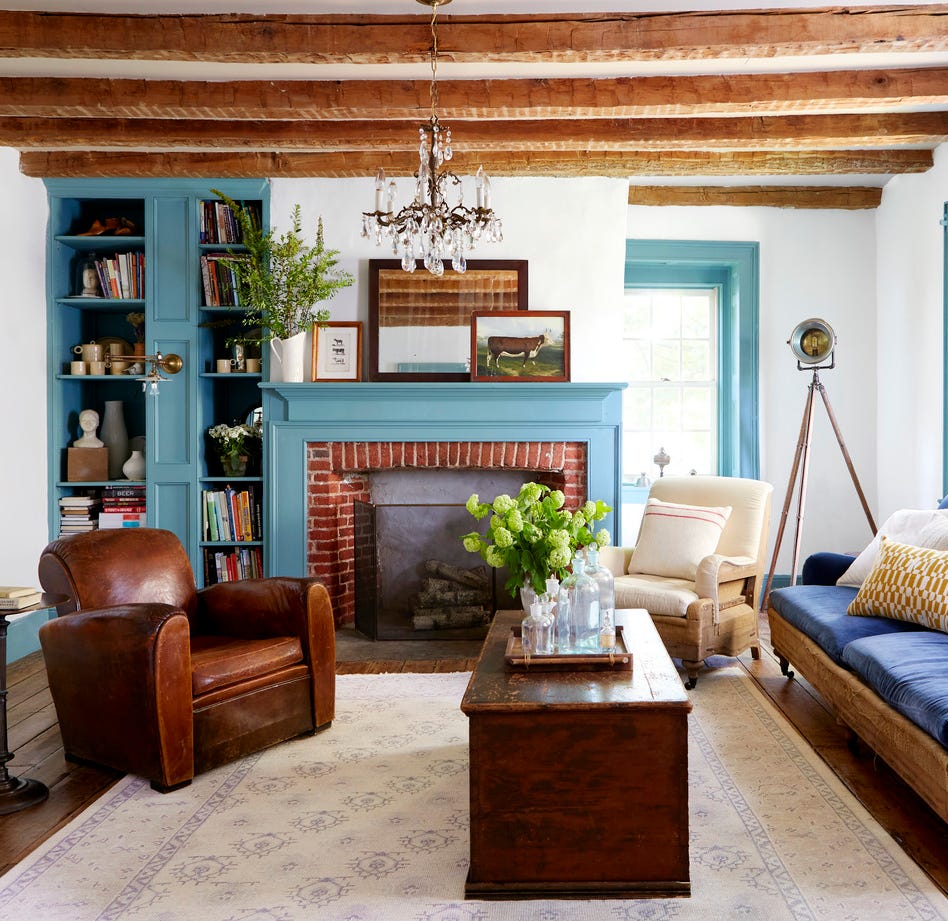
A vibrant blue fireplace surround and built-in bookshelves work because the room stays neutral. The wood beams, brick, and leather armchairs provide enough warmth that the blue does not feel cold or out of place. A chandelier, floor lamp, and window light give the blue depth at different times of day. The seating is arranged around a wooden chest coffee table, keeping the fireplace as the clear center of the room.
Pale Blue Kitchen Cabinets in a Traditional Space
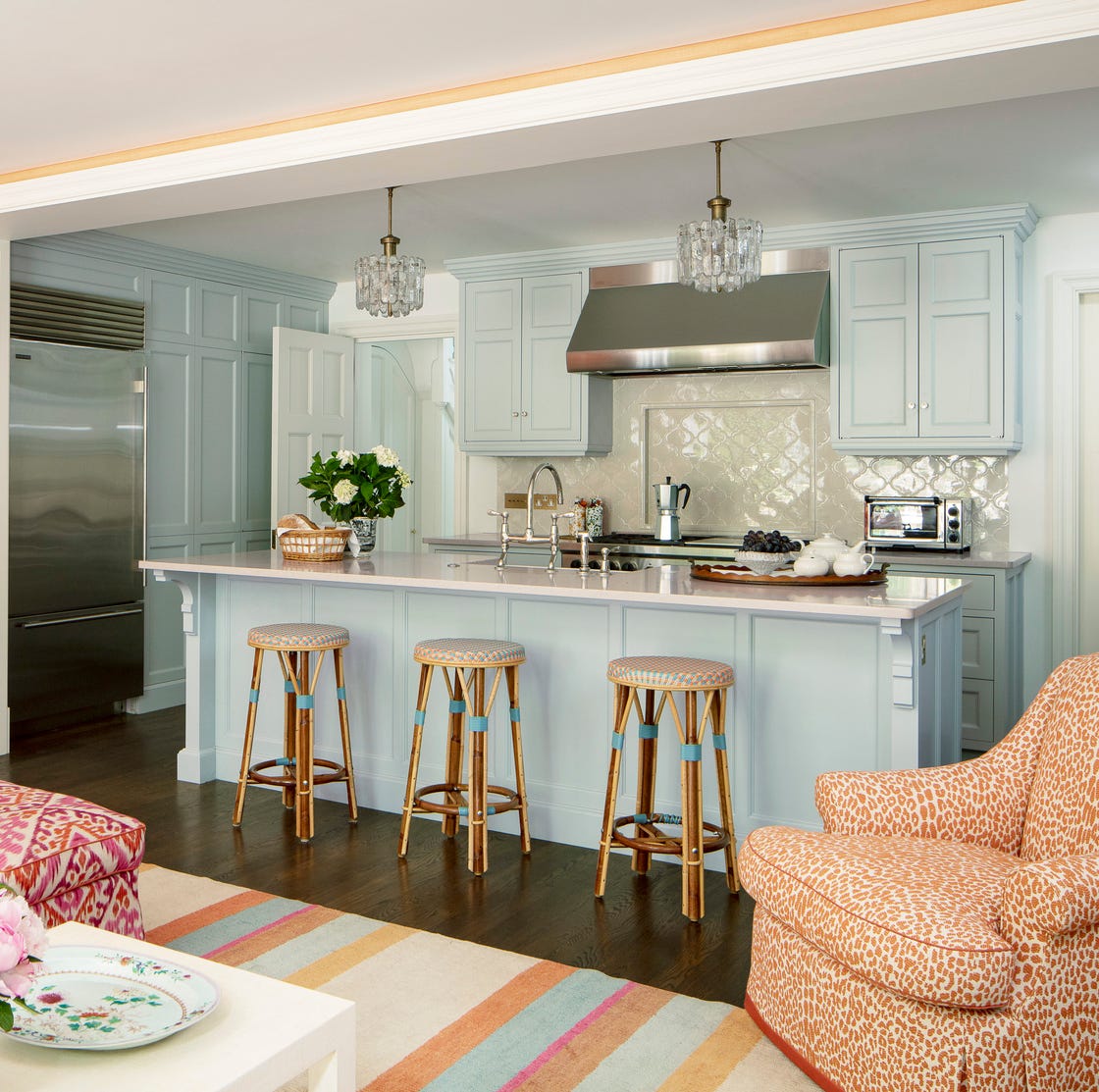
Painted cabinets should coordinate with your countertops and backsplash. Pale blue cabinets in this open-plan kitchen feel fresh against white marble and a tile backsplash, while the orange and pink accents in the armchair and decor add warmth. The kitchen island with bar stools provides extra prep space and seating without cluttering the layout. Pendant lights above the island and natural daylight keep the pale blue looking soft and not washed out. This kitchen feels traditional but not stiff, with color that invites you to stay.
Royal Blue Walls for a Traditional Home Office
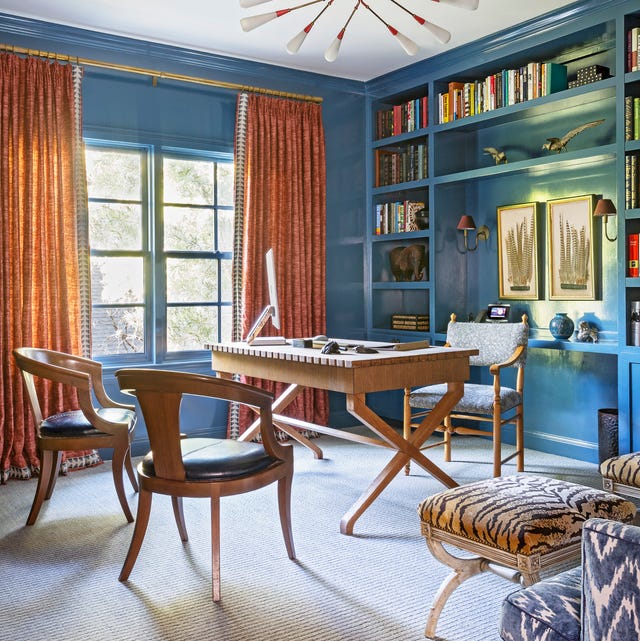
Royal blue covers the walls and built-in bookshelves in this home office, with orange and gold accents keeping the look warm. The palette is a classic traditional move: deep jewel tones paired with wood, fabric, metal, and glass. The desk faces a window for natural daylight, while wall sconces provide evening light. What makes this work is the ratio of color to neutral, the blue dominates, but the orange and gold pieces break it just enough so the room does not feel flat. To balance a palette like this, keep 60 percent of the room in the blue and 30 percent in a lighter neutral, with the remaining 10 percent as accent. That split stops a bold shade from overwhelming the space.
Pale Pink Painted Ceiling and Walls in a Dining Room
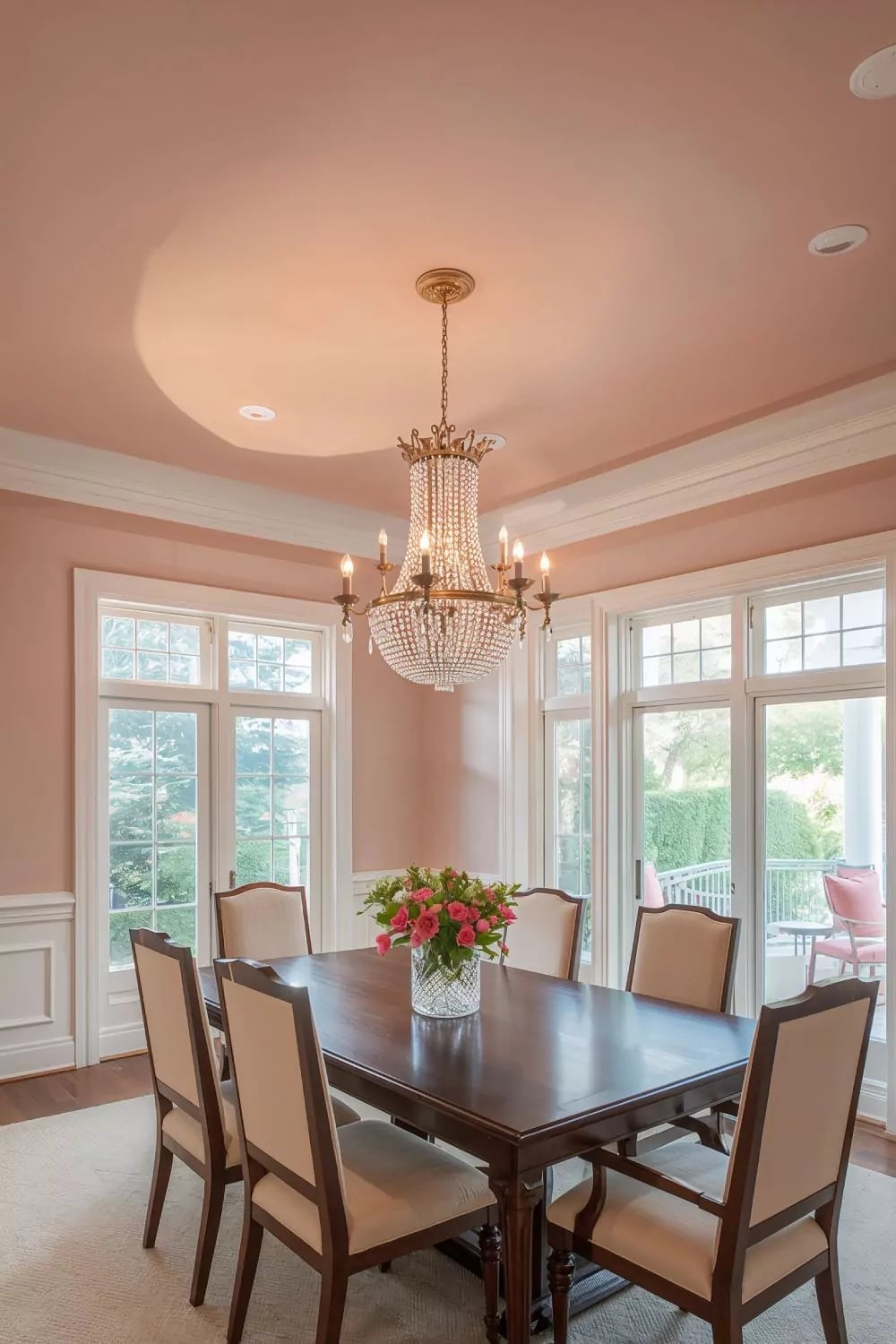
Painting a ceiling the same color as the walls blurs the edge of the room, making the space feel larger and more enveloping. In this traditional dining room, pale pink covers both the plaster walls and the ceiling, with a dark wood table and upholstered chairs anchoring the scheme. A crystal chandelier adds sparkle against the soft finish. For renters, this is a bigger commitment than a single accent wall, but it can be reversed with primer and two coats of white when you move out. The trick is choosing a pink with enough gray in it so it reads as neutral. Gold and cream accents keep the look refined against the painted surfaces.
Sage Green Walls for a Minimalist Home Office
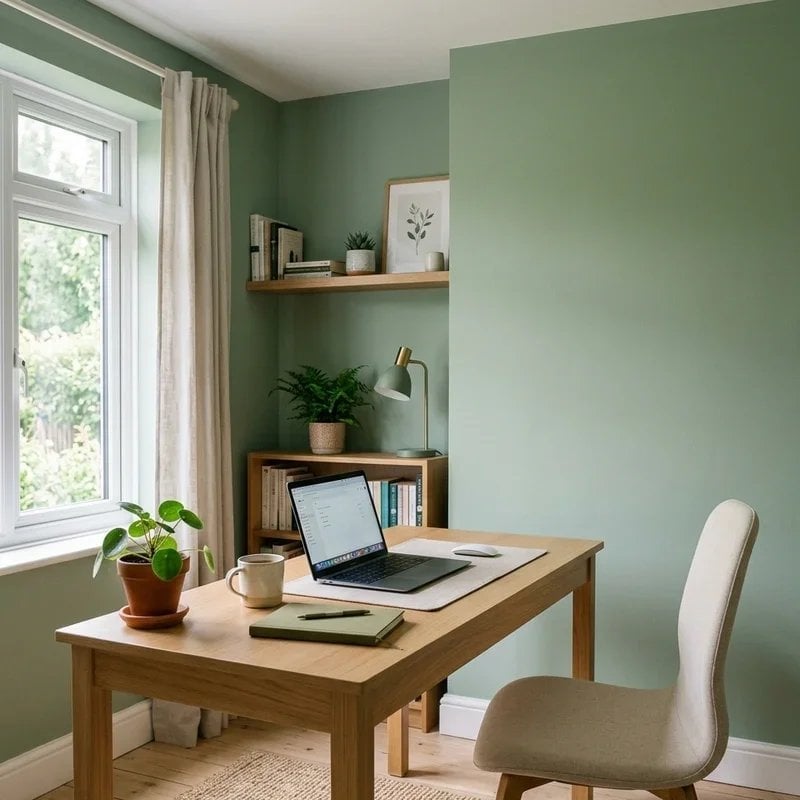
Sage green can feel too quiet next to bright white trim, which is why this minimalist home office pairs it with wood tones and white walls instead of stark contrast. The compact room keeps the layout simple: a wooden desk faces the window for natural daylight, with a bookshelf on the wall and a desk lamp for task lighting. The calm sage green walls set a steady background for focus.
What keeps the palette from going flat is the mix of materials, wood, metal, fabric, and glass, and the potted plants that add organic green variation. The white elements stay warm rather than clinical, and the wood tones bridge the gap between green and white. For a close alternative, try a slightly warmer sage with a yellow undertone if your light leans cool, or a grayer sage if the room gets strong southern exposure.
Deep Blue Walls in a Modern Home Office
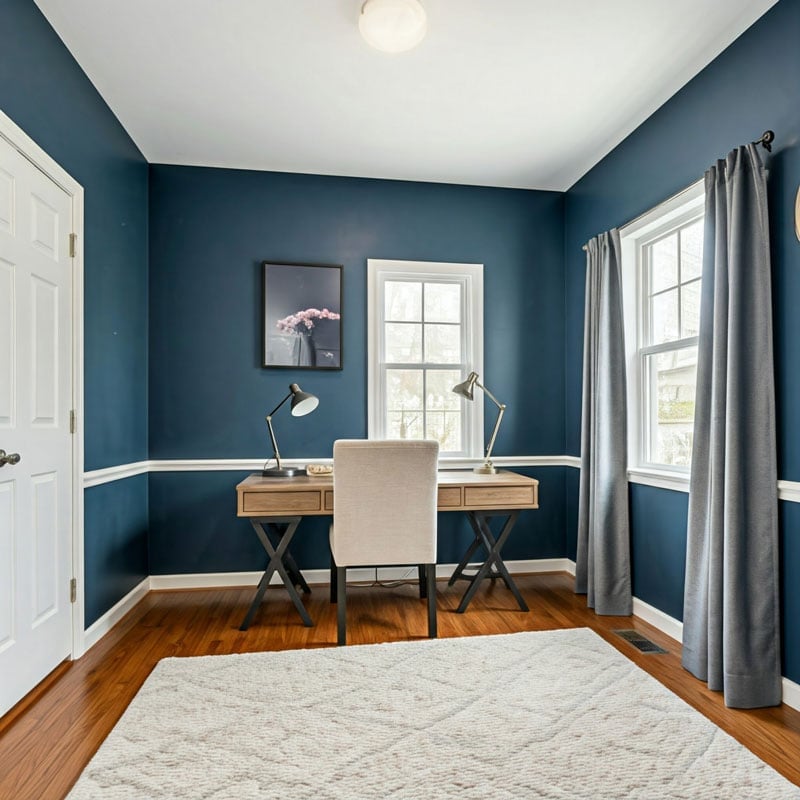
The deep blue walls in this compact home office create a cocooning effect that suits focused work, with beige and gray accents balancing the darkness. Two desks face the wall, each with a desk lamp, and grey curtains soften the natural daylight from the window. The layout is efficient for a small footprint: every surface serves a purpose. What makes this palette durable in a design sense is its neutrality. Deep blue works as a neutral the same way charcoal or navy does, so it pairs well with most furniture finishes. For a compact room with a bold wall color, keep the ceiling and trim light so the eye does not stop at the edges.
Sage Green Walls in a Modern Open-Plan Living Room
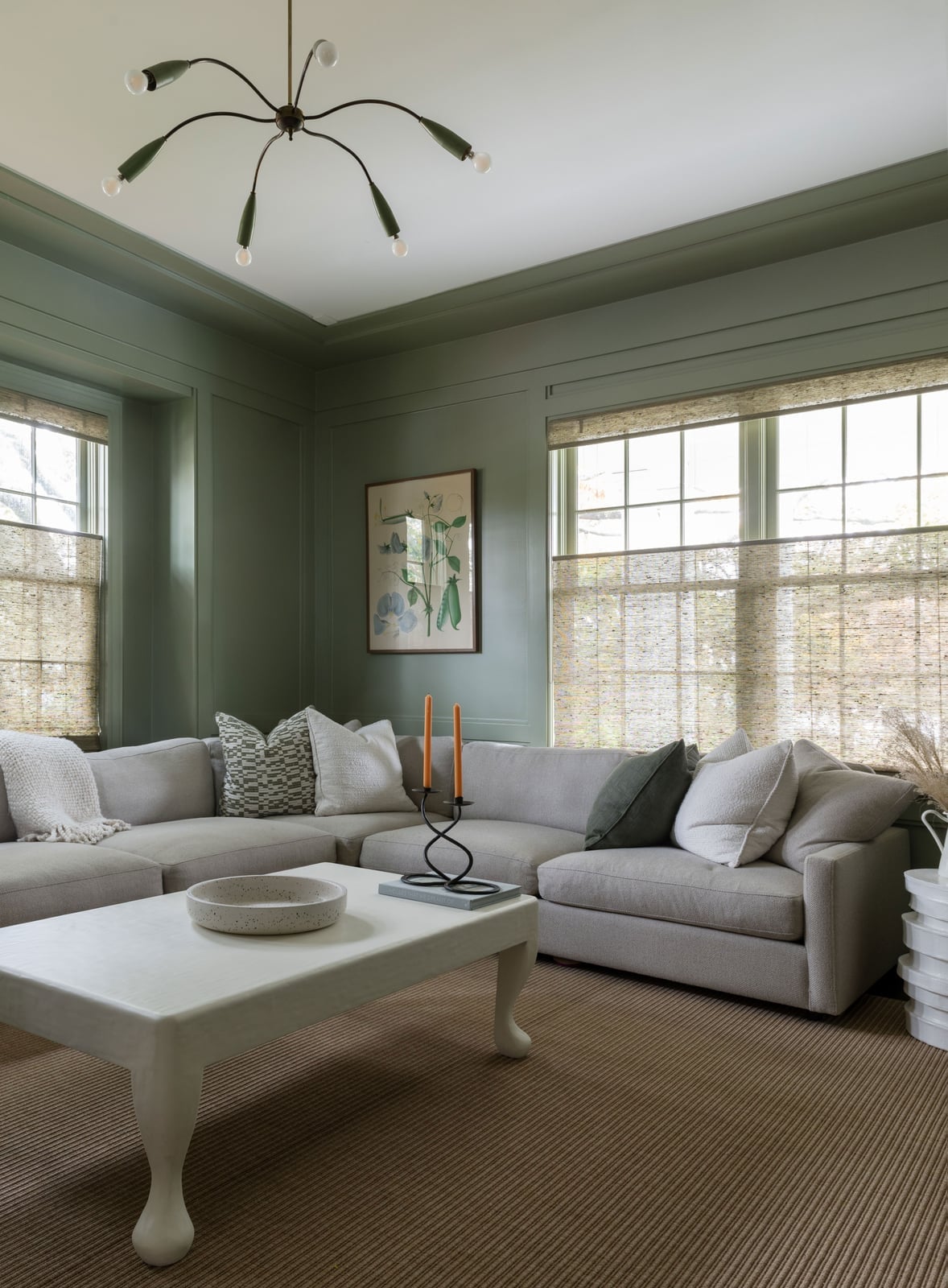
Sage green walls work well in an open-plan living room because the color is soft enough to function as a neutral but distinct enough to define the space. In this room, a large sectional sofa faces windows with woven blinds, and a white coffee table keeps the center light. The beige and white palette keeps the room airy while the green walls add a layer of warmth. A good approach for scale and proportion in an open plan is to use the hero color on the walls and carry it into the adjacent area only if the sight lines connect. Here, the green stops at the living room walls, letting the open plan stay neutral. That boundary prevents one big wash of color.
Soft Pink Walls in a Whimsical Kids’ Room
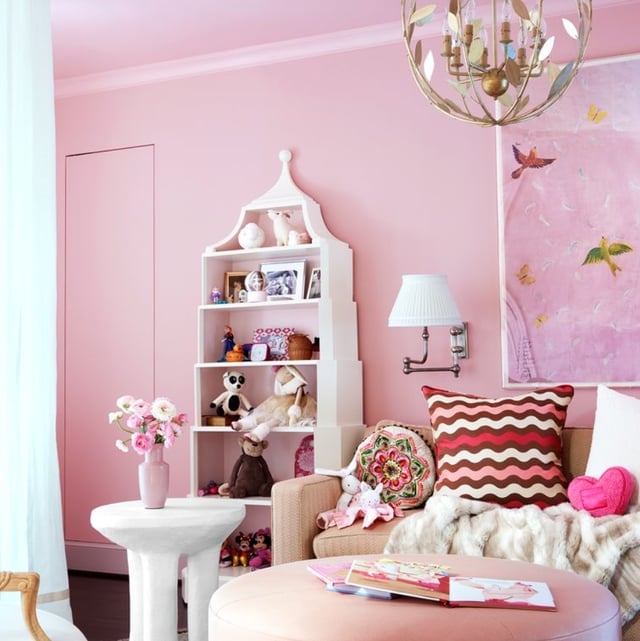
When a room uses a single saturated color on all four walls, the furniture provides the contrast. Soft pink walls set a playful backdrop, and the white bookshelf, pale sofa, and round ottoman keep the space from feeling too sweet. A wall sconce and a small chandelier add warm light without overwhelming the color.
The palette works because the pink stays on the walls and the decor remains neutral. Fabric, wood, and metal pieces each bring their own texture, so the room has depth without needing a second wall color. Choose one soft shade and then let the furnishings do the rest. 26 looks that actually work.
Beige Walls Complementing a Blue Sectional Sofa
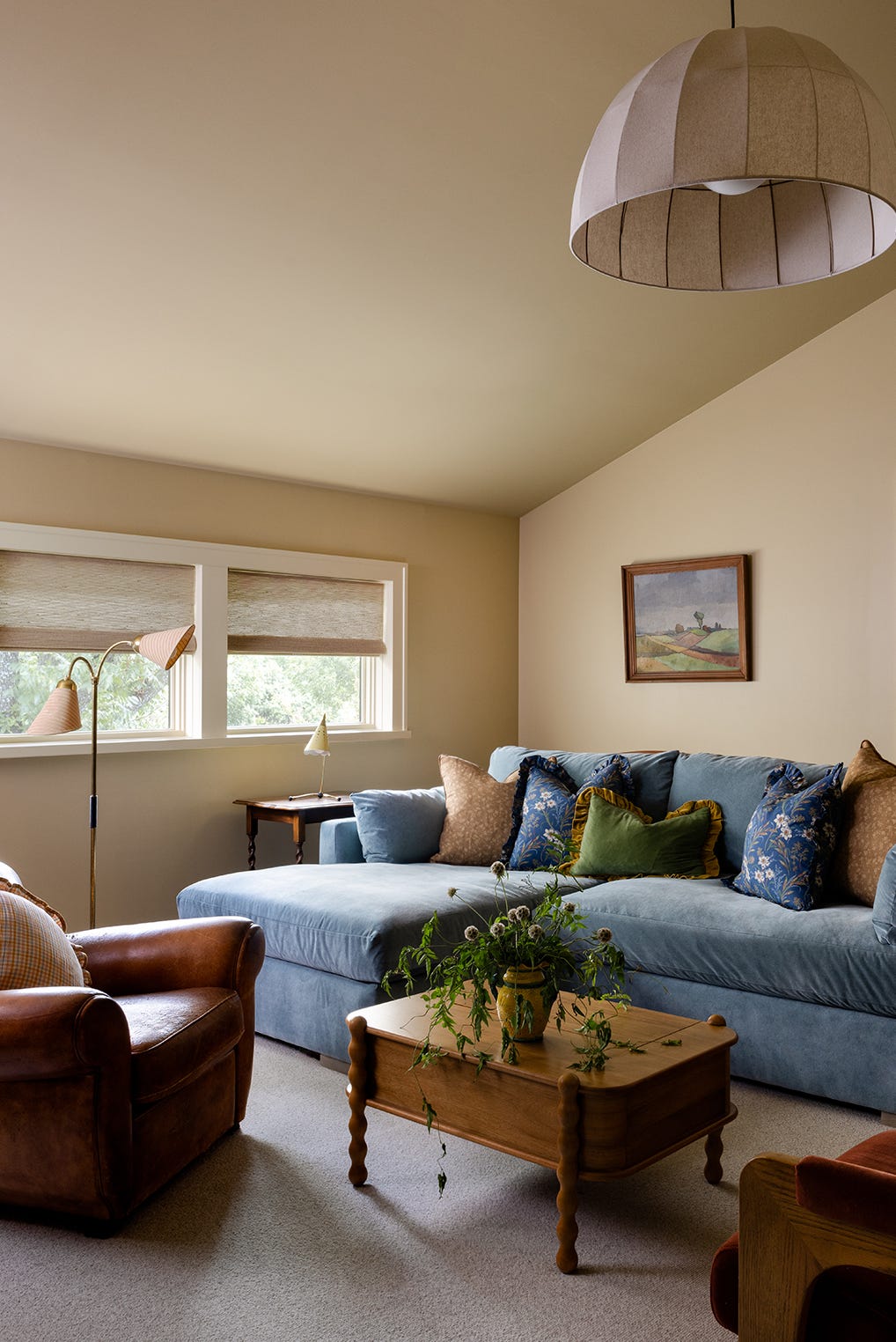
A large blue sectional sofa anchors this living room, and the beige walls give it room to breathe. The warm neutral lets the blue stand out without competing, while brown and green accents in the armchair and wicker pieces add natural contrast. Natural light from the windows and a floor lamp keep the palette balanced. Beige walls work here because they let the sofa be the focal point.
Bright Aqua Walls for a Coastal Dining Room
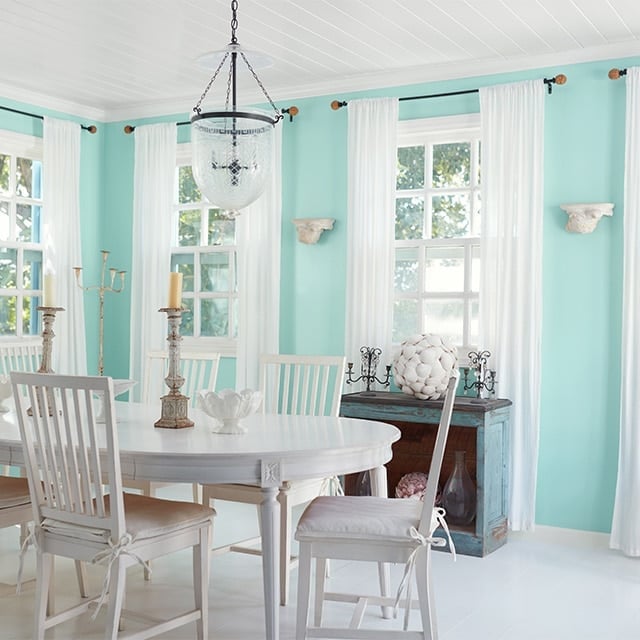
A coastal dining room benefits from a wall color that recalls the sea, but the real trick is pairing it with crisp white trim and natural materials. Bright aqua walls set a lively tone here, and the white dining table, wood chairs, and glass chandelier keep the look grounded. Sunlight makes the aqua feel fresh. The materials do the balancing work so the color can be bold.
Pale Pink Walls in a Traditional Bedroom, Indoor
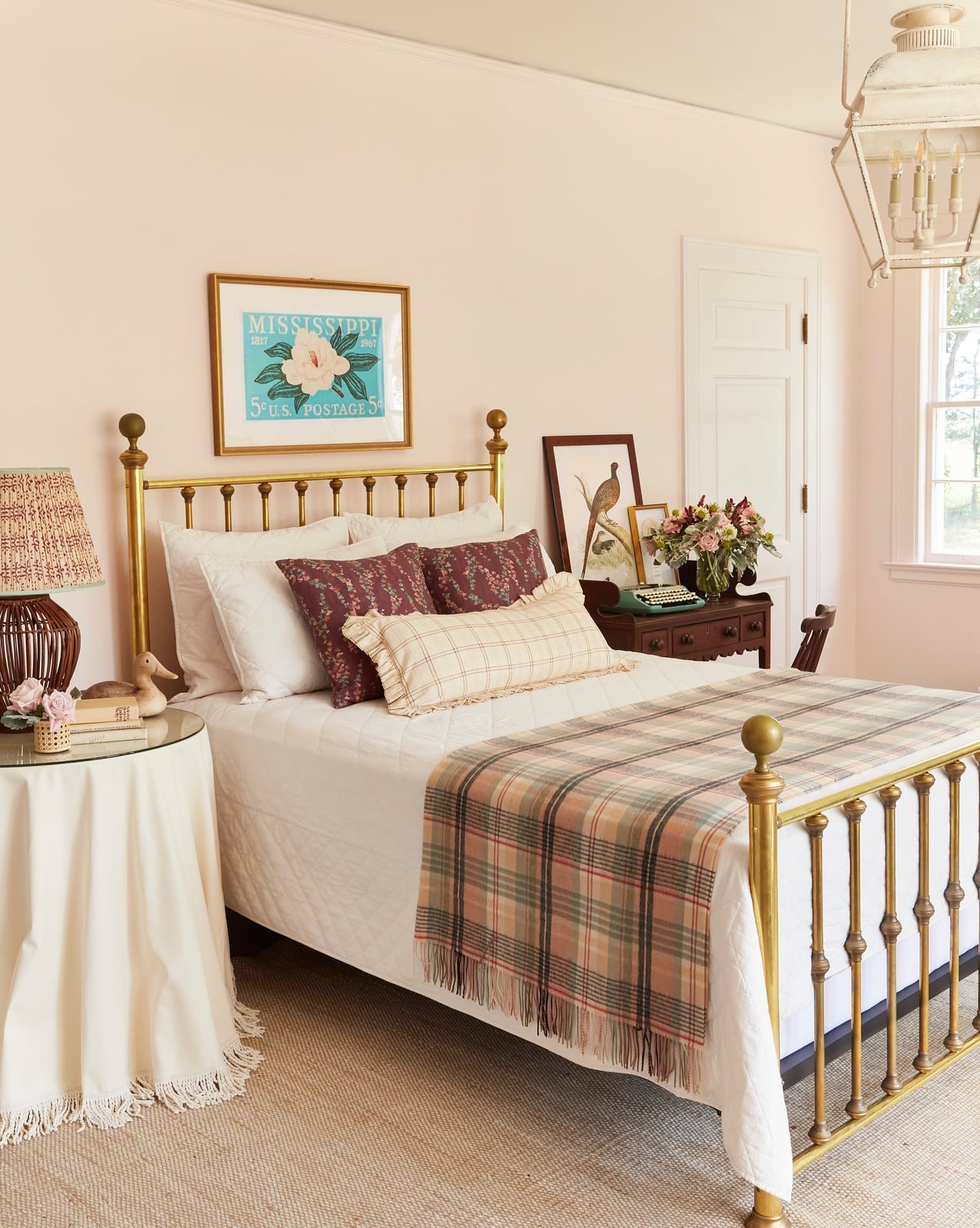
Pale pink walls can feel too feminine or too young, but in this traditional bedroom they feel timeless. The trick is the company they keep: a brass bed frame, a plaid throw, and a wooden bedside table bring warmth and structure. A chandelier and natural light keep the pink soft and balanced.
The palette stays in a narrow range of pink, white, brass, and plaid, which gives the room a cohesive feel. The brass and wood add weight so the pink does not float away. For a traditional bedroom that feels fresh but not fussy, pale pink walls are a solid choice.
Light Grey Walls in a Modern Open-Plan Living Area
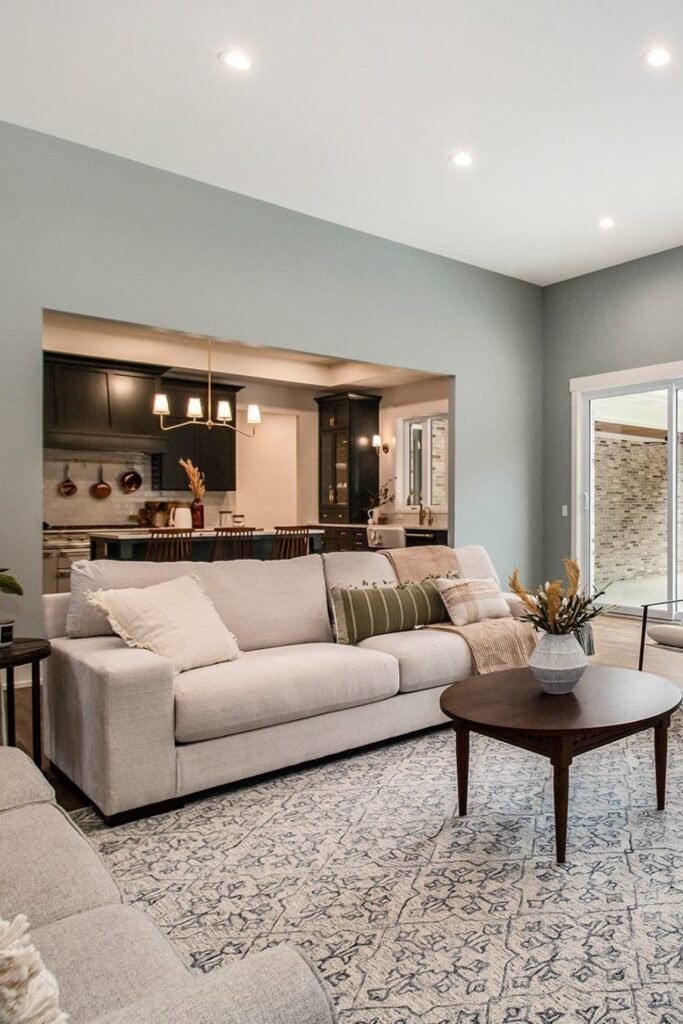
Light grey walls in an open-plan space do more than just look clean. They let the kitchen and living area flow together visually, which matters when you have a large sectional sofa, an oval coffee table, and a rug all in one sight line. Cream, dark wood, and black accents add warmth without breaking the neutral feel. Recessed ceiling lights and natural light from the sliding door keep the grey from feeling flat.
Neutral Beige Walls for a Compact Minimalist Home Office
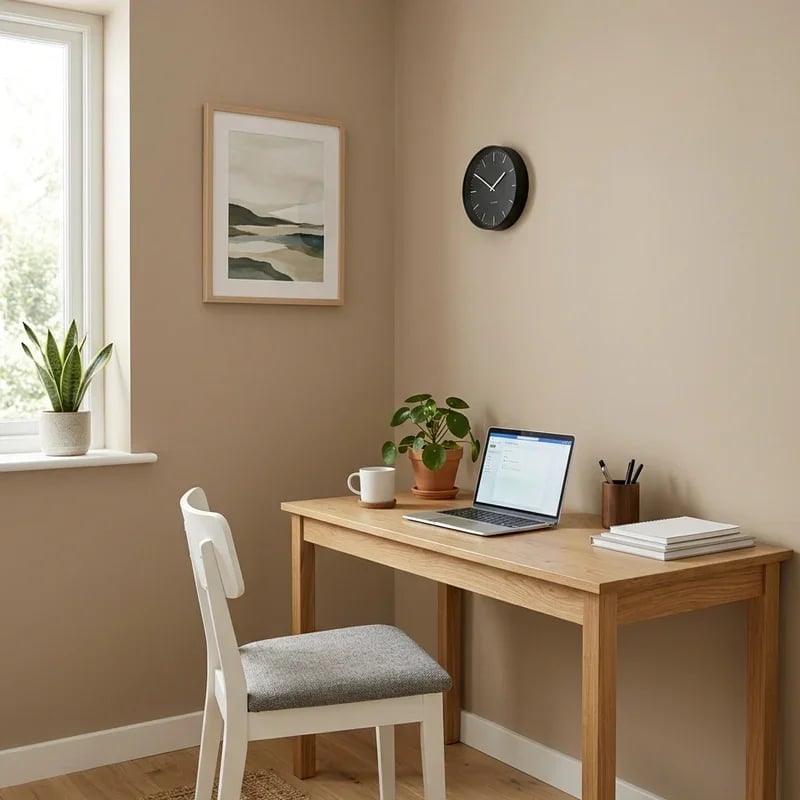
Neutral beige walls give a compact home office a calm, grounded backdrop that doesn’t compete with the task at hand. In this corner vignette, a wooden desk faces a window, so natural daylight and a desk lamp handle the lighting. The beige walls pair with a white chair and a potted plant for a palette that stays quiet and focused. The key to this look is keeping the ratio of beige to white around two to one, so the room feels warm but not heavy. What breaks the scheme is adding too many warm-toned accessories, which can pull the space toward muddy rather than clean.
Final Thoughts
Choosing a paint color comes down to how you want a room to feel. Soft tones like taupe and beige work for relaxed living areas, while deeper greens and blues add coziness to bedrooms or home offices. Bright accents like coral or aqua shine in hallways and dining rooms where you want energy. For upkeep, flat or matte finishes hide imperfections but need gentle cleaning, while satin or semi-gloss hold up better in bathrooms and kitchens. Test samples on your wall and check them at different times of day before committing. The best paint idea is the one that makes your space feel right for you.