
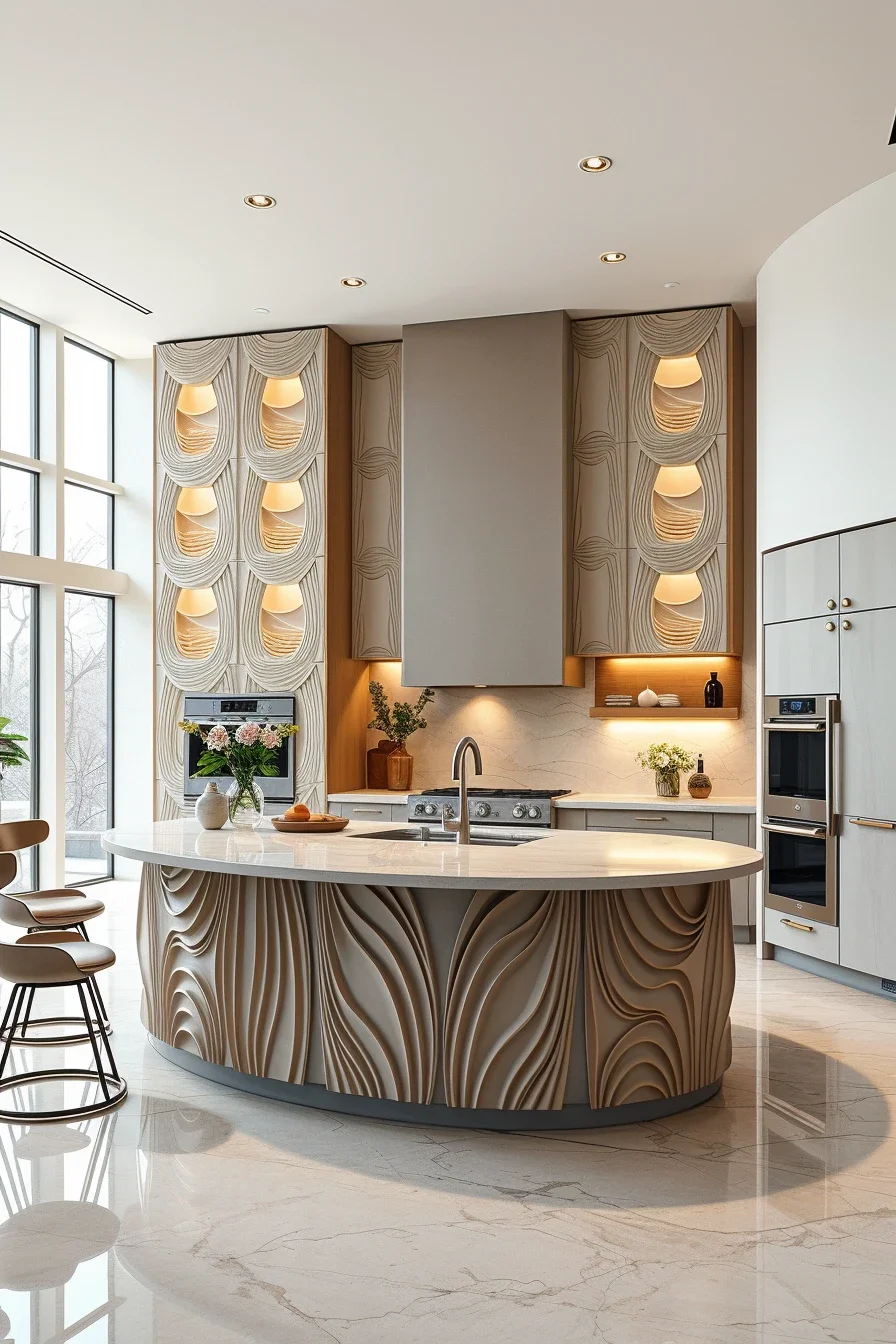
A sculptural and artistic modern kitchen is more than a place to prepare meals—it is a carefully designed space where functionality meets creative expression. With flowing forms, striking materials, and thoughtfully crafted details, these kitchens transform everyday routines into inspiring experiences. Contemporary designers are embracing organic silhouettes, statement islands, and seamless cabinetry to create interiors that feel both sophisticated and inviting. The right combination of textures, lighting, and architectural elements can turn even a simple kitchen into a gallery-worthy centerpiece of the home. Whether you prefer subtle elegance or bold artistic features, sculptural design offers endless opportunities to personalize your space. In this article, you’ll discover inspiring sculptural and artistic modern kitchen ideas that combine beauty, innovation, and practical living.
Sculptural And Artistic Modern Kitchen With Flowing Curved Forms
When I design a sculptural kitchen, I always begin with the overall flow of the room rather than individual elements. Smooth curves replace harsh corners, allowing movement through the space to feel natural and inviting. A sculptural and artistic modern kitchen benefits from soft architectural lines that visually connect cabinetry, islands, ceilings, and walls into one continuous composition. Curved layouts also improve circulation, making the kitchen feel more spacious while adding a refined artistic character.
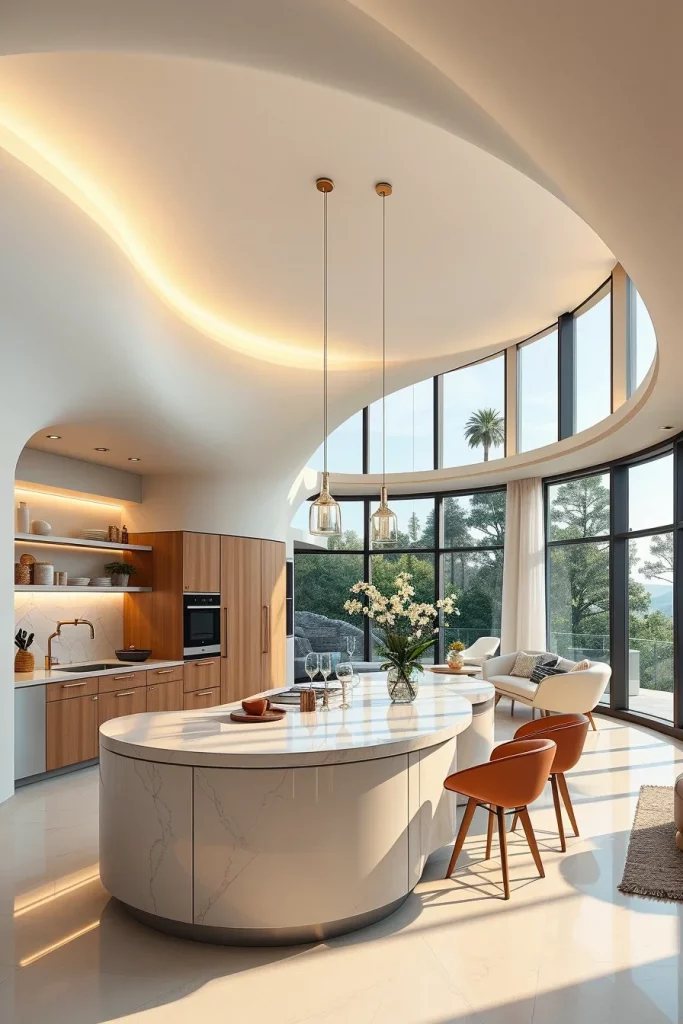
I like incorporating rounded kitchen islands, softly curved cabinet ends, arched niches, integrated shelving, and seamless transitions between countertops and backsplashes. Upholstered counter stools with curved backs, rounded dining tables, sculptural pendant lighting, and concealed storage reinforce the cohesive appearance. Every piece serves a practical purpose while contributing to the visual rhythm of the room, ensuring that beauty never compromises functionality.
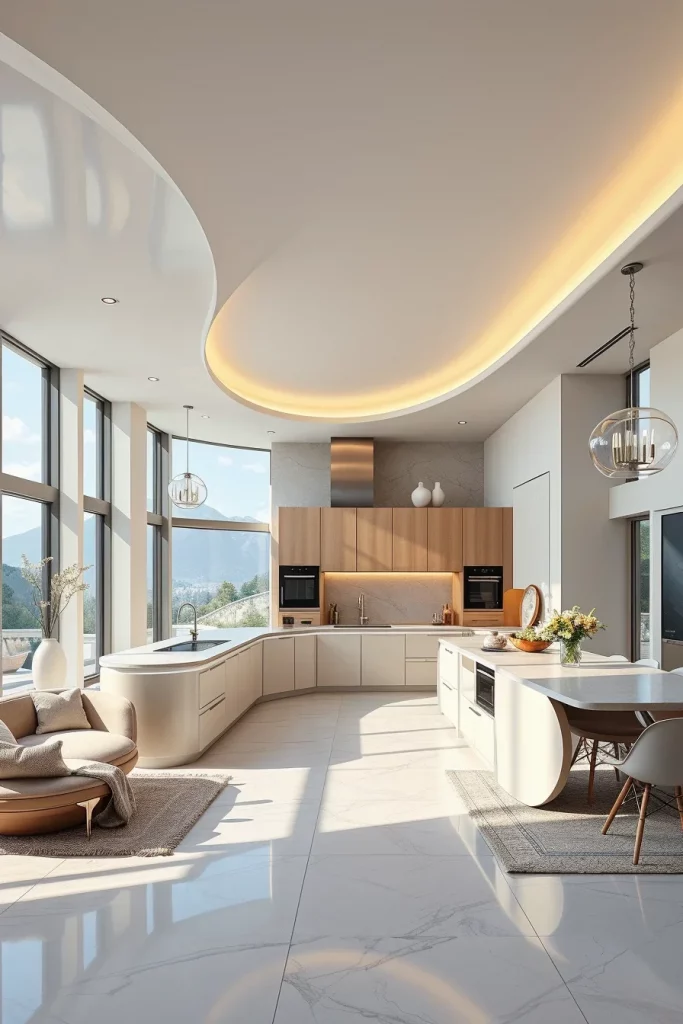
Many respected designers featured by Architectural Digest and Elle Decor have demonstrated how curved architecture creates interiors that feel calmer and more welcoming. I agree with this approach because curved forms naturally soften the highly functional nature of the kitchen without reducing efficiency. In my experience, combining flowing geometry with restrained detailing creates an elegant interior that remains appealing for years rather than following short-lived trends.
To complete this design, I would include oversized curved windows or large sliding glass doors that introduce abundant natural light. Soft indirect LED lighting beneath cabinetry and inside display shelving would further emphasize the gentle contours throughout the room while maintaining comfortable everyday illumination.
Statement Kitchen Islands That Double As Functional Art
In my opinion, the kitchen island should become the centerpiece of the entire room rather than simply an additional workspace. A sculptural island immediately captures attention while providing generous preparation space, casual dining, and social interaction. Carefully selected proportions allow the island to feel like a custom piece of modern sculpture placed within the heart of the home.
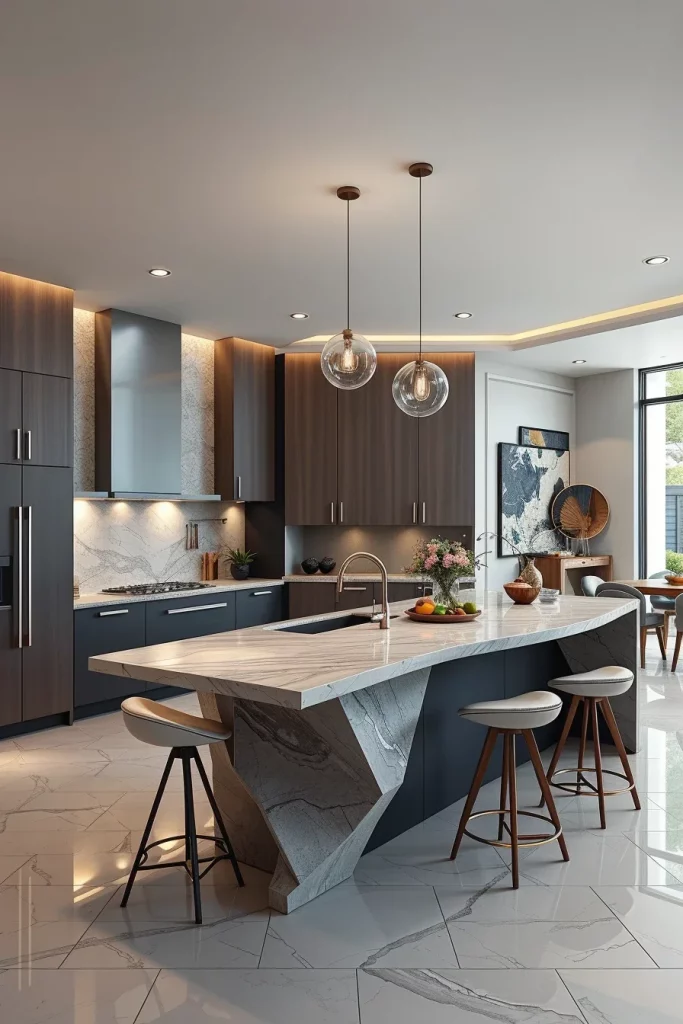
I often recommend waterfall countertops, rounded corners, integrated seating, concealed storage, invisible appliances, and thick monolithic bases that give the island architectural weight. Premium stone, textured plaster finishes, fluted surfaces, or seamless solid-surface materials create depth without excessive decoration. Comfortable seating with minimalist silhouettes helps maintain the island’s artistic presence while remaining practical for everyday family life.
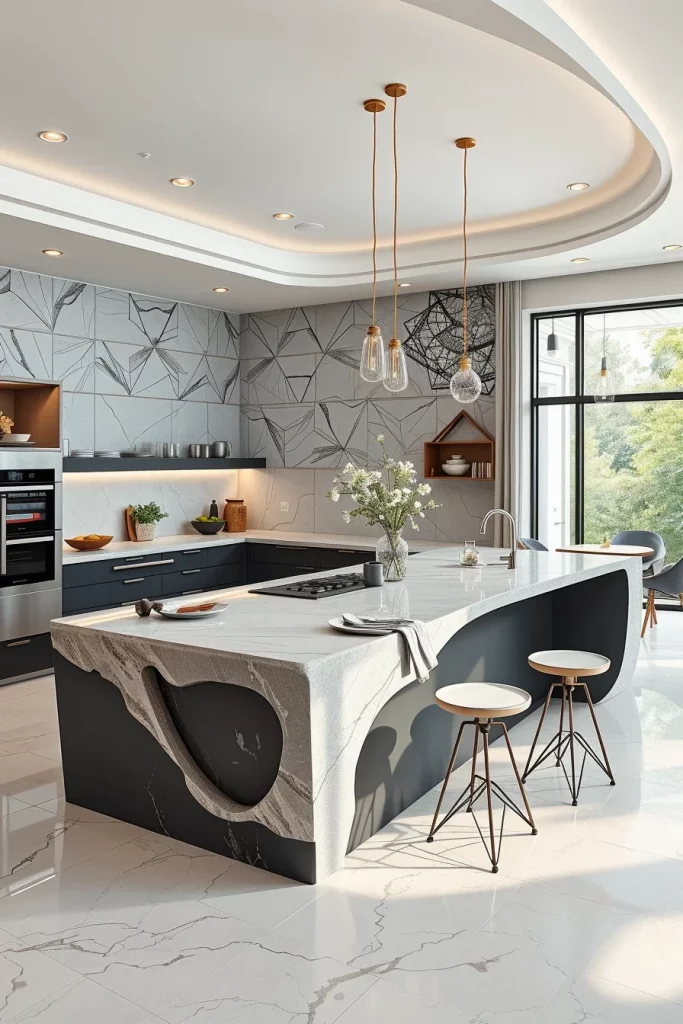
I appreciate how many contemporary American designers emphasize that a kitchen island should support multiple daily activities rather than serving only one purpose. From my experience, investing in a distinctive island delivers the greatest visual impact because it immediately establishes the identity of the entire modern kitchen while improving workflow between cooking, cleaning, and entertaining.
If I wanted to elevate this concept further, I would integrate hidden power outlets, wireless charging, discreet storage for small appliances, and subtle accent lighting beneath the countertop overhang to enhance both convenience and visual sophistication.
Seamless Cabinet Designs With Sculptural Appeal
One feature I consistently prioritize is uninterrupted cabinetry that creates the impression of architectural walls instead of traditional kitchen storage. Flat surfaces without visible handles produce a clean composition where attention naturally shifts toward proportion, texture, and form. This approach supports the artistic character of the kitchen while making the space appear larger and more organized.
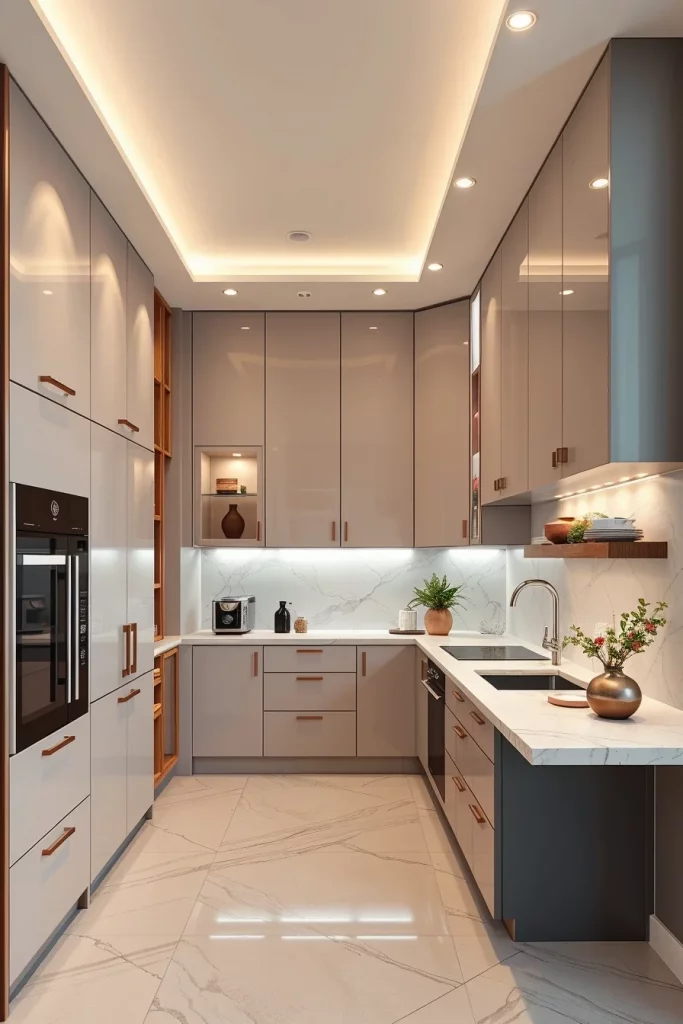
I usually select integrated appliances, push-to-open doors, floor-to-ceiling cabinets, concealed pantry storage, and continuous grain patterns across large cabinet panels. Vertical storage maximizes every inch without creating visual clutter, while carefully planned internal organization ensures that frequently used items remain easily accessible. Hidden lighting inside cabinets adds another layer of sophistication without distracting from the overall design.
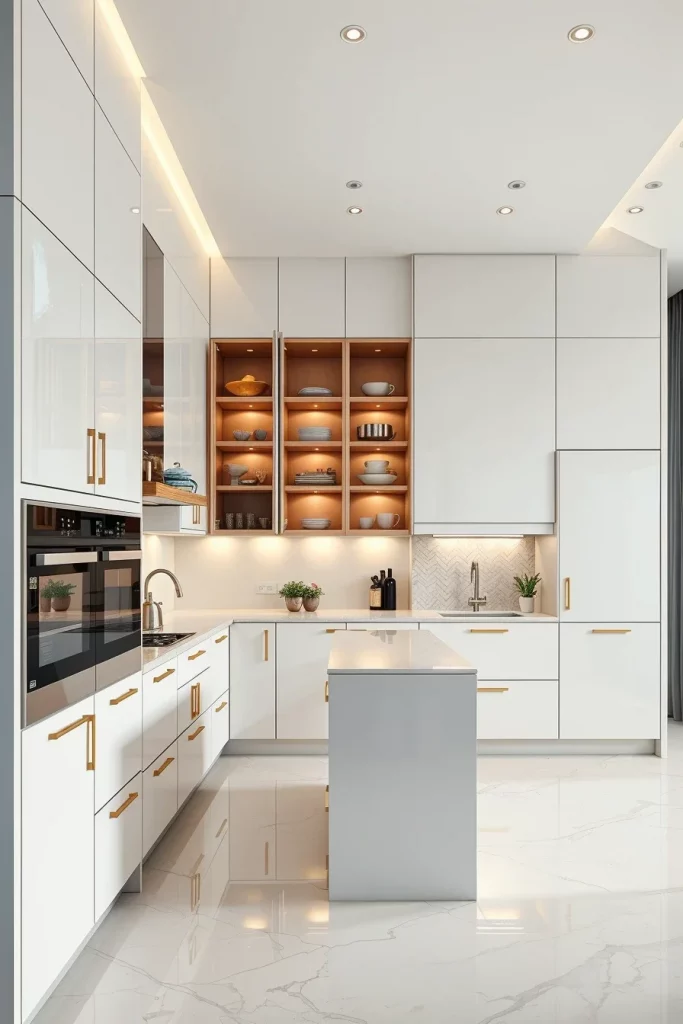
Many interior professionals recommend reducing unnecessary visual interruptions in open-plan kitchens, and I have found this advice especially valuable. A seamless cabinetry system allows sculptural islands, artistic lighting, or dramatic stone surfaces to become the primary focal points while preserving a calm and balanced atmosphere throughout the room.
To improve this section even further, I would add custom interior drawer organizers, integrated recycling systems, hidden coffee stations, and appliance garages that maintain the minimalist exterior while supporting everyday efficiency.
Organic Shapes That Soften Modern Kitchen Interiors
I believe organic forms introduce warmth into contemporary kitchens without sacrificing their clean appearance. Gentle asymmetrical curves, rounded furniture, and flowing architectural details prevent minimalist interiors from feeling cold or overly rigid. These softer silhouettes encourage a welcoming environment where the room feels equally suitable for cooking, gathering, and relaxing.
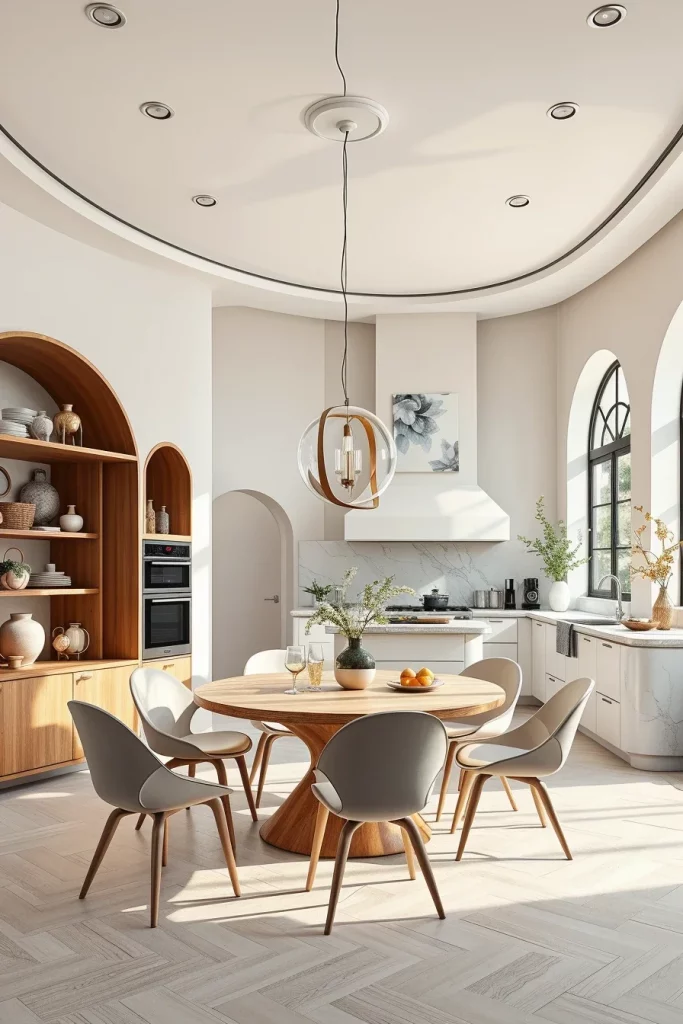
I often combine curved dining chairs, oval dining tables, rounded shelving, sculptural stools, softly arched doorways, and organically shaped decorative objects. Even subtle details such as curved cabinet handles, rounded sink profiles, and flowing countertop edges contribute to a harmonious design language. Together, these elements create visual continuity while improving comfort during daily use.
Personally, I appreciate how designers featured in leading interior publications frequently balance geometry with nature-inspired forms. Their work demonstrates that modern design does not require sharp angles to achieve sophistication. In my own projects, introducing even a few carefully chosen organic shapes often transforms the atmosphere of the entire kitchen.
To complete this concept, I would recommend incorporating large textured rugs, sculptural ceramic accessories, oversized decorative bowls, and carefully selected artwork that echoes the flowing forms found throughout the interior.
Artistic Stone Surfaces With Dramatic Veining
Stone surfaces often become the defining artistic feature of a contemporary kitchen. I enjoy selecting slabs with expressive natural veining because they introduce movement, depth, and individuality without requiring excessive ornamentation. Large uninterrupted stone applications create an impressive visual statement while remaining highly durable for everyday use.
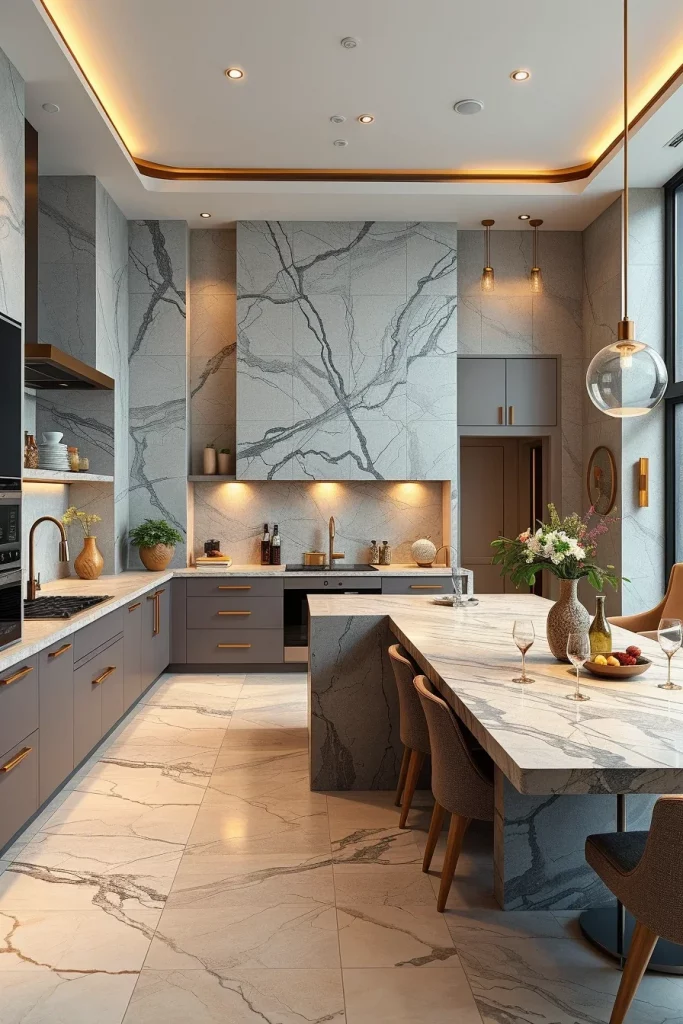
I frequently specify full-height stone backsplashes, waterfall islands, matching countertops, integrated stone shelving, and custom stone sink surrounds. Combining these features creates visual continuity across the room while allowing the unique veining patterns to become a natural work of art. Balanced lighting further highlights texture and depth without overwhelming the overall composition.
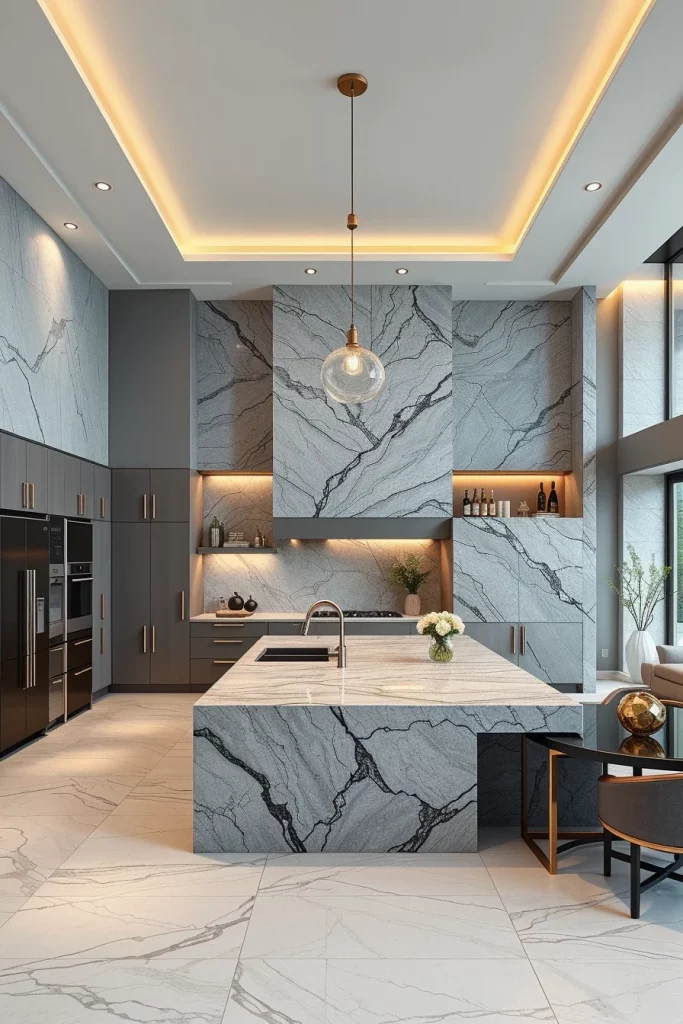
Many respected designers encourage treating premium stone as an architectural element rather than simply a countertop material, and I strongly agree with this philosophy. When carefully selected, dramatic stone surfaces require very little additional decoration because their natural patterns already provide richness and character within the interior.
For an even more complete design, I would add coordinated stone window sills, custom floating shelves, subtle under-cabinet lighting, and decorative accessories in complementary finishes that allow the expressive veining to remain the dominant visual feature.
Floating Countertops For A Light Contemporary Look
Floating countertops are one of my favorite ways to make a kitchen feel lighter and more architectural. By creating the illusion that the countertop is suspended above its base, the entire room gains a sense of openness and visual movement. This approach works especially well in a sculptural and artistic modern kitchen, where every design decision contributes to a refined composition instead of relying on excessive decoration. I find that floating elements help even medium-sized kitchens appear larger while maintaining a sophisticated contemporary atmosphere.
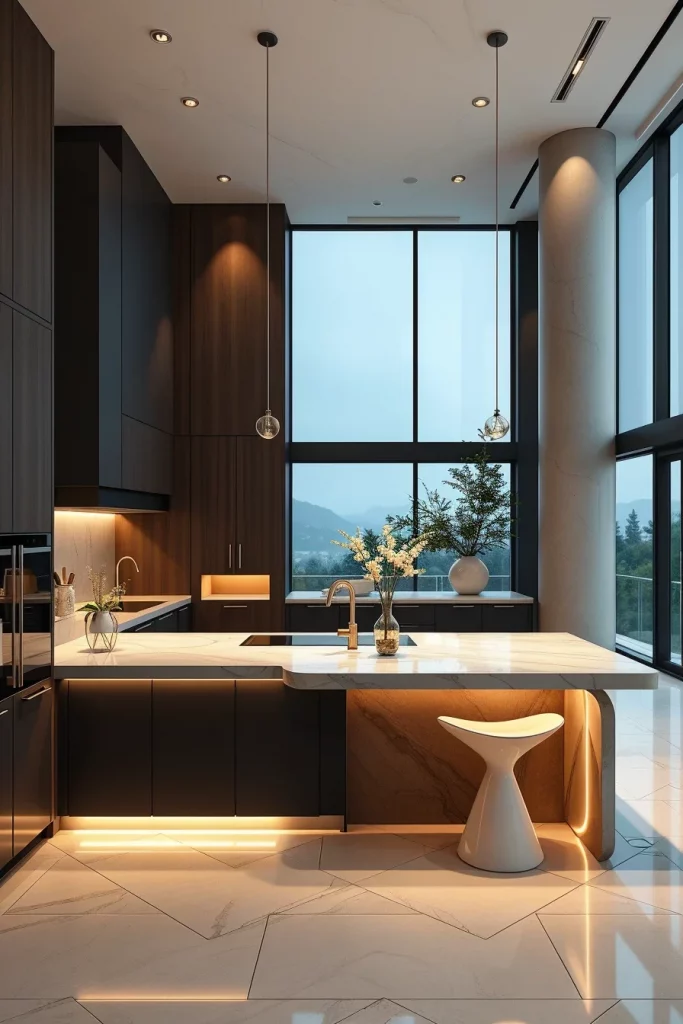
When designing floating countertops, I usually recommend concealed steel supports, slim countertop profiles, integrated LED lighting beneath the overhang, and cabinetry recessed from the front edge to strengthen the floating effect. Matching waterfall edges, handleless storage, hidden electrical outlets, and seamless joints keep the installation clean and elegant. Comfortable counter stools with soft curved silhouettes complete the composition without distracting from the architectural appearance.
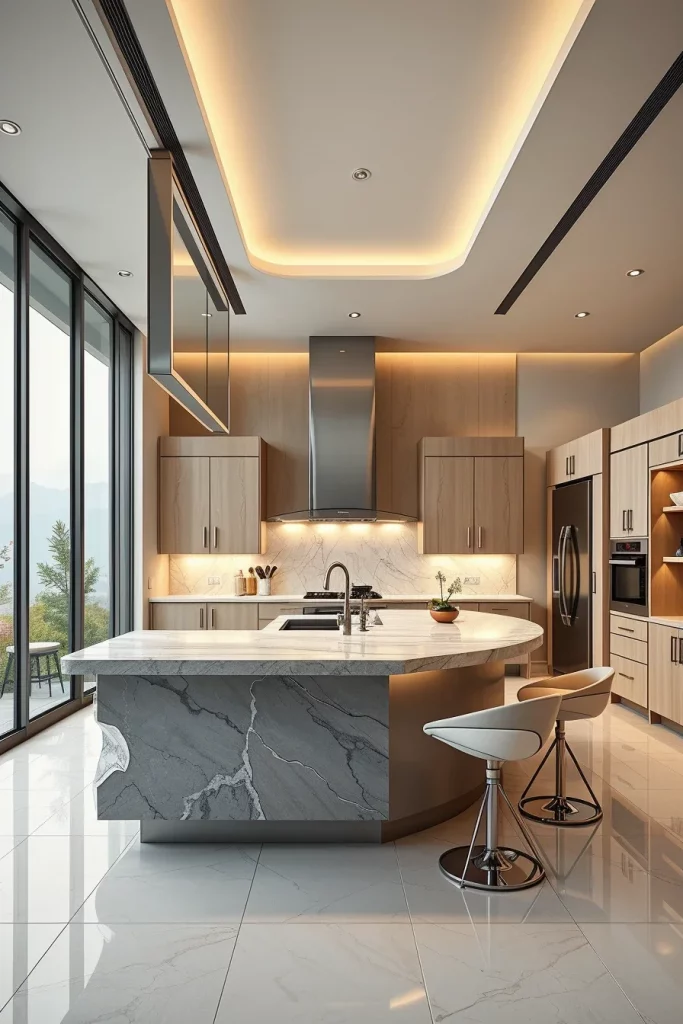
From my experience, subtle lighting is just as important as the structure itself. Interior designers frequently highlight how concealed lighting enhances floating architectural elements, and I have found this to be absolutely true. The gentle illumination creates depth during the evening while emphasizing the clean geometry that defines contemporary kitchen design.
To make this concept even stronger, I would include hidden charging stations, integrated cutting boards, and a matching floating breakfast bar that visually extends the countertop while increasing its everyday functionality.
Curved Ceiling Designs That Enhance Visual Movement
The ceiling often becomes an overlooked design opportunity, but I believe it can completely transform the atmosphere of a modern kitchen. Curved ceiling forms naturally guide the eye across the room, making the entire space feel more harmonious and fluid. Instead of acting as a simple flat surface, the ceiling becomes an architectural feature that complements sculptural cabinetry and organic furniture throughout the interior.
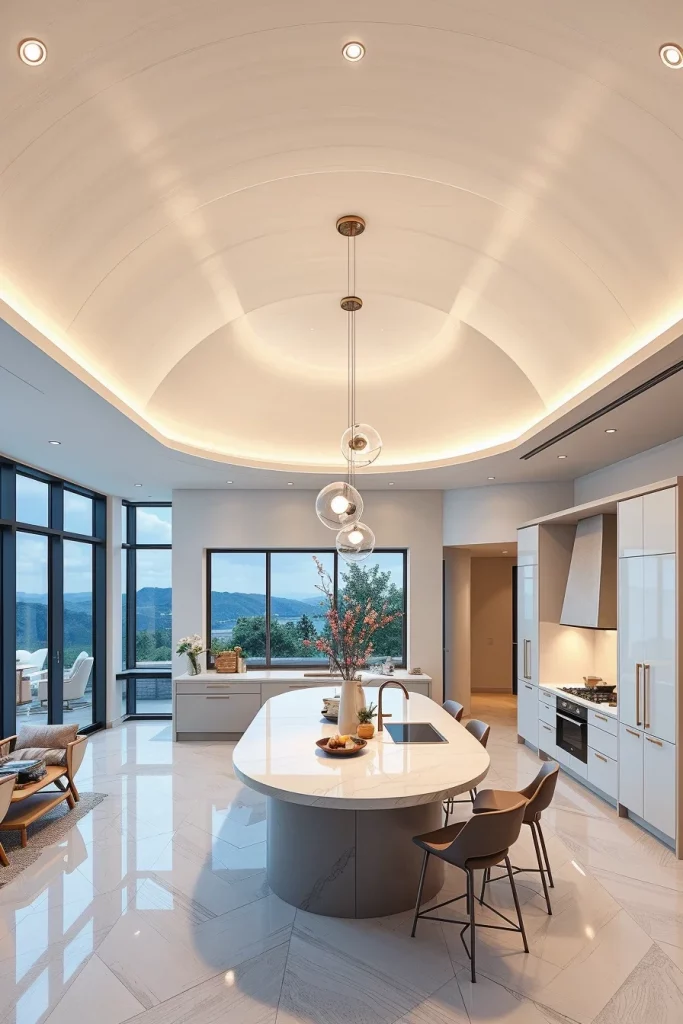
I like combining gently curved plaster ceilings with recessed LED lighting, slim linear diffusers, hidden ventilation systems, and suspended sculptural lighting fixtures. Soft transitions between walls and ceilings eliminate harsh visual breaks, while carefully positioned skylights or oversized windows bring natural light into every corner of the kitchen. These details create a balanced environment that feels both artistic and comfortable.
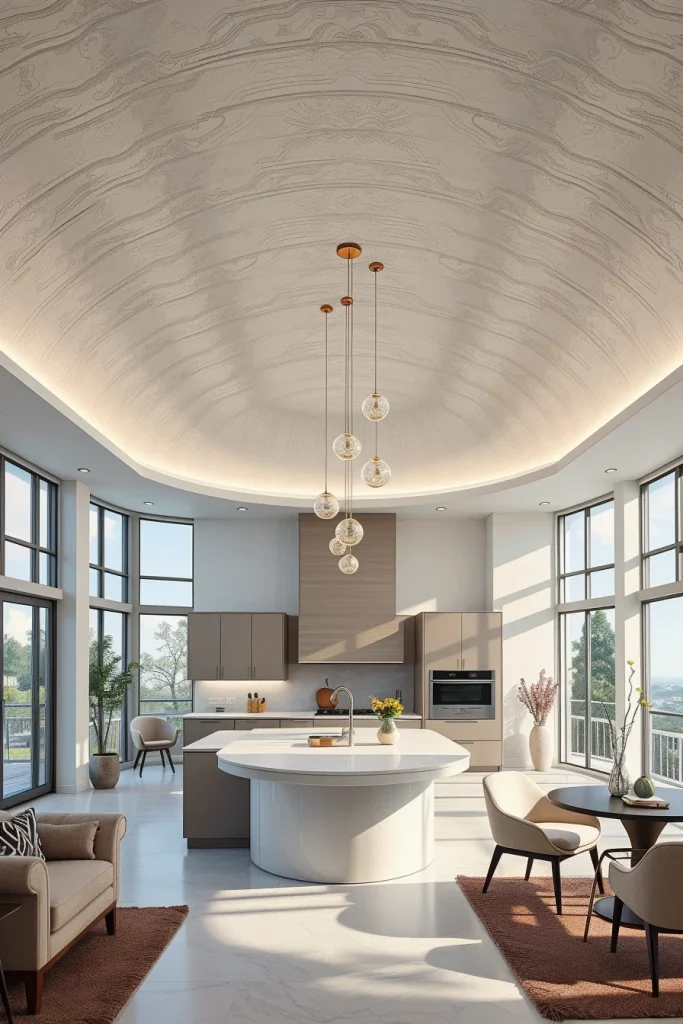
Personally, I appreciate how many contemporary architects use curved ceilings to create continuity throughout open-plan homes. I have noticed that this approach helps kitchens blend naturally with adjacent dining and living spaces while maintaining their own distinctive identity. Rather than competing with other architectural elements, the ceiling quietly reinforces the overall design language.
I would also recommend integrating discreet acoustic panels within the curved ceiling construction. This addition improves sound quality during everyday conversations while preserving the clean sculptural appearance of the space.
Modern Lighting Fixtures That Become Sculptural Centerpieces
Lighting should never be treated as an afterthought in a thoughtfully designed kitchen. I always consider lighting fixtures as functional sculptures that define the personality of the room while providing balanced illumination for cooking, dining, and entertaining. Carefully selected fixtures introduce visual interest without overwhelming the simplicity of contemporary interiors.
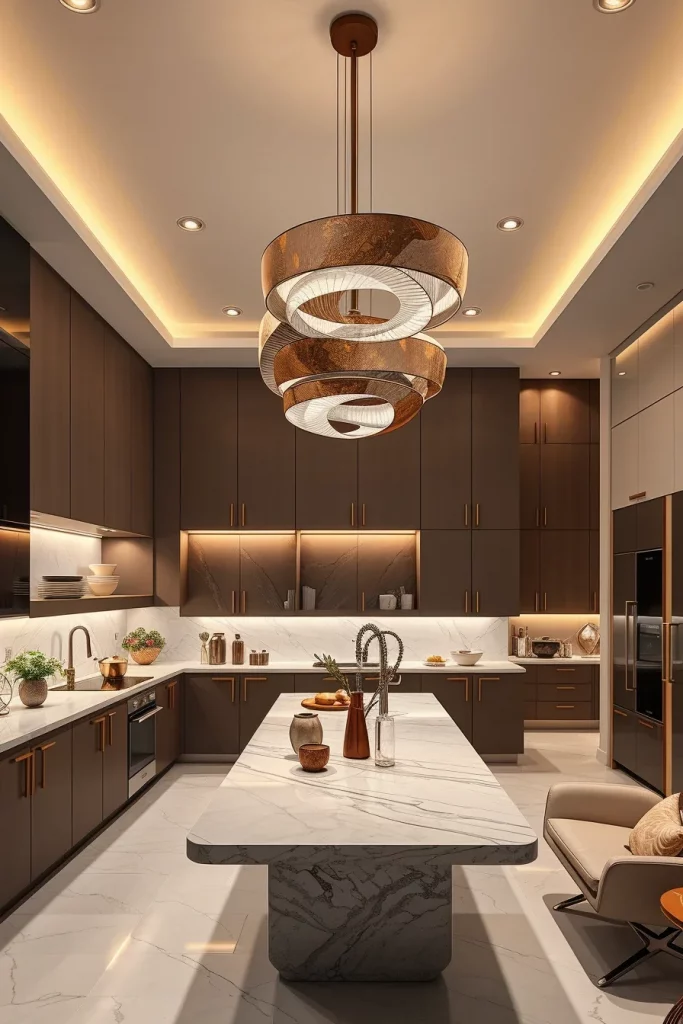
I often incorporate oversized pendant lights, artistic chandeliers, suspended linear fixtures, recessed ceiling lighting, illuminated shelving, and subtle under-cabinet LEDs that work together in layers. Decorative wall sconces and integrated toe-kick lighting add depth while highlighting the textures of stone, cabinetry, and flooring. Every lighting element should complement the architecture instead of competing with it.
Many respected lighting designers recommend combining ambient, task, and accent lighting rather than depending on a single source. I completely agree because layered lighting allows the kitchen to adapt effortlessly throughout the day. Bright task lighting supports food preparation, while softer evening illumination creates a welcoming atmosphere for family gatherings and entertaining guests.
To complete this lighting scheme, I would integrate smart lighting controls with adjustable brightness and color temperature, allowing the mood of the kitchen to change depending on the activity or time of day.
Monolithic Kitchen Islands With Bold Architectural Presence
A monolithic kitchen island immediately communicates strength, simplicity, and craftsmanship. I enjoy using large uninterrupted forms because they create a dramatic focal point while supporting efficient daily routines. In a modern kitchen, a substantial island anchors the entire layout and establishes a strong architectural identity without requiring elaborate ornamentation.
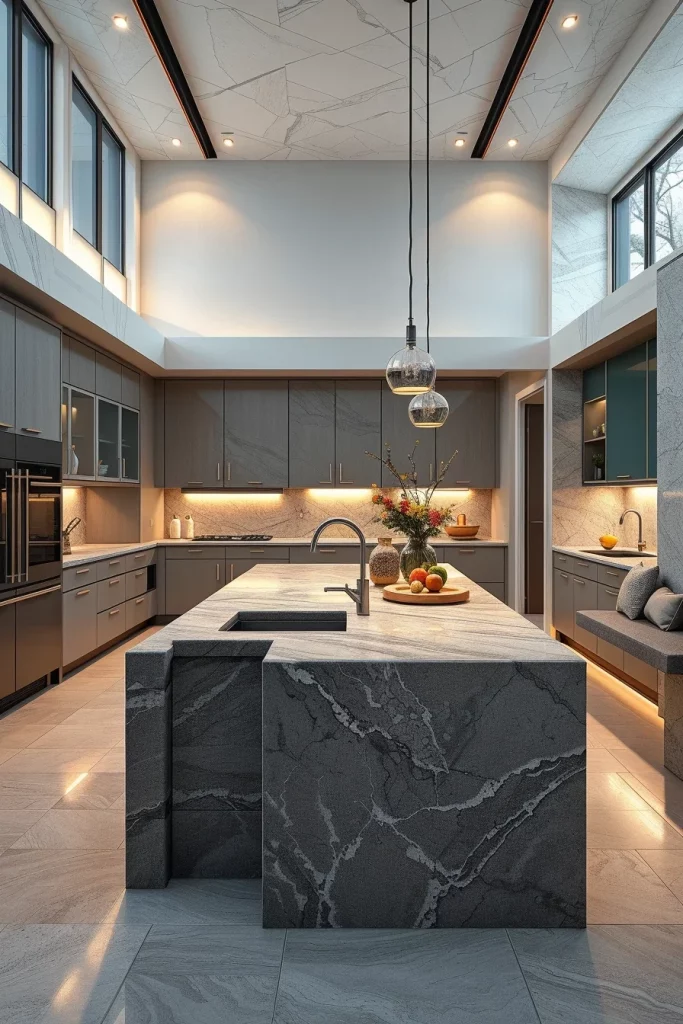
I typically recommend solid stone or engineered surfaces that wrap continuously around the island, creating the impression of a single carved volume. Integrated sinks, invisible cooktops, concealed storage, and generous preparation areas maintain the clean appearance while maximizing functionality. Comfortable seating positioned along one side encourages conversation without interrupting the sculptural form.
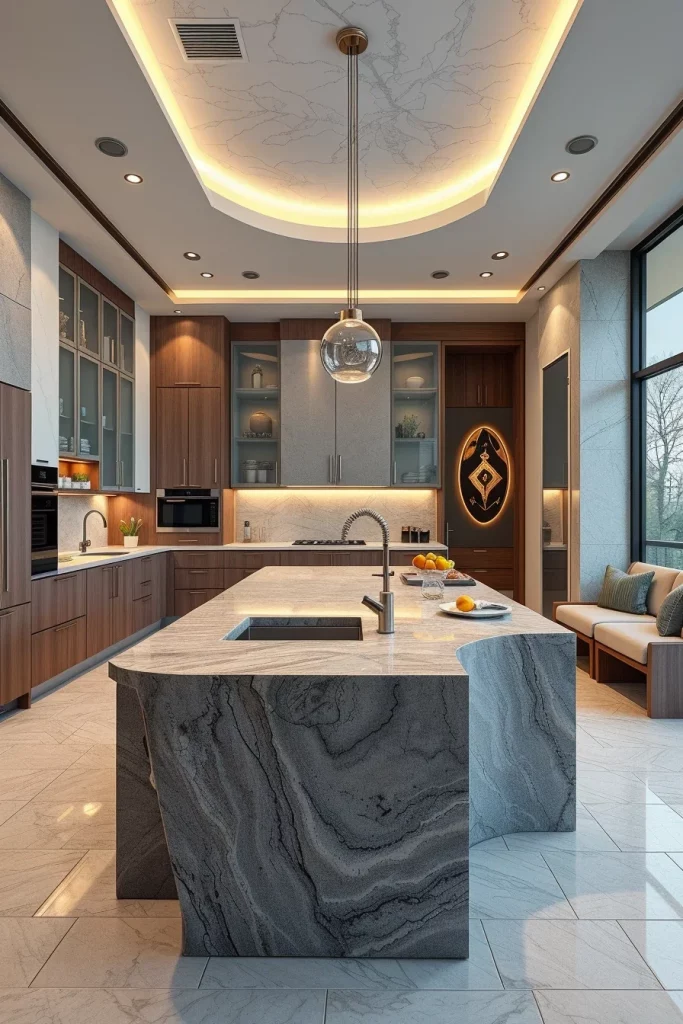
From my perspective, oversized monolithic islands remain timeless because they emphasize proportion and quality rather than temporary design trends. I have found that homeowners appreciate these islands not only for their visual impact but also for the practical workspace they provide every single day. The combination of beauty and usability makes this investment worthwhile.
I would also include discreet wine storage, hidden recycling compartments, and integrated shelving at the island ends to improve organization while preserving the minimalist exterior.
Minimal Color Palettes That Highlight Artistic Forms
I believe restrained color palettes allow architectural forms to become the true stars of the kitchen. Rather than relying on bold color contrasts, carefully selected neutral tones emphasize curves, textures, lighting, and premium materials. This approach creates a calm environment where every sculptural detail can be fully appreciated without visual distractions.
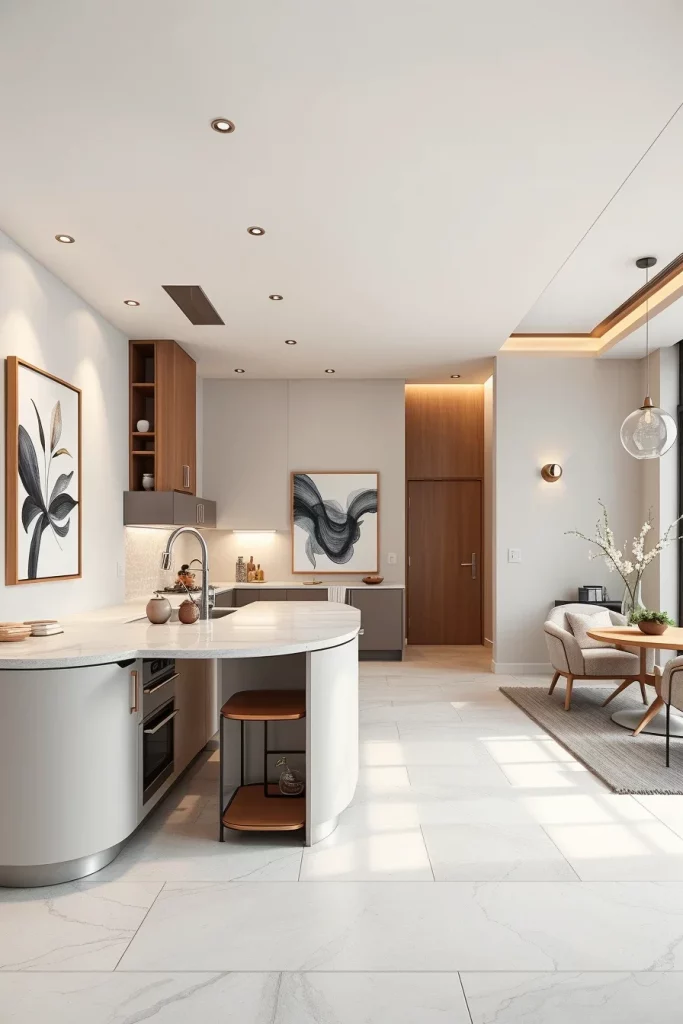
I usually combine soft white, warm beige, light taupe, charcoal gray, muted greige, and natural stone tones throughout cabinetry, countertops, flooring, and furniture. Matte finishes, textured plaster walls, subtle metallic accents, and understated decorative accessories add depth while maintaining visual harmony. The result feels sophisticated, welcoming, and highly adaptable to changing decorative preferences.
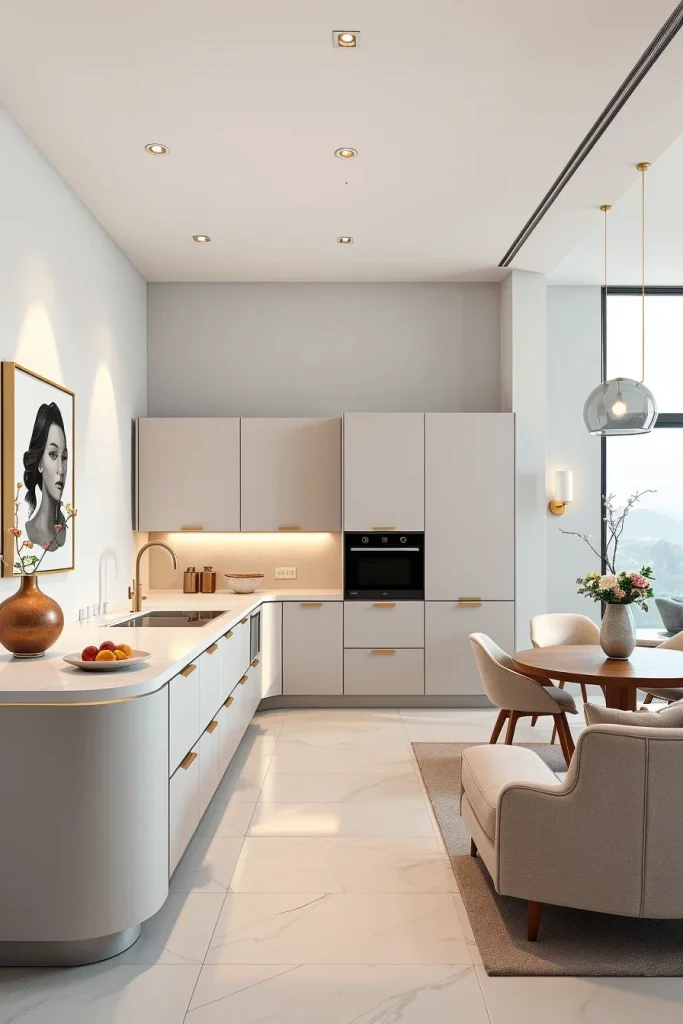
In my experience, neutral interiors age far more gracefully than kitchens dominated by fashionable colors. Many leading interior publications continue to showcase restrained palettes because they provide flexibility for future updates while allowing premium craftsmanship to remain the primary focus. I find this philosophy especially effective when creating artistic contemporary spaces designed for long-term enjoyment.
To complete the room, I would introduce a small number of carefully selected decorative objects, sculptural ceramics, abstract artwork, and textured fabrics that add personality without interrupting the clean architectural composition.
Textured Cabinet Fronts With Gallery Inspired Character
When I design a sculptural kitchen, I often begin with textured cabinet fronts because they immediately establish depth and visual interest without overwhelming the room. Fluted panels, carved geometric surfaces, and subtle relief patterns introduce a gallery-like atmosphere while maintaining the clean appearance expected from a modern interior. These textures interact beautifully with natural daylight and artificial lighting, producing gentle shadows that change throughout the day. I find this approach especially effective because it adds personality without relying on excessive decoration.
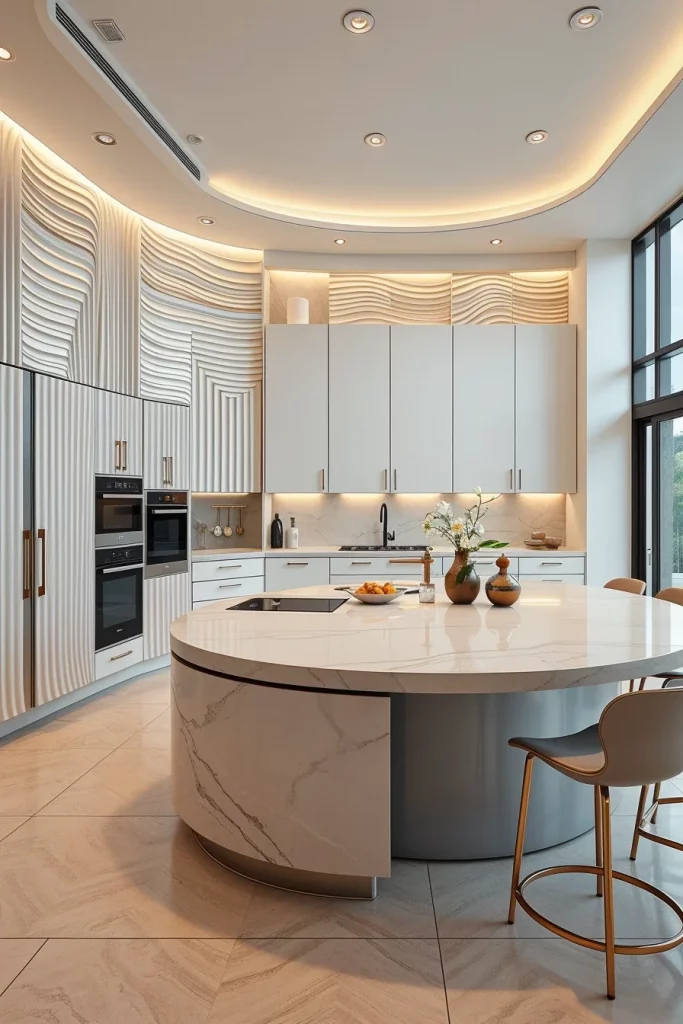
I like pairing textured cabinetry with integrated appliances, slim worktops, concealed handles, and large uninterrupted surfaces that reinforce the artistic composition. A spacious island with softly rounded corners becomes the centerpiece, while carefully selected stools and minimalist fixtures allow the cabinet details to remain the main visual feature. Balanced proportions ensure the kitchen feels elegant instead of busy, and every element contributes to the overall harmony.
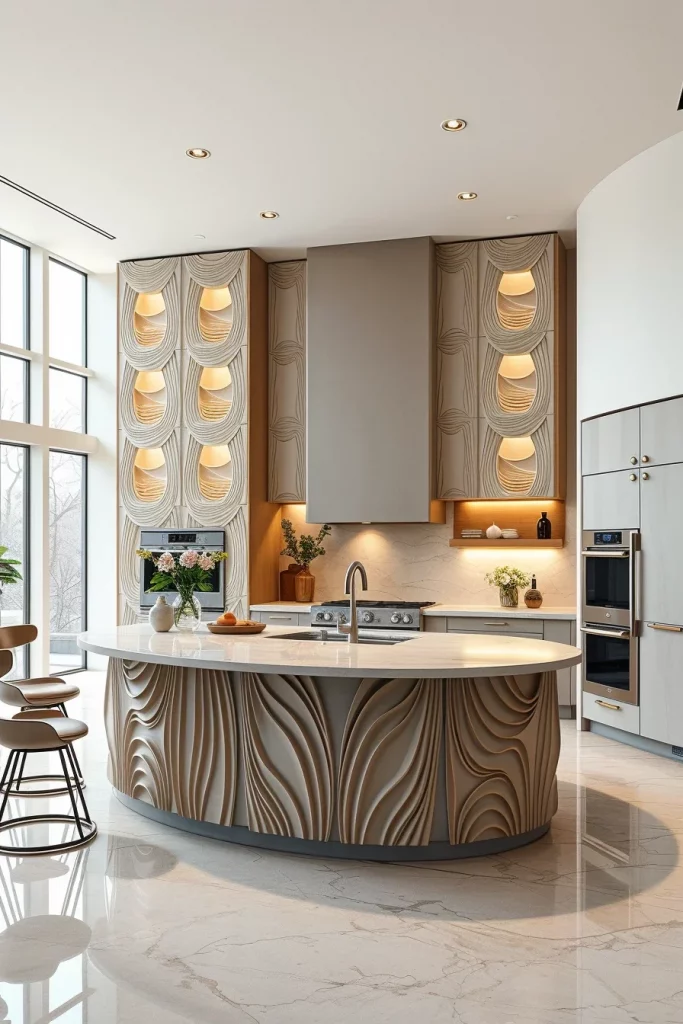
In my experience, designers frequently emphasize that texture is one of the most powerful ways to create warmth in contemporary interiors. Publications such as Architectural Digest regularly showcase kitchens where subtle surface detailing replaces excessive ornamentation. I appreciate this philosophy because it demonstrates that sophisticated design often comes from restraint rather than complexity.
To complete this concept, I would include carefully positioned architectural lighting that highlights the cabinet relief during both daytime and evening hours, making the entire composition feel more like an art installation than conventional storage.
Oversized Pendant Lighting For Contemporary Drama
Oversized pendant lighting can completely transform the atmosphere of a modern kitchen. I see these fixtures as sculptural objects that serve both practical and artistic purposes. Whether suspended above a large island or dining table, dramatic lighting introduces vertical balance while drawing attention to the heart of the room. Choosing generous proportions creates confidence within the design without making the kitchen feel crowded.
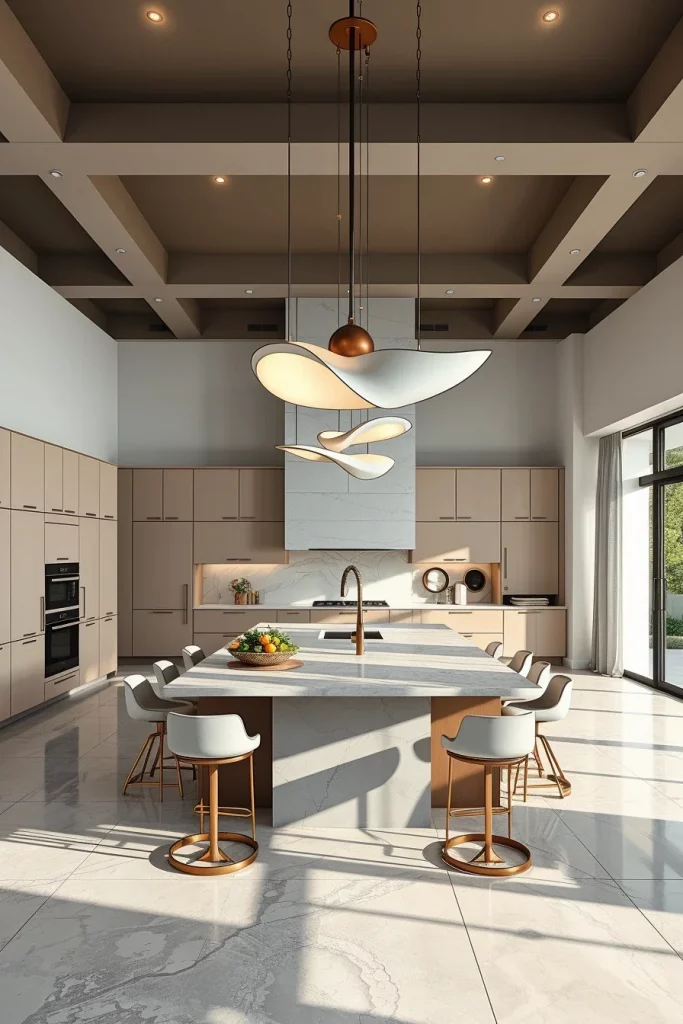
I usually combine oversized pendants with streamlined cabinetry, wide circulation paths, and understated finishes so the lighting remains the primary focal point. Matte finishes, sculptural glass, brushed metals, or organic forms work exceptionally well in contemporary spaces. When the pendants are positioned at the proper height, they provide comfortable task lighting while creating a welcoming ambiance for entertaining and family meals.
Personally, I believe statement lighting is one of the easiest ways to introduce artistic identity into a kitchen. Designers featured in Elle Decor often recommend investing in one exceptional lighting fixture rather than filling the room with numerous decorative accessories. I have found this advice especially useful because it creates a stronger visual impact while maintaining simplicity.
I would also add layered lighting throughout the kitchen, including discreet ceiling lighting and cabinet illumination, allowing the pendants to remain visually dominant while ensuring excellent functionality during every activity.
Integrated Storage That Preserves Sculptural Simplicity
One of the defining characteristics of a sculptural and artistic modern kitchen is the absence of unnecessary visual clutter. I always prioritize integrated storage because it allows everyday essentials to disappear behind beautifully designed surfaces. This creates uninterrupted architectural lines that make even compact kitchens appear larger and more refined.
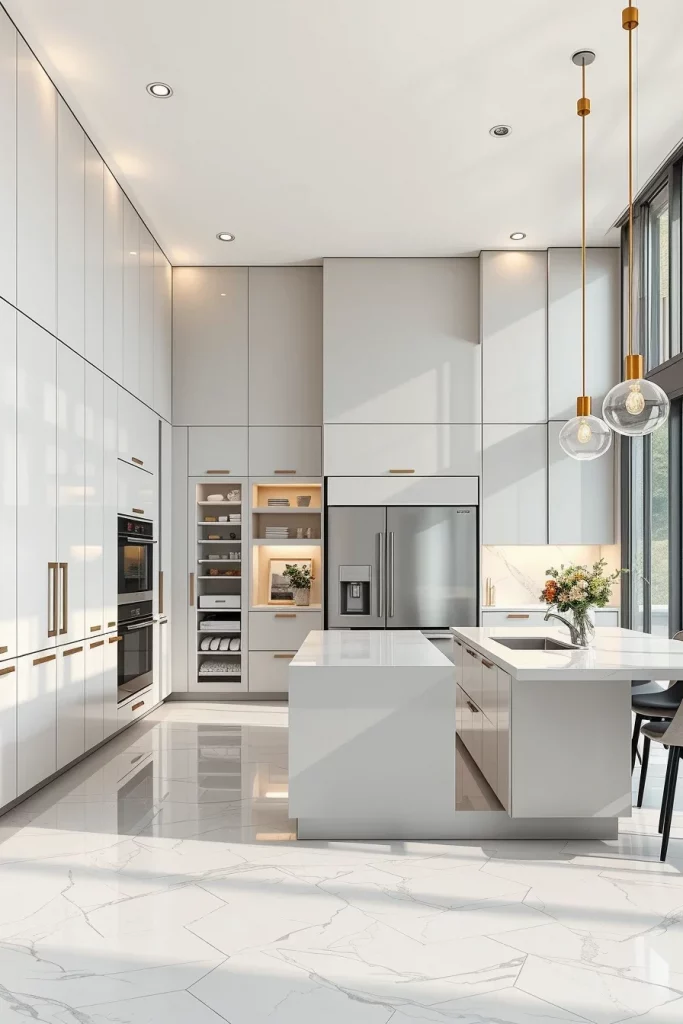
I prefer incorporating full-height pantry cabinets, hidden appliance garages, integrated recycling systems, deep drawers with customized organizers, and concealed shelving behind seamless doors. Every storage solution has a purpose, helping maintain order while preserving the artistic appearance of the room. Large islands often provide additional hidden storage without affecting the clean geometry of the overall layout.
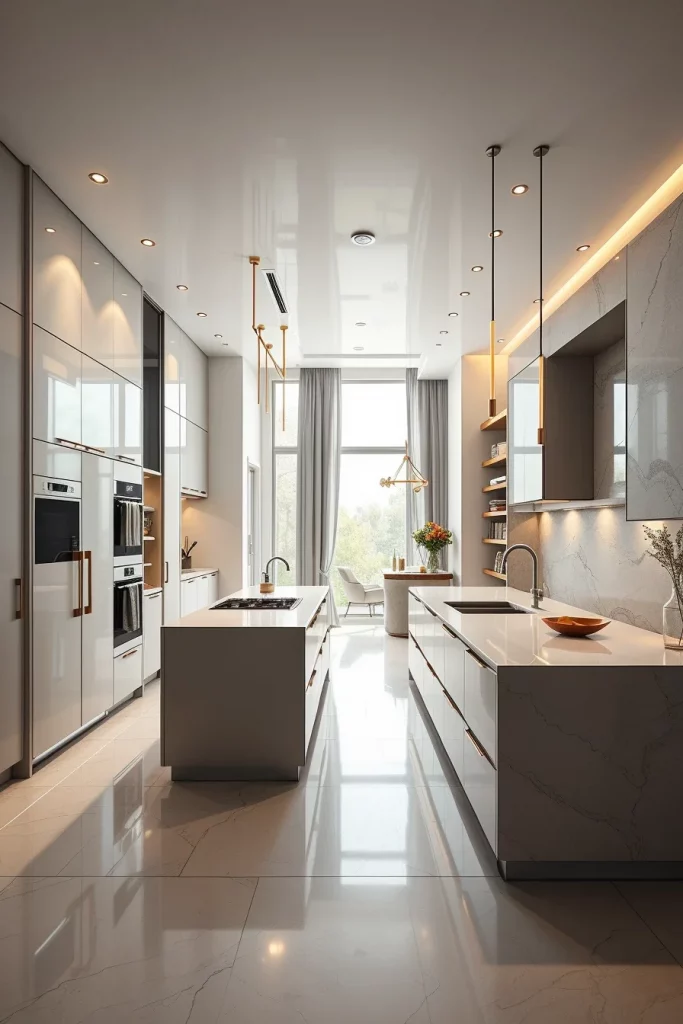
From my perspective, successful minimalist kitchens are never empty—they are simply organized exceptionally well. Interior designers regularly explain that thoughtful storage planning improves both aesthetics and daily efficiency. I completely agree because practical organization allows beautiful design to remain visible rather than hidden beneath everyday clutter.
If I were expanding this design further, I would introduce discreet charging stations, concealed coffee preparation zones, and integrated organizers that support modern lifestyles while maintaining uninterrupted visual continuity.
Elegant Open Shelving Styled Like An Art Display
Open shelving can become one of the most expressive features in a modern kitchen when it is approached with restraint. I prefer treating every shelf as a curated gallery display instead of additional storage. Carefully arranged ceramics, sculptural bowls, art books, glassware, and decorative objects create personality while preserving the kitchen’s sophisticated appearance.
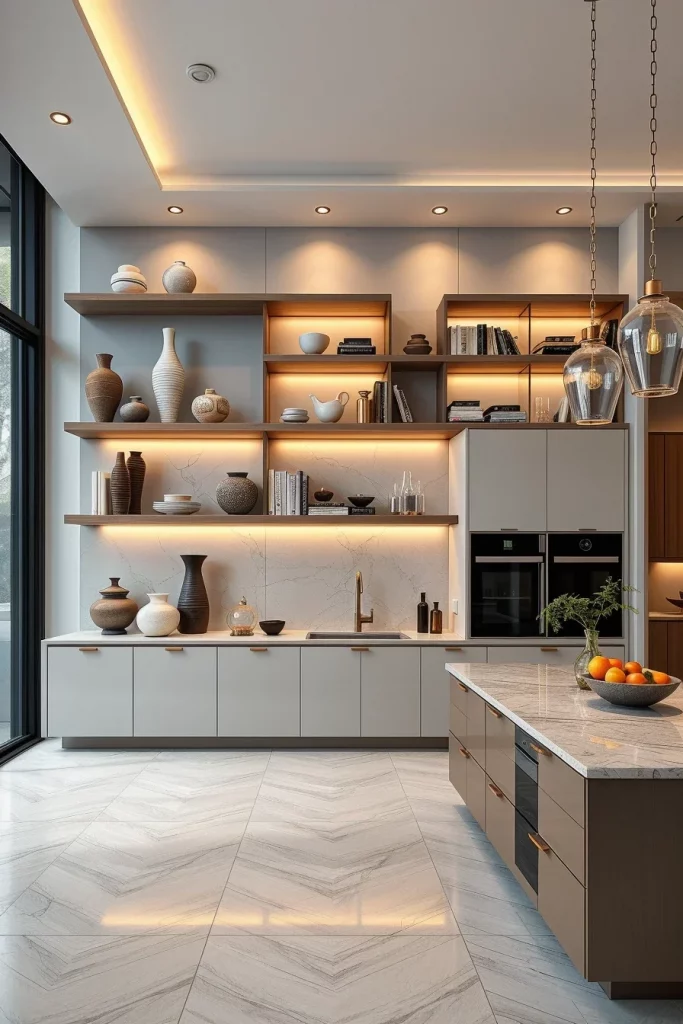
I usually balance open shelves with closed cabinetry to avoid visual overload. Floating shelves with generous thickness, refined finishes, and concealed supports appear almost architectural. Limiting decorative objects to a carefully selected collection helps maintain harmony while allowing each item to receive proper attention. Soft integrated shelf lighting further enhances the display and highlights textures throughout the evening.
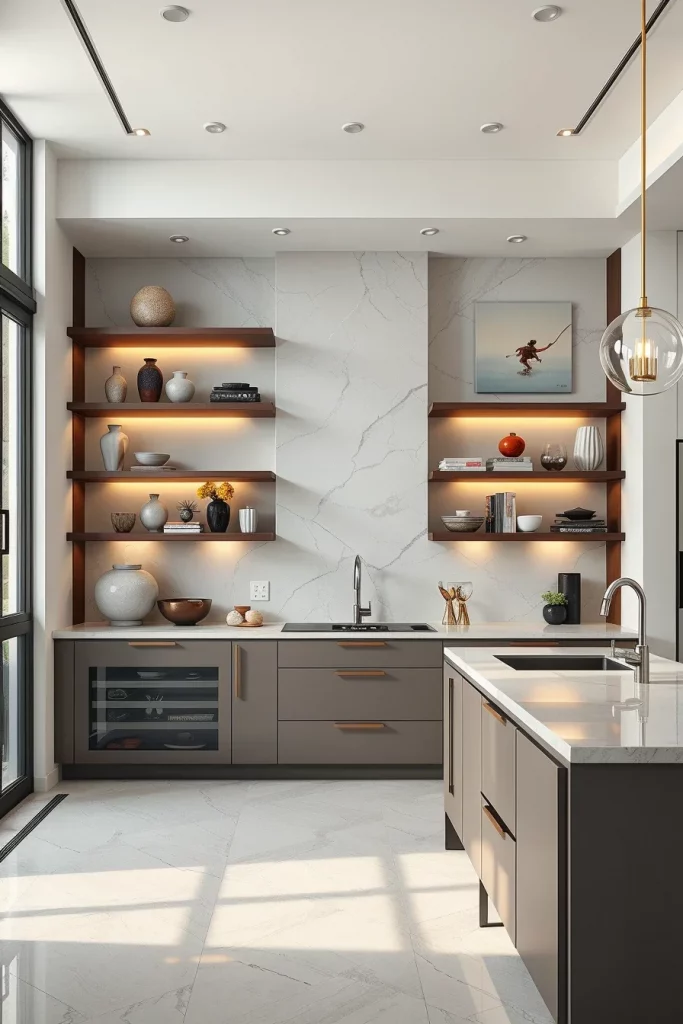
I have learned that less truly becomes more when styling open shelving. Many experienced designers recommend editing decorative collections regularly instead of constantly adding new objects. This advice has consistently helped me create interiors that feel calm, intentional, and visually refined.
For an even stronger gallery atmosphere, I would include one larger sculptural centerpiece or framed artwork that anchors the shelving composition and creates an elegant focal point within the kitchen.
Artistic Backsplash Designs With Modern Personality
An artistic backsplash offers an excellent opportunity to introduce creativity without compromising functionality. I enjoy selecting materials with expressive veining, handcrafted textures, oversized slabs, or geometric compositions that naturally become visual highlights. Rather than competing with the cabinetry, the backsplash should strengthen the architectural identity of the entire kitchen while remaining practical for everyday use.
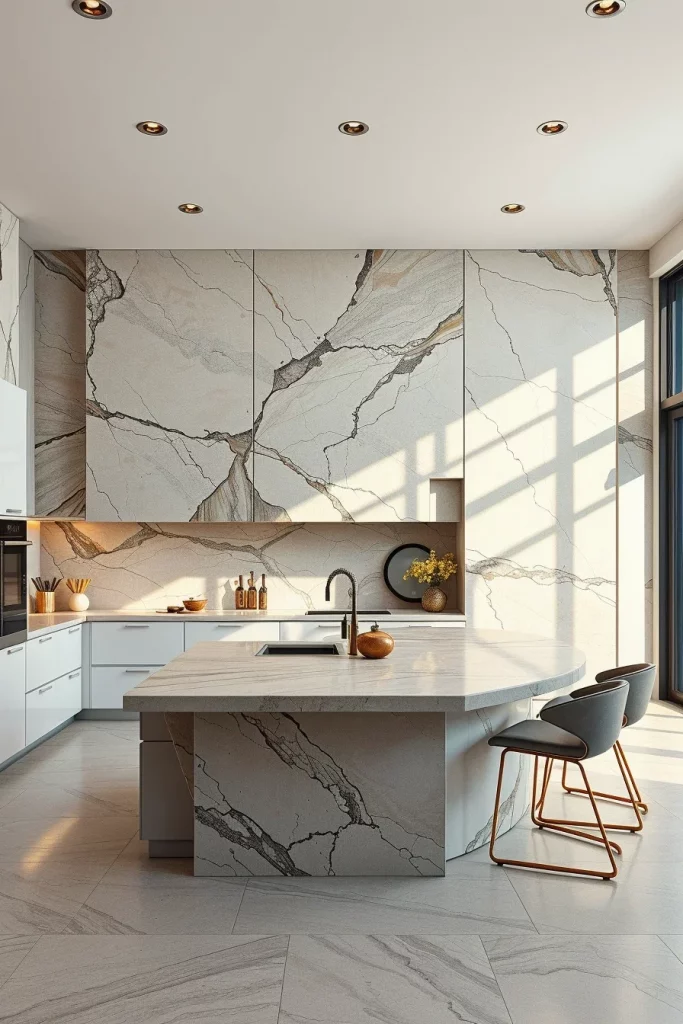
I frequently pair statement backsplashes with minimalist cabinetry, integrated appliances, streamlined hardware, and subtle countertops. Large-format stone surfaces minimize visible joints, while textured finishes create additional depth. Continuous backsplashes extending from countertop to ceiling establish a dramatic backdrop that immediately attracts attention while preserving visual balance.
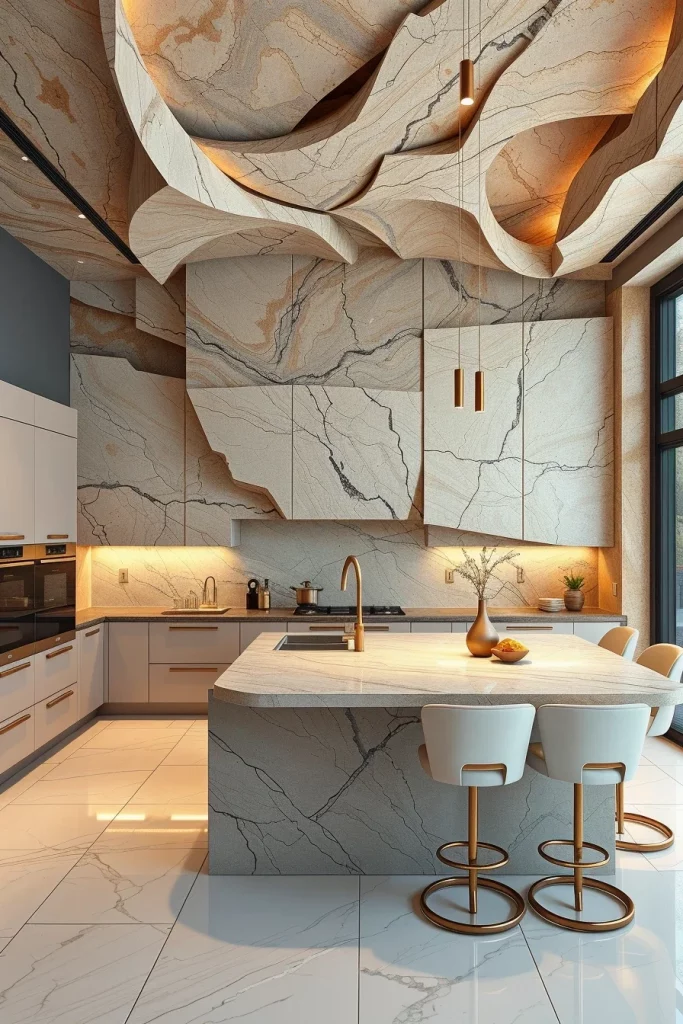
Personally, I find that investing in one exceptional backsplash often delivers greater long-term satisfaction than introducing multiple decorative elements throughout the room. Design publications including House Beautiful frequently highlight kitchens where one outstanding surface defines the overall character of the space. I appreciate this strategy because it creates a memorable design without unnecessary complexity.
To complete this concept, I would add carefully coordinated accessories, understated bar stools, and elegant decorative objects that complement the backsplash without competing for visual attention.
Sculptural Dining Areas Connected To The Kitchen
A dining area that flows naturally from the kitchen creates one cohesive living space instead of two separate rooms. I like designing the dining zone as an extension of the kitchen by repeating the same materials, soft curves, and architectural lines throughout both areas. A sculptural dining table with rounded edges becomes a visual anchor while maintaining easy movement around the room. This approach makes entertaining guests and everyday family meals feel equally comfortable in a thoughtfully designed environment.
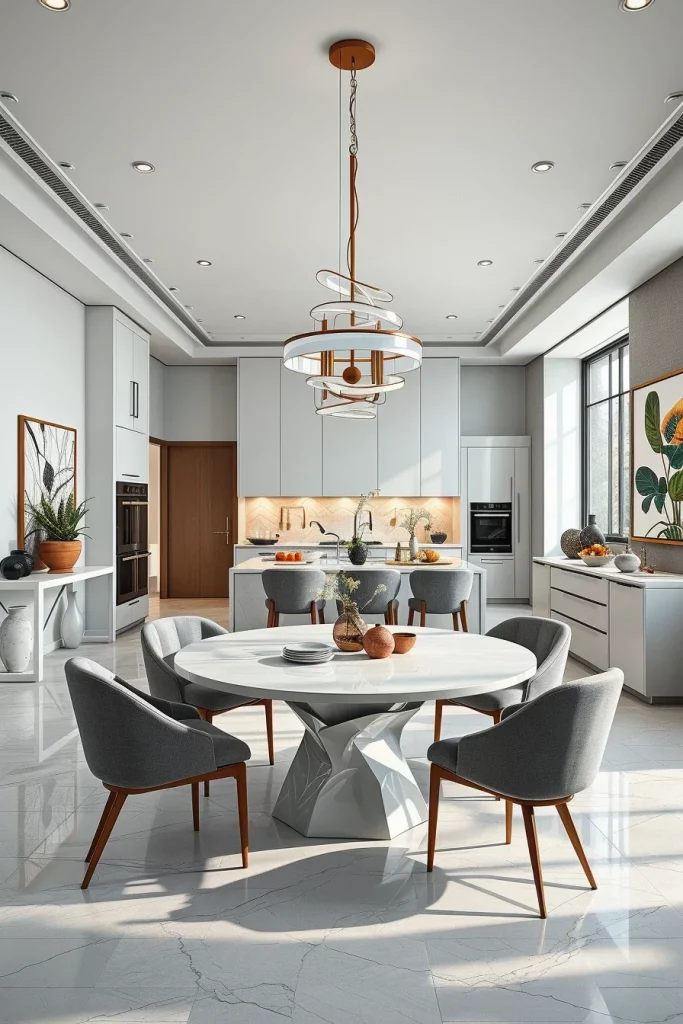
I usually combine a statement dining table with elegant upholstered chairs, a sculptural pendant light, and a carefully selected sideboard that complements the kitchen cabinetry. Keeping the color palette consistent allows every piece of furniture to contribute to the overall composition without competing for attention. Decorative ceramics, oversized bowls, and a large piece of contemporary artwork help connect the dining area to the artistic personality of the kitchen while preserving a refined atmosphere.
In my experience, successful open-plan interiors always balance beauty with functionality. Interior designers featured in Dwell frequently recommend creating visual continuity between kitchens and dining spaces through repeated forms and materials rather than excessive decoration. I appreciate this strategy because it allows the entire room to feel calm, spacious, and intentional.
To complete this dining area, I would include a soft textured area rug beneath the table, carefully selected table accessories, and adjustable lighting that creates a welcoming atmosphere from breakfast through evening gatherings.
Rounded Kitchen Peninsulas For Comfortable Everyday Living
Rounded peninsulas bring softness into a modern kitchen while improving the way people move through the space. I often recommend curved forms because they eliminate sharp corners, making circulation easier and creating a more inviting environment. Instead of acting as a barrier, the peninsula naturally connects food preparation, dining, and conversation, supporting the rhythm of everyday life.
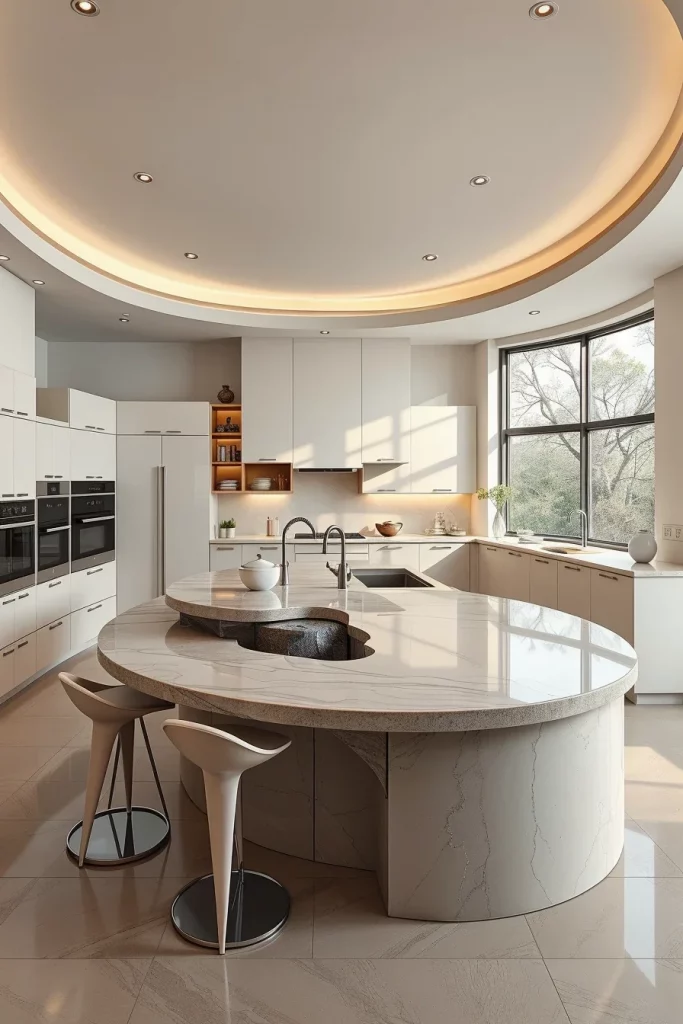
I like designing peninsulas with waterfall countertops, integrated storage, concealed seating, and durable surfaces that remain beautiful even with daily use. Comfortable bar stools with rounded silhouettes reinforce the sculptural appearance, while discreet under-counter lighting emphasizes the gentle curves after sunset. Every element contributes to a kitchen that feels elegant without sacrificing practicality.
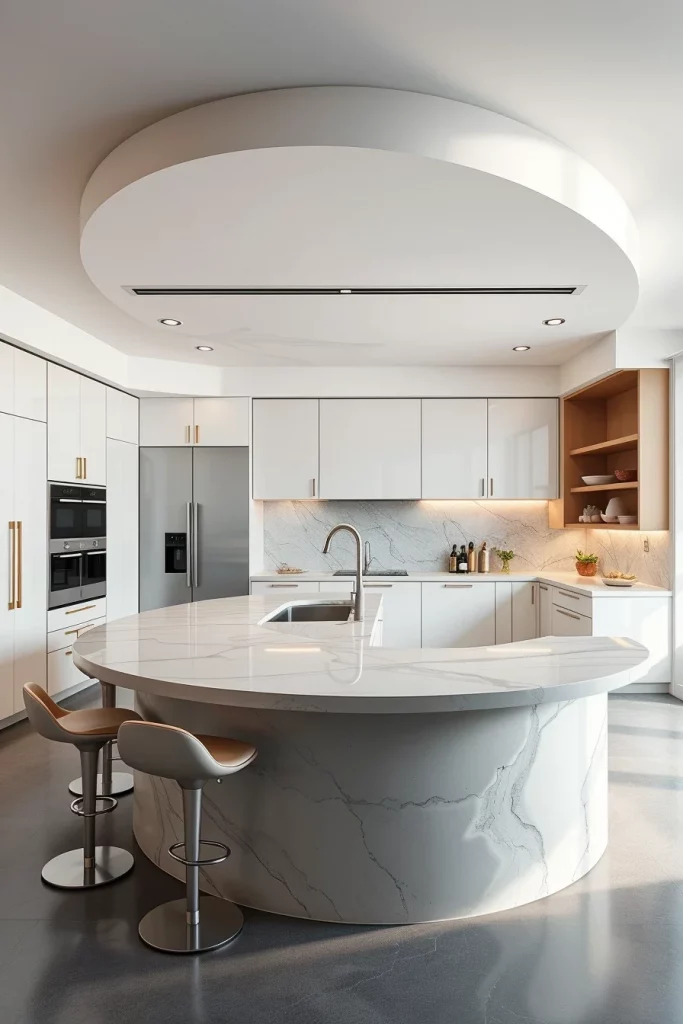
Personally, I find curved furniture far more welcoming than rigid geometric forms, especially in open-plan homes where the kitchen serves as the center of daily activity. Many contemporary designers have embraced organic forms because they introduce movement and visual comfort without overwhelming minimalist interiors. I have found that even one curved feature can completely transform the character of a room.
I would also incorporate hidden electrical outlets and charging stations into the peninsula, ensuring modern convenience without interrupting the clean sculptural lines.
Floor To Ceiling Cabinetry With Architectural Impact
Floor-to-ceiling cabinetry immediately gives a kitchen a custom architectural appearance while maximizing available storage. I often recommend this solution because it eliminates awkward empty spaces above cabinets and creates strong vertical lines that make the room appear taller. Continuous cabinetry contributes to the sophisticated identity of a sculptural kitchen by emphasizing simplicity and proportion.
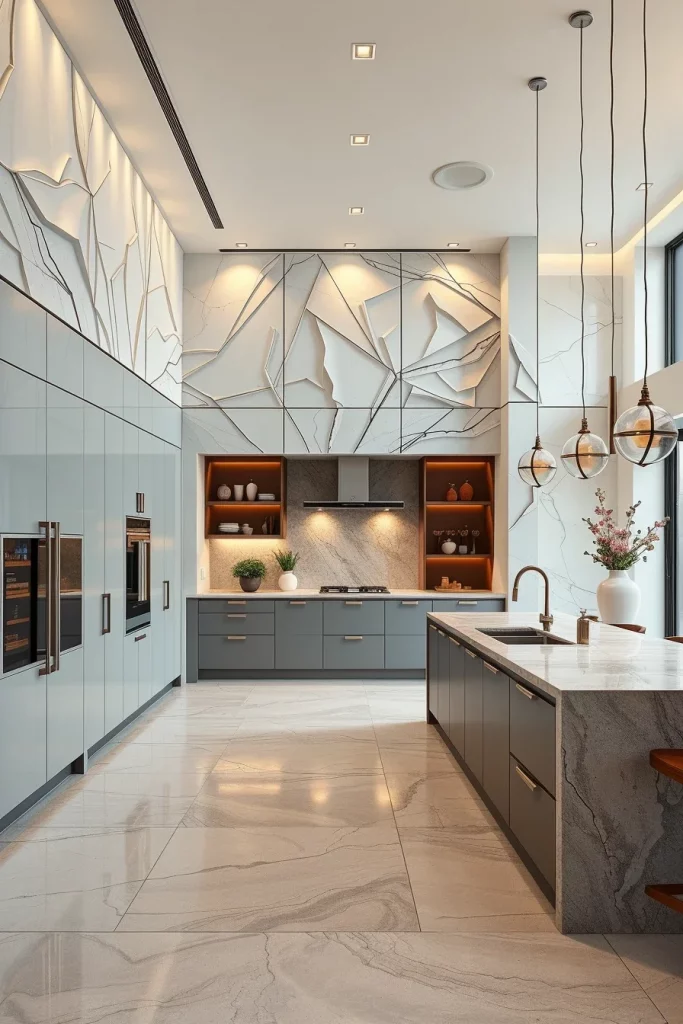
I prefer combining full-height cabinets with integrated appliances, hidden pantry sections, built-in ovens, and discreet display niches. Large uninterrupted surfaces reinforce the modern aesthetic, while subtle variations in texture prevent the design from feeling flat. Handleless doors and precisely aligned panels create a seamless appearance that resembles architectural wall cladding rather than traditional kitchen furniture.
I believe this approach represents one of the best long-term investments in kitchen design. Architectural Digest regularly features kitchens where custom full-height cabinetry provides both exceptional storage and timeless visual appeal. I agree with this philosophy because well-designed storage reduces clutter and allows every decorative element to receive proper attention.
To make the cabinetry even more functional, I would add internal drawer systems, pull-out pantry organizers, and integrated lighting that automatically activates when doors are opened.
Mixed Natural Materials That Create Artistic Contrast
One of my favorite ways to give a kitchen artistic depth is by combining contrasting natural materials. Rather than relying on a single finish, I like layering stone, glass, metal, textured plaster, and refined surfaces that complement one another without creating visual noise. The careful balance between smooth and textured materials gives the room a sculptural quality while maintaining a contemporary appearance.
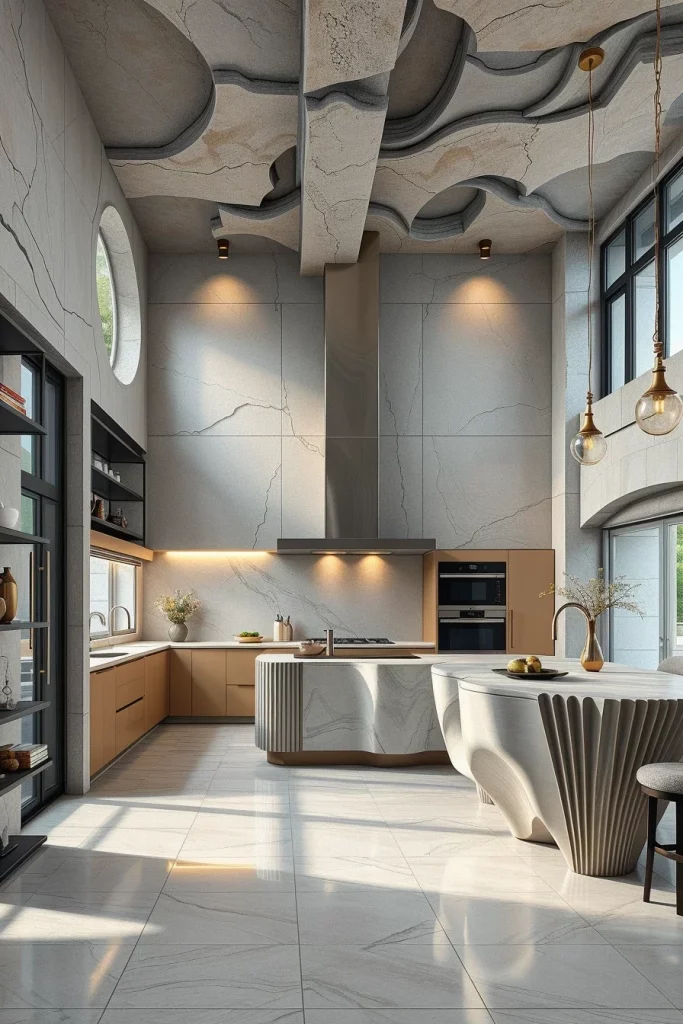
I often pair stone countertops with fluted cabinet fronts, brushed metal fixtures, glass shelving, and textured wall finishes. Large-format surfaces help preserve visual continuity, while contrasting materials highlight specific architectural features such as the island or backsplash. The result feels balanced because every material serves a distinct purpose within the overall composition.
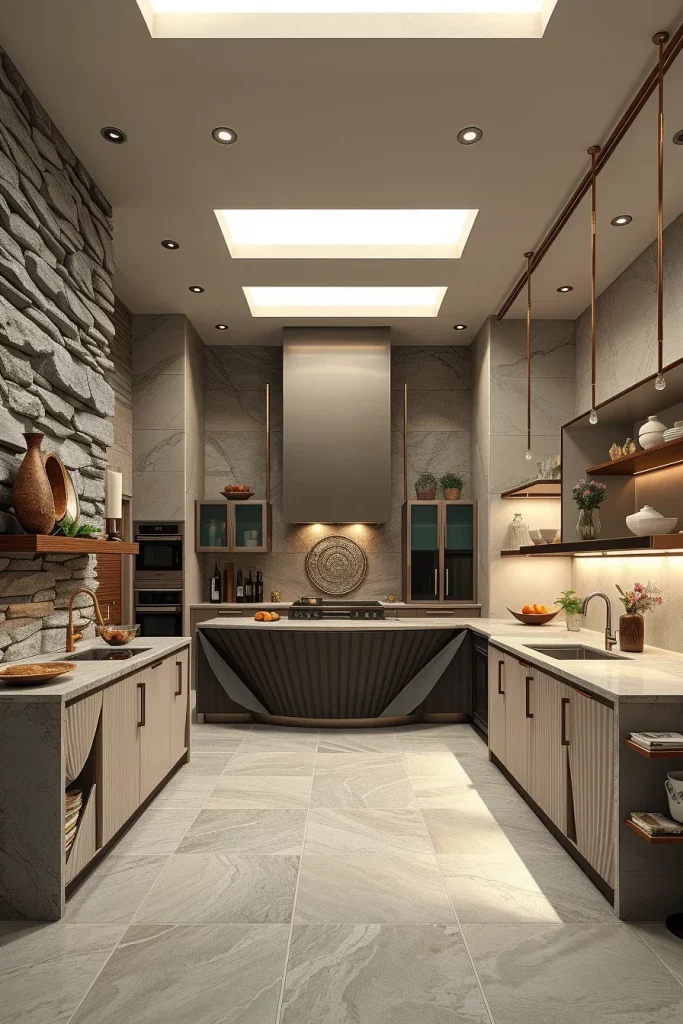
From my perspective, successful material selection is about moderation rather than quantity. Experienced interior designers frequently recommend limiting the number of primary finishes so each one can stand out. I have consistently found that this restrained approach creates interiors that remain elegant for many years instead of following short-lived trends.
To strengthen this concept further, I would introduce handcrafted decorative objects and sculptural accessories that echo the textures already present throughout the kitchen.
Large Windows That Showcase Sculptural Kitchen Interiors
Large windows transform a modern kitchen by filling it with natural light and strengthening the connection between architecture and the surrounding landscape. I always consider daylight one of the most important design elements because it reveals textures, enhances materials, and allows sculptural forms to change appearance throughout the day. Generous glazing also makes even modest kitchens feel significantly larger and more open.
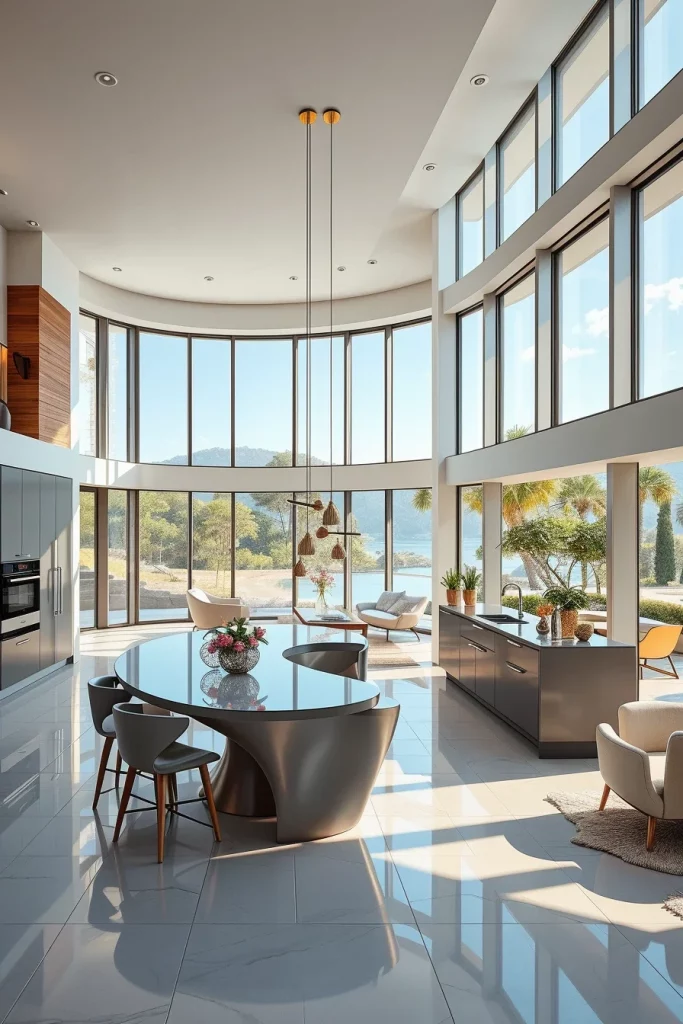
I like arranging the kitchen so the island, cabinetry, and dining area benefit from the available natural light. Slim window frames preserve uninterrupted views while allowing the architecture to remain the focal point. Minimal window treatments, if any, maintain the clean appearance, while reflective surfaces subtly distribute daylight across the entire room.
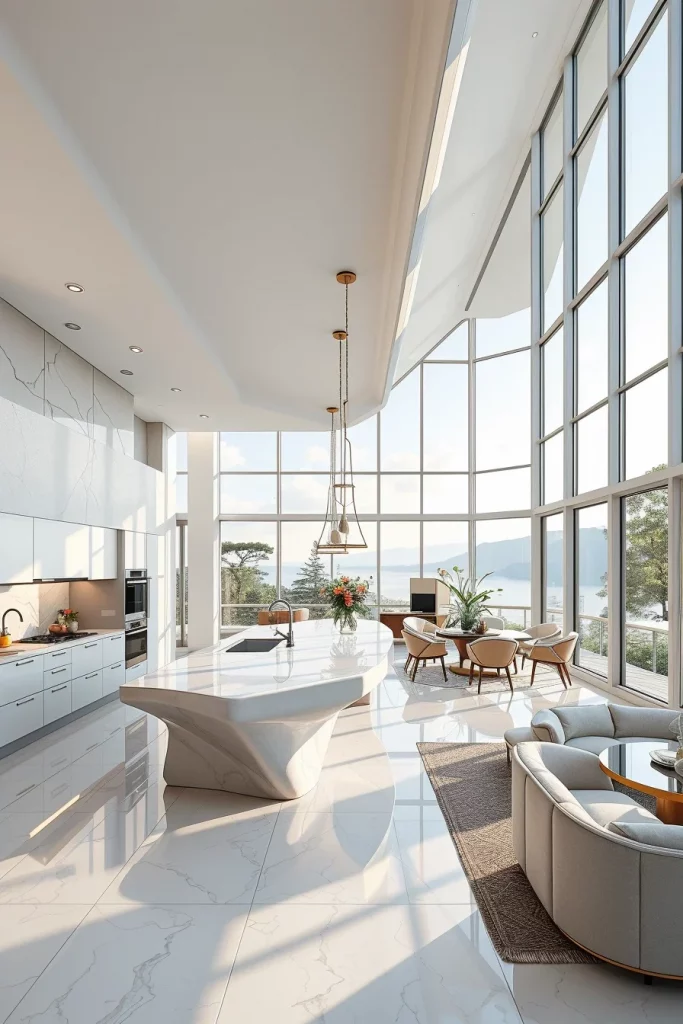
In my experience, natural light has a greater impact on interior quality than almost any decorative accessory. Many professional designers encourage maximizing daylight before introducing additional decorative features because light itself becomes part of the design. I completely agree with this principle since bright interiors feel healthier, more spacious, and more welcoming every day.
To complete this design, I would incorporate carefully planned evening lighting that complements the changing daylight, ensuring the kitchen remains equally inviting after sunset.
Contemporary Seating With Curved Silhouettes
I have found that curved seating instantly softens the geometry of a modern kitchen while introducing a sculptural quality that makes the room feel more inviting. Instead of relying on sharp lines alone, I like to combine rounded kitchen islands with gracefully shaped bar stools and dining chairs that create visual movement throughout the space. This approach helps the kitchen feel balanced while maintaining a refined contemporary appearance. The smooth transitions between architectural elements allow the room to feel cohesive without becoming visually overwhelming.
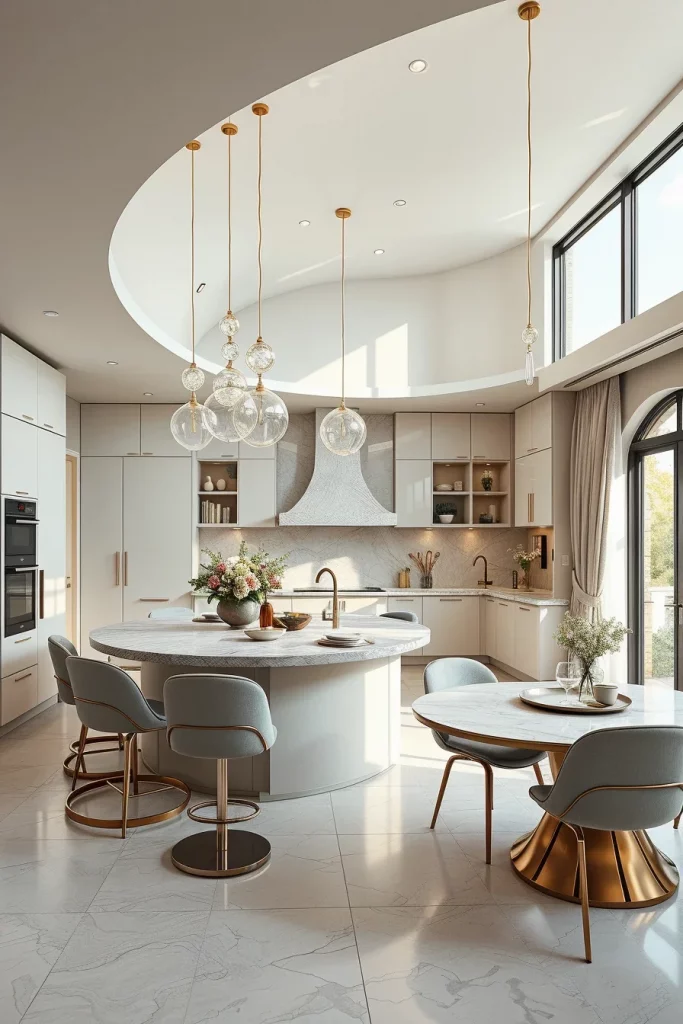
When selecting furniture, I pay close attention to proportion and comfort. Upholstered counter stools with rounded backs, oval dining tables, sculptural pendant lighting, and softly curved cabinetry all contribute to a harmonious environment. I also prefer slim metal bases, textured stone countertops, concealed storage, and integrated shelving that preserve clean sightlines while allowing the furniture to become part of the artistic composition. Every piece serves both a functional and decorative purpose.
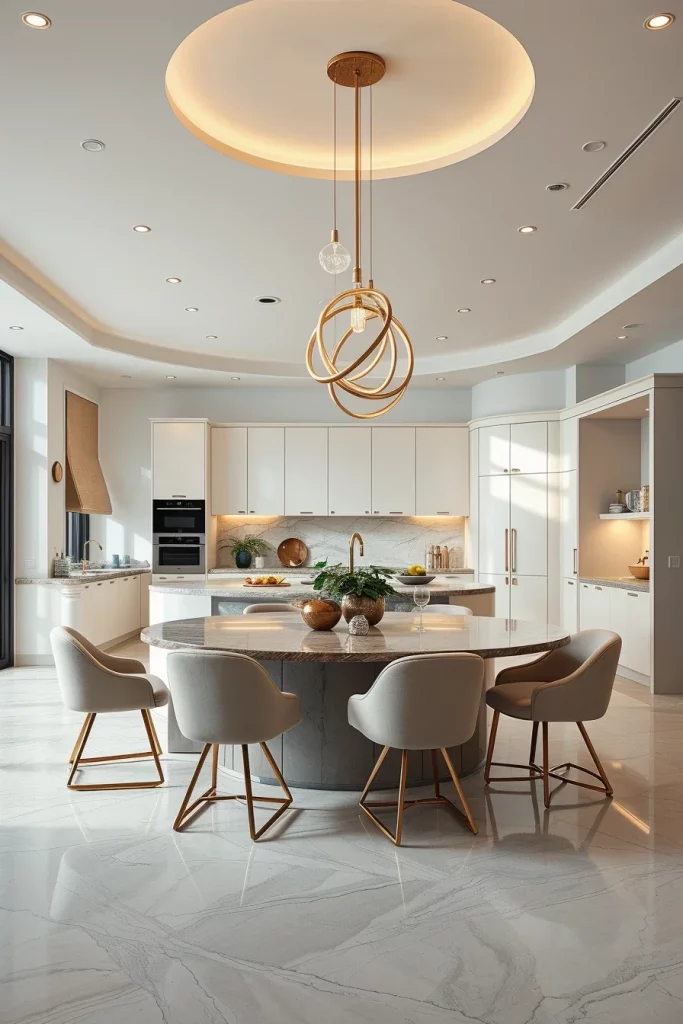
From my experience, many respected American interior designers emphasize that curved furniture creates a more welcoming atmosphere while improving circulation around busy kitchen areas. Publications such as Architectural Digest frequently highlight rounded forms as an effective way to soften minimalist interiors without sacrificing sophistication. I appreciate this philosophy because it encourages timeless design rather than following temporary trends.
If I wanted to enhance this concept further, I would introduce a large abstract artwork, handcrafted ceramic accessories, and subtle layered textiles on nearby seating. These additions would reinforce the artistic identity of the kitchen while preserving the clean contemporary aesthetic.
Hidden Appliances For A Clean Artistic Composition
I believe that concealed appliances are one of the defining characteristics of a sculptural and artistic modern kitchen. When refrigerators, dishwashers, and storage systems disappear behind matching cabinet panels, the entire room becomes visually calm and architectural. The uninterrupted surfaces allow the cabinetry, stone textures, and carefully selected materials to become the primary design features instead of competing with household appliances.
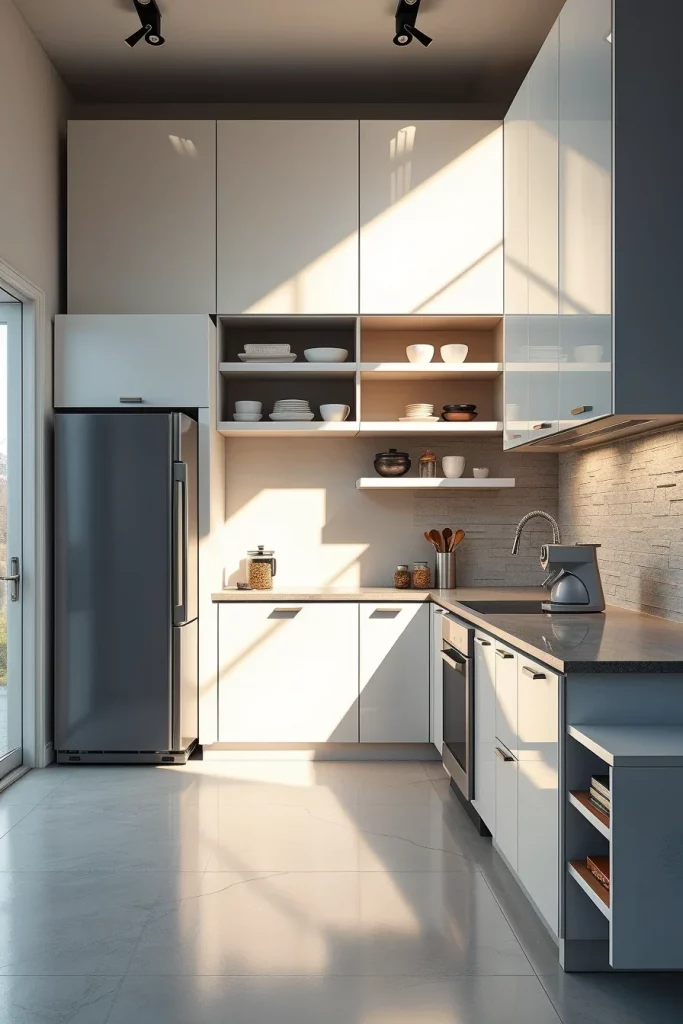
I usually recommend fully integrated refrigerators, hidden coffee stations, built-in ovens, handleless cabinetry, and flush-mounted ventilation systems. Large pantry cabinets can conceal small appliances that would otherwise create visual clutter. Continuous cabinet lines, minimalist hardware, and carefully aligned panels strengthen the artistic composition while making the kitchen easier to maintain and organize.
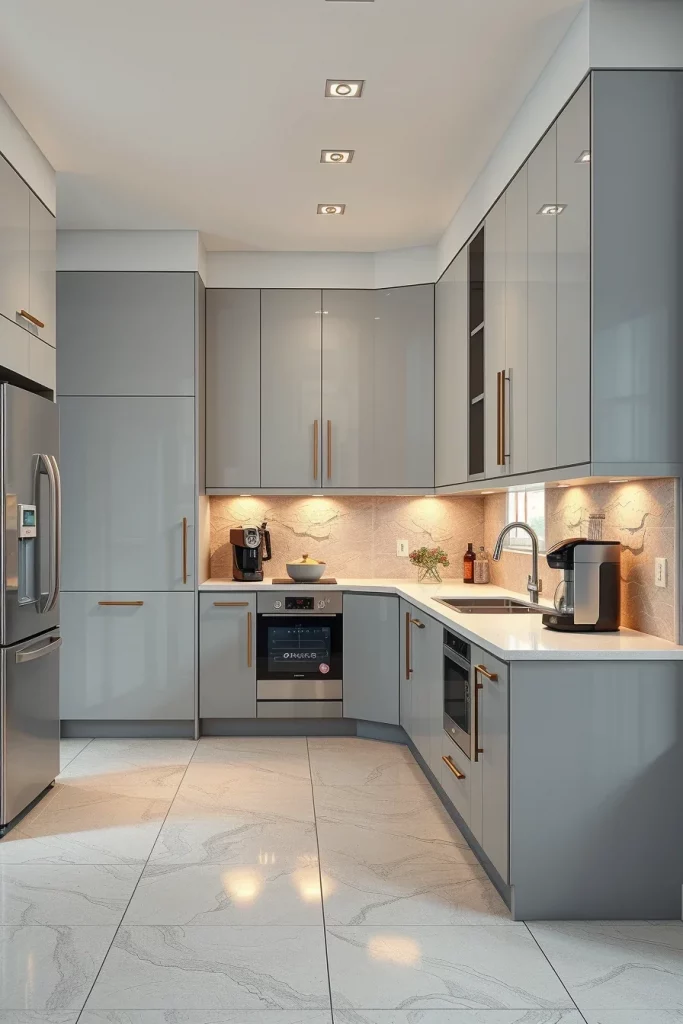
I personally appreciate this approach because it reflects principles often promoted by designers featured in Elle Decor and House Beautiful. They regularly demonstrate that reducing visual distractions creates interiors that feel more luxurious and calming without requiring excessive decoration. I have found that homeowners enjoy kitchens longer when the design focuses on simplicity rather than novelty.
To complete this design, I would include integrated LED cabinet lighting, seamless stone backsplashes, and carefully selected decorative objects displayed on open shelves. These subtle additions maintain the gallery-like appearance while adding warmth and personality.
Layered Ambient Lighting For A Gallery Inspired Atmosphere
Lighting has always been one of the most influential design elements in my projects because it shapes the way every sculptural detail is perceived. Rather than depending on one central fixture, I prefer multiple layers of illumination that create depth throughout the kitchen. Soft indirect lighting highlights architectural forms while allowing natural materials to reveal their texture throughout the day and evening.
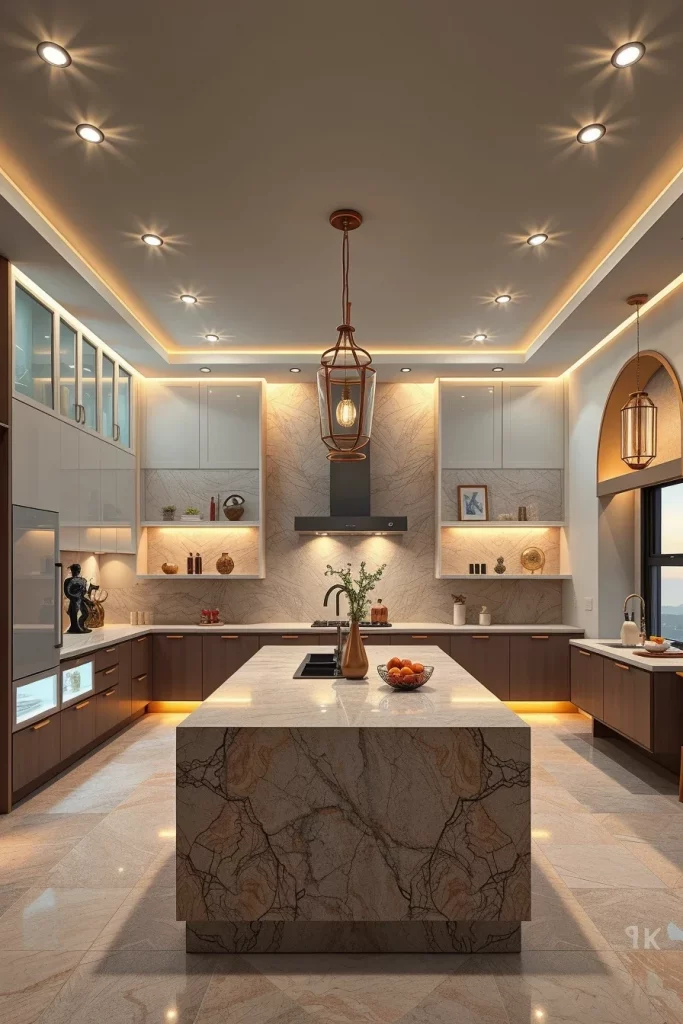
I often combine recessed ceiling lighting with concealed LED strips beneath cabinetry, elegant pendant fixtures above the island, illuminated display shelving, and adjustable accent lighting directed toward artwork or textured walls. Dimmable controls make it possible to adapt the atmosphere for cooking, entertaining, or quiet evenings without changing the design itself.
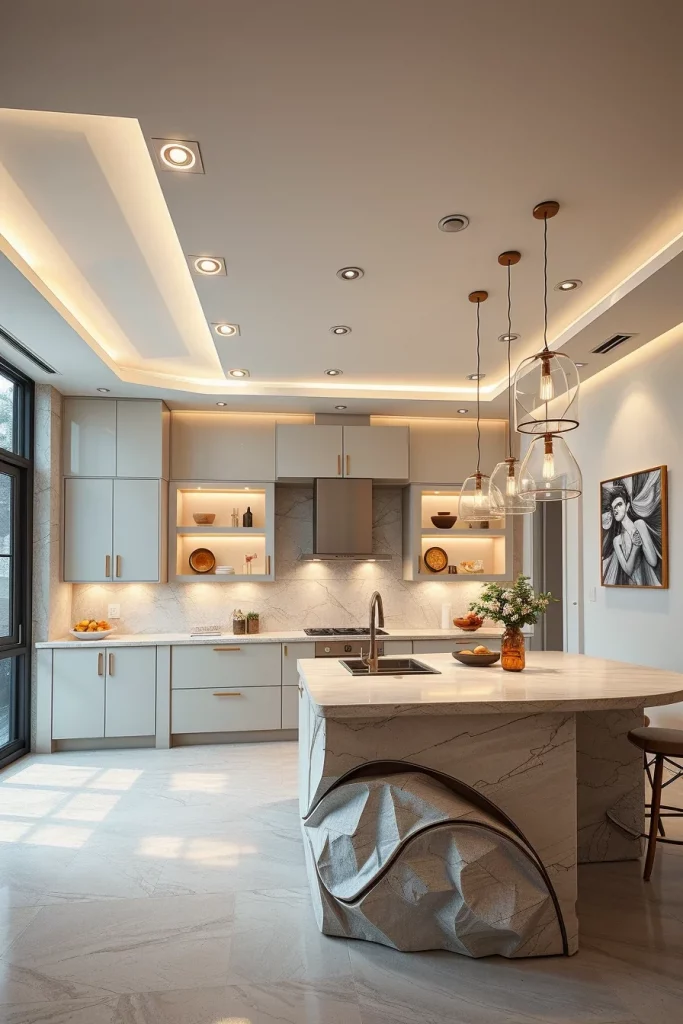
In my opinion, professional designers consistently recommend treating lighting as part of the architecture instead of an afterthought. Architectural Digest frequently showcases kitchens where carefully layered lighting transforms simple interiors into sophisticated gallery-inspired environments. I completely agree because the right lighting elevates every surface, finish, and sculptural element.
If additional refinement were needed, I would introduce decorative wall sconces, illuminated glass display cabinets, and subtle floor-level lighting beneath the island. These features would increase visual depth while maintaining the elegant artistic atmosphere.
Sculptural Range Hoods That Become Design Features
I see the range hood as an opportunity to introduce a genuine sculptural centerpiece into the kitchen rather than simply hiding an essential appliance. Oversized plaster finishes, curved metal forms, or natural stone cladding allow the hood to become an architectural focal point that anchors the entire room. This single feature often defines the personality of the kitchen while remaining fully functional.
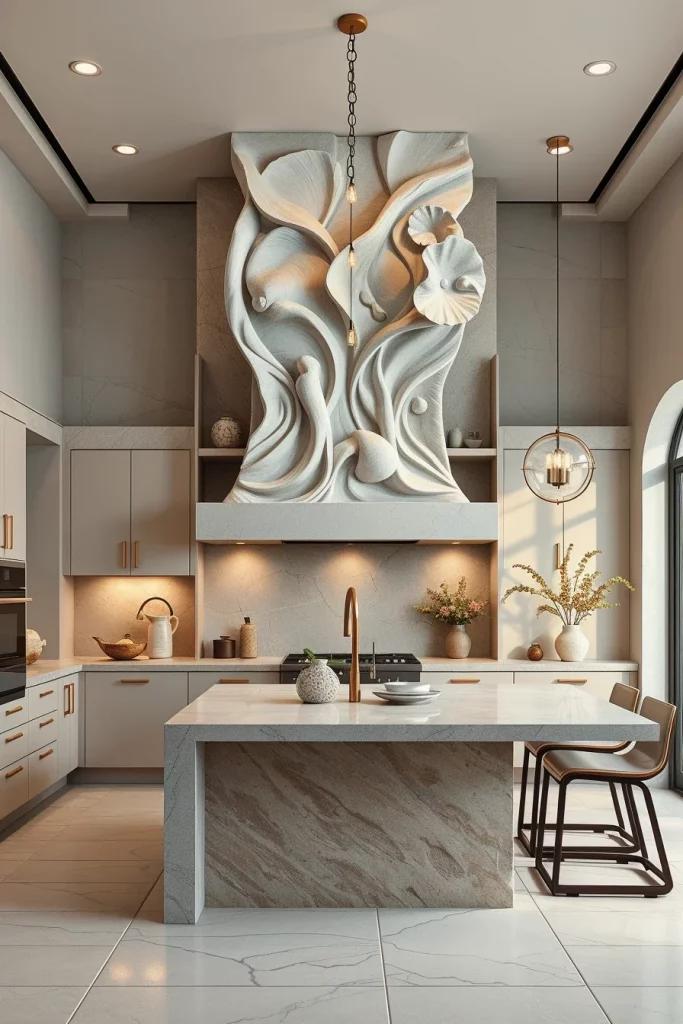
When designing around a statement hood, I prefer complementary cabinetry with restrained detailing so the focal point receives the attention it deserves. Stone countertops with dramatic veining, integrated shelving, minimalist faucets, and carefully selected pendant lights support the composition without competing with it. Every surrounding element should reinforce the artistic balance of the design.
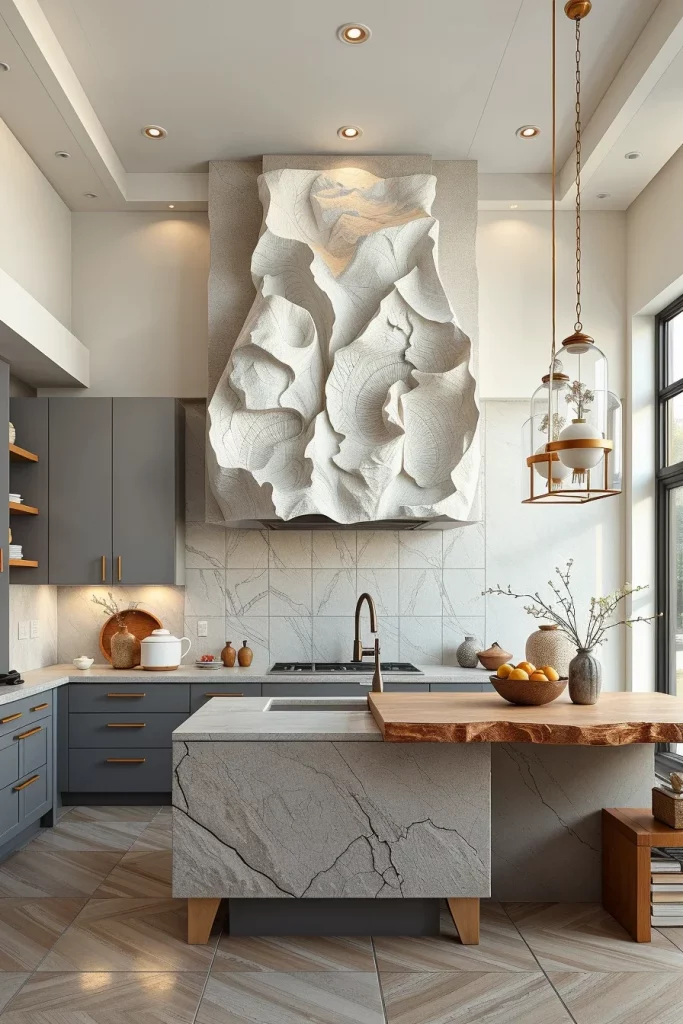
I have noticed that many celebrated American designers use custom range hoods to create memorable kitchens with lasting visual impact. Their projects demonstrate that sculptural elements do not need excessive ornamentation to feel distinctive. I appreciate this restrained approach because it produces interiors that remain elegant for many years.
To strengthen this section further, I would add handcrafted decorative pottery, oversized cutting boards made from premium materials, and subtle open shelving displaying carefully curated kitchen accessories. These additions create warmth while preserving the sculptural character of the space.
Bold Kitchen Layouts Designed Around Artistic Balance
I believe that the overall layout determines whether a sculptural kitchen feels harmonious or chaotic. Instead of arranging cabinets simply for storage, I focus on creating balanced compositions where islands, walkways, and architectural elements relate naturally to one another. The result is a kitchen that functions efficiently while feeling like a carefully designed interior rather than a collection of individual components.
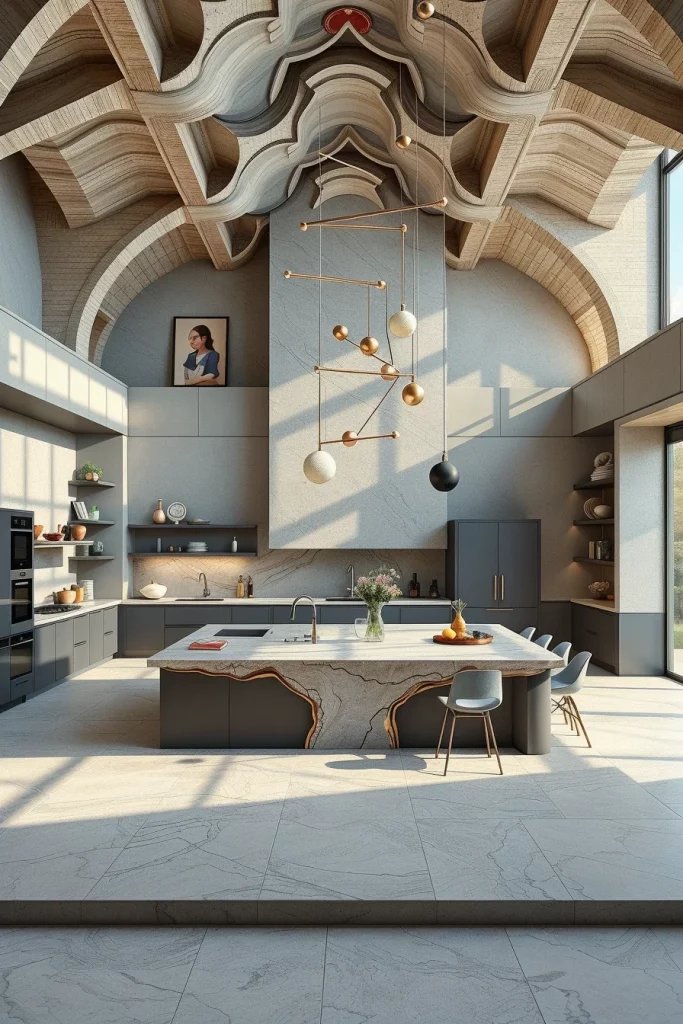
I often incorporate oversized kitchen islands, floating shelving, symmetrical cabinetry arrangements, generous circulation paths, concealed storage, integrated dining spaces, and floor-to-ceiling cabinet walls. Materials such as natural stone, textured plaster, matte finishes, and elegant metallic accents reinforce the architectural quality while supporting everyday functionality. Every decision contributes to a unified visual composition.
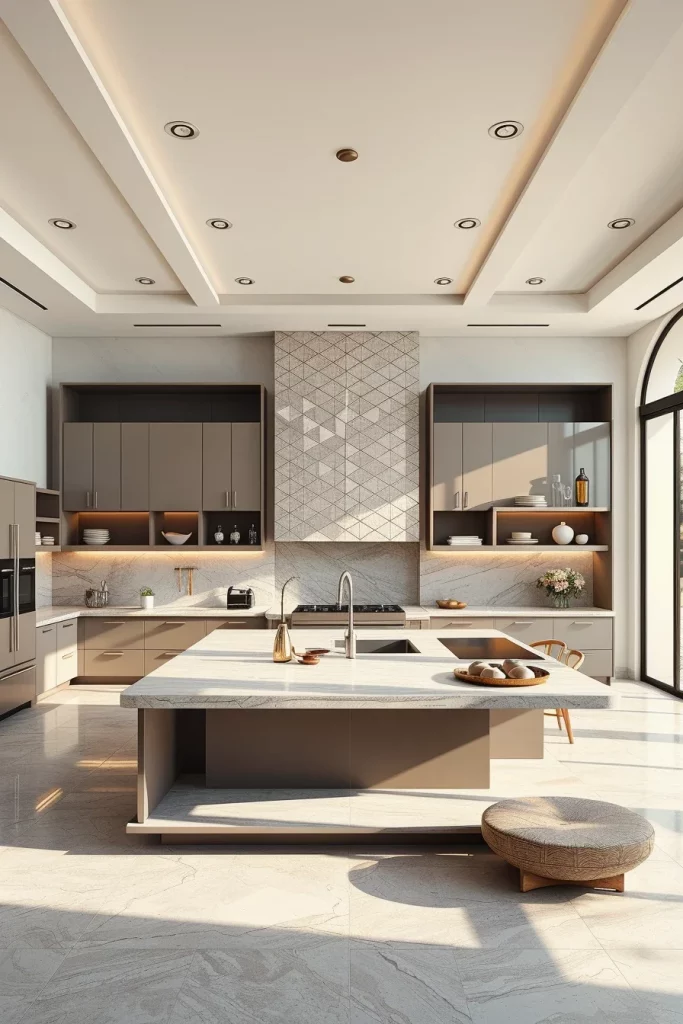
From my perspective, successful modern kitchens always balance artistic expression with practical living. Many projects published by House Beautiful demonstrate that even ambitious contemporary layouts remain comfortable because circulation, storage, and work zones receive equal attention alongside aesthetics. I follow the same principle whenever evaluating a kitchen design.
To complete this concept, I would incorporate a sculptural dining table positioned near the kitchen, oversized contemporary artwork, carefully selected decorative lighting, and subtle architectural ceiling details. Together, these additions would strengthen the connection between artistic design and everyday living.
Elegant Metallic Accents That Elevate Modern Kitchens
I have always believed that metallic accents can transform a modern kitchen from simple to unforgettable when they are used with restraint. Instead of covering every surface with reflective finishes, I prefer introducing carefully selected metallic details that emphasize the sculptural architecture of the room. Warm brass, brushed stainless steel, champagne bronze, or matte black metal finishes create elegant contrast against stone, plaster, and smooth cabinetry while preserving the artistic character of the space. This balanced approach allows the kitchen to feel sophisticated without becoming visually busy.
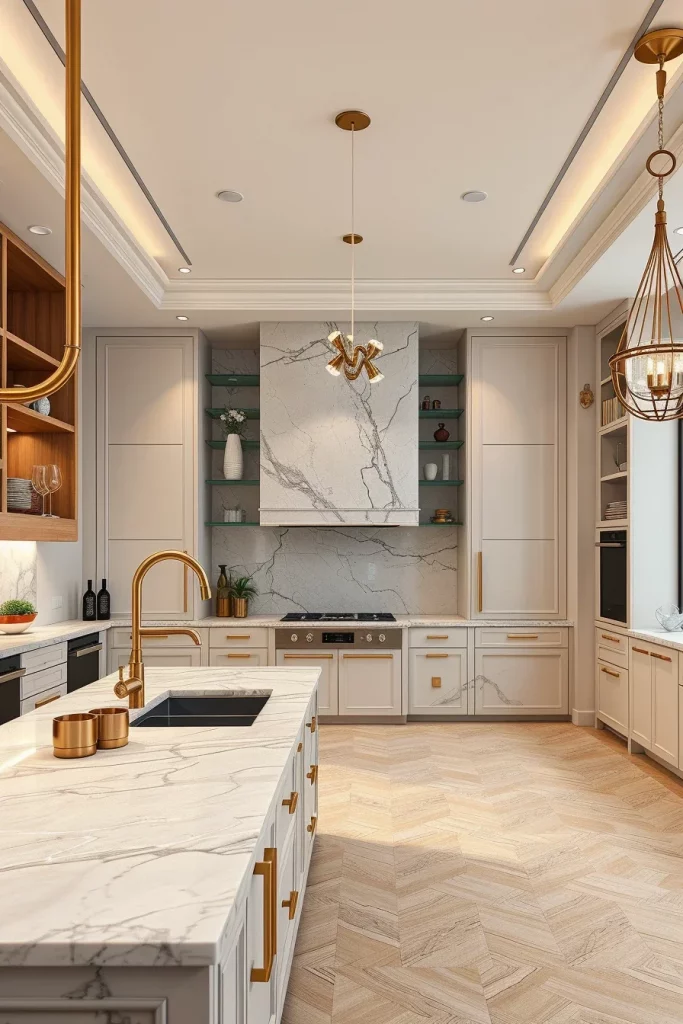
When planning this type of interior, I usually include slim cabinet handles, minimalist faucets, sculptural pendant lighting, elegant shelving brackets, metal-framed glass cabinets, and subtle furniture bases finished in complementary metallic tones. These elements create rhythm throughout the kitchen while highlighting the surrounding materials. I also appreciate combining metallic finishes with natural stone countertops, large-format backsplashes, and seamless cabinetry because the combination feels refined and timeless rather than overly decorative.
In my experience, leading designers frequently featured by Architectural Digest recommend repeating metallic finishes consistently instead of mixing too many different tones. I completely agree with this principle because visual consistency allows every detail to contribute to the overall composition. Rather than drawing attention individually, each metallic element supports the sculptural identity of the kitchen and creates an atmosphere that remains elegant for many years.
To make this space even more complete, I would add handcrafted metallic decorative bowls, understated wall art with metallic frames, and carefully selected hardware that matches every visible fixture. These finishing details strengthen the artistic composition while maintaining a clean contemporary aesthetic.
Soft Neutral Tones That Emphasize Sculptural Details
I often recommend soft neutral color palettes because they allow sculptural forms to become the true focal point of a modern kitchen. Shades of warm white, soft beige, greige, taupe, sand, and light gray create a calming backdrop that highlights architectural details instead of competing with them. The absence of bold colors makes every curved surface, textured wall, and carefully designed furniture piece appear more expressive. This creates a kitchen that feels peaceful while remaining visually rich.
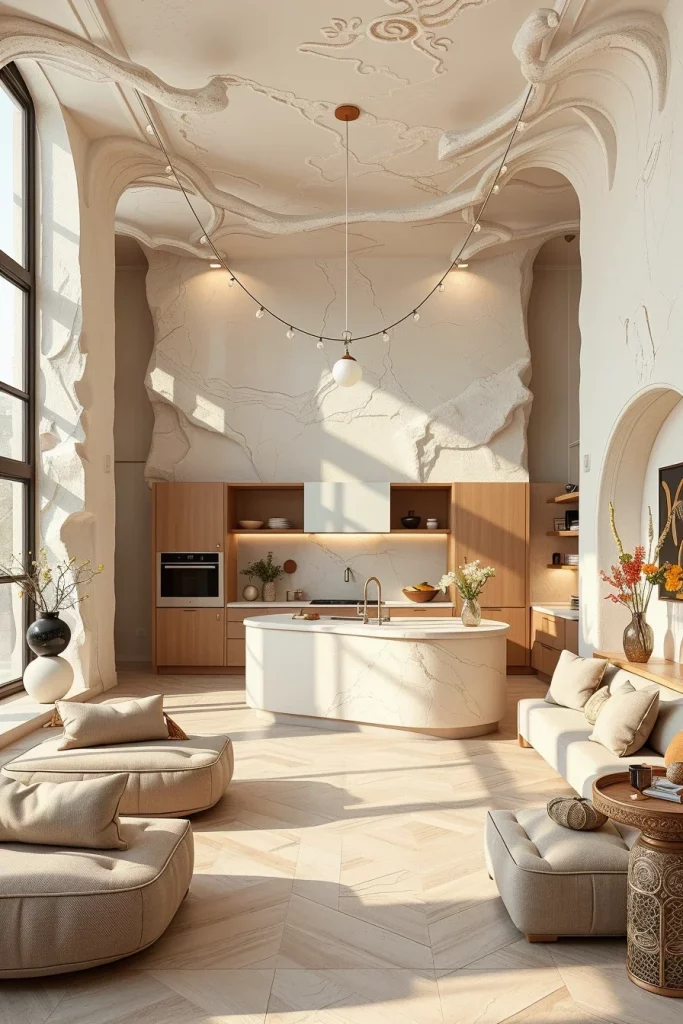
When designing with neutral tones, I prefer combining textured plaster walls, matte cabinetry, natural stone islands, subtle wood-look flooring, integrated shelving, and softly upholstered seating. Layering materials instead of colors adds depth without disrupting the clean artistic composition. Decorative ceramics, linen window treatments, and minimalist accessories further enrich the interior while preserving its restrained elegance.
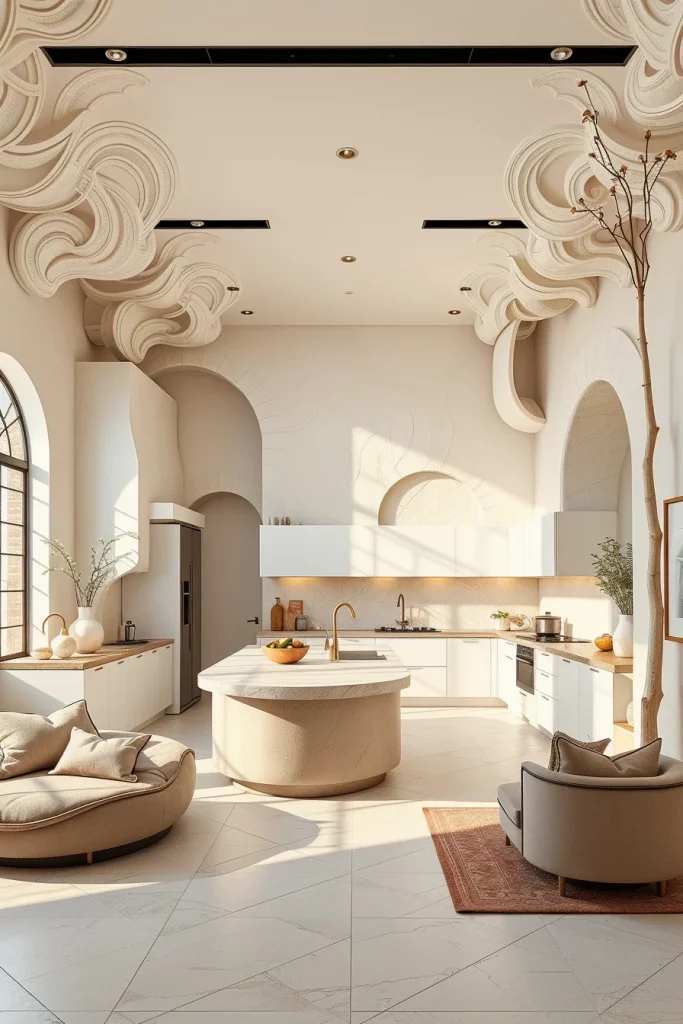
I have noticed that many respected American designers favor neutral palettes because they age gracefully and adapt easily to changing decorative preferences. Publications such as House Beautiful often demonstrate that restrained color schemes create interiors with lasting appeal. I share this philosophy because timeless design is always more valuable than following short-lived color trends.
If I wanted to enhance this design further, I would introduce textured artwork, sculptural vases, and carefully positioned indirect lighting to create subtle shadows across the architectural surfaces. These additions would emphasize the sculptural quality of the kitchen without overwhelming the minimalist design.
Bespoke Kitchen Elements Inspired By Contemporary Sculpture
One of my favorite approaches to kitchen design is incorporating custom-made elements that resemble contemporary sculpture. Rather than relying entirely on standard cabinetry, I prefer creating unique architectural features that reflect the homeowner’s personality while maintaining excellent functionality. Curved islands, custom shelving, integrated seating, and artistic cabinetry transform the kitchen into a space that feels individually crafted instead of mass-produced.
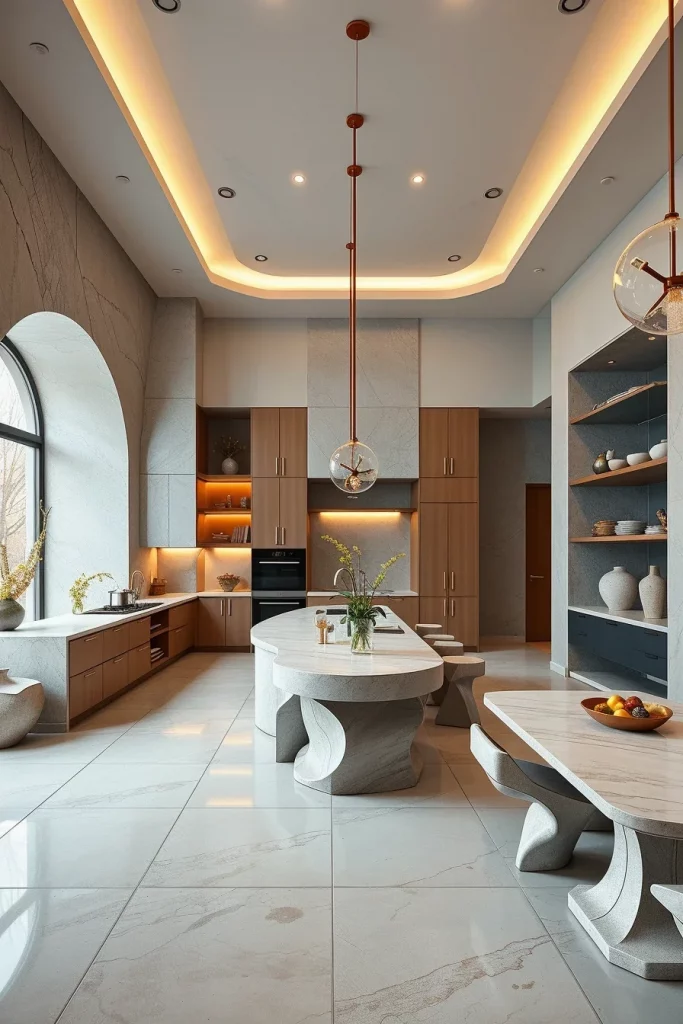
I usually recommend custom stone islands with flowing edges, floating shelving, hand-finished cabinet fronts, integrated dining tables, sculptural lighting fixtures, and uniquely designed storage solutions. Every bespoke element should complement the proportions of the room while improving everyday convenience. Carefully selected materials such as natural stone, textured plaster, glass, and brushed metal help reinforce the artistic identity of the entire kitchen.
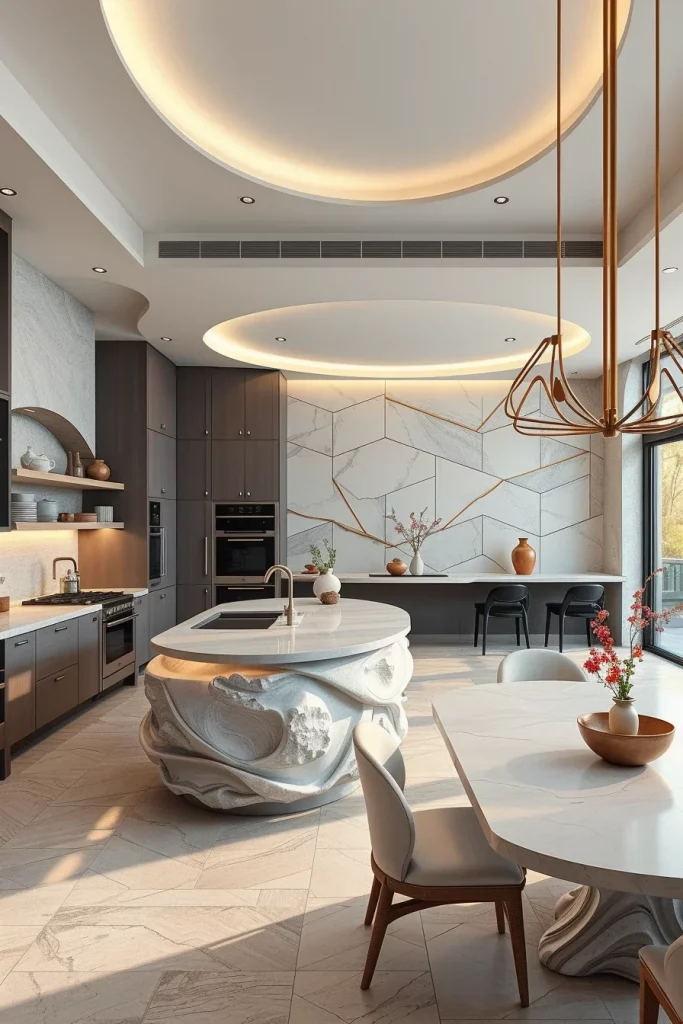
From my perspective, custom design creates emotional value that extends beyond aesthetics alone. Many designers featured in Elle Decor emphasize that bespoke interiors often remain meaningful because they reflect the lifestyle of the people who live there instead of simply following popular trends. I find this advice especially valuable when designing artistic kitchens intended to remain beautiful for decades.
To complete this concept, I would include handcrafted decorative accessories, custom wall niches, and integrated display shelving for ceramics or artwork. These additions reinforce the feeling that every detail has been intentionally designed as part of one unified artistic composition.
Harmonizing Art, Function, And Modern Kitchen Design
I believe the most successful sculptural kitchens never sacrifice functionality for appearance. Every artistic feature should improve the overall experience of using the space while contributing to its architectural beauty. Careful planning ensures that cooking, entertaining, storage, and daily routines remain effortless even within a highly expressive interior. This balance is what truly defines exceptional modern kitchen design.
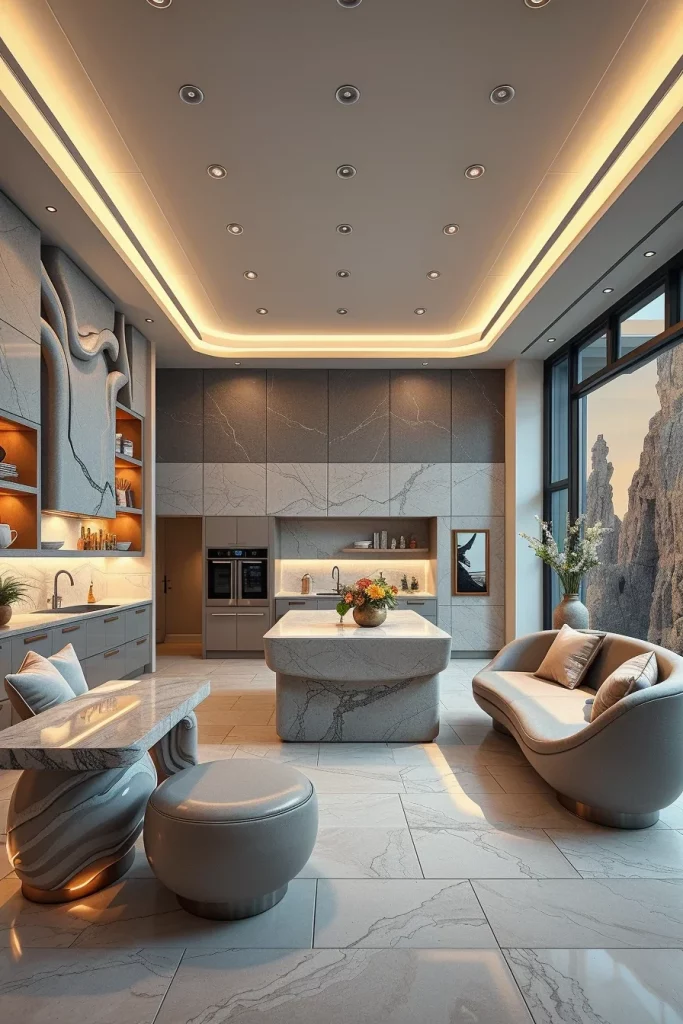
When organizing the interior, I focus on ergonomic work zones, generous storage, concealed appliances, sculptural lighting, comfortable seating, and high-quality materials that withstand everyday use. Functional layouts paired with elegant finishes allow every decorative element to serve a practical purpose as well. I also value generous circulation space because it allows the sculptural forms to be appreciated from every angle.
Personally, I admire the philosophy promoted by many professional interior designers who argue that beauty and practicality should never compete with one another. The finest kitchens consistently demonstrate that thoughtful planning produces spaces which are both visually inspiring and exceptionally comfortable. I have found this principle to be true regardless of the home’s size.
To enrich this environment even further, I would add carefully curated artwork, subtle greenery, architectural ceiling details, and layered lighting that changes throughout the day. These finishing touches strengthen the relationship between art, architecture, and daily living.
Timeless Sculptural And Artistic Modern Kitchen Ideas For Every Home
In my experience, timeless kitchens are created by focusing on proportion, material quality, and thoughtful composition rather than temporary design trends. Sculptural forms, elegant finishes, and carefully selected furniture create interiors that remain relevant for many years. Whether designing a spacious open-plan kitchen or a compact urban layout, the same principles of balance, simplicity, and artistic expression continue to apply.
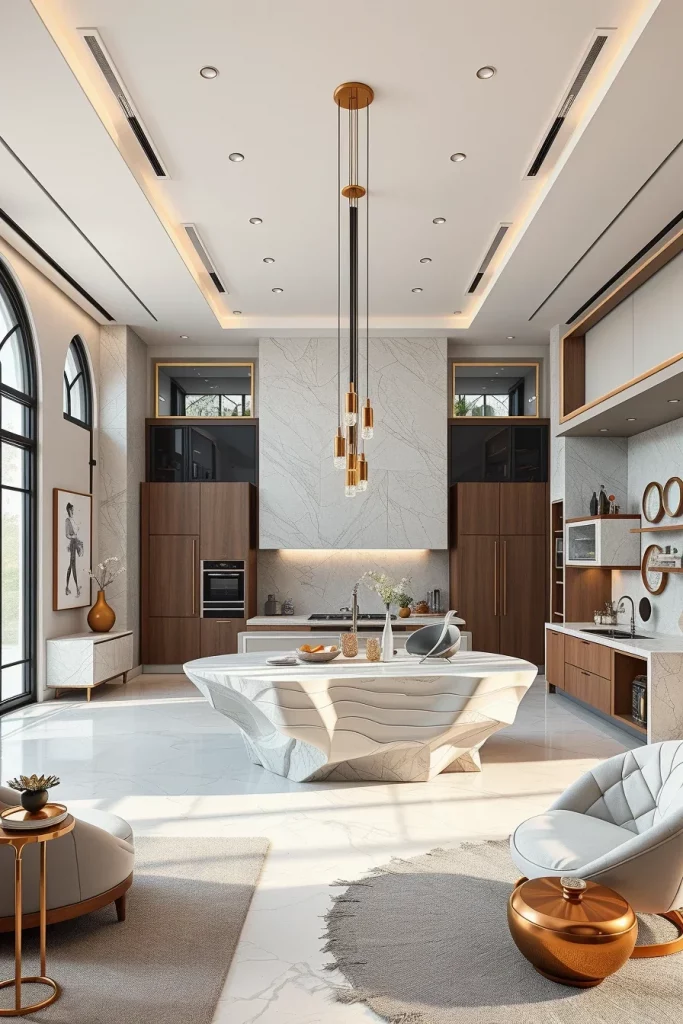
I prefer combining sculptural islands, integrated storage, concealed appliances, sophisticated lighting, curved seating, premium stone surfaces, and restrained decorative accessories into one cohesive composition. Every material, texture, and architectural feature should contribute to a unified visual story while supporting everyday comfort. This approach creates a kitchen that feels luxurious without unnecessary excess.
I believe that investing in timeless design is always worthwhile because it creates lasting satisfaction instead of short-term excitement. Many respected American design publications consistently highlight kitchens that prioritize craftsmanship, enduring materials, and architectural quality over rapidly changing trends. I fully support this perspective because beautiful design should remain enjoyable for decades rather than a single season.
If I were completing this kitchen today, I would finish the space with carefully selected contemporary artwork, handcrafted ceramics, subtle metallic accents, layered ambient lighting, and comfortable seating that invites family and guests to gather. These final details would reinforce the sculptural identity of the interior while ensuring it remains practical, welcoming, and visually unforgettable.
A sculptural and artistic modern kitchen proves that practical spaces can also be visually inspiring. By combining elegant forms, innovative materials, and thoughtful details, you can create a kitchen that feels both functional and timeless. Whether you’re planning a complete renovation or looking for small design upgrades, these ideas offer endless inspiration for crafting a space that reflects your personal style while making every day more enjoyable.