
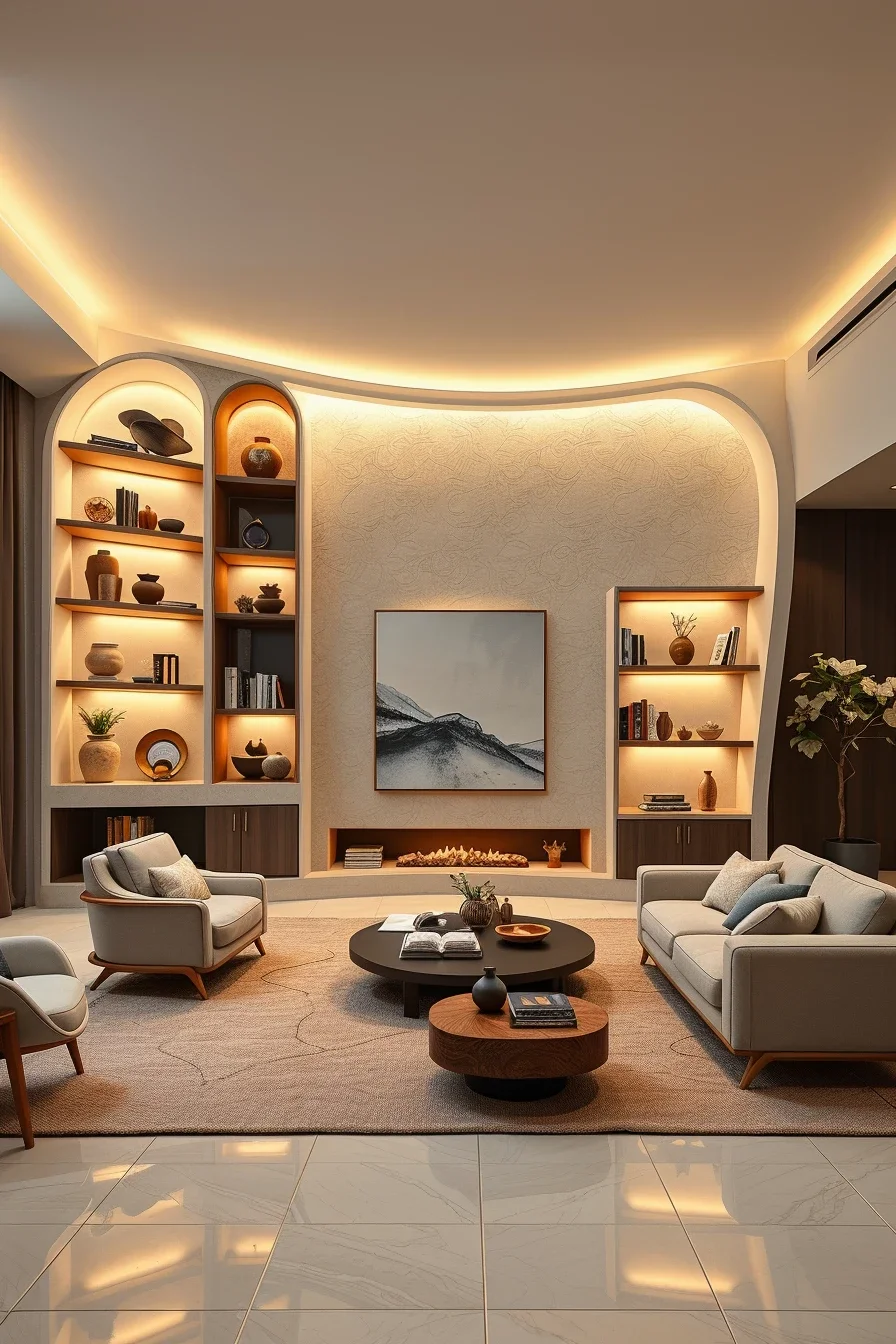
A sculptural living room transforms everyday interiors into artistic spaces filled with movement, texture, and timeless elegance. Instead of relying on excessive decoration, this design style highlights curved furniture, organic forms, and statement pieces that naturally draw attention. Soft silhouettes, refined materials, and carefully layered neutral tones work together to create a room that feels both sophisticated and inviting. Whether you’re designing a spacious home or updating a smaller living area, sculptural elements can add depth and personality without overwhelming the space. From eye-catching lighting to beautifully shaped coffee tables and architectural details, every feature contributes to a balanced and cohesive look. This guide explores inspiring sculptural living room ideas that will help you create a modern interior with lasting visual appeal.
Sculptural Living Room Ideas That Redefine Modern Comfort
When I design a sculptural living room, I always begin with the architecture of the space instead of the furniture. Gentle curves, generous proportions, and an open layout immediately create a calming atmosphere that feels intentional rather than crowded. I like interiors where every element appears carefully placed, allowing the room to breathe while maintaining visual interest. Sculptural design is not about filling every corner but about letting each piece contribute to the overall composition.
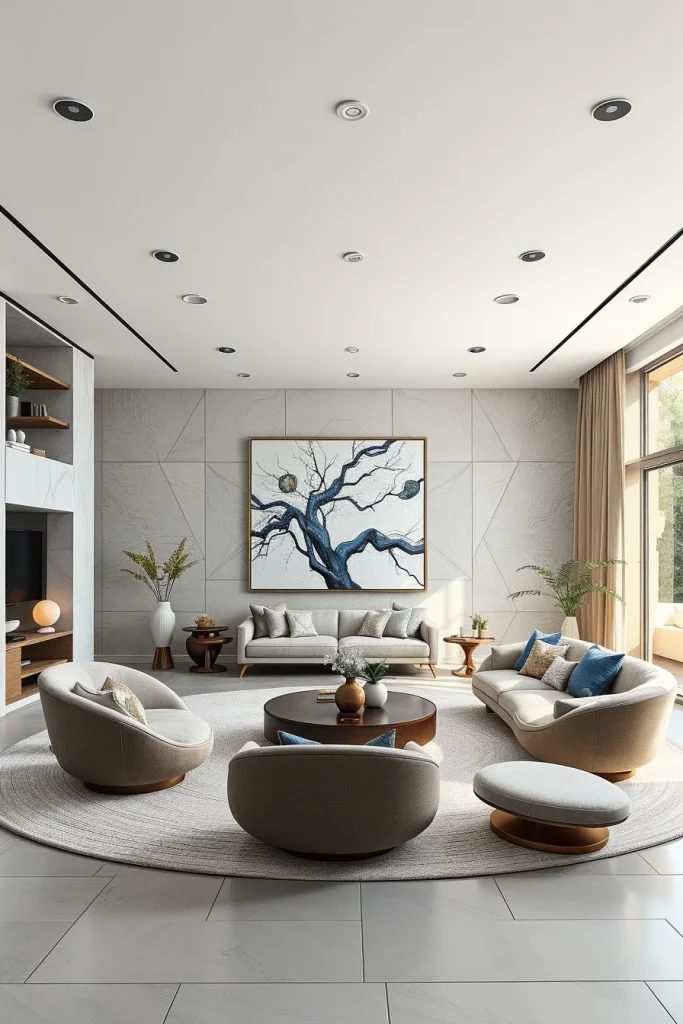
I usually combine rounded seating, oversized area rugs, artistic lighting, and furniture with smooth silhouettes. A low-profile sofa paired with a softly curved coffee table immediately establishes the character of the room. Built-in shelving with clean lines keeps storage practical without distracting from the sculptural aesthetic, while textured fabrics add warmth that prevents the interior from feeling too minimal.
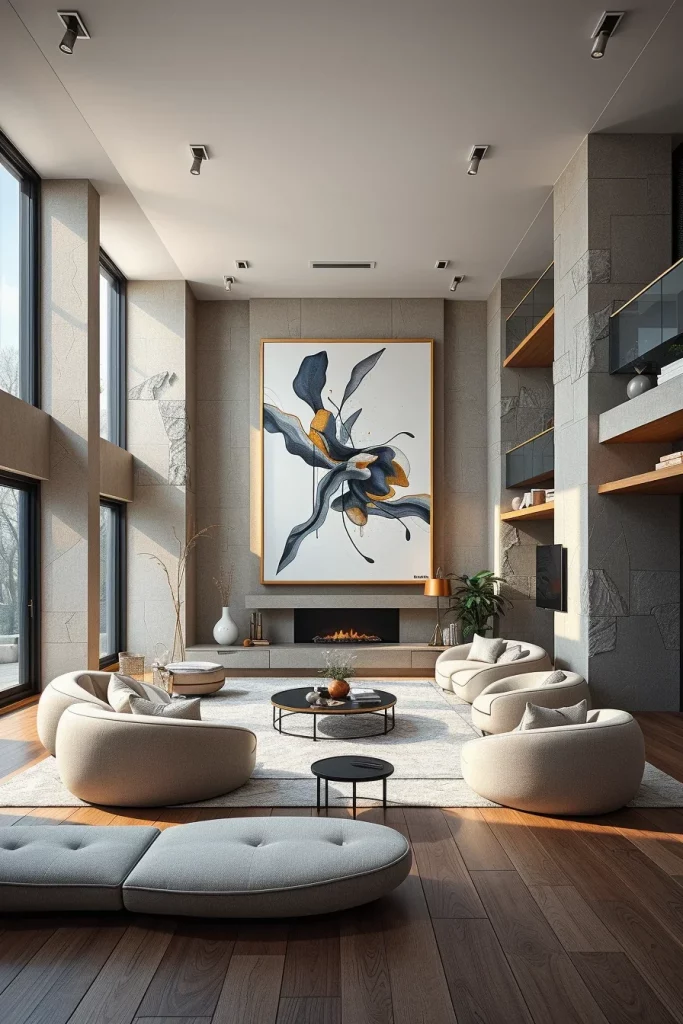
Many American designers featured in Architectural Digest have emphasized that timeless interiors rely on proportion instead of excessive decoration, and I completely agree with that philosophy. I have found that choosing fewer but better-designed furnishings creates a space that remains stylish long after trends change. The room feels welcoming because every object has a purpose instead of competing for attention.
If I wanted to complete this design even further, I would include large-scale artwork with abstract forms, handcrafted ceramic décor, and subtle natural textures that reinforce the artistic personality of the living room without overwhelming it.
Curved Sofas As The Centerpiece Of A Sculptural Living Room
Whenever I think about a sculptural living room, the curved sofa is the first feature that comes to mind. Unlike traditional straight seating, a curved sofa naturally encourages conversation while introducing movement into the room. Its flowing silhouette softens the architecture and instantly makes the space feel more relaxed and sophisticated.
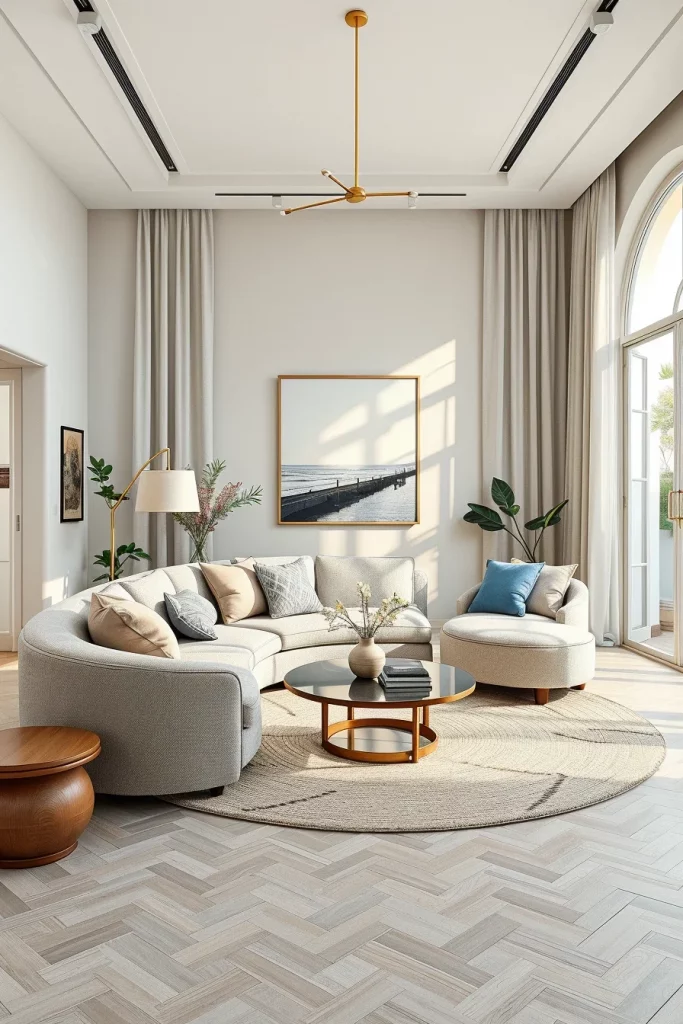
I prefer upholstery in soft boucle, velvet, or textured woven fabrics because these materials highlight the elegant shape of the furniture. I usually pair the sofa with a rounded coffee table, a large circular rug, and side tables featuring organic forms. This combination creates balance while maintaining enough negative space for the room to feel open and airy.
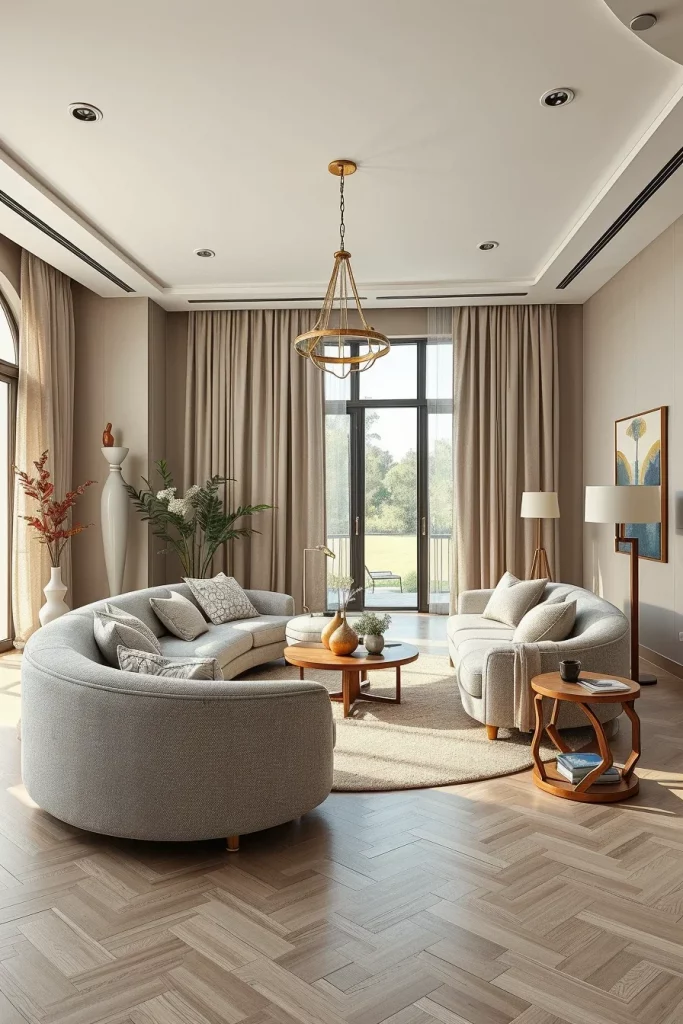
Interior designers frequently recommend repeating curved elements throughout a room instead of relying on only one statement piece, and I have found this advice extremely helpful. Even small additions such as rounded ottomans, sculptural floor lamps, or arched shelving reinforce the overall concept while preventing the sofa from looking isolated within the space.
To elevate this section further, I would also introduce layered lighting, oversized decorative cushions in neutral tones, and soft linen curtains that emphasize the graceful lines of the furniture throughout the day.
Statement Coffee Tables With Artistic Shapes
I often consider the coffee table the artistic centerpiece that connects every seating element within a sculptural living room. Rather than choosing a standard rectangular design, I look for tables with curved edges, asymmetrical bases, or monolithic forms that immediately attract attention while remaining practical for everyday living.
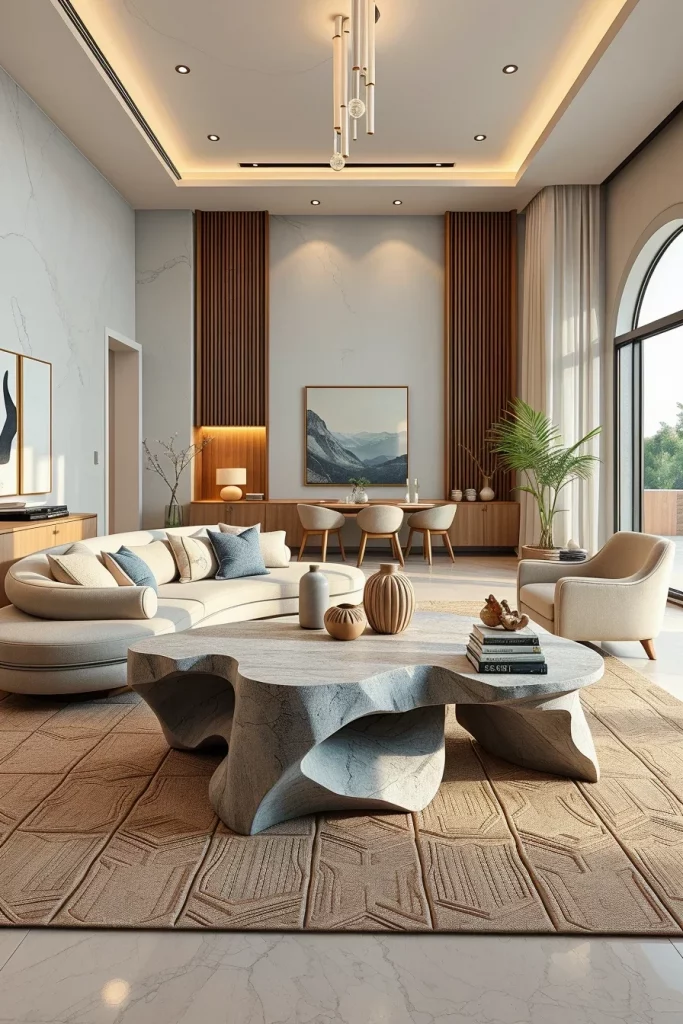
Natural stone, polished plaster finishes, solid wood, and smooth composite materials all work beautifully in sculptural interiors. I usually combine the coffee table with carefully selected decorative objects such as ceramic bowls, stacked design books, and handcrafted vases. Keeping the styling simple allows the table itself to become the visual focus instead of hiding its unique craftsmanship beneath unnecessary accessories.
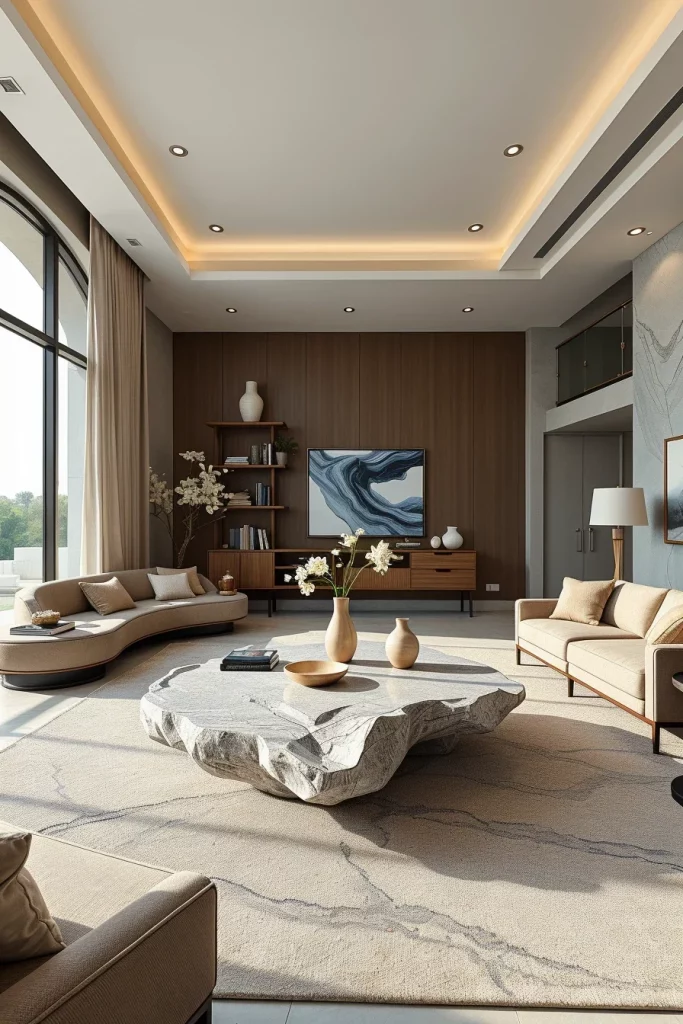
Many interior editors from respected design publications recommend investing in one signature furniture piece instead of purchasing several decorative accessories, and I have experienced the same result in my own projects. A beautifully designed coffee table contributes more character than multiple small decorative items scattered throughout the room.
To make this area feel even more cohesive, I would include seating positioned at comfortable distances around the table, allowing circulation to remain effortless while preserving the gallery-inspired appearance of the interior.
Soft Organic Forms That Create Visual Flow
One of the defining characteristics of a sculptural living room is the use of soft organic forms that naturally guide the eye from one area to another. I always appreciate how curved furniture, rounded corners, and flowing architectural details reduce visual tension while making even large spaces feel intimate and welcoming.
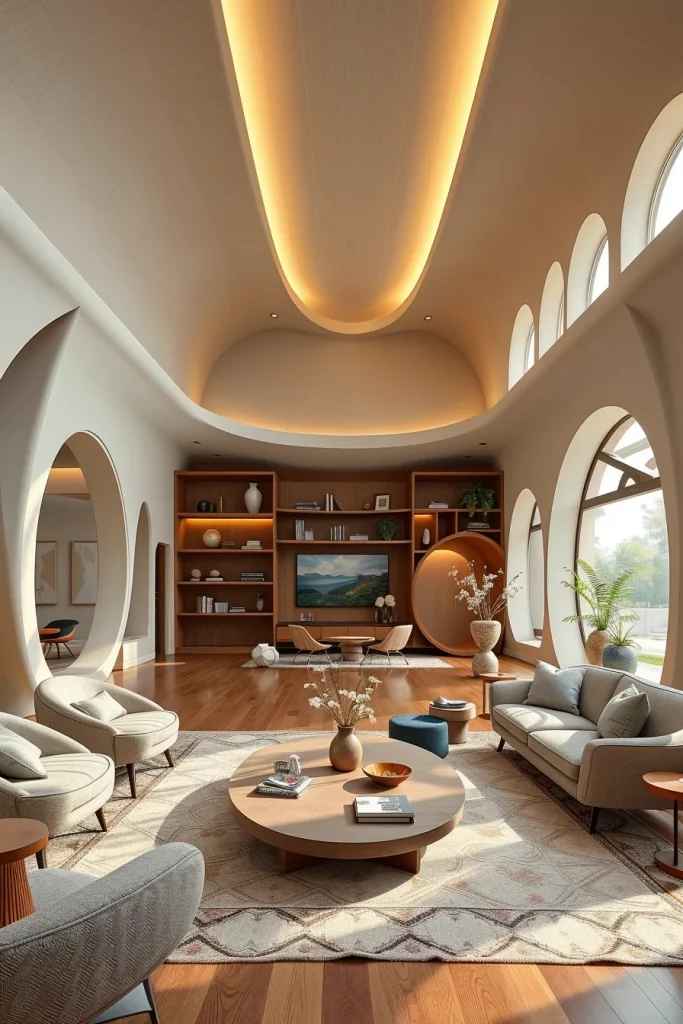
I usually introduce these organic forms through curved sofas, oval coffee tables, rounded shelving, arched doorways, and oversized decorative mirrors. Soft-edged furniture works especially well alongside textured rugs and comfortable seating because every surface contributes to the same harmonious language of design. Even decorative accessories with irregular silhouettes reinforce the feeling of effortless movement.
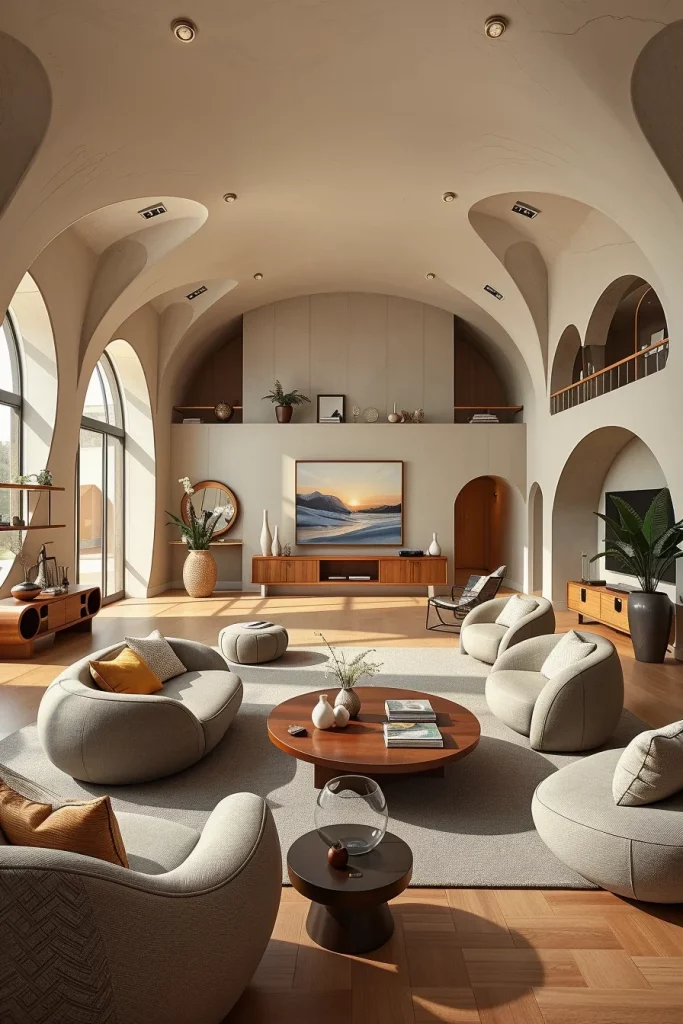
Personally, I have found that rooms with consistent curves create a more relaxing atmosphere than interiors dominated by sharp angles. Several contemporary designers have discussed how organic forms support both visual comfort and emotional well-being, and I believe this explains why these interiors remain appealing over time instead of quickly feeling outdated.
If I wanted to enhance this concept further, I would introduce subtle indirect lighting that follows architectural curves, allowing shadows to emphasize the sculptural qualities of the room throughout the evening.
Layering Rounded Furniture For A Gallery-Like Space
Creating a gallery-inspired sculptural living room does not require expensive artwork alone. I focus first on layering rounded furniture with different scales and proportions so that every piece contributes to an elegant composition. Instead of arranging furniture in straight rows, I prefer slightly curved layouts that encourage conversation while maintaining visual balance.
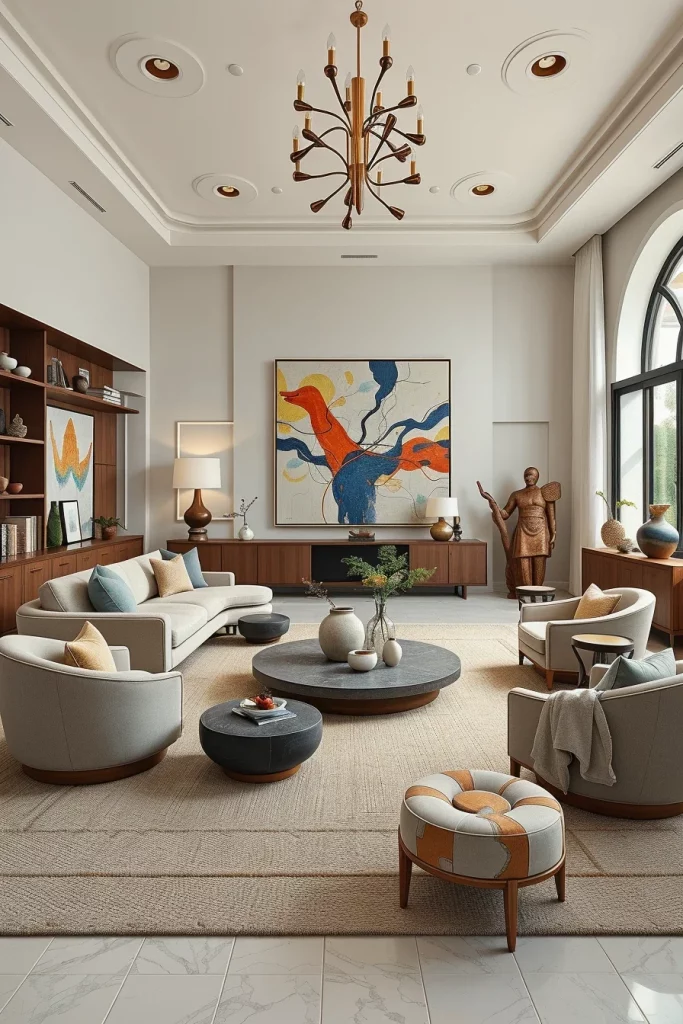
I like combining a curved sofa with circular ottomans, soft barrel chairs, rounded side tables, and sculptural shelving. A generously sized textured rug anchors the arrangement while neutral upholstery allows the distinctive shapes to become the main attraction. Carefully positioned lighting further highlights the unique profiles of each furniture piece without overwhelming the room.
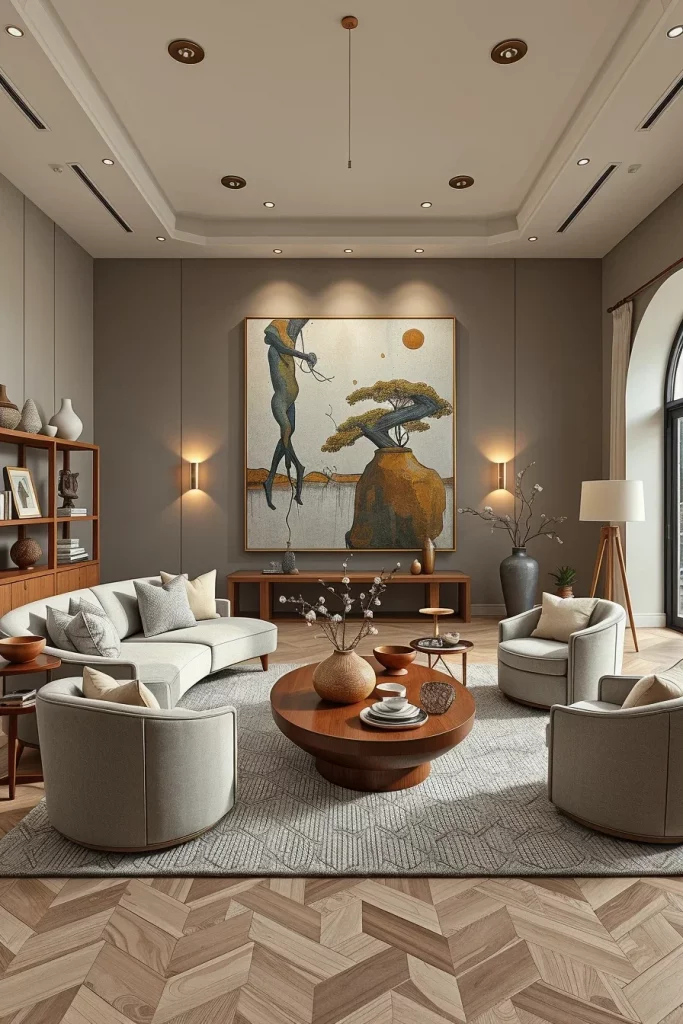
In my experience, restraint is one of the most valuable principles in sculptural design. Rather than filling every available surface with accessories, I leave enough open space for each object to be appreciated individually. This approach creates the refined atmosphere often seen in professionally designed interiors while remaining practical for everyday family life.
To complete this arrangement, I would incorporate oversized abstract artwork, handcrafted ceramics, and a mixture of matte and lightly reflective finishes that add depth without distracting from the carefully layered composition.
Monochromatic Color Palettes For Sculptural Interiors
When I create a sculptural living room, I often begin by selecting a monochromatic color palette because it allows the shapes and materials to become the true focal points of the space. Instead of relying on strong color contrasts, I use subtle variations of one shade to create depth and harmony. Soft ivory, warm beige, greige, taupe, or muted gray all work beautifully because they highlight the sculptural quality of the furniture without overwhelming the eye. The result is an interior that feels calm, sophisticated, and intentionally curated.
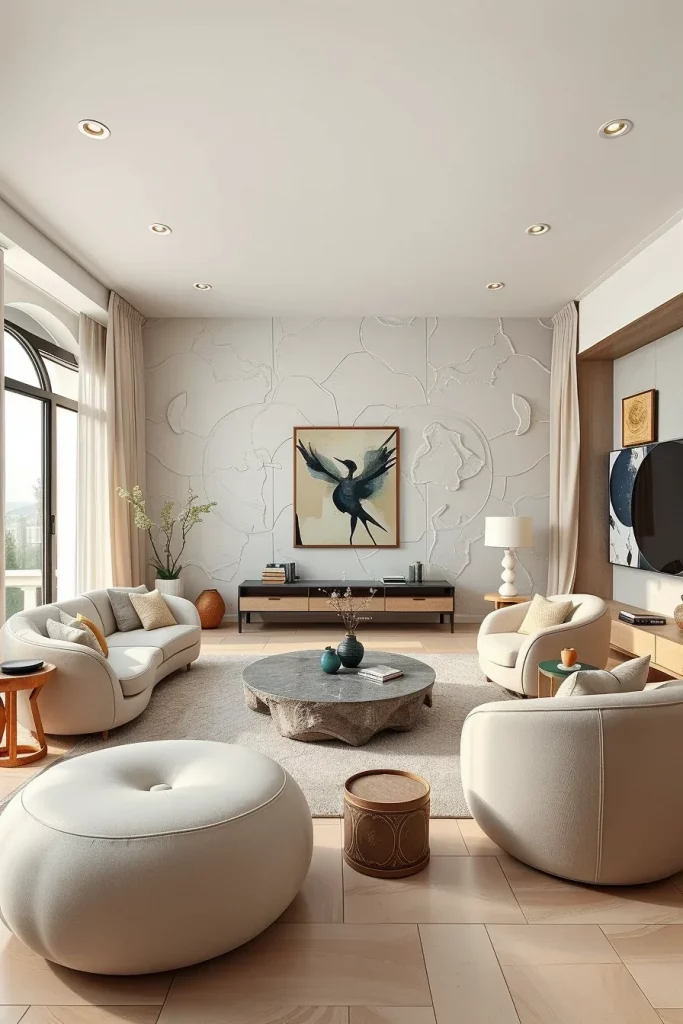
I usually combine upholstered seating in textured fabrics with smooth plaster walls, natural stone surfaces, and matte finishes in similar tones. A sculptural sofa, rounded armchairs, and an artistic coffee table immediately stand out when surrounded by a restrained palette. Layering different textures rather than different colors keeps the room visually interesting while maintaining a clean and timeless appearance. Decorative ceramics, linen curtains, and wool rugs introduce subtle variation that prevents the space from feeling flat.
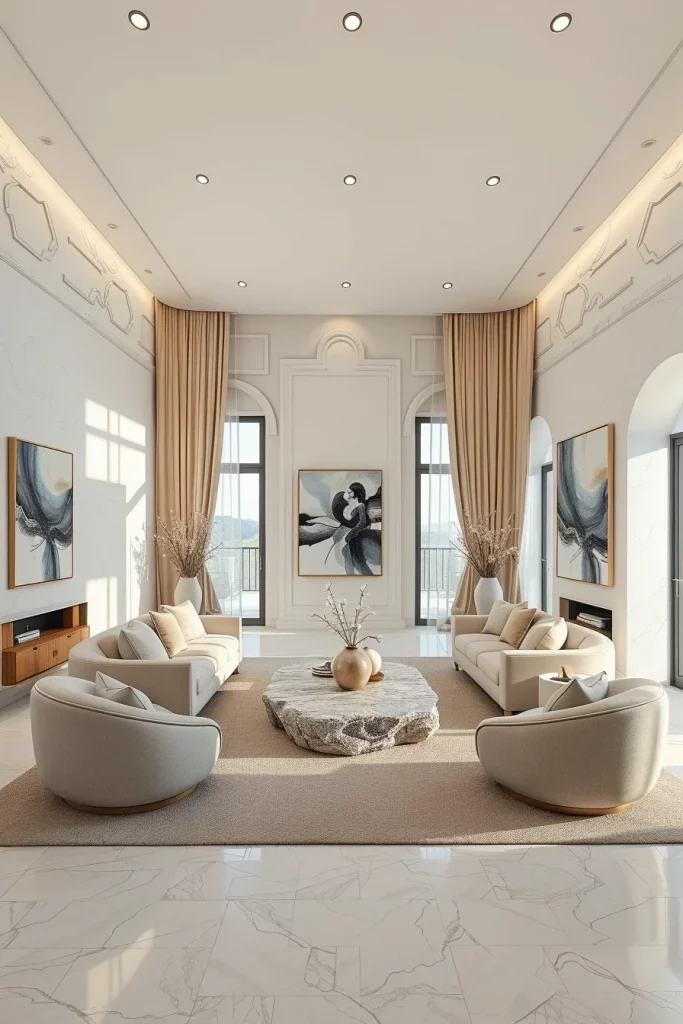
Personally, I have learned that monochromatic interiors remain elegant much longer than trend-driven color schemes. Designers frequently featured in Elle Decor recommend adding depth through texture and material instead of introducing numerous accent colors, and I have found this advice especially valuable in sculptural interiors. The furniture becomes the artwork, while the color palette quietly supports every carefully selected element.
To make this room feel even more complete, I would add oversized abstract artwork in matching tones, concealed storage, and a few handcrafted decorative objects that reinforce the minimalist character without creating visual clutter.
Natural Stone Elements That Add Timeless Character
Natural stone is one of my favorite materials for a sculptural living room because it introduces permanence and authenticity into the design. Whether used for a fireplace surround, coffee table, shelving, or decorative pedestal, stone provides visual weight that beautifully balances the soft curves of sculptural furniture. Every slab has its own pattern, making each interior feel unique without requiring excessive decoration.
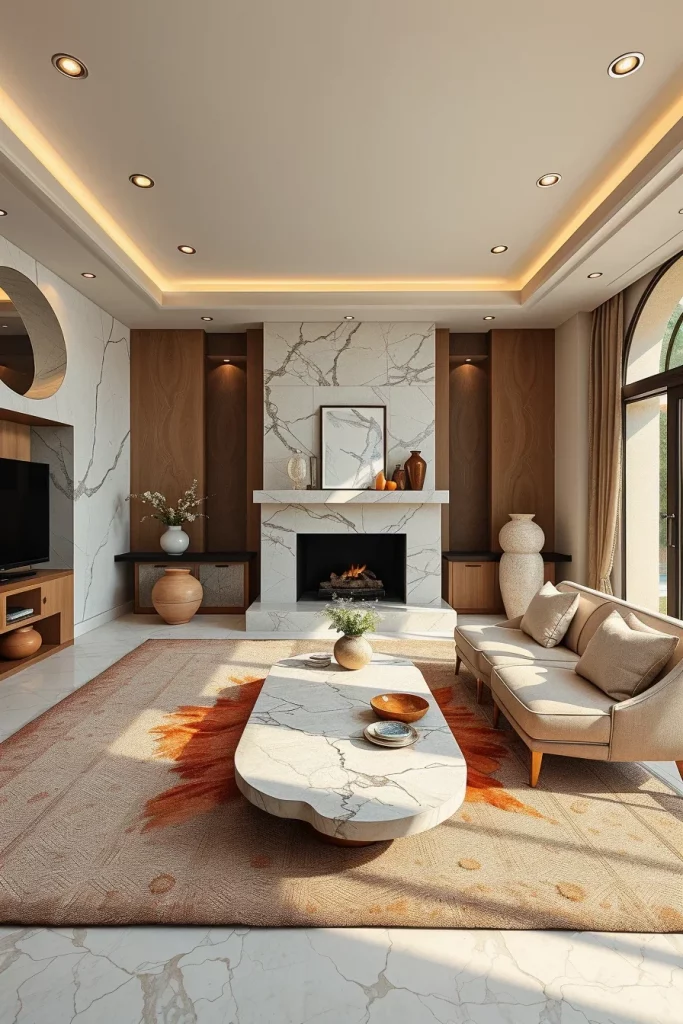
I often combine travertine, limestone, marble, or textured stone with soft upholstery and warm wood accents. A sculptural stone coffee table paired with a curved sofa immediately creates an elegant centerpiece, while a stone-clad fireplace adds architectural interest from floor to ceiling. Small stone accessories such as bowls, candle holders, or side tables continue the material throughout the room without making it feel repetitive.
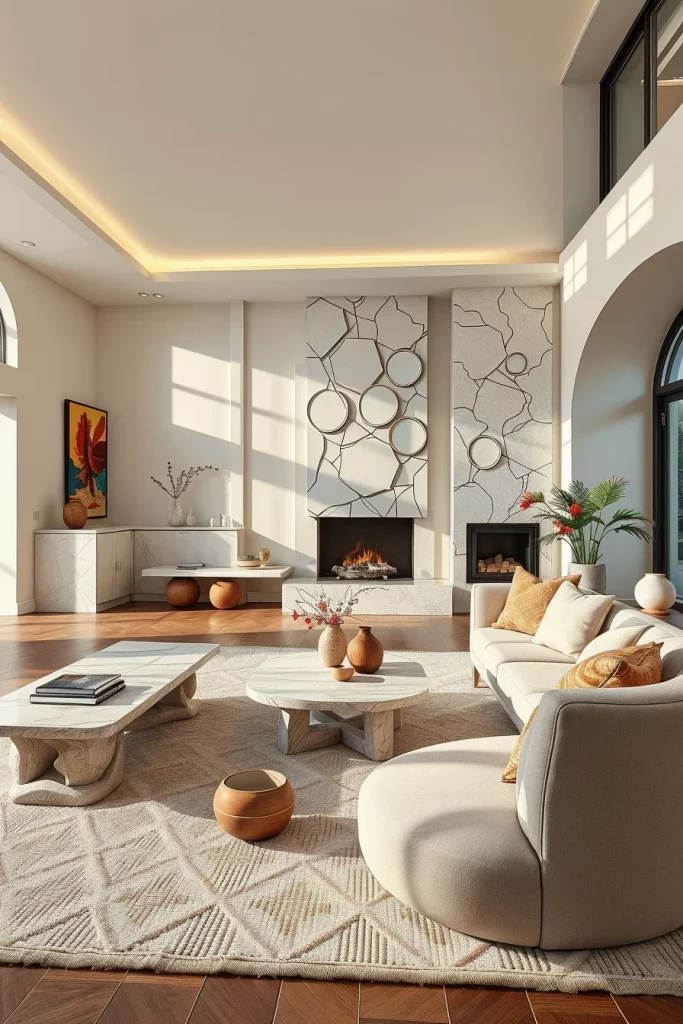
From my experience, natural materials age gracefully and develop even more character over time. Many respected interior designers recommend investing in authentic materials rather than artificial imitations because they contribute lasting value to the home. I completely agree, especially when designing a sculptural space where every surface should feel intentional and tactile.
If I were refining this living room further, I would incorporate indirect lighting that gently illuminates the stone textures, allowing the natural veining and surface variations to become part of the room’s evening atmosphere.
Oversized Sculptural Lighting That Becomes Art
Lighting is much more than a practical necessity in a sculptural living room. I treat oversized light fixtures as artistic installations that define the atmosphere of the entire space. A dramatic pendant with flowing curves or an oversized floor lamp can become the visual anchor around which every other furnishing is arranged. During the day, the fixture acts as sculpture, while in the evening it transforms the mood through carefully diffused illumination.
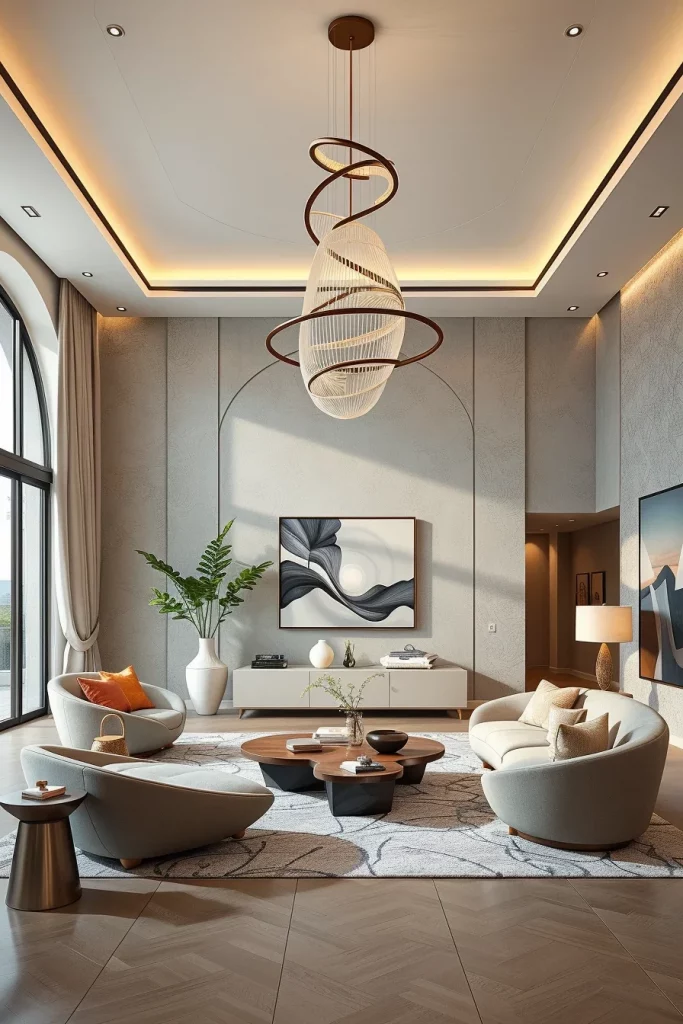
I usually select lighting with soft silhouettes, matte finishes, frosted glass, or organic metal forms that complement the curved furniture below. Large pendant lights suspended above the seating area create balance with low-profile sofas, while sculptural wall sconces add dimension without occupying valuable floor space. Layering ambient, accent, and task lighting ensures that the room remains comfortable throughout the day.
I have found that thoughtfully designed lighting dramatically improves how materials and furniture are perceived. Design experts often emphasize that lighting should reveal texture instead of simply making a room brighter, and I rely on this principle whenever I design contemporary interiors. Soft shadows highlight curved forms and give sculptural furniture even greater presence.
To strengthen this concept, I would include dimmable lighting controls, concealed LED accents, and carefully positioned table lamps that allow the atmosphere to change effortlessly from daytime relaxation to evening entertaining.
Textured Walls That Highlight Architectural Beauty
One of the most effective ways I create visual depth in a sculptural living room is by introducing textured walls. Instead of relying on bold wallpaper or colorful finishes, I prefer subtle plaster, limewash, or microcement surfaces that interact beautifully with natural light. These finishes add movement without distracting from the furniture, making the architecture itself feel more expressive.
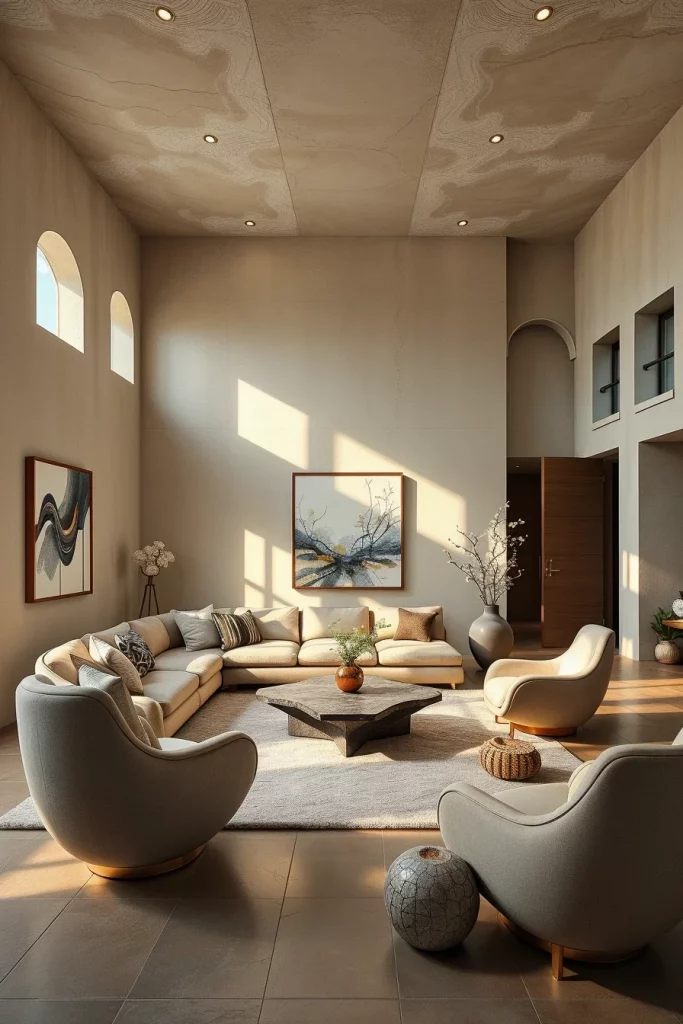
I often pair textured walls with minimal shelving, sculptural seating, and oversized artwork that leaves enough empty space for the wall finish to remain visible. Soft daylight reveals every subtle variation in texture throughout the day, while carefully placed lighting enhances the wall surface after sunset. Neutral colors allow the finish to become a sophisticated backdrop rather than competing with decorative elements.
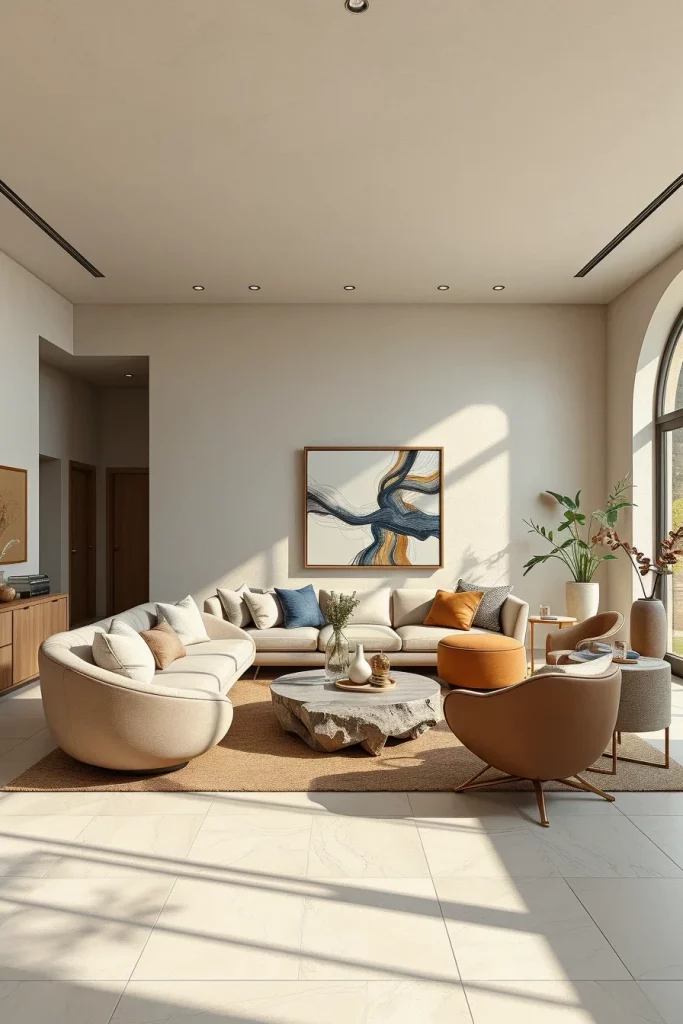
From my perspective, textured walls create a feeling of craftsmanship that painted drywall alone cannot achieve. Architectural Digest has frequently showcased interiors where plaster finishes contribute significantly to the overall atmosphere, and I appreciate how these surfaces make contemporary spaces feel warmer and more refined without adding unnecessary ornamentation.
If I wanted to improve this room even further, I would integrate recessed shelving, hidden lighting details, and carefully selected artwork that complements rather than conceals the beautiful wall texture.
Curved Accent Chairs With Contemporary Appeal
Curved accent chairs are one of the easiest ways I introduce sculptural elegance into a living room without completely redesigning the space. Their rounded silhouettes soften the overall composition while adding another layer of visual interest. Whether positioned beside the sofa or arranged in pairs, these chairs naturally encourage conversation and create a welcoming seating arrangement.
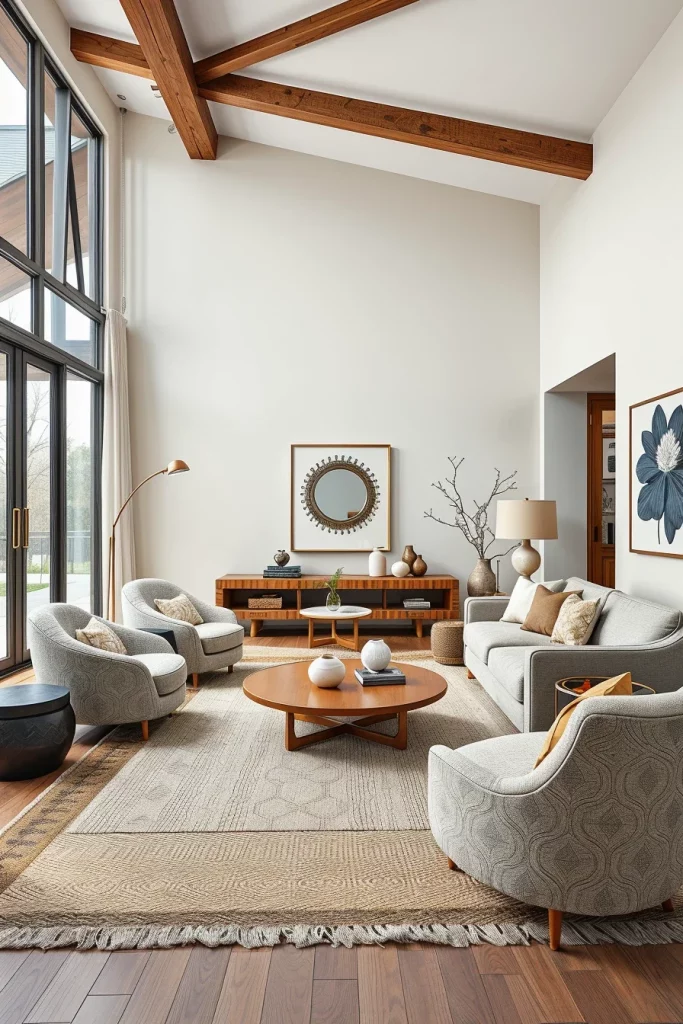
I usually choose barrel chairs, swivel chairs, or fully upholstered lounge chairs featuring continuous curves and generous proportions. Boucle, velvet, linen, and textured woven fabrics all emphasize the sculptural form while providing exceptional comfort. Placing the chairs beside a rounded coffee table and beneath an oversized floor lamp creates a balanced composition that feels inviting from every angle.
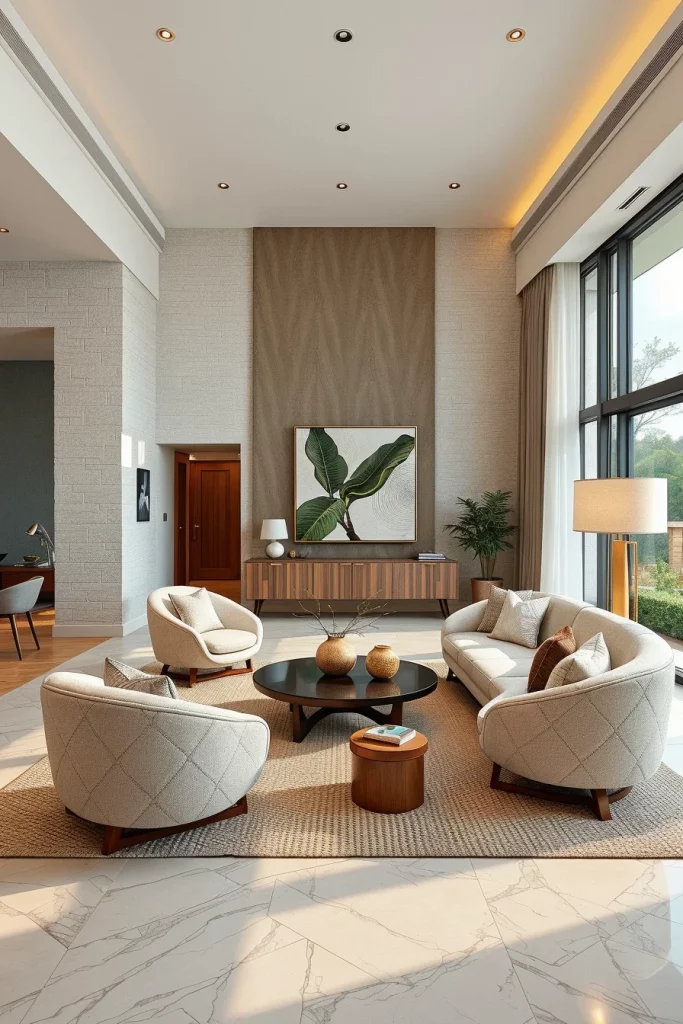
In my own experience, curved seating improves both comfort and aesthetics because it eliminates harsh visual lines while supporting relaxed conversation. Many contemporary designers recommend mixing seating shapes rather than matching every furniture piece, and I believe this approach creates interiors with greater personality and warmth.
To finish this seating area, I would add a sculptural side table, a textured area rug, decorative cushions in tonal shades, and a large indoor tree or handcrafted ceramic vessel to introduce height and subtle natural character.
Minimalist Styling That Lets Sculptural Pieces Shine
I always begin a sculptural interior by reducing visual clutter and allowing every important element to stand on its own. Instead of filling the room with unnecessary decorations, I focus on a carefully planned layout where each furniture piece becomes part of the overall composition. Clean architectural lines, generous open space, and restrained styling help sculptural seating, curved coffee tables, and artistic lighting become the true focal points of the room. This approach creates an environment that feels calm while highlighting the craftsmanship behind every object.
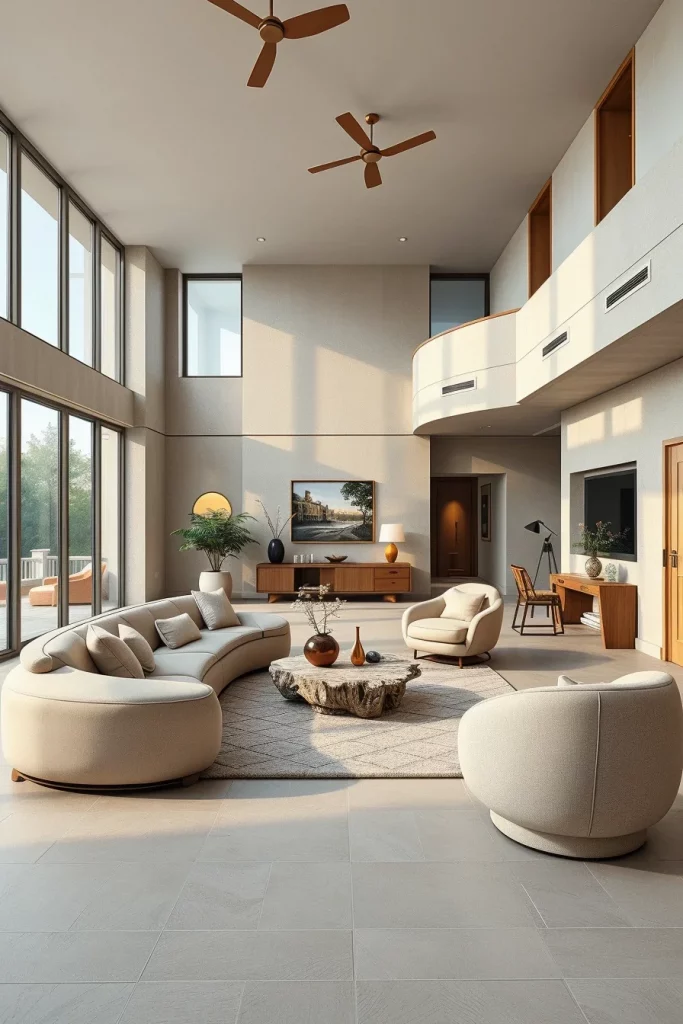
When selecting furniture, I look for sofas with soft organic silhouettes, accent chairs featuring rounded backs, monolithic coffee tables carved from stone or finished in textured plaster, and slim storage units that almost disappear into the architecture. Large neutral curtains, concealed storage, and carefully positioned lighting prevent distractions while emphasizing the graceful forms of each sculptural element. Every item serves both a practical and visual purpose, allowing the room to feel comfortable without appearing crowded.
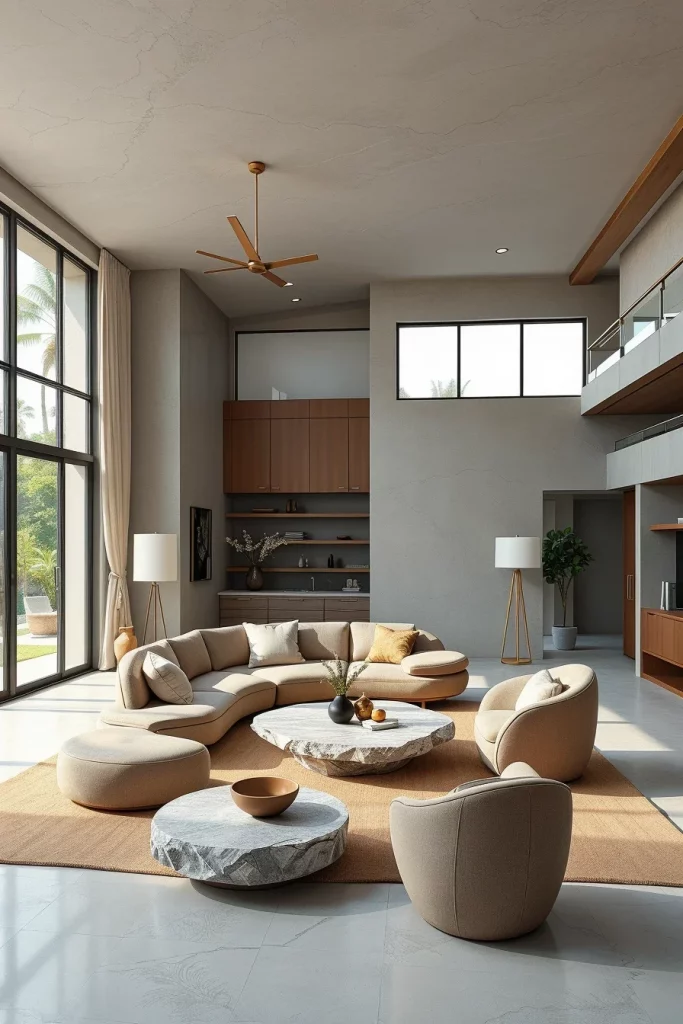
From my experience, many respected interior designers featured by Architectural Digest recommend editing a room rather than constantly adding decorative accessories. I completely agree with this philosophy because negative space is just as valuable as furniture itself. Giving every sculptural object room to breathe allows the overall composition to feel more sophisticated and intentional.
If I wanted to complete this space even further, I would introduce discreet integrated lighting that softly highlights the curved furniture during the evening while maintaining the clean minimalist atmosphere.
Large Area Rugs That Soften Bold Furniture Shapes
I have found that a large area rug is one of the easiest ways to unify sculptural furniture while making the living room feel warmer and more welcoming. Oversized rugs visually connect curved sofas, rounded chairs, and statement coffee tables into a single cohesive composition. Instead of competing with dramatic furniture, the rug provides a quiet foundation that allows every sculptural form to stand out naturally.
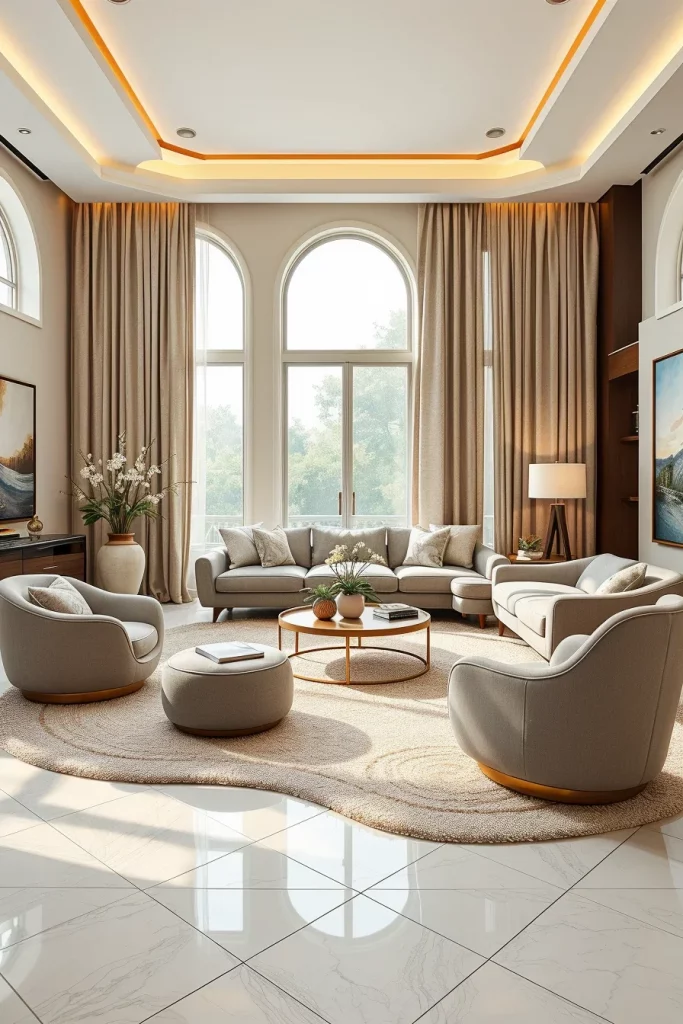
I usually select rugs with subtle textures, soft woven finishes, or understated geometric patterns that complement rather than dominate the room. Generous dimensions are important because all major furniture pieces should comfortably sit within the rug’s boundaries. This arrangement creates visual balance while reducing the appearance of fragmented furniture placement. Soft fibers also improve acoustics and make the living room feel noticeably more comfortable for daily use.
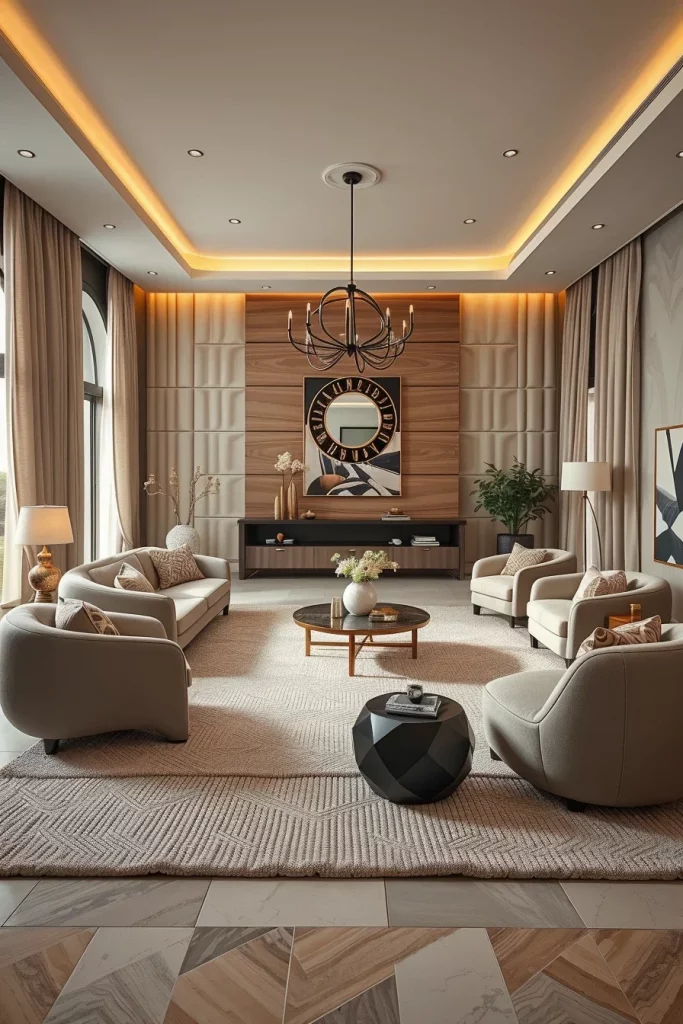
Personally, I believe texture often has a stronger impact than pattern in contemporary interiors. Many designers featured by Elle Decor frequently layer subtle materials instead of relying on bold prints, and I have seen this approach consistently produce elegant results. The rug becomes an architectural element rather than merely a decorative accessory.
To strengthen this design even more, I would incorporate floor lighting positioned near the seating area, creating gentle illumination that enhances both the rug’s texture and the sculptural furniture above it.
Layered Neutral Tones For Elegant Depth
Whenever I create a sculptural living room, I rely on layered neutral tones instead of strong color contrasts. Soft shades of ivory, warm beige, taupe, sand, mushroom, light gray, and creamy white create an atmosphere that feels sophisticated without distracting from the furniture’s artistic forms. The gradual transitions between colors allow curves, shadows, and textures to become the primary visual interest throughout the room.
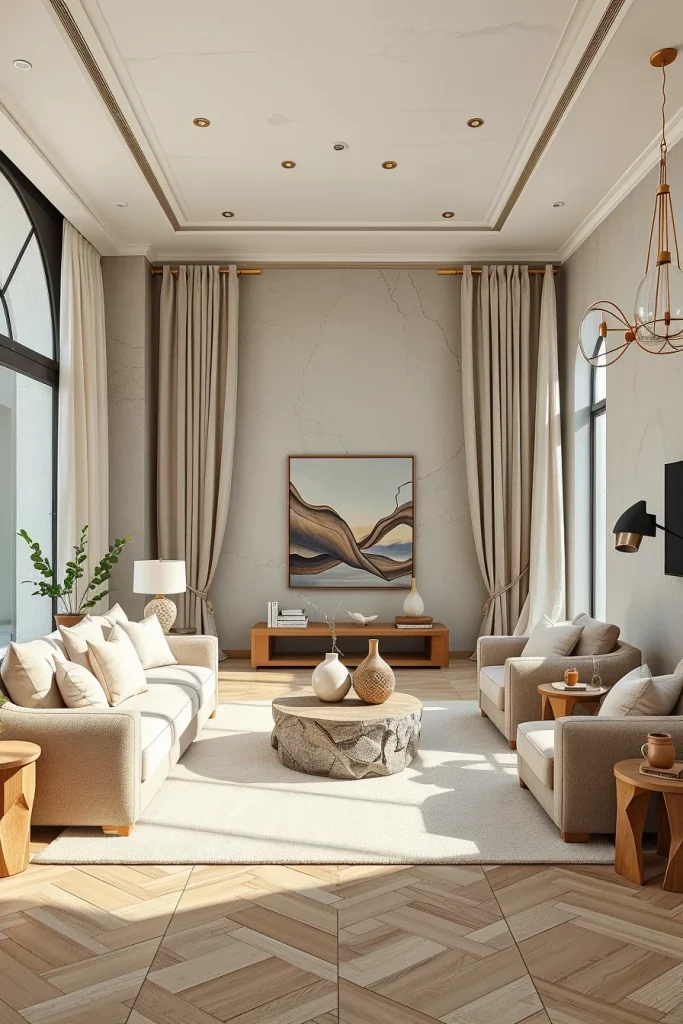
I combine textured plaster walls, upholstered seating, linen curtains, boucle chairs, natural stone surfaces, matte ceramics, and soft wool textiles to create depth through material rather than bright color. Each finish reflects light differently, giving the living room subtle complexity while preserving its peaceful appearance. The result feels rich despite using a restrained palette.
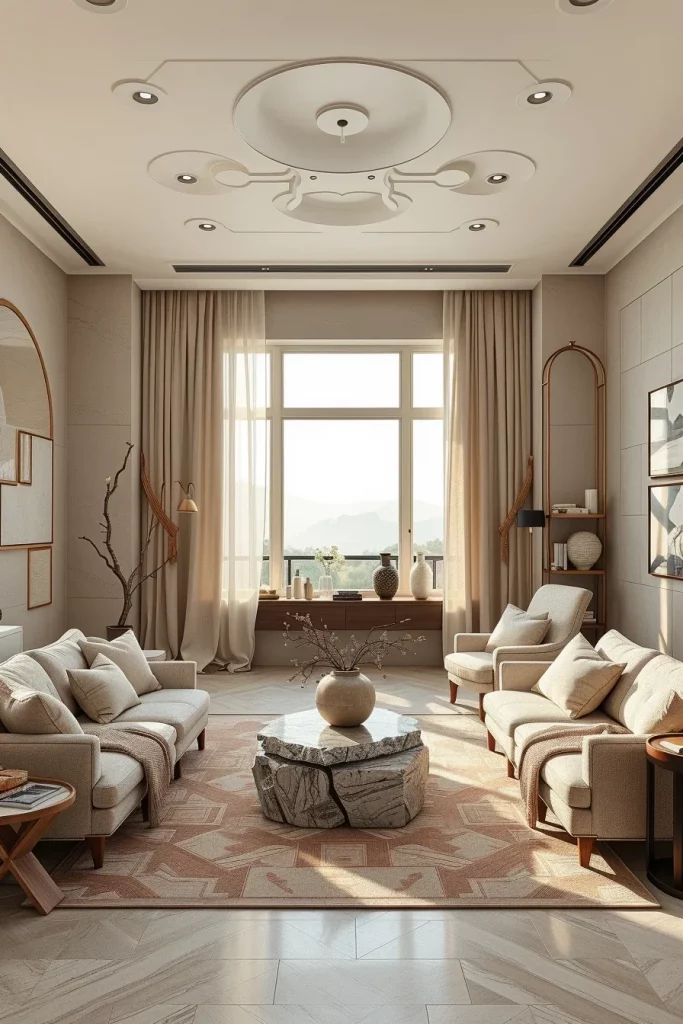
From my own projects, I have learned that neutral interiors remain visually interesting when every material contributes a slightly different texture. Interior designers frequently emphasize layering instead of matching everything perfectly, and I find this advice creates interiors that remain beautiful for many years without feeling outdated.
If I were refining this room further, I would add several oversized ceramic vases with organic silhouettes to reinforce the sculptural character while maintaining the calm neutral palette.
Architectural Shelving With Sculptural Presence
Architectural shelving can become much more than simple storage when it is designed as part of the room’s overall composition. I like incorporating built-in shelving with rounded openings, asymmetrical niches, and softly curved vertical divisions that echo the organic shapes found throughout the furniture. These architectural details create rhythm across the wall while providing practical places for books, ceramics, and carefully selected decorative objects.
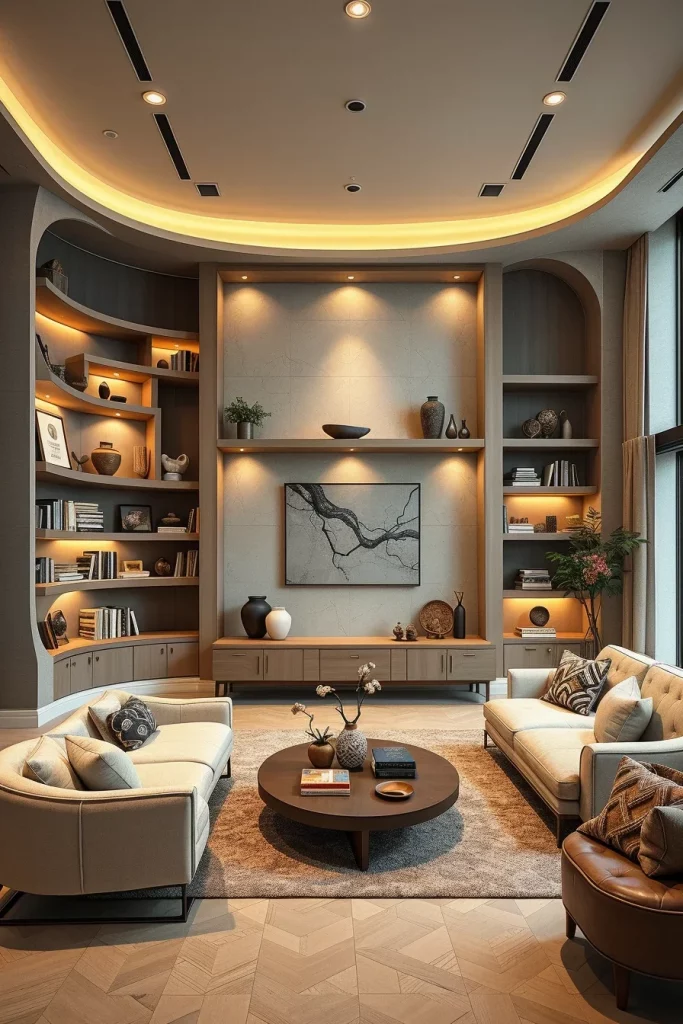
I avoid overcrowding shelves because every displayed piece deserves visual attention. Sculptural pottery, stacked design books, stone objects, hand-crafted bowls, and minimal artwork create balanced arrangements without overwhelming the architecture. Integrated LED lighting inside selected niches highlights texture while adding depth during the evening hours. The shelving itself becomes an artistic installation instead of ordinary cabinetry.
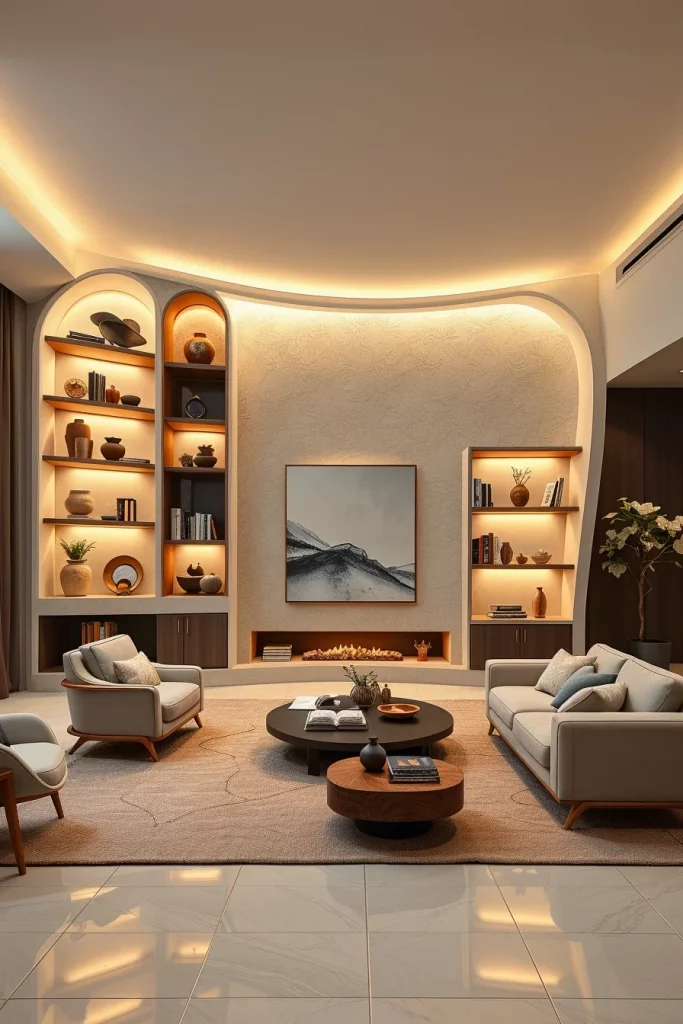
In my opinion, thoughtful styling is more effective than displaying a large number of decorative accessories. Many interior professionals recommend leaving empty sections within built-in shelving, and I completely agree because these quiet spaces help every displayed object feel intentional rather than random.
To enhance this feature even further, I would include concealed storage cabinets beneath the open shelving so everyday items remain hidden while the architectural composition stays visually clean.
Rounded Side Tables That Complete The Design
Rounded side tables may appear to be small details, but I have found they play an important role in reinforcing the sculptural language of the living room. Circular, oval, and softly irregular forms naturally complement curved sofas and organic lounge chairs while introducing additional visual movement throughout the space. Their smooth silhouettes also improve circulation by eliminating sharp corners within seating areas.
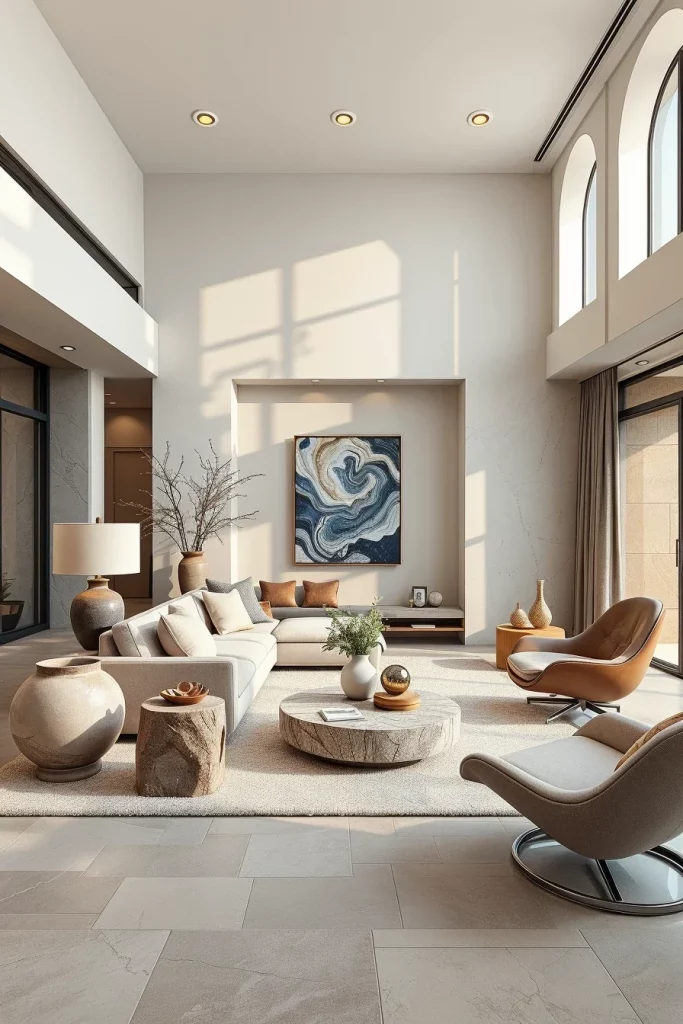
I often choose side tables crafted from natural stone, fluted wood, textured plaster, polished concrete, or solid resin because these materials introduce rich texture without overwhelming the design. Different heights create visual layering, allowing decorative books, ceramic vessels, table lamps, and small sculptures to become part of the room’s artistic composition. Every table remains highly functional while contributing to the overall architectural character.
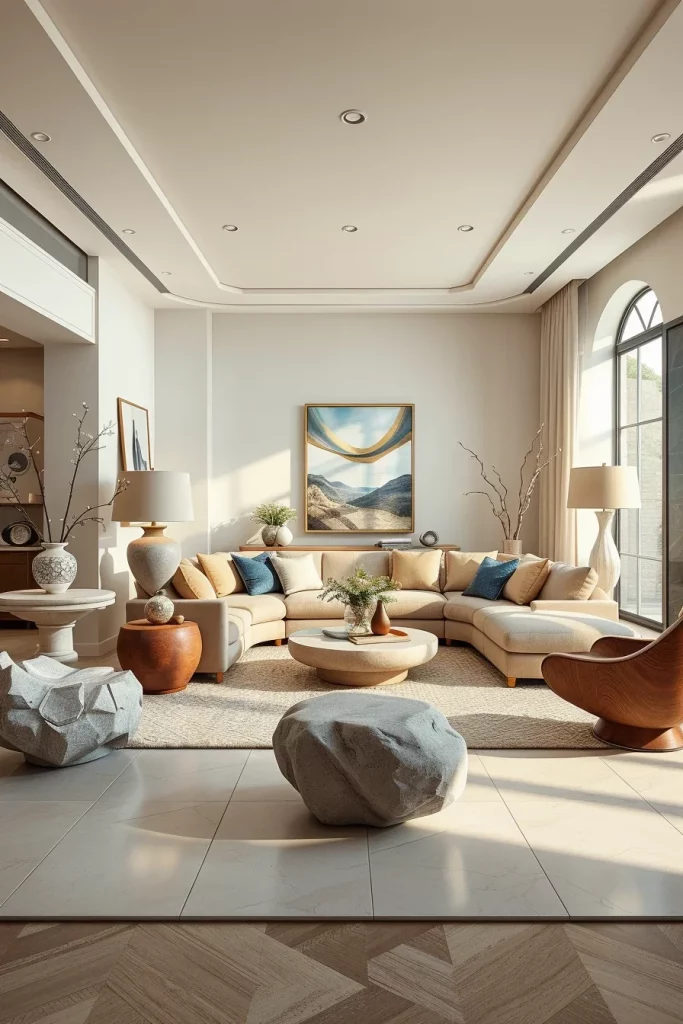
Personally, I appreciate furniture that quietly supports the larger design story rather than demanding attention for itself. Rounded side tables demonstrate how subtle details can strengthen an entire interior, especially when their materials complement nearby coffee tables and shelving. This consistency creates a more harmonious and professionally designed living room.
If I wanted to refine this area further, I would introduce a sculptural table lamp with diffused lighting to emphasize the curved tabletop while adding a warm evening atmosphere.
Artistic Decor That Elevates The Living Room
I believe artistic decor should feel intentional rather than excessive in a sculptural living room. Instead of filling every surface with accessories, I carefully choose a small number of meaningful decorative objects that reinforce the architectural character of the space. Large abstract artwork, handcrafted ceramics, sculptural vases, and contemporary objects become visual landmarks that naturally draw attention while maintaining a calm and uncluttered environment. Every decorative piece should contribute to the overall composition instead of competing with the furniture.
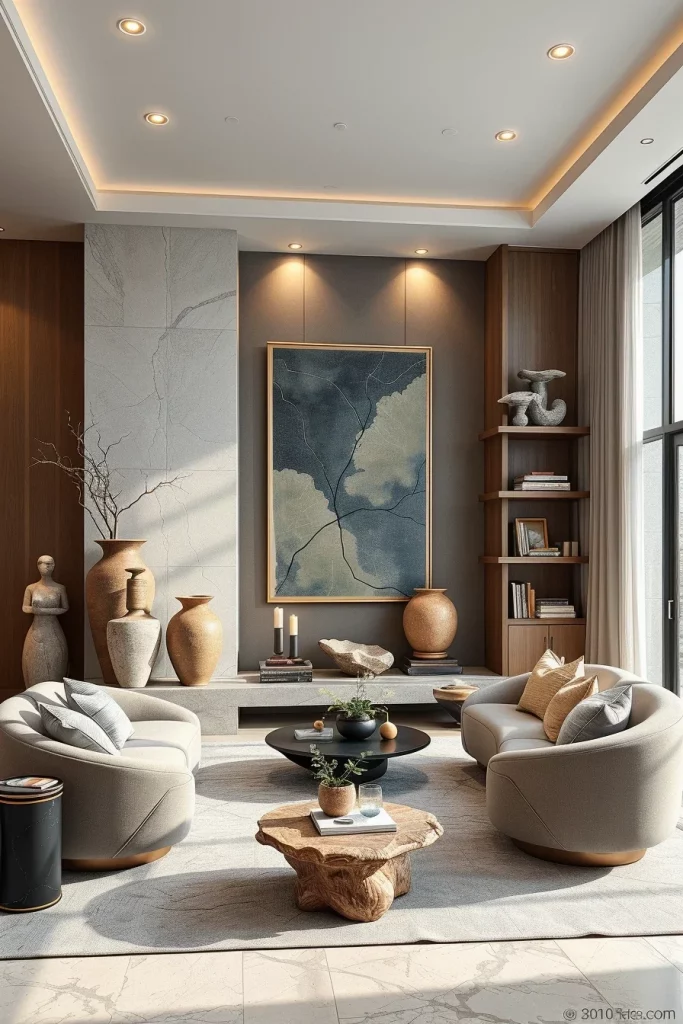
When styling the room, I like combining oversized ceramic vessels, textured stone sculptures, abstract canvases, and elegant decorative bowls with subtle finishes. I often position these objects on architectural shelving, coffee tables, or pedestals where they have enough surrounding space to be fully appreciated. Carefully selected decor adds personality while preserving the balanced proportions that define sculptural interiors. I also prefer materials such as travertine, marble, plaster, glass, and matte ceramics because they complement organic furniture forms beautifully.
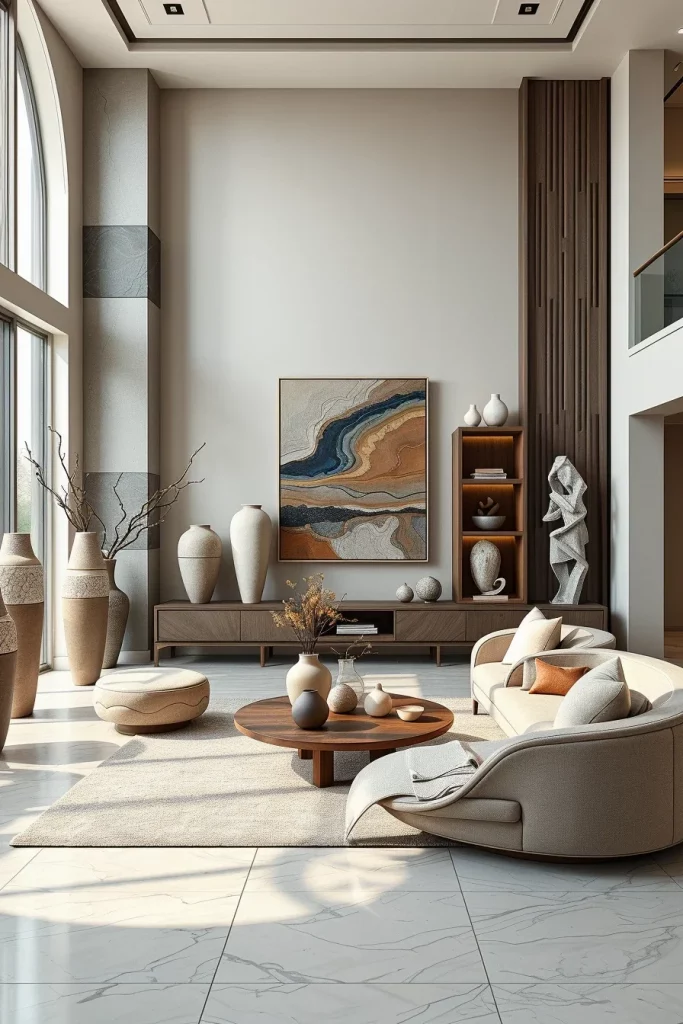
From my experience, quality always has a greater impact than quantity. Many interior designers featured by Architectural Digest recommend displaying fewer decorative items with stronger visual presence rather than overcrowding surfaces. I have consistently found that this approach creates interiors that feel sophisticated and timeless instead of overly styled.
To complete this section, I would introduce one large sculptural floor vase positioned near a window, allowing natural light to emphasize its organic silhouette throughout the day.
Sculptural Fireplaces As Stunning Focal Points
A fireplace naturally becomes the centerpiece of many living rooms, and in a sculptural interior I prefer transforming it into an architectural statement. Rather than relying on traditional detailing, I design fireplaces with flowing curves, seamless plaster finishes, natural stone cladding, or monolithic forms that appear carved from a single material. This creates an elegant focal point that anchors the entire seating arrangement while remaining visually calm.
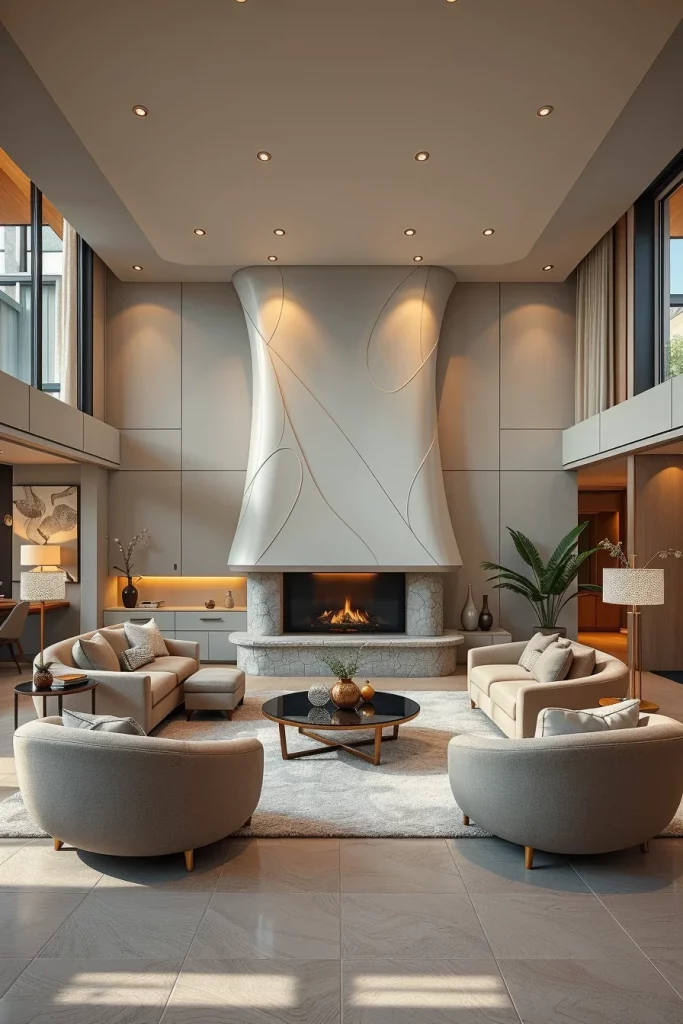
I usually pair the fireplace with a curved sectional sofa, low-profile lounge chairs, rounded coffee tables, and minimal built-in storage. Floating hearths, concealed ventilation, and integrated shelving strengthen the architectural appearance without introducing unnecessary ornamentation. Soft indirect lighting surrounding the fireplace enhances its sculptural form during the evening while maintaining a relaxing atmosphere.
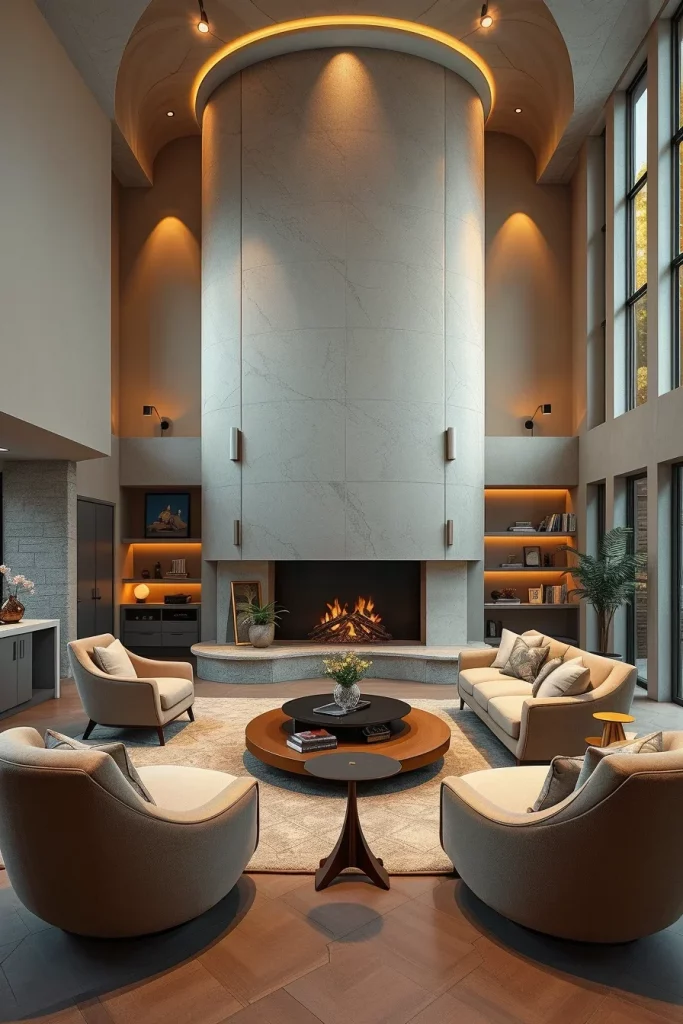
Personally, I appreciate fireplaces that blend into the architecture instead of dominating the room through excessive decoration. Designers frequently recommend allowing the fireplace to become part of the wall composition rather than treating it as a separate object. I find this strategy creates a cleaner and more harmonious living environment.
If I were adding one more feature, I would include a large textured artwork above or beside the fireplace to strengthen the vertical balance while preserving the minimalist aesthetic.
Floor-To-Ceiling Windows That Enhance Organic Design
Natural light is one of the most valuable design elements in a sculptural living room. I always appreciate floor-to-ceiling windows because they allow daylight to reveal every curve, texture, and material throughout the interior. Changing sunlight creates subtle shadows that make sculptural furniture appear almost like works of art while visually expanding the entire room.
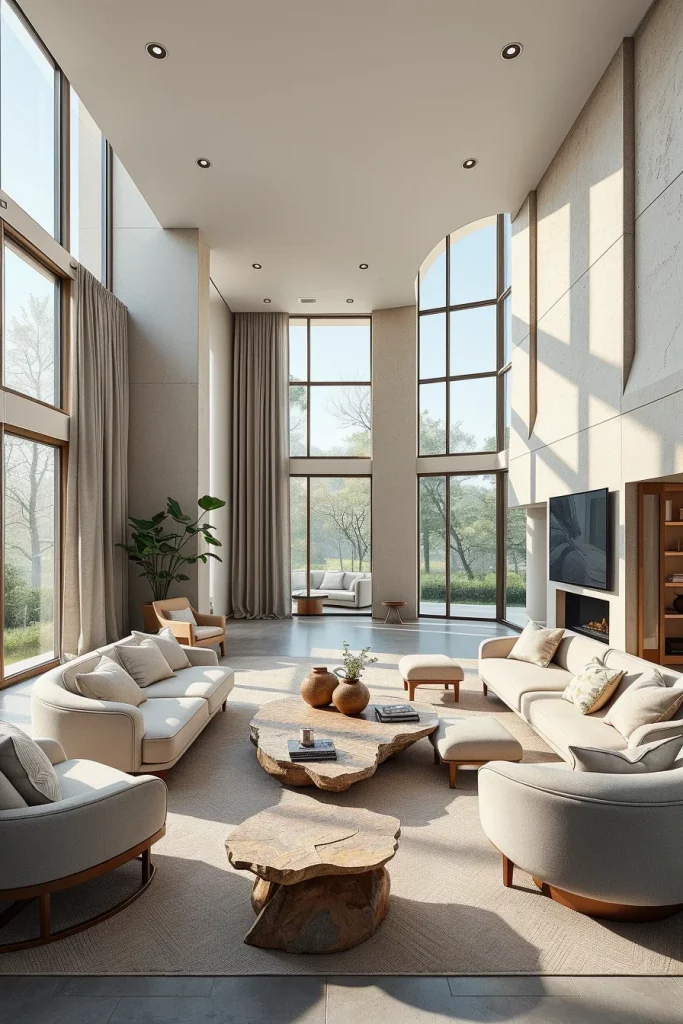
To complement expansive glazing, I prefer soft linen curtains that gently filter sunlight without blocking exterior views. Curved seating, stone coffee tables, textured walls, and carefully positioned indoor greenery all benefit from abundant natural illumination. The connection between the interior and the surrounding landscape strengthens the organic character of the room while creating a peaceful atmosphere throughout the day.
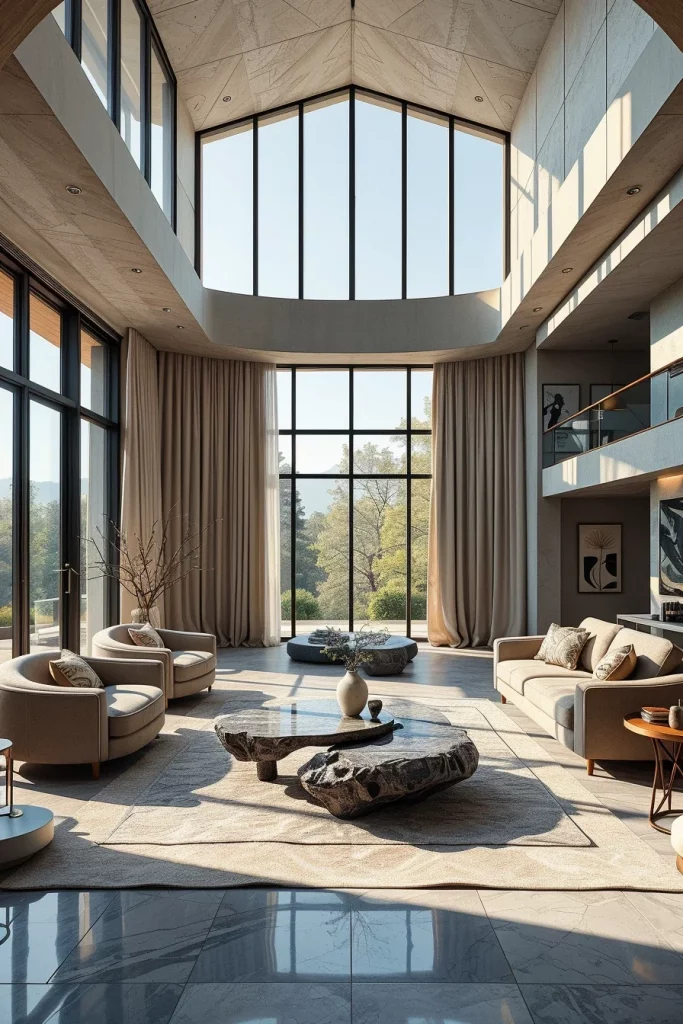
In my own experience, large windows dramatically improve both aesthetics and comfort. Many contemporary designers emphasize maximizing natural light because it enhances every material while reducing the need for excessive daytime lighting. I completely agree, especially when working with layered neutral interiors where subtle changes in light become part of the overall design.
To make this area even more functional, I would add comfortable window seating with integrated storage, creating an inviting place to relax while enjoying the surrounding views.
Mixing Smooth And Textured Finishes For Dimension
One of my favorite techniques for creating depth is combining smooth and textured finishes throughout the living room. Instead of depending on bright colors or busy patterns, I rely on contrasting materials that enrich the space through touch and visual variation. Smooth stone surfaces, polished plaster, matte walls, boucle upholstery, linen fabrics, and natural wood each contribute their own unique character while maintaining a cohesive design language.
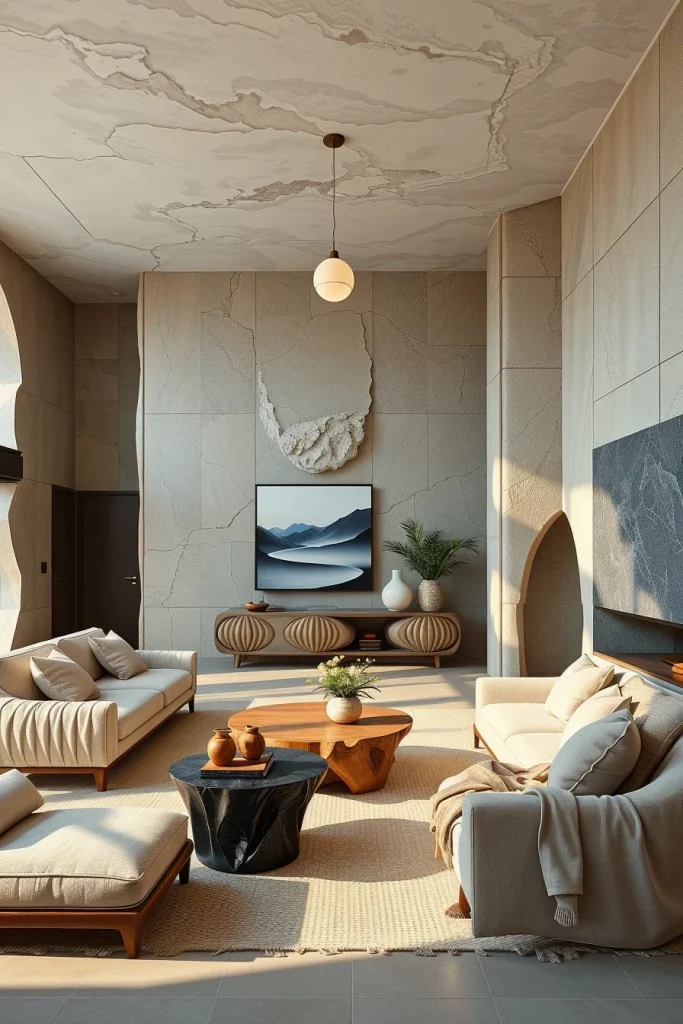
I carefully distribute these finishes across furniture and architectural elements so that every area offers a slightly different sensory experience. A smooth stone coffee table beside a textured sofa, fluted cabinetry near polished plaster walls, or woven textiles layered over streamlined furniture all create subtle contrast without overwhelming the room. These combinations make sculptural interiors feel warm, balanced, and visually engaging.
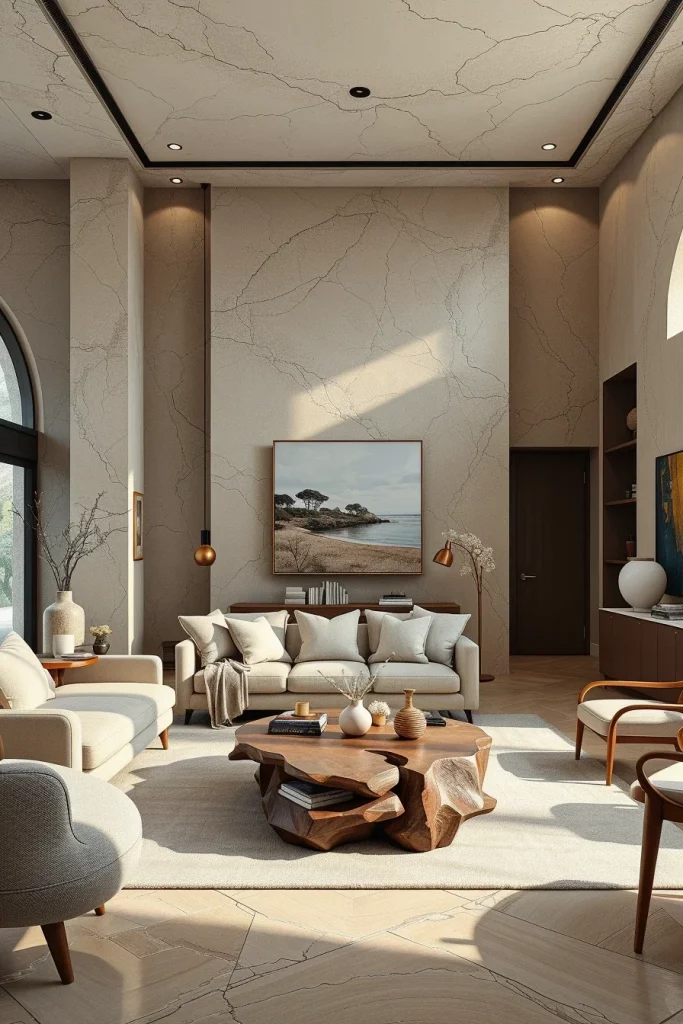
Personally, I believe texture is often more memorable than color. Interior professionals frequently encourage designers to layer natural materials because they introduce richness without making the room appear busy. I have found that this approach produces interiors that remain elegant regardless of changing design trends.
To further enrich the composition, I would introduce handwoven throws and textured cushions that reinforce the layered material palette while adding everyday comfort.
Statement Ceiling Designs With Soft Curves
I often see ceilings treated as empty surfaces, but in a sculptural living room they become an important part of the architectural composition. Softly curved ceiling details guide the eye through the space while reinforcing the organic forms found in the furniture below. Gentle transitions between walls and ceiling create a seamless appearance that makes the room feel larger, calmer, and more refined.
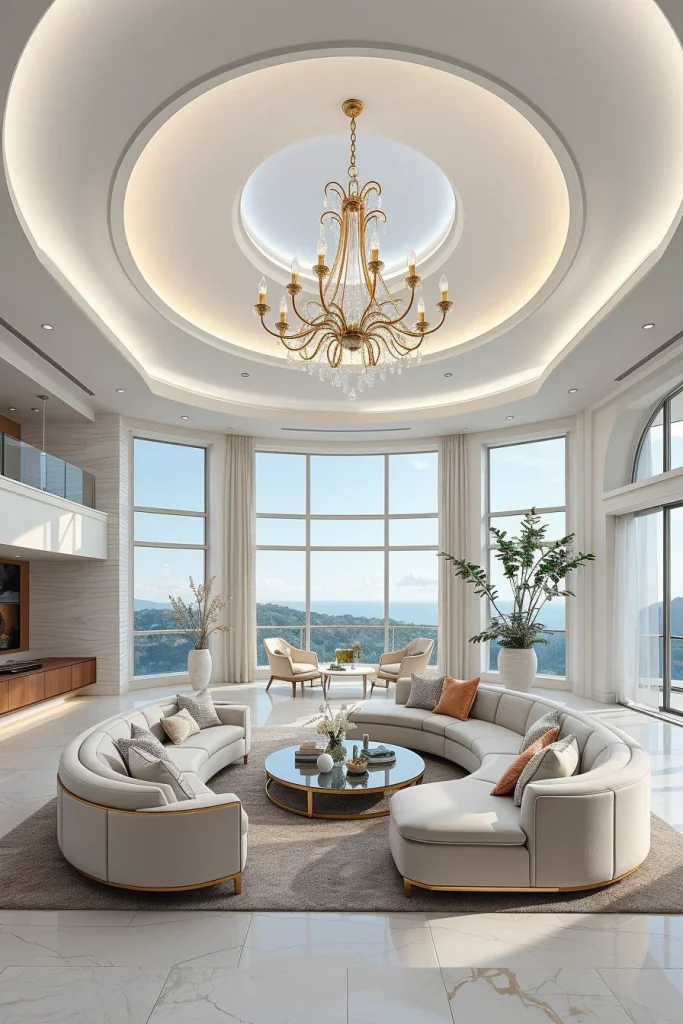
I enjoy incorporating curved ceiling recesses with concealed LED lighting, rounded beams, smooth plaster finishes, and subtle architectural detailing that mirrors the shapes of sofas and coffee tables. Suspended sculptural light fixtures positioned beneath these curves further emphasize the room’s flowing geometry without introducing visual clutter. Every ceiling element supports the overall design rather than competing with it.
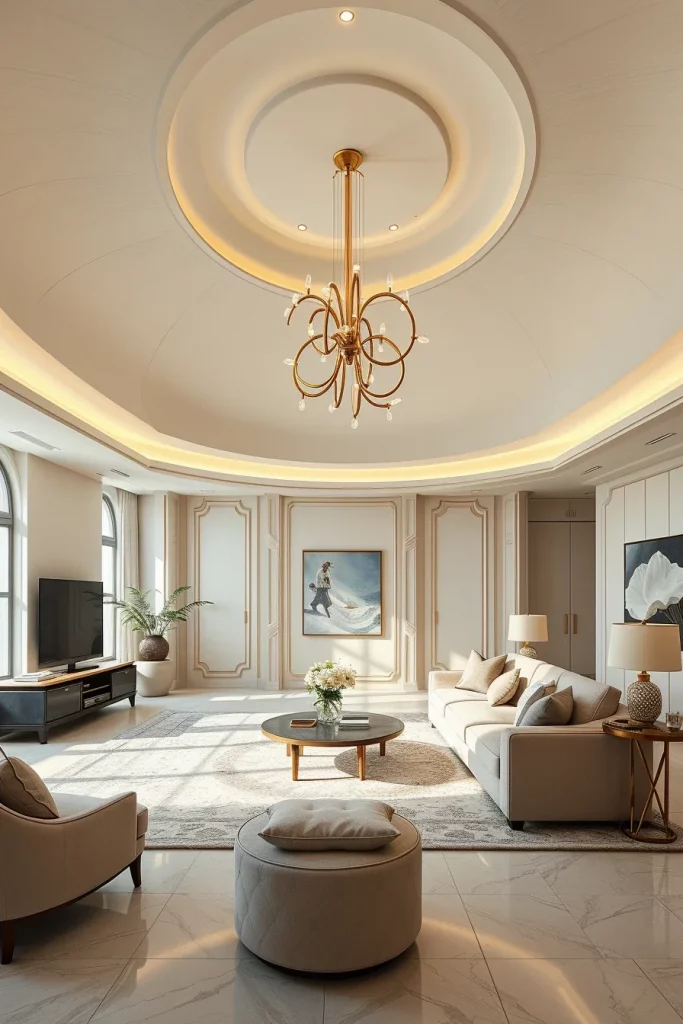
From my perspective, a thoughtfully designed ceiling completes the room just as much as carefully selected furniture. Contemporary interior designers increasingly use curved architectural forms to soften modern interiors, and I appreciate how this strategy creates a welcoming atmosphere while maintaining strong visual identity.
To perfect this design, I would integrate a programmable lighting system that adjusts brightness throughout the day, allowing the sculptural ceiling to remain visually dynamic from morning to evening.
Modern Built-In Storage With Sculptural Lines
When I design a sculptural living room, I see built-in storage as much more than a place to organize belongings. I use it to establish architectural rhythm throughout the room by introducing soft curves, rounded corners, recessed niches, and flowing cabinet profiles. These features allow storage to blend naturally into the walls while creating an artistic backdrop that feels calm rather than visually busy. Instead of dominating the room, sculptural storage quietly becomes part of the architecture.
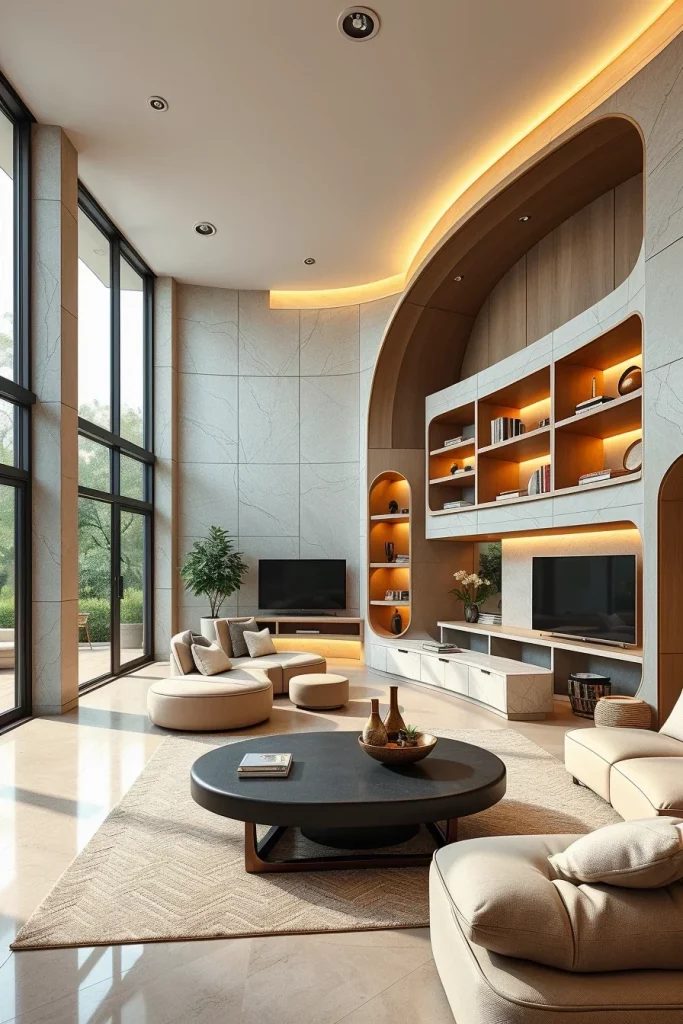
I prefer cabinetry with handle-free fronts, concealed hardware, and carefully integrated lighting because these details maintain uninterrupted forms. Open display niches can highlight ceramics, books, and decorative sculptures without overwhelming the composition. Natural stone shelving, wood veneer panels, textured plaster surrounds, and softly illuminated alcoves work together to create depth while maintaining a minimalist appearance. Every cabinet should serve both a practical and visual purpose.
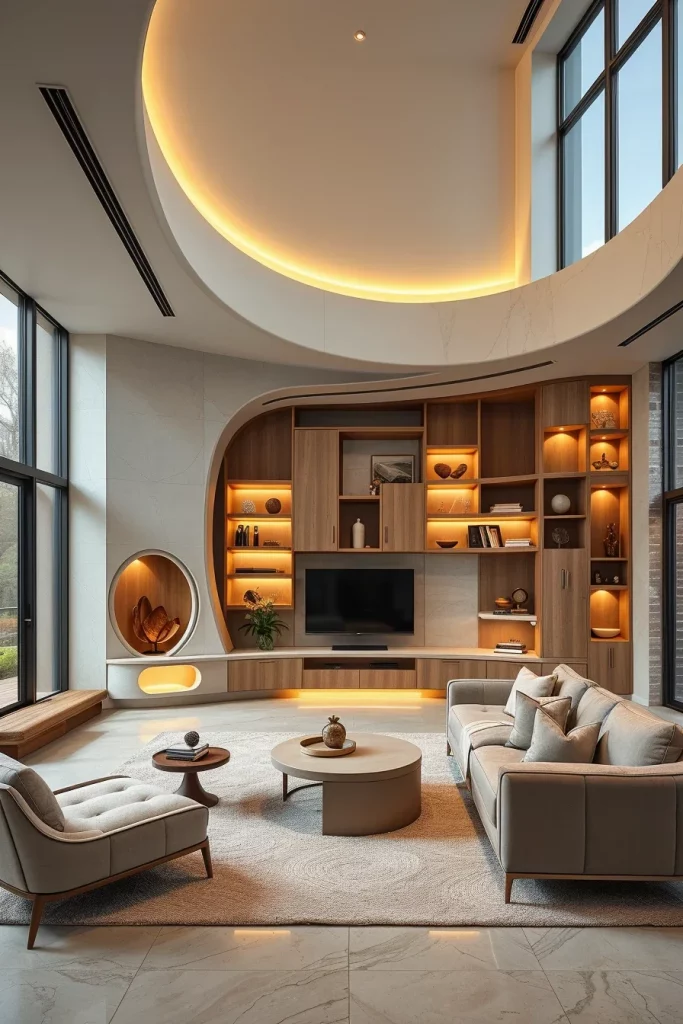
From my experience, many American interior designers emphasize that custom millwork creates a stronger sense of permanence than freestanding storage. Publications such as Architectural Digest frequently demonstrate how integrated cabinetry allows furniture and artwork to become the true focal points of the room. I follow the same philosophy by treating storage as part of the architecture instead of treating it as separate furniture.
To complete this space, I would also incorporate hidden cable management, integrated charging stations, and adjustable shelving. These practical additions ensure the sculptural design remains functional as everyday needs change without disturbing the clean visual composition.
Cozy Seating Layouts Inspired By Organic Forms
I believe the seating arrangement determines how welcoming a sculptural living room feels. Rather than placing furniture in rigid straight lines, I create layouts that naturally encourage conversation and movement. Curved sofas, rounded lounge chairs, crescent-shaped sectionals, and soft transitions between furniture pieces help the room feel relaxed while maintaining an elegant appearance. Every seating area should invite people to linger comfortably.
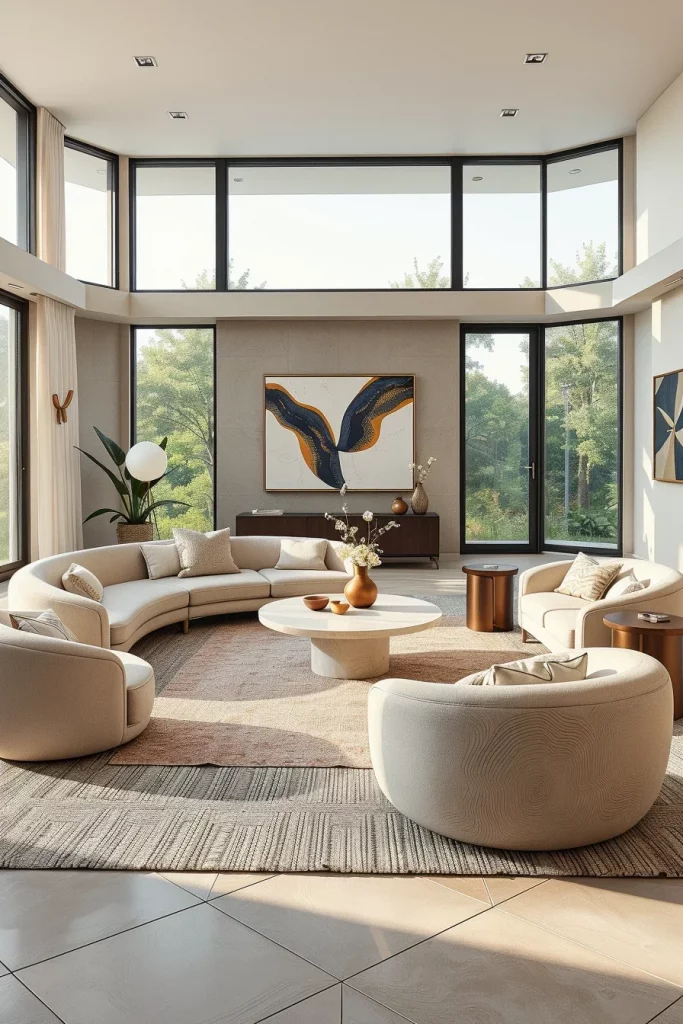
I like combining curved sofas with circular coffee tables, oval side tables, upholstered ottomans, and accent chairs that echo similar silhouettes. A large textured area rug visually anchors the arrangement while allowing every piece to feel connected. Soft lighting from sculptural floor lamps and discreet wall sconces further enhances the gentle atmosphere without introducing visual clutter.
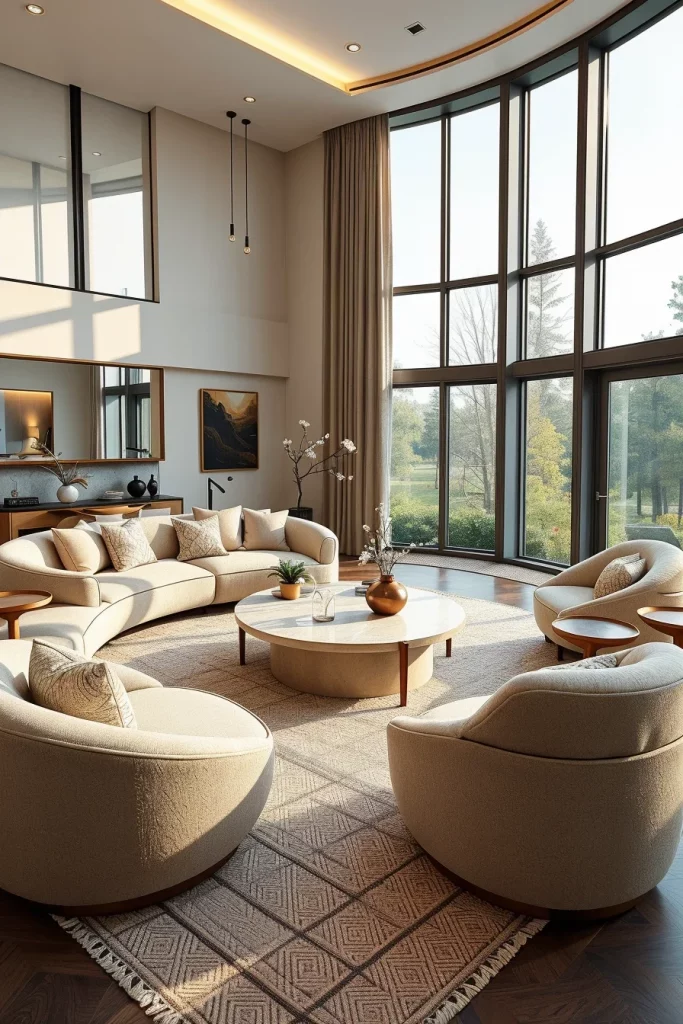
Personally, I have found that organic furniture arrangements make even spacious living rooms feel more intimate. Many contemporary designers recommend creating multiple conversational zones instead of focusing everything around a single television. I appreciate this approach because it encourages both social interaction and everyday comfort while preserving the artistic quality of the room.
If I wanted to improve this layout further, I would include flexible seating such as movable poufs or compact swivel chairs. These additions allow the arrangement to adapt easily when entertaining guests without compromising the sculptural composition.
Elegant Material Combinations For A Refined Interior
Selecting materials carefully is one of the most important steps when creating a sculptural living room. I aim for contrast that feels subtle rather than dramatic by mixing smooth and textured surfaces throughout the space. Soft plaster walls, natural stone, warm wood veneers, brushed metals, and luxurious upholstery create visual richness while preserving an understated atmosphere. Every material contributes to the room’s overall harmony.
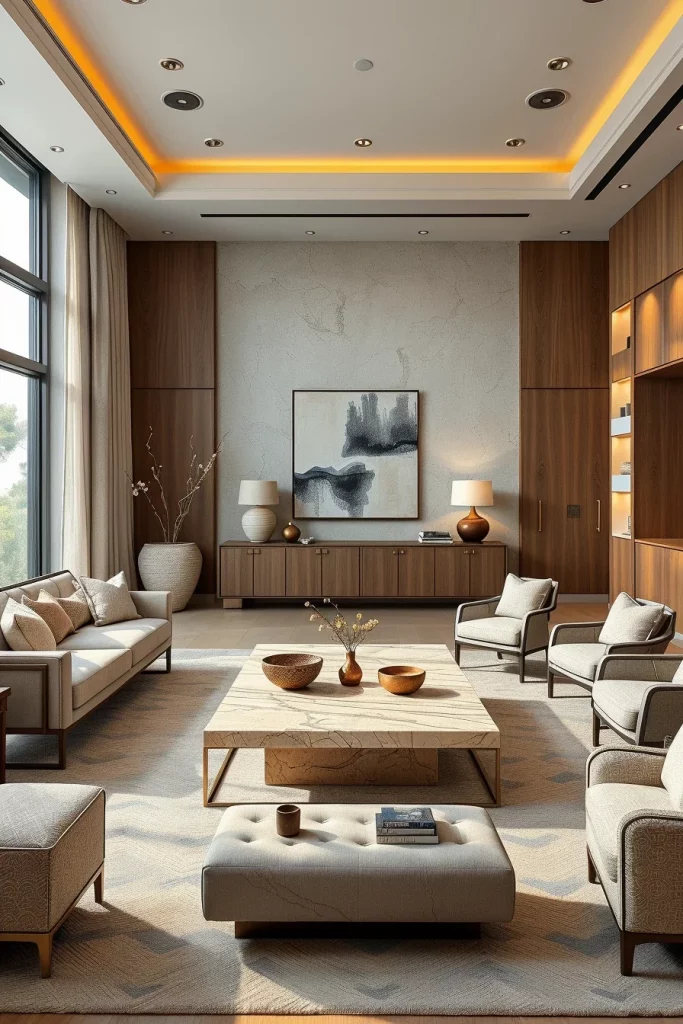
I often pair travertine coffee tables with boucle seating, linen curtains, oak cabinetry, brushed brass accents, and textured wool rugs. These combinations allow each surface to complement the others instead of competing for attention. Glass accessories, handcrafted ceramics, and matte finishes introduce additional layers while maintaining visual balance.
In my experience, designers featured by Elle Decor frequently demonstrate that restraint produces more luxurious interiors than excessive decoration. I agree with this principle because limiting the material palette creates cohesion and allows each carefully selected finish to stand out naturally.
To make the room even more refined, I would also introduce subtle variations in texture through handcrafted finishes, woven textiles, and artisanal accessories. These details enrich the design without making the interior feel overly decorated.
Creating Balance With Symmetry And Asymmetry
One aspect I always pay close attention to is visual balance. A sculptural living room does not need perfect symmetry to feel harmonious. Instead, I carefully combine symmetrical architectural elements with asymmetrical furniture placement to create movement while maintaining stability. This balance allows the room to feel dynamic yet comfortable.
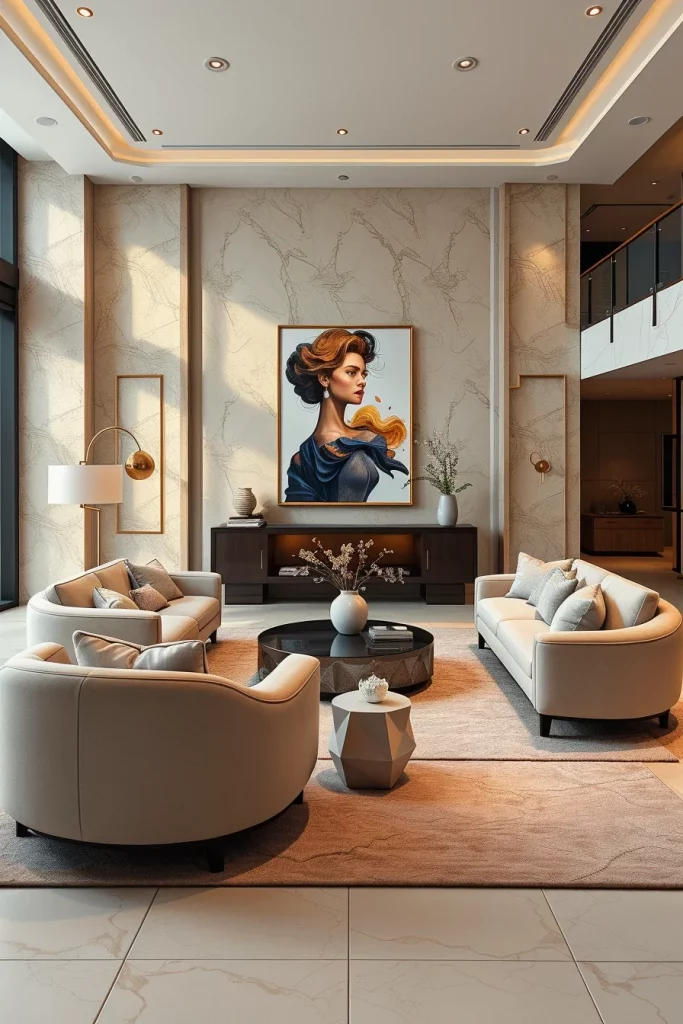
I often position matching sofas opposite each other while introducing an asymmetrical coffee table arrangement or an oversized sculptural chair placed slightly off-center. Decorative lighting, artwork, and shelving can also create intentional visual weight without requiring identical placement on both sides of the room. This approach keeps the interior interesting from every viewpoint.
Personally, I appreciate how professional designers frequently use controlled asymmetry to avoid predictable layouts. It creates interiors that feel collected over time rather than overly staged. I have found this technique especially effective in open-plan living spaces where multiple focal points naturally exist.
I would also evaluate ceiling details, window placement, and floor patterns to ensure every architectural feature contributes to the overall visual balance instead of competing with the furniture arrangement.
Sculptural Decorative Objects That Complete The Space
Decorative accessories are the finishing layer that gives a sculptural living room its personality. I focus on selecting fewer but more meaningful objects that celebrate form, craftsmanship, and texture. Oversized ceramic vessels, abstract sculptures, handcrafted bowls, and artistic candle holders create visual interest without making the room feel crowded. Each object should feel intentional.
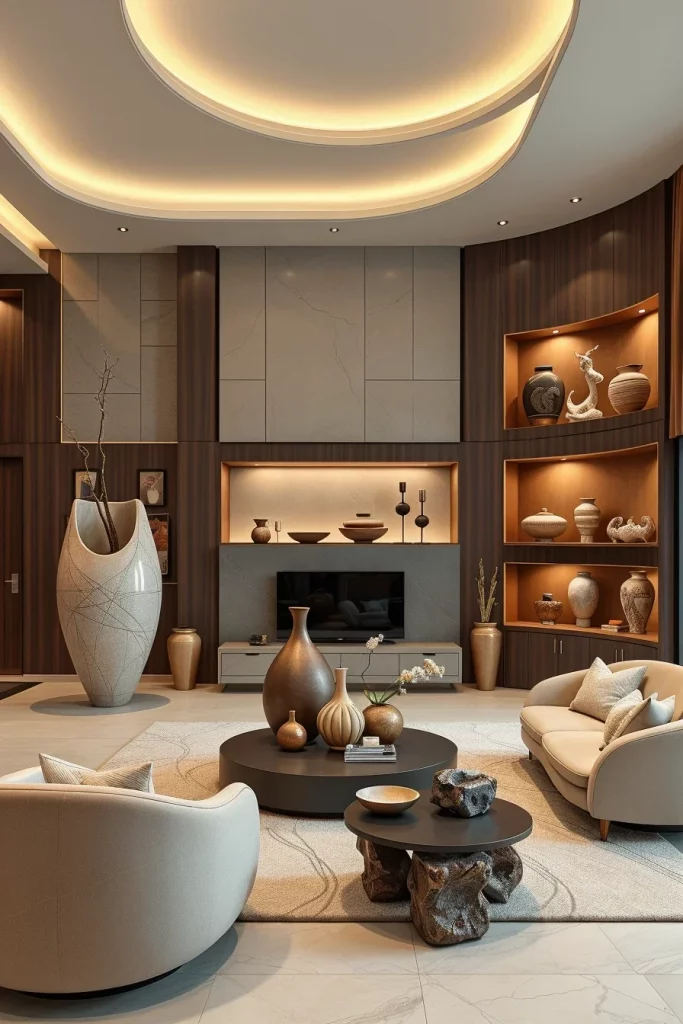
I like displaying decorative pieces on floating shelves, built-in niches, coffee tables, and console tables while maintaining generous empty space around them. Books with neutral covers, textured stone accessories, blown glass objects, and handcrafted pottery introduce variety while supporting the overall sculptural theme. Thoughtful spacing allows every object to be appreciated individually.
From my perspective, restraint is the defining characteristic of successful styling. Many leading interior publications encourage curating accessories instead of collecting large quantities of décor. I follow this advice because negative space is just as important as the decorative pieces themselves.
To complete this styling, I would incorporate subtle accent lighting that highlights sculptures and textured surfaces during the evening. Proper illumination enhances depth, creates atmosphere, and allows each carefully selected object to become part of the room’s architectural composition.
Luxury Fabrics That Add Softness And Depth
A sculptural living room can sometimes feel visually strong because of its architectural forms, so I always introduce luxurious fabrics to soften the overall atmosphere. Upholstery, curtains, rugs, and decorative textiles create warmth while enhancing the flowing silhouettes of sculptural furniture. My goal is to make the room feel inviting without reducing its refined appearance. Carefully layered fabrics also improve acoustics, making large living spaces feel quieter and more comfortable.
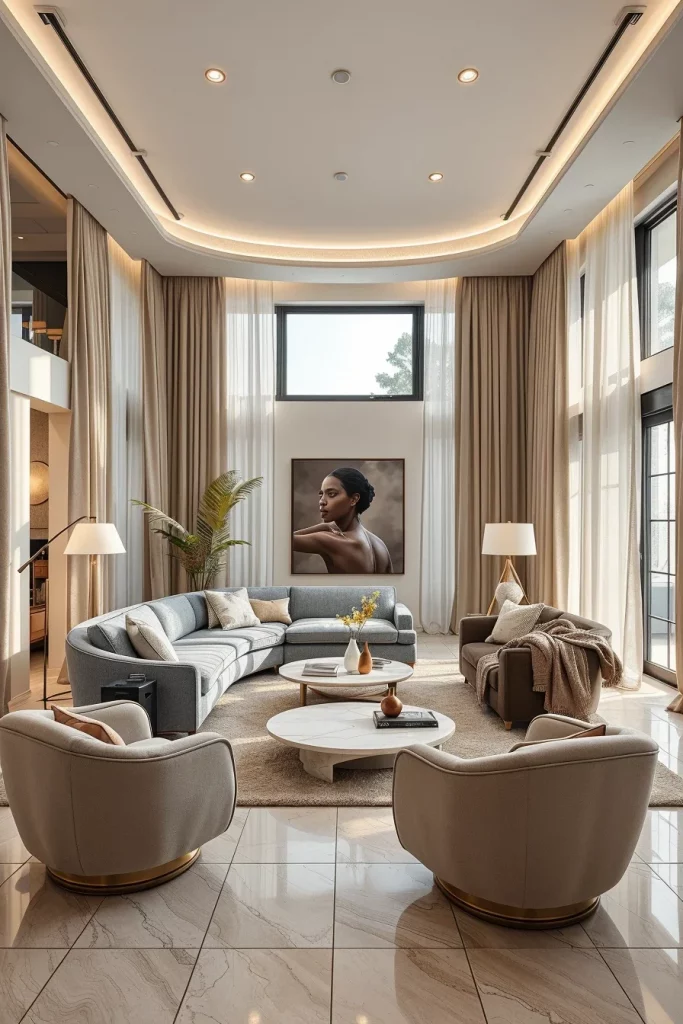
I usually select boucle sofas, velvet accent chairs, linen drapery, wool area rugs, and cashmere or mohair throws to create a balanced combination of textures. Neutral shades such as ivory, sand, taupe, warm gray, and soft beige allow the sculptural furniture to remain the focal point while introducing visual depth. Cushions with subtle woven textures and oversized fabric-covered ottomans further enrich the interior without adding unnecessary decoration.
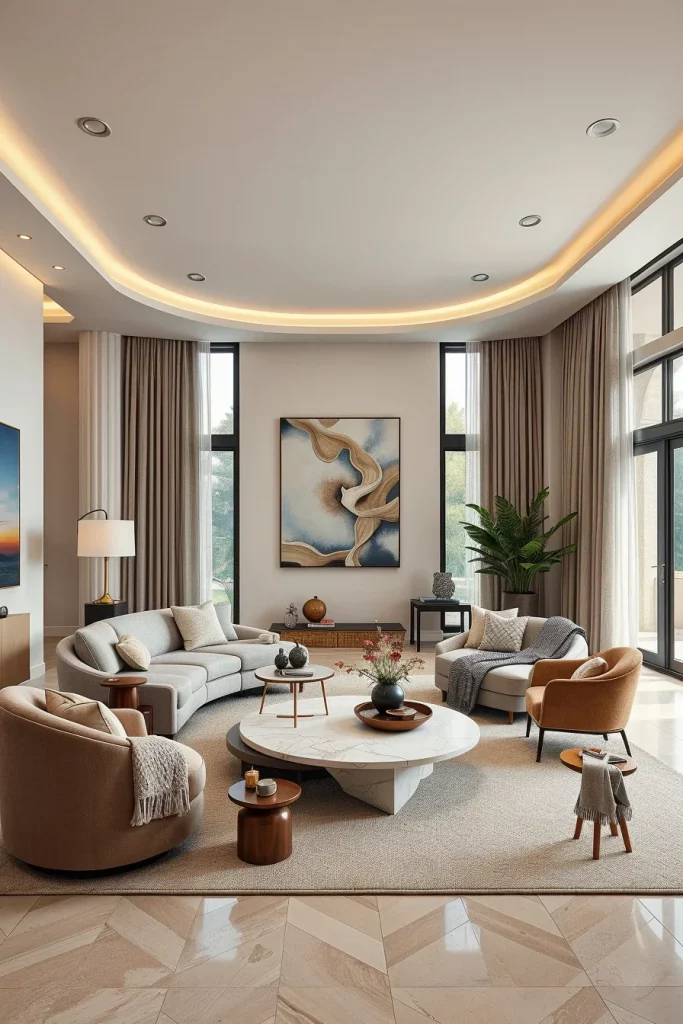
In my experience, respected American publications such as House Beautiful frequently emphasize layering natural textiles instead of relying on bold colors to create luxury. I agree with this approach because quality materials age beautifully and contribute to a timeless interior. Whenever I refresh a living room, upgrading the textiles often has the greatest impact with relatively few changes.
If I wanted to complete this design even further, I would add custom floor-length curtains mounted close to the ceiling. This simple addition visually increases the room’s height while framing the sculptural furniture with elegant softness.
Contemporary Artwork For A Sculptural Living Room
Artwork brings personality to a sculptural living room, but I believe it should support the architecture rather than compete with it. I prefer selecting contemporary pieces that echo the curved forms, layered textures, and restrained color palette already present in the space. Large-scale artwork often creates a stronger impression than multiple small pieces because it reinforces the clean architectural composition.
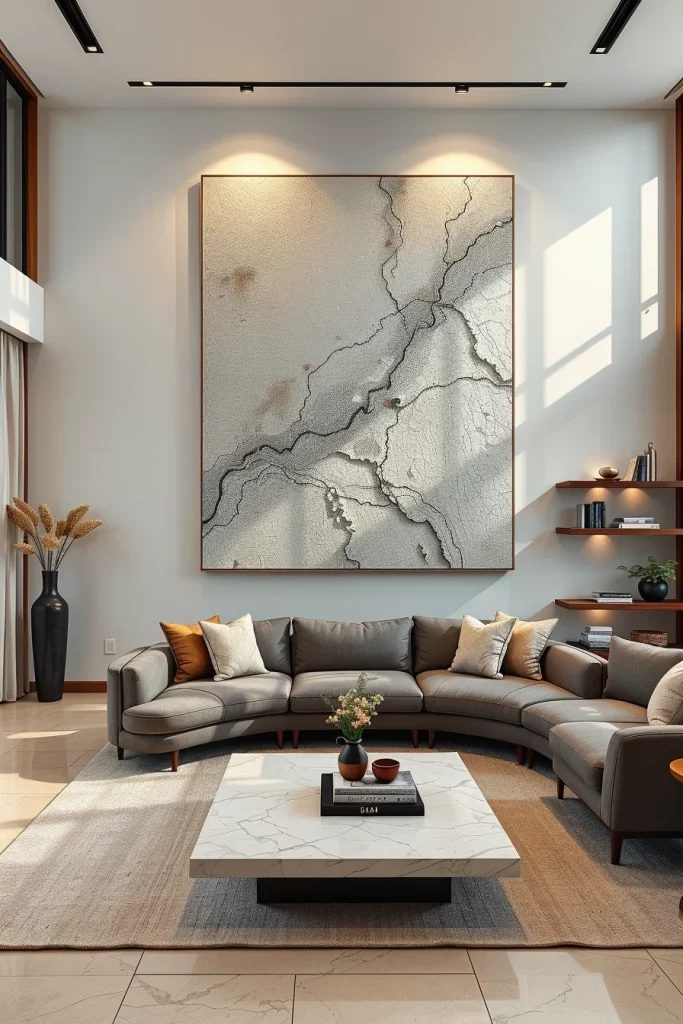
I frequently combine oversized abstract canvases with sculptural wall reliefs, textured mixed-media artwork, and carefully positioned gallery lighting. Thin metal frames, floating installations, and monochromatic compositions maintain a sophisticated appearance while allowing the room to feel cohesive. Even a single statement piece can transform an otherwise minimal interior into an expressive living space.
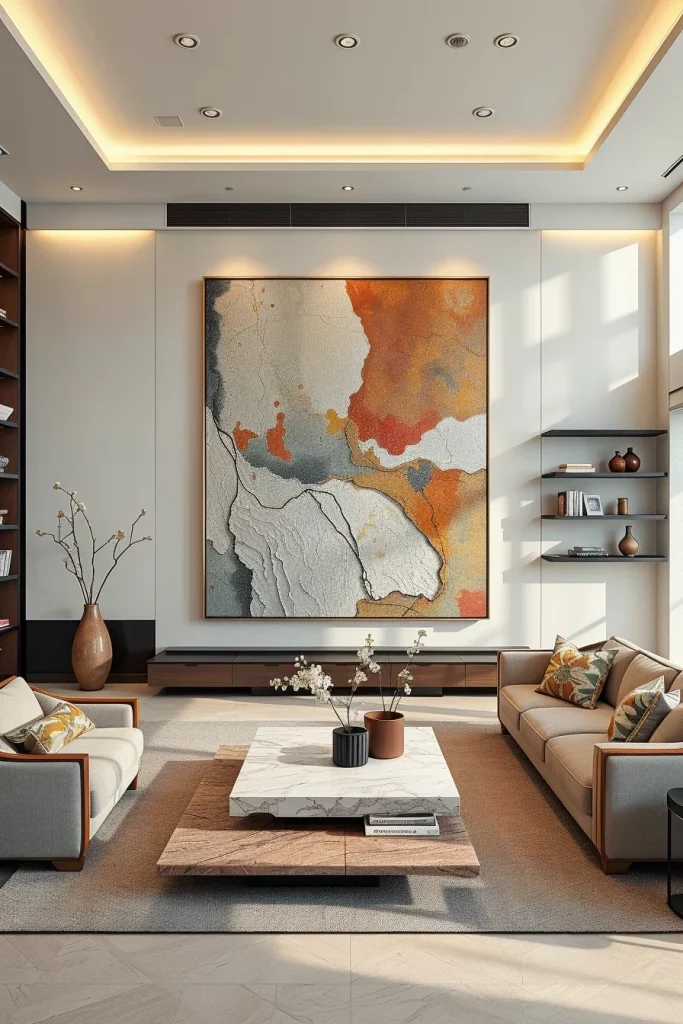
Personally, I appreciate how many contemporary interior designers recommend investing in fewer, higher-quality artworks instead of filling every available wall. Architectural Digest regularly showcases interiors where artwork complements furniture proportions rather than overpowering them. I have found this philosophy especially effective when working with sculptural interiors because every visual element deserves room to breathe.
To strengthen the composition, I would also consider the relationship between artwork, furniture height, and natural light throughout the day. Proper placement ensures every piece feels intentionally integrated into the architecture.
Styling Open Concept Spaces With Sculptural Furniture
Open-concept homes provide an excellent opportunity to showcase sculptural furniture because every area remains visually connected. When I design these spaces, I use furniture itself to define functional zones instead of relying on walls or partitions. Curved sofas, rounded dining tables, sculptural shelving, and carefully positioned lounge chairs naturally guide movement while preserving openness.
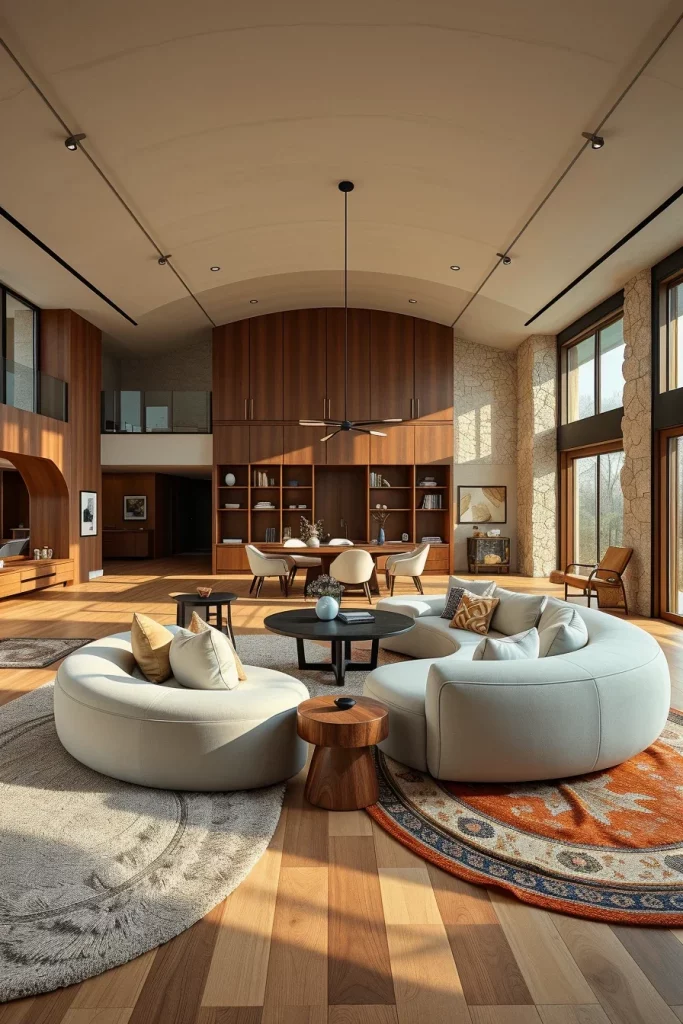
I often anchor the living area with a large curved sectional facing a sculptural coffee table, while open shelving subtly separates the lounge from the dining area. Oversized rugs define each zone, and consistent finishes such as stone, wood, and textured plaster maintain continuity across the entire space. Pendant lighting positioned above each functional area creates additional structure without interrupting the open floor plan.
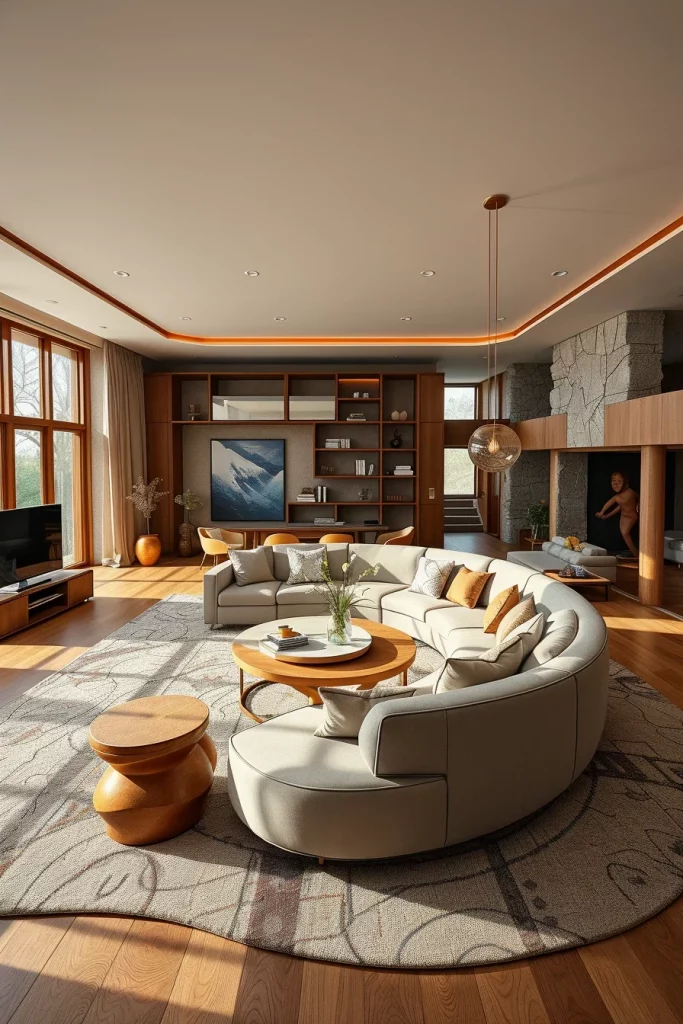
From my experience, open layouts succeed when every piece contributes to both beauty and functionality. Rather than filling empty areas, I leave generous circulation paths so the sculptural forms can be appreciated from multiple perspectives. This approach creates interiors that feel spacious, elegant, and comfortable for everyday living.
I would also recommend repeating similar curves throughout the home so the transition between different zones feels seamless. This consistency strengthens the overall design while preventing the open layout from appearing fragmented.
Common Decorating Mistakes To Avoid In Sculptural Living Rooms
One mistake I frequently notice is introducing too many statement pieces into a single room. A sculptural living room depends on carefully balanced forms, so adding numerous bold furniture designs often creates visual competition instead of harmony. I prefer allowing one or two sculptural elements to become the primary focal points while supporting them with quieter furnishings.
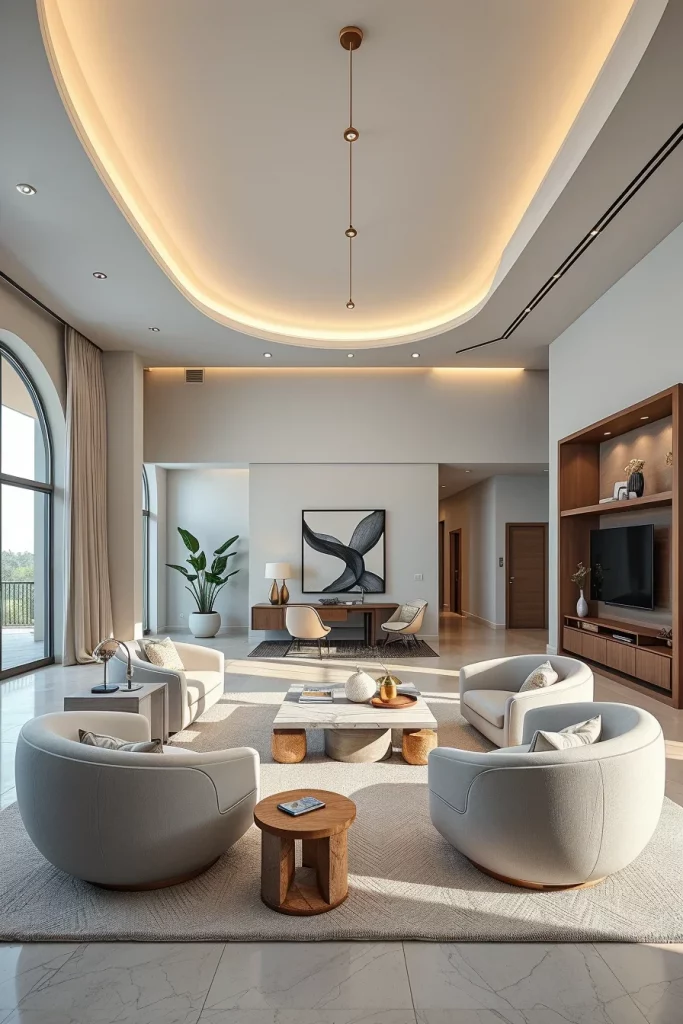
Another common mistake is mixing unrelated materials, colors, and decorative styles. I recommend maintaining a restrained palette and selecting finishes that naturally complement one another. Excessive accessories, oversized patterns, and highly reflective surfaces can distract from the elegant architectural quality that defines this design style. Good lighting is equally important because poorly illuminated sculptural forms lose much of their visual impact.
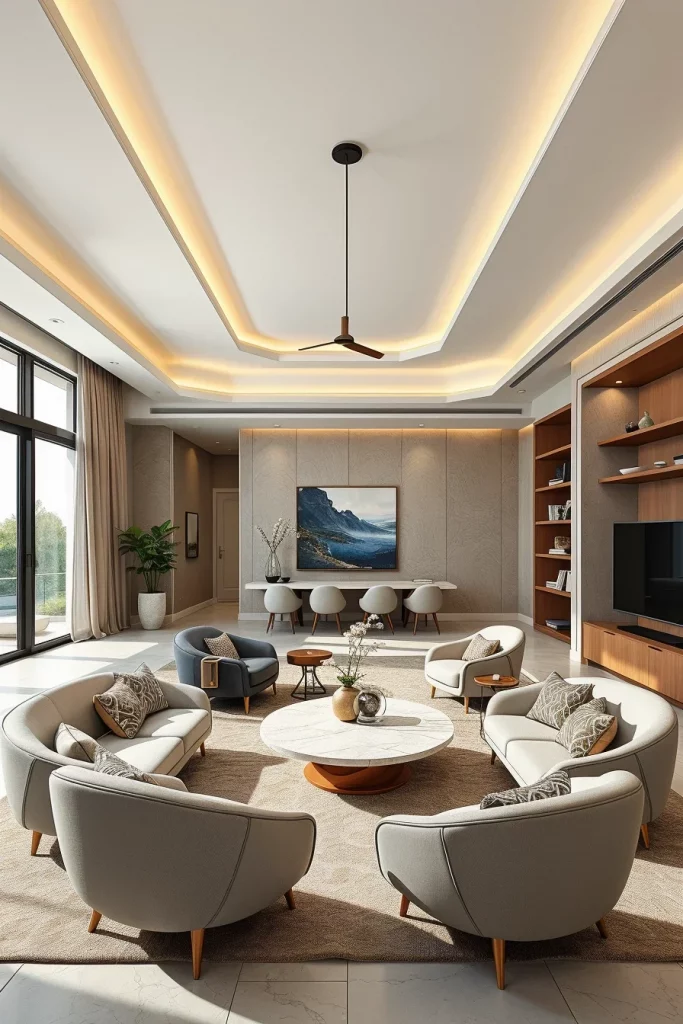
Personally, I have learned that removing unnecessary objects often improves a room more than purchasing new furniture. Many professional designers follow the principle that thoughtful editing creates stronger interiors than continuous decorating. I have consistently found this advice to be true when working with sculptural spaces.
If I were reviewing this room one final time, I would evaluate proportions carefully. Furniture should neither overwhelm the room nor appear undersized, and generous negative space should always remain part of the overall composition.
How To Create A Sculptural Living Room That Feels Timeless
For me, creating a timeless sculptural living room begins with thoughtful planning rather than following short-lived trends. I focus on elegant proportions, quality craftsmanship, and architectural forms that remain attractive for many years. Organic curves, balanced layouts, and carefully selected natural materials create interiors that continue to feel sophisticated as styles evolve. A timeless design is never dependent on seasonal decoration alone.
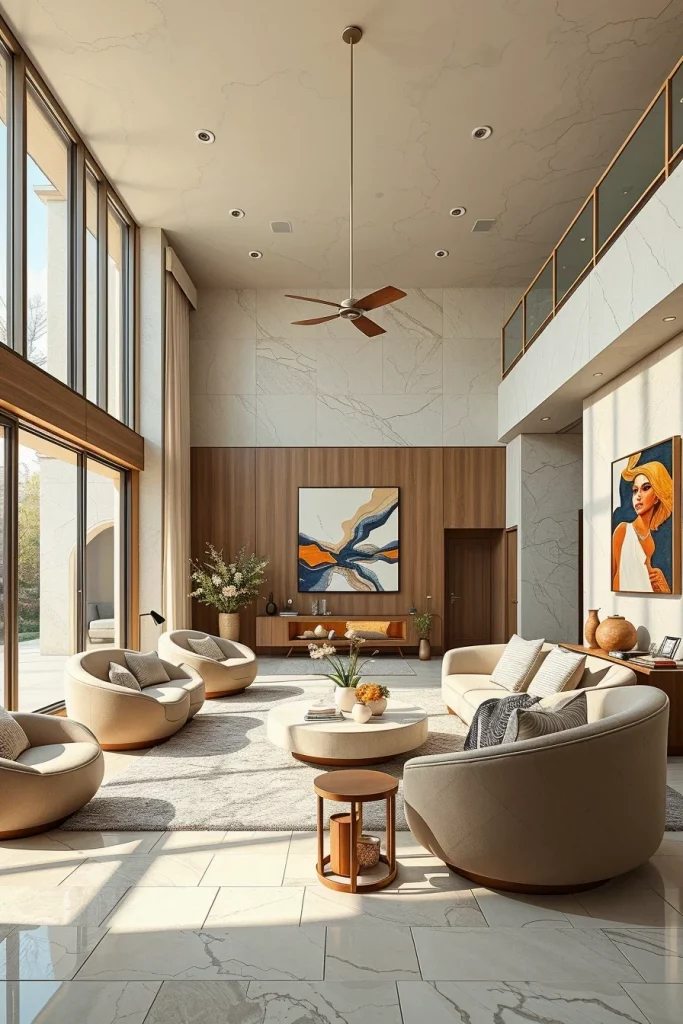
I invest in high-quality seating, durable stone surfaces, custom cabinetry, and versatile lighting because these elements establish the foundation of the room. Decorative accessories can always be updated over time, but well-designed furniture and architectural details remain relevant for decades. Soft neutral colors provide flexibility while allowing artwork and personal collections to evolve naturally.
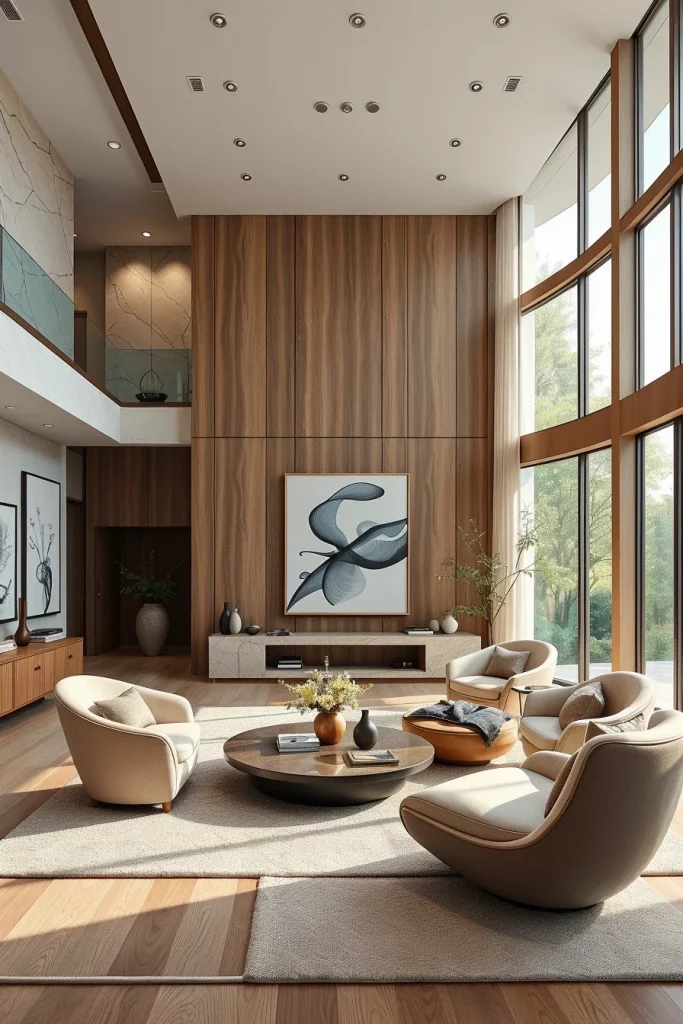
In my own projects, I have found that timeless interiors always reflect the people who live in them instead of simply copying current trends. I appreciate advice from respected designers who encourage homeowners to build rooms gradually by selecting meaningful pieces instead of decorating everything at once. This patient approach almost always produces more authentic and lasting results.
Finally, I would complete the room with carefully chosen lighting, healthy indoor greenery placed sparingly, and meaningful decorative objects collected over time. These personal finishing touches ensure the sculptural living room feels elegant, functional, and uniquely individual.
A sculptural living room is all about combining artistic design with everyday comfort. By choosing organic shapes, thoughtful textures, and timeless materials, you can create a space that feels both modern and welcoming. Whether you incorporate a few sculptural accents or redesign the entire room, these ideas can help you achieve an elegant interior that remains stylish for years to come.