
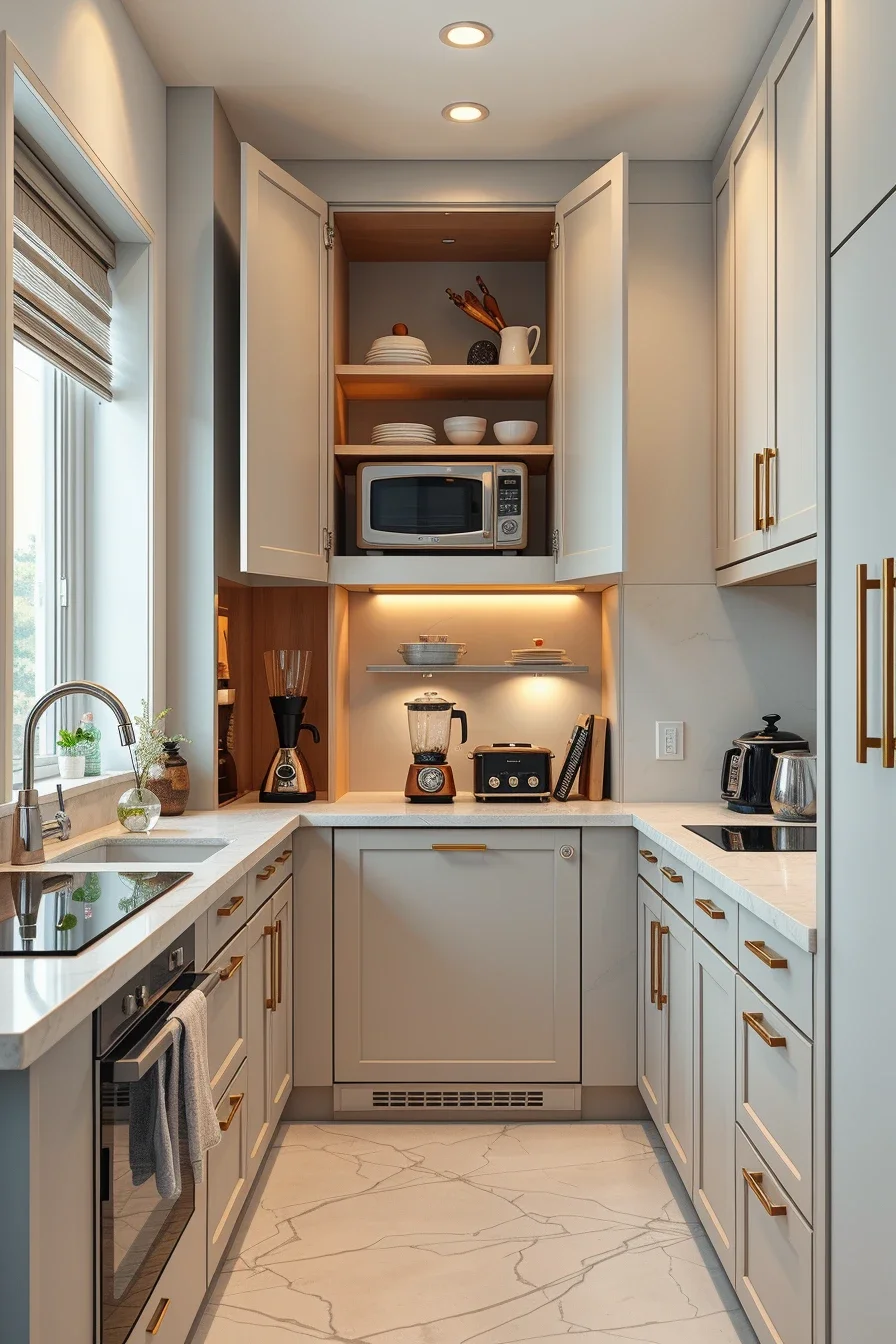
A well-organized small kitchen can feel just as functional and inviting as one with twice the space. Thoughtful storage solutions, creative layouts, and stylish organizational details make it easier to cook, entertain, and enjoy every square inch. From sculptural shelving and hidden compartments to multifunctional furniture and smart cabinet systems, even the smallest kitchens can become highly efficient. The key is choosing organization ideas that reduce clutter while enhancing the overall design of the room. Whether you prefer a modern, minimalist aesthetic or a warm contemporary look, there are countless ways to create a kitchen that is both beautiful and practical. This guide explores inspiring Small Kitchen Organization ideas that combine creativity, functionality, and timeless style to help you transform your compact kitchen into a space you’ll love every day.
Small Kitchen Organization With Floor-To-Ceiling Storage Solutions
One of the first upgrades I recommend for effective Small Kitchen Organization is taking advantage of the full height of the room. Instead of stopping cabinets at the standard height, I prefer extending storage all the way to the ceiling. This approach immediately creates additional space for seasonal cookware, serving dishes, baking supplies, and pantry items that are not used every day. Visually, full-height cabinetry also makes a compact kitchen appear taller and more refined while eliminating the dusty gap above upper cabinets.
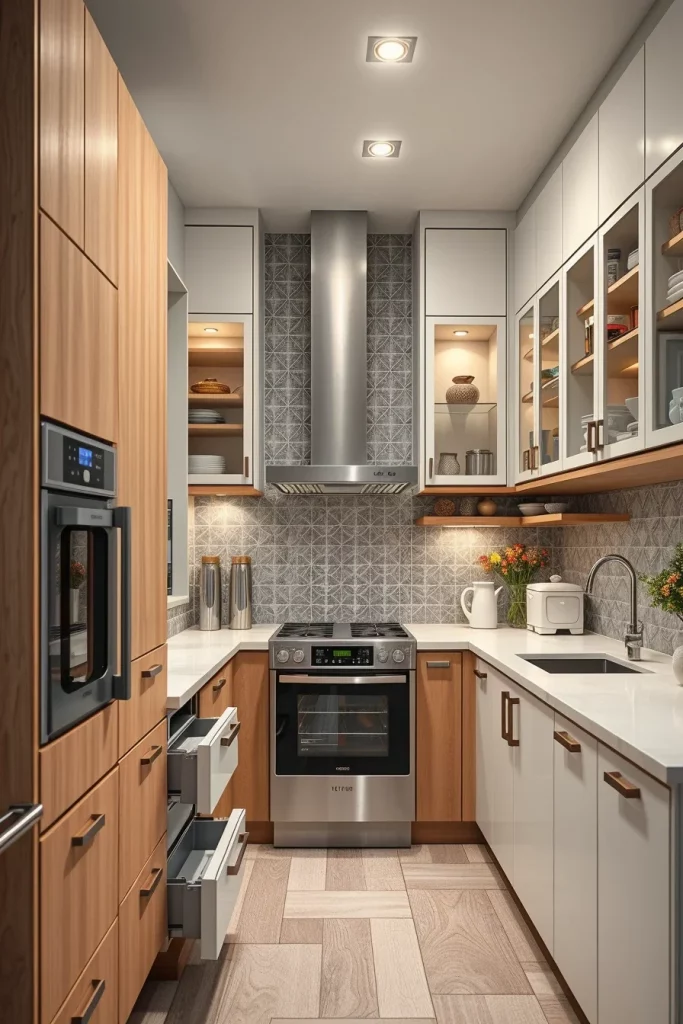
I like combining tall cabinets with a mixture of closed storage, glass-front display cabinets, and integrated appliances. Deep lower drawers provide easy access to heavy cookware, while upper compartments safely store less frequently used items. Interior pull-out shelves, built-in organizers, and vertical tray dividers ensure that every cabinet remains functional instead of becoming cluttered. Soft-close hardware and concealed handles contribute to a clean, uninterrupted appearance that works well in both contemporary and transitional kitchens.
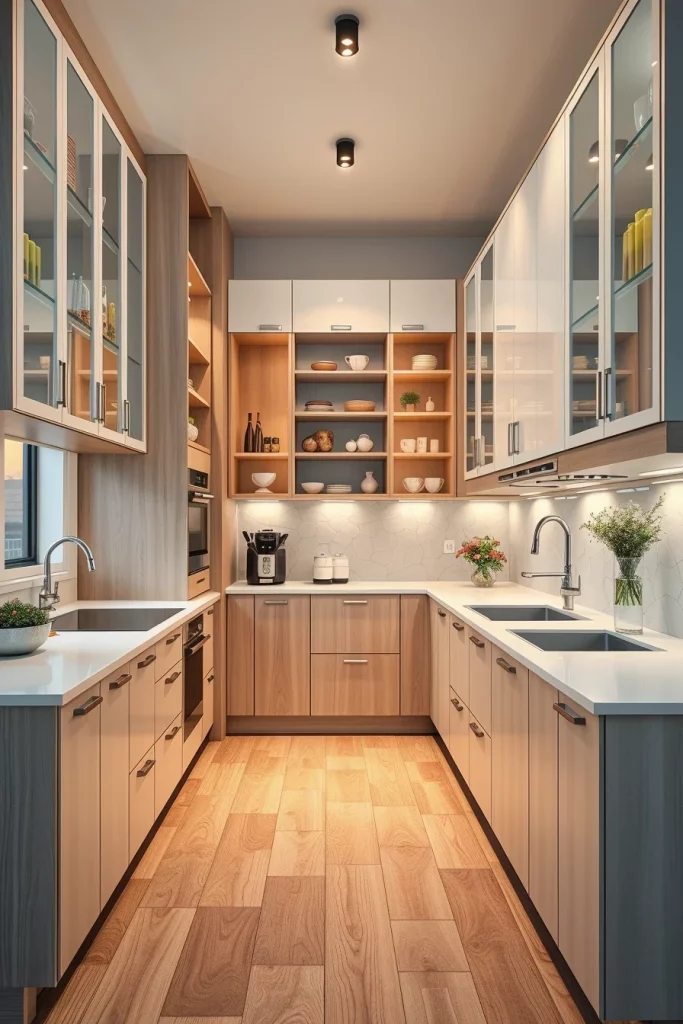
In my experience, designers from organizations like the National Kitchen & Bath Association often emphasize maximizing vertical storage before increasing the kitchen footprint. I completely agree with this philosophy because making use of available height is usually far more affordable than expanding the room itself. Whenever I redesign a small kitchen, full-height cabinetry consistently delivers one of the biggest improvements in both storage capacity and everyday convenience.
To make this storage system even more efficient, I recommend adding interior LED cabinet lighting, adjustable shelving, labeled storage containers, and a small decorative ladder or step stool for safe access to the highest shelves. These additions make every inch of storage practical without sacrificing the clean appearance.
Sculptural Open Shelving That Keeps Everyday Essentials Within Reach
I enjoy incorporating sculptural open shelving because it creates visual openness while making frequently used kitchen items instantly accessible. Unlike bulky upper cabinets that can make a compact room feel enclosed, carefully designed shelves maintain an airy atmosphere while still providing valuable storage. The key is limiting the display to attractive everyday essentials rather than overcrowding every surface.
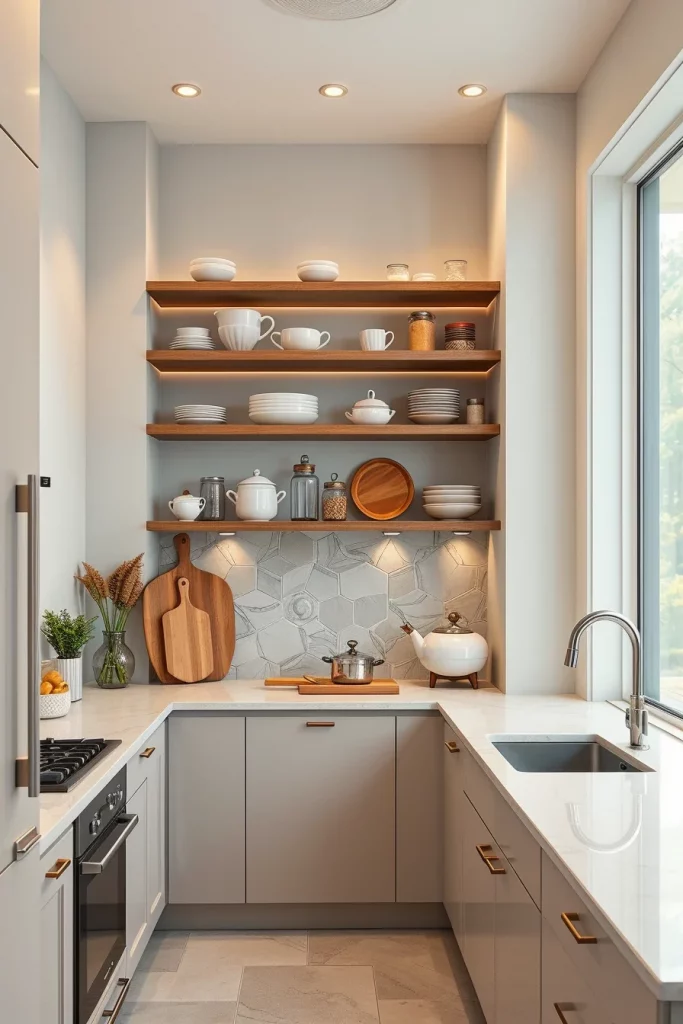
My preferred arrangement includes floating shelves with concealed brackets, coordinated ceramic dishes, matching glass storage jars, wooden cutting boards, neatly stacked bowls, and a few carefully selected decorative accessories. Keeping colors consistent creates a calm appearance while preventing visual clutter. Frequently used mugs, plates, oils, and spices remain within easy reach, making daily cooking faster and more enjoyable.
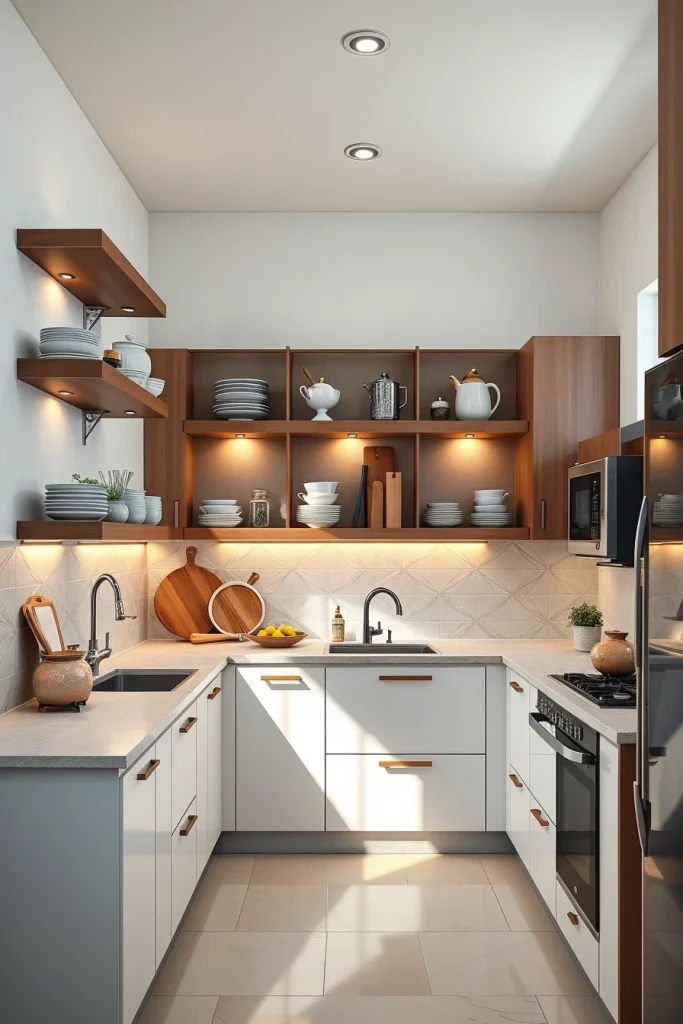
I have noticed that many interior designers featured by Architectural Digest recommend styling open shelving with restraint. I follow the same principle because empty space between objects is just as important as the objects themselves. A thoughtfully curated shelf becomes both practical storage and an attractive design feature that enhances the overall character of the kitchen.
To improve functionality further, I recommend incorporating under-shelf lighting, matching storage containers, hidden power outlets for small appliances, and washable shelf finishes that simplify maintenance while preserving the elegant appearance.
Slim Pull-Out Pantry Cabinets For Narrow Kitchen Spaces
Whenever I work with a narrow kitchen layout, slim pull-out pantry cabinets become one of my favorite organizational solutions. These cabinets utilize spaces that would otherwise remain unused, such as narrow gaps beside refrigerators or between base cabinets. Despite their compact width, they provide surprisingly generous storage for canned goods, spices, cooking oils, baking ingredients, and bottled beverages.
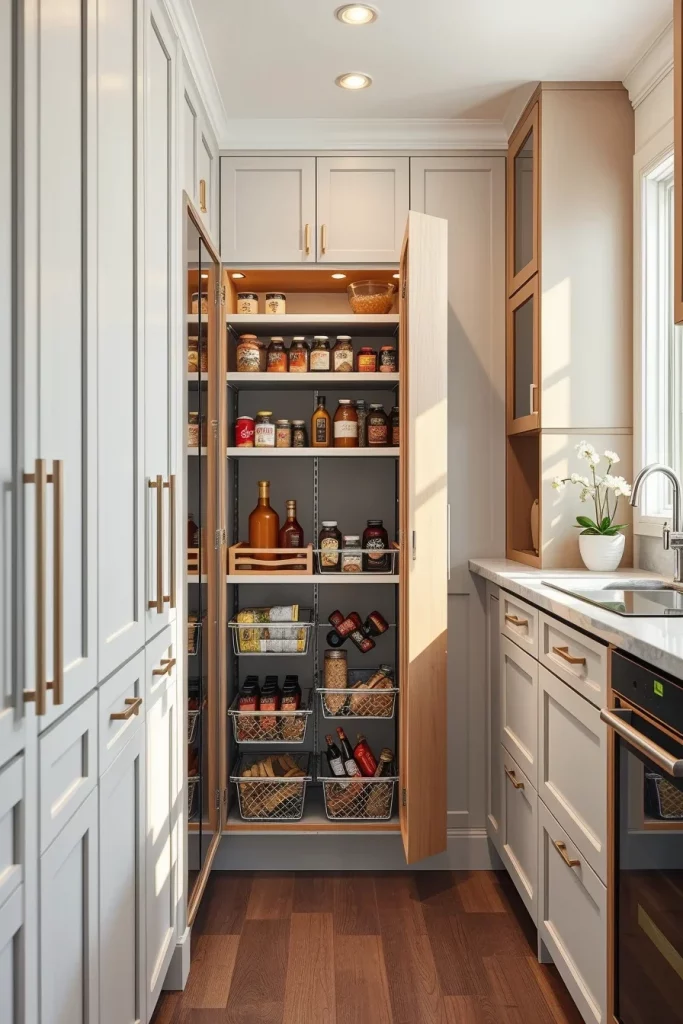
I prefer pull-out units equipped with full-extension runners that allow every shelf to slide completely forward. Adjustable baskets, high side rails, and divided compartments prevent products from shifting while keeping everything visible at a glance. Instead of searching through crowded cabinets, every ingredient becomes immediately accessible, reducing both frustration and food waste.
From my experience, professional kitchen designers consistently recommend pull-out storage because it dramatically improves accessibility in compact kitchens. I completely agree since visibility is one of the biggest advantages of organized storage. Being able to see every item instantly encourages better inventory management and simplifies meal preparation throughout the week.
For even greater efficiency, I recommend labeling shelves by category, using uniform storage containers, installing soft-close hardware, and reserving the highest shelves for lightweight pantry goods that are used less frequently.
Hidden Corner Storage That Eliminates Wasted Space
Corner cabinets are often the most challenging areas in a small kitchen, but I believe they offer tremendous storage potential when designed correctly. Instead of allowing deep corners to become forgotten storage zones, I prefer incorporating specialized systems that bring every item directly to the user. Modern corner solutions transform awkward spaces into highly functional storage areas.
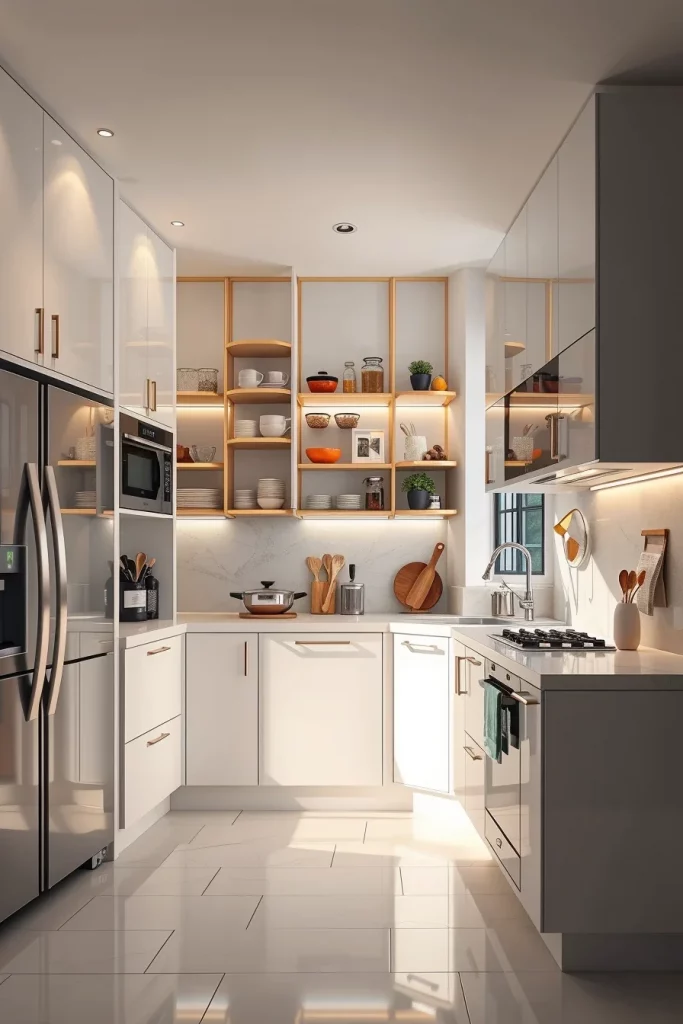
I usually recommend rotating corner shelves, pull-out corner baskets, swing-out shelving systems, or articulated cabinet mechanisms that allow cookware and small appliances to glide smoothly into view. These systems eliminate the need to reach into dark cabinet corners while significantly increasing usable storage capacity. Heavy pots, mixing bowls, and countertop appliances can all be stored safely without creating clutter elsewhere.
I have found that investing in quality corner hardware pays off over many years because it improves both accessibility and durability. Many professional kitchen planners emphasize optimizing difficult cabinet areas before adding more cabinetry, and I believe this advice leads to more efficient kitchens overall.
To complete this storage solution, I recommend adding interior cabinet lighting, non-slip shelf liners, adjustable shelving heights, and clearly defined storage zones so each category of kitchen equipment has its own dedicated location.
Artistic Floating Cabinets For A Light And Airy Layout
Floating cabinets are an excellent way to create the illusion of more space while maintaining generous storage. I often recommend this design because the visible floor beneath the cabinetry makes even the smallest kitchen appear larger and less crowded. The clean horizontal lines contribute to a modern aesthetic while preserving valuable storage inside the cabinets themselves.
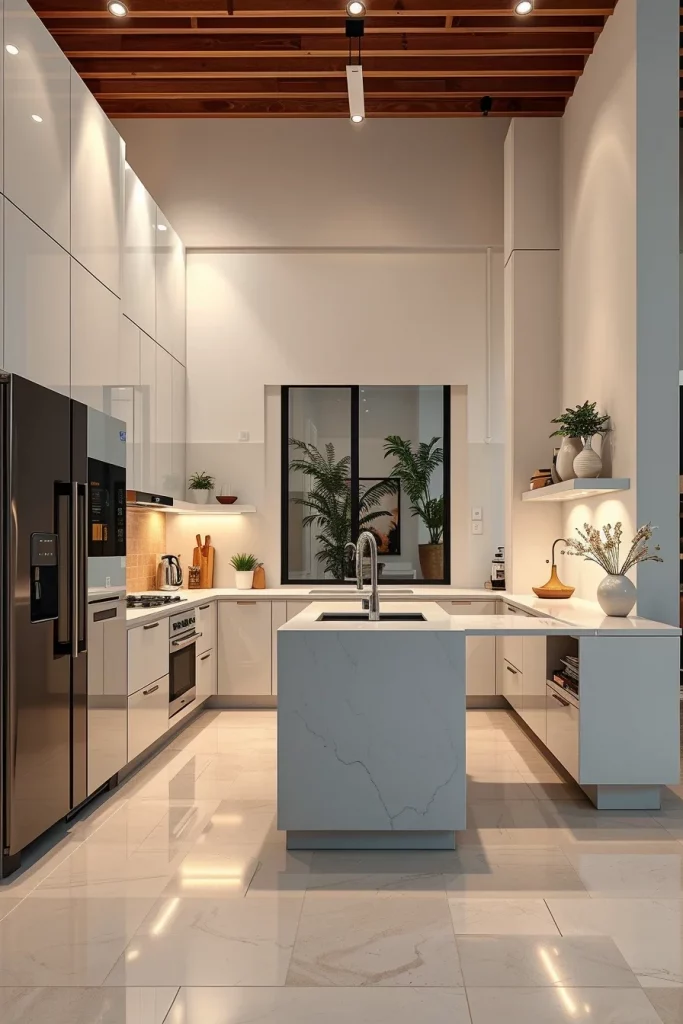
I prefer combining floating base cabinets with integrated LED lighting underneath to emphasize the floating effect during the evening. Handleless cabinet fronts, durable countertops, and coordinated backsplashes maintain visual continuity, while deep drawers maximize storage for cookware, utensils, food containers, and cleaning supplies. Every component works together to create a streamlined and highly organized environment.
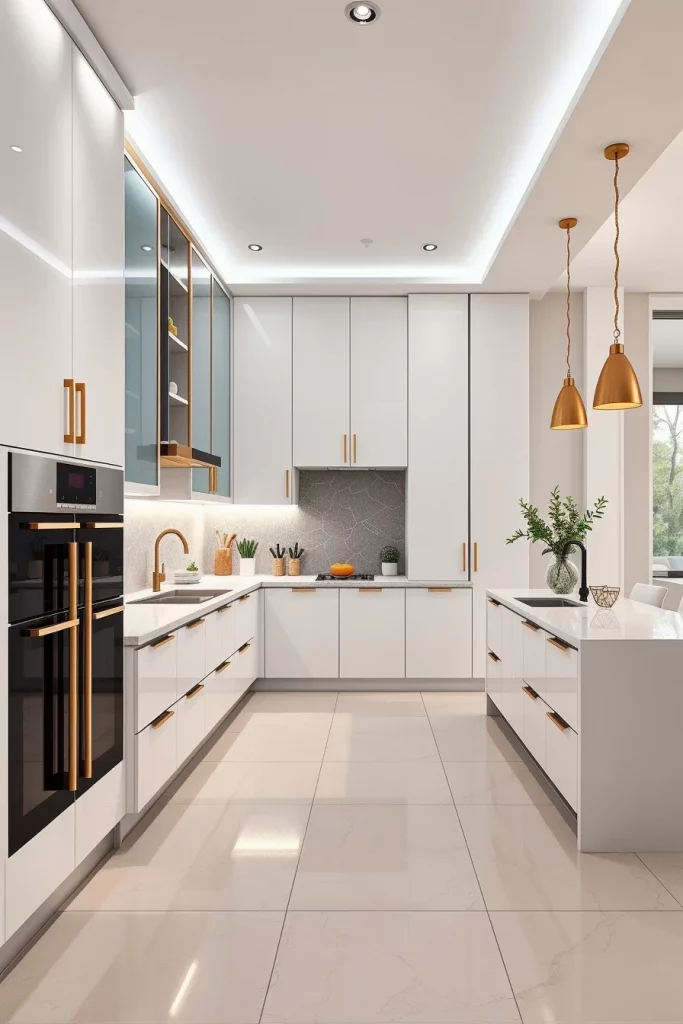
Personally, I appreciate how floating cabinetry balances practicality with contemporary design. Interior designers frequently use this technique in compact apartments because uninterrupted floor space naturally makes rooms feel more open. I have found that homeowners often notice their kitchens feel significantly more spacious even though the actual dimensions remain unchanged.
To enhance this layout further, I recommend including toe-kick lighting, hidden recycling compartments, integrated charging stations, and coordinated countertop organizers that preserve the minimalist appearance while improving everyday functionality.
Multi-Functional Kitchen Islands With Built-In Organization
A compact kitchen can benefit enormously from a thoughtfully designed island, even if floor space is limited. I often recommend a narrow multi-functional island because it combines food preparation, storage, dining, and organization into a single feature. Instead of occupying valuable space, a well-proportioned island becomes the central workstation that improves workflow while keeping the kitchen neat and uncluttered. This type of layout supports efficient Small Kitchen Organization without making the room feel crowded.
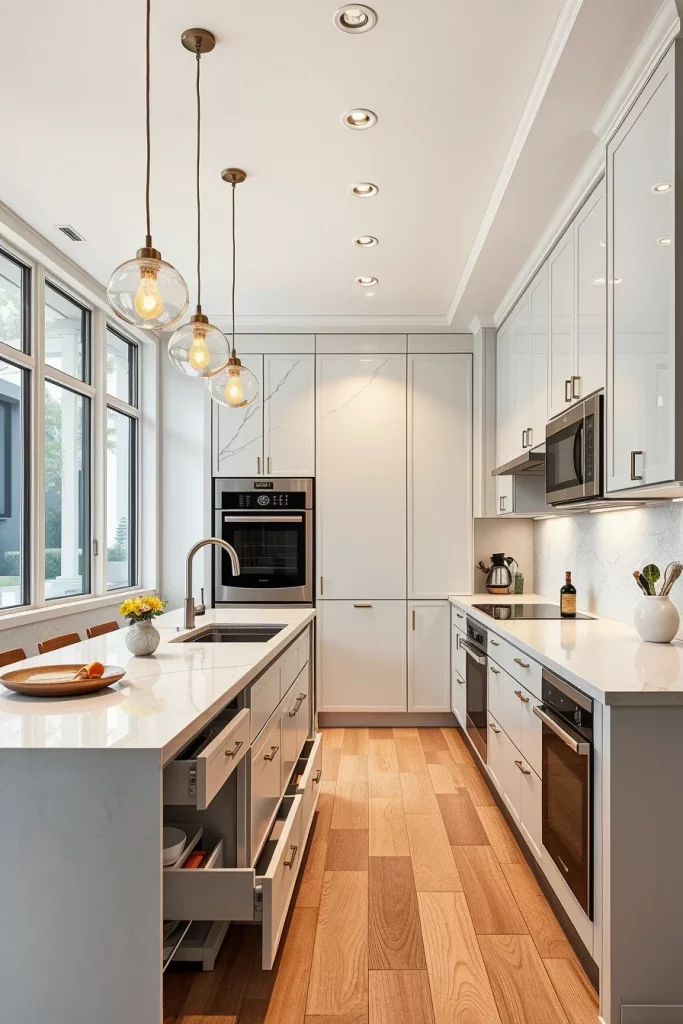
I prefer islands that include deep drawers for cookware, built-in shelves for cookbooks, hidden pull-out trash and recycling bins, spice storage, towel bars, and charging stations for small appliances. Some designs also feature fold-out countertops or extendable breakfast bars that provide additional workspace only when needed. Durable quartz or porcelain countertops are excellent choices because they withstand heavy daily use while remaining easy to maintain. Every storage compartment should be designed with a specific purpose so that nothing is left without a designated place.
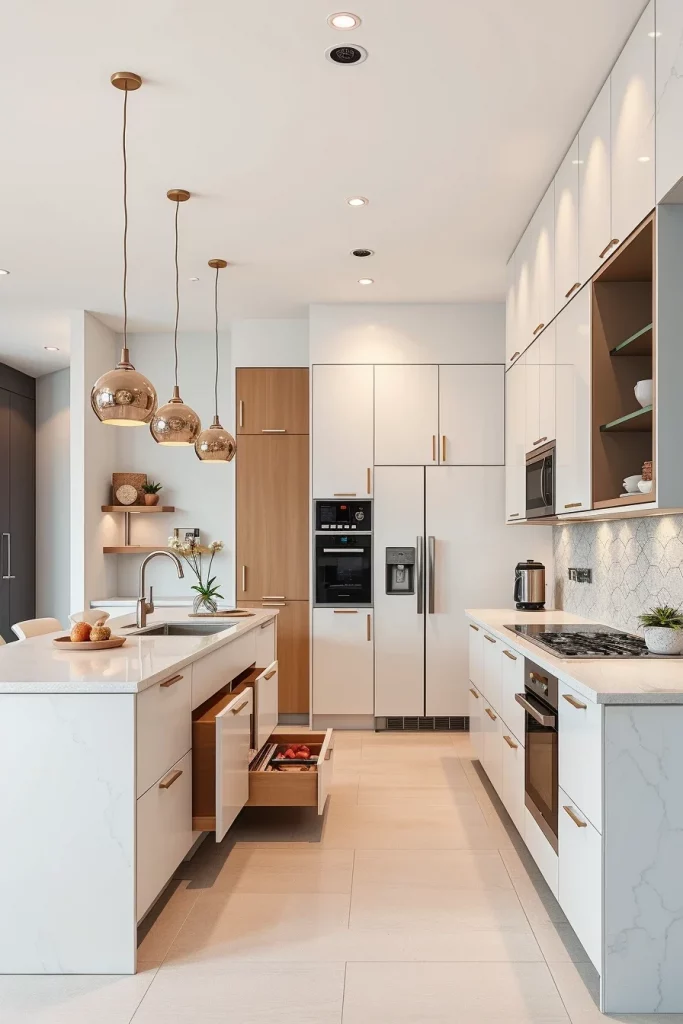
From my experience, designers featured by Better Homes & Gardens often recommend making every piece of furniture serve multiple purposes in compact homes. I completely agree because one carefully designed island can replace several standalone storage units while improving movement throughout the kitchen. I have found that homeowners appreciate how much cleaner the room feels when multiple functions are combined into one efficient centerpiece.
To complete this design, I recommend adding integrated electrical outlets, soft-close drawers, adjustable shelving, hidden appliance storage, and decorative pendant lighting that visually anchors the island while enhancing its functionality.
Clever Drawer Dividers For Utensils And Cooking Tools
Drawer organization may seem like a small detail, but I have learned that it dramatically affects the efficiency of a compact kitchen. Well-organized drawers prevent clutter from accumulating and make cooking much more enjoyable because every utensil is immediately accessible. Instead of searching through tangled tools, everything remains neatly arranged according to its purpose.
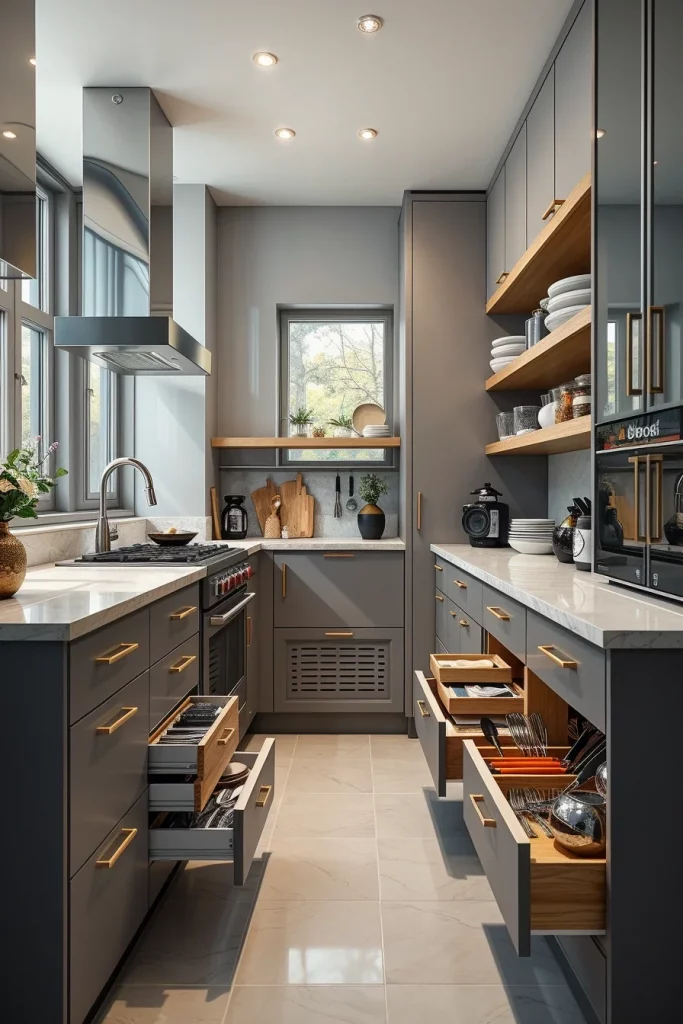
I recommend using adjustable drawer dividers, expandable bamboo organizers, knife inserts, spice drawer trays, compartmentalized utensil holders, and dedicated storage for measuring cups and baking accessories. Deep drawers can also accommodate plate organizers and cookware separators that prevent scratching while maximizing storage capacity. Soft-close drawer systems improve both comfort and durability for everyday use.
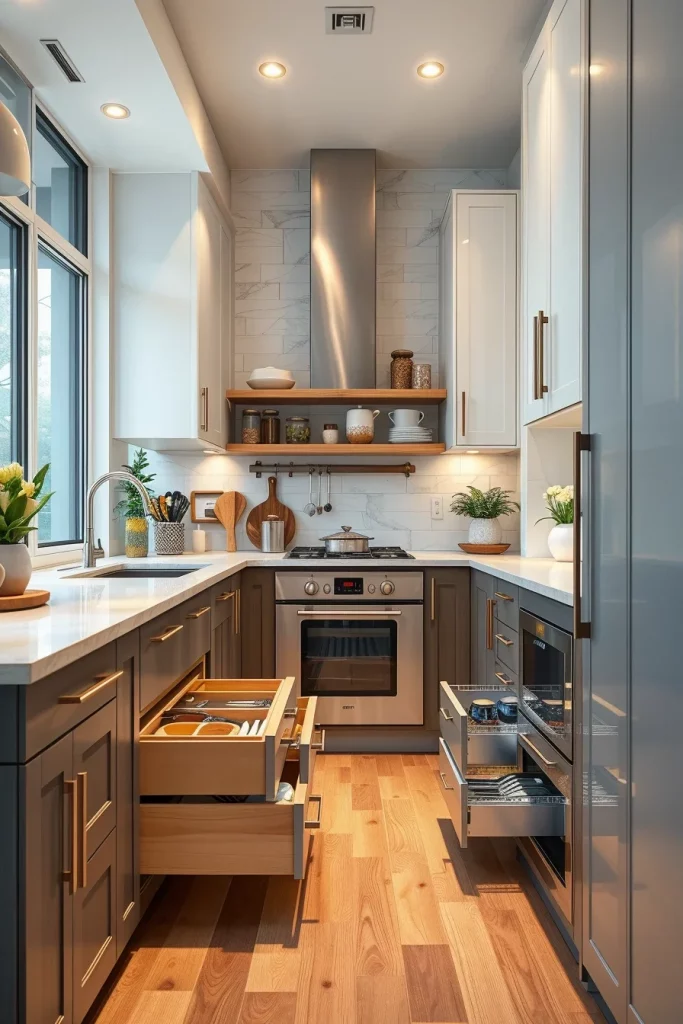
Personally, I have noticed that professional organizers frequently encourage creating designated zones inside every drawer. I follow this advice because it eliminates unnecessary movement during meal preparation. Once every cooking tool has its assigned location, maintaining an organized kitchen becomes almost effortless, even during busy weeks.
For even greater efficiency, I recommend labeling hidden compartments, adding non-slip drawer liners, incorporating adjustable dividers that can evolve over time, and periodically reviewing drawer contents to remove items that are rarely used.
Vertical Wall Storage That Maximizes Every Inch
The walls in a small kitchen often represent valuable storage opportunities that many homeowners overlook. I always look upward when planning compact kitchens because unused vertical surfaces can accommodate everything from cookware to pantry supplies. This approach keeps countertops clear while making frequently used items easy to reach throughout the day.
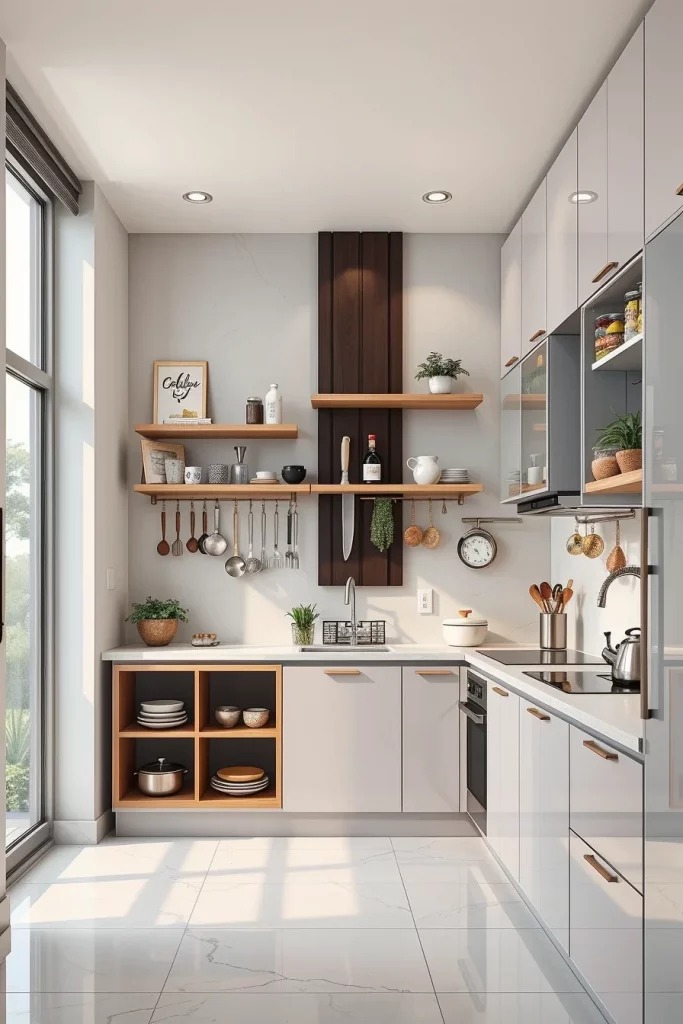
I like incorporating wall-mounted rails, magnetic knife holders, floating shelves, hanging baskets, vertical spice racks, utensil hooks, paper towel holders, and slim storage cabinets that fit between windows or beside refrigerators. Combining several vertical storage systems creates an organized workspace while preserving valuable cabinet space for larger items. Selecting finishes that match the cabinetry ensures the storage feels integrated rather than added as an afterthought.
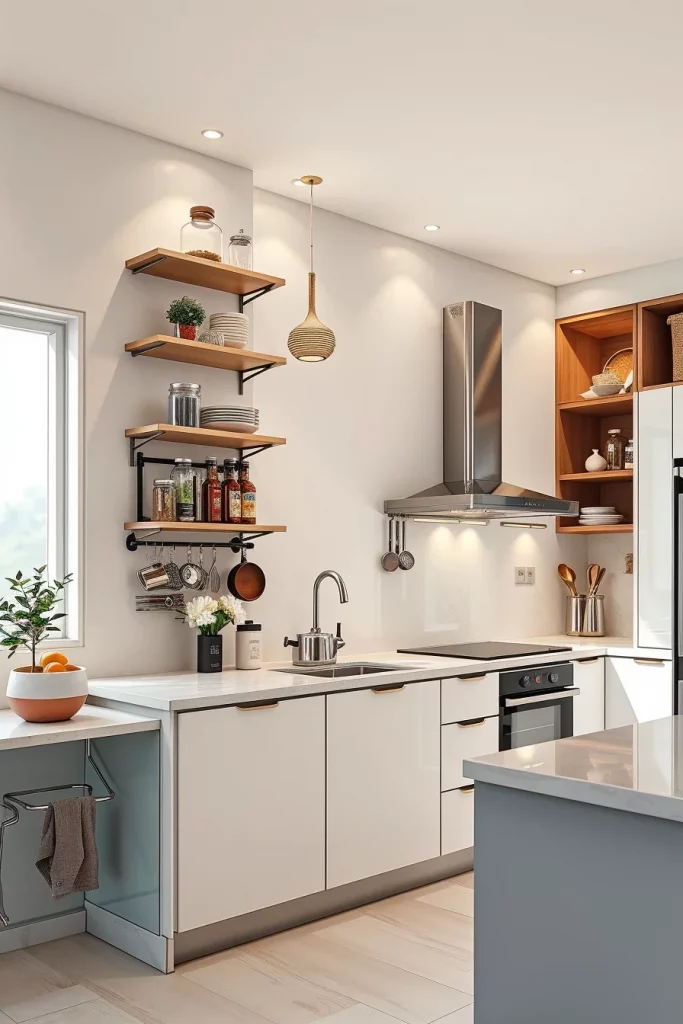
In my experience, vertical organization consistently provides one of the highest returns for compact kitchens. Many interior designers recommend keeping countertops as open as possible to create a greater sense of spaciousness, and I have found this advice to be extremely effective. The fewer items that occupy horizontal surfaces, the larger and cleaner the kitchen appears.
To enhance this solution further, I recommend installing under-shelf lighting, decorative wall organizers, concealed cable management for small appliances, and matching storage containers that create a cohesive visual appearance across the entire wall.
Stylish Pegboard Systems For Flexible Kitchen Organization
Pegboard storage has evolved far beyond workshop organization and has become one of my favorite ideas for modern kitchens. A well-designed pegboard provides flexible storage that can easily adapt as cooking habits change. Since every hook and shelf can be repositioned, the system continues to evolve with the homeowner’s needs without requiring permanent remodeling.
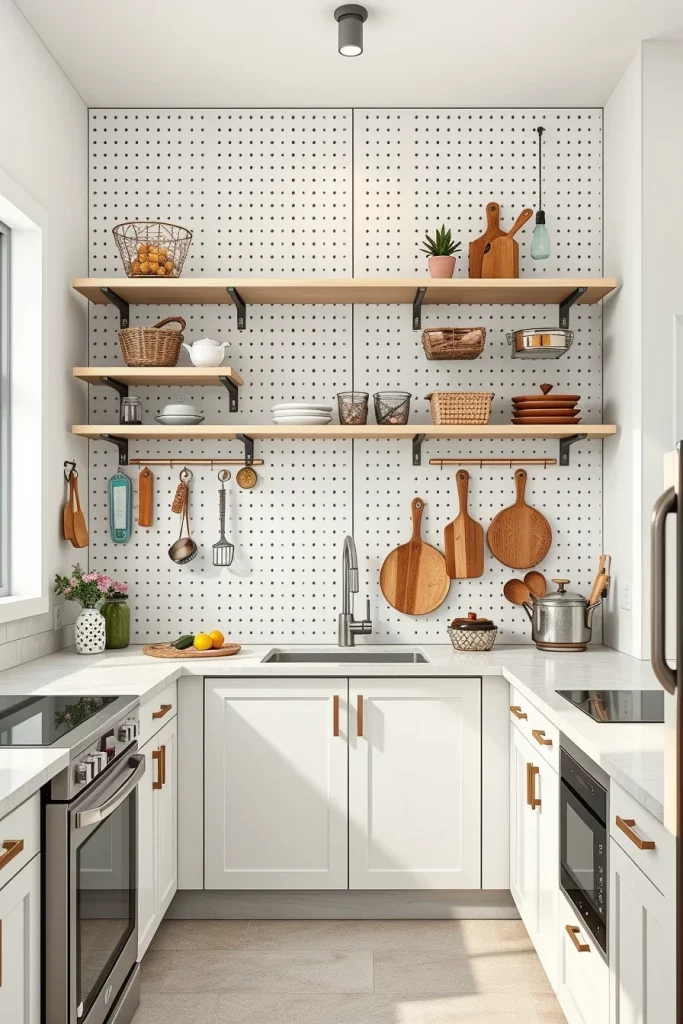
I recommend using durable metal or painted wood pegboards fitted with adjustable shelves, utensil hooks, small baskets, plant-free decorative accessories, cutting board holders, mug hooks, spice shelves, and storage bins. Coordinating the pegboard finish with the surrounding cabinetry helps it become an intentional design feature rather than simply a storage accessory. The result is both practical and visually appealing.
I appreciate how adaptable pegboard systems are because they encourage continuous organization. Several professional organizers have highlighted modular storage as one of the easiest ways to keep compact kitchens functional over time. I have found that homeowners enjoy rearranging the layout as their storage needs evolve, making the kitchen feel fresh without additional renovation.
To maximize the usefulness of the pegboard, I recommend incorporating labeled containers, adjustable shelf brackets, integrated lighting, and decorative organizers that maintain a clean and cohesive appearance while allowing quick access to everyday essentials.
Creative Under-Sink Storage Ideas For Small Kitchens
The cabinet beneath the sink is frequently one of the most underutilized spaces in a kitchen. I always pay special attention to this area because thoughtful organization can significantly reduce clutter throughout the rest of the room. Plumbing pipes create obstacles, but modern storage accessories are designed specifically to work around them while maximizing every available inch.
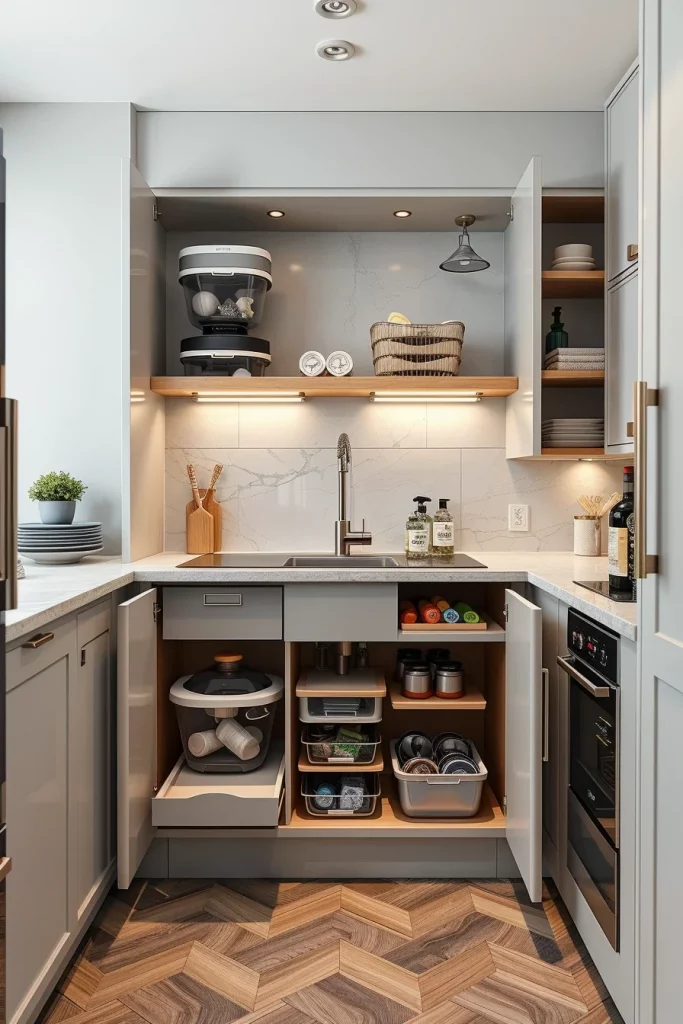
I recommend installing pull-out storage drawers, stackable shelves, adjustable caddies, cleaning supply organizers, removable storage bins, over-the-door racks, towel holders, and compact containers for dishwashing products. Waterproof shelf liners help protect the cabinet interior, while clear storage bins make it easy to identify supplies without removing everything from the cabinet. Every item remains visible and easy to reach.
In my own projects, I have found that under-sink organization is often the final step that transforms a functional kitchen into an exceptionally organized one. Many organization experts emphasize storing similar items together, and I consistently follow this principle because it simplifies cleaning routines and reduces unnecessary searching.
To make this cabinet even more practical, I recommend adding battery-operated lighting, moisture-resistant storage containers, labeled baskets, leak detection mats, and removable organizers that allow quick access whenever plumbing maintenance is required.
Minimalist Cabinet Organization With Matching Storage Containers
I always find that the easiest way to improve a compact kitchen is by starting inside the cabinets. Matching storage containers instantly create visual order while making every shelf easier to use. Instead of stacking original packaging that wastes space, I prefer transferring dry goods into uniform containers that fit neatly together. This simple approach makes the cabinets appear larger while allowing me to quickly locate ingredients during busy meal preparation.
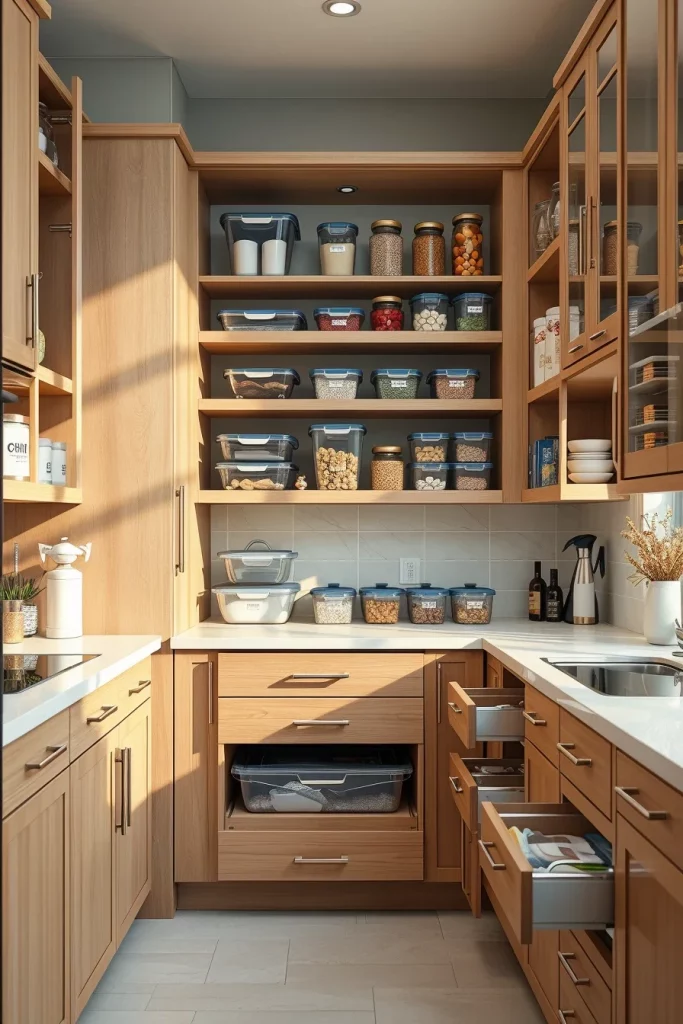
I like combining clear airtight containers with adjustable cabinet shelves, slim drawer dividers, pull-out baskets, and labeled bins. Every element has a specific purpose. Transparent containers reduce unnecessary searching, while pull-out organizers prevent items from disappearing in the back of deep cabinets. Soft-close shelves and organizers also make daily use feel smoother and more enjoyable, especially in kitchens where every centimeter matters.
Many professional organizers featured by Better Homes & Gardens and HGTV recommend decanting pantry staples into matching containers because it reduces clutter and helps homeowners maintain an organized system over time. I have found that this advice works exceptionally well in small kitchens where visual simplicity makes the room feel significantly more open without requiring expensive renovations.
I also recommend leaving a small amount of unused shelf space instead of filling every cabinet completely. Empty space allows the organization system to remain practical as grocery items change throughout the year, making long-term maintenance much easier.
Hidden Appliance Garages For A Clean Countertop Design
One of my favorite solutions for Small Kitchen Organization is creating a hidden appliance garage that keeps frequently used appliances close at hand while keeping countertops completely clear. Coffee makers, toasters, blenders, and mixers often consume valuable workspace, but dedicated storage behind lift-up or pocket doors keeps them accessible without adding visual clutter.
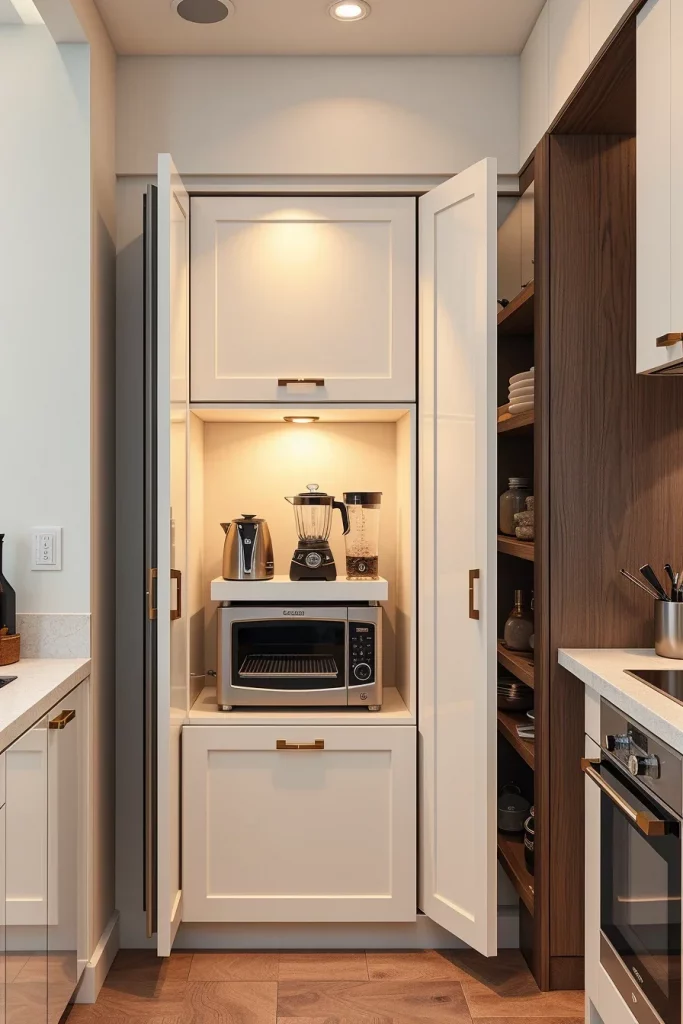
I usually recommend custom cabinets with built-in electrical outlets so appliances can remain plugged in and ready for use. Pocket doors slide completely out of the way, while roll-up tambour doors work well in narrower spaces. Interior lighting, cable management, and adjustable shelves make these storage areas even more practical. I also prefer matching cabinet finishes so the appliance garage blends seamlessly with the surrounding cabinetry.
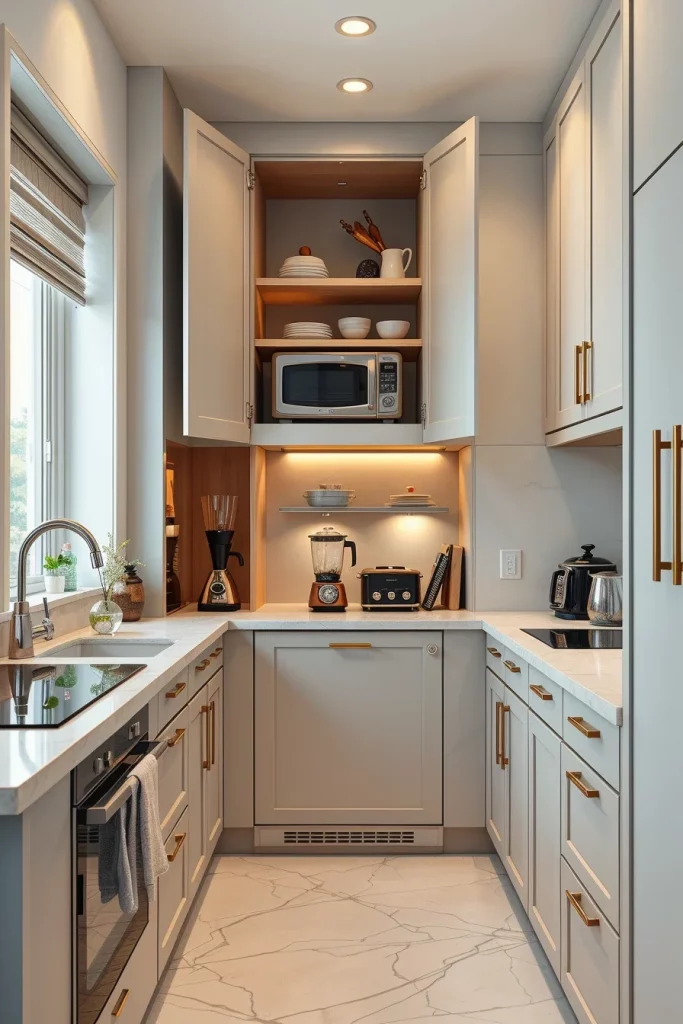
Design experts frequently emphasize that clean countertops make compact kitchens appear larger and more relaxing. I completely agree because removing visual distractions allows beautiful materials, lighting, and cabinetry to become the main focus instead of small appliances competing for attention.
If space allows, I would also include a shallow drawer beneath the appliance garage for coffee supplies, measuring spoons, filters, and accessories. Keeping everything together creates a dedicated preparation zone that supports efficient daily routines.
Elegant Glass Storage Jars That Blend Beauty And Function
Glass storage jars offer one of the simplest ways to combine decoration with practical organization. I enjoy displaying frequently used ingredients like pasta, rice, flour, coffee beans, and cereals because they become part of the kitchen design while remaining easy to access. Carefully arranged jars create rhythm and symmetry that make even a modest kitchen feel thoughtfully designed.
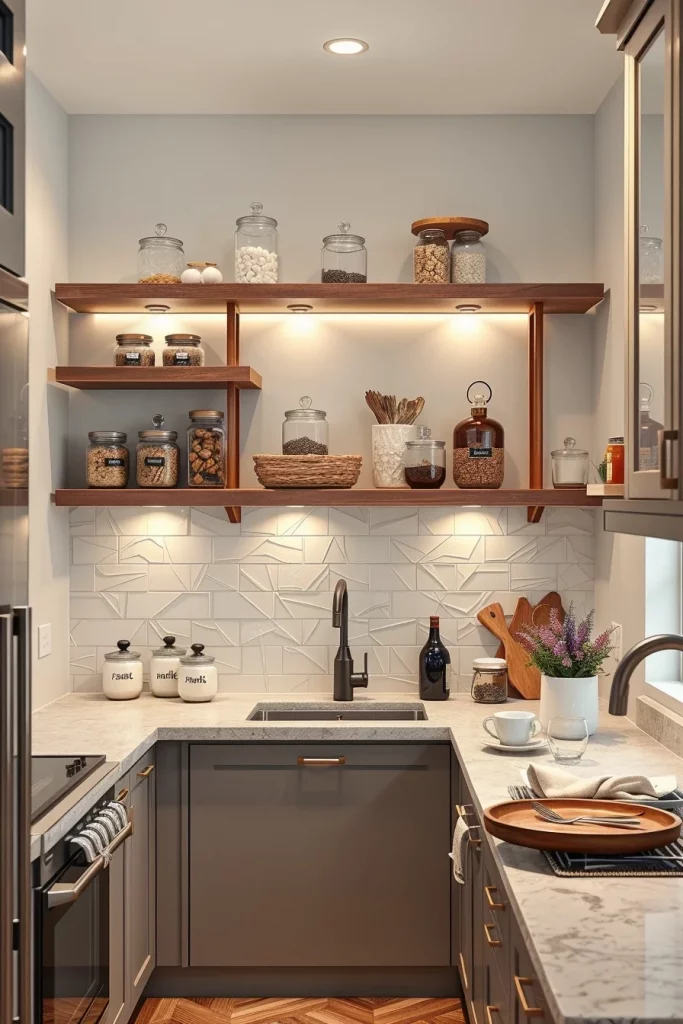
I prefer using jars in several coordinated sizes with airtight lids to preserve freshness. Natural wood trays, stone countertops, floating shelves, and under-cabinet lighting help turn ordinary pantry items into attractive design features. Clear labels maintain consistency while allowing every family member to find ingredients quickly without opening multiple containers.
Many interior designers recommend limiting visible storage to attractive everyday essentials rather than displaying every food item. I have learned that selective display keeps shelves elegant instead of overwhelming. A restrained approach creates a cleaner atmosphere while still providing practical everyday storage.
I would also include a dedicated area for seasonal baking ingredients stored in matching containers. Rotating these items throughout the year helps maintain both organization and visual harmony.
Sculptural Kitchen Lighting That Enhances Organization Zones
Lighting is often overlooked during kitchen organization, yet I believe it has a major impact on how efficiently a small kitchen functions. Well-planned lighting clearly defines work areas while making storage easier to access. Instead of relying on one ceiling fixture, I prefer layered lighting that supports each activity separately.
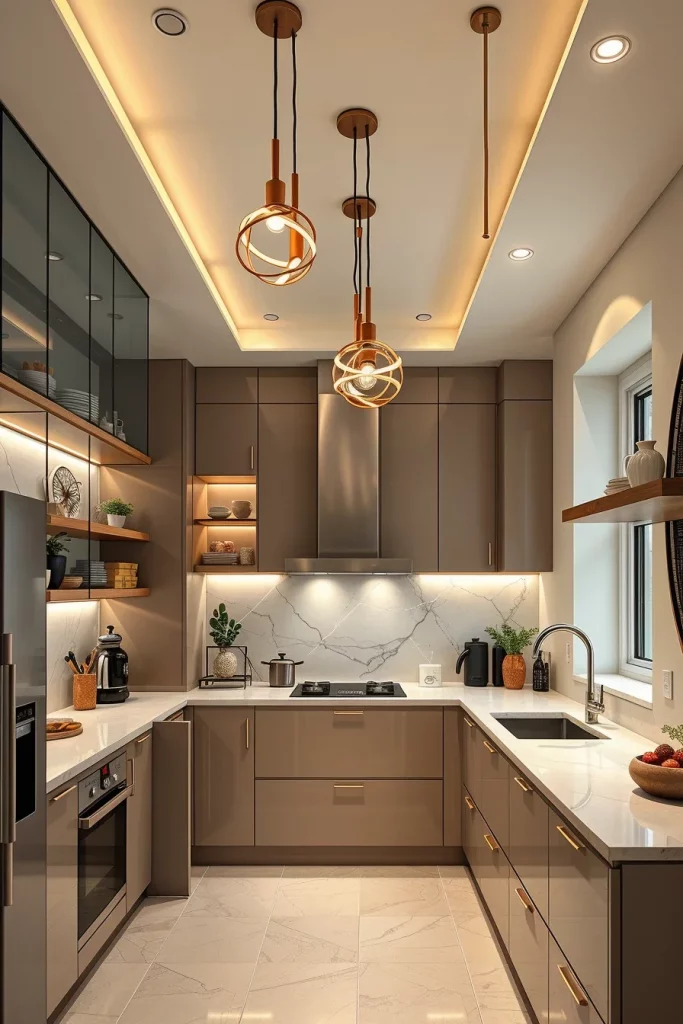
Pendant lights above work surfaces, under-cabinet LED strips, illuminated shelves, and recessed ceiling lighting create multiple functional zones. I also appreciate dimmable fixtures that adapt throughout the day. Decorative sculptural lighting adds personality without sacrificing practicality, especially when paired with reflective cabinet finishes that distribute light evenly across the room.
Architectural Digest and many professional kitchen designers frequently highlight layered lighting as one of the most effective upgrades for improving both functionality and atmosphere. From my experience, proper lighting also helps maintain organization because every storage area remains clearly visible during meal preparation.
To complete this section, I recommend including motion-sensor lighting inside deep cabinets and pantry drawers. These small additions improve convenience while preventing items from becoming hidden in dark storage spaces.
Compact Coffee Stations With Smart Built-In Storage
A dedicated coffee station keeps one of the busiest areas of the kitchen organized without occupying unnecessary counter space. I like creating a compact beverage center that stores everything needed for daily coffee preparation in one convenient location. This eliminates constant movement throughout the kitchen and makes morning routines noticeably more efficient.
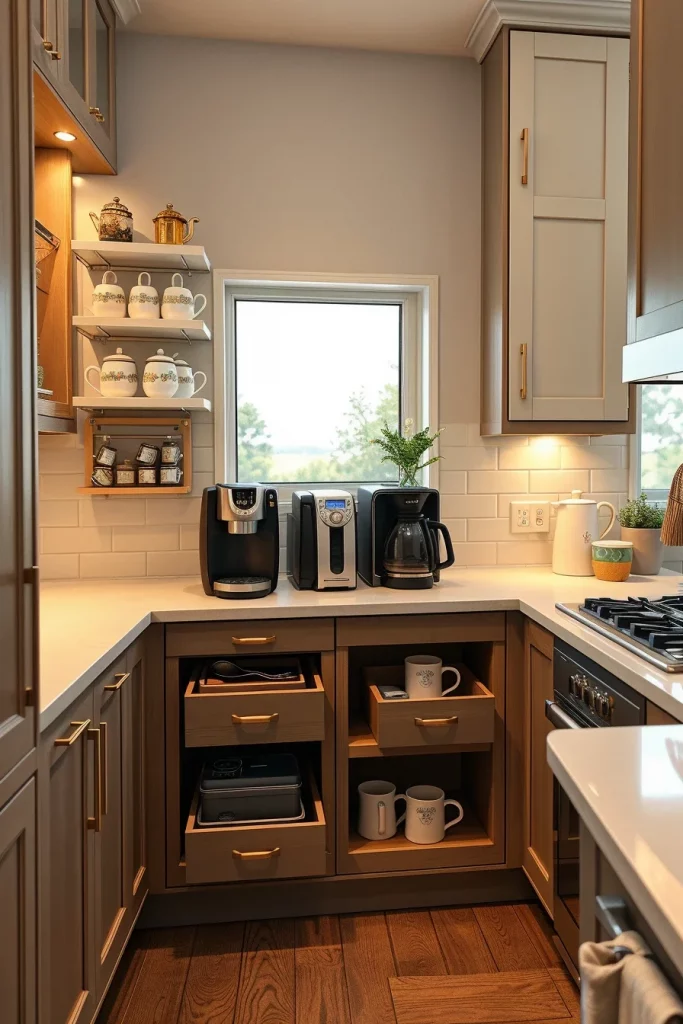
I usually include built-in shelves for mugs, pull-out drawers for coffee capsules or beans, vertical dividers for trays, hidden waste containers, and small cabinets for sugar, tea, syrups, and accessories. Integrated electrical outlets allow machines to remain permanently connected while maintaining a clean appearance. Everything has a designated place, reducing clutter after every use.
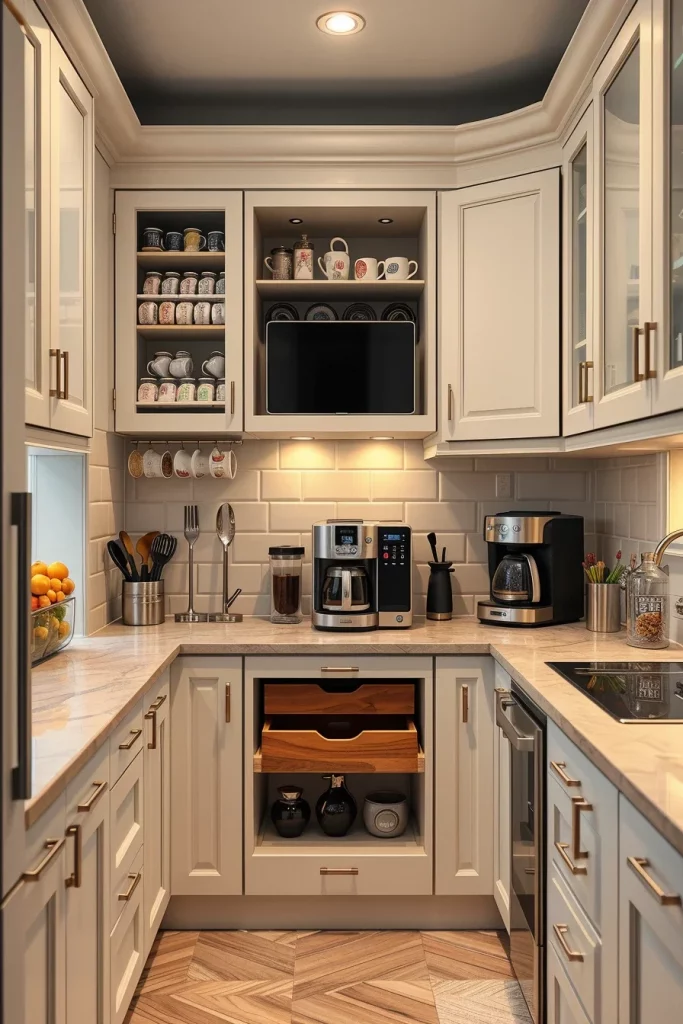
Professional kitchen planners often recommend creating dedicated activity zones instead of organizing by item category alone. I have found this strategy particularly useful in compact kitchens because grouping related items minimizes unnecessary movement and keeps countertops significantly tidier throughout the day.
If additional space is available, I would add a narrow drawer for reusable filters, cleaning supplies, and extra mugs. Maintaining the entire coffee routine within one organized station makes daily use much more enjoyable.
Magnetic Wall Solutions For Knives, Spices, And Kitchen Tools
I often recommend using vertical wall space before adding more cabinets because it immediately improves both organization and accessibility. Magnetic wall systems keep frequently used kitchen essentials within easy reach while freeing valuable drawer and countertop space. In a compact kitchen, this approach creates a more efficient workflow since the tools I use every day are always visible and organized. A carefully planned magnetic wall can also become an attractive design feature instead of simply serving as storage.
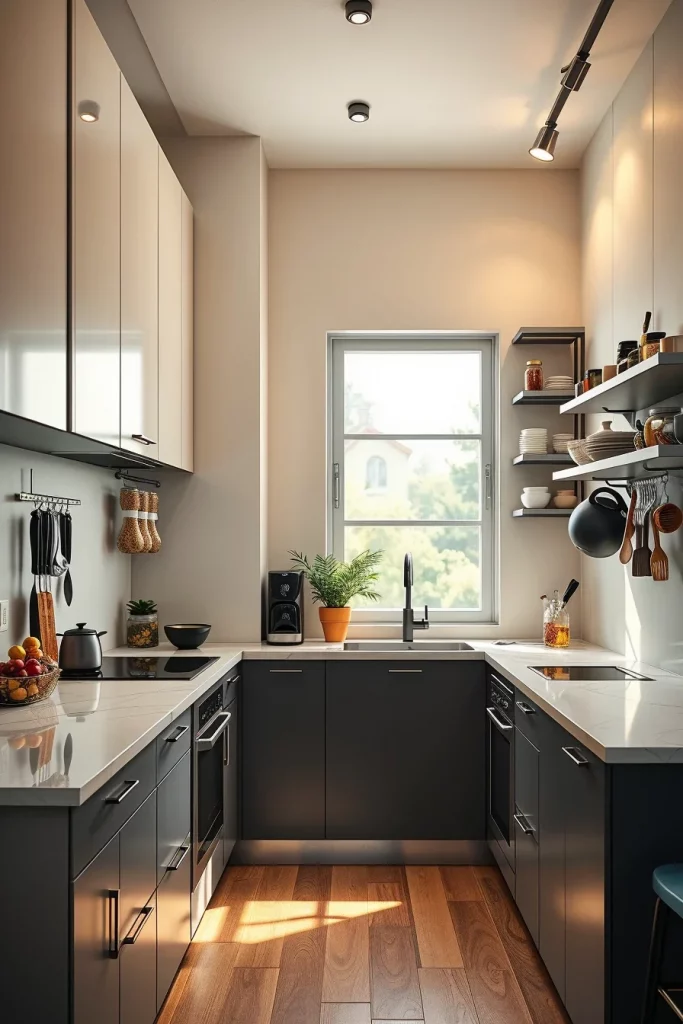
I like combining magnetic knife strips with modular spice racks, slim metal rails, hanging utensil holders, and compact shelves that coordinate with the cabinetry. Stainless steel, matte black, or brushed brass finishes integrate beautifully into modern kitchens while maintaining a clean appearance. I always position the magnetic storage close to the primary preparation area, making cooking smoother without overcrowding the room. When every item has a dedicated place, cleaning the kitchen becomes much faster.
Kitchen designers featured by House Beautiful and Better Homes & Gardens often highlight vertical storage as one of the most effective strategies for maximizing limited space. From my experience, magnetic organization systems not only improve efficiency but also encourage better daily habits because every tool is immediately returned to its proper location after use.
To complete this organization zone, I would include a small magnetic board for recipes, grocery lists, or weekly meal planning. Keeping planning materials alongside cooking tools creates a highly functional workstation while reducing paper clutter throughout the kitchen.
Beautiful Open Pantry Displays That Stay Perfectly Organized
An open pantry can become one of the most beautiful features in a small kitchen when it is designed with consistency and restraint. I believe open shelving should display only carefully selected everyday essentials that contribute to both convenience and visual harmony. Rather than overcrowding every shelf, I prefer creating balanced compositions that make the kitchen feel brighter and more spacious.
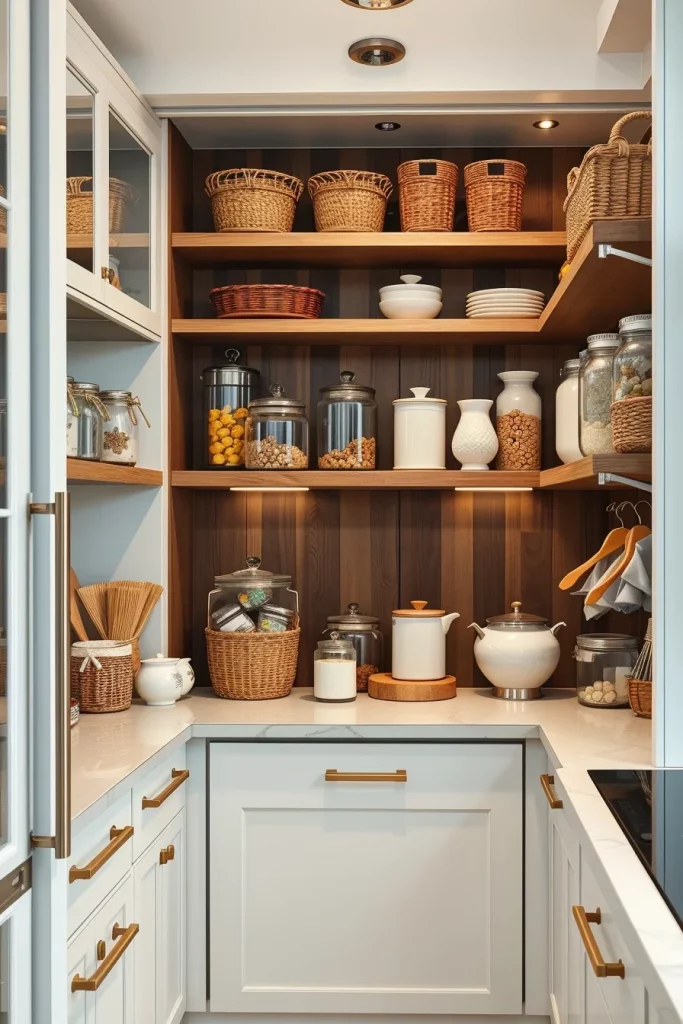
I usually organize the pantry using matching baskets, glass storage containers, ceramic canisters, wooden risers, and woven trays that divide different food categories. Everyday ingredients remain easily accessible while decorative serving bowls, cookbooks, and attractive storage pieces add warmth without creating unnecessary clutter. Soft integrated lighting enhances the display and helps maintain visibility throughout the day.
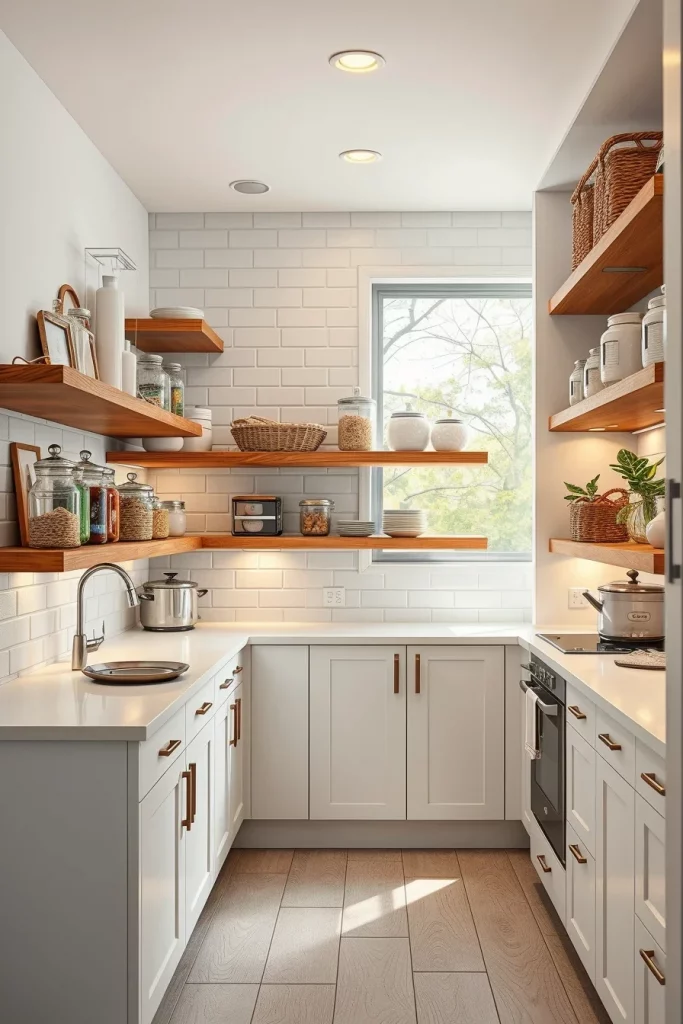
Many professional organizers recommend assigning each shelf a dedicated purpose instead of mixing unrelated items together. I have found this method extremely effective because it prevents the pantry from gradually becoming disorganized. Maintaining consistent container styles also creates a calm visual rhythm that supports the overall kitchen design.
I would also reserve one shelf specifically for frequently rotated groceries and weekly meal preparation. Having a flexible storage zone makes it easier to adapt the organization system as household needs change over time.
Rolling Storage Carts That Add Flexible Workspace
One of the smartest investments for a compact kitchen is a rolling storage cart that serves multiple purposes throughout the day. I appreciate its flexibility because it can function as additional countertop space, extra storage, a serving station, or even a portable pantry. Instead of permanently occupying one location, the cart moves wherever additional workspace is needed.
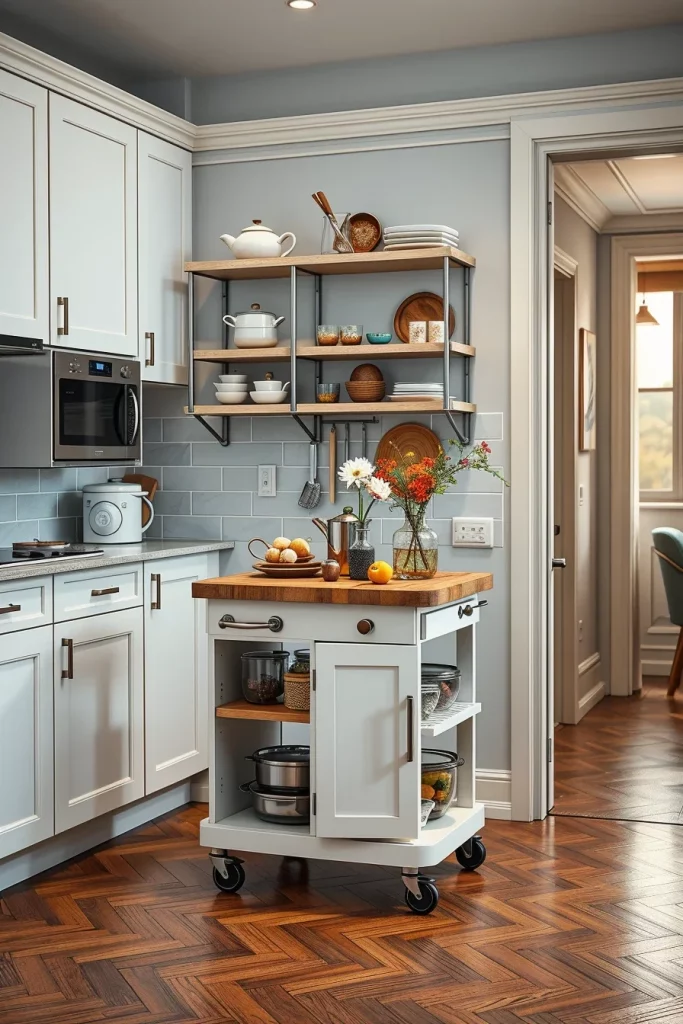
I typically recommend a sturdy cart with open shelves, deep drawers, towel bars, locking wheels, and durable work surfaces such as butcher block or quartz. Lower shelves can store small appliances, baskets, cookware, or pantry supplies, while the top remains available for meal preparation. Matching the cart finish to the existing cabinetry helps it feel like an intentional part of the kitchen rather than an afterthought.
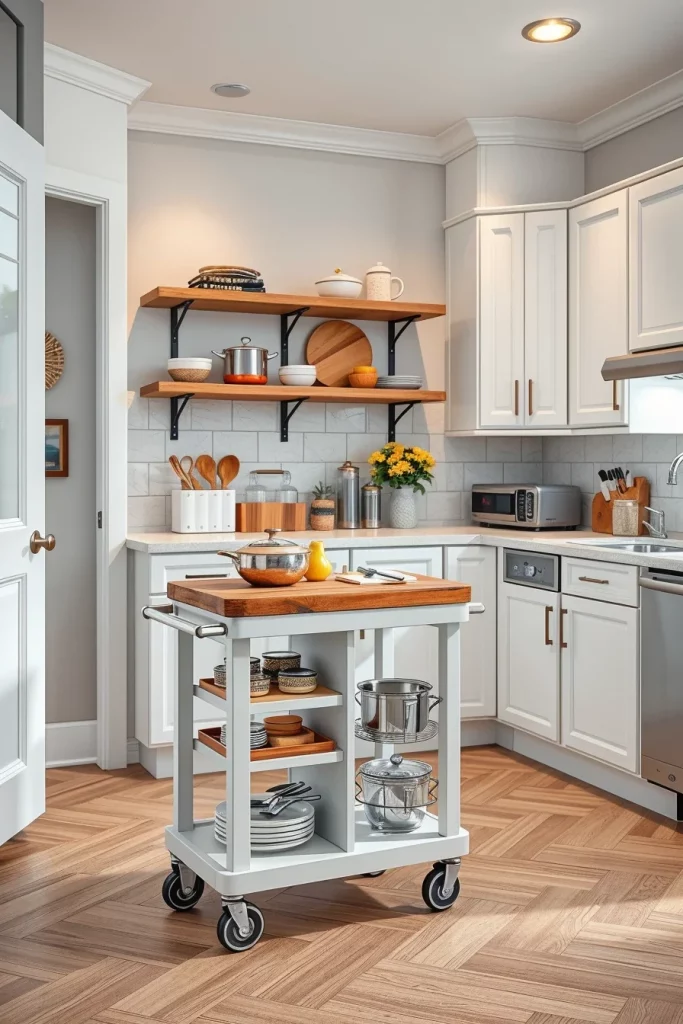
Design professionals frequently recommend movable furniture for compact homes because it adapts to changing daily activities without requiring expensive remodeling. I completely agree because a quality rolling cart increases functionality while preserving valuable floor space whenever it is not needed.
If the layout allows, I would also include built-in electrical outlets nearby so the cart can temporarily support small appliances during baking or entertaining without creating unsafe extension cord arrangements.
Creative Cabinet Door Organizers For Extra Hidden Storage
Cabinet doors represent some of the most overlooked storage opportunities in a small kitchen. I always try to utilize these hidden surfaces because they provide practical storage without affecting the room’s appearance. Organizing the inside of cabinet doors helps reduce drawer congestion while making everyday items much easier to access.
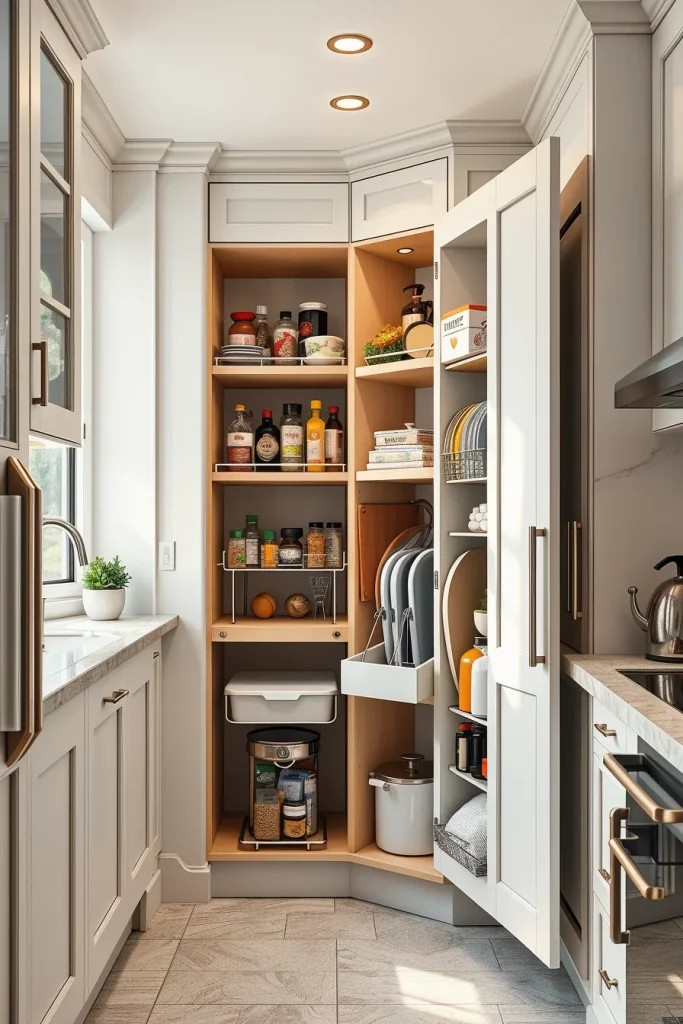
I prefer installing slim racks for spices, measuring cups, cleaning supplies, cutting boards, aluminum foil, plastic wrap, and kitchen towels. Adjustable organizers allow the storage system to evolve as household needs change. Soft-close hinges ensure that even fully equipped cabinet doors continue to operate smoothly while protecting the cabinetry from unnecessary wear.
Professional kitchen organizers consistently recommend making use of every available vertical surface before expanding storage elsewhere. From my experience, cabinet door organizers are among the most affordable improvements that deliver noticeable results almost immediately. They help maintain clean countertops while placing small essentials exactly where they are needed.
I would also add removable organizers whenever possible. This flexibility allows the storage system to be cleaned easily and reconfigured as new kitchen tools or accessories are introduced.
Stylish Small Kitchen Layouts Designed Around Efficient Organization
Every successful kitchen begins with an efficient layout, regardless of its size. I believe organization should be considered during the planning stage rather than added afterward. A thoughtfully arranged layout minimizes unnecessary movement between preparation, cooking, cleaning, and storage zones, making daily routines noticeably easier and more enjoyable.
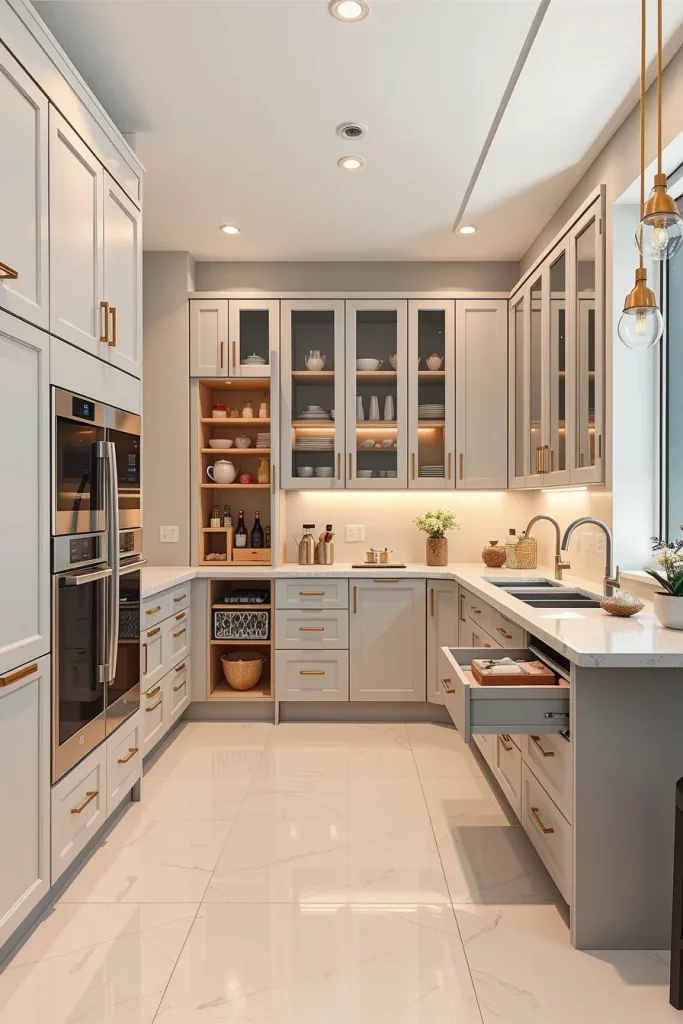
I often recommend layouts that combine full-height cabinetry, integrated appliances, deep drawers, pull-out pantry systems, corner storage solutions, and multifunctional islands or peninsulas whenever space permits. Wide walkways, continuous countertops, and consistent cabinet finishes help the room feel larger while maintaining excellent functionality. Even the smallest kitchens can appear spacious when storage is carefully integrated into the overall design.
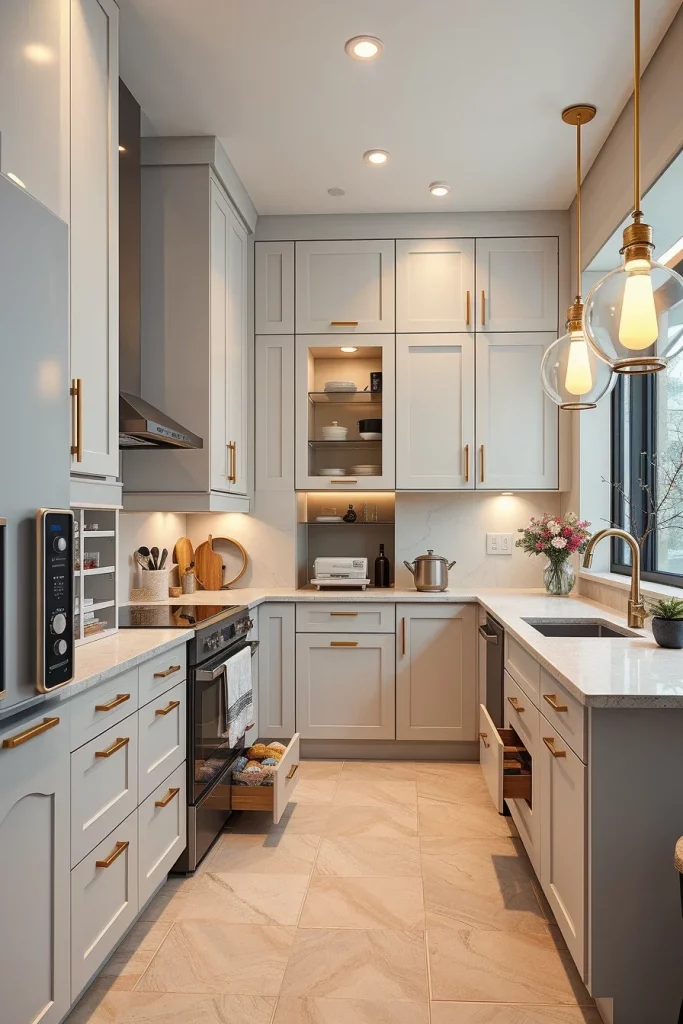
Many kitchen designers continue to rely on the classic work triangle while adapting it for modern compact homes. I have found that combining this principle with dedicated storage zones creates a kitchen that remains organized even during busy family routines. Good design allows every cabinet, drawer, and shelf to contribute to everyday efficiency.
To complete the layout, I recommend planning future flexibility by leaving room for adjustable shelving and modular storage accessories. Kitchens evolve over time, and adaptable organization systems make long-term maintenance significantly easier.
Artistic Color Coordination That Makes Organized Kitchens Feel Larger
One of the first things I focus on when planning small kitchen organization is color coordination. A carefully selected palette creates the impression of openness while helping the room feel naturally organized. I like to keep cabinets, walls, and larger furniture in similar light shades, then introduce subtle contrast through accessories such as ceramic bowls, glass containers, and neatly folded kitchen linens. This approach reduces visual interruptions, allowing the entire kitchen to appear more spacious without changing the floor plan.
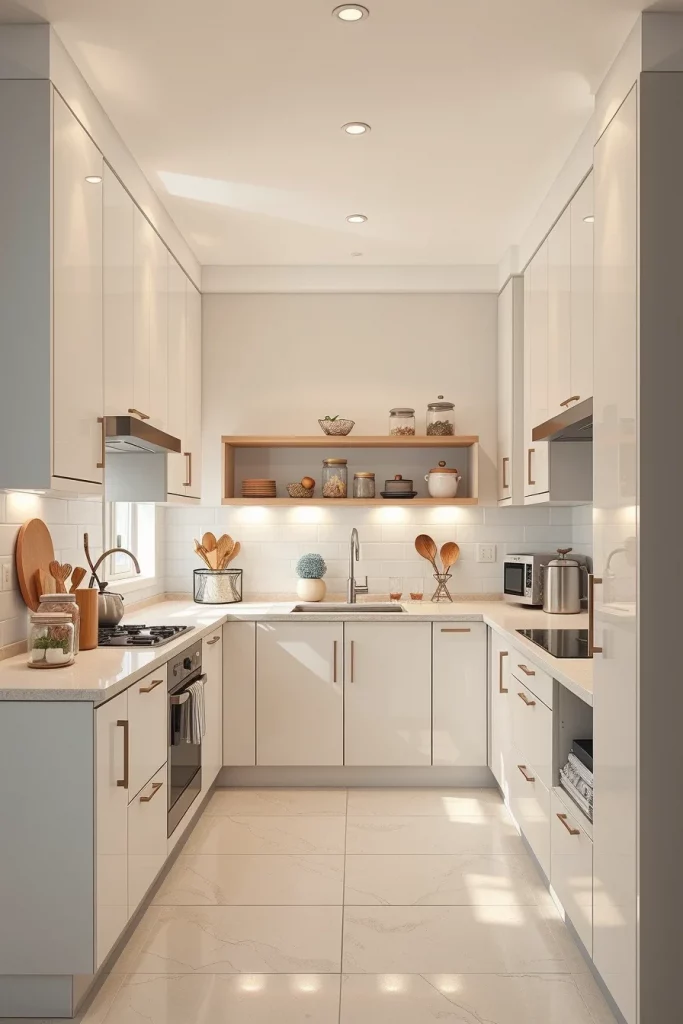
I also pay close attention to storage accessories because they become part of the overall design. Matching storage jars, identical pantry containers, coordinated drawer organizers, and slim open shelving all contribute to a cohesive appearance. I prefer choosing cabinet organizers that disappear behind closed doors while allowing every item to remain easy to reach. Even practical additions like magnetic knife strips or under-shelf baskets look intentional when they match the room’s overall color palette.
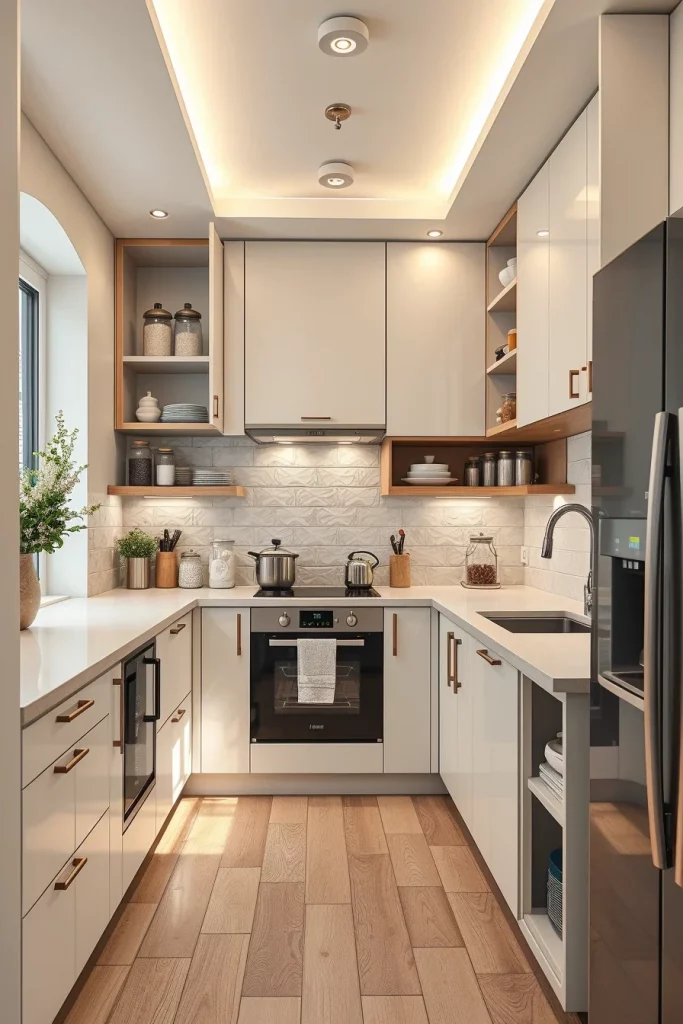
Many professional designers, including experts frequently featured by Architectural Digest and House Beautiful, recommend reducing visual clutter by limiting unnecessary color variation. I have found this advice especially valuable because a calm, consistent palette naturally encourages better organization. When every storage solution looks like it belongs together, maintaining order becomes much easier.
If I wanted to improve this area even further, I would add integrated lighting beneath the upper cabinets. Soft LED lighting highlights organized work surfaces, improves visibility during food preparation, and visually expands the kitchen without requiring additional square footage.
Smart Refrigerator Organization For Maximum Fresh Food Storage
I believe an organized refrigerator is one of the most overlooked parts of successful small kitchen organization. Instead of simply filling every shelf, I arrange foods according to how frequently I use them and how long they stay fresh. Clear containers allow me to see ingredients immediately, reducing food waste while making meal preparation much faster. Grouping similar items together also creates a cleaner, more structured appearance every time I open the refrigerator.
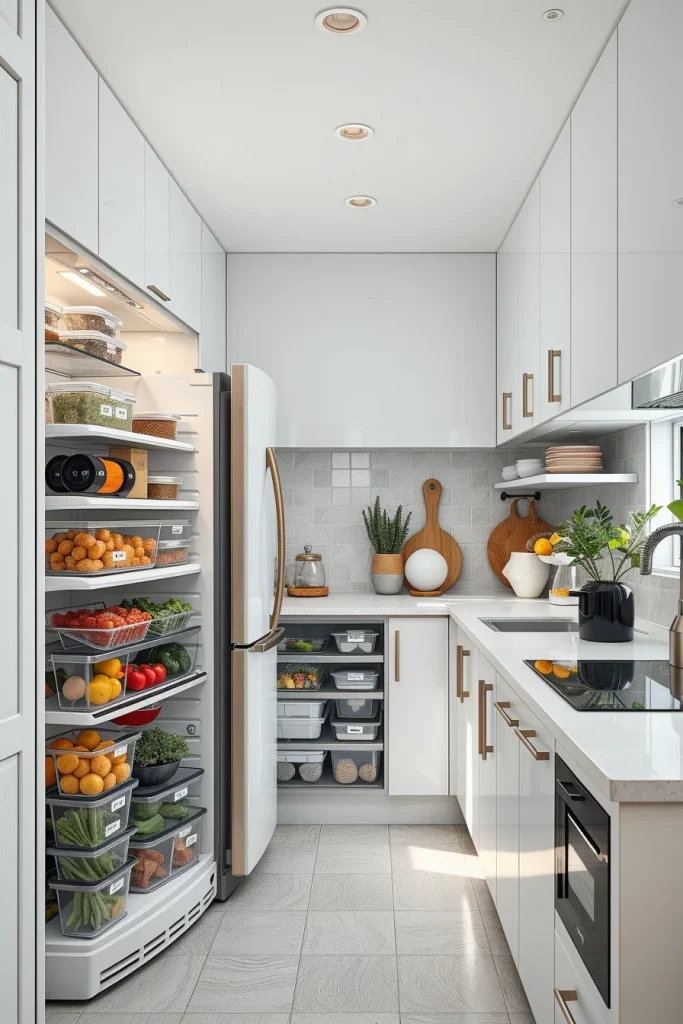
Inside the refrigerator, I rely on stackable bins, pull-out organizers, labeled produce containers, and adjustable shelf dividers. These simple additions maximize vertical space while preventing smaller items from disappearing behind larger packages. I also dedicate one section for prepared meals, another for fresh produce, and separate door storage for condiments and beverages. This system keeps everything accessible without overcrowding any single shelf.
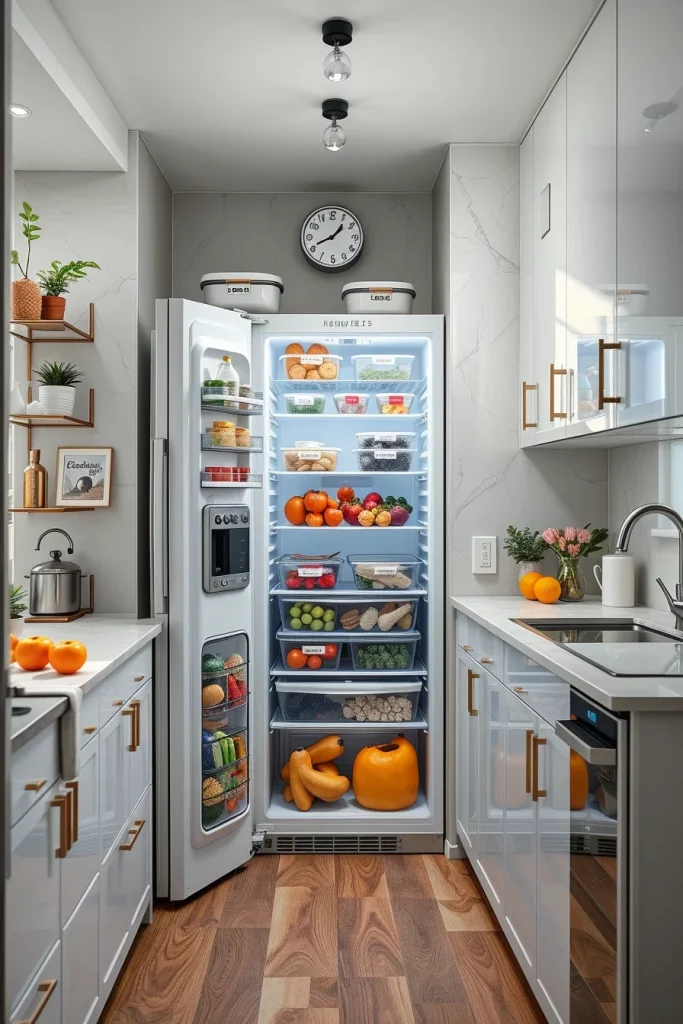
Professional organizers often recommend following a simple routine of checking refrigerator contents once a week before grocery shopping. I have adopted this habit myself because it helps me avoid duplicate purchases while keeping storage areas consistently tidy. It also encourages healthier meal planning since fresh ingredients remain visible instead of getting forgotten.
One additional improvement I always recommend is adding moisture-control produce containers. They help fruits and vegetables stay fresh longer while keeping refrigerator shelves cleaner and easier to maintain.
Decorative Basket Storage That Combines Style And Practicality
Decorative baskets can completely transform a compact kitchen while serving practical storage needs. I enjoy using baskets because they soften the appearance of cabinetry and introduce texture without making the room feel crowded. Whether placed on open shelves, above upper cabinets, or inside pantry spaces, they provide attractive storage for linens, packaged foods, snacks, and kitchen accessories while maintaining a clean visual flow.
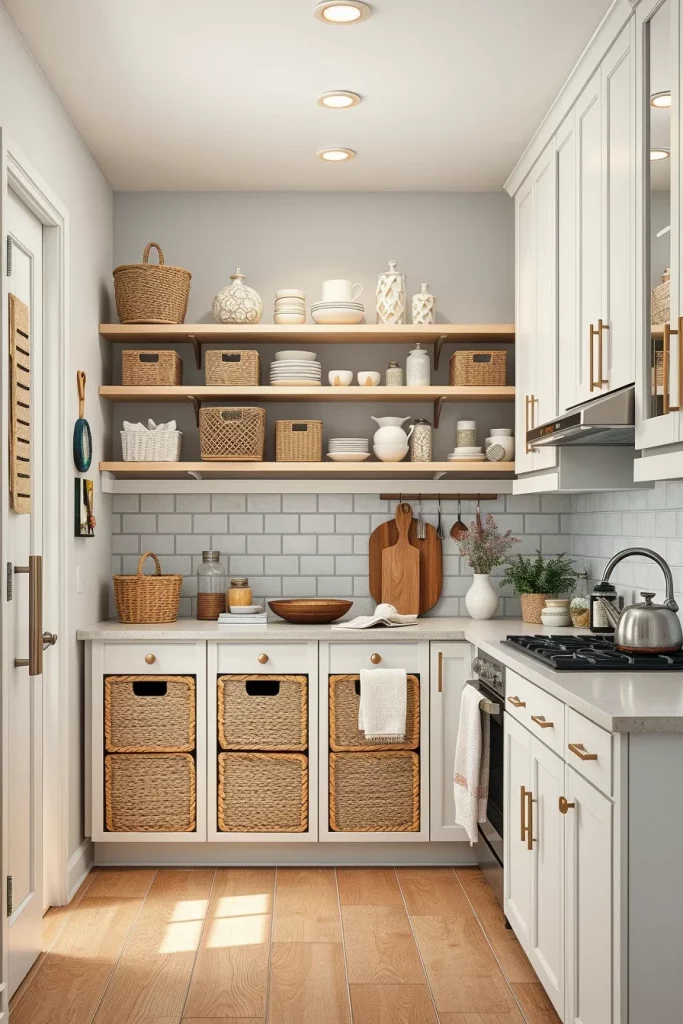
I usually combine woven baskets with labeled fabric bins and durable wire baskets to organize different categories of household items. Smaller baskets work well for tea collections, coffee supplies, and baking ingredients, while larger baskets neatly store extra towels or seasonal serving pieces. Choosing baskets in similar colors or materials creates consistency throughout the kitchen and prevents shelves from appearing cluttered.
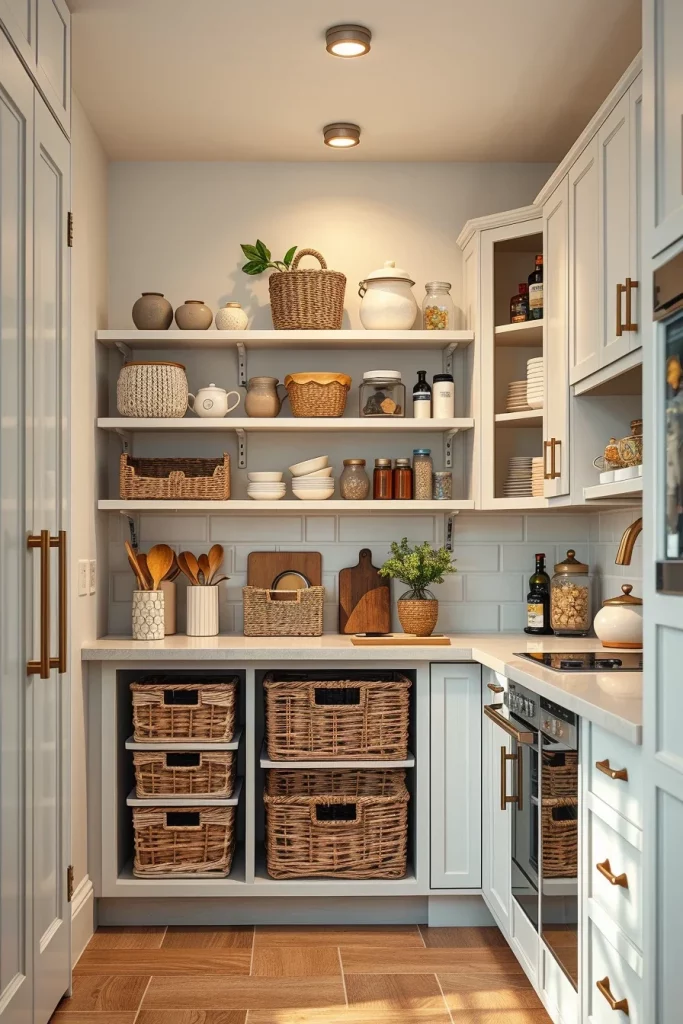
Design experts regularly suggest incorporating natural textures to balance sleek cabinetry and modern finishes. I appreciate this recommendation because baskets make functional storage feel warm and inviting rather than purely utilitarian. They also allow me to hide miscellaneous items without sacrificing accessibility.
For even greater functionality, I would include shelf risers inside larger cabinets to create additional storage levels. Combining baskets with vertical organization allows every cabinet to accommodate more items while remaining easy to navigate.
Compact Dining Corners With Integrated Storage Features
A compact dining corner can become one of the hardest-working areas in a small kitchen when designed thoughtfully. I like incorporating built-in benches with concealed storage beneath the seats because they provide comfortable seating while hiding cookware, table linens, or small appliances. This solution keeps the kitchen tidy without requiring additional cabinets or bulky storage furniture.
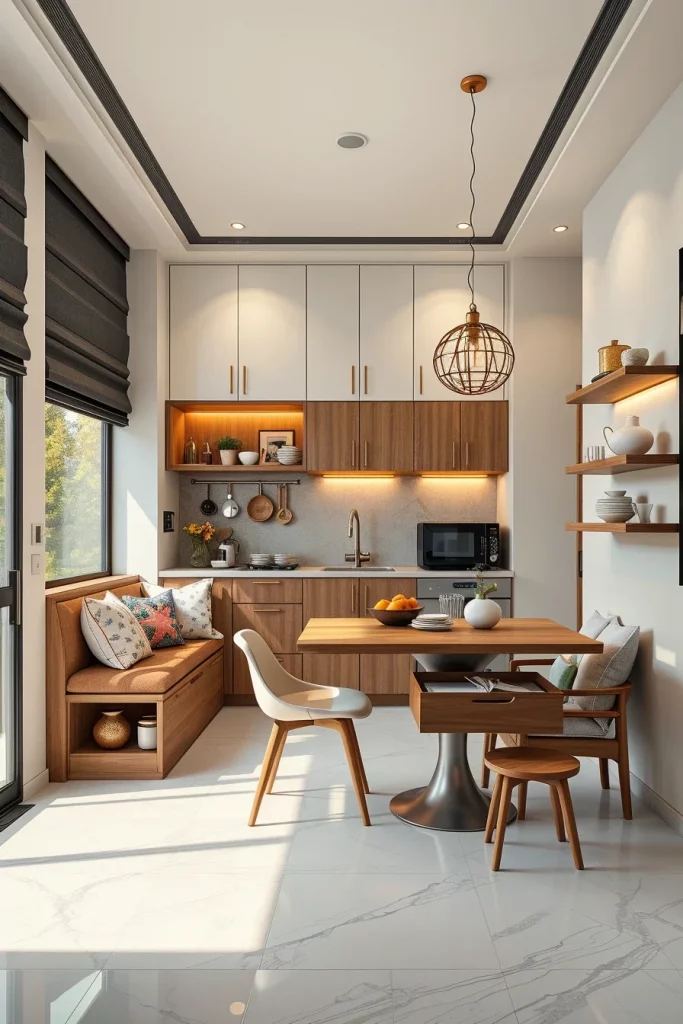
The furniture itself plays a significant role in maintaining organization. I often recommend narrow dining tables with built-in drawers, slim chairs that slide completely underneath the table, and storage benches with soft-close lids. Floating shelves above the dining area provide room for cookbooks, decorative ceramics, or glassware while leaving valuable floor space completely open.
Many interior designers emphasize choosing multifunctional furniture whenever space is limited, and I completely agree with this philosophy. Every piece should perform more than one purpose whenever possible. I have found that combining dining, storage, and display functions in one area dramatically improves daily convenience without making the room feel overcrowded.
To complete this dining corner, I would install a small wall-mounted sconce or pendant light that defines the seating area while adding warmth and making the space feel intentionally designed.
Custom Spice Storage Ideas That Save Valuable Cabinet Space
Custom spice organization has made one of the biggest differences in my own kitchen. Instead of searching through crowded cabinets every time I cook, I prefer dedicated storage systems that keep every spice visible and easy to access. Well-organized spices reduce cooking time while freeing valuable cabinet space for larger cookware and pantry essentials.
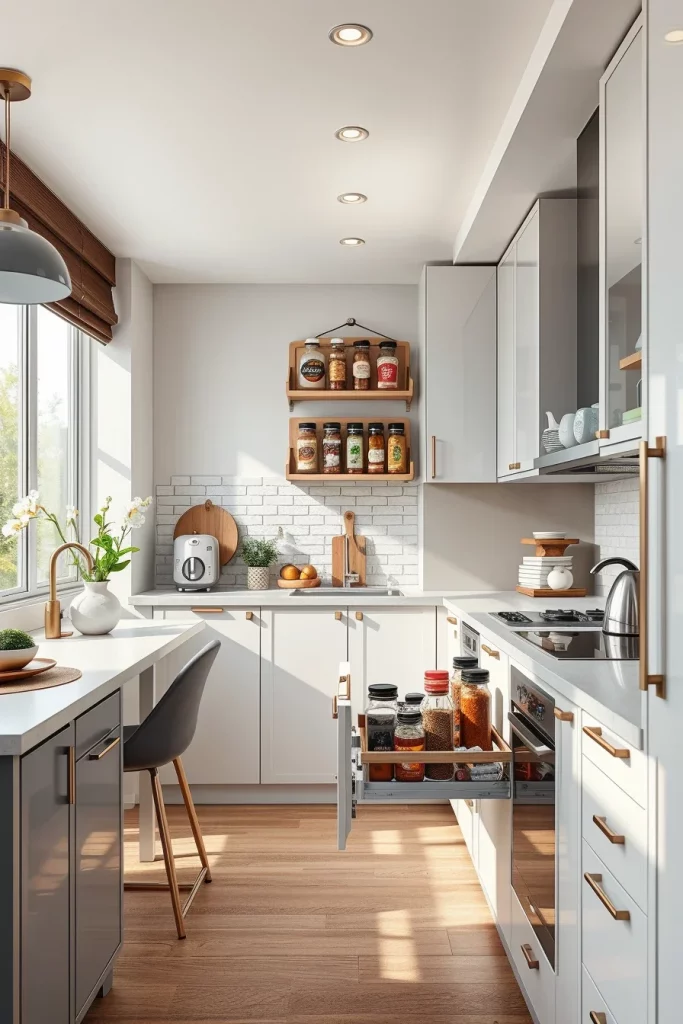
I often recommend pull-out spice drawers, narrow cabinet inserts, magnetic spice racks, drawer organizers with angled compartments, and uniform glass spice jars with clearly printed labels. These systems maximize every available inch while creating an orderly appearance. Positioning spices close to the main cooking area also improves workflow during meal preparation without creating countertop clutter.
Kitchen organization professionals frequently recommend alphabetizing spices or grouping them by cuisine or frequency of use. I have experimented with several methods and discovered that organizing by cooking frequency works best for everyday efficiency. Frequently used seasonings remain within immediate reach, while specialty spices stay organized but out of the way.
If I were expanding this section further, I would also include a digital inventory list for spices. Keeping track of expiration dates and quantities prevents unnecessary purchases while ensuring ingredients remain fresh and ready to use.
Hidden Recycling And Waste Stations For A Clutter-Free Kitchen
A well-designed recycling and waste station can completely change how a small kitchen feels. I always try to keep trash and recycling out of sight because visible bins often make even the cleanest kitchen appear cluttered. Integrating pull-out waste systems inside lower cabinets allows the room to maintain clean lines while improving everyday efficiency. This solution also frees valuable floor space, making movement around the kitchen much easier.
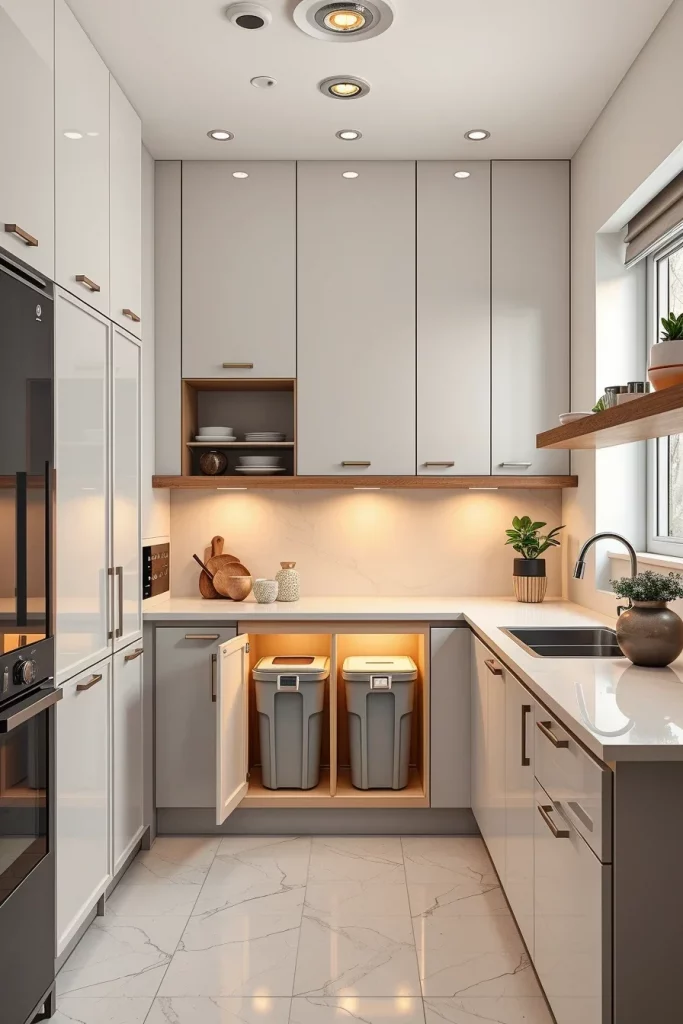
I recommend using double pull-out bins that separate household waste from recyclable materials. Soft-close cabinet hardware prevents unnecessary noise, while removable containers simplify cleaning. I also like adding a small upper compartment for garbage bags, cleaning cloths, and odor-control products so that everything related to waste management stays in one organized location. Matching cabinet fronts ensure the recycling station blends seamlessly into the kitchen design.
I have noticed that many kitchen designers featured by Better Homes & Gardens recommend concealed waste storage because it improves both hygiene and visual appeal. I completely agree with this approach. When the recycling system becomes part of the cabinetry instead of a standalone feature, the kitchen immediately feels larger and more refined.
If I wanted to improve this area further, I would include a small compost container with an odor-sealing lid for households that regularly prepare fresh meals. This addition supports sustainable living without compromising organization.
Sculptural Cabinet Hardware That Elevates Everyday Organization
Cabinet hardware may seem like a minor detail, but I believe it has a significant impact on both functionality and style. Carefully selected handles and pulls make cabinets easier to use while contributing to the kitchen’s overall character. In a small kitchen, I prefer hardware with clean sculptural shapes that complement the cabinetry without overwhelming the limited space.
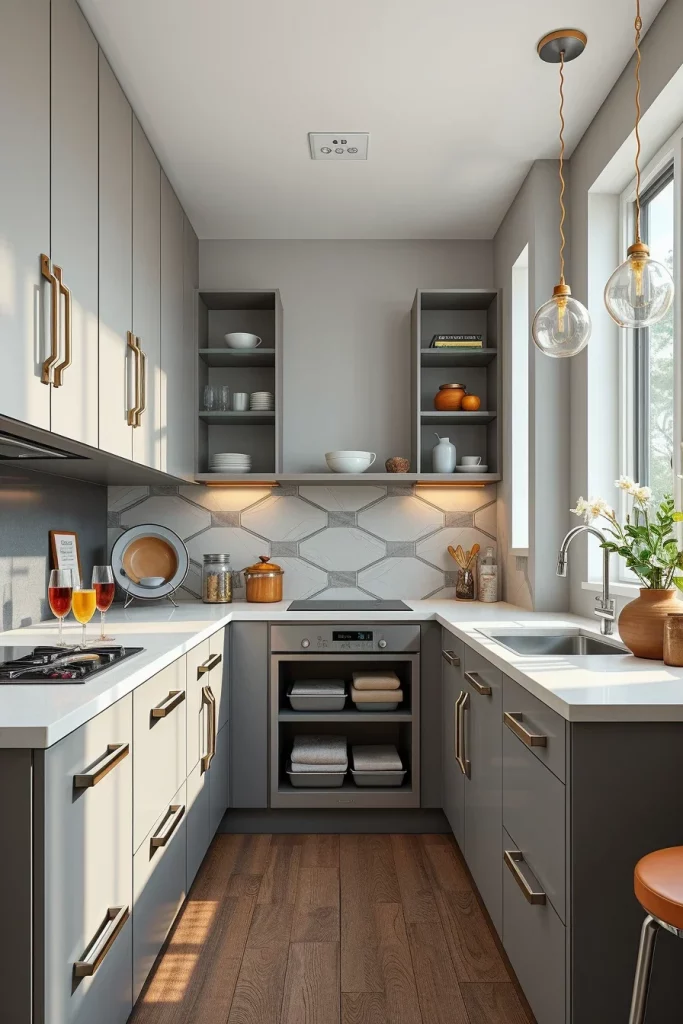
I often choose slim brushed metal handles, gently curved pulls, or integrated edge grips that maintain a streamlined appearance. Consistency is important, so I use the same finish throughout the room, including drawer pulls, appliance handles, and cabinet hardware. Comfortable handles encourage daily organization because cabinets and drawers become easier to access during cooking and cleaning.
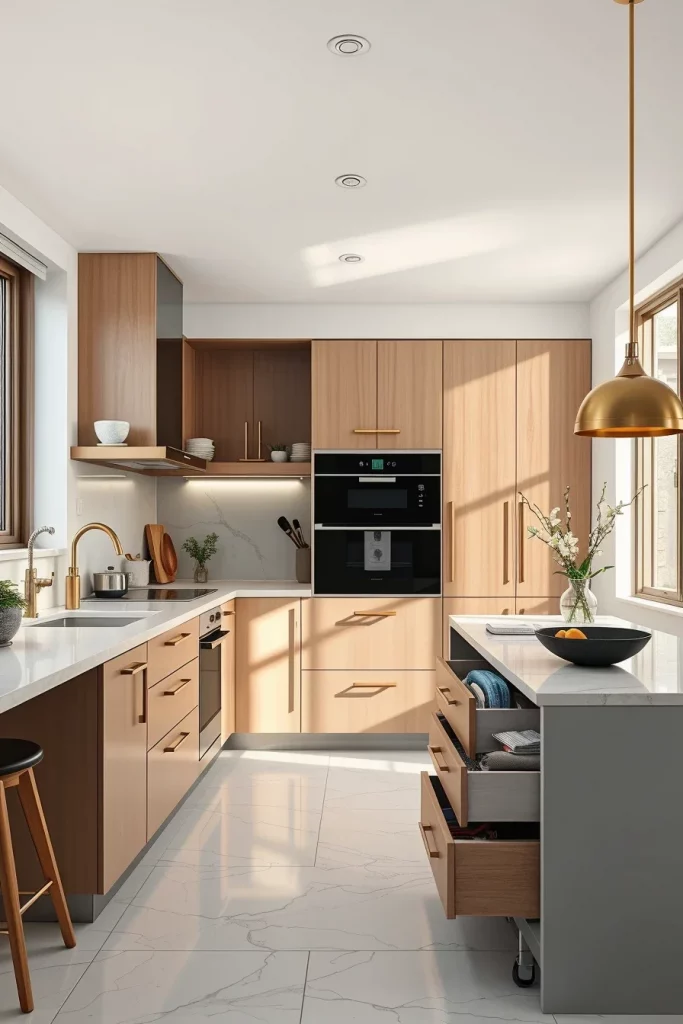
Interior designers frequently emphasize that quality hardware is one of the simplest upgrades with the greatest visual impact. From my experience, investing in durable cabinet hardware pays off because it improves both comfort and long-term reliability while giving even budget cabinetry a custom appearance.
To complete this section, I would also recommend installing soft-close hinges and premium drawer slides. These hidden upgrades improve the user experience every single day while protecting cabinets from unnecessary wear.
Beautiful Countertop Styling Without Creating Visual Clutter
Countertops are often the first surfaces to become cluttered in a compact kitchen. I have learned that the most attractive kitchens display only carefully selected everyday essentials while storing everything else inside cabinets. A clear countertop creates more working space and allows the entire room to feel cleaner, brighter, and better organized.
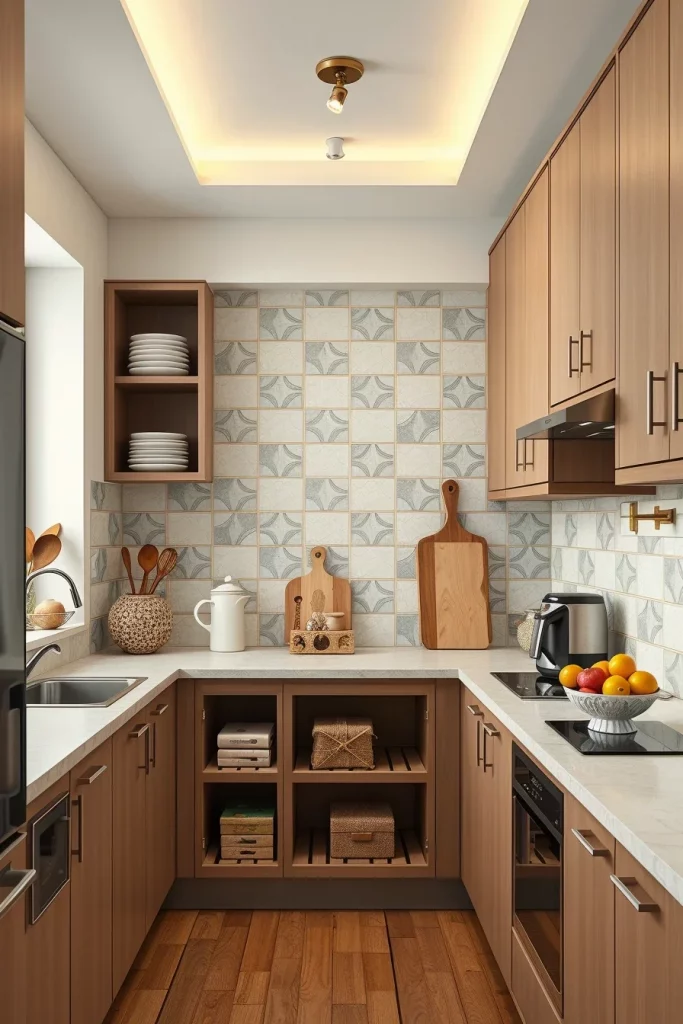
I usually keep only frequently used items on display, such as a wooden cutting board, a ceramic utensil holder, a coffee machine, and a small tray containing cooking oils. Matching containers for tea, coffee, and sugar maintain consistency while reducing packaging clutter. Decorative elements should remain minimal, with perhaps one elegant bowl of fresh fruit or a simple vase to add warmth without overcrowding the workspace.
Many professional organizers recommend following the “one-purpose” rule for countertops, where every visible object serves either a practical function or a decorative purpose, but not both unnecessarily. I find this guideline extremely effective because it prevents surfaces from slowly filling with miscellaneous items throughout the week.
One additional feature I would include is an appliance garage hidden behind retractable cabinet doors. It keeps small appliances easily accessible while maintaining perfectly clean countertops.
Space-Saving Organization Ideas For Tiny Apartment Kitchens
Tiny apartment kitchens require every centimeter to work efficiently. Whenever I organize a compact apartment kitchen, I focus on maximizing vertical storage and choosing furniture that performs multiple functions. Even a very limited layout can become comfortable when storage solutions are carefully planned from floor to ceiling.
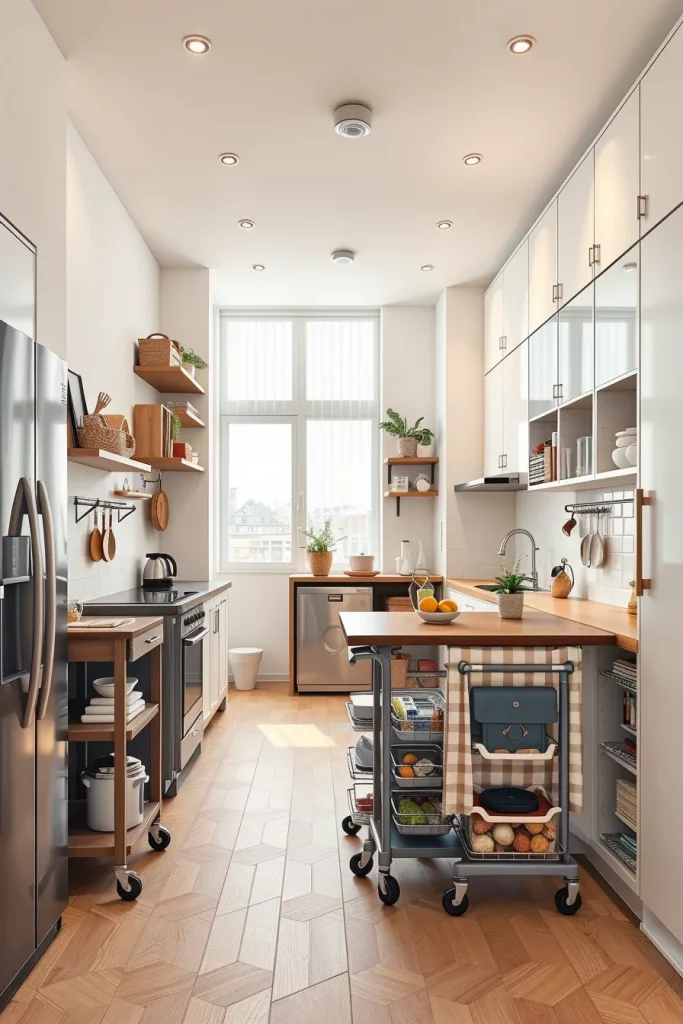
Wall-mounted shelving, hanging rail systems, fold-down tables, stackable containers, magnetic organizers, and slim rolling carts all help increase storage without occupying valuable floor space. I also recommend using the inside of cabinet doors for measuring cups, cutting boards, and cleaning supplies. Vertical dividers allow baking trays and serving platters to remain organized while occupying very little cabinet space.
Apartment specialists and storage experts often encourage residents to evaluate every item based on how frequently it is used. I regularly follow this advice myself because removing rarely used kitchen equipment creates valuable storage for everyday essentials. A thoughtfully edited kitchen is much easier to maintain than one filled with unnecessary accessories.
If additional improvements are possible, I would include custom drawer organizers designed specifically for the homeowner’s cookware and utensils. Personalized storage solutions maximize efficiency while eliminating wasted space.
Timeless Small Kitchen Organization Ideas That Stay Functional And Stylish
The most successful small kitchen organization systems are those that remain useful for many years rather than following temporary trends. I always recommend choosing practical layouts, durable storage solutions, and timeless finishes that continue to look attractive as styles evolve. A well-organized kitchen should support everyday routines while maintaining a welcoming atmosphere.
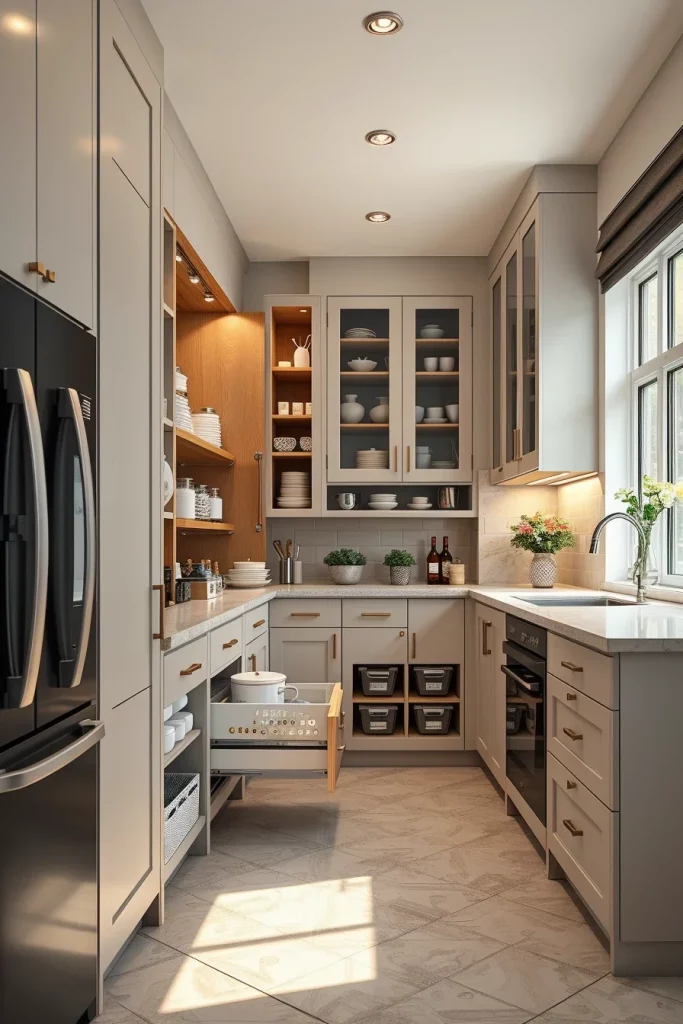
I prefer combining full-height cabinetry, adjustable shelving, deep drawers with dividers, pull-out pantry storage, and coordinated containers that can easily adapt as household needs change. Neutral finishes paired with quality materials ensure the kitchen feels current without requiring frequent updates. Flexible storage systems also make future reorganizing much simpler.
From my experience, timeless organization focuses more on daily habits than expensive products. Advice shared by professional organizers and respected design publications consistently highlights the importance of maintaining simple routines instead of constantly purchasing new storage accessories. I have found that regular maintenance keeps even the smallest kitchen functioning beautifully.
To make this organization system even more complete, I would establish a seasonal review schedule. Reassessing storage every few months helps remove unnecessary items, keeps cabinets efficient, and ensures the kitchen continues to support changing household needs.
Small Kitchen Organization is all about making every inch of your space work smarter while maintaining a stylish and welcoming atmosphere. With thoughtful storage solutions, creative layouts, and functional design details, even the most compact kitchen can feel spacious and efficient. By choosing organization ideas that fit your lifestyle, you can reduce clutter, simplify daily routines, and create a kitchen that is both beautiful and practical for years to come.