
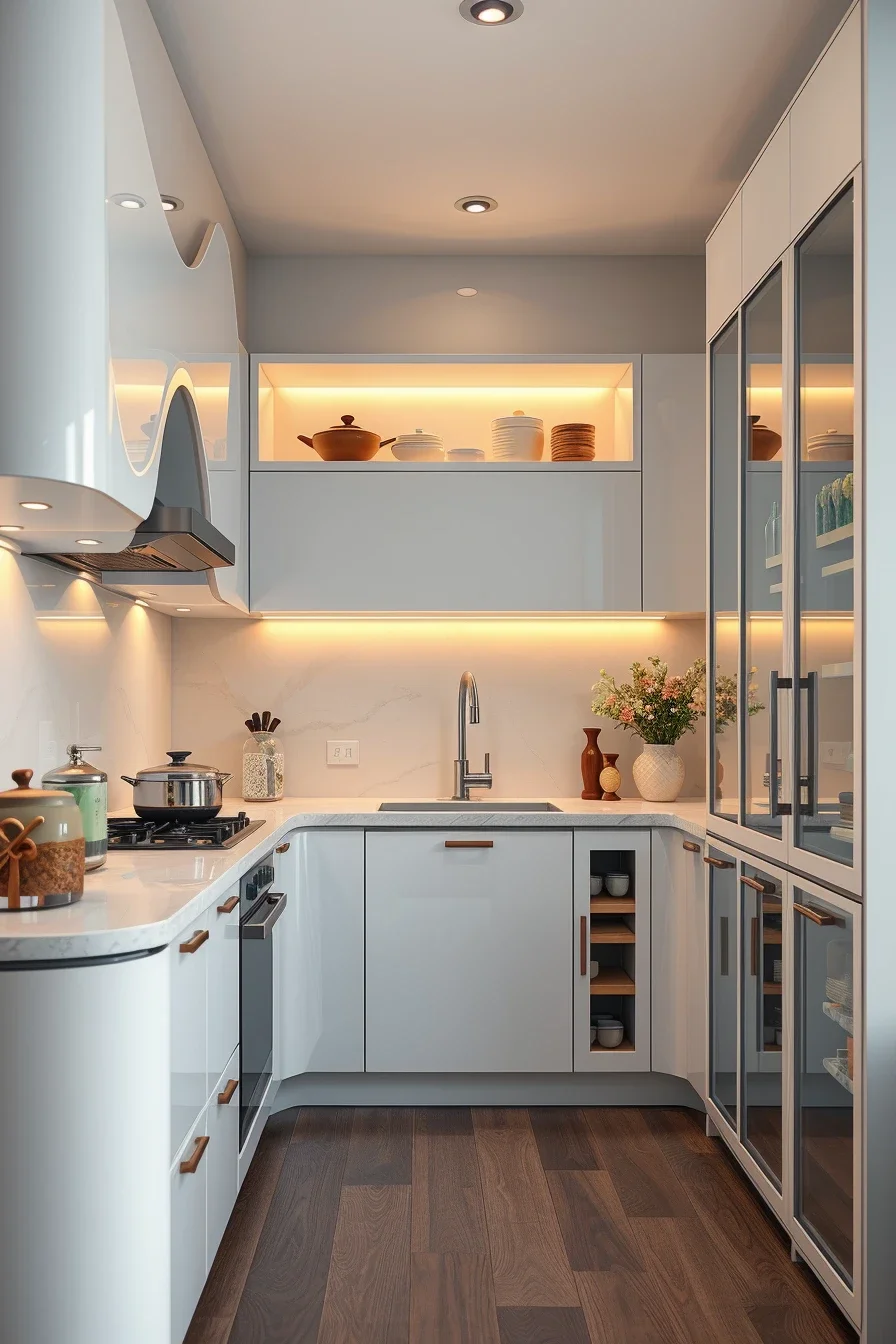
A well-organized kitchen can make even the smallest space feel more functional, comfortable, and enjoyable to use every day. The best small kitchen organization storage solutions help maximize every cabinet, drawer, shelf, and corner without sacrificing style or convenience. With thoughtful storage ideas and smart layouts, it’s possible to reduce clutter while keeping everyday essentials within easy reach. From clever cabinet organizers to vertical storage and multi-purpose accessories, small changes can create a surprisingly big impact. This guide explores practical and creative ways to transform a compact kitchen into an efficient, organized space that supports your daily routine. Whether you’re working with a tiny apartment kitchen or simply looking to improve your current setup, these ideas will help you make the most of every available inch.
Freestanding Ladder Shelf That Expands Kitchen Storage
I immediately noticed how this dark wood freestanding shelving unit transforms an empty wall into highly functional storage. The shelves hold cookbooks, stacked bowls, glass jars, spices, serving dishes, cookware, and storage boxes, while the nearby countertop remains relatively uncluttered with cooking utensils and a few everyday essentials. The shelving stands beside the kitchen cabinetry without looking bulky, making excellent use of vertical space.
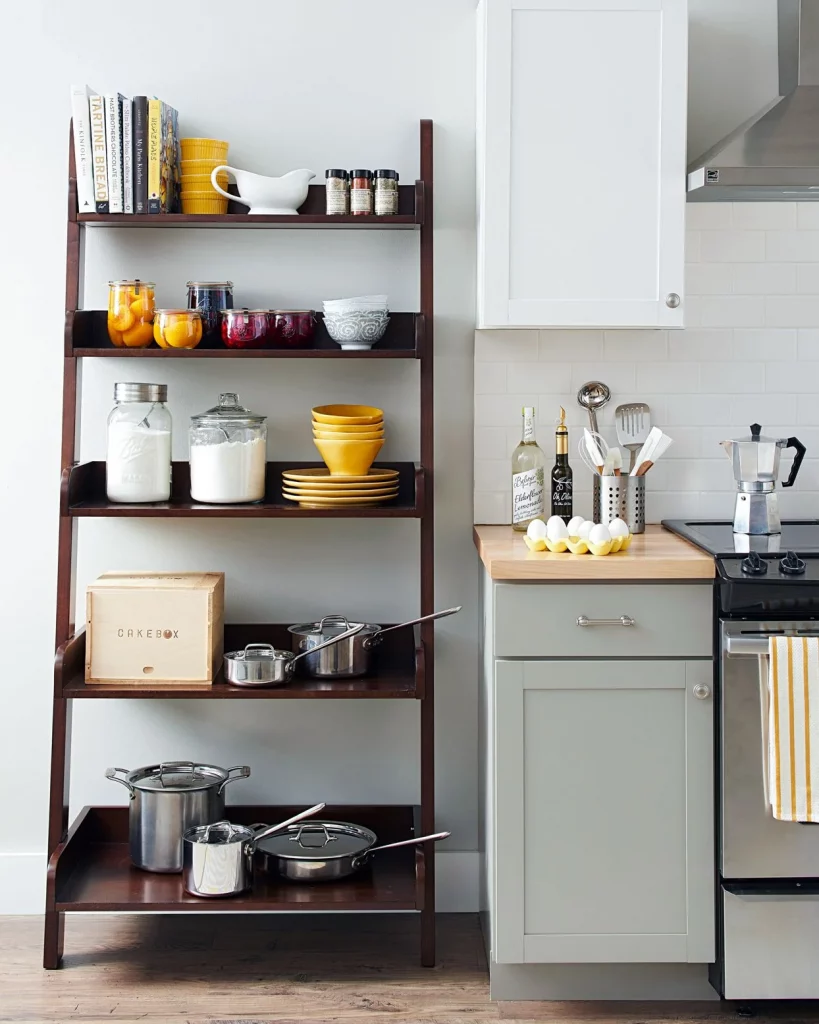
This arrangement succeeds because each shelf serves a different purpose. Frequently used pantry ingredients occupy the middle shelves, heavier cookware is stored near the bottom, and books and serving pieces sit comfortably higher up. The result is a storage solution that feels organized and practical without requiring additional built-in cabinets.
I often recommend freestanding shelving for smaller kitchens because it offers flexibility that permanent cabinetry cannot. It can be reorganized as storage needs change, and many professional organizers suggest using vertical shelving before considering costly renovations. This image demonstrates exactly why that advice works.
Matching containers for pantry staples would make the shelves appear even more cohesive while keeping ingredients easy to locate during meal preparation.
Compact Kitchen With Open Shelves and Organized Glass Pantry Jars
This compact kitchen combines white cabinetry, wooden countertops, and floating wood shelves to create an organized cooking space. The shelves display stacked plates, bowls, glass jars filled with dry ingredients, woven baskets, glassware, and several potted plants. A white farmhouse sink sits beneath the shelving, while simple white subway tile forms a clean backdrop that keeps the room feeling bright and spacious.
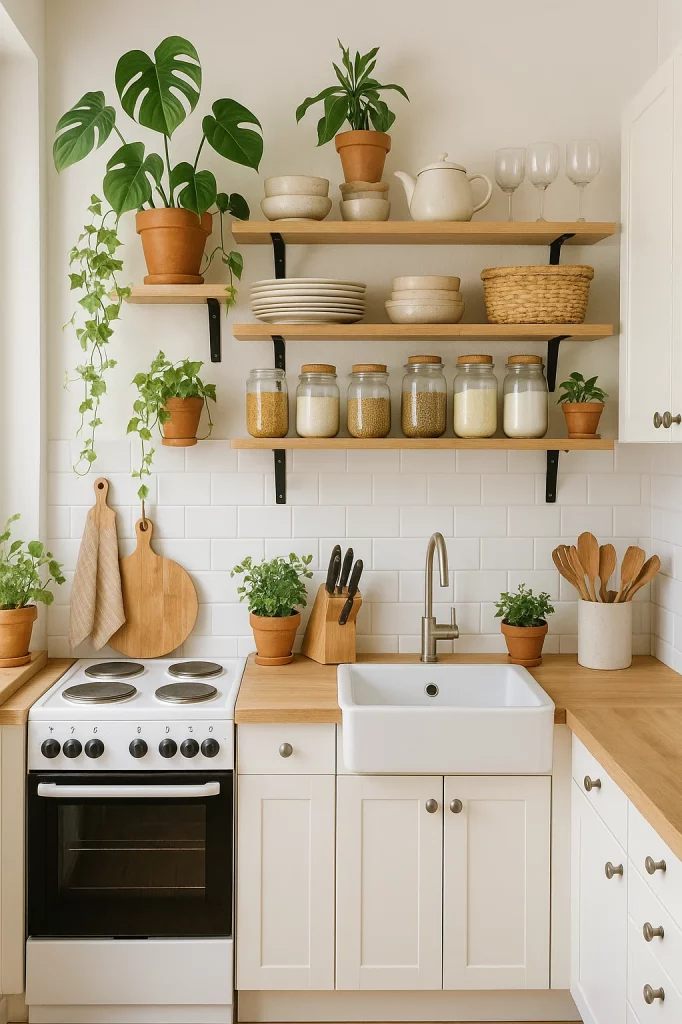
The storage strategy is highly effective because it maximizes the available wall space. Pantry staples remain visible inside matching glass jars, dishes are stacked neatly according to size, and baskets provide additional storage for miscellaneous items. Every object appears to have a designated place, helping the compact kitchen remain uncluttered.
I find that combining open shelving with consistent storage containers makes even the smallest kitchens feel much more intentional. Many designers encourage using transparent jars because they simplify meal preparation and inventory management while contributing to an attractive display. This kitchen demonstrates that concept exceptionally well.
A few discreet labels on the pantry jars would make the organization system even easier to maintain without changing the overall appearance of the space.
Simple Countertop Styling With Minimal Open Display
This kitchen uses a restrained approach to organization with dark lower cabinets, white countertops, and a white tile backsplash. A narrow shelf above the backsplash displays framed botanical artwork, candles, decorative objects, and a few small accessories. Wooden cutting boards lean against the wall near the sink, while countertop items are grouped into neat trays that keep the workspace feeling orderly and uncluttered.
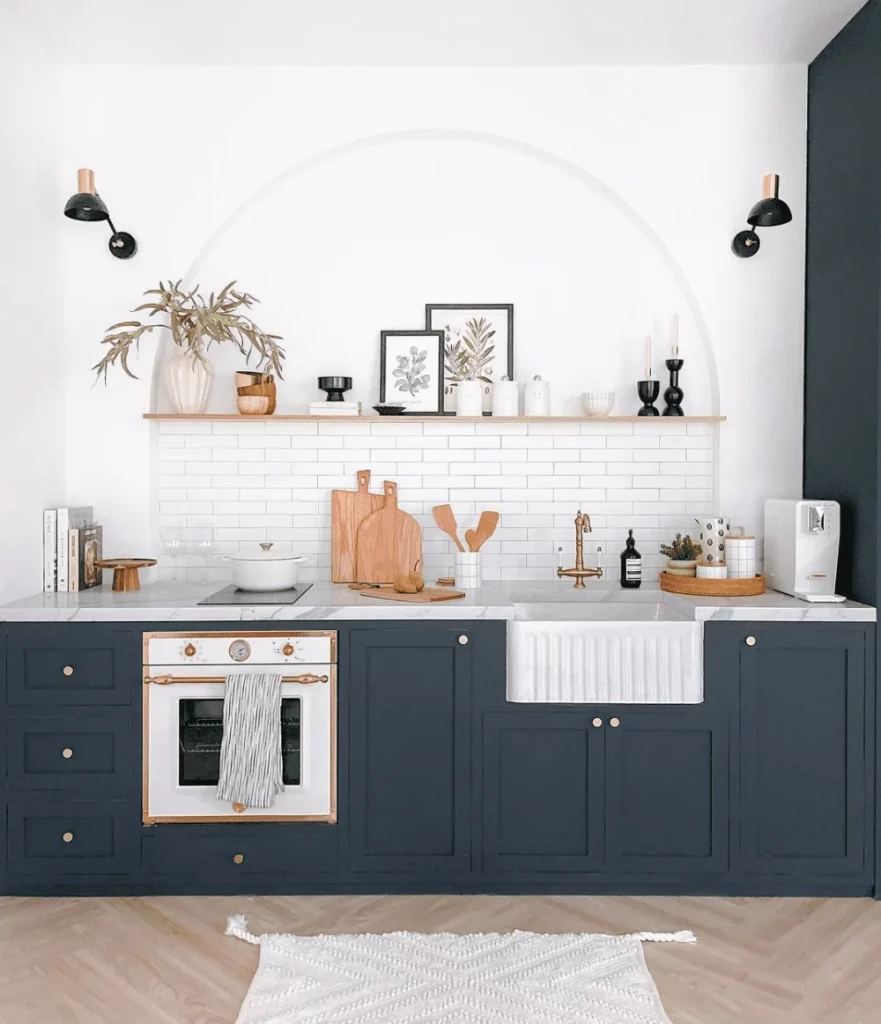
What I appreciate most is the disciplined use of decorative storage. Instead of filling every available surface, only a carefully selected collection of practical and decorative pieces is displayed. The trays help organize smaller objects, and the shelf adds personality without interfering with the kitchen’s functionality.
In my own projects, I have learned that leaving empty space can be just as valuable as adding more storage. Many respected interior designers recommend limiting countertop accessories so the kitchen remains comfortable to work in while still reflecting personal style. This image captures that balance perfectly.
A matching storage container for countertop essentials would subtly strengthen the organized appearance while maintaining the calm, uncluttered design.
Combining Hidden Waste Storage With Open Floating Shelves
This bright white kitchen pairs open wooden floating shelves with a concealed pull-out cabinet that houses two waste bins. White subway tile, generous natural light, brass cabinet hardware, and clean countertops create an airy atmosphere, while decorative bowls, dishes, cookbooks, and small plants bring warmth to the room.
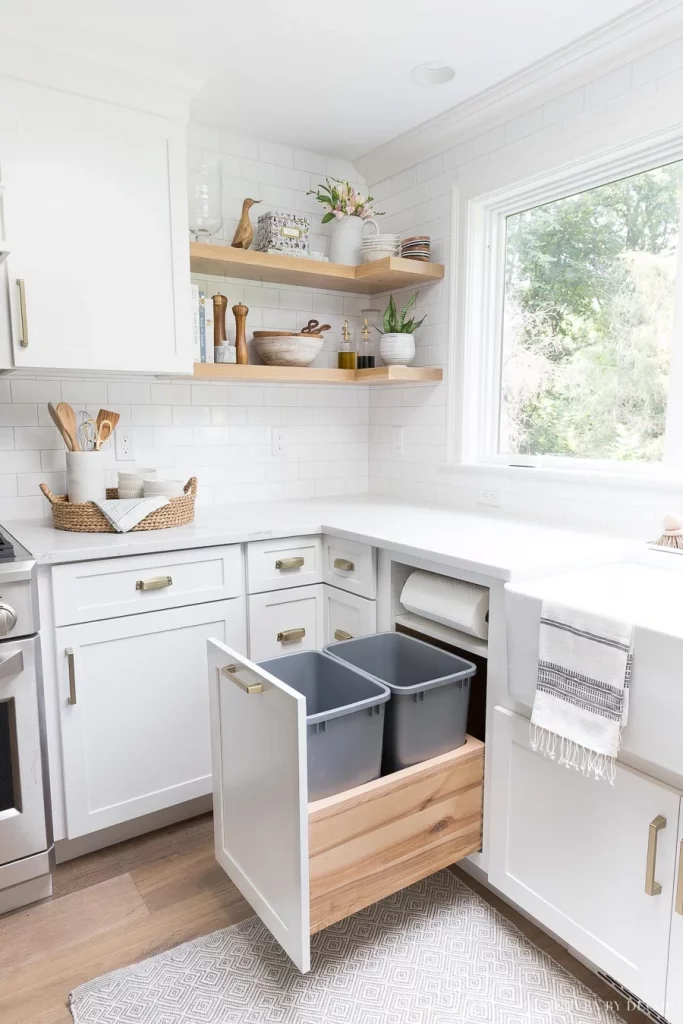
I think this combination achieves an ideal balance between practical storage and attractive styling. The waste bins remain completely hidden inside the cabinetry, keeping the floor uncluttered, while the floating shelves display frequently used dishes and decorative pieces without making the room feel enclosed.
From my experience, integrating waste management directly into cabinetry is one of the most valuable improvements for a compact kitchen. At the same time, limiting open shelving to carefully selected everyday items prevents visual clutter while maintaining easy access to essentials.
A subtle finishing detail could be matching storage baskets on the shelves for smaller items, helping preserve the organized appearance without changing the overall design.
Designing a Compact Kitchen With Multi-Level Storage
This small kitchen makes impressive use of vertical space through floating shelves, wall-mounted rails, open cubbies, baskets, and compact cabinetry. A small sink, cooktop, and refrigerator fit comfortably within the layout, while white cabinets, light wood shelving, black fixtures, and woven accents create a warm modern atmosphere.
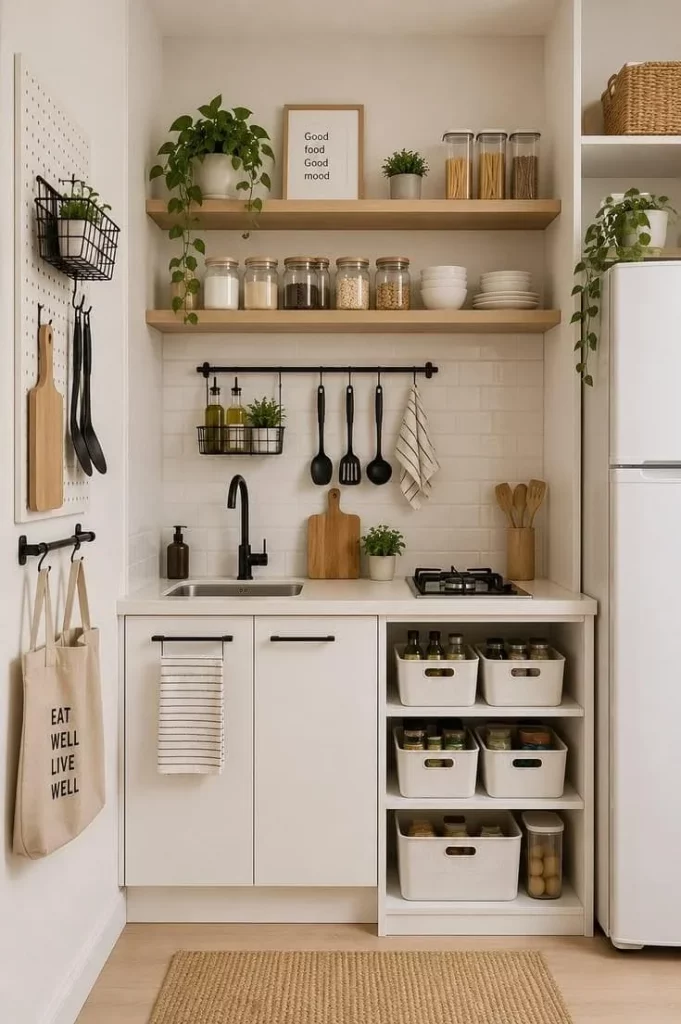
I admire how this design gives every storage solution a specific role. Everyday utensils hang above the countertop, pantry items are grouped inside matching bins, dishes occupy open shelves, and smaller accessories are stored in wall-mounted organizers. Even though the footprint is compact, the kitchen feels highly functional because nothing appears randomly placed.
Interior designers often emphasize creating layers of storage in small spaces rather than relying on one solution alone. This kitchen demonstrates that approach beautifully by combining open shelving, concealed cabinets, wall organization, and modular bins that work together to maximize every available inch.
One improvement I might consider would be adding simple labels to the storage bins so family members can quickly return everything to its proper place while preserving the clean and organized appearance.
Smart Cabinet Organization For Small Kitchen Storage Solutions
Cabinets are often the largest storage area in a small kitchen, but I frequently find that they are also the most underused. Instead of stacking cookware randomly, I organize cabinets into clearly defined zones for dishes, food storage containers, baking supplies, cookware, and everyday essentials. This simple zoning system creates an organized interior that feels far more spacious while making daily cooking much easier. I also like combining closed cabinets with clean, modern fronts that maintain a streamlined appearance throughout the room.
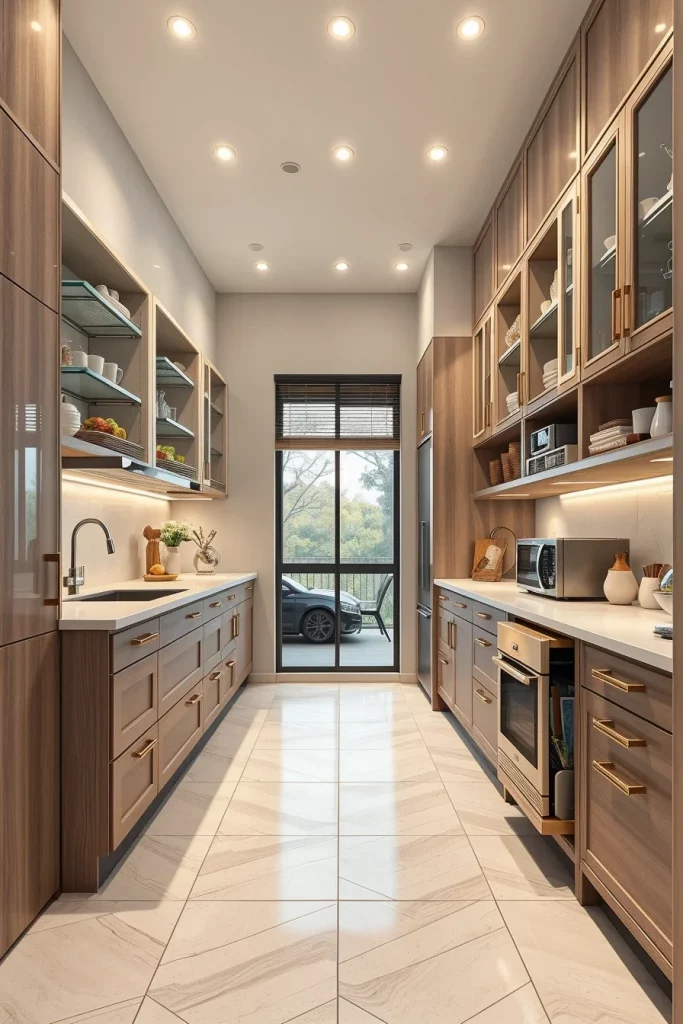
Inside each cabinet, I rely on pull-out shelves, tiered organizers, adjustable shelving, cabinet risers, clear storage bins, and vertical dividers for baking sheets and cutting boards. These accessories allow every inch of cabinet depth to remain accessible instead of becoming wasted space. Soft-close drawers, integrated lighting, and narrow pull-out organizers beside appliances further improve functionality while maintaining a sophisticated contemporary kitchen design.
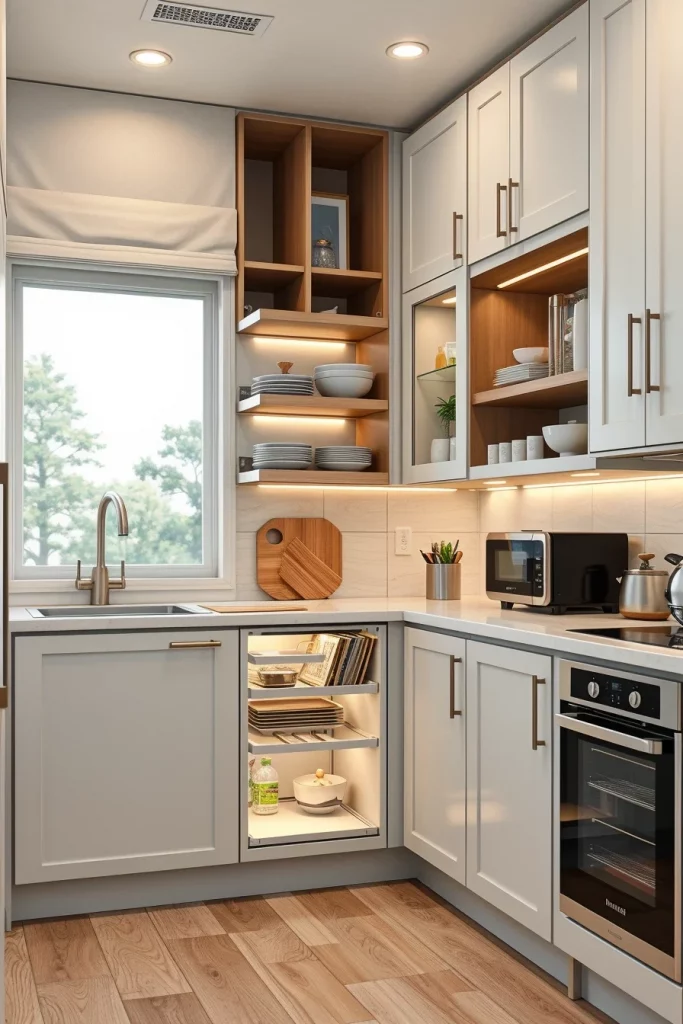
Personally, I have found that cabinet organization provides one of the highest returns with the least amount of renovation. Professional organizers frequently recommend assigning a permanent location to every item, and advice published by respected home publications such as Better Homes & Gardens consistently supports grouping similar items together to reduce visual clutter and improve efficiency. I have seen this approach simplify meal preparation while keeping cabinets neat over time.
If I wanted to improve this cabinet system even further, I would add interior cabinet lighting, labeled storage containers for pantry staples, and hidden charging stations for small kitchen appliances. These additions create an even more organized workspace without increasing visual clutter.
Space Saving Drawer Organization Ideas For Small Kitchens
Well-designed drawers can store far more than many homeowners expect when they are carefully organized. I prefer deep drawers with customizable dividers that separate utensils, serving tools, measuring cups, spices, food wraps, and cooking accessories into dedicated compartments. This creates an orderly kitchen where everything remains visible instead of disappearing beneath piles of miscellaneous items.
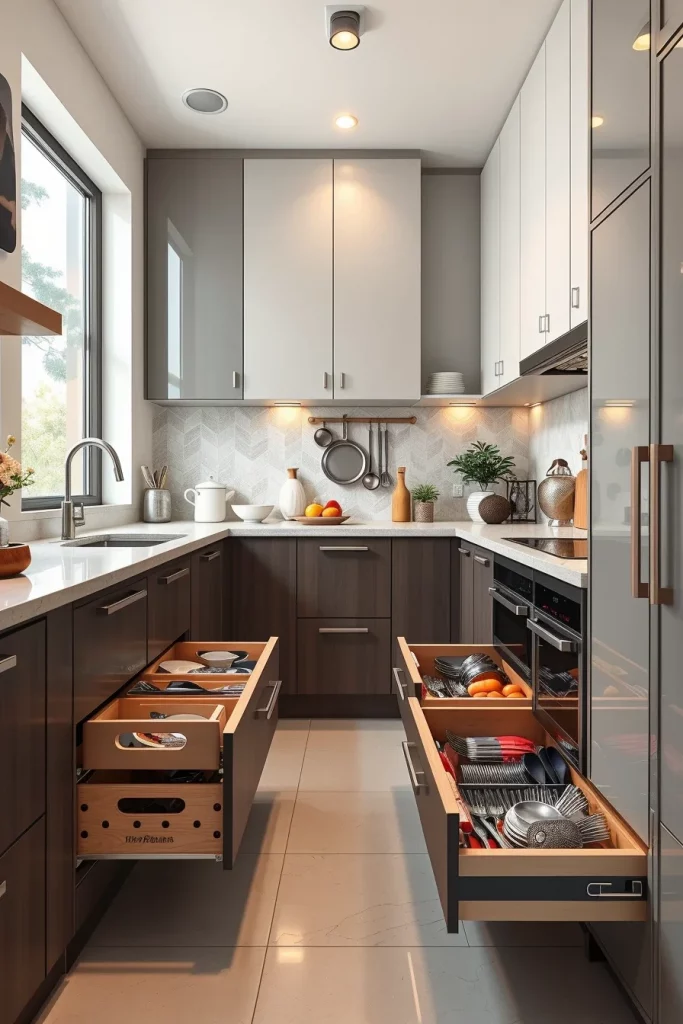
Drawer inserts play an important role in maintaining organization. Expandable bamboo organizers, adjustable plastic dividers, peg systems for dishes, spice drawer inserts, knife organizers, and dedicated compartments for reusable food containers all help maximize every available inch. Deep drawers beneath the cooktop can also accommodate pots and pans much more efficiently than traditional lower cabinets.
From my experience, drawer organization significantly reduces time spent searching for everyday tools. Many professional kitchen designers encourage storing frequently used items as close as possible to their point of use, and I completely agree with this principle because it creates a smoother cooking workflow while reducing unnecessary movement throughout the kitchen.
To complete this storage system, I would also include drawer labels, non-slip liners, and periodic decluttering sessions. These small maintenance habits ensure the drawer organization remains effective long after the initial setup.
Vertical Storage Solutions To Maximize Small Kitchen Space
When floor space is limited, I always look upward. Vertical storage transforms unused wall areas into highly functional storage without making the room feel crowded. Full-height cabinetry, tall pantry units, slim storage towers, and ceiling-height shelving create an impressive amount of storage while drawing the eye upward, making the kitchen appear taller and more spacious.
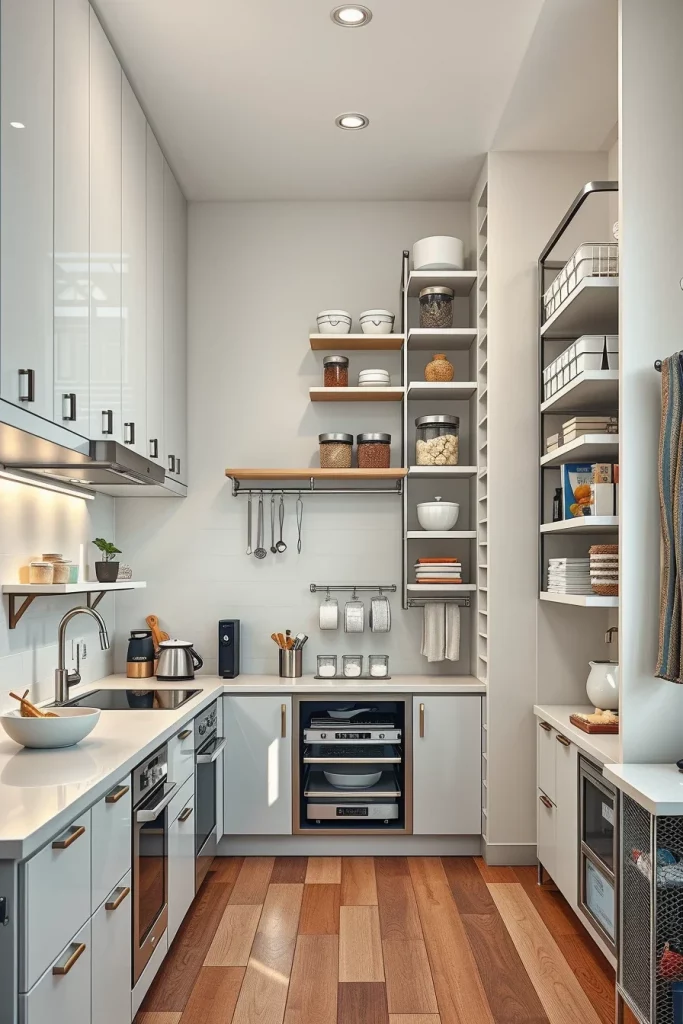
I often incorporate narrow wall-mounted shelves, rail systems for utensils, floating cabinets above countertops, hanging baskets, and slim rolling storage carts that fit beside the refrigerator. Decorative storage jars, matching containers, and integrated lighting help maintain a clean modern appearance while keeping frequently used items within easy reach.
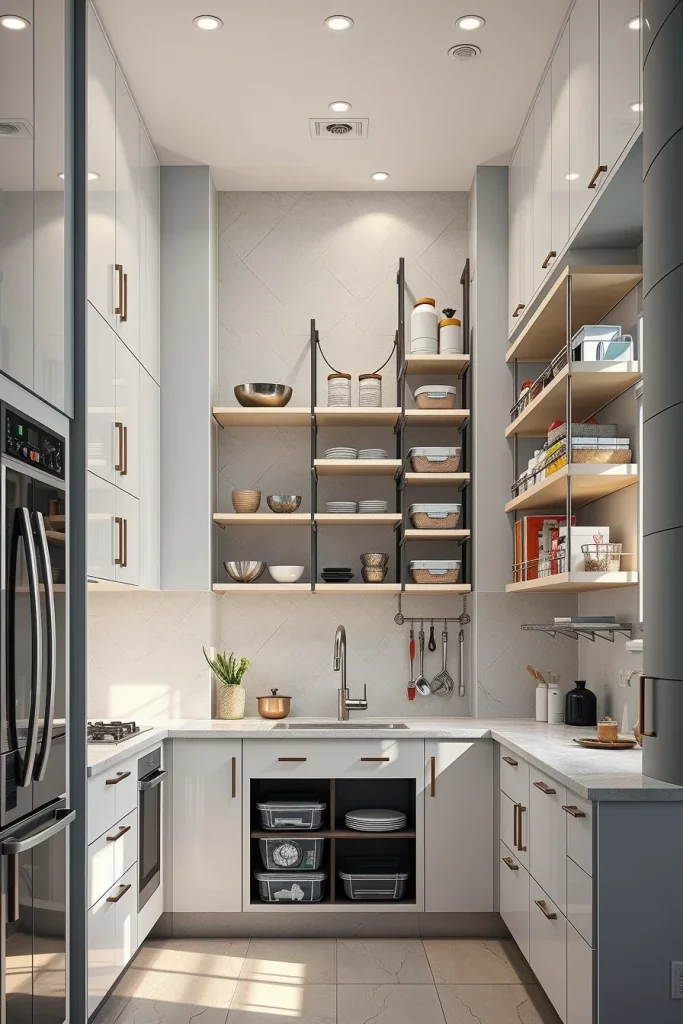
I believe vertical organization is one of the smartest investments for any compact kitchen because it expands storage without reducing valuable workspace. Designers featured in Architectural Digest frequently emphasize using wall height to maximize compact interiors, and I have consistently found that this strategy makes even the smallest kitchens feel professionally designed.
To improve this concept further, I would consider installing ceiling-height cabinets with a library-style step stool stored discreetly nearby. This allows seasonal kitchen equipment to remain accessible without sacrificing everyday convenience.
Open Shelving Ideas For Small Kitchen Organization
Open shelving creates visual openness while allowing everyday kitchen essentials to become part of the overall design. I enjoy using carefully styled floating shelves to display matching dishes, glassware, ceramic bowls, cookbooks, and attractive storage containers. When organized thoughtfully, open shelving prevents upper cabinets from making a compact kitchen feel enclosed.
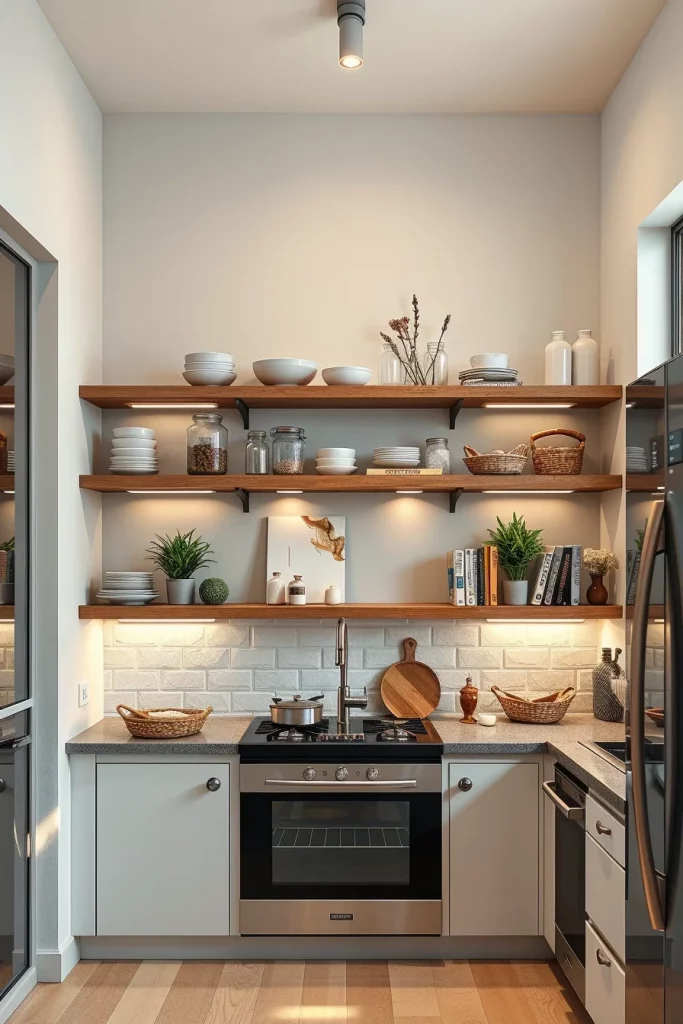
Consistency is extremely important when styling open shelves. I recommend matching containers, coordinated dishware, woven baskets, glass jars, neutral ceramics, and small decorative accents that complement the kitchen rather than overwhelm it. Leaving intentional empty space between objects also helps maintain a clean, uncluttered appearance that feels both modern and welcoming.
In my own projects, I avoid treating open shelving as unlimited storage. Instead, I view it as a balance between functionality and visual design. Many interior designers featured in House Beautiful suggest limiting displayed items to those used regularly, and I agree because frequently used objects stay cleaner while maintaining a polished presentation.
One addition I often recommend is under-shelf lighting. Soft LED lighting highlights attractive kitchen accessories while making shelves more practical during evening cooking sessions.
Under Sink Storage Solutions For Small Kitchens
The cabinet beneath the sink is often one of the most challenging spaces to organize because of plumbing and irregular layouts. I approach this area by dividing it into clearly defined storage zones. Cleaning supplies, dishwashing products, trash bags, and spare sponges each receive dedicated containers that fit neatly around plumbing fixtures without wasting valuable space.
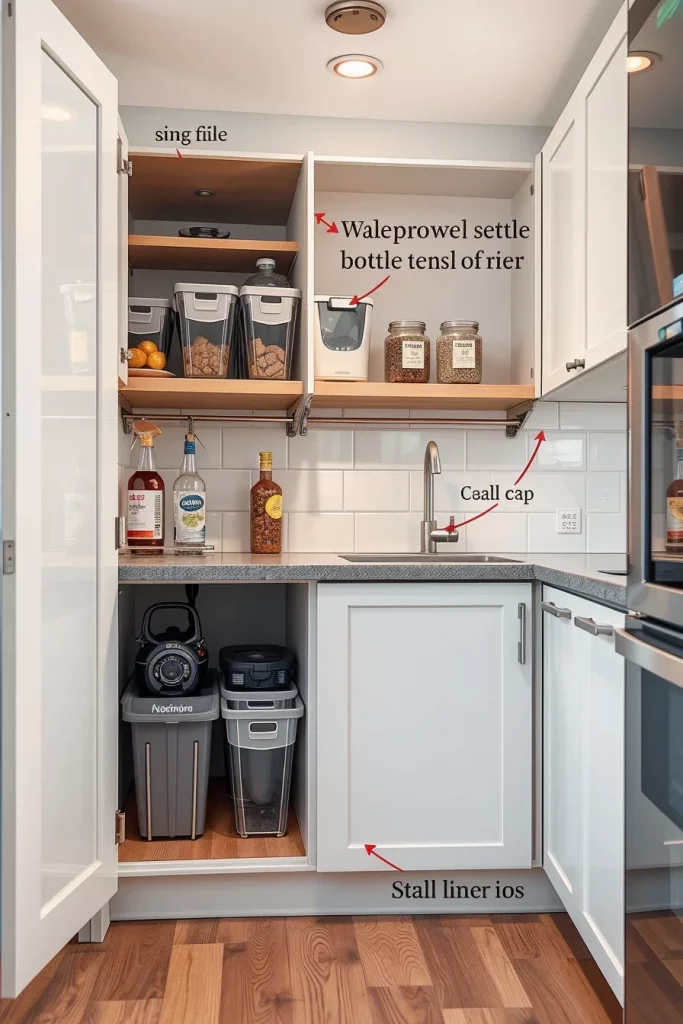
Stackable storage bins, pull-out organizers, expandable shelving, narrow baskets, tension rods for spray bottles, and removable caddies all contribute to a much more efficient under-sink cabinet. Waterproof shelf liners protect the cabinet interior while making future cleaning easier. I also prefer clear containers that allow every item to remain visible at a glance.
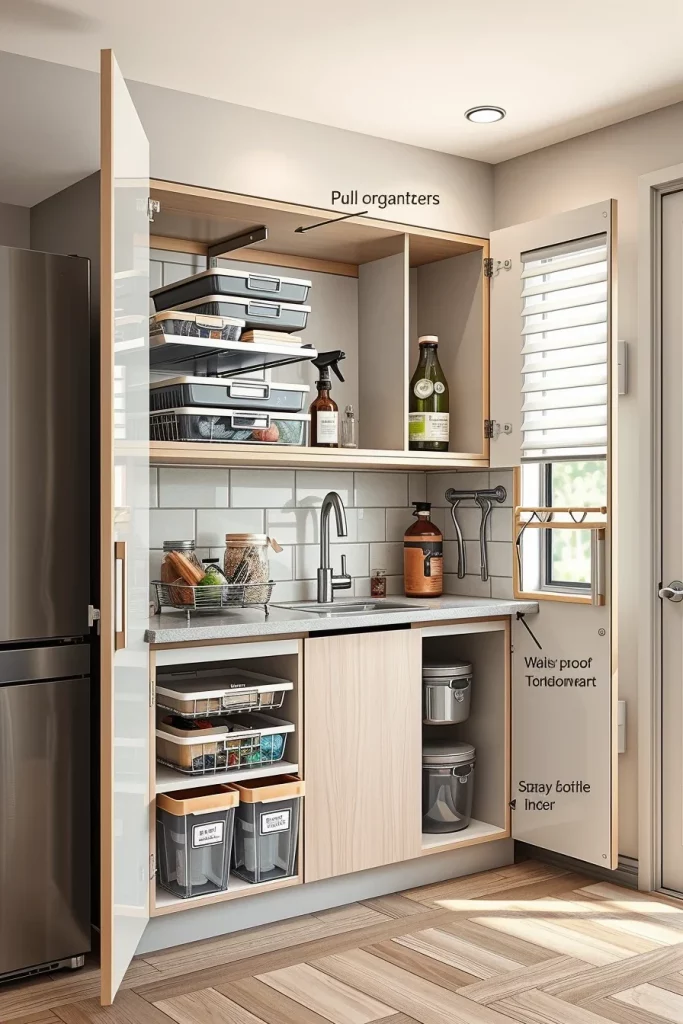
From my experience, organizing this hidden cabinet creates a surprisingly noticeable improvement throughout the kitchen. Professional organizers often recommend limiting this area to cleaning supplies only rather than allowing miscellaneous household items to accumulate, and I have found that this simple rule keeps the space functional for years.
If additional improvements are possible, I would include moisture-resistant storage containers, leak detectors beneath plumbing connections, and labeled bins for replacement cleaning supplies. These additions improve both organization and long-term cabinet maintenance.
Corner Cabinet Organization Ideas That Eliminate Wasted Space
Corner cabinets often become the most frustrating part of a compact kitchen because deep, awkward spaces make everyday items difficult to reach. I like transforming these forgotten areas into highly efficient storage by using solutions that allow every inch of the cabinet to remain accessible. A well-designed corner cabinet eliminates wasted space while preserving the clean, sculptural appearance of a modern small kitchen. When everything has a designated place, the room immediately feels larger and far more organized.
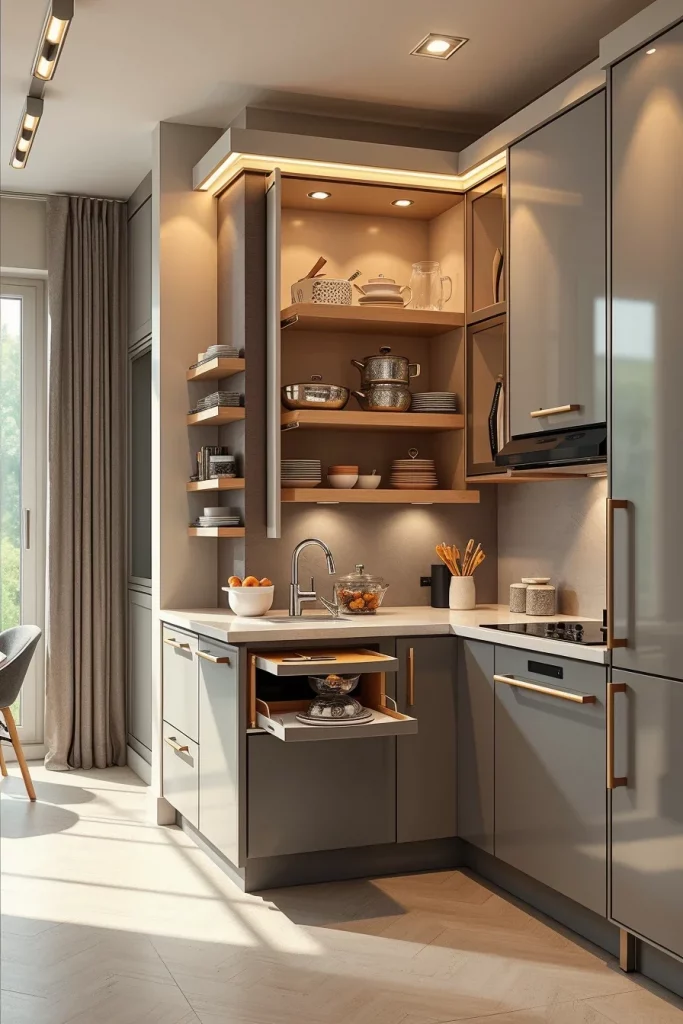
I usually recommend installing a lazy Susan, pull-out corner shelves, swing-out trays, or kidney-shaped rotating organizers depending on the cabinet layout. These systems make it easy to store pots, mixing bowls, serving dishes, and small appliances without having to reach into dark corners. Matching storage containers and labeled baskets further improve organization while keeping the cabinet visually tidy. Modern matte cabinetry with concealed hardware also contributes to a seamless design.
From my experience, upgrading a corner cabinet changes the way an entire kitchen functions. Kitchen designers frequently recommend making difficult spaces as accessible as possible instead of allowing them to become storage for forgotten items. I completely agree because convenient access encourages homeowners to maintain organization over the long term.
If I wanted to improve this section even further, I would include integrated LED cabinet lighting and adjustable rotating shelves that can accommodate cookware of different sizes as storage needs evolve.
Pantry Storage Solutions For Small Kitchen Organization
Even a very small kitchen can benefit from an organized pantry system. Whether the pantry consists of a tall cabinet or several dedicated shelves, I always divide food into categories so everything remains visible and easy to access. Organized pantry storage reduces food waste, simplifies grocery shopping, and contributes to a calm, clutter-free kitchen that feels much more spacious than its actual size.
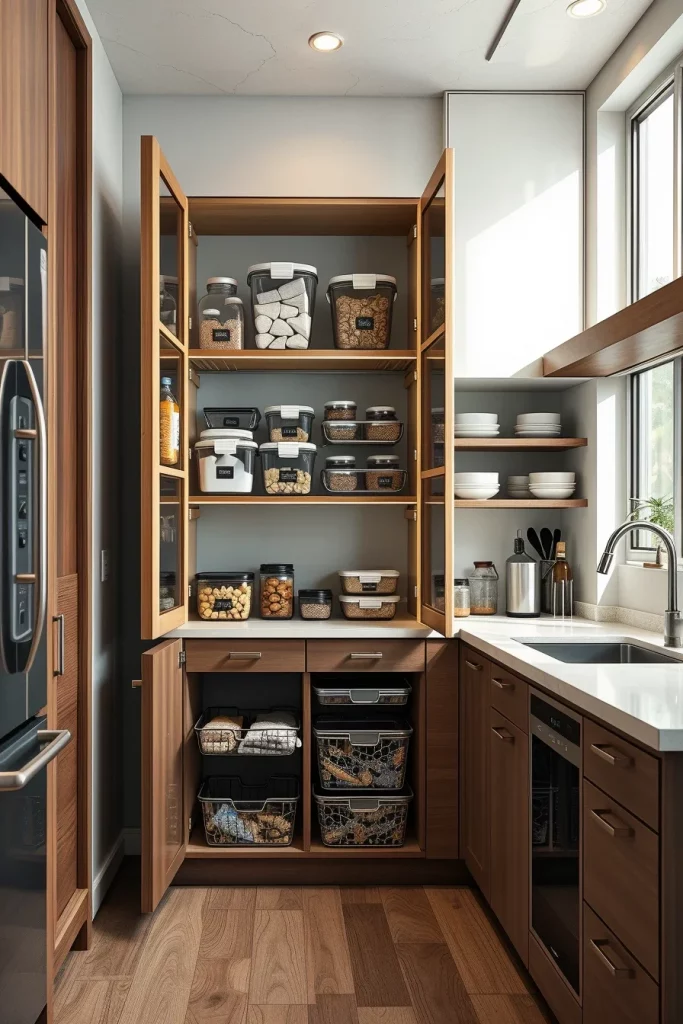
Clear airtight containers are one of my favorite storage tools because they create a uniform appearance while protecting dry goods from moisture. I combine them with tiered shelf risers, pull-out pantry drawers, labeled baskets, narrow can organizers, and door-mounted storage racks to maximize every available inch. Frequently used ingredients stay at eye level, while seasonal baking supplies occupy higher shelves that are accessed less often.
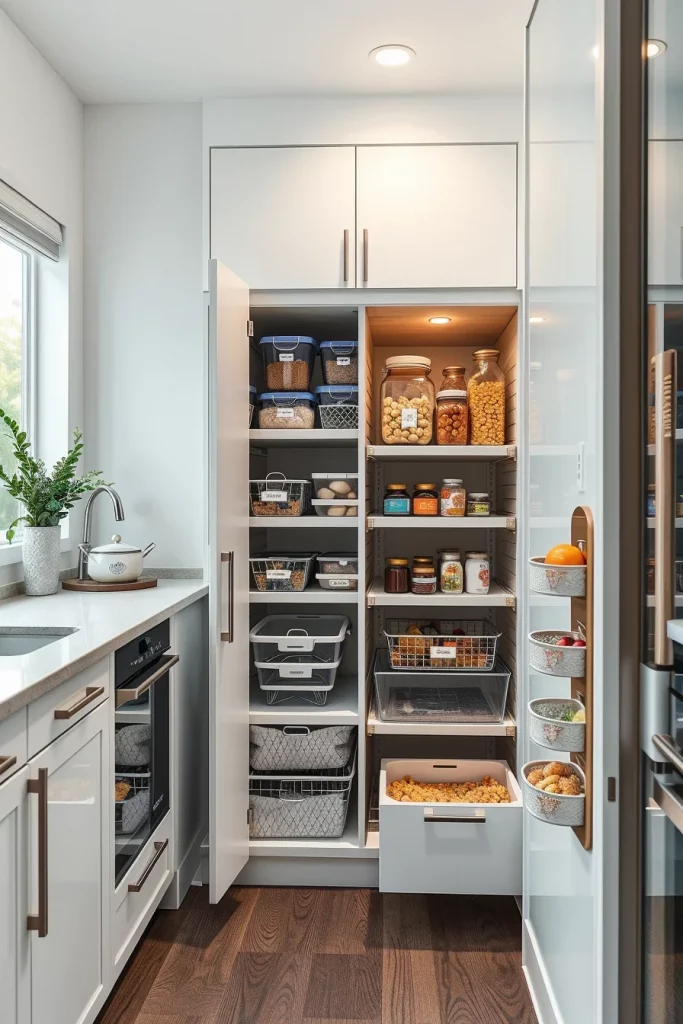
I have learned that maintaining an organized pantry requires consistency more than expensive storage products. Organization experts and publications such as The Spruce regularly recommend grouping similar foods together and labeling every container. This simple system makes it much easier to monitor inventory and prevents duplicate purchases.
To make this pantry even more practical, I would add battery-powered shelf lighting and an inventory list inside the pantry door. These small additions help keep supplies organized and ensure nothing is forgotten at the back of a shelf.
Countertop Organization Ideas That Keep Surfaces Clutter Free
Clear countertops instantly make a small kitchen appear larger, brighter, and more inviting. I prefer treating the countertop as an active workspace rather than permanent storage. By limiting visible items to everyday essentials, I create a clean and stylish environment where cooking feels more enjoyable and less stressful.
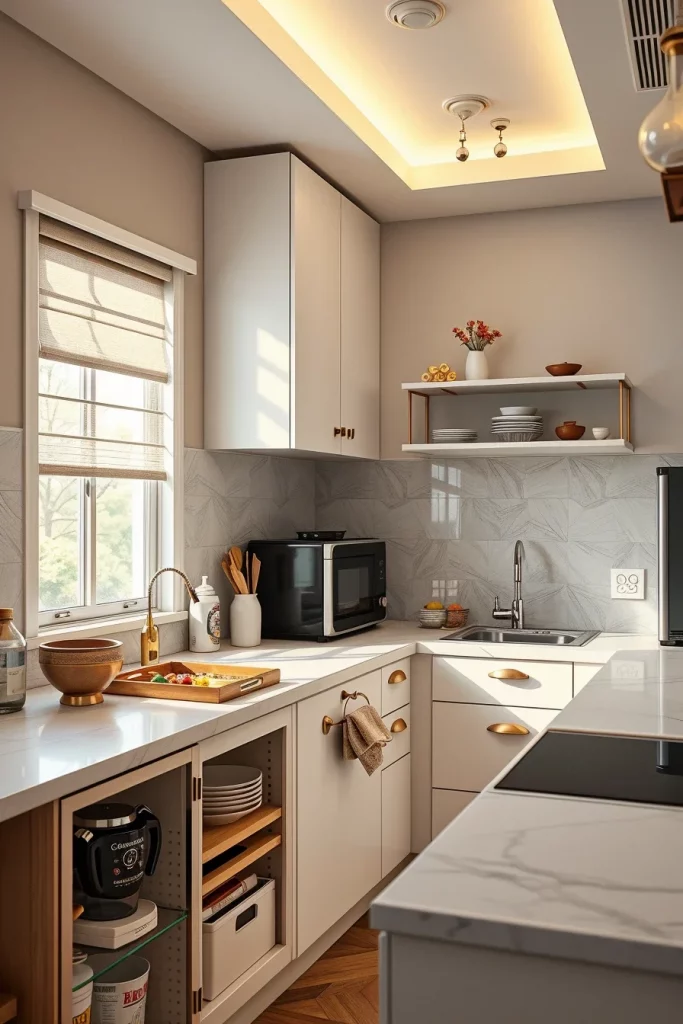
I usually keep only the coffee machine, a cutting board, and one decorative tray containing cooking oils or frequently used seasonings on display. Small appliances that are rarely used are stored inside cabinets or appliance garages. Wall-mounted paper towel holders, under-cabinet hooks, and integrated charging stations further reduce clutter while maintaining functionality. Decorative elements such as ceramic bowls or a simple fruit display provide personality without overwhelming the room.
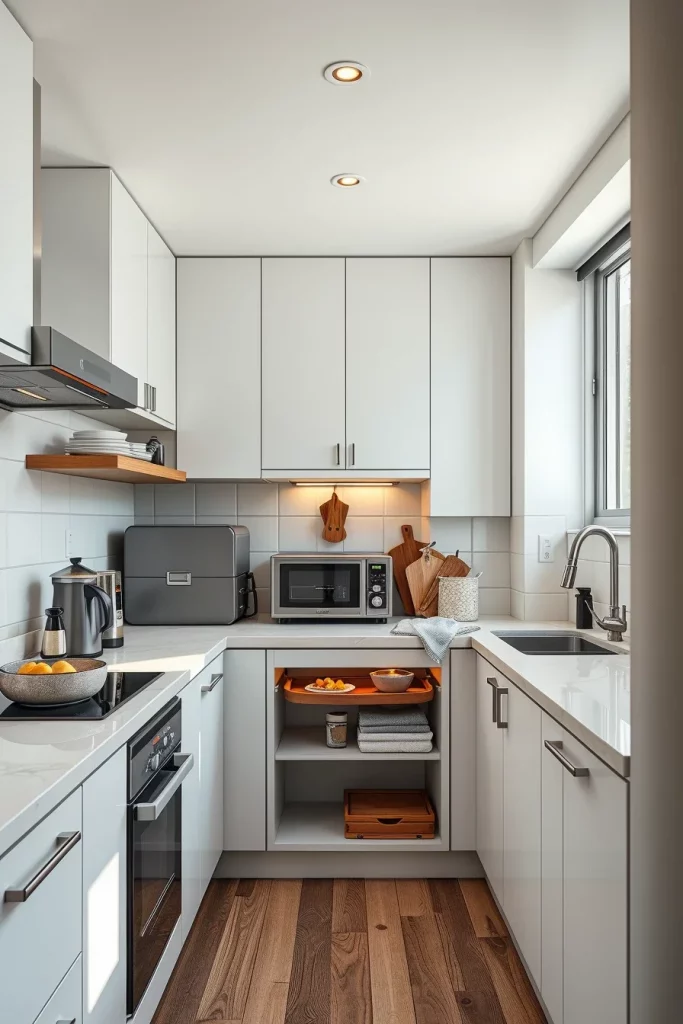
Personally, I believe countertop discipline has one of the biggest visual impacts in any compact kitchen. Interior designers often recommend leaving generous stretches of empty workspace because negative space helps a room feel larger. I have found that this principle consistently creates a more elegant and functional kitchen.
If additional improvements are needed, I would incorporate hidden appliance storage and built-in electrical outlets beneath upper cabinets to minimize visible cords and preserve the clean design.
Hanging Storage Solutions For Pots, Pans, And Kitchen Tools
Hanging storage allows valuable cabinet space to remain available while keeping cooking essentials within easy reach. I enjoy incorporating hanging systems into modern kitchens because they add both functionality and visual interest. When carefully planned, hanging storage creates an organized display that complements contemporary kitchen design instead of appearing cluttered.
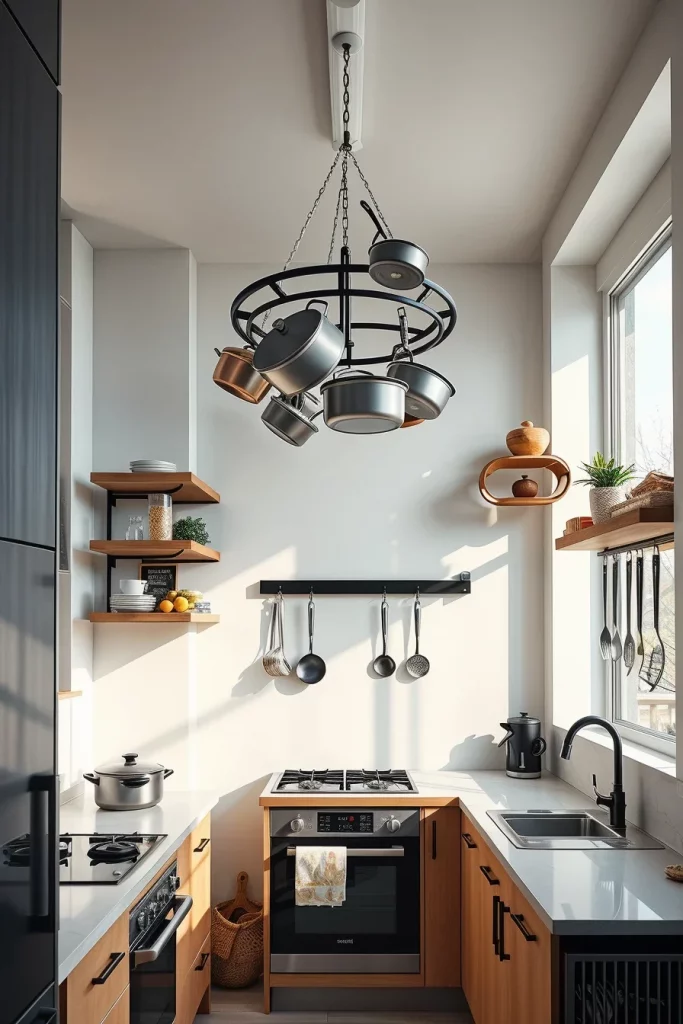
Ceiling-mounted pot racks, wall rails, S-hooks, hanging baskets, magnetic utensil holders, and suspended shelving provide excellent storage opportunities without occupying additional floor space. I prefer coordinating finishes in matte black, brushed stainless steel, or warm metallic tones so the storage system blends naturally with the rest of the kitchen. Frequently used cookware becomes part of the overall design while remaining instantly accessible during meal preparation.
I have found that hanging storage works particularly well for passionate home cooks who use the same cookware every day. Designers frequently recommend displaying only attractive, high-quality cookware to maintain a refined appearance, and I agree because carefully selected pieces contribute positively to the overall interior design.
To complete this system, I would include adjustable hanging rails that can be reconfigured as storage needs change, along with discreet under-cabinet lighting that highlights the organized display.
Magnetic Storage Ideas For Knives And Metal Kitchen Accessories
Magnetic storage is one of the simplest ways to free valuable drawer space while keeping everyday tools organized and accessible. I appreciate how magnetic systems contribute to a minimalist kitchen by reducing unnecessary countertop accessories. They also create a professional appearance that works beautifully in contemporary small kitchens.
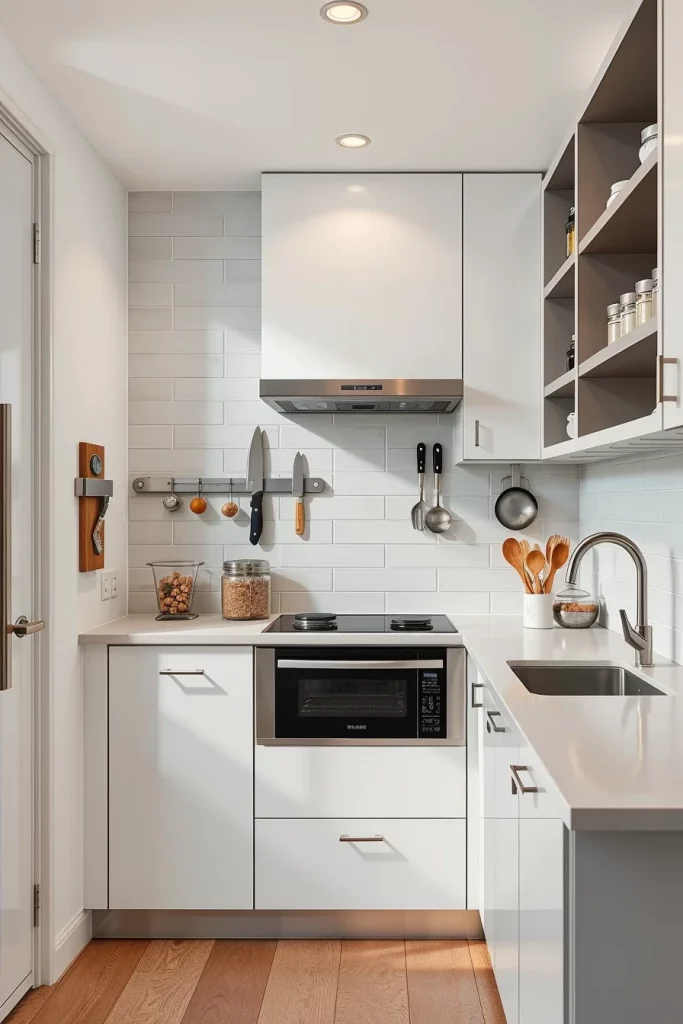
A high-quality magnetic knife strip securely stores chef’s knives, utility knives, kitchen shears, and other metal tools while protecting blade edges better than crowded drawers. Magnetic spice containers, utensil holders, and slim magnetic racks attached to the refrigerator or backsplash can also provide additional storage without occupying precious cabinet space. Matching finishes help these accessories blend naturally into the overall kitchen design.
In my experience, magnetic organization improves both efficiency and safety because every tool remains visible and easy to access. Professional chefs often rely on magnetic knife storage for exactly these reasons, and I believe homeowners can benefit from the same practical approach when space is limited.
If I wanted to expand this organization system further, I would add magnetic organizers inside cabinet doors for measuring spoons and lightweight kitchen tools, creating even more hidden storage without altering the room’s clean aesthetic.
Rolling Storage Carts For Flexible Small Kitchen Organization
One of the first upgrades I recommend is adding a slim rolling storage cart that can move wherever extra storage is needed. In a modern small kitchen, this simple addition makes the room feel much more flexible because it creates storage without requiring permanent cabinets. I prefer choosing a cart with clean lines, open shelving, and a finish that matches the existing cabinetry so it blends naturally into the overall design. A narrow cart fits perfectly beside the refrigerator, next to lower cabinets, or even at the end of an island while still leaving comfortable walking space.
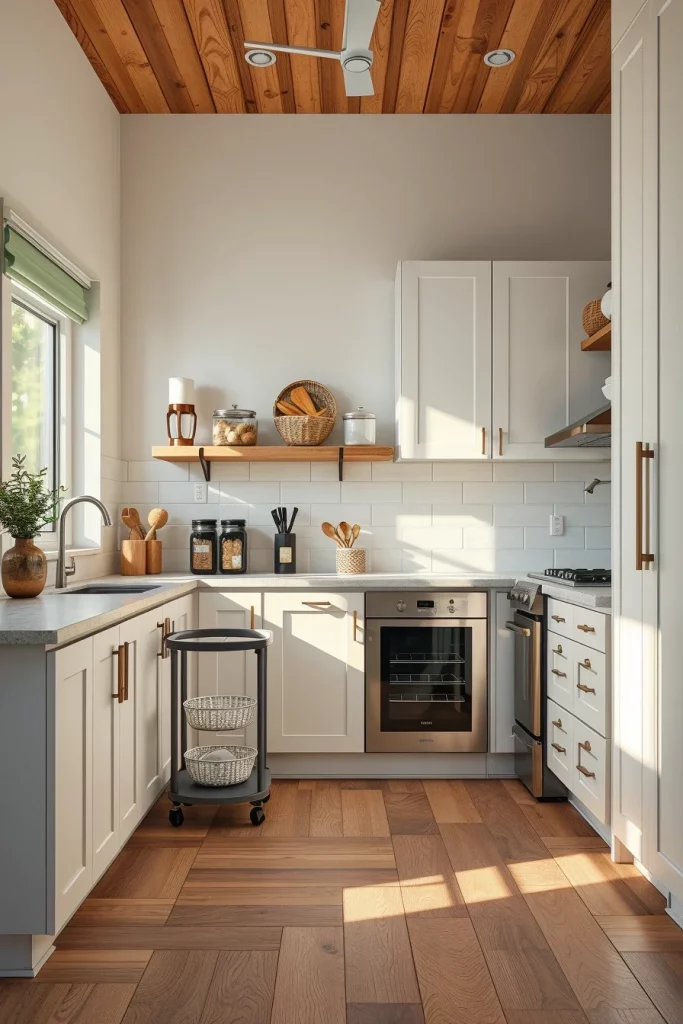
I usually organize the cart by assigning each shelf a specific purpose. The top shelf works well for frequently used oils, cutting boards, or cooking utensils, while the middle shelf can store bowls, dry goods, or small appliances. The lower shelf is ideal for heavier items such as Dutch ovens or storage baskets. Locking wheels keep everything stable during cooking while allowing the entire unit to move whenever additional floor space is needed for entertaining or meal preparation.
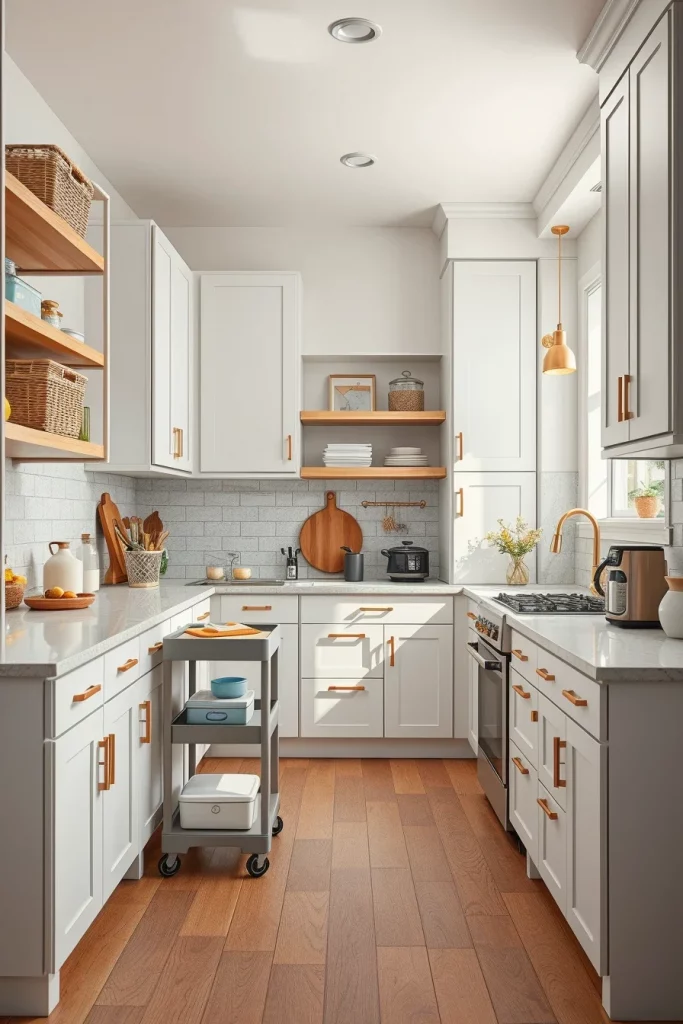
From my experience, professional organizers frequently recommend mobile storage because it adapts as household needs change. Publications like Better Homes & Gardens have also highlighted rolling carts as one of the easiest ways to expand storage without remodeling. I appreciate that this solution grows with the kitchen instead of limiting future layout changes.
To make this storage solution even more effective, I would add matching woven baskets, labeled containers, silicone shelf liners, and a small wooden tray to group frequently used cooking items together. These finishing touches improve both organization and visual appeal.
Stackable Storage Containers That Maximize Every Shelf
Whenever cabinet shelves become overcrowded, I replace mismatched packages with stackable storage containers. This immediately creates a cleaner appearance while making every inch of vertical space useful. A collection of matching containers gives a small kitchen a carefully organized look that complements modern cabinetry and open shelving without feeling cluttered.
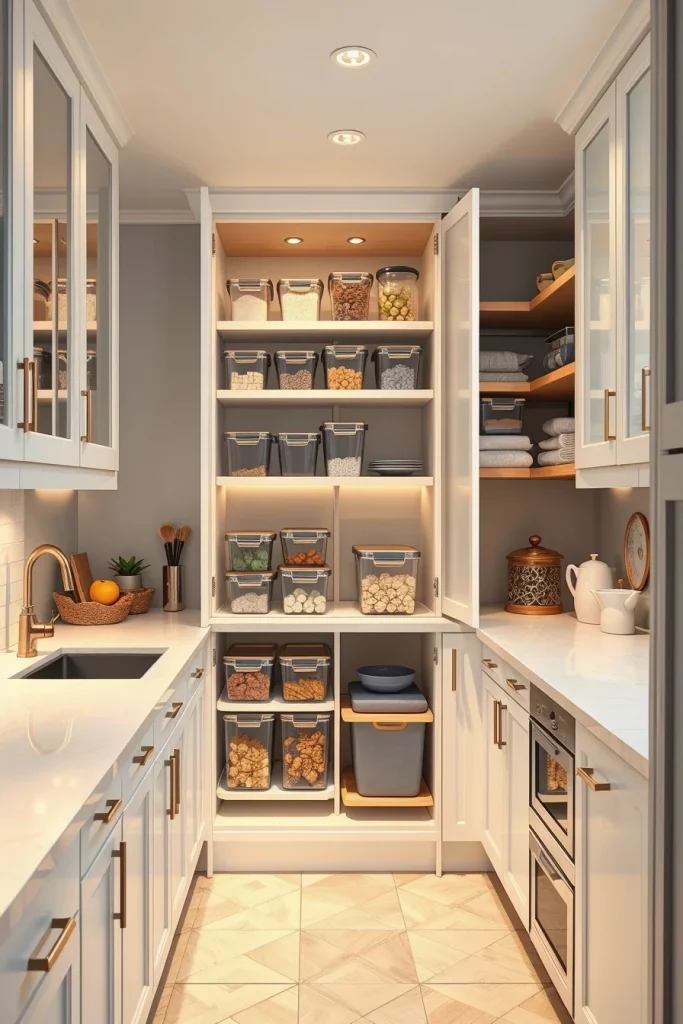
I like using airtight containers in several heights so each shelf can accommodate different pantry items including flour, pasta, cereal, rice, snacks, and baking ingredients. Clear sides make inventory simple while uniform dimensions allow the containers to stack securely. Labels on the front help everyone in the household quickly identify contents, reducing unnecessary searching that often creates cabinet disorder.
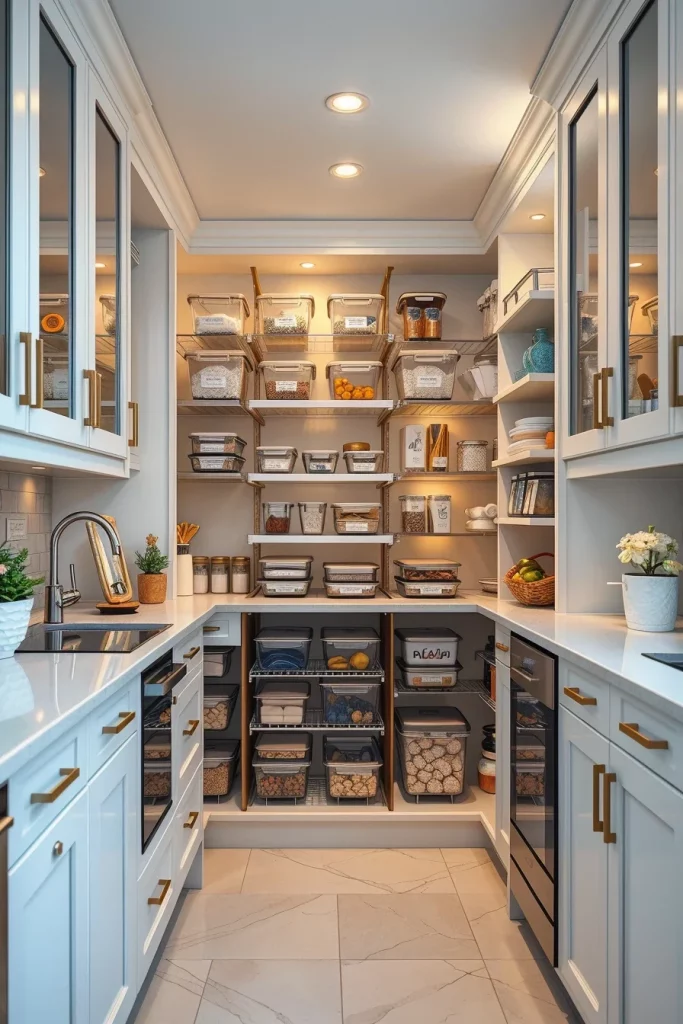
Personally, I have found that consistent container sizes make pantry maintenance significantly easier. The Home Edit has often emphasized that uniform storage systems improve both organization and efficiency, and I completely agree after organizing many compact kitchens using this approach.
I would also include adjustable shelf risers and pull-out pantry bins alongside these containers. Together they eliminate wasted vertical space and keep smaller food packages from disappearing behind larger items.
Door Mounted Storage Solutions For Extra Kitchen Capacity
The inside of cabinet doors is one of the most overlooked storage areas in a small kitchen. I like transforming these unused surfaces into practical storage zones by installing slim racks that hold spices, cleaning products, cutting boards, measuring spoons, or food wraps. This approach increases storage without affecting the appearance of the kitchen because everything remains hidden when the doors are closed.
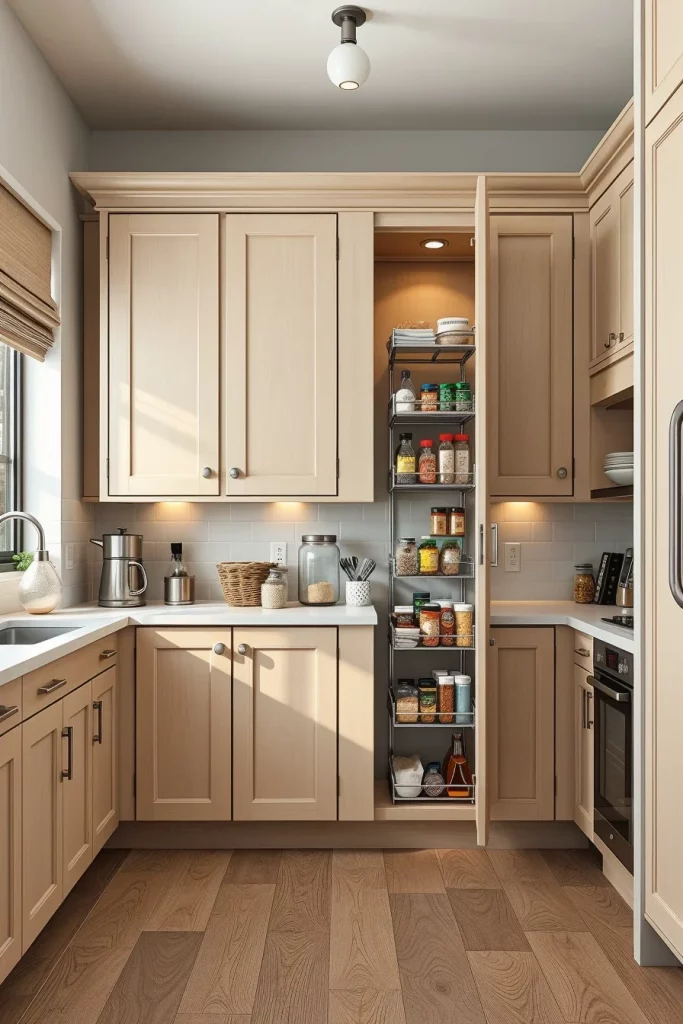
I always select narrow metal or acrylic organizers that do not interfere with cabinet shelves. Inside the pantry, door organizers work beautifully for canned goods, seasoning packets, and small bottles. Under the sink, they provide an ideal place for cleaning supplies while keeping countertops completely clear. Soft-close cabinet hardware ensures the added storage remains comfortable to use every day.
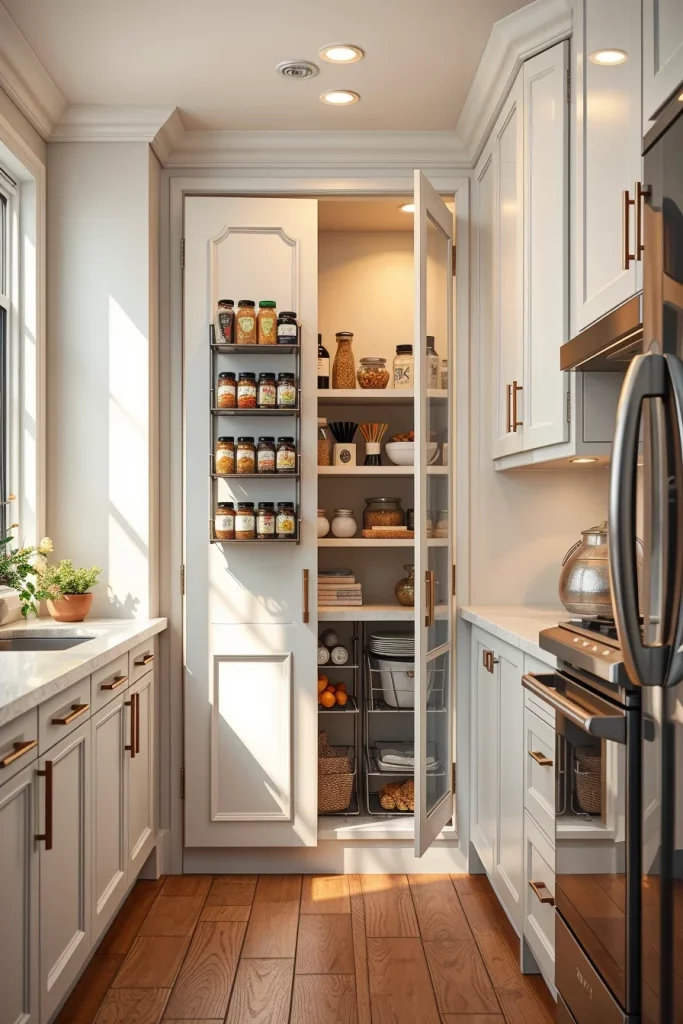
Many professional kitchen designers encourage homeowners to maximize hidden surfaces before purchasing additional furniture. After applying this method in several kitchens, I have consistently gained valuable storage without sacrificing floor space or making cabinets feel overcrowded.
To complete this organization system, I recommend adding adhesive hooks, removable baskets, and small label holders. These inexpensive accessories make every cabinet door more functional while keeping items easy to access.
Clear Storage Bins That Simplify Everyday Kitchen Organization
Clear storage bins create an immediate sense of order because every item remains visible without removing multiple containers. In my own organizing projects, I use transparent bins to separate snacks, breakfast foods, canned goods, produce, beverages, and cooking ingredients. The kitchen instantly feels more organized because every category has its own designated location.
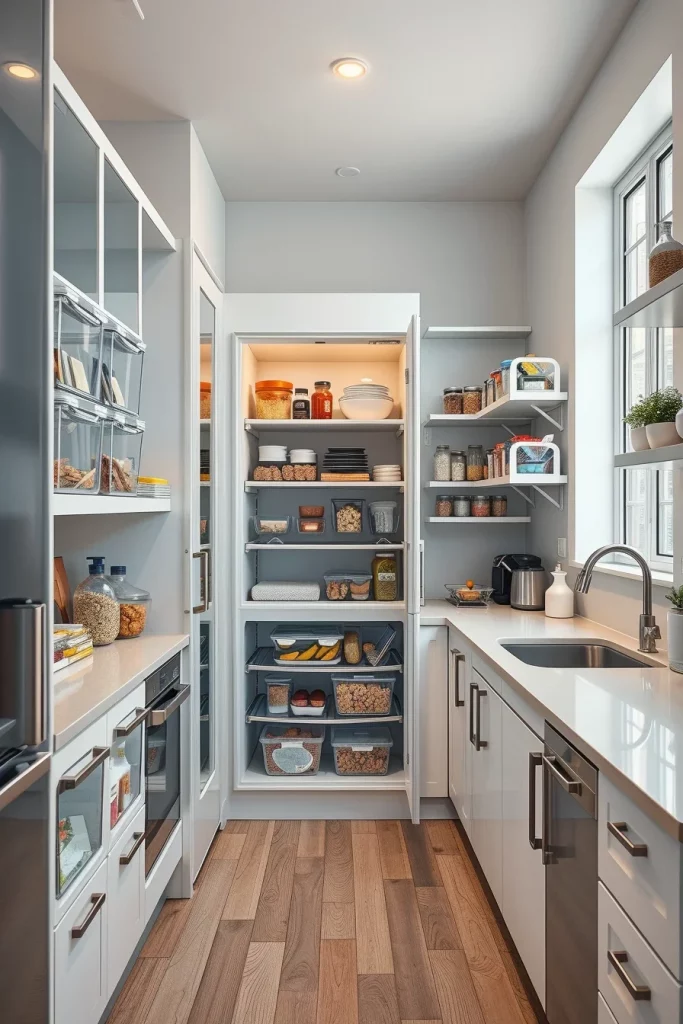
I prefer durable bins with integrated handles that slide smoothly from pantry shelves, deep cabinets, or refrigerator compartments. Instead of stacking unrelated products together, each container holds one category, making grocery shopping and meal preparation much more efficient. This approach also prevents food from expiring unnoticed in the back of shelves.
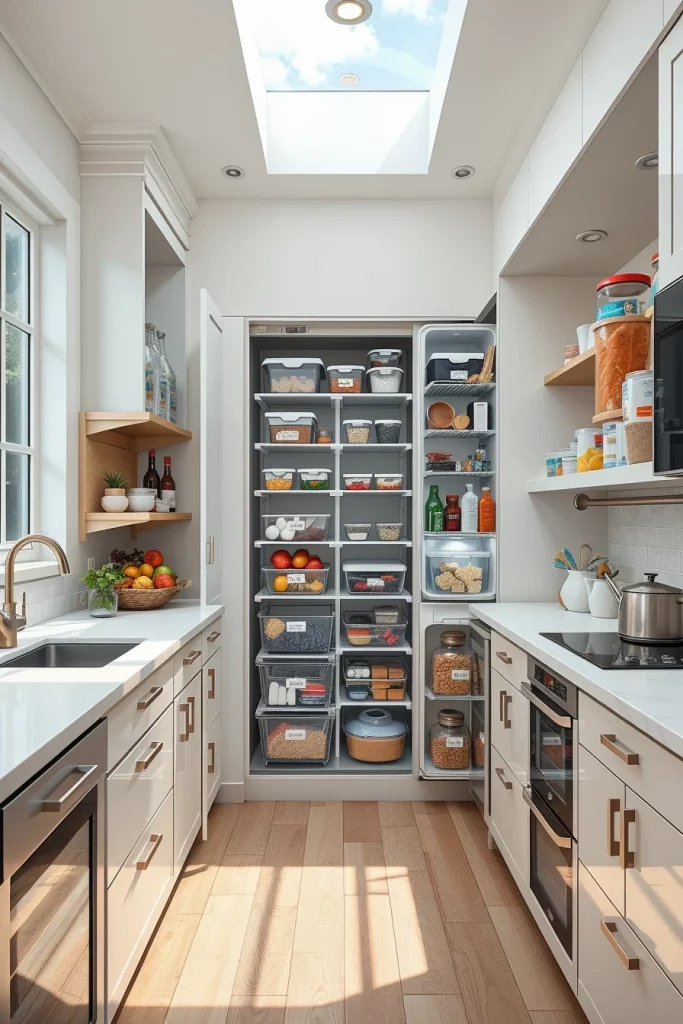
I have learned that visibility is one of the simplest ways to maintain long-term organization. Professional organizers frequently recommend clear containers because family members naturally return items to their assigned locations when everything is easy to identify at a glance.
For even better results, I would combine clear bins with shelf dividers, rotating organizers, and matching labels. Together they create a pantry system that remains organized with very little ongoing effort.
Multi Functional Furniture With Hidden Kitchen Storage
In a compact kitchen, every piece of furniture should perform more than one function whenever possible. I often recommend adding a slim kitchen island with built-in storage, a storage bench beneath a window, or a dining table with concealed drawers. These pieces provide additional storage while maintaining the clean appearance of a modern kitchen.
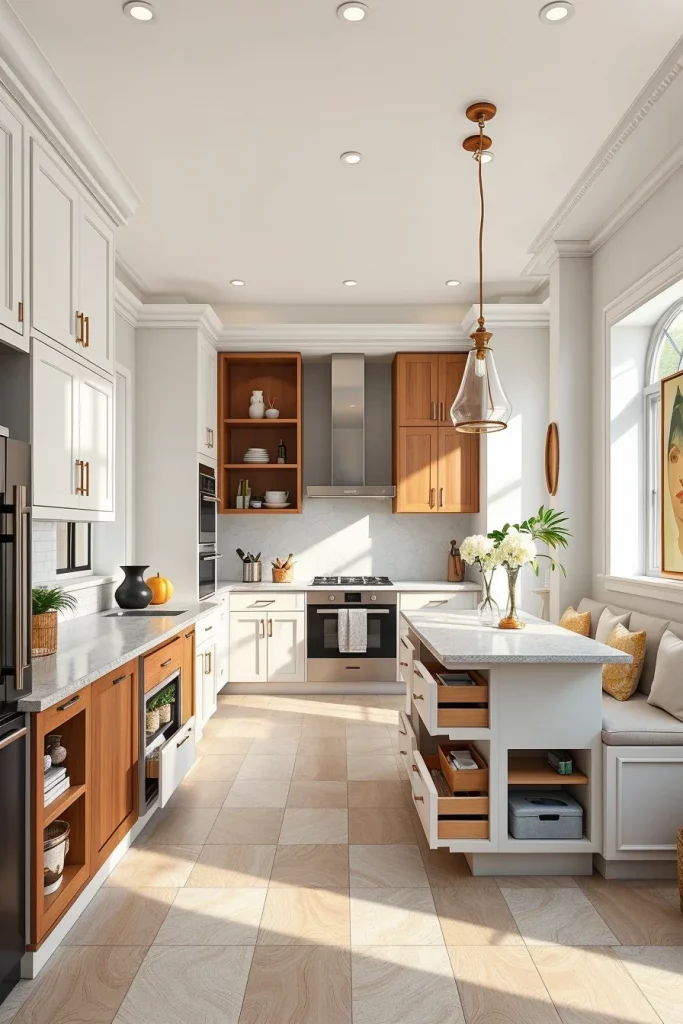
I like furniture that includes deep drawers for cookware, shelves for baskets, and hidden compartments for table linens or seasonal serving pieces. Open shelves can display attractive dishes or cookbooks, while concealed storage keeps less attractive everyday necessities out of sight. Choosing furniture with a similar finish to the cabinetry creates a cohesive and spacious appearance throughout the room.
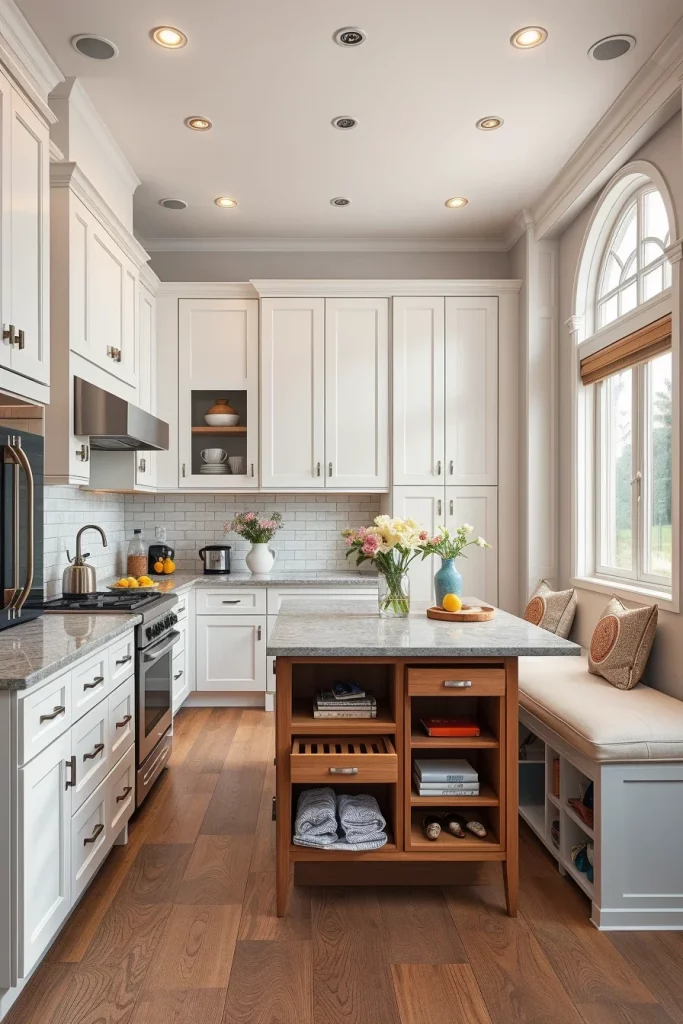
From my perspective, multifunctional furniture offers one of the highest returns for small kitchens because it replaces several separate storage pieces with one thoughtfully designed solution. Designers featured by Architectural Digest frequently emphasize furniture that combines beauty with functionality, and I find this advice especially valuable in compact homes.
To maximize the usefulness of these furniture pieces, I would also add drawer organizers, storage baskets, charging stations for small appliances, and under-seat compartments where available. These details help every inch of furniture contribute to efficient kitchen organization.
Compact Spice Organization Ideas For Small Kitchen Cabinets
A well-organized spice collection can completely change how a small kitchen feels during everyday cooking. I prefer dedicating one cabinet or shallow drawer exclusively to spices because it keeps ingredients within easy reach while preventing clutter from spreading across the countertops. In a modern kitchen, slim pull-out spice organizers or tiered shelves make excellent use of narrow cabinet spaces that would otherwise be difficult to access. The result is a kitchen that feels orderly, efficient, and thoughtfully designed.
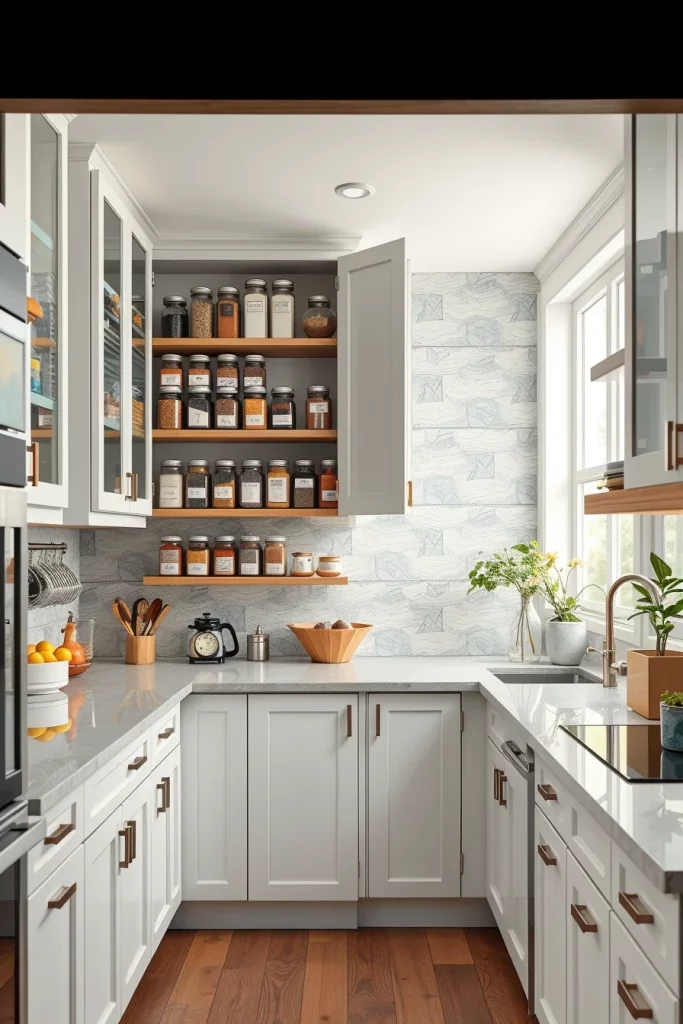
When I organize spices, I use matching glass jars with airtight lids and simple labels facing forward. Tiered organizers allow every jar to remain visible, eliminating the frustration of searching behind larger containers. Drawer inserts also work beautifully because each spice lays flat while remaining easy to read. If cabinet space is limited, magnetic spice containers mounted inside cabinet doors create additional storage without affecting the clean appearance of the room.
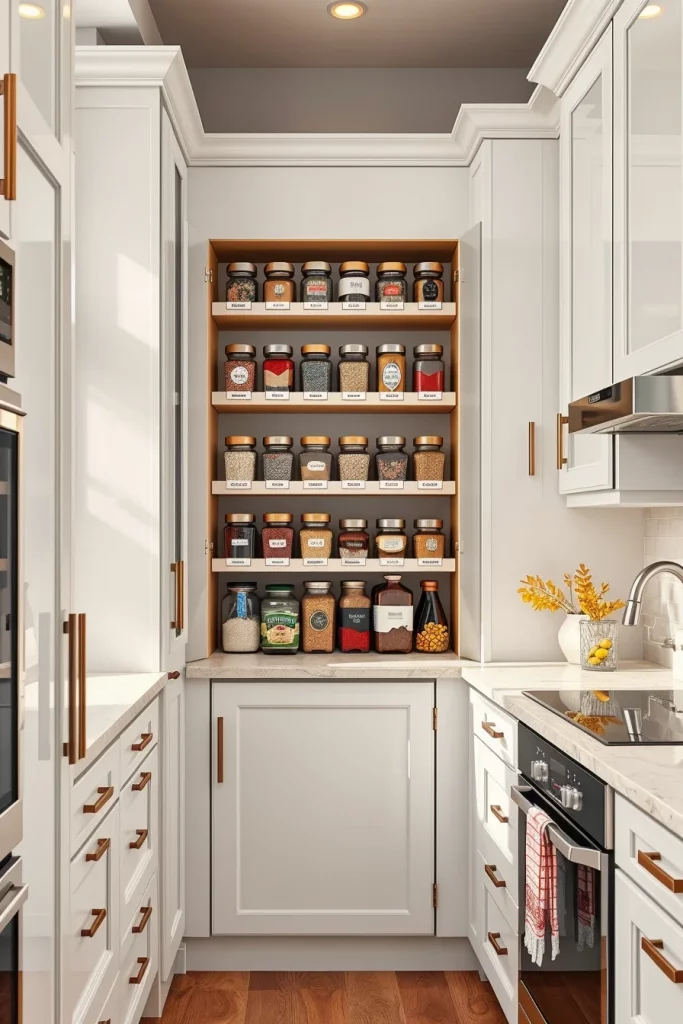
I have found that maintaining a consistent spice organization system saves time every day and reduces duplicate purchases. Professional organizers often recommend storing spices close to the primary cooking zone while avoiding direct heat from the stove to help preserve freshness. I follow the same principle because it combines convenience with practical food storage.
To complete this section, I would add a small inventory label system and reserve a dedicated space for frequently used seasoning blends. These simple additions help maintain long-term organization even as the collection grows.
Coffee Station Storage Solutions For Organized Countertops
A dedicated coffee station allows even the smallest kitchen to feel more organized and welcoming. I like creating one compact beverage zone where everything needed for coffee or tea is stored together. Rather than allowing mugs, coffee pods, sugar, and accessories to spread across multiple cabinets, I keep them within one carefully planned area. This creates a clean countertop while making the morning routine much more efficient.
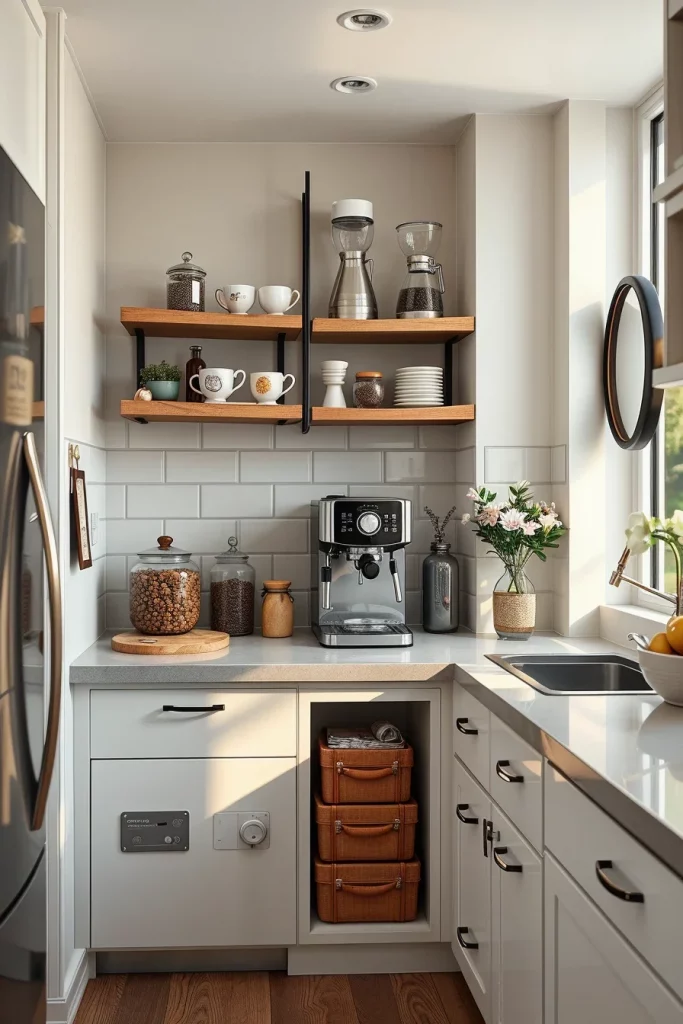
I usually begin with a compact coffee machine positioned on the countertop beside a small cabinet or floating shelf. Beneath the machine, I use a decorative tray to organize sweeteners, stirrers, and small containers. Nearby drawers hold coffee filters and extra supplies, while open shelves display matching mugs, glass jars of coffee beans, and attractive canisters. Every item has a designated place, making the station both practical and visually appealing.
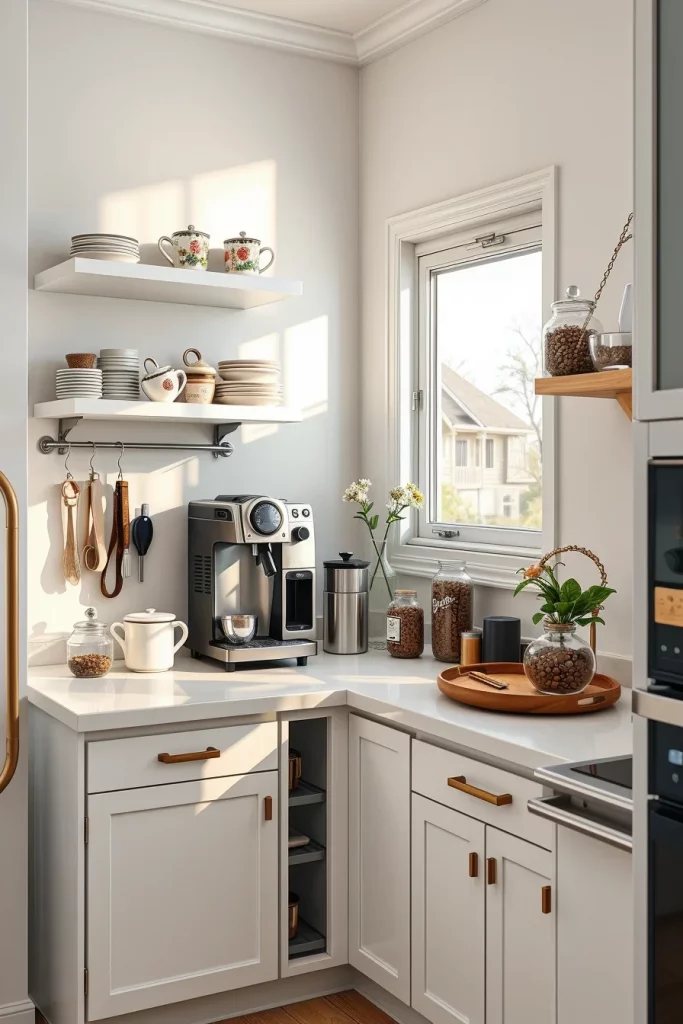
In my experience, grouping related items together is one of the simplest ways to improve daily kitchen routines. Many professional kitchen designers encourage creating functional zones rather than organizing by cabinet alone. I appreciate this approach because it minimizes unnecessary movement throughout the kitchen while maintaining a tidy appearance.
For even greater functionality, I would include hidden cable management, under-shelf mug hooks, and small pull-out drawers for coffee capsules or tea bags. These details keep the coffee station organized without sacrificing valuable countertop space.
Food Storage Organization That Keeps Ingredients Easy To Find
Food storage becomes much easier when every ingredient belongs to a clearly defined category. I always begin by grouping similar products together, including grains, canned foods, snacks, baking supplies, breakfast items, and cooking essentials. In a small kitchen, this structured approach prevents overcrowded cabinets and makes meal preparation significantly faster.
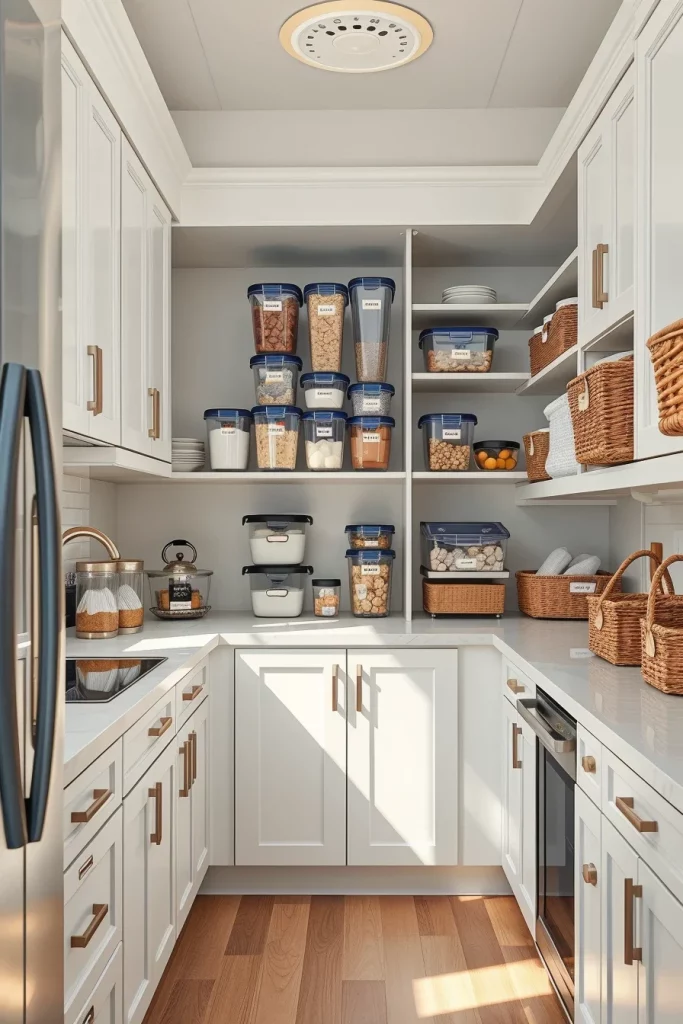
I prefer combining airtight containers, pull-out pantry baskets, and adjustable shelving to create a storage system that adapts to changing household needs. Frequently used ingredients remain on eye-level shelves, while bulk supplies are stored lower in labeled containers. Uniform storage containers not only maximize available space but also create a clean, modern appearance that complements contemporary kitchen design.
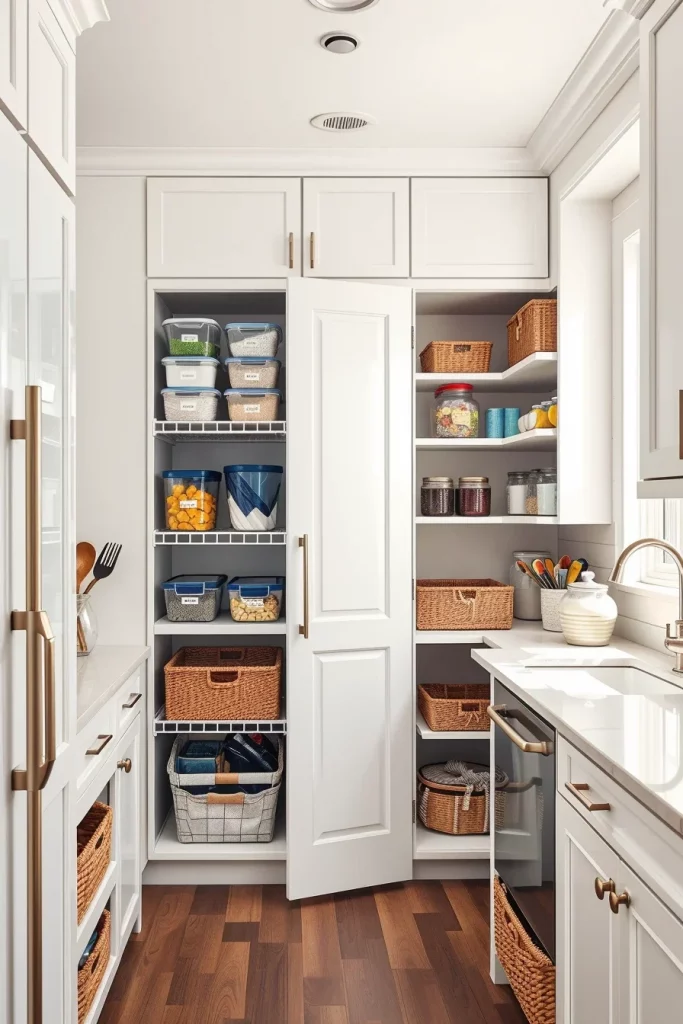
Personally, I have noticed that maintaining organized food categories dramatically reduces food waste because everything remains visible. Home organization experts frequently recommend rotating pantry items regularly so older ingredients are used first. I follow this habit because it keeps the pantry fresh while reducing unnecessary grocery purchases.
To improve this storage system further, I would add reusable date labels, inventory cards, and dedicated baskets for weekly meal planning ingredients. These additions make pantry maintenance easier throughout the year.
Refrigerator Organization Tips For Better Small Kitchen Storage
An organized refrigerator contributes just as much to an efficient kitchen as well-planned cabinets. I like treating the refrigerator as an extension of the pantry by assigning every shelf a specific purpose. This prevents overcrowding while making groceries easy to locate immediately after opening the door. A neatly organized refrigerator also creates a cleaner overall appearance throughout the kitchen.
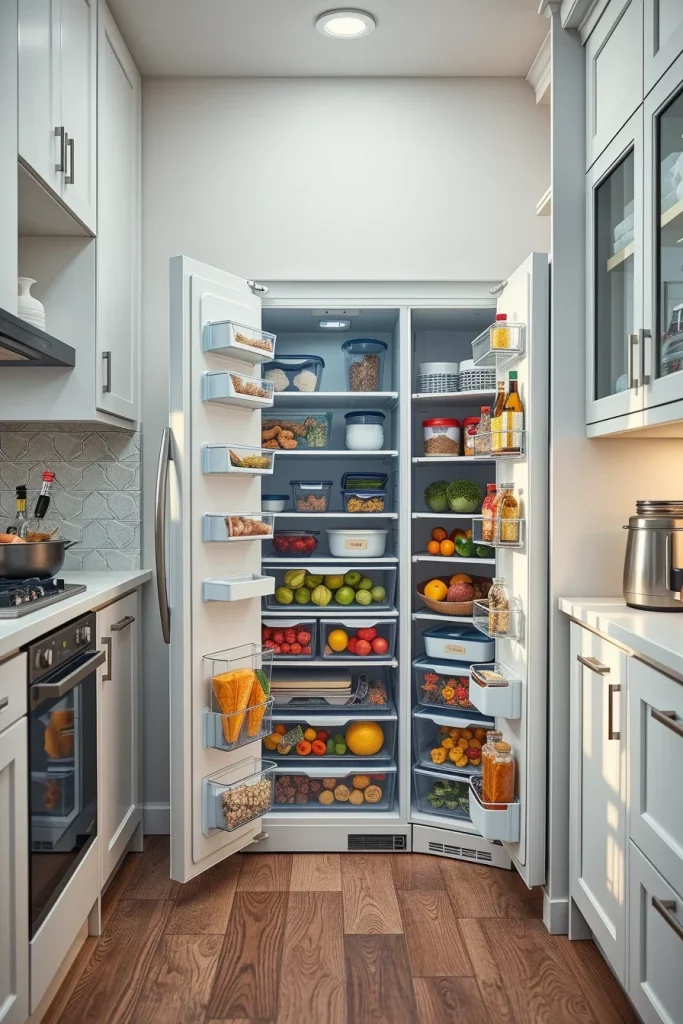
I organize produce inside clear drawers, beverages together on one shelf, dairy products in another section, and leftovers inside matching transparent containers. Stackable refrigerator bins help maximize vertical storage while preventing smaller items from becoming hidden. I also leave a small amount of empty space between containers so air circulates properly and the refrigerator remains visually uncluttered.
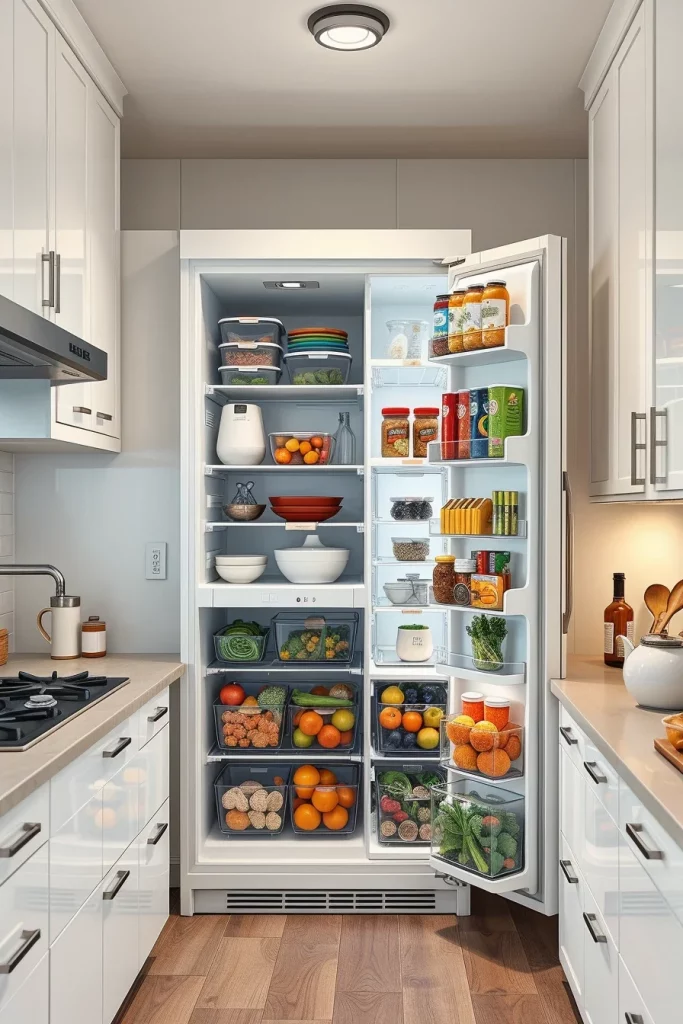
From my experience, refrigerator organization is often overlooked despite having a major impact on food freshness. Professional home organizers regularly recommend using clear containers and consistent labeling because these systems encourage everyone in the household to return items to their designated locations.
To enhance this section, I would also include removable refrigerator mats, produce storage containers with ventilation, and a weekly cleaning schedule to maintain long-term organization with minimal effort.
Creative Storage Ideas For Baking Supplies And Kitchen Essentials
Baking equipment can quickly consume valuable cabinet space unless it is carefully organized. I like dedicating one storage zone specifically for baking essentials so everything needed for baking remains together. Mixing bowls, measuring cups, baking pans, cooling racks, and decorating tools each receive their own designated storage location, making baking projects much more enjoyable.
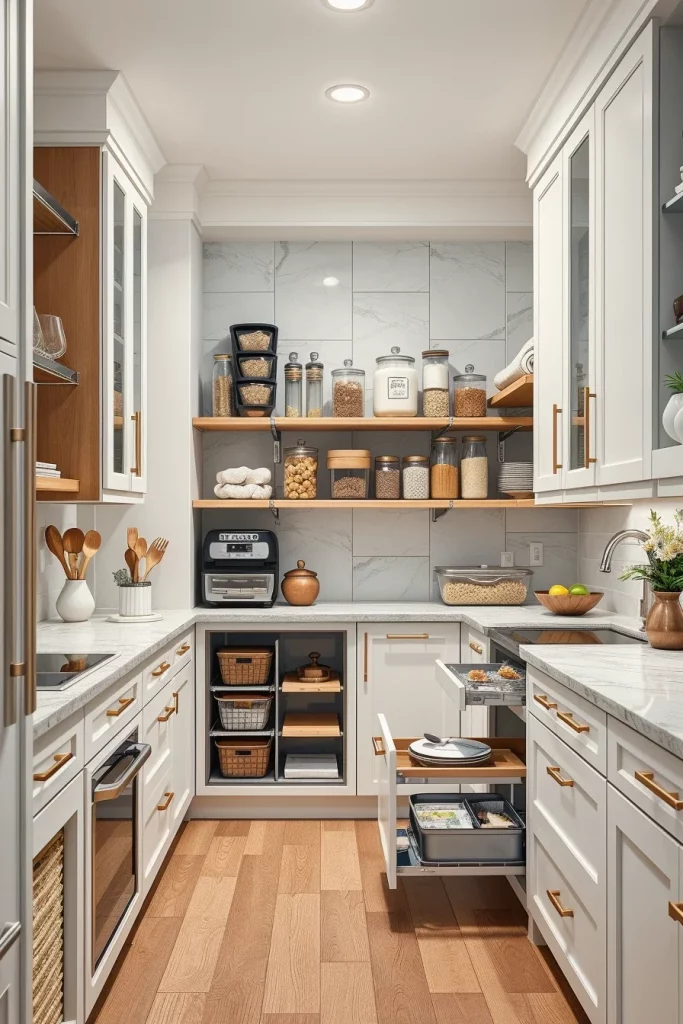
I often use deep drawers with adjustable dividers for baking pans stored vertically instead of stacking them. Clear containers keep flour, sugar, cocoa powder, and specialty ingredients fresh while allowing me to see inventory immediately. Pull-out shelves simplify access to heavier mixers, while shallow drawers neatly organize measuring spoons, piping tips, and baking accessories. Every storage solution contributes to a more efficient and visually balanced kitchen.
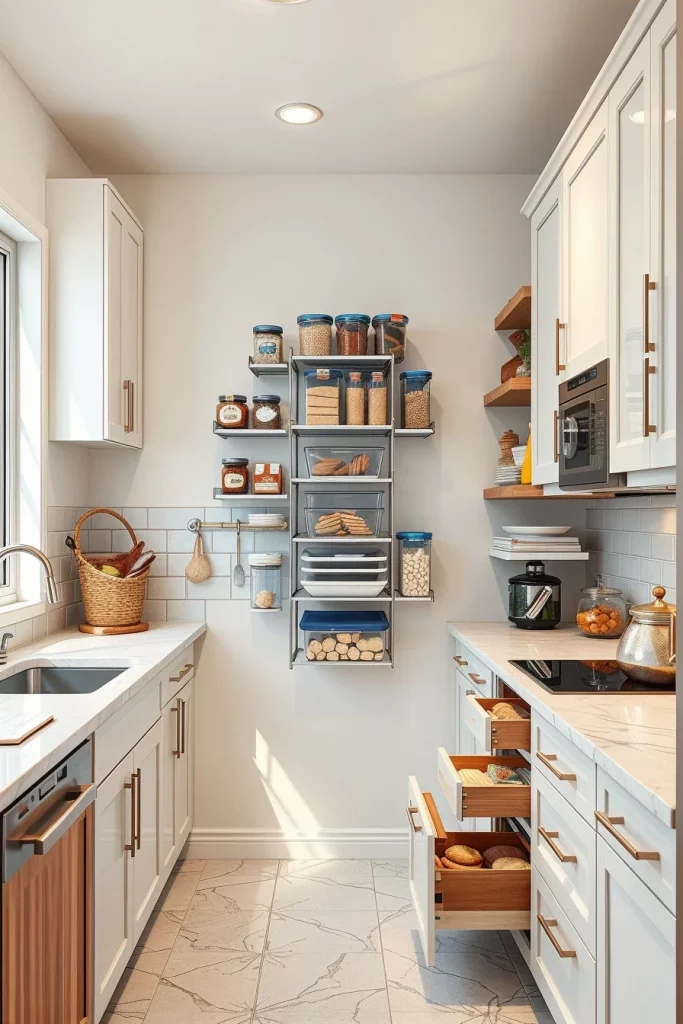
I have found that dedicated baking storage encourages better organization throughout the entire kitchen because supplies no longer compete with everyday cookware. Interior designers frequently recommend creating activity-based storage zones, and I believe this approach works exceptionally well for passionate home bakers with limited space.
To make this baking station even more complete, I would add labeled recipe binders, rolling ingredient bins, silicone drawer organizers, and vertical file organizers for cutting boards and baking trays. These additions maximize storage while keeping every essential easy to reach.
Everyday Dish Storage Solutions That Save Cabinet Space
When I organize a small kitchen, I always begin with everyday dishes because they occupy the largest amount of cabinet space and are used multiple times throughout the day. I prefer designing kitchens where dinner plates, bowls, and glasses are stored in carefully planned vertical stacks inside tall upper cabinets with adjustable shelving. A sculptural combination of clean cabinetry, open breathing space between shelves, and concealed organizers creates a kitchen that feels noticeably larger while remaining practical. Instead of filling every cabinet from edge to edge, I leave intentional gaps that improve accessibility and reduce visual clutter.
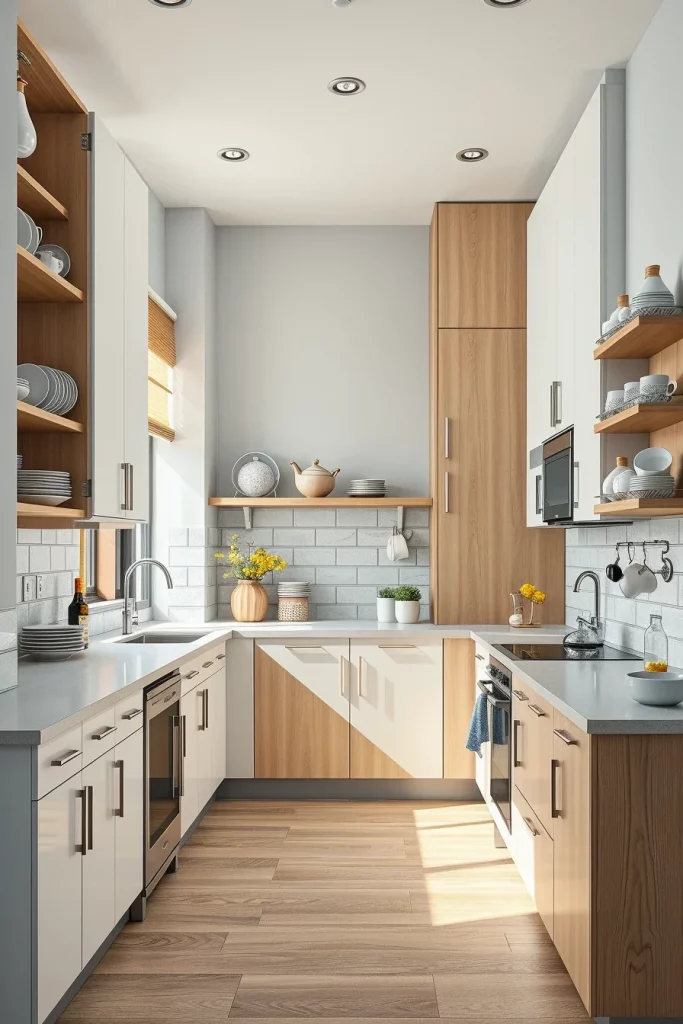
I usually recommend adjustable shelf risers, vertical plate organizers, pull-out cabinet trays, stackable bowl shelves, and slim drawer dividers. These accessories make every cabinet more efficient without requiring additional square footage. I also like incorporating shallow floating shelves for frequently used mugs or attractive everyday dishes because they add personality without overwhelming the room. Choosing matching dishware with consistent shapes allows stacks to remain stable while maximizing available height.
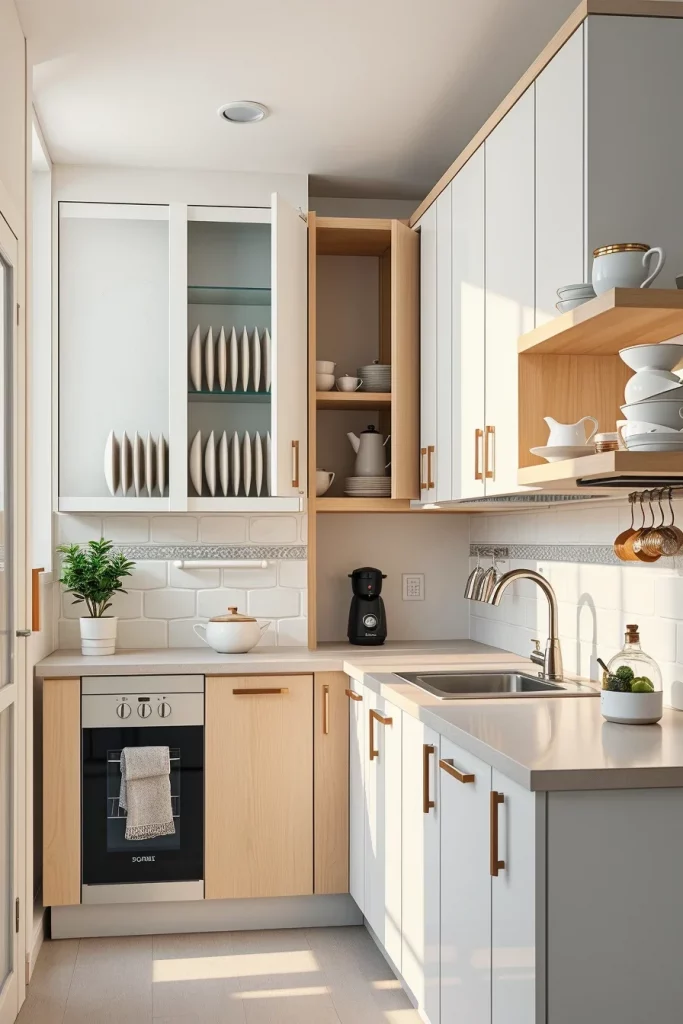
Professional organizers often emphasize that accessibility matters more than simply fitting more items into cabinets. Experts featured by publications such as Better Homes & Gardens frequently recommend organizing storage based on daily habits instead of cabinet size alone. I have found this advice especially valuable because it reduces unnecessary movement throughout the kitchen and makes everyday cooking much more enjoyable.
If I wanted to improve this storage system even further, I would add labeled storage zones inside each cabinet along with soft-close pull-out shelves that allow every dish to remain visible without removing entire stacks.
Small Kitchen Organization Ideas For Frequently Used Utensils
One of the biggest improvements I make in compact kitchens is relocating frequently used utensils closer to the primary cooking zone. Rather than hiding everything inside crowded drawers, I create dedicated organization systems that keep essential tools within easy reach while maintaining a clean visual appearance. Modern kitchens benefit from thoughtful placement that feels intentional instead of decorative, using simple lines and integrated storage features that complement contemporary cabinetry.
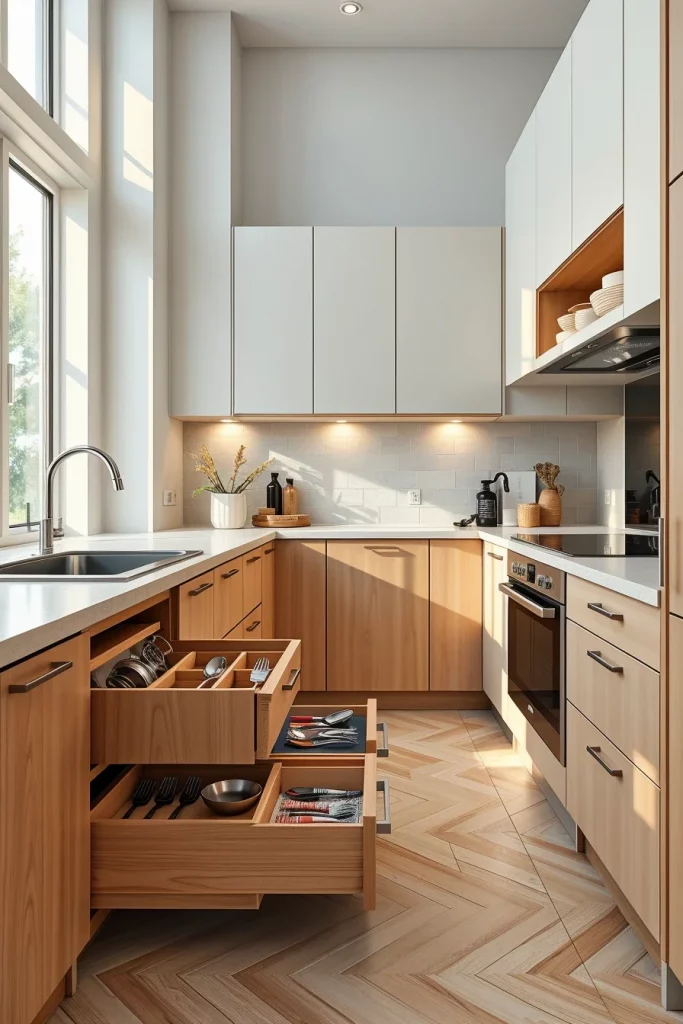
I often install drawer organizers with individual compartments for spatulas, whisks, measuring spoons, peelers, and cooking tongs. Vertical utensil holders inside deep drawers also prevent tools from becoming tangled together. Slim pull-out cabinets beside the stove can hold oils, spices, and cooking utensils, while discreet countertop containers made from ceramic or matte metal keep daily essentials nearby without creating visual clutter.
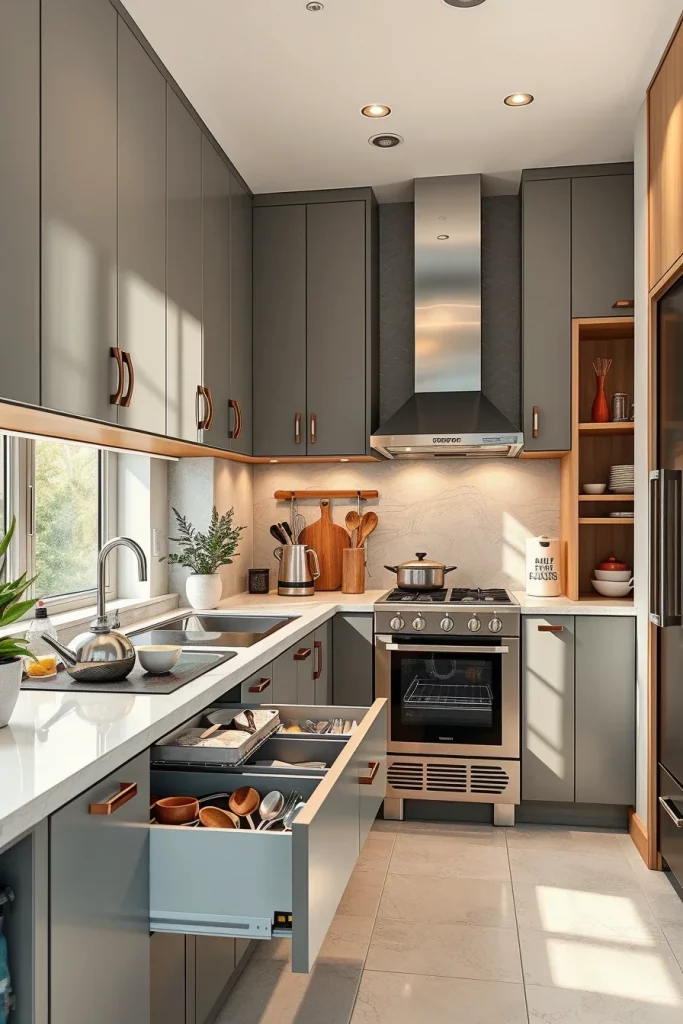
From my experience, reducing the distance between preparation, cooking, and cleanup areas creates a noticeably smoother workflow. Designers frequently discuss the importance of functional work zones, and I completely agree with this principle. When each utensil has a permanent location near where it is used, maintaining organization becomes almost effortless.
To complete this section, I would also include removable silicone drawer liners that keep organizers from shifting while protecting cabinet interiors from everyday wear.
Minimalist Kitchen Storage Strategies For A Cleaner Look
Minimalism becomes especially valuable in a small kitchen because visual simplicity makes the entire room appear larger. When I design compact kitchens, I focus on removing unnecessary objects from countertops and replacing bulky storage pieces with integrated cabinetry. Clean cabinet fronts, uninterrupted work surfaces, and concealed storage allow architectural details to become the focal point rather than everyday clutter. The overall result feels calm, spacious, and highly functional.
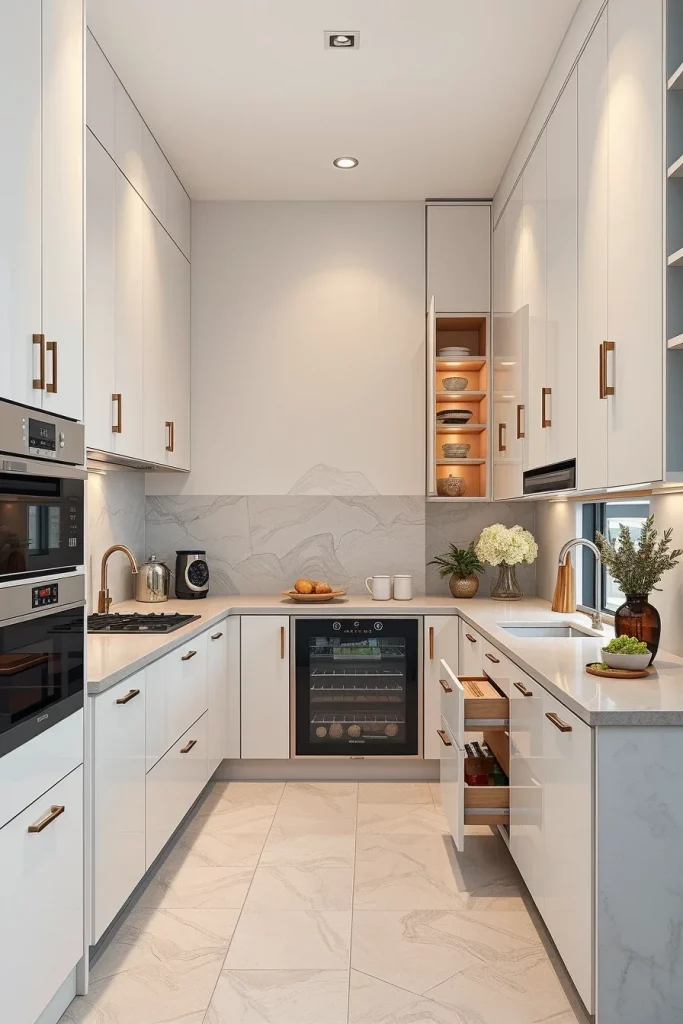
I typically recommend handleless cabinets, integrated appliances, concealed recycling bins, deep pantry drawers, and interior cabinet organizers that hide small appliances when they are not in use. Limiting countertop accessories to only the coffee station or frequently used items creates a refined appearance while making cleaning significantly easier. Consistent finishes across cabinetry, shelving, and storage containers also strengthen the minimalist aesthetic.
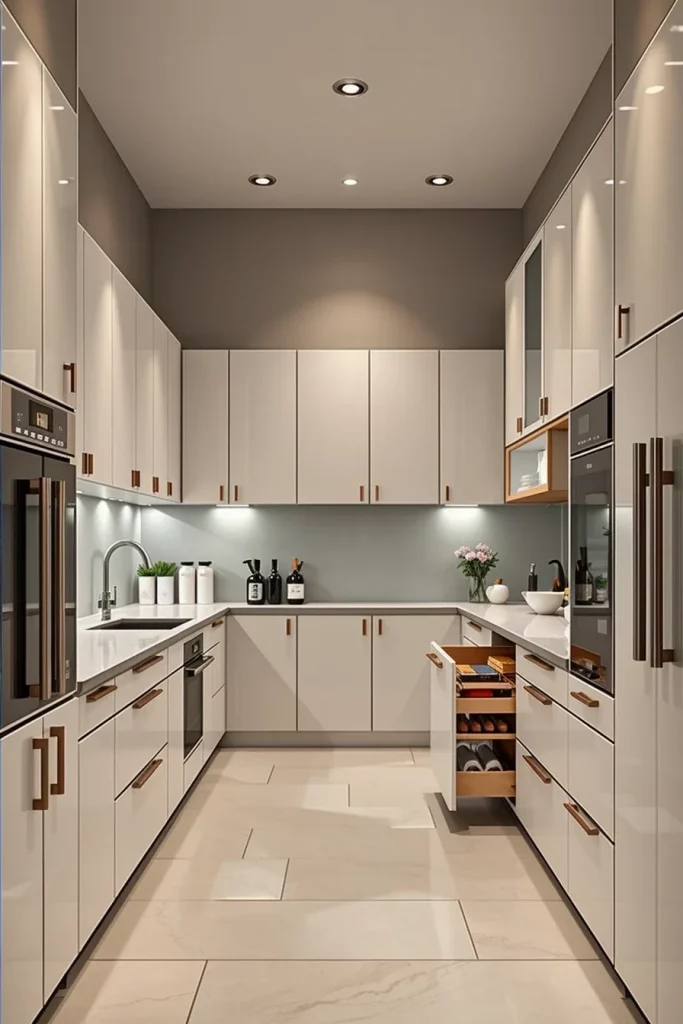
I personally appreciate advice shared by interior designers who encourage homeowners to edit kitchen contents regularly instead of purchasing more storage products. In my experience, thoughtful decluttering almost always creates more usable space than adding additional organizers. A carefully selected collection of quality kitchen tools is easier to maintain and far more enjoyable to use.
If I expanded this approach, I would introduce concealed charging stations and integrated appliance garages to further reduce countertop distractions while preserving convenient daily access.
Decluttering Techniques That Improve Small Kitchen Organization
Before purchasing any organizers, I always recommend removing unnecessary items from the kitchen. Decluttering allows the room to function more efficiently because valuable storage space is reserved only for items that truly support everyday cooking. In compact kitchens, every cabinet, drawer, and shelf should have a clear purpose. Once unnecessary duplicates disappear, the remaining layout immediately feels larger and easier to navigate.
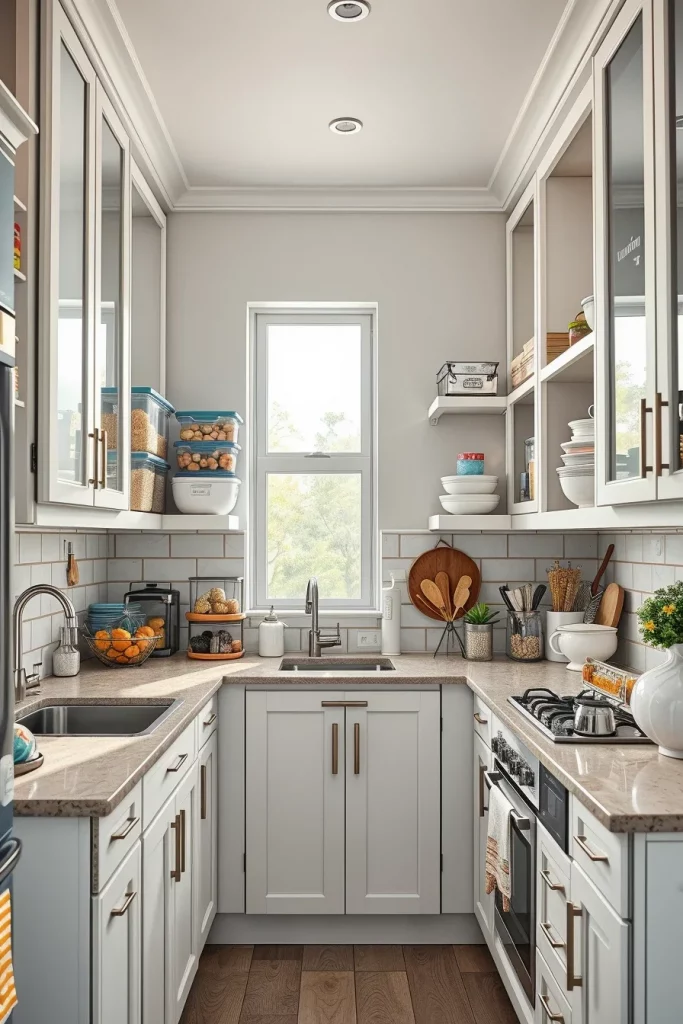
I normally sort kitchen items into daily, weekly, occasional, and rarely used categories before assigning permanent storage locations. Frequently used cookware remains close to the stove, baking equipment moves to higher cabinets, while seasonal serving pieces can be stored on upper shelves. Clear storage bins, drawer separators, and labeled pantry containers help maintain this organization long after the initial cleanup.
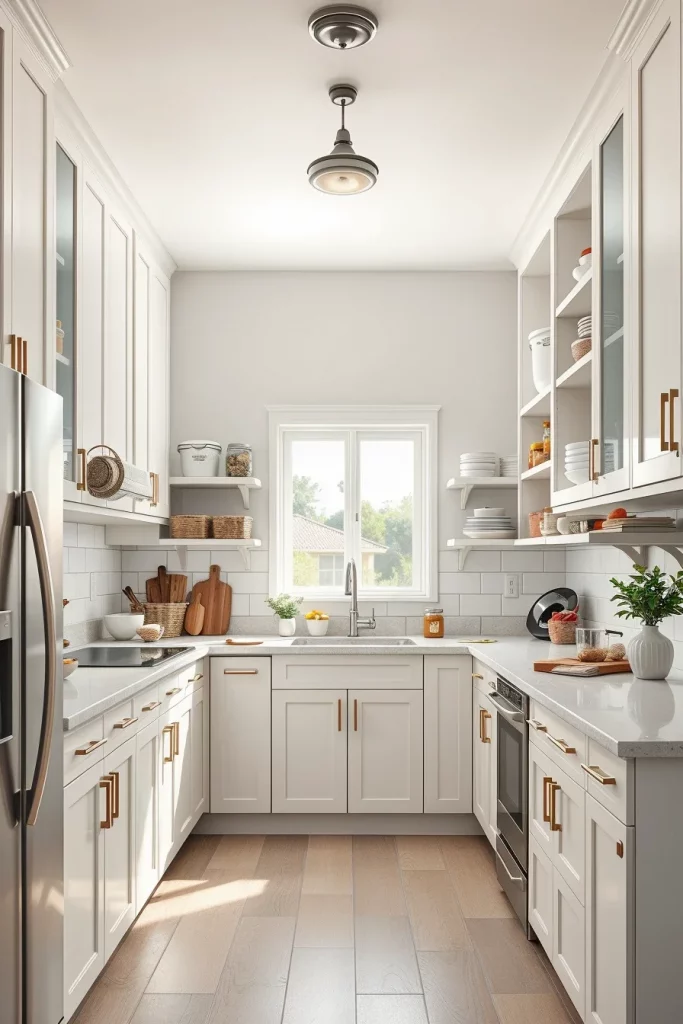
One lesson I have learned over time is that decluttering should become a regular habit instead of a one-time project. Professional organizers often recommend reviewing kitchen contents every few months, and I have found this simple routine prevents cabinets from slowly filling with unnecessary items again.
An excellent addition to this system would be a dedicated donation container stored elsewhere in the home so unused kitchen items can be removed immediately instead of returning to already crowded cabinets.
Budget Friendly Storage Solutions For Small Kitchen Makeovers
Creating an organized kitchen does not always require custom cabinetry or expensive renovations. Some of the most effective small kitchen organization storage solutions are surprisingly affordable and can completely transform the way a compact kitchen functions. I enjoy finding simple improvements that maximize storage while maintaining a modern appearance. Even inexpensive organizers can look sophisticated when they are selected with consistent materials, colors, and proportions.
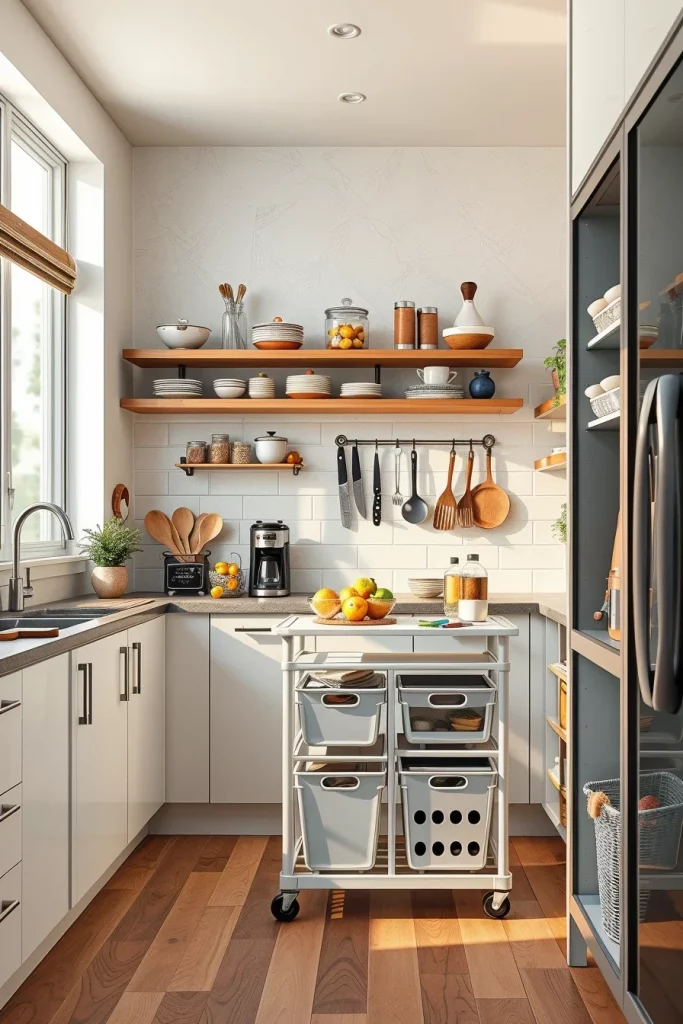
I often use expandable shelf risers, adhesive cabinet hooks, magnetic knife strips, stackable pantry bins, rolling storage carts, under-shelf baskets, and clear food containers to increase storage capacity without major remodeling. Lightweight floating shelves can display attractive everyday dishes while freeing valuable cabinet space. Matching storage containers also create visual consistency that makes the kitchen appear larger and more organized.
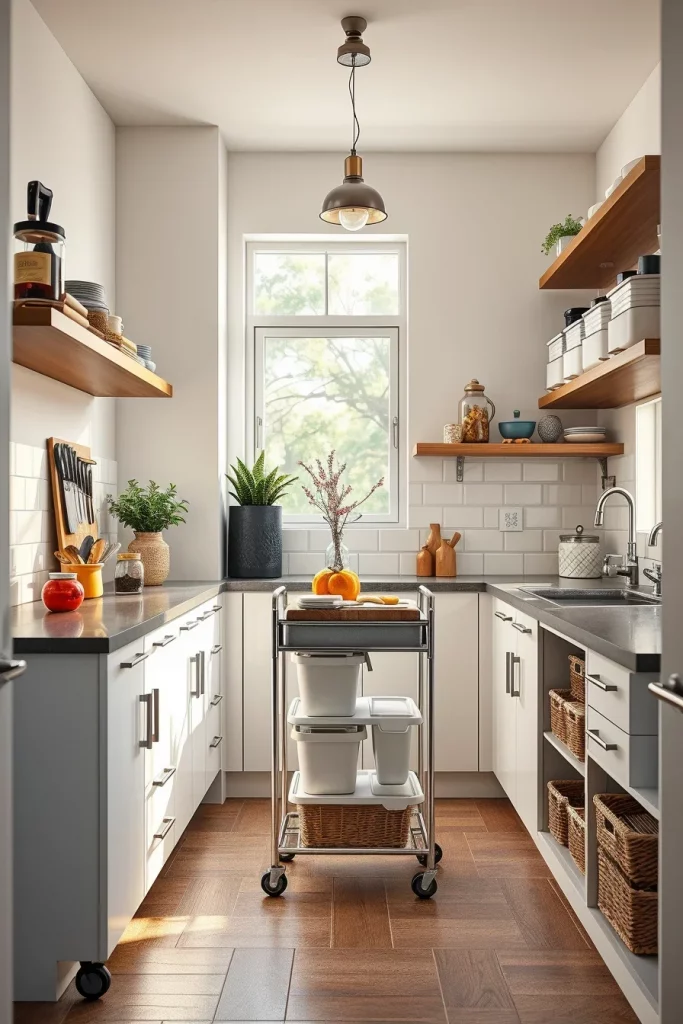
From my perspective, investing first in organization rather than decoration provides the greatest long-term value. Many experienced designers recommend improving function before changing finishes, and I completely agree because an efficient kitchen naturally feels more attractive regardless of its size.
If additional improvements were possible, I would include inexpensive LED cabinet lighting to improve visibility inside storage areas while giving the entire kitchen a brighter and more inviting atmosphere.
Stylish Organization Ideas That Blend Storage With Design
A small kitchen should never feel like a purely functional workspace. I always try to combine storage with thoughtful design so every cabinet, shelf, and decorative element contributes to both organization and the overall aesthetic. Sculptural cabinetry with curved corners, slim open shelving, integrated lighting, and carefully selected finishes create a room that feels sophisticated despite its compact footprint. One of the greatest advantages of well-planned small kitchen organization storage solutions is that they allow beautiful design and practical storage to work together instead of competing for attention.
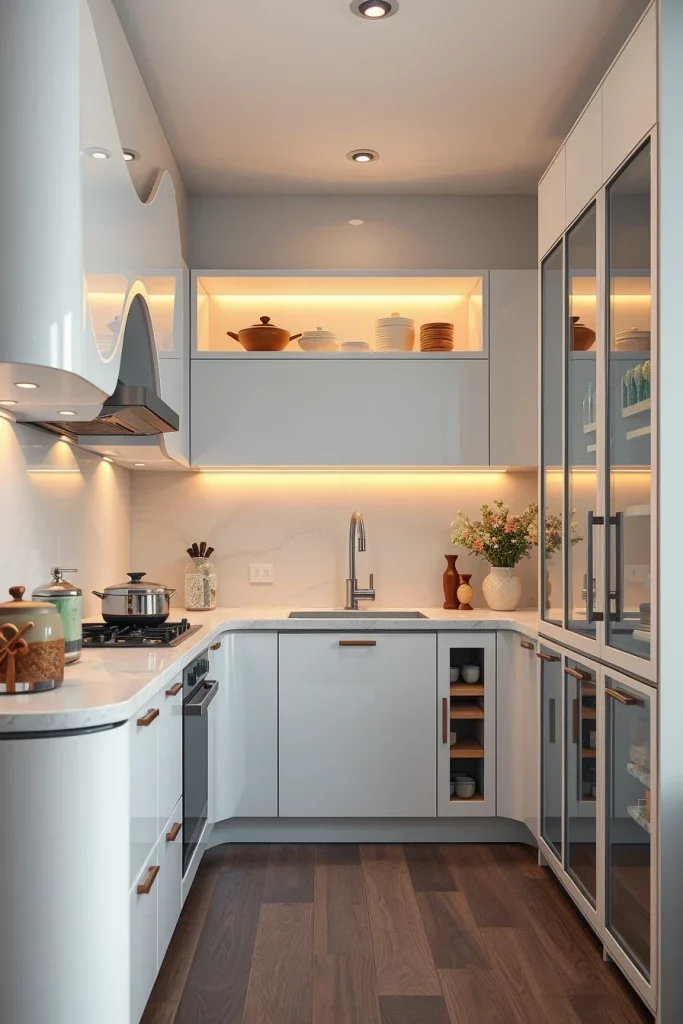
When selecting furniture and storage accessories, I prefer matching materials throughout the room. Ribbed glass cabinet doors, floating shelves with concealed brackets, built-in wine storage, integrated spice drawers, and elegant pull-out pantry units all contribute to a cohesive appearance. Decorative storage baskets, ceramic jars, and matching food containers help maintain visual order while providing practical storage for everyday essentials. Every decorative item should also serve a functional purpose instead of becoming unnecessary clutter.
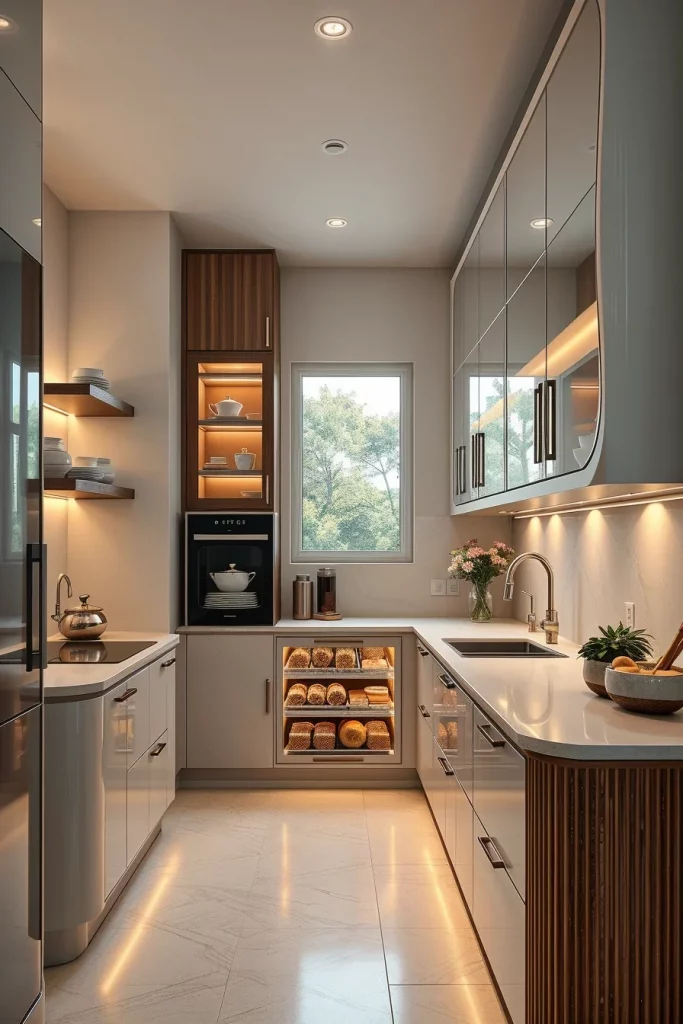
I have noticed that many respected interior designers featured in Architectural Digest encourage homeowners to view storage as part of the architecture rather than as an afterthought. I completely agree because well-integrated storage creates cleaner lines, improves functionality, and gives even the smallest kitchen a more luxurious appearance without increasing its size.
If I wanted to improve this design even further, I would introduce under-cabinet LED lighting and illuminated display shelving to highlight carefully organized storage while making food preparation easier during the evening.
Seasonal Kitchen Storage Rotation For Better Space Management
One organization strategy that has consistently worked for me is rotating kitchen storage according to the season. Keeping only everyday essentials within immediate reach prevents cabinets from becoming overcrowded while creating additional workspace. Seasonal bakeware, holiday serving dishes, specialty appliances, and entertaining accessories can easily be relocated to higher cabinets or nearby storage areas until they are needed. This approach keeps the kitchen organized throughout the year without sacrificing convenience.
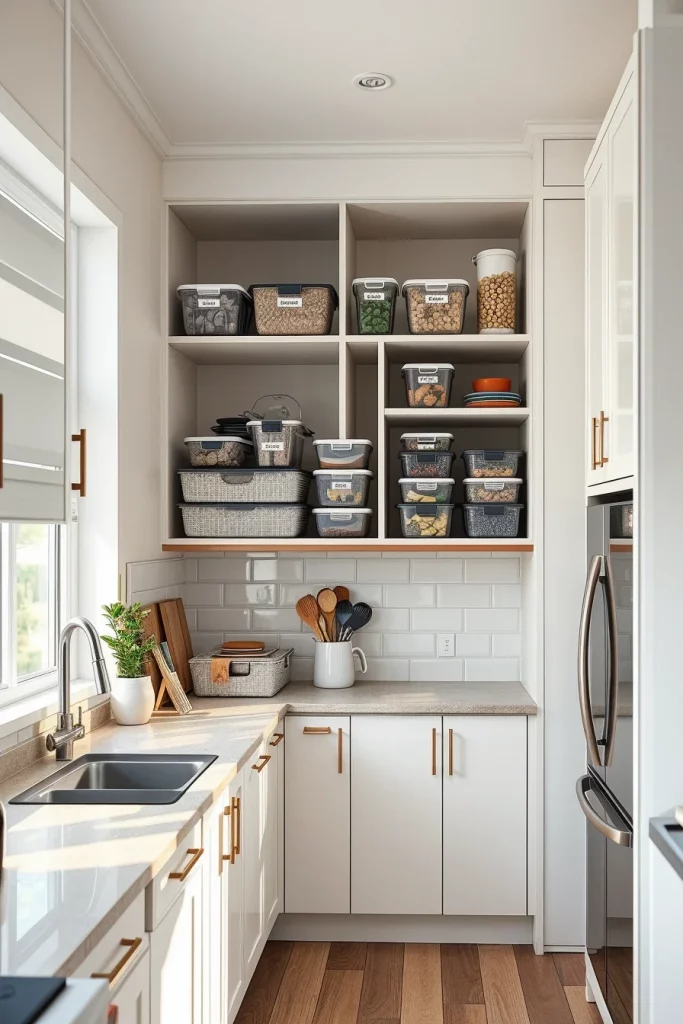
I like dividing storage into clearly defined zones based on frequency of use. Daily cookware stays near the cooking area, while seasonal baking equipment, preserving supplies, and large serving platters occupy upper cabinets or enclosed storage. Stackable storage boxes with labels simplify seasonal changes and protect delicate kitchen items from dust while they are not being used.
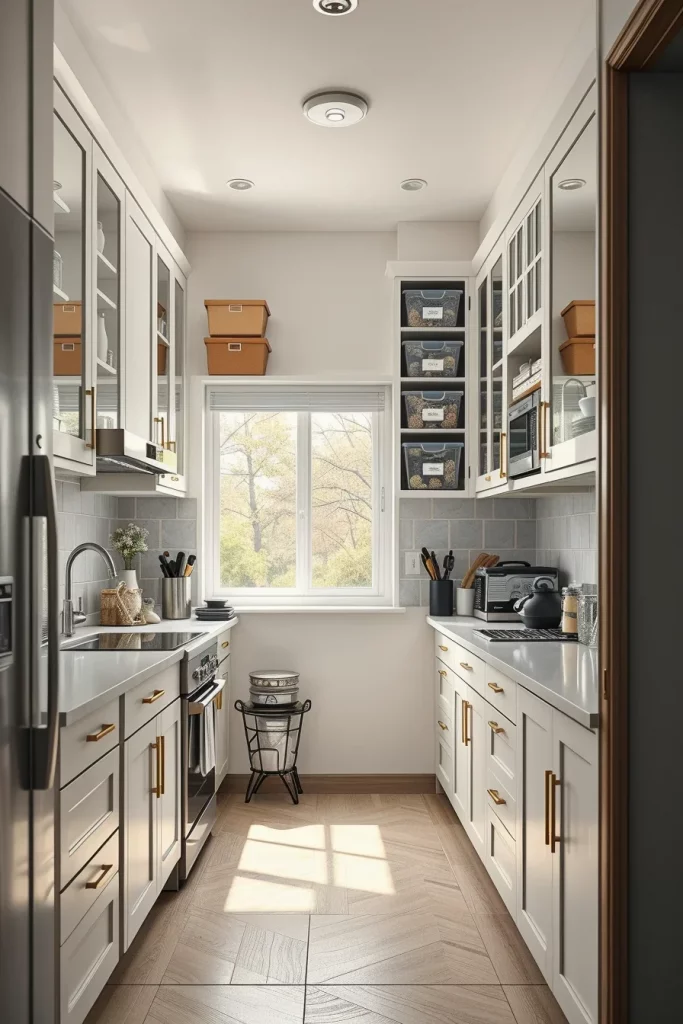
From my experience, seasonal organization also encourages regular decluttering because each rotation provides an opportunity to evaluate what is actually being used. Professional organizers frequently recommend reassessing household storage several times each year, and I have found this habit extremely effective for maintaining an organized kitchen over the long term.
To make this system even more practical, I would include an inventory list inside each storage container so seasonal items can be located quickly without opening multiple boxes.
Daily Habits That Keep Small Kitchen Storage Organized
The most successful kitchen organization systems rely on consistent daily habits rather than expensive storage products. Even the most carefully designed kitchen can become cluttered if items are not returned to their designated places after every use. I have learned that maintaining organization requires only a few minutes each day when storage zones have been planned thoughtfully. These simple routines help preserve both functionality and the clean appearance of a modern kitchen.
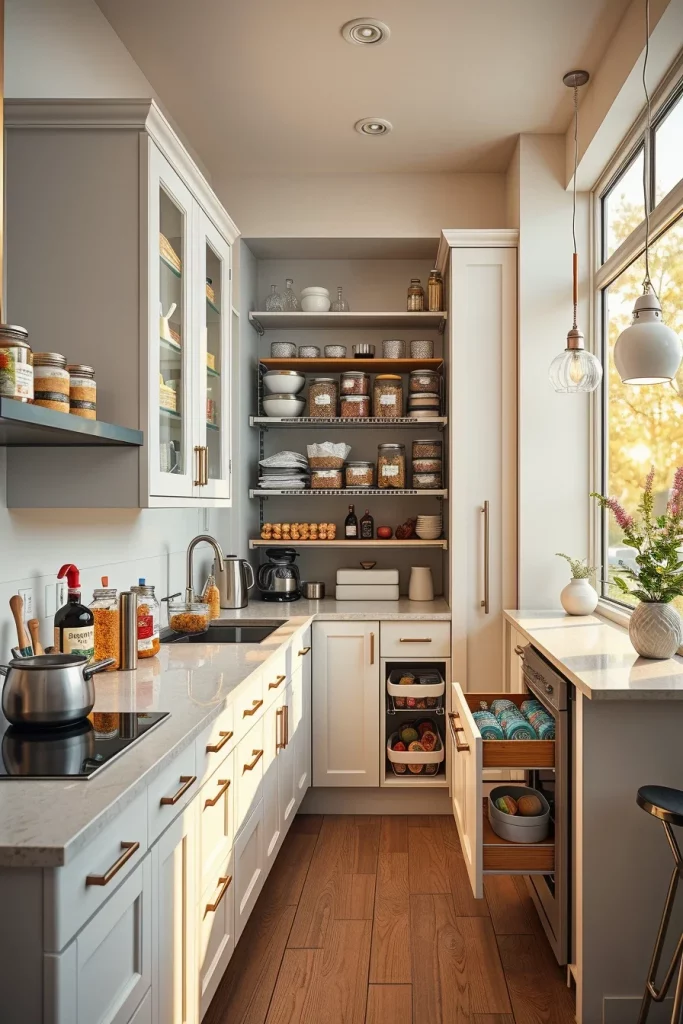
I recommend unloading the dishwasher promptly, returning cookware immediately after cleaning, wiping countertops before leaving the kitchen, and checking pantry supplies regularly to prevent unnecessary duplicates. Drawer organizers, labeled pantry containers, pull-out waste bins, and dedicated recycling stations all support these habits by making organization simple and intuitive. The easier it is to put something away, the more likely the system will remain organized.
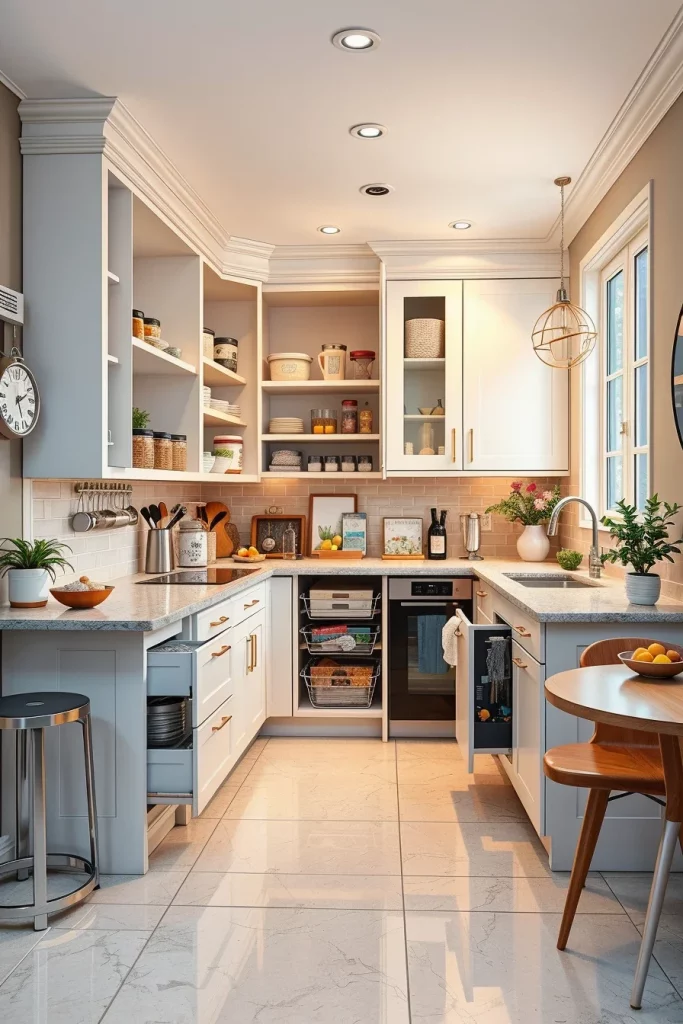
Personally, I believe consistency matters much more than perfection. Interior organization experts often emphasize creating realistic routines instead of complicated systems that become difficult to maintain. I have found that small daily actions prevent overwhelming weekend cleaning sessions and allow the kitchen to remain welcoming every day.
If I were expanding this section, I would also recommend creating a five-minute evening kitchen reset routine that includes returning misplaced items, checking pantry supplies, and preparing the workspace for the following morning.
Small Kitchen Organization Storage Solutions That Work For Every Home
Every home is different, yet the most successful small kitchen organization storage solutions share several important characteristics. They maximize vertical space, improve accessibility, reduce unnecessary clutter, and make daily cooking easier without sacrificing style. When I design compact kitchens, I focus on flexibility because household needs change over time. Adaptable storage systems allow the kitchen to evolve without requiring costly renovations in the future.
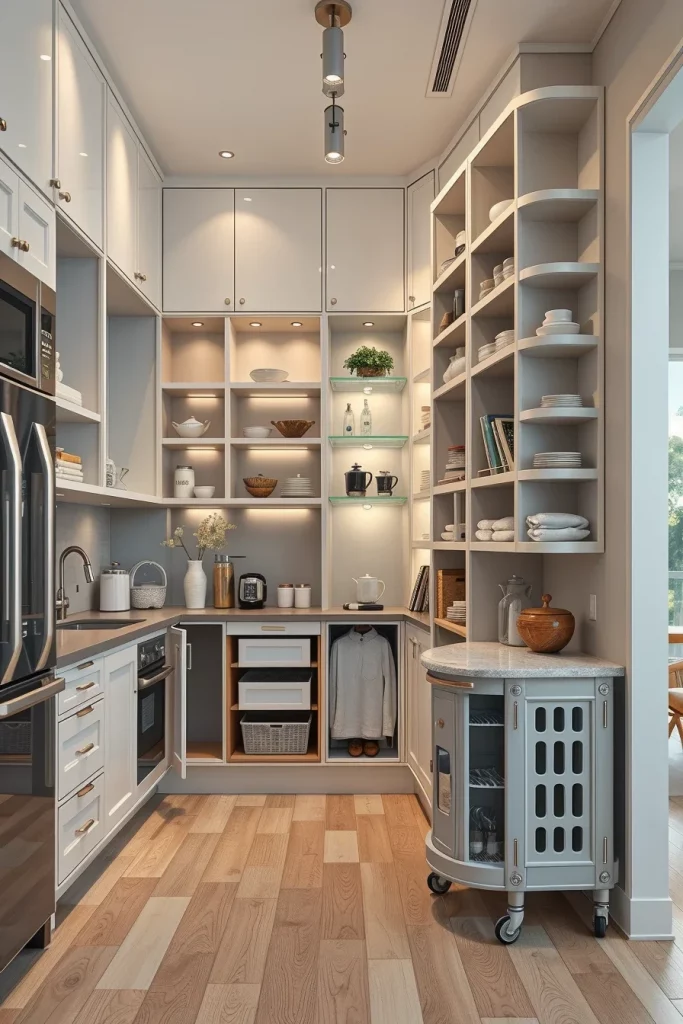
I typically combine adjustable shelving, pull-out pantry cabinets, deep drawer organizers, concealed recycling systems, floating shelves, rolling storage carts, and multifunctional islands whenever space allows. These features work together to create a kitchen that feels significantly larger than its actual dimensions. Matching containers, consistent finishes, and integrated lighting complete the design while maintaining a calm, organized atmosphere that supports everyday living.
After organizing many compact kitchens, I have become convinced that successful design is measured by functionality rather than square footage. Advice from experienced designers consistently reinforces the importance of planning storage around daily routines instead of trying to maximize every available inch. I have seen firsthand that carefully considered organization creates a kitchen that feels more comfortable, more efficient, and far easier to maintain.
If I were completing this kitchen plan, I would include a flexible storage zone that can easily adapt to changing family needs, new appliances, or evolving cooking habits without disrupting the overall organization system.
Creating a more organized kitchen doesn’t require a complete renovation—just thoughtful planning and the right storage solutions. By making better use of cabinets, drawers, walls, and overlooked spaces, you can transform even the smallest kitchen into a functional and inviting area. Choose the ideas that best fit your layout and daily routine, and build an organization system that is easy to maintain. With the right small kitchen organization storage solutions, you’ll enjoy a cleaner, more efficient kitchen that makes cooking and everyday living simpler.