
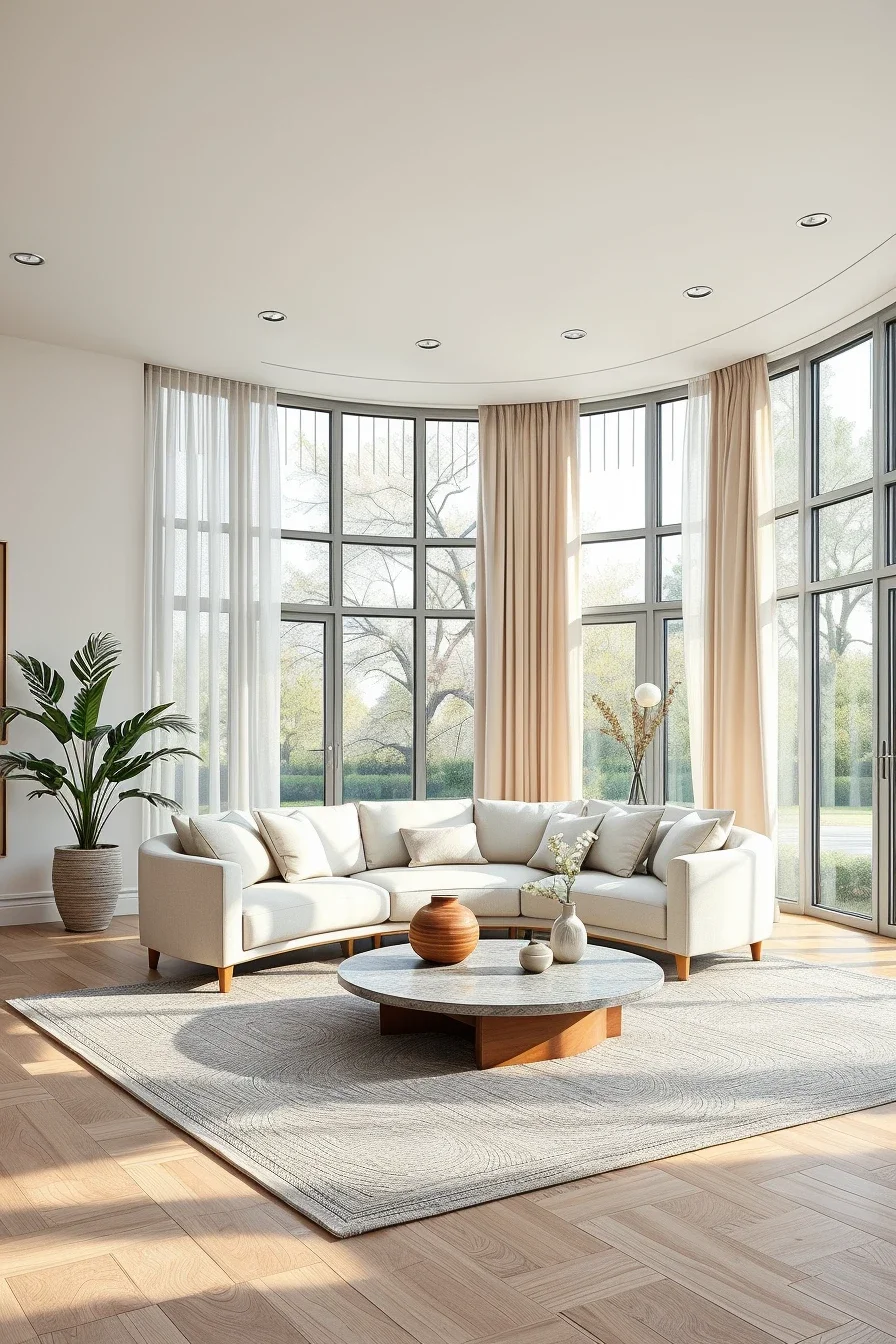
A soft contemporary living room blends clean modern design with warm, welcoming details to create a space that feels both stylish and comfortable. Instead of relying on stark minimalism, this design approach embraces gentle color palettes, layered textures, and thoughtfully selected furniture that enhances everyday living. Soft curves, natural materials, and carefully balanced décor help create an interior that feels timeless without sacrificing contemporary appeal. Whether you’re decorating a compact apartment or a spacious open-concept home, this aesthetic can be adapted to suit your lifestyle and available space. Small design choices, from lighting and textiles to artwork and accessories, work together to make the room feel cohesive and inviting. In this guide, you’ll discover inspiring soft contemporary living room ideas that will help you design a refined, cozy, and effortlessly elegant space.
What Defines A Soft Contemporary Living Room
A soft contemporary living room combines modern simplicity with warmth and comfort instead of focusing on sharp contrasts or overly minimalist spaces. I always begin by creating an environment that feels relaxed and welcoming while maintaining clean architectural lines. Neutral colors, soft curves, natural materials, and carefully selected furniture work together to produce a balanced interior that remains stylish for many years instead of following short-lived trends. The goal is to make the room feel peaceful while still reflecting modern design principles.
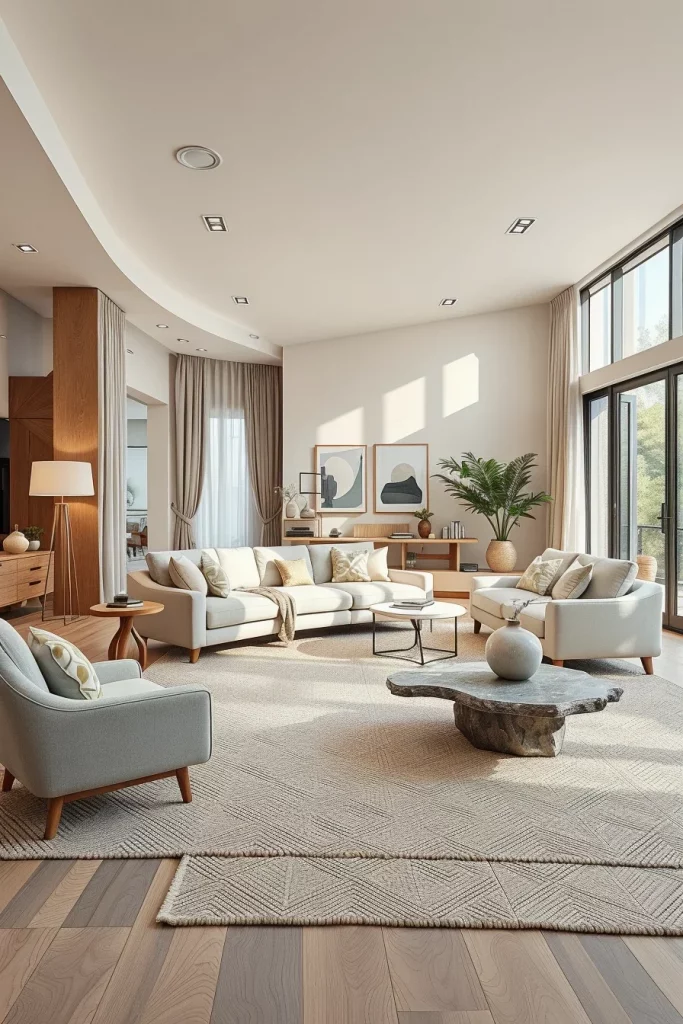
I like to build this style around comfortable furniture with gentle silhouettes. A curved sofa, upholstered lounge chairs, a textured area rug, and a simple coffee table immediately establish the right atmosphere. Instead of filling the room with decorative objects, I choose a few meaningful accessories such as ceramic vases, linen curtains, woven baskets, and sculptural lighting. Every piece should have a purpose while contributing to the calm visual rhythm that defines a soft contemporary living room.
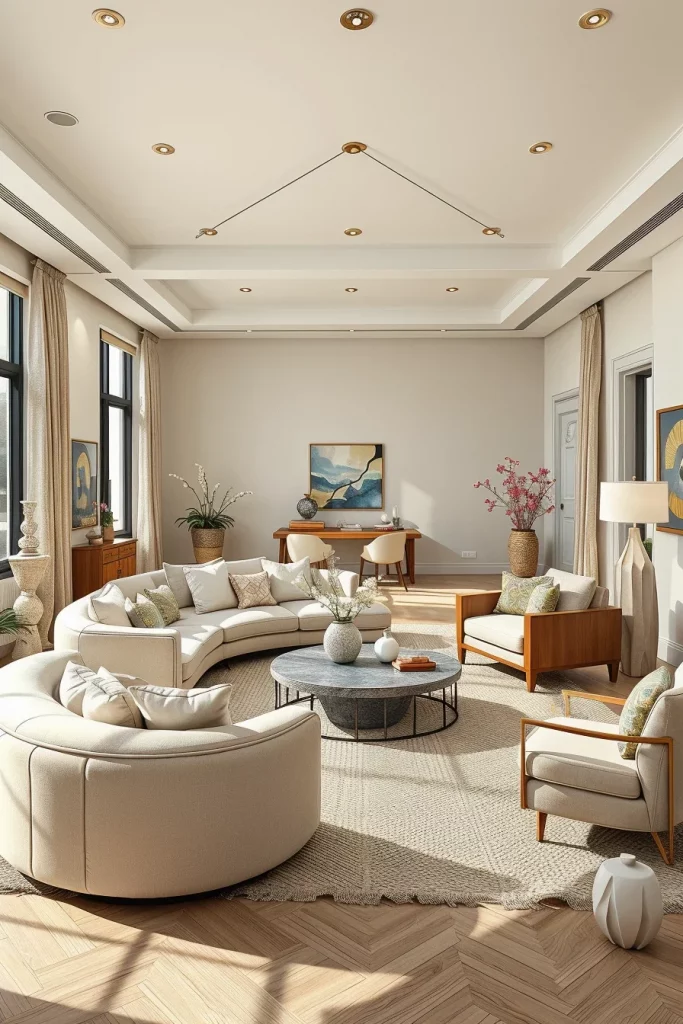
Many respected American designers featured by Architectural Digest and House Beautiful emphasize that modern interiors become more inviting when natural textures soften clean lines. I completely agree with this philosophy because I have found that layering fabrics, wood finishes, stone accents, and subtle lighting creates an environment that people naturally enjoy spending time in. Rather than chasing trends, I focus on timeless combinations that continue to feel relevant.
To complete this foundation, I recommend incorporating understated artwork, hidden storage solutions, and a few organic decorative elements. These additions maintain the uncluttered appearance while giving the room personality without overwhelming the overall design.
Choose A Neutral Color Palette For A Calm Foundation
When I design a calming living room, the color palette always comes first. Soft whites, warm beige, light taupe, greige, creamy ivory, pale mushroom, and gentle gray create a peaceful backdrop that supports every other design decision. Rather than relying on dramatic color contrasts, I use subtle tonal variation to add depth while preserving visual harmony throughout the room.
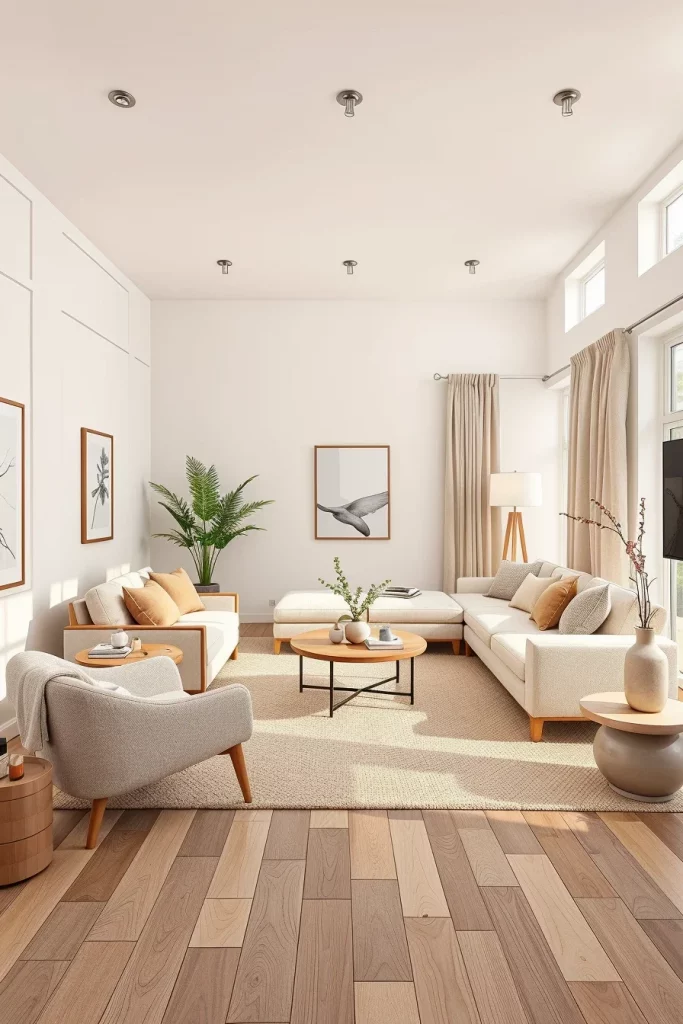
Furniture should continue this soft palette with upholstery in light neutral fabrics that feel comfortable and timeless. I often combine linen sofas, boucle accent chairs, light oak side tables, textured wool rugs, and matte ceramic accessories. Black accents are used sparingly to provide gentle definition without overpowering the overall softness. The result feels sophisticated while remaining practical for everyday living.
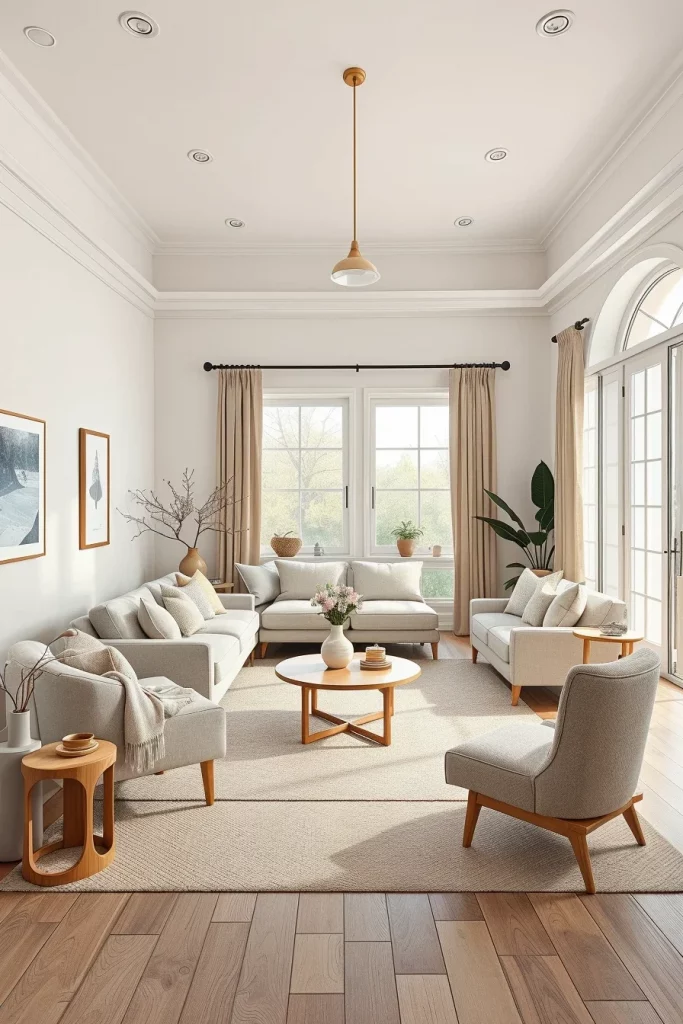
In my experience, neutral interiors never feel boring when multiple textures replace strong colors. Designers frequently recommend combining several shades from the same color family instead of relying on a single tone. I have found this advice especially useful because it creates dimension while maintaining the peaceful atmosphere that defines soft contemporary living room design.
I also recommend testing paint colors throughout the day because natural light changes dramatically from morning to evening. This simple step helps ensure the selected shades maintain their warmth under different lighting conditions.
Layer Soft Textures For Everyday Comfort
Texture is what transforms a beautiful room into one that truly feels comfortable. I believe every contemporary interior benefits from combining fabrics and materials that invite people to relax. Instead of relying on bold decoration, I layer linen, boucle, cotton, wool, velvet, natural wood, stone, and soft woven materials to create quiet visual interest that remains elegant without appearing busy.
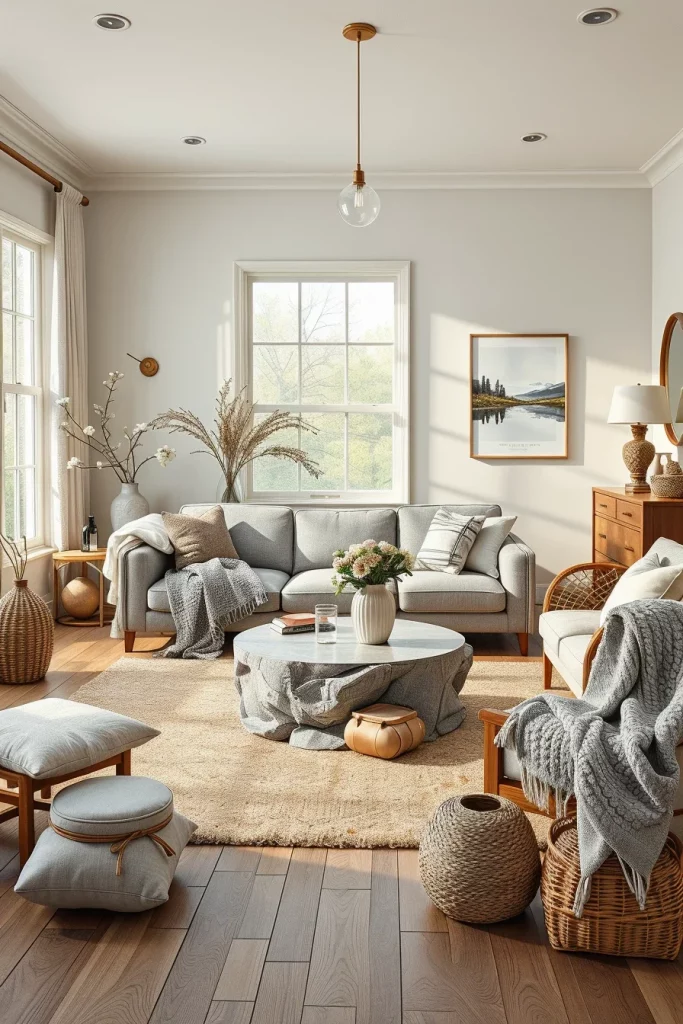
The furniture should encourage relaxation while maintaining modern proportions. I prefer deep upholstered sofas with plush cushions, oversized throw blankets, textured accent pillows, upholstered ottomans, thick woven rugs, and lightweight linen curtains. Natural wood furniture introduces warmth, while stone tabletops and ceramic accessories provide subtle contrast that complements the overall softness.
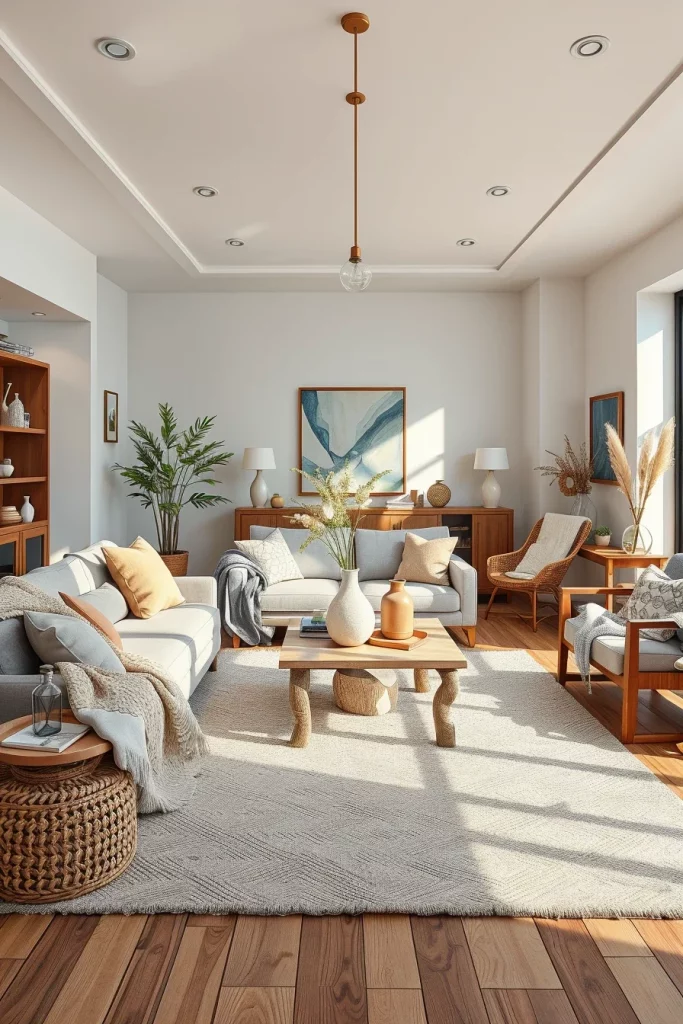
Interior designers frequently explain that texture becomes even more important in neutral spaces because it replaces color as the primary source of visual richness. I have noticed this in nearly every successful project I admire. Even simple rooms become memorable when the materials feel layered, authentic, and comfortable instead of perfectly smooth or overly polished.
To enhance this section further, I would include scented candles, woven baskets, and carefully selected books displayed on open shelves. These personal details reinforce the welcoming atmosphere without creating unnecessary clutter.
Create A Cozy Seating Layout With Modern Appeal
Furniture placement influences how comfortable a living room feels just as much as the furniture itself. I always arrange seating to encourage conversation while preserving open walkways throughout the room. Rather than pushing every piece against the walls, I prefer creating intimate seating groups that naturally draw people together. This approach makes even larger spaces feel warm and inviting.
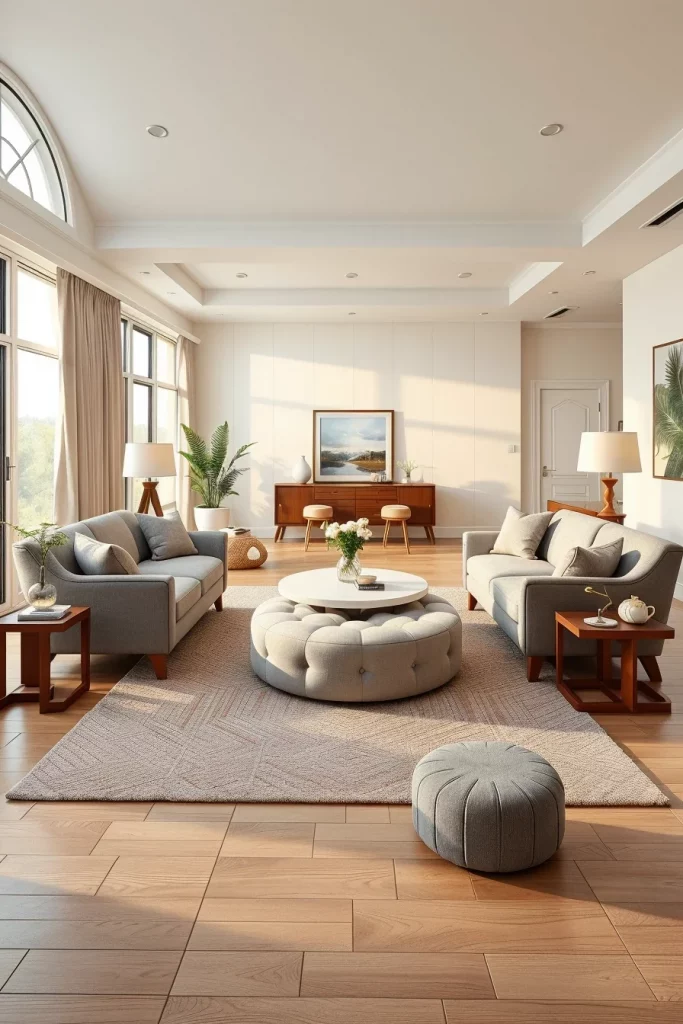
A generous sofa paired with two comfortable lounge chairs usually provides an excellent foundation. I often add a rounded ottoman, a simple coffee table, slim side tables, and layered lighting positioned close to the seating area. Every seat should have convenient access to a surface for drinks, books, or decorative objects. The arrangement should feel balanced without becoming perfectly symmetrical.
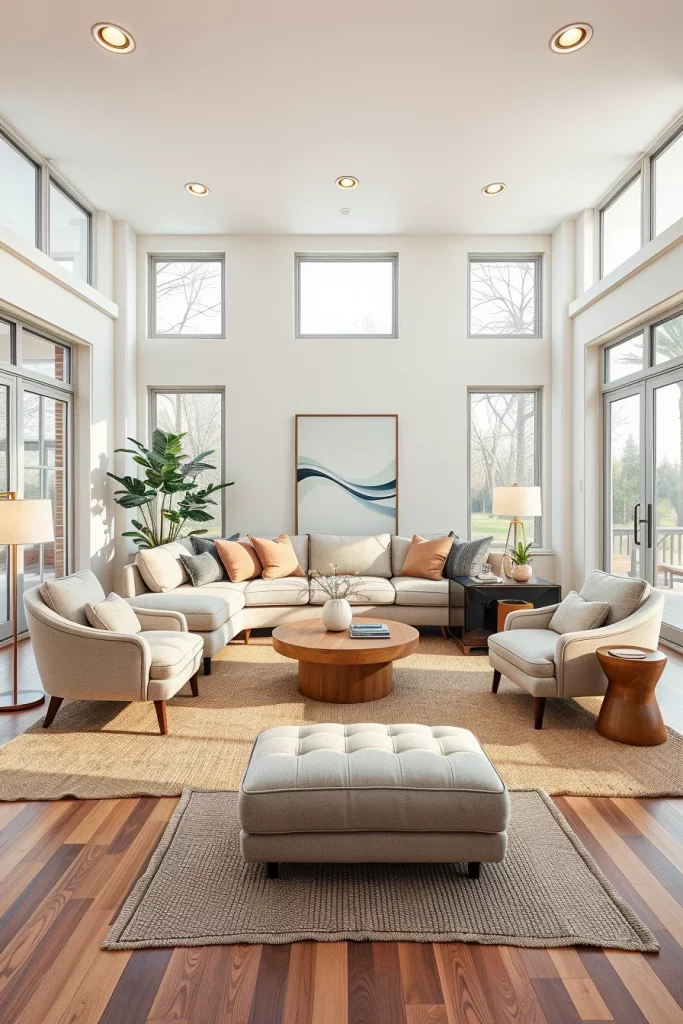
Many professional interior designers recommend designing rooms around how people actually live instead of how spaces appear in photographs. I strongly agree because comfortable circulation, appropriate furniture spacing, and practical functionality always improve daily living. Beautiful interiors should support conversation, relaxation, and family activities just as effectively as they support visual appeal.
I would also include flexible seating such as a movable pouf or upholstered stool that can easily accommodate guests without permanently occupying valuable floor space.
Select A Statement Sofa With Clean Curves
The sofa naturally becomes the focal point of a soft contemporary living room, so I always invest time selecting the right shape. Curved silhouettes immediately soften modern interiors by replacing sharp edges with flowing lines. A generously proportioned sofa upholstered in high-quality fabric provides comfort while establishing the elegant character that defines the entire room.
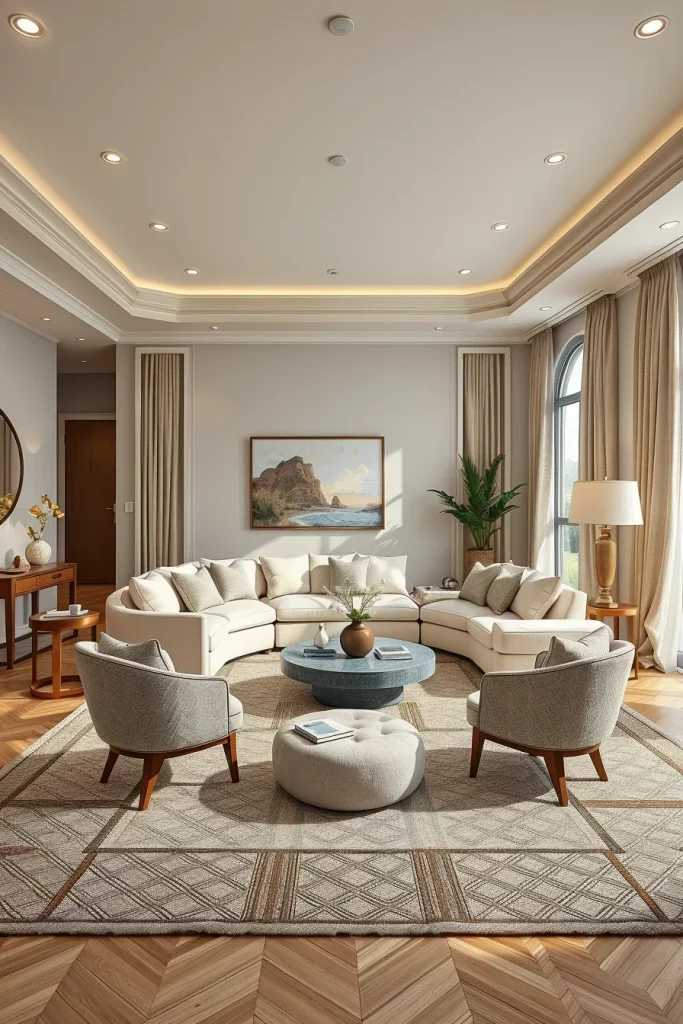
I usually recommend neutral upholstery in linen, performance fabric, or textured boucle because these materials remain attractive for years while coordinating easily with changing accessories. Wide seat cushions, rounded armrests, low-profile legs, and carefully tailored upholstery create a refined appearance that feels luxurious without becoming overly formal. Complementary accent chairs should echo these gentle curves to maintain visual consistency.
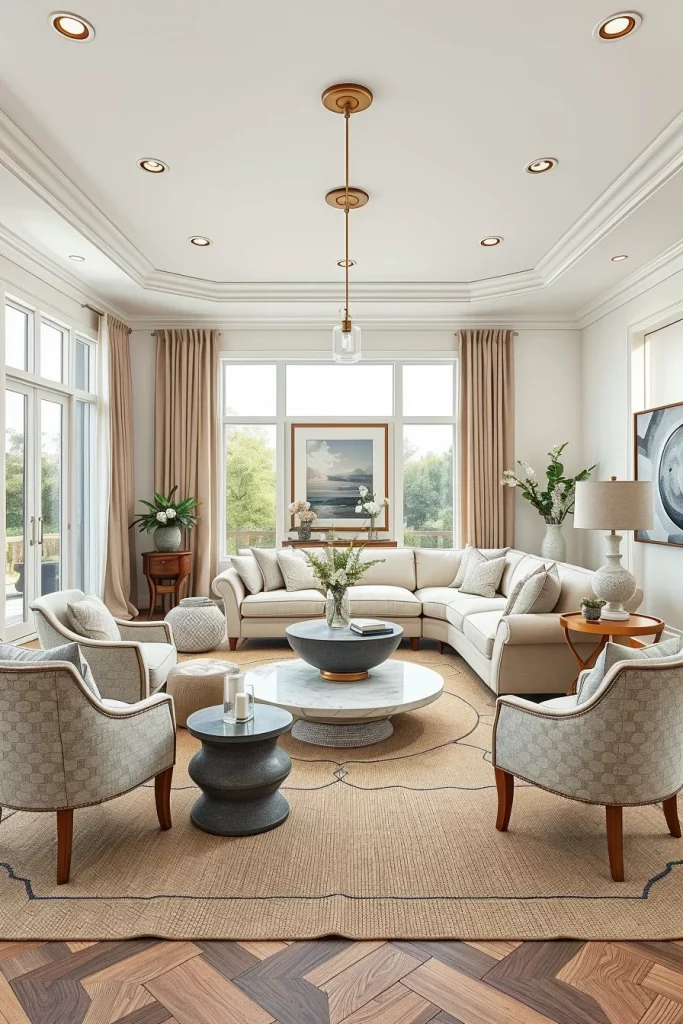
Many contemporary furniture collections featured by respected American manufacturers increasingly embrace rounded forms because they make interiors feel more welcoming. I appreciate this direction since curved furniture naturally balances the straight architectural lines found in most modern homes while improving both comfort and aesthetics.
To complete the seating area, I would add layered throw pillows in varying textures, a soft cashmere or wool blanket, and a nearby floor lamp that provides warm ambient lighting during the evening.
Incorporate Natural Light Into The Living Room Design
Natural light is one of the most important features I prioritize when designing a soft contemporary living room. Sunlight highlights textures, enhances neutral colors, and makes the room feel larger without requiring additional decoration. Whenever possible, I design the furniture layout to maximize daylight rather than block it. Large windows, open floor plans, and light-reflecting finishes help create a welcoming environment that feels comfortable throughout the day. A well-lit soft contemporary living room naturally appears more relaxing and balanced.
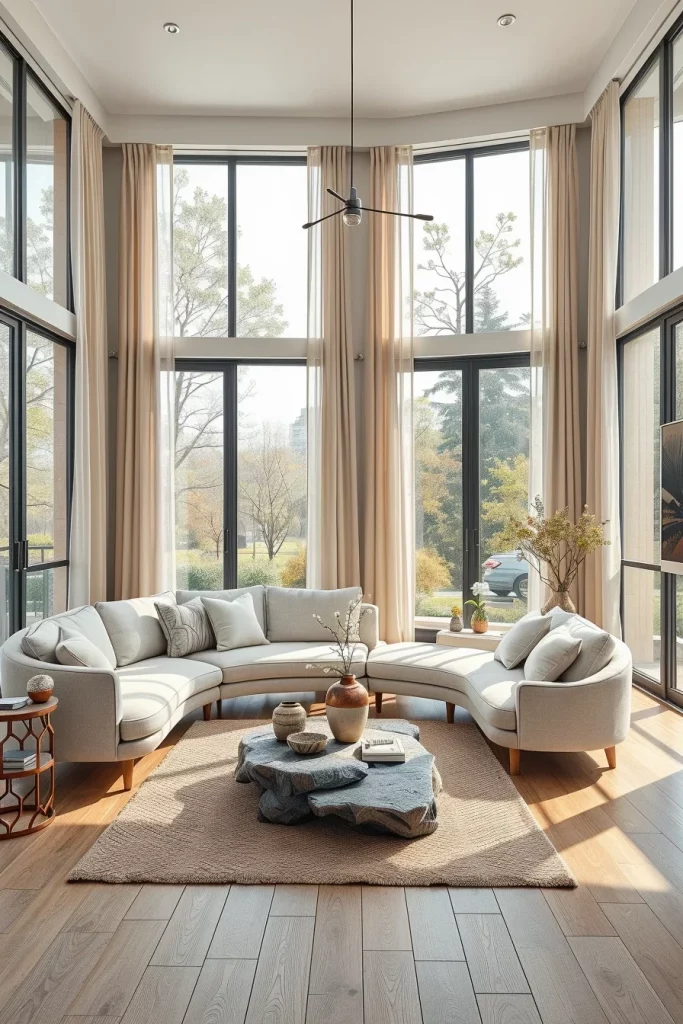
Window treatments should soften the incoming light instead of completely hiding it. I usually recommend full-height linen curtains paired with discreet roller shades that offer privacy without sacrificing brightness. Light oak flooring, matte walls, mirrors with slim frames, and pale upholstery help reflect natural light deeper into the room. Even decorative accessories such as ceramic vases or glass objects subtly contribute by catching sunlight and creating visual movement without introducing unnecessary clutter.
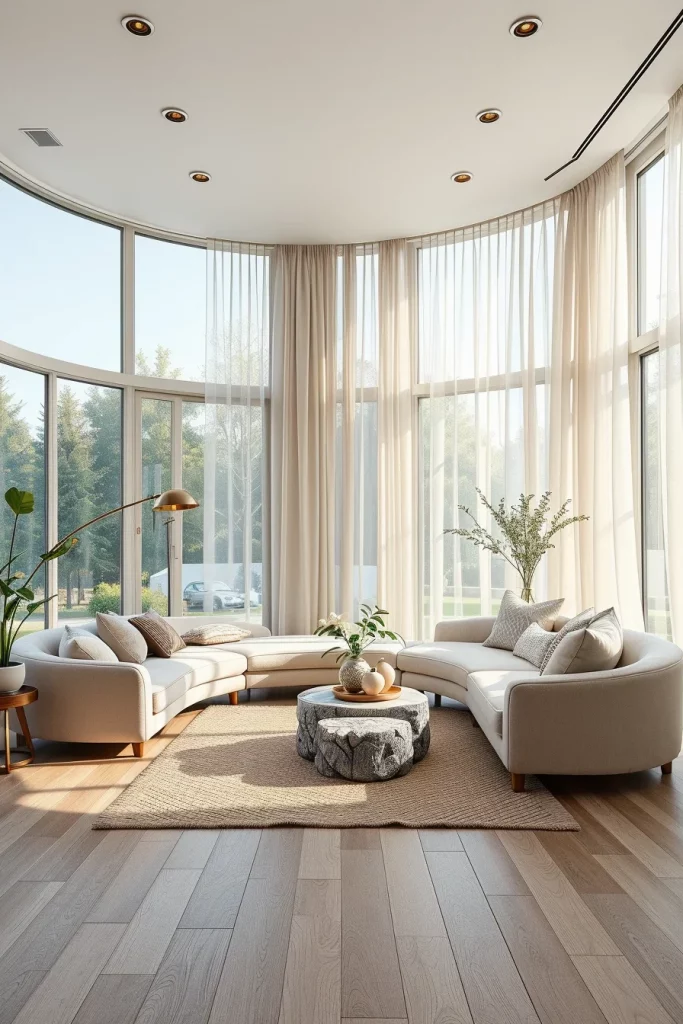
I have learned from both personal experience and recommendations shared by respected designers in publications such as Architectural Digest that natural light should be treated as a design element rather than simply a practical necessity.
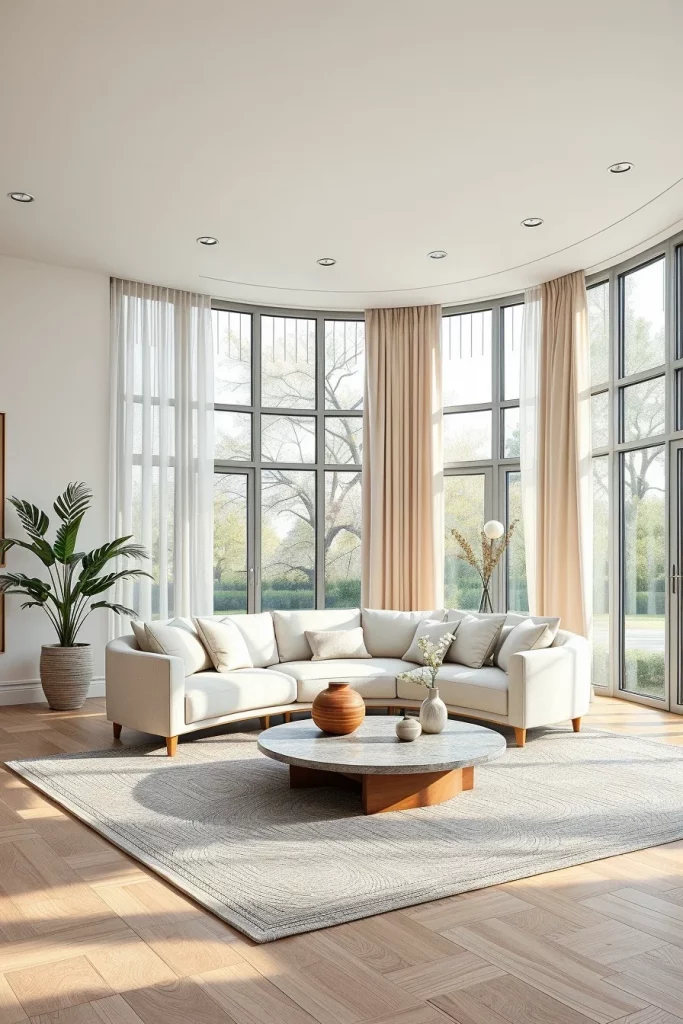
Rooms filled with daylight often require fewer decorative accessories because the constantly changing light itself becomes part of the visual experience. I always notice that clients spend more time in spaces that feel naturally bright and comfortable.
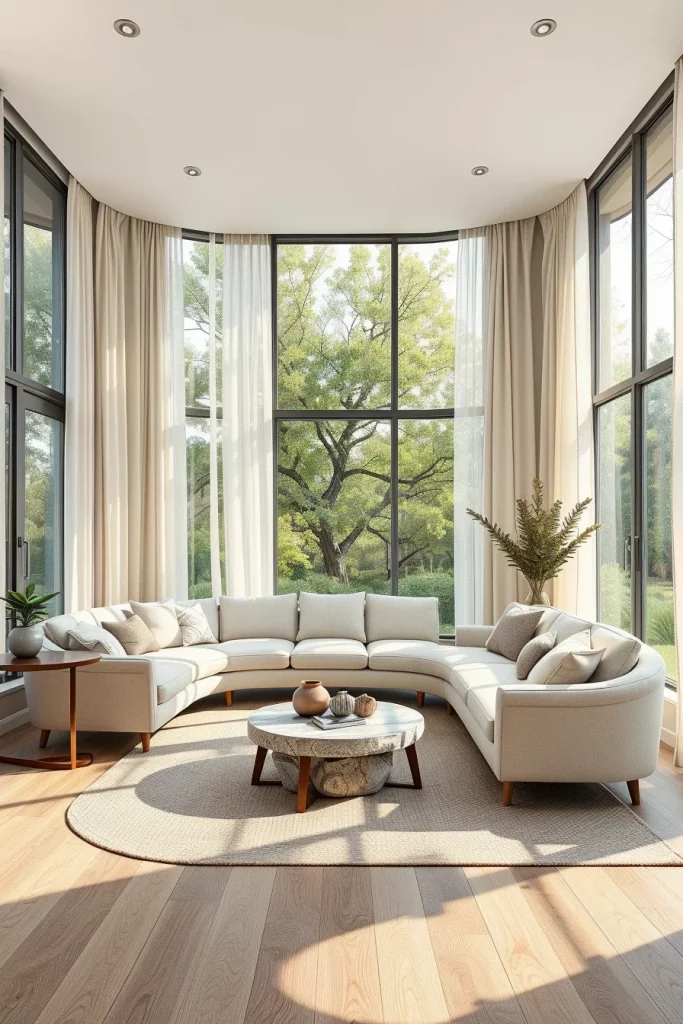
To improve this design even further, I would include strategically placed mirrors opposite windows, maintain unobstructed window views, and avoid oversized furniture that blocks daylight from reaching the center of the room.
Balance Minimalism With Warm Decorative Details
Minimalism creates a clean foundation, but I believe warmth is what makes a contemporary living room feel like home. Rather than filling shelves with decorative accessories, I carefully select a few pieces that introduce personality while preserving visual simplicity. This balance prevents the room from feeling either empty or overcrowded. Every decorative object should contribute to the overall atmosphere instead of competing for attention.
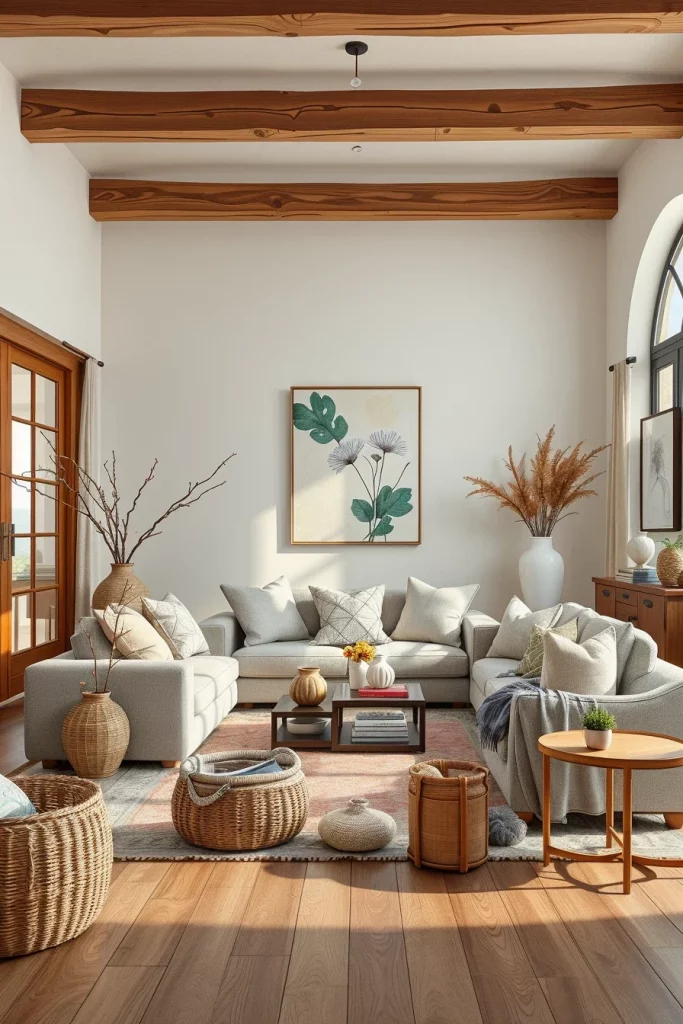
I like incorporating handcrafted ceramics, textured books, woven baskets, framed abstract artwork, sculptural candle holders, and soft decorative pillows. These elements add depth without overwhelming the neutral palette. Coffee table styling should remain restrained, featuring perhaps a single vase, several carefully chosen books, and one organic decorative object. I also recommend incorporating subtle metallic accents in brushed brass or matte black to provide gentle contrast while maintaining elegance.
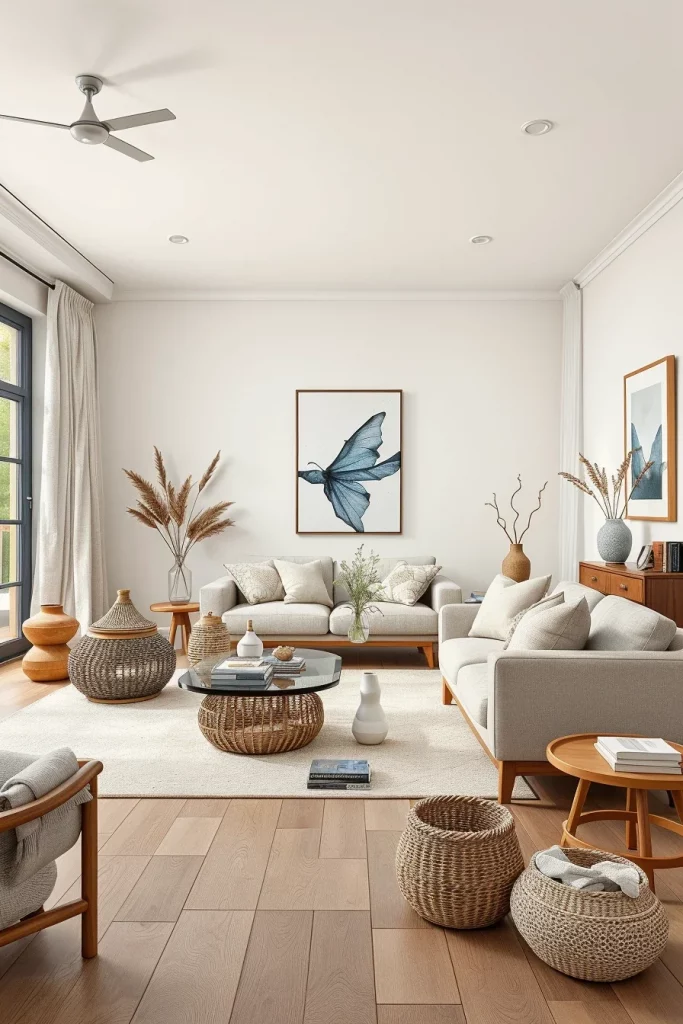
Many contemporary interior designers encourage homeowners to decorate with intention instead of quantity. I completely agree because thoughtful curation allows every item to stand out while supporting the peaceful atmosphere of the room. Over the years, I have found that reducing unnecessary decoration often makes high-quality furnishings and architectural details much more noticeable.
I would also recommend rotating seasonal accessories rather than purchasing entirely new decor. This simple habit keeps the room feeling fresh while preserving the timeless character of the overall design.
Add Organic Shapes Through Furniture And Decor
Organic shapes help soften the structured appearance that often accompanies contemporary interiors. I enjoy introducing rounded silhouettes because they naturally create a more relaxed atmosphere while maintaining a modern aesthetic. Curved furniture, flowing forms, and sculptural accessories break up straight architectural lines, making the room feel inviting without becoming overly decorative. This subtle contrast is one of the defining features of a successful soft contemporary living room.
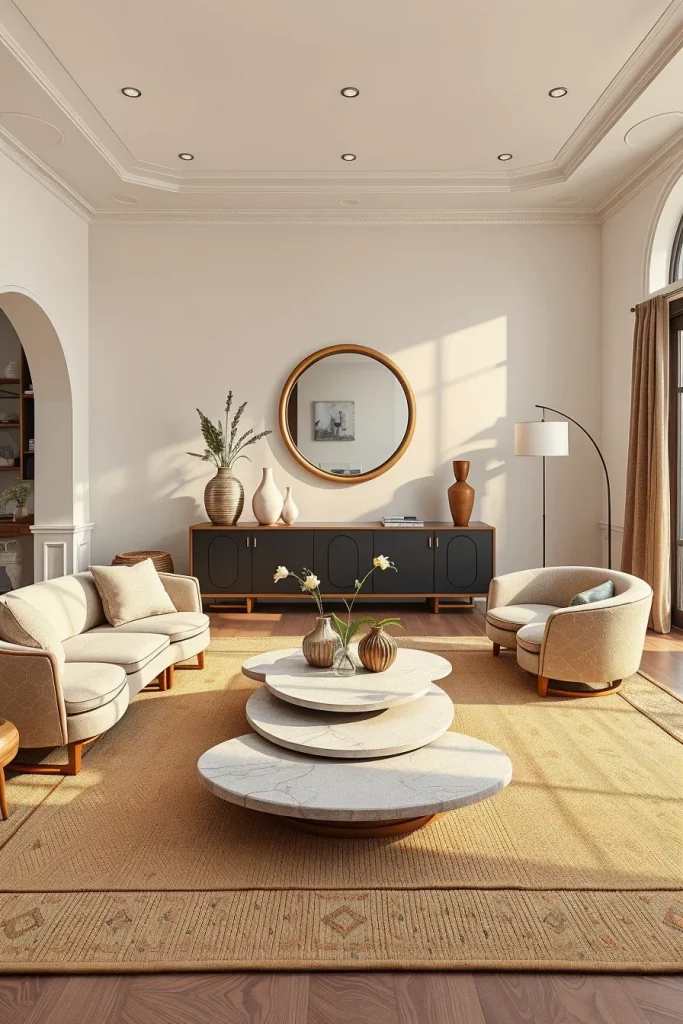
My favorite choices include rounded sofas, oval coffee tables, curved accent chairs, circular mirrors, arched floor lamps, and sculptural ceramic vases. Even smaller decorative details such as rounded trays, soft-edged artwork, and organically shaped side tables contribute to a harmonious visual flow. These gentle forms encourage the eye to move naturally throughout the room while creating a sense of comfort and balance.
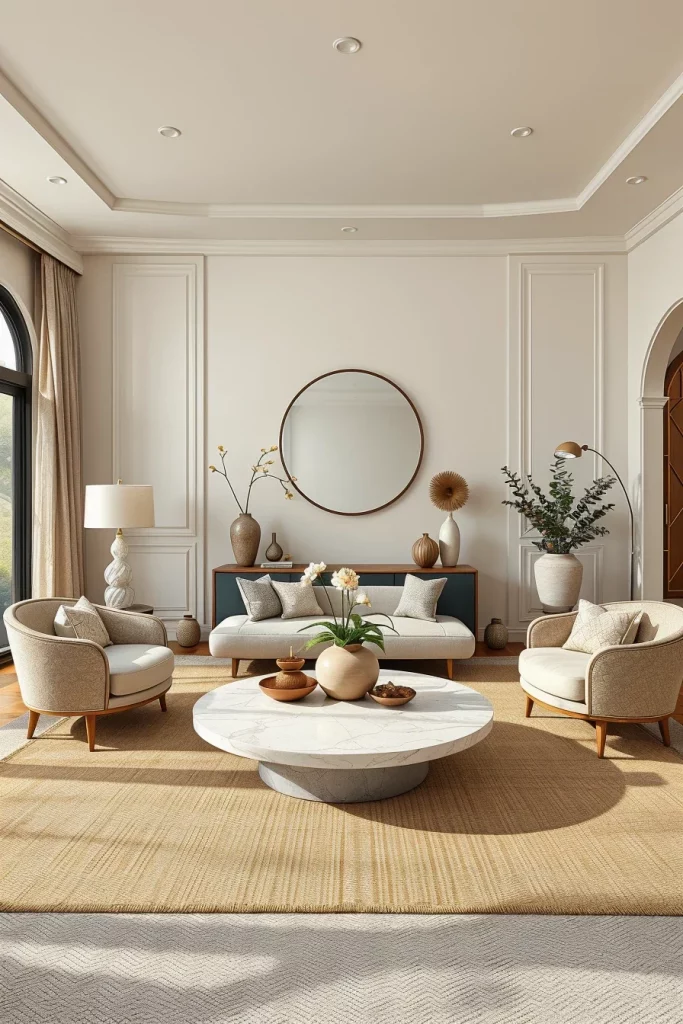
Design experts frequently note that curved furniture promotes a more welcoming environment because people instinctively respond positively to softer forms. I have found this observation to be remarkably accurate in my own projects. Rooms with a thoughtful mix of curved and straight elements consistently feel more comfortable than spaces dominated entirely by rigid geometry.
To strengthen this concept further, I would include textured stone accessories, softly rounded poufs, and abstract artwork that echoes the flowing shapes found throughout the furniture arrangement.
Style A Soft Contemporary Coffee Table
The coffee table often serves as the visual center of the seating area, so I always style it with restraint. Instead of covering every inch with decorative accessories, I create small groupings that feel intentional and balanced. This approach allows the table to remain functional while contributing to the sophisticated simplicity that defines soft contemporary interiors.
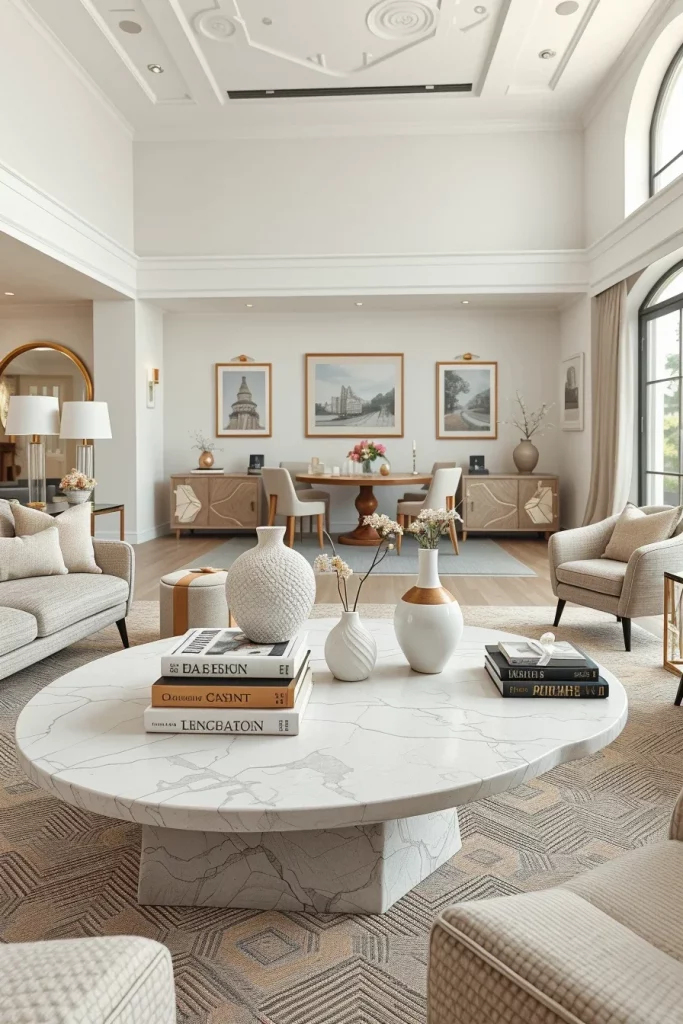
I usually begin with a beautiful stone, wood, or travertine coffee table featuring clean lines or gently rounded edges. On top, I arrange several design books, a ceramic vase with natural branches, a sculptural decorative object, and occasionally a scented candle. Decorative trays help organize smaller items while maintaining a tidy appearance. Every object should vary slightly in height, texture, and shape to create subtle visual interest without overwhelming the table.
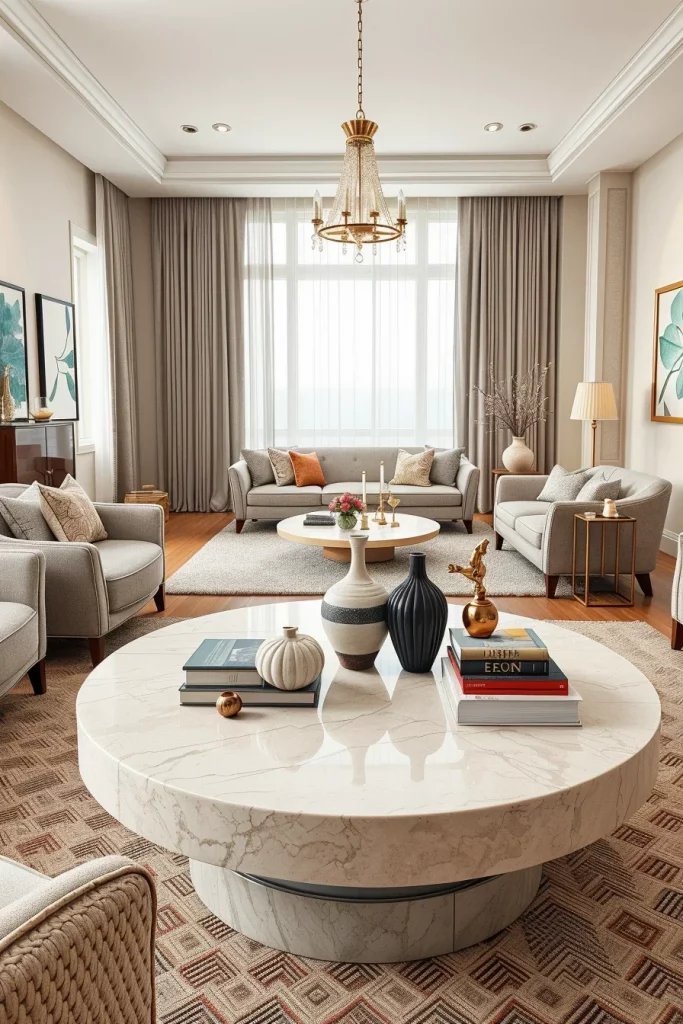
Personally, I have discovered that coffee table styling is most successful when there is generous empty space surrounding each object. Many interior stylists recommend leaving negative space because it allows individual pieces to stand out rather than blend together. I consistently apply this principle because it keeps the room feeling calm and uncluttered.
I would also include a small storage basket beneath the table for magazines or blankets, ensuring the living room remains organized while preserving its elegant appearance.
Elevate The Space With Sculptural Lighting
Lighting has the ability to transform the atmosphere of a room long after the sun goes down. I always think beyond simple illumination by selecting fixtures that also function as artistic focal points. Sculptural lighting introduces elegance, highlights architectural features, and enhances the layered textures that define a soft contemporary living room. Proper lighting also allows neutral interiors to feel rich and dynamic throughout the evening.
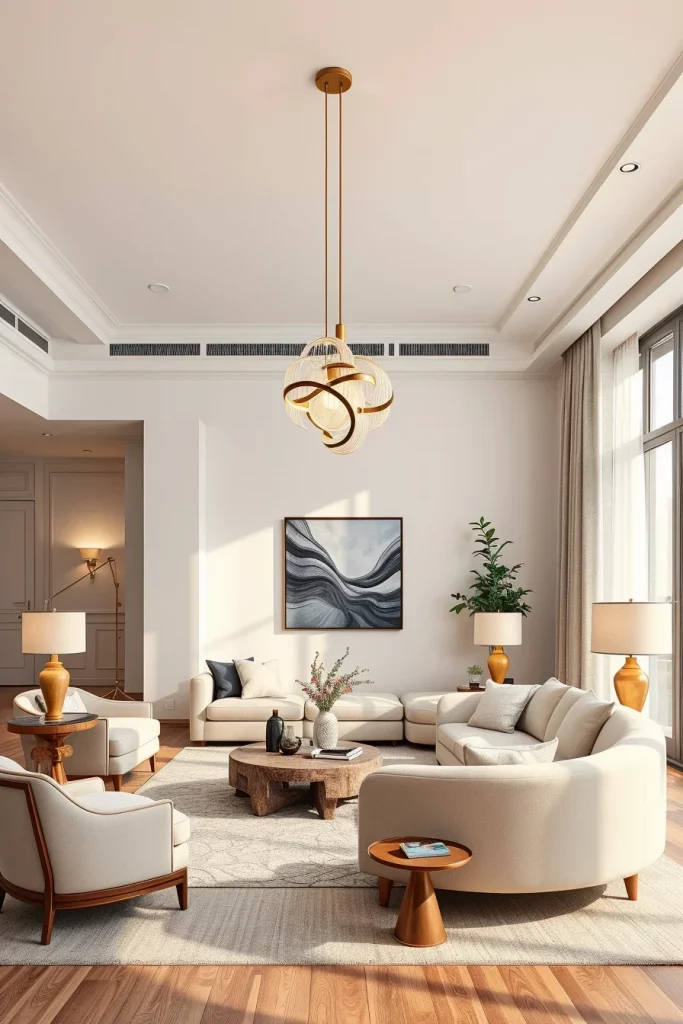
I recommend combining several light sources instead of relying on a single ceiling fixture. A sculptural pendant light, elegant floor lamp, modern table lamps, and discreet wall sconces create multiple lighting layers that serve different purposes. Warm LED bulbs with soft color temperatures produce a comfortable ambiance that complements natural materials such as wood, linen, wool, and stone. Dimmers are equally valuable because they allow the mood to change throughout the day.
I often follow the advice shared by experienced lighting designers who recommend treating light as an architectural material rather than simply a utility. I completely agree because thoughtful lighting reveals textures, creates shadows, and adds depth that cannot be achieved through furniture alone. In my own experience, carefully layered lighting consistently makes contemporary interiors feel more luxurious and welcoming.
To complete the lighting plan, I would incorporate hidden LED accent lighting inside shelving or architectural niches. These subtle details enhance the evening atmosphere while maintaining the clean and refined appearance that defines this design style.
Mix Wood, Stone, And Fabric For Rich Texture
When I design a soft contemporary living room, I always begin by combining natural materials that introduce warmth without overwhelming the space. Smooth limestone, lightly grained oak, soft linen upholstery, and textured wool instantly create visual depth while maintaining a calm, modern atmosphere. Instead of relying on bold colors, I let these materials become the focal point because they age beautifully and create an interior that feels inviting every day.
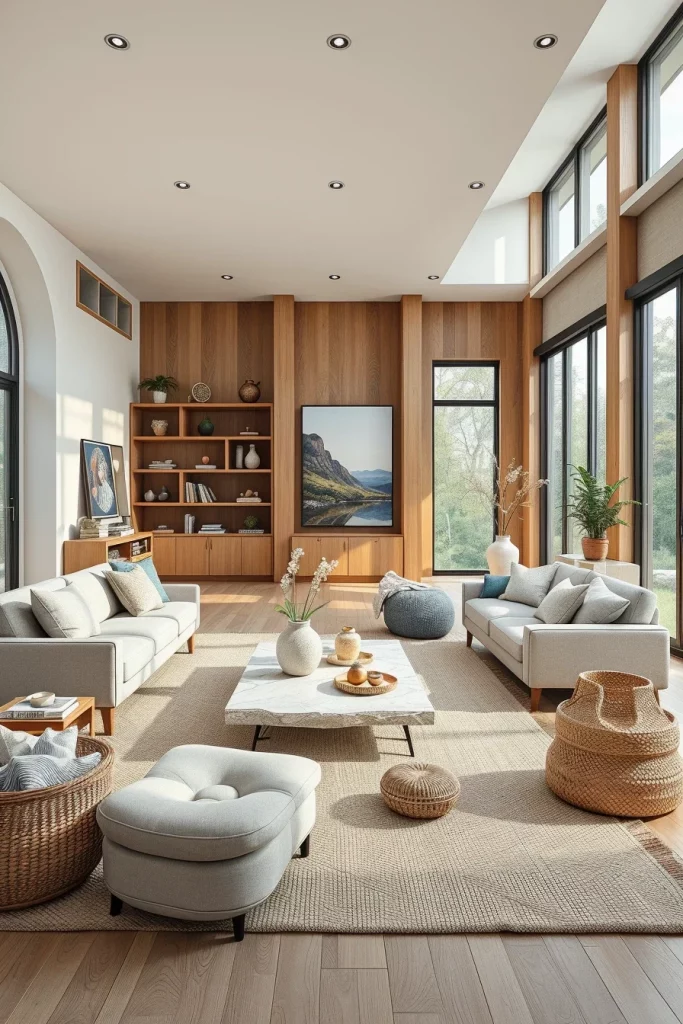
I like pairing a large upholstered sofa with a stone coffee table, oak shelving, boucle accent chairs, and linen curtains. Every material serves a purpose. Stone adds durability and sophistication, wood introduces warmth and organic character, while fabrics soften hard architectural lines. Decorative pillows with subtle woven textures, ceramic vases, and handmade baskets complete the layered appearance without creating visual clutter.
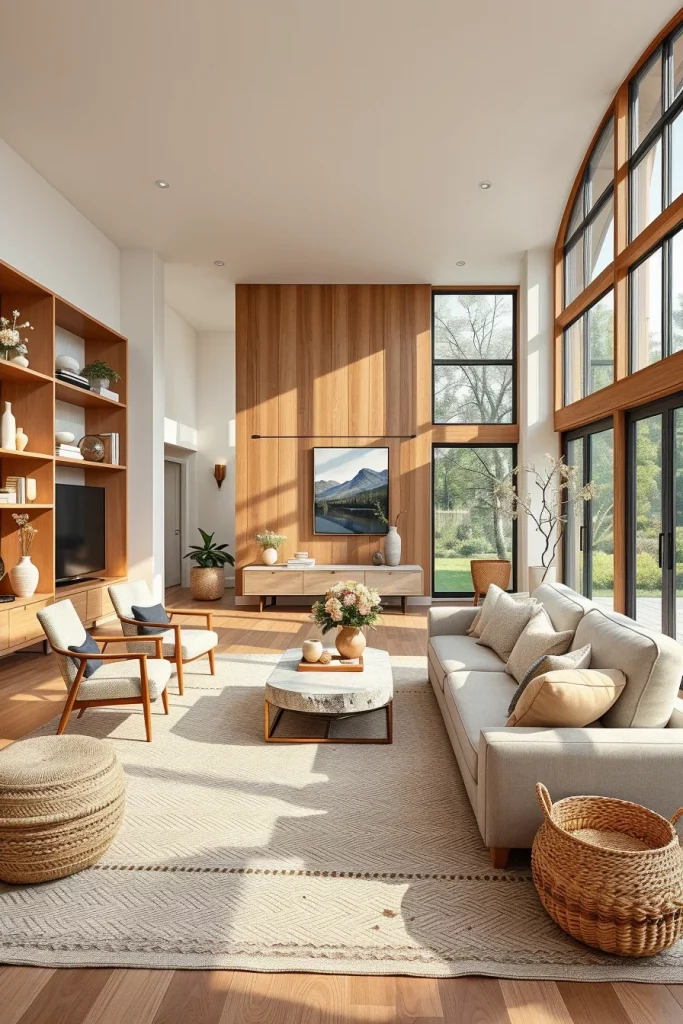
Many designers featured by Architectural Digest and House Beautiful recommend layering natural textures instead of adding excessive decoration because texture creates interest while preserving simplicity. I completely agree with this approach. Whenever I combine several natural finishes with restraint, the room immediately feels more luxurious without becoming overly decorated.
To complete this design, I would add indirect LED lighting, oversized greenery in sculptural planters, and a large neutral area rug that visually connects every furniture piece while making the seating arrangement feel cohesive.
Design A Fireplace Feature With Contemporary Elegance
A fireplace naturally becomes the centerpiece of a soft contemporary living room when it is designed with clean proportions and understated materials. I prefer simple architectural surrounds finished in limestone, smooth plaster, or large-format porcelain because they create a refined focal point without distracting from the rest of the interior. The goal is elegance through simplicity rather than excessive ornamentation.
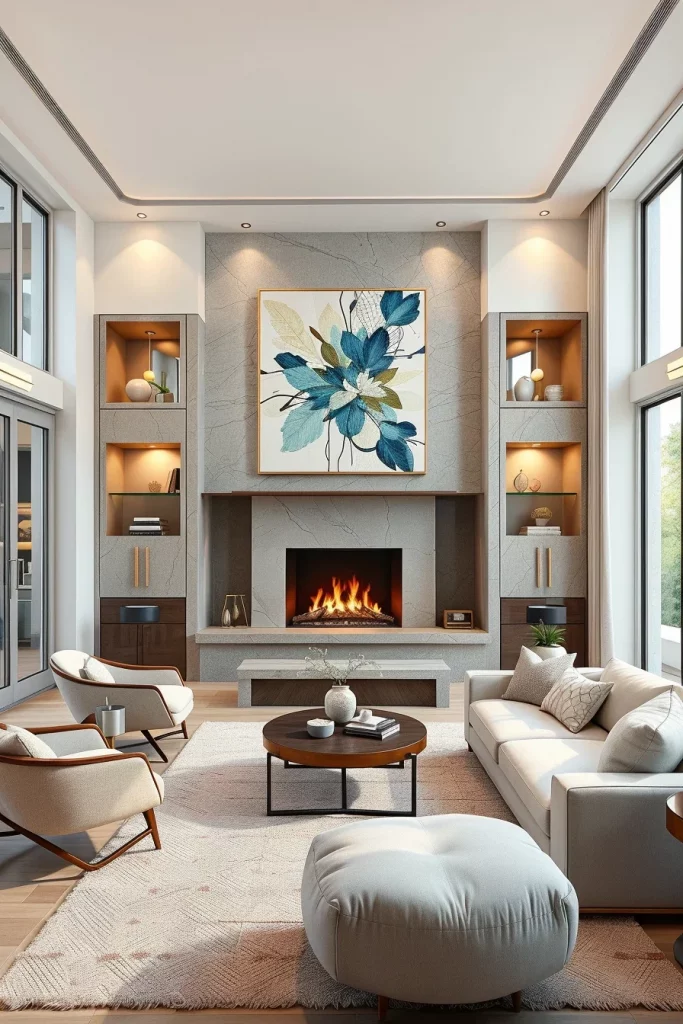
Above the fireplace, I usually install either a large piece of modern artwork or a minimal framed mirror. Floating cabinetry on both sides provides practical storage while maintaining visual openness. Comfortable seating arranged around the fireplace encourages conversation, and layered lighting allows the room to remain cozy whether the fireplace is lit or not.
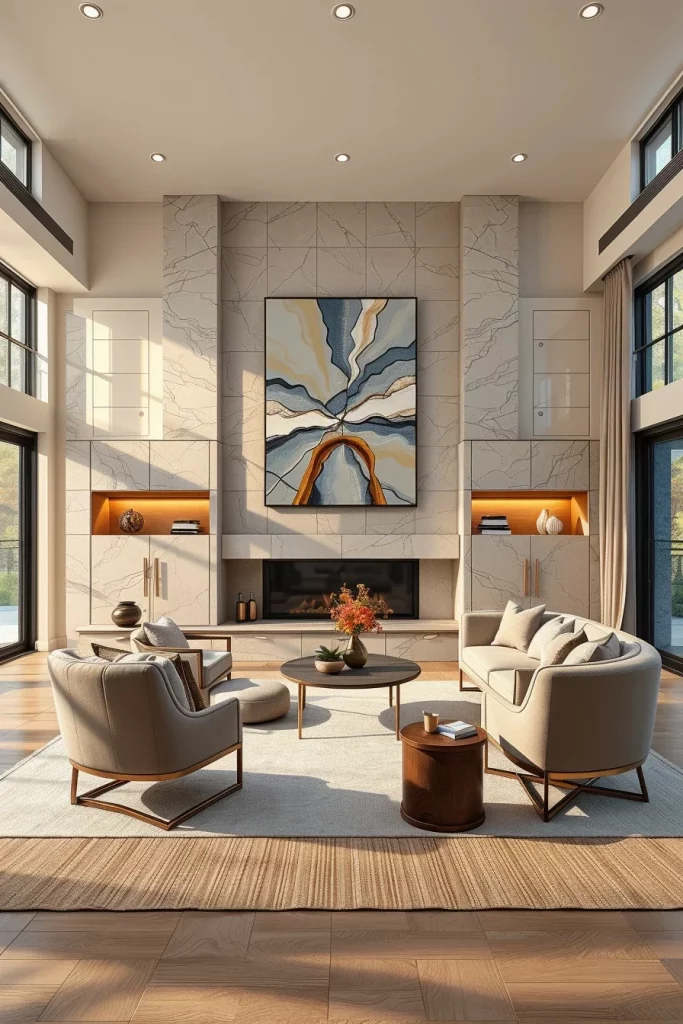
In my experience, symmetry helps contemporary fireplaces feel balanced, but perfect matching is not always necessary. Elle Decor frequently highlights fireplaces that combine architectural simplicity with carefully chosen furniture rather than elaborate decorative details. I find this advice especially useful because it keeps the room timeless instead of following short-lived trends.
I would also include concealed storage for firewood if using a real fireplace, integrate dimmable wall lighting, and leave enough negative space around the fireplace so the feature remains visually calm.
Decorate Walls With Simple Modern Artwork
Wall art has the ability to define the personality of a soft contemporary living room without overpowering it. I usually select oversized abstract paintings, subtle landscape photography, or textured canvas pieces with muted colors that complement the furniture palette. Large artwork often creates a stronger visual impact than several smaller pieces because it allows the room to breathe.
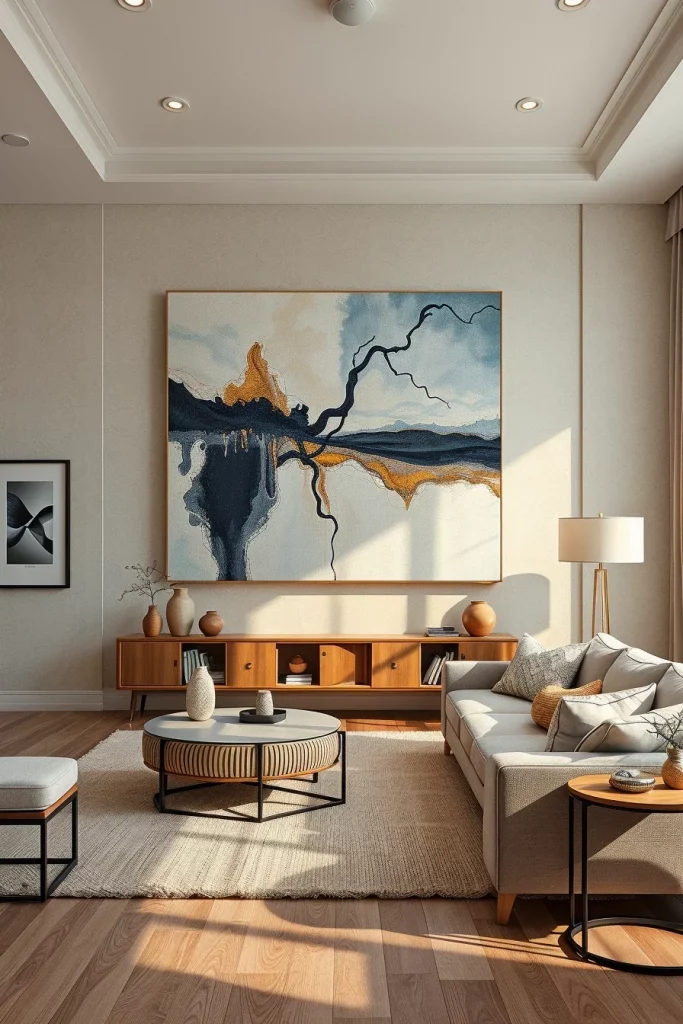
The surrounding furniture should support the artwork rather than compete with it. I often place a low media console beneath a large painting, accompanied by ceramic sculptures, books, and a single table lamp. Thin black frames, natural oak frames, or frameless canvas pieces all work beautifully depending on the room’s overall palette.
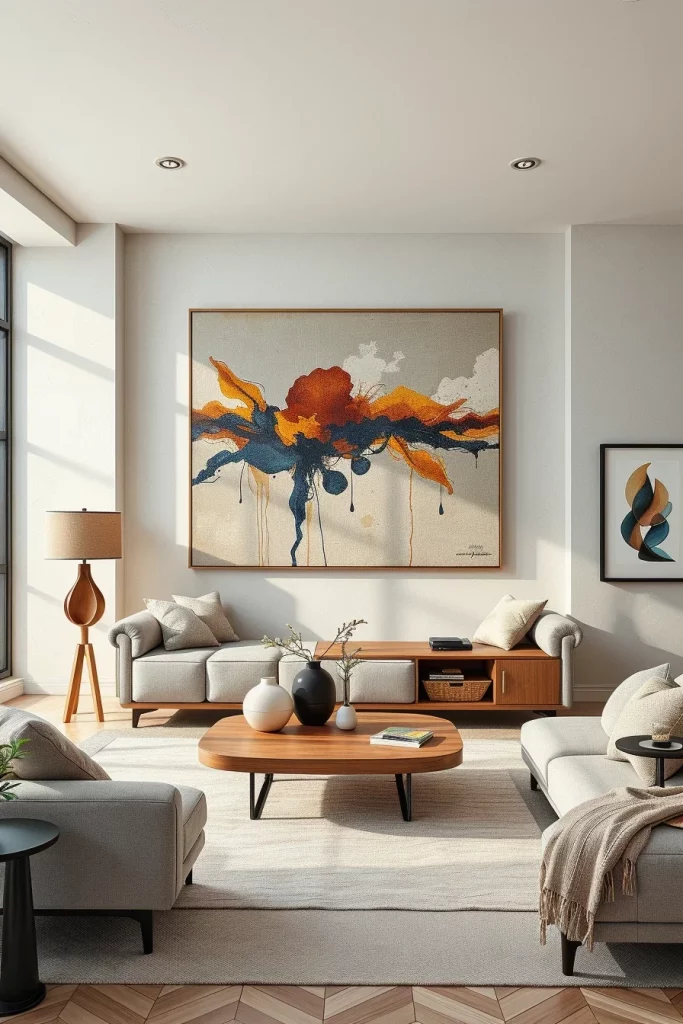
Personally, I avoid overcrowding gallery walls in contemporary interiors. Better Homes & Gardens frequently recommends allowing artwork enough surrounding space to become part of the architecture instead of simply filling empty walls. I have found that restraint almost always produces a more sophisticated result.
To strengthen this section, I would also incorporate discreet picture lighting or adjustable ceiling spotlights that highlight artwork during the evening without introducing glare.
Choose The Perfect Area Rug For A Soft Contemporary Living Room
The area rug is one of the most important elements in a soft contemporary living room because it visually anchors every furniture piece while introducing softness underfoot. I generally choose oversized rugs in wool or wool blends with subtle geometric textures, tonal patterns, or understated organic designs that complement the room instead of dominating it.
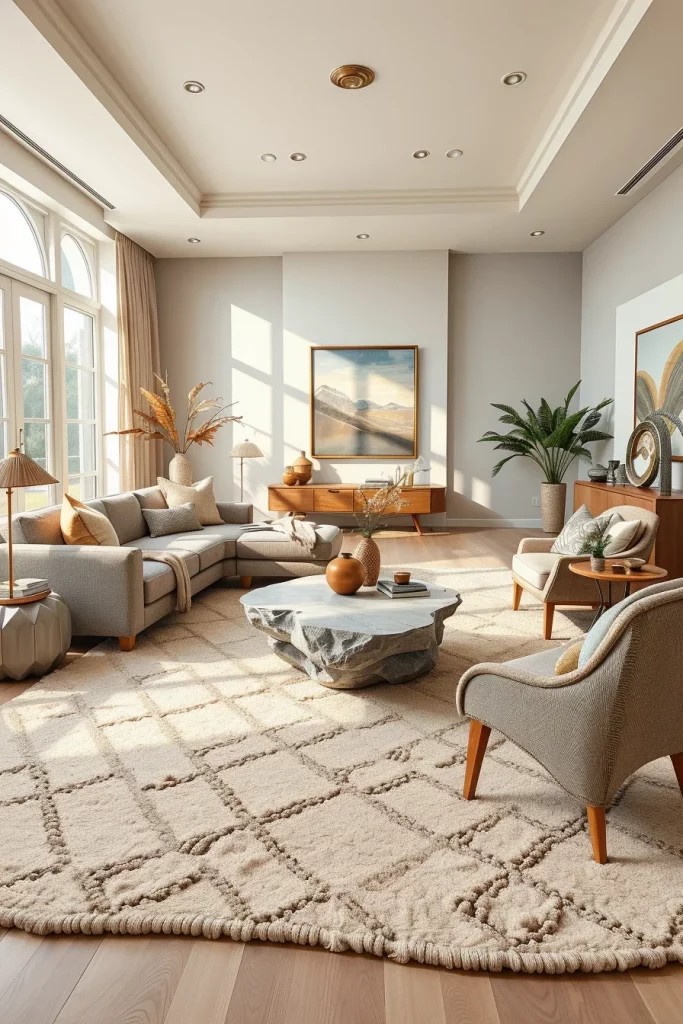
Furniture placement is equally important. I always make sure that at least the front legs of every major seating piece rest on the rug because this creates a unified conversation area. A textured rug works especially well beneath a curved sofa, upholstered chairs, and a sculptural coffee table, helping every element feel intentionally connected.
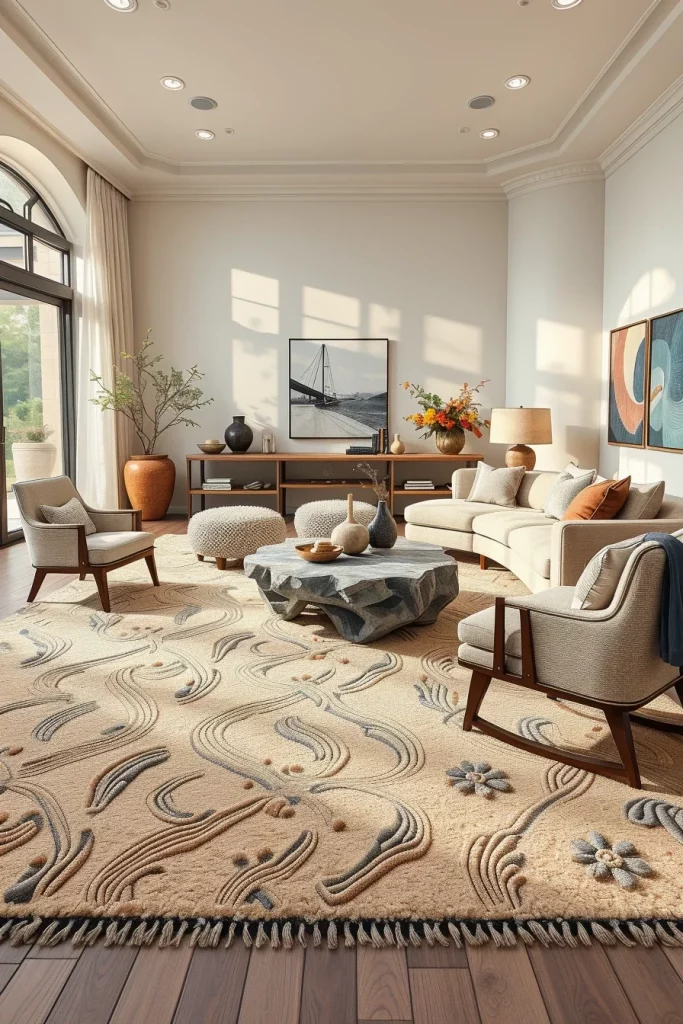
From my experience, neutral rugs remain versatile for many years because they allow accessories, artwork, and seasonal decorations to evolve naturally. Interior designers interviewed by HGTV often recommend investing in a high-quality rug before purchasing smaller accessories since it establishes the overall mood of the room.
If I wanted to enhance this arrangement even further, I would introduce layered throw blankets, oversized floor cushions, and warm indirect lighting that emphasizes the rug’s texture during the evening.
Introduce Accent Chairs That Blend Comfort And Style
Accent chairs provide both additional seating and sculptural interest within a soft contemporary living room. I usually select rounded silhouettes with comfortable proportions because they soften the straight lines commonly found in contemporary architecture. Upholstery in boucle, chenille, velvet, or textured linen creates an inviting atmosphere while remaining visually refined.
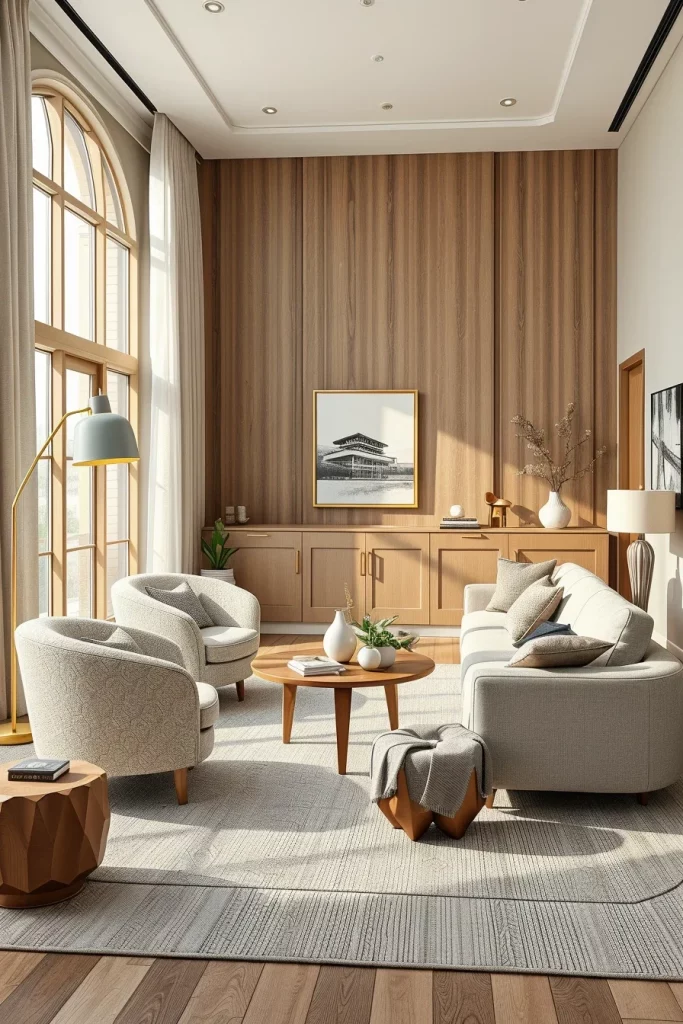
I like positioning two accent chairs opposite the sofa to create a balanced seating arrangement. A small side table placed between the chairs offers a convenient surface for books, coffee, or decorative accessories. Floor lamps, textured pillows, and soft throws further increase comfort while maintaining the room’s elegant simplicity.
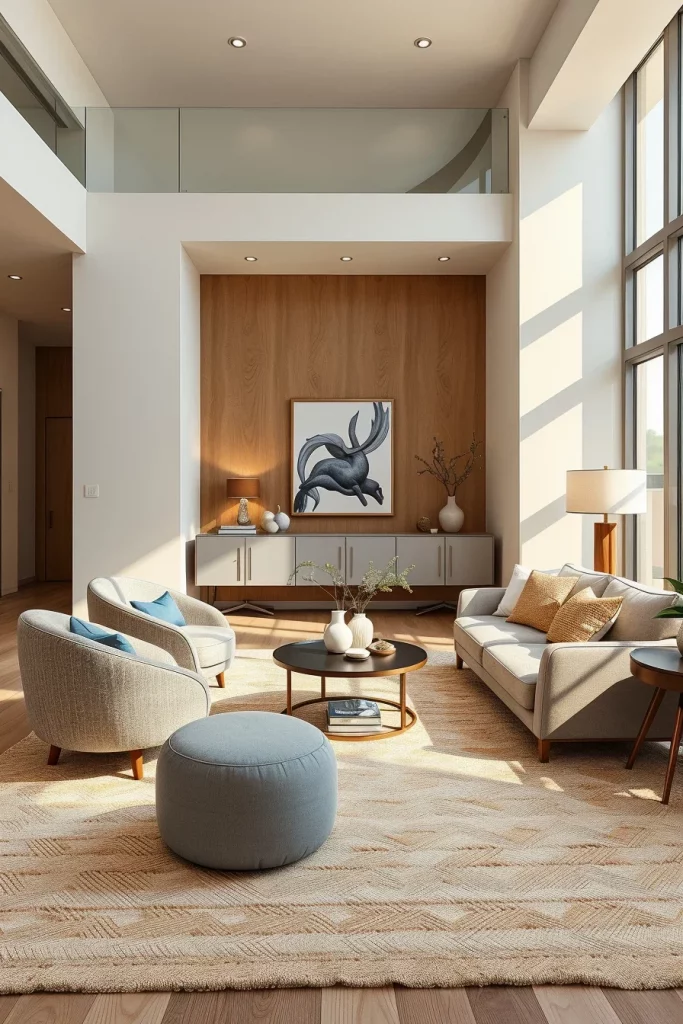
In my opinion, accent chairs should never feel like decorative objects that nobody uses. They should invite conversation, reading, and everyday relaxation. Many contemporary designers emphasize selecting furniture based on comfort first and appearance second, and I have found that this philosophy consistently produces interiors that remain enjoyable for years.
To complete this seating area, I would add a sculptural floor lamp, a small ceramic stool that doubles as a side table, and a textured throw that introduces another subtle layer of comfort.
Style Open Shelving With Minimal Decor
When I style open shelving in a soft contemporary living room, I focus on creating balance rather than filling every available surface. Open shelves should feel intentional and airy, allowing each decorative object to stand out without overwhelming the room. I usually begin with a neutral color palette and combine functional storage with carefully selected decorative accents that contribute to the relaxed contemporary atmosphere.
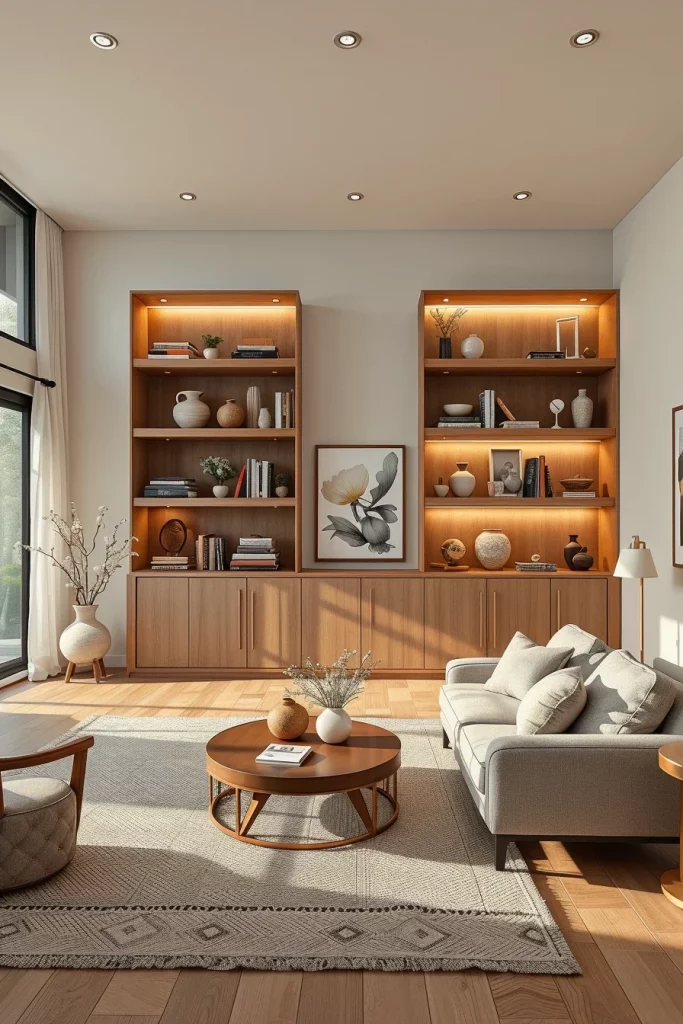
I like incorporating stacked design books, handcrafted ceramic vases, sculptural bowls, framed black-and-white photography, and a few natural stone accessories. Floating oak shelves complement soft plaster walls beautifully, while concealed storage below helps reduce visual clutter. Every object should vary slightly in height and shape to create rhythm without making the shelving appear busy. Small table lamps or integrated LED shelf lighting also help highlight decorative pieces during the evening.
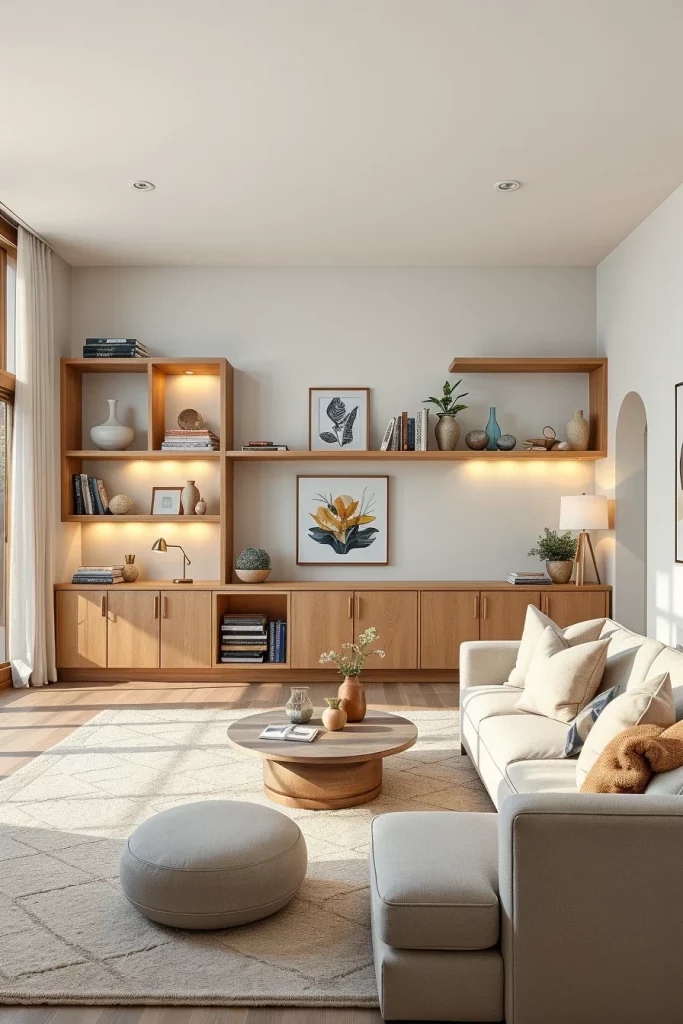
In my experience, less decoration almost always creates a stronger visual impact. Interior designers featured by Domino Magazine frequently recommend leaving intentional empty space on shelves because negative space allows individual objects to receive attention instead of blending into visual clutter. I follow this principle in nearly every contemporary living room because it keeps the design timeless and easy to maintain.
To improve this arrangement even further, I would include concealed cable management for electronics, integrated lighting beneath selected shelves, and several personal accessories that add character while preserving the room’s clean contemporary appearance.
Bring Depth With Layered Window Treatments
Layered window treatments add softness, privacy, and visual depth while making a soft contemporary living room feel complete. I prefer combining sheer linen curtains with heavier drapery panels because this combination allows natural light to filter gently throughout the day while providing privacy when needed. Full-height curtains also visually increase ceiling height and make the room appear larger.
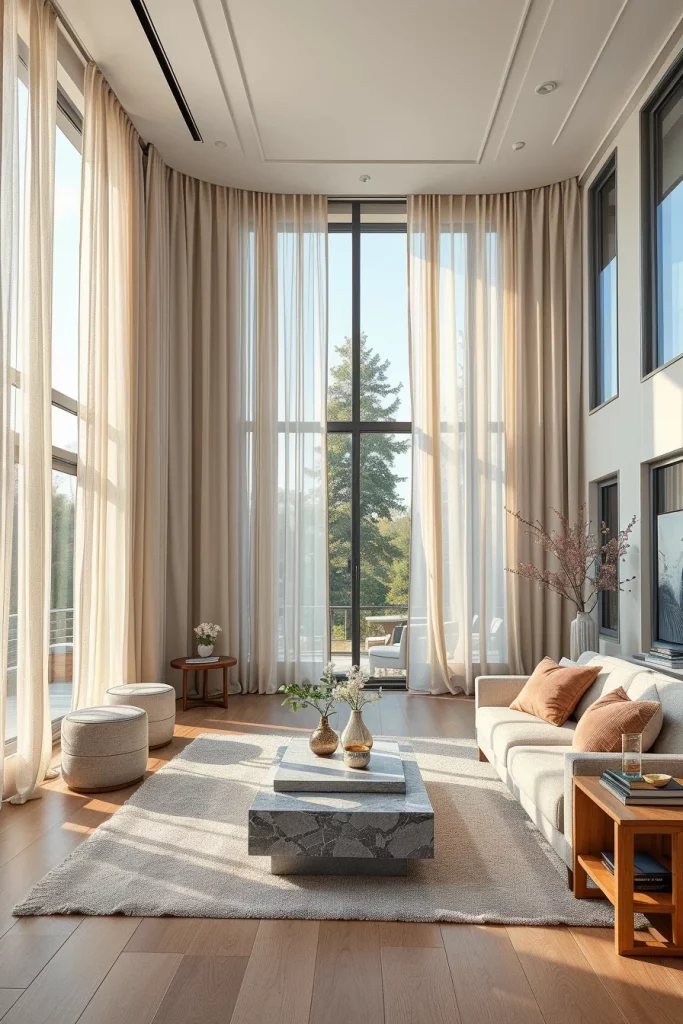
I usually install ceiling-mounted curtain tracks that allow the fabric to fall gracefully from ceiling to floor. Soft linen sheers, textured woven drapes, and discreet blackout panels create flexibility throughout different times of the day. Neutral colors such as ivory, warm beige, light taupe, or soft gray blend naturally with contemporary interiors while complementing upholstered furniture and textured rugs.
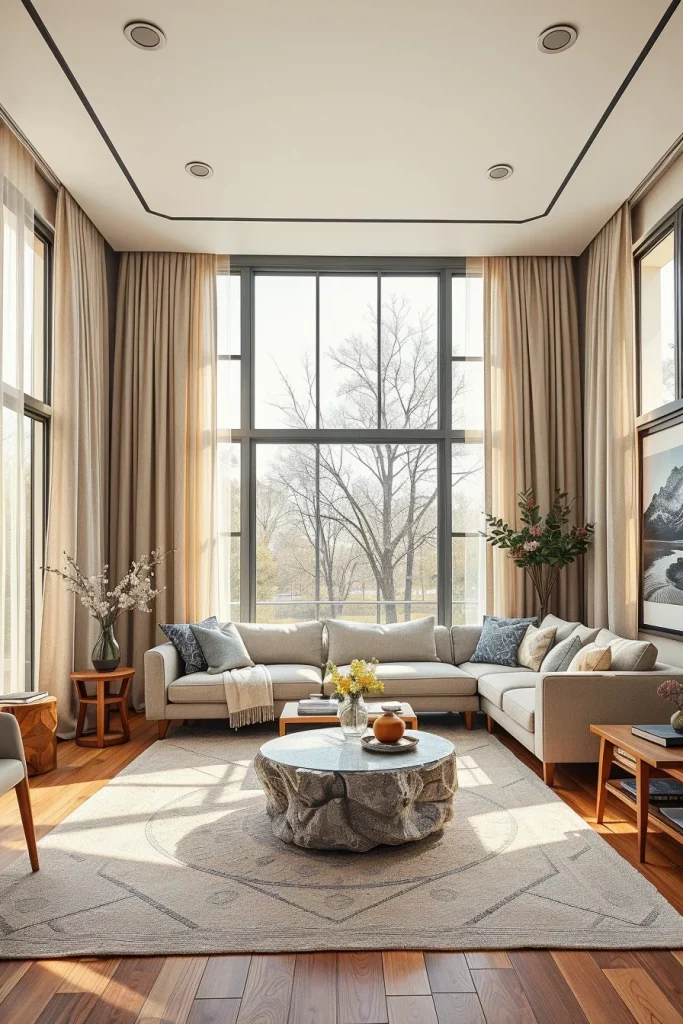
I have found that window treatments are often underestimated, yet they dramatically influence the comfort of a living room. Designers from House Beautiful often recommend hanging curtains wider and higher than the actual window opening to maximize natural light and create the illusion of larger windows. I consistently use this approach because it transforms the proportions of the room without requiring structural changes.
I would also incorporate motorized curtain systems, especially for large windows, allowing both convenience and precise control of natural lighting throughout the day.
Add Black Accents For Subtle Contrast
A soft contemporary living room benefits from carefully placed black accents that introduce contrast without making the space feel heavy. I use black sparingly, allowing it to define architectural details and furniture silhouettes while preserving the room’s calm atmosphere. Small amounts of contrast help neutral interiors feel more refined and visually balanced.
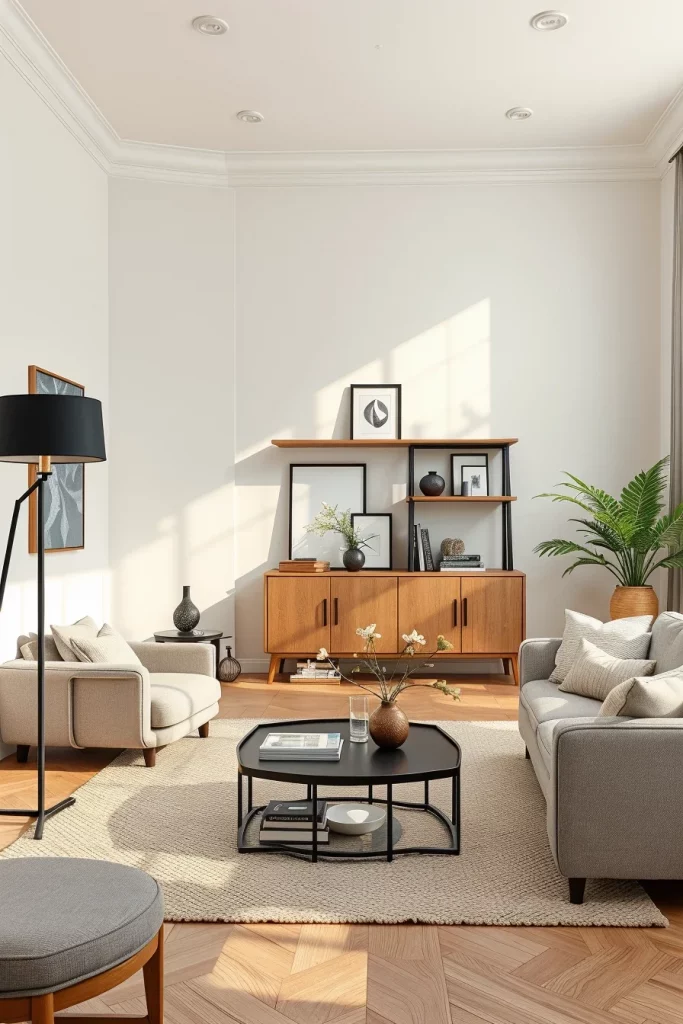
I often introduce black through thin metal coffee table frames, minimalist floor lamps, picture frames, cabinet hardware, decorative trays, and lighting fixtures. Black window frames or shelving brackets can also provide architectural definition without overpowering lighter finishes. Combined with oak, limestone, linen, and boucle upholstery, these darker elements create sophisticated contrast that feels intentional rather than dramatic.
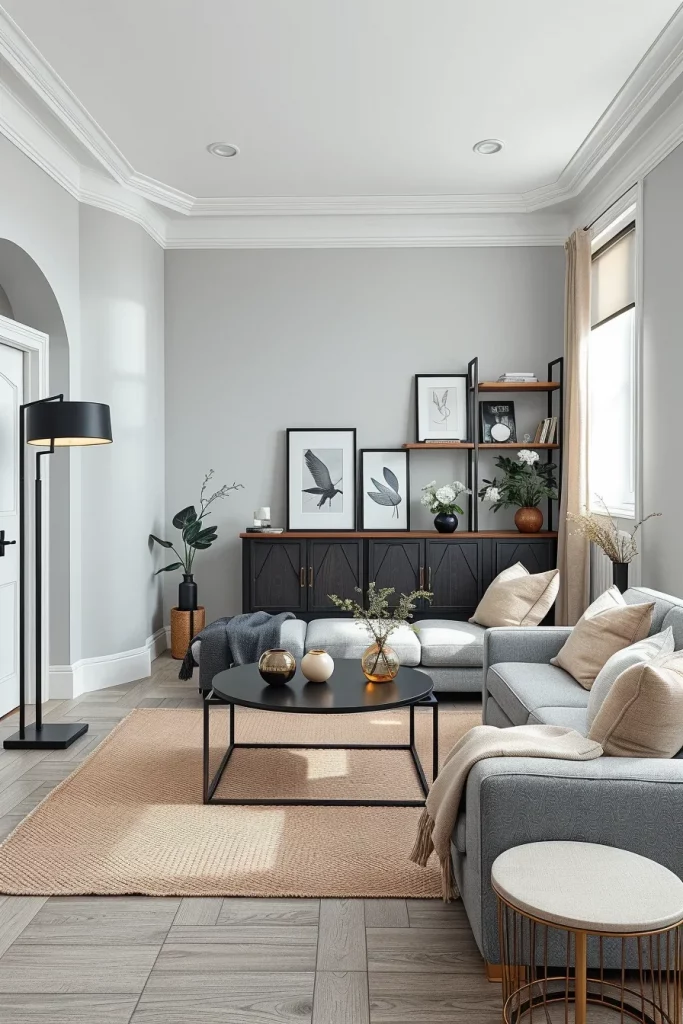
Personally, I avoid large black furniture pieces unless the room receives abundant natural light. Elle Decor has frequently highlighted the importance of using black as a visual anchor instead of a dominant color, and I find this advice produces interiors that remain elegant regardless of changing decorating trends.
To complete this design, I would add matte black candleholders, a sculptural side table, and subtle metal accessories distributed evenly throughout the room to maintain visual harmony.
Create A Relaxing Living Room With Earthy Tones
Earthy tones naturally enhance the welcoming atmosphere of a soft contemporary living room by creating a palette inspired by nature. I prefer combining warm beige, sand, clay, mushroom gray, soft taupe, and creamy white because these colors work together effortlessly while remaining timeless. Instead of relying on bold accent colors, I create interest through subtle tonal variation and layered textures.
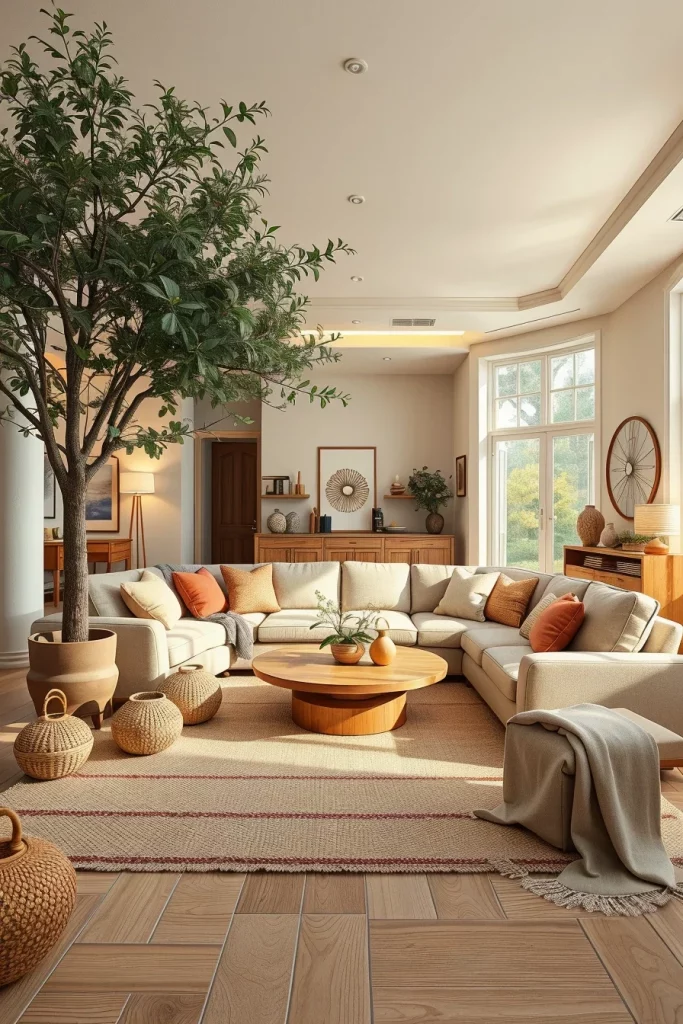
Furniture upholstered in linen or textured performance fabric pairs beautifully with oak cabinetry, travertine tables, woven baskets, and ceramic accessories. I often include textured throw blankets, oversized cushions, and handcrafted pottery that reinforce the organic feeling of the room. Soft lighting with warm color temperatures further enhances the peaceful mood during the evening.
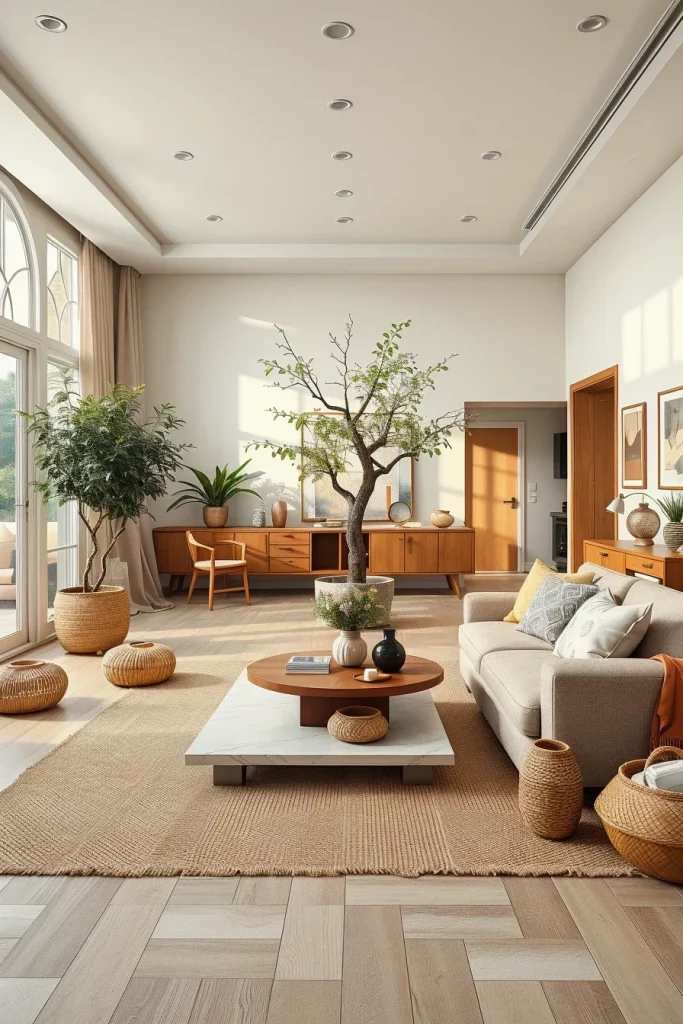
From my experience, earthy interiors remain visually comfortable throughout every season because they never feel overwhelming. Architectural Digest frequently showcases contemporary homes where restrained color palettes allow natural materials and carefully selected furnishings to become the primary design features. I appreciate this philosophy because it creates interiors that feel sophisticated without excessive decoration.
I would finish this space by adding subtle ambient lighting, natural woven accessories, and several large indoor trees that introduce gentle organic shapes while maintaining the room’s serene atmosphere.
Blend Curved And Linear Furniture For Visual Balance
One of my favorite techniques in a soft contemporary living room is balancing curved furniture with clean linear forms. Curves soften the geometry of contemporary interiors, while straight lines provide structure and order. When these shapes are combined thoughtfully, the room feels harmonious, comfortable, and visually dynamic without becoming overly decorative.
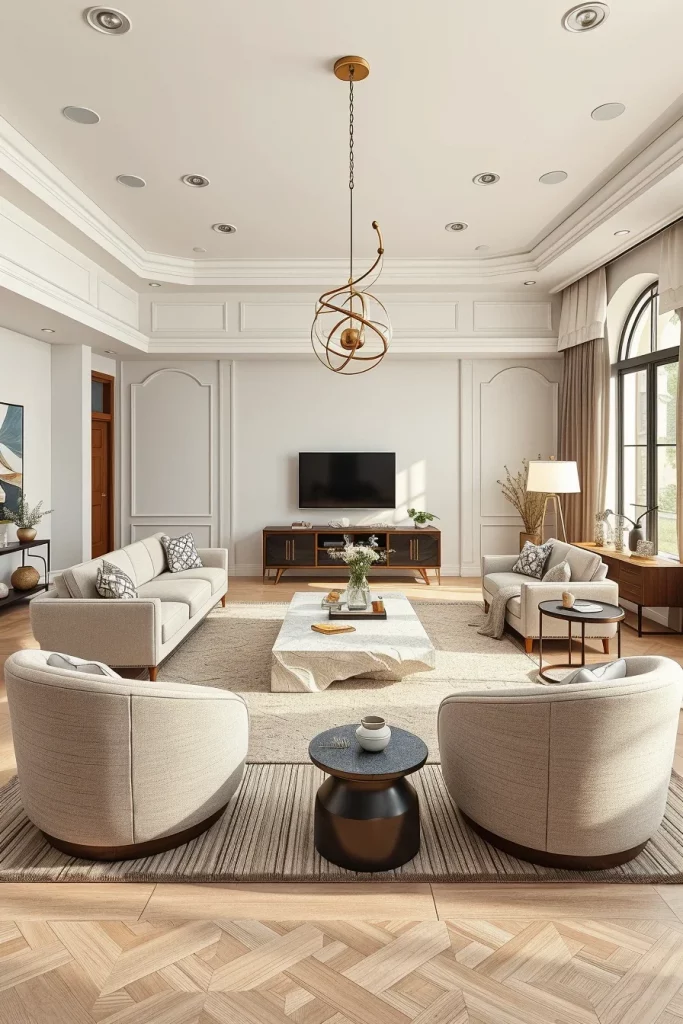
I like pairing a curved sectional sofa with a rectangular stone coffee table, rounded accent chairs, slim-lined shelving, and an elongated media console. Oval side tables, circular mirrors, and gently curved floor lamps introduce additional softness while maintaining visual consistency. Every furniture piece contributes a different shape that prevents the room from feeling repetitive.
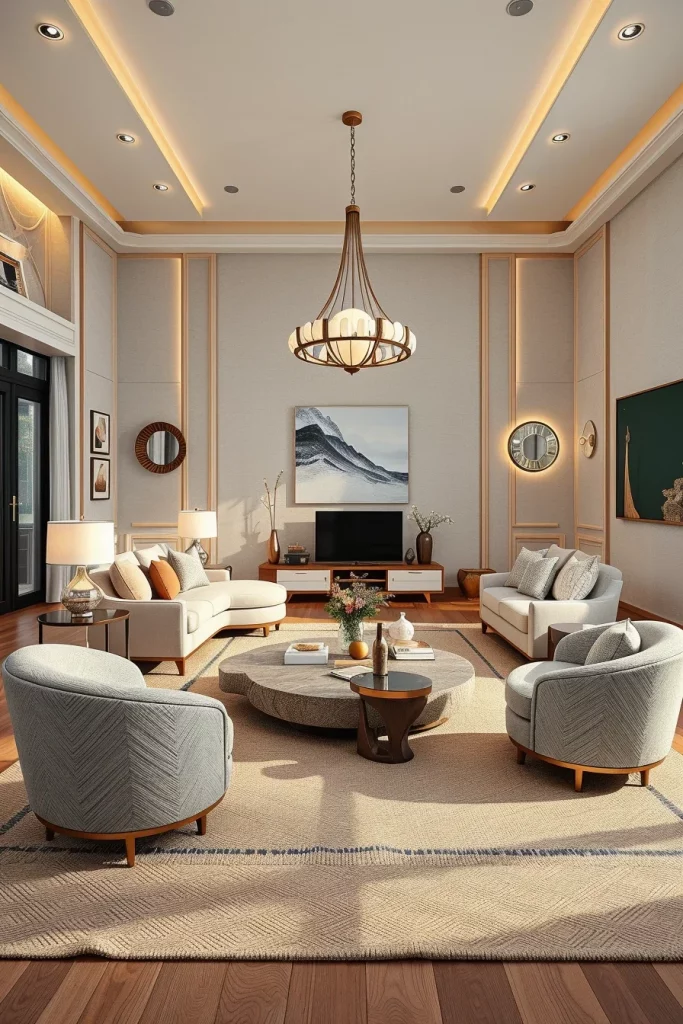
I have learned that combining contrasting silhouettes creates interiors that remain interesting long after trends change. Many designers featured in Luxe Interiors + Design emphasize balancing organic forms with architectural geometry, and I have consistently found that this approach creates spaces that feel both elegant and comfortable for everyday living.
To strengthen this composition, I would include sculptural pendant lighting, an oversized textured area rug, and carefully positioned decorative accessories that repeat both curved and straight forms throughout the room.
Incorporate Soft Contemporary Storage Solutions
A well-designed storage system is one of the foundations of a soft contemporary living room because it allows the entire space to feel organized without sacrificing visual warmth. I always begin by looking for opportunities to hide everyday items while displaying only meaningful decorative pieces. Built-in cabinets with flat-panel doors, floating media units, recessed shelving, and custom storage walls help maintain the clean appearance that defines this design style. By reducing visual distractions, the room immediately feels calmer and more inviting.
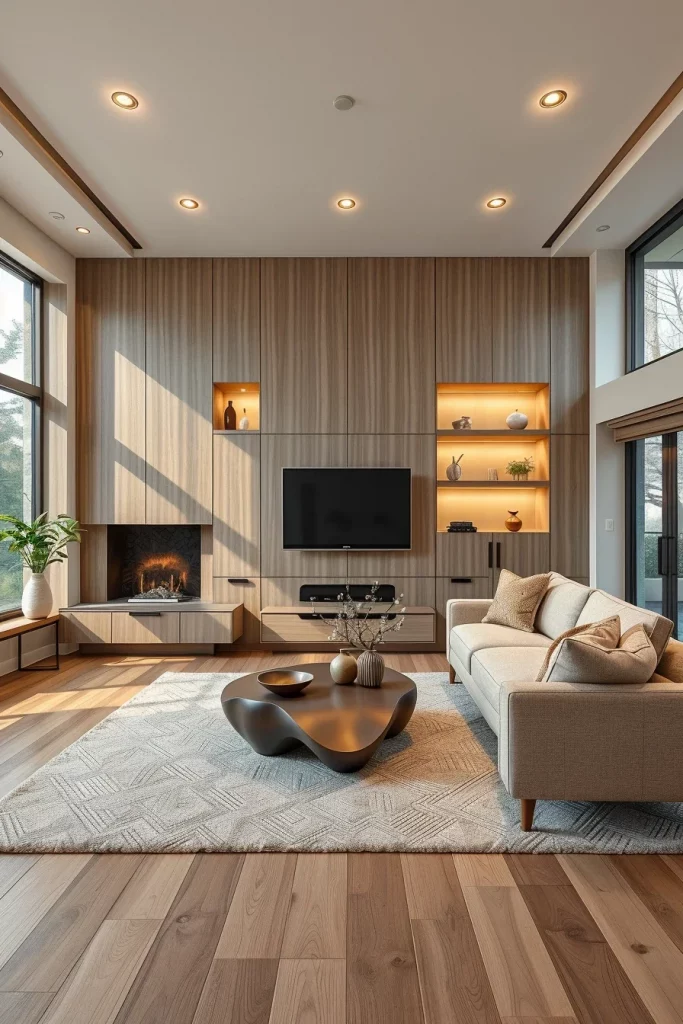
I prefer furniture that serves more than one purpose without appearing bulky. A storage coffee table keeps blankets and books out of sight, while an upholstered bench with hidden compartments offers additional seating. Floating shelves styled with ceramic vases, art books, and sculptural objects create personality without overwhelming the room. I also recommend choosing cabinetry in warm white, greige, taupe, or light oak finishes because these colors blend naturally into a soft contemporary palette and create visual continuity throughout the space.
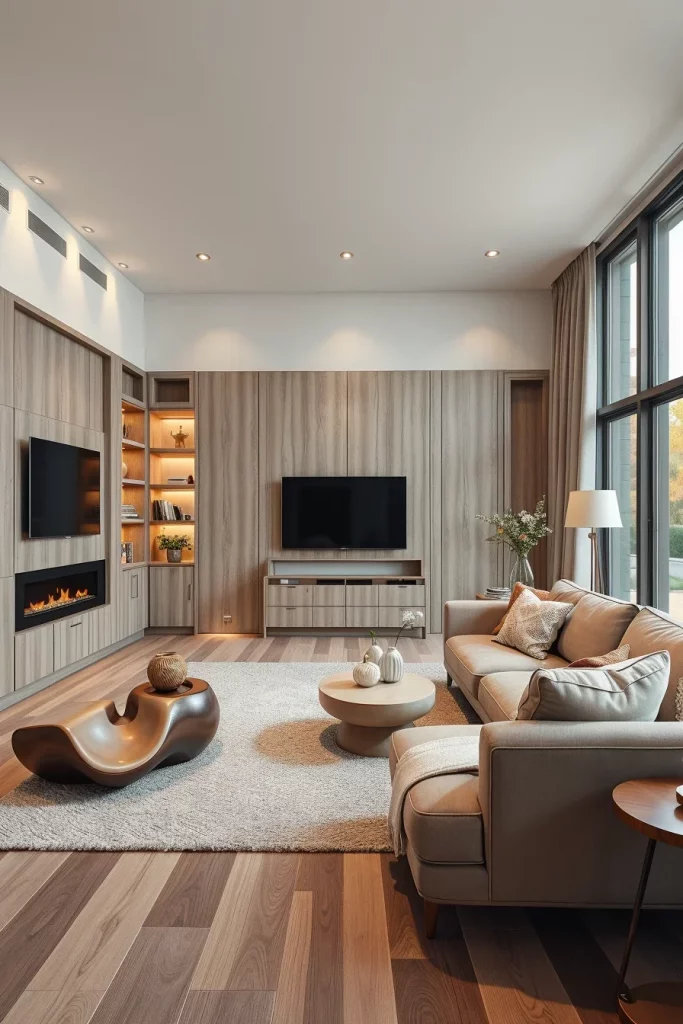
Many respected interior designers featured by Architectural Digest recommend treating storage as part of the architecture instead of an afterthought, and I completely agree with this approach. I have found that when storage is integrated seamlessly into the room, the furniture becomes the focal point instead of everyday clutter. This strategy helps preserve the peaceful atmosphere that makes a soft contemporary interior so appealing.
To complete this section, I would also include layered ambient lighting inside shelving niches or display cabinets. Soft LED lighting highlights decorative objects during the evening and adds another layer of warmth without introducing unnecessary accessories.
Style Indoor Greenery For A Fresh Modern Look
Indoor greenery brings life into a soft contemporary living room while maintaining the relaxed elegance that defines this design style. I always use plants intentionally rather than filling every available corner. One large statement plant often creates a stronger visual impact than several small plants scattered throughout the room. The goal is to introduce natural movement, gentle color, and organic shapes that soften modern architecture.
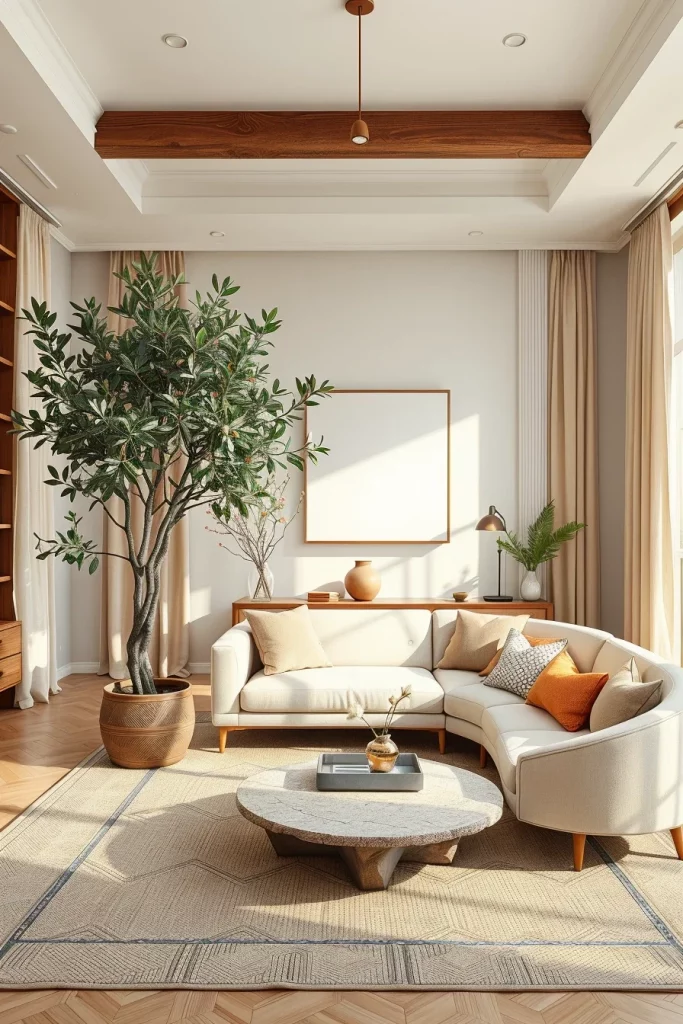
I usually select planters with simple silhouettes made from ceramic, concrete, limestone, or matte textured finishes. Olive trees, fiddle leaf figs, rubber plants, birds of paradise, and tall indoor palms work beautifully because their sculptural forms complement contemporary furniture. I also like placing smaller arrangements on coffee tables using natural branches or fresh eucalyptus instead of colorful floral displays. These subtle additions reinforce the calm atmosphere without becoming decorative distractions.
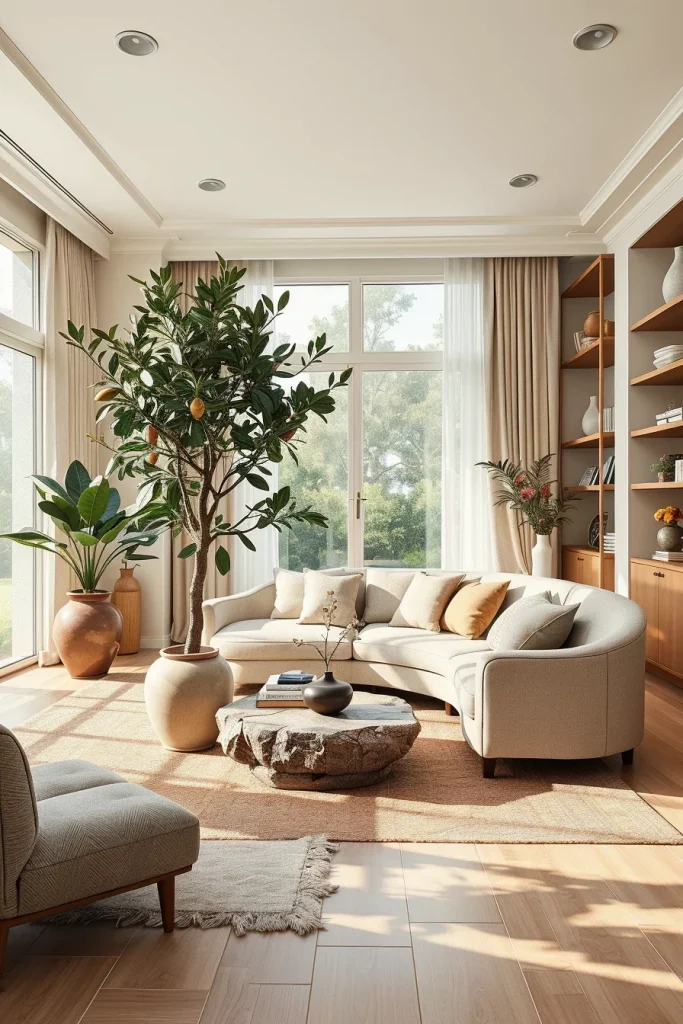
House Beautiful and many professional interior stylists frequently emphasize that greenery helps soften minimal interiors by introducing texture and natural variation. From my own experience, I have noticed that carefully selected plants make neutral color palettes feel more welcoming while improving the overall balance of the room. The greenery becomes part of the architecture instead of simply functioning as decoration.
To strengthen the overall design, I would also include discreet grow lighting if the room receives limited natural sunlight. Healthy plants maintain their sculptural beauty much longer and continue enhancing the interior throughout every season.
Make A Small Soft Contemporary Living Room Feel Larger
Creating the illusion of space is essential when designing a smaller soft contemporary living room. I begin by simplifying the layout so that every piece of furniture has a clear purpose. Open circulation paths immediately make the room feel larger, while oversized furniture often has the opposite effect. A restrained furniture arrangement allows the architecture to breathe and creates a greater sense of openness.
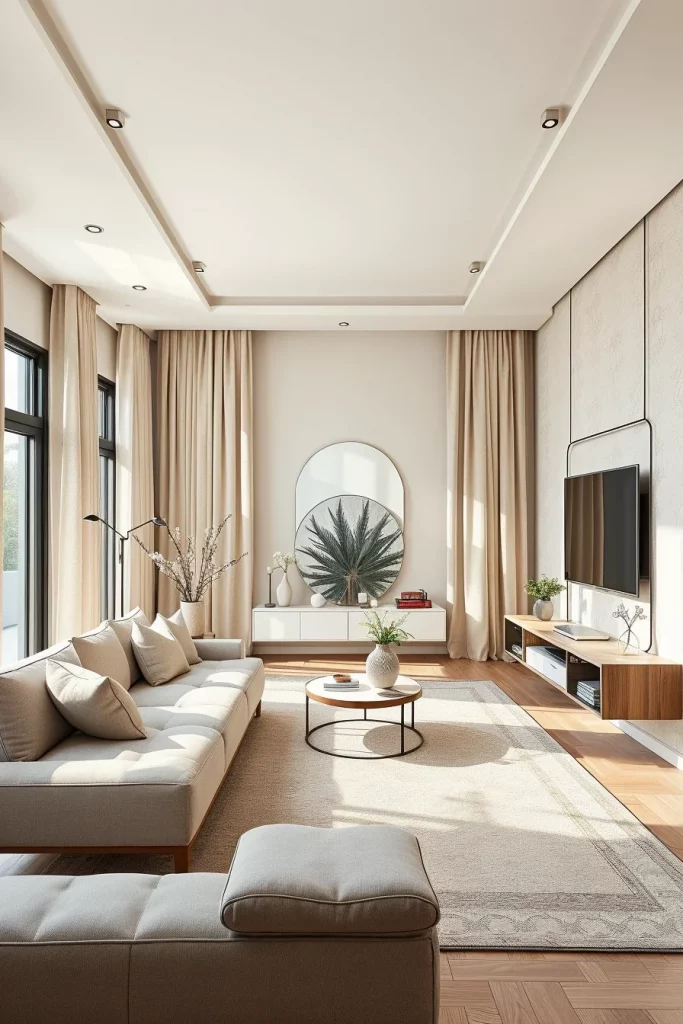
I recommend selecting a sofa with slim arms, elevated legs, and soft upholstery that visually occupies less space. A round coffee table improves circulation, while nesting side tables provide flexibility without adding bulk. Floor-to-ceiling curtains mounted close to the ceiling create the impression of greater height. Large mirrors placed opposite windows reflect natural light and visually expand the room, making it feel significantly brighter.
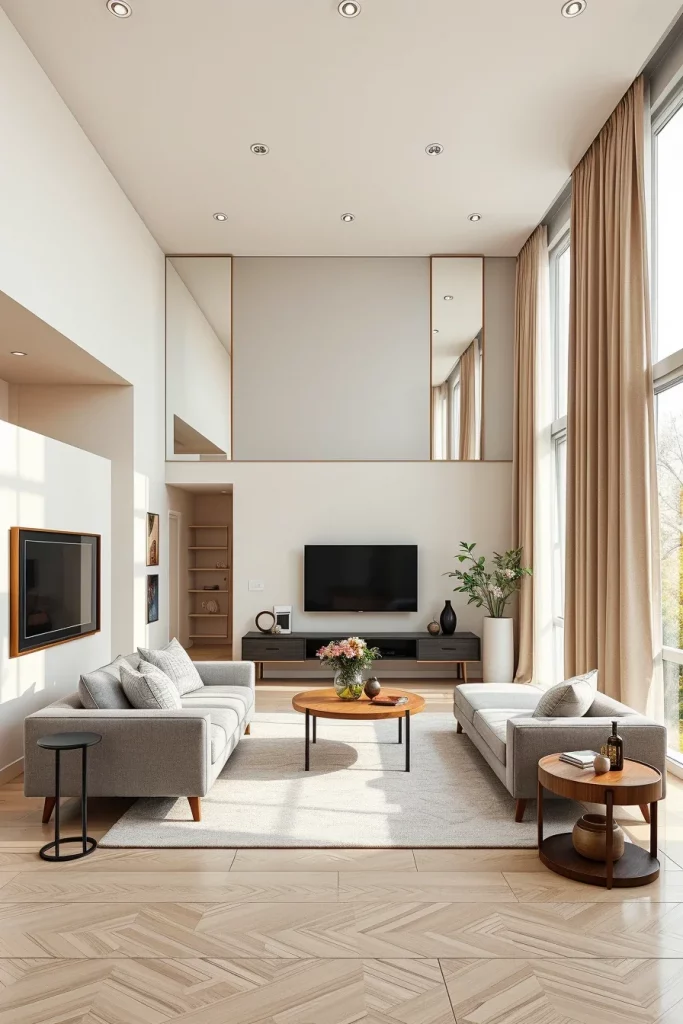
Many interior designers featured by Elle Decor suggest maintaining a limited color palette when decorating compact spaces because visual consistency naturally enlarges the room. I have repeatedly seen how soft whites, warm beige, creamy taupe, and light gray work together to blur visual boundaries, allowing even modest living rooms to feel much more spacious.
One additional feature I would recommend is concealed cable management for televisions and electronics. Eliminating visible wires contributes to the clean appearance that is essential in soft contemporary interiors.
Design A Spacious Open Concept Soft Contemporary Living Room
An open concept layout offers the perfect opportunity to showcase the relaxed sophistication of soft contemporary design. I focus on creating visual harmony between connected living, dining, and kitchen areas while allowing each zone to maintain its own identity. Consistent flooring, coordinated color palettes, and repeated materials establish continuity throughout the entire space.
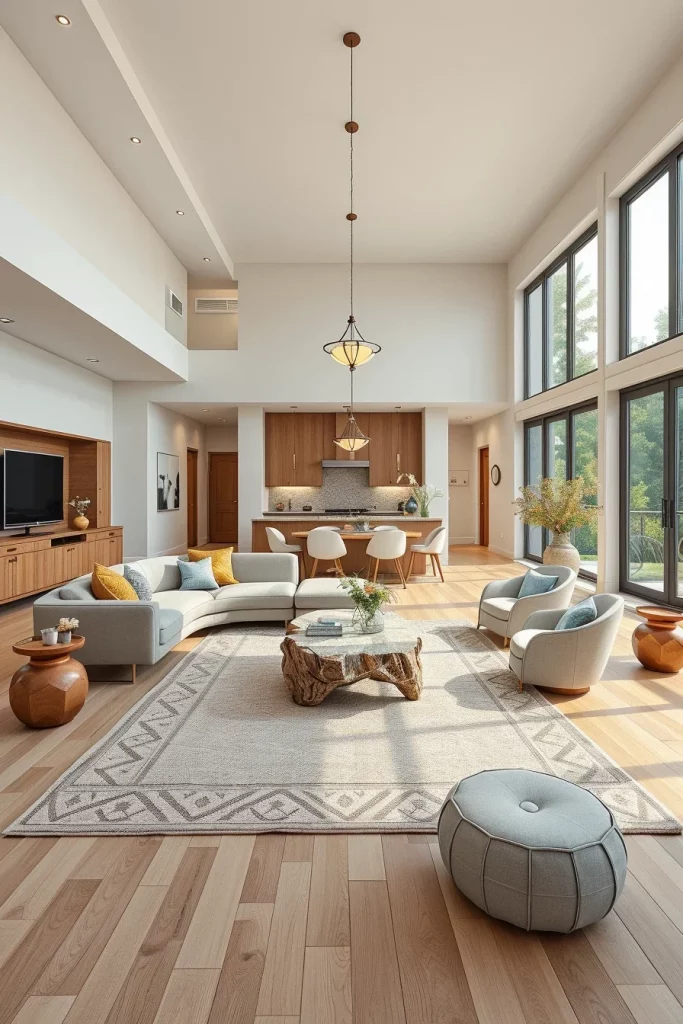
Furniture placement becomes the primary tool for defining individual functional zones. I often position the sofa to separate the living area naturally from the dining space while maintaining open sightlines. Area rugs help establish boundaries without interrupting movement. Sculptural accent chairs, curved sofas, and large coffee tables encourage conversation while reinforcing the elegant softness that characterizes contemporary interiors.
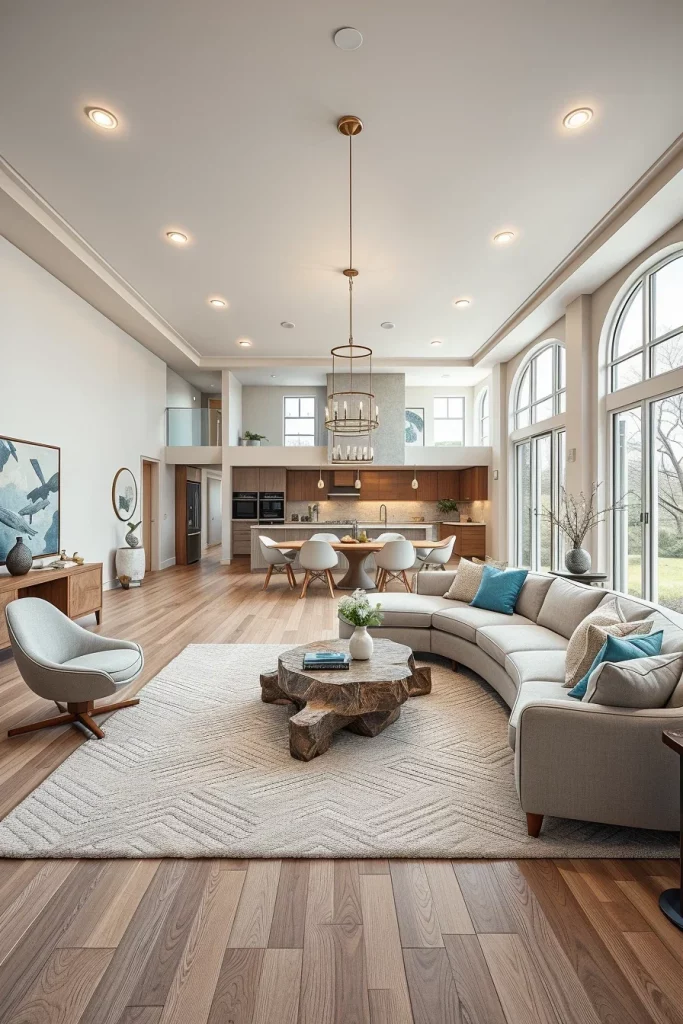
Professional designers frequently emphasize that open floor plans succeed when every element feels connected rather than isolated. I have learned that repeating finishes such as brushed metal, textured fabrics, and natural stone throughout adjoining spaces creates subtle rhythm and prevents the design from feeling fragmented. Every room supports the next while maintaining a cohesive overall appearance.
To make the layout even more functional, I would incorporate layered lighting that allows each activity zone to be adjusted independently. Separate dimmers for pendant lighting, recessed lighting, floor lamps, and table lamps create flexibility throughout the day.
Use Decorative Accessories Without Creating Clutter
Decorative accessories should enhance a soft contemporary living room instead of competing for attention. I always begin by selecting only a few meaningful objects that complement the architecture and furniture. Negative space is just as important as decoration because it allows every carefully chosen accessory to stand out naturally. A restrained approach creates an atmosphere that feels sophisticated rather than unfinished.
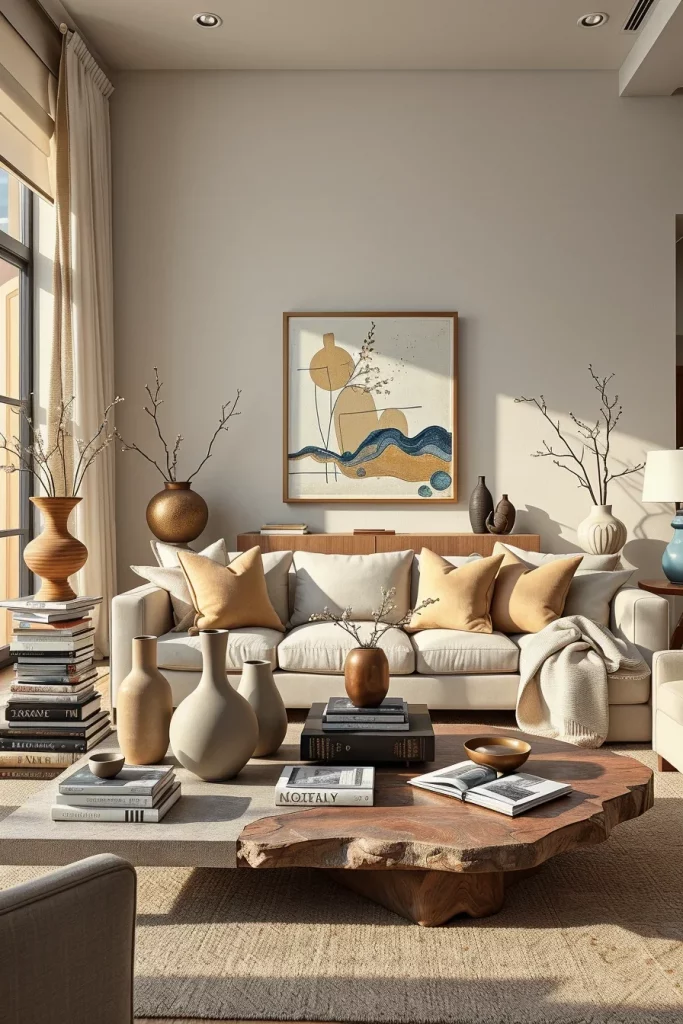
I like combining ceramic vases, sculptural bowls, textured books, framed abstract artwork, linen cushions, cashmere throws, and handcrafted decorative objects with simple forms. Accessories should introduce subtle variations in texture rather than bold color contrasts. Matte finishes, soft fabrics, natural stone, smoked glass, and brushed metals create visual interest while maintaining the calming mood of the room.
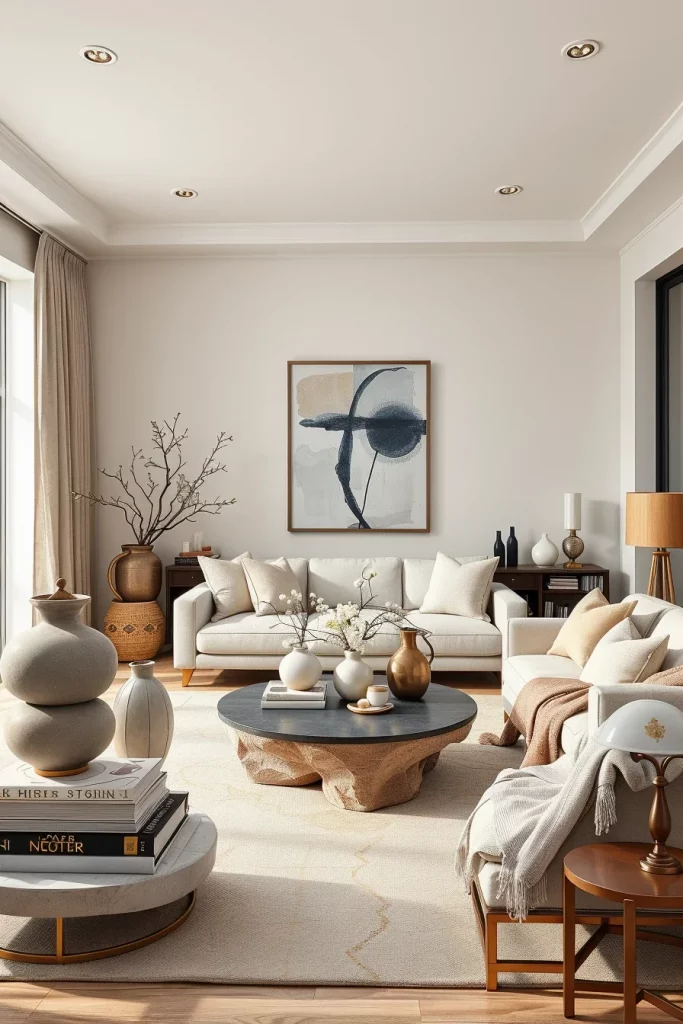
Architectural Digest often highlights the importance of thoughtful styling instead of excessive decoration, and I have found this advice extremely valuable. Rather than filling every shelf, I prefer creating intentional groupings with varying heights and materials. This approach allows each decorative piece to contribute to the overall composition without overwhelming the room.
I would also recommend periodically editing decorative displays throughout the year. Removing unnecessary items keeps the room feeling fresh and prevents collections from gradually turning into visual clutter.
Combine Timeless And Contemporary Design Elements
A successful soft contemporary living room blends familiar design principles with modern simplicity instead of following short-lived trends. I always begin with timeless architectural details and then introduce contemporary furniture with refined silhouettes. This balance creates an interior that feels current today while remaining attractive for many years. Neutral color palettes, layered textures, and carefully chosen materials allow both traditional and modern elements to coexist naturally without competing for attention.
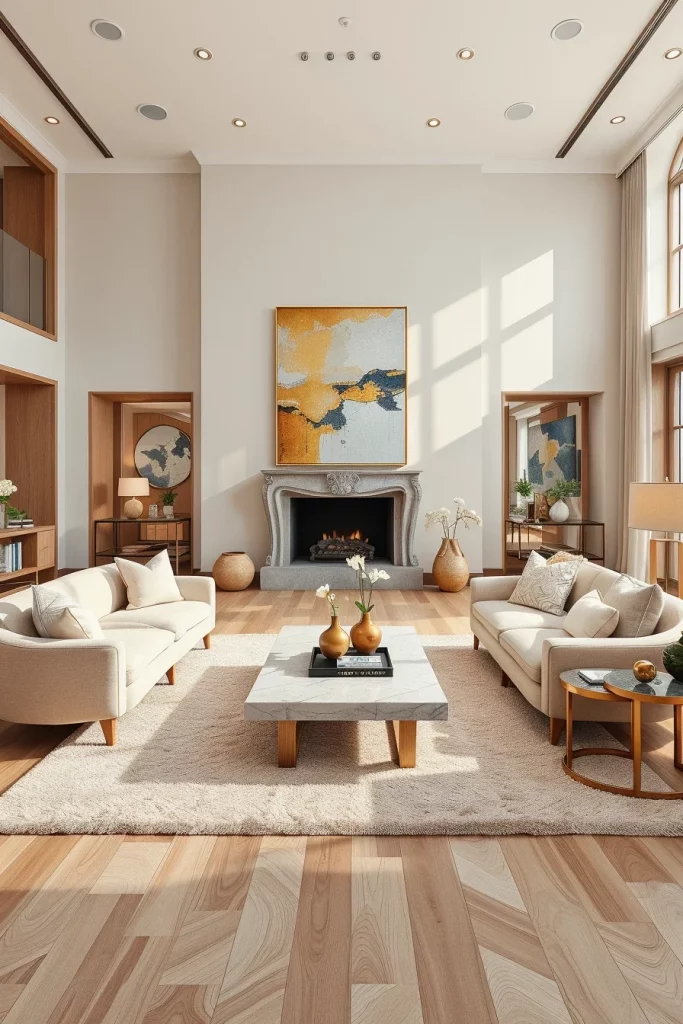
I like combining a generously upholstered curved sofa with a classic wool area rug, a contemporary stone coffee table, and elegant accent chairs that feature subtle rounded forms. Natural oak, limestone, boucle fabric, linen, brushed brass, and smoked glass all work together beautifully because each material adds texture without overwhelming the space. Simple wall molding or a clean fireplace surround can introduce timeless character while remaining perfectly compatible with modern furnishings.
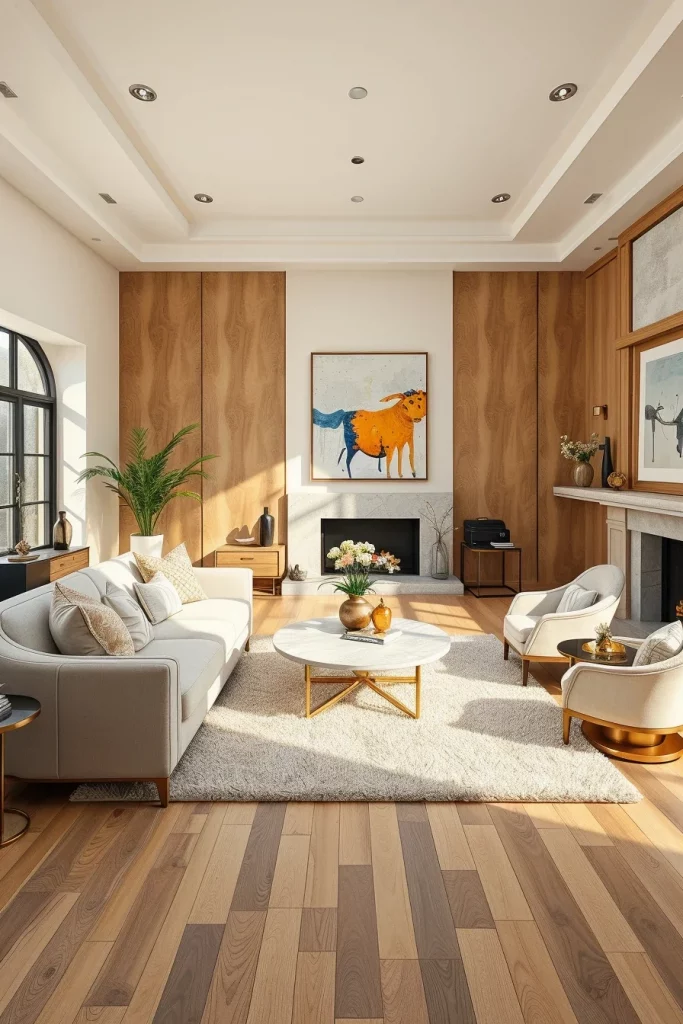
Many designers featured by Elle Decor encourage homeowners to invest in quality foundational furniture instead of chasing seasonal decorating trends. I have found this advice especially valuable because durable materials and thoughtful craftsmanship continue to look sophisticated long after temporary styles disappear. By mixing classic proportions with contemporary finishes, the room gains personality without becoming dated.
To further enhance this design approach, I would include one carefully selected statement artwork that introduces subtle contrast while reinforcing the room’s calming color palette. Oversized abstract art often provides the perfect finishing touch without dominating the space.
Refresh Your Living Room With Seasonal Soft Touches
A soft contemporary living room can feel fresh throughout the year without requiring a complete redesign every season. I prefer making subtle updates that preserve the room’s overall harmony rather than introducing dramatic seasonal decorations. By replacing only a few carefully selected accessories, the living room remains elegant while reflecting changes in the seasons.
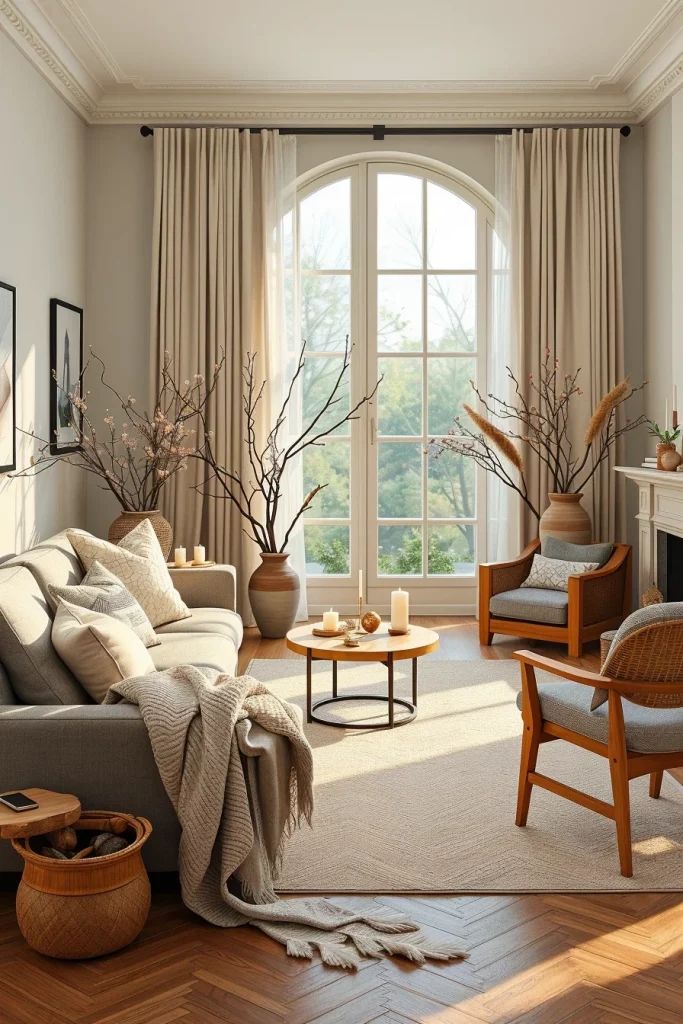
During spring and summer, I usually introduce lightweight linen cushions, soft cotton throws, ceramic bowls, and fresh branches displayed in sculptural vases. In autumn and winter, I replace these with textured wool blankets, boucle pillows, warm-toned ceramics, candles, and heavier natural fabrics that create additional comfort. Because the furniture remains consistent, these small seasonal changes feel intentional instead of excessive.
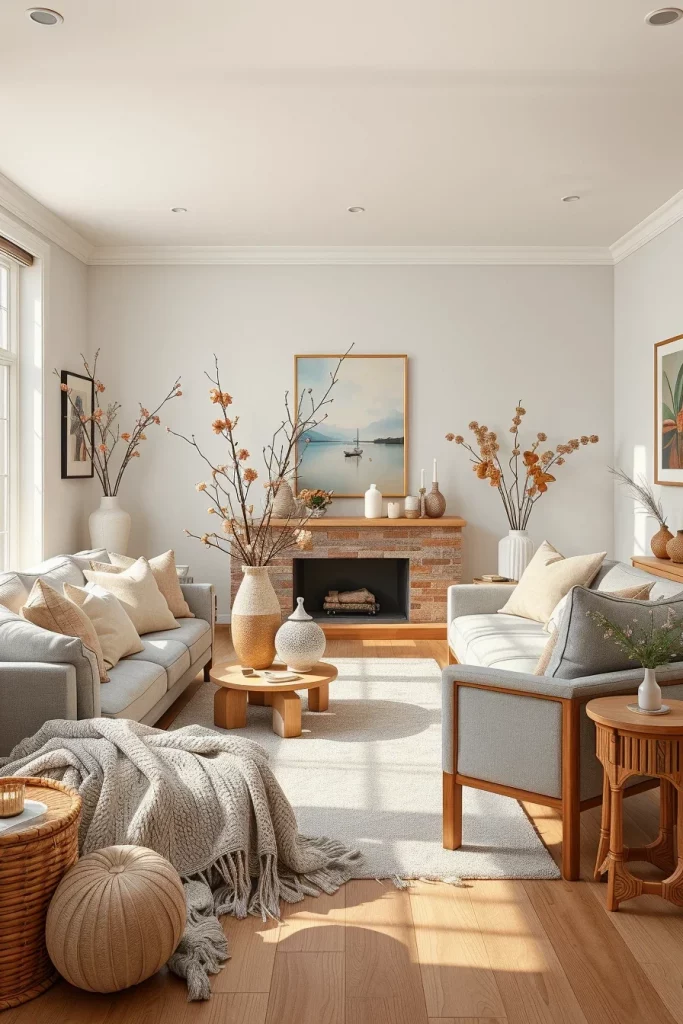
Interior designers frequently recommend limiting seasonal accessories to maintain visual balance, and I completely agree with this philosophy. In my own projects, I have noticed that subtle adjustments often create a greater impact than large decorative collections. The room continues to feel sophisticated while still reflecting the atmosphere of each season.
I would also recommend updating fragrance alongside decorative accessories. Soft natural scents such as cedar, eucalyptus, linen, or sandalwood complement the visual design and contribute to the overall experience of the living room.
Avoid Common Soft Contemporary Living Room Decorating Mistakes
Even beautifully selected furniture can fail to create a cohesive interior when common decorating mistakes are overlooked. I often see homeowners purchasing individual pieces they love without considering how those items work together within the overall composition. A soft contemporary living room depends on balance, proportion, and thoughtful restraint rather than filling every available space.
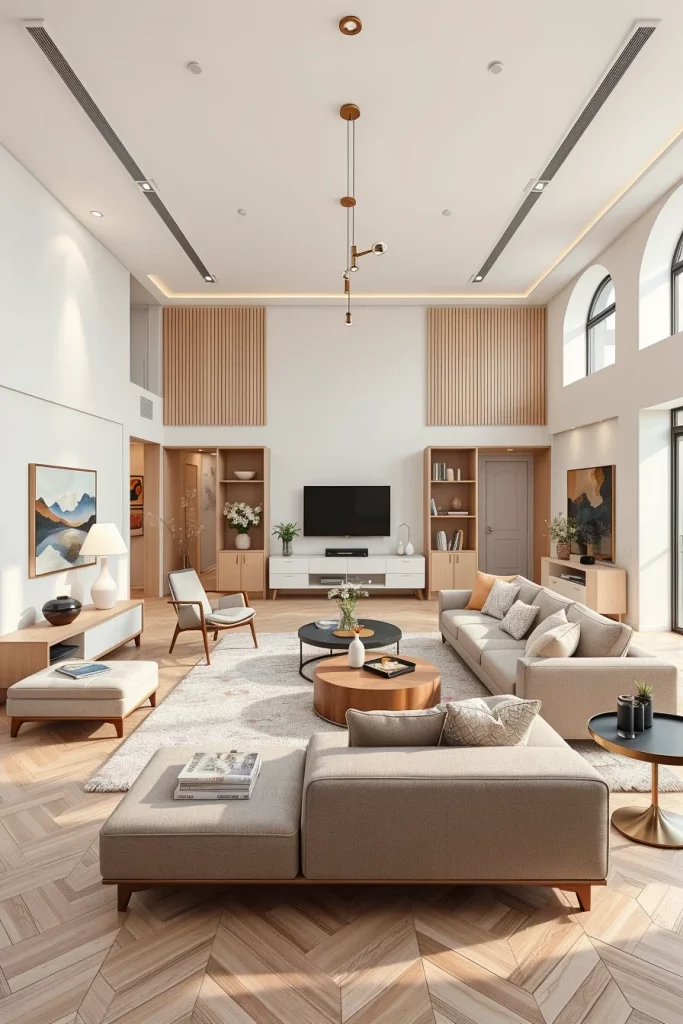
One of the most common mistakes is combining too many contrasting colors, furniture styles, or decorative materials. I recommend limiting the primary color palette and repeating similar finishes throughout the room. Oversized furniture can overwhelm smaller spaces, while undersized rugs often make the entire layout feel disconnected. Proper lighting is equally important because relying on a single ceiling fixture rarely creates the layered atmosphere associated with contemporary interiors.
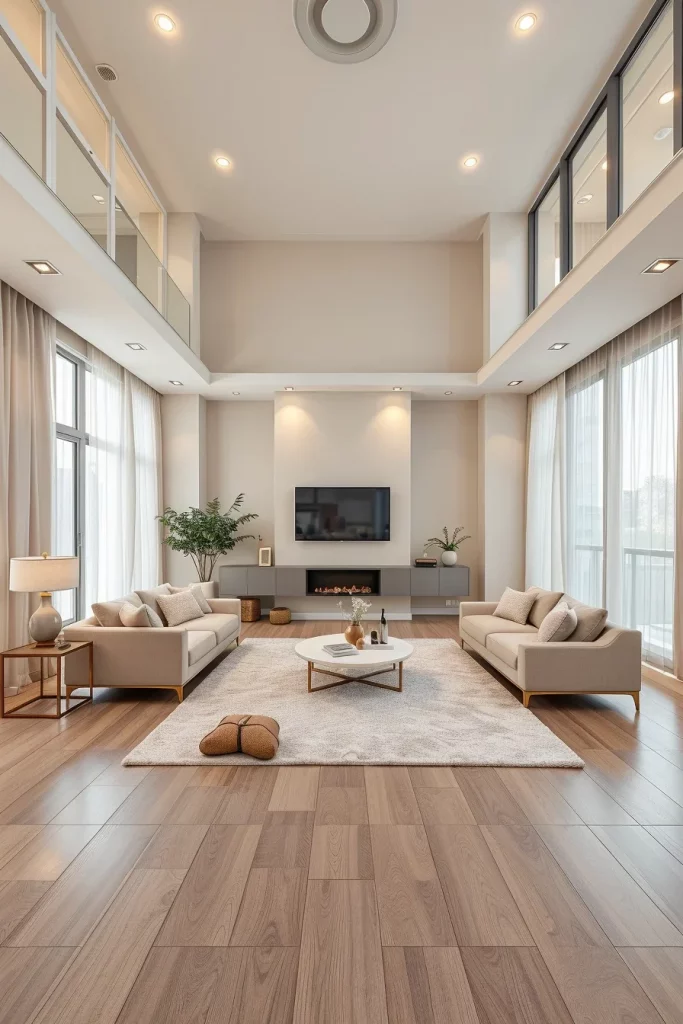
Architectural Digest frequently emphasizes editing rather than continually adding decorative pieces, and I believe this advice applies perfectly to soft contemporary design. Whenever I complete a room, I remove unnecessary accessories before considering whether anything else should be added. Simplicity often produces a more refined result than abundance.
Another important improvement is evaluating furniture spacing after installation. Small adjustments to seating arrangements often improve conversation, circulation, and visual balance without requiring additional purchases.
Budget-Friendly Ways To Achieve A Soft Contemporary Living Room
Creating a sophisticated soft contemporary living room does not always require an unlimited budget. I prefer investing in a few high-quality foundational pieces while saving money on decorative accessories that can easily be updated over time. Careful planning allows the room to feel luxurious even when the budget is modest.
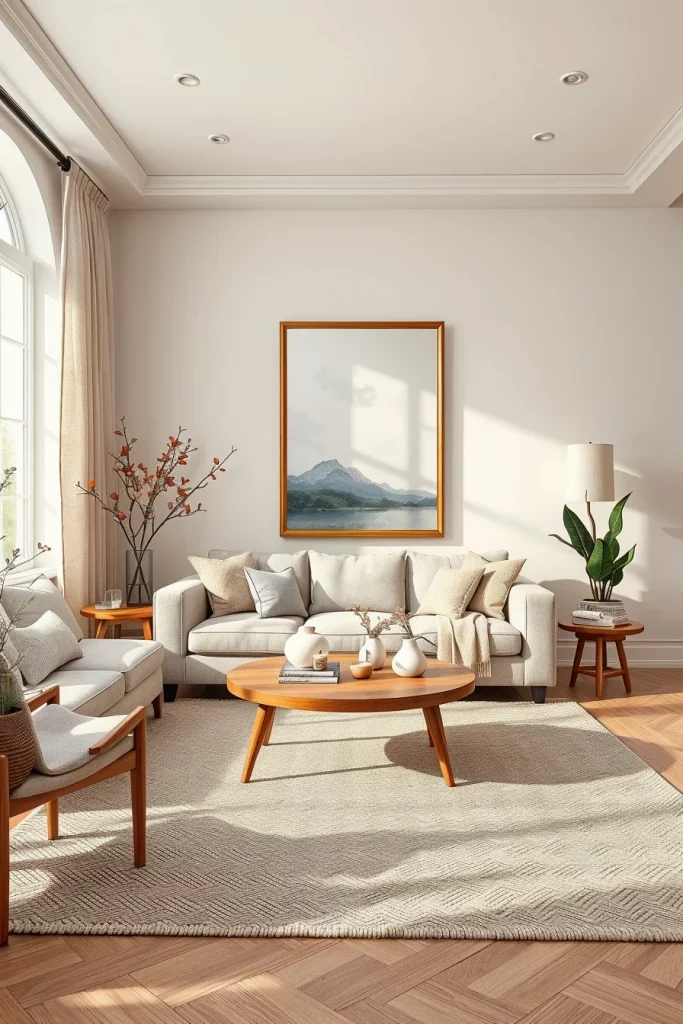
I recommend prioritizing a comfortable neutral sofa, a durable area rug, quality lighting, and timeless window treatments because these elements define the overall atmosphere. Affordable coffee tables, side tables, artwork, and decorative objects can then be selected to complement the larger investments. Simple paint colors, textured cushions, ceramic accessories, and well-placed mirrors often transform the appearance of a room without major renovation costs.
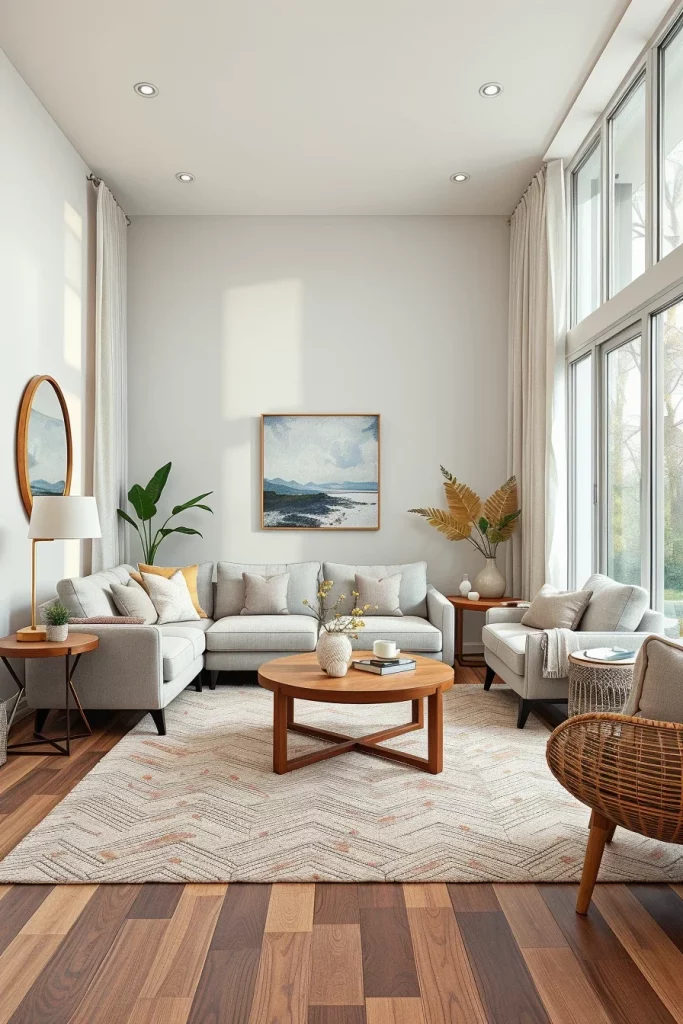
Many professional designers encourage homeowners to spend more on furniture used every day while choosing affordable decorative accents. I have consistently found this strategy to deliver the best long-term value because durable furniture lasts for many years while accessories can evolve with changing preferences.
I would also suggest shopping gradually instead of purchasing everything at once. Allowing the room to develop naturally often leads to better decisions and a more authentic final design.
Bring Everything Together For A Balanced Soft Contemporary Living Room
Designing a balanced soft contemporary living room is ultimately about creating harmony between comfort, functionality, and understated elegance. I always begin with the architectural features, establish a calming neutral palette, introduce layered textures, and then carefully select furniture that supports everyday living without overwhelming the room. Every design decision should contribute to a sense of calm and visual continuity.
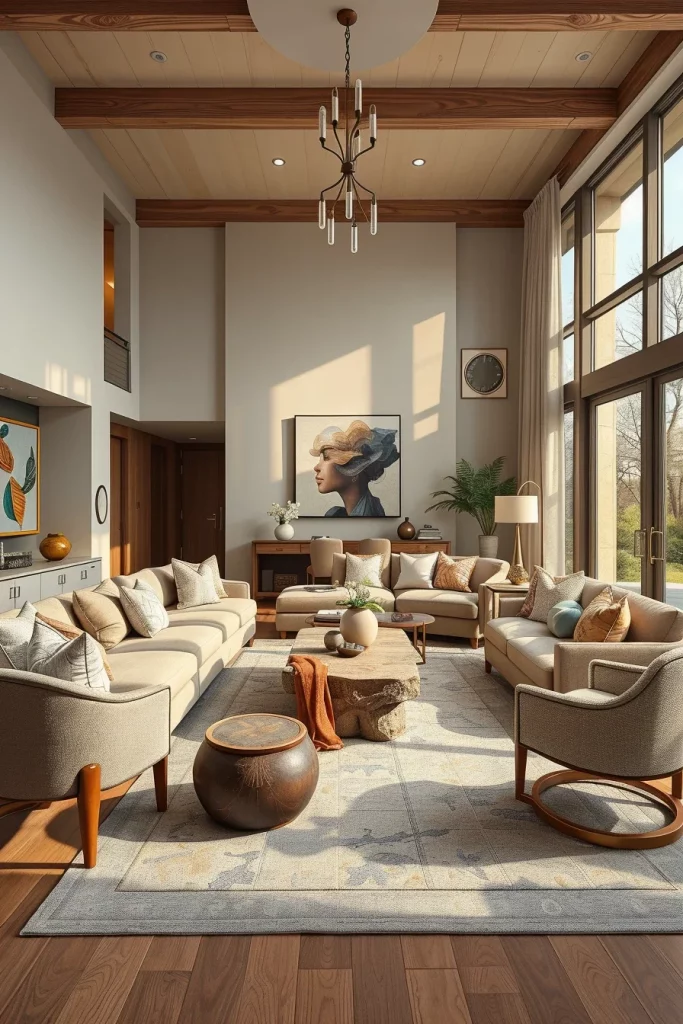
I like finishing the space with thoughtfully chosen lighting, natural materials, sculptural accessories, and carefully positioned seating that encourages conversation. Every object should have both a practical purpose and aesthetic value. When furniture proportions, materials, colors, and decorative elements work together, the room feels effortlessly complete instead of carefully staged.
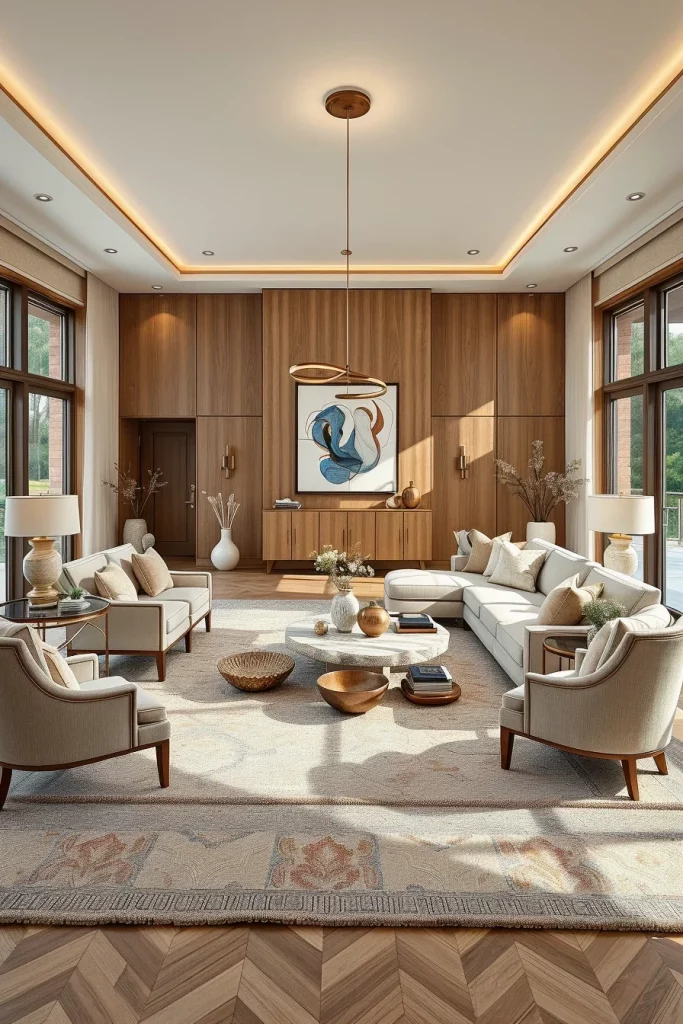
Over the years, I have learned that the most successful interiors are rarely the ones filled with the most expensive furniture. Instead, they are spaces where every element feels intentional, comfortable, and connected. That philosophy perfectly reflects the essence of soft contemporary design and explains why this style continues to remain relevant despite changing trends.
Before considering the room complete, I always spend time living with the layout and making small adjustments. Moving a chair, replacing a lamp, or simplifying a shelf often produces a more balanced result than introducing additional furniture or decoration.
A thoughtfully designed soft contemporary living room offers the perfect balance of modern simplicity and everyday comfort. By combining soothing colors, layered textures, elegant furniture, and carefully chosen décor, you can create a space that feels both sophisticated and welcoming. Whether you’re making small updates or planning a complete redesign, these ideas can help you achieve a timeless living room that reflects your personal style while remaining functional for years to come.