
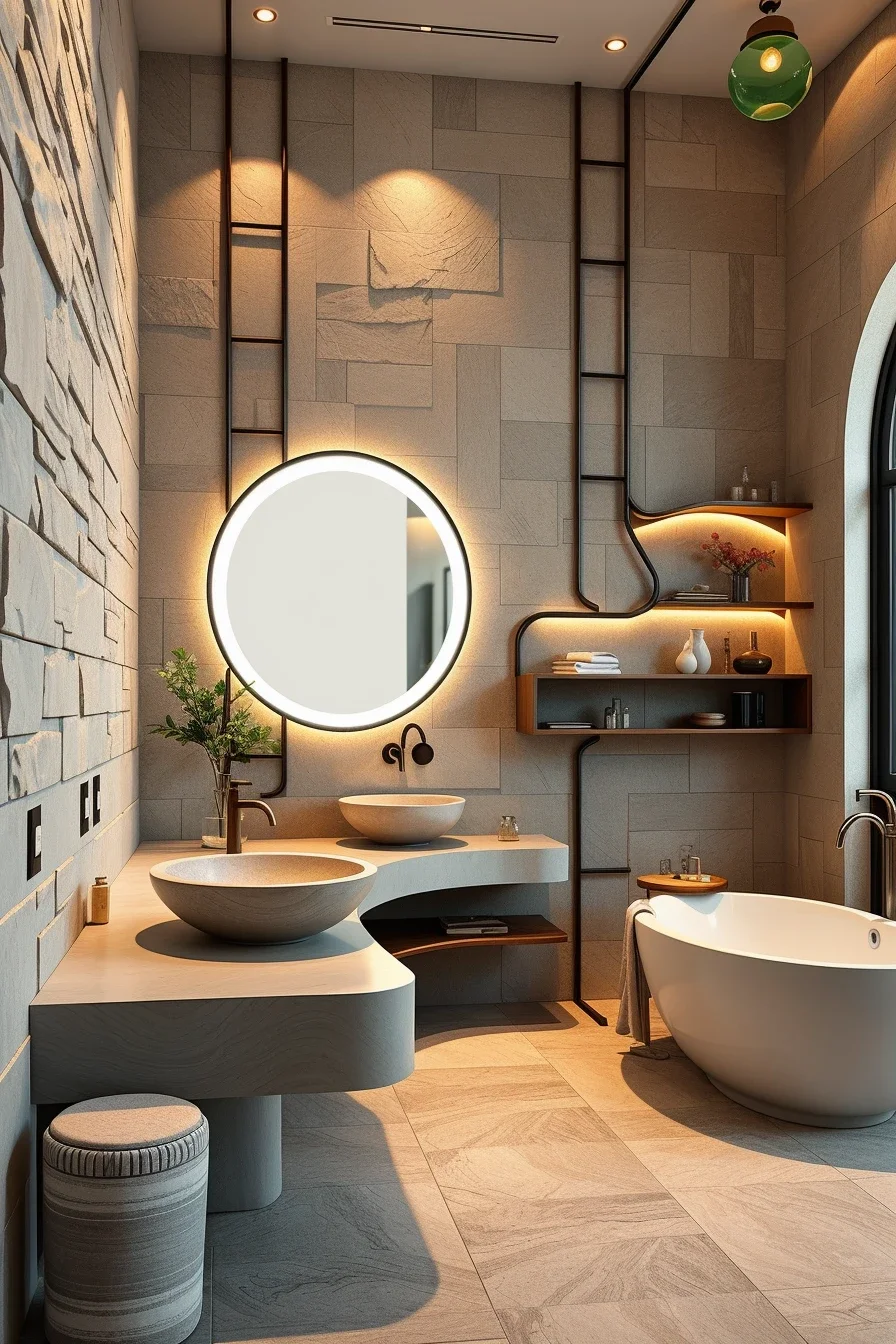
A textured stone bathroom combines natural beauty with lasting durability, creating a space that feels both sophisticated and inviting. The rich surfaces, organic patterns, and tactile finishes bring warmth and depth that ordinary materials cannot match. Whether you prefer a sleek contemporary look or a calming spa-inspired retreat, textured stone offers endless design possibilities. From dramatic shower walls to elegant flooring and statement accent features, every detail can enhance the overall atmosphere of the room. Choosing the right colors, lighting, and fixtures helps highlight the unique character of natural stone while maintaining a balanced interior. In this guide, you’ll discover inspiring textured stone bathroom ideas, practical design tips, and creative ways to transform your bathroom into a timeless sanctuary.
Why A Textured Stone Bathroom Creates A Timeless Retreat
A textured stone bathroom immediately creates a calm atmosphere that never feels outdated. I find that natural stone introduces depth and character that manufactured finishes rarely achieve. Every surface reflects subtle variations in texture, giving the room a unique personality while maintaining a clean and modern appearance. Instead of relying on temporary design trends, I prefer using genuine stone because it ages beautifully and continues to look elegant for many years.
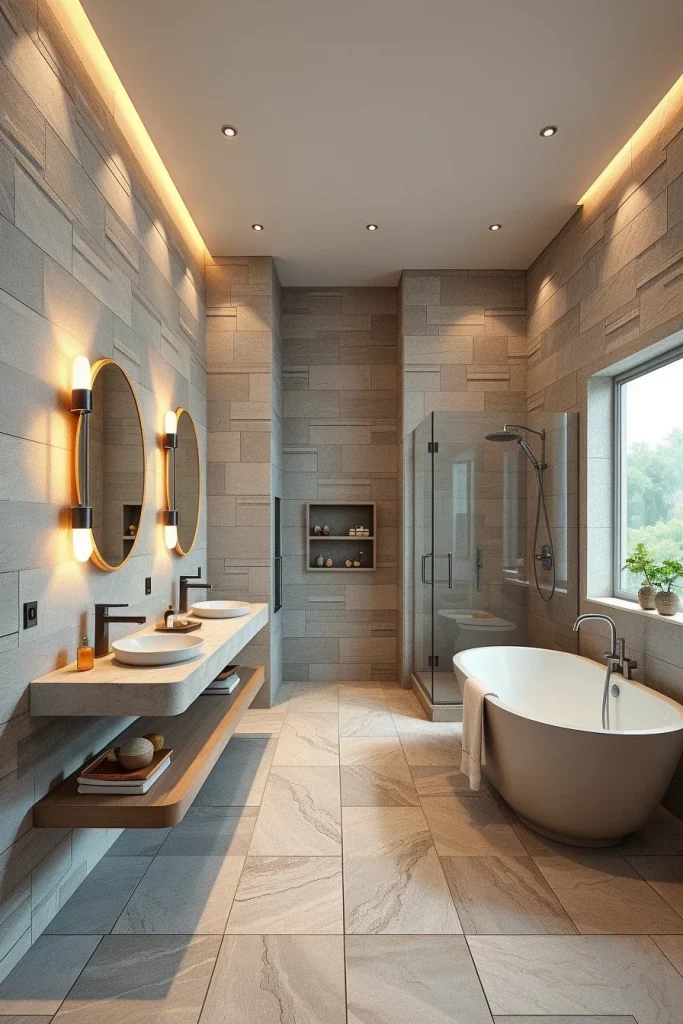
When designing this type of space, I like combining textured stone walls with minimalist fixtures, frameless glass shower panels, concealed storage, and simple matte hardware. A floating vanity with clean lines keeps the room visually open, while oversized mirrors reflect both natural and artificial light across the textured surfaces. Soft towels, carefully selected accessories, and discreet shelving complete the design without distracting from the stone itself.
Many American designers, including those regularly featured by Architectural Digest and House Beautiful, recommend incorporating authentic natural materials to create interiors with lasting value. I agree with this philosophy because textured stone provides visual warmth while remaining highly durable in humid environments. In my experience, investing in quality materials results in a bathroom that continues to feel luxurious long after the renovation is complete.
To make this retreat even more functional, I would also include underfloor heating, high-quality ventilation, hidden storage compartments, and dimmable lighting controls. These additions improve everyday comfort while preserving the clean appearance that makes a textured stone bathroom so appealing.
Natural Stone Walls That Add Rich Texture
Natural stone walls become the visual centerpiece of the bathroom by introducing organic movement and subtle texture across large surfaces. I enjoy selecting stones with gentle variations because they create interest without overwhelming the room. Whether using limestone, travertine, slate, or textured marble, the walls establish a relaxing atmosphere that feels connected to nature while maintaining a refined modern aesthetic.
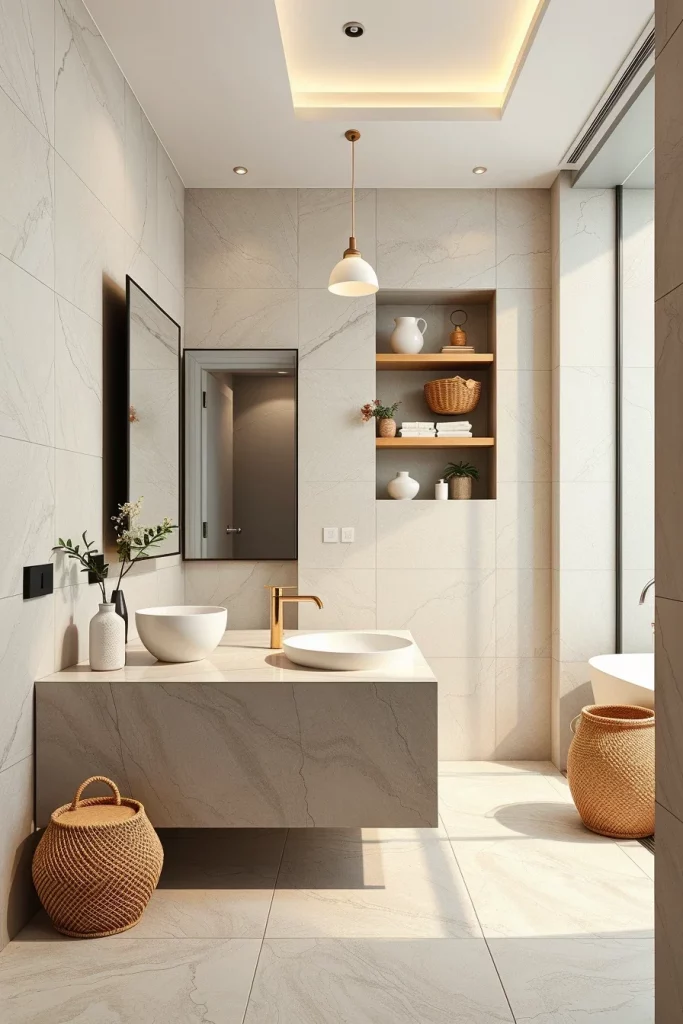
I typically pair stone walls with a floating vanity, integrated sink, frameless mirror, concealed faucets, and simple cabinetry in soft neutral finishes. These elements allow the stone to remain the focal point while ensuring the room stays uncluttered. Large porcelain accessories, woven baskets, and neatly folded towels add comfort without competing with the natural patterns found in the stone.
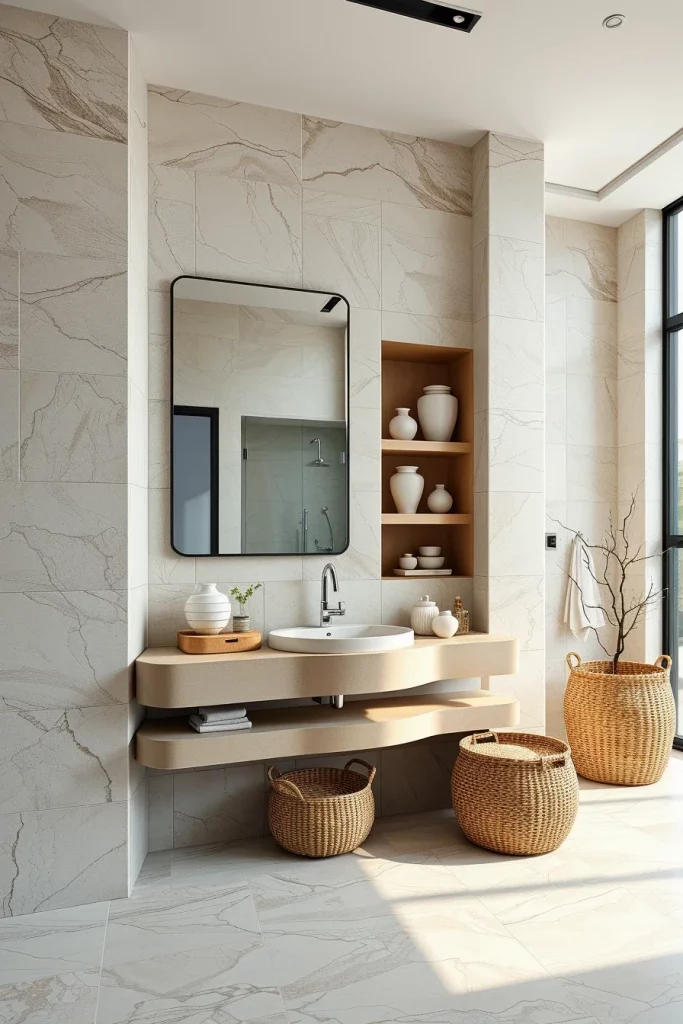
Interior designers frequently recommend layering natural textures instead of introducing excessive decorative details. I have found this advice especially valuable because the beauty of stone comes from its imperfections rather than elaborate ornamentation. By allowing the walls to stand out naturally, the bathroom feels balanced, elegant, and welcoming every day.
I would also consider incorporating recessed wall niches inside the shower, carefully matched stone trims, and moisture-resistant sealants. These details improve both functionality and long-term durability while preserving the seamless appearance of the textured walls.
Floor-To-Ceiling Stone For A Seamless Look
Extending stone from the floor to the ceiling creates an uninterrupted visual flow that makes even compact bathrooms appear larger. I appreciate this design because continuous materials reduce visual clutter while emphasizing the natural beauty of the stone. The absence of frequent material changes creates a peaceful environment where every surface feels intentionally connected.
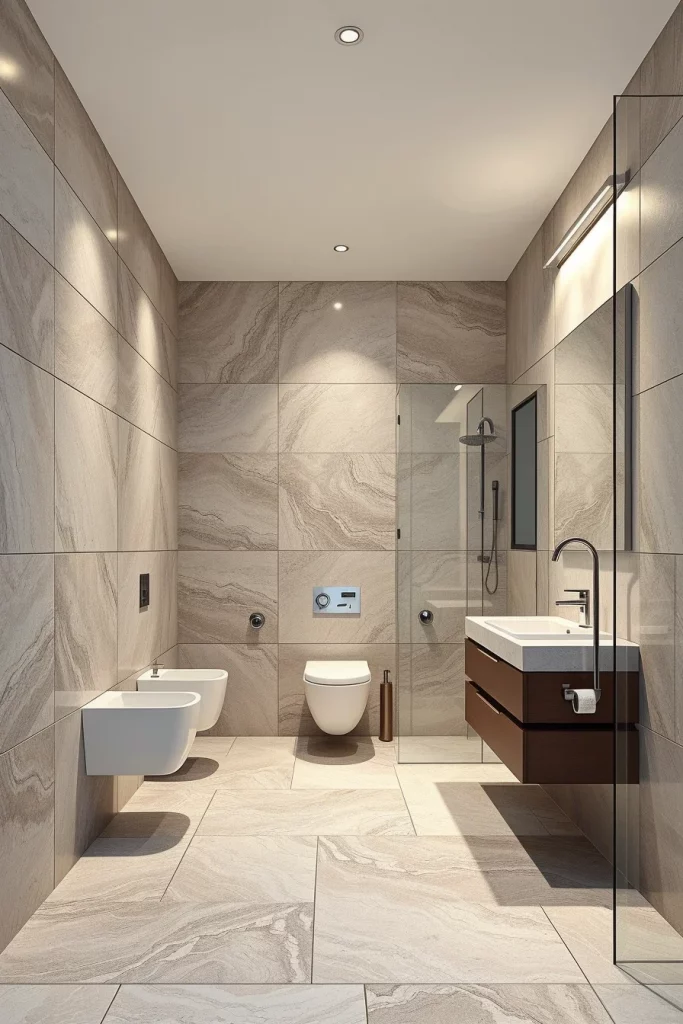
For this design, I usually select large-format stone panels that minimize grout lines and maintain a clean appearance. Floating cabinets, wall-mounted toilets, concealed storage, oversized mirrors, and frameless shower enclosures complement the seamless look perfectly. Every furniture piece should appear light and unobtrusive so the architecture remains the primary feature.
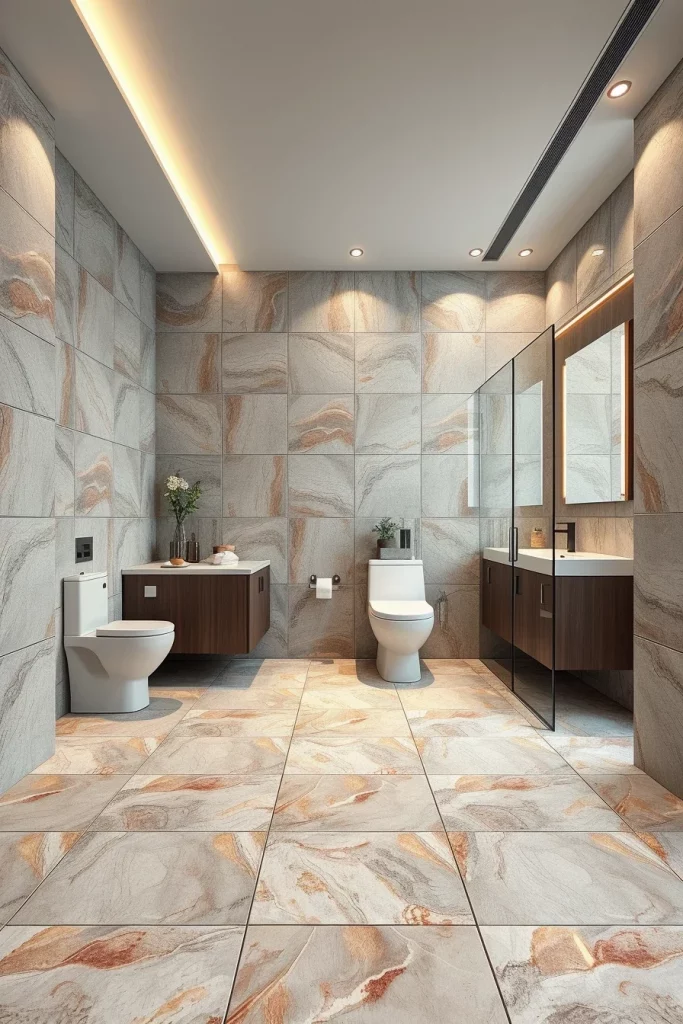
Many contemporary designers recommend reducing unnecessary visual interruptions to create a more relaxing environment. I have noticed that floor-to-ceiling stone naturally achieves this effect by allowing the eye to move effortlessly throughout the room. The result feels sophisticated without appearing overly decorative.
To enhance this concept further, I would include concealed linear drains, matching stone window surrounds, and carefully aligned stone joints. These finishing details significantly improve the overall visual harmony while demonstrating careful planning throughout the renovation.
Textured Stone Shower Walls With Modern Appeal
A shower enclosed with textured stone instantly becomes the highlight of the bathroom. I particularly enjoy using textured surfaces inside the shower because water enhances the natural color variations while emphasizing the stone’s depth. This creates an elegant spa-inspired atmosphere without requiring excessive decoration or bold colors.
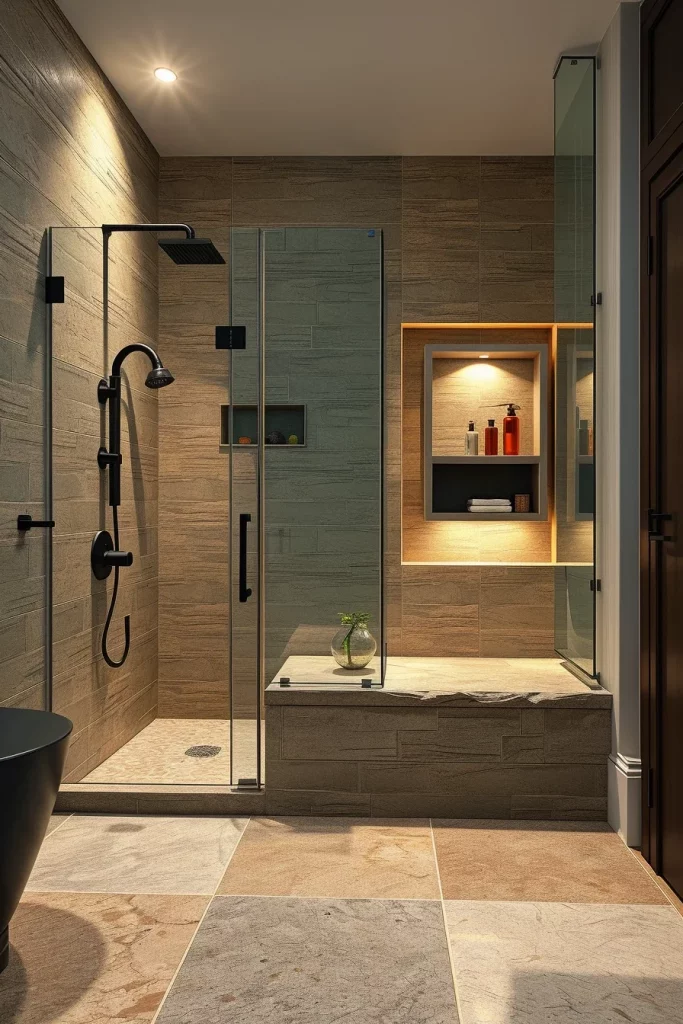
I usually combine textured shower walls with frameless glass panels, rainfall showerheads, built-in niches, floating benches, matte black or brushed nickel fixtures, and large-format floor tiles. These elements maintain a clean architectural appearance while allowing every practical feature to blend naturally into the overall design. The shower remains both beautiful and highly functional for everyday use.
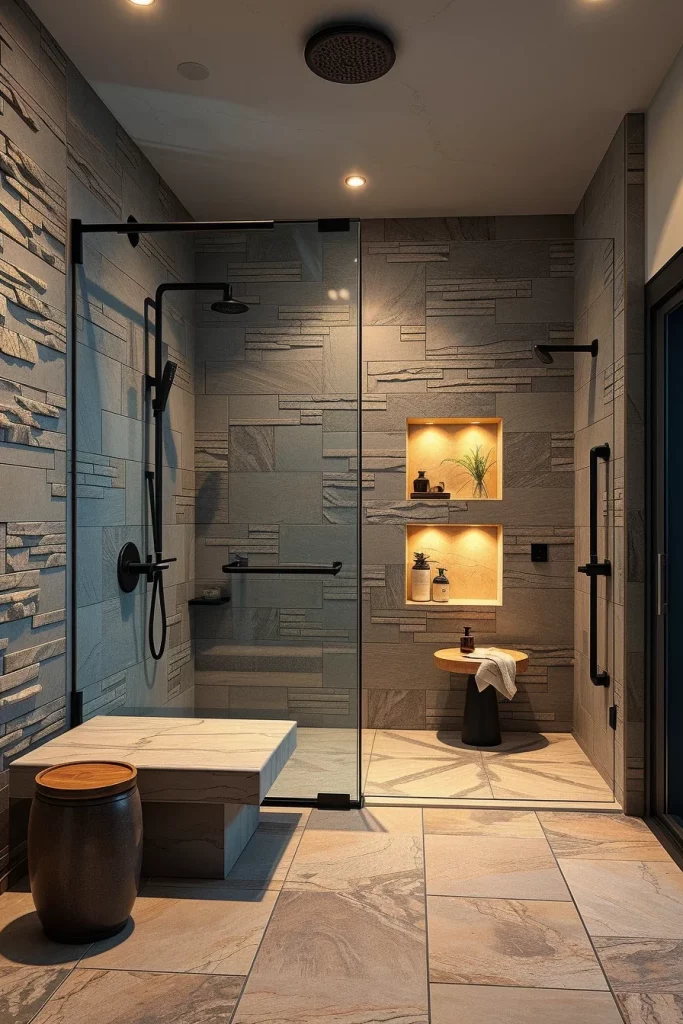
Many professional designers encourage selecting durable natural materials for wet areas because they perform well over time when properly sealed. I completely agree, especially when the installation is completed with attention to drainage, waterproofing, and maintenance. A carefully designed shower becomes one of the most valuable features within the entire textured stone bathroom.
I would also recommend adding integrated LED niche lighting, anti-slip flooring, hidden storage for bath products, and efficient ventilation. These additions improve safety, comfort, and long-term performance without compromising the clean visual design.
Stone Bathroom Floors That Feel Elegant And Durable
Stone flooring provides the perfect foundation for a bathroom that balances elegance with everyday durability. I appreciate how textured stone floors introduce subtle character while remaining resistant to heavy daily use. Their natural variations create visual warmth and prevent the room from feeling sterile, making the entire space feel more welcoming and comfortable.
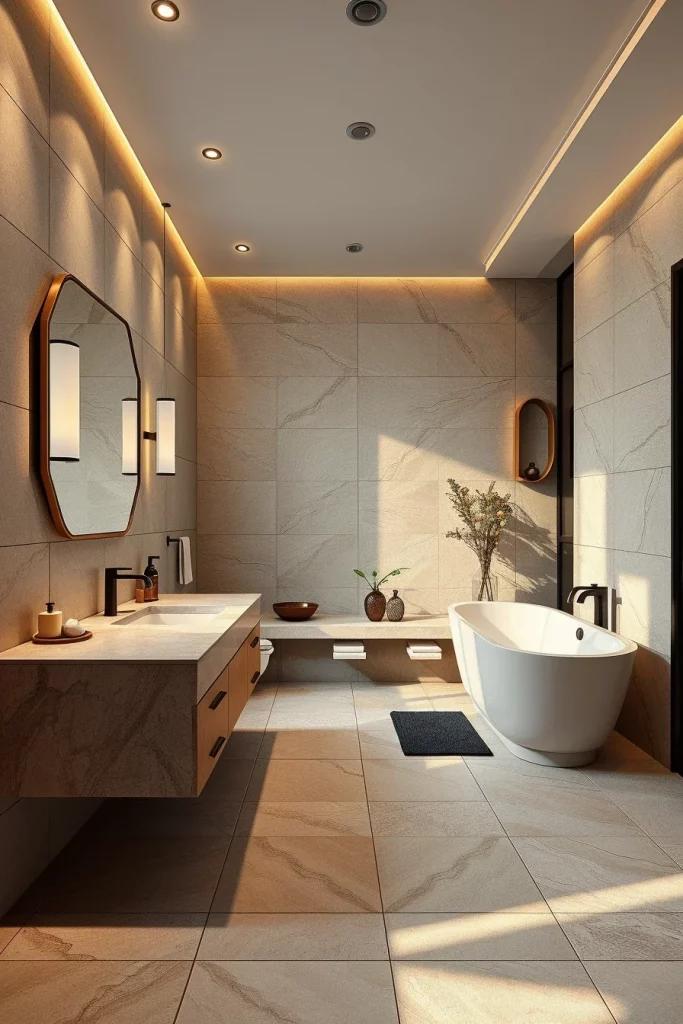
When selecting stone flooring, I look for finishes that provide reliable slip resistance without sacrificing appearance. I often pair the floor with floating wood-look cabinetry, minimalist vanities, heated flooring systems, oversized mirrors, and simple accessories that complement the natural texture rather than compete with it. Carefully coordinated grout colors also help create a more unified appearance throughout the room.
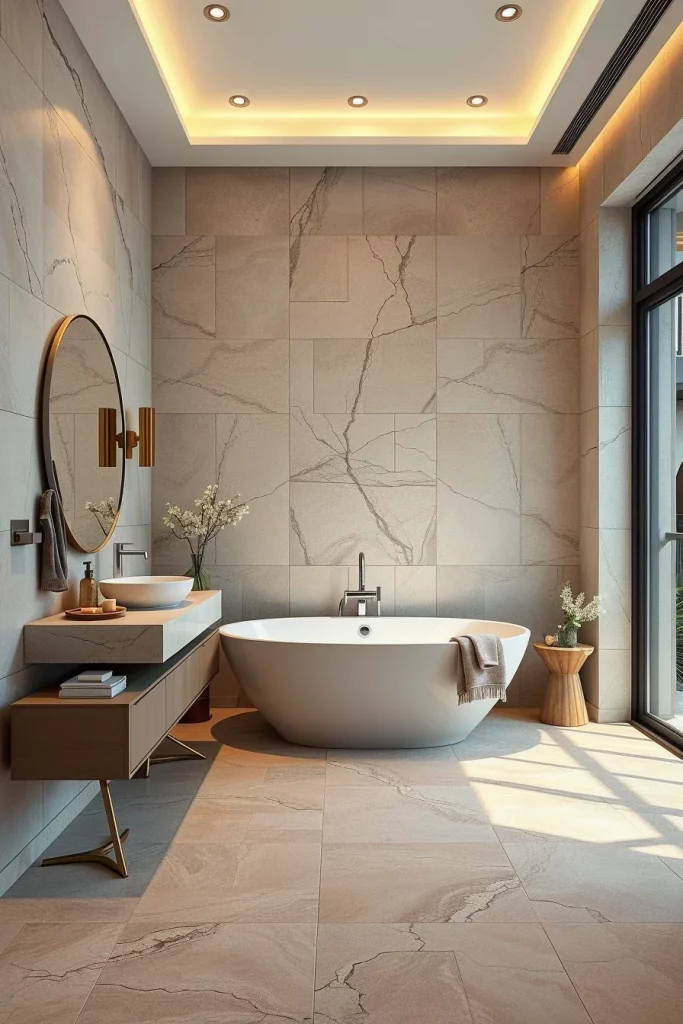
Many remodeling experts recommend investing in quality flooring because it influences both the longevity and overall perception of the space. From my experience, textured natural stone consistently delivers an excellent balance between beauty, durability, and timeless appeal. It remains one of the most dependable choices for homeowners seeking a long-lasting bathroom renovation.
To complete this flooring design, I would include discreet floor heating controls, moisture-resistant transition details, matching stone thresholds, and protective sealants. These finishing touches increase comfort while ensuring the floor continues looking exceptional for years.
Mixing Large Stone Slabs With Textured Finishes
Combining oversized stone slabs with textured stone surfaces is one of my favorite ways to create visual balance in a bathroom. The smooth slabs provide a clean architectural appearance, while textured finishes introduce depth and natural variation that keeps the room from feeling flat. I find that this combination creates a sophisticated environment that feels luxurious without becoming overly decorative. It also allows the natural beauty of the stone to become the primary design feature.
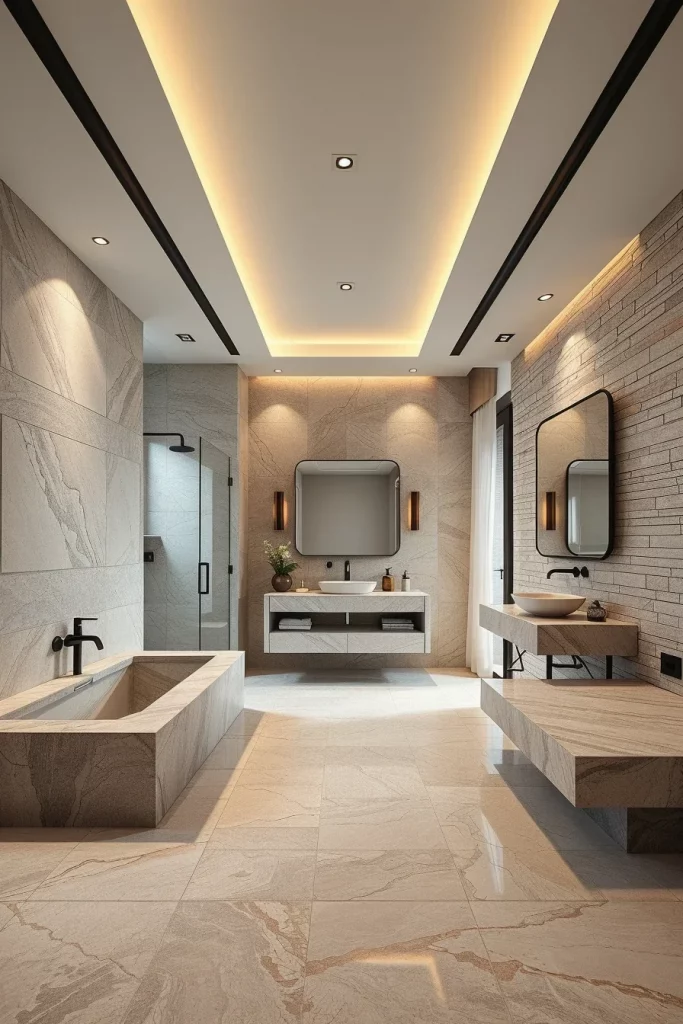
When planning this layout, I usually install large stone slabs behind the vanity or bathtub to create a seamless backdrop. I then introduce textured stone on a feature wall or inside the shower to add contrast. A floating vanity, integrated sink, frameless mirror, wall-mounted faucets, concealed storage, and minimal accessories work especially well with this combination because they allow the stone to remain the focal point. Every furniture piece should have simple geometry that complements rather than competes with the natural materials.
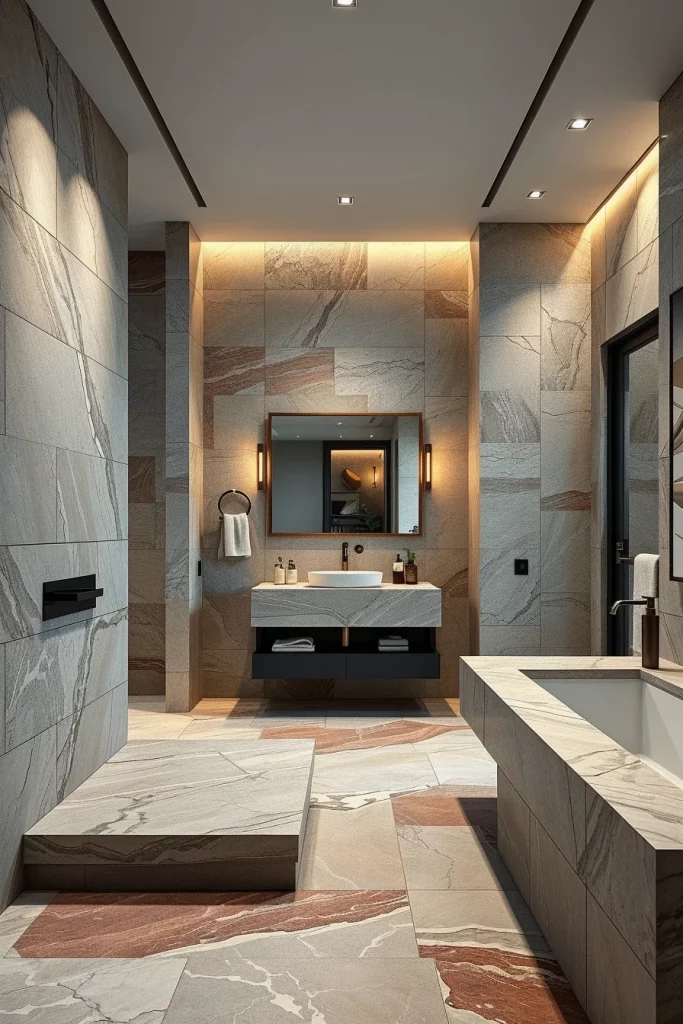
Many interior designers recommend mixing finishes instead of relying on only one texture throughout the room. I have found this approach creates a richer visual experience while maintaining a calm atmosphere. Publications such as Architectural Digest frequently showcase projects where smooth and textured natural stone coexist beautifully, proving that subtle contrast often creates the most timeless interiors.
To complete this design, I would also include matching stone window sills, recessed shelving, seamless transitions between slabs and textured surfaces, and professional stone sealing. These details make the installation look intentional while improving durability for everyday use.
Soft Neutral Color Palettes For Stone Bathrooms
A soft neutral color palette allows natural stone to become the centerpiece of the bathroom. I prefer warm shades of beige, ivory, sand, taupe, light gray, and creamy white because they complement the organic texture instead of distracting from it. These colors create a peaceful environment that feels open, relaxing, and suitable for every season without relying on changing design trends.
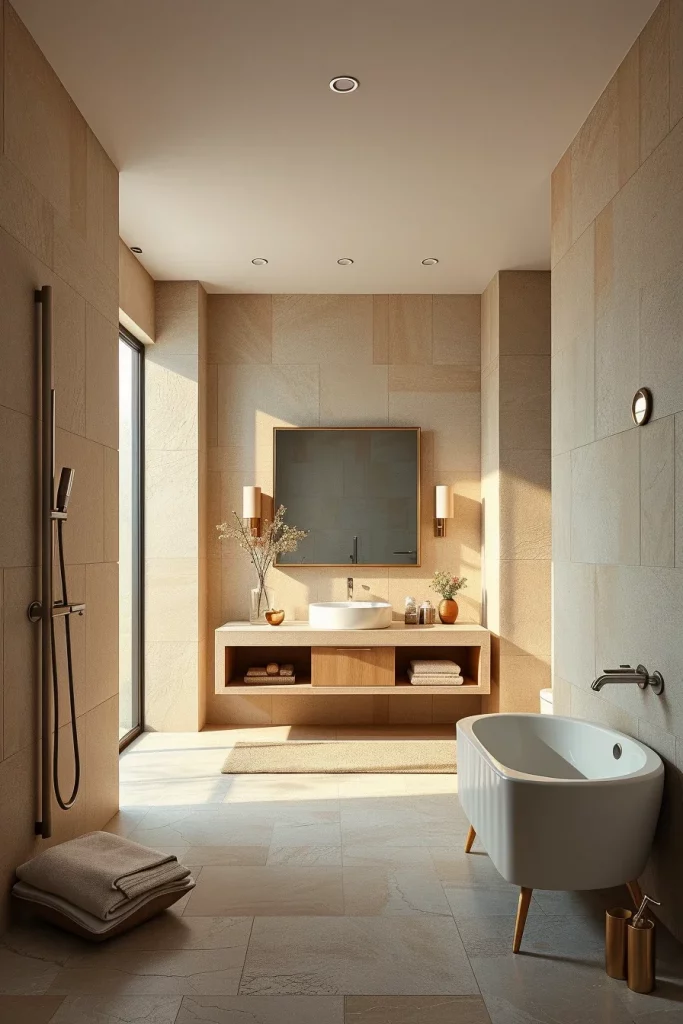
To support the palette, I usually select floating cabinetry in soft wood tones, white countertops, oversized mirrors, brushed nickel fixtures, linen textiles, ceramic accessories, and simple decorative objects. These elements maintain visual harmony while giving the room enough warmth to feel welcoming. Large windows or skylights further enhance the subtle color variations naturally found within the stone.
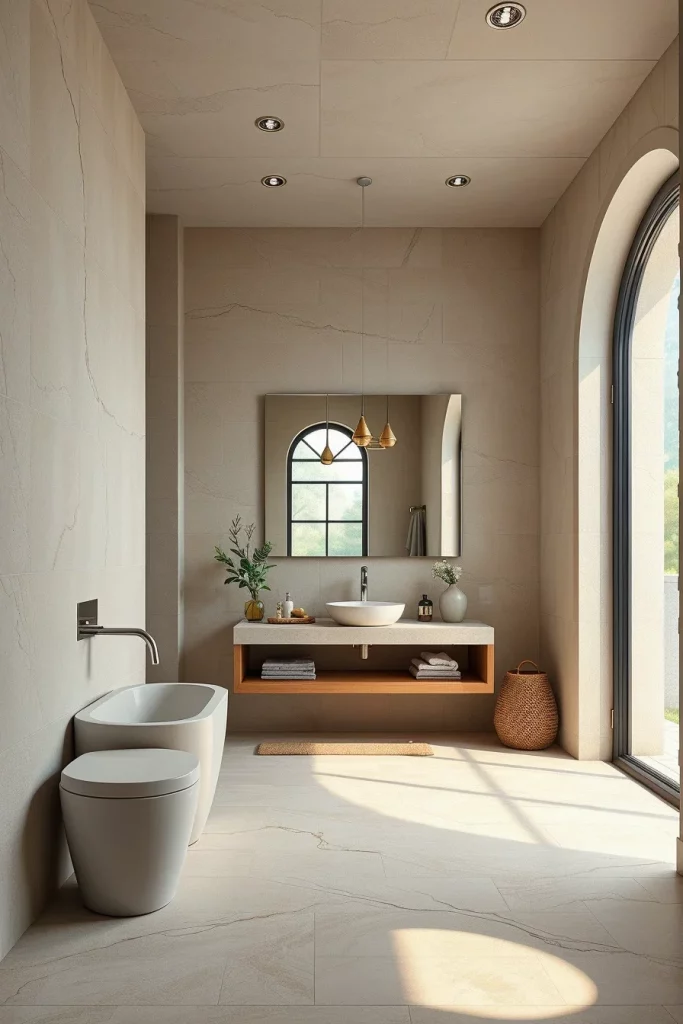
In my experience, neutral palettes remain one of the safest long-term investments for bathroom renovations. Well-known American designers often recommend limiting the number of dominant colors so natural materials can speak for themselves. I completely agree because a restrained palette helps every texture appear more refined and cohesive.
I would also add soft window treatments, carefully selected artwork with muted colors, hidden storage, and live greenery placed away from wet areas. These finishing touches introduce personality while preserving the tranquil atmosphere throughout the bathroom.
Warm Lighting That Highlights Stone Texture
Lighting has an enormous influence on how textured stone appears throughout the day. I always recommend using warm lighting because it enhances the depth, natural shadows, and subtle color variations found within the stone. Instead of making the bathroom appear cold, warm illumination creates a relaxing spa-inspired atmosphere that feels comfortable during both morning and evening routines.
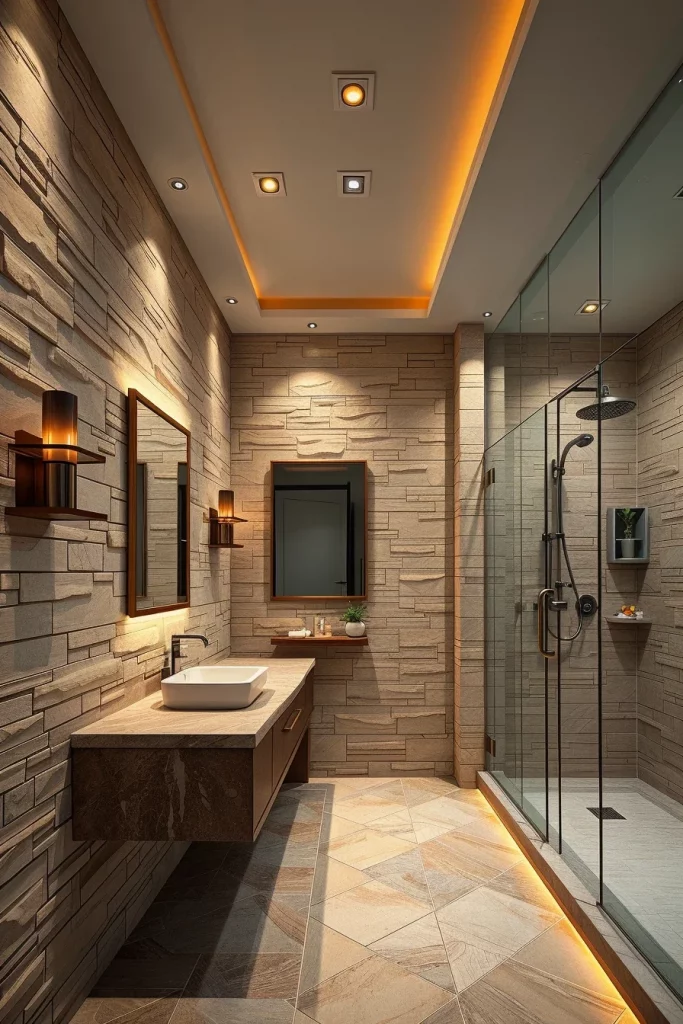
I usually combine recessed ceiling lights, concealed LED strips, wall sconces beside oversized mirrors, and soft accent lighting beneath floating vanities. Dimmable fixtures provide flexibility for different situations, while indirect lighting gently emphasizes every textured surface without creating harsh shadows. Together, these lighting layers make the bathroom feel more inviting while improving daily functionality.
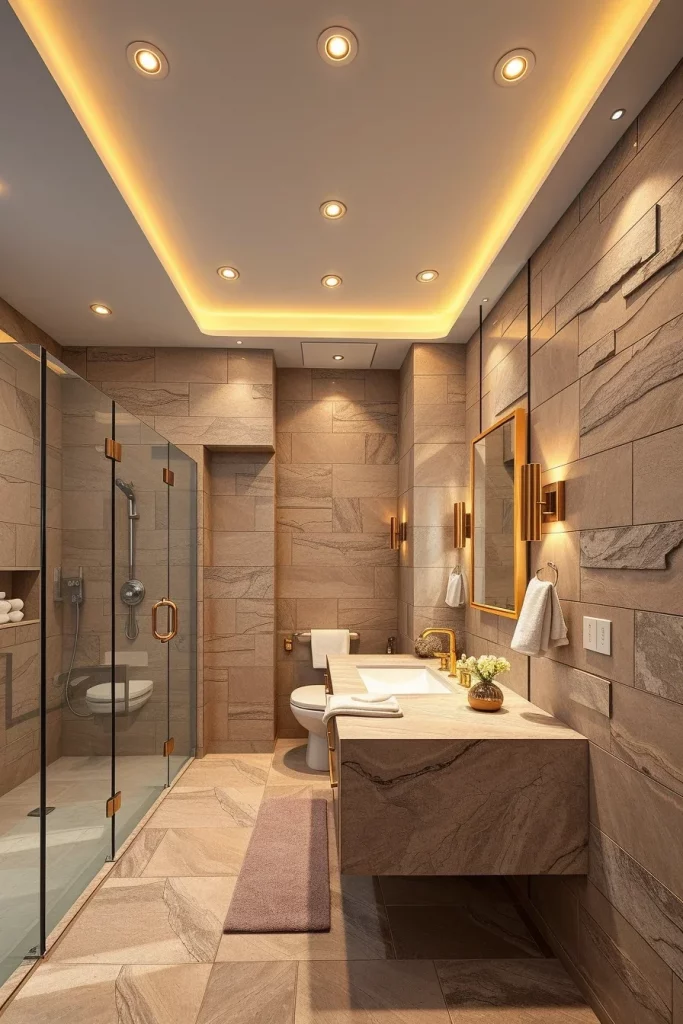
Many lighting specialists recommend layering multiple light sources rather than depending on one ceiling fixture alone. I have followed this approach in several designs and consistently noticed how much richer natural stone appears when illuminated from different angles. The investment in quality lighting often has as much visual impact as the stone itself.
To enhance this lighting plan even further, I would install dimmer switches, illuminated shower niches, subtle toe-kick lighting beneath cabinetry, and moisture-rated fixtures designed specifically for bathrooms. These additions improve comfort while highlighting every architectural detail.
Floating Vanities Paired With Stone Backdrops
Floating vanities create the perfect partnership with textured stone because they introduce visual lightness without reducing storage capacity. I appreciate how the open space beneath the vanity allows more of the stone flooring and walls to remain visible, making the bathroom appear larger and less crowded. This combination perfectly balances natural materials with contemporary design.
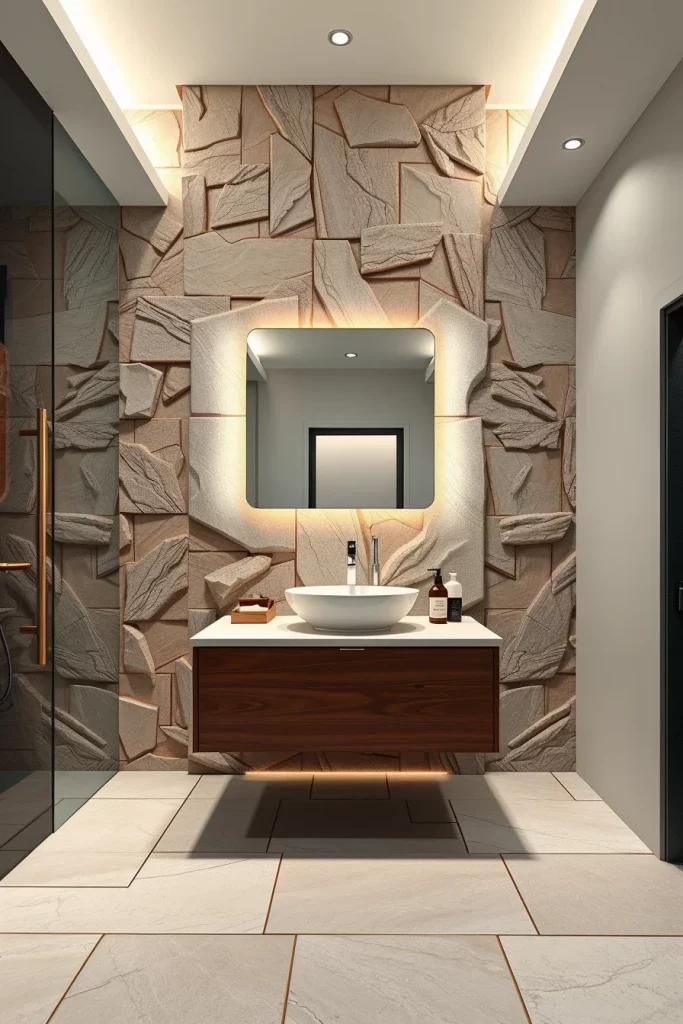
I typically choose vanities with clean lines, integrated sinks, handle-free drawers, quartz countertops, and wall-mounted faucets. Behind the vanity, I install textured natural stone that extends from countertop to ceiling, creating a dramatic yet elegant backdrop. Large mirrors, discreet lighting, and carefully organized storage help maintain the minimalist appearance while keeping daily essentials easily accessible.
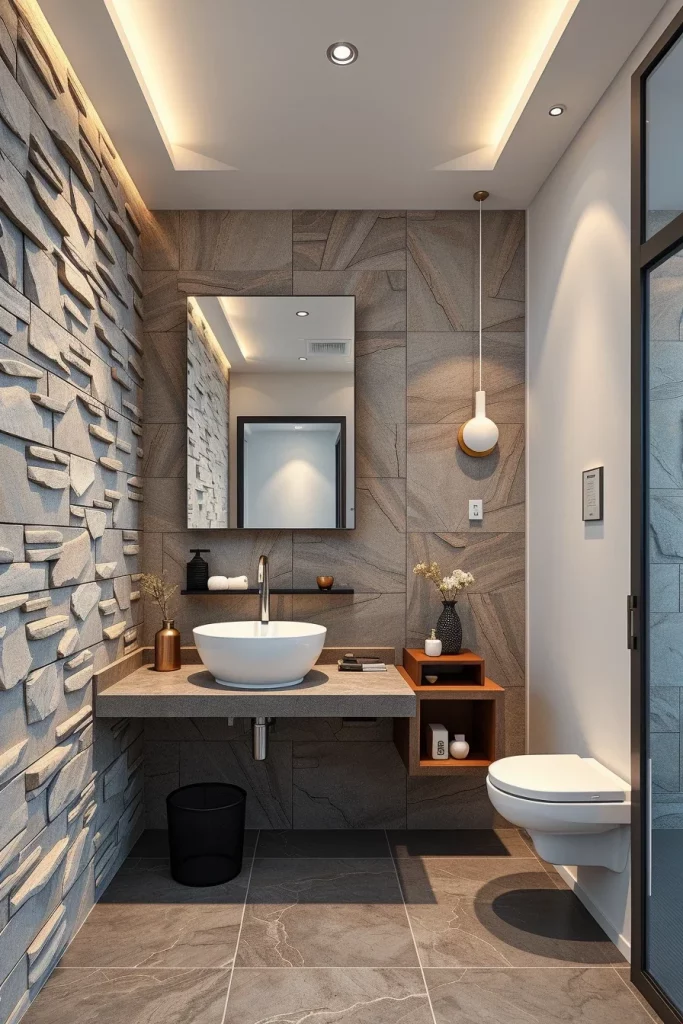
From my perspective, floating vanities continue to be one of the most practical features in modern bathrooms. Interior designers frequently recommend them because they simplify floor cleaning, improve visual openness, and complement large-format stone exceptionally well. I have found this combination works equally well in compact bathrooms and spacious primary suites.
To complete this area, I would incorporate drawer organizers, integrated electrical outlets inside the vanity, illuminated mirrors, and carefully selected countertop accessories. These additions maximize convenience while preserving the uncluttered design.
Freestanding Bathtubs Surrounded By Natural Stone
A freestanding bathtub placed within a natural stone setting immediately becomes the centerpiece of a luxurious bathroom. I love how the smooth curves of the tub contrast with the organic texture of the surrounding stone walls and flooring. This balance between refined shapes and rugged natural surfaces creates a relaxing environment that feels both elegant and timeless.
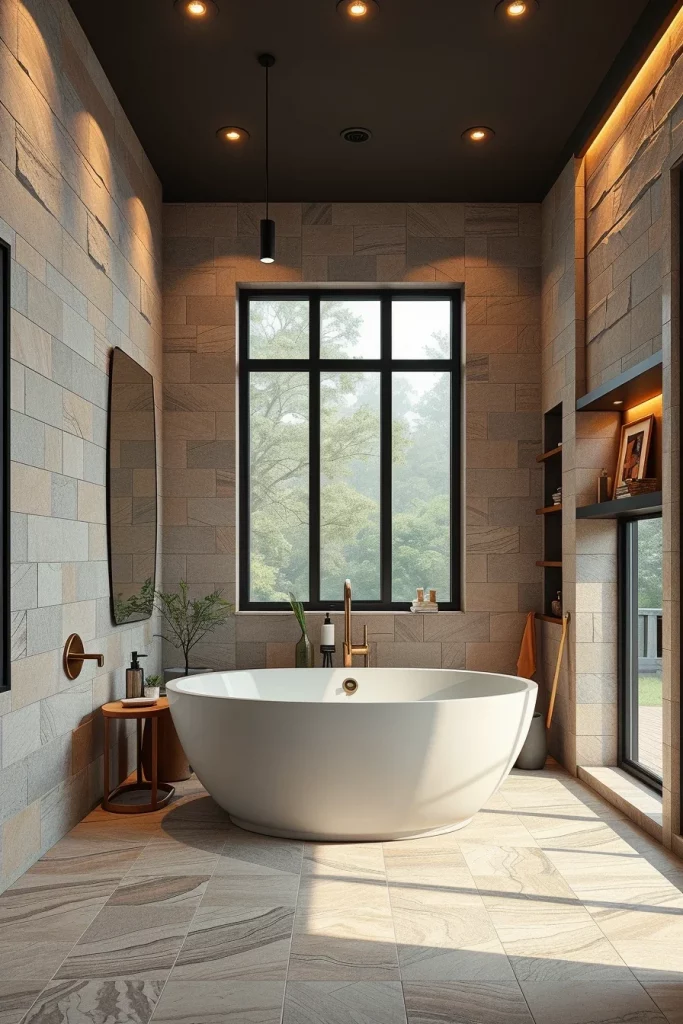
I usually position the bathtub near a full-height stone feature wall or beside a large window whenever possible. A floor-mounted faucet, minimalist side table, soft towels, oversized stone flooring, floating shelves, and subtle ambient lighting complete the composition without overwhelming the room. Every surrounding element should support the bathtub as the primary visual attraction.
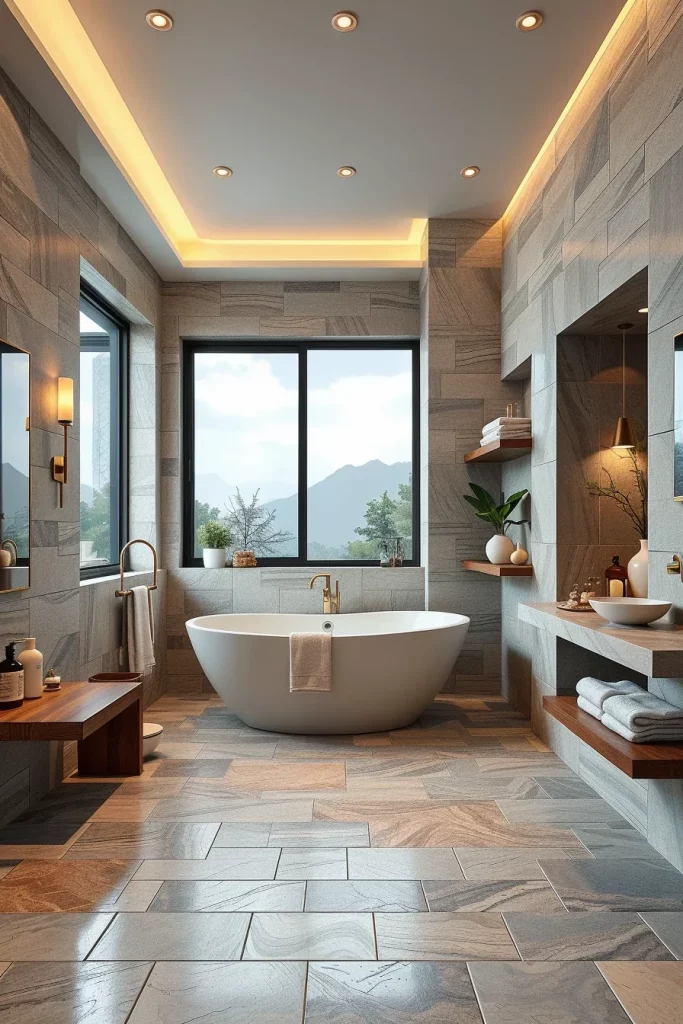
Many luxury bathroom designers recommend allowing generous open space around a freestanding bathtub so it can be appreciated from multiple angles. I agree with this principle because crowding the area with unnecessary furniture reduces the calming effect that makes this design so appealing. A carefully planned layout transforms everyday bathing into a relaxing experience worthy of a boutique spa.
To finish this design, I would include heated flooring beneath the bathtub area, discreet storage for bath essentials, dimmable lighting controls, and premium ventilation. These practical upgrades ensure the bathroom remains as comfortable as it is visually impressive.
Minimalist Bathroom Designs With Textured Stone
I find that a minimalist bathroom becomes much more inviting when textured stone takes center stage instead of decorative accessories. Large-format stone walls with subtle relief instantly create depth while maintaining a calm atmosphere. I prefer keeping the color palette neutral with warm gray, soft beige, or creamy limestone shades because they allow the texture to become the main visual feature without overwhelming the room. A floating vanity and concealed storage help preserve the clean appearance while emphasizing the beauty of the stone.
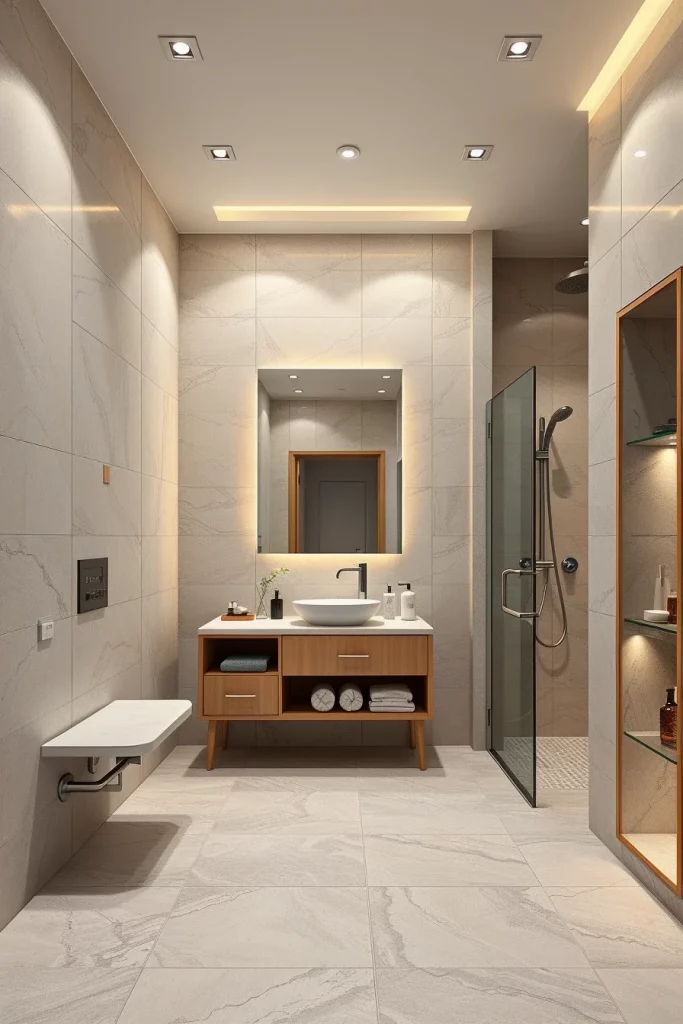
I usually combine textured stone walls with a floating vanity made from moisture-resistant materials, a frameless mirror, recessed LED lighting, and a simple wall-mounted toilet. These elements reduce visual clutter while making maintenance easier. A large walk-in shower enclosed with clear glass prevents the room from feeling divided, allowing the textured stone to flow continuously across the space. I also recommend using oversized porcelain flooring with a stone appearance to create visual continuity.
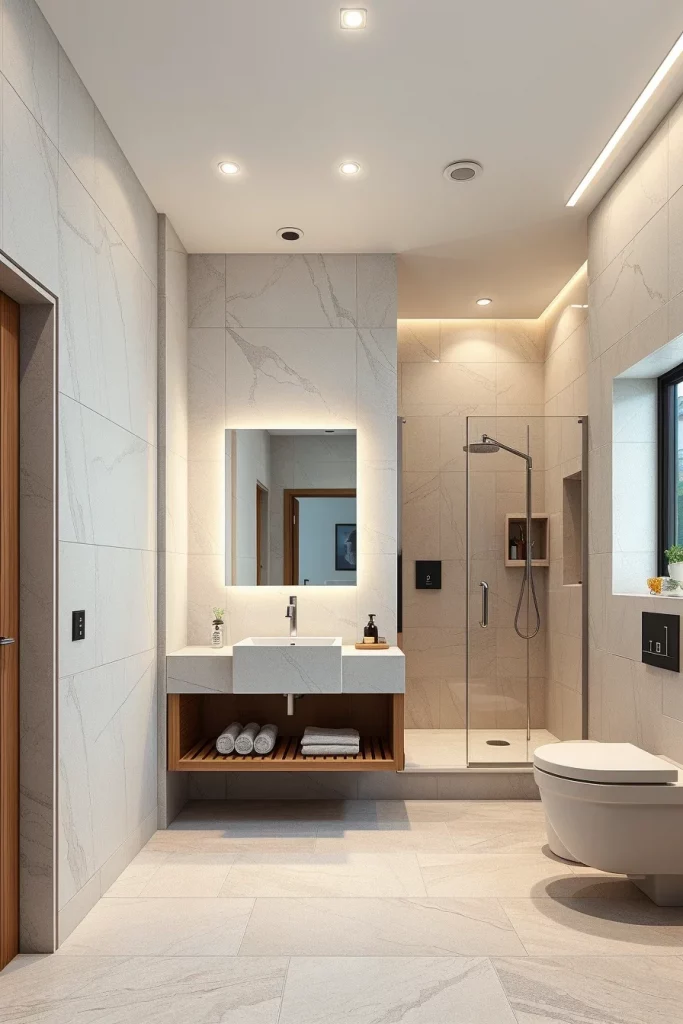
From my experience, minimalism works best when every material has a purpose. Interior designers frequently featured by Architectural Digest recommend limiting decorative elements and investing instead in high-quality natural materials that improve with age. I completely agree because textured stone provides visual richness without requiring additional ornamentation.
To complete this design, I would add under-vanity LED lighting, heated flooring, soft linen towels, concealed niches inside the shower, and a few carefully selected ceramic accessories that complement the stone rather than compete with it.
Modern Black Fixtures Against Stone Surfaces
One of my favorite ways to make textured stone stand out is by pairing it with matte black fixtures. The contrast immediately highlights the natural variation within the stone while introducing a modern architectural character. Whether the walls feature slate, travertine, or textured porcelain inspired by natural rock, black fixtures create crisp visual definition throughout the room.
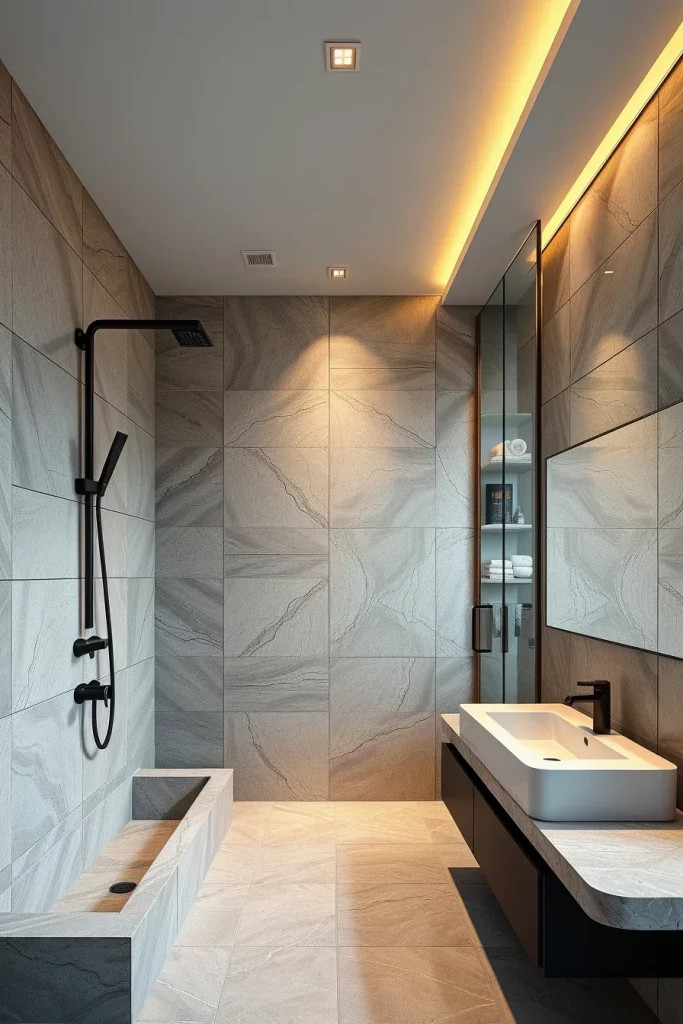
I typically include a matte black rainfall shower system, matching wall-mounted faucets, towel bars, cabinet hardware, and a minimalist framed mirror. A floating vanity with clean lines balances the stronger contrast while keeping the room feeling spacious. Soft indirect lighting prevents the black finishes from appearing too harsh and allows the stone texture to remain the primary visual attraction.
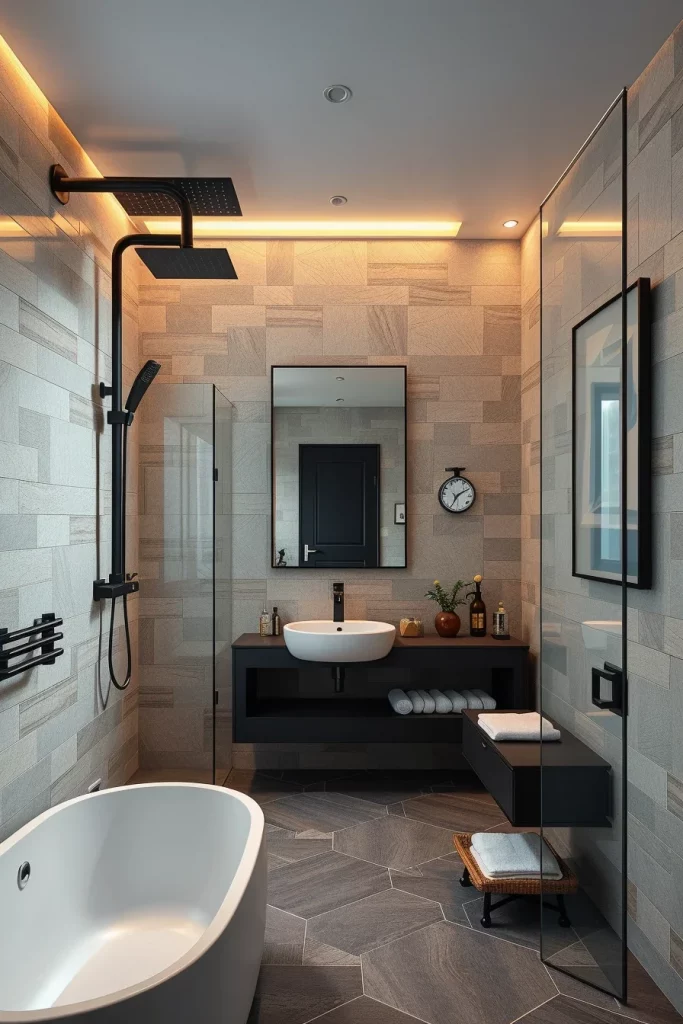
I have noticed that many designers featured by House Beautiful recommend repeating black accents consistently instead of introducing multiple metal finishes. I follow this principle because it creates harmony and keeps the overall composition organized. In my opinion, textured stone benefits from simple, consistent hardware choices rather than decorative details.
I would also include a built-in shower bench, hidden storage compartments, dimmable lighting, and oversized mirrors to increase both practicality and the perception of space.
Curved Design Elements That Complement Stone Finishes
I believe curved architectural details soften the natural strength of textured stone and create a more relaxing environment. Rounded mirrors, arched shower entrances, curved vanities, and softly shaped freestanding bathtubs introduce gentle movement that balances the rough texture of stone surfaces. The combination feels contemporary while remaining timeless.
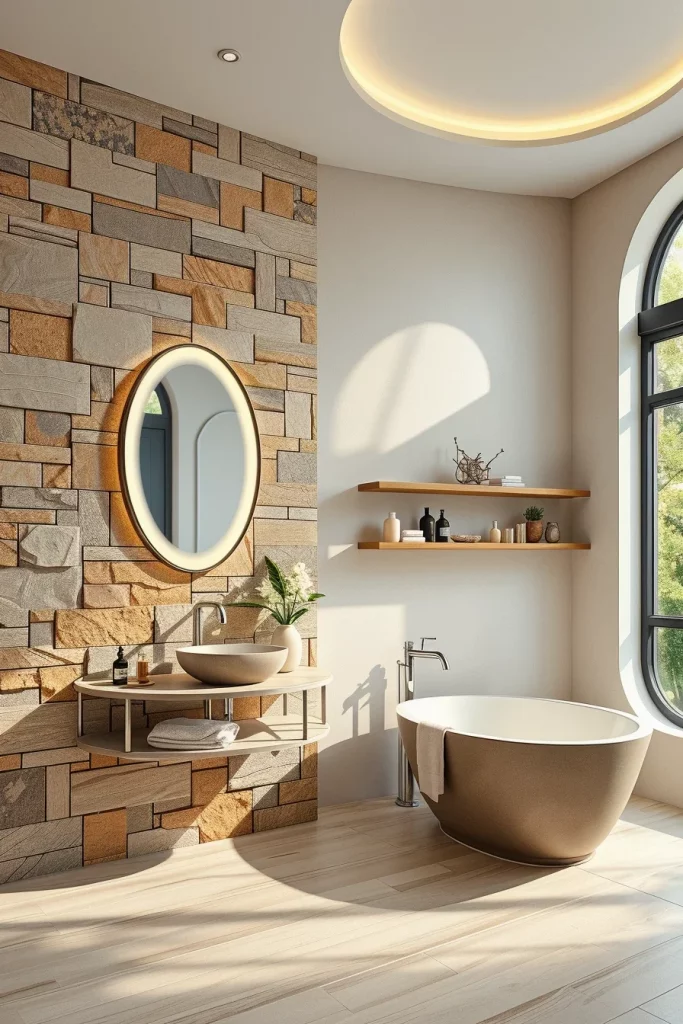
For this approach, I usually select a curved floating vanity, an oval stone basin, an arched mirror with integrated lighting, and a freestanding bathtub positioned near a textured feature wall. Rounded wall sconces and softly curved shelving continue the theme without making the room feel overly decorative. Every curve should feel intentional and contribute to the overall flow of the space.
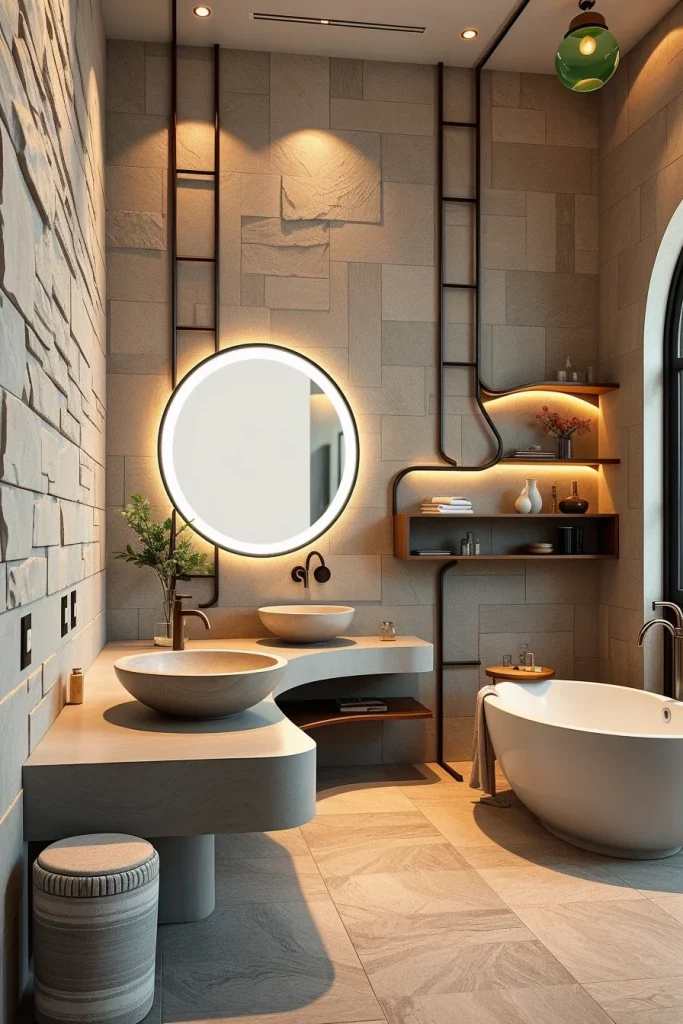
Personally, I appreciate how this combination avoids the cold appearance that some stone interiors can develop. Designers often featured in Elle Decor demonstrate how organic forms create more welcoming interiors, especially when paired with natural materials. I have found this advice especially valuable when designing bathrooms intended for everyday comfort.
To improve this design even further, I would add indirect ceiling lighting following the curved architectural lines, concealed storage within rounded cabinetry, and textured bath linens in neutral shades.
Layering Different Stone Textures For Visual Depth
I enjoy combining several complementary stone finishes because they create visual interest without relying on bold colors. Instead of using one identical surface everywhere, I prefer mixing smooth flooring, lightly textured shower walls, and more pronounced feature walls. The variation makes the bathroom feel carefully designed while remaining cohesive.
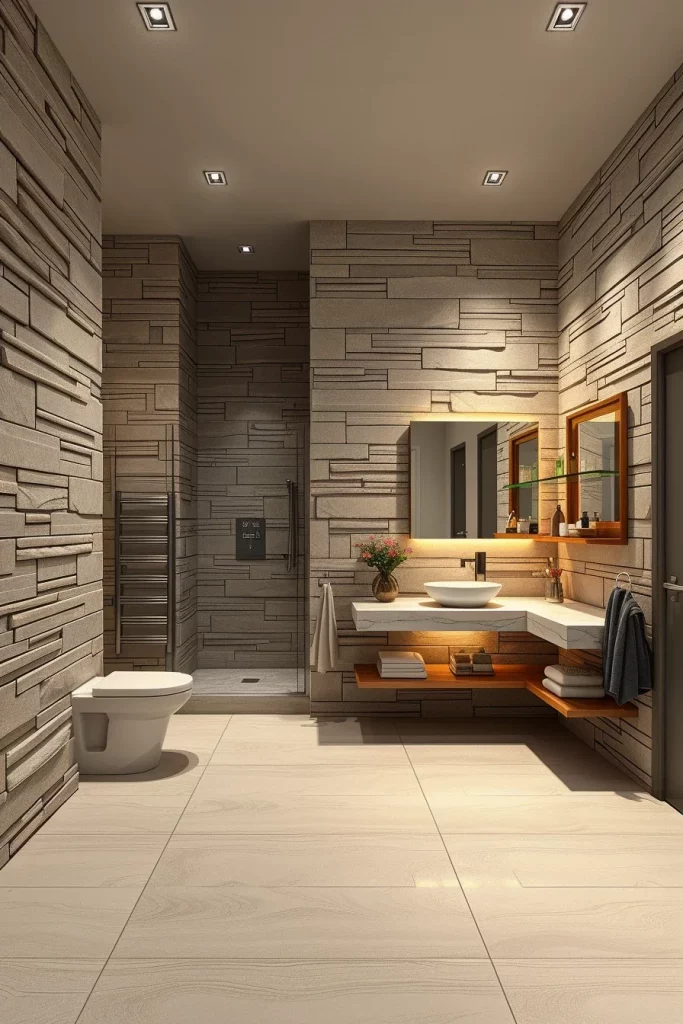
I generally combine large-format stone-look porcelain flooring with natural textured wall panels, a floating vanity featuring stone countertops, recessed shelving, and subtle wood accents that soften the composition. Maintaining a consistent color palette allows the different textures to become noticeable without creating visual clutter. Proper lighting is especially important because it reveals the depth and character of every surface.
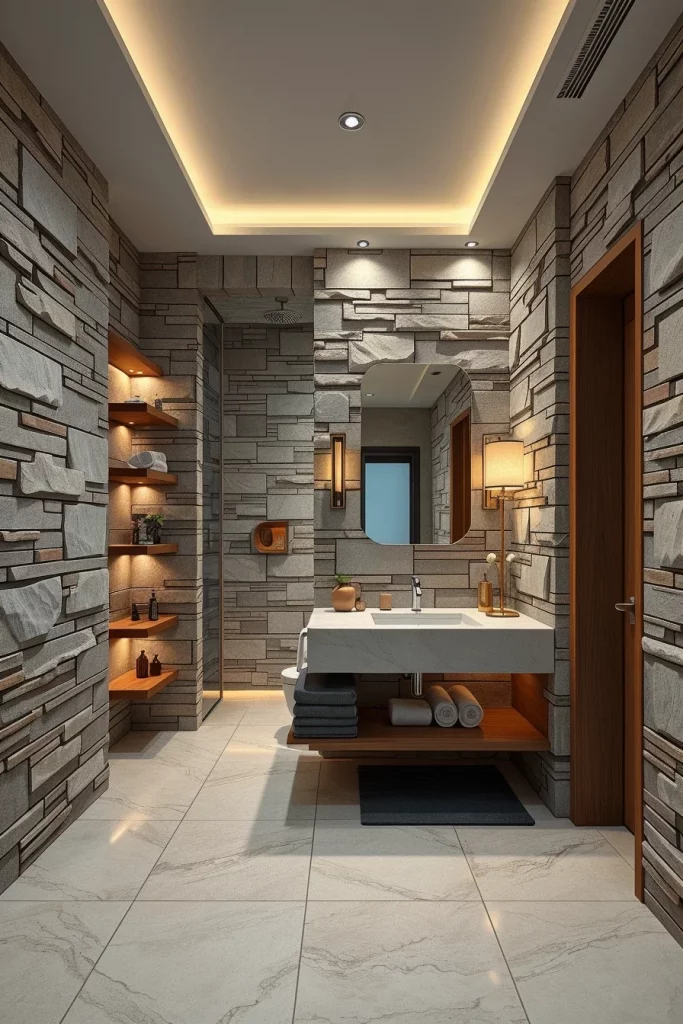
In my experience, successful layered interiors depend more on restraint than variety. Better Homes & Gardens has frequently highlighted the importance of balancing contrasting textures while limiting unnecessary decorative elements. I agree because carefully selected materials create a richer appearance than excessive decoration ever could.
I would also incorporate hidden LED strips inside wall niches, oversized mirrors, premium ventilation, and seamless storage solutions to preserve the sophisticated atmosphere.
Walk-In Showers Featuring Full Stone Walls
A walk-in shower covered entirely in textured stone creates one of the strongest visual statements in a modern bathroom. I like allowing the stone to extend uninterrupted from floor to ceiling because it enlarges the space visually while creating a luxurious spa atmosphere. Large slabs or carefully matched stone panels minimize grout lines and emphasize the natural movement within the material.
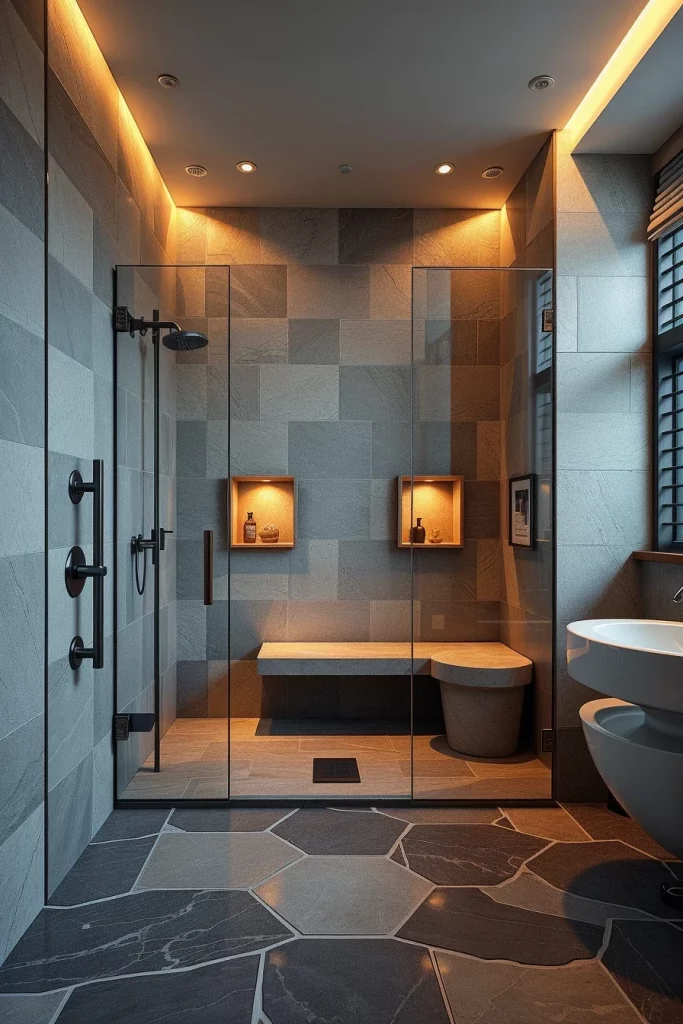
I typically combine full-height stone walls with a frameless glass enclosure, a linear drain, recessed shower niches, a floating bench, and a ceiling-mounted rainfall shower. These elements maintain open sightlines and allow the textured stone to remain the focal point. Soft warm lighting directed across the surface reveals every natural variation without creating glare.
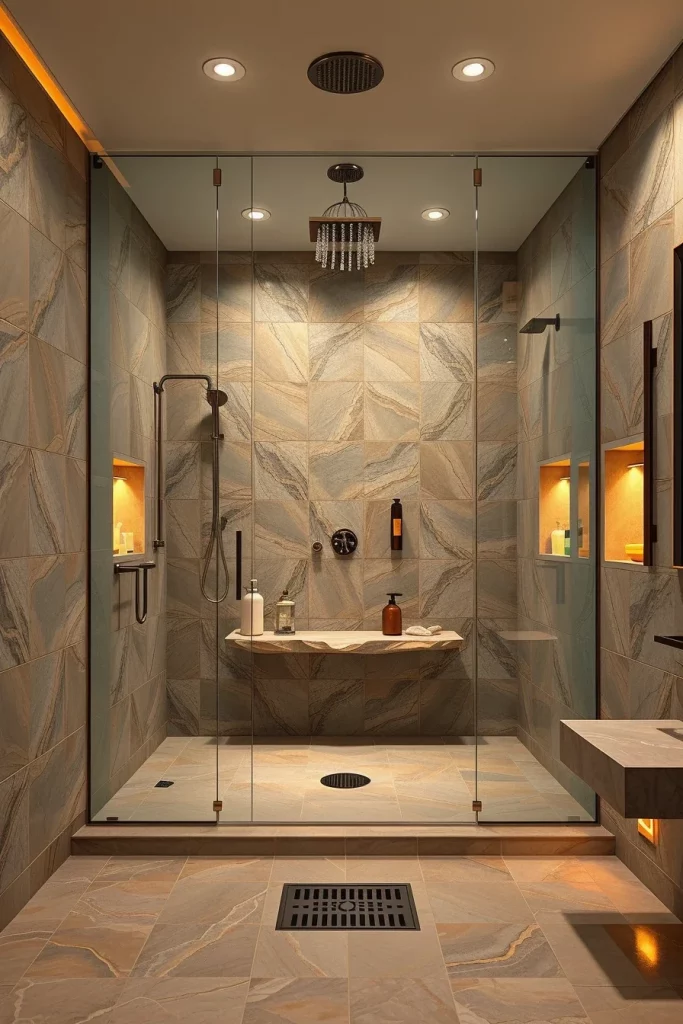
From my perspective, investing in quality waterproofing beneath stone finishes is just as important as selecting attractive materials. Professionals from the National Kitchen & Bath Association consistently emphasize proper installation techniques to ensure long-term durability, and I fully support that recommendation because beautiful materials deserve reliable construction.
I would complete this shower by adding integrated LED niche lighting, heated flooring extending into the shower area, premium ventilation, and matching stone accessories for a cohesive appearance.
Stone Accent Walls That Become The Focal Point
I always believe that every bathroom benefits from having one feature that immediately captures attention, and a textured stone accent wall is one of the most effective ways to achieve this. Rather than covering every surface with stone, I prefer highlighting the wall behind the vanity or freestanding bathtub. This approach creates depth without making the room feel visually heavy. Textured limestone, slate, or travertine introduces natural movement that changes throughout the day as light shifts across the surface.
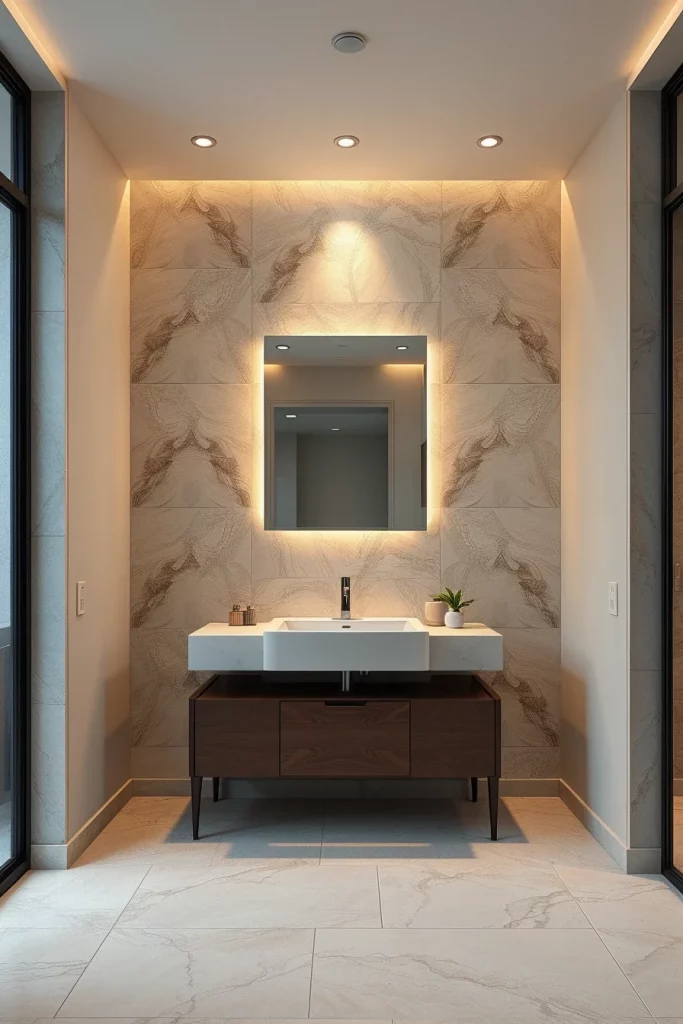
I usually pair the accent wall with a floating vanity, a large frameless mirror, wall-mounted faucets, and discreet storage cabinets that keep everyday items out of sight. The remaining walls often feature smooth plaster or large porcelain panels in matching neutral shades so the textured stone remains the visual centerpiece. Layered lighting, including recessed ceiling fixtures and wall sconces, helps emphasize every ridge and natural detail of the stone.
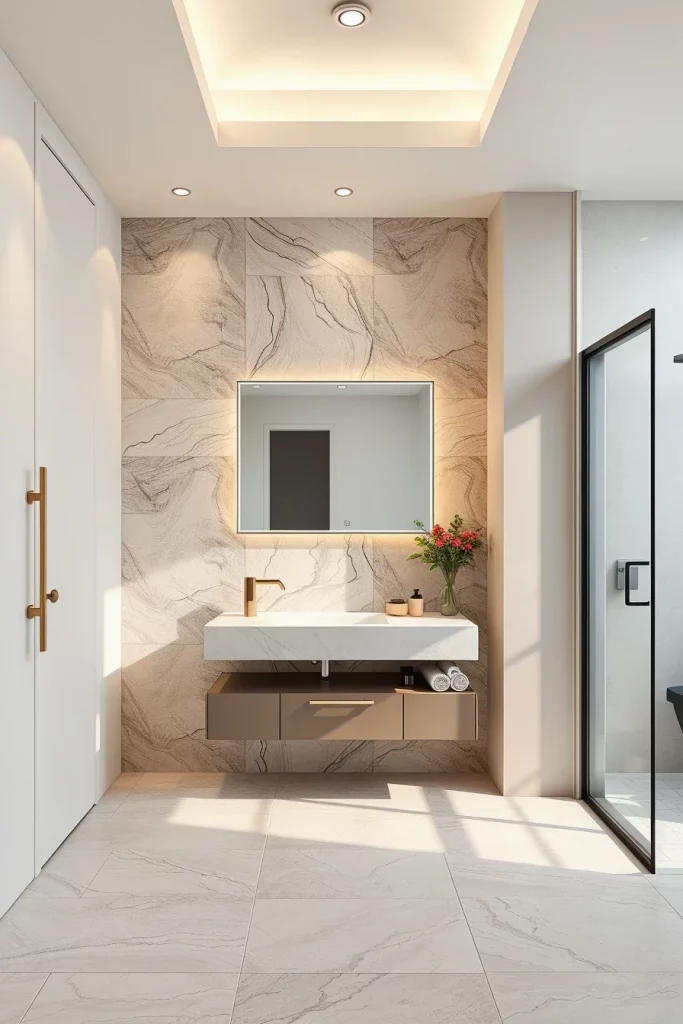
In my experience, restraint is what makes an accent wall successful. Interior designers frequently featured in Veranda recommend allowing one architectural element to dominate while supporting it with understated furnishings. I have found that this strategy creates bathrooms that remain elegant for many years rather than following temporary trends.
To complete this design, I would include integrated shelving, soft under-vanity lighting, coordinated stone accessories, premium ventilation, and high-quality grout that closely matches the stone for a seamless appearance.
Mixing Glass And Stone For A Balanced Interior
I enjoy combining textured stone with expansive glass because the contrast creates a lighter and more spacious atmosphere. Stone provides warmth, character, and permanence, while glass introduces openness and allows natural or artificial light to travel freely throughout the room. This combination works especially well in bathrooms where maintaining brightness is just as important as creating visual texture.
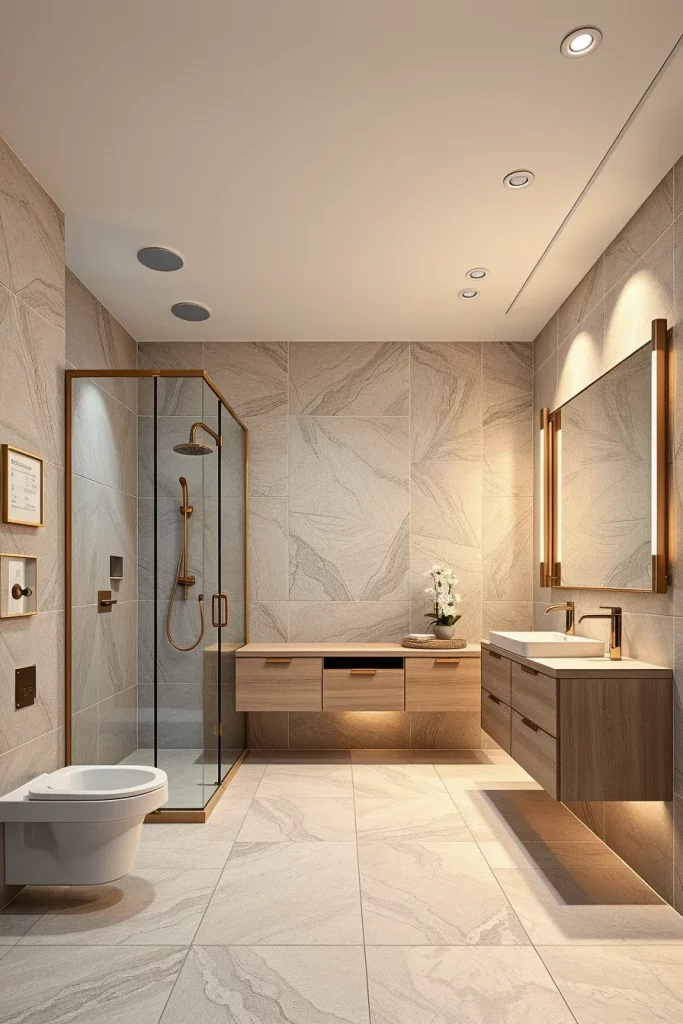
For this layout, I normally install a frameless glass shower enclosure, textured stone shower walls, a floating vanity, oversized mirrors, and minimalist shelving. Clear glass prevents visual barriers, making the bathroom appear larger while showcasing the stone from multiple angles. Brushed metal fixtures and soft LED lighting complete the design without distracting from the materials themselves.
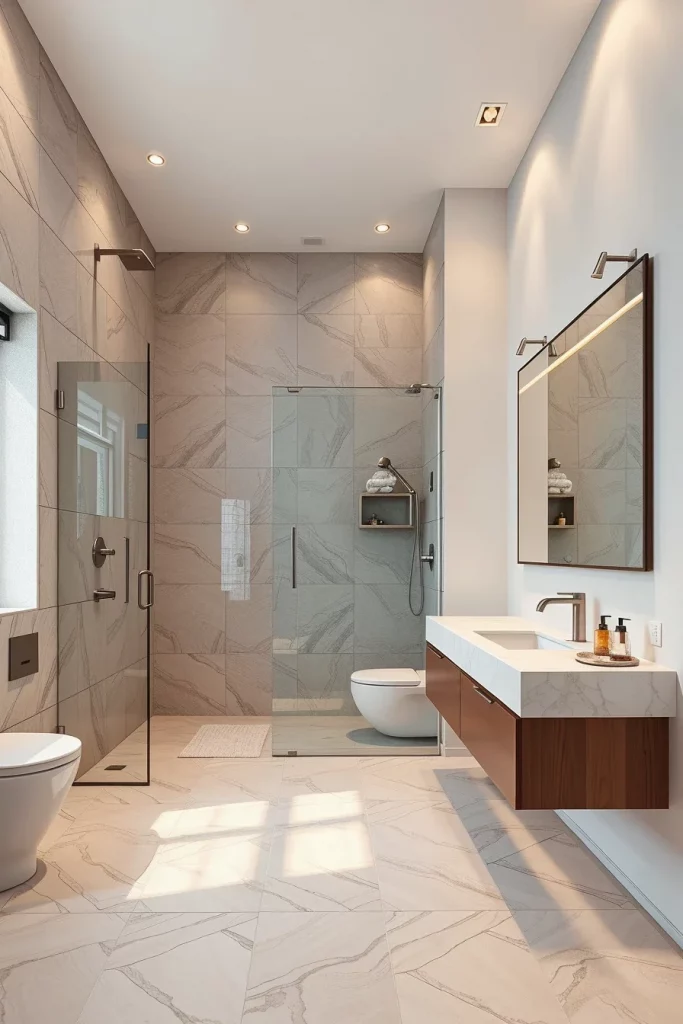
Personally, I appreciate how glass keeps textured stone from feeling too dominant. Designers featured by Architectural Digest often recommend balancing heavier natural materials with transparent architectural elements, and I completely agree with this approach because it creates interiors that feel sophisticated without becoming overwhelming.
I would also add concealed storage, heated mirrors, recessed shower niches, and a skylight or large window whenever possible to maximize natural illumination across the textured surfaces.
Double Vanity Designs With Textured Stone Details
Whenever space allows, I recommend installing a double vanity because it improves both functionality and visual symmetry. Textured stone surrounding the vanity area creates an elegant backdrop while providing durability against moisture and daily use. I prefer extending the stone from the countertop to the wall behind the mirrors so the entire composition feels unified.
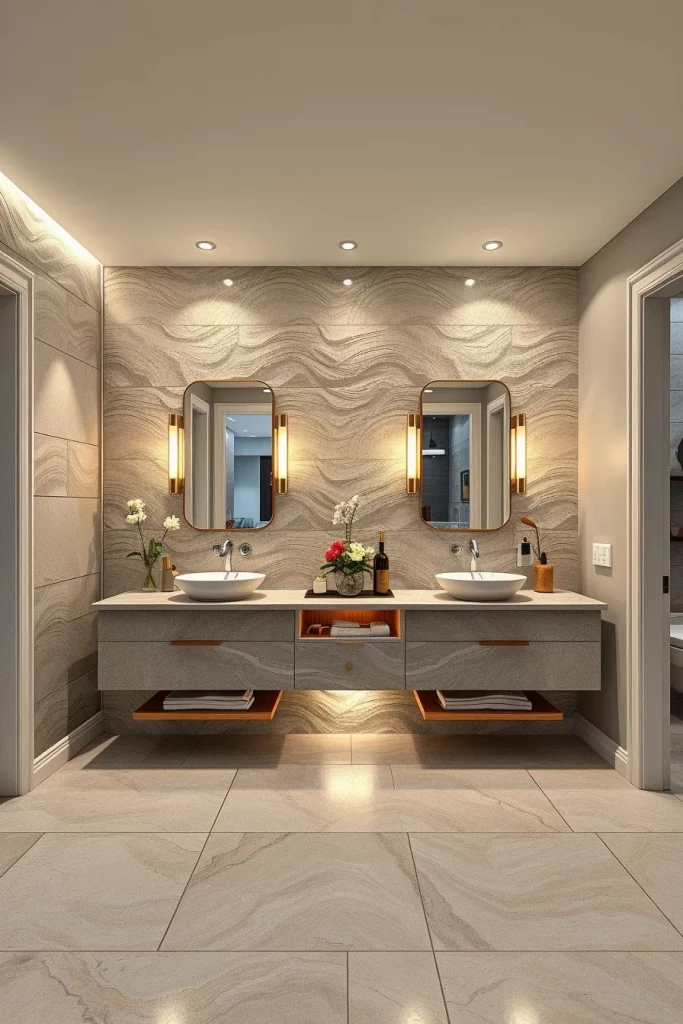
I often select floating double vanities with integrated storage drawers, stone countertops, vessel sinks, wall-mounted faucets, and oversized illuminated mirrors. Matching stone backsplashes protect the walls while reinforcing the natural aesthetic. The generous countertop space makes everyday routines much more convenient without compromising the minimalist appearance of the bathroom.
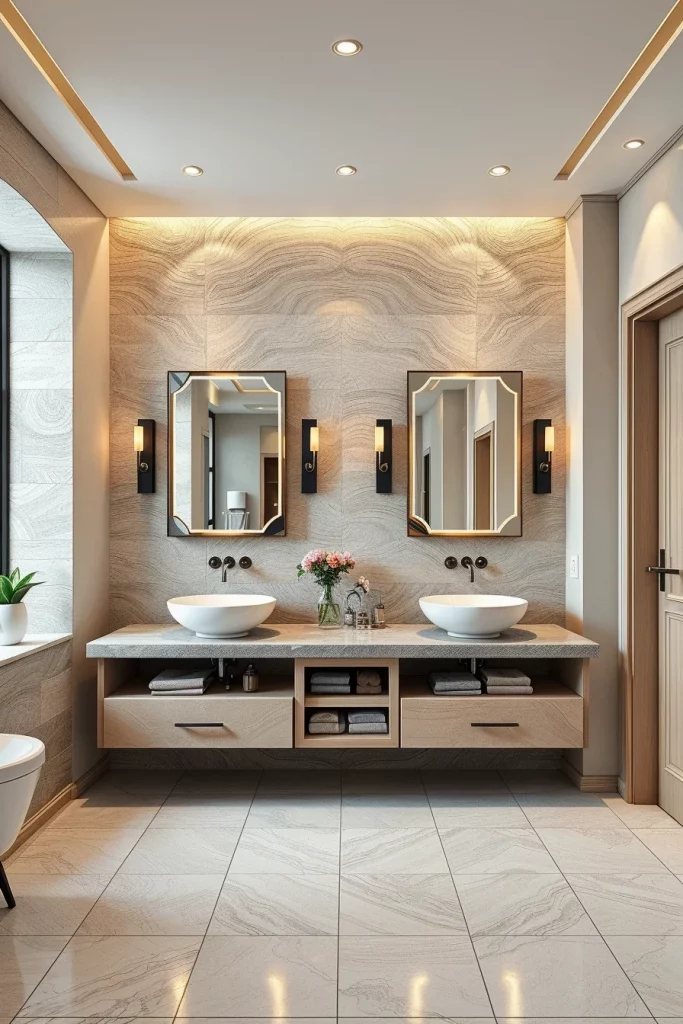
From my perspective, thoughtful storage is just as important as beautiful materials. The National Kitchen & Bath Association frequently emphasizes designing bathrooms around everyday functionality before selecting decorative finishes. I have found that textured stone becomes even more impressive when paired with practical layouts that reduce clutter.
To make this vanity area even more complete, I would include drawer organizers, hidden electrical outlets, under-cabinet lighting, towel storage, and coordinated stone soap dispensers and trays.
Spa-Inspired Bathrooms With Organic Stone Elements
I often design spa-inspired bathrooms around the calming presence of textured stone because natural materials instantly create a peaceful atmosphere. Large stone walls, warm neutral colors, and soft indirect lighting help transform an ordinary bathroom into a relaxing retreat. Rather than filling the room with decorative accessories, I rely on carefully selected architectural materials to establish a sense of comfort.
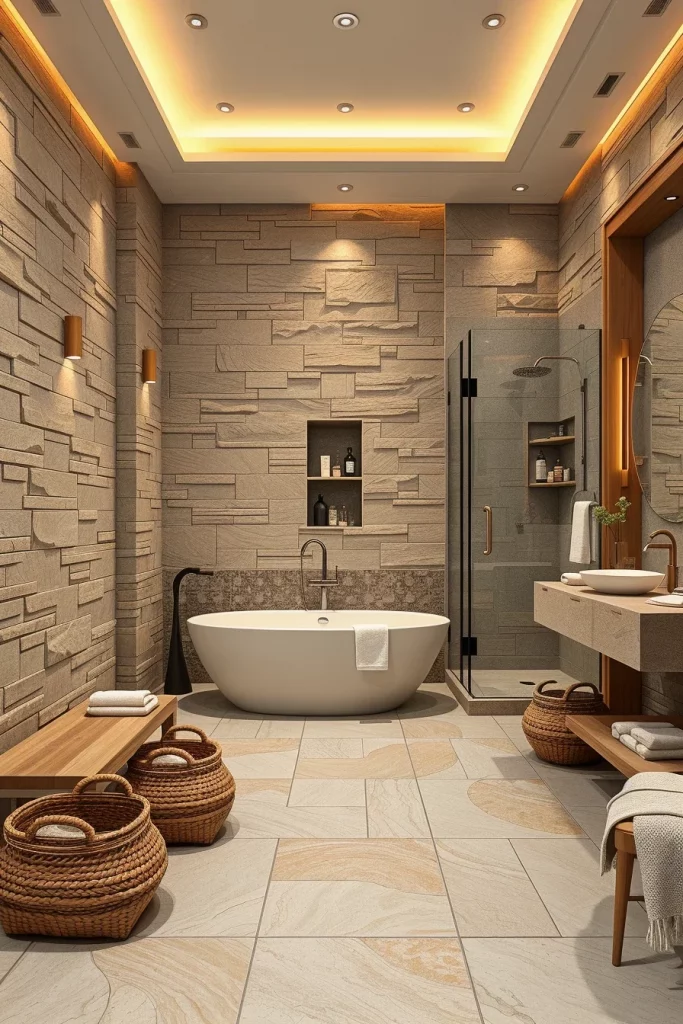
I usually combine textured stone with a freestanding soaking bathtub, a spacious walk-in shower, floating wooden-look cabinetry, oversized towels, built-in benches, and subtle recessed lighting. Soft textures such as woven baskets and natural cotton fabrics complement the stone without competing for attention. Every element is selected to encourage relaxation while maintaining a clean and uncluttered layout.
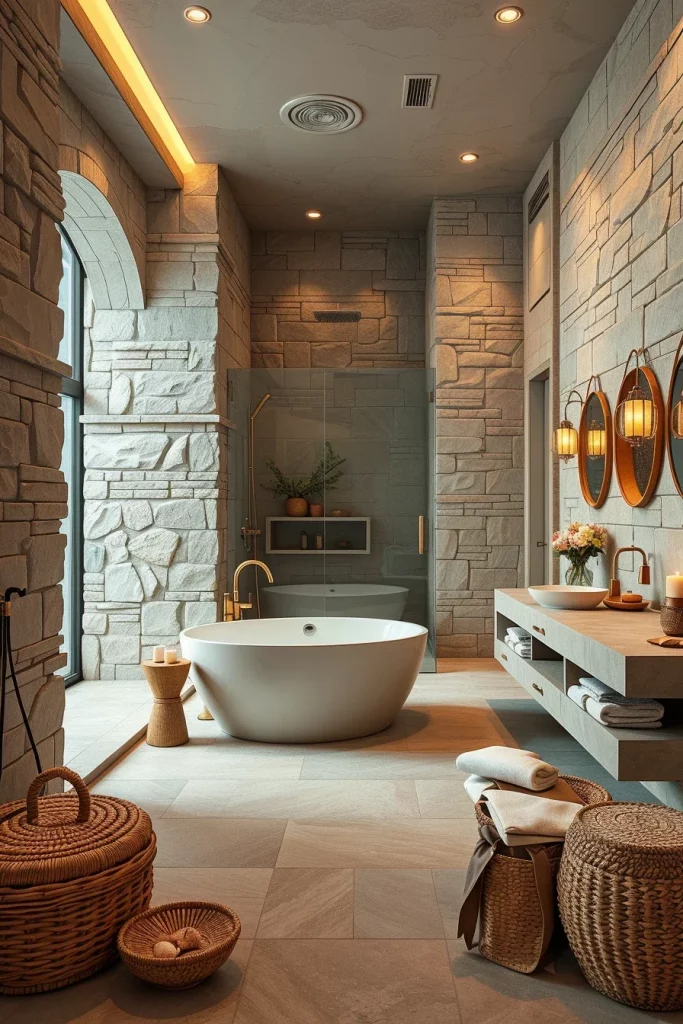
I personally appreciate the timeless quality of spa-inspired interiors. Better Homes & Gardens has often highlighted the importance of combining natural materials, comfortable lighting, and practical layouts to create wellness-focused bathrooms. I have found these recommendations particularly valuable because they focus on long-term comfort rather than short-lived design trends.
To further enhance the spa atmosphere, I would add heated flooring, aromatherapy storage, integrated sound systems, concealed niches for bath products, and dimmable lighting that can easily transition from bright morning routines to relaxing evening baths.
Ceiling Designs That Enhance Stone Interiors
I believe the ceiling deserves as much attention as the walls and flooring, especially in bathrooms featuring textured stone. A thoughtfully designed ceiling helps frame the entire space while emphasizing the architectural quality of natural materials. Simple recessed ceilings, subtle wood-look panels, or concealed LED coves create depth without distracting from the stone finishes below.
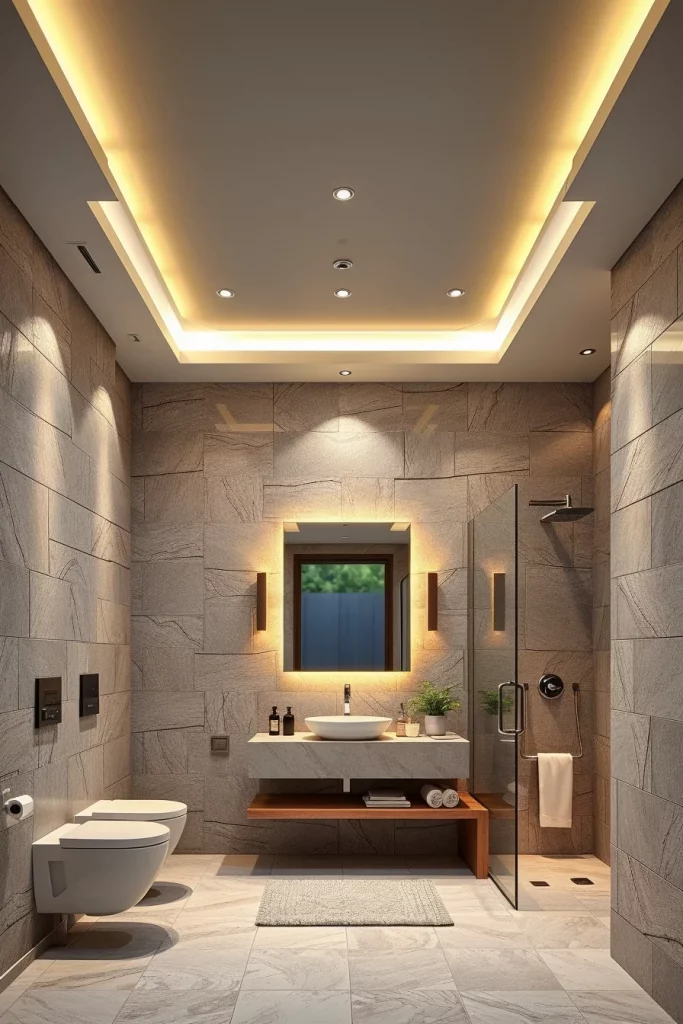
My preferred ceiling design includes moisture-resistant materials, recessed lighting, integrated ventilation, and carefully positioned LED strips that wash light across the textured stone walls. This indirect illumination reveals the stone’s natural relief while creating a soft and welcoming atmosphere throughout the bathroom. Maintaining clean ceiling lines also reinforces the minimalist character of the room.
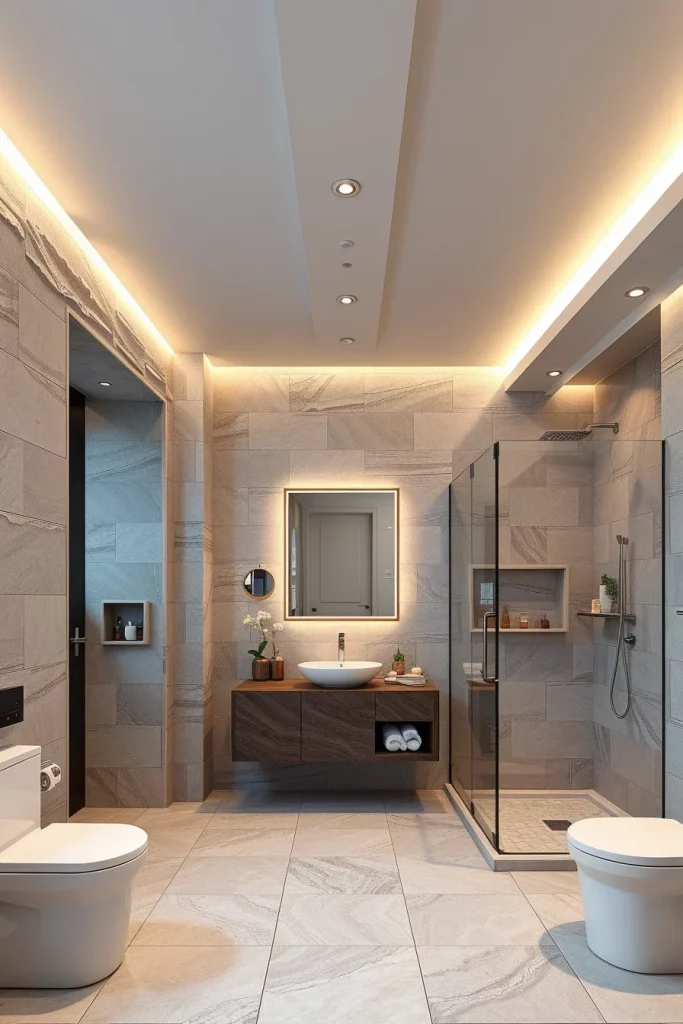
From my experience, lighting design is one of the most overlooked aspects of bathroom planning. Interior professionals frequently recommend treating lighting as an architectural feature rather than an afterthought, and I fully support this advice because proper illumination completely transforms how textured stone is perceived throughout the day.
To complete this ceiling design, I would install dimmable controls, hidden speakers, additional task lighting around the vanity, and ventilation systems that operate quietly while preserving the calm atmosphere of the space.
Open Bathroom Layouts With Continuous Stone Finishes
I have found that an open bathroom layout becomes much more impressive when textured stone flows continuously across the floor, walls, and shower area without unnecessary visual interruptions. This approach creates a sense of spaciousness while allowing the natural texture of the stone to become the focal point of the room. Rather than relying on multiple decorative materials, I prefer allowing the varied tones and subtle relief of the stone to provide depth and visual interest. Large-format stone panels with a lightly textured surface help reduce grout lines while maintaining an authentic natural appearance.
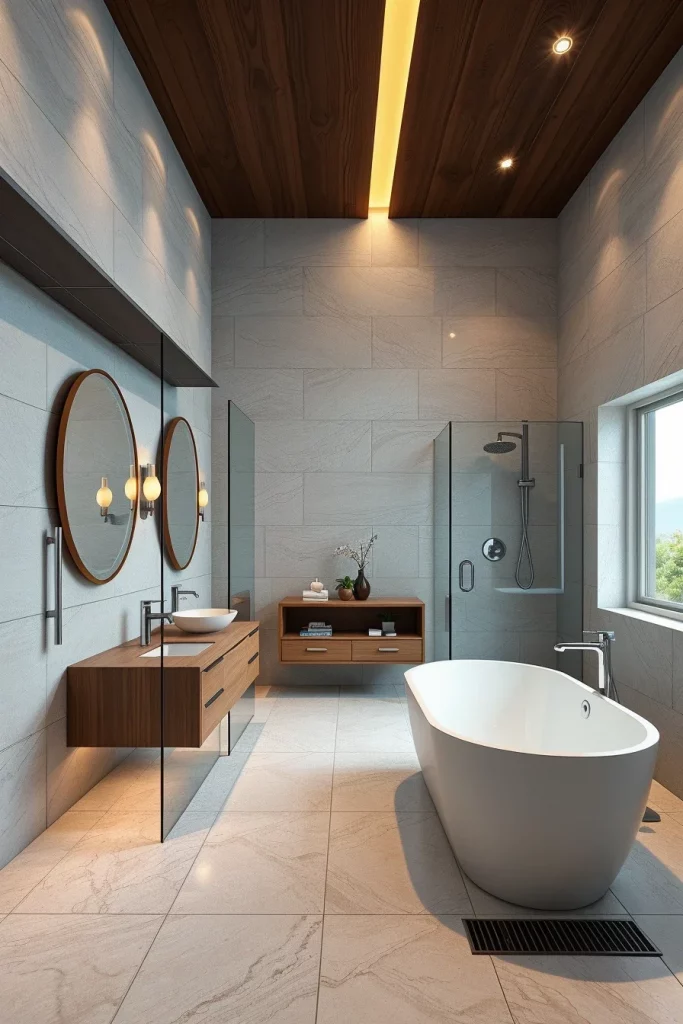
When designing this type of bathroom, I include a frameless glass shower enclosure to preserve uninterrupted views of the stone finishes. A floating vanity with clean lines complements the organic texture without competing with it. Wall-mounted faucets, concealed storage drawers, and a simple freestanding bathtub help keep the space visually open. Warm LED lighting installed in ceiling recesses and beneath the vanity gently highlights the natural texture while making the room feel inviting throughout the day.
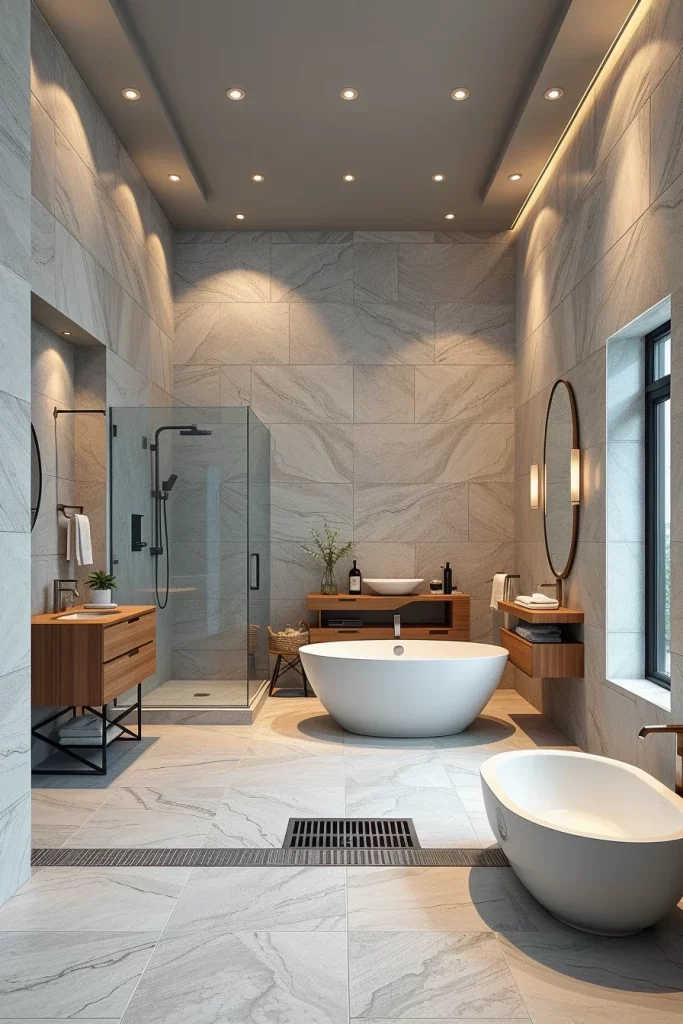
From my experience, many respected interior designers featured by Architectural Digest recommend limiting the number of competing materials when working with natural stone because simplicity allows the texture itself to become the design statement. I completely agree with this philosophy because every additional finish reduces the visual impact of the stone. I have repeatedly noticed that bathrooms designed with restraint tend to remain stylish much longer than trend-focused interiors.
To complete this layout, I would also add underfloor heating, a hidden linear drain, integrated ventilation, and moisture-resistant lighting controls. These practical improvements make the bathroom significantly more comfortable while preserving the clean architectural appearance.
Creating Contrast With Smooth And Rough Stone Surfaces
One of my favorite techniques for designing a textured stone bathroom is combining smooth stone slabs with rough-textured feature walls. This contrast creates visual balance without introducing unnecessary colors or decorative patterns. Instead of covering every surface with the same finish, I prefer using rough stone behind the vanity or bathtub while keeping surrounding walls smoother to prevent the room from feeling visually heavy.
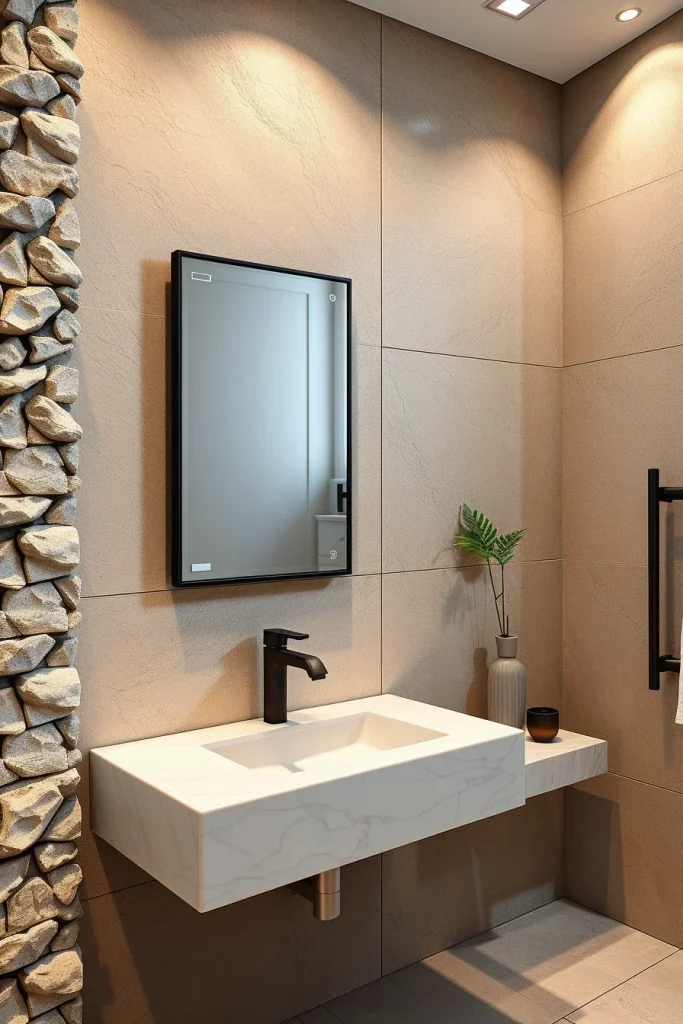
I usually pair textured stone with sleek cabinetry featuring matte finishes, floating storage units, minimal hardware, and simple quartz countertops. A frameless mirror, integrated lighting, and streamlined sanitary fixtures allow the natural stone to remain the primary attraction. Soft towels, ceramic accessories, and subtle metallic accents provide warmth without distracting from the architectural surfaces.
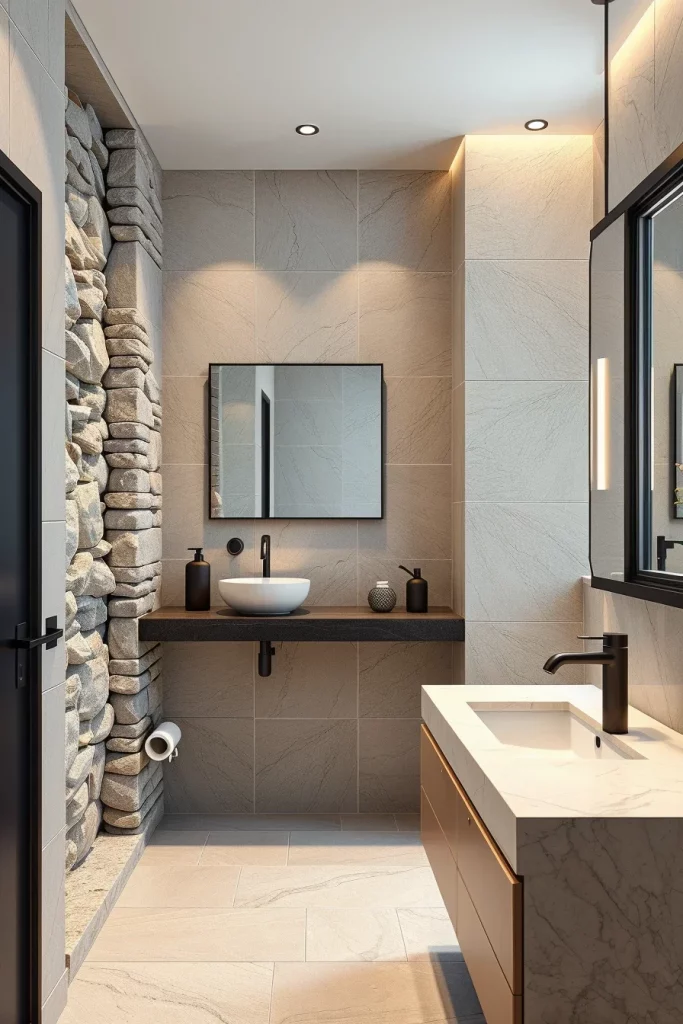
Personally, I believe contrast is one of the easiest ways to create a luxurious bathroom without increasing the budget dramatically. Designers frequently interviewed by Elle Decor often emphasize layering textures instead of introducing excessive decorative elements, and I find that advice especially valuable when working with natural materials. The combination of refined and rugged surfaces creates depth that photographs beautifully while remaining comfortable in everyday use.
To improve this design even further, I would include dimmable lighting positioned to cast gentle shadows across the textured wall. This lighting technique enhances the natural relief and changes the atmosphere throughout the day.
Natural Niches And Shelving Built Into Stone Walls
Built-in niches transform textured stone walls into functional storage without interrupting the overall design. I like integrating recessed shelves directly into shower walls and beside the bathtub because they eliminate the need for additional shelving while maintaining a clean appearance. When the niche is finished with the same stone as the surrounding wall, the storage blends seamlessly into the architecture.
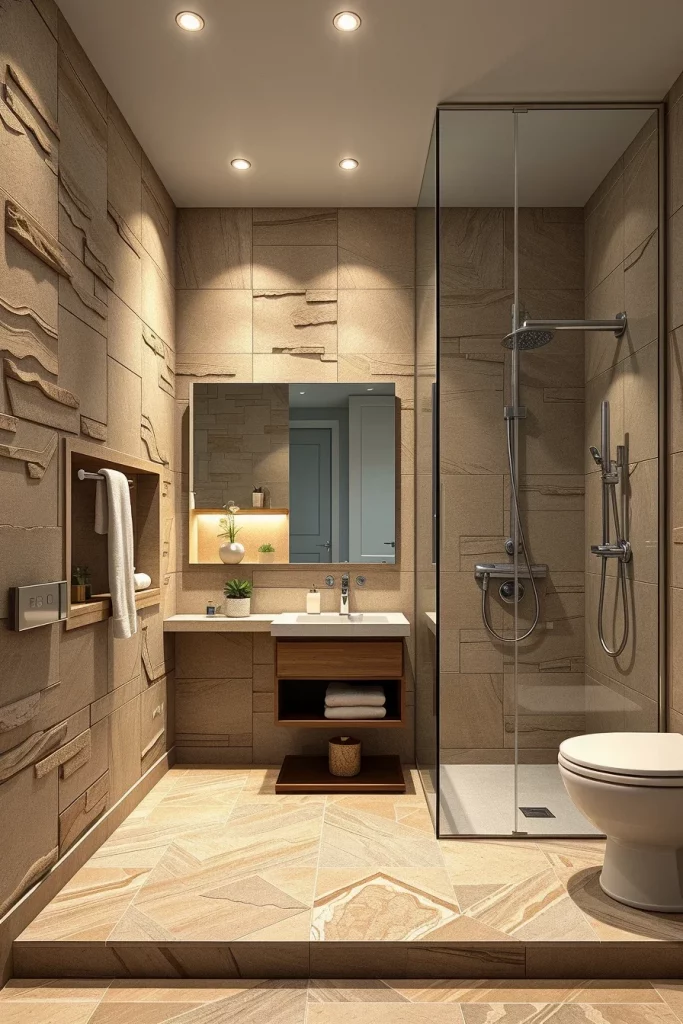
Inside these recessed shelves, I recommend organizing toiletries in matching dispensers and displaying only a few carefully selected accessories. A floating vanity with generous drawers keeps everyday essentials out of sight, while a built-in bench inside the shower increases comfort and complements the stone construction. Continuous stone surfaces surrounding the storage areas create an elegant custom-built appearance.
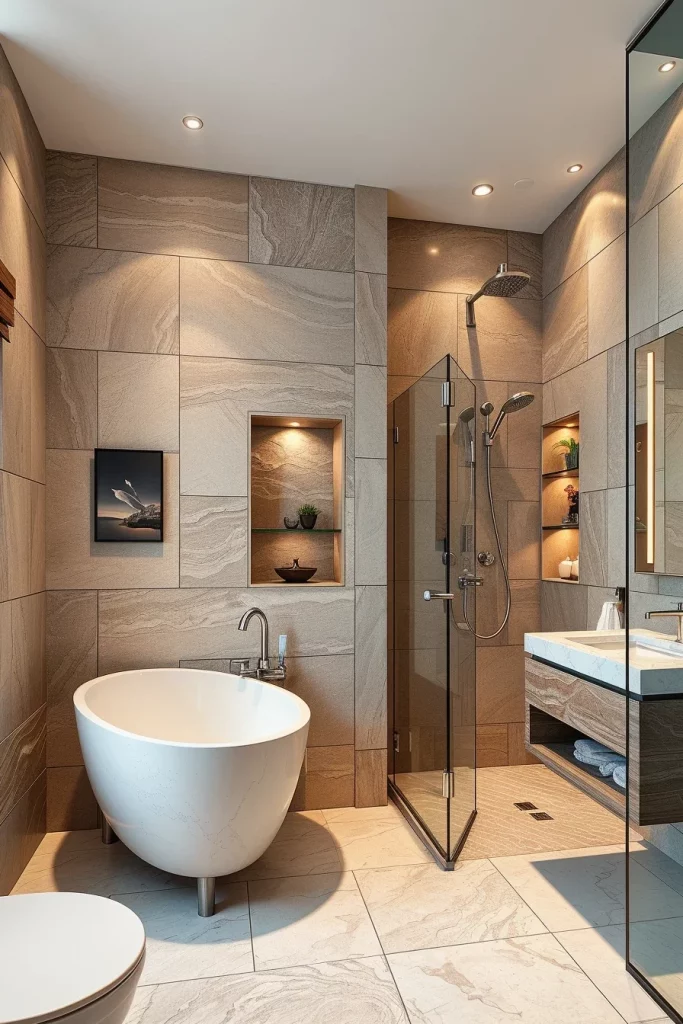
In my opinion, built-in storage is one of the most valuable investments in any modern bathroom. Publications such as House Beautiful frequently highlight integrated storage as an essential feature for maintaining uncluttered interiors, and I fully support that recommendation. When everything has its designated place, the beauty of the stone remains visible instead of being hidden behind bottles and accessories.
I would also recommend incorporating concealed LED strips inside larger niches to improve visibility while emphasizing the natural texture of the surrounding stone during the evening hours.
Statement Mirrors That Elevate Stone Bathrooms
A carefully selected mirror can completely transform a stone bathroom by introducing light, depth, and visual balance. I often choose oversized mirrors with thin metal frames or organically shaped frameless designs because they reflect the surrounding stone while making the room appear significantly larger. Instead of using heavily decorated frames, I allow the stone textures to remain the primary decorative feature.
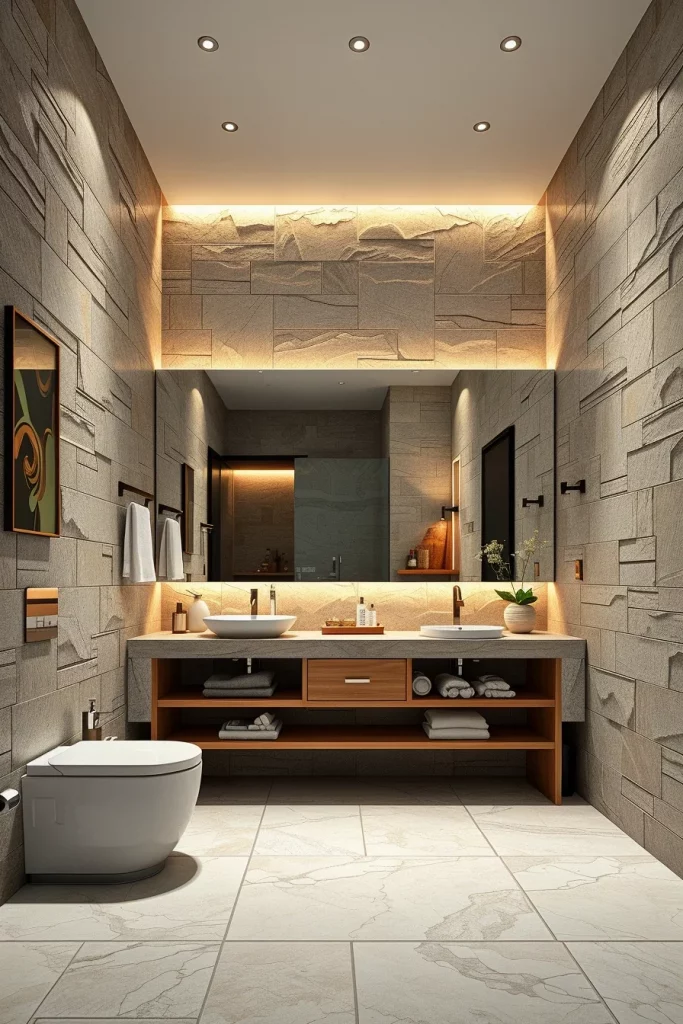
I usually combine the mirror with floating vanities, integrated wall sconces, minimalist faucets, and discreet storage cabinets. Indirect LED backlighting behind the mirror softly illuminates textured walls while creating a relaxing atmosphere suitable for both morning routines and evening relaxation. Coordinating finishes across hardware, towel bars, and lighting fixtures help create a cohesive interior.
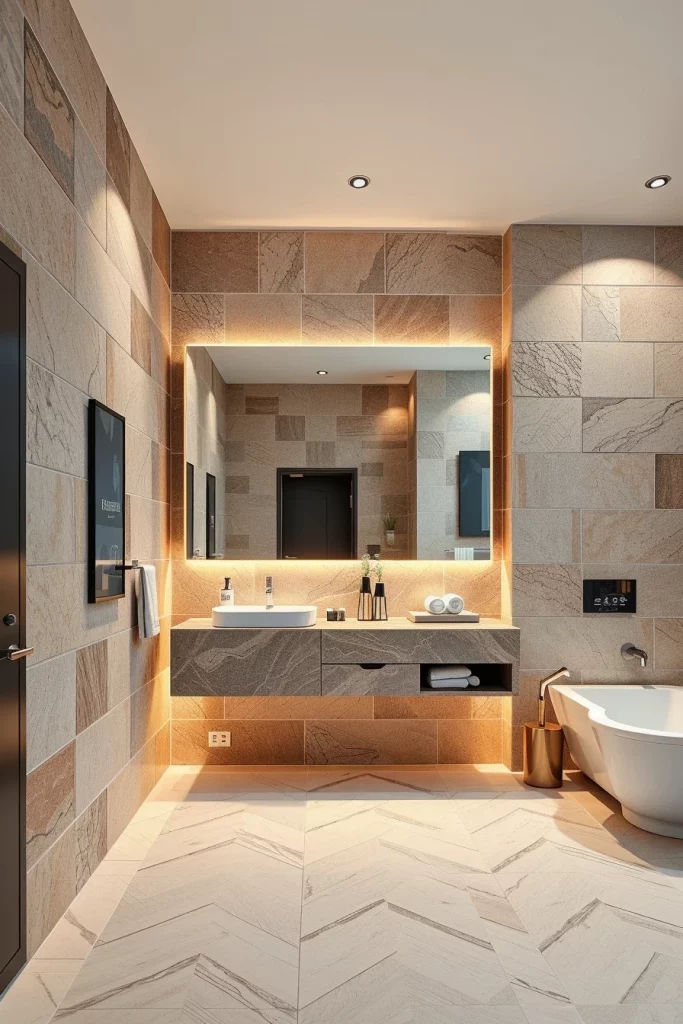
From my experience, proper mirror placement is just as important as selecting the mirror itself. Interior designers regularly recommend positioning mirrors where they maximize both natural and artificial light, and I have consistently found that this strategy makes stone bathrooms feel brighter and more spacious without additional remodeling.
To complete this section, I would also include anti-fog mirror technology and adjustable lighting temperatures, allowing the space to adapt to different daily routines while increasing long-term comfort.
Contemporary Sink Designs For Stone Interiors
The sink often becomes the centerpiece of a textured stone bathroom, so I carefully select designs that complement rather than compete with the surrounding materials. Vessel sinks carved from natural stone create a sculptural appearance, while integrated solid-surface basins provide a cleaner contemporary look. Both options work beautifully when paired with richly textured stone walls that provide visual depth behind the vanity.
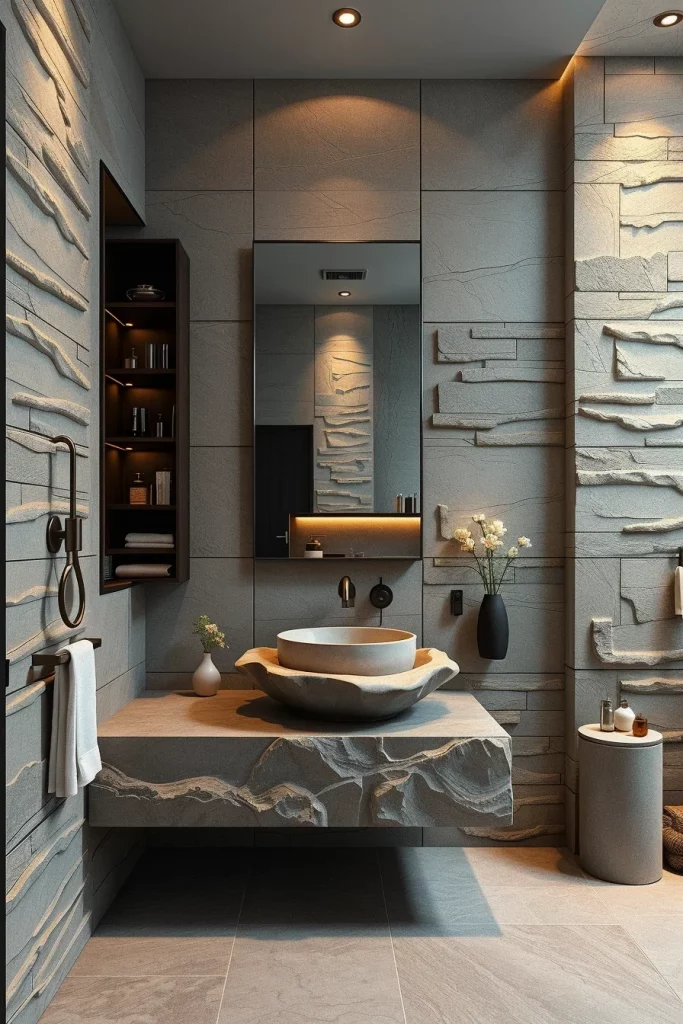
I typically install floating vanities with generous storage, wall-mounted faucets, and durable countertops that resist moisture and daily wear. Carefully selected accessories such as soap dispensers, trays, woven baskets, and folded towels introduce softness while maintaining a sophisticated aesthetic. Balanced lighting above and below the vanity highlights every detail without overwhelming the natural materials.
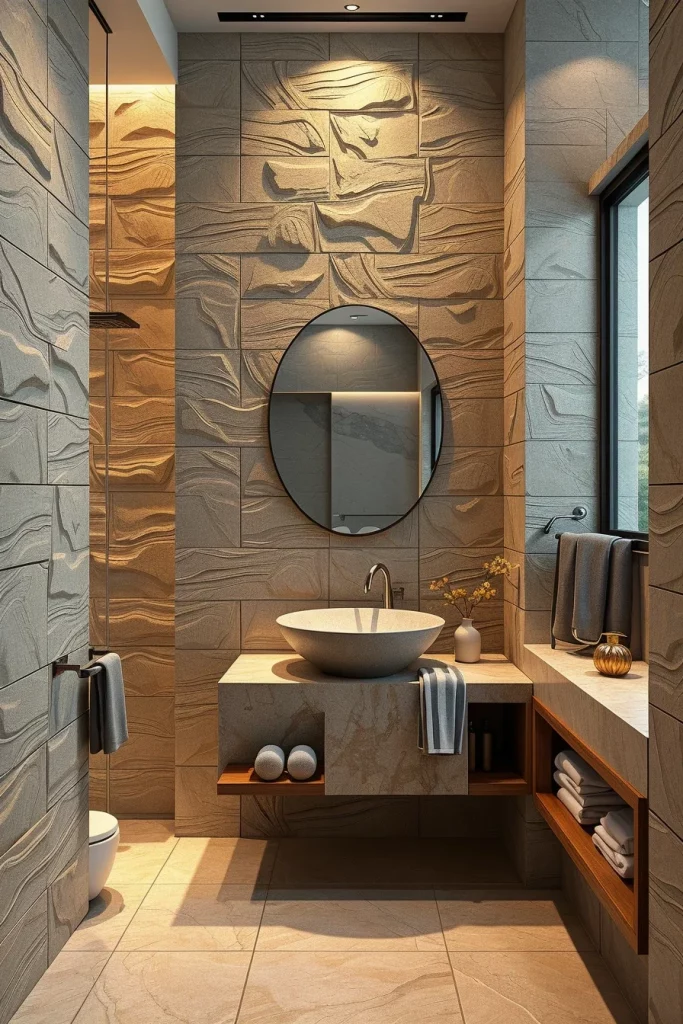
Personally, I believe investing in high-quality plumbing fixtures is just as important as selecting beautiful stone. Professional designers often point out that timeless bathrooms combine durable materials with functional layouts rather than relying solely on decorative trends. I have found this philosophy produces interiors that remain elegant and practical for many years.
I would also recommend incorporating water-efficient faucets, soft-close storage drawers, and hidden electrical outlets inside the vanity to improve everyday convenience without compromising the minimalist appearance.
Textured Stone Around Bathroom Windows For Added Character
I always see bathroom windows as an opportunity to introduce more natural light while showcasing the beauty of textured stone. Wrapping the window surround with the same stone used on the walls creates continuity and gives the opening an architectural presence rather than making it feel like an afterthought. I prefer using stone with subtle variations in texture so that sunlight creates gentle shadows throughout the day. This simple detail adds depth to the room without requiring additional decoration.
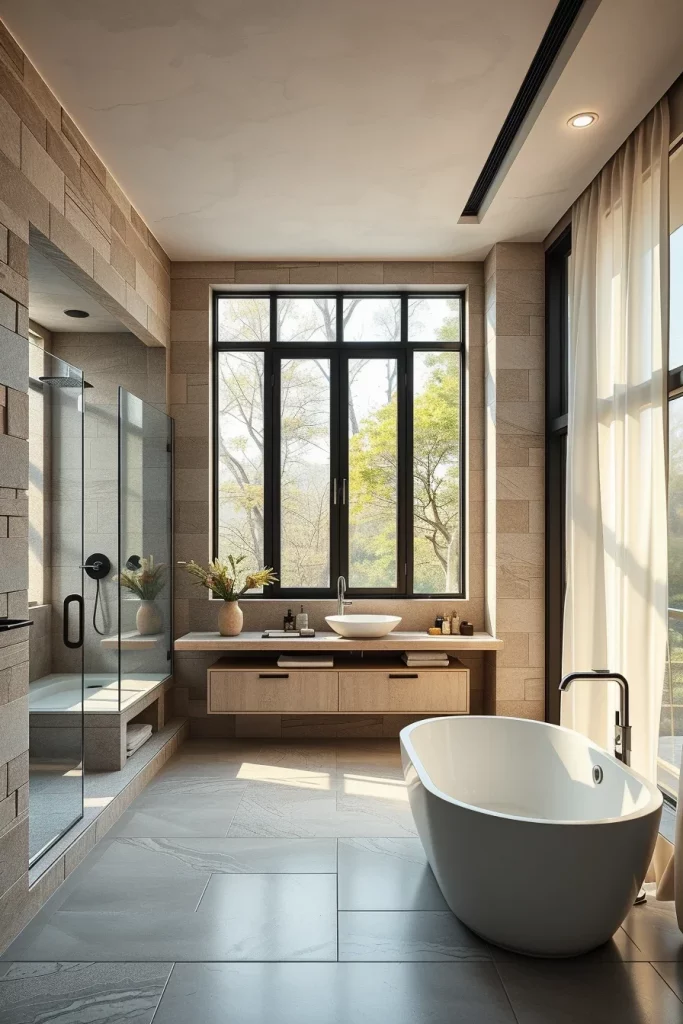
For this design, I like pairing the stone window surround with slim black or bronze window frames, depending on the overall color palette. A floating vanity positioned near the window allows natural light to illuminate the countertop during daily routines. Frameless glass shower panels, wall-mounted faucets, and built-in storage maintain an uncluttered appearance, while moisture-resistant Roman shades or simple linen curtains provide privacy without hiding the stone details. Every element works together to keep the bathroom open and balanced.
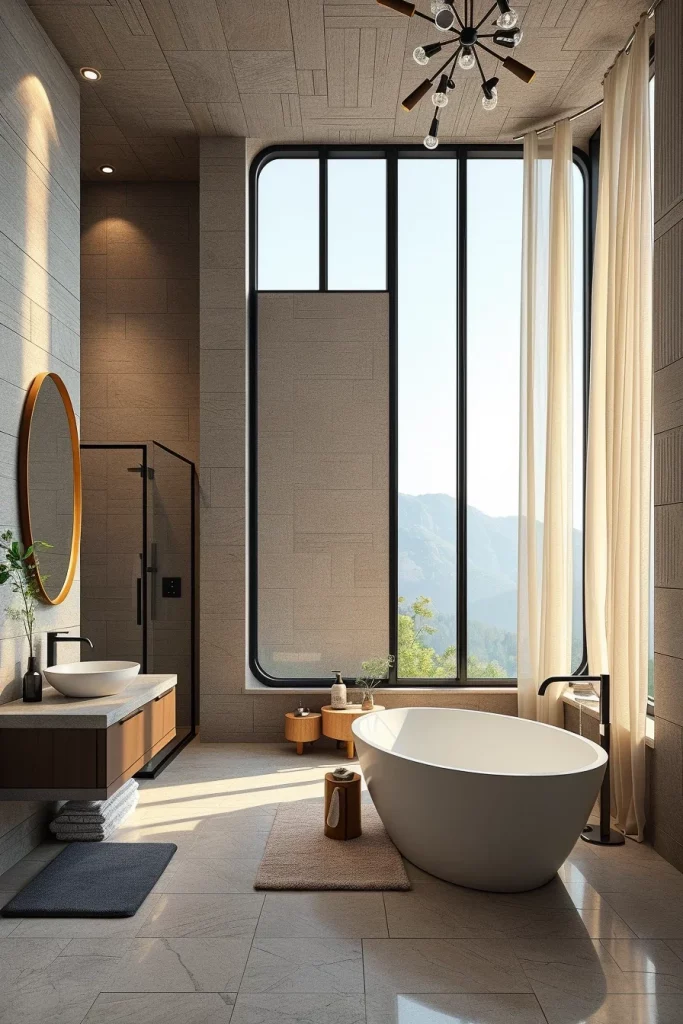
From my experience, natural daylight is one of the most valuable design features in any bathroom. Designers featured by Veranda often explain that carefully framing windows with premium materials increases the architectural quality of the entire room. I have found that textured stone around windows not only enhances the view but also makes the room feel brighter and more luxurious throughout every season.
To complete this design, I would include concealed LED lighting above the window recess and high-quality sealants designed specifically for natural stone. These additions improve durability while highlighting the stone after sunset.
Elegant Decorative Accessories That Match Stone Finishes
Decorative accessories should complement textured stone instead of competing with it. I always recommend selecting only a few carefully chosen pieces that reinforce the natural atmosphere of the bathroom. Neutral ceramic containers, handcrafted trays, rolled cotton towels, and simple glass dispensers create a refined appearance while allowing the stone surfaces to remain the visual centerpiece. Keeping accessories consistent in color helps preserve the calm feeling that natural materials provide.
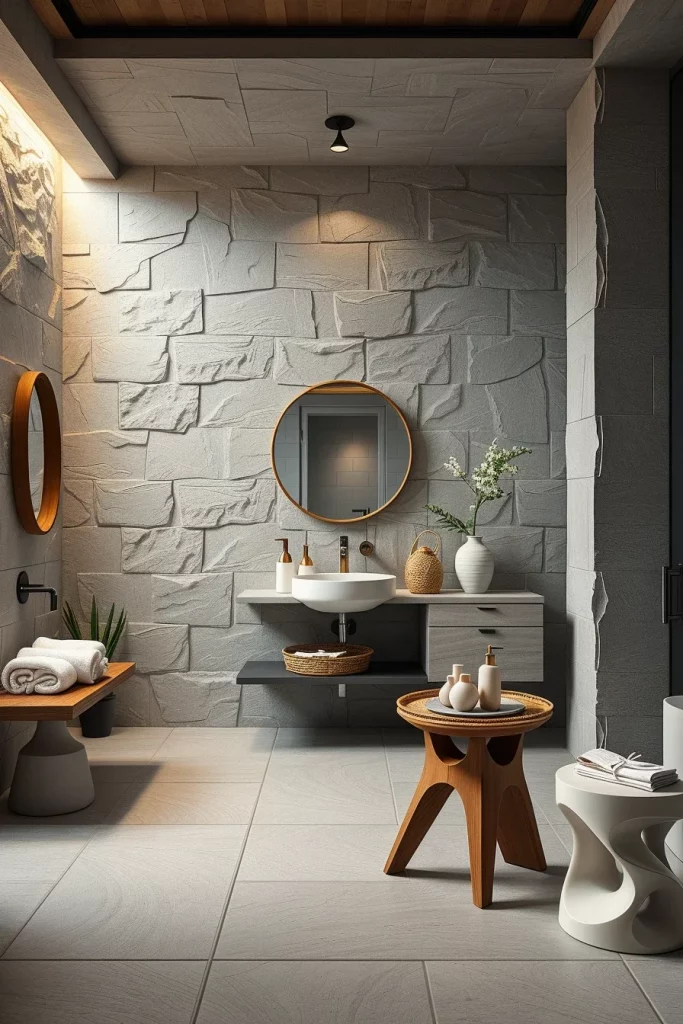
I usually combine these accessories with floating wooden-look cabinetry, minimalist towel ladders, sculptural stools, woven storage baskets, and matte metal hardware. Small decorative objects should be placed intentionally rather than filling every available surface. Soft textiles introduce comfort, while carefully selected candles or subtle fragrance diffusers make the room feel more welcoming without creating visual clutter.
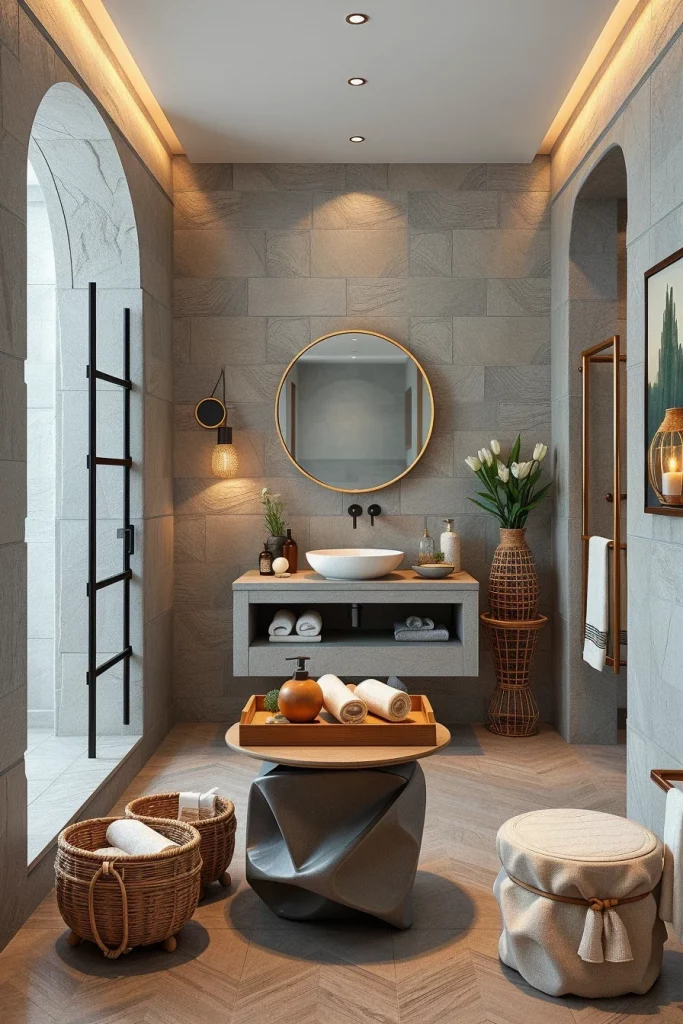
Personally, I believe decorating a stone bathroom requires restraint. Interior designers regularly emphasize that negative space is just as important as decorative objects. I completely agree because the rich texture of natural stone already provides visual interest. By limiting accessories, every decorative item feels more meaningful and the room remains timeless instead of following short-lived trends.
I would also recommend adding one or two living moisture-loving plants near the window if natural light is available, along with high-quality storage containers that conceal everyday essentials while maintaining the clean aesthetic.
Easy Maintenance Tips For Textured Stone Bathrooms
A beautiful textured stone bathroom will only remain attractive if it is maintained correctly. I always recommend sealing natural stone according to the manufacturer’s recommendations because proper sealing protects against moisture, soap residue, and staining. Gentle daily cleaning with pH-neutral stone cleaners helps preserve both the appearance and durability of the surface without damaging its natural texture.
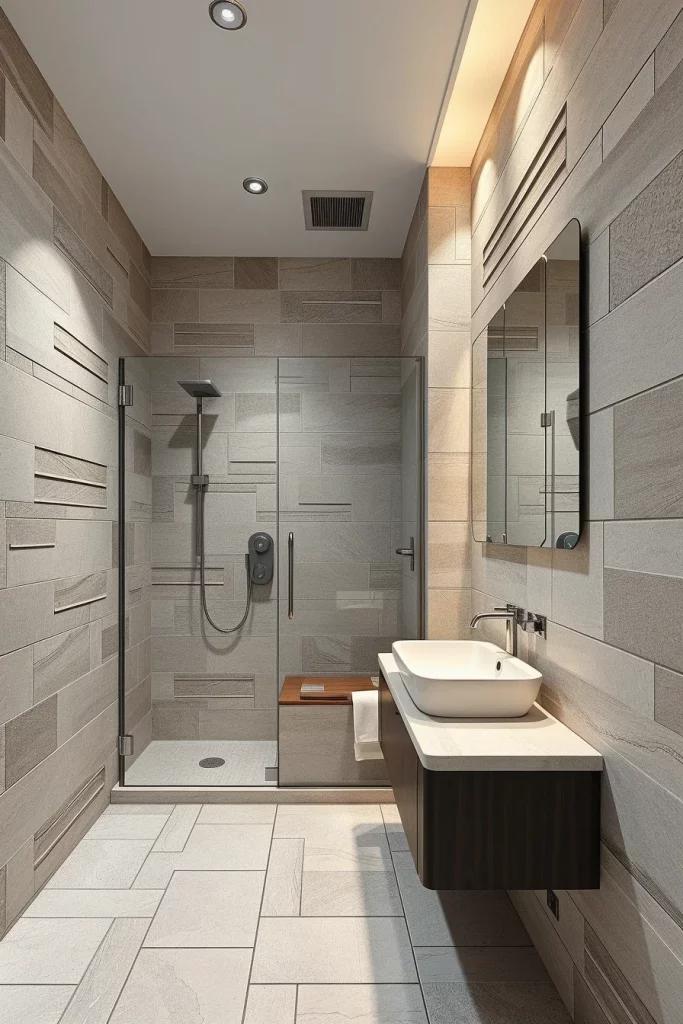
When planning the room, I also choose materials that simplify maintenance. Frameless shower glass with protective coatings reduces water spots, while wall-mounted vanities leave the floor accessible for cleaning. Linear drains, concealed plumbing, and high-quality ventilation systems reduce moisture buildup and help prevent mold from developing in corners or grout lines.
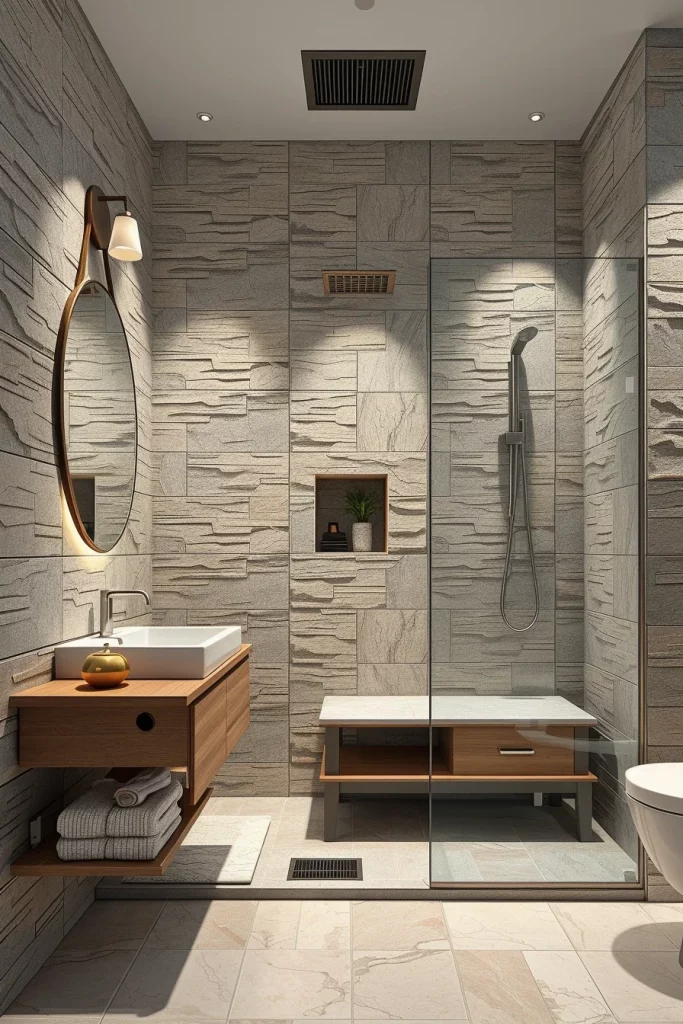
In my experience, homeowners often believe textured stone requires difficult maintenance, but that has not been my observation. Most maintenance issues occur because harsh chemicals are used instead of products formulated specifically for natural stone. Organizations such as the Natural Stone Institute regularly recommend avoiding acidic cleaners because they can gradually damage certain stone surfaces. Following these simple guidelines keeps the bathroom looking beautiful for many years.
I would also install a humidity sensor connected to the ventilation system and keep a soft microfiber cloth nearby for drying stone surfaces after heavy use. These small habits significantly extend the life of the finish.
Common Design Mistakes To Avoid With Stone Bathrooms
One mistake I frequently notice is using too many different stone colors and textures in the same room. Although each material may be beautiful individually, combining too many finishes creates visual confusion rather than harmony. I recommend selecting one primary textured stone and allowing it to define the character of the bathroom. Supporting materials should remain simple so they enhance rather than compete with the stone.
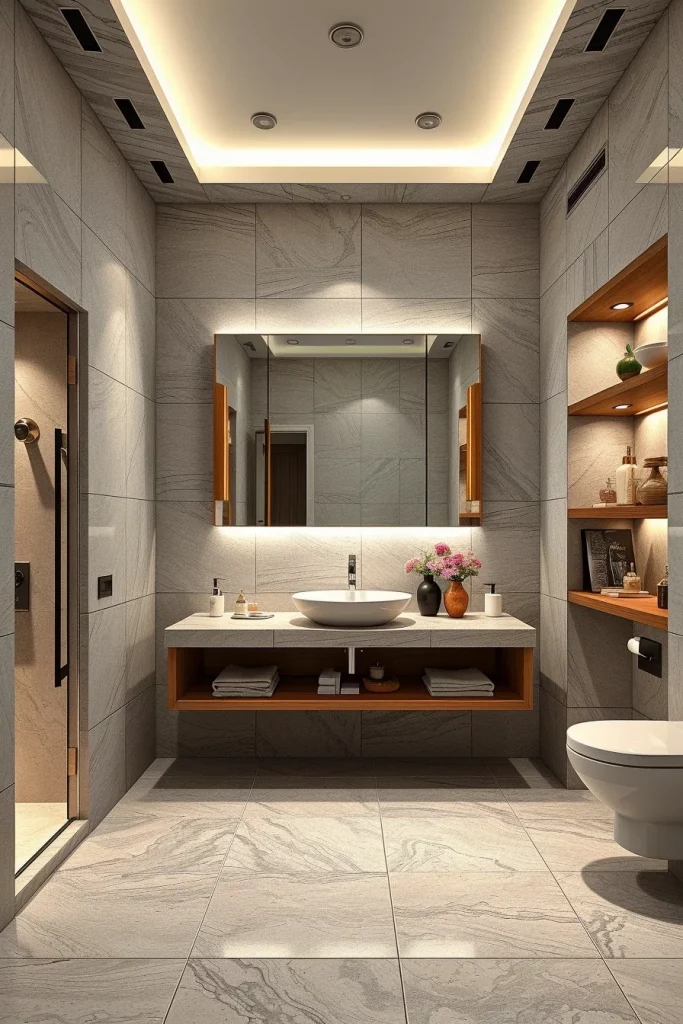
Another common mistake is choosing oversized furniture that interrupts the openness of the design. I prefer floating vanities, streamlined storage, frameless mirrors, and built-in shelving because they allow the stone surfaces to remain visible. Poor lighting is another issue that can flatten the texture instead of highlighting it. Layered lighting with ceiling fixtures, vanity lighting, and accent illumination produces much better results.
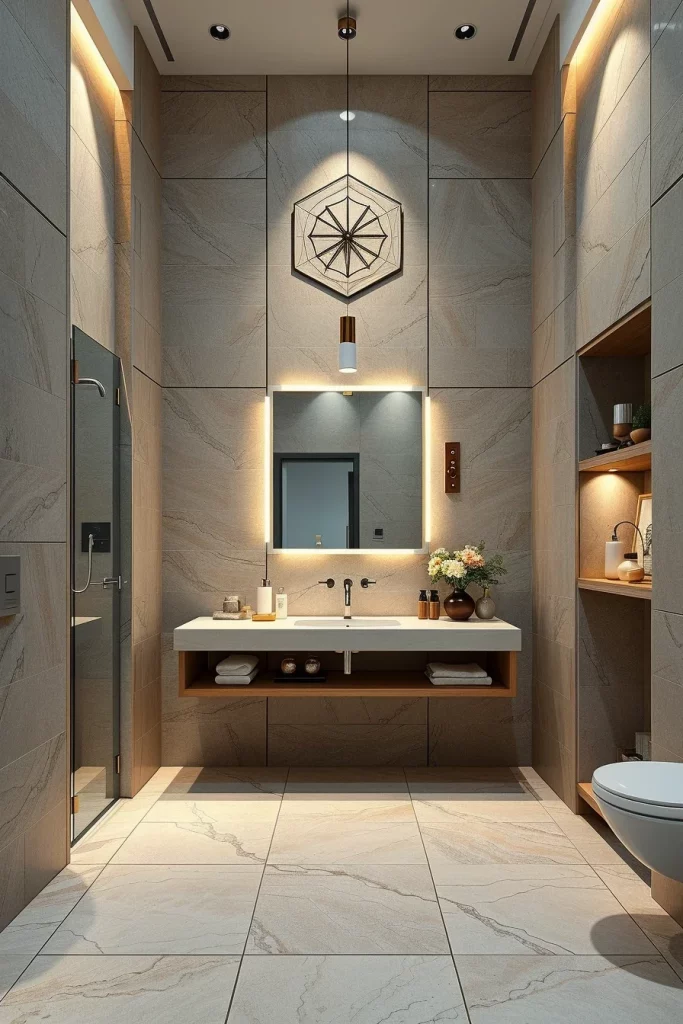
From my own projects, I have learned that balance is more important than adding expensive materials. Many professional designers recommend editing the design repeatedly before construction begins, removing unnecessary decorative elements until every remaining feature has a clear purpose. This approach consistently produces interiors that feel elegant and comfortable.
I would also avoid glossy finishes on every surface because excessive reflection can reduce the visual richness of textured stone. Combining matte finishes with carefully controlled lighting creates a much more sophisticated atmosphere.
Designing A Luxurious Textured Stone Bathroom That Lasts
Creating a luxurious bathroom is not simply about choosing premium materials; it is about designing a space that remains functional, comfortable, and visually appealing for decades. I begin with high-quality textured stone that has natural variation, then build the rest of the design around its unique character. By maintaining a restrained material palette, I create interiors that feel timeless instead of trend-driven.
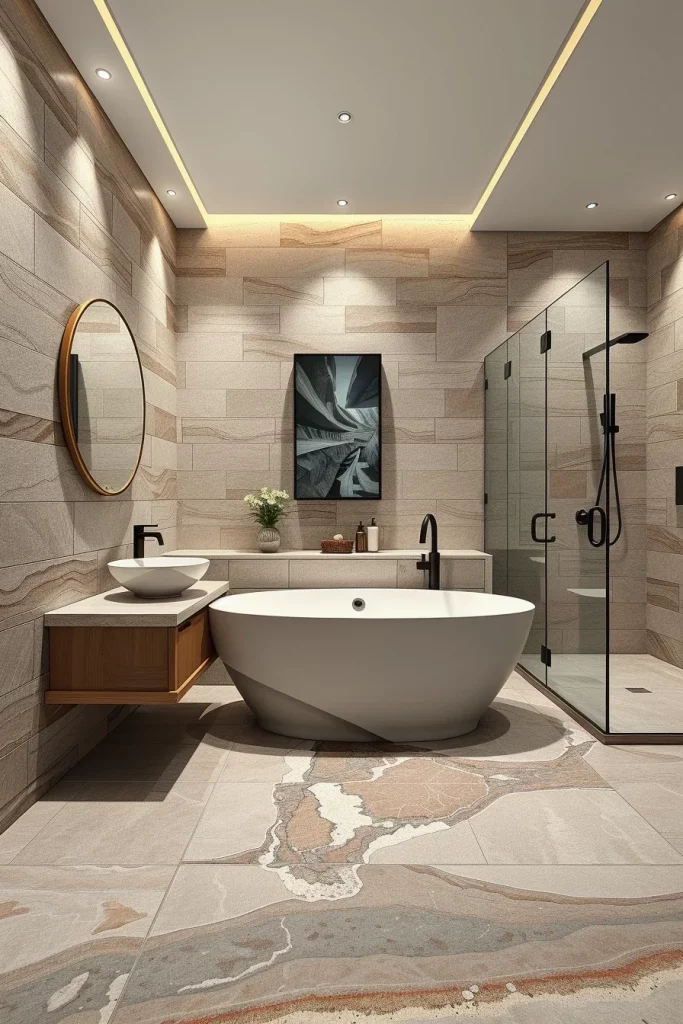
I combine the stone with custom floating cabinetry, integrated storage, frameless shower enclosures, sculptural bathtubs, elegant mirrors, efficient ventilation, and layered lighting. Every furniture piece and fixture serves a practical purpose while contributing to a calm and harmonious environment. Durable hardware, water-efficient plumbing fixtures, and thoughtful storage solutions ensure that the bathroom performs as beautifully as it looks.
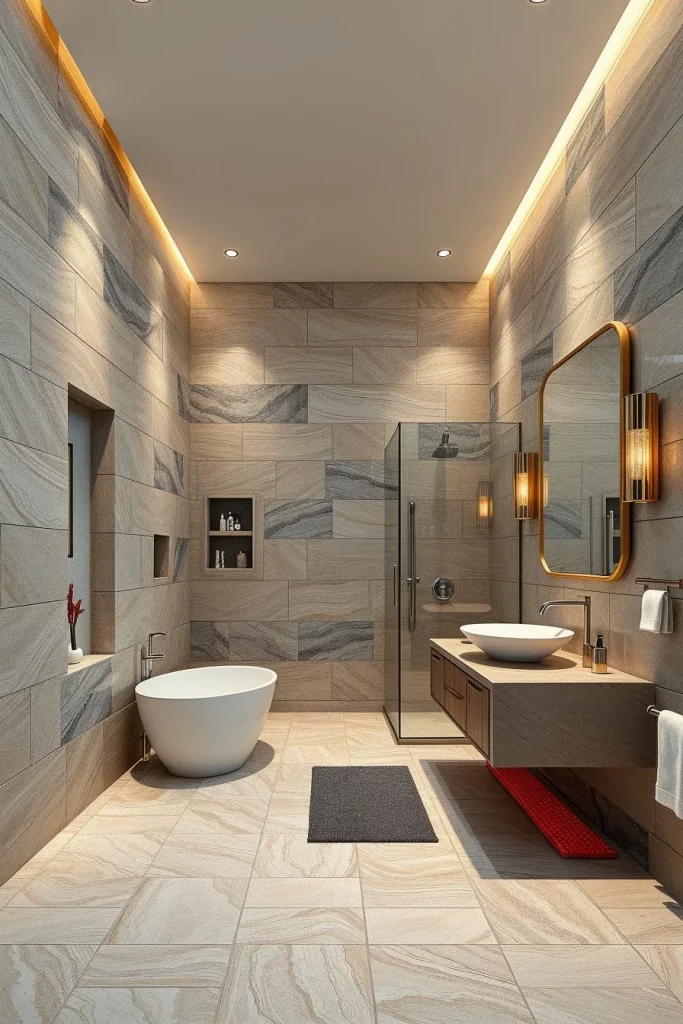
Personally, I believe the best bathrooms are those that continue to feel inviting year after year. Advice shared by respected interior designers consistently emphasizes investing in quality craftsmanship rather than temporary trends, and I fully agree with that philosophy. Careful planning always produces better long-term value than frequent renovations, especially when working with natural materials that age gracefully.
To make this bathroom even more complete, I would include smart lighting controls, heated flooring, premium ventilation, and a long-term maintenance schedule. These final details ensure the investment continues to deliver comfort, efficiency, and lasting beauty.
A textured stone bathroom is more than a design trend—it is a timeless choice that brings character, comfort, and natural elegance to any home. By combining beautiful stone surfaces with thoughtful lighting, modern fixtures, and a cohesive color palette, you can create a bathroom that feels both luxurious and functional. Use these ideas as inspiration to design a space that reflects your personal style while showcasing the unique beauty of textured stone for years to come.