
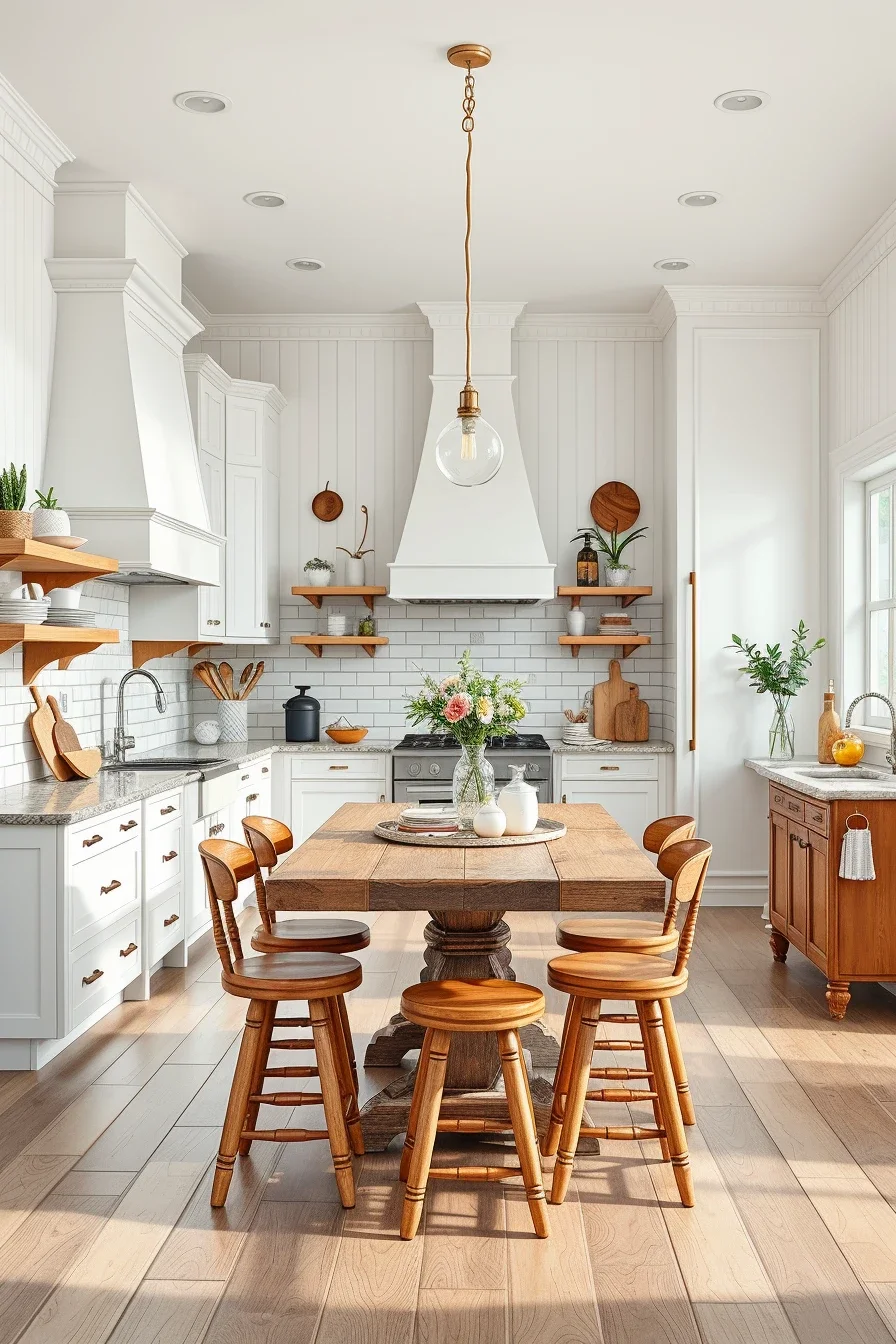
A white farmhouse kitchen combines timeless charm with fresh, inviting style, making it one of the most beloved design choices for modern homes. Crisp white cabinetry, warm natural textures, and thoughtfully chosen decor create a space that feels both cozy and elegant. Whether you’re planning a complete renovation or simply updating a few decorative elements, there are countless ways to bring farmhouse character into your kitchen. From apron-front sinks and open shelving to statement lighting and vintage-inspired accents, every detail contributes to the overall look. The beauty of white farmhouse kitchen decor lies in its versatility, allowing you to blend traditional elements with contemporary touches. In this article, you’ll discover inspiring ideas to help you create a bright, welcoming, and beautifully styled farmhouse kitchen.
Timeless White Farmhouse Kitchen Design Basics
When I design a farmhouse kitchen, I always begin with timeless elements that will remain stylish for years. A white farmhouse kitchen typically combines soft white cabinetry, natural textures, comfortable layouts, and classic architectural details. The beauty of this style lies in its simplicity: bright surfaces reflect light, making the entire room feel open, airy, and welcoming. I find that a balanced mix of traditional and modern features creates the most successful design.
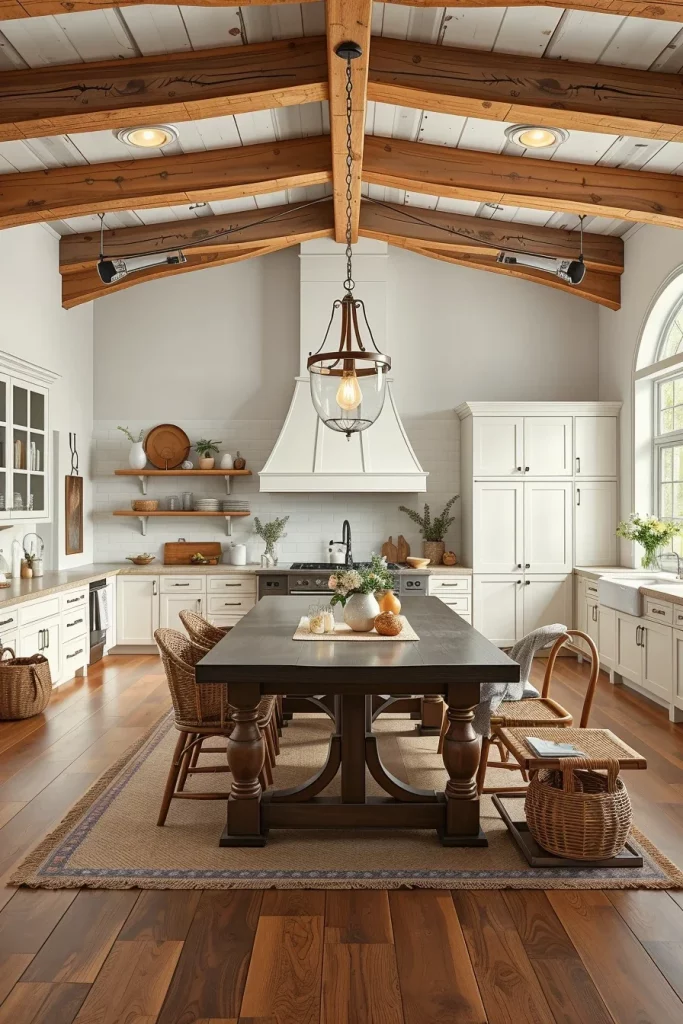
The foundation usually includes white cabinets, wide-plank flooring, simple countertops, and a spacious layout that encourages gathering. I recommend incorporating a large dining table or kitchen island because farmhouse kitchens are designed to be social spaces. Decorative details such as vintage-inspired hardware, ceramic accessories, woven baskets, and subtle textures help create warmth without overwhelming the room.
Personally, I believe that restraint is essential. According to recommendations frequently highlighted by interior publications such as Architectural Digest, layering textures rather than adding excessive décor helps maintain an authentic farmhouse appearance. I have found that combining smooth painted surfaces with natural materials creates visual depth while preserving a clean aesthetic.
To complete this design, I would add soft textiles such as linen curtains, neutral rugs, and upholstered seating. These finishing touches make the kitchen feel lived-in and comfortable while maintaining the timeless farmhouse atmosphere.
Choosing The Perfect White Color Palette For A Farmhouse Kitchen
Selecting the right shade of white is one of the most important decisions when planning a farmhouse kitchen. I always remind homeowners that not all whites are the same. Warm whites with creamy undertones create a cozy farmhouse feeling, while cooler whites produce a crisp and contemporary look. The amount of natural light in the room should always influence the final choice.
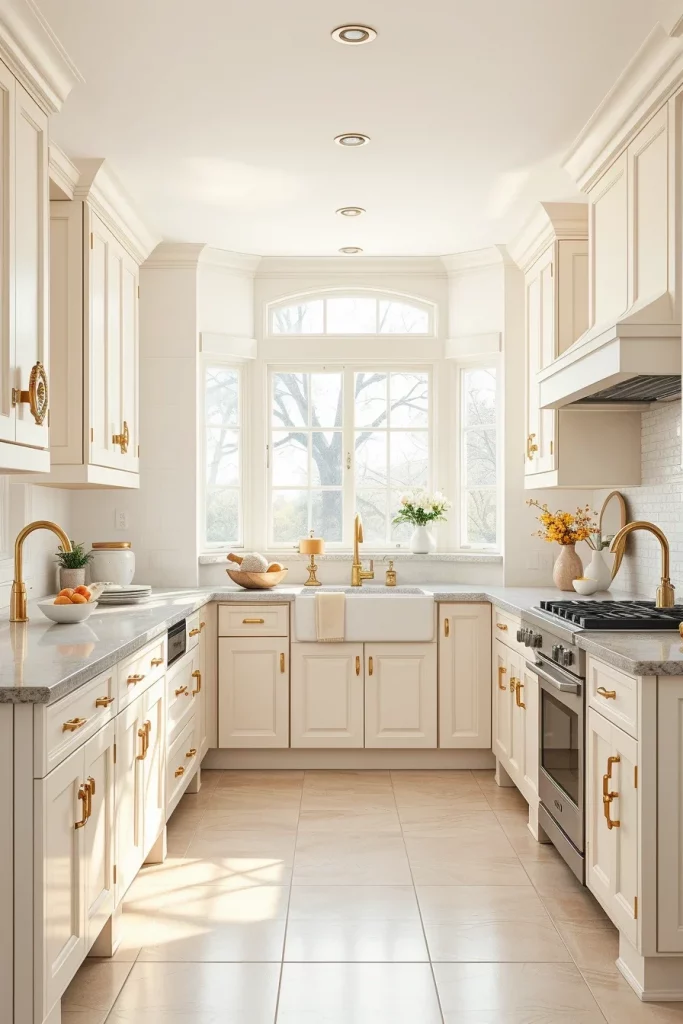
For cabinetry, I often recommend soft whites paired with warm countertops and natural textures. Walls painted in subtle ivory or off-white shades can prevent the room from feeling sterile. Complementary finishes such as brushed brass hardware, stone countertops, and natural wood accents help soften the overall appearance and create visual harmony.
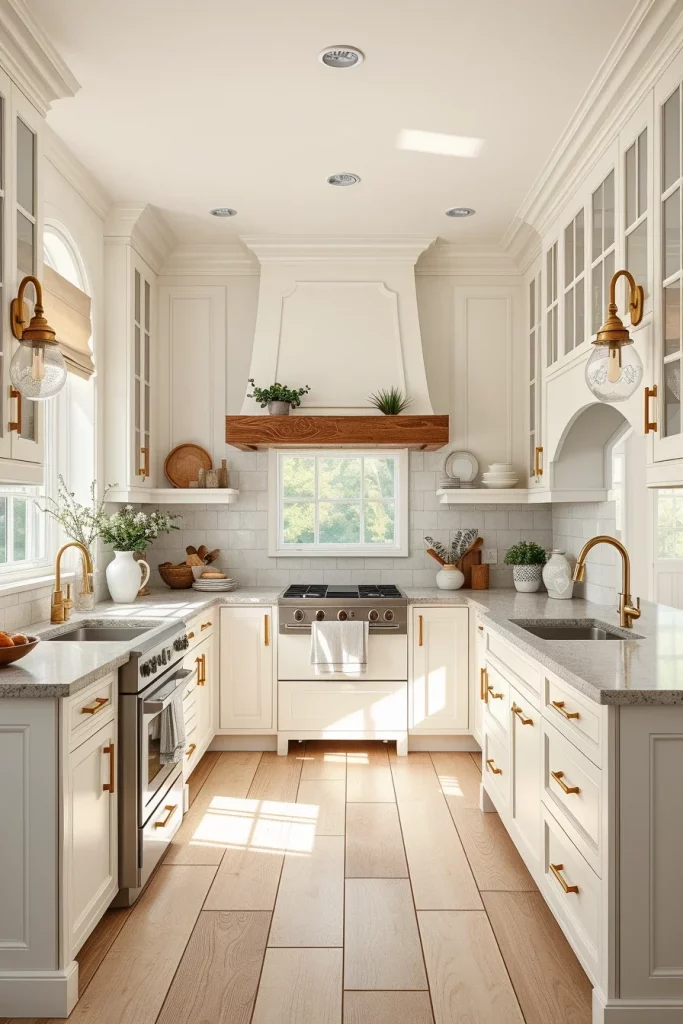
In my experience, testing paint samples throughout the day is essential. Lighting conditions change dramatically from morning to evening. Designers frequently advise observing paint colors under both natural and artificial lighting before making a final decision, and I completely agree with this approach.
I also suggest adding tonal variation through backsplashes, fabrics, and decorative accessories. Layering different shades of white creates depth and ensures that the kitchen feels sophisticated rather than flat.
Classic Shaker Cabinets For A White Farmhouse Kitchen
Shaker cabinets remain one of my favorite choices for farmhouse kitchens because their clean lines and simple craftsmanship perfectly embody the farmhouse aesthetic. Their understated appearance works beautifully in both traditional and updated farmhouse interiors. White Shaker cabinets instantly brighten the room while offering timeless appeal.
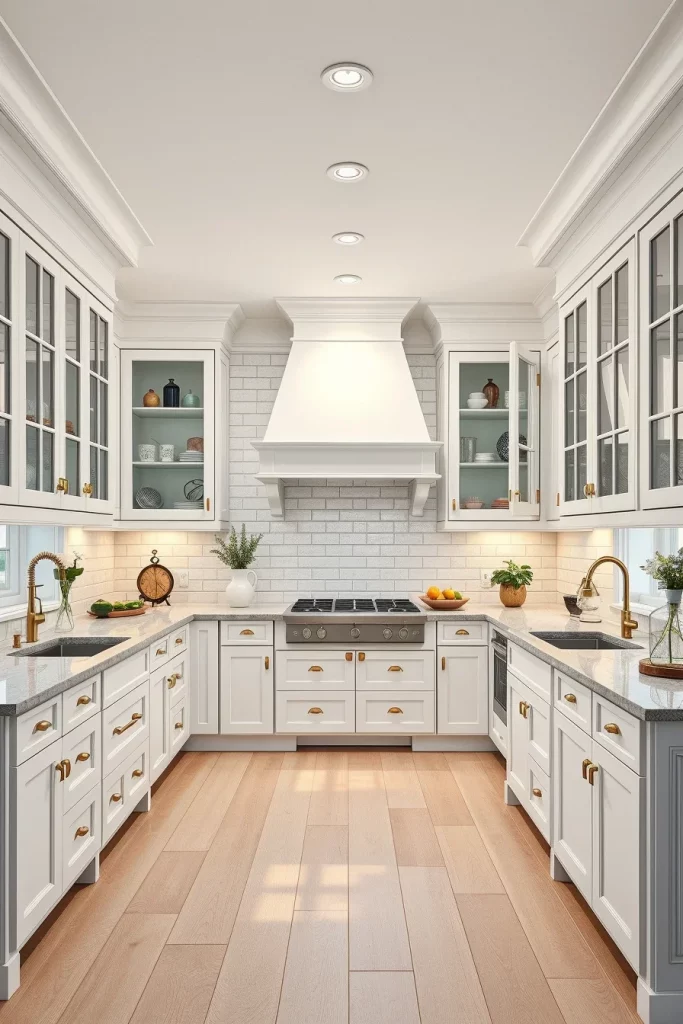
I often pair Shaker cabinetry with cup pulls, bin handles, and soft-close features for everyday functionality. Glass-front upper cabinets can also introduce variety while displaying dishes or decorative pieces. Crown molding and furniture-style details add elegance without compromising the relaxed farmhouse atmosphere.
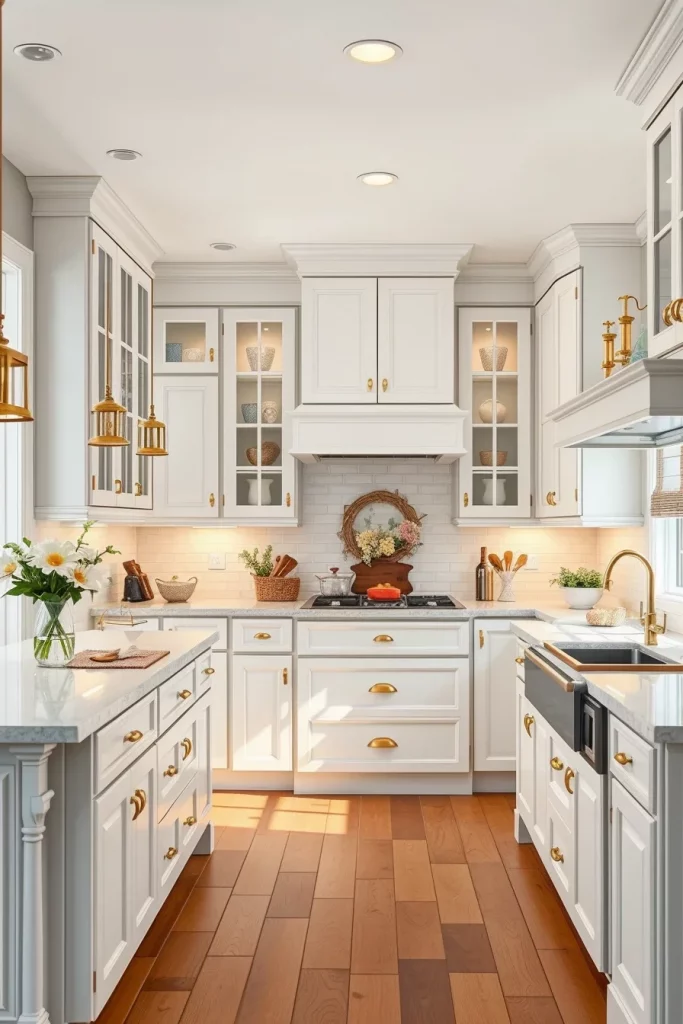
From my perspective, investing in quality cabinetry is always worthwhile. High-quality Shaker cabinets withstand changing trends and provide exceptional durability. Many leading kitchen designers recommend prioritizing cabinet construction because cabinetry is one of the most heavily used elements in any kitchen.
To further enhance the design, I like incorporating under-cabinet lighting. This feature improves functionality while highlighting the beautiful details of the cabinetry.
White Farmhouse Kitchens With Large Kitchen Islands
A spacious island often becomes the centerpiece of a farmhouse kitchen. I find that large islands significantly improve both functionality and social interaction. Whether used for meal preparation, casual dining, or entertaining guests, an island naturally encourages people to gather together.
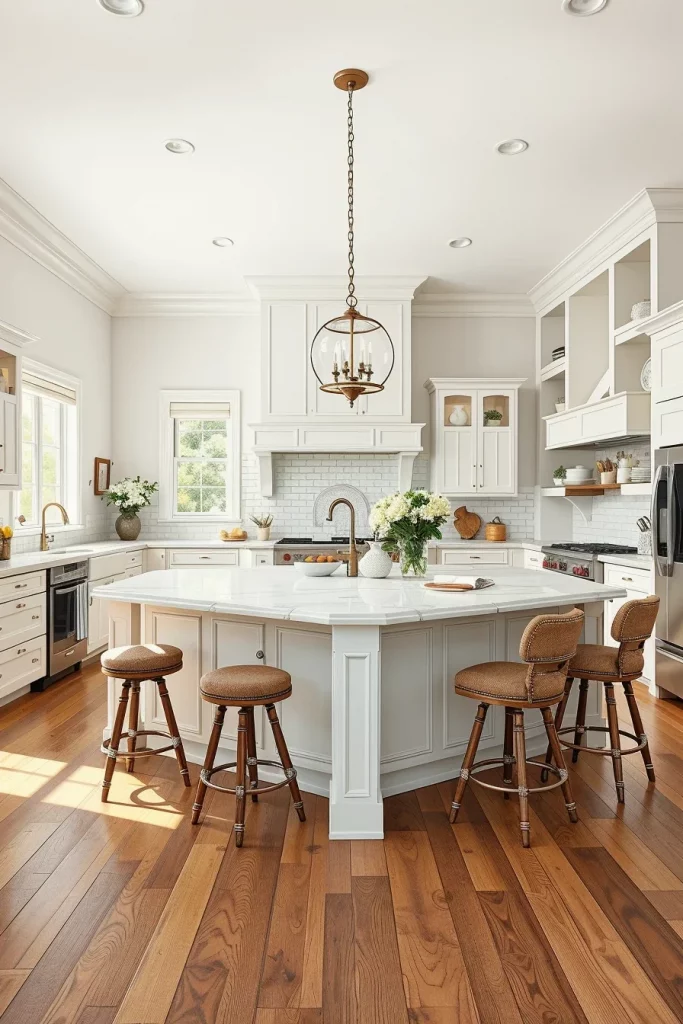
For a cohesive farmhouse appearance, I typically choose a white island that complements surrounding cabinetry. Comfortable counter stools, generous storage drawers, open shelving, and durable countertops maximize practicality. Islands with furniture-inspired legs or decorative paneling introduce additional farmhouse character.
Personally, I believe every farmhouse kitchen benefits from ample workspace. Even in moderately sized kitchens, a thoughtfully designed island can transform daily routines. Designers often emphasize multifunctionality, and I have seen firsthand how an island can successfully combine storage, seating, and preparation space.
To make the island even more functional, I would consider integrating features such as a prep sink, microwave drawer, or additional storage compartments tailored to the family’s lifestyle.
Incorporating Apron Front Sinks Into Farmhouse Decor
Few features capture farmhouse style better than an apron front sink. I consider this element almost essential when creating authentic farmhouse kitchen decor. Its exposed front instantly adds charm while offering exceptional practicality thanks to its generous size and ergonomic design.
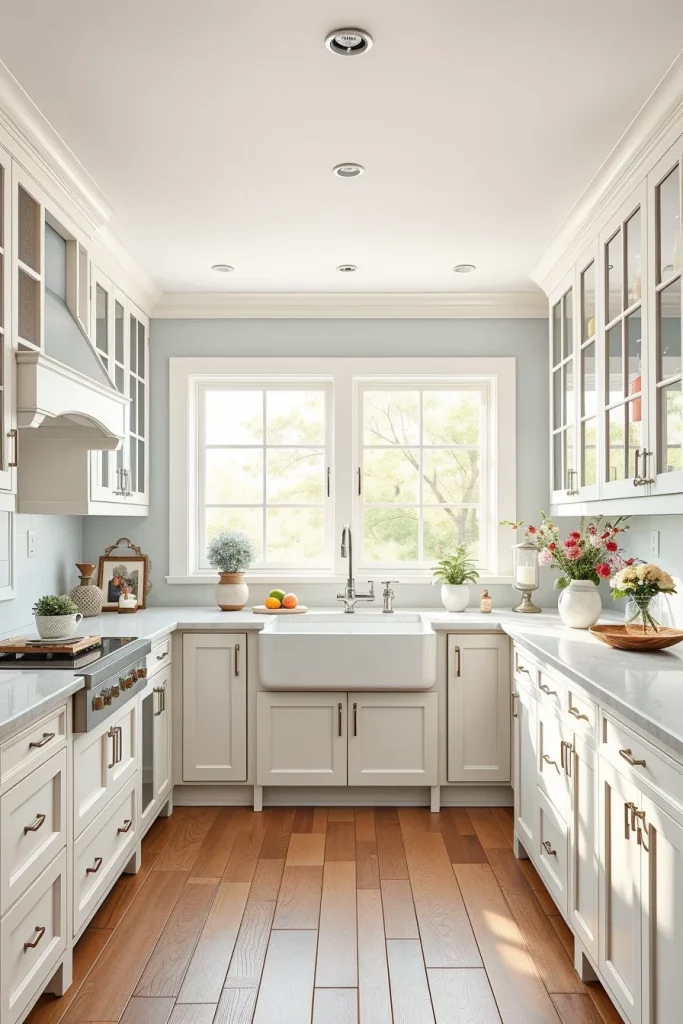
Apron front sinks are available in materials such as fireclay, porcelain, stainless steel, and composite finishes. I often pair them with bridge faucets, vintage-inspired fixtures, and surrounding countertop space for maximum convenience. Their deep basins make washing oversized cookware significantly easier.
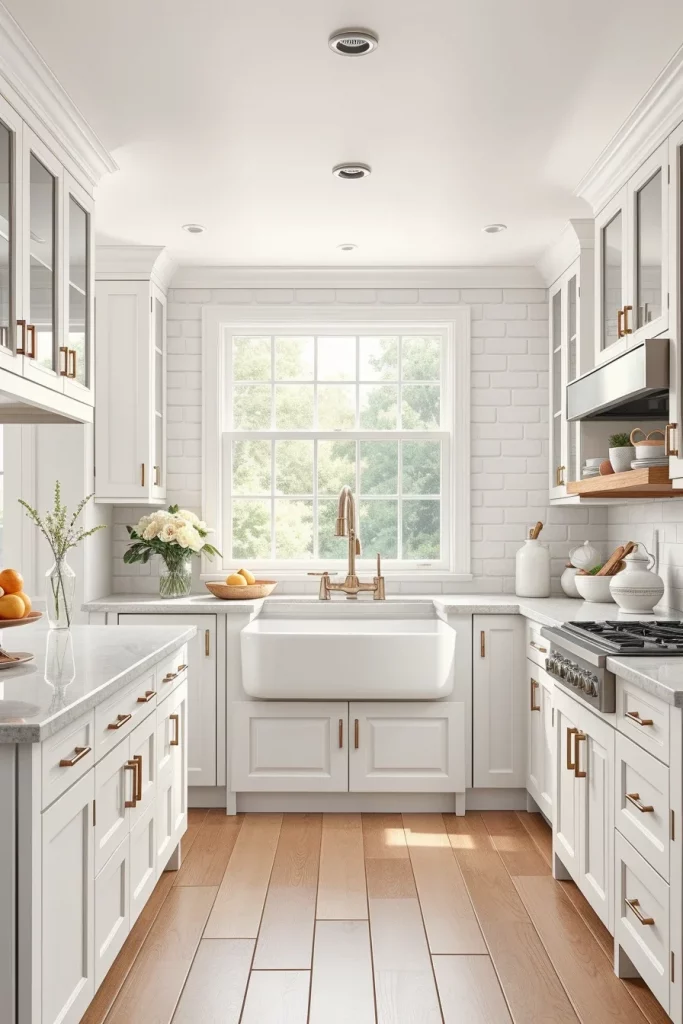
In my own projects, clients consistently appreciate both the beauty and functionality of farmhouse sinks. Publications such as House Beautiful frequently highlight apron sinks as signature farmhouse features because they successfully combine traditional aesthetics with modern performance.
I also recommend installing attractive accessories nearby, including soap dispensers, decorative trays, and stylish drying racks, to create a cohesive and highly functional sink area.
Open Shelving Ideas In White Farmhouse Kitchens
Open shelving can make a farmhouse kitchen feel more spacious and personal. I often recommend this feature in kitchens where homeowners want to showcase beautiful dishware or decorative accents. In a white farmhouse kitchen, open shelves break up large expanses of cabinetry and introduce visual interest without making the room feel heavy.
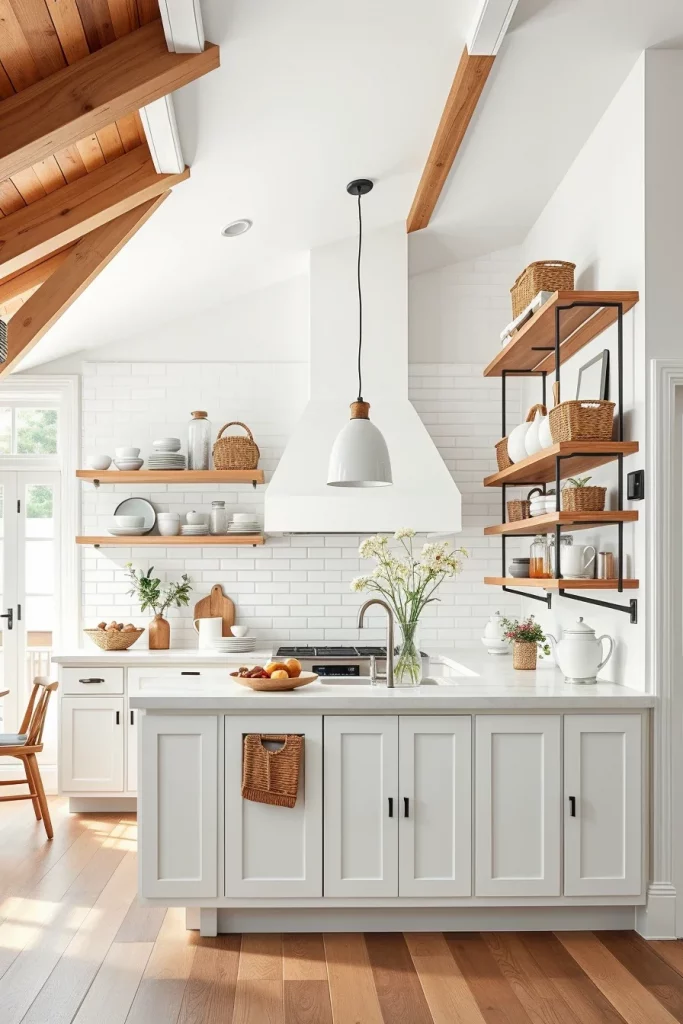
I usually install floating shelves above countertops or beside windows to maximize both storage and display opportunities. White ceramic dishes, glass jars, cutting boards, and woven baskets look especially attractive on open shelving. Shelves made from reclaimed or natural wood create a beautiful contrast against white walls and cabinetry while reinforcing the farmhouse aesthetic.
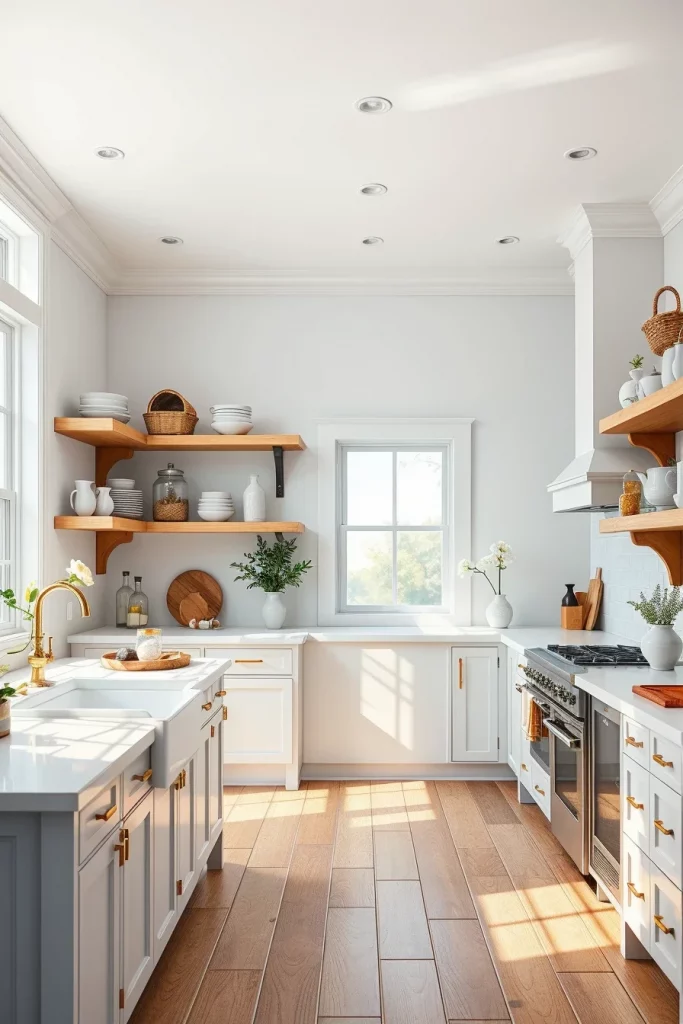
From my experience, open shelving works best when styled intentionally. Interior designers often advise limiting displayed items to practical essentials and carefully chosen decorative pieces. I have found that avoiding overcrowding helps maintain a clean and organized appearance while preserving the airy farmhouse atmosphere.
To make open shelving even more practical, I would add under-shelf lighting or decorative sconces. This addition improves visibility and highlights the displayed items, especially during evening hours.
Rustic Wood Accents In White Farmhouse Kitchen Spaces
One of the most effective ways to add warmth to a white farmhouse kitchen is by incorporating rustic wood accents. Without these natural elements, an all-white kitchen can sometimes feel too stark. I always use wood details to introduce texture, balance, and a sense of authenticity.
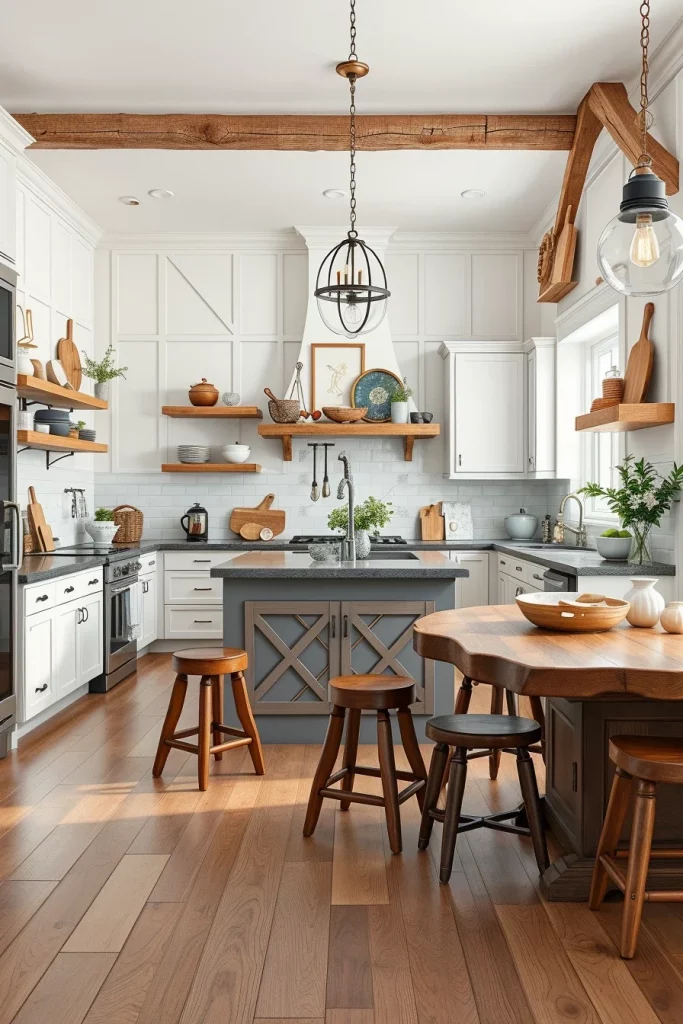
Wood accents can appear in many forms, including countertops, floating shelves, bar stools, dining tables, range hoods, or decorative ceiling treatments. I particularly like pairing white cabinetry with medium-toned wood finishes because they create contrast while maintaining a welcoming atmosphere. Decorative cutting boards, wooden trays, and handcrafted accessories also contribute to the farmhouse style.
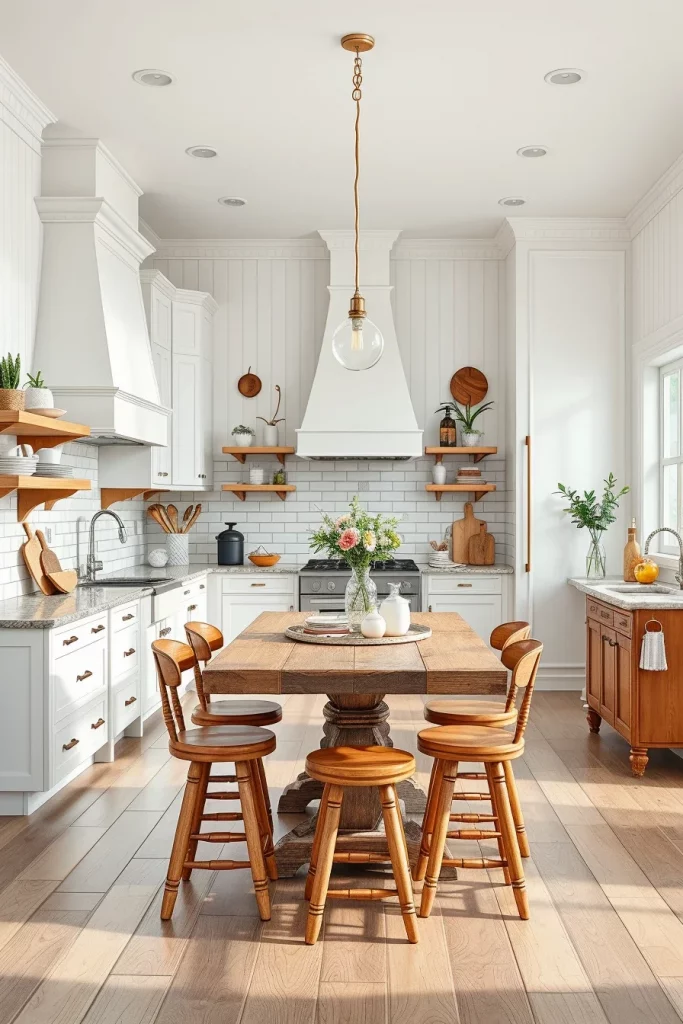
Personally, I believe that natural materials are essential in farmhouse interiors. Many professional designers featured in publications like Better Homes & Gardens emphasize the importance of mixing textures to create inviting spaces. I have consistently found that wood elements soften the crispness of white surfaces and make kitchens feel more comfortable.
I would also consider adding wood-framed artwork or vintage-inspired furniture pieces to further strengthen the farmhouse character throughout the room.
White Farmhouse Kitchen Decor With Exposed Ceiling Beams
Exposed ceiling beams instantly add architectural character to a farmhouse kitchen. Whenever possible, I encourage homeowners to preserve original beams or install decorative versions to create a more authentic farmhouse atmosphere. Beams naturally draw the eye upward, making the kitchen feel larger and more visually dynamic.
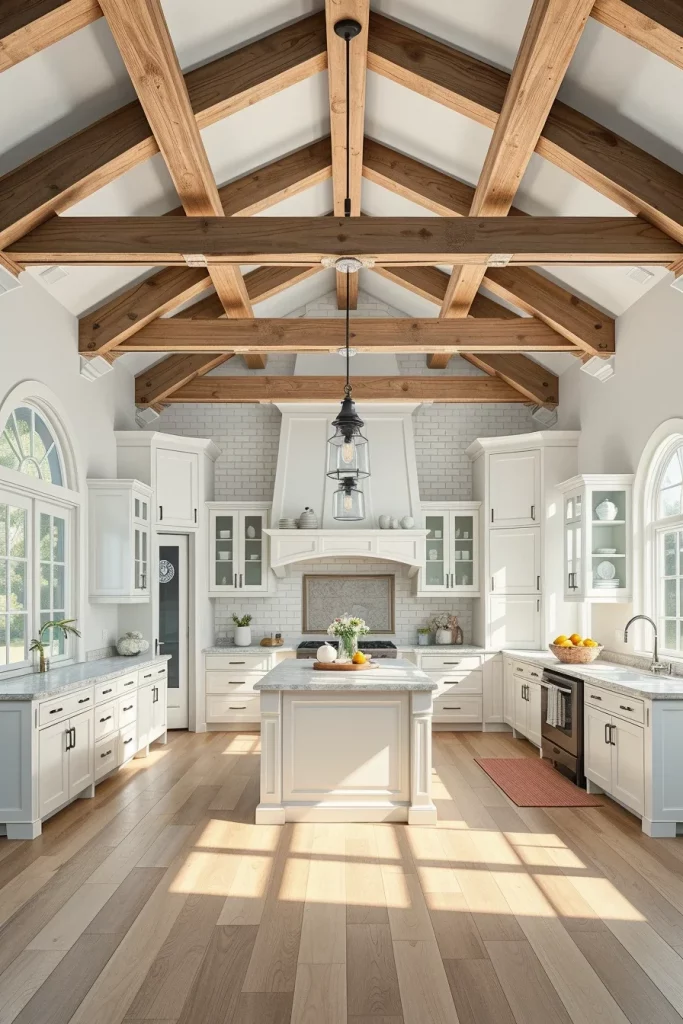
In white farmhouse kitchens, exposed beams create beautiful contrast against light ceilings and cabinetry. Whether finished in weathered, stained, or painted tones, they introduce texture and depth to the overall design. I often pair exposed beams with simple pendant lighting and understated decorative elements to maintain visual balance.
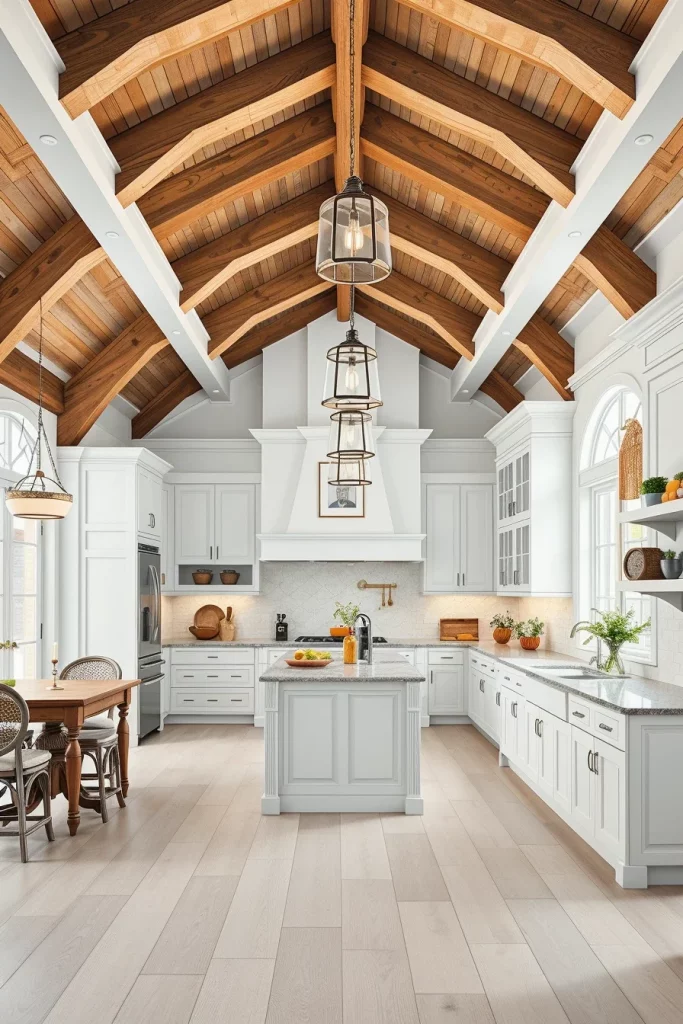
From my perspective, ceiling details are frequently overlooked despite their significant impact. I have noticed that kitchens featuring exposed beams often feel more complete and architecturally rich. Designers regularly highlight ceiling treatments as an effective way to add personality without sacrificing functionality.
To complement exposed beams, I would incorporate other structural details such as crown molding, shiplap ceilings, or decorative trim to create a cohesive farmhouse design.
Stylish Pendant Lighting For White Farmhouse Kitchens
Lighting plays a critical role in the success of any kitchen design, and pendant lighting is particularly important in farmhouse interiors. I often use pendant fixtures to create focal points above islands, dining areas, or sinks. The right lighting enhances functionality while reinforcing the overall style of the kitchen.
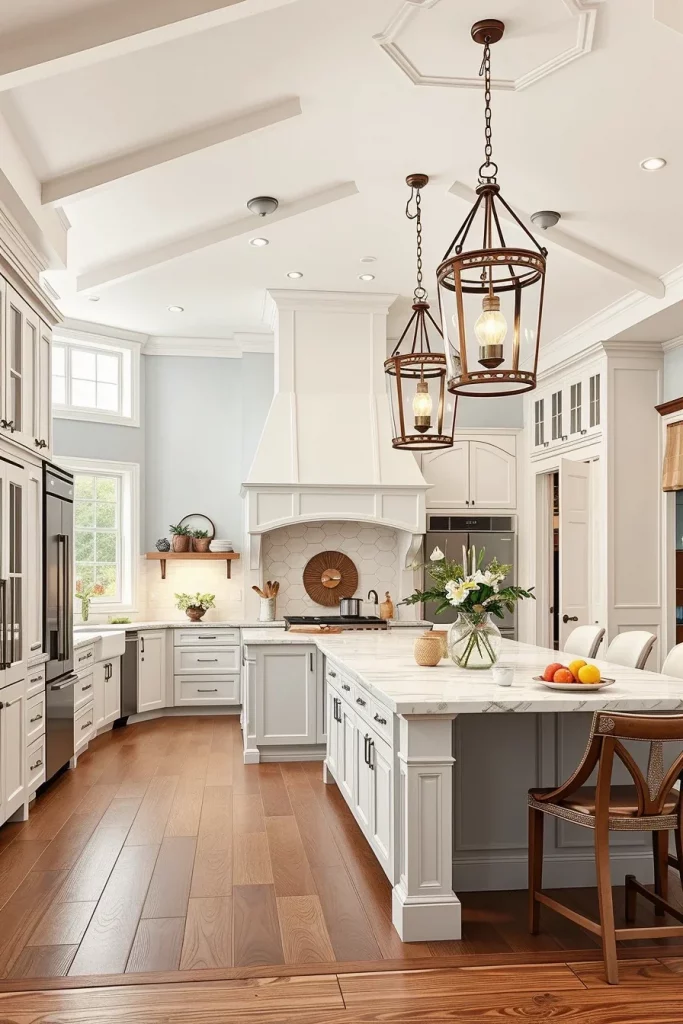
For white farmhouse kitchens, I prefer pendant lights with classic silhouettes and timeless finishes. Metal lantern pendants, glass shades, dome fixtures, and mixed-material designs all complement farmhouse décor beautifully. Proper placement is equally important; evenly spaced pendants above an island create both symmetry and effective task lighting.
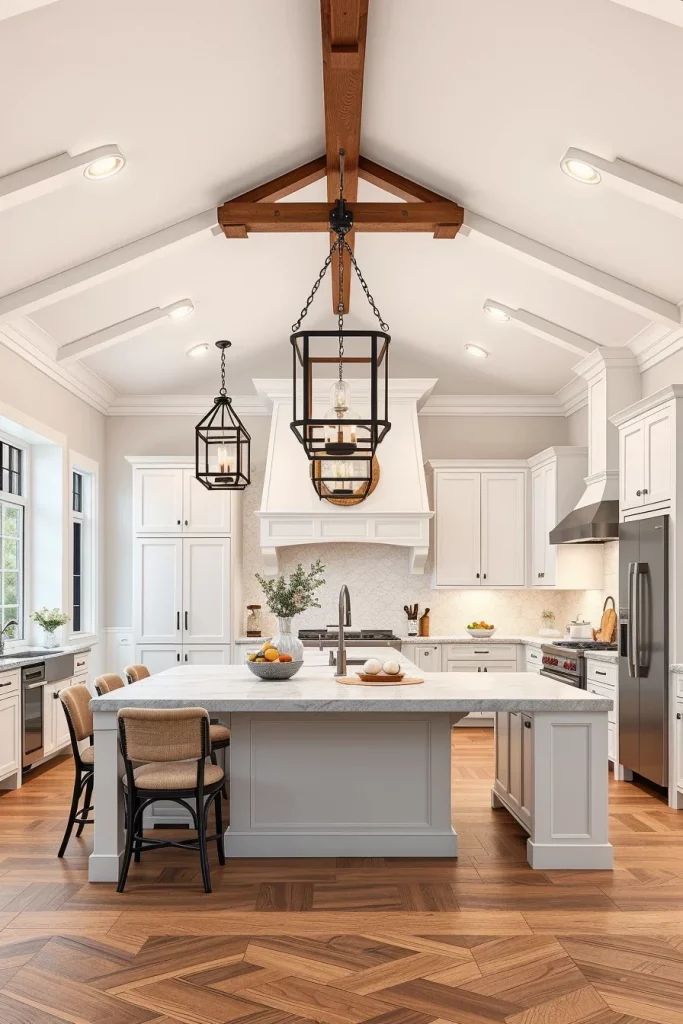
In my own projects, I always emphasize layered lighting. In addition to pendants, I recommend combining recessed lighting, under-cabinet illumination, and decorative sconces. Design experts consistently stress the importance of layered lighting because it creates flexibility and enhances the kitchen’s ambiance throughout the day.
I would also suggest installing dimmers. Adjustable lighting levels allow homeowners to easily transition from bright task lighting to a softer atmosphere for entertaining.
Subway Tile Backsplash Inspiration For Farmhouse Kitchens
Subway tile backsplashes remain one of the most enduring choices for farmhouse kitchens. I appreciate their versatility, affordability, and timeless appeal. In a white farmhouse kitchen, subway tile adds subtle texture while maintaining the clean, fresh appearance that defines the style.
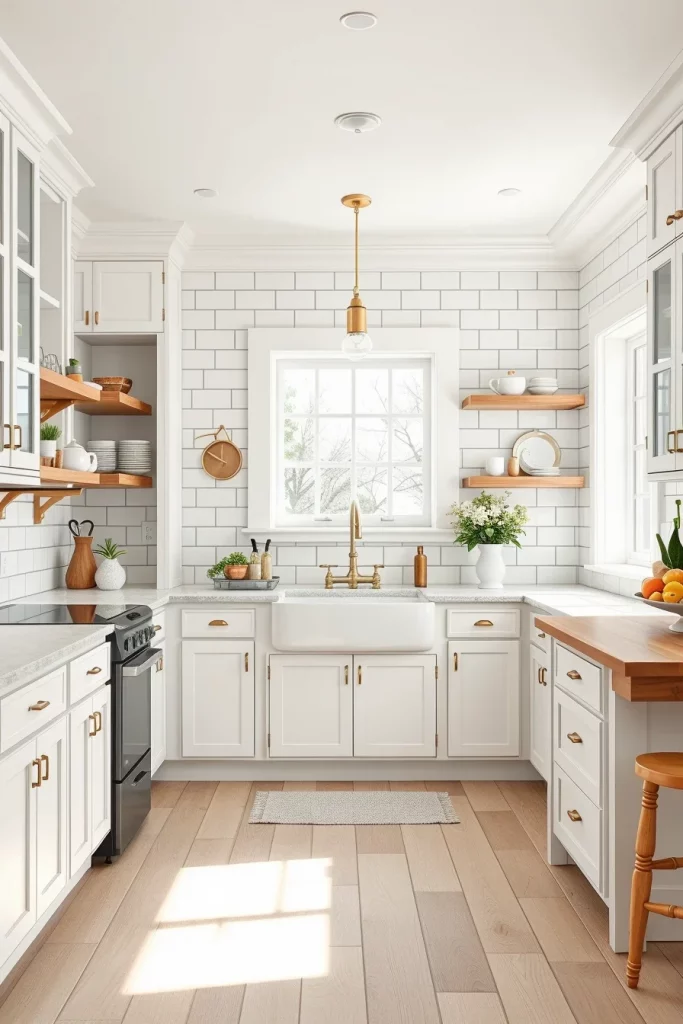
Classic white subway tile installed in a traditional horizontal pattern creates a timeless look, but I also enjoy exploring variations such as herringbone, vertical stacking, or contrasting grout lines. Pairing subway tile with open shelving, wood accents, and farmhouse sinks creates a cohesive and visually appealing design.
From my experience, backsplash choices should complement the kitchen rather than dominate it. Many interior designers recommend selecting simple finishes that can evolve with changing décor over time. I agree because timeless materials offer greater long-term flexibility and value.
To enhance the backsplash area further, I would add decorative accessories such as ceramic canisters, vintage-inspired artwork, or carefully selected countertop styling to personalize the space.
White Farmhouse Kitchen Decor With Natural Stone Countertops
Natural stone countertops instantly elevate a white farmhouse kitchen by adding texture, depth, and timeless appeal. I often recommend materials such as marble, quartzite, or soapstone because they complement crisp white cabinetry while introducing subtle natural variation. The combination creates a sophisticated yet approachable atmosphere that perfectly reflects modern farmhouse style. Stone surfaces are also highly durable, making them ideal for busy family kitchens.
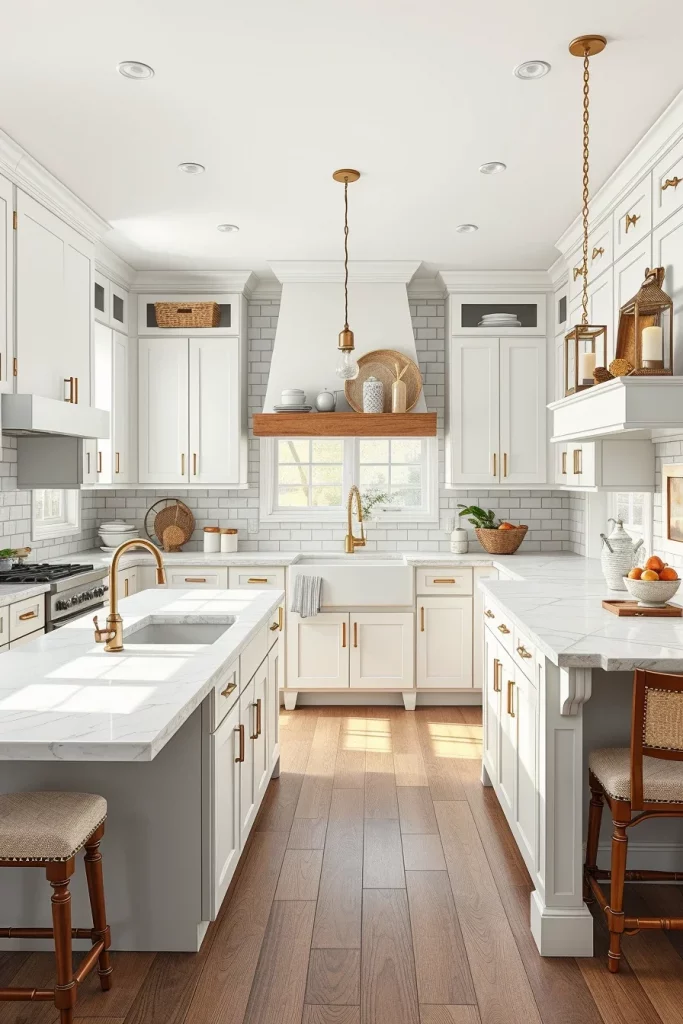
I like pairing white shaker cabinets with a large farmhouse sink, brushed nickel faucets, and expansive natural stone countertops that extend to a spacious island. Simple pendant lighting, classic subway tile backsplashes, and upholstered counter stools complete the look while maintaining visual balance. Decorative elements such as ceramic pitchers, wooden cutting boards, and woven baskets soften the clean palette and make the room feel more welcoming.
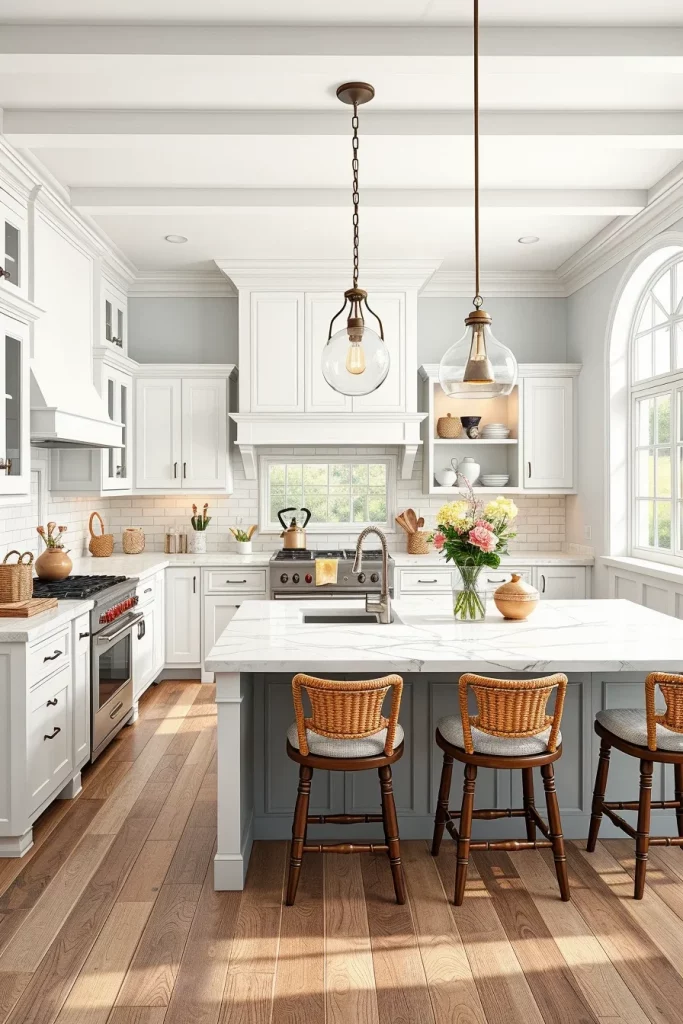
From my experience, natural stone ages beautifully and often becomes even more attractive over time. Designers frequently featured by magazines such as Architectural Digest recommend incorporating authentic materials because they add character that cannot easily be replicated. I find that stone countertops provide exactly that enduring authenticity.
To complete this design, I would also include under-cabinet lighting. Proper illumination highlights the stone’s natural veining while improving functionality during meal preparation.
Cozy Breakfast Nooks In White Farmhouse Kitchens
A dedicated breakfast nook can make a white farmhouse kitchen feel exceptionally inviting. I love creating small dining areas near windows where natural light can flood the space throughout the day. Built-in seating works especially well because it maximizes available space while encouraging relaxed family gatherings and casual meals.
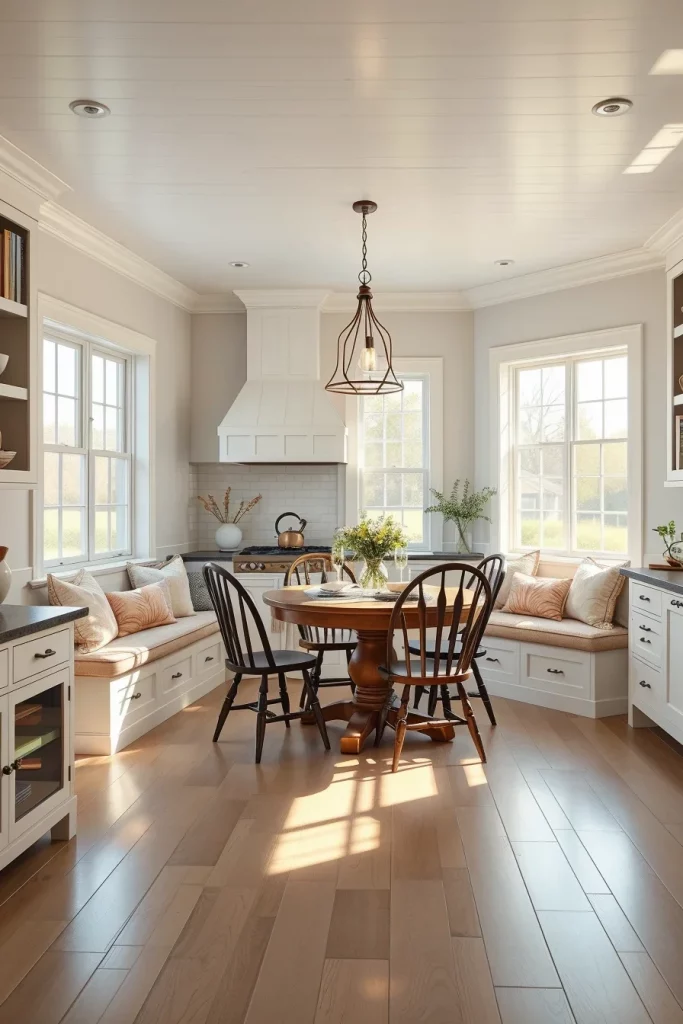
For furnishings, I recommend a painted farmhouse table paired with cushioned bench seating and a combination of spindle-back chairs. Soft linen cushions, textured throw pillows, and simple Roman shades enhance comfort without overwhelming the clean white palette. A vintage-inspired pendant light centered above the table helps define the nook and creates intimacy.
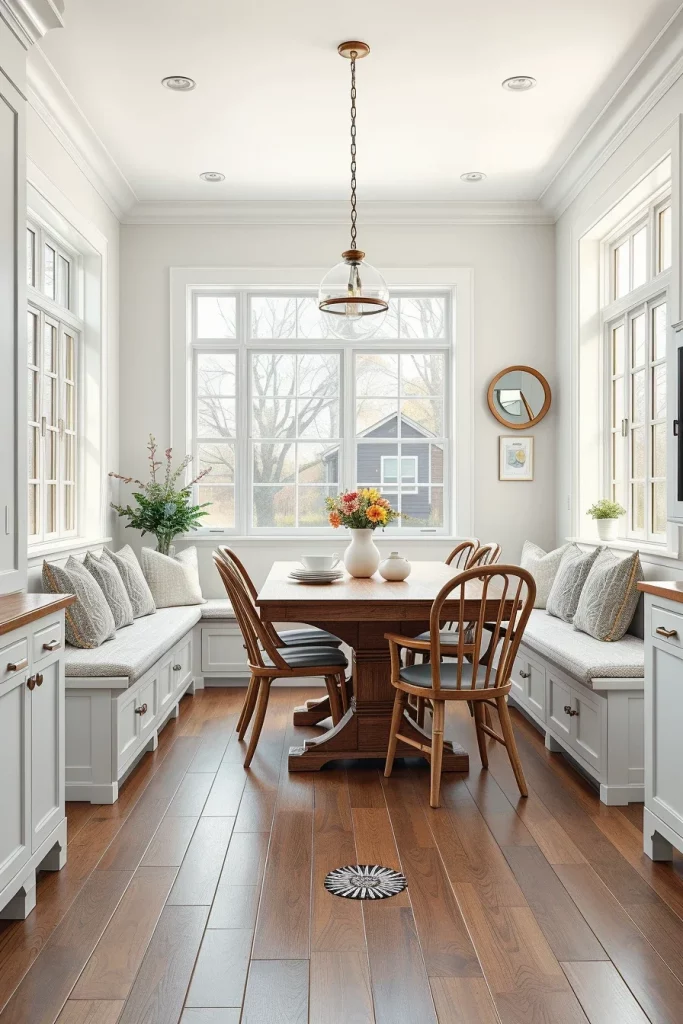
Personally, I believe breakfast nooks become one of the most frequently used areas in the home. In my own projects, clients consistently mention that these spaces naturally encourage conversation and create memorable family moments. Even in larger kitchens, a cozy nook provides a more intimate alternative to formal dining spaces.
Adding a gallery wall featuring family photographs or framed botanical prints can further personalize the breakfast nook and reinforce farmhouse character.
Farmhouse Kitchen Decor Featuring Vintage-Inspired Hardware
Small details often have the greatest impact, and vintage-inspired hardware is one of the easiest ways to enhance farmhouse charm. In white kitchens, antique brass, aged bronze, or matte black cabinet hardware introduces subtle contrast while reinforcing traditional design elements. I often use these finishes to add warmth and visual interest.
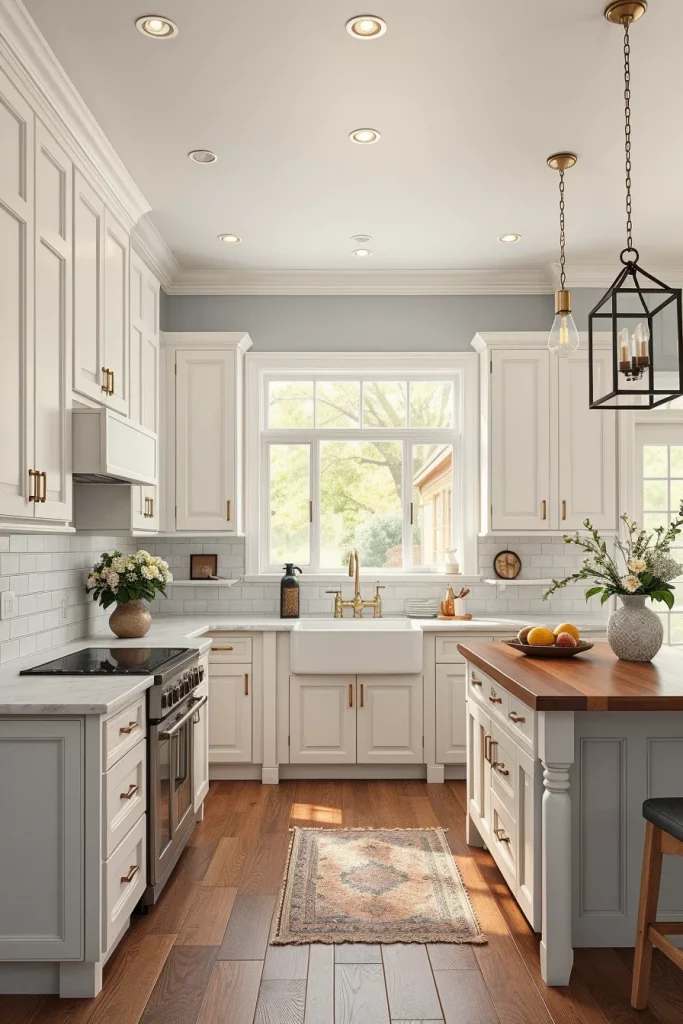
Cup pulls on lower cabinets, classic knobs on upper cabinets, and decorative bin pulls on pantry drawers create an authentic farmhouse appearance. I also recommend incorporating bridge faucets, exposed hinges, and traditional lantern-style lighting fixtures to maintain consistency throughout the room. These elements work together to create a cohesive design story.
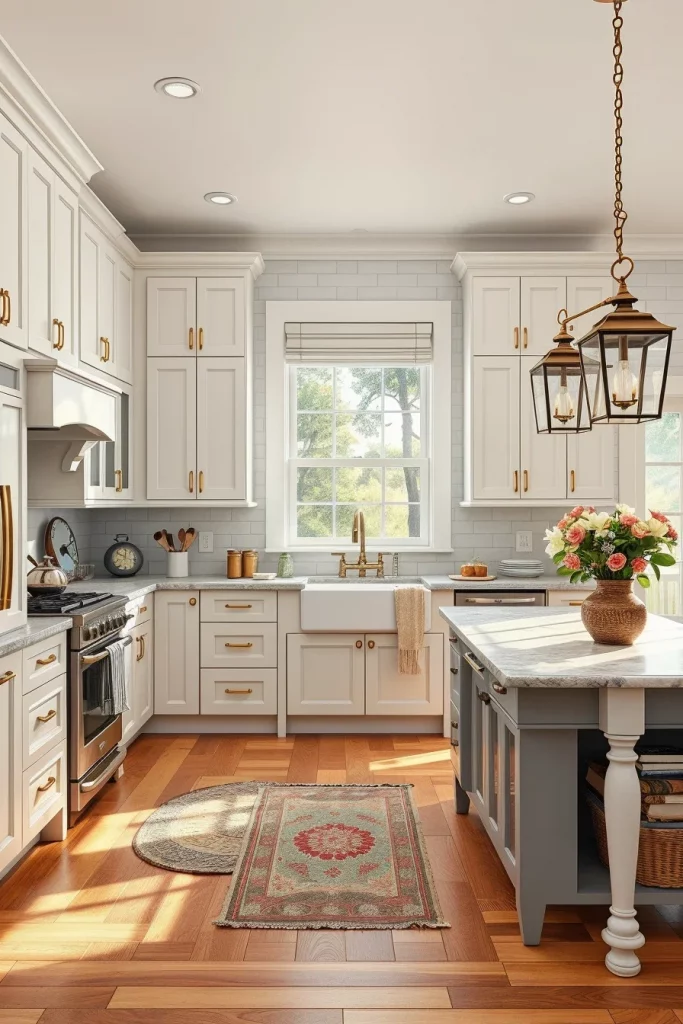
In my opinion, hardware should never be treated as an afterthought. Many interior designers emphasize that carefully selected hardware functions as jewelry for cabinetry, and I completely agree. Updating hardware is also one of the most budget-friendly ways to refresh an existing kitchen.
For even greater authenticity, consider incorporating a freestanding furniture-style island with decorative legs and matching vintage-inspired hardware.
Decorating White Farmhouse Kitchens With Open Floor Plans
Open floor plans allow white farmhouse kitchens to feel expansive, bright, and highly functional. I find that removing unnecessary visual barriers creates stronger connections between cooking, dining, and living areas. White finishes further enhance this openness by reflecting natural light and making spaces appear larger.
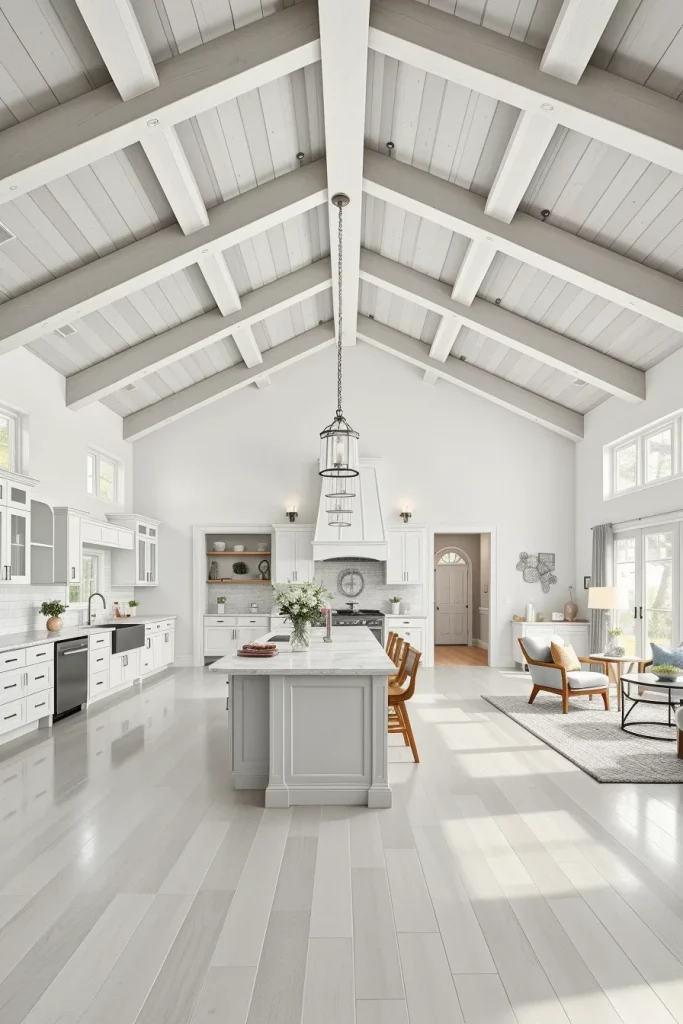
A substantial kitchen island often becomes the centerpiece of an open-concept farmhouse layout. I recommend complementing it with coordinating seating, oversized pendant lights, and cohesive flooring that extends seamlessly into adjacent rooms. Exposed ceiling beams, neutral textiles, and carefully selected accent pieces help unify the entire living space.
From my experience, maintaining visual consistency is essential in open layouts. Repeating materials, finishes, and colors throughout neighboring spaces creates harmony without making the design feel repetitive. This approach ensures that the kitchen remains integrated within the broader home environment.
I would also include layered lighting consisting of recessed fixtures, pendants, and decorative sconces to provide both functionality and ambiance throughout the open floor plan.
White Farmhouse Kitchen Decor Ideas For Small Spaces
Small kitchens can benefit tremendously from white farmhouse design principles. I often recommend an all-white color palette because it visually expands compact rooms and reflects available light. Strategic storage solutions and carefully selected furnishings ensure that even the smallest kitchens remain highly functional.
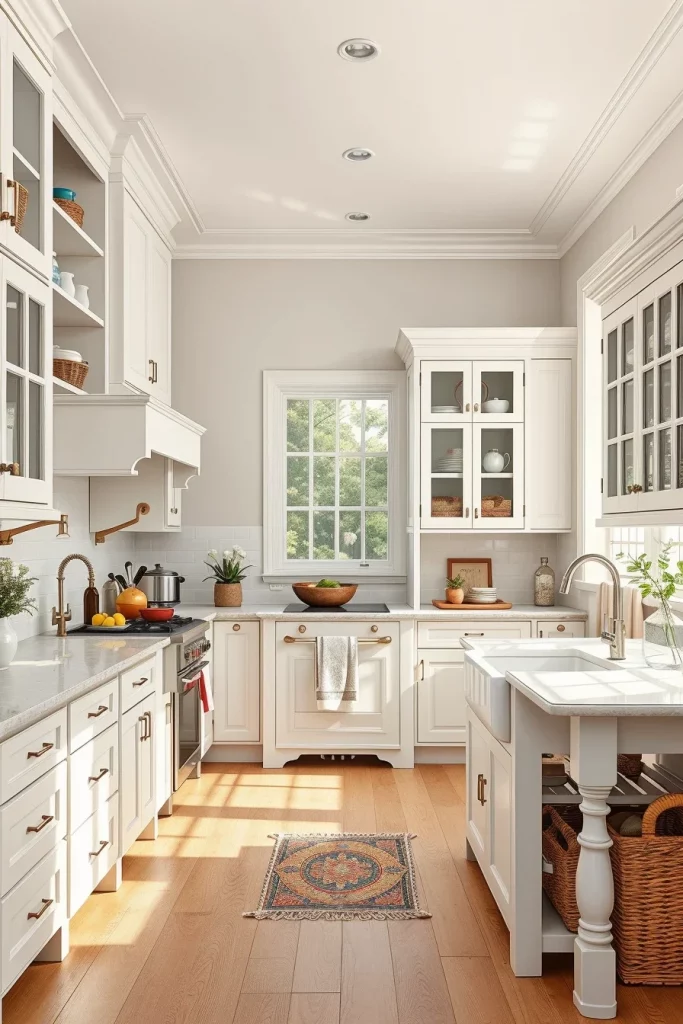
Slim shaker cabinets extending to the ceiling maximize storage while preserving a clean aesthetic. Open shelving, compact farmhouse sinks, and multifunctional islands with built-in storage help optimize every inch. I also suggest incorporating glass-front cabinets to create additional visual depth and prevent the room from feeling enclosed.
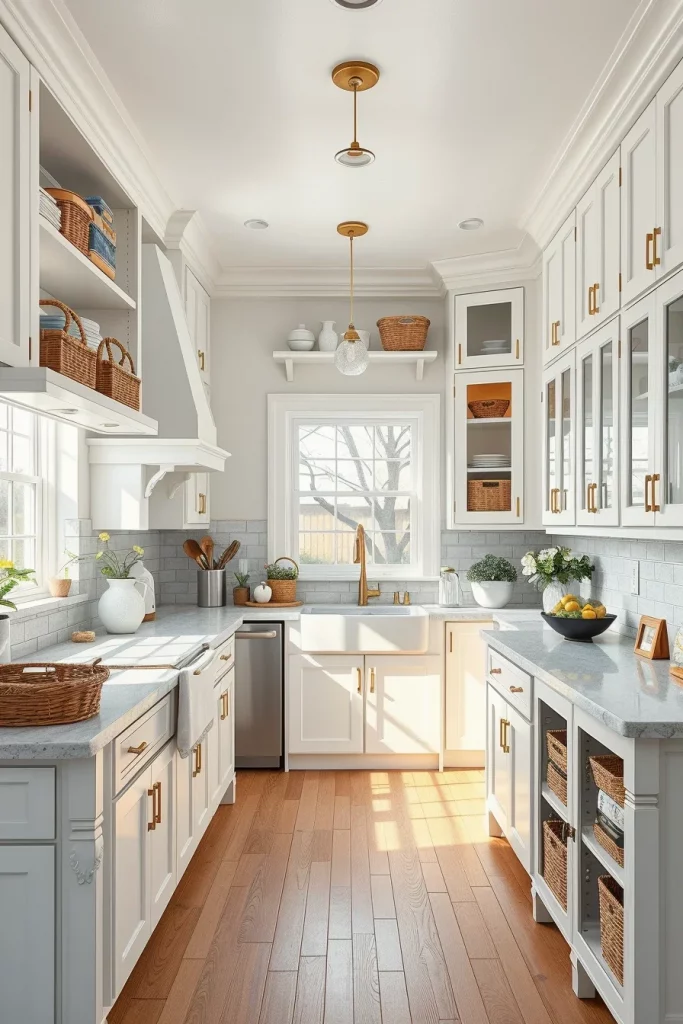
In my experience, simplicity is especially important in smaller spaces. Overdecorating can quickly make compact kitchens feel crowded, so I prefer using a few thoughtfully selected accessories such as ceramic canisters, woven baskets, and subtle greenery. This approach maintains farmhouse charm without sacrificing openness.
Mirrored accents, reflective finishes, and abundant task lighting can further enhance brightness and make a small farmhouse kitchen feel significantly larger.
Mixing White Cabinetry With Warm Wood Flooring
White cabinetry paired with warm wood flooring creates one of the most balanced and inviting farmhouse kitchen designs. I often recommend this combination because the rich tones of natural wood prevent an all-white kitchen from feeling sterile or overly formal. The contrast adds warmth, depth, and a sense of comfort while preserving the fresh appearance that farmhouse kitchens are known for.
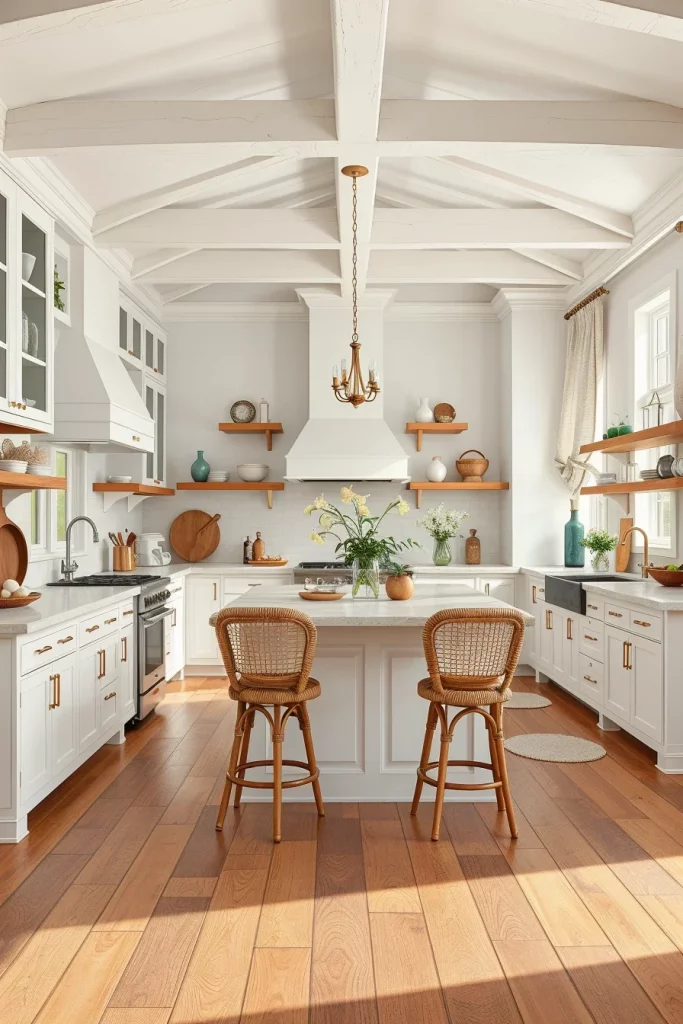
I like using wide-plank oak flooring in medium or honey-toned finishes alongside classic white shaker cabinets. A large farmhouse island, woven bar stools, and open shelving further enhance the welcoming atmosphere. Brass or matte black fixtures pair beautifully with this palette, while linen window treatments and ceramic accessories soften the overall look. The combination of textures creates visual interest without overwhelming the room.
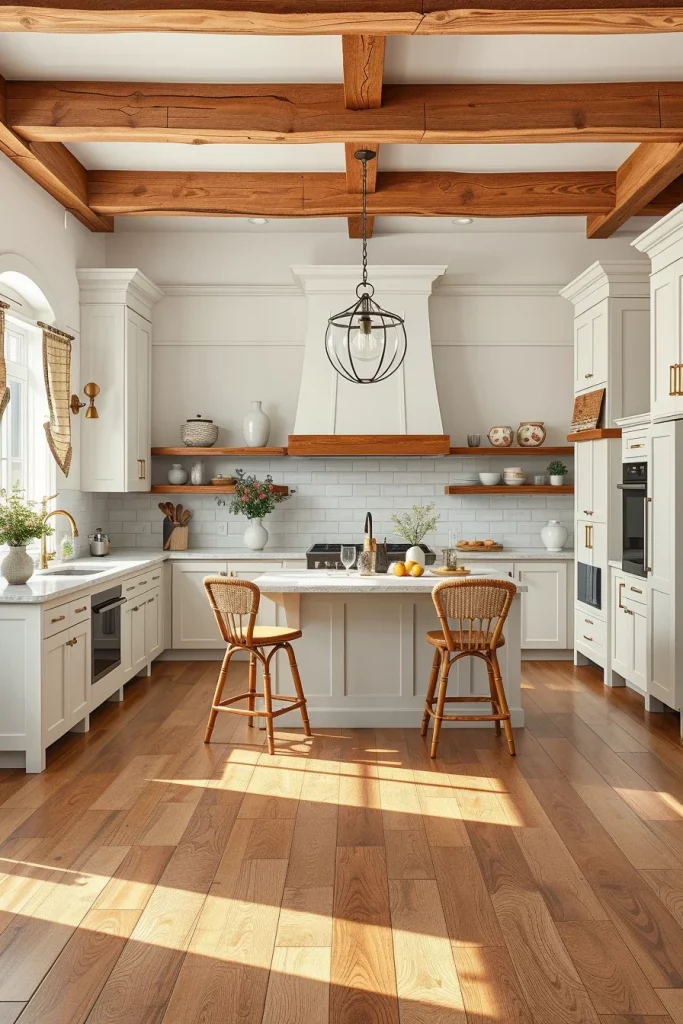
In my experience, warm wood flooring ages gracefully and works exceptionally well with evolving decor styles. Many designers featured in House Beautiful recommend incorporating natural materials into white interiors to avoid a flat appearance. I completely agree, as wood flooring instantly makes the space feel lived-in and authentic.
To complete this kitchen, I would incorporate exposed ceiling beams or reclaimed wood floating shelves to reinforce the farmhouse aesthetic and add another layer of warmth.
Farmhouse Kitchen Pantry Ideas In Crisp White Finishes
A well-designed pantry is essential in any farmhouse kitchen, and crisp white finishes help maintain a clean, organized, and cohesive appearance. I find that white pantry cabinetry blends seamlessly with the surrounding kitchen while reflecting light and making storage areas feel more spacious.
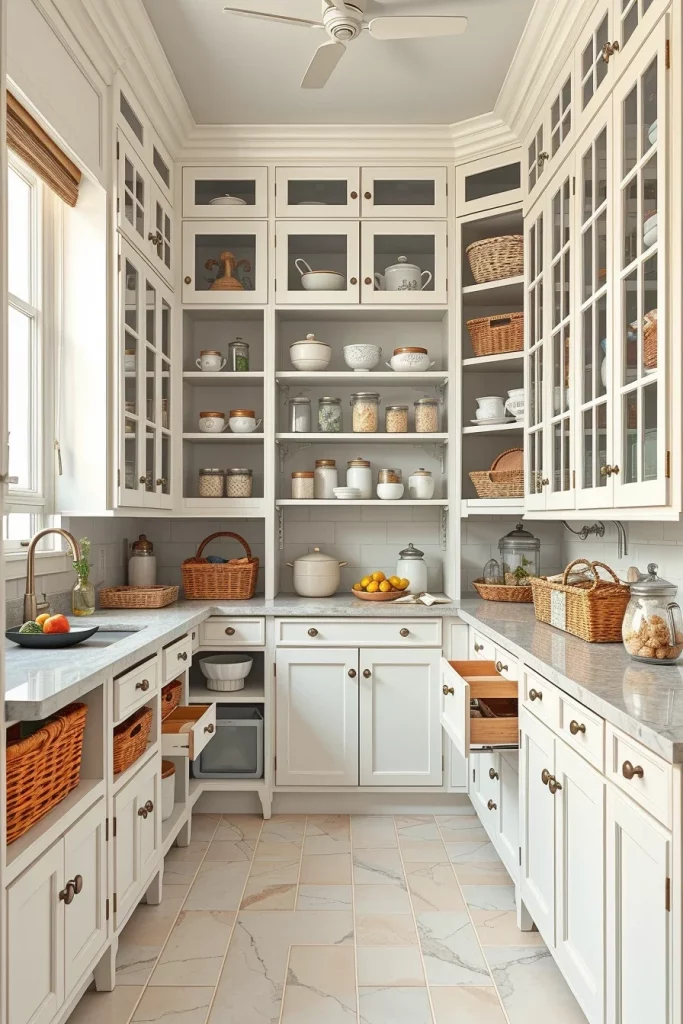
Floor-to-ceiling cabinetry, adjustable shelving, pull-out drawers, and labeled storage containers are features I regularly recommend. Glass-front cabinet doors can break up solid surfaces while allowing frequently used items to remain visible. Woven baskets, ceramic storage jars, and wooden crates contribute texture and farmhouse character without sacrificing organization.
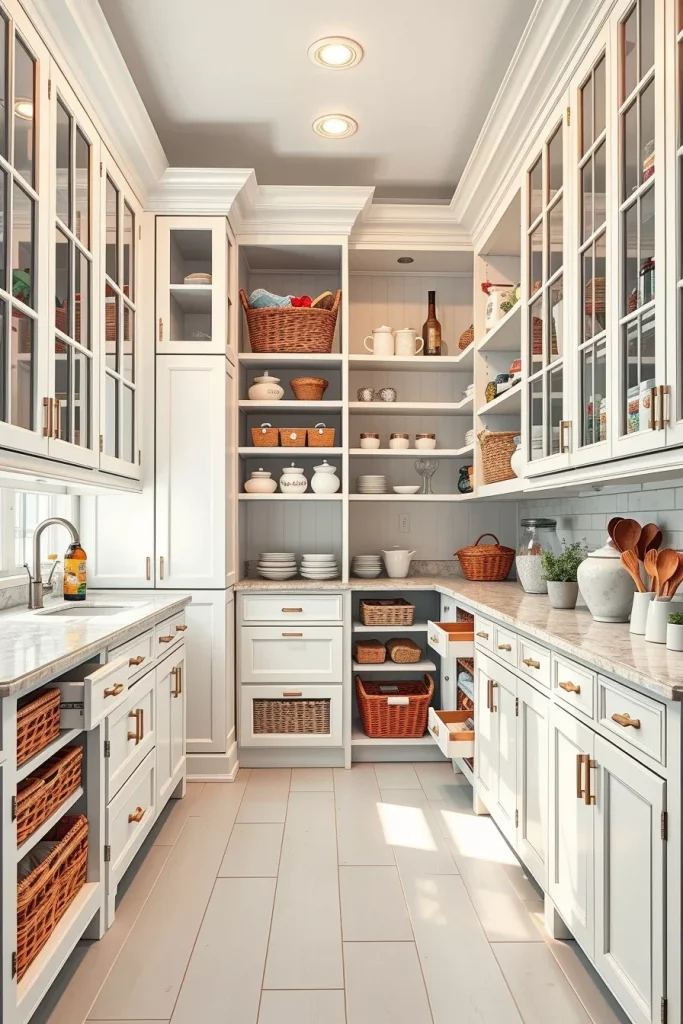
Personally, I believe pantry design should prioritize functionality above all else. In my own projects, incorporating dedicated zones for baking supplies, dry goods, and small appliances consistently improves everyday efficiency. Organized storage also makes maintaining a tidy kitchen significantly easier.
If space allows, I would include a small countertop area within the pantry for appliance storage or meal preparation. This addition greatly enhances convenience while preserving uncluttered kitchen counters.
Creating A Bright And Airy White Farmhouse Kitchen
A bright and airy atmosphere is often the defining characteristic of a successful white farmhouse kitchen. I always focus on maximizing natural light and minimizing visual clutter to achieve this effect. Large windows, reflective finishes, and an open layout help create a sense of spaciousness and tranquility.
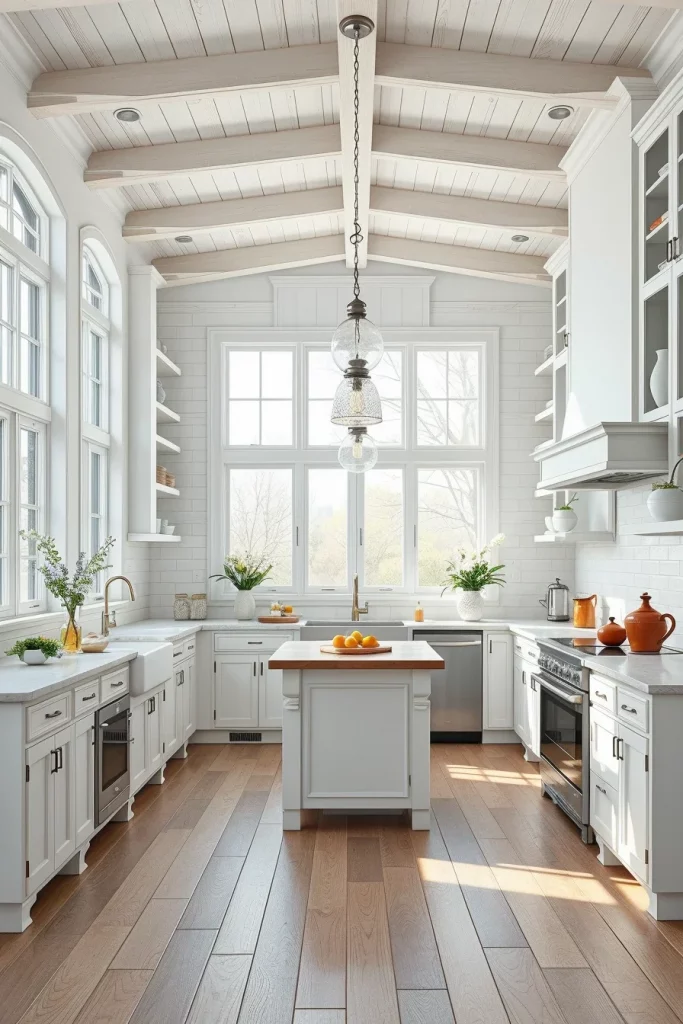
White cabinetry, light countertops, and simple backsplashes establish the foundation of this look. I recommend incorporating glass pendant lighting, open shelving, and understated decor to maintain an uncluttered appearance. Light-colored textiles, minimal window treatments, and strategically placed mirrors can further enhance brightness throughout the room.
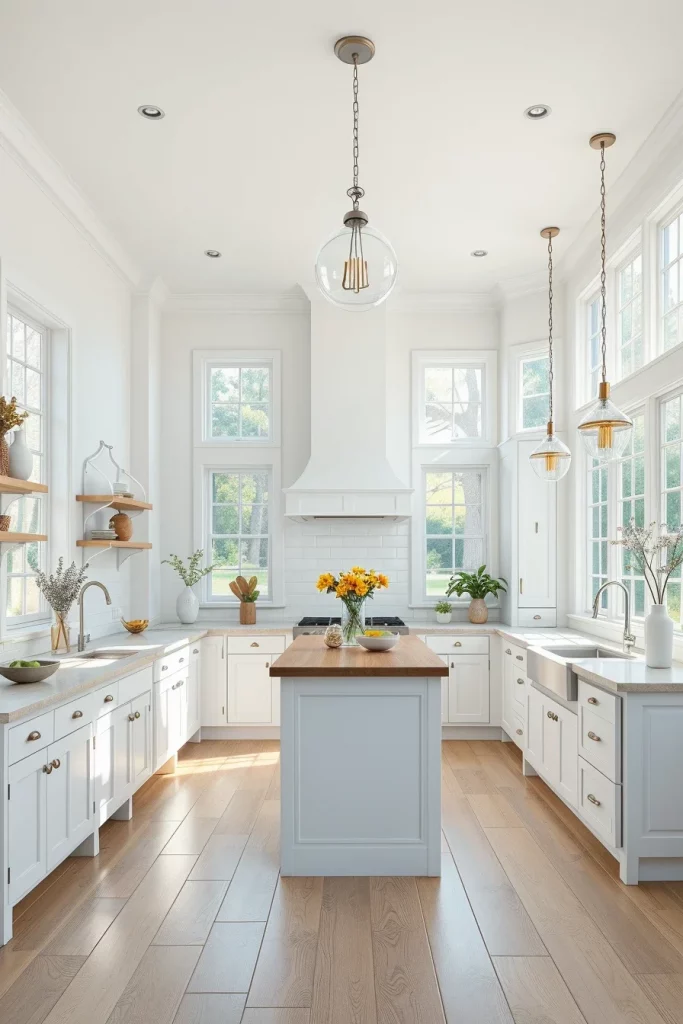
From my perspective, restraint is key when designing airy interiors. Rather than filling every surface with decorative objects, I prefer selecting a few meaningful accessories that complement the overall aesthetic. This approach keeps the kitchen feeling fresh, calm, and highly functional.
Adding skylights or oversized windows can dramatically increase natural light and further emphasize the open, welcoming character of the farmhouse kitchen.
Farmhouse Kitchen Decor With Black Accent Details
Black accents introduce striking contrast into white farmhouse kitchens while preserving the timeless appeal of the overall design. I frequently use black elements to ground the space and create focal points without compromising brightness. The combination of black and white feels both classic and distinctly modern.
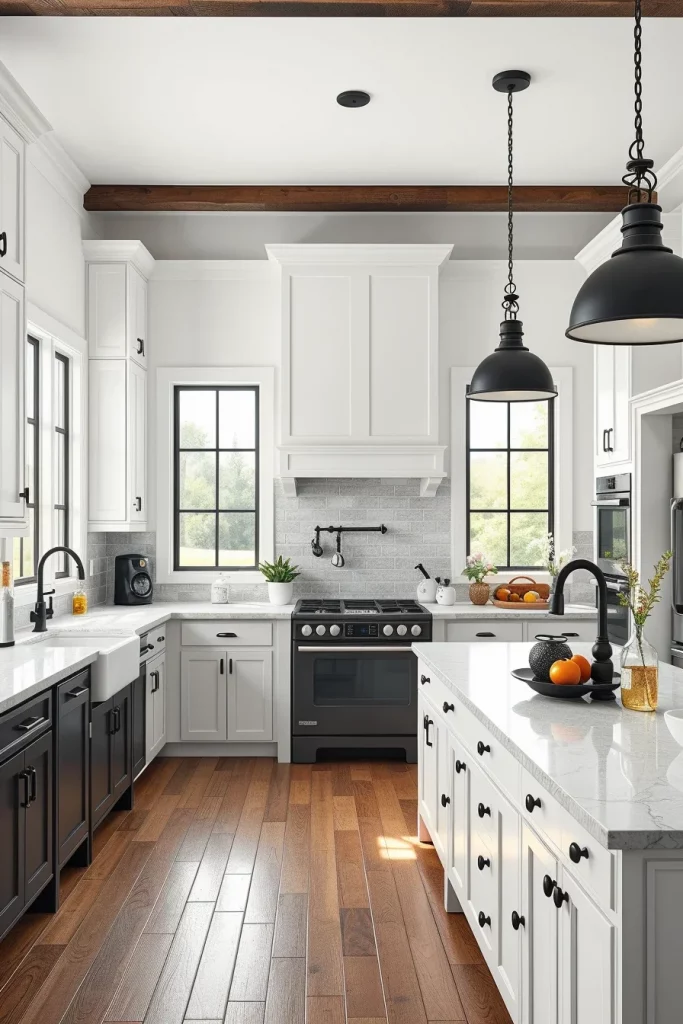
Matte black cabinet hardware, faucets, pendant lighting, and window frames are among my preferred accent choices. Black metal bar stools, decorative shelving brackets, and framed artwork can reinforce the color palette throughout the room. When used thoughtfully, these details add sophistication and visual structure.
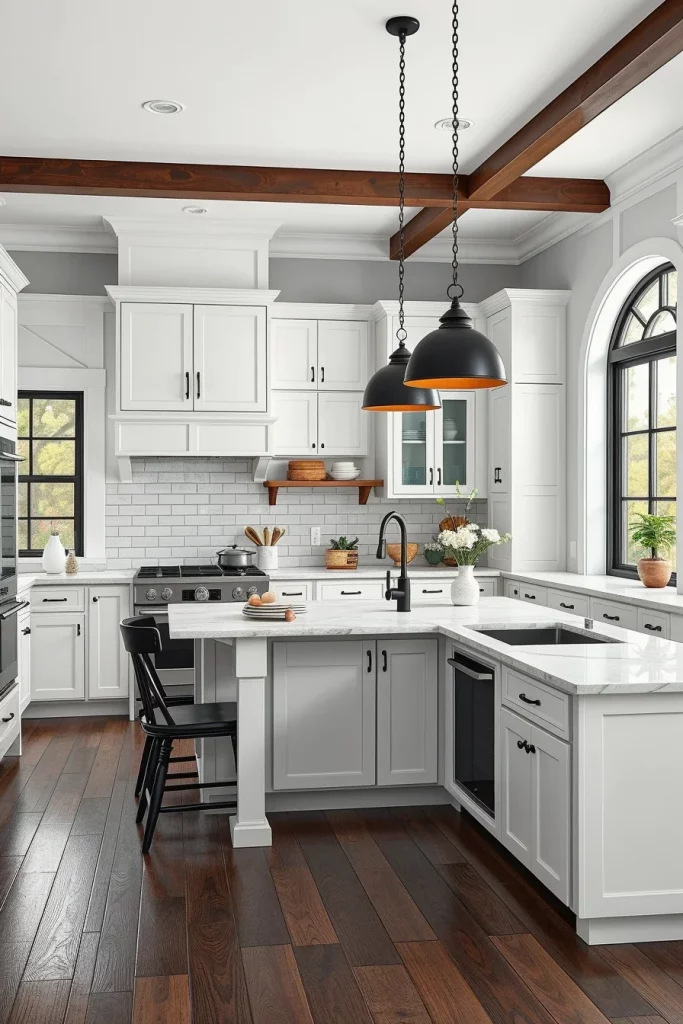
In my experience, moderation is important when incorporating black accents. Too many dark elements can overpower the airy farmhouse aesthetic, so I generally recommend limiting black finishes to carefully selected statement pieces. This creates balance while ensuring the kitchen remains warm and inviting.
I would also consider incorporating black-framed glass cabinet doors or a black pantry door to add architectural interest and strengthen the overall design scheme.
White Farmhouse Kitchens Featuring Statement Range Hoods
A statement range hood can become the centerpiece of a white farmhouse kitchen while enhancing both functionality and style. I often design kitchens around this feature because it naturally draws the eye and establishes the room’s character. Whether simple or ornate, a well-designed range hood contributes significantly to the overall aesthetic.
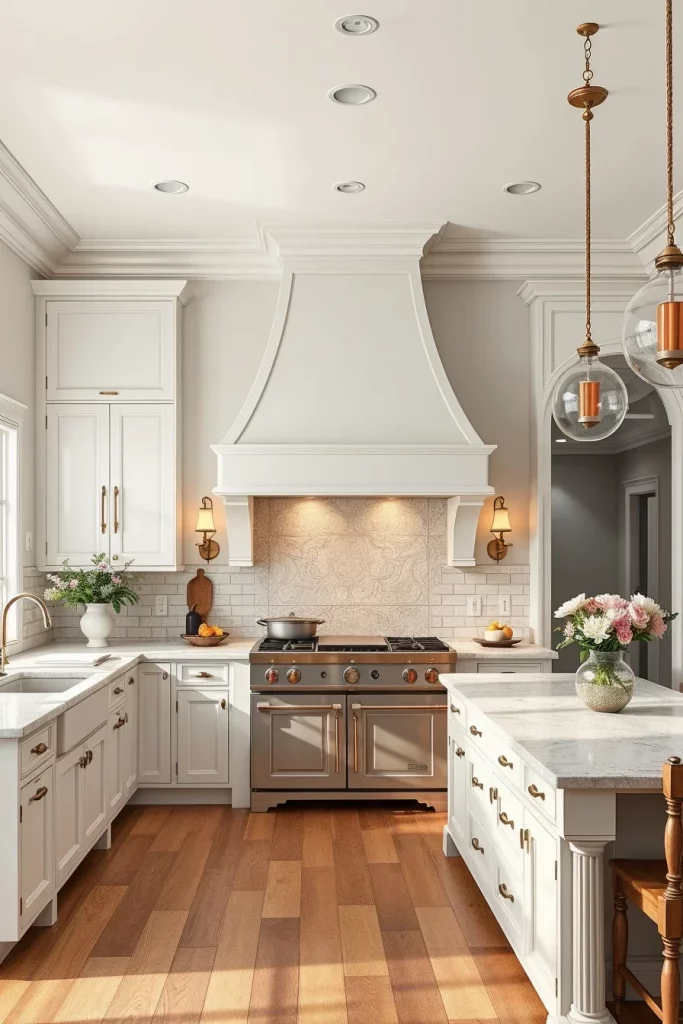
Popular choices include plaster range hoods with soft curves, custom wood-clad designs painted white, and shiplap-covered hoods that blend seamlessly with surrounding cabinetry. I typically pair these features with oversized islands, professional-grade ranges, and classic subway tile backsplashes to create a cohesive look. Decorative sconces positioned on either side further emphasize the focal point.
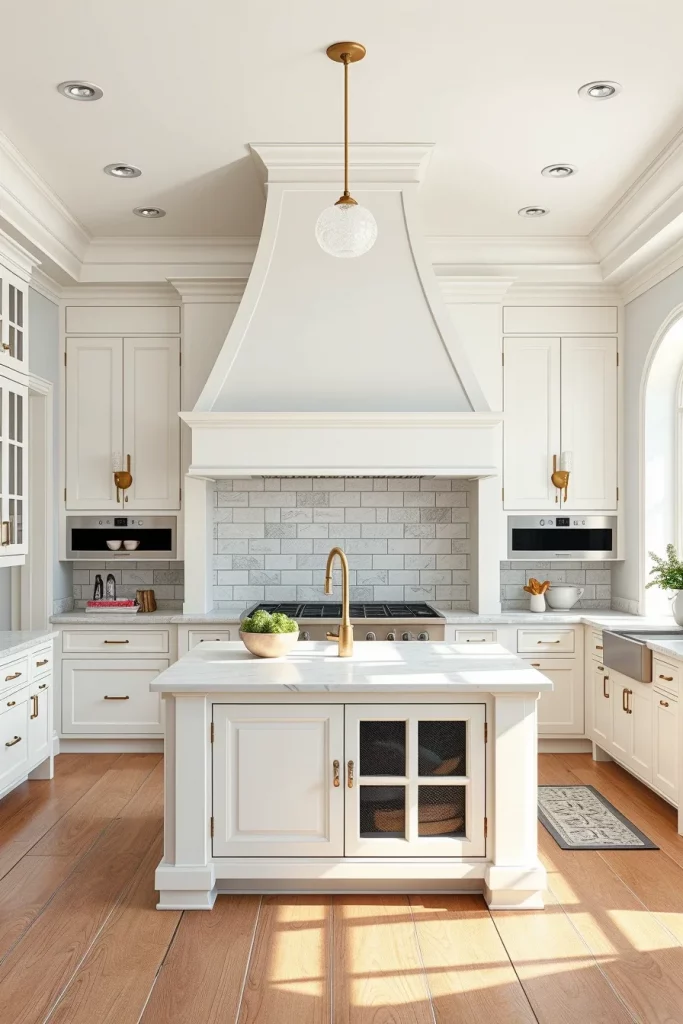
Personally, I appreciate how statement range hoods provide an opportunity to introduce architectural detail into an otherwise understated kitchen. Many leading interior designers recommend investing in one standout feature to elevate the entire room, and I believe the range hood is an excellent candidate.
To enhance this focal area even further, I would add subtle decorative styling such as antique cutting boards, ceramic vessels, or seasonal displays placed nearby.
Layering Textures In White Farmhouse Kitchen Decor
One of the most effective ways I create depth in a white farmhouse kitchen is by layering different textures throughout the room. While white cabinetry and walls establish a clean foundation, combining various finishes prevents the interior from feeling monotonous. I often recommend mixing smooth painted surfaces with natural textures to create a welcoming atmosphere that feels collected over time rather than newly installed all at once.
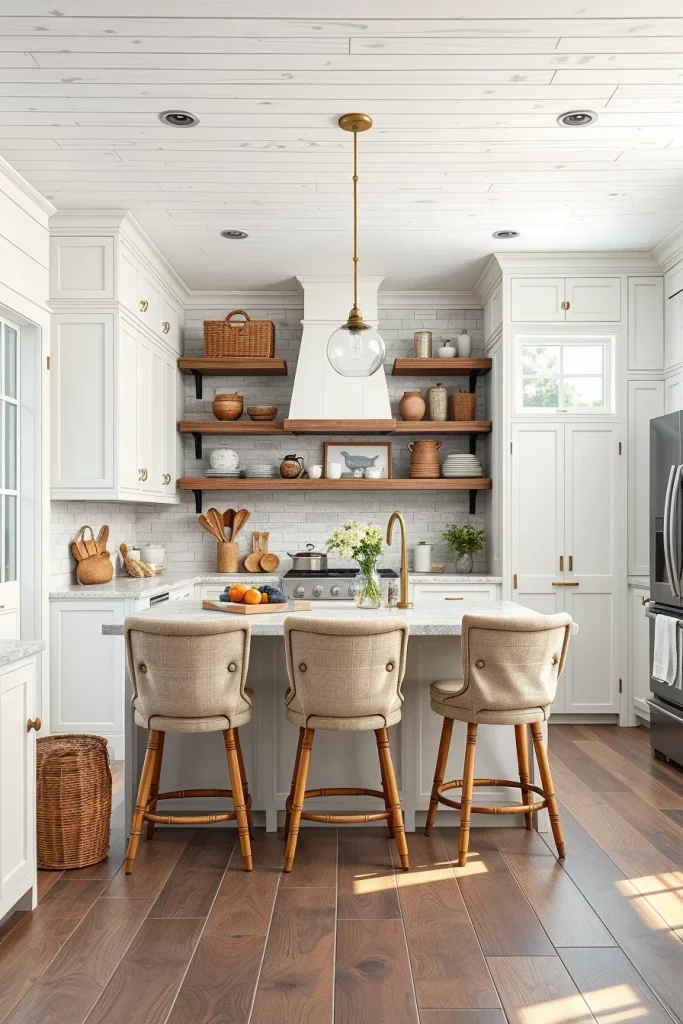
In my experience, textured elements such as shiplap walls, beadboard paneling, stone backsplashes, and distressed finishes work exceptionally well in white farmhouse kitchen decor inspiration. Upholstered counter stools with linen slipcovers, woven baskets, ceramic pitchers, and matte-finish accessories introduce softness and visual interest. Open shelving displaying handcrafted pottery adds personality while maintaining the bright, airy aesthetic associated with farmhouse interiors.
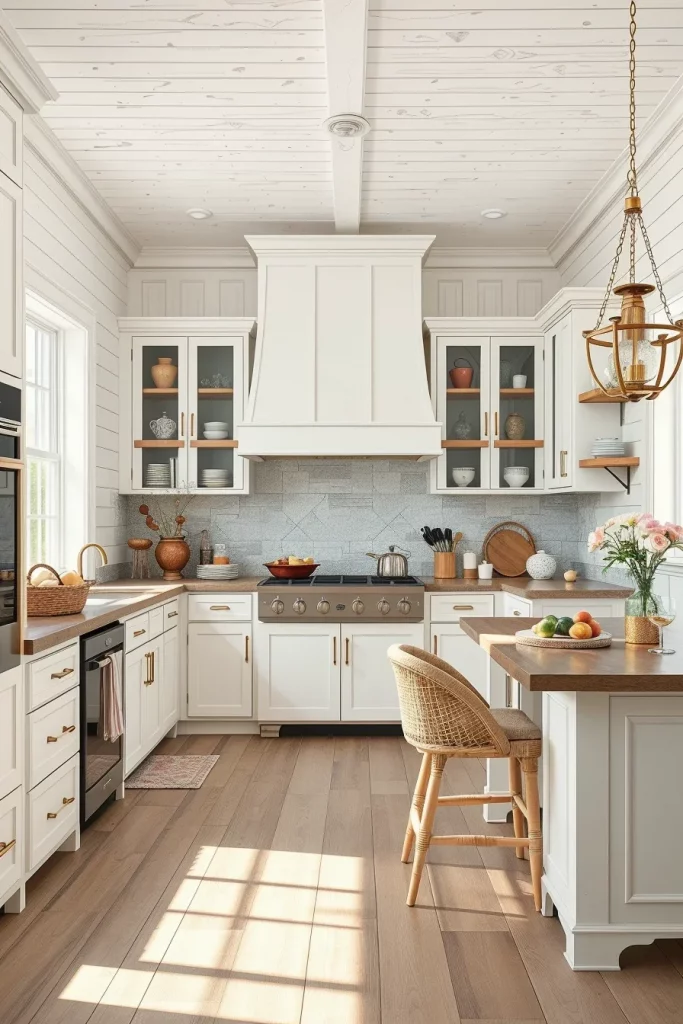
I have noticed that many respected designers featured by publications such as Architectural Digest suggest incorporating tactile materials to create warmth in predominantly white interiors. Personally, I always include at least three contrasting textures in every farmhouse kitchen project because this simple approach instantly makes the space feel more inviting and comfortable.
Adding subtle metal accents in aged brass or matte black can further enrich the layered appearance and create a balanced composition throughout the kitchen.
Decorating Countertops In A White Farmhouse Kitchen
When decorating farmhouse kitchen countertops, I prefer a restrained approach that balances beauty with functionality. White kitchens naturally highlight decorative pieces, so carefully selected accessories can make a significant impact without overwhelming the workspace. The goal is to maintain clear preparation areas while introducing decorative moments that enhance everyday living.
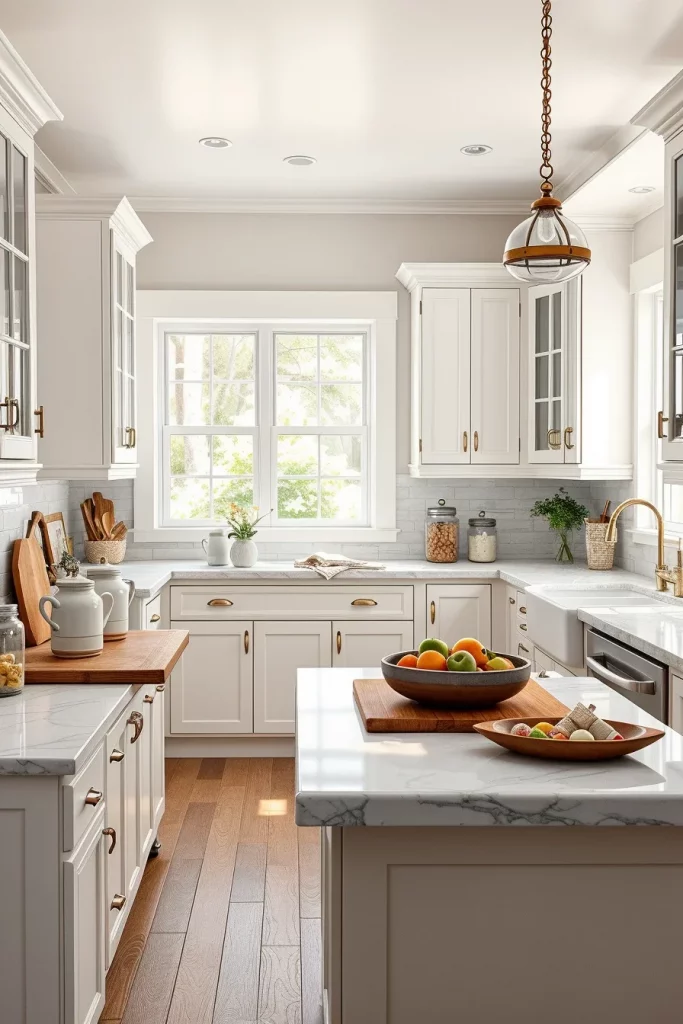
I usually style countertops with a combination of practical and decorative pieces. Large wooden cutting boards leaned against the backsplash create height, while ceramic crocks hold cooking utensils within easy reach. Glass canisters filled with pantry staples, vintage-inspired pitchers, and small trays containing oils or spices contribute both charm and convenience. Fresh fruit displayed in a rustic bowl also brings color and life into the room.
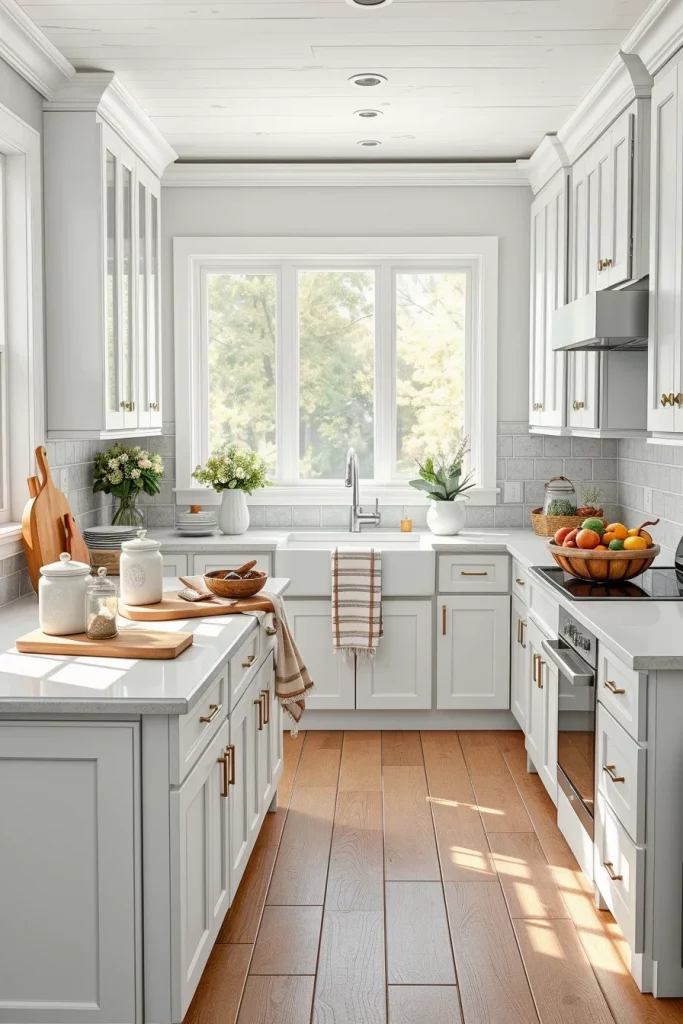
From my experience, overcrowded countertops quickly diminish the serene appeal of farmhouse design. I often follow recommendations shared by interior stylists from Better Homes & Gardens, who emphasize leaving negative space to preserve visual calm. I find that grouping accessories in odd numbers creates the most balanced arrangement.
If the kitchen includes extensive counter space, I recommend adding a decorative table lamp or oversized vase to soften the room and provide additional visual layers.
White Farmhouse Kitchen Decor With Sliding Barn Doors
Sliding barn doors introduce architectural character while serving a highly practical purpose in farmhouse kitchens. I particularly appreciate how they save floor space compared to traditional swinging doors, making them ideal for pantries, laundry areas, or adjacent mudrooms. In white kitchens, barn doors contribute warmth and establish a strong farmhouse identity.
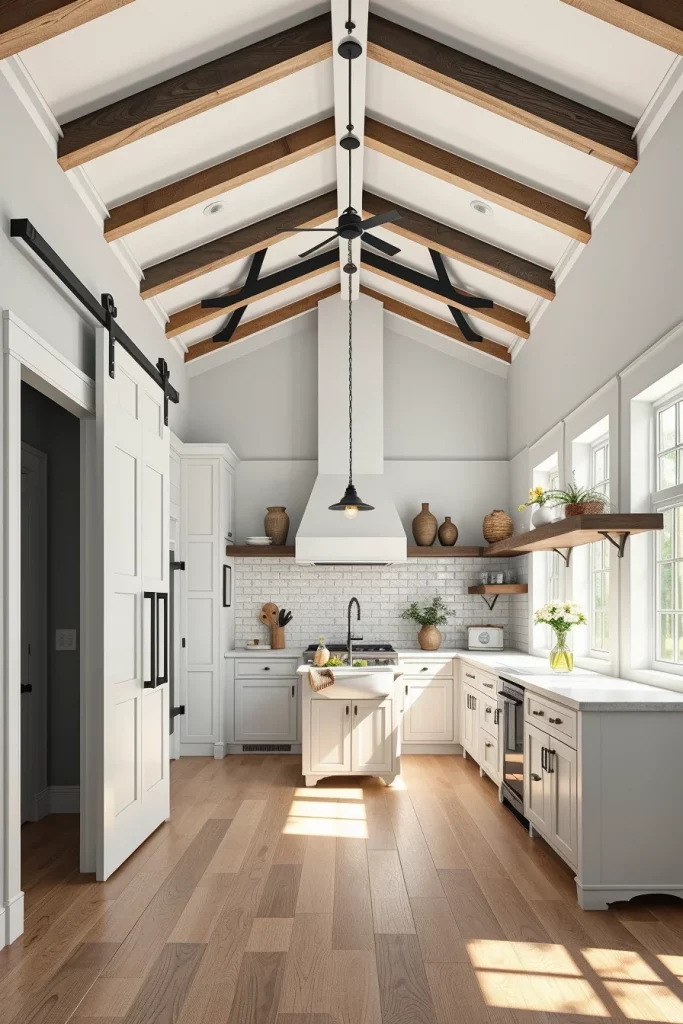
For a cohesive design, I usually select white-painted barn doors featuring simple panel detailing. Black hardware provides striking contrast and reinforces the farmhouse aesthetic. Depending on the home’s overall style, frosted glass inserts or subtle crossbuck patterns can add additional personality without overpowering the room. Pairing the door with coordinating cabinet hardware ensures visual consistency.
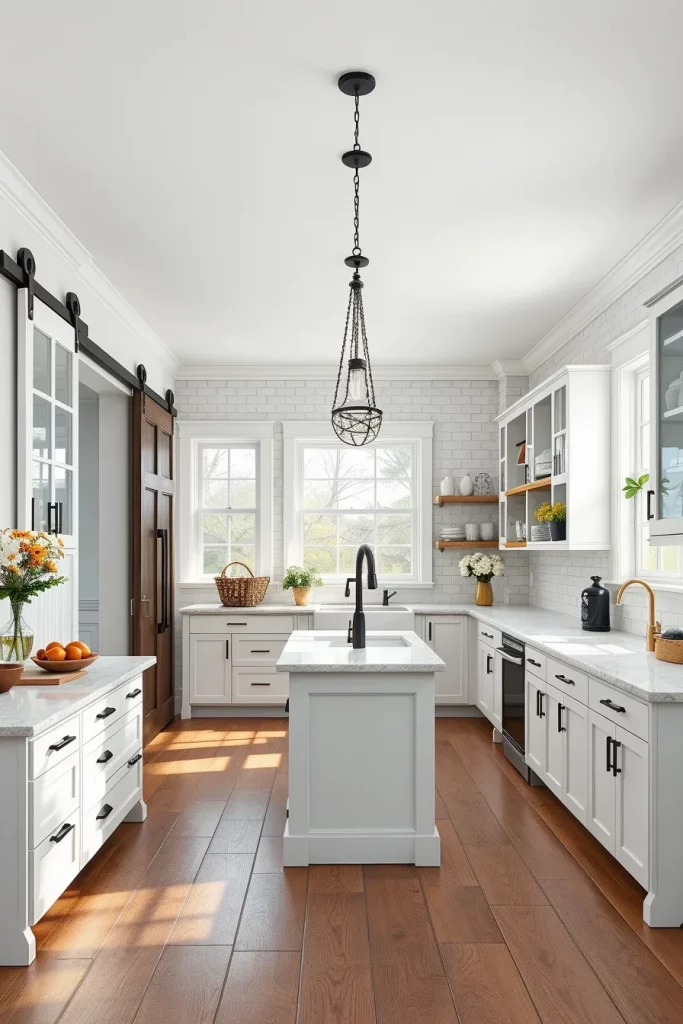
Personally, I have found that barn doors instantly become focal points in the kitchen. Designers frequently featured in House Beautiful often recommend repeating black metal finishes throughout the room when using barn door hardware, and I agree because it creates a harmonious appearance.
To complete this feature, I suggest incorporating nearby wall sconces or decorative hooks that enhance both functionality and visual appeal.
Farmhouse Dining Areas Connected To White Kitchens
Open-concept layouts often blend kitchens and dining spaces, and I believe the transition between these areas should feel seamless. A connected farmhouse dining area extends the warmth of the kitchen while encouraging family interaction and entertaining. Consistency in materials and color palettes helps unify the entire space.
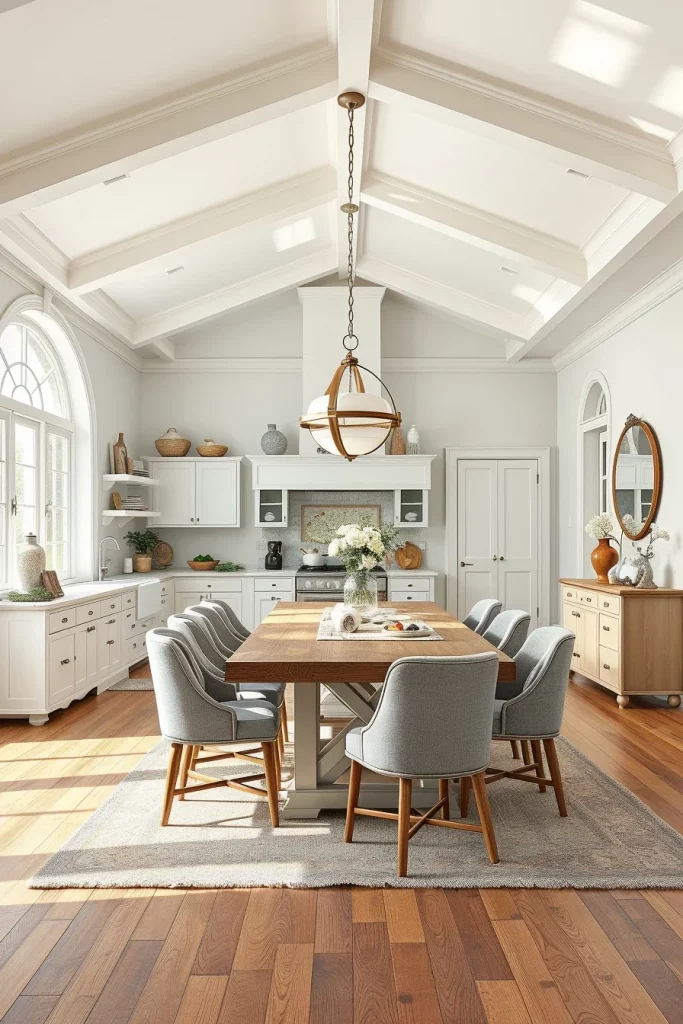
I frequently incorporate large farmhouse dining tables paired with upholstered or spindle-back chairs. Statement pendant lighting above the table anchors the dining zone while complementing kitchen fixtures. Area rugs, sideboards, and built-in benches add comfort and practicality. Keeping the palette predominantly white with subtle wood tones ensures visual continuity between spaces.
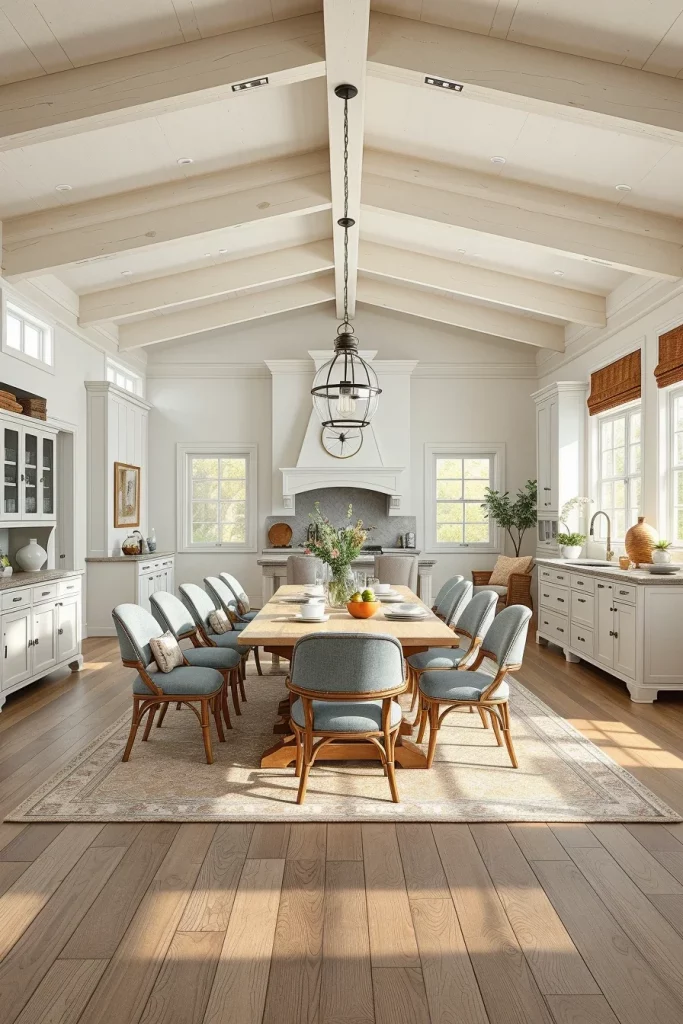
In my own projects, I always prioritize comfortable seating because farmhouse interiors are designed to encourage gathering. Interior designers regularly emphasize that dining spaces should feel as welcoming as kitchens, and I fully agree with this philosophy. Soft textiles and layered lighting significantly enhance the atmosphere.
What is often missing in connected dining areas is sufficient storage. I recommend including a hutch, buffet cabinet, or floating shelves to provide additional organization while displaying decorative pieces.
Seasonal Decorating Ideas For White Farmhouse Kitchens
One reason I love farmhouse interiors is their adaptability throughout the year. A white backdrop makes seasonal decorating especially easy because nearly any accent color or decorative element complements the neutral palette. Small seasonal updates can refresh the room without requiring major changes.
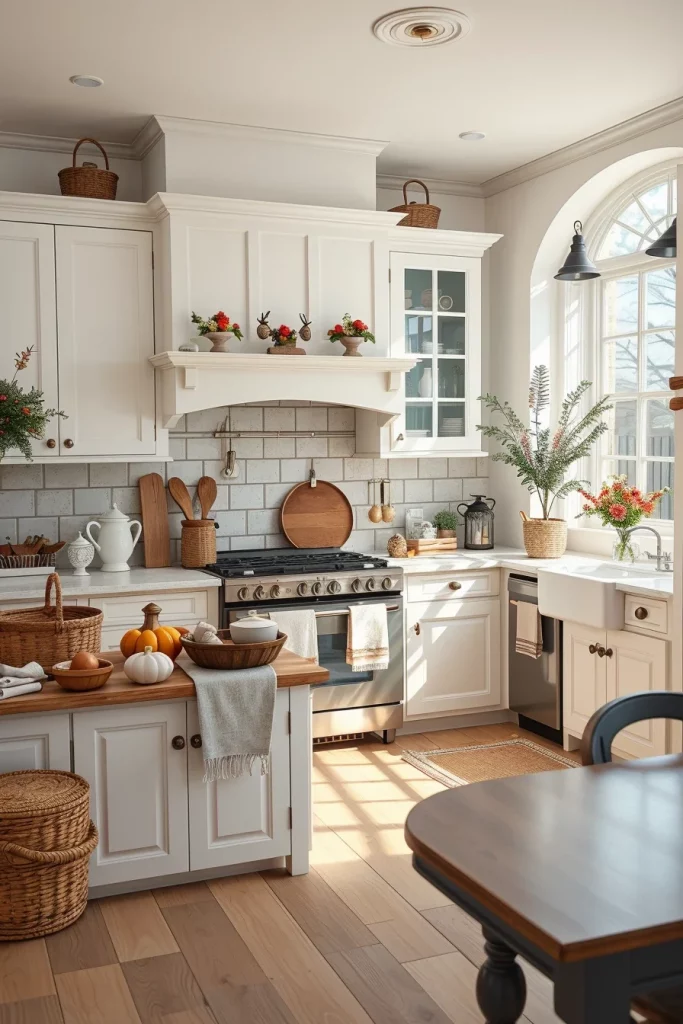
During spring and summer, I typically incorporate lightweight textiles, ceramic pitchers, and fresh greenery. In autumn, warm-toned accessories, woven baskets, and natural elements introduce coziness. Winter styling may include soft throws, candle displays, and evergreen arrangements. Since the kitchen remains predominantly white, seasonal accents never feel overwhelming.
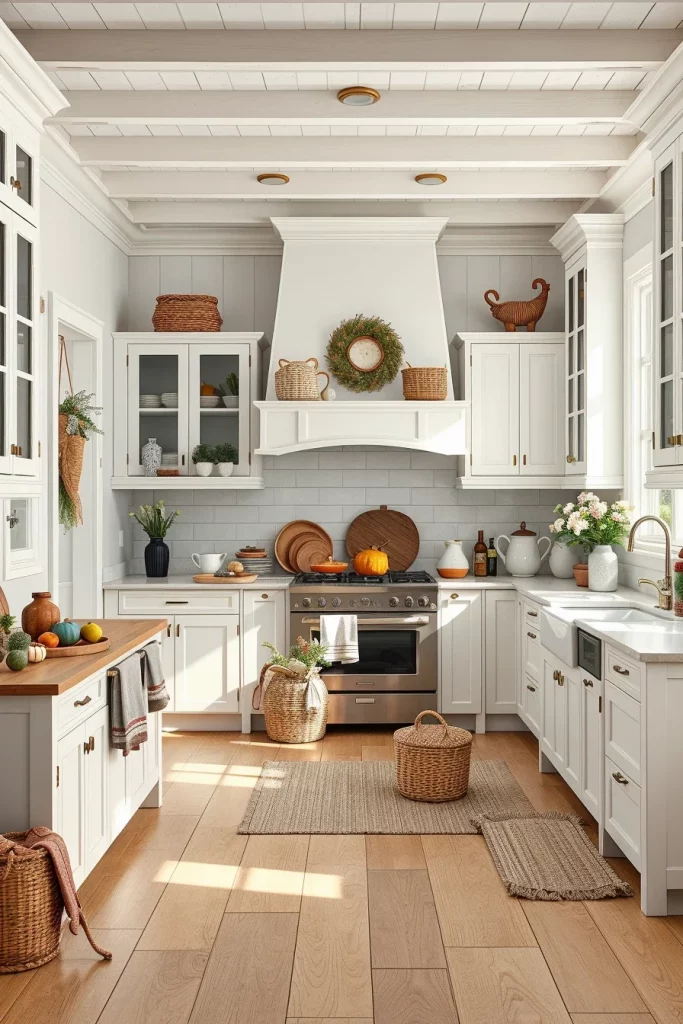
Personally, I avoid excessive holiday decorations because they can quickly clutter a functional space. Instead, I prefer subtle seasonal touches inspired by recommendations from Southern Living, which frequently advocates for layered but restrained decorating. This approach maintains the timeless character of farmhouse interiors year-round.
Seasonal scents also play an important role. I suggest incorporating candles, simmer pots, or fresh herbs to enhance the sensory experience within the kitchen.
Modern Farmhouse Touches For White Kitchen Interiors
Modern farmhouse kitchens successfully blend traditional charm with clean contemporary elements, and I find this combination especially appealing in white interiors. Rather than filling the room exclusively with rustic details, I prefer introducing streamlined forms that keep the kitchen feeling current and functional. The result is a space that feels timeless while still reflecting modern lifestyles.
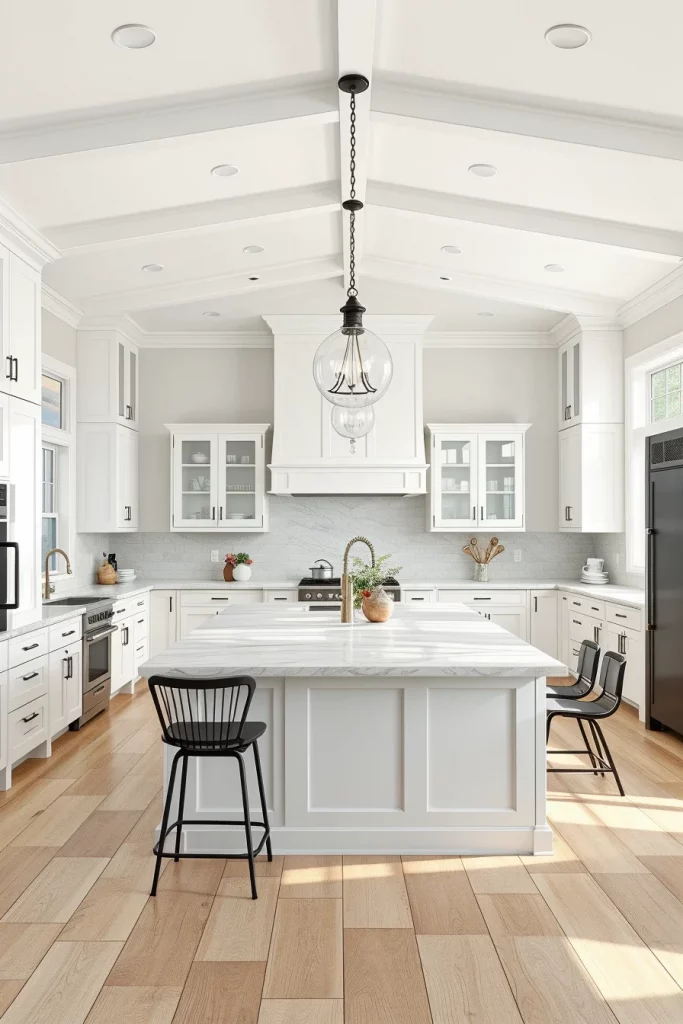
I usually begin with white shaker cabinets and pair them with sleek quartz countertops for durability and easy maintenance. Minimalist pendant lights, simple hardware, and streamlined seating help modernize the traditional farmhouse aesthetic. Integrated appliances, oversized kitchen islands, and understated decor maintain the uncluttered appearance that many homeowners appreciate today. I also like incorporating subtle black accents to provide contrast and visual definition.
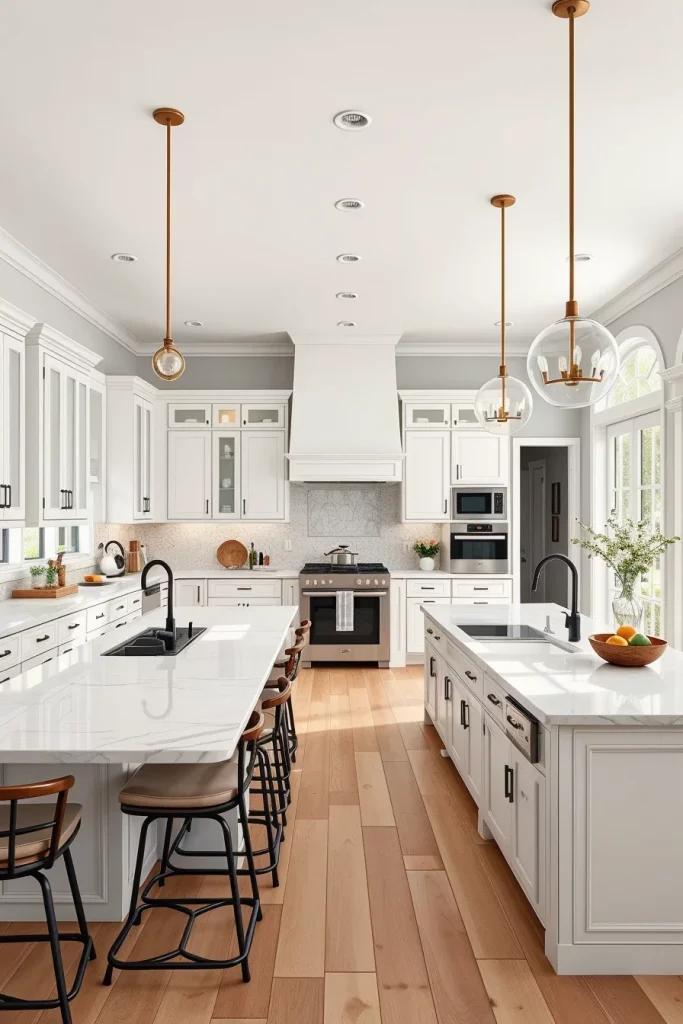
From my experience, the most successful modern farmhouse kitchens avoid excessive decorative accessories. Interior experts from HGTV frequently recommend balancing old and new elements rather than leaning too heavily toward one style. I have found that limiting decorative pieces allows architectural details and quality materials to become the focal points.
To further enhance this style, I recommend including layered lighting with recessed fixtures, pendants, and under-cabinet illumination to improve both ambiance and practicality.
White Farmhouse Kitchens With Large Windows And Natural Light
Natural light plays a significant role in creating inviting farmhouse interiors, and large windows are one of the defining characteristics of many beautiful white kitchens. I always prioritize maximizing daylight because it enhances the bright palette and makes the room feel larger and more welcoming throughout the day.
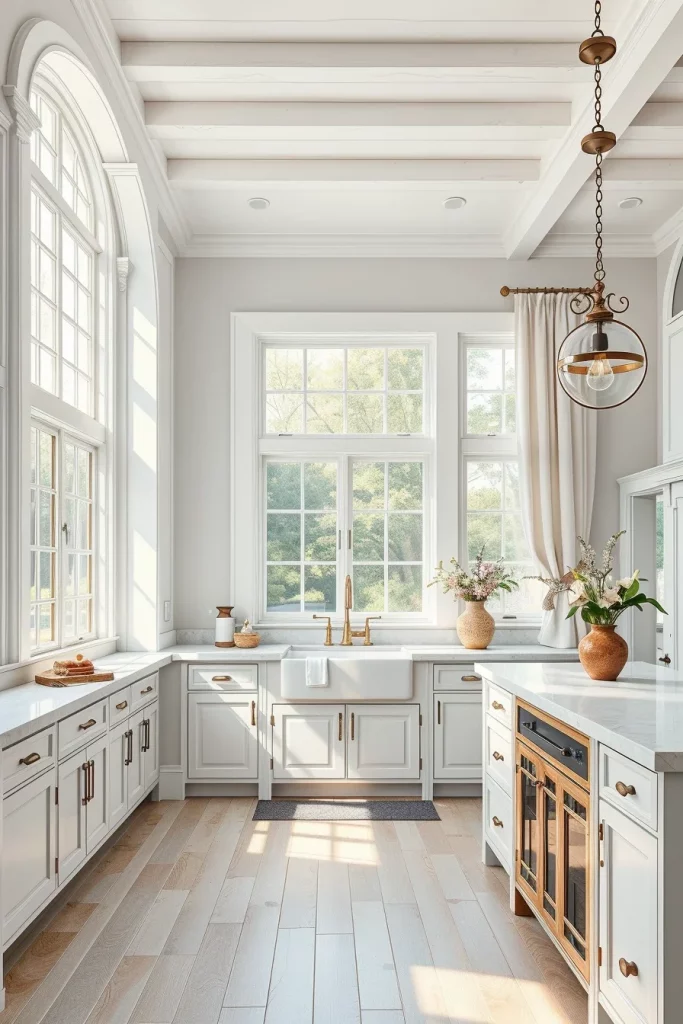
In farmhouse kitchens, expansive windows above the sink, oversized picture windows, or multiple casement windows work exceptionally well. I prefer keeping window treatments simple by using linen curtains, woven shades, or leaving windows uncovered whenever privacy permits. Large windows also create stronger visual connections between interior and exterior spaces, bringing a sense of openness to the kitchen.
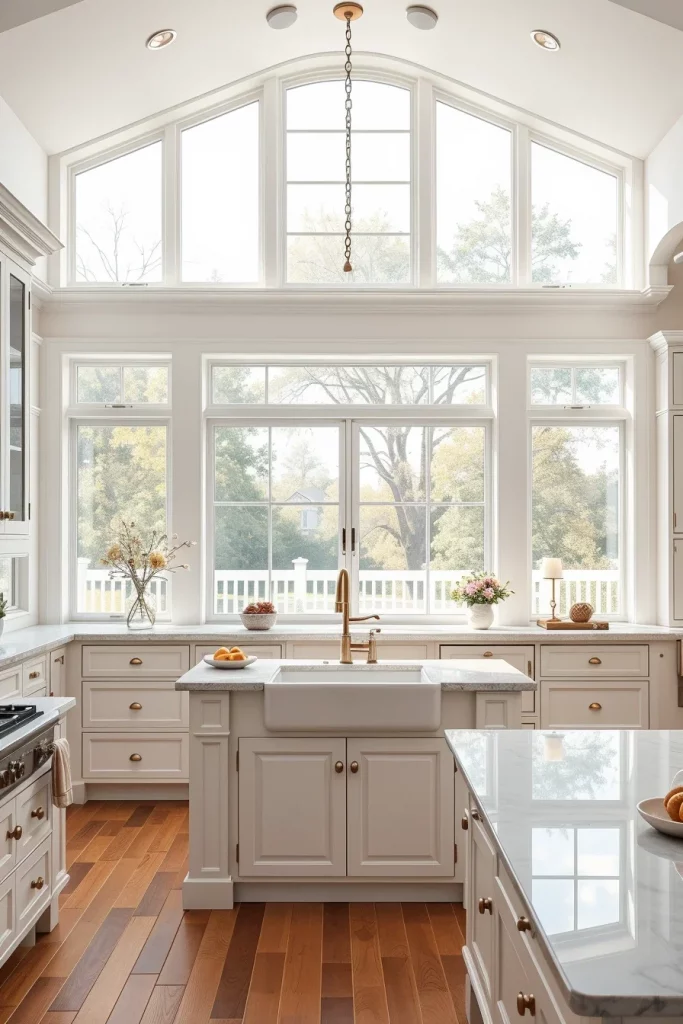
Personally, I believe natural light is one of the most valuable design elements in any home. Many designers featured in Elle Decor emphasize designing around natural light sources, and I fully agree with this approach. Bright kitchens feel more uplifting and encourage families to spend more time together.
If large windows are not possible, I suggest adding mirrors, reflective surfaces, and layered artificial lighting to mimic the effects of abundant daylight.
Farmhouse Kitchen Decor Using Woven And Linen Textiles
Textiles introduce softness and warmth into white farmhouse kitchens, making them feel comfortable rather than overly formal. I often rely on woven and linen materials because they complement the farmhouse aesthetic while adding subtle texture to predominantly white spaces.
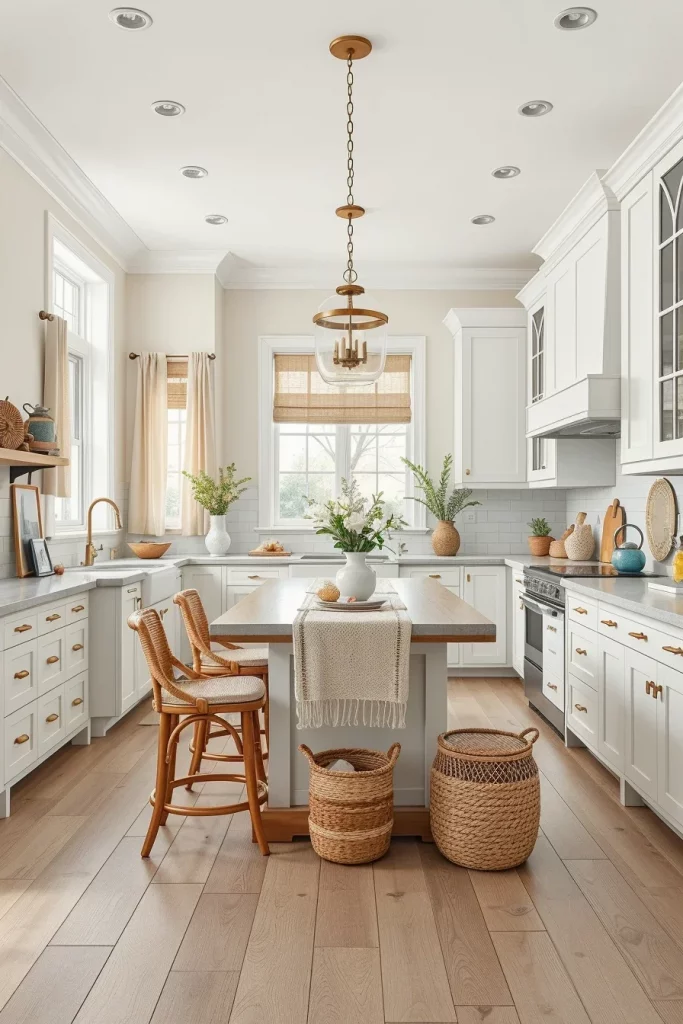
Linen café curtains, slipcovered dining chairs, woven counter stools, and textured table runners are among my favorite additions. I also enjoy incorporating woven baskets for storage because they combine practicality with decorative appeal. Neutral-toned textiles maintain the serene atmosphere of the kitchen while adding visual depth and comfort.
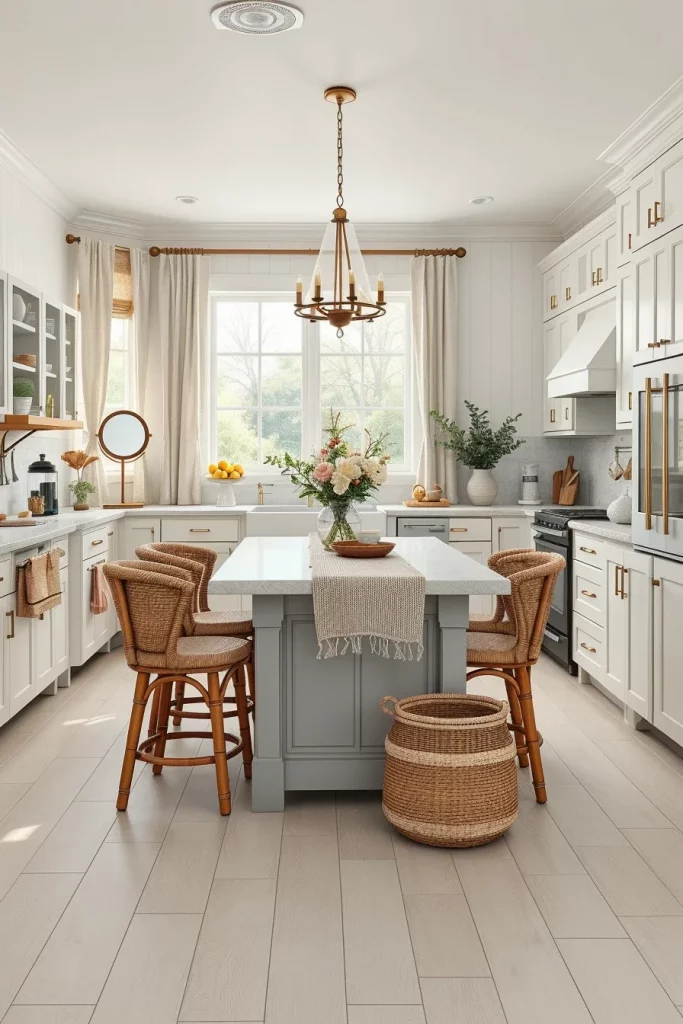
Over the years, I have discovered that quality textiles significantly influence how welcoming a room feels. Publications such as Better Homes & Gardens regularly highlight natural fabrics in farmhouse interiors, and I consistently see positive results when incorporating these materials. Soft furnishings make the kitchen more inviting for both everyday use and entertaining.
A detail that is often overlooked is layering textiles seasonally. I recommend changing runners, cushions, and towels throughout the year to keep the kitchen feeling refreshed.
Organizing And Styling A White Farmhouse Coffee Station
A dedicated coffee station can elevate both the functionality and charm of a farmhouse kitchen. I like creating designated beverage areas because they simplify daily routines while adding personality to the room. In white kitchens, a thoughtfully styled coffee station can become an attractive focal point.
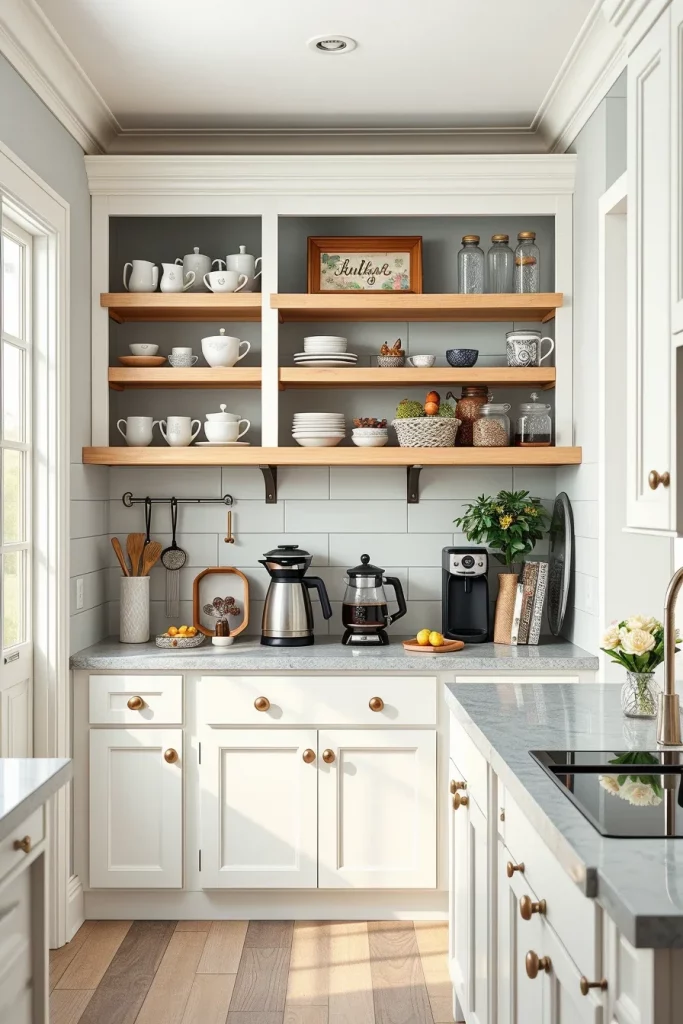
I typically include a countertop coffee machine, open shelving, ceramic mugs, glass jars for coffee beans, and decorative trays for organization. Wooden risers, small signs, and vintage-inspired accessories contribute farmhouse character without overwhelming the space. Keeping all essentials in one location ensures convenience and reduces countertop clutter elsewhere in the kitchen.
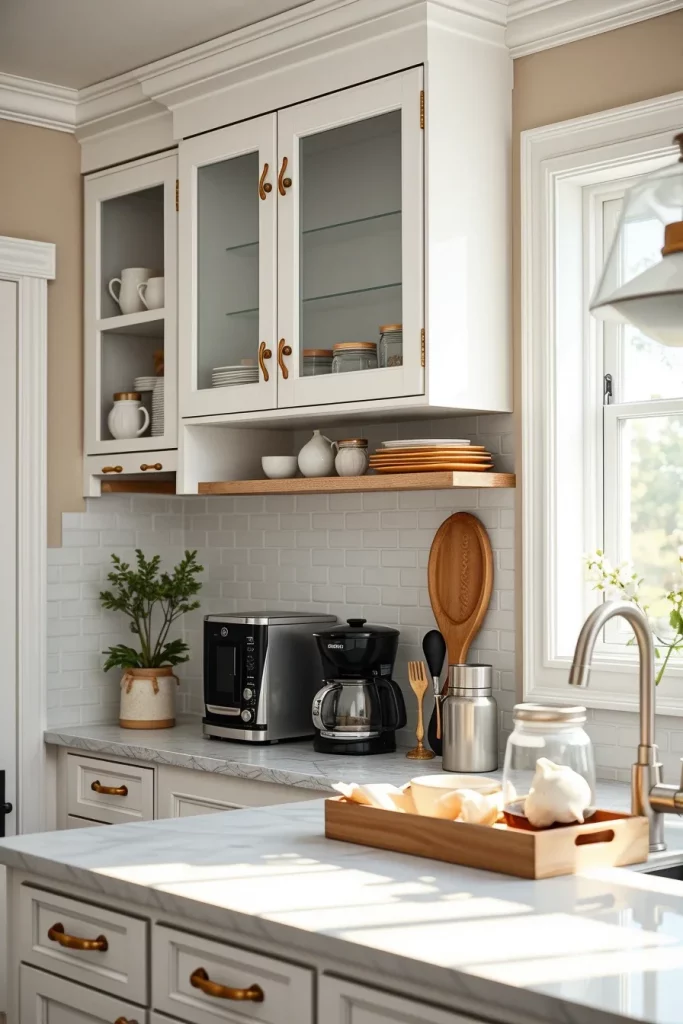
From my perspective, successful coffee stations balance practicality with aesthetics. Many professional organizers recommend grouping similar items together, and I have found this strategy especially effective in busy family kitchens. Organized stations not only look better but also streamline morning routines.
To make the station even more functional, I suggest including concealed storage for extra supplies such as filters, syrups, and seasonal beverages.
Finishing Touches That Complete White Farmhouse Kitchen Decor
The final decorative details often determine whether a farmhouse kitchen feels thoughtfully designed or incomplete. I always encourage homeowners to view finishing touches as opportunities to personalize the space while reinforcing the overall aesthetic. Even subtle additions can make a significant difference.
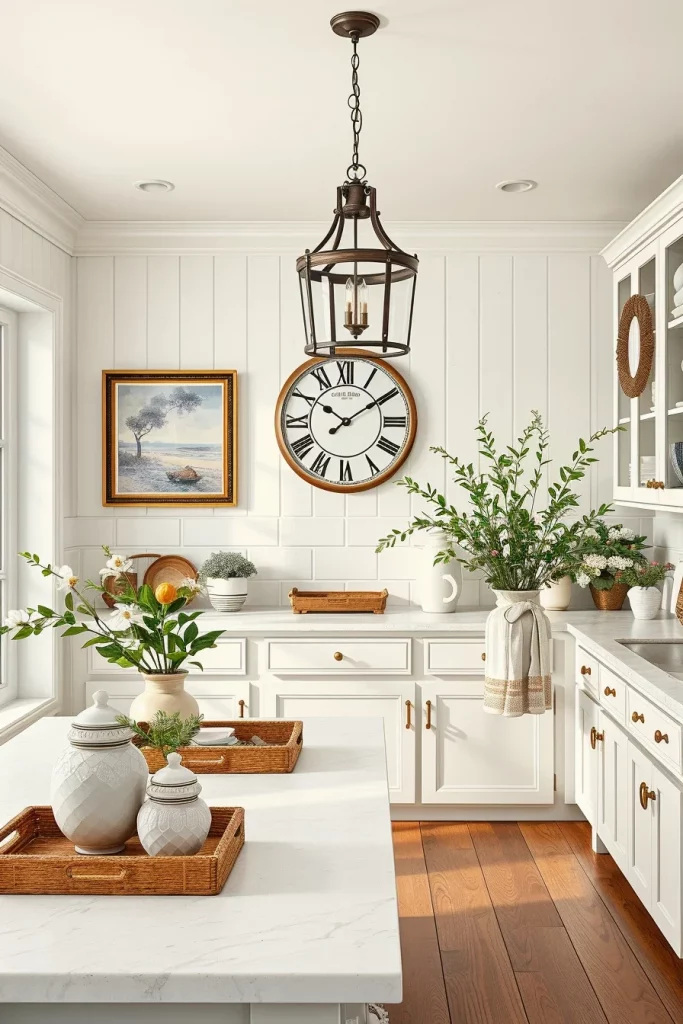
Decorative elements such as antique-inspired clocks, framed artwork, ceramic vases, cutting boards, and carefully selected hardware help create a cohesive look. Fresh greenery, decorative trays, and statement light fixtures introduce additional layers of interest. I prefer choosing accessories that are both beautiful and functional whenever possible.
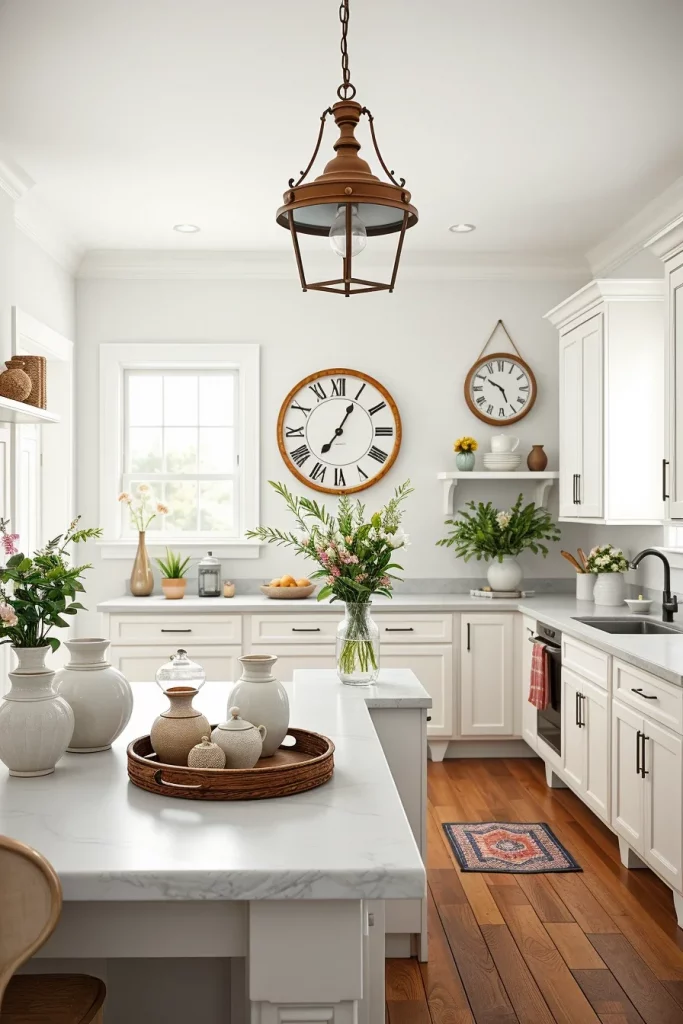
Personally, I believe restraint is essential when selecting finishing touches. Too many decorative objects can distract from the clean beauty of a white farmhouse kitchen. Designers from Southern Living frequently advocate for curated styling rather than excessive accessorizing, and I have consistently found this advice valuable.
One element that is sometimes missing is scent. Incorporating candles, fresh herbs, or seasonal arrangements can enhance the overall atmosphere and create a truly welcoming kitchen environment.
White farmhouse kitchen decor offers the perfect balance of comfort, elegance, and timeless appeal. By combining classic white finishes with warm textures, functional features, and charming decorative accents, you can create a kitchen that feels both stylish and welcoming. Whether you prefer a traditional farmhouse look or a more modern interpretation, these inspiring ideas can help you design a space you’ll love for years to come.