
A wood accent wall can reshape a room without a full renovation. Whether you want warmth, texture, or a clear focal point, wood paneling brings natural depth that paint alone can’t match. This article walks through 32 ways to use a wood accent wall, from vertical slats to reclaimed planks and geometric patterns.
Each idea keeps the wall as the hero, with the surrounding space staying simple and supportive. You’ll see how different styles, finishes, and layouts can work in living rooms, bedrooms, entryways, and more. The focus is on real, achievable looks that let the wood speak for itself.
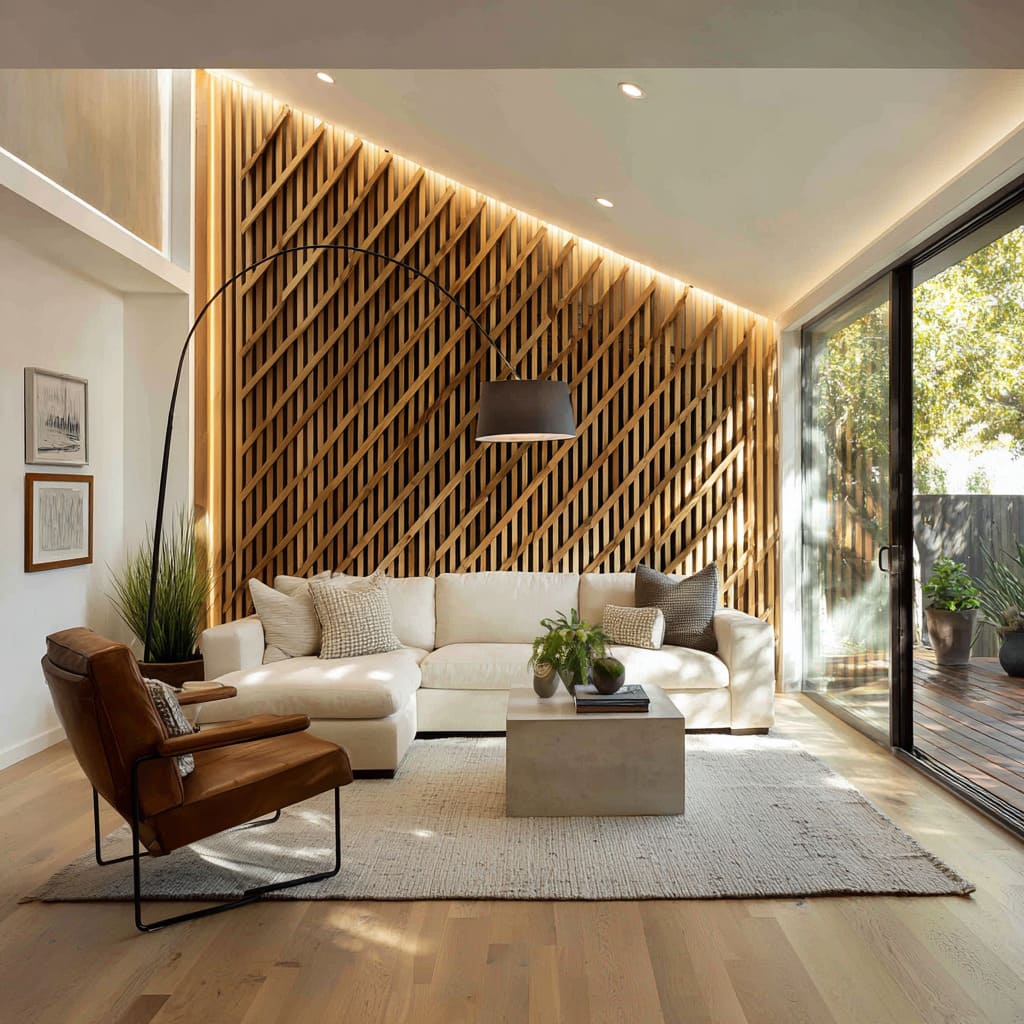
Vertical Slatted Wood Wall in a Spacious Living Area
A wall of vertical wood slats turns an already roomy living area into something deliberate. The slats run floor to ceiling, their warm tone standing against a white sofa and pale rug. A chaise lounge sits off to one side, facing the wall at an angle rather than straight on, which keeps the layout from feeling like a waiting room. Daylight hits the slats differently through the day, and the floor lamp adds a soft second layer after dark.
Modern Living Room with Integrated TV on Slatted Wood Wall
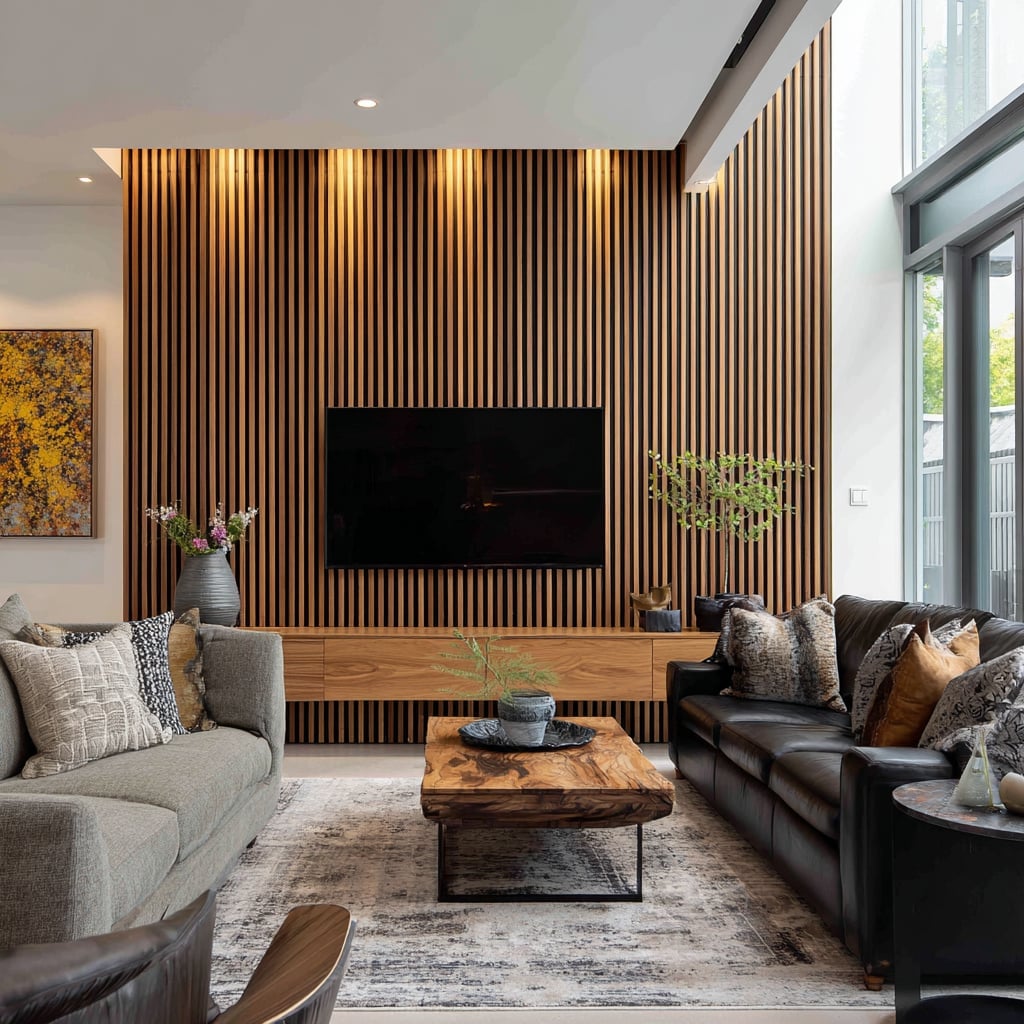
This is a slatted wood wall that earns its keep. A TV sits centered in the slats with a media console below, and the wood wraps around both so the screen feels built in rather than added later. The warm wood balances the black of the TV and the gray of a leather sofa, keeping the palette from leaning too cool. A coffee table in a metal finish picks up the dark notes. The room gets daylight from one side and recessed lights overhead, so the wall reads well at any hour.
Boho Modern Bedroom Featuring a Textured Wood Slat Wall
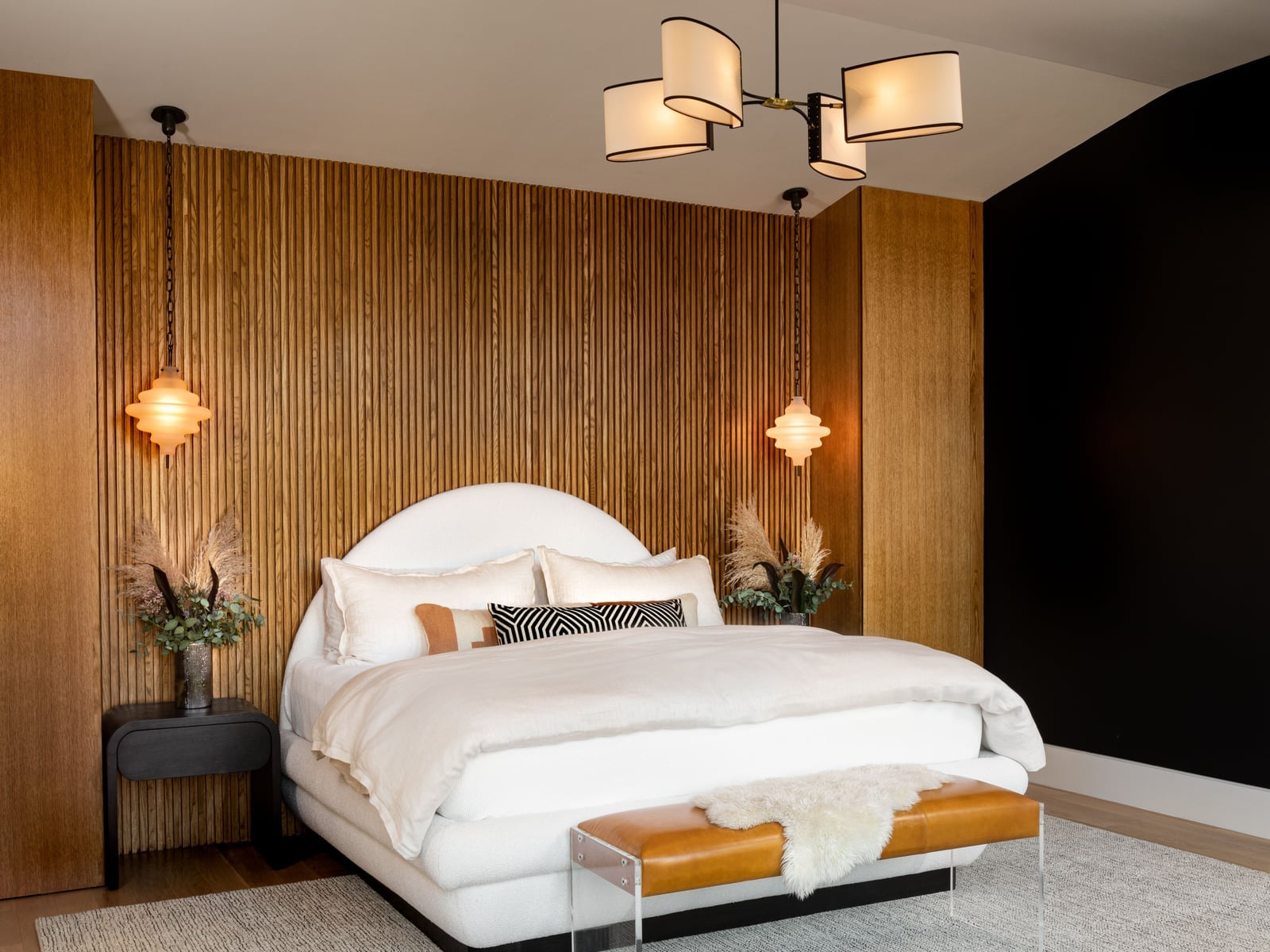
What makes a wood slat wall feel boho rather than corporate? The answer is what you put in front of it. Here the bed sits centered against the slats, with linen bedding, a bench at the foot, and a pair of wall sconces that cast warm light across the wood grain. The slats are vertical but not perfectly uniform, which gives the wall a handcrafted feel. A tan leather stool and a glass bedside table keep things light.
The palette stays simple: warm wood, white, black, and tan. The slats add texture without adding color, so the room never feels busy. Wall sconces are the main light source, and they throw soft shadows that make the wood surface feel deeper than it is.
Rustic Wood Plank Accent Wall in a Coastal Living Room
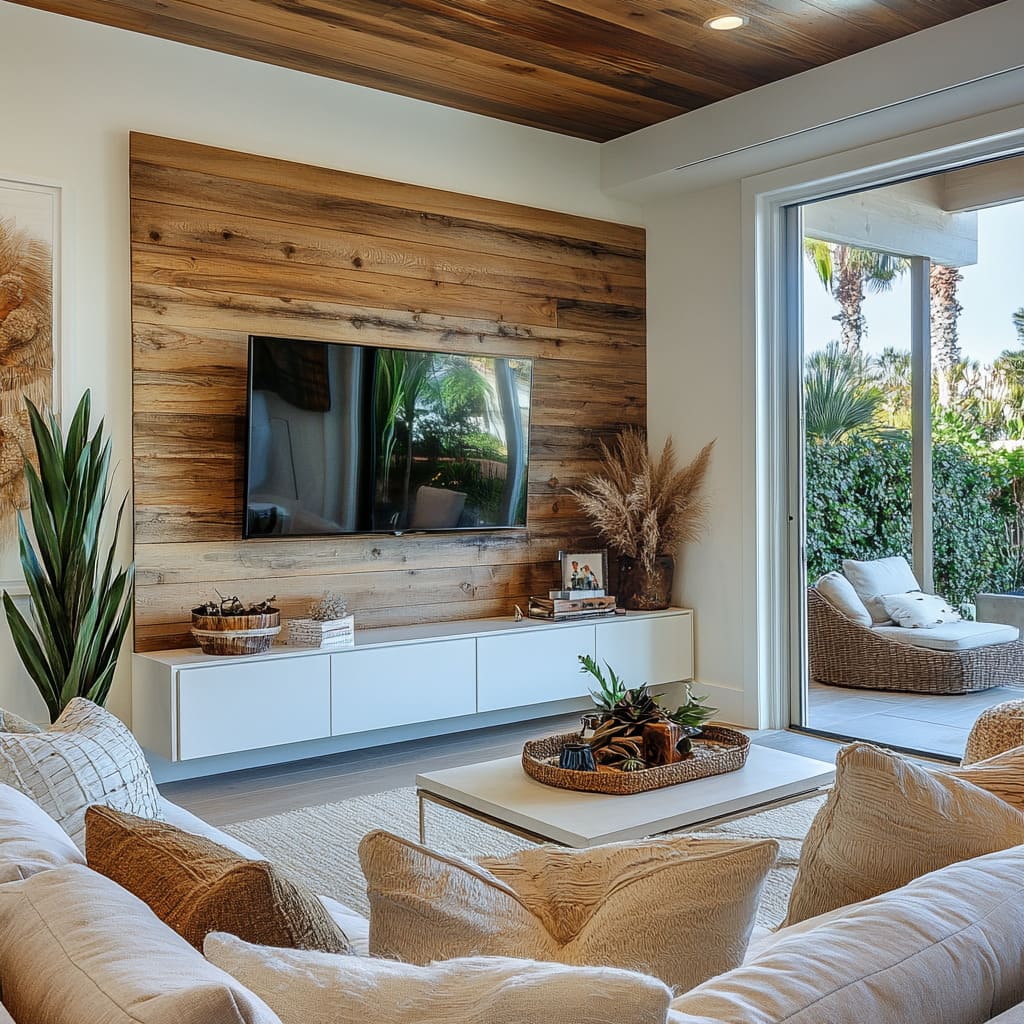
Reclaimed wood planks bring a coastal living room something new wood cannot: a surface that already has history. The planks are varied in shade, with knots and grain lines that read as texture. A TV mounts directly to the planks, and a floating console below balances the wall. A cream sofa and a rattan chair soften the rustic edge, while a large plant in a concrete pot adds a green note that prevents an overly cabin-like feel.
Chevron Wood Accent Wall in a Modern Bedroom
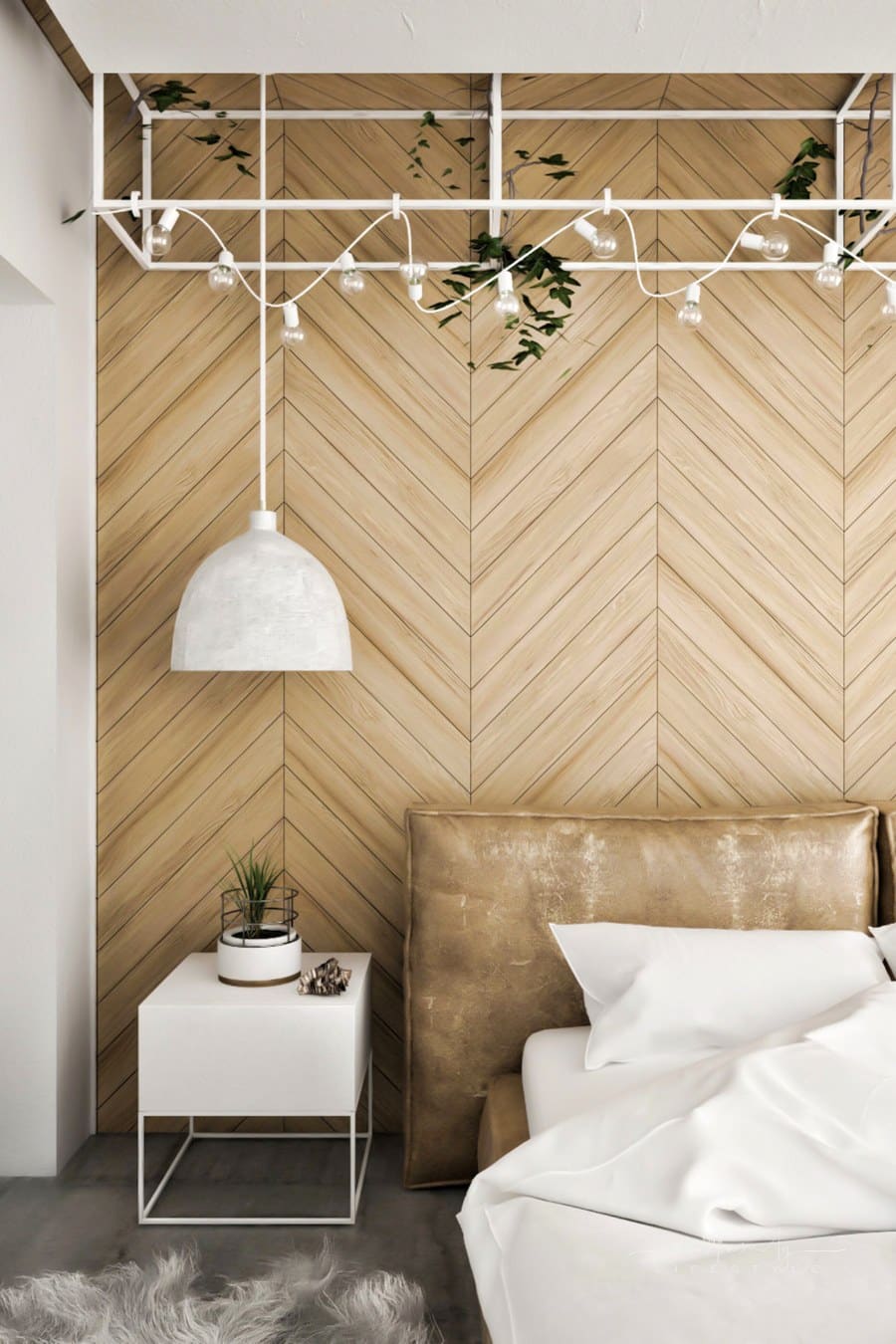
A chevron pattern changes how a wall reads. The diagonal lines pull the eye across the room rather than up, which can make a wide bedroom feel more balanced. Here the chevron wood wall sits behind a bed with a wall-mounted headboard, and the pattern carries enough visual weight that the nightstands and pendant light read as secondary. The wood tones stay light and natural, so the pattern does not darken the room. A good rule for any patterned wall: let it be the main event. Keep furniture simple and let the wood do the talking.
Traditional Entryway with Molded Accent Wall and Wooden Bench
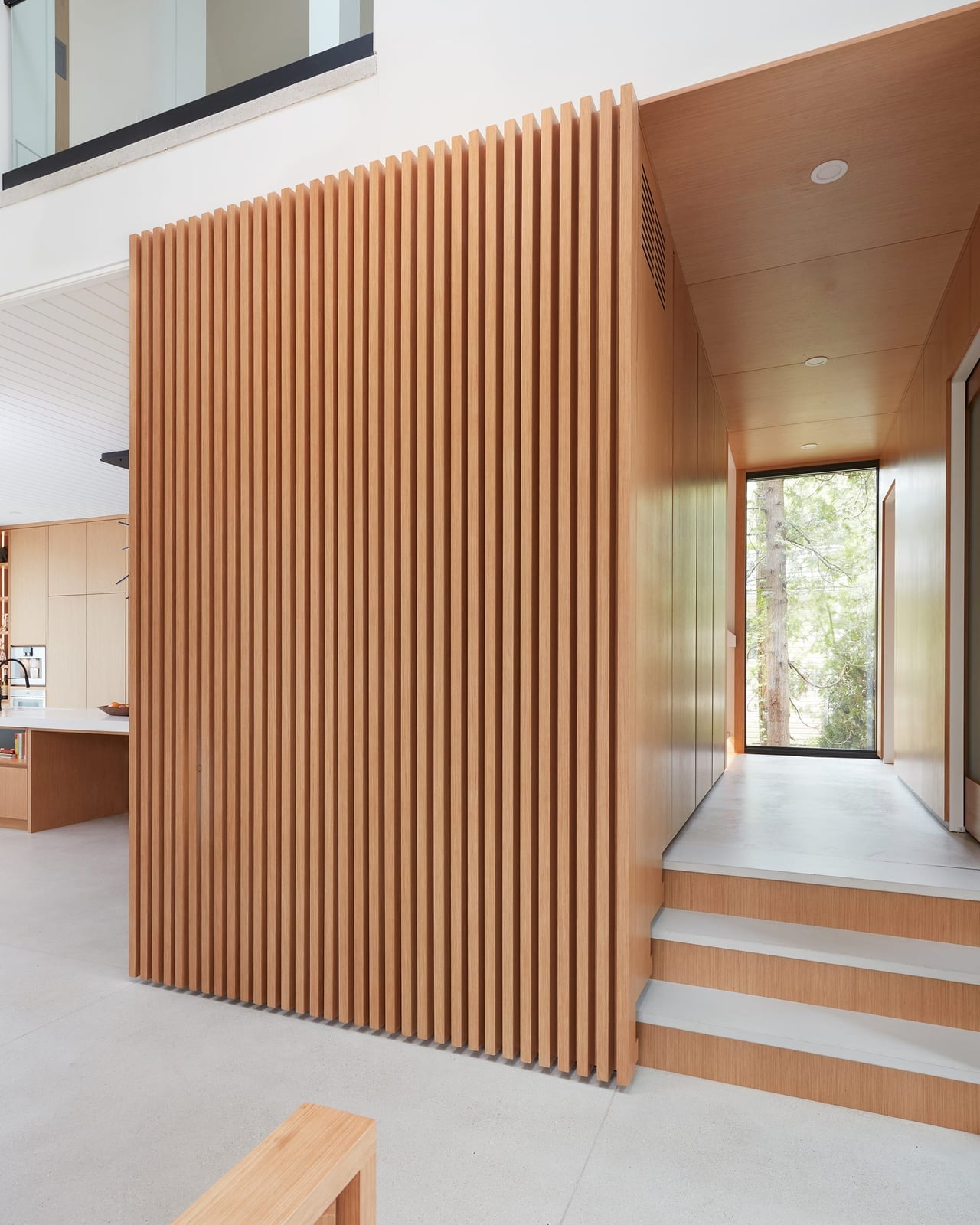
If you want the look of custom millwork without the contractor, a molded accent wall in an entryway gives you the same visual weight for less money and effort. The white molding against the wood-toned bench and doors reads as classic, and the compact layout makes the most of a small footprint. Because the wall is painted, you can change the color whenever the mood strikes, which is a renter-friendly swap that doesn’t require permanent changes.
The bench built into the wall is the practical part: it gives you a place to sit while taking off shoes, and it breaks up the vertical lines of the molding. Keep the styling simple with a few pieces on the bench or a small rug underneath. This kind of accent wall suits a traditional home or anyone who wants a formal feel without the cost of real paneling.
Horizontal Reclaimed Wood Plank Wall with Cream Sectional
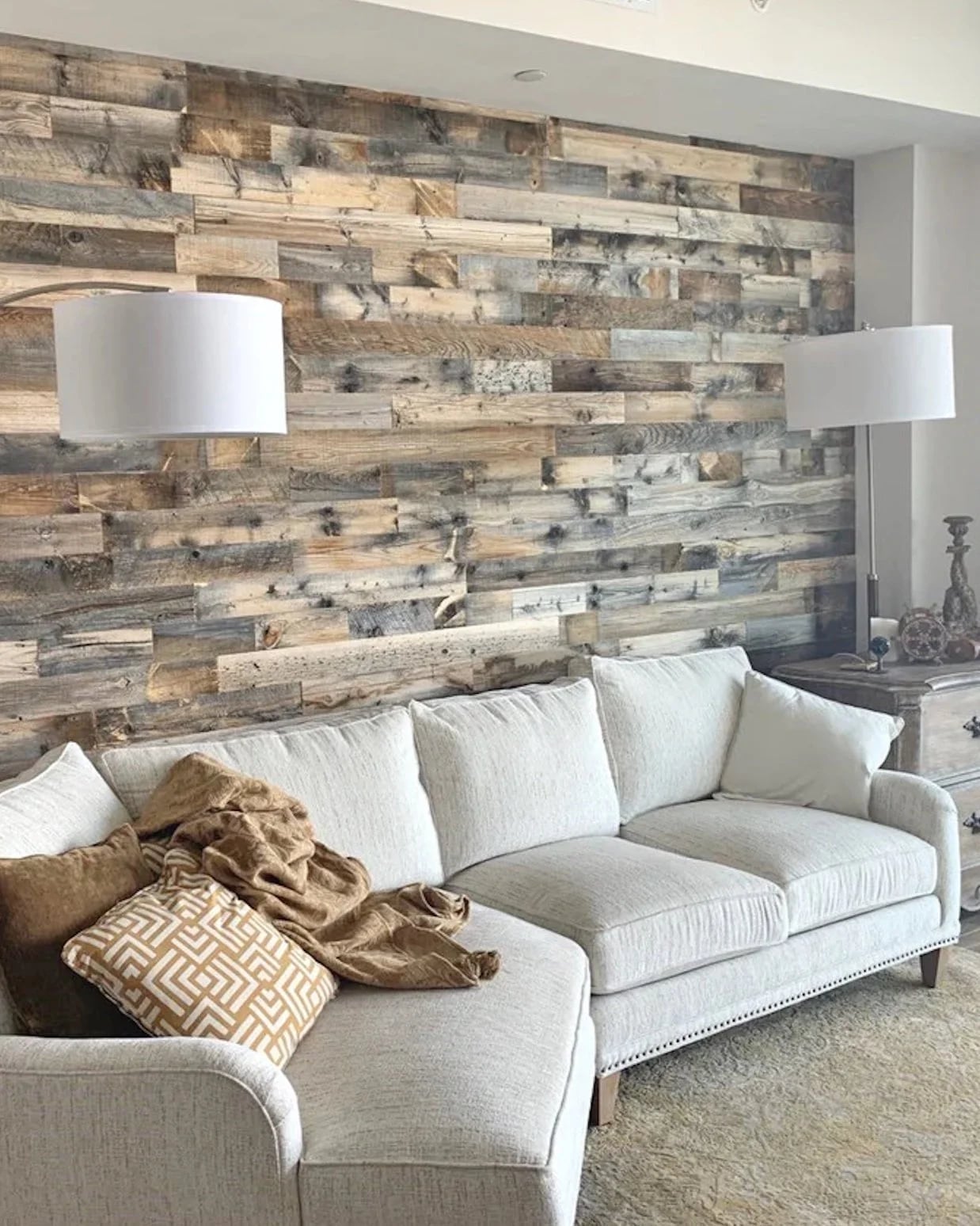
The horizontal reclaimed wood planks behind the cream sectional create a long, grounded line that makes the room feel wider and more settled. The multi-toned wood brings warmth, while the light sofa keeps the palette airy, so the wall doesn’t overwhelm the space. Two floor lamps add soft pools of light that play up the texture of the planks. For a similar effect in a rental, try peel-and-stick wood planks that come off without damaging the paint.
Slatted Wood Accent Wall in a Modern Boho Living Room
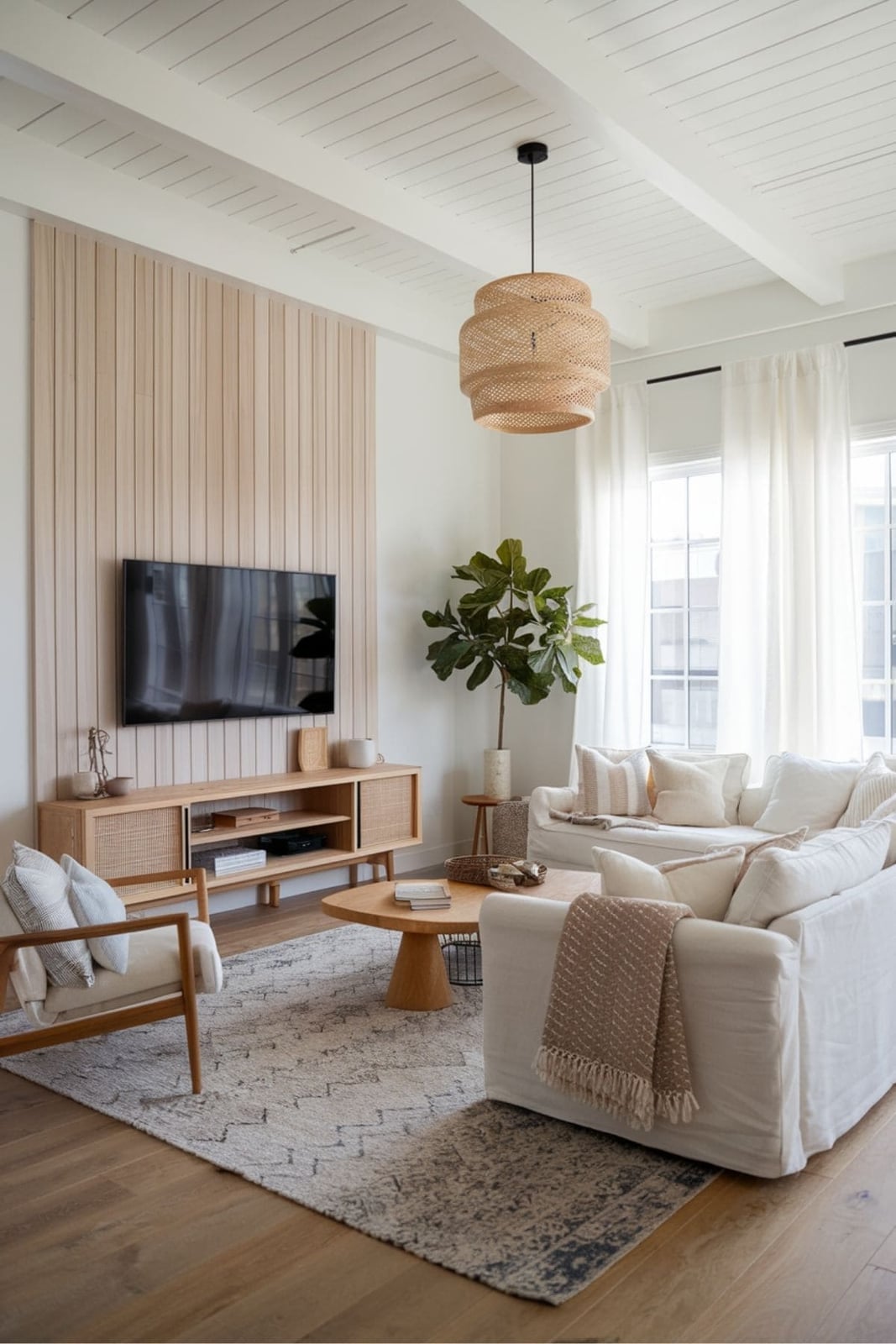
A slatted wood accent wall behind the TV is a clean way to add texture without making the room feel busy. The light wood slats pair naturally with rattan, linen, and cream furnishings, so the whole space stays cohesive and relaxed. Open-plan rooms benefit from this kind of wall because it anchors the seating area without blocking sight lines. The natural light from windows and a pendant light keep the wood looking warm rather than dark. If you want to change the mood later, you can stain the slats a different tone or paint them, which is a simple weekend project.
Modern Entryway with Vertical Slatted Black Wood Accent Wall
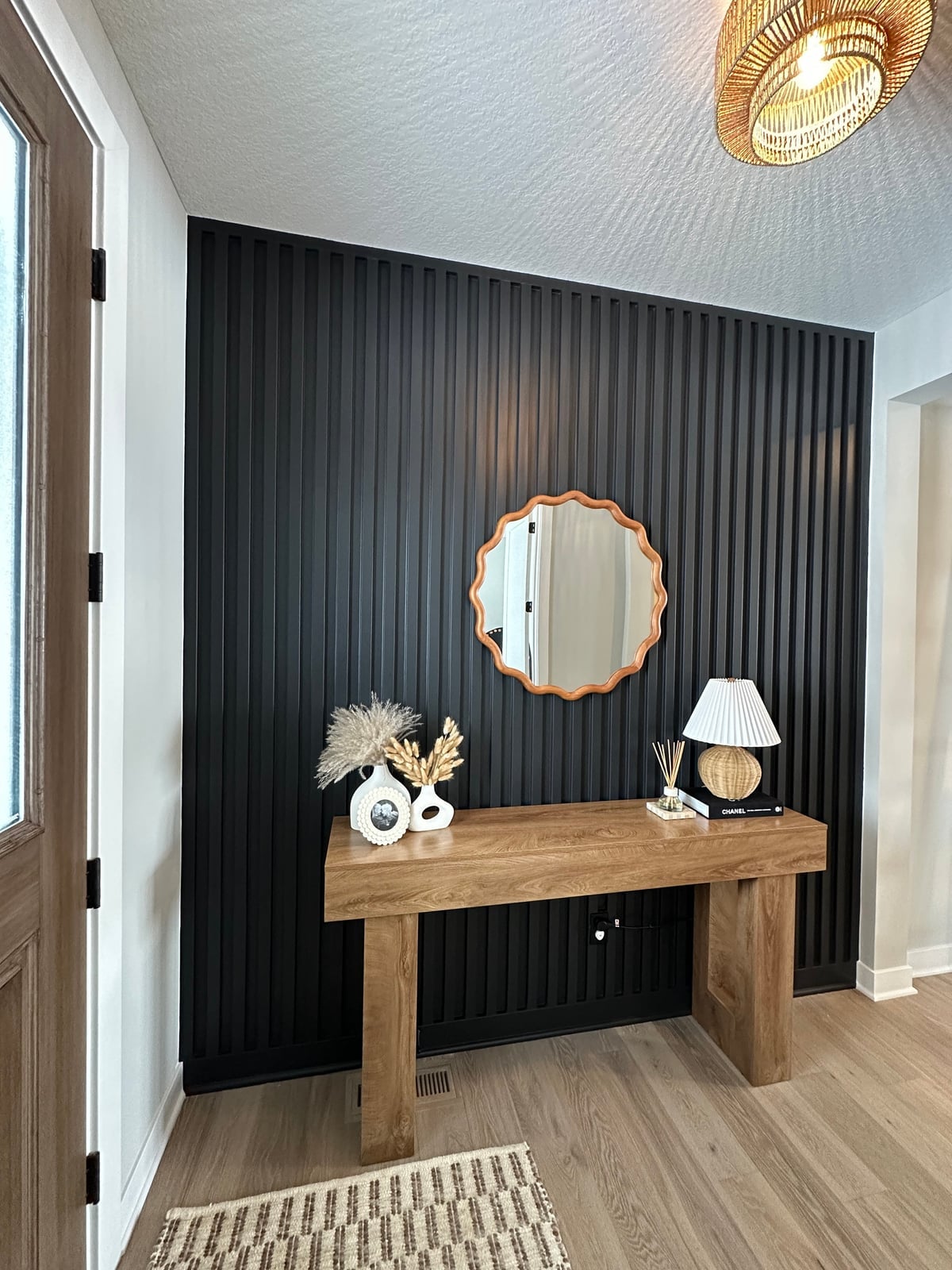
Does a black accent wall make a small entryway feel even smaller? Not when it’s vertical slats, because the lines draw the eye upward and add height. The black wood slats sit behind a light wood console table, and the mix of dark and light keeps the space from feeling heavy. A mirror and a lamp on the console bounce ambient light around, so the dark wall doesn’t swallow the room.
The vertical slat pattern is also forgiving in a high-traffic area: it hides fingerprints and smudges better than a flat painted wall. For a rental, you can fake the look with black peel-and-stick slats that remove cleanly. Just keep the surrounding walls light and add a few ceramic vases or a bowl for keys to give the entryway a finished feel.
Slatted Wood Room Divider in an Open-Plan Dining Area
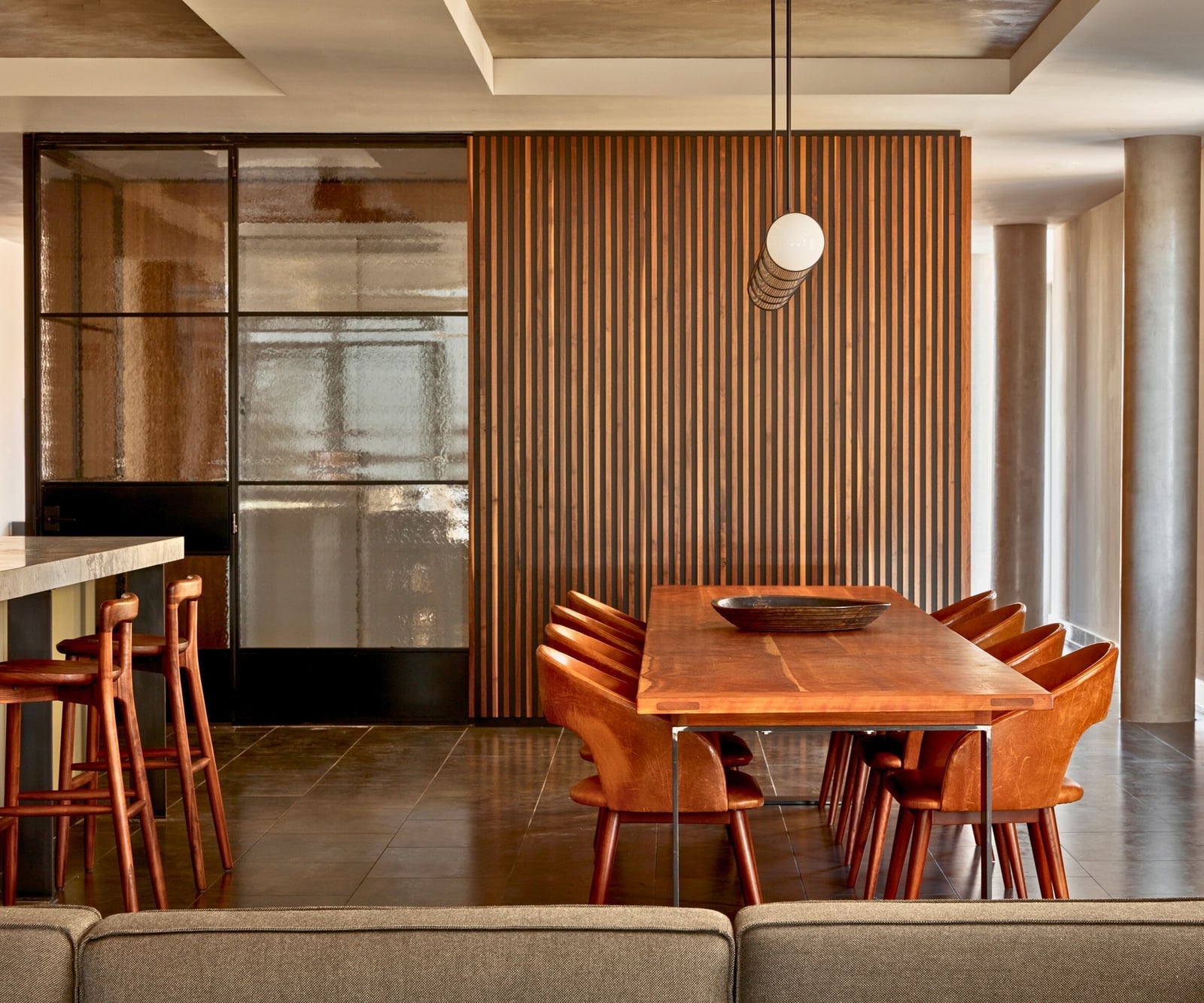
A vertical slatted wood partition between the dining table and the kitchen island gives you separation without closing off the space. The slats let light and sight lines pass through, so the open plan still feels connected. The warm wood tone pairs with the gray and brown palette, and the stone tile floor grounds the whole area. This kind of divider works well in a dining room because it defines the zone without making the room feel chopped up.
Wood Accent Wall Paired with Green in a Modern Living Room
A wood accent wall in earthy wood tones works best when it anchors the room’s palette. Here the wall sits behind a media console, with a sofa in a deep green nearby. That green is a natural extension of the wood, not a separate color story. A floor lamp adds warm light, so the space stays cozy even when the natural light fades. The trick is keeping the room simple: one accent wall, one strong color, one light source doing the work. That gives you a focused look that holds together.
Rustic Bedroom with Chevron Reclaimed Wood Accent Wall
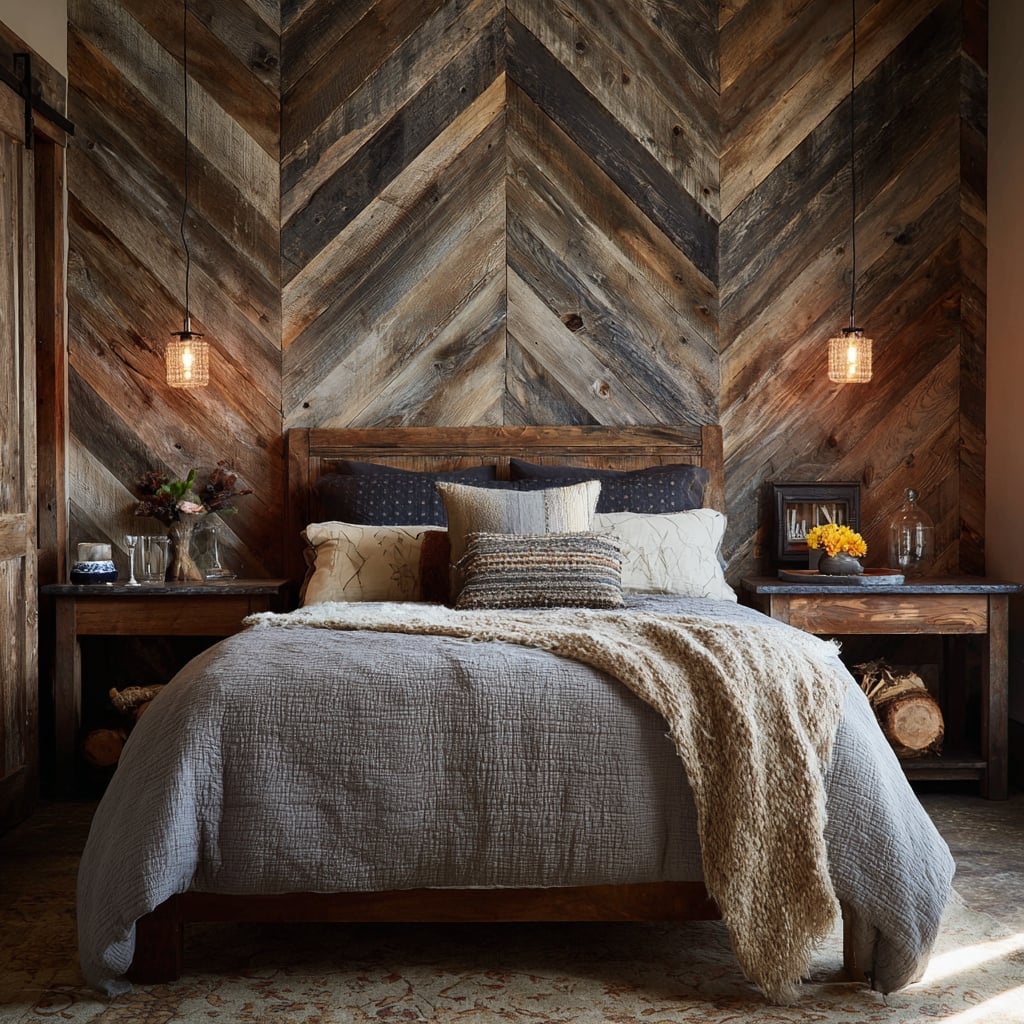
A chevron pattern can feel busy in a small room, but this reclaimed wood wall behind the bed proves the opposite. The natural wood tones stay muted enough that the pattern adds texture without being overwhelming. Gray linens and cream bedding keep the palette calm, while metal pendant lights bring a slight industrial edge. The trick is letting the wood do the talking: the other surfaces stay neutral, so the chevron looks deliberate.
Reclaimed wood carries its own history in the grain and color variation, which means no two walls look the same. That natural unevenness is what gives a rustic farmhouse bedroom its character. If you want the same feel but rent, try peel-and-stick wood planks in a chevron layout. They come off clean and still give you that layered, lived-in look.
Modern Hallway with Vertical Slatted Wood Panel Accent
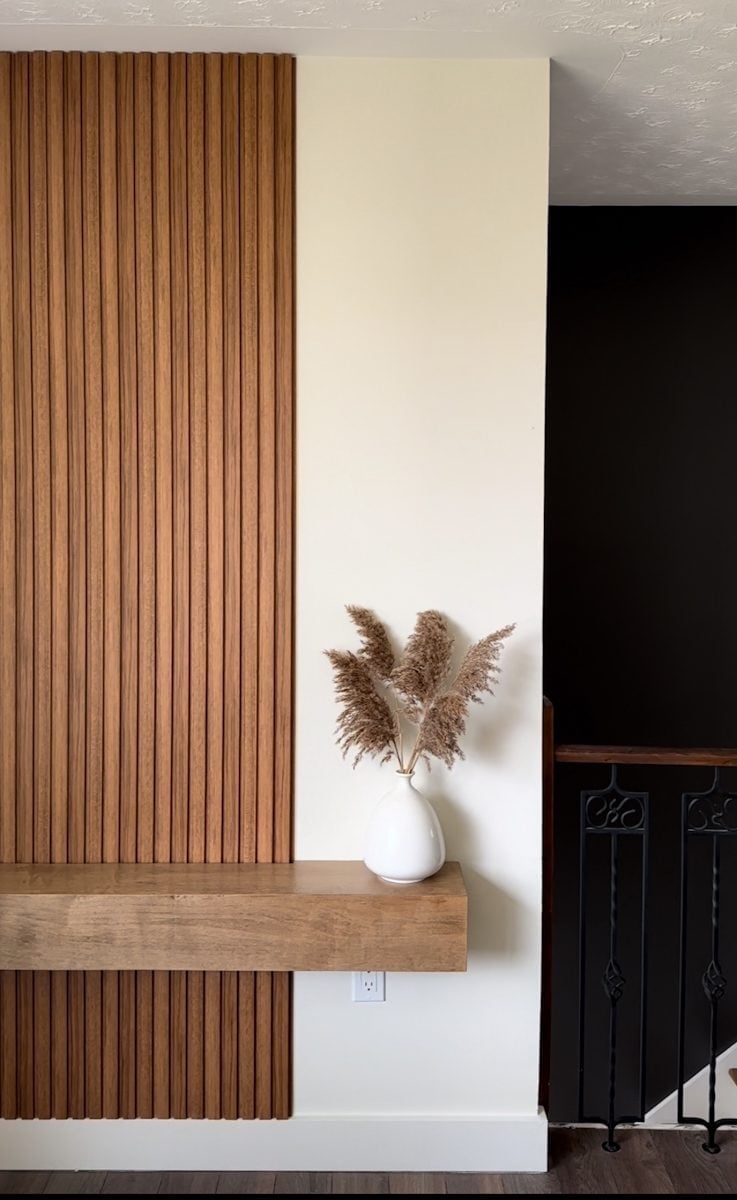
A vertical slatted wood panel turns a narrow hallway into something deliberate. The warm wood slats run floor to ceiling, with a floating shelf holding a vase of dried flowers. The cream wall and black metal accents keep it from feeling too heavy. In a compact space, vertical lines are your friend: they draw the eye up and make the hall feel taller. One panel is enough. You don’t need to wrap the whole room.
Dark Wood Herringbone Accent Wall with Brass Sconces
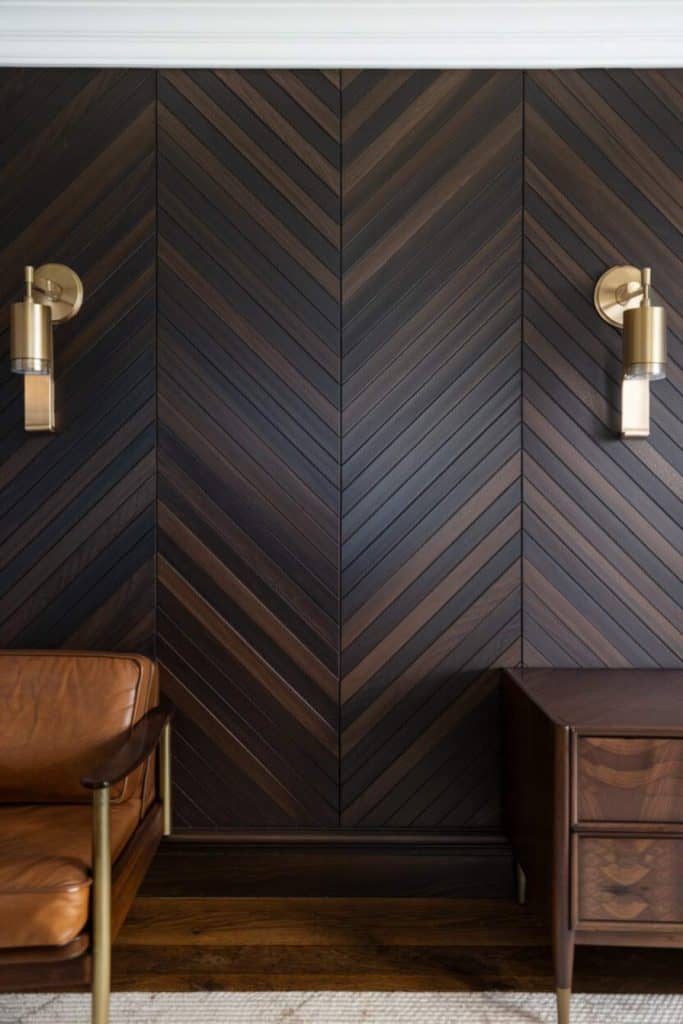
A dark wood herringbone wall is a lighting problem waiting to happen, or a lighting opportunity. Here the answer is brass sconces aimed at the pattern. The gold metal catches the dark brown wood and throws light across the chevron lines, so the wall reads as dimensional rather than flat. In a roomy living room with a sofa and side table, those sconces do double duty: they light the seating area and make the wall the focal point. Without directed light, a dark herringbone wall can look like a black hole. With it, the pattern becomes the show.
Dark Gray Vertical Wood Slat Wall in a Modern Bedroom
A dark gray vertical wood slat wall behind the bed gives you the weight of a dark accent without the heaviness of solid paint. The slats create a rhythm that keeps the eye moving, so the wall feels structured rather than flat. Here the palette stays simple: wood tones in the slats, a bench at the foot of the bed, wall sconces for light. Overhead light would wash out the slat shadows, so sconces are the better call.
For renters, a dark gray slat wall is easier to undo than you think. Removable wood veneer panels in a matte gray finish mimic the look without damaging the wall beneath. Just measure your space and cut the panels to fit. The vertical lines still give you that height and structure, and when you move, they peel off in minutes.
Large Slatted Wood Accent Wall with Integrated Lighting
A large slatted wood wall in a modern living area changes how the room feels because the strips run floor to ceiling and the space is open plan. The wall sits behind a white sectional and a concrete coffee table, and the slats break up the surface without blocking the natural light from sliding doors. A floor lamp and recessed lights add warmth at night, so the wood stays visible after dark. The layout works because the wall becomes the anchor: the sofa faces it directly, and a single armchair sits off to the side. Keeping furniture low and neutral lets the slatted wall do the work.
Rustic Cabin Seating Nook with Heavily Textured Wood Walls
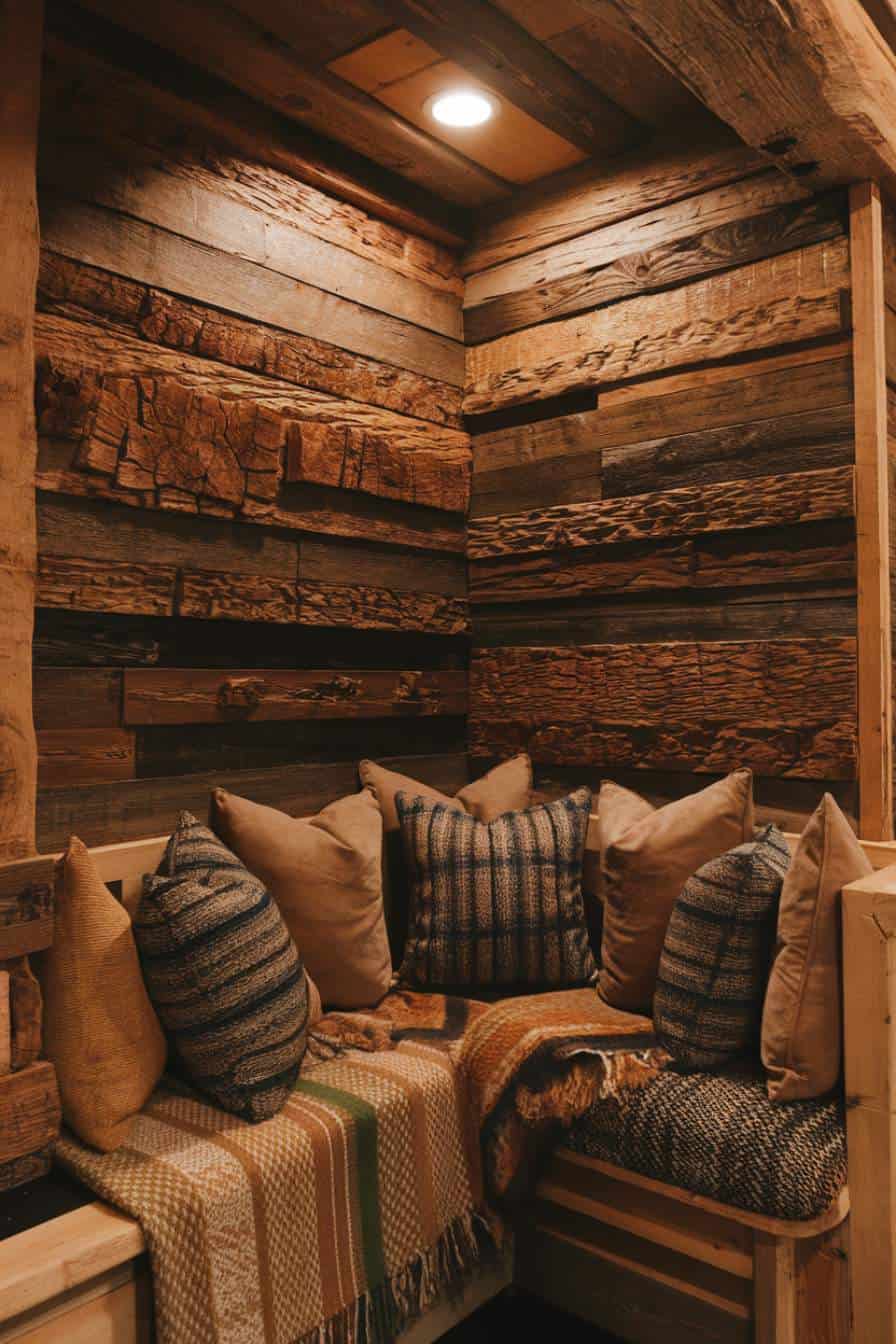
A wood accent wall feels different when the room is compact and the wood is reclaimed. In a small corner nook, heavily textured planks wrap the space in deep brown tones, and a built-in bench with layered cushions and a wool blanket makes it a place to sit rather than just a wall to look at. For renters, a full wall of reclaimed wood is usually not an option, but peel-and-stick wood veneer planks in a similar tone can give the same dense, rustic look without permanent changes. The nook stays cozy because the recessed ceiling light keeps the focus on the texture rather than washing it out.
Boho Modern Living Room with Horizontal Wood Plank Wall
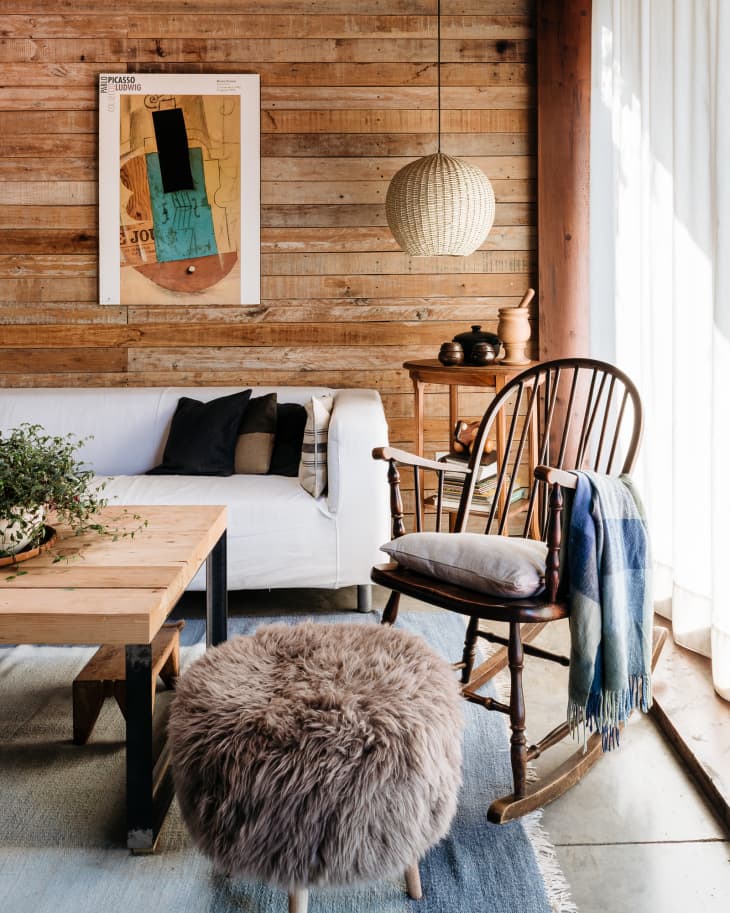
A horizontal wood plank wall reads more casual than vertical slats, which makes it a natural fit for a boho modern living room. The planks run across the entire back wall behind a white sofa, and the horizontal lines widen the room visually. A woven pendant light hangs overhead, and a wooden coffee table and a rocking chair keep the palette warm without competing with the wall. The trick is to let the planks set the tone and then pull back everywhere else. White walls on the other sides keep the room open, and the blue accents in the rug and decor stop the space from leaning too rustic. The layout works because the wall is the backdrop, not the only story.
Slatted Wood Accent Wall in a Living Room with Green Accent
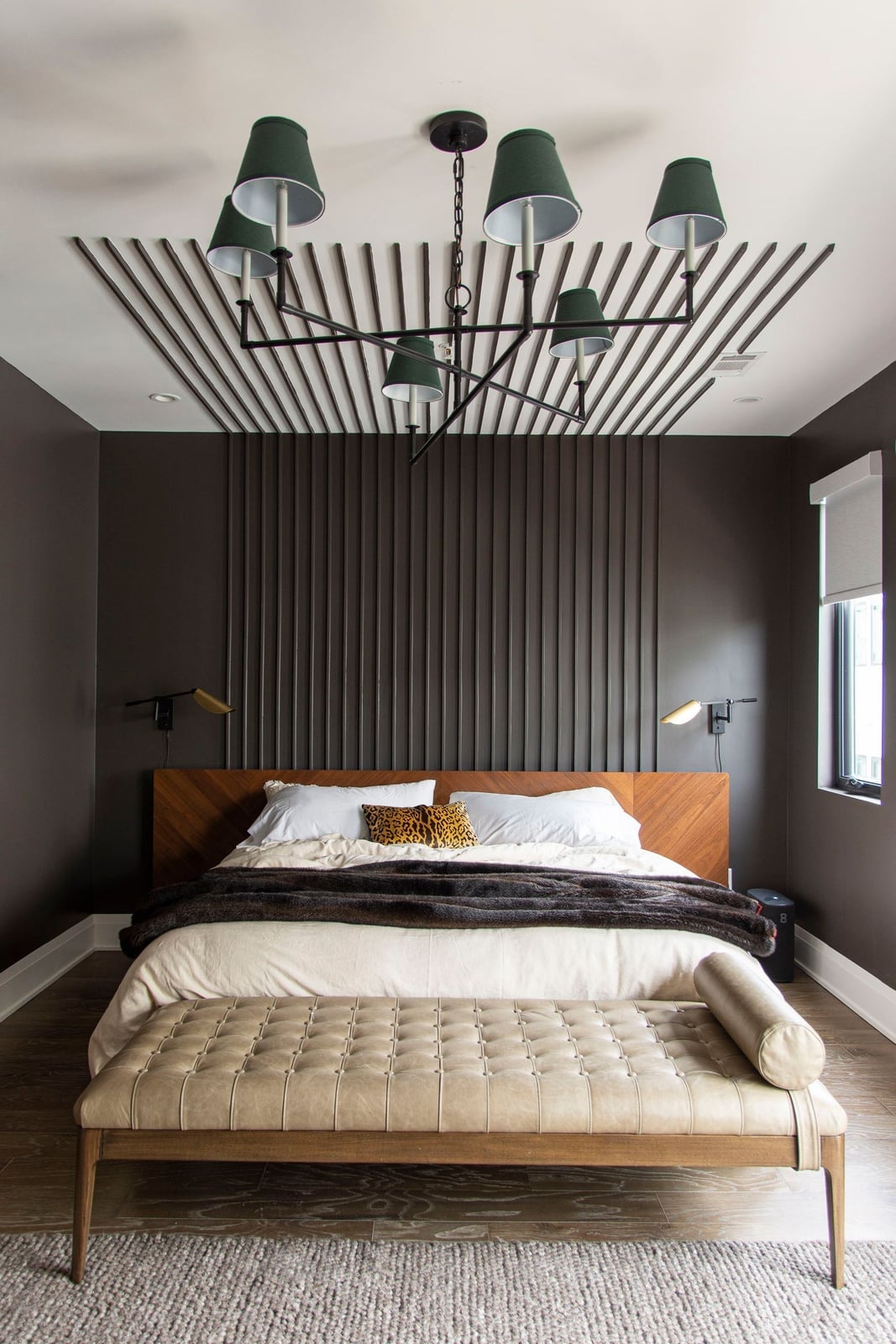
A slatted wood accent wall in an open-plan living room gets a sharp edge when green comes into the palette. The slats sit behind a media console, and the wood tones warm up the room while a green sofa or painted wall pulls the eye across the space. The ratio matters here: the wood covers one wall, and the green shows up on furniture or an adjacent surface, so neither color dominates. Natural light from a nearby window and a floor lamp keep the slats from going flat, and the painted wood pieces tie the two colors together without needing a third tone.
Vertical Warm Wood Slats in a Modern Bedroom
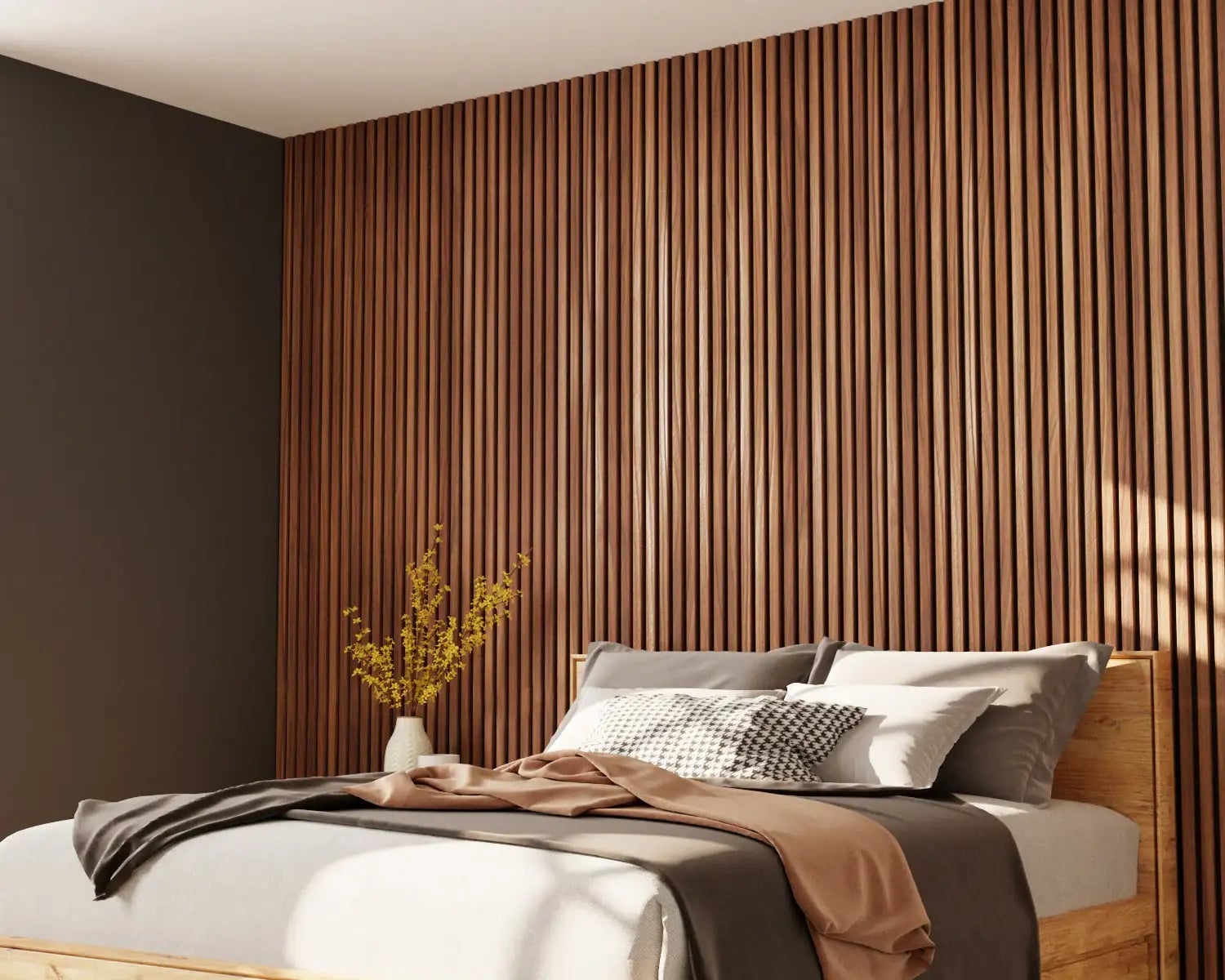
Vertical warm wood slats behind a bed give a modern bedroom a clear focal point without adding clutter. The slats cover the whole wall, and light from a window casts shadows across the wood, so the surface shifts during the day. A wooden bed frame and linen bedding in gray and white keep the palette quiet, and the slats add texture without competing with the bedding. The layout works because the wall is the headboard: no need for a separate piece, and the vertical lines draw the eye up, making the room feel taller. A vase with flowers on the bedside table adds a soft break.
Wood-Clad Niche for Television and Shelving
An accent wall with shelves works best when the storage zone stays within the same visual plane as the wall itself. In this living room, the television sits inside a wood-clad niche that is flush with the surrounding slatted surface, so the screen does not project past the finish. Open shelving on either side follows the same logic: each shelf sits between the vertical slats, which stops the cubbies from breaking the line of the wall. The media setup lets the technology recede, and the storage becomes part of the architecture. Pendant lights overhead and natural light from the windows keep the wood tones warm without adding glare to the screen. If you are planning a similar layout, measure the depth of your television and shelves before you build the framing, so the finished face stays level.
3D Geometric Wood Accent Wall in a Modern Living Room
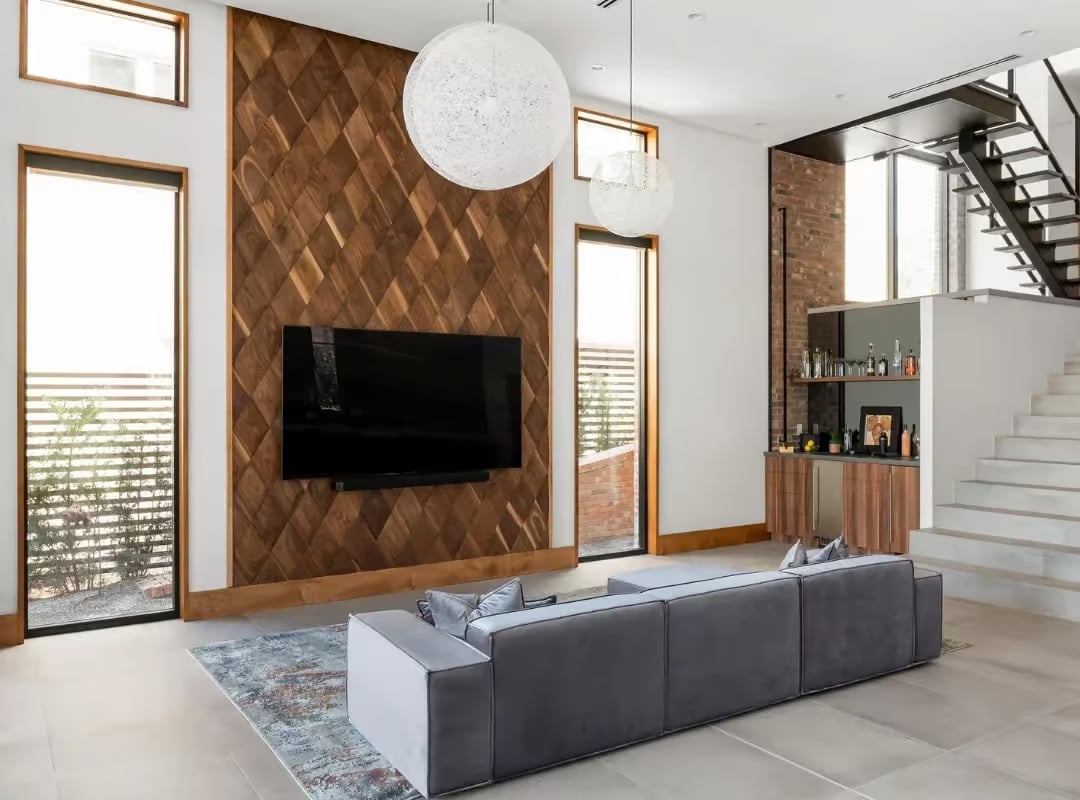
A diamond pattern in warm-toned wood turns a flat wall into a three-dimensional surface that shifts as you move through the room. The alternating angles catch natural daylight and the glow of pendant lights, creating highlights and shadows that change over the course of a day. The geometric wall anchors a seating area with a sofa and a bar setup, adding texture without requiring any artwork or additional wall decor. The tile floor and glass accents in the room stay neutral, letting the wood pattern carry the visual weight. A geometric wood accent wall living room keeps the palette restrained, so the pattern remains the focal point.
Rustic Bedroom with Full Wood Plank Accent Wall
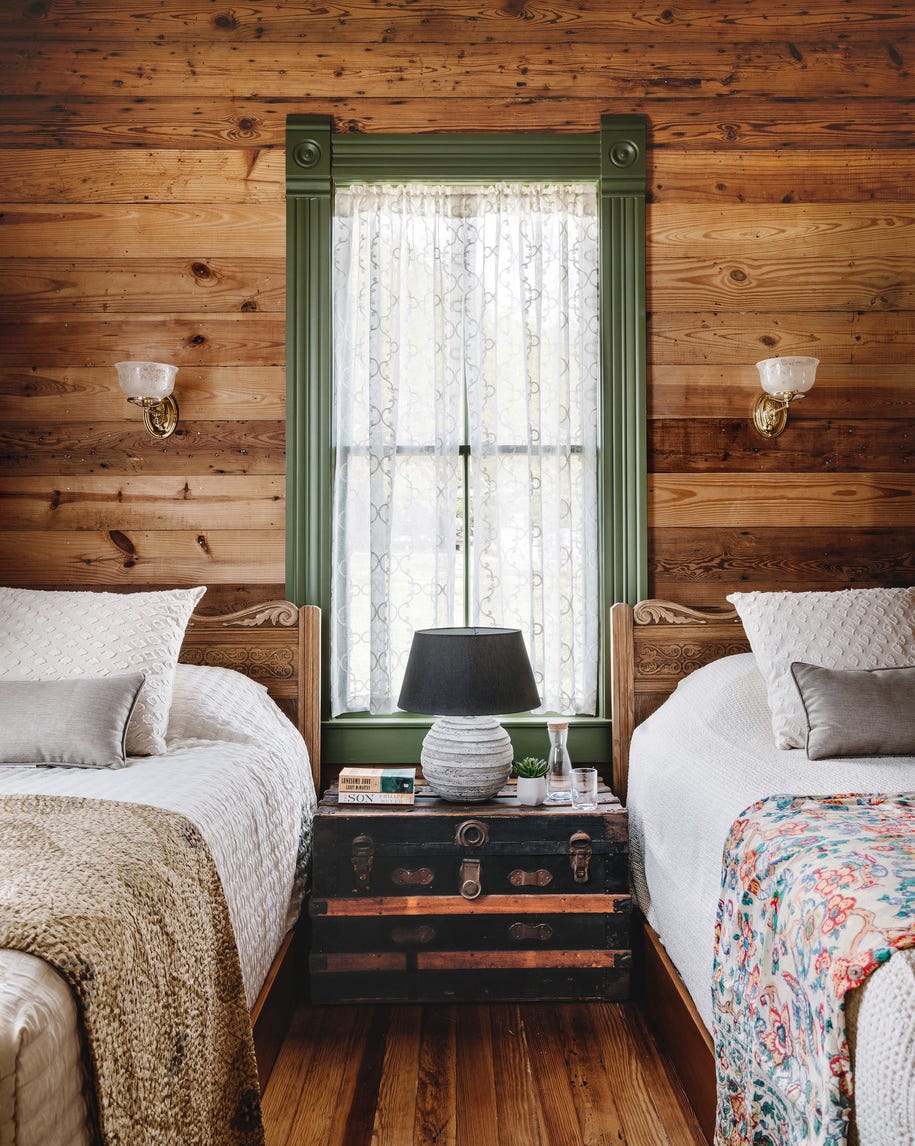
A full wall of horizontal wood planks can make a large bedroom feel grounded without closing it in. In this room, two beds flank a vintage trunk, and the plank wall behind them spans the entire width of the space. The warm wood tones echo the natural light from a nearby window, while green and white bedding keeps the palette from turning too dark. Wall sconces provide reading light without competing with the texture of the wood. A wood plank accent wall rustic bedroom benefits from planks that vary slightly in grain and color, because the visual variation adds depth in a way that a uniform surface cannot. If your room has high ceilings, horizontal boards help the space feel wider.
Textured Reclaimed Wood Wall in a Rustic Modern Living Room
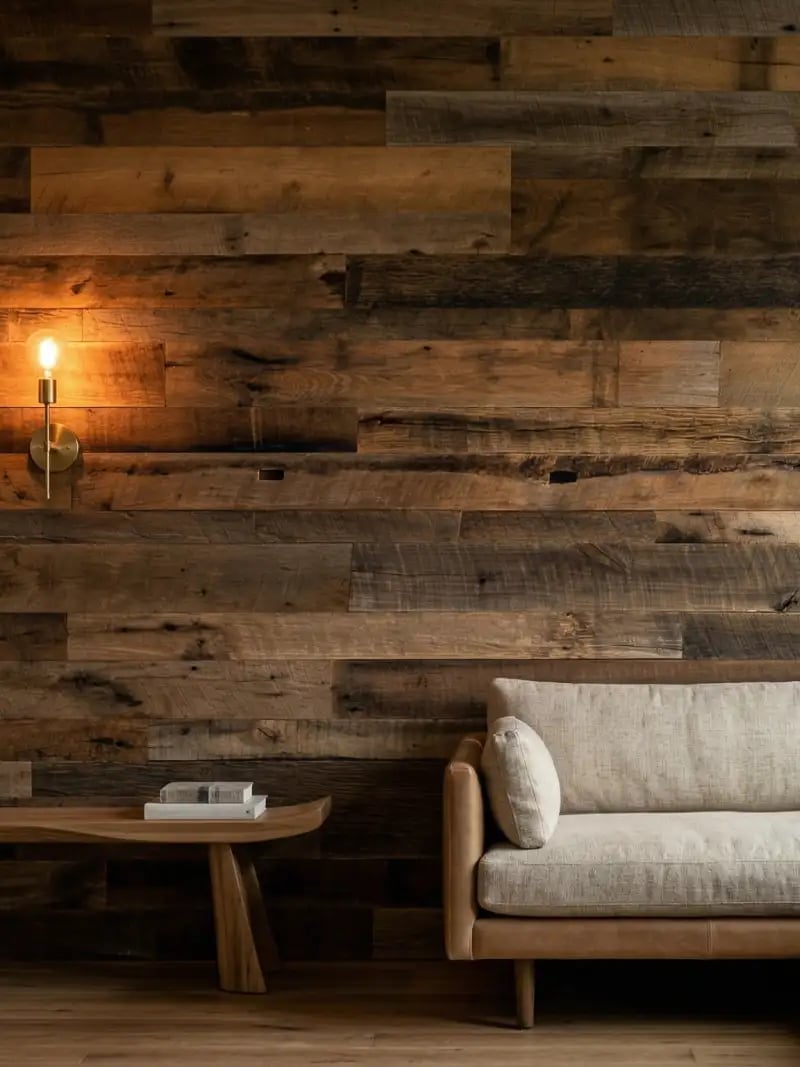
A smooth painted wall gives a room a clean backdrop, but a reclaimed wood accent wall gives it a history. In this living room, the wall is made from boards with visible grain, knots, and weathered edges, and the dark wood tones stand out against a beige sofa and tan leather bench. A single wall sconce casts ambient light across the surface, catching every ridge and crack in the wood. That texture is what makes this wall feel older and more settled than a new installation would.
The durability of reclaimed wood depends on how it was sourced. Boards that have already spent decades in a barn or warehouse have dried and settled, so they are less likely to warp or shrink after installation. If you are buying new wood and distressing it yourself, expect some movement in the first year as the material adjusts to indoor humidity. A reclaimed wood accent wall rustic modern room needs furniture that can hold its own against the visual weight of the wall: linen and leather in neutral tones keep the look from feeling too heavy.
Modern Geometric Wood Pattern Detail Vignette
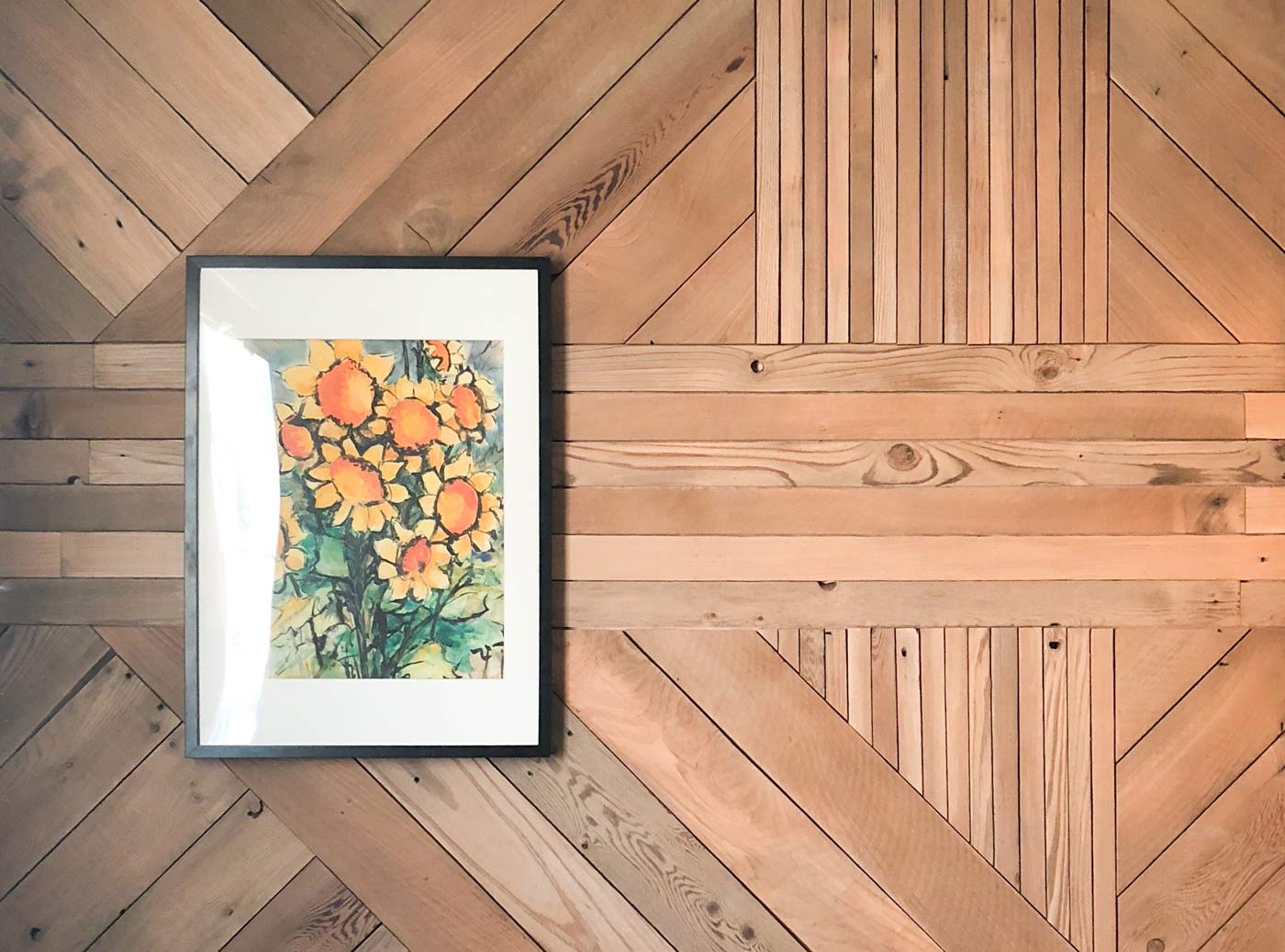
A geometric wood pattern does not need to cover an entire wall to make an impact. In this vignette, a small section of the wall is composed of interlocking wood shapes that form a dense, repeating pattern, while the surrounding wall stays blank. A single framed piece of art hangs in front of the pattern, creating a layered look where the wall itself acts as a textured backdrop. The natural light in the room catches the edges of the wood shapes, giving the pattern a subtle relief that a flat painted wall cannot match. A geometric wood pattern accent wall works as a detail in an entryway or behind a console table, where the pattern becomes part of the vignette rather than the whole room.
Dark Green Vertical Wood Slat Accent Wall in Bedroom
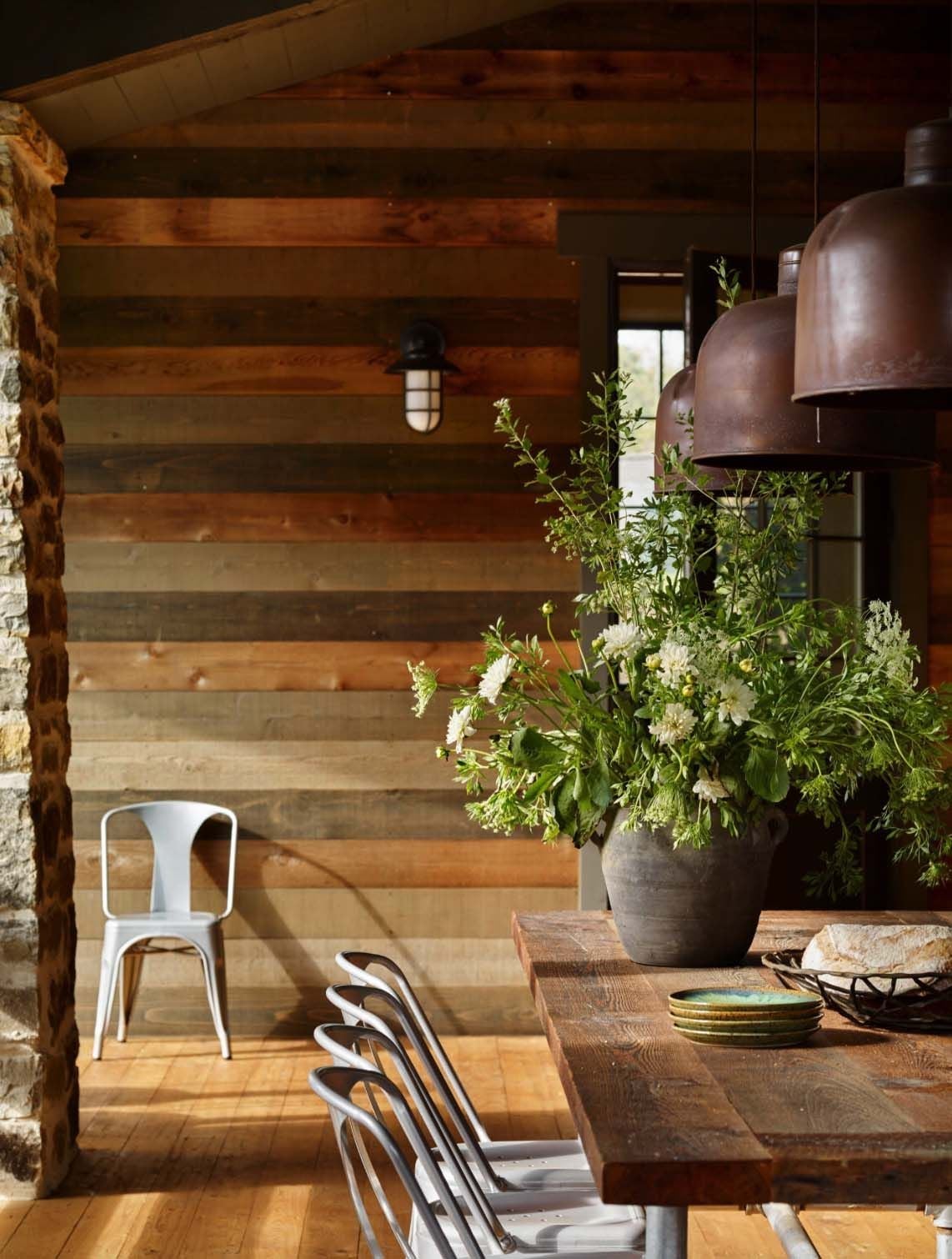
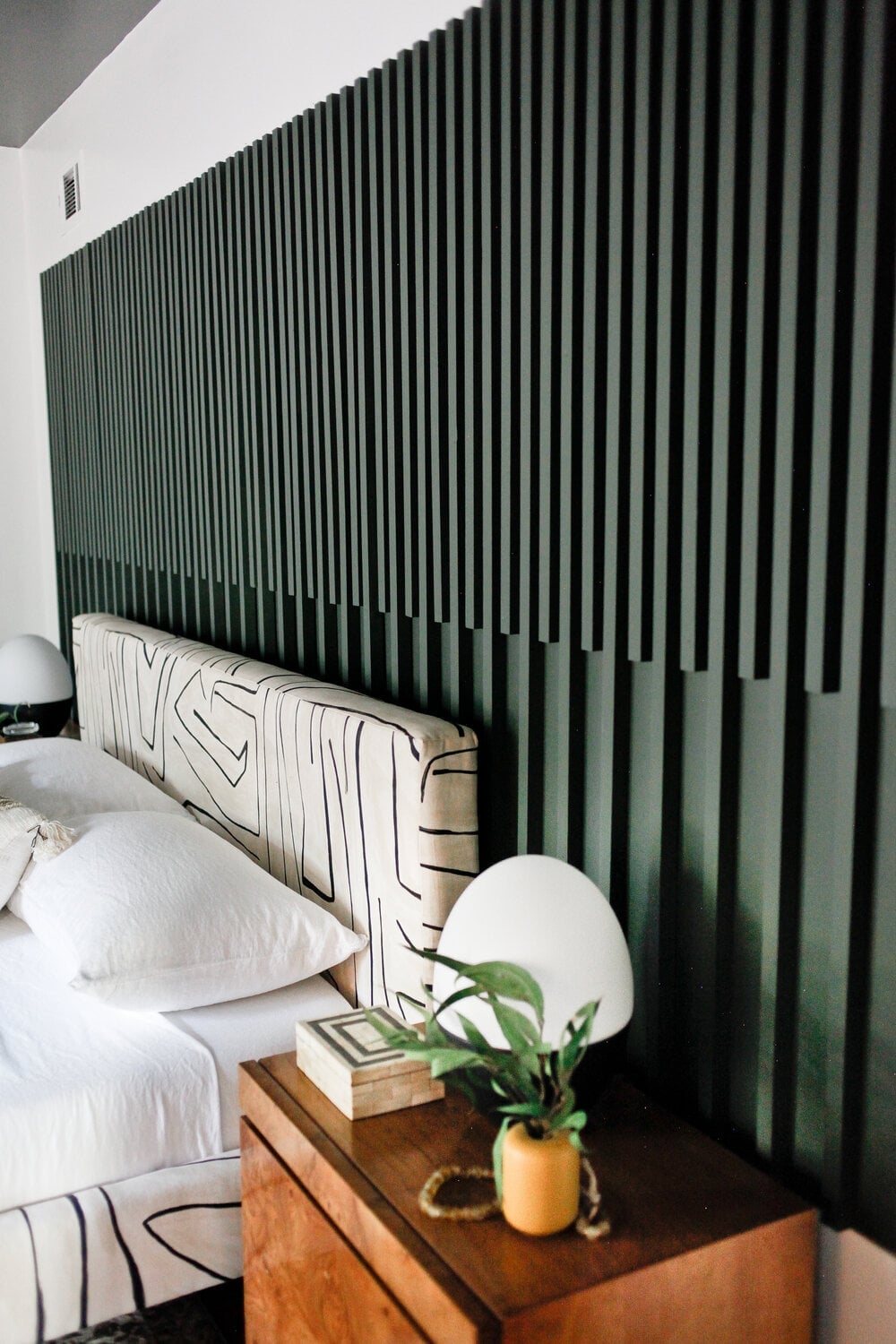
A dark green vertical slat wall behind the bed is a smart palette move: it gives the room depth without darkening it. The painted wood slats pick up the wood tones of the nightstands, tying the bed and the wall together. Table lamps on either side add warm pools of light, so the green feels cozy, not cave-like. Keep the bedding light and the furniture minimal, and let the wall be the main event. This works best in a roomy bedroom where the accent wall has room to breathe. The vertical lines also make the ceiling feel a bit taller, a small trick that pays off in a space with standard heights.
Entryway with Geometric Pattern and Wood Console
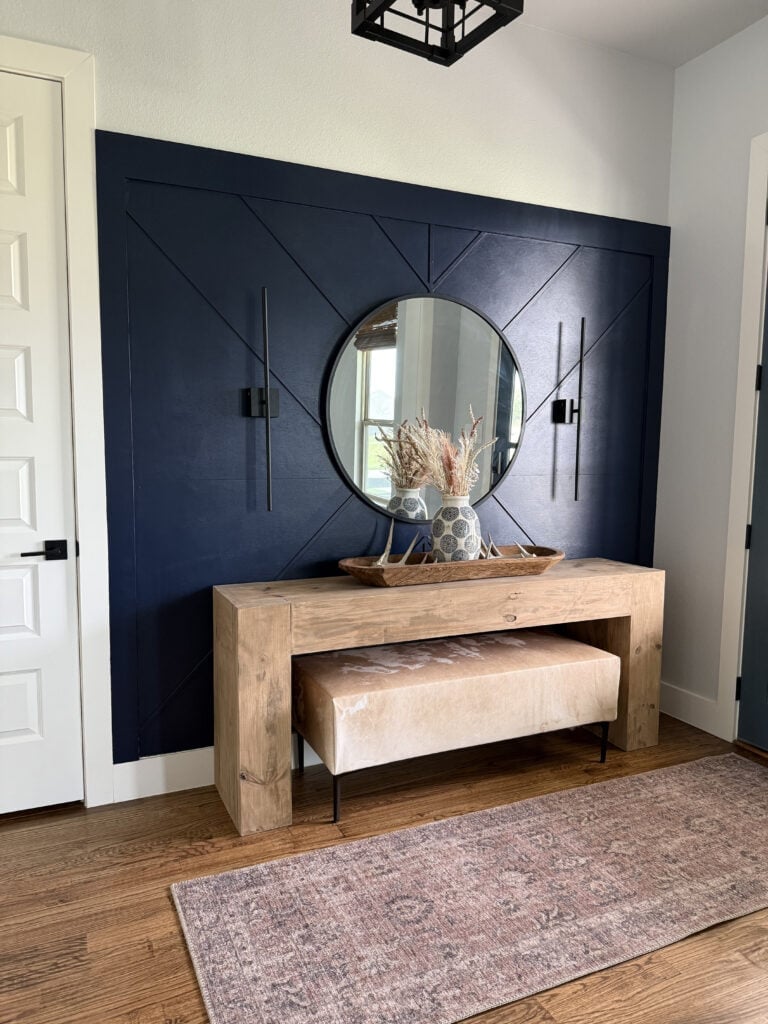
Anchor an entryway with a pattern, then let the furniture do the talking. Here, a deep blue geometric accent wall sits behind a wood console and a large round mirror, with a cowhide bench nearby. The pattern adds interest without cluttering the space, and the wood console keeps the look grounded. Wall sconces and natural light brighten the dark blue, so the entry feels welcoming even on gloomy days. For renters, this is a doable swap: use removable wallpaper for the geometric pattern, and keep the console and bench as your own pieces. The layout works because the wall is the backdrop, not the whole show, and the furniture stays simple. This way, you get the character of a bold wall without a permanent commitment.
Vertical Wood Slat Wall with Modern Fireplace
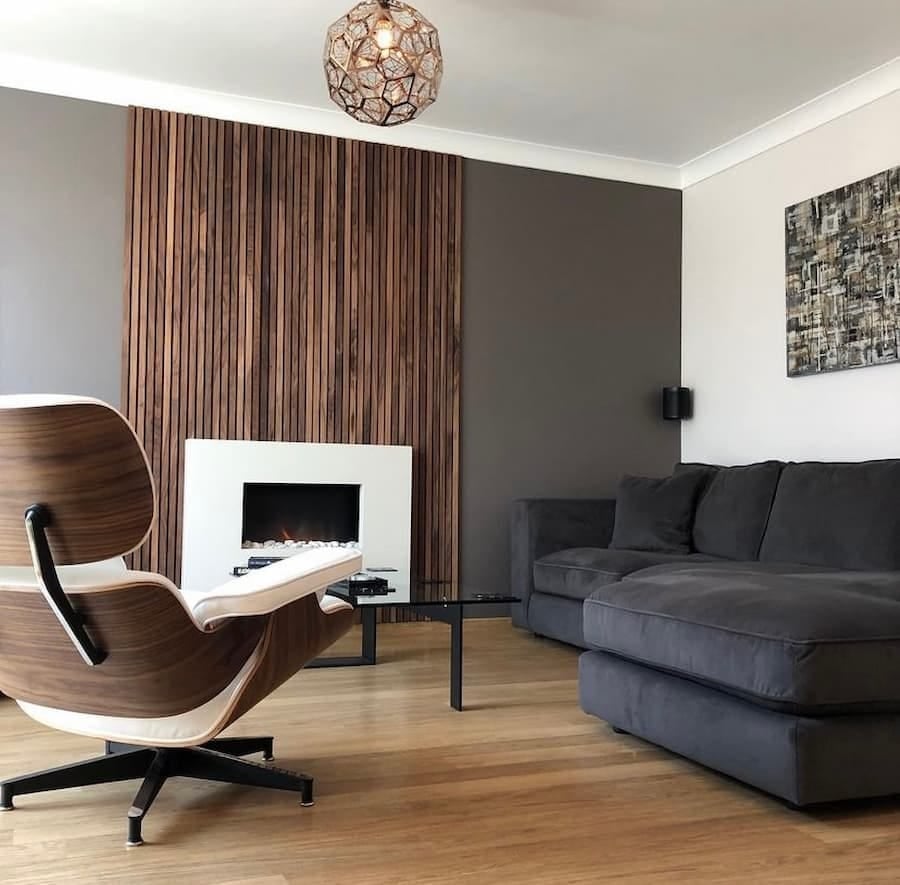
The vertical slat wall here does double duty as a backdrop for the fireplace, and the natural wood tone softens the gray and white palette of the room. The slats run floor to ceiling, which draws the eye up and makes the living room feel taller. A wall sconce adds a warm accent next to the fireplace, while natural light keeps the space airy. The key is letting the wood be the main texture, so the sofa and armchair stay in neutral fabrics. This is a materials-first approach: the slats bring warmth, the painted wall keeps it modern, and the fireplace becomes a focal point without competing.
Rustic Wood Accent Wall with Mounted Television
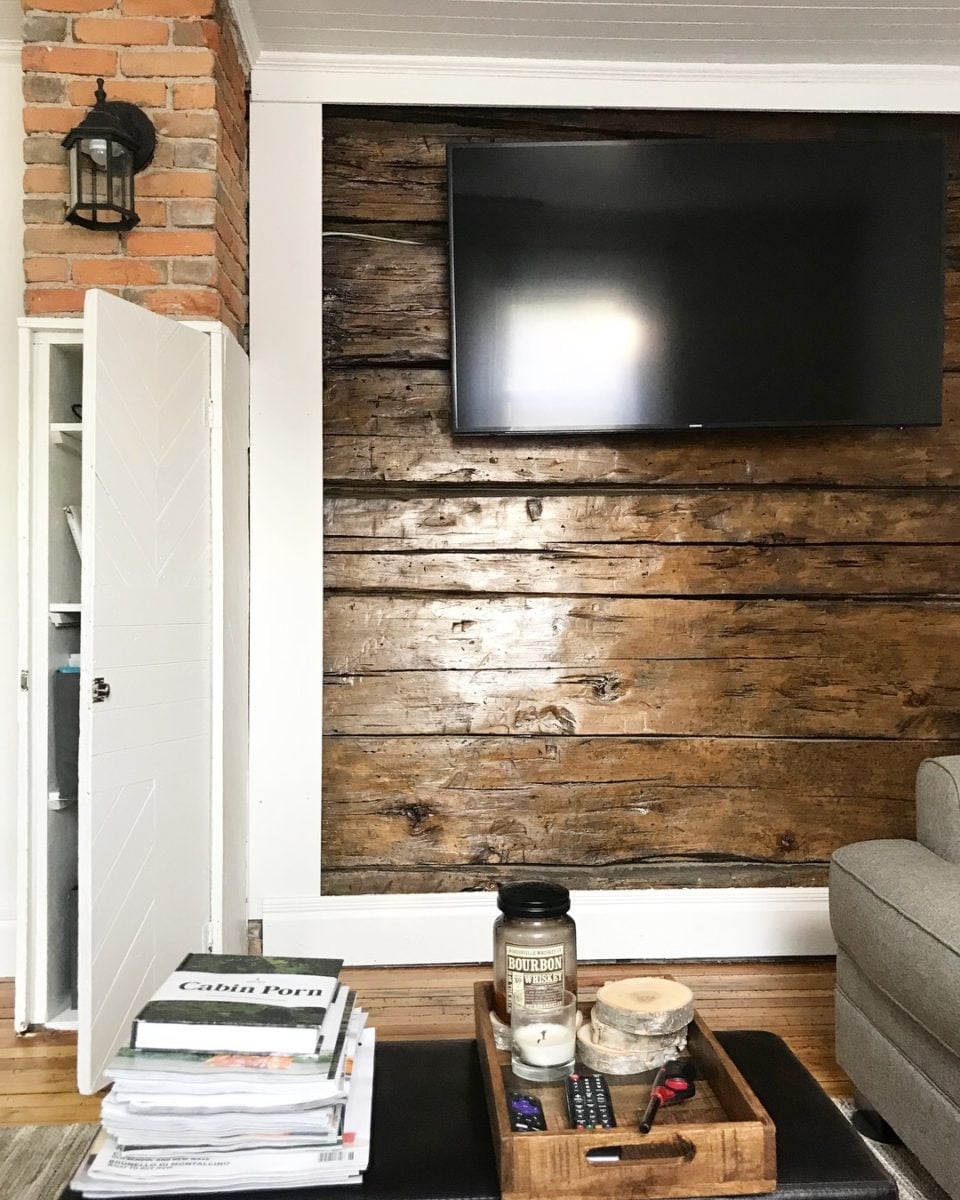
The weathered horizontal planks on this rustic wall give the room a log cabin feel, and mounting the television right on the wood keeps the setup tidy. The warm wood tones contrast with the white and gray around them, so the wall becomes the visual anchor. A wall-mounted lamp adds task light without taking up floor space, and natural light fills the room. The planks have a rugged texture that hides wear well, a practical point for a busy living room. For a similar look, choose boards with visible grain and knots, and mount the TV at eye level from your usual seating spot. The cabinet below offers storage without breaking the visual line of the wood.
Horizontal Wood Plank Wall in Modern Kitchen and Dining
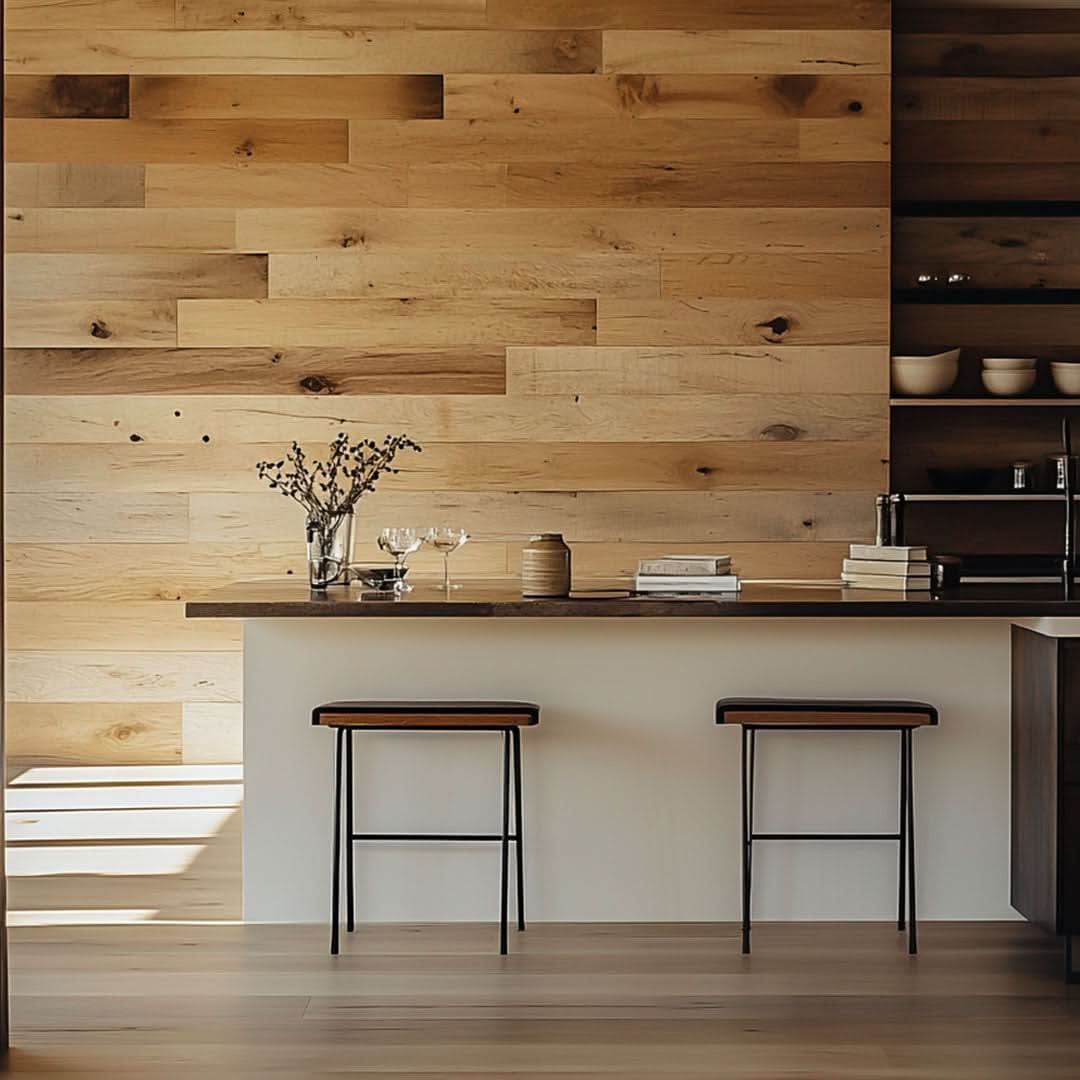
Set this against a painted wall alternative: the horizontal planks add warmth that paint just can’t match, but they need the right light to work. A window and an overhead fixture keep the wood from feeling heavy, and the white counter and wood floor tie the palette together. The planks run behind the kitchen island with bar stools, so the texture carries the eye across the room. For scale, horizontal lines work best in open layouts where they can stretch the space visually. The open shelving keeps the wall from feeling closed in. This is a case where the wood defines the room, so keep the counter and stools simple to let the planks shine.
Dark Geometric Accent Wall with Wood Bed Frame
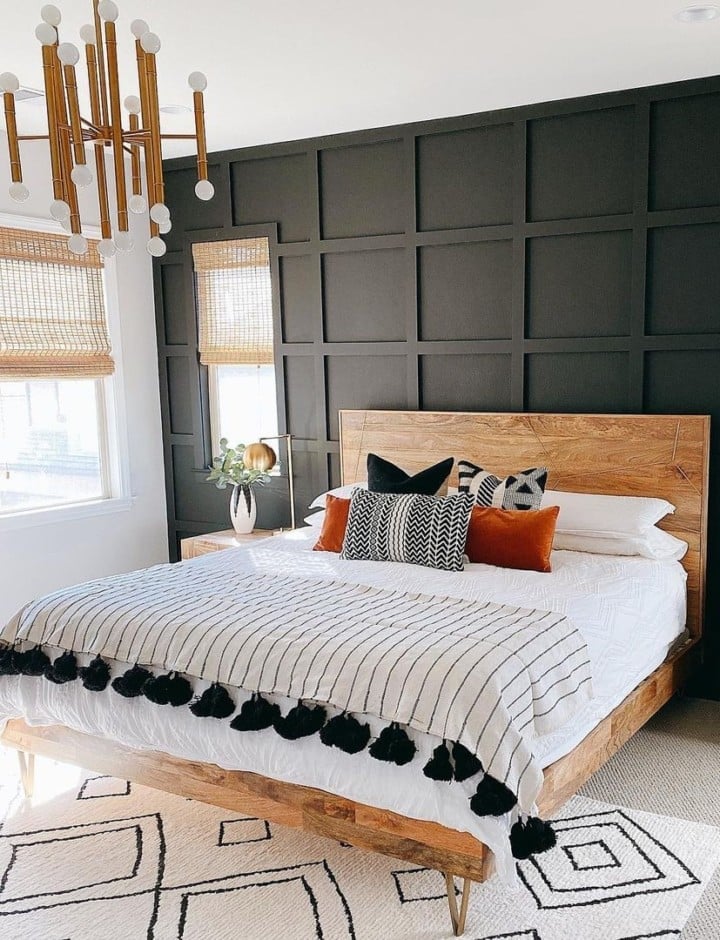
A dark geometric accent wall anchors this modern bedroom in a way that plain paint can’t, and the wood bed frame keeps the look grounded instead of heavy. The wall’s paneled pattern in dark gray and black contrasts with the white bedding and the natural woven blinds, so the room reads as deliberately balanced. Because the geometry is bold, everything else stays simple: a nightstand beside the bed, a throw blanket, and a chandelier overhead. If you’re considering a geometric accent wall in your own bedroom, match the wood tones in the bed frame to the wall’s darker sections, and let the lighter elements carry the contrast.
Textured Reclaimed Wood Accent Wall in Rustic Modern Bedroom, Indoor
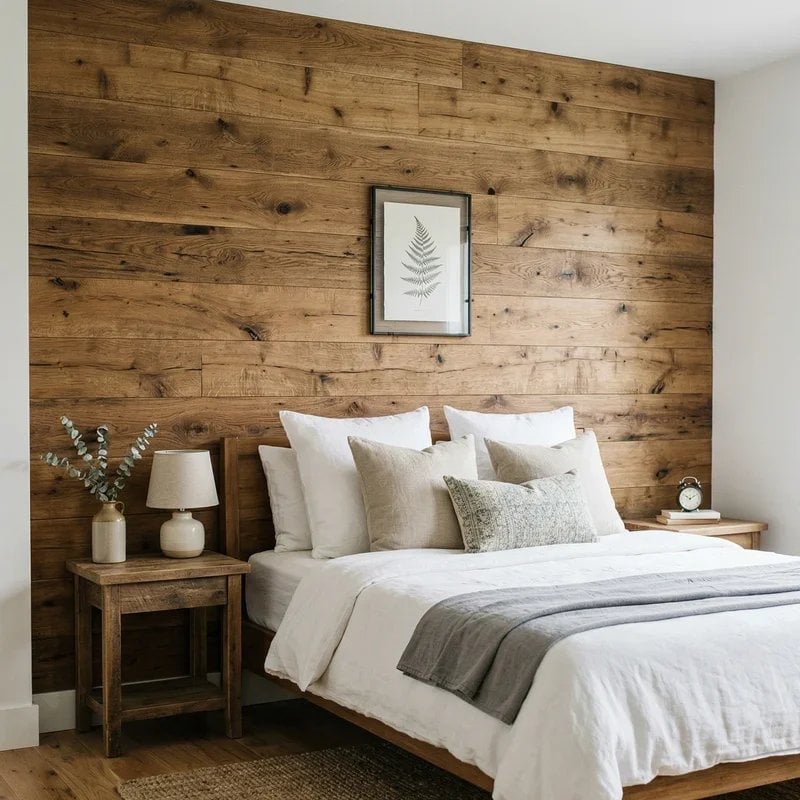
A reclaimed wood accent wall in a rustic modern bedroom works because the texture does the talking, leaving other areas free to stay calm. The natural wood tones range from light to medium, and they pair with white and gray bedding plus linen curtains to soften the rough surface. A bedside lamp adds warm light in the evening, while natural light fills the room during the day. The layout is straightforward: the accent wall sits behind the bed, with nightstands on either side. If you are drawn to this look, keep the palette muted so the wood’s grain and knots remain the focal point instead of competing with bright colors.
Final Thoughts
Choosing a wood accent wall comes down to the look you want and the upkeep you can manage. Vertical slats stretch the eye upward, while horizontal planks widen a room. Reclaimed wood brings character but needs occasional dusting between gaps. Painted or stained finishes hold up better in high-traffic spots like entryways. Before you start, check your climate: solid wood expands with humidity, so leave a small gap at the floor. The best accent wall is the one that makes the room feel finished, not fussy.