
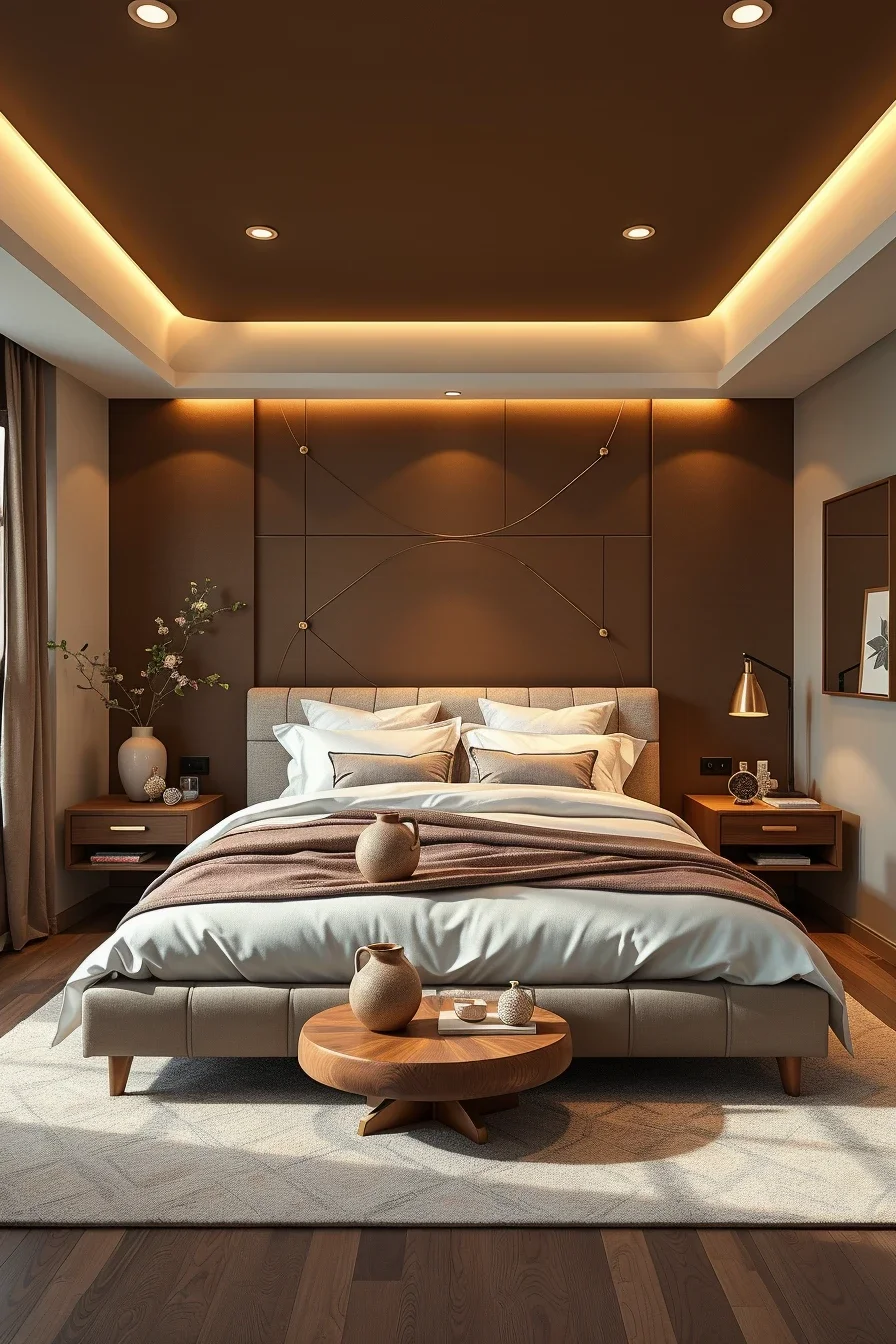
Choosing the right small bedroom color palettes can completely transform a compact space, making it feel brighter, more spacious, and effortlessly stylish. Whether you prefer soft neutrals, rich earthy tones, calming blues, or bold statement shades, the perfect palette can highlight your bedroom’s best features while creating a cozy atmosphere. Modern color combinations go beyond simple paint choices by incorporating layered textiles, sculptural furniture, and artistic accents that add depth and personality. Even the smallest bedroom can feel inviting and sophisticated when colors are thoughtfully balanced with lighting, textures, and carefully selected décor. This collection showcases inspiring palettes designed to maximize visual space while embracing creativity, elegance, and contemporary style. Explore these unique ideas to discover a color scheme that reflects your personality and transforms your small bedroom into a beautiful retreat.
Soft Warm White With Cream Layers
I often recommend a soft warm white palette when a small bedroom needs to feel open without becoming cold or sterile. Instead of relying on bright white, I use creamy undertones that soften the atmosphere and reflect natural light throughout the room. This combination creates a calm backdrop while allowing architectural details, sculptural lighting, and textured décor to become the focal points. The layered appearance gives the room quiet depth, making even a compact bedroom feel inviting and thoughtfully designed.
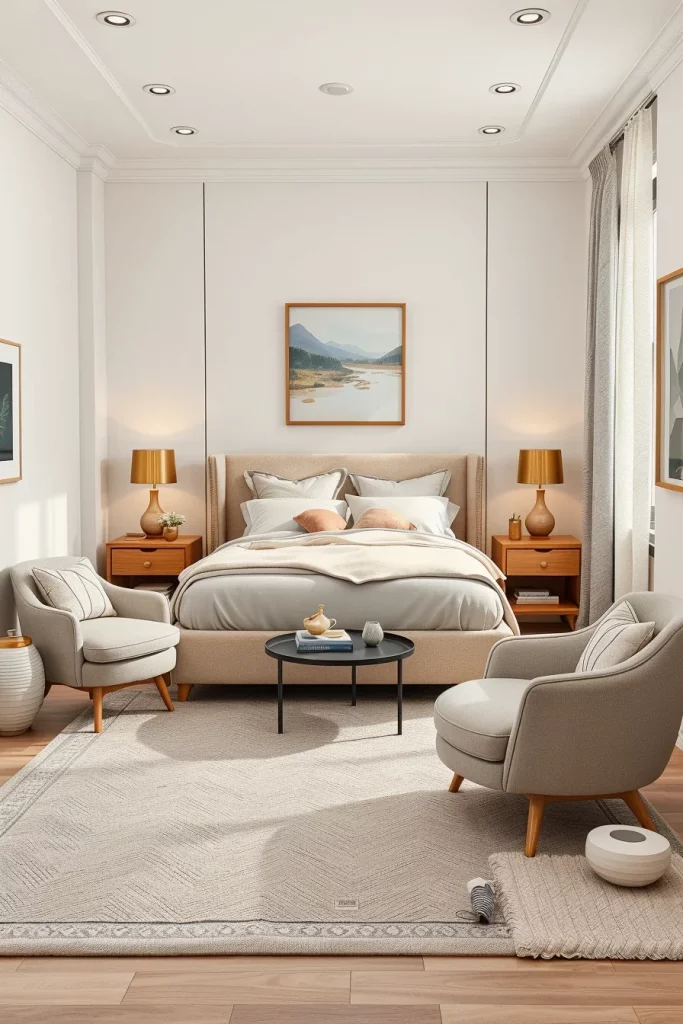
For furniture, I prefer an upholstered cream bed with a softly curved headboard that introduces gentle lines without overwhelming the space. Light oak nightstands, a boucle accent chair, linen curtains, and a textured area rug all reinforce the layered neutral effect. I usually add matte ceramic lamps, minimal artwork, woven storage baskets, and brushed brass hardware to provide subtle contrast while maintaining visual harmony. Every element contributes to a cohesive design that feels modern and uncluttered.
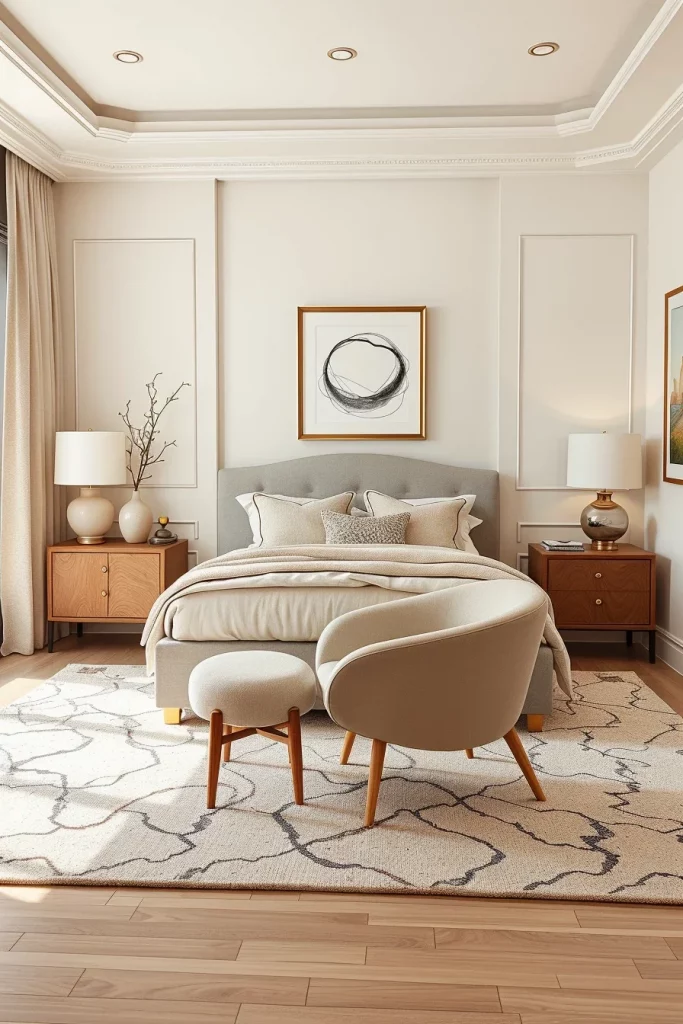
From my experience, this palette remains one of the most versatile choices for small bedrooms because it adapts easily to changing seasons and decorative accents. Interior designers frequently emphasize that layering texture is more important than adding color in neutral interiors, and publications such as Architectural Digest have highlighted this principle in many modern bedroom features. I have found that mixing fabrics with different finishes keeps the room from feeling flat while preserving its peaceful atmosphere.
If I wanted to improve this design even further, I would introduce indirect ambient lighting behind the headboard or beneath floating nightstands. Soft layered lighting enhances the creamy color palette during the evening and creates a luxurious feeling without requiring additional furniture.
Greige And Taupe Palette For A Calm Modern Bedroom
I like using greige and taupe because they combine the warmth of beige with the sophistication of gray. This palette gives a small bedroom an understated elegance while remaining timeless and highly practical. The balanced tones soften sharp corners and visually connect the walls, furniture, and flooring, helping the room appear larger than it actually is. The result is a peaceful retreat with subtle depth instead of dramatic contrast.
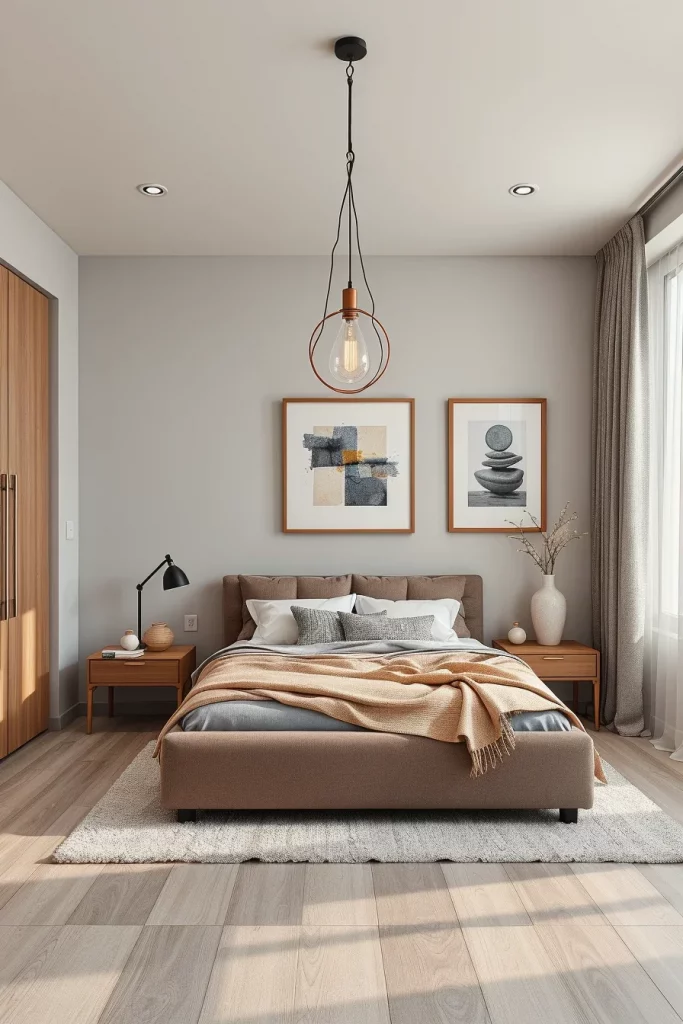
I usually pair this palette with a low-profile upholstered bed in taupe fabric, floating greige nightstands, and a streamlined wardrobe with flat-panel doors. Soft knit bedding, linen cushions, a sculptural pendant light, and textured curtains help build visual interest without overwhelming the limited space. Decorative accessories such as stone vases, ceramic sculptures, and framed abstract artwork introduce personality while maintaining the room’s calming aesthetic.
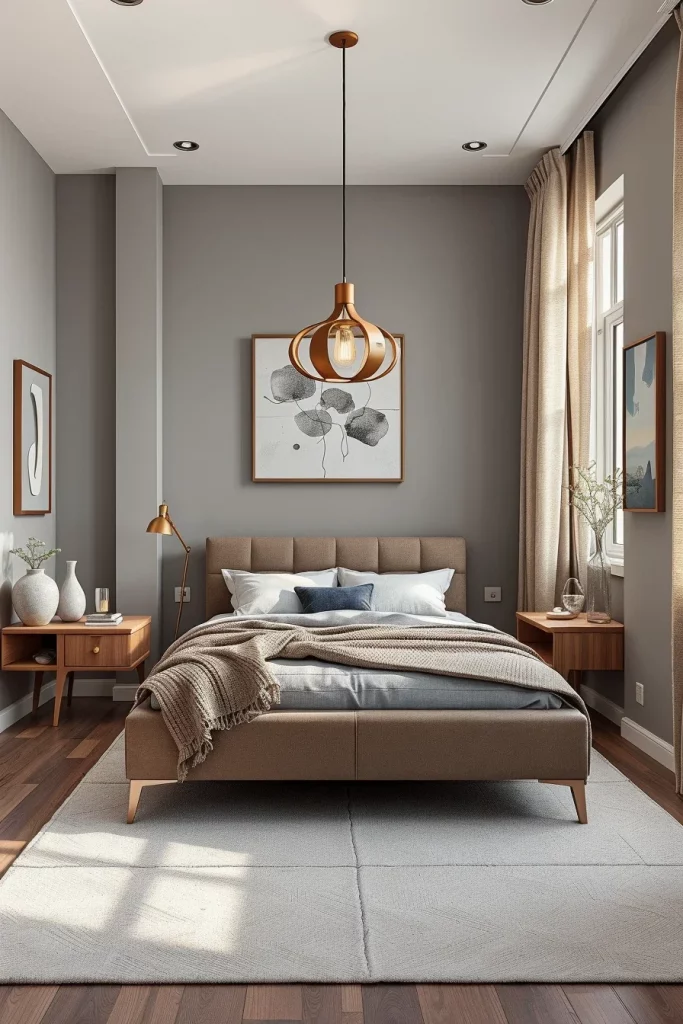
Personally, I appreciate how adaptable this combination becomes over time. It works beautifully with black accents, warm metallic finishes, or natural wood elements depending on the homeowner’s style. Many American interior designers recommend greige because it offers flexibility while remaining visually relaxing, and I have consistently found that advice to be true in smaller bedrooms.
To make this room even more functional, I would add a large mirror opposite the window. The reflected light reinforces the layered neutral palette while making the bedroom feel noticeably brighter and more spacious.
Sage Green With Warm Neutral Accents
Sage green introduces a gentle connection to nature without overpowering a compact bedroom. I prefer muted sage because it creates a soothing atmosphere while still adding personality beyond traditional neutrals. Combined with warm beige, ivory, and soft cream accents, this palette delivers a fresh yet timeless appearance that supports relaxation. The soft green backdrop also complements modern sculptural furniture beautifully.
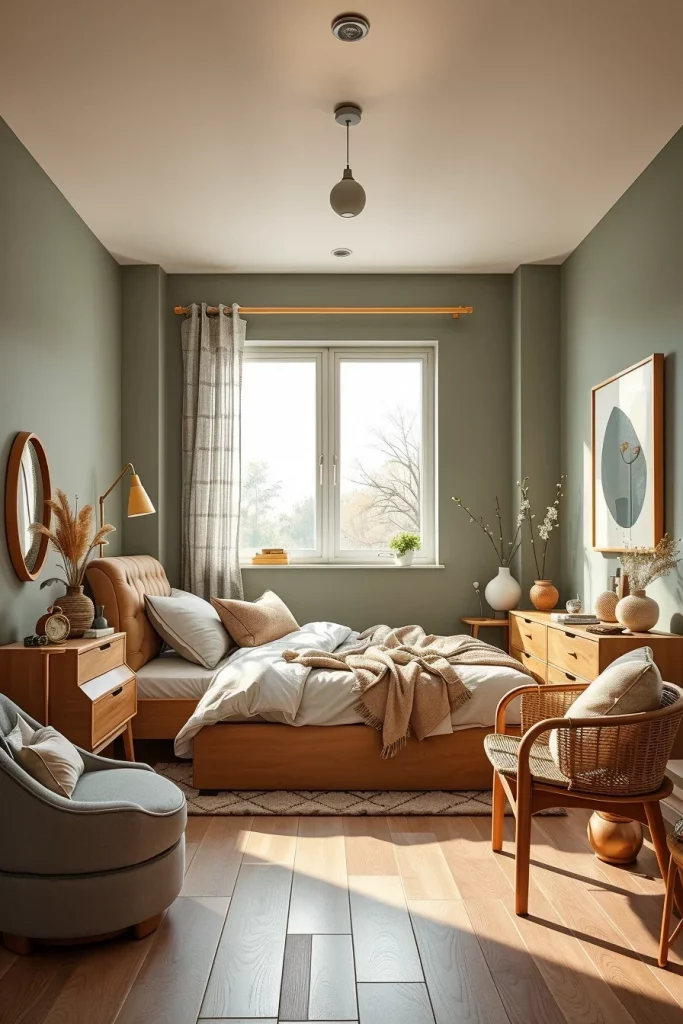
For furnishings, I would select a warm upholstered bed, natural linen bedding, light wood nightstands, and a simple bench at the foot of the bed. Layered textiles in oatmeal and ivory tones create warmth, while matte ceramic planters, woven baskets, and minimalist wall art provide texture. I also like incorporating softly curved furniture that echoes the organic feeling established by the sage walls.
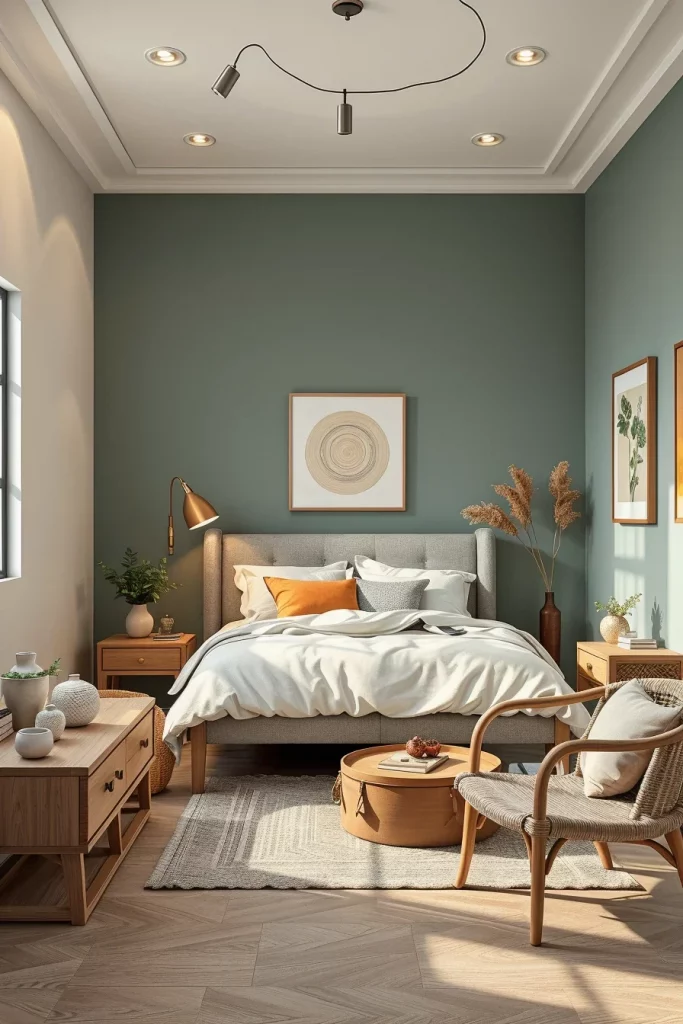
I have noticed that sage green remains comfortable throughout every season and adapts easily to changing decorative accents. Designers featured by Better Homes & Gardens have often recommended muted greens for restful bedrooms because they encourage a calm environment, and I agree with that guidance based on my own experience designing balanced color schemes.
If I were refining this room further, I would include warm LED lighting with dimmable bedside sconces. The softer evening lighting enhances the gentle green walls while maintaining the bedroom’s relaxing atmosphere.
Dusty Blue Walls With Crisp White Details
Dusty blue creates a peaceful atmosphere while introducing more personality than traditional neutral walls. I like using this muted shade because it feels sophisticated without making a small bedroom appear darker. Crisp white trim, ceiling details, and bedding provide clean definition that keeps the room visually fresh. Together, these colors establish an airy environment with subtle coastal influences while remaining appropriate for modern interiors.
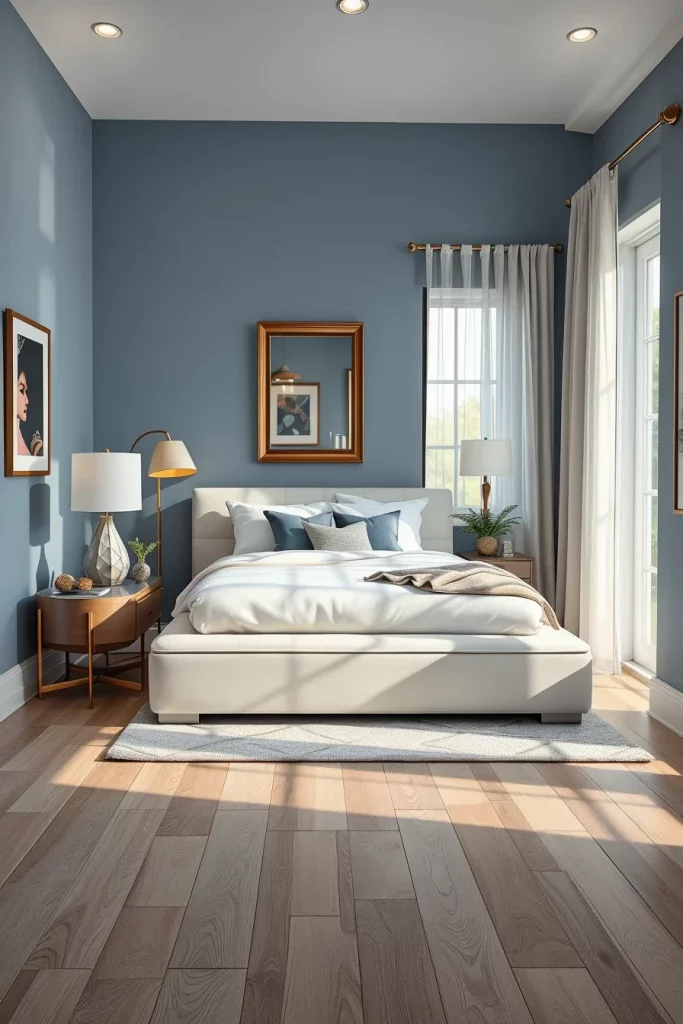
I usually combine dusty blue walls with a white upholstered platform bed, light wood flooring, sleek nightstands, and simple storage furniture. White linen bedding, textured throws, sculptural table lamps, and soft gray decorative cushions complete the composition without introducing visual clutter. A large framed mirror and delicate curtains help maximize natural daylight while reinforcing the open feeling.
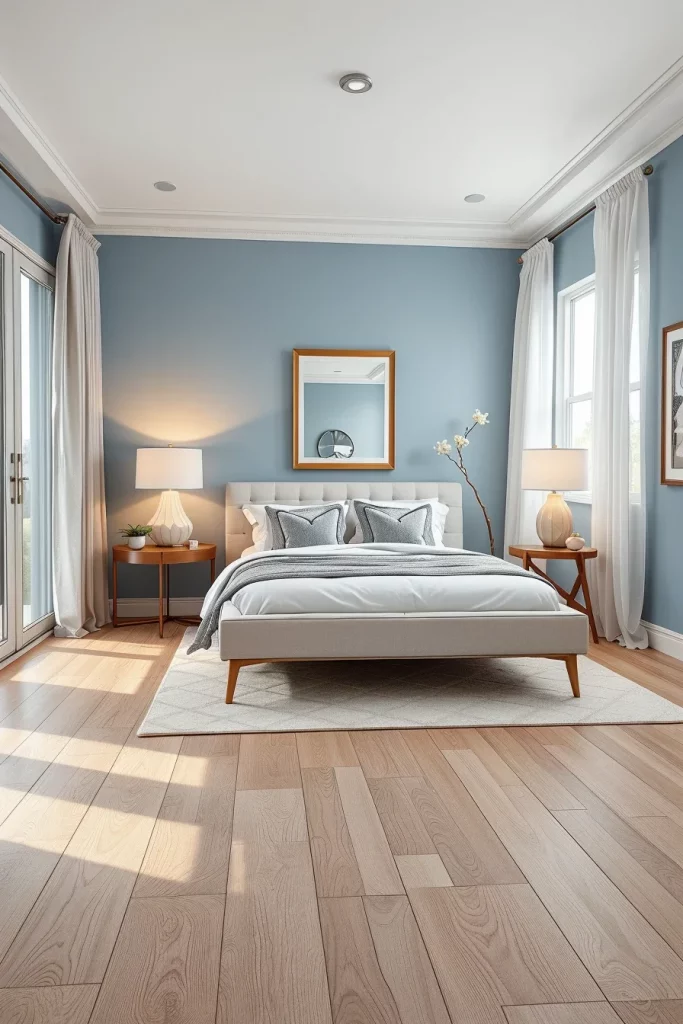
In my opinion, dusty blue works particularly well in bedrooms that receive abundant daylight because the changing sunlight reveals different dimensions of the color throughout the day. Many professional designers recommend cooler muted blues for sleeping spaces because they contribute to a restful environment, and I have repeatedly seen successful results with this palette.
One improvement I would consider is adding subtle brushed nickel hardware and minimalist wall sconces. These details strengthen the contemporary appearance while maintaining the calm balance between blue and white.
Charcoal Gray Balanced With Soft Beige Textures
Charcoal gray may seem bold for a compact bedroom, but I have found that pairing it with soft beige textures creates remarkable balance. Instead of making the room feel heavy, the darker walls provide depth while lighter furnishings move visually forward. This contrast gives the illusion of dimension and transforms a simple bedroom into a refined contemporary retreat with strong architectural character.
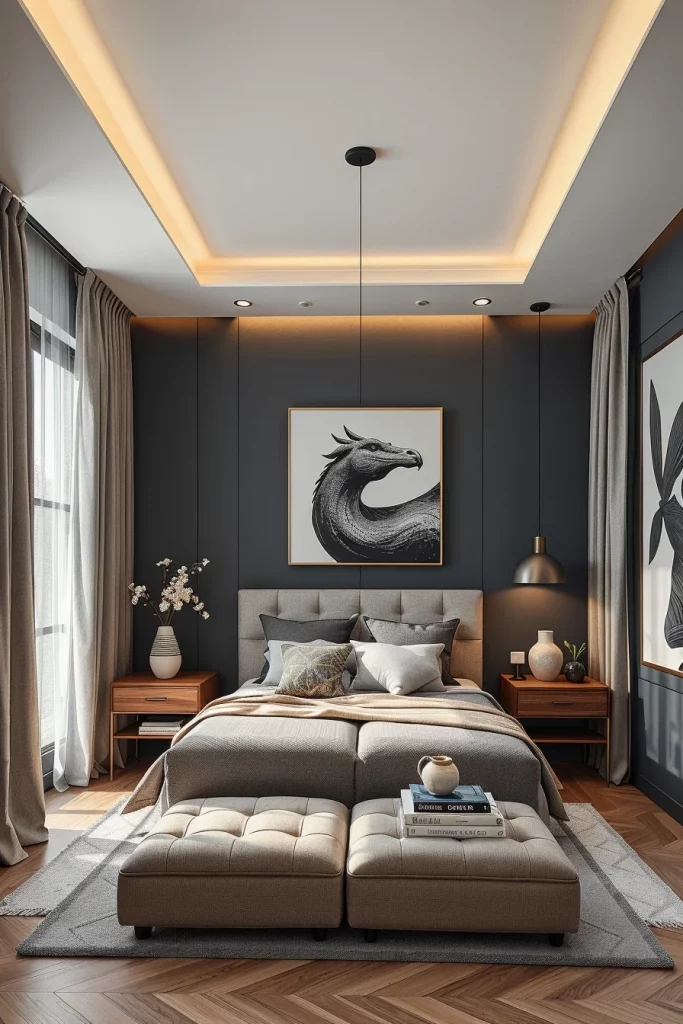
I would furnish this room with a beige upholstered bed, textured bedding, light area rugs, floating wood nightstands, and streamlined storage that keeps the space organized. Sculptural pendant lighting, ceramic decorative objects, framed monochromatic artwork, and oversized curtains soften the dramatic wall color. Every furniture selection contributes warmth that offsets the richness of the charcoal backdrop.
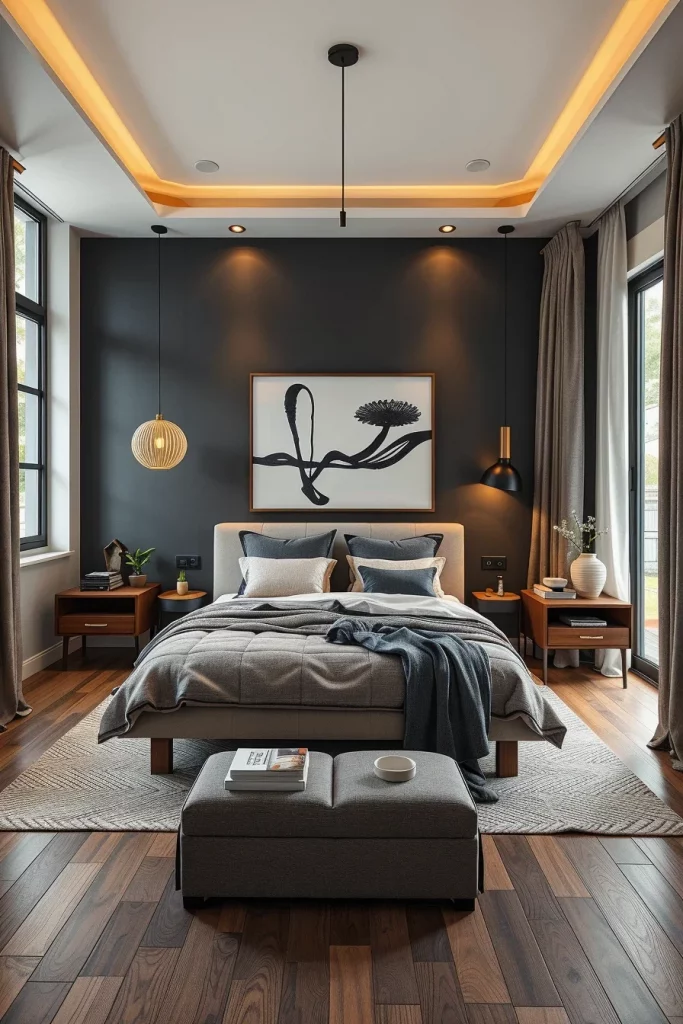
From my perspective, this palette demonstrates that darker colors can succeed in smaller spaces when they are balanced thoughtfully. Interior experts from House Beautiful frequently note that dark walls can visually blur room boundaries rather than shrink them, especially when paired with lighter furnishings. I have achieved this effect by carefully layering soft fabrics and reflective accessories throughout the room.
I would also include hidden storage beneath the bed and warm indirect lighting around the headboard. These practical additions increase functionality while emphasizing the sophisticated contrast between charcoal gray and soft beige.
Muted Terracotta With Sandy Neutral Decor
I enjoy using muted terracotta in small bedrooms because it introduces warmth without overwhelming the space. Unlike saturated orange tones, this softened earthy shade feels refined and welcoming, especially when paired with sandy neutrals that lighten the overall composition. The combination creates an inviting environment with subtle Mediterranean influences while remaining modern and elegant. I find that this palette gives compact bedrooms a cozy personality without making them feel enclosed.
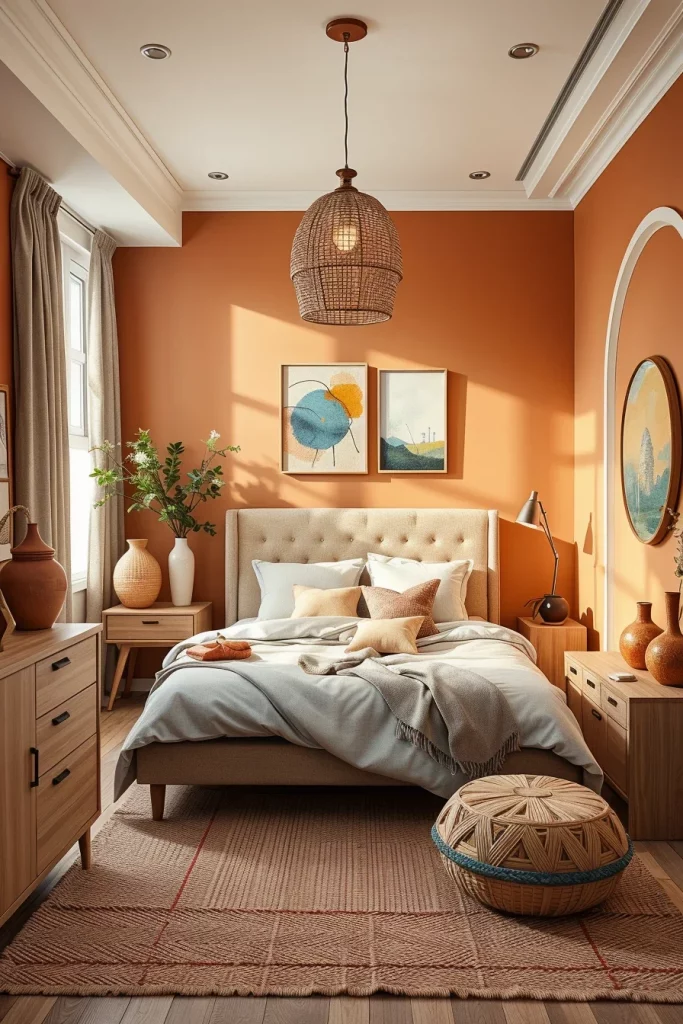
For the furnishings, I would choose a low-profile upholstered bed in a warm beige fabric, complemented by sandy linen bedding and textured throw pillows. A light wood dresser, curved bedside tables, woven pendant lighting, and a textured area rug reinforce the natural warmth of the palette. Decorative accessories such as matte clay vases, sculptural table lamps, abstract artwork, and soft linen curtains complete the design while maintaining visual balance. Every piece contributes to a layered interior that feels comfortable yet sophisticated.
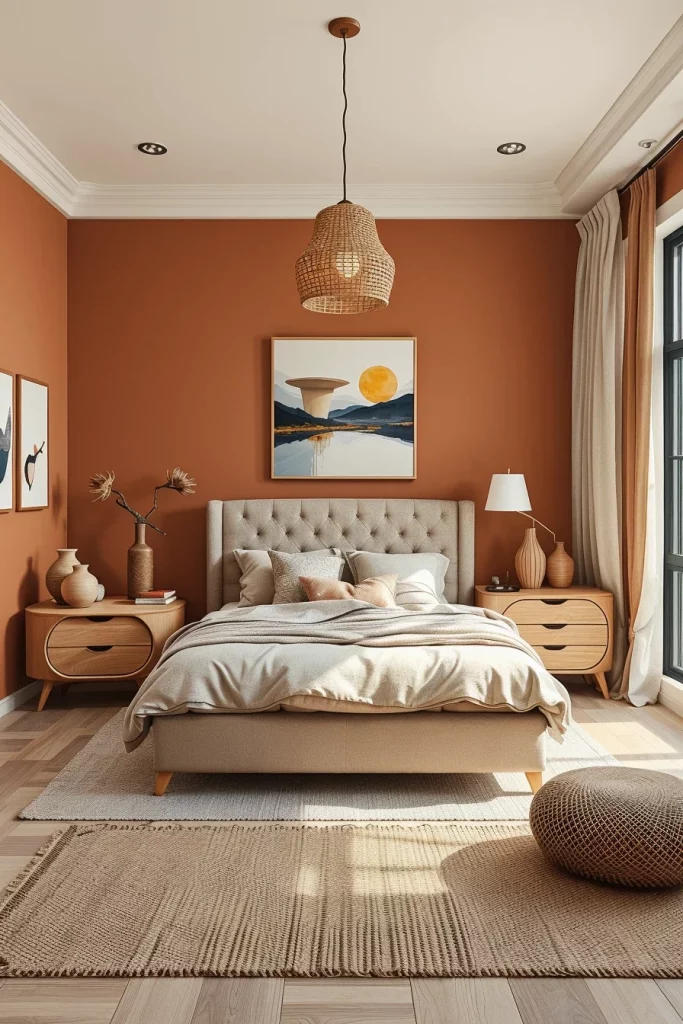
In my experience, muted terracotta works particularly well when natural light enters the room for most of the day. The changing sunlight enhances the warmth of the walls and creates beautiful depth without requiring bold decorative elements. Designers featured by Elle Decor have often demonstrated how earthy palettes can make contemporary interiors feel welcoming, and I appreciate how this approach translates perfectly into smaller bedrooms.
To complete this design, I would add concealed storage furniture and warm ambient lighting. These additions improve daily functionality while preserving the calm, uncluttered atmosphere that makes the palette so successful.
Blush Pink Combined With Warm Ivory Tones
Blush pink can become surprisingly sophisticated when it is balanced with warm ivory instead of bright white. I prefer soft blush shades that function almost like a neutral, introducing warmth while maintaining an airy appearance. In a small bedroom, this combination reflects light beautifully and softens the entire space, creating a restful environment with understated elegance. The palette feels artistic and refined rather than overly decorative.
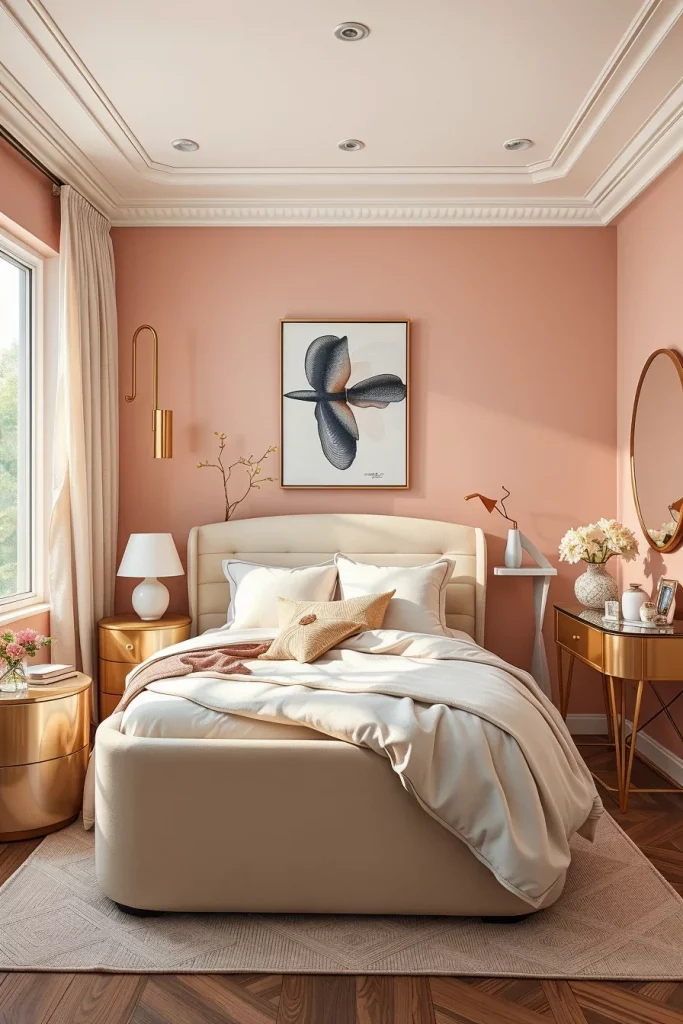
I like pairing blush walls with an ivory upholstered bed featuring a gently curved headboard, complemented by layered bedding in cream, oatmeal, and soft beige. A compact vanity, rounded bedside tables, sculptural lighting fixtures, and elegant linen curtains create visual harmony throughout the room. Decorative ceramics, textured cushions, minimalist artwork, and brushed brass hardware introduce subtle sophistication without distracting from the calming color scheme.
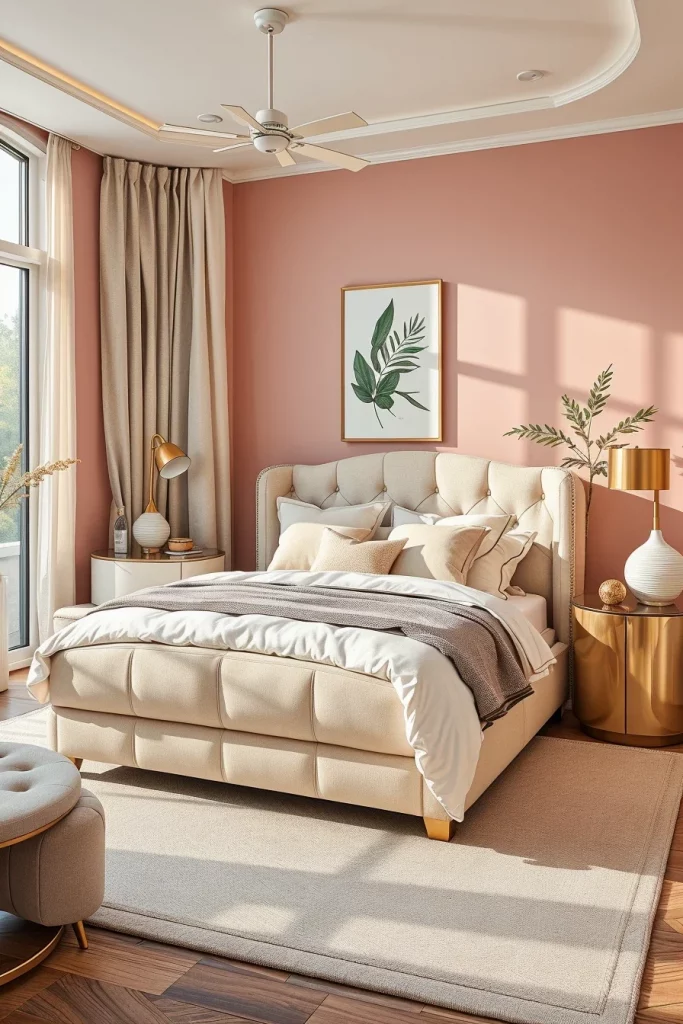
Personally, I have found that blush and ivory create one of the easiest palettes to personalize over time. It welcomes black accents, warm metallic finishes, or natural materials without losing its balanced appearance. Interior designers frequently recommend muted pinks as relaxing alternatives to standard beige because they add warmth without dominating the room, and I have consistently achieved successful results with this approach.
If I wanted to elevate this bedroom further, I would incorporate a large full-length mirror and layered bedside lighting. These details maximize brightness while reinforcing the soft elegance of the overall design.
Olive Green And Natural Linen Color Harmony
Olive green introduces richness without feeling too bold, making it an excellent choice for compact bedrooms that need more personality. I prefer pairing olive walls with natural linen shades because the contrast feels organic and timeless. The combination creates depth while preserving a comfortable atmosphere that encourages relaxation. Rather than appearing dramatic, the room feels grounded and thoughtfully designed.
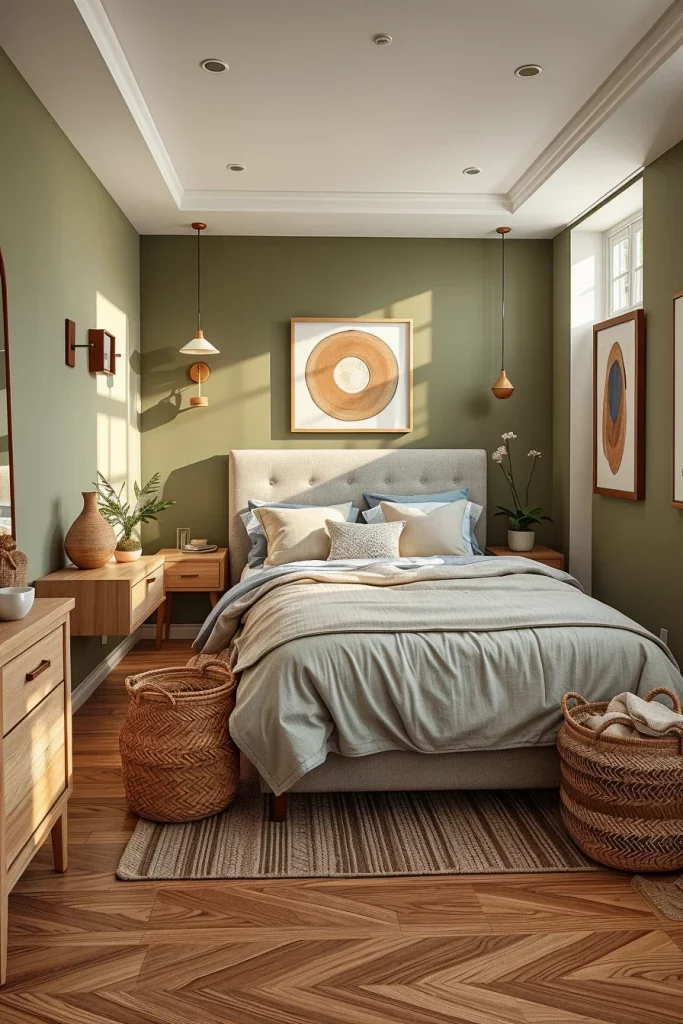
I would furnish this bedroom with a linen-upholstered bed, light oak furniture, woven storage baskets, floating nightstands, and soft neutral bedding. Sculptural wall sconces, ceramic accessories, textured curtains, and minimalist framed artwork provide visual interest while supporting the earthy palette. I also enjoy adding curved furniture pieces that soften the stronger presence of olive green and create a more welcoming layout.
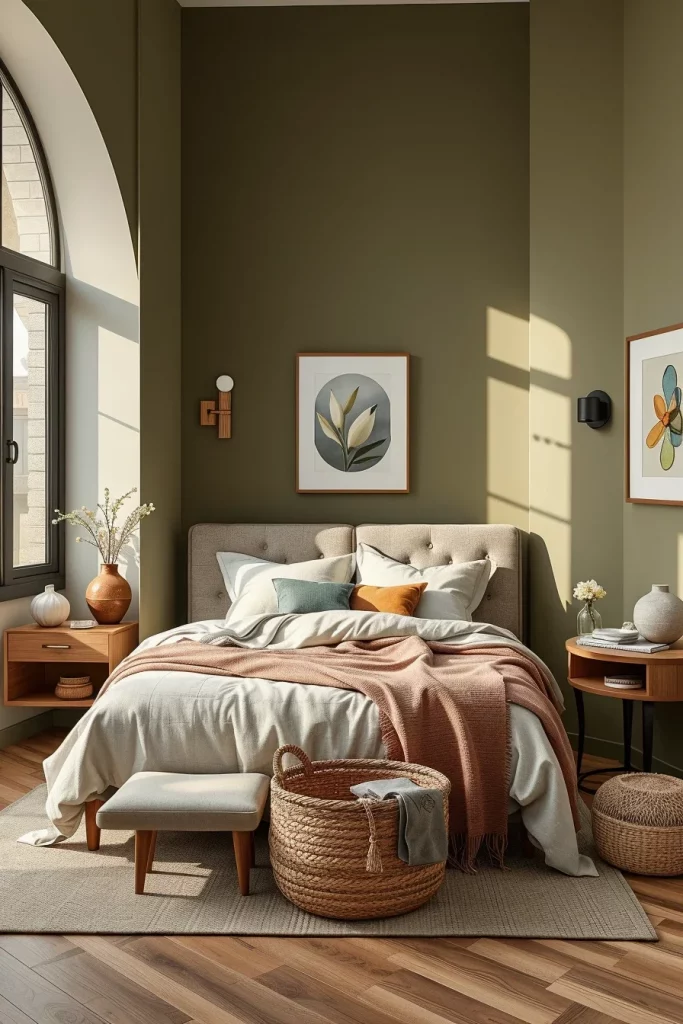
From my perspective, this palette performs especially well in bedrooms where texture plays a major role. Publications such as Better Homes & Gardens frequently highlight the importance of combining earthy colors with layered natural fabrics, and I have found that this advice consistently produces interiors that feel balanced and inviting.
To make the room even more complete, I would include subtle black accents through lighting fixtures or picture frames. These finishing details provide gentle definition without interrupting the natural harmony of the color palette.
Deep Navy Blue With Soft Cream Contrast
Deep navy blue brings impressive depth to a small bedroom while soft cream prevents the room from feeling too dark. I appreciate this combination because it creates strong visual contrast without becoming overwhelming. The darker walls establish an intimate atmosphere, while cream-colored furnishings reflect light and keep the space balanced. Together, they produce a sophisticated bedroom that feels timeless rather than trendy.
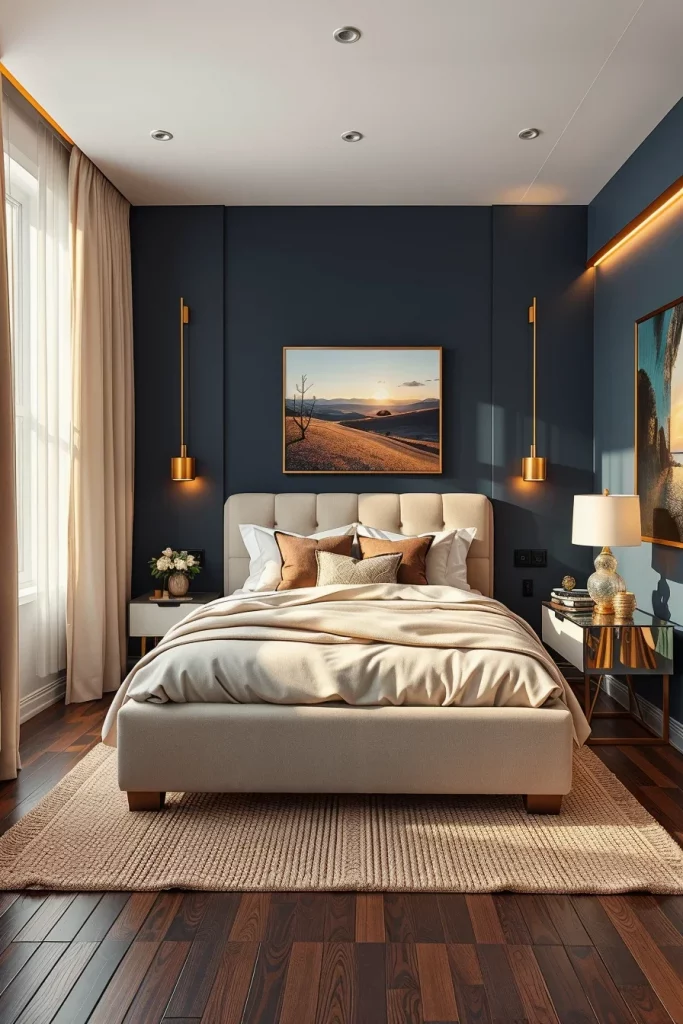
For furniture, I recommend a cream upholstered bed, elegant nightstands with clean lines, soft woven rugs, and simple wardrobes finished in warm neutral tones. Layered cream bedding, textured throws, sculptural bedside lamps, and oversized artwork help soften the bold wall color. Large windows dressed with light curtains allow natural daylight to brighten the room while emphasizing the richness of the navy walls.
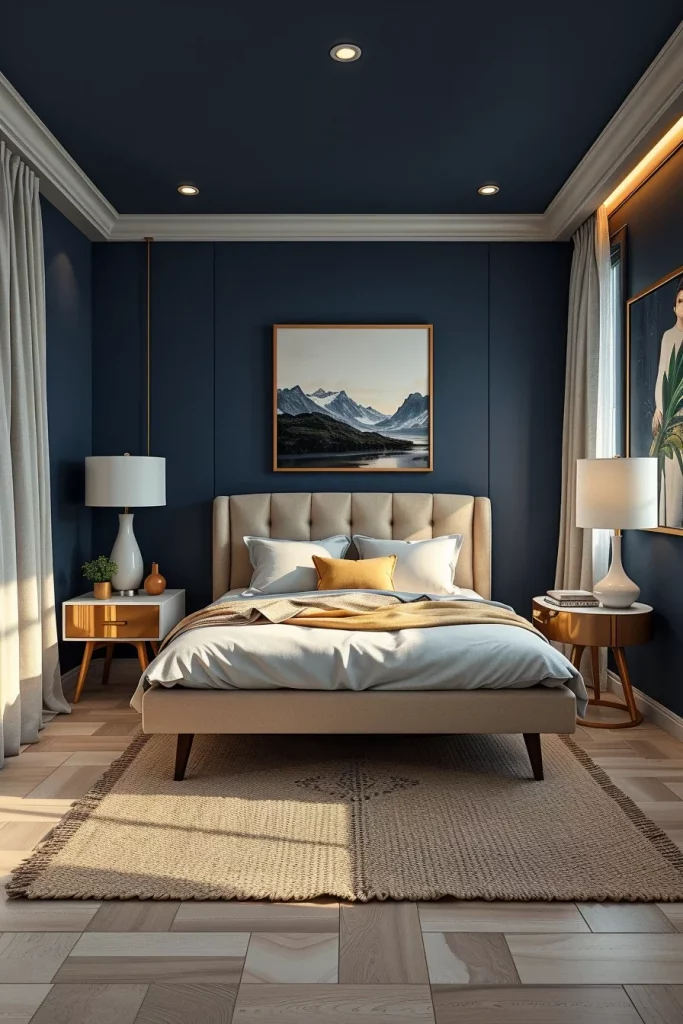
In my experience, navy blue is one of the most versatile darker colors available because it complements both modern and traditional interiors. House Beautiful has frequently showcased navy bedrooms that demonstrate how darker colors can visually recede when combined with lighter furnishings, and I have repeatedly achieved similar results in compact spaces.
To improve this design further, I would install concealed LED lighting behind the headboard or beneath floating furniture. These subtle lighting effects enhance depth while preserving the room’s sophisticated atmosphere.
Chocolate Brown Mixed With Light Camel Shades
Chocolate brown creates warmth and depth that few other colors can match, especially when balanced with soft camel tones. I prefer using chocolate as an accent wall or surrounding color while allowing camel furnishings to brighten the room. This combination feels luxurious yet approachable, giving a small bedroom an elegant character without relying on excessive decoration. The layered earth tones create a welcoming retreat that remains visually calm.
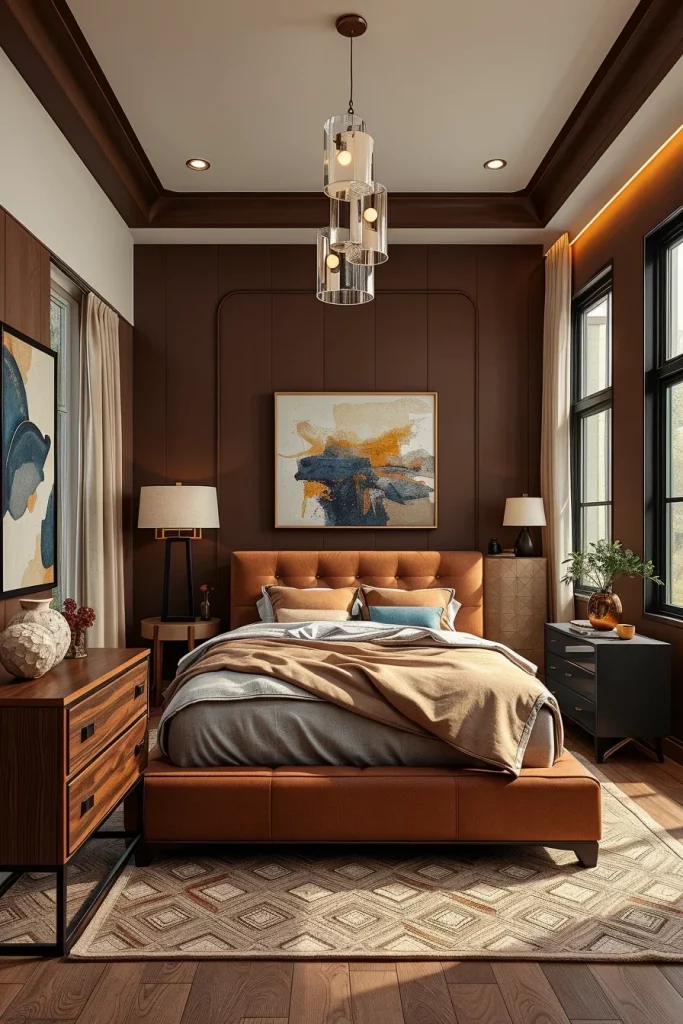
I would furnish the room with a camel upholstered platform bed, light neutral bedding, streamlined bedside tables, and a compact dresser featuring clean contemporary lines. Sculptural pendant lighting, textured rugs, ceramic accessories, framed abstract artwork, and soft linen curtains add warmth while preventing the darker walls from dominating the room. Every decorative element contributes to a cohesive and comfortable interior.
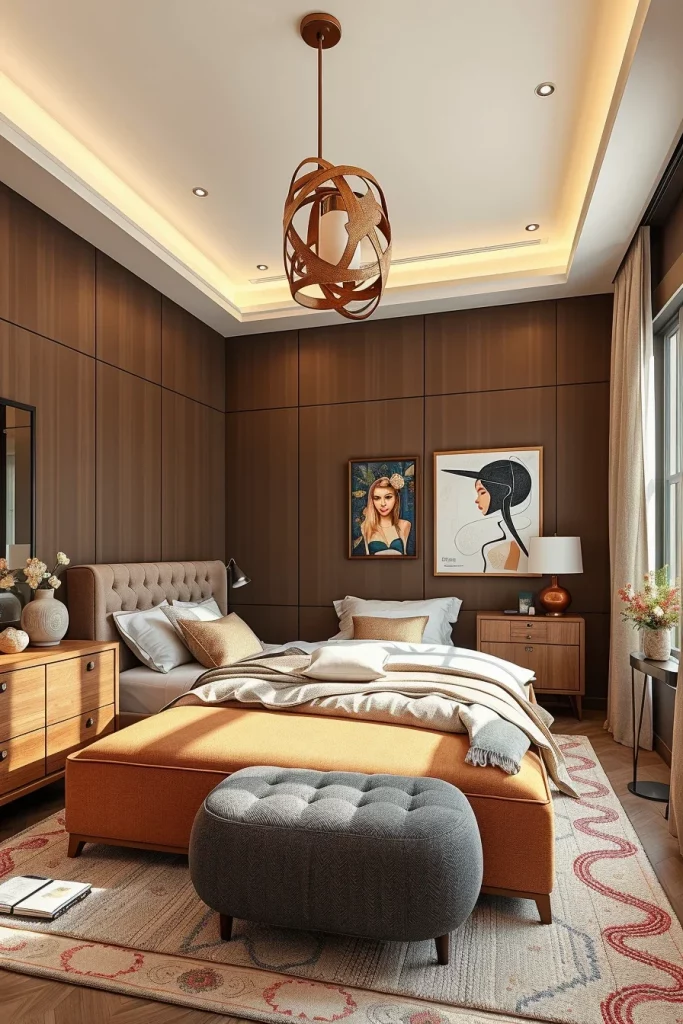
Personally, I appreciate how chocolate brown changes throughout the day as natural lighting shifts. During the morning it appears rich and refined, while evening lighting makes the bedroom feel exceptionally cozy. Interior designers often recommend balancing deep earth tones with generous layers of lighter fabrics, and I have found this approach creates the most successful results in smaller rooms.
I would finish this bedroom with concealed storage solutions, oversized mirrors, and carefully layered lighting. These additions maximize both practicality and visual openness while allowing the rich brown palette to remain the primary design feature.
Lavender Gray With Elegant White Accents
I find that lavender gray is one of the most sophisticated choices for a compact bedroom because it introduces subtle color without making the room feel visually heavy. Soft gray walls with a gentle lavender undertone create depth while reflecting enough natural light to maintain an airy atmosphere. Crisp white trim, doors, and ceiling details frame the room beautifully, making every architectural line appear cleaner. This combination creates one of the most refined small bedroom color palettes for anyone looking for an artistic yet calming environment.
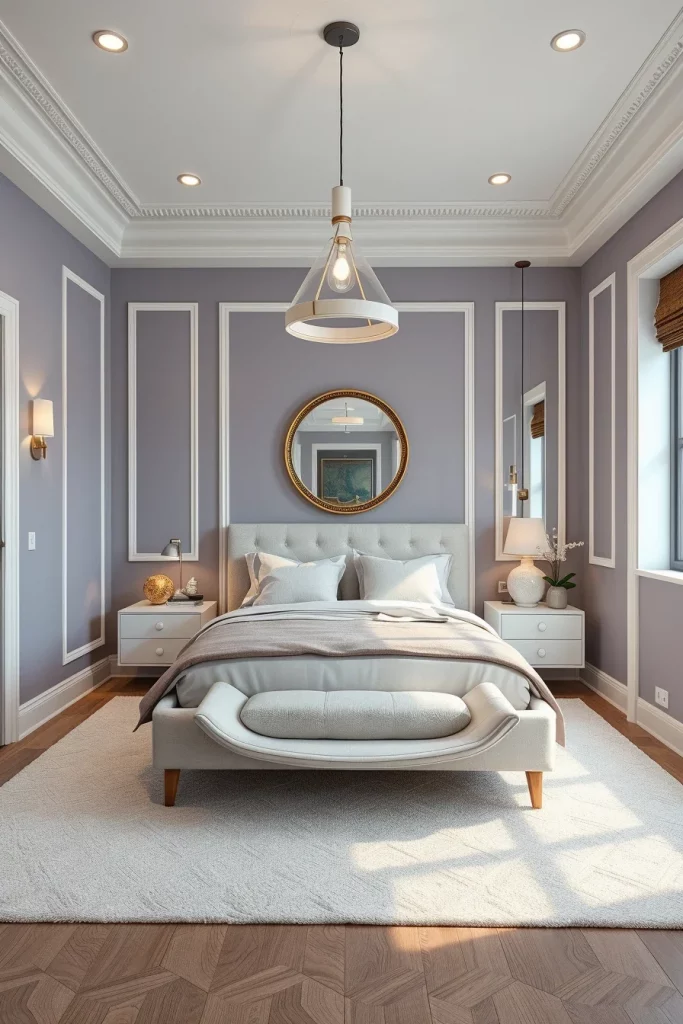
For furniture, I prefer a low-profile upholstered bed in textured white fabric paired with floating white nightstands that reduce visual clutter. A sculptural pendant light becomes a decorative centerpiece without occupying floor space, while curved accent chairs or a softly rounded bench introduce gentle movement throughout the room. Layering linen bedding, subtle textured curtains, and matte ceramic accessories creates warmth without overwhelming the restrained palette. A large frameless mirror positioned opposite a window helps amplify daylight and visually expands the bedroom.
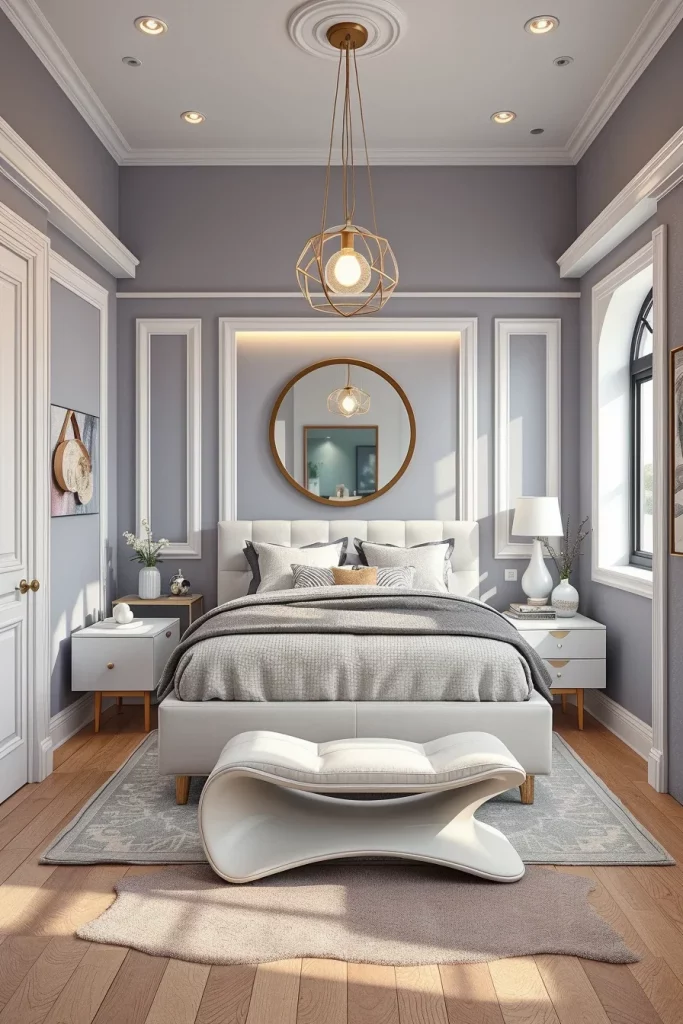
Personally, I appreciate how this palette changes throughout the day as natural light shifts. Designers featured by Architectural Digest frequently recommend building interest through texture instead of adding numerous colors, and I have found that advice especially valuable in smaller bedrooms. Instead of filling shelves with decorations, I prefer selecting a few carefully designed sculptural pieces that become intentional focal points while preserving an uncluttered atmosphere.
To complete this design, I would add concealed LED lighting behind the headboard or beneath floating furniture. The indirect illumination enhances the lavender tones during the evening while creating a comfortable atmosphere that feels elegant rather than overpowering.
Butter Yellow For A Bright Yet Cozy Small Bedroom
Butter yellow introduces warmth that instantly makes a small bedroom feel welcoming without becoming overly vibrant. I like using this soft shade across the primary walls because it reflects daylight beautifully while maintaining a relaxed atmosphere. Combined with warm white ceilings and subtle neutral flooring, this cheerful palette creates an inviting retreat that feels open throughout every season. It is one of the most unusual yet timeless small bedroom color palettes for homeowners who want more personality than traditional beige.
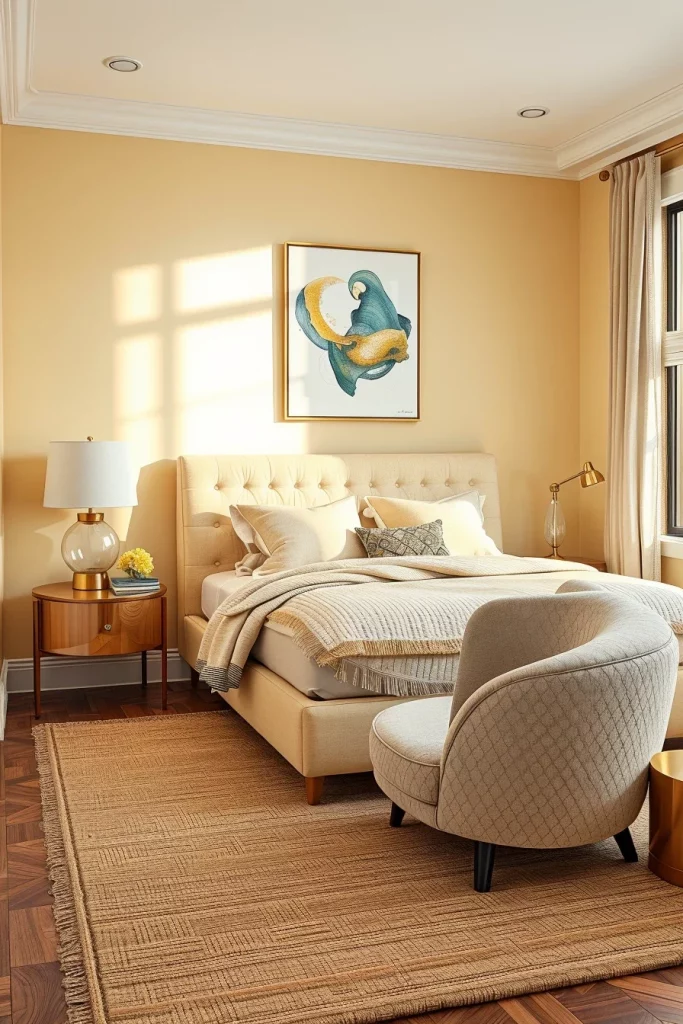
I recommend combining the walls with an upholstered cream bed, rounded oak-inspired side tables, soft boucle seating, and minimalist storage cabinets with clean lines. A woven area rug softens the floor while textured bedding in ivory, sand, and pale caramel creates depth without introducing unnecessary visual noise. Sculptural table lamps with frosted glass shades provide gentle evening lighting that complements the warmth of the walls.
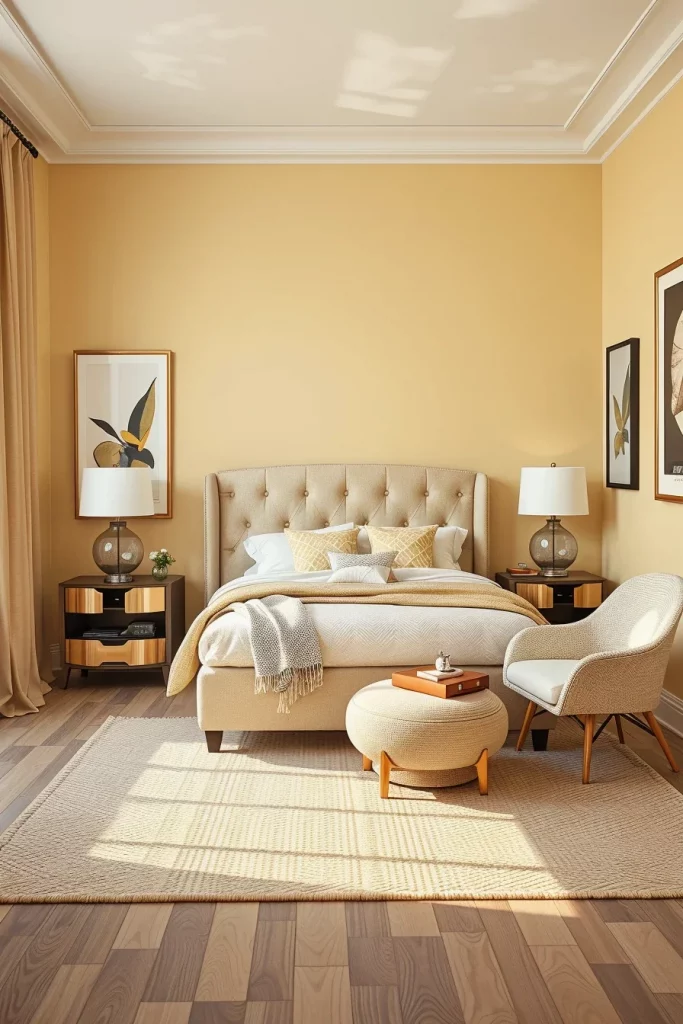
From my experience, butter yellow works particularly well in bedrooms with limited natural light because it maintains brightness even on cloudy days. House Beautiful has often highlighted warm yellow tones as an effective way to create welcoming interiors, and I agree that softer yellows avoid the intensity associated with brighter versions while remaining cheerful and contemporary.
I would complete this space with oversized abstract artwork featuring cream, soft gold, and muted beige tones. The artwork ties together the palette while adding artistic character without overwhelming the simplicity of the room.
Smoky Teal With Matte Black Decorative Details
Smoky teal offers a dramatic yet balanced solution for anyone wanting a contemporary bedroom with personality. I enjoy using this muted blue-green on the walls because it creates depth without making a compact room feel enclosed. The richness of the color immediately establishes a relaxing atmosphere, while white ceilings and light flooring preserve visual openness. This combination creates one of the most stylish small bedroom color palettes for modern interiors.
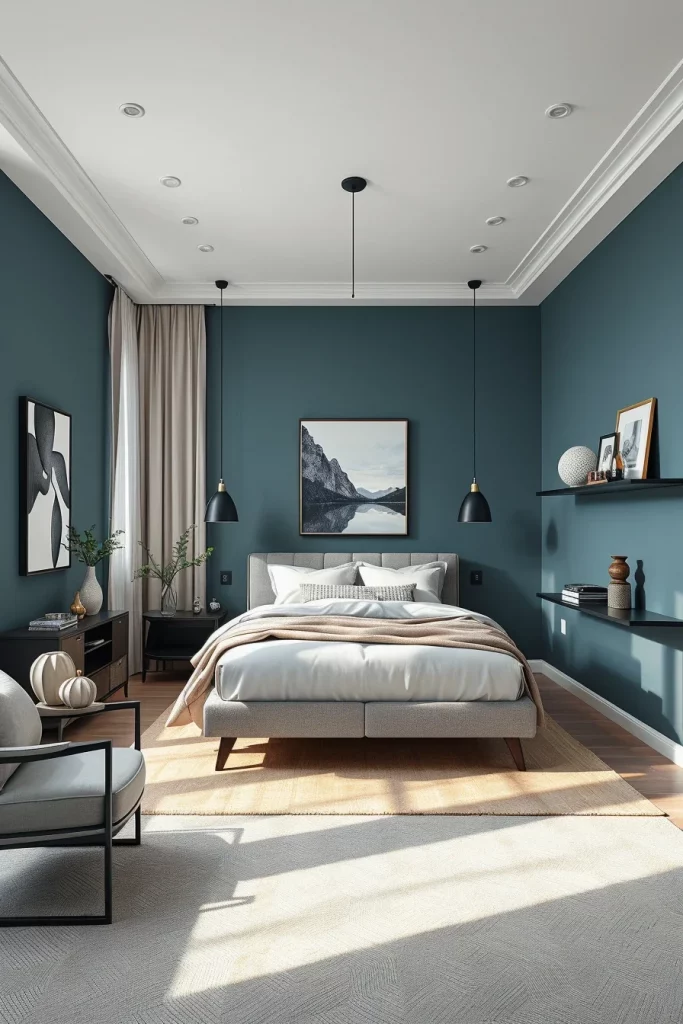
I prefer pairing smoky teal walls with a platform bed upholstered in light gray fabric and matte black metal furniture that introduces clean architectural lines. Slim black pendant lights, minimalist shelving, and narrow-framed mirrors reinforce the contemporary aesthetic without adding unnecessary bulk. Soft ivory bedding, textured throws, and subtle charcoal cushions provide contrast while maintaining a refined appearance. Sculptural ceramic vases and abstract artwork complete the room with artistic sophistication.
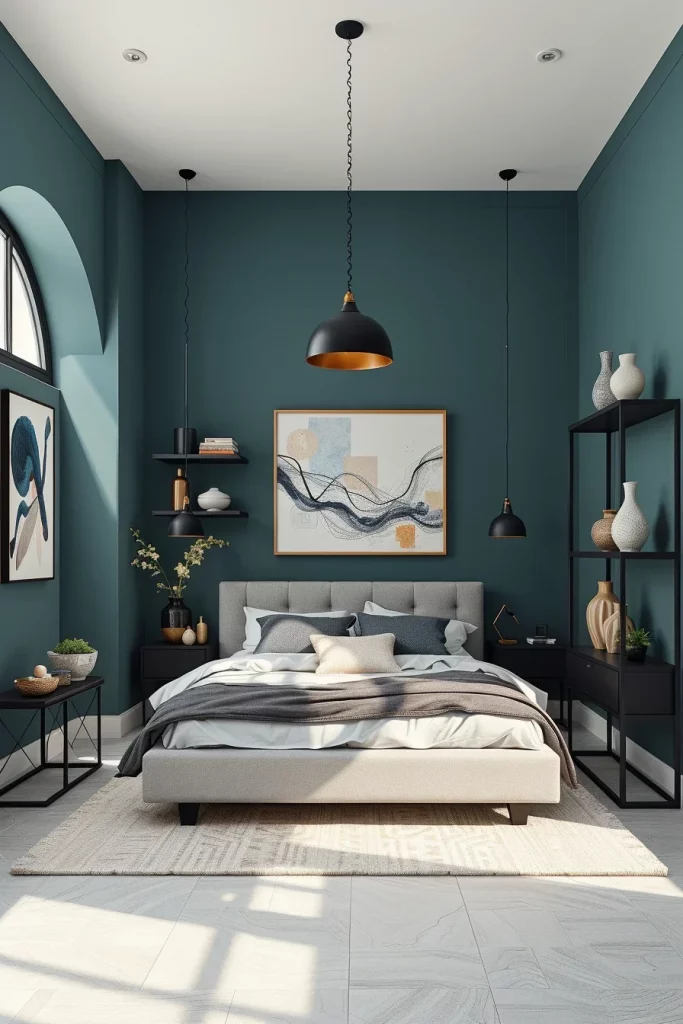
In my opinion, restraint is especially important when working with deeper wall colors. Rather than introducing many accent shades, I rely on texture, carefully selected lighting, and balanced proportions. Interior designers featured in Elle Decor frequently emphasize layering materials instead of colors, and I have consistently found this approach successful in compact spaces.
For additional functionality, I would include built-in wardrobes with matte finishes that blend into the walls. Hidden storage allows the bold color palette to remain the primary visual feature while keeping everyday clutter out of sight.
Warm Mushroom Tones For A Sophisticated Look
Warm mushroom shades create an understated elegance that immediately makes a small bedroom feel calm and refined. I appreciate how these earthy taupe-inspired tones provide warmth while remaining softer than traditional gray. The palette works beautifully with abundant natural light but remains equally comfortable in rooms with limited windows. Its versatility makes it one of the most balanced small bedroom color palettes for contemporary homes.
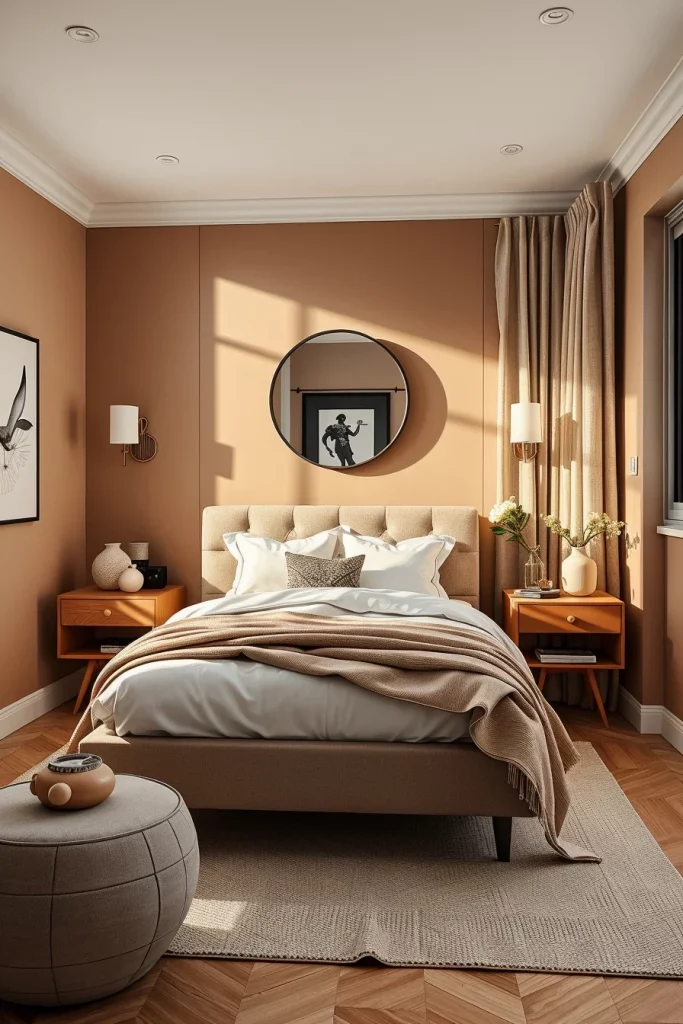
I recommend selecting a softly upholstered bed in warm beige fabric along with floating wood-look nightstands in muted taupe finishes. Rounded mirrors, sculptural wall sconces, and simple linen curtains maintain visual softness while reinforcing the organic appearance of the room. Layered bedding featuring cream, oatmeal, and mushroom shades creates subtle dimension, while textured ceramics and stone accessories provide natural visual interest.
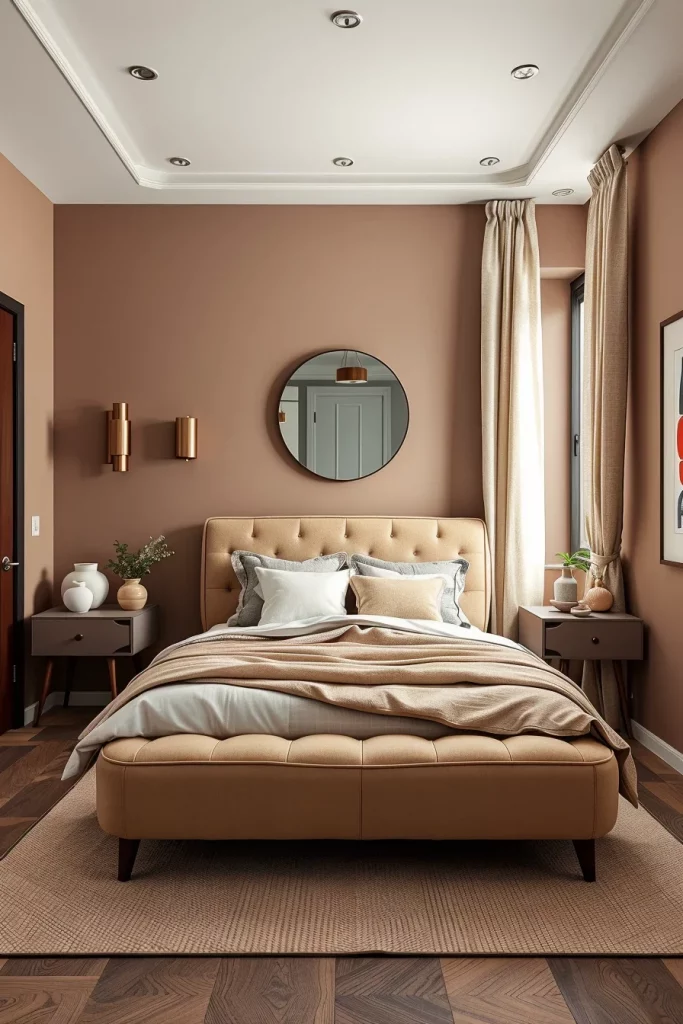
From my perspective, mushroom tones allow furniture and architectural details to become the focus instead of relying on strong color contrasts. Better Homes & Gardens has often recommended warm neutral palettes for creating timeless interiors, and I have found that this approach produces bedrooms that remain stylish for many years without feeling dated.
To strengthen the overall composition, I would introduce indirect ceiling lighting with adjustable warm color temperatures. The lighting enhances the natural warmth of the palette during the evening and creates a peaceful atmosphere ideal for relaxation.
Rich Forest Green With Soft Beige Balance
Rich forest green creates remarkable depth while soft beige prevents the room from becoming visually overwhelming. I enjoy using forest green as an accent wall behind the bed, allowing the remaining walls to stay warm beige for balance. This approach produces a dramatic focal point while preserving openness throughout the bedroom. The combination feels creative, sophisticated, and perfectly suited to homeowners seeking unique interiors.
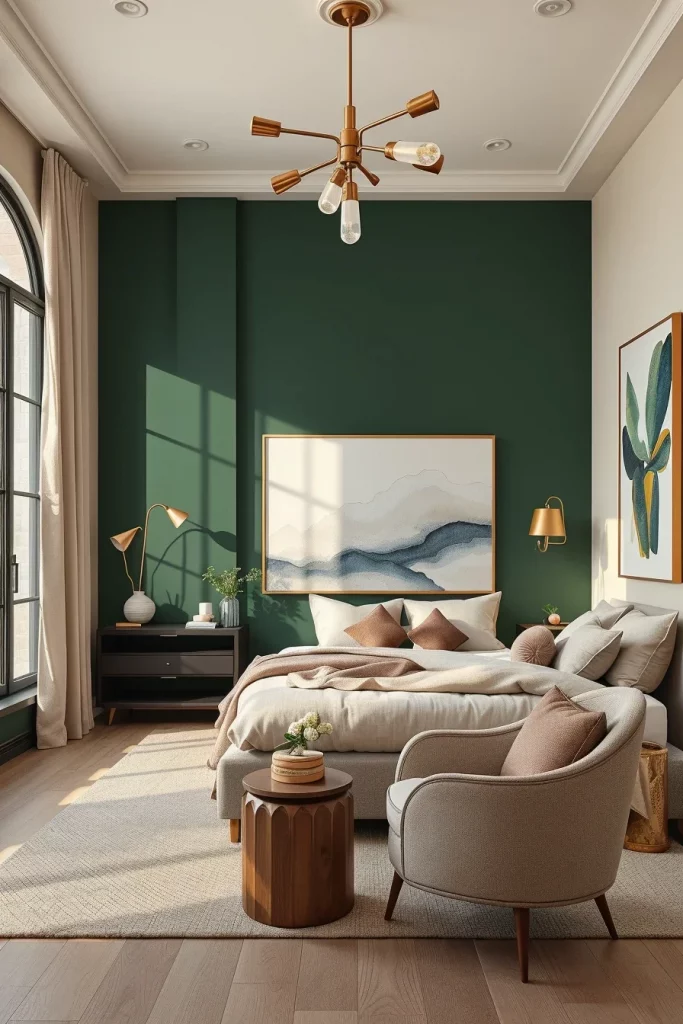
I like combining this palette with a beige upholstered platform bed, curved accent seating, slim brass lighting, and modern storage furniture with simple silhouettes. Linen bedding in ivory and sand softens the stronger wall color, while oversized botanical-inspired artwork introduces artistic elegance without competing with the palette. Sculptural pendant lighting and textured area rugs further enrich the overall composition.
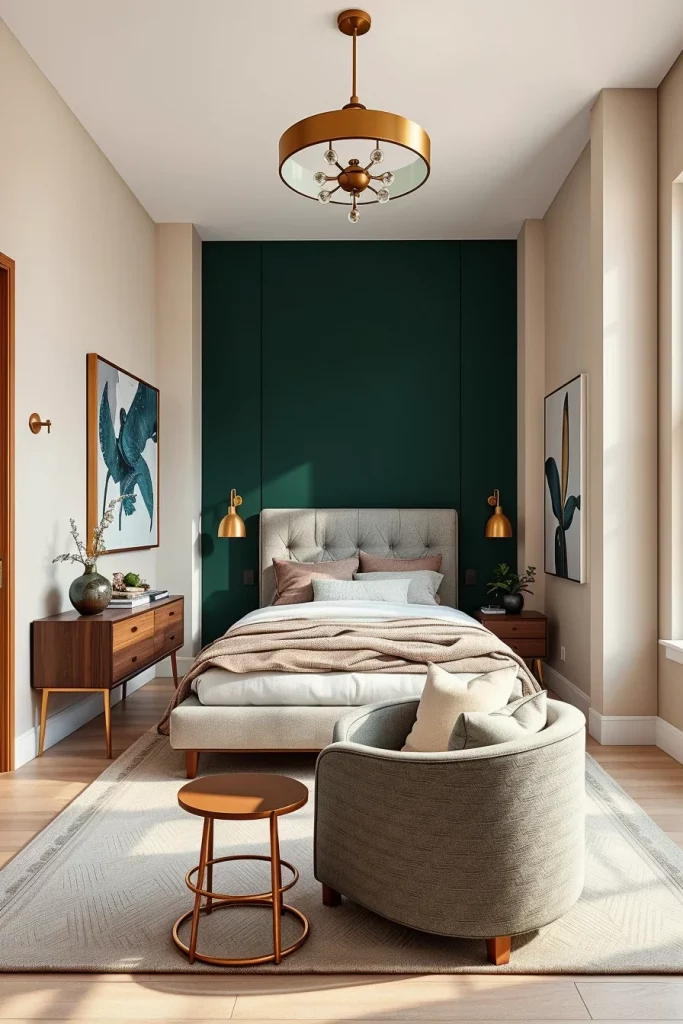
Personally, I believe this palette demonstrates how darker colors can succeed even in compact rooms when they are balanced thoughtfully. Designers frequently featured by Architectural Digest recommend combining rich colors with generous natural light and restrained furnishings, and I have consistently seen excellent results using this strategy in smaller bedrooms.
To complete the design, I would include tall indoor branches in a minimalist floor vase, layered window treatments that maximize daylight, and concealed storage beneath the bed to preserve the clean, spacious appearance of the room.
Monochromatic Sand Palette With Sculptural Decor
I often recommend a monochromatic sand palette for homeowners who want a bedroom that feels effortlessly spacious without relying on stark white walls. Layering different shades of sand, warm beige, and light taupe creates subtle depth while maintaining a seamless visual flow. This palette allows architectural details and carefully selected furnishings to become the stars of the room. Among today’s most versatile small bedroom color palettes, this approach delivers a sophisticated balance between warmth and minimalism while making even the smallest bedroom appear larger.
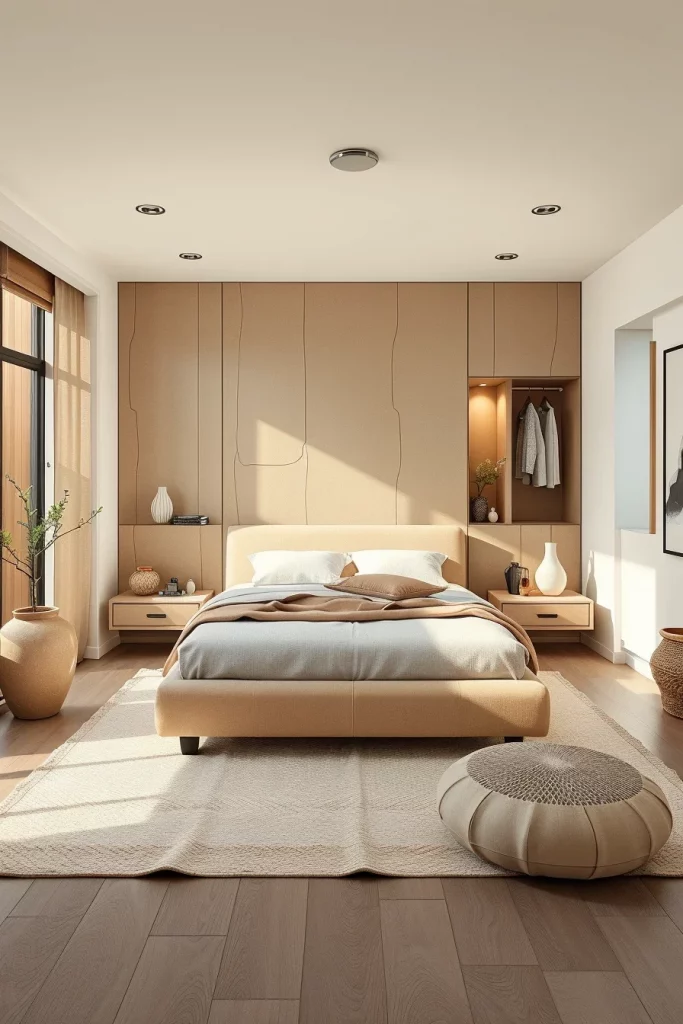
For the furnishings, I would choose a low-profile upholstered bed in sandy linen fabric, floating bedside shelves, and a streamlined wardrobe with flat panel doors in a matching neutral finish. Sculptural furniture with rounded edges introduces movement without making the room feel crowded. A textured area rug, oversized ceramic floor vase, softly pleated curtains, and linen bedding in several neutral tones complete the layered appearance. I also like incorporating hidden storage beneath the bed to preserve clean lines and maximize functionality.
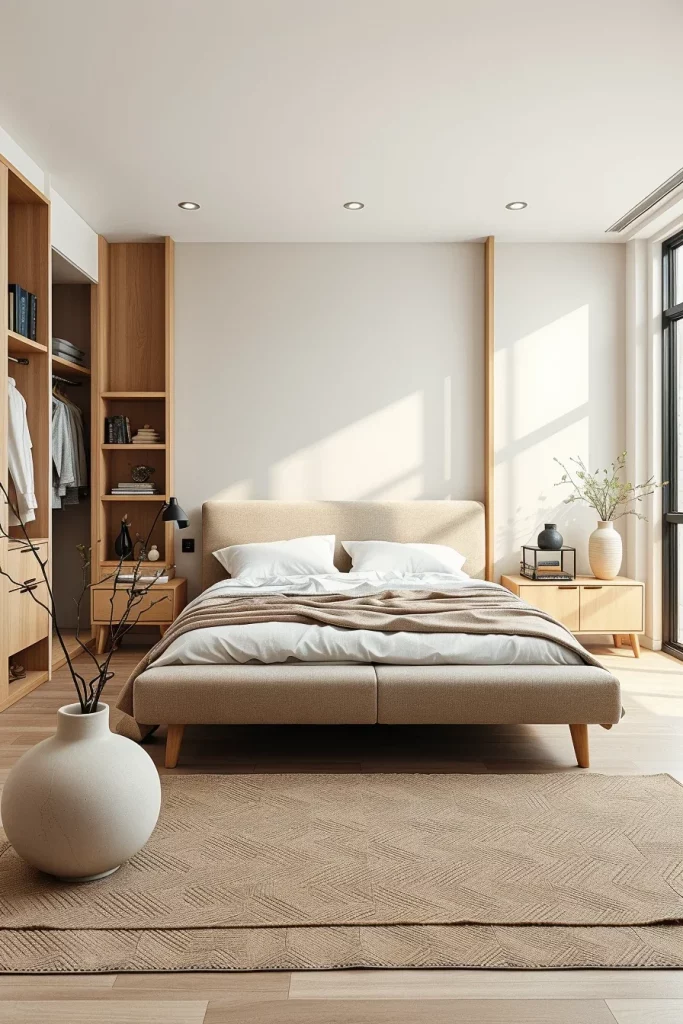
From my experience, the success of a monochromatic room depends on combining different textures rather than introducing additional colors. Designers at Elle Decor often highlight boucle, linen, plaster finishes, and natural stone-inspired surfaces to create visual richness, and I have found this advice especially valuable when designing compact bedrooms. Even simple decorative objects become more noticeable against such a restrained palette.
To elevate this design even further, I would install recessed ceiling lighting with dimmers and add a large full-height mirror beside the wardrobe. Both elements increase the feeling of openness while maintaining the calm, sculptural character of the space.
Misty Blue And Pale Gray For Airy Interiors
Misty blue paired with pale gray creates one of the calmest and most refreshing bedroom environments I have worked with. The gentle blue introduces a feeling of openness reminiscent of the sky, while pale gray grounds the design with understated elegance. This combination reflects daylight beautifully and prevents compact bedrooms from feeling enclosed. It remains one of the most timeless small bedroom color palettes for homeowners seeking serenity without sacrificing contemporary style.
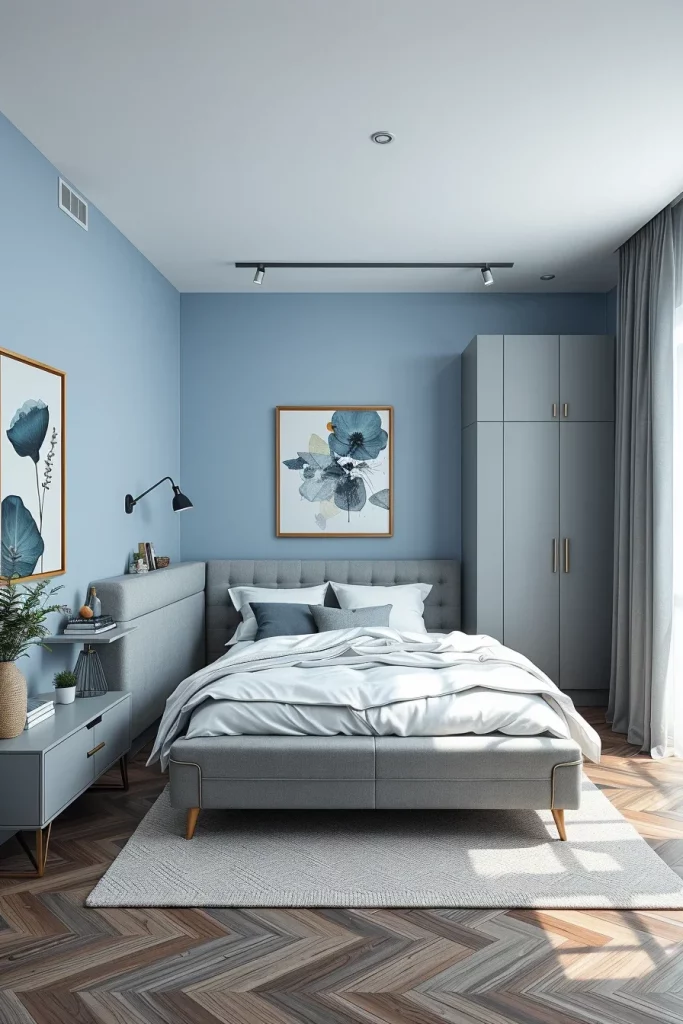
I like furnishing this room with a soft gray upholstered bed, minimalist floating nightstands, slim wall-mounted reading lights, and a built-in wardrobe finished in matte pale gray. Crisp white bedding layered with misty blue pillows and textured throws creates subtle contrast without interrupting the tranquil atmosphere. Rounded mirrors, delicate glass accessories, and simple abstract artwork reinforce the airy feeling while maintaining visual balance throughout the room.
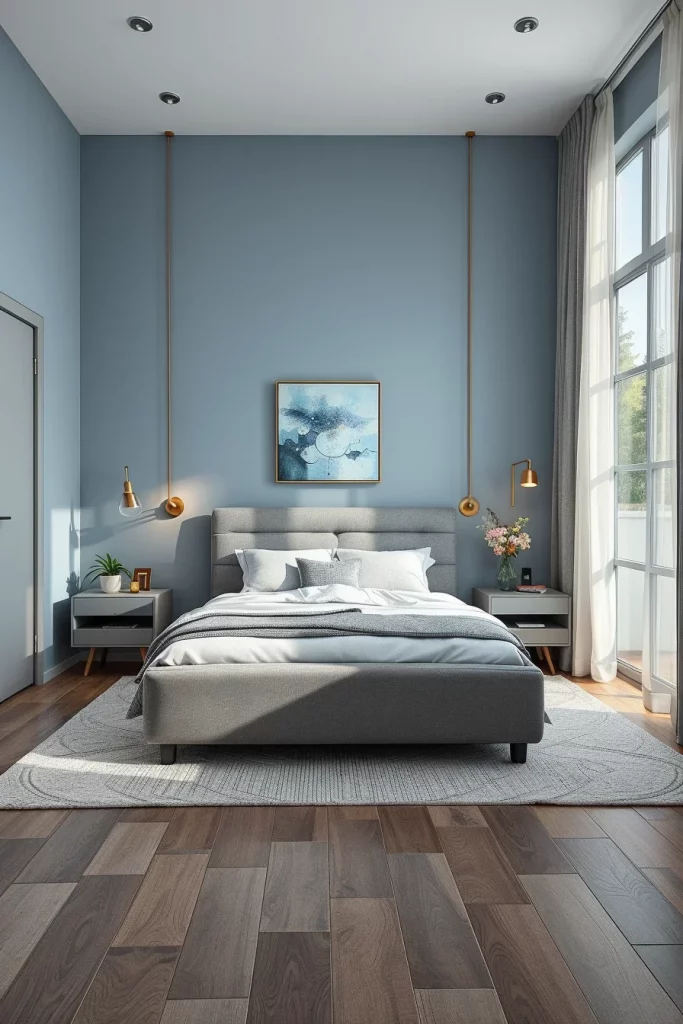
Personally, I believe this palette performs exceptionally well in bedrooms that receive morning sunlight because the changing daylight gently enhances both colors throughout the day. Better Homes & Gardens has frequently recommended combining cool tones with soft textures to create restful sleeping environments, and I have consistently achieved excellent results using this principle.
To complete the room, I would include sheer floor-to-ceiling curtains that maximize natural light while preserving privacy. This simple addition enhances the spacious appearance and contributes to the relaxing atmosphere.
Peach Beige Palette With Artistic Curved Furniture
Peach beige offers warmth with a subtle contemporary twist that immediately softens a compact bedroom. I enjoy using this muted tone because it introduces personality while remaining neutral enough to work with a variety of furnishings. Combined with creamy ceilings and light flooring, the room feels welcoming, elegant, and visually expansive. This is one of the most creative small bedroom color palettes for anyone looking to move beyond traditional neutrals without overwhelming the space.
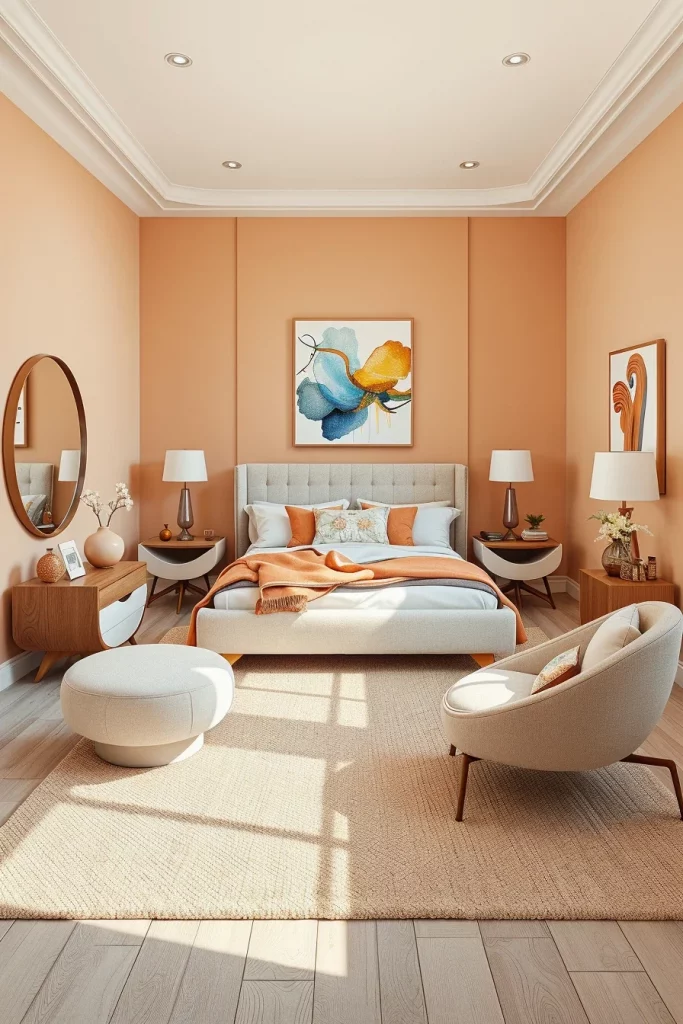
I recommend selecting furniture with graceful curved silhouettes, including an upholstered platform bed with rounded edges, sculptural bedside tables, an arched mirror, and a softly curved lounge chair placed near the window. Layered linen bedding in cream, peach, and warm ivory creates depth, while textured rugs and ceramic table lamps reinforce the artistic atmosphere. Minimalist storage furniture with integrated handles keeps the overall design clean and uncluttered.
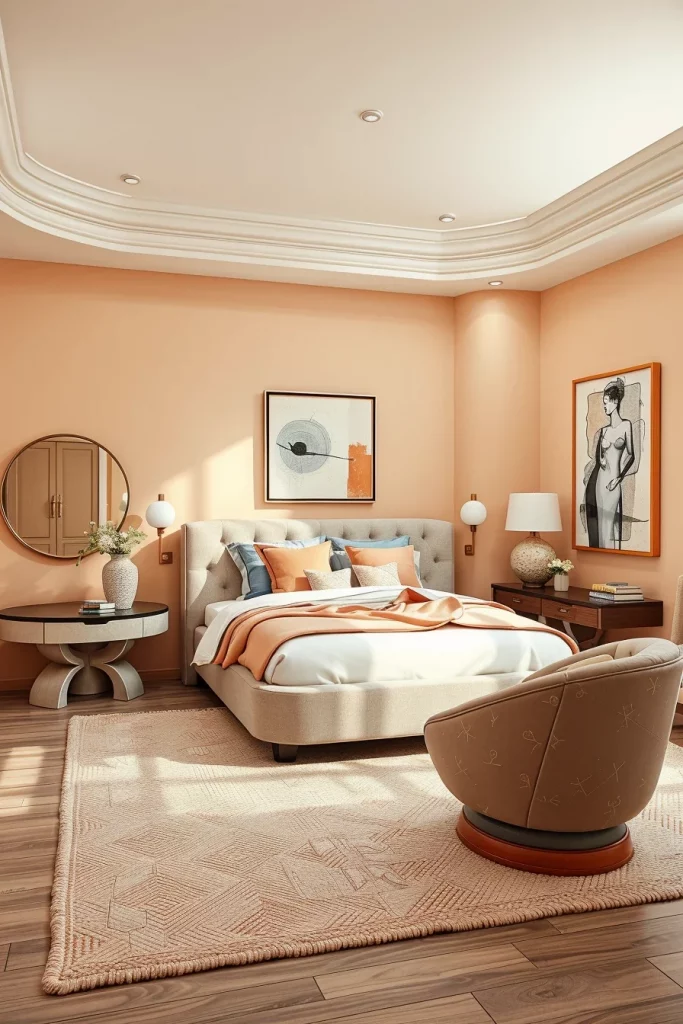
I appreciate how curved furniture softens the geometry of smaller rooms and makes movement through the space feel more natural. Architectural Digest has featured numerous contemporary interiors that demonstrate how rounded forms create inviting environments, and I have found that this design philosophy works especially well in compact bedrooms where every piece of furniture is highly visible.
I would finish this interior with oversized abstract artwork featuring soft peach, beige, and ivory tones along with concealed ambient lighting behind the headboard to create a warm evening glow.
Soft Mocha And Warm White Contemporary Combination
Soft mocha paired with warm white creates a balanced interior that feels cozy without becoming visually heavy. I like using mocha on the lower portions of the room through furniture, textiles, and accent walls while allowing warm white to dominate ceilings and surrounding surfaces. The result is an elegant bedroom that feels grounded yet open. This combination stands out among modern small bedroom color palettes because it delivers warmth through subtle contrast instead of bold colors.
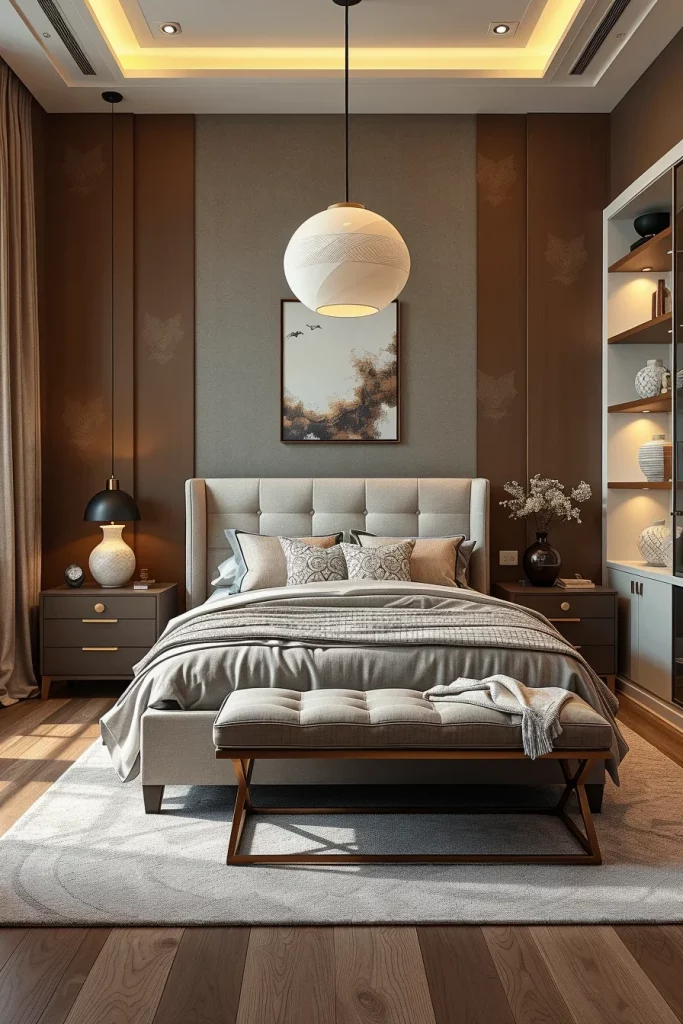
For furniture, I would choose a warm white upholstered bed accompanied by mocha bedside cabinets with clean lines and integrated storage. A plush textured rug, layered linen bedding, matte ceramic accessories, and a contemporary upholstered bench provide comfort while maintaining a sophisticated aesthetic. Sculptural pendant lighting suspended above each nightstand frees valuable surface space and contributes to the minimalist appearance.
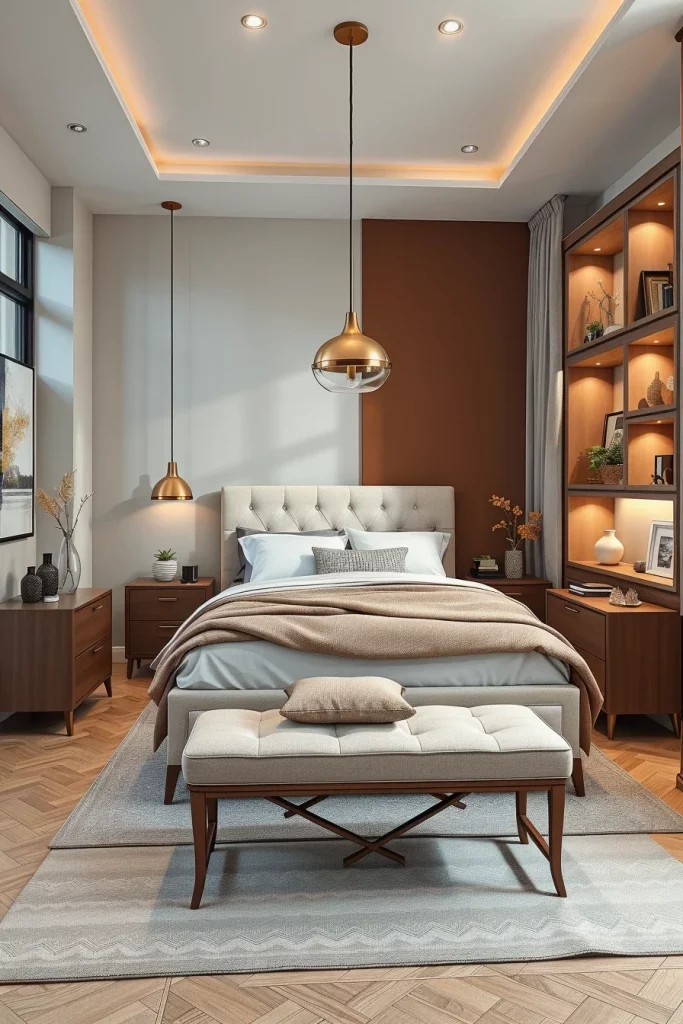
In my opinion, this palette works particularly well for homeowners who want a timeless design that remains relevant for years. House Beautiful often recommends investing in quality neutral furnishings while refreshing accessories over time, and I believe this approach offers both flexibility and long-term value.
To enhance functionality, I would add custom built-in shelving with integrated lighting and concealed drawers. These additions maximize storage while preserving the uncluttered appearance that small bedrooms benefit from.
Black And Ivory Contrast With Gallery Style Appeal
Black and ivory create a striking contemporary bedroom when balanced carefully. Rather than allowing black to dominate, I prefer using it strategically through accent walls, lighting, picture frames, and furniture details while ivory remains the primary background color. This controlled contrast produces an elegant gallery-inspired atmosphere that feels sophisticated instead of overwhelming. It is one of the most distinctive small bedroom color palettes for those who appreciate modern artistic interiors.
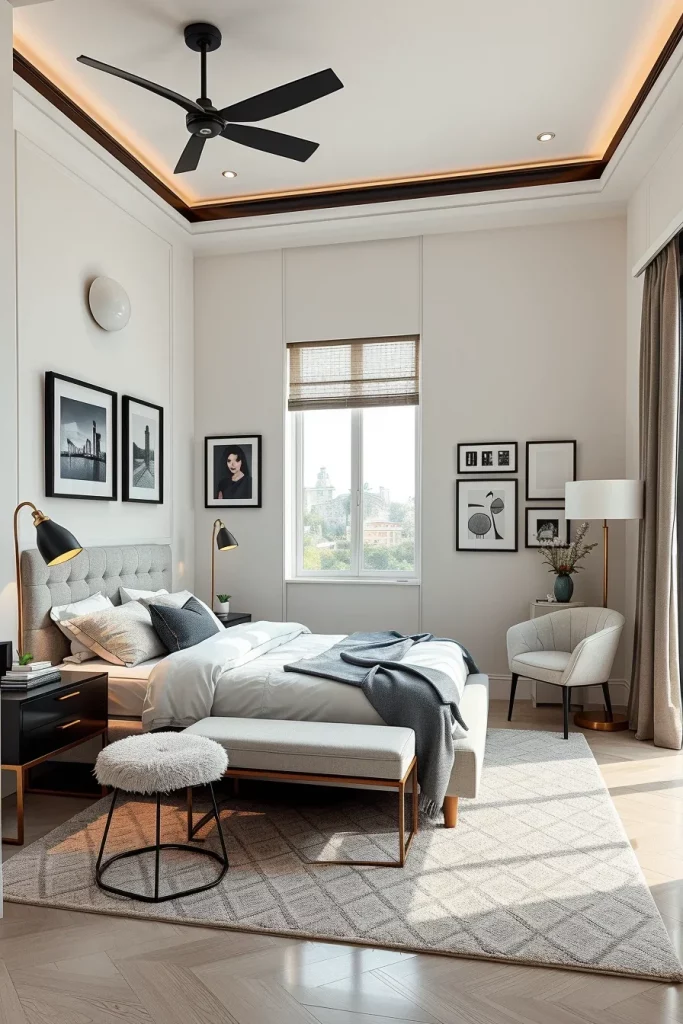
I recommend furnishing the room with an ivory upholstered bed, floating black nightstands, slim black wall sconces, and a minimalist wardrobe finished in matte ivory. Large black-framed artwork arranged as a gallery wall introduces visual interest while maintaining a clean composition. Soft ivory bedding, boucle accent seating, sculptural floor lamps, and textured rugs prevent the monochromatic palette from feeling flat while adding comfort throughout the space.
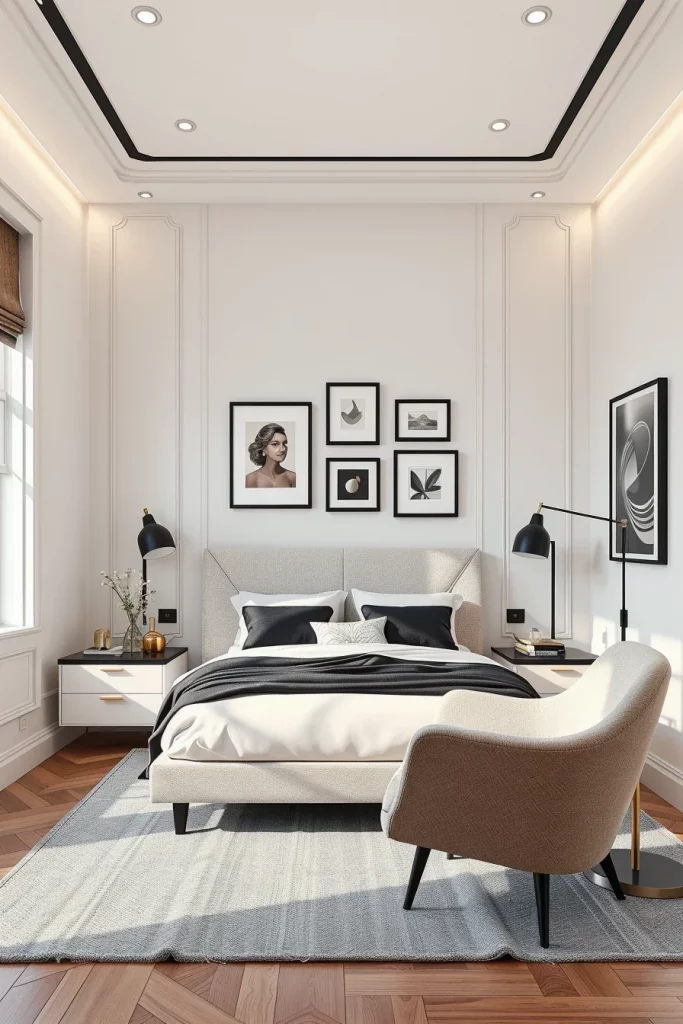
Personally, I believe contrast should always be used intentionally in compact bedrooms. Rather than filling the room with decorative accessories, I focus on a few statement pieces that establish strong visual rhythm. Designers featured in Elle Decor frequently demonstrate that carefully edited interiors often appear larger and more luxurious than spaces filled with excessive decoration, and I fully agree with that philosophy.
I would complete this bedroom with concealed LED strip lighting behind the headboard and beneath floating furniture to soften the bold contrast during the evening. The indirect illumination highlights architectural details while preserving the clean gallery-inspired aesthetic.
Muted Plum With Cream And Gold Details
I find that muted plum creates an elegant foundation for a small bedroom without making the room feel enclosed. Instead of using saturated purple, I prefer a softened plum tone that has gray undertones, allowing the walls to remain calming while adding personality. Cream bedding, soft curtains, and warm lighting balance the richness of the walls, while carefully placed gold accents introduce subtle sophistication. This palette works especially well in rooms with natural daylight because the cream surfaces reflect light and prevent the darker color from overwhelming the space.
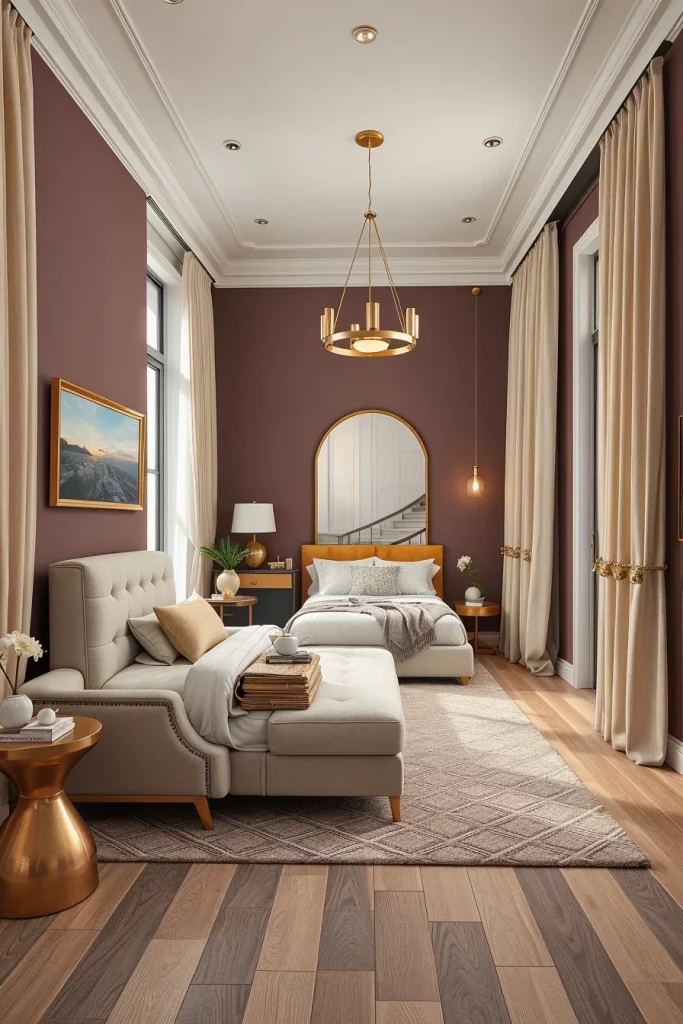
When designing this interior, I choose a low-profile upholstered bed in cream fabric paired with slim bedside tables featuring brushed gold hardware. A curved upholstered bench at the foot of the bed reinforces the sculptural quality of the design while remaining practical. Soft textured bedding, layered throw blankets, rounded ceramic lamps, and a large mirror with a thin gold frame all contribute to making the bedroom feel larger. I also like incorporating light wood flooring to soften the contrast and maintain visual warmth throughout the room.
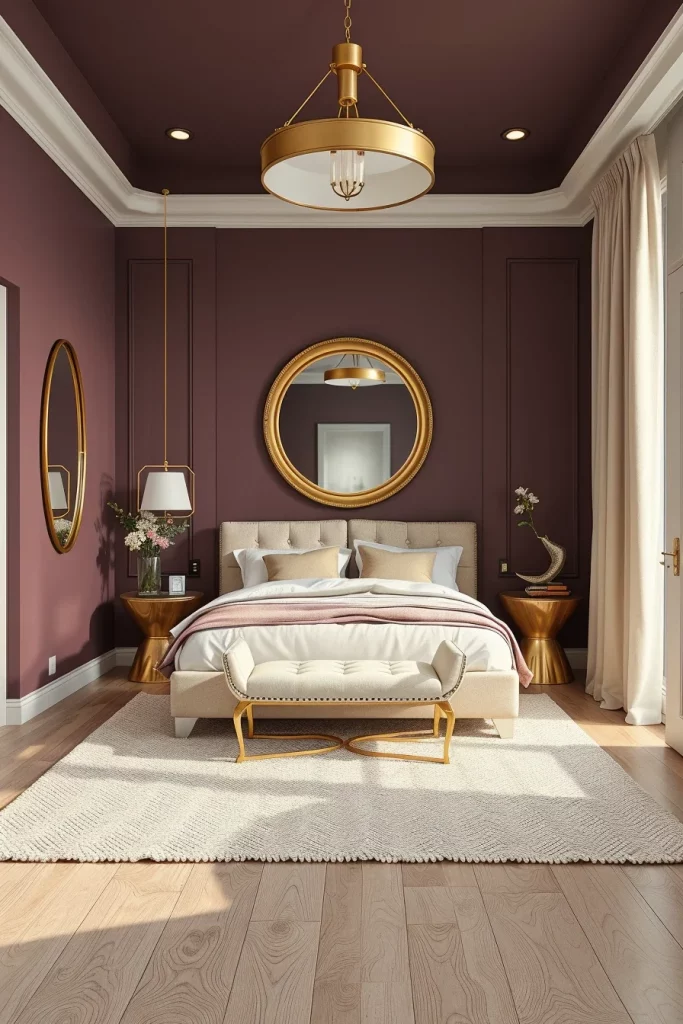
From my experience, this combination creates a refined atmosphere that feels timeless rather than trendy. Designers frequently featured by Architectural Digest recommend balancing deeper wall colors with reflective materials and generous lighting to preserve openness in compact rooms. I have found this advice especially valuable because the room remains cozy while still feeling visually expansive.
To complete this palette, I would add full-height cream curtains mounted close to the ceiling, discreet wall sconces to free up bedside space, and a large textured area rug that visually anchors the furniture while adding softness underfoot.
Clay And Cinnamon Shades For Cozy Character
I often recommend clay and cinnamon tones to anyone who wants warmth without relying on traditional beige interiors. These earthy colors create an inviting atmosphere that feels natural and comfortable while giving a small bedroom a distinctive identity. The subtle variation between warm clay walls and cinnamon accents adds depth without introducing excessive visual contrast, making the room feel layered instead of busy.
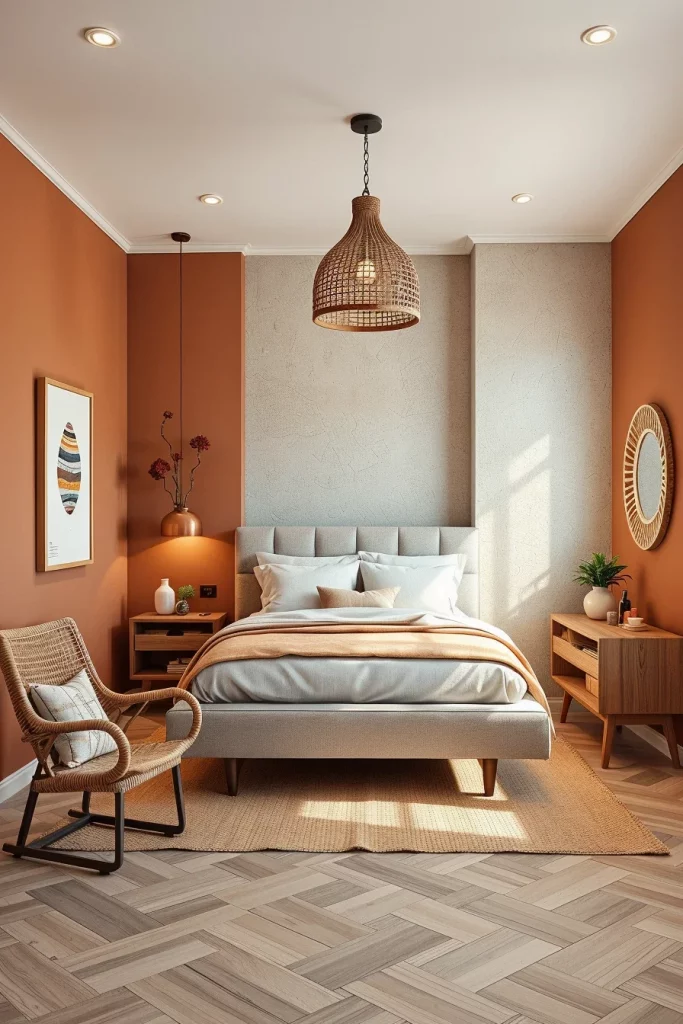
For the furniture, I prefer a simple platform bed upholstered in textured fabric paired with floating nightstands that maximize floor visibility. Linen bedding in soft ivory helps brighten the room, while caramel-colored accent pillows introduce additional warmth. A boucle reading chair, sculptural ceramic vases, woven pendant lighting, and minimalist artwork complete the design without overwhelming the limited space. Every piece serves both aesthetic and practical purposes, contributing to an organized layout.
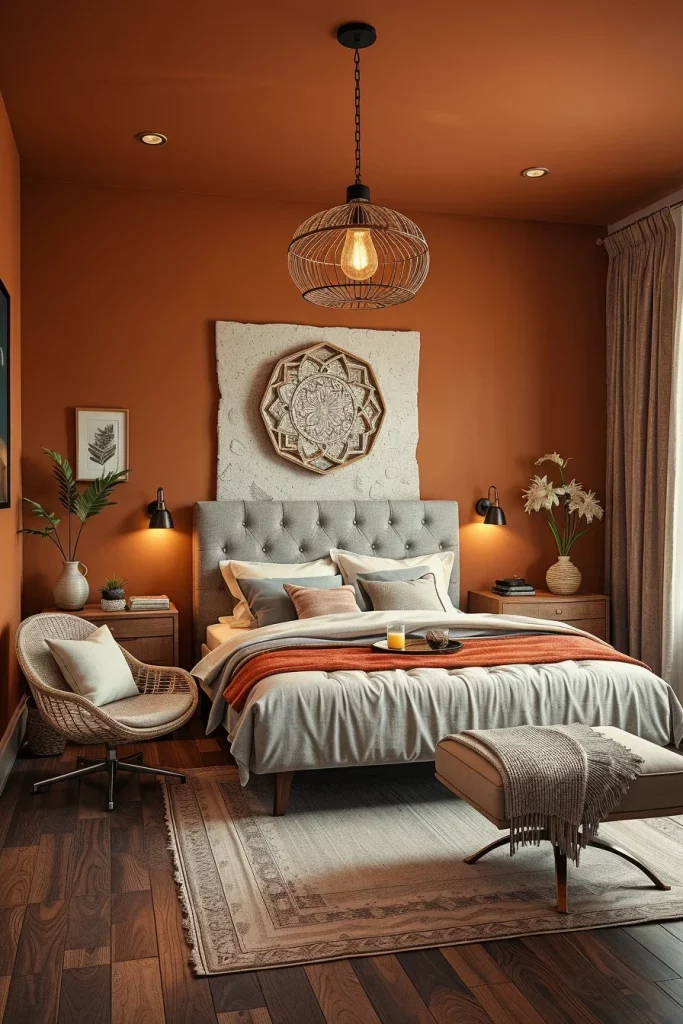
Personally, I appreciate how this palette creates comfort throughout every season. Interior designers interviewed by House Beautiful frequently highlight the value of layered earth-inspired colors for making compact bedrooms feel grounded and welcoming, and I completely agree after seeing similar combinations perform beautifully in smaller homes.
If I wanted to enhance this room further, I would include concealed storage beneath the bed, textured plaster wall finishes, and indirect LED lighting behind the headboard to create additional visual depth during the evening.
Seafoam Green With Light Oak Inspired Neutrals
Seafoam green offers one of the freshest approaches I know for introducing color into a compact bedroom. Its gentle character immediately creates a peaceful environment while maintaining enough brightness to visually enlarge the room. I enjoy pairing this refreshing shade with light oak-inspired neutral finishes because together they produce a balanced atmosphere that feels modern, airy, and highly livable.
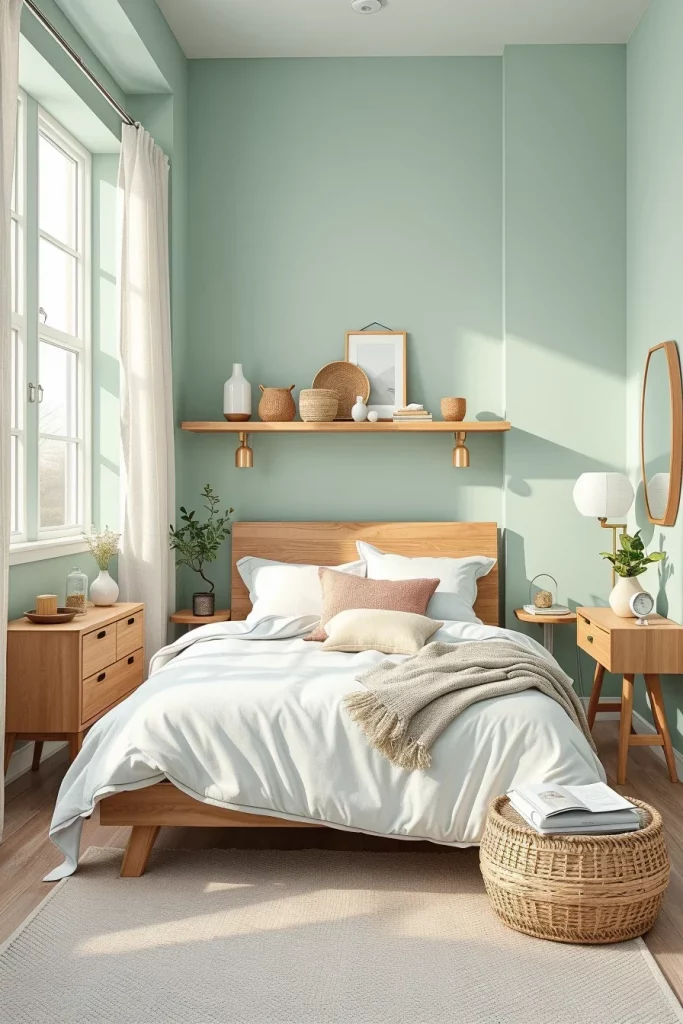
I usually combine this palette with a light oak bed frame, matching wardrobe, and floating shelves that provide storage without adding visual weight. Crisp white bedding keeps the space bright, while woven baskets, textured throws, and soft linen curtains introduce natural texture. Rounded bedside lamps, minimalist framed artwork, and subtle brushed nickel hardware maintain a contemporary appearance while preserving the calming aesthetic.
From my perspective, this palette works especially well for homeowners who appreciate understated interiors. Better Homes & Gardens has often emphasized the importance of soft green hues for creating relaxing bedrooms, and I have consistently noticed how these colors contribute to an atmosphere that supports rest without becoming monotonous.
To strengthen the overall design, I would incorporate oversized mirrors opposite windows, integrated wardrobe lighting, and carefully selected indoor greenery that complements the seafoam palette without dominating the room.
Pale Pistachio With Soft Stone Gray Layers
I enjoy using pale pistachio because it introduces gentle color while remaining incredibly versatile. In a small bedroom, this shade creates freshness without becoming overpowering, especially when layered with soft stone gray textiles and accessories. The combination feels contemporary, sophisticated, and surprisingly spacious thanks to its restrained contrast and subtle tonal transitions.
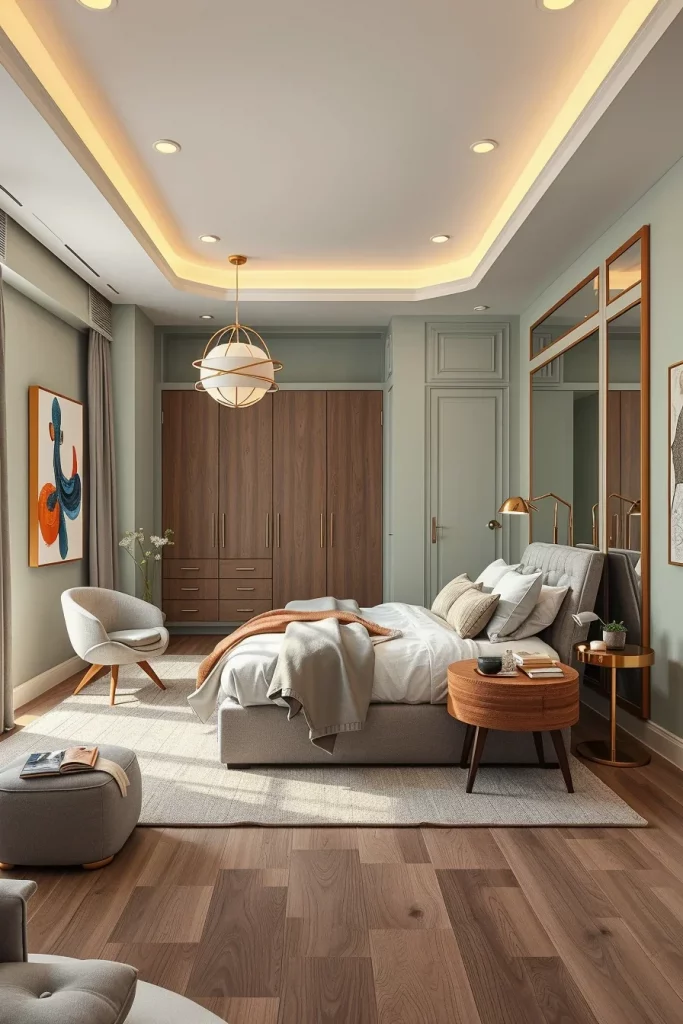
When planning this room, I select a softly upholstered gray bed, slim nightstands, and a minimalist dresser finished in a light neutral tone. Layered bedding combines white sheets, gray quilts, and pistachio accent cushions for visual depth. Sculptural pendant lights, abstract artwork, textured area rugs, and curved accent chairs reinforce the modern aesthetic while ensuring every decorative element contributes to the room’s functionality.
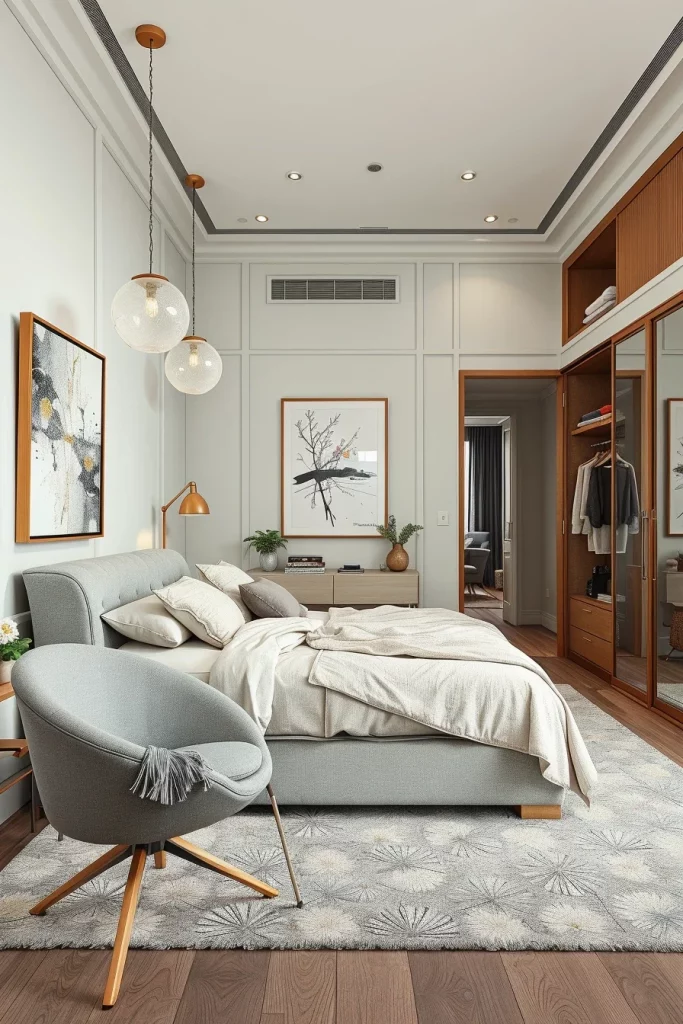
I have found this palette particularly effective in bedrooms that receive moderate natural light because both colors remain soft throughout the day. Interior experts frequently featured by Elle Decor encourage using layered neutrals with muted color accents to achieve visual harmony, and this approach consistently produces elegant results in compact spaces.
For an even more complete design, I would add built-in wardrobes with flush doors, concealed storage solutions, and full-height mirrors that reflect both natural and artificial light throughout the room.
Cappuccino Brown With Delicate White Highlights
Cappuccino brown creates an inviting atmosphere that immediately makes a bedroom feel warm and refined. Rather than using dark chocolate tones, I prefer lighter cappuccino shades that wrap the room in softness without reducing the sense of openness. Delicate white highlights on trim, bedding, and decorative accessories provide crisp contrast while preserving the room’s comfortable character.
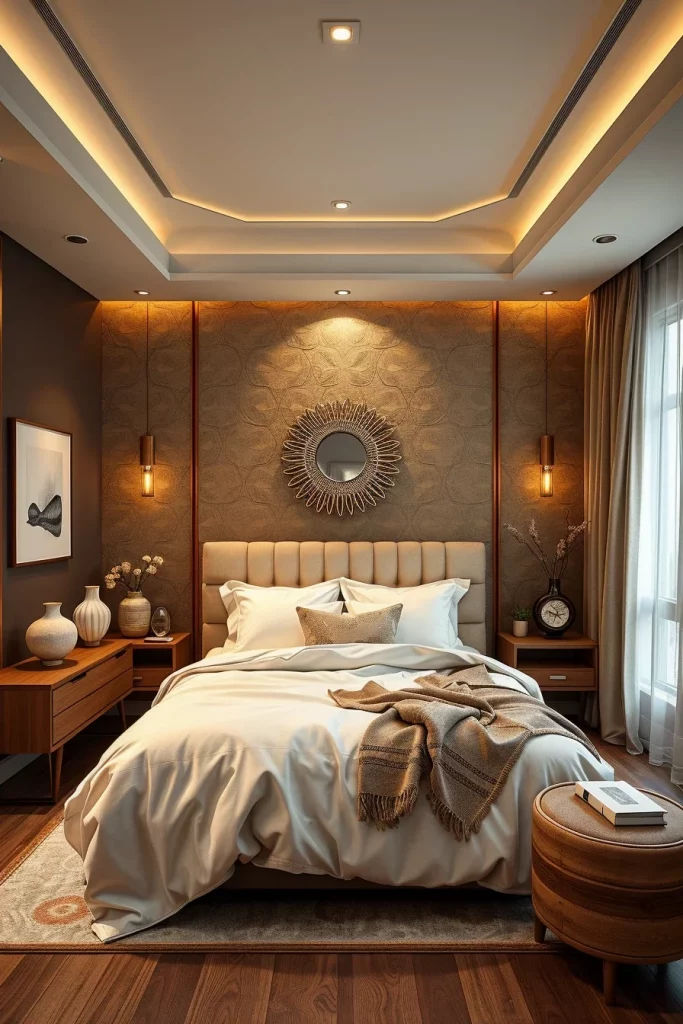
I like pairing this palette with a fully upholstered bed, floating wood nightstands, and streamlined storage furniture finished in matching neutral tones. White linen bedding, boucle cushions, sculptural table lamps, ceramic decor, and oversized framed artwork maintain a balanced composition. Warm ambient lighting enhances every surface while emphasizing the subtle variations between the neutral colors.
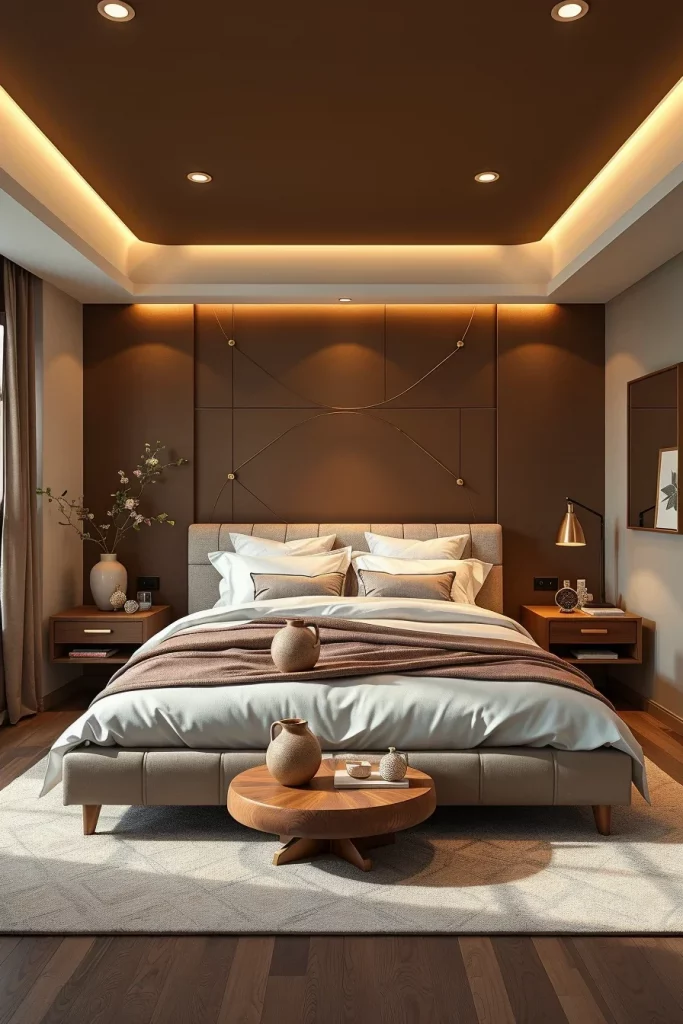
In my opinion, this is one of the easiest palettes to personalize because it works equally well with modern, minimalist, and transitional interiors. I have noticed that designers featured in Veranda often recommend layering multiple warm neutrals instead of relying on stark contrasts, resulting in spaces that remain visually interesting while feeling exceptionally relaxing.
I would complete this bedroom by introducing soft ceiling cove lighting, textured wall panels behind the headboard, and discreet brass accessories that add gentle elegance without distracting from the calming palette.
Artistic Color Blocking For Modern Small Bedrooms
I enjoy using artistic color blocking when I want a small bedroom to feel expressive without becoming visually cluttered. Instead of painting every wall the same color, I divide selected areas using carefully balanced geometric shapes in muted terracotta, warm beige, soft taupe, and off-white. This approach naturally defines the sleeping area, creates architectural interest, and gives the room a custom-designed appearance. In a compact bedroom, thoughtful color blocking also helps establish visual zones without adding partitions or bulky furniture.
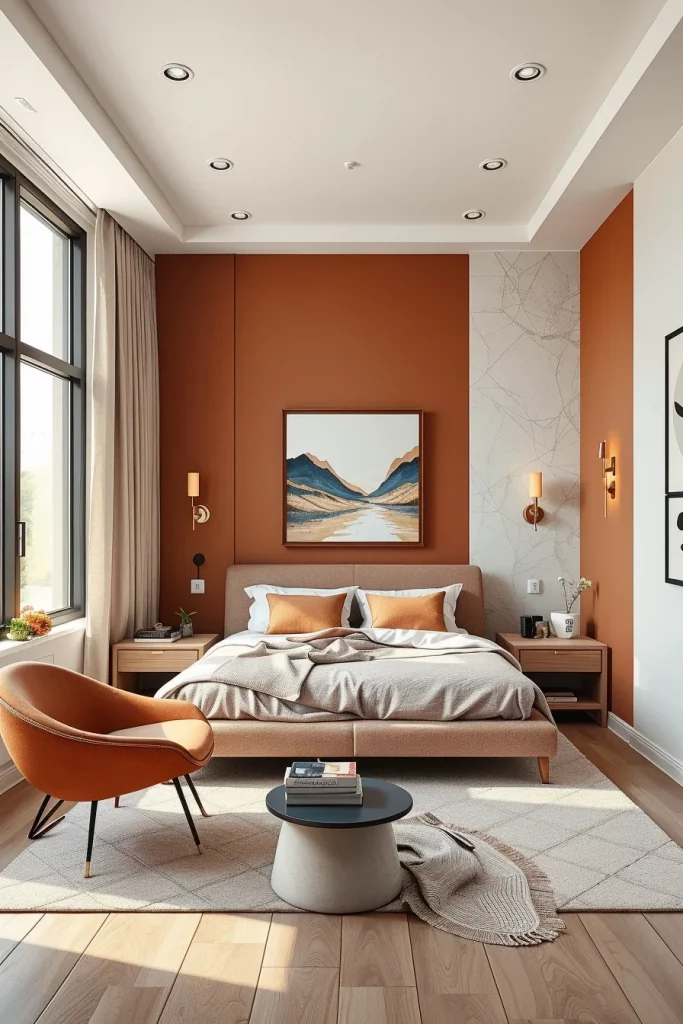
When creating this design, I prefer a low platform bed with a fabric headboard positioned against the feature wall. Floating nightstands preserve valuable floor space, while a slim wardrobe with flush doors keeps the overall composition clean. Rounded pendant lights, sculptural wall sconces, textured bedding, abstract artwork, and a curved reading chair reinforce the artistic theme without competing with the painted geometry. Every decorative element supports the color composition while maintaining functionality and comfort.

From my experience, restraint is the key to successful color blocking. Rather than introducing numerous contrasting colors, I limit the palette to a few complementary shades with similar warmth. Designers featured by Architectural Digest often recommend allowing architectural forms and paint placement to become part of the décor, and I find this approach especially effective in smaller rooms where every design decision has a greater visual impact.
To finish this bedroom, I would include a large neutral area rug, concealed LED lighting behind the headboard, and full-height curtains that soften the geometric lines while maintaining the room’s artistic identity.
Sculptural Neutral Palette With Curved Architectural Elements
A sculptural neutral palette transforms a small bedroom into a calming retreat where soft forms become the focal point instead of bold color. I like combining warm ivory, soft sand, mushroom beige, and gentle greige because these tones create visual continuity that makes compact spaces appear larger. Curved architectural details, including rounded wall niches and softly arched transitions, introduce movement while preserving the peaceful atmosphere.
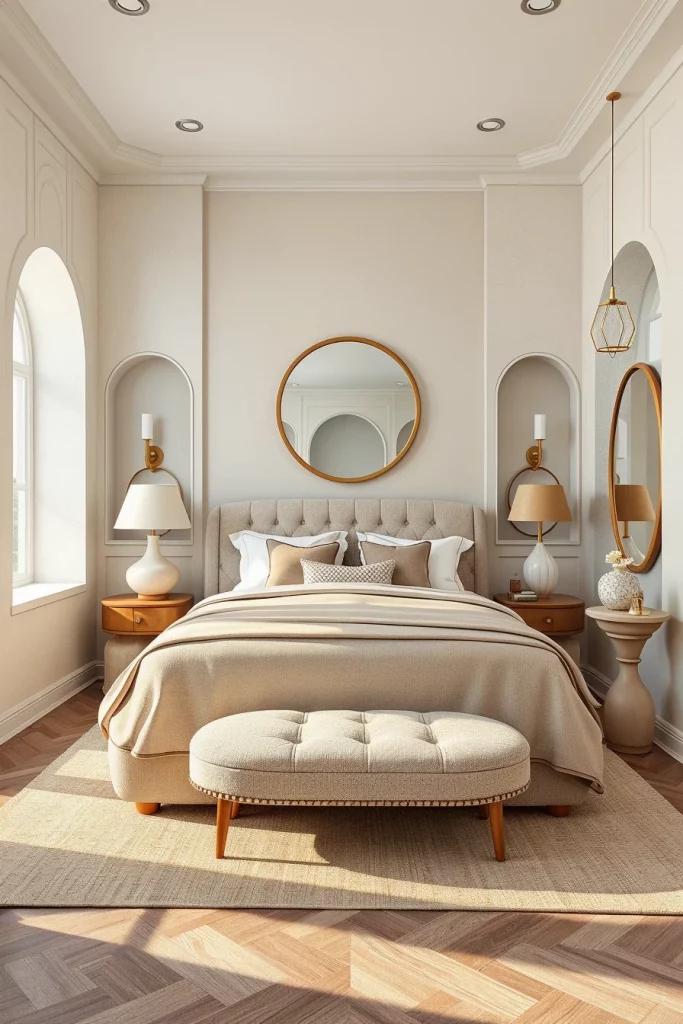
I typically furnish this room with a curved upholstered bed, rounded bedside tables, and a minimalist dresser with softened edges. A boucle bench, textured wool rug, sculptural ceramic lighting, and layered linen bedding reinforce the gentle shapes throughout the interior. Large mirrors with rounded corners reflect natural light, while recessed shelving displays carefully selected decorative objects without creating unnecessary visual clutter.
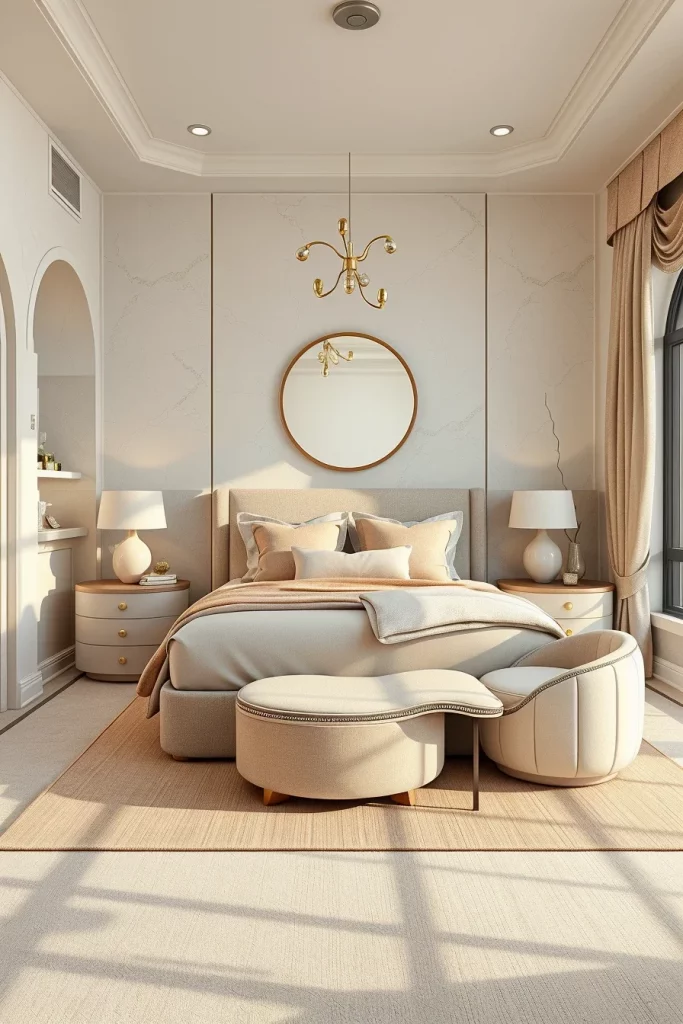
I appreciate how this palette allows furniture and architecture to become decorative features themselves. Elle Decor has highlighted the growing popularity of curved interiors because they soften modern spaces and improve visual flow. I have found that these sculptural elements help compact bedrooms feel more inviting while maintaining an elegant minimalist aesthetic.
For additional refinement, I would incorporate integrated ceiling lighting, hidden storage behind seamless cabinetry, and textured plaster finishes that subtly enhance the neutral palette without introducing excessive ornamentation.
Moody Emerald And Warm Brass Inspired Palette
Deep emerald may seem like an unexpected choice for a small bedroom, but I have found that it creates remarkable depth when balanced with lighter furnishings and warm brass accents. Instead of making the room feel smaller, the rich green visually recedes, creating an intimate atmosphere that feels sophisticated and comfortable. Soft ivory textiles and carefully layered lighting prevent the darker color from becoming overwhelming.
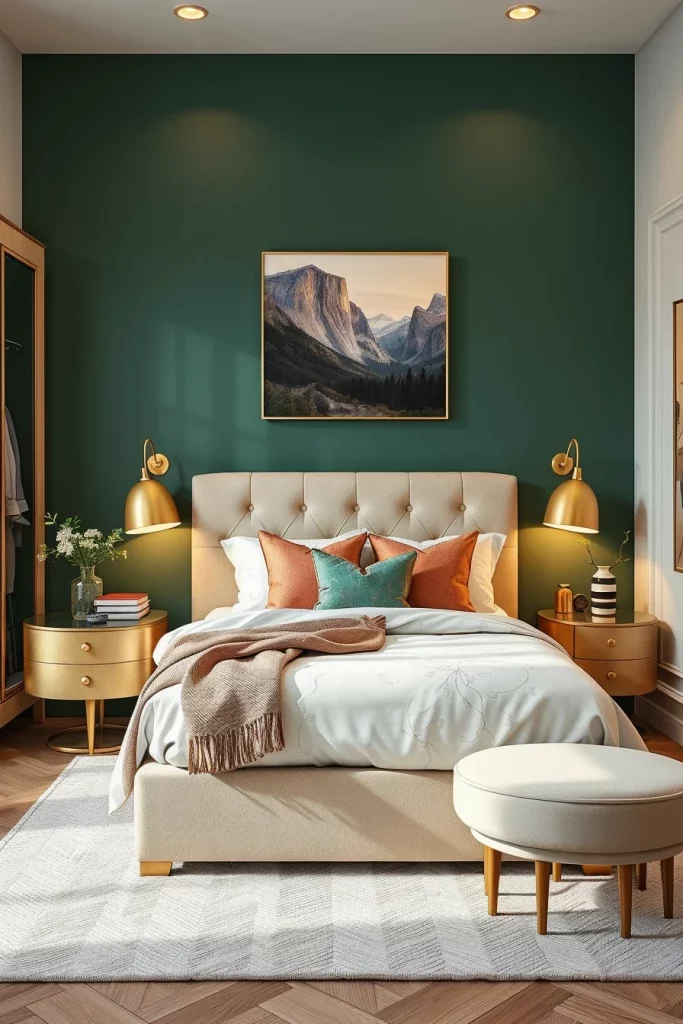
I prefer an upholstered cream bed positioned against an emerald feature wall, accompanied by slim brass bedside tables and minimalist wardrobes finished in warm neutral tones. Velvet accent cushions, textured throws, elegant wall sconces, oversized artwork, and a plush area rug add comfort while reinforcing the luxurious appearance. Brass hardware, mirrors, and decorative accessories introduce warmth that complements the richness of the green walls.
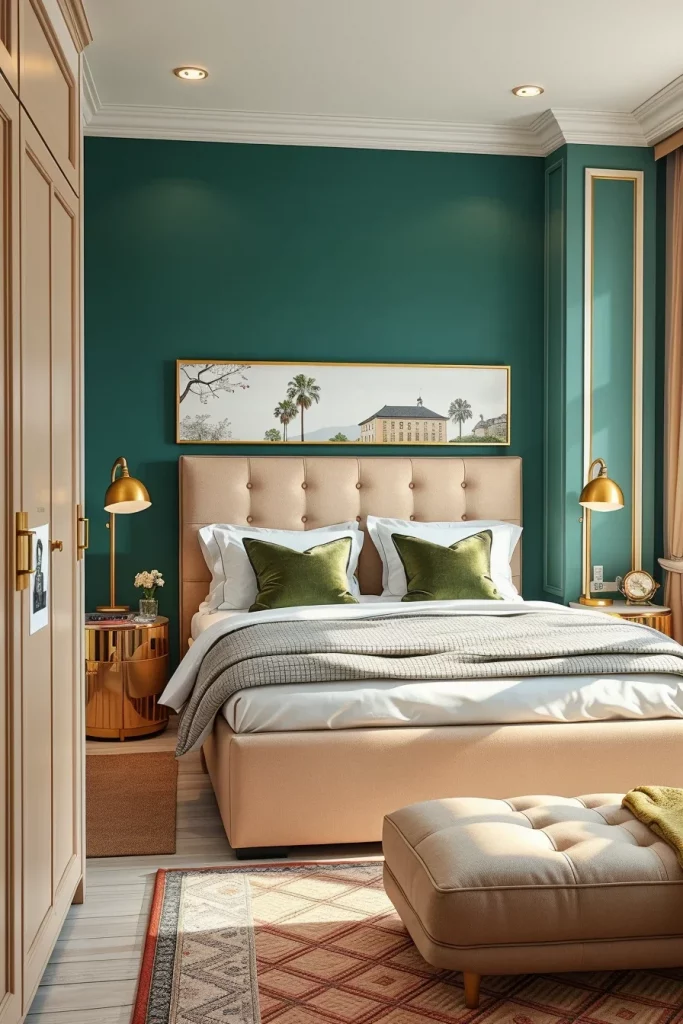
Personally, I believe this palette works best for homeowners who appreciate dramatic yet balanced interiors. House Beautiful has frequently recommended combining saturated colors with reflective metallic finishes to maintain brightness, and I have consistently seen this strategy create beautiful results in compact bedrooms.
To enhance this design further, I would include dimmable layered lighting, ceiling-height curtains in a soft neutral fabric, and natural wood flooring that balances the cooler tones with organic warmth.
Soft Sky Blue With Cloud White Serenity
Soft sky blue remains one of my favorite colors for making a small bedroom feel brighter and more spacious. The gentle blue reflects natural daylight beautifully while creating a peaceful environment that encourages relaxation. Paired with cloud white finishes, the palette produces a fresh and timeless appearance that works in both contemporary and transitional interiors.
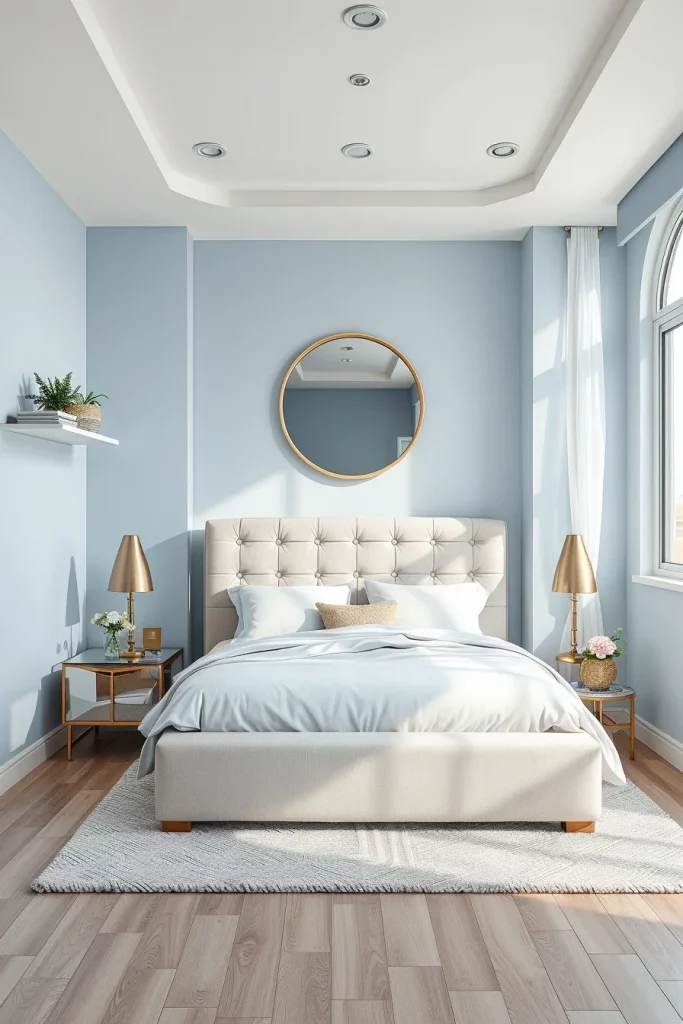
I usually combine sky blue walls with a white upholstered bed, floating bedside shelves, and streamlined storage that maintains clean sightlines throughout the room. Crisp white bedding layered with soft blue throws creates visual comfort, while glass table lamps, sheer curtains, and subtle brushed metal accents preserve the light and airy atmosphere. Rounded mirrors and minimal artwork contribute decorative interest without making the room feel crowded.
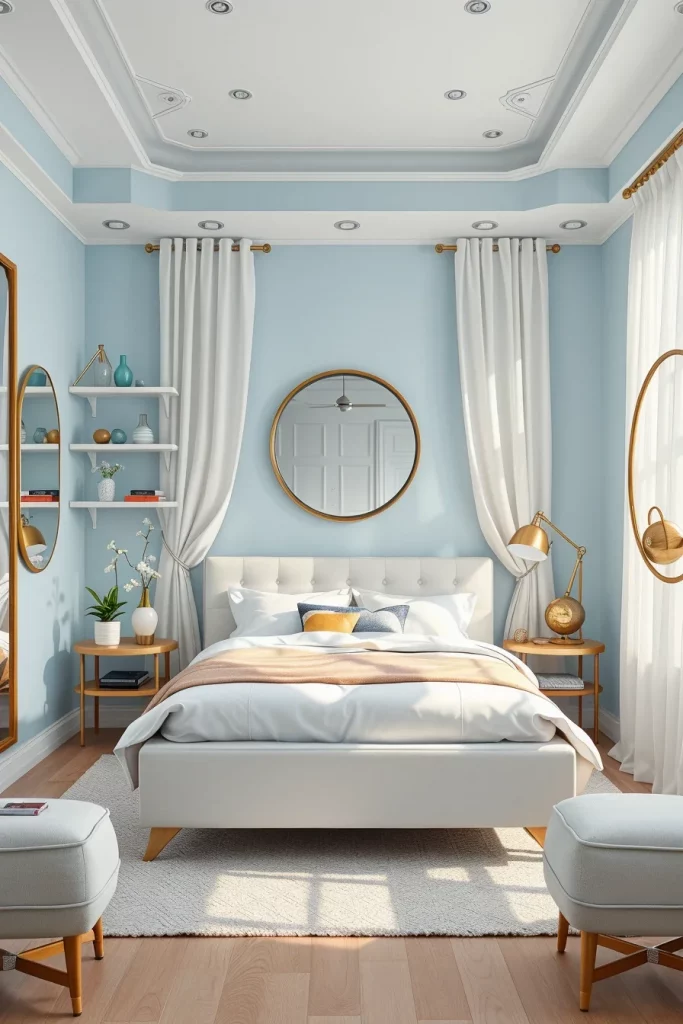
In my experience, this palette is especially effective in bedrooms with limited square footage because it visually expands the walls and ceiling. Better Homes & Gardens often emphasizes the psychological comfort associated with soft blue interiors, and I have found that these calming tones consistently create restful spaces suitable for everyday living.
I would complete this room with integrated wardrobe lighting, a textured ivory rug, and discreet built-in shelving that provides additional storage while maintaining the clean aesthetic.
Layered Earth Tone Palette With Unique Modern Character
Layering earth tones is one of the most versatile ways I know to create a bedroom that feels warm, modern, and full of personality. Rather than relying on a single neutral, I combine sand, warm taupe, soft caramel, mushroom gray, and creamy beige to build depth through subtle variation. The result is a room that feels inviting, sophisticated, and visually dynamic without overwhelming its limited dimensions.
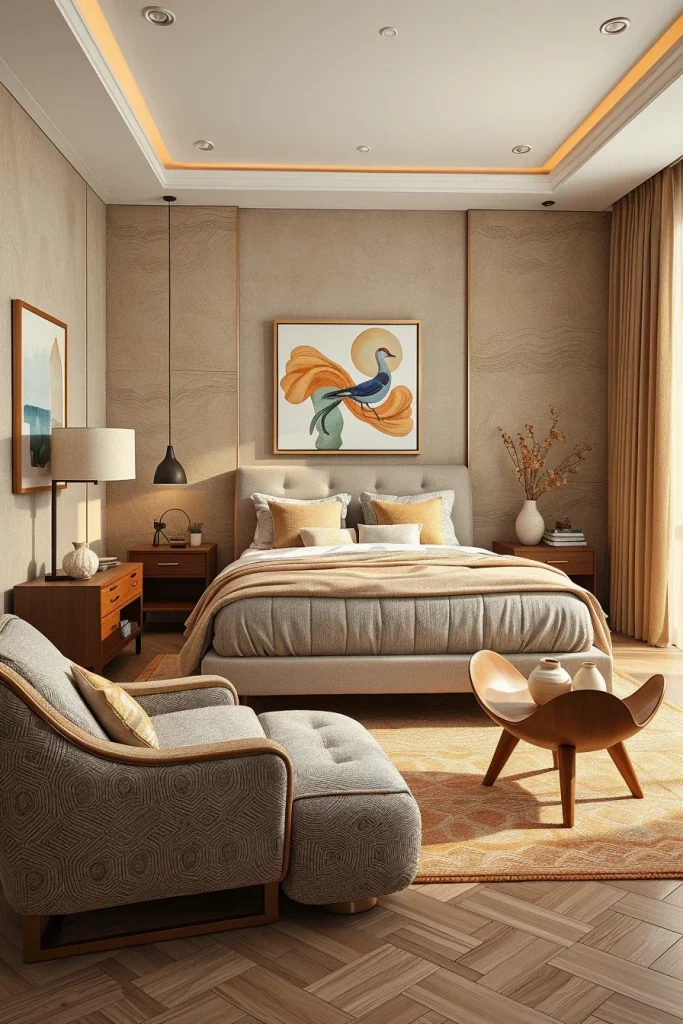
When furnishing this interior, I choose a platform bed with textured upholstery, floating wood nightstands, and minimalist built-in wardrobes finished in complementary neutral shades. Linen bedding, boucle accent seating, sculptural floor lamps, ceramic accessories, and large abstract artwork introduce texture that enriches the palette. Curved furniture profiles and layered fabrics reinforce the modern aesthetic while ensuring the room remains comfortable and practical for daily use.
I have discovered that layered earth tones remain attractive year after year because they are easy to personalize with seasonal accessories or evolving decorative preferences. Interior designers featured by Veranda frequently recommend building interiors around timeless neutral foundations before introducing carefully selected accent materials, and I have found this advice consistently produces balanced, elegant bedrooms.
To complete this design, I would add concealed storage solutions, oversized mirrors that amplify natural light, subtle brass hardware, and architectural wall paneling that provides additional depth while preserving the calm, contemporary atmosphere.
The best small bedroom color palettes combine beautiful colors with thoughtful design to create a room that feels both comfortable and visually spacious. Whether you love soft neutrals, rich earth tones, calming blues, or dramatic contrasts, the right palette can completely transform a compact bedroom. Use these inspiring ideas to create a stylish, personalized space that feels inviting, balanced, and uniquely yours.