
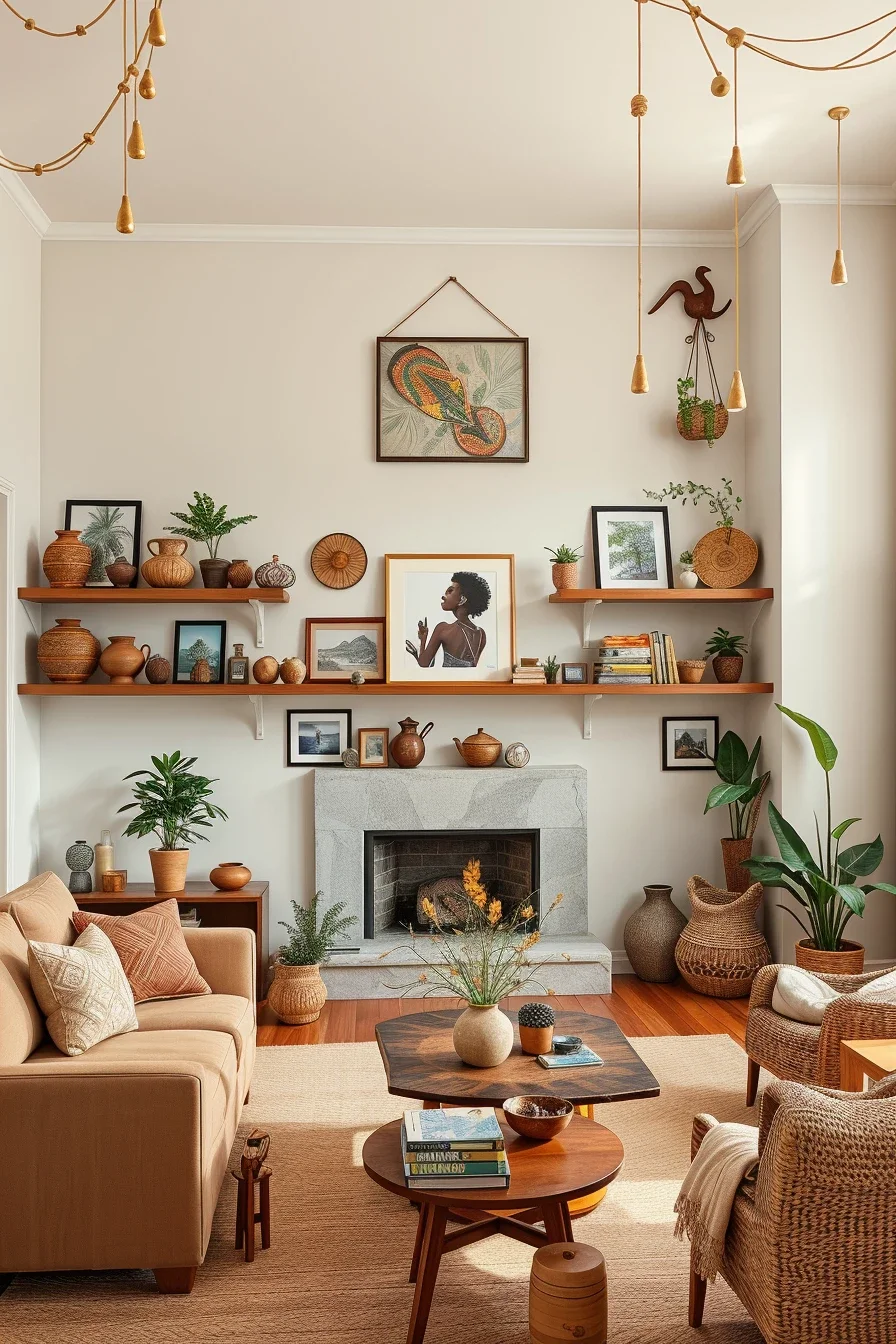
Afrohemian home decor is a captivating design style that blends African-inspired elements with the relaxed, artistic spirit of bohemian living. This unique aesthetic celebrates culture, craftsmanship, natural materials, and personal expression through thoughtfully curated interiors. Rich textures, earthy color palettes, handcrafted accessories, and global influences come together to create spaces that feel warm, inviting, and full of character. Whether you are redesigning an entire home or adding a few statement pieces, Afrohemian decor offers endless opportunities for creativity. The style embraces individuality while honoring traditional artistry and meaningful cultural connections. In this article, you’ll discover inspiring Afrohemian home decor ideas to help you create a beautiful and authentic living environment.
What Defines The Afrohemian Home Decor Style?
When I think about an afrohemian home decor idea, I immediately picture a space that balances cultural storytelling with relaxed bohemian comfort. Afrohemian style combines African-inspired patterns, handcrafted details, earthy colors, and natural materials with the free-spirited nature of bohemian interiors. The result is a home that feels curated, welcoming, and deeply personal. Rather than following strict design rules, this style encourages creativity while honoring craftsmanship and heritage.
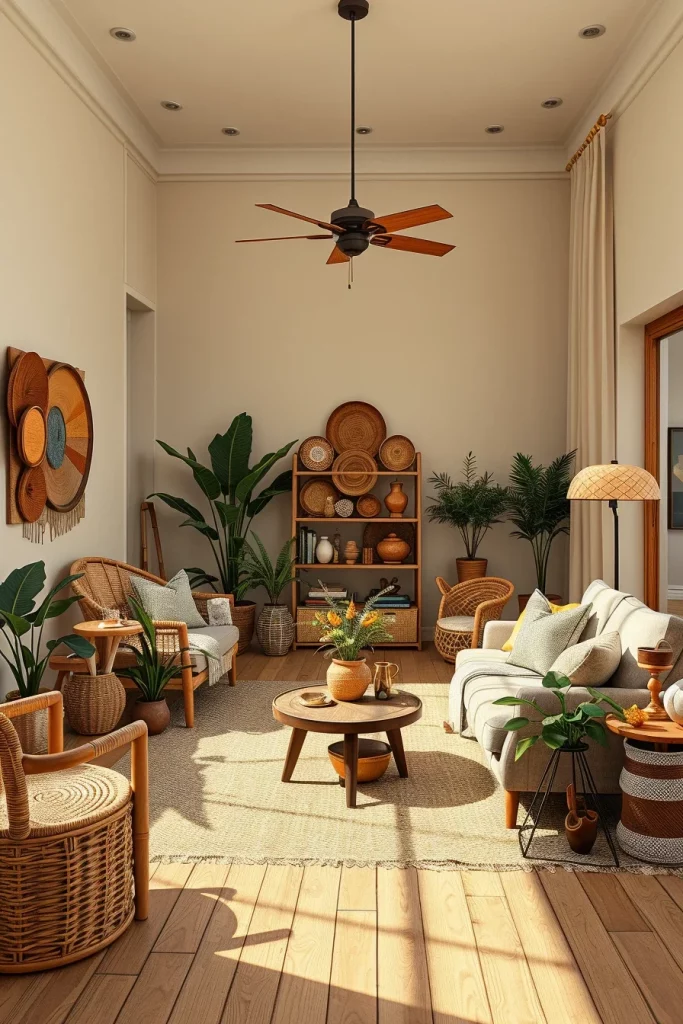
I typically begin with foundational elements such as natural wood furniture, woven textiles, rattan accents, and organic decorative accessories. Low-profile seating, handcrafted coffee tables, textured rugs, and layered lighting help establish a comfortable atmosphere. I find that incorporating handmade objects gives the room authenticity while creating visual interest that mass-produced decor often lacks.
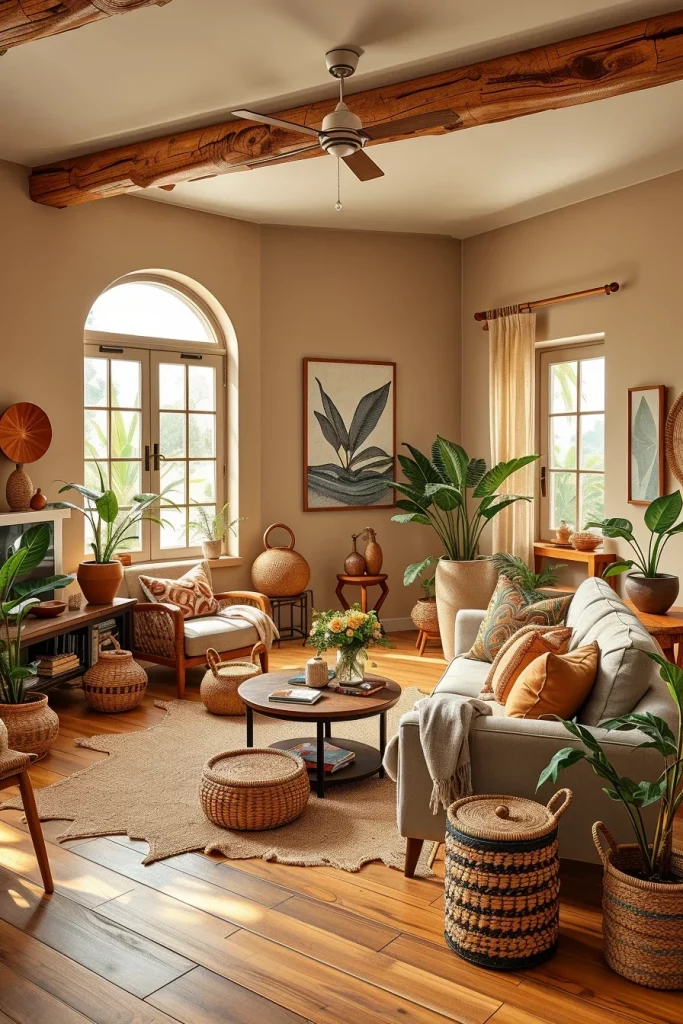
Many interior designers featured in leading publications such as Architectural Digest and Elle Decor emphasize the importance of mixing meaningful pieces rather than filling a room with trends. I agree with this approach because afrohemian interiors are most successful when every item contributes to the story of the space.
To strengthen this design style further, I recommend adding plants, artisan pottery, and collected treasures from local makers. These details help create a lived-in environment that reflects individuality while enhancing the overall warmth of the interior.
The Origins And Cultural Influence Behind Afrohemian Interiors
The roots of afrohemian interiors come from the beautiful intersection of African artistic traditions and modern bohemian design principles. When I create spaces inspired by this aesthetic, I focus on celebrating cultural craftsmanship while adapting it to contemporary living. This design style values heritage, storytelling, and authenticity above fleeting trends.
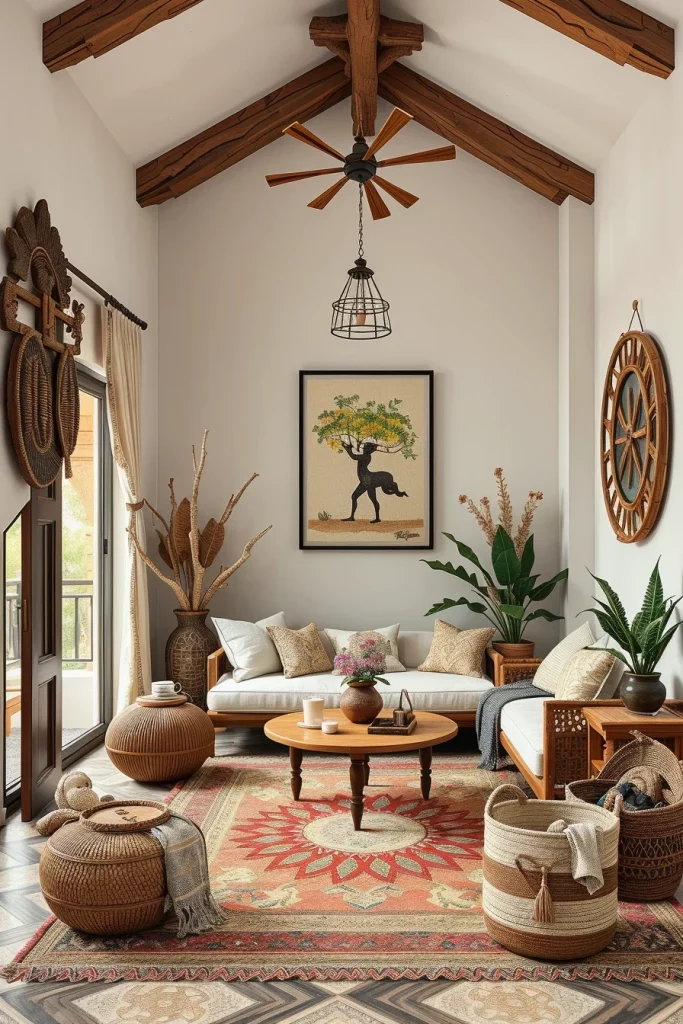
I often incorporate decorative elements that reflect traditional African artistry, including carved wood pieces, handwoven baskets, mud cloth textiles, and sculptural accessories. These pieces introduce history and meaning into a room while maintaining a modern appearance. Carefully selected artifacts can become focal points that spark conversation and appreciation for global craftsmanship.
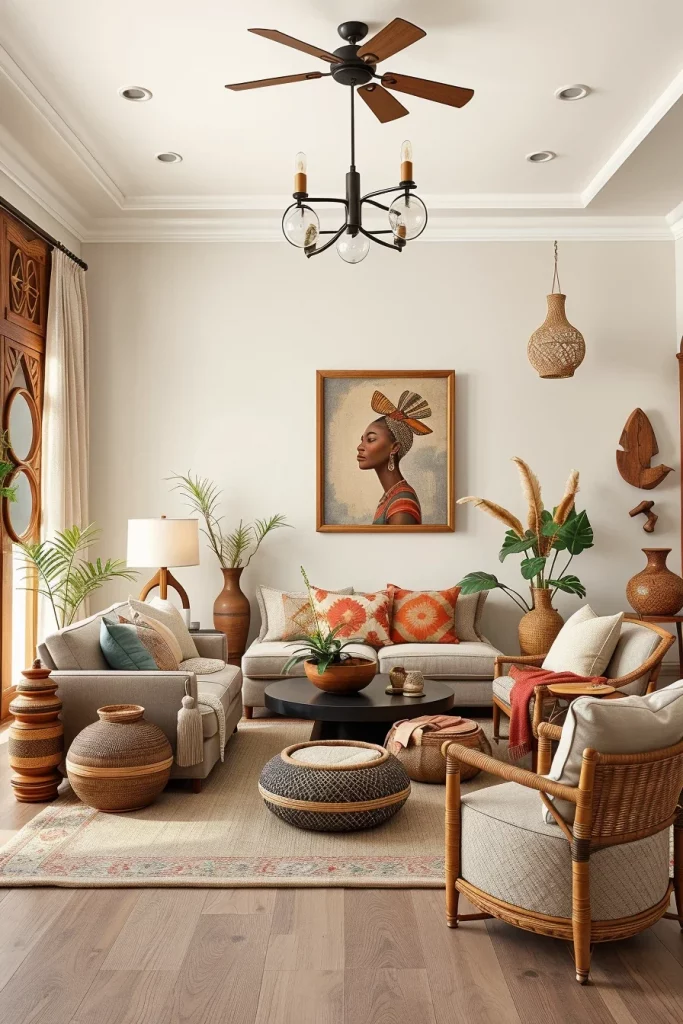
From my experience, the most successful afrohemian interiors avoid stereotypes and instead respectfully showcase handmade artistry. Many design experts encourage homeowners to learn the origins of decorative pieces before incorporating them into a space. I believe this creates a stronger connection between the homeowner and the design itself.
To deepen the cultural influence, I suggest including books about African art, framed photography, and locally sourced handmade decor. These additions create a richer narrative while maintaining visual harmony throughout the home.
Creating A Warm Earth-Toned Color Palette
A warm earth-toned palette serves as the foundation of many successful afrohemian home decor idea spaces. I often start with shades inspired by nature, including terracotta, clay, sand, caramel, chocolate brown, olive green, and soft ivory. These colors create a calming backdrop while allowing decorative accents to stand out naturally.
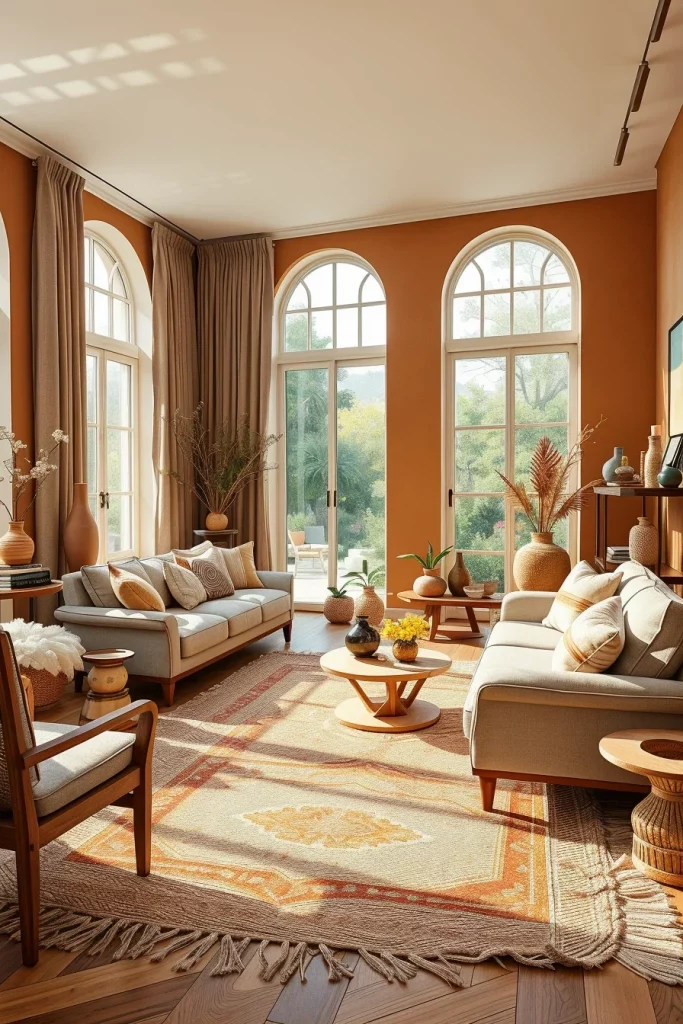
When selecting furniture and finishes, I prefer natural wood tones paired with textured fabrics in muted colors. Linen sofas, leather accent chairs, woven rugs, and ceramic accessories all contribute to the layered appearance that defines afrohemian interiors. The color palette should feel balanced and cohesive without becoming overly coordinated.
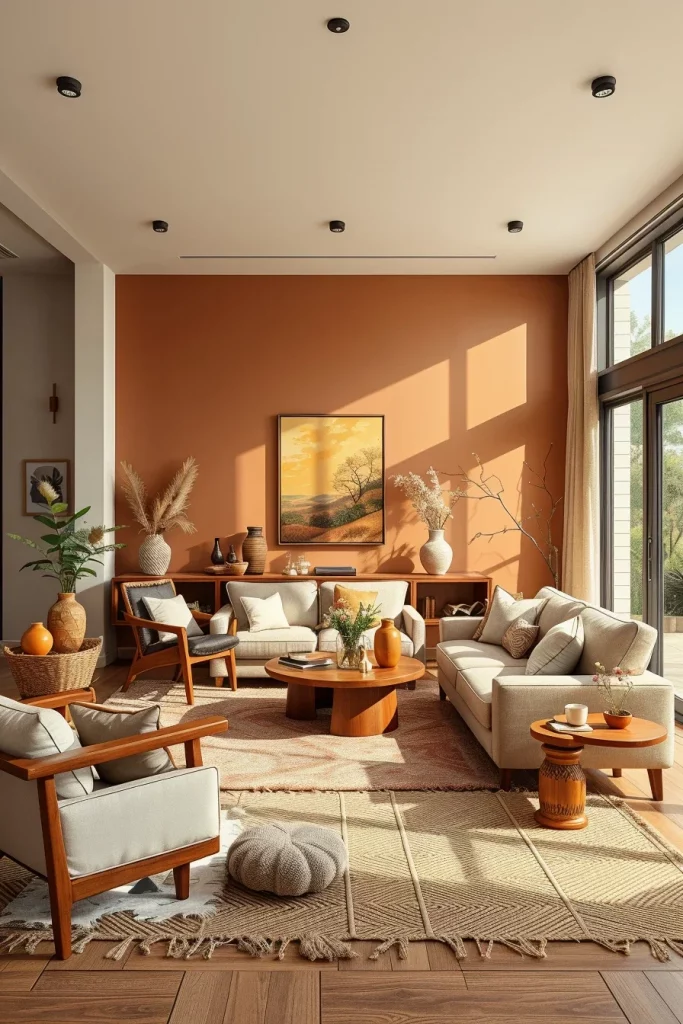
I have found that warm neutrals make it easier to introduce bold cultural patterns without overwhelming the room. Design professionals frequently recommend using neutral walls as a canvas for textiles and handcrafted decor, and I have seen this strategy work exceptionally well in both large and small spaces.
For additional depth, I recommend incorporating matte black accents, aged brass fixtures, and greenery. These elements add contrast while preserving the natural warmth that makes afrohemian design so inviting.
Layering Natural Textures For An Authentic Afrohemian Feel
Texture plays a critical role in every afrohemian home decor idea. Whenever I design within this style, I focus on combining multiple natural materials to create a rich sensory experience. Layering textures makes a room feel dynamic, comfortable, and visually interesting even when the color palette remains relatively simple.
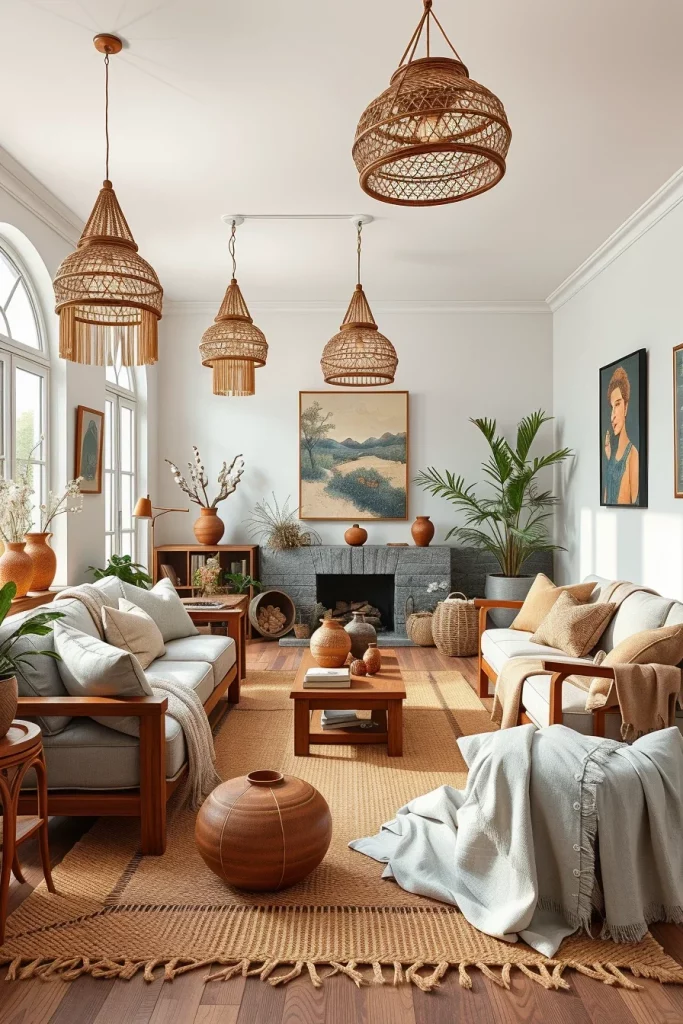
I usually mix jute rugs, linen upholstery, woven baskets, wooden furniture, clay pottery, and cotton throws throughout the space. Each material contributes a unique quality that enhances the overall design. Textured walls, handcrafted ceramics, and woven pendant lights further strengthen the organic atmosphere.
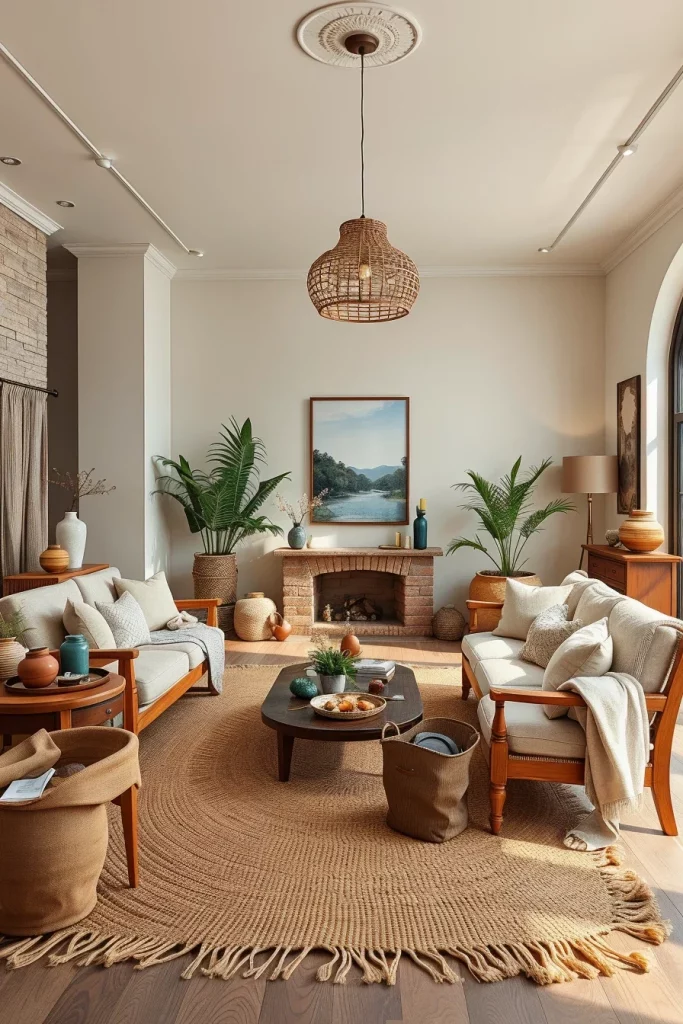
From my perspective, texture often has a greater impact than color when creating an authentic afrohemian interior. Many respected designers emphasize that tactile materials help establish warmth and character, and I fully agree with this principle. A thoughtfully layered room feels collected over time rather than purchased all at once.
If something seems missing, I recommend adding oversized floor cushions, macramé accents, or natural fiber window treatments. These details create additional visual depth while maintaining the relaxed nature of the design.
Choosing Handmade Furniture With Character
Handmade furniture serves as one of the most important elements in afrohemian interiors. I always prioritize pieces that showcase craftsmanship, natural materials, and unique details. Unlike factory-produced furniture, handmade items introduce individuality and authenticity into the space.
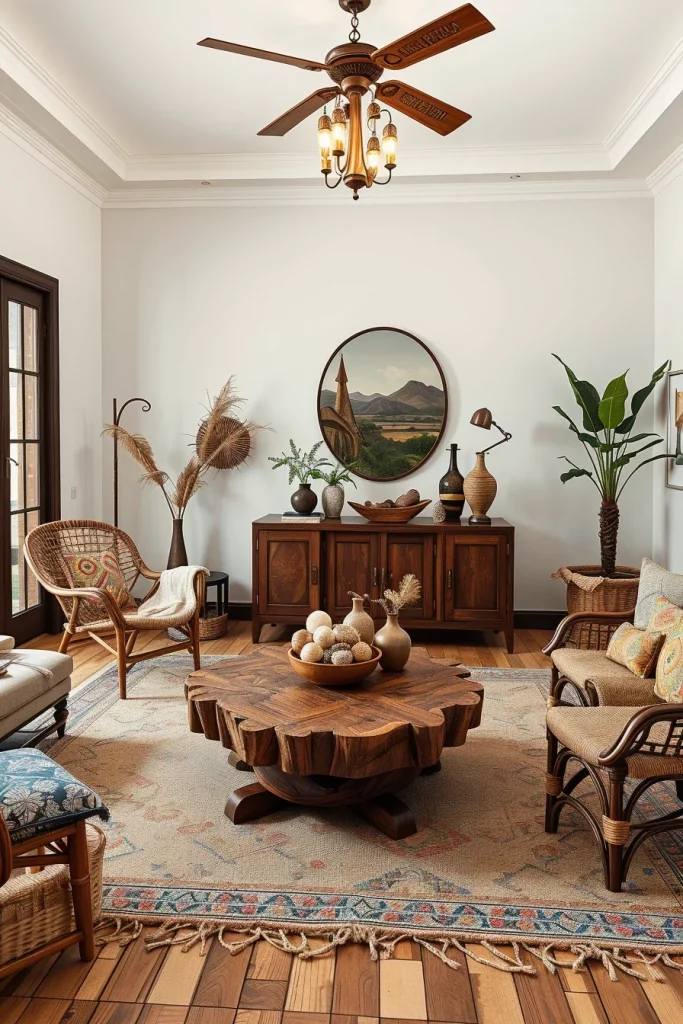
I often select solid wood coffee tables, hand-carved sideboards, woven accent chairs, and artisan-made benches. These furnishings become statement pieces while supporting the overall design philosophy. Their imperfections and unique finishes contribute to the warmth and personality that define afrohemian spaces.
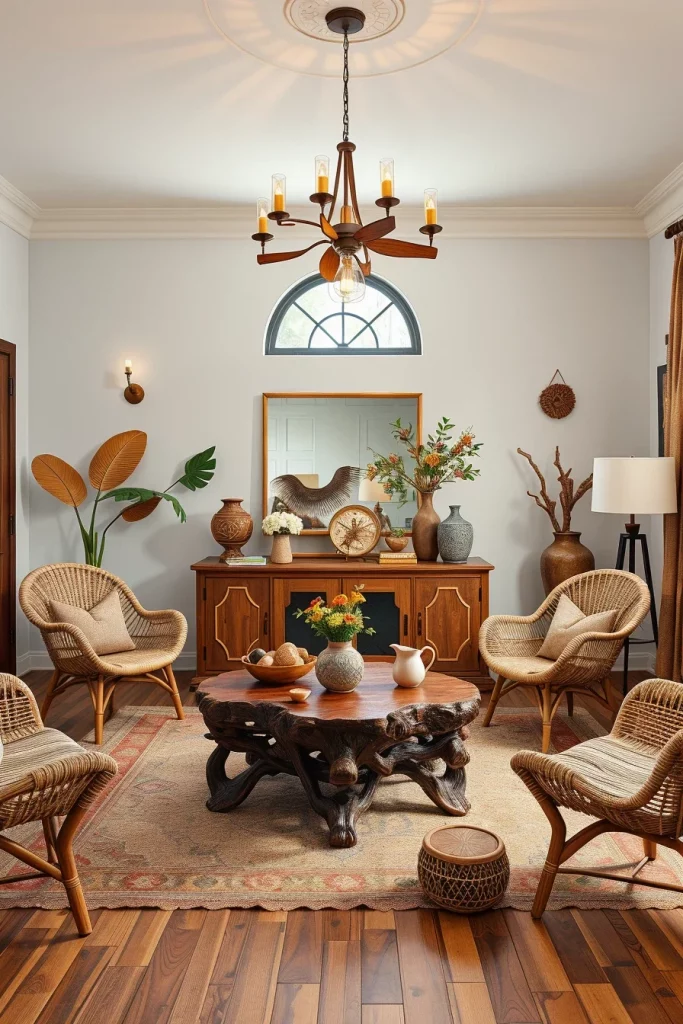
In my experience, investing in a few high-quality handcrafted items creates a stronger visual impact than filling a room with numerous inexpensive pieces. Many interior design experts advocate for buying fewer but better furnishings, and this approach aligns perfectly with afrohemian decorating principles.
To complete the arrangement, I suggest incorporating handmade lighting fixtures, artisan ceramics, and vintage decorative objects. These additions reinforce the handcrafted aesthetic while ensuring the room feels cohesive and thoughtfully curated.
Decorating With Woven Baskets And Artisan Crafts
One of my favorite ways to enhance an afrohemian home decor idea is through the use of woven baskets and artisan crafts. These decorative elements bring texture, authenticity, and cultural richness into a room without overwhelming the overall design. Woven pieces can be displayed on walls, shelves, tabletops, or even used for practical storage, making them both beautiful and functional.
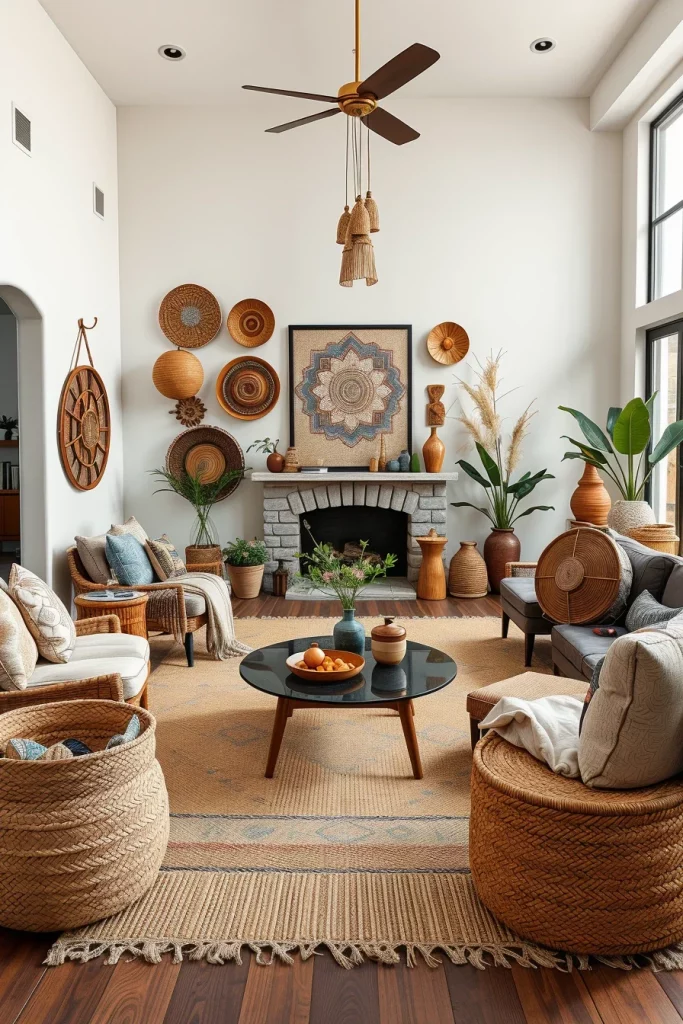
I often choose handwoven baskets in varying sizes and patterns to create visual interest throughout a space. Large floor baskets can store blankets and pillows, while smaller versions work well as decorative accents on coffee tables and consoles. Artisan-crafted pottery, carved wooden sculptures, and handmade trays complement the baskets and reinforce the handcrafted nature of the design.
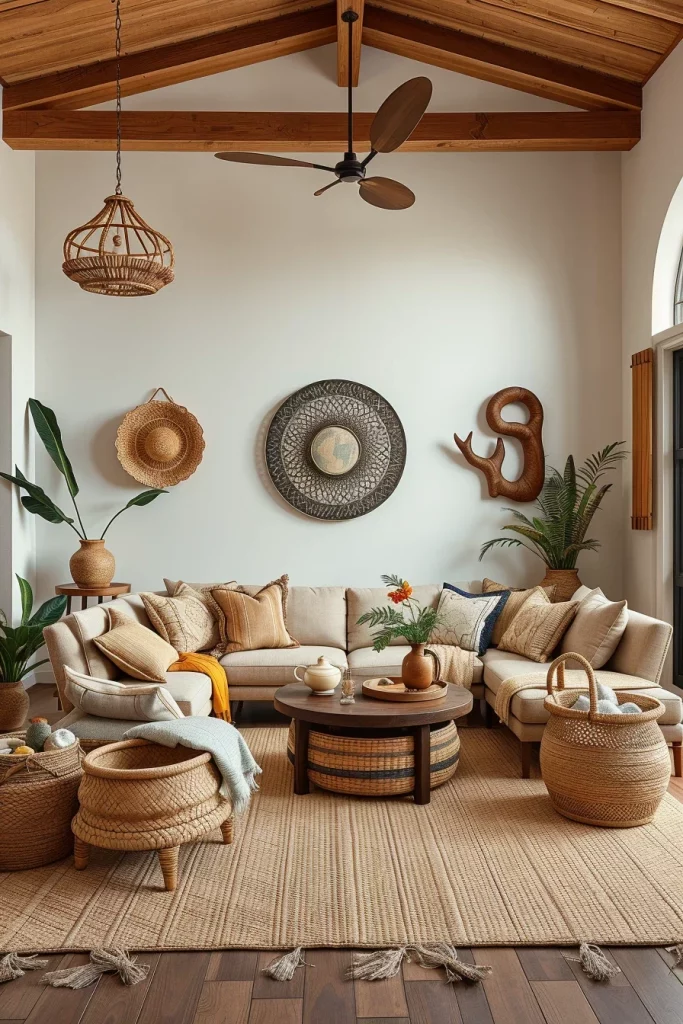
From my experience, the key is to curate rather than clutter. Many interior designers recommend grouping handmade objects in odd numbers and varying their heights to create balanced arrangements. I find that this approach highlights the craftsmanship of each piece while maintaining a clean and sophisticated appearance.
To complete this look, I recommend incorporating natural materials such as seagrass, raffia, and cane. These additions strengthen the organic character of the room and help create a cohesive afrohemian environment.
Incorporating African-Inspired Wall Art Into Modern Spaces
Wall art is one of the most effective ways to introduce personality into an afrohemian interior. When designing these spaces, I focus on artwork that celebrates culture, craftsmanship, and storytelling while blending seamlessly with contemporary decor. African-inspired art can add depth, meaning, and visual impact without dominating the room.
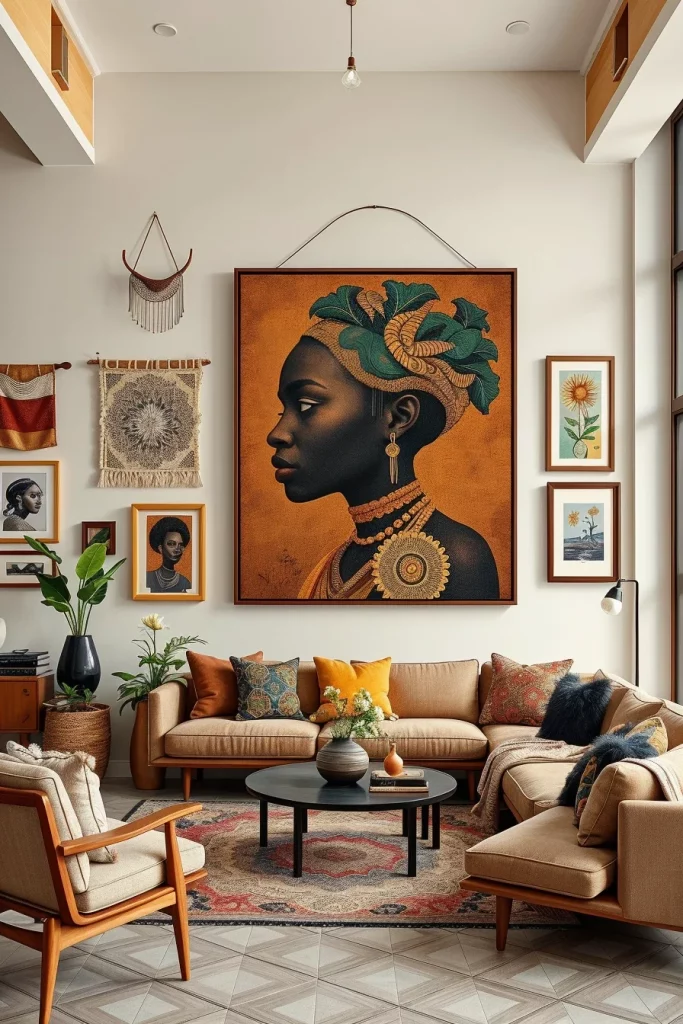
I often incorporate large-scale framed prints, abstract paintings, textile wall hangings, and gallery-style collections featuring earthy colors and bold geometric patterns. These pieces work beautifully above sofas, sideboards, and beds, creating strong focal points that anchor the room. Natural wood frames and black metal accents help maintain a modern aesthetic.
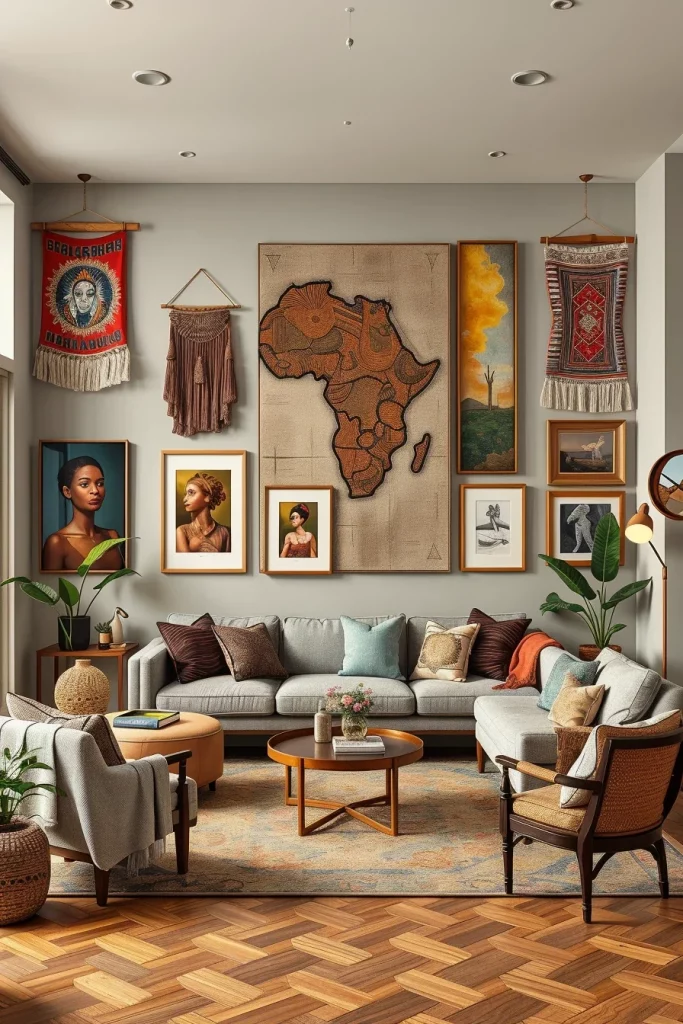
I have found that oversized artwork often creates a more sophisticated result than numerous small pieces scattered throughout the room. Leading design publications frequently suggest selecting artwork that resonates personally rather than simply matching the color palette, and I strongly support this philosophy.
To further enhance the display, I suggest layering wall art with woven baskets, sculptural wall decor, or floating shelves showcasing artisan objects. This creates a more dynamic and collected appearance.
Mixing Vintage Finds With Contemporary Decor
The beauty of an afrohemian home decor idea lies in its ability to blend old and new elements effortlessly. I often combine vintage treasures with modern furnishings to create spaces that feel curated over time rather than decorated all at once. This contrast adds character and prevents the interior from appearing overly polished.
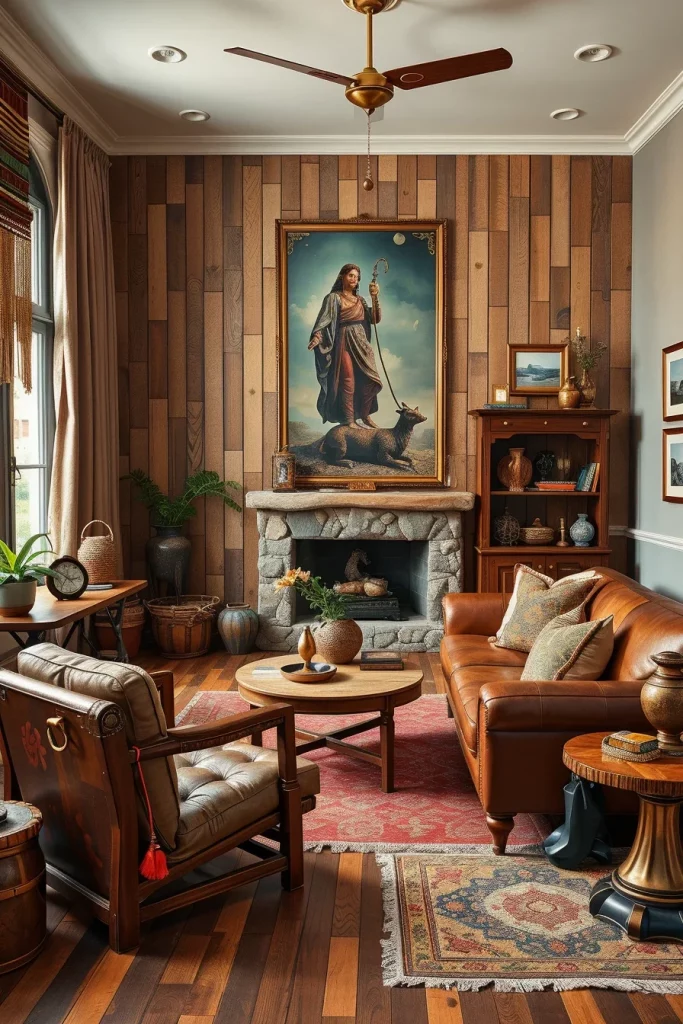
I like pairing contemporary sofas with antique wooden chests, vintage side tables, or aged leather chairs. The clean lines of modern furniture provide balance, while vintage pieces introduce warmth and history. Decorative accessories such as brass candlesticks, weathered pottery, and reclaimed wood objects further enhance the layered aesthetic.
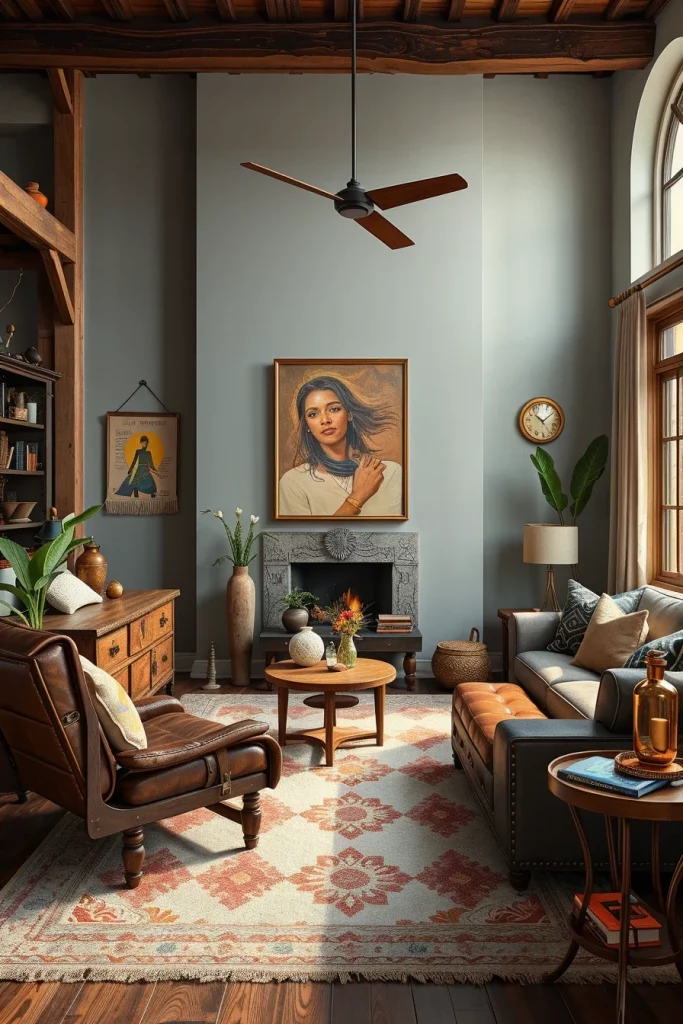
In my projects, vintage items often become the most memorable features in the room. Design experts frequently encourage homeowners to mix eras because it creates visual tension and uniqueness. I have consistently found that rooms with a combination of styles feel more authentic and inviting.
If additional balance is needed, I recommend using modern lighting fixtures, neutral wall colors, and simple textiles to ensure that vintage elements remain the focal point without overwhelming the space.
Using Patterned Textiles To Add Depth And Personality
Textiles play a major role in creating a successful afrohemian interior. Whenever I design within this style, I use fabrics to introduce color, pattern, and comfort while reinforcing the room’s cultural influences. Patterned textiles can transform even the simplest space into one that feels layered and expressive.
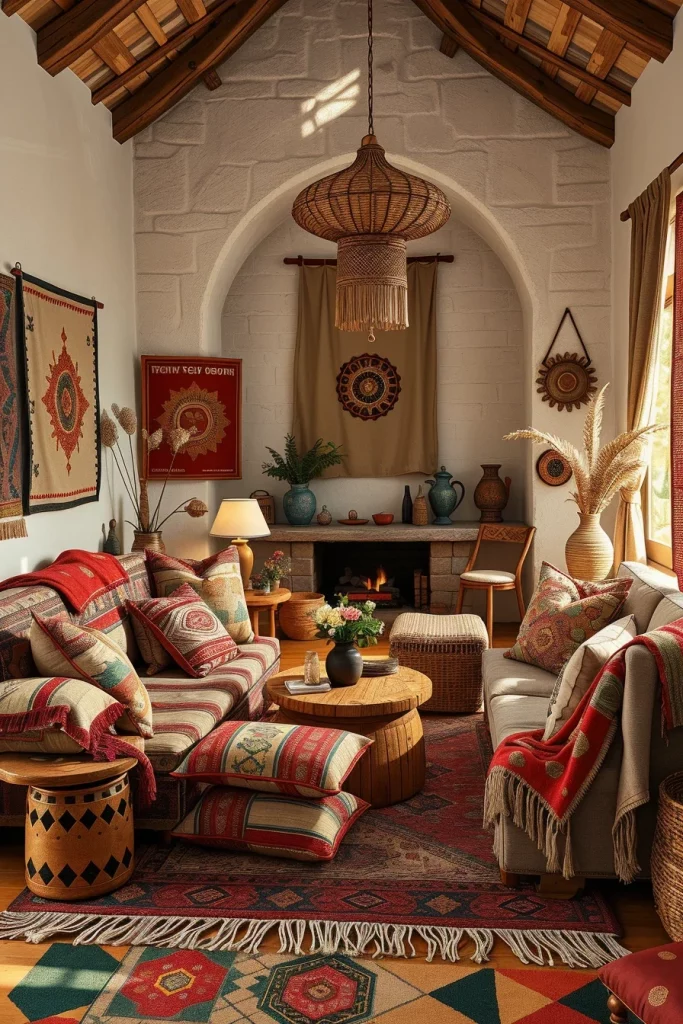
I frequently incorporate mud cloth pillows, woven throws, patterned area rugs, and textured upholstery fabrics. These elements provide visual movement and help connect different areas of the room. Mixing geometric motifs with organic textures creates the balanced contrast that is characteristic of afrohemian design.
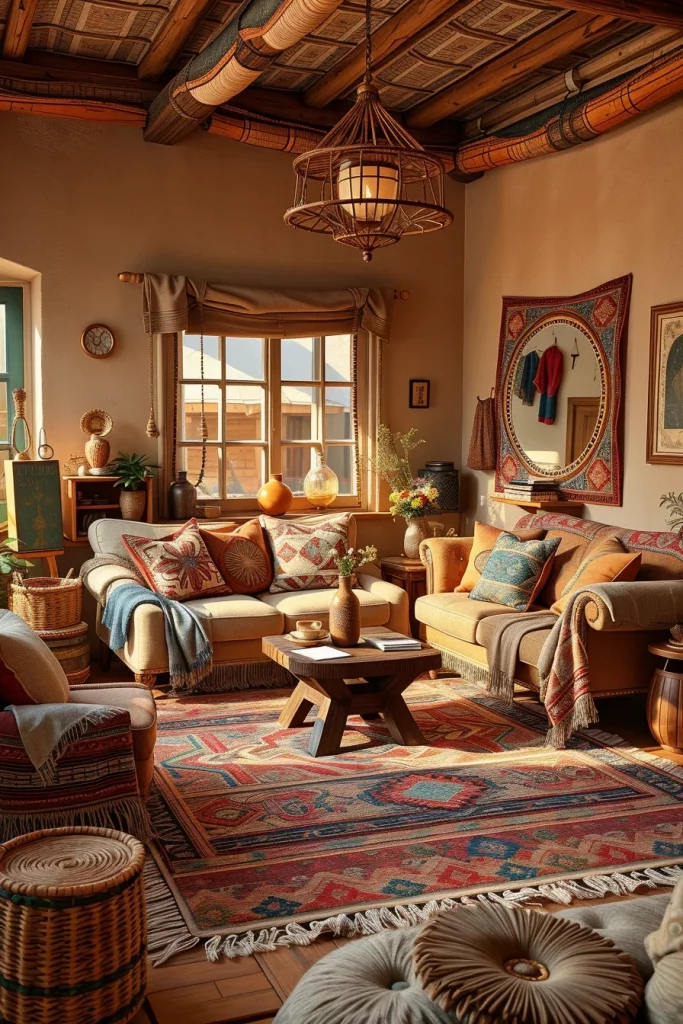
From my perspective, textiles are one of the easiest ways to personalize a space. Many designers recommend varying the scale of patterns rather than repeating identical motifs throughout a room. I find that combining large and small patterns creates a more sophisticated and natural result.
To enhance the overall effect, I suggest including floor cushions, upholstered benches, and layered bedding featuring complementary patterns and earthy colors. These additions create extra comfort while strengthening the design narrative.
Styling A Cozy Afrohemian Living Room Retreat
Creating a cozy living room retreat is often the ultimate goal of an afrohemian home decor idea. I focus on designing a space that feels warm, welcoming, and highly functional while showcasing meaningful decor and handcrafted details. Comfort should be just as important as aesthetics.
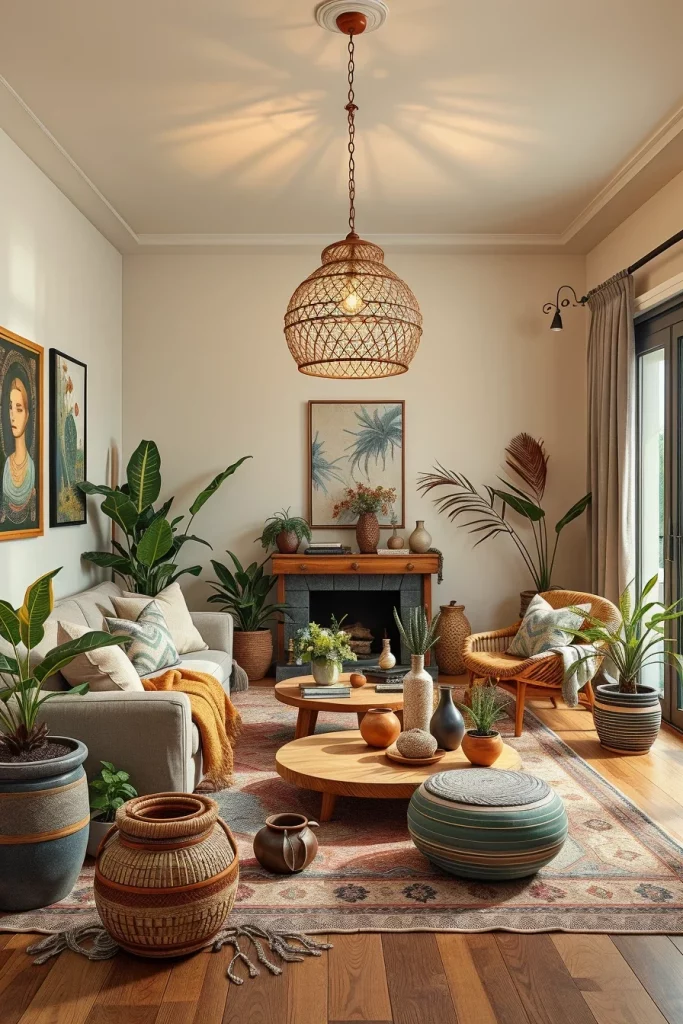
I typically start with a comfortable sofa upholstered in linen or textured fabric, then add accent chairs, layered rugs, woven lighting, and natural wood furniture. Decorative baskets, indoor plants, artisan pottery, and patterned cushions help create a relaxed atmosphere while adding visual depth. Soft lighting from table lamps and pendant fixtures enhances the room’s inviting character.
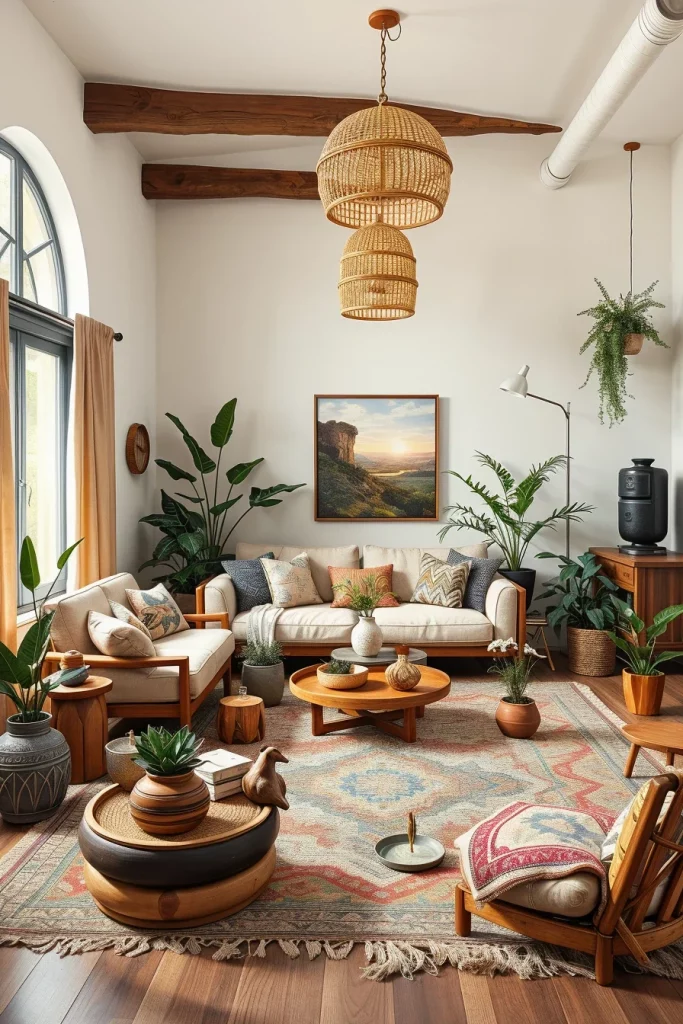
In my experience, the most successful afrohemian living rooms are designed for everyday living rather than display. Industry experts often emphasize the importance of creating spaces that encourage gathering and relaxation, and I fully agree with this principle. A room should feel beautiful, but it should also support the way people actually live.
To complete the retreat, I recommend adding books, personal collections, and meaningful handcrafted objects. These finishing touches ensure the room feels authentic, lived-in, and uniquely personal.
Bringing Nature Indoors With Lush Greenery
I find that one of the most effective ways to embrace an afrohemian home decor idea is by introducing abundant greenery throughout the home. Large indoor plants instantly soften architectural lines, add visual movement, and create a connection with nature. Whether placed in living rooms, bedrooms, or entryways, plants help establish the relaxed atmosphere that defines Afrohemian interiors. I often recommend mixing various plant heights and leaf shapes to create depth and visual interest.
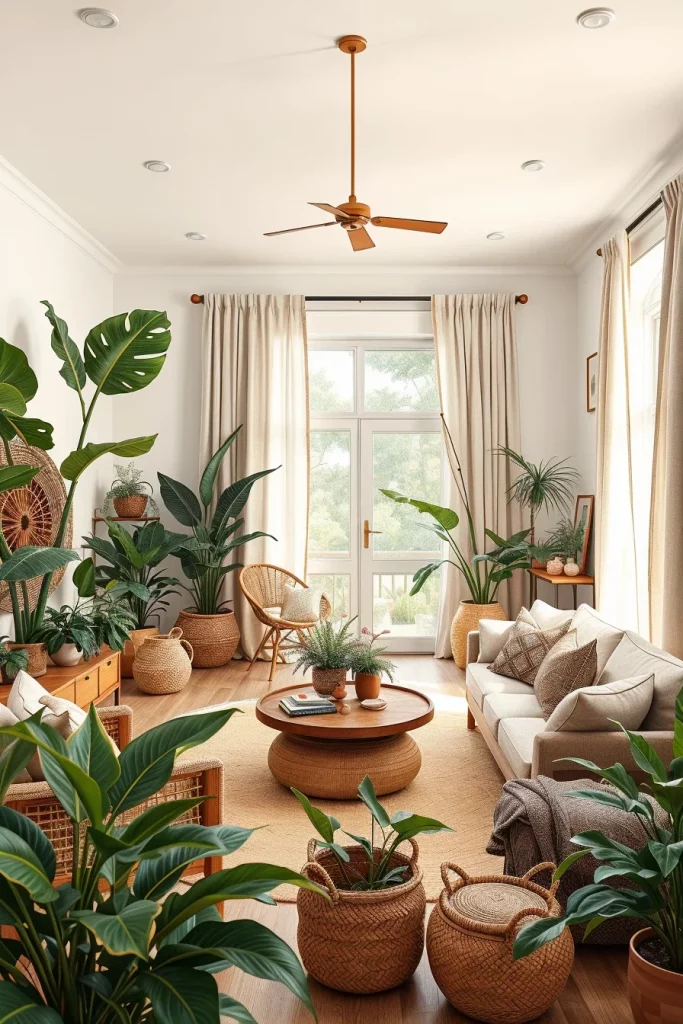
When designing this type of space, I like to incorporate fiddle leaf figs, bird of paradise plants, monstera, snake plants, and trailing pothos. These plants pair beautifully with woven baskets, handcrafted ceramic planters, and wooden plant stands. Natural materials such as jute, rattan, and bamboo complement the greenery while reinforcing the earthy character that makes afrohemian home decor idea spaces feel welcoming and balanced.
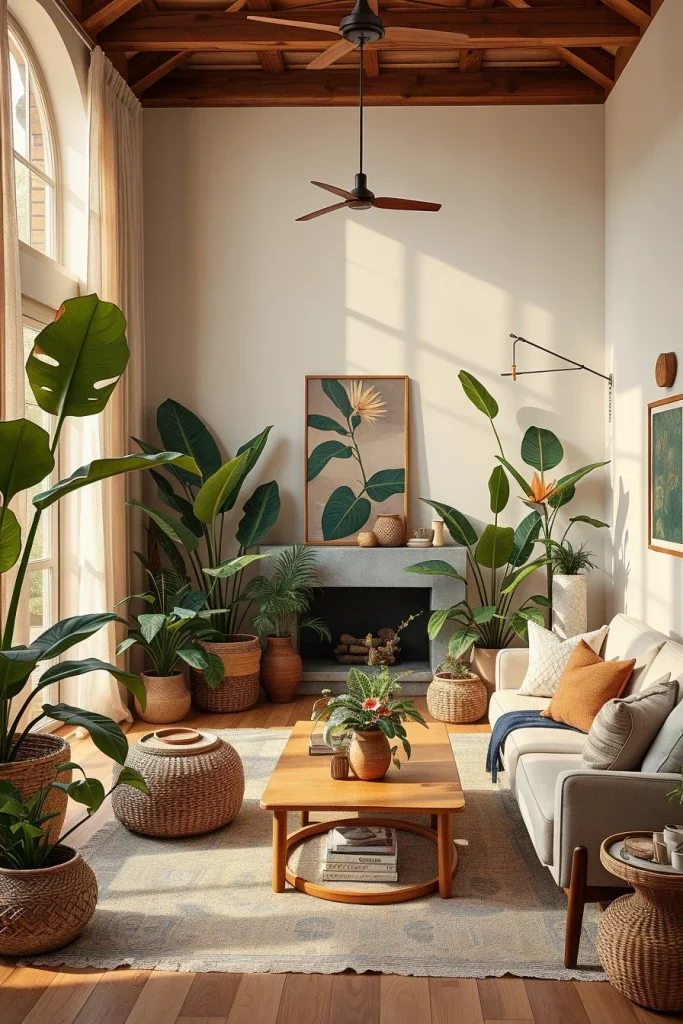
In my experience, designers frequently emphasize the importance of biophilic design, which focuses on strengthening the relationship between people and nature. Publications such as Architectural Digest often highlight how greenery improves both aesthetics and overall well-being. I have found that carefully selected plants can transform even a simple room into a vibrant retreat.
To complete this look, I would add natural linen curtains, textured wall hangings, and earthy color palettes inspired by African landscapes. These details help create a cohesive environment where greenery feels like an intentional part of the design rather than an afterthought.
Statement Lighting Ideas For Afrohemian Interiors
Lighting plays a major role in defining the mood of an Afrohemian home. I always view lighting as both a functional necessity and a decorative statement. Oversized woven pendants, sculptural chandeliers, and handcrafted lanterns can become focal points while reinforcing the artistic nature of the interior. The right lighting helps highlight textures, artwork, and layered decor throughout the room.
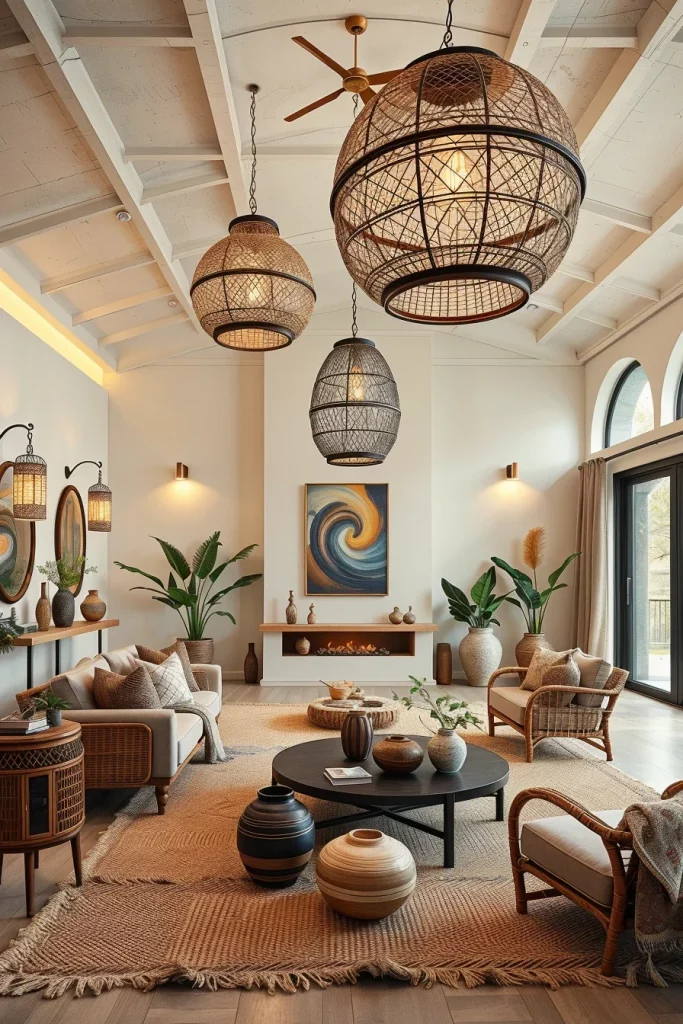
I often recommend fixtures made from natural fibers, handwoven grasses, rattan, cane, and aged metals. These materials introduce authenticity and texture while maintaining a relaxed atmosphere. Floor lamps with woven shades, table lamps featuring ceramic bases, and pendant lights suspended above seating areas help create layers of illumination that make the space feel warm and inviting.
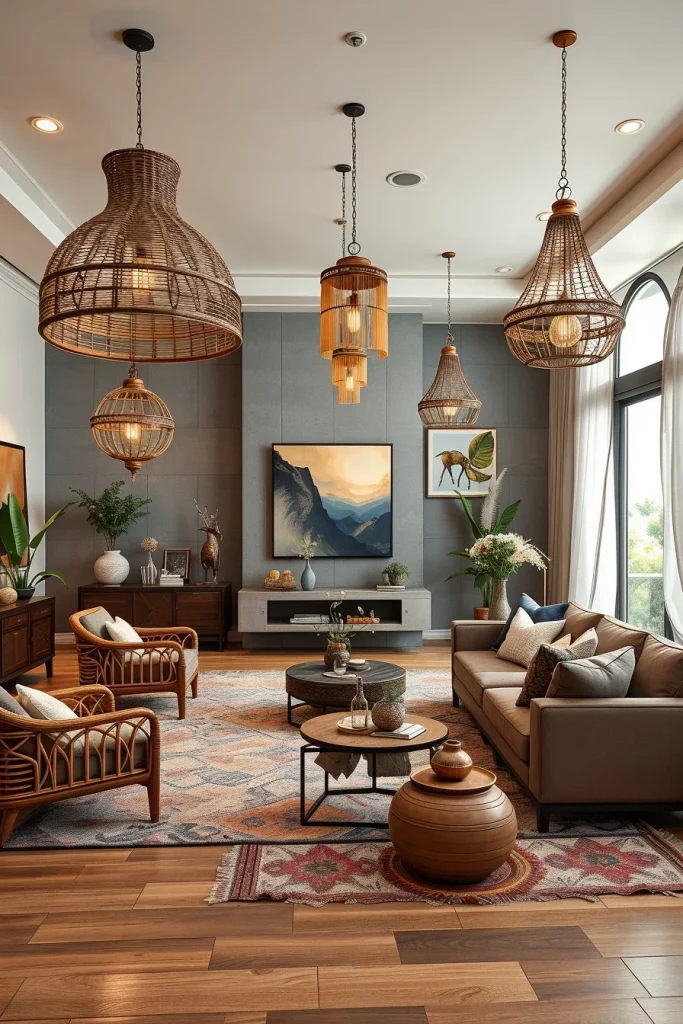
Personally, I prefer combining ambient, task, and accent lighting to achieve a balanced result. Many professional designers featured in Elle Decor suggest using multiple light sources instead of relying on a single ceiling fixture. I have found that this approach creates depth and allows decorative elements to shine throughout the day and evening.
To further enhance the space, I would incorporate candles, textured lamp shades, and dimmer controls. These additions provide flexibility and help create the cozy ambiance that many homeowners seek when exploring an afrohemian home decor idea.
Creating A Relaxed Afrohemian Bedroom Sanctuary
A bedroom designed around an afrohemian home decor idea should feel calm, layered, and restorative. I focus on creating an environment that encourages relaxation while celebrating individuality and culture. Soft textiles, earthy colors, and natural materials work together to establish a peaceful retreat that remains visually interesting.
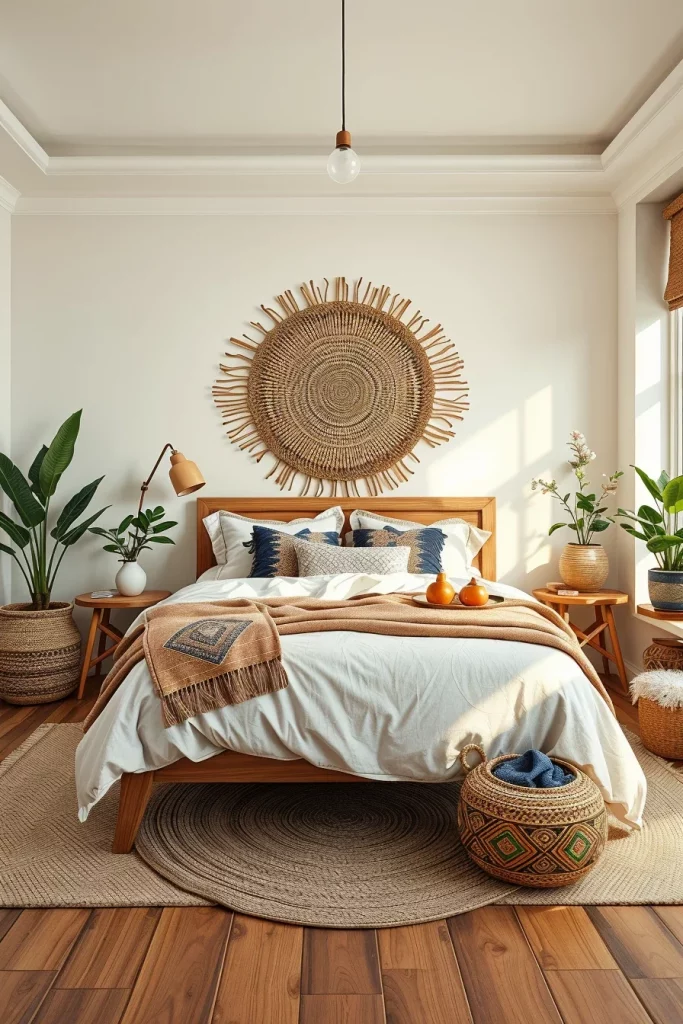
I typically begin with a low-profile wooden bed frame, layered bedding, textured throws, and decorative pillows featuring African-inspired patterns. Woven baskets, handcrafted side tables, and natural fiber rugs add warmth without overwhelming the space. Wall decor may include woven art, framed textiles, or meaningful cultural pieces that reflect the homeowner’s personality.
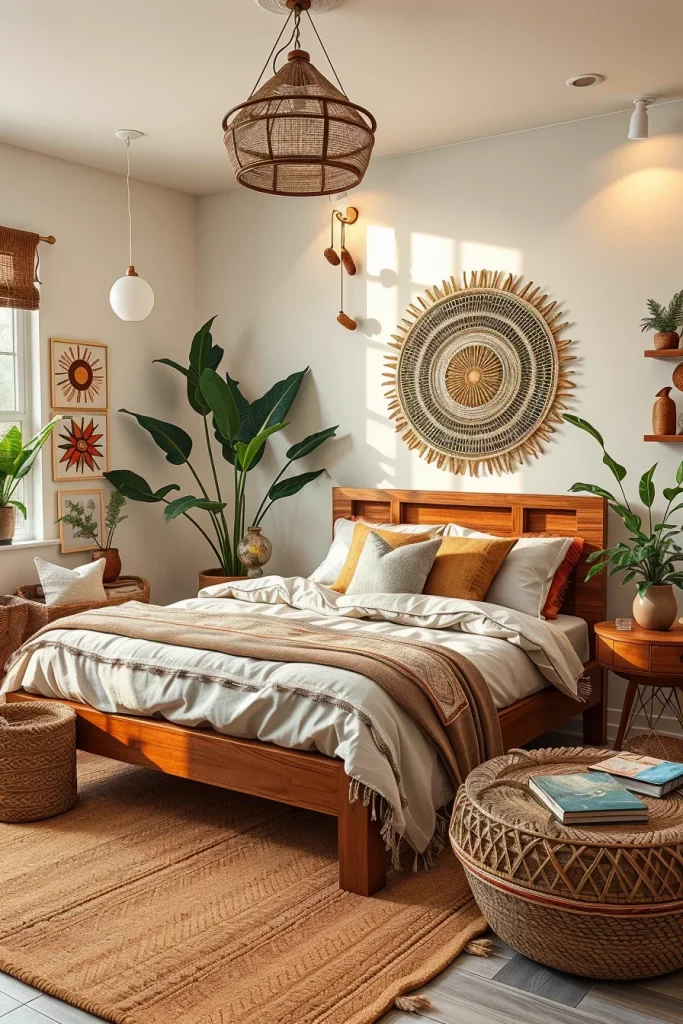
From my perspective, comfort should always remain a priority. I appreciate how many interior designers encourage mixing meaningful objects with practical furnishings. This approach creates bedrooms that feel collected over time rather than professionally staged. I have found that personal artifacts often bring the most character to Afrohemian spaces.
For additional depth, I would include soft lighting, indoor plants, and subtle scent elements such as candles or diffusers. These details contribute to a sanctuary-like atmosphere and elevate the overall experience of the room.
Decorating With Rattan, Cane, And Bamboo Accents
Natural materials are fundamental to an afrohemian home decor idea, and rattan, cane, and bamboo are among my favorite choices. These materials introduce texture, warmth, and craftsmanship while maintaining a light and airy appearance. They work exceptionally well in both large and small spaces because they add character without creating visual heaviness.
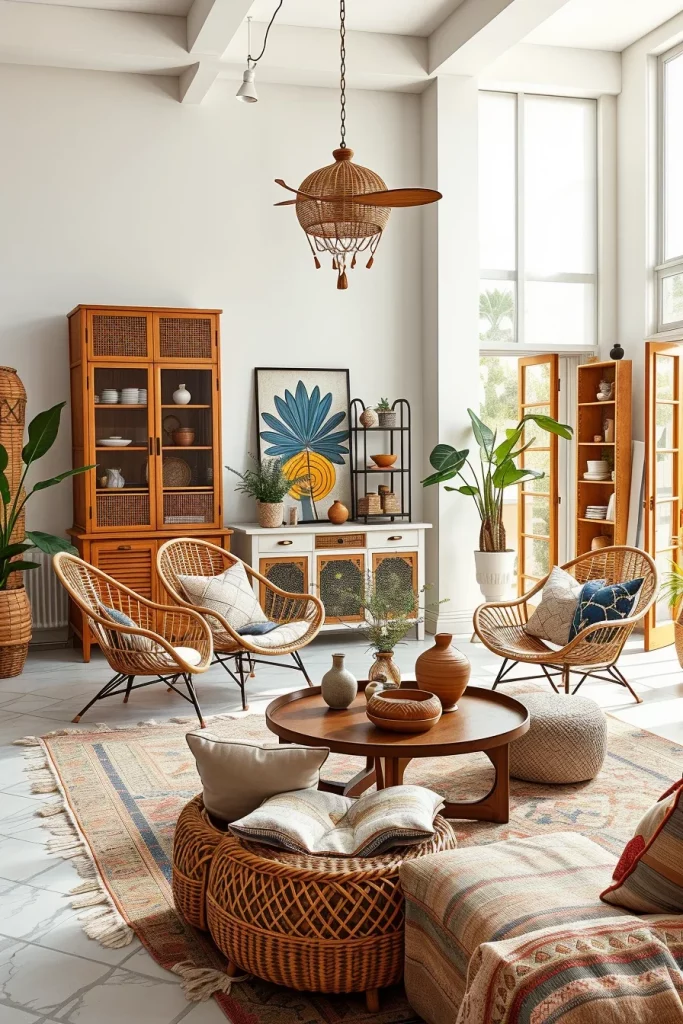
I often incorporate rattan chairs, cane-front cabinets, bamboo shelving, woven coffee tables, and decorative baskets. These pieces provide storage and functionality while supporting the organic aesthetic associated with Afrohemian interiors. Their natural tones also complement a wide range of color palettes, from neutral earth tones to bold jewel shades.
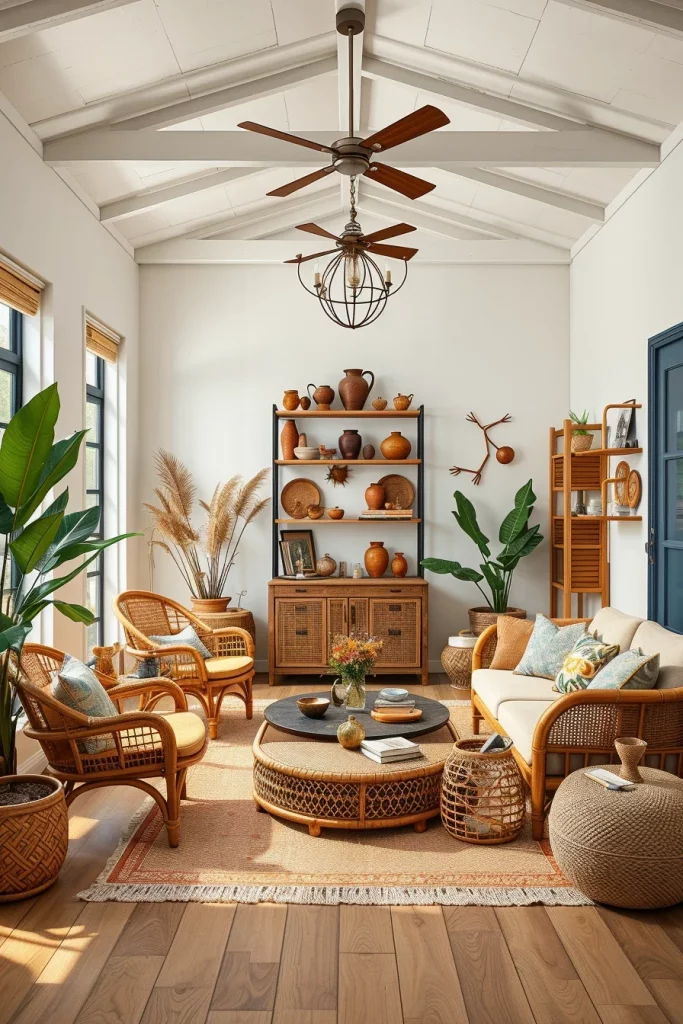
In my experience, these materials age beautifully and bring an element of authenticity that mass-produced furniture often lacks. Many contemporary designers continue to embrace natural fibers because they help create interiors that feel approachable and timeless. I frequently use them to balance more vibrant patterns and decorative accents.
To strengthen this design concept, I would add handcrafted pottery, textured cushions, and woven wall decor. These additions reinforce the layered appearance that defines many successful Afrohemian interiors.
Celebrating Global Influences Through Eclectic Decor
One of the most exciting aspects of an afrohemian home decor idea is the freedom to celebrate diverse cultural influences. I enjoy creating interiors that tell a story through collected objects, handcrafted pieces, and meaningful artwork. The goal is not to replicate a specific style but to thoughtfully combine elements that reflect personal experiences and appreciation for global craftsmanship.
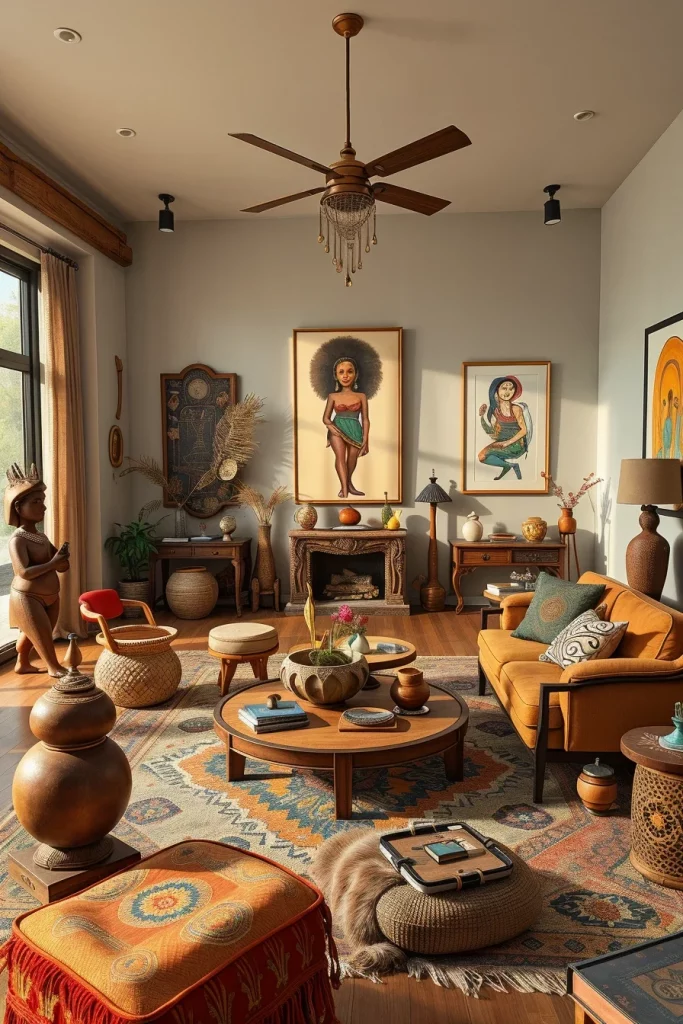
I often include carved wooden sculptures, handmade ceramics, woven textiles, vintage treasures, and artisan-made accessories sourced from different regions. These items contribute unique textures and narratives while helping the home feel curated rather than decorated. Carefully balancing colors, materials, and scales ensures the eclectic collection remains harmonious.
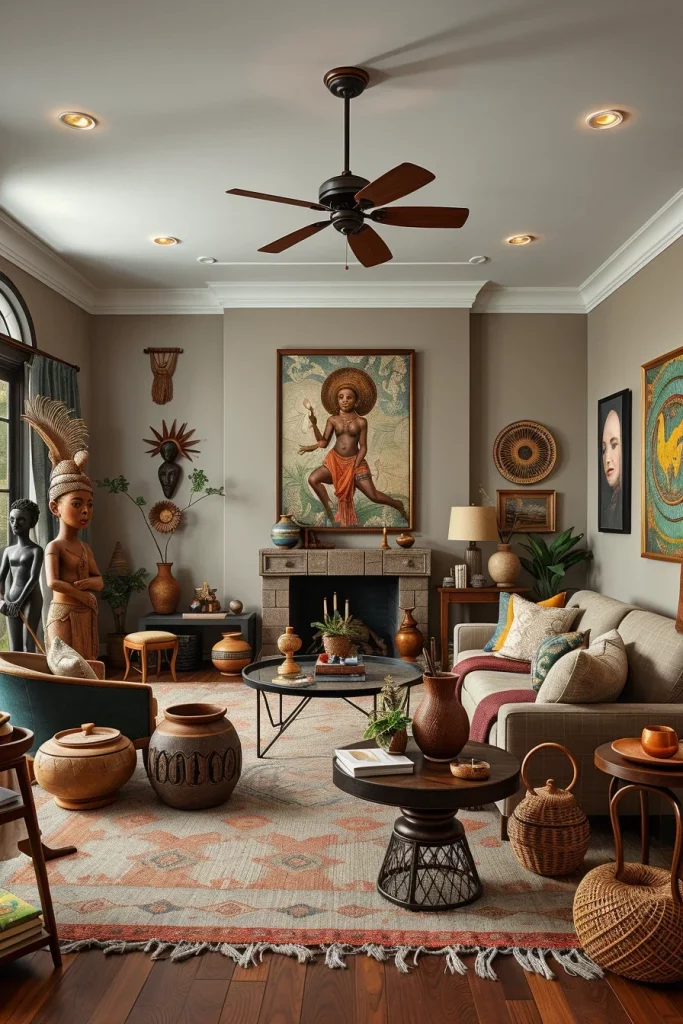
Personally, I believe the most memorable interiors are those that reflect the people who live in them. Design publications such as House Beautiful frequently emphasize authenticity over perfection. I share that philosophy and encourage homeowners to display objects that carry personal significance rather than following trends exclusively.
To enrich this approach even further, I would incorporate books, travel-inspired accessories, and family heirlooms. These elements help create a home that feels deeply personal while embracing the artistic spirit central to Afrohemian design.
Designing A Functional Afrohemian Dining Space
I believe a dining room should be both practical and visually expressive, and this principle fits perfectly within an afrohemian home decor idea. The dining area often serves as a gathering place for family and friends, making it an ideal location to showcase handcrafted materials, cultural influences, and natural textures. I focus on creating a layout that encourages conversation while maintaining comfort and functionality.
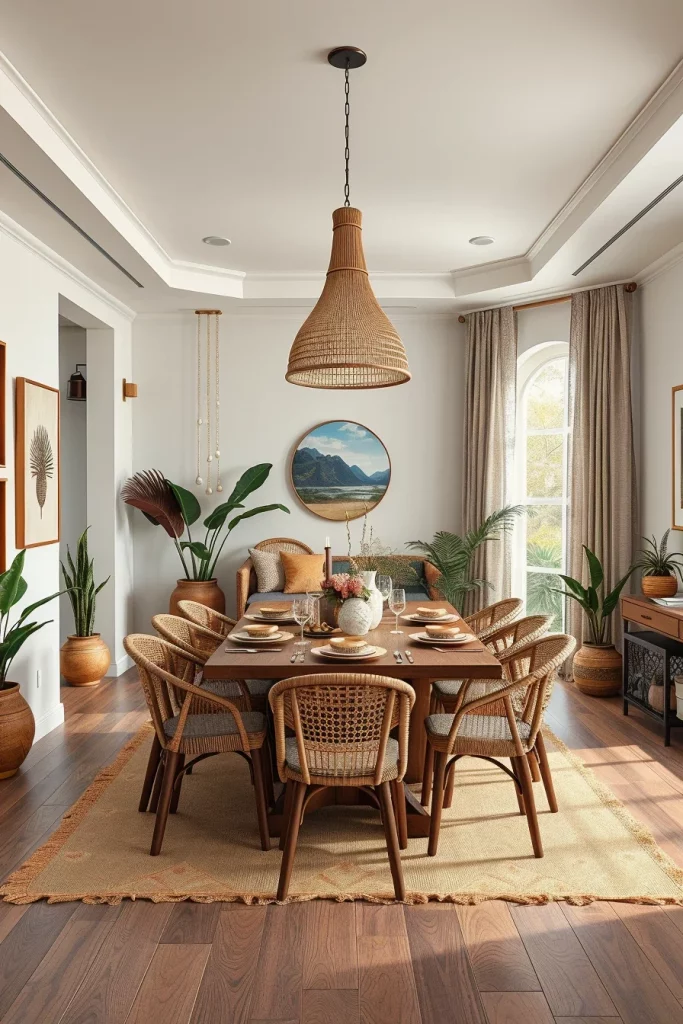
I usually start with a solid wood dining table as the centerpiece. Around it, I incorporate woven dining chairs, textured seat cushions, and artisan-crafted tableware. A large pendant light made from natural fibers helps define the dining zone, while a sideboard provides useful storage for serving pieces and decorative accessories. I often include ceramic vases, woven baskets, and handcrafted bowls to enhance the room’s layered appearance.
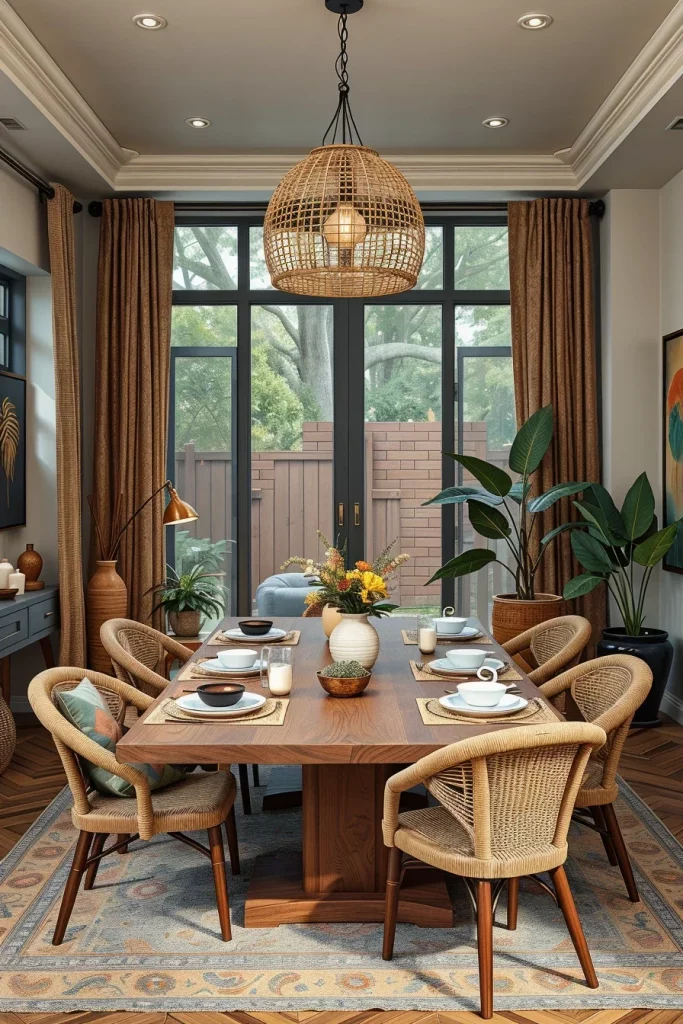
In my experience, dining spaces feel more welcoming when they balance beauty with practicality. Many interior designers recommend selecting durable materials that can withstand daily use while maintaining visual appeal. I have found that natural wood and woven materials age gracefully and contribute to the relaxed atmosphere associated with Afrohemian design.
To complete the room, I would add indoor plants, textured curtains, and a statement centerpiece inspired by African artistry. These details strengthen the cultural narrative and make the dining area feel thoughtfully curated.
Adding Sculptural Decor And Handmade Accessories
Sculptural pieces and handmade accessories play an important role in shaping the personality of an afrohemian home decor idea. I often use these elements to create focal points and add artistic depth throughout a space. Their handcrafted nature introduces authenticity and celebrates the craftsmanship that is central to Afrohemian interiors.
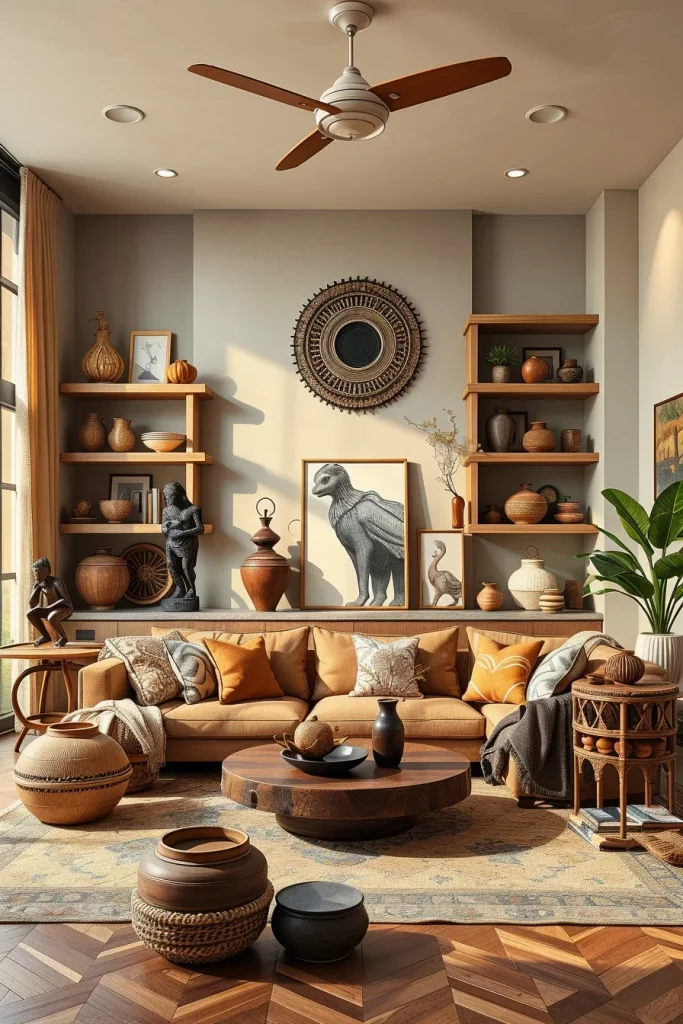
I like to incorporate carved wooden sculptures, handmade pottery, woven vessels, artisan baskets, and decorative objects crafted from natural materials. These pieces can be displayed on shelves, coffee tables, consoles, and mantels. Their varied forms and textures create visual interest while complementing the organic materials commonly found in the room.
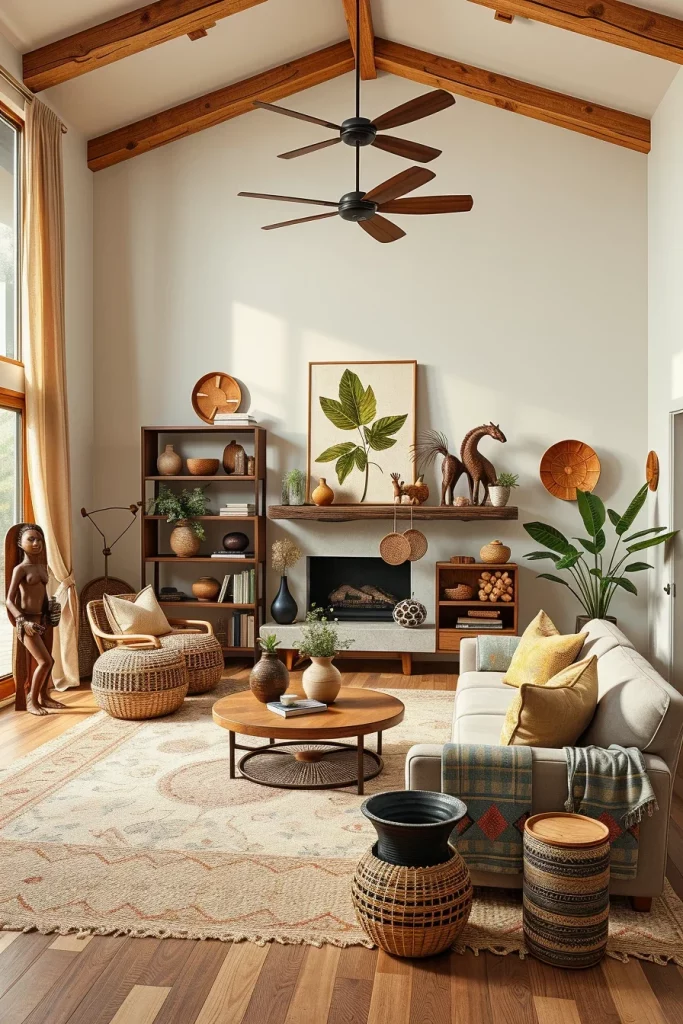
Personally, I believe handmade decor brings a sense of connection that mass-produced accessories rarely achieve. Design experts frequently emphasize the importance of supporting artisans and choosing objects with meaning. I appreciate how handcrafted pieces tell stories and help create interiors that feel unique rather than formulaic.
To further enhance this concept, I would introduce open shelving, accent lighting, and display niches that allow sculptural objects to stand out. These additions help transform decorative accessories into intentional design features.
The Role Of Layered Rugs In Afrohemian Design
Layered rugs are one of my favorite techniques for adding warmth and dimension to an afrohemian home decor idea. They help define different areas within a room while introducing pattern, color, and texture. This layered approach creates the comfortable, collected-over-time appearance that characterizes Afrohemian interiors.
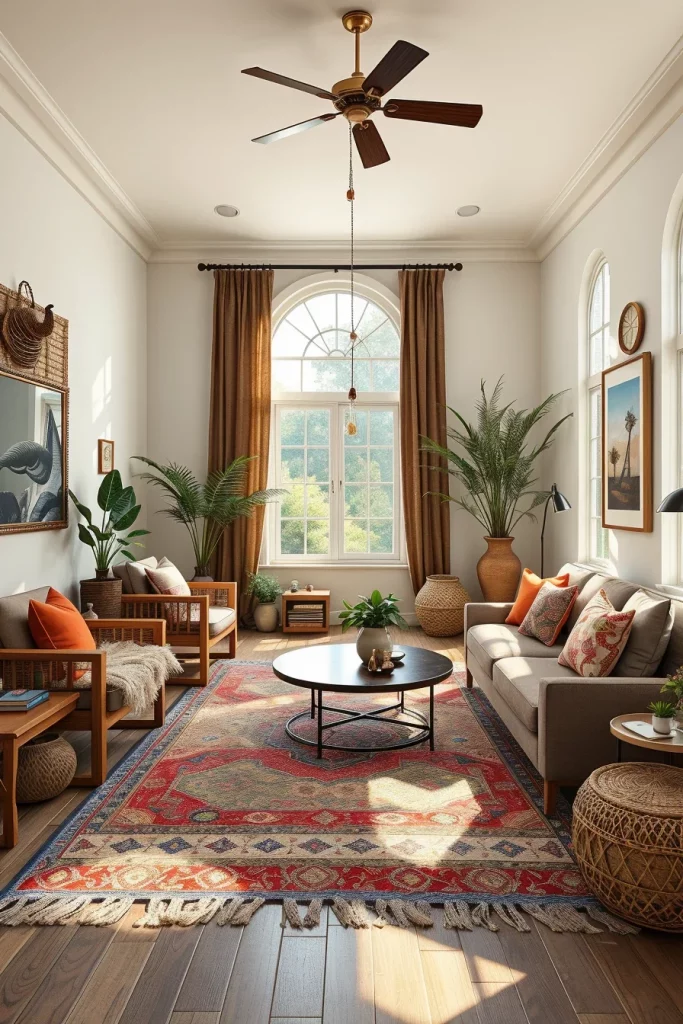
I often begin with a large neutral jute or sisal rug as a foundation and then layer smaller patterned rugs on top. Vintage-inspired designs, tribal motifs, and handwoven textiles work especially well in this setting. The combination of materials and patterns creates depth while allowing individual pieces to contribute their own character.
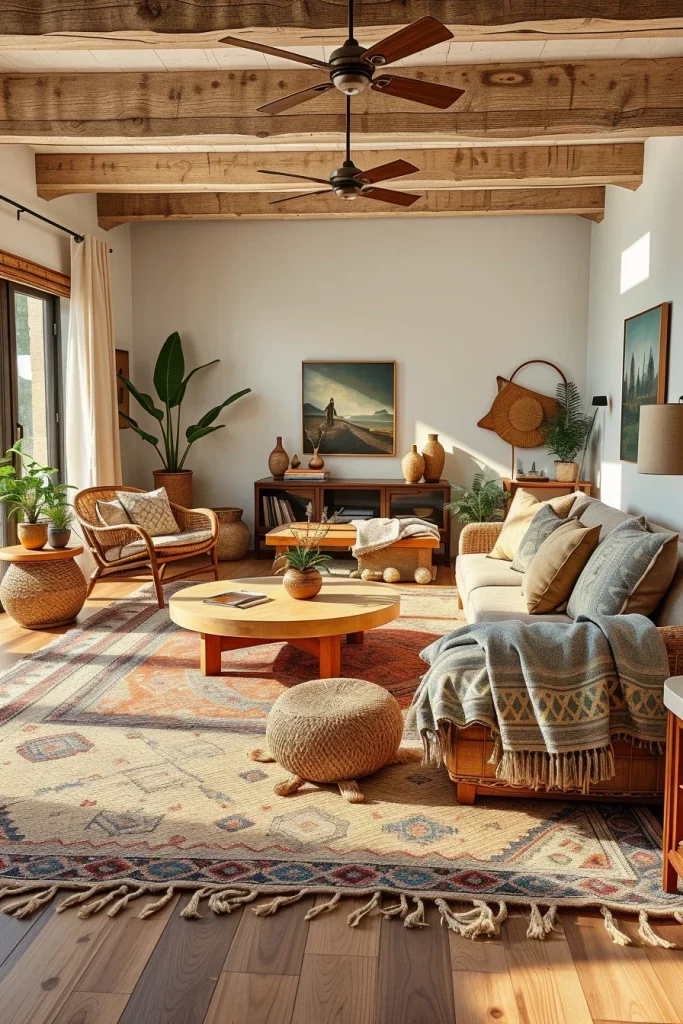
From my perspective, layered rugs make a room feel instantly more inviting. Many professional designers recommend using rugs to soften hard flooring surfaces and create visual zones within open-concept spaces. I have found that layering also provides flexibility, making it easier to update a room over time.
For an even richer effect, I would coordinate the rugs with throw pillows, blankets, and wall textiles. This approach creates a cohesive design language that ties the entire room together.
Using Mudcloth, Kente, And Tribal-Inspired Fabrics
Textiles are essential to achieving an authentic afrohemian home decor idea, and few elements make a stronger impact than mudcloth, kente, and tribal-inspired fabrics. I use these textiles to introduce cultural significance, bold patterns, and visual texture while maintaining a sophisticated overall design.
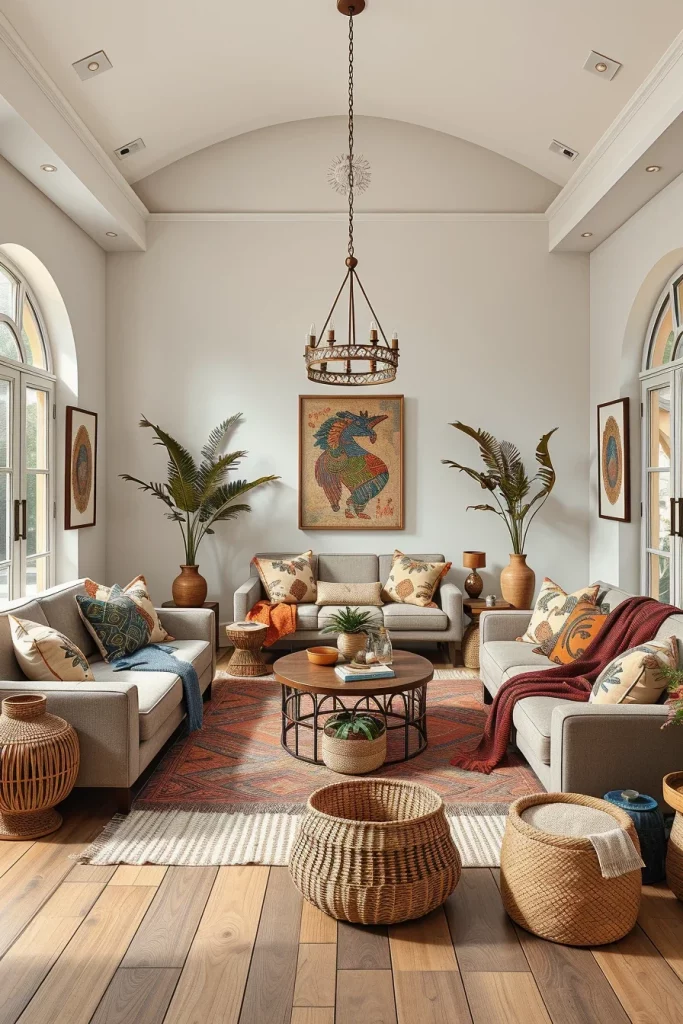
I often incorporate these fabrics through decorative pillows, upholstered furniture, throws, curtains, and wall hangings. Mudcloth patterns bring graphic contrast, while kente-inspired designs introduce vibrant color and rhythm. When balanced with neutral furniture and natural materials, these textiles become standout features without overwhelming the room.
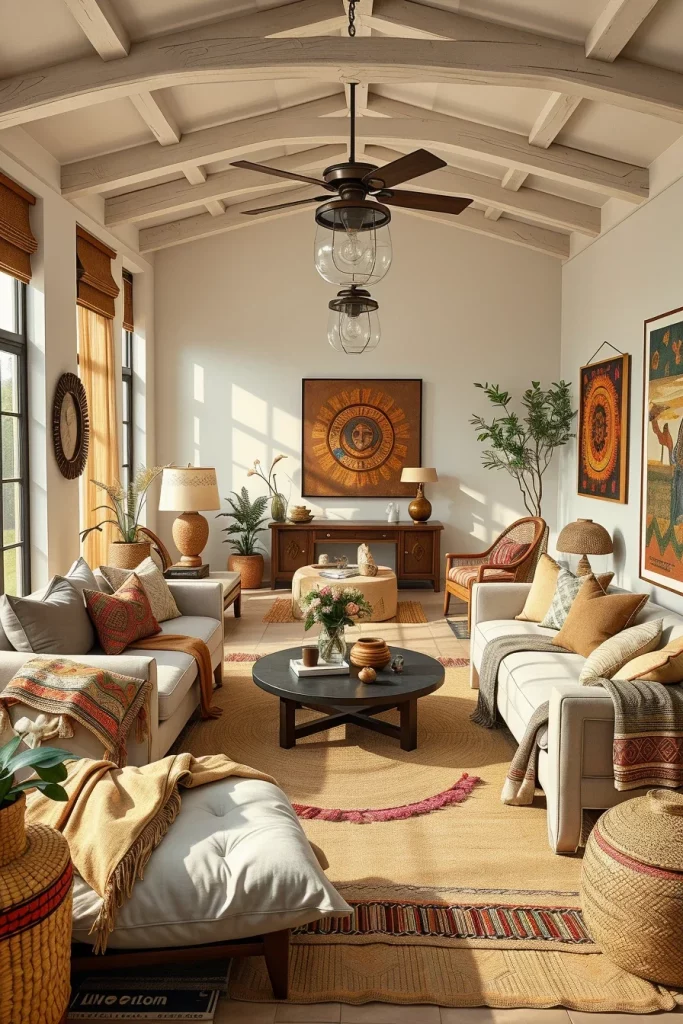
I have learned that successful use of patterned textiles requires thoughtful placement and restraint. Many designers recommend allowing statement fabrics to serve as focal points while supporting them with simpler surrounding elements. I agree with this approach because it creates visual balance and allows the craftsmanship of the textiles to shine.
To further develop this design concept, I would add woven baskets, handcrafted ceramics, and natural wood furniture. These complementary elements help integrate bold textiles into a cohesive Afrohemian environment.
Creating A Personalized Gallery Wall With Cultural Elements
A gallery wall offers an excellent opportunity to showcase personality within an afrohemian home decor idea. I enjoy creating arrangements that blend artwork, photography, textiles, and meaningful objects into a cohesive visual story. This approach transforms blank walls into engaging focal points while celebrating culture and individuality.
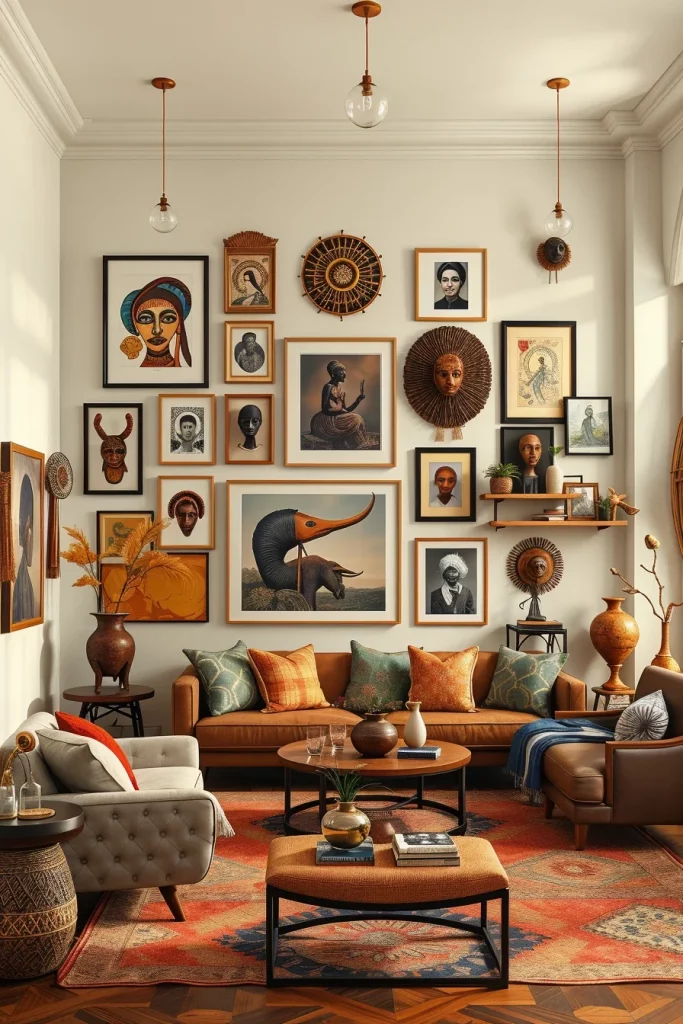
I typically combine framed artwork, woven wall hangings, vintage photographs, handmade masks, and decorative textiles. Mixing different frame styles and materials creates depth and interest. I often arrange pieces organically rather than following a rigid grid, which supports the relaxed and artistic spirit of Afrohemian design.
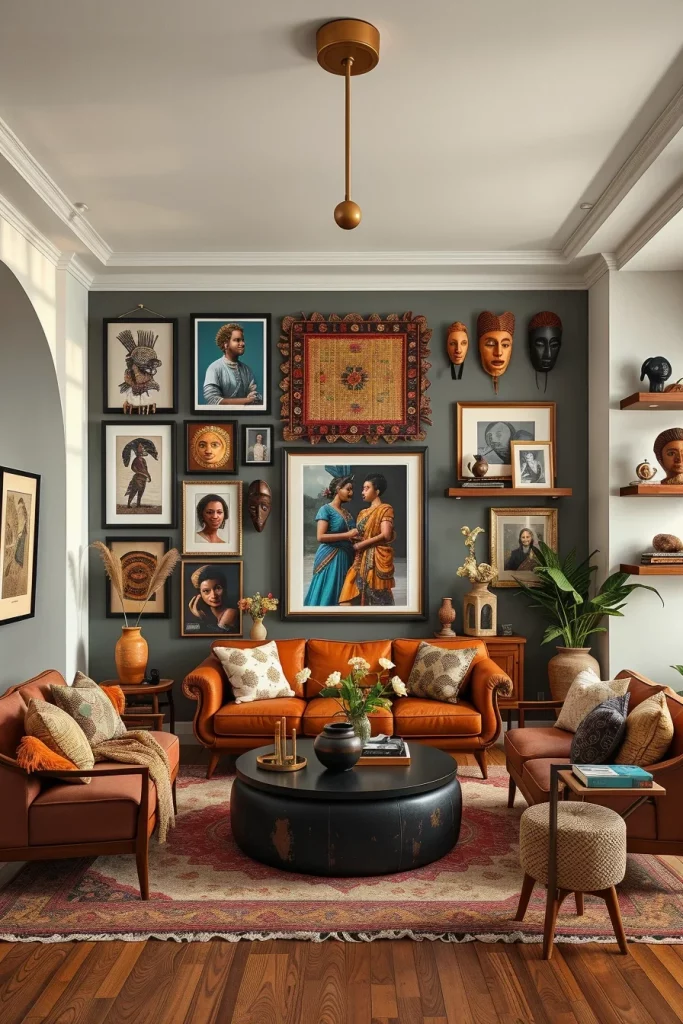
In my experience, the most successful gallery walls reflect the homeowner’s personal journey and interests. Interior design professionals frequently encourage clients to display meaningful pieces rather than selecting artwork solely to match a color palette. I have found that personal connections make gallery walls far more impactful and memorable.
To complete the display, I would incorporate accent lighting, floating shelves, and a few sculptural objects that extend the gallery beyond framed artwork. These additions create a layered composition that feels dynamic and curated.
Afrohemian Home Office Ideas That Inspire Creativity
When I design an afrohemian home office, I focus on creating a workspace that feels inspiring without sacrificing functionality. I often combine warm earth tones, woven textures, natural wood surfaces, and artistic wall décor to encourage creativity throughout the day. Large windows, indoor plants, and handcrafted accessories help create a balanced atmosphere where productivity and relaxation can coexist. A thoughtfully designed office becomes more than a workplace; it becomes a personal creative sanctuary.
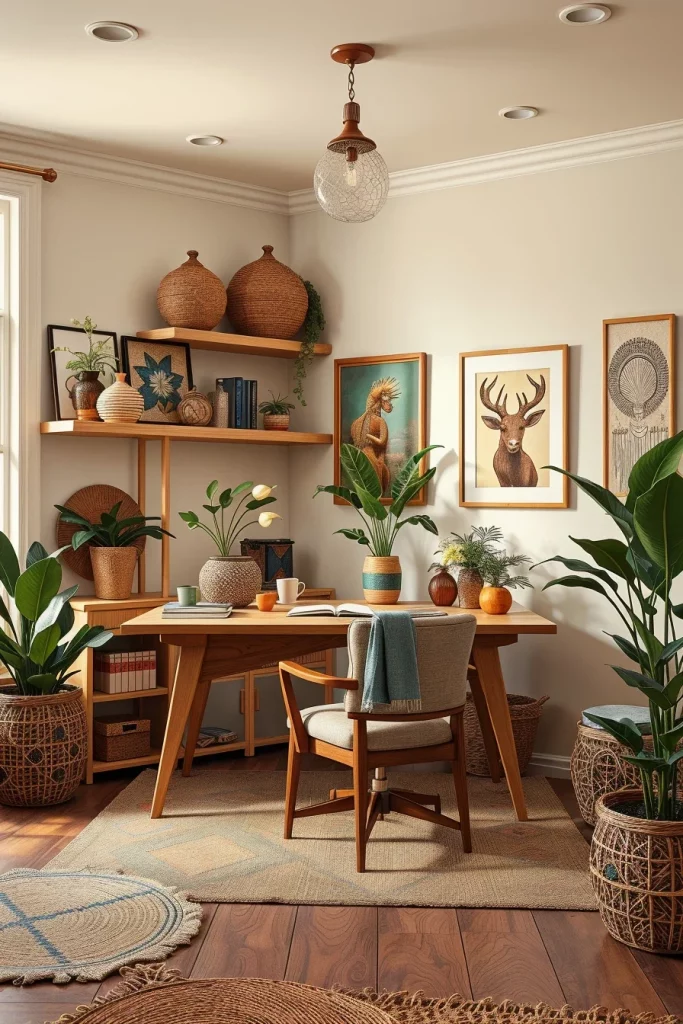
I typically include a solid wood desk, a comfortable upholstered chair, woven baskets for storage, and open shelving for books and decorative objects. African-inspired textiles, handmade pottery, and framed artwork add character while maintaining visual harmony. Natural fiber rugs and rattan accents soften the room and help connect various design elements. Every piece serves both a practical and decorative purpose within the overall afrohemian aesthetic.
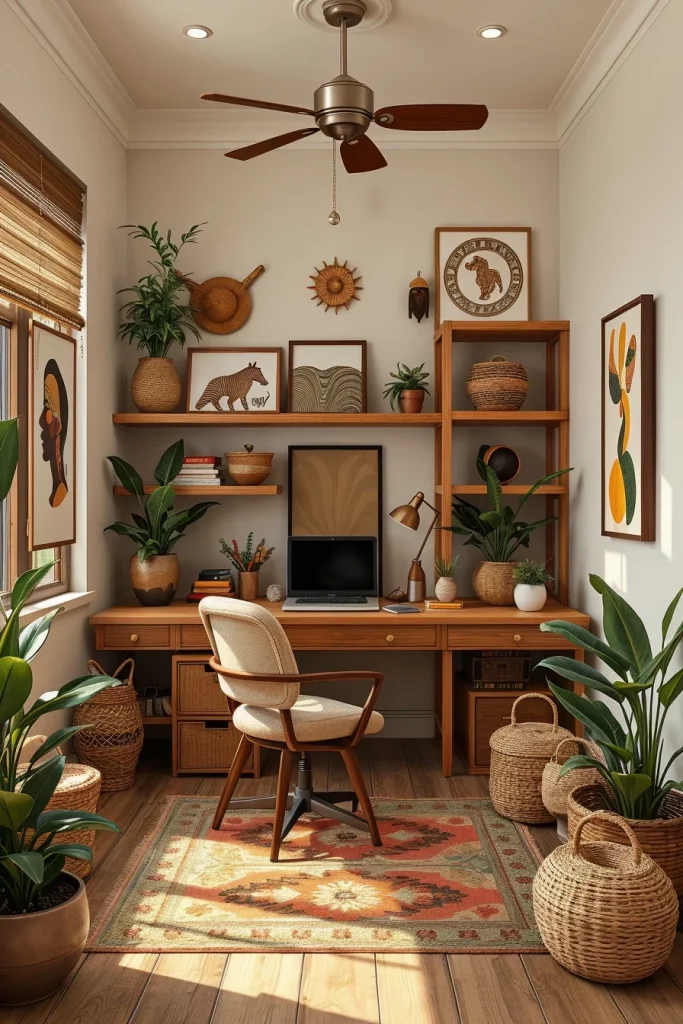
From my experience, the most successful creative workspaces reflect the personality of the homeowner. Many interior designers featured in leading design publications recommend incorporating meaningful personal collections and artisan-made pieces rather than relying solely on mass-produced décor. I find that these authentic details make the space feel more inspiring and emotionally connected to its owner.
To complete this office design, I would add adjustable layered lighting, including a statement pendant light and a task lamp. Proper lighting enhances comfort, highlights decorative details, and supports productivity throughout the day.
Mixing Organic Materials With Rich Metallic Accents
One of my favorite approaches to afrohemian decorating involves balancing organic materials with luxurious metallic finishes. Natural textures create warmth and authenticity, while metallic accents introduce elegance and visual contrast. This combination allows a room to feel grounded and sophisticated at the same time. The result is a layered interior that feels collected over time rather than overly styled.
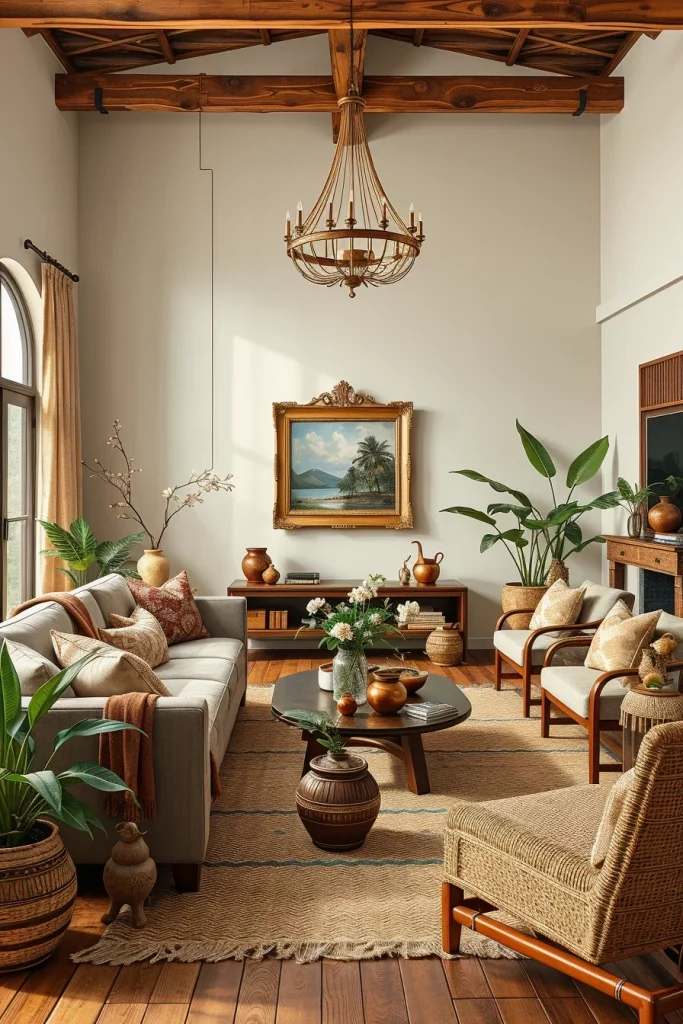
I often combine reclaimed wood furniture, woven seagrass décor, linen textiles, and stone accessories with brass, copper, or aged gold finishes. Metallic-framed mirrors, sculptural lighting fixtures, and decorative trays add subtle glamour without overwhelming the natural elements. The contrast between rough organic surfaces and refined metallic details creates visual depth throughout the space.
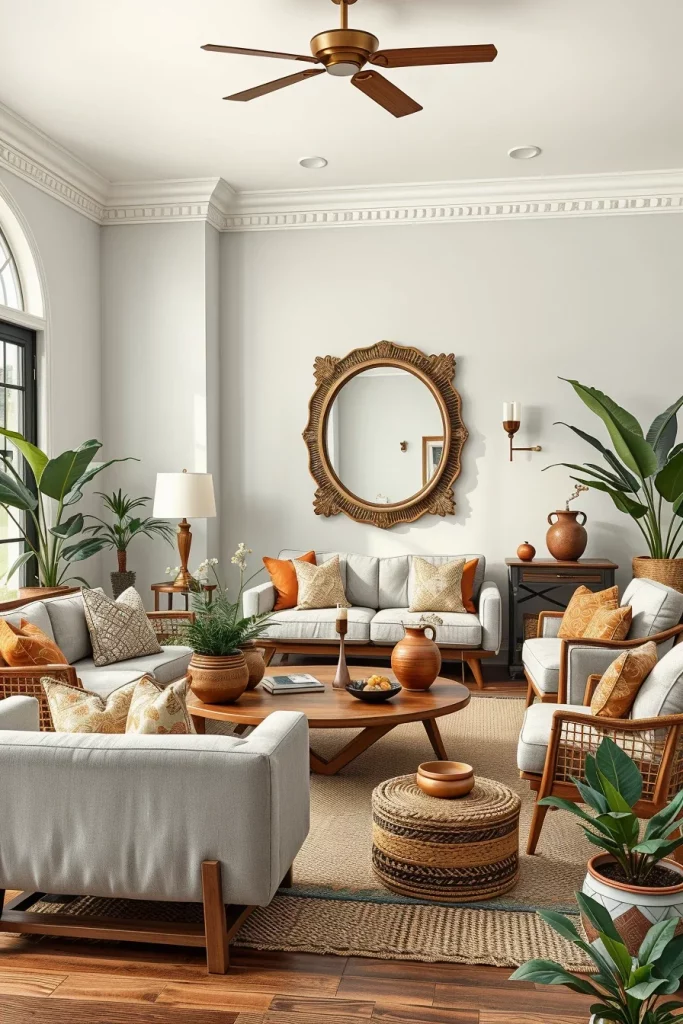
In my projects, I avoid using metallic finishes excessively. Instead, I treat them as accent pieces that enhance rather than dominate the design. Many respected interior designers emphasize the importance of balance when combining natural and luxurious materials, and I completely agree with this approach.
I also recommend incorporating handcrafted metal artwork or artisan-made decorative objects. These additions strengthen the cultural and artistic character that defines many beautiful afrohemian interiors.
Styling Open Shelves With Meaningful Decor Pieces
Open shelving offers an excellent opportunity to showcase personality and tell a visual story. When creating an afrohemian display, I focus on arranging meaningful items that reflect culture, travel, creativity, and personal experiences. Well-styled shelves can transform an ordinary wall into a captivating focal point. The goal is to create balance while maintaining an effortless appearance.
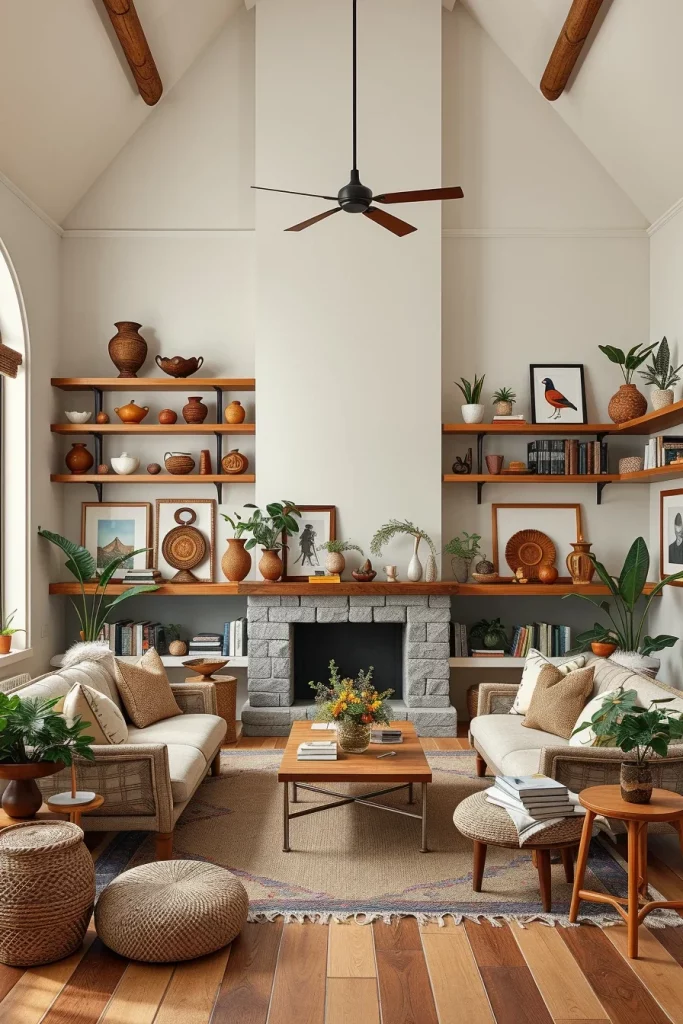
I usually combine books, handmade ceramics, woven baskets, sculptures, framed photographs, and small plants. Varying the height, shape, and texture of objects prevents the arrangement from looking repetitive. Natural materials such as wood, clay, and woven fibers contribute warmth and authenticity to the overall composition. Negative space is equally important because it allows each piece to stand out.
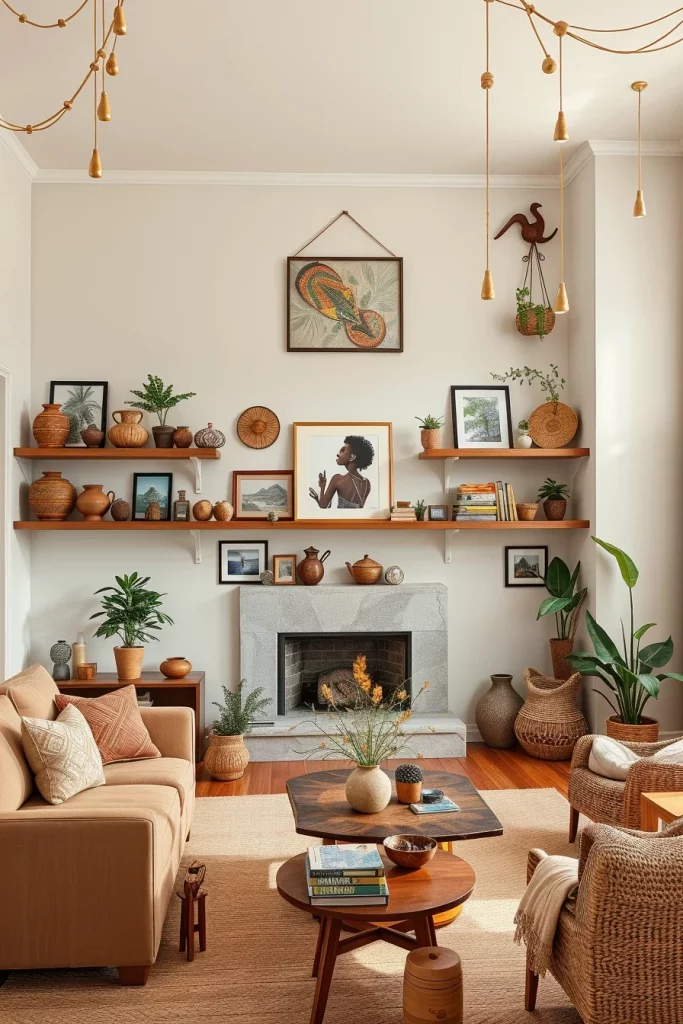
Personally, I prefer displaying fewer items with greater significance rather than overcrowding shelves with decorative accessories. Curated collections often create a stronger visual impact and feel more intentional. This approach aligns perfectly with the relaxed yet thoughtful spirit of afrohemian decorating.
To further enhance the display, I recommend incorporating subtle accent lighting. Small LED shelf lights can highlight treasured objects and create a cozy atmosphere during the evening hours.
Designing An Afrohemian Entryway That Makes A Statement
The entryway sets the tone for the entire home, making it one of the most important spaces to design thoughtfully. When creating an afrohemian entryway, I focus on establishing warmth, personality, and visual interest from the moment guests arrive. Natural textures, artistic details, and inviting materials help create an unforgettable first impression. A welcoming entryway instantly communicates the character of the home.
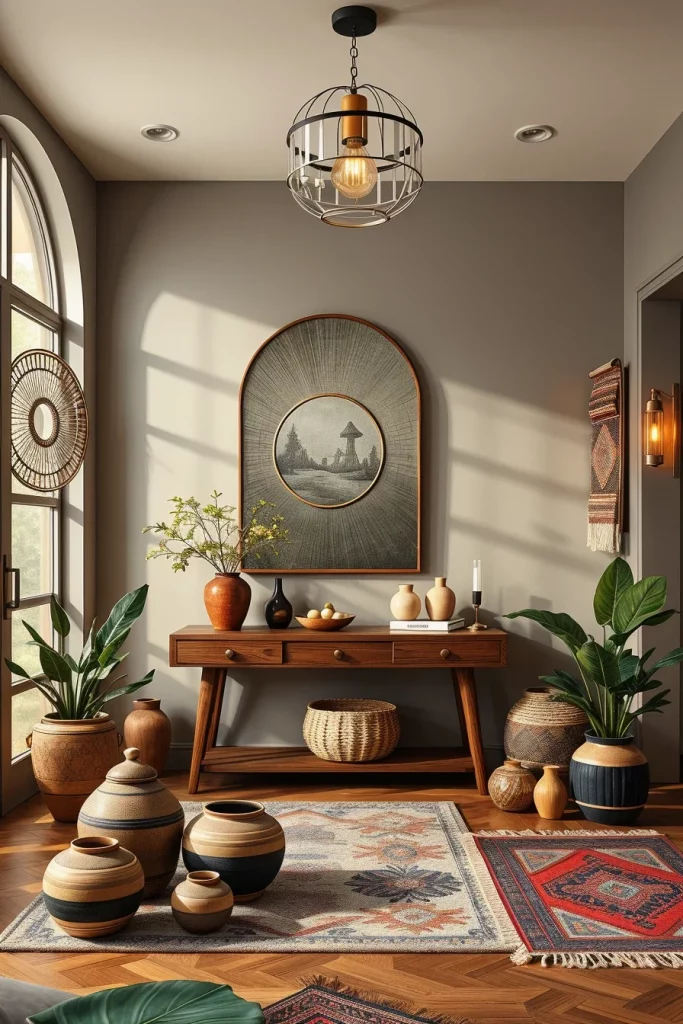
I often include a wooden console table, a large statement mirror, woven baskets, textured wall art, and decorative lighting. Layered rugs featuring earthy patterns help define the space while adding comfort and color. Handcrafted accessories and pottery contribute authenticity and artistic expression without overwhelming the area.
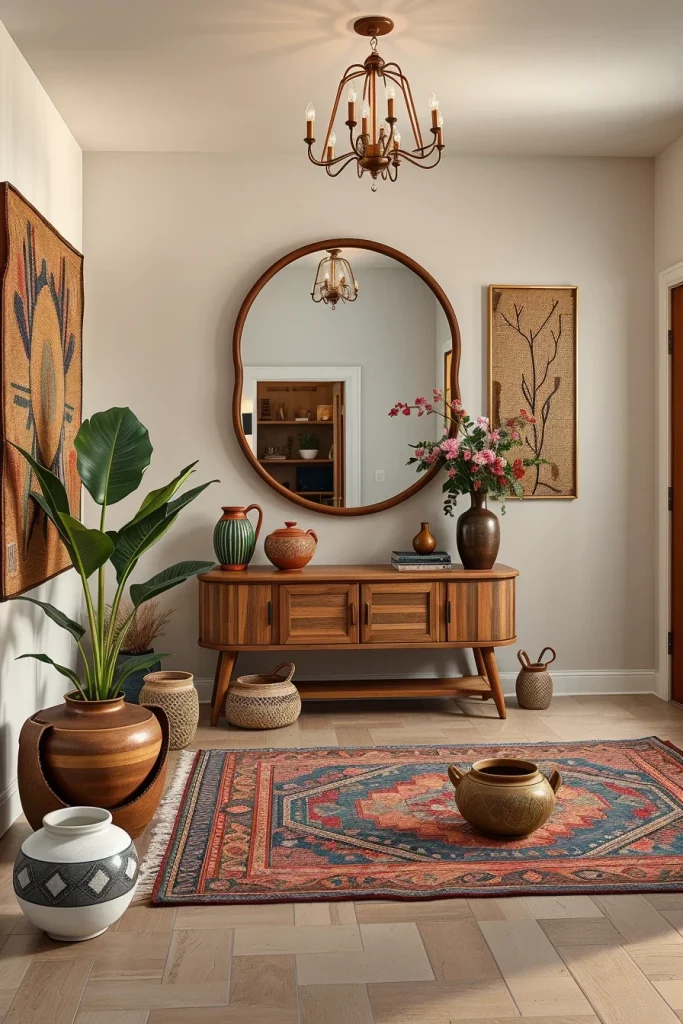
In my experience, functionality is just as important as aesthetics. I always ensure there is practical storage for shoes, keys, and everyday essentials. This combination of beauty and organization creates a space that feels both welcoming and efficient.
For added impact, I would include a large indoor plant or sculptural decorative piece. These elements provide height, create balance, and establish a strong focal point near the entrance.
Cozy Reading Nooks Inspired By Afrohemian Living
A cozy reading nook perfectly reflects the comfort and individuality associated with afrohemian interiors. When designing such a space, I prioritize softness, warmth, and a sense of escape. The goal is to create a quiet retreat where relaxation and inspiration naturally come together. Rich textures and carefully selected furnishings help establish an inviting atmosphere.
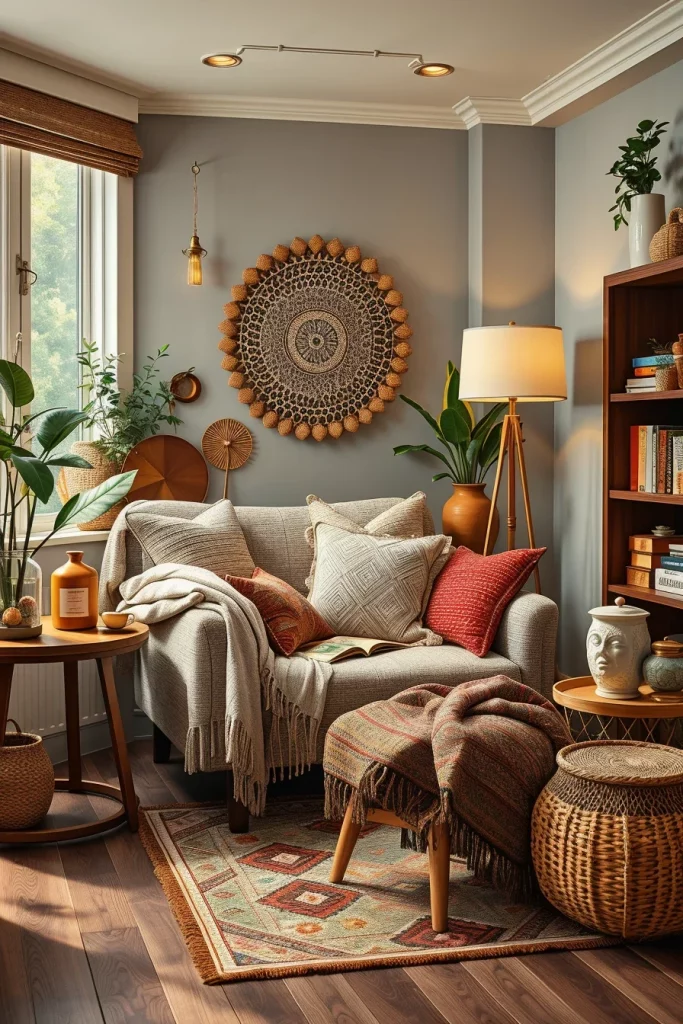
I usually start with a comfortable lounge chair or oversized armchair paired with layered cushions and textured throws. A small wooden side table, soft area rug, and floor lamp provide both comfort and functionality. Woven wall décor, artisan-made accessories, and indoor greenery complete the look while reinforcing the organic aesthetic.
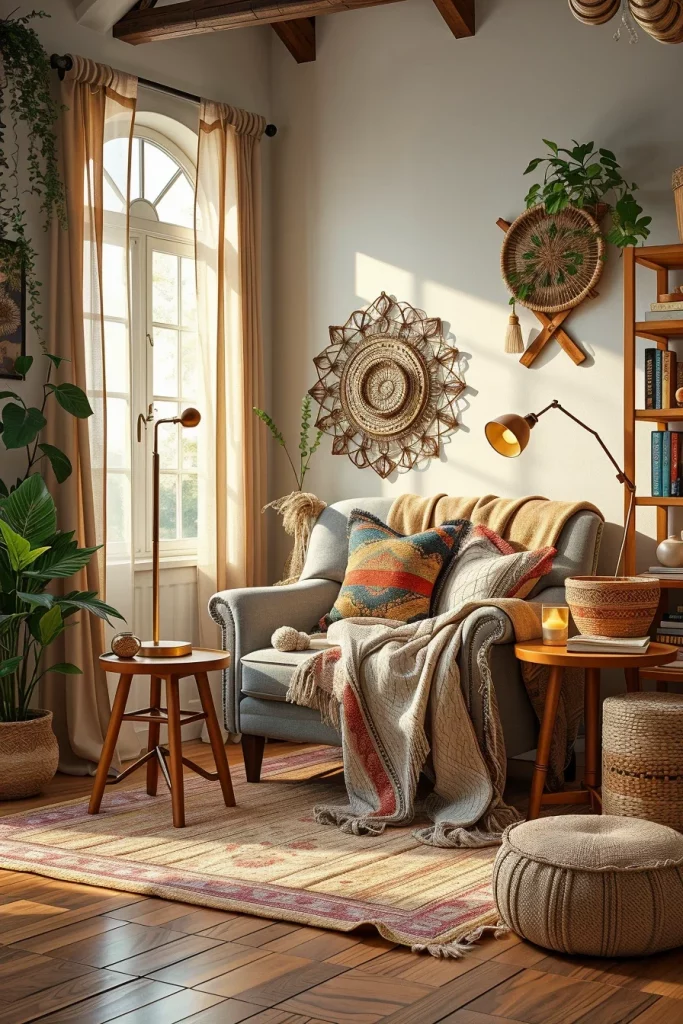
From my perspective, the most enjoyable reading nooks feel personal rather than perfectly coordinated. Favorite books, meaningful souvenirs, and handmade décor create a stronger emotional connection to the space. This sense of individuality is one of the defining characteristics of successful afrohemian design.
I would also consider adding a small bookshelf or storage bench. These additions increase practicality while preserving the relaxed and welcoming character of the nook.
Decorating Small Spaces With Afrohemian Charm
When decorating a small home or apartment, I find that the afrohemian style works exceptionally well because it prioritizes thoughtful layering rather than oversized furnishings. A compact space can feel rich and inviting when natural textures, cultural influences, and meaningful decorative elements are carefully balanced. The key is to maximize visual interest without creating clutter. Every piece should contribute both beauty and function.
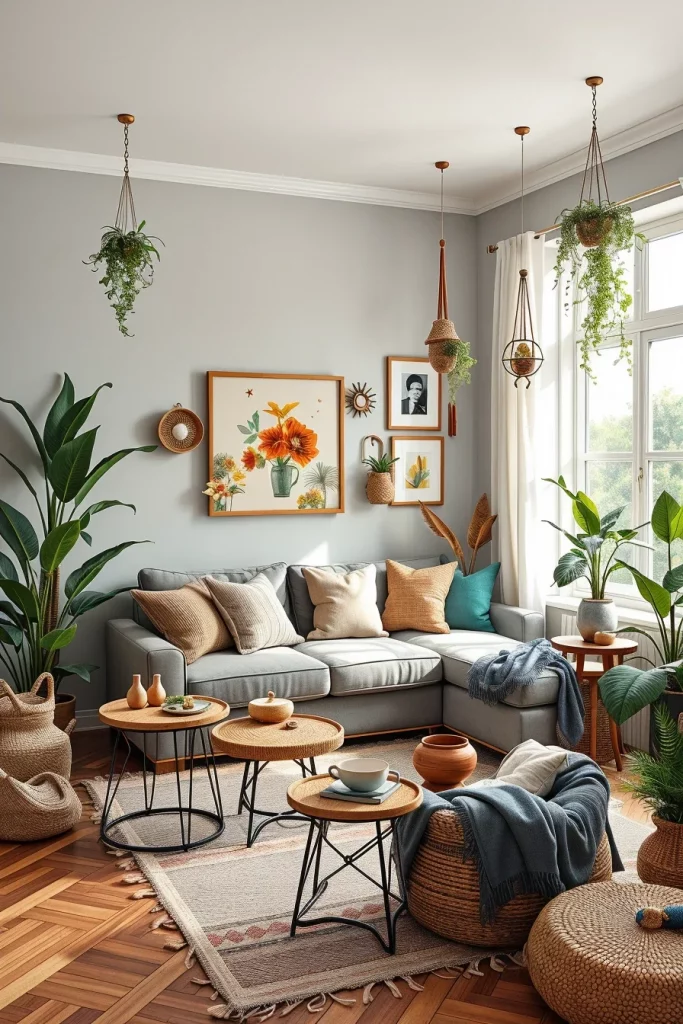
I often choose compact furniture with organic shapes, such as a small curved sofa, nesting tables, and multifunctional storage pieces. Woven baskets, handmade ceramics, textured cushions, and wall-mounted décor add personality without consuming valuable floor space. Mirrors can also help reflect light and create the illusion of a larger room. Neutral foundations paired with earthy accent colors maintain visual openness while preserving the warmth of the afrohemian aesthetic.
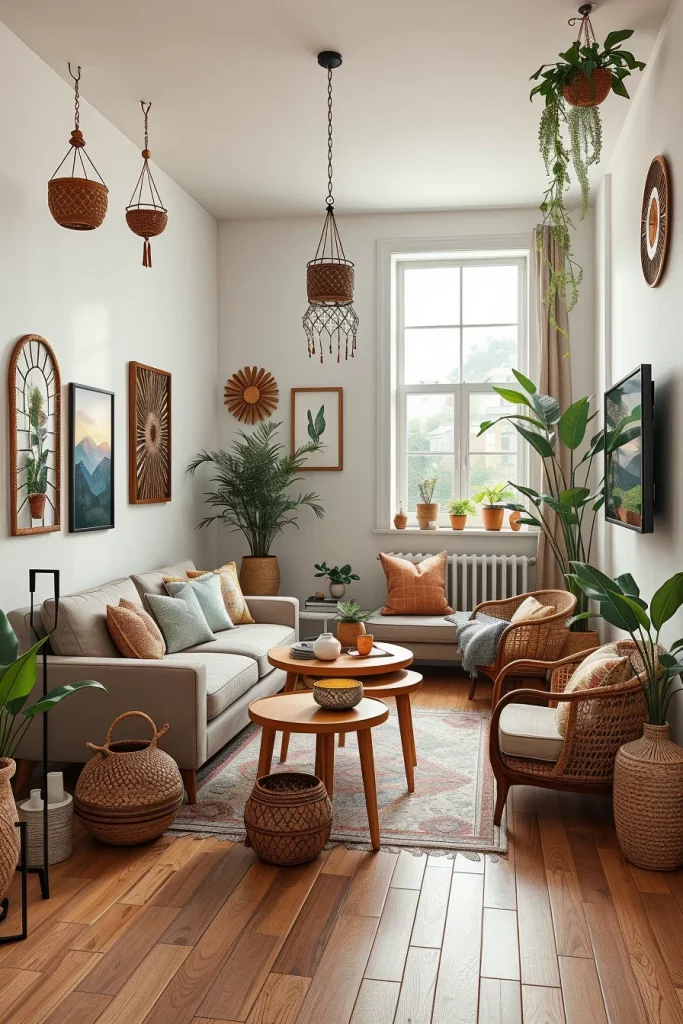
In my experience, restraint is important when decorating smaller interiors. Rather than filling every available surface, I focus on selecting a few standout accessories that tell a meaningful story. This approach allows each decorative object to have greater visual impact and keeps the room feeling comfortable and balanced.
I would also incorporate vertical storage solutions and hanging plants. These elements draw the eye upward, increase functionality, and contribute to the relaxed layered look associated with afrohemian design.
Outdoor Afrohemian Decor Ideas For Patios And Balconies
Outdoor spaces provide the perfect opportunity to extend the afrohemian aesthetic beyond the interior. I like to create outdoor environments that feel like natural extensions of the home, combining comfort, texture, and cultural character. Whether working with a spacious patio or a small balcony, thoughtful design can transform the area into a relaxing retreat. Layered materials and earthy colors help establish a welcoming atmosphere.
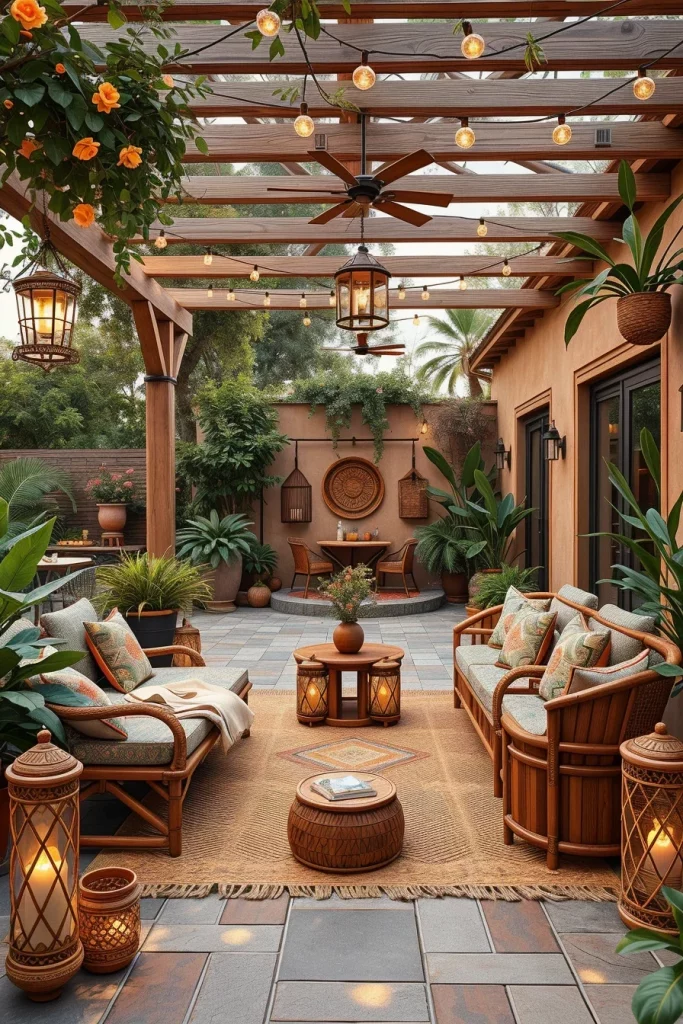
I typically include weather-resistant lounge seating, woven outdoor rugs, lanterns, planters, and natural wood furniture. Textured cushions, patterned textiles, and handcrafted accessories introduce warmth and personality. Abundant greenery is essential because plants reinforce the connection to nature that defines many afrohemian spaces. Soft lighting creates a cozy environment for evening relaxation and entertaining.
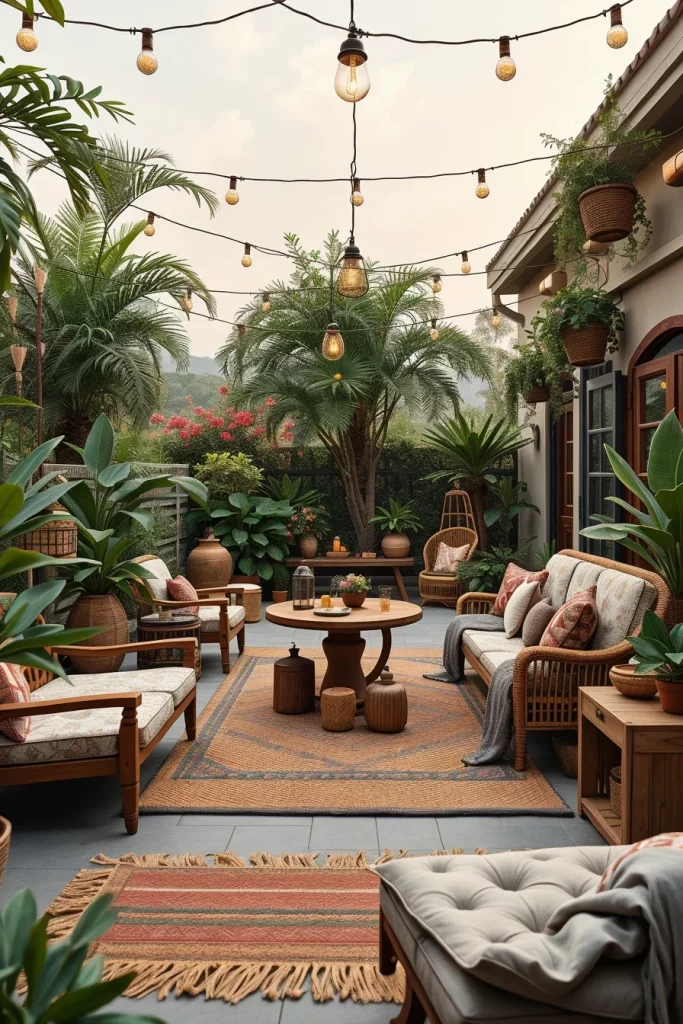
From my perspective, outdoor spaces should prioritize comfort above all else. I often recommend creating multiple seating areas when space allows, giving the area greater flexibility for both quiet moments and social gatherings. The combination of comfort and artistic expression helps outdoor spaces feel truly memorable.
To complete the design, I would add decorative screens, hanging lanterns, or a fire feature where appropriate. These additions provide ambiance and help define the outdoor setting more effectively.
Sustainable Decorating Choices For An Afrohemian Home
Sustainability naturally complements the afrohemian lifestyle because both emphasize authenticity, craftsmanship, and mindful consumption. When designing an afrohemian home, I prioritize materials and furnishings that support long-term durability and environmental responsibility. Sustainable choices often add unique character while reducing unnecessary waste. This approach results in interiors that feel more personal and meaningful.
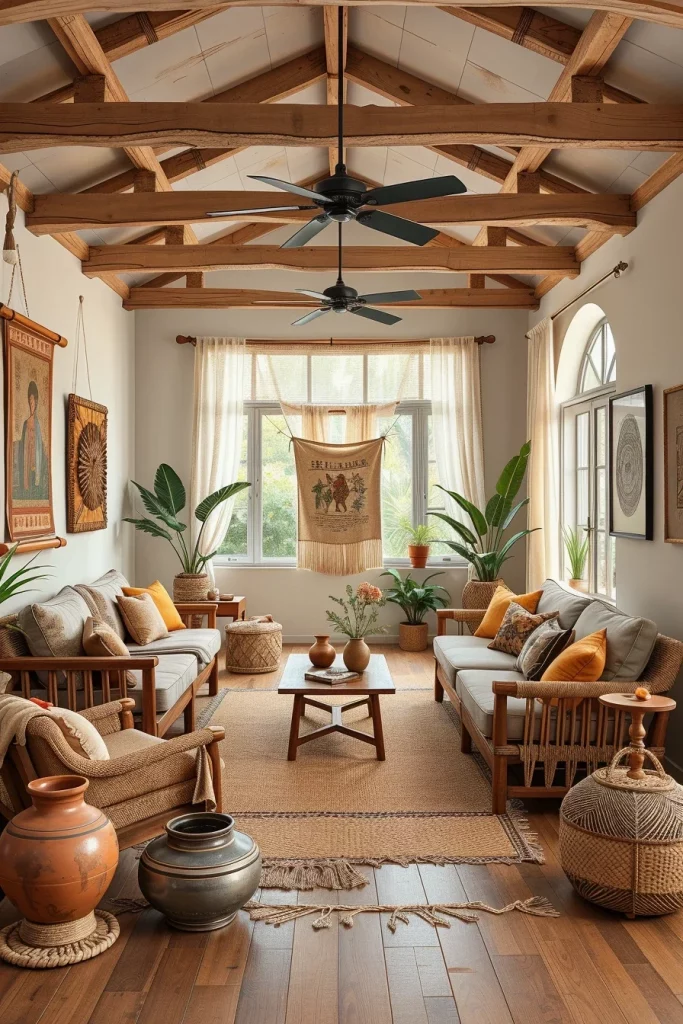
I frequently incorporate reclaimed wood furniture, vintage accessories, handmade textiles, and artisan-crafted décor. Natural materials such as rattan, jute, cotton, clay, and bamboo contribute texture while supporting environmentally conscious design practices. Choosing quality pieces that can last for years often creates a more authentic and layered appearance than purchasing trendy disposable décor.
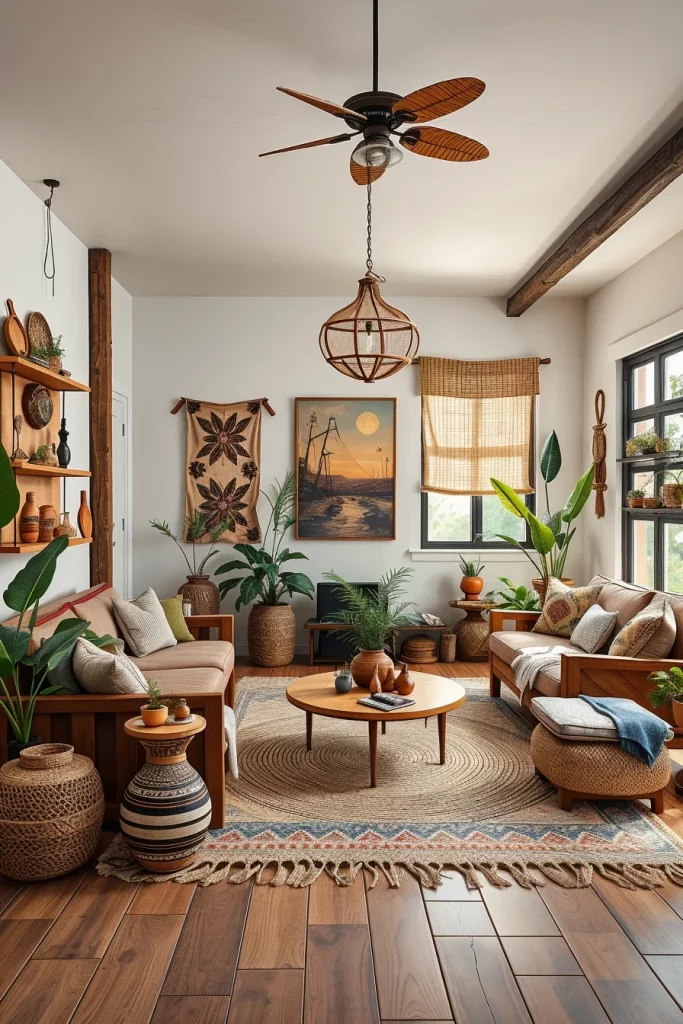
In my experience, some of the most beautiful afrohemian interiors are built gradually over time. Thoughtfully collected furnishings and handmade objects often possess greater character than mass-produced alternatives. Many respected design professionals encourage investing in craftsmanship and timeless design rather than following short-lived trends, and I strongly support this philosophy.
I would also recommend sourcing locally made accessories whenever possible. Supporting local artisans strengthens communities while helping homeowners create truly distinctive interiors.
Common Mistakes To Avoid When Creating An Afrohemian Interior
Although afrohemian design celebrates creativity and self-expression, certain mistakes can prevent the style from reaching its full potential. One of the most common issues I encounter is overdecorating. Too many competing colors, patterns, and accessories can make a room feel chaotic rather than curated. Successful afrohemian interiors rely on balance and intentional layering.
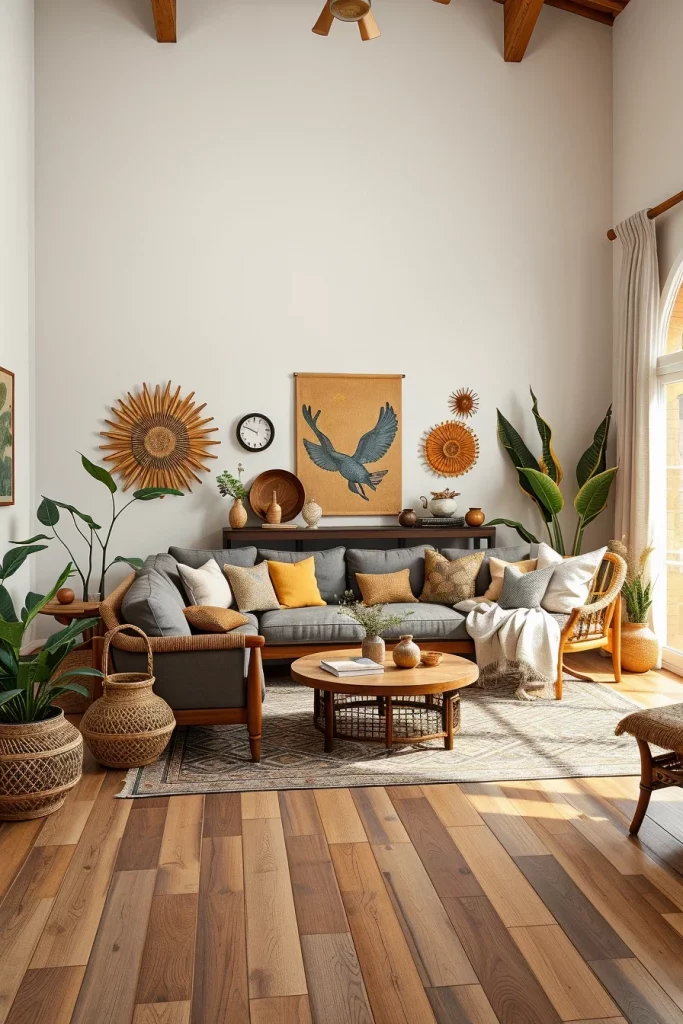
I often see homeowners purchasing decorative items without considering scale, proportion, or overall cohesion. While eclectic combinations are encouraged, furniture and accessories should still relate to one another through color, texture, or material. Ignoring functionality is another mistake, as beautiful rooms should remain comfortable and practical for everyday living.
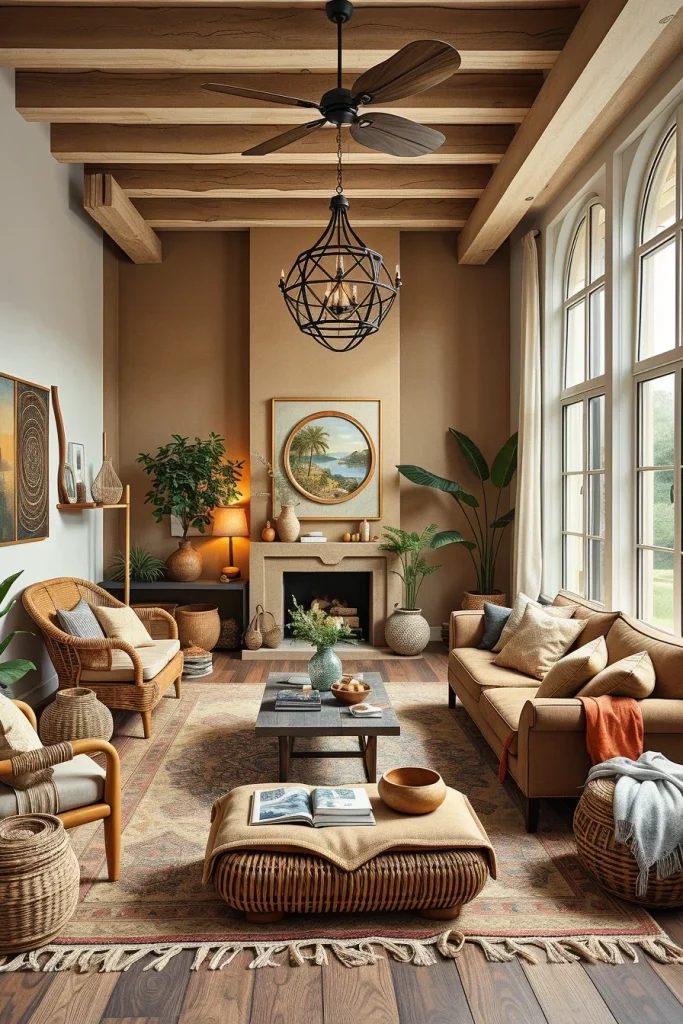
From my experience, authenticity is one of the most important aspects of this style. Rather than copying trends exactly as they appear online, I encourage homeowners to select pieces that genuinely reflect their interests, experiences, and values. Personal meaning creates stronger and more lasting design results.
I would also avoid relying exclusively on one texture or material. A successful afrohemian interior thrives on contrast, combining woven fibers, wood, textiles, ceramics, and natural elements in a balanced way.
Bringing The Afrohemian Aesthetic Together For A Cohesive Home
Creating a cohesive afrohemian home requires thoughtful planning and a clear design vision. While each room may contain unique decorative elements, I aim to establish consistency through color palettes, materials, and recurring textures. This approach allows the home to feel connected while still celebrating individuality. A cohesive design enhances both comfort and visual harmony.
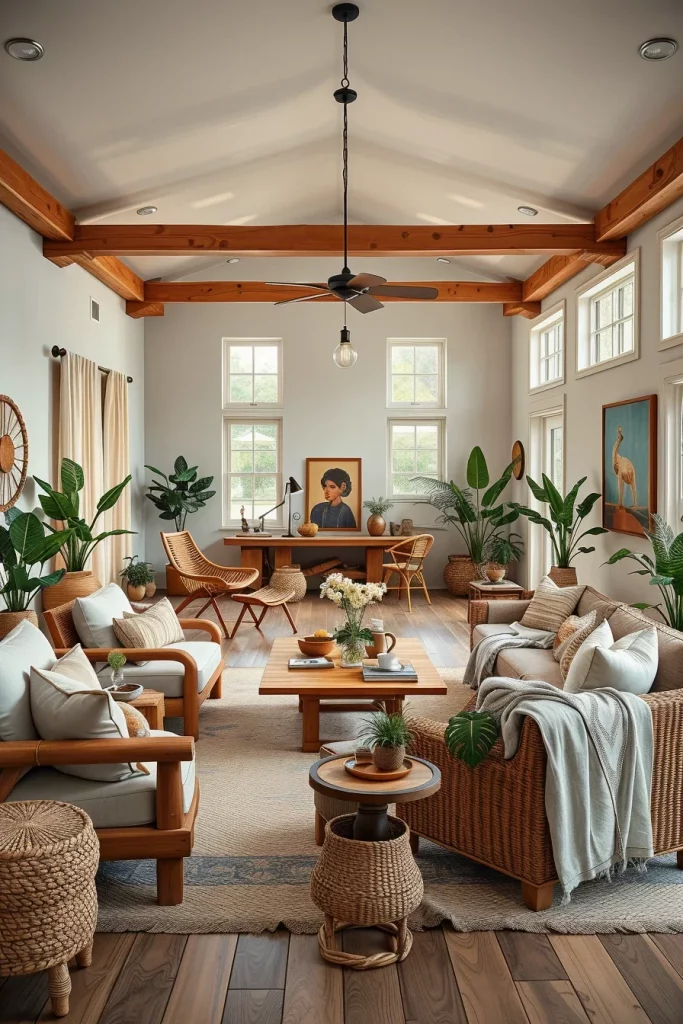
I typically repeat natural materials such as wood, rattan, linen, and woven fibers throughout the home. Consistent earth-inspired colors help create flow between rooms, while handcrafted accessories reinforce the overall aesthetic. Artwork, textiles, and decorative objects can vary from space to space, but they should contribute to the same overarching design narrative.
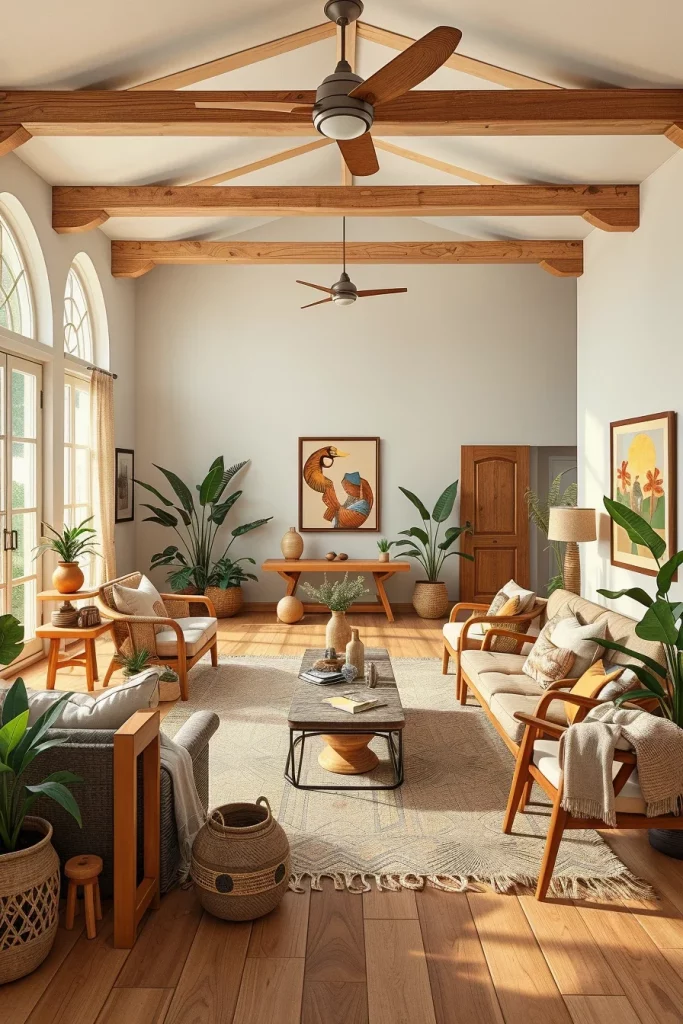
In my opinion, the most successful afrohemian homes feel collected rather than decorated. Each room should tell part of a larger story while maintaining its own identity. This balance between unity and individuality is what gives the style its enduring appeal and emotional depth.
To strengthen cohesion even further, I would introduce recurring accent colors and similar lighting finishes throughout the home. These subtle connections help tie all spaces together while preserving the relaxed and artistic spirit of afrohemian living.
Afrohemian home decor is more than a design trend—it’s a celebration of culture, creativity, and personal storytelling. By combining natural materials, handcrafted pieces, rich textures, and meaningful decorative elements, you can create a space that feels both stylish and deeply authentic. Whether you prefer bold statement pieces or subtle cultural accents, the Afrohemian aesthetic allows you to design a home that reflects your individuality. With thoughtful layering and a focus on comfort, this unique style transforms any room into a warm and inspiring retreat.