
Blue paint is having a moment, and not just on front doors. From deep teal paneling to pale sky walls, this roundup of 33 spaces shows how one color family can shift a room’s whole mood. Whether you lean traditional, coastal, or modern, there’s a blue here that fits how you live.
This article walks through real rooms and practical takeaways, so you can see which shade, finish, and pairing might work in your own home. No design degree required, just a willingness to test a few swatches before you commit.
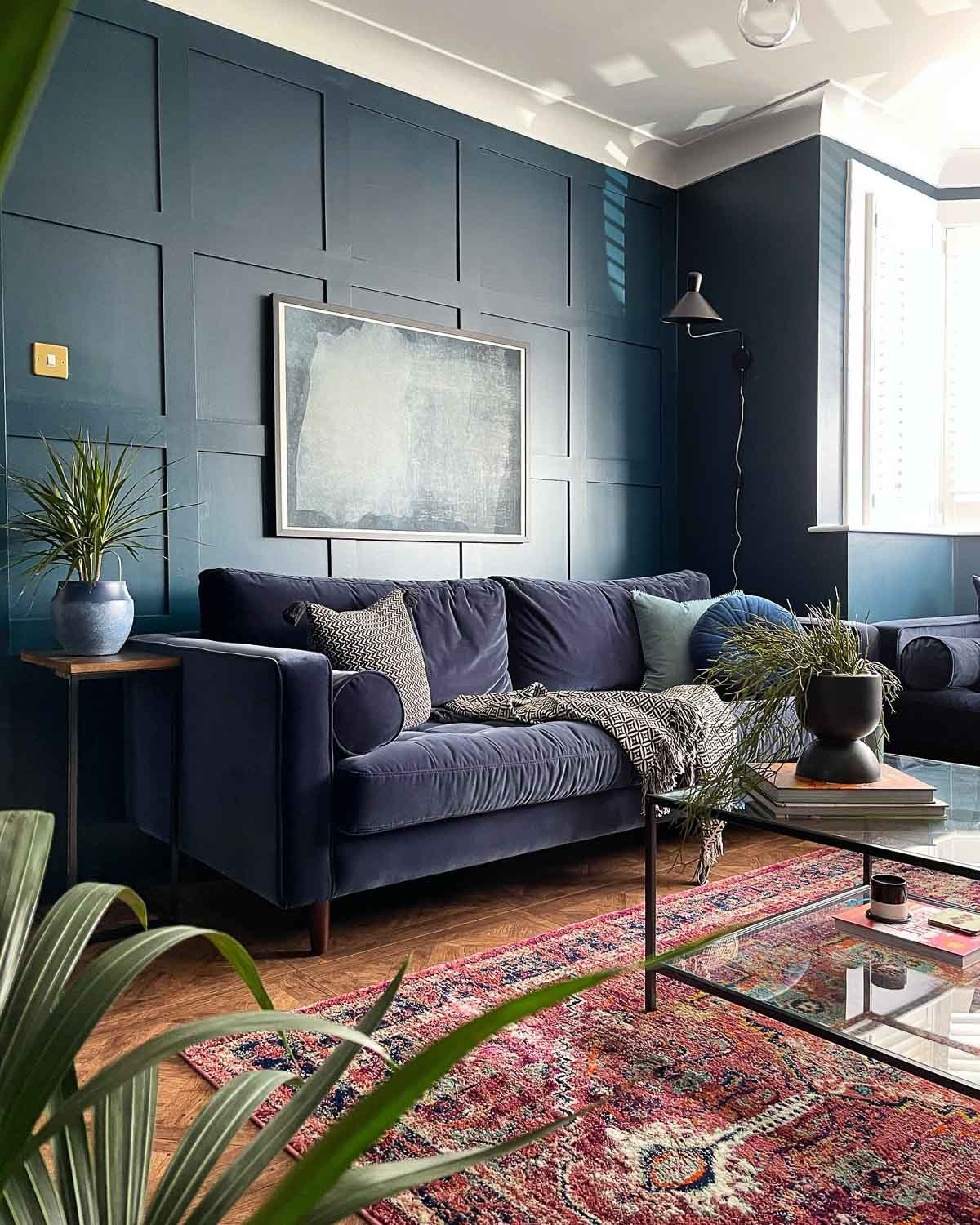
Modern Living Room with Dramatic Deep Teal Wall Paneling
Deep teal wall paneling sets the tone here, with a deep velvet sofa and a glass coffee table keeping the focus on that rich blue. A patterned rug and warm wood tones balance the drama, while pink accents add a soft contrast. Natural daylight and wall sconces make the paneling feel dimensional rather than flat. This is a style where the wall does the talking, and the rest of the room stays simple to let it shine.
Elegant Living Room Featuring Dark Blue Painted Walls and Velvet Sofa
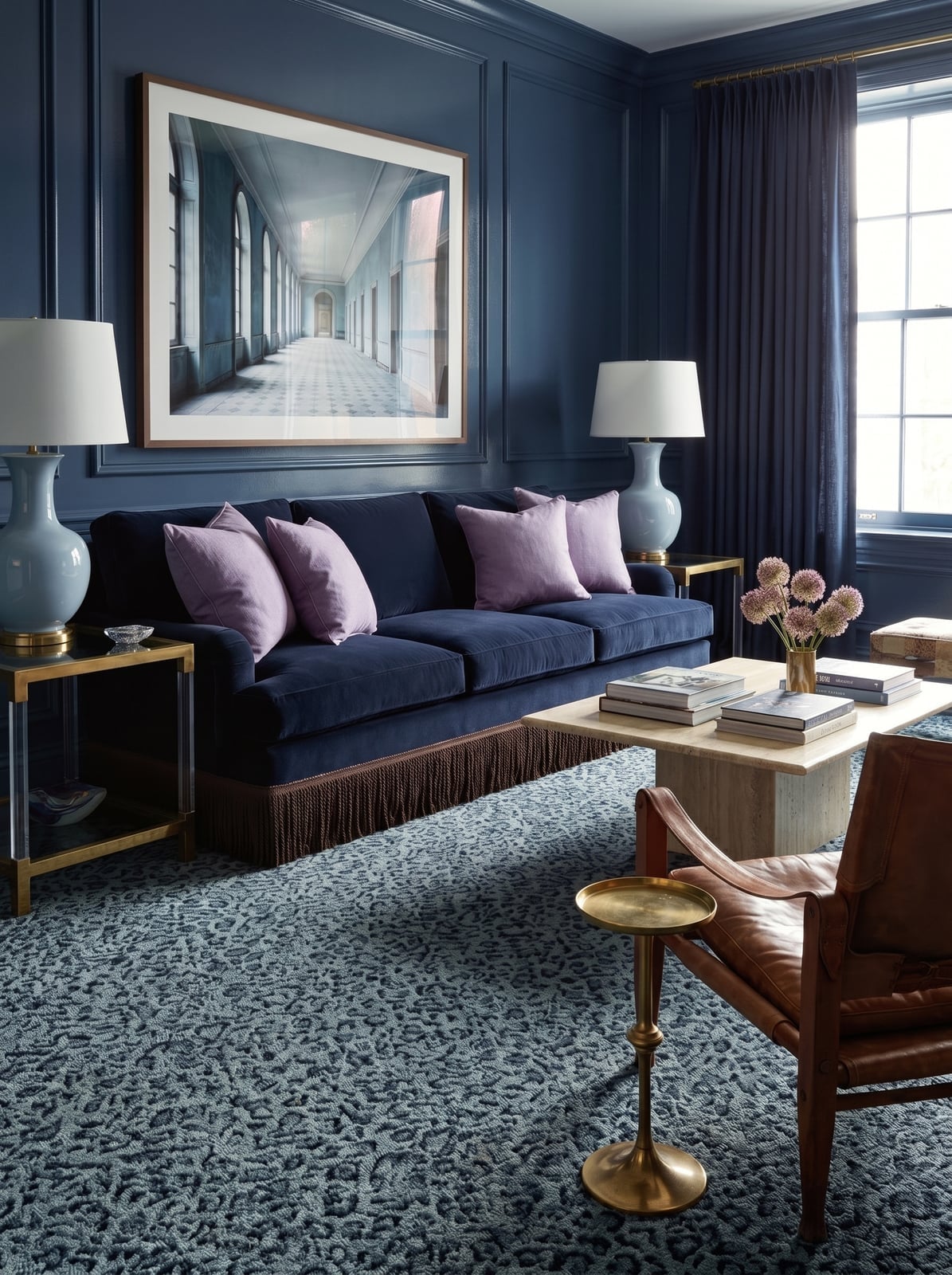
Dark blue painted walls and a velvet sofa in the same shade make this living room feel cohesive. The palette adds lilac, gold, and brown, so the blue reads as grounded. A leather armchair and marble coffee table break up the velvet, and brass side tables bring a warm gleam. Ambient lamps soften the whole scene. The fringe on the sofa adds texture. This is a room that lives well for conversation, with seating arranged to face inward and a color story that feels complete.
Traditional Hallway with Light Blue Walls and Dark Wood Staircase
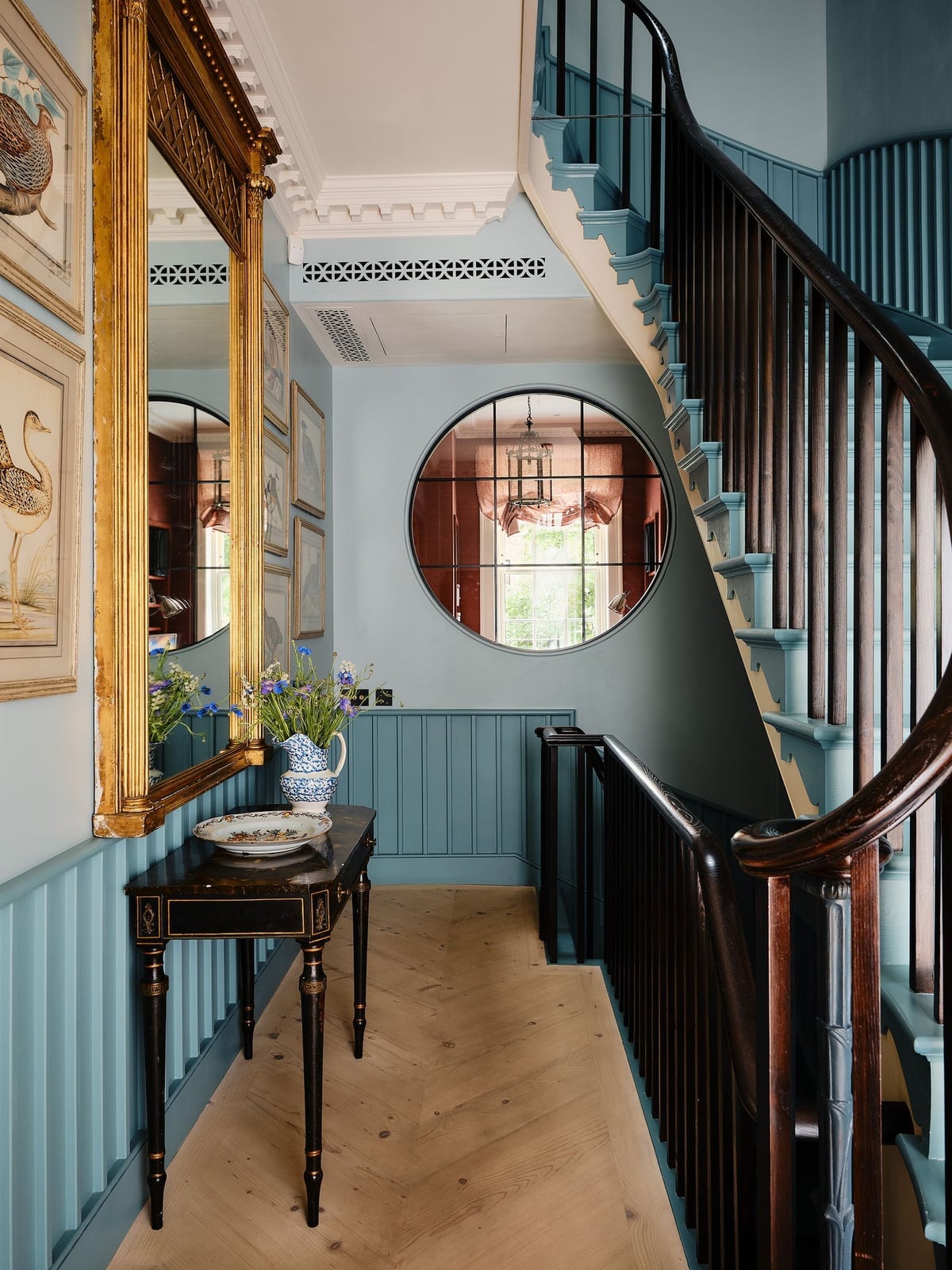
How do you make a narrow hallway feel wider without losing its character? Light blue walls reflect natural light, and the dark wood staircase anchors the space with a solid, traditional weight. A console table and an ornate mirror sit on one side, with framed artwork adding interest at eye level. A circular window brings in daylight and keeps the corridor from feeling closed in. The light blue paint lifts the wood tones, while the dark staircase keeps the palette from floating away. This layout works because the mirror bounces light back down the hall, and the artwork gives the eye a place to rest. The result is a passageway that feels deliberate, not leftover.
Glamorous Dining Room with Royal Blue Velvet Chairs and Marble Table
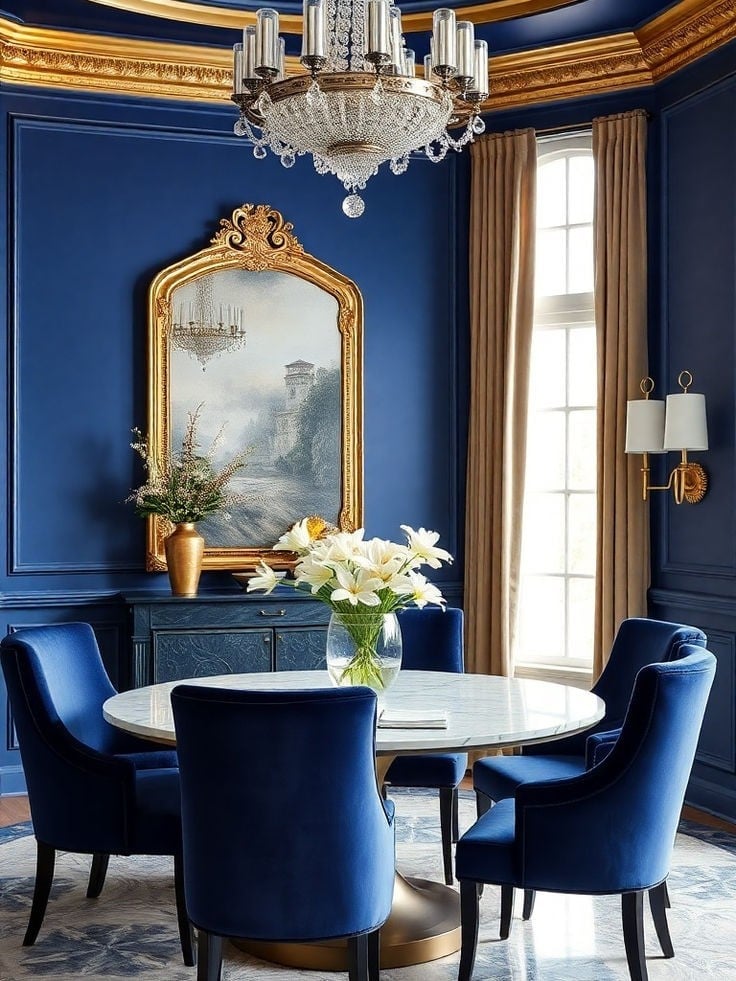
Royal blue velvet chairs surround a marble top table, with a chandelier and wall sconces providing layered light. The round table keeps the scale intimate, while an ornate mirror above a sideboard reflects the chandelier and opens up the room. Natural daylight softens the gilt and crystal, so the glamour feels warm rather than cold. The chairs are the hero here, and the marble table lets them take center stage without competing.
Coastal Kitchen Nook with Dark Blue Paneled Walls and Banquette
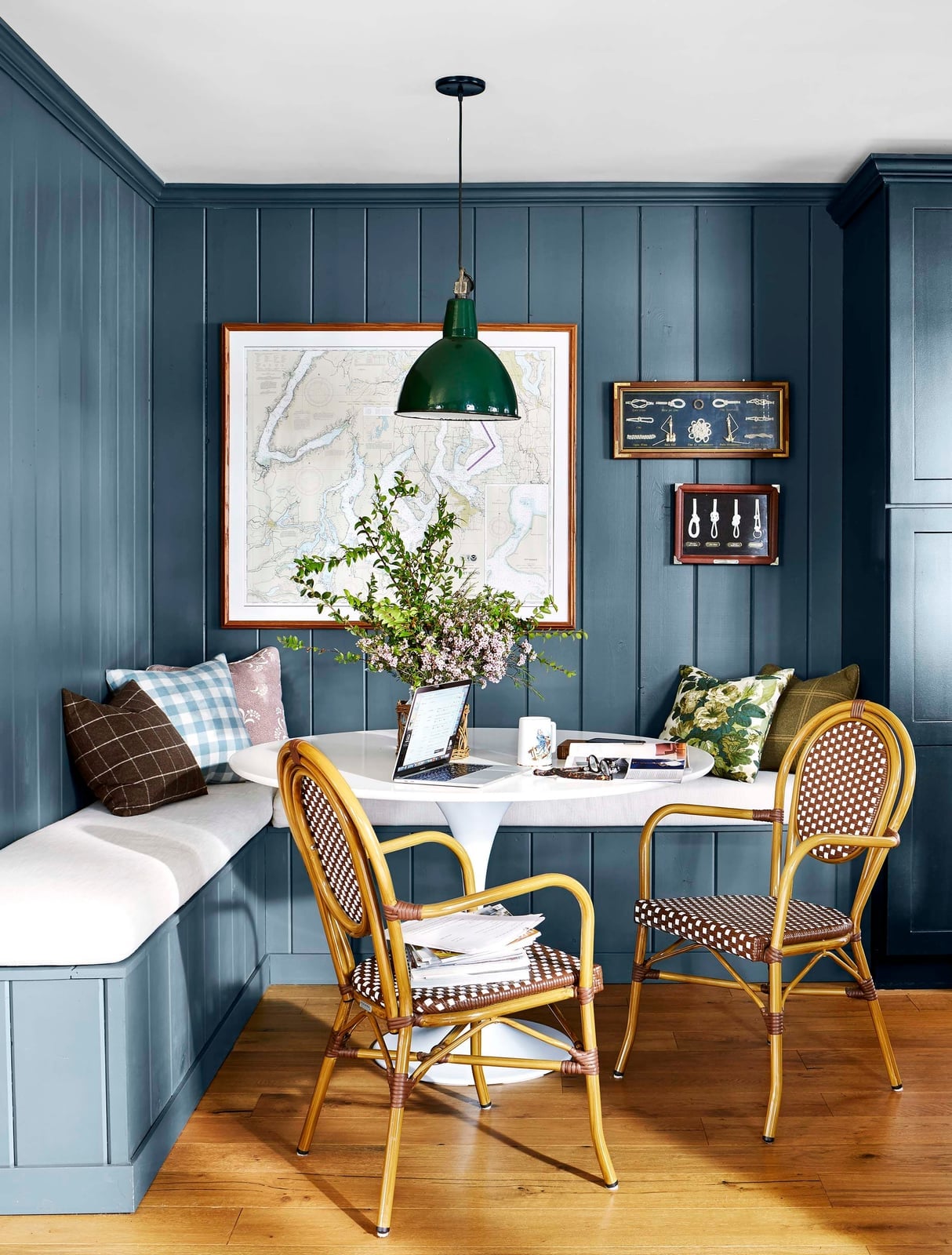
Dark blue paneled walls and cabinetry make a compact kitchen nook feel grounded, while white and wood tones keep it light. Banquette seating wraps around a corner, with a round table and rattan chairs adding a relaxed coastal feel. A pendant light hangs overhead, and daylight keeps the dark paint from closing in the space. Map artwork on the wall reinforces the coastal theme without feeling themed. For renters, this look can be adapted with peel-and-stick paneling over existing walls, or by painting just the banquette and cabinetry to create the same anchor without a full room commitment.
Eclectic Living Room with Bright Blue Walls and Striped Curtains
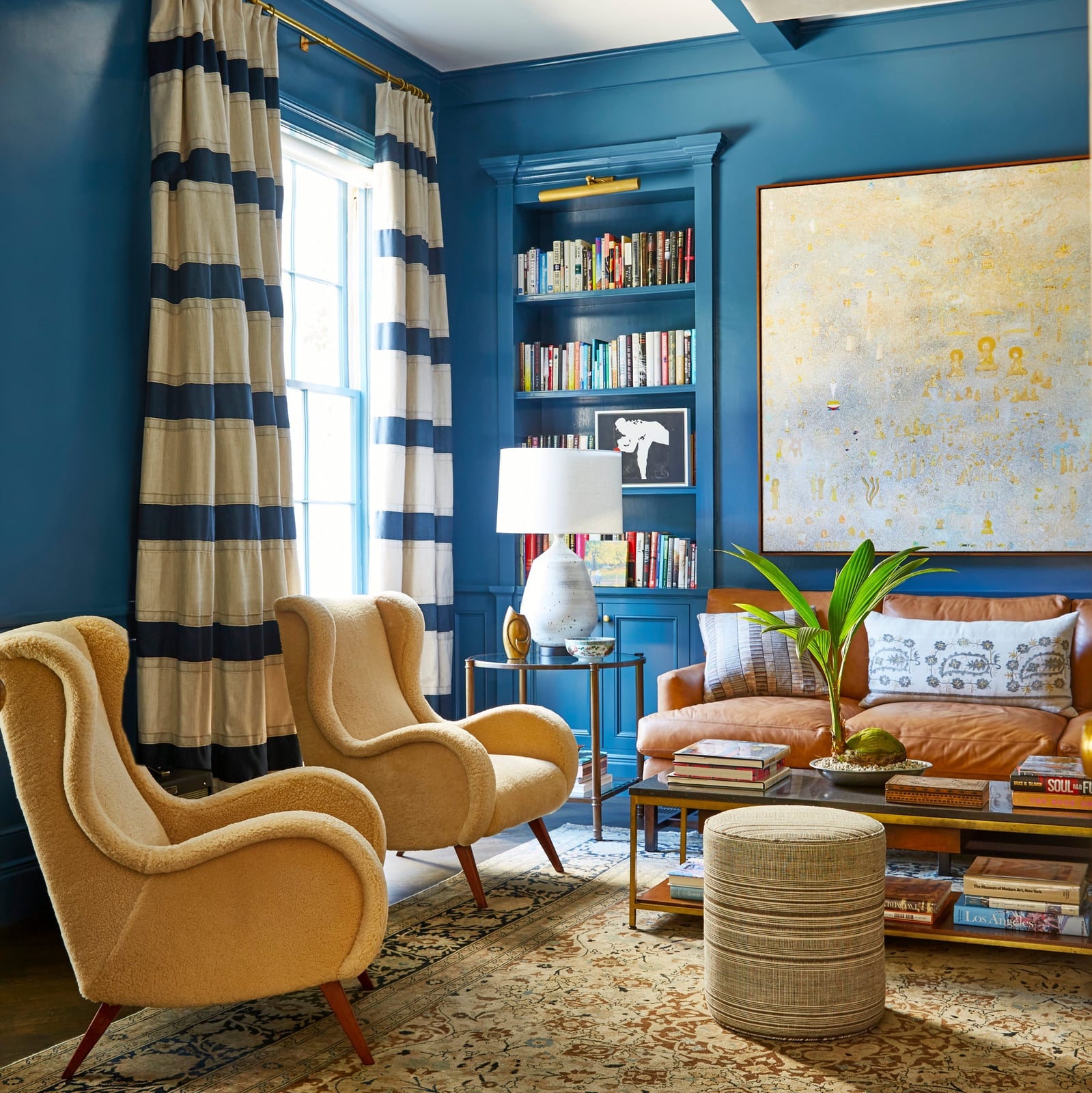
Think of a bright blue room as the loud friend who makes every quiet guest look more interesting. Here the walls carry that bold energy, and the tan leather sofa and cream boucle armchairs keep the conversation grounded. The striped curtains add movement without shouting, while the patterned rug ties the wood and fabric together. It is a space that looks collected over time rather than planned in one afternoon.
The principle to borrow: let one element set the volume and everything else takes a supporting role. The blue walls are the anchor, so the furniture stays in neutral leathers and creams, and the patterns stay confined to the rug and curtains. If you want this eclectic balance, keep the colorful wall as your single bold move. That way the room feels lively, not chaotic, and each piece gets room to breathe.
Mid-Century Modern Home Office with Vibrant Medium Blue Wall
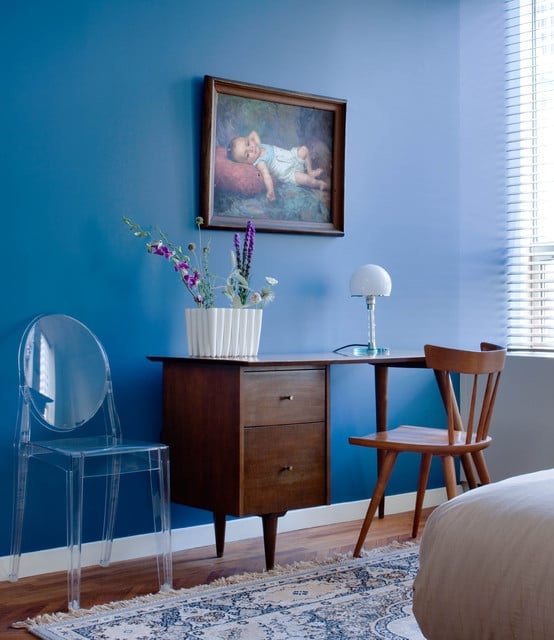
The vibrant blue wall here works because it is the only loud color in the room. Wood tones on the desk and chairs warm the space, while the glass and rug add lightness. The desk faces the wall, which turns the blue into a backdrop for focus rather than a distraction. For a mid-century modern home office, this blue reads as confident but not cold. The principle: use one saturated wall and keep the furniture in warm neutrals so the color carries the room without overwhelming it.
Modern Home Office with Bright Blue Walls and Floating Shelves
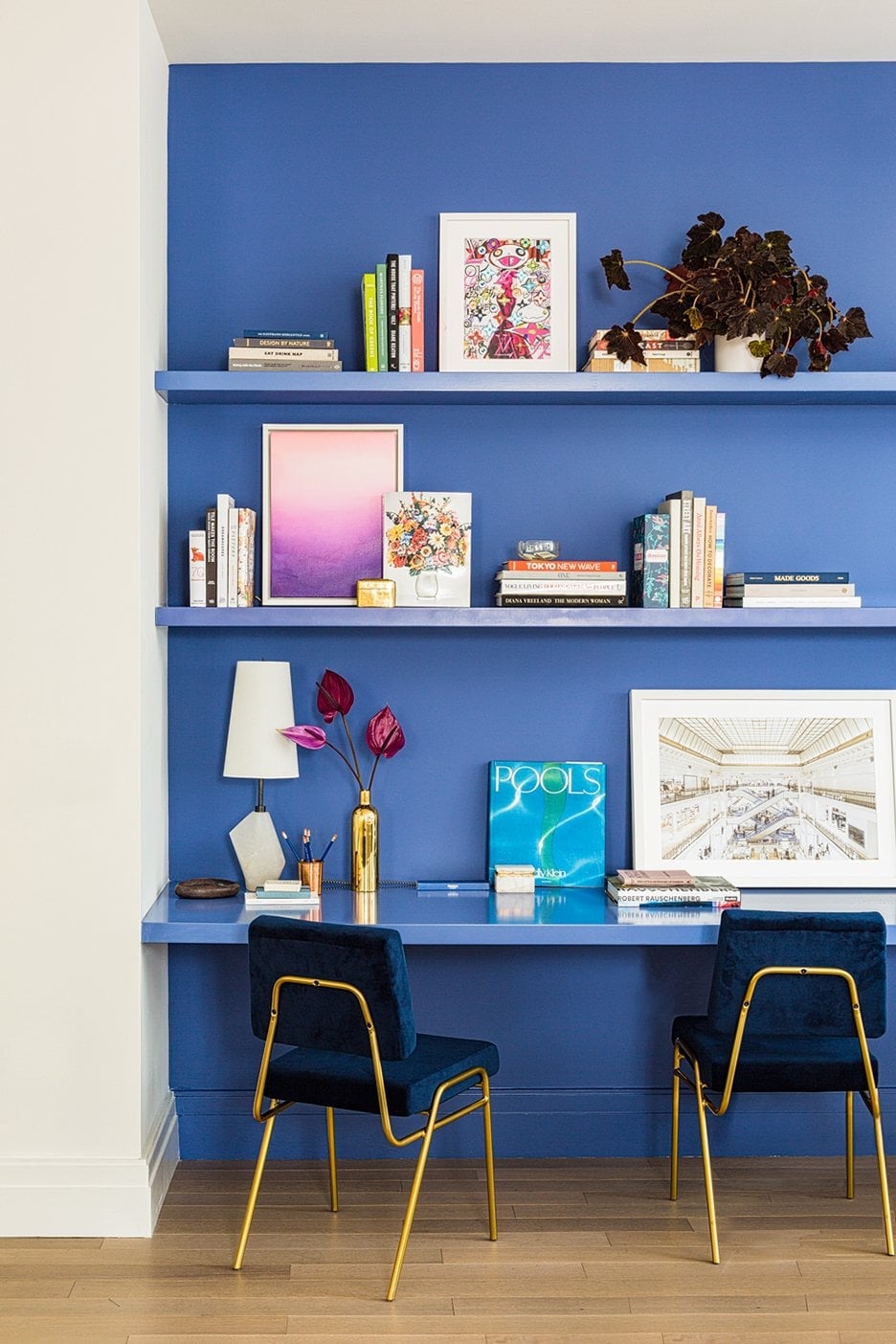
This home office makes a clear statement: bright blue walls can feel professional and playful at once. The floating desk sits against the wall, with metal shelves above holding books and objects, and two blue velvet chairs add softness. Gold accents break up the blue, and natural light keeps the room open. Use floating shelves to keep the wall color visible and the room airy. Because the shelves hold the clutter, the bright paint stays the star, and the office appears tidy.
Traditional Bedroom with Light Blue Walls and Prominent Fireplace
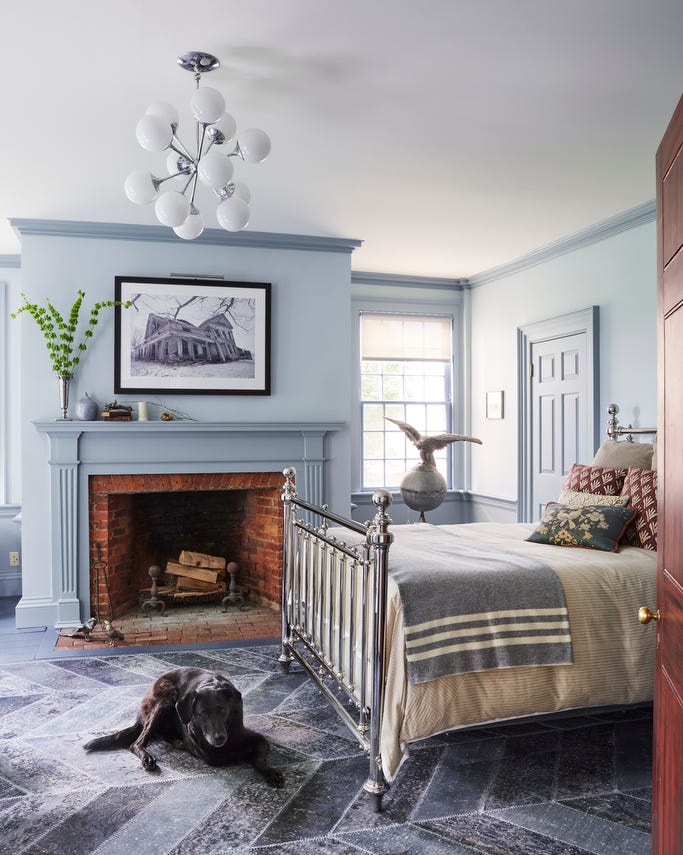
How do you make a fireplace the focal point in a bedroom without letting it take over? Here the answer is a blue painted surround that ties the hearth to the light blue walls. The red and grey accents in the bedding and accessories keep the palette warm, while the wood and brick add texture. A globe sculpture on the mantel draws the eye to the firebox.
Use color to connect the fireplace to the room. By painting the surround in a blue close to the walls, the fireplace becomes part of the design. The blue acts as a backdrop, and the bed and fireplace share the space comfortably. The mantel holds just a few curated objects, so the eye rests on the shape of the hearth itself.
Serene Living Room with Pale Blue Walls and Marble Fireplace
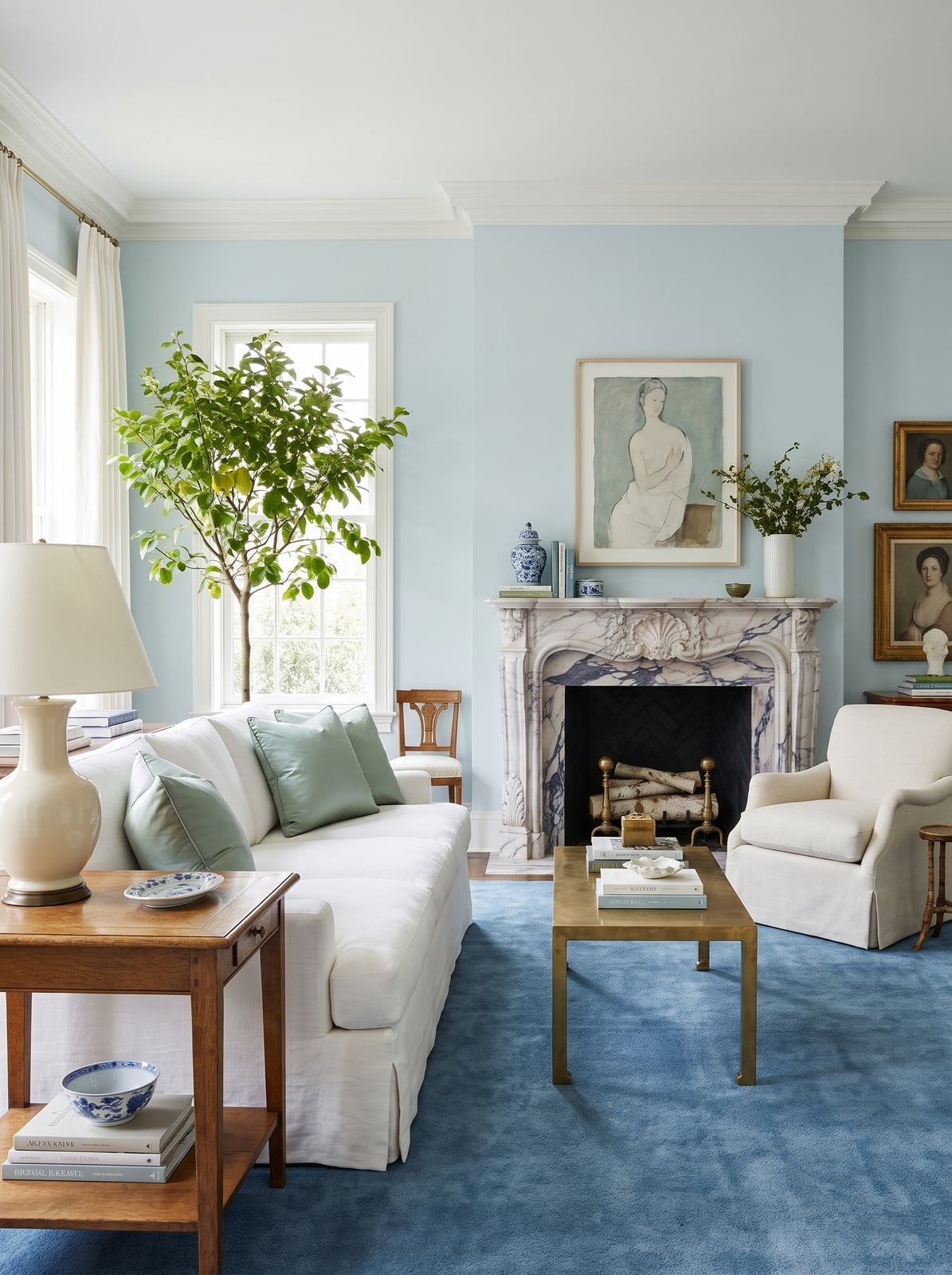
The pale blue walls here set a calm base, and the marble fireplace adds a cool, polished note. White slipcovered furniture keeps the room airy, while the brass coffee table and potted tree bring in warmth and life. Wall sconces frame the fireplace, and the blue rug ties the palette together. Use light walls to let a heavy material like marble feel grounded and balanced. The pale blue softens the stone, and the window light makes the whole seating area feel open and easy.
Glamorous Dining Room with Cerulean Blue Walls and Crystal Chandelier
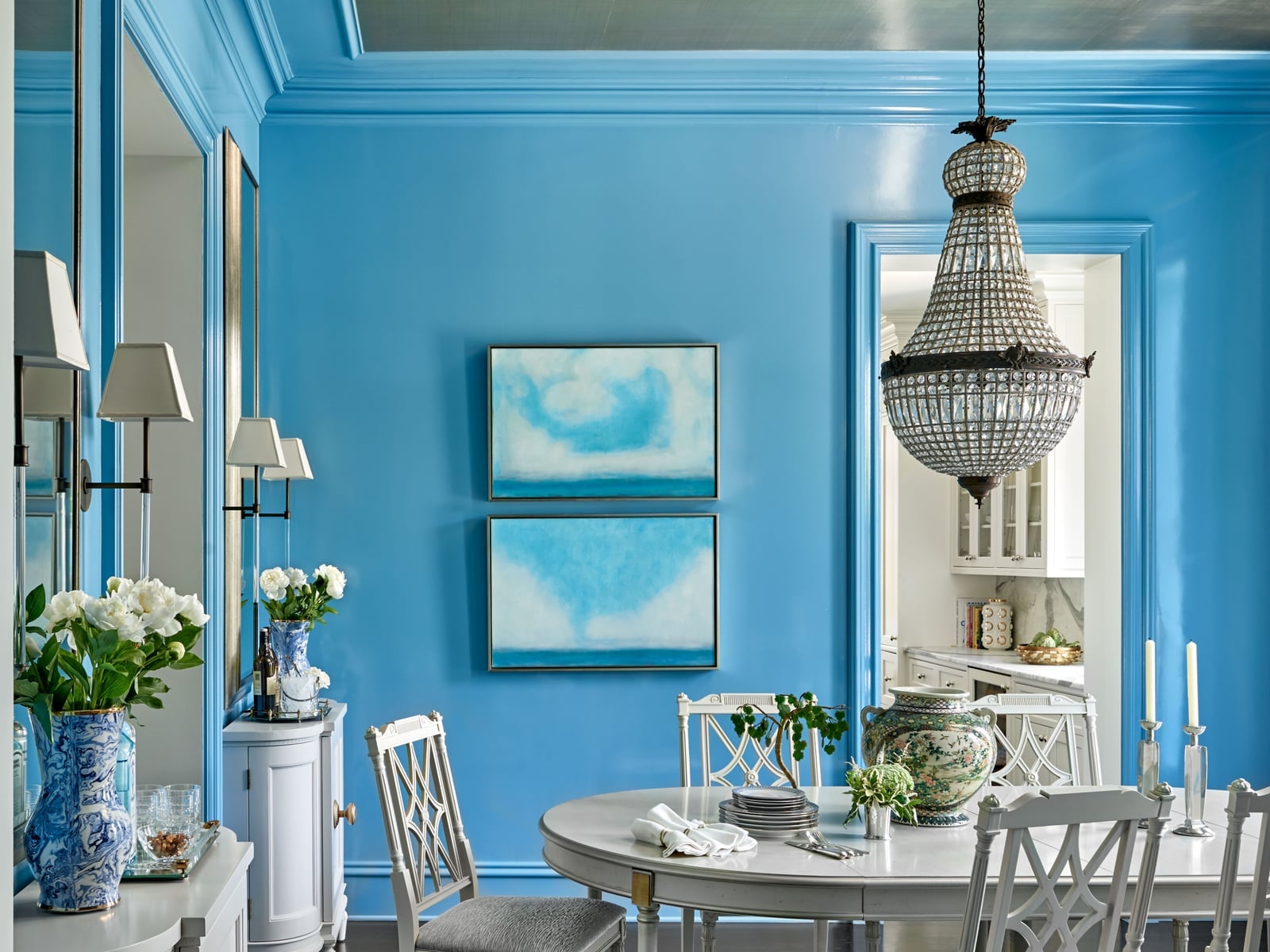
A room with mirrored surfaces and crystal lighting needs a wall color that can hold its own without competing. The cerulean blue walls here are vibrant enough to anchor the dining table, the ornate mirror, and the crystal chandelier without letting any one piece dominate. Silver and gold accents on the chairs and vases pick up the cool tone of the paint, while white keeps the look from feeling heavy. The layout keeps the round table centered, which gives the room a natural flow around the chandelier. This is a palette that reads as intentional because the blue does the work of tying the reflective surfaces together.
Modern Living Room with Pale Blue Walls and Vibrant Blue Sofa
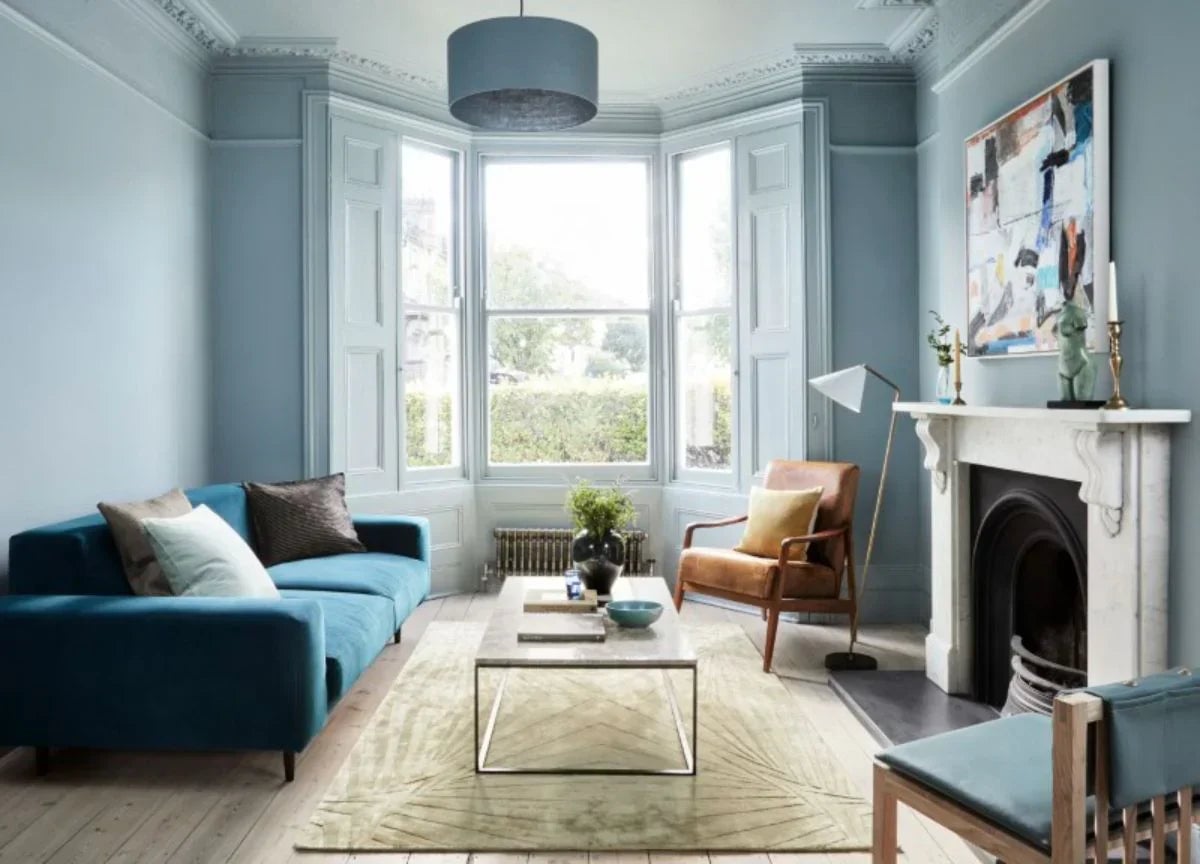
Pale blue walls can be a safe choice, but pair them with a vibrant blue sofa and they become the quiet partner in a color story. The light blue backdrop lets the sofa take center stage, while the tan leather armchair and marble coffee table add warmth and texture. Natural light from a window softens the contrast, so the room never feels cold.
The fireplace anchors one end of the room, and the sofa faces the window, which makes the layout feel open. The ratio here is roughly two parts pale blue to one part vibrant blue, with tan and white filling the rest. The leather and marble introduce a matte and polished surface mix that keeps the room from looking flat.
Modern Bedroom with Vibrant Royal Blue Walls and Jute Rug
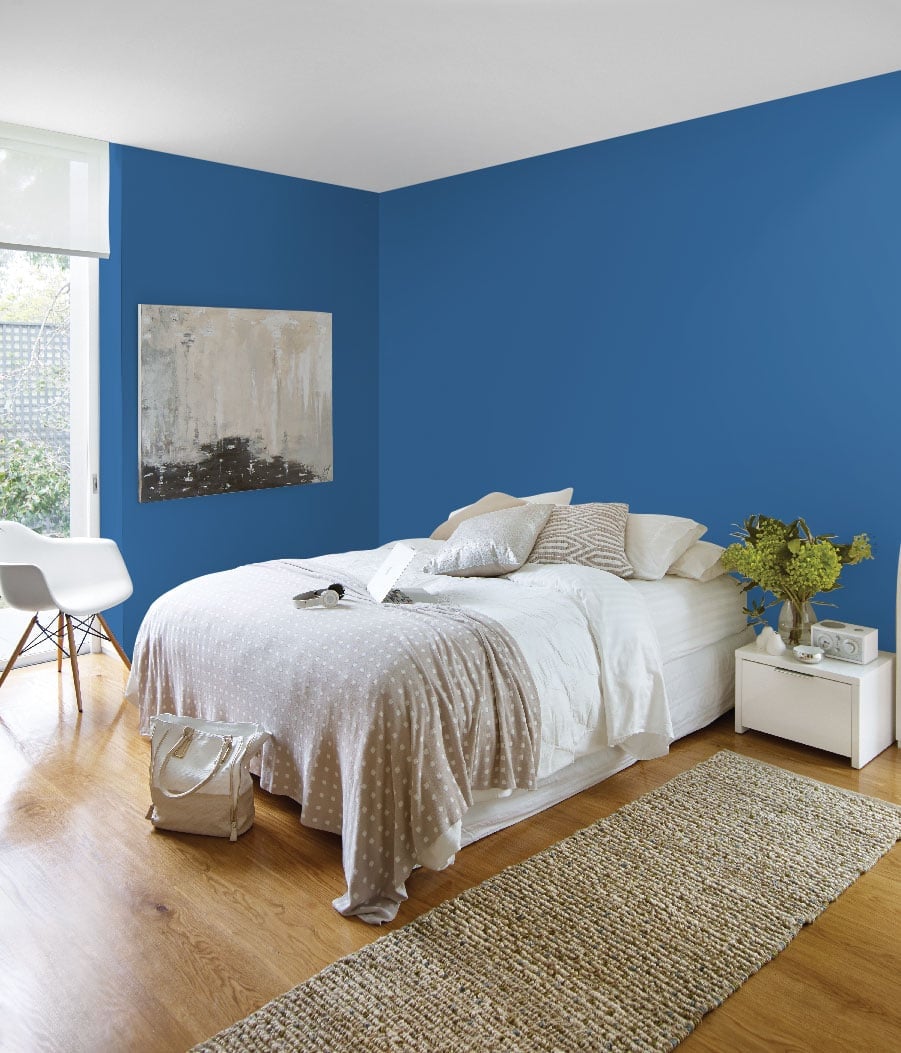
Royal blue walls in a bedroom create a strong visual anchor, but the room stays grounded because the jute rug and beige fabric introduce natural texture that the paint alone cannot provide. The bed sits centered against the blue wall, and the artwork on the wall picks up the same color family without matching exactly. This is a case where the paint works because the materials around it are tactile rather than glossy. The jute adds a rough weave that contrasts with the smooth painted surface, and the wood furniture keeps the look from drifting into cold.
Contemporary Bedroom with Deep Blue Walls and Marble Fireplace
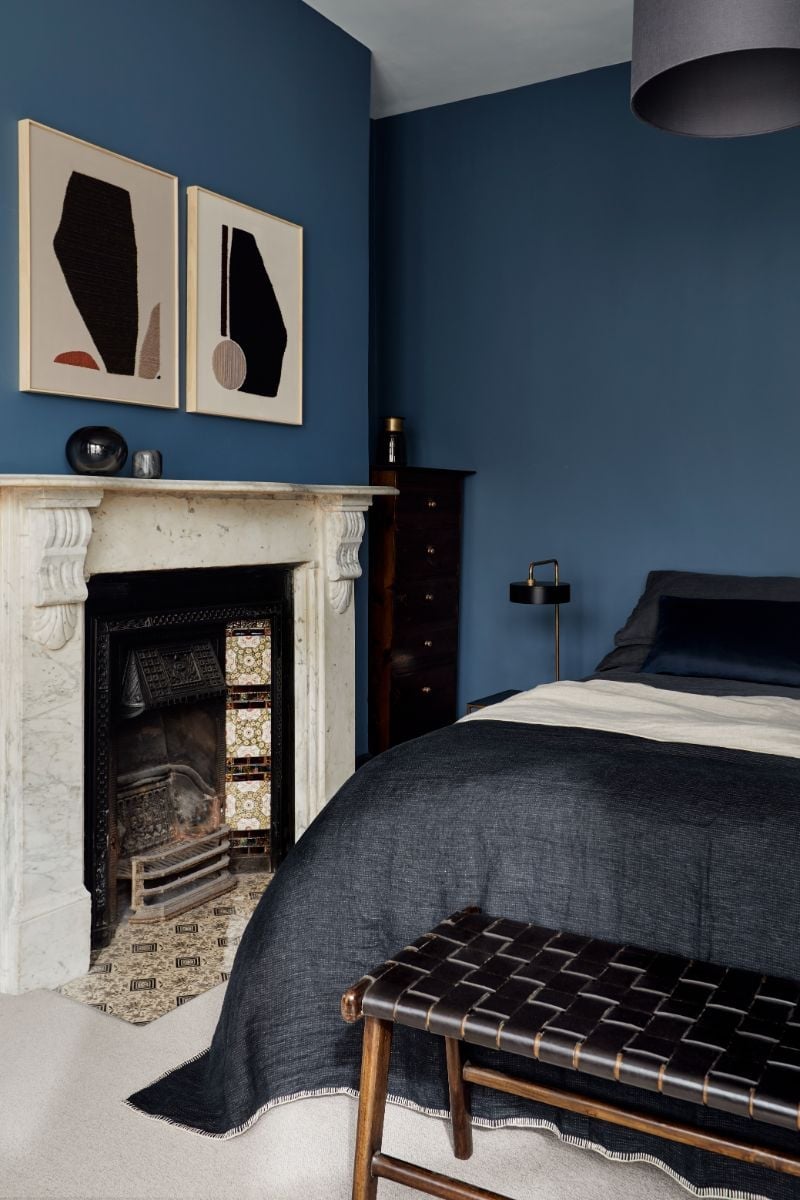
Deep blue walls can make a small bedroom feel like a cave, but here the layout prevents that. The bed sits against the blue wall, and the fireplace on the side with its marble surround reflects enough ambient light to break up the dark surface. The bedside lamp adds a warm pool of light that hits the linen bedding and dark wood dresser, so the room never reads as one flat shadow. The leather bench at the foot of the bed introduces a polished finish that catches the light differently than the painted plaster. This is a room where the lighting layers are essential, because without the lamp and the marble, the deep blue would absorb rather than frame the space.
Cottage Style Shelf Display in Light Blue Painted Wood
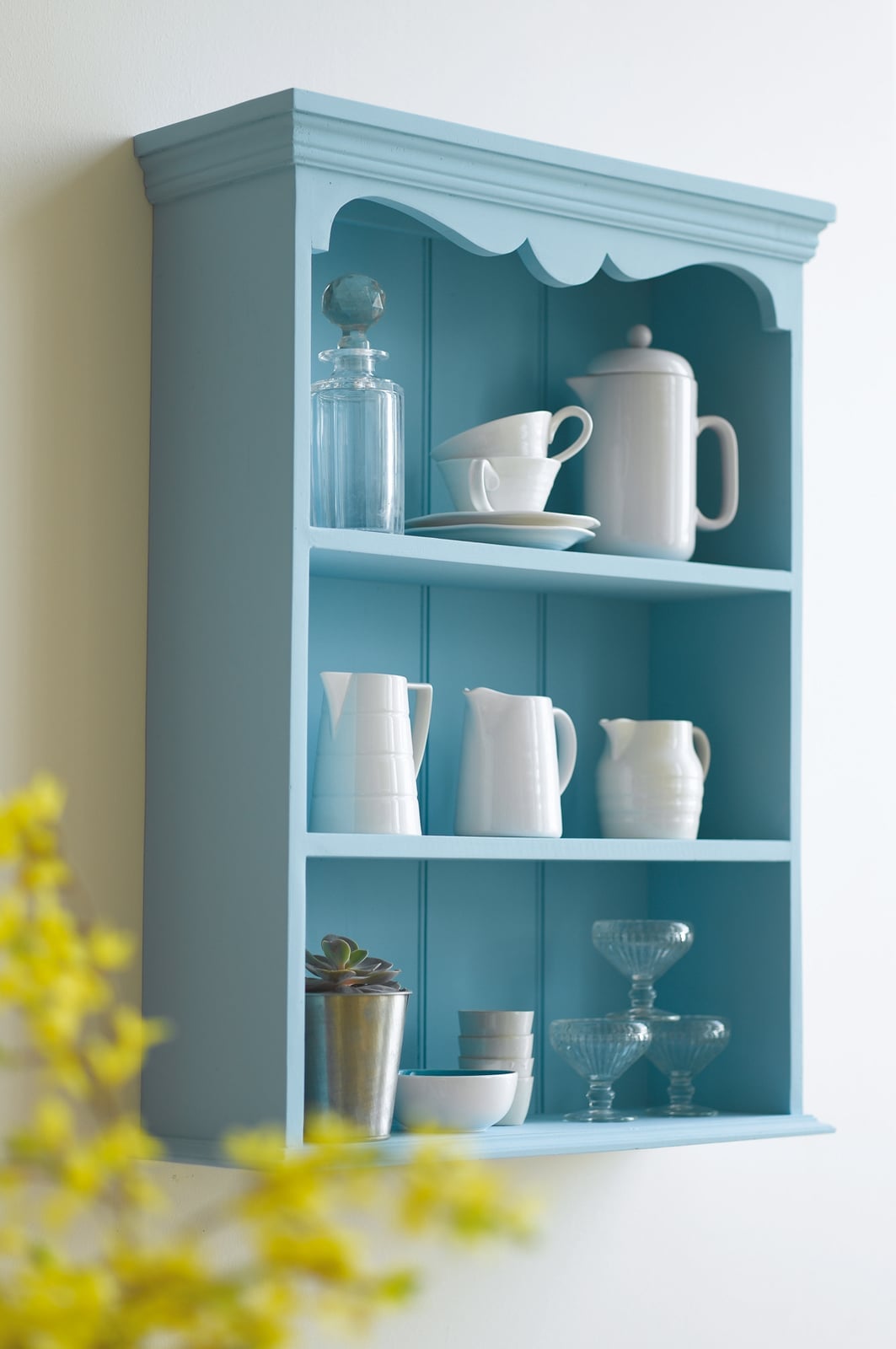
A shelf display can use paint to unify the objects without forcing everything to match. The scalloped edge of this light blue painted shelf gives it a cottage feel that a straight edge would not achieve. White ceramic pitchers and a glass decanter sit on the wood, and the soft ambient light keeps the blue from appearing too cool.
The vertical layout stacks the pieces so the eye moves up instead of across, which works for a compact space. The light blue ties the glass and ceramic together without needing to add more color. A single painted piece can set the tone for an entire vignette.
Traditional Living Room with Deep Navy Blue Walls and Bookcase
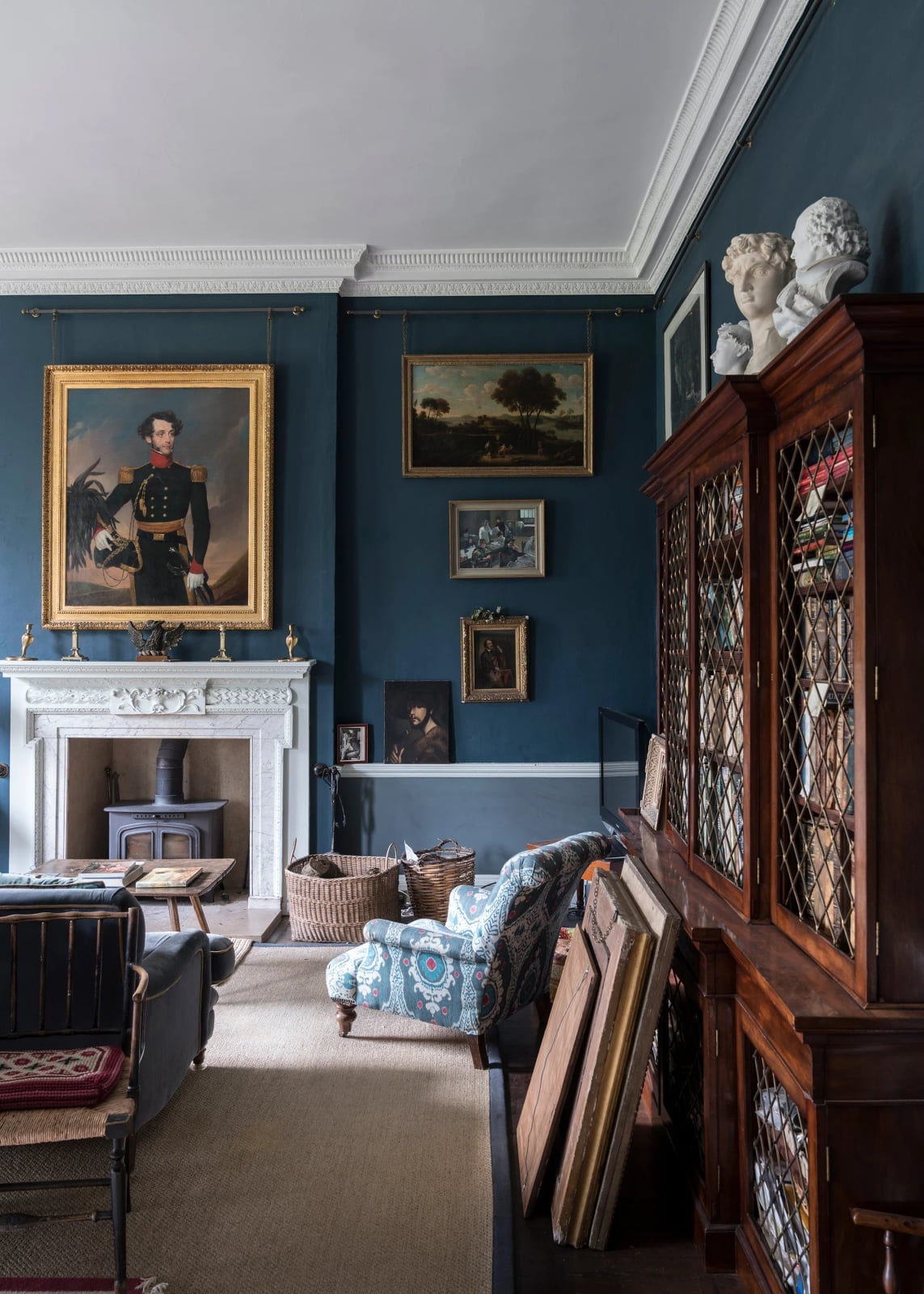
Deep navy walls set a serious, formal tone in a room where a fireplace and an ornate bookcase anchor the layout. The dark blue acts as a backdrop for white trim and wood-toned furniture, giving the eye a clear place to rest. An armchair and sofa sit in a formal arrangement. Contrast comes from pale artwork, warm wood, and soft lamp light. The palette works because the dark walls are balanced by lighter surfaces and visible daylight.
Minimalist Scandinavian Bedroom with Layered Blue Linen Bedding
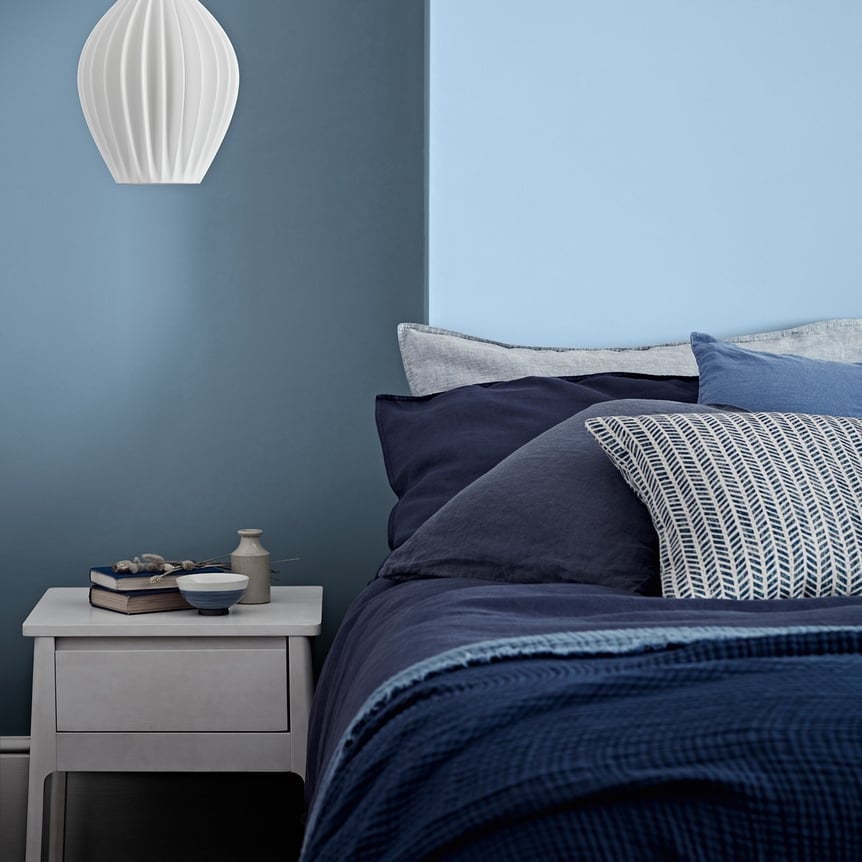
A practical rule for a calm bedroom is to let the bed do the talking. Here, layered blue linen bedding in light and dark tones adds depth without clutter. The bed sits centered in a roomy layout, with a simple nightstand and lamp on one side and a pendant light above. Natural light softens the palette of light blue, dark blue, and grey. What defines the Scandinavian look is the restraint: no extra patterns, no heavy drapes, just cotton, linen, and ceramic pieces that feel quiet. The ratio of blue to neutral keeps the room serene, not cold. A single accent like a ceramic vase would break the minimalism, but nothing here competes.
Traditional Study with Teal Blue Walls and Floor-to-Ceiling
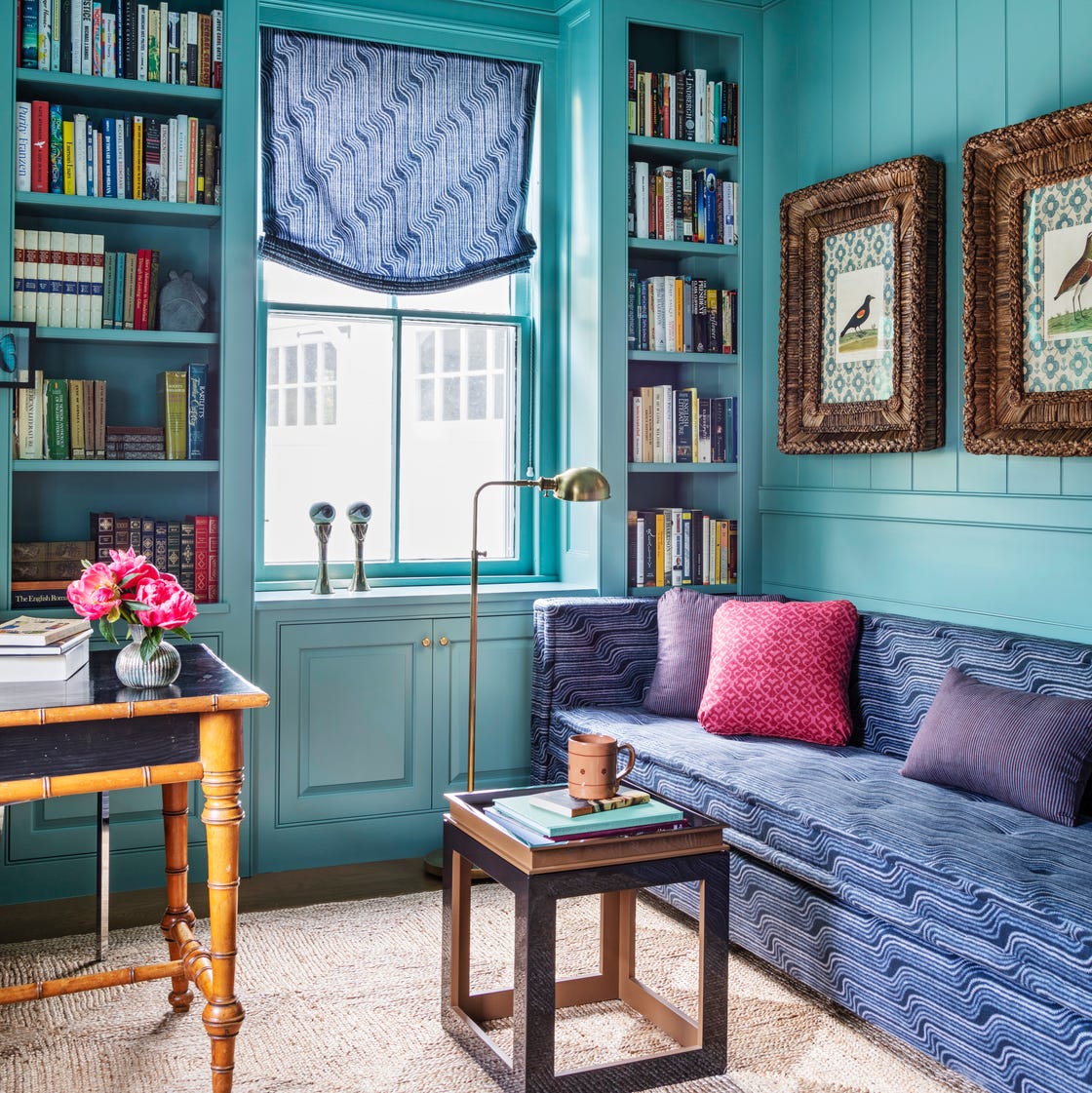
Teal blue can read as either a cool neutral or a bold accent, depending on what you pair it with. This study leans into the bold side, with floor-to-ceiling bookshelves flanking a window in the same deep teal. The walls and cabinetry are painted together, making the room feel wrapped in color. A sofa, desk, and lamp sit in a traditional layout, while touches of pink and navy in the accessories keep the palette from feeling one-note.
Natural light and task lighting work together here. The window between the shelves brings in daylight, and a desk lamp provides focused light for reading or writing. The layout puts the bookshelves front and center, which makes the room feel like a library. What breaks the formality is the unexpected pink: a small accent that keeps the teal from feeling heavy.
Coastal Living Room Corner with Light Blue Walls and Wicker Chair
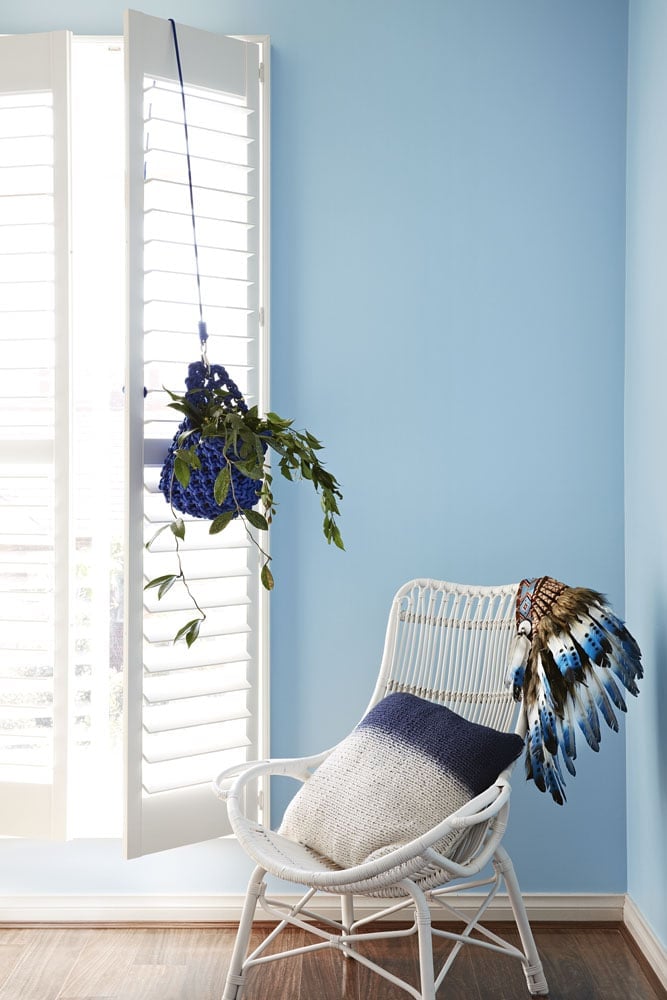
A corner with a wicker chair, a patterned cushion, and a hanging planter feels like a deliberate pause in the room. The light blue walls are vibrant but not loud, and they pair naturally with white shutters and natural wood tones. Bright daylight from the window makes the blue look airy, not washed out. The palette is simple: light blue, white, and wood. What defines the coastal style is the mix of natural materials like wicker and painted wood, with no heavy patterns competing. The hanging planter adds a vertical element that breaks the horizontal lines of the chair and window.
Traditional Dining Room with Teal Walls and Ceiling Paneling
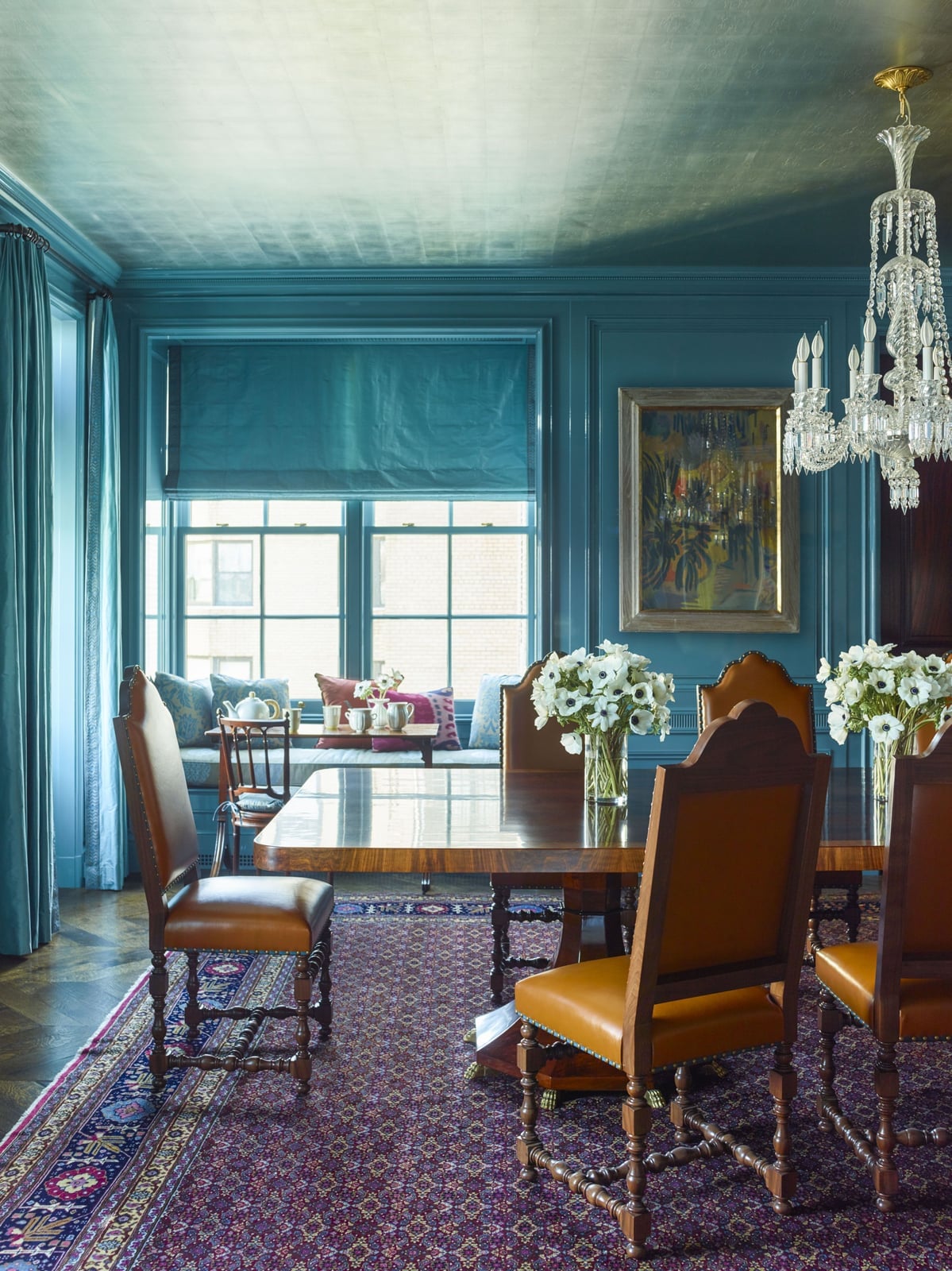
Painting both the walls and ceiling paneling in teal makes a strong statement about scale and proportion. The color wraps the room, drawing the eye up to the ceiling and down to the patterned rug. A wooden dining table sits centered with leather chairs around it, while an ornate chandelier hangs above. The palette includes teal, brown, gold, and a hint of purple in the rug. Gold provides contrast: the chandelier and any metallic accents add warmth. Natural light through a window balances the dark teal, preventing the room from feeling too heavy. The layout is classic, with the table centered, and the ceiling treatment adds a formal touch that defines the traditional style.
Traditional Bedroom with Dusty Blue Walls and Wingback Bed
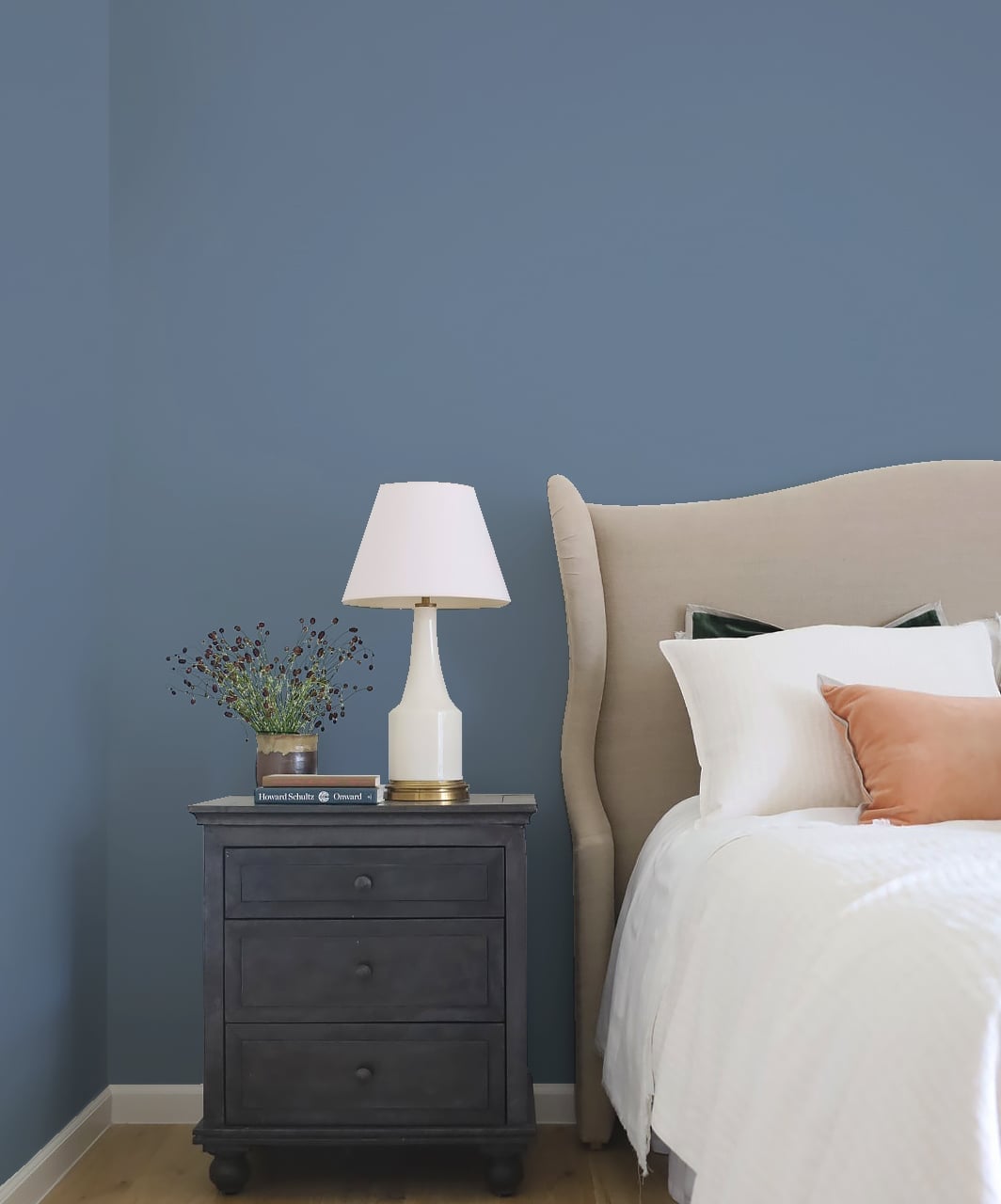
A dusty blue wall needs space to feel balanced in a room. In this traditional bedroom, cream linens and a dark grey nightstand frame the wall color without competing against it. The wingback bed in a pale upholstery keeps the corner vignette from feeling heavy, while the glass lamp adds a lighter note near the bedside. The dusty blue acts as a neutral backdrop, so the coral accent on the bed stays as the point of contrast. Scale matters here: the nightstand is substantial enough to balance the tall headboard, and the lamp sits at eye level when seated. For a similar setup, choose furniture that matches the wall’s muted tone and avoid high contrast.
Traditional Living Room with Muted Blue Built-in Shelving Unit
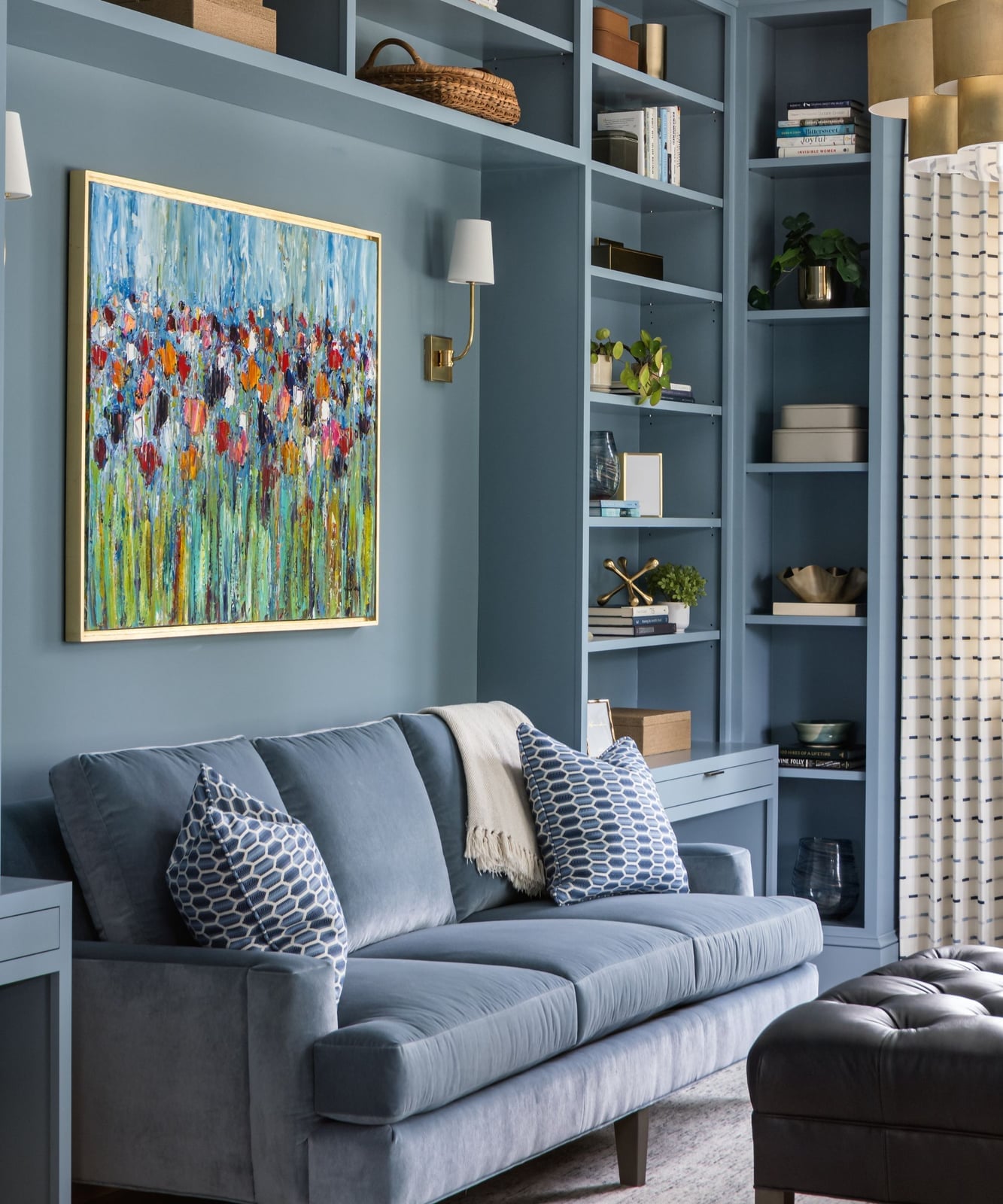
A muted blue built-in shelving unit lines one full wall of this traditional living room, creating a focal point that anchors the seating arrangement. The upholstered sofa faces the shelving directly, with an ottoman in between, so the eye travels from the seating area to the books and objects on display. Gold accents in the wall art and sconces add warmth against the cool blue, and windows above the shelving provide daylight that keeps the unit from appearing overly dark. The painted wood construction helps the unit blend into the room, which is useful for renters who want a cohesive look without permanent changes.
Abstract Close-up of Metallic Blue Paint Stirring
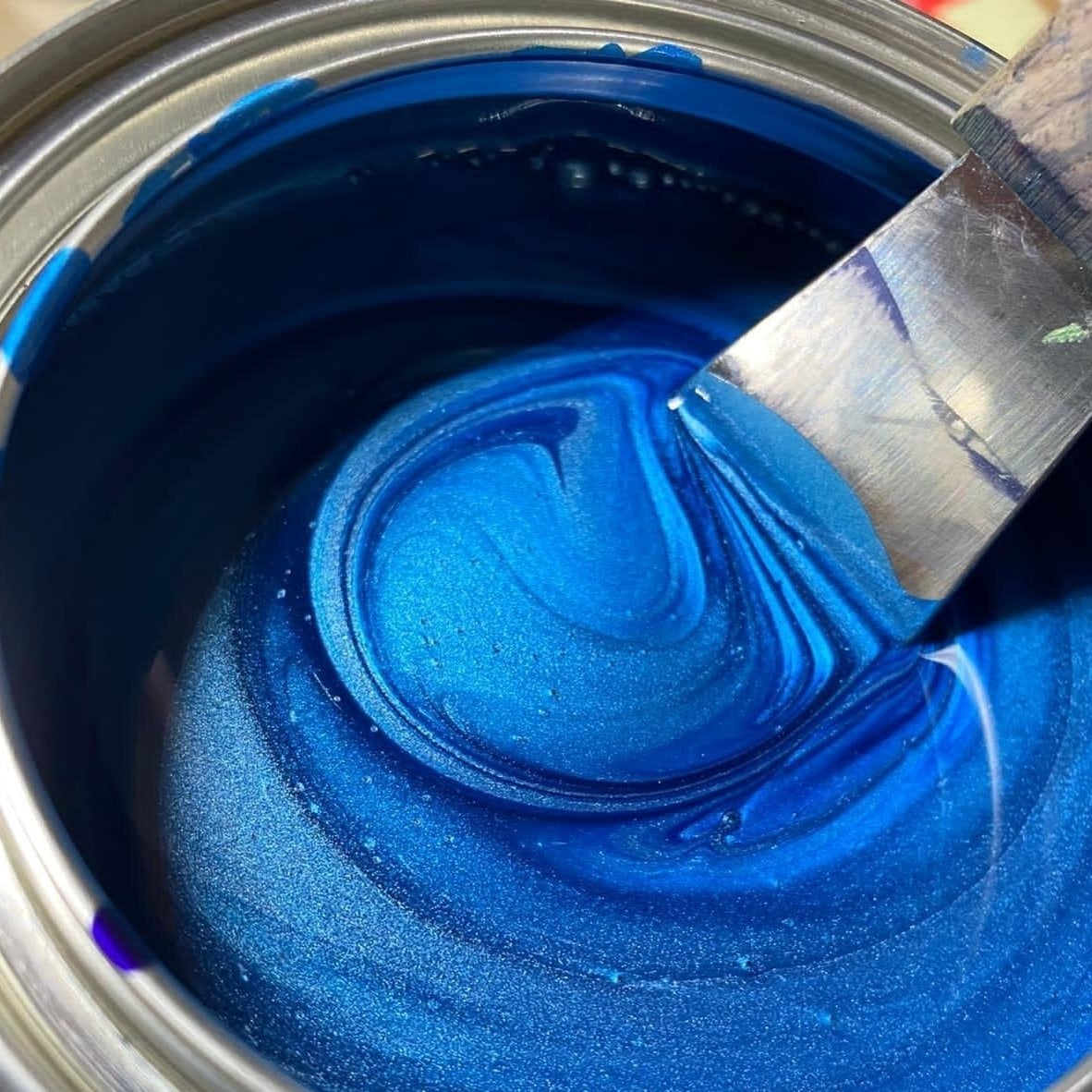
Metallic paint behaves differently than standard latex, so a practical rule is to stir it slowly and thoroughly before each use. This close-up shows a spatula moving through a can of metallic blue paint, with the swirling pattern catching bright direct light. The metallic particles create a shimmer that reads as liquid metal, which means the finish will look different depending on the angle and the light source. For a similar effect on a small accent piece or a piece of furniture, use a fine-nap roller or a foam brush to avoid visible brush marks. The metallic finish works best on smooth surfaces where the light can bounce evenly.
Modern Living Room with Deep Blue Accent Wall and White Furniture
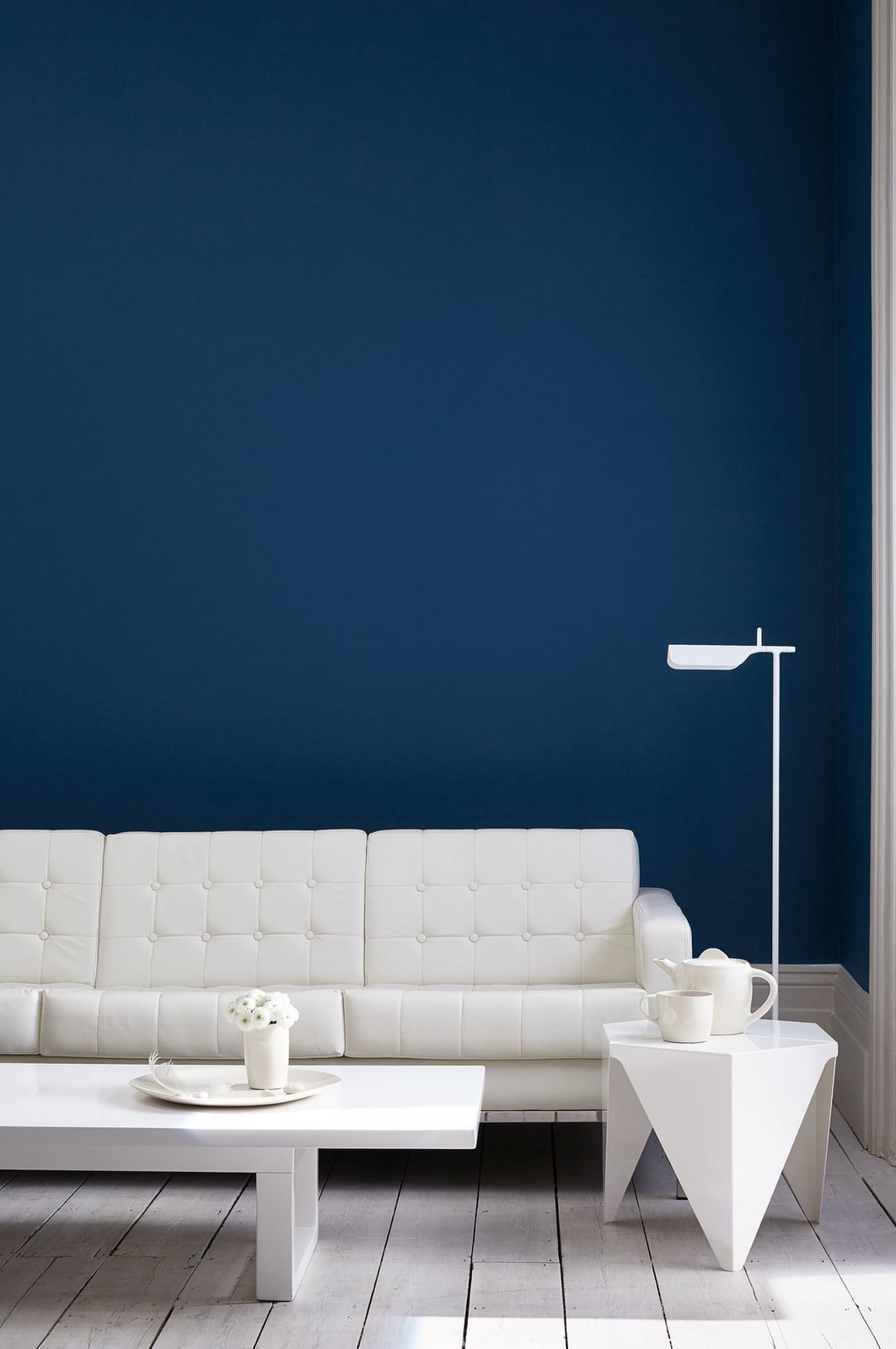
A deep blue accent wall can feel heavy if the rest of the room goes too dark, but pairing it with white furniture keeps the space open and modern. This living room places a white tufted sofa and matching coffee table directly in front of the blue wall, so the wall acts as a backdrop rather than a competing element. The floor lamp adds warm light that softens the contrast between the dark blue and the white upholstery. For a similar setup, keep the furniture clean-lined and neutral so the wall color stays as the main event. The wood floor adds a natural texture that breaks up the blue-and-white palette without introducing a third color.
Minimalist Flat Lay of Hampton Blue Paint Pot and Swatch
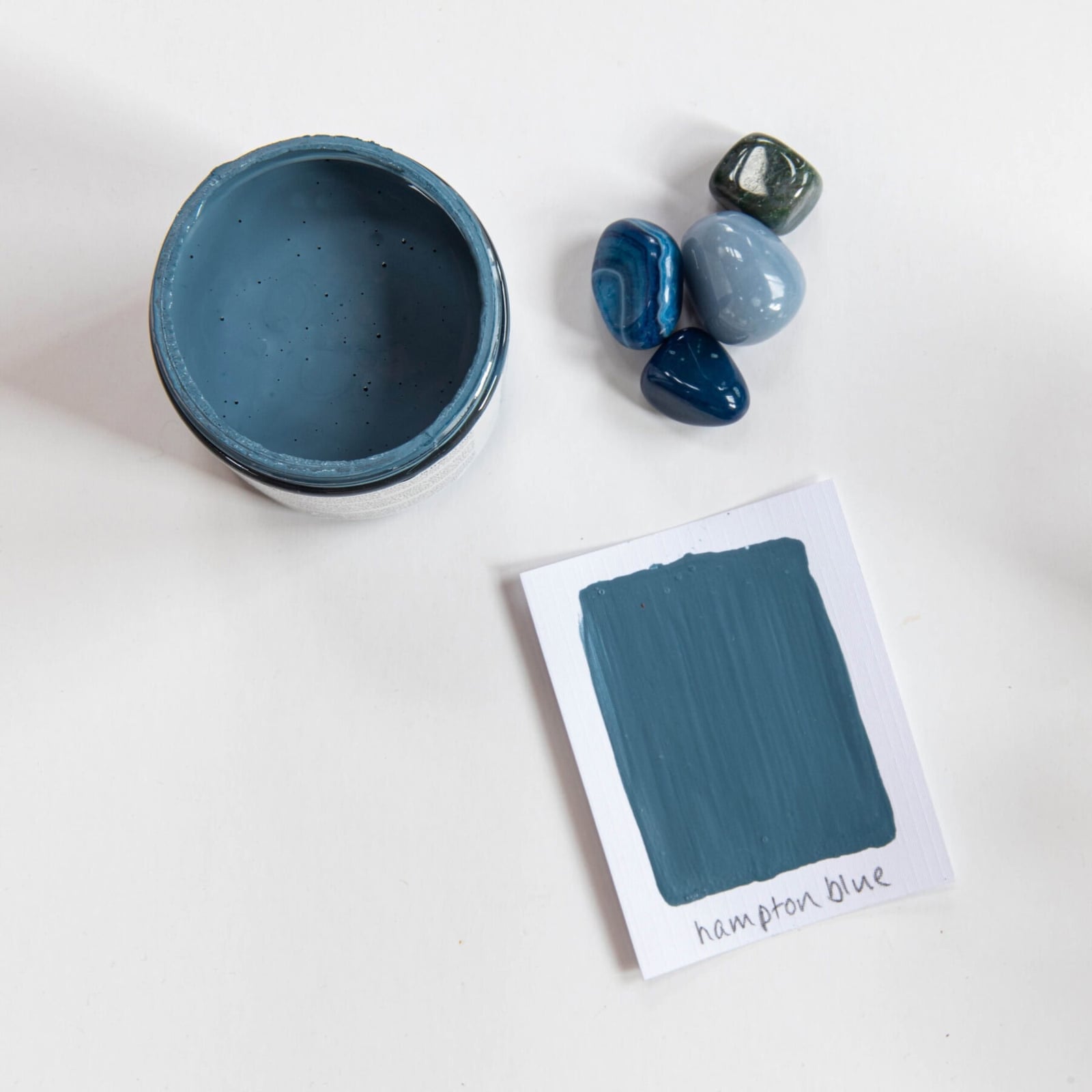
A flat lay of a paint pot and a swatch labeled in handwriting reads as both practical and intentional. The Hampton blue sits next to a small pile of decorative stones on a pale surface, with natural daylight making the paint color look true to life. The handwritten label on the swatch is a subtle cue to keep a record of your paint colors for touch-ups later. For a similar arrangement at home, photograph your paint pot and swatch together in natural light before you start painting, so you have a reference for how the color looks in daylight versus artificial light.
Compact Kitchen with Teal Blue Beadboard Cabinets
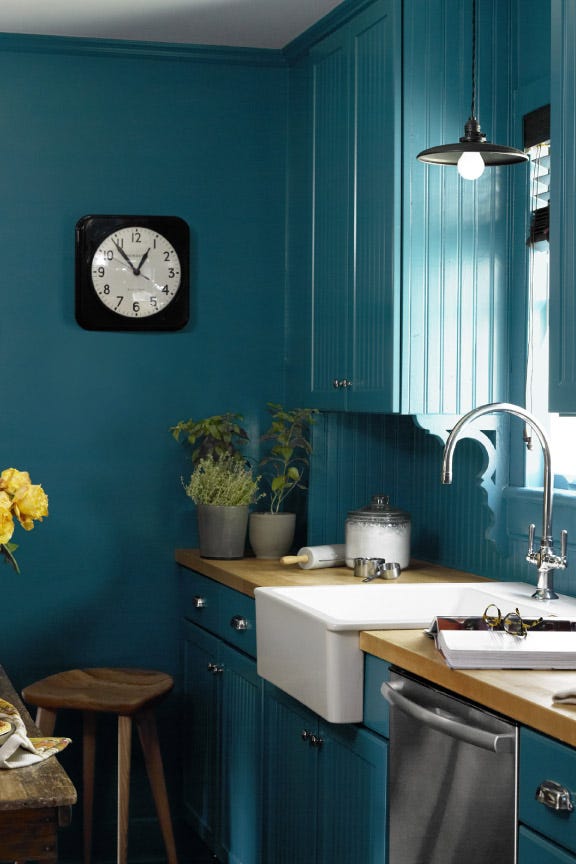
A compact kitchen gains presence when the cabinetry carries the color. The teal blue beadboard fronts wrap the sink area in a hue that feels both traditional and lively, with the vertical grooves adding texture without needing wallpaper or tile. A farmhouse sink and a wooden stool keep the look grounded, while the pendant light and natural daylight balance the saturation. The style depends on that ratio of bold to neutral: the vibrant blue works because the countertops, floor and small clock stay quiet. What breaks it is adding another saturated color nearby, which would crowd the tight footprint rather than let the cabinetry lead.
Minimalist Flat Lay of French Blue Chalk Paint and Olive Branch
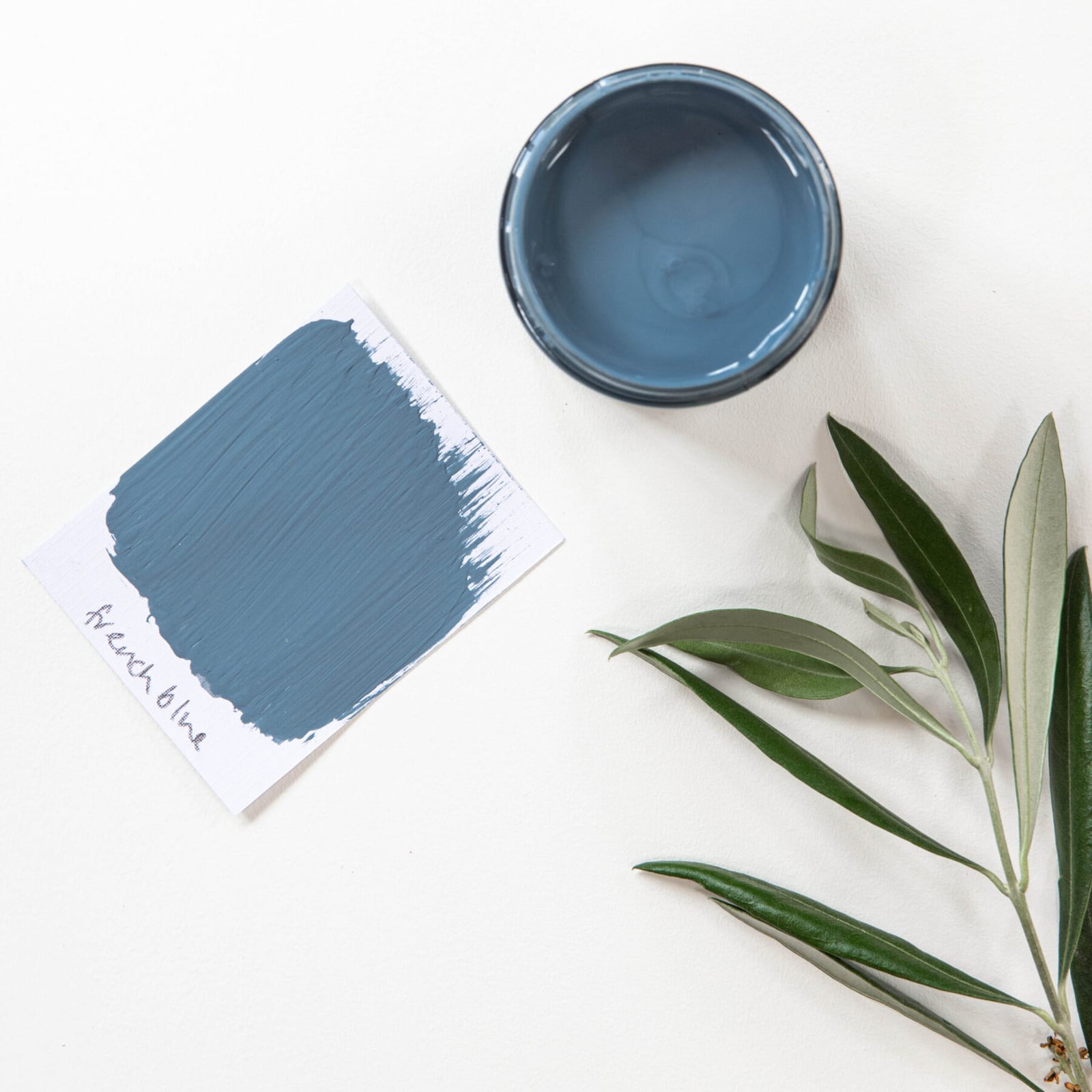
A practical rule for testing a color before committing is to see it next to something alive. Here a French blue chalk paint pot and a hand-labeled swatch sit beside an olive branch on a white surface, with natural daylight doing the work of showing the true undertone. The flat lay arrangement makes the comparison direct: the green of the leaves against the blue reveals whether the paint leans warm or cool. This is a renter-friendly way to preview a shade without opening a brush. The style stays minimalist by keeping the composition to three elements, and what breaks it is adding more objects that compete with that quiet contrast.
Cozy Bedroom Corner with Light Blue Walls and Floral Headboard
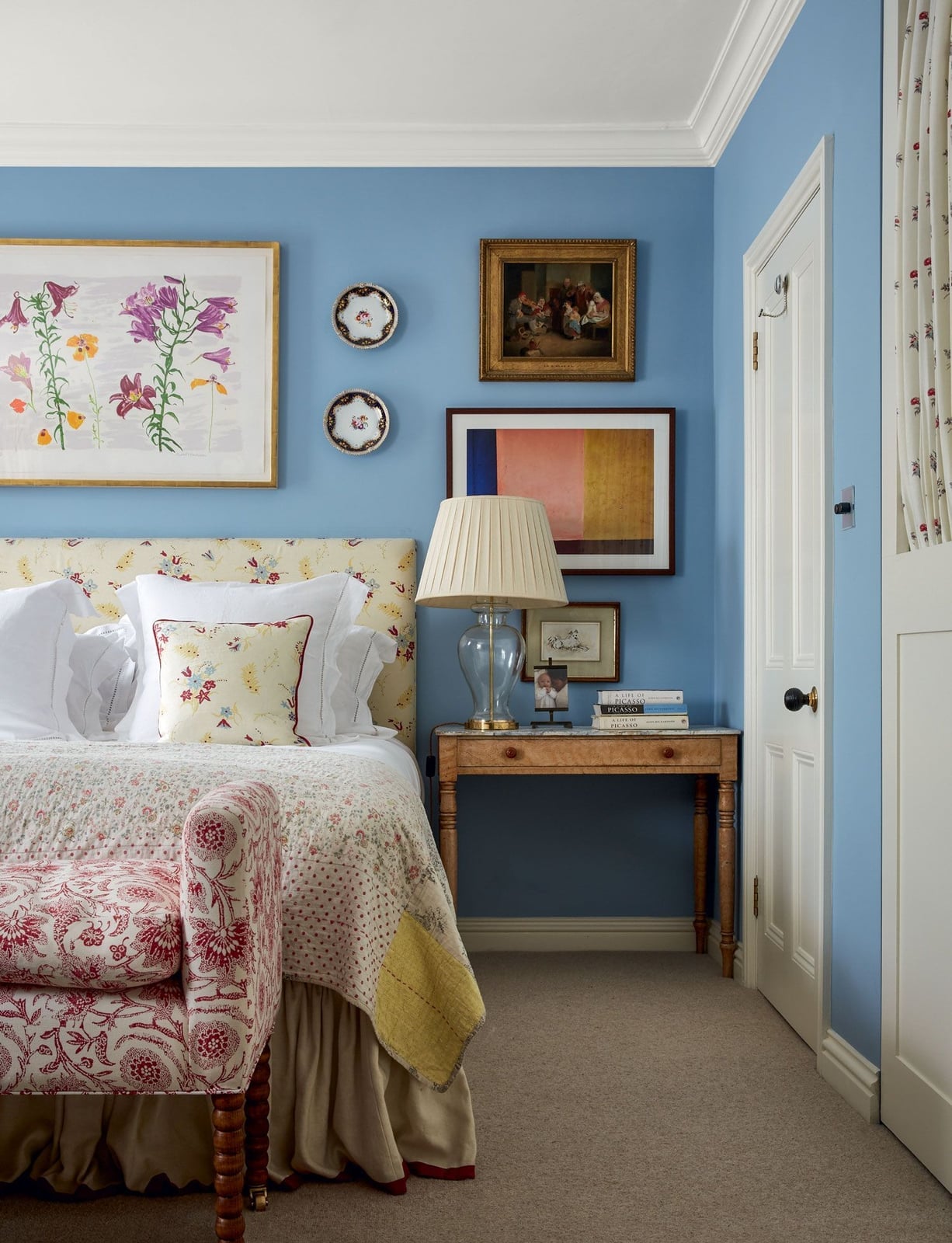
The light blue walls in this bedroom corner read as a soft backdrop rather than a statement, letting the floral upholstered headboard take the visual weight. A wooden armchair and a bedside table with artwork keep the vignette grounded in traditional comfort. The palette works because the blue is pale enough to feel airy, so the floral pattern does not fight for attention. What defines the style is that balance of quiet wall and busy fabric, and what breaks it is choosing a headboard in a solid dark tone, which would flatten the contrast this corner relies on.
Shabby Chic Cabinet in Muted Blue Finish
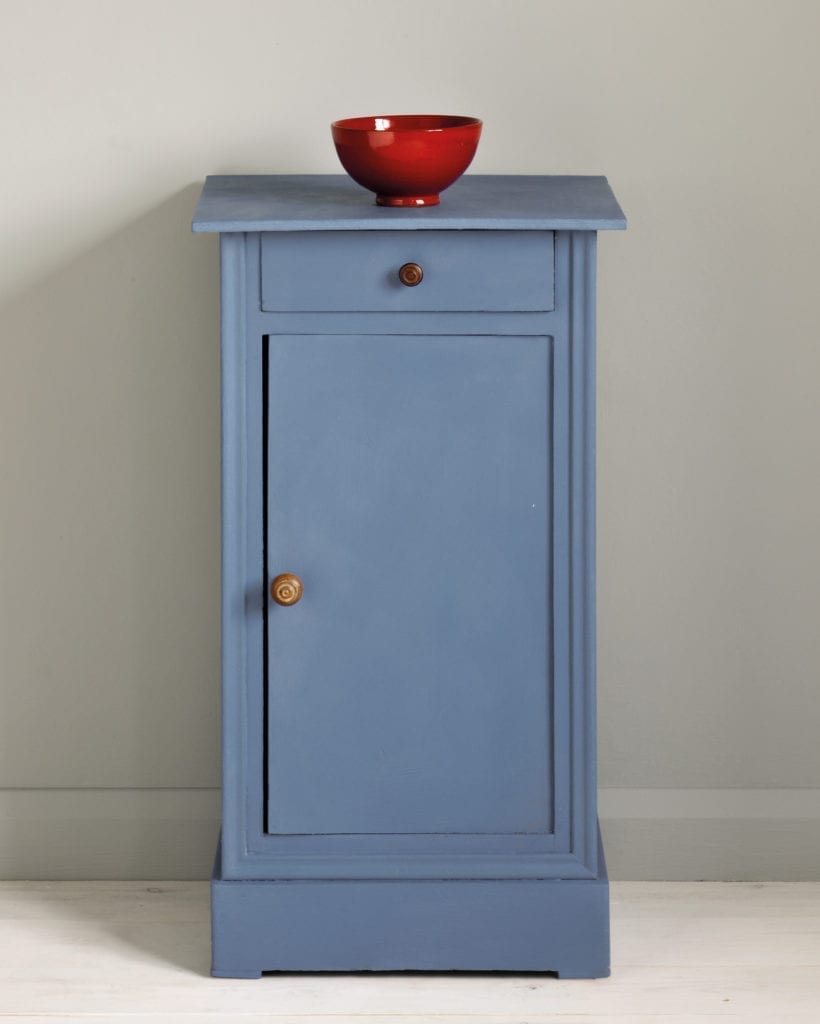
A muted blue painted cabinet like this one reads as softly aged rather than freshly done, with the grey undertone keeping the color from feeling sweet. The compact piece stands against a wall with a red bowl on top, a small jolt of warmth against the cool finish. The shabby chic style depends on that worn-in look, where the paint shows its history through subtle variation rather than heavy distressing. What breaks it is a glossy or uniform topcoat, which would erase the character that makes the finish feel collected rather than bought.
Traditional Dining Room with Light Blue Walls and Ornate Ceiling
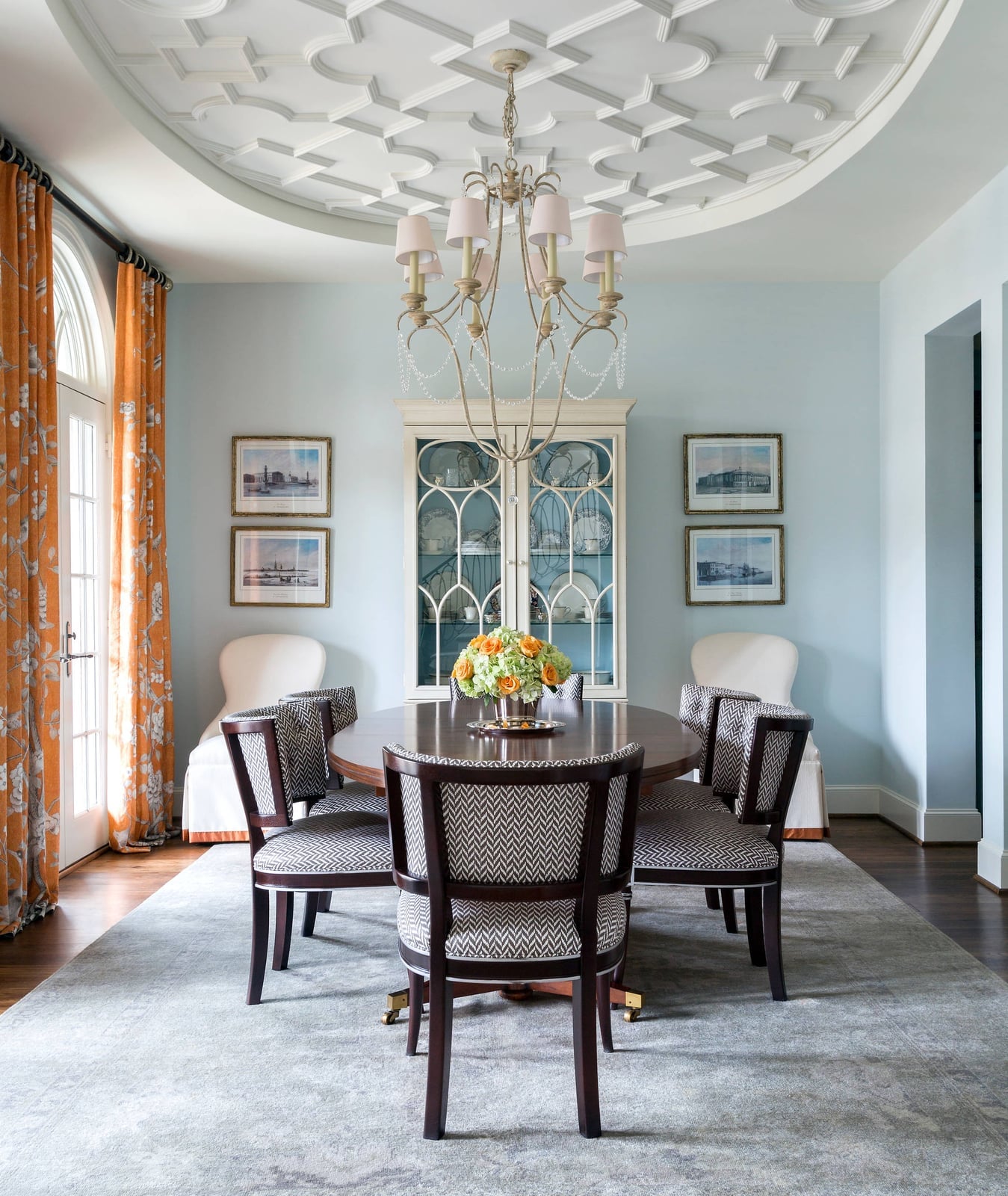
A traditional dining room with light blue walls risks feeling predictable unless the ceiling does something unexpected. Here the ornate ceiling detail lifts the eye, while the oval table and patterned chairs in orange and grey keep the palette from turning cool. The chandelier adds ambient light, and the china cabinet against the wall anchors the far side. The style is formal but not stiff because the blue stays pale and the orange brings warmth. What breaks it is switching the chairs to a matching blue fabric, which would make the room feel monochromatic rather than layered.
Minimalist Vignette with Light Blue Textured Wall and Yellow Armchair
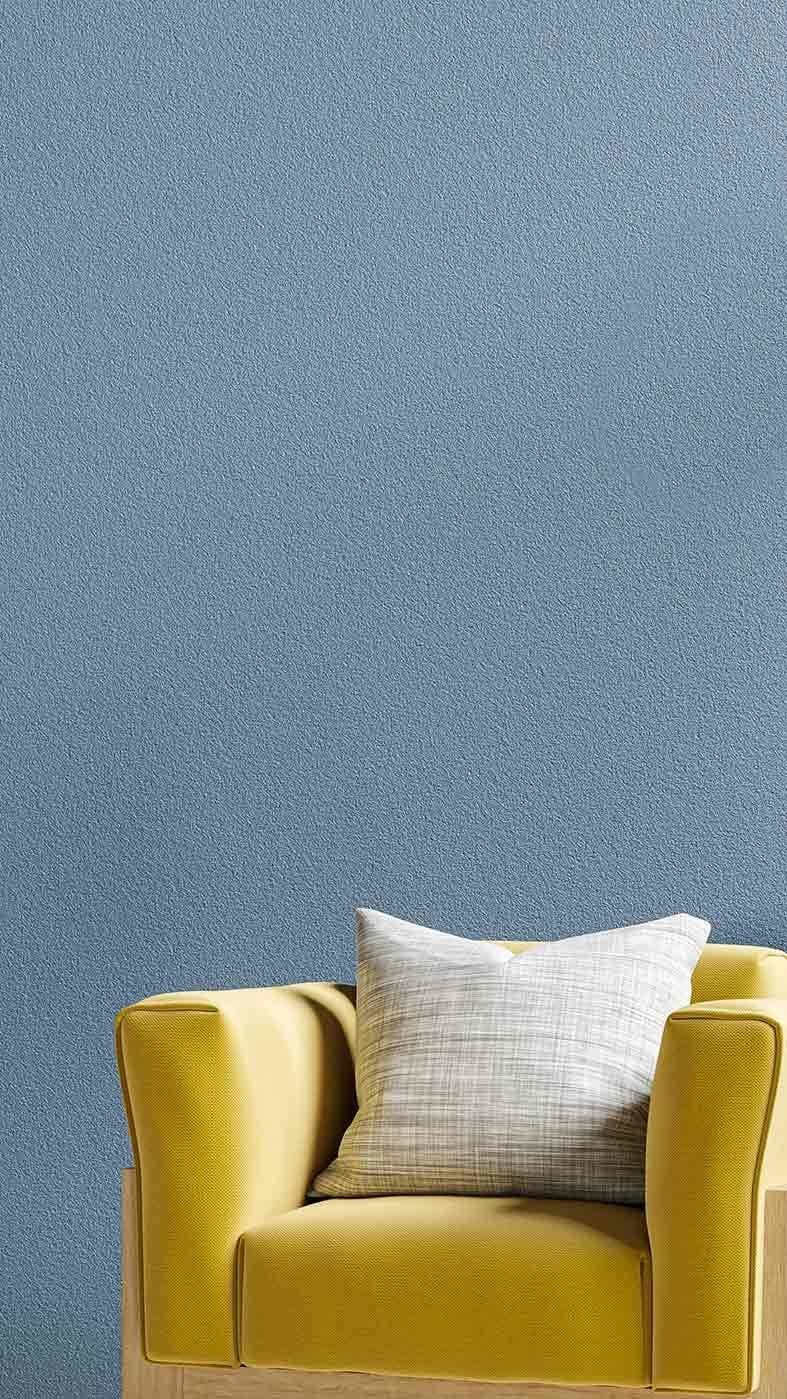
The wall isn’t flat blue. A light blue textured finish turns a small vignette into something you want to touch, and the yellow armchair placed against it proves why contrast matters more than square footage. The patterned cushion on the seat pulls both colors together, while the natural light falling across the texture keeps the compact setup from reading as flat. A single accent chair can anchor a corner, but the surface behind it has to earn its place.
Modern Farmhouse Kitchen with Sky Blue Walls and White Island
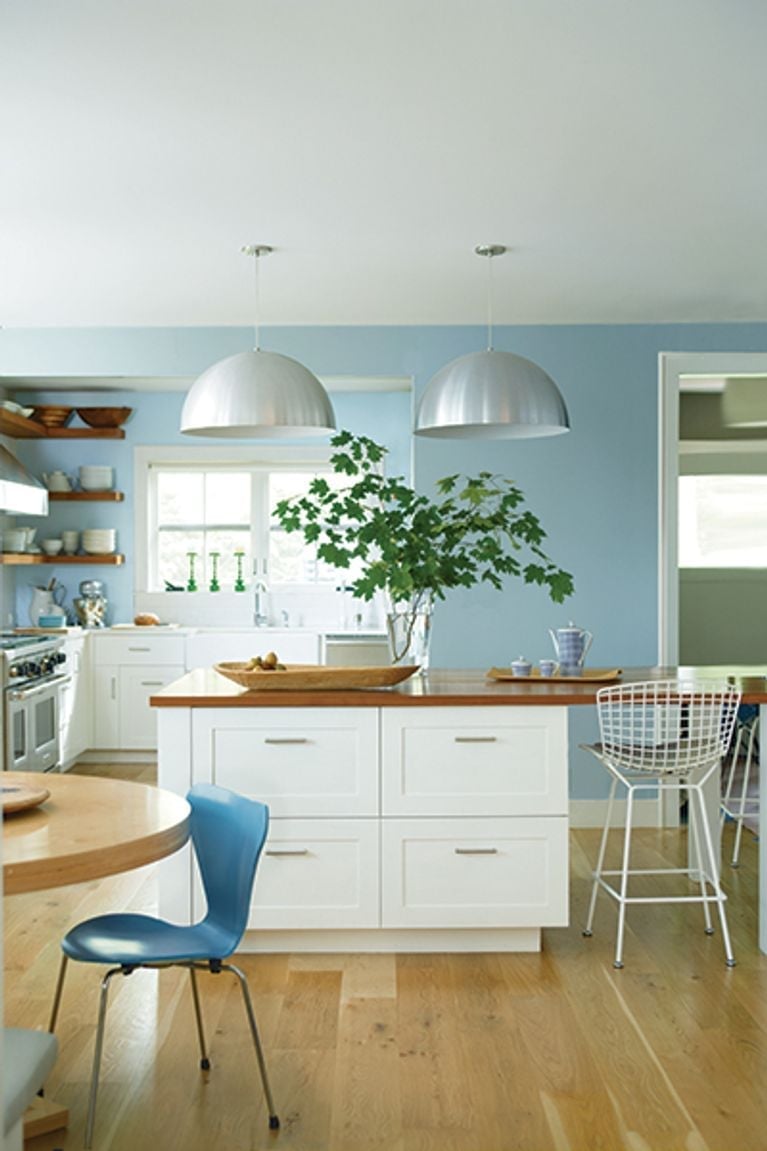
Sky blue walls in a kitchen are a risk that pays off when the palette stays disciplined. White island cabinets and a wood countertop keep the room grounded, while the wood floor and a single blue chair at the island echo the wall color without matching it exactly. Green accents from a plant add the one warm note that stops the blue from feeling cold. Metal pendant lights and natural light from a window balance the brightness, so the room avoids the nursery effect that lighter blues sometimes bring. The ratio here is mostly neutral with one bold wall color, and the wood elements break the scheme from feeling too precious for daily cooking.
Minimalist Presentation of Slate Blue Textured Paint Swatch
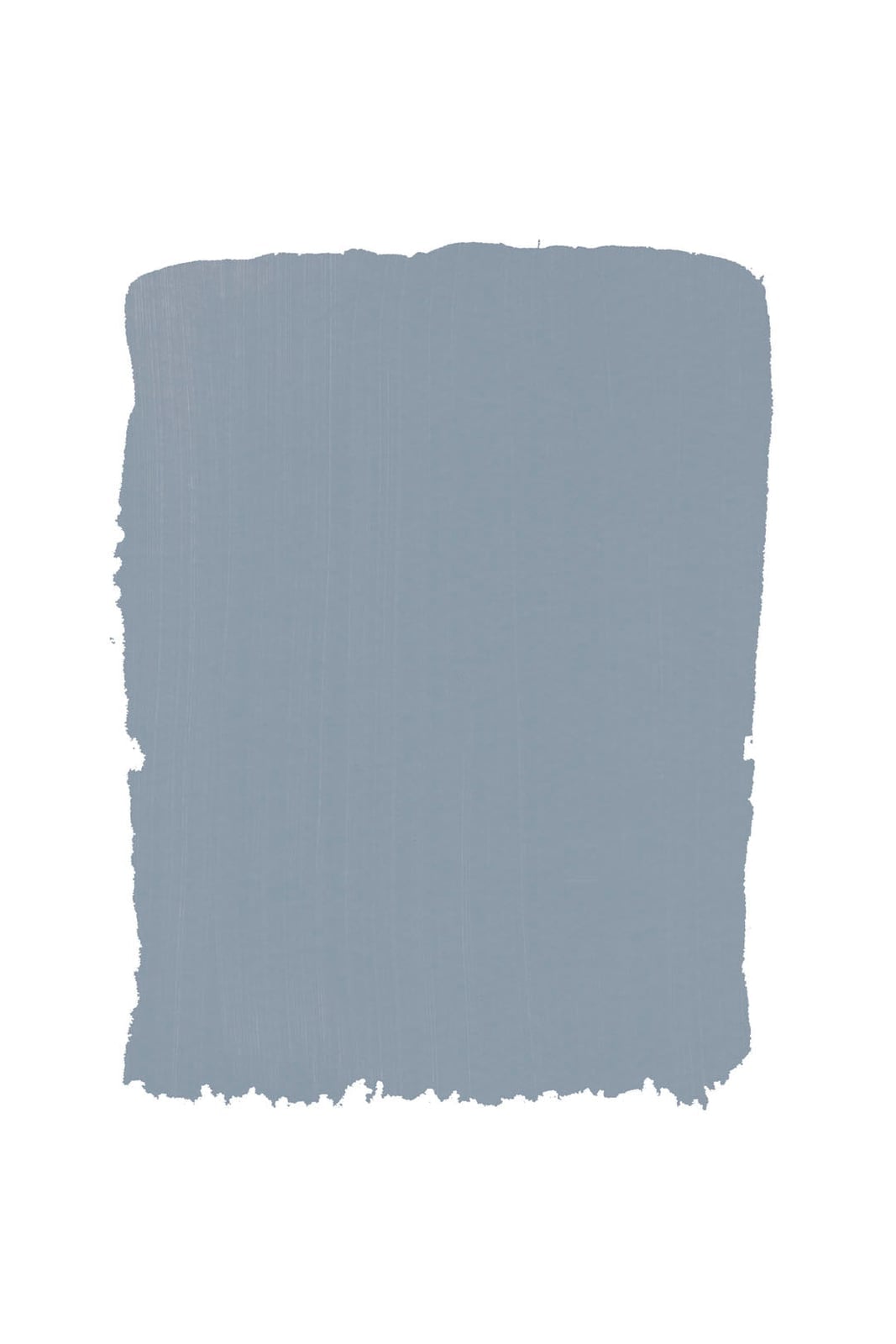
Flat paint samples tell you the color but not the feel. A slate blue textured swatch under studio lighting shows the stroke, the depth, and how the finish catches light differently across the surface. That visible brush texture matters more than the exact shade when you are deciding between two similar grays. The vertical orientation of the swatch suggests how the paint would behave on a wall rather than a small patch.
A textured paint like this one reads as more casual than a high-gloss finish, but the slate tone keeps it from being too rustic. The real question is whether you want the wall to disappear or to announce itself. This swatch leans toward the latter, and the deeper pigment means it will feel heavier in a small room than a lighter blue would.
Final Thoughts
Blue paint is versatile because it works in any room and with most materials. Light shades open up small spaces and pair well with natural wood and white trim. Darker blues add weight and coziness, especially in rooms with good natural light or warm metals. A single wall can shift a room’s feel without a full commitment. Keep samples on hand and test them at different times of day before painting. The right blue will make the rest of the room fall into place without much effort.