
Blue walls do more than set a mood. They set a whole room’s personality, from deep navy that anchors a traditional living room to pale sky tones that open up a Scandi bedroom. If you have been circling blue paint swatches and wondering how to commit, this roundup of 35 real interiors shows the range: glossy teal, textured grasscloth, paneled wainscoting, even blue ceilings.
You will see how each shade pairs with trim, wood, metal, and light, and pick up practical notes on finish, upkeep, and how a color behaves in different rooms. No theory here, just rooms that prove blue is a workhorse, not a risk.
Deep Navy Blue Walls for a Traditional Living Room
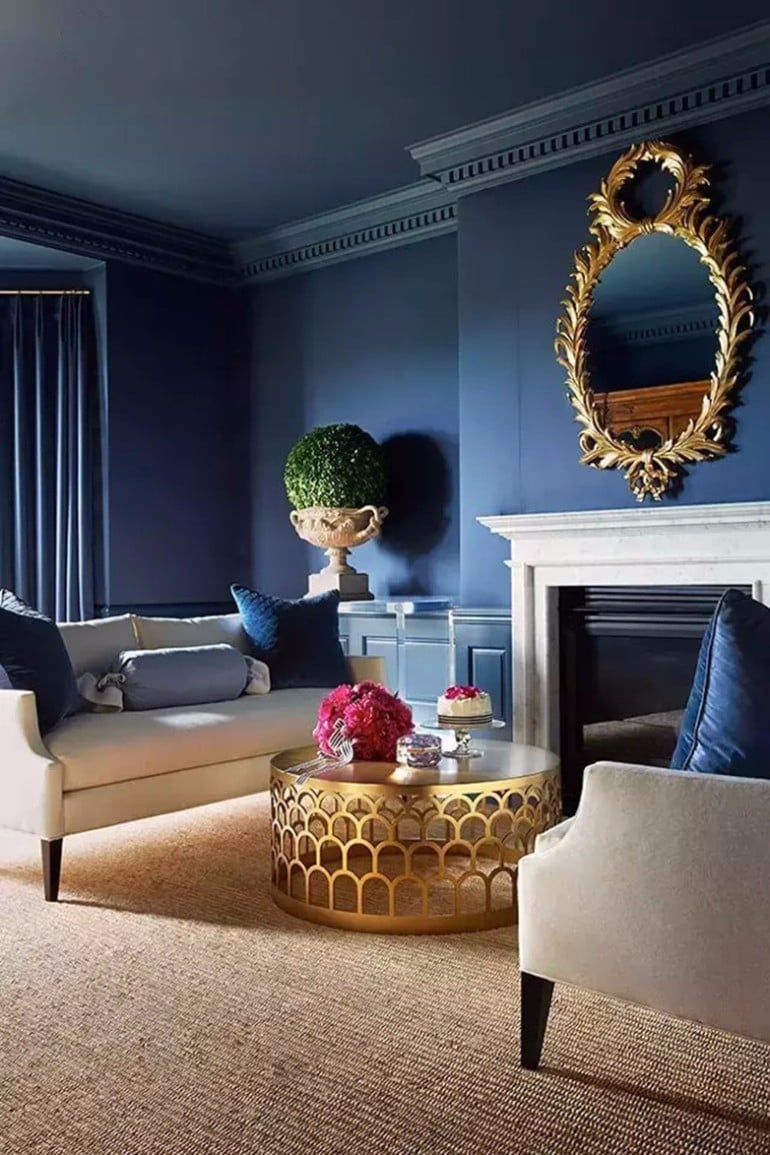
A deep navy living room with a cream sofa and an ornate gold mirror is a lesson in contrast. The dark walls make the gold frame and the fireplace mantle read as deliberate anchors rather than afterthoughts. The palette here is simple: deep navy, cream, gold. That ratio keeps the room from feeling theatrical when the evening light dims. The velvet on the sofa softens the hard plaster lines, and the metal mirror adds a reflective break. What defines this look is the balance between dark and light finishes.
Glamorous Teal Blue Walls and Ceiling
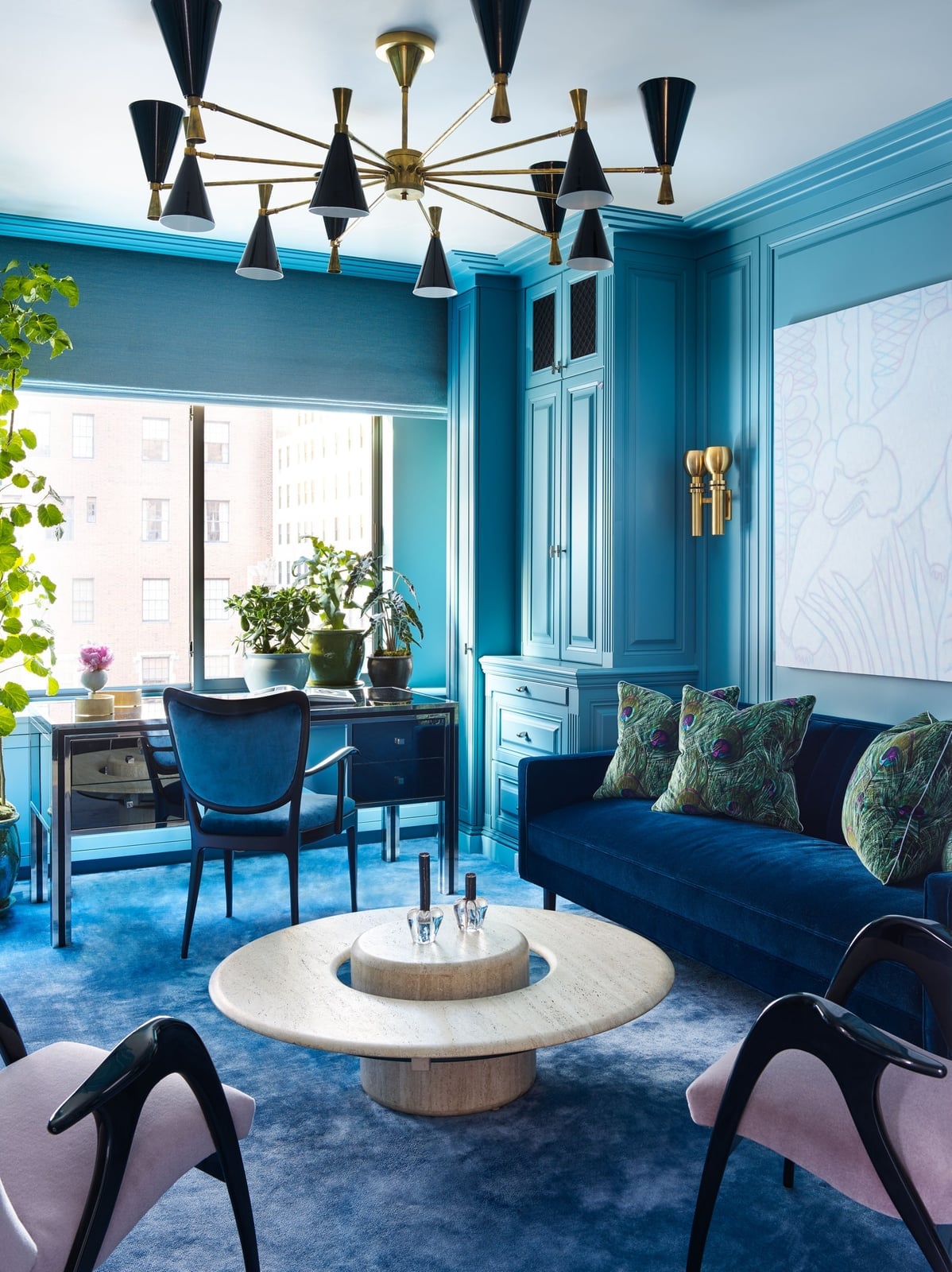
A teal blue ceiling and walls that match is a confident move. This glamorous living room pairs that saturated blue with a navy sofa, a brass chandelier, and lacquered wood furniture. The window brings in daylight, and the wall sconces add a warm glow in the evening. The velvet upholstery and stone surfaces bring in texture. The ratio of high-shine brass to matte lacquer defines this look. Adding a third blue that does not belong to the same family breaks it.
Textured Deep Blue Grasscloth Walls in a Modern Bedroom
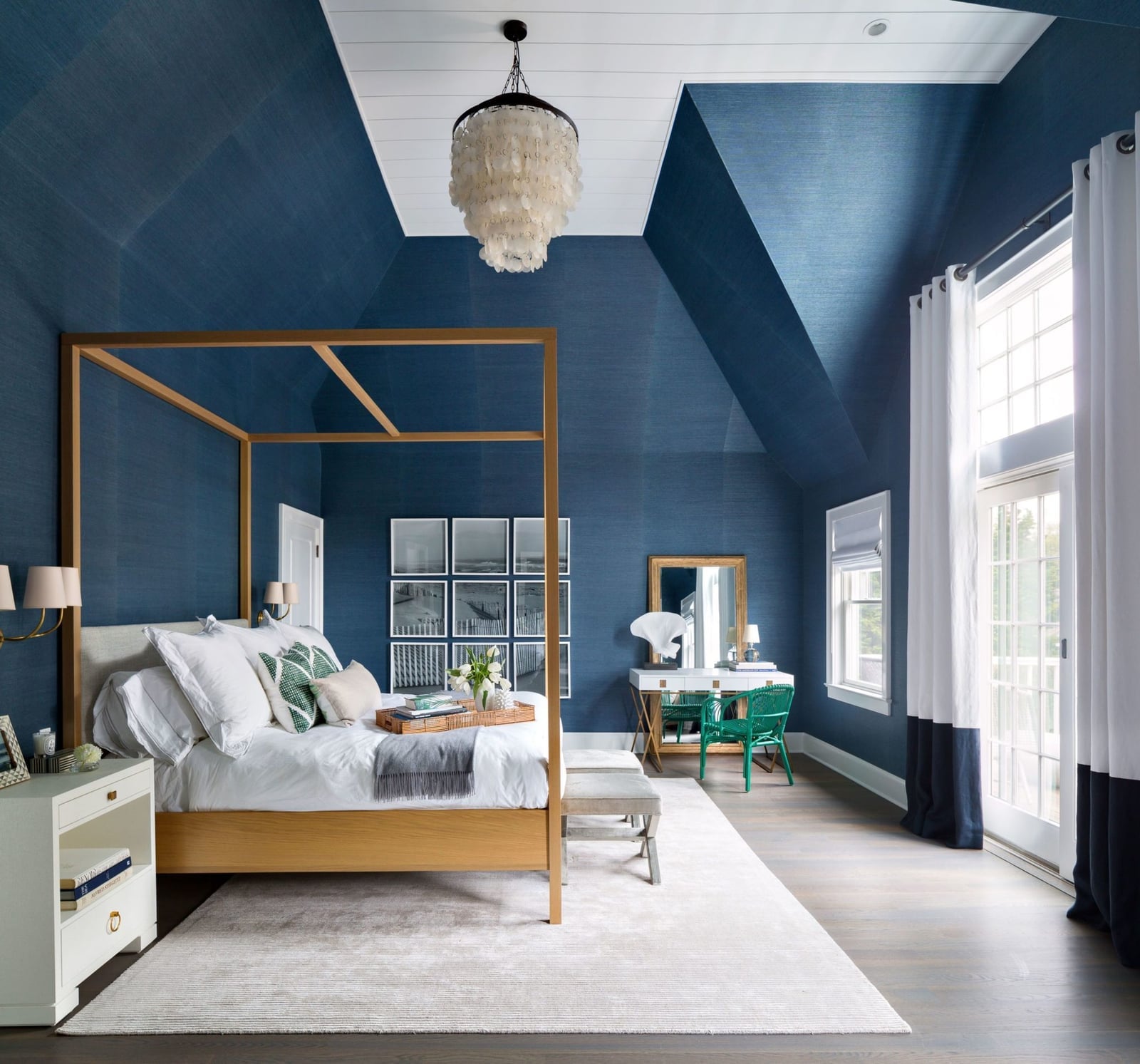
Can a textured wall make a bedroom feel both cozy and spacious? Yes, when it is deep blue grasscloth. In this modern bedroom, the grasscloth covers all visible walls, adding a tactile quality that paint alone cannot achieve. The four-poster bed sits centered, with a desk off to the side under natural light. The chandelier and bedside lamps provide layered light without washing out the wall color. The wood bed frame and linen bedding offer a natural counterpoint to the blue. The texture on the wall creates depth without pattern. The white ceiling and light wood floor prevent a closed in feel.
Moody Dark Blue Walls and Ceiling in a Traditional Setting
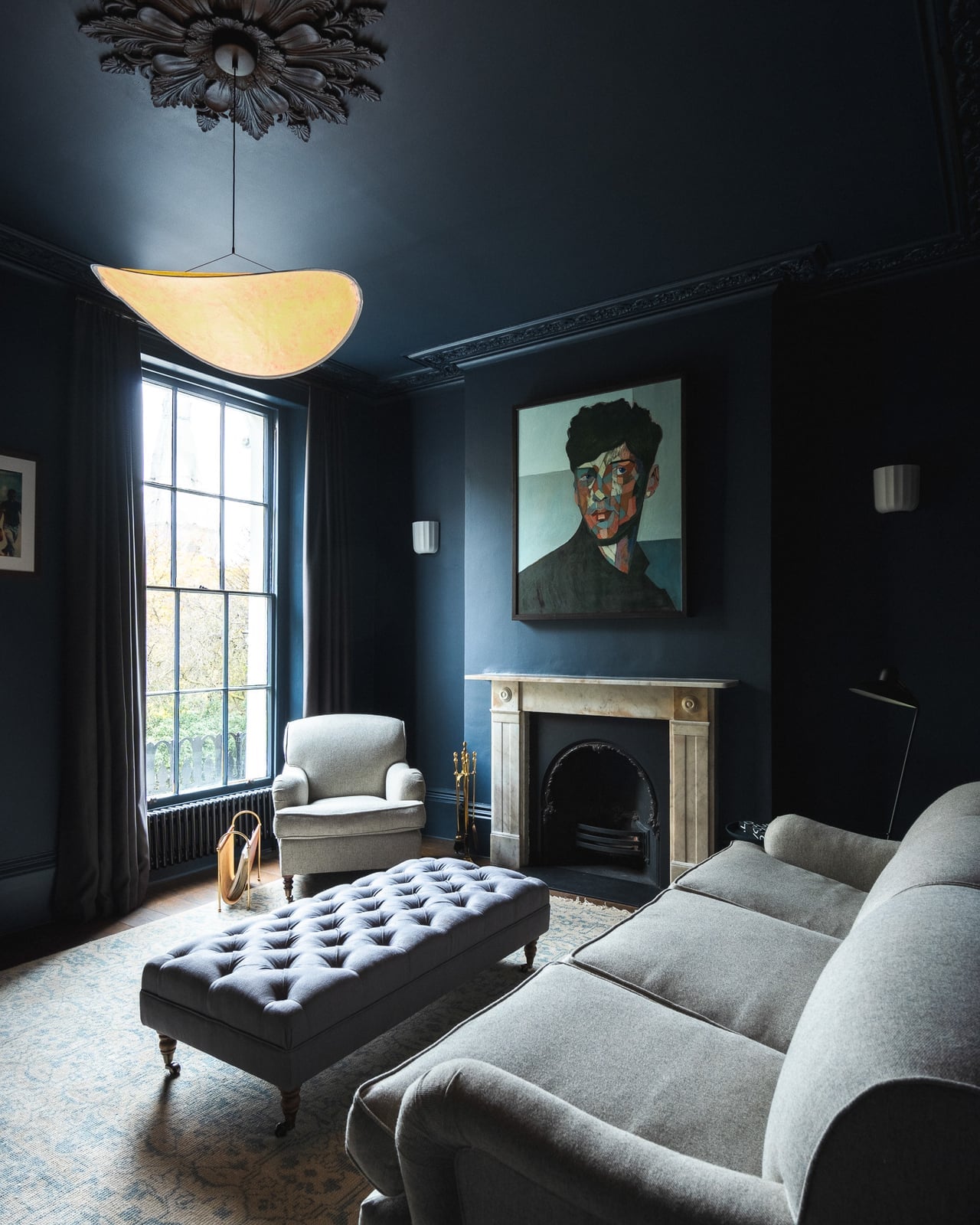
Painting the ceiling the same dark blue as the walls is a trick that shrinks the room visually but adds intimacy. In this traditional living room, the dark blue ceiling and walls frame a seating group around the fireplace. The grey sofa, beige armchair, and gold accents in the painting and metal finishes stop the palette from turning flat. The dim ambient light and window light work together to soften the edges. The stone fireplace is the anchor that prevents the dark blue from reading as just a painted box.
Traditional Living Room with Extensive Blue Paneled Walls
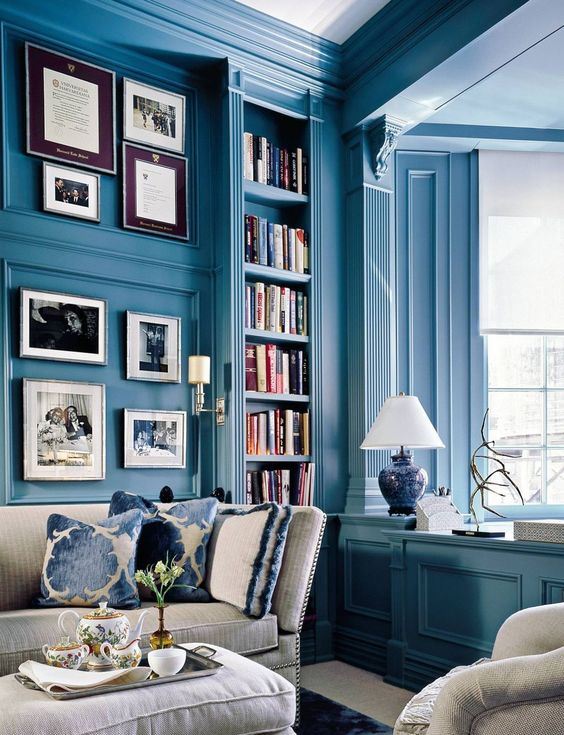
A practical rule for paneled blue walls is that the paneling itself does the work of defining the space. In this traditional living room, the blue paneled walls cover most of the visual field, with white trim and a gold lamp breaking up the color. The built-in bookshelf and framed art add personal scale. The natural daylight and a floor lamp provide even light across the corner seating. The blue is dark enough to feel established but not so dark that it swallows the furniture. The paneling adds vertical rhythm, which makes the room feel taller than it is. What defines this look is the paneling: it gives the blue wall a structure that flat paint would not have.
Transitional Living Room with Medium Blue Walls
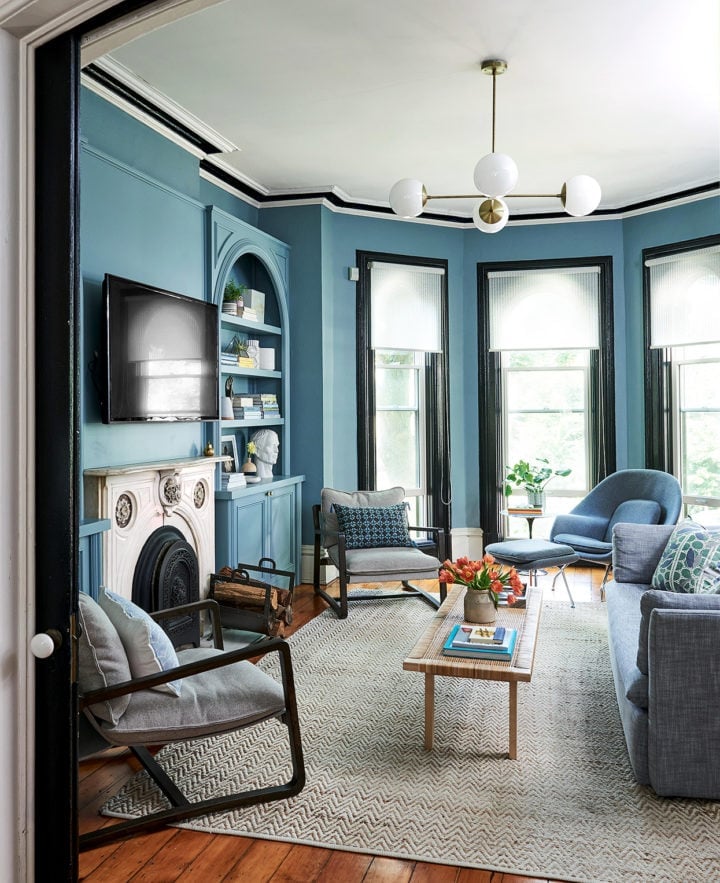
A medium blue is more forgiving than a navy that eats light or a pastel that washes out by noon. Here the walls hit a middle register that holds its own against a marble fireplace surround and a deep grey sofa. The blue reads as confident without turning the room into a cave. The palette is essentially blue, grey, white and wood. What defines the look is the ratio: about sixty percent blue wall, twenty percent grey upholstery, and the rest split between white trim and warm wood. The marble fireplace breaks the blue with a neutral, veined surface that reflects light from the chandelier overhead. If you want to try this at home, test your blue on a two-foot square of wall and watch it at three different times of day before you commit.
Light Blue Walls in a Traditional Living Room
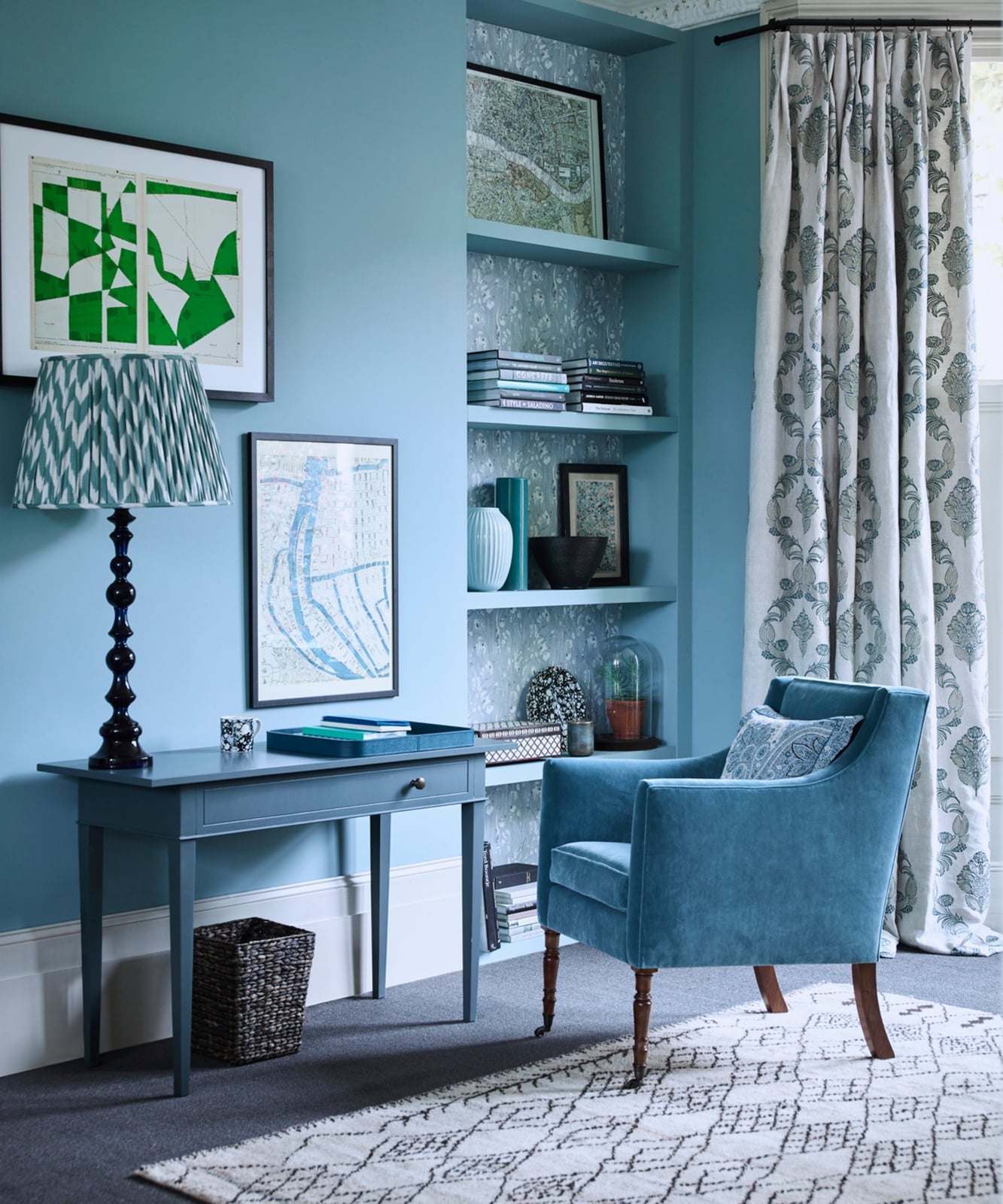
The light blue here does not fade into the background. It holds a distinct presence against a green armchair, a white desk and a patterned rug. Natural light from a nearby window keeps the wall color lively, while an ambient lamp adds warmth in the evening. For renters, a light blue is one of the easier colors to paint back to white when you move out, since it is close to a neutral base and typically needs fewer coats to cover than a deep red or a black.
Eclectic Living Room with Glossy Turquoise Walls
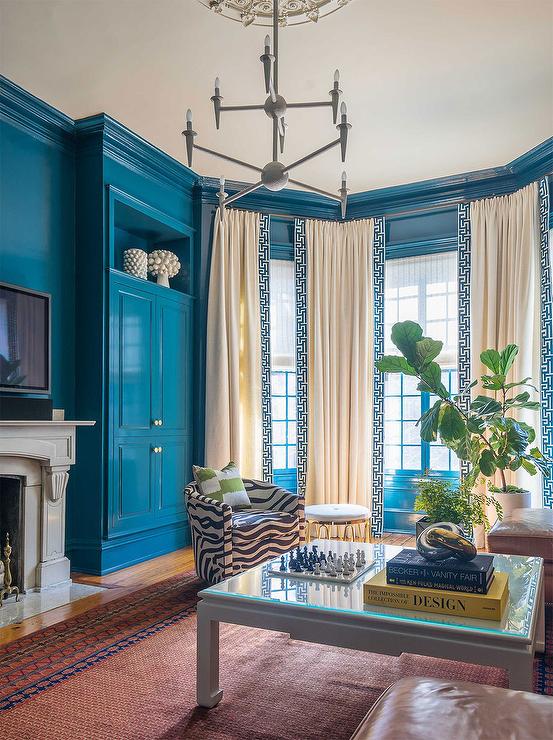
A glossy turquoise wall is a high-stakes finish that pays off when the rest of the room is restrained. The sheen reads as a lacquered surface, so it reflects light from the chandelier and the window, making the color shift through the day. The cream armchair and brown coffee table keep the eye from bouncing off the walls. The material here is the finish itself: a gloss paint has a harder surface than a matte or eggshell, which means it wipes down more easily but shows every brush stroke and imperfection in the drywall underneath. That makes it a choice for rooms where the walls are already smooth or where you are willing to do the prep work.
Eclectic Bathroom with Royal Blue Paneled Lower Walls
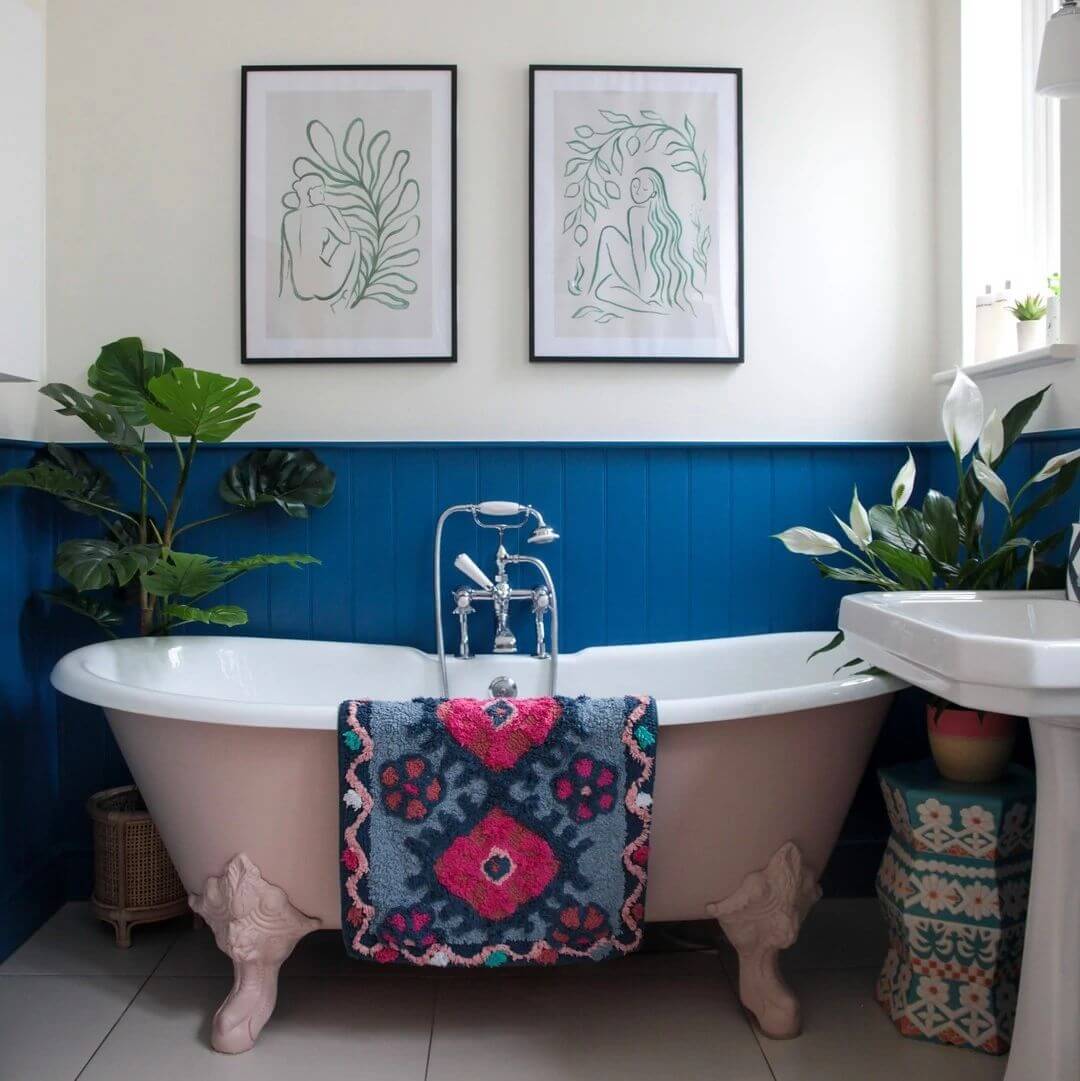
Does a dark blue work in a room with water, steam and a clawfoot tub? Yes, if you keep it to the lower half of the wall. Here the royal blue paneling stops below a white upper wall, which prevents the space from feeling cramped. The palette is royal blue, pink, green and white: the pink flowers and the green leaves in the framed art and the patterned rug add warmth that a blue-and-white scheme would lack. The paneling itself is painted wood, which holds up better than drywall in a bathroom where humidity is a daily fact. The window light hits the white upper wall and bounces down, so the blue appears saturated without making the room dark. For a bathroom, a semi-gloss or gloss paint on the paneling is the practical choice because it handles wiping and moisture better than a flat finish.
Glam Bar Area with Rich Teal Walls
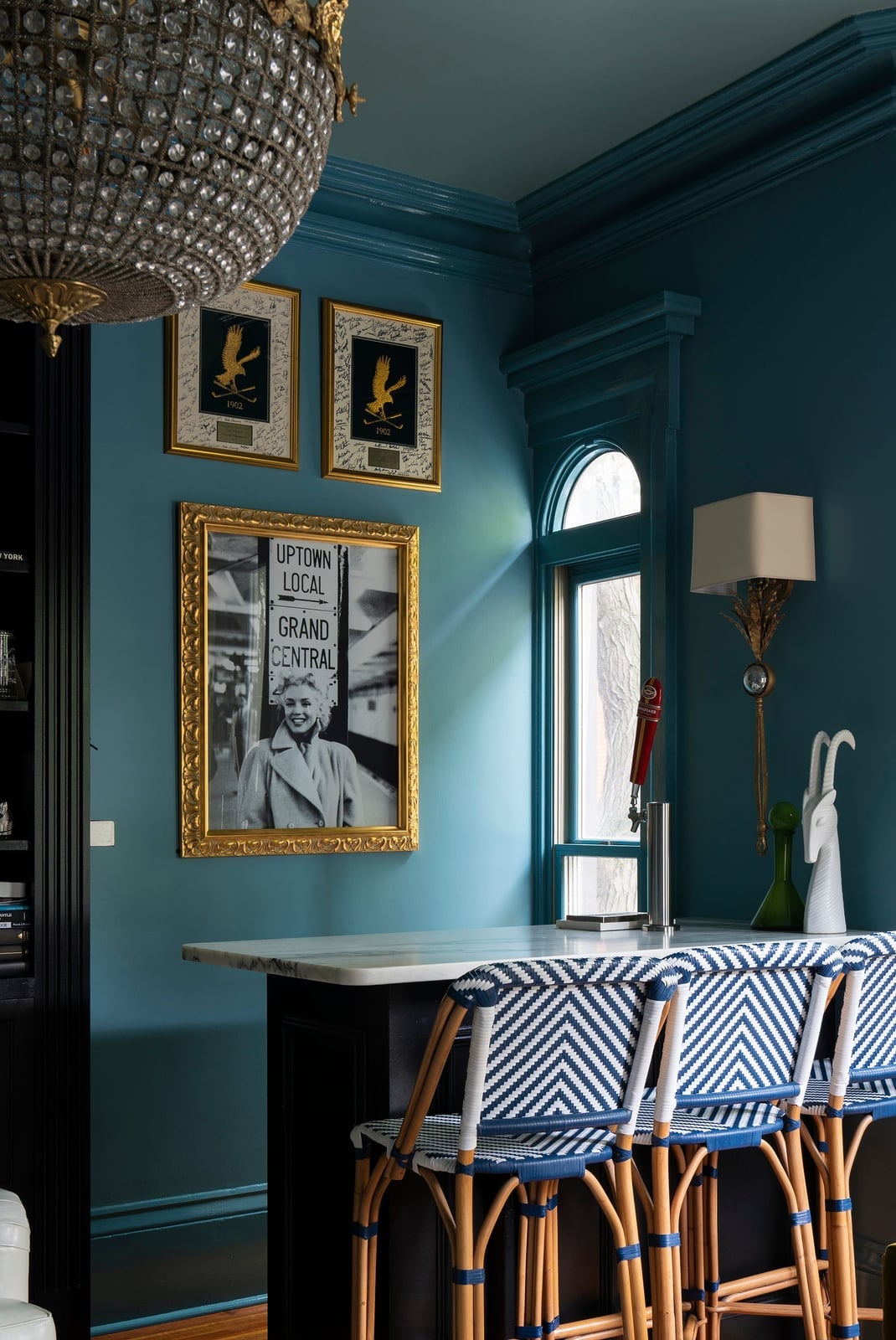
A compact bar area can handle a deep teal because there is less surface to cover. The rich teal walls are balanced by a white marble-topped bar and natural rattan bar stools, which stop the color from feeling heavy. The palette is deep teal, white, blue and natural rattan, and the woven texture of the stools adds a tactile break from the painted wall and the polished marble. The ornate chandelier and wall sconce provide ambient light that picks up the blue undertones in the teal. In a small space, scale matters: the bar stools are narrow enough to leave legroom under the marble counter, and the wall sconce does not crowd the chandelier. The window behind the bar brings in daylight that shifts the teal from green-leaning in the morning to blue-leaning in the afternoon.
Traditional Living Room with Dark Blue Walls and Ornate Fireplace
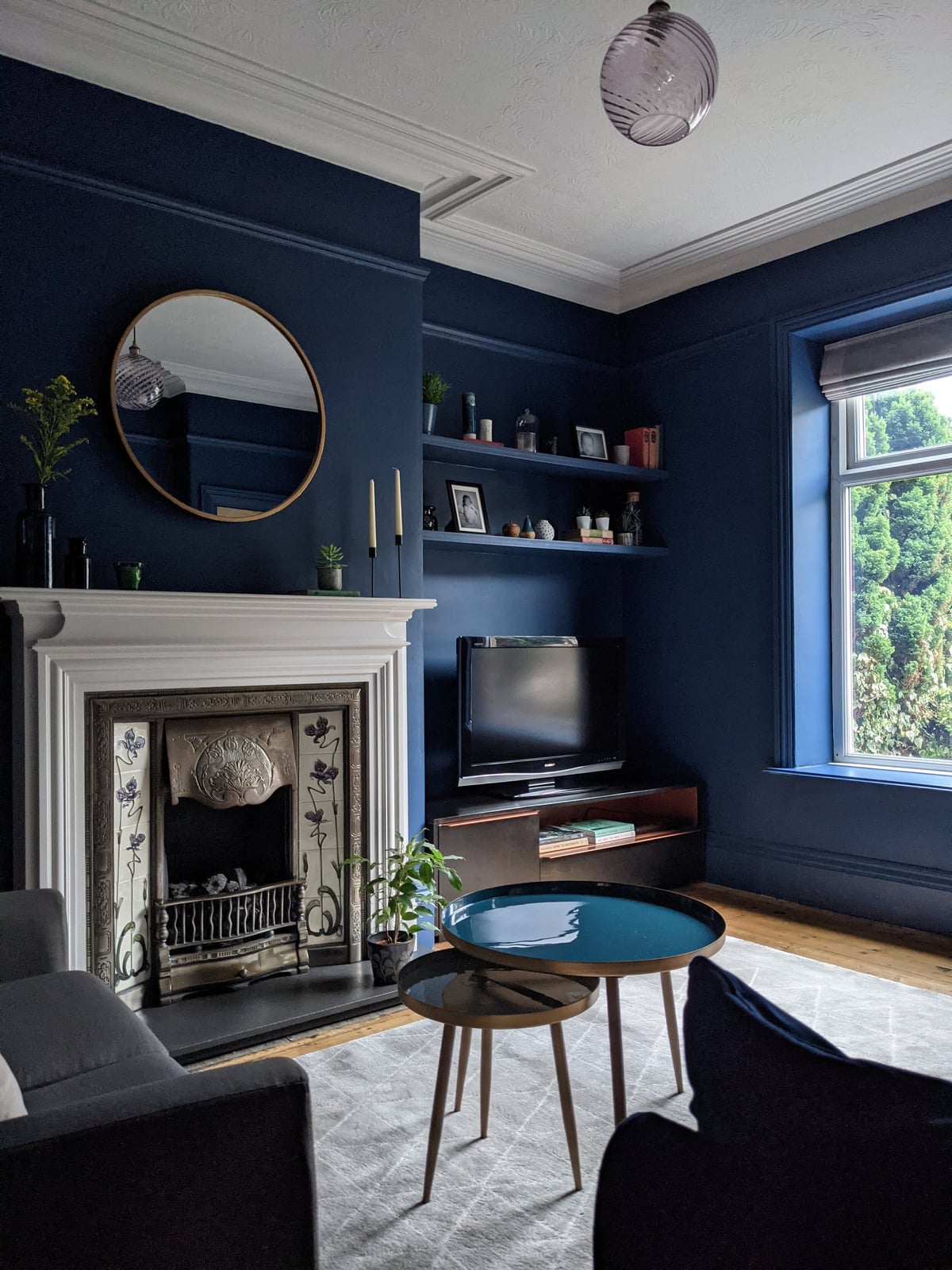
A room’s layout works best when the focal point earns its spot. Here the fireplace, with its detailed tile surround, sits centered and the seating area faces it directly. The dark blue walls wrap the space in a deep, quiet tone that lets the fireplace tile and the round mirror above it stand out. Natural light from a window keeps the blue from feeling too heavy. The wood mantel and metal accents add contrast without competing. When you anchor a room around one strong architectural element, the rest of the decor only needs to support it.
Traditional Living Room with Dark Blue Walls and Gold Mirror
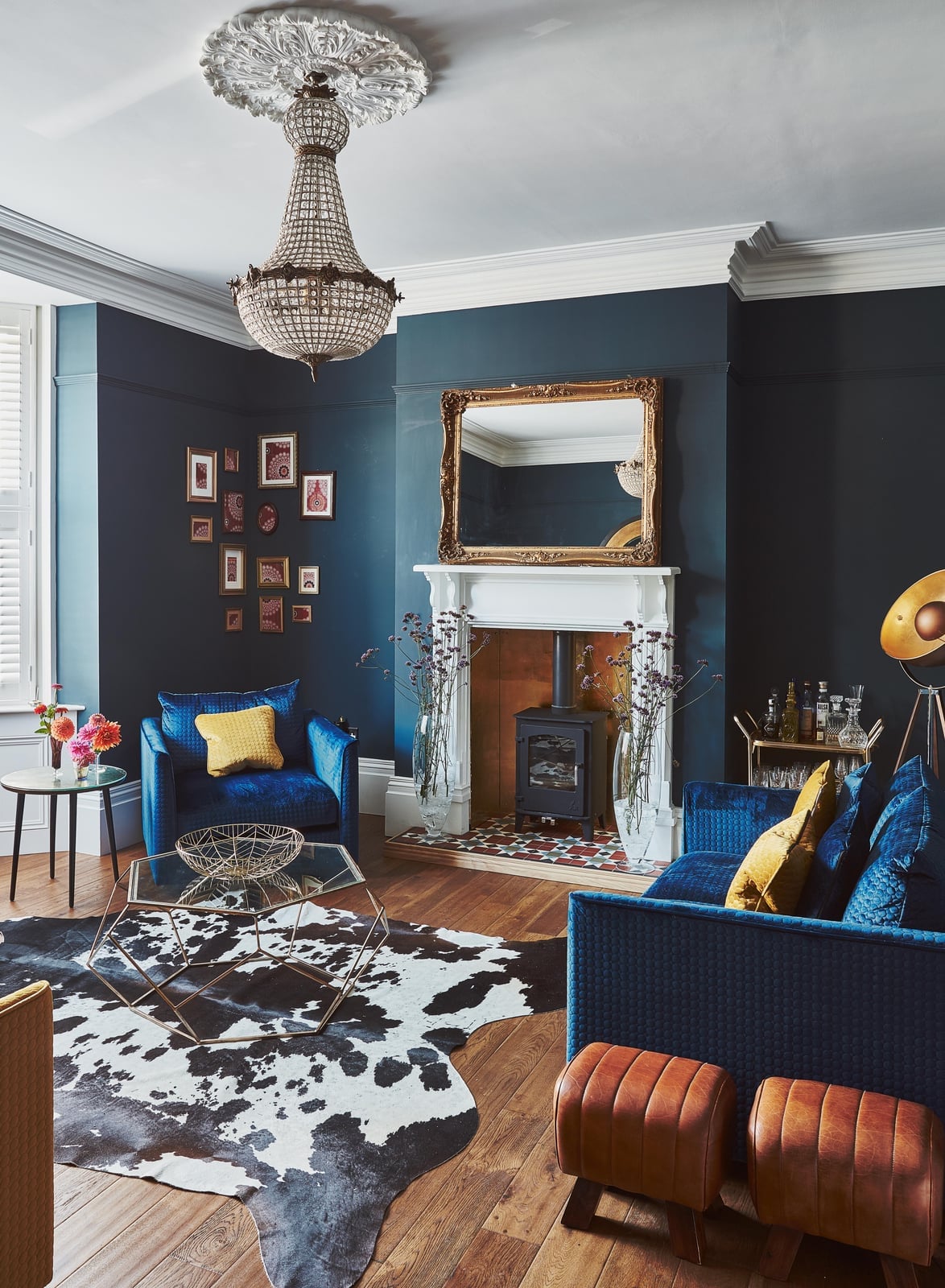
Dark blue walls can feel serious, but gold accessories shift the mood toward warmth. An ornate gold mirror above the fireplace catches the eye first, then a chandelier and floor lamp spread softer light across the room. The navy sofa and blue armchair stay within the same blue family, so the palette feels cohesive rather than scattered.
White trim and a tile fireplace surround break up the dark wall area and keep the room from feeling like a cave. The window adds daylight that hits the gold frame and creates small highlights. When you pair a deep wall color with reflective metals, you get a room that feels rich without being heavy.
Traditional Living Room with Deep Navy Blue Walls and Crystal, Indoor
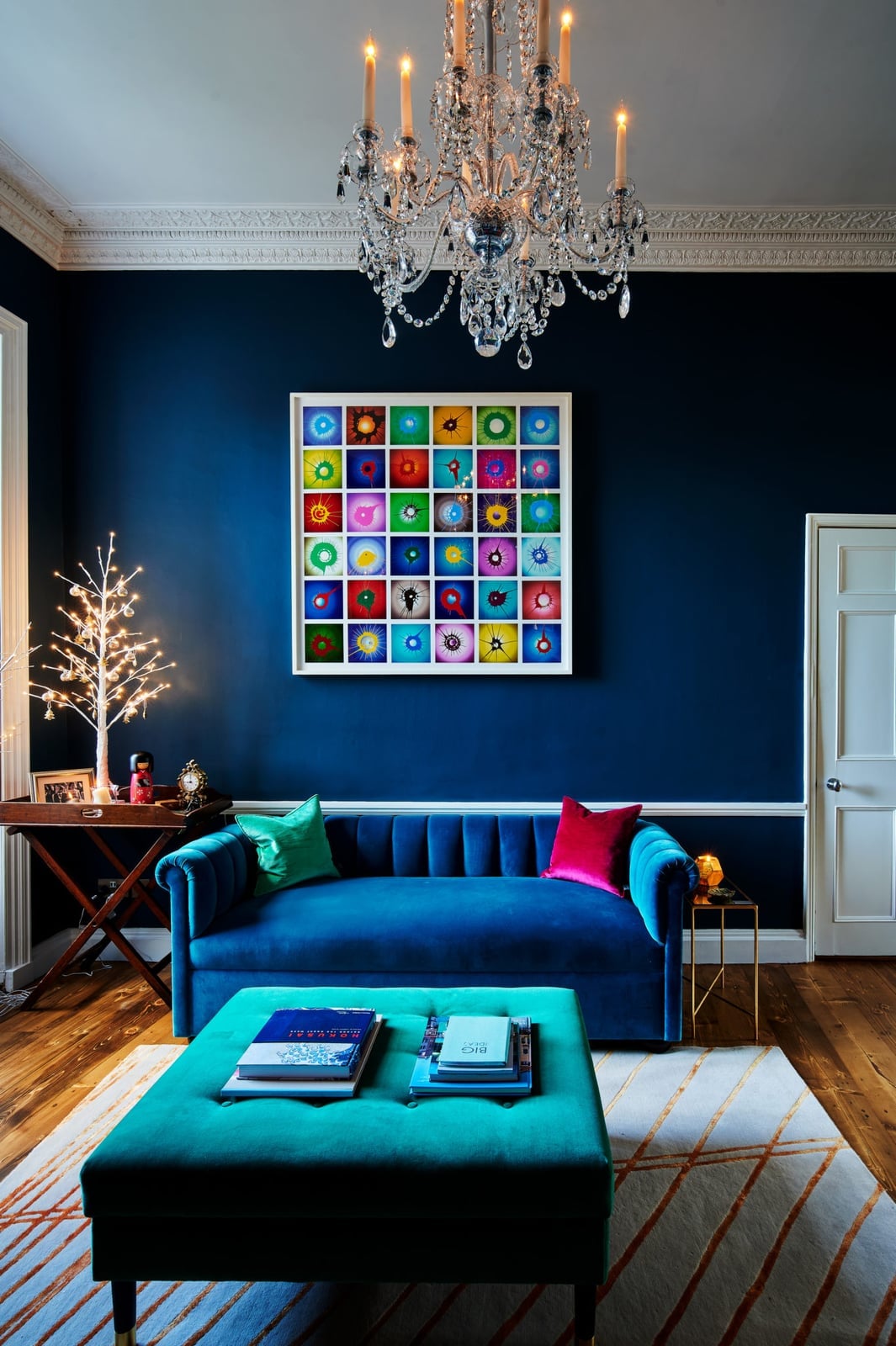
The crystal chandelier hangs above the seating area, catching natural light and sending small sparks across the deep navy walls. A velvet sofa and ottoman in lighter teal tones keep the room from sinking into the dark, while brass accents on the chandelier and side tables add a warm glint. The deep navy blue walls act as a backdrop that makes every crystal drop and brass detail pop. When you choose a chandelier with clear materials against a dark wall, the light fixture becomes more than a light source.
Dramatic Living Room with Deep Navy Blue Walls and Doors
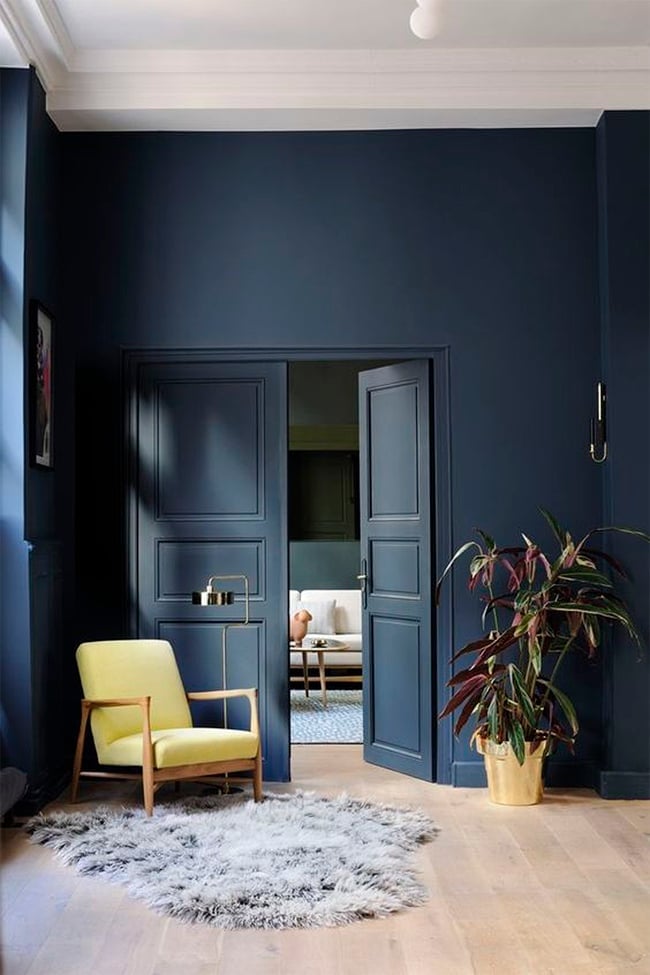
This room goes for drama and gets it. The deep navy blue covers not just the walls but the doors too, creating one continuous dark surface. A single yellow armchair sits in front of a window, providing a sharp color contrast that draws the eye. A grey rug and a potted plant keep the palette grounded. Wall sconces cast upward light, which softens the dark paint and adds a layer of warmth. When you commit to a deep color on both walls and doors, you need at least one bright accent piece to give the eye a place to rest.
Transitional Living Room with Muted Blue Alcoves
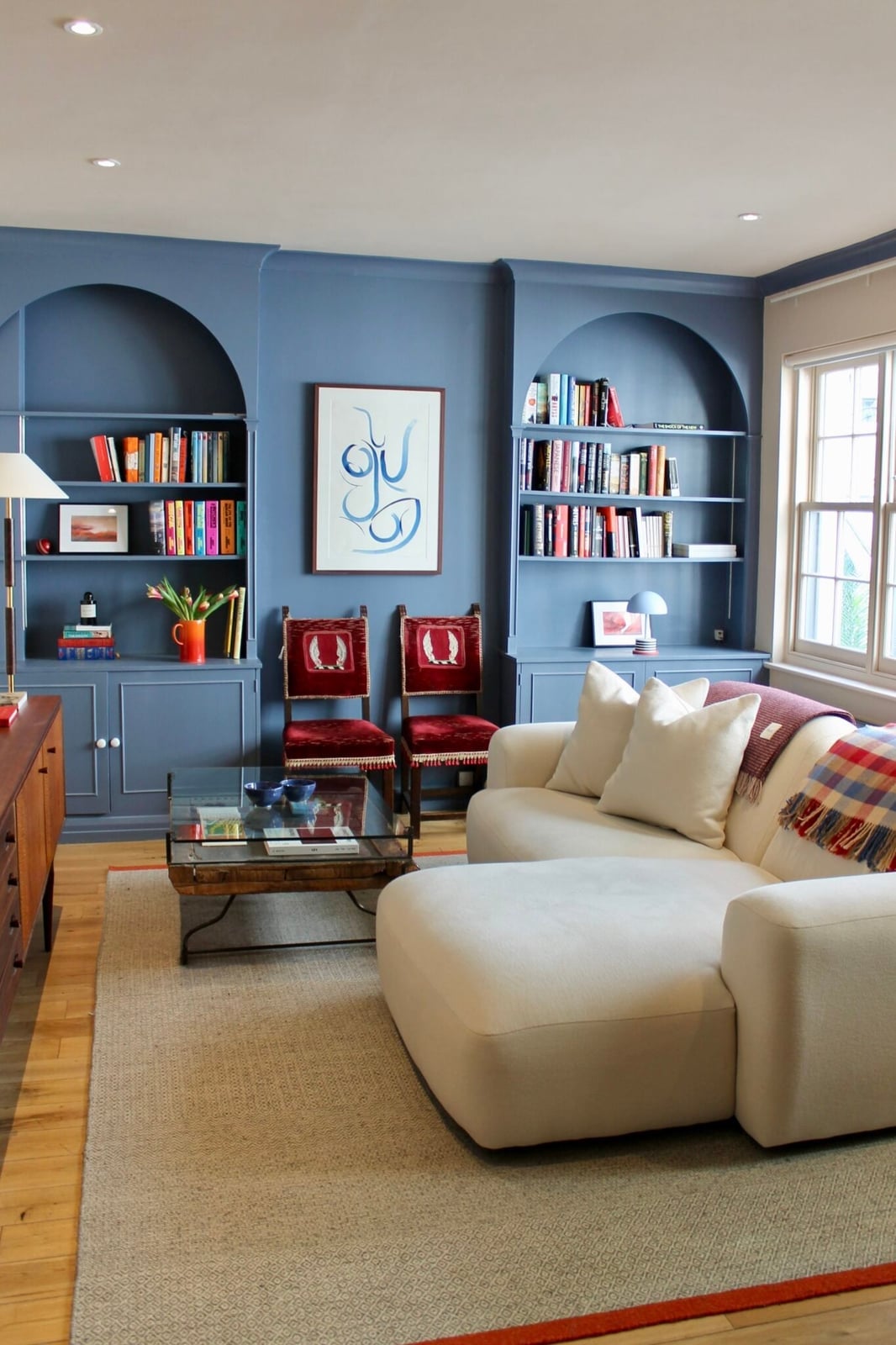
Built-in bookshelves solve storage while also adding architectural interest, especially when they sit inside painted alcoves. Here the alcoves flank a fireplace area and are finished in a muted blue that stands apart from the cream walls. The bookshelves hold glassware, ceramics and books, turning storage into a display. A sectional sofa faces the fireplace, and velvet chairs on either side create conversation zones.
A glass coffee table keeps the sightlines open so the alcoves stay prominent. The red tones in the fabric and wood warm up the cool blue. When you paint alcoves a different color than the main walls, you define those recesses as purposeful zones rather than leftover space.
Eclectic Living Room with Deep Blue Walls and Wall Tapestry
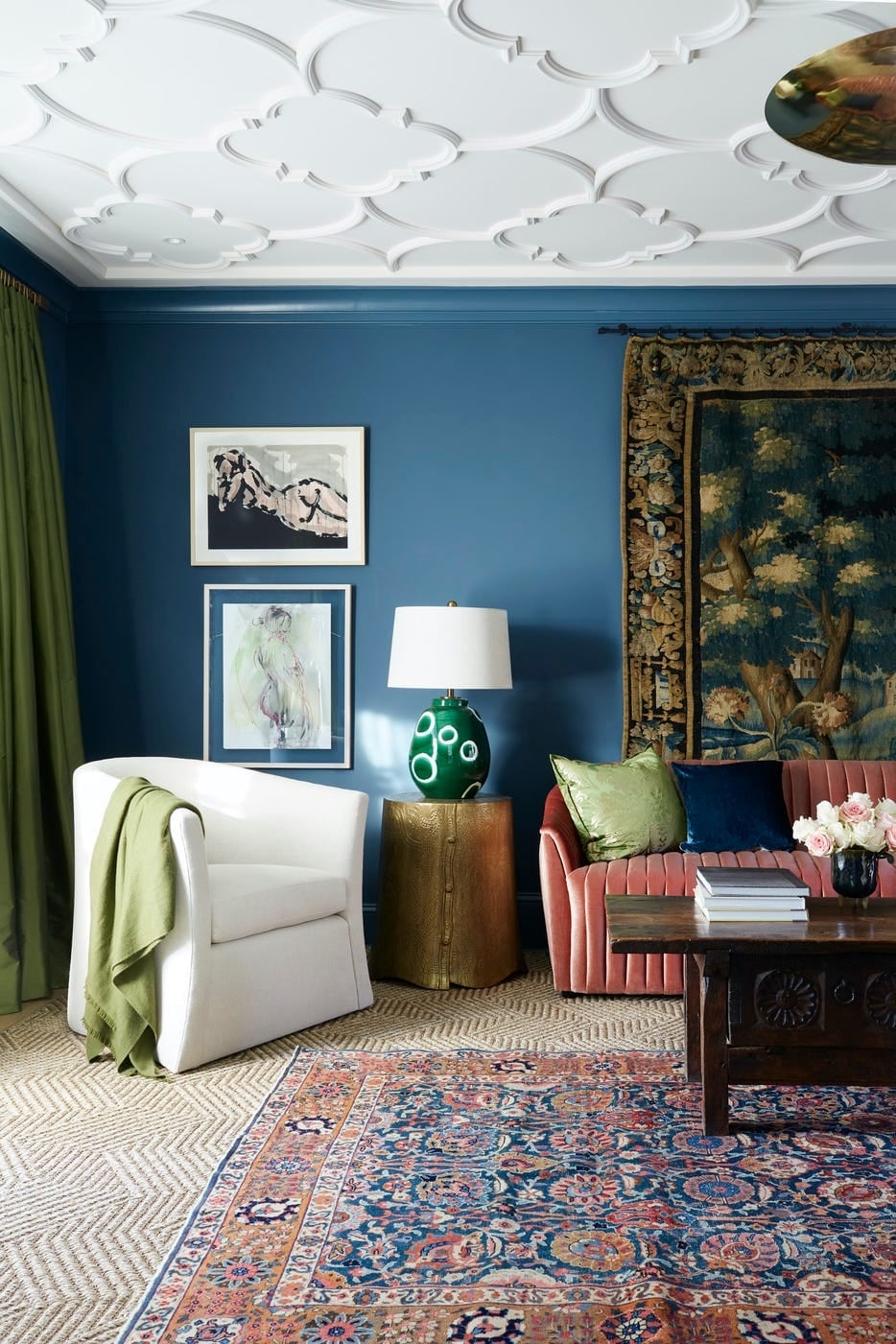
A large ornate tapestry sets the tone here, and the deep blue walls let it take center stage without competing. The palette around it brings in green, pink, gold and wood tones through the white armchair, pink tufted sofa and ornate rug. What defines this eclectic look is the mix of textures and periods. The ratio leans heavily on the tapestry as the visual anchor, with everything else supporting it. What breaks the scheme is the table lamp adding a softer glow that keeps the room from feeling too formal.
Traditional Living Room with Vibrant Deep Blue Walls and Fireplace
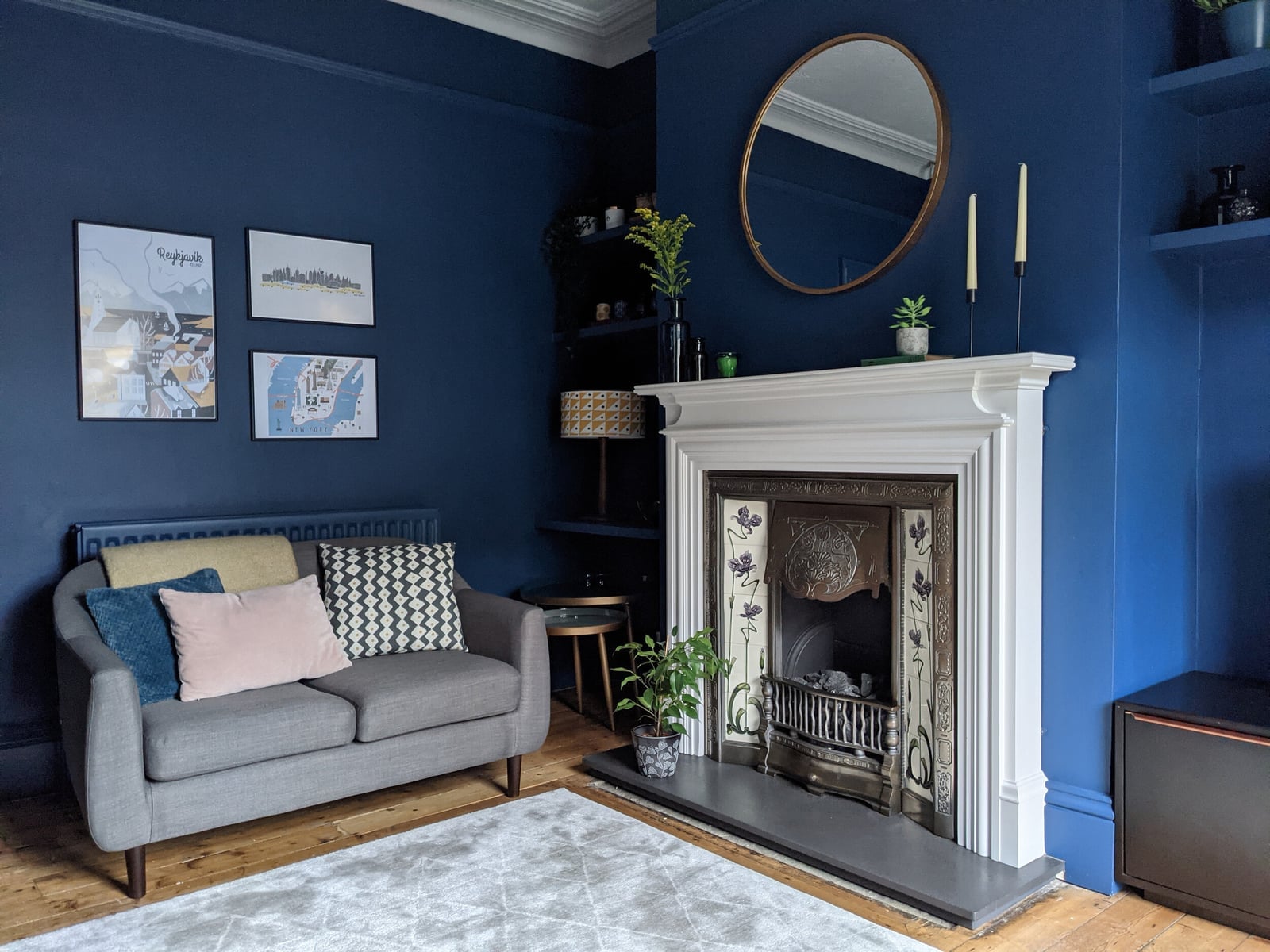
A practical rule for working with vibrant deep blue walls is to let the fireplace anchor the layout. Here the fireplace sits centered, with the sofa placed opposite, creating a clear conversation zone. The marble surround adds a cool contrast to the blue, while the round mirror above reflects light around the room. Gold accents in the mirror frame and shelves add warmth without clashing. For renters, a large peel-and-stick mural in a deep blue can mimic this look without painting. Just check the wall texture first so it adheres well and comes off clean later.
Sophisticated Dining Room with Rich Blue Walls
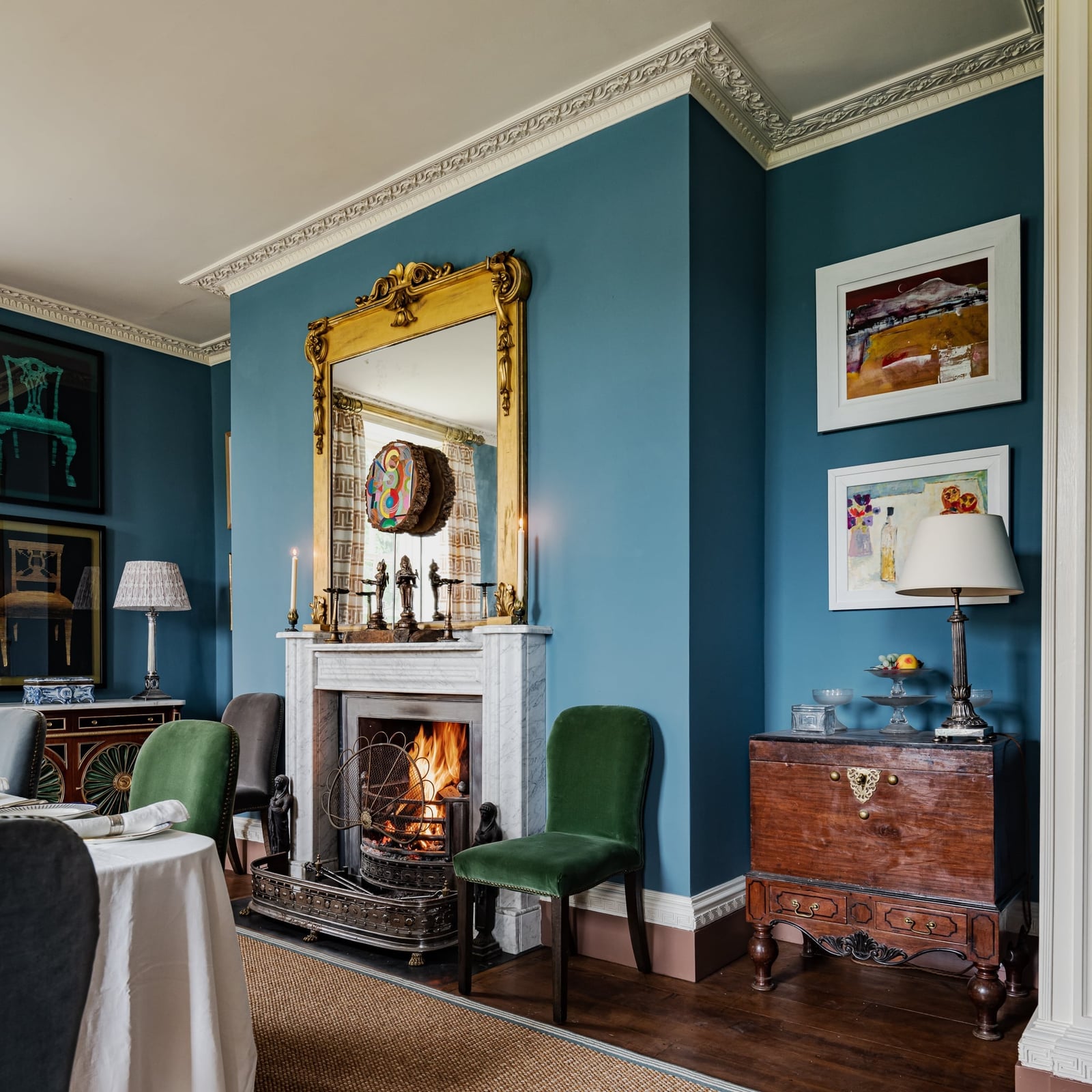
This room could have gone with a softer blue for a lighter feel, but the rich blue walls here lean into drama instead. The palette combines rich blue with green and gold, with the fireplace and ornate mirror acting as the focal points. The marble surround and wood tones in the dining chairs keep the look grounded. The velvet upholstery adds a layer of texture that softens the bold wall color. What defines this scheme is the balance between the saturated walls and the lighter elements around them. The ratio is about two-thirds wall color to one-third accents, with gold bridging the two. What breaks it is the natural daylight hitting the walls differently throughout the day, shifting the room from moody to bright depending on the hour.
Traditional Office with Deep Navy Blue Walls and Ceiling
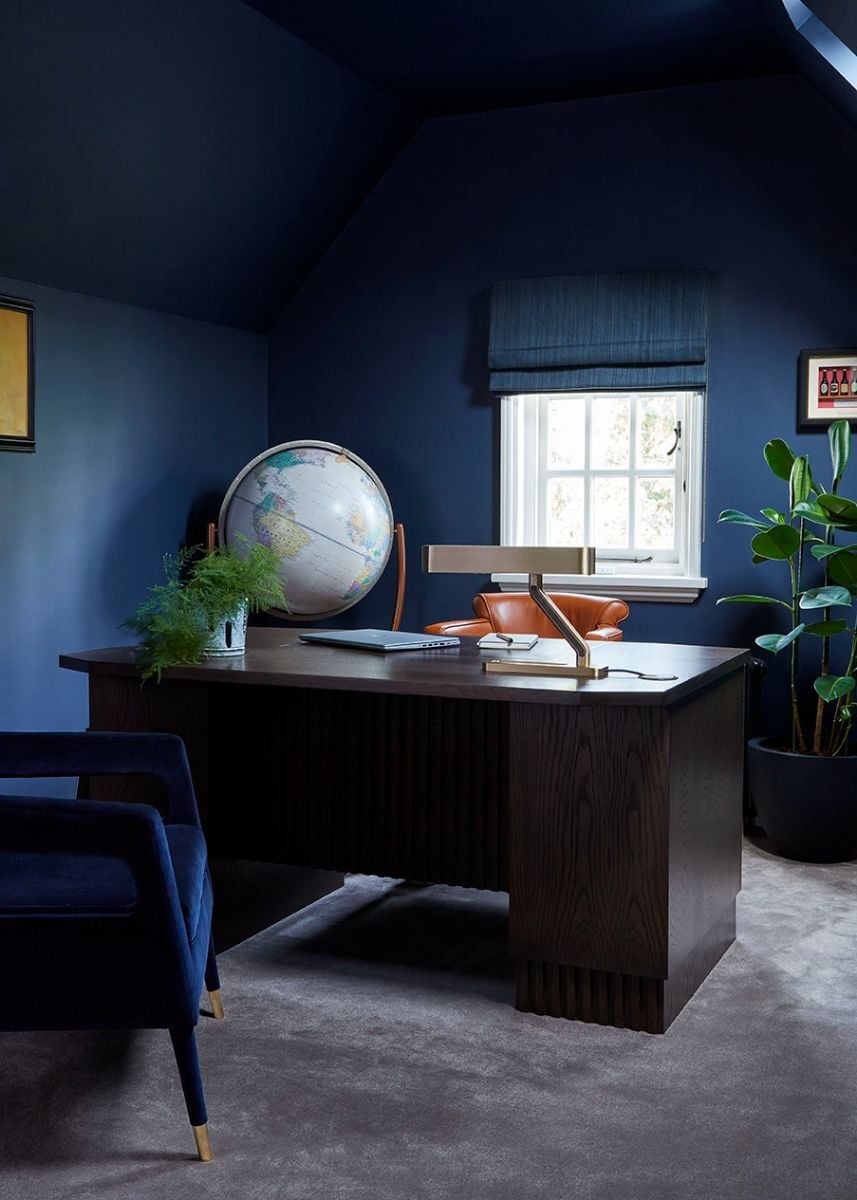
Painting both the walls and ceiling in deep navy creates a cocooning effect that suits a traditional office. The desk faces the window, so natural daylight hits the work surface directly while the navy walls recede. Wood tones in the desk and tan leather in the armchair add warmth. The globe and extra chair round out the seating without crowding. The palette is deep navy, wood tones and tan, with the carpet in a neutral tone that ties it together.
Traditional Hallway with Medium Blue Walls and Archway
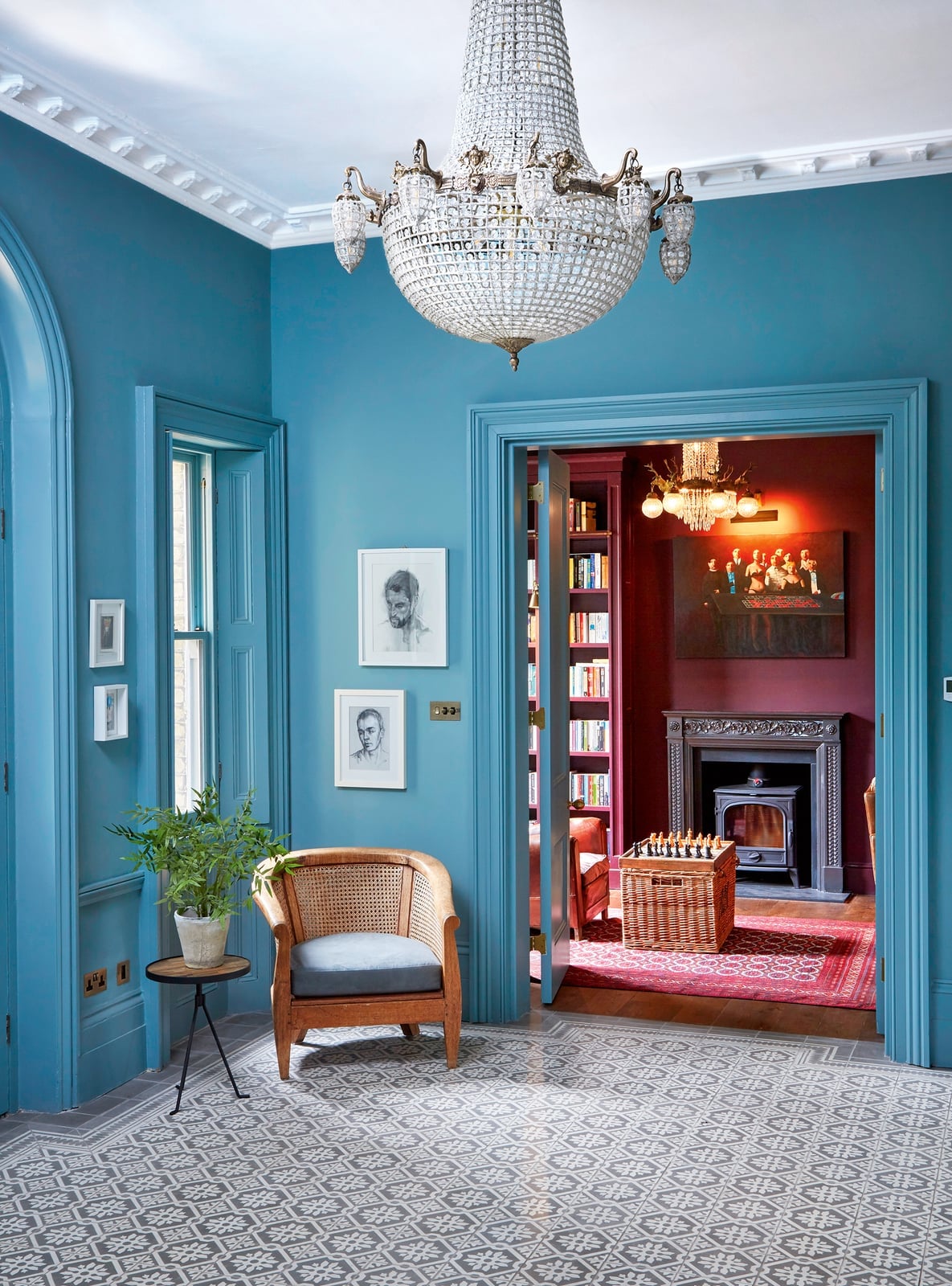
This hallway works because the medium blue walls and painted archway create a clear sense of direction. The palette combines medium blue with grey, white and wood tones, with the cane chair and side table adding a lighter note. The overhead chandelier provides even light, while natural light from the doorway keeps the space open. The archway painted in the same blue extends the color vertically, making the hallway feel taller. For a similar effect in a narrow hallway, paint the ceiling the same blue to blur the edges and make the space feel wider. Just keep the trim white to define the lines.
Eclectic Living Room with Two-Tone Dark Blue and White Wall
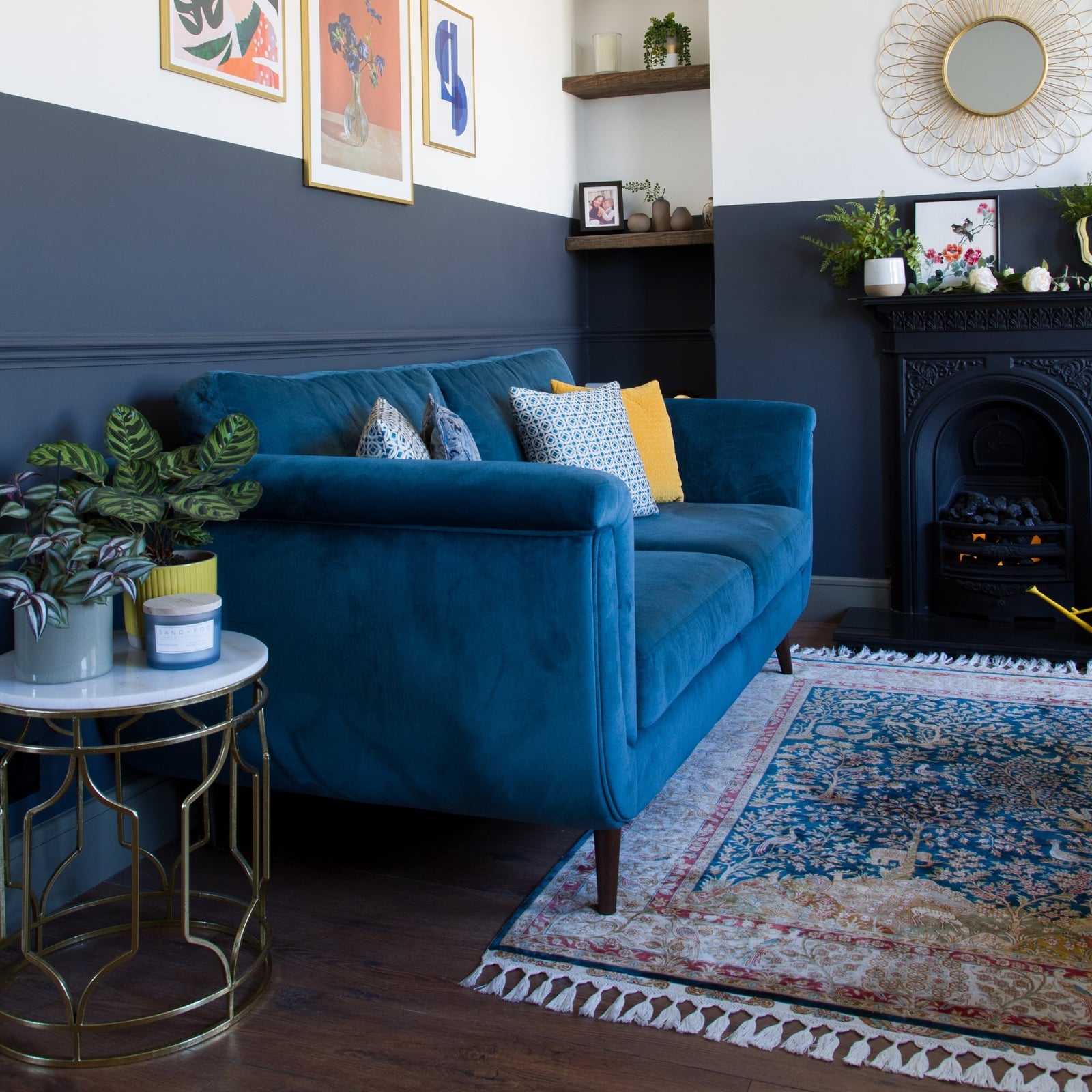
When a wall does two things at once, the room can stay simple. Here the lower half is dark blue and the upper half is white, which keeps the eye moving without needing a second pattern. The blue sofa picks up the darker stripe, while the gold mirror and yellow accents add small flashes that keep the palette from turning flat. A marble fireplace and a wood side table bring in natural texture, so the room feels collected. The rule: a two-tone wall works best when the lighter half matches the ceiling, because that tricks the eye into thinking the room is taller. Renter-safe swap: use a strip of painter’s tape to test the divide height before you commit to paint.
Coastal Study with Teal Blue Paneled Walls
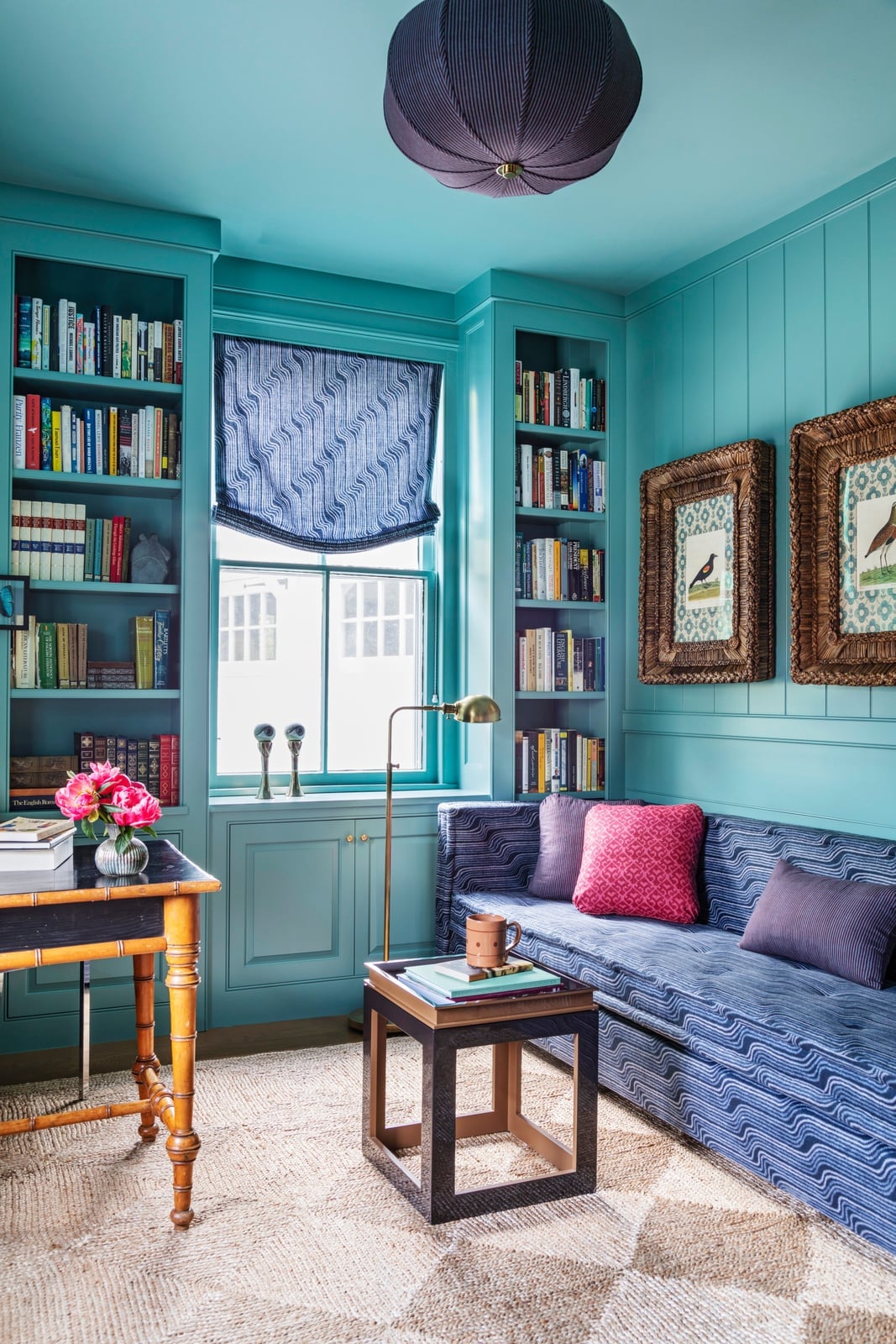
The teal blue paneled walls here are the kind of saturated color that defines a coastal study without a single seashell. The paneling adds vertical lines that balance the compact room, and the natural light keeps the teal from going flat. A pink accent in the fabric and glass pieces breaks the blue just enough that the space avoids a monochrome look. The woven textures and wood desk keep it grounded, making it a place to work rather than a showroom.
Scandi Bedroom with Light Blue Walls
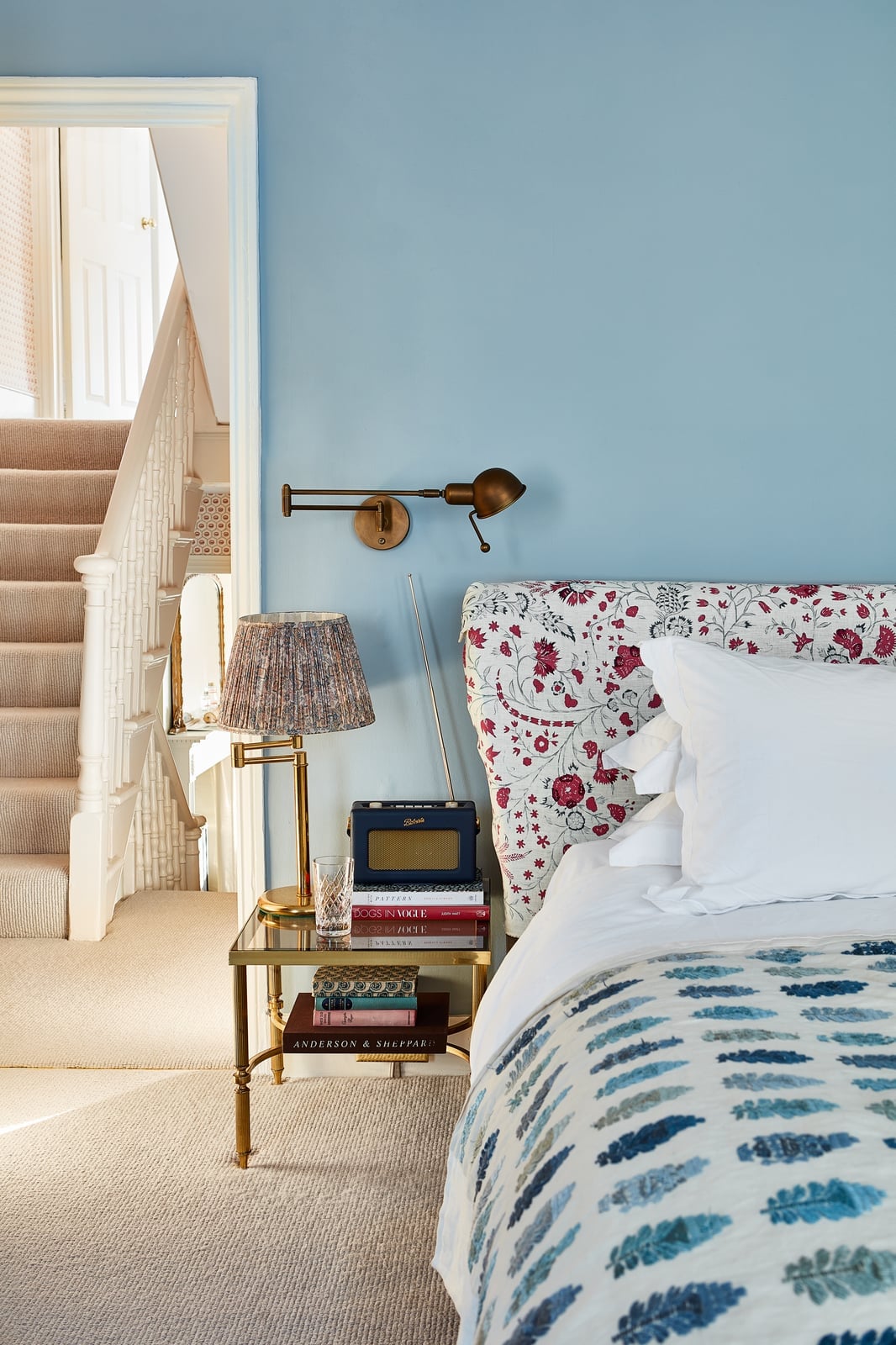
A light blue wall can feel cold if the rest of the room follows suit, so the trick is to warm it with wood. Here the bed frame and the stairs are both pale wood, and the white bedding and lamp keep the palette airy. The natural light from the window hits the blue and turns it almost gray in the shadows, which gives the room a quiet depth that a brighter blue would lose. A Scandi bedroom like this one works because the blue is the only color: the rest is just texture and light.
Modern Living Room with Light Blue Walls and Tan Accents
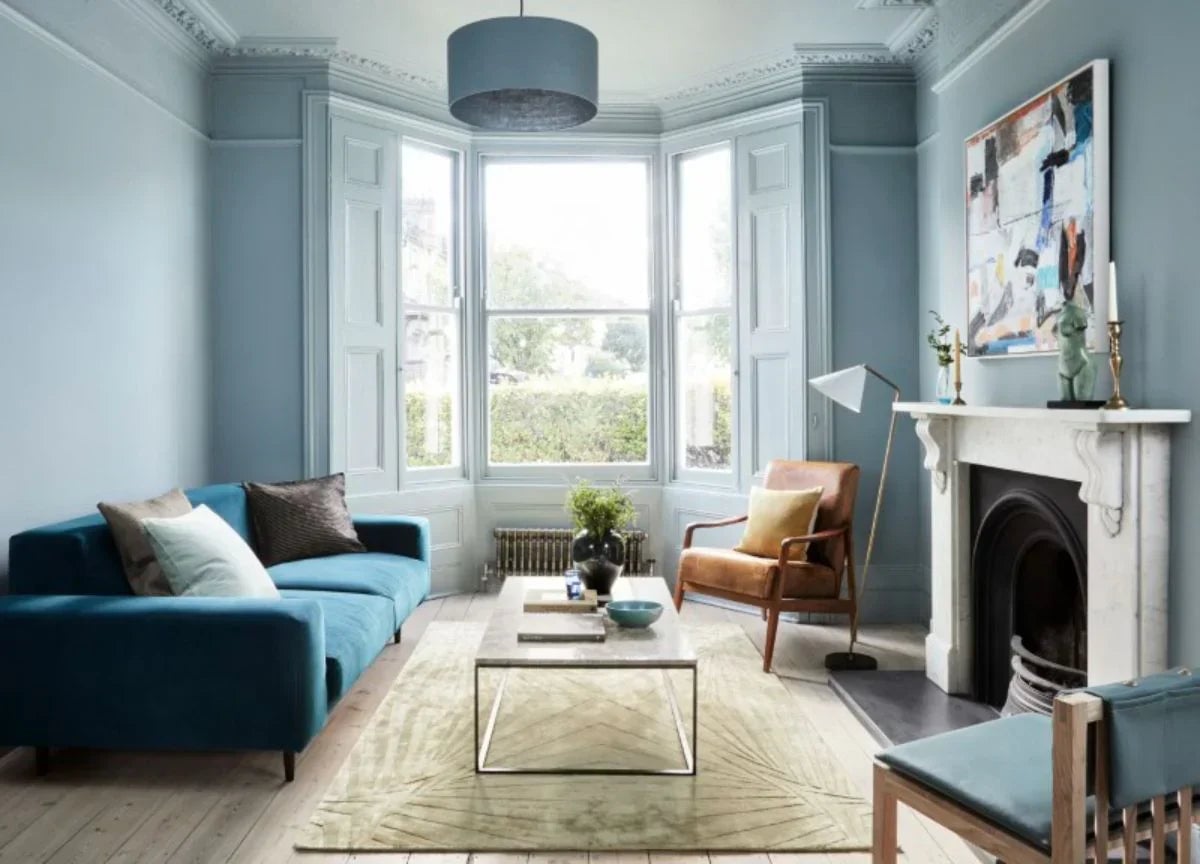
Light blue walls can read as cold next to a gray sofa, but pair them with tan leather and the room warms up. Here the blue sofa and the leather armchair are set across from each other, with the fireplace between them, so the eye travels from cool to warm and back again. The large window brings in soft natural light that keeps the blue from looking chalky, and the white trim around the window frames the view like a picture. The layout keeps the seating focused on the fireplace, so the room feels social rather than spread out. The palette is two-thirds blue and one-third tan, which is a useful ratio: the warm accent keeps the blue from taking over, and the blue keeps the tan from looking muddy.
Modern Bedroom with Striking Deep Blue Walls
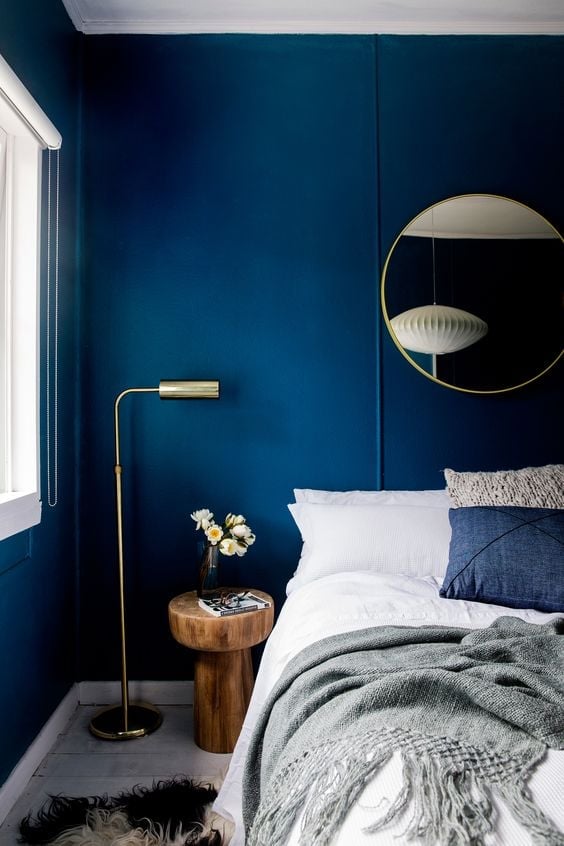
A deep blue wall behind the headboard turns the bed into the focal point without a single piece of art. Here the blue is so saturated that the white bedding and brass floor lamp read as bright by contrast, even though the natural daylight is the main light source. The compact layout keeps the bed against the blue wall and the bedside table close, so the room feels intentional and calm. A modern bedroom like this one uses the deep blue like a neutral: it recedes just enough that the brass and white stand out, but it gives the room a weight that a lighter blue would not.
Traditional Hallway with Light Blue Walls and Dark Wood Staircase
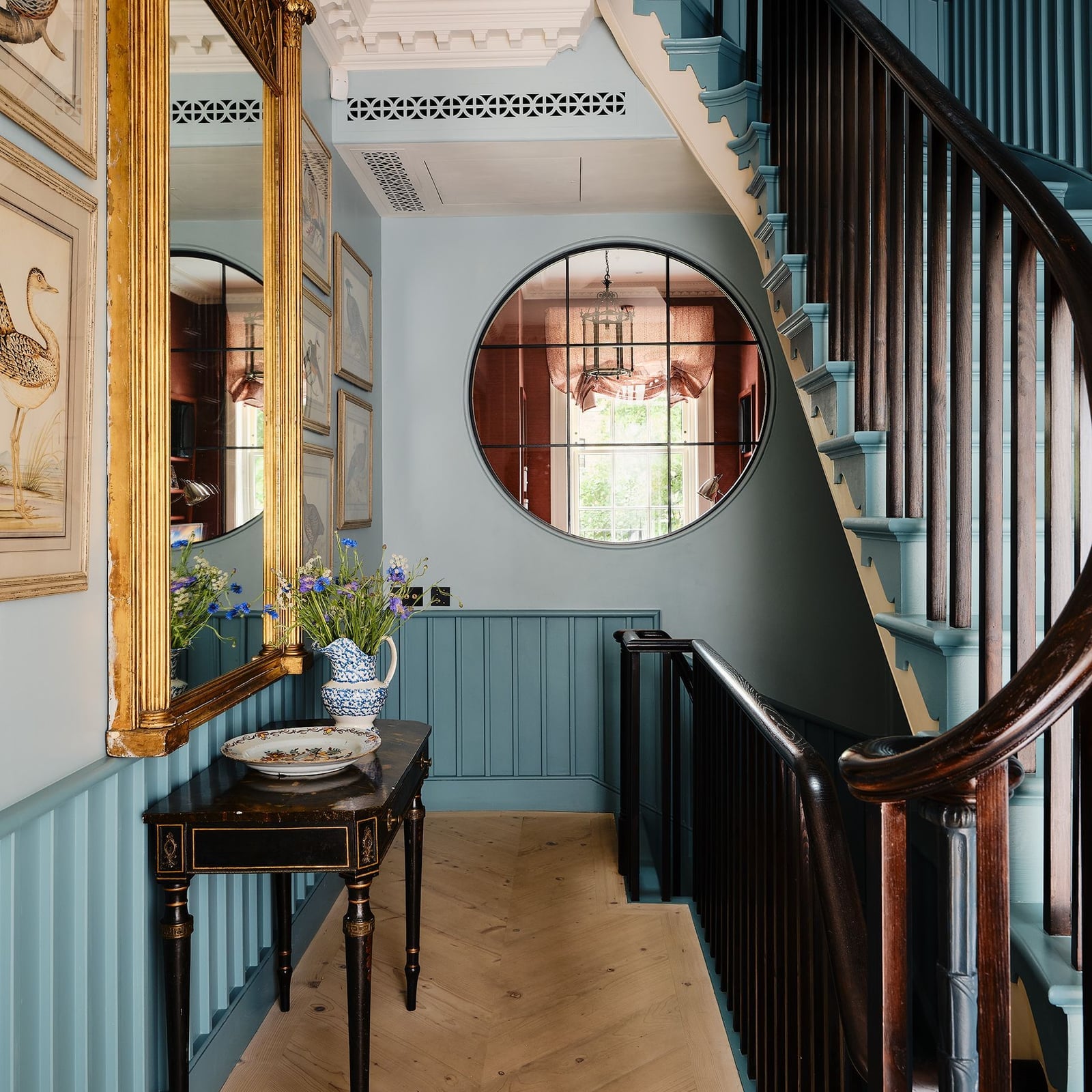
A light blue hallway is a smart way to keep a traditional entry feeling open and airy without going white. The pale walls contrast with the dark wood staircase and console table, giving the space clear visual structure. A circular window and a mirror on the wall help bounce natural light around the roomy hall. The palette here is simple: light blue paint against dark wood tones, with tile on the floor adding a practical surface for heavy foot traffic.
Traditional Bedroom with Soft Blue Walls and Sloped Ceiling
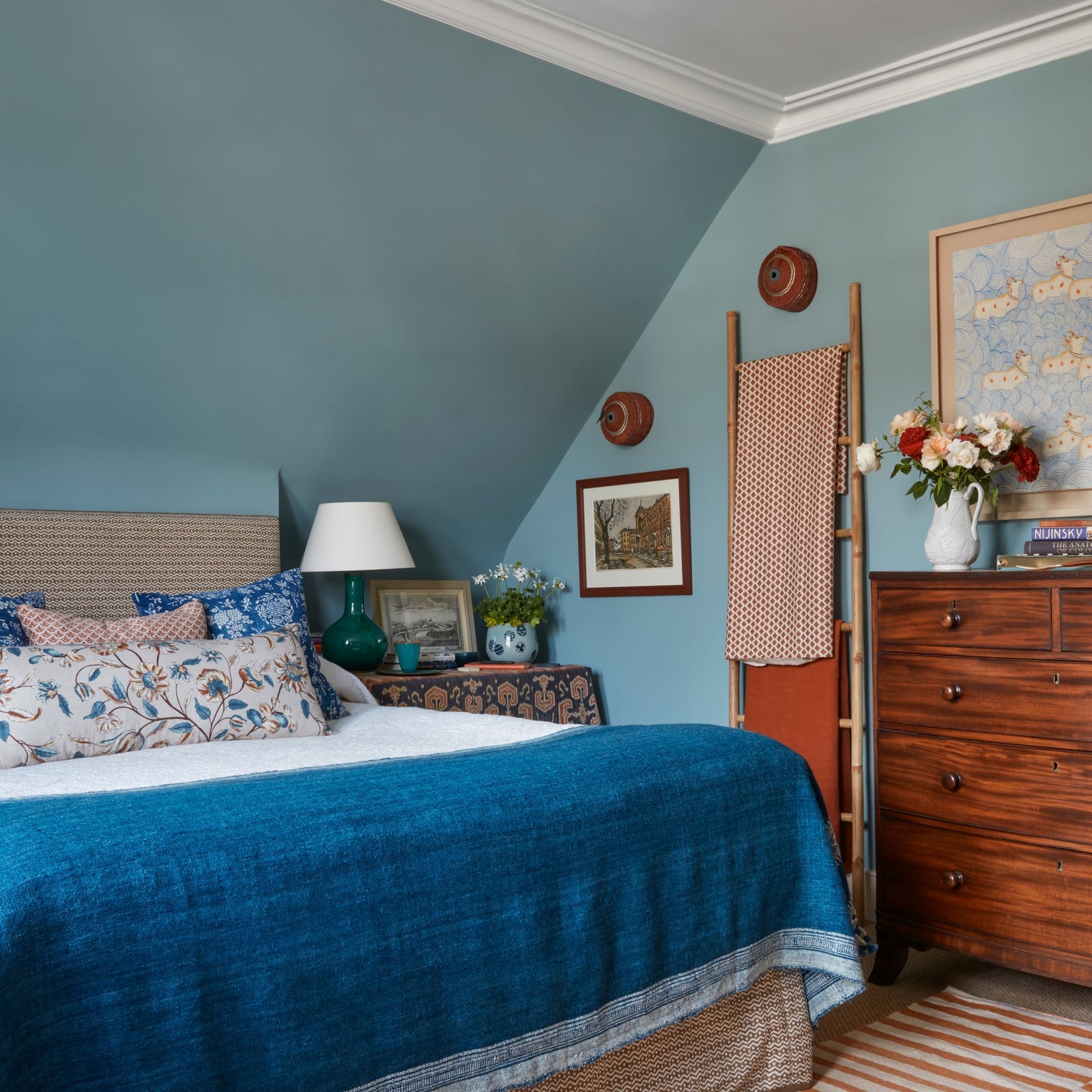
For a sloped ceiling bedroom, let the wall color define the room, not fight the angle. Soft blue walls make the sloped ceiling feel like a deliberate feature. The bed sits against the sloped wall, drawing the eye upward and using the low clearance area where you would not stand anyway.
Wood tones in the dresser and ladder shelf warm up the blue, while cream linen on the bed keeps the look soft. A table lamp on the nightstand adds warm light for evenings. This setup works as a renter-friendly approach because paint is easy to reverse, and nothing here requires built-in changes.
Minimalist Bedroom with Striking Dark Blue Walls
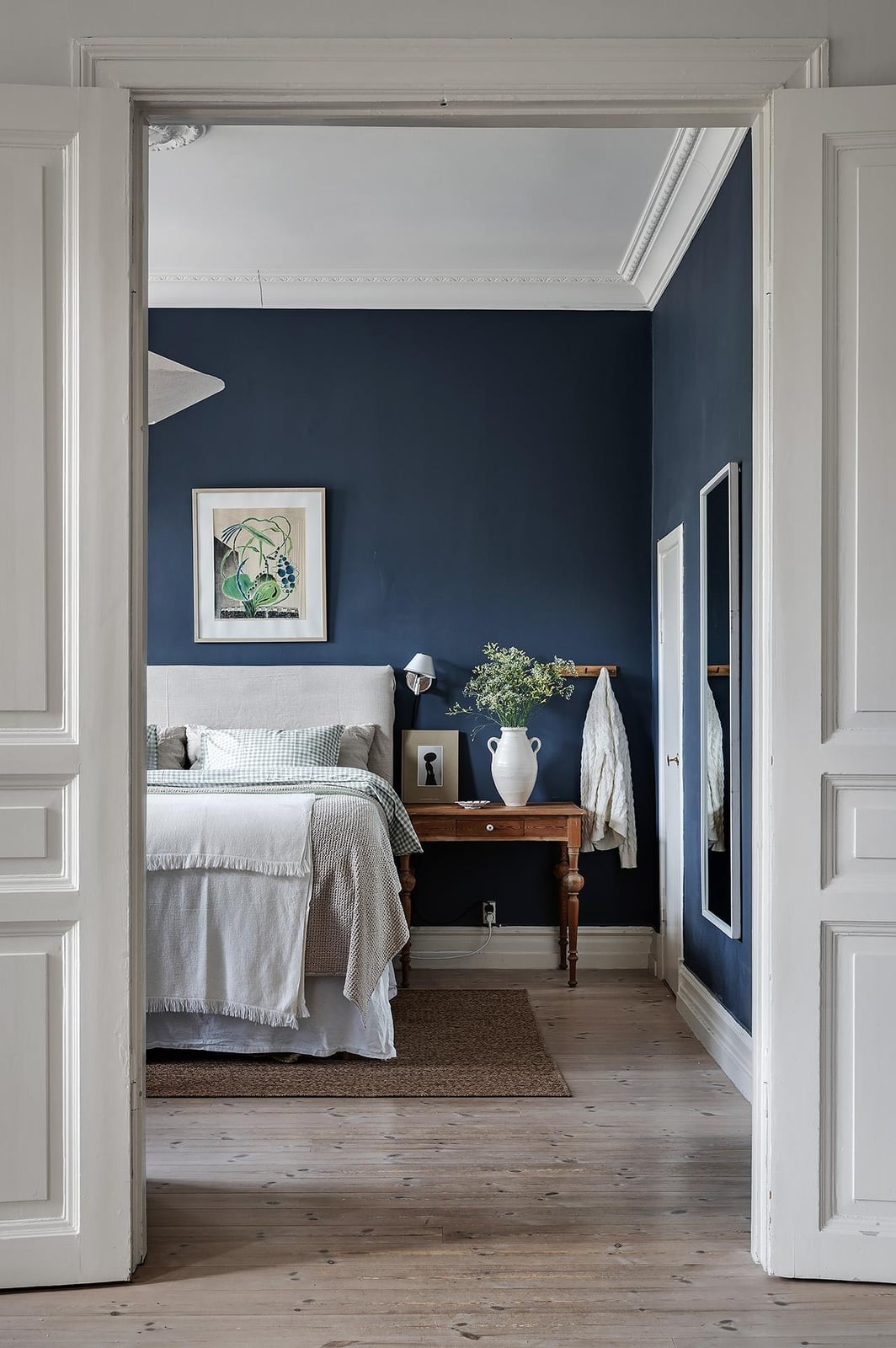
Dark blue walls in a minimalist bedroom create a strong backdrop without needing extra decor. The bed sits centered against the wall, with a simple bedside table to one side and a mirror adding light reflection. White bedding and beige linen keep the room from feeling closed in, while the wood floor adds warmth. Wall sconces provide task lighting without cluttering surfaces. The look relies on restraint: the dark blue paint does the work, and the room lets it.
Cozy Reading Nook with Deep Blue Walls and Rust Accents
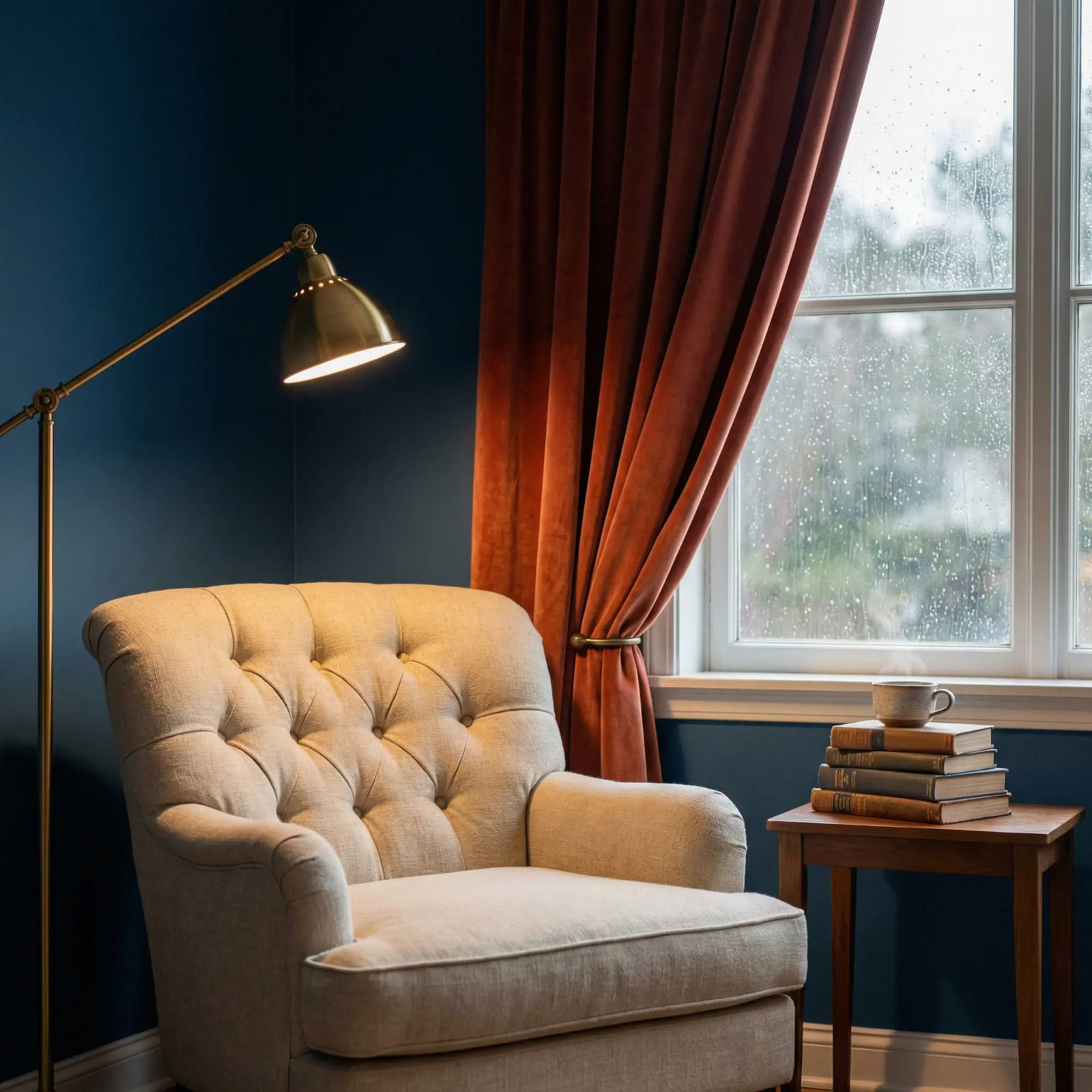
A tufted armchair in the corner by the window makes this reading nook feel like its own room within the room. The deep blue walls create a cocooning effect, and the rust-colored velvet curtains add a warm contrast that keeps the palette from going cold. A floor lamp provides task lighting for reading, with natural light from the window during the day. The side table holds books within reach. This palette works because the rust tones are saturated enough to hold their own against the deep blue without competing.
Modern Living Room with Deep Blue Accent Wall and Blue Sofa
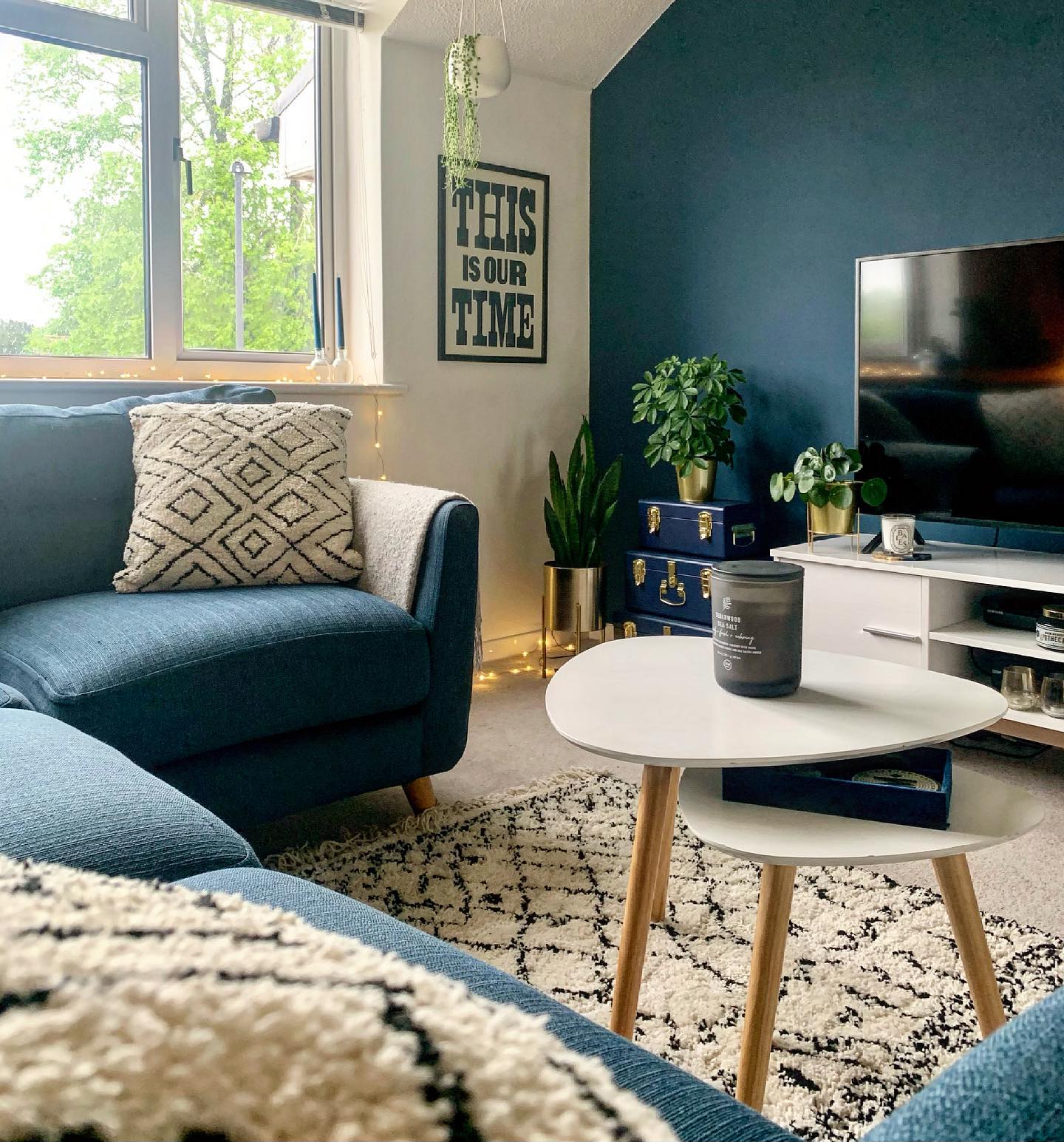
A deep blue accent wall paired with a blue sofa might sound like too much of one color, but this modern living room makes it work by keeping the other walls and floor neutral. The white walls and beige flooring let the blue stand out. The sofa faces the TV unit with a coffee table in between, a standard layout for a compact room.
String lights add a casual glow, and the plants bring in green as a natural complement to blue. The trick here is scale: the accent wall covers only one wall, and the sofa is the only other large blue piece. The white and beige around it give the blue room to breathe without feeling heavy.
Traditional Bedroom with Soft Blue Walls and Brass Accents
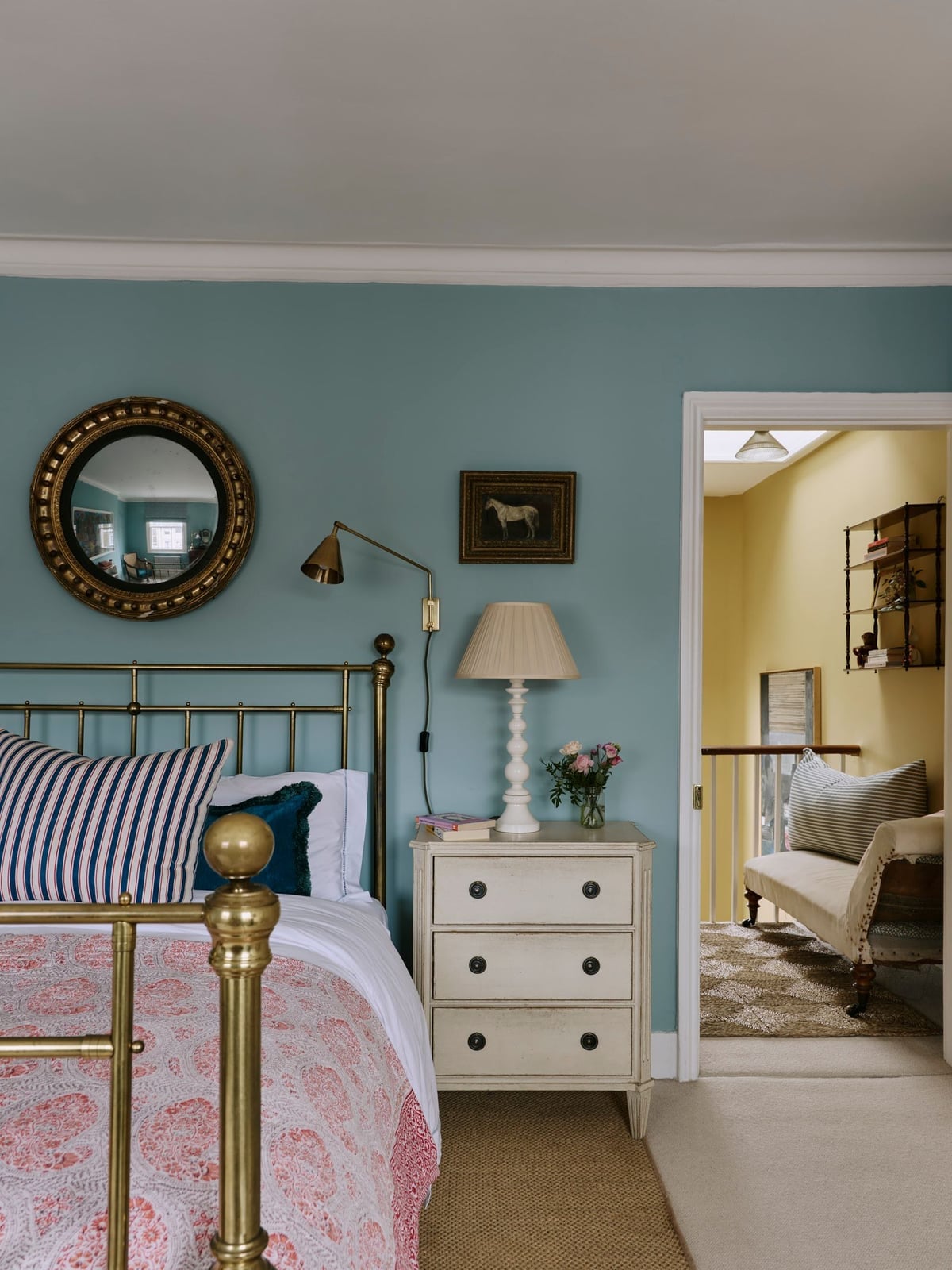
A wall sconce adds a warm glow that keeps the room from feeling cool, even in daylight. What defines this look is the ratio: one part metal, two parts soft finish, with the brass acting as the accent that breaks up the wall of color.
Modern Interior with Vibrant Blue Walls
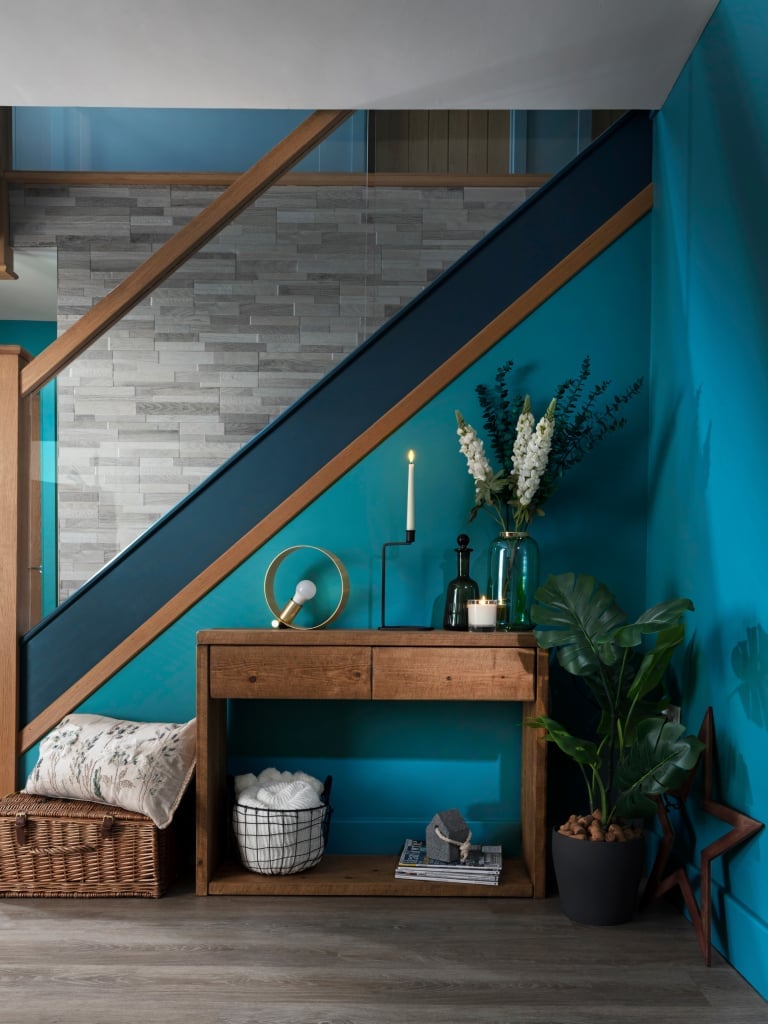
This corner vignette makes a case for treating an entryway or hallway like a room of its own. The vibrant blue wall holds a console table, a mirror, and a few plants, which is enough to anchor the space without clutter. The wood table and white tile flooring give the blue a clean boundary, so it feels planned. An accent lamp adds a warm point of light that softens the saturation. The palette works because the blue is the only saturated color: every other surface stays light or natural, which keeps the look modern and the small footprint open.
Coastal Modern Bedroom with Light Blue Walls and Shell Chandelier
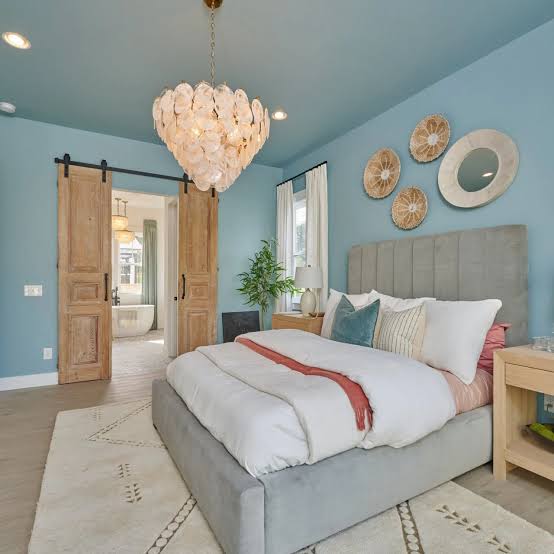
A shell chandelier might feel too themed for a bedroom, but here it works because the rest of the room stays restrained. The light blue walls read as a soft backdrop, not a nautical statement, and the upholstered bed in a neutral fabric keeps the focus on texture rather than color. Sliding barn doors and woven wall art add natural materials without introducing more pattern. The palette stays tight: light blue, white, grey, and a touch of coral that shows up in small accents. The shell chandelier becomes the hero element because everything else is quiet.
Eclectic Living Room with Deep Blue Walls and Gallery Wall, Indoor
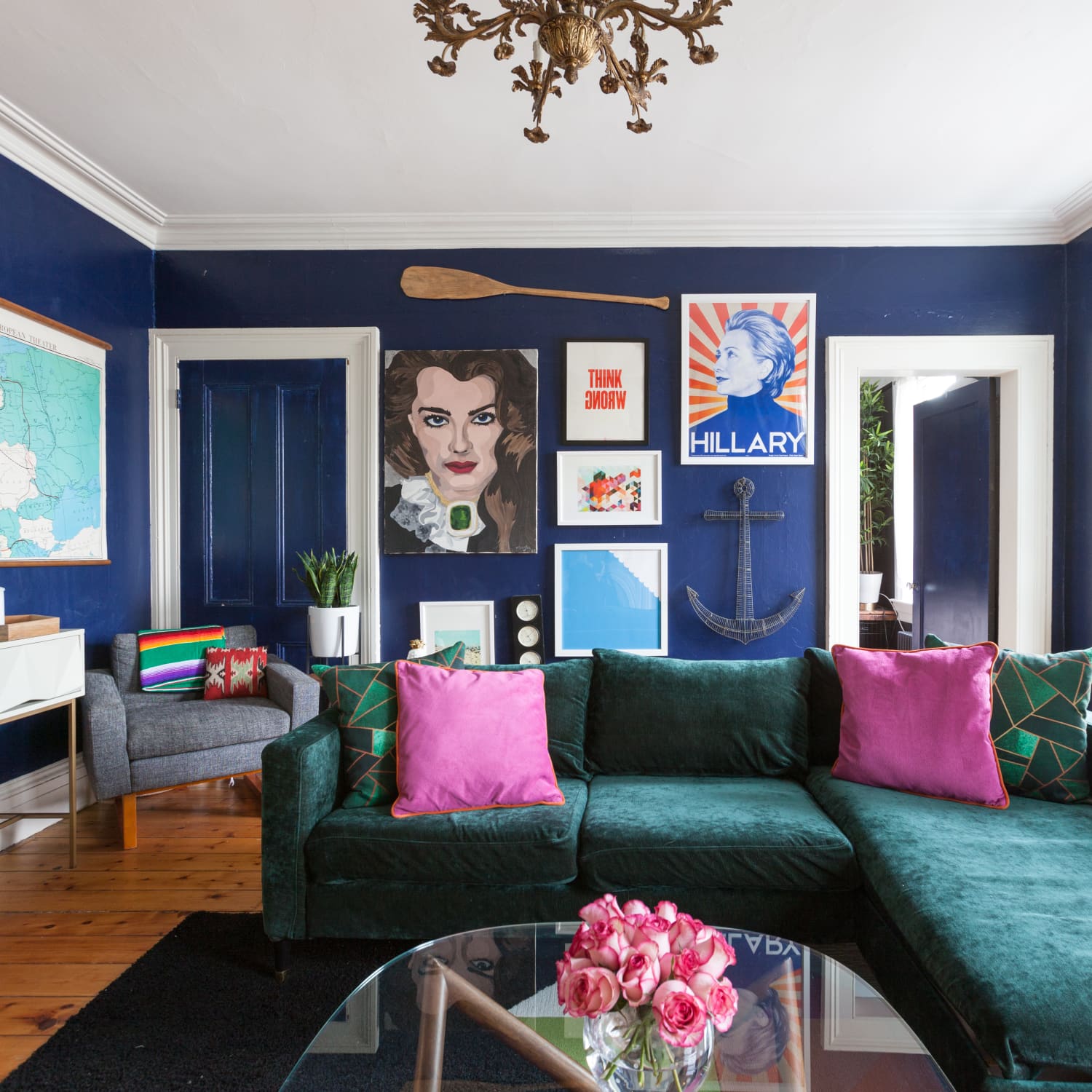
Deep blue walls give a gallery wall a consistent background that ties together mismatched frames and subjects. A green velvet sectional and a pink armchair introduce color that echoes the art, while a wood coffee table keeps the setup grounded. The overhead chandelier provides general light, but natural daylight from the window is what really makes the blue read as rich rather than flat. The layout puts the seating at an angle to the walls, which softens the formality and lets the artwork lead the room.
Scandinavian Interior with Blue Ceiling and Tiled Stove
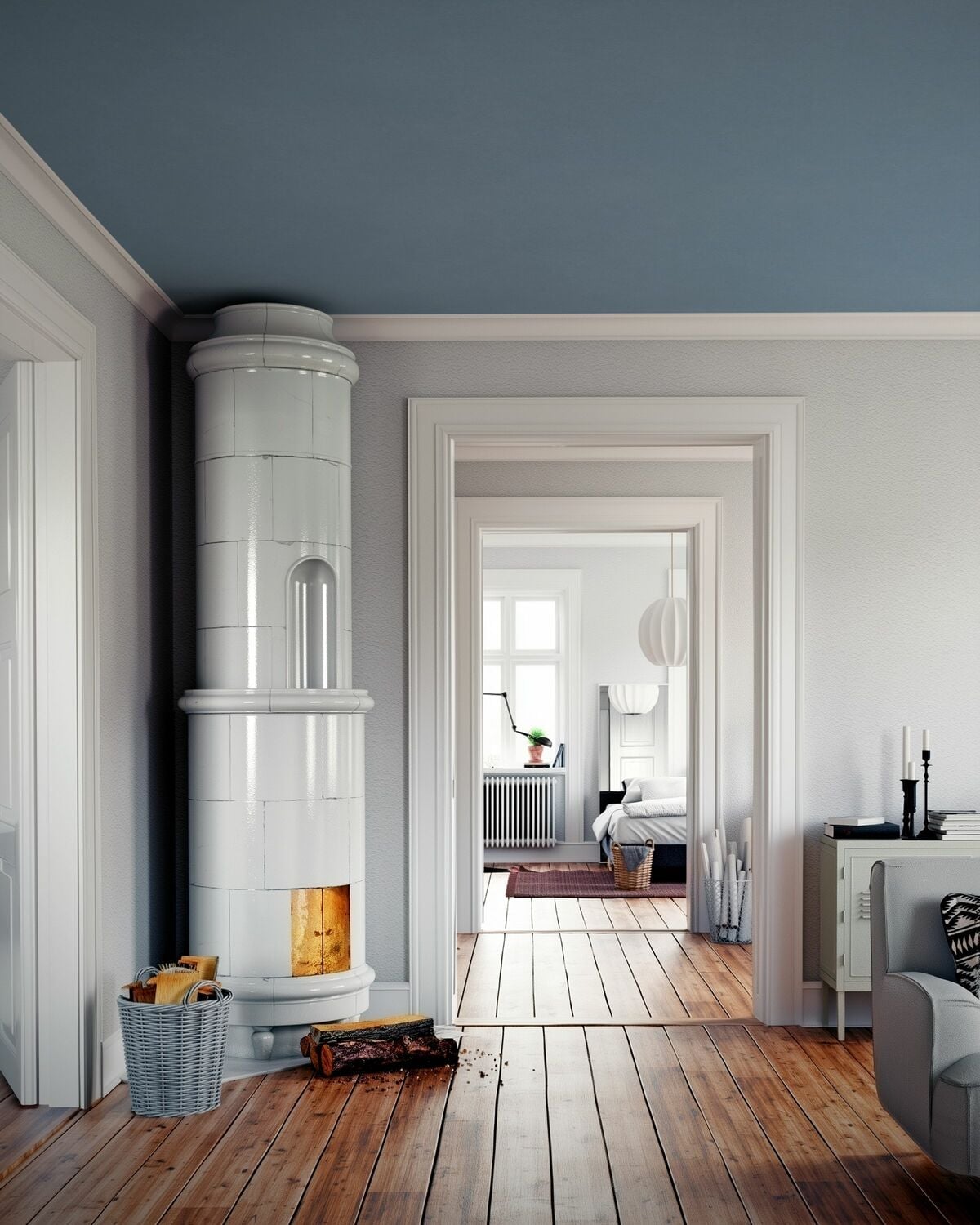
Painting a ceiling blue is a move that works best in a room with tall proportions and simple finishes. Here, the blue ceiling sits above white walls and a white tiled stove, with wood floors and doorways adding warmth. The palette is three colors: blue, white, and wood, with no fourth element to complicate the balance. The blue draws the eye up and makes the hallway view feel taller than it is. A white tiled stove anchors the space at ground level, creating a natural counterpoint to the ceiling. This look breaks the rule that ceilings should stay light, but the restrained palette keeps it from feeling heavy.
Final Thoughts
Blue walls offer more than just a color choice. They set the tone for how a room feels. Dark shades like navy and teal create intimacy and drama, while lighter blues keep things airy and calm. Texture matters too: grasscloth, paneling, or high-gloss finishes each change how the color reads. When you commit to blue, keep the rest of the room simple and let the walls lead. Stick with natural light, warm metals, and neutral furnishings to balance the boldness. A blue wall done right never fades into the background.