
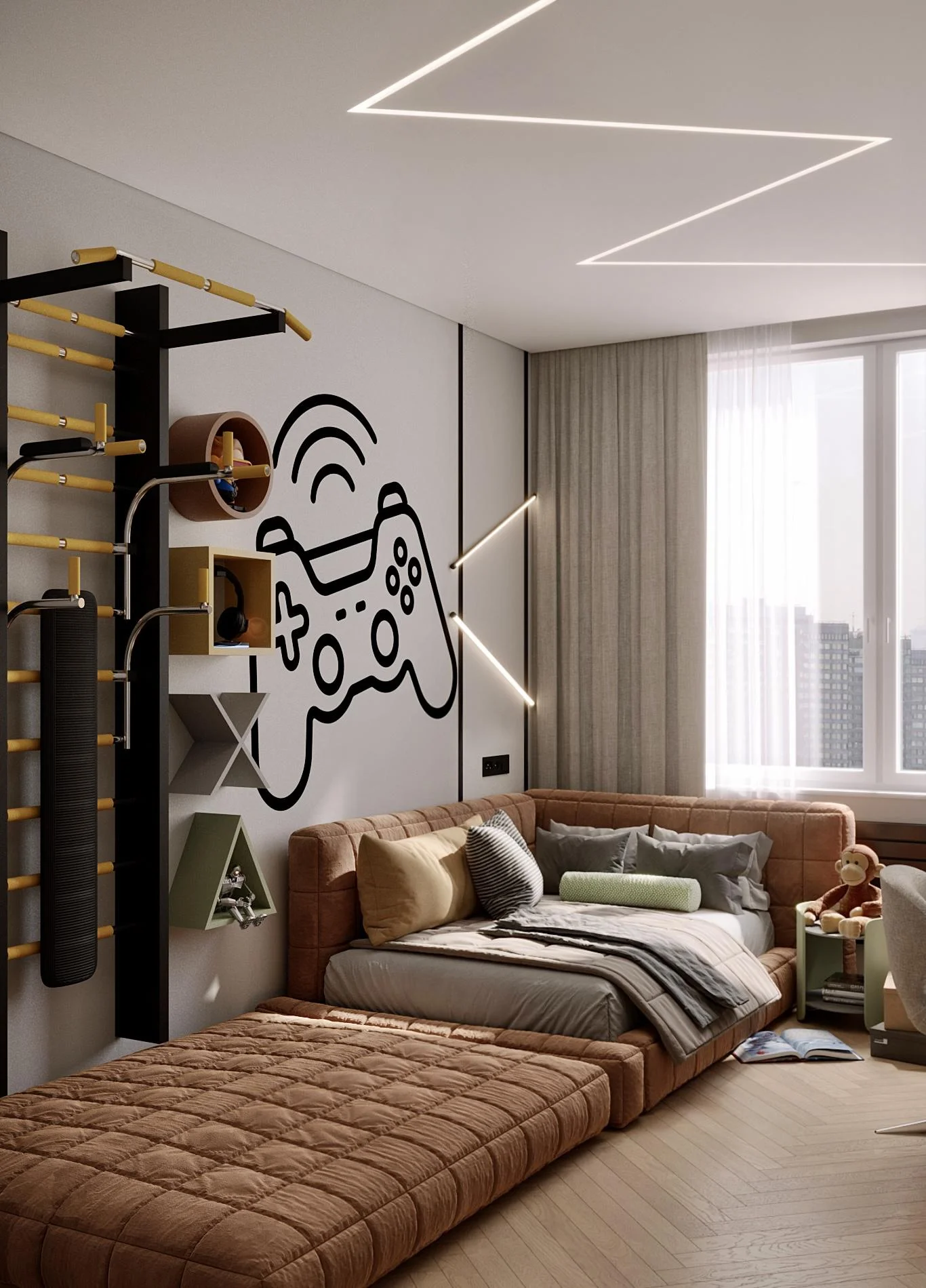
Designing a boy’s bedroom is a great opportunity to create a space that feels personal, practical, and fun at the same time. In this collection of Boys Bedroom Design Ideas For Kids, I’m exploring a variety of interiors that combine comfortable sleeping areas with smart storage, study zones, and room for play. Some designs use soft neutral colors, while others introduce sporty themes, playful details, or imaginative elements to reflect a child’s personality. I especially love how thoughtful furniture placement can make even a compact bedroom feel organized and spacious. These rooms also show that a child-friendly design can look stylish without sacrificing comfort or functionality. Whether you’re planning a complete bedroom makeover or simply looking for a few fresh ideas, these interiors offer plenty of inspiration to explore.
Colorful Loft Bed With Integrated Storage And Play Space
The first bedroom immediately stands out for its clever use of vertical space. A raised white sleeping structure occupies the center of the room, with a ladder featuring metal rungs leading up to the bed. Beneath and beside it, open shelving is finished in a fresh green tone, while the surrounding furniture remains mostly white. A gray sofa sits directly in front of the structure, creating a comfortable seating area, and a world map is visible on the wall in the background. The ceiling also carries several wide geometric color bands that connect the different areas visually.
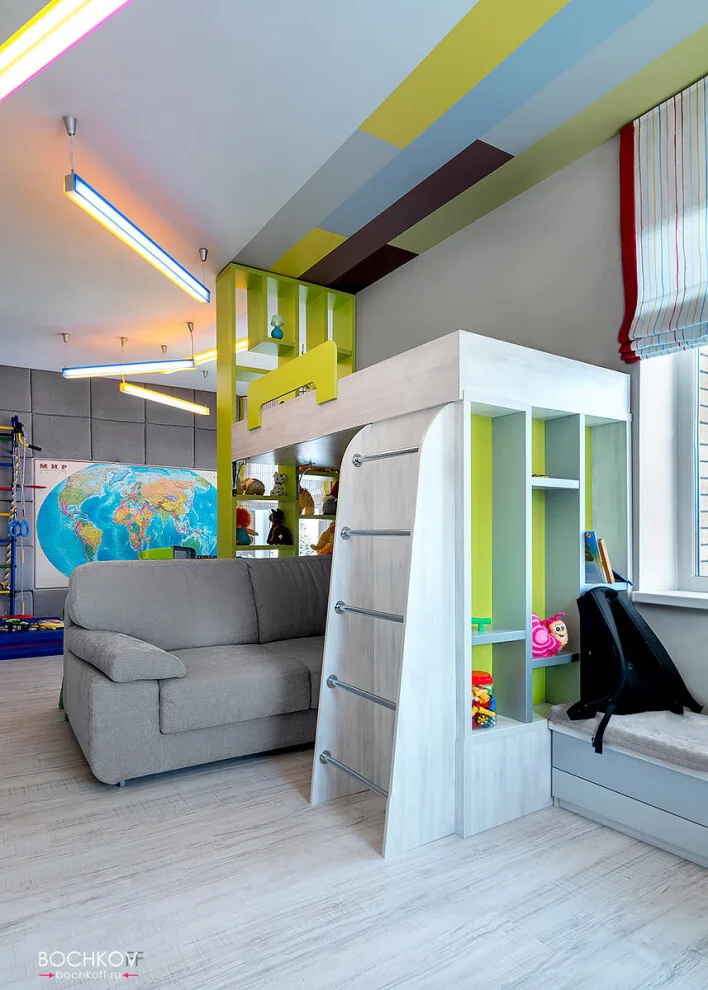
I think this layout is especially effective for a child because one piece of furniture performs several jobs at once. The elevated bed frees the lower level for storage and seating, while the open shelves keep books and toys visible and accessible. The sofa provides a place to sit without taking up a separate zone elsewhere in the room. Even the colorful ceiling treatment helps make the compact layout feel intentional rather than crowded.
From my experience, vertical furniture can make a huge difference in a child’s bedroom when floor space is limited. I would focus on keeping the largest furniture pieces multifunctional, just as this room does, and use a controlled palette of white, gray, green, and small colorful accents to keep everything visually connected. The result feels playful without relying on an excessive number of decorations.
Blue Sofa Bedroom With A World Map Accent Wall
This bedroom takes a calmer approach, with a deep blue upholstered sofa positioned beneath a large window and a large illustrated world map covering the adjacent wall. The walls are predominantly light gray, complemented by dark blue Roman shades and several coordinating cushions. A slim white desk stands beside the window, while the gray wood-look floor keeps the overall palette understated. The map introduces illustrations of vehicles, buildings, cities, and geographic details, making the wall both decorative and educational.
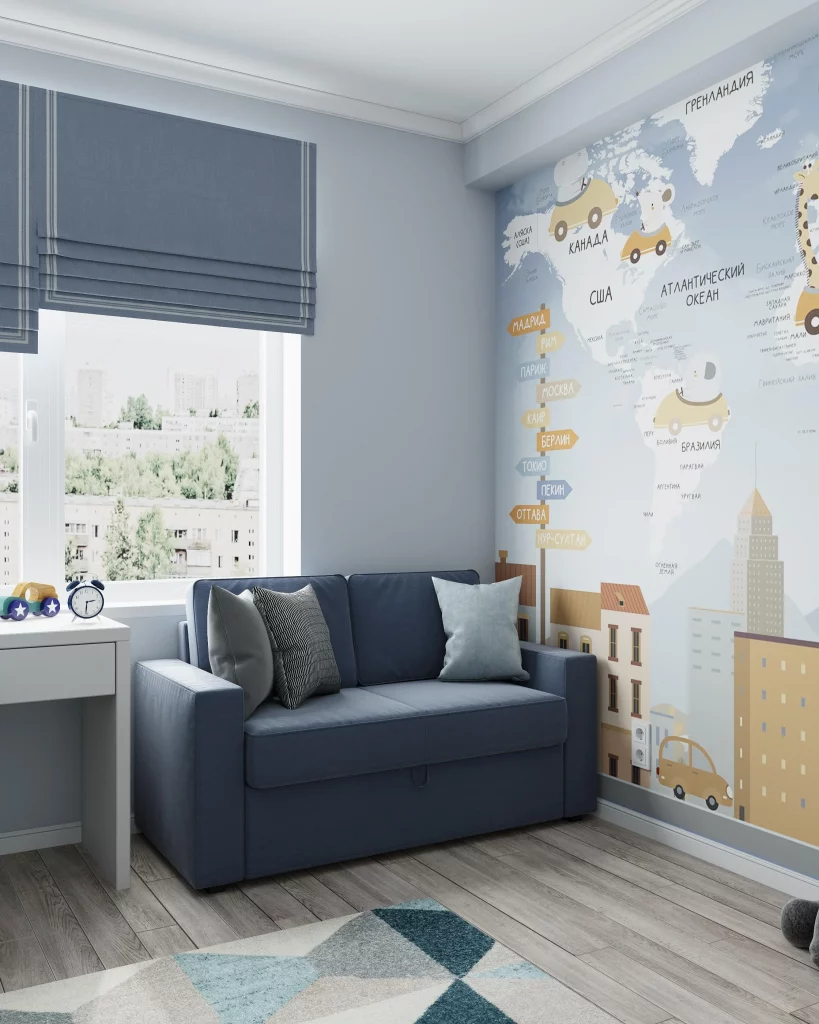
I like how the room combines a simple furniture arrangement with one strong visual feature. The sofa provides a generous place to sit or relax, while the desk makes use of the limited space beside the window. The wall map gives the bedroom a clear theme without requiring numerous separate decorative pieces, and the restrained gray-and-blue palette makes the room feel organized and comfortable.
If I were recreating this idea, I would let one large wall treatment do most of the visual work and keep the surrounding furniture relatively simple. The important lesson here is that a child’s bedroom does not need to be filled with bright colors to feel youthful. A soft neutral background combined with blue furniture, patterned cushions, and an engaging map can create an inviting space that also grows well with the child.
Blue And White Bedroom With Compact Study Zone
The third room uses blue and white cabinetry to create a highly organized bedroom and study area. A large white built-in unit surrounds the television, with blue geometric sections adding definition to the upper portion. Next to it, a dark wood shelving unit and desk provide storage and a dedicated place for schoolwork. A blue-and-white chair sits at the desk, while a small built-in bed or bench with blue cushions occupies the opposite side near the window. A rope climbing structure is visible in the foreground, adding a playful element.
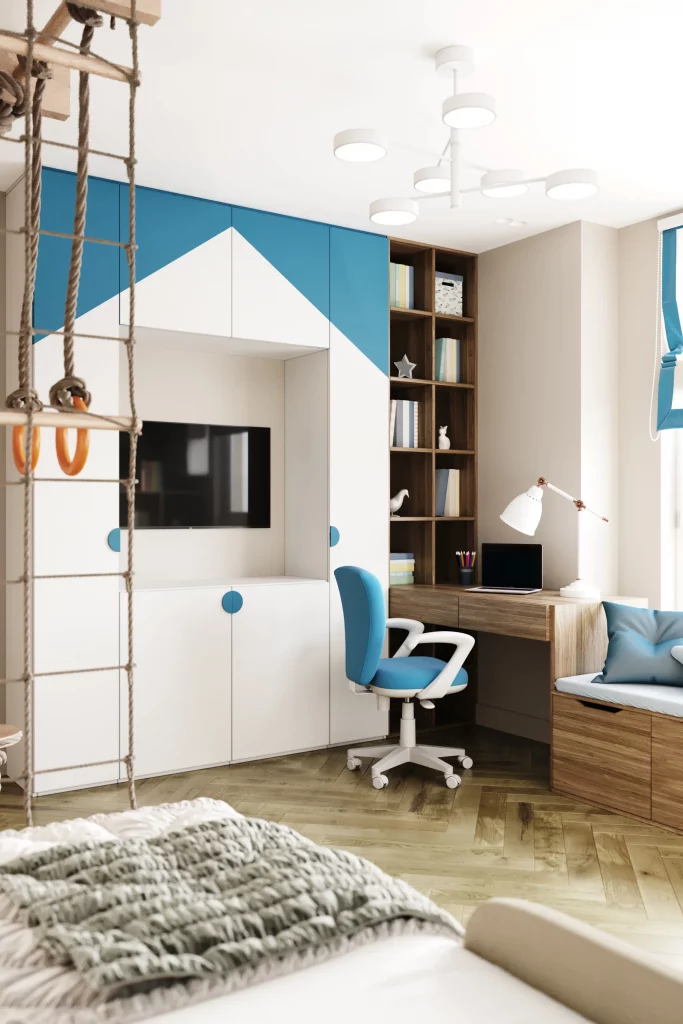
What works particularly well here is the way the storage furniture is integrated into the room instead of being treated as separate pieces. The desk is positioned directly alongside the shelving, creating a compact workstation with books and supplies within reach. The built-in cabinetry also provides a clean backdrop for the television, while the blue geometric details give the otherwise white furniture more character.
I would take inspiration from this room when designing a bedroom that needs to serve both school and leisure purposes. Keeping the desk, shelving, and storage visually connected can make a room feel much more orderly. I also like the decision to introduce blue through furniture fronts and seating rather than covering every surface in color, because it creates a balanced look that remains easy to live with.
Playful Bedroom With A Slide And Car-Themed Bed
This bedroom turns the sleeping area into a playful centerpiece. The bed is tucked into a raised structure beneath a rope safety net, with a large illustrated classic car forming the backdrop. Bright orange shelving runs vertically along the left side, while a large white slide curves down from the upper level on the right. A pale play rug covers much of the floor, with a small wooden toy train placed on it. The room combines white, gray, orange, and warm wood tones in a distinctly playful arrangement.
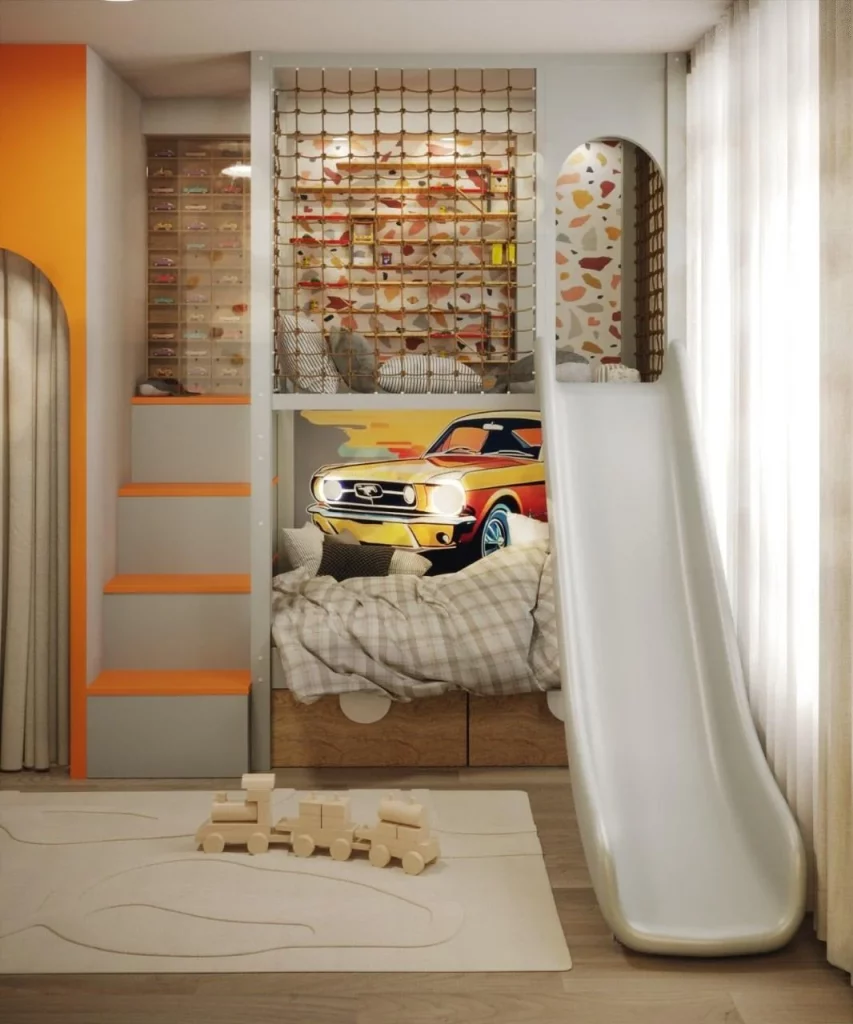
For me, the strongest feature is how the furniture itself becomes part of the play experience. The elevated sleeping area creates a separate little zone, while the slide provides an obvious connection between the upper and lower levels. The built-in drawers beneath the bed also make good use of the otherwise unused space. Because the larger elements are predominantly white and wood-toned, the orange shelving and car graphic can stand out without overwhelming the room.
A room like this works best when play is considered alongside storage and sleep rather than added as an afterthought. I would keep the floor as open as possible around a large play structure so that the child has room to move. The image also shows how a strong theme can be introduced through one large graphic and a few coordinated colors instead of covering every part of the room with themed accessories.
Green Canopy Reading Corner In A Creative Kids Room
The fifth bedroom has a particularly distinctive feature: a tall deep-green fabric canopy hanging from the ceiling and creating a cozy little retreat filled with soft toys. Behind it, the room includes a climbing structure, illustrated wall surfaces, open shelving, and a small white table positioned near the window. Three pendant lights in yellow and gray hang in a row above the window area, while a blue-green Roman shade echoes the room’s cooler palette. A bed with a colorful geometric-patterned cover is visible in the foreground.
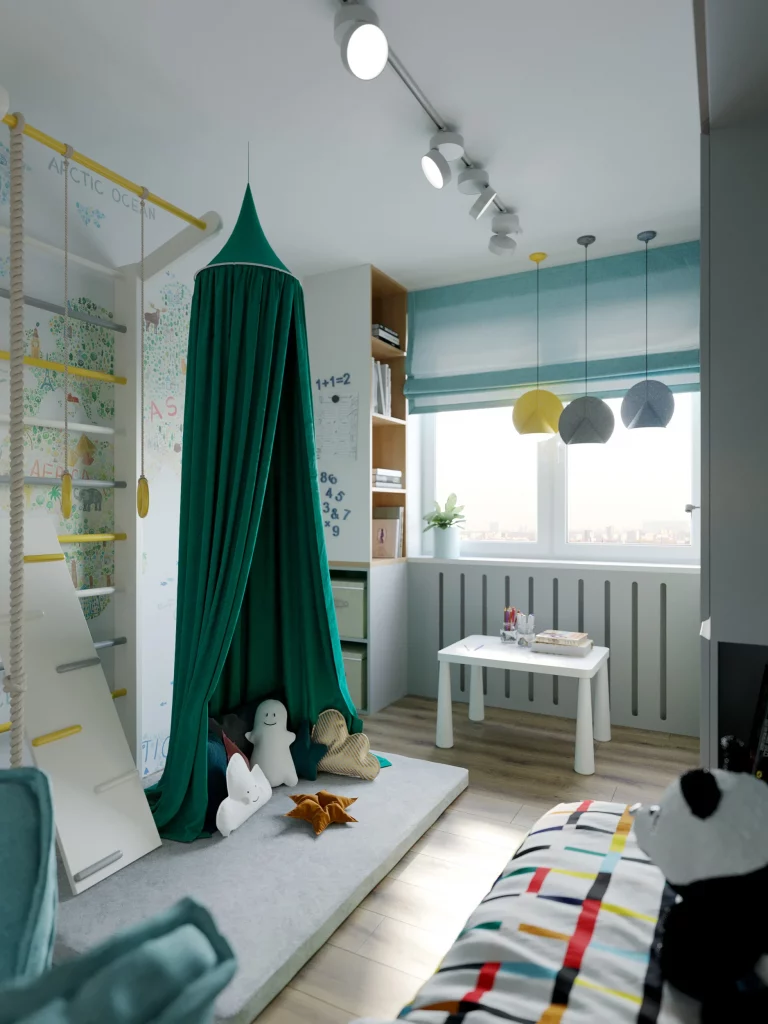
I think the canopy works beautifully because it gives the child a clearly defined place for quiet play without requiring a separate room. The small table near the window creates another practical zone for drawing or activities, while the shelving keeps books and belongings organized. The climbing equipment adds a physical activity area, so the bedroom supports several different types of play rather than being designed only around the bed.
From my perspective, one of the best ideas here is the creation of small destinations within one bedroom. A child can move between the canopy, table, climbing area, and bed depending on what they want to do. If space allows, I would use this same principle and define separate activity corners while maintaining enough open floor area for comfortable movement.
Adventure Bedroom With Nautical Wall Art And Teepee
This room has a quieter, more mature character while still feeling designed for a child. A large illustrated wall mural depicts clouds, stars, a sailboat, a lighthouse, and a whale in shades of blue and white. In front of the mural sits a wood-toned storage cabinet with open shelving. A simple desk is positioned near the large window, while a gray upholstered bed occupies the right side. In the foreground, a gray-and-white teepee creates a separate play corner, and a hanging swing is visible along the left side.
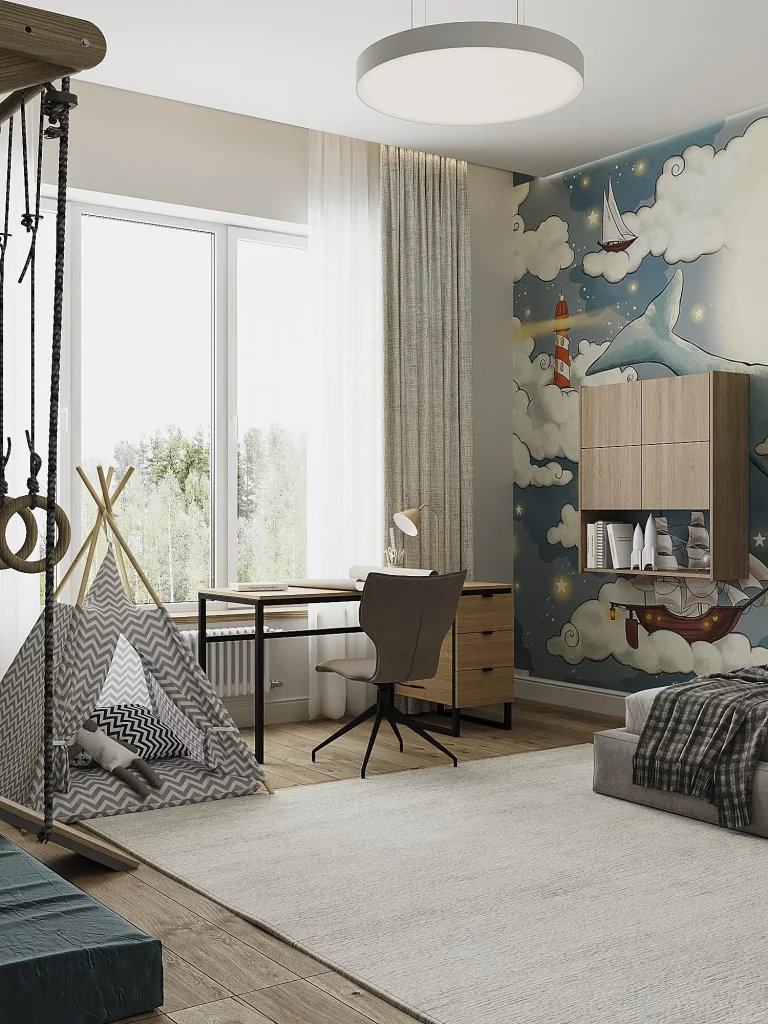
The layout works because the room is divided naturally into sleeping, studying, and imaginative play areas. The desk receives plenty of daylight from the window, while the teepee gives the child a smaller enclosed space for relaxing or playing. The large mural establishes the personality of the room, and the neutral furniture prevents the illustrated wall from competing with every other element.
I particularly like this approach for a child who is starting to want a bedroom that feels less traditionally childish. A large mural can create plenty of personality while the desk, bed, and storage remain relatively timeless. I would also keep the surrounding furniture simple when using a large illustrated wall because it allows the artwork to remain the main feature of the room.
Compact Navy And Gray Bedroom With Built-In Study Furniture
The seventh room uses navy blue, white, and gray to create a sophisticated but still child-friendly bedroom. Built-in cabinetry fills the wall above and beside the desk, combining closed storage with open shelving. The desk itself runs along the wall beneath the cabinets and contains several drawers for organization. A rounded white desk chair sits in front of it, while the bed is positioned close by with a dark blue upholstered base. Navy roller shades at the window repeat the darker tones used throughout the room.
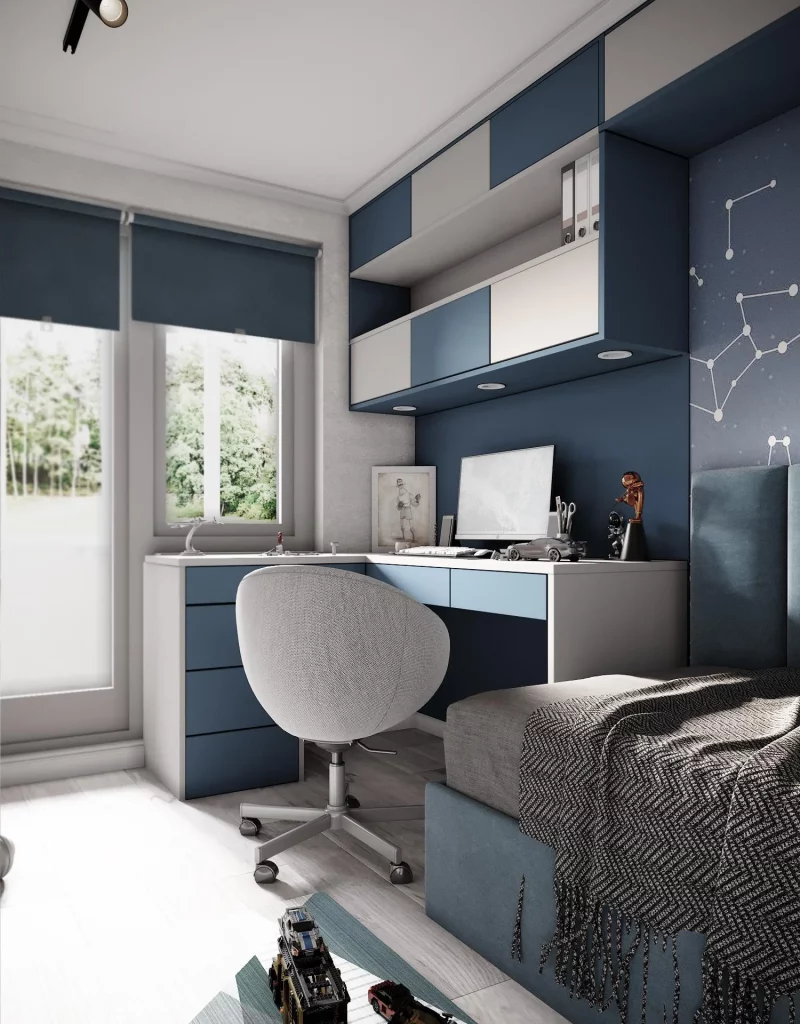
What I find most practical is the amount of storage incorporated into a relatively compact footprint. The upper cabinets take advantage of vertical wall space, while the desk provides a dedicated study surface without requiring another large piece of furniture. The blue cabinetry also gives the room a strong visual identity while the white surfaces prevent it from feeling too dark.
For a child’s room that needs to accommodate schoolwork, I would consider this type of built-in arrangement particularly useful. The most successful detail for me is the combination of open and closed storage because it allows frequently used items to remain accessible while keeping less attractive supplies tucked away. The restrained palette also makes the room feel easy to update as the child grows.
Modern Kids Bedroom With Navy Drapery And Play Tent
This bedroom combines a clean contemporary furniture arrangement with several playful details. A white bed with a deep blue upholstered base sits on the right, while a small teepee occupies the opposite side near the window. The curtains feature a dark blue patterned fabric, and a large circular pendant light hangs centrally from the ceiling. A blue-gray round rug defines the central area, while a small blue side table sits beside the bed. The room also includes a wall-mounted artwork featuring a car on the right side.
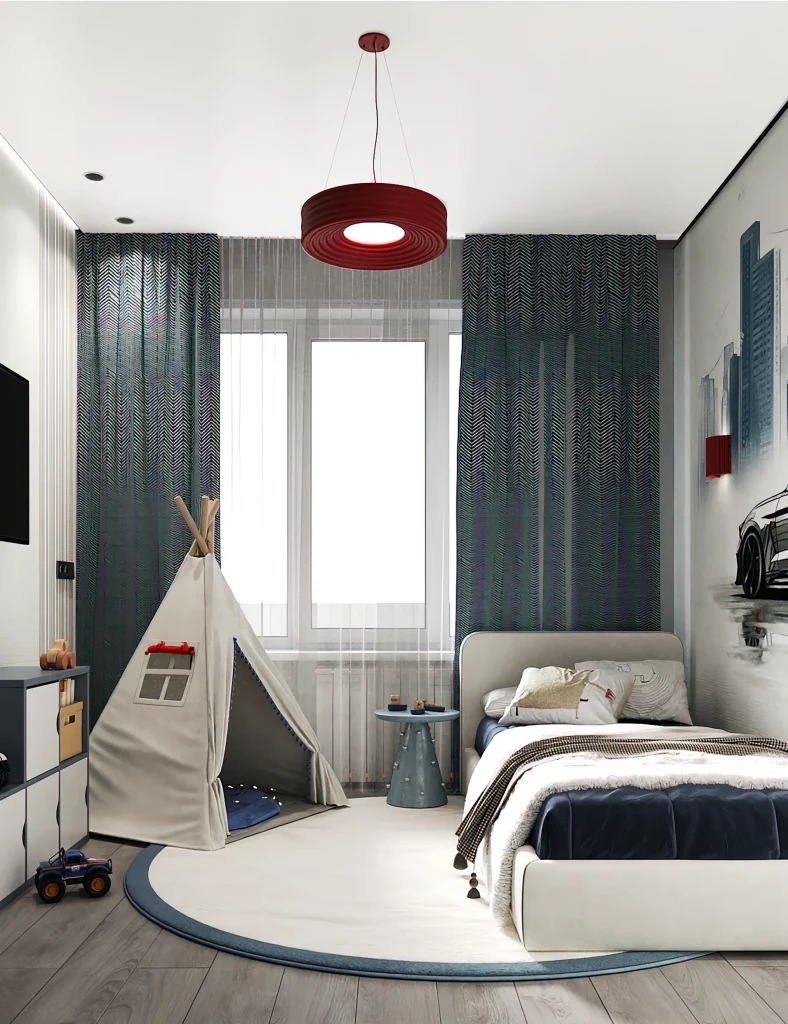
I like the way the circular rug creates a soft visual boundary between the bed and the play tent without physically separating the two spaces. The teepee adds a child-sized retreat, while the upholstered bed gives the room a more substantial and comfortable appearance. The dark curtain panels also provide a strong contrast against the otherwise light room and connect naturally with the blue elements of the bed and rug.
If I were working with a similar layout, I would keep the number of major colors limited and repeat them across different parts of the room. Here, blue appears in the bed, curtains, rug, table, and bedding, which makes the different elements feel coordinated. The result is playful enough for a child but restrained enough to remain visually comfortable.
Active Kids Room With Wall-Mounted Climbing Equipment
The ninth room is designed around activity and movement. A substantial wooden climbing structure with horizontal bars, ropes, rings, and a rope ladder occupies one side of the room. The walls are covered in a soft blue finish with a subtle pattern, while a large desk stretches beneath the window at the far end. White and light wood cabinetry provides storage around the workspace, and a colorful rug with hot-air-balloon illustrations adds interest to the floor. A compact bed or seating area is visible along the right wall.
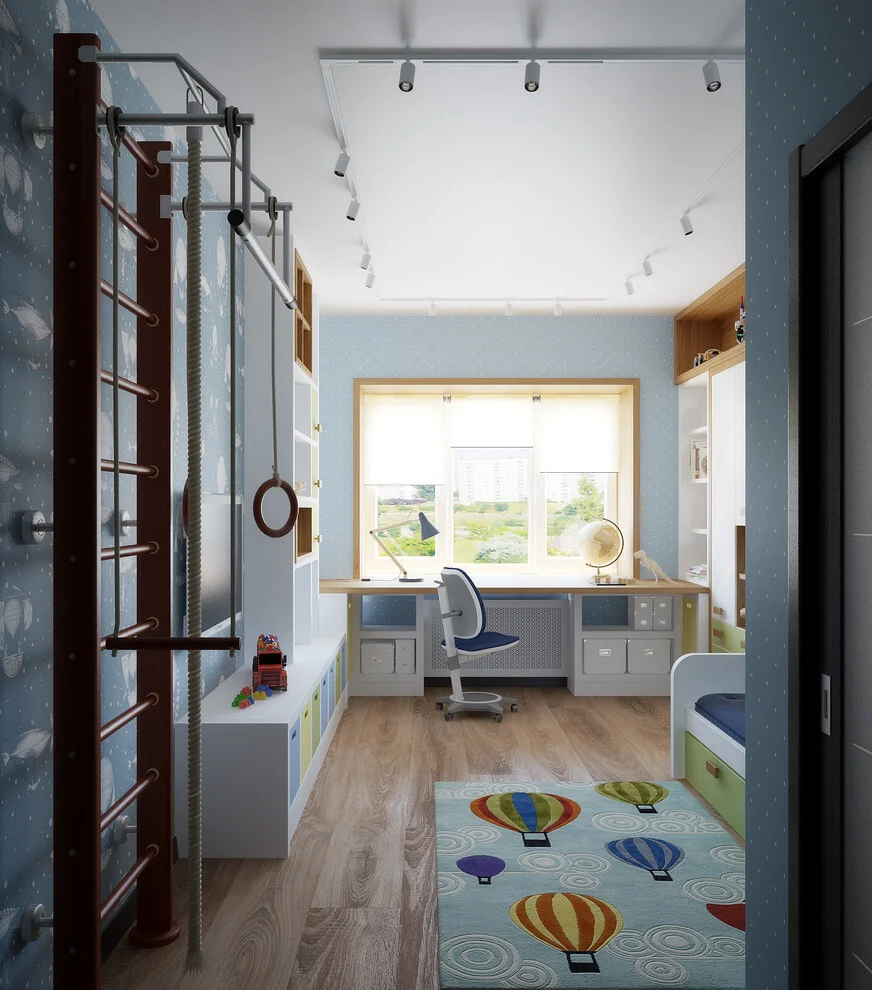
I think this is one of the clearest examples in the collection of designing a bedroom around a child’s actual activities. The climbing equipment uses vertical wall space while leaving much of the floor open, and the long desk provides plenty of room for studying or creative work. Storage is distributed around the room rather than concentrated in one large piece, helping the space remain functional without feeling overloaded.
For me, the key takeaway is that an active child’s interests can be incorporated into the architecture of the room itself. If adding similar equipment, I would make safety and professional installation the priority before considering aesthetics. The rest of the design can then remain relatively simple, allowing the activity area to become a purposeful feature rather than another decorative object.
Wooden Climbing Wall With A Cozy Play Area
The final bedroom has a warm and slightly more intimate atmosphere. A large wooden climbing frame fills the left side of the room, incorporating horizontal bars, hanging ropes, a rope net, and wooden rings. A soft padded mat sits beneath it, creating a dedicated activity area. The walls are deep blue, and the window is framed with sheer white curtains and darker blue drapes. A space-themed bedcover appears in the foreground, while a pair of red chairs adds a small contrasting accent near the window.
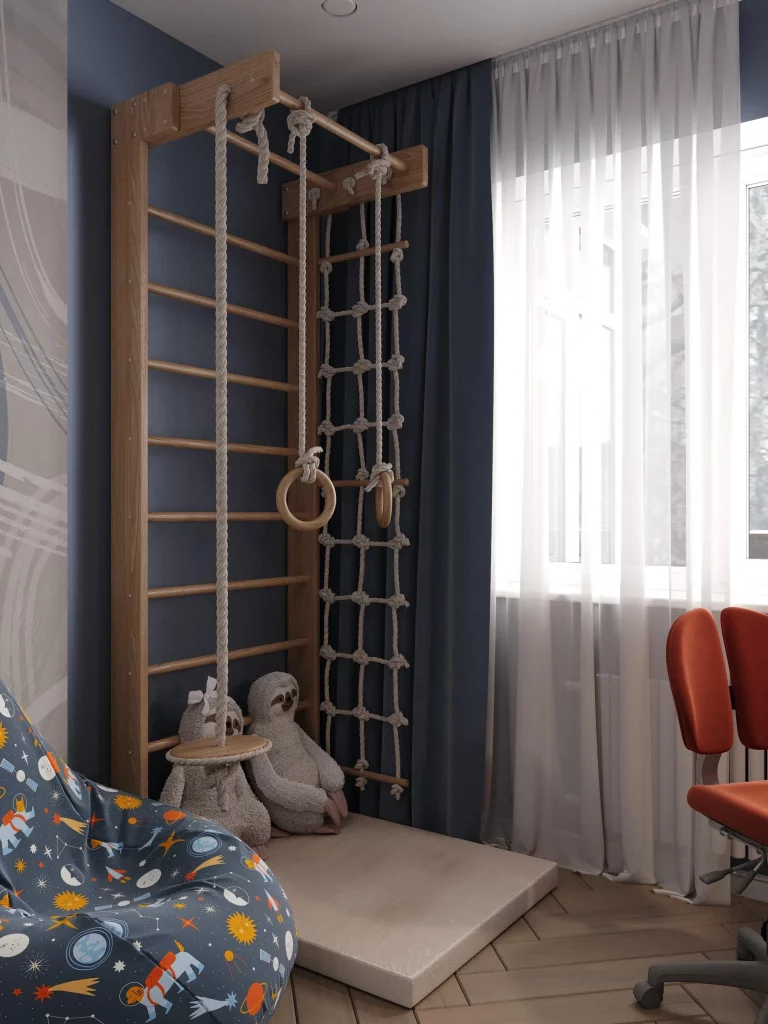
I like how clearly the climbing equipment is separated from the rest of the bedroom. The padded floor area creates a defined zone for movement, while the bed remains visually separate. The combination of natural wood, deep blue walls, and soft textiles also gives the room a comfortable feeling despite the strong activity-focused element. The large window brings in plenty of daylight, which keeps the darker wall color from making the space feel closed in.
This image reminds me that an active bedroom can still feel calm when the design is carefully organized. I would use one dedicated area for physical play and keep the surrounding furniture and textiles relatively simple. Repeating a few colors, as seen here with the blue background and red seating accent, is also an easy way to make a room with several different functions feel cohesive.
Compact Gaming-Inspired Bedroom With Warm Orange Accents
I immediately notice how effectively this compact bedroom uses its limited floor area. The bed sits along the window wall, while a white open shelving unit creates a visual division between the sleeping area and the rest of the room. A large orange bean bag occupies the corner near the doorway, and the same warm orange tone appears above the window. The brick-patterned wall behind the bed adds texture, while the dark bedding and green decorative cushion give the room a playful gaming-inspired character.
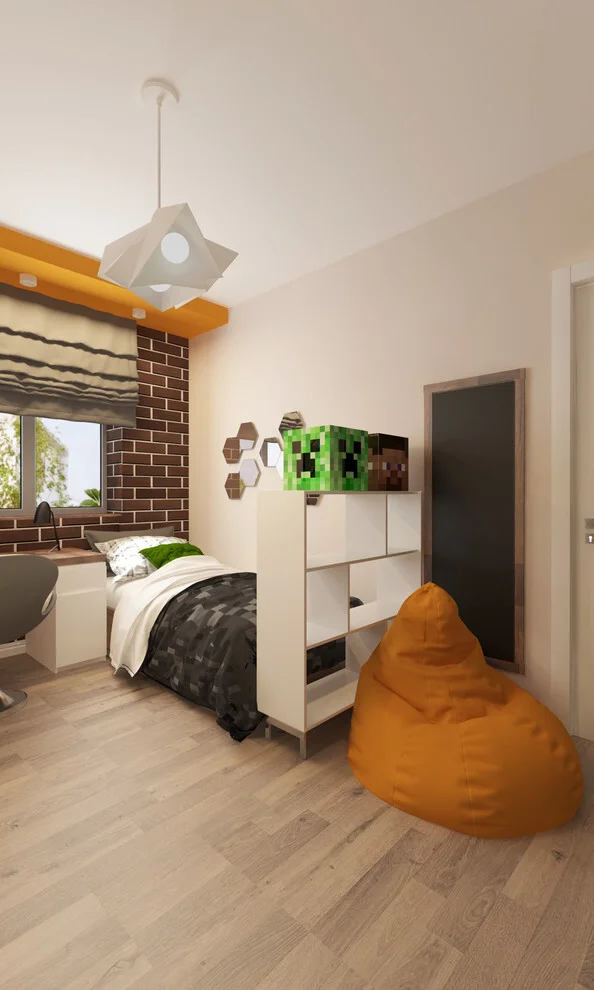
I like the way the shelving unit provides storage without completely closing off the sleeping area. The open compartments can hold books, toys, and everyday items, while the large bean bag gives the room a comfortable place for sitting or relaxing. Even the Minecraft-inspired objects displayed on top of the shelving make the space feel connected to a child’s interests rather than looking like a generic bedroom.
From my perspective, this is a good example of how a smaller boys bedroom can still feel complete. I would keep the larger furniture pieces simple and let a few recognizable accessories provide the personality. The warm orange accent is especially effective because it gives the otherwise neutral room more energy without overwhelming the space.
Blue Bedroom With Study Area And Indoor Climbing Wall
I love how this room combines several functions while maintaining a calm blue-and-white palette. The bed is positioned along the left side, while a compact desk and blue chair create a dedicated study area near the window. On the opposite side, a climbing wall with a ladder, rope, rings, and horizontal bars turns part of the bedroom into an active play zone. A large gray bean bag and softly patterned rug add comfortable areas for sitting and playing.
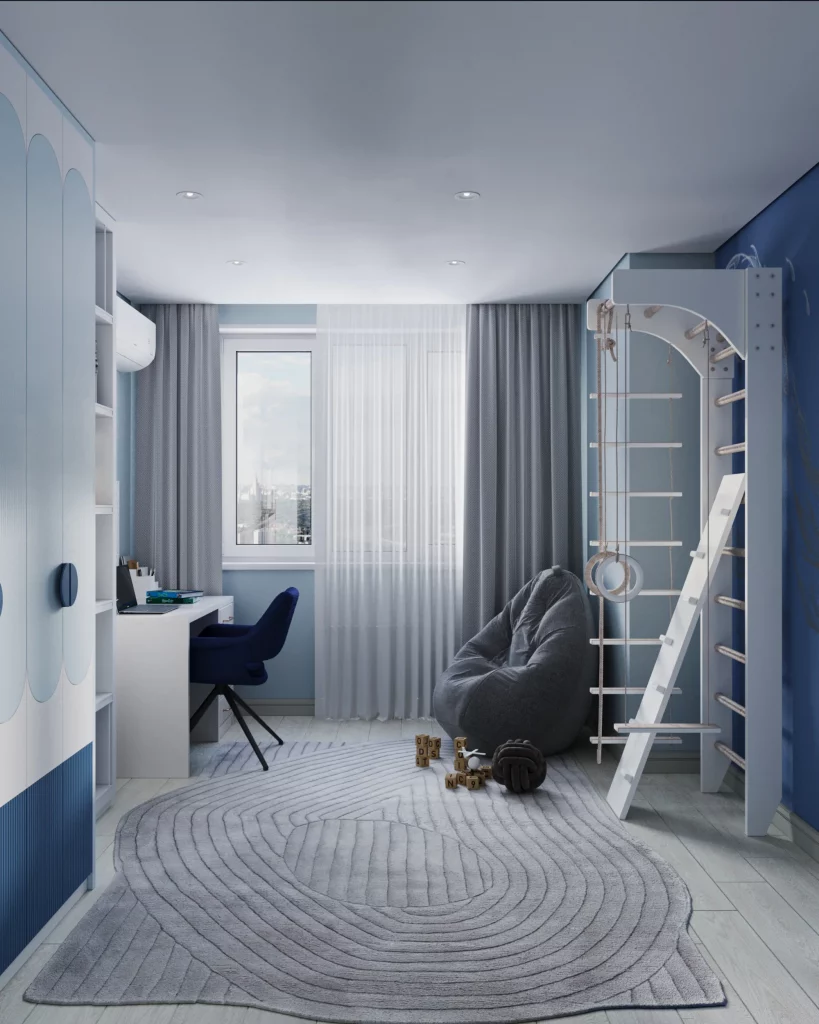
The layout works particularly well because every zone has a clear purpose. I can see where a child can sleep, study, read, and be physically active without the room feeling excessively crowded. The tall white storage on the left also makes good use of vertical space, while the light finishes help the room retain an airy appearance despite the number of activities included.
For me, the strongest lesson here is that a child’s bedroom does not have to separate play from design. When active equipment is carefully integrated into the room, it can become part of the overall composition. I would simply make sure that any climbing equipment is securely installed and appropriate for the child’s age before recreating this idea.
Planet-Themed Bedroom With A Built-In Play Structure
I find this room particularly memorable because the dark planetary mural immediately becomes the visual centerpiece. A white bed with built-in drawers sits against the mural, and the surrounding design combines black, gray, blue, and red details. A colorful indoor climbing structure occupies the right side of the room, complete with a rope, rings, ladder, and padded blue-and-red base. The large window and blue curtains keep the room from feeling too dark.
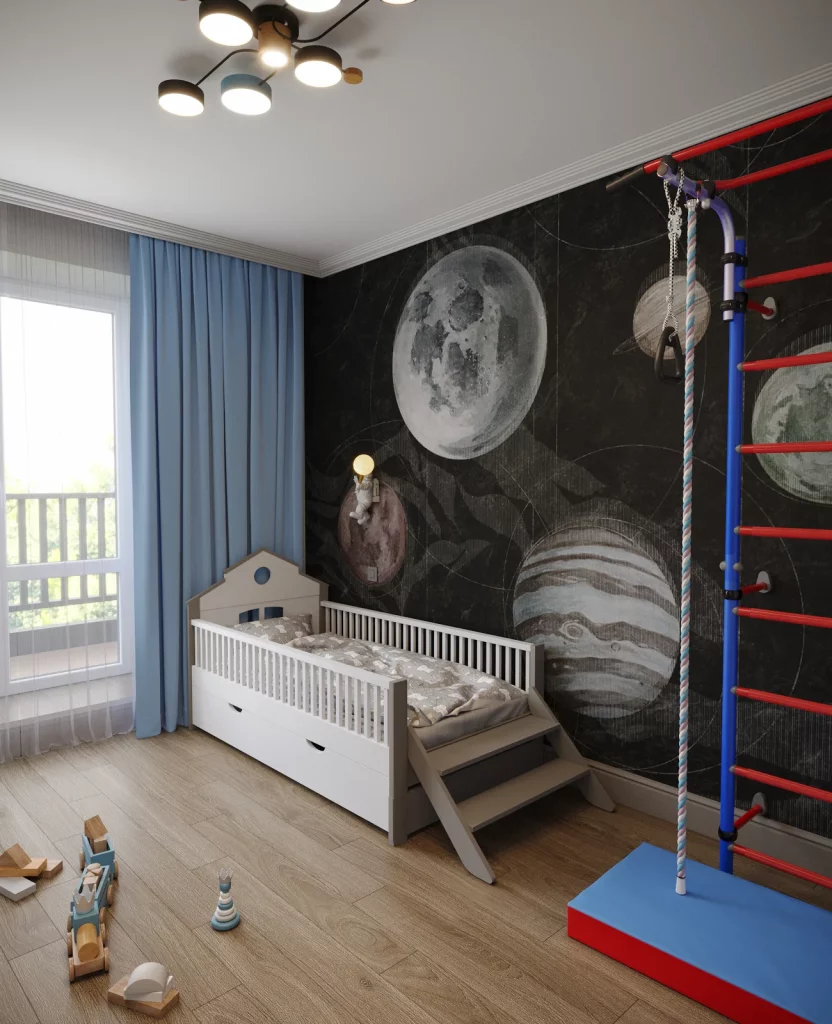
What works so well here is the contrast between the calm white bed and the dramatic space-themed wall. I like that the mural creates most of the decorative impact while the furniture remains relatively simple. The drawers underneath the bed also add practical storage without requiring additional cabinets to take up floor space.
If I were using this photograph as inspiration, I would treat the wall mural as the main statement and keep the remaining finishes restrained. That approach allows the child’s interests to be clearly represented without every item competing for attention. The climbing equipment also adds a strong functional element, turning the bedroom into more than just a place for sleeping.
Separated Sleep And Study Zones With A Warm Wood Divider
I like the clever zoning in this bedroom, where a tall partition separates the sleeping area from a small home office. The bed sits behind the divider and has a soft upholstered headboard, while the opposite side contains a desk with a computer setup and a comfortable office chair. A round textured rug defines the study area, and a map mounted on the wall adds an educational detail. The illuminated world map and circular neon-style sign bring additional visual interest.
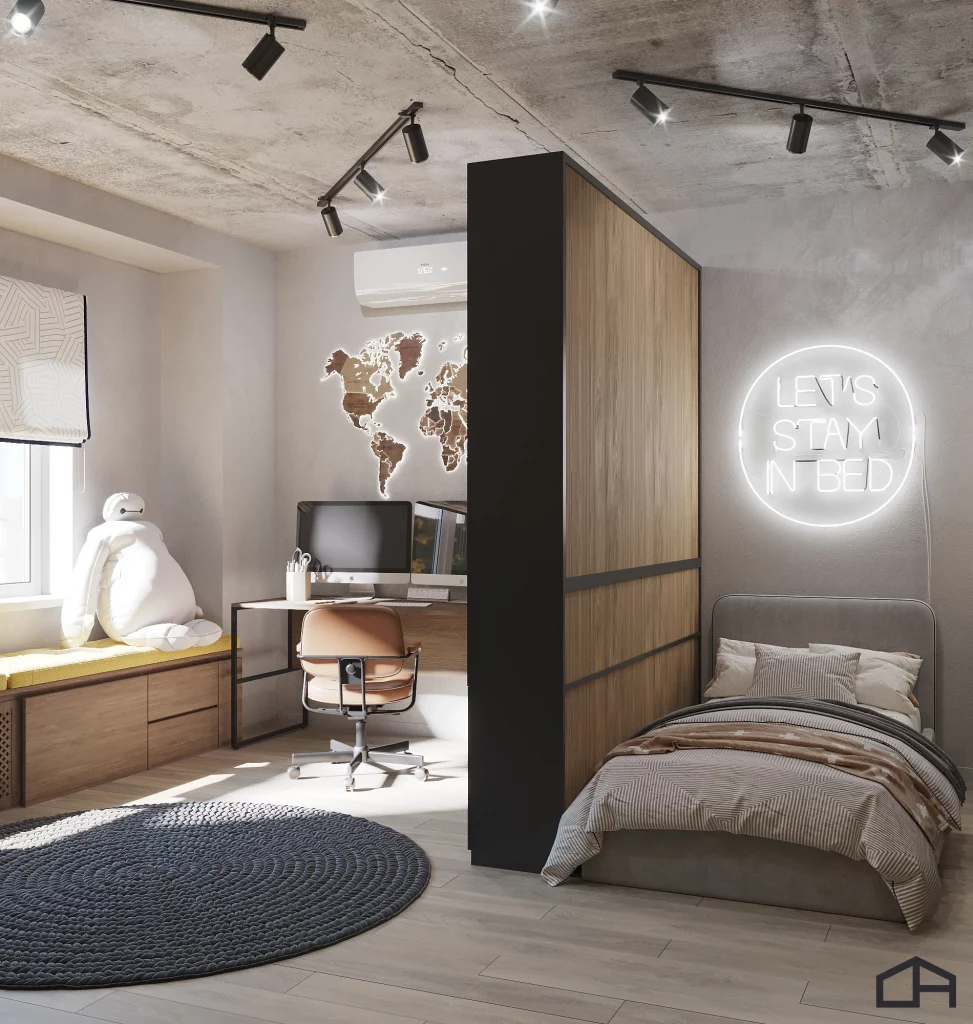
The divider is the feature that makes this layout particularly useful to me. It creates a sense of separation without requiring a larger room. I can imagine the sleeping side feeling calmer once the desk and computer are visually screened from the bed. The combination of closed and open storage around the desk also helps support a more organized study environment.
I think this is a smart solution for an older child who needs both a bedroom and a proper place to work. Rather than adding unnecessary furniture, I would focus on separating the existing functions as effectively as this room does. The neutral colors and wood-toned partition also make the design feel mature enough to remain appealing as the child grows.
Soft Blue And Yellow Bedroom With A Creative Display Wall
I notice how much lighter and softer this bedroom feels compared with some of the more dramatic rooms in the collection. Pale gray walls are combined with a soft yellow bed and matching low storage, while a blue-green rug introduces a stronger accent underfoot. A perforated display wall surrounds the television and includes colorful star-shaped decorations. The opposite wall features framed animal illustrations, while the wallpaper includes clouds and a space-related graphic.
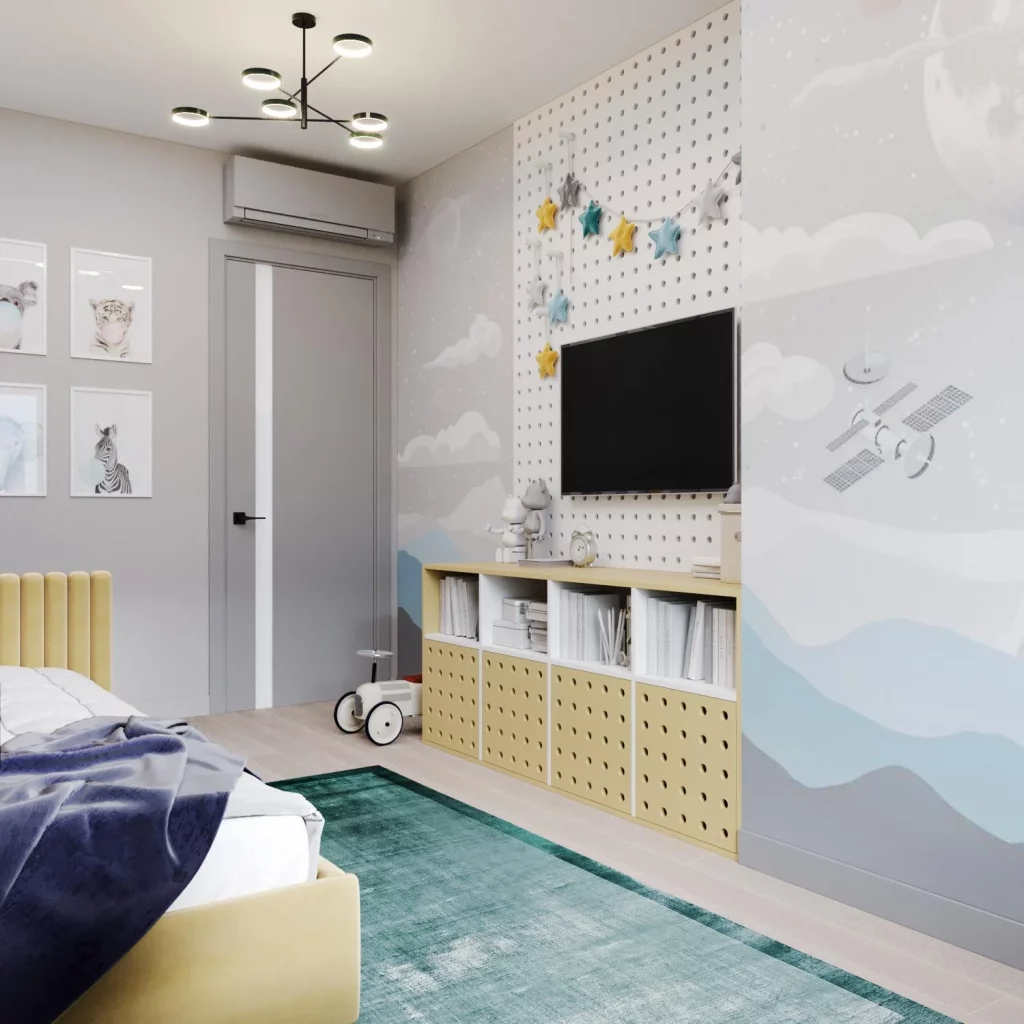
The design works because the room balances several child-friendly details without becoming visually chaotic. I like the low storage unit beneath the television because it provides accessible compartments for books and belongings. The perforated panel also creates a flexible display surface, allowing decorations to be changed as the child’s interests develop.
For me, this room shows how a neutral base can make colorful children’s accessories much easier to manage. I would keep the larger surfaces relatively restrained and use smaller pieces, such as the stars and artwork visible here, to introduce personality. That makes the bedroom easier to update without needing to redesign the entire room.
Blue Boys Bedroom With Built-In Gym Equipment
I immediately notice the strong use of blue in this bedroom, from the walls and bedding to the striped rug. The bed occupies one side of the room, while a large white wardrobe provides substantial storage along the back wall. The opposite side is dedicated to climbing and exercise equipment, including a wall-mounted ladder, ropes, rings, and hanging elements. A map-style wall covering adds another distinctive layer to the room.
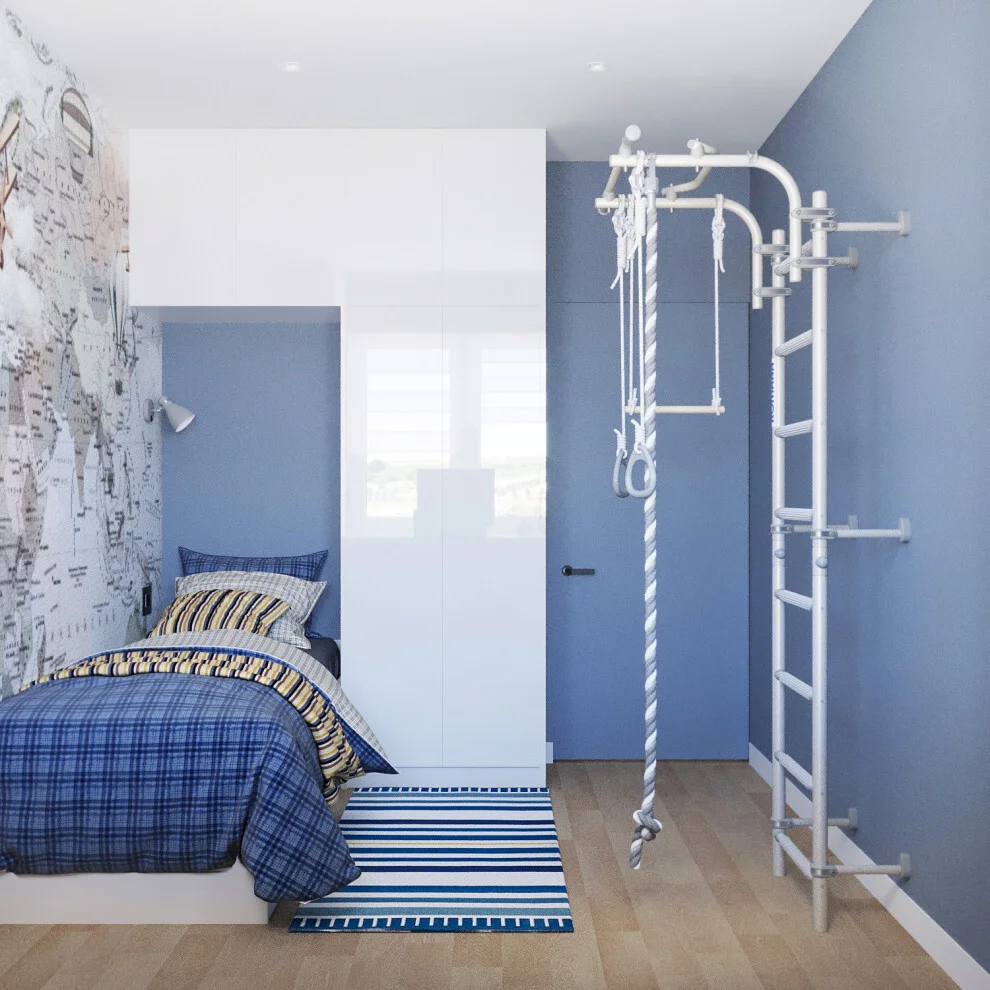
I think the arrangement is especially effective because the active zone is kept to one side while the sleeping zone remains visually simple. The white wardrobe helps balance the stronger blue surfaces and provides plenty of enclosed storage. The striped bedding and rug also create continuity between the different parts of the room without making everything identical.
I would take inspiration from this room when designing for a child who genuinely enjoys physical activity. Rather than trying to hide those interests, the design makes them part of the bedroom itself. My main priority would be making sure the equipment is professionally secured and that enough clear floor space remains around it for safe movement.
Space Explorer Bedroom With Orange And Blue Bean Bags
I love the relaxed atmosphere of this bedroom, where a deep blue accent wall creates a backdrop for space-themed artwork and two colorful bean bags. The bed is dressed in neutral gray bedding, while an orange bean bag and a blue bean bag create a casual seating area near the window. A compact desk is positioned by the bright window, and a large soft rug covers much of the floor.
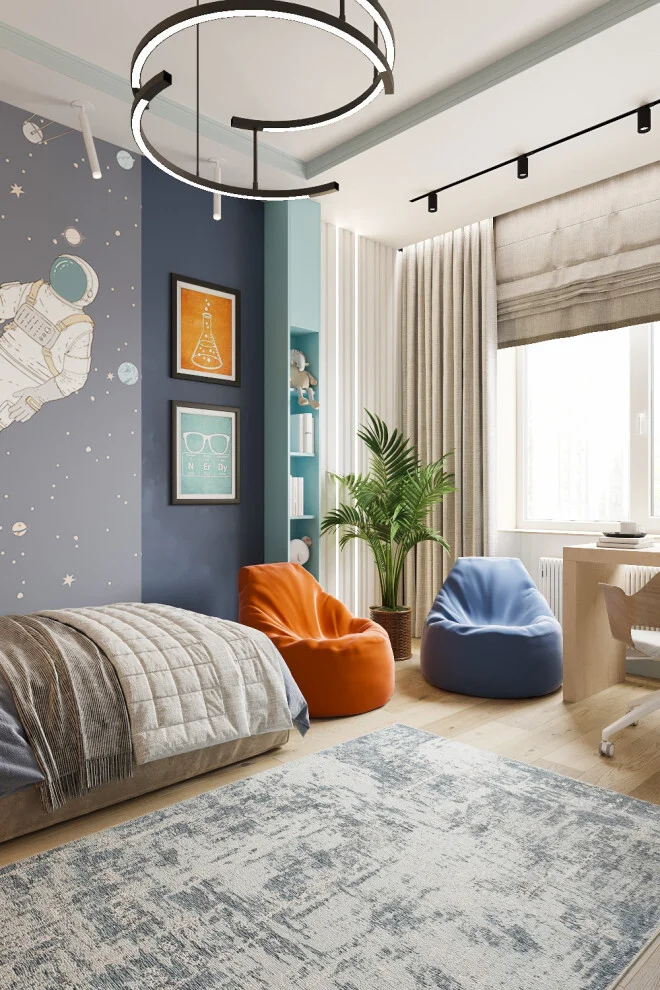
The room works well because it gives the child several comfortable places to use the space. I can see the bed serving as the main sleeping area, the desk supporting schoolwork, and the bean bags creating an informal spot for reading or relaxing. The vertical storage niche in the blue wall is another useful detail because it keeps small objects displayed without adding bulky furniture.
From my perspective, the two bean bags are an easy way to make a child’s bedroom feel more social and flexible. I would also keep the larger furniture pieces in restrained colors when using a strong themed wall. That way, the space theme remains recognizable while the room still feels comfortable and usable rather than overly themed.
Dark Blue Gaming And Study Bedroom With Skateboard Shelves
I find this bedroom especially energetic because of its dark blue and black walls, geometric blue pattern, and dramatic space-themed artwork. A white desk sits beneath the window, paired with a vivid green office chair, while several skateboard-shaped shelves are mounted on the dark wall. The shelves hold books and small decorative objects, and the bed occupies the opposite side with graphic black-and-white bedding.
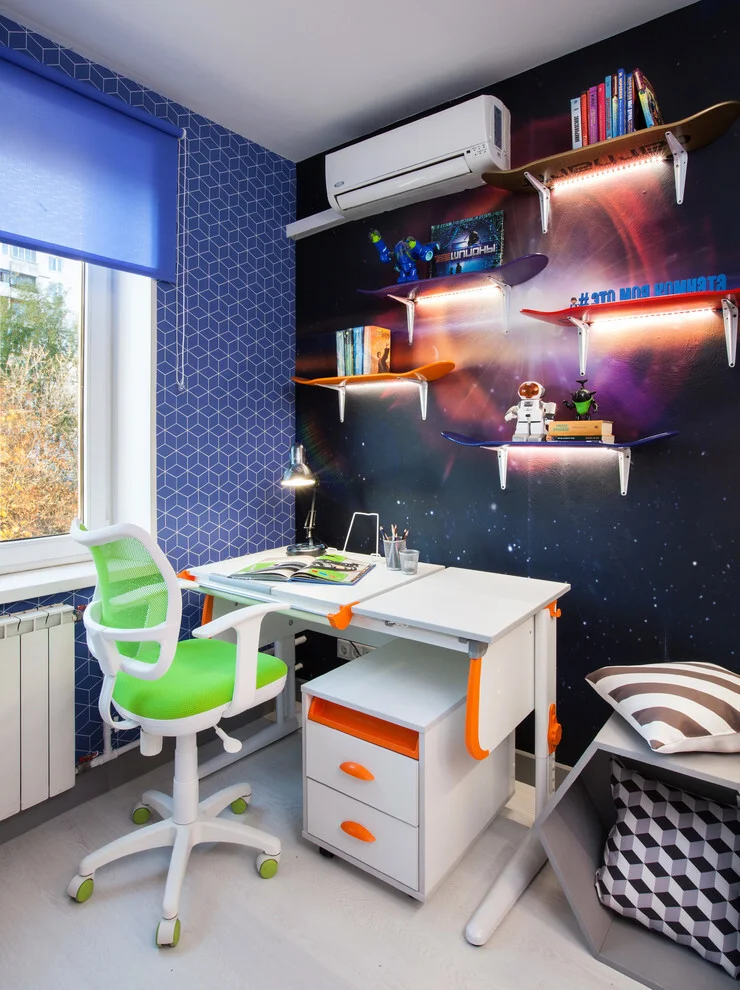
The arrangement makes excellent use of vertical wall space. I like how the skateboard shelves provide both display and storage while also becoming a strong decorative feature. The desk is positioned beside the window, which gives the workspace access to natural light, while the compact drawer unit beneath the desk keeps school supplies close at hand.
I would use this room as inspiration for a child with strong hobbies or a distinct visual taste. Instead of filling the floor with extra storage, the design uses the walls to carry much of the personality. I especially like the idea of letting practical storage pieces reflect the child’s interests, because it makes organization feel like part of the design rather than a separate chore.
Modern Blue Bedroom With Constellation Accent Wall
I am drawn to the sophisticated blue palette in this bedroom, where a constellation-patterned wall stretches behind a large upholstered bed. The bed frame and headboard are upholstered in different shades of blue, while white and gray bedding keeps the sleeping area visually light. A compact desk and chair sit on one side, with additional cabinetry positioned above, and a tall white storage unit stands beside the bed.
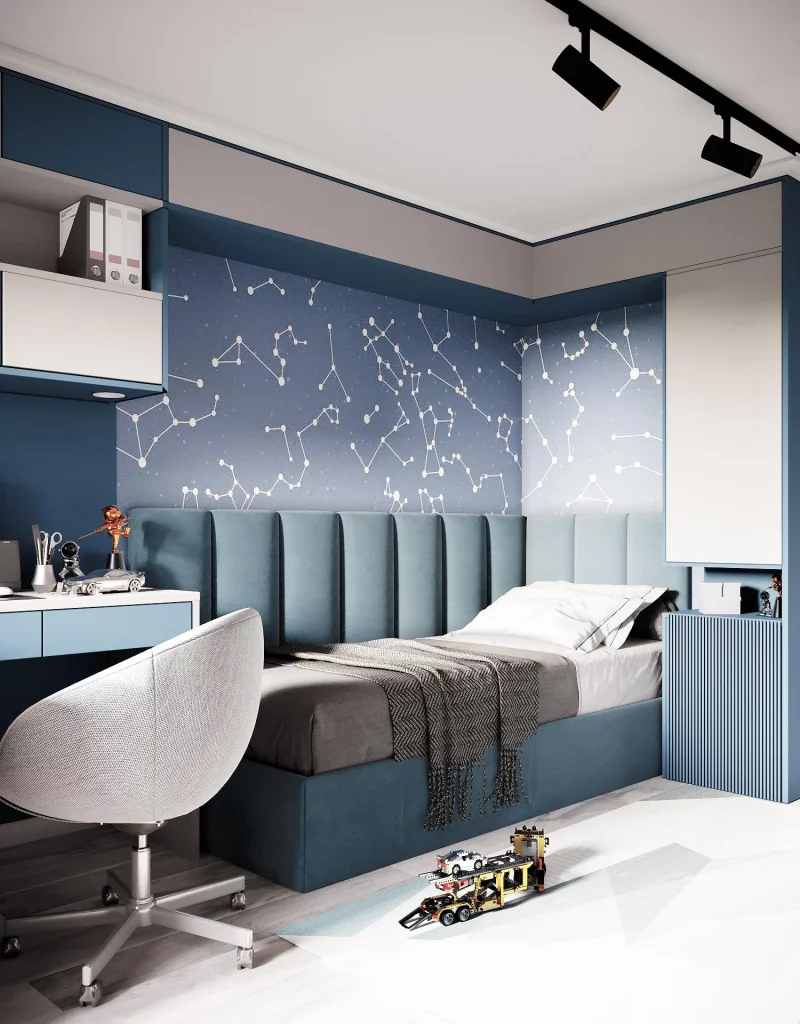
The strongest feature for me is the way the constellation wall connects the different blue tones throughout the room. Instead of relying on numerous decorative objects, the wall provides the main visual interest. The large upholstered headboard also makes the bed feel substantial and comfortable, while the desk and storage areas support everyday schoolwork and organization.
I think this is a particularly good approach for a boy who is moving toward a more mature bedroom. The space still has a playful astronomical theme, but the color palette and furniture shapes give it a polished appearance. I would keep the bedding relatively simple, as shown here, so the constellation pattern remains the defining feature.
Adventure Bedroom With Mountain And Whale Mural
I love the imaginative mural in this final bedroom, which combines stylized mountains, a large whale, and sweeping landscape lines across the wall behind the bed. The bed has a warm golden-brown upholstered base, while a white desk and office chair occupy the opposite side. Colorful triangular banners run across the upper part of the room, and the overall palette mixes warm neutrals with mustard, olive, black, and white details.
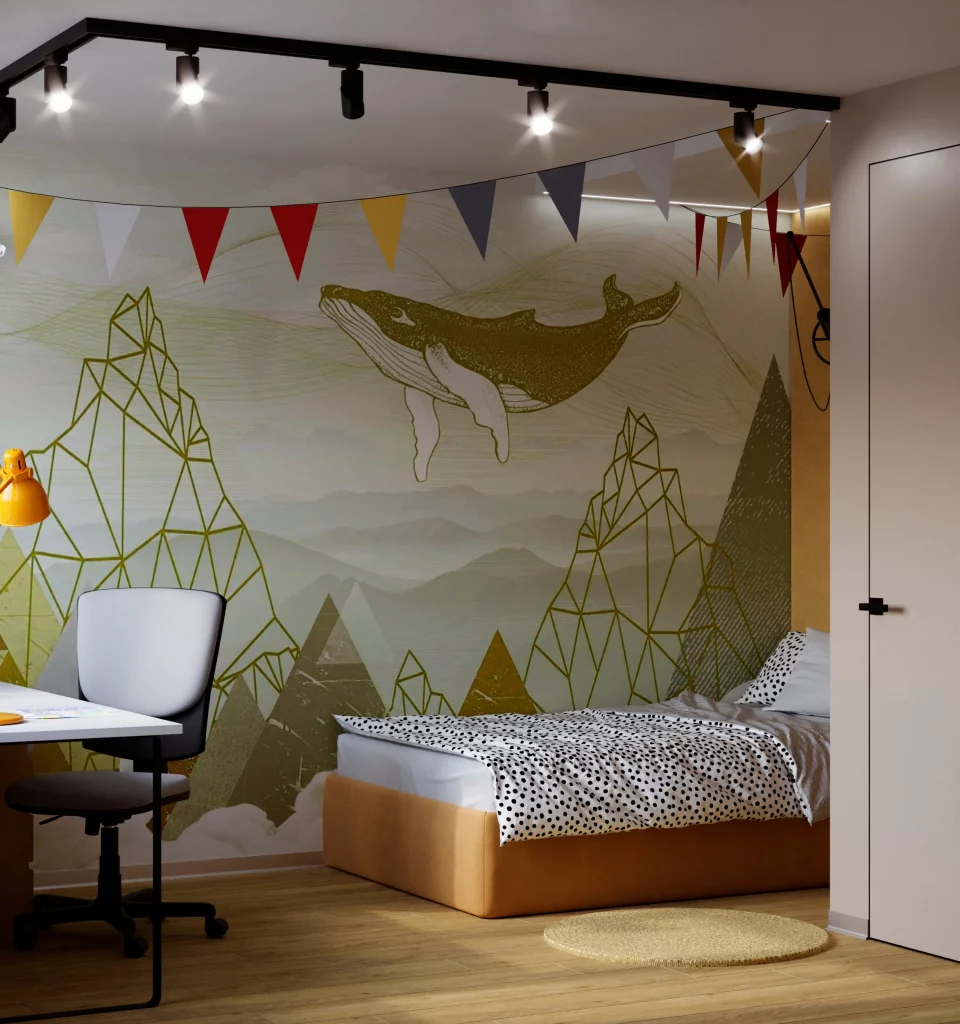
The mural gives this room a strong identity without requiring a large collection of accessories. I like how the bed remains relatively simple so the illustrated wall can take center stage. The desk and chair also make the room practical for everyday activities, while the small round rug provides a soft visual transition between the furniture and the open floor.
For me, this is a great reminder that one carefully selected wall can completely define a child’s bedroom. I would let a large illustrated mural carry the personality and then repeat only a few of its colors in furniture or textiles, as this room does. That keeps the result cohesive while still giving the child a bedroom that feels imaginative and distinctly his own.
Compact Bedroom With a Home Gym and Study Zone
The first room combines a sleeping area, desk, and exercise equipment in one long, efficiently planned space. I notice a simple upholstered bed positioned along the left wall, a compact desk beneath the window, and a white office chair that creates a dedicated study spot. The gray walls, light wood-look flooring, and neutral bedding give the room a calm foundation, while the black wall-mounted exercise structure creates a strong visual contrast. Geometric black wall lights and a round ceiling fixture add a distinctly contemporary character.
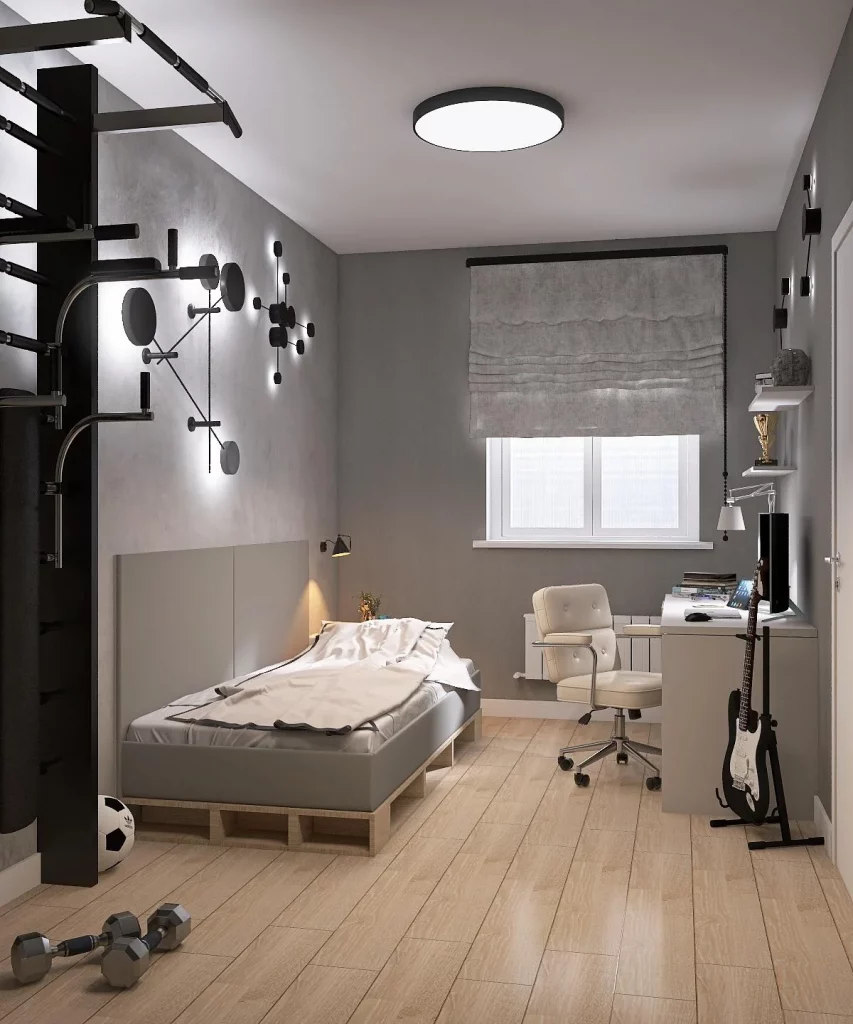
I think this layout works particularly well because every visible zone has a clear purpose. The bed occupies the central sleeping area without blocking access to the desk, while the exercise equipment uses the vertical wall instead of taking up valuable floor space. The desk provides room for a computer and books, and the window brings natural light directly into the study area. Even the raised bed base creates a little additional visual openness beneath the frame.
From my perspective, this is a great example of designing around a child’s actual activities rather than trying to fill the room with unnecessary furniture. If a boy enjoys sports or exercise, dedicating one wall to equipment can make the bedroom feel personal while keeping the center of the room relatively open. I would keep the neutral palette shown here because it allows the stronger black details to remain the main visual feature.
Warm Gaming Bedroom With a Fold-Out Sleeping Area
This bedroom has a much warmer and more playful atmosphere, centered around a brown upholstered bed and matching extended mattress or upholstered bench at the foot. I immediately notice the oversized black-and-white game controller graphic on the wall, accompanied by small geometric shelves and illuminated linear accents. A wall-mounted climbing or exercise structure with natural wood-colored grips occupies the opposite side, while large windows and full-length curtains bring plenty of daylight into the room. The angular ceiling lighting reinforces the modern feel.
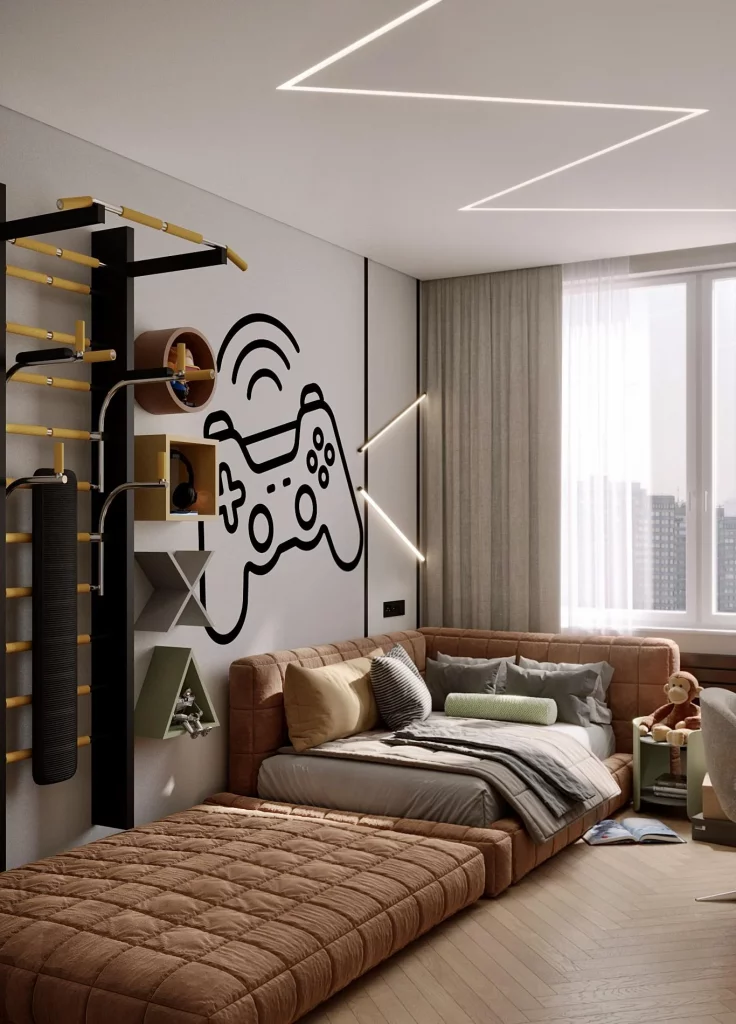
What I like about this room is the way the gaming theme is expressed through one unmistakable graphic instead of covering every surface with themed decorations. The upholstered furniture also makes the bedroom feel softer and more comfortable, which balances the strong graphic artwork and exercise equipment. The long upholstered extension at the foot of the bed gives the room additional lounging space and makes the sleeping area feel more substantial.
I would use this approach when designing a room for a child with strong gaming interests but without wanting the bedroom to look like a dedicated gaming room. One large statement element can communicate the theme immediately, while the rest of the room remains adaptable. The built-in shelving also provides small display areas for personal objects without visually overwhelming the space.
Shared Kids’ Room With a Playhouse Bunk Bed
This bright shared bedroom is built around a large pale wood bunk bed with a house-shaped upper section and two distinct sleeping levels. I can see integrated drawers beneath the lower bed, a staircase leading upward, and small openings incorporated into the bed structure. A teepee tent sits beside the window, while a small white table and chair create a simple activity corner. The room uses soft neutral shades with pale wood, white surfaces, and a mountain-inspired wall mural behind the bunk.
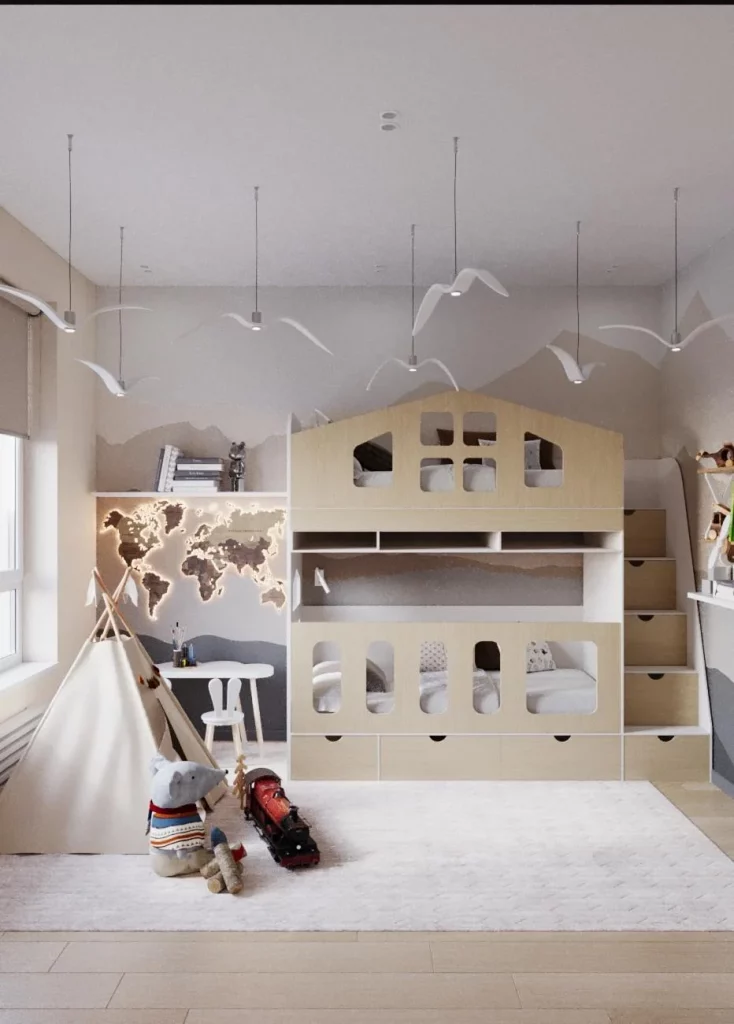
The bunk design is especially practical because it combines sleeping, storage, and play in one substantial piece of furniture. I like how the integrated drawers use the otherwise unused area beneath the lower bed. The staircase is also more functional than a traditional ladder because it provides built-in access while contributing to the furniture’s overall structure. Meanwhile, the teepee and small table create a separate play zone without requiring much additional furniture.
For me, this is one of the strongest examples in the collection for maximizing a shared children’s bedroom. Instead of separating the room into too many individual pieces, the main furniture performs several jobs at once. The soft colors also help prevent the large bunk bed from making the room feel visually heavy, while the wall mural adds personality without competing with the furniture.
Deep Blue Bedroom With Atmospheric LED Lighting
The fourth bedroom takes a completely different direction with deep blue walls, matching blue upholstery, and cool LED lighting running around the ceiling perimeter. A single bed sits against the dark accent wall, with a large blue plush sea-animal figure resting across the bedding. Hexagonal wall shelves provide vertical storage and display space, while a compact console runs behind the bed. Dark curtains and a pale rug create contrast against the dramatic blue surroundings.
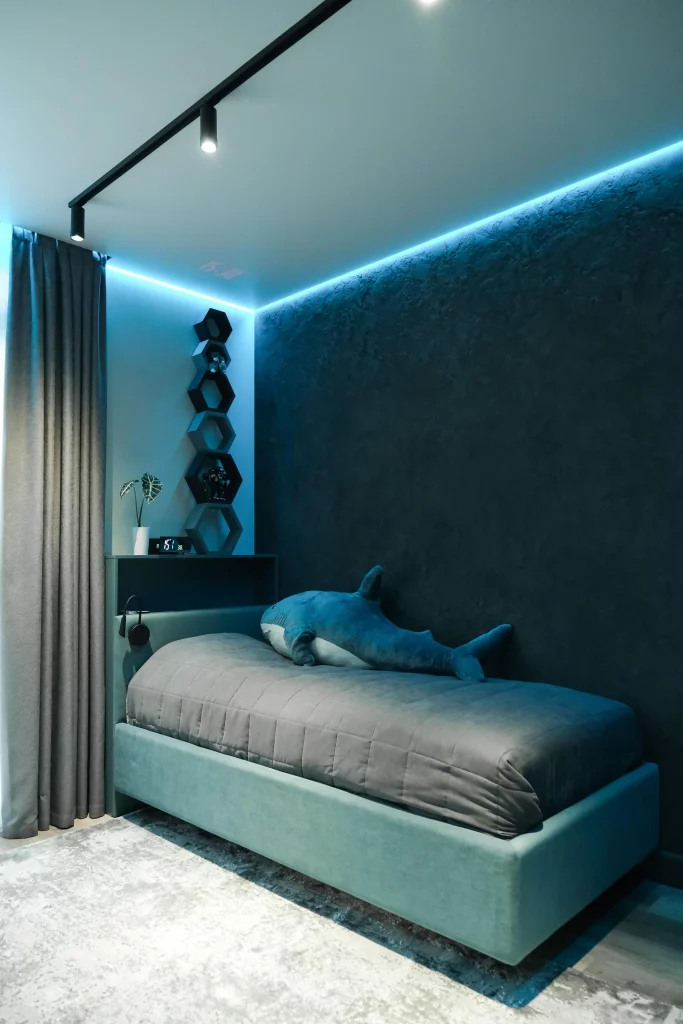
I find the lighting particularly effective here because it changes the mood without requiring a large amount of decorative furniture. The continuous LED strip emphasizes the shape of the room and gives the dark walls an atmospheric quality. At the same time, the light-colored bedding and rug prevent the bedroom from becoming completely dark. The simple bed shape also allows the wall color and lighting to remain the main design elements.
If I were recreating this look, I would treat the deep blue as the primary feature and keep the rest of the furniture relatively restrained, just as shown. The hexagonal shelving is a clever detail because it adds visual interest while using wall space efficiently. This type of bedroom could also work well for a child who wants a more mature room that still has a strong sense of personality.
Blue and Warm Wood Bedroom With Superhero Artwork
This bedroom combines dark blue walls with warm wood shelving and a deep blue upholstered bed. One wall has a vertically ribbed blue panel that creates texture behind the bed, while two framed superhero-style posters add a clear theme. A large open shelving unit occupies the right side and provides space for books, boxes, and decorative objects. The bedding uses several shades of blue, gray, white, and warm brown, creating a layered but controlled color scheme.
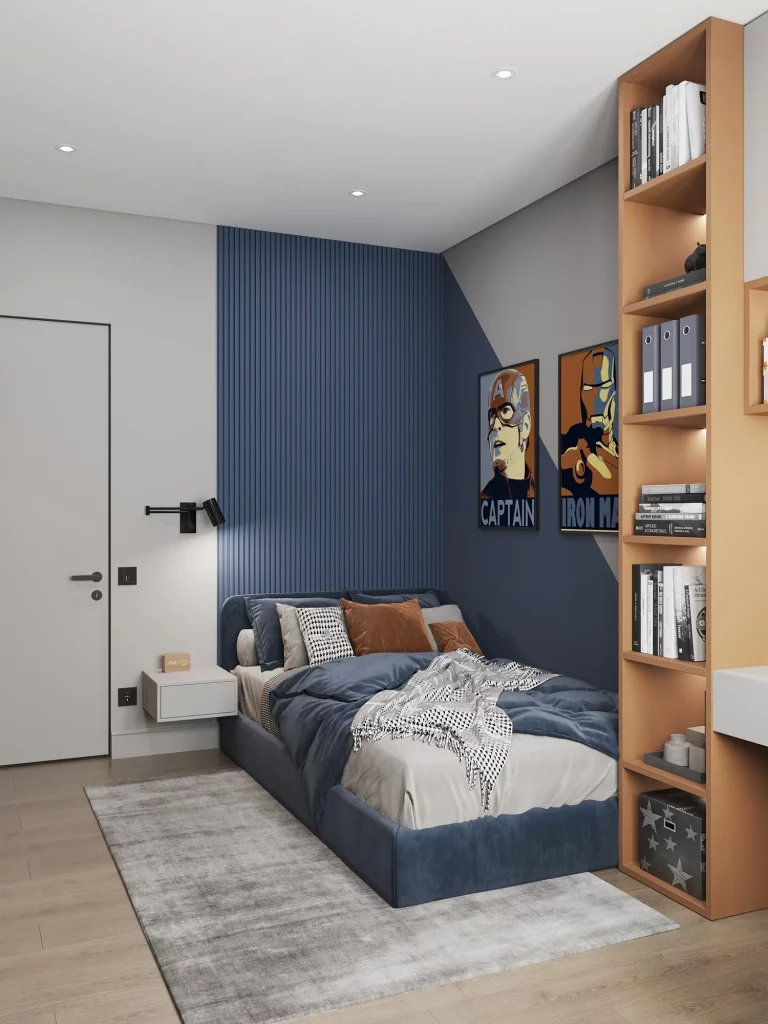
I think the combination of blue and warm wood is what makes this room especially successful. The shelving unit adds considerable storage without making the bedroom feel cold, and the open sections allow frequently used books and personal items to remain accessible. The small floating bedside cabinet is also a smart choice because it provides a useful surface without consuming much floor space.
From my experience, themed artwork is easier to update than themed furniture, which makes this approach particularly practical for a growing child. The superhero posters give the room its personality today, while the bed, shelving, and neutral architectural elements could remain useful for years. I would follow the same principle when creating a themed bedroom: let easily replaceable decorative elements carry most of the theme.
Superhero Bedroom With Bold Lighting and Statement Wall Art
This room uses a darker gray backdrop and a large Spider-Man-inspired graphic as its main focal point. The upholstered bed has a tall grid-patterned headboard that extends around the sides, while black and gray cabinetry provides storage along the right wall. A glowing MAX sign sits above the bed, and a narrow red LED strip outlines the upper portion of the feature wall. Black lighting fixtures, a small round bedside table, and warm-toned bedding complete the look.
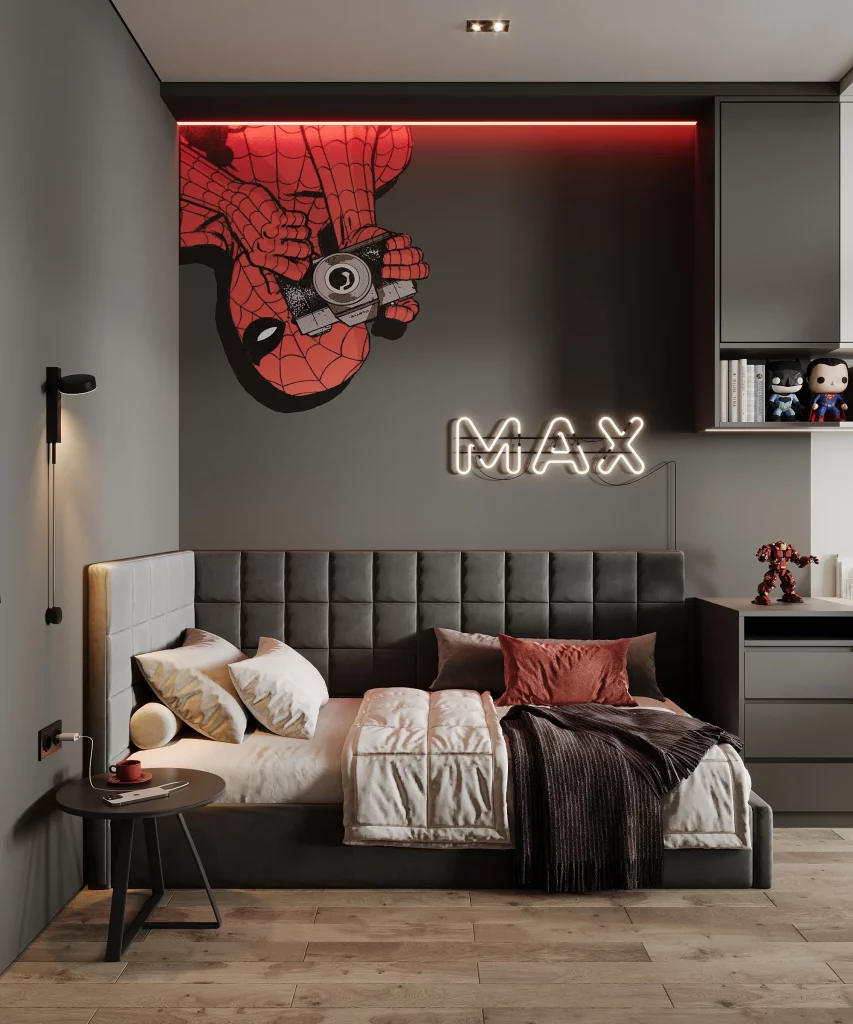
The strongest feature here is the layered lighting. I like how the red strip light emphasizes the artwork while the illuminated lettering introduces another visual focal point at bed height. The large headboard also gives the sleeping area a defined presence and adds softness to an otherwise dark room. Meanwhile, the wall-mounted storage and cabinetry keep the floor relatively clear.
I would recommend this kind of approach for a child who wants a dramatic superhero room without filling every available surface with character merchandise. The large artwork and lighting already communicate the theme strongly. Keeping the surrounding furniture in restrained gray and black tones allows the red details to stand out and makes the overall composition feel intentional rather than cluttered.
Light and Airy Bedroom With a Dedicated Drawing Area
This bedroom has a much softer appearance, with white walls, pale wood flooring, turquoise-blue cabinetry, and large windows covered by sheer curtains. A long built-in desk sits along the back wall beneath white cabinets and open shelving, creating a generous workspace for two children. A large blackboard shaped like a house occupies one wall, while a large round white rug and soft seating create an open play area in the foreground. The hanging ceiling lights add another playful detail.
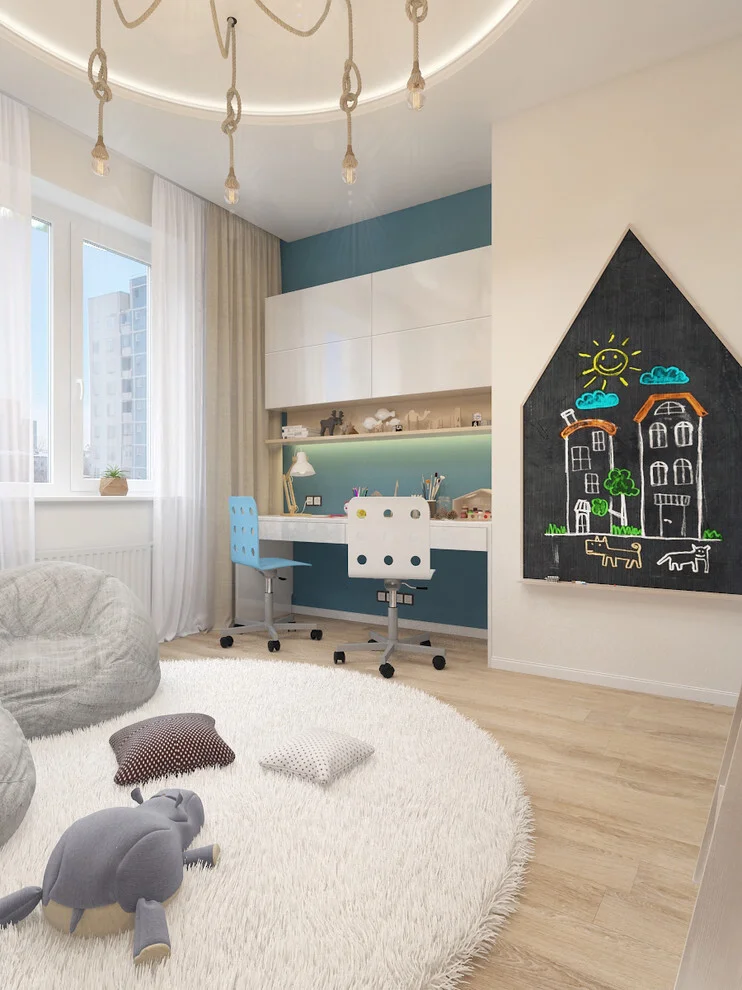
I particularly like the separation between the work and play areas. The built-in desk keeps creative activities organized against one wall, while the open central floor provides room for movement. The blackboard is also positioned where it becomes both an activity surface and a major decorative feature. The light palette makes the room feel spacious, while the turquoise cabinetry gives it enough color to feel distinctly designed for children.
For me, this is a useful example of how a child’s bedroom can support several different activities without looking crowded. I would keep the furniture concentrated around the perimeter, as shown, and preserve as much central floor space as possible. The combination of enclosed cabinets and open shelving also offers a good balance between keeping supplies stored away and allowing favorite items to remain visible.
Creative Car-Themed Bedroom With a Tire-Inspired Table
This bedroom uses a transportation theme in a much more imaginative way. A large blue wall mural featuring a classic car dominates one side of the room, with a narrow shelf beneath it displaying small toy vehicles. A round table sits in the center, supported by a stack of black tire-like forms, and a small stool is positioned beside it. A tall shelving cabinet provides books and display storage, while the blue and gray palette gives the room a modern, slightly industrial-looking character.
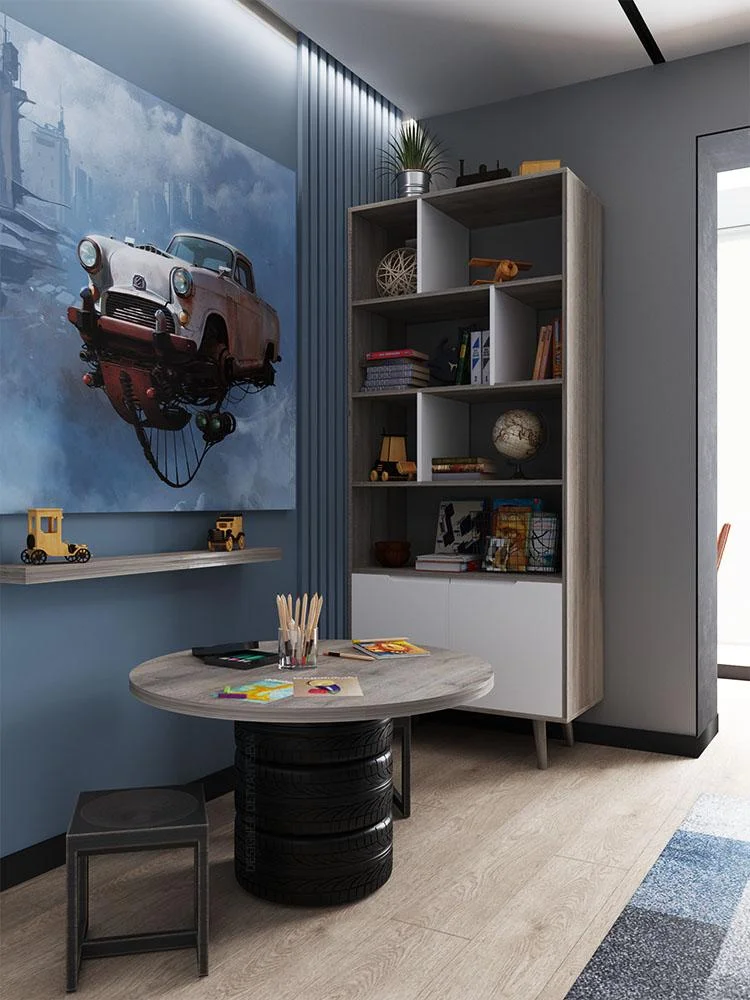
I like how the theme is carried through several carefully selected details rather than relying on a conventional car-shaped bed. The mural immediately establishes the subject, while the tire-inspired table reinforces it in a functional way. The tall shelving unit makes good use of vertical space and gives the child a place for books, toys, and personal collections. The round table also creates a flexible surface for drawing, building, or other activities.
In my view, this is a smart direction for a child who has a strong interest in cars because the main furniture remains relatively conventional. That makes the room easier to adapt later. If the child’s interests change, the mural and smaller themed pieces can be replaced without redesigning the entire bedroom.
Space-Themed Bedroom With a Glowing Moon Feature
This bedroom is completely immersed in a space-inspired atmosphere, with deep blue walls and ceiling covered in a starry pattern. A large illuminated moon dominates the wall beside the bed, while a blue desk chair and pale wood desk create a compact study area near the entrance. The bed has a simple upholstered frame in a soft gray tone, and a small round bedside table holds a glowing spherical lamp. The light wood floor adds warmth to the otherwise cool palette.
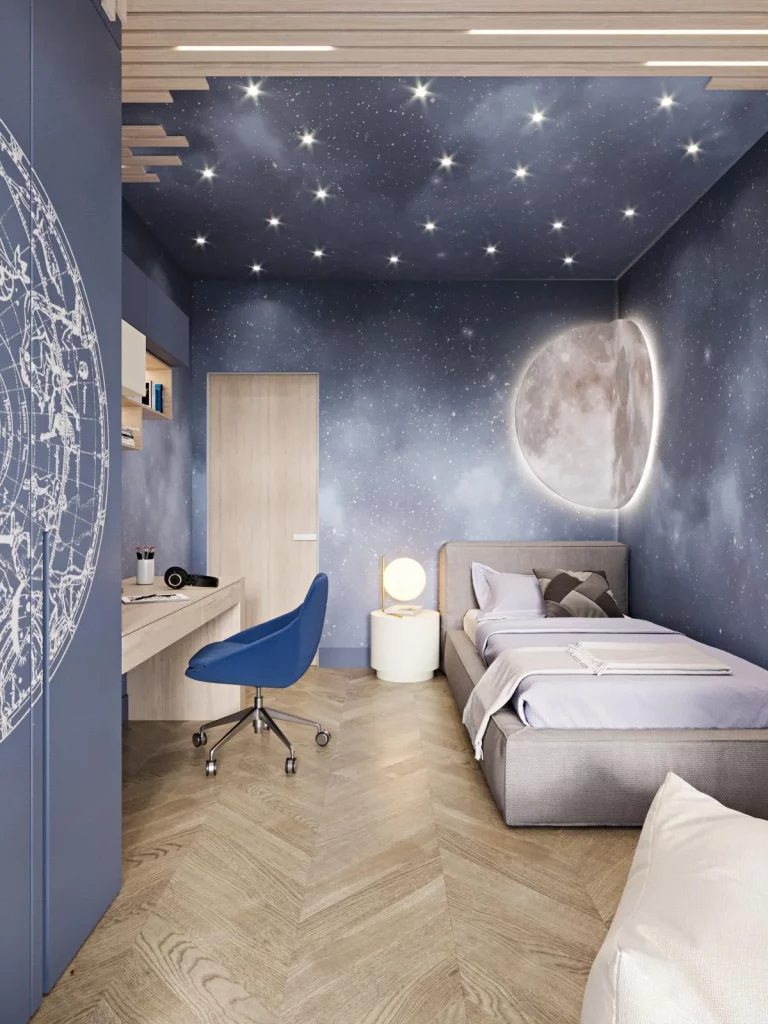
What works particularly well here is the consistency between the wall treatment, ceiling, lighting, and furniture. I can see how the starry surfaces make the room feel enclosed in its own theme, while the illuminated moon becomes the obvious focal point. The pale wood desk and flooring provide enough contrast to keep the space from feeling completely blue. The layout also separates the sleeping and studying areas without requiring a large room.
I would approach a themed bedroom like this by choosing one major visual story and carrying it consistently across the surfaces, exactly as this room does. The glowing moon is especially effective because it functions as both decoration and atmospheric lighting. The simple furniture allows the celestial treatment to remain the star of the room rather than competing with it.
Sports Car Bed With a Soft Nature-Inspired Wall Scene
The final bedroom takes a playful approach with a white sports-car-shaped bed positioned against a large muted mural of mountains, trees, and tall grasses. The car bed has dark graphic detailing along its side and realistic-looking wheels, while a large round rug featuring a bear-like face sits on the pale wood floor. A tall white storage cabinet occupies the right side, and a small wall-mounted light provides illumination beside the bed.
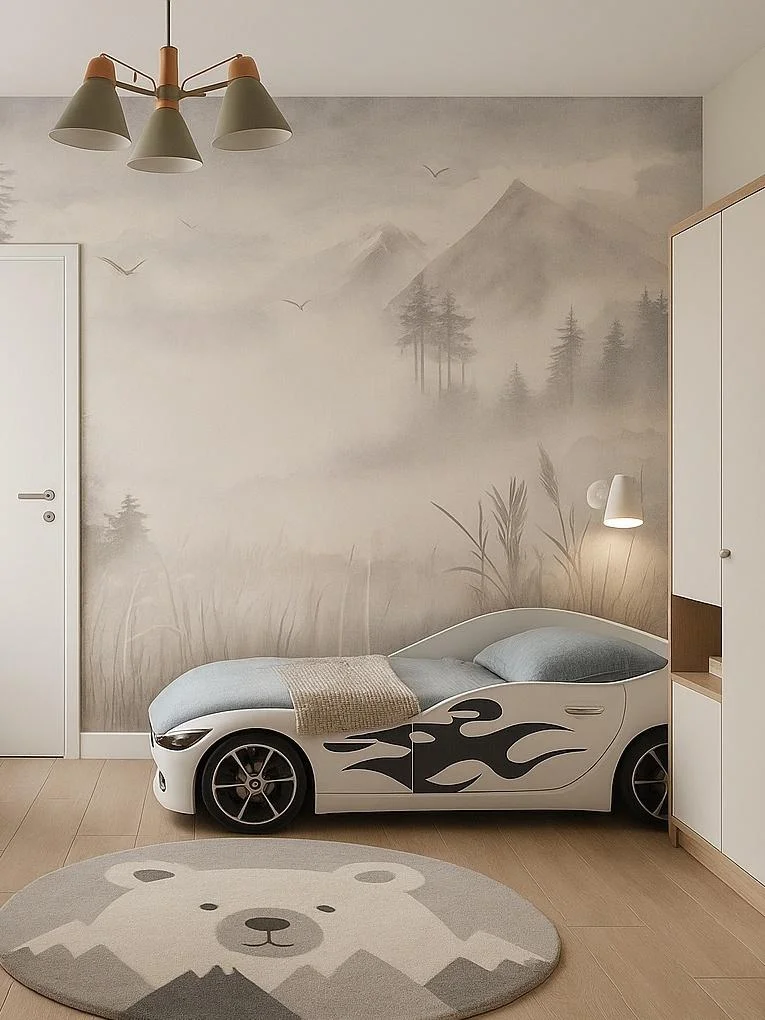
I think this room works because the statement bed is balanced by the subdued wall mural and restrained neutral palette. The car shape gives the bedroom an unmistakable focal point, but the surrounding colors remain soft enough to keep the space visually comfortable. The large round rug also helps define the open floor area in front of the bed while adding a playful element that fits naturally into a child’s room.
For me, this is a good reminder that one highly themed piece can be enough to establish an entire bedroom concept. If I were working with a similar room, I would keep the surrounding furniture simple and let the car bed remain the main attraction. The muted mural and neutral storage shown here are particularly effective because they support the theme without making the room feel overloaded.
Colorful Study Nook With Custom Built-In Storage
This cheerful boys’ bedroom combines a dedicated study area with generous built-in storage and a comfortable window seat. I immediately notice the pale gray cabinetry, dark desk surface, striped Roman shades, and playful yellow, blue, red, and brown accents repeated across the ceiling and window treatments. The two large windows bring in plenty of natural light, while the light wood-look floor keeps the room feeling open and easygoing.
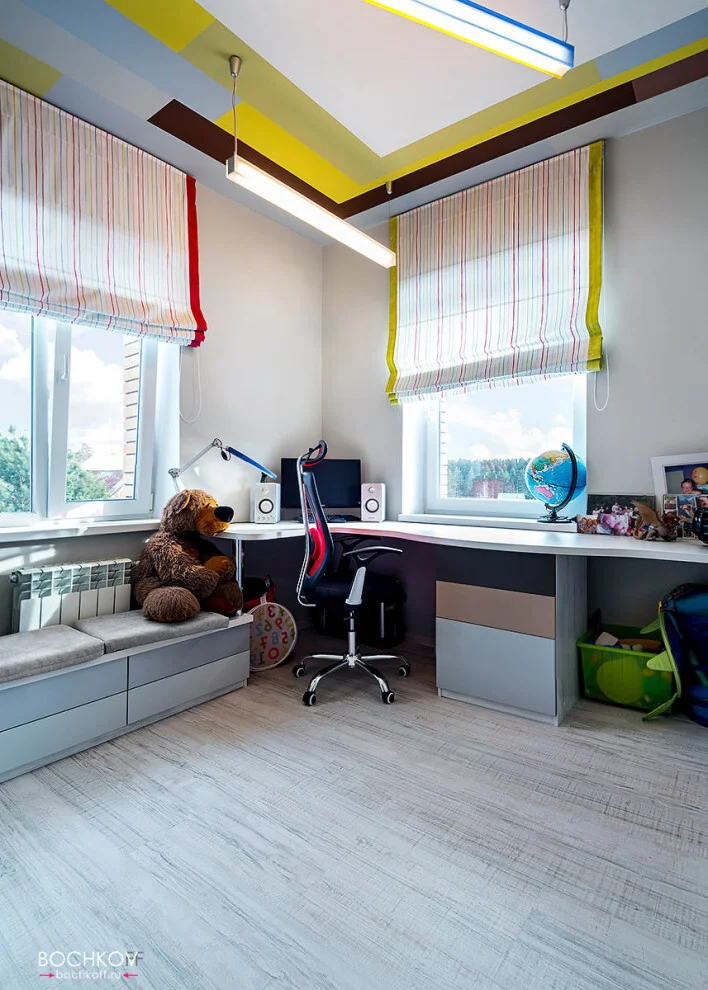
I like how efficiently this room uses the space beneath and between the windows. The desk fits neatly into the corner, while the long built-in unit provides drawers and a bench where a child can sit with a book or relax with a favorite stuffed animal. The open floor area in the center also leaves plenty of room for everyday movement and play. The combination of closed storage and a few visible personal items makes the room practical without looking overly formal.
From my perspective, the strongest idea here is the way functional furniture becomes part of the architecture. If I were recreating this approach, I would start by measuring the wall around the windows and designing the desk and storage around those existing features. I would also repeat just a few accent colors rather than introducing too many competing shades. That keeps a playful children’s room visually coordinated while still allowing the personality of the child to show.
Space-Themed Bedroom With a Compact Study Corner
This bedroom has a distinctly imaginative feel, centered around a large space-themed mural behind the bed. I see a soft blue-gray palette throughout the room, with a pale blue bed, a sculptural turquoise ceiling light, a light-colored desk, and streamlined storage. The mural featuring planets and stars creates the strongest visual statement, while the restrained furniture keeps the rest of the room calm.
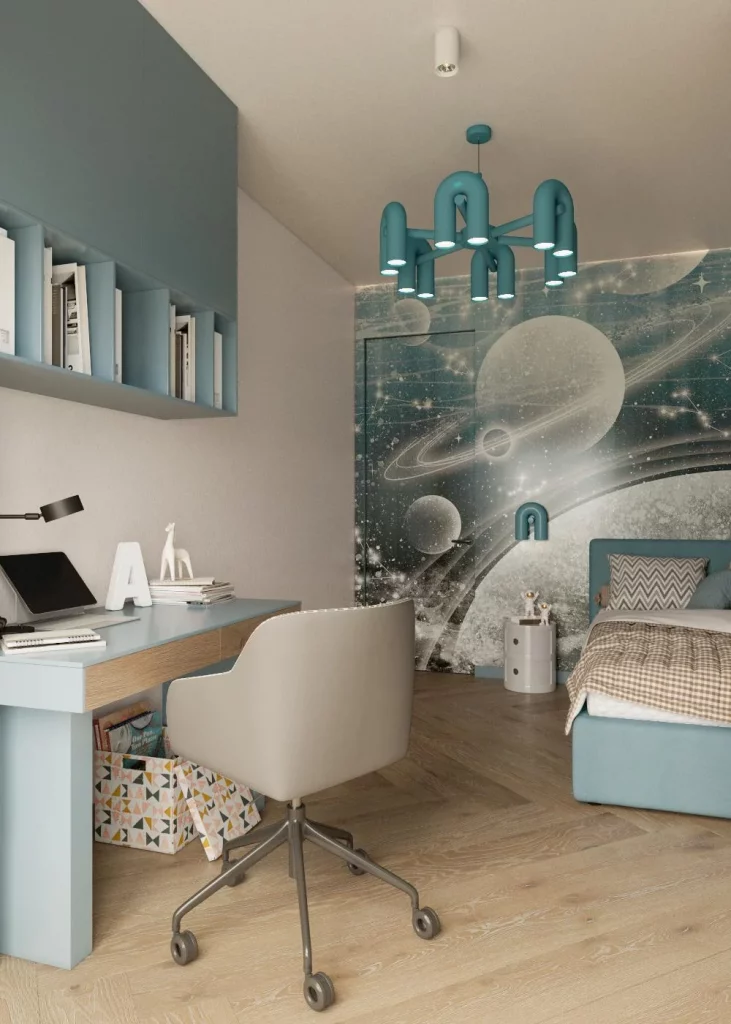
The layout works particularly well because the study zone occupies one side of the room while the bed remains clearly defined on the other. A wall-mounted shelving unit provides accessible book storage above the desk, and the curved edge of the desktop softens the otherwise straight lines of the cabinetry. I also like the comfortable upholstered desk chair, which gives the study area a more inviting character. The result feels suitable for both schoolwork and downtime.
When I look at a room like this, I always think about how much impact one carefully chosen wall treatment can have. Instead of filling every surface with themed accessories, the large mural carries the concept by itself. I would follow the same principle and coordinate the furniture and lighting with colors already present in the mural. That makes it easier for the room to grow with the child without requiring a complete redesign later.
World Map Bedroom With an Adventure-Inspired Theme
This bedroom turns the wall behind the bed into the main feature with a large illustrated world map in deep blue and warm beige tones. The room includes a compact upholstered bed, an orange lounge chair, white storage cabinetry, and a tall ladder-style shelving or display unit beside the bed. I especially like how the map creates a sense of exploration while the furniture remains simple and practical.
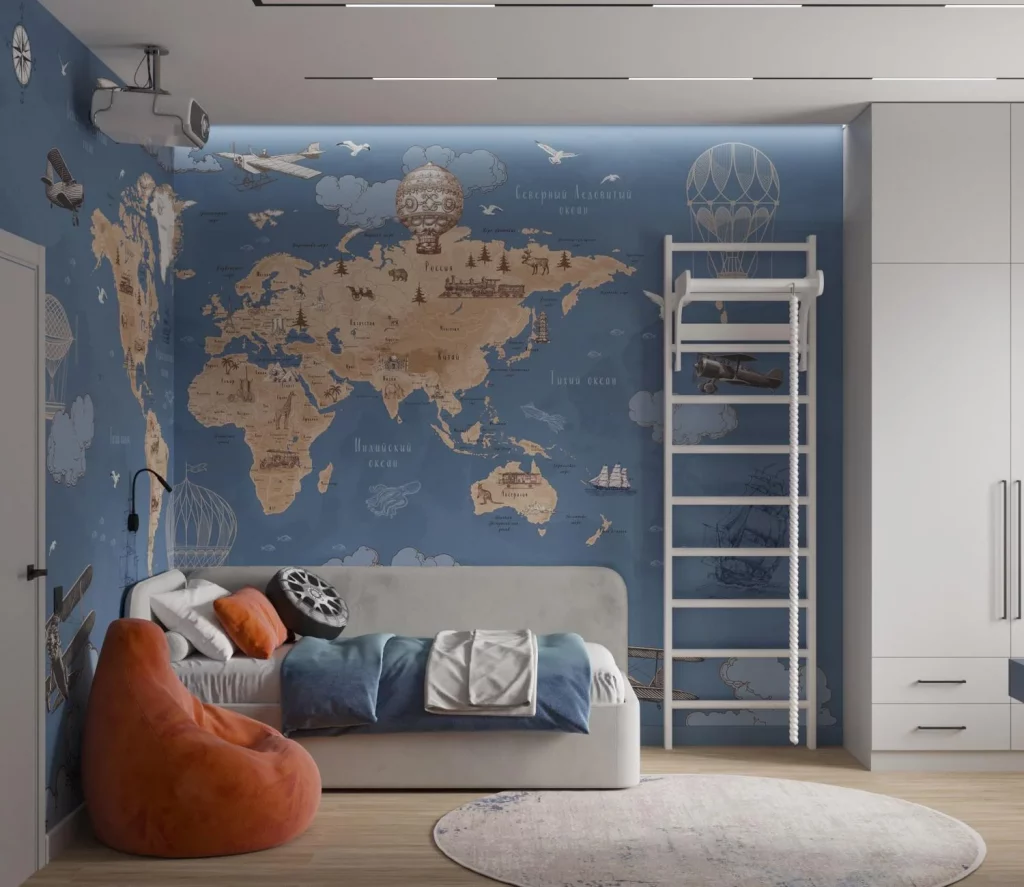
The arrangement gives the child several distinct areas without making the room feel crowded. The bed sits centrally against the illustrated wall, while the orange chair creates a separate place for sitting or reading. The tall white storage unit uses vertical space efficiently and adds contrast against the blue wall. The light flooring also helps balance the darker mural and keeps the room visually airy.
For me, this is a great example of using a child’s interests as inspiration without making every element match the theme. The map provides the personality, while the neutral bed, white cabinetry, and simple flooring allow the room to remain functional. If I were adapting this idea, I would choose one large educational or imaginative wall feature and let the surrounding furniture stay relatively uncomplicated.
Playful Bedroom With an Indoor Climbing Wall
This room takes the idea of a boys’ bedroom in a more active direction by incorporating a full climbing wall directly into the sleeping area. The dark climbing panel is framed by warm wood construction, while a reddish upholstered platform and bed create a comfortable base below it. A playful sloth figure hangs from the upper structure, and a large line-art superhero illustration adds another energetic detail to the wall beside the bed.
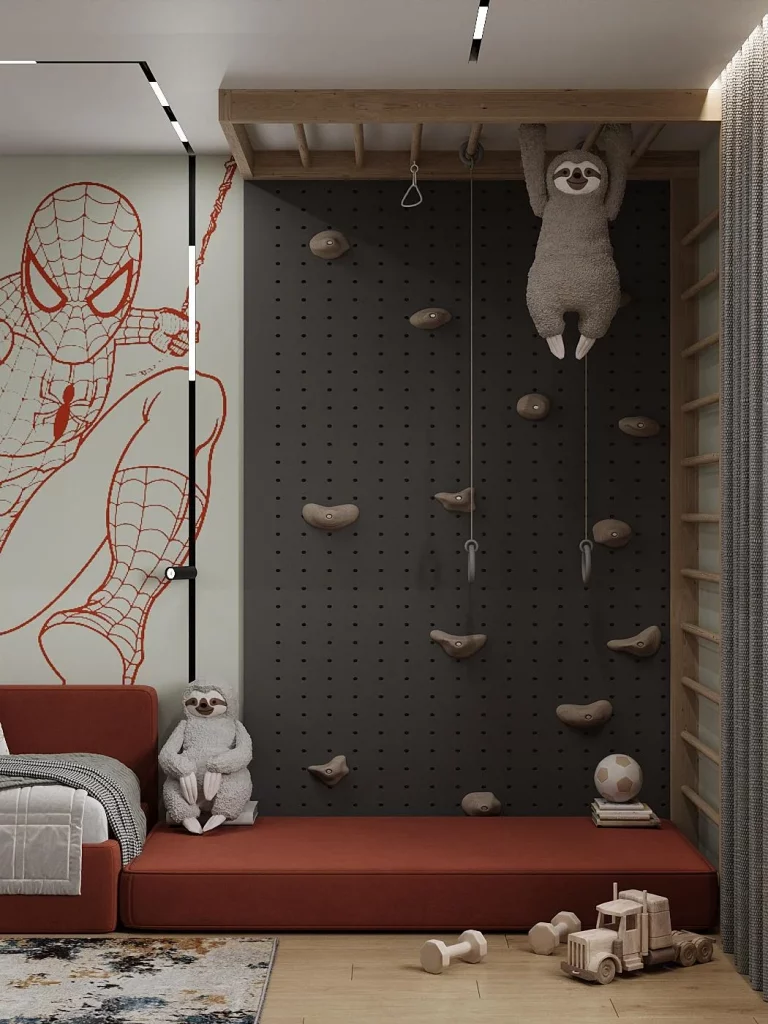
I think the climbing wall is the most interesting functional feature because it turns otherwise unused wall space into an activity zone. The wooden overhead structure visually connects the climbing area with the rest of the room, while the low upholstered platform provides a soft transition between active play and rest. Toys placed on the floor reinforce the room’s playful purpose without making the entire design feel cluttered.
From my perspective, this type of room works best when the active feature is clearly integrated into the overall furniture layout rather than added as an afterthought. The image also reminds me that children’s rooms can support movement and physical play as well as sleep and study. If using a similar concept, I would keep the surrounding circulation clear and make sure the climbing equipment is professionally installed and appropriate for the child’s age.
Soft Mountain-Themed Bedroom With a Cozy Play Tent
This bedroom uses a gentle palette of pale blue, soft gray, muted green, white, and natural wood tones. The walls feature a hand-painted mountain landscape with snow-capped peaks and small stars, while a green upholstered bed provides a calm focal point. A cream-colored play tent occupies the opposite side of the room, creating a cozy retreat within the bedroom.
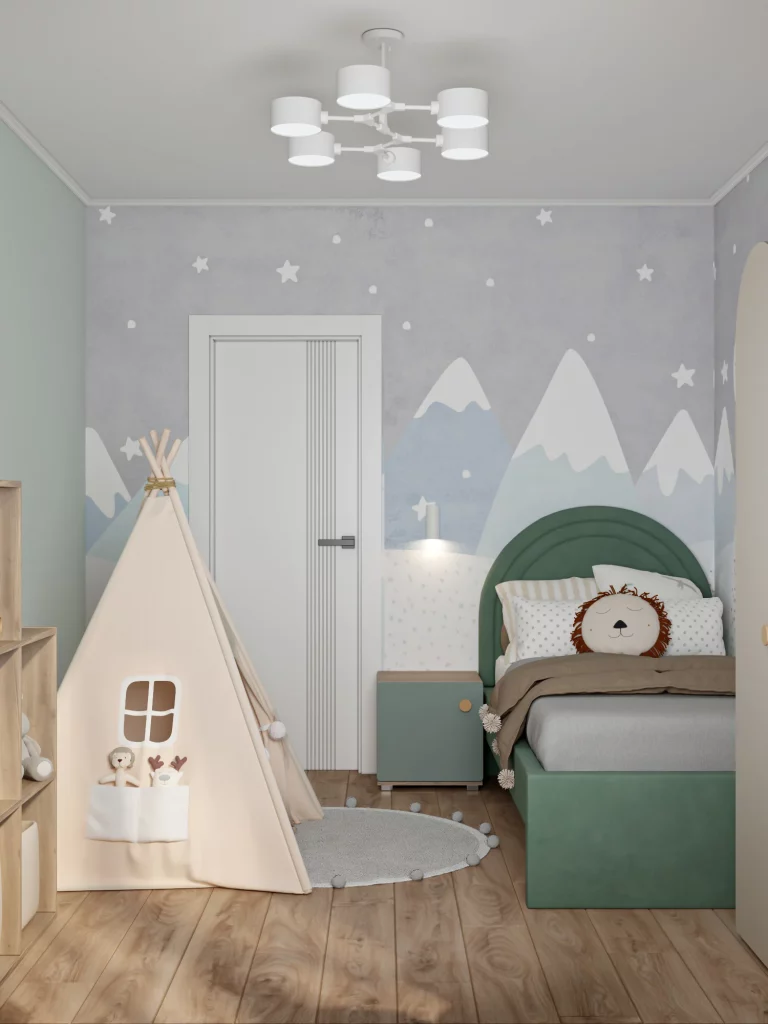
The layout is especially appealing because the sleeping and play areas have clearly different functions. The bed is tucked against the illustrated wall, while the tent creates a separate little space for imaginative play. A small round rug and compact bedside furniture fit comfortably between these areas without overwhelming the room. I also like how the natural wood floor adds warmth to an otherwise soft color palette.
I would consider this a very adaptable approach for a young child’s bedroom. The mural establishes a recognizable theme, but it is gentle enough that the room does not depend on a large collection of themed accessories. The same principle could be used with another landscape or illustrated concept: choose a calm background, add one distinctive play feature, and keep the furniture practical and easy to use.
Modern Gray Bedroom With a Comfortable Study and Lounge Area
This modern boys’ bedroom combines a gray upholstered sofa, a yellow desk chair, a built-in desk, and pale blue-gray cabinetry. One wall is decorated with an abstract line drawing and a framed astronaut image, while a small astronaut-shaped wall light adds another playful reference to the room’s theme. A round rug defines the central floor area, and the light wood flooring brings warmth to the predominantly cool palette.
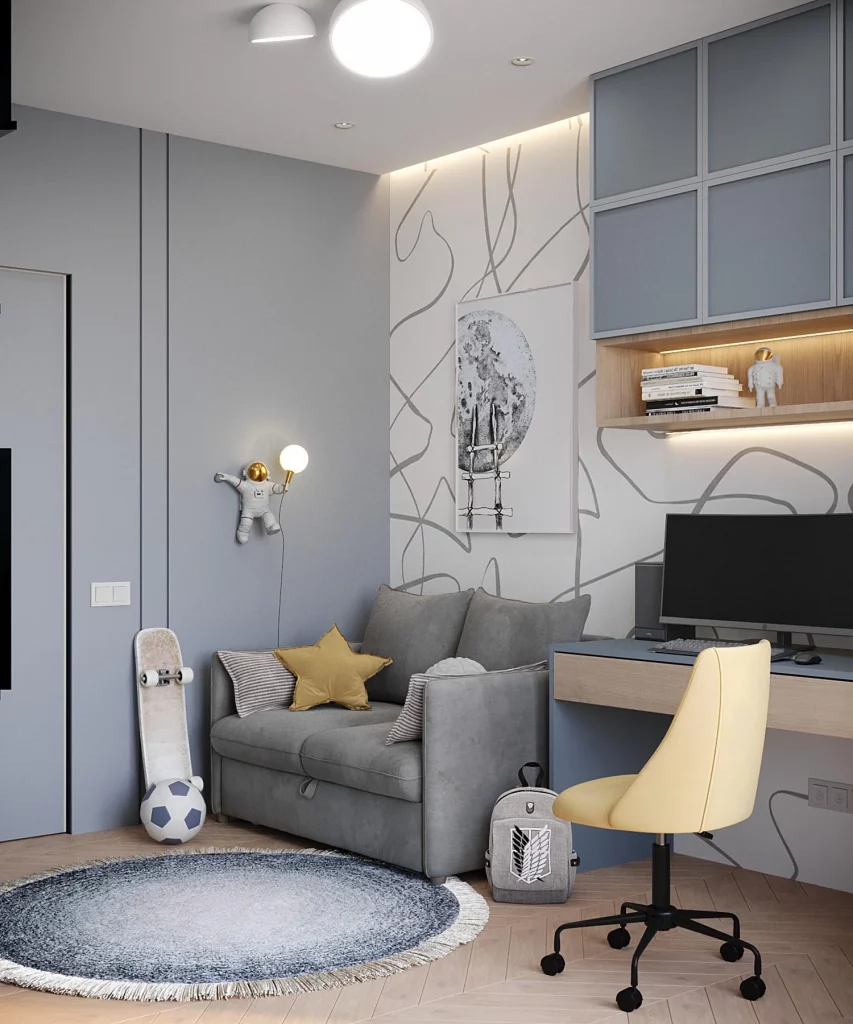
What works particularly well here is the combination of relaxation and study zones. The sofa provides a comfortable place to sit, while the adjacent desk accommodates schoolwork and computer use. Open shelving above the desk offers space for books and display objects, and the tall cabinetry keeps the rest of the room visually organized. I also like the yellow chair because it introduces a small amount of contrast without overpowering the gray surroundings.
In my experience, a room becomes much more useful when a child has somewhere to sit besides the bed. This design does that without sacrificing floor space. I would take inspiration from the restrained color palette and use one stronger accent shade for a chair, cushion, or small accessory. The result feels youthful but still sophisticated enough to adapt as the child gets older.
Bold Nautical Bedroom With Lighthouse Details
This bedroom has a strong nautical character, with light blue walls covered in illustrated lighthouses and coordinating bedding decorated with maritime motifs. The bed features a striped red, white, and blue headboard, while oversized star-shaped wall decorations add another layer of visual interest. A small dark bedside cabinet and a white chest of drawers complete the furniture arrangement.
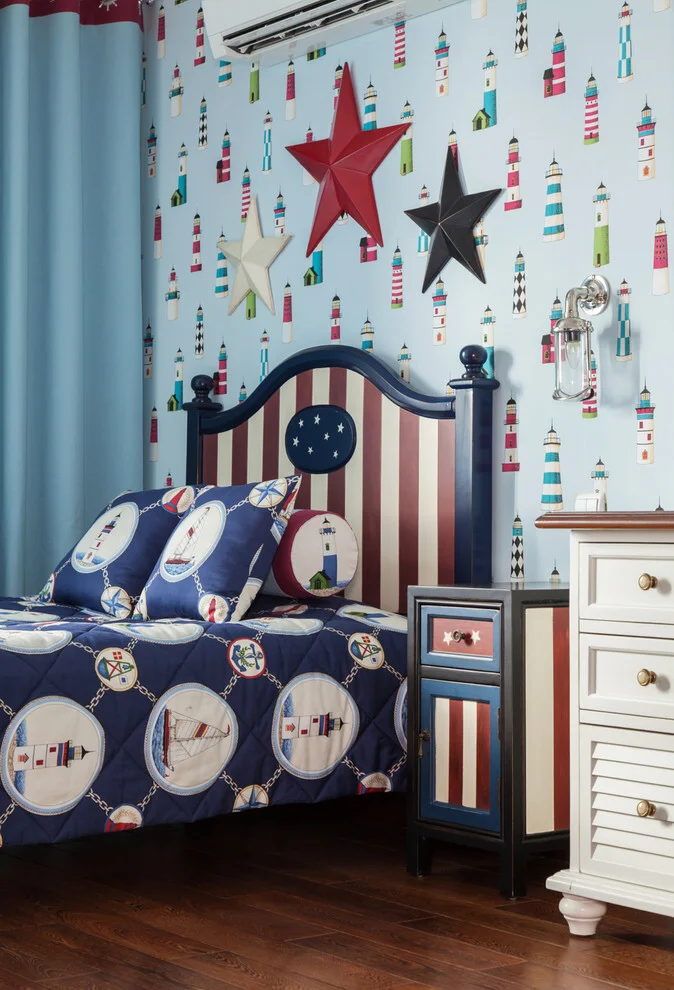
The coordinated pattern is what makes this room especially memorable. The same nautical vocabulary appears across the wallpaper, bedding, cushions, and wall decorations, so the individual pieces feel connected rather than random. The darker floor provides contrast beneath the lighter furnishings, while the blue curtains reinforce the main color of the room. Despite the number of patterns, the palette keeps everything visually unified.
I would use this room as inspiration when a child has a strong favorite theme. Rather than scattering unrelated decorative objects around the space, I prefer repeating a limited group of colors and motifs. That approach gives a themed bedroom a more intentional appearance. If the child eventually outgrows the nautical concept, the same furniture can remain while the wallpaper and textiles are changed.
Red Race Car Bed in a Sleek Modern Bedroom
The bright red race car bed immediately becomes the focal point of this bedroom. Around it, the room uses a restrained gray and white palette, with pale cabinetry extending across the right side and a compact study area near the window. Hexagonal wall shelves provide display space above the bed, while recessed and concealed lighting gives the ceiling a crisp contemporary appearance.
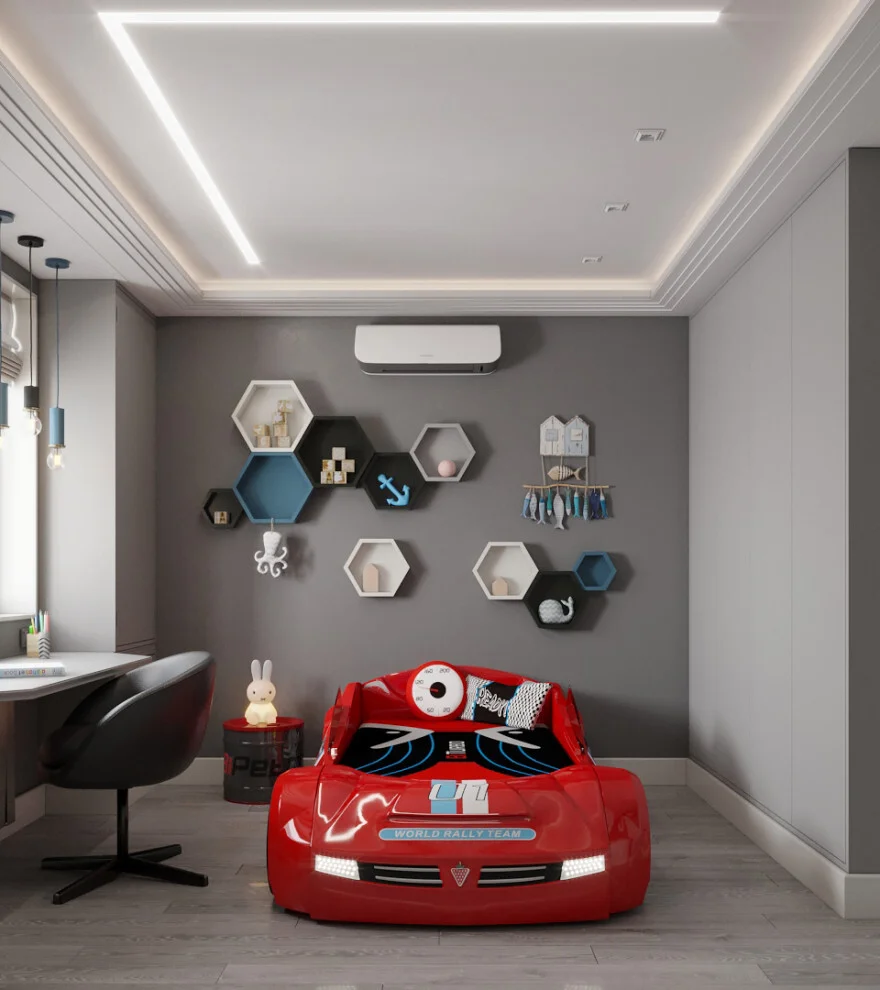
I like the balance between the dramatic bed and the much quieter architecture surrounding it. Because the cabinetry and walls remain neutral, the red car shape can stand out without making the entire room visually overwhelming. The wall shelves also give the child a place to display small objects while keeping most storage closed. This is a practical way to let one playful item become the star of the room.
For me, the lesson here is that a statement piece does not need a room full of matching accessories. A special bed can carry an entire theme when the surrounding furniture is simple. I would keep the larger surfaces neutral and allow the child’s favorite object to provide the strongest color and personality. That also makes future updates easier if interests change.
Airship-Themed Bedroom With a Dreamy Blue Mural
This bedroom creates a soft imaginative atmosphere with a pale blue wall mural featuring clouds, flying machines, balloons, and airships. A white-and-gold multi-arm chandelier hangs above the room, while a gray upholstered bed, blue chest of drawers, and white desk keep the furniture palette light. A collection of plush toys sits on the chest, adding a distinctly child-friendly touch.
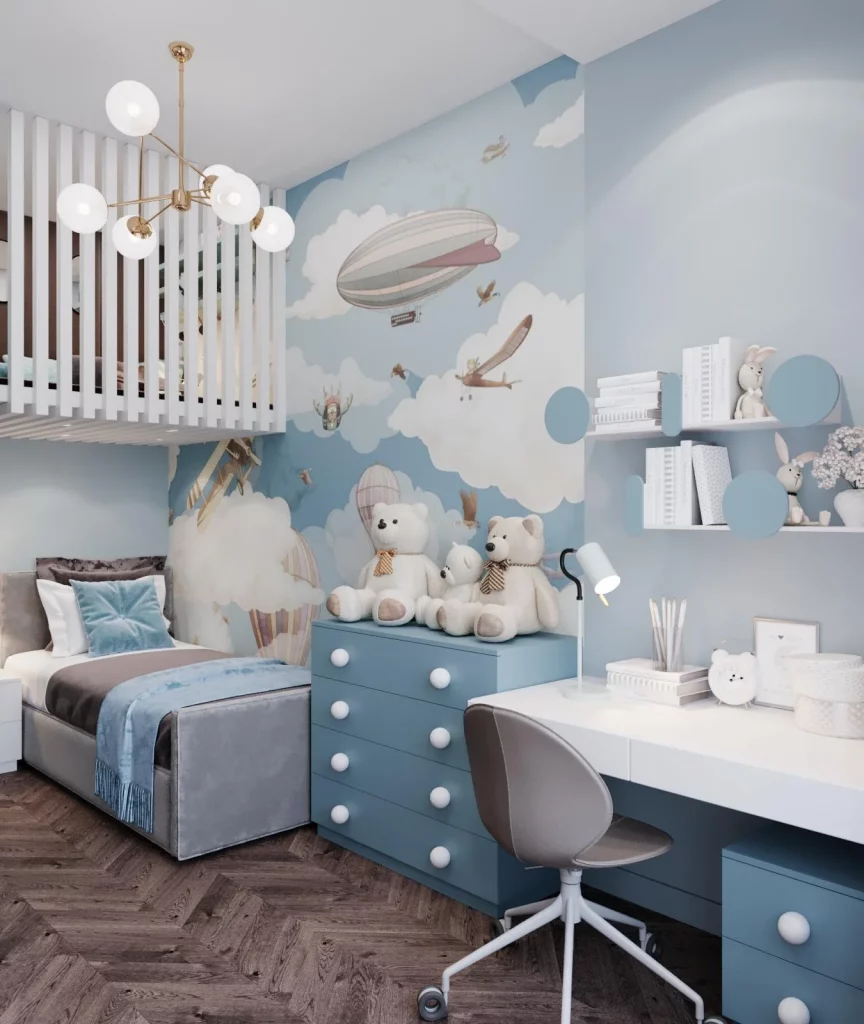
The arrangement makes excellent use of the room’s vertical space. The raised sleeping area on the left creates a separate architectural level, while the chest and desk provide practical storage and study space below and beside it. Wall shelving offers additional display room without taking up floor area. I also like how the soft colors allow the mural to remain detailed without making the bedroom feel visually heavy.
I think this design demonstrates how a mural can establish atmosphere without relying on excessive themed furniture. The airship imagery gives the room a sense of adventure, but the rest of the furnishings are simple enough to remain useful for years. If I were recreating this look, I would choose a mural with several related elements and then select furniture in two or three colors pulled directly from the artwork.
Calm Blue and Gray Bedroom With Space-Inspired Artwork
The final bedroom takes a quieter approach, using pale blue-gray walls, white cabinetry, a soft upholstered bed, and a light blue armchair. Three framed space-themed prints hang above the bed, while a black-and-white soccer ball and a small ride-on toy bring playful touches into the foreground. A large light rug covers much of the floor, helping the room feel comfortable and cohesive.
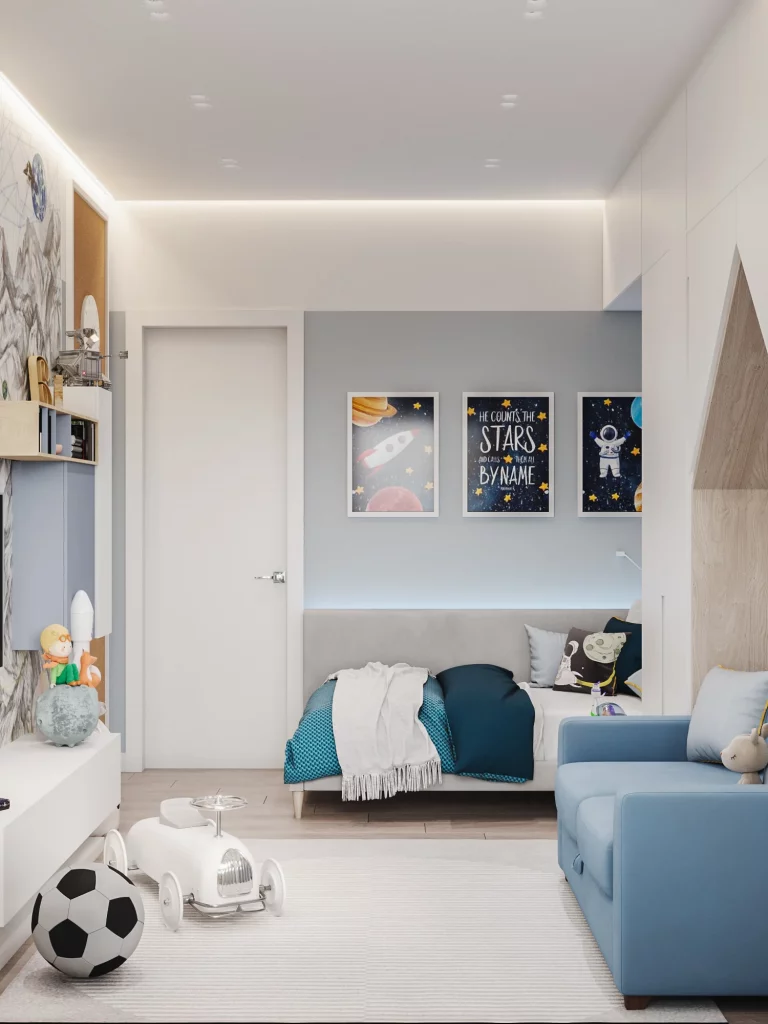
I like how this room combines a restful sleeping area with enough open floor space for play. The bed sits against the central wall, while the armchair creates a separate seating spot on the right. The white cabinetry on the left provides substantial storage without competing with the artwork, and the simple desk area visible along the side gives the room another practical function. The overall arrangement feels spacious and easy to navigate.
For me, this is one of the easiest ideas to adapt because the theme comes mainly from artwork and accessories rather than permanent furniture. The space prints can be replaced as interests change, while the blue-gray and white foundation can stay. I would use the same strategy in a child’s room when flexibility is important: invest in durable basic furniture and let artwork, textiles, and favorite toys provide the personality.
Compact Boys Bedroom With a Dedicated Study Area
This compact boys bedroom combines a single bed, a study desk, generous built-in storage, and a bold graphic feature wall in one carefully organized space. I like the way the bed occupies one side of the room while the desk and wardrobe are positioned opposite it, leaving a clear walkway through the center. The mostly neutral palette keeps the room calm, while the colorful wall artwork, deep blue chair, and geometric rug add personality.
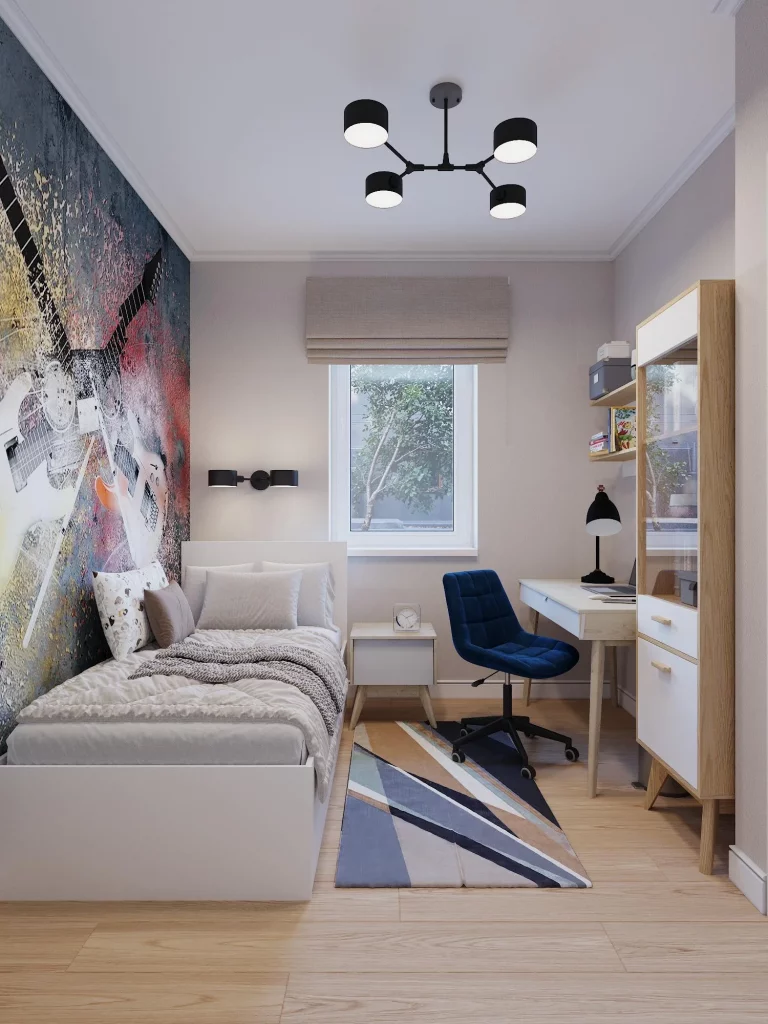
The layout works especially well for a child who needs the bedroom to serve several purposes. The raised storage cabinet above the desk, open shelving, drawers, and tall wardrobe provide plenty of places to organize books, school supplies, and everyday belongings. I also like the small bedside table because it gives the bed a practical surface without taking up much floor space. The desk receives natural light from the window, which makes the study corner feel comfortable and functional.
From my perspective, this is a great example of how a smaller boys bedroom can feel complete without becoming overcrowded. I would keep the larger furniture pieces simple and let one strong wall treatment provide most of the visual character. The navy blue chair is another smart choice because it connects naturally with the darker tones in the artwork and rug without overwhelming the room.
Green Sports-Themed Bedroom With Streamlined Storage
This boys bedroom takes a much more focused approach, using a muted green accent wall as the backdrop for a football-inspired space. I notice a low white storage unit with a warm wood top, a large television or sports image mounted above it, framed sports-related artwork, and a tall white built-in wardrobe. The green-and-white bedding reinforces the athletic theme, while the warm wood floor prevents the room from feeling too stark.
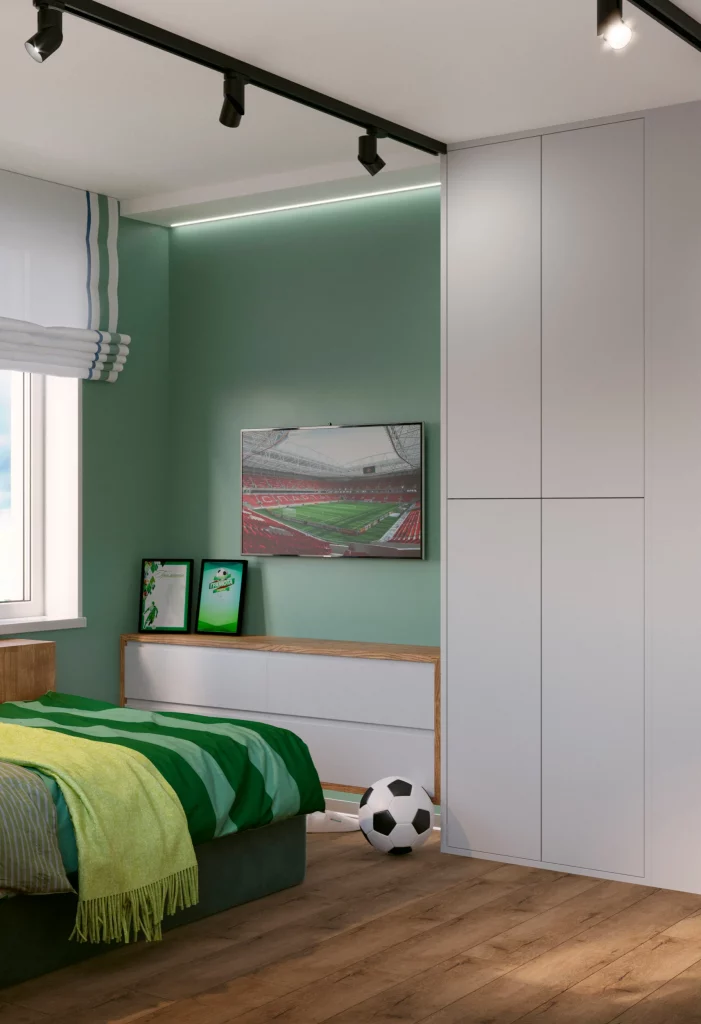
I particularly like how the storage is concentrated along one wall. The tall wardrobe provides substantial closed storage, while the low cabinet creates a useful display and media area without visually competing with the bed. The football placed on the floor makes the room feel genuinely connected to a child’s interests rather than looking like a generic adult bedroom.
For me, the strongest lesson here is the value of choosing one clear interest and translating it through a restrained color palette. Instead of filling the entire room with sports decorations, the design relies on green, white, and a few carefully selected details. That makes the room feel personal while still leaving plenty of flexibility as the child grows.
Soft Neutral Boys Bedroom With Built-In Wardrobe and Play Area
This bedroom uses a soft neutral palette of white, cream, pale gray, and warm wood tones. A large built-in wardrobe dominates the back wall, with open shelving integrated beside it for books and toys. The upholstered bed sits toward the left, while a small chair and low table create a separate activity area. On the right, a rope climbing structure adds a playful feature without taking over the entire room.
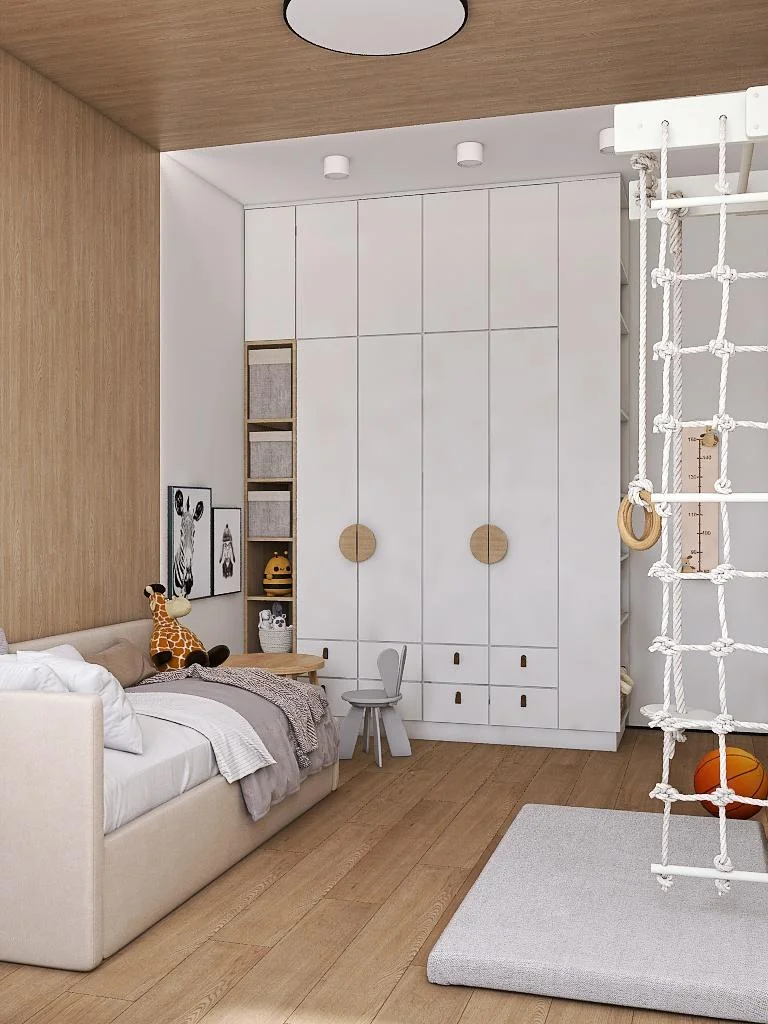
I think the combination of concealed storage and open shelving is particularly effective for a child’s room. The wardrobe keeps larger quantities of clothing and belongings neatly hidden, while the narrow shelving provides accessible space for books and favorite toys. The small table and chair create a simple place for quiet activities, and the open floor area makes the room feel suitable for movement and play.
What stands out to me is how successfully this room balances childhood and simplicity. The neutral furniture gives the bedroom a timeless foundation, while the stuffed giraffe, toys, rope structure, and soft textiles make it unmistakably designed for a child. If I were recreating this feeling, I would preserve the generous open floor area because it gives the room much more flexibility for everyday play.
Playful Blue Bedroom With House-Shaped Bed
This light blue boys bedroom has a cheerful, imaginative character centered around a white house-shaped bed. The bed includes a pitched roof and small decorative details, making it feel like a little playhouse as well as a sleeping space. White shelving displays books and toys along the opposite wall, while a small table and chairs sit near the large window. A blue curtain and star-patterned rug reinforce the soft blue-and-white color scheme.
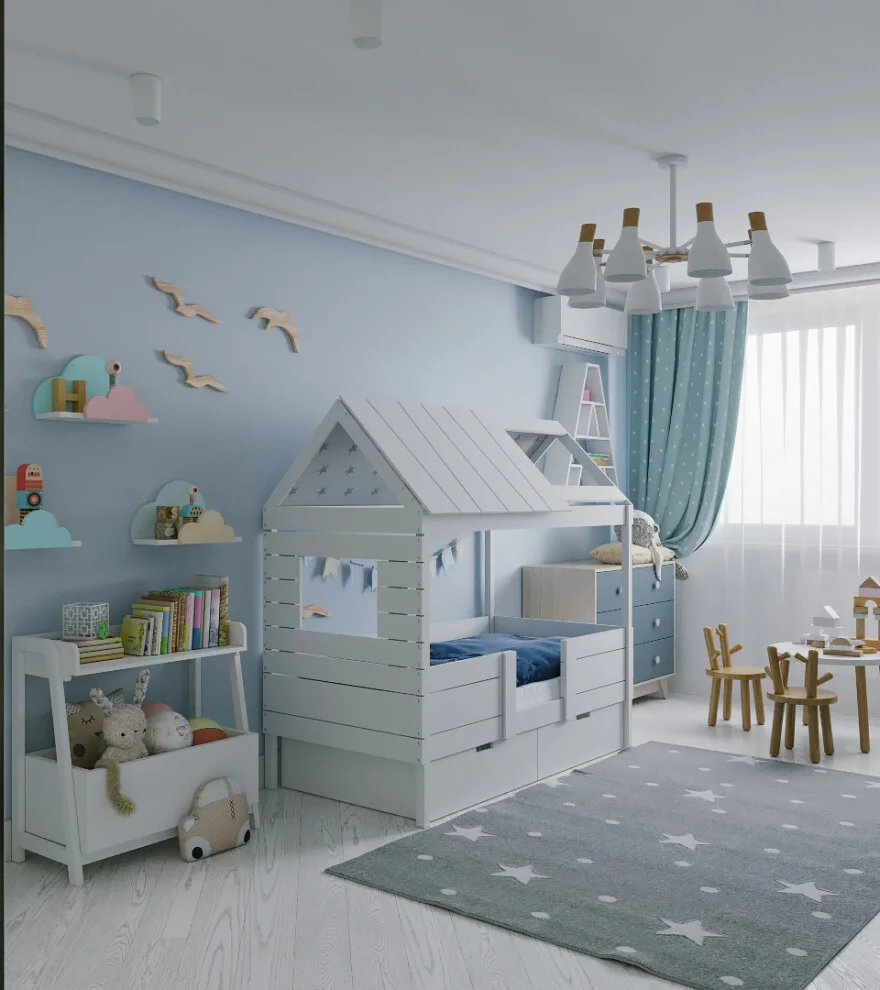
I love how the furniture is arranged to create several distinct zones without making the room feel divided. The house-shaped bed becomes the main focal point, while the low shelving keeps toys and books accessible to a child. The small table provides a dedicated place for drawing or other activities, and the large window brings plenty of natural light into the space.
For me, this room shows how one imaginative piece of furniture can define an entire children’s bedroom. The house silhouette gives the space a playful identity without requiring a large amount of additional decoration. I would keep the surrounding furniture relatively simple, as shown here, so the special bed remains the visual centerpiece rather than competing with too many other features.
Air Balloon-Inspired Bedroom With Cozy Reading Corner
This bedroom creates a gentle children’s atmosphere with pale blue-gray walls, soft mountain-like wall graphics, and delicate hot-air-balloon illustrations. A tall white storage unit provides both open and closed compartments, while a small round table and two white chairs form a charming activity corner. A large upholstered chair with bunny-like ears adds another playful detail near the window, and a blue rug visually defines the seating area.
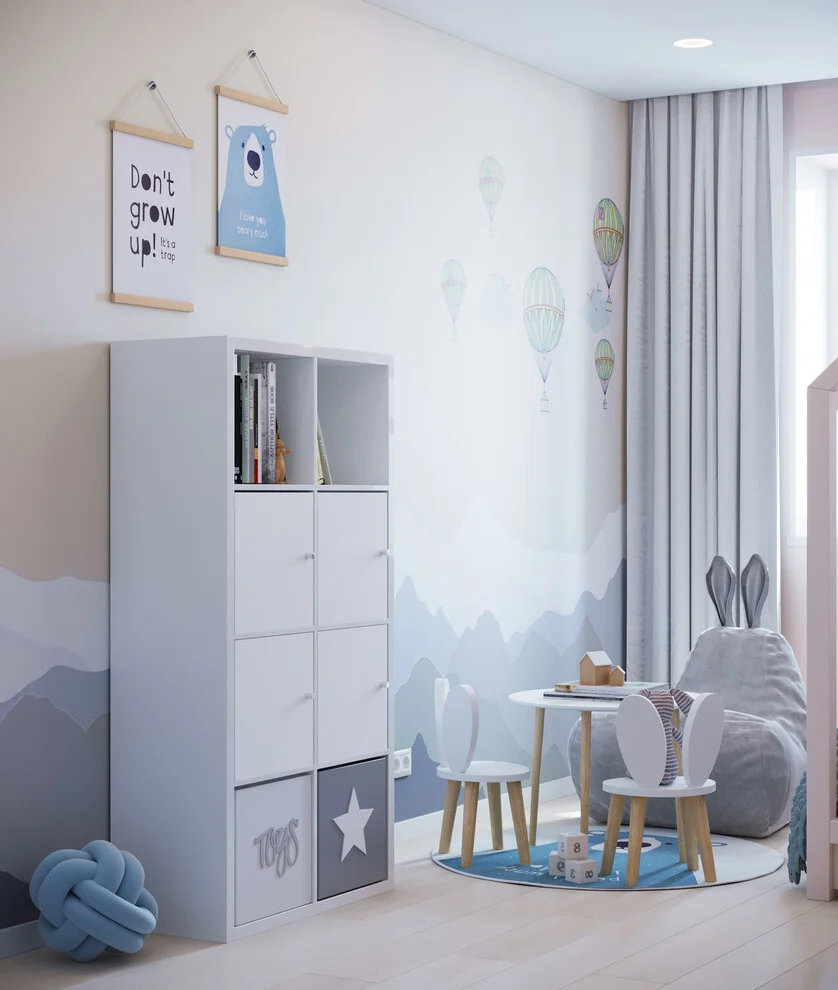
The room works because the furniture remains simple while the walls and smaller accessories provide most of the personality. The storage unit is practical for keeping books, toys, and small belongings organized, while the compact table and chairs give the child a dedicated area for sitting and activities. I also like the way the rug separates this corner visually from the rest of the room without needing additional furniture.
In my experience, a soft illustrated theme like this can work particularly well when parents want something playful but not overly busy. The pale colors make the room feel spacious and peaceful, while the balloon and mountain motifs introduce a sense of imagination. I would resist adding too many extra themed accessories here because the existing wall treatment already provides a strong decorative story.
Space-Themed Boys Bedroom With Illuminated Constellation Wall
This bedroom takes a dramatic turn with a deep blue constellation wall illuminated by numerous tiny points of light. The sleeping area features a warm rust-colored upholstered bed with curved edges and layered bedding in cream and blue. Beside it, a separate study zone includes a dark wood desk, shelving with integrated lighting, and a comfortable light-colored chair. Simple planetary and astronaut illustrations continue the space theme on the desk wall.
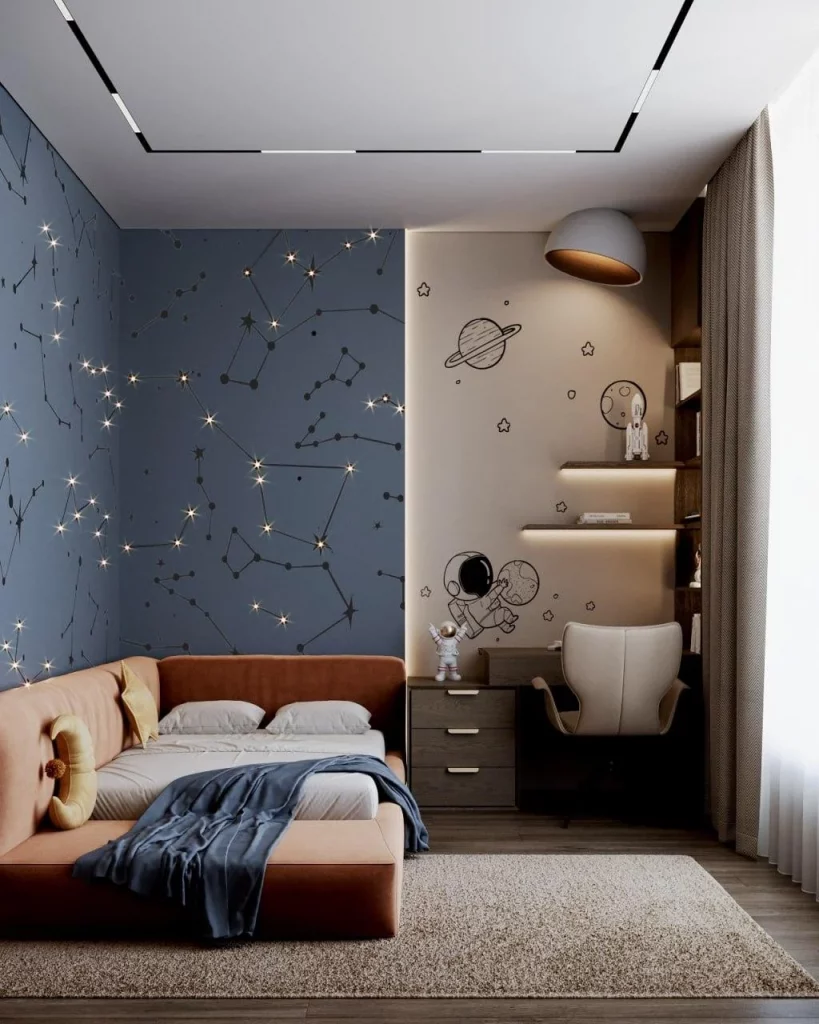
I find the division between the sleeping and study areas especially successful. The darker constellation wall establishes a cozy atmosphere around the bed, while the desk area feels more focused and practical. Built-in shelves provide space for books and decorative objects, and the integrated lighting makes the study corner useful without relying entirely on the room’s main lighting.
For me, this is a good example of how a strong theme can still feel sophisticated. The space concept is communicated through the constellation pattern, planets, and astronaut imagery, but the furniture itself remains relatively refined. I would use the same principle when designing a themed room: let the walls and a few accessories express the child’s interests while keeping the major furniture pieces versatile.
Minimal Blue and White Bedroom With a House-Shaped Alcove
This final bedroom combines pale blue walls, white cabinetry, warm wood accents, and a distinctive house-shaped sleeping alcove. The bed is enclosed by a white structure with a pitched opening, while vertical wood slats create a warm contrast inside the alcove. A large window provides natural light, and a broad patterned rug covers much of the open floor area. The room is finished with a sculptural ceiling light and simple white-and-blue textiles.
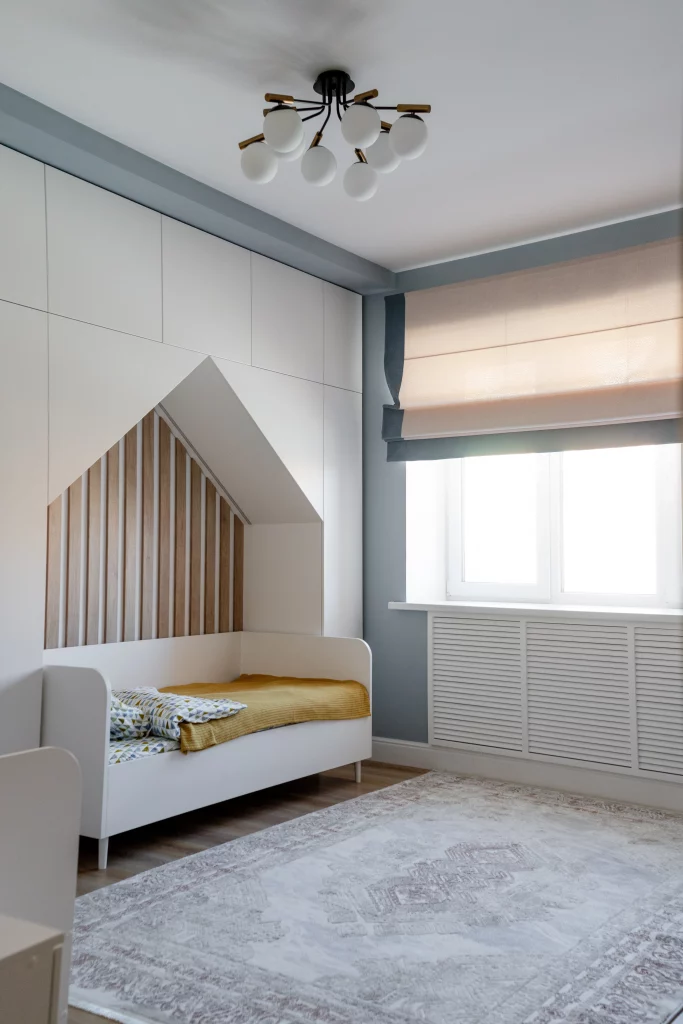
The custom-looking bed structure is the strongest feature because it creates a cozy sleeping zone while also giving the room a playful architectural element. I also like the full-height white cabinetry because it makes excellent use of the wall without introducing visual clutter. The large rug adds softness and defines the central floor area, which is particularly useful in a child’s bedroom where the floor often becomes an active part of the room.
From my perspective, this design has a wonderfully balanced quality: it feels playful enough for a child but restrained enough to remain attractive as the child grows. The combination of pale blue, white, and warm wood creates an easy foundation that could accommodate changing bedding and accessories over time. If I were taking inspiration from this room, I would focus on the same balance between practical storage, an imaginative sleeping feature, and plenty of usable open space.
Creating a boy’s bedroom is all about finding the right balance between comfort, personality, storage, and space to play or study. These Boys Bedroom Design Ideas For Kids show how different colors, themes, furniture arrangements, and playful details can create a room that feels both practical and inviting. I especially love how each design gives the child’s interests a place while keeping the overall space functional. Which bedroom idea is your favorite? Leave a comment and share the design you would love to recreate.