
Cabinet color sets the whole tone of a kitchen. It is the largest surface area in the room, so the shade you choose defines every other decision from countertop to hardware. This article walks through 29 cabinet color ideas that balance personality with practical living.
Each look keeps the storage front and center while the space around it stays simple and supporting. You will see how different colors work with layout, light, materials, and everyday use. No brand names or price talk here, just real options for your next update.
Ornate Wood Island Cabinets: Layout Focus
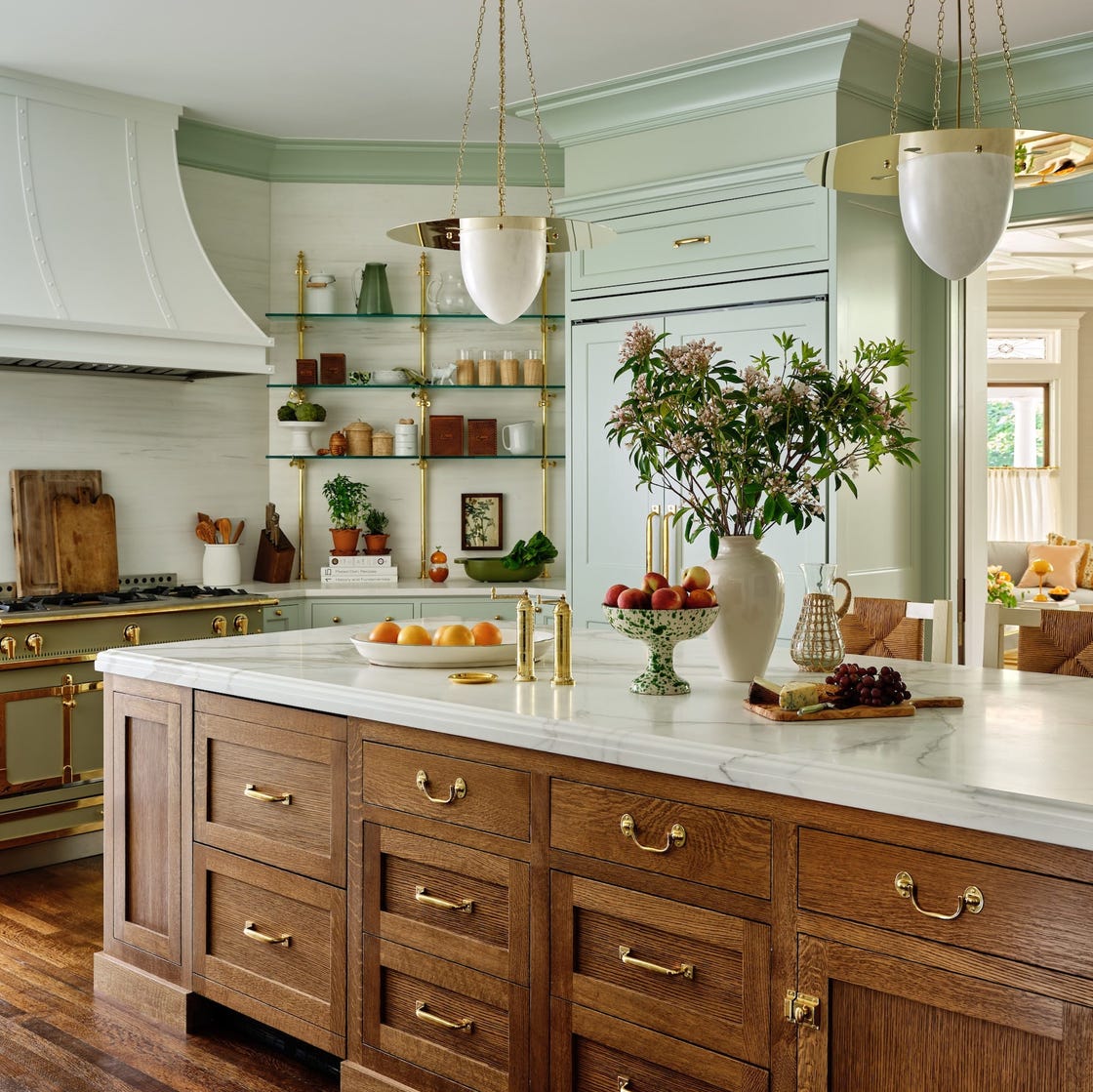
The island takes center stage here, with ornate wood drawers that stand out against the lighter perimeter. It is a transitional kitchen where the island cabinets carry the visual weight, finished in a warm wood tone that anchors the open plan layout. Marble countertops and a light green range hood keep the room from skewing too traditional, while the brass and glass pendant lights add a polished contrast. The layout works because the island is the hero, and everything else, white walls, simple upper cabinets, natural light, stays quiet around it.
Warm Gray Cabinets: Palette Integration
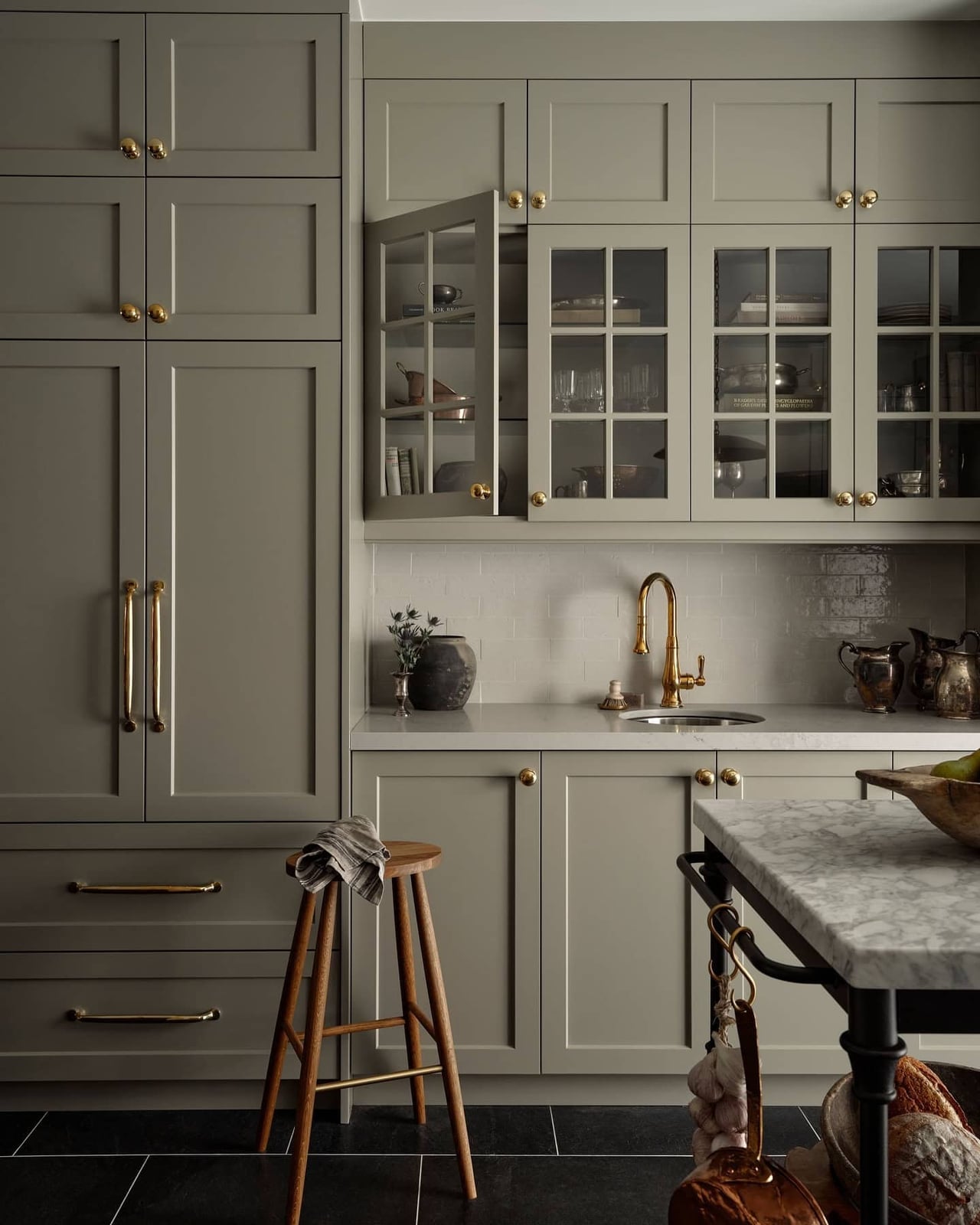
This palette does not need a lot of color to feel complete. Warm gray cabinets pair with white subway tile and brass hardware for a look that is grounded but not heavy. The wood tones in the island and flooring keep the gray from reading as cold, while the brass adds a subtle warmth that ties the two together. The pendant light echoes that metallic note without competing. It is a palette that relies on texture, the tile, the wood grain, the brushed brass, to give the gray depth. A practical takeaway: when your main cabinet color is neutral, let the hardware and countertop materials carry the accent.
Sage Green Shaker Cabinets: Material Harmony
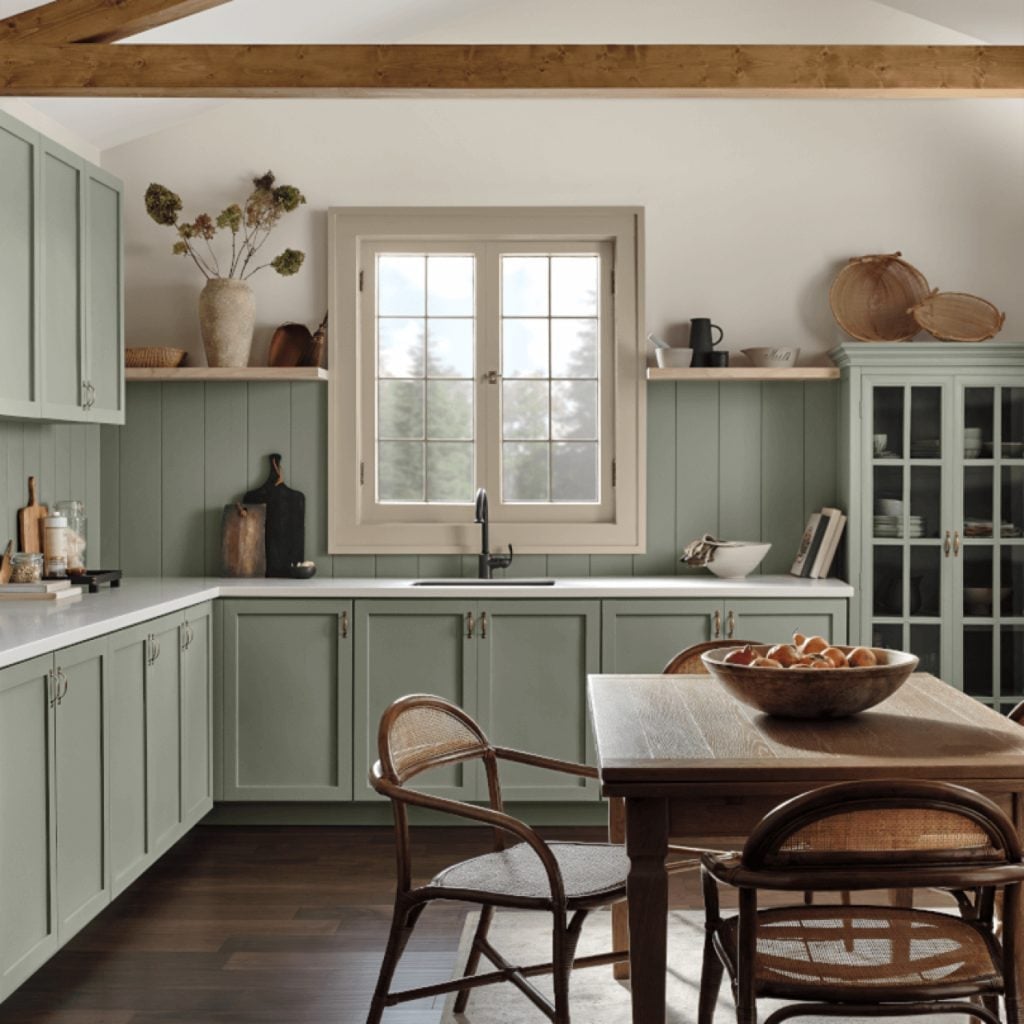
What makes sage green work in a farmhouse kitchen without feeling like a theme? The answer is usually in the materials around it. These shaker cabinets sit against a white stone countertop and a wooden table with cane chairs, and the combination keeps the green from overwhelming the room. The painted wood of the cabinets meets the natural wood of the table, so there is a conversation between finishes and not a single note.
The overhead beams and natural light soften the green further, making it read as earthy and not bright. The stone countertop adds a cool, solid surface that balances the warmth of the wood. If you are considering sage green cabinets, match them with materials that have visible grain or texture. That way the green becomes part of a layered palette, not the only thing you notice.
Modern Farmhouse Sage Green Cabinets: Lighting Ambiance
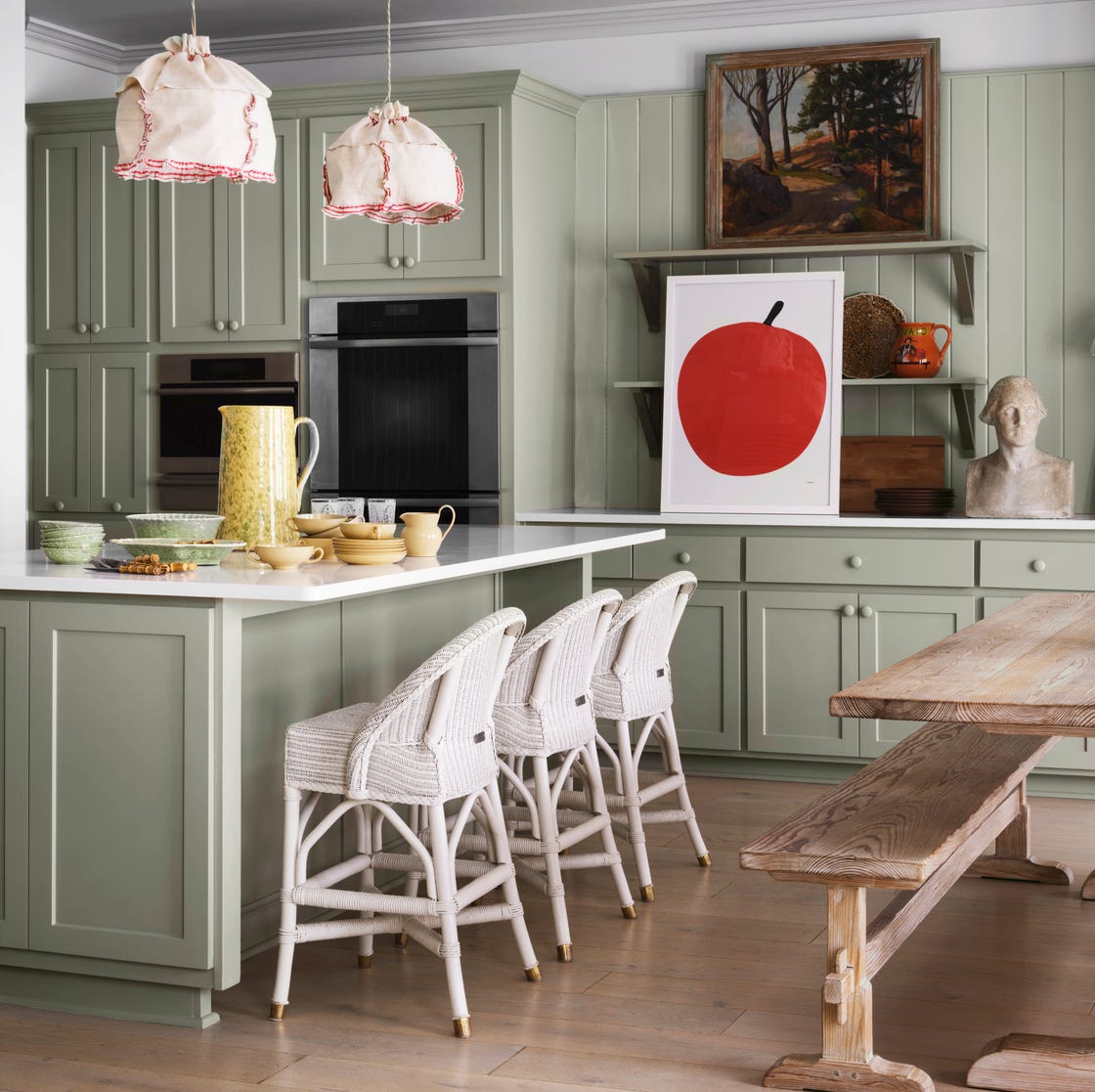
Natural light hits the sage green cabinets differently depending on the time of day, and this kitchen uses that to its advantage. The overhead lights add a warm glow in the evening, while the woven stools and wooden bench bring in texture that catches the daylight. The wood island anchors the room with a solid mass, so the sage green perimeter cabinets feel lighter by comparison. A useful principle: test your cabinet color at different times of day before committing. A shade that looks muted in morning light can shift to something brighter under overhead fixtures, and the woven and wood elements here help absorb that shift.
Dark Modern Farmhouse Cabinets: Storage Solutions
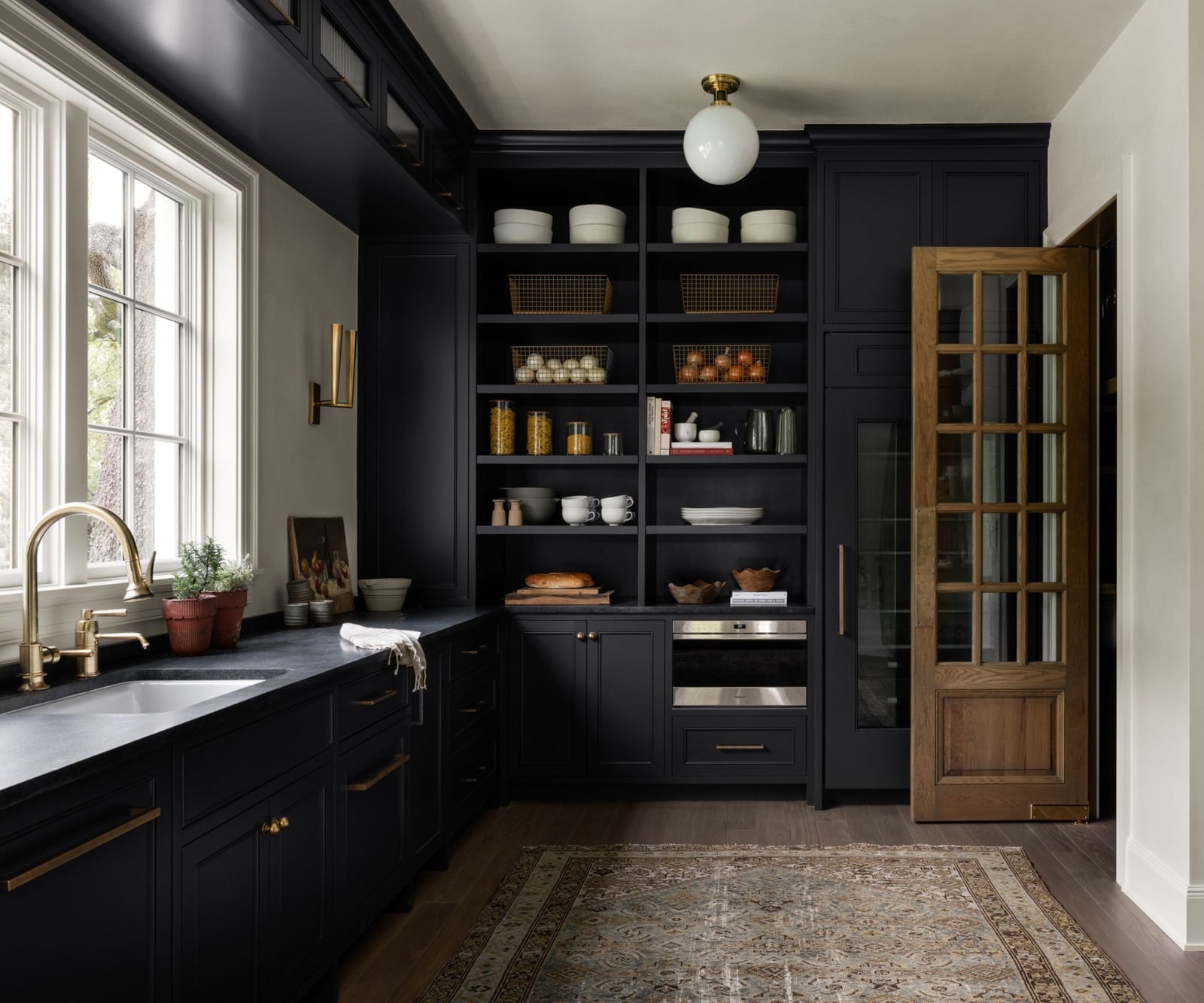
A practical rule for dark cabinetry: balance closed storage with open shelving so the room does not feel like a cave. Here, black cabinets sit below open shelving that holds dishes and glassware, breaking up the dark mass with visible everyday items. The wood island adds warmth and a lighter surface for prep work, while the cream walls and marble countertops reflect natural window light. The overhead pendant draws the eye up, keeping the dark lower cabinets from dominating the sightline. If you choose dark cabinets, plan for at least one element, open shelving, a light countertop, a wood island, to create contrast and prevent the room from feeling smaller than it is.
Sage Green Cabinets & Marble: Budget Swap
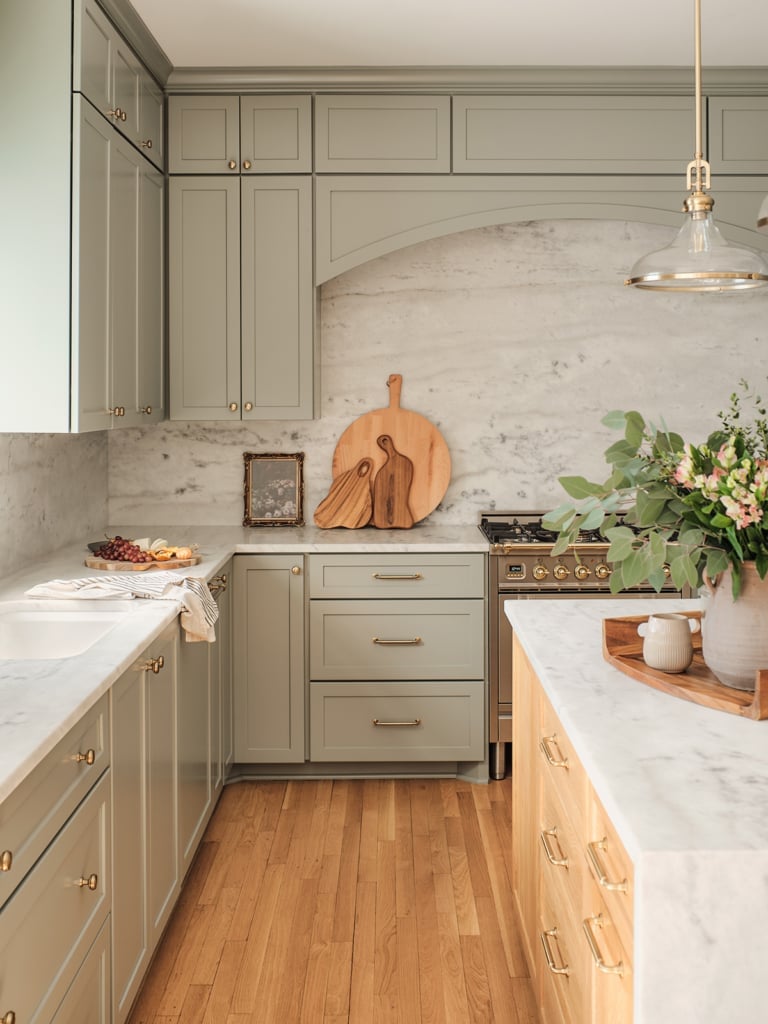
Sage green cabinets paired with marble countertops and a wood island keep the kitchen from feeling too formal. The brass hardware ties the wood and stone elements together, while the natural light and pendant light balance the cool stone with warm tones. For a similar effect without the cost of marble, a quartz countertop in a soft white veined pattern reads the same way against sage green.
Two-Tone Navy Blue & Mint Green Cabinets: Styling Variation
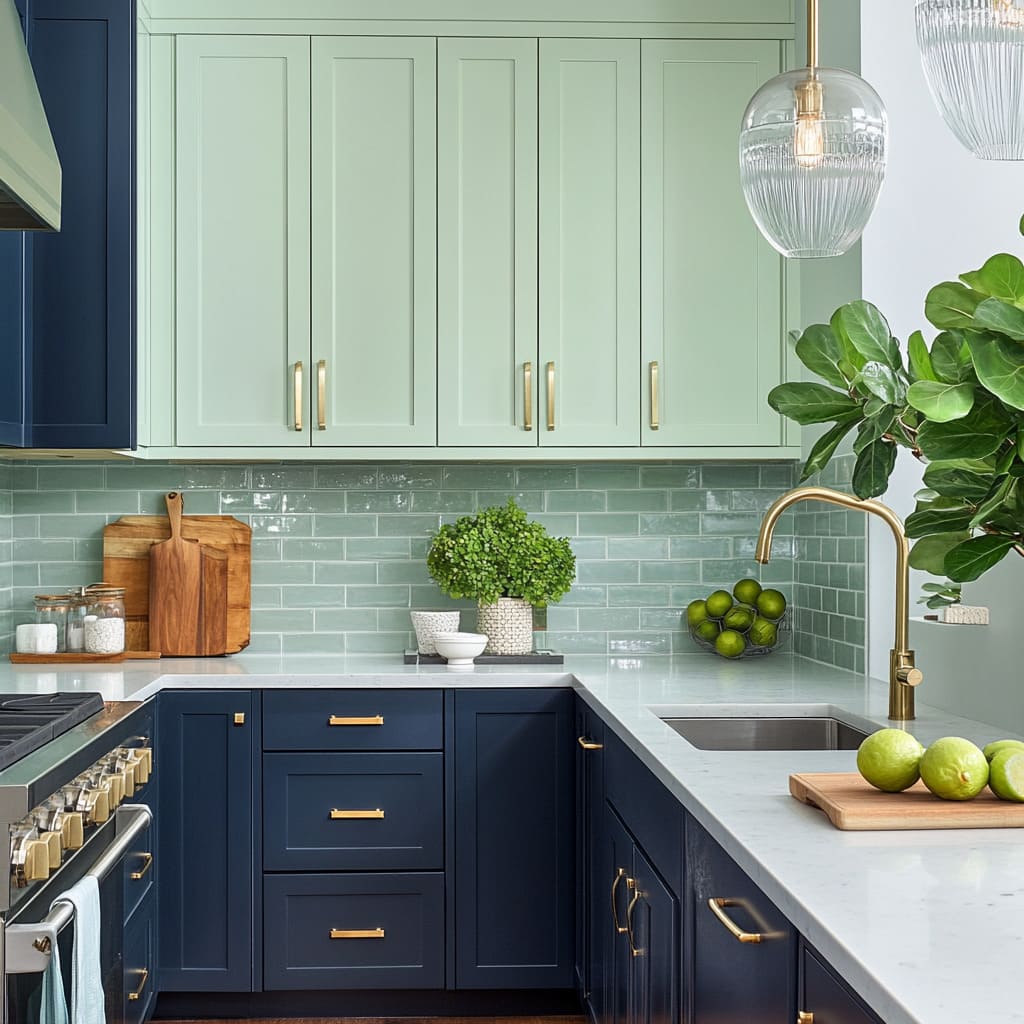
The navy blue lower cabinets anchor the room while the mint green uppers keep it light. White subway tile backsplash and marble countertops let the two colors stand out without competing. For renters, peel-and-stick tile on the backsplash and temporary contact paper on the lower cabinets can mimic the contrast without permanent changes.
Sage Green Cabinets: Durability Considerations
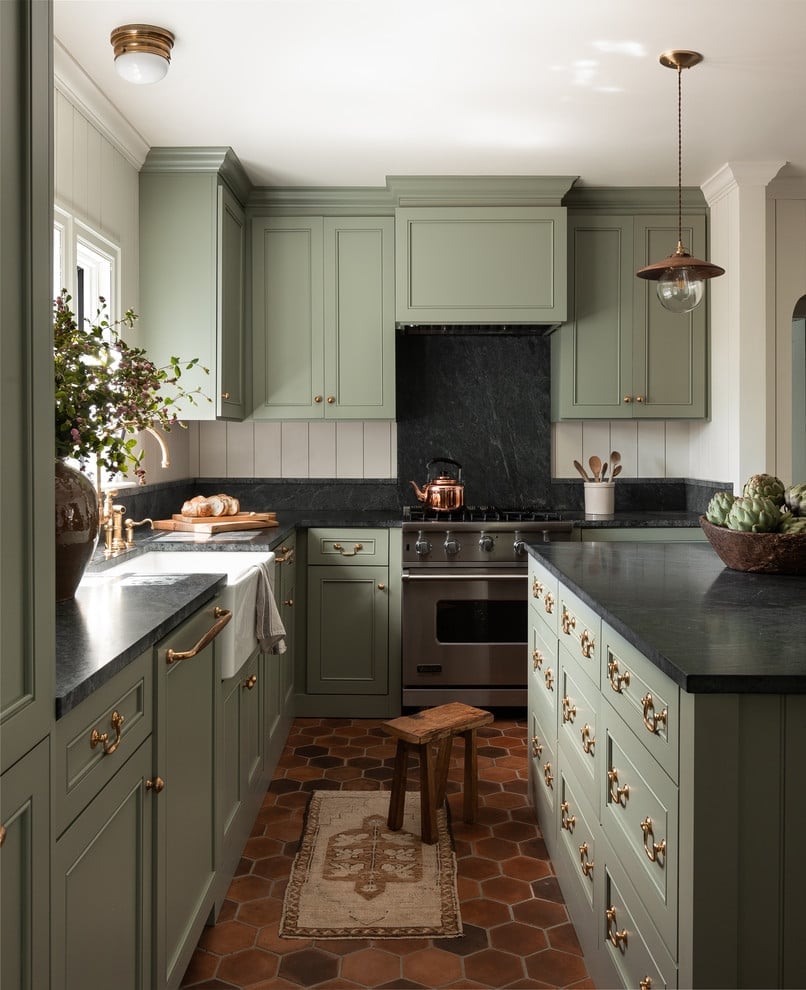
Sage green cabinets hold up well in a traditional kitchen with stone countertops and a hex tile floor. The matte finish on the wood cabinets hides fingerprints better than a high-gloss option, and the brass hardware adds a durable touch. A pendant light and natural light keep the sage tone looking fresh and not muddy.
Vibrant Green Galley Cabinets: Scale and Proportion
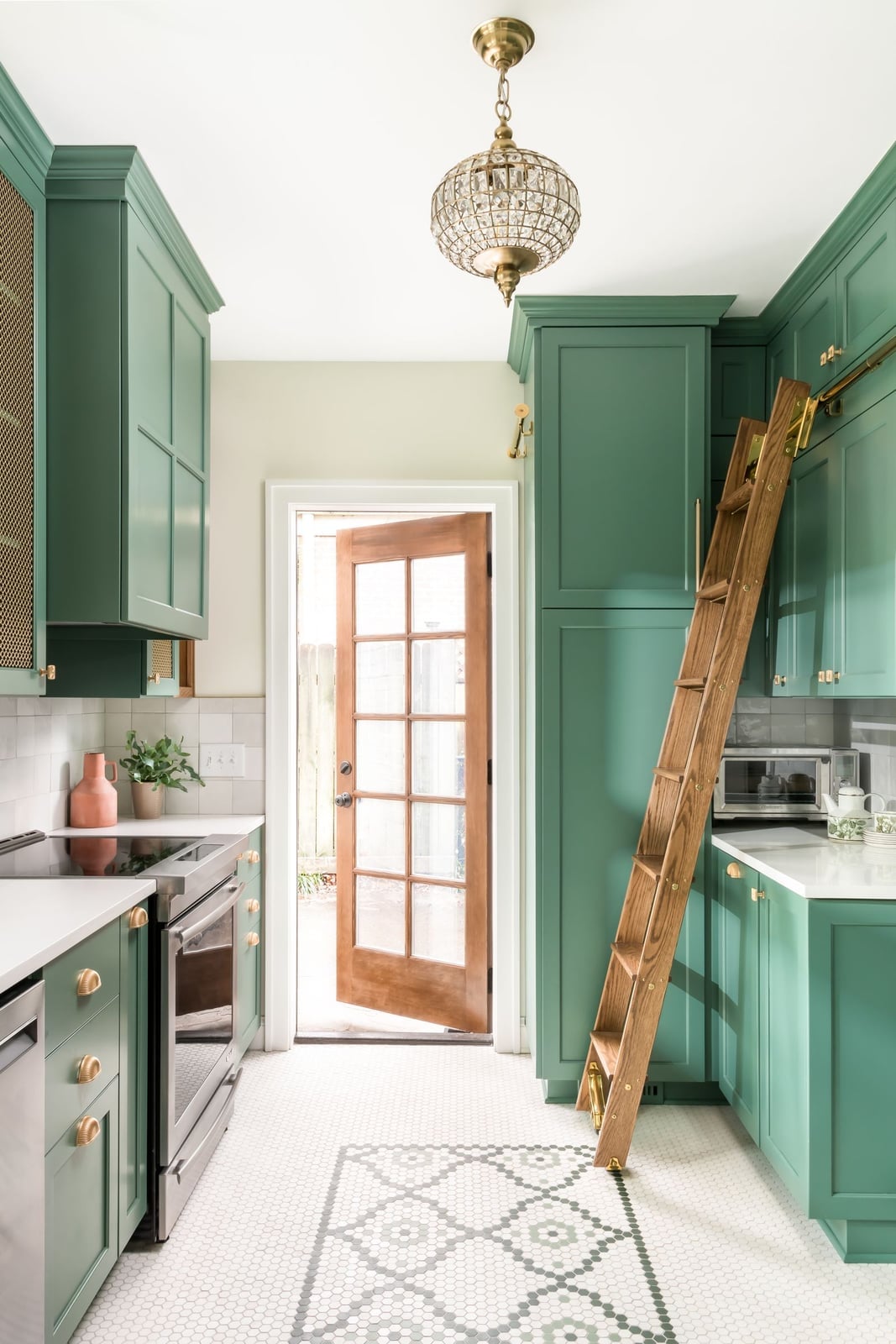
How do you make a compact galley kitchen feel bigger without losing storage? Vibrant green cabinets from floor to ceiling draw the eye upward, and a wooden ladder makes the high cabinets accessible. The white walls and tile backsplash keep the green from overwhelming the space, while the overhead pendant light ensures the color reads clearly even in a narrow layout.
Terracotta Cabinets: Renter-Friendly Options
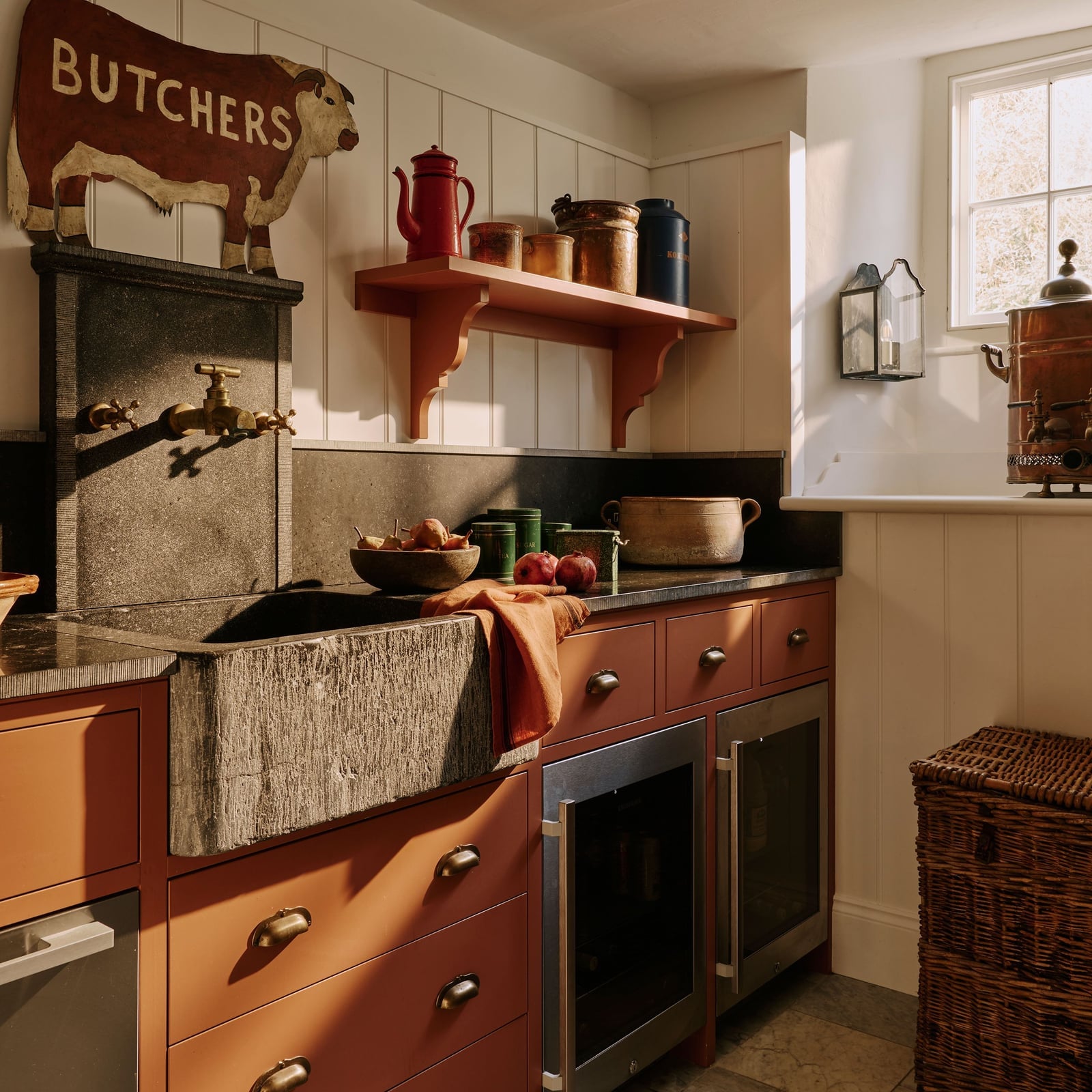
Terracotta cabinets paired with a stone sink and wooden shelf create a farmhouse feel without built-in cabinetry. The lantern fixture warms the gray and wood tones. For renters, peel-and-stick wallpaper in a terracotta tone on the backsplash and a freestanding shelf can bring the same earthy palette without painting the cabinets.
White Cabinets & Wood Island: Palette Harmony
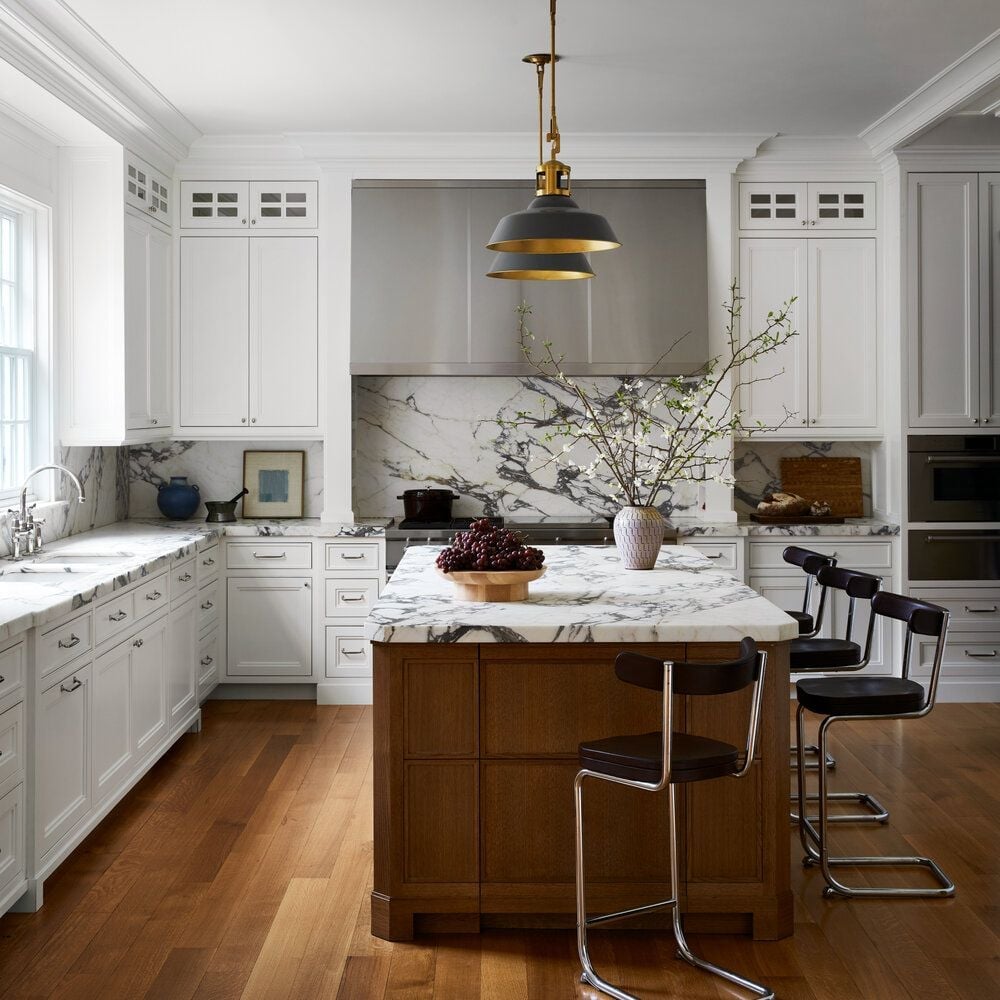
A practical rule for pairing white cabinets with a wood island is to let the island carry the warmth while the perimeter stays quiet. In this transitional kitchen, the white cabinets and marble countertops keep the backdrop light, so the wood island becomes the focal point without competing for attention. The marble waterfall edge on the island adds a polished finish that ties the stone and wood together. The gray tones in the palette soften the contrast, keeping the room from feeling stark. Statement pendant lights above the island draw the eye to the wood surface, making the island the natural gathering spot in a spacious layout.
Vibrant Emerald Green Cabinets: Materials Focus
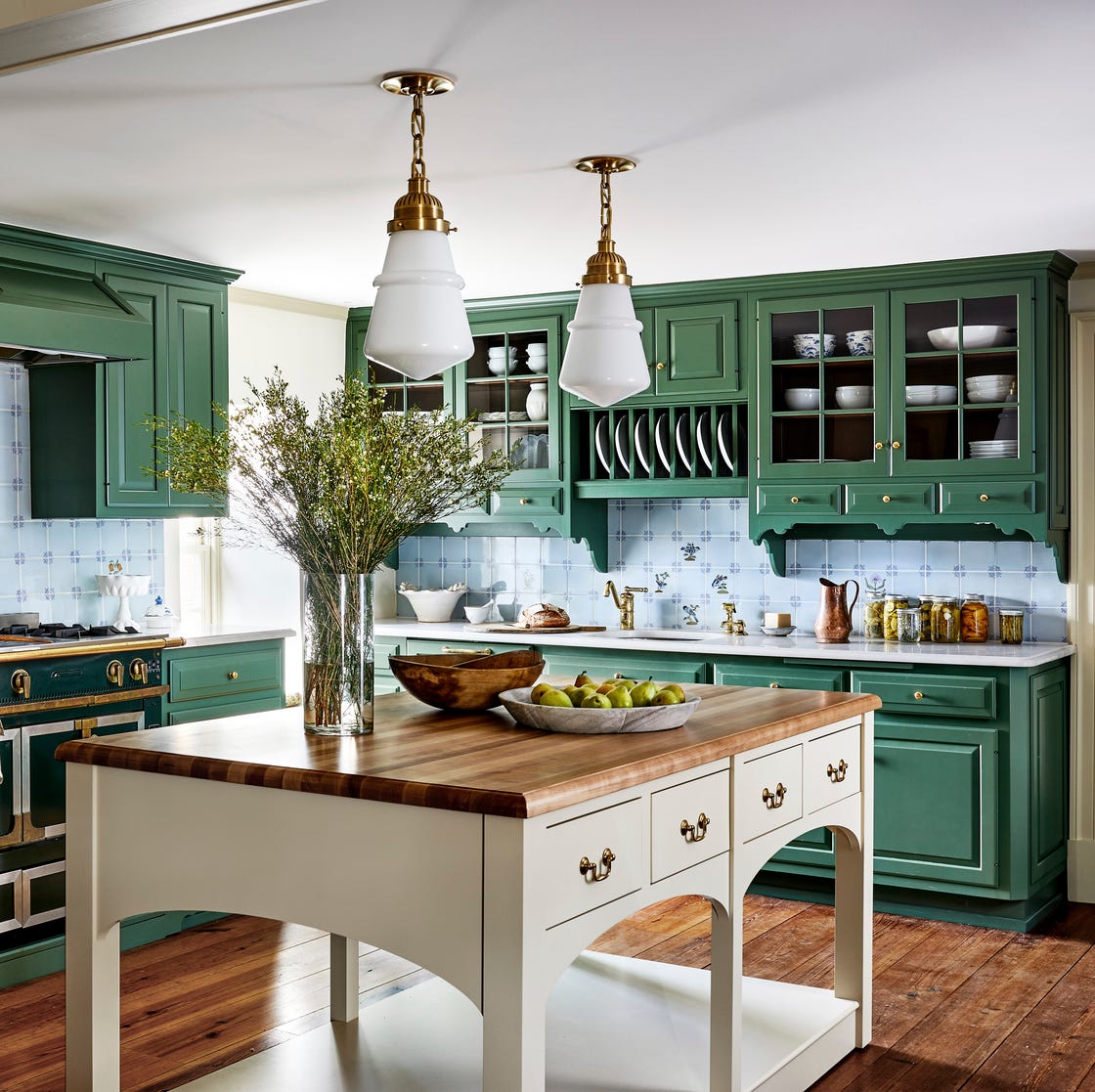
Set vibrant emerald green cabinets against a close alternative like deep navy and you will see why green holds its own in a traditional kitchen. The green reads as rich and lively, while navy leans more formal. In this roomy kitchen, the emerald cabinetry surrounds a central wood island, and tile and marble keep the look grounded. The blue undertones in the green tie into the white and blue palette. Windows and pendant lights above the island bring out the depth of the green without washing it out. The wood island breaks up the expanse of green and gives a resting point. This setup works best when the surrounding materials stay neutral, letting the cabinet color carry the personality of the room.
Navy Blue Lower Cabinets: Layout Design
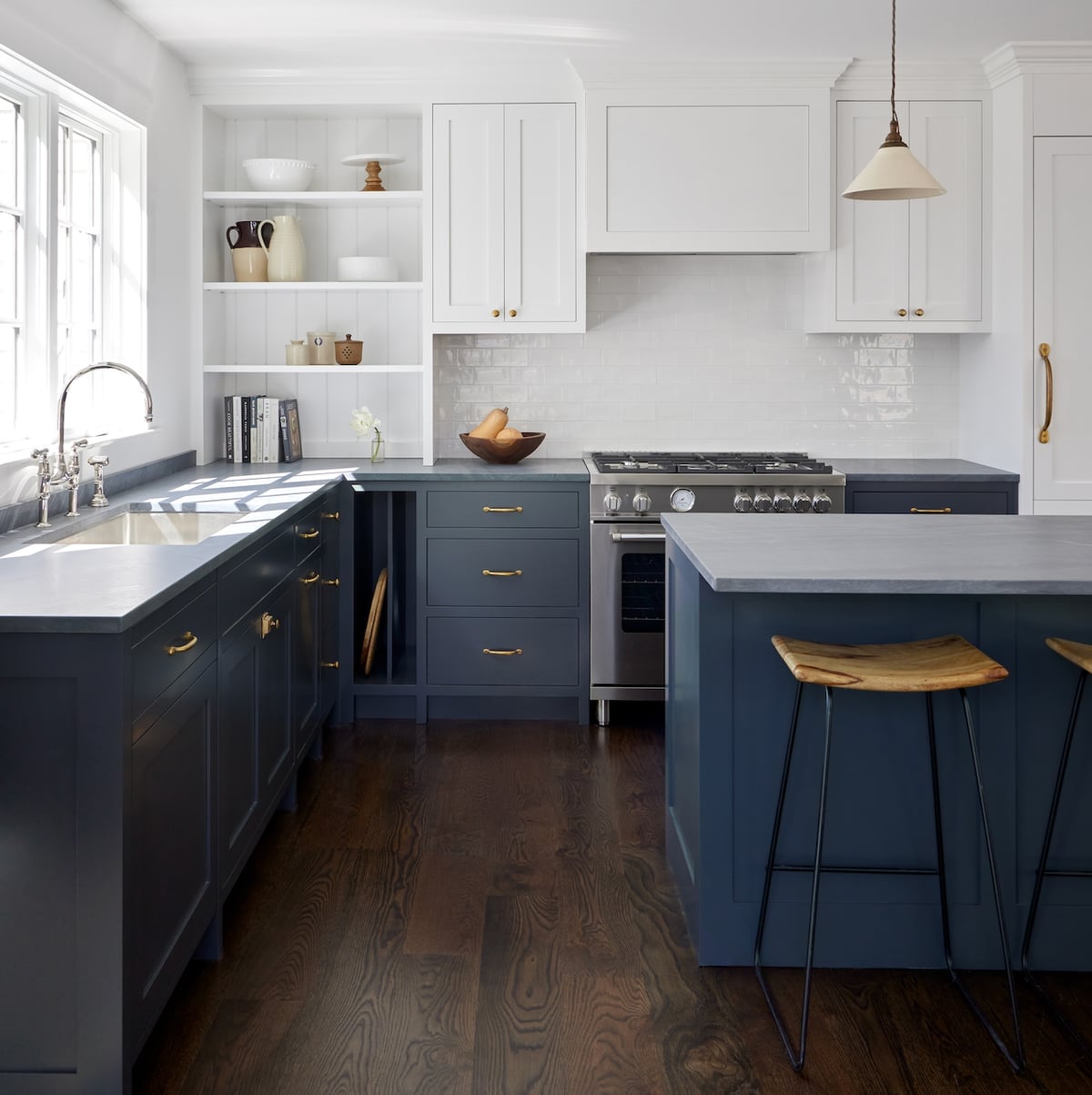
The navy blue lower cabinets anchor this modern kitchen while the white upper cabinets keep the space airy. Splitting the color this way draws the eye down to the work zone, making the island feel central. The gray island adds a middle tone that bridges the dark lowers and the bright uppers. A pendant light above the island gives the navy depth without making the kitchen feel closed in. This two-tone approach suits a roomy layout where you want a strong visual base but still need the upper half to feel open.
Light Gray Cabinets: Budget Swap
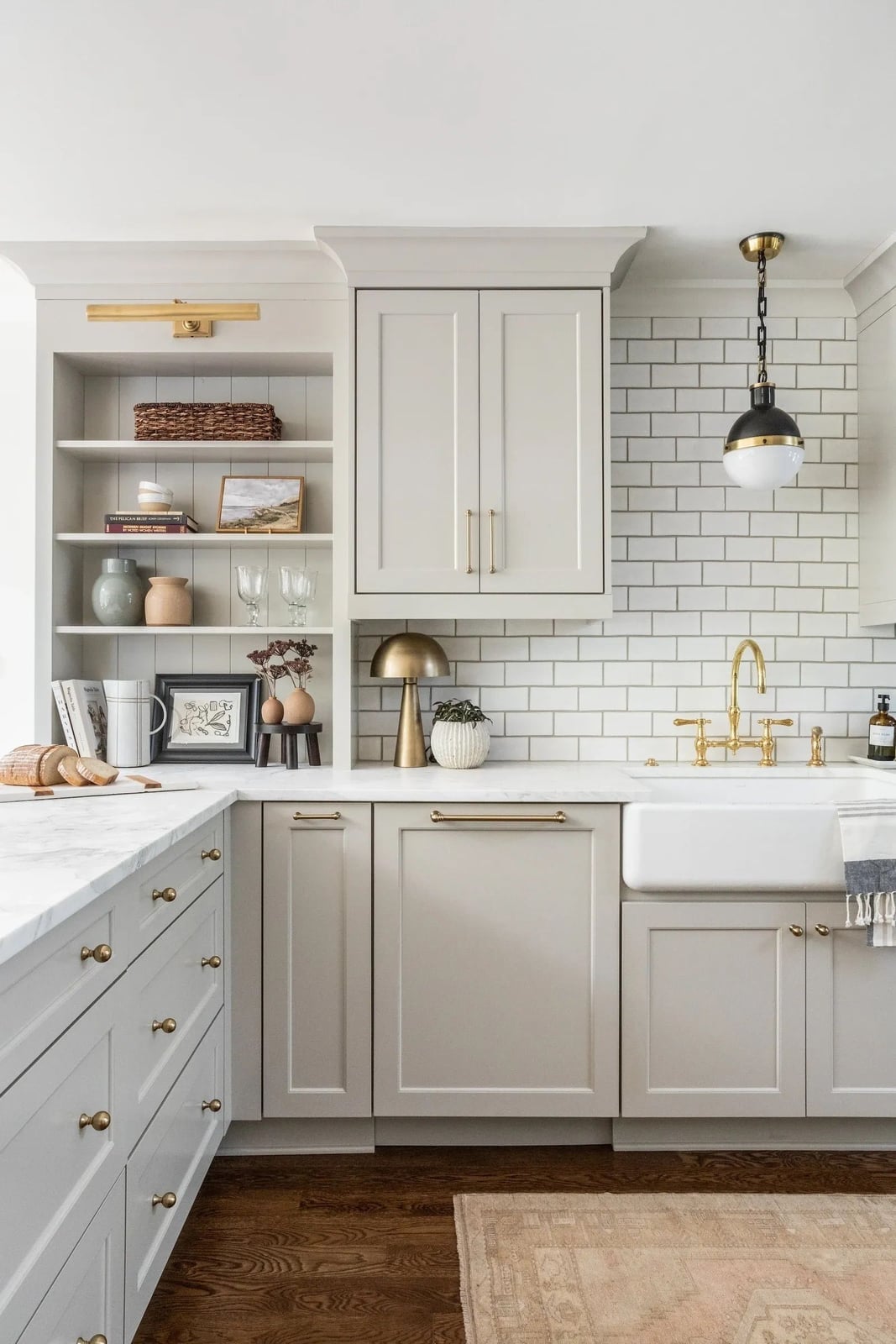
Light gray cabinets are a clear choice when you want a neutral that does not read as plain white. The subtle gray pairs with white subway tile and brass hardware, giving the space a soft, finished look. The counter and shelving add warmth, so the gray does not feel cold. A budget swap here is to keep the existing cabinet boxes and refresh the doors with a light gray paint, then change out the hardware to brass. That single move shifts the whole feel of the room without a full redo. Natural light and a pendant light above the counter make the gray look softer, so the kitchen stays bright even in a corner shot.
Dark Gray & White Cabinets: Durability Focus
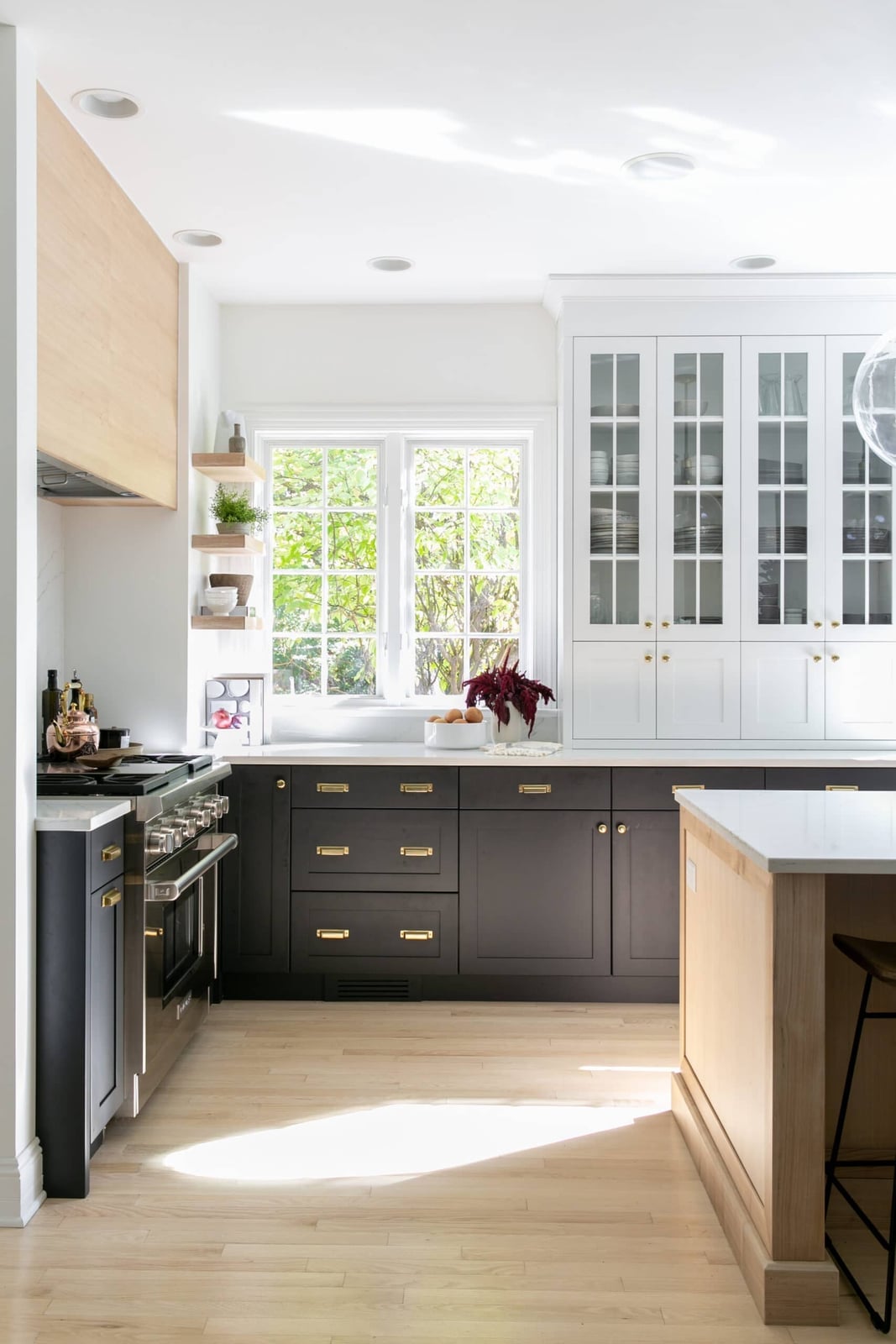
Two-tone cabinets put the darker color on the lower half where it hides everyday wear. In this modern farmhouse kitchen, the dark gray lower cabinets contrast with the white uppers, and the wood island adds a warm middle ground. The L-shaped layout with an open plan keeps the room feeling connected, while the dark lowers ground the space visually. The white uppers reflect natural light and the recessed lights, so the upper half stays bright even with the dark base. This contrast works best when the island picks up the wood tones from the floor or other furniture, tying the two cabinet colors together. The laminate and stone surfaces in the room are easy to wipe down, which suits a busy kitchen where the lower cabinets take the most contact.
Bold Blue Cabinets: Lighting and Atmosphere
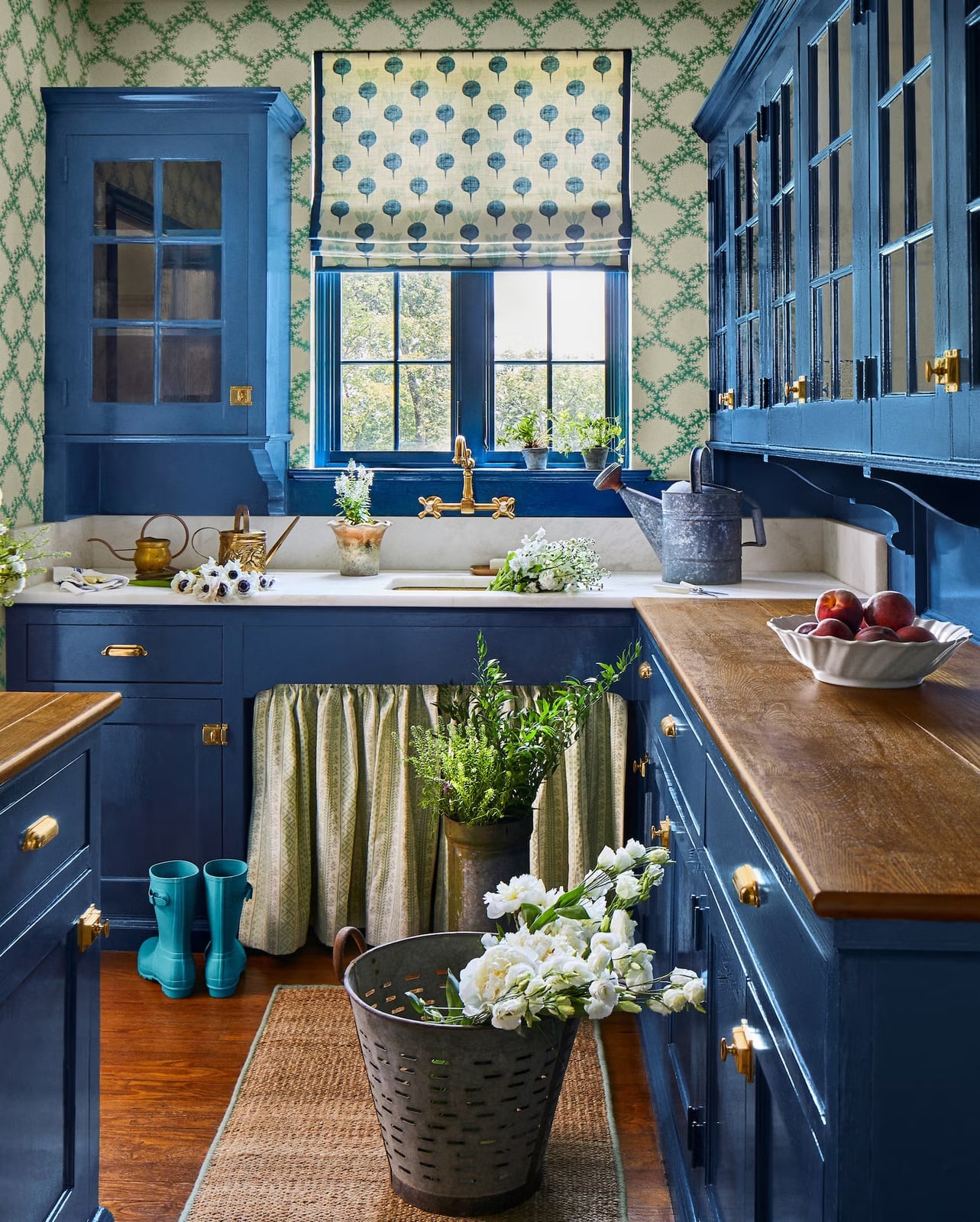
A bold blue cabinet set gains stability from a wooden countertop, with brass hardware and a patterned roman shade adding texture. The traditional setting uses natural light from the window to keep the saturated color from closing in. For the palette to hold together, repeat the blue in small accents nearby and let the wood and white surfaces breathe.
Sage Green Cabinets: Styling Variation
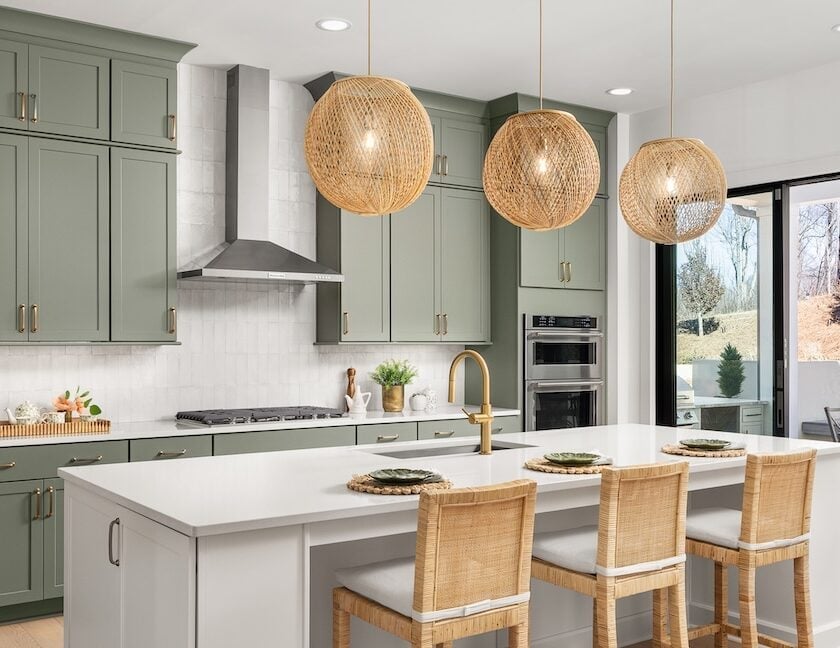
Swap in rattan bar stools and a gold faucet to shift the look without a full renovation. Sage green cabinets paired with these warm textures create a cohesive style. The modern kitchen uses natural light and pendant fixtures to keep the palette open. The wood, stone, and gold elements break the green so it never feels flat. This approach works for renters who can change furniture and hardware but not the cabinet color itself.
Deep Purple Cabinets: Scale and Proportion
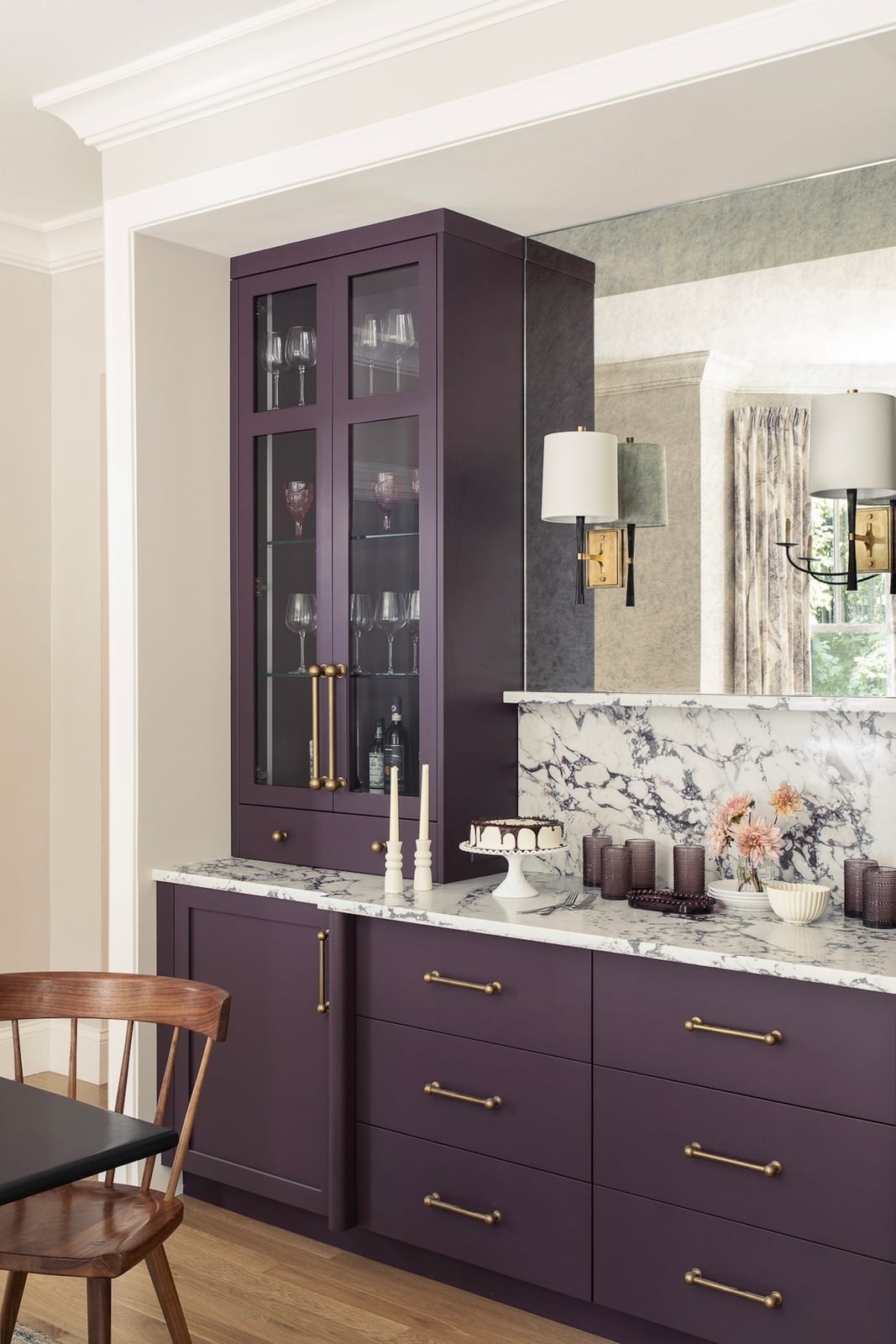
Deep purple cabinets sit somewhere between navy and black, making them a bolder choice that still reads as neutral from a distance. The transitional kitchen uses glass-fronted upper cabinets and a marble countertop to keep the space from feeling heavy. Wall sconces and natural light soften the high-contrast palette.
The ratio of purple to white is what makes this work: the lighter surfaces dominate the upper half, while the deep color anchors the drawers and lower storage. Brass hardware acts as the break, adding warmth without competing with the purple. The linear layout supports this balance, with built-in storage that follows the room’s proportions.
Sage Green Cabinets: Storage Integration
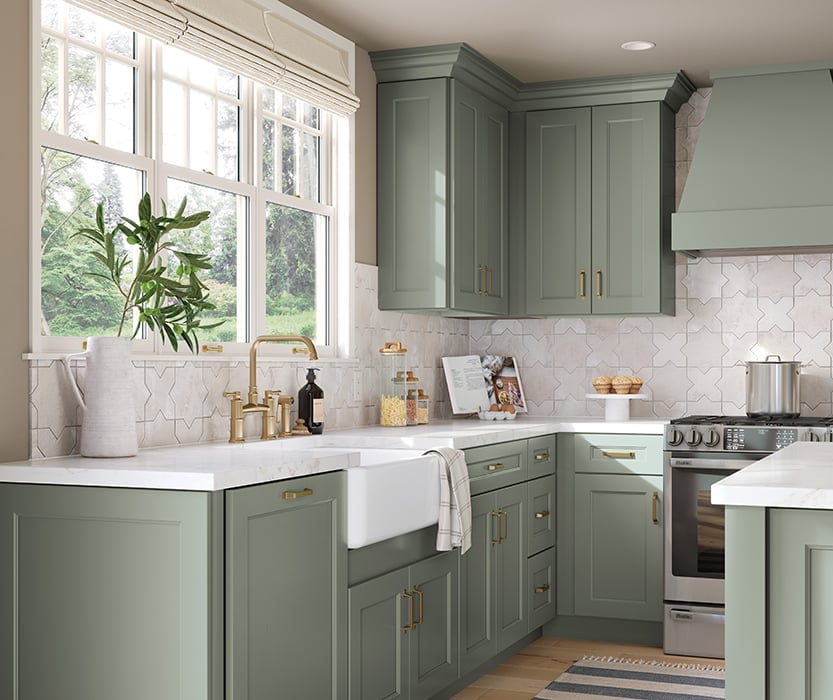
The farmhouse sink sits at the center of a corner layout, with sage green cabinets wrapping around it and brass fixtures tying the look together. The tile and stone surfaces add practical durability for the sink area. Storage stays within easy reach, using the corner configuration to maximize counter space without crowding the room.
Soft Blue-Gray Cabinets: Renter-Friendly Update
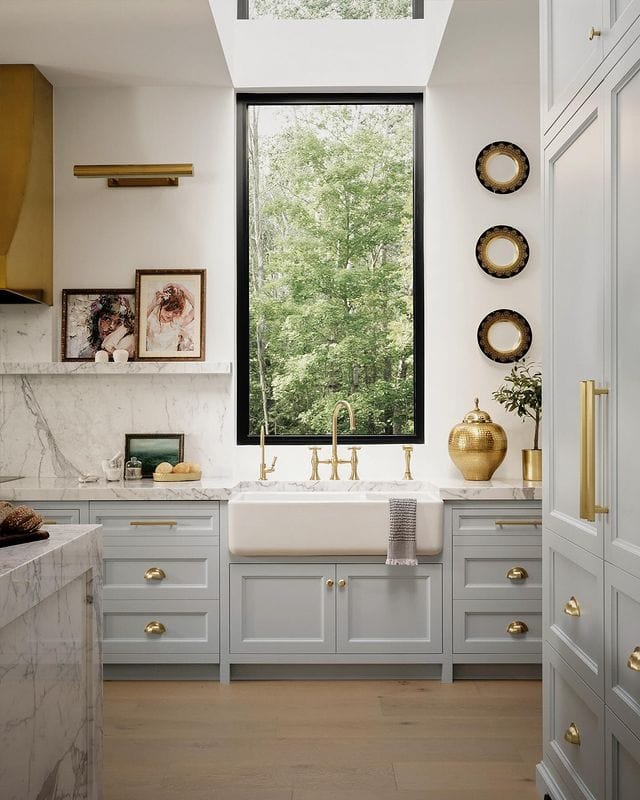
Soft blue-gray cabinets offer a clear middle ground between white and a full color. The light hue is fresh without demanding a total palette overhaul. Marble countertops and brass hardware add the contrast that keeps the finish from washing out. The u-shaped layout around the farmhouse sink makes the most of natural light from a large window and the wall sconces above. For renters, this shade works well because it pairs with existing white walls and neutral flooring without clashing.
Sage Green Cabinets & Island: Palette Focus
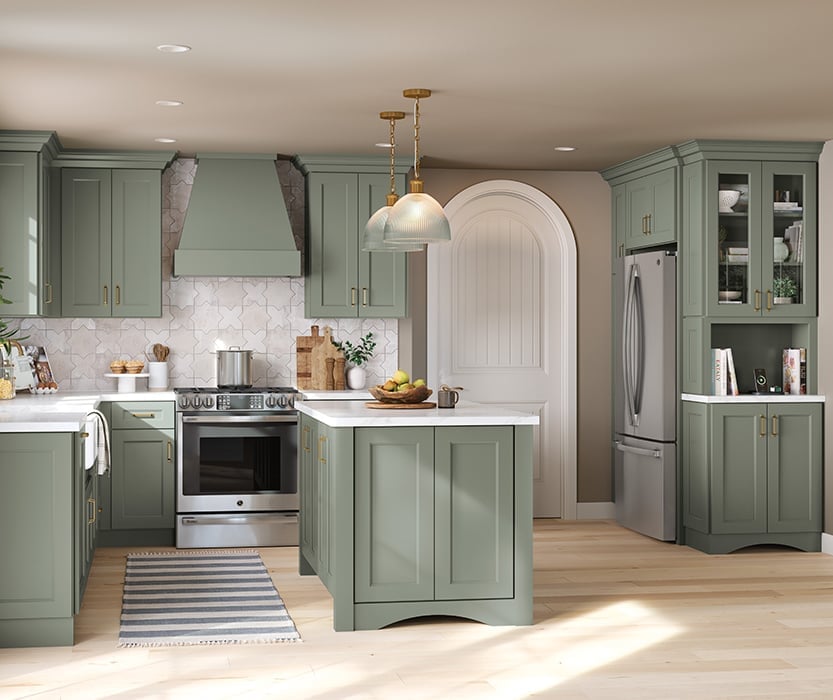
A practical rule for a two-tone kitchen is to let the cabinets lead the palette and have the island follow. In this modern farmhouse kitchen, sage green cabinetry wraps the perimeter and sets a muted, earthy tone. The island picks up a natural wood finish that echoes the floor, creating a continuous line of warm brown through the room. White countertops and a tile backsplash keep the look from turning heavy. Brass pendant lights add small points of contrast without pulling focus from the green. The result is a kitchen where each material has a clear job: the painted cabinets provide color, the wood island anchors the layout, and the stone and metal finishes add polish.
Sage Green Perimeter Cabinets: Materials Contrast
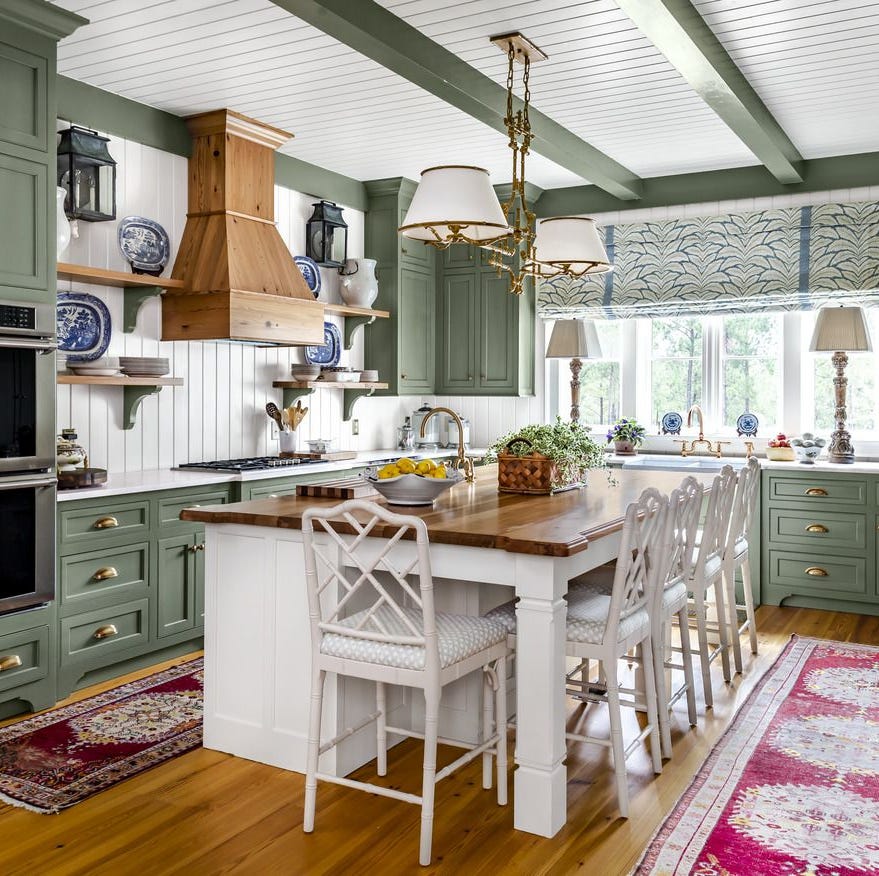
The farmhouse kitchen here uses sage green perimeter cabinets against a large wooden island to create a clear division of materials. Painted wood on the walls keeps the color soft and matte, while the island’s natural wood grain introduces texture and warmth. Bamboo stools add a second natural element that ties the two sides together. White countertops and a chandelier overhead balance the rustic feel. This pairing works because the green and wood share a similar undertone, so the contrast appears deliberate.
Wood & Dark Brown Cabinets: Layout Integration
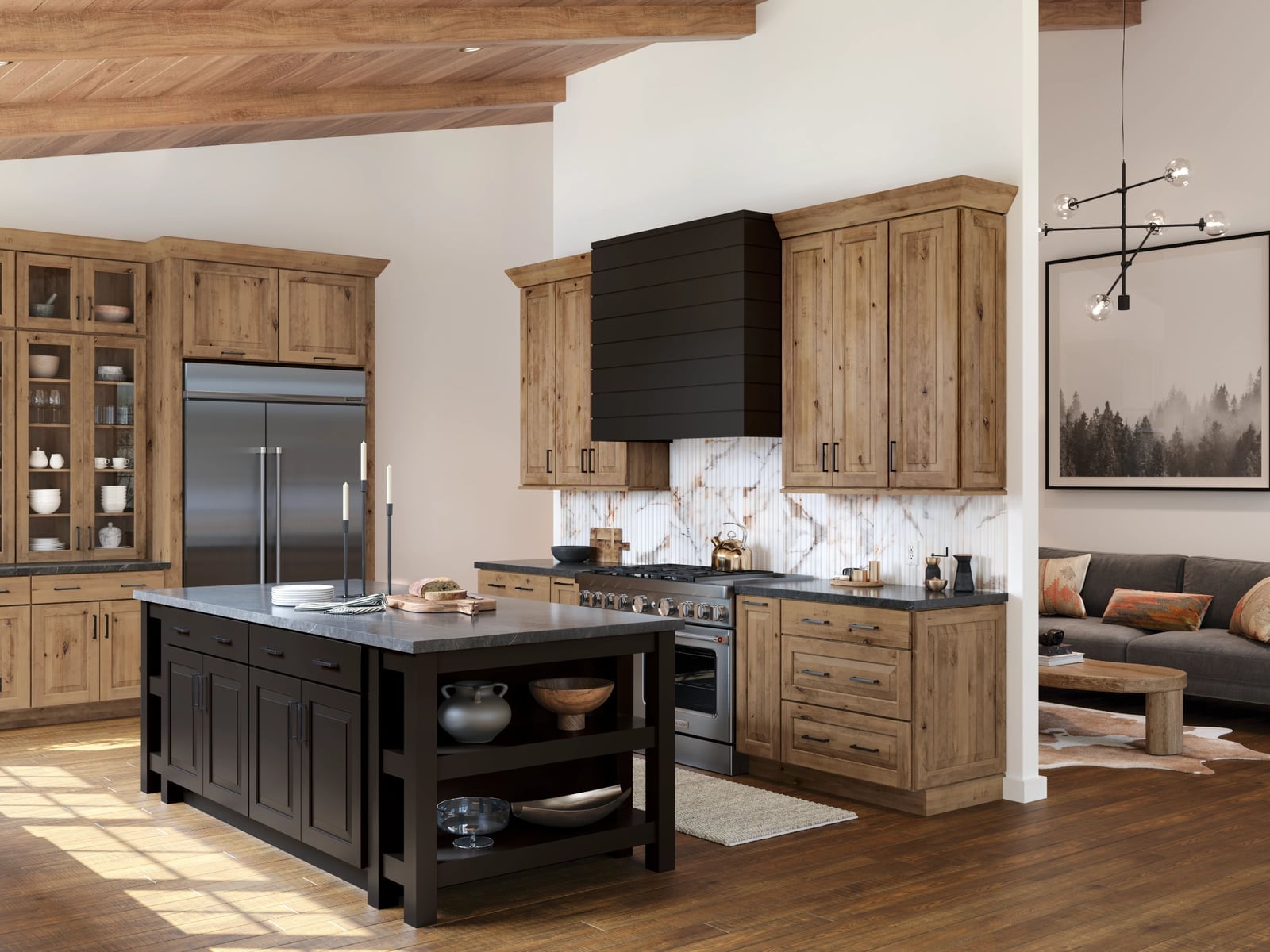
A practical rule for open plan spaces is to use cabinet color to define zones without building walls. In this transitional kitchen, natural wood upper cabinets and a dark brown island create two distinct areas within one sightline. The wood tones blend with the living area, while the darker island anchors the cooking zone. A white range hood and stone countertops keep the palette from feeling too heavy. Natural light from nearby windows and a modern chandelier balance the darker elements. This layout works because the colors do the dividing, so the room stays open and connected.
Blue-Gray Cabinets: Durability and Finish
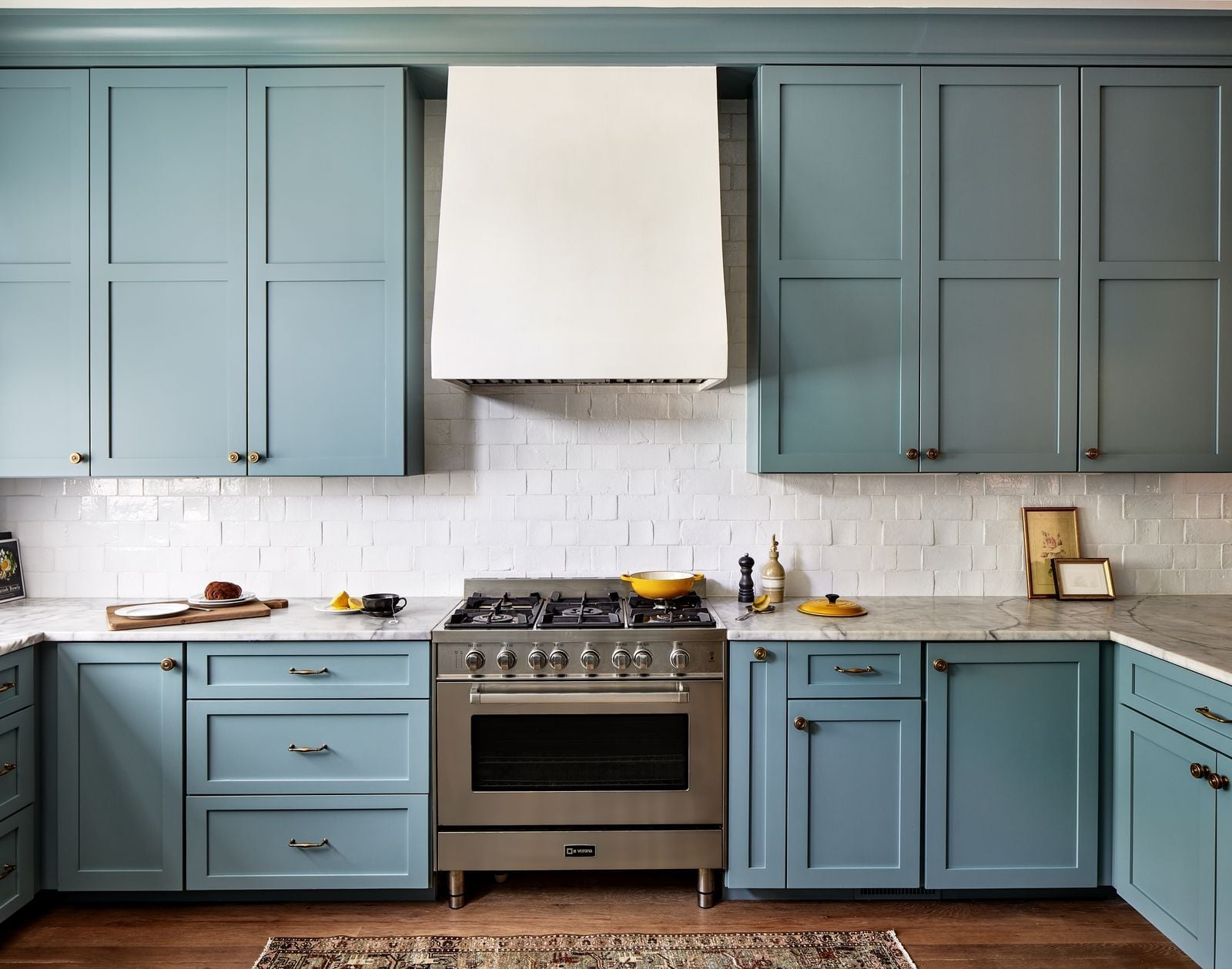
Blue-gray cabinets can look cool or warm depending on what sits next to them. In this traditional kitchen, the blue-gray tone leans warm because of the wood floor and brass hardware. The stone countertops add a natural gray that picks up the cooler side of the cabinets. A pendant light over the island provides focused task lighting, and natural light softens the whole room. The painted finish on the cabinets holds up well in a kitchen as long as the surface is sealed properly. To recreate it, look for a quality paint in a blue-gray hue on existing cabinets.
Dark Gray Cabinets: Budget Swap, Kitchen
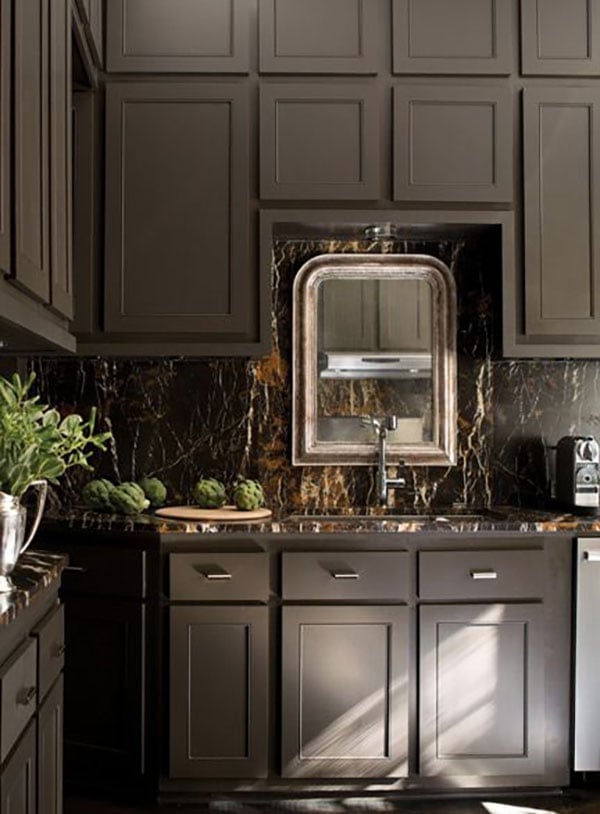
Dark gray cabinets pair with a black marble backsplash to create a layered, monochromatic look in this compact kitchen. The marble adds pattern and movement, while the dark wood floor keeps the palette grounded. A mirror on the wall reflects light from the ambient fixtures, making the space feel larger. This combination works for a budget swap because the dark gray cabinets do the heavy visual work, allowing simpler materials to blend in. The directional light over the countertops ensures the dark finish does not swallow the room.
Soft Blue-Green Cabinets: Scale and Proportion
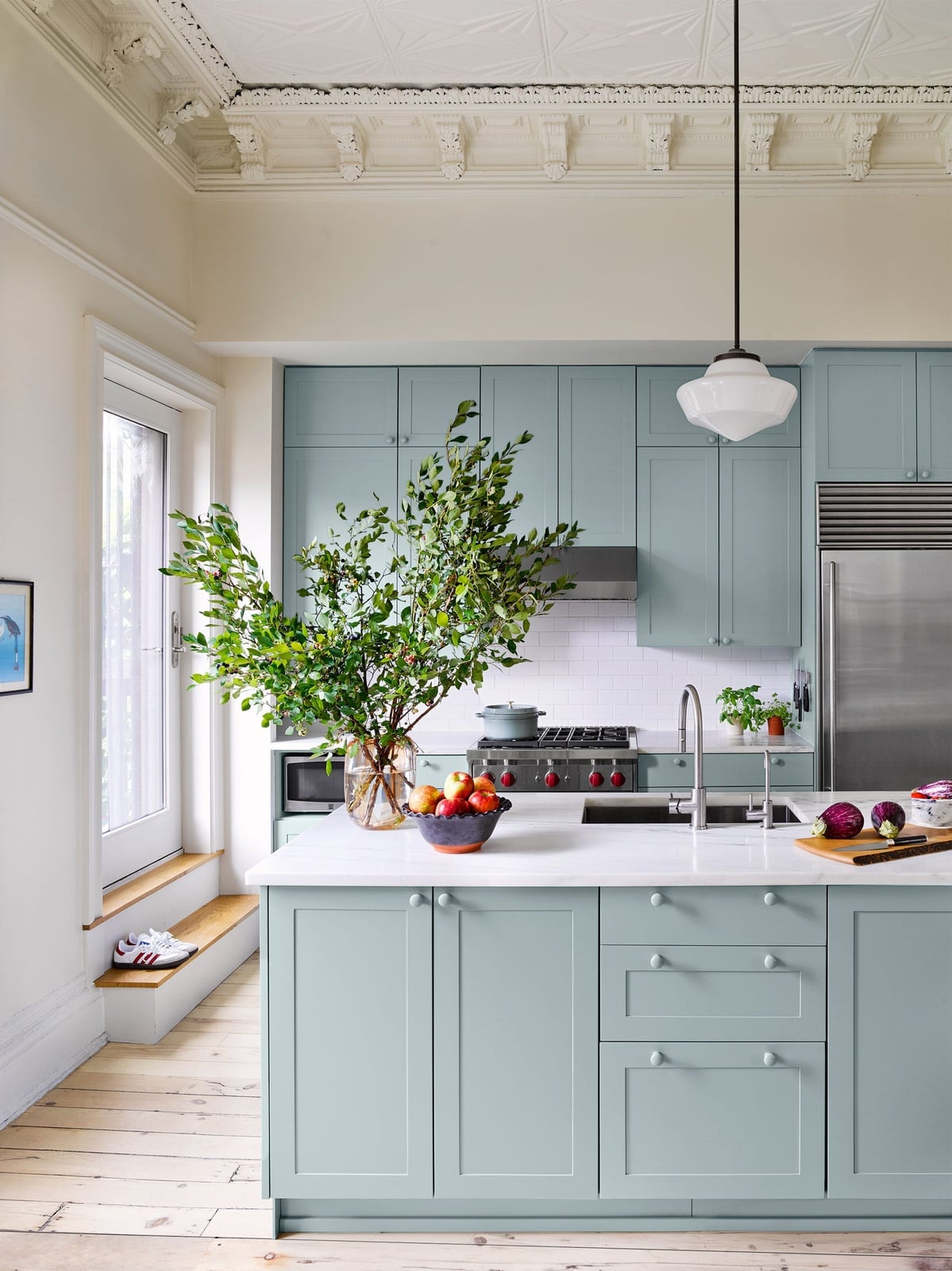
A muted blue-green on the perimeter cabinets keeps this open kitchen from feeling too serious. The marble island and stainless steel appliances stay neutral, so the color reads as calm rather than bold. Pendant lights over the island add a warm glow that softens the cool tone further. For a similar sense of balance, match a medium-saturation cabinet color with light countertops and natural wood accents. The white and wood palette gives the blue-green room to breathe without competing for attention.
Dark Gray & White Cabinets: Styling Variation
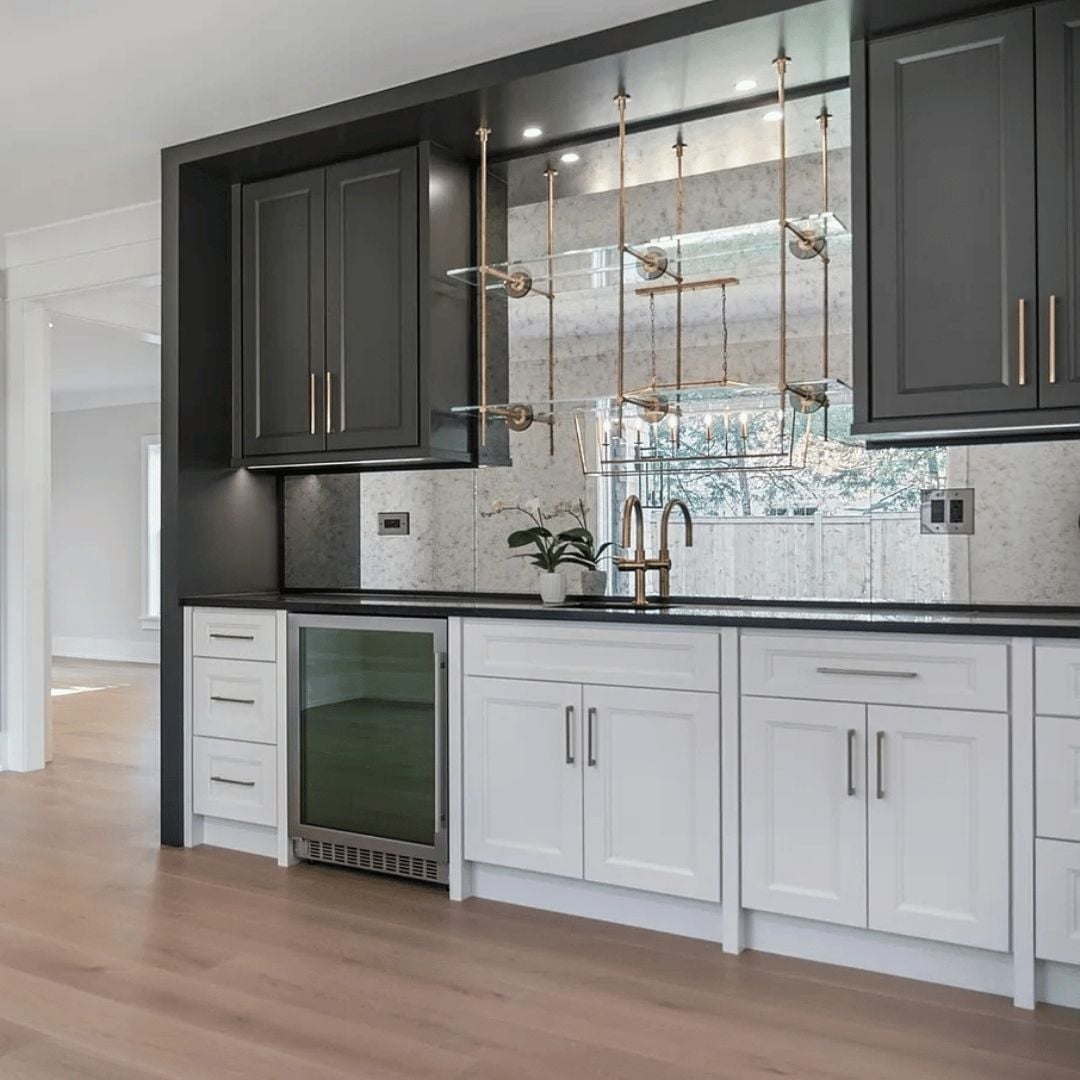
Two-tone cabinets can feel like a split decision, but dark gray lowers and white uppers with brass hardware make it look intentional. The dark gray anchors the bar area and the white keeps the room open. Brass handles and fixtures add warmth that stops the gray from reading as cold. This setup works because the contrast has a clear boundary: darker below, lighter above. The natural light from the reflective white surfaces helps the room feel larger. For a renter-friendly version, try peel-and-stick cabinet wraps in a matte dark gray and swap the hardware to brass pulls. No painting required, just a weekend of measuring and cutting.
Deep Blue Cabinets: Storage and Layout
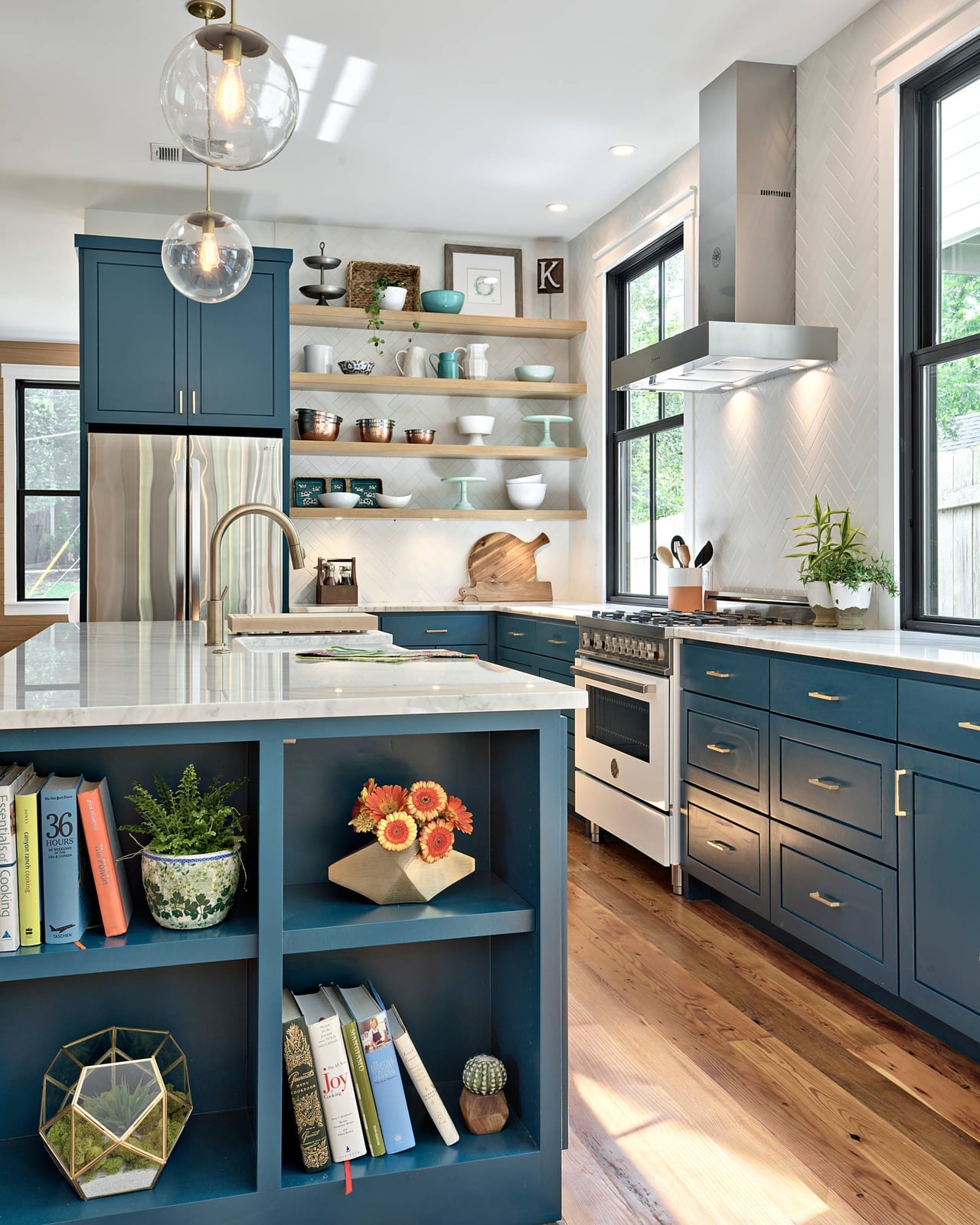
The deep blue cabinets draw the eye first, but the layout does the real work. A white range and wooden island break up the color block, so the blue feels balanced. Open shelving above the range keeps everyday items within reach and adds a spot to display ceramics or cookbooks. The pendant lights over the island provide task lighting without cluttering the counters. For a similar setup, keep the perimeter cabinets a single bold color and let the island stay a natural wood tone for contrast.
Sage Green Bar Cabinets: Lighting Ambiance, Close-Up Take
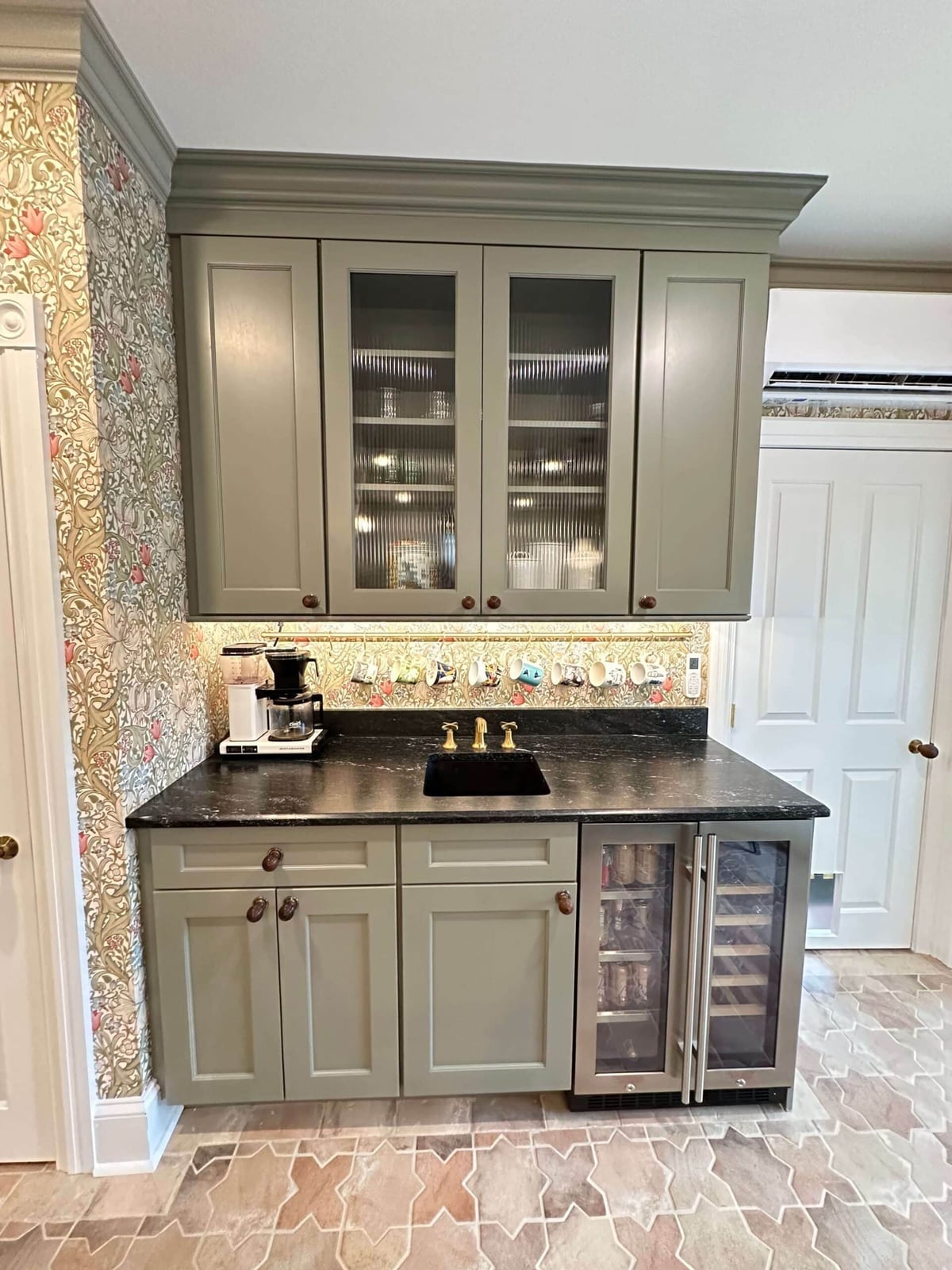
The sage green cabinets here are the quiet star, but the fluted glass doors are what make them interesting. The texture breaks up the flat painted surface and catches the under-cabinet lighting, giving the bar area a soft glow. A wine fridge and sink fit neatly into the compact unit, so the space functions as a proper bar station. The dark countertop and patterned backsplash add contrast without distracting from the cabinets. For a similar look, choose cabinet fronts with glass inserts and install low-profile lighting underneath to highlight the texture.
Final Thoughts
Cabinet color is the workhorse of a kitchen, not just a backdrop. Across these 29 examples, the practical takeaway is that finish durability and lighting matter as much as the hue itself. Darker shades show fingerprints faster, while lighter tones need more frequent cleaning. Pair your choice with hardware that matches your lifestyle, not just the current trend. If you rent, peel-and-stick film or a fresh coat of paint on a single island can shift the feel without a full remodel. Keep a sample board near your window for a week before committing. That test run will tell you more than any photo can.