
If you dream of a garden that looks like it grew itself, with flowers spilling over paths and that lived-in farmhouse charm, a cottage garden is the way to go. This style leans into abundance, mixing perennials, annuals, and shrubs in a way that feels both romantic and practical.
I have rounded up 35 cottage garden ideas to help you plan a space that blooms from spring through fall, with a relaxed, welcoming feel. Whether you have a sprawling yard or a small corner to fill, these photos show how to layer color, texture, and structure for a garden that looks established from day one.
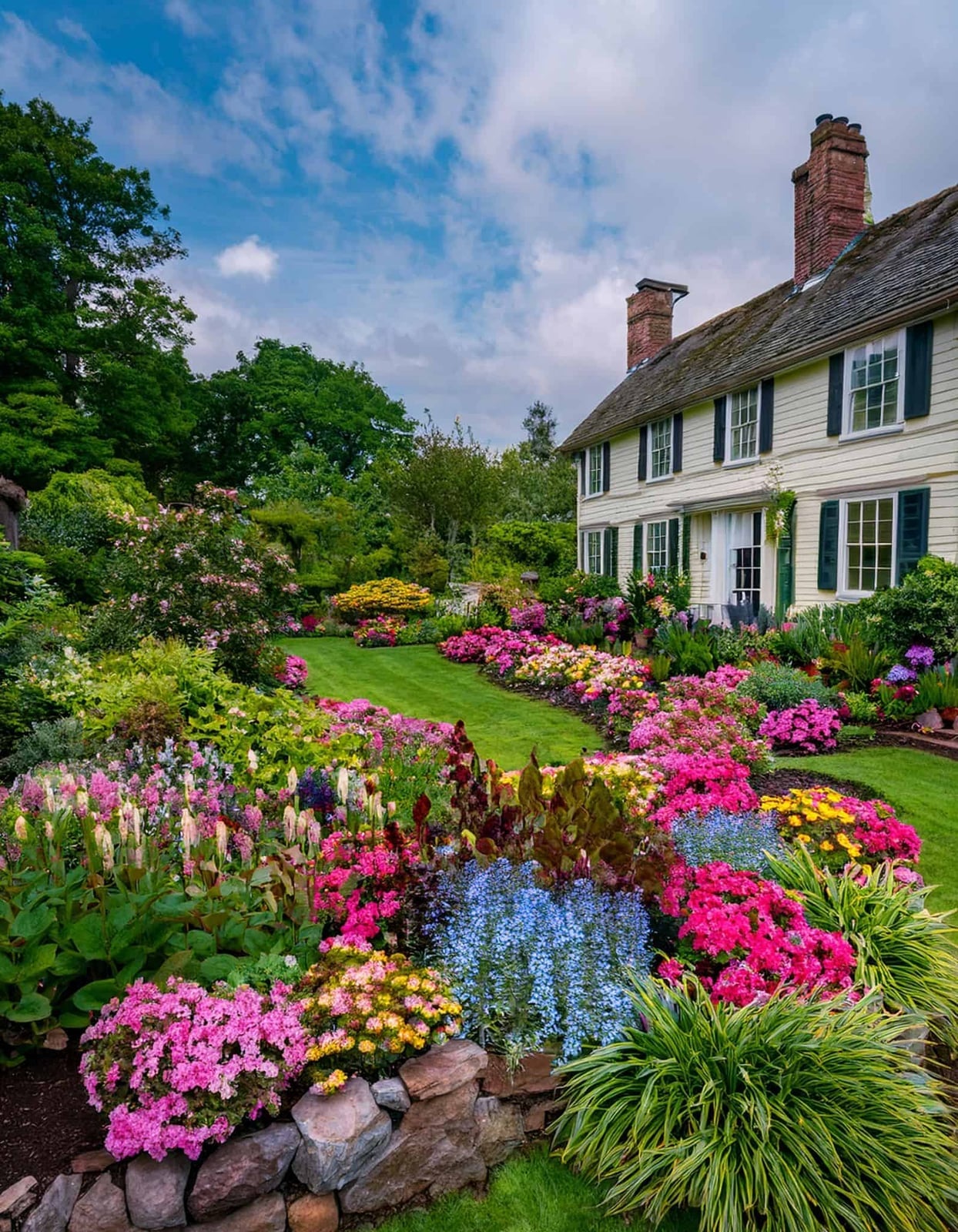
Vibrant Flower Beds Define a Spacious Cottage Garden
This garden uses a layout that gives the flower beds the starring role while keeping the rest of the space deliberately simple. Wide, sweeping borders arc around a central lawn, which acts as a calm green anchor. A low stone wall edges one side, and the grass path between the beds is wide enough to walk without brushing the petals. The palette is a mix of pink, blue, yellow and red against green foliage, with no single color dominating. The roomy feel comes from letting the lawn breathe between dense plantings, which is a useful decor principle for any garden: give each element enough visual space so the overall look stays ordered rather than frantic.
Winding Stone Pathways Through Lush Cottage Garden Planting
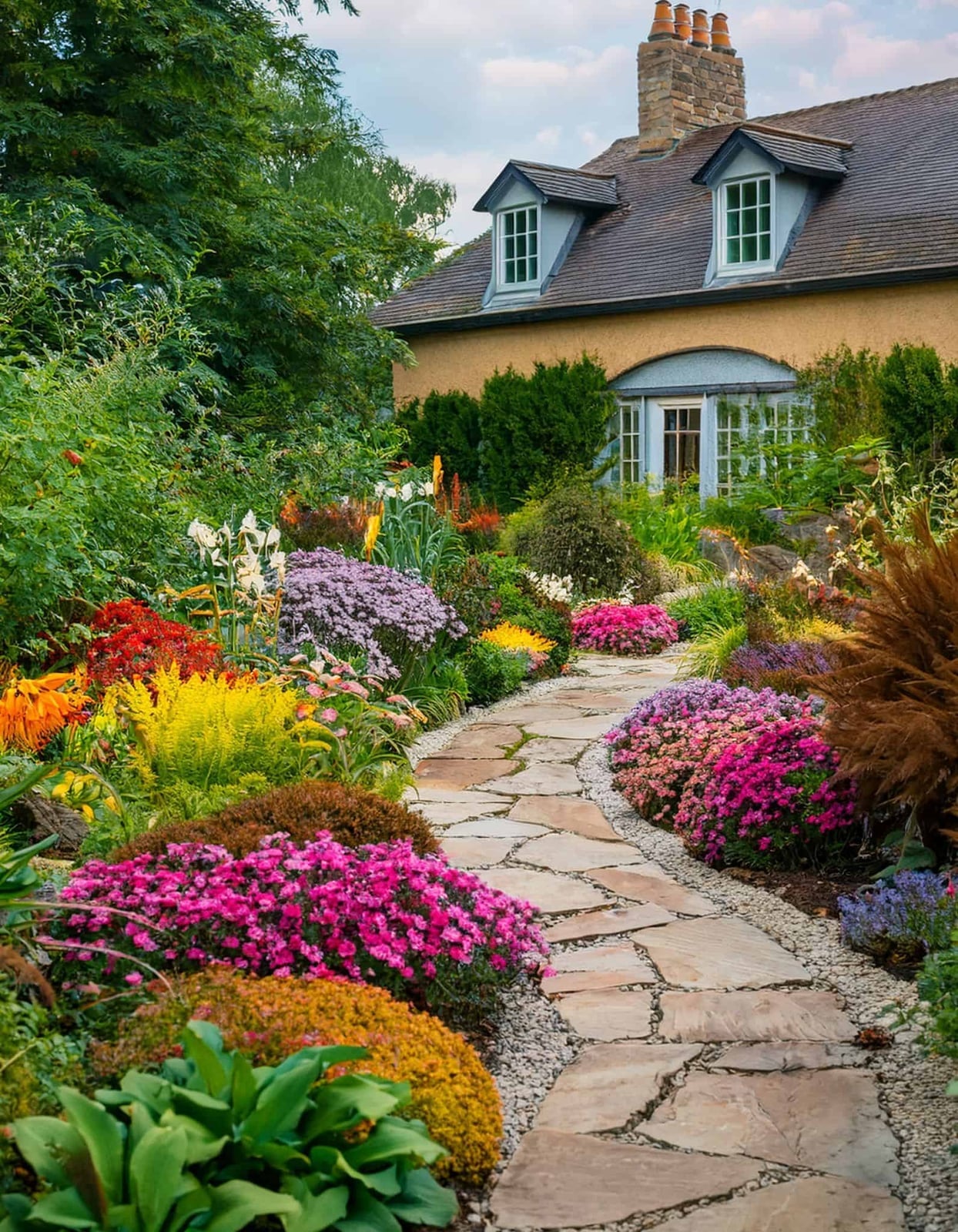
A winding stone path is the backbone here, and it does two things at once. It guides the eye through the garden while breaking up what could be a solid block of planting. The irregular stone pavers are set into gravel, which softens the transition between the path and the flower borders. The borders curve with the path, so the plantings feel like they spill naturally onto the walkway. The palette stays in the pink, purple and yellow range, with green foliage filling the gaps. The golden hour light makes the stone warm and the flowers glow, but the path would work just as well in overcast light because the contrast between hardscape and soft planting carries the design.
Whimsical White Archway as a Garden Focal Point
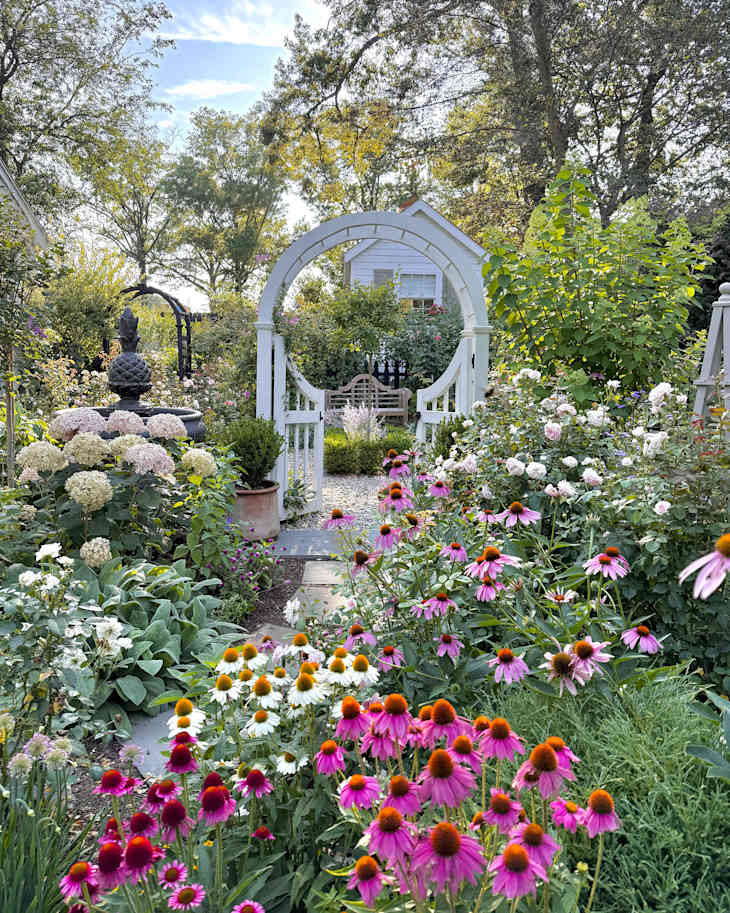
How do you make a small garden feel like it has depth without adding square footage? A white archway is one reliable answer. Here the arch sits at the middle of a stone path, with dense planting on both sides. The arch itself is painted white, which reads as clean against the pinks, purples and greens of the flowers. A wooden bench and a stone urn sit just beyond the arch, giving the eye a place to rest.
The materials mix matters. The arch is likely metal or wood, the path is stone, and the plantings are soft and layered. That contrast between rigid structure and loose, abundant flowers is what makes the arch feel like a destination rather than just a frame. The soft daylight helps the white stand out without glare, but the same trick works in shade because white paint naturally catches the light.
Rose and Lavender Beds Bordered by Box Hedges
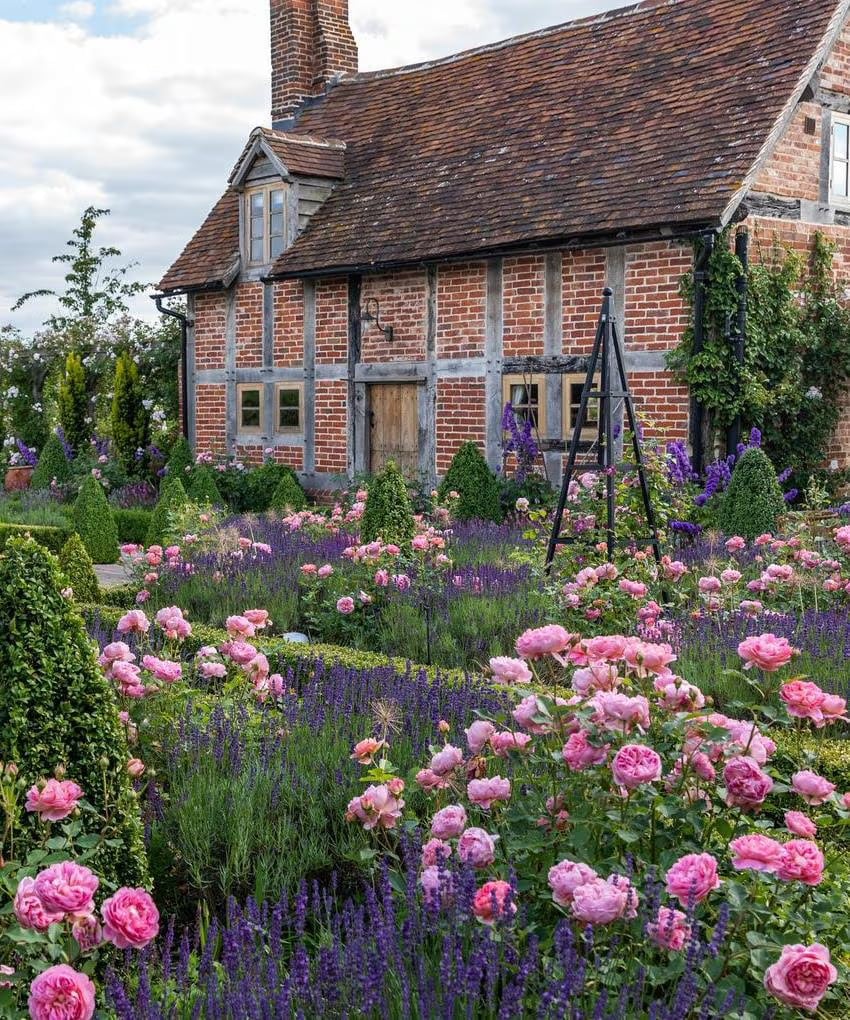
This garden takes a formal approach to cottage style by using low box hedges as borders for the rose and lavender beds. The hedges create clean lines in front of the house, with brick and timber details on the facade adding warmth. The palette is deliberately limited to pink roses, purple lavender and green box, which keeps the view from feeling chaotic even with masses of blooms. The soft daylight helps the pink roses read as the main event, with the lavender playing a supporting role. One practical takeaway from this layout is that a restrained color palette makes a dense planting look intentional rather than overgrown, which is useful when you want a cottage garden feel without the weedy look.
Farmhouse Charm with Overflowing Flower Borders
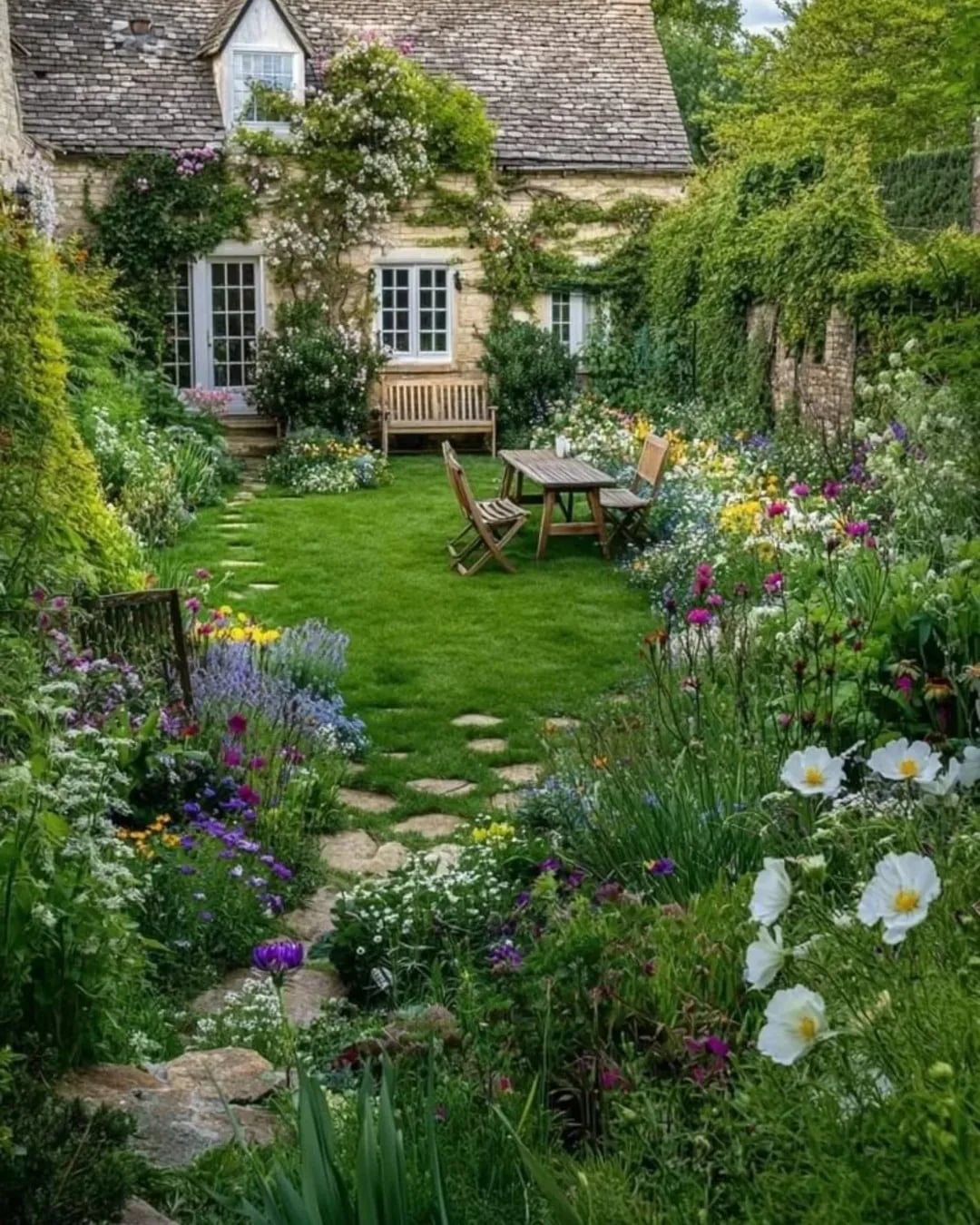
To get that farmhouse garden look, let the flower borders spill onto the path. Here the stone cottage sits at the back, with a central lawn and stone path leading to the door. The flower borders are dense with yellow, pink, purple and white blooms that overflow onto the grass. Wooden garden furniture adds a human scale, and climbing plants soften the stone walls. The style is defined by that abundance: the ratio is roughly two-thirds planting to one-third hardscape, which creates a lush effect. What breaks the look is the lawn, which stays neatly mown and acts as a foil to the wild borders. For renters, this approach works with container plantings placed along an existing path to mimic the overflowing effect without digging up the yard.
Layered Foliage and Terracotta Pots Along a Garden Path
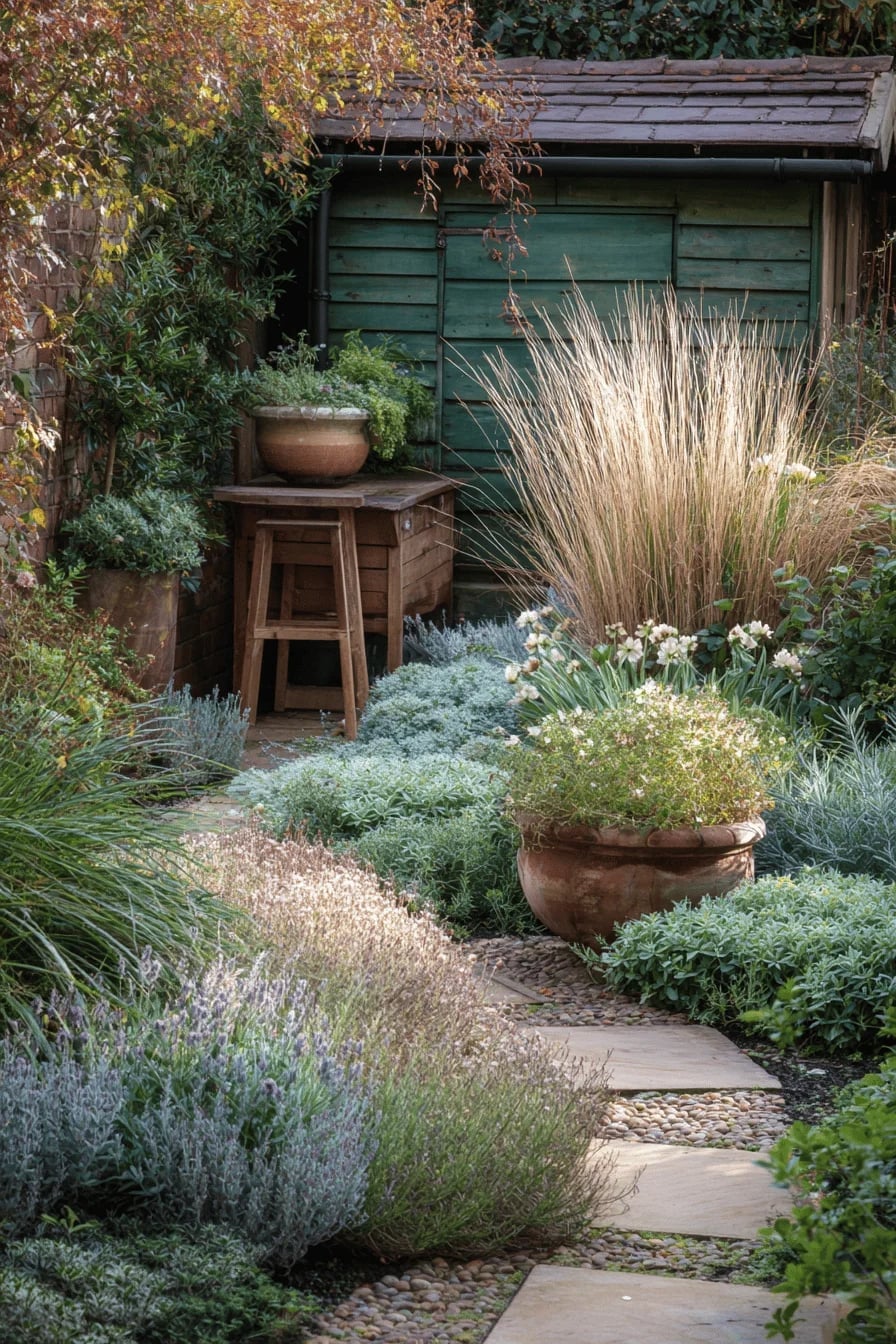
A garden path that goes straight from the gate to the door can feel a bit like a race. A winding route, with planting that spills over the edges, changes the pace entirely. Here, a stone path curves past layered greenery, with terracotta pots placed at intervals to add warmth and a hand-scaled detail.
A small wooden stool tucks into the foliage, and a green shed at the back gives the view a natural stopping point. The palette stays natural: browns, grays, and beiges from the materials, with the green of the plants doing the visual work. On a compact plot, swap a straight concrete walkway for a soft curve of gravel or stepping stones. The shift in route costs nothing but a bit of digging, and it makes the garden feel larger than it is.
Spiral Topiary Adds Structure to a Cottage Garden
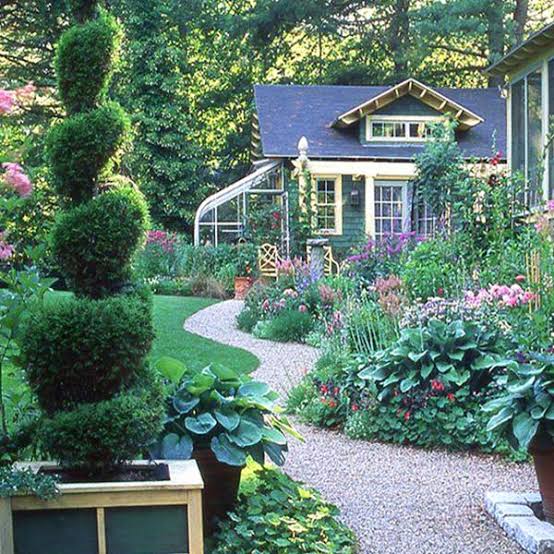
A cottage garden can read as a lovely mess until something formal anchors it. A single spiral topiary, clipped tight and rising from a bed of mixed flowers, does exactly that. Here, it stands beside a gravel path that winds past a greenhouse and dense borders of pink and white blooms. The topiary is the one element that does not change with the seasons, giving the eye a constant reference point while the flowers come and go. For renters, a large potted bay tree or a clipped box cone on the patio offers the same structural note without putting a hole in the soil.
Rustic Gate Opening to Abundant Cottage Garden Planting
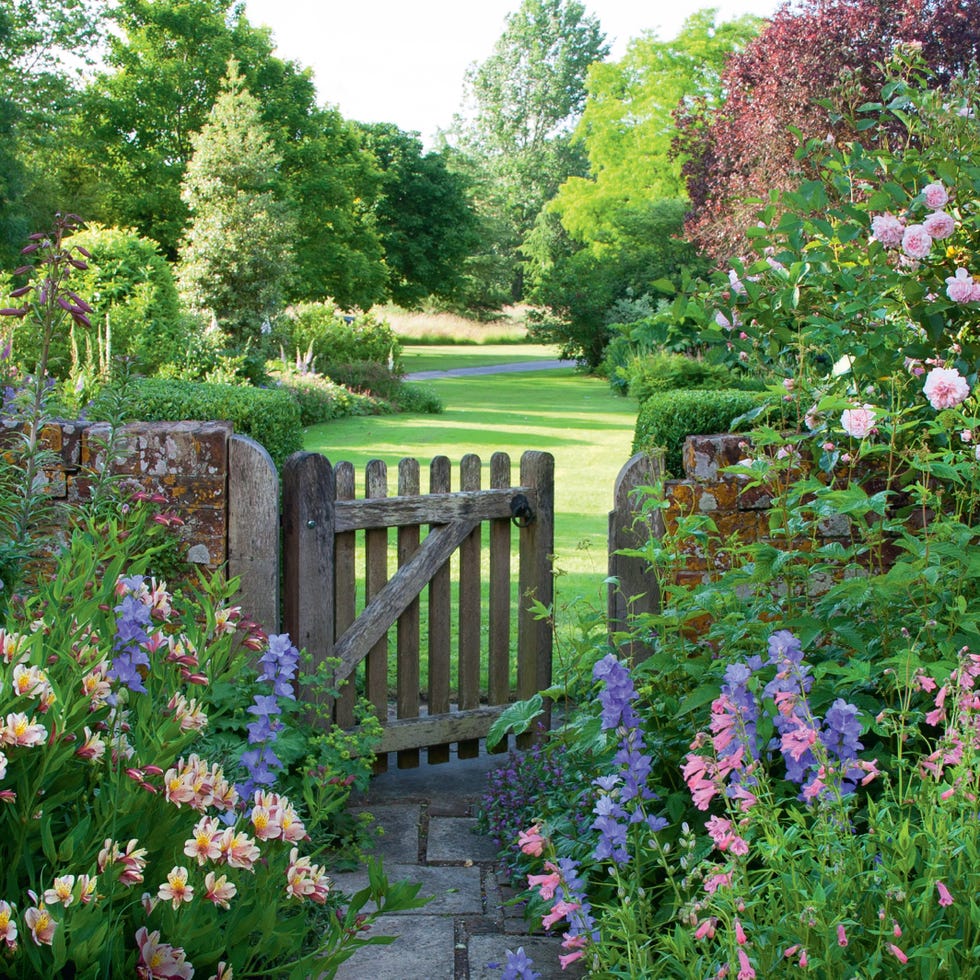
A wooden gate that does not quite close is often the most welcoming thing in a garden. This one, set into a low stone wall, swings open onto a path flanked by flowers in pink, purple, and red. The gate frames the view beyond, but it also holds the planting back just enough that the garden does not spill into the yard. The layout works because the gate is the only hard vertical line in the scene. Everything else is soft and curved. If your entry lacks a gate, a simple arch of metal or wood creates the same sense of arrival and gives climbing plants a place to call home.
Climbing Roses and Foxgloves on a Stone Wall
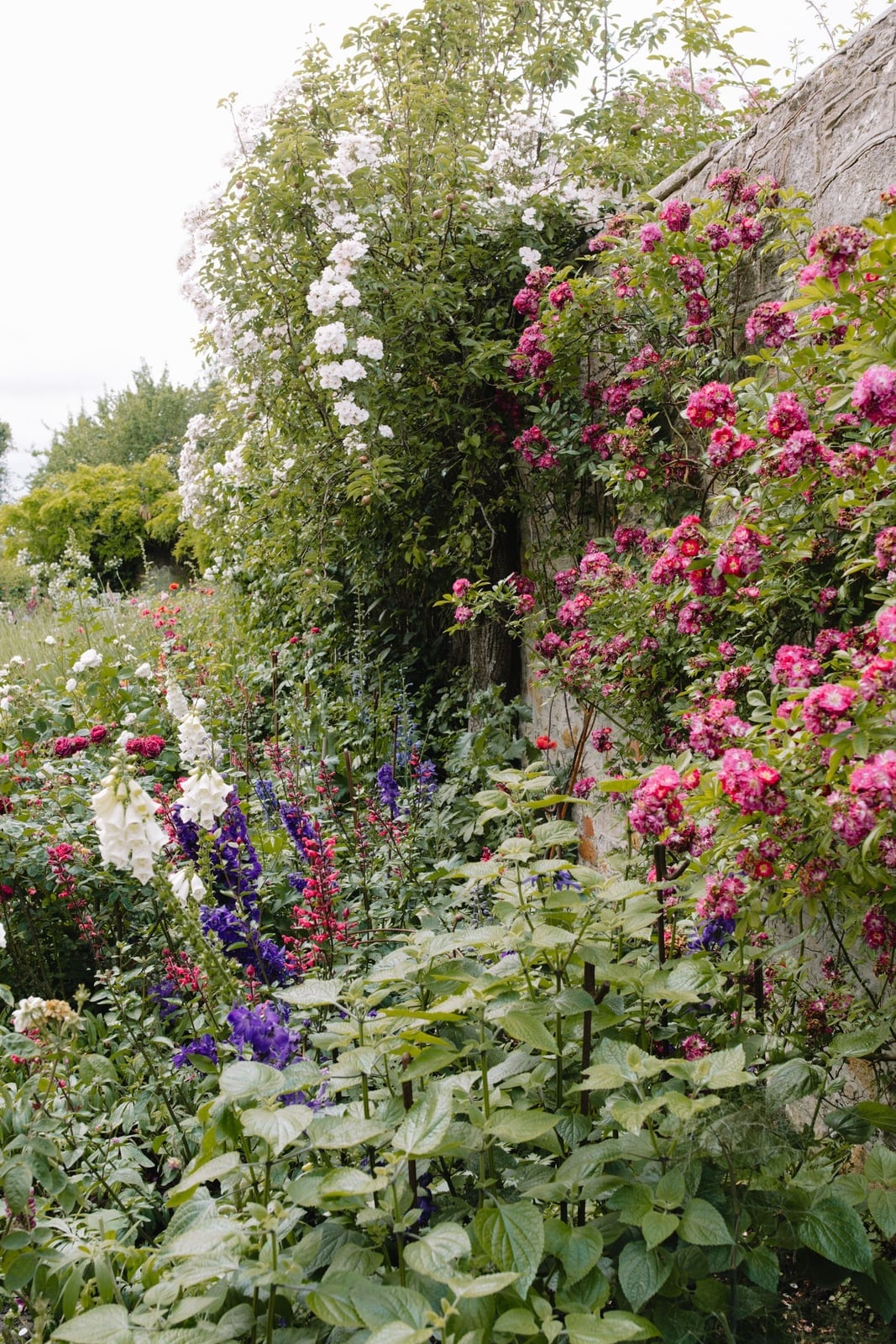
How do you make a flat stone wall feel like part of the garden rather than a boundary? Cover it with something that blooms. Here, climbing roses in pink cascade down a stone wall, with foxgloves in purple and white rising from the bed below. The wall becomes a backdrop for the planting rather than a barrier.
The stone itself stays visible through the leaves, which is the trick. A solid wall of ivy would hide the texture. Keeping some stone exposed lets the materials talk to each other. For a similar look without a wall, a sturdy wooden trellis fixed to a fence gives climbing roses the same vertical reach and lets the fence color show through.
Farmhouse Garden with Vibrant Foxgloves and Lupins
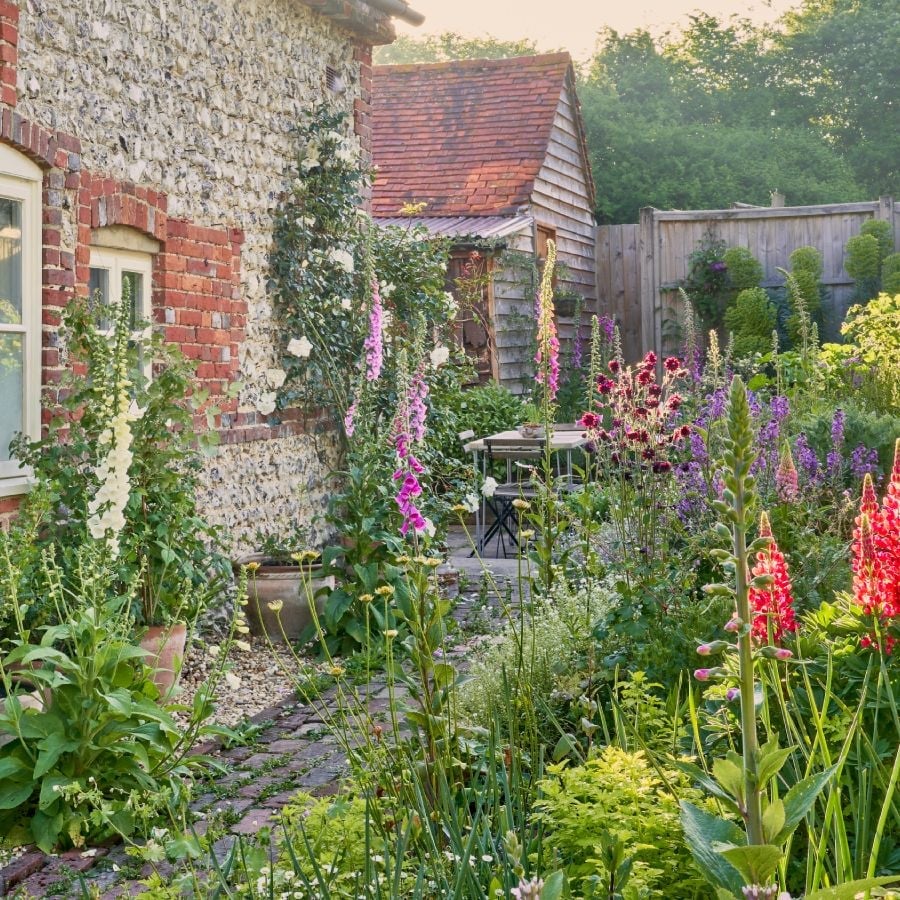
Foxgloves and lupins are the tall friends of the cottage garden, the ones that rise above the crowd and make everything else look intentional. In this garden, they stand in dense drifts along a winding brick path, with a stone cottage wall and a wooden shed behind them. The golden hour light catches the pink and purple spikes, giving the whole scene a warm, settled feel. The scale works because the tall flowers are balanced by lower mounds of foliage at their feet. If your border reads as a flat line of color, adding a few vertical accents like delphiniums or hollyhocks changes the proportion instantly.
Wooden Shovel as a Rustic Garden Accent
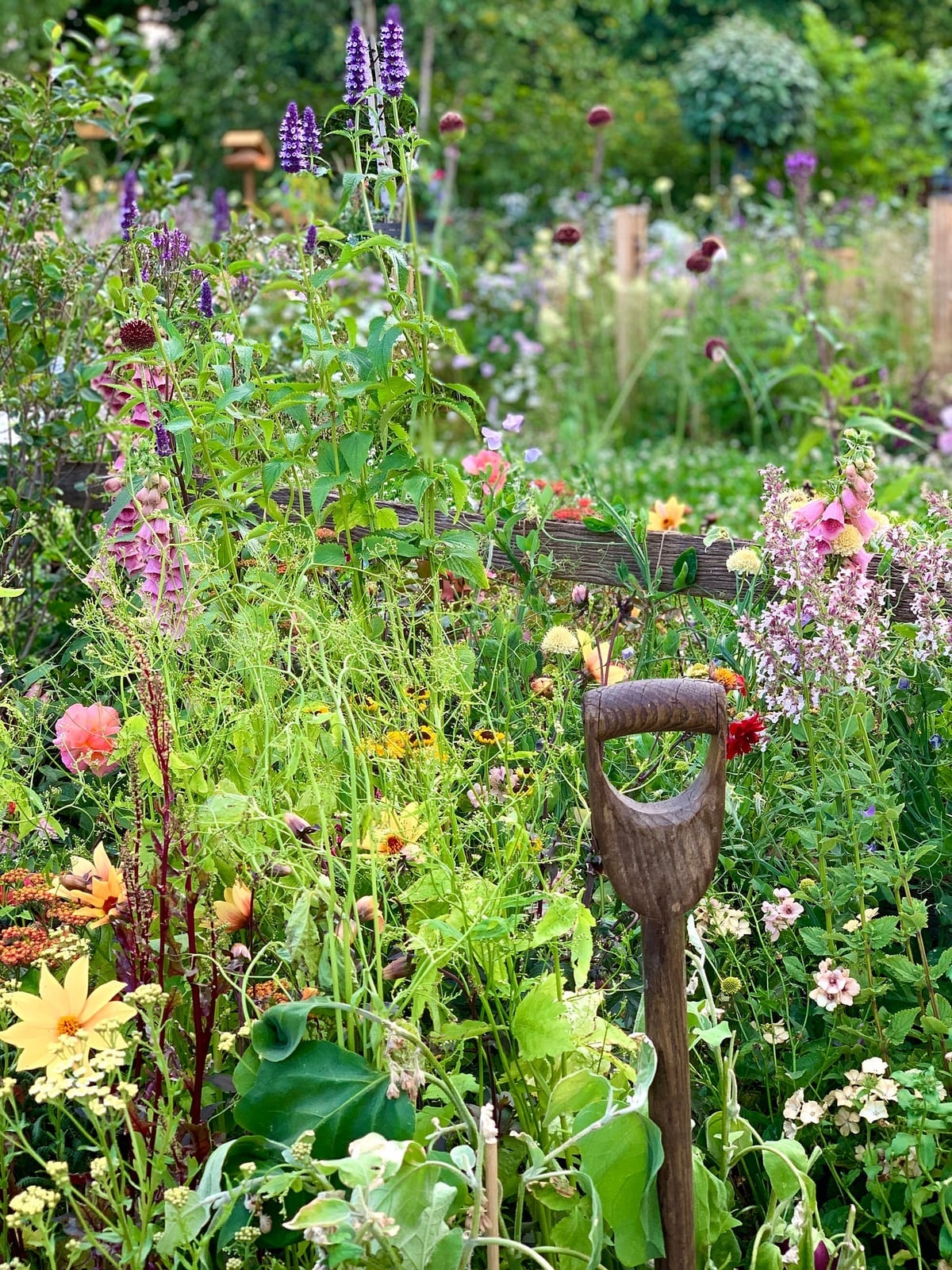
Let a single tool double as ornament. Here a wooden shovel stands among dense yellow, pink, and orange flowers, its metal head resting against a rustic fence. The shovel breaks up the dense planting. It is not a planned sculpture. It is a pause between tasks, and that is the point. The handle leans naturally into the greenery, adding a vertical line the flowers alone would not provide. The overall effect is full and relaxed, as if the gardener just stepped away.
Farmhouse Facade Framed by Colorful Blooms
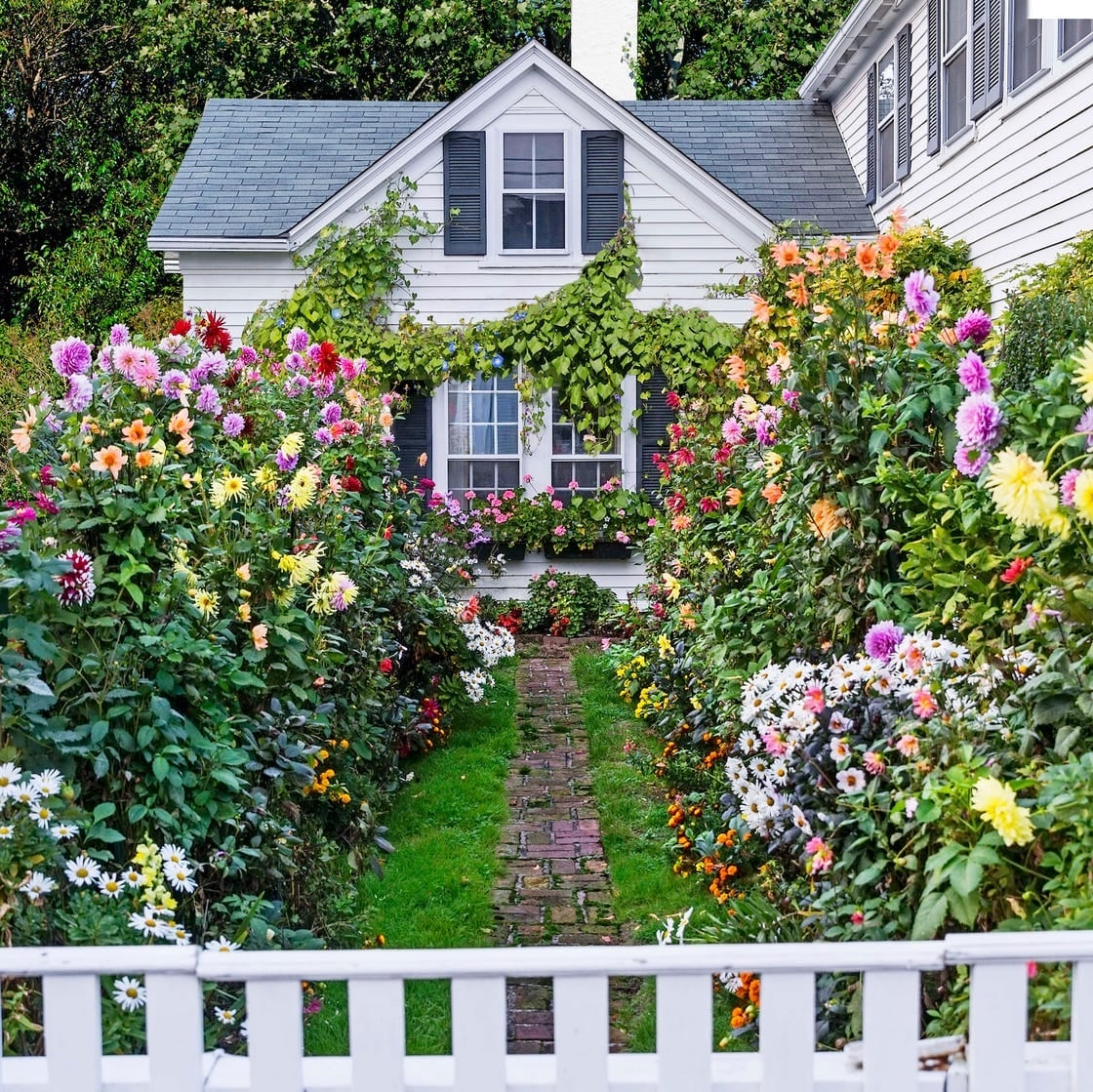
A plain white facade can feel stark against a lawn. Here the house is framed by a dense mix of pink, orange, yellow, and purple flowers that climb nearly to the roofline. The brick path leading to the entrance draws the eye forward, but the planting keeps it there. The palette is not shy. It covers the front of the house in layers of green and bright color, so the white walls become a calm backdrop.
The ratio of planting to facade is what makes this work. The flowers do not just line the path. They rise to window height and spill over the foundation, softening every edge. The effect is roomy, as if the garden grew around the house. For a similar approach, choose a mix of tall and mounding plants that bloom at different times, so the color stays dense through the season.
Ornate Metal Bench in a Densely Planted Garden Nook
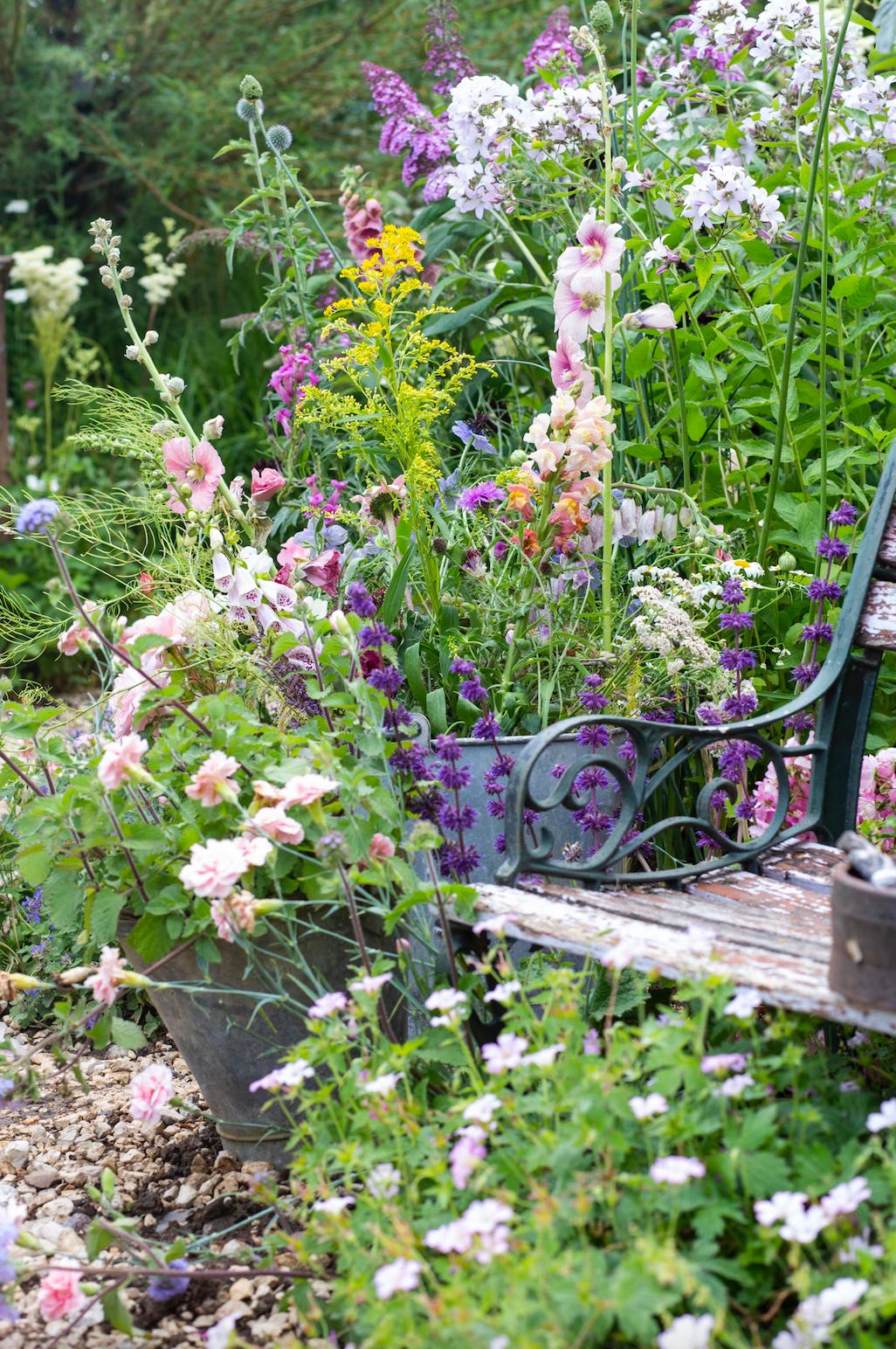
The bench has a curving metal back and dark wood seat, tucked into a pocket of pink, purple, and white flowers. A tin watering can sits on the ground beside it. The design is compact. The flowers surround the bench on three sides, so it feels like a hidden spot rather than a placed one. The metal stays cool in overcast light and does not demand attention. The bench serves as a quiet invitation to sit, but the real interest is the abundance of flowers pressing in around it.
Tall Delphiniums for Dramatic Cottage Garden Height
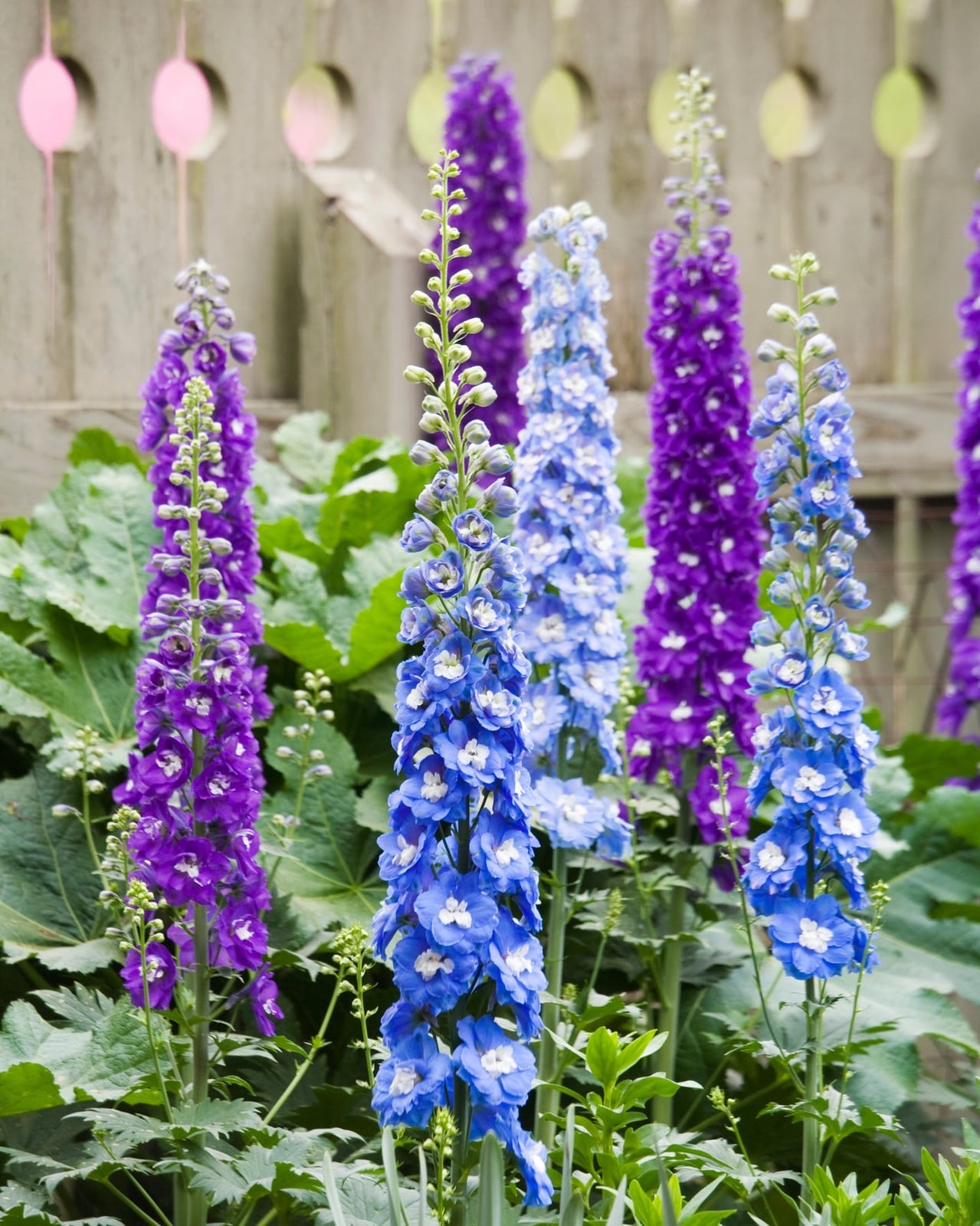
These delphiniums are the clear vertical anchor in this bed. The tall purple and blue spires rise above the surrounding foliage in soft daylight, drawing the eye upward through the garden. The stems are straight and packed with blooms from base to tip. They create a dense column of color that anchors the planting without crowding it. The effect is roomy and deliberate. For a cottage garden that needs height without adding a trellis or arch, delphiniums are a straightforward choice. They fill the middle air between low mounding plants and the sky.
Stone Cottage Facade with Climbing Flowers and Gravel Path
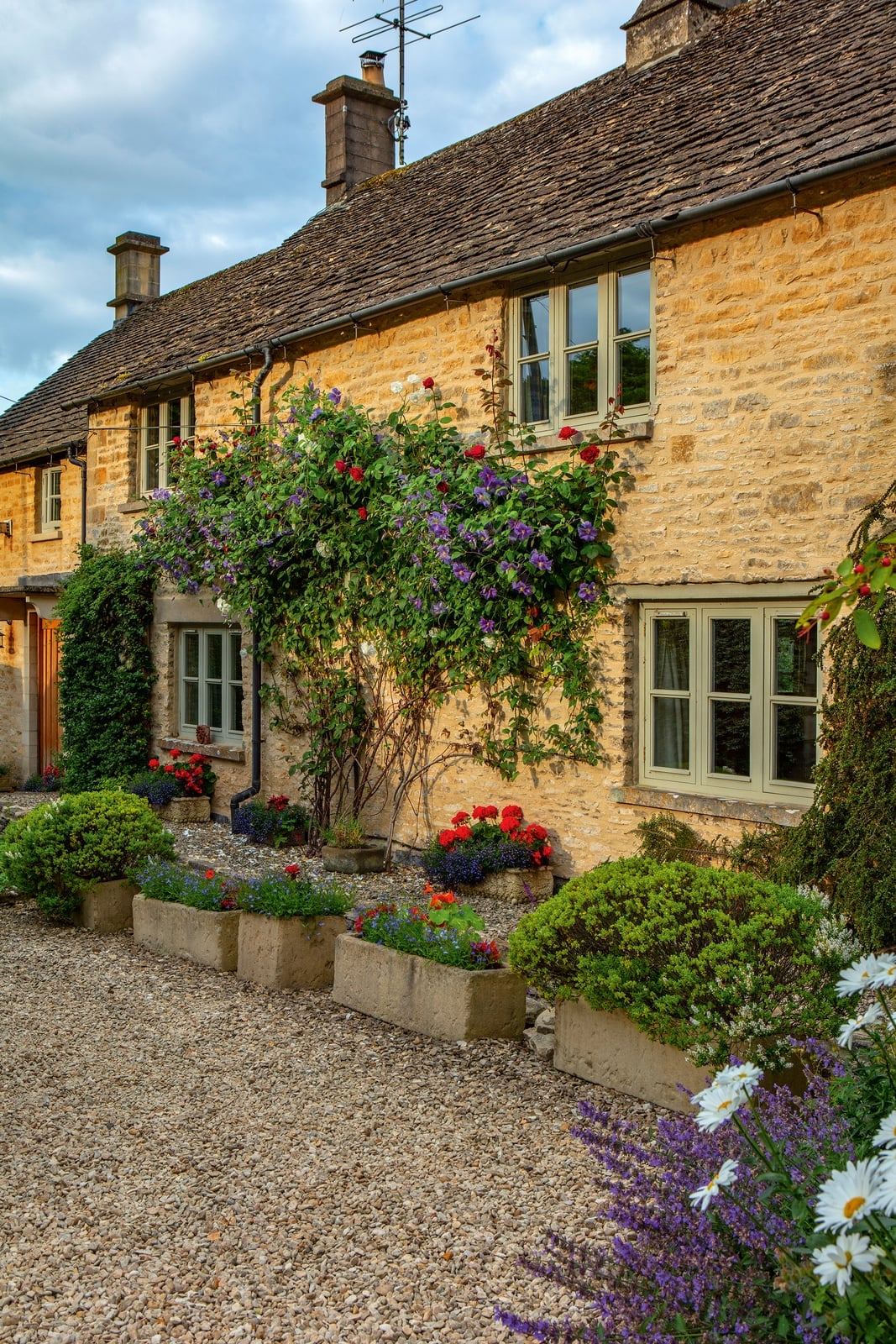
The stone facade here is warm and textured, with climbing flowers in red and purple creeping up the wall. Window boxes add yellow blooms at eye level, while planters on the ground fill the base. The gravel path leads straight to the door, bordered by low greenery that keeps the route clear.
What defines this look is the contrast between rugged stone and soft flowers. The palette is warm: yellow, green, red, purple. The ratio is roughly equal parts stone and planting. The climbing flowers break the straight lines of the facade without covering it entirely. The gravel path provides a practical surface that drains well and adds a crunch underfoot. For a renter safe version, use large planters and climbing vines on a freestanding trellis placed against the wall.
Vibrant Blue Adirondack Chair in a Farmhouse Garden
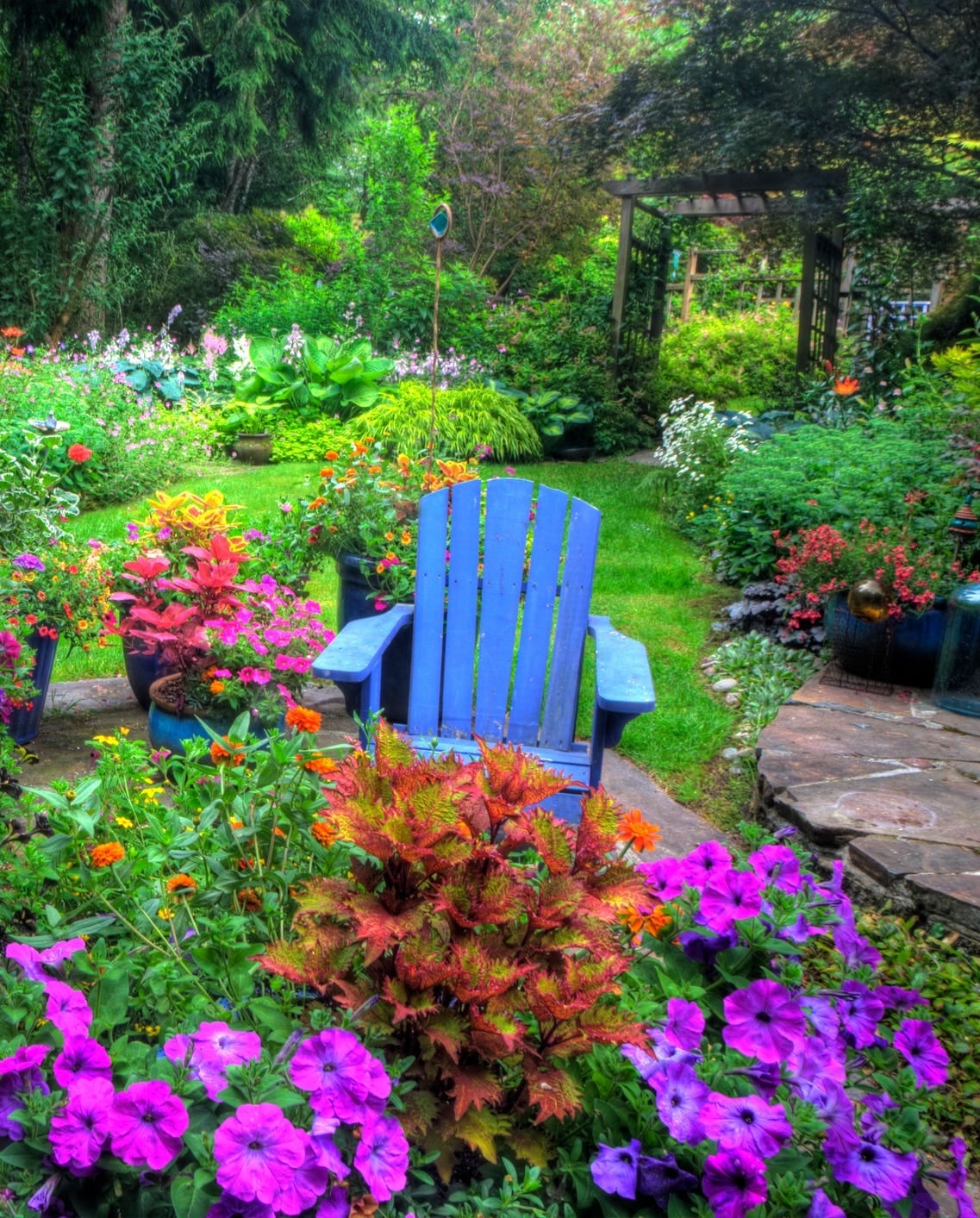
A single blue Adirondack chair sits among the flower beds, and it does not compete with the pink, orange, and red blooms around it. The wood finish works because the palette repeats the blue in small pots and the green in the foliage, so the chair looks like part of the garden. In a roomy, informal layout like this one, a painted piece of outdoor furniture can anchor a whole bed without needing a matching set. The slightly overcast daylight keeps the colors saturated without harsh shadows, which helps the chair stand out.
Classic White Picket Fence Bordering a Farmhouse Garden
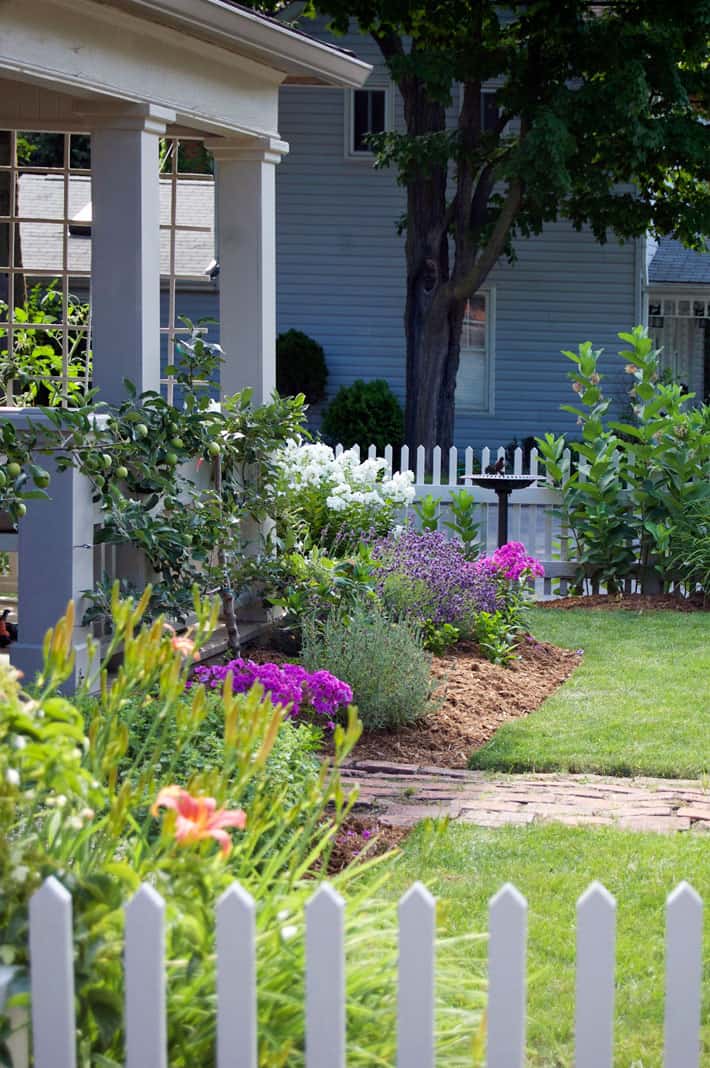
A practical rule for renters: a white picket fence can define a garden boundary without permanent installation. In this farmhouse garden, the fence runs along the edge of the flower bed, creating a clean line between the lawn and the purple and pink blooms. The bright daylight makes the white wood pop against the green grass and brick path. The fence is a modular element that can be removed or repositioned, which makes it a smart choice for anyone who might move in a few seasons. The height of the pickets also provides a natural trellis for climbing plants, adding vertical interest without digging or anchoring posts into the ground.
Curved Flower Border with Foxgloves and Hydrangeas
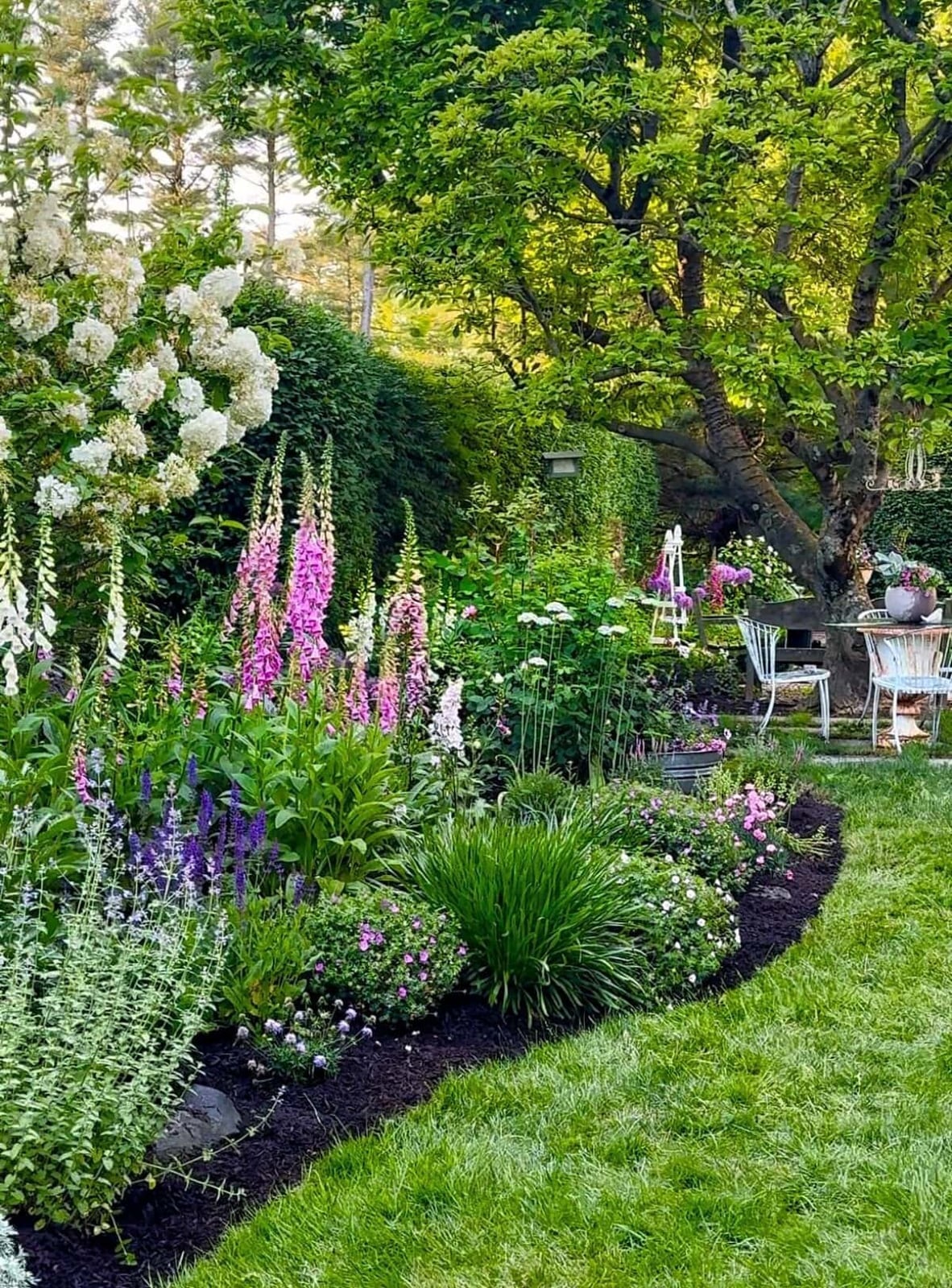
A straight border is tidy, but a curved one does something else entirely. In this cottage garden, the foxgloves and hydrangeas follow a sweeping line that draws the eye along the planting bed and toward a seating area. The curve softens the transition between the lawn and the dense perennials, and it lets the taller flowers, like the foxgloves, stand in front of the mounded hydrangeas without blocking them.
The mulch path traces the same curve, which reinforces the flow. The overall layout feels roomy because the border does not crowd the grass; instead, it creates a gentle boundary that invites walking around the bend. The soft daylight keeps the pink, purple, and white tones even, so the curve reads as a deliberate design move, not an accident of planting.
Sloping Lawn Leading to Vibrant Cottage Garden Beds
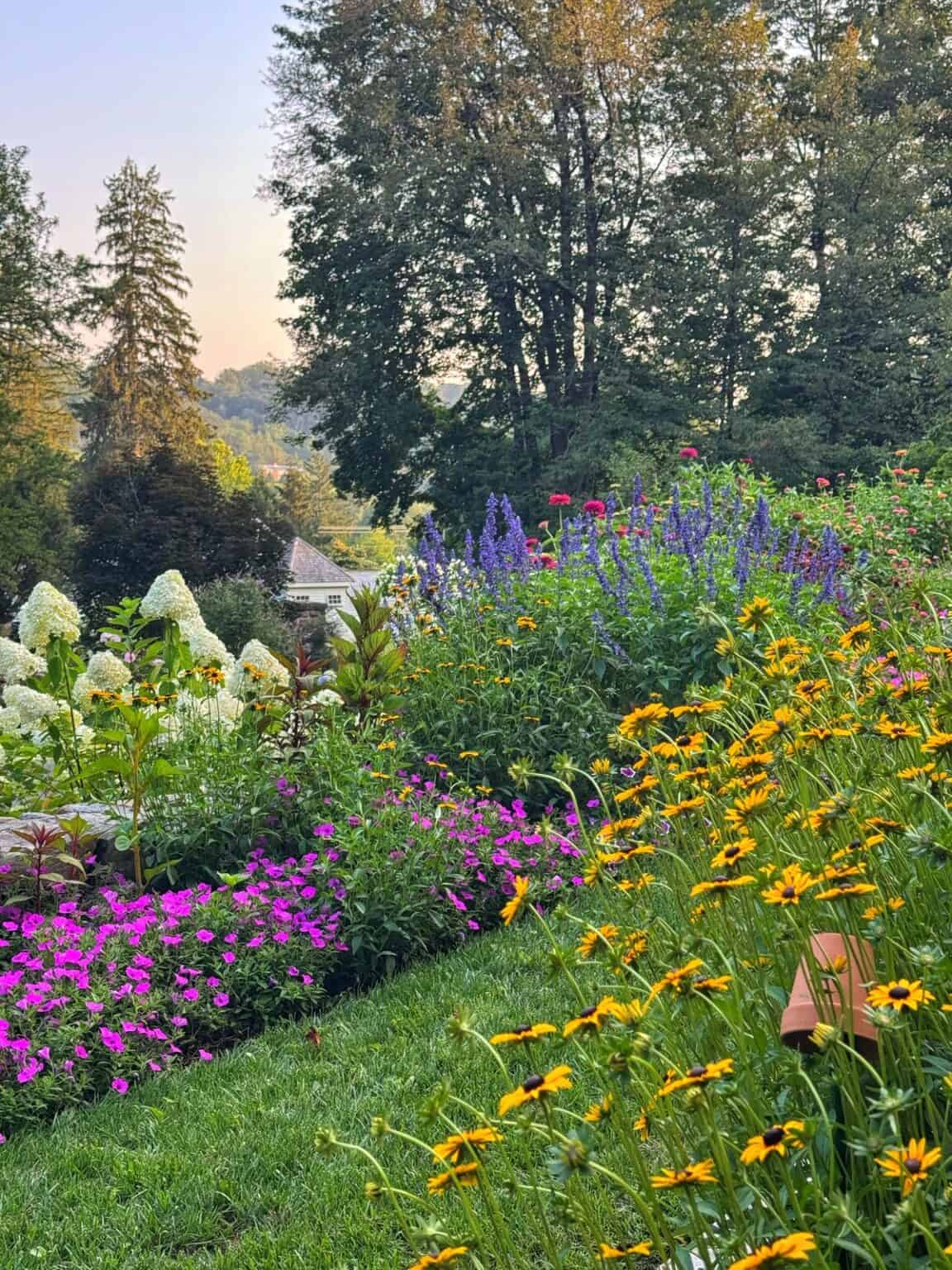
The yellow flowers, likely black-eyed Susans, catch the golden hour light and pull the eye up the slope. The beds are layered, with hydrangeas and purple blooms at the base and taller flowers climbing the incline. That vertical layering makes the most of a sloping lawn: the front plants hide the bare soil, and the back plants rise to meet the eye. The stone at the edge of the beds holds the mulch in place, which matters on a slope where rain can wash soil downhill. The overall layout feels roomy because the beds spread wide rather than deep, so the slope does not feel steep or unusable.
Golden Hour Glow on a Winding Cottage Garden Path
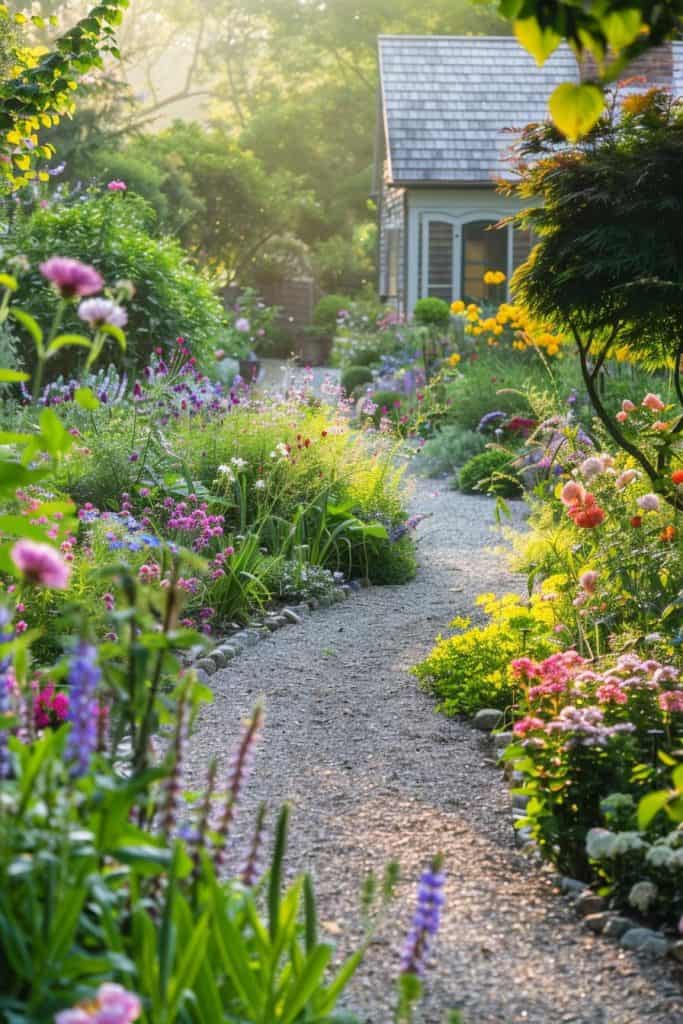
The light at golden hour turns a gravel path into something worth following. In this cottage garden, the winding route cuts through dense flower beds in pink, yellow, purple, and white, and the low sun catches every petal and stone. The gravel path is wide enough for two people to walk side by side, which keeps the scale generous even with the abundant planting on either side. The small house at the end of the path gives the eye a resting point, so the walk has a clear destination. The golden hour glow softens the bright flowers and the green foliage, making the whole scene feel cohesive and warm.
Thatched Cottage Surrounded by a Lush Cottage Garden
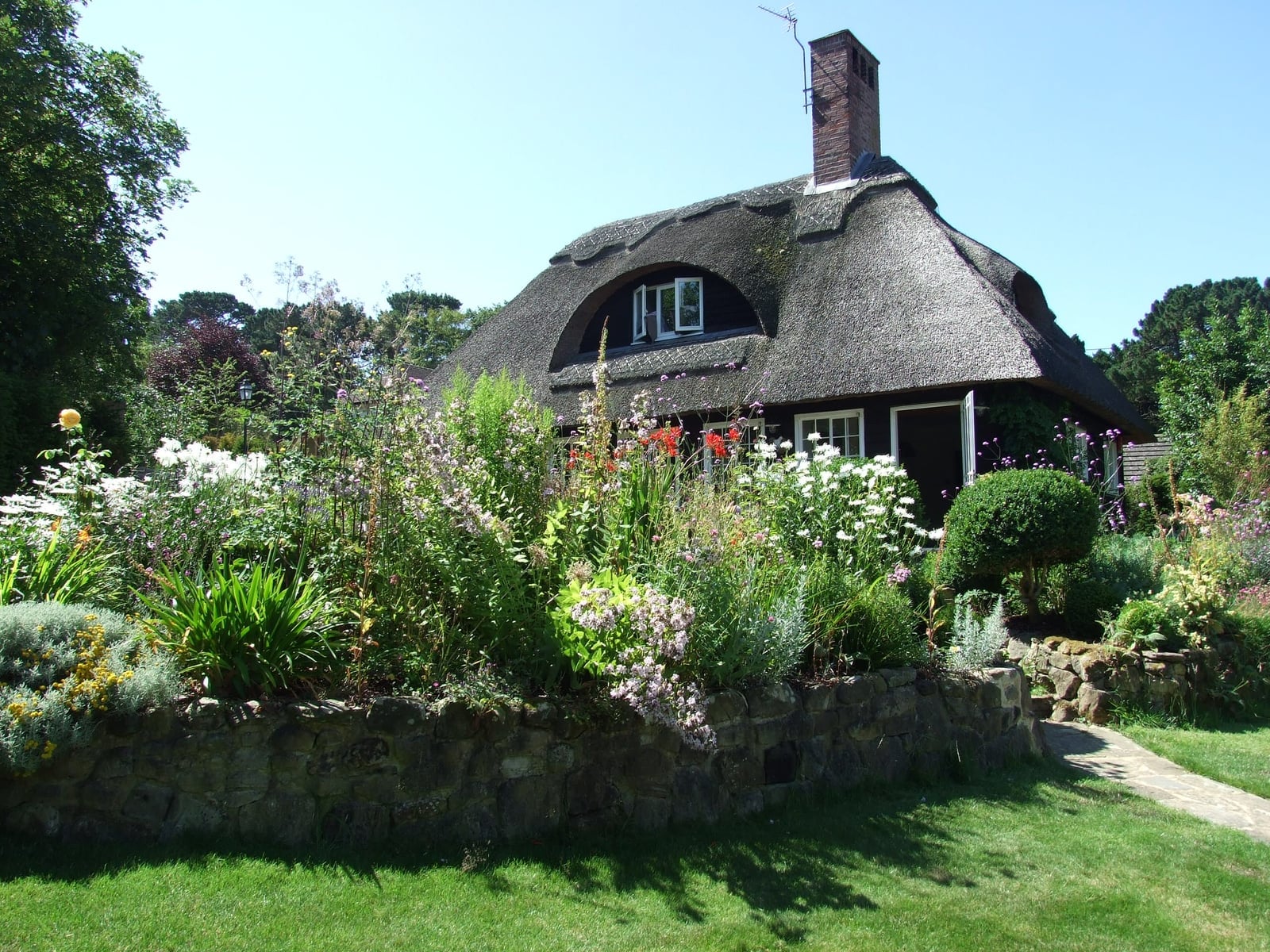
In a cottage garden, let the planting lead and let the house sit back. Here the thatched cottage becomes the destination. The stone wall anchors the base while abundant flowers and clipped topiary fill the foreground in green, white and pink. The layout is simple: a wide lawn and beds stretch toward the house so the eye travels through the garden first.
The thatch adds textural surprise above all that soft foliage. Sunny daylight hits the brown roof and the brick path so the whole scene stays bright. Keep your tallest plants toward the middle of the bed and let lower ones spill toward the path. That way the house frames the garden.
Pink Cottage Garden Shed as a Whimsical Focal Point
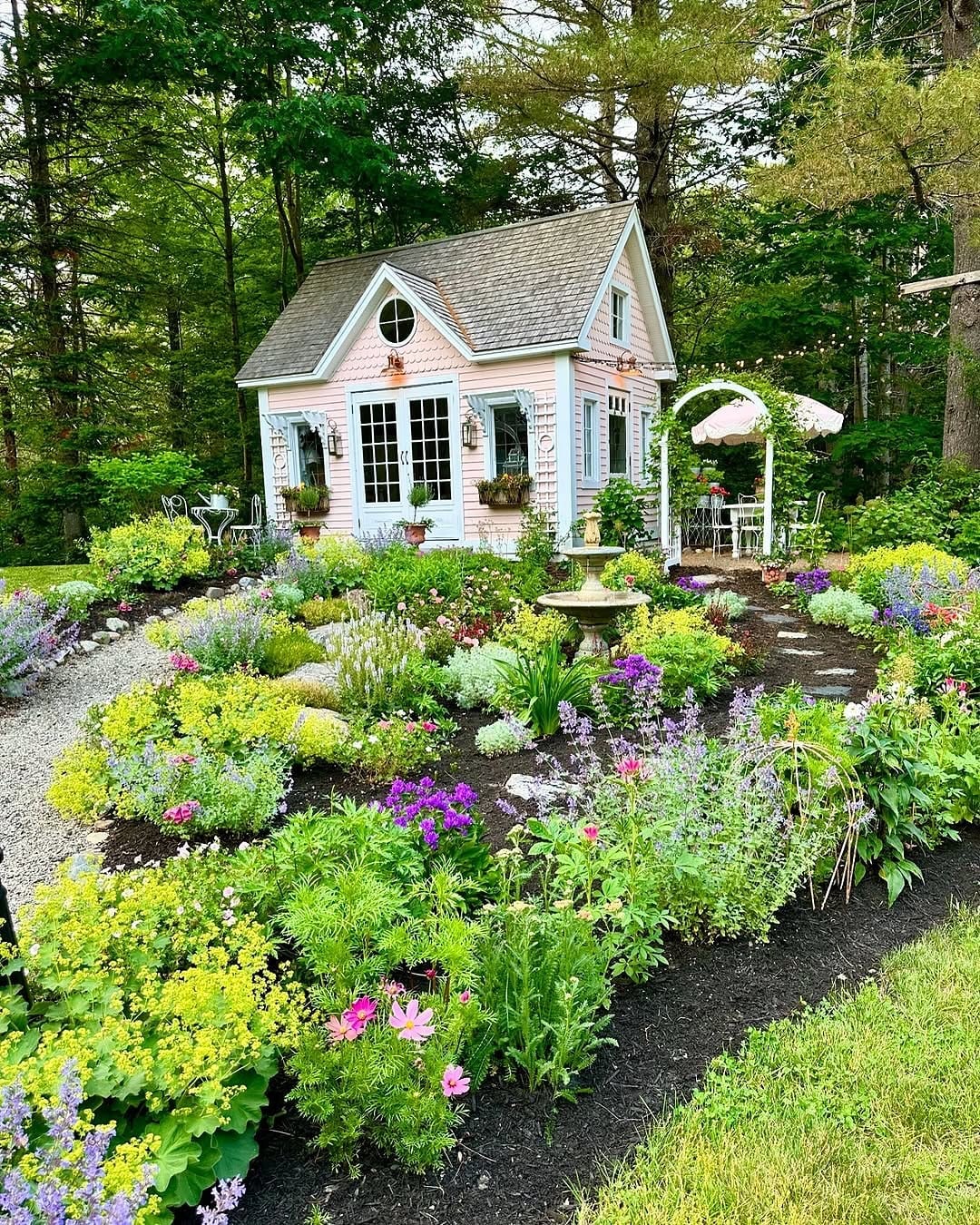
A garden shed painted pink does not blend in and that is the point. Here the wooden structure sits at the end of a curving path with layered beds in green, yellow and blue softening the bold color. A small stone fountain nearby adds a second focal point without competing. The palette stays cheerful because the surrounding foliage is dense enough to ground the pink. If you paint a structure a bright color, balance it with plenty of green so the shed feels deliberate.
Farmhouse Brick Pathway Through Vibrant Flower Beds
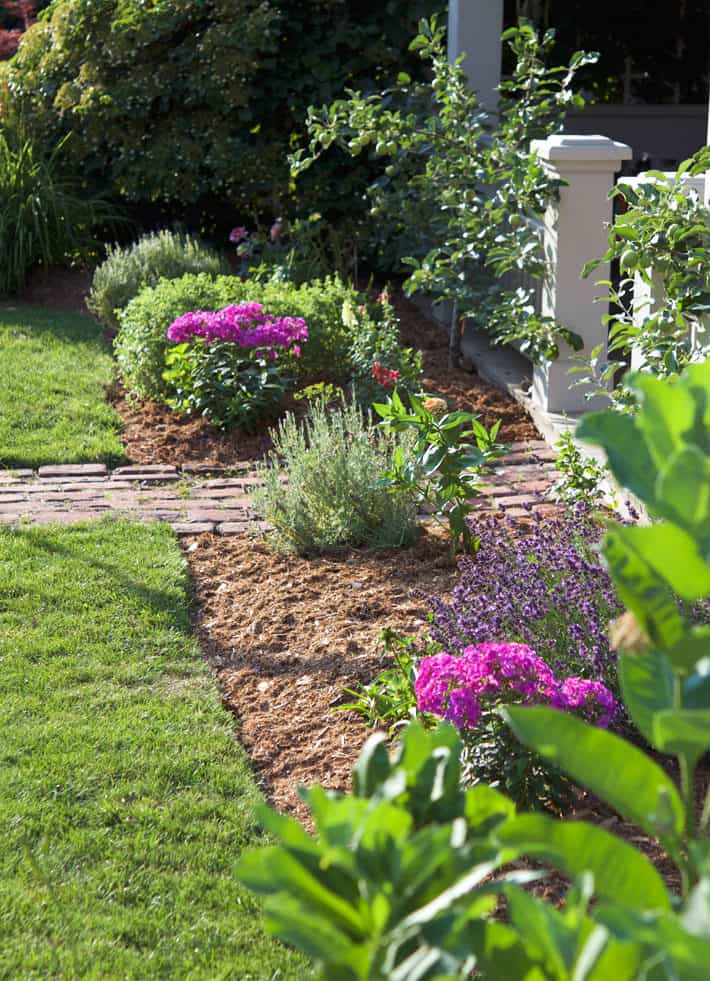
In this garden a brick pathway cuts through mulched beds filled with pink and purple flowers. The brown of the wood chips and the warm tone of the brick keep the ground neutral so the vibrant blooms above them pop. Bright natural daylight helps the colors read clearly. To recreate it look for a path material that contrasts with the mulch or soil so the walkway stays visible even when the plants grow thick.
Weathered Wooden Fence Adorned with Roses
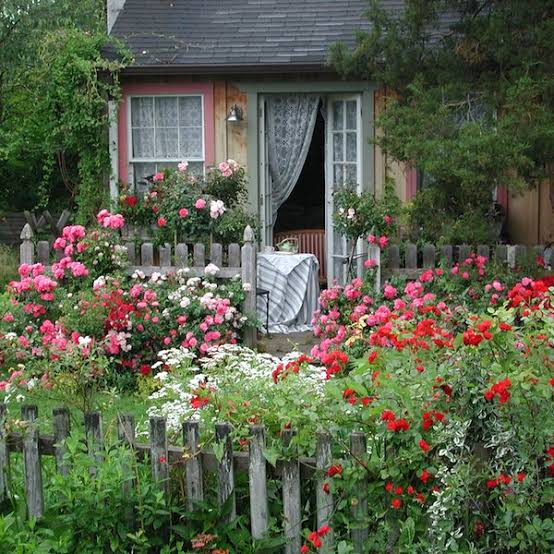
Against a backdrop of sleek metal or new wood, weathered boards can look neglected. Here the worn fence works because the climbing roses in pink, red and white soften every rough edge. A small table nearby adds a place to rest a cup or a pair of clippers so the corner feels used rather than forgotten.
The dense planting keeps the fence from reading as shabby. The wood grain and the stone base below it give the eye a place to rest between the flowers. Let your oldest fence hold the most vigorous climbers. The growth will hide the worn spots and the texture of the weathered boards will make the blooms stand out more.
Stone Cottage with Blue Shutters and Pink Clematis
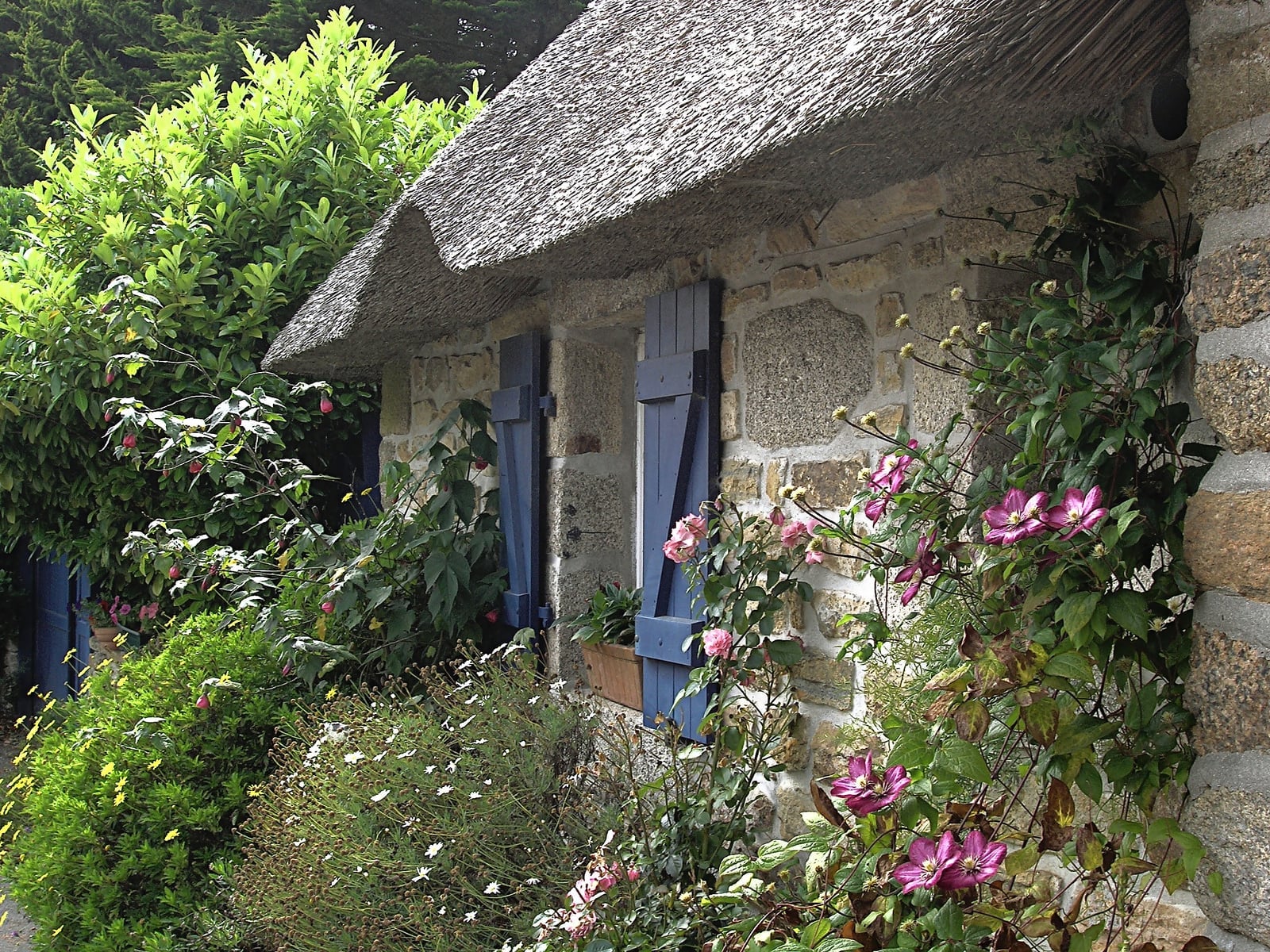
The stone cottage facade here gets its charm from a precise contrast. Blue shutters against warm gray stone already feel settled. Then a vibrant pink clematis climbs up one side and roses fill the beds below. The palette breaks the expected green-and-stone formula with that pop of saturated pink. A slate roof and a brick path keep the scene grounded. Choose one bold flower color and let it climb or spill near a painted accent like shutters or a door. The rest of the garden can stay mostly green so the color reads as a feature, not a mess.
White Arbor Draped with Purple Clematis
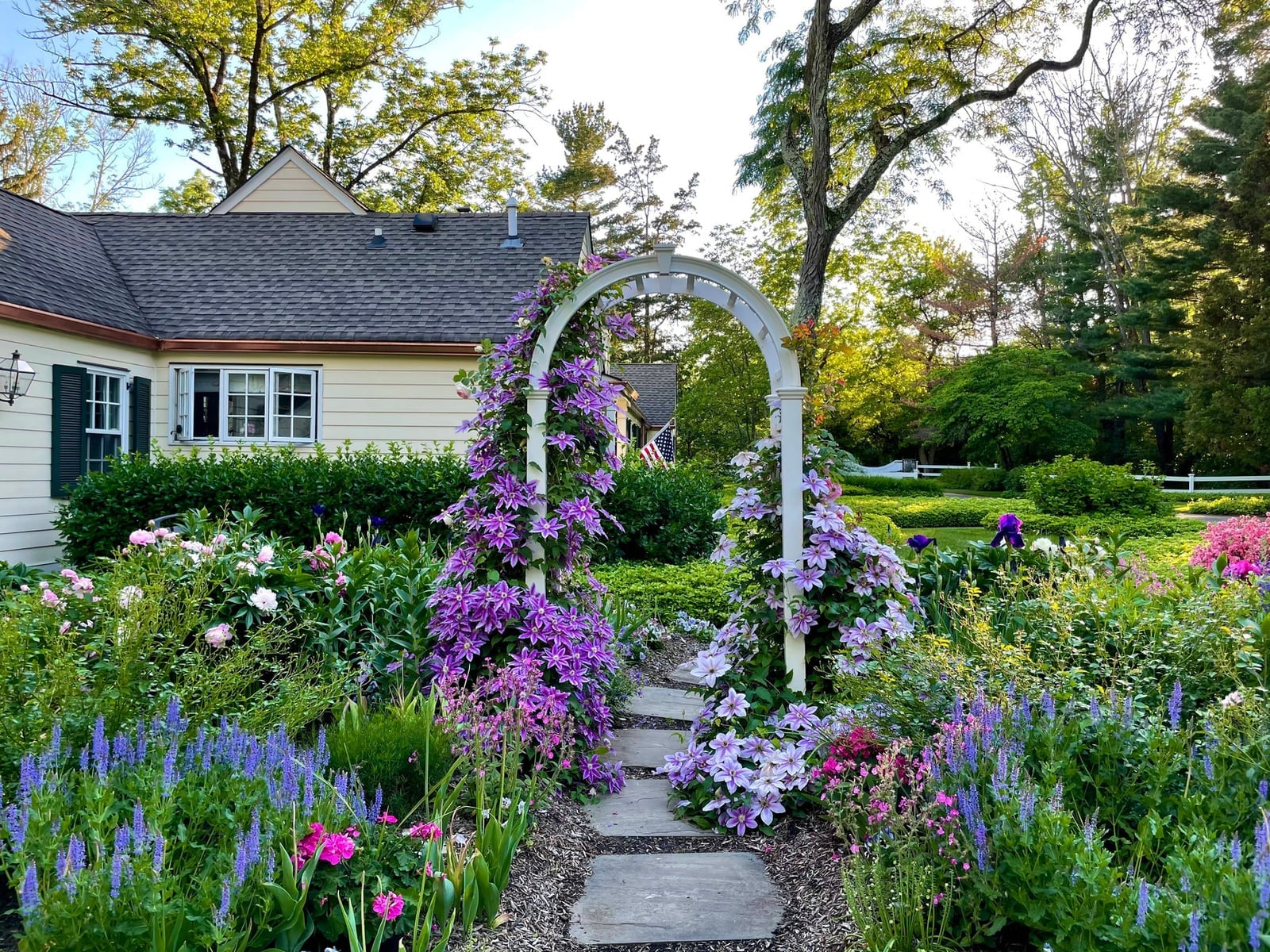
A white wood arbor becomes the natural entry point for a cottage garden, and it does not need much around it to work. Here purple clematis climbs the arch while pink roses, purple salvia and cream blooms fill the beds on either side. A stone path leads the eye straight through, so the arbor frames the view rather than blocking it. The layout keeps the entrance clear and the planting dense at the edges, which makes the garden feel bigger than it is. If you want the same effect, choose a climbing vine that flowers for a long season and keep the path width generous enough for two people to walk side by side.
Spring Bulbs and a Rustic Greenhouse
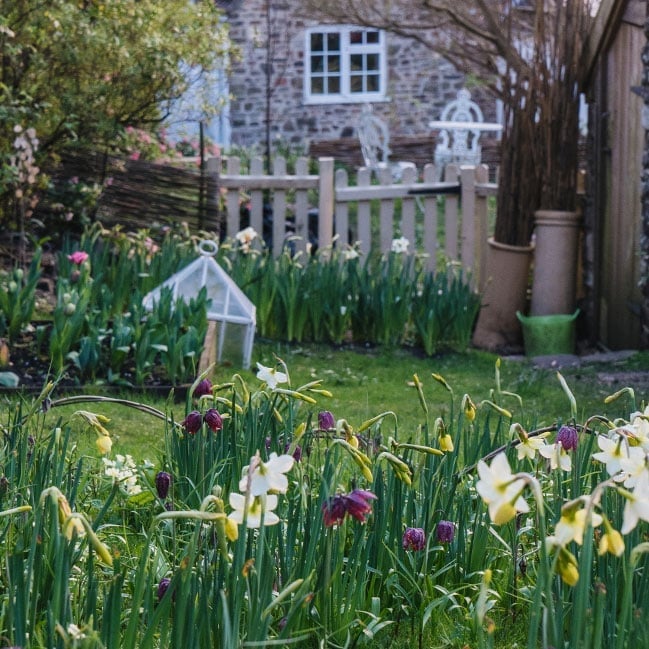
A practical rule for a garden bed that looks full from early spring is to plant bulbs in layers. Here tulips and daffodils rise in purple, white and yellow near a small rustic greenhouse with a metal frame and glass panes. A weathered wood fence runs behind it, and the grass path in front keeps the scene from feeling crowded.
The palette stays simple: green foliage, purple and white blooms, and the warm brown of the fence and greenhouse base. The greenhouse adds height and a sense of purpose without taking up much ground space. For renters, a small cold frame or a glass cloche can give the same greenhouse look on a patio or balcony. Check your USDA zone before choosing bulbs, since some need a cold period to bloom.
Tall Pink Foxgloves with Blue Filler Flowers
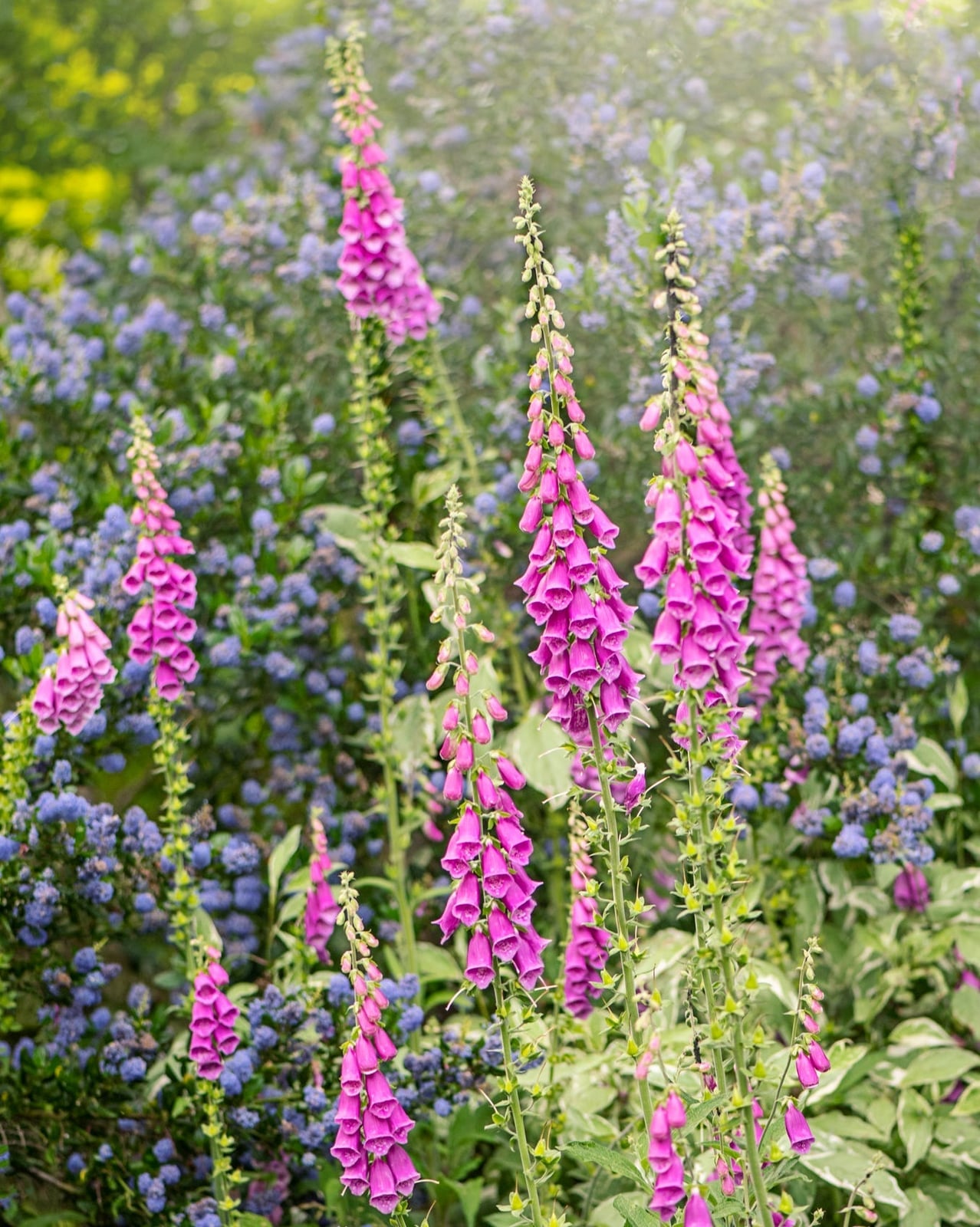
Tall pink foxgloves stand above a mix of blue and purple filler flowers, and the height difference is what makes the bed work. The foxgloves reach up while the lower plants spread out, so no single plant dominates the view. Stone edging keeps the border neat without adding visual weight. The ratio of tall spikes to low mounding plants is about one to three, which gives the bed structure without looking stiff.
Farmhouse Garden with Lush Lawns and Layered Planting
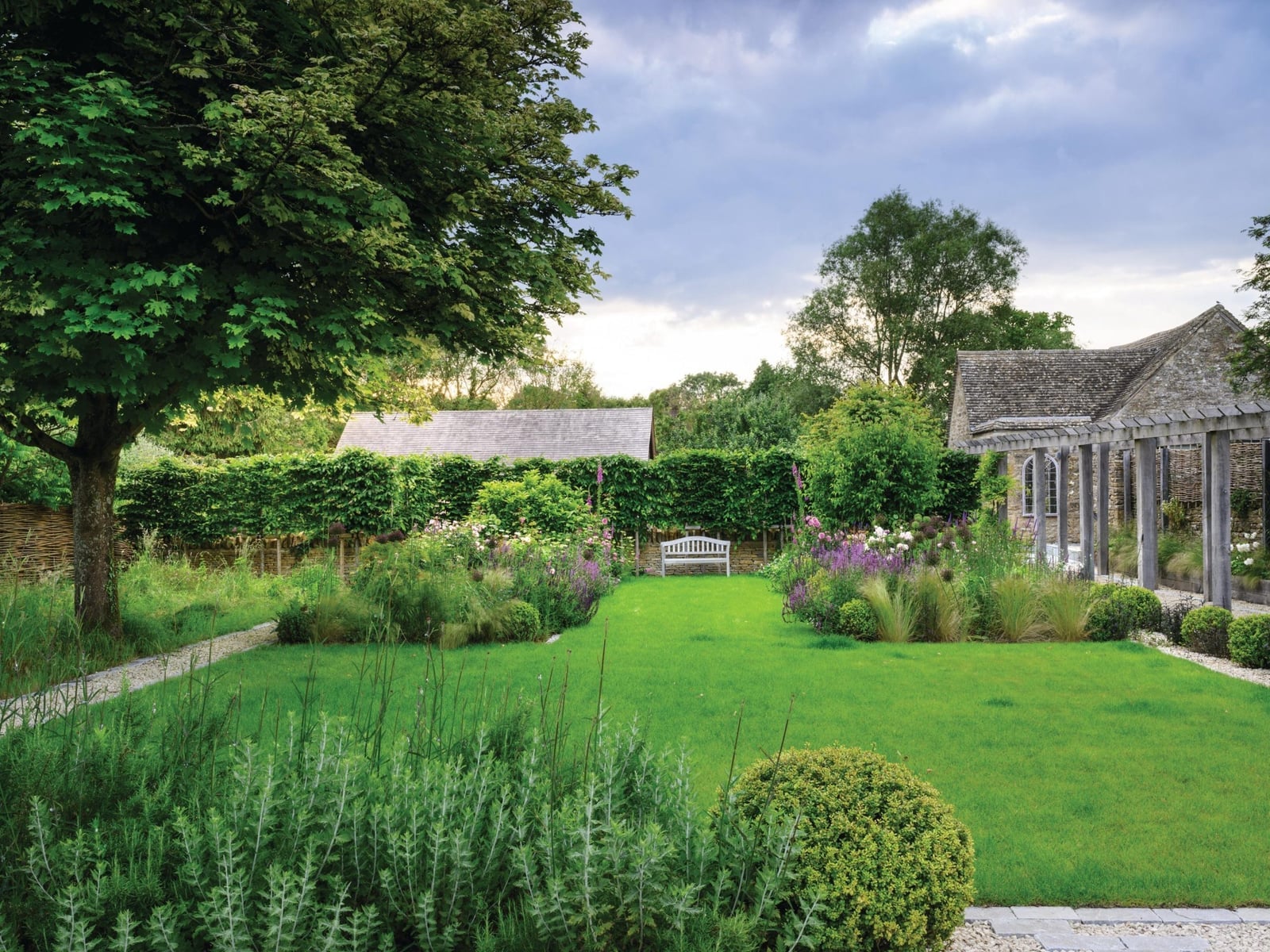
A white bench sits at the edge of a wide lawn, and the planting around it is layered from low ground cover to tall shrubs and perennials in purples, pinks and white. A stone path curves through the grass, and a dark green hedge marks the far boundary. The layout puts the bench in a spot that overlooks the whole garden, so it becomes a place to sit rather than just a decoration. The overcast sky softens the colors and makes the greens look richer. If you are planning a similar garden, place the seating where it catches a view of the path and the tallest flowers.
Gravel Path Leading to a Thatched Cottage with Hydrangeas
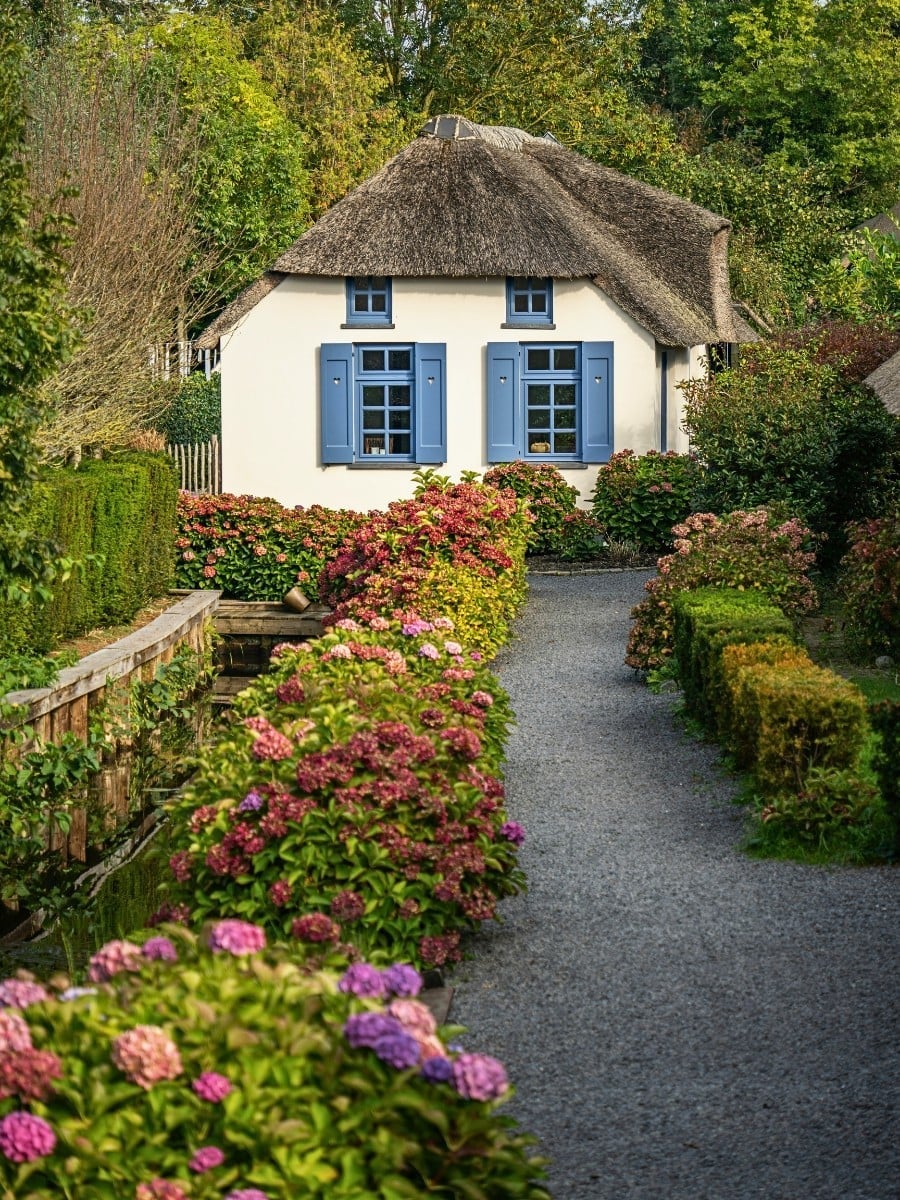
A wide gravel path can feel too bare, but here hydrangeas in pink, purple and blue line both sides and soften the edges. The gravel is a warm brown tone that picks up the wood of the fence and the thatched roof of the cottage ahead. The path is straight, not winding, so the cottage becomes the focal point from the start.
Box hedges form a low green border between the gravel and the hydrangeas, which keeps the flowers from spilling onto the walkway. The scale works because the hydrangeas are large enough to read from a distance but low enough to leave the cottage roof visible. If your space is narrower, use a single row of hydrangeas on one side and a low hedge on the other to keep the path open.
White Farmhouse with Vibrant Front Garden Planting
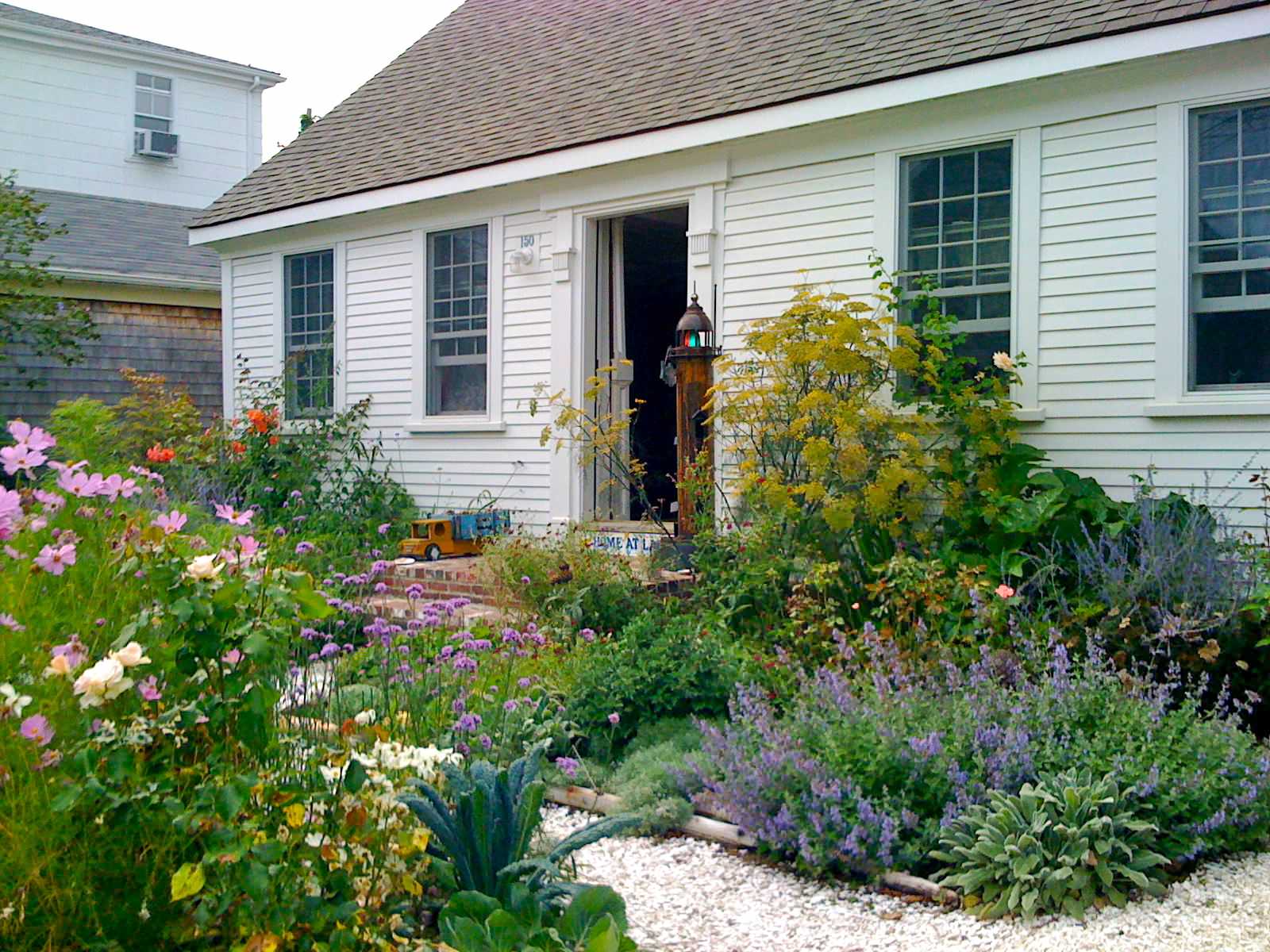
The palette of this cottage garden leans on pink, purple, and white flowers set against the green foliage and the white wood siding of the farmhouse behind it. The planting fills the front yard generously, with the open door hinting that this is a lived-in entry, not a staged display. Gravel underfoot keeps the look casual and helps with drainage, which matters when beds are this dense. A room mode view shows how the whole facade becomes a backdrop for the color, so the flowers do all the work without needing much hardscaping.
Farmhouse Patio with Wicker Dining Set
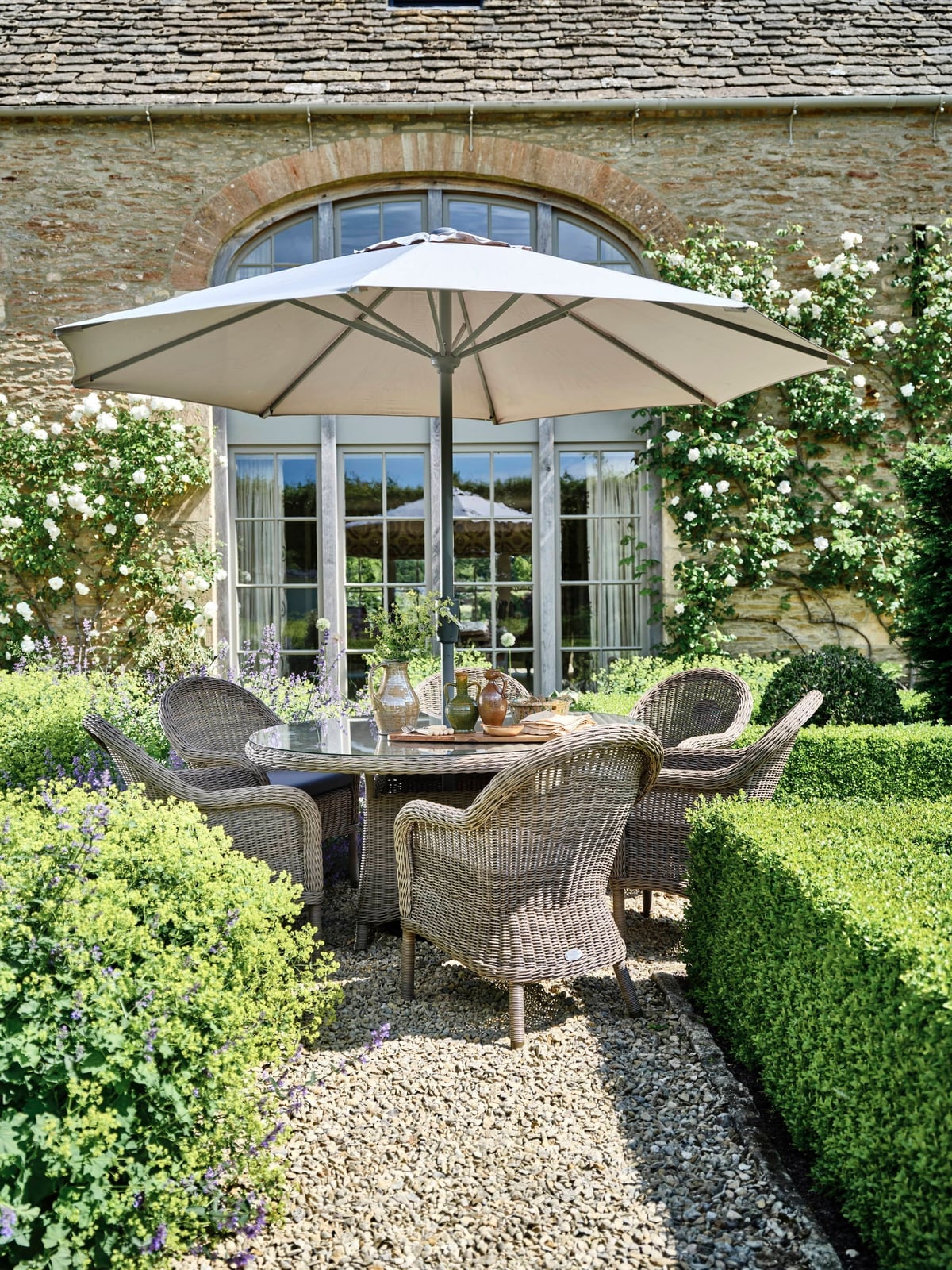
A round glass-top dining table with wicker chairs and a large umbrella anchors this farmhouse patio in a way that feels both practical and inviting. The neutral wicker and stone tones let the surrounding greenery stand out, while the umbrella provides adjustable shade for midday meals. The layout centers the dining set, leaving enough room to move around it without crowding the flower beds at the edges. For a rental patio, a similar setup with a market umbrella and a secondhand wicker table can give the same outdoor dining feel without permanent changes.
Weathered Shelving with Blue Ceramic Pitchers in Garden Corner
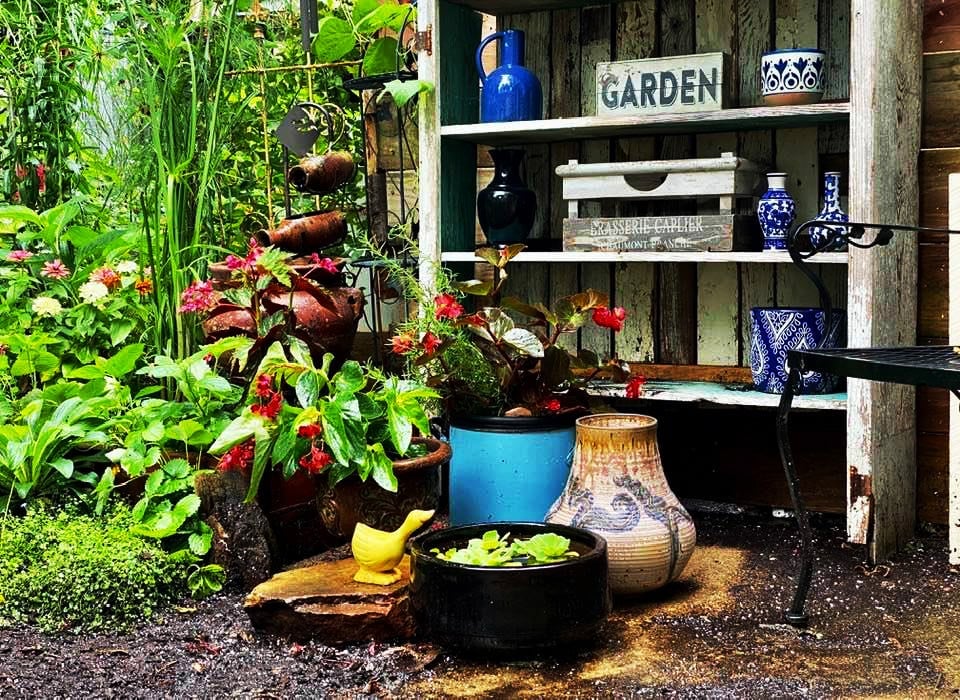
Instead of leaning a single pot against the wall, this corner uses a weathered wood shelving unit to layer blue ceramic pitchers, patterned terracotta pots, and small potted plants at different heights. The blue against the green foliage and warm terracotta creates a compact vignette that draws the eye into an otherwise overlooked spot. The shelving sits against weathered wood, which ties the whole corner together without needing paint or stain. For a similar effect in a small garden, a simple metal or wood shelf can turn a bare corner into a display that changes with the season. The key is mixing textures: glossy ceramic, matte terracotta, and the rough grain of the wood keep the arrangement from feeling flat.
Ornate Stone Bird Bath Amidst Lavender
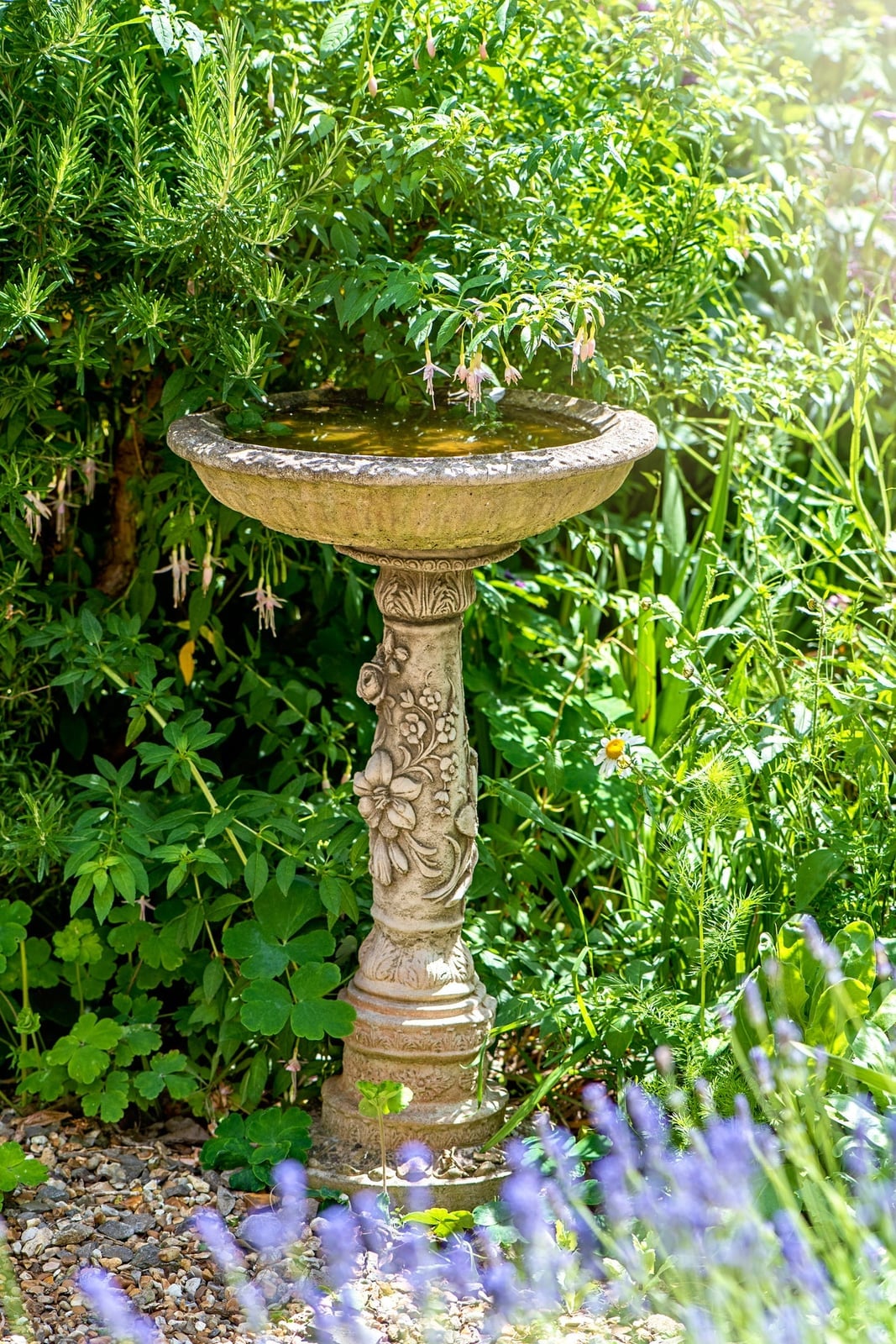
An ornate stone bird bath sits surrounded by lavender, with the purple blooms echoing the gray stone and the green foliage filling in the base. The bright daylight brings out the carved details on the bath, making it a focal point even in a compact garden corner. The gravel around it keeps the area tidy and reduces mud splatter on the lower stone. For a bird bath that serves as a garden anchor, placing it among low plants like lavender or thyme lets the structure emerge from the greenery without competing with taller flowers.
Stacked Terracotta Pots for Vertical Garden Interest
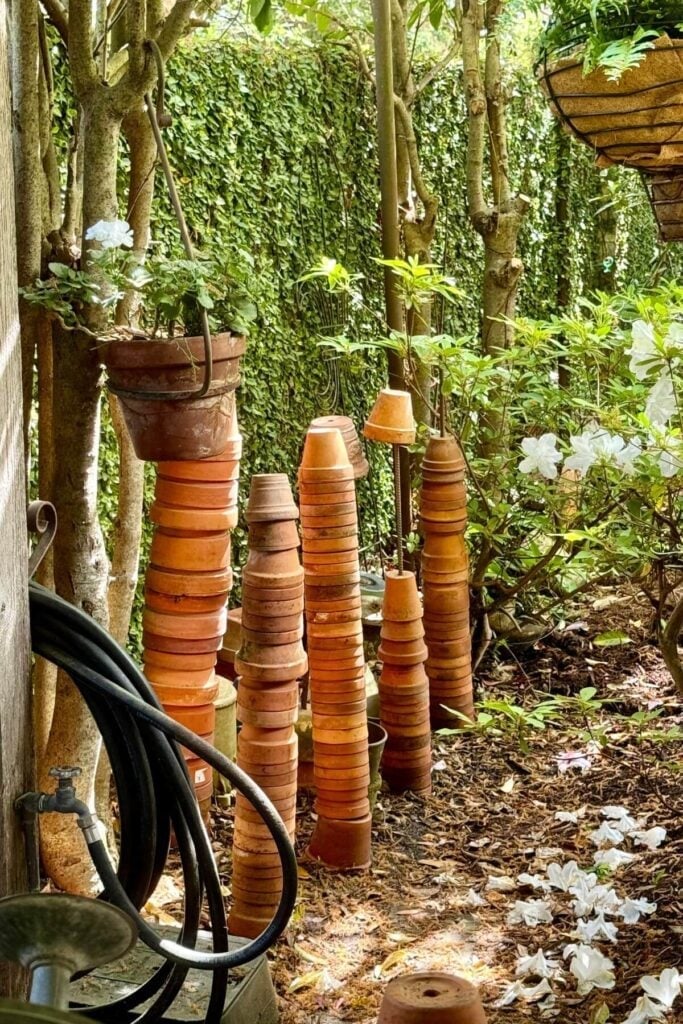
A stack of terracotta pots rises in a compact vertical column, with a garden hose coiled nearby on the wood surface. The dappled daylight catches the warm terracotta tones against the green background, creating a simple still life that takes up almost no floor space. The scale works because the pots are tiered from largest at the bottom to smallest at the top, which keeps the stack stable and visually balanced. For a small patio or apartment balcony, stacking spare pots this way turns a storage problem into a decorative accent, as long as the base pot is wide enough to support the weight above.
Final Thoughts
A cottage garden rewards patience and a light hand. Start with a few sturdy perennials like lavender and foxgloves, then let the beds fill in over seasons. Stone or gravel paths keep the look grounded, while trellises and arbors give climbers something to grab. A painted wooden shovel or a stack of terracotta pots adds character without much effort. The best part? It looks better the less you fuss. Let the garden find its own rhythm, and it will feel like it has always been there.