
The cottagecore kitchen is having a proper moment, and it’s easy to see why. This style leans into the cozy, lived-in charm of country farmhouses, with open shelving, vintage cookware, and soft, nature-inspired colors. If you’re dreaming of a space that feels warm and welcoming rather than stark and modern, you’re in the right place.
In this article, we’re rounding up 35 cottagecore kitchen ideas that show off the style in all its forms. You’ll find practical tips on color palettes, storage, and lighting that you can apply to your own kitchen, whether you’re planning a full renovation or just want to add a few rustic touches. Let’s dive in and find the look that feels like home.
Rustic Charm with Displayed Copper Cookware and Open Shelving
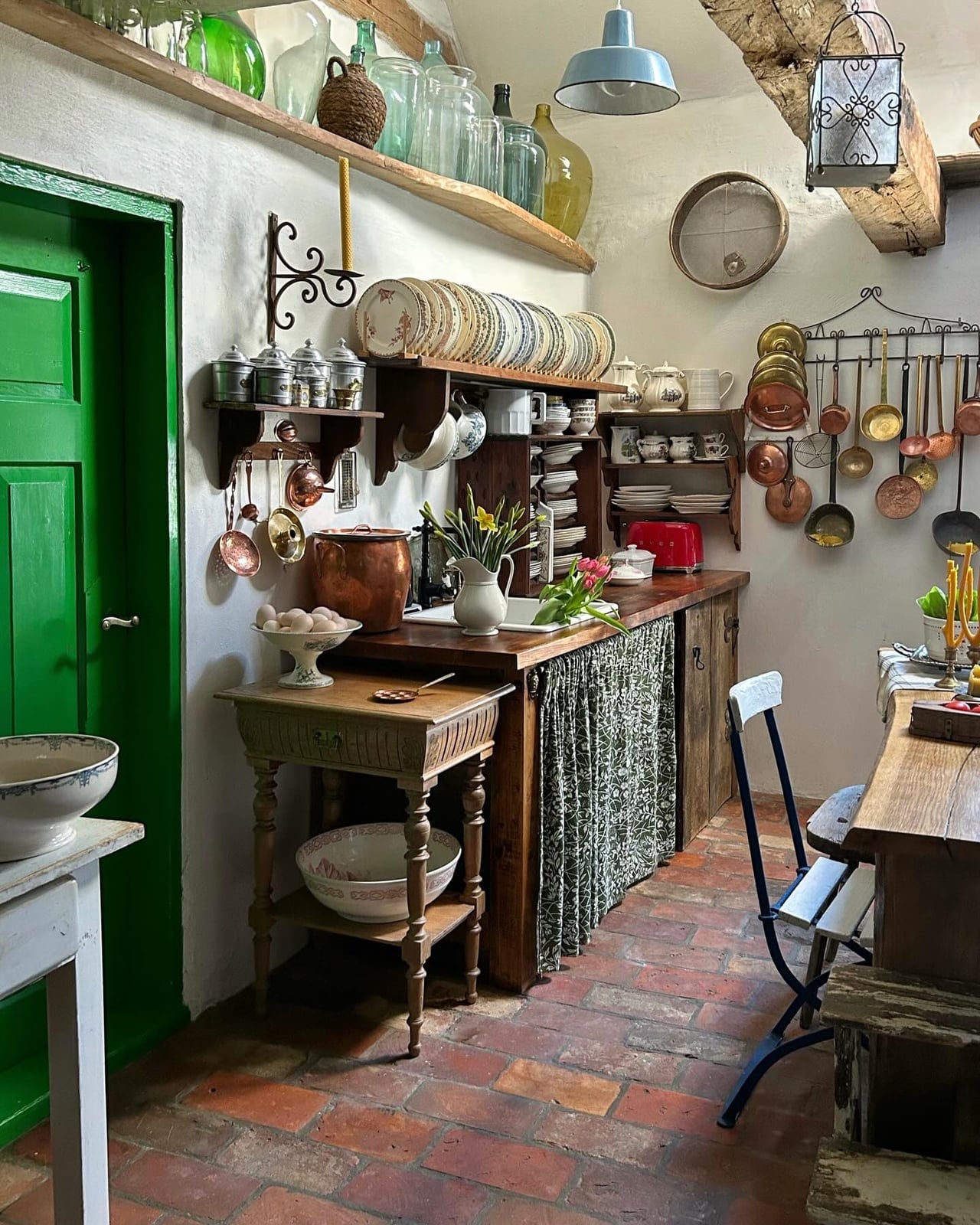
The first thing you notice is how the copper cookware catches the light, turning a compact galley kitchen into a warm, lived-in space. Open shelving keeps the pots and pans within reach, while wooden cabinets and a green door soften the terracotta and white palette. The tiled floor anchors the room, and a hanging lantern adds a gentle glow. For a cottagecore kitchen, the layout works because the open shelves do the heavy visual work, so you do not need upper cabinets to hide the everyday tools. Keep the display edited to one material family, copper and ceramic, and the room feels intentional rather than crowded.
Deep Green Cabinetry and Natural Stone Accents
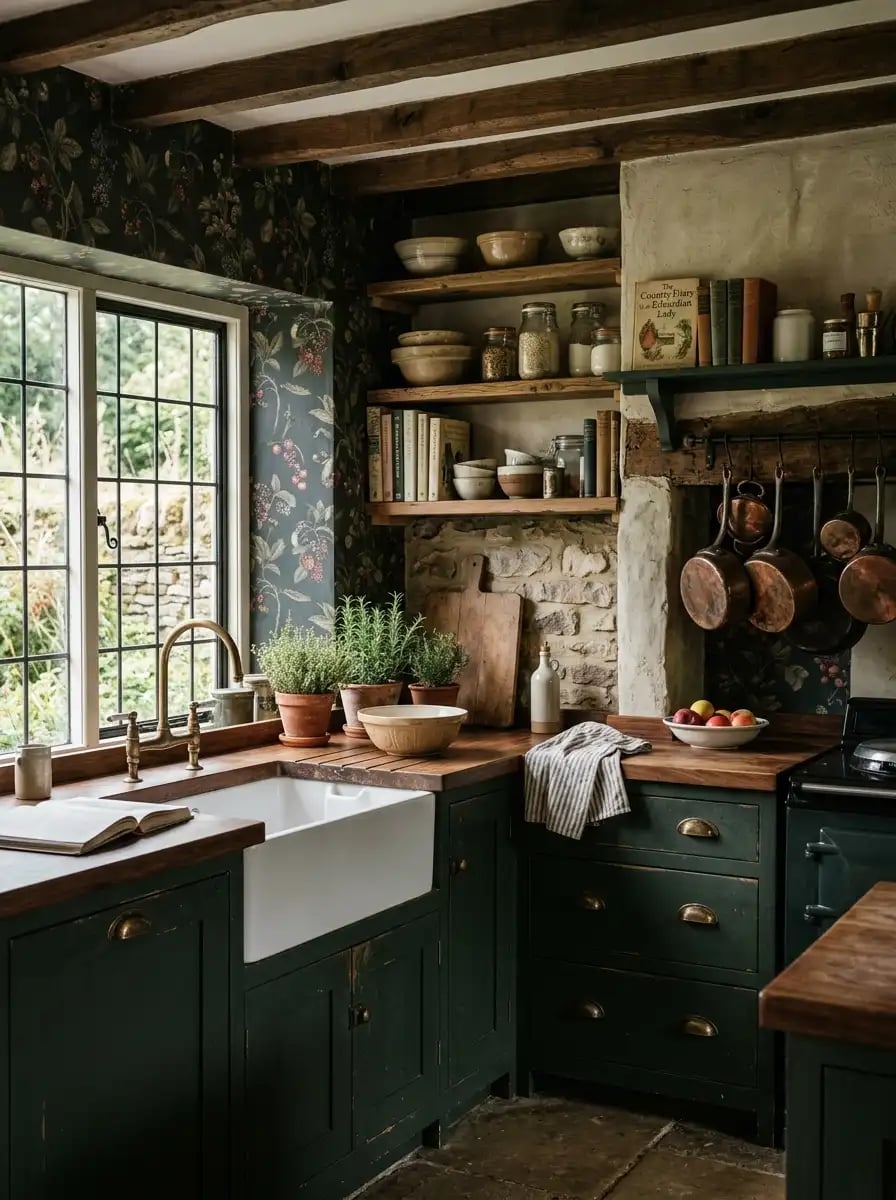
Dark green cabinetry gives this corner kitchen a grounded, earthy mood that plain white cabinets cannot match. The stone wall behind the farmhouse sink adds texture, while wooden countertops warm up the cool green. Copper pots hang nearby, catching the natural light and tying the palette together. This is a good choice if you want a cottagecore kitchen that feels cozy and slightly dramatic. The palette works because the green is deep enough to hold its own against the stone, but the wood and copper keep it from turning cold. If you are renting, a removable peel-and-stick stone backsplash can mimic the look without a full tiling job.
Cheerful Yellow Cabinetry and Apron Sink
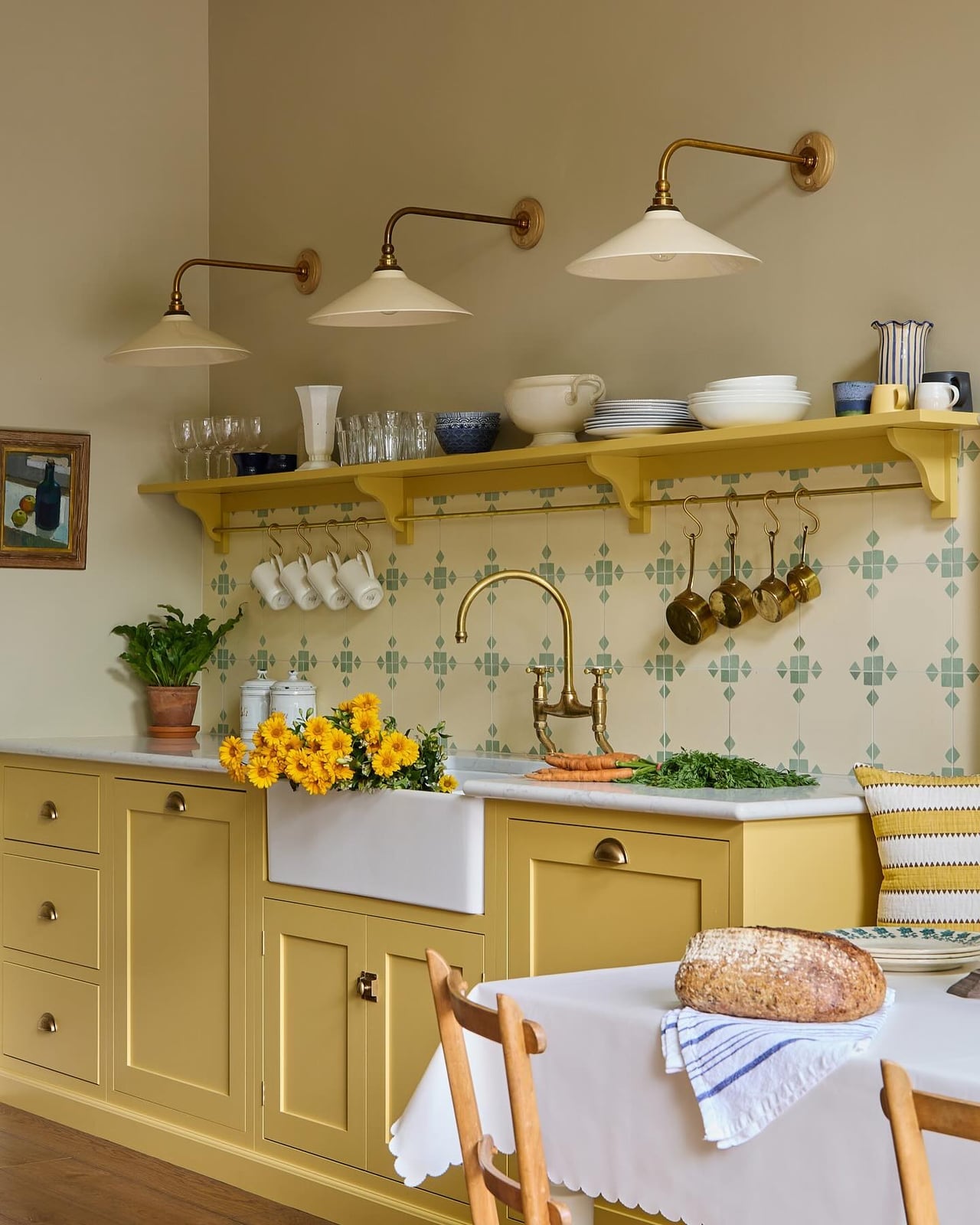
How do you make a kitchen feel sunny even on a gray day? Bright yellow cabinetry is a bold answer, and it works here because the room is large enough to handle the color without feeling overwhelming. The apron sink, with its exposed front, becomes a natural focal point, and brass wall lights add a warm, vintage glow. The green and cream accents in the tile and open shelving keep the yellow from feeling too loud. This is a great option if you want a cottagecore kitchen that feels cheerful and inviting. The key is to balance the yellow with neutral countertops and plenty of natural light, so the color stays bright but not glaring. For a rental, you could paint just the island or a single cabinet to get the same effect.
Moody Ambiance with Wood-Burning Stove and Lanterns
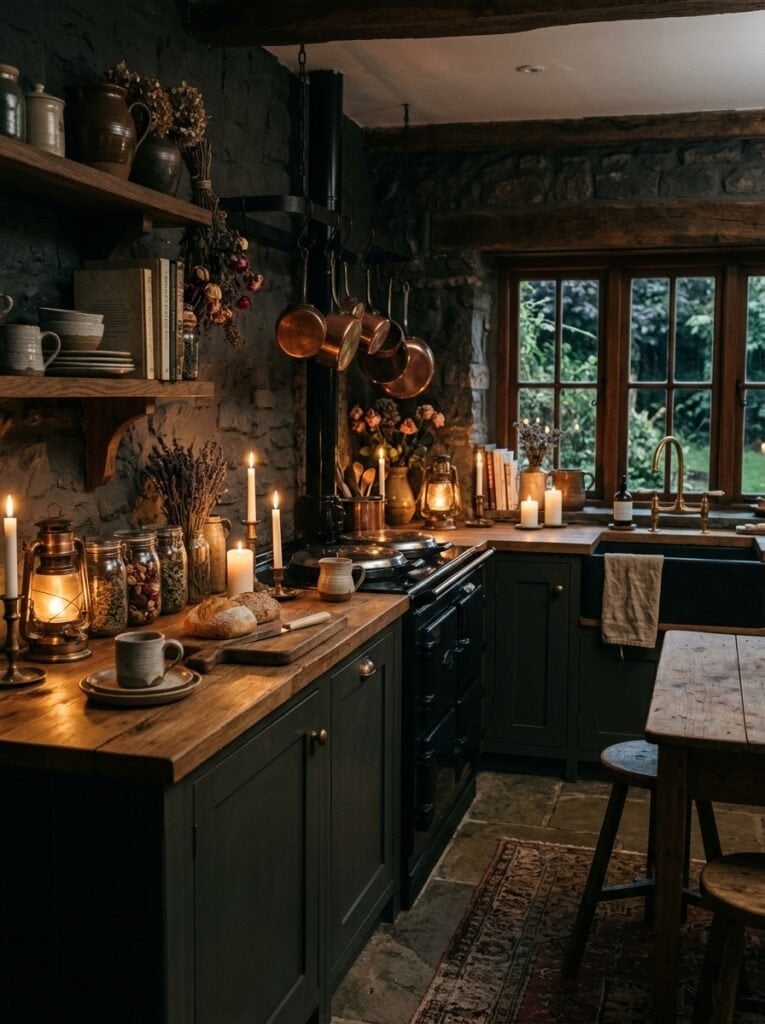
A wood-burning stove sits at the center of this kitchen, and the lanterns and candles around it create a soft, flickering light that no overhead fixture can match. The stone walls and dark green palette keep the room intimate, while hanging copper pots add a practical touch. This is a space that feels like a cabin in the woods, and the lighting is the reason. The warm glow from the lanterns makes the charcoal and wood tones feel inviting rather than gloomy. If you want this mood, focus on layered lighting: a mix of candlelight, lanterns, and a dimmable overhead source. Check your local building codes before installing a wood-burning stove, as venting and clearance rules vary.
Ornate Wooden Shelving for Display
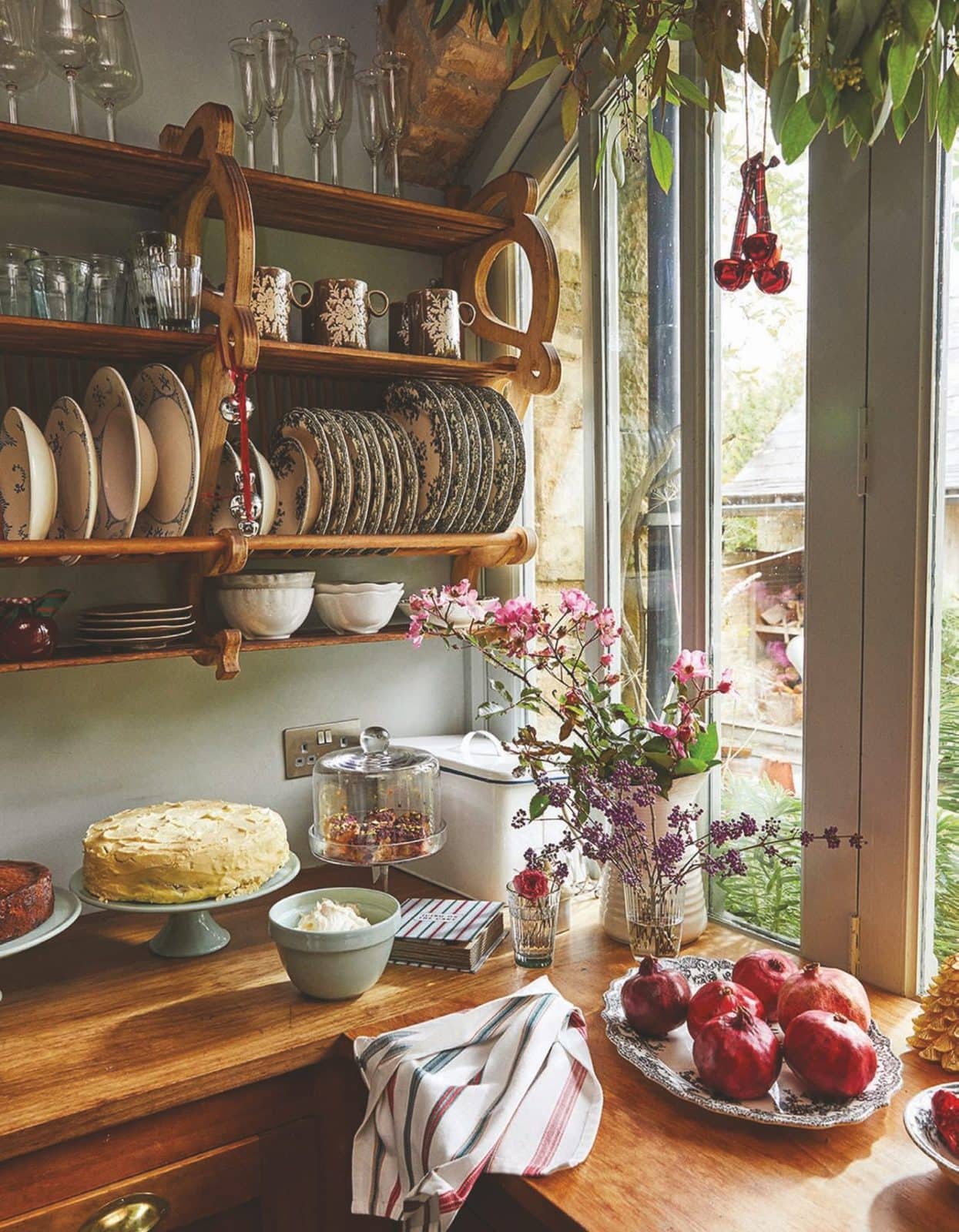
Grouping items by color and material is a classic approach for display shelves, and this kitchen follows it perfectly. The ornate wooden shelving unit holds glassware and ceramic pieces in a mix of green and pink, with small floral arrangements adding a soft touch. Natural light makes the glass sparkle, while the overhead light fills in the shadows. This kind of shelving works best when it is mounted at eye level, so you can see and reach everything easily. Keep the arrangement balanced but not too symmetrical, and you will get a look that feels collected over time. If you are in a rental, a freestanding wooden shelf unit can give the same effect without drilling into the walls.
Cozy Corner Kitchen with Floral Sink Curtain
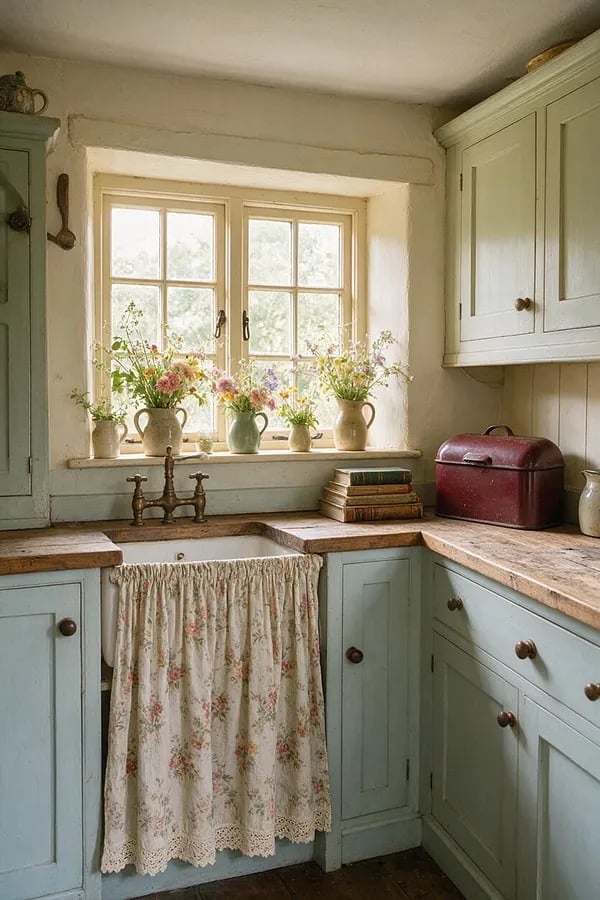
A plain skirt under the sink is fine, but a floral one turns a corner kitchen into a proper cottagecore kitchen farmhouse sink floral curtain moment. The soft blue painted cabinets and wooden countertops keep the palette warm and grounded, while the patterned fabric adds a layer of charm that feels lived-in rather than staged. Natural light from the window hits the brass faucet and ceramic dish soap bottle, making the little details count. The layout here is smart: the sink sits right under the window, so the view becomes part of the daily rhythm. That curtain hides cleaning supplies without adding a door or drawer, which keeps the small footprint open and airy.
Dark Green Subway Tile and Wooden Beams
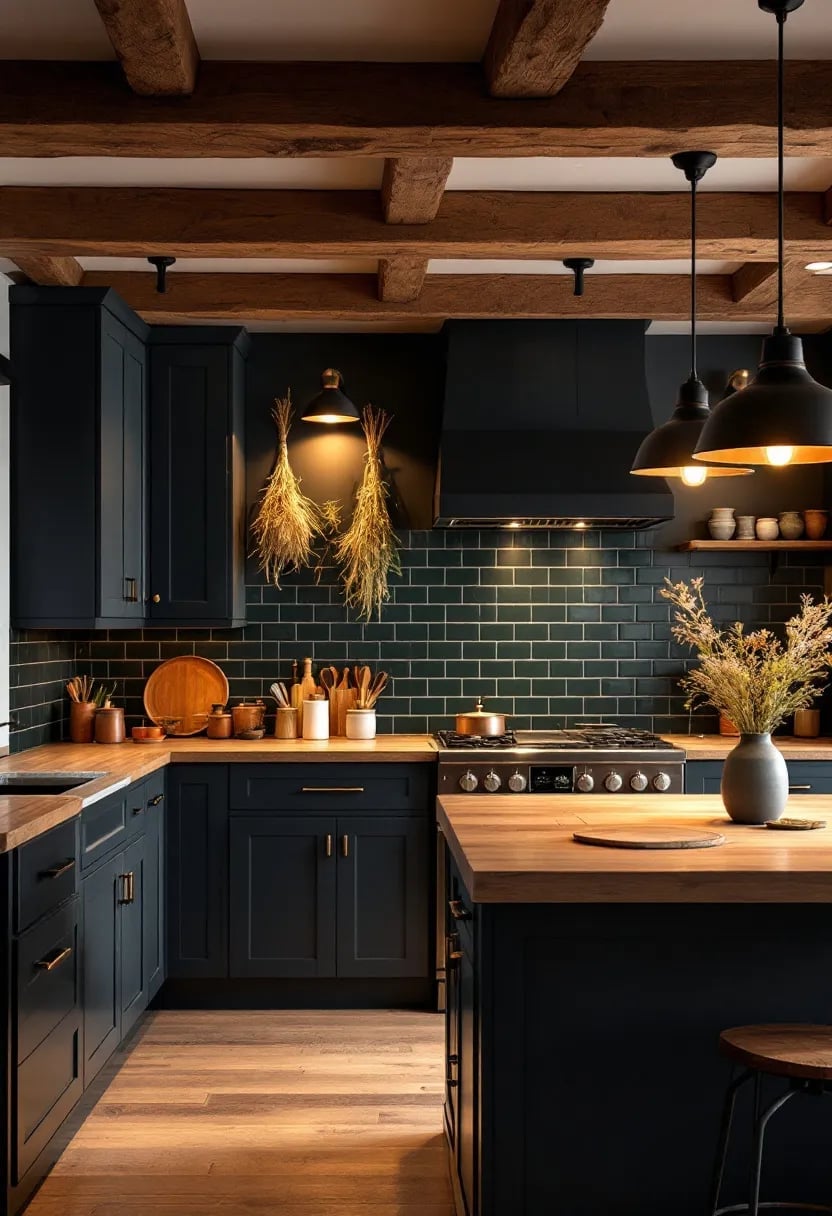
Dark green subway tile wraps the backsplash in a shade that feels both earthy and deliberate, grounded by exposed wooden beams overhead. The L-shaped layout uses the dark cabinetry and black range hood to anchor the room, while pendant lights and under cabinet lighting keep the work surfaces bright. Hanging herbs add a soft, living texture against the tile. For a renter, this look is less about changing the walls and more about layering: a dark green peel-and-stick backsplash, a tension rod for herbs, and swapping pendant shades can echo the same depth without a single tile laid.
Rustic Stone Wall and Apron Sink Vignette
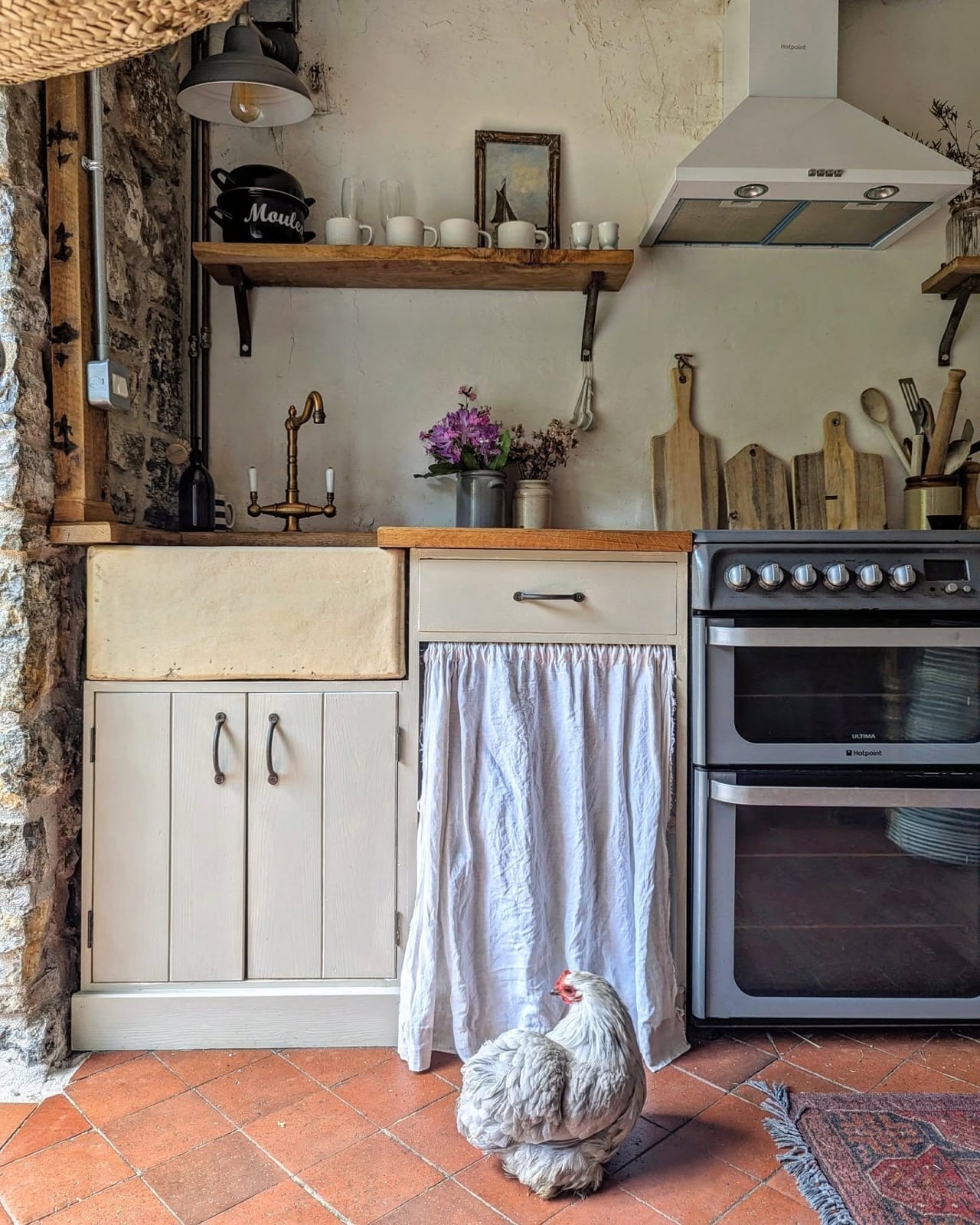
This corner vignette proves that a rustic stone wall does not need to cover the whole kitchen to set the tone. The stone texture wraps the apron sink area in a natural gray-beige palette, while wooden shelves and a range cooker sit quietly beside it. The compact layout means every surface earns its place: the overhead lamp casts warm light on the stone, and the cream tile backsplash above the worktop keeps the eye moving. A single stone accent wall like this one gives a kitchen instant depth without overwhelming a small footprint.
Floral Refrigerator and Pink Cabinetry
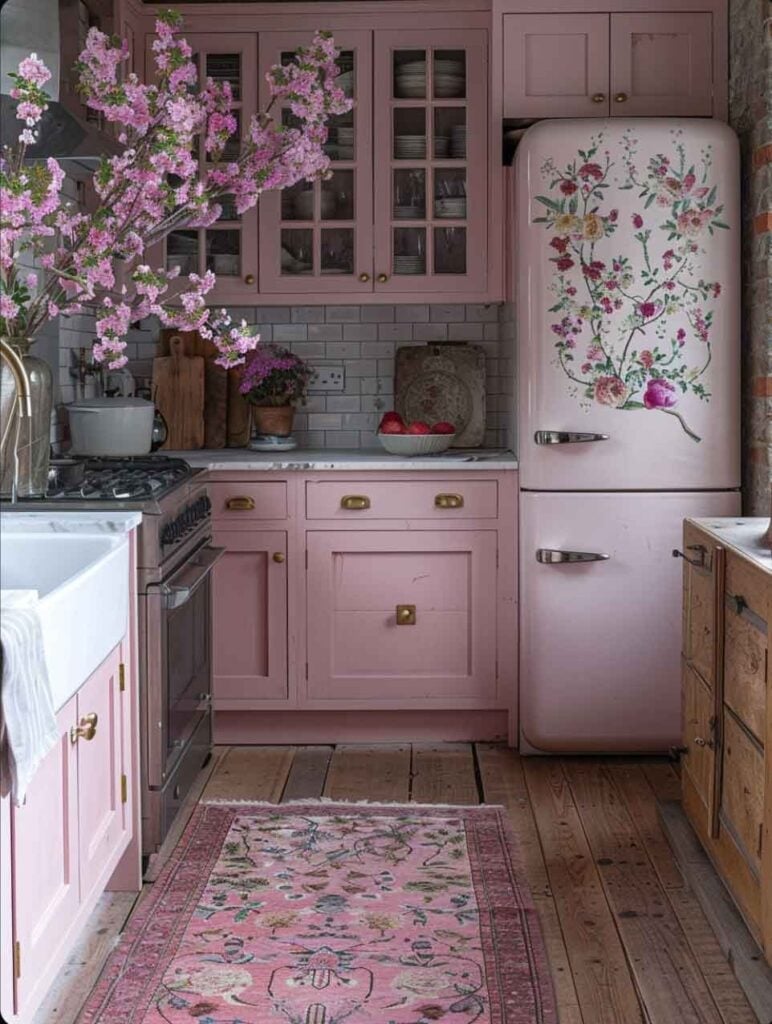
Does pink cabinetry hold up in a kitchen, or does it read as a passing trend? In this galley layout, the answer leans toward staying power. The soft pink cabinets pair with a floral-decorated refrigerator, creating a coordinated look. White subway tile and a pink rug break up the pink and wood tones, so the palette stays balanced. The wooden floor adds warmth and prevents the space from feeling overly sweet. A pink kitchen like this one works because the pink is treated as a neutral: it sits alongside natural wood and white tile, not against them.
Sage Green Cabinets and Large Range Cooker
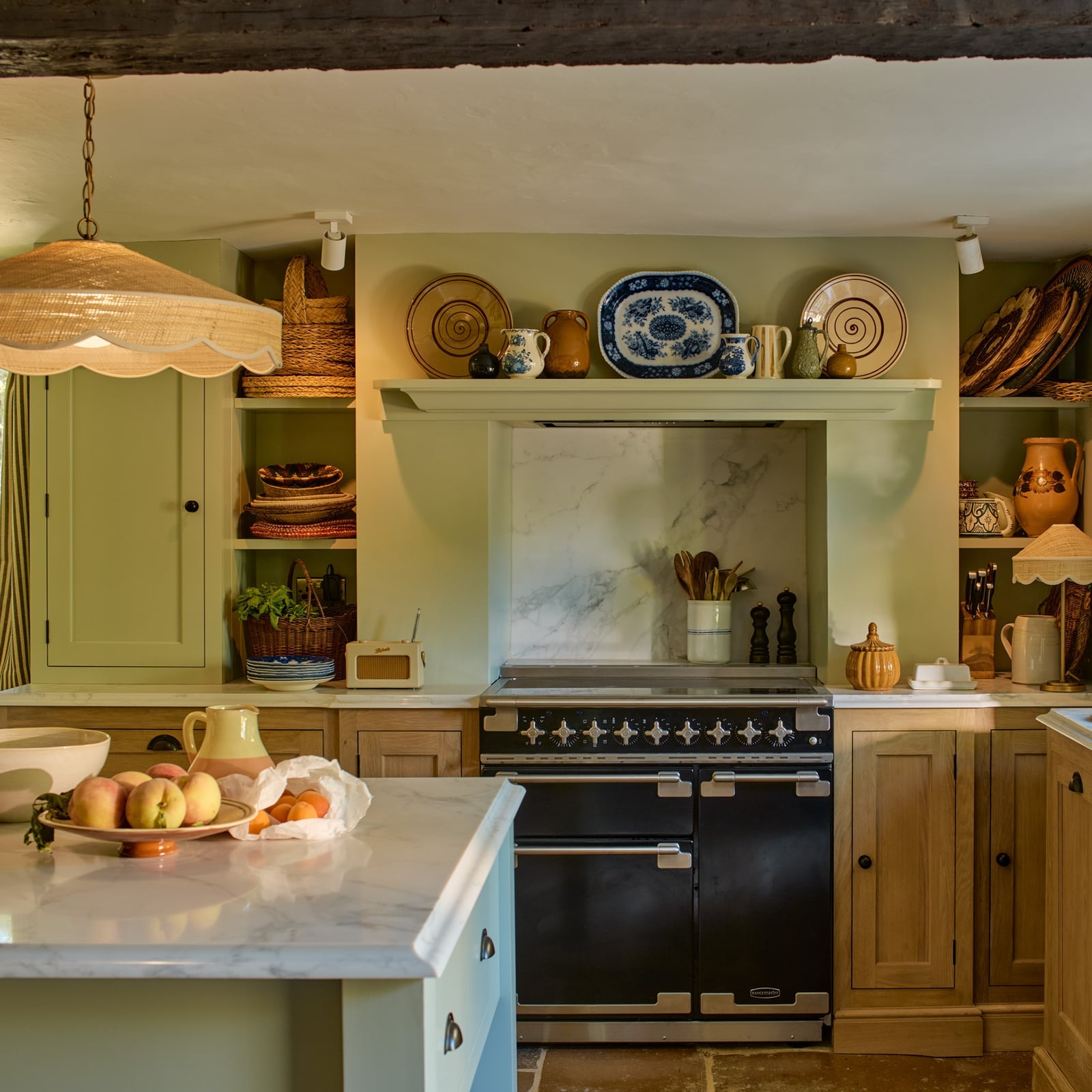
A large black range cooker dominates this kitchen, but the sage green cabinets and wooden island keep the scale in check. The sage green reads as soft and earthy against the cream marble countertops and woven baskets, so the cooker does not overwhelm the room. The central island anchors the layout, giving the range a natural home without crowding the perimeter. Soft natural light and layered lighting from the pendant fixtures make sure the sage green stays true rather than muddy. This kitchen shows that a bold appliance works best when the surrounding palette is calm and grounded.
Two-Tone Cabinetry with Brass Hardware
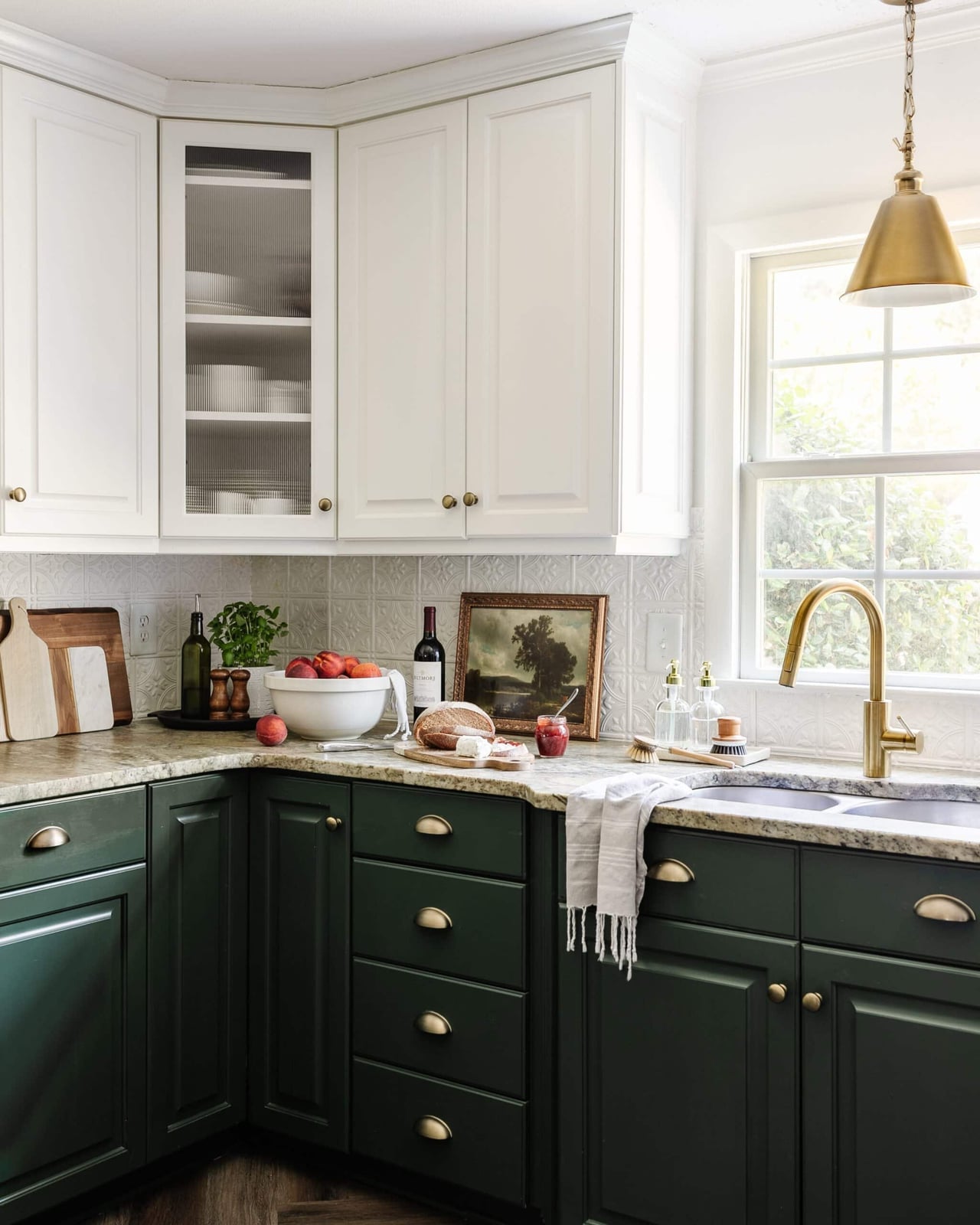
In this L-shaped kitchen, the deep green lower cabinets anchor the room while the white upper cabinets keep the space airy. The brass hardware on every door and drawer ties the two halves together, making the contrast feel deliberate. A granite countertop bridges the transition between the painted wood and the brass accents. A single pendant light above the sink provides task lighting without competing with the natural light from the window. The layout itself guides the eye from the bright uppers to the richer base, a simple trick that works in almost any kitchen shape.
Sage Green Kitchen with Brass Range and Copper Pots
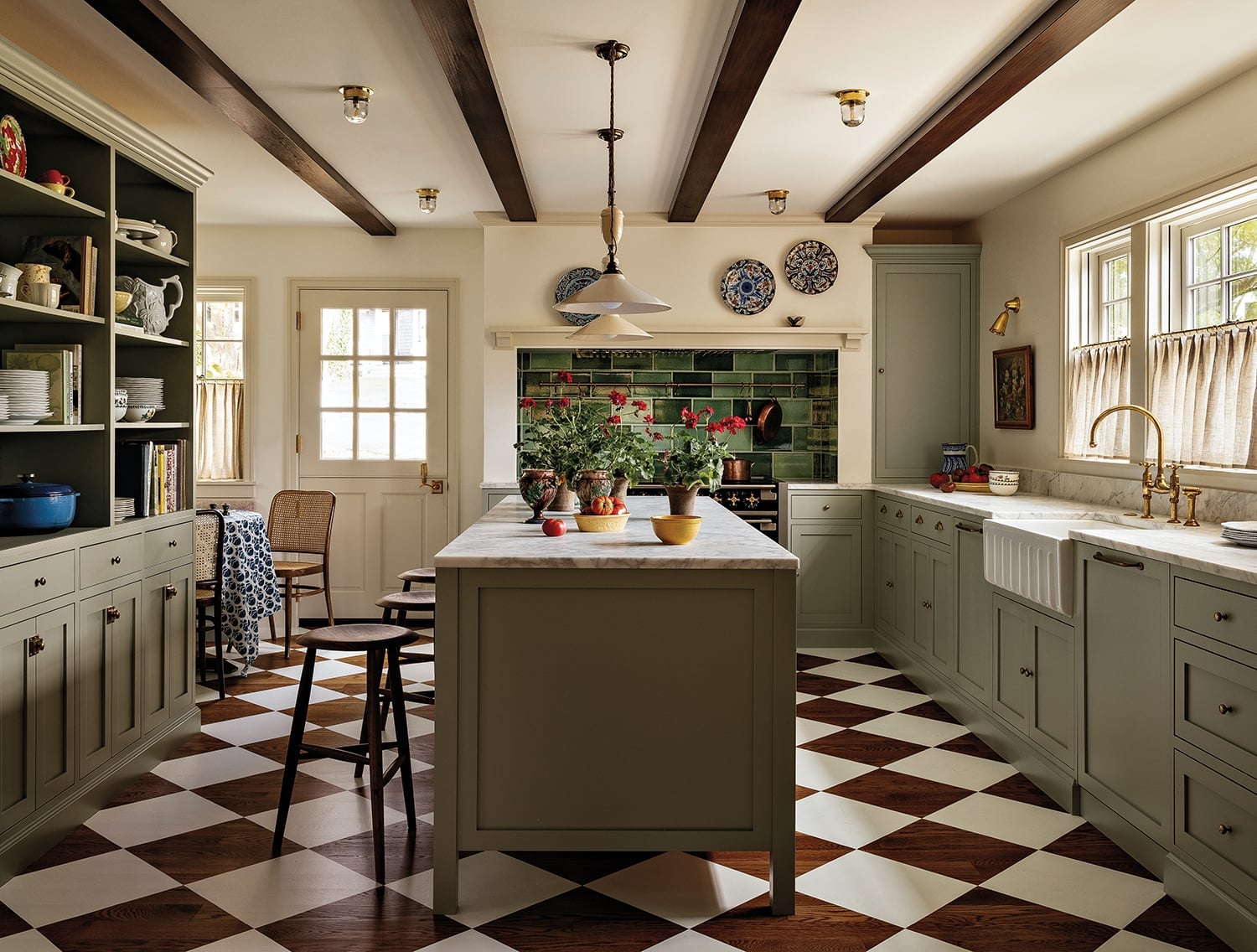
Sage green can read as either cool or warm depending on what you put next to it. Here, the brass range and hood shift the whole kitchen into the warm side of the palette, making the sage feel soft rather than clinical.
The cream tile backsplash and stone countertops keep the background neutral, so the wooden island and copper pots can carry the texture. The brass range is the anchor, with its warm glow picking up the copper tones from the hanging pots. The pendant lights above the island echo the brass finish, creating a triangle of warm metal around the cooler cabinets. The galley layout with a central island means the sage reads as a wall of color from every angle, never as an accent. The palette works because it commits to one temperature and lets the natural light do the rest.
Dramatic Deep Red Kitchen with Black Range
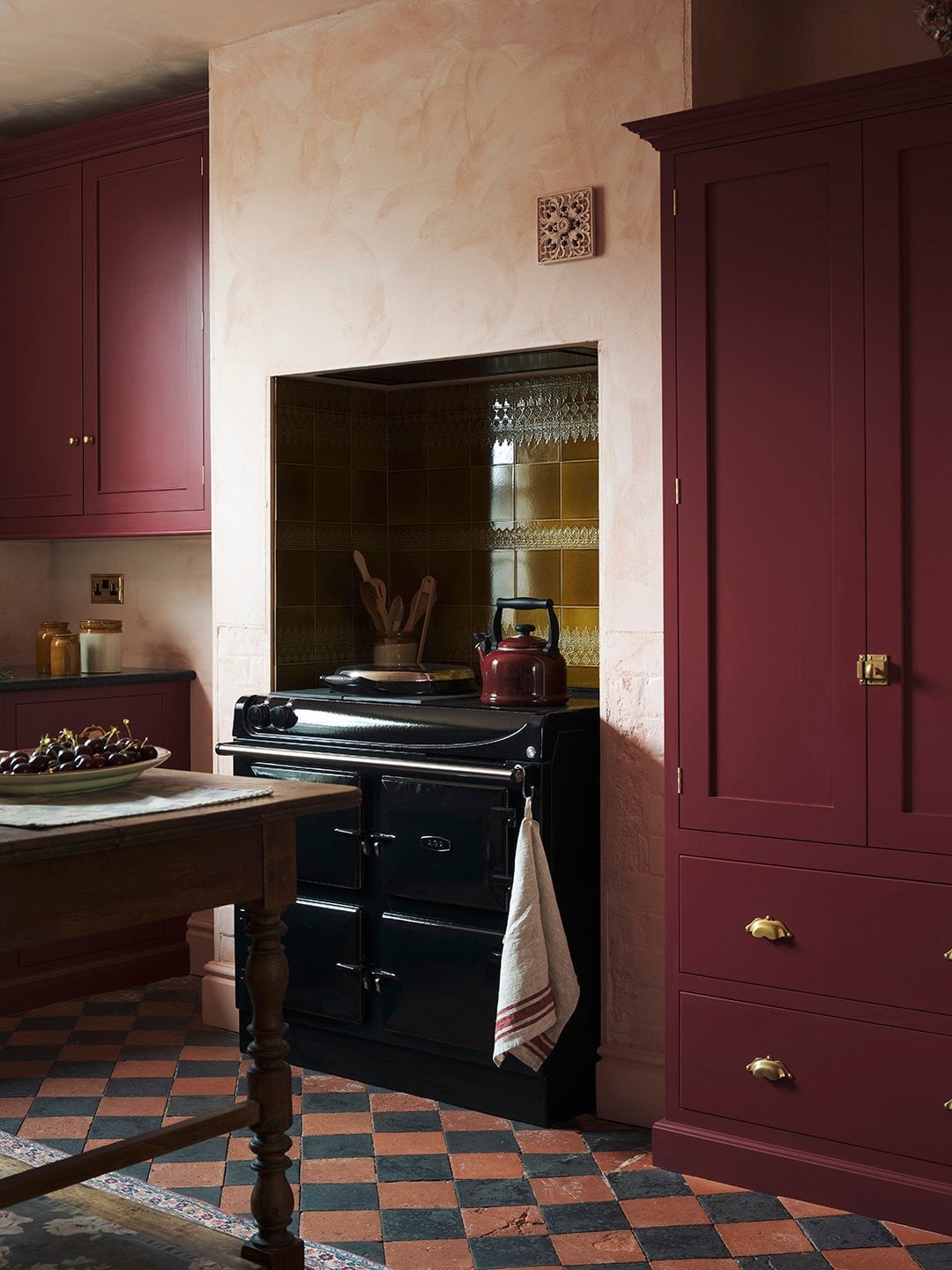
The precision here is in the ratio: a deep red that covers most of the cabinetry, a black range cooker set into an alcove, and a checkered floor that breaks up the color without competing. The red stays rich and warm because the black range acts as a visual anchor, and the cream in the checkered floor balances the weight. Ambient light softens the red, so it remains cozy instead of intense. The alcove frames the range cooker like a piece of furniture, giving the deep red a purpose beyond just color.
Farmhouse Sink with Yellow Gingham Curtains
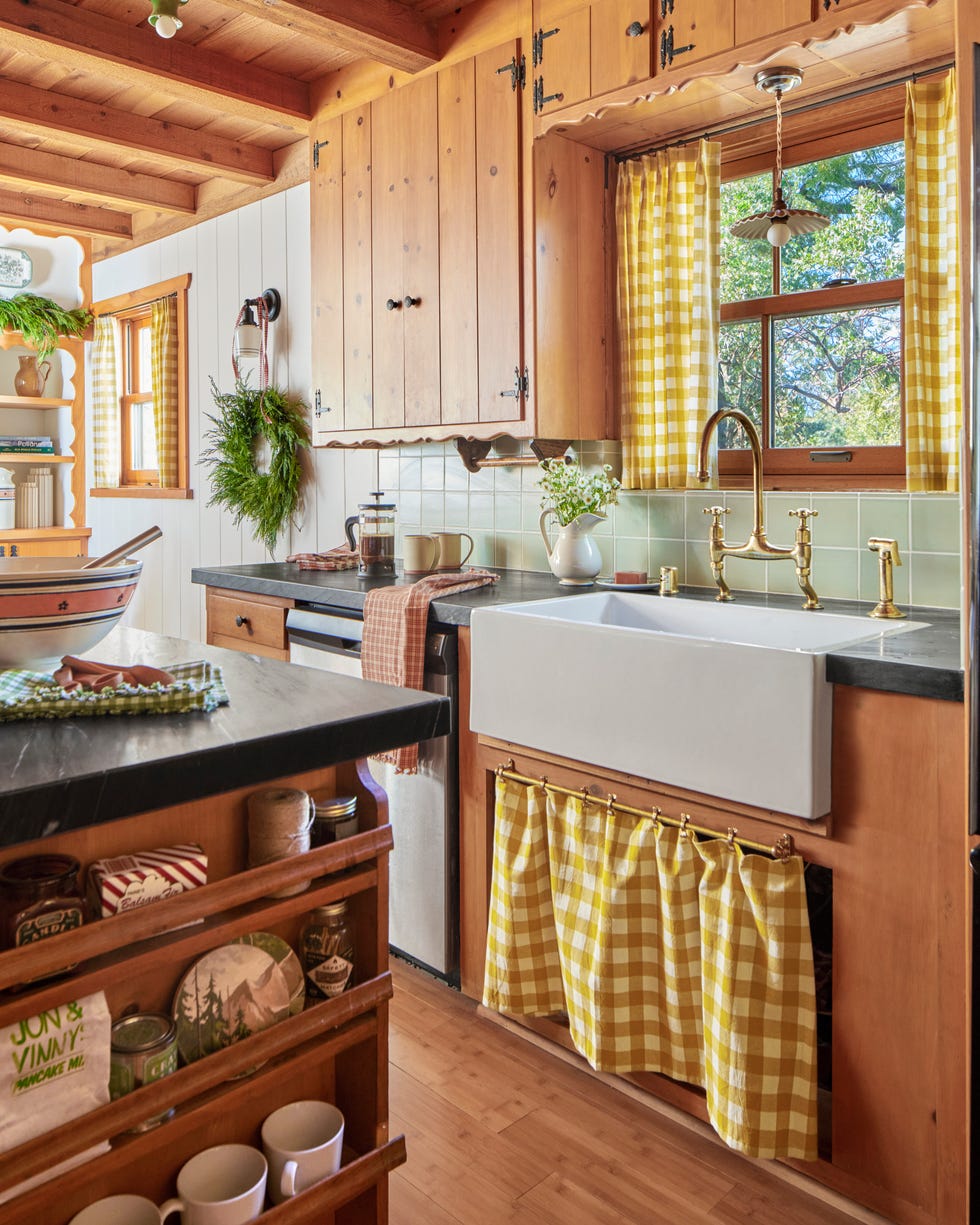
The yellow gingham curtains act as a smart lighting filter in this compact kitchen. They soften the window light into a warm, soft glow that makes the wooden cabinets feel richer and the brass faucet shine without glare. The farmhouse sink is the main feature, but the curtains make the whole sink area feel like a room within a room. The light green walls and wood tones keep the palette grounded, so the yellow gingham stays cheerful without being overwhelming. The ceramic sink stays cool and bright against the warm wood, and the brass faucet ties back to the curtain’s yellow tones.
Dark Green Cabinetry and Open Wooden Shelves
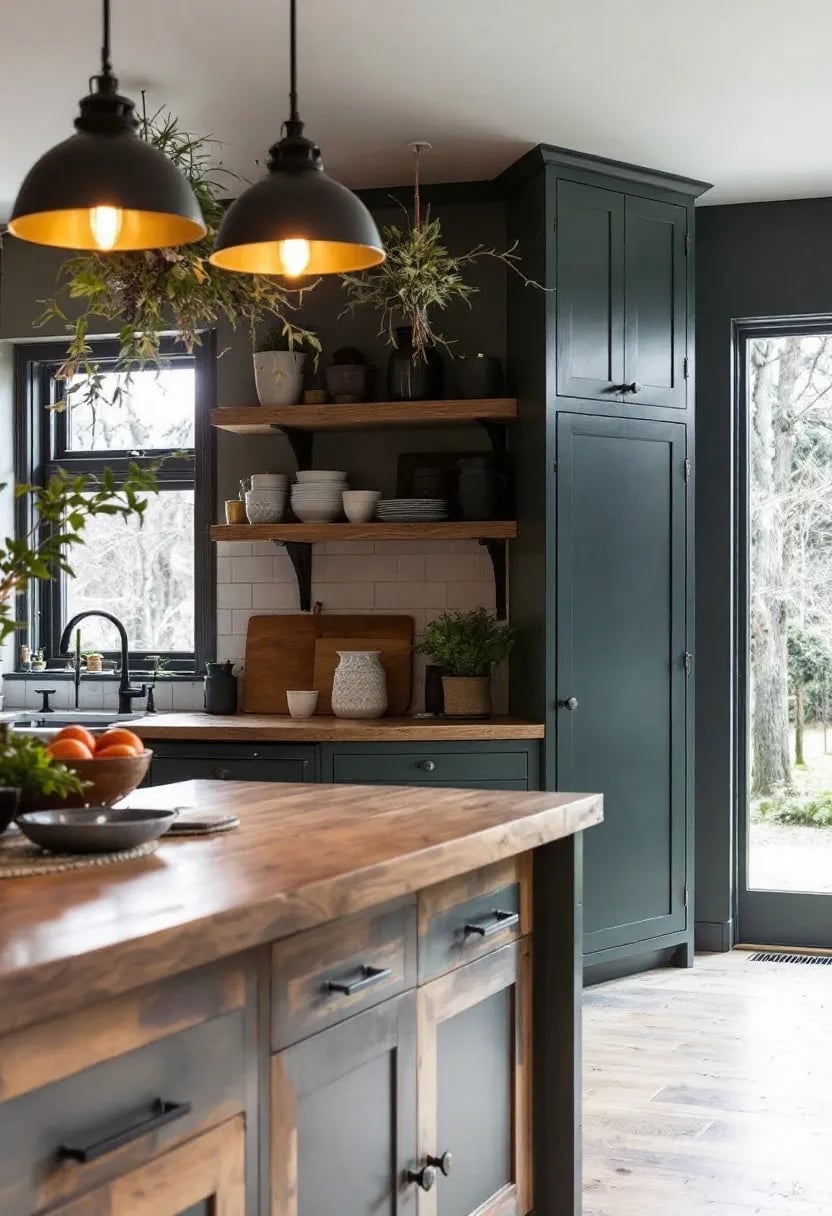
To balance dark cabinetry, pair it with open storage. Here, the dark green lowers and island are offset by open wooden shelves that display glassware and ceramics, creating visual breathing room. The wooden island breaks up the green with its natural grain, and the pendant lights above it add a warm glow that keeps the dark color from feeling heavy.
Light from the window hits the shelves first, so the glassware draws the eye upward. The metal hardware on the cabinets picks up the black accents from the light fixtures, creating a quiet thread of dark metal throughout the room. The white tile backsplash behind the range keeps the wall light, so the dark green feels like a deliberate choice. The storage here works because the open shelves are not just functional; they are the lightest part of the room.
Textured Cream Tile Backsplash and Brass Utensil Rail
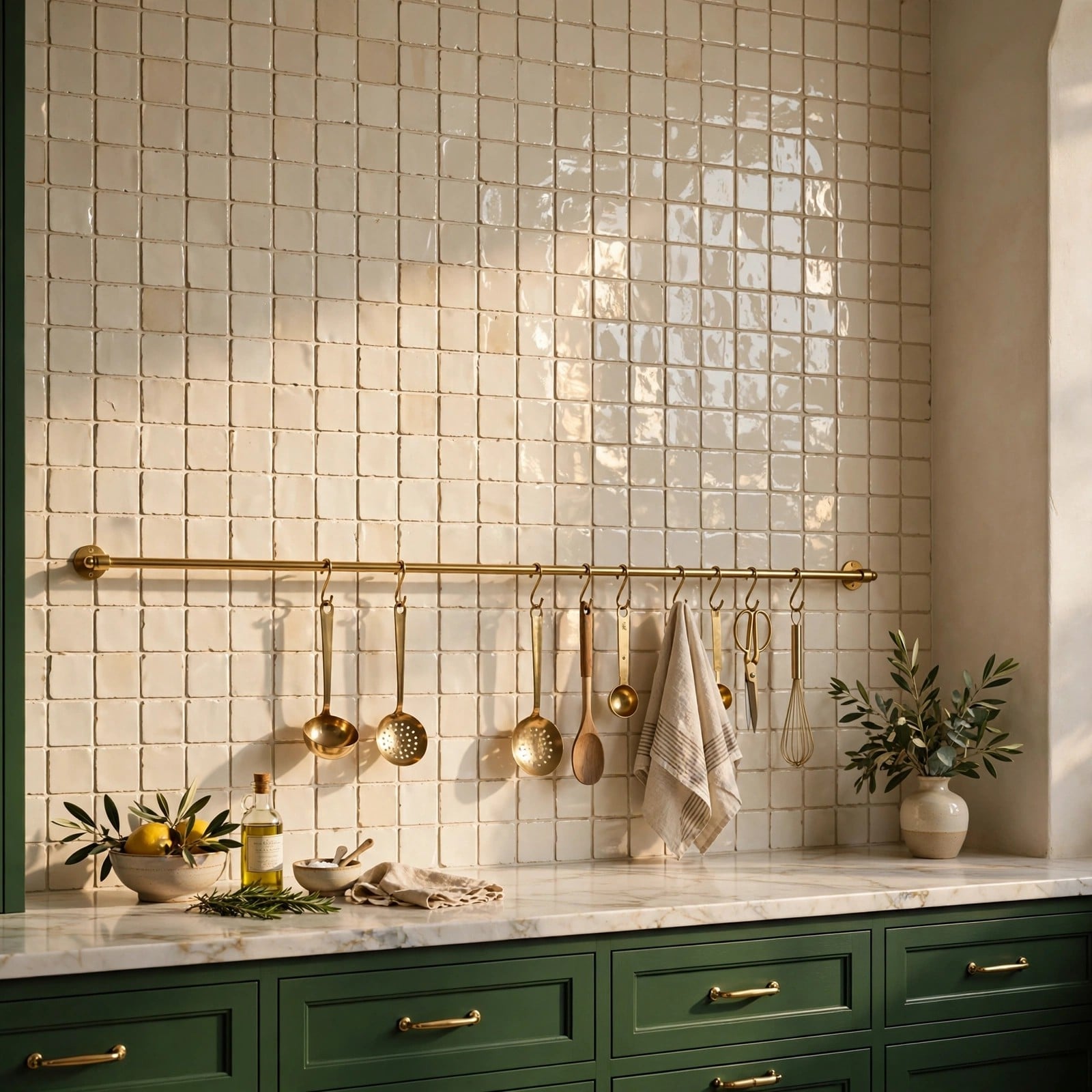
A textured cream tile backsplash brings softness to a kitchen that leans on deep green cabinetry and a marble countertop. The brass utensil rail mounted above the counter keeps wooden spoons and tools within reach without cluttering the work surface. A small vase adds a natural touch, and the warm natural light makes the tile’s subtle ridges visible. The palette stays restrained, letting the brass and cream finishes carry the cottagecore feel. A practical rule for materials: keep hard surfaces matte or lightly textured. Gloss would compete with the brass, but a low-sheen tile lets the metal hardware stand out.
Diamond Pane Windows and Stone Sill Display
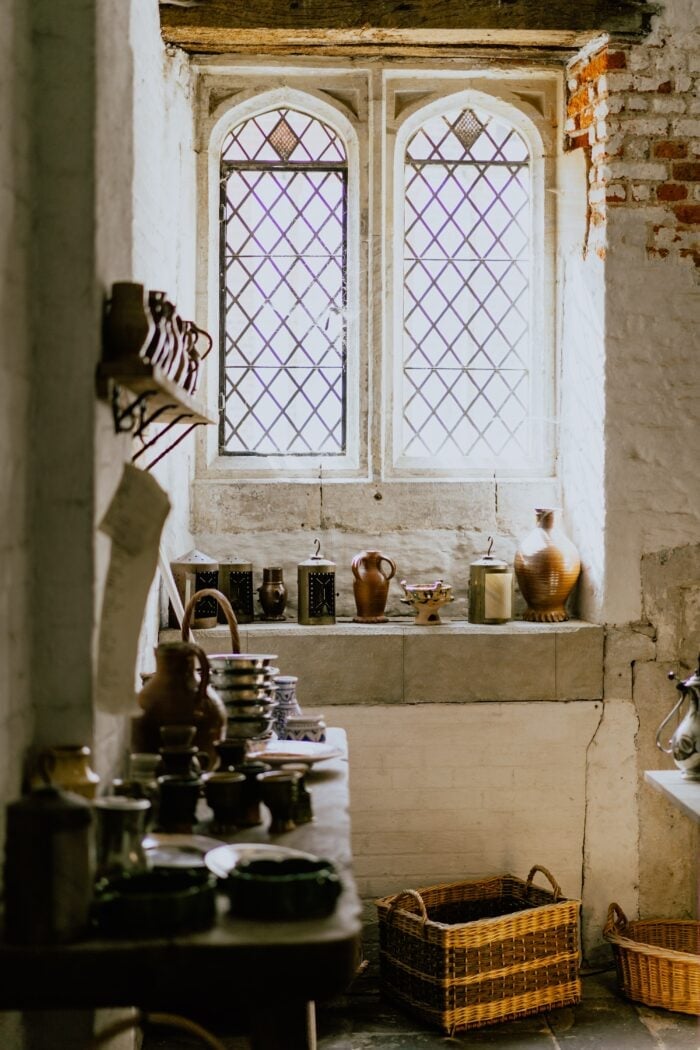
A practical rule for renters: change the display, not the window. Diamond pane windows bring charm on their own, but the stone sill underneath is what makes the vignette work. Ceramic jugs in terracotta tones and a few woven baskets sit directly on the stone, catching natural light without needing a curtain or blind. The brick wall behind adds texture without demanding paint or wallpaper. For a renter-safe swap, keep the window frame as is and layer your objects on the sill. The stone surface is durable and easy to clean, so you can swap out seasonal pieces without worrying about water rings or stains.
Soft Peach Cabinetry and Abundant Natural Light
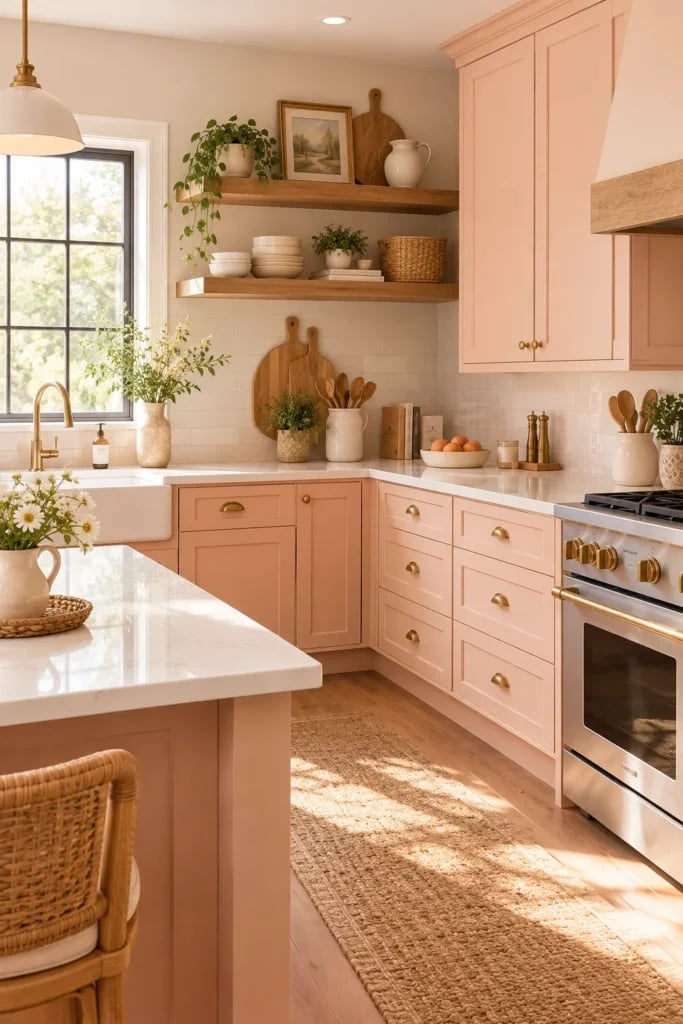
If sage green feels too safe, soft peach cabinetry offers a warmer, more unexpected alternative for a cottagecore kitchen. The peach tone reads as playful without being sugary, especially when paired with white countertops and a wood island. Natural light floods the corner layout, bouncing off the pale cabinets and making the space feel larger than it is. A single pendant light over the island adds a warm glow for evening cooking.
Deep Red Cabinetry and Traditional Plate Rack
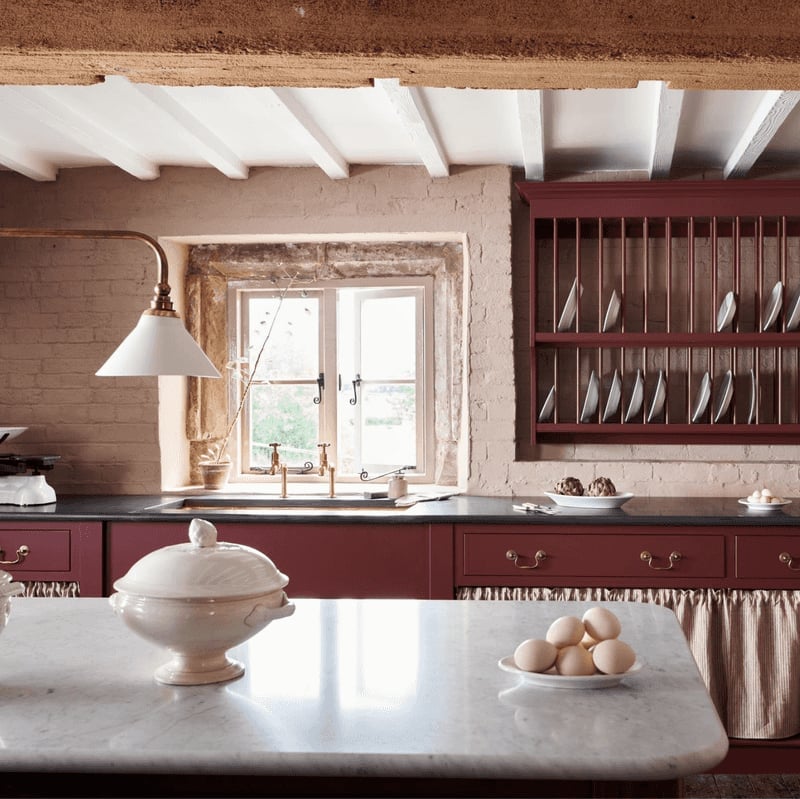
Deep red cabinetry pulls focus in a kitchen with stone walls and a brick surround. The color is bold enough to anchor the room, but the traditional plate rack mounted above the farmhouse sink softens the look by adding visible dishware in white and beige tones. A pendant light hangs over the island, casting warm light on the wood surfaces. The deep red holds its own against the natural stone, so the palette feels intentional rather than accidental. For durability, a high-quality paint finish on the cabinets is key. Red shows wear faster than neutral tones, so a satin or semi-gloss sheen helps with cleaning and longevity.
Farmhouse Sink with Sunbeams and Wooden Countertops
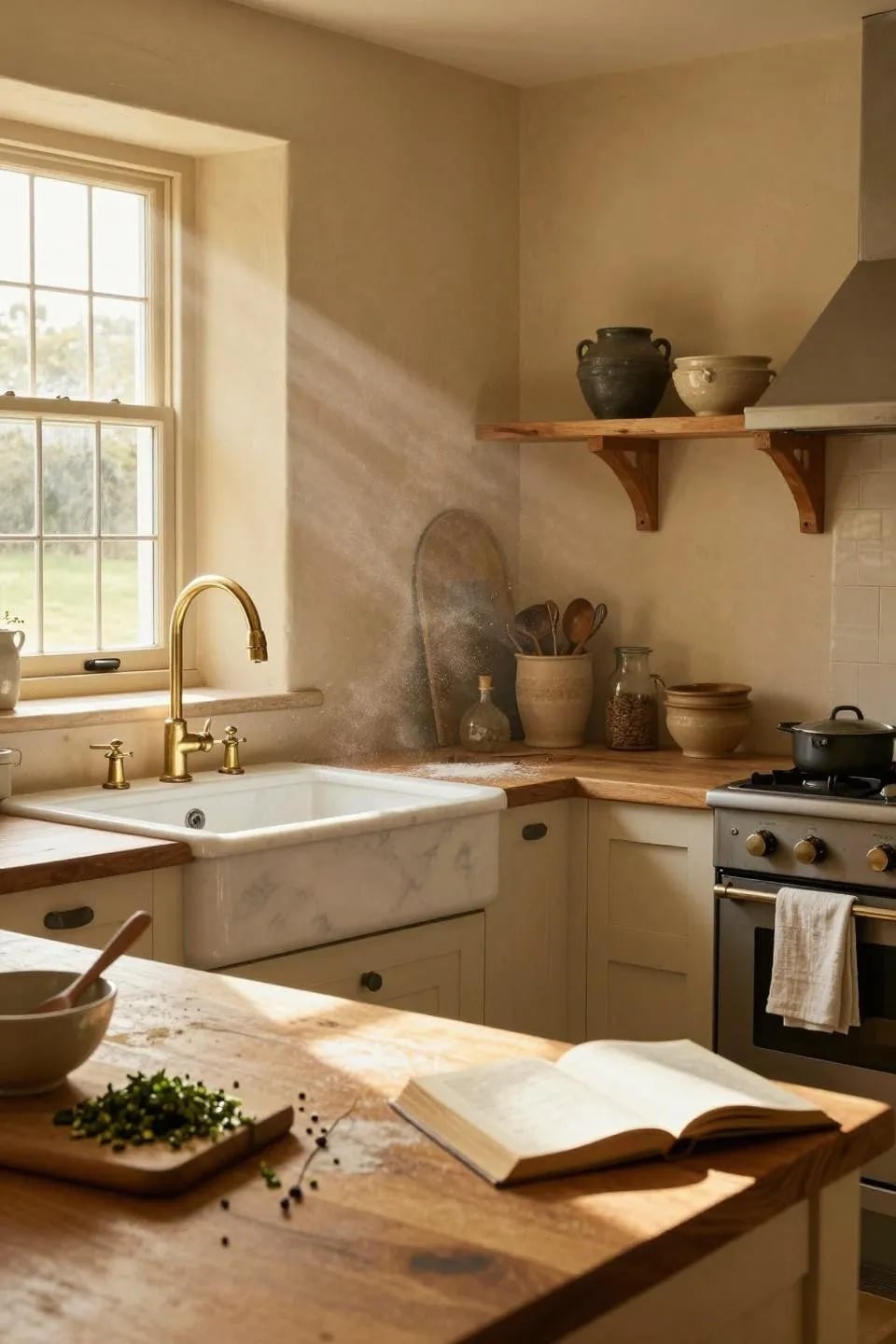
Sunbeams hitting a farmhouse sink change the whole mood of a kitchen. The light lands on the brass faucet and the wooden countertops, making the cream marble backsplash glow. The L-shaped counter keeps the sink in the corner, which lets the sun streak across the full length of the workspace. The range sits opposite, and the warm wood tones tie the two sides together. A clear one-line assessment: light is the cheapest upgrade you will ever make. If your kitchen gets morning sun, place your sink or main prep area where the beams hit. It makes washing dishes feel less like a chore and more like a moment.
Natural Stone Tile Backsplash with Dark Blue Cabinets
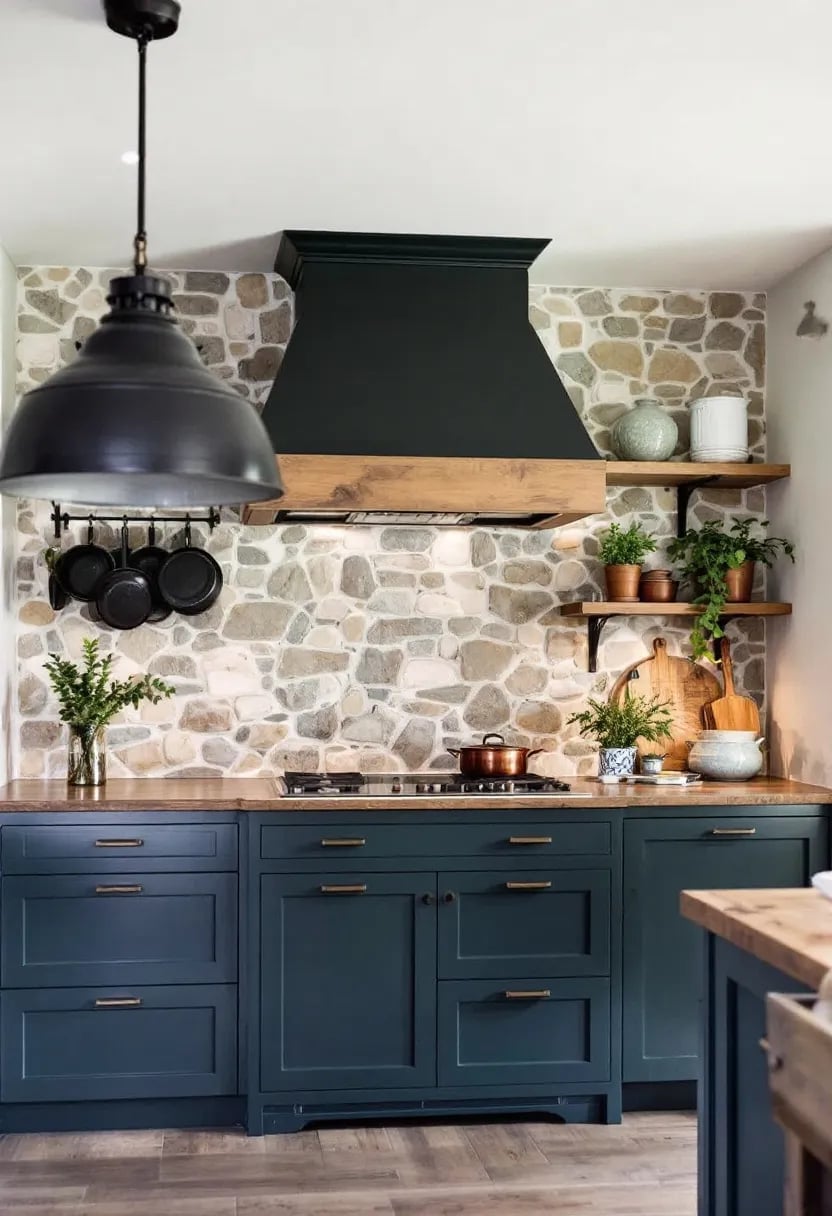
Choosing a backsplash starts with the material. Here, natural stone tile with varied earthy veining and texture runs behind the counter, while dark blue cabinetry anchors the space. The stone looks organic and unpolished, which prevents the room from feeling too precious. A black range hood and simple wooden open shelves above the counter add contrast. A single pendant light with a warm shade hangs overhead, casting soft light across the countertop. The palette stays in the blue and stone range, with wood tones from the shelves and any visible cutting boards adding warmth. To recreate it, look for a natural stone tile with visible variation and pair it with a deep, matte cabinet color. The stone becomes the visual anchor, so keep the countertop clear of clutter to let it stand out.
Vintage Brass Espresso Machine Vignette
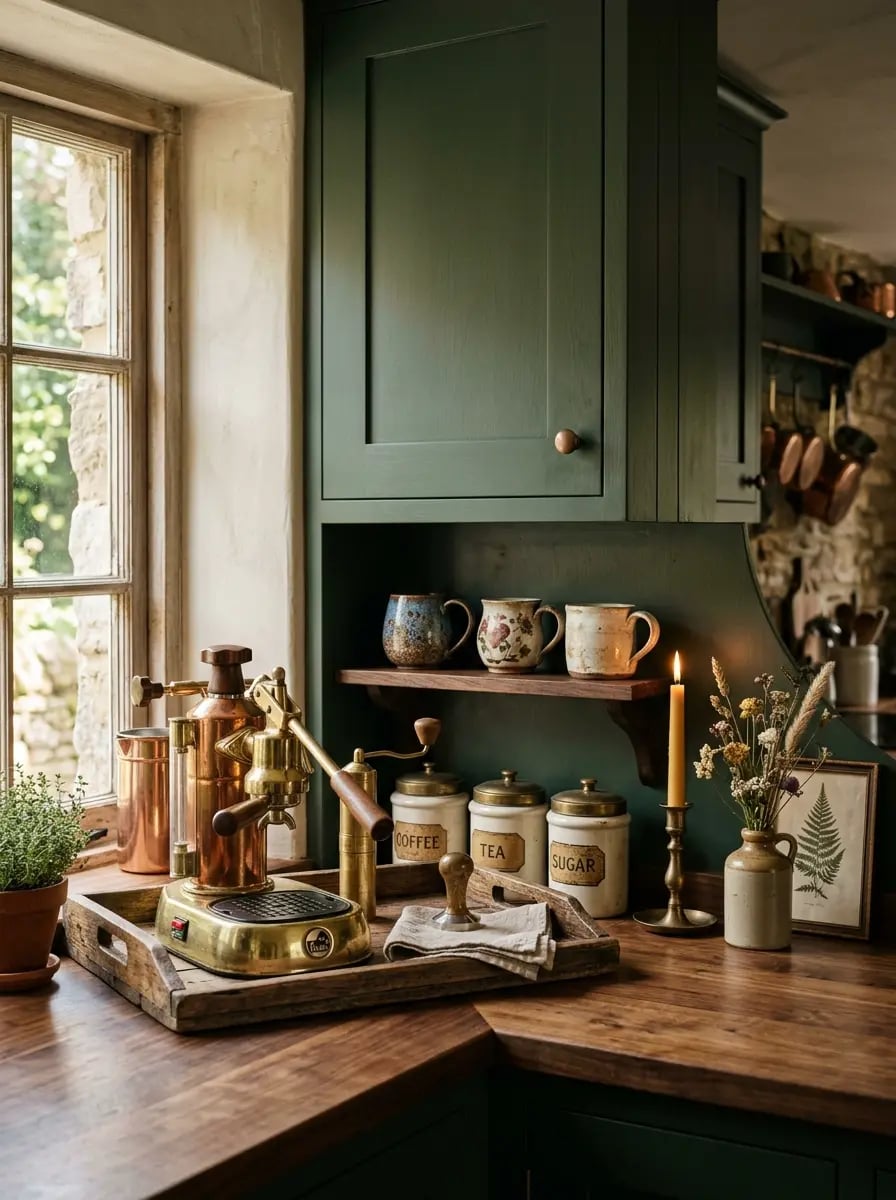
A vintage brass espresso machine sits on a wooden tray, surrounded by ceramic mugs and small canisters. The brass finish catches natural light from a window, and a single candle on the counter adds a soft glow. The palette mixes warm wood tones with green ceramic and brass, creating a collected feel. The espresso machine becomes the hero element, so the counter stays simple. A few green ceramic mugs and a small jar of utensils are all that is needed to make the vignette feel lived in without being busy.
Open Shelving with White Subway Tile and Yellow Daffodils
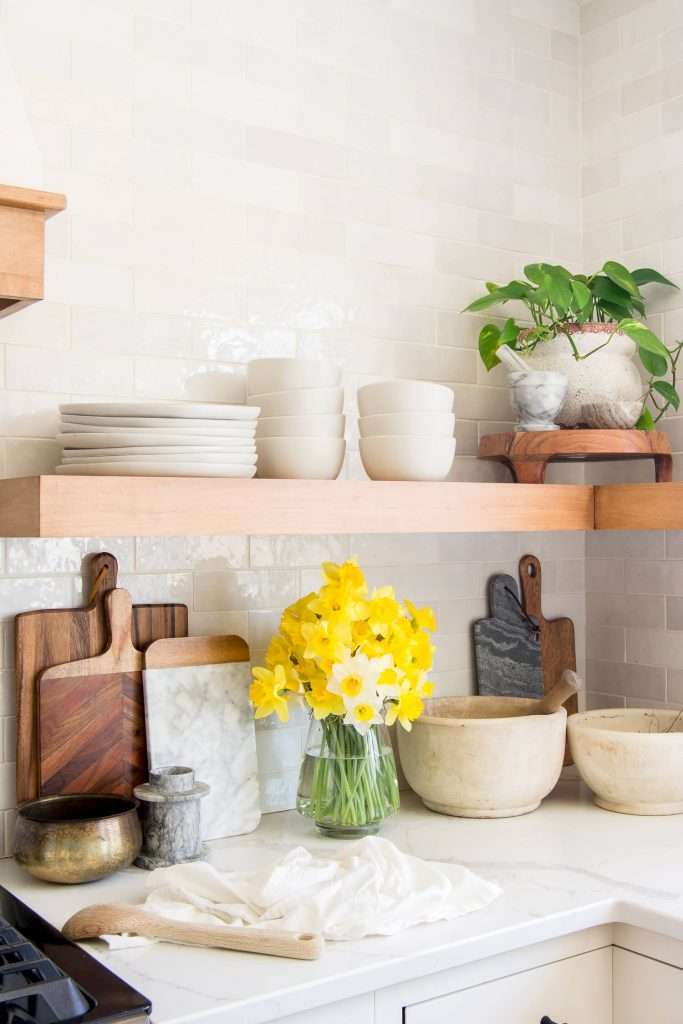
A practical rule for open shelving is to group items by function and let a few seasonal pieces add color. White subway tile covers the backsplash, and simple wooden shelves hold cutting boards, a few ceramic pieces, and a small vase of yellow daffodils. The daffodils provide a bright accent against the white tile and warm wood tones. The open shelving keeps everyday items within reach while the tile backsplash is easy to wipe down. For a similar setup, choose a neutral tile and use a single vase of fresh flowers to introduce color. The daffodils will need to be replaced every week or so, depending on your USDA zone, but the color payoff is immediate.
Pink Stand Mixer and Copper Kettle on Countertop
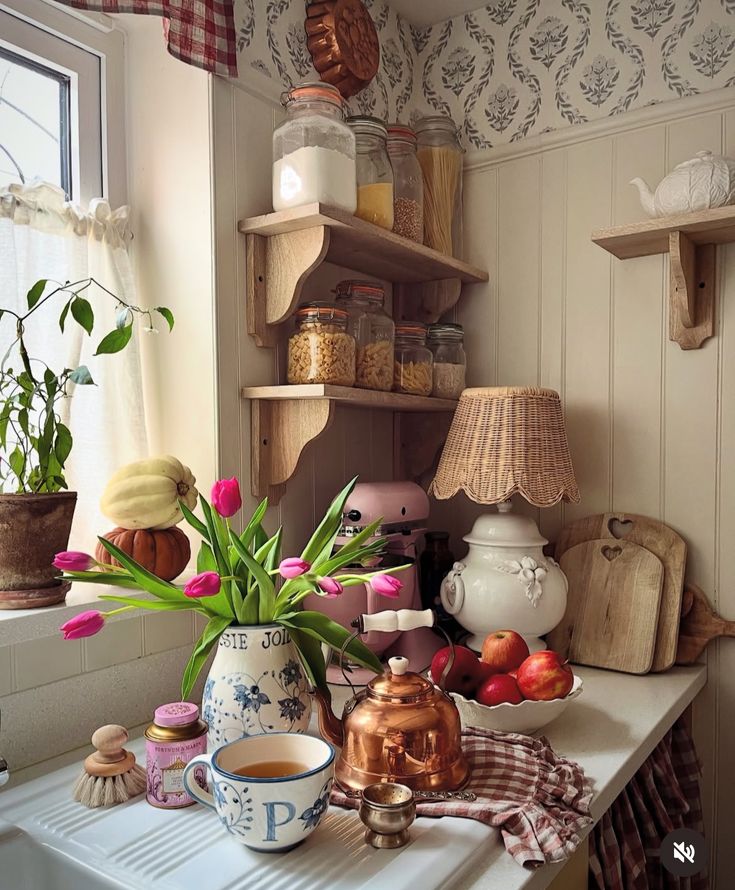
A pink stand mixer and a copper kettle sit on a wooden countertop, with a small wicker lamp nearby and a vase of tulips catching natural light from the window. The pink mixer adds a playful note, while the copper kettle brings a warm metallic accent. The wicker lamp softens the scene with its natural texture. The countertop is compact, so each piece earns its place. A practical rule for lighting in a small countertop vignette is to use natural light as the main source and add one accent light, like a small wicker lamp, for evening warmth. The pink mixer is the hero element, so keep the surrounding counter clear to let it pop. The copper kettle can be left out as a decorative piece when not in use, adding a warm glow from its reflective surface.
Curved Island with Gas Range and Two-Tone Cabinets
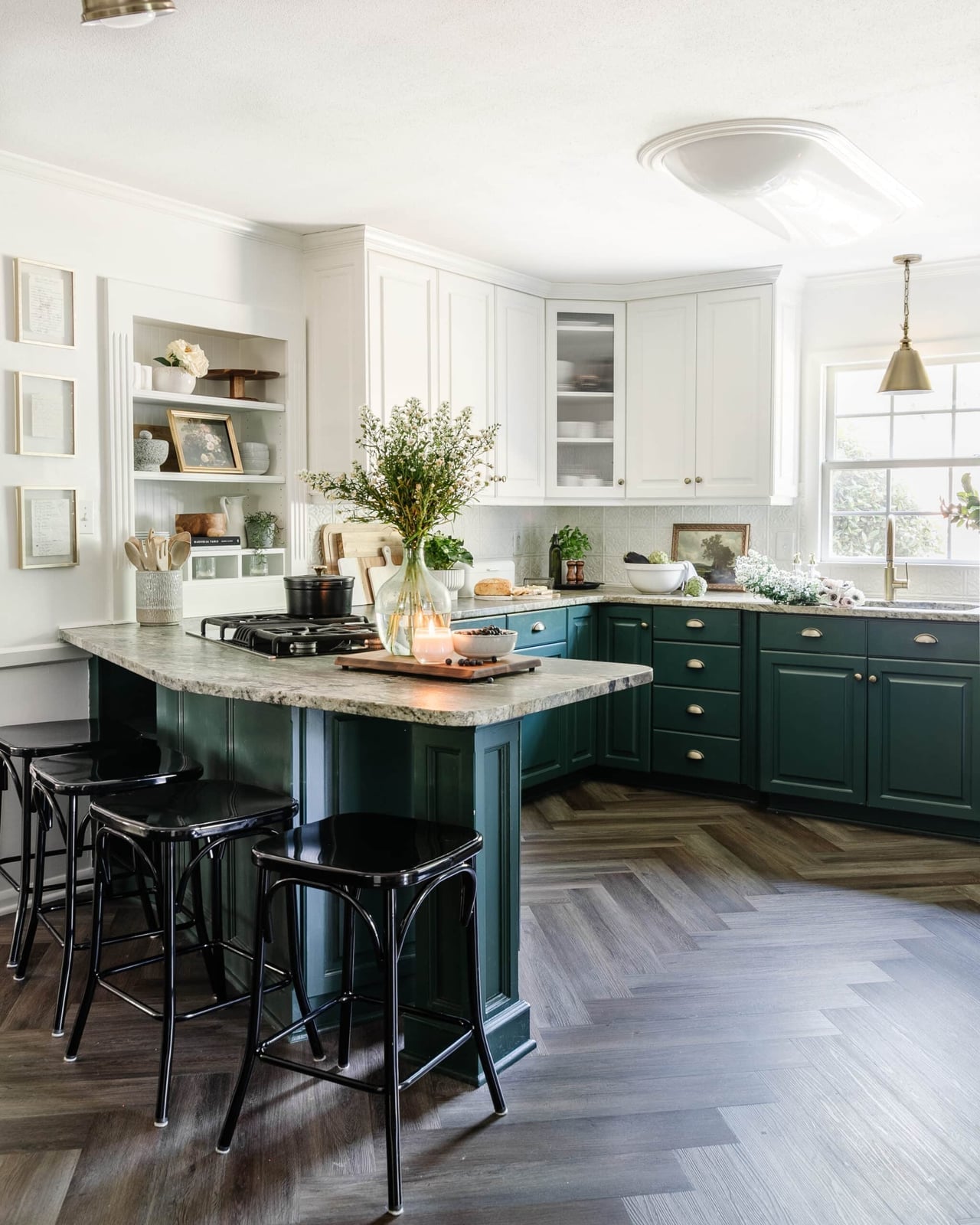
A curved island with a gas range sits at the center of the kitchen, with white upper cabinets and dark green base cabinets behind it. The curved shape softens the layout and creates a natural flow around the island. The two-tone cabinets add contrast: the white keeps the upper area light, while the dark green grounds the lower half. A pendant light hangs above the island, with additional ceiling lights providing even illumination. The island layout works well for a roomy kitchen, as it allows for multiple work zones. The curved shape is a design choice that breaks the typical straight-line kitchen, making the space feel more inviting. For a similar layout, consider a curved island if your kitchen has enough floor space to allow for a clear path around it.
Extensive Wood Paneling for a Rustic Feel
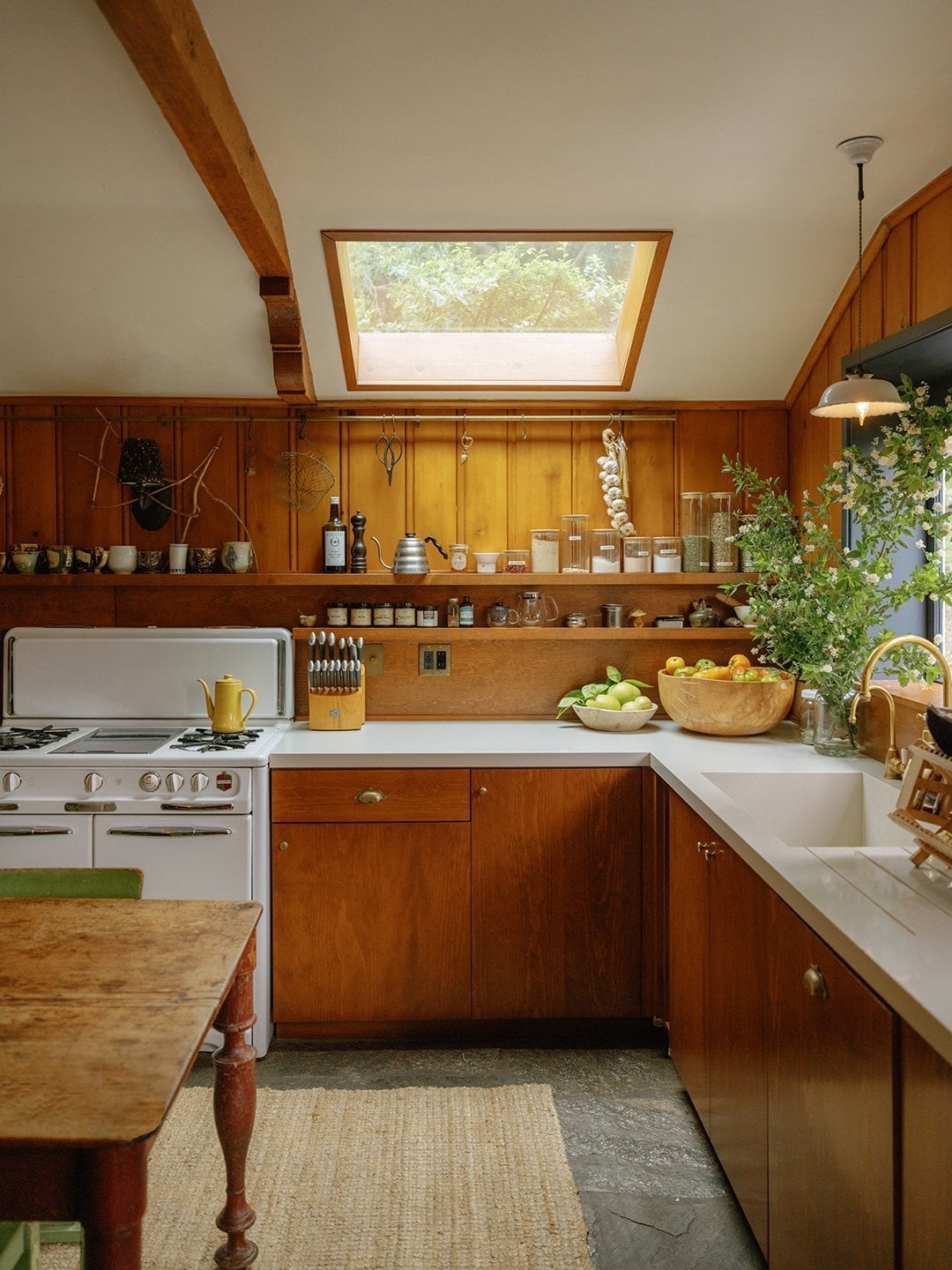
Wood paneling wraps this L-shaped kitchen in warmth from floor to ceiling, making the room feel grounded without going dark. The white range cooker and pale green cabinetry break up all that brown, so the space stays airy despite the heavy material. A skylight pulls in natural light that keeps the wood grain from reading as dated, more like a country house than a basement rec room. If you want the look without committing to full paneling, try adding it to one wall or the backsplash area. Laminate paneling with a real wood finish costs less and installs faster, and you can paint it later if your taste shifts toward something lighter.
Marble Countertop and Farmhouse Sink Elegance
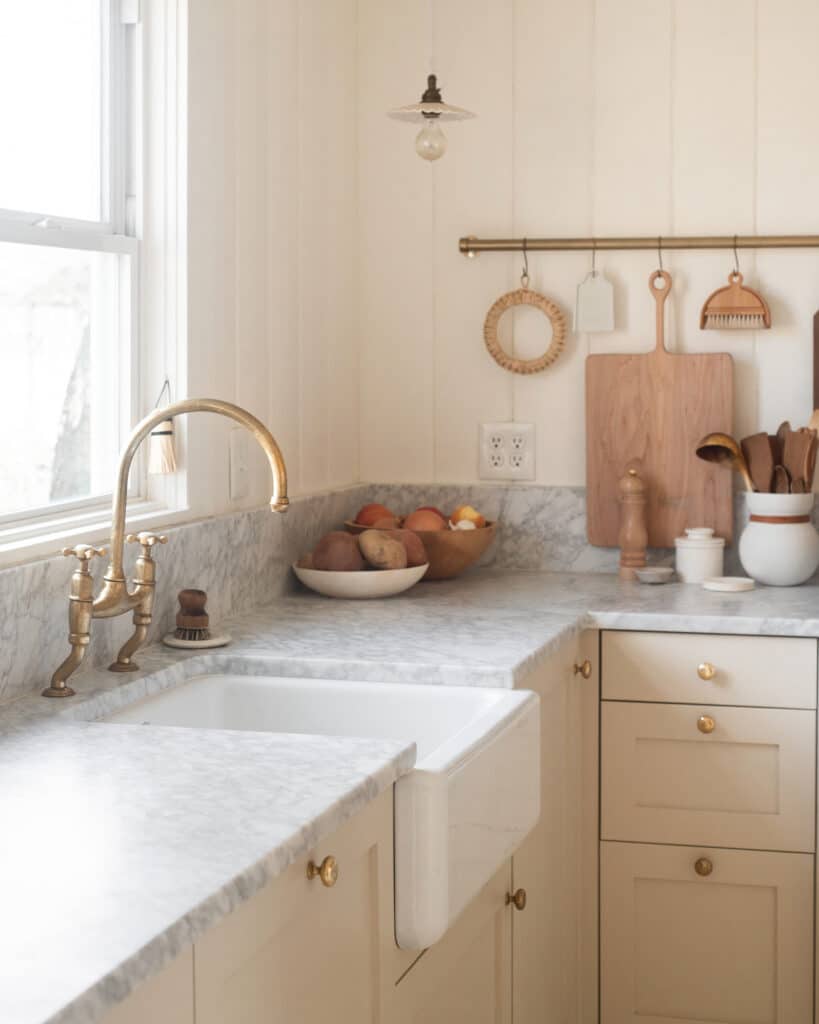
Bring marble into a cottagecore kitchen by pairing it with warmer materials. Here the marble countertop and matching backsplash run in a soft cream veining that catches the window light, while the farmhouse sink below it stays white and simple. A brass faucet adds the warm metallic note that marble needs to feel inviting and not clinical.
Wooden cutting boards leaned against the backsplash and the natural wood of the cabinets soften the stone further. The whole vignette is compact, so the marble works as a deliberate accent. Renters can fake the look with a marble-look contact paper on the counter and a peel-and-stick backsplash tile in a similar tone. The brass faucet is a swap you can take with you, and the farmhouse sink itself is often a permanent fixture that adds real character to a small kitchen.
Sage Green Cabinets and Large Farmhouse Sink
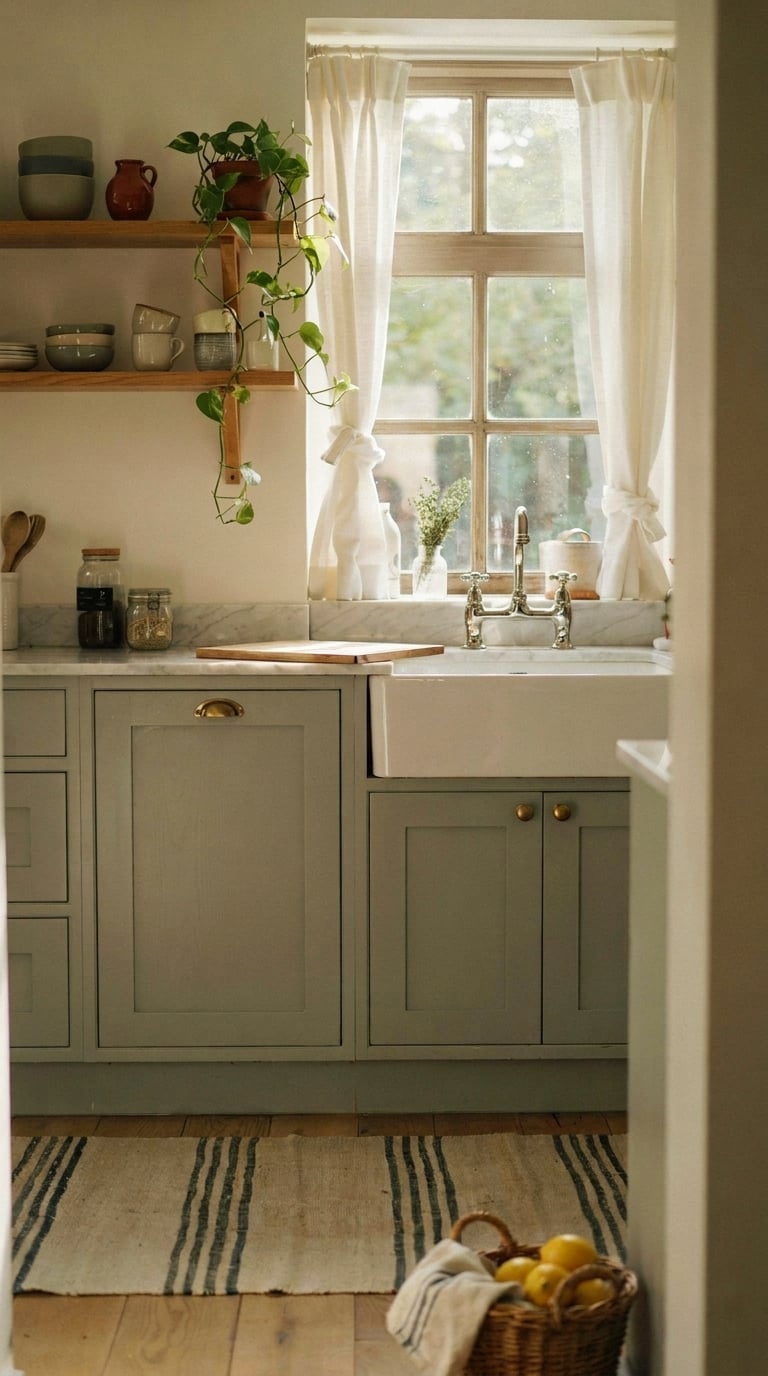
The large white farmhouse sink anchors this corner of the kitchen, with sage green cabinets on either side and open wooden shelves above holding a few small plants. Bright natural light falls across the white ceramic, making the sink the obvious focal point even before you notice the marble countertop beside it. The wood shelves and green cabinets echo the same earthy palette, so nothing competes with the sink’s simple shape.
Open Shelving with Pastel Ceramic Bowls
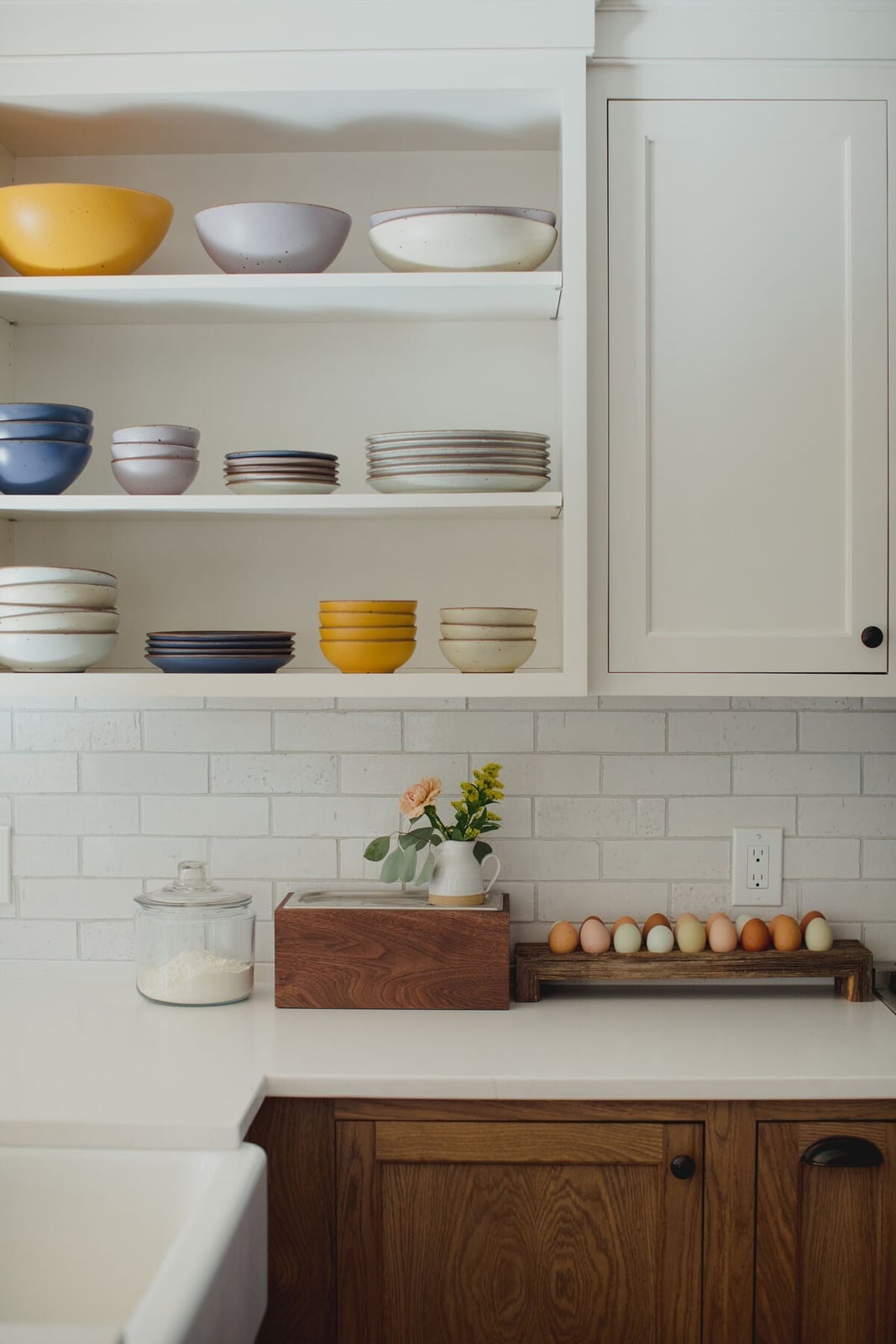
Pastel ceramic bowls in soft pink, blue and green sit in a neat row on open wooden shelves above a white subway tile backsplash. The contrast between the warm wood and the cool tile gives the shelves a clean border, while the pastel colors add a gentle pop that keeps the white kitchen from looking sterile. The bowls are practical storage that doubles as decoration, and their soft hues tie into the modern farmhouse palette without feeling too sweet. Open shelving like this works best when the items on display are intentionally grouped, here by color and material, so the eye reads the collection as one piece rather than a jumble.
Tan Beadboard Paneling and Floral Curtain
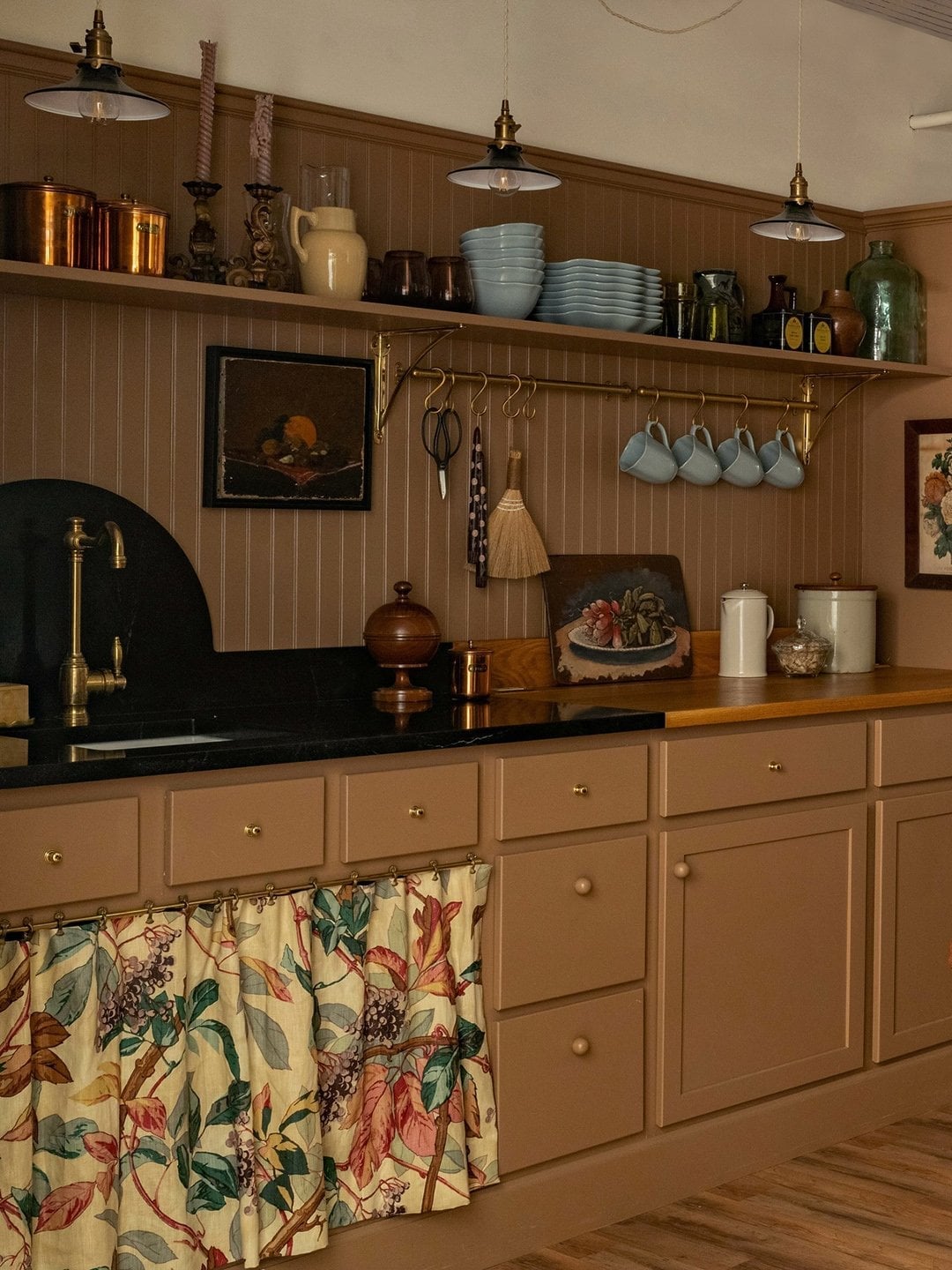
Tan beadboard paneling covers the walls in this compact kitchen, offering a textured backdrop that feels more finished than plain drywall but less formal than tile. A floral curtain hangs over the window, its small-scale pattern adding a soft cottage touch without overwhelming the room. The brass faucet picks up the warm tone of the beadboard, so the metal and wood feel connected rather than accidental.
Pendant lights overhead cast a warm glow across the cabinets and open shelves, making the small space feel cozy rather than cramped. Beadboard is a forgiving material for renters too, since it can be installed as a temporary panel over existing walls and removed later with minimal patching. The floral curtain is an easy swap that changes the whole mood of the room, and the tan color of the beadboard works with almost any accent color you might want to try next season.
Off-White Cabinets and Marble Countertop Vignette
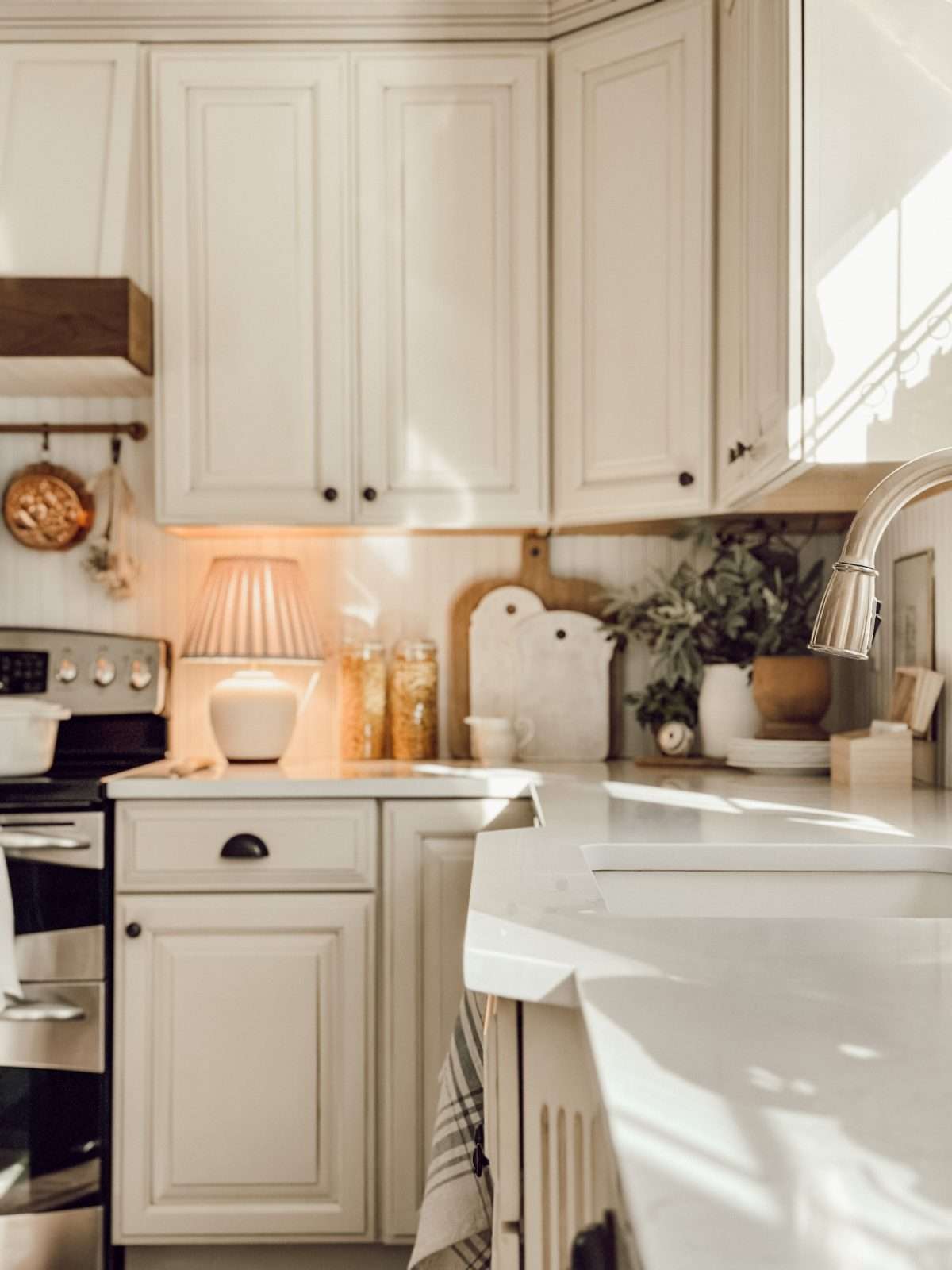
The counter becomes a quiet still life when off-white cabinets and a marble top gather a few deliberate objects, and a small table lamp adds a warm glow that bright natural light alone can’t match. Wood tones in the cabinet fronts and a brass faucet keep the palette from turning sterile, while a ceramic vessel and a leafy plant soften the hard edges of the stone. This is a corner that works because everything on the surface earns its place, so keep the composition sparse and let the marble pattern carry the visual weight. A room like this reads as calm because the eye has one clear resting point at the sink, and the vignette around it supports that focus instead of competing with it.
Sage Green Vintage Dresser as a Feature
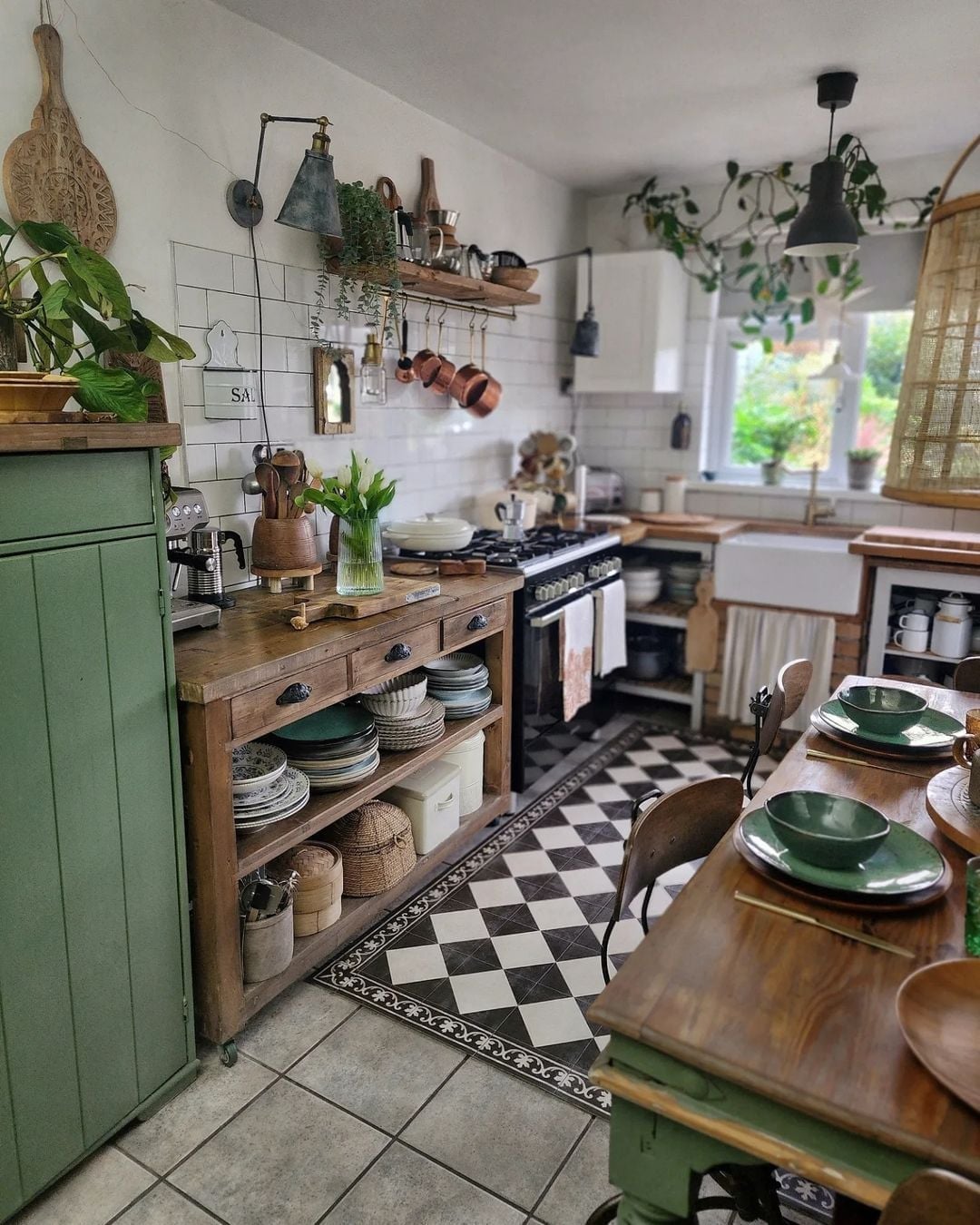
A sage green vintage dresser can anchor a whole kitchen without a single new cabinet, and this room proves it by letting the piece define the galley layout. The dresser’s painted finish picks up the soft green of the open shelving and the white of the checkerboard floor, while black hardware and a copper kettle add contrast that keeps the eye moving. Wall sconces cast warm light across the wood top, making the dresser feel like a working surface. Soft daylight from the room softens the tile and ceramic accents, so the whole space feels roomy despite the narrow footprint. A single substantial piece can define the palette and the flow, and everything else should stay simple enough to let it lead.
Floral Wallpaper and Vintage Stove
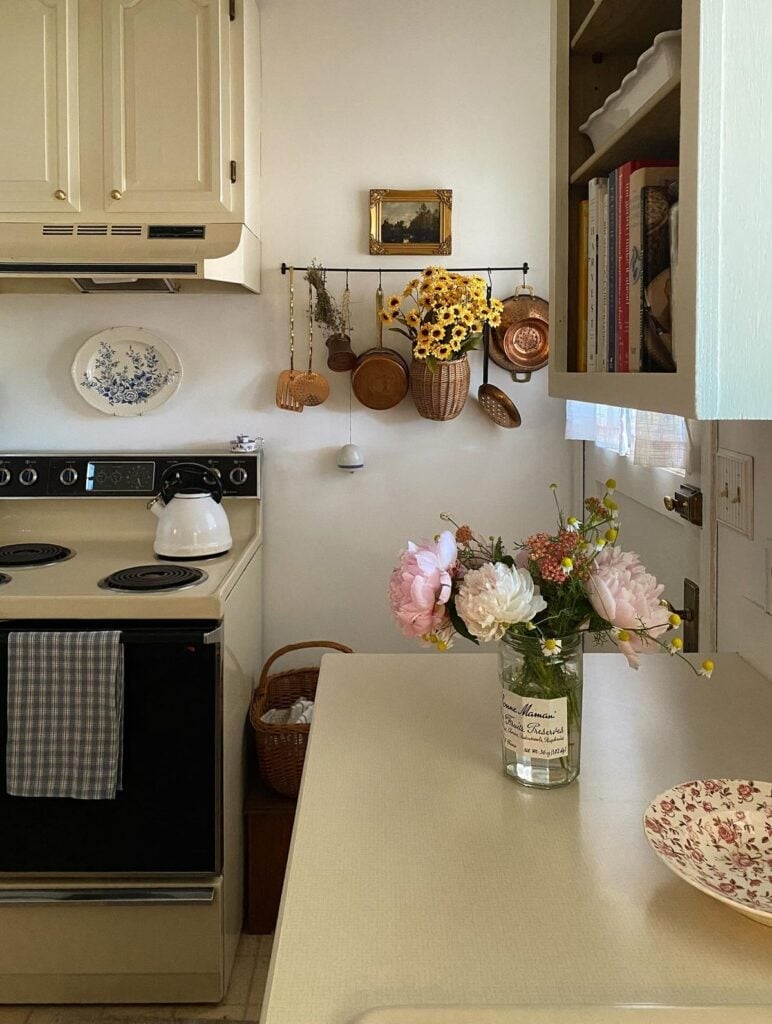
Floral wallpaper in a compact kitchen can feel charming instead of busy when the surrounding surfaces stay quiet, and this kitchenette shows how a vintage stove and a blue and white floral plate work with the pattern rather than against it. The cream background of the wallpaper echoes the tile and the counter, while the blue and yellow blooms pick up the tones in the ceramic plate and the hanging copper pots. An overhead pendant drops warm light onto the stove, which balances the cool daylight from the window and keeps the compact space from feeling flat. This setup works because the wallpaper acts as the hero element, and every other material, the metal of the pots, the wood of the shelf, the glaze of the tile, is chosen to recede. If you want a similar effect, keep the counter clear except for the stove and one or two matching plates, and let the pattern do the talking. The result is a room that feels layered and lived in, not cluttered, because each piece has a clear relationship to the dominant floral.
Mint Green Cabinetry with Brass Hardware
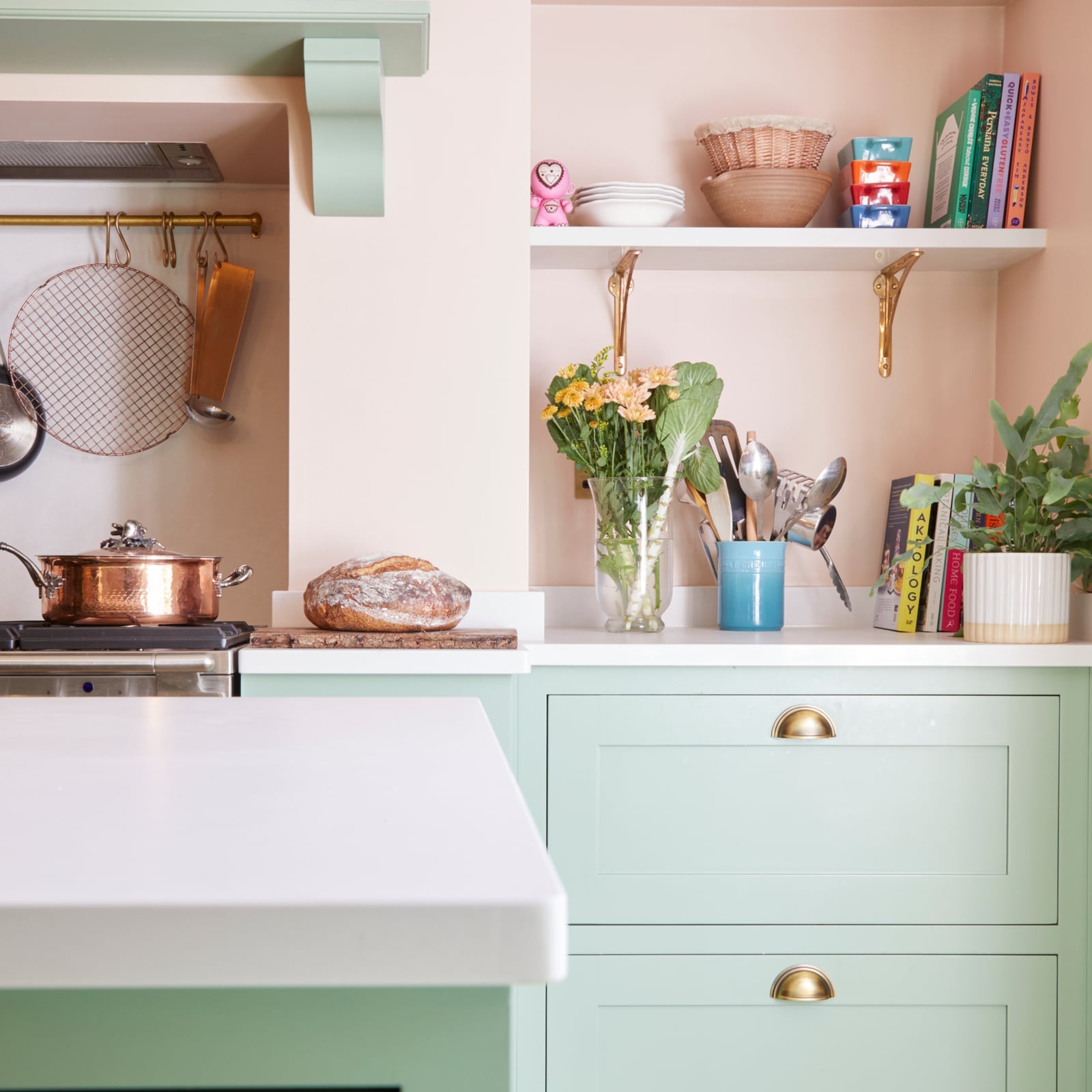
Mint green cabinets turn a corner vignette into the brightest spot in the room, with brass hardware picking up that glow. The pale pink of the countertop softens the green, while a copper pot and a loaf of bread on the counter add warm, earthy notes that keep the palette from feeling too sugary. This corner works because the light source sits directly across from the cabinets, so the mint looks fresh and not washed out. Paint color is the cheapest way to change how a space feels, and the right finish can make a small corner feel generous. Keep the styling minimal with a single copper piece and a natural object, and let the cabinetry carry the show.
Circular Jute Rug in a Farmhouse Kitchen
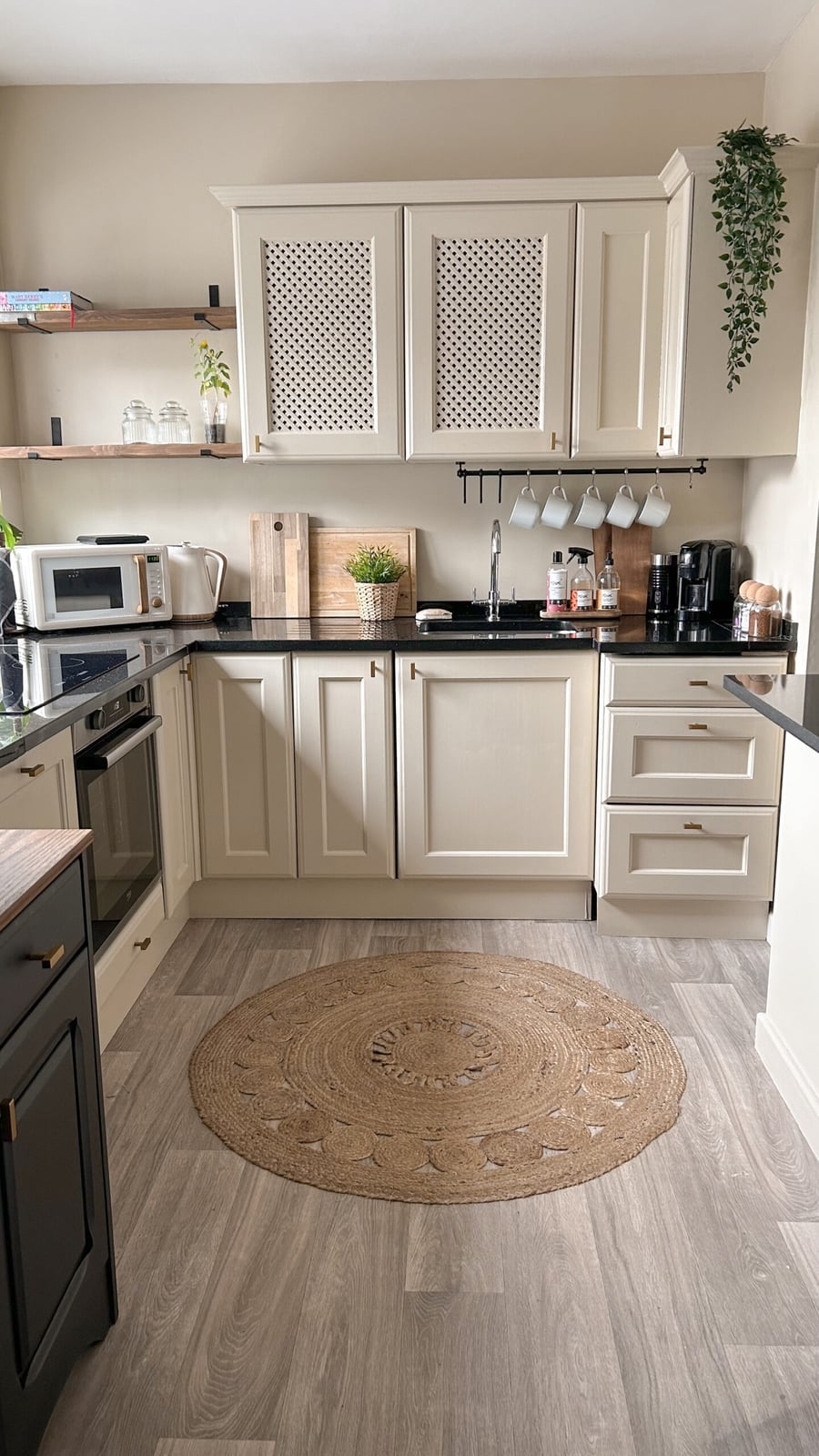
A circular jute rug can define the work zone in a corner kitchen without closing off the room, and this one anchors the island area with a soft, natural texture that contrasts the wood cabinets and the tile floor. The rug’s cream and beige weave picks up the lighter tones in the cabinetry, while the gray and black accents in the appliances and shelves give the space a grounded, farmhouse feel. Because the rug sits under the island rather than covering the whole floor, it marks the cooking area as a distinct spot while keeping the traffic path clear. Overhead ambient light and natural light from a window balance the warm jute against the cooler metal of the oven and microwave. The lesson here is that a rug can double as a storage boundary, telling you where the working zone ends and the walkway begins, without adding a single shelf or cabinet.
Final Thoughts
A cottagecore kitchen doesn’t need a full renovation. Small swaps like brass hardware, a floral curtain, or open shelves with ceramic bowls shift the feel. Stick to a palette of greens, creams, and soft pastels, and let natural textures like wood and stone lead. The best version is the one that makes you want to put the kettle on.