
A covered patio is one of the most usable spaces in a home. It offers shelter from sun and rain while keeping you connected to the outdoors. This article shares 27 practical ideas for making your covered patio more comfortable and stylish, from layout and materials to lighting and storage.
Whether you have a small balcony or a large backyard structure, these tips focus on real-world function. You will learn about conversation zones, durable materials, layered lighting, and smart storage solutions. The goal is to help you create a space that works for everyday living and weekend entertaining, without overcomplicating things.
Covered Patio Layout: Conversation Zones
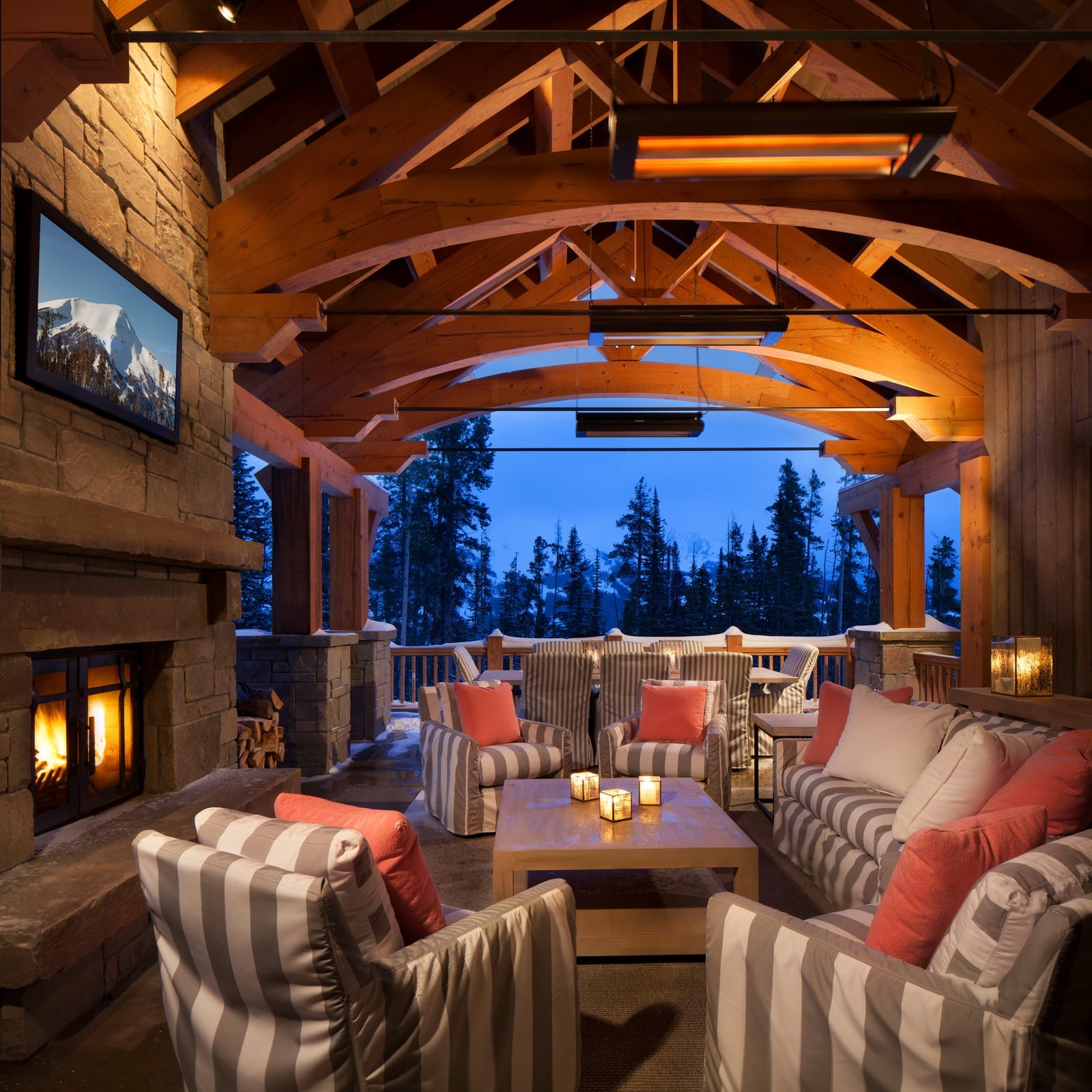
A roomy covered patio with a stone fireplace at center and an exposed wood beam ceiling overhead sets the stage for a conversation zone that actually works. The seating arrangement wraps around the fireplace in a wide U-shape, with a sofa, armchairs, and a coffee table all facing inward. The television mounted above the firebox keeps the sight line clear. This layout makes the fireplace the focal point while still letting people talk without craning their necks. A rustic modern covered patio with stone fireplace like this one proves that a simple circular arrangement of furniture creates a natural gathering spot.
Covered Patio Palette: Earthy Tones with Coral Accents
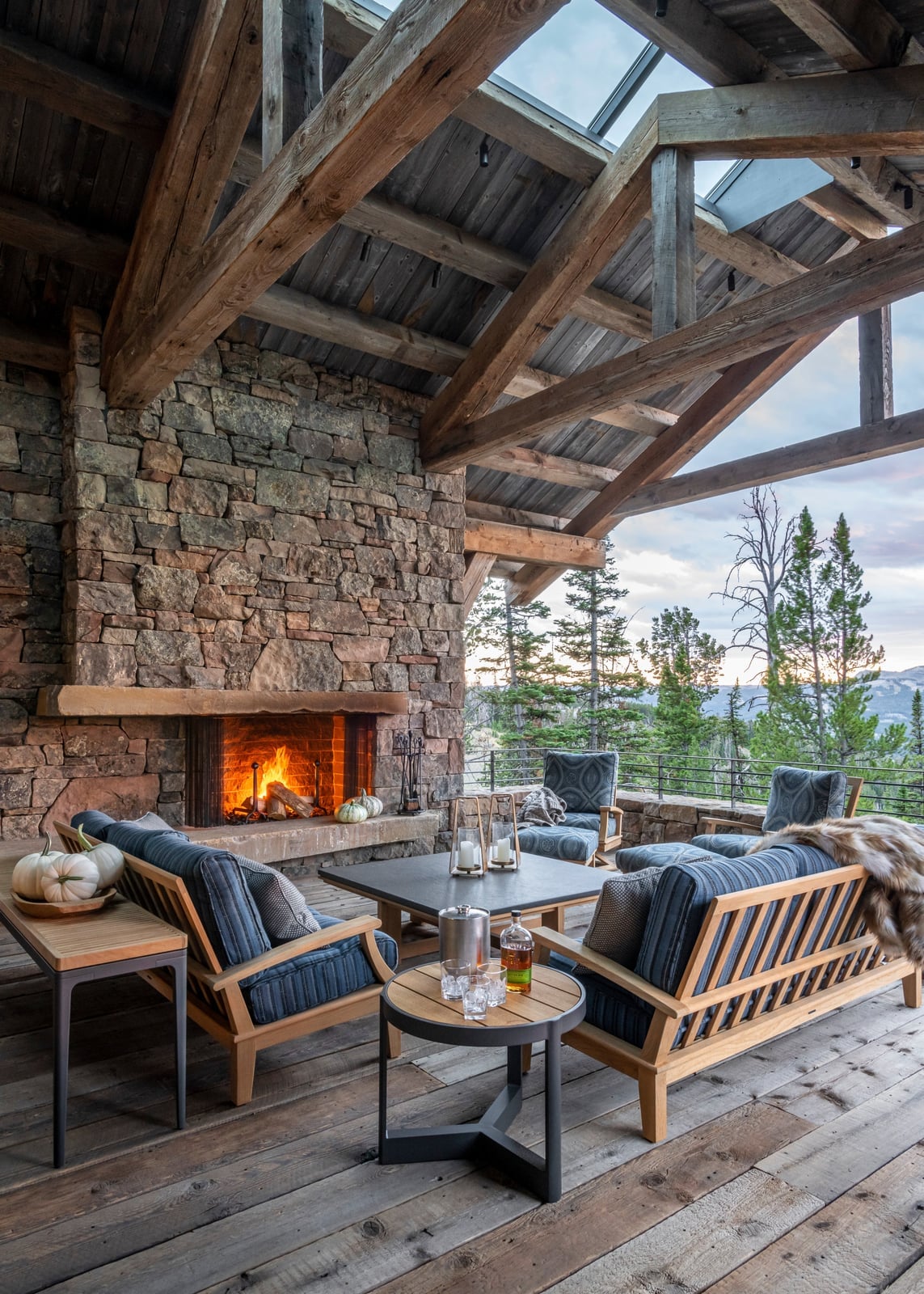
This palette leans into what the landscape already offers. Stone gray and wood brown form the base, while blue seating adds a cool anchor. The surprise comes from coral accents woven into throw pillows and small decor pieces. That pop of warm pink against the cool blue and neutral stone adds contrast and energy. The ratio runs about seventy percent earthy neutrals, twenty percent blue, and ten percent coral. The coral breaks the scheme just enough to add energy without fighting the stone fireplace. A covered patio with blue seating and stone fireplace benefits from this kind of calculated pop.
Covered Patio Materials: Natural and Durable
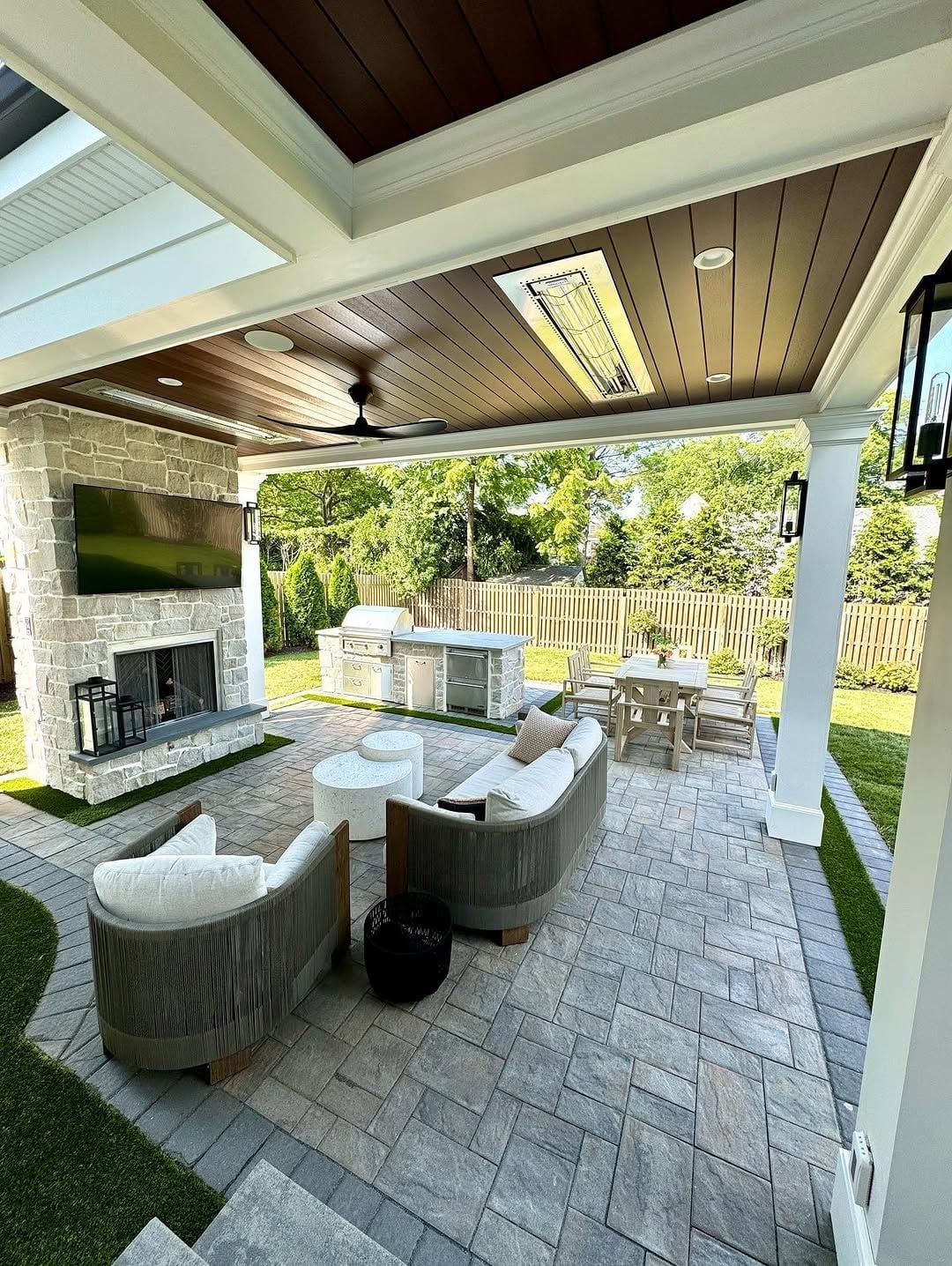
What holds up best when the weather changes every season? Stone, wood, tile, and metal, used in the right places. A modern covered patio with outdoor kitchen relies on a stone fireplace surround that needs no sealing and a tile floor that handles rain and foot traffic. The wood appears in the ceiling beams and the dining table, adding warmth without direct ground contact. Metal shows up in the chair frames and the kitchen counter supports.
Each material has a job. Stone handles heat and moisture. Tile resists stains. Metal stays stable under weight. Wood adds texture where it stays dry. The sectional sofa uses fabric rated for outdoor use, which breathes better than vinyl. Together these materials create a space that looks natural and lasts through the years.
Covered Patio Lighting: Layered Ambiance
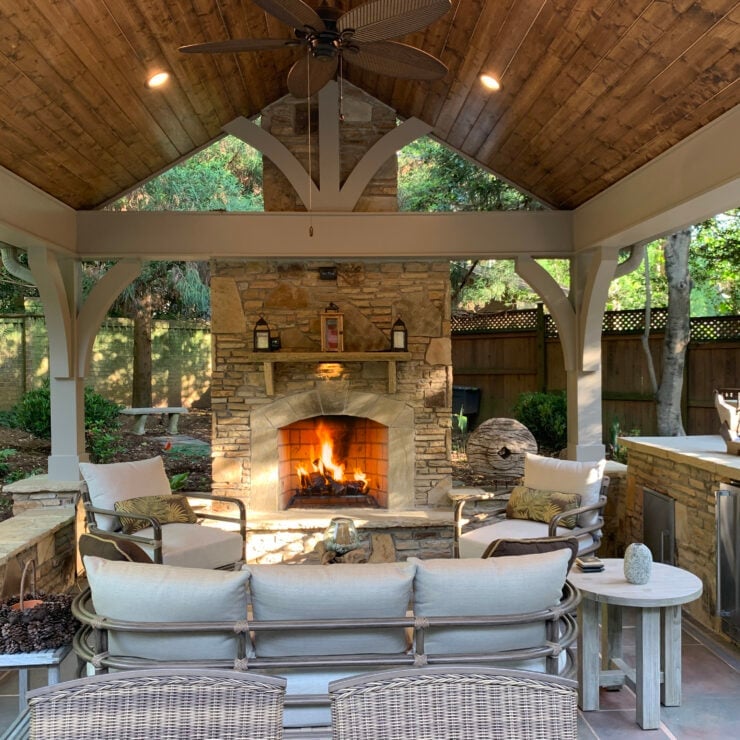
The stone fireplace does double duty as a heat source and a light source, casting warm glow across the wicker sofa and chairs. Recessed lights in the ceiling provide even ambient light for cooking or reading, while the firelight creates the softer layer. A covered patio with wicker seating and stone fireplace like this one uses the fire as the main evening light and lets the overhead fixtures stay dim. The outdoor kitchen counter gets its own task lighting, which keeps the prep area bright without washing out the seating zone. Three layers of light cover every use of the space.
Covered Patio Storage: Integrated Solutions
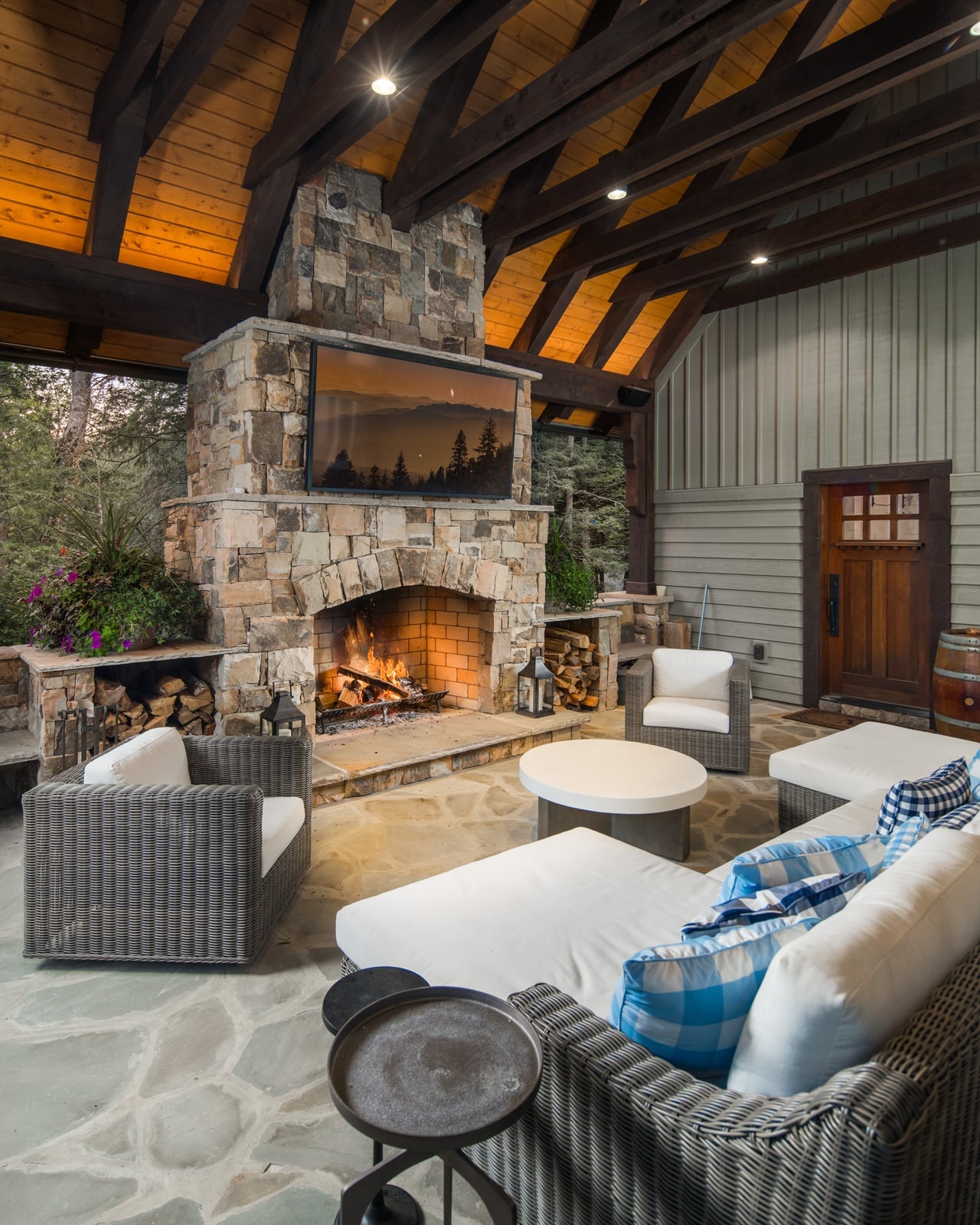
Every square foot of a covered patio should earn its keep, and storage is no exception. The massive stone fireplace in this roomy patio does more than anchor the layout. Its side columns hide shelving for firewood and outdoor accessories. The TV mounted above the firebox eliminates the need for a media console. A covered patio with large stone fireplace and TV can also use the built-in bench seating nearby, which lifts to store cushions and throws when not in use. The coffee table doubles as a storage chest. These integrated solutions keep the floor clear and the space ready for guests without extra furniture.
Covered Patio Budget Swap: DIY Fireplace Surround
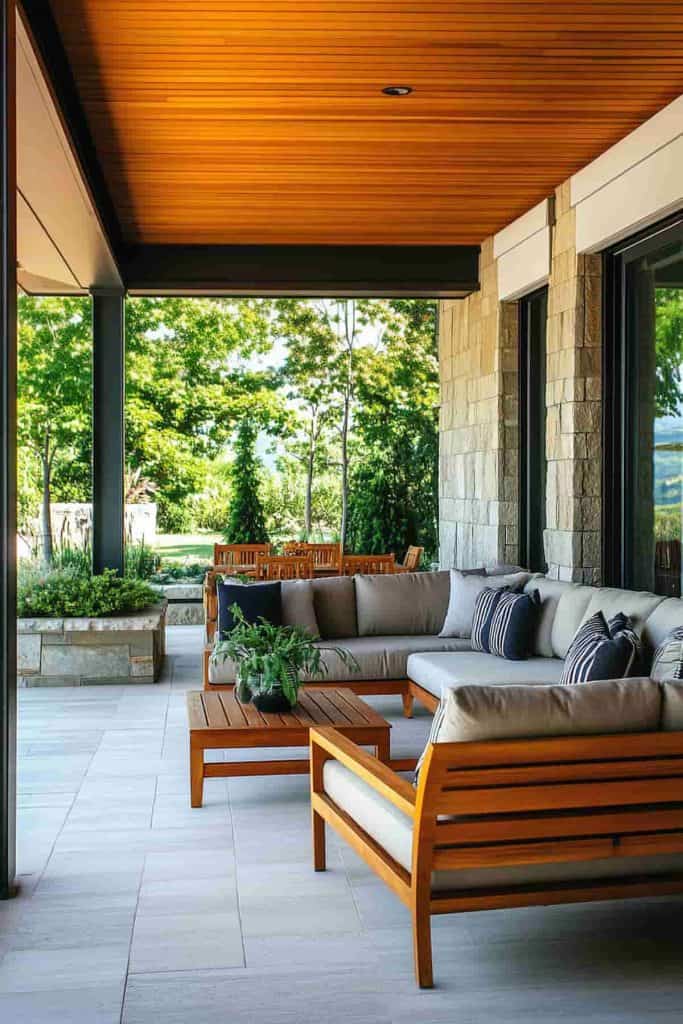
A built-in stone fireplace can anchor a covered patio, but the investment and permanence give some owners pause. A more flexible route is a large sectional sofa that defines the same conversation zone without any masonry. In this modern covered patio with sectional sofa, the roomy seating area uses a neutral palette with wood tones and green planters to create a natural gathering point. The recessed ceiling lights and daylight keep the space feeling open, while the sofa’s scale does the job of a fireplace: it draws people in. Choose a sectional deep enough for lounging and arrange it around a coffee table instead of a hearth. The layout stays flexible, and you can rearrange it next season.
Covered Patio Renter-Friendly: Portable Fire Pit
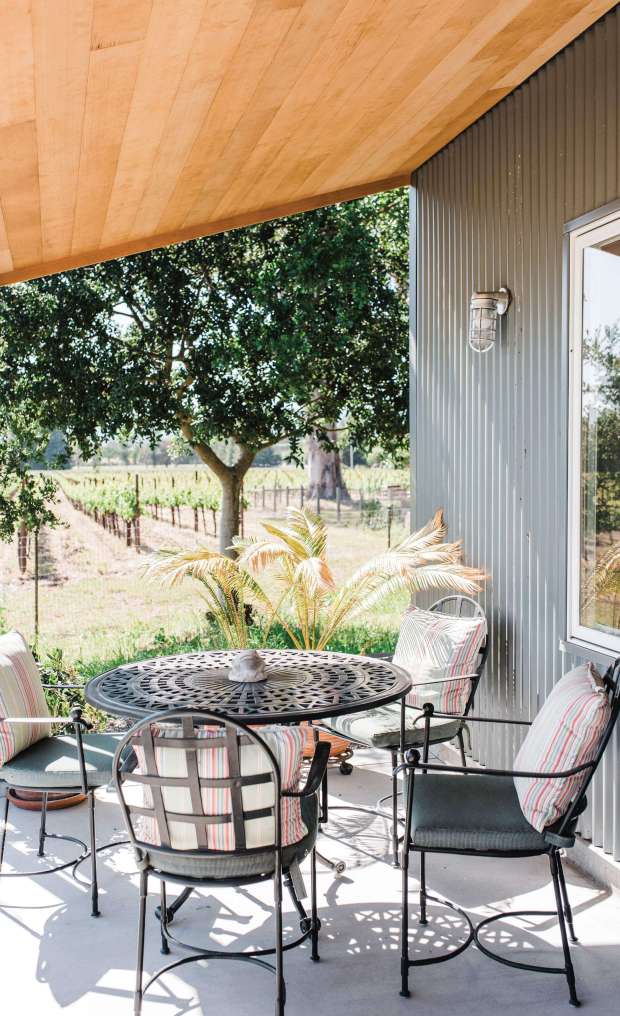
The industrial patio with metal dining table pairs a round metal table and chairs with a vineyard view, but the real trick is how the space handles heat without a permanent fire feature. A portable fire pit placed near the dining set adds warmth and a focal point without drilling into the patio floor or attaching anything to the structure. The corrugated metal wall and industrial wall light keep the style consistent, while the fire pit can be moved to the seating area or tucked away when not in use. It is a practical choice for anyone who cannot modify the property.
Covered Patio Durability: All-Weather Wicker
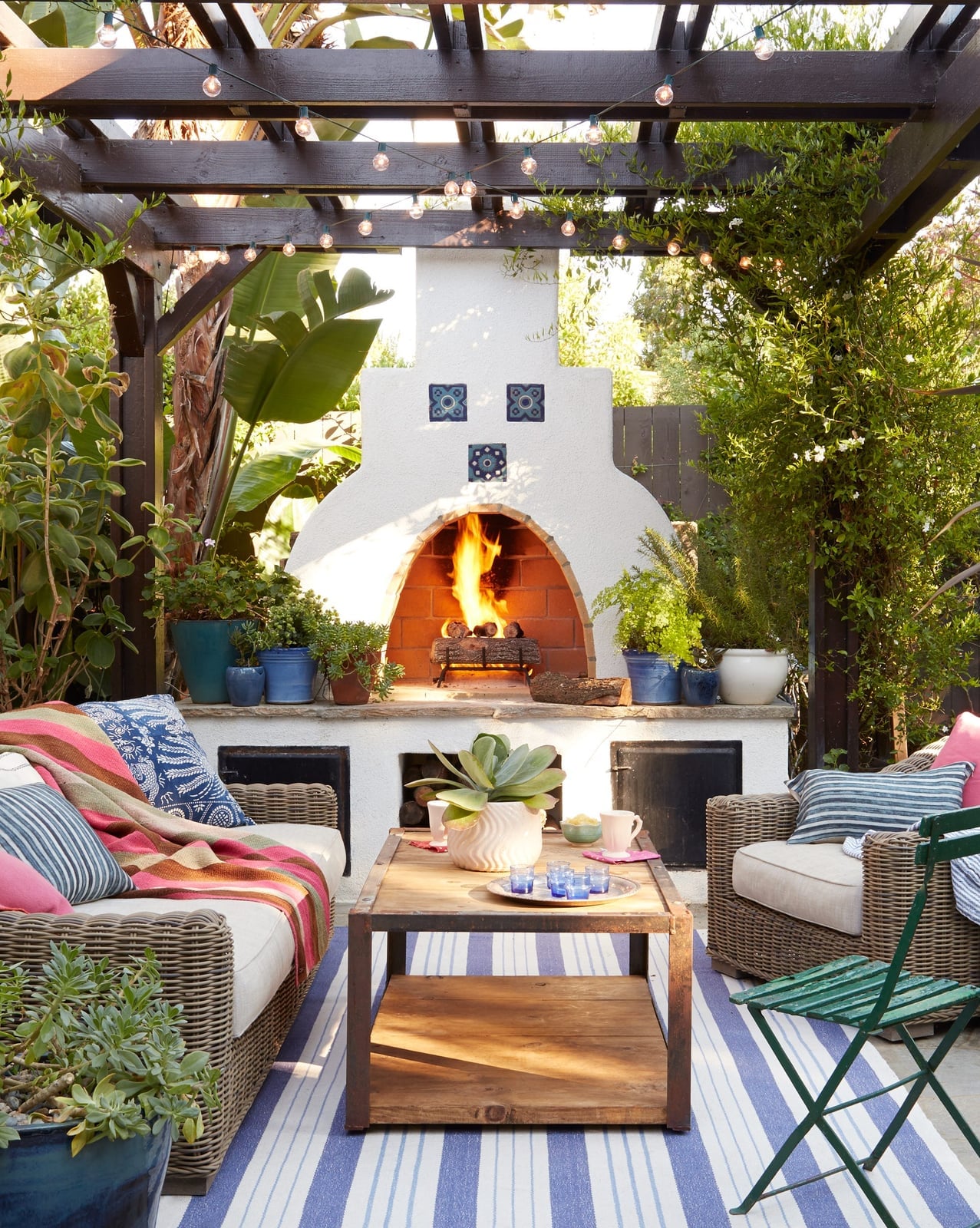
A boho patio with white fireplace and wicker sofa shows how natural materials can hold up outdoors when chosen carefully. The large white stucco fireplace dominates the space, but the wicker sofas around it are the real test of longevity. All-weather wicker resists moisture and UV damage better than natural rattan, so it can sit near the firelight and string lights without fading or cracking. The palette of white, blue, green, pink, and orange feels layered and collected, but the wicker pieces tie it together with a texture that stays comfortable in humid or dry climates. For a patio that sees year-round use, wicker with a synthetic core and powder-coated frame is a reliable choice.
Covered Patio Scale and Proportion: Oversized Fireplace
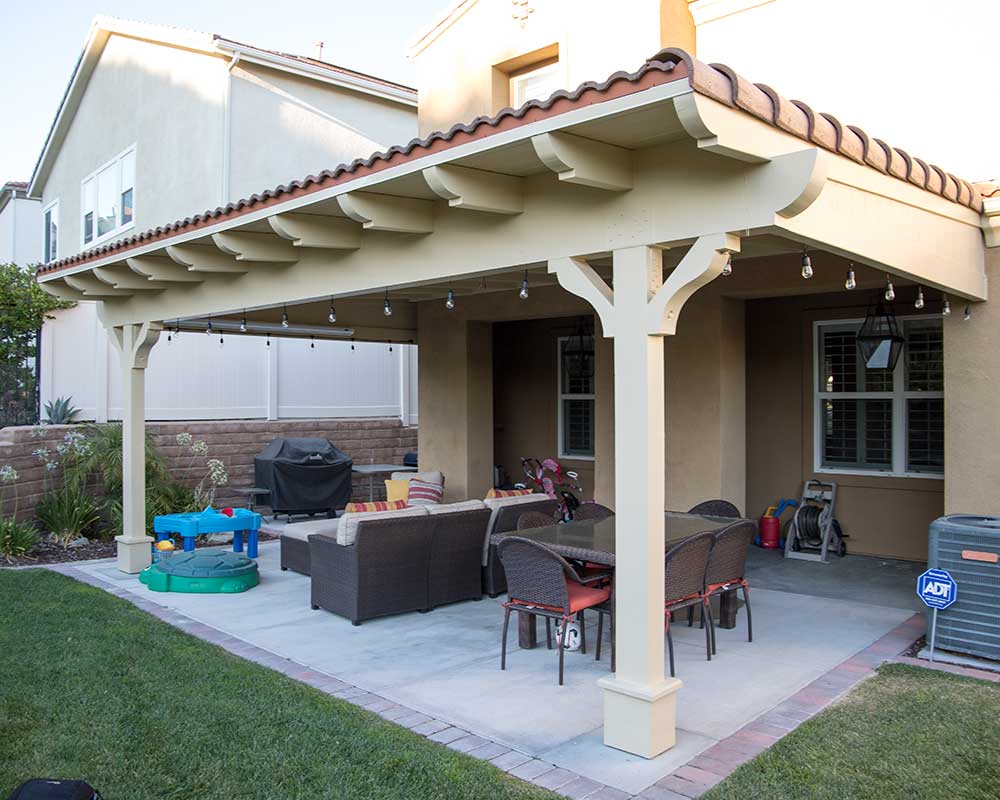
Can a covered patio handle both a dining set and a seating area without feeling crowded? The answer often comes down to scale. In this traditional patio with decorative beams, the roomy space uses distinct zones: a sofa set on one side, a dining set and grill on the other, all under a roof supported by decorative beams. The string lights overhead tie the zones together without adding visual weight. The key is that the dining set is not too large for its corner, and the sofa set is placed away from the grill. That separation lets each zone function on its own while the beams and lighting make the whole patio feel like one room. Measure your longest wall and divide it roughly in half before placing furniture.
Covered Patio Styling Variation: Rustic Modern Fusion
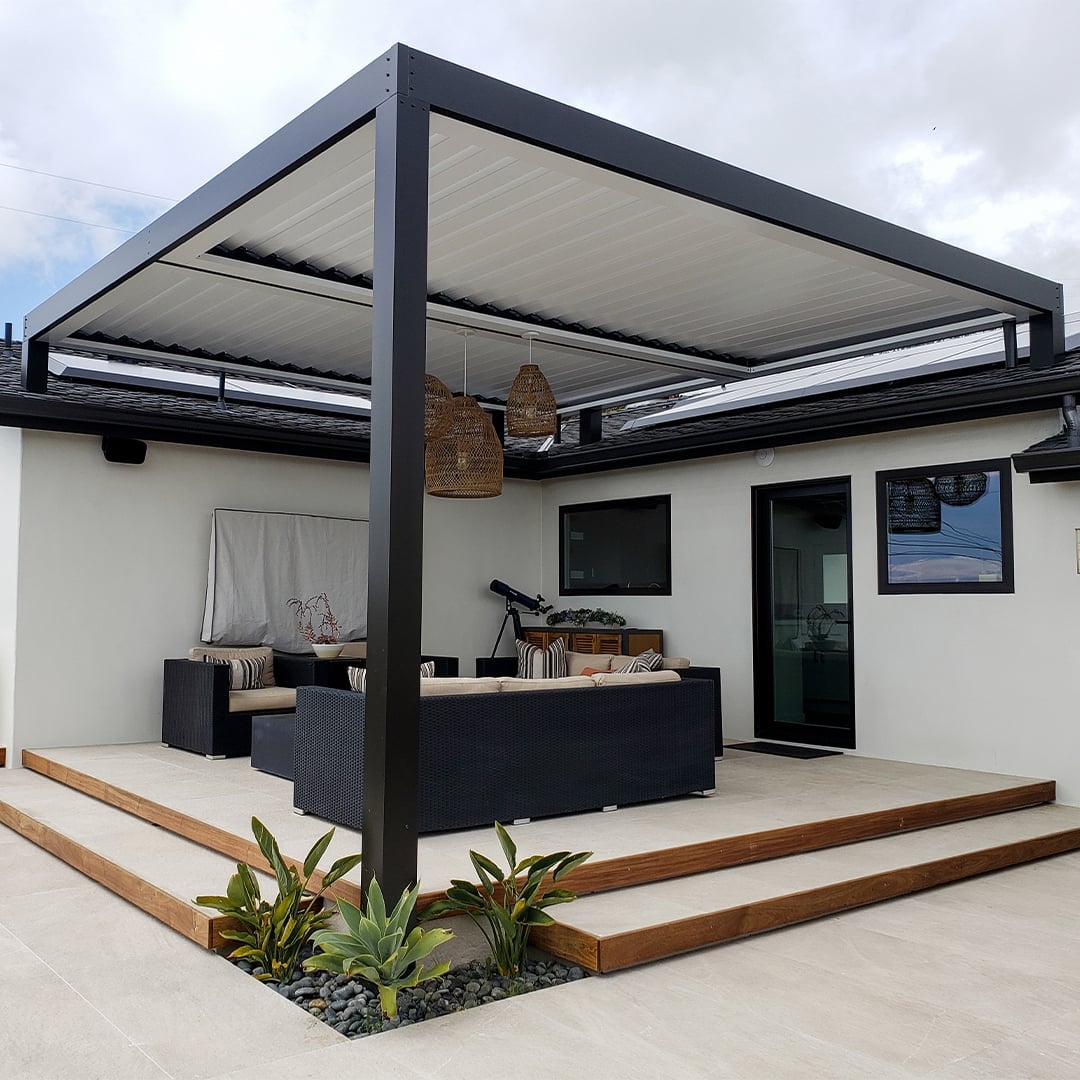
A modern patio with retractable roof pergola combines black metal framing with natural wood and rattan for a look that is neither fully rustic nor fully industrial. The pergola structure sits on a raised deck, with a sectional sofa underneath and pendant lights hanging at different heights. A telescope near the railing adds an unexpected detail that reinforces the indoor-outdoor feel. The palette stays black, white, and natural wood, so the rattan and composite materials read as warm rather than cold. The retractable roof lets the owner control sun exposure, making the space usable from morning through evening without relying on permanent shade.
Covered Patio Layout: Zoned Living
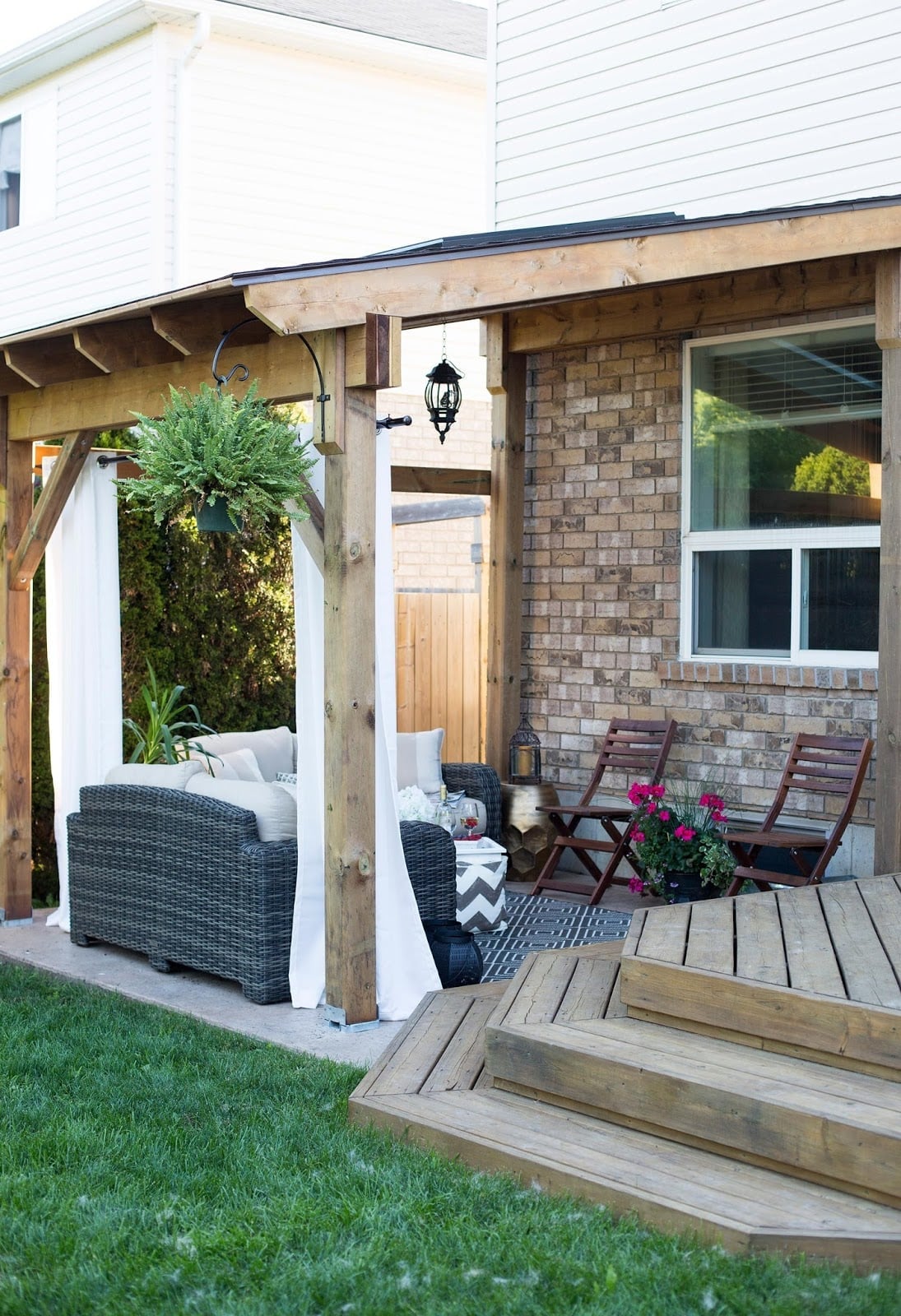
The simplest way to make a small covered patio feel bigger is to define one zone and let the architecture do the rest. Here, a wicker sofa anchors the seating area while white sheer curtains soften the wooden posts and frame the view. The brick floor and wood ceiling stay neutral, so the hanging plants and natural daylight provide the only color. String lights add a second layer of illumination. The layout keeps the walkway clear and the sofa facing outward, which makes the space feel open rather than cluttered.
Covered Patio Palette: Cool Tones and Natural Wood
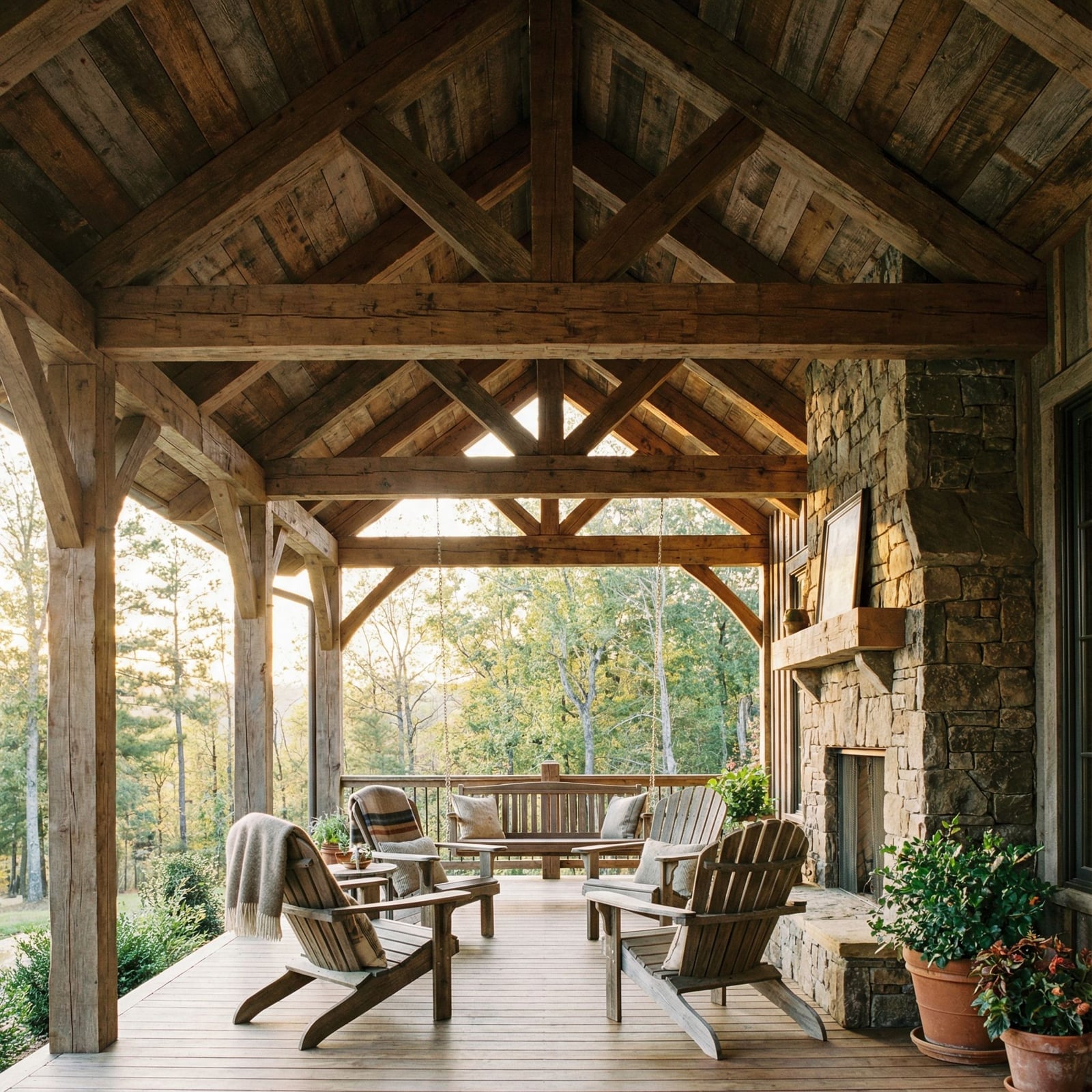
A rustic porch can lean too warm if every surface is wood and stone. This one balances the massive stone fireplace and wooden beams with cool gray adirondack chairs and a green accent from the surrounding foliage. The beige of the stone acts as a neutral buffer between the dark wood ceiling and the lighter floor. The palette works because the cool tones sit in the furniture and the warm tones stay on the fixed surfaces. That ratio prevents a one-note look. What breaks the scheme is the wooden swing, which introduces a third wood tone that pulls the eye away from the fireplace. A single wood finish on the swing would have kept the focus where it belongs.
Covered Patio Materials: Stone, Wood, and Metal
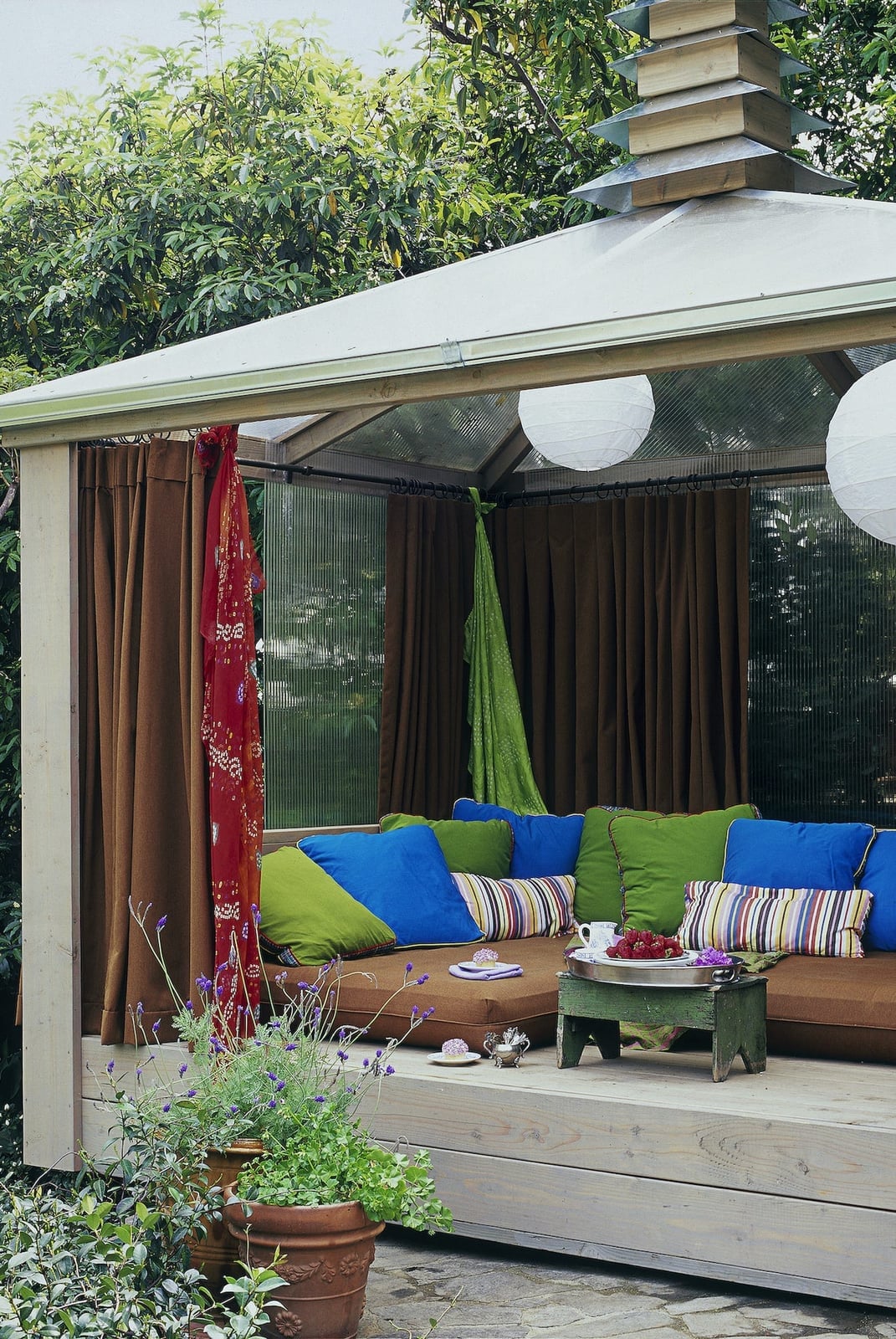
The materials in this boho gazebo do not match, and that is the point. The wood frame and metal lanterns provide structure, while the fabric cushions introduce pattern and softness. The plastic elements, likely the table or planters, are the practical choice for a covered outdoor space that sees moisture. The mix works because the wood tone ties the frame to the floor, and the metal repeats in the lantern chains. The colorful cushions break up the brown and green palette without adding weight.
Covered Patio Lighting: Dusk Ambiance
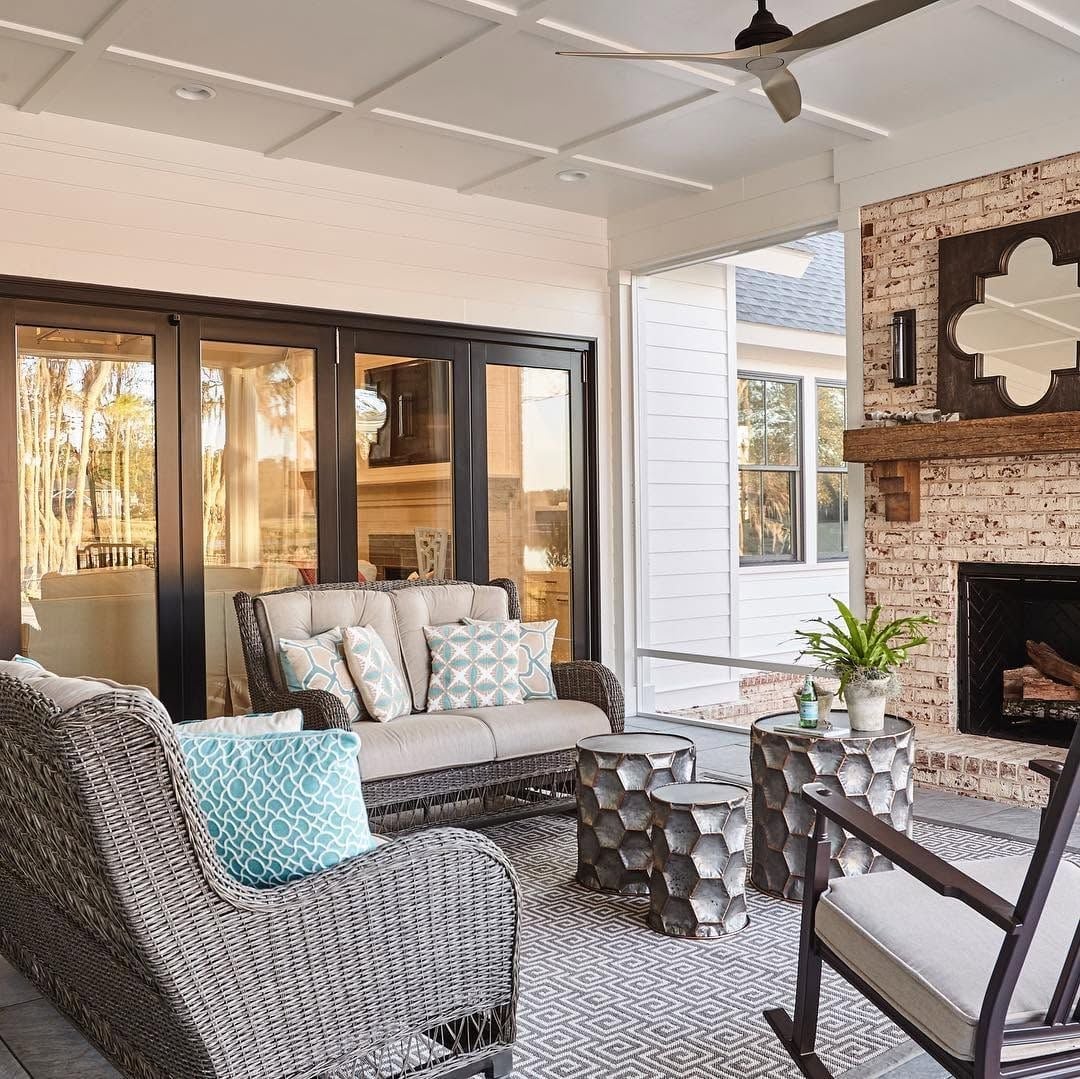
Evening light changes a traditional patio from a daytime hangout into a room you want to stay in. The brick fireplace here becomes the focal point as the sun drops, and the ambient lantern light on the side tables keeps the seating area visible without washing out the warmth of the brick. The wicker sofa and armchairs absorb the soft light, which makes the space feel cozy. A single overhead light would have flattened the brick texture, so the low, scattered sources are the right call for this layout.
Covered Patio Storage: Integrated Seating
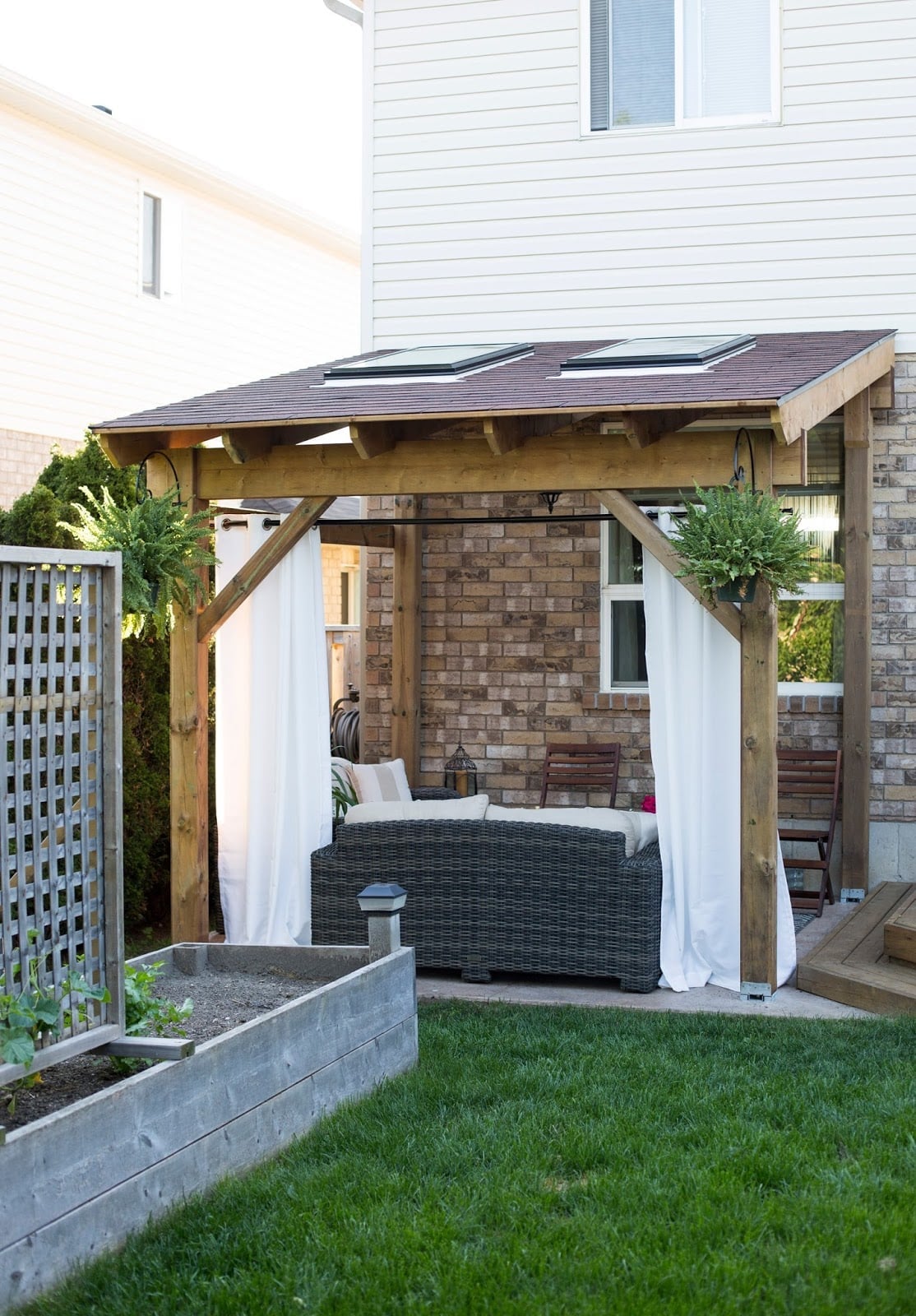
When floor space is tight, every piece of furniture should earn its square footage. A wicker sofa with built-in storage under the seat cushions solves the problem of where to keep outdoor pillows, blankets, or gardening tools without adding a deck box. The white curtains here double as a visual buffer, hiding the storage zone from the main seating area. The wooden posts and brick floor stay simple so the storage does not feel like an add-on. The hanging plants draw the eye up, which keeps the lower half of the room from looking too busy. For a compact covered patio, integrated seating is the difference between a cluttered corner and a clean, functional layout.
Covered Patio Budget Swap: Reclaimed Wood Accents
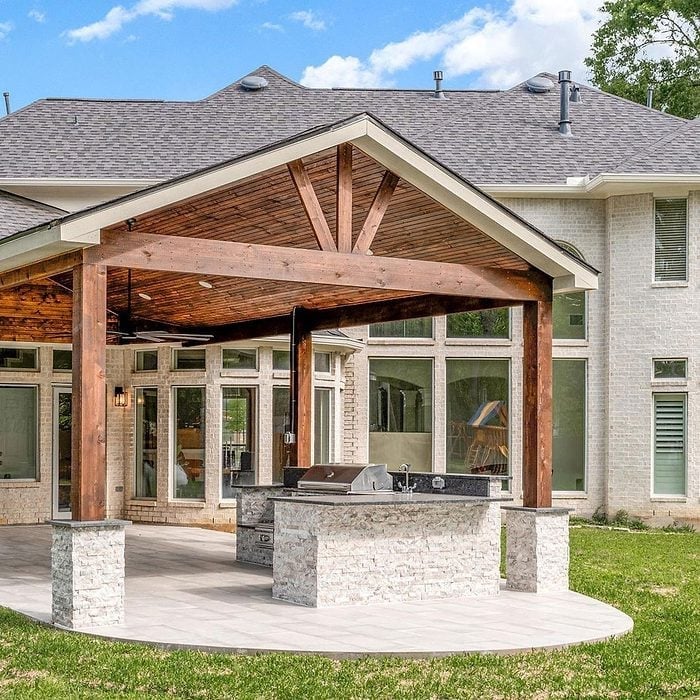
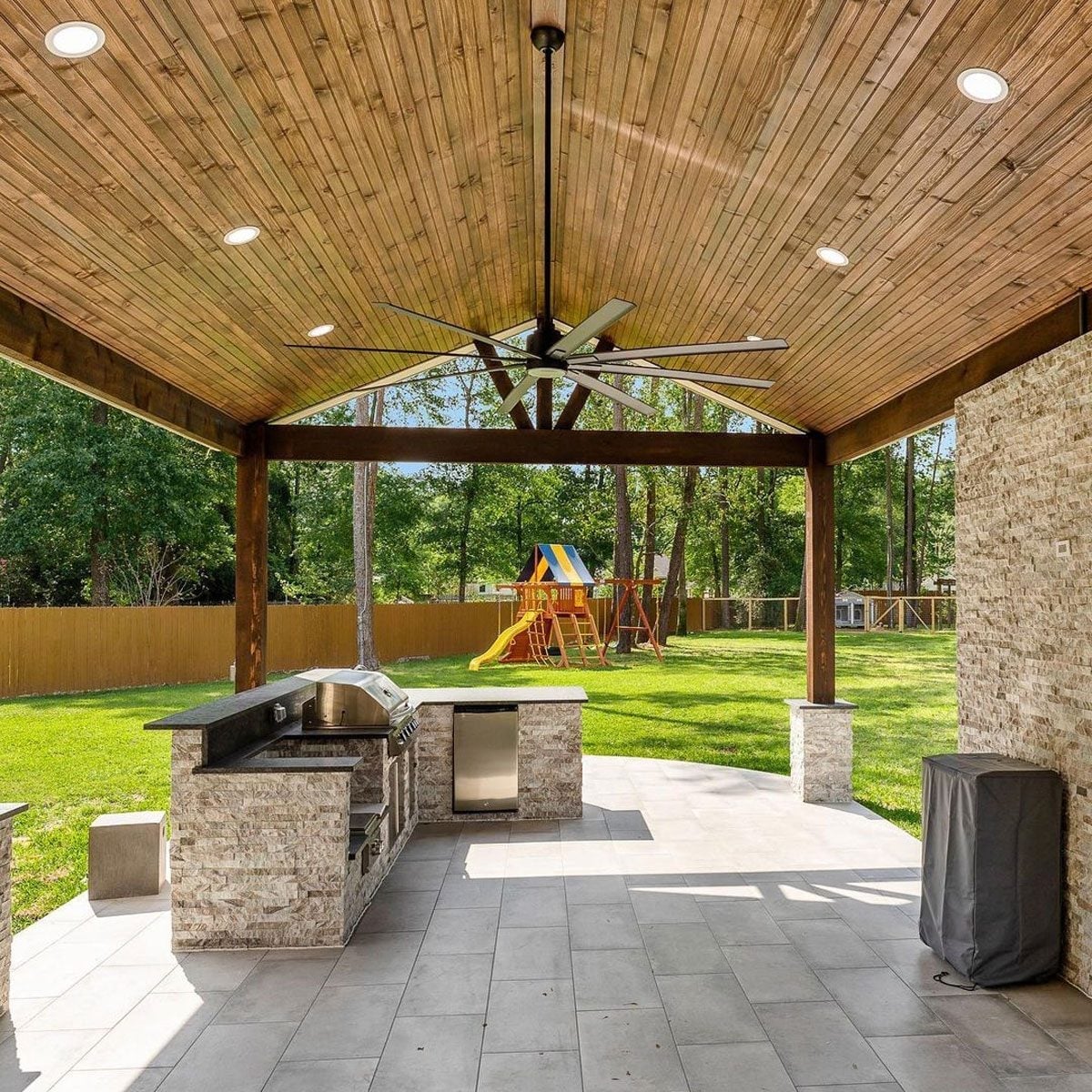
An outdoor kitchen island clad in stone anchors this modern farmhouse covered patio, with a neutral palette of wood tones and white keeping the space calm. The stone surround gives the kitchen a built-in look that feels permanent, but the real trick is balancing all that heavy material with softer elements. Wood accents in the ceiling and furniture stop the patio from feeling cold or too industrial. A ceiling fan overhead adds comfort on warm days without blocking the natural light.
Covered Patio Renter-Friendly: Freestanding Kitchenette
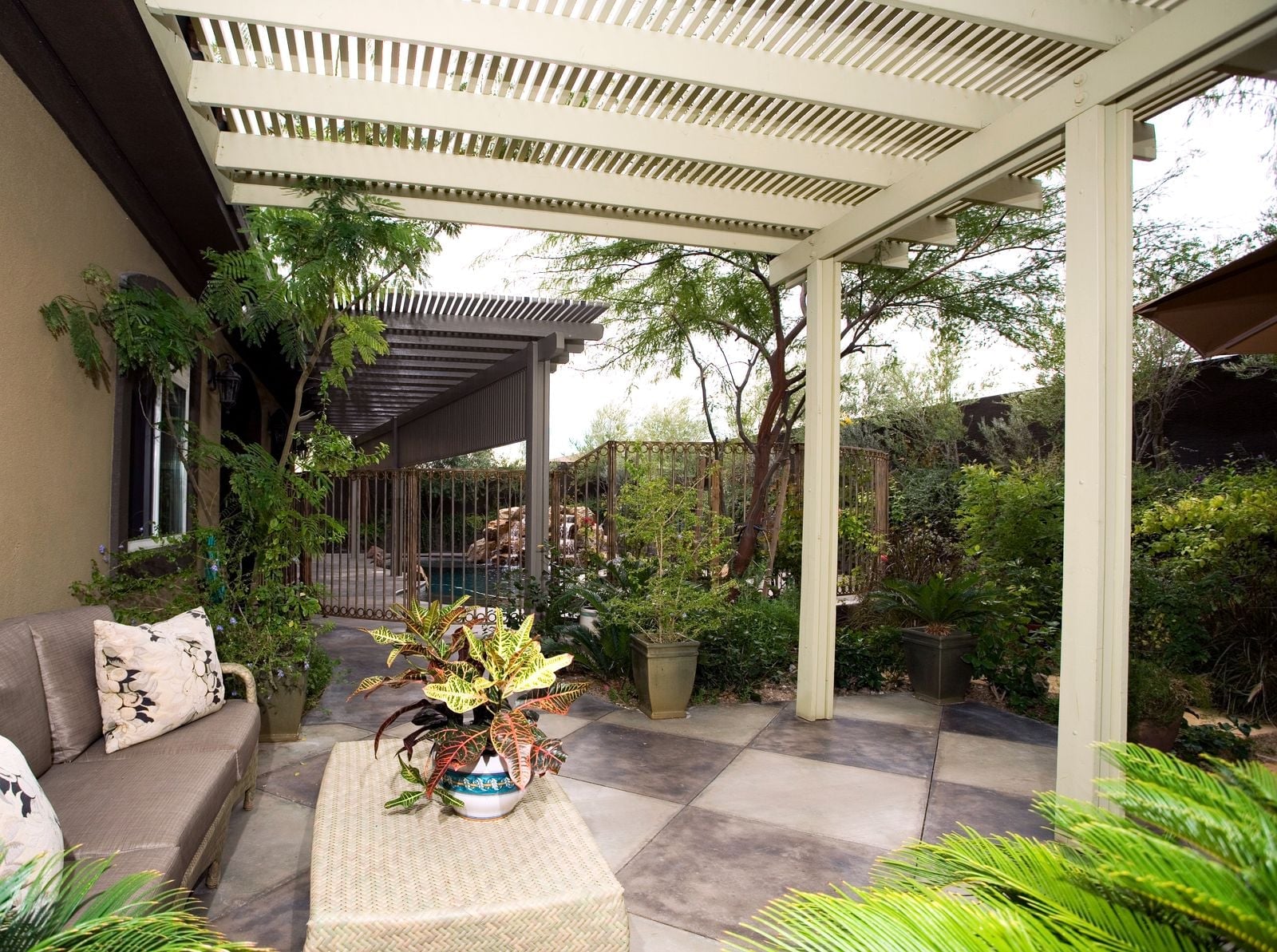
For renters, the key is choosing furniture that defines a zone without requiring construction. Under a slatted pergola, a sofa and coffee table create a distinct seating area on a beige and green covered patio. The wood of the pergola, the stone floor tiles, and brown pottery work together to make the space feel cohesive. Potted plants soften the edges and add privacy without drilling into anything. The whole setup can be packed up and moved, which is exactly the point when you do not own the walls.
Covered Patio Durability: Stone and Tile
Where a wood deck might warp or stain over time, a modern covered patio with a fire pit table leans on stone and tile for long-term wear. The neutral palette and wood furniture keep the space balanced, while the fire pit becomes the natural gathering point. A sectional sofa faces the fire, and a dining table sits nearby, creating two distinct zones on the same open plan. Overhead ceiling lights provide ambient glow after dark, so the patio stays usable well into the evening. The stone and tile surfaces handle foot traffic and weather better than most alternatives, which matters when you entertain often.
Covered Patio Scale and Proportion: Generous Seating
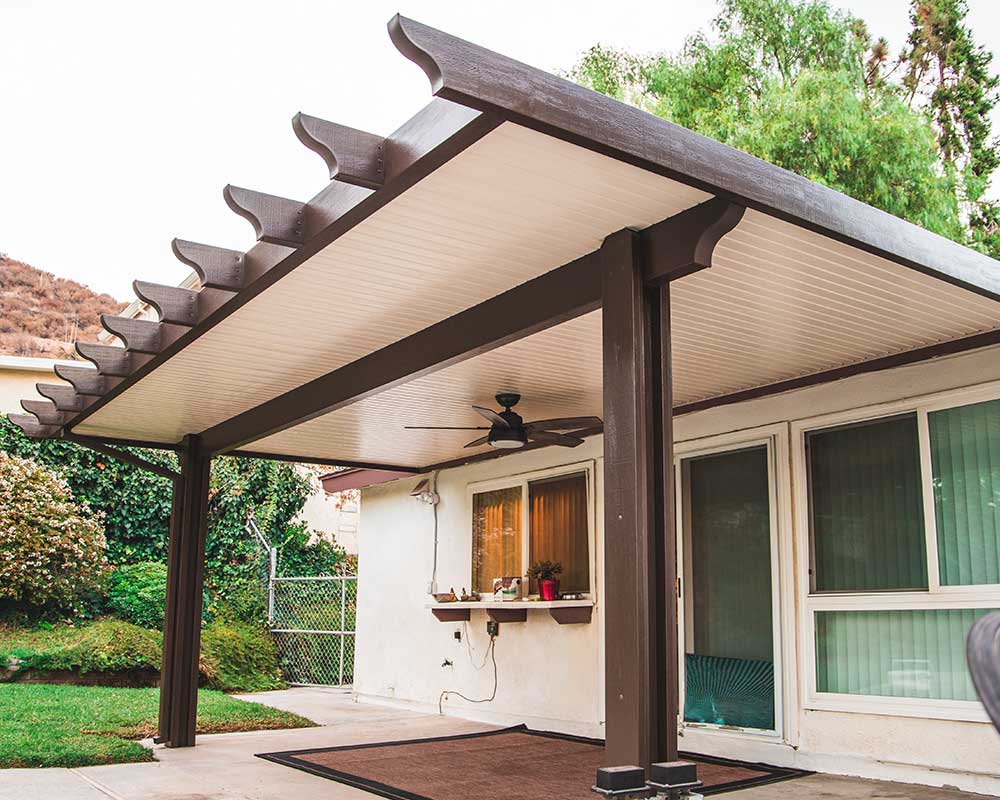
The ornate pergola-style roof edge on this traditional covered patio sets the scale for everything underneath. With a neutral palette of brown and white, the metal and concrete structure feels substantial without overwhelming the house. Sliding doors connect the patio directly to the interior, making the transition seamless. An outdoor rug defines the seating area, and the ceiling fan keeps air moving on still days. The generous proportions mean the furniture does not look crowded, and the whole space lives like an extra room.
Covered Patio Styling Variation: Modern Integration
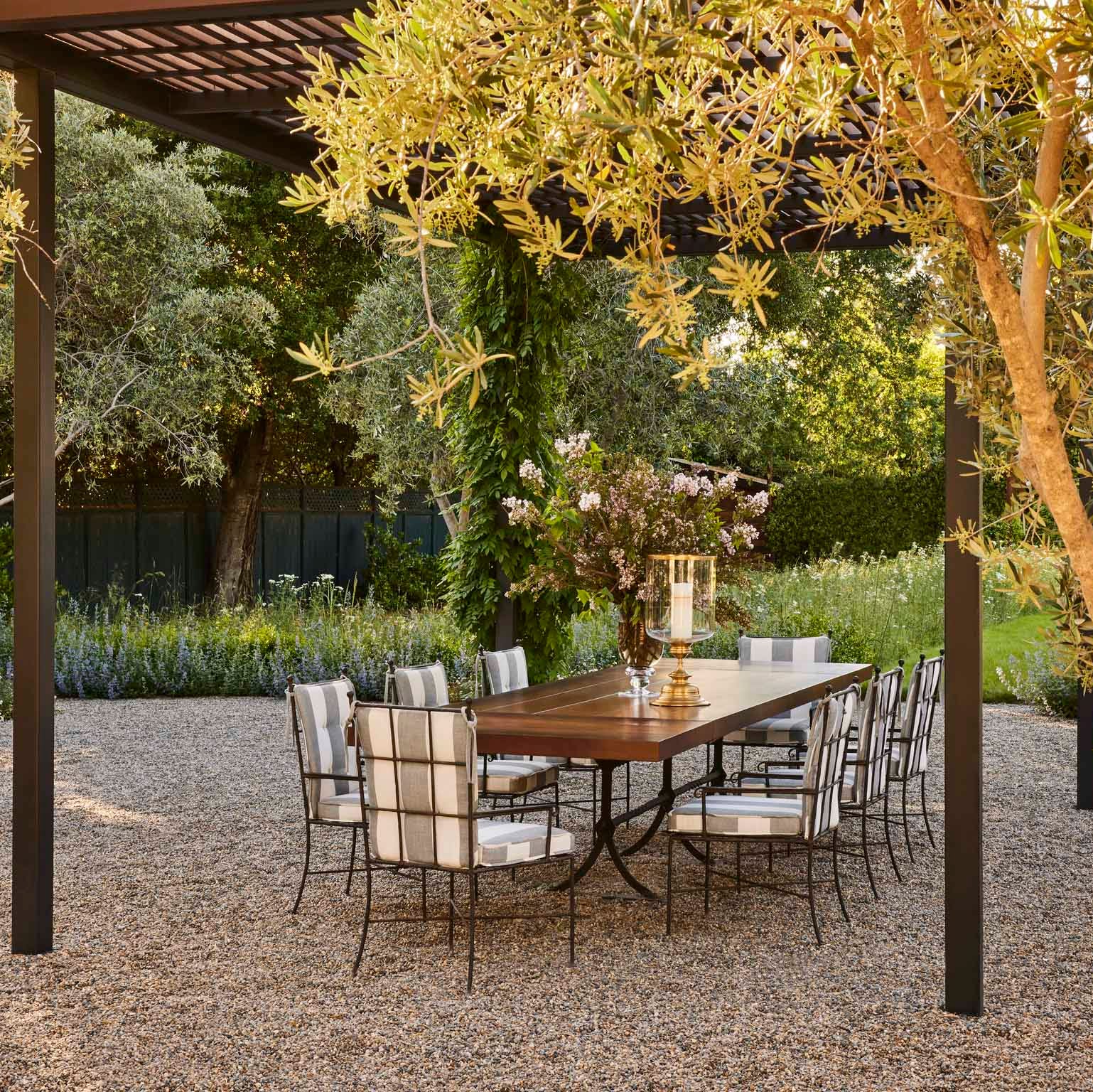
A large wooden dining table sits at the center of this mediterranean covered patio, with metal chairs and a pergola overhead setting the tone. The palette mixes wood tones with gray, white, and green, letting the natural materials do the work. Gravel underfoot adds texture and drainage, which matters in an open outdoor dining area. Dappled sunlight filters through the pergola slats, softening the hard edges of the stone walls. The table grounds the space while surrounding plants complete the scene.
Covered Patio Layout: Open Plan Living
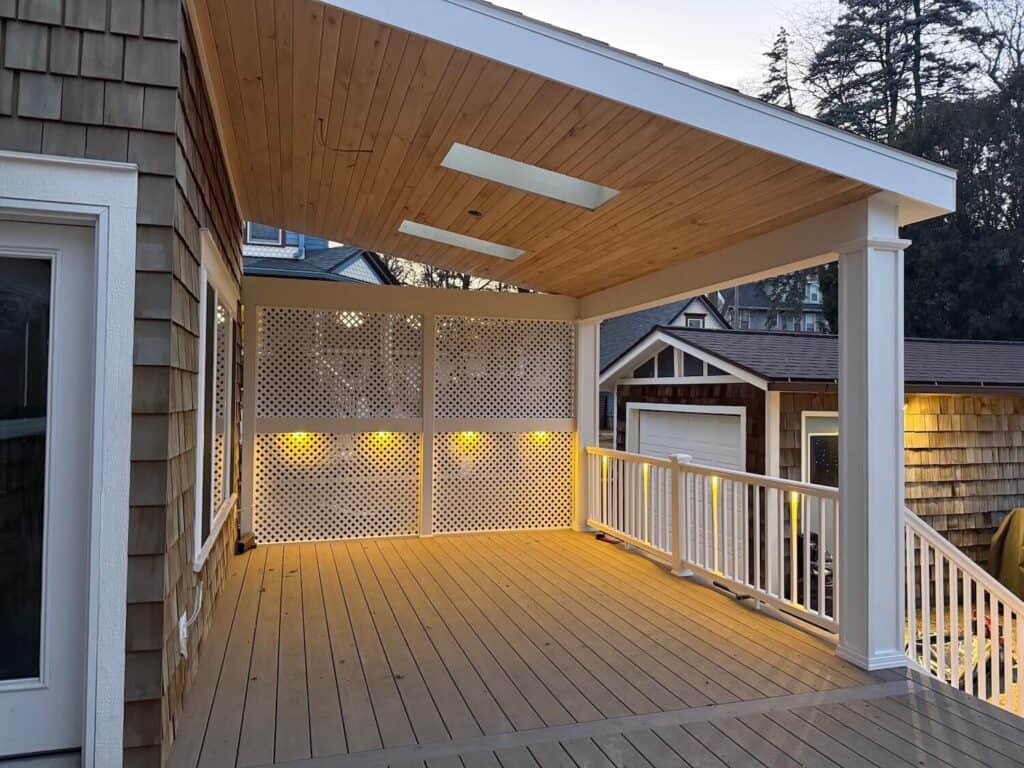
A covered deck with a wood plank ceiling and skylights creates a room that feels both sheltered and open. The natural light from above softens the transition between indoor and outdoor, so the space lives more like a sunroom than a standard patio. White painted wood on the railing and trim keeps the look crisp, while the composite decking adds a practical, low-maintenance surface underfoot. The open layout means furniture placement matters: a sectional or dining set should anchor the center without blocking the sightline to the yard. Skylights work best when the ceiling is already light in color, reflecting daylight instead of absorbing it. Consider a whitewashed wood ceiling even if skylights are not an option, and keep the palette simple so the architecture leads the room.
Covered Patio Palette: Neutral Base with Wood Tones
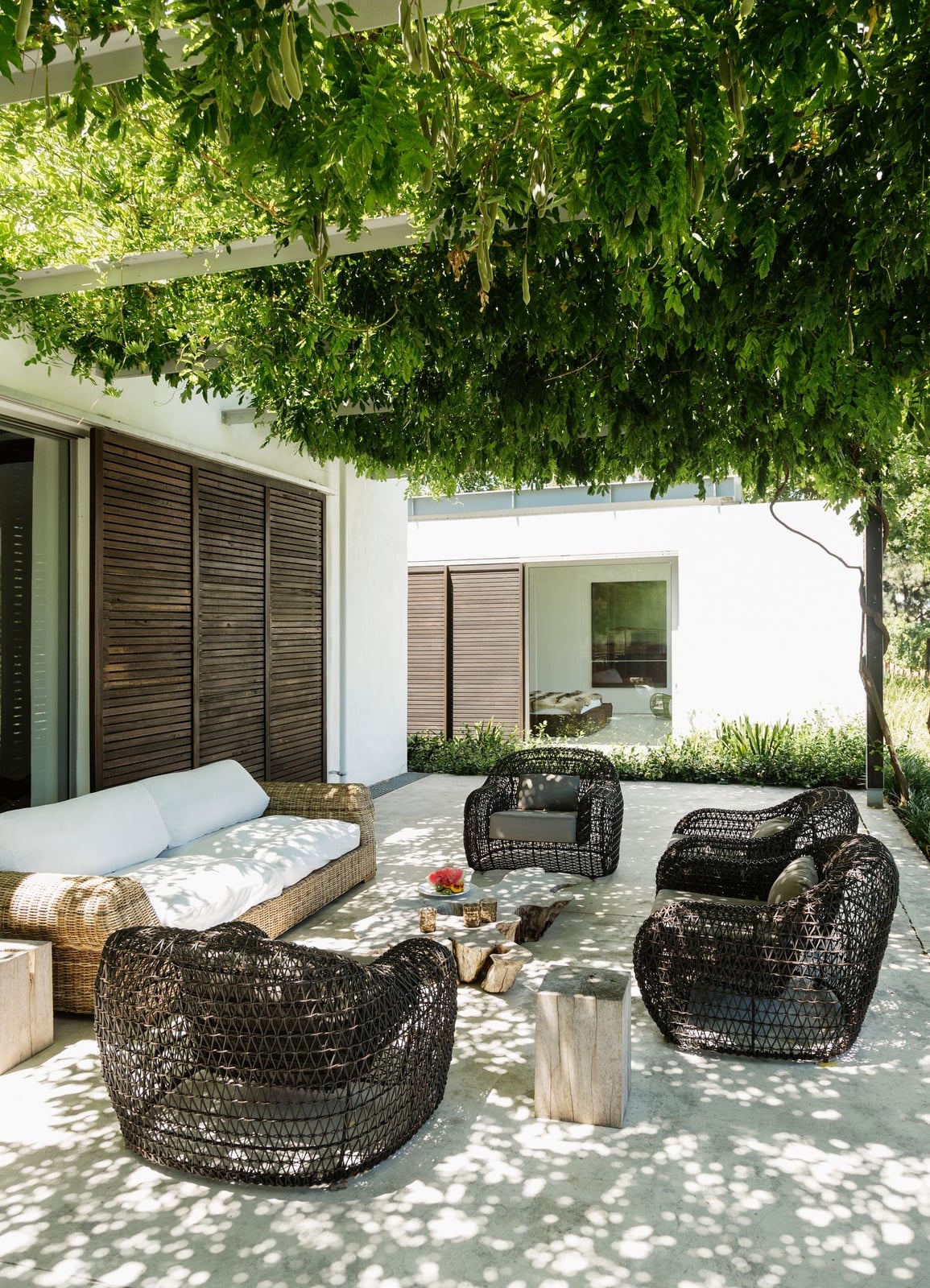
The palette starts with white wicker sofas and armchairs, grounded by a gray concrete floor and a wooden coffee table that brings warmth. Lush green foliage overhead creates a natural canopy, filtering daylight into soft, dappled shadows. The ratio is roughly two parts neutral to one part green, with wood acting as the bridge between them. What defines this look is the restraint: no bright accent colors compete with the greenery, so the eye rests on texture instead. The wicker and concrete stay quiet, letting the plants do the heavy lifting.
Covered Patio Materials: Stone, Wood, and Tile, Outdoor
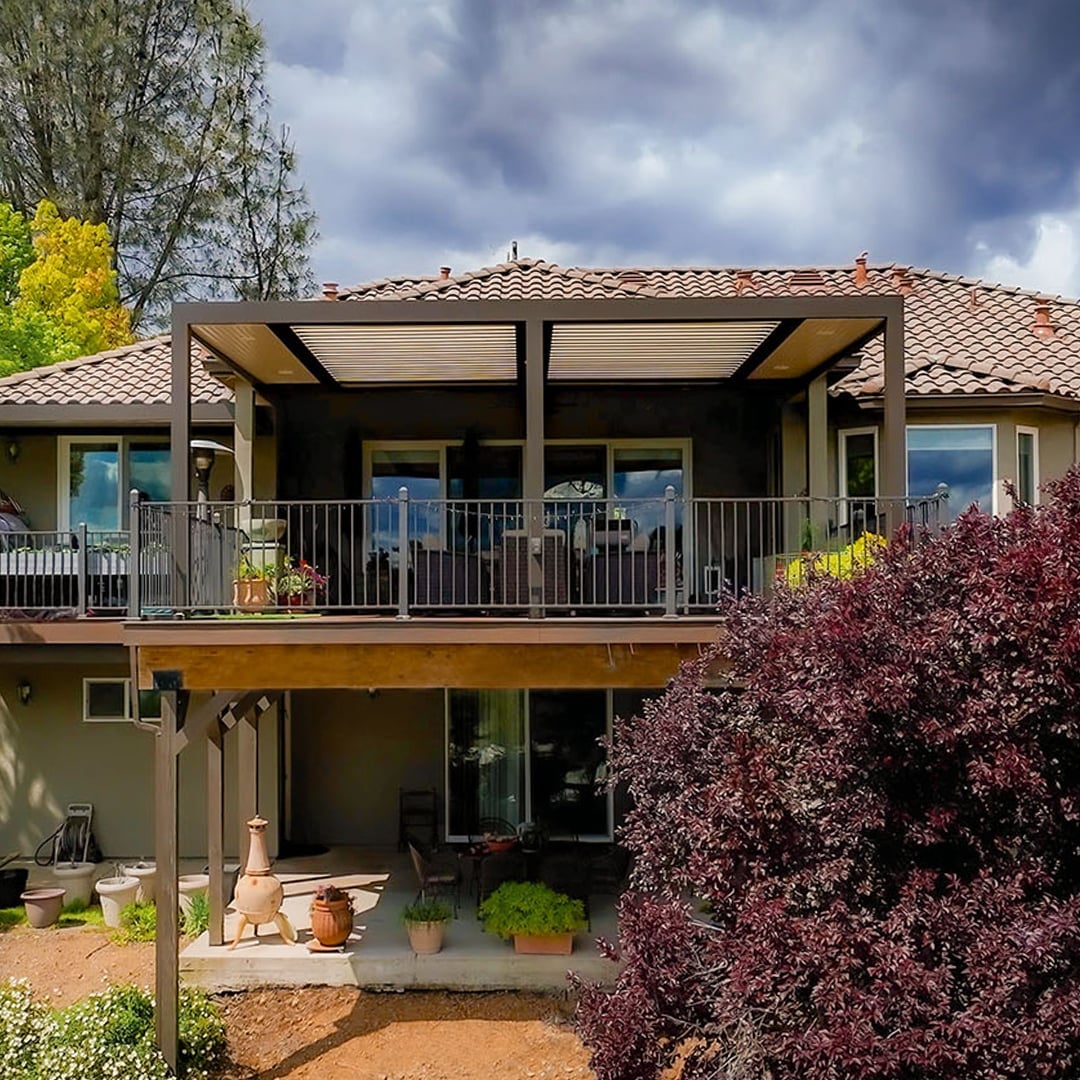
Pair durable surfaces with soft textures that add comfort. Here, a tiled roof in earthy red and beige sits above stucco walls and metal accents, creating a mediterranean feel that holds up to weather. The tile sheds rain and reflects heat, while the stucco provides a smooth, finished look that resists moisture when properly sealed. Wood appears in the furniture and planters, adding warmth. For a similar balance, choose one hard material to dominate the structure and one soft material for the seating, keeping the rest as supporting players.
Covered Patio Lighting: Ambient and Functional
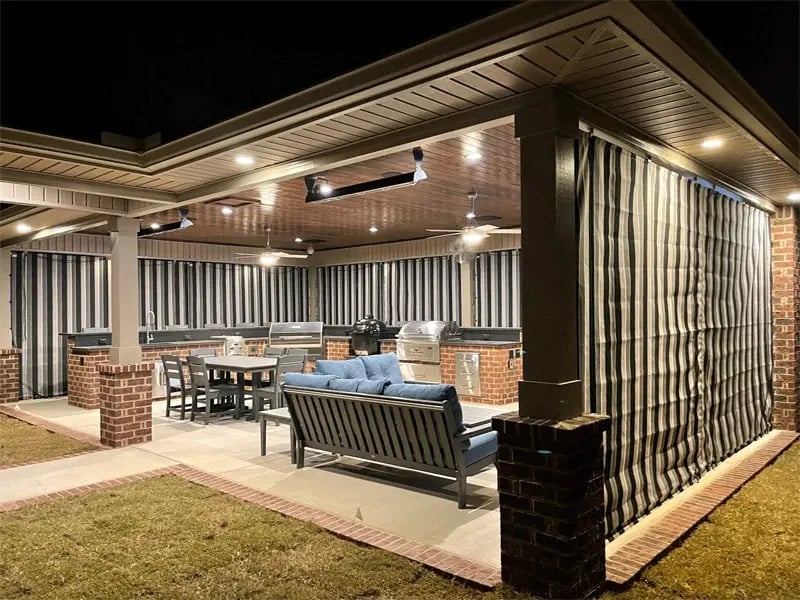
String lights are the easy answer for patio lighting, but a room with multiple zones calls for something more deliberate. Overhead lights define the dining and seating areas, while string lights add a softer layer that ties the whole space together. The retractable black and white striped screens are the real trick: they filter harsh afternoon sun and provide privacy, then pull back when you want the view. At dusk, the overhead lights do the work of task lighting for the outdoor kitchen, and the string lights keep the conversation area from feeling flat. Brick and wood walls absorb some of the glow, so the light feels warm rather than clinical. The key is having two switchable layers: one for function and one for mood.
Covered Patio Storage: Outdoor Kitchen Features
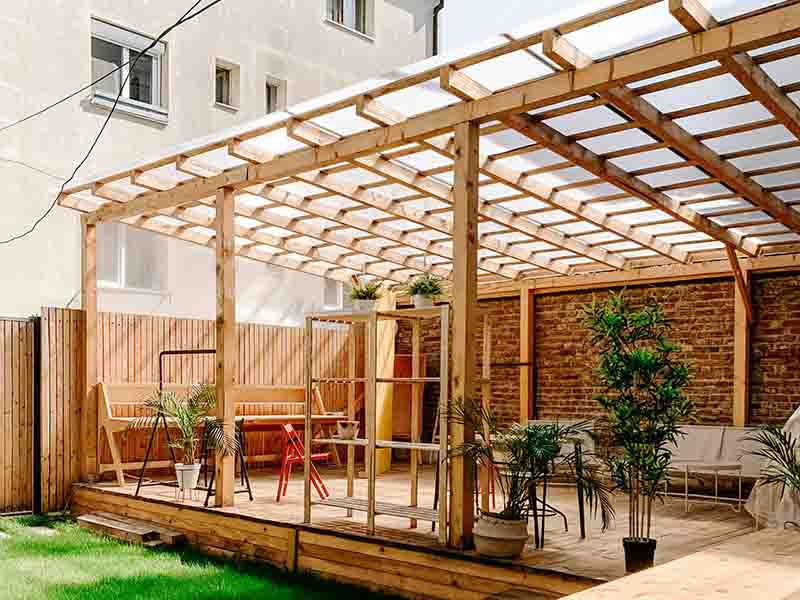
A multi-level deck with a covered area uses a translucent polycarbonate roof to let in daylight while keeping the space dry. Storage comes from a shelving unit built into the structure and bench seating with hidden compartments, both in wood tones that match the deck. The outdoor sofa is placed nearby, creating a natural division between cooking and lounging zones. For a similar setup, look for furniture that doubles as storage, like a bench that holds cushions or gardening tools, and keep the roof light-permeable to avoid a cave-like feel under cover.
Covered Patio Budget Swap: DIY Countertops
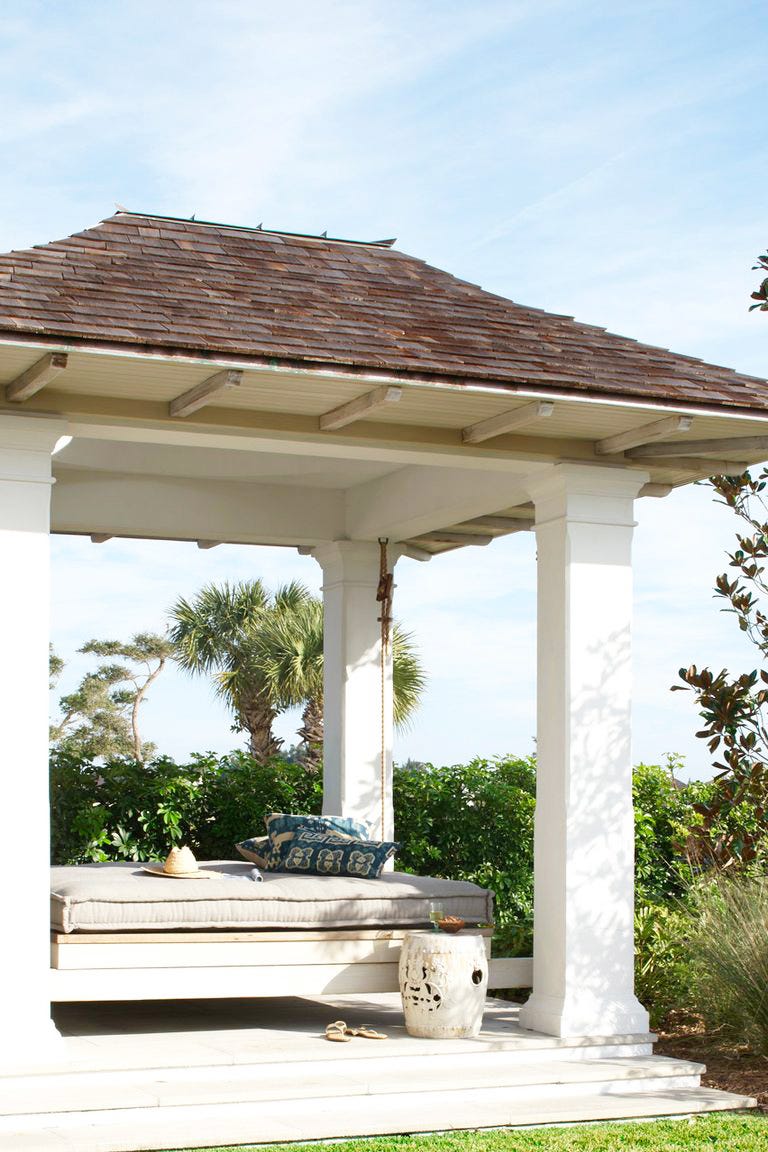
A large covered daybed is the kind of piece that can define an outdoor room, and this one earns its spot as the focal point. The layout keeps everything else simple: the daybed sits centered, flanked by a pair of low tables and a single armchair, with plenty of open floor space around it. The palette stays neutral with a soft green accent in the cushions, which keeps the look calm and easy to live with. Modern materials like wood, tile, and stone show up in the flooring and surrounding surfaces, all durable enough for weather exposure. In a covered patio, the hero element approach works because the roof already protects from sun and rain, so you can afford to let one piece anchor the whole space without competing finishes.
Covered Patio Renter-Friendly: Portable Grill Station
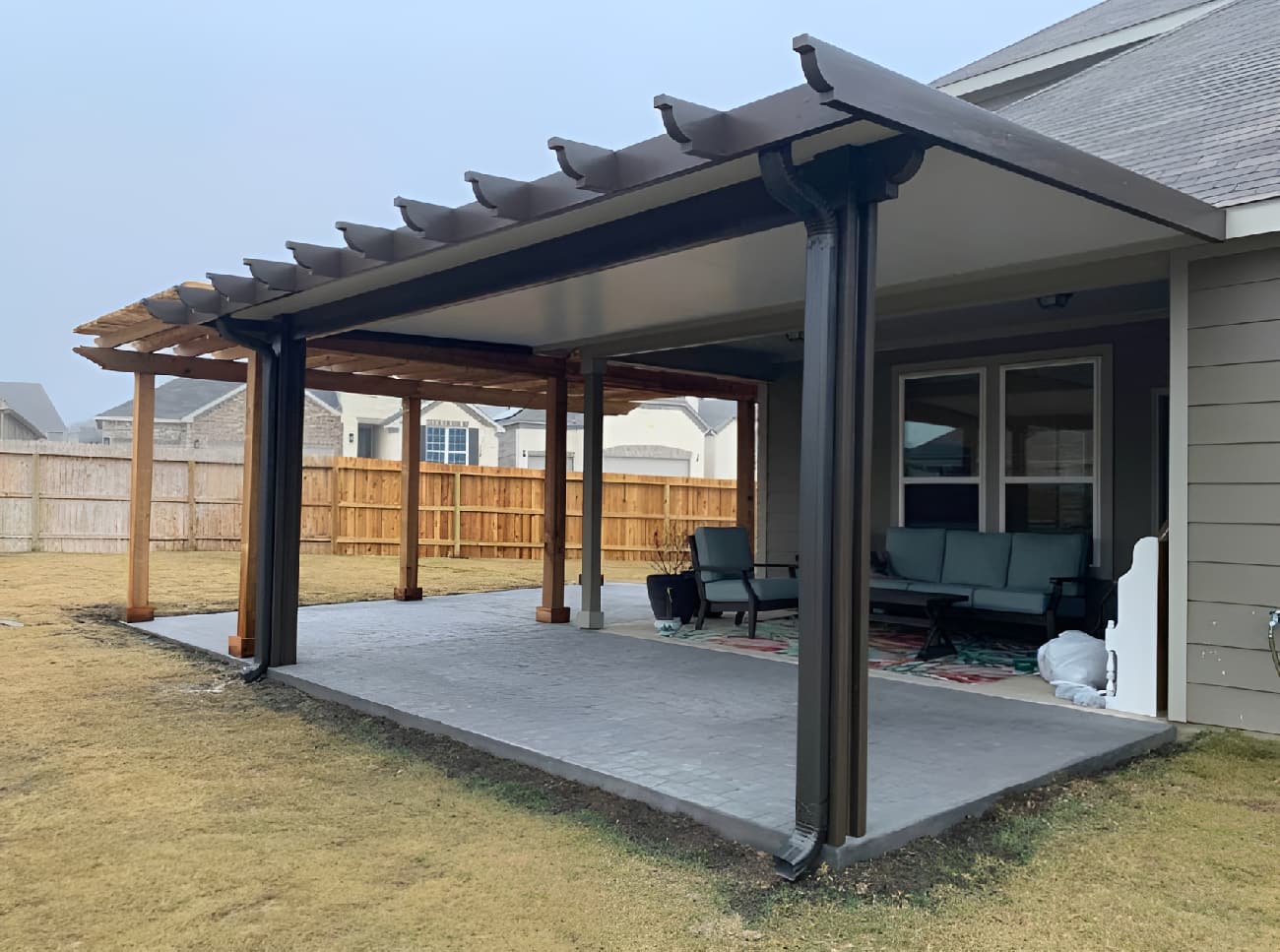
A built-in outdoor kitchen is the obvious choice for serious cooks, but a portable grill station gives you the same function without the commitment. This patio proves the point with its spacious layout: a sectional sofa anchors the seating zone, while a dining set with four chairs sits nearby, leaving room for a freestanding grill cart in between. The dual-level patio cover shades both areas, so you can cook and eat in one spot. Concrete, wood, metal, and tile mix here without feeling busy, thanks to the neutral gray and blue palette that ties everything together. For renters, the win is clear: you get a full outdoor kitchen setup that moves with you, and you can swap out the grill cart for a different model whenever you want.
Final Thoughts
A covered patio that lives well comes down to layout, palette, materials, lighting, and storage. Match each choice to your climate and how you actually use the space. Start with the zone that matters most, then layer in the rest. The best covered patio is the one you walk into without a second thought.