
A cream bathroom is not a blank page; it is a quiet room built to hold light without shouting. This palette works because it lets shape and texture do the talking, from a carved vanity to the way a fluted sink catches a shadow.
That neutrality also makes it practical: scuffs and splashes show less, and you can shift the mood with a single towel or candle without repainting the walls. What follows are 21 ways to let cream do its job, keeping the room calm and the details sharp.
Elegant Cream Bathroom Layout
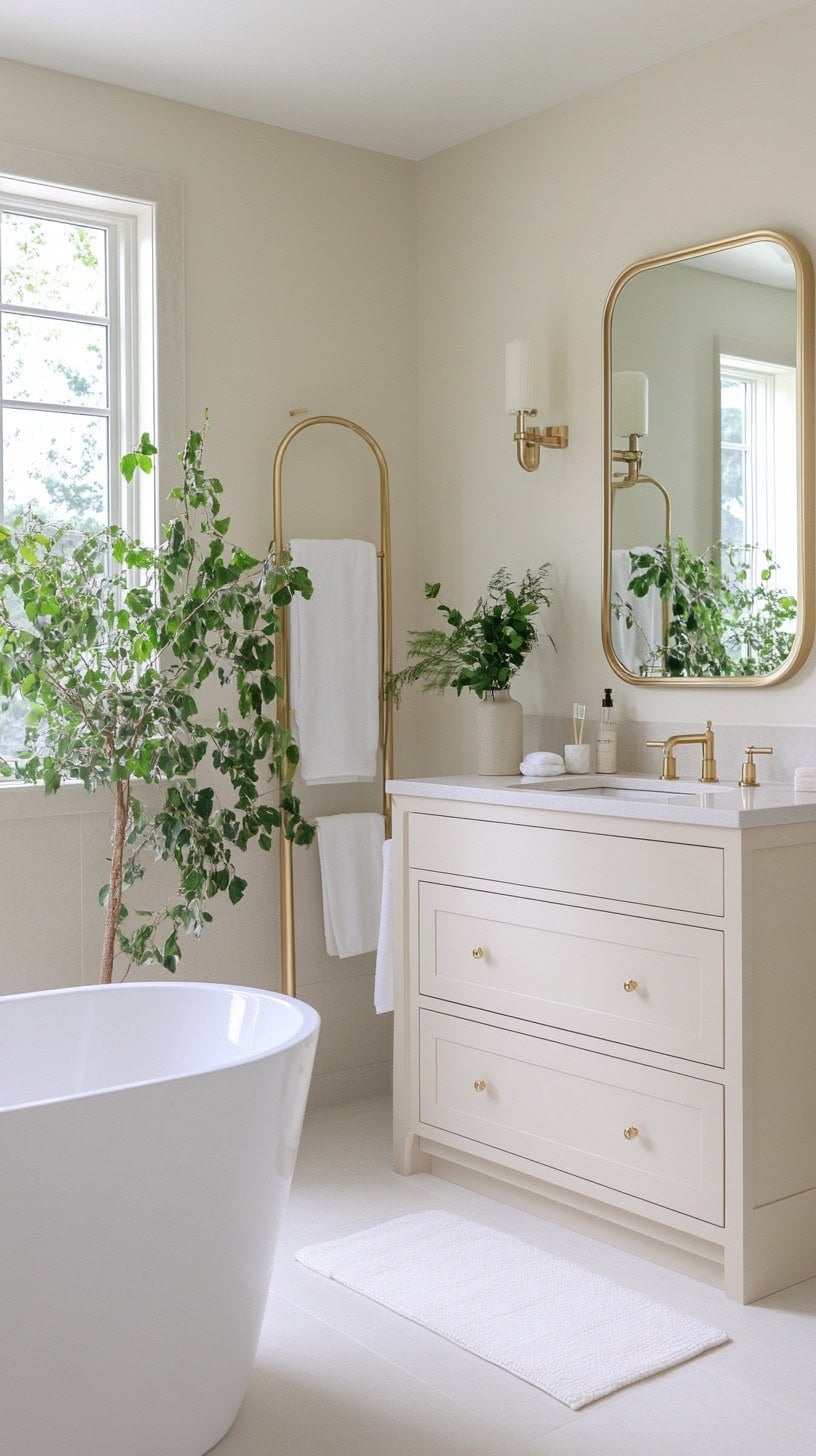
Positioning the vanity directly opposite the freestanding tub creates a balanced axis that anchors a spacious bathroom. The cream palette, with its soft gold fixtures and a tall green plant beside the tub, keeps the room feeling open rather than crowded. The layout works because it pairs two heavy visual elements across from each other, so the eye moves between them without stopping on dead space. For a similar effect in your own bathroom, place the largest piece of furniture on the wall your eyes hit first when you walk in.
Modern Farmhouse Cream Palette
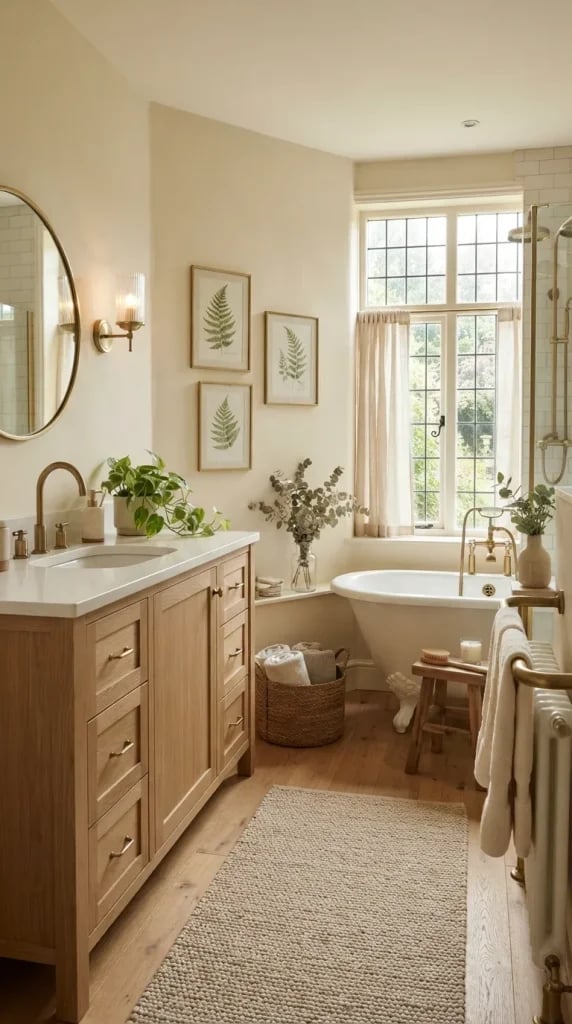
The palette here is a straight swap of warm beige for stark white, and it changes the whole mood. Cream walls and a natural wood vanity sit together without competing, while the freestanding tub and woven basket introduce texture instead of color. The ratio works because cream takes up roughly two-thirds of the visual field, with wood tones filling most of the rest and beige linens adding a soft middle note. What keeps it from reading as muddy is the brass sconces and a single dark accent in the basket, which break the warmth just enough to give the eye a place to rest.
Ornate Wood Vanity Materials
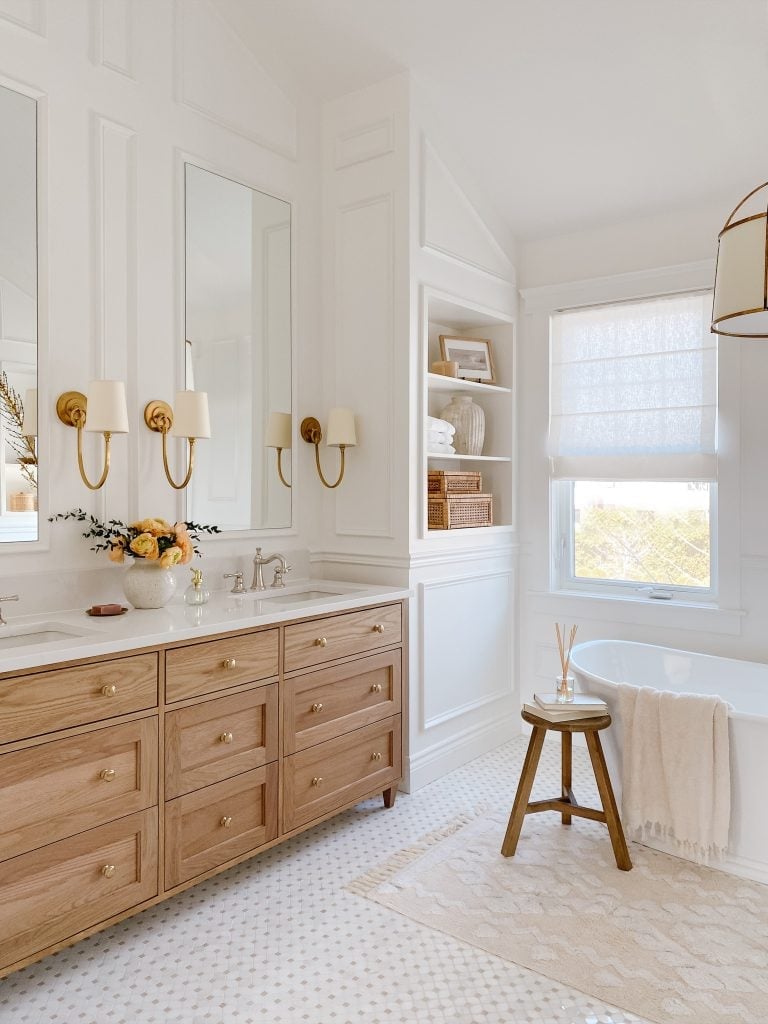
How do you add ornate detail without making a cream bathroom feel busy? The answer is in how the wood vanity is built. Its carved front and brass hardware draw the eye, but the surrounding surfaces stay quiet: white wall paneling, a simple freestanding tub, and cream tones everywhere else. The vanity becomes the focal point because nothing around it competes. For a similar effect at home, let one surface carry the ornament and keep every other material plain. A carved mirror frame or a single decorative cabinet front can do the same work without overwhelming the room.
Cream Bathroom Lighting
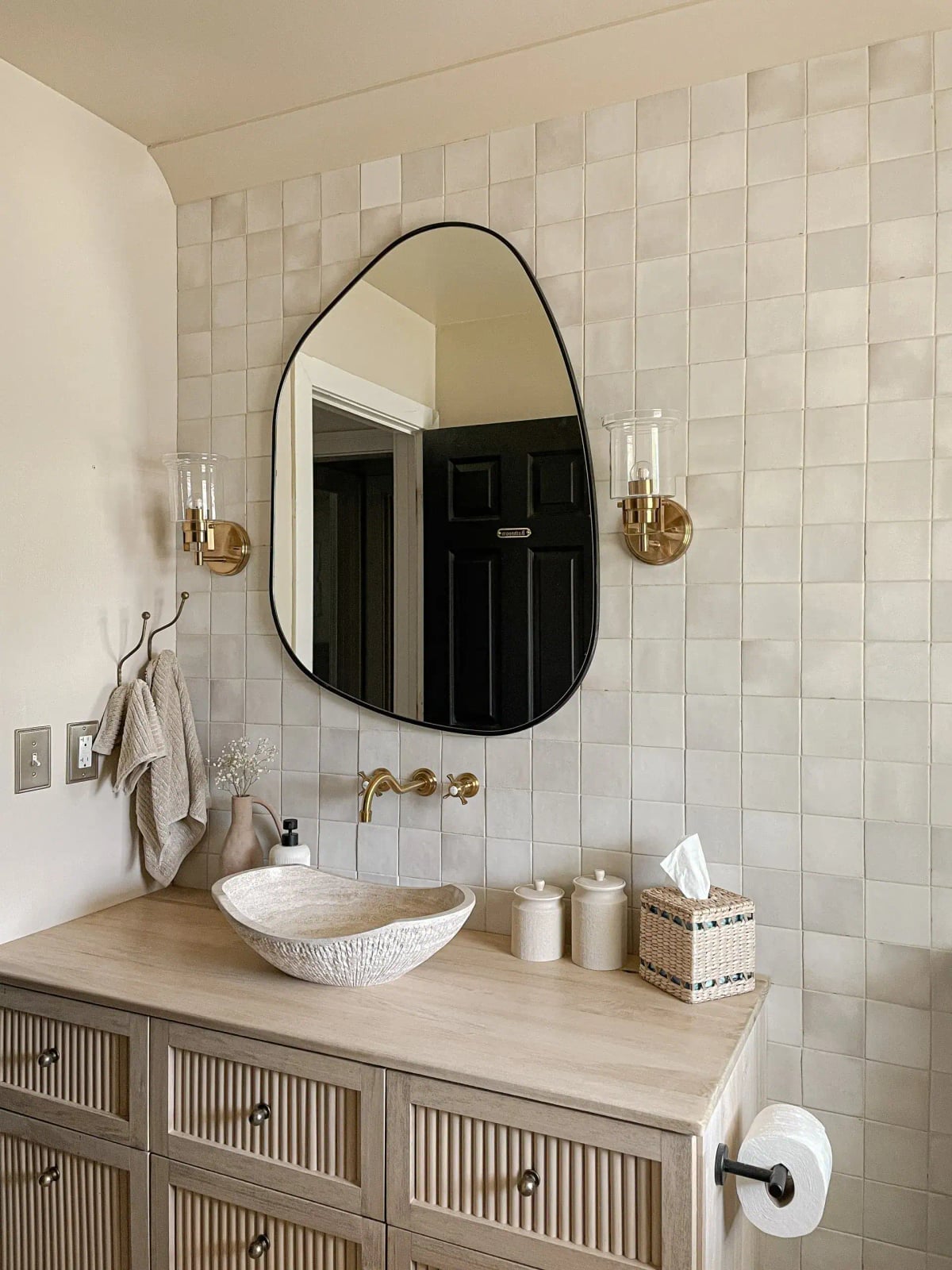
Wall sconces flanking an asymmetrical mirror cast light onto the face without creating shadows under the chin. In this modern organic bathroom, the stone vessel sink and fluted vanity have soft, rounded edges that reflect light evenly, so the sconces do not need to be directly overhead. The cream palette is filled with a warm tone that cooler bulbs would cancel out. Stick with bulbs around 2700K to keep beige and cream finishes looking their best.
Modern Organic Storage Solutions
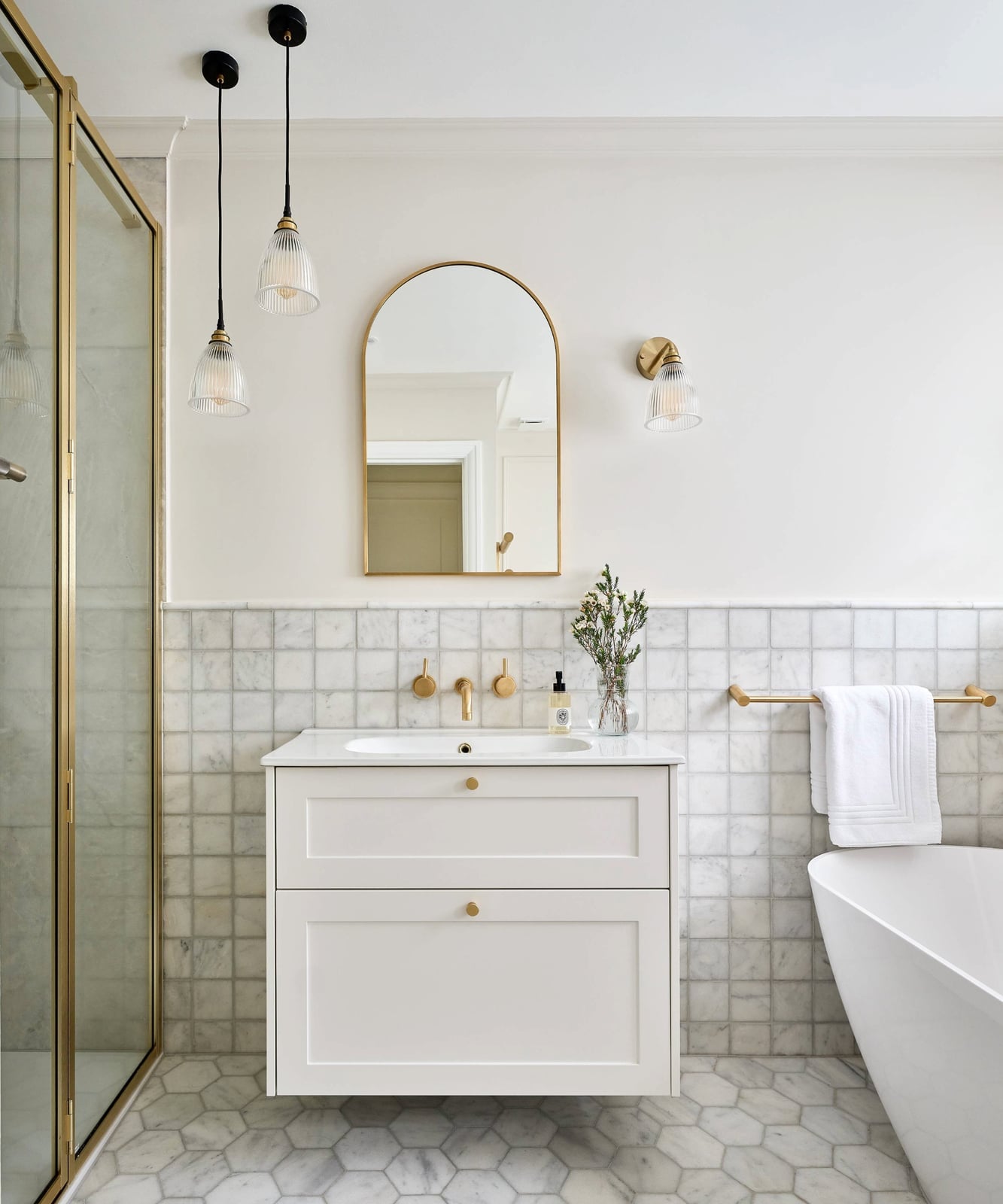
In a compact bathroom, storage works best when it is visible rather than hidden. A floating vanity keeps the floor clear, making the room feel larger, while open shelving above it holds everyday items within reach. The hexagonal floor tiles here add visual interest without taking up any physical space, and the marble wall tile reflects light, so the room does not feel closed in by the shower wall. For better function, keep the items on open shelves to a single row so they do not crowd the sightline from the door.
Compact Cream Bathroom Budget Swap
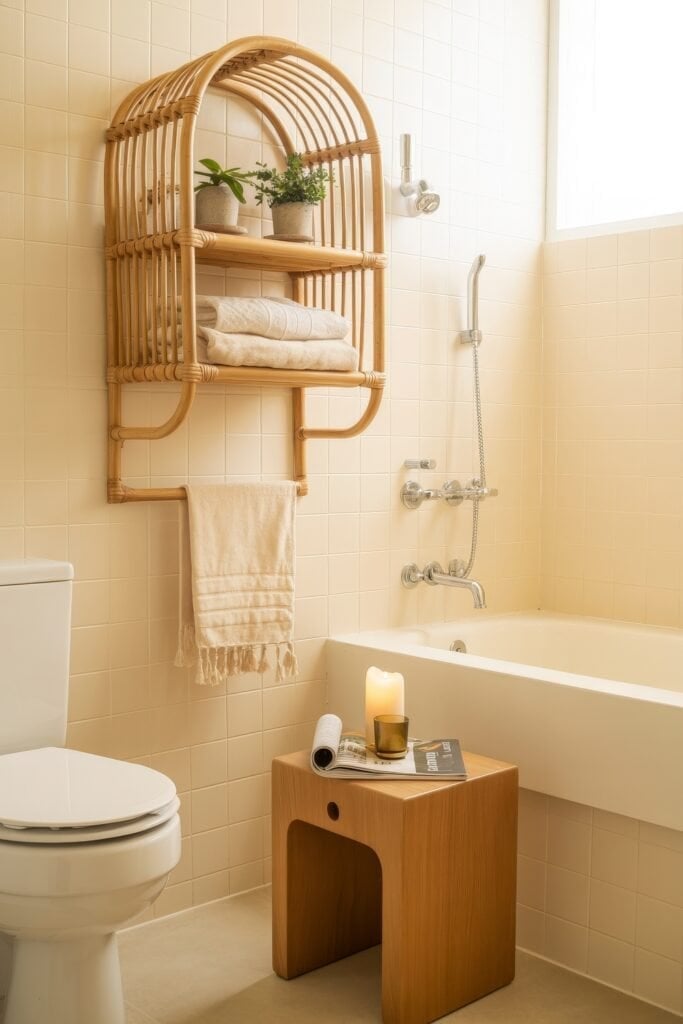
A full boho redo takes time and a lot of new tile. A simpler route is a single rattan shelf above the toilet, like the arched one here. It adds the same natural wood and woven texture that defines the style, without touching the existing tile or the tub beside it. The shelf holds toiletries and a couple of small plants, which keeps counter space clear. For a compact cream bathroom, this swap changes the feel more than a new coat of paint would. The palette stays in the cream and wood family, so nothing clashes. If the room feels done but still flat, this is the one piece that breaks the plain wall and gives the eye something to land on. Layout stays the same, only the vertical plane changes.
Boho Cream Bathroom Renter-Friendly Touches
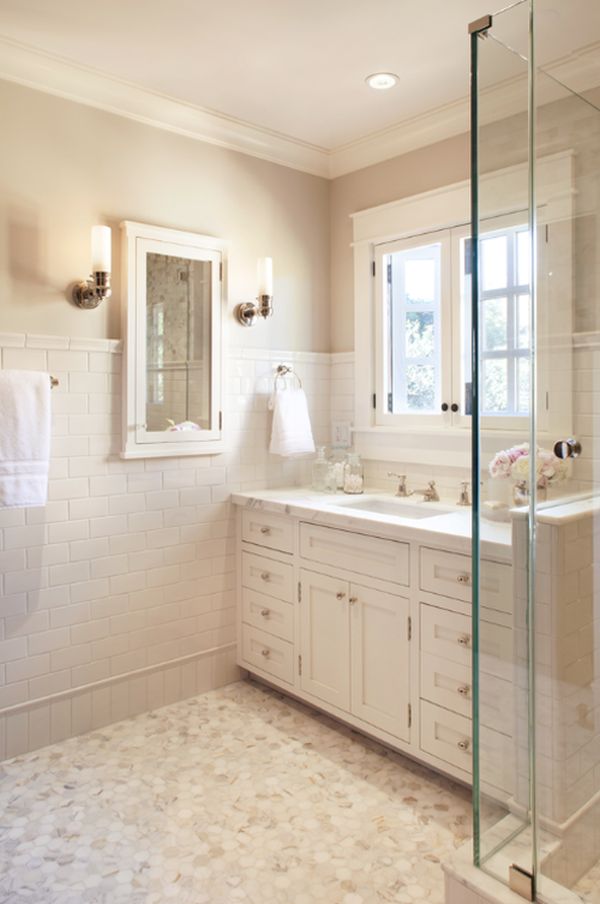
The hexagonal floor tiles set the transitional tone here, mixing classic marble hexagons with a cream palette that reads clean rather than cold. A double vanity with marble top and wood base keeps the storage generous without adding visual weight. Subway tile on the shower enclosure repeats the white-beige range, and the sconces on either side of the mirror pull warm light across the room. Daylight softens the marble finish, which can feel stark under overhead lights alone. For renters, the floor tile is the one element that does the most work. A peel-and-stick option in the same pattern achieves the same proportional shift without a permanent install.
Transitional Cream Bathroom Styling Variation
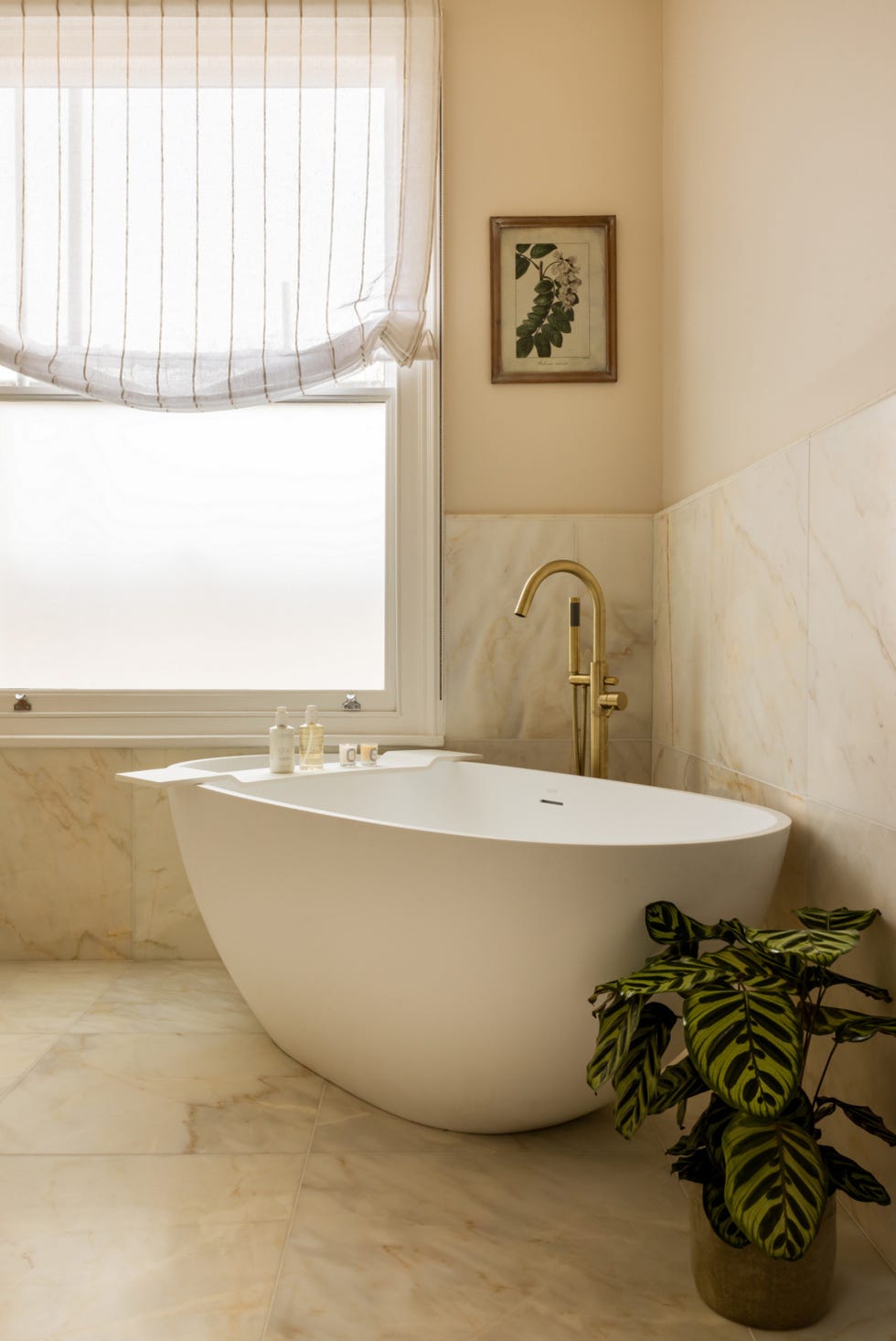
This reads as a luxury cream bathroom, but the individual pieces keep it from feeling stiff. The freestanding tub has a curved shape that softens the straight lines of the marble floor and the brass faucet adds a warm metallic note against all that cream and beige. Natural light from the window behind the tub makes the marble surface glow, while recessed lights in the ceiling handle the evening shift. What defines the look is the ratio of curved to straight forms: one soft shape per hard surface. The curved tub breaks the grid of the marble tiles. It is a simple rule that works whether the tub is this generous size or a compact version against a shorter wall.
Modern Luxury Durability
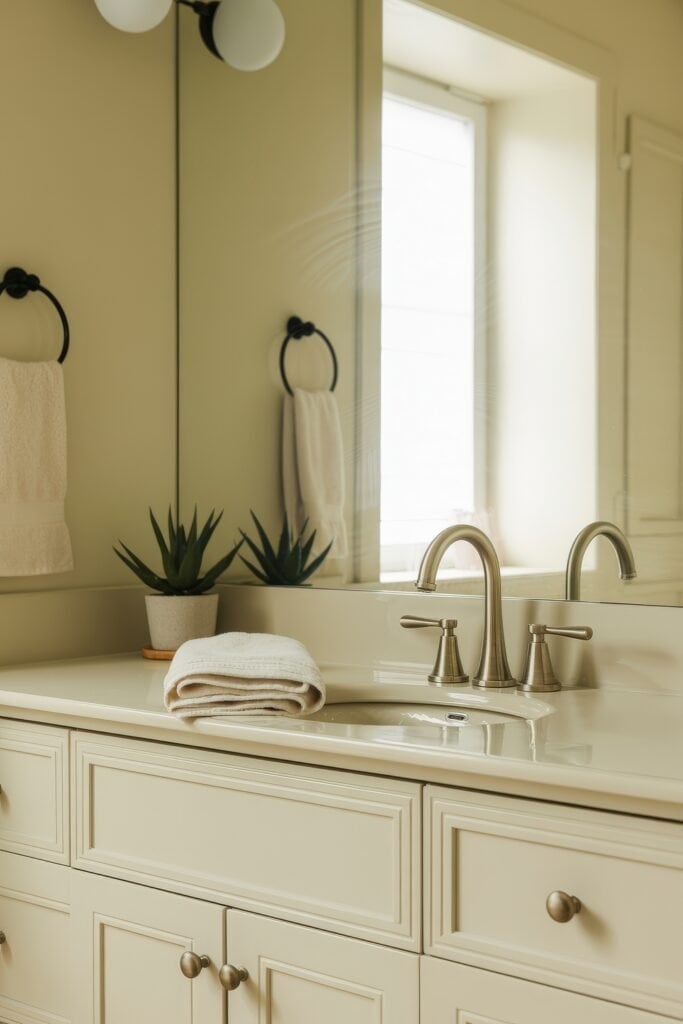
Can a cream vanity hold up to daily use in a family bathroom? The one here shows how. The cream finish is on a traditional double sink vanity with a laminate surface and a brushed nickel faucet. The finish itself is the first line of defense: a sealed cream laminate resists water rings and toothpaste splashes better than a matte painted wood would. Brushed nickel hides fingerprints better than polished chrome, which matters when the faucet gets touched multiple times a day. The layout puts the sinks side by side with storage underneath, so the surface stays clear. Overhead light and natural light both hit the counter, so the color stays true regardless of the time of day. For a compact room, this is the vanity that does not need a second thought.
Scale and Proportion in Cream Bathroom
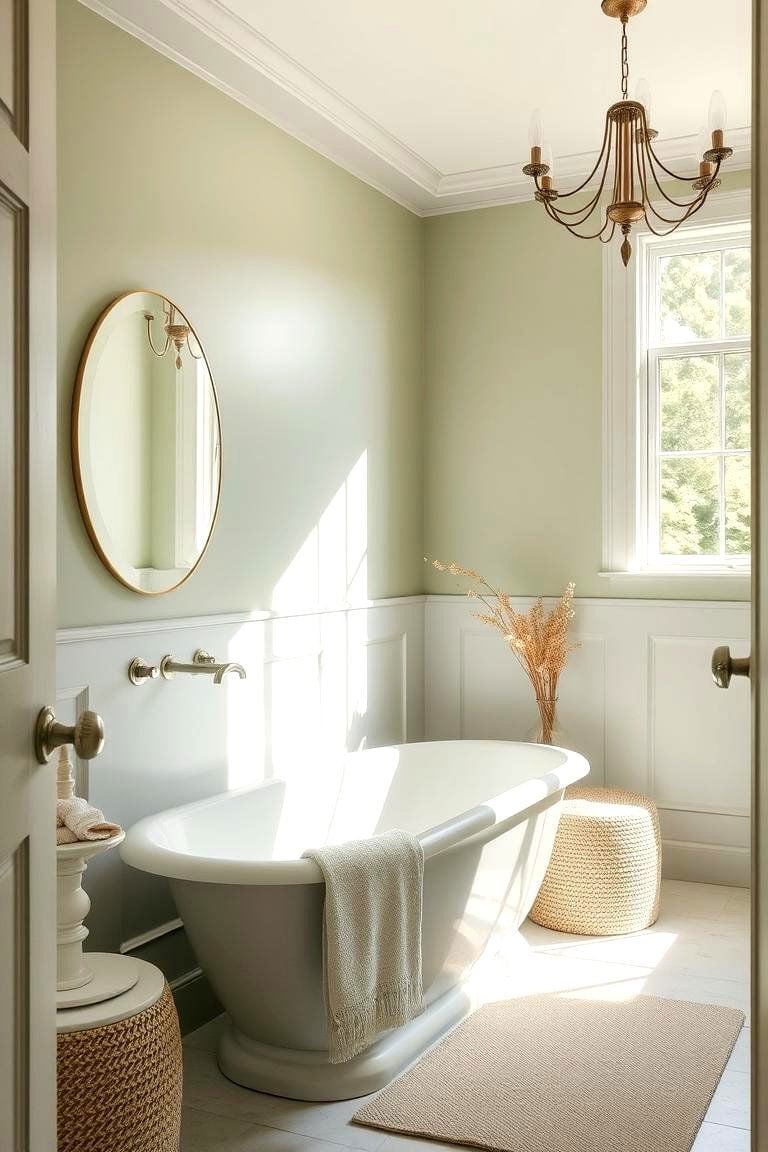
The clawfoot tub sits centered under a window, with sunlight hitting the side and a brass chandelier hanging above. The proportions work because the tub takes up the middle of the room, but the wicker stool and the chandelier are smaller, lighter pieces that do not crowd it. The sage green walls frame the cream tub without competing. The natural light is the real guide here: the window is the brightest source, so the tub faces it directly. For any farmhouse cream bathroom, placing the largest piece where the light lands makes the whole room feel balanced. A chandelier that hangs too low would break that line, so the height matters as much as the fixture itself.
Traditional Cream Vanity Detail
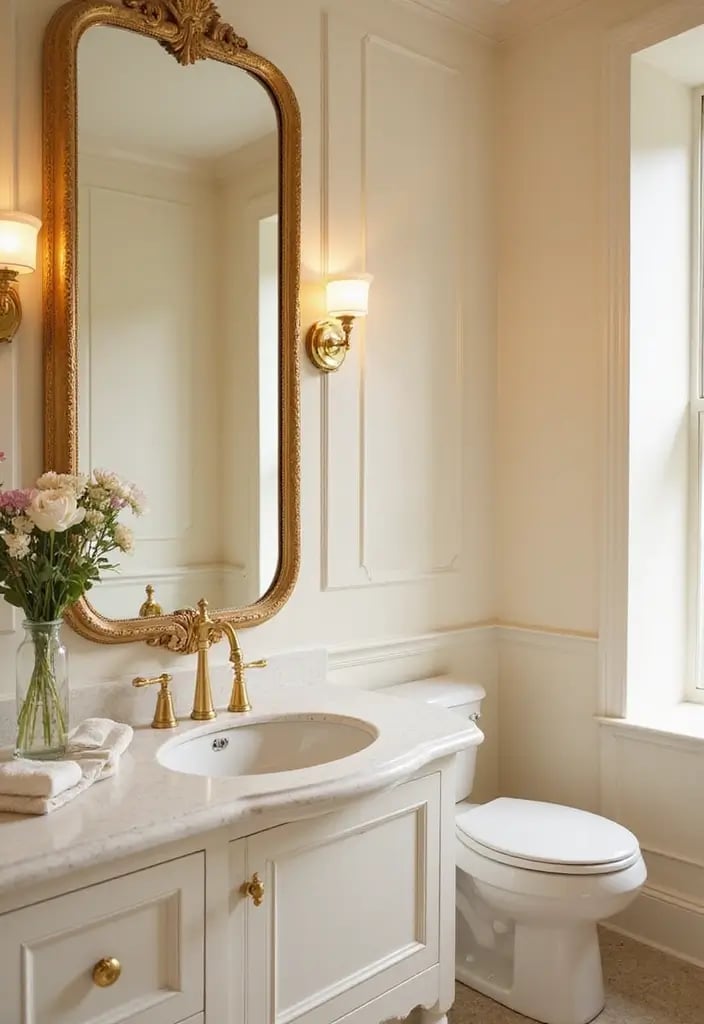
In a compact traditional cream bathroom, one ornate piece anchors the room so the rest stays simple. Here the pedestal sink sits against the wall with a toilet beside it, and the real focus is the ornate gold mirror above it. Wall sconces on either side cast light across the face without shadows, while natural light adds a softer layer. The vanity and mirror are the hero element, and the cream palette with brass and marble keeps the room feeling cohesive.
Farmhouse Cream Bathroom Accent
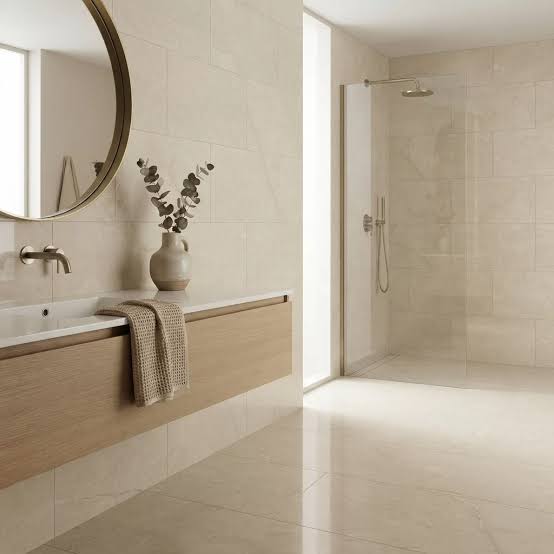
A minimalist cream bathroom with a floating vanity is a close alternative to the traditional look, and the difference comes down to the palette. Here the cream and beige tones are anchored by a wood-tone floating vanity that adds warmth without clutter. The round mirror above it and the wall-mounted faucet keep the lines clean, while natural light and overhead lighting balance the room’s brightness.
The palette works because the wood reads as the accent, not the main event. The ratio is roughly 70 percent cream and beige surfaces against 30 percent wood and stone. What breaks the palette is the brass of the faucet and light fixtures, which adds a subtle metallic thread that prevents the room from feeling too soft or one-note. For renters, a floating vanity is a permanent fixture, but the same effect can come from a wood-tone console table with a vessel sink on top.
Traditional Cream Mirror Accent
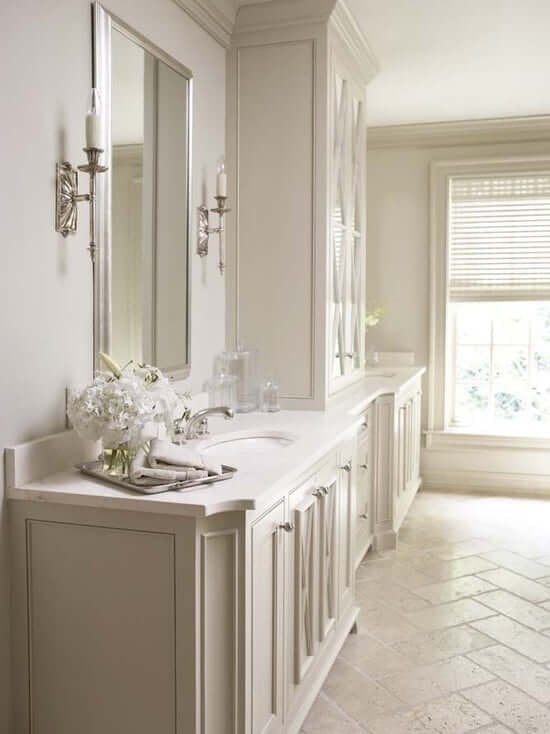
A herringbone tile floor in cream, beige, and gray stone sets a transitional bathroom apart from a purely traditional one. The pattern draws the eye down and gives the room a structured base, while the marble vanity and bathtub above it stay neutral. A window and an overhead fixture keep the tile pattern visible without overwhelming the other surfaces. The herringbone layout works best when the palette stays restrained so the floor can do the talking.
Minimalist Cream Vanity Focus
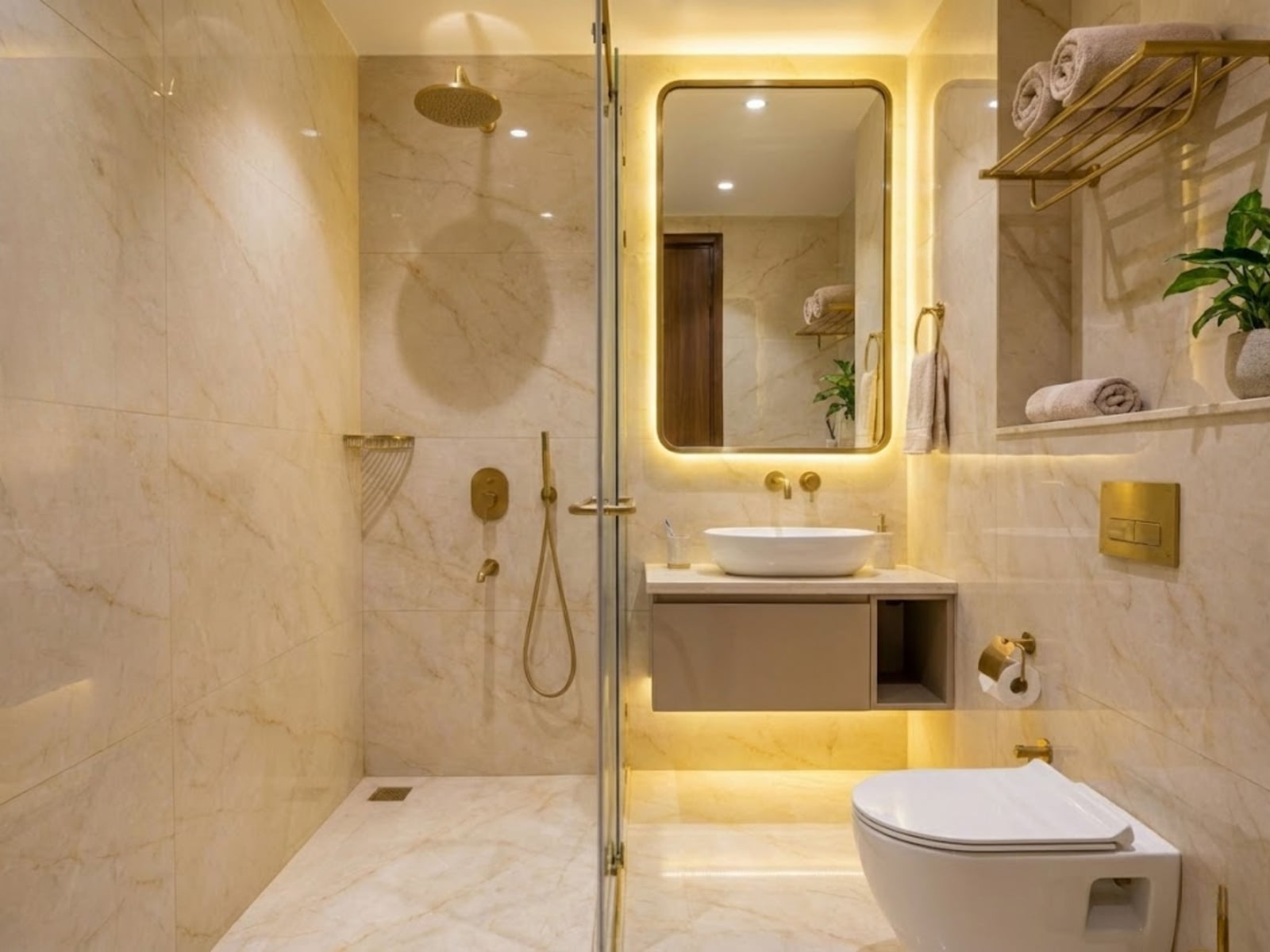
A modern luxury cream bathroom with floor-to-ceiling marble is a statement of restraint, not excess. The freestanding bathtub sits by the window, with a floating vanity and rain shower nearby in an open plan layout. Integrated LED lighting keeps the marble’s veining visible without harsh shadows. The cream, beige, and gold palette stays consistent across stone, glass, and wood surfaces. The lighting softens the marble’s cool tone and makes the room feel spacious.
Transitional Floor Tile Pattern
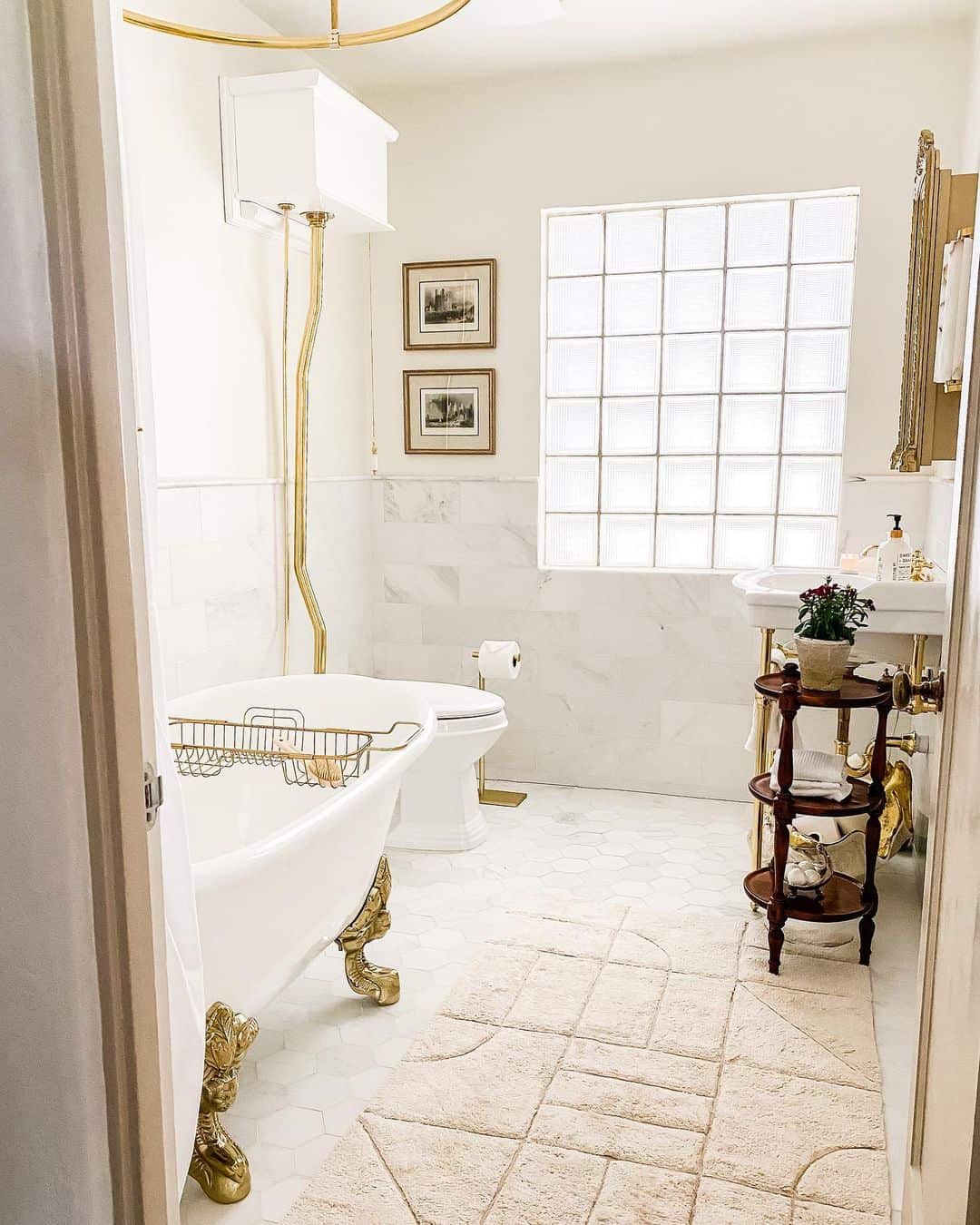
A vintage cream bathroom with a clawfoot tub uses floor tile to bridge old and new styles. The clawfoot tub and pedestal sink sit in a compact layout with a separate toilet area, and the glass block window lets in natural light. The herringbone floor tile in stone and marble adds a transitional pattern that keeps the vintage tub from looking dated.
The brass of the tub’s feet and the overhead fixture pick up the gold notes in the tile and marble. In a rental, a peel and stick floor tile in a herringbone pattern can mimic the look without permanent installation. The key is to keep the wall palette light so the floor pattern stays the focal point.
Modern Luxury Marble Walls
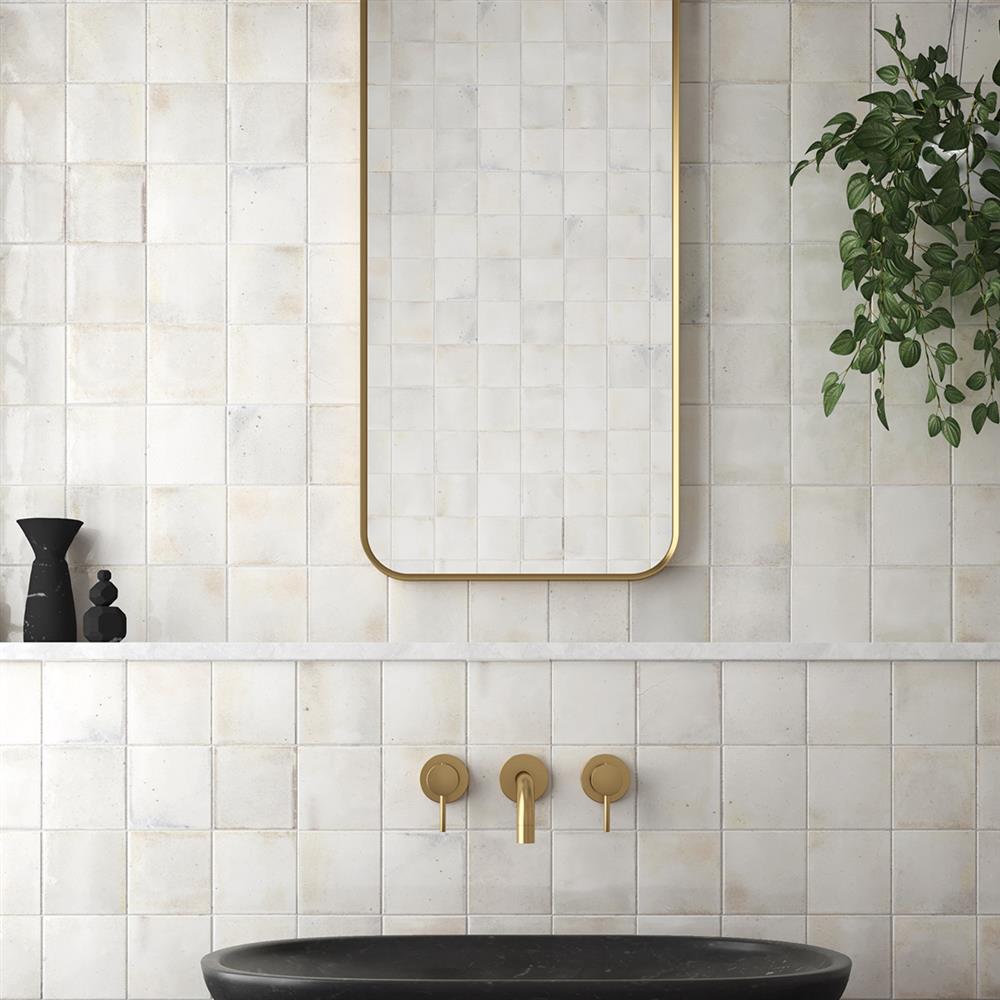
A compact bathroom can still carry a rich material story. The sink area here centers on a black basin against a wall of textured white tiles, with a wall-mounted faucet and a gold mirror above. The cream palette and gold accents keep the look cohesive, while the tiles add depth without needing more square footage. In a small space, a single textured surface provides visual interest without clutter.
Vintage Cream Bathtub Feature
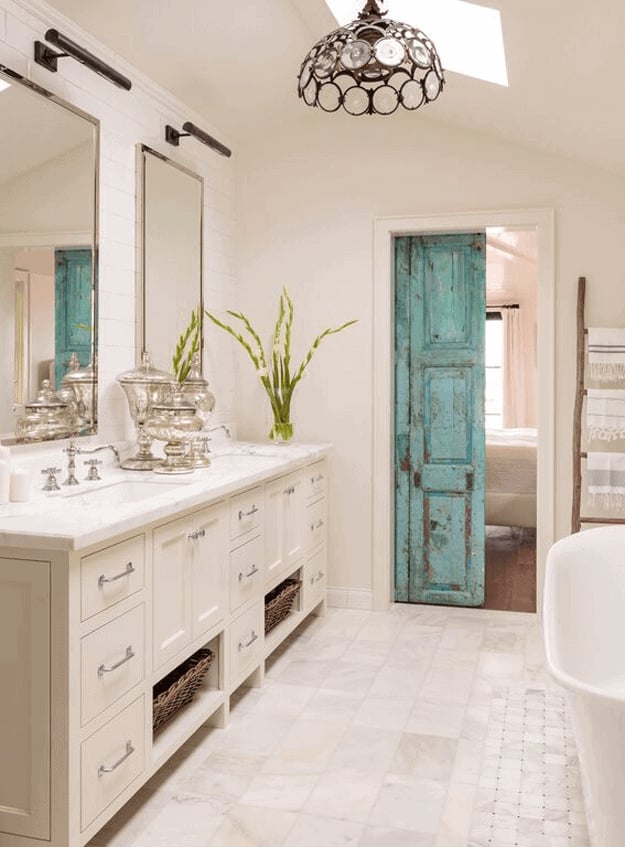
A practical rule for a roomy bathroom is to let one unexpected piece set the tone. Here a distressed turquoise barn door slides across the wall, while a cream palette with white and turquoise accents keeps the space from feeling scattered. The double vanity and bathtub stay neutral, so the door becomes the natural focal point. For a renter, a bold sliding door in a light color can be installed without permanent changes to the wall framing.
Compact Cream Sink Area Styling
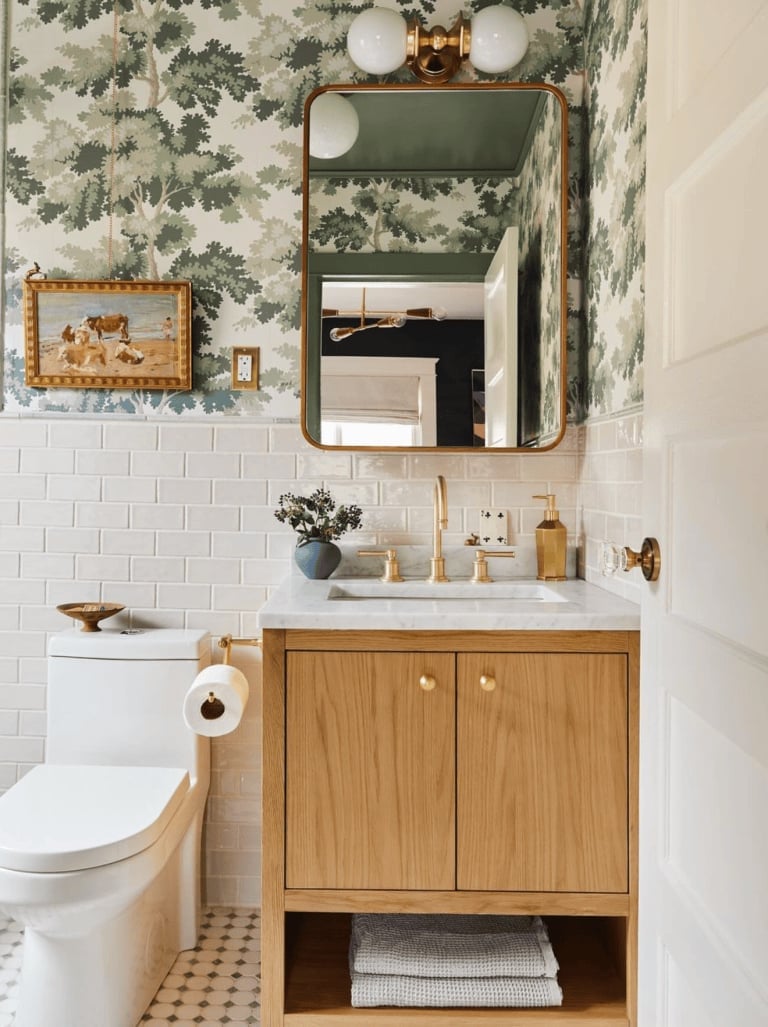
An all-cream bathroom can feel calm, but it risks reading as flat. The alternative is to bring in a pattern that adds energy without competing. In this compact space, the vanity is wood, the backsplash is white subway tile, and the wallpaper is botanical with cream, green, and wood tones. The wallpaper anchors the vanity and mirror area, giving the room a clear center.
The palette works because the green reads as a natural accent rather than a stark contrast. The wood vanity keeps the look grounded, while the subway tile stays classic. For a compact bathroom, one patterned wall is enough to shift the feel without overwhelming the square footage.
Rustic Modern Barn Door
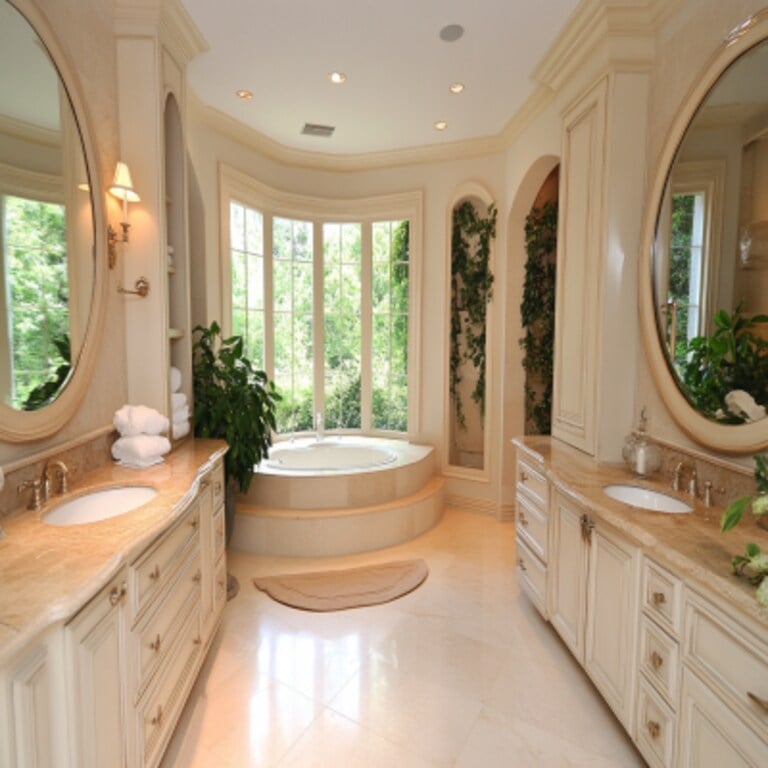
Sconces on either side of each mirror balance the natural light from the window. In a large bathroom, repeating the same vanity twice creates a formal rhythm that makes the room feel intentional. The cream cabinetry stays light, so the scale does not weigh down the space.
Eclectic Cream Wallpaper Accent
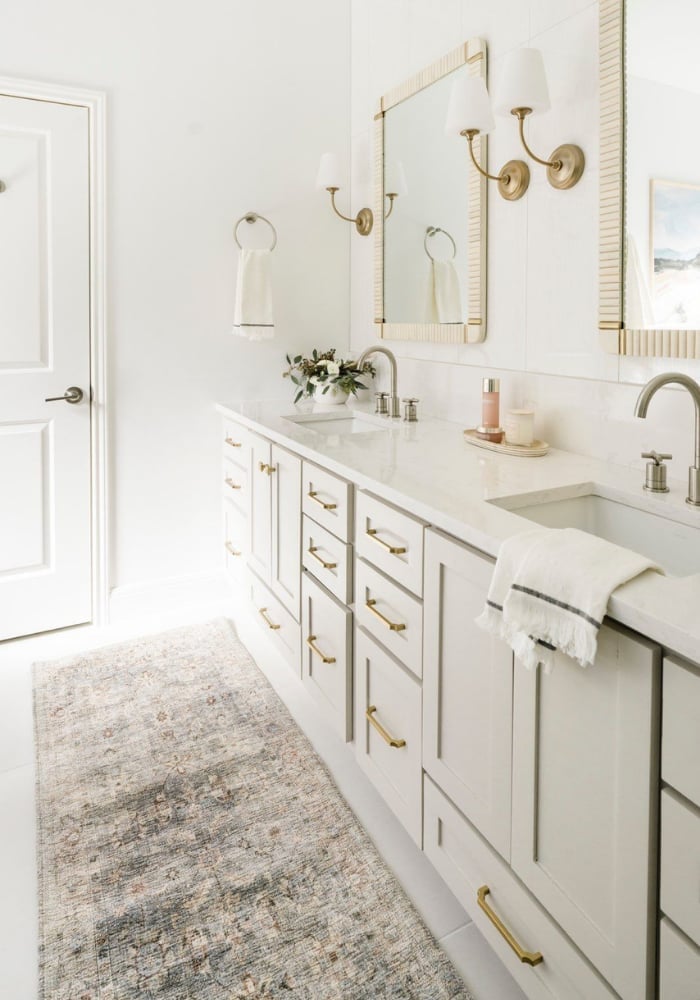
This roomy modern farmhouse bathroom is built around cream tones, marble surfaces, and brass accents. The double vanity with gold hardware anchors one end, while a rug runner softens the floor. The natural light and wall sconces keep the palette warm rather than stark. The gold hardware breaks the cream and white scheme without adding a third color family, which is the trick: one metallic finish can define the look without competing with the neutral backdrop.
Large Cream Cabinetry Design
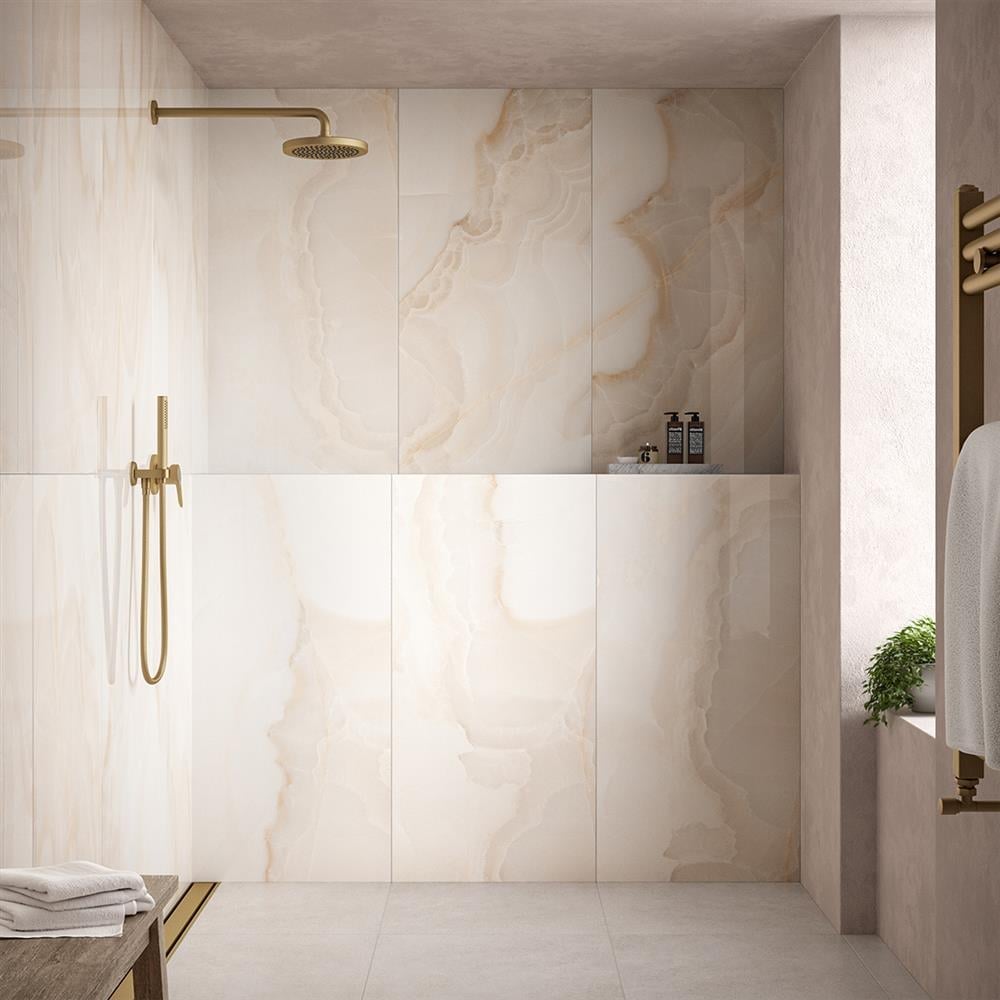
A modern cream bathroom with a standout shower wall uses the material to set the palette. A veined onyx effect tile in large format brings cream and beige tones from the stone itself, not from paint or accessories. The large tiles reduce grout lines, which keeps the eye on the veining and the warm gold undertones. Brass shower fixtures pick up the gold in the stone, so the whole shower area forms one cohesive composition.
Ambient natural light softens the contrast between the creamy tile and the brass. The onyx effect works well in a medium-sized bathroom because the large format makes the space feel bigger without needing more square footage. To recreate it, look for a tile with movement that includes both light and medium tones, then match your metal finish to the darker vein color. This keeps the shower from feeling flat while still keeping the palette restrained.
Final Thoughts
A cream bathroom works best when you let the color fade into the background and let the finishes stand forward. The practical lessons across these looks repeat: use texture to keep the room from feeling flat, match undertones from wall to tile, and pick fixtures that hold up to daily use. Cream is forgiving of hard water spots and stray toothpaste, which is a real advantage. The final takeaway is simple: do not fight the neutrality, lean into it. Let the tub, the vanity, and the light do the work.