
A dining room rug is more than just a floor covering; it’s the anchor that defines the space, ties the furniture together, and absorbs the sounds of conversation and clinking glasses. Finding the right one can be tricky, as it needs to balance style with the practical demands of a high-traffic, food-prone area.
Whether you are starting from scratch or refreshing your current setup, the choices can feel endless. This article explores 34 distinct dining room rug looks, from bold geometrics to subtle textures and traditional patterns, to help you find the perfect foundation for your own table and chairs.
Modern Dining Room with a Striking Geometric Rug
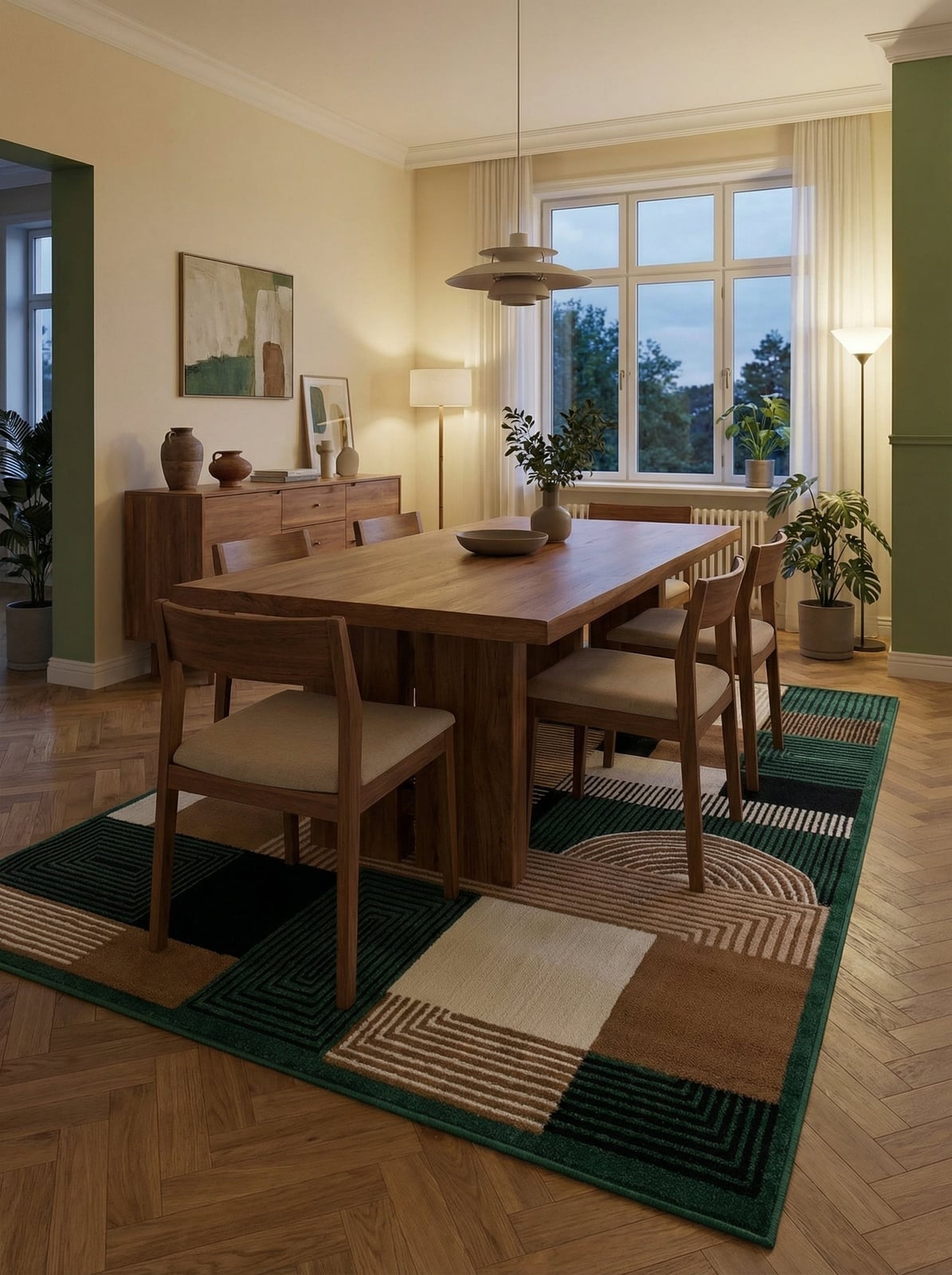
A bold geometric rug in green, brown, white, and black anchors this modern dining room, pulling the eye straight to the floor. The wooden table and chairs sit centered on the pattern, so the layout feels deliberate without needing extra decoration. Ambient interior light and a floor lamp keep the focus on the rug’s contrast, letting the room breathe around it. The palette stays grounded in natural tones, with the rug providing the only strong pattern in the space.
Cream Textured Rug for a Subtle Modern Dining Area
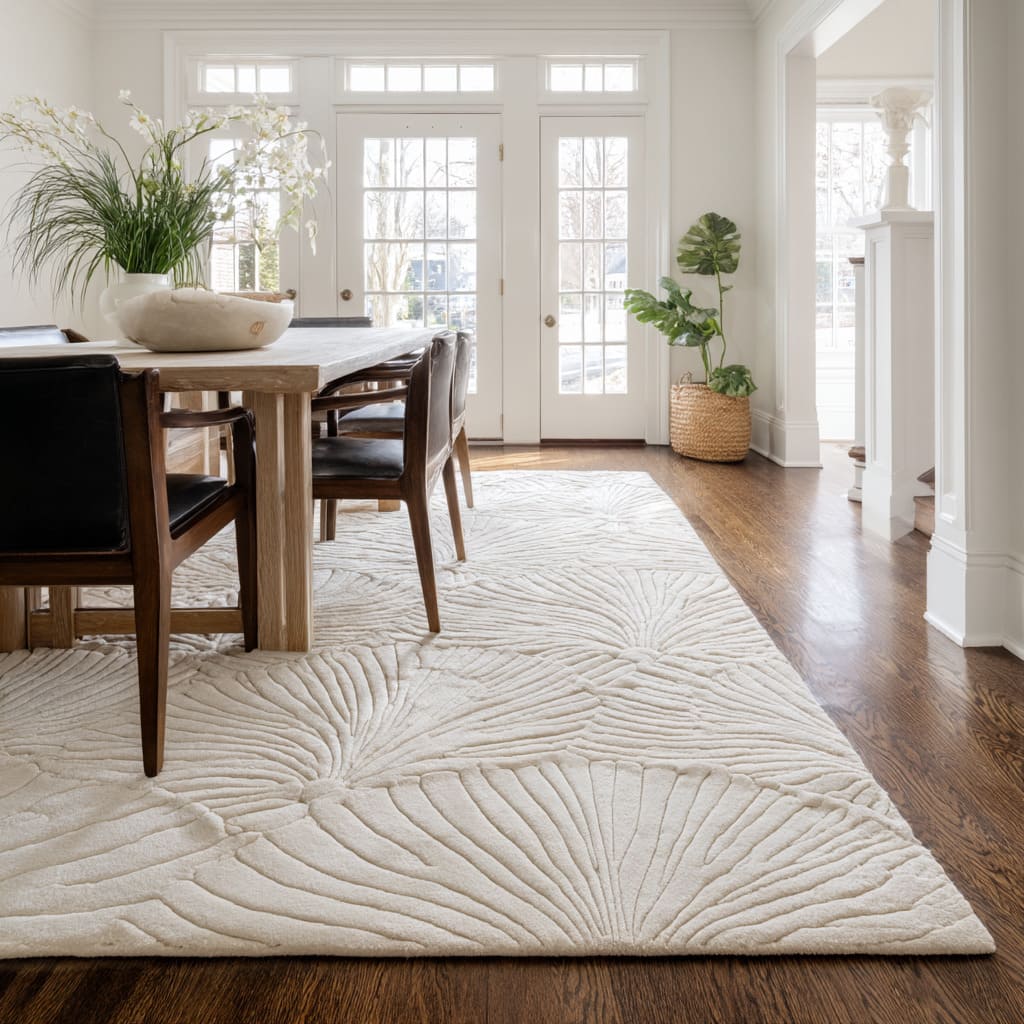
A large cream textured rug offers a clear one-line assessment: sometimes a room needs presence without pattern. The woven surface adds visual weight under the dining table, while the neutral tone keeps the overall palette calm. Natural light from nearby windows plays across the texture, creating subtle shifts in shade throughout the day. This approach works well for anyone who wants the rug to define the dining zone without competing with the table or chairs. The room feels spacious because the rug reads as a foundation rather than a focal point.
Vibrant Geometric Rug in a Pink and Orange Palette
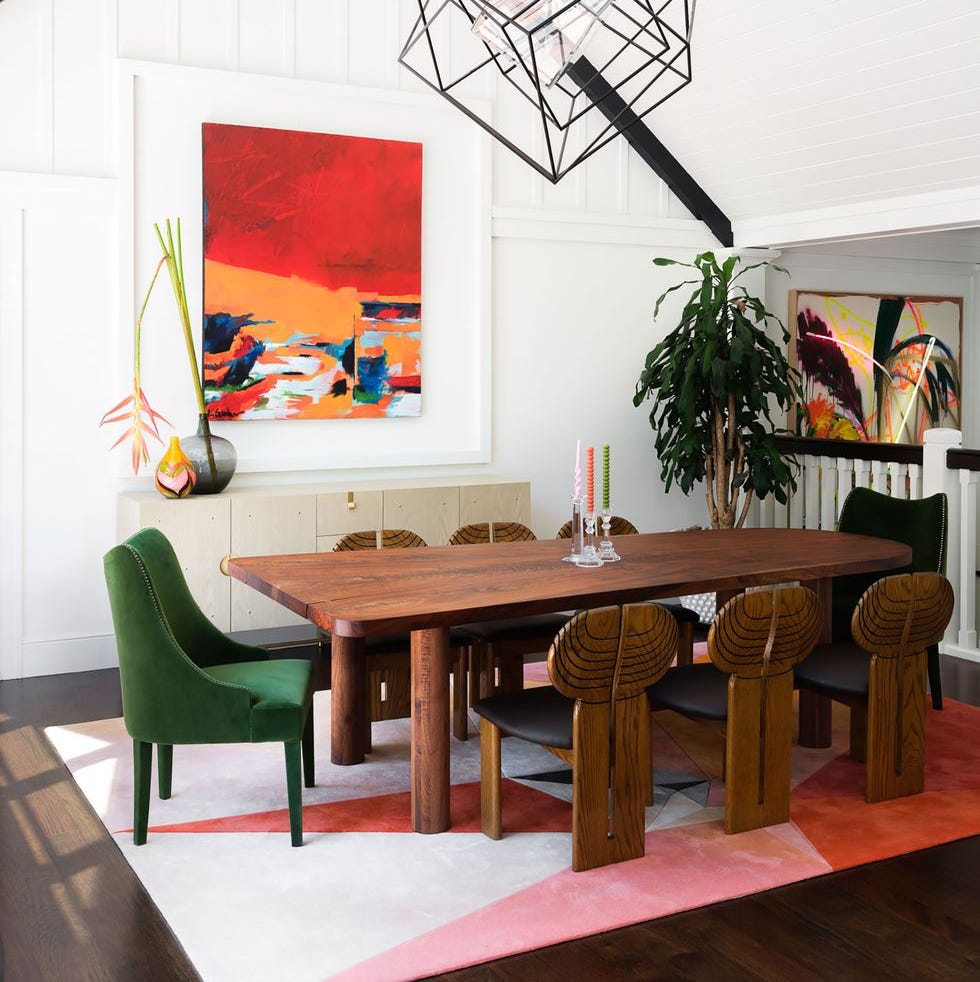
Can a rug carry an entire color story without overwhelming the room? In this modern dining space, a geometric rug in pink, orange, and white does exactly that. The large wooden table and sculptural chairs sit on top of the pattern, while abstract art on the wall echoes the rug’s warm tones. A statement pendant light hangs overhead, adding another layer of interest without clashing.
Natural light from windows balances the intensity of the palette, keeping the room from feeling too saturated. The green accents in the rug tie back to any nearby plants, creating a bridge between the bold floor and the neutral walls. This setup proves that a vibrant rug works best when the rest of the room stays restrained.
Round Textured Rug with Abstract Pattern
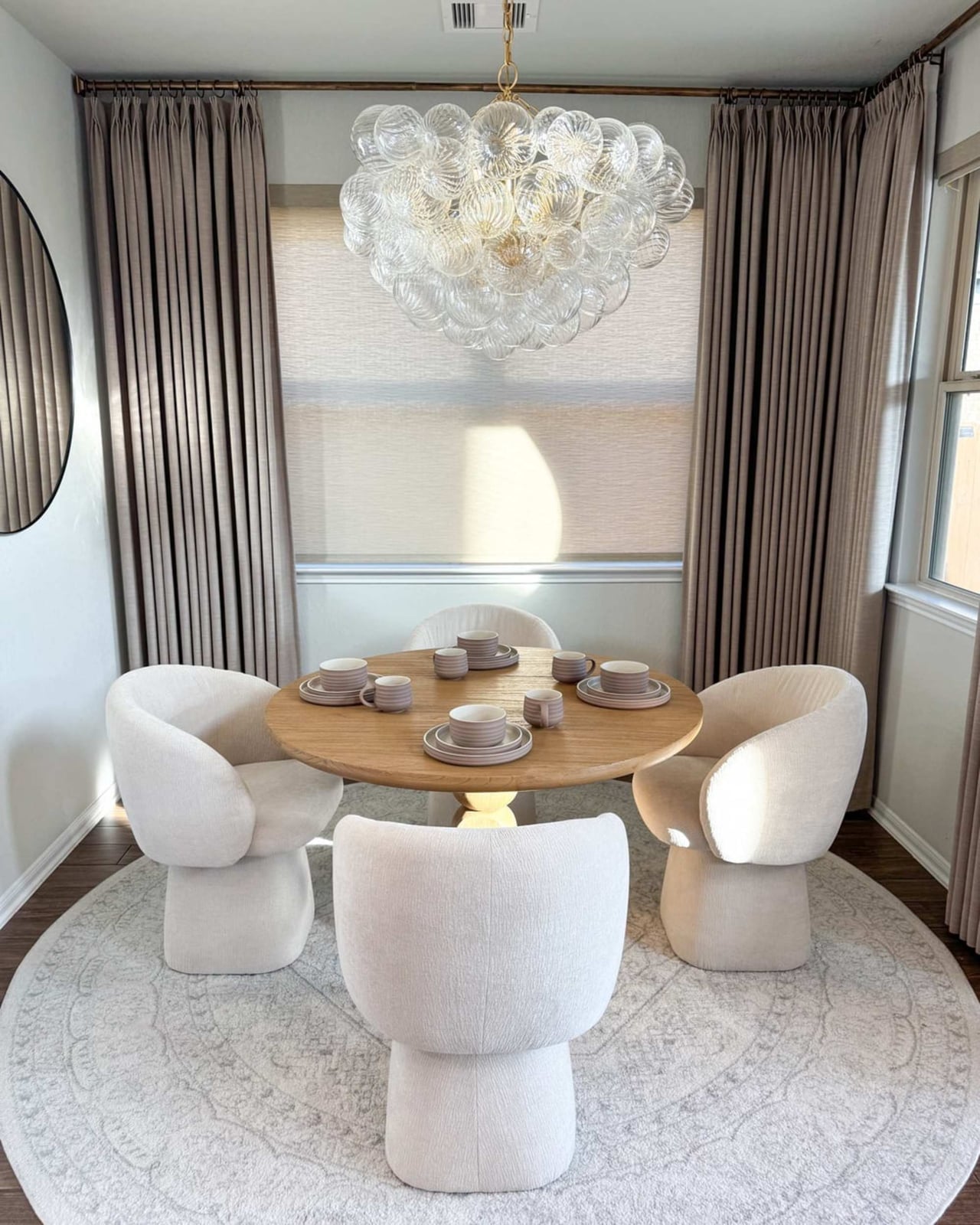
A round rug changes how a dining room feels underfoot. Here, a textured cream and beige round rug with an abstract pattern sits beneath a round wooden table, echoing its shape. The boucle chairs add softness, while the chandelier above provides a vertical counterpoint. Natural light from the room keeps the space airy, and the rug’s neutral palette means it won’t fight with the wood tones. The round shape softens the room’s corners and makes the dining area feel more intimate.
Blue and Tan Geometric Rug for a Sophisticated Dining Room
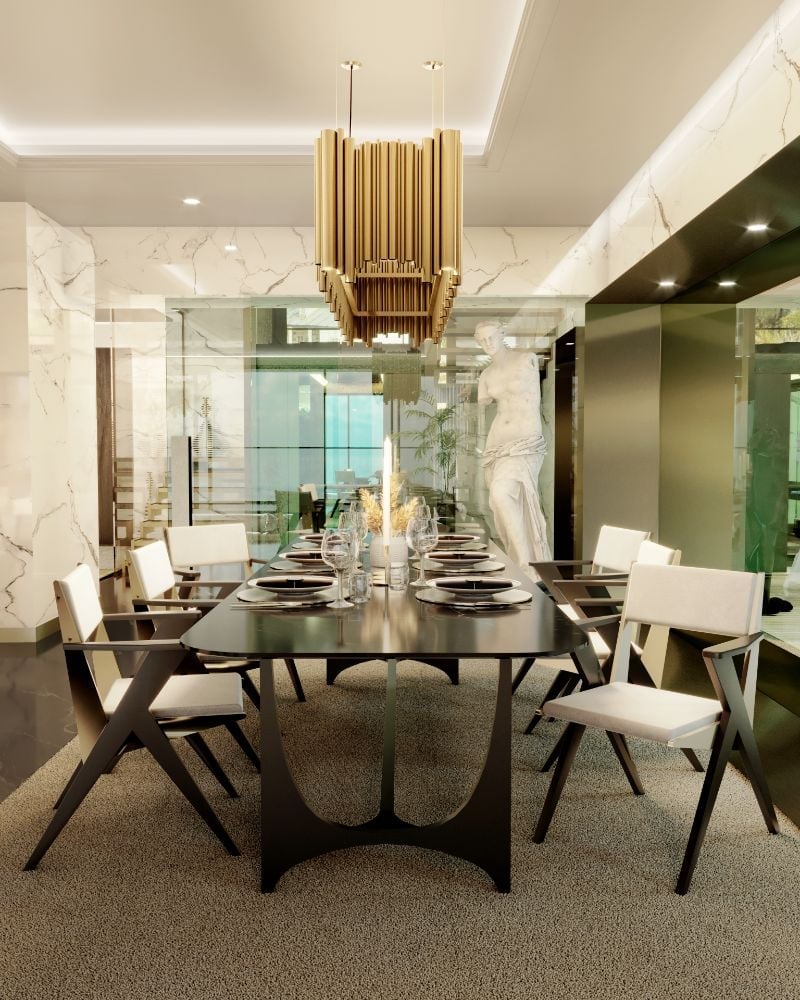
A practical rule for a rug in a dining room with a buffet: let the rug extend past the chairs, not just the table. Here, a blue and tan geometric rug sits under the dark wood dining table and chairs, with enough room for the back legs to stay on the rug when pulled out. The chandelier above echoes the rug’s scale, while natural light keeps the blue and tan palette from feeling too heavy. The buffet against the wall stays on the bare floor, creating a clear division between the dining zone and the serving area. This layout makes the room feel grounded without the rug needing to cover every inch.
Subtly Textured Cream Rug in a Minimalist Dining Space
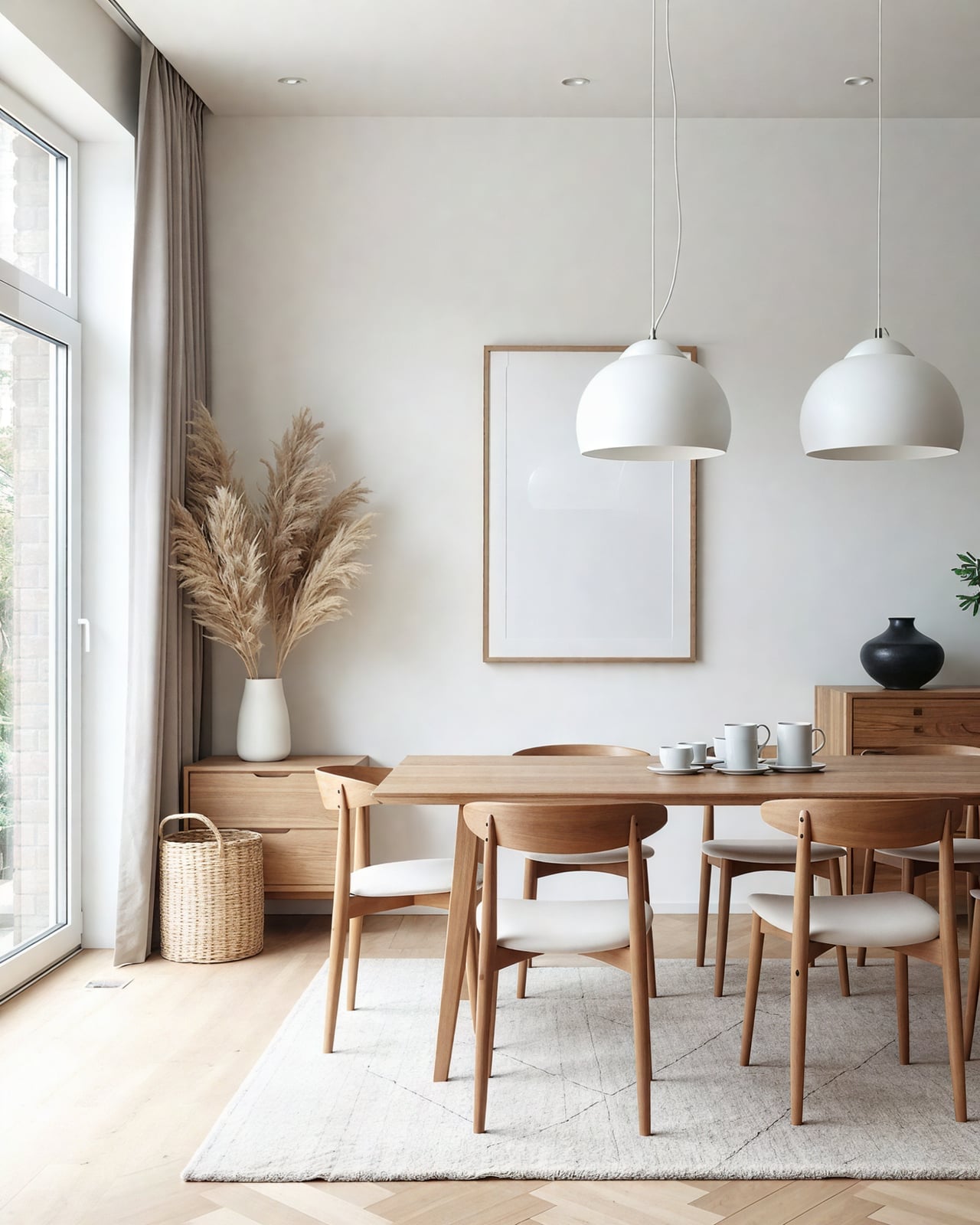
A flatweave jute or wool rug brings a lot of the same softness as a shag without the upkeep. The subtle texture in this cream rug adds just enough visual weight to anchor the dining set without competing with the clean lines of a modern room. Under a light wood table and simple chairs, the rug reads as a natural extension of the floor rather than a separate layer. A woven basket nearby echoes the same natural fiber feel, keeping the palette restrained to cream, beige and white. The pendant lights above cast even light across the table, so the rug stays in the background doing its job.
Ornate Oriental Rug in a Traditional Dining Room
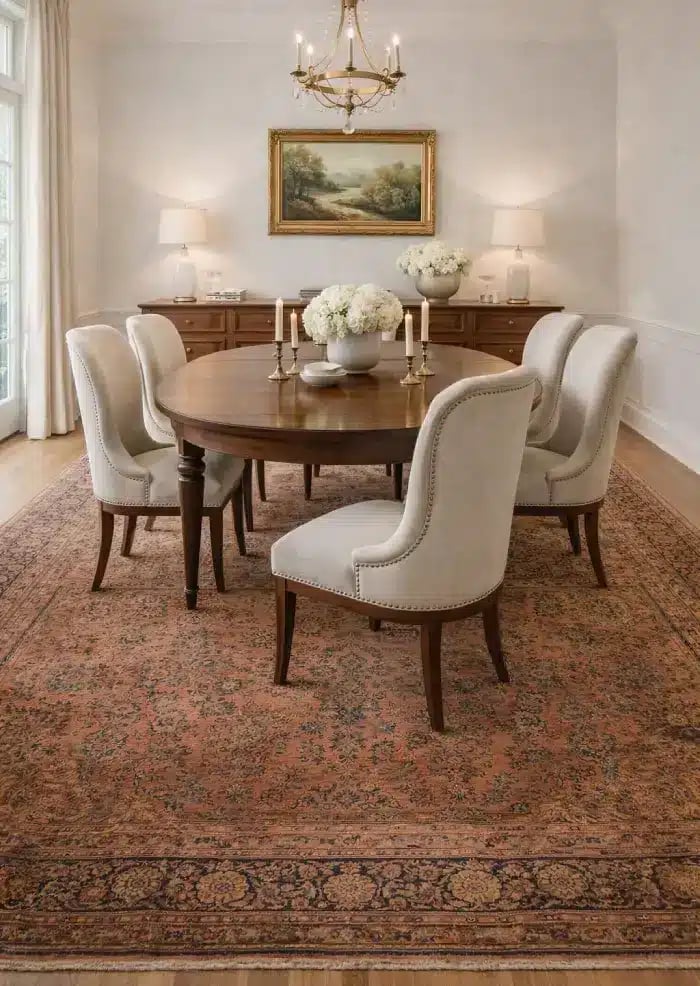
The deep red and cream border of an oriental rug instantly sets the tone for a traditional dining room. Against the dark wood of an oval table and upholstered chairs, the rug pulls the eye down to the floor and defines the whole seating area. A chandelier and table lamps layer warm light across the wool pile, so the pattern stays visible without glare. For renters, a large rug like this is one of the easiest ways to bring color and history into a room without touching the walls or floors.
Traditional Dining Room with an Ornate Rug
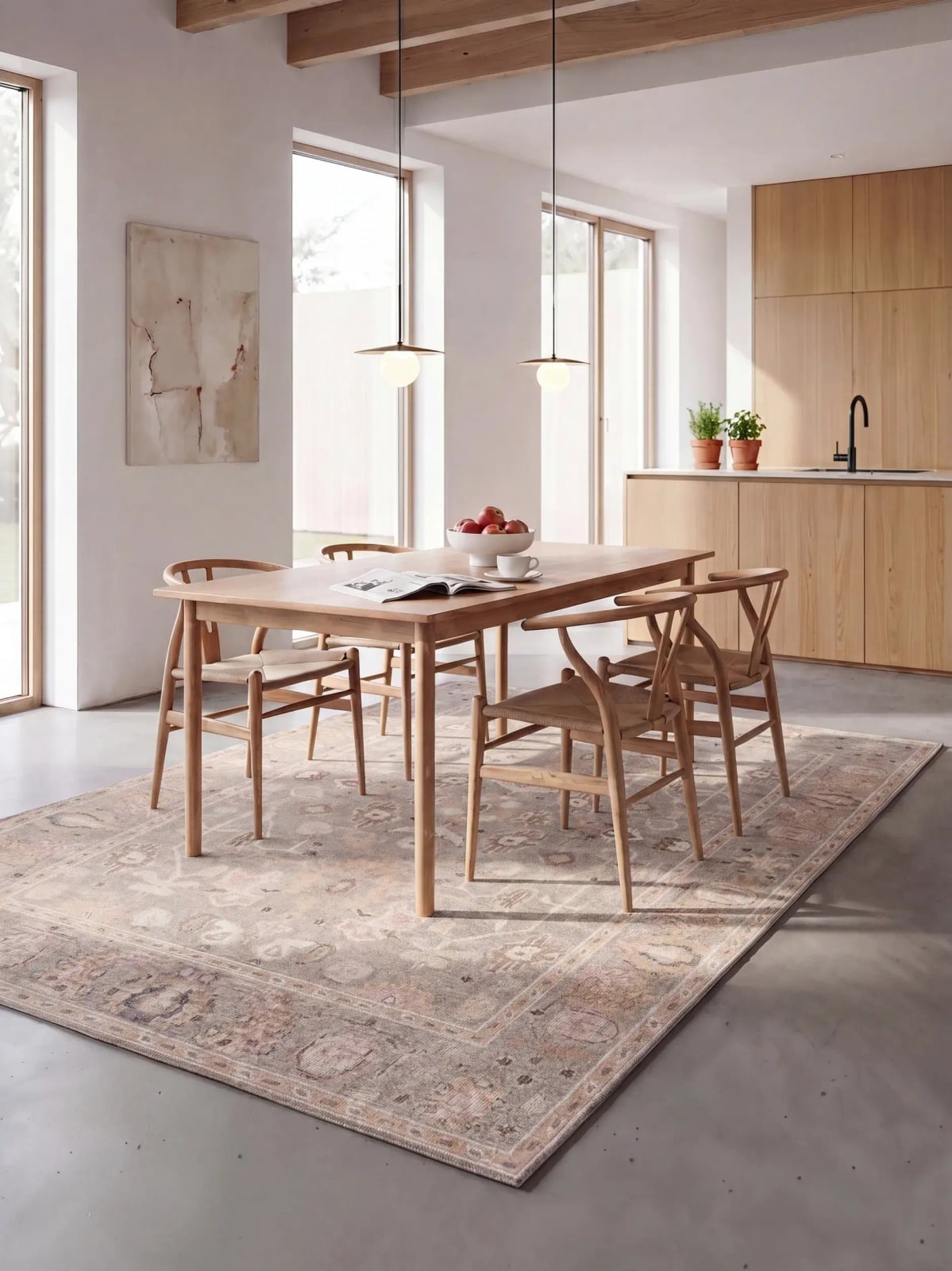
An ornate rug in beige and pink tones softens the formality of a traditional dining room without losing the polish. The rug sits under the dining table with enough room for chairs to stay on it when pulled out, which is the main layout rule for any dining setup. Pendant lights above the table keep the focus on the surface, while the rug grounds the whole arrangement. The neutral palette means the rug can handle a busy pattern without overwhelming the room, and it ties the ceramic pieces and wood finishes together.
Blue and White Checkered Rug in a Modern Dining Space
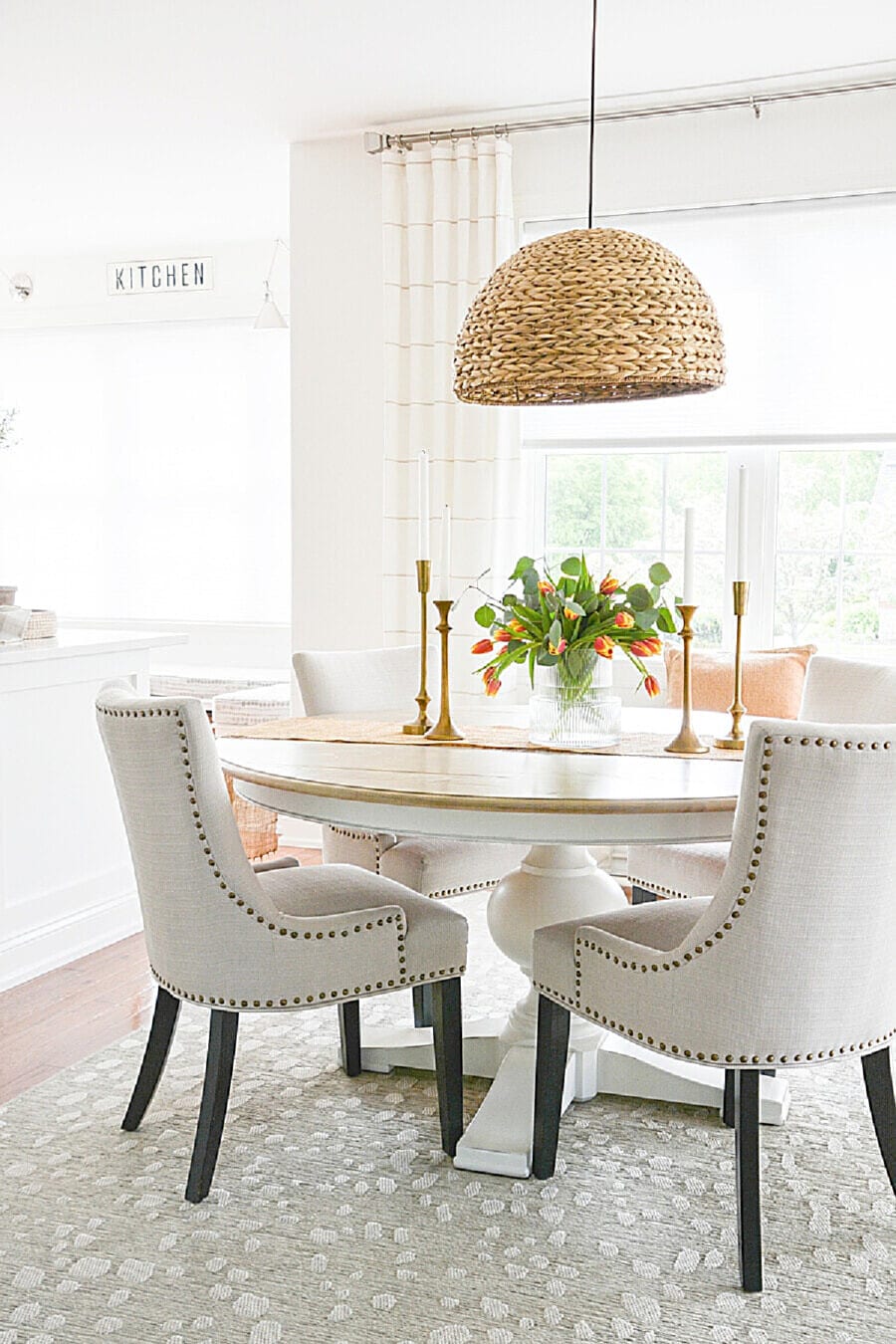
Can a bold checkered rug work in a dining room without making the space feel too busy? Yes, when the palette stays simple. The blue and white pattern here brings energy to an open plan layout, while the wood tones of the table and shelving unit keep it grounded. A large checkered rug under the dining set defines the eating zone in a way a solid rug cannot. The contrast between the bright blue and the natural wood looks deliberate. Pendant light and natural light both hit the rug evenly, keeping it sharp without feeling harsh. For a modern space, this is a palette choice that adds character without needing anything else to match it.
Detailed Neutral-Toned Rug for Transitional Dining
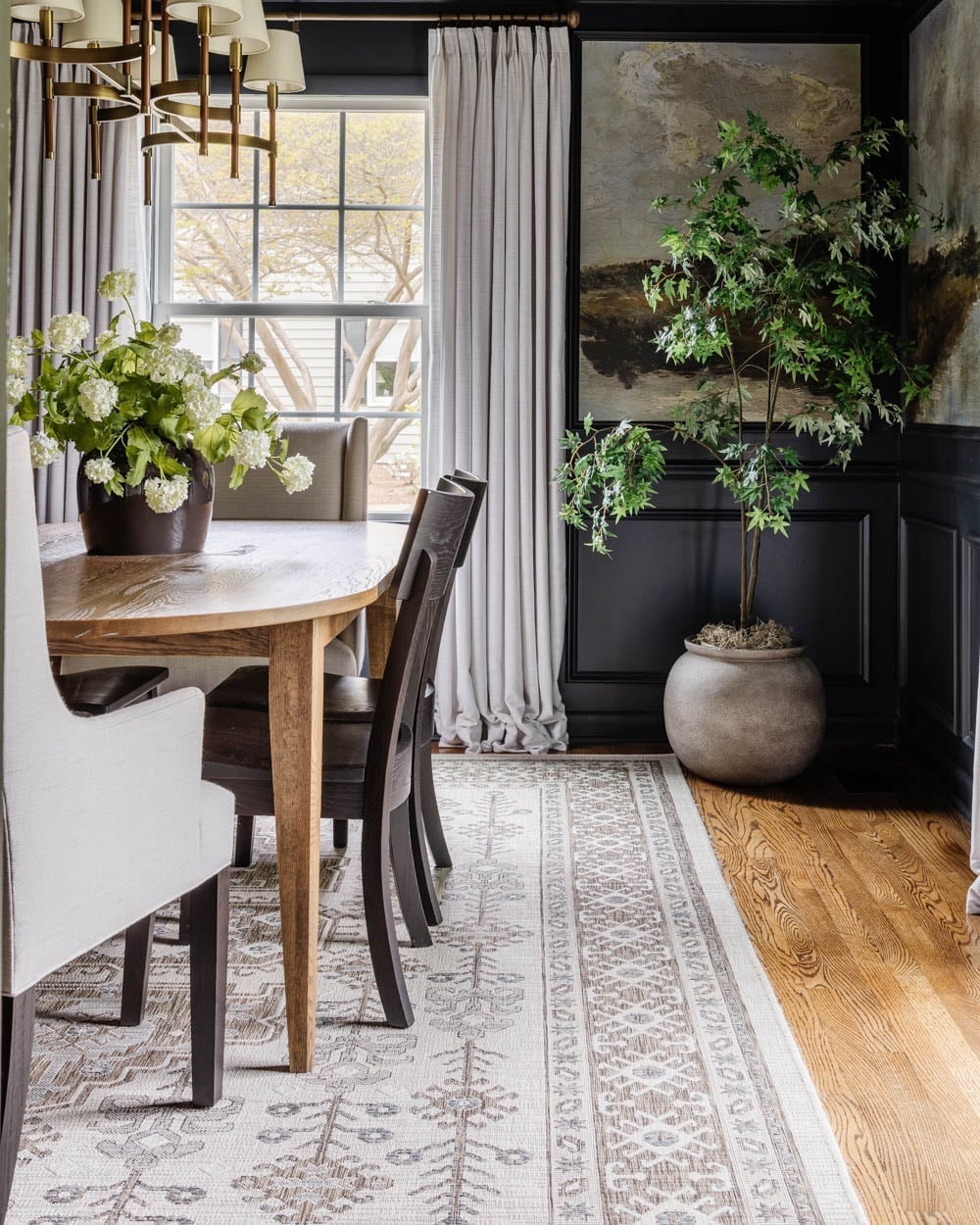
A detailed neutral rug in cream, beige, gray and brown brings pattern to a transitional dining room without committing to a strong color. The round table and upholstered chairs sit fully on the rug, which is the right scale for a roomy space. Wall sconces cast soft light across the pattern, making the detailing appear as subtle texture. A large potted plant adds a natural counterpoint to the geometric or floral motifs in the rug, keeping the room from feeling too formal.
Patterned Rug in a Boho Dining Room with Natural Elements
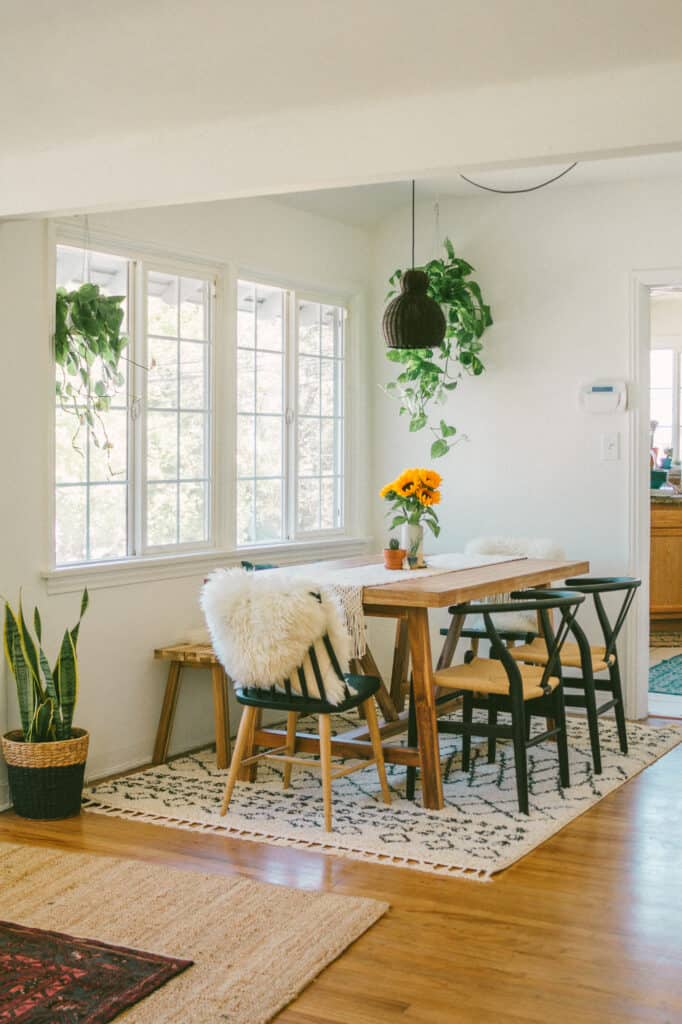
A dining room that leans boho needs a rug that feels as relaxed as the rest of the space, and a cream and black patterned wool rug with jute backing does exactly that. It anchors a wood dining table and mixed seating, including a bench, without making the room feel formal. Natural light and a simple pendant light keep the palette grounded. A fluffy sheepskin throw on the bench adds texture that breaks up all the woven and wood surfaces. The trick is letting the rug be the main pattern in the room, then keeping everything else plain so the eye has one place to land. Jute rugs are a renter-safe swap if you want a similar natural base without the wool investment.
Richly Patterned Oriental Rug in a Traditional Dining Room
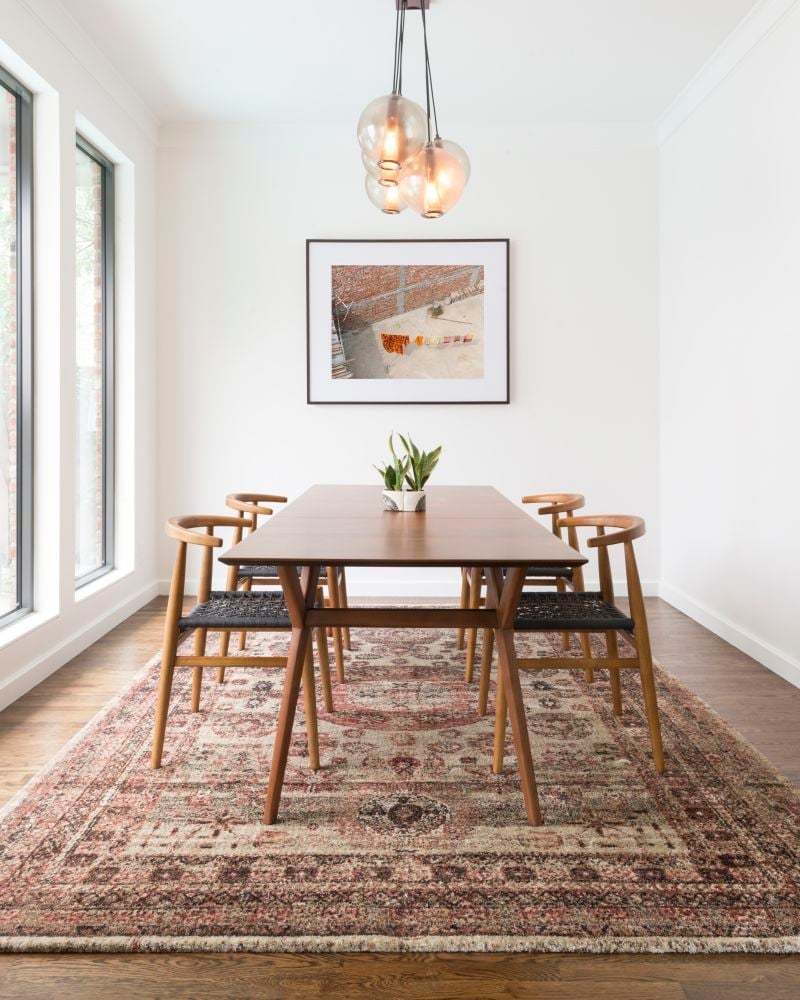
A close alternative to a solid neutral rug is a richly patterned oriental rug, and this traditional dining room proves why. The rug brings red, blue, cream, and brown into a space that could have felt dull with wood furniture alone. The palette is deep enough to hold its own against a sideboard and a pendant light, yet it does not overwhelm the room.
Soft natural light balances the rug’s ornate pattern, so the colors blend without competing. The wood dining table and fabric chairs sit comfortably on top, with the rug acting as the visual foundation. What breaks the traditional feel is the pendant light, a metal fixture that adds a slight modern edge. The palette works because the rug pulls the warm brown from the table and the cream from the walls, making the whole room feel connected.
Ornate Vintage Persian-Style Rug in a Spacious Dining Room
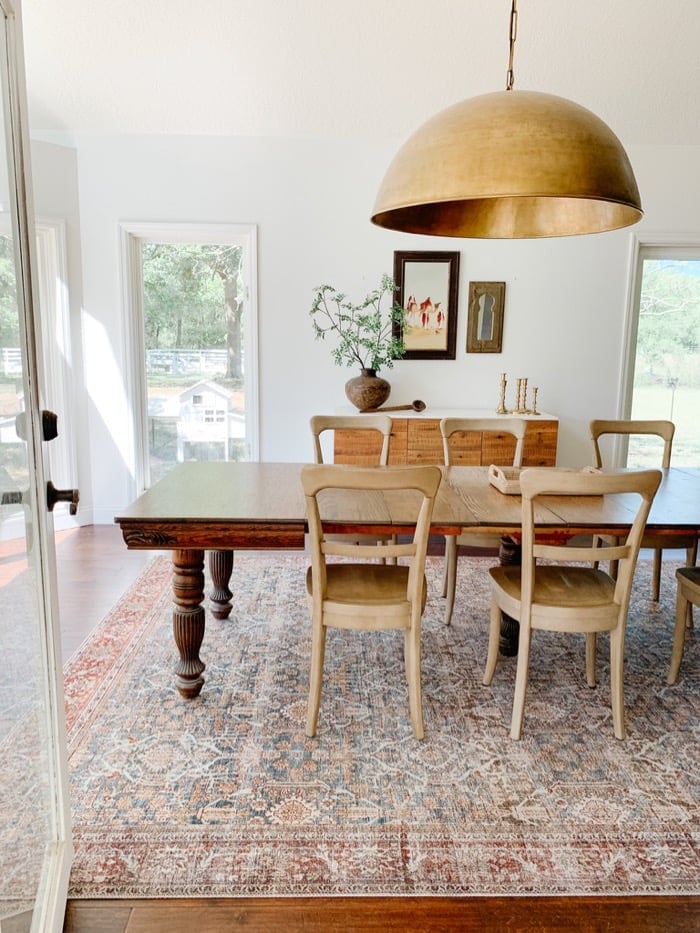
The ornate vintage Persian-style rug in this spacious dining room uses dense red, blue, and cream patterning to define the area under the dining set. A wood table, metal chairs, and a ceramic sideboard all sit within the rug’s boundary, which makes the room feel organized rather than empty. The overhead pendant light hangs low enough to cast light directly onto the pattern, so the rug stays visible even when the room is not flooded with natural light. Scale and proportion matter here: the rug is large enough to extend well past the table legs, which keeps the chairs from catching on the edge when pulled out.
Bold Blue Geometric Rug for Modern Boho Dining
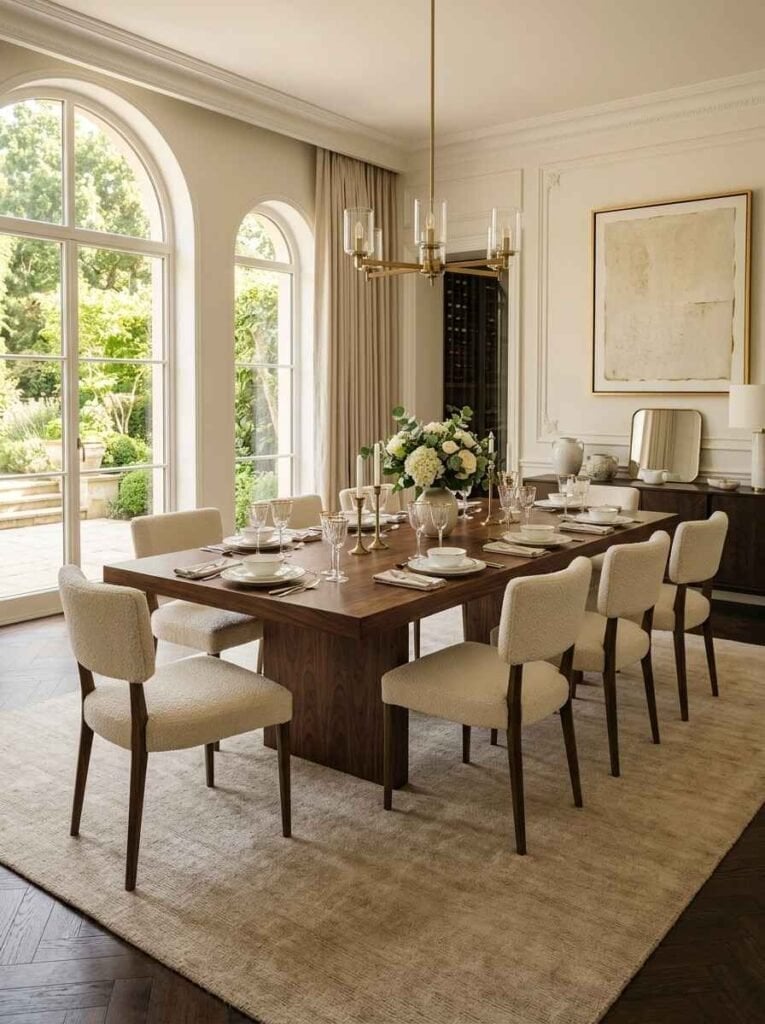
A bold blue geometric rug is the defining piece in this modern boho dining room. The rug’s blue and white pattern sits under a farmhouse table with black chairs, creating a clear contrast between the soft rug and the dark seating. Natural light from the windows and a linear chandelier above keep the room bright, so the blue does not feel heavy. The style here is modern boho, defined by the mix of a traditional table shape with a rug that has a contemporary pattern. What breaks the boho look is the linear chandelier, which adds structure. The ratio of pattern to solid surfaces is about one to three, meaning the rug gets to be the focal point without fighting the table or chairs.
Vibrant Orange Moroccan Rug as a Dining Room Centerpiece
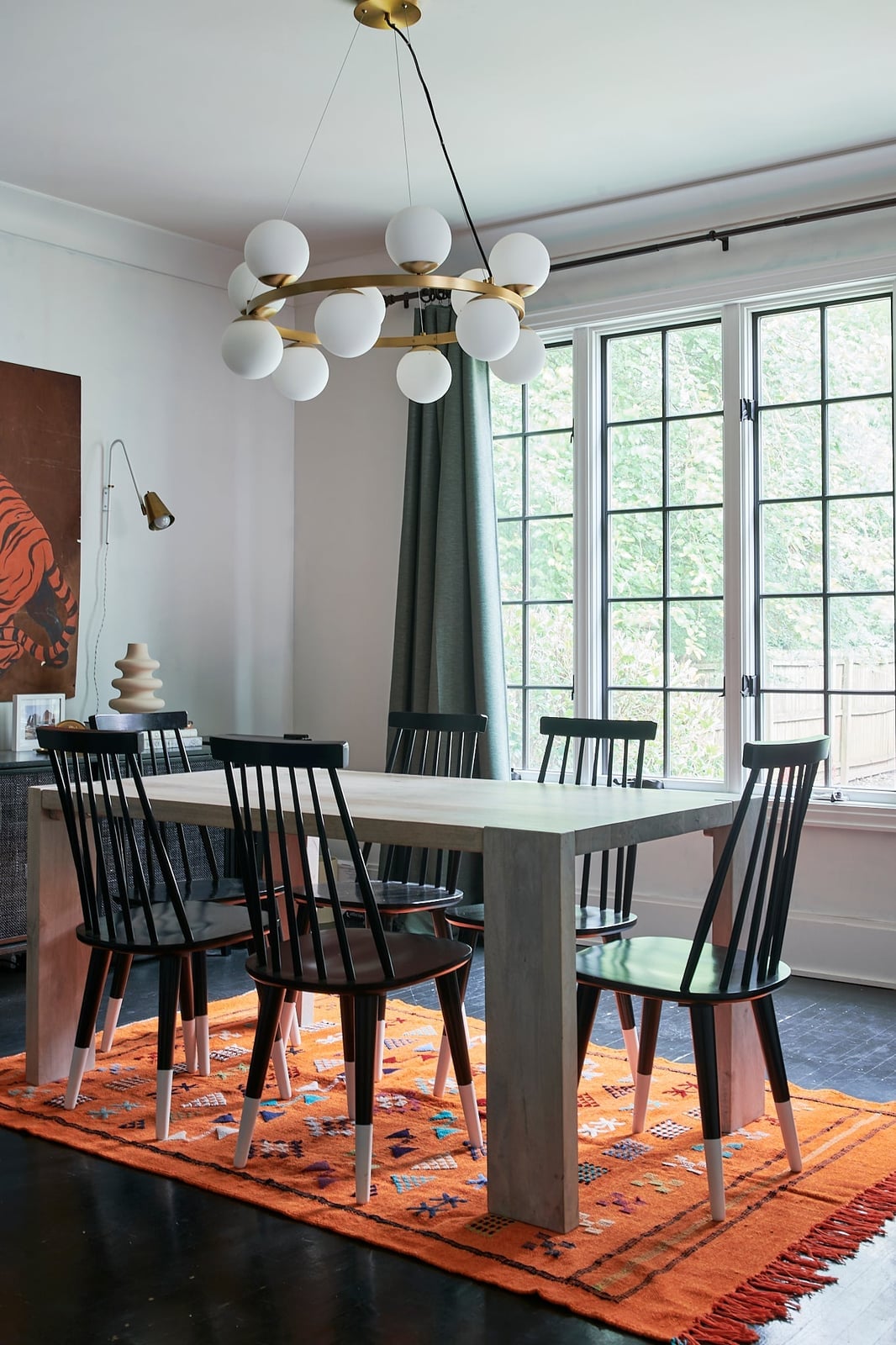
Choosing a rug as a centerpiece means picking a color that does not already exist in the room. This vibrant orange Moroccan rug sits under a dining table in a space with cream walls and black chairs, so the orange becomes the main event. The palette is simple: orange, cream, and black, with the rug carrying most of the color weight.
Natural light makes the orange look warm, and a chandelier above adds a softer glow at night. The rug is made of wool and cotton, so it can handle the foot traffic around a dining table without showing wear too quickly. What breaks the bold orange is the cream wall and the black chairs, which act as visual anchors. The palette works because the rug is the only saturated color in the room, so the eye goes straight to it without confusion.
Neutral-Toned Area Rug in a Farmhouse Dining Room
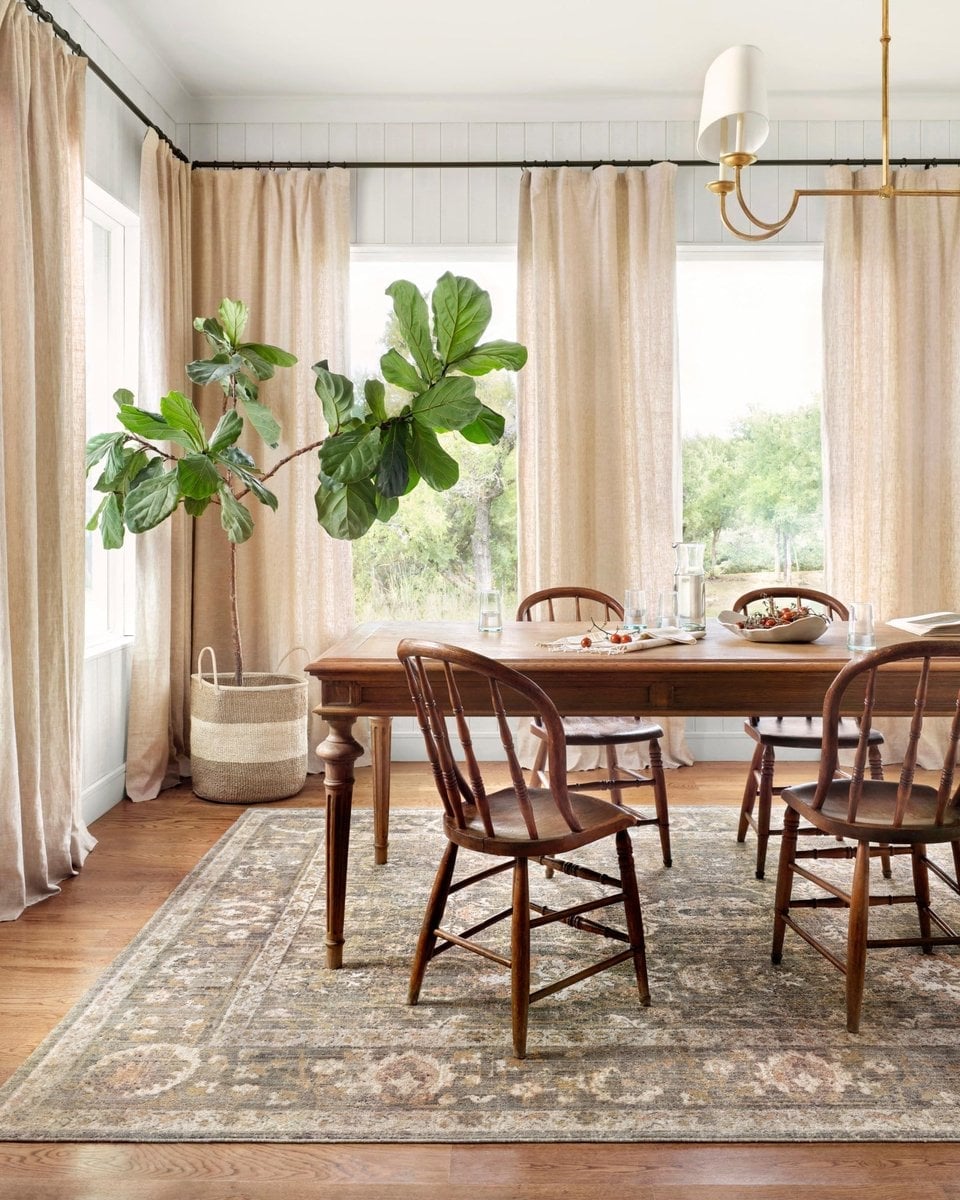
A large beige and cream area rug grounds this farmhouse dining room. Its neutral palette keeps the wood table and generous fiddle leaf fig nearby as the main points. The gray and green accents in the room feel like natural additions. For a similar balance, let a neutral rug carry the floor and pull accent colors from the room’s existing plants or textiles.
Round Shag Rug in a Modern Scandi Dining Space
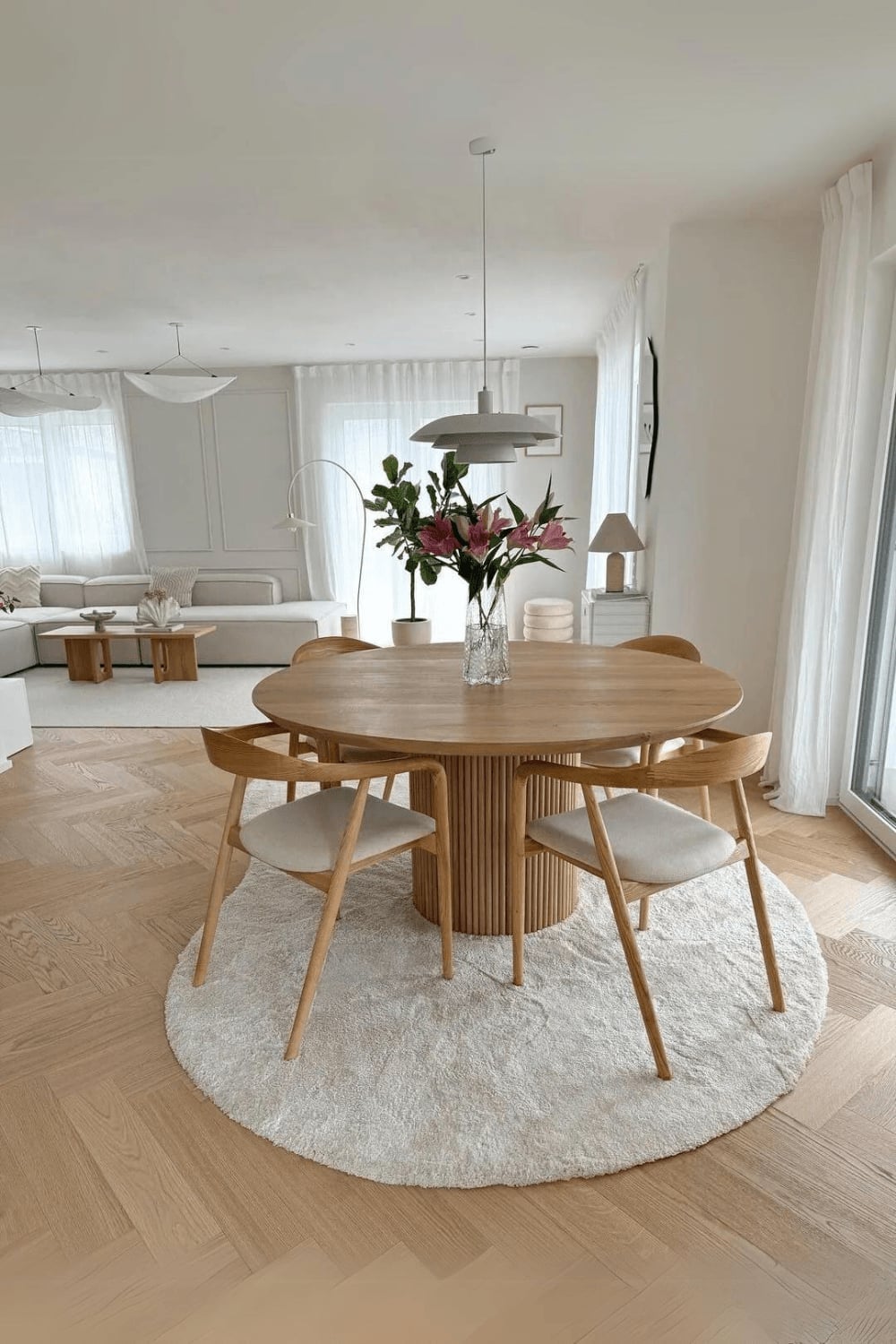
A practical rule for a round table is a round rug, and this modern Scandi space proves the point. The white shag rug sits under the table, its texture adding warmth to the wood floor and the clean lines of the chairs. A pendant light above repeats the circular shape. For renters, a round rug is easy to reposition and does not lock you into a rigid layout the way a large rectangle can. It also softens the room without needing to paint or add wall treatment.
Textured Woven Rug with Rattan Chairs
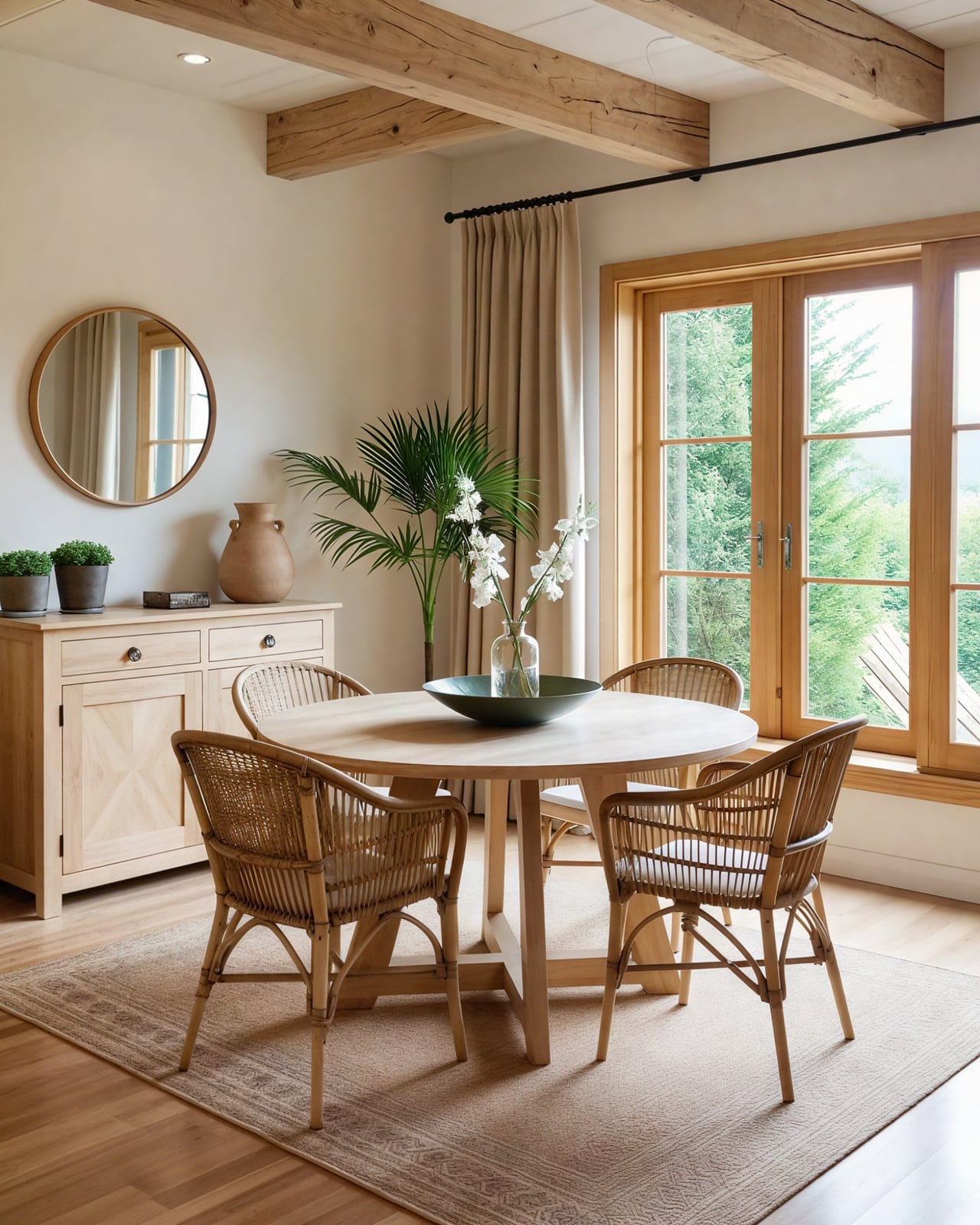
A flatwoven rug in beige and wood tones creates a natural foundation, but pairing it with rattan chairs shifts the room from simple to layered. The round dining table sits centered on the rug, and the woven texture of the chairs echoes the rug’s own weave without matching it exactly.
The room stays grounded by keeping the palette tight: beige, wood, and the green of a nearby plant. A window provides the main light source, so the rug avoids competing with a busy pattern overhead. This combination delivers a natural look that is not too rustic or too refined.
Striped Woven Rug for Transitional Dining
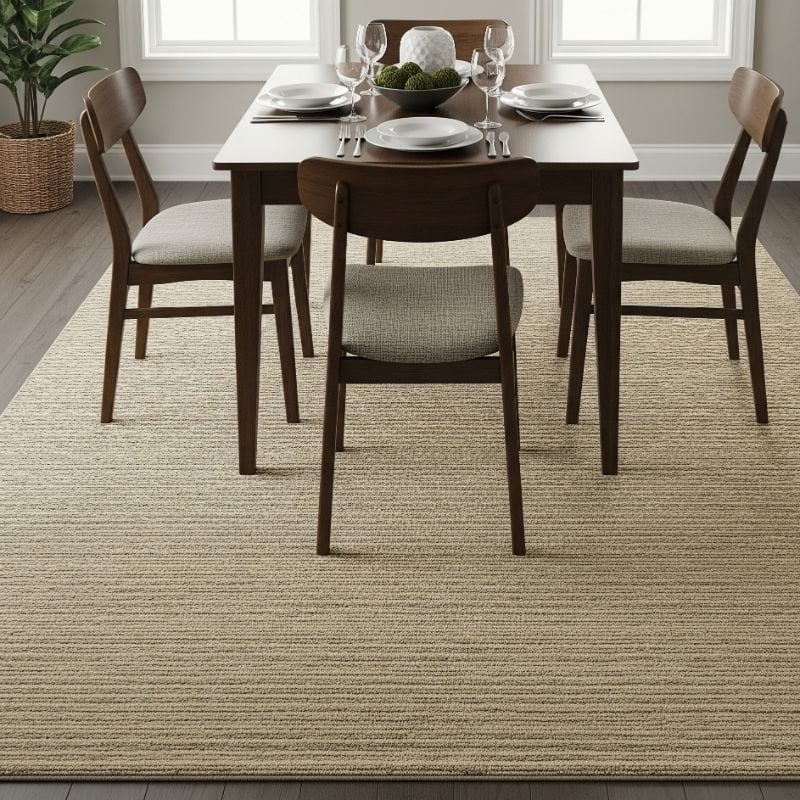
The striped woven rug in beige and brown runs in a clean horizontal line under the dining table, giving the room a sense of direction without shouting. Transitional style sits between traditional and modern, and a striped rug fits that middle ground by adding pattern without ornament. The rug’s size feels generous, so the table and chairs stay fully on it, which keeps the layout stable and the floor protected.
Neutral Dining Room Rug with Blush Pink Chairs
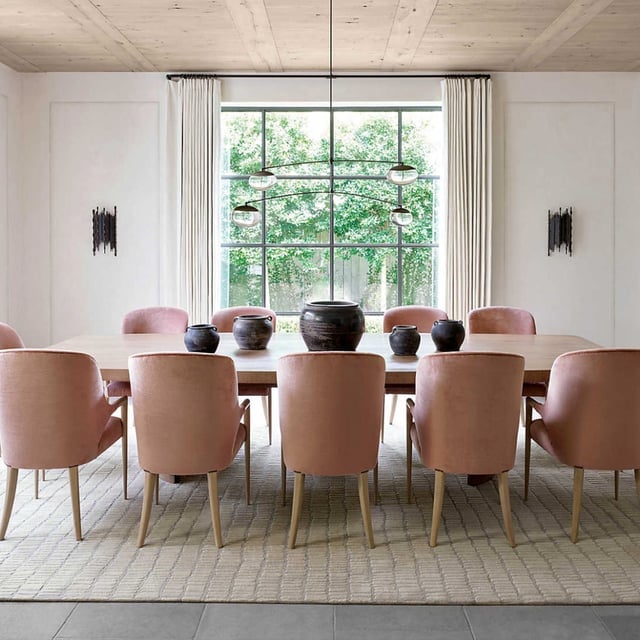
The rug here is a neutral base, but the room belongs to the blush pink upholstered chairs. A pale neutral rug lets a bold chair color lead the palette without fighting for attention. Ceramic accents keep the look balanced. Choose a rug in a tone close to the floor so it recedes, and let the seating carry the color. A modern chandelier adds light without pulling focus from the pink.
Geometric Patterned Rug in a Modern Neutral Dining Room
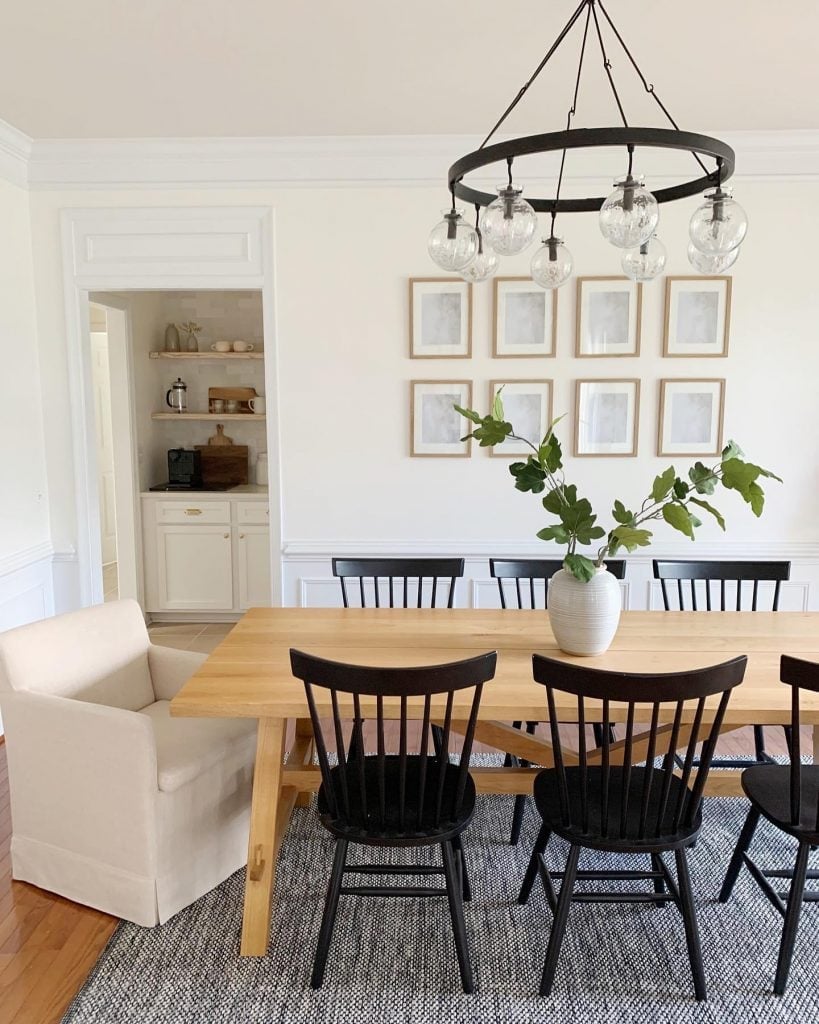
A geometric rug in a neutral palette keeps the floor interesting without pulling focus from the table. This version in gray and cream repeats a clean pattern that suits the modern dining room. The rug sits under the full set of chairs, which is the practical rule: all legs on the rug or all legs off, so chairs slide smoothly and the rug stays centered. The chandelier above echoes the same measured, linear feel. A roomy layout like this one lets the geometric print breathe without feeling crowded by other furniture.
Ornate Oriental Rug in an Eclectic Dining Room
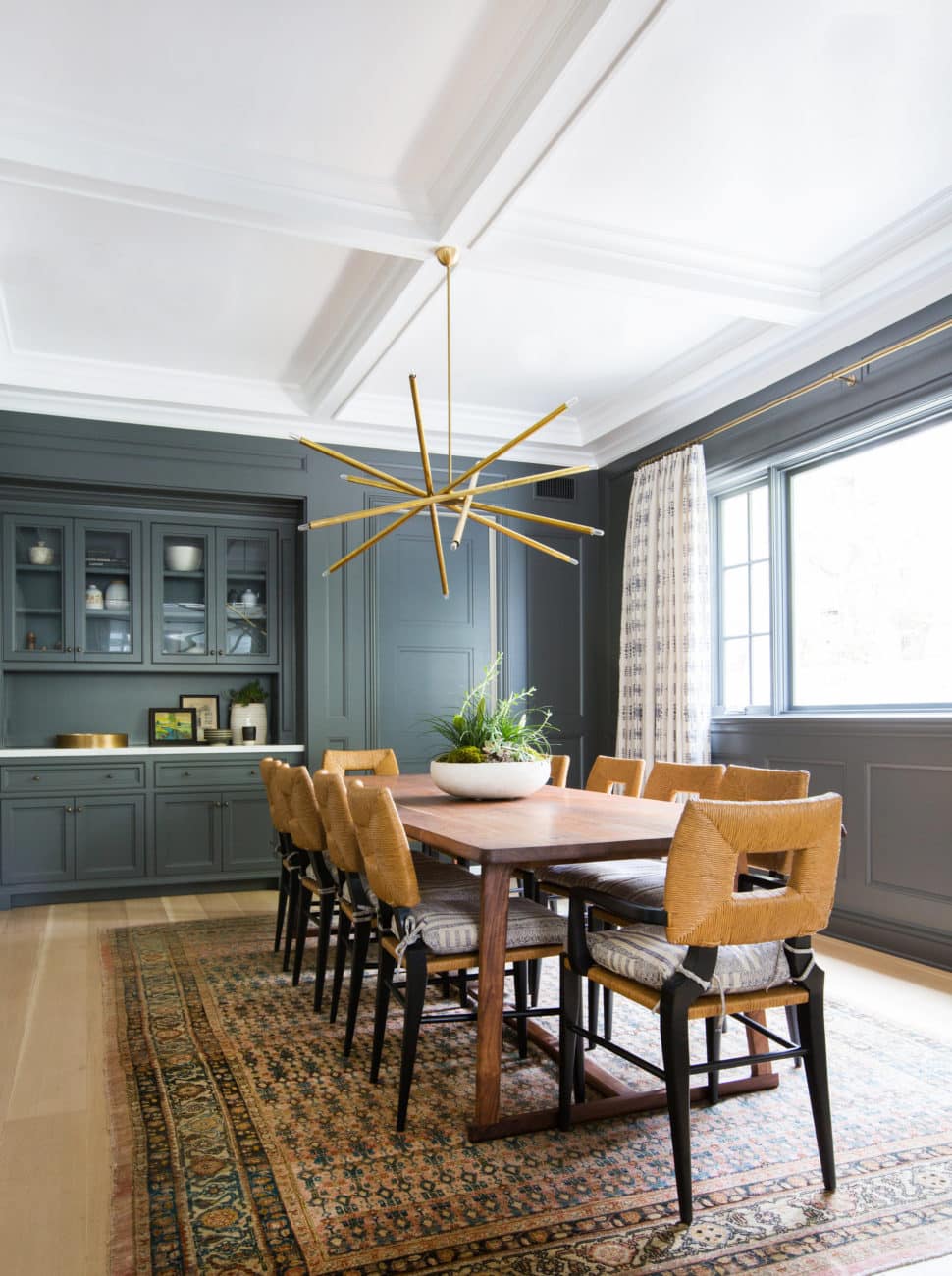
This oriental rug brings rust and cream tones into a room with dark wood cabinets and a long dining table. The ornate pattern is traditional, but the woven chairs lean eclectic, so the overall feel is layered. Natural light keeps the deep rug colors from turning heavy. If you already own a statement rug in a strong color, let it anchor the palette and pull the room in from there.
Textured Rug in a Modern Farmhouse Dining Room
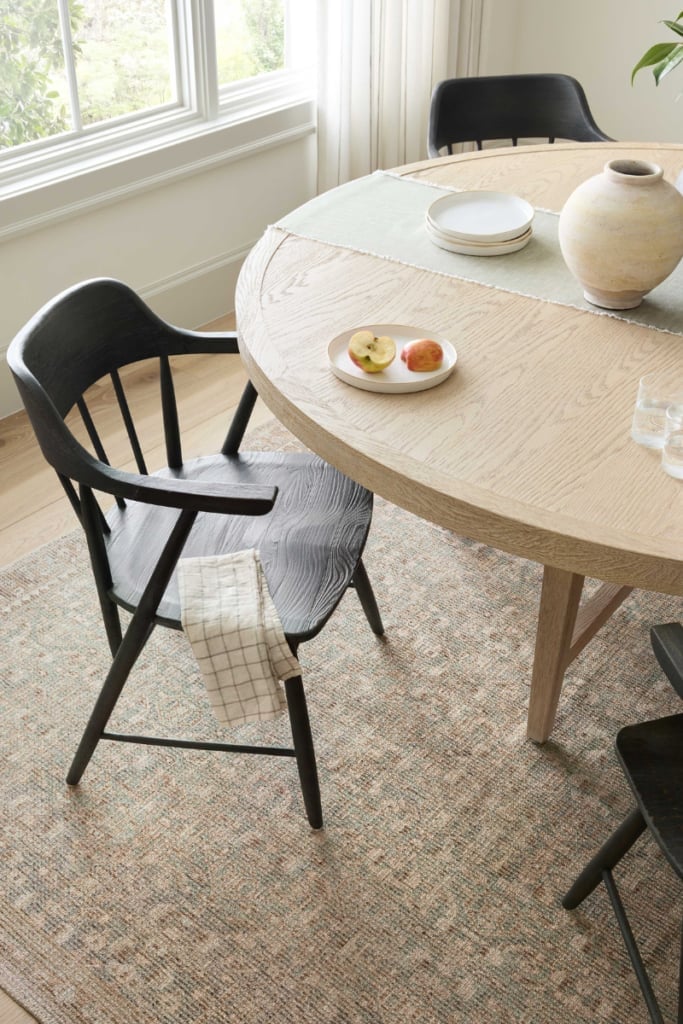
A textured rug is a good choice for a modern farmhouse room because it adds visual weight without relying on color. This one sits under a round dining table with muted green chairs and ceramic accents. The light wood floor and cream rug share a similar value, so the texture is what defines the boundary between floor and furniture. Linen and ceramic pieces nearby reinforce the same soft, natural material story.
Abstract Patterned Rug in a Modern Neutral Dining Room, Indoor
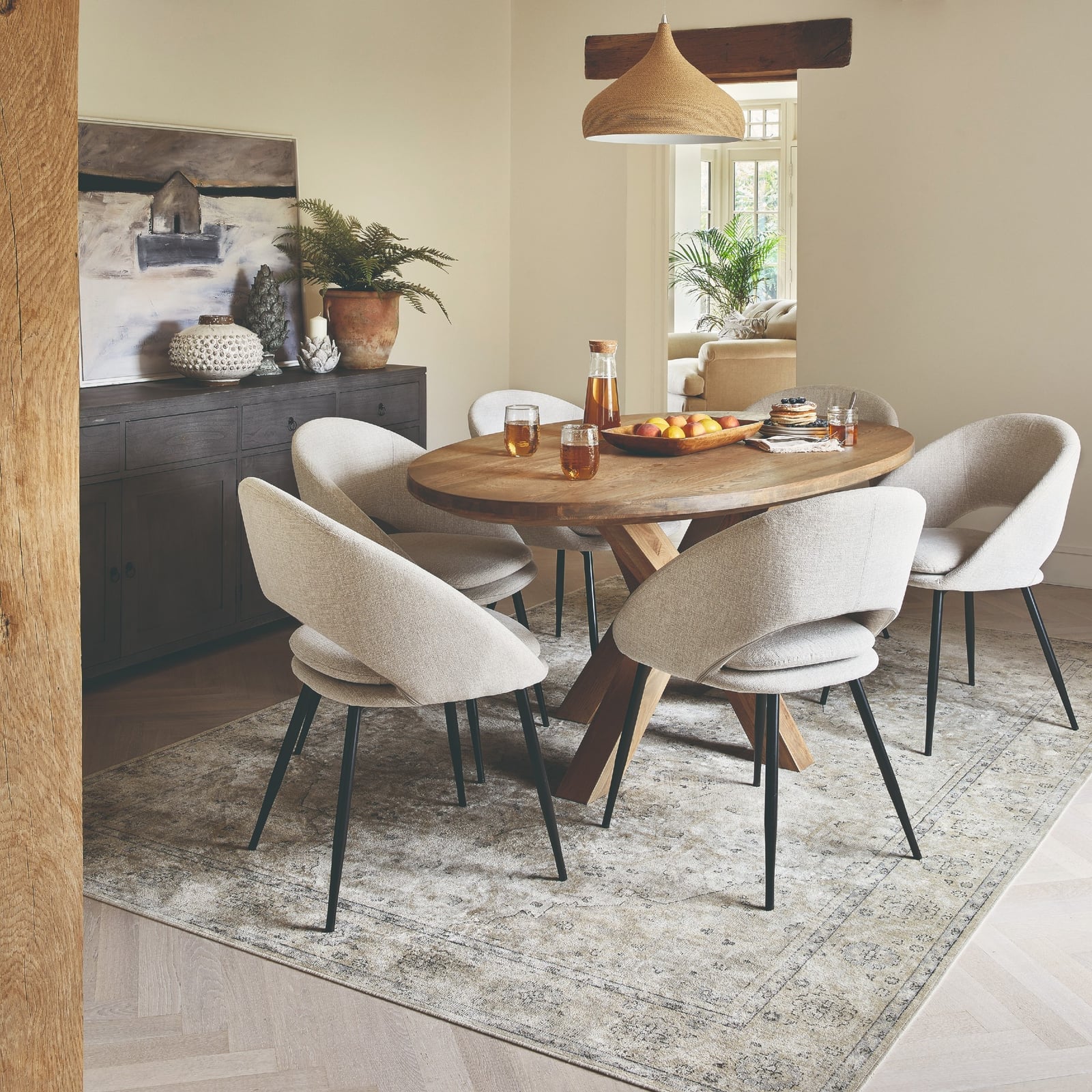
An abstract pattern on a rug can look busy in a small room, but in a spacious modern dining room with an oval table and sideboard, it adds motion without chaos. This rug uses gray, cream and black in a loose print that breaks up the neutral floor. The pendant light above keeps the surface visible, so the pattern remains a clear part of the room. A sideboard in a similar tone helps the whole palette feel connected.
Distressed Area Rug in a Farmhouse Dining Room
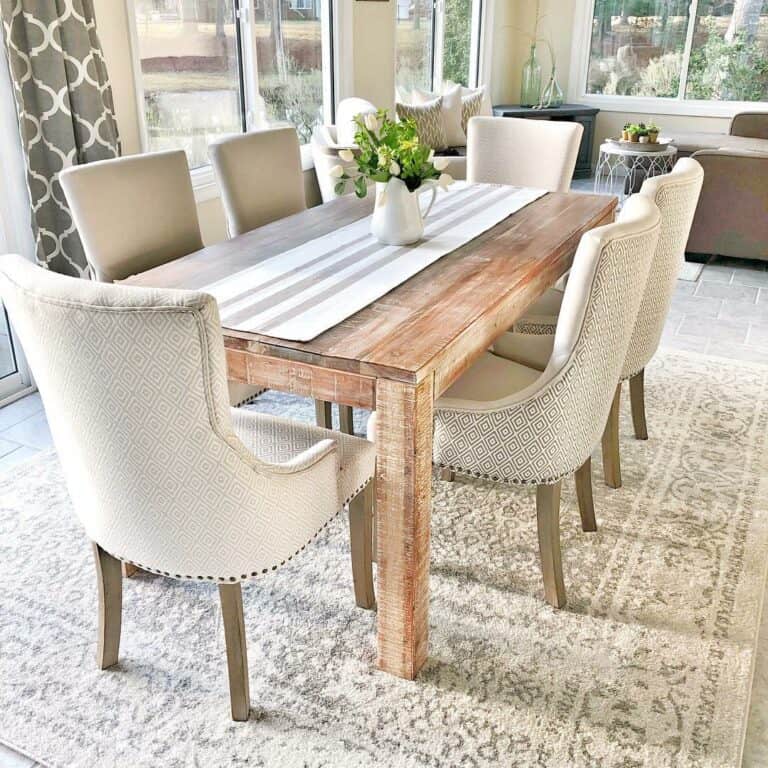
A distressed area rug in beige and gray sits well with a weathered wood table and upholstered chairs. The worn-in look of the rug matches the table surface, so the room feels consistent rather than mismatched. Overhead light hits the low-pile texture evenly, which helps the rug read as one piece rather than a collection of marks. This is a simple way to make a farmhouse dining room feel settled from day one.
Detailed Neutral Rug for a Traditional Dining Room
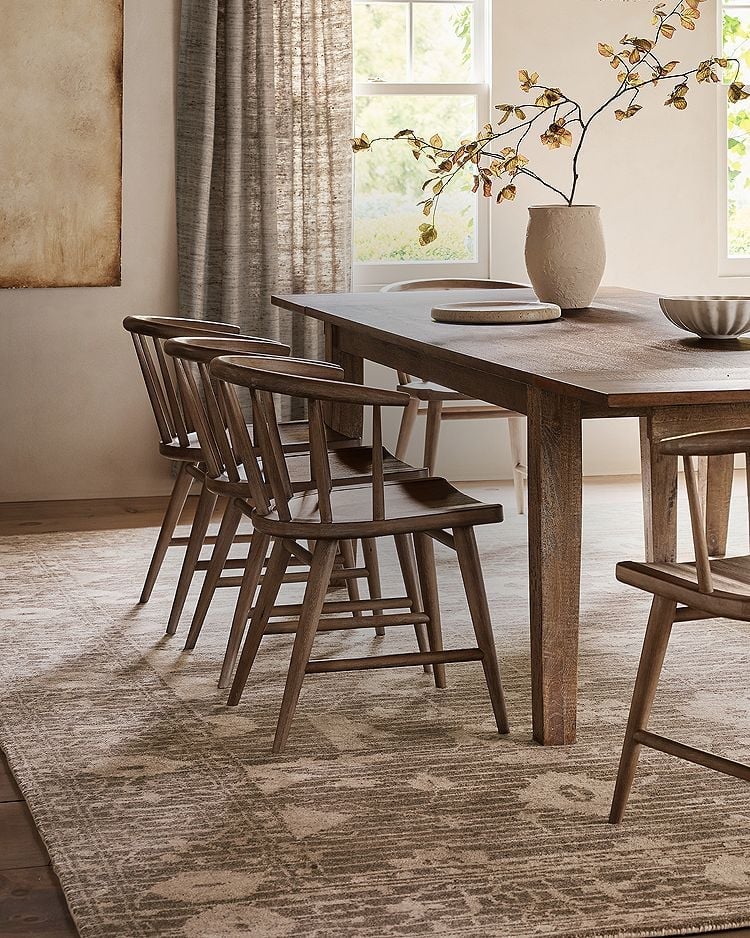
This dining room rug proves that neutral does not mean plain. The detailed pattern across the beige and gray surface adds visual depth, a smart move in a traditional space where the wood dining table and chairs already have presence. The rug sits under the full set, anchoring the room and softening the transition from dark wood to the floor. Because the pattern is intricate but the palette stays muted, it looks deliberate. Look for a rug with low-contrast tones and a repeating motif that holds up to heavy furniture without competing with it.
Expansive Neutral Textured Rug in Luxe Modern Dining
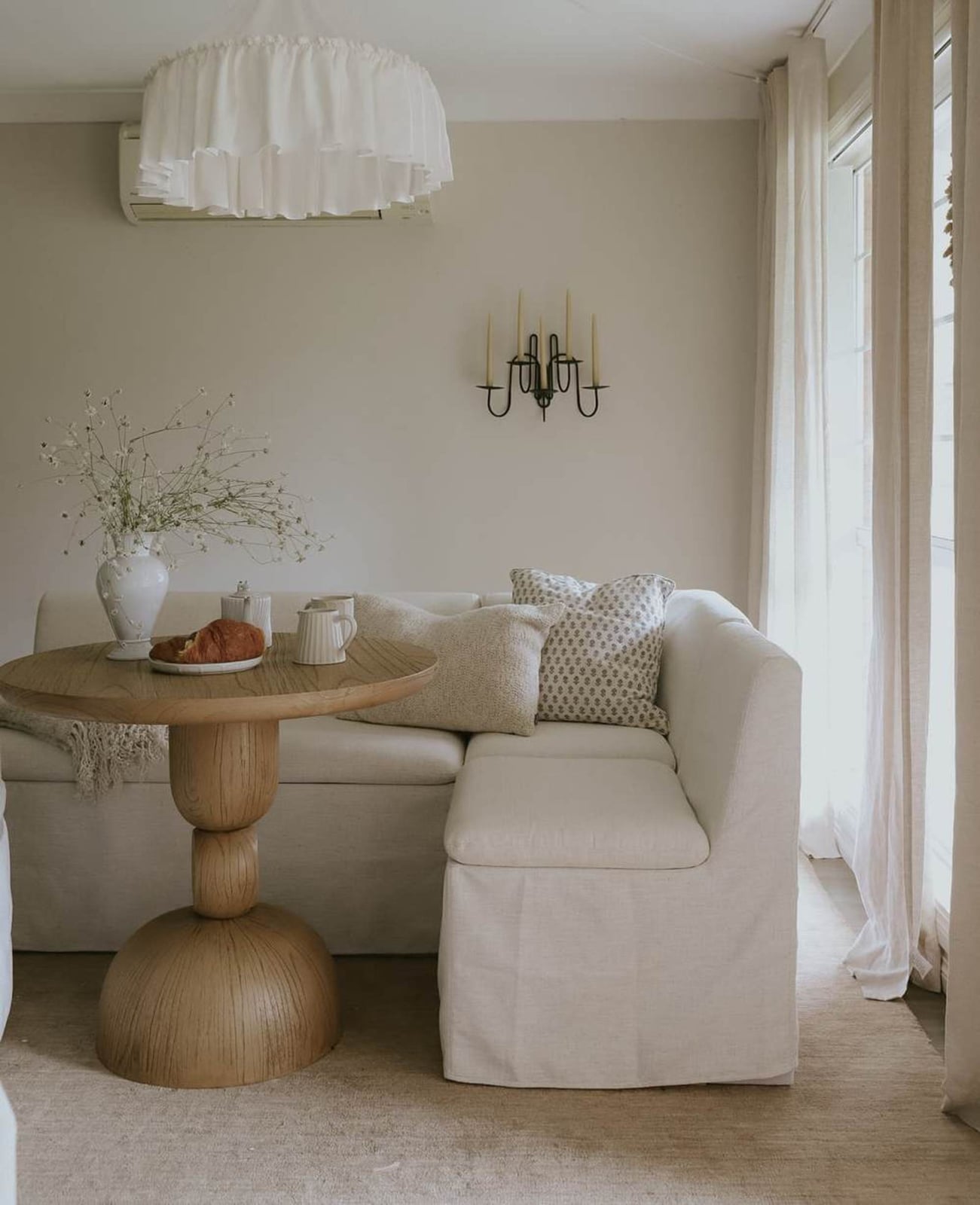
A practical rule for a dining room rug is to choose one large enough that chairs stay on it when pulled out. Here, the expansive cream and beige textured rug does exactly that, sliding well under the table and all the upholstered chairs. In a luxe modern room with a chandelier overhead, the rug’s subtle texture adds warmth without distracting from the clean lines.
For renters, this is a smart choice because a neutral textured rug works with almost any existing furniture and wall color. It does not commit you to a specific palette, so if you move, it can shift into a new living room or bedroom without looking out of place. The low-profile texture also hides minor wear from foot traffic, which helps when you cannot replace flooring.
Modern Dining Room with Central Rug Placement
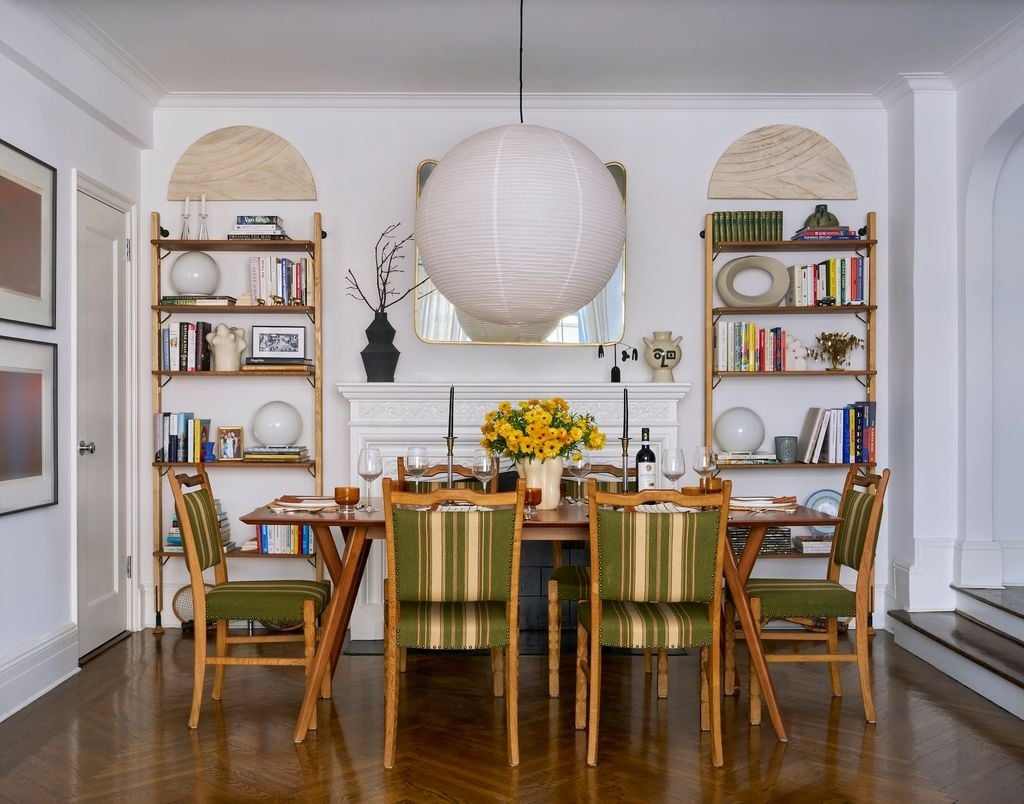
The rug sits centered under the dining table, with the chairs arranged evenly around it. This central placement creates a clear zone for the eating area, separating it from the shelves and open floor space nearby. The neutral gray and cream palette of the rug lets the wood table and the large pendant light take visual priority. In a modern room with natural light from one side, keeping the rug simple prevents the floor from competing with the overhead fixture. It is a layout that works best when the rug is at least as wide as the table, so all four chair legs stay on the surface when pushed in.
Large Plush White Rug in a Farmhouse Dining Room
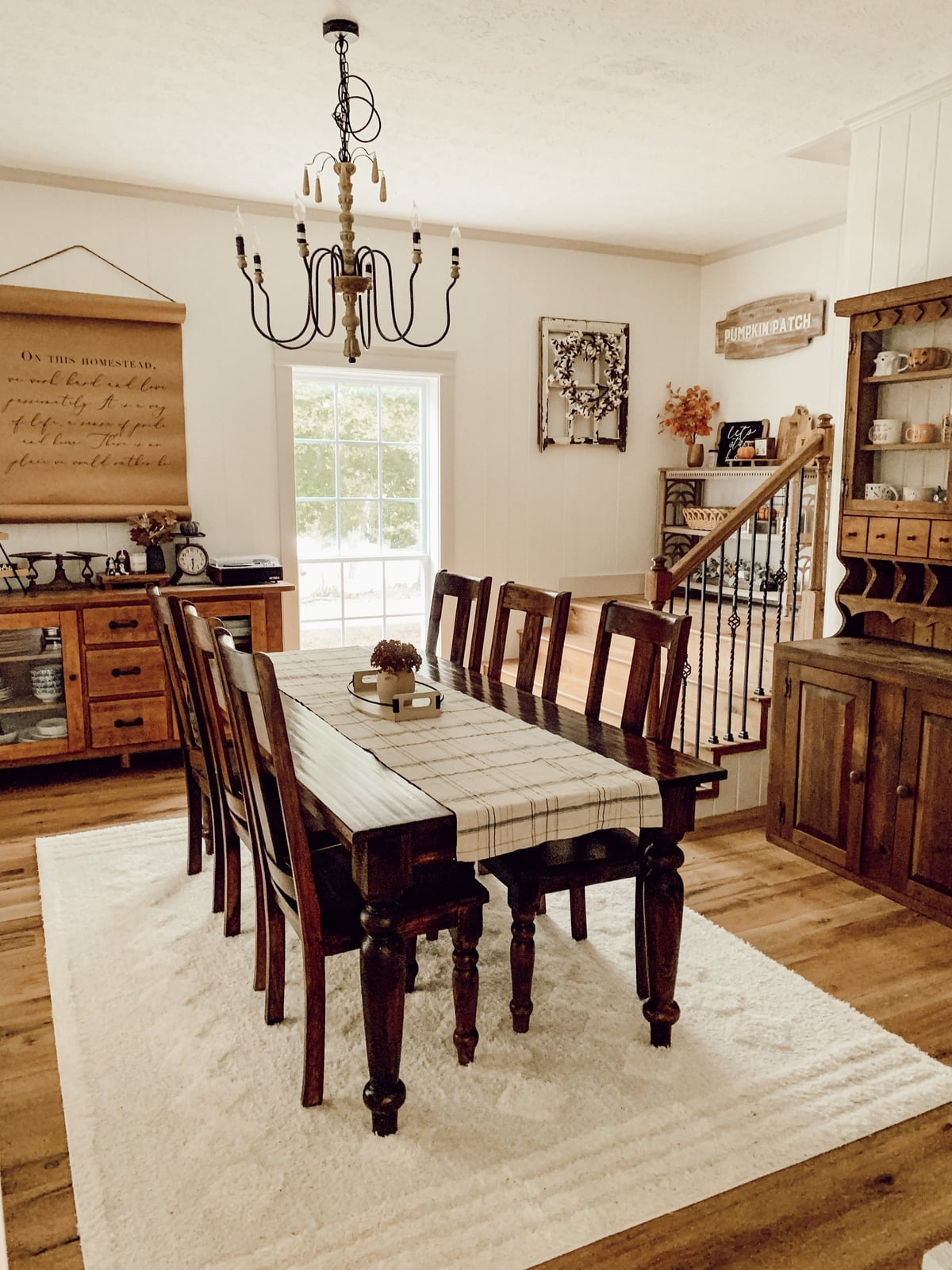
The large white textured rug covers most of the floor under the dining table and chairs, creating a soft, unified base for the farmhouse room. Daylight hits the rug, making the space feel open and airy despite the dark wood table and black metal chandelier. Plush white in a dining room is a bold choice because it shows every spill and scuff. That is not necessarily a drawback if you are willing to spot-clean or use a rug pad that makes vacuuming easier. The texture helps disguise light dirt between cleanings, and the farmhouse style can handle a lived-in look better than a formal setting.
Muted Floral Patterned Rug in a Traditional Dining Room
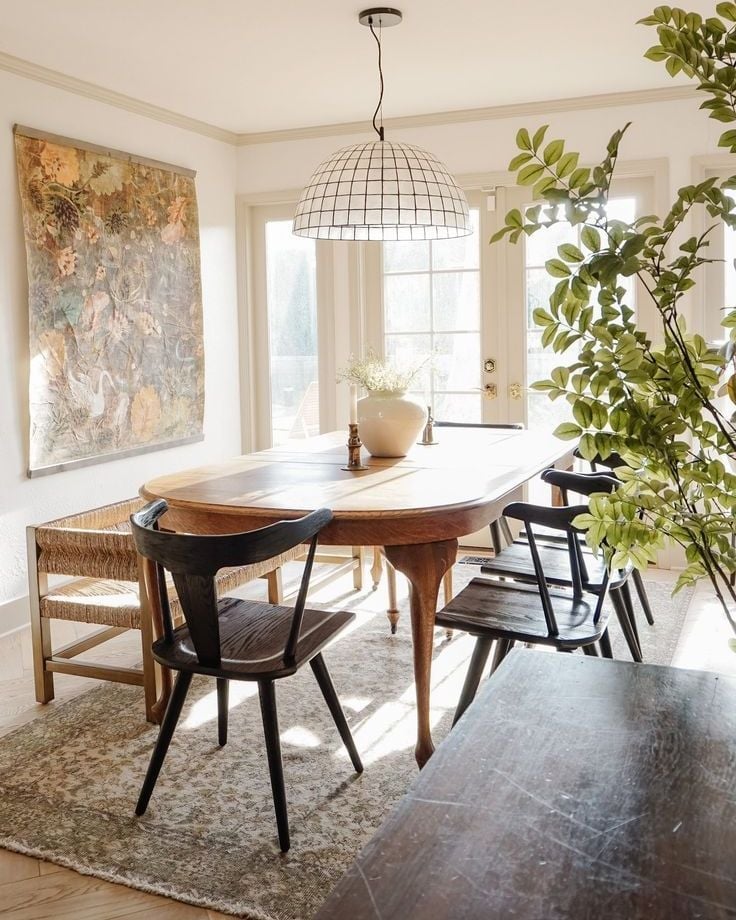
Where a bold floral can overwhelm a room, a muted floral patterned rug lets the traditional dining set stay the focus. The softened tones in the rug echo the warm wood of the oval table and chairs without pulling attention from them. A large plant in the corner and a vase on the sideboard add natural accents that the floral motif picks up on, creating a cohesive look.
For a traditional room, scale matters. The rug is wide enough that the table and all chair legs rest on it, even when chairs are pulled out for serving. If the rug were smaller, the front legs of the chairs would catch on the edge every time someone stood up. That small shift in proportion makes the difference between a rug that works and one that frustrates.
Vibrant Teal Moroccan Rug for a Bohemian Dining Area
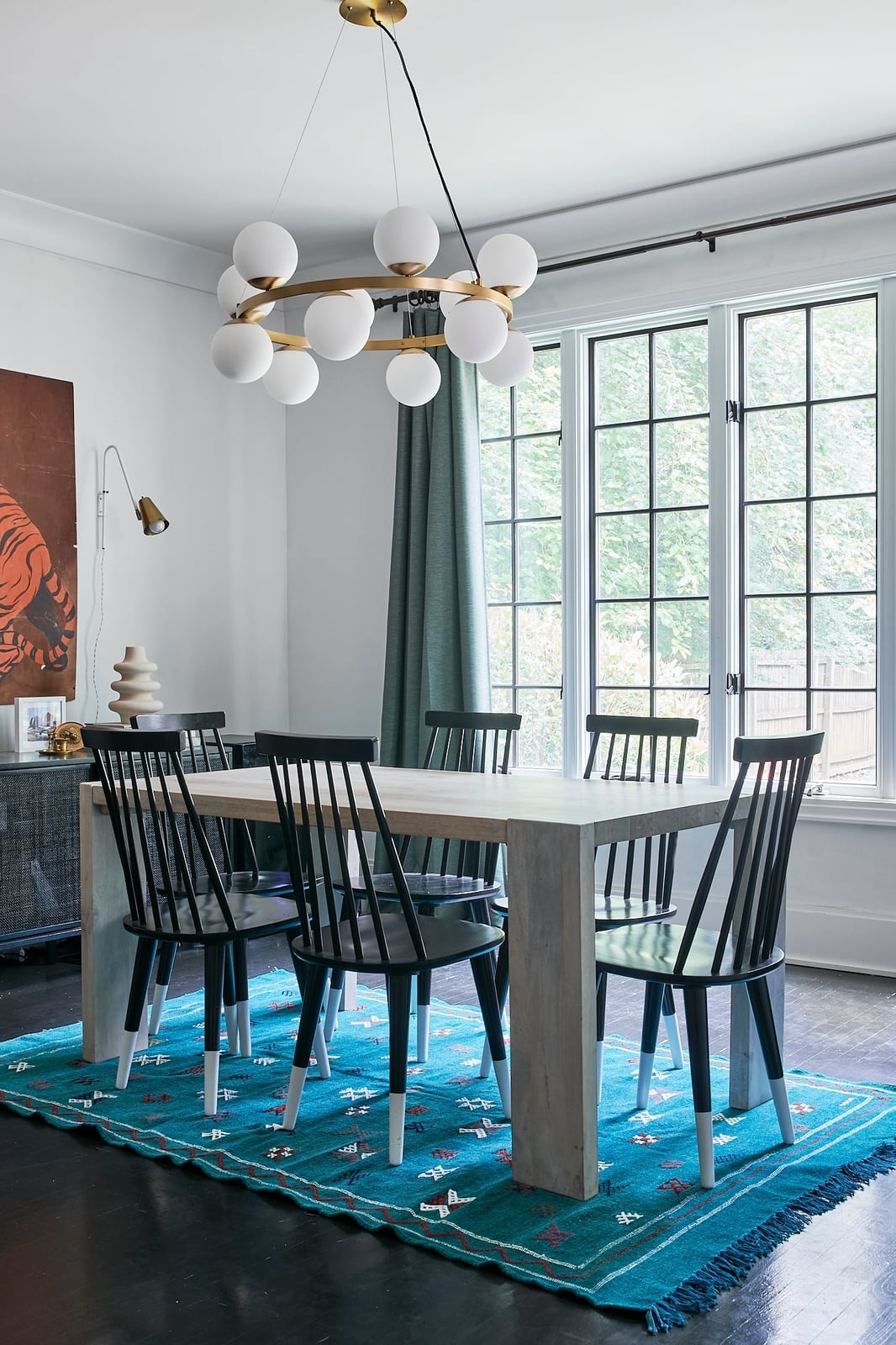
The teal rug sits under the dining table as the main color source in this bohemian room. Its Moroccan pattern in cream and black keeps the look layered without feeling busy. The palette leans on that bold teal against a neutral backdrop of walls and furniture. That ratio is what defines the bohemian style here: one saturated element carries the room while everything else stays quiet. What breaks it would be adding another strong color on the walls or chairs. The chandelier and natural light hit the wool surface evenly, which helps the pattern read clearly.
Geometric Patterned Rug in a Modern Gray and White Dining Room
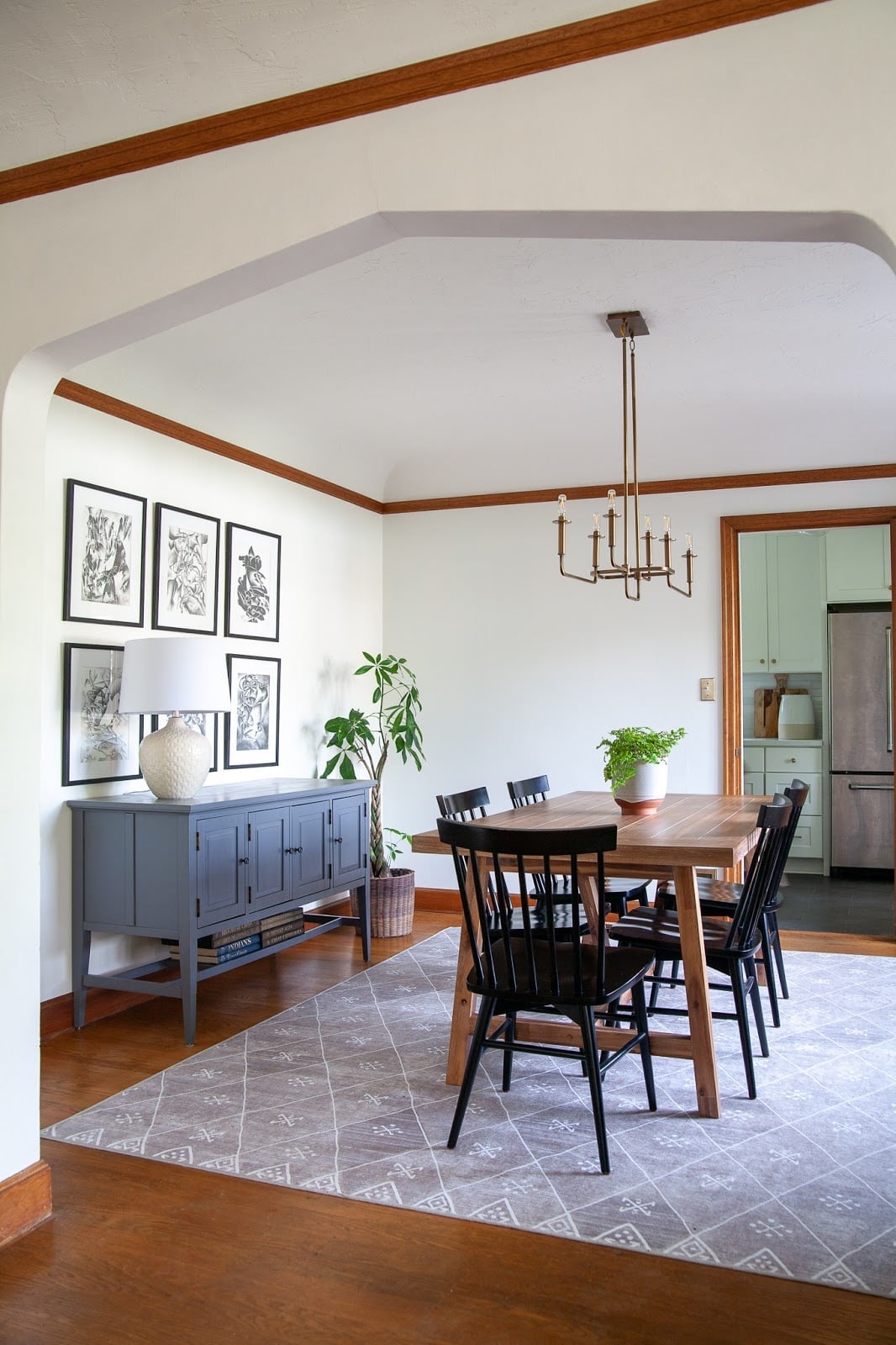
This room works because the palette stays tight. Gray and white rule the walls and rug while wood tones on the table and sideboard add warmth without fighting the scheme. The geometric pattern on the rug introduces visual texture without introducing a new color. That is the practical takeaway for a modern dining room: let one element carry pattern and keep the rest of the palette to two neutrals plus wood. The overhead chandelier and natural daylight both hit the rug, which means the geometry stays visible morning through afternoon. A sideboard in the same wood as the table anchors the far wall so the eye travels the full length of the room.
Colorful Patterned Rug in an Eclectic Dining Room
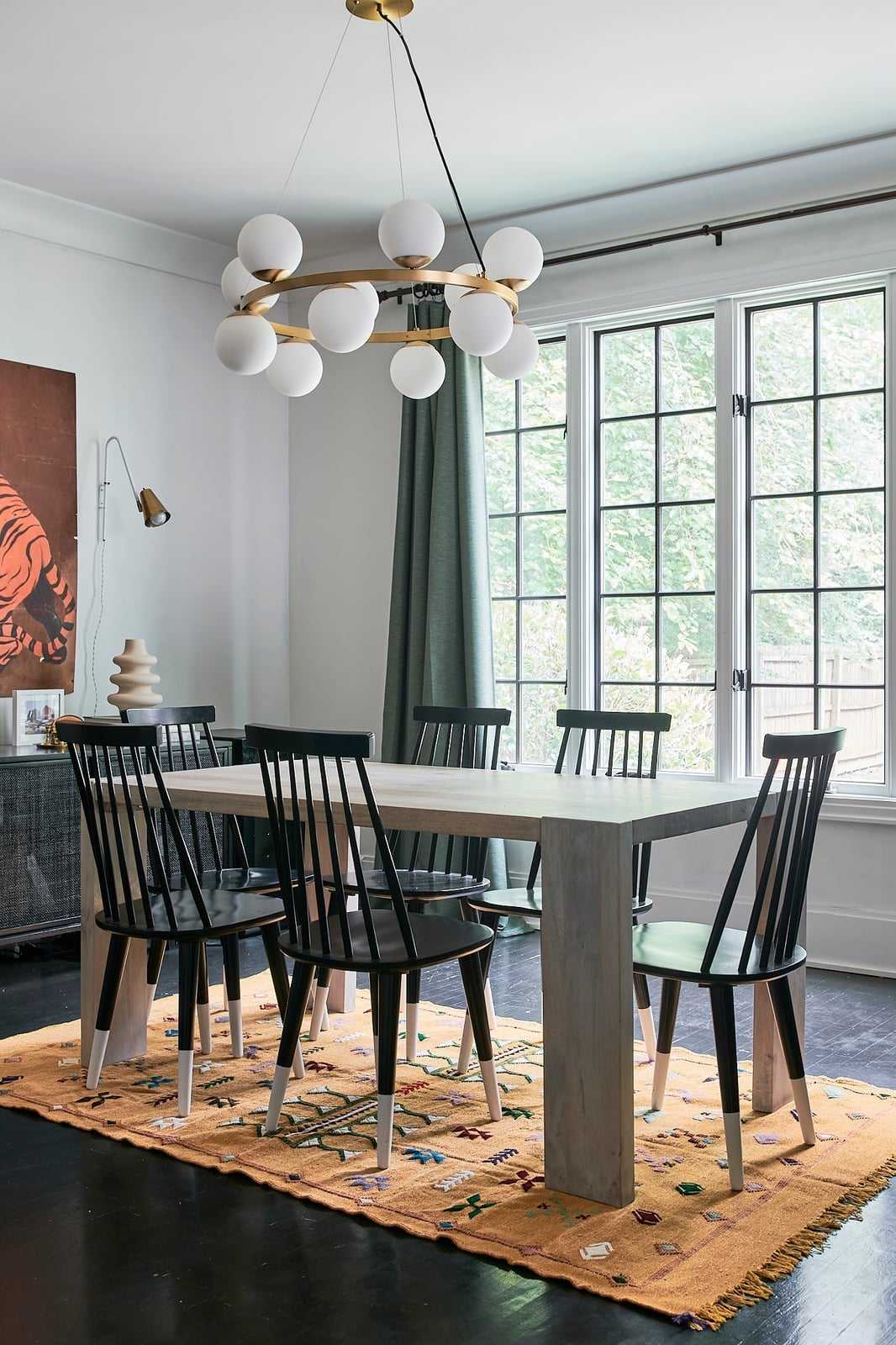
An eclectic room risks chaos when too many colors compete. This setup avoids that by letting the rug do all the talking. Its palette picks up yellow, orange, pink, green, and blue, but those tones do not repeat anywhere else in the space. The dining table and chairs stay dark, the walls neutral, and the chandelier metal. That restraint makes the rug feel deliberate.
Wool is the material here, which works for an eclectic look because it takes dye well and holds complex patterns. The natural light and the overhead chandelier both hit the rug from different angles. That keeps the colors lively at different times of day. To recreate it, look for a rug with a wide palette and then subtract every one of those colors from your furniture and walls. Let the rug be the only place the rainbow lives.
Textured Round Jute Rug in a Modern Boho Dining Nook
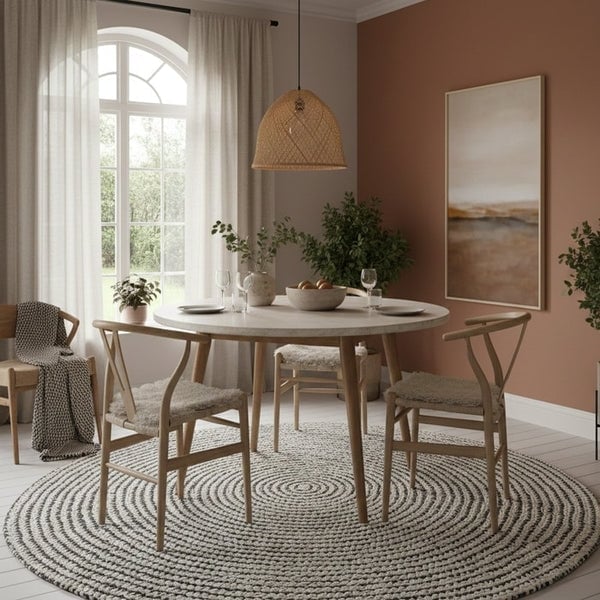
The round jute rug sits under a round table with wishbone chairs, and that shape match is what pulls the nook together. Jute brings a natural texture that modern boho relies on, while the white and black palette keeps the look crisp. The pendant light hangs directly over the table center, so the rug gets consistent light from above. Natural light from a nearby window adds warmth to the jute fibers. A ceramic vase or a wood bowl on the table would continue the natural material story without adding clutter.
Final Thoughts
Picking a dining room rug comes down to balance: size, pattern, and how it works with your table and chairs. A rug that’s too small can make the room feel off, while one that’s too busy might fight with the furniture. The examples here show how different styles from geometric to floral adapt to various dining setups. Keep in mind that a rug with a low pile or tight weave handles chair movement and spills better than a high-pile one. Think about your daily use and the look you want. The right rug adds warmth and structure, making the dining room feel complete. Take your time choosing one that fits both your space and your routine.