
Raised beds are the backbone of a productive garden, and this collection of 29 garden beds proves they come in more forms than just a simple wooden rectangle. Whether you are planning a vegetable patch or a flower border, the right bed can make the space more organized and easier to tend.
From curved modular designs to rustic metal sides, each version keeps the raised bed as the clear hero of the outdoor room. Expect practical ideas on layout, materials, and pathways that support the bed rather than compete with it.
Cottage Garden Charm With Dual Raised Beds
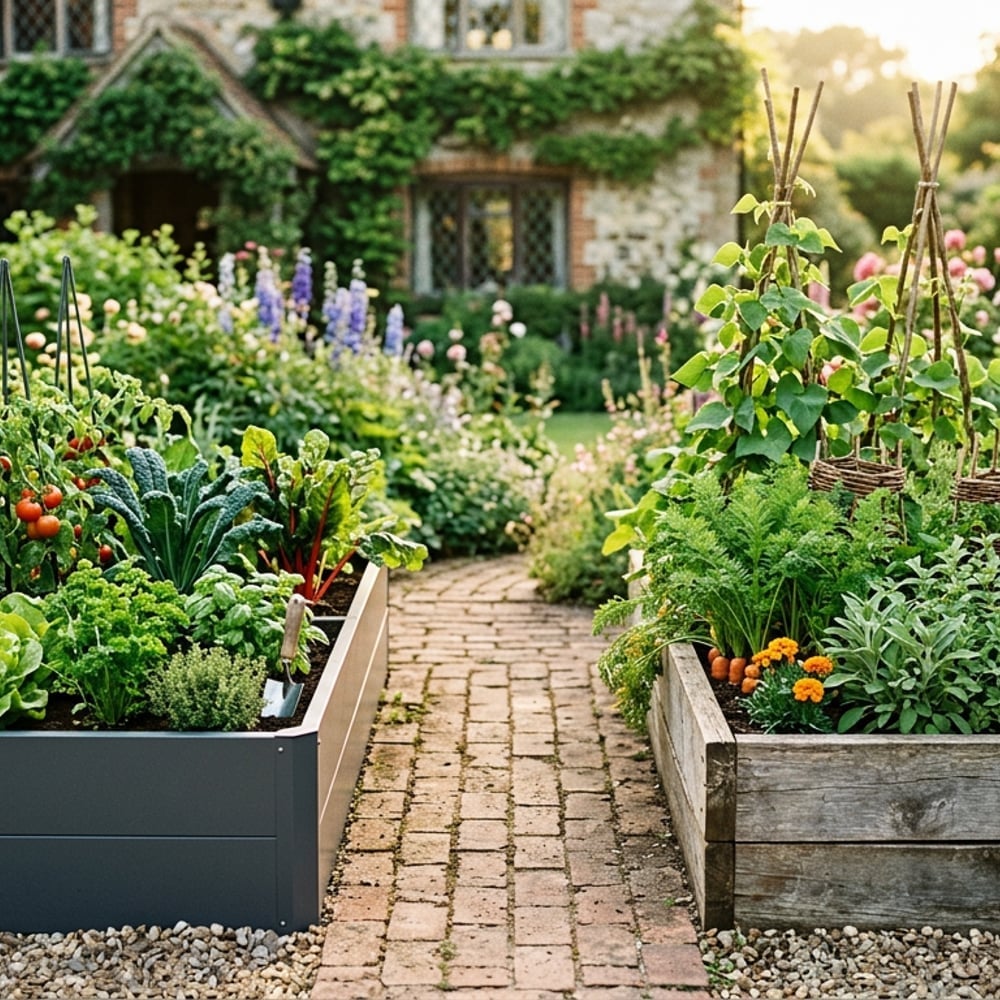
A grey metal bed and a wooden one sit on opposite sides of a brick path, which is a smart way to add texture without crowding the planting. The cottage facade behind them sets the tone, but the real trick is the material mix: the cool metal plays off the warm wood, and the red brick anchors both. That contrast keeps the eye moving instead of landing on a single flat surface. For a cottage garden, aim for at least two different bed materials so the layout feels layered rather than uniform.
Modern Oval Raised Bed With Arched Trellis
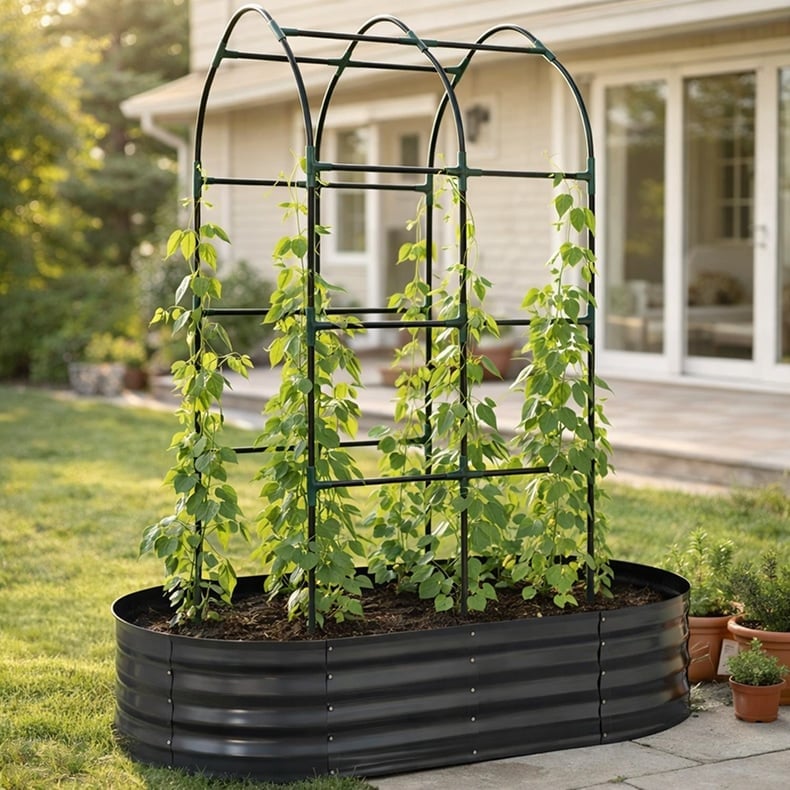
This setup earns its keep with a single curved line. The black metal oval bed breaks away from the standard rectangle, and the arched trellis above it gives vining plants a natural path upward. The corrugated metal surface reflects daylight without glare, which matters when you are working soil at midday. Beige gravel or stone around the base keeps the look tidy and cuts down on weeds between waterings. For a vegetable garden that balances form and function, an oval profile with a matching trellis is a clean swap that still leaves room for tomatoes or beans.
Curved Modular Wooden Bed on a Balcony
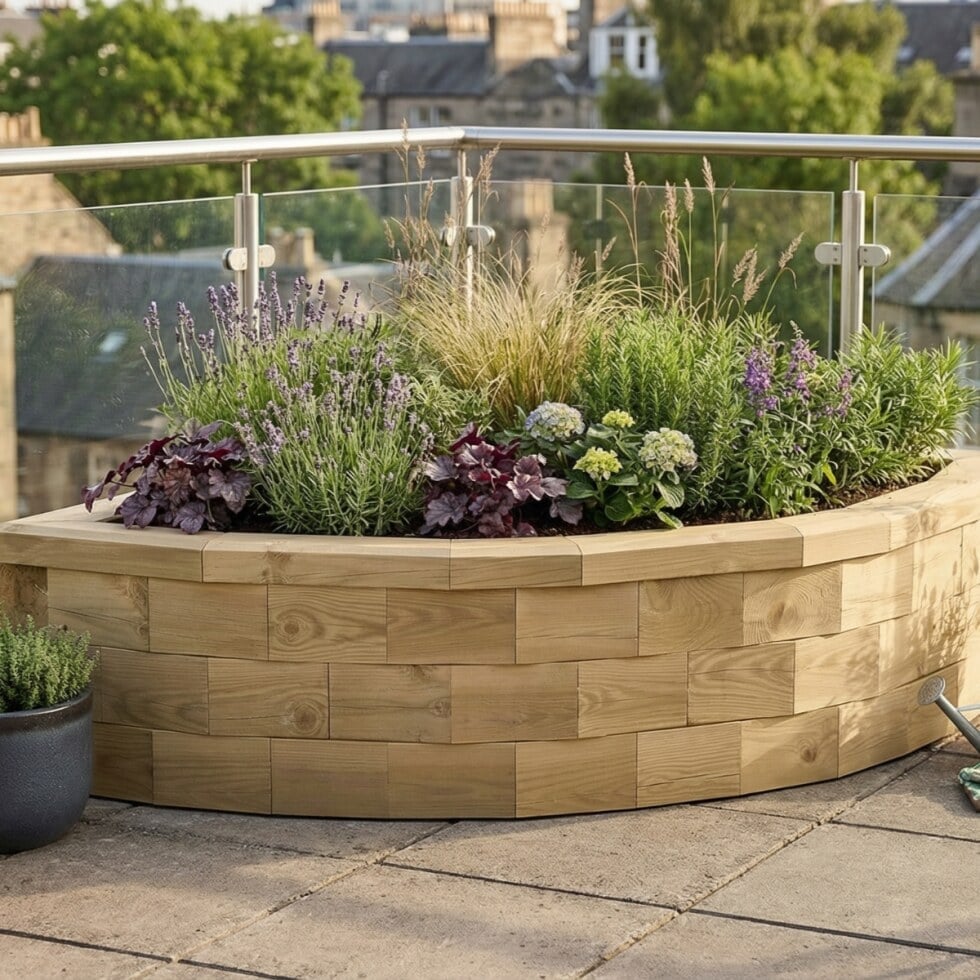
Can a small balcony hold a real garden without feeling cramped? This curved wooden bed proves yes, mostly because the shape itself does the work. A straight line would push you against the railing, but a gentle curve tucks into the corner and leaves walking space clear. The wood tones warm up the glass and metal balcony rails, and the purple and green foliage softens the hard edges.
The modular build matters here. Sections that lock together mean you can adjust the curve to fit your exact footprint, whether that is a narrow apartment balcony or a wide terrace. No need to cut custom lumber or hire help. Just rearrange the pieces until the path feels right. For renters, modular beds are a practical choice because they come apart and move with you.
L-Shaped Configuration of Modular Wooden Beds
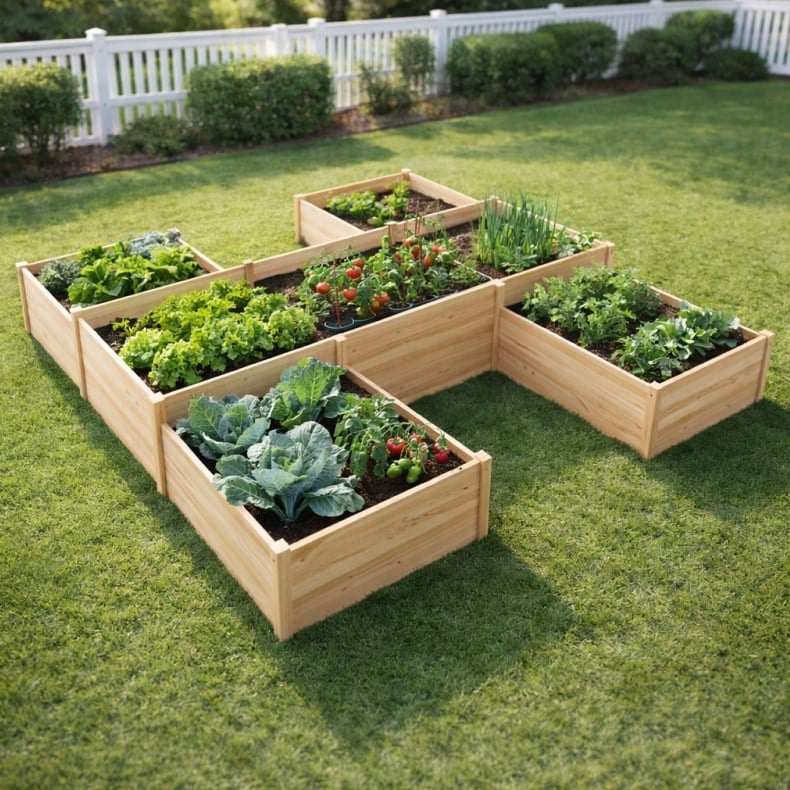
Two modular wooden beds lock together at a right angle, and that L shape changes how the whole garden works. Instead of walking around four separate boxes, you reach every plant from two sides. The open plan layout means sunlight hits the beds from multiple angles, and the bright daylight with visible shadows shows you exactly where each vegetable will thrive. Grass between the sections keeps the ground cool and soft underfoot. If you are planning a vegetable patch, an L configuration gives you more growing space per square foot of path than parallel rows ever could.
Rustic Raised Beds With Corrugated Metal Sides
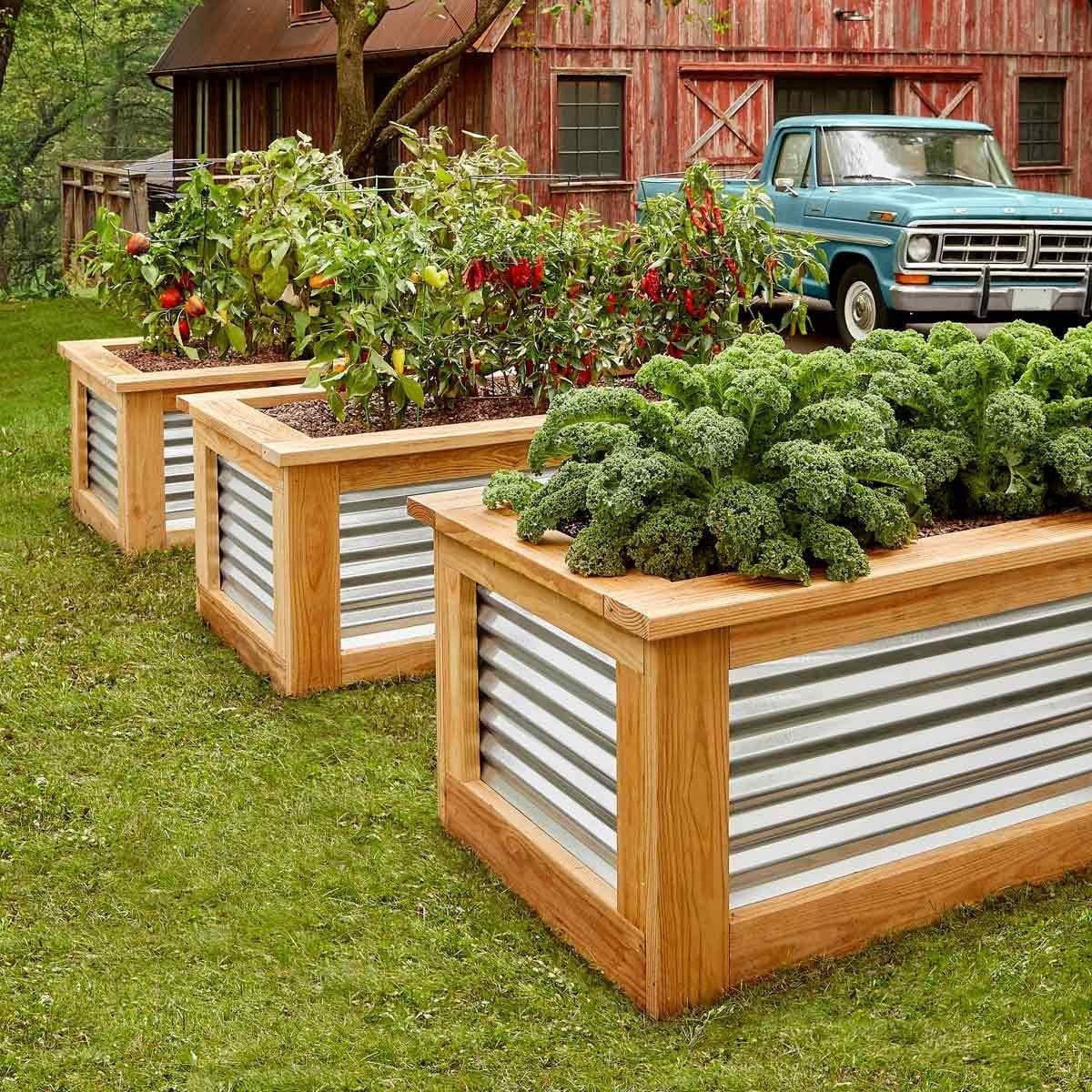
To mix materials, let one surface take the wear. Here, the wooden frames hold the structure, and the corrugated metal panels line the sides where soil and water hit hardest. The silver metal reflects light back up into the kale and tomato plants, and the red and green foliage pops against the neutral wood tones. A line of these beds across the grass creates a clear boundary between garden and lawn, which makes mowing simpler. If you have a vintage truck or a shed nearby, the rustic metal finish will blend right in without competing for attention.
Multi-Level Wooden Raised Beds for Abundant Planting
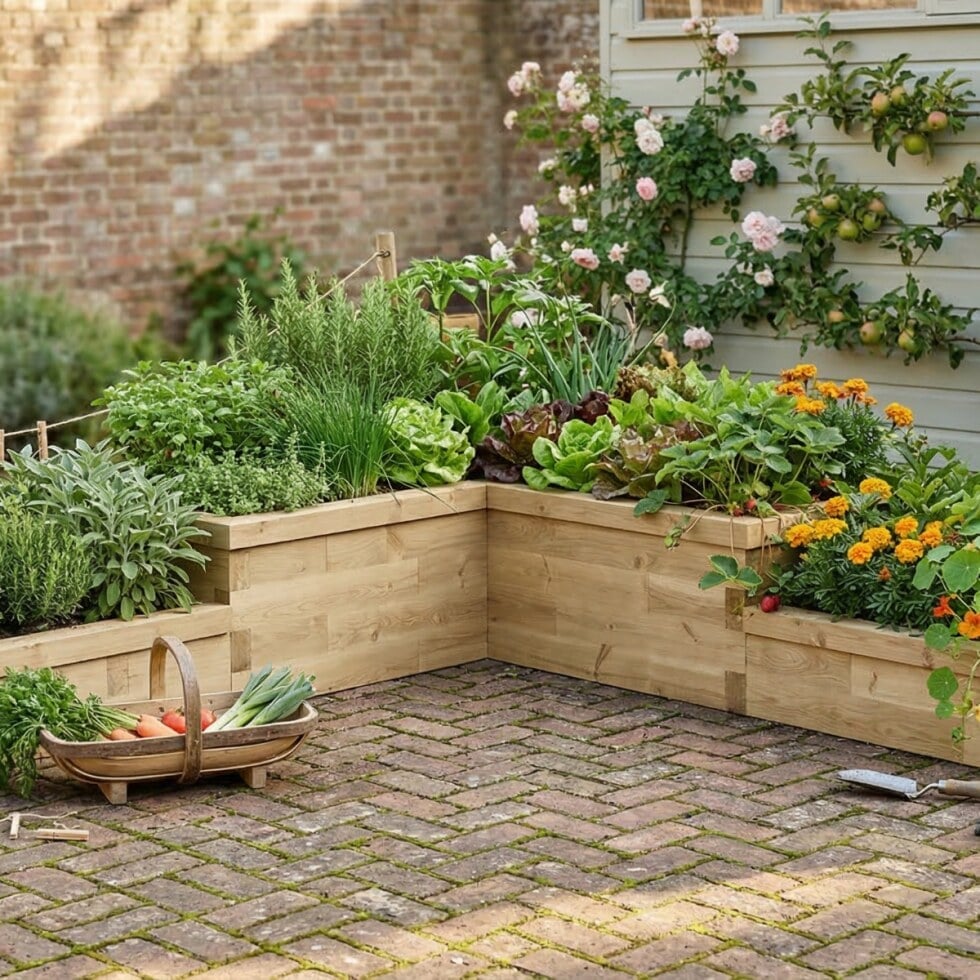
Most of us start with a single raised bed, then realize we need more room for tomatoes and a few more for flowers. This L-shaped corner setup skips that gradual expansion. The multi-level wooden beds wrap around the corner of the garden, creating a dedicated growing zone that feels like a room of its own. A basket of vegetables sits ready for harvest, proof that the layout works for serious planting. The wood tones blend with the brick edging and the green, pink, and orange blooms, so the structure fades into the background. The trick is keeping the planting dense enough to soften the lines between levels. Sparse soil looks unfinished. Pack it full, and the beds read as one lush block.
Tiered Wooden Raised Beds With Gravel Pathways
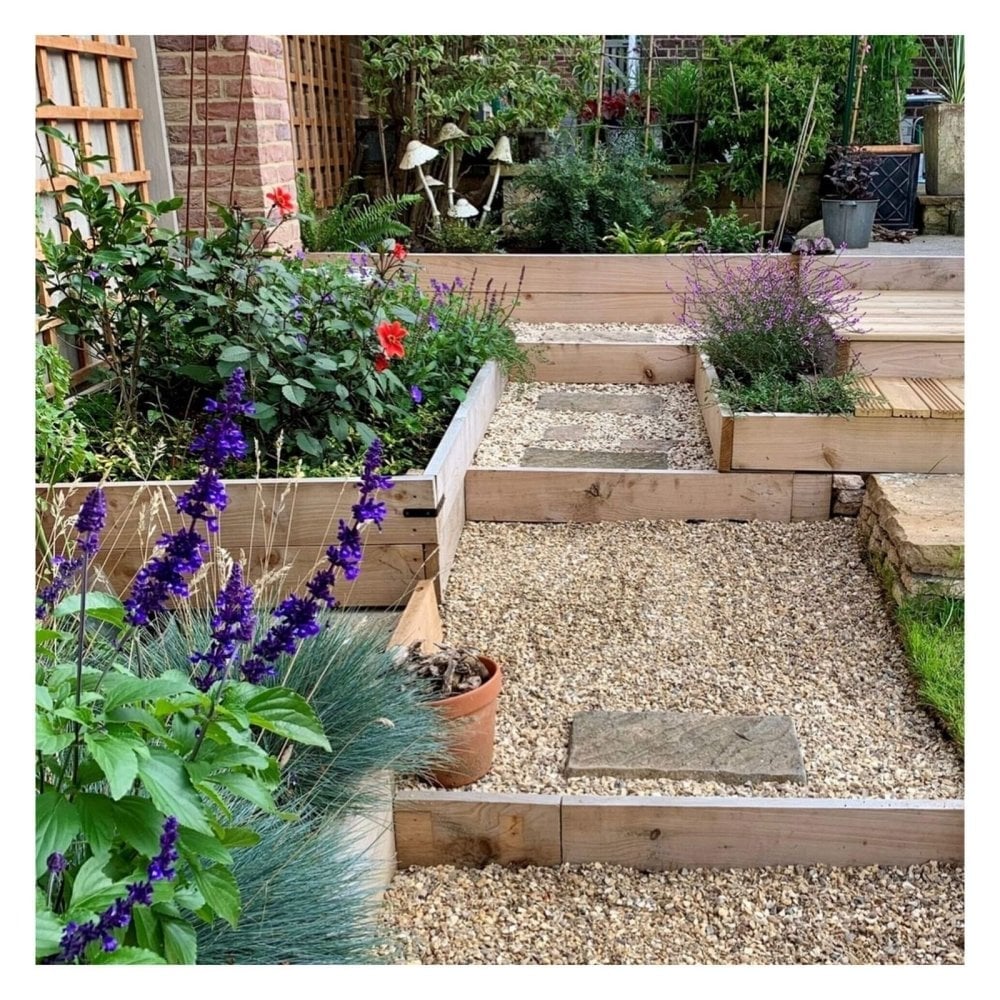
The gravel pathways here do more than keep mud off your shoes. They create a clean grid between the tiered wooden beds, which climb in height as they recede. The stepping stones break the gravel into manageable sections, so you can reach the back bed without stepping on soil. Wood tones, green foliage, and purple and red flowers keep the palette natural. The modern garden style comes from the precision of the tiers and the crisp gravel lines, not from fancy materials. What breaks the formality is the loose planting spilling over the edges. Let things grow a bit wild, and the structure still holds.
Thick Wooden Beds Flanked by Brick and Gravel Path
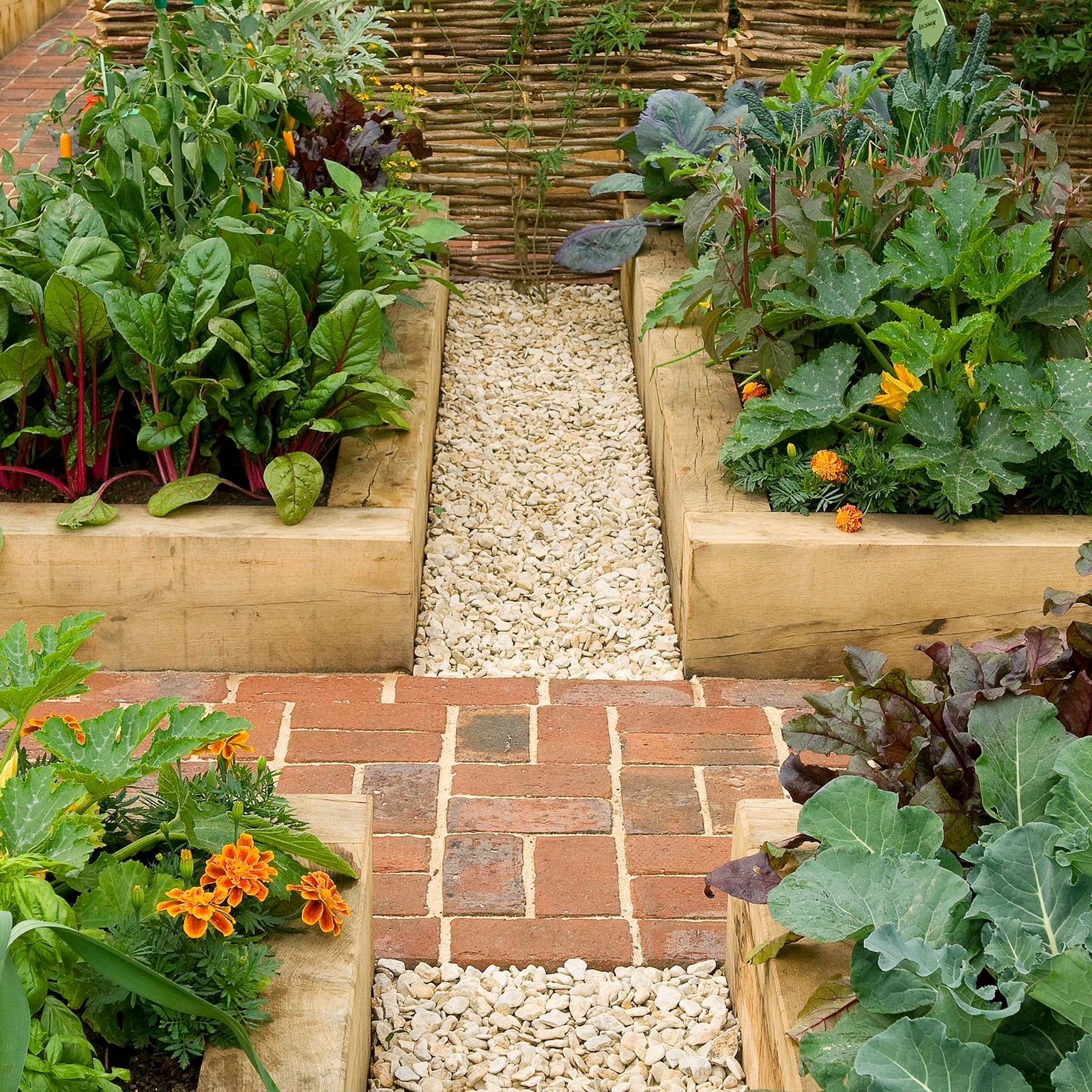
The thick wooden beds and the brick path are the same kind of sturdy. The wood planks look substantial enough to hold heavy soil without bowing, and the brick path between them is laid in a simple running bond. Gravel fills the gaps, keeping weeds down and drainage high. The traditional garden style leans on the warmth of the orange brick against the green and orange plants. The compact scale works for a side yard or a narrow strip. The brick path is the practical detail here. It gives you a solid place to kneel or set a watering can without compacting the soil around the roots.
Neatly Planted Square Wooden Raised Bed
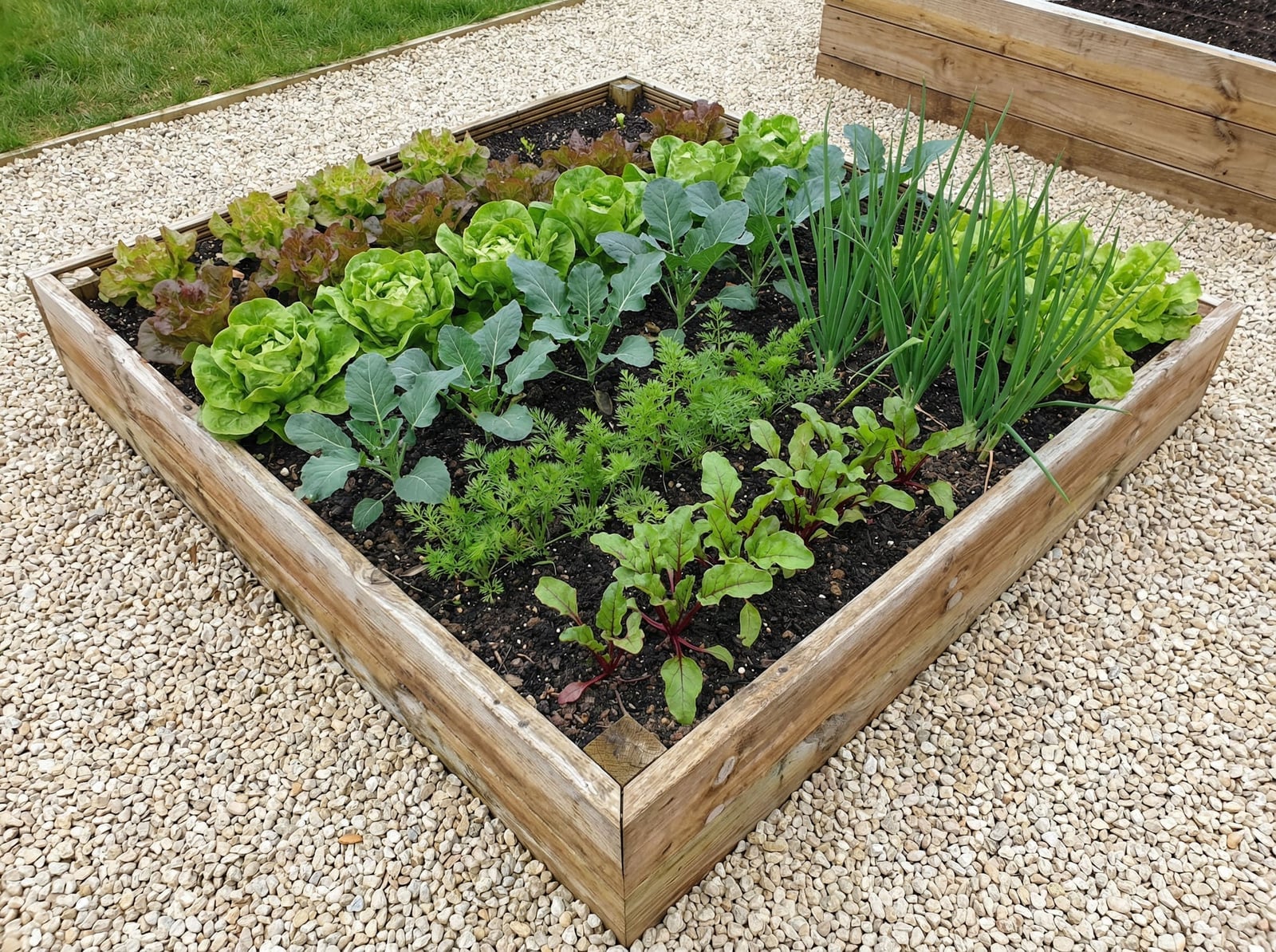
Can you fit a productive vegetable garden in a single square bed? This one proves yes, as long as you plan the rows. The square wooden raised bed is filled with neat rows of vegetables, each one spaced for airflow and easy picking. The modern farmhouse style comes from the clean lines of the bed and the dark wood tone against the green leaves and red fruit. The gravel surrounding the bed keeps the area tidy and cuts down on weeding along the edges. The single-bed layout works best when you commit to a grid. Staggered planting might look more natural, but straight rows make it simpler to reach every plant without stepping into the bed.
Rows of Galvanized Steel Raised Beds
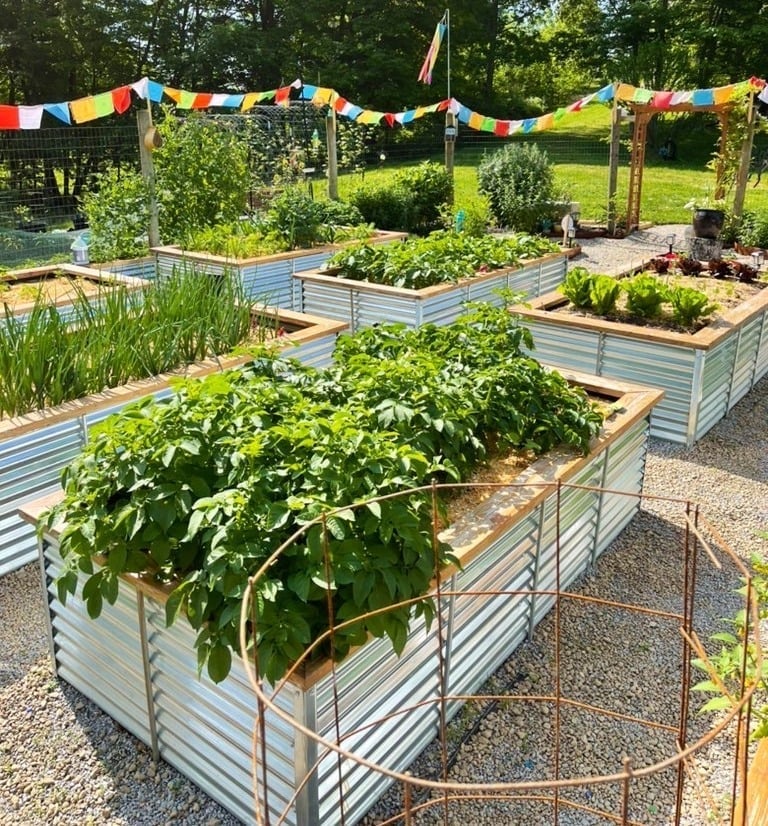
The corrugated galvanized steel beds sit in neat rows, their silver surfaces reflecting the bright daylight. Wood caps on the top edges soften the industrial look and provide a convenient spot for a hand or a trowel. The modern garden style gets its character from the contrast between the cool metal and the green foliage. The expansive layout means you can grow in rotation, leaving some beds fallow while others are in full production. The key detail is the wood trim. Without it, the metal edges can feel harsh. With it, the beds look intentional rather than utilitarian.
Vibrant Raised Bed With Bench Seating
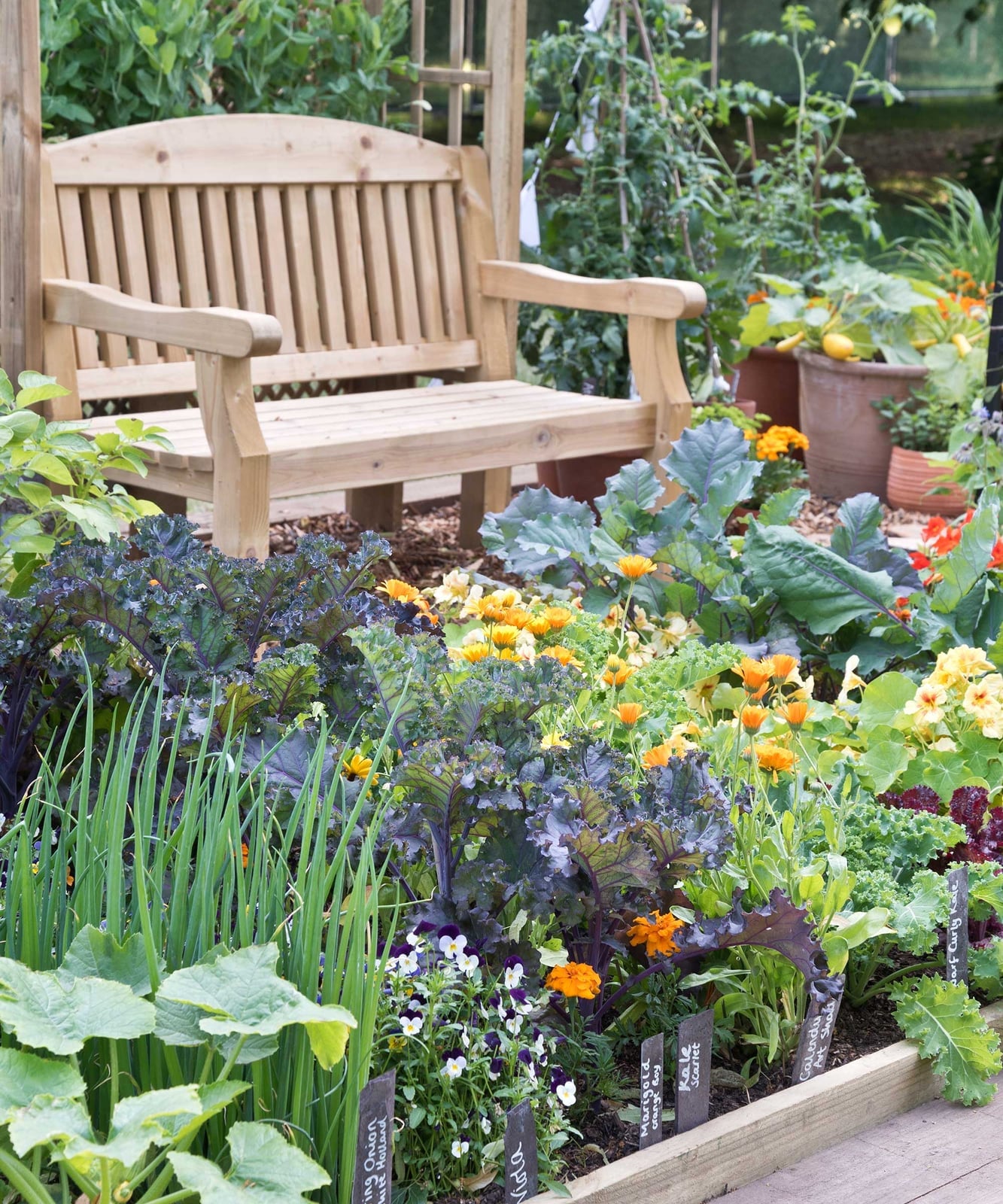
A bench tucked behind a raised planter turns a single growing spot into a place to sit and stay awhile. The layout here keeps the planting in front and the seating behind, so you can tend the soil or just rest and look at it. Green and purple leaves mix with orange and white flowers for a cottage garden feel that is lively without being fussy. The wooden bench and planter share a natural tone that lets the plants take center stage. For a similar setup, place a bench or a simple stool behind your bed instead of beside it. That small shift keeps the path clear and gives you a front-row view of what you grow.
Contemporary Rusted Steel Raised Beds
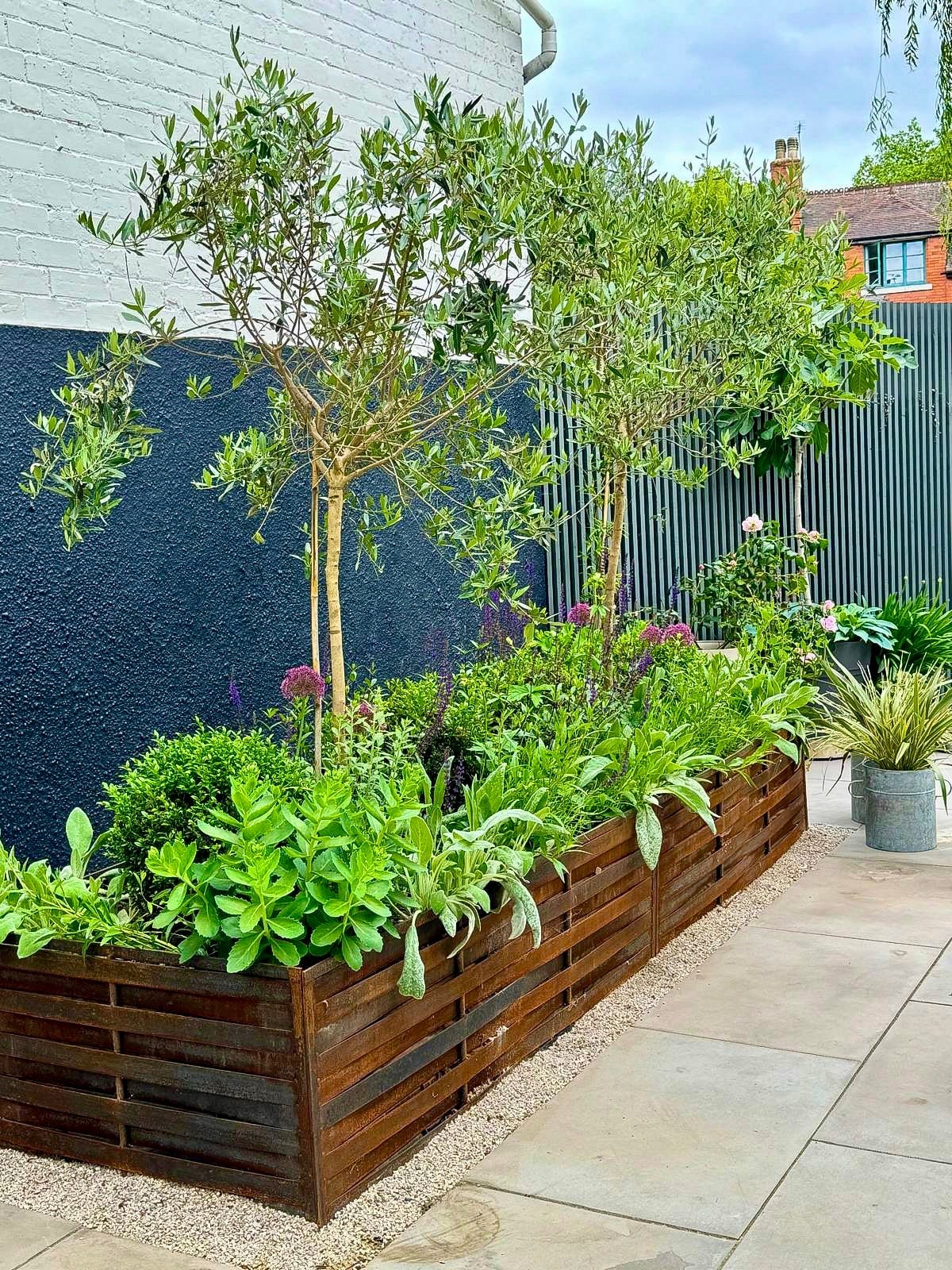
Galvanized steel is a common choice for modern garden beds, but rusted steel offers a warmer, earthier alternative that still reads as contemporary. The slatted sides of these planters let the brown and grey tones blend with the greenery inside, while the dark textured wall behind them adds depth without competing.
Olive trees and lush planting soften the industrial look, and the stone pavers underfoot keep the whole scene grounded. The linear layout runs the beds along the patio, which makes the most of a long, narrow space. A modern garden does not feel cold with rusted steel; it is a good middle ground. It weathers naturally and develops character over time, which is something a fresh coat of paint cannot offer.
Formal Garden With Pink Gravel and Wooden Beds
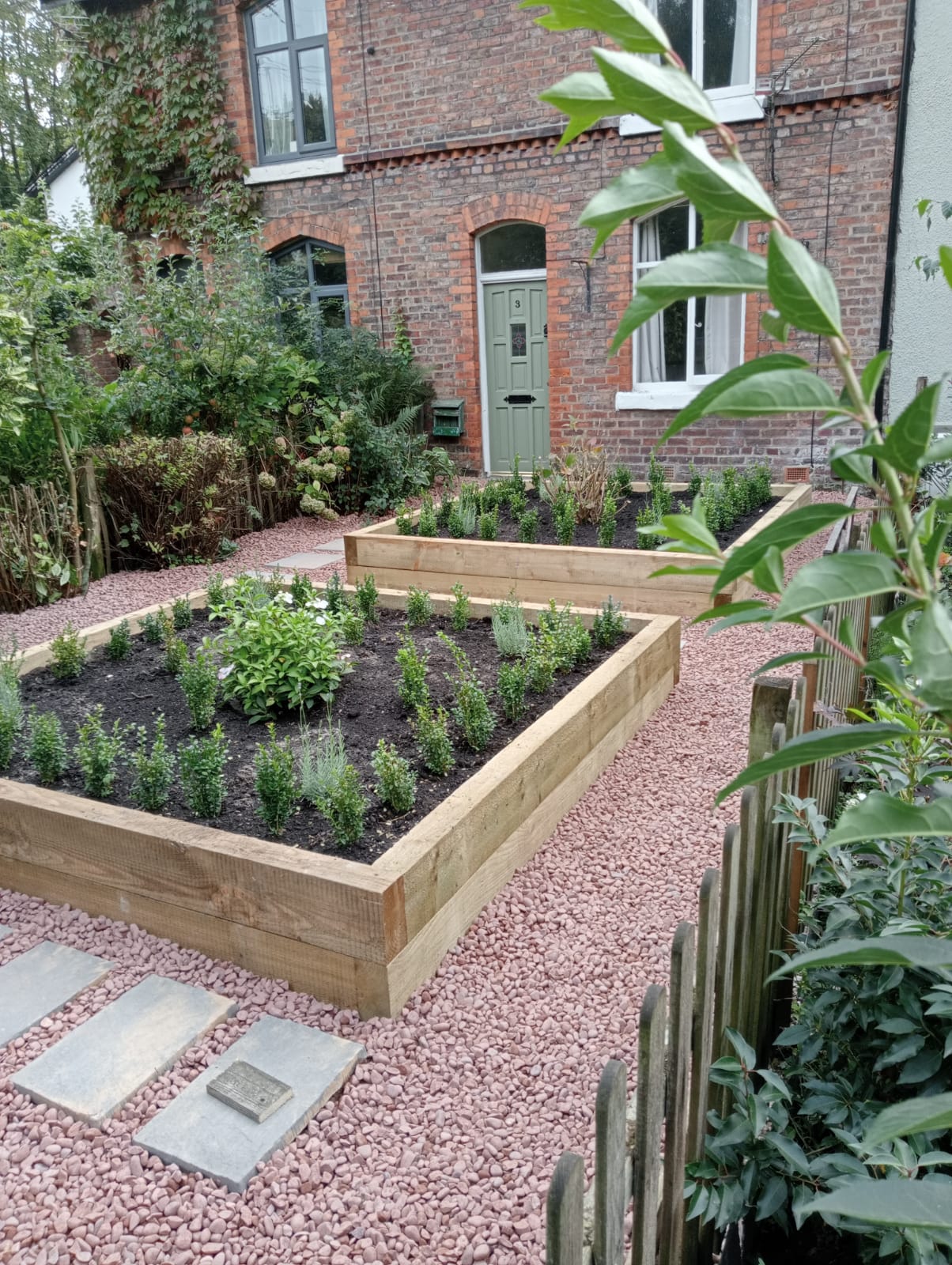
The pink gravel here is not a background detail; it is the defining move. Square wooden raised beds sit on top of it, and stepping stones break up the expanse so the path feels deliberate. The wood stays natural and warm, which keeps the pink from feeling too sweet. Green planting rises out of each bed to balance the palette. Swapping standard gray gravel for a tinted one is a low-effort way to give a formal garden personality. Just check your USDA zone to make sure the stone color works with the light you get.
Black Wooden Raised Bed on a Paved Patio
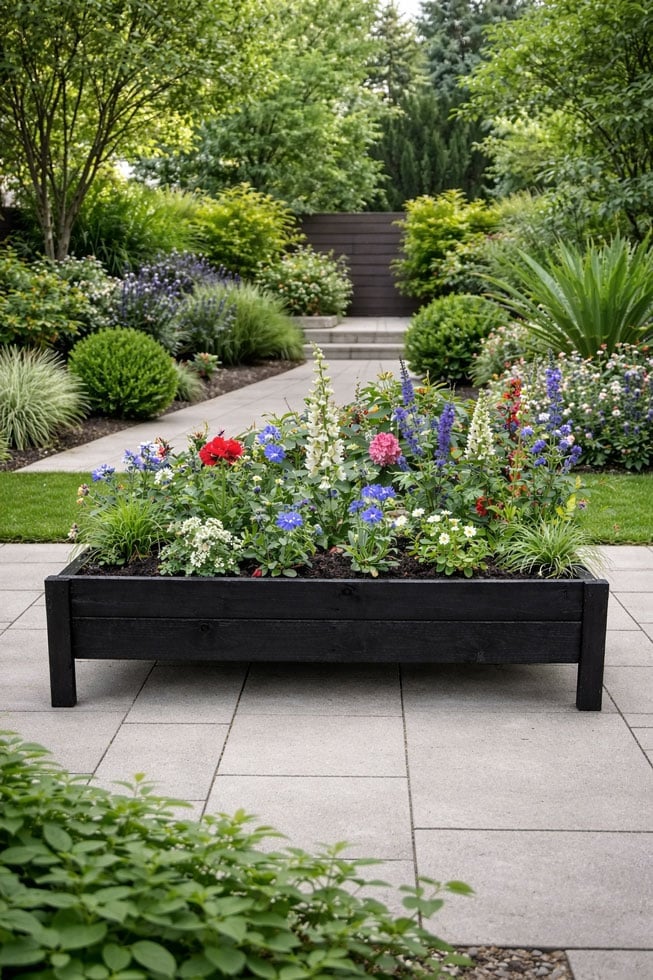
A black wooden raised bed on a paved patio is a straightforward way to add structure without building a whole garden from scratch. The dark finish recedes visually, so the flowers inside it get all the attention. Here, colorful blooms in blue, red, and white stand out clearly against the black frame. The soft daylight keeps the scene from feeling harsh, which matters when you are working with a high-contrast color like black. If your patio gets strong afternoon sun, consider a darker bed to cut glare and let the plants pop. Stone paving underneath makes cleanup easy and keeps the space tidy.
Weathered Wood Tiered Raised Bed Structure
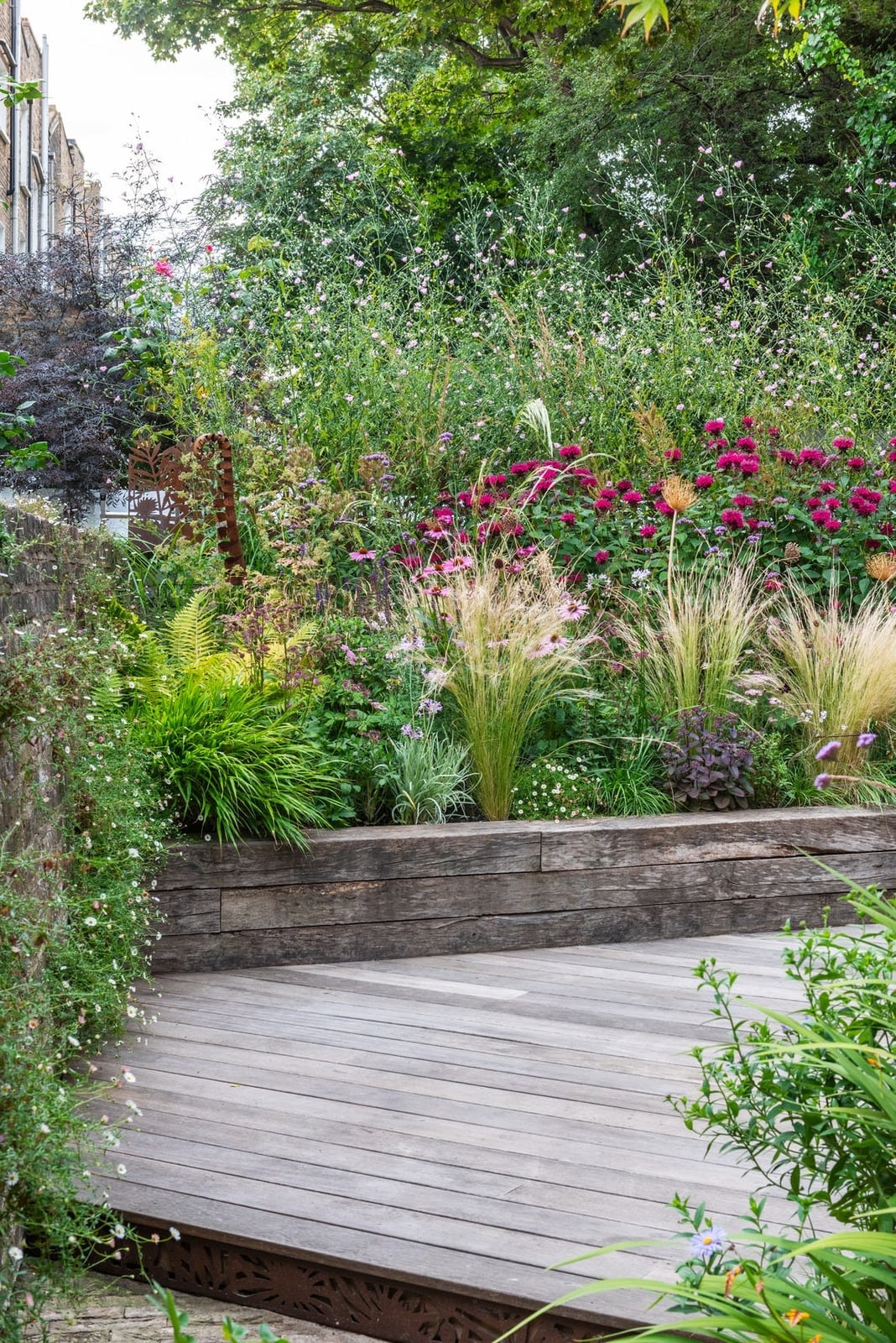
For tiered raised beds, plant the tallest things in the back and let the rest cascade forward. That way every level gets light and you can see each plant. The weathered wood here has a natural, silvery tone that fits right into a cottage garden or a more naturalistic yard. Pink and white flowers mix with grasses for a soft, layered look.
Stone and gravel surround the base, which helps with drainage and keeps mud from splashing up onto the wood. The tiered structure itself adds vertical interest to a flat yard without needing a trellis. If you have a slope or just want more planting area in a compact footprint, a tiered bed is a smart use of space. The aged wood means you do not have to worry about keeping it pristine.
Modern Raised Beds With Arching Trellises
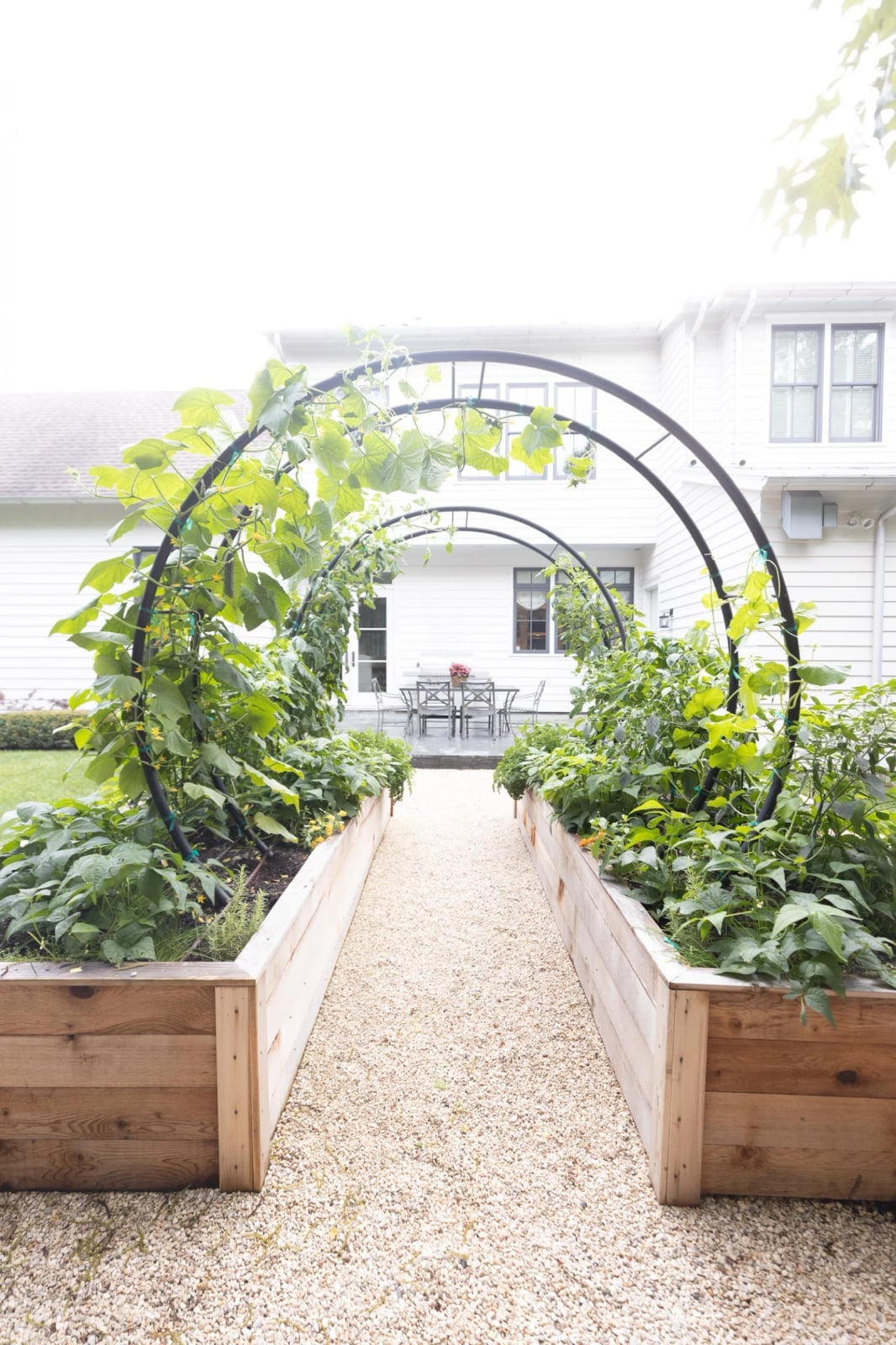
The metal arch trellises that curve over these wooden raised beds define the layout as much as the plants do. A straight pathway runs between two long beds, and the arches frame the walkway without blocking access to either side. The effect is an open plan garden that is not divided into separate zones. For a similar setup, choose trellis shapes that match the width of the bed so the arch lands on the outer edges. Grey gravel underfoot keeps the look clean and ties the wood and metal together.
Rustic Raised Bed With Hanging Baskets
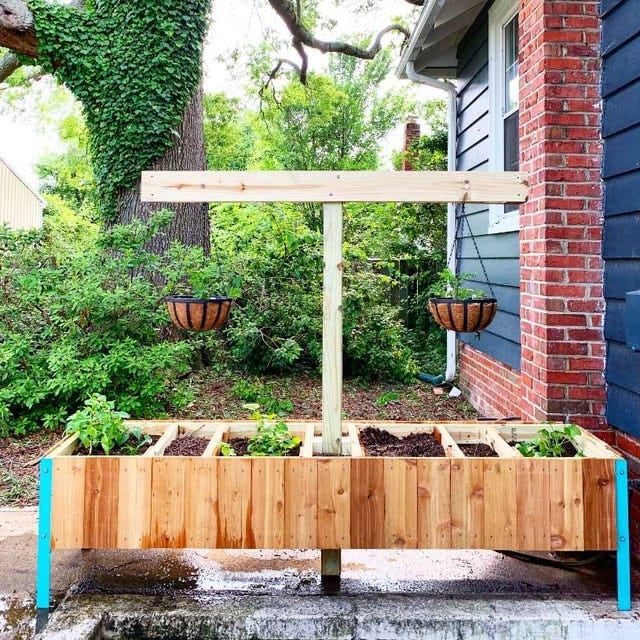
A practical rule for a small garden is to use vertical space before you expand the footprint. This rustic wooden raised bed comes with a support structure that holds hanging baskets, so you can plant above and below without crowding the ground level. The blue accents on the wood add a subtle color contrast against the natural tones. For renters, a freestanding raised bed with a built-in frame for baskets means you can take the whole setup with you. No need to drill into walls or pour concrete. Just place it on a level patch of soil or gravel and start planting.
Large Square Wooden Bed With Hydrangeas
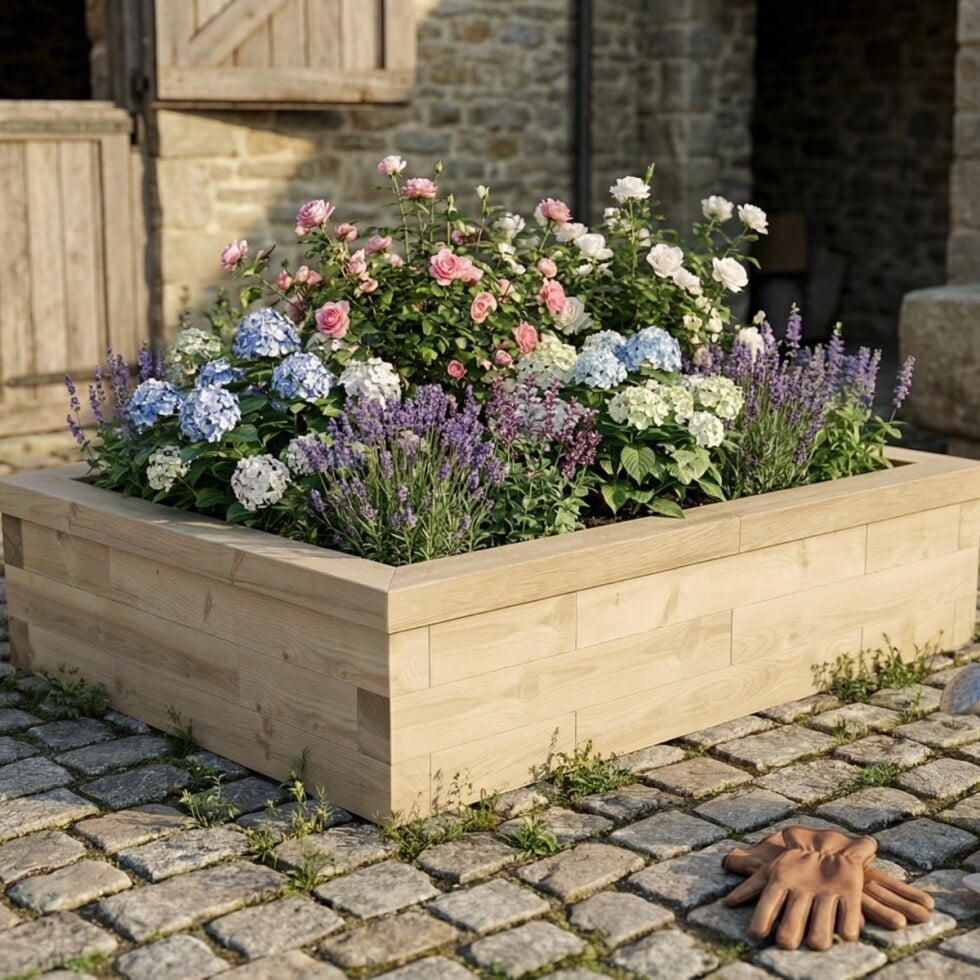
A single large square wooden bed is a different proposition from a row of narrow beds. Instead of compartmentalizing your plants, you get one generous canvas for a lush display. Here, hydrangeas in pink and blue share space with lavender, and the natural wood frame recedes so the flowers take center stage. The palette leans on cool purples and soft pinks against the warm wood, a combination that feels classic without being fussy.
What makes this layout work is the proportion of the bed relative to the surrounding stone. The wood is thick enough to feel substantial, but not so tall that it hides the lower blooms. For a similar look, keep the bed square or nearly square, and let the plants spill over the edges to soften the lines.
Curved Wicker Raised Garden Beds
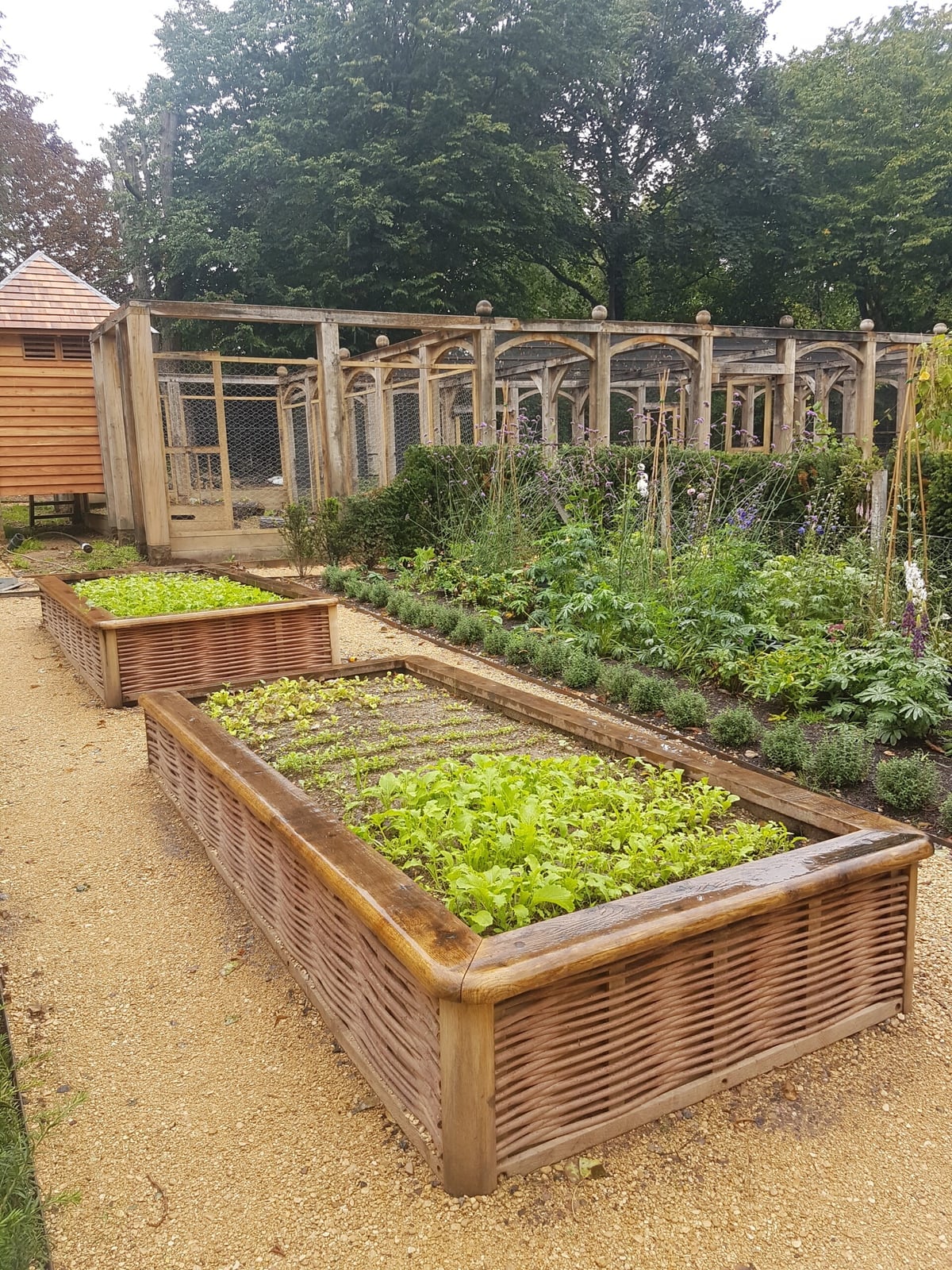
Curved wicker raised beds have a softer silhouette than standard rectangular boxes. Two of them sit side by side in this garden, and the rounded shape makes the planting area feel roomy without taking up extra square footage. The wicker material introduces a natural texture that fits an organic garden style, and its beige tone blends with the surrounding greenery. For longevity, look for wicker that is treated for outdoor use or made from synthetic fibers designed to resist moisture. The curve also makes it easier to reach plants from multiple angles.
Farmhouse Style Wooden Raised Beds in Gravel
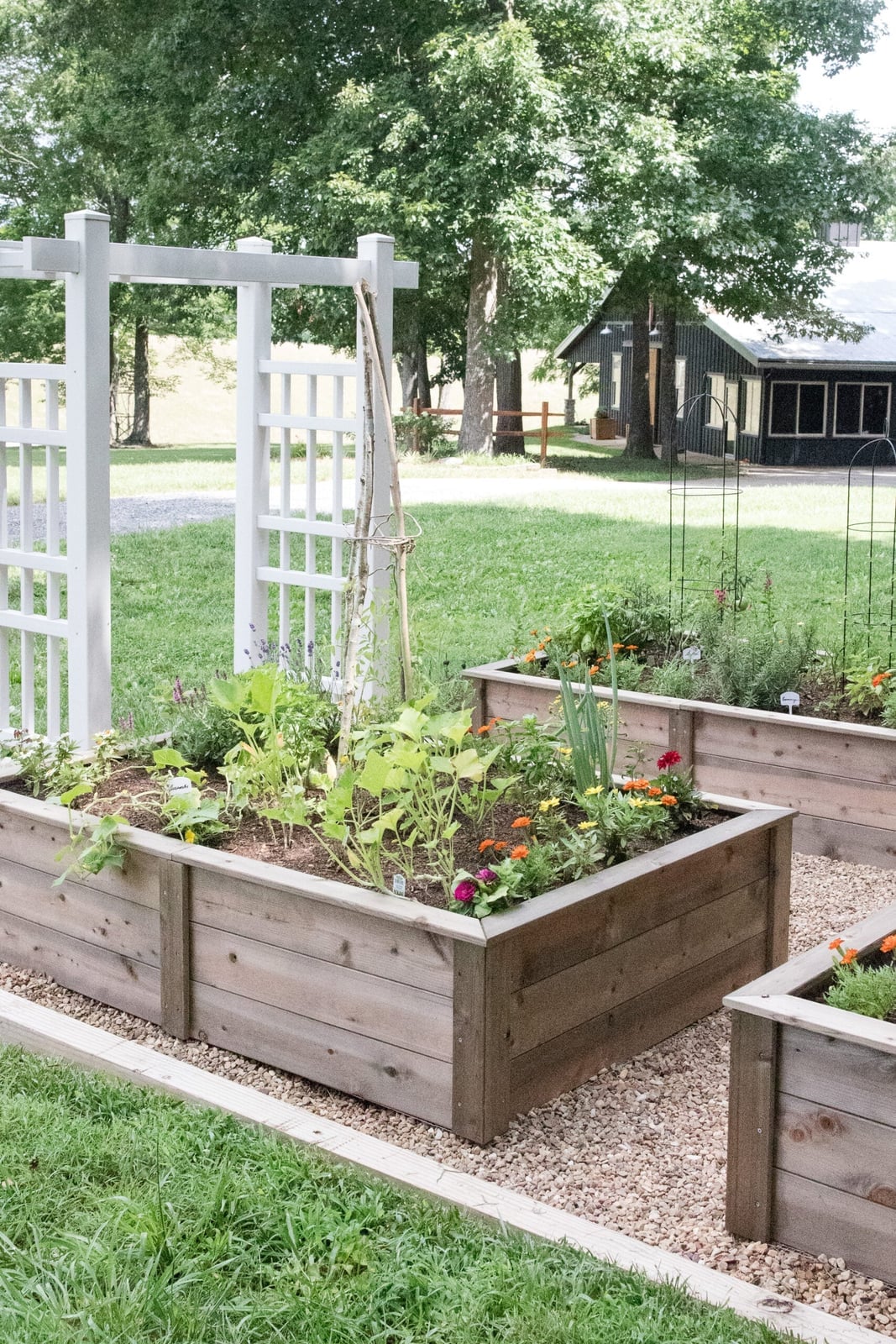
This setup gets the farmhouse look right through proportion. Multiple wooden beds sit in a gravel area, and the wide spacing between them allows for easy movement with a wheelbarrow or garden cart. A white trellis at the back adds vertical structure. The gravel serves a dual purpose: it suppresses weeds and creates a clean visual break between the dark soil and the lawn. For a similar feel, keep the beds simple and rectangular, and let the repetition of the forms do the work. The bright daylight here emphasizes the natural wood tones against the pale gravel.
White Corrugated Metal Beds on Brick Patio
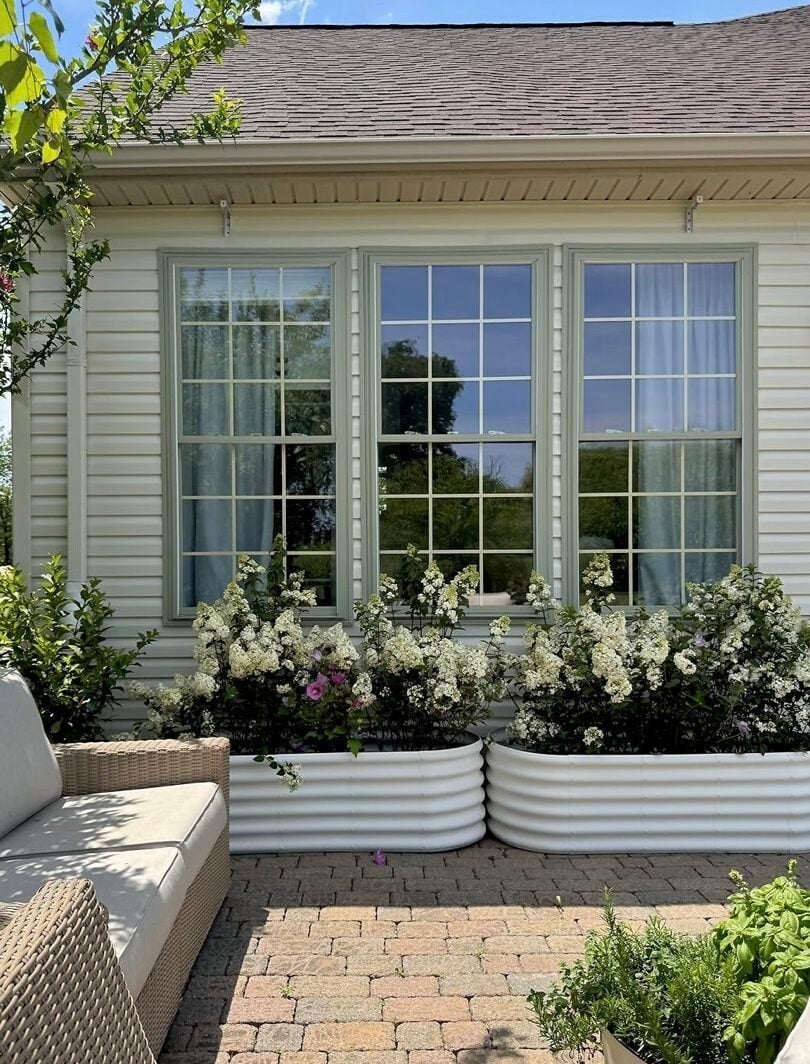
White corrugated metal beds echo the house siding, which is a practical way to connect a garden structure to the architecture behind it. The beds run along the house exterior, leaving the brick patio open for an outdoor sofa and potted plants. The white finish reads as clean and modern, while the corrugated texture adds a subtle industrial note that keeps the setup from feeling too precious. The green of the plants becomes the main color, with grey brick and wicker accents filling out the palette.
Square Rusted Steel Planter With Small Tree
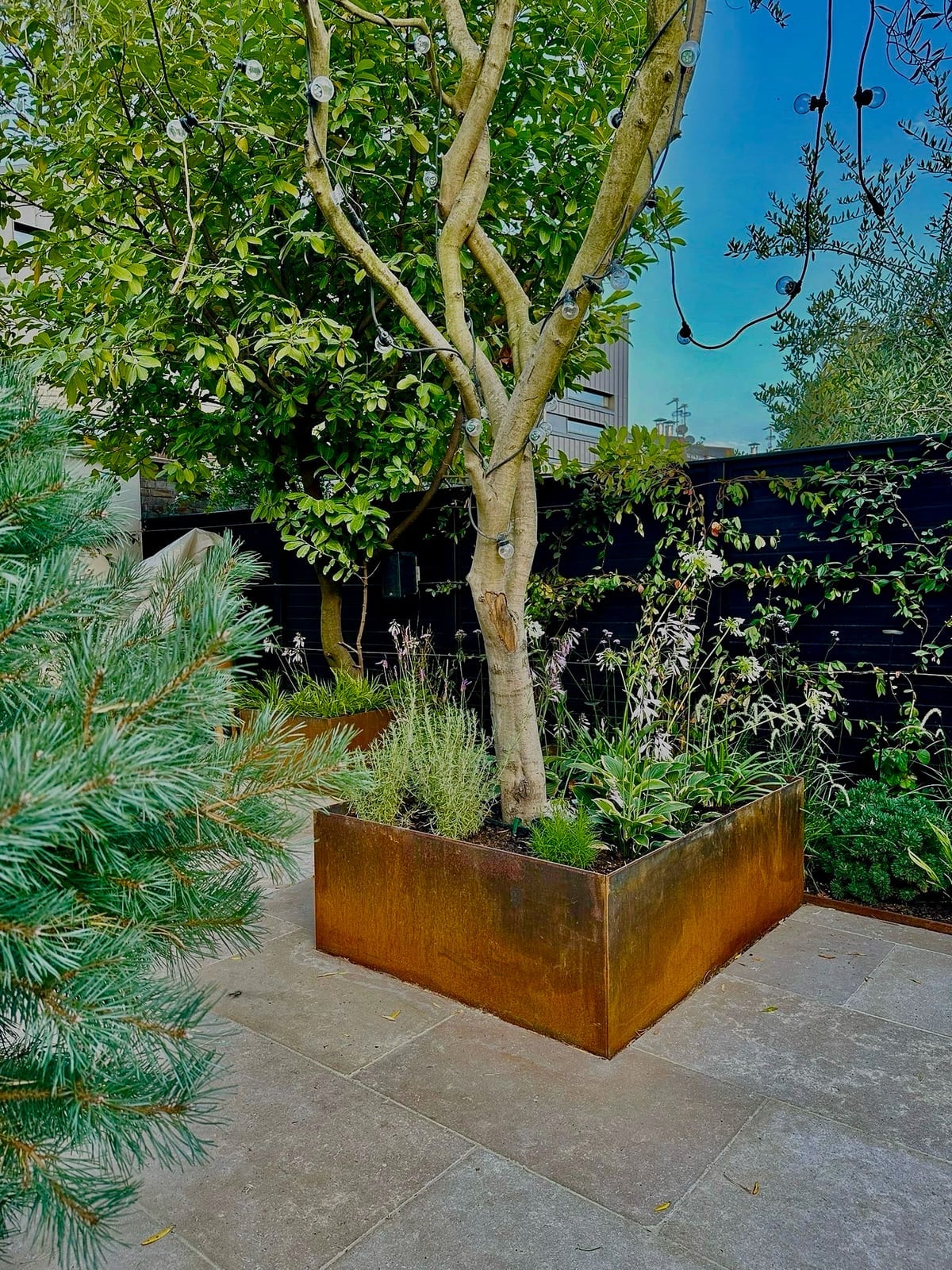
The square rusted steel planter holds a small tree and sits on stone pavers surrounded by gravel. The rust finish gives the planter a warm, earthy tone that blends with the grey of the stone and the green of the foliage. This setup works well for a modern garden where you want a single focal piece rather than a row of beds. The gravel base keeps maintenance low and defines the planter area without needing a border.
Rustic Raised Bed From Weathered Wooden Planks
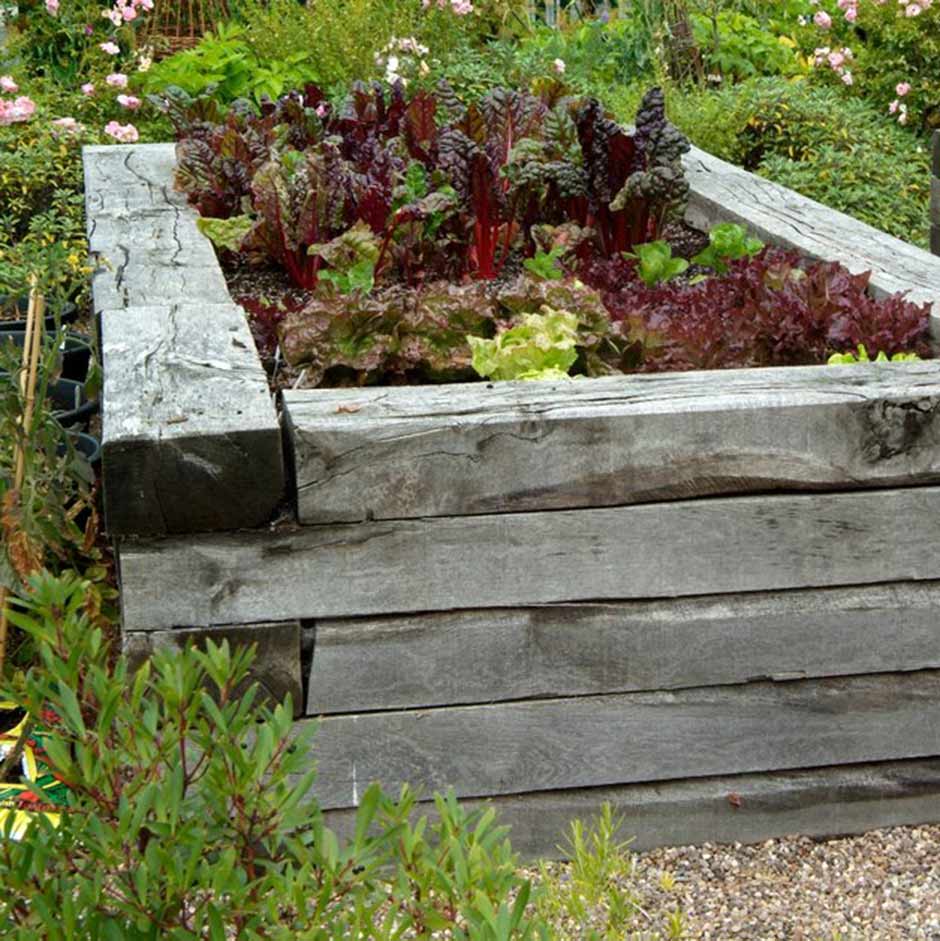
Weathered wooden planks give a raised bed a rustic look that fits a corner of the garden without feeling polished. The grey wood tones down the green of the plants and the red accents in the flowers. A good rule for rustic beds is to let the wood age naturally instead of staining it. The gravel around the bed keeps soil from splashing onto the planks and makes the edge between bed and path clean.
Wooden Raised Bed Filled With Fresh Vegetables
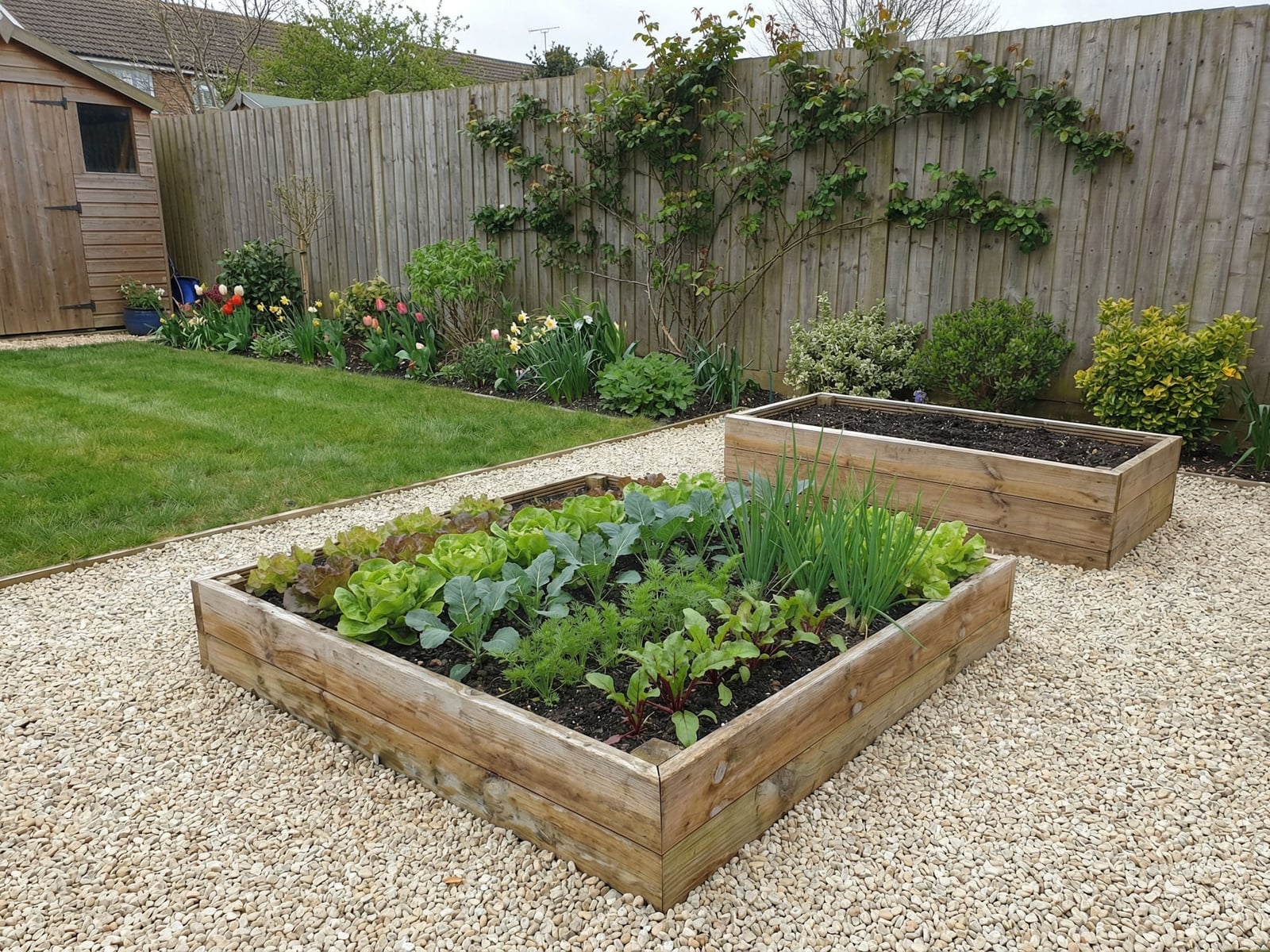
Most vegetable garden photos show beds in full sun, but this one is under overcast daylight, which softens the contrast between the wood tones, green leaves, and white gravel. The wooden raised bed holds lettuce, cabbage, and onions in neat rows. Overcast light is actually ideal for leafy greens because it reduces heat stress and keeps the soil from drying out as fast. The gravel path around the bed keeps mud off your shoes and makes harvesting easier after a rain.
Corrugated Metal Raised Bed With Herbs and Flowers
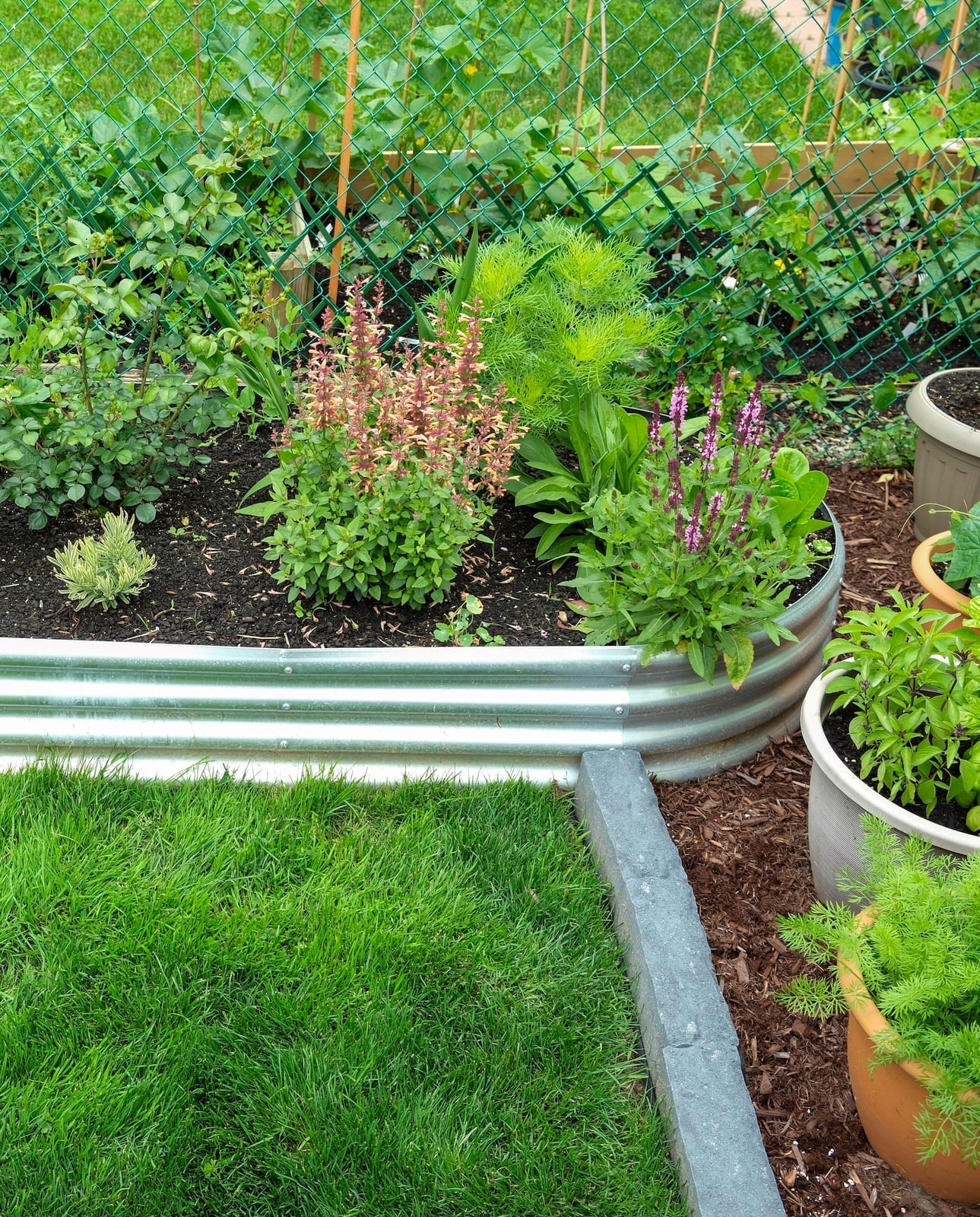
A corrugated metal raised bed holds a mix of herbs and flowers, with the silver metal providing a neutral backdrop for the green and brown tones of the plants and soil. The bed sits on grass, which gives it a casual, integrated feel. The corrugated texture adds visual interest. For a small garden, a single metal bed like this can hold a surprising amount of produce.
Rustic Wooden Beds With White Stone Paver Paths
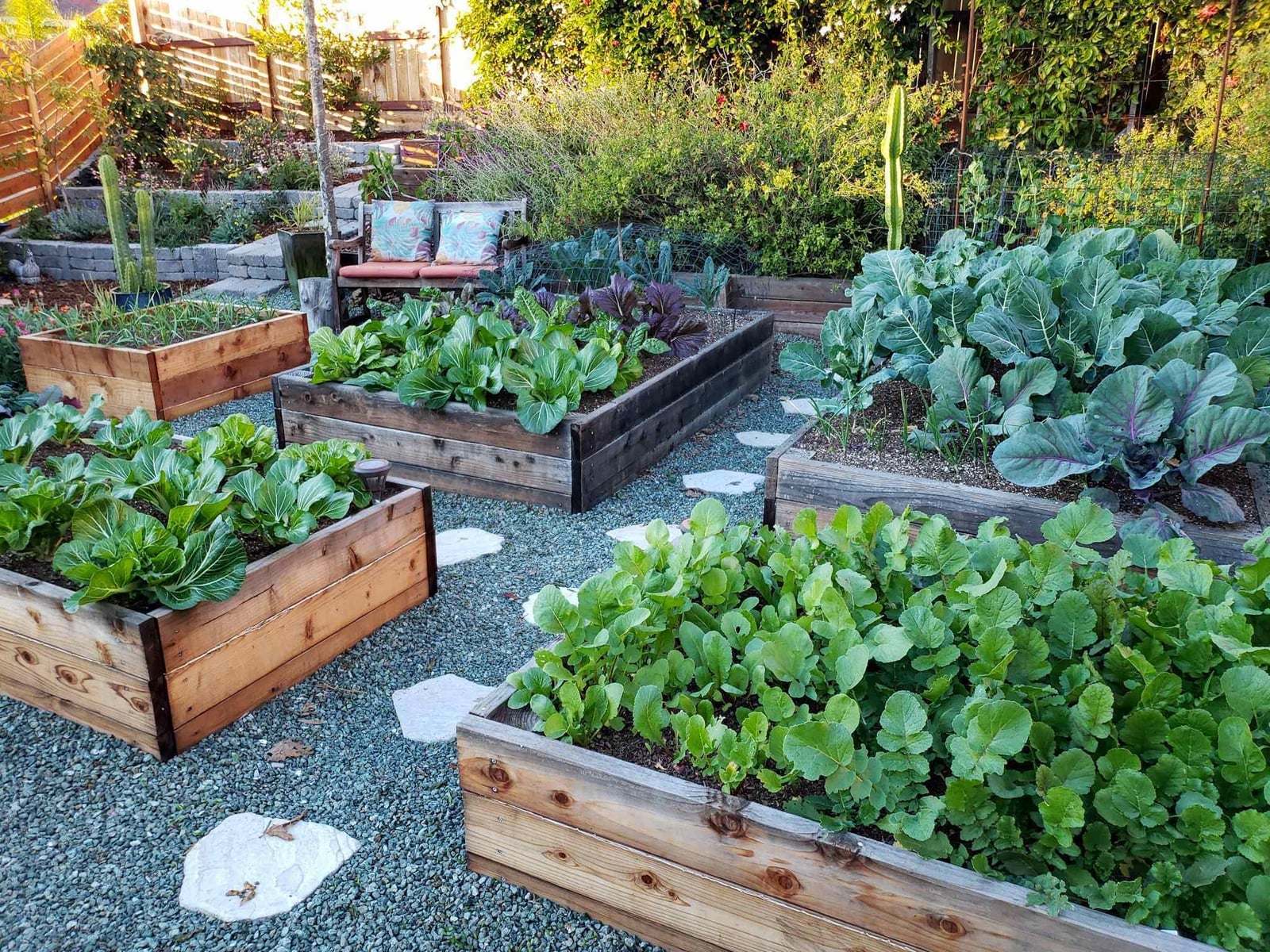
These rustic wooden beds keep the layout simple so the abundance of lush green vegetables can take center stage. The beds are arranged with gravel paths between them, and a bench with cushions sits nearby. Wood tones mix with the grey of the gravel and the orange glow of golden hour daylight. The white stone pavers break up the path and add a cleaner line against the rough wood. If you want to define zones in a roomy garden without adding permanent structures, a paver path is a straightforward swap that still feels intentional.
Curved Black Raised Beds for Seedlings
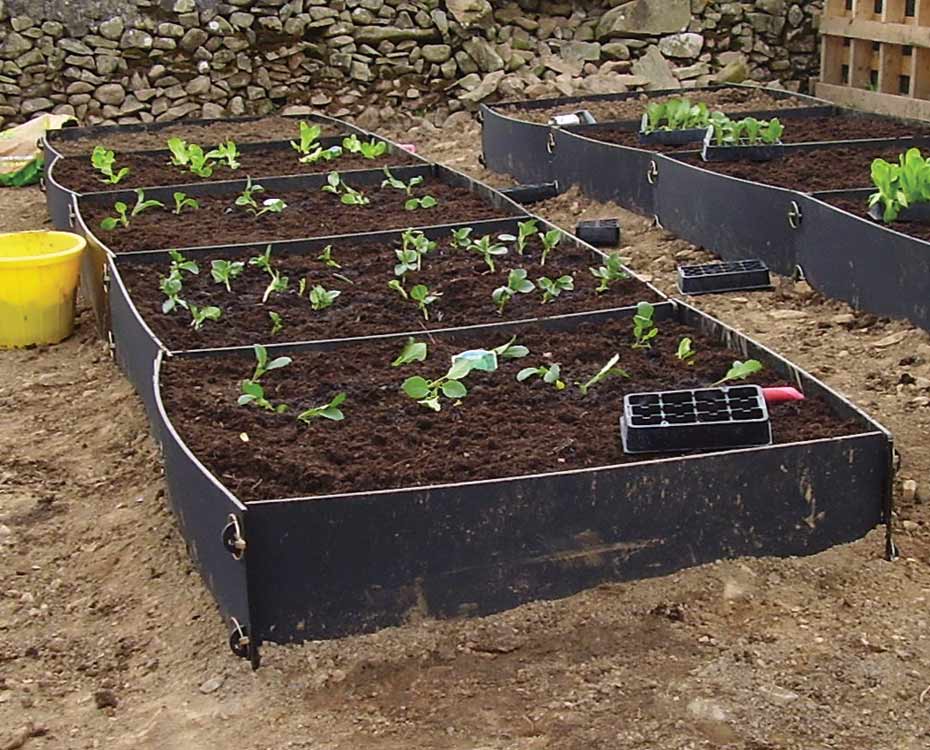
A standard rectangular bed does the job, but a curved black raised bed brings a modern edge that changes how you move through the garden. These beds are made from plastic and sit in a field with seedling trays already in place. The black finish stands out against the green of the soil and young plants, so the beds themselves become part of the design rather than just a container. Daylight makes the contrast even sharper.
For renters, curved black raised garden beds are a smart choice because plastic is lightweight and easy to move when the lease ends. You get a contemporary look without altering the ground underneath, and the curve softens the overall layout compared to rigid corners. The dark color also warms up faster in spring, which gives seedlings a small head start.
Expansive Country Garden With Large Wooden Beds
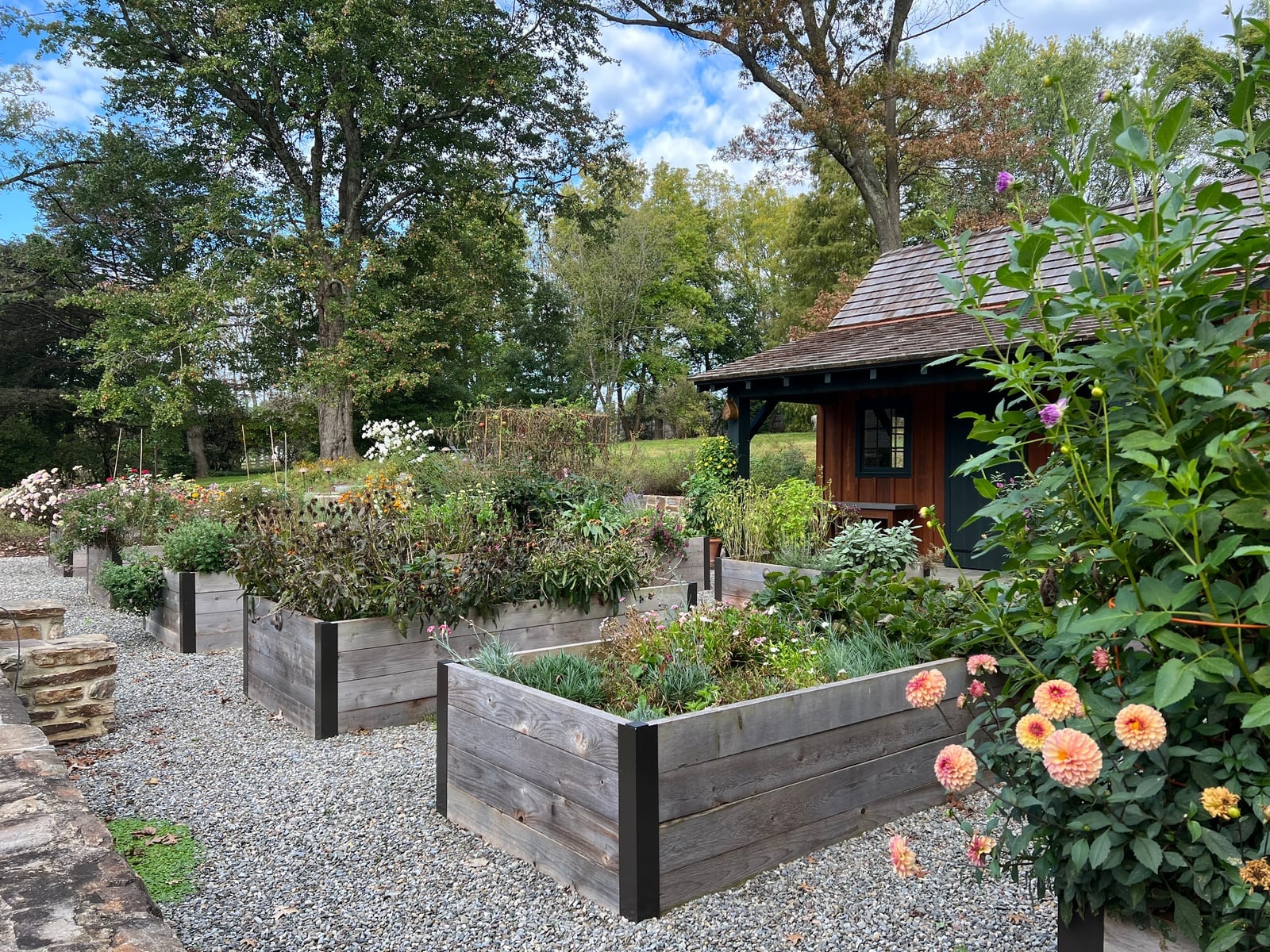
The scale of these large wooden raised beds matches the roomy feel of the country garden around them. Multiple beds sit in a wide layout with stone edging and gravel paths between them. The wood, green, pink, and orange palette ties the garden together. Keeping the beds proportional to the open space stops the garden from feeling crowded, while the stone edging adds a crisp boundary.
Multi-Level Recycled Plastic Raised Bed
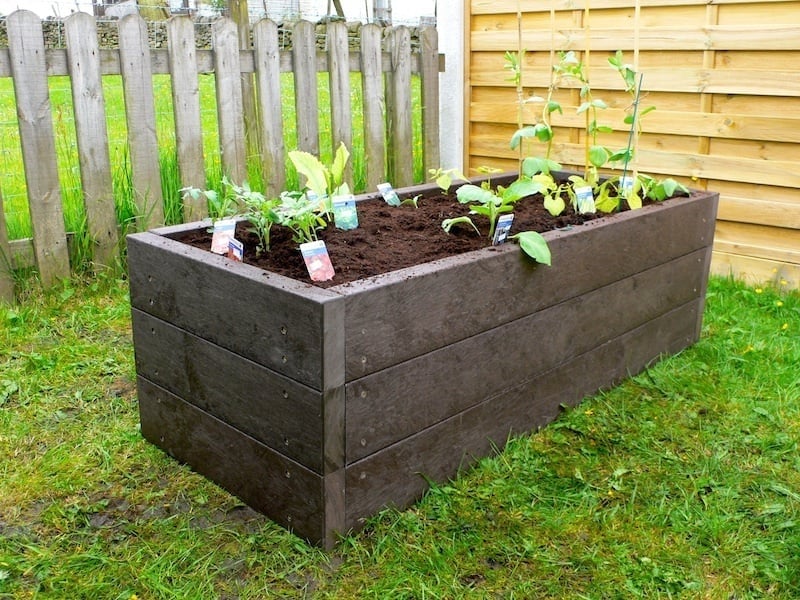
This single unit uses a dark brown recycled plastic material that holds its color and shape across seasons. The multi-level design creates separate planting zones within one footprint, so you can grow shallow-rooted herbs on the top tier and deeper vegetables below. Recycled plastic is a durable option that does not splinter, rot, or need yearly sealing like untreated wood. The brown finish blends into the garden rather than shouting for attention, and the material handles daylight without fading or cracking.
Final Thoughts
A raised bed is a tool, not just a container. The ones that work best match the gardener’s reach, the site’s drainage, and the season’s light. Wood weathers, steel rusts, and gravel shifts, but that is part of the garden’s rhythm. Keep paths wide enough for a wheelbarrow and a kneeling pad. Check your USDA zone before planting, and let the bed’s material guide your upkeep. The best garden bed is the one you actually fill with soil and seed.