
Garden design can feel like a puzzle with too many pieces. This article walks through 34 real-world looks that solve specific outdoor challenges, from rooftop terraces to cottage borders. Expect practical ideas on layout, materials, lighting, and planting that you can adapt to your own space, no matter its size or style.
Each look focuses on one clear principle, keeping the rest of the garden simple so the idea reads clearly. Whether you are starting from bare soil or working with an established yard, this guide offers a starting point for thinking about your garden in a new way.
Geometric Garden Layout
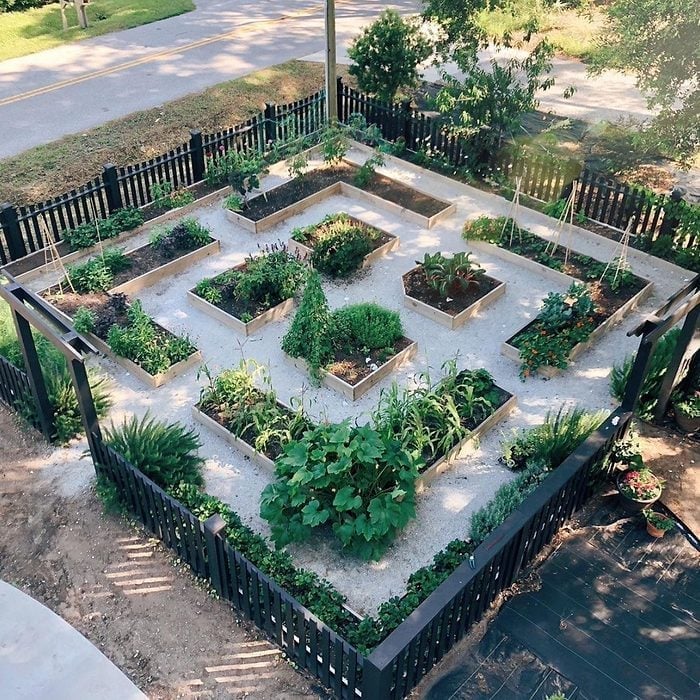
The vegetable beds run in clean parallel lines, with fencing and trellises framing the far edge. Wood tones against gray gravel keep the organization from reading as rigid. The overhead view shows how the geometry gives structure to a roomy space without clutter. A practical layout principle: align beds along a single axis so the garden reads as one designed room rather than a collection of plots.
Cottage Garden Palette
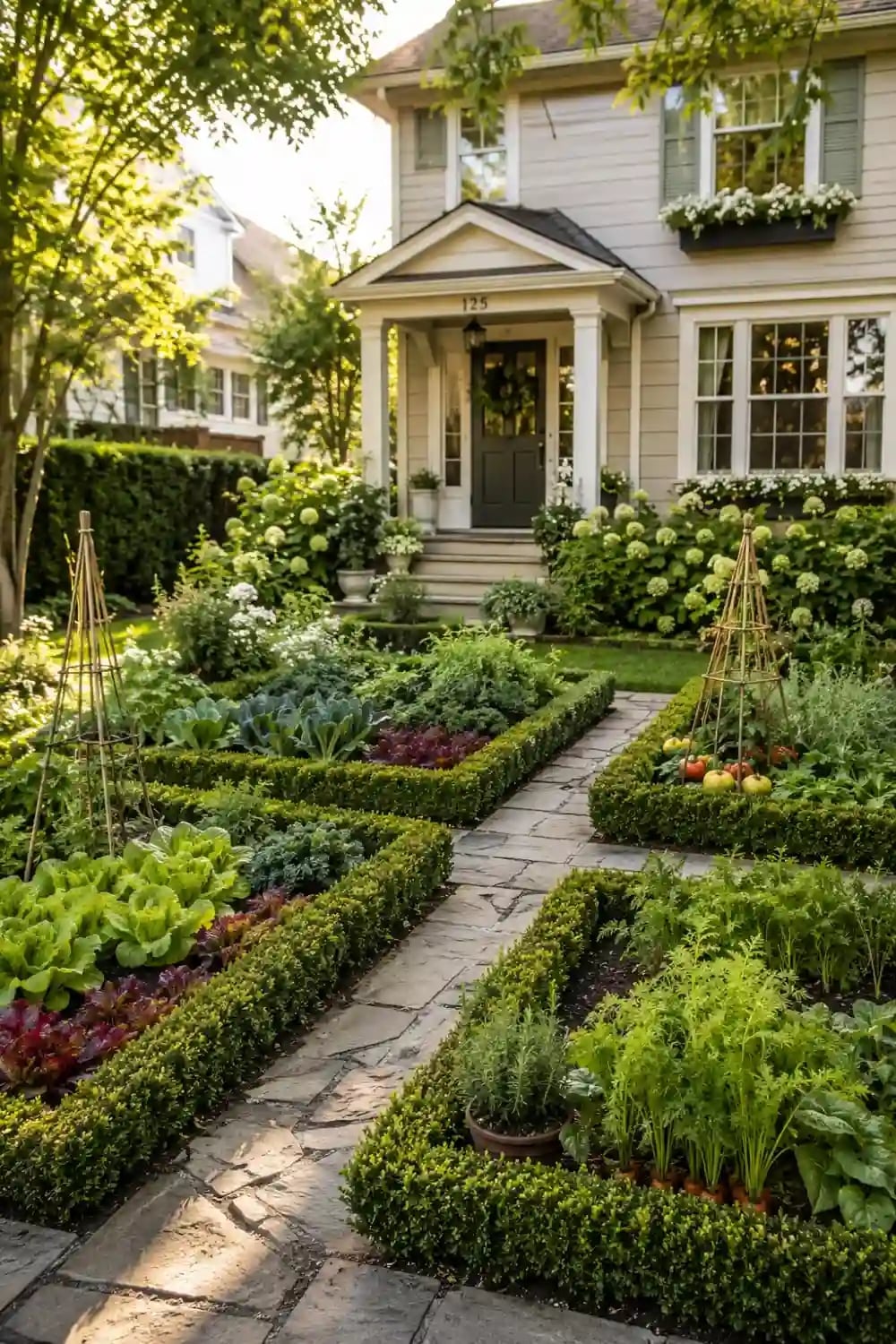
This front yard balances formal vegetable beds with a winding stone path for a looser feel. Boxwood provides the green backbone, while flowers add pink, red, and white accents. The palette principle: use a neutral base of stone and evergreen to anchor brighter seasonal color. The path breaks the formality by curving between beds, which stops the garden from feeling like a straight grid.
Farmhouse Garden Materials
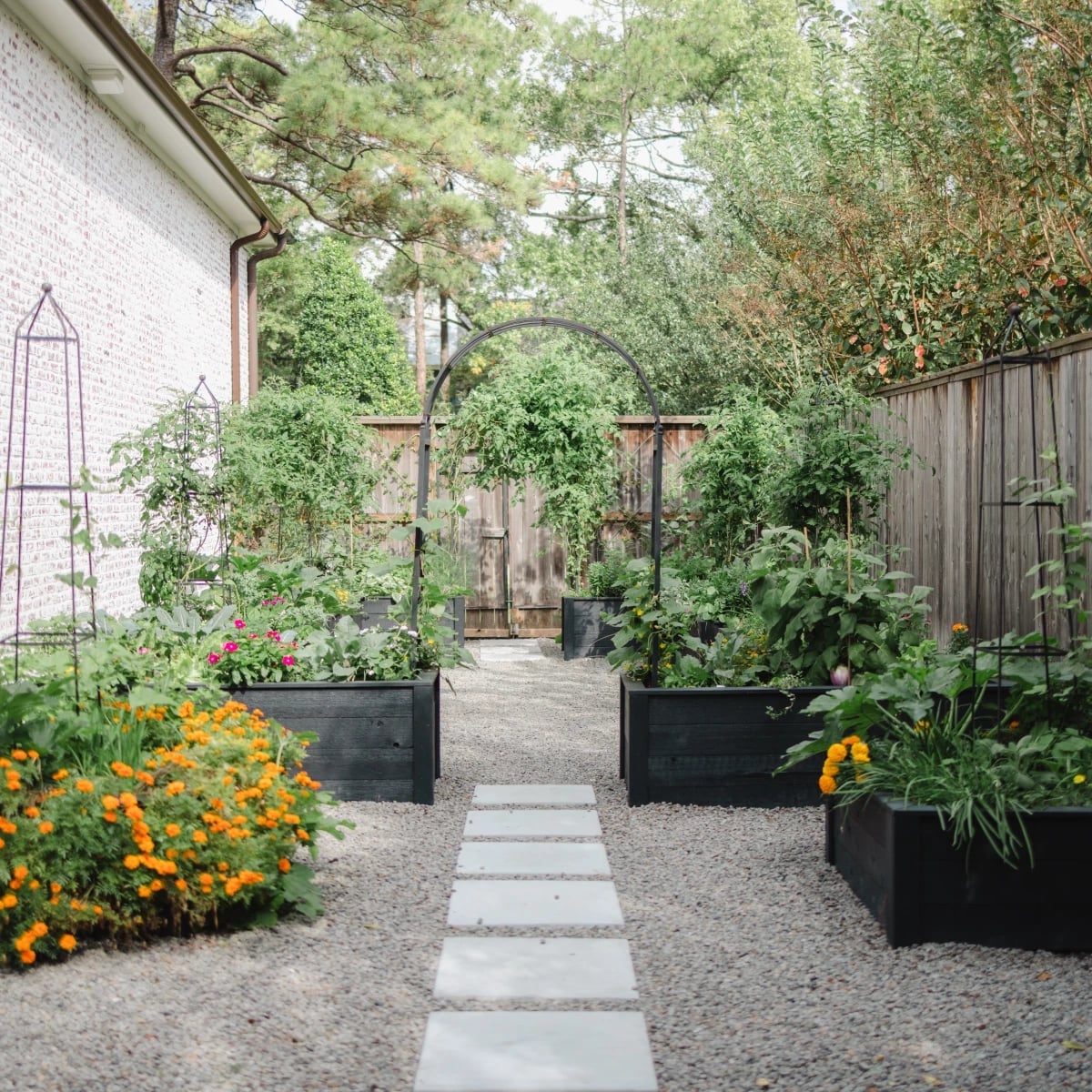
What makes black raised beds work in a farmhouse garden? They create contrast against gravel paths and green planting. The archway adds vertical interest without blocking the view through the garden. Marigolds in orange punch against the dark metal and wood. The style relies on a material ratio: roughly two-thirds natural wood and stone to one-third painted metal. That balance keeps the look modern rather than industrial.
Rooftop Terrace Lighting
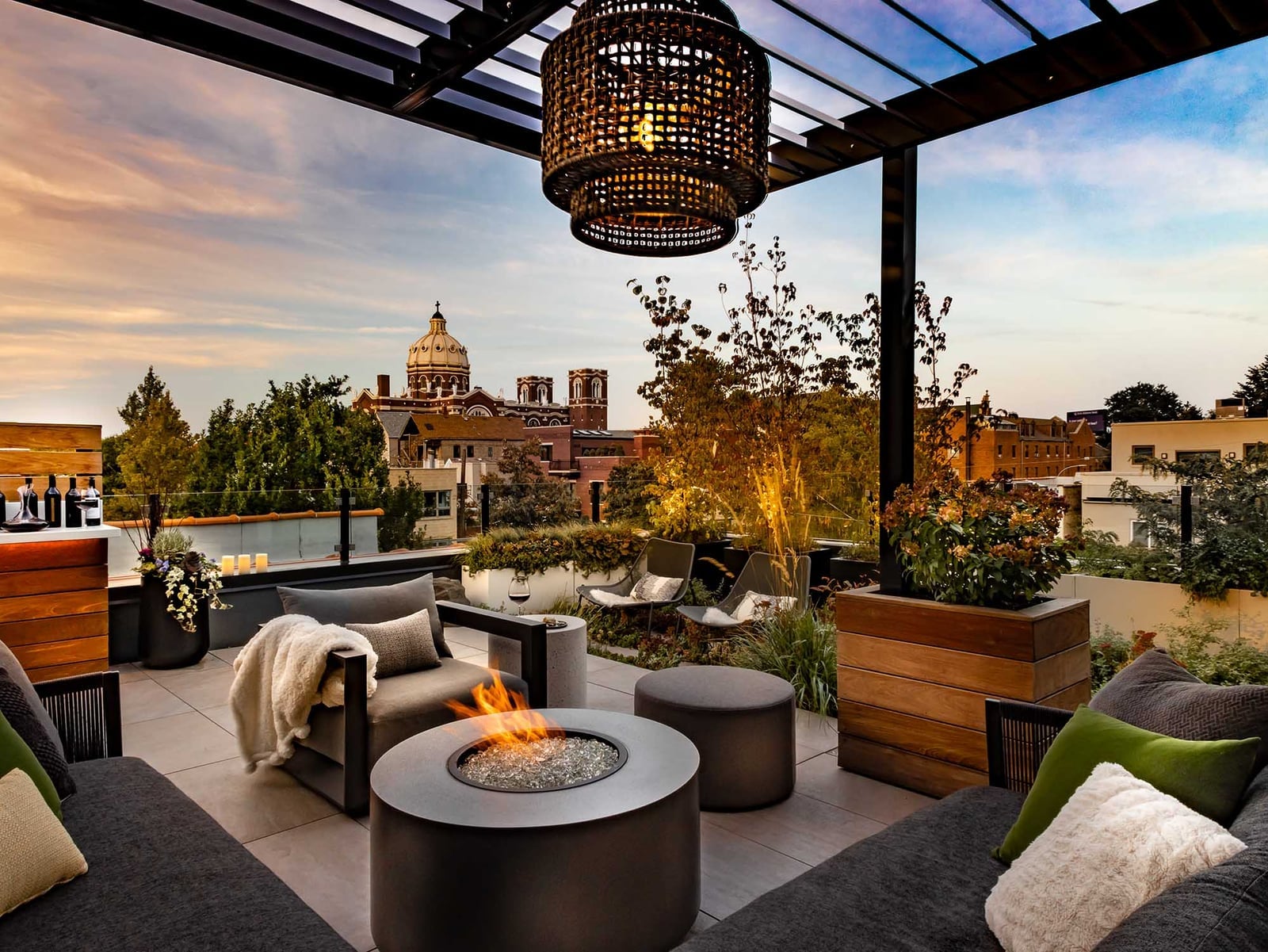
Sunset light fades behind the skyline, while a large woven pendant casts a warm glow over the seating area. Candles on the fire pit surround add flicker at ground level. The lighting trick: place the pendant directly above the main seating zone and use candles around the perimeter. This creates a pool of light for conversation and keeps the terrace edges dim for privacy.
Contemporary Garden Pathways
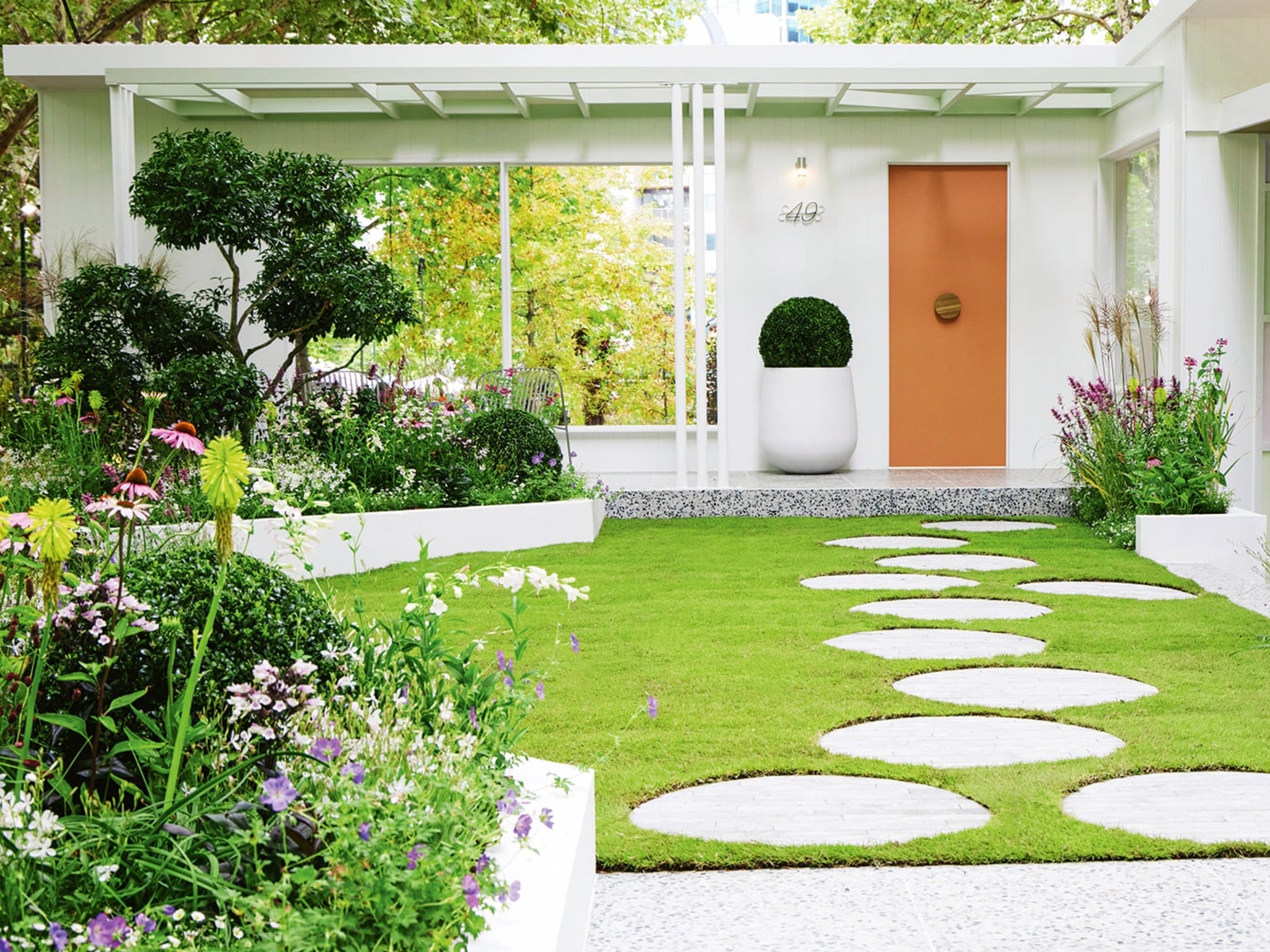
A practical rule for stepping stones: space them to match a natural stride so the path feels intuitive. Here circular concrete stones sit in a manicured lawn, with modern planters and trees at the edges. The gap between stones allows grass to grow through, keeping the lawn intact. This scale works when the stones are large enough to feel substantial against the open green.
Urban Garden Zoning
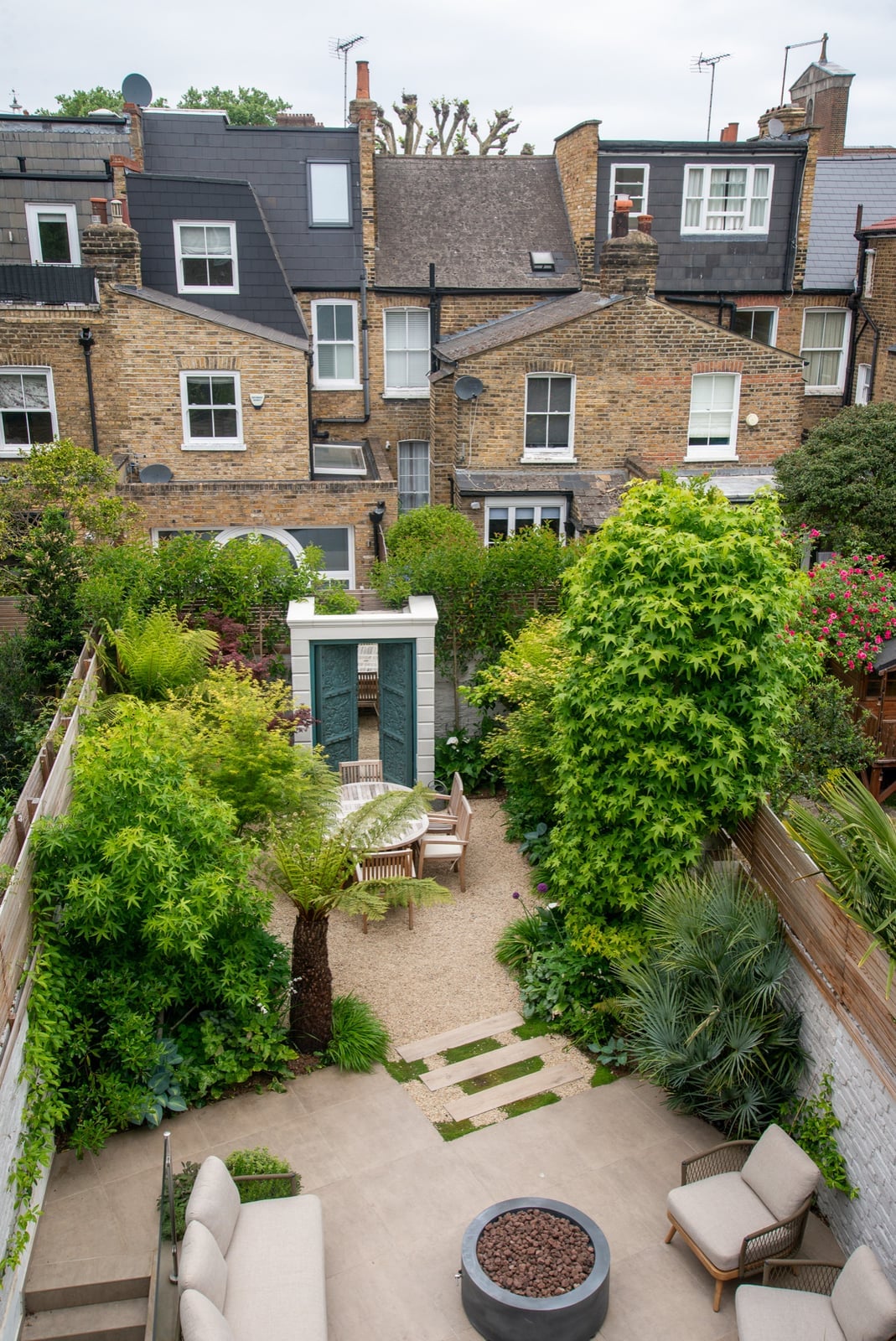
Think of an urban garden less as one big space and more as a set of smaller rooms. A compact urban garden layout works best when you separate functions with different ground materials. Here, a gravel area around a fire pit and a patio under the seating zone create two distinct destinations without a single wall. A storage shed tucks into the back, keeping tools out of sight. The trick is to keep the palette tight. Sticking to greens, browns and gray across the wood, stone and brick makes the whole thing read as one cohesive garden, not a patchwork of leftover ideas.
Tropical Poolside Materials
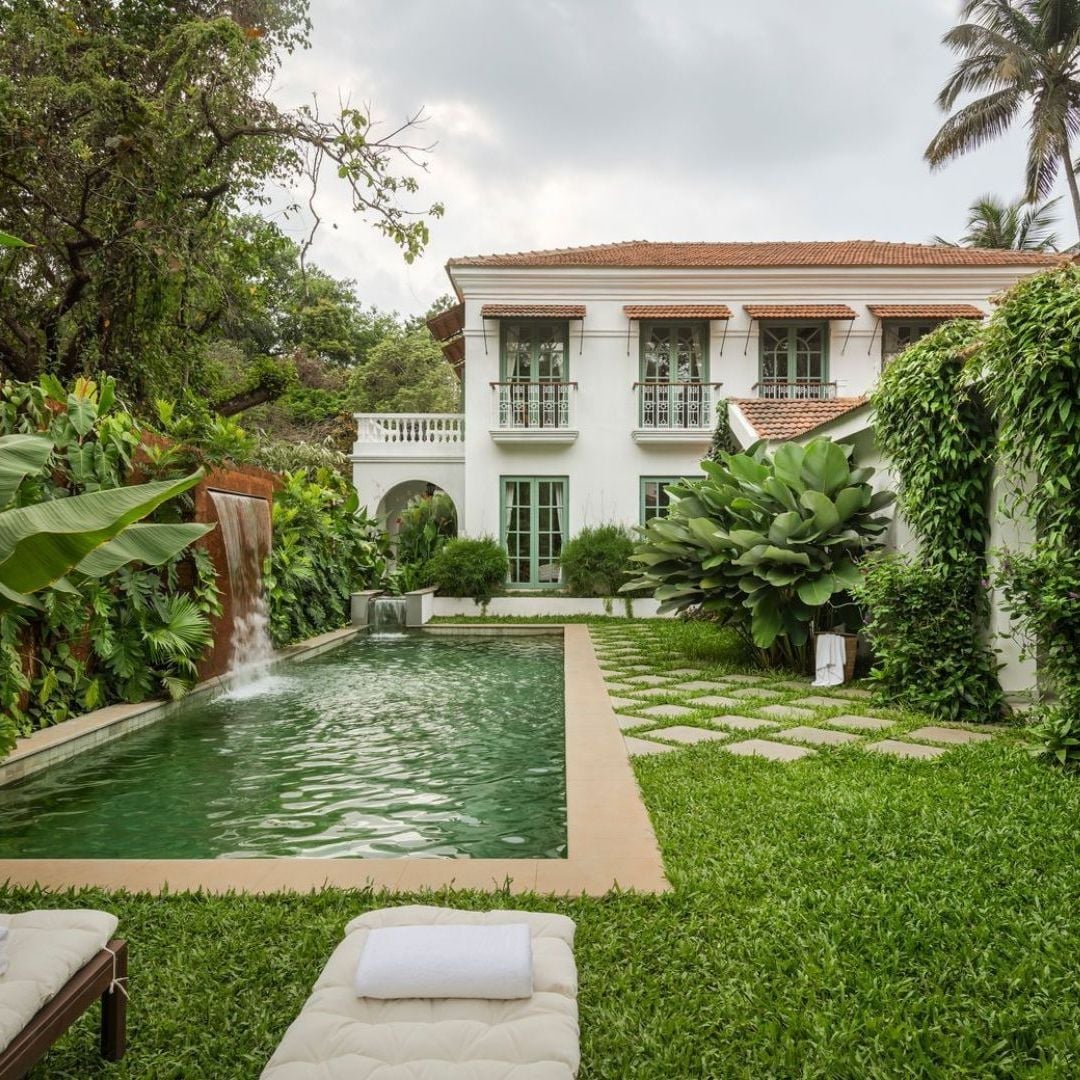
A tropical modern poolside waterfall turns a swimming pool into a focal point, but the real trick is what surrounds it. Stone paths and concrete lounging areas break up all that green lawn and lush planting, giving the eye a place to rest. The terracotta and white accents keep the palette from going too jungle heavy, so the whole scene feels intentional rather than overgrown.
Naturalistic Garden Planting
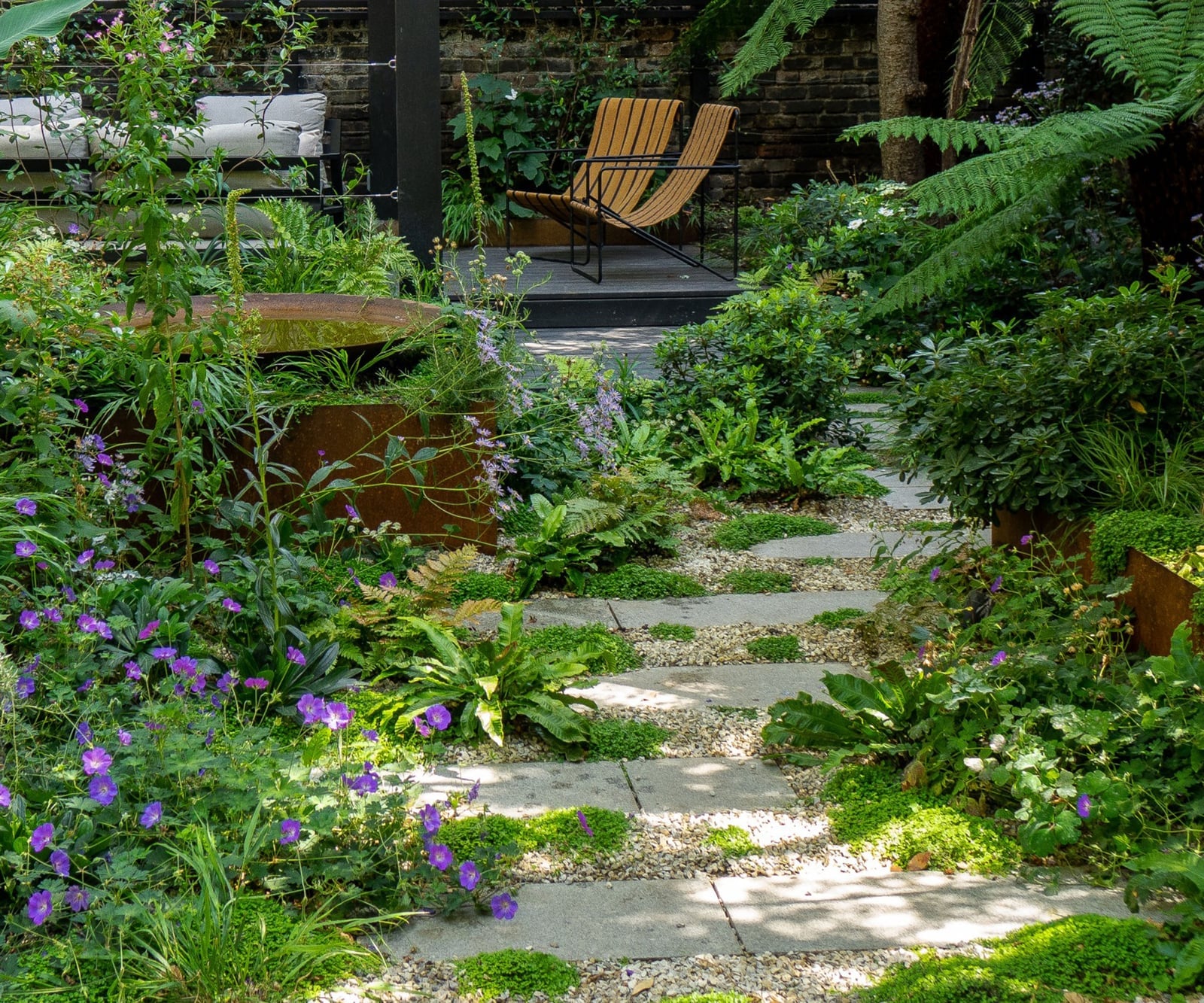
A naturalistic garden path with rusted metal planters proves that hardscape can be just as expressive as the plants. The winding stepping stones with gravel inserts lead you through dense ferns and purple flowers, while those rusted containers add a warm, earthy note that plays off the cool gray stone. The key is contrast: soft foliage against rigid metal, smooth path stones against crunchy gravel. It gives the garden texture you can see and hear as you walk.
Modern Cottage Planting
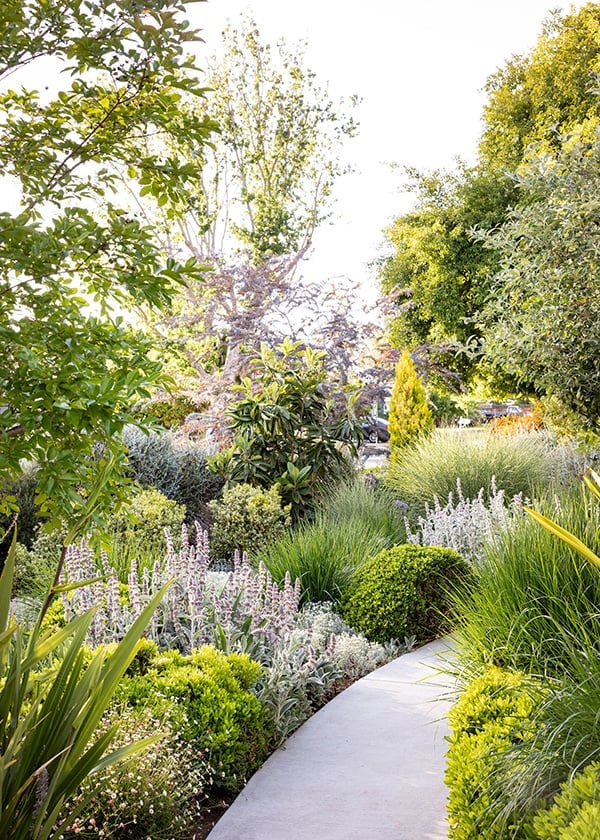
Can a front yard feel both orderly and overflowing at the same time? A modern cottage front yard planting answers that with a curved stone pathway cutting through a dense mix of ornamental grasses and flowering shrubs. The gray gravel and stone keep the structure clean, while the purple and white blooms add that cottage softness. The trick is the pathway: it gives the eye a clear route through what could otherwise feel chaotic, so the abundance feels lush and intentional.
Deck Pergola Lighting
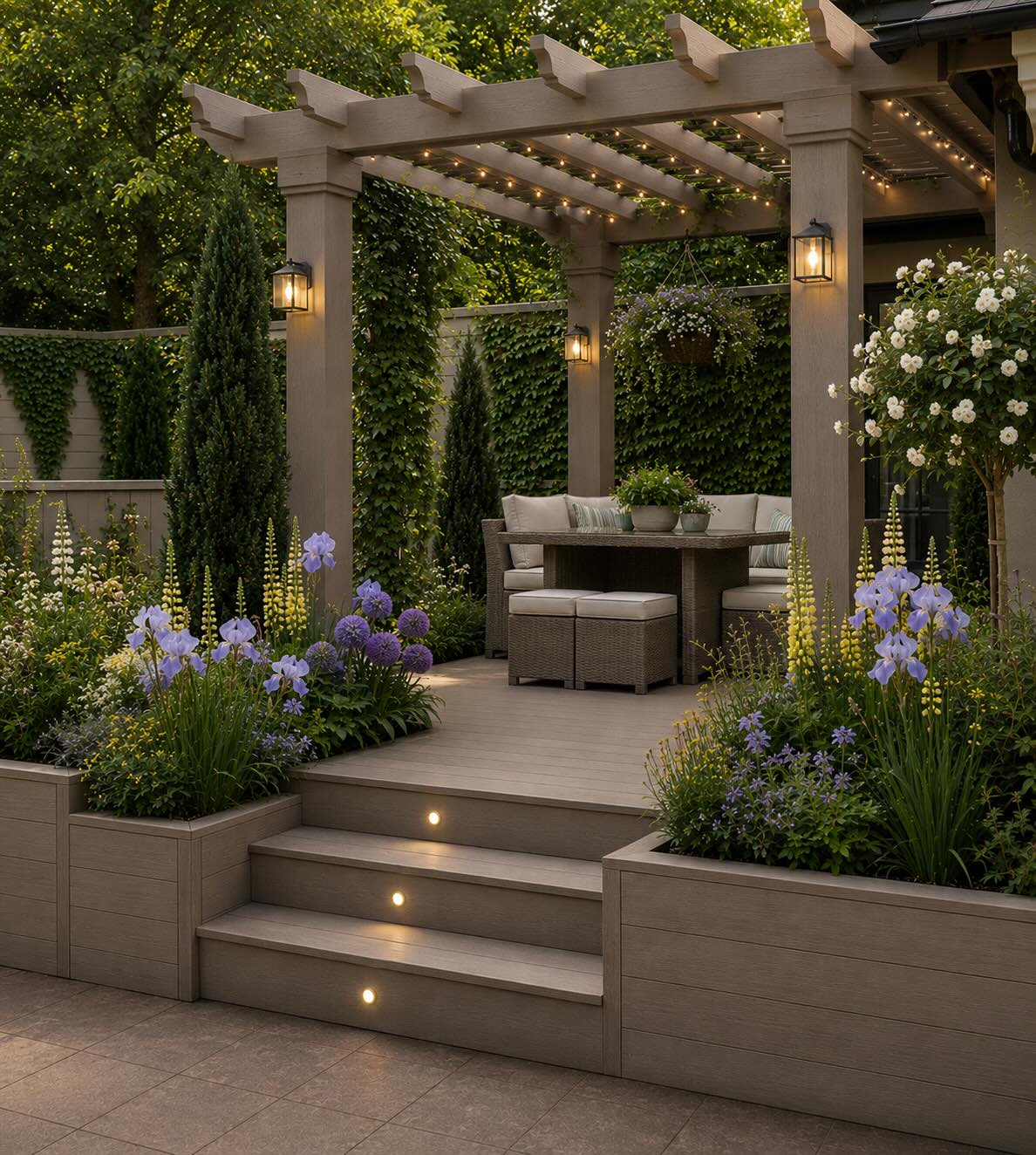
A modern deck pergola dining set gets its evening life from string lights woven through the beams overhead. In daylight, the wood and composite structure frames the dining area without blocking the garden view. The real move is how the raised planters around the deck soften the pergola’s edges, so the whole setup feels like it grew there rather than being bolted down. When the sun drops, those lights turn the dining table into the room’s natural center.
Cottage Garden Scale
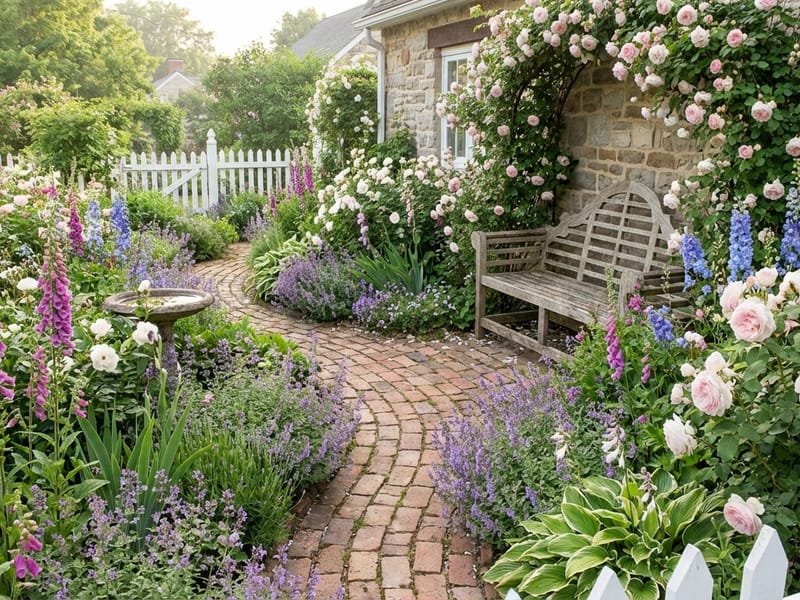
A winding brick path works best when it leads the eye somewhere, not just across the lawn. In this cottage garden, the curved brick path draws you past abundant pink, purple, and white flowers toward a wooden bench and bird bath, with a picket fence closing the view. The intimacy comes from scale: the path is narrow enough that plants brush against it, making the garden feel fuller than its actual size. The soft daylight keeps the palette from reading as busy, letting the brick and stone ground all that flowering growth.
Japanese Garden Materials
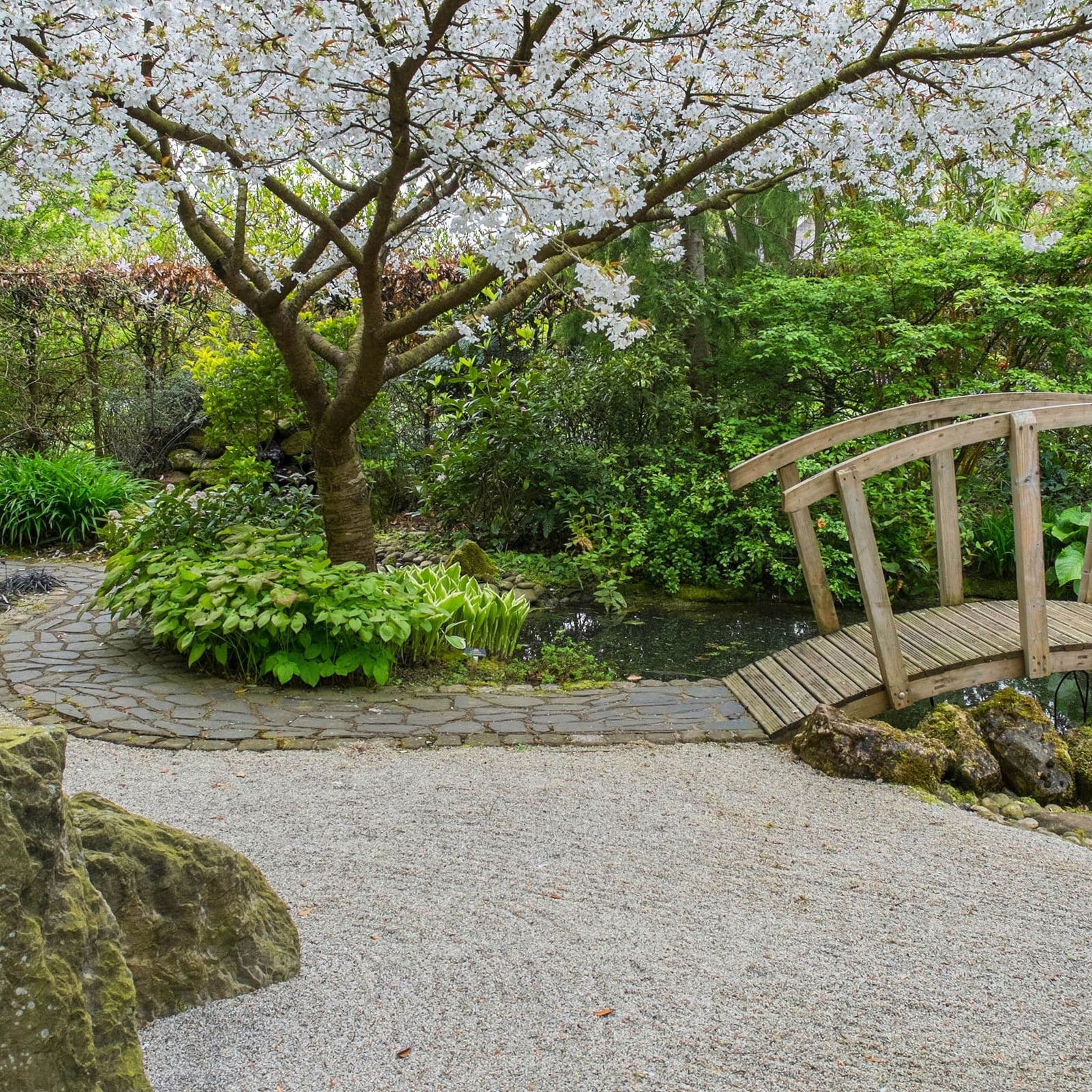
A Japanese garden can feel like a still life, but this one reads more like a living landscape. The raked gravel spreads out in clean lines, leading toward a curved wooden bridge that arches over a pond. Large rocks sit among patches of moss, breaking up the green and gray palette with solid weight. The overcast daylight flattens shadows, which helps the gravel texture stand out instead of competing with the stones.
What sets this apart from a stricter zen garden is the bridge: it adds a human gesture, a curve that pulls you across the water rather than asking you to sit and stare. The materials stay natural, but the layout invites movement. Gravel, stone, wood, and moss each hold their own space without blending into one another.
Cottage Garden Styling
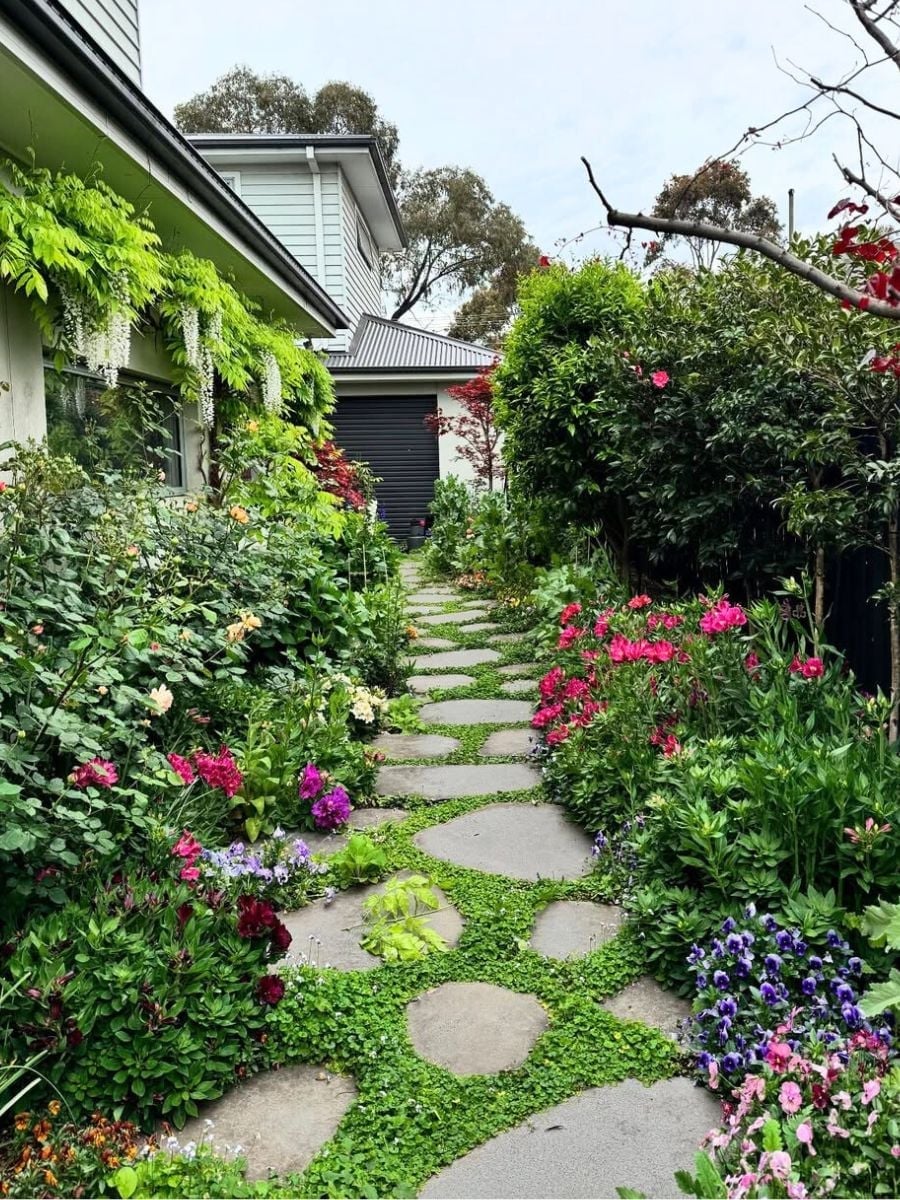
The stepping stone path curves through dense planting, with vibrant pink, purple, and white flowers flanking both sides. The stones are set into gravel, which keeps the path defined without hardening the look. Overcast daylight mutes the contrast between the gray stone and the bright blooms, so the path blends into the garden as a natural part of the scenery. The pink, purple, and white flowers with green foliage create a cohesive, slightly romantic feel.
Contemporary Garden Seating
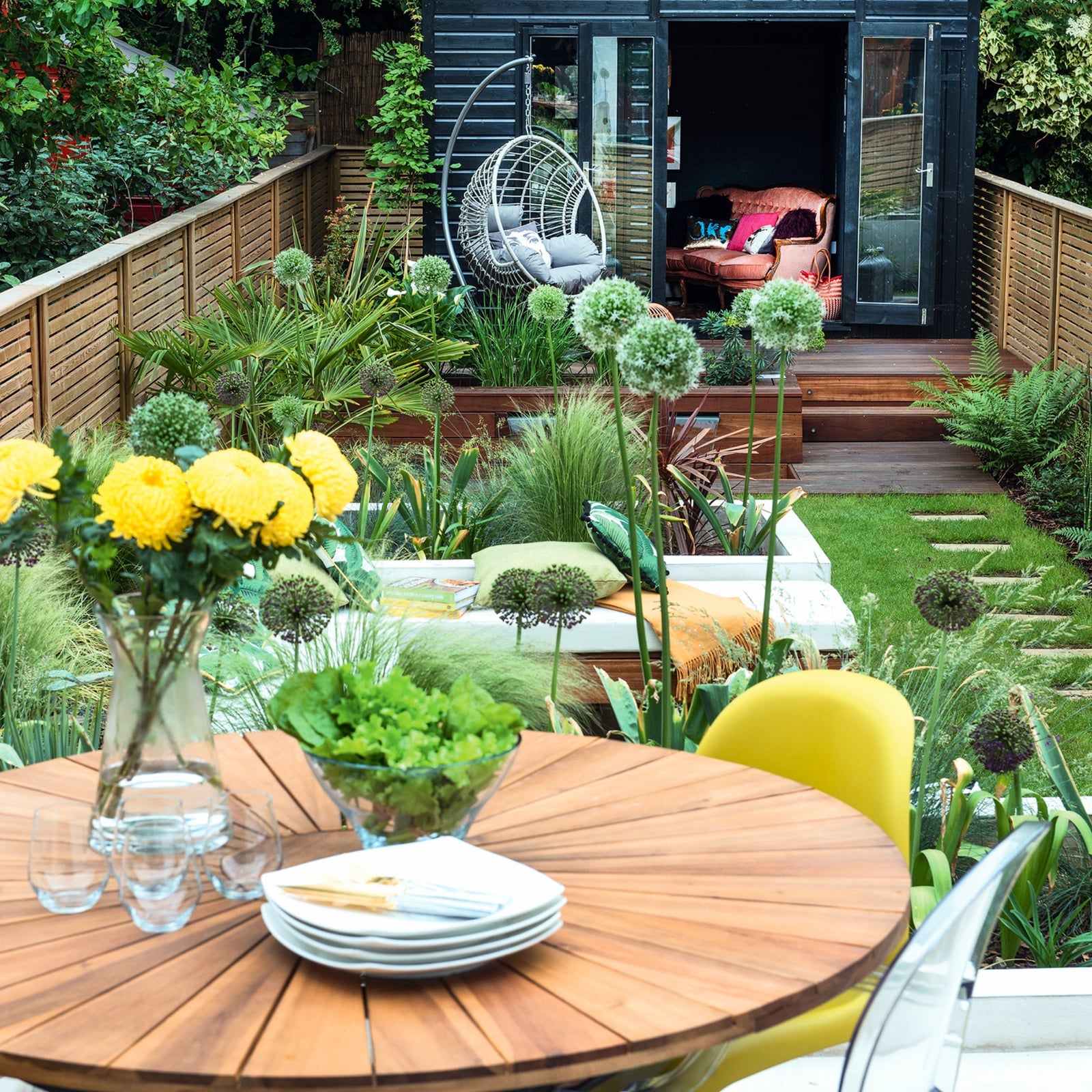
This contemporary garden proves that a hanging chair can anchor a seating area without dominating it. The layout layers planting around a lawn, with raised beds, a dining table and chairs, and the hanging chair tucked near the yellow flowers. The wood tones of the furniture and the metal frames keep the look grounded, while the vibrant yellow blooms add a pop that pulls the eye across the space. Daylight keeps the palette clear: green, yellow, white, and wood tones, with no one element shouting louder than the rest.
Garden Corner Vignette
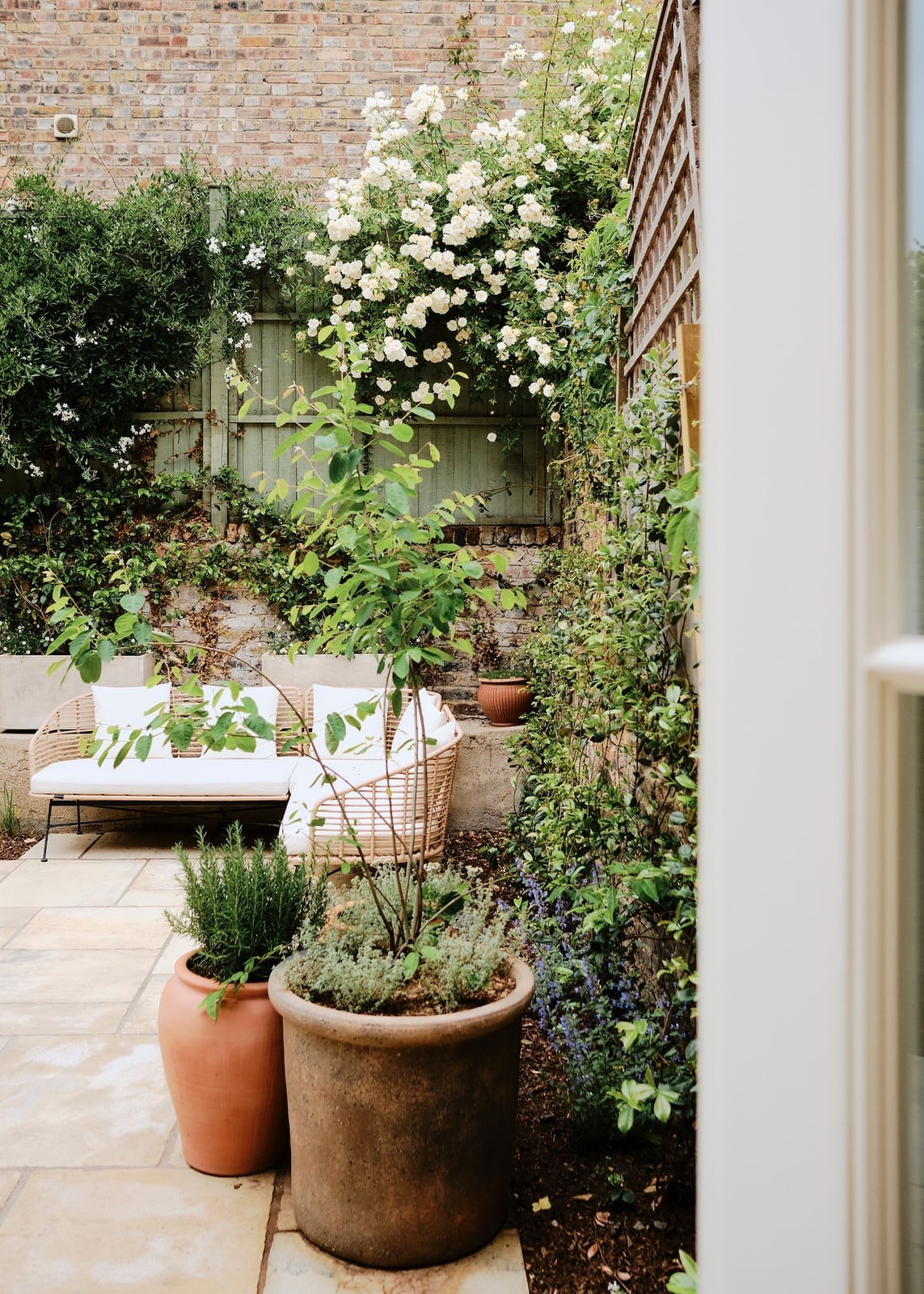
A corner vignette works when it feels tucked in, not squeezed. Here, a wicker sofa sits against a backdrop of climbing white roses, with potted plants in terracotta adding height on either side. The brick and stone underfoot keep the cottage palette from going too soft, while the overcast daylight softens the whites and greens into a calm backdrop.
What makes this layout practical is the way the wicker sofa stays protected by the roses and the corner walls, which cuts down on wind and direct sun wear. The terracotta pots add warmth without competing with the white blooms. For renters, a freestanding corner sofa and a few large pots can create the same sheltered feel without any permanent planting.
Naturalistic Water Feature
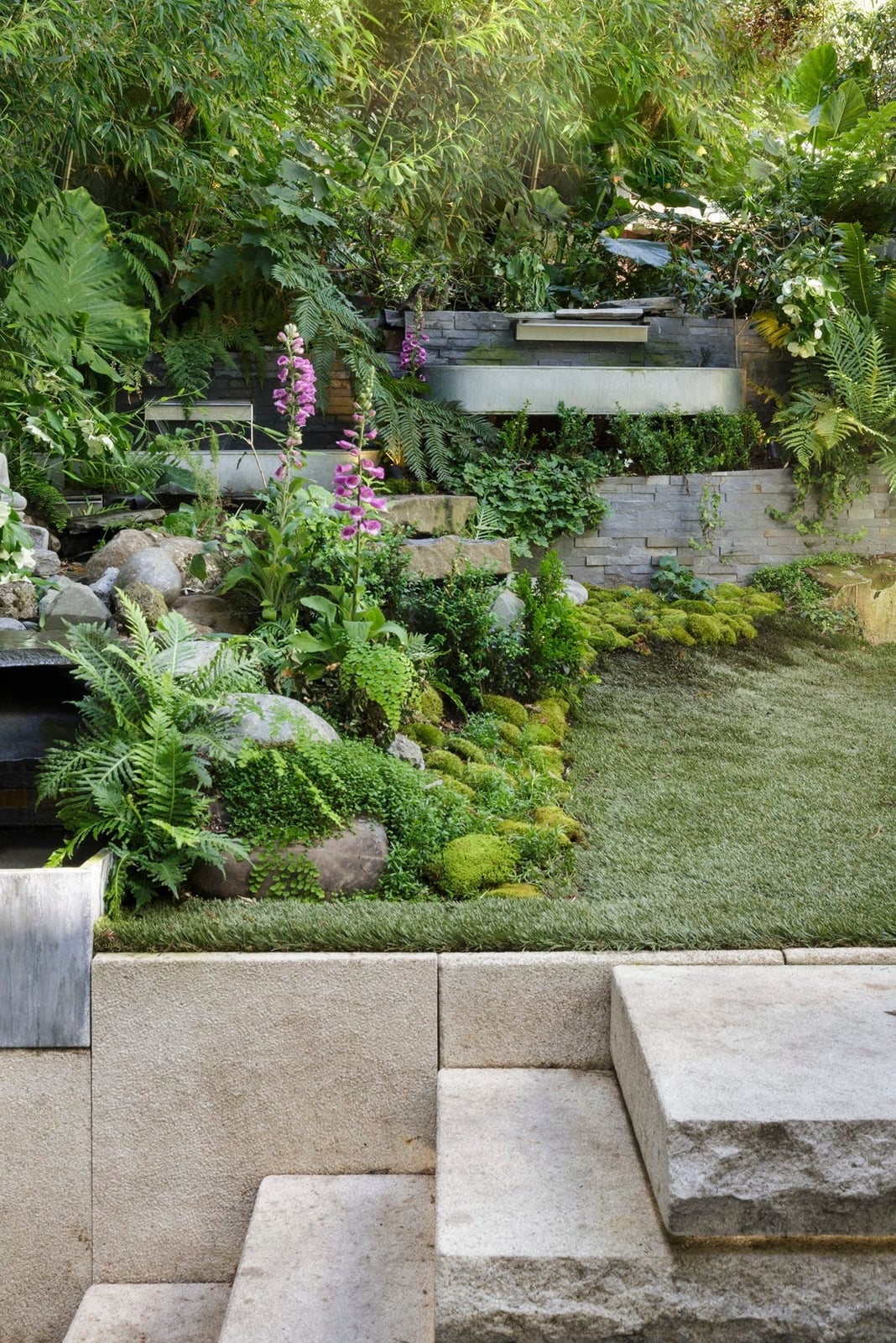
A multi-level, terraced rock garden with a tiered water feature uses the slope to make the water do the work, not the plumbing. The cascading water moves from one stone basin to the next, while moss spreads across the slate and varied plantings in greens and pinks soften the edges. The layout reads as a natural spring, not a carved fountain, which lets the whole garden feel like one continuous terrain. Keeping the grass around the stone beds short and the plant heights varied reinforces that layered, roomy feel without needing a pond liner or pump housing.
Transitional Patio Layout
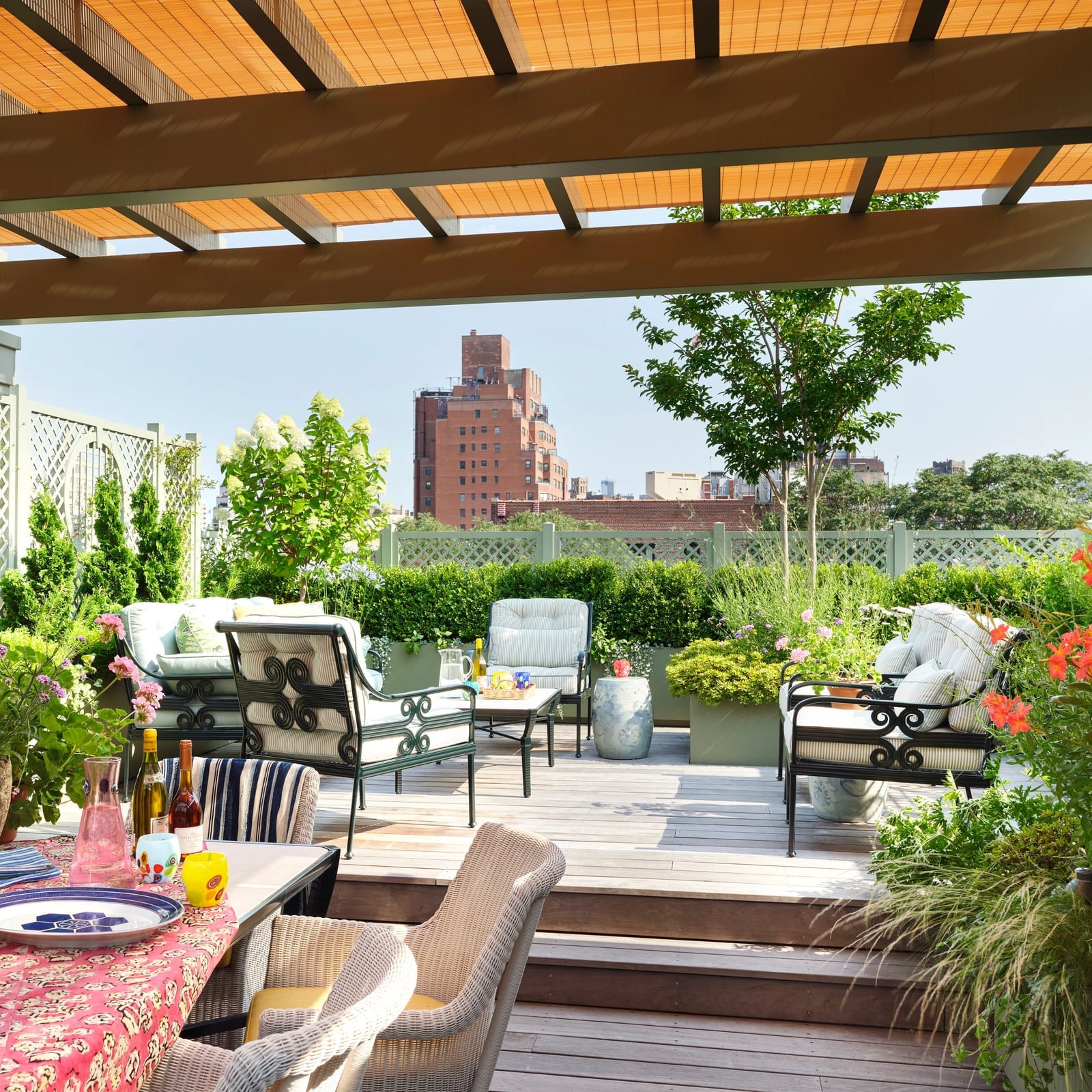
A practical rule for a covered patio is to choose materials that bridge indoor comfort with outdoor durability. This roomy patio mixes wood beams overhead with metal and wicker seating, a tile table, and fabric cushions in green, white, and blue. The layout arranges the sofa and chairs for conversation, not just a view of the city skyline beyond. For a renter, the swap is simple: use a pergola canopy you can take down and outdoor rugs to define the zone. The wood tones on the furniture tie the natural greenery to the built structure.
Mediterranean Garden Palette
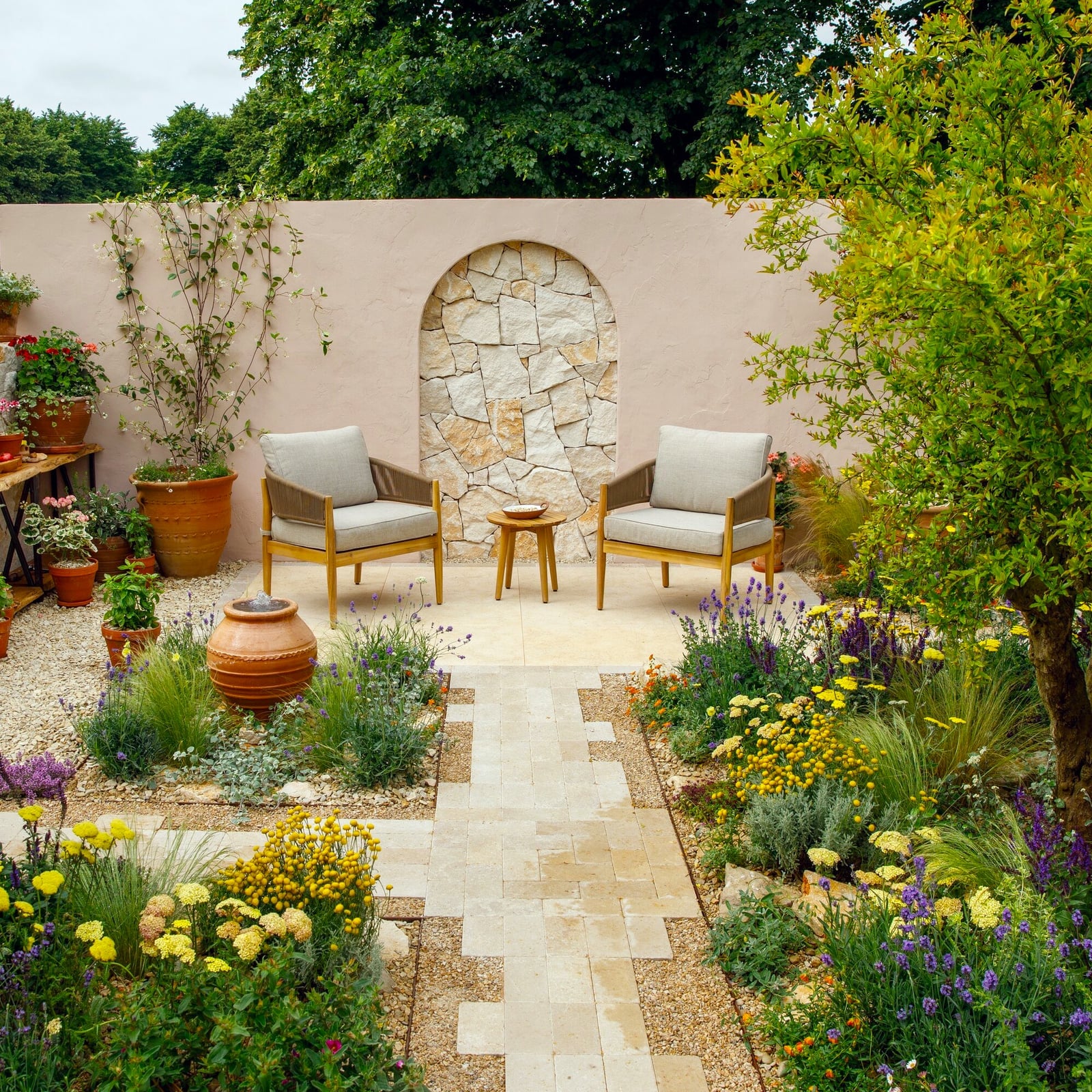
Where a cottage garden leans soft and layered, a Mediterranean palette stays grounded in earth tones and stronger contrasts. This roomy garden patio uses beige, pink, yellow, and terracotta against a stone gravel path and an arched stone feature wall. Two armchairs and a small table sit near a large terracotta pot, with the seating zone set off a central path.
The terracotta breaks the beige and stone so the space doesn’t read as all hardscape. The wood table adds warmth, while the overcast light softens the yellow and pink tones. Keeping the gravel path narrow and the seating zone compact stops the palette from spreading too thin across the roomy layout.
Zen Garden Hero Element
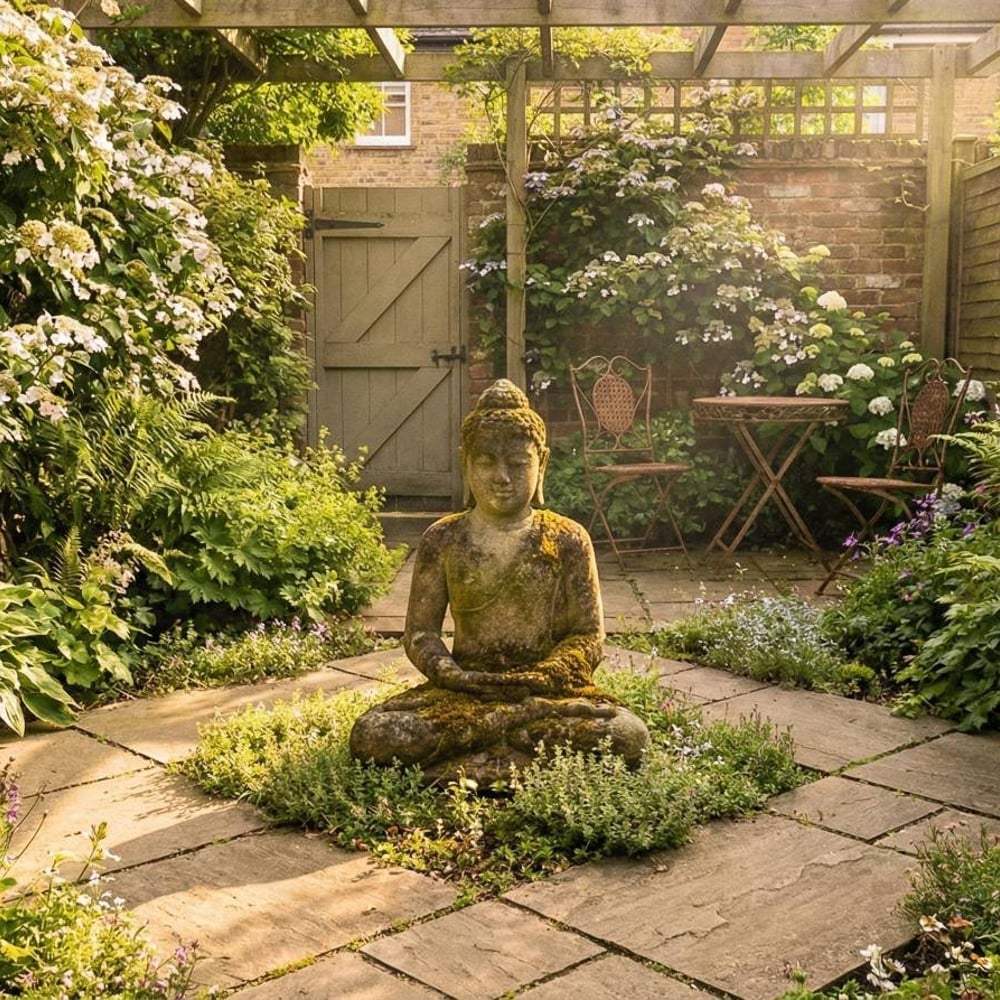
A moss-covered Buddha statue sits at the center of this compact garden, surrounded by plants and set against a brick wall. The stone path and wrought iron chairs stay simple so the statue is the anchor, not just another garden ornament. For a zen-inspired space, the palette is greens, grays, and stone, with no bright flowers competing for attention. The cottage garden elements, like the brick and the metal chairs, add a softer edge to the zen structure. A statue with visible weathering, like the moss here, feels settled.
Modern Garden Lighting
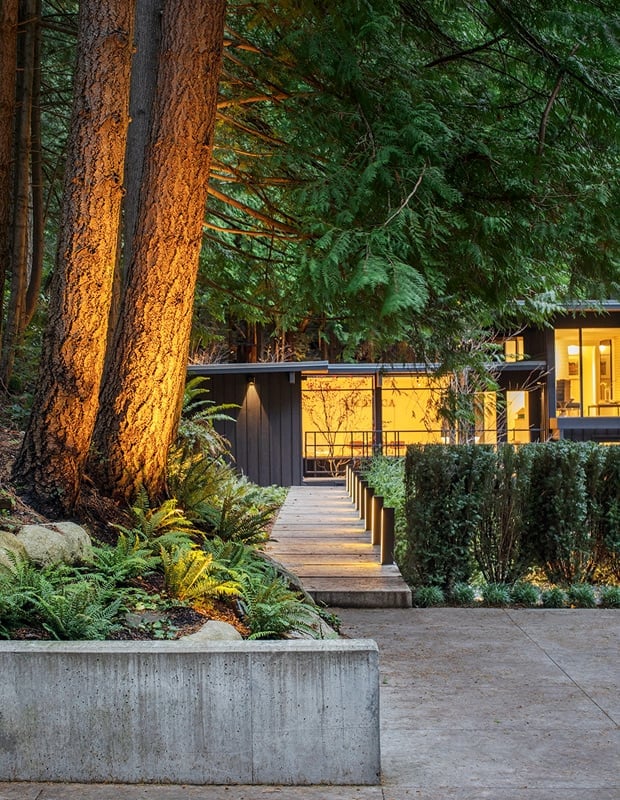
The dramatic evening lighting on the tree trunks is the real move here. Uplights aimed at the large trees create a warm yellow glow that reads as a second layer of the garden, not a path light. The wooden walkway leads the eye toward a modern structure, while ferns and lush plants stay in shadow. For a modern garden, the ratio is about three parts plant to one part light fixture. The concrete and stone hardscape stays dark so the lit trees become the focal point. A dimmer on the landscape lights lets you adjust the drama without rewiring.
Country Garden Lighting
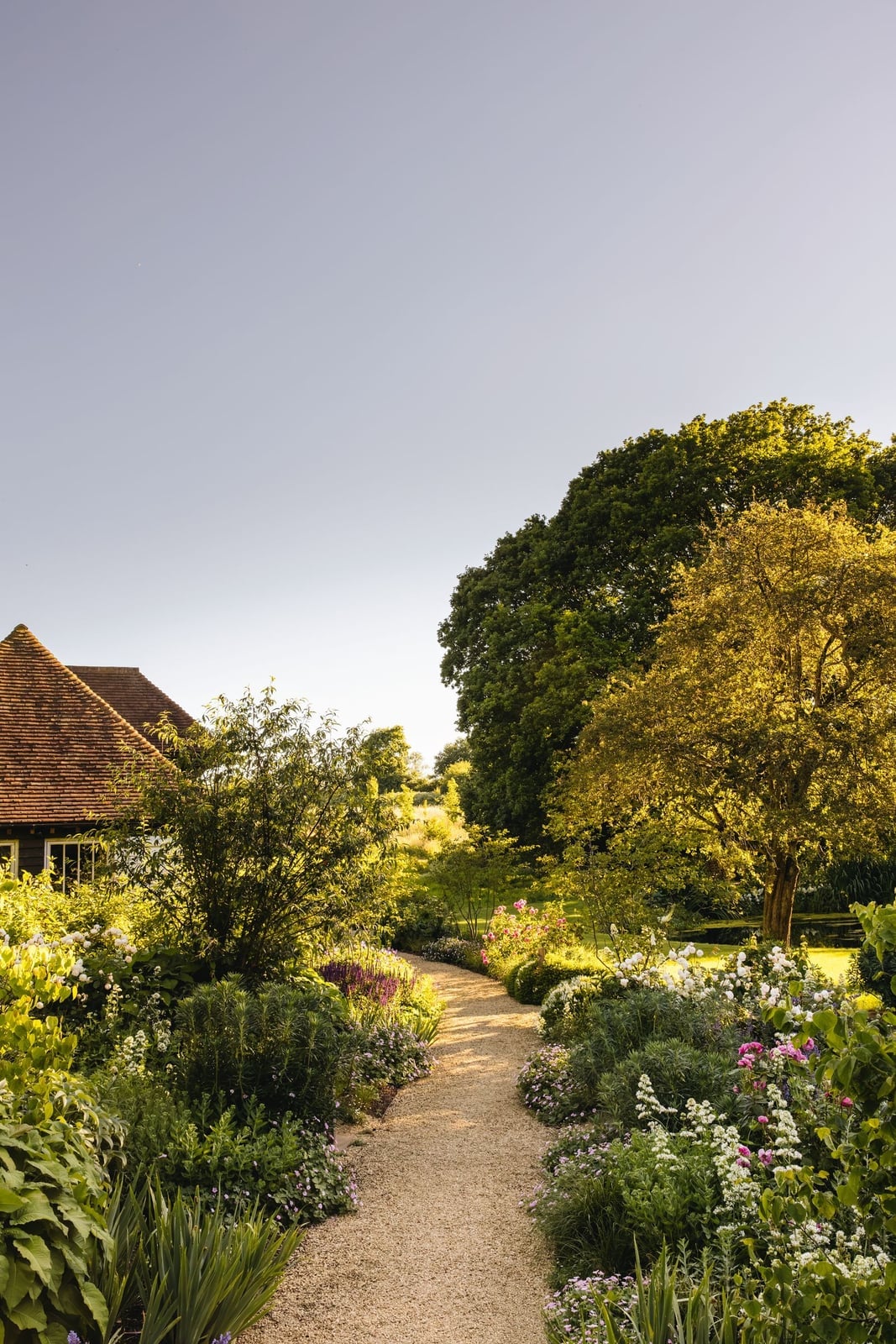
A winding gravel path needs light to make it inviting. In this country garden, the golden hour filters through the trees and hits the pale stone, making the route feel like it leads somewhere worth finding. The path curves through informal borders of pink and white flowers, with the house sitting quietly at the edge of the view. The trick here is letting the plants soften the edges instead of trimming them into tidy lines. Loose flowering borders catch the low sun differently than clipped hedges would, which gives the whole garden a softer, more generous feel as the day winds down. The palette uses greens, pinks, whites and natural stone, so nothing fights the light or the season. A country garden path like this one relies on informal planting and a meandering route to keep the eye moving. The golden hour light on the trees does the rest, turning a simple walk into the best part of the day.
Xeriscape Garden Materials
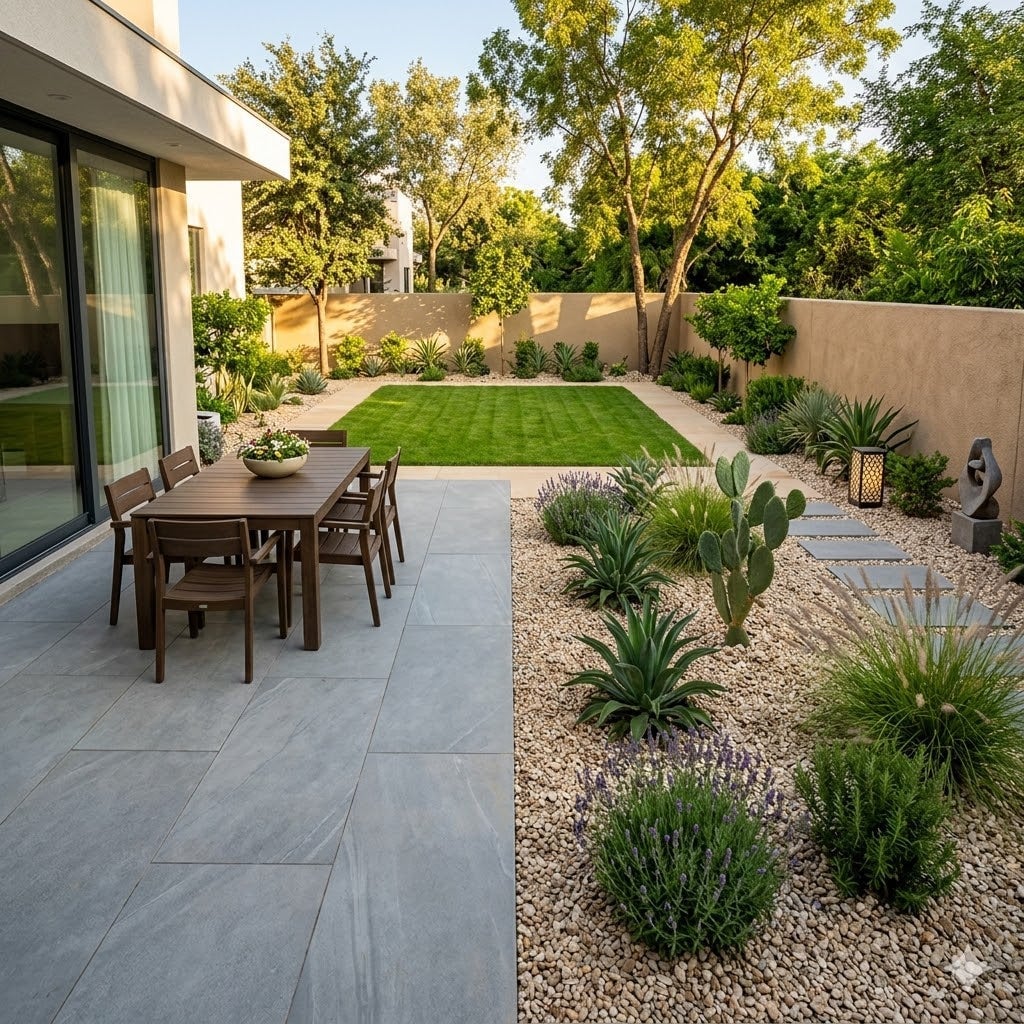
A modern xeriscape design leans on the contrast between smooth gravel beds and larger stone slabs to give the backyard structure without needing much water. The patio sits next to a narrow strip of lawn, with planted beds breaking up the beige and gray. An evening lamp near the dining set adds a warm glow that softens the hard edges after dark. The standout texture comes from pairing fine gravel with rough stone, a contrast repeated across the whole yard. To recreate it, look for three materials and repeat them in every zone.
Traditional Garden Scale
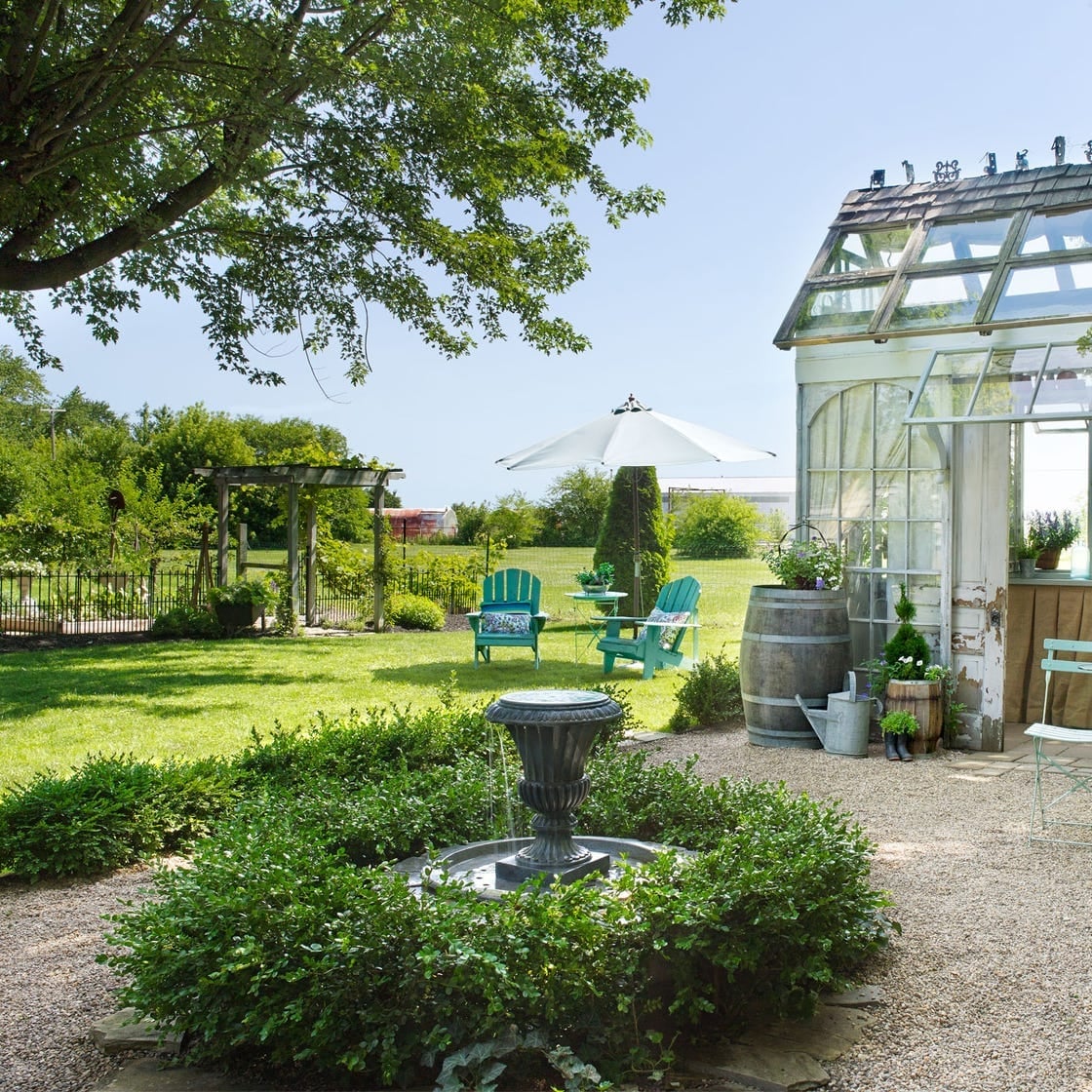
A central fountain anchors a spacious traditional garden best when everything else steps back in scale. The fountain sits on a circular gravel bed with the lawn spreading out around it, and the teal chairs and umbrella are grouped to one side. Further back, a glass greenhouse and a wooden pergola add vertical interest. The rule here is that the hero element gets the most open space around it, while seating and structures sit at the edges. A traditional garden with this kind of roomy layout feels generous because nothing is fighting for attention. The fountain stays the main event, and the garden supports it.
Modern Garden Layout
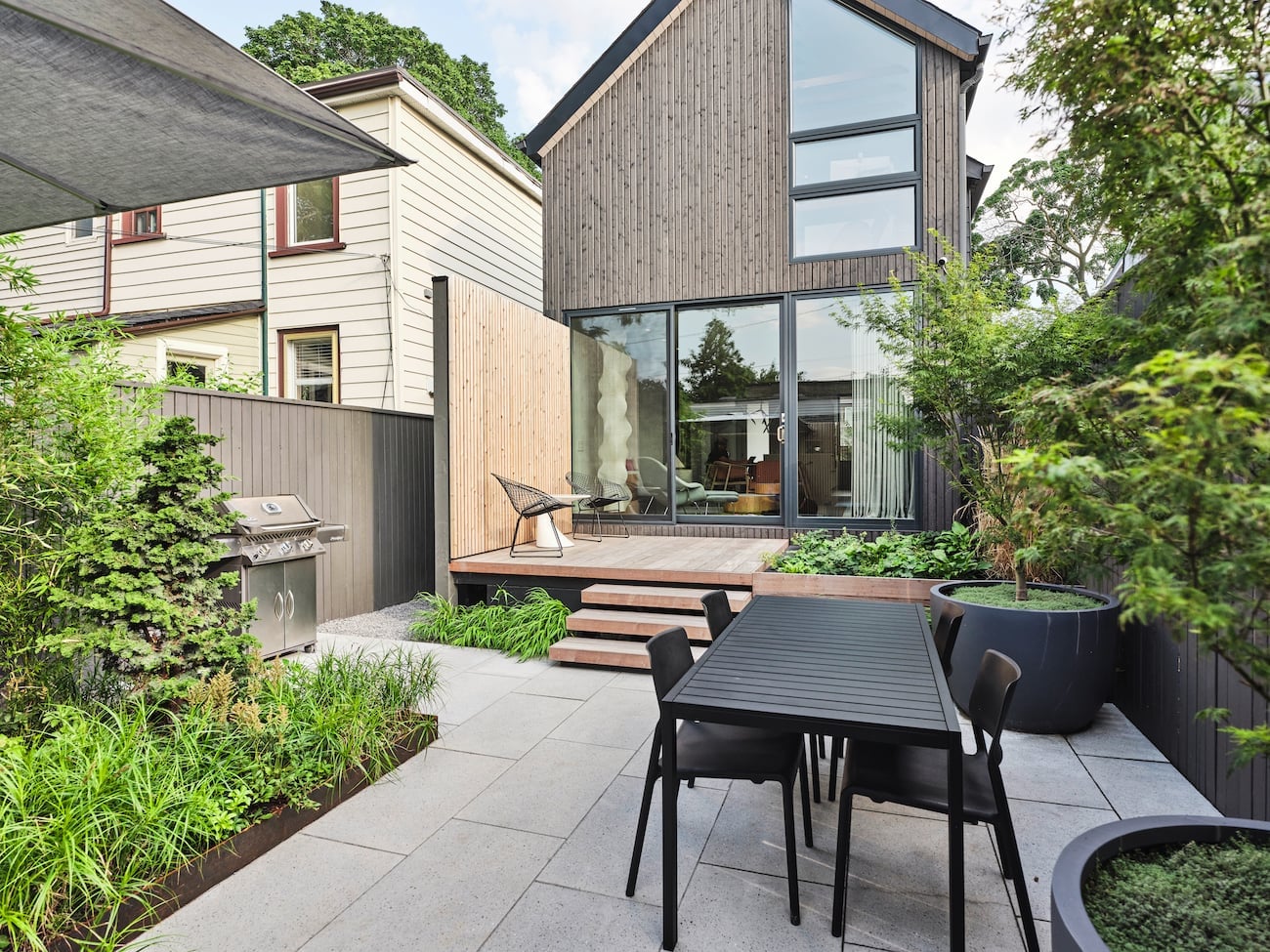
A modern garden deck with outdoor dining feels different from a traditional patio because the whole space is designed as one connected layout. The deck and the dining set sit on the same level as the house, with planters and stone steps leading down to the lawn instead of separating the zones. The palette stays in gray, wood tones and green, which keeps the transition from indoors to outdoors smooth. The multi-level layout works because the materials are consistent: the same wood appears on the deck and the planters, and the same stone repeats on the steps and the path.
A modern garden like this one relies on clean lines and integrated levels instead of separate zones. The house and the garden read as one space because the materials and the palette carry through without interruption. The daylight filters through the trees and hits the gray deck, the wood tones, and the green planters evenly, so nothing feels shaded out or forgotten. This is a layout that lives like an extra room, not like a separate yard.
Modern Pathway Lighting
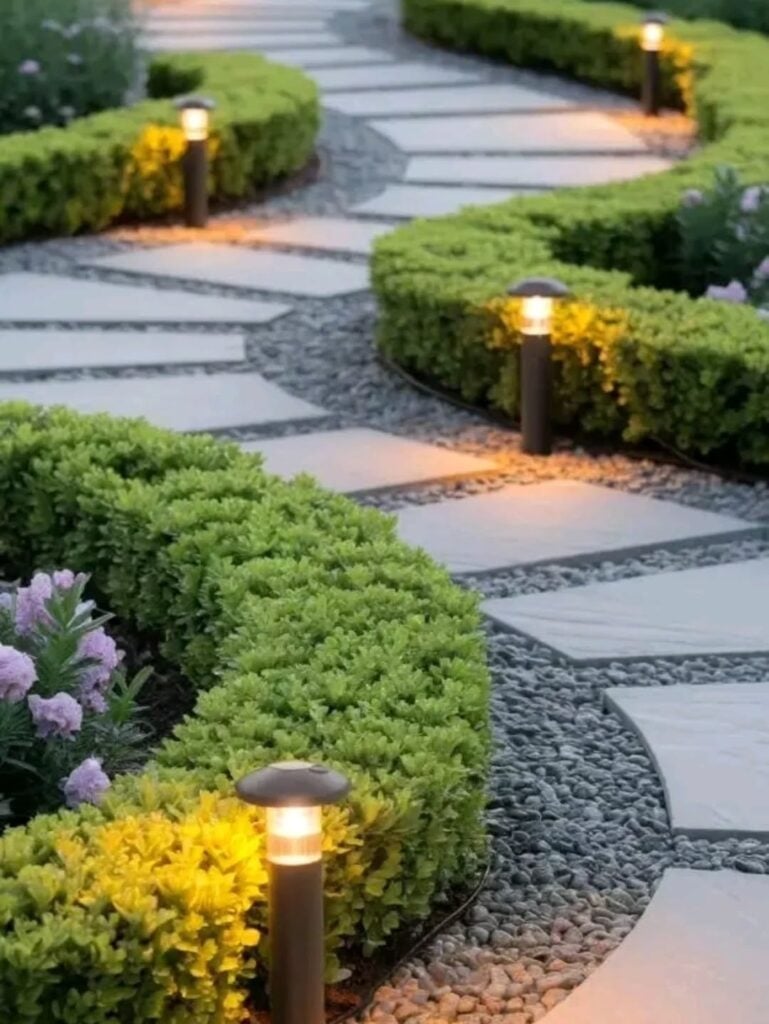
A curving pathway through manicured hedges gets a clean, modern feel from low bollard lights placed at regular intervals along the edge. The stone pavers are set into gravel, and the lights sit low enough to guide the eye without flooding the whole garden. The white light bounces off the gray stone and the green hedge, keeping the palette simple and the path visible. For a renter-safe swap, use solar stake lights along the edge instead of hardwired bollards. They give the same effect and come out without digging.
Contemporary Garden Art
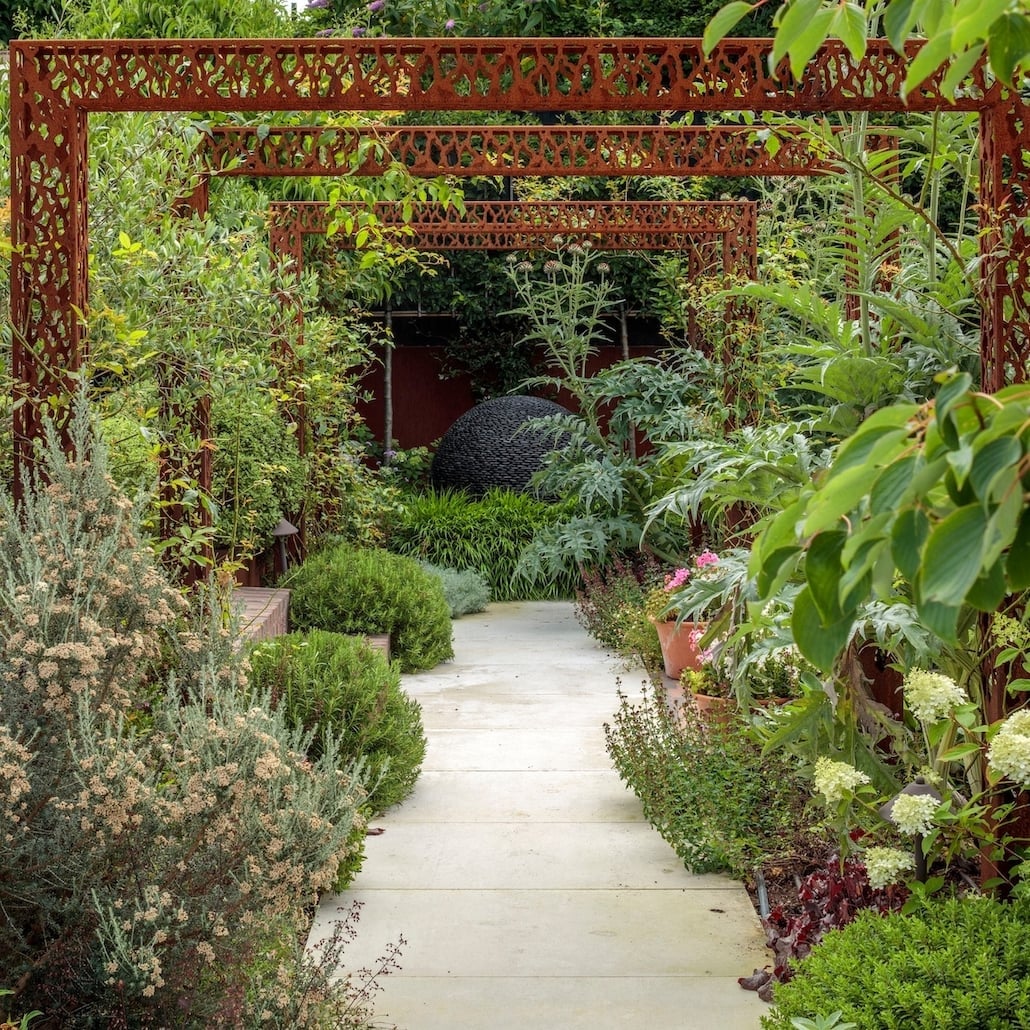
A single large sculpture can anchor a whole garden, but it’s the rusted metal archway that makes this one read as a destination rather than a decoration. The path of stone slabs leads you under the arch toward the sphere, and the planting stays lush and green so the rusted tones don’t feel abandoned. The palette here is rust, green, and beige, and the concrete and stone ground the metal so nothing floats. If you want the archway without the permanence, set a freestanding metal trellis in a planter and train a vine over it. That swaps the look for a season without breaking ground.
Formal Garden Layout
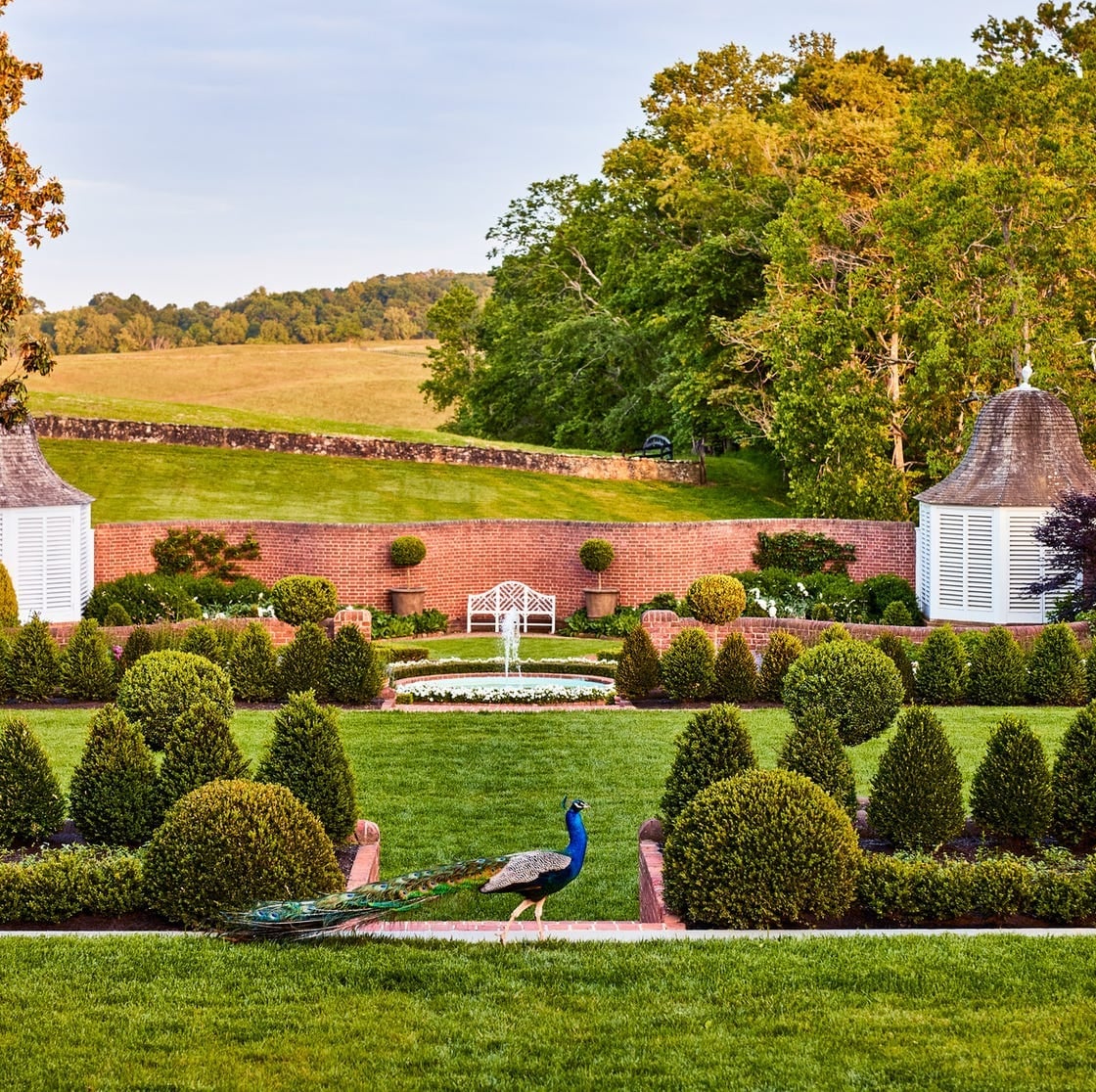
In a formal garden, symmetry does the work before you buy a single plant. This garden uses a central fountain, matching hedges, and identical white gazebos at each end, and the peacock on the path is the only surprise. The brick paths and stone edges keep the layout crisp, and the white bench offers a place to sit and take in the balance. If you rent and cannot dig, use large matching pots flanking a door or a bench. Pair identical planters on either side of a path and fill them with clipped boxwood or dwarf holly. The symmetry creates a formal look even when the plants stay in pots.
Cozy Garden Seating
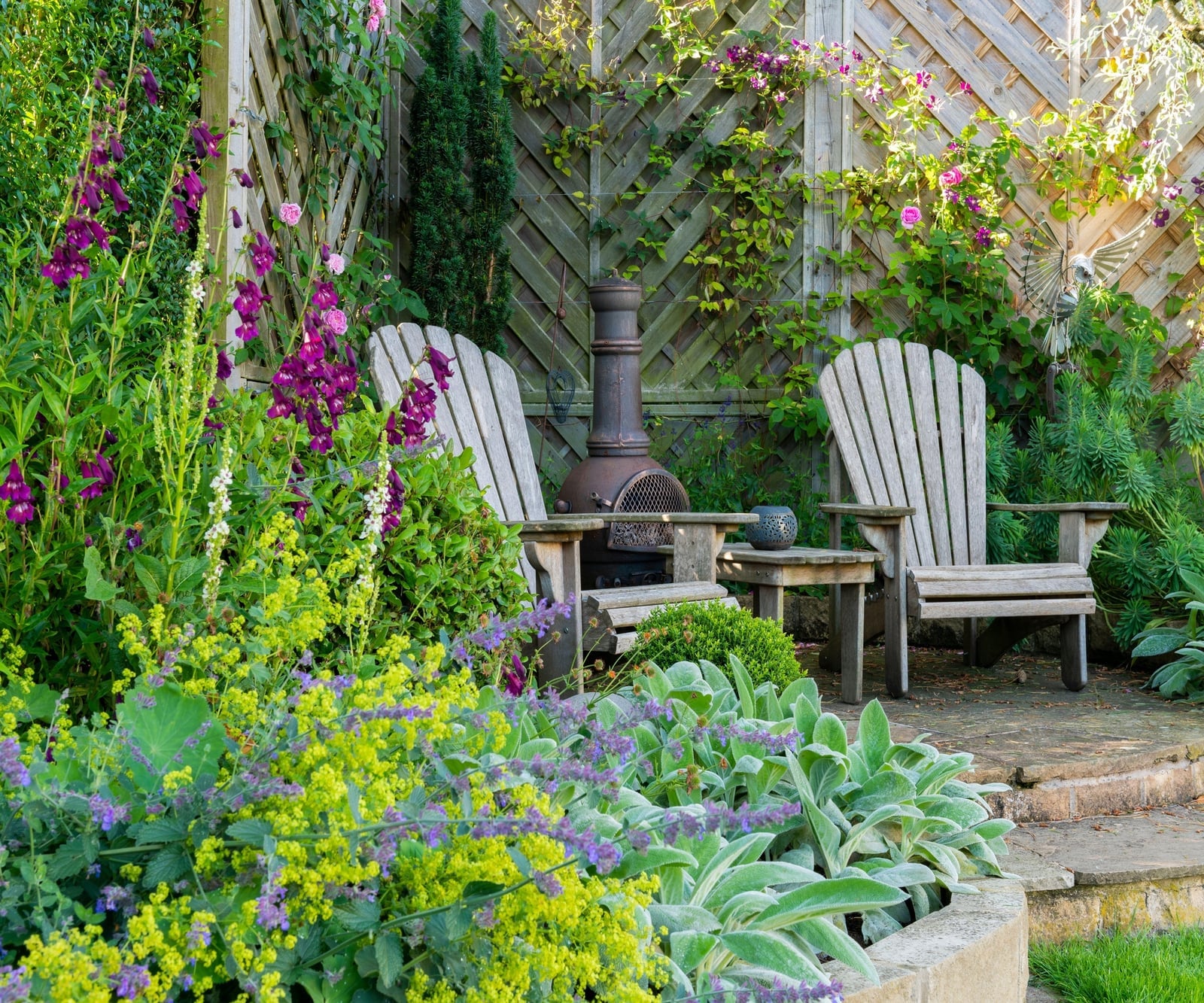
Two Adirondack chairs in yellow sit on a stone pad with a small table between them, and the chiminea nearby means the spot works after the sun goes down. The planting around the chairs is dense with purple and green foliage that softens the wood tones and keeps the corner from feeling like an afterthought. A compact garden corner like this one proves that a seating nook does not need a big footprint, just a clear surface and enough plants to make it feel enclosed.
Traditional Patio Materials
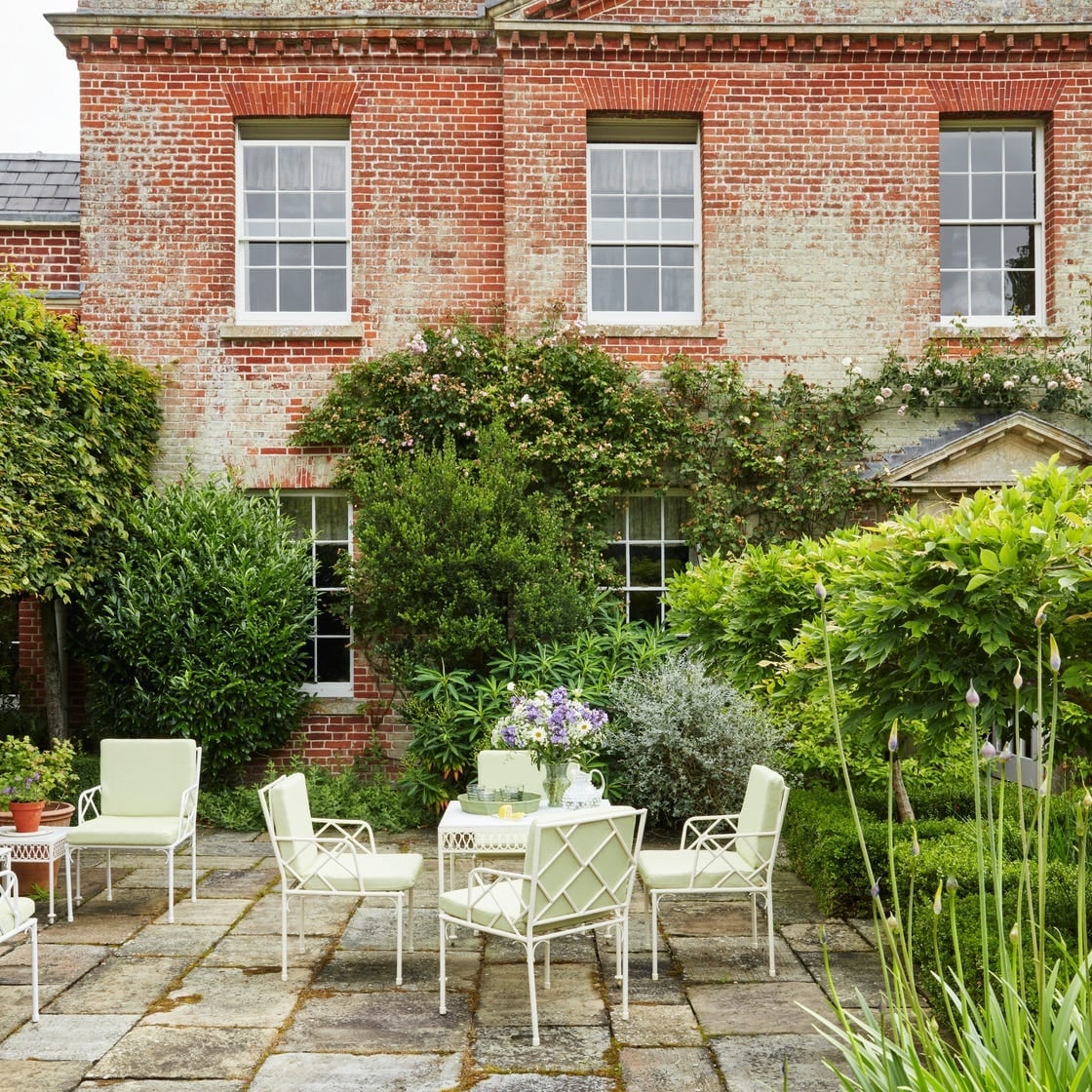
The pale green metal dining set on this stone patio reads as traditional without feeling fussy, and the brick building behind it gives the space a solid backdrop. The set includes four chairs and a round table, all in the same pale green finish that picks up the green of the nearby foliage. Stone underfoot and brick behind keep the palette grounded, and the metal furniture will last through many seasons with a fresh coat of paint every few years. If you want the look on a deck instead of a stone patio, a pale green set works just as well against wood tones.
Modern Garden Sculpture
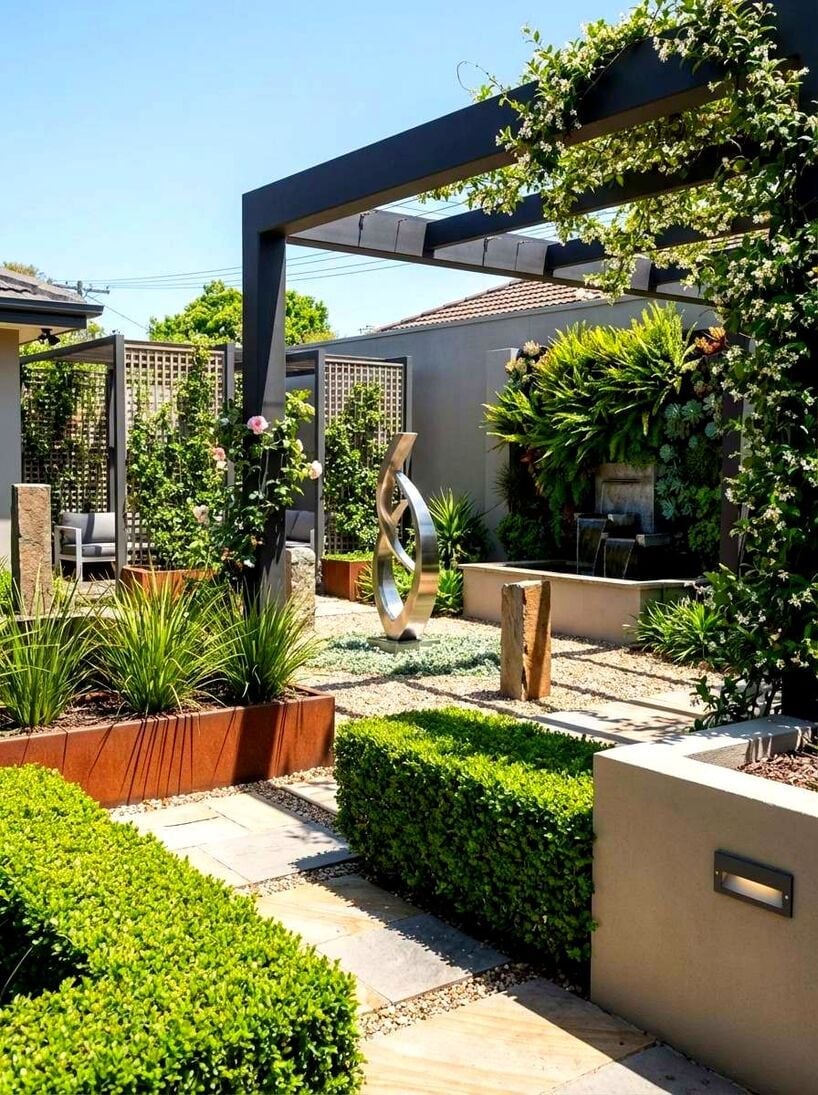
A modern garden might lean on clean lines and geometric paths, but an abstract metal sculpture gives it a reason to stop and look. This garden uses a rusted metal sculpture set among planters and a hedge, with the gray trellis behind it and concrete stepping stones leading the eye. The palette stays green, gray, rust, and white, and the raised beds and vertical garden add structure without clutter. Compared to a traditional statue, an abstract piece like this one feels less like a formal statement and more like a conversation starter. If you want the scale without the metal, a large concrete sphere in a bed of gravel reads as modern too and will not rust over time. The key is to give the sculpture enough breathing room so it does not compete with the planting.
Modern Garden Room Durability
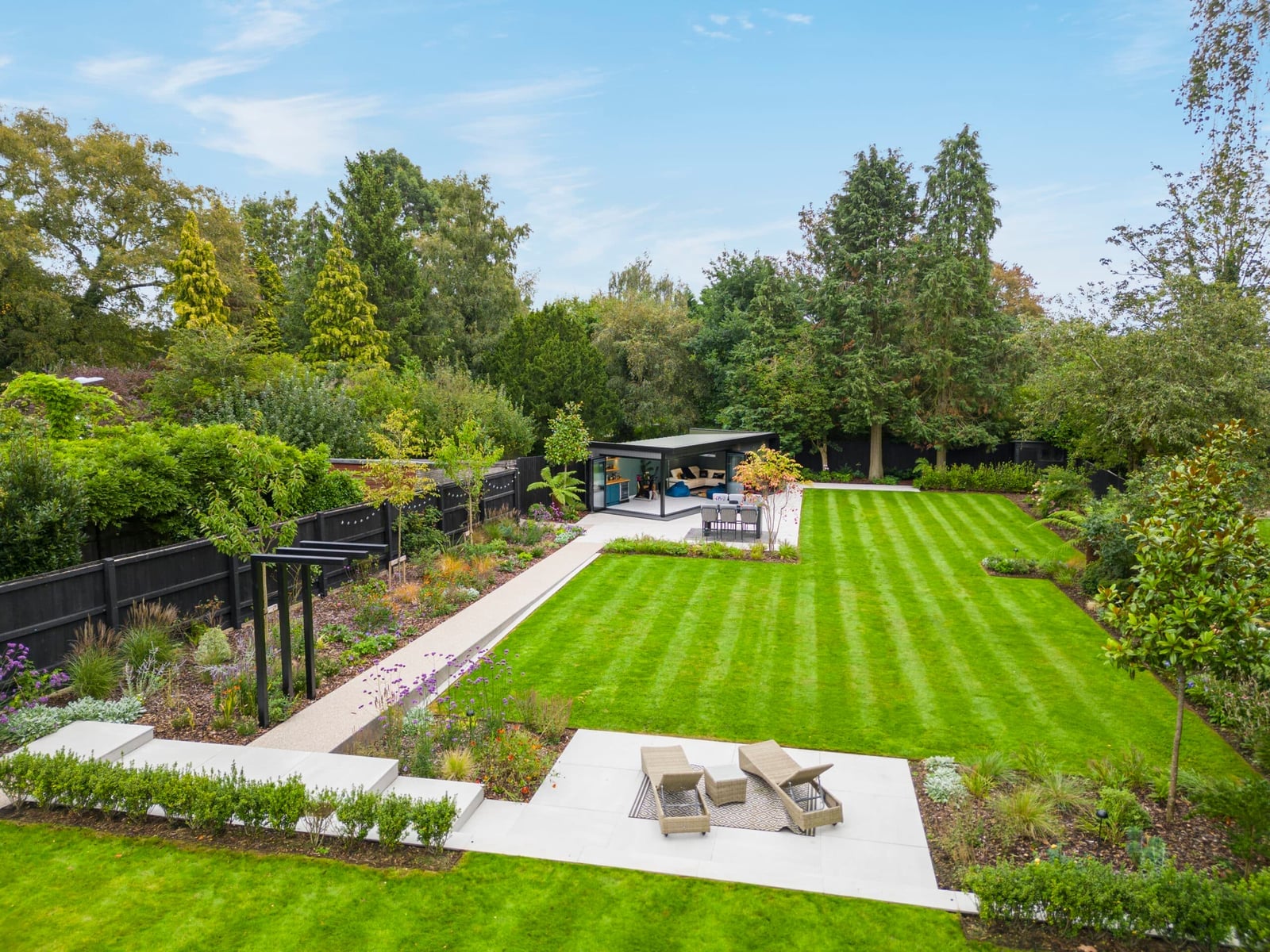
This backyard garden balances a sleek modern room with generous lawn and planting beds. The layout places the glass and metal structure at one end, with lounge chairs and a path leading toward it. Keeping the lawn manicured and the plantings simple lets the garden room stand out without competing. The green, gray, black and white palette feels calm. In your own space, think about how much open lawn you want versus planted areas. A roomy feel comes from leaving enough grass between the building and the beds.
Japanese Garden Palette
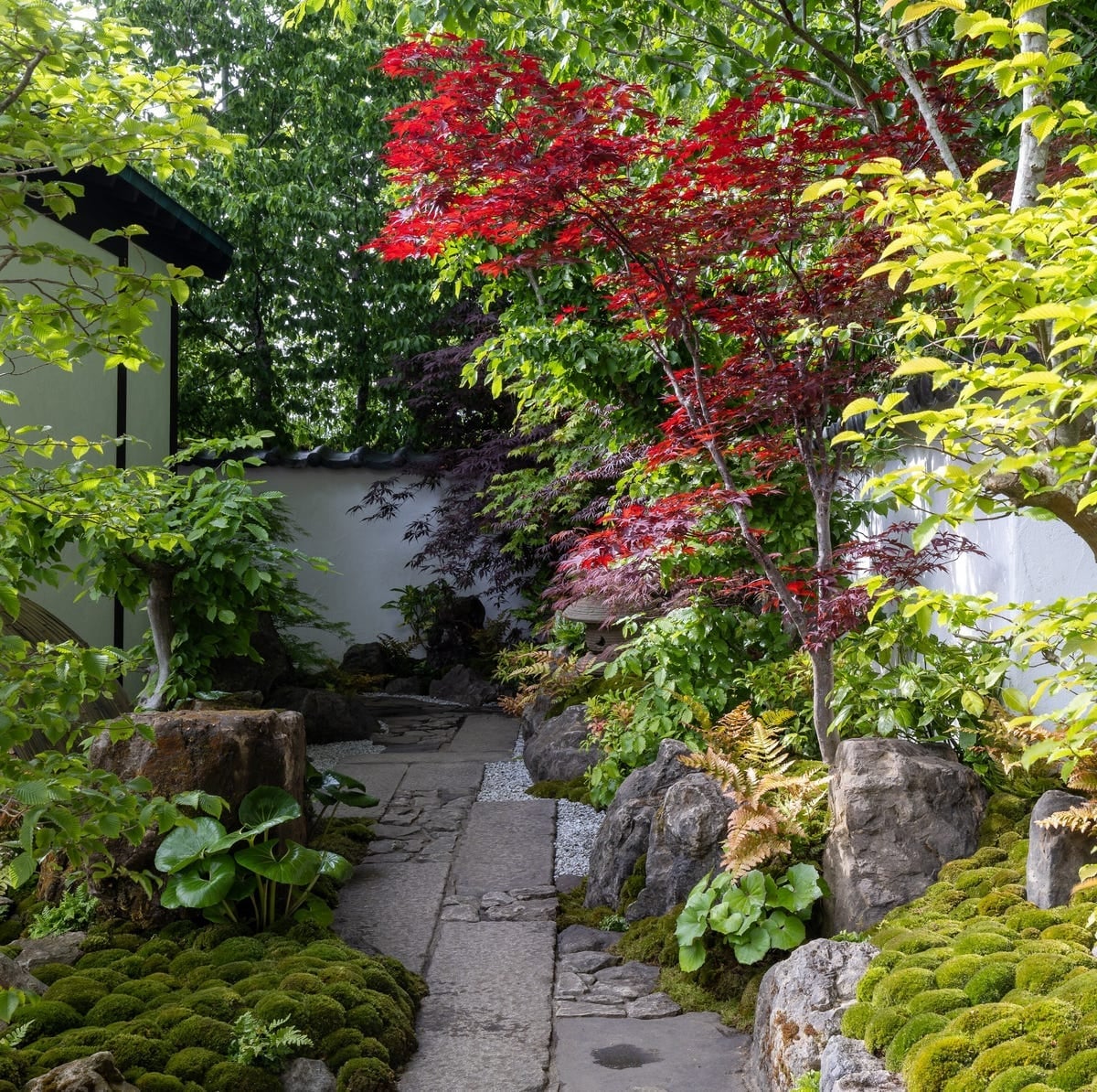
The palette here stays tight: green moss and gravel, gray stone, white wall, and one vivid red Japanese maple. The winding stone path leads through mossy ground and rocks, with the maple placed where it catches dappled daylight. What defines this look is restraint. The ratio of green to gray to red leans heavily on the neutral tones, so the maple reads as the accent that breaks the calm. For a garden path, choose materials that feel grounded. Stone and moss need little upkeep beyond occasional weeding and raking gravel back into place.
Modern Garden Lounge Layout
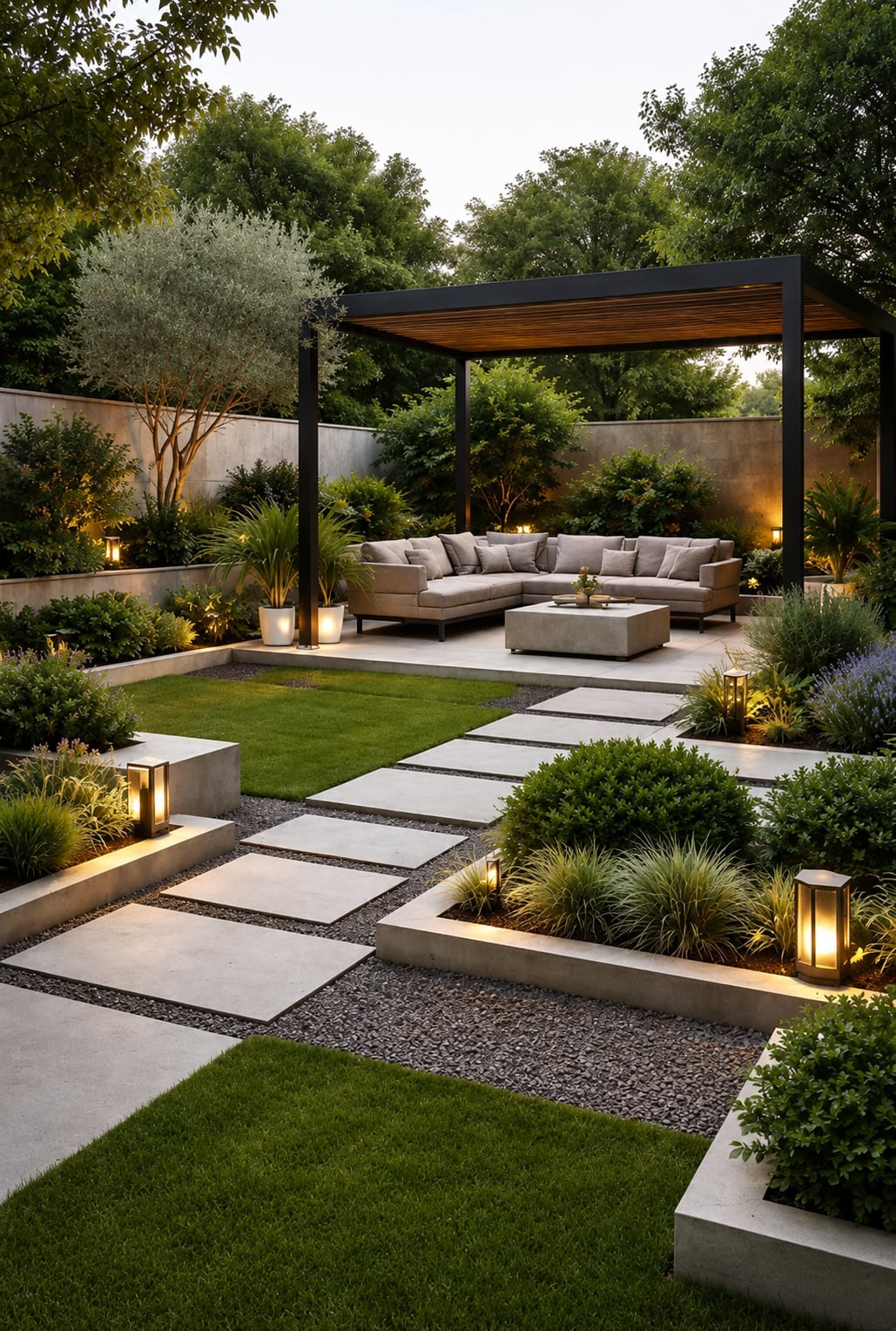
A modern garden lounge can feel stark if the materials are too uniform. This one avoids that by mixing concrete, stone, wood and gravel in geometric zones. The large sectional sofa sits under a pergola, with concrete planters anchoring the seating area and geometric pathways leading through the space.
Evening ambient lighting softens the hard edges so the room lives well after dark. The layout works because each material has its own zone: gravel underfoot near the path, wood on the deck, concrete for the planters. For a similar setup, map out your zones before buying furniture. Keep the pathways wide enough to walk two across.
Cottage Garden Hero Element
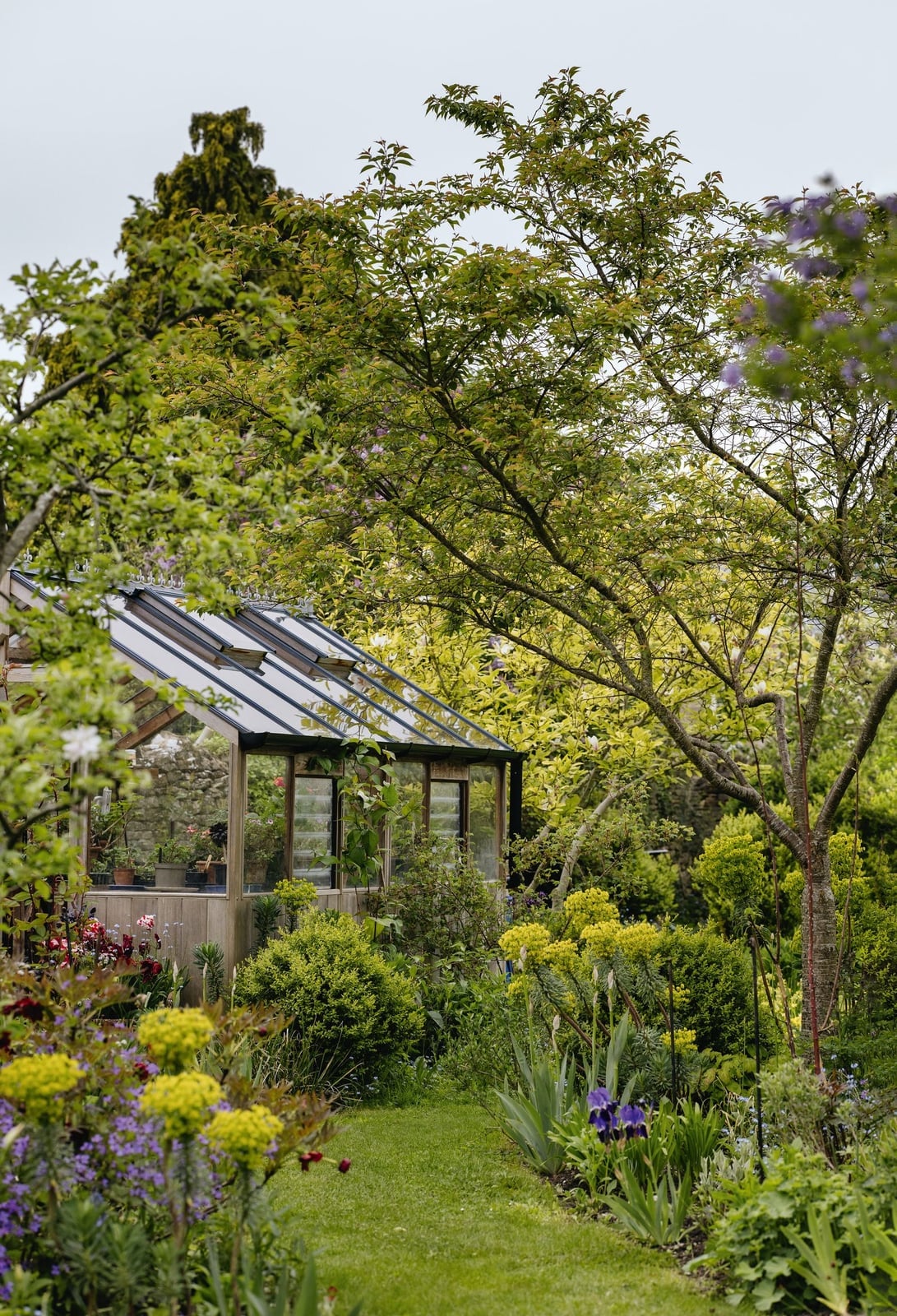
A glass greenhouse becomes the focal point of this cottage garden, set against varied flowering plants and trees. The palette of greens, yellows and purples feels lush without being busy. Overcast daylight softens the glass so the greenhouse does not glare. The naturalistic path and winding plantings keep the eye moving. For a similar hero element, choose one structure that draws attention and let the rest of the garden support it. A greenhouse works year-round, giving you a spot to start seeds or overwinter plants.
Final Thoughts
A garden that works for you is one where the paths lead somewhere, the seating invites you to stay, and the plants look good even when they are not blooming. Start with a layout that makes sense for how you actually use the yard, then layer in materials and lighting that hold up to your climate. Check your USDA zone before planting anything. Small changes like swapping a path material or adding a focal point can shift the whole feel of the space.