
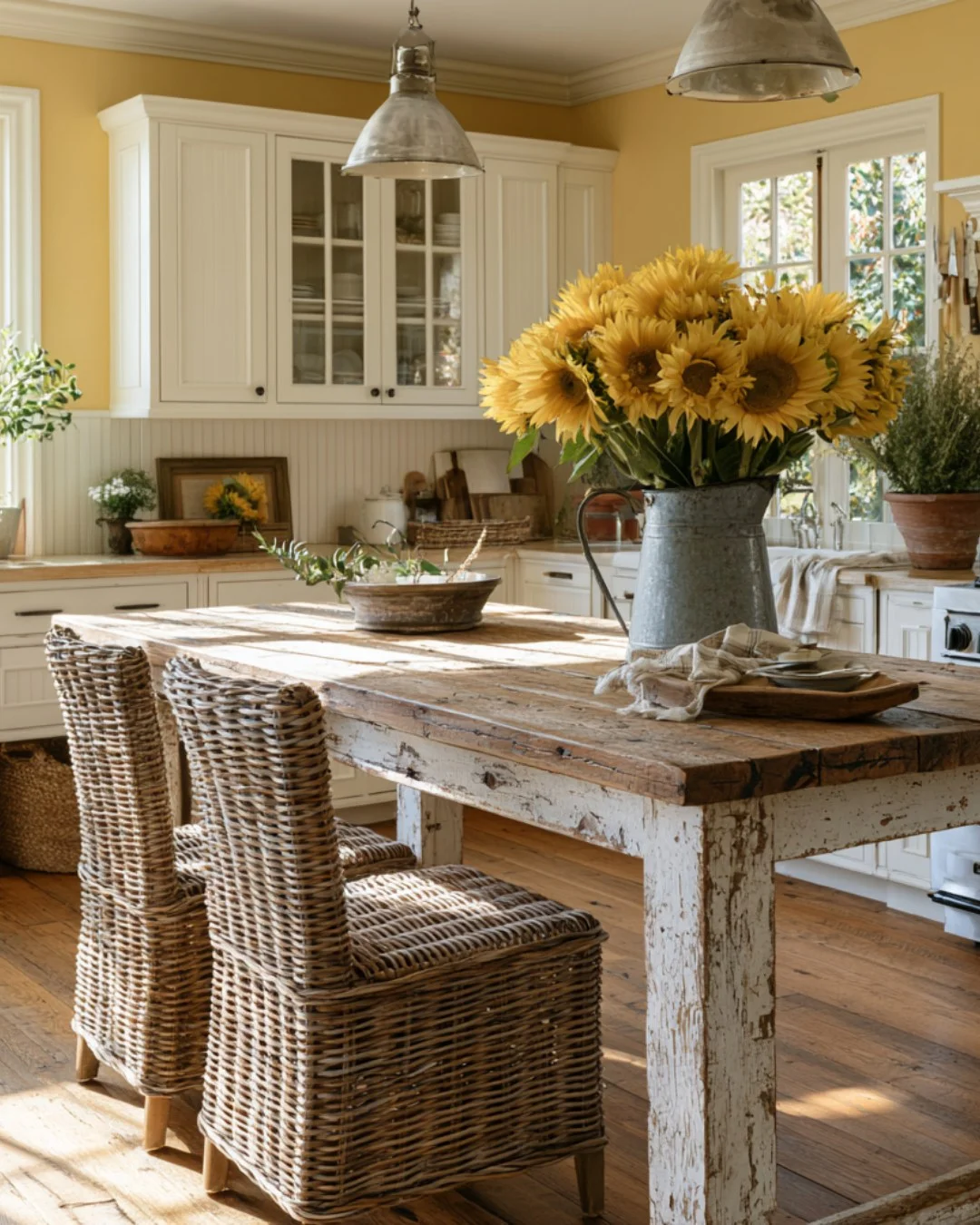
Grandma core kitchen is all about the feeling of a kitchen that has been loved, used, and collected over time. In this collection, I see many different interpretations of that idea, from elegant cream cabinetry and patterned textiles to pink cupboards, traditional dishware, farmhouse-style tables, and softly decorated windows. What makes these spaces interesting is that none of them depends on one single formula. Instead, each image shows how color, storage, tableware, lighting, and everyday details can create a warm, nostalgic kitchen with plenty of personality. I’m walking through the images in order because each one highlights a slightly different way to bring the grandma core kitchen aesthetic into a real home.
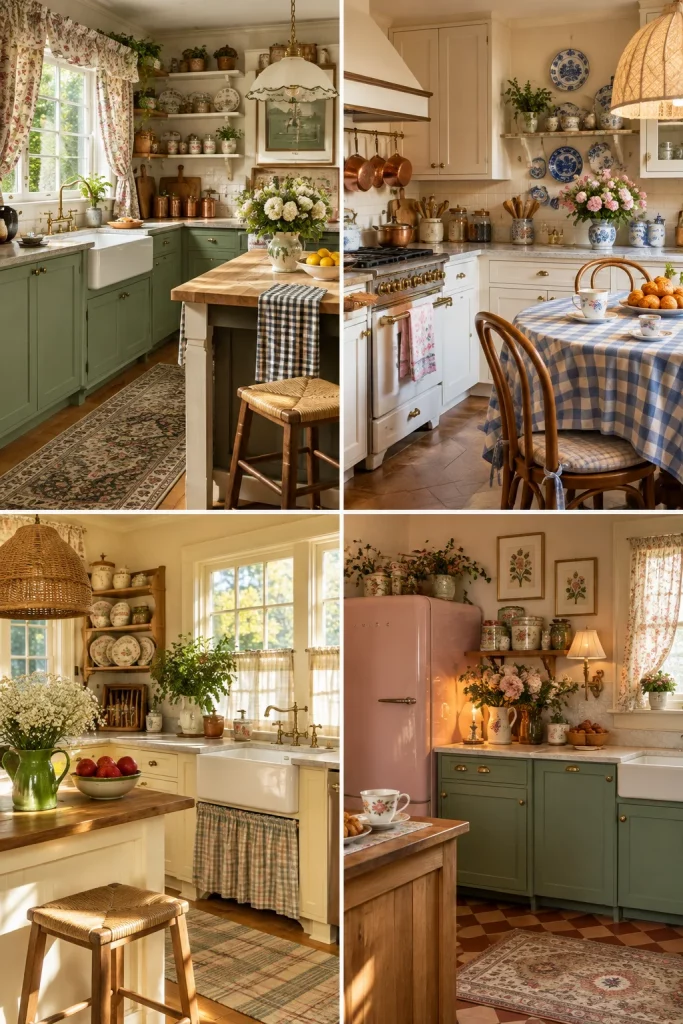
In this collection, I’m exploring beautiful kitchen ideas that show how this nostalgic style can feel both timeless and comfortable today. Whether you prefer soft pink, creamy neutrals, traditional furniture, or charming display storage, these grandma core kitchen ideas offer plenty of inspiration for creating a space with personality.
Cream Cabinetry With a Red Range and Traditional Details
I immediately notice the elegant cream cabinetry, framed doors, glass-front upper cabinets, and the striking red range and matching hood. The kitchen has a long, narrow layout with cabinetry running along both sides, while a window at the end brings in natural light and a view of greenery. Patterned backsplash tile, a pale stone-look floor, decorative pendant lights, and richly patterned curtains add a traditional decorative layer. The combination feels collected and formal without losing the practical character of a working kitchen.
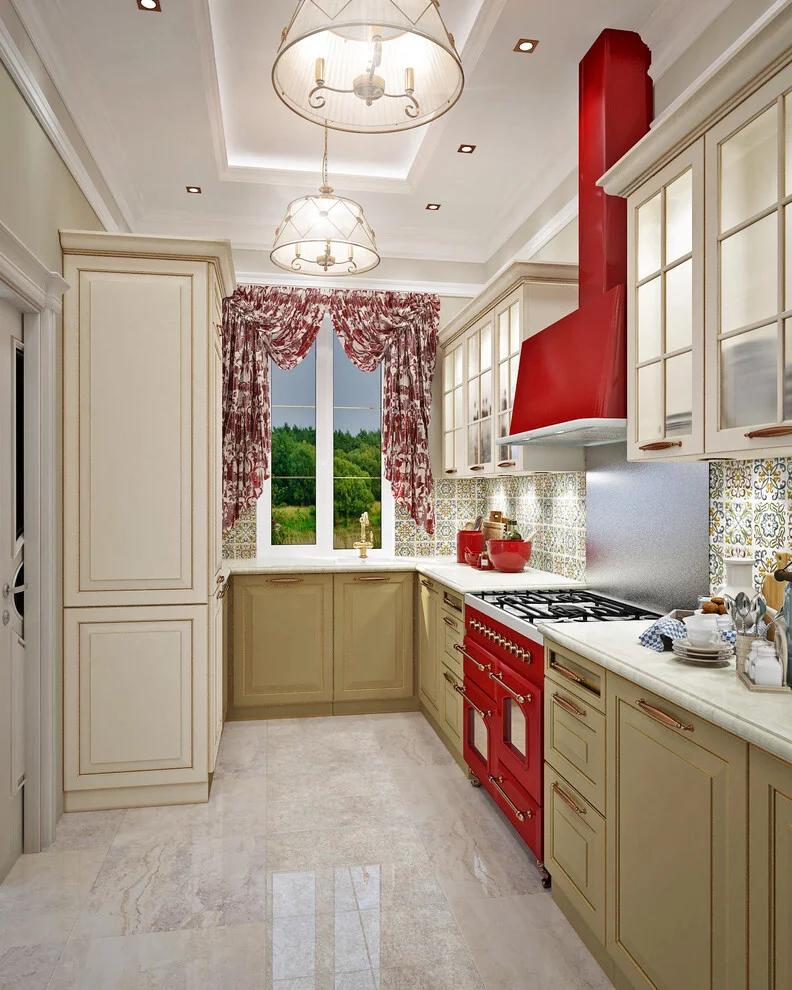
What works especially well for me is the balance between the quiet cream cabinetry and the stronger red accents. The range becomes a visual focal point, while the glass-front cabinets give the upper section a lighter appearance and allow dishes to become part of the decoration. The long counters also provide generous preparation space, and the cabinetry uses the available narrow footprint efficiently.
I would take inspiration from this kitchen by choosing one memorable color for a major feature rather than trying to make every surface equally noticeable. The decorative lighting and window treatment also show how much personality can come from details that do not require changing the basic cabinetry. For a grandma core look, I think the key is to let practical kitchen elements become part of the visual story.
Soft Neutral Kitchen With a Round Dining Table
This kitchen takes a much softer approach, with pale cabinetry, warm beige walls, a textured tan backsplash, and a large window overlooking an urban view. Glass-front cabinets display dishes, while the lower cabinets create a continuous working area around the corner. In the foreground, a round dining table with upholstered chairs creates a separate eating zone, and the softly textured rug visually connects the kitchen and dining area.
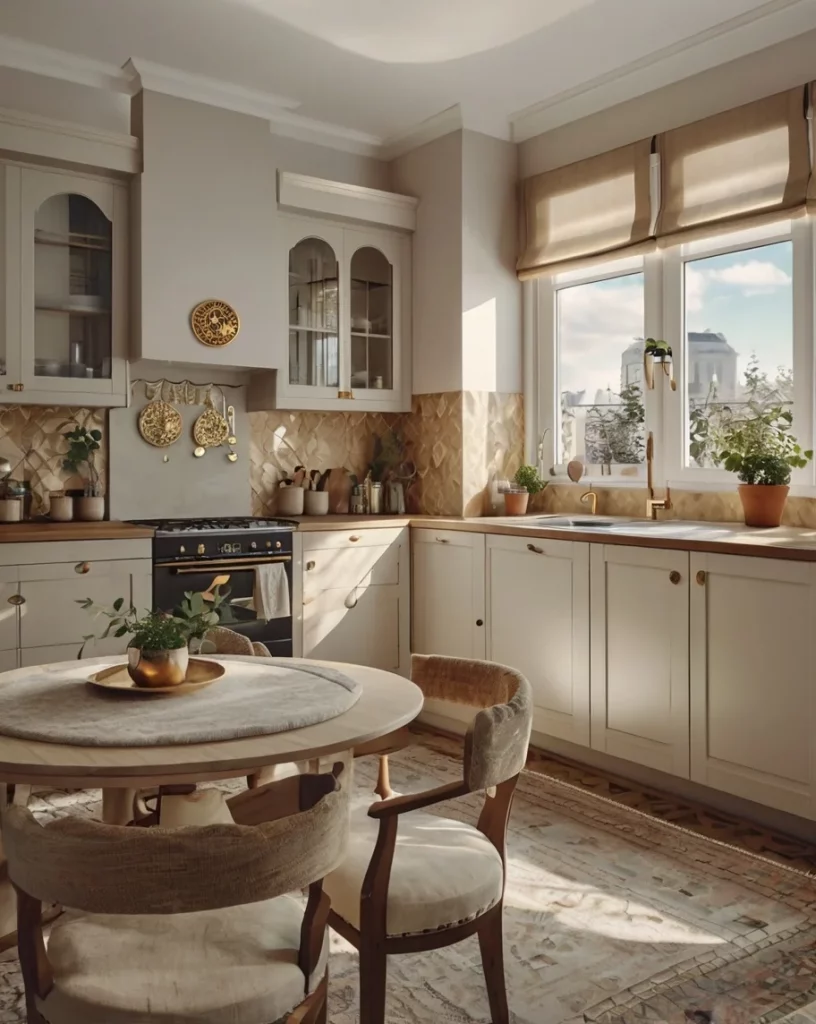
I like how the round table softens all the straight cabinet lines. It creates an inviting place to sit without making the kitchen feel crowded. The generous window also becomes an important part of the composition, while the open cabinet sections provide a practical place to display everyday pieces. The palette is restrained, so the different textures have room to stand out.
For me, this is a good example of how grandma core can feel current without relying on excessive decoration. I would focus on comfortable seating, traditional cabinet proportions, warm textiles, and a few carefully displayed pieces of tableware. The result feels personal because the objects look usable rather than arranged only for appearance.
Pink Kitchen With Floral China and Baking Details
This image captures one of the most recognizable romantic interpretations of grandma core. The cabinetry is soft pink, the backsplash is made from glossy white rectangular tile, and open shelves are filled with floral-patterned teapots, plates, bowls, and serving pieces. A large window is dressed with delicate fabric, while the countertop holds a white farmhouse-style sink, a floral pitcher, and trays of baked goods. The marble-look worktop and brass-toned faucet add another layer of traditional character.
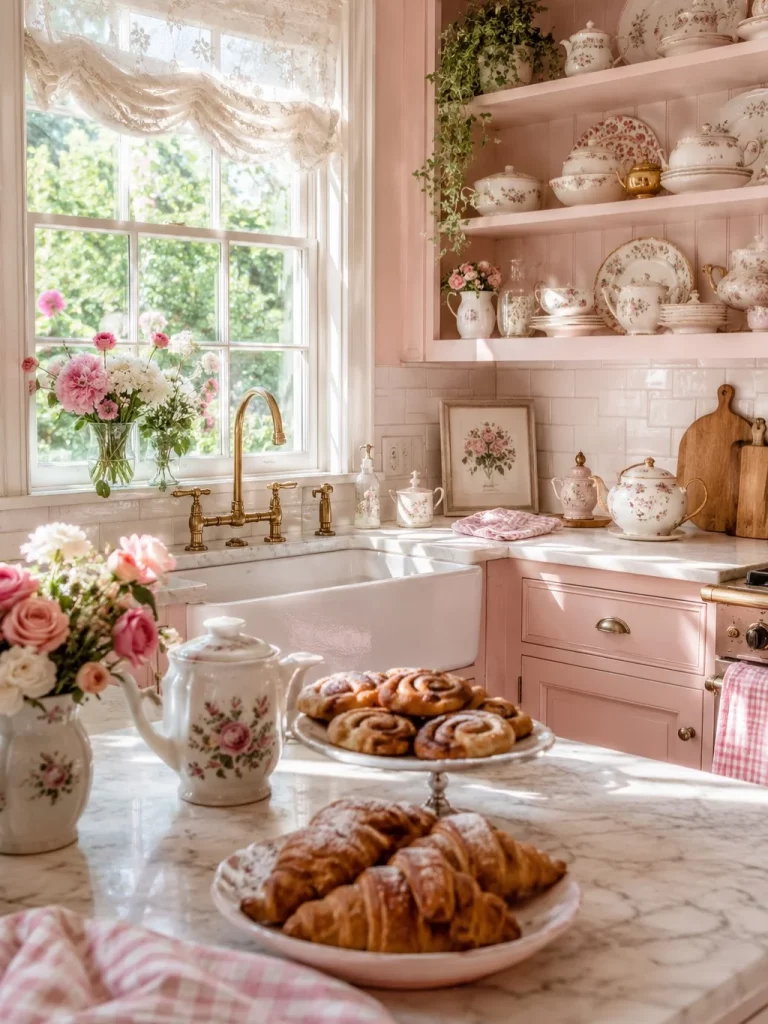
What I love here is the way the dishware becomes part of the kitchen itself. Instead of hiding everything behind solid cabinet doors, the open shelving creates a visual collection that gives the room its identity. The baking details on the counter reinforce the sense that this is a kitchen designed around everyday rituals, while the large window keeps the generous amount of pattern from feeling too heavy.
I would recreate this idea by starting with one gentle cabinet color and then building the personality through tableware. A mismatched collection can work beautifully when the colors and scale have some connection. I also think displaying only the pieces that are actually useful keeps open shelving from becoming visually overwhelming.
Classic Cream Kitchen With Marble and Garden Views
Here the kitchen is centered around a large white farmhouse-style sink beneath tall windows. Cream cabinetry, marble-look surfaces, brass-toned hardware, and a curved faucet create a traditional foundation, while open wood shelves hold bowls and containers. A cutting board, bread, strawberries, a French press, and pastries are arranged around the sink, making the space look actively used. Outside the windows, a landscaped garden adds another layer of visual interest.
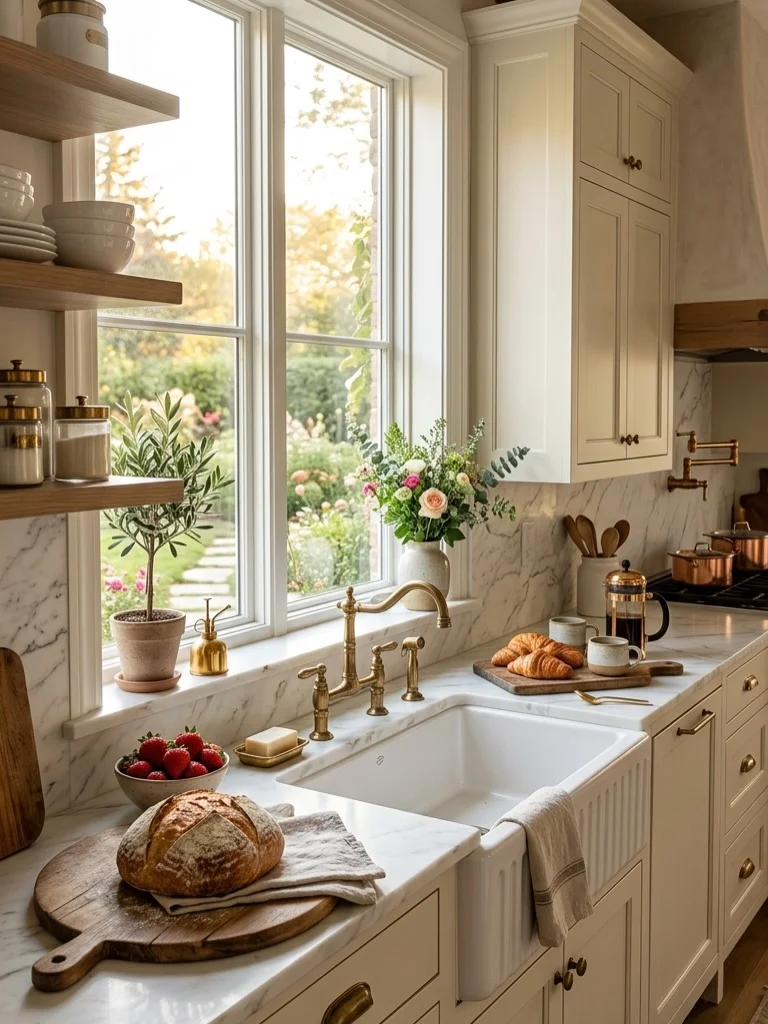
The sink placement is particularly effective because the windows give this hardworking part of the kitchen a pleasant outlook. I also like the combination of closed storage and open shelving: frequently used pieces can stay accessible, while the cabinets keep the rest of the kitchen visually organized. The long counter provides enough room for food preparation and casual serving.
For me, this image demonstrates why simple traditional details can have such a strong effect. I would prioritize a generously sized sink, classic hardware, practical counters, and a few visible kitchen objects rather than filling every surface with accessories. Fresh food and baking pieces already provide enough everyday character.
Collected Dishware on a Distressed Kitchen Hutch
This photograph shifts away from a complete kitchen and focuses on a tall, heavily weathered hutch filled with ceramics, jars, pitchers, bowls, and plates. The shelving has a visibly aged finish, and the cabinet drawers below feature decorative painted panels. A framed landscape hangs beside it, while trailing greenery surrounds the furniture and extends across the lower shelves. The overall arrangement feels like a collection built gradually over many years.
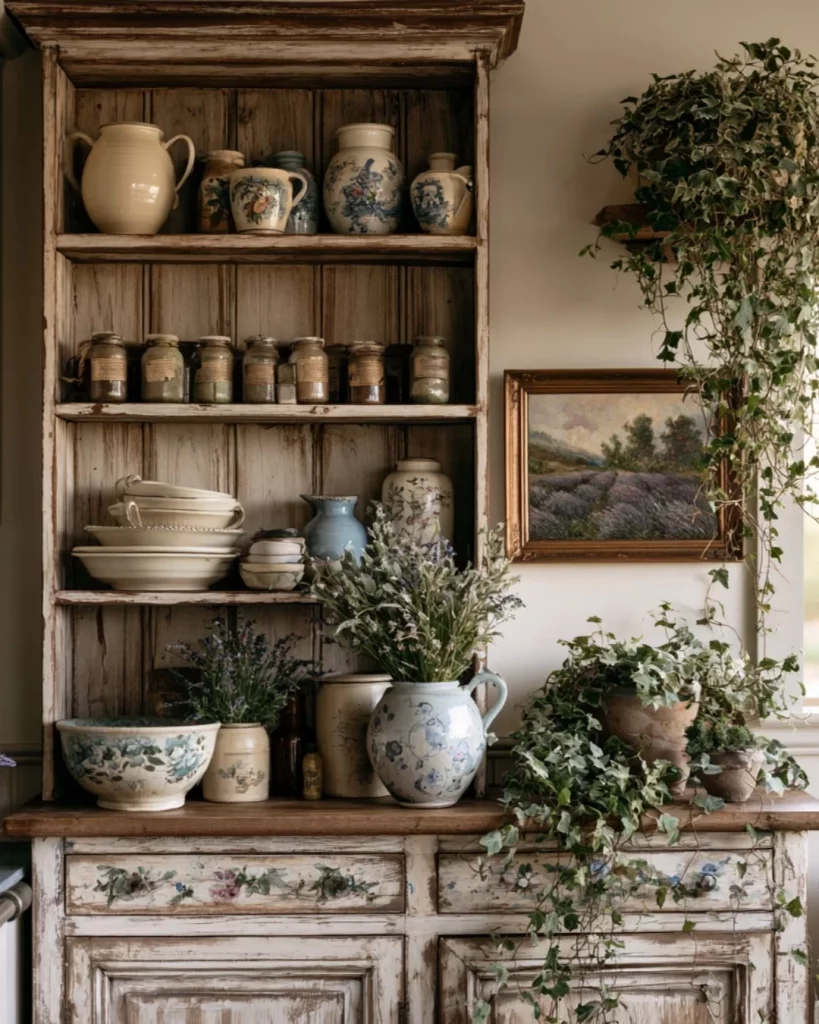
I think the strongest feature here is the storage itself. The open shelves make individual dishes visible, while the lower drawers provide concealed space for items that do not need to be displayed. Because the objects vary in shape and size, the hutch feels much more personal than a uniform storage system would.
I would use this photograph as inspiration for anyone who wants to introduce grandma core character without renovating an entire kitchen. One substantial display cabinet can completely change the atmosphere of a room. I would keep the most visually interesting ceramics on the open shelves and allow some breathing room between groups so the collection remains easy to appreciate.
Sunny Dining Room With a Traditional Table
This bright dining area features a large substantial dining table surrounded by upholstered traditional chairs. The walls are warm yellow, while several arched windows and doors bring in abundant daylight. A large ceramic vase filled with a generous arrangement sits at the center of the table, with plates and bowls arranged around it. The cabinetry in the background repeats the cream color of the trim and helps the room feel connected.
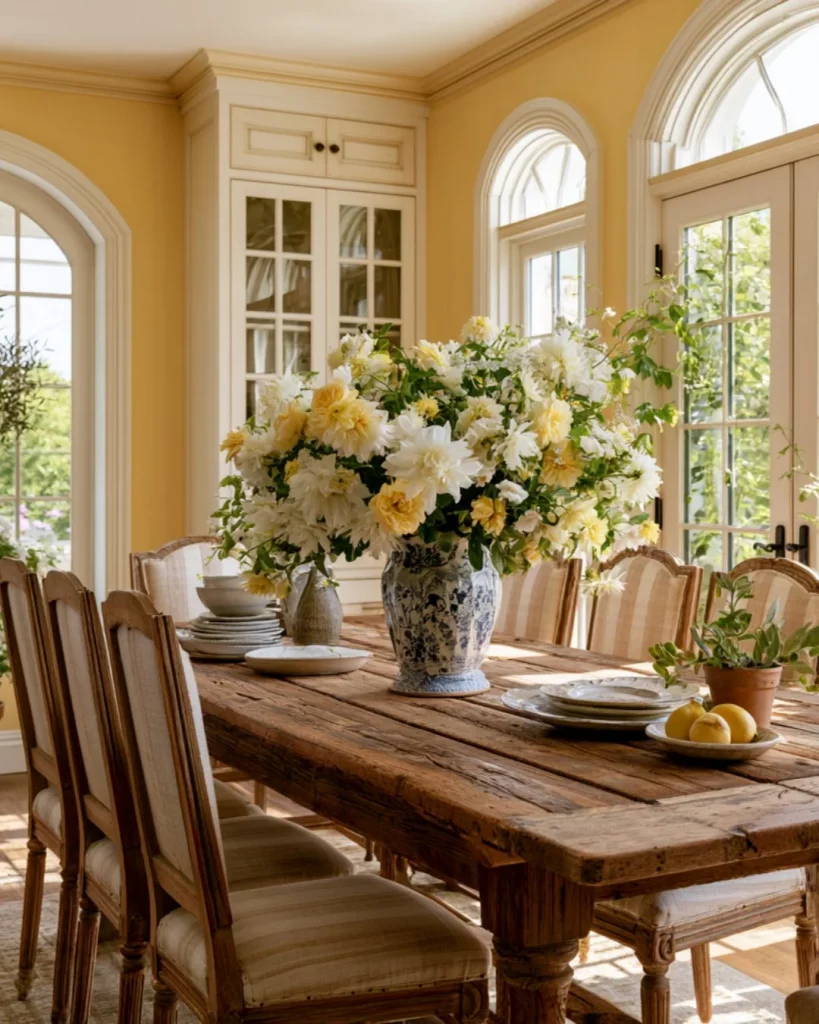
The generous table is clearly the heart of the room, and I like that the styling does not interfere with its practical purpose. There is plenty of space for place settings and serving dishes, while the central arrangement provides a strong focal point. The repeated cream trim around the windows and cabinetry also gives the room a cohesive architectural rhythm.
To me, this is a beautiful reminder that grandma core is not limited to kitchens. A traditional dining table, comfortable chairs, warm wall color, and a meaningful centerpiece can create the same nostalgic atmosphere. I would keep the table useful first and decorative second, because that is what gives this style its lived-in quality.
Soft Pink Kitchen With Open Shelves and a Farmhouse Sink
This kitchen combines pale pink cabinetry with a large white farmhouse sink positioned beneath a wide window. Open wood shelves hold cups, bowls, and pitchers, while small containers and a few decorative arrangements sit around the counter. The brass-toned faucet and cabinet hardware add warmth, and the marble-look backsplash provides a clean surface behind the sink. The window brings a view of a garden directly into the room.
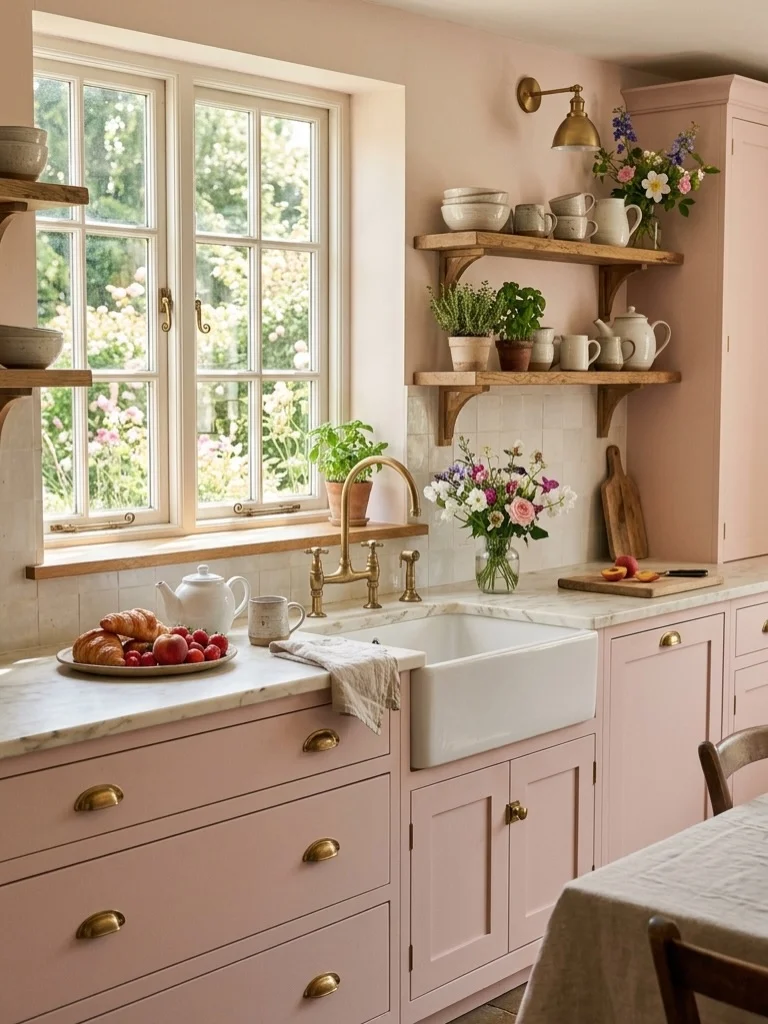
I especially like the practical relationship between the sink, counter, and open shelving. Everyday dishes are within easy reach, while the lower drawers provide closed storage. The open shelves also prevent the pink cabinetry from feeling too visually solid and introduce a contrasting natural texture.
If I were recreating this look, I would let the cabinetry remain the main color statement and use open shelving selectively. A few well-chosen cups, bowls, and pitchers are enough to establish the character. The important thing is to make the shelves feel useful rather than turning them into a display that is difficult to maintain.
Traditional Dining Kitchen With Collected Tableware
This image shows a dining space with a dark wooden table, painted spindle-back chairs, a large cream hutch filled with patterned china, and a pale green chest of drawers. A tall window is covered with light curtains, allowing soft daylight into the room. On the table, a floral runner, stacked bowls, a ceramic pitcher, and a candle create a relaxed setting, while woven baskets add storage underneath the green furniture.
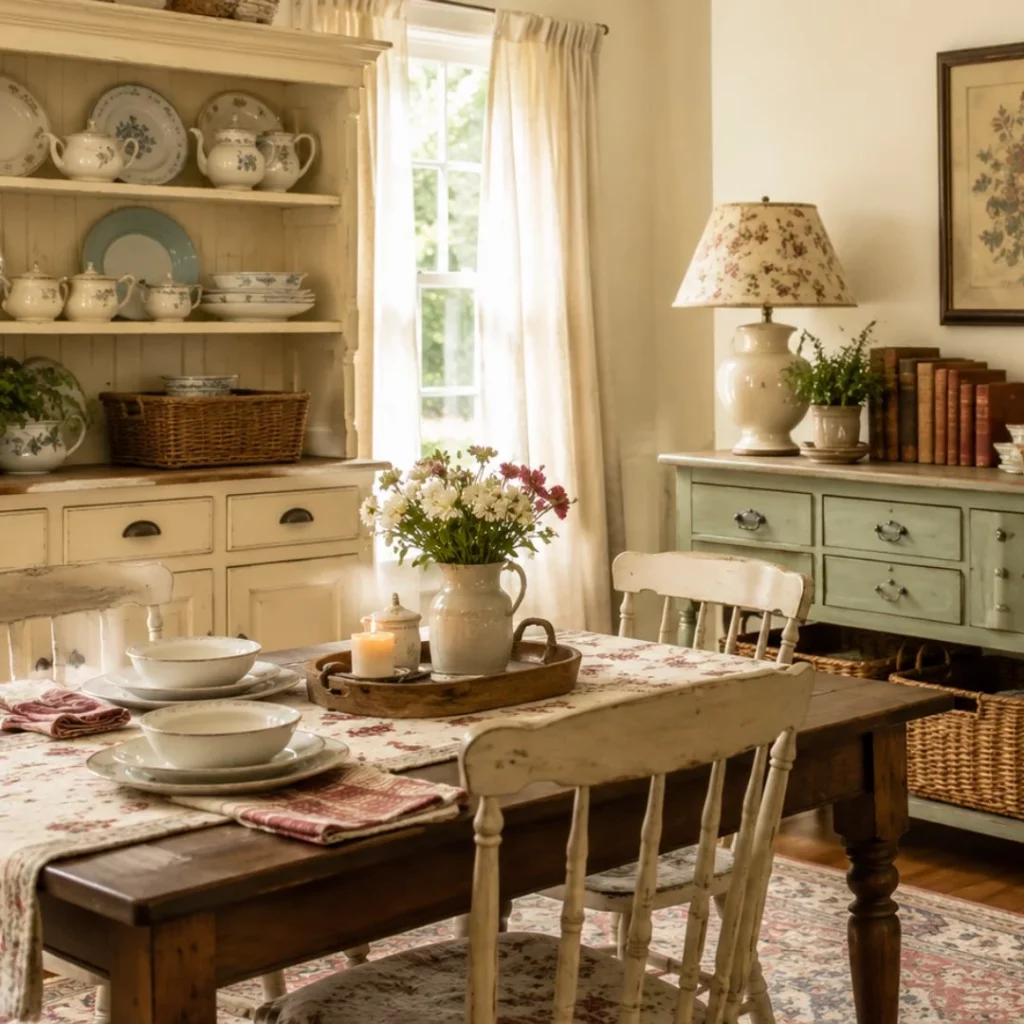
The mix of painted furniture, dark wood, ceramics, textiles, and woven storage gives the room considerable depth. I like that the furniture does not look like it came from one matching set. Each piece has its own character, yet the restrained colors keep the room visually connected. The hutch also turns necessary storage into a decorative feature.
For my own version of this look, I would embrace a combination of furniture finishes rather than trying to make every piece identical. The floral table textile and traditional china are enough to establish the nostalgic mood. A simple dining table can become much more distinctive when surrounded by pieces with different shapes and finishes.
Cream Kitchen With Pink Cabinetry and a Garden-Facing Table
This kitchen combines cream and pale pink cabinetry with a large multi-pane window overlooking a garden. Brass-toned handles and a hanging light add warmth, while open upper storage contains jars and simple kitchenware. A wooden dining table occupies the foreground, styled with a patterned runner, a basket of croissants, a loaf of bread, butter, and a ceramic pitcher filled with a loose arrangement. The composition feels relaxed and centered around meals.
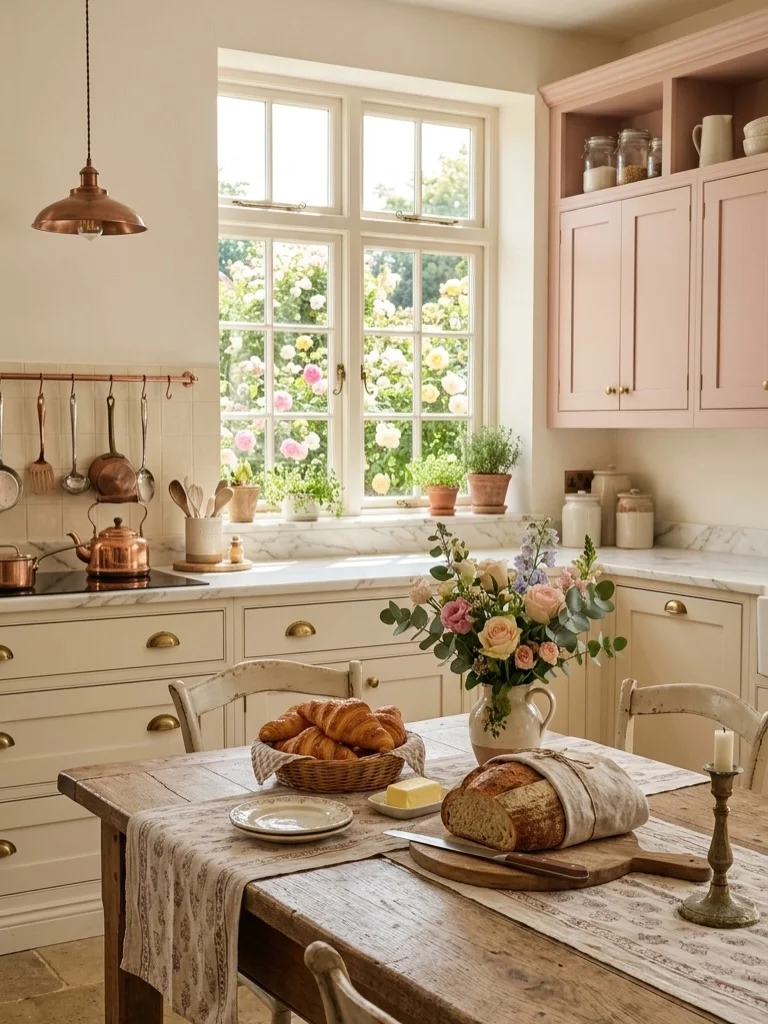
I like how the table functions as both a dining surface and a place for food preparation and serving. The large window makes the garden an important visual element, while the soft cabinetry keeps the interior calm. The bread, pastries, and table setting add warmth without requiring additional decorative objects.
This is the kind of grandma core kitchen I find particularly easy to translate into everyday life. I would focus on a traditional table, soft cabinetry, practical ceramics, and textiles that can actually be used. The styling feels convincing because almost everything shown has a clear relationship to eating, cooking, or gathering.
Pink Kitchen With an Arched Window and Copper Cookware
The final image brings together many of the details that define this collection: pink cabinetry, a large white farmhouse sink, marble-look counters, brass-toned fittings, open shelves, and a dramatic arched window overlooking a garden. A black hanging rail above the window displays copper pans and cooking utensils, making the cookware part of the decoration. In the foreground, the island is styled with croissants, coffee, fruit, flowers, and a small jar, creating an inviting breakfast setting.
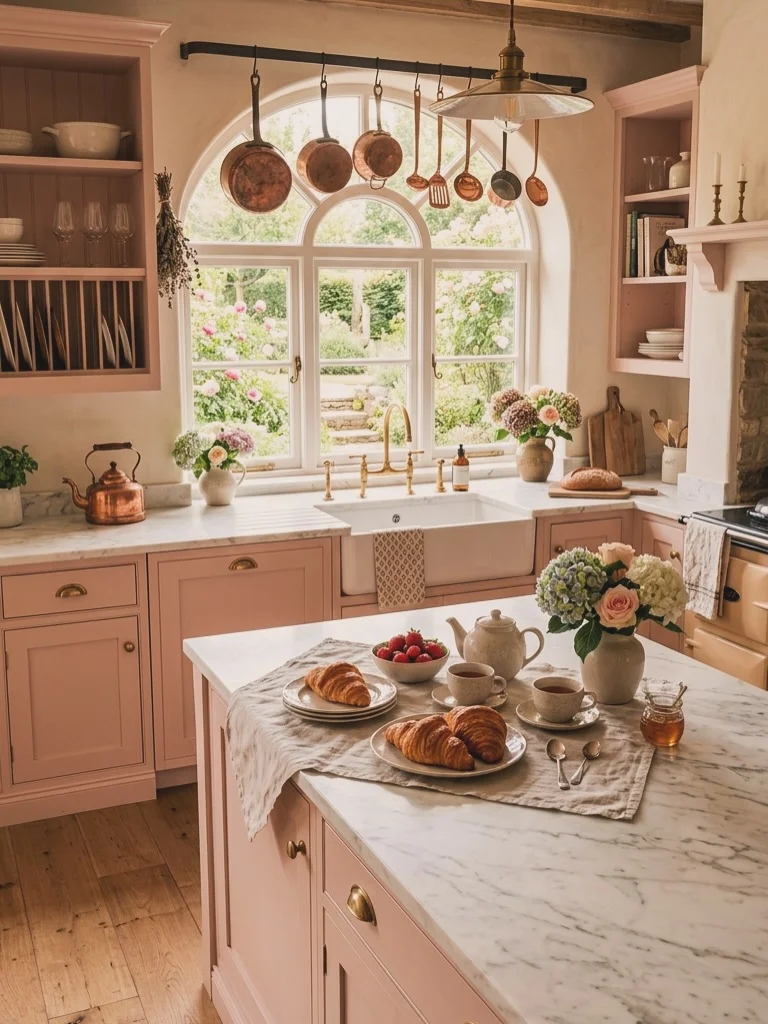
For me, the hanging cookware is one of the most successful details because it is both practical storage and visual decoration. The arched window provides a strong architectural focal point, while the pink cabinetry and warm metal finishes create a cohesive palette. The island also makes the room feel social, giving the kitchen a natural place for serving food and sitting together.
I would borrow the principle behind this room rather than trying to copy every detail. Let useful objects such as pans, cups, serving pieces, and baking dishes contribute to the personality of the kitchen. Combined with soft cabinetry, traditional fixtures, a generous window, and a few carefully chosen textiles, that approach can create a grandma core kitchen that feels warm, functional, and genuinely lived in.
Collected Blue-and-White Dishware in a Classic Display Cabinet
The first kitchen vignette immediately captures the collected character I associate with grandma core style. A large cream-colored display cabinet holds stacks of blue-and-white plates, bowls, serving pieces, and decorative dishes, while the lower counter is arranged with more tableware, a framed botanical-style artwork, a ceramic pitcher, and a soft striped textile. I love the contrast between the aged-looking painted cabinet and the delicate blue patterns across the ceramics. The cream roses in the pitcher add another soft layer without taking attention away from the dish collection.
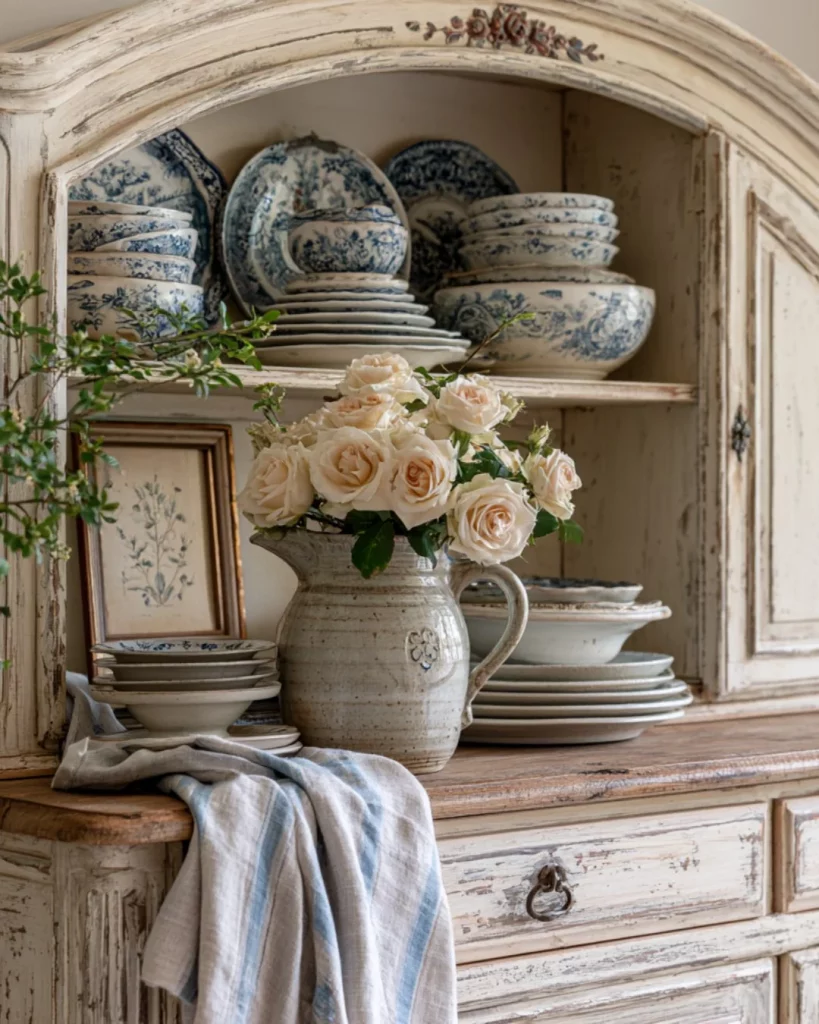
What makes this arrangement work so well is the way practical kitchenware becomes the decoration. Instead of hiding every plate and bowl behind solid doors, the open shelves allow the collection to become part of the room. The repeated blue-and-white palette also creates visual continuity, so even though there are many individual pieces, the display still feels organized. I particularly like the large plates positioned upright behind the smaller dishes because they create height and give the shelves a deliberate composition.
When I look at a display like this, I think the easiest way to recreate the feeling is to start with something you already own and genuinely enjoy using. A collection does not need to be perfectly matched. Similar colors, patterns, or shapes can visually connect different pieces while still keeping the arrangement personal. I would also keep the most decorative pieces toward the back and place frequently used plates and bowls where they are easiest to reach.
Sunny Cream Kitchen With Green Accents and Gingham Curtains
The second image shows a compact kitchen filled with warm cream cabinetry, green accents, and yellow-and-white checked curtains framing the window. The countertop holds a pale green toaster, a matching mixer, a green backsplash with a repeating pattern, ceramic containers, and several small decorative pieces. I like how the white pendant light and cream cabinets keep the room visually soft while the green and yellow details give it a cheerful personality.
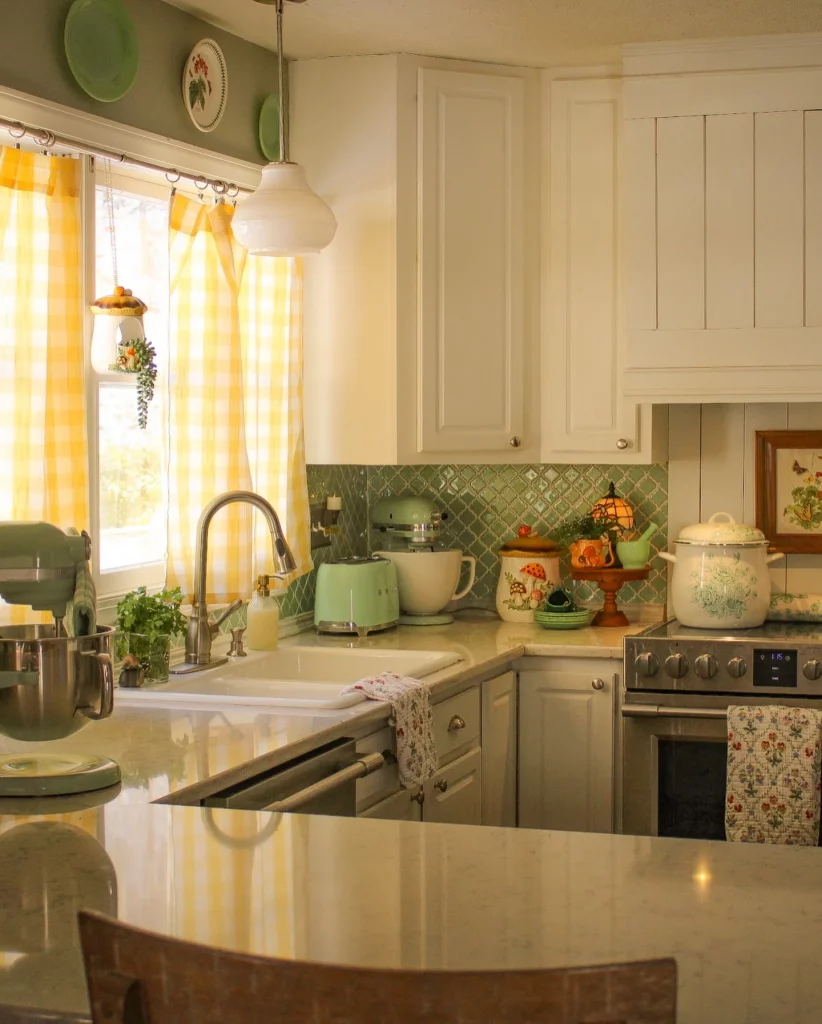
The layout feels especially practical because the main work areas are concentrated around the sink and countertop, while everyday appliances remain visible and easy to reach. The repeated green color appears in several places rather than being limited to one accessory, which helps the room feel coordinated. The checked curtains also introduce a simple graphic pattern that makes the window a noticeable focal point without overwhelming the cabinetry.
For me, this is a good example of how a grandma core kitchen can feel personal without requiring a major renovation. I would concentrate on a small color combination and repeat it through textiles, countertop appliances, and small ceramics. The important part is restraint: when several visible objects share related colors, even a busy collection can look intentional rather than random.
White Paneled Kitchen With a Farmhouse Sink and Open Shelves
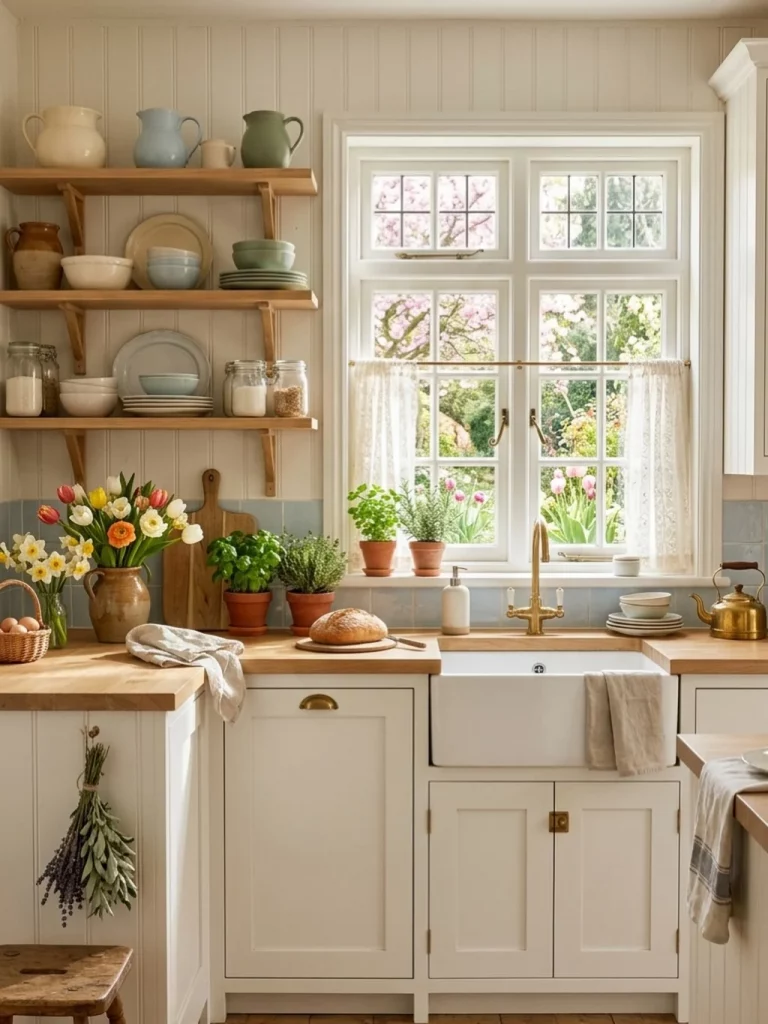
This kitchen has a much calmer palette, with white paneled walls and cabinetry, natural wood shelving and counters, and soft muted ceramics arranged around the sink. The central window brings in plenty of daylight and provides a view of greenery outside, while delicate curtains soften the lower portion of the window. Open shelves display pitchers, bowls, plates, and jars, and the deep white sink sits directly beneath the window.
I think the open shelving is particularly successful here because it combines storage with decoration. Everyday dishes are easy to access, but their soft colors also become part of the room’s visual composition. The wood shelves add warmth against the white vertical paneling, while the wood countertop creates another connection between the upper and lower portions of the kitchen. Nothing feels unnecessarily complicated.
If I were recreating this look, I would focus first on the relationship between open shelving, simple cabinetry, and a large sink. The shelves do not need to be filled with decorative objects; plates, bowls, pitchers, and jars already provide plenty of visual interest. I would also leave some breathing room between groups of objects so the collection remains easy to use.
Green Dishware Collection With Mushroom Motifs
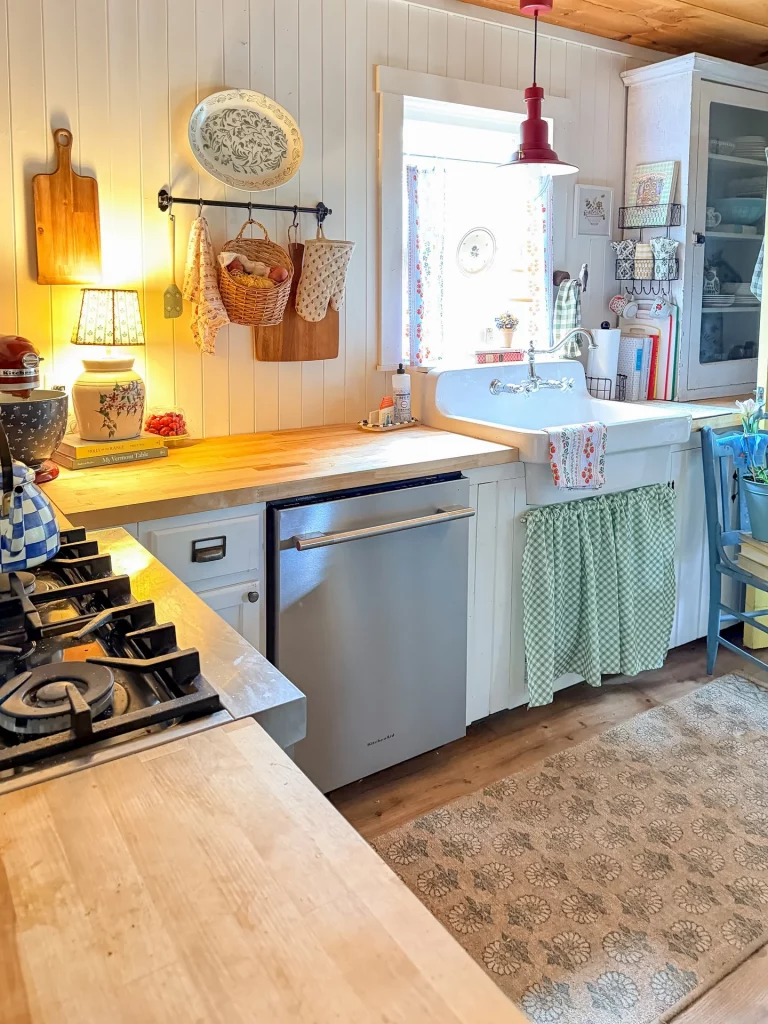
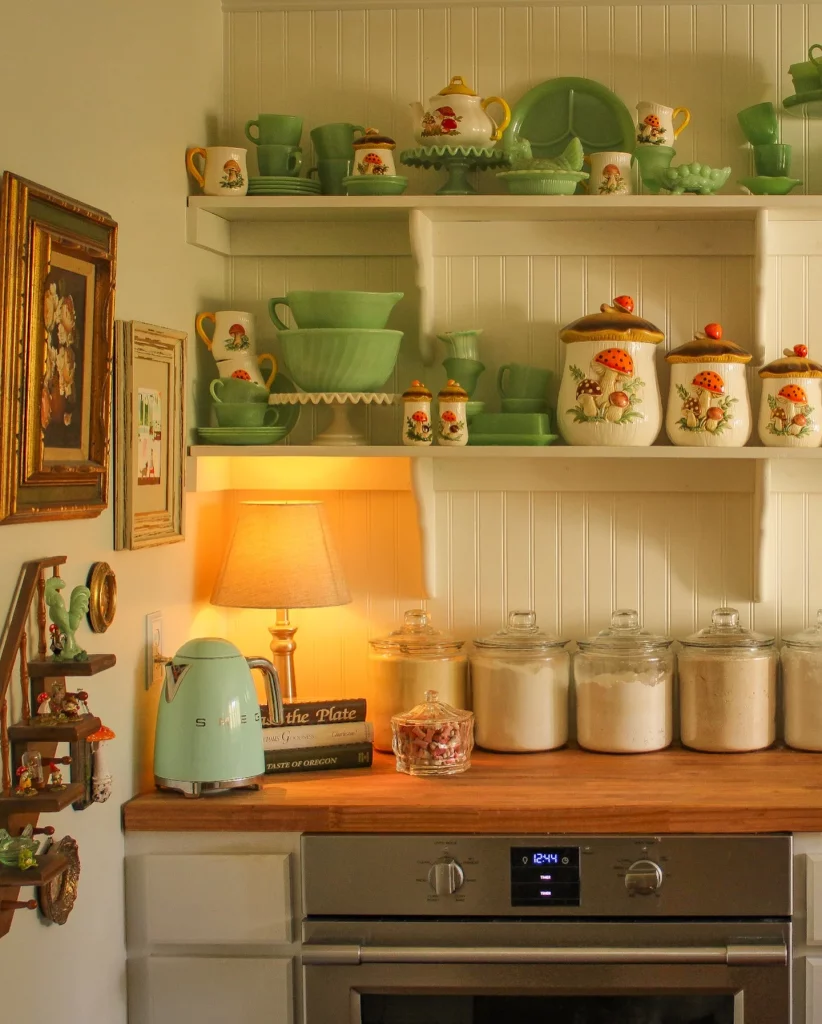
The fourth kitchen takes the collected approach much further, with open white shelving filled almost entirely with green dishware and ceramic pieces decorated with mushroom motifs. Below the shelves, clear storage jars line the wood countertop, while a small green electric kettle and warm table lamp add everyday functionality. Framed artwork and small decorative objects appear along the side wall, giving the space an unmistakably personal character.
What I find interesting here is the commitment to a very specific collection. The green cups, plates, bowls, serving pieces, and containers repeat throughout the shelving, creating a strong visual identity. At the same time, the transparent jars underneath provide practical storage for dry ingredients and create a neat row along the countertop. The warm lamp introduces a softer layer of lighting that makes the display feel especially welcoming.
I would take inspiration from this image by choosing one collectible color or motif and letting it appear in several useful objects. That approach makes the kitchen feel cohesive without requiring everything to come from the same set. I also like the idea of combining display shelving with practical countertop storage because it keeps frequently used ingredients and appliances within reach.
White Kitchen With Brick Range Wall and Glass Pendant Lights
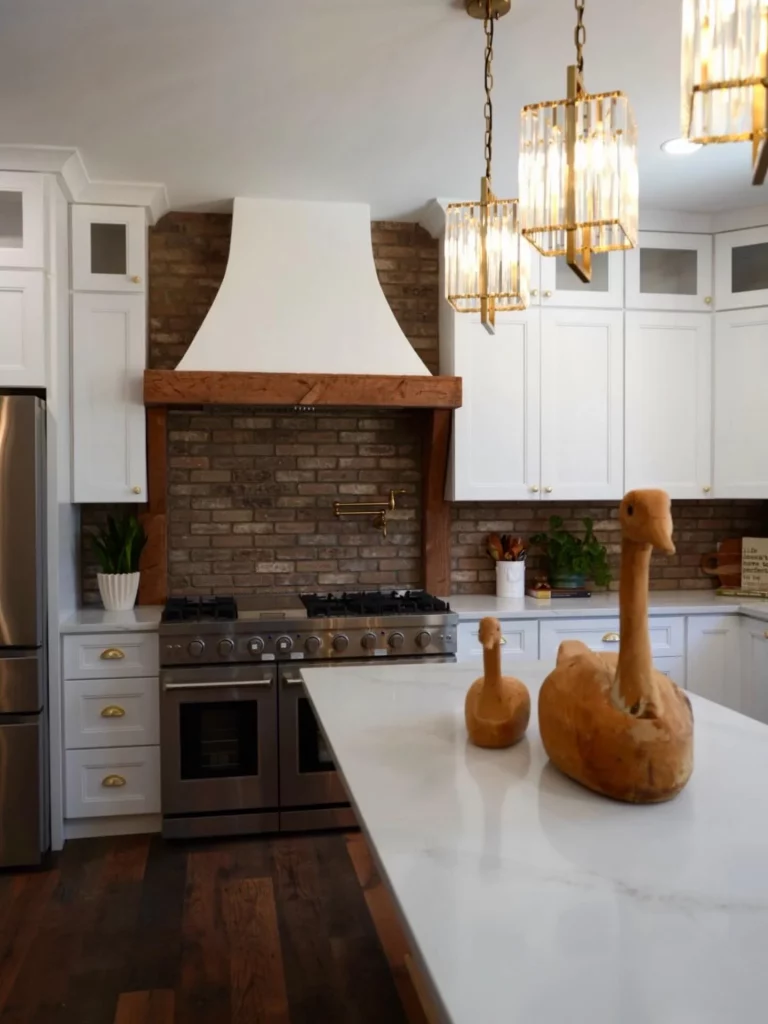
The fifth image presents a more structured kitchen with white cabinetry surrounding a cooking area framed by a dark brick wall. A large white range hood sits above the stove, while a substantial island occupies the foreground. Two hanging glass-and-metal pendant lights add a refined focal point above the island, and small decorative objects sit on the counter without competing with the strong architectural backdrop.
The contrast between the white cabinetry and dark brick creates depth and gives the cooking area a clear visual center. I like how the island provides a large, uninterrupted work surface while the cabinets keep most of the storage visually contained. The pendant lights also help define the island as a separate functional zone, making the overall layout feel balanced.
For a grandma core interpretation of this type of kitchen, I would keep the traditional-looking elements that are already visible rather than adding too many accessories. The brick range wall, paneled cabinetry, classic hood shape, and large island already provide plenty of character. A few carefully selected countertop objects are enough to make the space feel lived in while preserving its practical layout.
Colorful Cottage Kitchen With a Deep Sink and Patterned Textiles
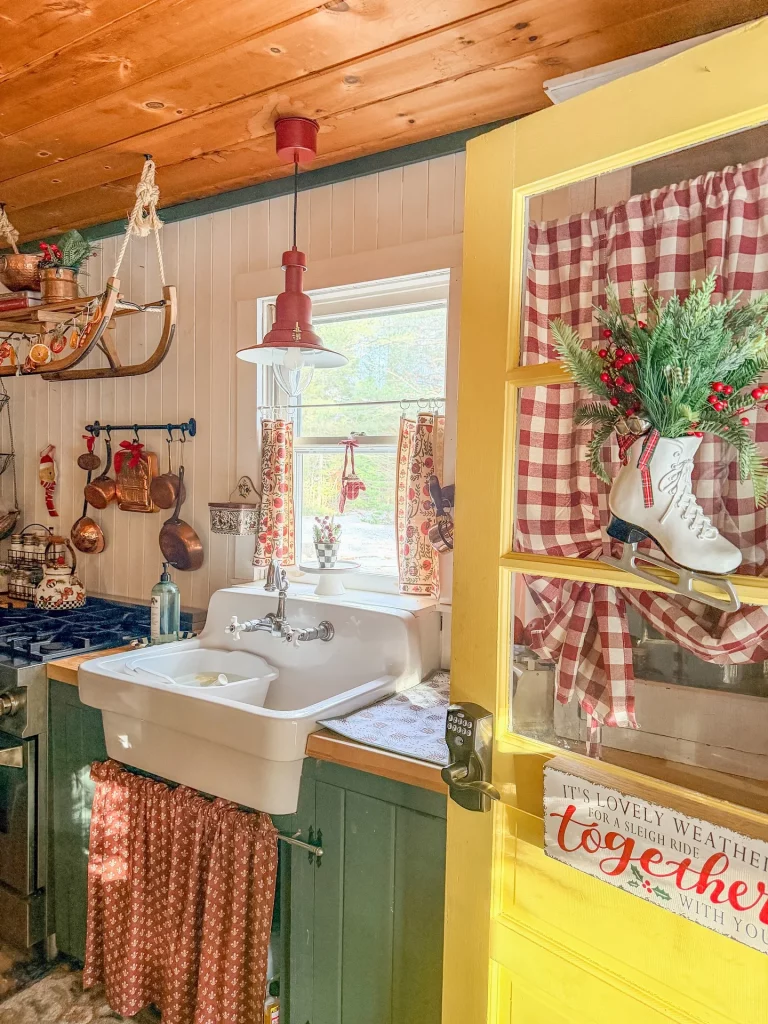
This kitchen has a much more playful personality, combining a wood-paneled ceiling, cream wall paneling, green lower cabinetry, and a yellow-framed glass door. A deep white sink sits beneath the window, while copper-colored cookware hangs openly along the wall. Patterned curtains and a red-and-white checked textile visible through the door add even more visual character, while a pair of red pendant lights creates a strong connection between the different colors.
I like the way this room uses functional objects as part of the decoration. The hanging cookware is easy to reach and immediately adds texture to the wall, while the open sink area keeps everyday activity at the center of the design. The different colors might seem bold individually, but they are distributed throughout the room so the eye moves naturally from one area to another.
When I look at a kitchen like this, I am reminded that grandma core does not have to mean using only neutral colors. I would choose two or three colors that already appear in the room and repeat them through textiles, cabinetry, lighting, and small accessories. That creates personality while keeping the collection visually connected.
Soft Pink Kitchen With Marble Counters and a Garden View
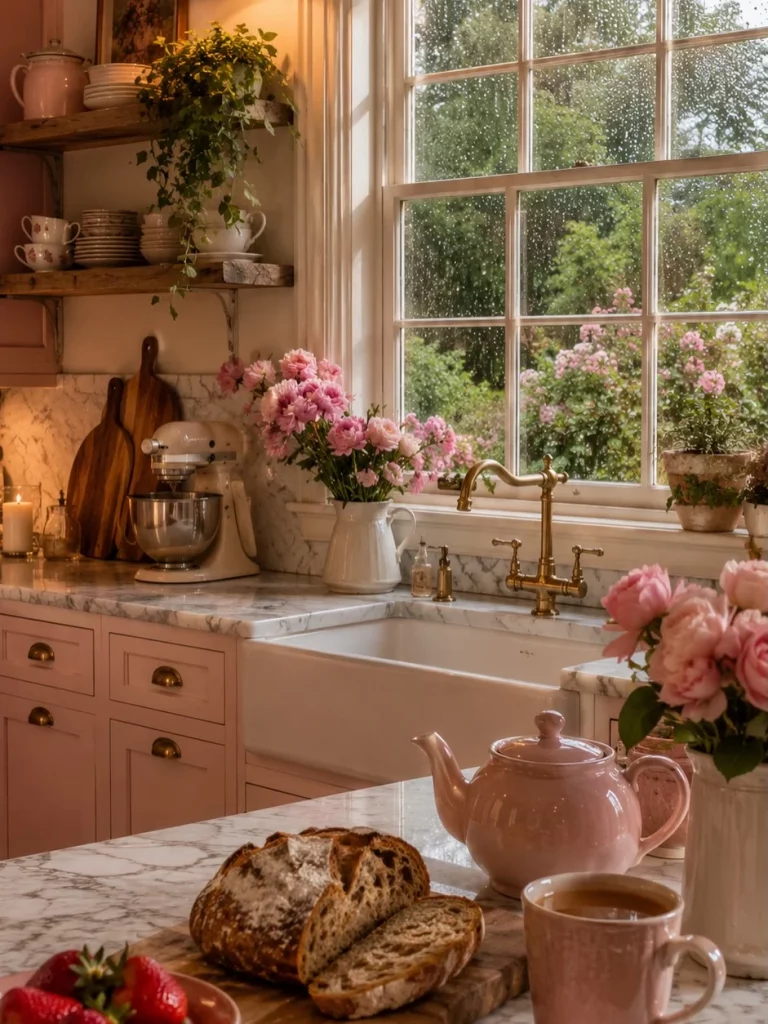
The seventh image creates a much softer atmosphere with pale pink cabinetry, marble countertops, open wood shelving, and a large divided window overlooking greenery outside. A white stand mixer sits beneath the shelves, while a ceramic pitcher filled with pink blooms becomes the central countertop arrangement. In the foreground, a pink teapot and matching cup sit beside sliced bread, reinforcing the cozy, everyday kitchen atmosphere.
The strongest feature for me is the connection between the window, countertop, and sink. The large window fills the workspace with natural light and provides a pleasant visual destination while cooking or washing dishes. Marble adds a patterned surface beneath the soft cabinetry, while the repeated pink tones in the teapot, cup, cabinetry, and arrangement create a gentle visual rhythm.
I would recreate this feeling by allowing the countertop to remain useful rather than perfectly empty. A stand mixer, ceramic pitcher, teapot, and a few food items can make a kitchen feel active and welcoming. The key is to group objects intentionally so that everyday pieces look like part of the overall styling rather than clutter.
Warm Cream Kitchen With a Large Wood Dining Table
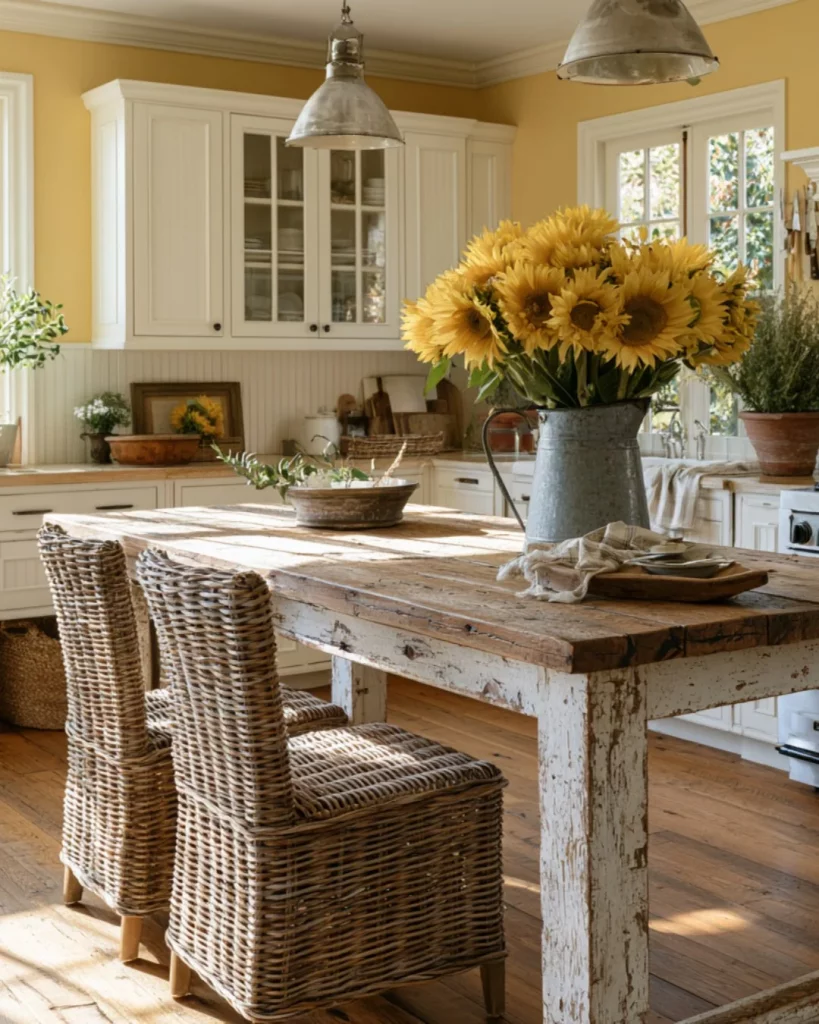
The eighth image expands the grandma core feeling into a spacious kitchen centered around a large wood dining table. Cream cabinetry lines the background, while warm yellow walls, pendant lights, woven dining chairs, and a large metal pitcher filled with yellow blooms create a relaxed atmosphere. The substantial table provides plenty of room for meals, preparation, and gathering, making it feel like the natural heart of the kitchen.
I particularly like the relationship between the oversized table and the surrounding cabinetry. Instead of making the kitchen feel purely functional, the table introduces a dedicated place for sitting and eating directly within the working space. The woven chairs add texture, while the large centerpiece gives the table a clear focal point without taking away its usable surface.
For me, this image shows why a dining table can be such an important part of grandma core kitchen design. If the room allows for it, I would choose a table large enough to support everyday activities rather than treating it only as a formal dining surface. A simple centerpiece and comfortable chairs can make the kitchen feel like a place where people naturally want to stay.
Floral Kitchen With Cream Cabinetry and a Cozy Breakfast Table
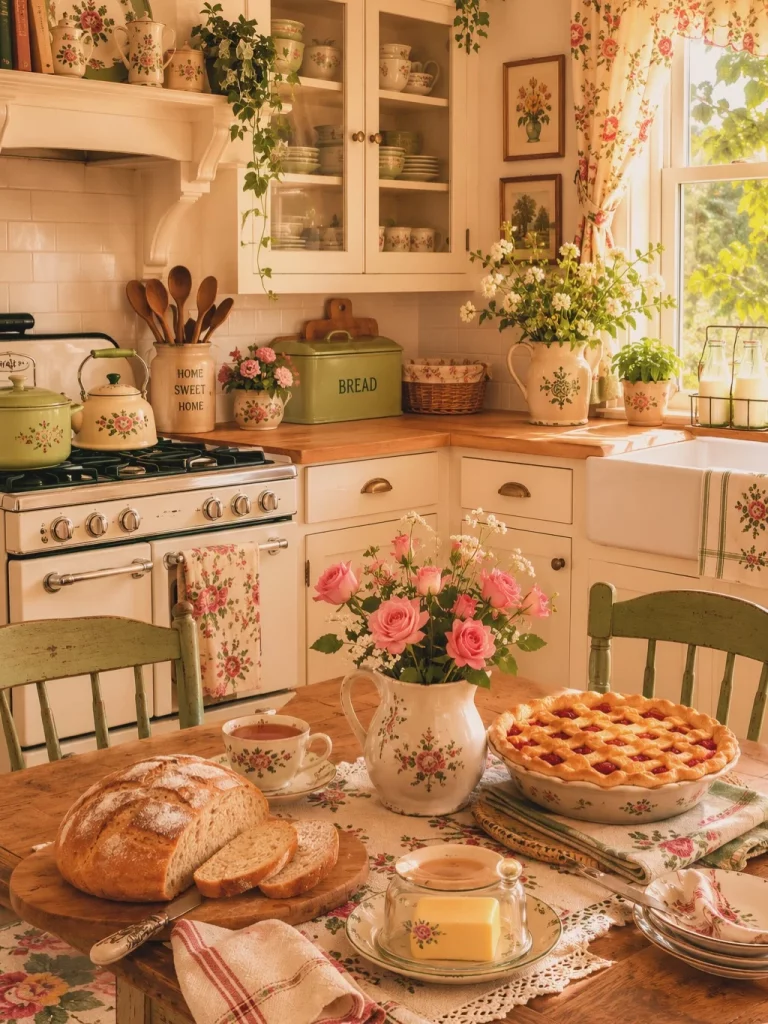
The ninth image is filled with floral-patterned details, cream cabinetry, framed artwork, open shelving, and warm natural wood surfaces. A vintage-style range sits beside green and cream cookware, while glass-front cabinets display coordinated dishes. In the foreground, a small dining table is covered with a patterned textile and arranged with a ceramic pitcher, cups, bread, butter, and a fruit-filled pie.
This room works because the decorative details are repeated throughout the kitchen instead of being concentrated in one area. Floral patterns appear across the curtains, ceramics, textiles, and kitchen accessories, while the cream cabinetry provides a quiet background for all those details. The dining table also makes the space feel immediately usable, especially with the food and serving pieces arranged as though a meal is about to begin.
I think this is one of the easiest grandma core ideas to adapt because the character comes largely from accessories. Patterned dish towels, ceramic pieces, table linens, curtains, and serving dishes can transform a simple kitchen without changing its basic layout. I would choose one dominant pattern and repeat it selectively rather than introducing many unrelated prints.
Cream Cabinetry and Blue Details in a Collected Kitchen
The final image brings together many of the details seen throughout the collection: cream cabinetry, open and glass-front storage, patterned ceramics, natural wood counters, decorative textiles, and a large white sink. Blue-and-white dishware is displayed above the counter, while a blue-patterned pitcher and coordinated accessories appear around the workspace. A large floral arrangement sits on the dining table alongside a baked pie, creating a warm finishing scene.
What stands out to me is how naturally the room combines storage, decoration, and everyday use. The glass-front cabinets allow dishes to remain visible, while the open countertop areas provide space for cooking and serving. The table creates a separate gathering area, and the combination of cream, blue, and natural wood keeps the many patterns from becoming visually chaotic.
I would take this final image as a reminder that grandma core is less about copying a specific kitchen and more about creating a sense of continuity and personality. I would start with practical pieces I already use, then add coordinated ceramics, textiles, and displayed objects that feel meaningful. The most convincing result is not perfectly styled; it is a kitchen where everything looks as though it belongs there because it is genuinely part of everyday life.
Warm Brick Kitchen With Open Wooden Shelves
I immediately notice the beautiful contrast between the pale exposed brick walls, warm wooden shelves, natural wood cabinetry, and creamy countertop. The shelves are filled with stacked plates, bowls, pitchers, and ceramic vessels, while a large textured vase overflowing with white flowers becomes the main focal point of the island. The generous island provides a substantial work surface, and the soft natural light coming through the window gives the entire kitchen a calm, welcoming atmosphere.
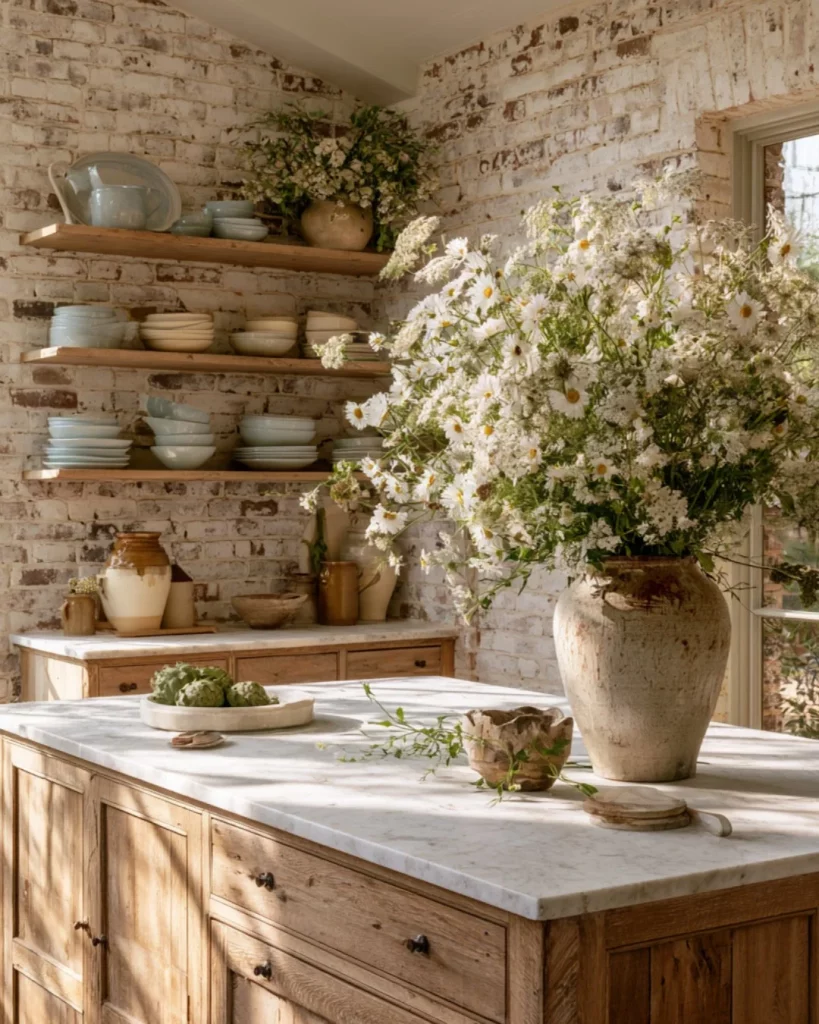
What makes this kitchen especially successful to me is the way storage becomes part of the visual character. Instead of concealing every dish behind doors, the open shelves make everyday ceramics easy to reach and naturally decorative. The wooden cabinetry below provides enclosed storage for items that do not need to remain on display, creating a practical balance between openness and organization.
I would use this photograph as inspiration for anyone who wants a Grandma core kitchen without making the room feel overly decorated. The most effective approach is to choose a limited group of useful objects that already have attractive shapes and finishes, then arrange them casually rather than making every shelf perfectly symmetrical. I also love the idea of keeping the countertop relatively simple so that one substantial arrangement can provide the visual focus.
Soft Pink Kitchen With Traditional Details and Garden Views
This kitchen has a much softer, more delicate character, with pale pink cabinetry, white marble-look surfaces, traditional brass-colored hardware, and large multi-pane windows overlooking greenery. A white range hood surrounds a marble-look backsplash, while open shelves display small ceramics and framed artwork. At the foreground dining table, a large loaf of bread sits on a round wooden board beside floral-patterned dishes and a generous vase of pink and white blooms.
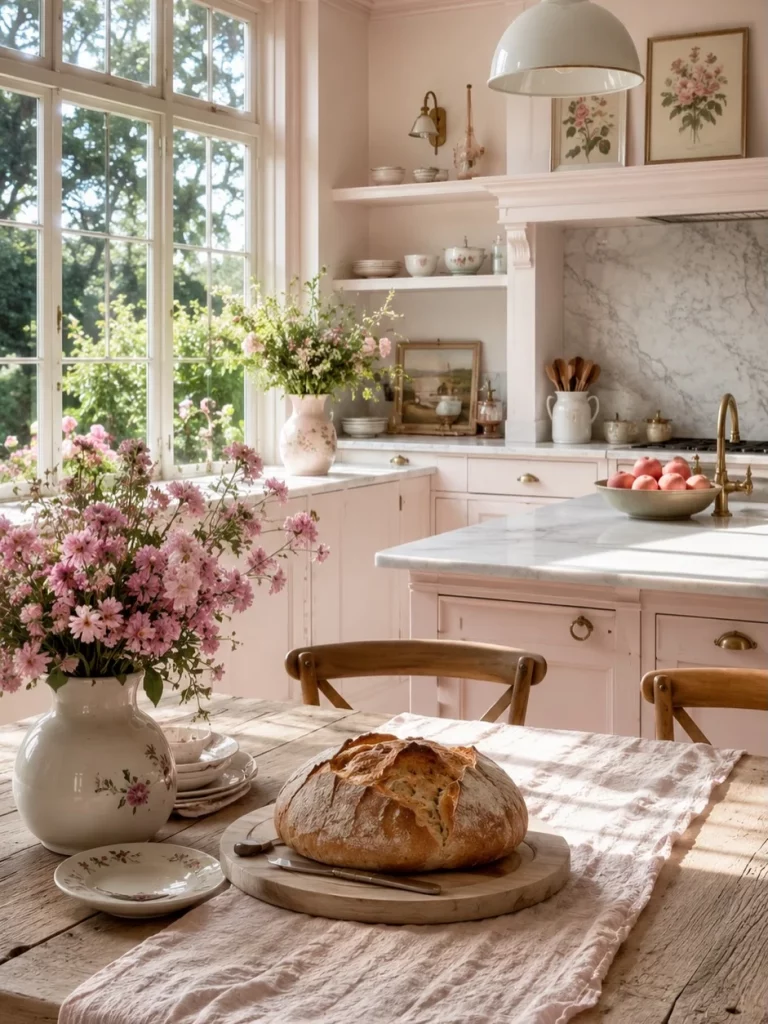
I think the strength of this room comes from its consistent palette and the way every area feels connected. The pink cabinetry continues throughout the kitchen without competing with the light countertop or white architectural details. The large windows also make the space feel naturally connected to the garden, while the dining table turns the kitchen into a place for meals rather than simply a cooking area.
For my own version of this look, I would focus on the relationship between cabinet color, ceramics, textiles, and artwork rather than trying to copy every individual detail. A softly colored cabinet finish can immediately establish the mood, while traditional hardware and framed botanical-style artwork reinforce the nostalgic character. The bread, dishes, and vase shown here also demonstrate how ordinary kitchen moments can become part of the styling.
Lavender Cabinetry With Copper Cookware and Open Shelving
I love the distinctive combination of muted lavender cabinetry, warm cream walls, marble-look counters, and copper cookware in this kitchen. An open window reveals a field of lavender outside, while wooden shelves hold cream-colored pottery and serving pieces. Copper pans hang beside the cooking area, creating a strong metallic accent, and the foreground countertop is styled with bread, peaches, pastries, a floral teapot, and a small jar.
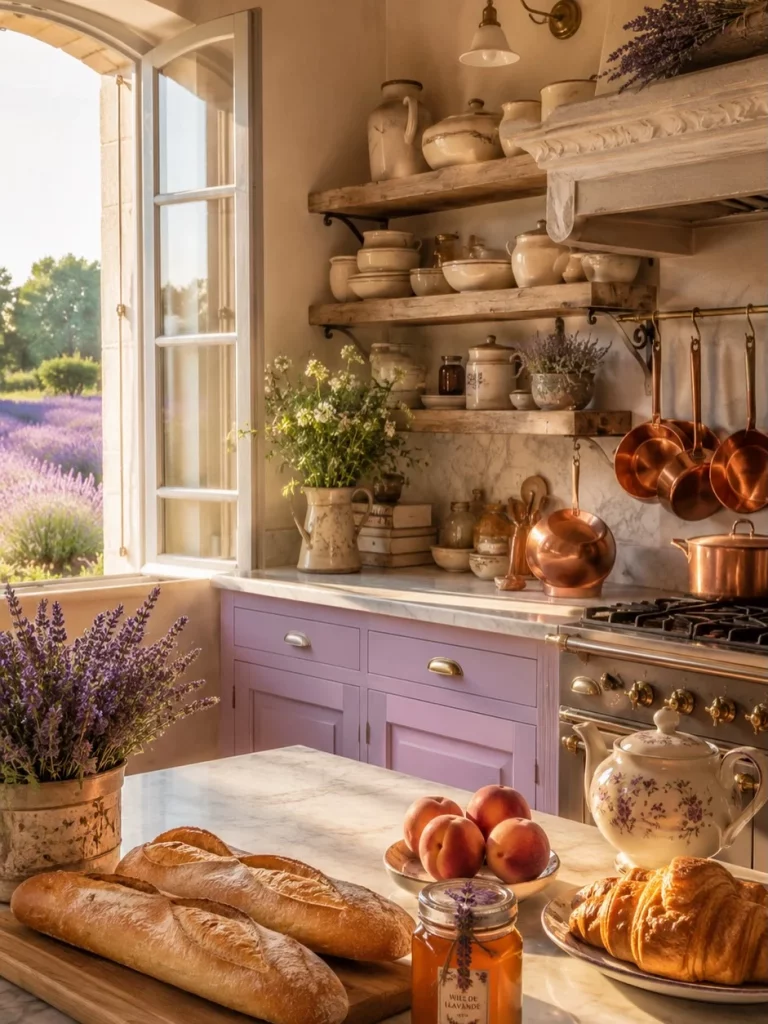
The layout works because the kitchen feels practical without losing its decorative personality. The open shelves keep frequently used ceramics accessible, while the hanging cookware makes use of the wall near the range. I also like how the lavender cabinets are not treated as an isolated statement; the surrounding pottery, flowers, and view outside repeat similar soft tones and make the cabinetry feel naturally integrated.
This image reminds me that Grandma core does not have to mean choosing only neutral colors. I would consider a muted cabinet shade when the rest of the room remains relatively restrained. The copper cookware is another useful lesson because it adds warmth and visual interest while also serving an obvious practical purpose. Keeping the accessories functional is one of the easiest ways to make this aesthetic feel authentic rather than staged.
Soft Green Kitchen With a Classic Farmhouse Sink
Here I see soft green cabinetry paired with a large white farmhouse-style sink, pale marble-look countertops, wooden open shelves, and a tall multi-pane window. Cream-colored ceramics fill the shelves, while a wooden cutting board leans against the wall near the sink. On the island, a white teapot, bread, and bowls of peaches create a relaxed breakfast-like scene, and the brass-colored faucet and cabinet hardware add warm contrast.
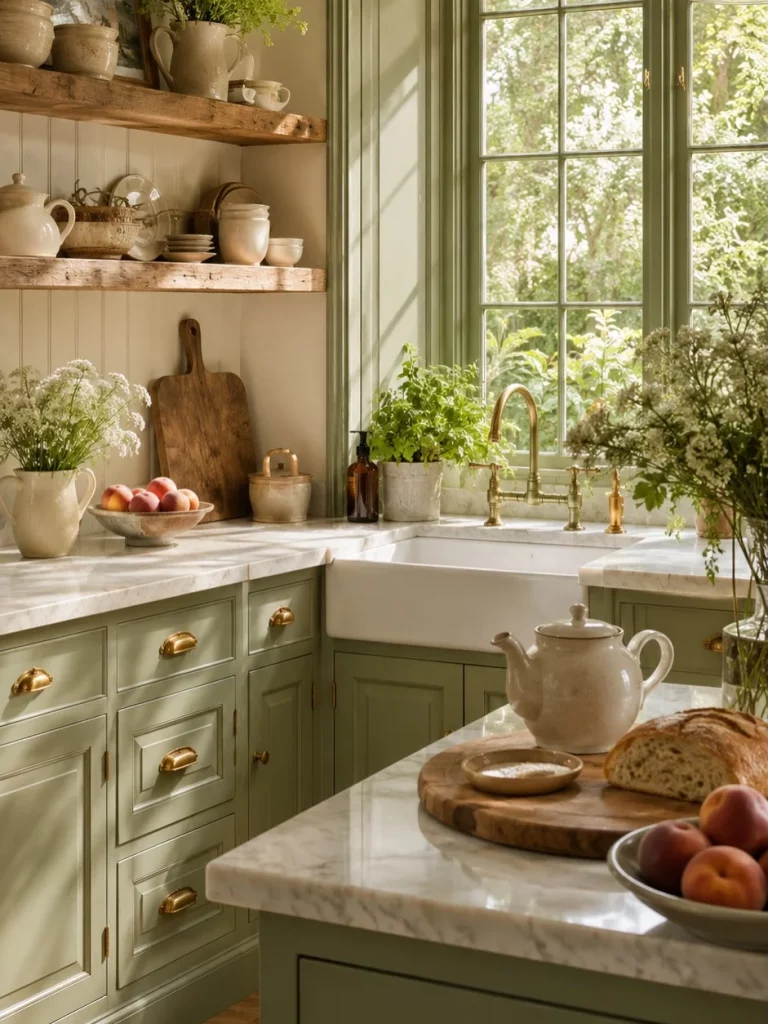
The sink placement is particularly appealing because the large window brings natural light directly into one of the kitchen’s most frequently used areas. The combination of closed lower cabinetry and open shelving gives the room both practical storage and a display area for dishes. I also like the restrained arrangement of the countertop because there is enough open workspace for actual preparation.
If I were recreating this feeling, I would start with the cabinet color and traditional sink rather than adding lots of decorative accessories. The soft green provides enough personality on its own, while the white sink and pale countertop keep the composition light. Wooden cutting boards and simple ceramics can then add warmth without making the room feel crowded.
Sunny Yellow Cabinetry With a Traditional Country Kitchen Feel
This kitchen stands out for its warm yellow cabinetry, white apron-front sink, dark wooden countertops, and floral-patterned curtains around the window. Open wooden shelves display plates, pitchers, bowls, and storage jars, while a patterned textile rests on the substantial wooden table in the foreground. A bowl of lemons adds another layer of yellow, reinforcing the cheerful palette without changing the room’s traditional character.
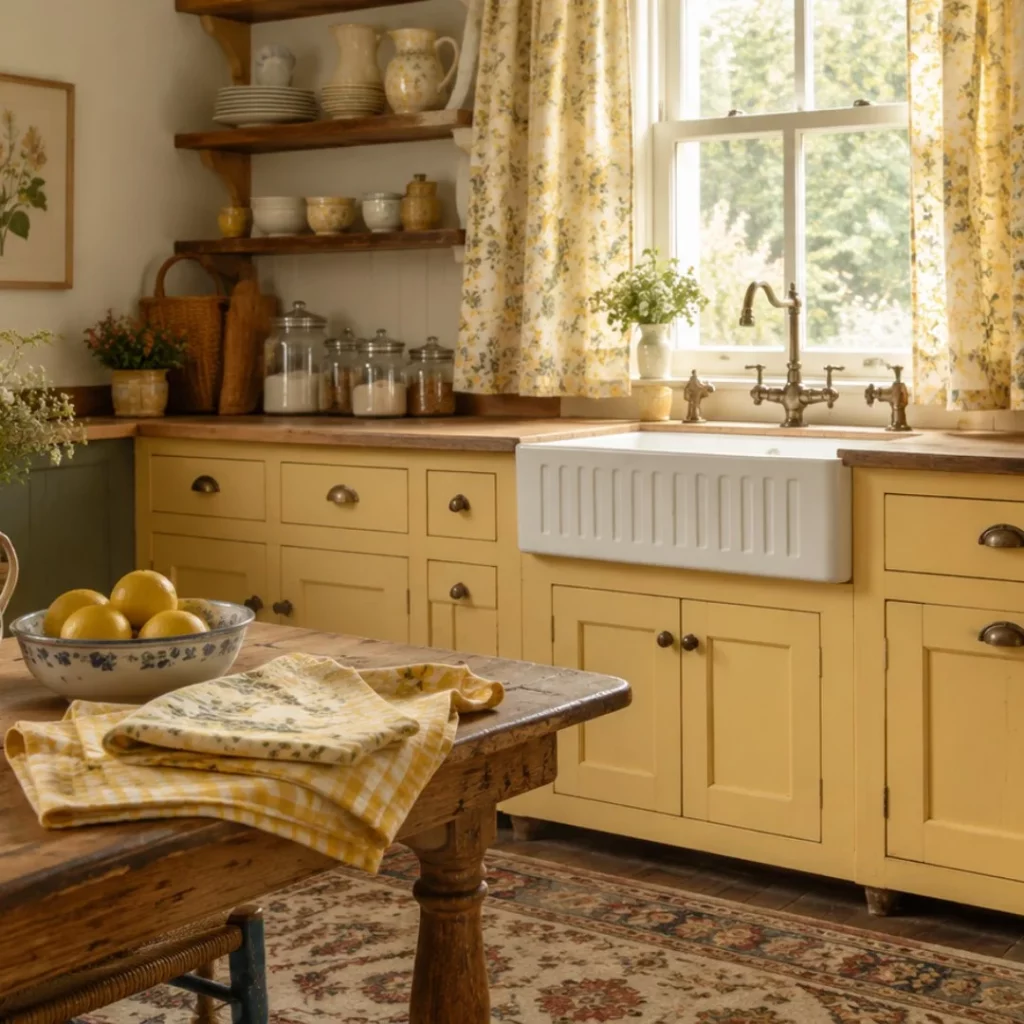
I find the combination particularly effective because the color is repeated in several small details rather than appearing only on the cabinets. The curtains, lemons, textiles, and ceramics create visual connections throughout the room. At the same time, the dark wood table and shelving provide enough contrast to keep the yellow from becoming overwhelming.
For me, this is a good example of how textiles can completely change the personality of a kitchen. A patterned curtain or table textile can introduce character without requiring a major renovation. I would also keep open shelving relatively curated, using plates, bowls, and pitchers that are genuinely useful so the storage remains practical as well as attractive.
Classic Green Kitchen With Copper Accents and Garden Light
The next kitchen feels especially inviting because of its deep muted green cabinetry, white farmhouse sink, pale marble-look counters, and large windows overlooking a leafy garden. Copper pans hang above the work area, while glass vases, ceramic pieces, a floral teapot, and a cup create a relaxed scene around the island. A loaf of bread, butter, and strawberries make the countertop feel connected to everyday breakfast and baking.
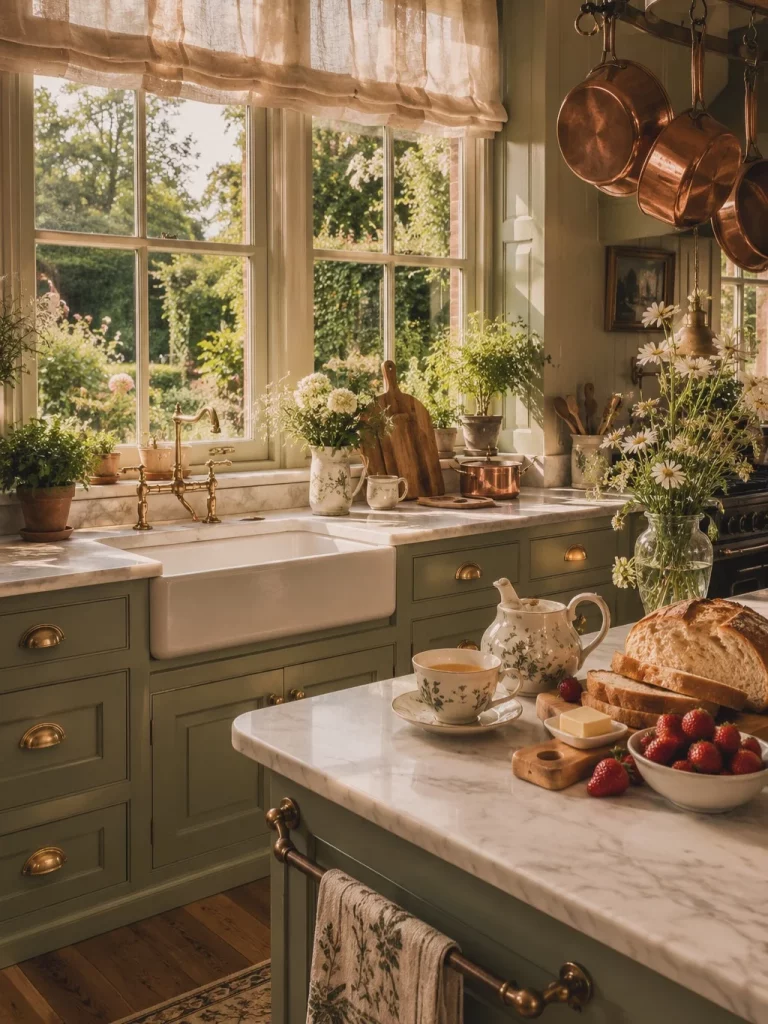
I like the way the kitchen balances strong cabinetry with light surfaces and abundant daylight. The copper cookware adds warmth against the green cabinetry and is positioned where it can be reached easily. The large sink beneath the windows is also both functional and visually pleasing, giving the person working there a view outside.
This photograph makes me think that the most convincing Grandma core kitchens are not built around decoration alone. They look as though the objects have a reason to be there. I would choose a few traditional pieces that I actually use, such as a substantial teapot, serving board, or attractive cookware, and allow those pieces to become part of the room’s identity.
Rainy-Day Pink Kitchen With a Cozy Everyday Atmosphere
This kitchen takes the familiar traditional elements in a softer direction with pink cabinetry, marble-look countertops, brass-colored hardware, and a large dark-framed window showing a rainy garden outside. A white farmhouse sink sits beneath the window, while a small arrangement of pink flowers, copper cookware, cups, and a teapot add detail around the worktop. Bread and berries sit on wooden boards and bowls, giving the room a relaxed, lived-in quality.
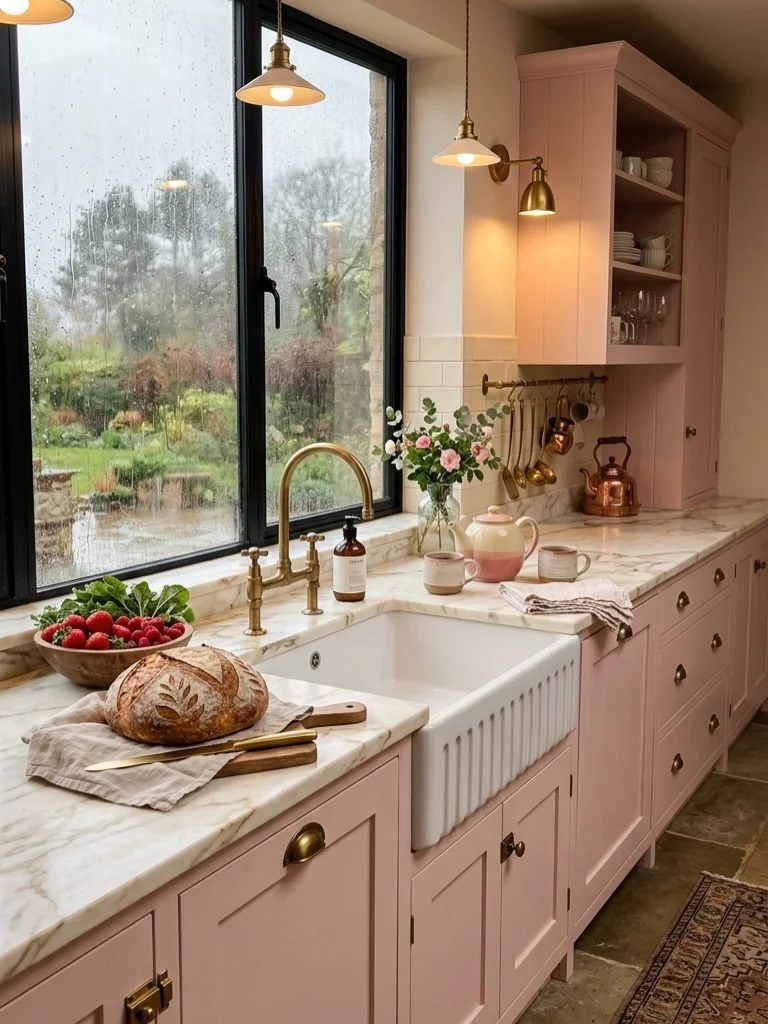
The layout feels practical because the sink, countertop workspace, storage cabinets, and open shelving are arranged along one continuous working area. The tall cabinet at the end provides additional storage while also creating a visual endpoint for the cabinetry. I especially like the way the window becomes part of the design, because the changing weather outside adds atmosphere without requiring additional decoration.
I would borrow the idea of using one strong cabinet color and then allowing smaller accessories to repeat it. The pink flowers and teacups quietly reinforce the cabinetry without making everything match exactly. The copper pieces also introduce a warmer note, which helps the pale pink feel more grounded and suitable for an everyday kitchen.
Powder Blue Kitchen With a Window Framed by Lace Curtains
This kitchen features powder blue cabinetry, a large white farmhouse sink, pale marble-look countertops, brass-colored hardware, and an open window framed by delicate lace curtains. Through the window, I can see a lush garden with rounded flowering shrubs, while a large ceramic vase on the counter holds blue, white, and pink flowers. Open shelving provides space for simple glassware and ceramics.
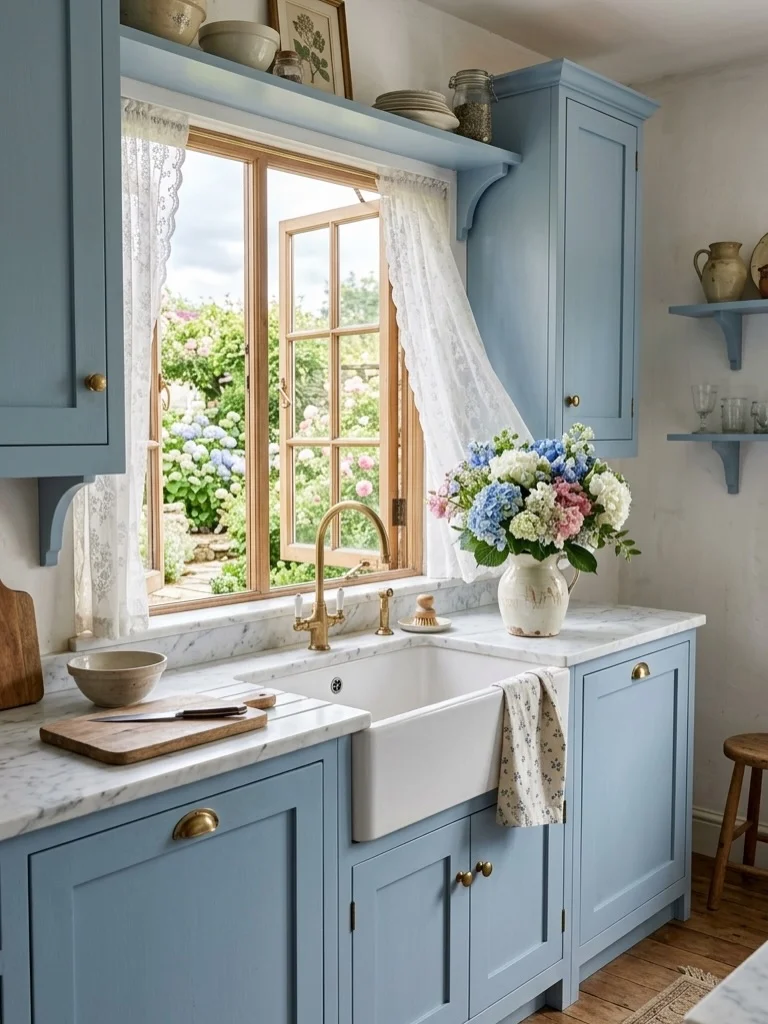
The arrangement works because the cabinetry and garden view create a naturally coordinated color story. The blue cabinets feel soft rather than overpowering, and the white sink and countertop provide a clean visual break. I also like the open shelving above the counter because it makes the kitchen feel less enclosed while giving everyday dishes an accessible place to live.
For a similar result, I would pay close attention to the window area. The photograph shows how much character can come from a simple combination of a painted cabinet finish, light curtain, traditional sink, and view outside. I would avoid filling every available surface because the openness around the window is one of the details that makes this kitchen feel calm.
Traditional Dining Room With a Dark Antique-Style Piano
Although this image moves away from the kitchen itself, it captures another side of the Grandma core aesthetic through a traditional dining space filled with character. A long dark wooden dining table dominates the room, surrounded by mismatched traditional chairs, while a dark upright piano occupies the back wall. Books, framed pieces, woven details, lantern-like objects, and decorative items fill the surrounding surfaces, creating a distinctly collected atmosphere.
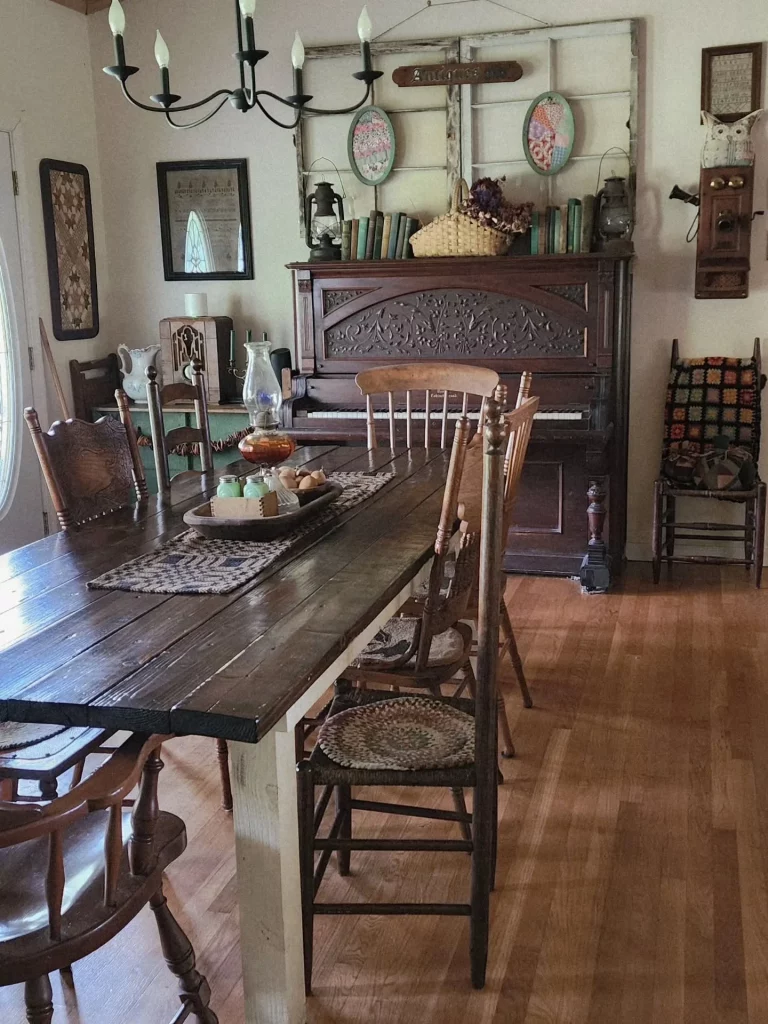
What I find interesting here is the sense that the room has developed around useful and meaningful objects rather than a single coordinated furniture set. The long table creates a clear gathering place, while the piano gives the back wall a strong functional focal point. Different chair styles add personality and make the room feel less formal and more connected to everyday family life.
I would take inspiration from this image when decorating an open dining area connected to a Grandma core kitchen. A traditional table, an inherited-looking furniture piece, books, and a few personal objects can create the layered feeling this photograph demonstrates. The key for me would be allowing some variation instead of making every piece look as though it came from the same collection.
Bright Cream Kitchen With Open Shelving and Layered Storage
The final image presents a long cream-colored kitchen with extensive cabinetry, glass-front storage, open wooden shelves, and a wide central work area. The room is filled with white and cream dishes, ceramic containers, wooden boards, bowls, and carefully arranged countertop objects. Large windows bring sunlight onto the wide-plank floor, while a woven runner adds texture along the central walkway and a large potted plant occupies the foreground.
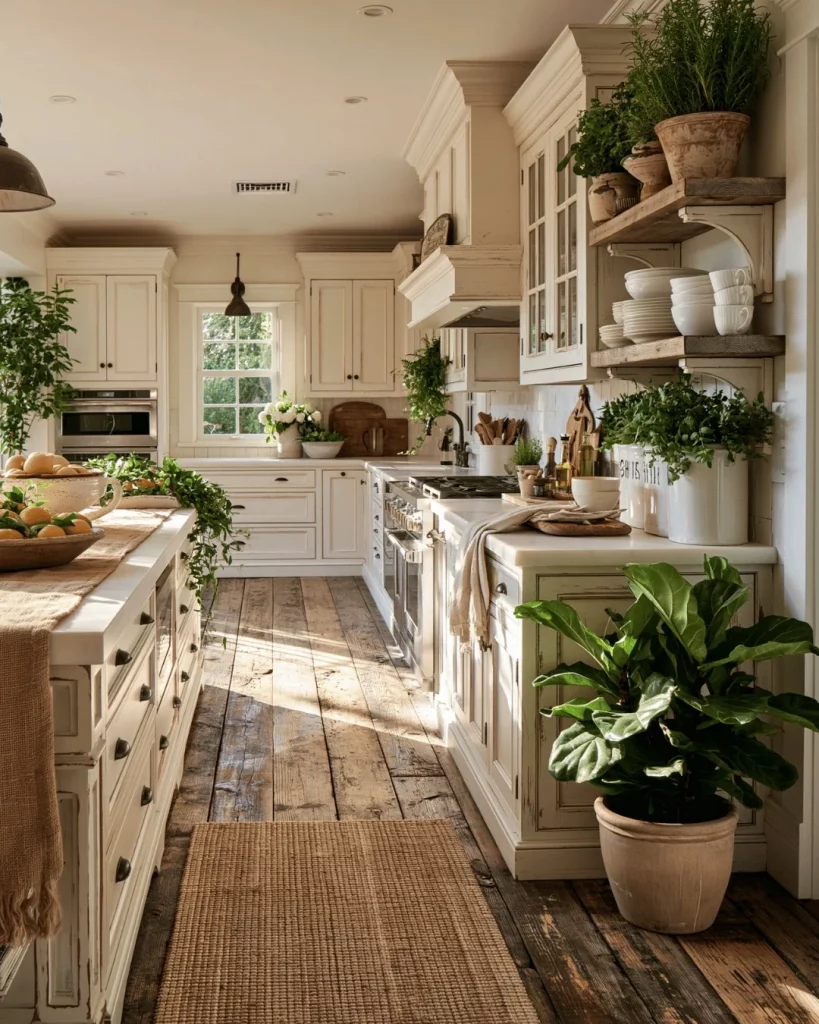
I think this kitchen demonstrates especially well how open and closed storage can work together. The cabinets keep the main kitchen organized, while the open shelves provide accessible display space for plates, cups, bowls, and other everyday pieces. The long layout also creates a clear circulation path, and the runner visually defines that path without interrupting it.
If I were recreating this look, I would concentrate on the storage strategy first. The room feels inviting because decorative objects are not scattered randomly; they are integrated into shelves and work areas that appear genuinely useful. I also like the restrained cream palette because it lets the textures of the shelves, flooring, ceramics, and textiles provide much of the visual interest.
Yellow Cabinetry and Floral Tableware for a Collected Grandma Core Kitchen
The first kitchen immediately captures the Grandma core mood with its soft yellow cabinetry, open shelving, patterned plates, ceramic pitchers, and traditional cookware. I love how the shelves are used to display everyday dishes rather than hiding everything behind closed doors. A large window above the sink brings in plenty of natural light and gives the room a direct view of the green garden outside. The wood countertops and table add a warm contrast to the painted cabinetry, while the floral tableware, copper pan, framed botanical prints, and large flower-filled pitcher create an unmistakably collected atmosphere.
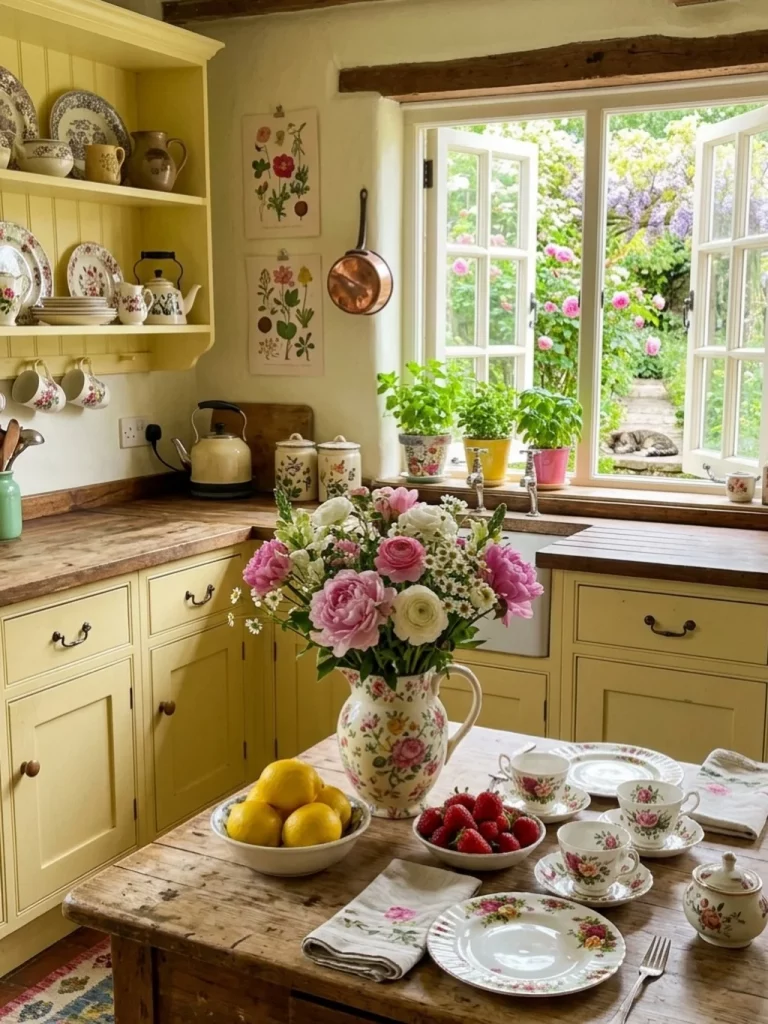
For me, the strength of this kitchen is the way practical objects also become decoration. Plates, cups, pitchers, canisters, and cookware are all within easy reach, so the open shelving is useful rather than purely decorative. The large work surfaces provide room for preparing food, while the nearby dining table makes the kitchen feel connected to everyday meals and conversation. Even the fruit bowls and floral table setting contribute to the sense that this is a working kitchen rather than a showroom.
I would take inspiration from this approach by choosing a few consistent colors and repeating them through functional pieces. Here, yellow, cream, floral patterns, natural wood, and copper appear repeatedly, which keeps the abundance of objects visually cohesive. I also like the idea of displaying dishes that are actually used because it makes storage feel much more personal. Instead of buying numerous decorative accessories, I would let attractive plates, pitchers, mugs, and serving pieces do most of the styling.
Exposed Beams and a Brick Fireplace Create a Warm Traditional Gathering Space
The second image moves into a much larger kitchen-living area where exposed dark wood beams frame the ceiling and a substantial brick fireplace becomes the central architectural feature. Built-in open shelves stretch on both sides of the fireplace and hold books, small decorative objects, and framed pieces. A large distressed white sideboard sits in the foreground, while seating, textiles, baskets, and large potted greenery surround the room. I find the combination of white walls, warm wood, brick, and darker green upholstery particularly effective because it gives the space depth without making it feel visually chaotic.
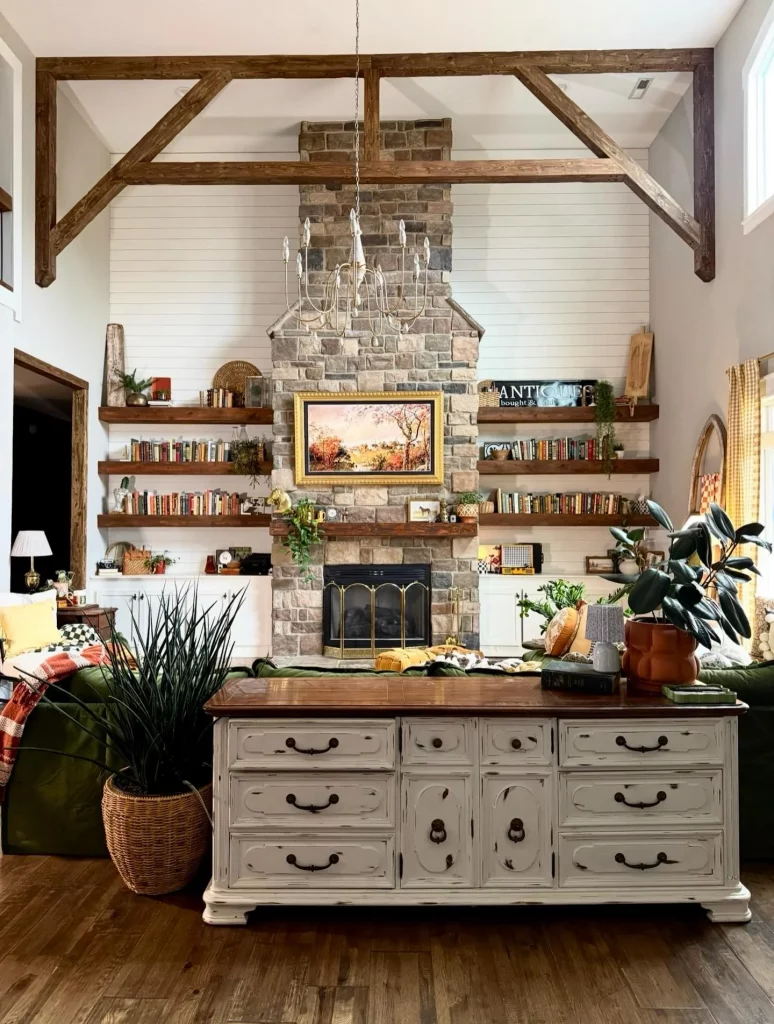
The layout works because the fireplace establishes a strong focal point while the shelving provides practical storage around it. Books and smaller objects can be organized along the shelves without taking over the room, and the substantial sideboard offers closed storage below a generous countertop. The open structure of the room also allows the kitchen and living areas to feel connected. From what I can see, the arrangement encourages people to gather rather than treating the kitchen as an isolated workspace.
When I look at a room like this, I am reminded that Grandma core does not have to mean a small or delicate kitchen. The same aesthetic can work beautifully in a generous open-plan space when traditional materials and familiar objects are used thoughtfully. I would focus first on architectural warmth, such as visible beams or a substantial fireplace, and then introduce character through shelving, books, ceramics, textiles, and furniture with a sense of age. The key is allowing useful objects to provide much of the personality.
Gingham Curtains Bring a Cheerful Touch to a Compact Kitchen
This kitchen has a more compact and straightforward arrangement, with light cabinetry surrounding a large central window. Yellow-and-white gingham curtains frame the window and bring a cheerful pattern into the room, while green wall tiles provide another layer of color. Decorative plates are arranged above the window, and a simple pendant light hangs in the center. I particularly notice how the patterned curtains become the strongest visual feature while the cabinetry and countertops remain relatively restrained.
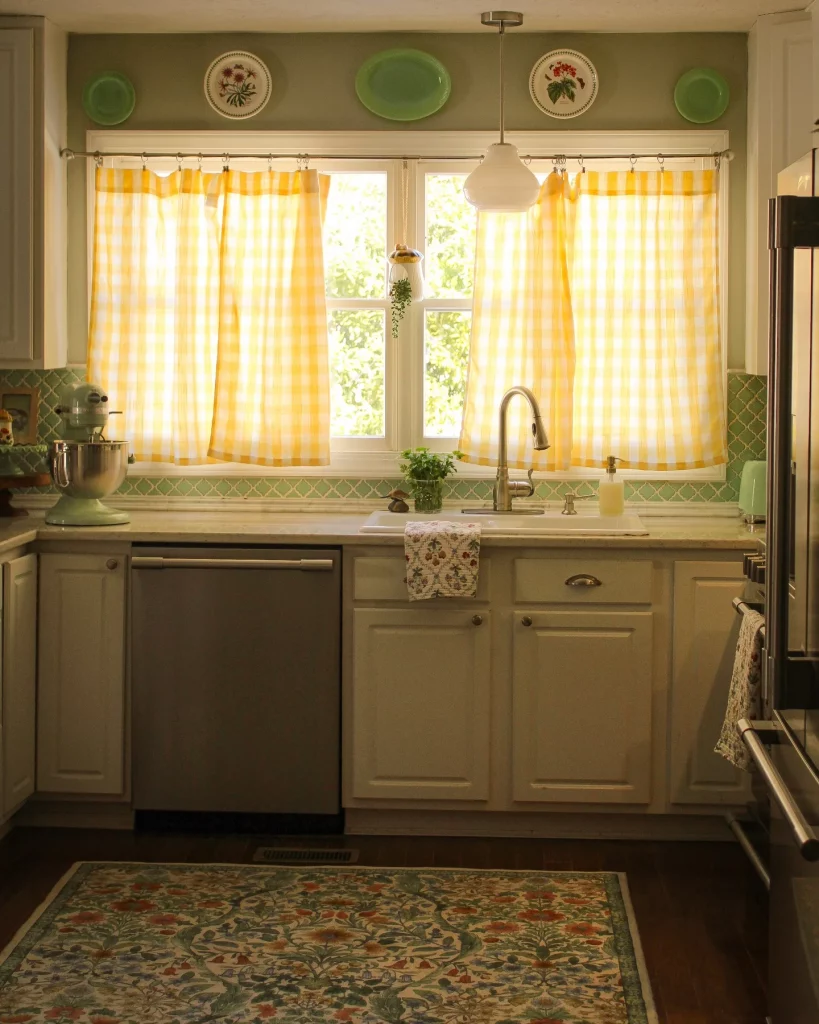
The layout makes good use of the available wall space. The sink is positioned directly beneath the window, creating a practical work zone with natural light, while the surrounding cabinets provide storage. The patterned rug on the floor adds another decorative layer and visually defines the working area. I like that the room does not rely on a large island or oversized furniture to create personality; instead, textiles, color, and small display pieces do the work.
For a similar look, I would start with one recognizable pattern, such as the gingham shown here, and let it guide the rest of the palette. I would also consider using a small collection of plates as wall decoration when cabinet space is limited. The important lesson from this image is that even a relatively compact kitchen can feel distinctive when practical elements such as window coverings, tile, lighting, and dishes are carefully coordinated.
Large Windows and Heavy Timber Beams Define a Spacious Country Kitchen
The fourth kitchen has a much more open architectural feeling, with large windows, substantial exposed ceiling beams, pale cabinetry, and a long central island. Three stools line one side of the island, creating a casual seating area, while lantern-style pendant lights hang above it. The room is filled with natural light, and the neutral cabinetry allows the warm timber structure and large windows to become major visual features. A bowl of oranges and a large glass vase with branches sit on the island, adding simple focal points without crowding the workspace.
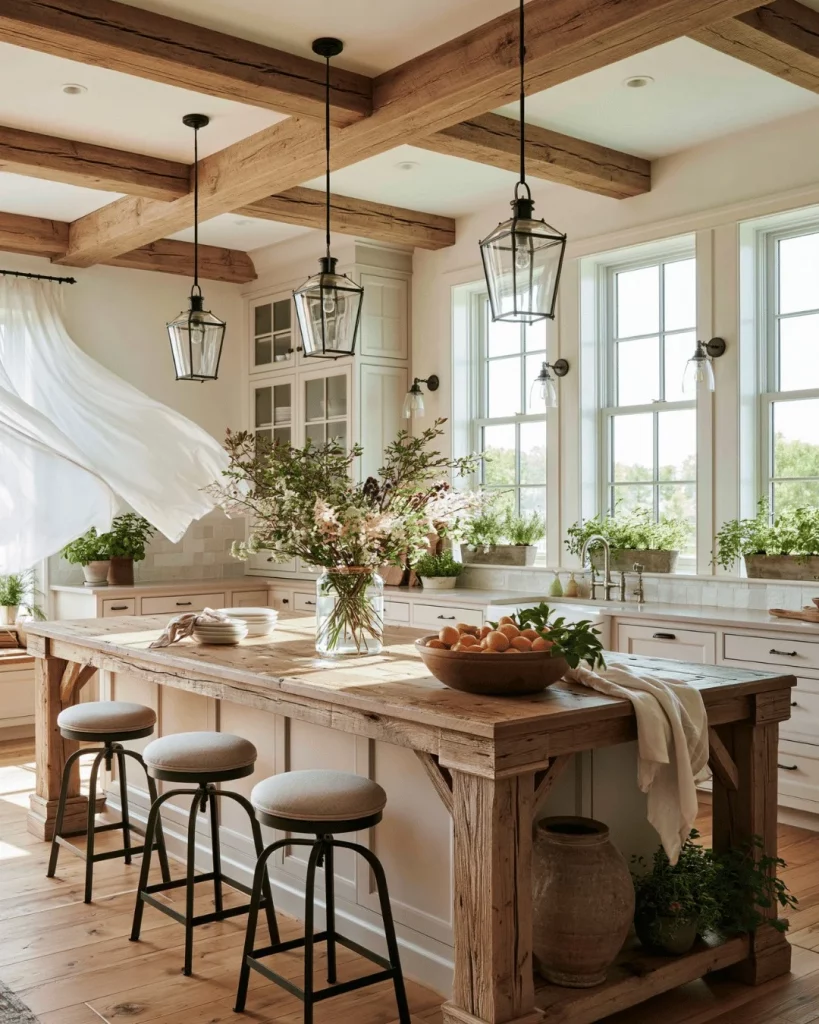
I think the island is especially successful because it serves several purposes at once. It provides a generous preparation surface, creates seating for several people, and acts as the visual center of the room. The cabinets along the walls offer substantial storage, while the large windows make the entire kitchen feel connected to the outdoors. The stools also introduce a practical social element, allowing someone to sit nearby while food is being prepared.
If I were recreating this feeling, I would prioritize natural light and a generous central work surface before adding decorative details. The image shows how architectural features can carry much of the visual interest, so there is no need to fill every surface with accessories. I would also repeat the warm wood tone through a few carefully selected pieces, as seen here with the island, ceiling beams, and flooring.
Open Shelving and Natural Light Give This Kitchen a Handcrafted Feel
The fifth image presents a smaller kitchen corner centered around a large window and open shelving. Cream cabinetry and shelves create a calm background for stacks of dishes, ceramic pitchers, cutting boards, bowls, and small containers. Several potted herbs sit along the windowsill, while dried bundles hang from hooks beneath the shelving. The wood countertop introduces warmth, and soft natural light falls across the surfaces, emphasizing the textures of the ceramics, textiles, and wood.
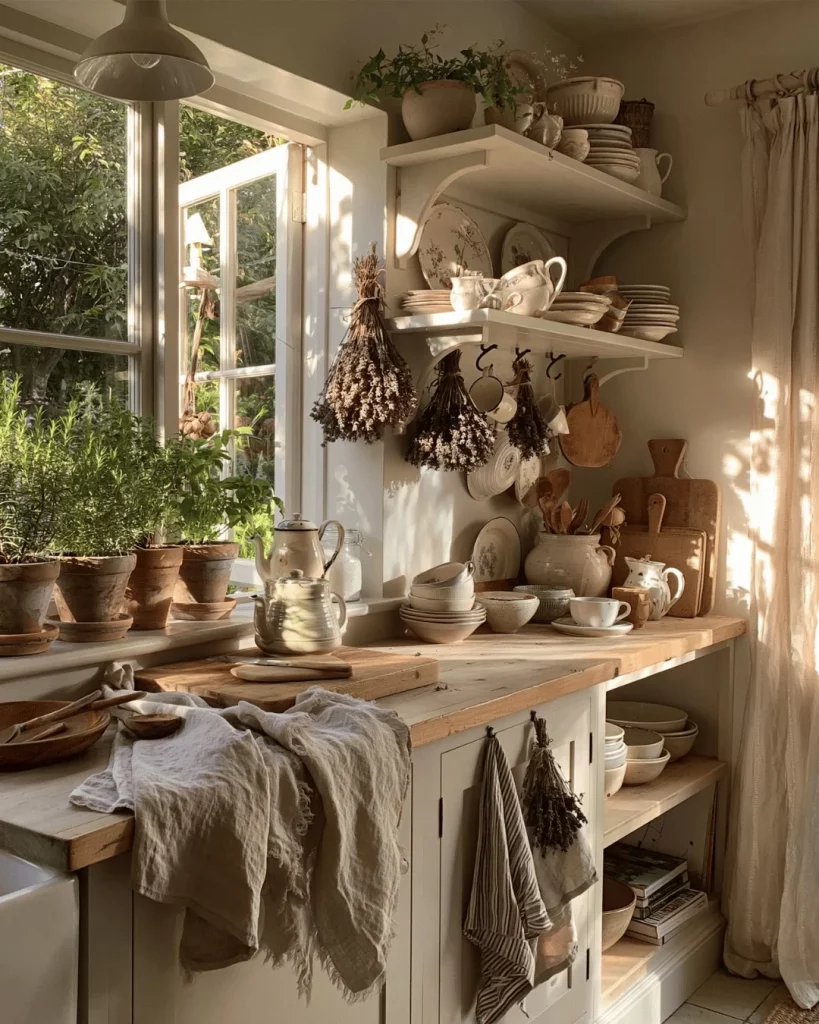
What works particularly well here is the combination of storage and display. The open shelves keep frequently used dishes visible and accessible, while the lower cabinets provide concealed storage for items that do not need to remain on view. Hooks beneath the shelves make use of otherwise empty wall space, and the countertop remains practical enough for everyday preparation. I also like how the window creates a natural focal point without requiring additional decoration.
For my own interpretation of this look, I would keep the number of visible objects intentional. The image contains many pieces, but they are grouped by type and color, which prevents the shelves from looking random. I would also use the windowsill as a practical display area, especially for small potted herbs, because it brings life and usefulness together in one place. This is a good example of how Grandma core style can come from everyday organization rather than purely decorative styling.
Blue-and-White Ceramics Add Classic Character to Open Kitchen Shelving
The sixth image focuses closely on a kitchen display where white open shelving, glass-front cabinetry, pale square tiles, and blue-and-white ceramics create the main visual story. Stacks of white plates and bowls are arranged alongside patterned pitchers, mugs, and a ceramic container holding wooden spoons. Wooden cutting boards lean against the tiled wall, adding a warm natural accent. I love the restrained palette because the blue-and-white tableware provides enough pattern to make the scene interesting without overwhelming the space.
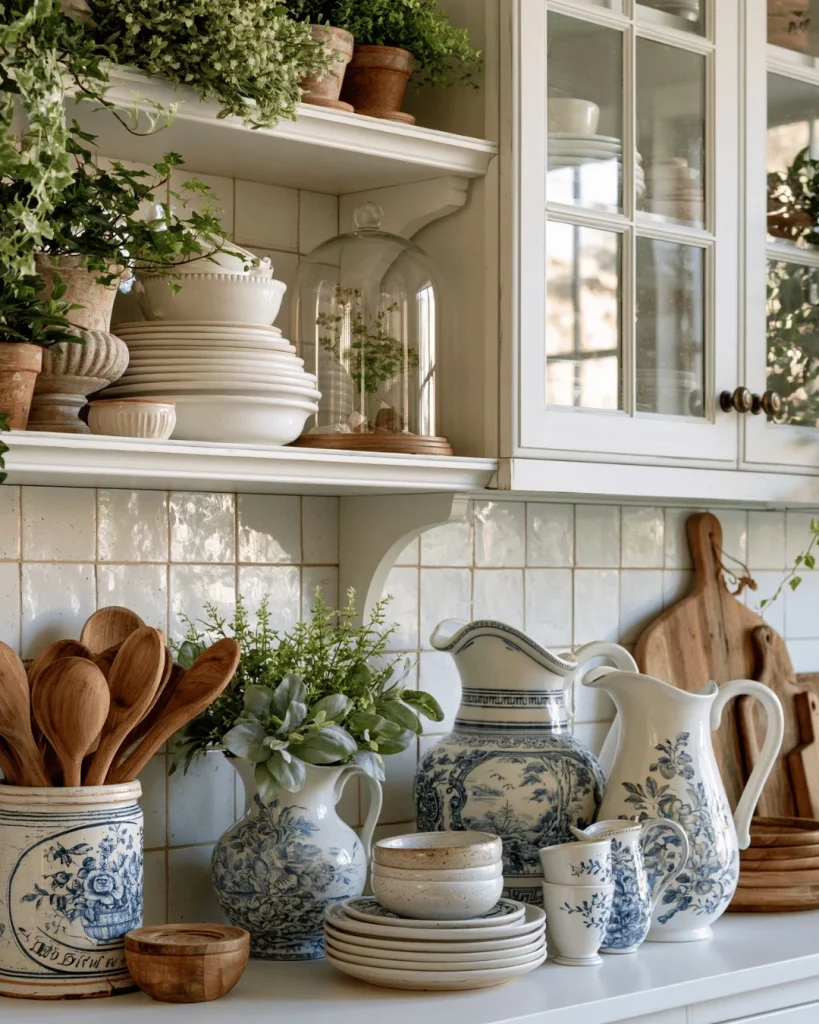
The arrangement also demonstrates how open shelving can function as both storage and visual organization. Plates are stacked together, pitchers are grouped nearby, and cooking utensils remain in a container where they are easy to reach. The glass-front cabinet adds another storage option while still allowing the contents to contribute to the overall appearance. Because the background is relatively simple, the ceramics become the main decorative element.
I would use this idea when I wanted to introduce Grandma core character without committing to highly colorful cabinetry or extensive decoration. A collection of blue-and-white ceramics can establish a recognizable look through repetition alone. I would also mix pieces of different shapes and sizes while keeping the dominant color combination consistent. That approach creates the collected quality visible here while maintaining a calm visual rhythm.
Deep Blue Cabinetry Gives Grandma Core Style a More Defined Contrast
The seventh kitchen combines traditional details with a stronger color contrast. Deep blue cabinetry runs beneath the windows and continues into a tall cabinet, while the upper cabinets and walls remain light. A large wood-topped island occupies the center, with a broad wooden bowl placed on top. Exposed ceiling boards, pendant lights, large windows, simple textiles, and neutral seating complete the room. I especially like how the dark cabinetry gives definition to the otherwise light interior.
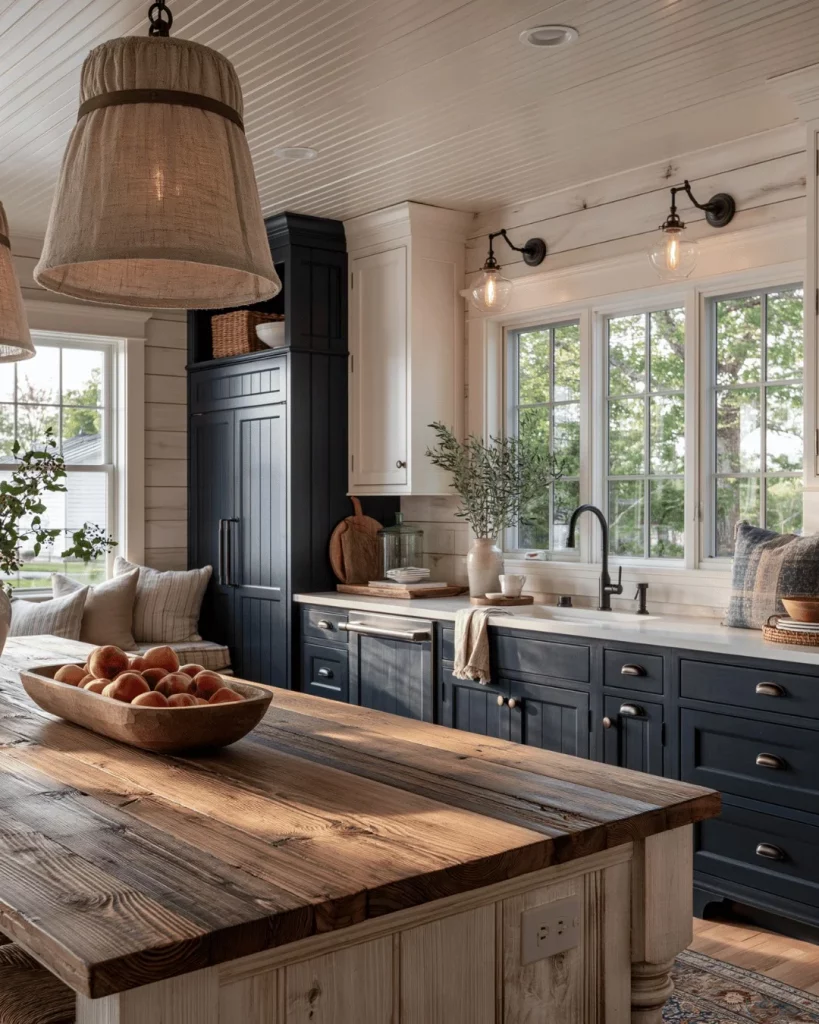
The design feels practical because the kitchen has clearly separated work zones. The long run of cabinetry provides generous storage and counter space, while the island adds another large surface for preparation and serving. The windows above the counter bring daylight into the workspace, and the high contrast between the blue cabinetry and pale walls makes the different areas easy to read visually. The large island also provides a natural gathering point.
For me, this image is a useful reminder that Grandma core does not have to rely exclusively on pale colors. A deeper cabinet color can create a more contemporary interpretation while the traditional cabinetry, exposed ceiling structure, classic lighting, and natural wood maintain the familiar character. If I wanted this balance, I would choose one deeper cabinet color and keep the surrounding architectural elements comparatively light.
Soft Pink Cabinetry Creates a Romantic Tea-Focused Kitchen
The eighth kitchen has a distinctly soft palette, with pale pink cabinetry, white tile, a large farmhouse-style sink, and a marble-look countertop. Open shelves display patterned teapots, cups, bowls, and serving pieces, while a large window fills the room with daylight. A floral arrangement sits near the window, and plates of pastries and croissants occupy the foreground. The combination of pink cabinetry, floral ceramics, delicate textiles, and traditional kitchen forms creates an especially welcoming interpretation of Grandma core.
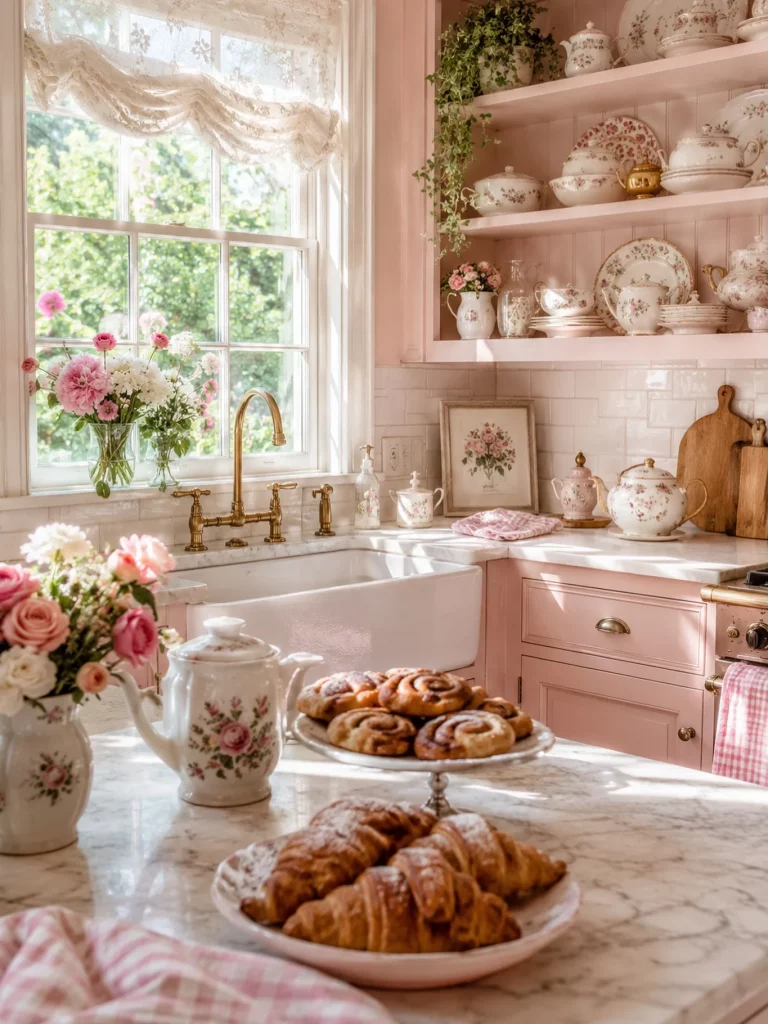
The room works because the color palette is repeated consistently rather than scattered randomly. The pink cabinetry establishes the foundation, while the white surfaces and patterned ceramics add contrast. The large sink provides a substantial practical feature, and the countertop offers enough space for serving and preparing food. I also like how the open shelving keeps the tea and serving collection accessible while making it part of the room’s visual identity.
I would approach a pink kitchen like this by choosing a muted, soft shade rather than relying on an intense color. The image shows how the cabinetry can provide most of the color while the rest of the room remains light and understated. Floral ceramics, simple textiles, and traditional hardware can then reinforce the theme without making the kitchen feel overly decorated. For me, the pastries and tea pieces also demonstrate how styling with everyday food can make a kitchen photograph feel genuinely lived in.
Warm Cream Cabinetry and a Garden View Create an Intimate Kitchen
The ninth image shows a compact kitchen with cream cabinetry, a warm wood-framed window, and a small table positioned beside the work area. Copper pans hang along the wall, while a floral pitcher filled with flowers sits on the countertop. The window overlooks a lush garden, and the kitchen includes open shelving with dishes and small decorative pieces. A pie sits on the small table, reinforcing the comfortable, home-centered atmosphere of the room.
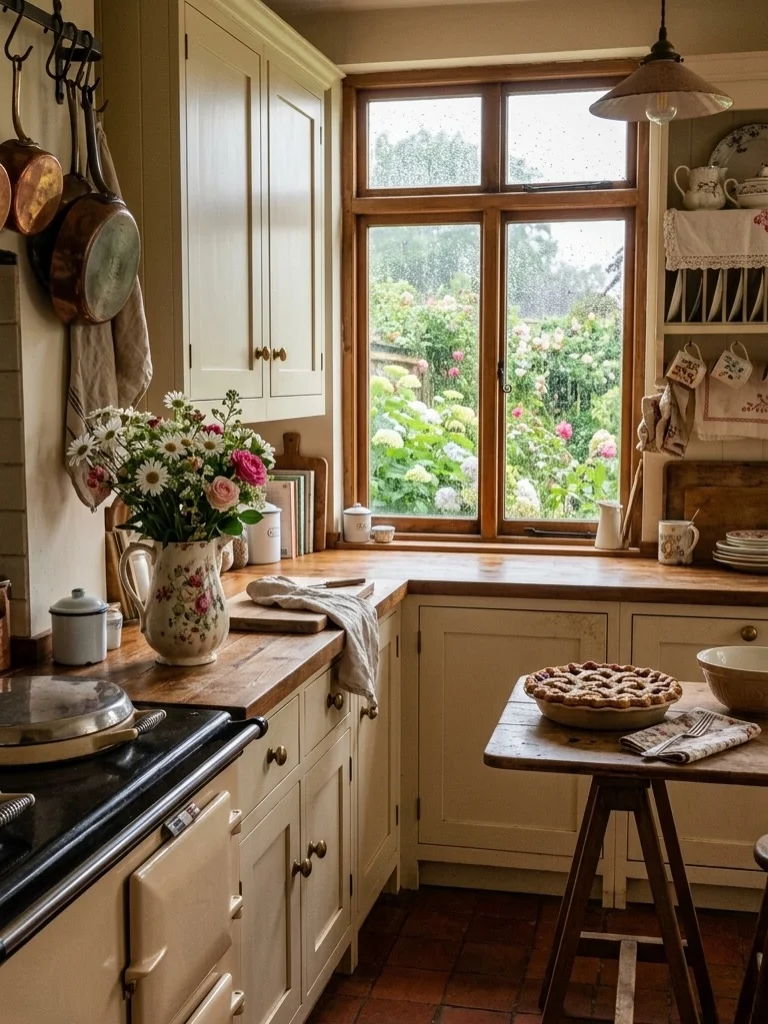
I find the layout especially appealing because it makes efficient use of a relatively modest space. The cabinetry follows the available walls, while the table creates an additional surface without requiring a large island. Hanging cookware keeps the pans accessible and turns them into part of the visual composition. The window also gives the compact kitchen a stronger sense of depth because the view extends beyond the room.
If I wanted to recreate this atmosphere, I would pay close attention to the window area. A pleasant outdoor view can become an important decorative feature without adding anything to the kitchen itself. I would then combine practical storage with a few visible pieces, such as cookware, ceramics, and serving dishes. The result would feel personal and useful rather than overly styled.
Blush Cabinetry and Exposed Beams Bring a Soft Country Character
The final image combines pale blush cabinetry with a white farmhouse-style sink, marble-look countertops, exposed timber ceiling beams, and large windows overlooking a garden. Brass-toned hardware and a matching faucet add subtle warmth, while open shelving holds a small collection of kitchen pieces. A large floral arrangement stands beside the sink, and a loaf of bread, berries, teapot, and cups are arranged across the counters. I love the way the pink cabinetry looks against the warm timber structure because the two elements balance softness and strength.
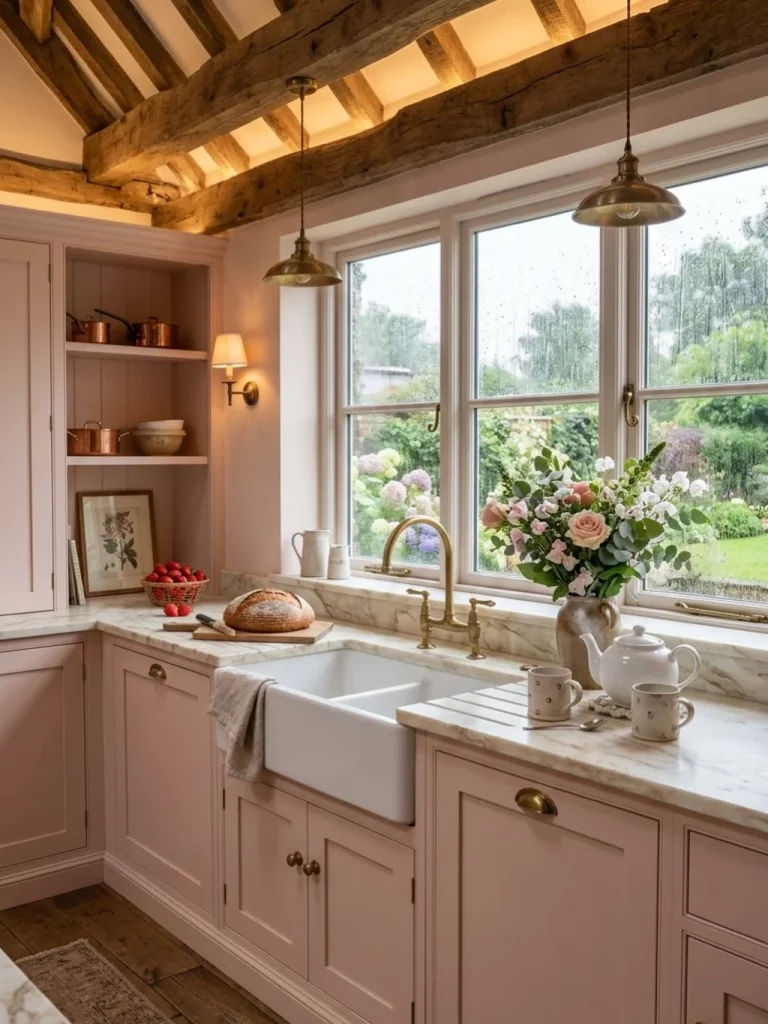
The layout is both attractive and functional. The sink sits directly in front of the windows, providing natural light for a frequently used work area, while the surrounding cabinetry supplies storage. The countertop beside the sink creates a useful serving or preparation zone, and the open shelving provides quick access to selected items. The ceiling beams give the kitchen architectural definition, while the large windows keep the space visually open.
My favorite lesson from this final image is how a few carefully repeated elements can establish an entire design identity. The blush cabinetry, warm metal hardware, timber beams, traditional sink, classic ceramics, and garden view all support the same relaxed character. I would keep that principle in mind rather than trying to reproduce every individual detail. Grandma core works best for me when the kitchen feels collected naturally, with practical objects, familiar materials, and personal touches becoming part of the design.
Grandma core kitchen design is all about creating a space that feels warm, personal, and genuinely lived in. From soft cabinetry and traditional sinks to collected dishware, cozy textiles, and welcoming dining areas, these details bring timeless character into the home. I love how this style makes everyday objects feel special without sacrificing practicality. Whether you embrace the look fully or add just a few nostalgic touches, there are plenty of ways to make your kitchen feel more inviting. Which grandma core kitchen idea would you love to bring into your own home?